EP4431491A1 - Carbonyl compound, method for producing carbonyl compound, method for producing isocyanate compound, and isocyanate composition - Google Patents
Carbonyl compound, method for producing carbonyl compound, method for producing isocyanate compound, and isocyanate composition Download PDFInfo
- Publication number
- EP4431491A1 EP4431491A1 EP22890078.3A EP22890078A EP4431491A1 EP 4431491 A1 EP4431491 A1 EP 4431491A1 EP 22890078 A EP22890078 A EP 22890078A EP 4431491 A1 EP4431491 A1 EP 4431491A1
- Authority
- EP
- European Patent Office
- Prior art keywords
- group
- isomer
- compound
- less
- reaction
- Prior art date
- Legal status (The legal status is an assumption and is not a legal conclusion. Google has not performed a legal analysis and makes no representation as to the accuracy of the status listed.)
- Pending
Links
- 150000001728 carbonyl compounds Chemical class 0.000 title claims abstract description 304
- -1 isocyanate compound Chemical class 0.000 title claims description 1191
- 239000012948 isocyanate Substances 0.000 title claims description 304
- 239000000203 mixture Substances 0.000 title claims description 205
- 150000002513 isocyanates Chemical class 0.000 title claims description 142
- 238000004519 manufacturing process Methods 0.000 title claims description 117
- 125000000962 organic group Chemical group 0.000 claims abstract description 73
- 238000006243 chemical reaction Methods 0.000 claims description 632
- 150000001875 compounds Chemical class 0.000 claims description 141
- BVKZGUZCCUSVTD-UHFFFAOYSA-L Carbonate Chemical compound [O-]C([O-])=O BVKZGUZCCUSVTD-UHFFFAOYSA-L 0.000 claims description 120
- 125000004432 carbon atom Chemical group C* 0.000 claims description 54
- 238000004821 distillation Methods 0.000 claims description 47
- 150000002440 hydroxy compounds Chemical class 0.000 claims description 46
- PXBRQCKWGAHEHS-UHFFFAOYSA-N dichlorodifluoromethane Chemical compound FC(F)(Cl)Cl PXBRQCKWGAHEHS-UHFFFAOYSA-N 0.000 claims description 44
- 125000001931 aliphatic group Chemical group 0.000 claims description 35
- 238000010438 heat treatment Methods 0.000 claims description 25
- 125000002029 aromatic hydrocarbon group Chemical group 0.000 claims description 23
- 125000004185 ester group Chemical group 0.000 claims description 22
- 125000004433 nitrogen atom Chemical group N* 0.000 claims description 19
- 238000000746 purification Methods 0.000 claims description 18
- 238000002156 mixing Methods 0.000 claims description 15
- 125000004430 oxygen atom Chemical group O* 0.000 claims description 15
- 239000000243 solution Substances 0.000 description 376
- ISWSIDIOOBJBQZ-UHFFFAOYSA-N Phenol Chemical compound OC1=CC=CC=C1 ISWSIDIOOBJBQZ-UHFFFAOYSA-N 0.000 description 232
- 238000003860 storage Methods 0.000 description 216
- 238000009835 boiling Methods 0.000 description 174
- 238000000926 separation method Methods 0.000 description 121
- 238000000197 pyrolysis Methods 0.000 description 115
- 239000007788 liquid Substances 0.000 description 101
- VZSRBBMJRBPUNF-UHFFFAOYSA-N 2-(2,3-dihydro-1H-inden-2-ylamino)-N-[3-oxo-3-(2,4,6,7-tetrahydrotriazolo[4,5-c]pyridin-5-yl)propyl]pyrimidine-5-carboxamide Chemical compound C1C(CC2=CC=CC=C12)NC1=NC=C(C=N1)C(=O)NCCC(N1CC2=C(CC1)NN=N2)=O VZSRBBMJRBPUNF-UHFFFAOYSA-N 0.000 description 91
- 238000004458 analytical method Methods 0.000 description 84
- 230000015572 biosynthetic process Effects 0.000 description 71
- 238000000034 method Methods 0.000 description 70
- 238000003786 synthesis reaction Methods 0.000 description 70
- 150000004657 carbamic acid derivatives Chemical class 0.000 description 61
- HCIBTBXNLVOFER-UHFFFAOYSA-N diphenylcyclopropenone Chemical compound O=C1C(C=2C=CC=CC=2)=C1C1=CC=CC=C1 HCIBTBXNLVOFER-UHFFFAOYSA-N 0.000 description 55
- ROORDVPLFPIABK-UHFFFAOYSA-N diphenyl carbonate Chemical compound C=1C=CC=CC=1OC(=O)OC1=CC=CC=C1 ROORDVPLFPIABK-UHFFFAOYSA-N 0.000 description 53
- 238000004817 gas chromatography Methods 0.000 description 52
- 238000005481 NMR spectroscopy Methods 0.000 description 49
- 238000000605 extraction Methods 0.000 description 48
- 238000003756 stirring Methods 0.000 description 47
- ZFSLODLOARCGLH-UHFFFAOYSA-N isocyanuric acid Chemical group OC1=NC(O)=NC(O)=N1 ZFSLODLOARCGLH-UHFFFAOYSA-N 0.000 description 36
- 125000003118 aryl group Chemical group 0.000 description 35
- VPKDCDLSJZCGKE-UHFFFAOYSA-N carbodiimide group Chemical group N=C=N VPKDCDLSJZCGKE-UHFFFAOYSA-N 0.000 description 35
- 239000002994 raw material Substances 0.000 description 35
- AVWRKZWQTYIKIY-UHFFFAOYSA-N urea-1-carboxylic acid Chemical group NC(=O)NC(O)=O AVWRKZWQTYIKIY-UHFFFAOYSA-N 0.000 description 35
- GNDOBZLRZOCGAS-JTQLQIEISA-N 2-isocyanatoethyl (2s)-2,6-diisocyanatohexanoate Chemical compound O=C=NCCCC[C@H](N=C=O)C(=O)OCCN=C=O GNDOBZLRZOCGAS-JTQLQIEISA-N 0.000 description 32
- 238000004925 denaturation Methods 0.000 description 29
- 230000036425 denaturation Effects 0.000 description 29
- 238000011084 recovery Methods 0.000 description 27
- 238000010992 reflux Methods 0.000 description 27
- AYLRODJJLADBOB-QMMMGPOBSA-N methyl (2s)-2,6-diisocyanatohexanoate Chemical compound COC(=O)[C@@H](N=C=O)CCCCN=C=O AYLRODJJLADBOB-QMMMGPOBSA-N 0.000 description 26
- 238000004040 coloring Methods 0.000 description 25
- 238000012546 transfer Methods 0.000 description 25
- LHGVFZTZFXWLCP-UHFFFAOYSA-N guaiacol Chemical compound COC1=CC=CC=C1O LHGVFZTZFXWLCP-UHFFFAOYSA-N 0.000 description 24
- RRAMGCGOFNQTLD-UHFFFAOYSA-N hexamethylene diisocyanate Chemical compound O=C=NCCCCCCN=C=O RRAMGCGOFNQTLD-UHFFFAOYSA-N 0.000 description 24
- 238000000265 homogenisation Methods 0.000 description 24
- 238000004811 liquid chromatography Methods 0.000 description 24
- IQPQWNKOIGAROB-UHFFFAOYSA-N isocyanate group Chemical group [N-]=C=O IQPQWNKOIGAROB-UHFFFAOYSA-N 0.000 description 23
- 229920000642 polymer Polymers 0.000 description 22
- 238000005194 fractionation Methods 0.000 description 20
- 238000007086 side reaction Methods 0.000 description 20
- 239000003990 capacitor Substances 0.000 description 19
- 239000000463 material Substances 0.000 description 18
- 239000012071 phase Substances 0.000 description 17
- 125000001997 phenyl group Chemical group [H]C1=C([H])C([H])=C(*)C([H])=C1[H] 0.000 description 17
- 238000011088 calibration curve Methods 0.000 description 15
- UPMLOUAZCHDJJD-UHFFFAOYSA-N 4,4'-Diphenylmethane Diisocyanate Chemical compound C1=CC(N=C=O)=CC=C1CC1=CC=C(N=C=O)C=C1 UPMLOUAZCHDJJD-UHFFFAOYSA-N 0.000 description 14
- 239000006227 byproduct Substances 0.000 description 14
- 239000002904 solvent Substances 0.000 description 14
- 239000010935 stainless steel Substances 0.000 description 14
- 229910001220 stainless steel Inorganic materials 0.000 description 14
- NIMLQBUJDJZYEJ-UHFFFAOYSA-N isophorone diisocyanate Chemical compound CC1(C)CC(N=C=O)CC(C)(CN=C=O)C1 NIMLQBUJDJZYEJ-UHFFFAOYSA-N 0.000 description 13
- 230000009257 reactivity Effects 0.000 description 13
- HMJBXEZHJUYJQY-UHFFFAOYSA-N 4-(aminomethyl)octane-1,8-diamine Chemical compound NCCCCC(CN)CCCN HMJBXEZHJUYJQY-UHFFFAOYSA-N 0.000 description 12
- 238000011437 continuous method Methods 0.000 description 12
- YGYAWVDWMABLBF-UHFFFAOYSA-N Phosgene Chemical compound ClC(Cl)=O YGYAWVDWMABLBF-UHFFFAOYSA-N 0.000 description 11
- 239000003054 catalyst Substances 0.000 description 11
- 229960001867 guaiacol Drugs 0.000 description 11
- 239000000047 product Substances 0.000 description 11
- 125000001424 substituent group Chemical group 0.000 description 11
- FKTHNVSLHLHISI-UHFFFAOYSA-N 1,2-bis(isocyanatomethyl)benzene Chemical compound O=C=NCC1=CC=CC=C1CN=C=O FKTHNVSLHLHISI-UHFFFAOYSA-N 0.000 description 10
- 239000005057 Hexamethylene diisocyanate Substances 0.000 description 10
- VHRGRCVQAFMJIZ-UHFFFAOYSA-N cadaverine Chemical compound NCCCCCN VHRGRCVQAFMJIZ-UHFFFAOYSA-N 0.000 description 10
- 230000000052 comparative effect Effects 0.000 description 10
- 238000004132 cross linking Methods 0.000 description 10
- 230000014759 maintenance of location Effects 0.000 description 10
- 125000001624 naphthyl group Chemical group 0.000 description 10
- DVKJHBMWWAPEIU-UHFFFAOYSA-N toluene 2,4-diisocyanate Chemical compound CC1=CC=C(N=C=O)C=C1N=C=O DVKJHBMWWAPEIU-UHFFFAOYSA-N 0.000 description 10
- KXDHJXZQYSOELW-UHFFFAOYSA-M Carbamate Chemical compound NC([O-])=O KXDHJXZQYSOELW-UHFFFAOYSA-M 0.000 description 9
- 239000005058 Isophorone diisocyanate Substances 0.000 description 9
- 239000011248 coating agent Substances 0.000 description 9
- 238000000576 coating method Methods 0.000 description 9
- 230000000694 effects Effects 0.000 description 9
- 238000011156 evaluation Methods 0.000 description 9
- 239000007789 gas Substances 0.000 description 9
- 125000002887 hydroxy group Chemical group [H]O* 0.000 description 9
- 239000000126 substance Substances 0.000 description 9
- LFQSCWFLJHTTHZ-UHFFFAOYSA-N Ethanol Chemical compound CCO LFQSCWFLJHTTHZ-UHFFFAOYSA-N 0.000 description 8
- XSQUKJJJFZCRTK-UHFFFAOYSA-N Urea Chemical compound NC(N)=O XSQUKJJJFZCRTK-UHFFFAOYSA-N 0.000 description 8
- 125000000217 alkyl group Chemical group 0.000 description 8
- ORUJFMPWKPVXLZ-UHFFFAOYSA-N guaiacol carbonate Chemical compound COC1=CC=CC=C1OC(=O)OC1=CC=CC=C1OC ORUJFMPWKPVXLZ-UHFFFAOYSA-N 0.000 description 8
- NAQMVNRVTILPCV-UHFFFAOYSA-N hexane-1,6-diamine Chemical compound NCCCCCCN NAQMVNRVTILPCV-UHFFFAOYSA-N 0.000 description 8
- 125000004435 hydrogen atom Chemical group [H]* 0.000 description 8
- 239000002184 metal Chemical class 0.000 description 8
- 239000004814 polyurethane Substances 0.000 description 8
- 229920002635 polyurethane Polymers 0.000 description 8
- 239000010409 thin film Substances 0.000 description 8
- XSCLFFBWRKTMTE-UHFFFAOYSA-N 1,3-bis(isocyanatomethyl)cyclohexane Chemical compound O=C=NCC1CCCC(CN=C=O)C1 XSCLFFBWRKTMTE-UHFFFAOYSA-N 0.000 description 7
- 238000005160 1H NMR spectroscopy Methods 0.000 description 7
- YBRVSVVVWCFQMG-UHFFFAOYSA-N 4,4'-diaminodiphenylmethane Chemical compound C1=CC(N)=CC=C1CC1=CC=C(N)C=C1 YBRVSVVVWCFQMG-UHFFFAOYSA-N 0.000 description 7
- YHZQOKUDQQISEW-UHFFFAOYSA-N 4-Cumylphenol Natural products C1=CC(C(C)C)=CC=C1C1=CC=C(O)C=C1 YHZQOKUDQQISEW-UHFFFAOYSA-N 0.000 description 7
- DZIHTWJGPDVSGE-UHFFFAOYSA-N 4-[(4-aminocyclohexyl)methyl]cyclohexan-1-amine Chemical compound C1CC(N)CCC1CC1CCC(N)CC1 DZIHTWJGPDVSGE-UHFFFAOYSA-N 0.000 description 7
- QLBRROYTTDFLDX-UHFFFAOYSA-N [3-(aminomethyl)cyclohexyl]methanamine Chemical compound NCC1CCCC(CN)C1 QLBRROYTTDFLDX-UHFFFAOYSA-N 0.000 description 7
- 229910052757 nitrogen Inorganic materials 0.000 description 7
- QBDSZLJBMIMQRS-UHFFFAOYSA-N p-Cumylphenol Chemical compound C=1C=C(O)C=CC=1C(C)(C)C1=CC=CC=C1 QBDSZLJBMIMQRS-UHFFFAOYSA-N 0.000 description 7
- 238000012360 testing method Methods 0.000 description 7
- 125000003944 tolyl group Chemical group 0.000 description 7
- KGRVJHAUYBGFFP-UHFFFAOYSA-N 2,2'-Methylenebis(4-methyl-6-tert-butylphenol) Chemical compound CC(C)(C)C1=CC(C)=CC(CC=2C(=C(C=C(C)C=2)C(C)(C)C)O)=C1O KGRVJHAUYBGFFP-UHFFFAOYSA-N 0.000 description 6
- WEVYAHXRMPXWCK-UHFFFAOYSA-N Acetonitrile Chemical compound CC#N WEVYAHXRMPXWCK-UHFFFAOYSA-N 0.000 description 6
- DHMQDGOQFOQNFH-UHFFFAOYSA-N Glycine Chemical compound NCC(O)=O DHMQDGOQFOQNFH-UHFFFAOYSA-N 0.000 description 6
- KDXKERNSBIXSRK-UHFFFAOYSA-N Lysine Natural products NCCCCC(N)C(O)=O KDXKERNSBIXSRK-UHFFFAOYSA-N 0.000 description 6
- 239000004472 Lysine Substances 0.000 description 6
- ZMANZCXQSJIPKH-UHFFFAOYSA-N Triethylamine Chemical compound CCN(CC)CC ZMANZCXQSJIPKH-UHFFFAOYSA-N 0.000 description 6
- 125000005428 anthryl group Chemical group [H]C1=C([H])C([H])=C2C([H])=C3C(*)=C([H])C([H])=C([H])C3=C([H])C2=C1[H] 0.000 description 6
- 125000003710 aryl alkyl group Chemical group 0.000 description 6
- 230000033228 biological regulation Effects 0.000 description 6
- KQWGXHWJMSMDJJ-UHFFFAOYSA-N cyclohexyl isocyanate Chemical compound O=C=NC1CCCCC1 KQWGXHWJMSMDJJ-UHFFFAOYSA-N 0.000 description 6
- SXZCBVCQHOJXDR-ILKKLZGPSA-N hydron;methyl (2s)-2,6-diaminohexanoate;dichloride Chemical compound Cl.Cl.COC(=O)[C@@H](N)CCCCN SXZCBVCQHOJXDR-ILKKLZGPSA-N 0.000 description 6
- 235000018977 lysine Nutrition 0.000 description 6
- 238000012856 packing Methods 0.000 description 6
- 125000005561 phenanthryl group Chemical group 0.000 description 6
- 125000001725 pyrenyl group Chemical group 0.000 description 6
- 239000000523 sample Substances 0.000 description 6
- IMNIMPAHZVJRPE-UHFFFAOYSA-N triethylenediamine Chemical compound C1CN2CCN1CC2 IMNIMPAHZVJRPE-UHFFFAOYSA-N 0.000 description 6
- GKXVJHDEWHKBFH-UHFFFAOYSA-N [2-(aminomethyl)phenyl]methanamine Chemical compound NCC1=CC=CC=C1CN GKXVJHDEWHKBFH-UHFFFAOYSA-N 0.000 description 5
- 150000007824 aliphatic compounds Chemical class 0.000 description 5
- 125000002947 alkylene group Chemical group 0.000 description 5
- 125000004429 atom Chemical group 0.000 description 5
- 229910052799 carbon Inorganic materials 0.000 description 5
- 238000001816 cooling Methods 0.000 description 5
- 125000002993 cycloalkylene group Chemical group 0.000 description 5
- 150000002148 esters Chemical class 0.000 description 5
- 238000006116 polymerization reaction Methods 0.000 description 5
- 230000035484 reaction time Effects 0.000 description 5
- 239000012488 sample solution Substances 0.000 description 5
- 229920006395 saturated elastomer Polymers 0.000 description 5
- XLYOFNOQVPJJNP-UHFFFAOYSA-N water Substances O XLYOFNOQVPJJNP-UHFFFAOYSA-N 0.000 description 5
- SAKAHFSYUHWBLG-QTPLPEIMSA-N 2-aminoethyl (2s)-2,6-diaminohexanoate;trihydrochloride Chemical compound Cl.Cl.Cl.NCCCC[C@H](N)C(=O)OCCN SAKAHFSYUHWBLG-QTPLPEIMSA-N 0.000 description 4
- GNDOBZLRZOCGAS-UHFFFAOYSA-N 2-isocyanatoethyl 2,6-diisocyanatohexanoate Chemical compound O=C=NCCCCC(N=C=O)C(=O)OCCN=C=O GNDOBZLRZOCGAS-UHFFFAOYSA-N 0.000 description 4
- RNLHGQLZWXBQNY-UHFFFAOYSA-N 3-(aminomethyl)-3,5,5-trimethylcyclohexan-1-amine Chemical compound CC1(C)CC(N)CC(C)(CN)C1 RNLHGQLZWXBQNY-UHFFFAOYSA-N 0.000 description 4
- QGZKDVFQNNGYKY-UHFFFAOYSA-N Ammonia Chemical compound N QGZKDVFQNNGYKY-UHFFFAOYSA-N 0.000 description 4
- UFHFLCQGNIYNRP-UHFFFAOYSA-N Hydrogen Chemical compound [H][H] UFHFLCQGNIYNRP-UHFFFAOYSA-N 0.000 description 4
- MKYBYDHXWVHEJW-UHFFFAOYSA-N N-[1-oxo-1-(2,4,6,7-tetrahydrotriazolo[4,5-c]pyridin-5-yl)propan-2-yl]-2-[[3-(trifluoromethoxy)phenyl]methylamino]pyrimidine-5-carboxamide Chemical compound O=C(C(C)NC(=O)C=1C=NC(=NC=1)NCC1=CC(=CC=C1)OC(F)(F)F)N1CC2=C(CC1)NN=N2 MKYBYDHXWVHEJW-UHFFFAOYSA-N 0.000 description 4
- VCUFZILGIRCDQQ-KRWDZBQOSA-N N-[[(5S)-2-oxo-3-(2-oxo-3H-1,3-benzoxazol-6-yl)-1,3-oxazolidin-5-yl]methyl]-2-[[3-(trifluoromethoxy)phenyl]methylamino]pyrimidine-5-carboxamide Chemical compound O=C1O[C@H](CN1C1=CC2=C(NC(O2)=O)C=C1)CNC(=O)C=1C=NC(=NC=1)NCC1=CC(=CC=C1)OC(F)(F)F VCUFZILGIRCDQQ-KRWDZBQOSA-N 0.000 description 4
- JAWMENYCRQKKJY-UHFFFAOYSA-N [3-(2,4,6,7-tetrahydrotriazolo[4,5-c]pyridin-5-ylmethyl)-1-oxa-2,8-diazaspiro[4.5]dec-2-en-8-yl]-[2-[[3-(trifluoromethoxy)phenyl]methylamino]pyrimidin-5-yl]methanone Chemical compound N1N=NC=2CN(CCC=21)CC1=NOC2(C1)CCN(CC2)C(=O)C=1C=NC(=NC=1)NCC1=CC(=CC=C1)OC(F)(F)F JAWMENYCRQKKJY-UHFFFAOYSA-N 0.000 description 4
- UKLDJPRMSDWDSL-UHFFFAOYSA-L [dibutyl(dodecanoyloxy)stannyl] dodecanoate Chemical compound CCCCCCCCCCCC(=O)O[Sn](CCCC)(CCCC)OC(=O)CCCCCCCCCCC UKLDJPRMSDWDSL-UHFFFAOYSA-L 0.000 description 4
- LNWBFIVSTXCJJG-UHFFFAOYSA-N [diisocyanato(phenyl)methyl]benzene Chemical compound C=1C=CC=CC=1C(N=C=O)(N=C=O)C1=CC=CC=C1 LNWBFIVSTXCJJG-UHFFFAOYSA-N 0.000 description 4
- 150000004945 aromatic hydrocarbons Chemical group 0.000 description 4
- QVGXLLKOCUKJST-UHFFFAOYSA-N atomic oxygen Chemical compound [O] QVGXLLKOCUKJST-UHFFFAOYSA-N 0.000 description 4
- 239000004202 carbamide Substances 0.000 description 4
- 150000001721 carbon Chemical group 0.000 description 4
- 150000004649 carbonic acid derivatives Chemical class 0.000 description 4
- 238000005260 corrosion Methods 0.000 description 4
- 230000007797 corrosion Effects 0.000 description 4
- 125000000753 cycloalkyl group Chemical group 0.000 description 4
- 230000007423 decrease Effects 0.000 description 4
- 238000010586 diagram Methods 0.000 description 4
- 239000012975 dibutyltin dilaurate Substances 0.000 description 4
- 125000005442 diisocyanate group Chemical group 0.000 description 4
- UYMKPFRHYYNDTL-UHFFFAOYSA-N ethenamine Chemical compound NC=C UYMKPFRHYYNDTL-UHFFFAOYSA-N 0.000 description 4
- 238000011049 filling Methods 0.000 description 4
- 238000001914 filtration Methods 0.000 description 4
- 125000000524 functional group Chemical group 0.000 description 4
- 239000001257 hydrogen Substances 0.000 description 4
- 229910052739 hydrogen Inorganic materials 0.000 description 4
- WWZKQHOCKIZLMA-UHFFFAOYSA-M octanoate Chemical compound CCCCCCCC([O-])=O WWZKQHOCKIZLMA-UHFFFAOYSA-M 0.000 description 4
- 150000002902 organometallic compounds Chemical class 0.000 description 4
- 229910052760 oxygen Inorganic materials 0.000 description 4
- 239000001301 oxygen Substances 0.000 description 4
- 239000005056 polyisocyanate Substances 0.000 description 4
- 229920001228 polyisocyanate Polymers 0.000 description 4
- 238000002360 preparation method Methods 0.000 description 4
- 238000004445 quantitative analysis Methods 0.000 description 4
- 150000003512 tertiary amines Chemical class 0.000 description 4
- RHNNQENFSNOGAM-UHFFFAOYSA-N 1,8-diisocyanato-4-(isocyanatomethyl)octane Chemical compound O=C=NCCCCC(CN=C=O)CCCN=C=O RHNNQENFSNOGAM-UHFFFAOYSA-N 0.000 description 3
- QTBSBXVTEAMEQO-UHFFFAOYSA-N Acetic acid Chemical compound CC(O)=O QTBSBXVTEAMEQO-UHFFFAOYSA-N 0.000 description 3
- 239000004475 Arginine Substances 0.000 description 3
- UHOVQNZJYSORNB-UHFFFAOYSA-N Benzene Chemical compound C1=CC=CC=C1 UHOVQNZJYSORNB-UHFFFAOYSA-N 0.000 description 3
- OKTJSMMVPCPJKN-UHFFFAOYSA-N Carbon Chemical compound [C] OKTJSMMVPCPJKN-UHFFFAOYSA-N 0.000 description 3
- XEKOWRVHYACXOJ-UHFFFAOYSA-N Ethyl acetate Chemical compound CCOC(C)=O XEKOWRVHYACXOJ-UHFFFAOYSA-N 0.000 description 3
- LYCAIKOWRPUZTN-UHFFFAOYSA-N Ethylene glycol Chemical compound OCCO LYCAIKOWRPUZTN-UHFFFAOYSA-N 0.000 description 3
- WHUUTDBJXJRKMK-UHFFFAOYSA-N Glutamic acid Natural products OC(=O)C(N)CCC(O)=O WHUUTDBJXJRKMK-UHFFFAOYSA-N 0.000 description 3
- 239000004471 Glycine Substances 0.000 description 3
- VEXZGXHMUGYJMC-UHFFFAOYSA-N Hydrochloric acid Chemical compound Cl VEXZGXHMUGYJMC-UHFFFAOYSA-N 0.000 description 3
- ODKSFYDXXFIFQN-BYPYZUCNSA-P L-argininium(2+) Chemical compound NC(=[NH2+])NCCC[C@H]([NH3+])C(O)=O ODKSFYDXXFIFQN-BYPYZUCNSA-P 0.000 description 3
- CKLJMWTZIZZHCS-REOHCLBHSA-N L-aspartic acid Chemical compound OC(=O)[C@@H](N)CC(O)=O CKLJMWTZIZZHCS-REOHCLBHSA-N 0.000 description 3
- WHUUTDBJXJRKMK-VKHMYHEASA-N L-glutamic acid Chemical compound OC(=O)[C@@H](N)CCC(O)=O WHUUTDBJXJRKMK-VKHMYHEASA-N 0.000 description 3
- KDXKERNSBIXSRK-YFKPBYRVSA-N L-lysine Chemical compound NCCCC[C@H](N)C(O)=O KDXKERNSBIXSRK-YFKPBYRVSA-N 0.000 description 3
- OKKJLVBELUTLKV-UHFFFAOYSA-N Methanol Chemical compound OC OKKJLVBELUTLKV-UHFFFAOYSA-N 0.000 description 3
- DNIAPMSPPWPWGF-UHFFFAOYSA-N Propylene glycol Chemical compound CC(O)CO DNIAPMSPPWPWGF-UHFFFAOYSA-N 0.000 description 3
- 150000001412 amines Chemical class 0.000 description 3
- 235000001014 amino acid Nutrition 0.000 description 3
- 229940024606 amino acid Drugs 0.000 description 3
- 150000001413 amino acids Chemical class 0.000 description 3
- ODKSFYDXXFIFQN-UHFFFAOYSA-N arginine Natural products OC(=O)C(N)CCCNC(N)=N ODKSFYDXXFIFQN-UHFFFAOYSA-N 0.000 description 3
- 235000009697 arginine Nutrition 0.000 description 3
- 150000001491 aromatic compounds Chemical class 0.000 description 3
- 235000003704 aspartic acid Nutrition 0.000 description 3
- OQFSQFPPLPISGP-UHFFFAOYSA-N beta-carboxyaspartic acid Natural products OC(=O)C(N)C(C(O)=O)C(O)=O OQFSQFPPLPISGP-UHFFFAOYSA-N 0.000 description 3
- 230000001588 bifunctional effect Effects 0.000 description 3
- NCFMEGVCJUWIRV-UHFFFAOYSA-N bis[4-(2-phenylpropan-2-yl)phenyl] carbonate Chemical compound C=1C=C(OC(=O)OC=2C=CC(=CC=2)C(C)(C)C=2C=CC=CC=2)C=CC=1C(C)(C)C1=CC=CC=C1 NCFMEGVCJUWIRV-UHFFFAOYSA-N 0.000 description 3
- IISBACLAFKSPIT-UHFFFAOYSA-N bisphenol A Chemical class C=1C=C(O)C=CC=1C(C)(C)C1=CC=C(O)C=C1 IISBACLAFKSPIT-UHFFFAOYSA-N 0.000 description 3
- 230000005587 bubbling Effects 0.000 description 3
- 150000001718 carbodiimides Chemical class 0.000 description 3
- 230000008859 change Effects 0.000 description 3
- 239000000460 chlorine Substances 0.000 description 3
- 229910052801 chlorine Inorganic materials 0.000 description 3
- MTHSVFCYNBDYFN-UHFFFAOYSA-N diethylene glycol Chemical compound OCCOCCO MTHSVFCYNBDYFN-UHFFFAOYSA-N 0.000 description 3
- JXCHMDATRWUOAP-UHFFFAOYSA-N diisocyanatomethylbenzene Chemical compound O=C=NC(N=C=O)C1=CC=CC=C1 JXCHMDATRWUOAP-UHFFFAOYSA-N 0.000 description 3
- 239000011552 falling film Substances 0.000 description 3
- 235000013922 glutamic acid Nutrition 0.000 description 3
- 239000004220 glutamic acid Substances 0.000 description 3
- IXCSERBJSXMMFS-UHFFFAOYSA-N hydrogen chloride Substances Cl.Cl IXCSERBJSXMMFS-UHFFFAOYSA-N 0.000 description 3
- 229910000041 hydrogen chloride Inorganic materials 0.000 description 3
- 239000007791 liquid phase Substances 0.000 description 3
- KPNBUPJZFJCCIQ-LURJTMIESA-N methyl L-lysinate Chemical compound COC(=O)[C@@H](N)CCCCN KPNBUPJZFJCCIQ-LURJTMIESA-N 0.000 description 3
- VLKZOEOYAKHREP-UHFFFAOYSA-N n-Hexane Chemical compound CCCCCC VLKZOEOYAKHREP-UHFFFAOYSA-N 0.000 description 3
- 150000002894 organic compounds Chemical class 0.000 description 3
- 239000007787 solid Substances 0.000 description 3
- 229910052717 sulfur Inorganic materials 0.000 description 3
- 125000004434 sulfur atom Chemical group 0.000 description 3
- 238000001308 synthesis method Methods 0.000 description 3
- PUPZLCDOIYMWBV-UHFFFAOYSA-N (+/-)-1,3-Butanediol Chemical compound CC(O)CCO PUPZLCDOIYMWBV-UHFFFAOYSA-N 0.000 description 2
- OOCCDEMITAIZTP-QPJJXVBHSA-N (E)-cinnamyl alcohol Chemical compound OC\C=C\C1=CC=CC=C1 OOCCDEMITAIZTP-QPJJXVBHSA-N 0.000 description 2
- YIWGJFPJRAEKMK-UHFFFAOYSA-N 1-(2H-benzotriazol-5-yl)-3-methyl-8-[2-[[3-(trifluoromethoxy)phenyl]methylamino]pyrimidine-5-carbonyl]-1,3,8-triazaspiro[4.5]decane-2,4-dione Chemical compound CN1C(=O)N(c2ccc3n[nH]nc3c2)C2(CCN(CC2)C(=O)c2cnc(NCc3cccc(OC(F)(F)F)c3)nc2)C1=O YIWGJFPJRAEKMK-UHFFFAOYSA-N 0.000 description 2
- BBMCTIGTTCKYKF-UHFFFAOYSA-N 1-heptanol Chemical compound CCCCCCCO BBMCTIGTTCKYKF-UHFFFAOYSA-N 0.000 description 2
- VOZKAJLKRJDJLL-UHFFFAOYSA-N 2,4-diaminotoluene Chemical compound CC1=CC=C(N)C=C1N VOZKAJLKRJDJLL-UHFFFAOYSA-N 0.000 description 2
- NXXYKOUNUYWIHA-UHFFFAOYSA-N 2,6-Dimethylphenol Chemical compound CC1=CC=CC(C)=C1O NXXYKOUNUYWIHA-UHFFFAOYSA-N 0.000 description 2
- CJWNFAKWHDOUKL-UHFFFAOYSA-N 2-(2-phenylpropan-2-yl)phenol Chemical compound C=1C=CC=C(O)C=1C(C)(C)C1=CC=CC=C1 CJWNFAKWHDOUKL-UHFFFAOYSA-N 0.000 description 2
- HZAXFHJVJLSVMW-UHFFFAOYSA-N 2-Aminoethan-1-ol Chemical compound NCCO HZAXFHJVJLSVMW-UHFFFAOYSA-N 0.000 description 2
- IXQGCWUGDFDQMF-UHFFFAOYSA-N 2-Ethylphenol Chemical compound CCC1=CC=CC=C1O IXQGCWUGDFDQMF-UHFFFAOYSA-N 0.000 description 2
- GJYCVCVHRSWLNY-UHFFFAOYSA-N 2-butylphenol Chemical compound CCCCC1=CC=CC=C1O GJYCVCVHRSWLNY-UHFFFAOYSA-N 0.000 description 2
- MOEFFSWKSMRFRQ-UHFFFAOYSA-N 2-ethoxyphenol Chemical compound CCOC1=CC=CC=C1O MOEFFSWKSMRFRQ-UHFFFAOYSA-N 0.000 description 2
- AVVVXUXMKWPKAJ-UHFFFAOYSA-N 2-ethyl-4-methylphenol Chemical compound CCC1=CC(C)=CC=C1O AVVVXUXMKWPKAJ-UHFFFAOYSA-N 0.000 description 2
- CIRRFAQIWQFQSS-UHFFFAOYSA-N 6-ethyl-o-cresol Chemical compound CCC1=CC=CC(C)=C1O CIRRFAQIWQFQSS-UHFFFAOYSA-N 0.000 description 2
- ZCYVEMRRCGMTRW-UHFFFAOYSA-N 7553-56-2 Chemical group [I] ZCYVEMRRCGMTRW-UHFFFAOYSA-N 0.000 description 2
- WKBOTKDWSSQWDR-UHFFFAOYSA-N Bromine atom Chemical group [Br] WKBOTKDWSSQWDR-UHFFFAOYSA-N 0.000 description 2
- KXDHJXZQYSOELW-UHFFFAOYSA-N Carbamic acid Chemical group NC(O)=O KXDHJXZQYSOELW-UHFFFAOYSA-N 0.000 description 2
- CURLTUGMZLYLDI-UHFFFAOYSA-N Carbon dioxide Chemical compound O=C=O CURLTUGMZLYLDI-UHFFFAOYSA-N 0.000 description 2
- PEDCQBHIVMGVHV-UHFFFAOYSA-N Glycerine Chemical compound OCC(O)CO PEDCQBHIVMGVHV-UHFFFAOYSA-N 0.000 description 2
- QIGBRXMKCJKVMJ-UHFFFAOYSA-N Hydroquinone Chemical compound OC1=CC=C(O)C=C1 QIGBRXMKCJKVMJ-UHFFFAOYSA-N 0.000 description 2
- AHLPHDHHMVZTML-BYPYZUCNSA-N L-Ornithine Chemical compound NCCC[C@H](N)C(O)=O AHLPHDHHMVZTML-BYPYZUCNSA-N 0.000 description 2
- LRHPLDYGYMQRHN-UHFFFAOYSA-N N-Butanol Chemical compound CCCCO LRHPLDYGYMQRHN-UHFFFAOYSA-N 0.000 description 2
- NIPNSKYNPDTRPC-UHFFFAOYSA-N N-[2-oxo-2-(2,4,6,7-tetrahydrotriazolo[4,5-c]pyridin-5-yl)ethyl]-2-[[3-(trifluoromethoxy)phenyl]methylamino]pyrimidine-5-carboxamide Chemical compound O=C(CNC(=O)C=1C=NC(=NC=1)NCC1=CC(=CC=C1)OC(F)(F)F)N1CC2=C(CC1)NN=N2 NIPNSKYNPDTRPC-UHFFFAOYSA-N 0.000 description 2
- AFCARXCZXQIEQB-UHFFFAOYSA-N N-[3-oxo-3-(2,4,6,7-tetrahydrotriazolo[4,5-c]pyridin-5-yl)propyl]-2-[[3-(trifluoromethoxy)phenyl]methylamino]pyrimidine-5-carboxamide Chemical compound O=C(CCNC(=O)C=1C=NC(=NC=1)NCC1=CC(=CC=C1)OC(F)(F)F)N1CC2=C(CC1)NN=N2 AFCARXCZXQIEQB-UHFFFAOYSA-N 0.000 description 2
- AHLPHDHHMVZTML-UHFFFAOYSA-N Orn-delta-NH2 Natural products NCCCC(N)C(O)=O AHLPHDHHMVZTML-UHFFFAOYSA-N 0.000 description 2
- UTJLXEIPEHZYQJ-UHFFFAOYSA-N Ornithine Natural products OC(=O)C(C)CCCN UTJLXEIPEHZYQJ-UHFFFAOYSA-N 0.000 description 2
- XUIMIQQOPSSXEZ-UHFFFAOYSA-N Silicon Chemical group [Si] XUIMIQQOPSSXEZ-UHFFFAOYSA-N 0.000 description 2
- NIXOWILDQLNWCW-UHFFFAOYSA-N acrylic acid group Chemical group C(C=C)(=O)O NIXOWILDQLNWCW-UHFFFAOYSA-N 0.000 description 2
- 230000009471 action Effects 0.000 description 2
- 239000000853 adhesive Substances 0.000 description 2
- 230000001070 adhesive effect Effects 0.000 description 2
- 230000002411 adverse Effects 0.000 description 2
- 150000001298 alcohols Chemical class 0.000 description 2
- 125000003545 alkoxy group Chemical group 0.000 description 2
- XXROGKLTLUQVRX-UHFFFAOYSA-N allyl alcohol Chemical compound OCC=C XXROGKLTLUQVRX-UHFFFAOYSA-N 0.000 description 2
- 125000003277 amino group Chemical group 0.000 description 2
- 229910021529 ammonia Inorganic materials 0.000 description 2
- RDOXTESZEPMUJZ-UHFFFAOYSA-N anisole Chemical compound COC1=CC=CC=C1 RDOXTESZEPMUJZ-UHFFFAOYSA-N 0.000 description 2
- 125000005577 anthracene group Chemical group 0.000 description 2
- 125000002102 aryl alkyloxo group Chemical group 0.000 description 2
- 125000004104 aryloxy group Chemical group 0.000 description 2
- LLEMOWNGBBNAJR-UHFFFAOYSA-N biphenyl-2-ol Chemical compound OC1=CC=CC=C1C1=CC=CC=C1 LLEMOWNGBBNAJR-UHFFFAOYSA-N 0.000 description 2
- LTAICIIOZBYBTN-UHFFFAOYSA-N bis(2-ethoxyphenyl) carbonate Chemical compound CCOC1=CC=CC=C1OC(=O)OC1=CC=CC=C1OCC LTAICIIOZBYBTN-UHFFFAOYSA-N 0.000 description 2
- PXKLMJQFEQBVLD-UHFFFAOYSA-N bisphenol F Chemical compound C1=CC(O)=CC=C1CC1=CC=C(O)C=C1 PXKLMJQFEQBVLD-UHFFFAOYSA-N 0.000 description 2
- OHJMTUPIZMNBFR-UHFFFAOYSA-N biuret Chemical compound NC(=O)NC(N)=O OHJMTUPIZMNBFR-UHFFFAOYSA-N 0.000 description 2
- WERYXYBDKMZEQL-UHFFFAOYSA-N butane-1,4-diol Chemical compound OCCCCO WERYXYBDKMZEQL-UHFFFAOYSA-N 0.000 description 2
- 125000000484 butyl group Chemical group [H]C([*])([H])C([H])([H])C([H])([H])C([H])([H])[H] 0.000 description 2
- 239000012159 carrier gas Substances 0.000 description 2
- YCIMNLLNPGFGHC-UHFFFAOYSA-N catechol Chemical compound OC1=CC=CC=C1O YCIMNLLNPGFGHC-UHFFFAOYSA-N 0.000 description 2
- 239000007806 chemical reaction intermediate Substances 0.000 description 2
- 239000003795 chemical substances by application Substances 0.000 description 2
- 125000001309 chloro group Chemical group Cl* 0.000 description 2
- MWKFXSUHUHTGQN-UHFFFAOYSA-N decan-1-ol Chemical compound CCCCCCCCCCO MWKFXSUHUHTGQN-UHFFFAOYSA-N 0.000 description 2
- 125000002704 decyl group Chemical group [H]C([H])([H])C([H])([H])C([H])([H])C([H])([H])C([H])([H])C([H])([H])C([H])([H])C([H])([H])C([H])([H])C([H])([H])* 0.000 description 2
- 125000003438 dodecyl group Chemical group [H]C([H])([H])C([H])([H])C([H])([H])C([H])([H])C([H])([H])C([H])([H])C([H])([H])C([H])([H])C([H])([H])C([H])([H])C([H])([H])C([H])([H])* 0.000 description 2
- DZIYAIZKJOHVQC-KLXURFKVSA-N ethyl (2s)-2,6-diaminohexanoate;dihydrochloride Chemical compound Cl.Cl.CCOC(=O)[C@@H](N)CCCCN DZIYAIZKJOHVQC-KLXURFKVSA-N 0.000 description 2
- 125000001495 ethyl group Chemical group [H]C([H])([H])C([H])([H])* 0.000 description 2
- 239000006260 foam Substances 0.000 description 2
- 238000002290 gas chromatography-mass spectrometry Methods 0.000 description 2
- 125000003187 heptyl group Chemical group [H]C([*])([H])C([H])([H])C([H])([H])C([H])([H])C([H])([H])C([H])([H])C([H])([H])[H] 0.000 description 2
- ZSIAUFGUXNUGDI-UHFFFAOYSA-N hexan-1-ol Chemical compound CCCCCCO ZSIAUFGUXNUGDI-UHFFFAOYSA-N 0.000 description 2
- 125000004051 hexyl group Chemical group [H]C([H])([H])C([H])([H])C([H])([H])C([H])([H])C([H])([H])C([H])([H])* 0.000 description 2
- BTFJIXJJCSYFAL-UHFFFAOYSA-N icosan-1-ol Chemical compound CCCCCCCCCCCCCCCCCCCCO BTFJIXJJCSYFAL-UHFFFAOYSA-N 0.000 description 2
- 229910052740 iodine Inorganic materials 0.000 description 2
- 238000005259 measurement Methods 0.000 description 2
- 230000007246 mechanism Effects 0.000 description 2
- 125000002496 methyl group Chemical group [H]C([H])([H])* 0.000 description 2
- ZWRUINPWMLAQRD-UHFFFAOYSA-N nonan-1-ol Chemical compound CCCCCCCCCO ZWRUINPWMLAQRD-UHFFFAOYSA-N 0.000 description 2
- 125000001400 nonyl group Chemical group [H]C([*])([H])C([H])([H])C([H])([H])C([H])([H])C([H])([H])C([H])([H])C([H])([H])C([H])([H])C([H])([H])[H] 0.000 description 2
- 238000000655 nuclear magnetic resonance spectrum Methods 0.000 description 2
- GLDOVTGHNKAZLK-UHFFFAOYSA-N octadecan-1-ol Chemical compound CCCCCCCCCCCCCCCCCCO GLDOVTGHNKAZLK-UHFFFAOYSA-N 0.000 description 2
- 125000002347 octyl group Chemical group [H]C([*])([H])C([H])([H])C([H])([H])C([H])([H])C([H])([H])C([H])([H])C([H])([H])C([H])([H])[H] 0.000 description 2
- 229960003104 ornithine Drugs 0.000 description 2
- 125000001147 pentyl group Chemical group C(CCCC)* 0.000 description 2
- 150000002989 phenols Chemical class 0.000 description 2
- RGCLLPNLLBQHPF-HJWRWDBZSA-N phosphamidon Chemical compound CCN(CC)C(=O)C(\Cl)=C(/C)OP(=O)(OC)OC RGCLLPNLLBQHPF-HJWRWDBZSA-N 0.000 description 2
- 230000000704 physical effect Effects 0.000 description 2
- BDERNNFJNOPAEC-UHFFFAOYSA-N propan-1-ol Chemical compound CCCO BDERNNFJNOPAEC-UHFFFAOYSA-N 0.000 description 2
- 125000001436 propyl group Chemical group [H]C([*])([H])C([H])([H])C([H])([H])[H] 0.000 description 2
- WQGWDDDVZFFDIG-UHFFFAOYSA-N pyrogallol Chemical compound OC1=CC=CC(O)=C1O WQGWDDDVZFFDIG-UHFFFAOYSA-N 0.000 description 2
- 239000011541 reaction mixture Substances 0.000 description 2
- 230000002441 reversible effect Effects 0.000 description 2
- 238000007789 sealing Methods 0.000 description 2
- 150000003335 secondary amines Chemical class 0.000 description 2
- 229910052710 silicon Inorganic materials 0.000 description 2
- 125000004079 stearyl group Chemical group [H]C([*])([H])C([H])([H])C([H])([H])C([H])([H])C([H])([H])C([H])([H])C([H])([H])C([H])([H])C([H])([H])C([H])([H])C([H])([H])C([H])([H])C([H])([H])C([H])([H])C([H])([H])C([H])([H])C([H])([H])C([H])([H])[H] 0.000 description 2
- KSBAEPSJVUENNK-UHFFFAOYSA-L tin(ii) 2-ethylhexanoate Chemical compound [Sn+2].CCCCC(CC)C([O-])=O.CCCCC(CC)C([O-])=O KSBAEPSJVUENNK-UHFFFAOYSA-L 0.000 description 2
- KJIOQYGWTQBHNH-UHFFFAOYSA-N undecanol Chemical compound CCCCCCCCCCCO KJIOQYGWTQBHNH-UHFFFAOYSA-N 0.000 description 2
- OTJFQRMIRKXXRS-UHFFFAOYSA-N (hydroxymethylamino)methanol Chemical compound OCNCO OTJFQRMIRKXXRS-UHFFFAOYSA-N 0.000 description 1
- RPMJXSGYCZGZOT-UHFFFAOYSA-N 1,2,3-tris(3-isocyanatopropyl)-4-methylbenzene Chemical compound N(=C=O)CCCC1=C(C(=C(C=C1)C)CCCN=C=O)CCCN=C=O RPMJXSGYCZGZOT-UHFFFAOYSA-N 0.000 description 1
- VCGQROFHUSXQBU-UHFFFAOYSA-N 1,2,3-tris(3-isocyanatopropyl)benzene Chemical compound N(=C=O)CCCC=1C(=C(C=CC=1)CCCN=C=O)CCCN=C=O VCGQROFHUSXQBU-UHFFFAOYSA-N 0.000 description 1
- QMEVBXBOTMIPJZ-UHFFFAOYSA-N 1,2,3-tris(isocyanatomethyl)-4-methylbenzene Chemical compound N(=C=O)CC1=C(C(=C(C=C1)C)CN=C=O)CN=C=O QMEVBXBOTMIPJZ-UHFFFAOYSA-N 0.000 description 1
- 238000007106 1,2-cycloaddition reaction Methods 0.000 description 1
- QWUWMCYKGHVNAV-UHFFFAOYSA-N 1,2-dihydrostilbene Chemical compound C=1C=CC=CC=1CCC1=CC=CC=C1 QWUWMCYKGHVNAV-UHFFFAOYSA-N 0.000 description 1
- YJTKZCDBKVTVBY-UHFFFAOYSA-N 1,3-Diphenylbenzene Chemical group C1=CC=CC=C1C1=CC=CC(C=2C=CC=CC=2)=C1 YJTKZCDBKVTVBY-UHFFFAOYSA-N 0.000 description 1
- DFPJRUKWEPYFJT-UHFFFAOYSA-N 1,5-diisocyanatopentane Chemical compound O=C=NCCCCCN=C=O DFPJRUKWEPYFJT-UHFFFAOYSA-N 0.000 description 1
- GGMFZKQJNPNNRS-UHFFFAOYSA-N 1-(diisocyanatomethyl)naphthalene Chemical compound C1=CC=C2C(C(N=C=O)N=C=O)=CC=CC2=C1 GGMFZKQJNPNNRS-UHFFFAOYSA-N 0.000 description 1
- KBPLFHHGFOOTCA-UHFFFAOYSA-N 1-Octanol Chemical compound CCCCCCCCO KBPLFHHGFOOTCA-UHFFFAOYSA-N 0.000 description 1
- KODLUXHSIZOKTG-UHFFFAOYSA-N 1-aminobutan-2-ol Chemical compound CCC(O)CN KODLUXHSIZOKTG-UHFFFAOYSA-N 0.000 description 1
- HXKKHQJGJAFBHI-UHFFFAOYSA-N 1-aminopropan-2-ol Chemical compound CC(O)CN HXKKHQJGJAFBHI-UHFFFAOYSA-N 0.000 description 1
- KYZJYDSSXRSBDB-UHFFFAOYSA-N 1-isocyanato-2-(2-isocyanatophenoxy)benzene Chemical compound O=C=NC1=CC=CC=C1OC1=CC=CC=C1N=C=O KYZJYDSSXRSBDB-UHFFFAOYSA-N 0.000 description 1
- JIABEENURMZTTI-UHFFFAOYSA-N 1-isocyanato-2-[(2-isocyanatophenyl)methyl]benzene Chemical compound O=C=NC1=CC=CC=C1CC1=CC=CC=C1N=C=O JIABEENURMZTTI-UHFFFAOYSA-N 0.000 description 1
- PYWYAAZCDBLBAN-UHFFFAOYSA-N 1-isocyanato-2-[2-(2-isocyanatophenyl)propan-2-yl]benzene Chemical compound C=1C=CC=C(N=C=O)C=1C(C)(C)C1=CC=CC=C1N=C=O PYWYAAZCDBLBAN-UHFFFAOYSA-N 0.000 description 1
- RRPOMRAIAKJYKL-UHFFFAOYSA-N 1-isocyanatoethoxybenzene Chemical compound O=C=NC(C)OC1=CC=CC=C1 RRPOMRAIAKJYKL-UHFFFAOYSA-N 0.000 description 1
- KJCVRFUGPWSIIH-UHFFFAOYSA-N 1-naphthol Chemical compound C1=CC=C2C(O)=CC=CC2=C1 KJCVRFUGPWSIIH-UHFFFAOYSA-N 0.000 description 1
- WWKRJZZIOIXWMN-UHFFFAOYSA-N 10-aminodecyl 2-methylprop-2-enoate Chemical compound CC(=C)C(=O)OCCCCCCCCCCN WWKRJZZIOIXWMN-UHFFFAOYSA-N 0.000 description 1
- GHGMVUIQGHORMP-UHFFFAOYSA-N 10-aminodecyl prop-2-enoate Chemical compound C(C=C)(=O)OCCCCCCCCCCN GHGMVUIQGHORMP-UHFFFAOYSA-N 0.000 description 1
- RSVLLJMCLGUKLM-UHFFFAOYSA-N 10-isocyanatodecyl 2-methylprop-2-enoate Chemical compound CC(=C)C(=O)OCCCCCCCCCCN=C=O RSVLLJMCLGUKLM-UHFFFAOYSA-N 0.000 description 1
- QXOJEFDVHQCJNH-UHFFFAOYSA-N 10-isocyanatodecyl prop-2-enoate Chemical compound C=CC(=O)OCCCCCCCCCCN=C=O QXOJEFDVHQCJNH-UHFFFAOYSA-N 0.000 description 1
- YIZNDHIAODOIBD-UHFFFAOYSA-N 11-isocyanatoundecyl 2-methylprop-2-enoate Chemical compound CC(=C)C(=O)OCCCCCCCCCCCN=C=O YIZNDHIAODOIBD-UHFFFAOYSA-N 0.000 description 1
- PKNHMUUNDHSGKI-UHFFFAOYSA-N 12-aminododecyl 2-methylprop-2-enoate Chemical compound CC(=C)C(=O)OCCCCCCCCCCCCN PKNHMUUNDHSGKI-UHFFFAOYSA-N 0.000 description 1
- UKGQUCAKWDITNO-UHFFFAOYSA-N 12-aminododecyl prop-2-enoate Chemical compound NCCCCCCCCCCCCOC(=O)C=C UKGQUCAKWDITNO-UHFFFAOYSA-N 0.000 description 1
- WEOHWYYCMGEAQY-UHFFFAOYSA-N 12-isocyanatododecyl 2-methylprop-2-enoate Chemical compound CC(=C)C(=O)OCCCCCCCCCCCCN=C=O WEOHWYYCMGEAQY-UHFFFAOYSA-N 0.000 description 1
- FLBILZJKOCDIBX-UHFFFAOYSA-N 12-isocyanatododecyl prop-2-enoate Chemical compound C=CC(=O)OCCCCCCCCCCCCN=C=O FLBILZJKOCDIBX-UHFFFAOYSA-N 0.000 description 1
- KOHSRHXKURUXCP-UHFFFAOYSA-N 2,4,6-triethylphenol Chemical compound CCC1=CC(CC)=C(O)C(CC)=C1 KOHSRHXKURUXCP-UHFFFAOYSA-N 0.000 description 1
- BPRYUXCVCCNUFE-UHFFFAOYSA-N 2,4,6-trimethylphenol Chemical compound CC1=CC(C)=C(O)C(C)=C1 BPRYUXCVCCNUFE-UHFFFAOYSA-N 0.000 description 1
- PHSXXPSPEBSWOK-UHFFFAOYSA-N 2,4,6-tripropylphenol Chemical compound CCCC1=CC(CCC)=C(O)C(CCC)=C1 PHSXXPSPEBSWOK-UHFFFAOYSA-N 0.000 description 1
- FMUYQRFTLHAARI-UHFFFAOYSA-N 2,4-bis(2-phenylpropan-2-yl)phenol Chemical compound C=1C=C(O)C(C(C)(C)C=2C=CC=CC=2)=CC=1C(C)(C)C1=CC=CC=C1 FMUYQRFTLHAARI-UHFFFAOYSA-N 0.000 description 1
- WHBDGWIYZWPCAY-UHFFFAOYSA-N 2,4-dibutyl-6-methylphenol Chemical compound CCCCC1=CC(C)=C(O)C(CCCC)=C1 WHBDGWIYZWPCAY-UHFFFAOYSA-N 0.000 description 1
- KPZBEZVZFBDKCG-UHFFFAOYSA-N 2,4-dibutylphenol Chemical compound CCCCC1=CC=C(O)C(CCCC)=C1 KPZBEZVZFBDKCG-UHFFFAOYSA-N 0.000 description 1
- KVMXOQBZXXCWQA-UHFFFAOYSA-N 2,4-diethyl-6-hexylphenol Chemical compound CCCCCCC1=CC(CC)=CC(CC)=C1O KVMXOQBZXXCWQA-UHFFFAOYSA-N 0.000 description 1
- VUDWBUZLGAXSDX-UHFFFAOYSA-N 2,4-diethyl-6-methylphenol Chemical compound CCC1=CC(C)=C(O)C(CC)=C1 VUDWBUZLGAXSDX-UHFFFAOYSA-N 0.000 description 1
- KHQXLKHARNCXJO-UHFFFAOYSA-N 2,4-diethyl-6-pentylphenol Chemical compound CCCCCC1=CC(CC)=CC(CC)=C1O KHQXLKHARNCXJO-UHFFFAOYSA-N 0.000 description 1
- OPDOEZVOQNNAFP-UHFFFAOYSA-N 2,4-diethyl-6-propylphenol Chemical compound CCCC1=CC(CC)=CC(CC)=C1O OPDOEZVOQNNAFP-UHFFFAOYSA-N 0.000 description 1
- LMLAXOBGXCTWBJ-UHFFFAOYSA-N 2,4-diethylphenol Chemical compound CCC1=CC=C(O)C(CC)=C1 LMLAXOBGXCTWBJ-UHFFFAOYSA-N 0.000 description 1
- OZYHDRHMWRNOID-UHFFFAOYSA-N 2,4-diheptylphenol Chemical compound CCCCCCCC1=CC=C(O)C(CCCCCCC)=C1 OZYHDRHMWRNOID-UHFFFAOYSA-N 0.000 description 1
- LUDSPYUFEAFRRF-UHFFFAOYSA-N 2,4-dihexyl-6-methylphenol Chemical compound CCCCCCC1=CC(C)=C(O)C(CCCCCC)=C1 LUDSPYUFEAFRRF-UHFFFAOYSA-N 0.000 description 1
- KFSJCAKQTAGWBH-UHFFFAOYSA-N 2,4-dihexylphenol Chemical compound CCCCCCC1=CC=C(O)C(CCCCCC)=C1 KFSJCAKQTAGWBH-UHFFFAOYSA-N 0.000 description 1
- LZCXVGMGRORTJD-UHFFFAOYSA-N 2,4-dimethyl-6-pentylphenol Chemical compound CCCCCC1=CC(C)=CC(C)=C1O LZCXVGMGRORTJD-UHFFFAOYSA-N 0.000 description 1
- QSEOBUMWQKSYAO-UHFFFAOYSA-N 2,4-dimethyl-6-propylphenol Chemical compound CCCC1=CC(C)=CC(C)=C1O QSEOBUMWQKSYAO-UHFFFAOYSA-N 0.000 description 1
- GKPNMUZVXNHWPX-UHFFFAOYSA-N 2,4-dipentylphenol Chemical compound CCCCCC1=CC=C(O)C(CCCCC)=C1 GKPNMUZVXNHWPX-UHFFFAOYSA-N 0.000 description 1
- BRBBSBYGIPRNSU-UHFFFAOYSA-N 2,4-dipropylphenol Chemical compound CCCC1=CC=C(O)C(CCC)=C1 BRBBSBYGIPRNSU-UHFFFAOYSA-N 0.000 description 1
- DKRVPEBSFVVKAH-UHFFFAOYSA-N 2,6-diethyl-4-(2-phenylpropan-2-yl)phenol Chemical compound CCC1=C(O)C(CC)=CC(C(C)(C)C=2C=CC=CC=2)=C1 DKRVPEBSFVVKAH-UHFFFAOYSA-N 0.000 description 1
- YAHDPZOCCUOXLW-UHFFFAOYSA-N 2,6-diethyl-4-hexylphenol Chemical compound CCCCCCC1=CC(CC)=C(O)C(CC)=C1 YAHDPZOCCUOXLW-UHFFFAOYSA-N 0.000 description 1
- HFVTUNMAGWBDGI-UHFFFAOYSA-N 2,6-diethyl-4-methylphenol Chemical compound CCC1=CC(C)=CC(CC)=C1O HFVTUNMAGWBDGI-UHFFFAOYSA-N 0.000 description 1
- LPVCACGMEHZJOY-UHFFFAOYSA-N 2,6-diethyl-4-pentylphenol Chemical compound CCCCCC1=CC(CC)=C(O)C(CC)=C1 LPVCACGMEHZJOY-UHFFFAOYSA-N 0.000 description 1
- FSOZDASILVCNHT-UHFFFAOYSA-N 2,6-diethyl-4-phenylphenol Chemical compound CCC1=C(O)C(CC)=CC(C=2C=CC=CC=2)=C1 FSOZDASILVCNHT-UHFFFAOYSA-N 0.000 description 1
- WZKGOTIKKZIUCO-UHFFFAOYSA-N 2,6-diethyl-4-propylphenol Chemical compound CCCC1=CC(CC)=C(O)C(CC)=C1 WZKGOTIKKZIUCO-UHFFFAOYSA-N 0.000 description 1
- METWAQRCMRWDAW-UHFFFAOYSA-N 2,6-diethylphenol Chemical compound CCC1=CC=CC(CC)=C1O METWAQRCMRWDAW-UHFFFAOYSA-N 0.000 description 1
- QHGSEUMPNSFCQX-UHFFFAOYSA-N 2,6-dimethyl-4-(2-phenylpropan-2-yl)phenol Chemical compound CC1=C(O)C(C)=CC(C(C)(C)C=2C=CC=CC=2)=C1 QHGSEUMPNSFCQX-UHFFFAOYSA-N 0.000 description 1
- GARYJBCFXHQULL-UHFFFAOYSA-N 2,6-dimethyl-4-pentylphenol Chemical compound CCCCCC1=CC(C)=C(O)C(C)=C1 GARYJBCFXHQULL-UHFFFAOYSA-N 0.000 description 1
- SPDODUOTLRAEOR-UHFFFAOYSA-N 2,6-dimethyl-4-phenylphenol Chemical compound CC1=C(O)C(C)=CC(C=2C=CC=CC=2)=C1 SPDODUOTLRAEOR-UHFFFAOYSA-N 0.000 description 1
- HJZJMARGPNJHHG-UHFFFAOYSA-N 2,6-dimethyl-4-propylphenol Chemical compound CCCC1=CC(C)=C(O)C(C)=C1 HJZJMARGPNJHHG-UHFFFAOYSA-N 0.000 description 1
- NAILKKRDWBJCNH-UHFFFAOYSA-N 2,6-dipropylphenol Chemical compound CCCC1=CC=CC(CCC)=C1O NAILKKRDWBJCNH-UHFFFAOYSA-N 0.000 description 1
- TXHLGOIVNLSKPX-UHFFFAOYSA-N 2-(diisocyanatomethyl)pyridine Chemical compound O=C=NC(N=C=O)c1ccccn1 TXHLGOIVNLSKPX-UHFFFAOYSA-N 0.000 description 1
- WCASXYBKJHWFMY-NSCUHMNNSA-N 2-Buten-1-ol Chemical compound C\C=C\CO WCASXYBKJHWFMY-NSCUHMNNSA-N 0.000 description 1
- FEXBEKLLSUWSIM-UHFFFAOYSA-N 2-Butyl-4-methylphenol Chemical compound CCCCC1=CC(C)=CC=C1O FEXBEKLLSUWSIM-UHFFFAOYSA-N 0.000 description 1
- XVCLWTSDDBFRET-UHFFFAOYSA-N 2-aminoethyl 2,5-diaminopentanoate Chemical compound NCCOC(C(CCCN)N)=O XVCLWTSDDBFRET-UHFFFAOYSA-N 0.000 description 1
- RHMJDCIYQZFNMK-UHFFFAOYSA-N 2-aminoethyl 2,6-diaminohexanoate Chemical compound NCCCCC(N)C(=O)OCCN RHMJDCIYQZFNMK-UHFFFAOYSA-N 0.000 description 1
- QLIBJPGWWSHWBF-UHFFFAOYSA-N 2-aminoethyl methacrylate Chemical compound CC(=C)C(=O)OCCN QLIBJPGWWSHWBF-UHFFFAOYSA-N 0.000 description 1
- UGIJCMNGQCUTPI-UHFFFAOYSA-N 2-aminoethyl prop-2-enoate Chemical compound NCCOC(=O)C=C UGIJCMNGQCUTPI-UHFFFAOYSA-N 0.000 description 1
- QMQCYMRBZCWBNI-UHFFFAOYSA-N 2-aminopropyl 2-methylprop-2-enoate Chemical compound CC(N)COC(=O)C(C)=C QMQCYMRBZCWBNI-UHFFFAOYSA-N 0.000 description 1
- OVENINIFSWEPGA-UHFFFAOYSA-N 2-aminopropyl prop-2-enoate Chemical compound CC(N)COC(=O)C=C OVENINIFSWEPGA-UHFFFAOYSA-N 0.000 description 1
- PGGSLMBIBDGHCF-UHFFFAOYSA-N 2-butyl-4,6-diethylphenol Chemical compound CCCCC1=CC(CC)=CC(CC)=C1O PGGSLMBIBDGHCF-UHFFFAOYSA-N 0.000 description 1
- UIXRDRQSWYSVNK-UHFFFAOYSA-N 2-butyl-4,6-dimethylphenol Chemical compound CCCCC1=CC(C)=CC(C)=C1O UIXRDRQSWYSVNK-UHFFFAOYSA-N 0.000 description 1
- XETZPXGVUZURJO-UHFFFAOYSA-N 2-butyl-4,6-dipropylphenol Chemical compound CCCCC1=CC(CCC)=CC(CCC)=C1O XETZPXGVUZURJO-UHFFFAOYSA-N 0.000 description 1
- AGMVRFBVPSPDHB-UHFFFAOYSA-N 2-butyl-4-(2-phenylpropan-2-yl)-6-propylphenol Chemical compound CCCC1=C(O)C(CCCC)=CC(C(C)(C)C=2C=CC=CC=2)=C1 AGMVRFBVPSPDHB-UHFFFAOYSA-N 0.000 description 1
- JBWWHHCUPVRNBH-UHFFFAOYSA-N 2-butyl-4-(2-phenylpropan-2-yl)phenol Chemical compound C1=C(O)C(CCCC)=CC(C(C)(C)C=2C=CC=CC=2)=C1 JBWWHHCUPVRNBH-UHFFFAOYSA-N 0.000 description 1
- LAEAEMFNIHYYRJ-UHFFFAOYSA-N 2-butyl-4-ethyl-6-methylphenol Chemical compound CCCCC1=CC(CC)=CC(C)=C1O LAEAEMFNIHYYRJ-UHFFFAOYSA-N 0.000 description 1
- UGEUHNQEIFIZKX-UHFFFAOYSA-N 2-butyl-4-ethyl-6-propylphenol Chemical compound CCCCC1=CC(CC)=CC(CCC)=C1O UGEUHNQEIFIZKX-UHFFFAOYSA-N 0.000 description 1
- DAKZLOJXUDPQIL-UHFFFAOYSA-N 2-butyl-4-ethylphenol Chemical compound CCCCC1=CC(CC)=CC=C1O DAKZLOJXUDPQIL-UHFFFAOYSA-N 0.000 description 1
- MKFZUGOVEXSIRO-UHFFFAOYSA-N 2-butyl-4-heptyl-6-propylphenol Chemical compound CCCCCCCC1=CC(CCC)=C(O)C(CCCC)=C1 MKFZUGOVEXSIRO-UHFFFAOYSA-N 0.000 description 1
- CLZICFIXYOKGBO-UHFFFAOYSA-N 2-butyl-4-heptylphenol Chemical compound CCCCCCCC1=CC=C(O)C(CCCC)=C1 CLZICFIXYOKGBO-UHFFFAOYSA-N 0.000 description 1
- ISJQEEWPGOUIJQ-UHFFFAOYSA-N 2-butyl-4-hexyl-6-methylphenol Chemical compound CCCCCCC1=CC(C)=C(O)C(CCCC)=C1 ISJQEEWPGOUIJQ-UHFFFAOYSA-N 0.000 description 1
- ROFOSPRAPLFMME-UHFFFAOYSA-N 2-butyl-4-hexyl-6-propylphenol Chemical compound CCCCCCC1=CC(CCC)=C(O)C(CCCC)=C1 ROFOSPRAPLFMME-UHFFFAOYSA-N 0.000 description 1
- GZMOYWNMJYGXCM-UHFFFAOYSA-N 2-butyl-4-hexylphenol Chemical compound CCCCCCC1=CC=C(O)C(CCCC)=C1 GZMOYWNMJYGXCM-UHFFFAOYSA-N 0.000 description 1
- ANQBJSHUFLIDCH-UHFFFAOYSA-N 2-butyl-4-methyl-6-propylphenol Chemical compound CCCCC1=CC(C)=CC(CCC)=C1O ANQBJSHUFLIDCH-UHFFFAOYSA-N 0.000 description 1
- DQOUITOGWPGUBK-UHFFFAOYSA-N 2-butyl-4-octyl-6-propylphenol Chemical compound CCCCCCCCC1=CC(CCC)=C(O)C(CCCC)=C1 DQOUITOGWPGUBK-UHFFFAOYSA-N 0.000 description 1
- MYRPZOHNKFKKPR-UHFFFAOYSA-N 2-butyl-4-octylphenol Chemical compound CCCCCCCCC1=CC=C(O)C(CCCC)=C1 MYRPZOHNKFKKPR-UHFFFAOYSA-N 0.000 description 1
- LCWGFWANTWNHHA-UHFFFAOYSA-N 2-butyl-4-pentyl-6-propylphenol Chemical compound CCCCCC1=CC(CCC)=C(O)C(CCCC)=C1 LCWGFWANTWNHHA-UHFFFAOYSA-N 0.000 description 1
- QOUDALFLJMVOON-UHFFFAOYSA-N 2-butyl-4-pentylphenol Chemical compound CCCCCC1=CC=C(O)C(CCCC)=C1 QOUDALFLJMVOON-UHFFFAOYSA-N 0.000 description 1
- YIWYYKYOGOYTHH-UHFFFAOYSA-N 2-butyl-4-phenyl-6-propylphenol Chemical compound CCCC1=C(O)C(CCCC)=CC(C=2C=CC=CC=2)=C1 YIWYYKYOGOYTHH-UHFFFAOYSA-N 0.000 description 1
- HCZJXBXOJGEADP-UHFFFAOYSA-N 2-butyl-4-phenylphenol Chemical compound C1=C(O)C(CCCC)=CC(C=2C=CC=CC=2)=C1 HCZJXBXOJGEADP-UHFFFAOYSA-N 0.000 description 1
- DGZXXQOXJFRRDK-UHFFFAOYSA-N 2-butyl-4-propylphenol Chemical compound CCCCC1=CC(CCC)=CC=C1O DGZXXQOXJFRRDK-UHFFFAOYSA-N 0.000 description 1
- CGLFBHIJNGCEPI-UHFFFAOYSA-N 2-butyl-6-ethyl-4-(2-phenylpropan-2-yl)phenol Chemical compound CCC1=C(O)C(CCCC)=CC(C(C)(C)C=2C=CC=CC=2)=C1 CGLFBHIJNGCEPI-UHFFFAOYSA-N 0.000 description 1
- YUKAYLMZDNKXSK-UHFFFAOYSA-N 2-butyl-6-ethyl-4-heptylphenol Chemical compound CCCCCCCC1=CC(CC)=C(O)C(CCCC)=C1 YUKAYLMZDNKXSK-UHFFFAOYSA-N 0.000 description 1
- JVNPNBPLGNIKBD-UHFFFAOYSA-N 2-butyl-6-ethyl-4-hexylphenol Chemical compound CCCCCCC1=CC(CC)=C(O)C(CCCC)=C1 JVNPNBPLGNIKBD-UHFFFAOYSA-N 0.000 description 1
- UWKSIBQHTYCYAO-UHFFFAOYSA-N 2-butyl-6-ethyl-4-methylphenol Chemical compound CCCCC1=CC(C)=CC(CC)=C1O UWKSIBQHTYCYAO-UHFFFAOYSA-N 0.000 description 1
- YGFDLAXYYNSFTC-UHFFFAOYSA-N 2-butyl-6-ethyl-4-octylphenol Chemical compound CCCCCCCCC1=CC(CC)=C(O)C(CCCC)=C1 YGFDLAXYYNSFTC-UHFFFAOYSA-N 0.000 description 1
- ZEYZGXBEQKTVGJ-UHFFFAOYSA-N 2-butyl-6-ethyl-4-pentylphenol Chemical compound CCCCCC1=CC(CC)=C(O)C(CCCC)=C1 ZEYZGXBEQKTVGJ-UHFFFAOYSA-N 0.000 description 1
- WNXSKDHIBNIGKD-UHFFFAOYSA-N 2-butyl-6-ethyl-4-phenylphenol Chemical compound CCC1=C(O)C(CCCC)=CC(C=2C=CC=CC=2)=C1 WNXSKDHIBNIGKD-UHFFFAOYSA-N 0.000 description 1
- PYRWHDRDGFYEBJ-UHFFFAOYSA-N 2-butyl-6-ethyl-4-propylphenol Chemical compound CCCCC1=CC(CCC)=CC(CC)=C1O PYRWHDRDGFYEBJ-UHFFFAOYSA-N 0.000 description 1
- DKUKYQHDSXMXBF-UHFFFAOYSA-N 2-butyl-6-ethylphenol Chemical compound CCCCC1=CC=CC(CC)=C1O DKUKYQHDSXMXBF-UHFFFAOYSA-N 0.000 description 1
- ZOTYLDGDUURFLU-UHFFFAOYSA-N 2-butyl-6-methyl-4-(2-phenylpropan-2-yl)phenol Chemical compound CC1=C(O)C(CCCC)=CC(C(C)(C)C=2C=CC=CC=2)=C1 ZOTYLDGDUURFLU-UHFFFAOYSA-N 0.000 description 1
- XAKORSRYAJJDKM-UHFFFAOYSA-N 2-butyl-6-methyl-4-pentylphenol Chemical compound CCCCCC1=CC(C)=C(O)C(CCCC)=C1 XAKORSRYAJJDKM-UHFFFAOYSA-N 0.000 description 1
- VIGDBQRXWPOJBT-UHFFFAOYSA-N 2-butyl-6-methyl-4-phenylphenol Chemical compound CC1=C(O)C(CCCC)=CC(C=2C=CC=CC=2)=C1 VIGDBQRXWPOJBT-UHFFFAOYSA-N 0.000 description 1
- DSYYHZAARQXGOG-UHFFFAOYSA-N 2-butyl-6-methyl-4-propylphenol Chemical compound CCCCC1=CC(CCC)=CC(C)=C1O DSYYHZAARQXGOG-UHFFFAOYSA-N 0.000 description 1
- KUNNUNBSGQSGDY-UHFFFAOYSA-N 2-butyl-6-methylphenol Chemical compound CCCCC1=CC=CC(C)=C1O KUNNUNBSGQSGDY-UHFFFAOYSA-N 0.000 description 1
- DOISHLXLWZJLHG-UHFFFAOYSA-N 2-butyl-6-propylphenol Chemical compound CCCCC1=CC=CC(CCC)=C1O DOISHLXLWZJLHG-UHFFFAOYSA-N 0.000 description 1
- MXHAHSBTOVFDBK-UHFFFAOYSA-N 2-ethyl-4,6-dimethylphenol Chemical compound CCC1=CC(C)=CC(C)=C1O MXHAHSBTOVFDBK-UHFFFAOYSA-N 0.000 description 1
- ZILCDGZZSYOUMD-UHFFFAOYSA-N 2-ethyl-4-(2-phenylpropan-2-yl)-6-propylphenol Chemical compound CCC1=C(O)C(CCC)=CC(C(C)(C)C=2C=CC=CC=2)=C1 ZILCDGZZSYOUMD-UHFFFAOYSA-N 0.000 description 1
- RVKBHWQWKCPQML-UHFFFAOYSA-N 2-ethyl-4-(2-phenylpropan-2-yl)phenol Chemical compound C1=C(O)C(CC)=CC(C(C)(C)C=2C=CC=CC=2)=C1 RVKBHWQWKCPQML-UHFFFAOYSA-N 0.000 description 1
- LHBWYCLWAUSYQB-UHFFFAOYSA-N 2-ethyl-4-heptyl-6-hexylphenol Chemical compound CCCCCCCC1=CC(CC)=C(O)C(CCCCCC)=C1 LHBWYCLWAUSYQB-UHFFFAOYSA-N 0.000 description 1
- UPFANZBLORSZTL-UHFFFAOYSA-N 2-ethyl-4-heptyl-6-pentylphenol Chemical compound CCCCCCCC1=CC(CC)=C(O)C(CCCCC)=C1 UPFANZBLORSZTL-UHFFFAOYSA-N 0.000 description 1
- CNWMXHLTDLVXOE-UHFFFAOYSA-N 2-ethyl-4-heptyl-6-propylphenol Chemical compound CCCCCCCC1=CC(CC)=C(O)C(CCC)=C1 CNWMXHLTDLVXOE-UHFFFAOYSA-N 0.000 description 1
- GNNUIASUJJVTDP-UHFFFAOYSA-N 2-ethyl-4-heptylphenol Chemical compound CCCCCCCC1=CC=C(O)C(CC)=C1 GNNUIASUJJVTDP-UHFFFAOYSA-N 0.000 description 1
- BLQMSJHBWHXGBT-UHFFFAOYSA-N 2-ethyl-4-hexyl-6-methylphenol Chemical compound CCCCCCC1=CC(C)=C(O)C(CC)=C1 BLQMSJHBWHXGBT-UHFFFAOYSA-N 0.000 description 1
- VBTUSRIKVQSEFC-UHFFFAOYSA-N 2-ethyl-4-hexyl-6-pentylphenol Chemical compound CCCCCCC1=CC(CC)=C(O)C(CCCCC)=C1 VBTUSRIKVQSEFC-UHFFFAOYSA-N 0.000 description 1
- JOCVUUIRSRPQJY-UHFFFAOYSA-N 2-ethyl-4-hexyl-6-propylphenol Chemical compound CCCCCCC1=CC(CC)=C(O)C(CCC)=C1 JOCVUUIRSRPQJY-UHFFFAOYSA-N 0.000 description 1
- LBNWCPFRHFUJNX-UHFFFAOYSA-N 2-ethyl-4-hexylphenol Chemical compound CCCCCCC1=CC=C(O)C(CC)=C1 LBNWCPFRHFUJNX-UHFFFAOYSA-N 0.000 description 1
- VWKBWEIXIRXQMO-UHFFFAOYSA-N 2-ethyl-4-methyl-6-pentylphenol Chemical compound CCCCCC1=CC(C)=CC(CC)=C1O VWKBWEIXIRXQMO-UHFFFAOYSA-N 0.000 description 1
- FHNYYGOJPPQFTP-UHFFFAOYSA-N 2-ethyl-4-methyl-6-propylphenol Chemical compound CCCC1=CC(C)=CC(CC)=C1O FHNYYGOJPPQFTP-UHFFFAOYSA-N 0.000 description 1
- WCIWNCBWTNFXON-UHFFFAOYSA-N 2-ethyl-4-octyl-6-pentylphenol Chemical compound CCCCCCCCC1=CC(CC)=C(O)C(CCCCC)=C1 WCIWNCBWTNFXON-UHFFFAOYSA-N 0.000 description 1
- XTPVPCGMGGEVMF-UHFFFAOYSA-N 2-ethyl-4-octyl-6-propylphenol Chemical compound CCCCCCCCC1=CC(CC)=C(O)C(CCC)=C1 XTPVPCGMGGEVMF-UHFFFAOYSA-N 0.000 description 1
- CABUGBFFTDFNIW-UHFFFAOYSA-N 2-ethyl-4-octylphenol Chemical compound CCCCCCCCC1=CC=C(O)C(CC)=C1 CABUGBFFTDFNIW-UHFFFAOYSA-N 0.000 description 1
- WRPFAYQYDVAVJG-UHFFFAOYSA-N 2-ethyl-4-pentyl-6-propylphenol Chemical compound CCCCCC1=CC(CC)=C(O)C(CCC)=C1 WRPFAYQYDVAVJG-UHFFFAOYSA-N 0.000 description 1
- JWZHJMPTAWZUNL-UHFFFAOYSA-N 2-ethyl-4-pentylphenol Chemical compound CCCCCC1=CC=C(O)C(CC)=C1 JWZHJMPTAWZUNL-UHFFFAOYSA-N 0.000 description 1
- POALPYSOUNDKEQ-UHFFFAOYSA-N 2-ethyl-4-phenyl-6-propylphenol Chemical compound CCC1=C(O)C(CCC)=CC(C=2C=CC=CC=2)=C1 POALPYSOUNDKEQ-UHFFFAOYSA-N 0.000 description 1
- XJYHDSXKWGRZKW-UHFFFAOYSA-N 2-ethyl-4-phenylphenol Chemical compound C1=C(O)C(CC)=CC(C=2C=CC=CC=2)=C1 XJYHDSXKWGRZKW-UHFFFAOYSA-N 0.000 description 1
- PBYQIPORGDZOGS-UHFFFAOYSA-N 2-ethyl-4-propylphenol Chemical compound CCCC1=CC=C(O)C(CC)=C1 PBYQIPORGDZOGS-UHFFFAOYSA-N 0.000 description 1
- RHPSHNZKGIFRPD-UHFFFAOYSA-N 2-ethyl-6-hexyl-4-(2-phenylpropan-2-yl)phenol Chemical compound CCC1=C(O)C(CCCCCC)=CC(C(C)(C)C=2C=CC=CC=2)=C1 RHPSHNZKGIFRPD-UHFFFAOYSA-N 0.000 description 1
- DZZXYDVGRGWNEE-UHFFFAOYSA-N 2-ethyl-6-hexyl-4-methylphenol Chemical compound CCCCCCC1=CC(C)=CC(CC)=C1O DZZXYDVGRGWNEE-UHFFFAOYSA-N 0.000 description 1
- DDTJCCBGTZTUBW-UHFFFAOYSA-N 2-ethyl-6-hexyl-4-octylphenol Chemical compound CCCCCCCCC1=CC(CC)=C(O)C(CCCCCC)=C1 DDTJCCBGTZTUBW-UHFFFAOYSA-N 0.000 description 1
- GXAADVPJLNEPIC-UHFFFAOYSA-N 2-ethyl-6-hexyl-4-pentylphenol Chemical compound CCCCCCC1=CC(CCCCC)=CC(CC)=C1O GXAADVPJLNEPIC-UHFFFAOYSA-N 0.000 description 1
- WWWUDHKAOHXYFZ-UHFFFAOYSA-N 2-ethyl-6-hexyl-4-phenylphenol Chemical compound CCC1=C(O)C(CCCCCC)=CC(C=2C=CC=CC=2)=C1 WWWUDHKAOHXYFZ-UHFFFAOYSA-N 0.000 description 1
- LVEFYOYYMIUFKV-UHFFFAOYSA-N 2-ethyl-6-hexyl-4-propylphenol Chemical compound CCCCCCC1=CC(CCC)=CC(CC)=C1O LVEFYOYYMIUFKV-UHFFFAOYSA-N 0.000 description 1
- IVRIRLUKIGLWNJ-UHFFFAOYSA-N 2-ethyl-6-methyl-4-(2-phenylpropan-2-yl)phenol Chemical compound CC1=C(O)C(CC)=CC(C(C)(C)C=2C=CC=CC=2)=C1 IVRIRLUKIGLWNJ-UHFFFAOYSA-N 0.000 description 1
- RYSLTGFNBYVPIO-UHFFFAOYSA-N 2-ethyl-6-methyl-4-pentylphenol Chemical compound CCCCCC1=CC(C)=C(O)C(CC)=C1 RYSLTGFNBYVPIO-UHFFFAOYSA-N 0.000 description 1
- VKYWLQLKFJGIPO-UHFFFAOYSA-N 2-ethyl-6-methyl-4-phenylphenol Chemical compound CC1=C(O)C(CC)=CC(C=2C=CC=CC=2)=C1 VKYWLQLKFJGIPO-UHFFFAOYSA-N 0.000 description 1
- VEGXDBZAPWMZIN-UHFFFAOYSA-N 2-ethyl-6-methyl-4-propylphenol Chemical compound CCCC1=CC(C)=C(O)C(CC)=C1 VEGXDBZAPWMZIN-UHFFFAOYSA-N 0.000 description 1
- YHENCQWUXKDQCM-UHFFFAOYSA-N 2-ethyl-6-pentyl-4-(2-phenylpropan-2-yl)phenol Chemical compound CCC1=C(O)C(CCCCC)=CC(C(C)(C)C=2C=CC=CC=2)=C1 YHENCQWUXKDQCM-UHFFFAOYSA-N 0.000 description 1
- CIZMZAUIJSVNPX-UHFFFAOYSA-N 2-ethyl-6-pentyl-4-phenylphenol Chemical compound CCC1=C(O)C(CCCCC)=CC(C=2C=CC=CC=2)=C1 CIZMZAUIJSVNPX-UHFFFAOYSA-N 0.000 description 1
- MPWRPYMJOGDTQL-UHFFFAOYSA-N 2-ethyl-6-pentyl-4-propylphenol Chemical compound CCCCCC1=CC(CCC)=CC(CC)=C1O MPWRPYMJOGDTQL-UHFFFAOYSA-N 0.000 description 1
- ICTYOCFDKKBVPG-UHFFFAOYSA-N 2-ethyl-6-pentylphenol Chemical compound CCCCCC1=CC=CC(CC)=C1O ICTYOCFDKKBVPG-UHFFFAOYSA-N 0.000 description 1
- AKZFZHNJLYDHKN-UHFFFAOYSA-N 2-ethyl-6-propylphenol Chemical compound CCCC1=CC=CC(CC)=C1O AKZFZHNJLYDHKN-UHFFFAOYSA-N 0.000 description 1
- FPHHNBOGUFZGJG-UHFFFAOYSA-N 2-heptyl-4-(2-phenylpropan-2-yl)phenol Chemical compound C1=C(O)C(CCCCCCC)=CC(C(C)(C)C=2C=CC=CC=2)=C1 FPHHNBOGUFZGJG-UHFFFAOYSA-N 0.000 description 1
- FZHFMOCXQPRZPI-UHFFFAOYSA-N 2-heptyl-4-hexylphenol Chemical compound CCCCCCCC1=CC(CCCCCC)=CC=C1O FZHFMOCXQPRZPI-UHFFFAOYSA-N 0.000 description 1
- OMYSNYQDIZTQJX-UHFFFAOYSA-N 2-heptyl-4-methylphenol Chemical compound CCCCCCCC1=CC(C)=CC=C1O OMYSNYQDIZTQJX-UHFFFAOYSA-N 0.000 description 1
- YSHHJJAMISGFCW-UHFFFAOYSA-N 2-heptyl-4-octylphenol Chemical compound CCCCCCCCC1=CC=C(O)C(CCCCCCC)=C1 YSHHJJAMISGFCW-UHFFFAOYSA-N 0.000 description 1
- VYTYAKKIAPXBRE-UHFFFAOYSA-N 2-heptyl-4-pentylphenol Chemical compound CCCCCCCC1=CC(CCCCC)=CC=C1O VYTYAKKIAPXBRE-UHFFFAOYSA-N 0.000 description 1
- BQFZIGDUYGUTCS-UHFFFAOYSA-N 2-heptyl-4-phenylphenol Chemical compound C1=C(O)C(CCCCCCC)=CC(C=2C=CC=CC=2)=C1 BQFZIGDUYGUTCS-UHFFFAOYSA-N 0.000 description 1
- PYFYOKIQAYUDMR-UHFFFAOYSA-N 2-heptyl-4-propylphenol Chemical compound CCCCCCCC1=CC(CCC)=CC=C1O PYFYOKIQAYUDMR-UHFFFAOYSA-N 0.000 description 1
- FIWYWGLEPWBBQU-UHFFFAOYSA-N 2-heptylphenol Chemical compound CCCCCCCC1=CC=CC=C1O FIWYWGLEPWBBQU-UHFFFAOYSA-N 0.000 description 1
- DWCYIKLVZZTRSZ-UHFFFAOYSA-N 2-hexyl-4,6-dimethylphenol Chemical compound CCCCCCC1=CC(C)=CC(C)=C1O DWCYIKLVZZTRSZ-UHFFFAOYSA-N 0.000 description 1
- YMKDGIODAYSRMM-UHFFFAOYSA-N 2-hexyl-4-(2-phenylpropan-2-yl)phenol Chemical compound C1=C(O)C(CCCCCC)=CC(C(C)(C)C=2C=CC=CC=2)=C1 YMKDGIODAYSRMM-UHFFFAOYSA-N 0.000 description 1
- VRTAOZNHKCUURQ-UHFFFAOYSA-N 2-hexyl-4-methylphenol Chemical compound CCCCCCC1=CC(C)=CC=C1O VRTAOZNHKCUURQ-UHFFFAOYSA-N 0.000 description 1
- HCRSQBYUBIYKAJ-UHFFFAOYSA-N 2-hexyl-4-octylphenol Chemical compound CCCCCCCCC1=CC=C(O)C(CCCCCC)=C1 HCRSQBYUBIYKAJ-UHFFFAOYSA-N 0.000 description 1
- VSAITRBYBIETEP-UHFFFAOYSA-N 2-hexyl-4-pentylphenol Chemical compound CCCCCCC1=CC(CCCCC)=CC=C1O VSAITRBYBIETEP-UHFFFAOYSA-N 0.000 description 1
- OPBJSVOSZVQOOI-UHFFFAOYSA-N 2-hexyl-4-phenylphenol Chemical compound C1=C(O)C(CCCCCC)=CC(C=2C=CC=CC=2)=C1 OPBJSVOSZVQOOI-UHFFFAOYSA-N 0.000 description 1
- MJHMABCWBANWCN-UHFFFAOYSA-N 2-hexyl-4-propylphenol Chemical compound CCCCCCC1=CC(CCC)=CC=C1O MJHMABCWBANWCN-UHFFFAOYSA-N 0.000 description 1
- MCWAODAAQSDPNQ-UHFFFAOYSA-N 2-hexyl-6-methyl-4-(2-phenylpropan-2-yl)phenol Chemical compound CC1=C(O)C(CCCCCC)=CC(C(C)(C)C=2C=CC=CC=2)=C1 MCWAODAAQSDPNQ-UHFFFAOYSA-N 0.000 description 1
- RLSULJPVRFEPAH-UHFFFAOYSA-N 2-hexyl-6-methyl-4-pentylphenol Chemical compound CCCCCCC1=CC(CCCCC)=CC(C)=C1O RLSULJPVRFEPAH-UHFFFAOYSA-N 0.000 description 1
- WYMVOLIWROELQK-UHFFFAOYSA-N 2-hexyl-6-methyl-4-phenylphenol Chemical compound CC1=C(O)C(CCCCCC)=CC(C=2C=CC=CC=2)=C1 WYMVOLIWROELQK-UHFFFAOYSA-N 0.000 description 1
- JDBRODRKKNHDMJ-UHFFFAOYSA-N 2-hexyl-6-methyl-4-propylphenol Chemical compound CCCCCCC1=CC(CCC)=CC(C)=C1O JDBRODRKKNHDMJ-UHFFFAOYSA-N 0.000 description 1
- ABMULKFGWTYIIK-UHFFFAOYSA-N 2-hexylphenol Chemical compound CCCCCCC1=CC=CC=C1O ABMULKFGWTYIIK-UHFFFAOYSA-N 0.000 description 1
- WCACBHGMPNHDPN-UHFFFAOYSA-N 2-isocyanatoethyl 2,5-diisocyanatopentanoate Chemical compound N(=C=O)CCOC(C(CCCN=C=O)N=C=O)=O WCACBHGMPNHDPN-UHFFFAOYSA-N 0.000 description 1
- DPNXHTDWGGVXID-UHFFFAOYSA-N 2-isocyanatoethyl prop-2-enoate Chemical compound C=CC(=O)OCCN=C=O DPNXHTDWGGVXID-UHFFFAOYSA-N 0.000 description 1
- HSSLFJICBPDMPH-UHFFFAOYSA-N 2-isocyanatopropyl 2-methylprop-2-enoate Chemical compound O=C=NC(C)COC(=O)C(C)=C HSSLFJICBPDMPH-UHFFFAOYSA-N 0.000 description 1
- RGDAQLOWLCIMDP-UHFFFAOYSA-N 2-isocyanatopropyl prop-2-enoate Chemical compound O=C=NC(C)COC(=O)C=C RGDAQLOWLCIMDP-UHFFFAOYSA-N 0.000 description 1
- ZTFAQVQNIDKNIQ-UHFFFAOYSA-N 2-methyl-4,6-dipentylphenol Chemical compound CCCCCC1=CC(C)=C(O)C(CCCCC)=C1 ZTFAQVQNIDKNIQ-UHFFFAOYSA-N 0.000 description 1
- KPBDGTGMUIZQAW-UHFFFAOYSA-N 2-methyl-4,6-dipropylphenol Chemical compound CCCC1=CC(C)=C(O)C(CCC)=C1 KPBDGTGMUIZQAW-UHFFFAOYSA-N 0.000 description 1
- QBYOXEQNZZLFLP-UHFFFAOYSA-N 2-methyl-4-(2-phenylpropan-2-yl)-6-propylphenol Chemical compound CC1=C(O)C(CCC)=CC(C(C)(C)C=2C=CC=CC=2)=C1 QBYOXEQNZZLFLP-UHFFFAOYSA-N 0.000 description 1
- SIQFMJHVPDNION-UHFFFAOYSA-N 2-methyl-4-pentyl-6-propylphenol Chemical compound CCCCCC1=CC(C)=C(O)C(CCC)=C1 SIQFMJHVPDNION-UHFFFAOYSA-N 0.000 description 1
- MUFIAECBWIRTHK-UHFFFAOYSA-N 2-methyl-4-phenyl-6-propylphenol Chemical compound CC1=C(O)C(CCC)=CC(C=2C=CC=CC=2)=C1 MUFIAECBWIRTHK-UHFFFAOYSA-N 0.000 description 1
- OZOJGNDZRKPTTK-UHFFFAOYSA-N 2-methyl-6-pentyl-4-(2-phenylpropan-2-yl)phenol Chemical compound CC1=C(O)C(CCCCC)=CC(C(C)(C)C=2C=CC=CC=2)=C1 OZOJGNDZRKPTTK-UHFFFAOYSA-N 0.000 description 1
- SGDBHMWNLODQIL-UHFFFAOYSA-N 2-methyl-6-pentyl-4-phenylphenol Chemical compound CC1=C(O)C(CCCCC)=CC(C=2C=CC=CC=2)=C1 SGDBHMWNLODQIL-UHFFFAOYSA-N 0.000 description 1
- HEDPVRKSORXGRS-UHFFFAOYSA-N 2-methyl-6-pentyl-4-propylphenol Chemical compound CCCCCC1=CC(CCC)=CC(C)=C1O HEDPVRKSORXGRS-UHFFFAOYSA-N 0.000 description 1
- UZDBICBKUHGBSU-UHFFFAOYSA-N 2-methyl-6-pentylphenol Chemical compound CCCCCC1=CC=CC(C)=C1O UZDBICBKUHGBSU-UHFFFAOYSA-N 0.000 description 1
- NXSQQKKFGJHACS-UHFFFAOYSA-N 2-methyl-6-propylphenol Chemical compound CCCC1=CC=CC(C)=C1O NXSQQKKFGJHACS-UHFFFAOYSA-N 0.000 description 1
- QTWJRLJHJPIABL-UHFFFAOYSA-N 2-methylphenol;3-methylphenol;4-methylphenol Chemical compound CC1=CC=C(O)C=C1.CC1=CC=CC(O)=C1.CC1=CC=CC=C1O QTWJRLJHJPIABL-UHFFFAOYSA-N 0.000 description 1
- ZVKRNMZUPKAEDJ-UHFFFAOYSA-N 2-pentyl-4-(2-phenylpropan-2-yl)phenol Chemical compound C1=C(O)C(CCCCC)=CC(C(C)(C)C=2C=CC=CC=2)=C1 ZVKRNMZUPKAEDJ-UHFFFAOYSA-N 0.000 description 1
- MJRIGYZMXNOATK-UHFFFAOYSA-N 2-pentyl-4-phenylphenol Chemical compound C1=C(O)C(CCCCC)=CC(C=2C=CC=CC=2)=C1 MJRIGYZMXNOATK-UHFFFAOYSA-N 0.000 description 1
- DLZPATGLJANHOQ-UHFFFAOYSA-N 2-pentyl-4-propylphenol Chemical compound CCCCCC1=CC(CCC)=CC=C1O DLZPATGLJANHOQ-UHFFFAOYSA-N 0.000 description 1
- MEEKGULDSDXFCN-UHFFFAOYSA-N 2-pentylphenol Chemical compound CCCCCC1=CC=CC=C1O MEEKGULDSDXFCN-UHFFFAOYSA-N 0.000 description 1
- 229940061334 2-phenylphenol Drugs 0.000 description 1
- LCHYEKKJCUJAKN-UHFFFAOYSA-N 2-propylphenol Chemical compound CCCC1=CC=CC=C1O LCHYEKKJCUJAKN-UHFFFAOYSA-N 0.000 description 1
- RXFCIXRFAJRBSG-UHFFFAOYSA-N 3,2,3-tetramine Chemical compound NCCCNCCNCCCN RXFCIXRFAJRBSG-UHFFFAOYSA-N 0.000 description 1
- SNCMCDMEYCLVBO-UHFFFAOYSA-N 3-aminopropyl 2-methylprop-2-enoate Chemical compound CC(=C)C(=O)OCCCN SNCMCDMEYCLVBO-UHFFFAOYSA-N 0.000 description 1
- OTKLRHWBZHQJOP-UHFFFAOYSA-N 3-aminopropyl prop-2-enoate Chemical compound NCCCOC(=O)C=C OTKLRHWBZHQJOP-UHFFFAOYSA-N 0.000 description 1
- KDHWOCLBMVSZPG-UHFFFAOYSA-N 3-imidazol-1-ylpropan-1-amine Chemical compound NCCCN1C=CN=C1 KDHWOCLBMVSZPG-UHFFFAOYSA-N 0.000 description 1
- HVQPNKXSWMVRDZ-UHFFFAOYSA-N 3-isocyanatopropyl 2-methylprop-2-enoate Chemical compound CC(=C)C(=O)OCCCN=C=O HVQPNKXSWMVRDZ-UHFFFAOYSA-N 0.000 description 1
- ORTCGSWQDZPULK-UHFFFAOYSA-N 3-isocyanatopropyl prop-2-enoate Chemical compound C=CC(=O)OCCCN=C=O ORTCGSWQDZPULK-UHFFFAOYSA-N 0.000 description 1
- QHQIFBYQGBWWKP-UHFFFAOYSA-N 4-(2-phenylpropan-2-yl)-2,6-dipropylphenol Chemical compound CCCC1=C(O)C(CCC)=CC(C(C)(C)C=2C=CC=CC=2)=C1 QHQIFBYQGBWWKP-UHFFFAOYSA-N 0.000 description 1
- GGGNEDHTYNAPLK-UHFFFAOYSA-N 4-(2-phenylpropan-2-yl)-2-propylphenol Chemical compound C1=C(O)C(CCC)=CC(C(C)(C)C=2C=CC=CC=2)=C1 GGGNEDHTYNAPLK-UHFFFAOYSA-N 0.000 description 1
- AOIUPKVEPBMRDZ-UHFFFAOYSA-N 4-aminobutyl 2-methylprop-2-enoate Chemical compound CC(=C)C(=O)OCCCCN AOIUPKVEPBMRDZ-UHFFFAOYSA-N 0.000 description 1
- IEOMKERTJQIKKF-UHFFFAOYSA-N 4-aminobutyl prop-2-enoate Chemical compound NCCCCOC(=O)C=C IEOMKERTJQIKKF-UHFFFAOYSA-N 0.000 description 1
- VTVNEYMEIZYSKO-UHFFFAOYSA-N 4-butyl-2,6-diethylphenol Chemical compound CCCCC1=CC(CC)=C(O)C(CC)=C1 VTVNEYMEIZYSKO-UHFFFAOYSA-N 0.000 description 1
- RQQYPGZACLPRDX-UHFFFAOYSA-N 4-butyl-2,6-dimethylphenol Chemical compound CCCCC1=CC(C)=C(O)C(C)=C1 RQQYPGZACLPRDX-UHFFFAOYSA-N 0.000 description 1
- YKCDTYZKCQUPLB-UHFFFAOYSA-N 4-butyl-2,6-dipropylphenol Chemical compound CCCCC1=CC(CCC)=C(O)C(CCC)=C1 YKCDTYZKCQUPLB-UHFFFAOYSA-N 0.000 description 1
- JGPLWHNBQXFBQD-UHFFFAOYSA-N 4-butyl-2-ethyl-6-hexylphenol Chemical compound CCCCCCC1=CC(CCCC)=CC(CC)=C1O JGPLWHNBQXFBQD-UHFFFAOYSA-N 0.000 description 1
- RRGSURQFDSOLHZ-UHFFFAOYSA-N 4-butyl-2-ethyl-6-methylphenol Chemical compound CCCCC1=CC(C)=C(O)C(CC)=C1 RRGSURQFDSOLHZ-UHFFFAOYSA-N 0.000 description 1
- MYGQLGVSNBVJOM-UHFFFAOYSA-N 4-butyl-2-ethyl-6-pentylphenol Chemical compound CCCCCC1=CC(CCCC)=CC(CC)=C1O MYGQLGVSNBVJOM-UHFFFAOYSA-N 0.000 description 1
- DSPGRAACHYHUHA-UHFFFAOYSA-N 4-butyl-2-ethyl-6-propylphenol Chemical compound CCCCC1=CC(CC)=C(O)C(CCC)=C1 DSPGRAACHYHUHA-UHFFFAOYSA-N 0.000 description 1
- PJNOBPONKXGBDD-UHFFFAOYSA-N 4-butyl-2-ethylphenol Chemical compound CCCCC1=CC=C(O)C(CC)=C1 PJNOBPONKXGBDD-UHFFFAOYSA-N 0.000 description 1
- RGTRNGCUFHTWGG-UHFFFAOYSA-N 4-butyl-2-heptylphenol Chemical compound CCCCCCCC1=CC(CCCC)=CC=C1O RGTRNGCUFHTWGG-UHFFFAOYSA-N 0.000 description 1
- KQBZTJBQTRSWFZ-UHFFFAOYSA-N 4-butyl-2-hexyl-6-methylphenol Chemical compound CCCCCCC1=CC(CCCC)=CC(C)=C1O KQBZTJBQTRSWFZ-UHFFFAOYSA-N 0.000 description 1
- SHDCGBKRKJFGLB-UHFFFAOYSA-N 4-butyl-2-hexylphenol Chemical compound CCCCCCC1=CC(CCCC)=CC=C1O SHDCGBKRKJFGLB-UHFFFAOYSA-N 0.000 description 1
- VMOADSRAMIWOKE-UHFFFAOYSA-N 4-butyl-2-methyl-6-pentylphenol Chemical compound CCCCCC1=CC(CCCC)=CC(C)=C1O VMOADSRAMIWOKE-UHFFFAOYSA-N 0.000 description 1
- UIYXIVUJTWJUCD-UHFFFAOYSA-N 4-butyl-2-methyl-6-propylphenol Chemical compound CCCCC1=CC(C)=C(O)C(CCC)=C1 UIYXIVUJTWJUCD-UHFFFAOYSA-N 0.000 description 1
- IHUVDMKLWOUFLD-UHFFFAOYSA-N 4-butyl-2-pentylphenol Chemical compound CCCCCC1=CC(CCCC)=CC=C1O IHUVDMKLWOUFLD-UHFFFAOYSA-N 0.000 description 1
- FEYARRBYFHBZAP-UHFFFAOYSA-N 4-butyl-2-propylphenol Chemical compound CCCCC1=CC=C(O)C(CCC)=C1 FEYARRBYFHBZAP-UHFFFAOYSA-N 0.000 description 1
- PRRINTZNQPGZHB-UHFFFAOYSA-N 4-ethyl-2,6-dimethylphenol Chemical compound CCC1=CC(C)=C(O)C(C)=C1 PRRINTZNQPGZHB-UHFFFAOYSA-N 0.000 description 1
- ZCPIQEPQEVUZPZ-UHFFFAOYSA-N 4-ethyl-2,6-dipropylphenol Chemical compound CCCC1=CC(CC)=CC(CCC)=C1O ZCPIQEPQEVUZPZ-UHFFFAOYSA-N 0.000 description 1
- SWQNPONMAHJPPQ-UHFFFAOYSA-N 4-ethyl-2-heptylphenol Chemical compound CCCCCCCC1=CC(CC)=CC=C1O SWQNPONMAHJPPQ-UHFFFAOYSA-N 0.000 description 1
- FLUUKWIDBQGOQW-UHFFFAOYSA-N 4-ethyl-2-hexyl-6-methylphenol Chemical compound CCCCCCC1=CC(CC)=CC(C)=C1O FLUUKWIDBQGOQW-UHFFFAOYSA-N 0.000 description 1
- IAXARCCFCKCDNR-UHFFFAOYSA-N 4-ethyl-2-hexylphenol Chemical compound CCCCCCC1=CC(CC)=CC=C1O IAXARCCFCKCDNR-UHFFFAOYSA-N 0.000 description 1
- PTSPDOXBQOSHME-UHFFFAOYSA-N 4-ethyl-2-methyl-6-pentylphenol Chemical compound CCCCCC1=CC(CC)=CC(C)=C1O PTSPDOXBQOSHME-UHFFFAOYSA-N 0.000 description 1
- DFUXUUGXOMYKBN-UHFFFAOYSA-N 4-ethyl-2-methyl-6-propylphenol Chemical compound CCCC1=CC(CC)=CC(C)=C1O DFUXUUGXOMYKBN-UHFFFAOYSA-N 0.000 description 1
- ZBBCONZKZHEBPF-UHFFFAOYSA-N 4-ethyl-2-pentylphenol Chemical compound CCCCCC1=CC(CC)=CC=C1O ZBBCONZKZHEBPF-UHFFFAOYSA-N 0.000 description 1
- DTRXPNPTVRYGOE-UHFFFAOYSA-N 4-ethyl-2-propylphenol Chemical compound CCCC1=CC(CC)=CC=C1O DTRXPNPTVRYGOE-UHFFFAOYSA-N 0.000 description 1
- ZHTBTTWESPCXSC-UHFFFAOYSA-N 4-heptyl-2-hexylphenol Chemical compound CCCCCCCC1=CC=C(O)C(CCCCCC)=C1 ZHTBTTWESPCXSC-UHFFFAOYSA-N 0.000 description 1
- WGVSJLYSFDYQGL-UHFFFAOYSA-N 4-heptyl-2-pentylphenol Chemical compound CCCCCCCC1=CC=C(O)C(CCCCC)=C1 WGVSJLYSFDYQGL-UHFFFAOYSA-N 0.000 description 1
- GFDRZFNFQFSKNU-UHFFFAOYSA-N 4-heptyl-2-propylphenol Chemical compound CCCCCCCC1=CC=C(O)C(CCC)=C1 GFDRZFNFQFSKNU-UHFFFAOYSA-N 0.000 description 1
- SZQCPWQPLTWRHZ-UHFFFAOYSA-N 4-hexyl-2,6-dimethylphenol Chemical compound CCCCCCC1=CC(C)=C(O)C(C)=C1 SZQCPWQPLTWRHZ-UHFFFAOYSA-N 0.000 description 1
- RGZPSTNWQPYQSC-UHFFFAOYSA-N 4-hexyl-2,6-dipropylphenol Chemical compound CCCCCCC1=CC(CCC)=C(O)C(CCC)=C1 RGZPSTNWQPYQSC-UHFFFAOYSA-N 0.000 description 1
- FGIUXKCBUMGBDY-UHFFFAOYSA-N 4-hexyl-2-methyl-6-pentylphenol Chemical compound CCCCCCC1=CC(C)=C(O)C(CCCCC)=C1 FGIUXKCBUMGBDY-UHFFFAOYSA-N 0.000 description 1
- GQGAXBYQSCRANZ-UHFFFAOYSA-N 4-hexyl-2-methyl-6-propylphenol Chemical compound CCCCCCC1=CC(C)=C(O)C(CCC)=C1 GQGAXBYQSCRANZ-UHFFFAOYSA-N 0.000 description 1
- HMLDSEVOLDJUDC-UHFFFAOYSA-N 4-hexyl-2-pentylphenol Chemical compound CCCCCCC1=CC=C(O)C(CCCCC)=C1 HMLDSEVOLDJUDC-UHFFFAOYSA-N 0.000 description 1
- DTSRTHPBXBZMMP-UHFFFAOYSA-N 4-hexyl-2-propylphenol Chemical compound CCCCCCC1=CC=C(O)C(CCC)=C1 DTSRTHPBXBZMMP-UHFFFAOYSA-N 0.000 description 1
- FPMYOMFDJKFHBV-UHFFFAOYSA-N 4-isocyanatobutyl 2-methylprop-2-enoate Chemical compound CC(=C)C(=O)OCCCCN=C=O FPMYOMFDJKFHBV-UHFFFAOYSA-N 0.000 description 1
- OQEAEWQOPZQPSS-UHFFFAOYSA-N 4-isocyanatobutyl prop-2-enoate Chemical compound C=CC(=O)OCCCCN=C=O OQEAEWQOPZQPSS-UHFFFAOYSA-N 0.000 description 1
- ORGIXTZQPMWKGZ-UHFFFAOYSA-N 4-methyl-2,6-dipropylphenol Chemical compound CCCC1=CC(C)=CC(CCC)=C1O ORGIXTZQPMWKGZ-UHFFFAOYSA-N 0.000 description 1
- HOWYOMNTSWEROD-UHFFFAOYSA-N 4-methyl-2-pentylphenol Chemical compound CCCCCC1=CC(C)=CC=C1O HOWYOMNTSWEROD-UHFFFAOYSA-N 0.000 description 1
- NNPMYBBCIDUAJD-UHFFFAOYSA-N 4-methyl-2-propylphenol Chemical compound CCCC1=CC(C)=CC=C1O NNPMYBBCIDUAJD-UHFFFAOYSA-N 0.000 description 1
- JKEMMMJZVBIURV-UHFFFAOYSA-N 4-octyl-2-pentylphenol Chemical compound CCCCCCCCC1=CC=C(O)C(CCCCC)=C1 JKEMMMJZVBIURV-UHFFFAOYSA-N 0.000 description 1
- PRIGLXJTGQLCMQ-UHFFFAOYSA-N 4-octyl-2-propylphenol Chemical compound CCCCCCCCC1=CC=C(O)C(CCC)=C1 PRIGLXJTGQLCMQ-UHFFFAOYSA-N 0.000 description 1
- BYGCHDJESMWCKK-UHFFFAOYSA-N 4-pentyl-2,6-dipropylphenol Chemical compound CCCCCC1=CC(CCC)=C(O)C(CCC)=C1 BYGCHDJESMWCKK-UHFFFAOYSA-N 0.000 description 1
- QPWWOWRMSUABAI-UHFFFAOYSA-N 4-pentyl-2-propylphenol Chemical compound CCCCCC1=CC=C(O)C(CCC)=C1 QPWWOWRMSUABAI-UHFFFAOYSA-N 0.000 description 1
- KHJZYKRUOFKZRV-UHFFFAOYSA-N 4-phenyl-2,6-dipropylphenol Chemical compound CCCC1=C(O)C(CCC)=CC(C=2C=CC=CC=2)=C1 KHJZYKRUOFKZRV-UHFFFAOYSA-N 0.000 description 1
- UIFYLOYBNHJKDV-UHFFFAOYSA-N 4-phenyl-2-propylphenol Chemical compound C1=C(O)C(CCC)=CC(C=2C=CC=CC=2)=C1 UIFYLOYBNHJKDV-UHFFFAOYSA-N 0.000 description 1
- FACFBMNCVRVJPS-UHFFFAOYSA-N 5-aminopentyl 2-methylprop-2-enoate Chemical compound CC(=C)C(=O)OCCCCCN FACFBMNCVRVJPS-UHFFFAOYSA-N 0.000 description 1
- PAEPSWBIJOCLLK-UHFFFAOYSA-N 5-aminopentyl prop-2-enoate Chemical compound NCCCCCOC(=O)C=C PAEPSWBIJOCLLK-UHFFFAOYSA-N 0.000 description 1
- VNLFMDYLWALULR-UHFFFAOYSA-N 5-isocyanatopentyl 2-methylprop-2-enoate Chemical compound CC(=C)C(=O)OCCCCCN=C=O VNLFMDYLWALULR-UHFFFAOYSA-N 0.000 description 1
- NXGVRYZWBLEASN-UHFFFAOYSA-N 5-isocyanatopentyl prop-2-enoate Chemical compound C=CC(=O)OCCCCCN=C=O NXGVRYZWBLEASN-UHFFFAOYSA-N 0.000 description 1
- UKLKEQPYSNOCNO-UHFFFAOYSA-N 6-aminohexyl 2-methylprop-2-enoate Chemical compound CC(=C)C(=O)OCCCCCCN UKLKEQPYSNOCNO-UHFFFAOYSA-N 0.000 description 1
- PGXIJLSNAVMTTA-UHFFFAOYSA-N 6-aminohexyl prop-2-enoate Chemical compound NCCCCCCOC(=O)C=C PGXIJLSNAVMTTA-UHFFFAOYSA-N 0.000 description 1
- ISDYQNBADWDQAB-UHFFFAOYSA-N 6-isocyanatohexyl 2-methylprop-2-enoate Chemical compound CC(=C)C(=O)OCCCCCCN=C=O ISDYQNBADWDQAB-UHFFFAOYSA-N 0.000 description 1
- XJRMEBKVZKZQGM-UHFFFAOYSA-N 6-isocyanatohexyl prop-2-enoate Chemical compound C=CC(=O)OCCCCCCN=C=O XJRMEBKVZKZQGM-UHFFFAOYSA-N 0.000 description 1
- ICIZZFOJFCBJLO-UHFFFAOYSA-N 8-isocyanatooctyl 2-methylprop-2-enoate Chemical compound CC(=C)C(=O)OCCCCCCCCN=C=O ICIZZFOJFCBJLO-UHFFFAOYSA-N 0.000 description 1
- KECRGISUZXMERG-UHFFFAOYSA-N 8-isocyanatooctyl prop-2-enoate Chemical compound C=CC(=O)OCCCCCCCCN=C=O KECRGISUZXMERG-UHFFFAOYSA-N 0.000 description 1
- DCXYFEDJOCDNAF-UHFFFAOYSA-N Asparagine Natural products OC(=O)C(N)CC(N)=O DCXYFEDJOCDNAF-UHFFFAOYSA-N 0.000 description 1
- IJGRMHOSHXDMSA-UHFFFAOYSA-N Atomic nitrogen Chemical compound N#N IJGRMHOSHXDMSA-UHFFFAOYSA-N 0.000 description 1
- DLXDBOZVVLOXPE-UHFFFAOYSA-N C=CC(=O)OCCCCCCCCCCCN=C=O Chemical compound C=CC(=O)OCCCCCCCCCCCN=C=O DLXDBOZVVLOXPE-UHFFFAOYSA-N 0.000 description 1
- ZAMOUSCENKQFHK-UHFFFAOYSA-N Chlorine atom Chemical compound [Cl] ZAMOUSCENKQFHK-UHFFFAOYSA-N 0.000 description 1
- RPNUMPOLZDHAAY-UHFFFAOYSA-N Diethylenetriamine Chemical compound NCCNCCN RPNUMPOLZDHAAY-UHFFFAOYSA-N 0.000 description 1
- JOYRKODLDBILNP-UHFFFAOYSA-N Ethyl urethane Chemical compound CCOC(N)=O JOYRKODLDBILNP-UHFFFAOYSA-N 0.000 description 1
- QNAYBMKLOCPYGJ-REOHCLBHSA-N L-alanine Chemical compound C[C@H](N)C(O)=O QNAYBMKLOCPYGJ-REOHCLBHSA-N 0.000 description 1
- DCXYFEDJOCDNAF-REOHCLBHSA-N L-asparagine Chemical compound OC(=O)[C@@H](N)CC(N)=O DCXYFEDJOCDNAF-REOHCLBHSA-N 0.000 description 1
- ZDXPYRJPNDTMRX-VKHMYHEASA-N L-glutamine Chemical compound OC(=O)[C@@H](N)CCC(N)=O ZDXPYRJPNDTMRX-VKHMYHEASA-N 0.000 description 1
- HNDVDQJCIGZPNO-YFKPBYRVSA-N L-histidine Chemical compound OC(=O)[C@@H](N)CC1=CN=CN1 HNDVDQJCIGZPNO-YFKPBYRVSA-N 0.000 description 1
- AGPKZVBTJJNPAG-WHFBIAKZSA-N L-isoleucine Chemical compound CC[C@H](C)[C@H](N)C(O)=O AGPKZVBTJJNPAG-WHFBIAKZSA-N 0.000 description 1
- ROHFNLRQFUQHCH-YFKPBYRVSA-N L-leucine Chemical compound CC(C)C[C@H](N)C(O)=O ROHFNLRQFUQHCH-YFKPBYRVSA-N 0.000 description 1
- FFEARJCKVFRZRR-BYPYZUCNSA-N L-methionine Chemical compound CSCC[C@H](N)C(O)=O FFEARJCKVFRZRR-BYPYZUCNSA-N 0.000 description 1
- COLNVLDHVKWLRT-QMMMGPOBSA-N L-phenylalanine Chemical compound OC(=O)[C@@H](N)CC1=CC=CC=C1 COLNVLDHVKWLRT-QMMMGPOBSA-N 0.000 description 1
- QIVBCDIJIAJPQS-VIFPVBQESA-N L-tryptophane Chemical compound C1=CC=C2C(C[C@H](N)C(O)=O)=CNC2=C1 QIVBCDIJIAJPQS-VIFPVBQESA-N 0.000 description 1
- KZSNJWFQEVHDMF-BYPYZUCNSA-N L-valine Chemical compound CC(C)[C@H](N)C(O)=O KZSNJWFQEVHDMF-BYPYZUCNSA-N 0.000 description 1
- ROHFNLRQFUQHCH-UHFFFAOYSA-N Leucine Natural products CC(C)CC(N)C(O)=O ROHFNLRQFUQHCH-UHFFFAOYSA-N 0.000 description 1
- AMQJEAYHLZJPGS-UHFFFAOYSA-N N-Pentanol Chemical compound CCCCCO AMQJEAYHLZJPGS-UHFFFAOYSA-N 0.000 description 1
- CBENFWSGALASAD-UHFFFAOYSA-N Ozone Chemical compound [O-][O+]=O CBENFWSGALASAD-UHFFFAOYSA-N 0.000 description 1
- 239000002202 Polyethylene glycol Substances 0.000 description 1
- 229920005830 Polyurethane Foam Polymers 0.000 description 1
- WUGQZFFCHPXWKQ-UHFFFAOYSA-N Propanolamine Chemical compound NCCCO WUGQZFFCHPXWKQ-UHFFFAOYSA-N 0.000 description 1
- JUJWROOIHBZHMG-UHFFFAOYSA-N Pyridine Chemical group C1=CC=NC=C1 JUJWROOIHBZHMG-UHFFFAOYSA-N 0.000 description 1
- 229910006069 SO3H Inorganic materials 0.000 description 1
- HEDRZPFGACZZDS-MICDWDOJSA-N Trichloro(2H)methane Chemical compound [2H]C(Cl)(Cl)Cl HEDRZPFGACZZDS-MICDWDOJSA-N 0.000 description 1
- ZJCCRDAZUWHFQH-UHFFFAOYSA-N Trimethylolpropane Chemical compound CCC(CO)(CO)CO ZJCCRDAZUWHFQH-UHFFFAOYSA-N 0.000 description 1
- QIVBCDIJIAJPQS-UHFFFAOYSA-N Tryptophan Natural products C1=CC=C2C(CC(N)C(O)=O)=CNC2=C1 QIVBCDIJIAJPQS-UHFFFAOYSA-N 0.000 description 1
- KZSNJWFQEVHDMF-UHFFFAOYSA-N Valine Natural products CC(C)C(N)C(O)=O KZSNJWFQEVHDMF-UHFFFAOYSA-N 0.000 description 1
- KXBFLNPZHXDQLV-UHFFFAOYSA-N [cyclohexyl(diisocyanato)methyl]cyclohexane Chemical compound C1CCCCC1C(N=C=O)(N=C=O)C1CCCCC1 KXBFLNPZHXDQLV-UHFFFAOYSA-N 0.000 description 1
- ZVQOOHYFBIDMTQ-UHFFFAOYSA-N [methyl(oxido){1-[6-(trifluoromethyl)pyridin-3-yl]ethyl}-lambda(6)-sulfanylidene]cyanamide Chemical compound N#CN=S(C)(=O)C(C)C1=CC=C(C(F)(F)F)N=C1 ZVQOOHYFBIDMTQ-UHFFFAOYSA-N 0.000 description 1
- 238000005299 abrasion Methods 0.000 description 1
- JDPAVWAQGBGGHD-UHFFFAOYSA-N aceanthrylene Chemical group C1=CC=C2C(C=CC3=CC=C4)=C3C4=CC2=C1 JDPAVWAQGBGGHD-UHFFFAOYSA-N 0.000 description 1
- 125000004054 acenaphthylenyl group Chemical group C1(=CC2=CC=CC3=CC=CC1=C23)* 0.000 description 1
- SQFPKRNUGBRTAR-UHFFFAOYSA-N acephenanthrylene Chemical group C1=CC(C=C2)=C3C2=CC2=CC=CC=C2C3=C1 SQFPKRNUGBRTAR-UHFFFAOYSA-N 0.000 description 1
- 239000002253 acid Substances 0.000 description 1
- 125000002015 acyclic group Chemical group 0.000 description 1
- 235000004279 alanine Nutrition 0.000 description 1
- 125000004183 alkoxy alkyl group Chemical group 0.000 description 1
- 125000004171 alkoxy aryl group Chemical group 0.000 description 1
- OOCCDEMITAIZTP-UHFFFAOYSA-N allylic benzylic alcohol Natural products OCC=CC1=CC=CC=C1 OOCCDEMITAIZTP-UHFFFAOYSA-N 0.000 description 1
- 239000003963 antioxidant agent Substances 0.000 description 1
- 230000003078 antioxidant effect Effects 0.000 description 1
- 239000000010 aprotic solvent Substances 0.000 description 1
- 125000001204 arachidyl group Chemical group [H]C([*])([H])C([H])([H])C([H])([H])C([H])([H])C([H])([H])C([H])([H])C([H])([H])C([H])([H])C([H])([H])C([H])([H])C([H])([H])C([H])([H])C([H])([H])C([H])([H])C([H])([H])C([H])([H])C([H])([H])C([H])([H])C([H])([H])C([H])([H])[H] 0.000 description 1
- 235000009582 asparagine Nutrition 0.000 description 1
- 229960001230 asparagine Drugs 0.000 description 1
- 125000003828 azulenyl group Chemical group 0.000 description 1
- 125000001797 benzyl group Chemical group [H]C1=C([H])C([H])=C(C([H])=C1[H])C([H])([H])* 0.000 description 1
- 239000011230 binding agent Substances 0.000 description 1
- 125000006267 biphenyl group Chemical group 0.000 description 1
- 125000002529 biphenylenyl group Chemical group C1(=CC=CC=2C3=CC=CC=C3C12)* 0.000 description 1
- NWSMTZKOVRLRFA-UHFFFAOYSA-N bis(2-aminoethyl) 2-aminobutanedioate Chemical compound NCCOC(=O)CC(N)C(=O)OCCN NWSMTZKOVRLRFA-UHFFFAOYSA-N 0.000 description 1
- MYMAOTWUDGDSNS-UHFFFAOYSA-N bis(2-aminoethyl) 2-aminopentanedioate Chemical compound NCCOC(C(CCC(=O)OCCN)N)=O MYMAOTWUDGDSNS-UHFFFAOYSA-N 0.000 description 1
- XXNJYJLOAWOENE-UHFFFAOYSA-N bis(2-isocyanatoethyl) 2-isocyanatobutanedioate Chemical compound N(=C=O)CCOC(C(CC(=O)OCCN=C=O)N=C=O)=O XXNJYJLOAWOENE-UHFFFAOYSA-N 0.000 description 1
- ILQQWSOGZZJPDL-UHFFFAOYSA-N bis(2-isocyanatoethyl) 2-isocyanatopentanedioate Chemical compound O=C=NCCOC(=O)CCC(N=C=O)C(=O)OCCN=C=O ILQQWSOGZZJPDL-UHFFFAOYSA-N 0.000 description 1
- 230000000903 blocking effect Effects 0.000 description 1
- 125000004106 butoxy group Chemical group [*]OC([H])([H])C([H])([H])C(C([H])([H])[H])([H])[H] 0.000 description 1
- CREMABGTGYGIQB-UHFFFAOYSA-N carbon carbon Chemical compound C.C CREMABGTGYGIQB-UHFFFAOYSA-N 0.000 description 1
- 150000001722 carbon compounds Chemical class 0.000 description 1
- 239000001569 carbon dioxide Substances 0.000 description 1
- 229910002092 carbon dioxide Inorganic materials 0.000 description 1
- 239000011203 carbon fibre reinforced carbon Substances 0.000 description 1
- 125000002915 carbonyl group Chemical group [*:2]C([*:1])=O 0.000 description 1
- 125000003178 carboxy group Chemical group [H]OC(*)=O 0.000 description 1
- 230000015556 catabolic process Effects 0.000 description 1
- 238000006555 catalytic reaction Methods 0.000 description 1
- 239000007795 chemical reaction product Substances 0.000 description 1
- 125000005578 chrysene group Chemical group 0.000 description 1
- 238000006482 condensation reaction Methods 0.000 description 1
- 239000000356 contaminant Substances 0.000 description 1
- 229930003836 cresol Natural products 0.000 description 1
- XLJMAIOERFSOGZ-UHFFFAOYSA-M cyanate Chemical compound [O-]C#N XLJMAIOERFSOGZ-UHFFFAOYSA-M 0.000 description 1
- 150000001923 cyclic compounds Chemical class 0.000 description 1
- 125000004122 cyclic group Chemical group 0.000 description 1
- 125000004976 cyclobutylene group Chemical group 0.000 description 1
- 125000000582 cycloheptyl group Chemical group [H]C1([H])C([H])([H])C([H])([H])C([H])([H])C([H])(*)C([H])([H])C1([H])[H] 0.000 description 1
- HPXRVTGHNJAIIH-UHFFFAOYSA-N cyclohexanol Chemical compound OC1CCCCC1 HPXRVTGHNJAIIH-UHFFFAOYSA-N 0.000 description 1
- 125000000596 cyclohexenyl group Chemical group C1(=CCCCC1)* 0.000 description 1
- 125000000113 cyclohexyl group Chemical group [H]C1([H])C([H])([H])C([H])([H])C([H])(*)C([H])([H])C1([H])[H] 0.000 description 1
- 125000006547 cyclononyl group Chemical group [H]C1([H])C([H])([H])C([H])([H])C([H])([H])C([H])([H])C([H])(*)C([H])([H])C([H])([H])C1([H])[H] 0.000 description 1
- 125000000640 cyclooctyl group Chemical group [H]C1([H])C([H])([H])C([H])([H])C([H])([H])C([H])(*)C([H])([H])C([H])([H])C1([H])[H] 0.000 description 1
- XCIXKGXIYUWCLL-HOSYLAQJSA-N cyclopentanol Chemical compound O[13CH]1CCCC1 XCIXKGXIYUWCLL-HOSYLAQJSA-N 0.000 description 1
- 125000001511 cyclopentyl group Chemical group [H]C1([H])C([H])([H])C([H])([H])C([H])(*)C1([H])[H] 0.000 description 1
- 125000006612 decyloxy group Chemical group 0.000 description 1
- 238000006731 degradation reaction Methods 0.000 description 1
- QLVWOKQMDLQXNN-UHFFFAOYSA-N dibutyl carbonate Chemical compound CCCCOC(=O)OCCCC QLVWOKQMDLQXNN-UHFFFAOYSA-N 0.000 description 1
- ZBCBWPMODOFKDW-UHFFFAOYSA-N diethanolamine Chemical compound OCCNCCO ZBCBWPMODOFKDW-UHFFFAOYSA-N 0.000 description 1
- WJKVFIFBAASZJX-UHFFFAOYSA-N dimethyl(diphenyl)silane Chemical compound C=1C=CC=CC=1[Si](C)(C)C1=CC=CC=C1 WJKVFIFBAASZJX-UHFFFAOYSA-N 0.000 description 1
- IUNMPGNGSSIWFP-UHFFFAOYSA-N dimethylaminopropylamine Chemical compound CN(C)CCCN IUNMPGNGSSIWFP-UHFFFAOYSA-N 0.000 description 1
- 229910001873 dinitrogen Inorganic materials 0.000 description 1
- LQZZUXJYWNFBMV-UHFFFAOYSA-N dodecan-1-ol Chemical compound CCCCCCCCCCCCO LQZZUXJYWNFBMV-UHFFFAOYSA-N 0.000 description 1
- 229920001971 elastomer Polymers 0.000 description 1
- 239000000806 elastomer Substances 0.000 description 1
- 238000010828 elution Methods 0.000 description 1
- 125000001301 ethoxy group Chemical group [H]C([H])([H])C([H])([H])O* 0.000 description 1
- 125000006232 ethoxy propyl group Chemical group [H]C([H])([H])C([H])([H])OC([H])([H])C([H])([H])C([H])([H])* 0.000 description 1
- 125000005448 ethoxyethyl group Chemical group [H]C([H])([H])C([H])([H])OC([H])([H])C([H])([H])* 0.000 description 1
- 125000005745 ethoxymethyl group Chemical group [H]C([H])([H])C([H])([H])OC([H])([H])* 0.000 description 1
- 125000000816 ethylene group Chemical group [H]C([H])([*:1])C([H])([H])[*:2] 0.000 description 1
- 238000001704 evaporation Methods 0.000 description 1
- 230000008020 evaporation Effects 0.000 description 1
- 239000010408 film Substances 0.000 description 1
- 239000012467 final product Substances 0.000 description 1
- WCASXYBKJHWFMY-UHFFFAOYSA-N gamma-methylallyl alcohol Natural products CC=CCO WCASXYBKJHWFMY-UHFFFAOYSA-N 0.000 description 1
- ZDXPYRJPNDTMRX-UHFFFAOYSA-N glutamine Natural products OC(=O)C(N)CCC(N)=O ZDXPYRJPNDTMRX-UHFFFAOYSA-N 0.000 description 1
- 235000004554 glutamine Nutrition 0.000 description 1
- 235000011187 glycerol Nutrition 0.000 description 1
- 125000005843 halogen group Chemical group 0.000 description 1
- 239000001307 helium Substances 0.000 description 1
- 229910052734 helium Inorganic materials 0.000 description 1
- SWQJXJOGLNCZEY-UHFFFAOYSA-N helium atom Chemical compound [He] SWQJXJOGLNCZEY-UHFFFAOYSA-N 0.000 description 1
- 125000002192 heptalenyl group Chemical group 0.000 description 1
- 125000005446 heptyloxy group Chemical group [H]C([H])([H])C([H])([H])C([H])([H])C([H])([H])C([H])([H])C([H])([H])C([H])([H])O* 0.000 description 1
- 125000001072 heteroaryl group Chemical group 0.000 description 1
- 125000000623 heterocyclic group Chemical group 0.000 description 1
- 125000003707 hexyloxy group Chemical group [H]C([H])([H])C([H])([H])C([H])([H])C([H])([H])C([H])([H])C([H])([H])O* 0.000 description 1
- HNDVDQJCIGZPNO-UHFFFAOYSA-N histidine Natural products OC(=O)C(N)CC1=CN=CN1 HNDVDQJCIGZPNO-UHFFFAOYSA-N 0.000 description 1
- 230000001771 impaired effect Effects 0.000 description 1
- 230000006872 improvement Effects 0.000 description 1
- 239000012535 impurity Substances 0.000 description 1
- 125000003427 indacenyl group Chemical group 0.000 description 1
- 238000009776 industrial production Methods 0.000 description 1
- 238000002347 injection Methods 0.000 description 1
- 239000007924 injection Substances 0.000 description 1
- 230000001678 irradiating effect Effects 0.000 description 1
- 230000002427 irreversible effect Effects 0.000 description 1
- 229960000310 isoleucine Drugs 0.000 description 1
- AGPKZVBTJJNPAG-UHFFFAOYSA-N isoleucine Natural products CCC(C)C(N)C(O)=O AGPKZVBTJJNPAG-UHFFFAOYSA-N 0.000 description 1
- 239000004922 lacquer Substances 0.000 description 1
- 230000031700 light absorption Effects 0.000 description 1
- 230000007774 longterm Effects 0.000 description 1
- 125000002960 margaryl group Chemical group [H]C([*])([H])C([H])([H])C([H])([H])C([H])([H])C([H])([H])C([H])([H])C([H])([H])C([H])([H])C([H])([H])C([H])([H])C([H])([H])C([H])([H])C([H])([H])C([H])([H])C([H])([H])C([H])([H])C([H])([H])[H] 0.000 description 1
- 239000012528 membrane Substances 0.000 description 1
- 229910052752 metalloid Inorganic materials 0.000 description 1
- 150000002738 metalloids Chemical class 0.000 description 1
- RBQRWNWVPQDTJJ-UHFFFAOYSA-N methacryloyloxyethyl isocyanate Chemical compound CC(=C)C(=O)OCCN=C=O RBQRWNWVPQDTJJ-UHFFFAOYSA-N 0.000 description 1
- 125000001434 methanylylidene group Chemical group [H]C#[*] 0.000 description 1
- 229930182817 methionine Natural products 0.000 description 1
- 125000000956 methoxy group Chemical group [H]C([H])([H])O* 0.000 description 1
- UZKWTJUDCOPSNM-UHFFFAOYSA-N methoxybenzene Substances CCCCOC=C UZKWTJUDCOPSNM-UHFFFAOYSA-N 0.000 description 1
- 125000004184 methoxymethyl group Chemical group [H]C([H])([H])OC([H])([H])* 0.000 description 1
- 125000001570 methylene group Chemical group [H]C([H])([*:1])[*:2] 0.000 description 1
- 125000002950 monocyclic group Chemical group 0.000 description 1
- 125000001421 myristyl group Chemical group [H]C([*])([H])C([H])([H])C([H])([H])C([H])([H])C([H])([H])C([H])([H])C([H])([H])C([H])([H])C([H])([H])C([H])([H])C([H])([H])C([H])([H])C([H])([H])C([H])([H])[H] 0.000 description 1
- QOHMWDJIBGVPIF-UHFFFAOYSA-N n',n'-diethylpropane-1,3-diamine Chemical compound CCN(CC)CCCN QOHMWDJIBGVPIF-UHFFFAOYSA-N 0.000 description 1
- DTSDBGVDESRKKD-UHFFFAOYSA-N n'-(2-aminoethyl)propane-1,3-diamine Chemical compound NCCCNCCN DTSDBGVDESRKKD-UHFFFAOYSA-N 0.000 description 1
- ITZPOSYADVYECJ-UHFFFAOYSA-N n'-cyclohexylpropane-1,3-diamine Chemical compound NCCCNC1CCCCC1 ITZPOSYADVYECJ-UHFFFAOYSA-N 0.000 description 1
- SFMJNHNUOVADRW-UHFFFAOYSA-N n-[5-[9-[4-(methanesulfonamido)phenyl]-2-oxobenzo[h][1,6]naphthyridin-1-yl]-2-methylphenyl]prop-2-enamide Chemical compound C1=C(NC(=O)C=C)C(C)=CC=C1N1C(=O)C=CC2=C1C1=CC(C=3C=CC(NS(C)(=O)=O)=CC=3)=CC=C1N=C2 SFMJNHNUOVADRW-UHFFFAOYSA-N 0.000 description 1
- GOQYKNQRPGWPLP-UHFFFAOYSA-N n-heptadecyl alcohol Natural products CCCCCCCCCCCCCCCCCO GOQYKNQRPGWPLP-UHFFFAOYSA-N 0.000 description 1
- SLCVBVWXLSEKPL-UHFFFAOYSA-N neopentyl glycol Chemical compound OCC(C)(C)CO SLCVBVWXLSEKPL-UHFFFAOYSA-N 0.000 description 1
- 239000012299 nitrogen atmosphere Substances 0.000 description 1
- 125000001196 nonadecyl group Chemical group [H]C([*])([H])C([H])([H])C([H])([H])C([H])([H])C([H])([H])C([H])([H])C([H])([H])C([H])([H])C([H])([H])C([H])([H])C([H])([H])C([H])([H])C([H])([H])C([H])([H])C([H])([H])C([H])([H])C([H])([H])C([H])([H])C([H])([H])[H] 0.000 description 1
- 125000006611 nonyloxy group Chemical group 0.000 description 1
- 125000005447 octyloxy group Chemical group [H]C([H])([H])C([H])([H])C([H])([H])C([H])([H])C([H])([H])C([H])([H])C([H])([H])C([H])([H])O* 0.000 description 1
- 239000003921 oil Substances 0.000 description 1
- 235000010292 orthophenyl phenol Nutrition 0.000 description 1
- 125000000913 palmityl group Chemical group [H]C([*])([H])C([H])([H])C([H])([H])C([H])([H])C([H])([H])C([H])([H])C([H])([H])C([H])([H])C([H])([H])C([H])([H])C([H])([H])C([H])([H])C([H])([H])C([H])([H])C([H])([H])C([H])([H])[H] 0.000 description 1
- 239000002245 particle Substances 0.000 description 1
- 125000002958 pentadecyl group Chemical group [H]C([*])([H])C([H])([H])C([H])([H])C([H])([H])C([H])([H])C([H])([H])C([H])([H])C([H])([H])C([H])([H])C([H])([H])C([H])([H])C([H])([H])C([H])([H])C([H])([H])C([H])([H])[H] 0.000 description 1
- WXZMFSXDPGVJKK-UHFFFAOYSA-N pentaerythritol Chemical compound OCC(CO)(CO)CO WXZMFSXDPGVJKK-UHFFFAOYSA-N 0.000 description 1
- GUVXZFRDPCKWEM-UHFFFAOYSA-N pentalene group Chemical group C1=CC=C2C=CC=C12 GUVXZFRDPCKWEM-UHFFFAOYSA-N 0.000 description 1
- 125000004817 pentamethylene group Chemical group [H]C([H])([*:2])C([H])([H])C([H])([H])C([H])([H])C([H])([H])[*:1] 0.000 description 1
- 125000004115 pentoxy group Chemical group [*]OC([H])([H])C([H])([H])C([H])([H])C(C([H])([H])[H])([H])[H] 0.000 description 1
- 150000002978 peroxides Chemical class 0.000 description 1
- YNPNZTXNASCQKK-UHFFFAOYSA-N phenanthrene Chemical group C1=CC=C2C3=CC=CC=C3C=CC2=C1 YNPNZTXNASCQKK-UHFFFAOYSA-N 0.000 description 1
- 125000000951 phenoxy group Chemical group [H]C1=C([H])C([H])=C(O*)C([H])=C1[H] 0.000 description 1
- DGTNSSLYPYDJGL-UHFFFAOYSA-N phenyl isocyanate Chemical compound O=C=NC1=CC=CC=C1 DGTNSSLYPYDJGL-UHFFFAOYSA-N 0.000 description 1
- WVDDGKGOMKODPV-ZQBYOMGUSA-N phenyl(114C)methanol Chemical compound O[14CH2]C1=CC=CC=C1 WVDDGKGOMKODPV-ZQBYOMGUSA-N 0.000 description 1
- COLNVLDHVKWLRT-UHFFFAOYSA-N phenylalanine Natural products OC(=O)C(N)CC1=CC=CC=C1 COLNVLDHVKWLRT-UHFFFAOYSA-N 0.000 description 1
- 125000000109 phenylethoxy group Chemical group [H]C1=C([H])C([H])=C(C([H])=C1[H])C([H])([H])C([H])([H])O* 0.000 description 1
- 125000000286 phenylethyl group Chemical group [H]C1=C([H])C([H])=C(C([H])=C1[H])C([H])([H])C([H])([H])* 0.000 description 1
- 125000004346 phenylpentyl group Chemical group C1(=CC=CC=C1)CCCCC* 0.000 description 1
- 125000004344 phenylpropyl group Chemical group 0.000 description 1
- QCDYQQDYXPDABM-UHFFFAOYSA-N phloroglucinol Chemical compound OC1=CC(O)=CC(O)=C1 QCDYQQDYXPDABM-UHFFFAOYSA-N 0.000 description 1
- 125000003367 polycyclic group Chemical group 0.000 description 1
- 229920001223 polyethylene glycol Polymers 0.000 description 1
- 229920001451 polypropylene glycol Polymers 0.000 description 1
- 239000011496 polyurethane foam Substances 0.000 description 1
- 239000011148 porous material Substances 0.000 description 1
- 238000001556 precipitation Methods 0.000 description 1
- 230000002265 prevention Effects 0.000 description 1
- 125000002924 primary amino group Chemical group [H]N([H])* 0.000 description 1
- 230000008569 process Effects 0.000 description 1
- 239000010734 process oil Substances 0.000 description 1
- TVDSBUOJIPERQY-UHFFFAOYSA-N prop-2-yn-1-ol Chemical compound OCC#C TVDSBUOJIPERQY-UHFFFAOYSA-N 0.000 description 1
- 125000002572 propoxy group Chemical group [*]OC([H])([H])C(C([H])([H])[H])([H])[H] 0.000 description 1
- 125000004805 propylene group Chemical group [H]C([H])([H])C([H])([*:1])C([H])([H])[*:2] 0.000 description 1
- 238000000425 proton nuclear magnetic resonance spectrum Methods 0.000 description 1
- 125000005581 pyrene group Chemical group 0.000 description 1
- 229940079877 pyrogallol Drugs 0.000 description 1
- 230000009467 reduction Effects 0.000 description 1
- GHMLBKRAJCXXBS-UHFFFAOYSA-N resorcinol Chemical compound OC1=CC=CC(O)=C1 GHMLBKRAJCXXBS-UHFFFAOYSA-N 0.000 description 1
- 229960001755 resorcinol Drugs 0.000 description 1
- 239000013589 supplement Substances 0.000 description 1
- 230000001629 suppression Effects 0.000 description 1
- 239000013076 target substance Substances 0.000 description 1
- 231100000331 toxic Toxicity 0.000 description 1
- 230000002588 toxic effect Effects 0.000 description 1
- 238000013519 translation Methods 0.000 description 1
- 125000002889 tridecyl group Chemical group [H]C([*])([H])C([H])([H])C([H])([H])C([H])([H])C([H])([H])C([H])([H])C([H])([H])C([H])([H])C([H])([H])C([H])([H])C([H])([H])C([H])([H])C([H])([H])[H] 0.000 description 1
- FOETTWZZVDEKIW-UHFFFAOYSA-N triisocyanatomethylbenzene Chemical compound O=C=NC(N=C=O)(N=C=O)C1=CC=CC=C1 FOETTWZZVDEKIW-UHFFFAOYSA-N 0.000 description 1
- 125000003258 trimethylene group Chemical group [H]C([H])([*:2])C([H])([H])C([H])([H])[*:1] 0.000 description 1
- 125000005580 triphenylene group Chemical group 0.000 description 1
- CKANOPZMLBOZNJ-UHFFFAOYSA-N tris(2-aminoethyl) hexane-1,3,6-tricarboxylate Chemical compound NCCOC(=O)CCC(CCCC(=O)OCCN)C(=O)OCCN CKANOPZMLBOZNJ-UHFFFAOYSA-N 0.000 description 1
- KXUFBFHIWJDZPO-UHFFFAOYSA-N tris(2-isocyanatoethyl) hexane-1,3,6-tricarboxylate Chemical compound O=C=NCCOC(=O)CCCC(C(=O)OCCN=C=O)CCC(=O)OCCN=C=O KXUFBFHIWJDZPO-UHFFFAOYSA-N 0.000 description 1
- 239000006097 ultraviolet radiation absorber Substances 0.000 description 1
- 229940057402 undecyl alcohol Drugs 0.000 description 1
- 125000002948 undecyl group Chemical group [H]C([*])([H])C([H])([H])C([H])([H])C([H])([H])C([H])([H])C([H])([H])C([H])([H])C([H])([H])C([H])([H])C([H])([H])C([H])([H])[H] 0.000 description 1
- 239000004474 valine Substances 0.000 description 1
- 239000002699 waste material Substances 0.000 description 1
- 150000003739 xylenols Chemical class 0.000 description 1
Images


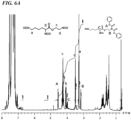

Classifications
-
- C—CHEMISTRY; METALLURGY
- C07—ORGANIC CHEMISTRY
- C07C—ACYCLIC OR CARBOCYCLIC COMPOUNDS
- C07C271/00—Derivatives of carbamic acids, i.e. compounds containing any of the groups, the nitrogen atom not being part of nitro or nitroso groups
- C07C271/62—Compounds containing any of the groups, X being a hetero atom, Y being any atom, e.g. N-acylcarbamates
- C07C271/66—Y being a hetero atom
-
- C—CHEMISTRY; METALLURGY
- C07—ORGANIC CHEMISTRY
- C07C—ACYCLIC OR CARBOCYCLIC COMPOUNDS
- C07C263/00—Preparation of derivatives of isocyanic acid
- C07C263/18—Separation; Purification; Stabilisation; Use of additives
-
- C—CHEMISTRY; METALLURGY
- C07—ORGANIC CHEMISTRY
- C07C—ACYCLIC OR CARBOCYCLIC COMPOUNDS
- C07C265/00—Derivatives of isocyanic acid
- C07C265/14—Derivatives of isocyanic acid containing at least two isocyanate groups bound to the same carbon skeleton
-
- C—CHEMISTRY; METALLURGY
- C07—ORGANIC CHEMISTRY
- C07C—ACYCLIC OR CARBOCYCLIC COMPOUNDS
- C07C2601/00—Systems containing only non-condensed rings
- C07C2601/12—Systems containing only non-condensed rings with a six-membered ring
- C07C2601/14—The ring being saturated
Definitions
- the present invention relates to a carbonyl compound, a method for producing a carbonyl compound, a method for producing an isocyanate compound, and an isocyanate composition.
- An isocyanate has been widely used as a raw material for producing polyurethane foams, coating materials, adhesives, and the like.
- a major industrial production method for an isocyanate is a reaction between an amine compound and phosgene (phosgene method), and almost all of isocyanates produced in the world are produced by the phosgene method.
- the phosgene method has many problems.
- phosgene is used as a raw material.
- Phosgene is extremely toxic, and thus special caution is required in handling thereof to prevent workers from being exposed thereto, and a special device for detoxifying the waste is also required.
- Second, in the phosgene method since a large amount of highly corrosive hydrogen chloride is produced as a by-product, a process for detoxifying the hydrogen chloride is required, and furthermore, the produced isocyanate contains hydrolyzable chlorine in many cases. Therefore, in a case where an isocyanate produced by the phosgene method is used, there is a case where atmospheric corrosion resistance and heat resistance of the polyurethane product are adversely affected.
- R is an a-valent organic group
- R' is a monovalent organic group
- a is an integer of 1 or more.
- R a to R h each independently is a monovalent organic group.
- a polyurethane having a urethane bond is mainly produced by a reaction between a bifunctional or higher functional isocyanate and a bifunctional or higher functional alcohol, is a polymer excellent in tensile strength, abrasion resistance, and oil resistance, and is used in a wide range of fields such as a soft foam, a hard foam, an elastomer, an adhesive, a coating material, and a binder.
- a polyurethane for which a chain-like or cyclic aliphatic isocyanate is used as a raw material has excellent atmospheric corrosion resistance and light resistance, and is used in fields where appearance quality of a baking coating material, an automobile clear coating material, a coil coating material, and the like is required.
- a diisocyanate which is a bifunctional isocyanate is used as the isocyanate, but for the purpose of ensuring the safety of a handling operator by improving physical properties of polyurethane and suppressing a steam pressure
- a diisocyanate is polymerized by the reaction represented by Formulae (a) to (c) and is used as the isocyanate polymer, for example.
- R represents a divalent organic group
- R' represents a trivalent organic group.
- An isocyanurate type isocyanate polymer is obtained in the reaction represented by Formula (a), a biuret type isocyanate polymer is obtained in the reaction represented by Formula (b), and a urethane type isocyanate polymer is obtained in the reaction represented by Formula (c).
- the isocyanurate type isocyanate polymer is disclosed in Patent Documents 1 to 4.
- the biuret type isocyanate polymer is disclosed in Patent Documents 5 to 10.
- the allophanate type isocyanate polymer is disclosed in Patent Documents 11 and 12.
- polyurethane is required to have less coloring.
- the isocyanate tends to be oxidized by oxygen or the like in the air to be degenerated or colored easily.
- the isocyanate tends to be colored due to a catalyst or solvent used in the polymerization reaction.
- Patent Document 13 discloses a method of denaturing an isocyanate and then treating the isocyanate with a peroxide to produce a polyisocyanate for a light-colored polyurethane lacquer.
- Patent Document 14 examines a method for producing an isocyanate with reduced coloring by bringing an ozone-containing gas into contact with the colored isocyanate.
- Patent Document 15 also examines a method for producing an isocyanate with reduced coloring by irradiating a colored isocyanate with light having a wavelength of 200 to 600 nm.
- the above-described side reaction causes a decrease in the yield or selection rate of a desired isocyanate compound, and also there is a case where long-term operation becomes difficult due to precipitation of a polymer-like solid substance, clogging of a reactor, and the like particularly in the production of a polyisocyanate.
- a compound having a boiling point higher than that of the isocyanate compound in addition to the compound generated by the above-described side reaction, is produced as a by-product.
- the present invention has been made in view of the above-described circumstances, and provides a novel carbonyl compound, a method for producing thereof, and a method for producing an isocyanate compound using the carbonyl compound.
- the present invention has been made in view of the above-described circumstances, and provides an isocyanate composition in which coloring is sufficiently suppressed and storage stability is improved.
- the present invention includes the following aspects.
- the method for producing an isocyanate compound of the above-described aspect is a method using the carbonyl compound, and thus it is possible to prevent a by-product during the production of the isocyanate compound from being fixed to a device and to improve a yield of the isocyanate compound.
- the isocyanate composition of the above-described aspect it is possible to provide an isocyanate composition in which coloring is sufficiently suppressed and the storage stability is excellent.
- organometallic compounds as a subject of Nomenclature also include organometallic compounds and metal complexes.
- organic group unless otherwise specified, the terms “organic group”, “substituent”, and the like mean a group formed of atoms not including metal atoms and/or metalloids.
- organic compound formed of an atom selected from H (hydrogen atom), C (carbon atom), N (nitrogen atom), O (oxygen atom), S (sulfur atom), Cl (chlorine atom), Br (bromine atom), and 1 (iodine atom) is used.
- aliphatic and "aromatic” are frequently used. According to the above-described IUPAC regulations, organic compounds are classified into aliphatic compounds and aromatic compounds.
- the aliphatic compound is defined as a group according to the aliphatic compound based on the 1995 IUPAC recommendation. In the recommendation, the aliphatic compound is defined as "acyclic or cyclic, saturated or unsaturated carbon compounds, excluding aromatic compounds”.
- the "aliphatic compound” used in the description of the present embodiment is a compound containing all of saturated and unsaturated, and chain-like and cyclic compounds, and refers to the above-described "organic compound", “organic group”, or “substituent” formed of an atom selected from the group consisting of halogen atoms of H (hydrogen atom); C (carbon atom); N (nitrogen atom); O (oxygen atom; S (sulfur atom); Si (silicon atom); Cl (chlorine atom), Br (bromine atom), or I (iodine atom).
- an aromatic group such as aralkyl group is bound to an aliphatic group
- this is denoted as "aliphatic group substituted with an aromatic group” or "group consisting of an aliphatic group to which an aromatic group is bound” in that way.
- This is based on the reactivity in the present embodiment, and this is because the properties of a group such as an aralkyl group relating to the reaction are extremely similar to the aliphatic reactivity, not to the aromatic reactivity.
- the "active hydrogen” refers to a hydrogen atom (excluding aromatic hydroxy group) to which an oxygen atom, a sulfur atom, a nitrogen atom, a silicon atom, or the like is bound, and a hydrogen atom of a terminal methine group.
- examples of the compound having a hydroxy group include an alcohol and an aromatic hydroxy compound.
- the "alcohol” in the present specification is "compounds to which a hydroxy group is bound to a saturated carbon atom (compounds in which a hydroxy group, -OH, is attached to a saturated carbon atom: R3COH)", described in the IUPAC definition (Rule C-201), and does not include an aromatic hydroxy compound to which a hydroxy group is bound to an aromatic ring.
- aromatic hydroxy compound in the present specification is phenols described in the IUPAC definition (Rule C-202), "compounds having one or more hydroxy groups attached to a benzene or other arene ring)".
- R 11 is an (n11 + n12)-valent organic group
- R 12 is a monovalent organic group.
- n11 is an integer of 1 or more and 8 or less
- n12 is an integer of 0 or more and 7 or less
- a sum of n11 and n12 is an integer of 2 or more and 8 or less).
- the inventors of the present invention found that the carbonyl compound (I) is generated in the production of an isocyanate compound by a pyrolysis reaction of a carbamate compound.
- the inventors found that in a case of producing an isocyanate compound from a carbamate compound by pyrolysis, by causing carbonyl compound (I) to coexist, it is possible to prevent a by-product having a higher boiling point than that of the isocyanate compound (hereinafter, referred to as "by-product having high-boiling point" in some cases) from being fixed to a device in the pyrolysis step or purification step, to efficiently recover the isocyanate compound, and to improve a yield of the isocyanate compound, thereby completing the present invention.
- a by-product having a higher boiling point than that of the isocyanate compound hereinafter, referred to as "by-product having high-boiling point" in some cases
- Examples of the aliphatic hydrocarbon group in R 11 preferably include an alkylene group, an alkanetriyl group, a cycloalkyl group, a cycloalkylene group, or a cycloalkanetriyl group, or a group formed of the alkyl group, the alkylene group, the alkanetriyl group, the cycloalkyl group,the cycloalkylene group, or the cycloalkanetriyl group, and more preferably include a linear or branched alkylene group or alkanetriyl group, a cycloalkylene group, or a cycloalkanetriyl group, or a group formed of the alkylene group, the alkanetriyl group, the cycloalkyl group, the cycloalkylene group, or the cycloalkanetriyl group.
- linear or branched alkylene group examples include a methylene group, an ethylene group, a propylene group, a trimethylene group, a pentylene group, an n-hexylene group, a decamethylene group, and the like.
- cycloalkylene group examples include a cyclobutylene group, a cyclohexene group, and the like.
- linear or branched alkanetriyl group examples include a hexanetriyl group, a nonanetriyl group, a decantriyl group, and the like.
- cycloalkanetriyl group examples include a cyclopropanetriyl group, a cyclobutanetriyl group, a cyclopentanetriyl group, a cyclohexanetriyl group, and the like.
- the aromatic hydrocarbon group in R 11 is preferably a group having a substituted or unsubstituted aromatic ring having 6 or more and 13 or less carbon atoms.
- substituents include an alkyl group, an aryl group, an aralkyl group, and the like.
- the aromatic ring may be an aromatic hydrocarbon ring, or may be a heteroaromatic ring, and specific examples thereof include a benzene ring, a naphthalene ring, a pyridine ring, and the like.
- R 11 is preferably a group obtained by removing a primary amino group at a terminal of an amine compound having an ester group obtained by reacting a carboxy group of an amino acid with a hydroxy compound.
- amine compound having an ester group referred to herein include acrylic acid-2-aminoethyl ester, 2-methyl-acrylic acid-2-aminoethyl ester, acrylic acid-2-aminopropyl ester, 2-methyl-acrylic acid-2-aminopropyl ester, acrylic acid-3-aminopropyl ester, 2-methyl-acrylic acid-3-aminopropyl ester, acrylic acid-4-aminobutyl ester, 2-methyl-acrylic acid-4-aminobutyl ester, acrylic acid-5-aminopentyl ester, 2-methyl-acrylic acid-5-aminopentyl ester, acrylic acid-6-aminohexyl ester, 2-methyl-acrylic acid-6-aminohexyl ester, acrylic acid-8-aminoctyl ester, 2-methyl-acrylic acid-8-aminoctyl ester, acrylic acid-10-aminodecyl ester, 2-methyl-acrylic acid-10-amino
- Examples of the amino acid used in the production of the amine compound having an ester group include lysine, alanine, arginine, asparagine, glutamine, glycine, aspartic acid, glutamic acid, ornithine, histidine, isoleucine, leucine, methionine, phenylalanine, tryptophan, valine, and the like.
- amino acid lysine, arginine, glycine, aspartic acid, glutamic acid, or ornithine is preferable, and lysine, arginine, glycine, aspartic acid, or glutamic acid is more preferable.
- Examples of the hydroxy compound used in the production of the amine compound having an ester group include alcohols and an aromatic hydroxy compound.
- alcohols examples include methyl alcohol, ethanol, propyl alcohol, butyl alcohol, amyl alcohol, hexyl alcohol, heptyl alcohol, octyl alcohol, nonyl alcohol, decyl alcohol, undecyl alcohol, lauryl alcohol, dotesyl alcohol, stearyl alcohol, eicosyl alcohol, allyl alcohol, crotyl alcohol, propargyl alcohol,cyclopentanol, cyclohexanol, benzyl alcohol, cinnamyl alcohol, ethylene glycol, diethylene glycol, polyethylene glycol, propylene glycol, polypropylene glycol, 1,3-butanediol, 1,4-butanediol, hydrogenated bisphenol A, neopentyl glycol, glycerin, trimethylolpropane, pentaerythritol, ethanolamine, propanolamine (1-amino-2-propanol), dimethanolamine, di
- aromatic hydroxy compound examples include monophenols such as phenol (cobaltic acid), 2-methoxyphenol, cresol, xylenol, carbachlor, motyl, naphthol, polyhydric phenols such as catechol, resorcin, hydroquinone, bisphenol A, bisphenol F, pyrogallol, and floroglucinol.
- monophenols such as phenol (cobaltic acid), 2-methoxyphenol, cresol, xylenol, carbachlor, motyl, naphthol
- polyhydric phenols such as catechol, resorcin, hydroquinone, bisphenol A, bisphenol F, pyrogallol, and floroglucinol.
- R 11 is preferably an organic group obtained by removing an amino group at a terminal from an amine compound having 1 or more and 4 or less secondary or tertiary amines other than a terminal of an aliphatic hydrocarbon group or an aromatic group.
- amine compound having 1 or more and 4 or less secondary or tertiary amines other than the terminal of the aliphatic hydrocarbon group or the aromatic group referred to herein include 2-(dimethylamino)ethyleneamine, 2-(diethylamino)ethyleneamine, 2-(diisopropylamino)ethyleneamine, 2-(cyclohexylamino)ethyleneamine, 3-(cyclohexylamino)propylamine, 3-(diethylamino)propylamine,3-(dimethylamino)propylamine, diethylenetriamine, diisopropyltriamine, bis-(3-aminopropyl)methyleneamine, 3-(2-aminoethylamino)propylamine, N,N'-bis(3-aminopropyl)ethylenediamine, 1-(3-aminopropyl)imidazole, trisaminoethylamine, trisaminopropylamine, and the like
- the amine compound is preferably an amine compound which has a tertiary amine other than 1 or more and 2 or less terminals and has an aliphatic hydrocarbon group or an aromatic group, and is more preferably an amine compound which has a tertiary amine other than 1 terminal and has an aliphatic hydrocarbon group or an aromatic group.
- R 11 is preferably a group represented by any one of Formulae (Ia-1) to (Ia-24), and more preferably a group represented by Formulae (la-1), (Ia-2), (Ia-3), (Ia-14), (Ia-18), or (Ia-19).
- the wavy line indicates an atomic bonding.
- R 12 is a monovalent organic group, and is preferably an aliphatic hydrocarbon group having 1 or more and 20 or less carbon atoms or an aromatic hydrocarbon group having 6 or more and 20 or less carbon atoms, which may contain an oxygen atom.
- Examples of the aliphatic hydrocarbon group in R 12 include an alkyl group of a methyl group, an ethyl group, a propyl group (each isomer), a butyl group (each isomer), a pentyl group (each isomer), a hexyl group (each isomer), a heptyl group (each isomer), an octyl group (each isomer), a nonyl group (each isomer), a decyl group (each isomer), an undecyl group (each isomer), a dodecyl group (each isomer), a tridecyl group (each isomer), a tetradecyl group (each isomer), a pentadecyl group (each isomer), a hexadecyl group (each isomer), a heptadecyl group (e
- Examples of the aliphatic hydrocarbon group which may have an oxygen atom in R 12 include an alkoxyalkyl group such as a methoxymethyl group, a methoxyethyl group (each isomer), a methoxypropyl group (each isomer), a methoxybutyl group (each isomer), a methoxypentyl group (each isomer), a methoxyhexyl group (each isomer), a methoxyheptyl group (each isomer), a methoxyoctyl group (each isomer), a methoxynonyl group (each isomer), a methoxydecyl group (each isomer), a methoxyundecyl group (each isomer), a methoxydodecyl group (each isomer), a methoxytridecyl group (each isomer), a methoxytetrade
- Examples of the aromatic hydrocarbon group om R 12 include an aryl group such as a phenyl group, a naphthyl group, an anthryl group, a pyrenyl group, and a phenanthryl group; a methylphenyl group (each isomer), an ethylphenyl group (each isomer), a propylphenyl group (each isomer), a butylphenyl group (each isomer), a pentylphenyl group (each isomer), a hexylphenyl group (each isomer), a heptylphenyl group (each isomer), an octylphenyl group (each isomer), a nonylphenyl group (each isomer), a decylphenyl group (each isomer), an undecylphenyl group (each isomer), a dodecylphen
- Examples of the aromatic hydrocarbon group which may have an oxygen atom in R 12 include alkoxyaryl groups such as a methoxyphenyl group (each isomer) and an ethoxyphenyl group (each isomer).
- R 12 is preferably a phenyl group, a naphthyl group, an anthryl group, a pyrenyl group, a phenanthryl group, a methylphenyl group (each isomer), an ethylphenyl group (each isomer), a propylphenyl group (each isomer), a butylphenyl group (each isomer), pentylphenyl group (each isomer), a hexylphenyl group (each isomer), a heptylphenyl group (each isomer), an octylphenyl group (each isomer), a nonylphenyl group (each isomer), a decylphenyl group (each isomer), an undecylphenyl group (each isomer), a dodecylphenyl group (each isomer), a tridec
- R 12 a phenyl group, a cumylphenyl group (each isomer), a methoxyphenyl group (each isomer), or an ethoxyphenyl group (each isomer) is more preferable.
- n11 is an integer of 1 or more and 8 or less.
- n12 represents the number of isocyanate groups, and is an integer of 0 or more and 7 or less.
- n11 + n12 is an integer of 2 or more and 8 or less, preferably an integer of 2 or more and 6 or less, more preferably an integer of 2 or more and 5 or less, and further more preferably an integer of 3 or more and 4 or less.
- (n11 + n12) is preferably 6 or less, (n11 + n12) is more preferably 5 or less, and (n11 + n12) is further more preferably 4 or less.
- Examples of preferable carbonyl compounds (1) include compounds represented by Formulae (I-1a) to (I-24) (hereinafter, also referred to as "carbonyl compound (I-1a)" in some cases) and the like.
- carbonyl compounds (I-1a) to (I-1c) carbonyl compounds (I-2a) to (I-2c), carbonyl compounds (I-3a) to (I-3c), carbonyl compounds (I-4a) to (I-4c), carbonyl compounds (I-5a) to (I-5c), carbonyl compounds (I-6a) to (I-6c), carbonyl compounds (I-7a) to (I-7b), carbonyl compounds (I-8a) to (I-8b), carbonyl compounds (I-9a) to (I-9b), carbonyl compounds (I-10a) to (I-10b), carbonyl compounds (I-11a) to (I-11b), carbonyl compounds (I-12a) to (I-12b), carbonyl compounds (I-22a) to (I-22b), or carbony
- the inventors of the present found that the carbonyl compound (I) is generated in the production of an isocyanate compound by a pyrolysis reaction of a carbamate compound.
- examples of the method for producing a carbonyl compound of the present embodiment include 1) a production method by a pyrolysis reaction of a carbamate compound; and 2) a method for mixing one or more compounds selected from the group consisting of an isocyanate compound and a carbamate compound with one or more compounds selected from the group consisting of a carbonate and a hydroxy compound, and heating thereof.
- the generation reaction of the carbonyl compound (I) is carried out by a reaction between one or more compounds selected from the group consisting of an isocyanate compound and a carbamate compound and one or more compounds selected from the group consisting of a carbonate and a hydroxy compound. Therefore, in the pyrolysis reaction of the carbamate compound, by increasing a use amount of the carbonate, or carrying out the pyrolysis reaction under reflux conditions to prevent evaporation of the excess carbonate, a generation ratio of the carbonyl compound (I) can be relatively increased.
- the carbonyl compound (I) is presumed to be generated by a reaction mechanism represented by Formula (F), (G), or (H).
- R j is a di- or higher valent organic group.
- R k is a monovalent organic group.
- the use amount (molar amount) of the carbonate as a solvent be large from the viewpoint of suppressing a side reaction, but in consideration of the size of the reactor, the use amount is preferably 0.001 times or more and 100 times or less, more preferably 0.01 times or more and 80 times or less, and further more preferably 0.1 times or more and 50 times or less, in terms of a stoichiometric ratio with respect to the carbamate compound.
- the carbonate in a case of producing a carbamate compound by a method to be described later, in a case where the carbamate compound contains a carbonate, the carbonate may be used as it is, or a carbonate may be newly added to the carbamate compound.
- the carbonate may be supplied to the reactor before the start of the reaction, may be supplied during the reaction, or may be supplied to the reactor in both cases. Among these, it is preferable that the carbonate be supplied to the reactor before the reaction.
- a reaction temperature is usually 100°C or higher and 400°C or lower, and a high temperature is preferable to increase the reaction rate.
- the reaction temperature is preferably 130°C or higher and 300°C or lower, and more preferably 150°C or higher and 280°C or lower.
- known cooling devices and heating devices may be installed in the reactor.
- reaction pressure varies depending on the type of the compound used or the reaction temperature, but the reaction pressure may be any one of reduced pressure, normal pressure, or pressurized pressure, and the reaction pressure is usually in a range of 20 Pa or more and 1 ⁇ 10 6 Pa or less.
- reaction time is not particularly limited, but is usually 0.001 hours or longer and 100 hours or shorter, preferably 0.01 hours or longer and 50 hours or shorter, and more preferably 0.1 hours or longer and 10 hours or shorter.
- a catalyst can be used, and a use amount of the catalyst is preferably 0.01% by mass or more and 30% by mass or less, and more preferably 0.5% by mass or more and 20% by mass or less, with respect to the mass of the carbamate compound.
- the catalyst examples include organic metal catalysts such as dibutyltin dilaurate, lead octylate, and stannous octoate; and amines such as 1,4-diazabicyclo[2,2,2]octane, triethylenediamine, and triethylamine.
- organic metal catalysts such as dibutyltin dilaurate, lead octylate, and stanaoctoate are suitable. These compounds may be used alone or a mixture of two or more types thereof may be used.
- the pyrolysis reaction is a reaction of generating the corresponding isocyanate compound, a hydroxy compound, and a carbonyl compound from the carbamate compound.
- the isocyanate compound, the carbonate, and the carbamate compound need to be heated in a coexisting state.
- a hydroxy compound which is the product in the pyrolysis reaction
- a gas-phase component from the pyrolysis reaction system by, for example, distillation or the like, to separate the hydroxy compound from the carbonate and the isocyanate compound under conditions of reflux and the like, and to cause the carbonate and the isocyanate to exist as liquid-phase components.
- a light boiling component may be distilled off, and the distillation method is not particularly limited as long as the light boiling component can be separated as a gas-phase component.
- the "light boiling component (light-boiling-point component)" referred to herein refers to a component having a boiling point lower than that of the carbonyl compound, and varies depending on the type of the compound serving as a raw material for producing the carbonyl compound, but is mainly one or more compounds selected from the group consisting of a carbonate used in the pyrolysis step, an isocyanate compound generated by the pyrolysis reaction, and a hydroxy compound.
- a pressure at a time of distilling off the light boiling component varies depending on the type of the compound or the reaction temperature, but the pressure may be any of reduced pressure, normal pressure, and pressurized pressure as long as the carbonyl compound and the light boiling component can be separated, and is preferably 20 Pa or more and 1 ⁇ 10 6 Pa or less, more preferably 20 Pa or more and 1 ⁇ 10 4 Pa or less, further more preferably 20 Pa or more and 1 ⁇ 10 3 Pa or less, and particularly preferably 20 Pa or more and 1 ⁇ 10 2 Pa or less.
- An operation time (retention time in the case of a continuous method) at the time of distilling off the light boiling component is not particularly limited as long as the carbonyl compound and the light boiling component can be separated, and, from the viewpoint of suppressing a side reaction between the carbonyl compound, is preferably 5 seconds or longer and 100 hours or shorter, more preferably 10 seconds or longer and 50 hours or shorter, and further more preferably 20 seconds or longer and 10 hours or shorter.
- a temperature at the time of distilling off the light boiling component is not particularly limited as long as the carbonyl compound is stable and the carbonyl compound and the light boiling component can be separated, and from the viewpoint of suppressing denaturation of the carbonyl compound, the temperature is preferably 20°C or higher and 300°C or lower, more preferably 30°C or higher and 280°C or lower, and further more preferably 40°C or higher and 250°C or lower.
- the carbonyl compound (I) is obtained by heating a mixture of the isocyanate compound (II) and the carbonate (IV), a mixture of the carbamate compound (III) or the carbamate compound (VI) and the carbonate (IV), a mixture of the isocyanate compound (II), the hydroxy compound (V), and the carbonate (IV), a mixture of the isocyanate compound (II), the carbamate compound (III) or the carbamate compound (VI), and the carbonate (IV), or a mixture of the isocyanate compound (II), the carbamate compound (III) or the carbamate compound (VI), the carbonate (IV), and the hydroxy compound (V) (hereinafter, these mixtures may be collectively referred to as simply "raw material mixture” in some cases).
- a blending amount (molar amount) of the carbonate is preferably large from the viewpoint of suppressing a side reaction, but in consideration of the size of the reactor and the like, the blending amount is preferably 0.001 times or more and 100 times or less, more preferably 0.01 times or more and 80 times or less, and further more preferably 0.1 times or more and 50 times or less, in terms of the stoichiometric ratio with respect to the carbamate compound.
- a heating temperature is usually 100°C or higher and 400°C or lower, and a high temperature is preferable to increase the reaction rate.
- the reaction temperature is preferably 130°C or higher and 300°C or lower, and more preferably 150°C or higher and 280°C or lower.
- known cooling devices and heating devices may be installed in the reactor.
- a pressure at the time of heating varies depending on the type of the compound used or the reaction temperature, but the pressure may be any one of reduced pressure, normal pressure, or pressurized pressure, and the pressure is usually in a range of 20 Pa or more and 1 ⁇ 10 6 Pa or less.
- a heating time is not particularly limited, and is usually 0.001 hours or longer and 100 hours or shorter, preferably 0.01 hours or longer and 50 hours or shorter, and more preferably 0.1 hours or longer and 10 hours or shorter.
- the carbonyl compound In the production of the carbonyl compound by mixing and heating, it is possible to increase a generation rate and a generation amount of the carbonyl compound by bringing the raw material mixture into contact with stainless steel and heating the raw material mixture.
- the stainless steel any shape can be used as long as the stainless steel is made of SUS316 or SUS304, and for example, a filling material or a metal piece is preferably used.
- the filling material is not particularly limited, but DIXON Packing, Mc MAHON Packing, Coil Pack, MESH RING, CANNON Packing, HELI PACK, RASCHIG RING, PRICKLE RING, or the like is used.
- a value of A/V is preferably 0.001 m 2 /m 3 or more and 100,000 m 2 /m 3 or less, more preferably 0.01 m 2 /m 3 or more and 50,000 m 2 /m 3 or less, and further more preferably 0.1 m 2 /m 3 or more and 10,000 m 2 /m 3 or less.
- a reaction form is not particularly limited, but a reactor that can efficiently mix and heat the raw material mixture or the mixture and stainless steel is preferable, and for example, a method of heating a raw material mixture in a stirring tank or a distillation column made of stainless steel is preferable.
- the distillation method is not particularly limited as long as a light boiling component may be distilled off after heating a raw material mixture, and the light boiling component can be separated as a gas-phase component.
- the "light boiling component (light boiling point component)" referred to herein refers to a component having a boiling point lower than that of the carbonyl compound and varies depending on the type of the compound serving as a raw material for producing the carbonyl compound, but is mainly one or more compounds selected from the group consisting of a carbonate contained in the raw material mixture, an isocyanate compound generated by the pyrolysis reaction, and a hydroxy compound.
- a pressure at a time of distilling off the light boiling component varies depending on the type of the compound or the reaction temperature, but the pressure may be any of reduced pressure, normal pressure, and pressurized pressure as long as the carbonyl compound and the light boiling component can be separated, and is preferably 20 Pa or more and 1 ⁇ 10 6 Pa or less, more preferably 20 Pa or more and 1 ⁇ 10 4 Pa or less, further more preferably 20 Pa or more and 1 ⁇ 10 3 Pa or less, and particularly preferably 20 Pa or more and 1 ⁇ 10 2 Pa or less.
- An operation time (retention time in the case of a continuous method) at the time of distilling off the light boiling component is not particularly limited as long as the carbonyl compound and the light boiling component can be separated, and, from the viewpoint of suppressing a side reaction between the carbonyl compound, is preferably 5 seconds or longer and 100 hours or shorter, more preferably 10 seconds or longer and 50 hours or shorter, and further more preferably 20 seconds or longer and 10 hours or shorter.
- a temperature at the time of distilling off the light boiling component is not particularly limited as long as the carbonyl compound is stable and the carbonyl compound and the light boiling component can be separated, and from the viewpoint of suppressing denaturation of the carbonyl compound, the temperature is preferably 20°C or higher and 300°C or lower, more preferably 30°C or higher and 280°C or lower, and further more preferably 40°C or higher and 250°C or lower.
- isocyanate compound (II) a compound represented by General Formula (II) (hereinafter, referred to as "isocyanate compound (II)" in some cases) is preferably used.
- R 21 is an aliphatic hydrocarbon group
- specific examples of the isocyanate compound (II) include aliphatic diisocyanates, aliphatic triisocyanates, substituted cyclic aliphatic polyisocyanates, and the like.
- aliphatic diisocyanates examples include diisocyanatoethane, diisocyanatopropane (each isomer), diisocyanatobutane (each isomer), diisocyanatopentane (each isomer), diisocyanatohexane (each isomer), diisocyanatodecane (each isomer), and the like.
- aliphatic triisocyanates examples include triisocyanatohexane (each isomer), 4-isocyanatomethyl-1,8-octamethylene diisocyanate, triisocyanatononane (each isomer), triisocyanatodecane (each isomer), and the like.
- substituted cyclic aliphatic polyisocyanates examples include diisocyanatocyclobutane (each isomer), diisocyanatocyclohexane (each isomer), 3-isocyanatomethyl-3,5,5-trimethylcyclohexyl isocyanate (also referred to as isophorone diisocyanate) (each isomer), 1,3-bis(isocyanatomethyl)cyclohexane (at least one isomer of a cis-form and a trans-form), methylenebis(cyclohexylisocyanate) (also referred to as dicyclohexylmethane diisocyanate) (each isomer), and the like.
- diisocyanatocyclobutane each isomer
- diisocyanatocyclohexane each isomer
- 3-isocyanatomethyl-3,5,5-trimethylcyclohexyl isocyanate also referred to
- R 21 is an aromatic group
- specific examples of the isocyanate compound (II) include aromatic diisocyanates, aromatic triisocyanates, and the like.
- aromatic diisocyanates examples include diisocyanatobenzene (each isomer), diisocyanatotoluene (each isomer), bis(isocyanatophenyl)methane (each isomer), diisocyanatomethylene (each isomer), diisocyanatobiphenyl (each isomer), diisocyanatodibenzyl (each isomer), bis(isocyanatophenyl)propane (each isomer), bis(isocyanatophenyl) ether (each isomer),bis(isocyanatophenoxyethane) (each isomer), diisocyanatoxylene (each isomer), diisocyanatoanisole (each isomer), diisocyanatophenitol (each isomer), diisocyanatonaphthalene (each isomer), diisocyanatomethylbenzene (each isomer), diiso
- aromatic triisocyanates examples include triisocyanatobenzene (each isomer), triisocyanato-methylbenzene (each isomer), tris(isocyanatopropane-yl)benzene (each isomer), tris(isocyanatopropane-yl)-methylbenzene (each isomer), tris(isocyanatomethyl)-methylbenzene (each isomer), ((isocyanato-phenylene)bis(methylene))bis(isocyanatobenzene) (each isomer), and the like.
- the reactivity of the isocyanate group which is directly bound is increased due to an electron-attracting effect of the aromatic group.
- the number of the isocyanate groups directly bound to the same aromatic compound increases, the reactivity is further enhanced due to a mutual electron-attracting action.
- the number of the isocyanate groups to R 21 is preferably 2 or more, and more preferably 3 or more.
- the number of the isocyanate groups which are directly bound to R 21 is preferably 4 or less, and more preferably 3 or less.
- isocyanate compound (II) examples include acrylic acid-2-isocyanato-ethyl ester, 2-methyl-acrylic acid-2-isocyanato-ethyl ester, acrylic acid-2-isocyanato-propyl ester, 2-methyl-acrylic acid-2-isocyanato-propyl ester, acrylic acid-3-isocyanato-propyl ester, 2-methyl-acrylic acid-3-isocyanato-propyl ester, acrylic acid-4-isocyanato-butyl ester, 2-methyl-acrylic acid-4-isocyanato-butyl ester, acrylic acid-5-isocyanato-pentyl ester, 2-methyl-acrylic acid-5-isocyanato-pentyl ester, acrylic acid-6-isocyanato-hexyl ester, 2-methyl-acryl
- the isocyanate compound has an electron-attracting group such as an ester group or a N atom
- reactivity of the isocyanate group is improved. Since the reactivity of the isocyanate group is further improved as the number of carbon atoms between the isocyanate group and the ester group or the nitrogen atom is smaller, the number of carbon atoms is preferably 1 or more and 20 or less, more preferably 1 or more and 8 or less, and further more preferably 1 or more and 3 or less.
- the carbon-carbon or carbon-nitrogen bond between the isocyanate group which is an electron-attracting group and the ester group or the nitrogen atom is easily dissociated, and thus the thermal stability of the compound is impaired in some cases.
- the isocyanate compound (II) is often used as a raw material for coating materials, and is required to have a non-coloring property (atmospheric corrosion resistance) when exposed to light such as the sunlight.
- R 21 contains an aromatic group, coloring occurs due to the absorption of light energy when exposed to the sunlight. Therefore, from the viewpoint of atmospheric corrosion resistance, R 21 preferably has no aromatic group, may have 1 or more and 4 or less ester groups or nitrogen atoms, and is more preferably a di- or higher valent and tetra- or lower valent aliphatic hydrocarbon group having 1 or more and 20 or less carbon atoms.
- R 21 is preferably a group represented by any of Formulae (Ia-1) to (Ia-24), and more preferably a group represented by Formulae (Ia-1), (la-2), (Ia-3), (Ia-14), (Ia-18), or (la-19).
- n21 is an integer of 2 or more and 8 or less, preferably an integer of 2 or more and 6 or less, more preferably an integer of 2 or more and 5 or less, and further more preferably an integer of 3 or more and 4 or less.
- a polymer can be obtained by reacting an n21- or higher-valent isocyanate with a dihydroxy compound or a diamine compound having an active hydrogen group. The larger the value of n21, the more the crosslinking points (isocyanate groups) per isocyanate molecule.
- the crosslinking density at the time of polymerization increases, and the curing time can be shortened or the hardness of the polymer can be improved.
- the expression "the crosslinking density increases" referred to herein means that an average molecular chain length between the crosslinking points decreases.
- the linear polymer and the polymer can further bind to each other, and a molecular weight of the polymer tends to increase.
- significant reduction of the curing time, or dramatic improvement of physical properties of a polymer such as the hardness can be expected.
- the valence of the isocyanate group n21 in the isocyanate compound is preferably 6 or less, more preferably 5 or less, and further more preferably 4 or less.
- Examples of the preferable isocyanate compound (II) include 4-isocyanatomethyl-1,8-octamethylene diisocyanate (TTI), 2-isocyanatoethyl-2,6-diisocyanatohexanoate (LTI), lysine methyl ester diisocyanate (LDI), methylenebis(cyclohexyl isocyanate) (HMDI), 1,3-bis(isocyanatomethyl)cyclohexane (HXDI), diisocyanatodiphenylmethane (MDI), and the like.
- TTI 4-isocyanatomethyl-1,8-octamethylene diisocyanate
- LKI 2-isocyanatoethyl-2,6-diisocyanatohexanoate
- LKI lysine methyl ester diisocyanate
- HMDI methylenebis(cyclohexyl isocyanate)
- HXDI 1,3
- carbamate compound (III) a compound represented by General Formula (III) (hereinafter, referred to as “carbamate compound (III)” in some cases) or a compound represented by General Formula (VI) (hereinafter, also referred to as “carbamate compound (VI)” in some cases) is preferably used.
- n31 is an integer of 1 or more and 8 or less
- n32 is an integer of 0 or more and 7 or less
- R 31 is preferably a di- or higher valent and tetra- or lower valent aliphatic hydrocarbon group having 1 or more and 20 or less carbon atoms, which may have 1 or more and 4 or less ester groups or nitrogen atoms, or a di- or higher valent and tri- or lower valent aromatic hydrocarbon group having 6 or more and 20 or less carbon atoms.
- R 31 is preferably a group represented by any of Formulae (Ia-1) to (Ia-24), and more preferably a group represented by Formulae (Ia-1), (Ia-2), (Ia-3), (Ia-14), (Ia-18), or (Ia-19).
- R 32 is preferably an aliphatic hydrocarbon group having 1 or more and 20 or less carbon atoms or an aromatic hydrocarbon group having 6 or more and 20 or less carbon atoms, which may contain an oxygen atom.
- R 32 specifically, a phenyl group, a naphthyl group, an anthryl group, a pyrenyl group, a phenanthryl group, a methylphenyl group (each isomer), an ethylphenyl group (each isomer), a propylphenyl group (each isomer), a butylphenyl group (each isomer), a pentylphenyl group (each isomer), a hexylphenyl group (each isomer), a heptylphenyl group (each isomer), an octylphenyl group (each isomer), a nonylphenyl group (each isomer), a decylphenyl group (each isomer), an undecylphenyl group (each isomer), a dodecylphenyl group (each isomer), a
- R 12 a phenyl group, a cumylphenyl group (each isomer), a methoxyphenyl group (each isomer), or an ethoxyphenyl group (each isomer) is more preferable.
- n31 is an integer of 1 or more and 8 or less.
- n32 is an integer of 0 or more and 7 or less.
- Examples of the preferable carbamate compound (III) include compounds represented by Formulae (III-1a) to (III-24b).
- carbamate compounds (III-1a) to (III- 1c), carbamate compounds (III-2a) to (III-2c), carbamate compounds (III-3a) to (III-3c), carbamate compounds (III-4a) to (III-4c), carbamate compounds (III-5a) to (III-5c), carbamate compounds (III-6a) to (III-6c), carbamate compounds (III-7a) to (III-7b), carbamate compounds (III-8a) to (III-8b), carbamate compounds (III-9a) to (III-9b), carbamate compounds (III-10a) to (III-10b), carbamate compounds (III-11a) to (111-11b), carbamate compounds (III-12a) to (III-12b), carbamate compounds (III-22a) to (III-22b), or carbamate compounds (III-24a) to (III-24b) can be a mixture, or single compounds.
- R 61 is preferably a di- or higher valent and tetra- or lower valent aliphatic hydrocarbon group having 1 or more and 20 or less carbon atoms, or a di- or higher valent and tri- or lower valent aromatic hydrocarbon group having 6 or more and 20 or less carbon atoms, which may have 1 or more and 4 or less ester groups or nitrogen atoms.
- R 61 specifically, a group represented by any of Formulae (Ia-1) to (Ia-24) is preferable, and a group represented by Formula (Ia-1), (Ia-2), (Ia-3), (Ia-14), (Ia-18), or (Ia-19) is more preferable.
- R 62 an aliphatic hydrocarbon group having 1 or more and 20 or less carbon atoms or an aromatic hydrocarbon group having 6 or more and 20 or less carbon atoms, which may contain an oxygen atom, is preferable.
- R 62 specifically, a phenyl group, a naphthyl group, an anthryl group, a pyrenyl group, a phenanthryl group, a methylphenyl group (each isomer), an ethylphenyl group (each isomer), a propylphenyl group (each isomer), a butylphenyl group (each isomer), a pentylphenyl group (each isomer), a hexylphenyl group (each isomer), a heptylphenyl group (each isomer), an octylphenyl group (each isomer), a nonylphenyl group (each isomer), a decylphenyl group (each isomer), an undecylphenyl group (each isomer), a dodecylphenyl group (each isomer),
- R 62 a phenyl group, a cumylphenyl group (each isomer), a methoxyphenyl group (each isomer), or an ethoxyphenyl group (each isomer) is more preferable.
- n61 is an integer of 2 or more and 8 or less, preferably an integer of 2 or more and 6 or less, more preferably an integer of 2 or more and 5 or less, and further more preferably an integer of 3 or more and 4 or less.
- Examples of the preferable carbamate compound (VI) include compounds represented by Formulae (VI-1) to (VI-24) and the like.
- carbonate (IV) a compound represented by General Formula (IV) (hereinafter, referred to as “carbonate (IV)” in some cases) is preferably used.
- R 41 and R 42 are preferably substituted or unsubstituted aryl groups.
- R 41 and R 42 a phenyl group, a methoxyphenyl group (each isomer), or an ethoxyphenyl group (each isomer) is further more preferable.
- Examples of the preferable carbonate (IV) include diphenyl carbonate, bis(4-cumylphenyl)carbonate, bis(2-methoxyphenyl)carbonate, and bis(2-ethoxyphenyl)carbonate.
- hydroxy compound (V) a compound represented by General Formula (V) (hereinafter, referred to as "hydroxy compound (V)" in some cases) is preferably used.
- R 51 specifically, a phenyl group, a naphthyl group, an anthryl group, a pyrenyl group, a phenanthryl group, a methylphenyl group (each isomer), an ethylphenyl group (each isomer), a propylphenyl group (each isomer), a butylphenyl group (each isomer), a pentylphenyl group (each isomer), a hexylphenyl group (each isomer), a heptylphenyl group (each isomer), an octylphenyl group (each isomer), a nonylphenyl group (each isomer), a decylphenyl group (each isomer), an undecylphenyl group (each isomer), a dodecylphenyl group (each isomer), a
- R 51 a phenyl group, a cumylphenyl group (each isomer), a methoxyphenyl group (each isomer), or an ethoxyphenyl group (each isomer) is more preferable.
- Examples of the preferable hydroxy compound (V) include an aromatic hydroxy compound (hereinafter, referred to as "aromatic hydroxy compound (V-1)" in some cases) represented by General Formula (V-1).
- Examples of the alkyl group having 1 or more and 20 or less carbon atoms in R 511 include a methyl group, an ethyl group, a propyl group (each isomer), a butyl group (each isomer), a pentyl group (each isomer), a hexyl group (each isomer), a heptyl group (each isomer), an octyl group (each isomer), a nonyl group (each isomer), a decyl group (each isomer), a dodecyl group (each isomer), an octadecyl group (each isomer), and the like.
- Examples of the alkoxy group having 1 or more and 20 or less carbon atoms in R 511 include a methoxy group, an ethoxy group, a propoxy group (each isomer), a butyloxy group (each isomer), a pentyloxy group (each isomer), a hexyloxy group (each isomer), a heptyloxy group (each isomer), an octyloxy group (each isomer), a nonyloxy group (each isomer), a decyloxy group (each isomer), a dodecyloxy group (each isomer), an octadecyloxy group (each isomer), and the like.
- Examples of the aryl group having 6 or more and 20 or less carbon atoms in R 511 include a phenyl group, a naphthyl group, and the like.
- Examples of the aryl group having an alkyl group as a substituent in R 511 include a methylphenyl group (each isomer), an ethylphenyl group (each isomer), a propylphenyl group (each isomer), a butylphenyl group (each isomer group), a pentylphenyl group (each isomer), a hexylphenyl group (each isomer), a heptylphenyl group (each isomer), an octylphenyl group (each isomer), a nonylphenyl group (each isomer), a decylphenyl group (each isomer), a biphenyl group (each isomer), a dimethylphenyl group (each isomer), a diethylphenyl group (each isomer), a dipropylphenyl group (each isomer
- Examples of the aryloxy group having 6 or more and 20 or less carbon atoms in R 511 include a phenoxy group, a methylphenoxy group (each isomer), an ethylphenoxy group (each isomer), a propylphenoxy group (each isomer), a butylphenoxy group (each isomer), a pentylphenoxy group (each isomer), a hexylphenoxy group (each isomer), a heptylphenoxy group (each isomer), an octylphenoxy group (each isomer), a nonylphenoxy group (each isomer), a decylphenoxy group (each isomer), a phenylphenoxy group (each isomer), a dimethylphenoxy group (each isomer), a diethylphenoxy group (each isomer), a dipropylphenoxy group (each isomer), a
- Examples of the aralkyl group having 7 or more and 20 or less carbon atoms in R 511 include a phenylmethyl group, a phenylethyl group (each isomer), a phenylpropyl group (each isomer), a phenylbutyl group (each isomer), a phenylpentyl group (each isomer), a phenylhexyl group (each isomer), a phenylheptyl group (each isomer), a phenyloctyl group (each isomer), a phenylnonyl group (each isomer), and the like.
- Examples of the aralkyloxy group having 7 or more and 20 or less carbon atoms in R 511 include a phenylmethoxy group, a phenylethoxy group (each isomer), a phenylpropyloxy group (each isomer), a phenylbutyloxy group (each isomer), a phenylpentyloxy group (each isomer), a phenylhexyloxy group (each isomer), a phenylheptyloxy group (each isomer), a phenyloctyloxy group (each isomer), a phenylnonyloxy group (each isomer), and the like.
- the ring A 511 is an aromatic hydrocarbon ring having 6 or more and 20 or less carbon atoms.
- the ring A 511 may be a monocyclic ring, may be a polycyclic ring, or may be a condensed ring.
- the ring A 511 include a benzene ring, a naphthalene ring, an anthracene ring, a phenanthrene ring, an aphthacene ring, a chrysene ring, a pyrene ring, a triphenylene ring, a pentalene ring, an azulene ring, a heptalene ring, an indacene ring, a biphenylene ring, an acenaphthylene ring, an aceanthrylene ring, an acephenanthrylene ring, and the like.
- a benzene ring, a naphthalene ring, or an anthracene ring is preferable, and a benzene ring is more preferable.
- these rings may have a substituent other than R 511 described above.
- substituent other than R 511 include the same substituents as those exemplified in R 511 .
- R 511 and the substituents other than R 511 consist of different functional groups.
- n511 indicates the number of substituents R 511 and is an integer of 1 or more and 10 or less.
- Examples of the compound in which the ring A 511 is a benzene ring include a compound represented by General Formula (V-1-1) (hereinafter, referred to as "hydroxy compound (V-1-1)" in some cases), and the like.
- R 512 to R 516 are each independently the same as that for R 511 .
- R 512 to R 516 be a hydrogen atom, and it is more preferable that all of R 512 to R 516 be hydrogen atoms.
- Examples of the preferable hydroxy compound (V-1-1) include phenol, 2-ethylphenol, 2-propylphenol (each isomer), 2-butylphenol (each isomer), 2-pentylphenol (each isomer), 2-hexylphenol (each isomer), 2-heptylphenol (each isomer), 2-phenylphenol, 2,6-dimethylphenol, 2,4-diethylphenol, 2,6-diethylphenol, 2,4-dipropylphenol (each isomer), 2,6-dipropylphenol (each isomer), 2,4-dibutylphenol (each isomer), 2,4-dipentylphenol (each isomer), 2,4-dihexylphenol (each isomer), 2,4-diheptylphenol (each isomer), 2-methyl-6-ethylphenol, 2-methyl-6-propylphenol (each isomer), 2-methyl-6-butylphenol (each iso
- a method for producing an isocyanate compound of the present embodiment includes performing distillation purification on a reaction solution including an isocyanate compound (II) in the presence of the above-described carbonyl compound (I), and continuously recovering the isocyanate compound (II) as a gas-phase component.
- the isocyanate compound (II) is obtained by carrying out a pyrolysis reaction of the carbamate compound (VI) in the presence of the carbonate (IV).
- an isocyanate (II) is obtained by carrying out a pyrolysis reaction of the carbamate compound (VI) in the presence of the carbonate (IV) as a solvent.
- side reactions represented by Formulae (B) to (E) occur and the generated isocyanurate group, the carbodiimide group, and the allophanate group act as crosslinking points, a high-molecular-weight component is generated, and purification of a solid substance or an increase in the liquid viscosity may occur.
- the carbonyl compound (I) acts as a good solvent for the above-described high-molecular-weight component, and the carbonyl compound (I) acts as a terminal sealing agent to suppress the increae in the molecular weight of by-products, thereby having an effect of suppressing the generation of solid substances or increase in liquid viscosity during the pyrolysis reaction.
- the carbonate (IV) may be supplied to the reactor before starting the reaction, may be supplied during the reaction, or may be supplied to the reactor in both cases. Among these, it is preferable that the carbonate be supplied to the reactor before the reaction.
- a use amount (molar amount) of the carbonate (IV) as the solvent be large from the viewpoint of suppressing side reactions, but in consideration of the size of the reactor, the use amount is preferably 0.001 times or more and 100 times or less, more preferably 0.01 times or more and 80 times or less, and further more preferably 0.1 times or more and 50 times or less, in terms of the stoichiometric ratio with respect to the carbamate compound.
- the carbonate (IV) may be used as it is, or the carbonate (IV) may be newly added to the carbamate compound (VI).
- a reaction temperature is usually 100°C or higher and 400°C or lower, and a high temperature is preferable to increase the reaction rate.
- the reaction temperature is preferably 130°C or higher and 300°C or lower, and more preferably 150°C or higher and 280°C or lower.
- known cooling devices and heating devices may be installed in the reactor.
- reaction pressure varies depending on the type of the compound used or the reaction temperature, but the reaction pressure may be any one of reduced pressure, normal pressure, or pressurized pressure, and the reaction pressure is usually in a range of 20 Pa or more and 1 ⁇ 10 6 Pa or less.
- reaction time is not particularly limited, but is usually 0.001 hours or longer and 100 hours or shorter, preferably 0.01 hours or longer and 50 hours or shorter, and more preferably 0.1 hours or longer and 10 hours or shorter.
- a catalyst can be used, and a use amount of the catalyst is preferably 0.01% by mass or more and 30% by mass or less, and more preferably 0.5% by mass or more and 20% by mass or less, with respect to the mass of the carbamate compound.
- the catalyst examples include organic metal catalysts such as dibutyltin dilaurate, lead octylate, and stannous octoate; and amines such as 1,4-diazabicyclo[2,2,2]octane, triethylenediamine, and triethylamine.
- organic metal catalyst such as dibutyltin dilaurate, lead octylate, and stanaoctoate is suitable. These compounds may be used alone or a mixture of two or more types thereof may be used.
- the pyrolysis reaction is a reaction of generating the corresponding isocyanate compound (II) and a hydroxy compound from the carbamate compound (VI), but the pyrolysis reaction is an equilibrium reaction. Therefore, to efficiently obtain the isocyanate compound (II) in the pyrolysis reaction, it is preferable to extract a hydroxy compound, which is the product in the pyrolysis reaction, as a gas-phase component from the pyrolysis reaction system by, for example, a method such as distillation or the like.
- a reaction solution obtained in the pyrolysis step includes the carbonyl compound (I)
- the reaction solution may be used as a reaction solution (isocyanate composition) including the isocyanate compound (II) and the carbonyl compound (I) in the purification step to be described later.
- a composition (isocyanate composition) obtained by mixing the carbonyl compound (I) obtained in the "method for producing a carbonyl compound” with a reaction solution including an isocyanate compound may be prepared and used in the purification step to be described later.
- a value of ⁇ 3 ⁇ (molar amount of isocyanurate group) + 2 ⁇ (molar amount of carbodiimide group) + 3 ⁇ (molar amount of uretonimine group) + 2 ⁇ (molar amount of allophanate group) [/(molar amount of carbonyl compound) is preferably 0.00001 or more and 80.0 or less, more preferably 0.0001 or more and 40.0 or less, and further more preferably 0.001 or more and 8.0 or less.
- the isocyanate compound is purified from the above-described isocyanate composition.
- the purification step specifically, first, a component (light boiling component) having a boiling point lower than that of the isocyanate compound contained in the isocyanate composition is distilled off (hereinafter, referred to as "light boiling separation"), and then the isocyanate compound is recovered as a gas-phase component, and separated from a component having a boiling point higher than that of the isocyanate compound (high boiling component) (hereinafter, referred to as "high-boiling separation") to purify the isocyanate compound from the isocyanate composition.
- light boiling separation a component having a boiling point lower than that of the isocyanate compound contained in the isocyanate composition is distilled off
- high-boiling separation a component having a boiling point higher than that of the isocyanate compound
- the distillation method is not particularly limited as long as the light boiling component can be separated as a gas-phase component.
- the "light boiling component (light boiling point component)" referred to herein refers to a component having a boiling point lower than that of the carbonyl compound, and varies depending on the type of the compound serving as a raw material for producing the isocyanate compound, but is mainly one or more compounds selected from the group consisting of a carbonate used in the pyrolysis step and a hydroxy compound produced as a by-product in the pyrolysis reaction.
- a pressure at the time of distilling off the light boiling component varies depending on the type of the compound or the reaction temperature, but the pressure may be any of reduced pressure, normal pressure, and pressurized pressure as long as the isocyanate compound and the light boiling component can be separated, and is preferably 20 Pa or more and 1 ⁇ 10 6 Pa or less, more preferably 20 Pa or more and 1 ⁇ 10 4 Pa or less, further more preferably 20 Pa or more and 1 ⁇ 10 3 Pa or less, and particularly preferably 20 Pa or more and 1 ⁇ 10 2 Pa or less.
- An operation time (retention time in the case of a continuous method) at the time of distilling off the light boiling component is not particularly limited as long as the isocyanate compound and the light boiling component can be separated, and, from the viewpoint of suppressing a side reaction between the isocyanate compound, is preferably 5 seconds or longer and 100 hours or shorter, more preferably 10 seconds or longer and 50 hours or shorter, and further more preferably 20 seconds or longer and 10 hours or shorter.
- a temperature at the time of distilling off the light boiling component is not particularly limited as long as the isocyanate compound is stable and the isocyanate compound and the light boiling component can be separated, and, from the viewpoint of suppressing denaturation of the isocyanate compound, is preferably 20°C or higher and 300°C or lower, more preferably 30°C or higher and 280°C or lower, and further more preferably 40°C or higher and 250°C or lower.
- the distillation method is not particularly limited as long as the isocyanate can be separated as a gas-phase component.
- the "high boiling component (high-boiling-point component)" referred to herein refers to a component having a boiling point higher than that of the isocyanate, and varies depending on the type of the compound serving as a raw material for producing the isocyanate compound, but is mainly a carbonyl compound generated in the pyrolysis step, a carbamate compound (III) (carbato group-containing isocyanate) and a carbamate compound (VI) (carbamate compound serving as a raw material in pyrolysis step), or a compound in which a part of the isocyanate group of the isocyanate compound is transformed into at least one type of functional group selected from the group consisting of a isocyanurate group, a carbodiimide group, a uretonimine group, and an allophanate group (hereinafter, referred to as "isocyanate
- R m and R n are each independently a di- or higher valent organic group.
- the isocyanate compound is distilled off, and thus the high boiling component is thickened and solidified, making it difficult to continue the operation. Therefore, it becomes difficult to recover the isocyanate compound in a high yield.
- the isocyanate (isocyanate polymer) a part of which is transformed into at least one type of functional group selected from the group consisting of an isocyanurate group, a carbodiimide group, a uretonimine group, and an allophanate group, has a high molecular weight, or the carbodiimide group produced by Formula (J) during high boiling separation and the isocyanate group of the isocyanate polymer are bound to form a uretonimine group (reverse reaction of Formula (J), and isocyanate polymers are bound to have a high molecular weight.
- the carbonyl compound (I) Since the carbonyl compound (I) has a higher boiling point than the isocyanate compound and has fewer crosslinking points than the isocyanate polymer, the carbonyl compound (I) acts as a solvent in the high boiling separation step. Alternatively, the carbonyl compound (I) is bound to a carbodiimide group, thereby preventing isocyanate polymers from being bound to each other to have a high molecular weight. Due to the action, the operability in the high boiling separation step is improved, and the isocyanate compound can be recovered in a high yield.
- a pressure at the time of separating a high boiling component varies depending on the type of the compound or the reaction temperature, but the pressure may be any of reduced pressure, normal pressure, and pressurized pressure as long as the isocyanate compound and the light boiling component can be separated, and is preferably 0.1 Pa or more and 1 ⁇ 10 6 Pa or less, more preferably 1 Pa or more and 1 ⁇ 10 4 Pa or less, and further more preferably 5 Pa or more and 1 ⁇ 10 3 Pa or less.
- An operation time (retention time in the case of a continuous method) at the time of separating the high boiling component is not particularly limited as long as the isocyanate compound and the light boiling component can be separated, and, from the viewpoint of suppressing a side reaction between the isocyanate compound, is preferably 5 seconds or longer and 100 hours or shorter, more preferably 10 seconds or longer and 50 hours or shorter, further more preferably 15 seconds or longer and 10 hours or shorter, particularly preferably 20 seconds or longer and 1 hour or shorter, and most preferably 25 seconds or longer and 10 minutes or shorter.
- a temperature at the time of separating the high boiling component is not particularly limited as long as the isocyanate compound is stable and the isocyanate compound and the light boiling component can be separated, and, from the viewpoint of suppressing denaturation of the isocyanate compound, is preferably 20°C or higher and 250°C or lower, more preferably 30°C or higher and 230°C or lower, and further more preferably 40°C or higher and 200°C or lower.
- the materials of the reactor and the manufacturing line in which the pyrolysis step and the purification step are performed may be any known materials as long as the materials do not adversely affect the carbamate compound, the hydroxy compound and the isocyanate compound which are the products, and the carbonate ester which is the solvent, but SUS304, SUS316, SUS316L, and the like are inexpensive and can be preferably used.
- the form of the reactor is not particularly limited, and known tank-like or column-like reactors can be used.
- a reactor including a line in which a low boiling point mixture containing the produced hydroxy compound is extracted from the reactor as a gas component, and a part or all of the mixture solution including an unreacted carbamate compound or a compound that is not extracted as the gas component is extracted from the reactor in a liquid state is preferably used.
- a reactor including a line in which a light boiling component is extracted from the reactor as a gas component, and a part or all of a mixture solution including a compound that is not extracted is extracted from the reactor in a liquid state is preferably used.
- a reactor including a line in which an isocyanate compound is extracted from the reactor as a gas component, and a part or all of a mixture including a compound that is not extracted is extracted from the reactor in a liquid state is preferably used.
- a method for producing a carbamate compound (VI) for example, a method for producing a carbamate compound (VI) from a carbonate derivative and an amine compound, or a method for producing a carbamate compound (VI) from a carbonate derivative, a hydroxy compound, and an amine compound is preferable.
- the hydroxy compound serving as a raw material for producing the carbamate compound (VI) the same hydroxy compound as the hydroxy compound (V) is preferably used.
- Examples of the carbonate derivative include urea, carbonate, and the like.
- the same carbonate as the carbonate (IV) is preferably used.
- the carbonate derivative urea, diphenyl carbonate, or dibutyl carbonate is preferable, and urea or diphenyl carbonate is more preferable.
- amine compound (VII) for example, a compound represented by General Formula (VII) (hereinafter, referred to as “amine compound (VII)" in some cases) is preferably used.
- R 71 is preferably a di- or higher valent and tetra- or lower valent aliphatic hydrocarbon group having 1 or more and 20 or less carbon atoms, or a di- or higher valent and tri- or lower valent aromatic hydrocarbon group having 6 or more and 20 or less carbon atoms, which may have 1 or more and 4 or less ester groups or nitrogen atoms.
- R 71 is more preferably a group represented by any of Formulae (la-1) to (Ia-24), and more preferably a group represented by Formulae (la-1), (Ia-2), (Ia-3), (la-14), (Ia-18), or (Ia-19).
- n71 is an integer of 2 or more and 8 or less, preferably an integer of 2 or more and 6 or less, more preferably an integer of 2 or more and 5 or less, and further more preferably an integer of 3 or more and 4 or less.
- Examples of preferable amine compounds (VII) include 4-aminomethyl-1,8-octanediamine, 4,4'-diaminodiphenylmethane, lysine ⁇ -aminoethyl ester, lysine methyl ester, 4,4'-methylenebis(cyclohexylamine), 1,3-di(aminomethyl)cyclohexane, and the like.
- R 11 is an (n11 + n12)-valent organic group
- R 12 is a monovalent organic group.
- n11 is an integer of 1 or more and 8 or less
- n12 is an integer of 0 or more and 7 or less
- a sum of n11 and n12 is an integer of 2 or more and 8 or less).
- a lower limit value of the content of the carbonyl compound (1) is 2.0 ppm by mass, preferably 3.0 ppm by mass, more preferably 5.0 ppm by mass, and further more preferably 10 ppm by mass with respect to the total mass of the isocyanate composition.
- the content of the carbonyl compound (I) is equal to or more than the lower limit value, the denaturation reaction of the isocyanate compound can be suppressed.
- the content of the carbonyl compound (I) is equal to or less than the upper limit value, coloring caused by the unsaturated bond can be suppressed, and the appearance can be favorably maintained.
- the content of the isocyanate compound is 97% by mass or more, preferably 98% by mass or more, and more preferably 99% by mass or more, with respect to the total mass of the isocyanate composition.
- the content of the isocyanate compound is set to be equal to or more than the lower limit value, a composition sufficiently including the isocyanate compound as a target substance can be obtained.
- the upper limit is not particularly limited, but can be set to less than 100% by mass.
- the carbonyl compound (I) is a compound represented by General Formula (I).
- R 11 is an (n11 + n12)-valent organic group
- R 12 is a monovalent organic group.
- n11 is an integer of 1 or more and 8 or less
- n12 is an integer of 0 or more and 7 or less
- a sum of n11 and n12 is an integer of 2 or more and 8 or less).
- R 11 and R 12 are as described in «Carbonyl compound» described above.
- the sum (n11 + n12) of n11 and n12 is an integer of 2 or more and 8 or less, preferably an integer of 2 or more and 6 or less, more preferably an integer of 2 or more and 5 or less, and further more preferably an integer of 3 or more and 4 or less.
- the larger the value of (n11 + n12) the more the crosslinking points (isocyanate groups) per carbonyl compound molecule increase, and the more the structures that contribute to coloring and prevention of denaturation of the isocyanate, the crosslinking density at the time of polymerization increases, the curing time can be shortened or the hardness of the polymer can be improved, and coloring and denaturation of the isocyanate can be suppressed.
- Examples of the preferable carbonyl compound (1) include compounds represented by Formulae (I-1a) to (I-24b) (hereinafter, also referred to as "carbonyl compound (I-1a)" in some cases) and the like.
- carbonyl compounds (I-1a) to (I-1c) carbonyl compounds (I-2a) to (I-2c), carbonyl compounds (I-3a) to (I-3c), carbonyl compounds (I-4a) to (I-4c), carbonyl compounds (I-5a) to (I-5c), carbonyl compounds (I-6a) to (I-6c), carbonyl compounds (I-7a) to (I-7b), carbonyl compounds (I-8a) to (I-8b), carbonyl compounds (I-9a) to (I-9b), carbonyl compounds (I-10a) to (I-10b), carbonyl compounds (I-11a) to (I-11b), carbonyl compounds (I-12a) to (I-12b), carbonyl compounds (I-22a) to (1-22b), or carbon
- the carbonyl compound (I) may be used alone or in combination of 2 or more thereof.
- the carbonyl compounds (I) since the effects of improving the stability of the isocyanate compound for each carbonyl compound (I) are the same, the carbonyl compounds (I) can be mixed and used at any ratio.
- isocyanate compound (ll) a compound represented by General Formula (II) (hereinafter, referred to as "isocyanate compound (ll)" in some cases) is preferably used.
- Examples of the preferable isocyanate compound (II) include 4-isocyanatomethyl-1,8-octamethylene diisocyanate (TTI), 2-isocyanatoethyl-2,6-diisocyanatohexanoate (LTI), lysine methyl ester diisocyanate (LDI), diisocyanatopentane (PDI), diisocyanatohexane (HDI), methylenebis(cyclohexylisocyanate) (HMDI), 1,3-bis(isocyanatomethyl)cyclohexane (HXD1), 3-isocyanatomethyl-3,5,5-trimethylcyclohexyl isocyanate (IPDI), diisocyanatoxylene (XDI), diisocyanatodiphenylmethane (MDI), diisocyanatotoluene (TDI), and the like.
- TTI 4-isocyanatomethyl-1,8-oct
- the isocyanate composition of the present embodiment preferably further contains one or more compounds selected from the group consisting of a carbamate compound and a carbonate, each of which is 2.0 ppm by mass or more and 1.0 ⁇ 10 4 ppm by mass or less.
- the carbamate compound and the carbonate also exhibit the same effect as that of the above-described carbonyl compound (I).
- the content of these compounds in the isocyanate composition is also preferably increased to suppress the denaturation reaction of the isocyanate compound, but it is preferable that the content thereof not be excessively large in consideration of suppression of coloring or the appearance during use. Therefore, the lower limit value of the content of each of the carbamate compound and the carbonate is preferably 2.0 ppm by mass, more preferably 3.0 ppm by mass, further more preferably 5.0 ppm by mass, and particularly preferably 10 ppm by mass, with respect to the total mass of the isocyanate composition.
- the upper limit value of the content of each of the carbamate compound and the carbonate is preferably 1.0 ⁇ 10 4 ppm by mass, more preferably 3.0 ⁇ 10 3 ppm by mass, and further more preferably 1.0 ⁇ 10 3 ppm by mass, with respect to the total mass of the isocyanate composition.
- the content of each of the carbamate compound and the carbonate is preferably 2.0 ppm by mass or more and 1.0 ⁇ 10 4 ppm by mass or less, more preferably 3.0 ppm by mass or more and 3.0 ⁇ 10 3 mass ppm or less, further more preferably 5.0 ppm by mass or more and 1.0 ⁇ 10 3 ppm by mass or less, and particularly preferably 10 ppm by mass or more and 1.0 ⁇ 10 3 ppm by mass or less, with respect to the total mass of the isocyanate composition.
- the lower limit value of the total content of these compounds is preferably 2.0 ppm by mass, more preferably 3.0 ppm by mass, further more preferably 5.0 ppm by mass, and particularly preferably 10 ppm by mass, with respect to the total mass of the isocyanate composition.
- the upper limit value of the total content of these compounds is preferably 1.0 ⁇ 10 5 ppm by mass, more preferably 1.0 ⁇ 10 4 ppm by mass, further more preferably 3.0 ⁇ 10 3 ppm by mass, and particularly preferably 1.0 ⁇ 10 3 ppm by mass, with respect to the total mass of the isocyanate composition.
- the total content of the carbonyl compound (I), the carbamate compound, and the carbonate is preferably 2.0 ppm by mass or more and 1.0 ⁇ 10 5 ppm by mass or less, more preferably 3.0 ppm by mass or more and 1.0 ⁇ 10 4 ppm by mass or less, further more preferably 5.0 ppm by mass or more and 3.0 ⁇ 10 3 ppm by mass or less, and particularly preferably 10 ppm by mass or more and 1.0 ⁇ 10 3 ppm by mass or less, with respect to the total mass of the isocyanate composition.
- the denaturation reaction of the isocyanate compound can be further suppressed.
- the total content of these compounds is equal to or less than the upper limit value, coloring caused by the unsaturated bond can be further suppressed, and the appearance can be favorably maintained.
- carbamate compound (III) a compound represented by General Formula (III) (hereinafter, referred to as “carbamate compound (III)" in some cases) is preferably used.
- n31 is an integer of 1 or more and 8 or less
- n32 is an integer of 0 or more and 7 or less
- R 31 , R 31 , n31, and n32 are as described in [Carbamate compound (III)] in ⁇ Method for producing carbonyl compound>> described above.
- Examples of the preferable carbamate compound (III) include compounds represented by Formulae (III-1a) to (III-24b).
- carbamate compounds (III-1a) to (III- 1c), carbamate compounds (III-2a) to (III-2c), carbamate compounds (III-3a) to (III-3c), carbamate compounds (III-4a) to (III-4c), carbamate compounds (III-5a) to (III-5c), carbamate compounds (III-6a) to (III-6c), carbamate compounds (III-7a) to (III-7b), carbamate compounds (III-8a) to (III-8b), carbamate compounds (III-9a) to (III-9b), carbamate compounds (111-lOa) to (111-lOb), carbamate compounds (111-11a) to (III-11b), carbamate compounds (III-12a) to (III-12b), carbamate compounds (III-22a) to (III-22b), or carbamate compounds (III-24a) to (III-24b) can be a mixture, or
- the carbamate compound (III) may be used alone or in combination of 2 or more thereof.
- the carbamate compounds (III) can be mixed and used at any ratio.
- carbonate (IV) a compound represented by General Formula (IV) (hereinafter, referred to as “carbonate (IV)” in some cases) is preferably used.
- R 41 and R 42 are as described in ⁇ Carbonate> in ⁇ Method for producing carbonyl compound>> described above.
- Examples of the preferred carbonate (IV) include diphenyl carbonate, bis(2-methoxyphenyl)carbonate, bis(2-ethoxyphenyl)carbonate, and the like.
- the isocyanate composition of the present embodiment can be produced by mixing an isocyanate composition, a carbonyl compound (I), and one or more compounds selected from the group consisting of a carbamate compound and carbonate, depending on the necessity, to a set content.
- composition including an isocyanate compound (II) obtained by pyrolysis of a carbamate compound represented by General Formula (VI) (hereinafter, referred to as “carbamate compound (VI)” in some cases) can be used as the isocyanate composition of the present embodiment.
- composition containing the isocyanate compound (II) is obtained by pyrolysis of a carbamate compound (VI) in the presence of the carbonate (IV) as a solvent.
- the pyrolysis reaction is preferably carried out by a continuous method.
- the continuous method is a method of continuously supplying a reaction solution containing the carbamate compound (VI) to a reactor to carry out a pyrolysis reaction of the carbamate compound (VI), and continuously extracting a hydroxy compound produced as a by-product from the reactor.
- a pyrolysis temperature varies depending on the type of carbamate compound (VI) to be used, but can be, for example, 140°C or higher and 380°C or lower.
- a reaction pressure varies depending on the type of compound to be used or the reaction temperature, but may be any of reduced pressure, normal pressure, and pressurized pressure.
- the pressure can be set to a pressure at which a saturated vapor pressure of an aprotic solvent to be used is obtained, and the pressure is preferably in a range of 20 Pa or more and 10 ⁇ 10 6 Pa or less.
- reaction time (retention time in the case of a continuous method) is not particularly limited, and can be set to 0.001 hours or more and 100 hours or less.
- the carbonyl compound (I) is presumed to be a reaction product of the isocyanate compound (II) and the carbonate (IV), and is considered to be generated under pyrolysis reaction conditions.
- the isocyanate composition obtained in the pyrolysis reaction of the carbamate compound (VI) contains a specific amount of the carbonyl compound (1).
- the carbamate compound (III) can also be said to be a reaction intermediate before becoming the isocyanate compound (II) which is a final product, generated from the carbamate compound (VI).
- the reaction is stopped at a time point at which the content of the isocyanate compound (11) reaches a specific amount or more, the isocyanate composition including the carbamate compound (III) which is the reaction intermediate is obtained.
- the isocyanate composition obtained in the pyrolysis reaction of the carbamate compound (VI) contains the carbonate (IV) as a solvent, but, in a case where the amount thereof is large, the carbonate (IV) can be separated from the isocyanate composition such that the content of the carbonate (IV) in the isocyanate composition is within a specific range, using a known separation method such as distillation separation.
- the isocyanate composition of the present embodiment is produced by mixing the isocyanate compound, the carbonyl compound (1), and one or more compounds selected from the group consisting of a carbamate compound and carbonate, depending on the necessity, so as to reach the above-described content
- each of the carbonyl compound, the carbamate compound, and the carbonate can be produced by the method shown below.
- a compound obtained by pyrolysis of the carbamate compound (VI) can be purified and used depending on the necessity.
- the carbonyl compound (I) is obtained by heating a mixture of the isocyanate compound (II) and the carbonate (IV), a mixture of the carbamate compound (III) or the carbamate compound (VI) and the carbonate (IV), or a mixture of the isocyanate compound (II), the carbamate compound (111) or the carbamate compound (VI), the carbonate (IV), and the hydroxy compound (hereinafter, this mixture is referred to as "raw material mixture of carbonyl compound (I)" in some cases).
- the hydroxy compound referred to herein include the same one as the hydroxy compound produced as a by-product in the pyrolysis reaction of the carbamate compound (VI), and the details will be described later.
- a use amount of the carbonate solvent is preferably large from the viewpoint of suppressing side reactions, but considering the size of the reactor and the like, the use amount is preferably 0.001 times or more and 100 times or less, more preferably 0.01 times or more and 80 times or less, and further more preferably 0.1 times or more and 50 times or less, in terms of the stoichiometric ratio with respect to a total molar amount of the carbamate compound (III), the carbamate compound (VI), and the isocyanate compound (II).
- a reaction temperature is usually 100°C or higher and 400°C or lower, and a high temperature is preferable to increase the reaction rate.
- a high temperature there is a case where a side reaction is caused by at least any compound of the carbamate compound and the isocyanate compound, and thus the reaction temperature is preferably 130°C or higher and 300°C or lower, and more preferably 150°C or higher and 280°C or lower.
- known cooling devices and heating devices may be installed in the reactor.
- reaction pressure varies depending on the type of compound to be used and the reaction temperature, but the reaction pressure may be any one of reduced pressure, normal pressure, or pressurized pressure, and is usually in a range of 20 Pa or more and 1 ⁇ 10 6 Pa or less.
- reaction time is not particularly limited, but is usually 0.001 hours or longer and 100 hours or shorter, preferably 0.01 hours or longer and 50 hours or shorter, and more preferably 0.1 hours or longer and 10 hours or shorter.
- the carbonyl compound In the production of the carbonyl compound by mixing and heating, it is possible to increase the generation rate and generation amount of the carbonyl compound by bringing the raw material liquid into contact with stainless steel and heating the raw material liquid.
- the stainless steel any shape can be used as long as the stainless steel is made of SUS316 or SUS304, and for example, a filling material or a metal piece is preferably used.
- the filling material is not particularly limited, but DIXON Packing, Me MAHON Packing, Coil Pack, MESH RING, CANNON Packing, HELI PACK, RASCHIG RING, PRICKLE RING, or the like is used.
- a value of the generation rate A/V of the carbonyl compound is preferably 0.001 m 2 /m 3 or more and 100,000 m 2 /m 3 or less, more preferably 0.01 m 2 /m 3 or more and 50,000 m 2 /m 3 or less, and further more preferably 0.1 m 2 /m 3 or more and 10,000 m 2 /m 3 or less.
- a reaction form is not particularly limited, but a reactor in which the raw material mixture of the carbonyl compound (I), or the raw material mixture of the carbonyl compound (I) and stainless steel can be efficiently mixed and heated is preferable, and for example, a method of heating a raw material liquid in a stirring tank or a distillation column made of stainless steel is preferable.
- the distillation method is not particularly limited as long as the light boiling component of the liquid obtained after heating the raw material mixture of the carbonyl compound (I) may be distilled off, and the light boiling component can be separated as a gas-phase component.
- the light boiling point component refers to a component having a boiling point lower than that of the carbonyl compound (I), varies depending on the material to be used, and is mainly one or more compounds selected from the group consisting of the carbonate (IV), the isocyanate compound (II), and the hydroxy compound.
- a mixing ratio in a case where the isocyanate compound (II) and the hydroxy compound (V) are mixed and heated to produce a mixture be such that a ratio NCO: OH of the isocyanate group of the isocyanate compound (II) to the hydroxyl group of the hydroxy compound (V) is (n31 + n32): n31.
- a reaction temperature is usually 40°C or higher and 400°C or lower, and a high temperature is preferable to increase the reaction rate.
- a high temperature there is a case where a side reaction is caused by at least any compound of the carbamate compound and the isocyanate compound, and thus the reaction temperature is preferably 80°C or higher and 300°C or lower, and more preferably 100°C or higher and 250°C or lower.
- known cooling devices and heating devices may be installed in the reactor.
- reaction time is not particularly limited, but is usually 0.001 hours or longer and 100 hours or shorter, preferably 0.01 hours or longer and 50 hours or shorter, and more preferably 0.1 hours or longer and 10 hours or shorter.
- the carbonate (IV) can be synthesized using the methods described in Japanese Patent No. 3071008 (Reference 1) and Japanese Patent No. 4137941 (Reference 2). Specifically, the carbonate (IV) can be produced by a method of reacting an aromatic monohydroxy compound with a chlorocarbonic ester of phosgene or an aromatic monohydroxy compound in the presence of activated carbon while detaching hydrogen chloride, or a method including step (1) of reacting an organometallic compound with carbon dioxide to obtain a reaction mixture containing a dialkyl carbonate formed in the reaction; step (2) of separating the dialkyl carbonate from the reaction mixture to obtain a residual solution; step (3) of reacting the residual solution with alcohol to form at least one organometallic compound and water, and removing the water from the organometallic compound; and step (4) of reacting the dialkyl carbonate separated in step (2) with an aromatic hydroxy compound to obtain an aromatic carbonate.
- the steps (3) and (4) can be carried out in the same order or in reverse order, or partially or who
- the isocyanate composition of the present embodiment sufficiently suppresses coloring and has excellent storage stability, and thus is suitably used as a curing agent raw material in the fields where appearance quality is required, such as a baking coating material, automobile clear coating material, and coil coating material.
- the generated carbonyl compound was isolated under the following conditions.
- each isocyanate composition 100 g was placed in a screwtop bottle having a capacity of 200 mL, and kept and stored at 25°C for 300 days in a nitrogen atmosphere.
- the Hazen color number before and after the storage was measured with a Hazen meter.
- Denaturation amount % by mass filter mass after filtration ⁇ filter mass before filtration ⁇ 100 / 100 g
- Step (1-1) Production step of carbamate compound
- a reaction was carried out using the device shown in FIG. 1 .
- the device shown in FIG. 1 was also used in the production of carbamate compounds in Example 1-1 and the subsequent examples.
- reaction solution (1-1) a carbamate compound corresponding to 4-aminomethyl-1,8-octanediamine was generated at a yield of 99% by mass.
- the line 16 was opened, and the reaction solution (1-1) was transferred to a storage tank 106 through the line 16. A mass of the reaction solution (1 -1) was 19.40 kg.
- the reaction was carried out using the device shown in FIG. 2 .
- the device shown in FIG. 2 was also used for the pyrolysis of the carbamate compounds in Example 1-1 and the subsequent examples.
- the pressure was adjusted in a range of 8 to 14 kPa, and the phenol generated by pyrolysis was separated from diphenyl carbonate or 1,8-diisocyanato-4-isocyanatomethyloctane (TTI) as the product in the distillation column 203, and was recovered in a storage tank 204 through a line 25, a capacitor A21 and a line 27.
- a reflux ratio at this time was 1.2.
- phenol was continuously extracted at an internal temperature of 220°C.
- the reaction was ended 4 hours after the transfer of the entire reaction solution (1-1), and the reaction solution was extracted from a line 28 and transferred to a storage tank 205.
- reaction solution (1-2) A mass of the reaction solution transferred to the storage tank 205 was 18.63 kg.
- reaction solution (1-2) A part of the reaction solution (hereinafter, referred to as "reaction solution (1-2)”) was purified with a column fractionation device to isolate the carbonyl compound.
- the isolated carbonyl compound was a mixture of compounds represented by Formulae (I-1a) to (1-1c).
- FIG. 5 shows a 1 H-NMR spectrum of the carbonyl compound.
- a calibration curve of LC was created from the obtained carbonyl compound, and the carbonyl compound was quantified by an absolute calibration curve method.
- the operation of isolating the carbonyl compound was not carried out, and the carbonyl compound was quantified from the calibration curve.
- TTI was generated with a yield of 70% by mass, and a value of ⁇ 3 ⁇ (molar amount of isocyanurate group) + 2 ⁇ (molar amount of carbodiimide group) + 3 ⁇ (molar amount of uretonimine group) + 2 ⁇ (molar amount of allophanate group) ⁇ /(molar amount of carbonyl compound) of the reaction solution at this time was 3.7.
- the reaction was carried out using the device shown in FIG. 3 .
- the device shown in FIG. 3 was also used for the light boiling separation after Example 1-1.
- the reaction solution (1-2) was continuously fed to a middle stage of a continuous multi-stage distillation column 301 from the storage tank 205 through a line 31 at 3.73 kg/hour, and distillation separation of the liquid-phase component was carried out.
- a heat amount required for distillation separation was supplied by circulating a column lower liquid through a reboiler A32 and a line 33.
- a liquid temperature at a column bottom portion of the continuous multi-stage distillation column was 220°C, and a pressure at the top of the column was 1.5 kPa.
- the gas distilled from the top of the continuous multi-stage distillation column 301 was condensed in a capacitor (condensing device) A31 through a line 32, and continuously extracted to a storage tank 302 through a line 36.
- reaction solution (1-3) The amount of the liquid recovered in the storage tank 303 (hereinafter, referred to as "reaction solution (1-3)") was 7.45 kg, as a result of analysis by NMR, LC, and gas chromatography, TTI was recovered with respect to the supplied reaction solution (1-2) at a yield of 82% by mass, and a value of ⁇ 3 ⁇ (molar amount of isocyanurate group) + 2 ⁇ (molar amount of carbodiimide group) + 3 ⁇ (molar amount of uretonimine group) + 2 ⁇ (molar amount of allophanate group) ⁇ /(molar amount of carbonyl compound) of the reaction solution at this time was 4.6.
- the reaction was carried out using the device shown in FIG. 4 .
- the device shown in FIG. 4 was also used for the high boiling separation in Example 1-1 and the subsequent examples.
- a thin-film distillation device 401 (manufactured by Kobelco Eco-Solutions Co., Ltd., Japan) was heated to 190°C, and the internal pressure was set to 0.3 kPa.
- the reaction solution (1-3) recovered in the storage tank 303 in step (1-3) was supplied to an upper portion of the thin-film distillation device 401 at about 1.0 kg/hour through a line 41 to carry out separation of the isocyanate and a high boiling component.
- the generated gas-phase component was transferred to a storage tank 402 through a line 42 and a capacitor (condensing device) A41.
- An amount of the liquid recovered from the storage tank 402 was 3.35 kg, and a TTI recovery rate was 121% by mass. The reason why the TTI recovery rate exceeds 100% by mass is that a part of the isocyanate denaturation product generated in the pyrolysis step or the light boiling separation step is regenerated to TTI.
- a pyrolysis reaction was carried out by the same operation as that of Example 1-1, except that 19.4 kg of the reaction solution (1-1) of Example 1-1 and 19.4 kg of diphenyl carbonate were used, the reaction solution (1-1) was supplied to the reactor over about 13 minutes to start a reaction, the reaction was carried out at a jacket temperature of 248°C, an internal temperature of 240°C, a reflux ratio of 0.4, and a pressure in a range of 14 to 26 kPa, and extraction of phenol was continued for 3 hours after the transfer of the entire reaction solution (1-1). A mass of the reaction solution transferred to the storage tank 205 was 20.96 kg.
- reaction solution (2-2) As a result of analysis of the reaction solution (hereinafter, referred to as "reaction solution (2-2)") by NMR, LC, and gas chromatography, TTI was generated at a yield of 78% by mass.
- a value of ⁇ 3 ⁇ (molar amount of isocyanurate group) + 2 ⁇ (molar amount of carbodiimide group) + 3 ⁇ (molar amount of uretonimine group) + 2 ⁇ (molar amount of allophanate group) ⁇ /(molar amount of carbonyl compound) of the reaction solution at this time was 4.3.
- Step (2-3) Light boiling separation step
- High boiling separation was carried out by the same operation as that of Example 1-1, except that the liquid recovered in the storage tank 303 in step (2-3) was used.
- the amount of the liquid recovered in a storage tank 402 was 3.36 kg, and a TTI recovery rate was 116% by mass.
- a pyrolysis reaction was carried out by the same operation as that of Example 1-1, except that 19.4 kg of the reaction solution (1-1) of Example 1-1 and 19.4 kg of diphenyl carbonate were used, the reaction solution (1-1) was supplied to the reactor over about 9 minutes to start the reaction, the reaction was carried out at a jacket temperature of 258°C, an internal temperature of 250°C, a reflux ratio of 2.0, and a pressure in a range of 21 to 32 kPa, and extraction of phenol was continued for 2.5 hours after the transfer of the entire reaction solution (1-1). A mass of the reaction solution transferred to the storage tank 205 was 22.12 kg.
- reaction solution (3-2) As a result of analysis of the reaction solution (hereinafter, referred to as "reaction solution (3-2)") by NMR, LC, and gas chromatography, TTI was generated at a yield of 73% by mass.
- a value of ⁇ 3 ⁇ (molar amount of isocyanurate group) + 2 ⁇ (molar amount of carbodiimide group) + 3 ⁇ (molar amount of uretonimine group) + 2 ⁇ (molar amount of allophanate group) ⁇ /(molar amount of carbonyl compound) of the reaction solution at this time was 3.9.
- Step (3-3) Light boiling separation step
- Step (3-4) High boiling separation step
- High boiling separation was carried out by the same operation as that of Example 1-1, except that the liquid recovered in the storage tank 303 in step (3-3) was used.
- the amount of the liquid recovered in the storage tank 402 was 3.35 kg, and the TTI recovery rate was 119% by mass.
- Step (4-2) Pyrolysis step of carbamate compound
- a pyrolysis reaction was carried out by the same operation as that of Example 1-1, except that 19.4 kg of the reaction solution (1-1) of Example 1-1 and 19.4 kg of diphenyl carbonate were used, the reaction solution (1-1) was supplied to the reactor over about 14 minutes to start the reaction, the reaction was carried out at a jacket temperature of 238°C, an internal temperature of 230°C, a reflux ratio of 1.5, and a pressure in a range of 8 to 14 kPa, and extraction of phenol was continued for 3 hours after the transfer of the entire reaction solution (1-1). A weight of the reaction solution transferred to a storage tank 205 was 22.12 kg.
- reaction solution (4-2) As a result of analysis of the reaction solution (hereinafter, referred to as "reaction solution (4-2)") by NMR, LC, and gas chromatography, TTI was generated at a yield of 79% by mass.
- a value of ⁇ 3 ⁇ (molar amount of isocyanurate group) + 2 ⁇ (molar amount of carbodiimide group) + 3 ⁇ (molar amount of uretonimine group) + 2 ⁇ (molar amount of allophanate group) ⁇ /(molar amount of carbonyl compound) of the reaction solution at this time was 1.6.
- Step (4-3) Light boiling separation step
- Step (4-4) High boiling separation step
- High boiling separation was carried out by the same operation as that of Example 1-1, except that the liquid recovered in the storage tank 303 in step (4-3) was used.
- the amount of the liquid recovered in the storage tank 402 was 4.05 kg, and the TTI recovery rate was 125% by mass.
- Step (5-1) Production step of carbamate compound
- Carbamate synthesis was carried out by the same operation as that of Example 1-1, except that 0.23 kg (69.2 mol) of urea was used instead of diphenyl carbonate, phenol supplied to the storage tank 102 was 25.87 kg (275.2 mol), and stirring was performed at a reaction temperature of a reactor 104 of 240°C for 30 minutes. The amount of phenol and ammonia extracted into a storage tank 107 was 24.14 kg.
- reaction solution (5-1) As a result of analysis of the solution after the reaction (hereinafter, referred to as "reaction solution (5-1)”) by liquid chromatography, the corresponding carbamate compound was generated at a yield of 99% by mass.
- the line 16 was opened, and the reaction solution (5-1) was transferred to the storage tank 106 through the line 16. A mass of the reaction solution (5-1) was 10.79 kg.
- a pyrolysis reaction was carried out by the same operation as that of Example 1 - 1, except that 10.8 kg of the reaction solution (5-1) of Example 1-1 and 28.0 kg of diphenyl carbonate were used, the reaction solution (5-1) was supplied to the reactor over about 13 minutes to start the reaction, the reaction was carried out at a jacket temperature of 238°C, an internal temperature of 230°C, a reflux ratio of 1.7, and a pressure in a range of 8 to 14 kPa, and extraction of phenol was continued for 3 hours after the transfer of the entire reaction solution (5-1). A mass of the reaction solution transferred to the storage tank 205 was 21.34 kg.
- reaction solution (5-2) As a result of analysis of the reaction solution (hereinafter, referred to as "reaction solution (5-2)") by NMR, LC, and gas chromatography, TTI was generated at a yield of 78% by mass. A value of ⁇ 3 ⁇ (molar amount of isocyanurate group) + 2 ⁇ (molar amount of carbodiimide group) + 3 ⁇ (molar amount of uretonimine group) + 2 ⁇ (molar amount of allophanate group) ⁇ /(molar amount of carbonyl compound) of the reaction solution at this time was 1.5.
- Step (5-3) light boiling separation step
- Step (5-4) High boiling separation step
- High boiling separation was carried out by the same operation as that of Example 1-1, except that the liquid recovered in the storage tank 303 in step (5-3) was used.
- the amount of the liquid recovered in the storage tank 402 was 4.05 kg, and the TTI recovery rate was 128% by mass.
- Step (6-1) Production step of carbamate compound
- reaction solution (6-1) As a result of analysis of the solution after the reaction (hereinafter, referred to as "reaction solution (6-1)" by liquid chromatography, the corresponding carbamate compound was generated at a yield of 99% by mass.
- the line 16 was opened, and the reaction solution (6-1) was transferred to the storage tank 106 through the line 16. A mass of the reaction solution (6-1) was 17.96 kg.
- a pyrolysis reaction was carried out by the same operation as that of Example 1-5, except that 18.0 kg of the reaction solution (6-1) and 28.0 kg of bis(4-cumylphenyl)carbonate were used, the reaction solution (6-1) was supplied to the reactor over about 12 minutes to start the reaction, the reaction was carried out at a jacket temperature of 238°C, an internal temperature of 230°C, a reflux ratio of 1.5, and a pressure in a range of 3 to 5 kPa, and extraction of 4-cumylphenol was continued for 3 hours after the transfer of the entire reaction solution (6-1). A mass of the reaction solution transferred to the storage tank 205 was 32.19 kg.
- reaction solution (6-2) As a result of analysis of the reaction solution (hereinafter, referred to as "reaction solution (6-2)") by NMR, LC, and gas chromatography, TTI was generated at a yield of 75% by mass. A value of ⁇ 3 ⁇ (molar amount of isocyanurate group) + 2 ⁇ (molar amount of carbodiimide group) + 3 ⁇ (molar amount of uretonimine group) + 2 ⁇ (molar amount of allophanate group) ⁇ /(molar amount of carbonyl compound) of the reaction solution at this time was 1.4. A carbonyl compound was isolated by purifying a part of the reaction solution (6-2) with a column fractionation device. The isolated carbonyl compound was a mixture of compounds represented by Formulae (I-3a) to (I-3c).
- High boiling separation was carried out by the same operation as that of Example 1-1, except that the liquid recovered in the storage tank 303 in step (6-3) was used.
- the amount of the liquid recovered in the storage tank 402 was 4.19 kg, and the TTI recovery rate was 122% by mass.
- Step (1'-2) Pyrolysis step of carbamate compound
- a pyrolysis reaction was carried out by the same operation as that of Example 1-1, except that 19.4 kg of the reaction solution (1-1) of Example 1-1 and 5.45 kg of Barrel process oil B-03 (benzyl toluene, Matsumura Oil Co., Ltd.) were used, the reaction solution (1-1) was supplied to the reactor over about 14 minutes to start the reaction, the reaction was carried out at a jacket temperature of 238°C, an internal temperature of 230°C, a reflux ratio of 1.5, and a pressure in a range of 25 to 35 kPa, and extraction of phenol was continued for 1.5 hours after the transfer of the entire reaction solution (1-1). A mass of the reaction solution transferred to the storage tank 205 was 5.71 kg.
- reaction solution (1'-2) As a result of analysis of the reaction solution (hereinafter, referred to as "reaction solution (1'-2)") by NMR, LC, and gas chromatography, TTI was generated at a yield of 69% by mass. Generation of a carbonyl compound was not observed in the reaction solution at this time, and by-products having an isocyanurate group, a carbodiimide group, a uretonimine group, or an allophanate group were observed.
- Step (1'-3) Light boiling separation step
- Step (7-1) Production step of carbamate compound
- a reaction was carried out using the device shown in FIG. 1 .
- reaction solution (7-1) a carbamate compound corresponding to 4,4'-diaminodiphenylmethane was generated at a yield of 95% by mass.
- the line 16 was opened, and the reaction solution (7-1) was transferred to the storage tank 106 through the line 16.
- a mass of the reaction solution (7-1) was 12.77 kg.
- Step (7-2) Pyrolysis step of carbamate compound
- a pyrolysis reaction was carried out by the same operation as that of Example 1-1, except that 12.77 kg of the reaction solution (7-1) and 12.77 kg of diphenyl carbonate were used, the reaction solution (7-1) was supplied to the reactor over about 10 minutes to start the reaction, the reaction was carried out at a jacket temperature of 238°C, an internal temperature of 230°C, a reflux ratio of 0.8, and a pressure in a range of 11 to 16 kPa, and extraction of phenol was continued for 3 hours after the transfer of the entire reaction solution (7-1). A mass of the reaction solution transferred to the storage tank 205 was 1 1.75 kg.
- a carbonyl compound was isolated by purifying a part of the reaction solution (hereinafter, referred to as "reaction solution (7-2)") with a column fractionation device. The isolated carbonyl compound was a compound represented by Formula (1-2).
- a calibration curve of LC was created from the obtained carbonyl compound, and the carbonyl compound was quantified by an absolute calibration curve method.
- diphenylmethane diisocyanate (MDI) was generated at a yield of 70% by mass.
- a value of ⁇ 3 ⁇ (molar amount of isocyanurate group) + 2 ⁇ (molar amount of carbodiimide group) + 3 ⁇ (molar amount of uretonimine group) + 2 ⁇ (molar amount of allophanate group) ⁇ /(molar amount of carbonyl compound) of the reaction solution at this time was 1.3.
- Step (7-3) Light boiling separation step
- Step (7-4) High boiling separation step
- High boiling separation was carried out by the same operation as that of Example 1-1, except that the liquid recovered in the storage tank 303 in step (7-3) was used, the operation temperature was set to 170°C, and the internal pressure was set to 0.3 kPa.
- the amount of the liquid recovered in the storage tank 402 was 4.54 kg, and the MDI recovery rate was 130% by mass.
- Step (8-1) Production step of carbamate compound
- reaction solution (8-1) As a result of analysis of the solution after the reaction (hereinafter, referred to as "reaction solution (8-1)") by liquid chromatography, a carbamate compound corresponding to lysine ⁇ -aminoethyl ester was generated at a yield of 96% by mass.
- the line 16 was opened, and the reaction solution (8-1) was transferred to the storage tank 106 through the line 16.
- a mass of the reaction solution (8-1) was 11.45 kg.
- Step (8-2) Pyrolysis step of carbamate compound
- reaction solution (8-2) A mass of the reaction solution (hereinafter, referred to as "reaction solution (8-2)") transferred to the storage tank 205 was 9.01 kg.
- FIGS. 6A and 6B The results of each of 1 H-NMR and gas chromatography-mass spectrometry of the reaction solution (8-2) are shown in FIGS. 6A and 6B .
- a carbonyl compound was isolated by purifying a part of the reaction solution (8-2) with a column fractionation device.
- the isolated carbonyl compound was a mixture of compounds represented by Formulae (I-4a) to (I-4c).
- a calibration curve of LC was created from the obtained carbonyl compound, and the carbonyl compound was quantified by an absolute calibration curve method.
- lysine triisocyanate (LTI) was generated at a yield of 77% by mass.
- a value of ⁇ 3 ⁇ (molar amount of isocyanurate group) + 2 ⁇ (molar amount of carbodiimide group) + 3 ⁇ (molar amount of uretonimine group) + 2 ⁇ (molar amount of allophanate group) ⁇ /(molar amount of carbonyl compound) of the reaction solution at this time was 1.4.
- Step (8-3) Light boiling separation step
- Step (8-4) High boiling separation step
- High boiling separation was carried out by the same operation as that of Example 1-1, except that the liquid recovered in the storage tank 303 in step (8-3) was used, the operation temperature was set to 190°C, and the internal pressure was set to 0.1 kPa.
- the amount of the liquid recovered in the storage tank 402 was 2.38 kg, and the LTI recovery rate was 125% by mass.
- Step (9-1) Production step of carbamate compound
- reaction solution (9-1) As a result of analysis of the solution after the reaction (hereinafter, referred to as "reaction solution (9-1)”) by liquid chromatography, the corresponding carbamate compound was generated at a yield of 98% by mass.
- the line 16 was opened, and the reaction solution (9-1) was transferred to the storage tank 106 through the line 16. A mass of the reaction solution (9-1) was 13.95 kg.
- Step (9-2) Pyrolysis step of carbamate compound
- a pyrolysis reaction was carried out by the same operation as that of Example 1-8, except that 14.0 kg of the reaction solution (9-1) and 8.0 kg of bis(2-methoxyphenyl)carbonate were used, the reaction solution (9-1) was supplied to the reactor over about 14 minutes to start the reaction, the reaction was carried out at a jacket temperature of 238°C, an internal temperature of 230°C, a reflux ratio of 3.0, and a pressure in a range of 8 to 13 kPa, and extraction of 2-methoxyphenol was continued for 3 hours after the transfer of the entire reaction solution (9-1). A mass of the reaction solution transferred to the storage tank 205 was 12.05 kg.
- reaction solution (9-2) As a result of analysis of the reaction solution (hereinafter, referred to as "reaction solution (9-2)") by NMR, LC, and gas chromatography, LTI was generated at a yield of 78% by mass. A value of ⁇ 3 ⁇ (molar amount of isocyanurate group) + 2 ⁇ (molar amount of carbodiimide group) + 3 ⁇ (molar amount of uretonimine group) + 2 ⁇ (molar amount of allophanate group) ⁇ /(molar amount of carbonyl compound) of the reaction solution at this time was 1.5.
- a carbonyl compound was isolated by purifying a part of the reaction solution (9-2) with a column fractionation device. The isolated carbonyl compound was a mixture of compounds represented by Formulae (I-5a) to (I-5c).
- Step (9-3) Light boiling separation step
- the amount of the liquid recovered in the storage tank 303 was 5.79 kg, and as a result of analysis by NMR, LC, and gas chromatography, LTI was recovered at a yield of 85% by mass with respect to the supplied reaction solution (9-2), and a value of ⁇ 3 ⁇ (molar amount of isocyanurate group) + 2 ⁇ (molar amount of carbodiimide group) + 3 ⁇ (molar amount of uretonimine group) + 2 ⁇ (molar amount of allophanate group) ⁇ /(molar amount of carbonyl compound) of the reaction solution at this time was 2.2.
- Step (9-4) High boiling separation step
- High boiling separation was carried out by the same operation as that of Example 1-1, except that the liquid recovered in the storage tank 303 in step (9-3) was used.
- the amount of the liquid recovered in the storage tank 402 was 2.43 kg, and the LTI recovery rate was 123% by mass.
- Step (10-1) Production step of carbamate compound
- reaction solution (10-1) As a result of analysis of the solution after the reaction (hereinafter, referred to as "reaction solution (10-1)”) by liquid chromatography, a carbamate compound corresponding to lysine methyl ester was generated at a yield of 97% by mass.
- the line 16 was opened, and the reaction solution (10-1) was transferred to the storage tank 106 through the line 16.
- a mass of the reaction solution (10-1) was 11.38 kg.
- Step (10-2) Pyrolysis step of carbamate compound
- a pyrolysis reaction was carried out by the same operation as that of Example 1-1, except that 11.38 kg of the reaction solution (10-1) and 11.38 kg of diphenyl carbonate were used, the reaction solution (10-1) was supplied to the reactor over about 12 minutes to start the reaction, the reaction was carried out at a jacket temperature of 238°C, an internal temperature of 230°C, a reflux ratio of 0.9, and a pressure in a range of 20 to 29 kPa, and extraction of phenol was continued for 3 hours after the transfer of the entire reaction solution (10-1). A mass of the reaction solution transferred to the storage tank 205 was 19.35 kg.
- reaction solution (10-2) A carbonyl compound was isolated by purifying a part of the reaction solution (hereinafter, referred to as "reaction solution (10-2)") with a column fractionation device.
- the isolated carbonyl compound was a mixture of compounds represented by Formulae (I-7a) to (I-7b).
- a calibration curve of LC was created from the obtained carbonyl compound, and the carbonyl compound was quantified by an absolute calibration curve method.
- lysine diisocyanate (LDI) was generated at a yield of 81 % by mass.
- a value of ⁇ 3 ⁇ (molar amount of isocyanurate group) + 2 ⁇ (molar amount of carbodiimide group) + 3 ⁇ (molar amount of uretonimine group) + 2 ⁇ (molar amount of allophanate group) ⁇ /(molar amount of carbonyl compound) of the reaction solution at this time was 1.4.
- Step (10-3) Light boiling separation step
- Step (10-4) High boiling separation step
- High boiling separation was carried out by the same operation as that of Example 1-1, except that the liquid recovered in the storage tank 303 in step (10-3) was used, the operation temperature was set to 180°C, and the internal pressure was set to 0.1 kPa.
- the amount of the liquid recovered in the storage tank 402 was 4.57 kg, and the LDI recovery rate was 122% by mass.
- Step (11-1) Production step of carbamate compound
- Carbamate synthesis was carried out by the same operation as that of Example 1-10, except that 3.33 kg (13.5 mol) of lysine ethyl ester dihydrochloride instead of lysine methyl ester dihydrochloride and 1.70 kg (18.04 mol) of phenol were supplied to the reactor 104 made of SUS with a baffle, and 1.70 kg (18.04 mol) of phenol and 9.59 kg (44.81 mol) of diphenyl carbonate were supplied to the reactor 105 made of SUS with a baffle. The amount of phenol extracted into the storage tank 107 was 5.59 kg.
- reaction solution (11-1) As a result of analysis of the solution after the reaction (hereinafter, referred to as "reaction solution (11-1)") by liquid chromatography, the corresponding carbamate compound was generated at a yield of 97% by mass.
- the line 16 was opened, and the reaction solution (11-1) was transferred to the storage tank 106 through the line 16. A mass of the reaction solution (11-1) was 10.74 kg.
- a pyrolysis reaction was carried out by the same operation as that of Example 1-10, except that 10.7 kg of the reaction solution (11-1) and 10.74 kg of diphenyl carbonate were used, the reaction solution (11-1) was supplied to the reactor over about 12 minutes to start the reaction, the reaction was carried out at a jacket temperature of 238°C, an internal temperature of 230°C, a reflux ratio of 0.9, and a pressure in a range of 20 to 29 kPa, and extraction of phenol was continued for 3 hours after the transfer of the entire reaction solution (11-1). A mass of the reaction solution transferred to the storage tank 205 was 18.25 kg.
- reaction solution (11-2) As a result of analysis of the reaction solution (hereinafter, referred to as "reaction solution (11-2)") by NMR, LC, and gas chromatography, LDI-Et was generated at a yield of 82% by mass.
- a value of ⁇ 3 ⁇ (molar amount of isocyanurate group) + 2 ⁇ (molar amount of carbodiimide group) + 3 ⁇ (molar amount of uretonimine group) + 2 ⁇ (molar amount of allophanate group) ⁇ /(molar amount of carbonyl compound) of the reaction solution at this time was 1.3.
- a carbonyl compound was isolated by purifying a part of the reaction solution (11-2) with a column fractionation device. The isolated carbonyl compound was a mixture of compounds represented by Formulae (I-10a) to (I-10b).
- High boiling separation was carried out by the same operation as that of Example 1-1, except that the liquid recovered in the storage tank 303 in step (11-3) was used.
- the amount of the liquid recovered in the storage tank 402 was 4.10 kg, and the recovery rate of LDI-Et was 120% by mass.
- Step (12-1) Production step of carbamate compound
- reaction solution (12-1) As a result of analysis of the solution after the reaction (hereinafter, referred to as "reaction solution (12-1)”) by liquid chromatography, a carbamate compound corresponding to 4,4'-methylenebis(cyclohexylamine) was generated at a yield of 99% by mass.
- the line 16 was opened, and the reaction solution (12-1) was transferred to the storage tank 106 through the line 16. A mass of the reaction solution (12-1) was 12.24 kg.
- Step (12-2) Pyrolysis step of carbamate compound
- a pyrolysis reaction was carried out by the same operation as that of Example 1-1, except that 12.24 kg of the reaction solution (12-1) and 12.24 kg of diphenyl carbonate were used, the reaction solution (12-1) was supplied to the reactor over about 10 minutes to start the reaction, the reaction was carried out at a jacket temperature of 238°C, an internal temperature of 230°C, a reflux ratio of 4.5, and a pressure in a range of 11 to 16 kPa, and extraction of phenol was continued for 3 hours after the transfer of the entire reaction solution (12-1). A mass of the reaction solution transferred to the storage tank 205 was 9.79 kg.
- a carbonyl compound was isolated by purifying a part of the reaction solution (hereinafter, referred to as "reaction solution (12-2)") with a column fractionation device. The isolated carbonyl compound was a compound represented by Formula (1-16).
- a calibration curve of LC was created from the obtained carbonyl compound, and the carbonyl compound was quantified by an absolute calibration curve method.
- HMDI methylenebis(cyclohexylisocyanate)
- Step (12-3) Light boiling separation step
- Step (12-4) High boiling separation step
- High boiling separation was carried out by the same operation as that of Example 1-1, except that the liquid recovered in the storage tank 303 in step (12-3) was used, the operation temperature was set to 190°C, and the internal pressure was set to 0.3 kPa.
- the amount of the liquid recovered in the storage tank 402 was 4.85 kg, and the HMDI recovery rate was 125% by mass.
- Step (13-1) Production step of carbamate compound
- reaction solution (13-1) As a result of analysis of the solution after the reaction (hereinafter, also referred to as "reaction solution (13-1)") by liquid chromatography, a carbamate compound corresponding to 1,3-di(aminomethyl)cyclohexane was generated at a yield of 99% by mass.
- the line 16 was opened, and the reaction solution (13-1) was transferred to the storage tank 106 through the line 16. A mass of the reaction solution (13-1) was 16.24 kg.
- a pyrolysis reaction was carried out by the same operation as that of Example 1-1, except that 16.24 kg of the reaction solution (13-1) and 16.24 kg of diphenyl carbonate were used, the reaction solution (13-1) was supplied to the reactor over about 15 minutes to start the reaction, the reaction was carried out at a jacket temperature of 238°C, an internal temperature of 230°C, a reflux ratio of 4.0, and a pressure in a range of 11 to 16 kPa, and extraction of phenol was continued for 3 hours after the transfer of the entire reaction solution (13-1). A mass of the reaction solution transferred to the storage tank 205 was 13.97 kg.
- a carbonyl compound was isolated by purifying a part of the reaction solution (hereinafter, referred to as "reaction solution (13-2)") with a column fractionation device. The isolated carbonyl compound was a compound represented by Formula (I-19).
- a calibration curve of LC was created from the obtained carbonyl compound, and the carbonyl compound was quantified by an absolute calibration curve method.
- 1,3-bis(isocyanatomethyl)cyclohexane (HXDI) was generated at a yield of 78% by mass.
- a value of ⁇ 3 ⁇ (molar amount of isocyanurate group) + 2 ⁇ (molar amount of carbodiimide group) + 3 ⁇ (molar amount of uretonimine group) + 2 ⁇ (molar amount of allophanate group) ⁇ /(molar amount of carbonyl compound) of the reaction solution at this time was 1.7.
- Step (13-3) Light boiling separation step
- High boiling separation was carried out by the same operation as that of Example 1-1, except that the liquid recovered in the storage tank 303 in step (13-3) was used, the operation temperature was set to 190°C, and the internal pressure was set to 0.3 kPa.
- the amount of the liquid recovered in the storage tank 402 was 4.93 kg, and the HXDI recovery rate was 122% by mass.
- Step (1-1) Production step of carbamate compound
- a reaction was carried out using the device shown in FIG. 1 .
- the device shown in FIG. 1 was also used in the production of carbamate compounds after Synthesis Example 1-1.
- reaction solution (1-1) a carbamate compound corresponding to 4-aminomethyl-1,8-octanediamine was generated at a yield of 99% by mass.
- the line 16 was opened, and the reaction solution (1-1) was transferred to the storage tank 106 through the line 16. A mass of the reaction solution (1-1) was 19.40 kg.
- the reaction was carried out using the device shown in FIG. 2 .
- the device shown in FIG. 2 was also used for pyrolysis of the carbamate compounds in Synthesis Example 1-1 and the subsequent examples.
- the pressure was adjusted in a range of 8 to 14 kPa, and the phenol generated by pyrolysis was separated from diphenyl carbonate or 1,8-diisocyanato-4-isocyanatomethyloctane (TTl) as the product in the distillation column 203, and was recovered in the storage tank 204 through the line 25, the capacitor A21 and the line 27.
- a reflux ratio at this time was 1.2.
- phenol was continuously extracted at an internal temperature of 220°C.
- the reaction was ended 4 hours after the transfer of the entire reaction solution (1-1), and the reaction solution was extracted from a line 28 and transferred to a storage tank 205.
- a mass of the reaction solution transferred to the storage tank 205 was 18.63 kg.
- reaction solution (1-2) A part of the reaction solution (hereinafter, referred to as “reaction solution (1-2)”) was purified with a column fractionation device to isolate the carbonyl compound.
- the isolated carbonyl compound was a mixture of compounds represented by Formulae (I-1a) to (I-1c) (hereinafter, the mixture was referred to as “mixture (I-1)”in some cases).
- mixture (I-1) the mixture was referred to as “mixture (I-1)”in some cases).
- TTI was generated at a yield of 70% by mass.
- the reaction was carried out using the device shown in FIG. 3 .
- the device shown in FIG. 3 was also used for the light boiling separation in Synthesis Example 1-1 and the subsequent examples.
- the reaction solution (1-2) was continuously fed to a middle stage of the continuous multi-stage distillation column 301 from the storage tank 205 through the line 31 at 3.73 kg/hour, and distillation separation of the liquid phase component was carried out.
- a heat amount required for distillation separation was supplied by circulating a column lower liquid through the reboiler A32 and the line 33.
- a liquid temperature at a column bottom portion of the continuous multi-stage distillation column was 220°C, and a pressure at the top of the column was 1.5 kPa.
- the gas distilled from the top of the continuous multi-stage distillation column 301 was condensed in the capacitor (condensing device) A31 through the line 32, and continuously extracted to the storage tank 302 through the line 36.
- reaction solution (1-3) The amount of the liquid recovered in the storage tank 303 (hereinafter, referred to as "reaction solution (1-3)") was 7.45 kg, and as a result of analysis by NMR, LC, and gas chromatography, TTI was recovered at a yield of 82% by mass with respect to the supplied reaction solution (1-2).
- the reaction was carried out using the device shown in FIG. 4 .
- the device shown in FIG. 4 was also used for the high boiling separation in Synthesis Example 1-1 and the subsequent examples.
- the thin-film distillation device 401 (manufactured by Kobelco Eco-Solutions Co., Ltd., Japan) was heated to 190°C, and the internal pressure was set to 0.3 kPa.
- the reaction solution (1-3) recovered in the storage tank 303 in step (1-3) was supplied to an upper portion of the thin-film distillation device 401 at about 1.0 kg/hour through the line 41 to carry out separation of the isocyanate and a high boiling component.
- the generated gas-phase component was transferred to the storage tank 402 through the line 42 and the capacitor (condensing device) A41.
- An amount of the liquid recovered from the storage tank 402 was 3.35 kg, and a TTI recovery rate was 121% by mass. The reason why the TTI recovery rate exceeds 100% by mass is that a part of the isocyanate denaturation product generated in the pyrolysis step or the light boiling separation step is regenerated to TTI.
- TTI was produced using the same method as that of Synthesis Example 1-1, except that 2-methoxyphenol was used instead of phenol, and bis(2-methoxyphenyl)carbonate was used instead of diphenyl carbonate in Synthesis Example 1-1.
- the isolated carbonyl compound was a mixture of compounds represented by Formulae (I-2a) to (I-2c) (hereinafter, the mixture is referred to as "mixture (1-2)" in some cases).
- TTI was produced using the same method as that of Synthesis Example 1-1, except that 4-cumylphenol was used instead of phenol, and bis(4-cumylphenol)carbonate was used instead of diphenyl carbonate in Synthesis Example 1-1.
- the isolated carbonyl compound was a mixture of compounds represented by Formulae (I-3a) to (I-3c) (hereinafter, the mixture is referred to as "mixture (I-3)" in some cases).
- Step (4-1) Production step of carbamate compound
- reaction solution (4-1) As a result of analysis of the solution after the reaction (hereinafter, referred to as "reaction solution (4-1)") by liquid chromatography, a carbamate compound corresponding to lysine ⁇ -aminoethyl ester was generated at a yield of 96% by mass.
- the line 16 was opened, and the reaction solution (4-1) was transferred to the storage tank 106 through the line 16.
- a mass of the reaction solution (4-1) was 11.45 kg.
- Step (4-2) Pyrolysis step of carbamate compound
- a pyrolysis reaction was carried out by the same operation as that of Synthesis Example 1-1, except that 11.45 kg of the reaction solution (4-1) and 10.00 kg of diphenyl carbonate were used, the reaction solution (4-1) was supplied to the reactor over about 15 minutes to start the reaction, the reaction was carried out at a jacket temperature of 238°C, an internal temperature of 230°C, a reflux ratio of 3.2, and a pressure in a range of 11 to 16 kPa, and extraction of phenol was continued for 3 hours after the transfer of the entire reaction solution (4-1). A mass of the reaction solution transferred to the storage tank 205 was 9.01 kg.
- reaction solution (4-2) A carbonyl compound was isolated by purifying a part of the reaction solution (hereinafter, referred to as "reaction solution (4-2)") with a column fractionation device.
- the isolated carbonyl compound was a mixture of compounds represented by Formulae (I-4a) to (I-4c). (Hereinafter, the mixture may be referred to as “mixture (1-4)” in some cases).
- mixture (1-4) the mixture may be referred to as “mixture (1-4)” in some cases).
- lysine triisocyanate (LTI) was generated at a yield of 77% by mass.
- Step (6-1) Production step of carbamate compound
- reaction solution (6-1) As a result of analysis of the solution after the reaction (hereinafter, referred to as "reaction solution (6-1)") by liquid chromatography, a carbamate compound corresponding to lysine methyl ester was generated at a yield of 97% by mass.
- the line 16 was opened, and the reaction solution (6-1) was transferred to the storage tank 106 through the line 16. A mass of the reaction solution (6-1) was 11.38 kg.
- a pyrolysis reaction was carried out by the same operation as that of Synthesis Example 1-1, except that 11.38 kg of the reaction solution (6-1) and 11.38 kg of diphenyl carbonate were used, the reaction solution (6-1) was supplied to the reactor over about 12 minutes to start the reaction, the reaction was carried out at a jacket temperature of 238°C, an internal temperature of 230°C, a reflux ratio of 0.9, and a pressure in a range of 20 to 29 kPa, and extraction of phenol was continued for 3 hours after the transfer of the entire reaction solution (6-1). A mass of the reaction solution transferred to the storage tank 205 was 19.35 kg.
- reaction solution (6-2) A carbonyl compound was isolated by purifying a part of the reaction solution (hereinafter, referred to as "reaction solution (6-2)") with a column fractionation device.
- the isolated carbonyl compound was a mixture of compounds represented by Formulae (I-7a) to (I-7b) (hereinafter, the mixture is referred to as “mixture (1-7)” in some cases).
- mixture (1-7) the mixture is referred to as “mixture (1-7)” in some cases).
- lysine diisocyanate (LDI) was generated at a yield of 81% by mass.
- LDI was produced using the same method as that of Synthesis Example 1-6, except that 2-methoxyphenol was used instead of phenol, and bis(2-methoxyphenyl)carbonate was used instead of diphenyl carbonate in Synthesis Example 1-6.
- the isolated carbonyl compound was a mixture of compounds represented by Formulae (I-8a) to (I-8b) (hereinafter, the mixture is referred to as "mixture (I-8)" in some cases).
- LDI-Et was produced using the same method as that of Synthesis Example 1-6, except that lysine ethyl ester dihydrochloride was used instead of lysine methyl ester dihydrochloride in Synthesis Example 1-6.
- the isolated carbonyl compound was a mixture of compounds represented by Formulae (I-10a) to (I-10b) (hereinafter, the mixture is referred to as "mixture (1-10)" in some cases).
- Step (9-1) Production step of carbamate compound
- step (1-1) As a corresponding carbamate was synthesized from hexamethylenediamine, the temperature of the reaction solution was raised to 120°C, and the internal pressure was set to 1.0 kPa, 15.42 kg of phenol in the solution was extracted, by the same method as that in step (1-1), except that 3.33 kg of hexamethylenediamine was used instead of 4-aminomethyl-1,8-octanediamine and 20.40 kg of diphenyl carbonate was used, 5.50 kg of phenol was mixed with hexamethylenediamine, and 5.50 kg of phenol was supplied to the reactor.
- reaction solution (9-1) As a result of analysis of the solution after the reaction (hereinafter, referred to as "reaction solution (9-1)") by liquid chromatography, a carbamate compound corresponding to hexamethylenediamine was generated at a yield of 99% by mass. A mass of the reaction solution (9-1) was 19.31 kg.
- Step (9-2) Pyrolysis step of carbamate compound
- reaction solution (9-2) A mass of the reaction solution after the reaction (hereinafter, referred to as "reaction solution (9-2)") was 33.22 kg.
- the carbonyl compound in the reaction solution (9-2) was isolated.
- the isolated carbonyl compound was a compound represented by Formula (1-20).
- HDI hexamethylene diisocyanate
- Step (9-3) Light boiling separation step
- Step (10-1) Production step of carbamate compound
- reaction solution (10-1) a carbamate compound corresponding to 4,4'-methylenebis(cyclohexylamine) was generated at a yield of 99% by mass.
- the line 16 was opened, and the reaction solution (10-1) was transferred to the storage tank 106 through the line 16.
- a mass of the reaction solution (8-1) was 12.24 kg.
- Step (10-2) Pyrolysis step of carbamate compound
- a pyrolysis reaction was carried out by the same operation as that of Synthesis Example 1-1, except that 12.24 kg of the reaction solution (10-1) and 12.24 kg of diphenyl carbonate were used, the reaction solution (10-1) was supplied to the reactor over about 10 minutes to start the reaction, the reaction was carried out at a jacket temperature of 238°C, an internal temperature of 230°C, a reflux ratio of 4.5, and a pressure in a range of 11 to 16 kPa, and extraction of phenol was continued for 3 hours after the transfer of the entire reaction solution (10-1). A mass of the reaction solution transferred to the storage tank 205 was 9.79 kg.
- a carbonyl compound was isolated by purifying a part of the reaction solution (hereinafter, referred to as "reaction solution (10-2)") with a column fractionation device. The isolated carbonyl compound was a compound represented by Formula (1-16).
- HMDI methylenebis(cyclohexylisocyanate)
- Step (10-3) Light boiling separation step
- High boiling separation was carried out by the same operation as that of Synthesis Example 1-1, except that the liquid recovered in the storage tank 303 in step (10-3) was used, the operation temperature was set to 190°C, and the internal pressure was set to 0.3 kPa.
- the amount of the liquid recovered in the storage tank 402 was 4.85 kg, and the HMDI recovery rate was 125% by mass.
- Step (11-1) Production step of carbamate compound
- reaction solution (11-1) As a result of analysis of the solution after the reaction (hereinafter, also referred to as "reaction solution (11-1)") by liquid chromatography, a carbamate compound corresponding to 1,3-di(aminomethyl)cyclohexane was generated at a yield of 99% by mass.
- the line 16 was opened, and the reaction solution (11-1) was transferred to the storage tank 106 through the line 16. A mass of the reaction solution (11-1) was 16.24 kg.
- a pyrolysis reaction was carried out by the same operation as that of Synthesis Example 1-1, except that 16.24 kg of the reaction solution (11-1) and 16.24 kg of diphenyl carbonate were used, the reaction solution (11-1) was supplied to the reactor over about 15 minutes to start the reaction, the reaction was carried out at a jacket temperature of 238°C, an internal temperature of 230°C, a reflux ratio of 4.0, and a pressure in a range of 11 to 16 kPa, and extraction of phenol was continued for 3 hours after the transfer of the entire reaction solution (11-1). A mass of the reaction solution transferred to the storage tank 205 was 13.97 kg.
- a carbonyl compound was isolated by purifying a part of the reaction solution (hereinafter, referred to as "reaction solution (11-2)") with a column fractionation device. The isolated carbonyl compound was a compound represented by Formula (1-19).
- Step (12-1) Production step of carbamate compound
- reaction solution (12-1) As a result of analysis of the solution after the reaction (hereinafter, referred to as "reaction solution (12-1)") by liquid chromatography, a carbamate compound corresponding to 1,5-diaminopentane was generated at a yield of 99% by mass.
- the amount of 1,5-diaminopentane in the reaction solution (12-1) was 21.48 kg.
- Step (12-2) Pyrolysis step of carbamate compound
- a pyrolysis reaction was carried out by the same operation as that of Synthesis Example 1-1, except that 21.48 kg of the reaction solution (12-1) and 21.48 kg of diphenyl carbonate were used, the reaction solution (12-1) was supplied to the reactor over about 11 minutes to start the reaction, the reaction was carried out at a jacket temperature of 238°C, an internal temperature of 230°C, a reflux ratio of 4.5, and a pressure in a range of 20 to 29 kPa, and extraction of phenol was continued for 3 hours after the transfer of the entire reaction solution (12-1). A mass of the reaction solution after the reaction was 37.38 kg.
- a carbonyl compound was isolated by purifying a part of the reaction solution (hereinafter, referred to as "reaction solution (12-2)") with a column fractionation device. The isolated carbonyl compound was a compound represented by Formula (I-21).
- Step (12-3) Light boiling separation step
- reaction solution (13-1) As a result of analysis of the solution after the reaction (hereinafter, referred to as "reaction solution (13-1)") by liquid chromatography, a carbamate compound corresponding to isophoronediamine was generated at a yield of 99% by mass. A mass of the reaction solution (13-1) was 14.29 kg.
- a pyrolysis reaction was carried out by the same operation as that of Synthesis Example 1-1, except that 14.29 kg of the reaction solution (13-2) and 14.29 kg of diphenyl carbonate were used, the reaction solution (13-2) was supplied to the reactor over about 11 minutes to start the reaction, the reaction was carried out at a jacket temperature of 238°C, an internal temperature of 230°C, a reflux ratio of 4.9, and a pressure in a range of 20 to 29 kPa, and extraction of phenol was continued for 3 hours after the transfer of the entire reaction solution (13-2). A mass of the reaction solution after the reaction was 23.44 kg.
- reaction solution (13-2) A carbonyl compound was isolated by purifying a part of the reaction solution (hereinafter, referred to as "reaction solution (13-2)") with a column fractionation device.
- the isolated carbonyl compound was a mixture of compounds represented by Formulae (I-22a) to (I-22b) (hereinafter, the mixture is referred to as “mixture (I-22)” in some cases).
- IPDI isophorone diisocyanate
- Step (14-1) Production step of carbamate compound
- reaction solution (14-1) As a result of analysis of the solution after the reaction (hereinafter, referred to as "reaction solution (14-1)") by liquid chromatography, a carbamate compound corresponding to xylylenediamine was generated at a yield of 98% by mass. A mass of the reaction solution (14-1) was 16.99 kg.
- Step (14-2) Pyrolysis step of carbamate compound
- a pyrolysis reaction was carried out by the same operation as that of Synthesis Example 1-1, except that 16.99 kg of the reaction solution (14-1) and 16.99 kg of diphenyl carbonate were used, the reaction solution (14-1) was supplied to the reactor over about 11 minutes to start the reaction, the reaction was carried out at a jacket temperature of 238°C, an internal temperature of 230°C, a reflux ratio of 4.5, and a pressure in a range of 20 to 29 kPa, and extraction of phenol was continued for 3 hours after the transfer of the entire reaction solution (14-2). A mass of the reaction solution after the reaction was 28.89 kg.
- a carbonyl compound was isolated by purifying a part of the reaction solution (hereinafter, referred to as "reaction solution (14-2)") with a column fractionation device. The isolated carbonyl compound was a compound represented by Formula (1-23).
- xylylene diisocyanate (XDI) was generated at a yield of 78% by mass.
- reaction solution (15-1) As a result of analysis of the solution after the reaction (hereinafter, referred to as "reaction solution (15-1)”) by liquid chromatography, a carbamate compound corresponding to 4,4'-diaminodiphenylmethane was generated at a yield of 95% by mass.
- the line 16 was opened, and the reaction solution (15-1) was transferred to the storage tank 106 through the line 16. A mass of the reaction solution (15-1) was 12.77 kg.
- a pyrolysis reaction was carried out by the same operation as that of Synthesis Example 1-1, except that 12.77 kg of the reaction solution (15-1) and 12.77 kg of diphenyl carbonate were used, the reaction solution (15-1) was supplied to the reactor over about 10 minutes to start the reaction, the reaction was carried out at a jacket temperature of 238°C, an internal temperature of 230°C, a reflux ratio of 0.8, a pressure in a range of 11 to 16 kPa, and extraction of phenol was continued for 3 hours after the transfer of the entire reaction solution (15-1). A mass of the reaction solution transferred to the storage tank 205 was 11.75 kg.
- a carbonyl compound was isolated by purifying a part of the reaction solution (hereinafter, referred to as "reaction solution (15-2)") with a column fractionation device. The isolated carbonyl compound was a compound represented by Formula (1-13).
- Step (16-1) Production step of carbamate compound
- reaction solution (16-1) As a result of analysis of the solution after the reaction (hereinafter, referred to as "reaction solution (16-1)") by liquid chromatography, the corresponding carbamate compound was generated at a yield of 96% by mass. A mass of the reaction solution (16-1) was 18.54 kg.
- Step (16-2) Pyrolysis step of carbamate compound
- a pyrolysis reaction was carried out by the same operation as that of Synthesis Example 1-1, except that 18.54 kg of the reaction solution (16-1) and 18.54 kg of diphenyl carbonate were used, the reaction solution (16-1) was supplied to the reactor over about 11 minutes to start the reaction, the reaction was carried out at a jacket temperature of 238°C, an internal temperature of 230°C, a reflux ratio of 4.7, and a pressure in a range of 20 to 29 kPa, and extraction of phenol was continued for 3 hours after the transfer of the entire reaction solution (16-1). A mass of the reaction solution after the reaction was 11.75 kg.
- reaction solution (16-2) A carbonyl compound was isolated by purifying a part of the reaction solution (hereinafter, referred to as "reaction solution (16-2)") with a column fractionation device.
- the isolated carbonyl compound was a mixture of compounds represented by Formulae (I-24a) to (I-24b) (hereinafter, the mixture is referred to as “mixture (I-24)” in some cases).
- Step (16-3) Light boiling separation step
- a carbamate compound (III) corresponding to each isocyanate compound was synthesized by adding a hydroxy compound (V) of the type and the blending amount described in the following table to 100.0 g of each isocyanate compound, and reacting the mixture at 120°C for 3 hours.
- carbamate compounds (III-1a) to (III-1c) were obtained as the mixture (III-1) thereof, carbamate compounds (III-2a) to (III-2c) were obtained as the mixture (III-2) thereof, carbamate compounds (III-3a) to (Ill-3c) were obtained as the mixture (III-3) thereof, carbamate compounds (III-4a) to (III-4c) were obtained as the mixture (III-4) thereof, carbamate compounds (III-5a) to (III-5b) were obtained as the mixture (III-5) thereof, carbamate compounds (III-7a) to (III-7b) were obtained as the mixture (III-7) thereof, carbamate compounds (III-8a) to (III-8b) were obtained as the mixture (III-8) thereof, carbamate compounds (III-10a) to (III-10b) were obtained as the mixture (III-10) thereof, carbamate compounds (III-22a) to (III-22b) were obtained as the mixture (III-11) thereof, and carbamate compounds (III-24a) to (III-24b) were
- Each isocyanate composition was obtained by mixing isocyanate compound (II), carbonyl compound (I), carbamate compound (III), and carbonate (IV) such that types and contents thereof are as shown in each table.
- carbonyl compound (I) compounds represented by Formulae (I-1a) to (I-24b) obtained by the above-described synthesis method were used.
- the mixture (I-1) thereof was used, for the carbonyl compounds (L2a) to (L2c), the mixture (1-2) thereof was used, for the carbonyl compounds (I-3a) to (I-3c), the mixture (1-3) thereof was used, for the carbonyl compounds (I-4a) to (I-4c), the mixture (I-4) thereof was used, for the carbonyl compounds (1-5a) to (1-5b), the mixture (1-5) thereof was used, for the carbonyl compounds (I-7a) to (I-7b), the mixture (I-7) thereof was used, for the carbonyl compounds (1-8a) to (1-8b), the mixture (1-8) thereof was used, for the carbonyl compounds (I-10a) to (I-10b), the mixture (1-10) thereof was used, for the carbonyl compounds (I-1a) to (I-10b), the mixture (1-10) thereof was used,
- carbamate compound (III) compounds represented by Formulae (III-1a) to (III-24b), obtained by the above-described synthesis method, were used.
- the carbamate compounds (III-1a) to (III-1c) the mixture (III-1) thereof was used, for the carbamate compounds (III-2a) to (III-2c), the mixture (III-2) thereof was used, for the carbamate compounds (III-3a) to (III-3c), the mixture (III-3) thereof was used, for the carbamate compounds (III-4a) to (III-4c), the mixture (III-4) thereof was used, for the carbamate compounds (III-5a) to (III-5b), the mixture (III-5) thereof was used, for the carbamate compounds (III-7a) to (III-7b), the mixture (III-7) thereof was used, for the carbamate compounds (III-8a) to (III-8b), the mixture (III-8) thereof was used, for the carbamate compounds (III-10a) to (III-10b), the mixture (III-10) thereof
- isocyanate compositions A-a1 to A-a8, A-a11 to A-a18, and A-a21 to A-a62 (Examples 1 to 8, 11 to 18, and 21 to 62) further containing a carbamate compound (III) and a carbonate (IV), in addition to the isocyanate compound (II) and the carbonyl compound (I), a change in color difference before and after the storage was smaller, the amount of denaturation was smaller, and the storage stability was particularly excellent.
- isocyanate compositions A-b1 and A-b4 (Comparative Examples 1 and 4) in which a content of the isocyanate compound (II) was less than 97% by mass with respect to a total mass of the isocyanate composition, the change in color difference before and after storage was large, the amount of denaturation was large, and the storage stability was poor.
- isocyanate compositions A-b2, A-b3, A-b5, and A-b6 (Comparative Examples 2, 3, 5, and 6) in which the carbonyl compound (I) was not contained, or the content of the carbonyl compound (I) was more than 1.0 ⁇ 10 4 ppm by mass with respect to the total mass of the isocyanate composition, the change in color difference before and after storage was large, the amount of denaturation was also large, and the storage stability was poor.
- the method for producing an isocyanate compound of the present embodiment is a method using the carbonyl compound, and thus it is possible to prevent a by-product from being fixed to a device at the time of production of the isocyanate compound and to improve a yield of the isocyanate compound.
- the isocyanate composition of the present embodiment it is possible to provide an isocyanate composition in which coloring is sufficiently suppressed and the storage stability is excellent.
Landscapes
- Chemical & Material Sciences (AREA)
- Organic Chemistry (AREA)
- Organic Low-Molecular-Weight Compounds And Preparation Thereof (AREA)
Abstract
Description
- The present invention relates to a carbonyl compound, a method for producing a carbonyl compound, a method for producing an isocyanate compound, and an isocyanate composition.
- An isocyanate has been widely used as a raw material for producing polyurethane foams, coating materials, adhesives, and the like. A major industrial production method for an isocyanate is a reaction between an amine compound and phosgene (phosgene method), and almost all of isocyanates produced in the world are produced by the phosgene method. However, the phosgene method has many problems.
- First, a large amount of phosgene is used as a raw material. Phosgene is extremely toxic, and thus special caution is required in handling thereof to prevent workers from being exposed thereto, and a special device for detoxifying the waste is also required. Second, in the phosgene method, since a large amount of highly corrosive hydrogen chloride is produced as a by-product, a process for detoxifying the hydrogen chloride is required, and furthermore, the produced isocyanate contains hydrolyzable chlorine in many cases. Therefore, in a case where an isocyanate produced by the phosgene method is used, there is a case where atmospheric corrosion resistance and heat resistance of the polyurethane product are adversely affected.
- From such a background, a method for producing an isocyanate compound which does not use phosgene is desired. As one of the methods for producing an isocyanate compound without using phosgene, a method utilizing pyrolysis of a carbamate compound has been suggested. It has been known for a long time that an isocyanate and a hydroxy compound can be obtained by pyrolysis of a carbamate compound (for example, refer to Non-Patent Document 1). The basic reaction is exemplified by Formula (A).
-
R(NHCOOR')a → R(NCO)a + a R'OH (A)
- (In Formula (A), R is an a-valent organic group, R' is a monovalent organic group, and a is an integer of 1 or more.)
- On the other hand, in the pyrolysis reaction of a carbamate compound, various irreversible side reactions such as an unpreferable thermal denaturation reaction of the carbamate compound and a condensation reaction of an isocyanate generated by the pyrolysis are likely to occur together. Examples of the side reaction include a reaction of forming an isocyanurate group represented by Formula (B), a reaction of generating carbodiimides represented by Formula (C), a reaction of forming a uretonimine group represented by Formula (D), a reaction of forming an allophanate group represented by Formula (E), and the like (for example, refer to
Non-Patent Documents 1 to 4 and the like).
- (In Formulae (B) to (E), Ra to Rh each independently is a monovalent organic group.)
- A polyurethane having a urethane bond is mainly produced by a reaction between a bifunctional or higher functional isocyanate and a bifunctional or higher functional alcohol, is a polymer excellent in tensile strength, abrasion resistance, and oil resistance, and is used in a wide range of fields such as a soft foam, a hard foam, an elastomer, an adhesive, a coating material, and a binder. Among these, a polyurethane for which a chain-like or cyclic aliphatic isocyanate is used as a raw material has excellent atmospheric corrosion resistance and light resistance, and is used in fields where appearance quality of a baking coating material, an automobile clear coating material, a coil coating material, and the like is required.
- There is a case where a diisocyanate, which is a bifunctional isocyanate is used as the isocyanate, but for the purpose of ensuring the safety of a handling operator by improving physical properties of polyurethane and suppressing a steam pressure, there is a case where a diisocyanate is polymerized by the reaction represented by Formulae (a) to (c) and is used as the isocyanate polymer, for example. In the formula, R represents a divalent organic group, and R' represents a trivalent organic group.

- An isocyanurate type isocyanate polymer is obtained in the reaction represented by Formula (a), a biuret type isocyanate polymer is obtained in the reaction represented by Formula (b), and a urethane type isocyanate polymer is obtained in the reaction represented by Formula (c). The isocyanurate type isocyanate polymer is disclosed in
Patent Documents 1 to 4. The biuret type isocyanate polymer is disclosed inPatent Documents 5 to 10. The allophanate type isocyanate polymer is disclosed inPatent Documents - As described above, in a case where polyurethane is used in a field where appearance quality is required, polyurethane is required to have less coloring. For that purpose, it is important not only that there is no coloration in the polyurethanization reaction, but also that the raw material isocyanate (isocyanate with two or more functional groups) has little coloration. However, generally, the isocyanate tends to be oxidized by oxygen or the like in the air to be degenerated or colored easily. In addition, even in a case where an isocyanate polymer is produced by polymerization of a diisocyanate, the isocyanate tends to be colored due to a catalyst or solvent used in the polymerization reaction.
- As a method of suppressing the coloring of an isocyanate, there is a method of producing an isocyanate by sealing the isocyanate with nitrogen gas and blocking the air, and storing thereof, or a method of storing an isocyanate by adding an ultraviolet absorber, an antioxidant, and the like. For example,
Patent Document 13 discloses a method of denaturing an isocyanate and then treating the isocyanate with a peroxide to produce a polyisocyanate for a light-colored polyurethane lacquer. In addition,Patent Document 14 examines a method for producing an isocyanate with reduced coloring by bringing an ozone-containing gas into contact with the colored isocyanate. In addition,Patent Document 15 also examines a method for producing an isocyanate with reduced coloring by irradiating a colored isocyanate with light having a wavelength of 200 to 600 nm. -
- [Patent Document 1]
Specification ofUnited States Patent No. 4324879 - [Patent Document 2]
Specification ofUnited States Patent No. 4412073 - [Patent Document 3]
Japanese Unexamined Patent Application, First Publication No. S57-047319 - [Patent Document 4]
Japanese Unexamined Patent Application, First Publication No. S63-057577 - [Patent Document 5]
Specification ofUnited States Patent No. 3976622 - [Patent Document 6]
Specification ofUnited States Patent No. 4176132 - [Patent Document 7]
Specification ofUnited States Patent No. 4290969 - [Patent Document 8]
Specification ofUnited States Patent No. 4837359 - [Patent Document 9]
Specification ofUnited States Patent No. 4983762 - [Patent Document 10]
Specification ofUnited States Patent No. 5641851 - [Patent Document 11]
Specification ofUnited Kingdom Patent No. 994890 - [Patent Document 12]
Japanese Unexamined Patent Application, First Publication No. H07-304724 - [Patent Document 13]
Japanese Unexamined Patent Application, First Publication No H02-228317 - [Patent Document 14]
Japanese Unexamined Patent Application, First Publication No. H08-291129 - [Patent Document 15]
PublishedJapanese Translation No. 2012-506465 of the PCT -
- [Non-Patent Document 1]
Dritter Jahrgang, "186. A. W. Hofmann: Ueber die aromatischen Cyanate.", Berchte der Deutechen Chemischen Gesellschaft, Vol. 3, pp. 653-658, 1870. - [Non-Patent Document 2]
Dyer E et al., "Thermal Degradation of Alkyl N-Phenylcarbomates.", Journal of American Chemical Society, Vol. 81, pp. 2138-2143, 1959. - [Non-Patent Document 3]
Ulrich H et al., "[2+2] Cycloaddition Reactions of Unsymmetrically substituted Carbodiimides.", Journal of Heterocyclic Chemistry, Vol. 24, pp. 1121-1123, 1987. - [Non-Patent Document 4]
Schwetlick K et al., "Kinetics and Catalysis of Consecutive Isocyanate Reactions. Formation of Carbamates, Allophanates and Isocyanurates.", Journal of the Chemical Society, Perkin transactions II, Vol. 2, pp. 395-402, 1995. - The above-described side reaction causes a decrease in the yield or selection rate of a desired isocyanate compound, and also there is a case where long-term operation becomes difficult due to precipitation of a polymer-like solid substance, clogging of a reactor, and the like particularly in the production of a polyisocyanate. In addition, it is not known whether a compound having a boiling point higher than that of the isocyanate compound, in addition to the compound generated by the above-described side reaction, is produced as a by-product.
- The present invention has been made in view of the above-described circumstances, and provides a novel carbonyl compound, a method for producing thereof, and a method for producing an isocyanate compound using the carbonyl compound.
- In addition, as described above, various methods have been examined in order to suppress the coloring of the isocyanate, and in the method of storing by adding a compound that is not necessary for a polymerization reaction to an isocyanate, there is a case where the added compound can be a cause of coloring during production of polyurethane and the like.
- In addition, in the methods disclosed in
Patent Documents 4 to 6, it cannot be said that the coloring is necessarily sufficiently reduced, and there is a demand for an isocyanate with a further reduced coloring. In addition, distillation purification is a common method of purifying a compound, but since the isocyanate is heated during the distillation purification, there is a case where the coloring of the isocyanate proceeds or denaturation of the isocyanate occurs. - The present invention has been made in view of the above-described circumstances, and provides an isocyanate composition in which coloring is sufficiently suppressed and storage stability is improved.
- That is, the present invention includes the following aspects.
- (1) A carbonyl compound represented by General Formula (I).

- (2) The carbonyl compound according to (1), in which R11 is a di- or higher valent and tetra- or lower valent aliphatic hydrocarbon group having 1 or more and 20 or less carbon atoms, or a di- or higher valent and tri- or lower valent aromatic hydrocarbon group having 6 or more and 20 or less carbon atoms, which may have 1 or more and 4 or less ester groups or nitrogen atoms, and
R12 is a monovalent aromatic hydrocarbon group having 6 or more and 20 or less carbon atoms, which may contain an oxygen atom. - (3) The carbonyl compound according to (1) or (2), in which R11 is a di- or higher valent and tetra- or lower valent aliphatic hydrocarbon group having 5 or more and 15 or less carbon atoms, or a di- or higher valent and tri- or lower valent aromatic hydrocarbon group having 6 or more and 15 or less carbon atoms, which may have 1 or more and 2 or less ester groups,
- R12 is a monovalent aromatic hydrocarbon group having 6 or more and 15 or less carbon atoms, which may contain an oxygen atom,
- n11 is an integer of 1 or more and 4 or less,
- n12 is an integer of 0 or more and 3 or less, and
- a sum of n11 and n12 is an integer of 2 or more and 4 or less.
- (4) A method for producing the carbonyl compound according to any one of (1) to (3), the production method including:
- mixing one or more compounds selected from the group consisting of an isocyanate compound and a carbamate compound with
- one or more compounds selected from the group consisting of a carbonate and a hydroxy compound, and
- heating the mixture to synthesize the carbonyl compound.
- (5) The production method according to (4), in which the isocyanate compound is a compound represented by General Formula (II).
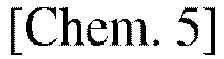

- (6) The production method according to (4) or (5), in which the carbamate compound is a compound represented by General Formula (III).

- (7) The production method according to any one of (4) to (6), in which the carbonate is a compound represented by General Formula (IV).


- (8) The production method according to any one of (4) to (7), in which the hydroxy compound is a compound represented by General Formula (V).
[Chem. 8]
R51-OH (V)
(In General Formula (V), R51 is a monovalent organic group, and satisfies a relational formula: R51 = R12.) - (9) A method for producing an isocyanate compound, the method including: performing distillation purification on a reaction solution including an isocyanate compound represented by General Formula (II) in the presence of the carbonyl compound according to any one of (1) to (3), and continuously recovering the isocyanate compound as a gas-phase component.

- (1) An isocyanate composition containing, with respect to a total mass of the isocyanate composition,
- 97% by mass or more of an isocyanate compound, and
- 2.0 ppm by mass or more and 1.0 × 10⁴ ppm by mass or less of a carbonyl compound represented by General Formula (I),
- in which
- the isocyanate compound and the carbonyl compound are different compounds from each other.

- (In General Formula (I), R11 is an (n11 + n12)-valent organic group, and R12 is a monovalent organic group. n11 is an integer of 1 or more and 8 or less,
n 12 is an integer of 0 or more and 7 or less, and a sum of n11 and n12 is an integer of 2 or more and 8 or less).
- (2) The isocyanate compound according to (1), in which R11 is a di- or higher valent and tetra- or lower valent aliphatic hydrocarbon group having 1 or more and 20 or less carbon atoms, or a di- or higher valent and tri- or lower valent aromatic hydrocarbon group having 6 or more and 20 or less carbon atoms, which may have 1 or more and 4 or less ester groups or nitrogen atoms, and
R12 is a monovalent aromatic hydrocarbon group having 6 or more and 20 or less carbon atoms, which may contain an oxygen atom. - (3) The isocyanate composition according to (1) or (2), in which the isocyanate compound is a compound represented by General Formula (II).

- (4) The isocyanate composition according to any one of (1) to (3), further containing 2.0 ppm by mass or more and 1.0 × 10⁴ ppm by mass or less of one or more compounds selected from the group consisting of a carbamate compound and a carbonate with respect to the total mass of the isocyanate composition.
- (5) The isocyanate composition according to (4), in which the carbamate compound is a compound represented by General Formula (III).


- (6) The isocyanate composition according to (4) or (5), in which the carbonate is a compound represented by General Formula (IV).

- According to the carbonyl compound and the method for producing thereof of the above-described aspect, it is possible to provide a novel carbonyl compound. The method for producing an isocyanate compound of the above-described aspect is a method using the carbonyl compound, and thus it is possible to prevent a by-product during the production of the isocyanate compound from being fixed to a device and to improve a yield of the isocyanate compound.
- In addition, according to the isocyanate composition of the above-described aspect, it is possible to provide an isocyanate composition in which coloring is sufficiently suppressed and the storage stability is excellent.
-
-
FIG. 1 is a schematic configuration diagram showing a device for producing a carbamate compound used in examples. -
FIG. 2 is a schematic configuration diagram showing a pyrolysis reaction device used in examples. -
FIG. 3 is a schematic configuration diagram showing a light-boiling separator used in examples. -
FIG. 4 is a schematic configuration diagram showing a high-boiling separator used in examples. -
FIG. 5 is a graph showing NMR spectra of carbamate compounds (I-1a) to (I-1c) produced in Example 1-1. -
FIG. 6A is a graph showing NMR spectra of carbamate compounds (I-3a) to (I-3c) produced in Example 1-7. -
FIG. 6B is a graph showing results of gas chromatography-mass spectrometry of carbamate compounds (I-3a) to (I-3c) produced in Example 1-7. - A suitable embodiment of the present invention will be described below. The present invention is not limited to the following embodiments, and can be variously modified and implemented within the scope of the the invention.
- In the present specification, in a case where the IUPAC regulation and the Nomenclature regulation stipulated by IUPAC also shown below (excluding cases particularly citing IUPAC recommendations or the like of other years) are indicated, it means citing "Organic Chemistry and Biochemical Naming Method" (Revised Second Edition, 1992, Published by Nankodo Co., Ltd., Japan) in which an edition including all of organic chemistry and biochemistry regulations published as a supplement of "Chemistry Field" in 1980 and all Japanese translated regulations is added with all revisions and recommendations thereafter, based on Recommendations 1979. The term "organic" refers to a general group of compounds as a subject of a naming method disclosed in the naming method. The subject may be a subject described in recommendations issued in 1993. However, the "organic" compounds as a subject of Nomenclature also include organometallic compounds and metal complexes. In the present embodiment, unless otherwise specified, the terms "organic group", "substituent", and the like mean a group formed of atoms not including metal atoms and/or metalloids. In addition, in the present embodiment, preferably, "organic compound", "organic group", or "substituent" formed of an atom selected from H (hydrogen atom), C (carbon atom), N (nitrogen atom), O (oxygen atom), S (sulfur atom), Cl (chlorine atom), Br (bromine atom), and 1 (iodine atom) is used.
- In the following description, the terms "aliphatic" and "aromatic" are frequently used. According to the above-described IUPAC regulations, organic compounds are classified into aliphatic compounds and aromatic compounds. The aliphatic compound is defined as a group according to the aliphatic compound based on the 1995 IUPAC recommendation. In the recommendation, the aliphatic compound is defined as "acyclic or cyclic, saturated or unsaturated carbon compounds, excluding aromatic compounds". In addition, the "aliphatic compound" used in the description of the present embodiment is a compound containing all of saturated and unsaturated, and chain-like and cyclic compounds, and refers to the above-described "organic compound", "organic group", or "substituent" formed of an atom selected from the group consisting of halogen atoms of H (hydrogen atom); C (carbon atom); N (nitrogen atom); O (oxygen atom; S (sulfur atom); Si (silicon atom); Cl (chlorine atom), Br (bromine atom), or I (iodine atom).
- In a case where an aromatic group such as aralkyl group is bound to an aliphatic group, there is a case where this is denoted as "aliphatic group substituted with an aromatic group" or "group consisting of an aliphatic group to which an aromatic group is bound" in that way. This is based on the reactivity in the present embodiment, and this is because the properties of a group such as an aralkyl group relating to the reaction are extremely similar to the aliphatic reactivity, not to the aromatic reactivity. In addition, there is a case where a non-aromatic reactive group that includes an aralkyl group, an alkyl group, and the like is denoted as "aliphatic group which may be substituted with an aromatic group", "aliphatic group to which an aromatic group may be bound", or the like.
- In a case of describing a general formula of the compound used in the present specification, the definition according to the above-described Nomenclature regulation of the IUPAC is used, but there is a case where common names are used for the name of a specific group and the name of the exemplified compound. In addition, in a case where the number of atoms, the number of substituents, and the number are described in the present specification, these all represent an integer.
- In the present specification, the "active hydrogen" refers to a hydrogen atom (excluding aromatic hydroxy group) to which an oxygen atom, a sulfur atom, a nitrogen atom, a silicon atom, or the like is bound, and a hydrogen atom of a terminal methine group. The "active hydrogen" is a hydrogen contained in an atomic group such as -OH group, -C (= O) OH group, -C (= O) H group, -SH group, -SO3H group, -SO2H group, - SOH group, -NH2 group, -NH- group, -SiH group, and -C=CH group.
- In addition, examples of the compound having a hydroxy group (-OH group) include an alcohol and an aromatic hydroxy compound.
- The "alcohol" in the present specification is "compounds to which a hydroxy group is bound to a saturated carbon atom (compounds in which a hydroxy group, -OH, is attached to a saturated carbon atom: R3COH)", described in the IUPAC definition (Rule C-201), and does not include an aromatic hydroxy compound to which a hydroxy group is bound to an aromatic ring.
- The "aromatic hydroxy compound" in the present specification is phenols described in the IUPAC definition (Rule C-202), "compounds having one or more hydroxy groups attached to a benzene or other arene ring)".
- The carbonyl compound of the present embodiment is a compound represented by General Formula (I) (hereinafter, referred to as "carbonyl compound (I)" in some cases).
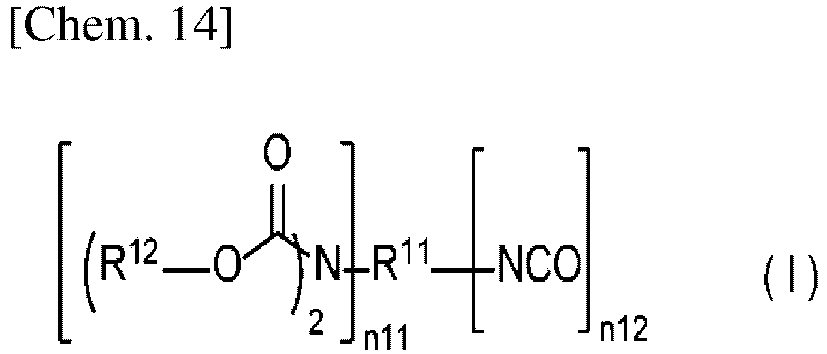
- (In General Formula (1), R11 is an (n11 + n12)-valent organic group, and R12 is a monovalent organic group. n11 is an integer of 1 or more and 8 or less, n12 is an integer of 0 or more and 7 or less, and a sum of n11 and n12 is an integer of 2 or more and 8 or less).
- The inventors of the present invention found that the carbonyl compound (I) is generated in the production of an isocyanate compound by a pyrolysis reaction of a carbamate compound. In addition, the inventors found that in a case of producing an isocyanate compound from a carbamate compound by pyrolysis, by causing carbonyl compound (I) to coexist, it is possible to prevent a by-product having a higher boiling point than that of the isocyanate compound (hereinafter, referred to as "by-product having high-boiling point" in some cases) from being fixed to a device in the pyrolysis step or purification step, to efficiently recover the isocyanate compound, and to improve a yield of the isocyanate compound, thereby completing the present invention.
- R11 is an (n11 + n12)-valent organic group, that is, a di- or higher valent and octa- or lower valent organic group. Among these, R11 is preferably a di- or higher valent and tetra- or lower valent aliphatic hydrocarbon group having 1 or more and 20 or less carbon atoms, or di- or higher valent and tri- or lower valent aromatic hydrocarbon group having 6 or more and 20 or less carbon atoms, which may have 1 or more and 4 or less ester groups or nitrogen atoms.
- Examples of the aliphatic hydrocarbon group in R11 preferably include an alkylene group, an alkanetriyl group, a cycloalkyl group, a cycloalkylene group, or a cycloalkanetriyl group, or a group formed of the alkyl group, the alkylene group, the alkanetriyl group, the cycloalkyl group,the cycloalkylene group, or the cycloalkanetriyl group, and more preferably include a linear or branched alkylene group or alkanetriyl group, a cycloalkylene group, or a cycloalkanetriyl group, or a group formed of the alkylene group, the alkanetriyl group, the cycloalkyl group, the cycloalkylene group, or the cycloalkanetriyl group.
- Examples of the linear or branched alkylene group include a methylene group, an ethylene group, a propylene group, a trimethylene group, a pentylene group, an n-hexylene group, a decamethylene group, and the like.
- Examples of the cycloalkylene group include a cyclobutylene group, a cyclohexene group, and the like.
- Examples of the linear or branched alkanetriyl group include a hexanetriyl group, a nonanetriyl group, a decantriyl group, and the like.
- Examples of the cycloalkanetriyl group include a cyclopropanetriyl group, a cyclobutanetriyl group, a cyclopentanetriyl group, a cyclohexanetriyl group, and the like.
- The aromatic hydrocarbon group in R11 is preferably a group having a substituted or unsubstituted aromatic ring having 6 or more and 13 or less carbon atoms. Examples of the substituent include an alkyl group, an aryl group, an aralkyl group, and the like. The aromatic ring may be an aromatic hydrocarbon ring, or may be a heteroaromatic ring, and specific examples thereof include a benzene ring, a naphthalene ring, a pyridine ring, and the like.
- In a case where the aliphatic hydrocarbon group or the aromatic group in R11 has 1 or more and 4 or less ester groups, R11 is preferably a group obtained by removing a primary amino group at a terminal of an amine compound having an ester group obtained by reacting a carboxy group of an amino acid with a hydroxy compound.
- Specific examples of the amine compound having an ester group referred to herein include acrylic acid-2-aminoethyl ester, 2-methyl-acrylic acid-2-aminoethyl ester, acrylic acid-2-aminopropyl ester, 2-methyl-acrylic acid-2-aminopropyl ester, acrylic acid-3-aminopropyl ester, 2-methyl-acrylic acid-3-aminopropyl ester, acrylic acid-4-aminobutyl ester, 2-methyl-acrylic acid-4-aminobutyl ester, acrylic acid-5-aminopentyl ester, 2-methyl-acrylic acid-5-aminopentyl ester, acrylic acid-6-aminohexyl ester, 2-methyl-acrylic acid-6-aminohexyl ester, acrylic acid-8-aminoctyl ester, 2-methyl-acrylic acid-8-aminoctyl ester, acrylic acid-10-aminodecyl ester, 2-methyl-acrylic acid-10-aminodecyl ester, acrylic acid-11-aminondecyl ester, 2-methyl-acrylic acid-11-aminodecyl ester, acrylic acid-12-aminododecyl ester, 2-methyl-acrylic acid-12-aminododecyl ester, lysine methyl ester diamine, lysine ethyl ester diamine, 2-aminoethyl-2,5-diaminopentanoate, 2-aminoethyl-2,6-diaminohexanoate, bis(2-aminoethyl)-2-aminobutanedioate, bis(2-aminoethyl)-2-aminopentanedioate, tris(2-aminoethyl)hexane-1,3,6-tricarboxylate, and the like.
- Examples of the amino acid used in the production of the amine compound having an ester group include lysine, alanine, arginine, asparagine, glutamine, glycine, aspartic acid, glutamic acid, ornithine, histidine, isoleucine, leucine, methionine, phenylalanine, tryptophan, valine, and the like. Among these, as the amino acid, lysine, arginine, glycine, aspartic acid, glutamic acid, or ornithine is preferable, and lysine, arginine, glycine, aspartic acid, or glutamic acid is more preferable.
- Examples of the hydroxy compound used in the production of the amine compound having an ester group include alcohols and an aromatic hydroxy compound.
- Examples of the alcohols include methyl alcohol, ethanol, propyl alcohol, butyl alcohol, amyl alcohol, hexyl alcohol, heptyl alcohol, octyl alcohol, nonyl alcohol, decyl alcohol, undecyl alcohol, lauryl alcohol, dotesyl alcohol, stearyl alcohol, eicosyl alcohol, allyl alcohol, crotyl alcohol, propargyl alcohol,cyclopentanol, cyclohexanol, benzyl alcohol, cinnamyl alcohol, ethylene glycol, diethylene glycol, polyethylene glycol, propylene glycol, polypropylene glycol, 1,3-butanediol, 1,4-butanediol, hydrogenated bisphenol A, neopentyl glycol, glycerin, trimethylolpropane, pentaerythritol, ethanolamine, propanolamine (1-amino-2-propanol), dimethanolamine, diethanolamine, dipropanolamine, 1-amino-2-butanol, and the like.
- Examples of the aromatic hydroxy compound include monophenols such as phenol (cobaltic acid), 2-methoxyphenol, cresol, xylenol, carbachlor, motyl, naphthol, polyhydric phenols such as catechol, resorcin, hydroquinone, bisphenol A, bisphenol F, pyrogallol, and floroglucinol.
- In a case where the aliphatic hydrocarbon group or the aromatic group in R11 has 1 or more and 4 or less nitrogen atoms, R11 is preferably an organic group obtained by removing an amino group at a terminal from an amine compound having 1 or more and 4 or less secondary or tertiary amines other than a terminal of an aliphatic hydrocarbon group or an aromatic group. Specific examples of the amine compound having 1 or more and 4 or less secondary or tertiary amines other than the terminal of the aliphatic hydrocarbon group or the aromatic group referred to herein include 2-(dimethylamino)ethyleneamine, 2-(diethylamino)ethyleneamine, 2-(diisopropylamino)ethyleneamine, 2-(cyclohexylamino)ethyleneamine, 3-(cyclohexylamino)propylamine, 3-(diethylamino)propylamine,3-(dimethylamino)propylamine, diethylenetriamine, diisopropyltriamine, bis-(3-aminopropyl)methyleneamine, 3-(2-aminoethylamino)propylamine, N,N'-bis(3-aminopropyl)ethylenediamine, 1-(3-aminopropyl)imidazole, trisaminoethylamine, trisaminopropylamine, and the like. Among these, the amine compound is preferably an amine compound which has a tertiary amine other than 1 or more and 2 or less terminals and has an aliphatic hydrocarbon group or an aromatic group, and is more preferably an amine compound which has a tertiary amine other than 1 terminal and has an aliphatic hydrocarbon group or an aromatic group.
- Among these, R11 is preferably a group represented by any one of Formulae (Ia-1) to (Ia-24), and more preferably a group represented by Formulae (la-1), (Ia-2), (Ia-3), (Ia-14), (Ia-18), or (Ia-19). In each of the formulae, the wavy line indicates an atomic bonding.


- R12 is a monovalent organic group, and is preferably an aliphatic hydrocarbon group having 1 or more and 20 or less carbon atoms or an aromatic hydrocarbon group having 6 or more and 20 or less carbon atoms, which may contain an oxygen atom.
- Examples of the aliphatic hydrocarbon group in R12 include an alkyl group of a methyl group, an ethyl group, a propyl group (each isomer), a butyl group (each isomer), a pentyl group (each isomer), a hexyl group (each isomer), a heptyl group (each isomer), an octyl group (each isomer), a nonyl group (each isomer), a decyl group (each isomer), an undecyl group (each isomer), a dodecyl group (each isomer), a tridecyl group (each isomer), a tetradecyl group (each isomer), a pentadecyl group (each isomer), a hexadecyl group (each isomer), a heptadecyl group (each isomer), an octadecyl group (each isomer), a nonadecyl (each isomer), and an eicosyl group (each isomer); a cycloalkyl group such as a cyclopentyl group, a cyclohexyl group, a cycloheptyl group, a cyclooctyl group, a cyclononyl group, or a cyclodecyl group; and the like.
- Examples of the aliphatic hydrocarbon group which may have an oxygen atom in R12 include an alkoxyalkyl group such as a methoxymethyl group, a methoxyethyl group (each isomer), a methoxypropyl group (each isomer), a methoxybutyl group (each isomer), a methoxypentyl group (each isomer), a methoxyhexyl group (each isomer), a methoxyheptyl group (each isomer), a methoxyoctyl group (each isomer), a methoxynonyl group (each isomer), a methoxydecyl group (each isomer), a methoxyundecyl group (each isomer), a methoxydodecyl group (each isomer), a methoxytridecyl group (each isomer), a methoxytetradecyl group (each isomer), a methoxypentadecyl group (each isomer), a methoxyhexadecyl group (each isomer), a methoxyheptadecyl group (each isomer), a methoxyoctadecyl group (each isomer), a methoxynonadecyl (each isomer), an ethoxymethyl group, an ethoxyethyl group (each isomer), an ethoxypropyl group (each isomer), an ethoxybutyl group (each isomer), an ethoxypentyl group (each isomer), an ethoxyhexyl group (each isomer), an ethoxyheptyl group (each isomer), an ethoxyoctyl group (each isomer), an ethoxynonyl group (each isomer), an ethoxydecyl group (each isomer), an ethoxyundecyl group (each isomer), an ethoxydodecyl group (each isomer), an ethoxytridecyl group (each isomer), an ethoxytetradecyl group (each isomer), an ethoxypentadecyl group (each isomer), an ethoxyhexadecyl group (each isomer), an ethoxyheptadecyl group (each isomer), an ethoxyoctadecyl group (each isomer), a propyloxymethyl group (each isomer), a propyloxyethyl group (each isomer), a propyloxypropyl group (each isomer), a propyloxybutyl group (each isomer), a propyloxypentyl group (each isomer), a propyloxyhexyl group (each isomer), a propyloxyheptyl group (each isomer), a propyloxyoctyl group (each isomer), a propyloxynonyl group (each isomer), a propyloxydecyl group (each isomer), a propyloxyundecyl group (each isomer), a propyloxidodecyl group (each isomer), a propyloxytridecyl group (each isomer), a propyloxytetradecyl group (each isomer), a propyloxypentadecyl group (each isomer), a propyloxyhexadecyl group (each isomer), a propyloxyheptadecyl group (each isomer), a butyloxymethyl group (each isomer), a butyloxyethyl group (each isomer), a butyloxypropyl group (each isomer), a butyloxybutyl group (each isomer), a butyloxypentyl group (each isomer), a butyloxyhexyl group (each isomer), a butyloxyheptyl group (each isomer), a butyloxyoctyl group (each isomer), a butyloxynonyl group (each isomer), a butyloxydecyl group (each isomer), a butyloxyundecyl group (each isomer), a butyloxidodecyl group (each isomer), a butyloxytridecyl group (each isomer), a butyloxytetradecyl group (each isomer), a butyloxypentadecyl group (each isomer), a butyloxyhexadecyl group (each isomer), a pentyloxymethyl group (each isomer), a pentyloxyethyl group (each isomer), a pentyloxypropyl group (each isomer), a pentyloxybutyl group (each isomer), a pentyloxypentyl group (each isomer), a pentyloxyhexyl group (each isomer), a pentyloxyheptyl group (each isomer), a pentyloxyoctyl group (each isomer), a pentyloxynonyl group (each isomer), a pentyloxydecyl group (each isomer), a pentyloxyundecyl group (each isomer), a pentyloxidodecyl group (each isomer), a pentyloxytridecyl group (each isomer), a pentyloxytetradecyl group (each isomer), a pentyloxypentadecyl group (each isomer), a hexyloxymethyl group (each isomer), a hexyloxyethyl group (each isomer), a hexyloxypropyl group (each isomer), a hexyloxybutyl group (each isomer), a hexyloxypentyl group (each isomer), a hexyloxyhexyl group (each isomer), a hexyloxyheptyl group (each isomer), a hexyloxyoctyl group (each isomer), a hexyloxynonyl group (each isomer), a hexyloxydecyl group (each isomer), a hexyloxyundecyl group (each isomer), a hexyloxidodecyl group (each isomer), a hexyloxytridecyl group (each isomer), a hexyloxytetradecyl group (each isomer), a heptyloxymethyl group (each isomer), a heptyloxyethyl group (each isomer), a heptyloxypropyl group (each isomer), a heptyloxybutyl group (each isomer), a heptyloxypentyl group (each isomer), a heptyloxyhexyl group (each isomer), a heptyloxyheptyl group (each isomer), a heptyloxyoctyl group (each isomer), a heptyloxynonyl group (each isomer), a heptyloxydecyl group (each isomer), a heptyloxyundecyl group (each isomer), a heptyloxidodecyl group (each isomer), a heptyloxytridecyl group (each isomer), an octyloxymethyl group (each isomer), an octyloxyethyl group (each isomer), an octyloxypropyl group (each isomer), an octyloxybutyl group (each isomer), an octyloxypentyl group (each isomer), an octyloxyhexyl group (each isomer), an octyloxyheptyl group (each isomer), an octyloxyoctyl group (each isomer), an octyloxynonyl group (each isomer), an octyloxydecyl group (each isomer), an octyloxyundecyl group (each isomer), an octyloxidodecyl group (each isomer), a nonyloxymethyl group (each isomer), a nonyloxyethyl group (each isomer), a nonyloxypropyl group (each isomer), a nonyloxybutyl group (each isomer), a nonyloxypentyl group (each isomer), a nonyloxyhexyl group (each isomer), a nonyloxyheptyl group (each isomer), a nonyloxyoctyl group (each isomer), a nonyloxynonyl group (each isomer), a nonyloxydecyl group (each isomer), a nonyloxyundecyl group (each isomer), a decyloxymethyl group (each isomer), a decyloxyethyl group (each isomer), a decyloxypropyl group (each isomer), a decyloxybutyl group (each isomer), a decyloxypentyl group (each isomer), a decyloxyhexyl group (each isomer), a decyloxyheptyl group (each isomer), a decyloxyoctyl group (each isomer), a decyloxynonyl group (each isomer), a decyloxydecyl group (each isomer), an undecyloxymethyl group (each isomer), an undecyloxyethyl group (each isomer), an undecyloxypropyl group (each isomer), an undecyloxybutyl group (each isomer), an undecyloxypentyl group (each isomer), an undecyloxyhexyl group (each isomer), an undecyloxyheptyl group (each isomer), an undecyloxyoctyl group (each isomer), an undecyloxynonyl group (each isomer), a dodecyloxymethyl group (each isomer), a dodecyloxyethyl group (each isomer), a dodecyloxypropyl group (each isomer), a dodecyloxybutyl group (each isomer), a dodecyloxypentyl group (each isomer), a dodecyloxyhexyl group (each isomer), a dodecyloxyheptyl group (each isomer), a dodecyldecyloxyoctyl group (each isomer), a tridecyloxymethyl group (each isomer), a tridecyloxyethyl group (each isomer), a tridecyloxypropyl group (each isomer), a tridecyloxybutyl group (each isomer), a tridecyloxypentyl group (each isomer), a tridecyloxyhexyl group (each isomer), a tridecyloxyheptyl group (each isomer), a tetradecyloxymethyl group (each isomer), a tetradecyloxyethyl group (each isomer), a tetradecyloxypropyl group (each isomer), a tetradecyloxybutyl group (each isomer), a tetradecyloxypentyl group (each isomer), a tetradecyloxyhexyl group (each isomer), a pentadecyloxymethyl group, a pentadecyloxyethyl group (each isomer), a pentadecyloxypropyl group (each isomer), a pentadecyloxybutyl group (each isomer), a pentadecyloxypentyl group (each isomer), a hexadecyloxymethyl group (each isomer), a hexadecyloxyethyl group (each isomer), a hexadecyloxypropyl group (each isomer), a hexadecyloxybutyl group (each isomer), a heptadecyloxymethyl group (each isomer), a heptadecyloxyethyl group (each isomer), a heptadecyloxypropyl group (each isomer), an octadecyloxymethyl group (each isomer), and an octadecyloxyethyl group (each isomer).
- Examples of the aromatic hydrocarbon group om R12 include an aryl group such as a phenyl group, a naphthyl group, an anthryl group, a pyrenyl group, and a phenanthryl group; a methylphenyl group (each isomer), an ethylphenyl group (each isomer), a propylphenyl group (each isomer), a butylphenyl group (each isomer), a pentylphenyl group (each isomer), a hexylphenyl group (each isomer), a heptylphenyl group (each isomer), an octylphenyl group (each isomer), a nonylphenyl group (each isomer), a decylphenyl group (each isomer), an undecylphenyl group (each isomer), a dodecylphenyl group (each isomer), a tridecylphenyl group (each isomer), a tetradecylphenyl group (each isomer), a dimethylphenyl group (each isomer), a methylethylphenyl group (each isomer), a methylpropylphenyl group (each isomer), a methylbutylphenyl group (each isomer), a methylpentylphenyl group (each isomer), a methylhexylphenyl group (each isomer), a methylheptylphenyl group (each isomer), a methyloctylphenyl group (each isomer), a methylnonylphenyl group (each isomer), a methyldecylphenyl group (each isomer), a methylundecylphenyl group (each isomer), a methyldodecylphenyl group (each isomer), a methyltridecylphenyl group (each isomer), a diethylphenyl group (each isomer), an ethylpropylphenyl group (each isomer), an ethylbutylphenyl group (each isomer), an ethylpentylphenyl group (each isomer), an ethylhexylphenyl group (each isomer), an ethyl heptylphenyl group (each isomer), an ethyloctylphenyl group (each isomer), an ethylnonylphenyl group (each isomer), an ethyldecylphenyl group (each isomer), an ethylundecylphenyl group (each isomer), an ethyldodecylphenyl group (each isomer), a dipropylphenyl group (each isomer), a propylbutylphenyl group (each isomer), a propylpentylphenyl group (each isomer), a propylhexylphenyl group (each isomer), a propylheptylphenyl group (each isomer), a propyloctylphenyl group (each isomer), a propylnonylphenyl group (each isomer), a propyldecylphenyl group (each isomer), a propylundecylphenyl group (each isomer), a dibutylphenyl group (each isomer), a butylpentylphenyl group (each isomer), a butylhexylphenyl group (each isomer), a butylheptylphenyl group (each isomer), a butyloctylphenyl group (each isomer), a butylnonylphenyl group (each isomer), a butyldecylphenyl group (each isomer), a dipentylphenyl group (each isomer), a pentylhexylphenyl group (each isomer), a pentylheptylphenyl group (each isomer), a pentyloctylphenyl group (each isomer), a pentylnonylphenyl group (each isomer), a dihexylphenyl group (each isomer), a hexylheptylphenyl group (each isomer), a hexyloctylphenyl group (each isomer), a diheptylphenyl group (each isomer), a trimethylphenyl group (each isomer), a dimethylethylphenyl group (each isomer), a dimethylpropylphenyl group (each isomer), a dimethylbutylphenyl group (each isomer), a dimethylpentylphenyl group (each isomer), a dimethylhexylphenyl group (each isomer), a dimethylheptylphenyl group (each isomer), a dimethyloctylphenyl group (each isomer), a dimethylnonylphenyl group (each isomer), a dimethyldecylphenyl group (each isomer), a dimethylundecylphenyl group (each isomer), a dimethyldodecylphenyl group (each isomer), a triethylphenyl group (each isomer), a diethylmethylphenyl group (each isomer), a diethylpropylphenyl group (each isomer), a diethylbutylphenyl group (each isomer), a diethylpentylphenyl group (each isomer), a diethylhexylphenyl group (each isomer), a diethylheptylphenyl group (each isomer), a diethyloctylphenyl group (each isomer), a diethylnonylphenyl group (each isomer), a diethyldecylphenyl group (each isomer), a tripropylphenyl group (each isomer), a dipropylmethylphenyl group (each isomer), a dipropylethylphenyl group (each isomer), a dipropylbutylphenyl group (each isomer), a dipropylpentylphenyl group (each isomer), a dipropylhexylphenyl group (each isomer), a dipropylheptylphenyl group (each isomer), a dipropyloctylphenyl group (each isomer), a tributylphenyl group (each isomer), a dibutylmethylphenyl group (each isomer), a dibutylethylphenyl group (each isomer), a dibutylpropylphenyl group (each isomer), a dibutylpentylphenyl group (each isomer), a dibutylhexylphenyl group (each isomer), a cumylphenyl group (each isomer), and the like.
- Examples of the aromatic hydrocarbon group which may have an oxygen atom in R12 include alkoxyaryl groups such as a methoxyphenyl group (each isomer) and an ethoxyphenyl group (each isomer).
- Among these, R12 is preferably a phenyl group, a naphthyl group, an anthryl group, a pyrenyl group, a phenanthryl group, a methylphenyl group (each isomer), an ethylphenyl group (each isomer), a propylphenyl group (each isomer), a butylphenyl group (each isomer), pentylphenyl group (each isomer), a hexylphenyl group (each isomer), a heptylphenyl group (each isomer), an octylphenyl group (each isomer), a nonylphenyl group (each isomer), a decylphenyl group (each isomer), an undecylphenyl group (each isomer), a dodecylphenyl group (each isomer), a tridecylphenyl group (each isomer), a tetradecylphenyl group (each isomer), a dimethylphenyl group (each isomer), a methylethylphenyl group (each isomer), a methylpropylphenyl group (each isomer), a methylbutylphenyl group (each isomer), a methylpentylphenyl group (each isomer), a methylhexylphenyl group (each isomer), a methylheptylphenyl group (each isomer), a methyloctylphenyl group (each isomer), a methylnonylphenyl group (each isomer), a methyldecylphenyl group (each isomer), a methylundecylphenyl group (each isomer), a methyldodecylphenyl group (each isomer), a methyltridecylphenyl group (each isomer), a diethylphenyl group (each isomer), an ethylpropylphenyl group (each isomer), an ethylbutylphenyl group (each isomer), an ethylpentylphenyl group (each isomer), an ethylhexylphenyl group (each isomer), an ethylheptylphenyl group (each isomer), an ethyloctylphenyl group (each isomer), an ethylnonylphenyl group (each isomer), an ethyldecylphenyl group (each isomer), an ethylundecylphenyl group (each isomer), an ethyldodecylphenyl group (each isomer), a dipropylphenyl group (each isomer), a propylbutylphenyl group (each isomer), a propylpentylphenyl group (each isomer), a propylhexylphenyl group (each isomer), a propylheptylphenyl group (each isomer), a propyloctylphenyl group (each isomer), a propylnonylphenyl group (each isomer), a propyldecylphenyl group (each isomer), a propylundecylphenyl group (each isomer), a dibutylphenyl group (each isomer), a butylpentylphenyl group (each isomer), a butylhexylphenyl group (each isomer), a butylheptylphenyl group (each isomer), a butyloctylphenyl group (each isomer), a butylnonylphenyl group (each isomer), a butyldecylphenyl group (each isomer), a dipentylphenyl group (each isomer), a pentylhexylphenyl group (each isomer), a pentylheptylphenyl group (each isomer), a pentyloctylphenyl group (each isomer), a pentylnonylphenyl group (each isomer), a dihexylphenyl group (each isomer), a hexylheptylphenyl group (each isomer), a hexyloctylphenyl group (each isomer), a diheptylphenyl group (each isomer), a trimethylphenyl group (each isomer), a dimethylethylphenyl group (each isomer), a dimethylpropylphenyl group (each isomer), a dimethylbutylphenyl group (each isomer), a dimethylpentylphenyl group (each isomer), a dimethylhexylphenyl group (each isomer), a dimethylheptylphenyl group (each isomer), a dimethyloctylphenyl group (each isomer), a dimethylnonylphenyl group (each isomer), a dimethyldecylphenyl group (each isomer), a dimethylundecylphenyl group (each isomer), a dimethyldodecylphenyl group (each isomer), a triethylphenyl group (each isomer), a diethylmethylphenyl group (each isomer), a diethylpropylphenyl group (each isomer), a diethylbutylphenyl group (each isomer), a diethylpentylphenyl group (each isomer), a diethylhexylphenyl group (each isomer), a diethylheptylphenyl group (each isomer), a diethyloctylphenyl group (each isomer), a diethylnonylphenyl group (each isomer), a diethyldecylphenyl group (each isomer), a tripropylphenyl group (each isomer), a dipropylmethylphenyl group (each isomer), a dipropylethylphenyl group (each isomer), a dipropylbutylphenyl group (each isomer), a dipropylpentylphenyl group (each isomer), a dipropylhexylphenyl group (each isomer), a dipropylheptylphenyl group (each isomer), a dipropyloctylphenyl group (each isomer), a tributylphenyl group (each isomer), a dibutylmethylphenyl group (each isomer), a dibutylethylphenyl group (each isomer), a dibutylpropylphenyl group (each isomer), a dibutylpentylphenyl group (each isomer), a dibutylhexylphenyl group (each isomer), a cumylphenyl group (each isomer), a methoxyphenyl group (each isomer), or an ethoxyphenyl group (each isomer). In addition, as R12, a phenyl group, a cumylphenyl group (each isomer), a methoxyphenyl group (each isomer), or an ethoxyphenyl group (each isomer) is more preferable.
- n11 is an integer of 1 or more and 8 or less.
- n12 represents the number of isocyanate groups, and is an integer of 0 or more and 7 or less.
- The sum (n11 + n12) of n11 and n12 is an integer of 2 or more and 8 or less, preferably an integer of 2 or more and 6 or less, more preferably an integer of 2 or more and 5 or less, and further more preferably an integer of 3 or more and 4 or less.
- Generally, the larger the value of (n11 + n12), the more the molecular weight of the carbonyl compound (I) increases and the boiling point also increases, thereby facilitating the separation from the isocyanate. On the other hand, in the production of the carbonyl compound (I), when an isocyanate group having high reactivity is heated, a denaturation reaction is conceived, and this becomes a cause of fixing to the device or clogging. Therefore, from the viewpoint of the production efficiency of the carbonyl compound (I), (n11 + n12) is preferably 6 or less, (n11 + n12) is more preferably 5 or less, and (n11 + n12) is further more preferably 4 or less.
- Examples of preferable carbonyl compounds (1) include compounds represented by Formulae (I-1a) to (I-24) (hereinafter, also referred to as "carbonyl compound (I-1a)" in some cases) and the like. In addition, carbonyl compounds (I-1a) to (I-1c), carbonyl compounds (I-2a) to (I-2c), carbonyl compounds (I-3a) to (I-3c), carbonyl compounds (I-4a) to (I-4c), carbonyl compounds (I-5a) to (I-5c), carbonyl compounds (I-6a) to (I-6c), carbonyl compounds (I-7a) to (I-7b), carbonyl compounds (I-8a) to (I-8b), carbonyl compounds (I-9a) to (I-9b), carbonyl compounds (I-10a) to (I-10b), carbonyl compounds (I-11a) to (I-11b), carbonyl compounds (I-12a) to (I-12b), carbonyl compounds (I-22a) to (I-22b), or carbonyl compounds (I-24a) to (I-24b) can be a mixture or single compounds.


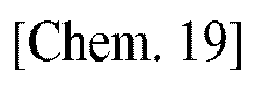


- A method for producing a carbonyl compound of the present embodiment includes mixing one or more compounds selected from the group consisting of an isocyanate compound and a carbamate compound with
- one or more compounds selected from the group consisting of a carbonate and a hydroxy compound, and
- heating thereof to synthesize the carbonyl compound.
- The inventors of the present found that the carbonyl compound (I) is generated in the production of an isocyanate compound by a pyrolysis reaction of a carbamate compound.
- Therefore, examples of the method for producing a carbonyl compound of the present embodiment include 1) a production method by a pyrolysis reaction of a carbamate compound; and 2) a method for mixing one or more compounds selected from the group consisting of an isocyanate compound and a carbamate compound with one or more compounds selected from the group consisting of a carbonate and a hydroxy compound, and heating thereof.
- In a case where a carbonyl compound is produced by a pyrolysis reaction, as a side reaction, there occurs a reaction of forming an isocyanurate group represented by Formula (B), a reaction of generating carbodiimides represented by Formula (C), a reaction of forming a uretonimine group represented by Formula (D), and a reaction of forming an allophanate group represented by Formula (E). These side reactions occur due to a reaction between isocyanates, between carbamate compounds, or between an isocyanate compound and a carbamate compound. With respect to this, the generation reaction of the carbonyl compound (I) is carried out by a reaction between one or more compounds selected from the group consisting of an isocyanate compound and a carbamate compound and one or more compounds selected from the group consisting of a carbonate and a hydroxy compound. Therefore, in the pyrolysis reaction of the carbamate compound, by increasing a use amount of the carbonate, or carrying out the pyrolysis reaction under reflux conditions to prevent evaporation of the excess carbonate, a generation ratio of the carbonyl compound (I) can be relatively increased.
- The carbonyl compound (I) is presumed to be generated by a reaction mechanism represented by Formula (F), (G), or (H).

- (In Formulae (F) to (H), Rj is a di- or higher valent organic group. Rk is a monovalent organic group.)
- In the pyrolysis reaction, it is preferable that the use amount (molar amount) of the carbonate as a solvent be large from the viewpoint of suppressing a side reaction, but in consideration of the size of the reactor, the use amount is preferably 0.001 times or more and 100 times or less, more preferably 0.01 times or more and 80 times or less, and further more preferably 0.1 times or more and 50 times or less, in terms of a stoichiometric ratio with respect to the carbamate compound.
- In a case of producing a carbamate compound by a method to be described later, in a case where the carbamate compound contains a carbonate, the carbonate may be used as it is, or a carbonate may be newly added to the carbamate compound. In addition, the carbonate may be supplied to the reactor before the start of the reaction, may be supplied during the reaction, or may be supplied to the reactor in both cases. Among these, it is preferable that the carbonate be supplied to the reactor before the reaction.
- A reaction temperature is usually 100°C or higher and 400°C or lower, and a high temperature is preferable to increase the reaction rate. On the other hand, since there is a case where the above-described side reaction occurs due to one or more compounds selected from the group consisting of a carbamate compound and an isocyanate compound which is a product, at a high temperature, the reaction temperature is preferably 130°C or higher and 300°C or lower, and more preferably 150°C or higher and 280°C or lower. To keep the reaction temperature constant, known cooling devices and heating devices may be installed in the reactor.
- In addition, a reaction pressure varies depending on the type of the compound used or the reaction temperature, but the reaction pressure may be any one of reduced pressure, normal pressure, or pressurized pressure, and the reaction pressure is usually in a range of 20 Pa or more and 1 × 10⁶ Pa or less.
- A reaction time (retention time in the case of a continuous method) is not particularly limited, but is usually 0.001 hours or longer and 100 hours or shorter, preferably 0.01 hours or longer and 50 hours or shorter, and more preferably 0.1 hours or longer and 10 hours or shorter.
- A catalyst can be used, and a use amount of the catalyst is preferably 0.01% by mass or more and 30% by mass or less, and more preferably 0.5% by mass or more and 20% by mass or less, with respect to the mass of the carbamate compound.
- Examples of the catalyst include organic metal catalysts such as dibutyltin dilaurate, lead octylate, and stannous octoate; and amines such as 1,4-diazabicyclo[2,2,2]octane, triethylenediamine, and triethylamine. Among these, organic metal catalysts such as dibutyltin dilaurate, lead octylate, and stanaoctoate are suitable. These compounds may be used alone or a mixture of two or more types thereof may be used.
- As described above, the pyrolysis reaction is a reaction of generating the corresponding isocyanate compound, a hydroxy compound, and a carbonyl compound from the carbamate compound. To efficiently obtain the carbonyl compound, in the pyrolysis reaction, the isocyanate compound, the carbonate, and the carbamate compound need to be heated in a coexisting state. Therefore, to efficiently obtain a carbonyl compound in the pyrolysis reaction, it is preferable to extract a hydroxy compound, which is the product in the pyrolysis reaction, as a gas-phase component from the pyrolysis reaction system by, for example, distillation or the like, to separate the hydroxy compound from the carbonate and the isocyanate compound under conditions of reflux and the like, and to cause the carbonate and the isocyanate to exist as liquid-phase components.
- After the pyrolysis reaction, a light boiling component may be distilled off, and the distillation method is not particularly limited as long as the light boiling component can be separated as a gas-phase component. The "light boiling component (light-boiling-point component)" referred to herein refers to a component having a boiling point lower than that of the carbonyl compound, and varies depending on the type of the compound serving as a raw material for producing the carbonyl compound, but is mainly one or more compounds selected from the group consisting of a carbonate used in the pyrolysis step, an isocyanate compound generated by the pyrolysis reaction, and a hydroxy compound.
- A pressure at a time of distilling off the light boiling component varies depending on the type of the compound or the reaction temperature, but the pressure may be any of reduced pressure, normal pressure, and pressurized pressure as long as the carbonyl compound and the light boiling component can be separated, and is preferably 20 Pa or more and 1 × 10⁶ Pa or less, more preferably 20 Pa or more and 1 × 10⁴ Pa or less, further more preferably 20 Pa or more and 1 × 10³ Pa or less, and particularly preferably 20 Pa or more and 1 × 10² Pa or less.
- An operation time (retention time in the case of a continuous method) at the time of distilling off the light boiling component is not particularly limited as long as the carbonyl compound and the light boiling component can be separated, and, from the viewpoint of suppressing a side reaction between the carbonyl compound, is preferably 5 seconds or longer and 100 hours or shorter, more preferably 10 seconds or longer and 50 hours or shorter, and further more preferably 20 seconds or longer and 10 hours or shorter.
- A temperature at the time of distilling off the light boiling component is not particularly limited as long as the carbonyl compound is stable and the carbonyl compound and the light boiling component can be separated, and from the viewpoint of suppressing denaturation of the carbonyl compound, the temperature is preferably 20°C or higher and 300°C or lower, more preferably 30°C or higher and 280°C or lower, and further more preferably 40°C or higher and 250°C or lower.
- As can be seen from the fact that the reaction mechanism of the carbonyl compound is represented by Formula (F), (G), or (H), the carbonyl compound (I) is obtained by heating a mixture of the isocyanate compound (II) and the carbonate (IV), a mixture of the carbamate compound (III) or the carbamate compound (VI) and the carbonate (IV), a mixture of the isocyanate compound (II), the hydroxy compound (V), and the carbonate (IV), a mixture of the isocyanate compound (II), the carbamate compound (III) or the carbamate compound (VI), and the carbonate (IV), or a mixture of the isocyanate compound (II), the carbamate compound (III) or the carbamate compound (VI), the carbonate (IV), and the hydroxy compound (V) (hereinafter, these mixtures may be collectively referred to as simply "raw material mixture" in some cases).
- In the raw material mixture, a blending amount (molar amount) of the carbonate is preferably large from the viewpoint of suppressing a side reaction, but in consideration of the size of the reactor and the like, the blending amount is preferably 0.001 times or more and 100 times or less, more preferably 0.01 times or more and 80 times or less, and further more preferably 0.1 times or more and 50 times or less, in terms of the stoichiometric ratio with respect to the carbamate compound.
- A heating temperature is usually 100°C or higher and 400°C or lower, and a high temperature is preferable to increase the reaction rate. On the other hand, since there is a case where the above-described side reaction occurs due to one or more compounds selected from the group consisting of a carbamate compound and an isocyanate compound which is a product, at a high temperature, the reaction temperature is preferably 130°C or higher and 300°C or lower, and more preferably 150°C or higher and 280°C or lower. To keep the reaction temperature constant, known cooling devices and heating devices may be installed in the reactor.
- A pressure at the time of heating varies depending on the type of the compound used or the reaction temperature, but the pressure may be any one of reduced pressure, normal pressure, or pressurized pressure, and the pressure is usually in a range of 20 Pa or more and 1 × 10⁶ Pa or less.
- A heating time (retention time in the case of a continuous method) is not particularly limited, and is usually 0.001 hours or longer and 100 hours or shorter, preferably 0.01 hours or longer and 50 hours or shorter, and more preferably 0.1 hours or longer and 10 hours or shorter.
- In the production of the carbonyl compound by mixing and heating, it is possible to increase a generation rate and a generation amount of the carbonyl compound by bringing the raw material mixture into contact with stainless steel and heating the raw material mixture. As the stainless steel, any shape can be used as long as the stainless steel is made of SUS316 or SUS304, and for example, a filling material or a metal piece is preferably used. The filling material is not particularly limited, but DIXON Packing, Mc MAHON Packing, Coil Pack, MESH RING, CANNON Packing, HELI PACK, RASCHIG RING, PRICKLE RING, or the like is used.
- In a case where a volume of the raw material liquid of the carbonyl compound is denoted as V and a surface area of the stainless steel is denoted as A, the larger the contact area with stainless steel per unit volume of the raw material liquid, the higher the generation rate of the carbonyl compound. A value of A/V is preferably 0.001 m2/m3 or more and 100,000 m2 /m3 or less, more preferably 0.01 m2/m3 or more and 50,000 m2/m3 or less, and further more preferably 0.1 m2/m3 or more and 10,000 m2/m3 or less.
- A reaction form is not particularly limited, but a reactor that can efficiently mix and heat the raw material mixture or the mixture and stainless steel is preferable, and for example, a method of heating a raw material mixture in a stirring tank or a distillation column made of stainless steel is preferable.
- The distillation method is not particularly limited as long as a light boiling component may be distilled off after heating a raw material mixture, and the light boiling component can be separated as a gas-phase component. The "light boiling component (light boiling point component)" referred to herein refers to a component having a boiling point lower than that of the carbonyl compound and varies depending on the type of the compound serving as a raw material for producing the carbonyl compound, but is mainly one or more compounds selected from the group consisting of a carbonate contained in the raw material mixture, an isocyanate compound generated by the pyrolysis reaction, and a hydroxy compound.
- A pressure at a time of distilling off the light boiling component varies depending on the type of the compound or the reaction temperature, but the pressure may be any of reduced pressure, normal pressure, and pressurized pressure as long as the carbonyl compound and the light boiling component can be separated, and is preferably 20 Pa or more and 1 × 10⁶ Pa or less, more preferably 20 Pa or more and 1 × 10⁴ Pa or less, further more preferably 20 Pa or more and 1 × 10³ Pa or less, and particularly preferably 20 Pa or more and 1 × 10² Pa or less.
- An operation time (retention time in the case of a continuous method) at the time of distilling off the light boiling component is not particularly limited as long as the carbonyl compound and the light boiling component can be separated, and, from the viewpoint of suppressing a side reaction between the carbonyl compound, is preferably 5 seconds or longer and 100 hours or shorter, more preferably 10 seconds or longer and 50 hours or shorter, and further more preferably 20 seconds or longer and 10 hours or shorter.
- A temperature at the time of distilling off the light boiling component is not particularly limited as long as the carbonyl compound is stable and the carbonyl compound and the light boiling component can be separated, and from the viewpoint of suppressing denaturation of the carbonyl compound, the temperature is preferably 20°C or higher and 300°C or lower, more preferably 30°C or higher and 280°C or lower, and further more preferably 40°C or higher and 250°C or lower.
- Subsequently, various raw materials used in the method for producing a carbonyl compound of the present embodiment will be described in detail below.
- As the isocyanate compound, a compound represented by General Formula (II) (hereinafter, referred to as "isocyanate compound (II)" in some cases) is preferably used.

- (In General Formula (II), R21 is an n21-valent organic group, and satisfies a relational formula: R21 = R11. n21 is an integer of 2 or more and 8 or less, and satisfies a relational formula: n21 = n11 + n12.)
- R21 is an n21-valent organic group, and satisfies a relational formula: R21 = R11. That is, R21 is the same as R11.
- In a case where R21 is an aliphatic hydrocarbon group, specific examples of the isocyanate compound (II) include aliphatic diisocyanates, aliphatic triisocyanates, substituted cyclic aliphatic polyisocyanates, and the like.
- Examples of the aliphatic diisocyanates include diisocyanatoethane, diisocyanatopropane (each isomer), diisocyanatobutane (each isomer), diisocyanatopentane (each isomer), diisocyanatohexane (each isomer), diisocyanatodecane (each isomer), and the like.
- Examples of the aliphatic triisocyanates include triisocyanatohexane (each isomer), 4-isocyanatomethyl-1,8-octamethylene diisocyanate, triisocyanatononane (each isomer), triisocyanatodecane (each isomer), and the like.
- Examples of the substituted cyclic aliphatic polyisocyanates include diisocyanatocyclobutane (each isomer), diisocyanatocyclohexane (each isomer), 3-isocyanatomethyl-3,5,5-trimethylcyclohexyl isocyanate (also referred to as isophorone diisocyanate) (each isomer), 1,3-bis(isocyanatomethyl)cyclohexane (at least one isomer of a cis-form and a trans-form), methylenebis(cyclohexylisocyanate) (also referred to as dicyclohexylmethane diisocyanate) (each isomer), and the like.
- In a case where R21 is an aromatic group, specific examples of the isocyanate compound (II) include aromatic diisocyanates, aromatic triisocyanates, and the like.
- Examples of the aromatic diisocyanates include diisocyanatobenzene (each isomer), diisocyanatotoluene (each isomer), bis(isocyanatophenyl)methane (each isomer), diisocyanatomethylene (each isomer), diisocyanatobiphenyl (each isomer), diisocyanatodibenzyl (each isomer), bis(isocyanatophenyl)propane (each isomer), bis(isocyanatophenyl) ether (each isomer),bis(isocyanatophenoxyethane) (each isomer), diisocyanatoxylene (each isomer), diisocyanatoanisole (each isomer), diisocyanatophenitol (each isomer), diisocyanatonaphthalene (each isomer), diisocyanatomethylbenzene (each isomer), diisocyanatomethylpyridine (each isomer), diisocyanatomethylnaphthalene (each isomer), diisocyanatodiphenylmethane (each isomer), tetramethylxilicon diisocyanate (each isomer), and the like.
- Examples of the aromatic triisocyanates include triisocyanatobenzene (each isomer), triisocyanato-methylbenzene (each isomer), tris(isocyanatopropane-yl)benzene (each isomer), tris(isocyanatopropane-yl)-methylbenzene (each isomer), tris(isocyanatomethyl)-methylbenzene (each isomer), ((isocyanato-phenylene)bis(methylene))bis(isocyanatobenzene) (each isomer), and the like.
- In a case where R21 is aromatic, the reactivity of the isocyanate group which is directly bound is increased due to an electron-attracting effect of the aromatic group. In addition, as the number of the isocyanate groups directly bound to the same aromatic compound increases, the reactivity is further enhanced due to a mutual electron-attracting action. From the viewpoint of reactivity, the number of the isocyanate groups to R21 is preferably 2 or more, and more preferably 3 or more. On the other hand, in a case where the reactivity of the isocyanate increases, a reaction between moisture or the isocyanates and other impurities occurs, and thus the stability of the compound at room temperature and at the time of heating decreases. From the viewpoint of stability of the isocyanate compound, the number of the isocyanate groups which are directly bound to R21 is preferably 4 or less, and more preferably 3 or less.
- In a case where the aliphatic hydrocarbon group or aromatic group in R21 has 1 or more and 4 or less ester groups or nitrogen atoms, specific examples of the isocyanate compound (II) include acrylic acid-2-isocyanato-ethyl ester, 2-methyl-acrylic acid-2-isocyanato-ethyl ester, acrylic acid-2-isocyanato-propyl ester, 2-methyl-acrylic acid-2-isocyanato-propyl ester, acrylic acid-3-isocyanato-propyl ester, 2-methyl-acrylic acid-3-isocyanato-propyl ester, acrylic acid-4-isocyanato-butyl ester, 2-methyl-acrylic acid-4-isocyanato-butyl ester, acrylic acid-5-isocyanato-pentyl ester, 2-methyl-acrylic acid-5-isocyanato-pentyl ester, acrylic acid-6-isocyanato-hexyl ester, 2-methyl-acrylic acid-6-isocyanato-hexyl ester, acrylic acid-8-isocyanato-octyl ester, 2-methyl-acrylic acid-8-isocyanato-octyl ester, acrylic acid-10-isocyanato-decyl ester, 2-methyl-acrylic acid-10-isocyanato-decyl ester, acrylic acid-11-isocyanato-undecyl ester, 2-methyl-acrylic acid-11-isocyanato-undecyl ester, acrylic acid-12-isocyanato-dodecyl ester, 2-methyl-acrylic acid-12-isocyanato-dodecyl ester, lysine methyl ester diisocyanate, lysine ethyl ester diisocyanate, 2-isocyanatoethyl-2,5-diisocyanatopentanoate, 2-isocyanatoethyl-2,6-diisocyanatohexanoate (lysine triisocyanate), bis(2-isocyanatoethyl)-2-isocyanatobutanedioate, bis(2-isocyanatoethyl)-2-isocyanatopentanedioate, tris(2-isocyanatoethyl)hexane-1,3,6-tricarboxylate, trisisocyanatoethylamine, trisisocyanatopropyl amine, and the like.
- As the isocyanate compound has an electron-attracting group such as an ester group or a N atom, reactivity of the isocyanate group is improved. Since the reactivity of the isocyanate group is further improved as the number of carbon atoms between the isocyanate group and the ester group or the nitrogen atom is smaller, the number of carbon atoms is preferably 1 or more and 20 or less, more preferably 1 or more and 8 or less, and further more preferably 1 or more and 3 or less. On the other hand, the carbon-carbon or carbon-nitrogen bond between the isocyanate group which is an electron-attracting group and the ester group or the nitrogen atom is easily dissociated, and thus the thermal stability of the compound is impaired in some cases. Therefore, from the viewpoint of the stability of a compound in which an isocyanate group and an ester group or a nitrogen atom coexist, the larger the number of carbon atoms between the isocyanate group and the ester group or the nitrogen atom, the further improved the stability of the compound, and thus the number of carbon atoms is preferably 1 or more, more preferably 2 or more, and further more preferably 3 or more.
- The isocyanate compound (II) is often used as a raw material for coating materials, and is required to have a non-coloring property (atmospheric corrosion resistance) when exposed to light such as the sunlight. In a case where R21 contains an aromatic group, coloring occurs due to the absorption of light energy when exposed to the sunlight. Therefore, from the viewpoint of atmospheric corrosion resistance, R21 preferably has no aromatic group, may have 1 or more and 4 or less ester groups or nitrogen atoms, and is more preferably a di- or higher valent and tetra- or lower valent aliphatic hydrocarbon group having 1 or more and 20 or less carbon atoms.
- In addition, specifically, R21 is preferably a group represented by any of Formulae (Ia-1) to (Ia-24), and more preferably a group represented by Formulae (Ia-1), (la-2), (Ia-3), (Ia-14), (Ia-18), or (la-19).
- n21 represents the number of isocyanate groups, and satisfies a relational formula: n21 = n11 + n12. n21 is an integer of 2 or more and 8 or less, preferably an integer of 2 or more and 6 or less, more preferably an integer of 2 or more and 5 or less, and further more preferably an integer of 3 or more and 4 or less. Generally, a polymer can be obtained by reacting an n21- or higher-valent isocyanate with a dihydroxy compound or a diamine compound having an active hydrogen group. The larger the value of n21, the more the crosslinking points (isocyanate groups) per isocyanate molecule. Therefore, the crosslinking density at the time of polymerization increases, and the curing time can be shortened or the hardness of the polymer can be improved. The expression "the crosslinking density increases" referred to herein means that an average molecular chain length between the crosslinking points decreases. In a case where the number of the isocyanate groups in the isocyanate molecule is 3 or more (n21 is 3 or more), the linear polymer and the polymer can further bind to each other, and a molecular weight of the polymer tends to increase. Particularly, significant reduction of the curing time, or dramatic improvement of physical properties of a polymer such as the hardness can be expected. On the other hand, in the production of isocyanate, when an isocyanate compound having high reactivity is heated, a denaturation reaction is conceived, and this becomes a cause of fixing to the device or clogging. Therefore, the valence of the isocyanate group n21 in the isocyanate compound is preferably 6 or less, more preferably 5 or less, and further more preferably 4 or less.
- Examples of the preferable isocyanate compound (II) include 4-isocyanatomethyl-1,8-octamethylene diisocyanate (TTI), 2-isocyanatoethyl-2,6-diisocyanatohexanoate (LTI), lysine methyl ester diisocyanate (LDI), methylenebis(cyclohexyl isocyanate) (HMDI), 1,3-bis(isocyanatomethyl)cyclohexane (HXDI), diisocyanatodiphenylmethane (MDI), and the like.
- As the carbamate compound, a compound represented by General Formula (III) (hereinafter, referred to as "carbamate compound (III)" in some cases) or a compound represented by General Formula (VI) (hereinafter, also referred to as "carbamate compound (VI)" in some cases) is preferably used.

- (In General Formula (III), R31 is an (n31 + n32)-valent organic group, and satisfies a relational formula: R31 = R11. R32 is a monovalent organic group, and satisfies a relational formula: R32 = R12. n31 is an integer of 1 or more and 8 or less, n32 is an integer of 0 or more and 7 or less, and a sum of n31 and n32 is an integer of 2 or more and 8 or less, and satisfies a relational formula: n31 + n32 = n11 + n12.)

- (In General Formula (VI), R61 is an n61-valent organic group, and satisfies a relational formula: R61 = R21. R62 is a monovalent organic group, and satisfies a relational formula: R62 = R12. n61 is an integer of 2 or more and 8 or less, and satisfies a relational formula: n61 = n21.)
- R31 is an (n31 + n32)-valent organic group, and satisfies a relational formula: R31 = R11. That is, R31 is the same as R11.
- Among these, R31 is preferably a di- or higher valent and tetra- or lower valent aliphatic hydrocarbon group having 1 or more and 20 or less carbon atoms, which may have 1 or more and 4 or less ester groups or nitrogen atoms, or a di- or higher valent and tri- or lower valent aromatic hydrocarbon group having 6 or more and 20 or less carbon atoms.
- In addition, specifically, R31 is preferably a group represented by any of Formulae (Ia-1) to (Ia-24), and more preferably a group represented by Formulae (Ia-1), (Ia-2), (Ia-3), (Ia-14), (Ia-18), or (Ia-19).
- R32 is a monovalent organic group, and satisfies a relational formula: R32 = R12. That is, R32 is the same as R12.
- Among these, R32 is preferably an aliphatic hydrocarbon group having 1 or more and 20 or less carbon atoms or an aromatic hydrocarbon group having 6 or more and 20 or less carbon atoms, which may contain an oxygen atom.
- In addition, as R32, specifically, a phenyl group, a naphthyl group, an anthryl group, a pyrenyl group, a phenanthryl group, a methylphenyl group (each isomer), an ethylphenyl group (each isomer), a propylphenyl group (each isomer), a butylphenyl group (each isomer), a pentylphenyl group (each isomer), a hexylphenyl group (each isomer), a heptylphenyl group (each isomer), an octylphenyl group (each isomer), a nonylphenyl group (each isomer), a decylphenyl group (each isomer), an undecylphenyl group (each isomer), a dodecylphenyl group (each isomer), a tridecylphenyl group (each isomer), a tetradecylphenyl group (each isomer), a dimethylphenyl group (each isomer), a methylethylphenyl group (each isomer), a methylpropylphenyl group (each isomer), a methylbutylphenyl group (each isomer), a methylpentylphenyl group (each isomer), a methylhexylphenyl group (each isomer), a methylheptylphenyl group (each isomer), a methyloctylphenyl group (each isomer), a methylnonylphenyl group (each isomer), a methyldecylphenyl group (each isomer), a methylundecylphenyl group (each isomer), a methyldodecylphenyl group (each isomer), a methyltridecylphenyl group (each isomer), a diethylphenyl group (each isomer), an ethylpropylphenyl group (each isomer), an ethylbutylphenyl group (each isomer), an ethylpentylphenyl group (each isomer), an ethylhexylphenyl group (each isomer), an ethylheptylphenyl group (each isomer), an ethyloctylphenyl group (each isomer), an ethylnonylphenyl group (each isomer), an ethyldecylphenyl group (each isomer), an ethylundecylphenyl group (each isomer), an ethyldodecylphenyl group (each isomer), a dipropylphenyl group (each isomer), a propylbutylphenyl group (each isomer), a propylpentylphenyl group (each isomer), a propylhexylphenyl group (each isomer), a propylheptylphenyl group (each isomer), a propyloctylphenyl group (each isomer), a propylnonylphenyl group (each isomer), a propyldecylphenyl group (each isomer), a propylundecylphenyl group (each isomer), a dibutylphenyl group (each isomer), a butylpentylphenyl group (each isomer), a butylhexylphenyl group (each isomer), a butylheptylphenyl group (each isomer), a butyloctylphenyl group (each isomer), a butylnonylphenyl group (each isomer), a butyldecylphenyl group (each isomer), a dipentylphenyl group (each isomer), a pentylhexylphenyl group (each isomer), a pentylheptylphenyl group (each isomer), a pentyloctylphenyl group (each isomer), a pentylnonylphenyl group (each isomer), a dihexylphenyl group (each isomer), a hexylheptylphenyl group (each isomer), a hexyloctylphenyl group (each isomer), a diheptylphenyl group (each isomer), a trimethylphenyl group (each isomer), a dimethylethylphenyl group (each isomer), a dimethylpropylphenyl group (each isomer), a dimethylbutylphenyl group (each isomer), a dimethylpentylphenyl group (each isomer), a dimethylhexylphenyl group (each isomer), a dimethylheptylphenyl group (each isomer), a dimethyloctylphenyl group (each isomer), a dimethylnonylphenyl group (each isomer), a dimethyldecylphenyl group (each isomer), a dimethylundecylphenyl group (each isomer), a dimethyldodecylphenyl group (each isomer), a triethylphenyl group (each isomer), a diethylmethylphenyl group (each isomer), a diethylpropylphenyl group (each isomer), a diethylbutylphenyl group (each isomer), a diethylpentylphenyl group (each isomer), a diethylhexylphenyl group (each isomer), a diethylheptylphenyl group (each isomer), a diethyloctylphenyl group (each isomer), a diethylnonylphenyl group (each isomer), a diethyldecylphenyl group (each isomer), a tripropylphenyl group (each isomer), a dipropylmethylphenyl group (each isomer), a dipropylethylphenyl group (each isomer), a dipropylbutylphenyl group (each isomer), a dipropylpentylphenyl group (each isomer), a dipropylhexylphenyl group (each isomer), a dipropylheptylphenyl group (each isomer), a dipropyloctylphenyl group (each isomer), a tributylphenyl group (each isomer), a dibutylmethylphenyl group (each isomer), a dibutylethylphenyl group (each isomer), a dibutylpropylphenyl group (each isomer), a dibutylpentylphenyl group (each isomer), a dibutylhexylphenyl group (each isomer), a cumylphenyl group (each isomer), a methoxyphenyl group (each isomer), or an ethoxyphenyl group (each isomer) is preferable. In addition, as R12, a phenyl group, a cumylphenyl group (each isomer), a methoxyphenyl group (each isomer), or an ethoxyphenyl group (each isomer) is more preferable.
- n31 is an integer of 1 or more and 8 or less.
- n32 is an integer of 0 or more and 7 or less.
- The sum of n31 and n32 is an integer of 2 or more and 8 or less, and satisfies a relational formula: n31 + n32 = n11 + n12.
- Examples of the preferable carbamate compound (III) include compounds represented by Formulae (III-1a) to (III-24b). In addition, carbamate compounds (III-1a) to (III- 1c), carbamate compounds (III-2a) to (III-2c), carbamate compounds (III-3a) to (III-3c), carbamate compounds (III-4a) to (III-4c), carbamate compounds (III-5a) to (III-5c), carbamate compounds (III-6a) to (III-6c), carbamate compounds (III-7a) to (III-7b), carbamate compounds (III-8a) to (III-8b), carbamate compounds (III-9a) to (III-9b), carbamate compounds (III-10a) to (III-10b), carbamate compounds (III-11a) to (111-11b), carbamate compounds (III-12a) to (III-12b), carbamate compounds (III-22a) to (III-22b), or carbamate compounds (III-24a) to (III-24b) can be a mixture, or single compounds.




- R61 is an n61-valent organic group, and satisfies a relational formula: R61 = R21. That is, R61 is the same as R21.
- Among these, R61 is preferably a di- or higher valent and tetra- or lower valent aliphatic hydrocarbon group having 1 or more and 20 or less carbon atoms, or a di- or higher valent and tri- or lower valent aromatic hydrocarbon group having 6 or more and 20 or less carbon atoms, which may have 1 or more and 4 or less ester groups or nitrogen atoms.
- In addition, as R61, specifically, a group represented by any of Formulae (Ia-1) to (Ia-24) is preferable, and a group represented by Formula (Ia-1), (Ia-2), (Ia-3), (Ia-14), (Ia-18), or (Ia-19) is more preferable.
- R62 is a monovalent organic group, and satisfies a relational formula: R62 = R12. That is, R62 is the same as R12.
- Among these, as R62, an aliphatic hydrocarbon group having 1 or more and 20 or less carbon atoms or an aromatic hydrocarbon group having 6 or more and 20 or less carbon atoms, which may contain an oxygen atom, is preferable.
- In addition, as R62, specifically, a phenyl group, a naphthyl group, an anthryl group, a pyrenyl group, a phenanthryl group, a methylphenyl group (each isomer), an ethylphenyl group (each isomer), a propylphenyl group (each isomer), a butylphenyl group (each isomer), a pentylphenyl group (each isomer), a hexylphenyl group (each isomer), a heptylphenyl group (each isomer), an octylphenyl group (each isomer), a nonylphenyl group (each isomer), a decylphenyl group (each isomer), an undecylphenyl group (each isomer), a dodecylphenyl group (each isomer), a tridecylphenyl group (each isomer), a tetradecylphenyl group (each isomer), a dimethylphenyl group (each isomer), a methylethylphenyl group (each isomer), a methylpropylphenyl group (each isomer), a methylbutylphenyl group (each isomer), a methylpentylphenyl group (each isomer), a methylhexylphenyl group (each isomer), a methylheptylphenyl group (each isomer), a methyloctylphenyl group (each isomer), a methylnonylphenyl group (each isomer), a methyldecylphenyl group (each isomer), a methylundecylphenyl group (each isomer), a methyldodecylphenyl group (each isomer), a methyltridecylphenyl group (each isomer), a diethylphenyl group (each isomer), an ethylpropylphenyl group (each isomer), an ethylbutylphenyl group (each isomer), an ethylpentylphenyl group (each isomer), an ethylhexylphenyl group (each isomer), an ethylheptylphenyl group (each isomer), an ethyloctylphenyl group (each isomer), an ethylnonylphenyl group (each isomer), an ethyldecylphenyl group (each isomer), an ethylundecylphenyl group (each isomer), an ethyldodecylphenyl group (each isomer), a dipropylphenyl group (each isomer), a propylbutylphenyl group (each isomer), a propylpentylphenyl group (each isomer), a propylhexylphenyl group (each isomer), a propylheptylphenyl group (each isomer), a propyloctylphenyl group (each isomer), a propylnonylphenyl group (each isomer), a propyldecylphenyl group (each isomer), a propylundecylphenyl group (each isomer), a dibutylphenyl group (each isomer), a butylpentylphenyl group (each isomer), a butylhexylphenyl group (each isomer), a butylheptylphenyl group (each isomer), a butyloctylphenyl group (each isomer), a butylnonylphenyl group (each isomer), a butyldecylphenyl group (each isomer), a dipentylphenyl group (each isomer), a pentylhexylphenyl group (each isomer), a pentylheptylphenyl group (each isomer), a pentyloctylphenyl group (each isomer), a pentylnonylphenyl group (each isomer), a dihexylphenyl group (each isomer), a hexylheptylphenyl group (each isomer), a hexyloctylphenyl group (each isomer), a diheptylphenyl group (each isomer), a trimethylphenyl group (each isomer), a dimethylethylphenyl group (each isomer), a dimethylpropylphenyl group (each isomer), a dimethylbutylphenyl group (each isomer), a dimethylpentylphenyl group (each isomer), a dimethylhexylphenyl group (each isomer), a dimethylheptylphenyl group (each isomer), a dimethyloctylphenyl group (each isomer), a dimethylnonylphenyl group (each isomer), a dimethyldecylphenyl group (each isomer), a dimethylundecylphenyl group (each isomer), a dimethyldodecylphenyl group (each isomer), a triethylphenyl group (each isomer), a diethylmethylphenyl group (each isomer), a diethylpropylphenyl group (each isomer), a diethylbutylphenyl group (each isomer), a diethylpentylphenyl group (each isomer), a diethylhexylphenyl group (each isomer), a diethylheptylphenyl group (each isomer), a diethyloctylphenyl group (each isomer), a diethylnonylphenyl group (each isomer), a diethyldecylphenyl group (each isomer), a tripropylphenyl group (each isomer), a dipropylmethylphenyl group (each isomer), a dipropylethylphenyl group (each isomer), a dipropylbutylphenyl group (each isomer), a dipropylpentylphenyl group (each isomer), a dipropylhexylphenyl group (each isomer), a dipropylheptylphenyl group (each isomer), a dipropyloctylphenyl group (each isomer), a tributylphenyl group (each isomer), a dibutylmethylphenyl group (each isomer), a dibutylethylphenyl group (each isomer), a dibutylpropylphenyl group (each isomer), a dibutylpentylphenyl group (each isomer), a dibutylhexylphenyl group (each isomer), a cumylphenyl group (each isomer), a methoxyphenyl group (each isomer), or an ethoxyphenyl group (each isomer) is preferable. In addition, as R62, a phenyl group, a cumylphenyl group (each isomer), a methoxyphenyl group (each isomer), or an ethoxyphenyl group (each isomer) is more preferable.
- n61 represents the number of carbamate groups and satisfies a relational formula: n61 = n21. n61 is an integer of 2 or more and 8 or less, preferably an integer of 2 or more and 6 or less, more preferably an integer of 2 or more and 5 or less, and further more preferably an integer of 3 or more and 4 or less.
- Examples of the preferable carbamate compound (VI) include compounds represented by Formulae (VI-1) to (VI-24) and the like.


- As the carbonate, a compound represented by General Formula (IV) (hereinafter, referred to as "carbonate (IV)" in some cases) is preferably used.

- (In General Formula (IV), R41 and R42 are each independently a monovalent organic group, and satisfy a relational formula: R41 = R42 = R12.)
- R41 and R42 are the same as each other, and satisfy a relational formula: R41 = R42 = R12. That is, examples of R41 and R42 include the same ones as those exemplified in R12 described above.
- Among these, R41 and R42 are preferably substituted or unsubstituted aryl groups.
- In addition, as R41 and R42, a phenyl group, a naphthyl group, an anthryl group, a pyrenyl group, a phenanthryl group, a methylphenyl group (each isomer), an ethylphenyl group (each isomer), a propylphenyl group (each isomer), a butylphenyl group (each isomer), a pentylphenyl group (each isomer), a hexylphenyl group (each isomer), a heptylphenyl group (each isomer), an octylphenyl group (each isomer), a nonylphenyl group (each isomer), a decylphenyl group (each isomer), an undecylphenyl group (each isomer), a dodecylphenyl group (each isomer), a tridecylphenyl group (each isomer), a tetradecylphenyl group (each isomer), a dimethylphenyl group (each isomer), a methylethylphenyl group (each isomer), a methylpropylphenyl group (each isomer), a methylbutylphenyl group (each isomer), a methylpentylphenyl group (each isomer), a methylhexylphenyl group (each isomer), a methylheptylphenyl group (each isomer), a methyloctylphenyl group (each isomer), a methylnonylphenyl group (each isomer), a methyldecylphenyl group (each isomer), a methylundecylphenyl group (each isomer), a methyldodecylphenyl group (each isomer), a methyltridecylphenyl group (each isomer), a diethylphenyl group (each isomer), an ethylpropylphenyl group (each isomer), an ethylbutylphenyl group (each isomer), an ethylpentylphenyl group (each isomer), an ethylhexylphenyl group (each isomer), an ethylheptylphenyl group (each isomer), an ethyloctylphenyl group (each isomer), an ethylnonylphenyl group (each isomer), an ethyldecylphenyl group (each isomer), an ethylundecylphenyl group (each isomer), an ethyldodecylphenyl group (each isomer), a dipropylphenyl group (each isomer), a propylbutylphenyl group (each isomer), a propylpentylphenyl group (each isomer), a propylhexylphenyl group (each isomer), a propylheptylphenyl group (each isomer), a propyloctylphenyl group (each isomer), a propylnonylphenyl group (each isomer), a propyldecylphenyl group (each isomer), a propylundecylphenyl group (each isomer), a dibutylphenyl group (each isomer), a butylpentylphenyl group (each isomer), a butylhexylphenyl group (each isomer), a butylheptylphenyl group (each isomer), a butyloctylphenyl group (each isomer), a butylnonylphenyl group (each isomer), a butyldecylphenyl group (each isomer), a dipentylphenyl group (each isomer), a pentylhexylphenyl group (each isomer), a pentylheptylphenyl group (each isomer), a pentyloctylphenyl group (each isomer), a pentylnonylphenyl group (each isomer), a dihexylphenyl group (each isomer), a hexylheptylphenyl group (each isomer), a hexyloctylphenyl group (each isomer), a diheptylphenyl group (each isomer), a trimethylphenyl group (each isomer), a dimethylethylphenyl group (each isomer), a dimethylpropylphenyl group (each isomer), a dimethylbutylphenyl group (each isomer), a dimethylpentylphenyl group (each isomer), a dimethylhexylphenyl group (each isomer), a dimethylheptylphenyl group (each isomer), a dimethyloctylphenyl group (each isomer), a dimethylnonylphenyl group (each isomer), a dimethyldecylphenyl group (each isomer), a dimethylundecylphenyl group (each isomer), a dimethyldodecylphenyl group (each isomer), a triethylphenyl group (each isomer), a diethylmethylphenyl group (each isomer), a diethylpropylphenyl group (each isomer), a diethylbutylphenyl group (each isomer), a diethylpentylphenyl group (each isomer), a diethylhexylphenyl group (each isomer), a diethylheptylphenyl group (each isomer), a diethyloctylphenyl group (each isomer), a diethylnonylphenyl group (each isomer), a diethyldecylphenyl group (each isomer), a tripropylphenyl group (each isomer), a dipropylmethylphenyl group (each isomer), a dipropylethylphenyl group (each isomer), a dipropylbutylphenyl group (each isomer), a dipropylpentylphenyl group (each isomer), a dipropylhexylphenyl group (each isomer), a dipropylheptylphenyl group (each isomer), a dipropyloctylphenyl group (each isomer), a tributylphenyl group (each isomer), a dibutylmethylphenyl group (each isomer), a dibutylethylphenyl group (each isomer), a dibutylpropylphenyl group (each isomer), a dibutylpentylphenyl group (each isomer), a dibutylhexylphenyl group (each isomer), a cumylphenyl group (each isomer), a methoxyphenyl group (each isomer), or an ethoxyphenyl group (each isomer) is more preferable.
- In addition, as R41 and R42, a phenyl group, a methoxyphenyl group (each isomer), or an ethoxyphenyl group (each isomer) is further more preferable.
- Examples of the preferable carbonate (IV) include diphenyl carbonate, bis(4-cumylphenyl)carbonate, bis(2-methoxyphenyl)carbonate, and bis(2-ethoxyphenyl)carbonate.
- As the hydroxy compound, a compound represented by General Formula (V) (hereinafter, referred to as "hydroxy compound (V)" in some cases) is preferably used.
-
R51-OH ( V )
- (In General Formula (V), R51 is a monovalent organic group, and satisfies a relational formula: R51 = R12.)
- R51 is a monovalent organic group, and satisfies a relational formula: R51 = R12, That is, R51 is the same as R12.
- Among these, as R51, an aliphatic hydrocarbon group having 1 or more and 20 or less carbon atoms or an aromatic hydrocarbon group having 6 or more and 20 or less carbon atoms, which may contain an oxygen atom, is preferable.
- In addition, as R51, specifically, a phenyl group, a naphthyl group, an anthryl group, a pyrenyl group, a phenanthryl group, a methylphenyl group (each isomer), an ethylphenyl group (each isomer), a propylphenyl group (each isomer), a butylphenyl group (each isomer), a pentylphenyl group (each isomer), a hexylphenyl group (each isomer), a heptylphenyl group (each isomer), an octylphenyl group (each isomer), a nonylphenyl group (each isomer), a decylphenyl group (each isomer), an undecylphenyl group (each isomer), a dodecylphenyl group (each isomer), a tridecylphenyl group (each isomer), a tetradecylphenyl group (each isomer), a dimethylphenyl group (each isomer), a methylethylphenyl group (each isomer), a methylpropylphenyl group (each isomer), a methylbutylphenyl group (each isomer), a methylpentylphenyl group (each isomer), a methylhexylphenyl group (each isomer), a methylheptylphenyl group (each isomer), a methyloctylphenyl group (each isomer), a methylnonylphenyl group (each isomer), a methyldecylphenyl group (each isomer), a methylundecylphenyl group (each isomer), a methyldodecylphenyl group (each isomer), a methyltridecylphenyl group (each isomer), a diethylphenyl group (each isomer), an ethylpropylphenyl group (each isomer), an ethylbutylphenyl group (each isomer), an ethylpentylphenyl group (each isomer), an ethylhexylphenyl group (each isomer), an ethylheptylphenyl group (each isomer), an ethyloctylphenyl group (each isomer), an ethylnonylphenyl group (each isomer), an ethyldecylphenyl group (each isomer), an ethylundecylphenyl group (each isomer), an ethyldodecylphenyl group (each isomer), a dipropylphenyl group (each isomer), a propylbutylphenyl group (each isomer), a propylpentylphenyl group (each isomer), a propylhexylphenyl group (each isomer), a propylheptylphenyl group (each isomer), a propyloctylphenyl group (each isomer), a propylnonylphenyl group (each isomer), a propyldecylphenyl group (each isomer), a propylundecylphenyl group (each isomer), a dibutylphenyl group (each isomer), a butylpentylphenyl group (each isomer), a butylhexylphenyl group (each isomer), a butylheptylphenyl group (each isomer), a butyloctylphenyl group (each isomer), a butylnonylphenyl group (each isomer), a butyldecylphenyl group (each isomer), a dipentylphenyl group (each isomer), a pentylhexylphenyl group (each isomer), a pentylheptylphenyl group (each isomer), a pentyloctylphenyl group (each isomer), a pentylnonylphenyl group (each isomer), a dihexylphenyl group (each isomer), a hexylheptylphenyl group (each isomer), a hexyloctylphenyl group (each isomer), a diheptylphenyl group (each isomer), a trimethylphenyl group (each isomer), a dimethylethylphenyl group (each isomer), a dimethylpropylphenyl group (each isomer), a dimethylbutylphenyl group (each isomer), a dimethylpentylphenyl group (each isomer), a dimethylhexylphenyl group (each isomer), a dimethylheptylphenyl group (each isomer), a dimethyloctylphenyl group (each isomer), a dimethylnonylphenyl group (each isomer), a dimethyldecylphenyl group (each isomer), a dimethylundecylphenyl group (each isomer), a dimethyldodecylphenyl group (each isomer), a triethylphenyl group (each isomer), a diethylmethylphenyl group (each isomer), a diethylpropylphenyl group (each isomer), a diethylbutylphenyl group (each isomer), a diethylpentylphenyl group (each isomer), a diethylhexylphenyl group (each isomer), a diethylheptylphenyl group (each isomer), a diethyloctylphenyl group (each isomer), a diethylnonylphenyl group (each isomer), a diethyldecylphenyl group (each isomer), a tripropylphenyl group (each isomer), a dipropylmethylphenyl group (each isomer), a dipropylethylphenyl group (each isomer), a dipropylbutylphenyl group (each isomer), a dipropylpentylphenyl group (each isomer), a dipropylhexylphenyl group (each isomer), a dipropylheptylphenyl group (each isomer), a dipropyloctylphenyl group (each isomer), a tributylphenyl group (each isomer), a dibutylmethylphenyl group (each isomer), a dibutylethylphenyl group (each isomer), a dibutylpropylphenyl group (each isomer), a dibutylpentylphenyl group (each isomer), a dibutylhexylphenyl group (each isomer), a cumylphenyl group (each isomer), a methoxyphenyl group (each isomer), or an ethoxyphenyl group (each isomer) is preferable. In addition, as R51, a phenyl group, a cumylphenyl group (each isomer), a methoxyphenyl group (each isomer), or an ethoxyphenyl group (each isomer) is more preferable.
- Examples of the preferable hydroxy compound (V) include an aromatic hydroxy compound (hereinafter, referred to as "aromatic hydroxy compound (V-1)" in some cases) represented by General Formula (V-1).

- (In General Formula (V-1), a ring A511 is an aromatic hydrocarbon ring having 6 or more and 20 or less carbon atoms. R511 is a hydrogen atom, an alkyl group having 1 or more and 20 or less carbon atoms, an alkoxy group having 1 or more and 20 or less carbon atoms, an aryl group having 6 or more and 20 or less carbon atoms, an aryloxy group having 6 or more and 20 or less carbon atoms, an aralkyl group having 7 or more and 20 or less carbon atoms, an aralkyloxy group having 7 or more and 20 or less carbon atoms, or a hydroxy group. R511 may bind to the ring A511 to form a ring structure. In addition, n511 is an integer of 1 or more and 10 or less.)
- Examples of the alkyl group having 1 or more and 20 or less carbon atoms in R511 include a methyl group, an ethyl group, a propyl group (each isomer), a butyl group (each isomer), a pentyl group (each isomer), a hexyl group (each isomer), a heptyl group (each isomer), an octyl group (each isomer), a nonyl group (each isomer), a decyl group (each isomer), a dodecyl group (each isomer), an octadecyl group (each isomer), and the like.
- Examples of the alkoxy group having 1 or more and 20 or less carbon atoms in R511 include a methoxy group, an ethoxy group, a propoxy group (each isomer), a butyloxy group (each isomer), a pentyloxy group (each isomer), a hexyloxy group (each isomer), a heptyloxy group (each isomer), an octyloxy group (each isomer), a nonyloxy group (each isomer), a decyloxy group (each isomer), a dodecyloxy group (each isomer), an octadecyloxy group (each isomer), and the like.
- Examples of the aryl group having 6 or more and 20 or less carbon atoms in R511 include a phenyl group, a naphthyl group, and the like.
- Examples of the aryl group having an alkyl group as a substituent in R511 include a methylphenyl group (each isomer), an ethylphenyl group (each isomer), a propylphenyl group (each isomer), a butylphenyl group (each isomer group), a pentylphenyl group (each isomer), a hexylphenyl group (each isomer), a heptylphenyl group (each isomer), an octylphenyl group (each isomer), a nonylphenyl group (each isomer), a decylphenyl group (each isomer), a biphenyl group (each isomer), a dimethylphenyl group (each isomer), a diethylphenyl group (each isomer), a dipropylphenyl group (each isomer), a dibutylphenyl group (each isomer), a dipentylphenyl group (each isomer), a dihexylphenyl group (each isomer), a diheptylphenyl group (each isomer), a terphenyl group (each isomer), a trimethylphenyl group (each isomer), a triethylphenyl group (each isomer), a tripropylphenyl group (each isomer), a tributylphenyl group (each isomer), and the like.
- Examples of the aryloxy group having 6 or more and 20 or less carbon atoms in R511 include a phenoxy group, a methylphenoxy group (each isomer), an ethylphenoxy group (each isomer), a propylphenoxy group (each isomer), a butylphenoxy group (each isomer), a pentylphenoxy group (each isomer), a hexylphenoxy group (each isomer), a heptylphenoxy group (each isomer), an octylphenoxy group (each isomer), a nonylphenoxy group (each isomer), a decylphenoxy group (each isomer), a phenylphenoxy group (each isomer), a dimethylphenoxy group (each isomer), a diethylphenoxy group (each isomer), a dipropylphenoxy group (each isomer), a dibutylphenoxy group (each isomer), a dipentylphenoxy group (each isomer), a dihexylphenoxy group (each isomer), a diheptylphenoxy group (each isomer), a diphenylphenoxy group (each isomer), a trimethylphenoxy group (each isomer), a triethylphenoxy group (each isomer), a tripropylphenoxy group (each isomer), a tributyl phenoxy group (each isomer), and the like.
- Examples of the aralkyl group having 7 or more and 20 or less carbon atoms in R511 include a phenylmethyl group, a phenylethyl group (each isomer), a phenylpropyl group (each isomer), a phenylbutyl group (each isomer), a phenylpentyl group (each isomer), a phenylhexyl group (each isomer), a phenylheptyl group (each isomer), a phenyloctyl group (each isomer), a phenylnonyl group (each isomer), and the like.
- Examples of the aralkyloxy group having 7 or more and 20 or less carbon atoms in R511 include a phenylmethoxy group, a phenylethoxy group (each isomer), a phenylpropyloxy group (each isomer), a phenylbutyloxy group (each isomer), a phenylpentyloxy group (each isomer), a phenylhexyloxy group (each isomer), a phenylheptyloxy group (each isomer), a phenyloctyloxy group (each isomer), a phenylnonyloxy group (each isomer), and the like.
- The ring A511 is an aromatic hydrocarbon ring having 6 or more and 20 or less carbon atoms. The ring A511 may be a monocyclic ring, may be a polycyclic ring, or may be a condensed ring.
- Specific examples of the ring A511 include a benzene ring, a naphthalene ring, an anthracene ring, a phenanthrene ring, an aphthacene ring, a chrysene ring, a pyrene ring, a triphenylene ring, a pentalene ring, an azulene ring, a heptalene ring, an indacene ring, a biphenylene ring, an acenaphthylene ring, an aceanthrylene ring, an acephenanthrylene ring, and the like. Among these, as the ring A511, a benzene ring, a naphthalene ring, or an anthracene ring is preferable, and a benzene ring is more preferable.
- In addition, these rings may have a substituent other than R511 described above. Examples of the substituent other than R511 include the same substituents as those exemplified in R511. R511 and the substituents other than R511 consist of different functional groups.
- n511 indicates the number of substituents R511 and is an integer of 1 or more and 10 or less.
- In General Formula (V-1), examples of the compound in which the ring A511 is a benzene ring include a compound represented by General Formula (V-1-1) (hereinafter, referred to as "hydroxy compound (V-1-1)" in some cases), and the like.

- (In General Formula (V-1-1), R512 to R516 are each independently the same as that for R511.)
- Among these, it is preferable that at least one of R512 to R516 be a hydrogen atom, and it is more preferable that all of R512 to R516 be hydrogen atoms.
- Examples of the preferable hydroxy compound (V-1-1) include phenol, 2-ethylphenol, 2-propylphenol (each isomer), 2-butylphenol (each isomer), 2-pentylphenol (each isomer), 2-hexylphenol (each isomer), 2-heptylphenol (each isomer), 2-phenylphenol, 2,6-dimethylphenol, 2,4-diethylphenol, 2,6-diethylphenol, 2,4-dipropylphenol (each isomer), 2,6-dipropylphenol (each isomer), 2,4-dibutylphenol (each isomer), 2,4-dipentylphenol (each isomer), 2,4-dihexylphenol (each isomer), 2,4-diheptylphenol (each isomer), 2-methyl-6-ethylphenol, 2-methyl-6-propylphenol (each isomer), 2-methyl-6-butylphenol (each isomer), 2-methyl-6-pentylphenol (each isomer), 2-ethyl-6-propylphenol (each isomer), 2-ethyl-6-butylphenol (each isomer), 2-ethyl-6-pentylphenol (each isomer), 2-propyl-6-butylphenol (each isomer), 2-ethyl-4-methylphenol (each isomer), 2-ethyl-4-propylphenol (each isomer), 2-ethyl-4-butylphenol (each isomer), 2-ethyl-4-pentylphenol (each isomer), 2-ethyl-4-hexylphenol (each isomer), 2-ethyl-4-heptylphenol (each isomer), 2-ethyl-4-octylphenol (each isomer), 2-ethyl-4-phenylphenol (each isomer), 2-ethyl-4-cumylphenol (each isomer), 2-propyl-4-methylphenol (each isomer), 2-propyl-4-ethylphenol (each isomer), 2-propyl-4-butylphenol (each isomer), 2-propyl-4-pentylphenol (each isomer), 2-propyl-4-hexylphenol (each isomer), 2-propyl-4-heptylphenol (each isomer), 2-propyl-4-octylphenol (each isomer), 2-propyl-4-phenylphenol (each isomer), 2-propyl-4-cumylphenol (each isomer), 2-butyl-4-methylphenol (each isomer), 2-butyl-4-ethylphenol (each isomer), 2-butyl-4-propylphenol (each isomer), 2-butyl-4-pentylphenol (each isomer), 2-butyl-4-hexylphenol (each isomer), 2-butyl-4-heptylphenol (each isomer), 2-butyl-4-octylphenol (each isomer), 2-butyl-4-phenylphenol (each isomer), 2-butyl-4-cumylphenol (each isomer), 2-pentyl-4-methylphenol (each isomer), 2-pentyl-4-ethylphenol (each isomer), 2-pentyl-4-propylphenol (each isomer), 2-pentyl-4-butylphenol (each isomer), 2-pentyl-4-hexylphenol (each isomer), 2-pentyl-4-heptylphenol (each isomer), 2-pentyl-4-octylphenol (each isomer), 2-pentyl-4-phenylphenol (each isomer), 2-pentyl-4-cumylphenol (each isomer), 2-hexyl-4-methylphenol (each isomer), 2-hexyl-4-ethylphenol (each isomer), 2-hexyl-4-propylphenol (each isomer), 2-hexyl-4-butylphenol (each isomer), 2-hexyl-4-pentylphenol (each isomer), 2-hexyl-4-heptylphenol (each isomer), 2-hexyl-4-octylphenol (each isomer), 2-hexyl-4-phenylphenol (each isomer), 2-hexyl-4-cumylphenol (each isomer), 2-heptyl-4-methylphenol (each isomer), 2-heptyl-4-ethylphenol (each isomer), 2-heptyl-4-propylphenol (each isomer), 2-heptyl-4-butylphenol (each isomer), 2-heptyl-4-pentylphenol (each isomer), 2-heptyl-4-hexylphenol (each isomer), 2-heptyl-4-octylphenol (each isomer), 2-heptyl-4-phenylphenol (each isomer), 2-heptyl-4-cumylphenol (each isomer), 2,4,6-trimethylphenol, 2,6-dimethyl-4-ethylphenol, 2,6-dimethyl-4-propylphenol (each isomer), 2,6-dimethyl-4-butylphenol (each isomer), 2,6-dimethyl-4-pentylphenol (each isomer), 2,6-dimethyl-4-hexylphenol (each isomer), 2,6-dimethyl-4-phenylphenol, 2,6-dimethyl-4-cumylphenol, 2,4,6-triethylphenol, 2,6-diethyl-4-methylphenol, 2,6-diethyl-4-propylphenol (each isomer), 2,6-diethyl-4-butylphenol (each isomer), 2,6-diethyl-4-pentylphenol (each isomer), 2,6-diethyl-4-hexylphenol (each isomer), 2,6-diethyl-4-phenylphenol, 2,6-diethyl-4-cumylphenol, 2,4,6-tripropylphenol (each isomer), 2,6-dipropyl-4-ethylphenol (each isomer), 2,6-dipropyl-4-methylphenol (each isomer), 2,6-dipropyl-4-butylphenol (each isomer), 2,6-dipropyl-4-pentylphenol (each isomer), 2,6-dipropyl-4-hexylphenol (each isomer), 2,6-dipropyl-4-phenylphenol (each isomer), 2,6-dipropyl-4-cumylphenol (each isomer), 2,4-dimethyl-6-ethylphenol, 2-methyl-4,6-diethylphenol, 2-methyl-4-propyl-6-ethylphenol (each isomer), 2-methyl-4-butyl-6-ethylphenol (each isomer), 2-methyl-4-pentyl-6-ethylphenol (each isomer), 2-methyl-4-hexyl-6-ethylphenol (each isomer), 2-methyl-4-phenyl-6-ethylphenol (each isomer), 2-methyl-4-cumyl-6-ethylphenol (each isomer), 2,4-dimethyl-6-propylphenol (each isomer), 2-methyl-4,6-dipropylphenol (each isomer), 2-methyl-4-ethyl-6-propylphenol (each isomer), 2-methyl-4-butyl-6-propylphenol (each isomer), 2-methyl-4-pentyl-6-propylphenol (each isomer), 2-methyl-4-hexyl-6-propylphenol (each isomer), 2-methyl-4-phenyl-6-propylphenol (each isomer), 2-methyl-4-cumyl-6-propylphenol (each isomer), 2,4-dimethyl-6-butylphenol, 2-methyl-4,6-dibutylphenol, 2-methyl-4-propyl-6-butylphenol (each isomer), 2-methyl-4-ethyl-6-butylphenol (each isomer), 2-methyl-4-pentyl-6-butylphenol (each isomer), 2-methyl-4-hexyl-6-butylphenol (each isomer), 2-methyl-4-phenyl-6-butylphenol (each isomer), 2-methyl-4-cumyl-6-butylphenol (each isomer), 2,4-dimethyl-6-pentylphenol, 2-methyl-4,6-dipentylphenol, 2-methyl-4-propyl-6-pentylphenol (each isomer), 2-methyl-4-butyl-6-pentylphenol (each isomer), 2-methyl-4-ethyl-6-pentylphenol (each isomer), 2-methyl-4-hexyl-6-pentylphenol (each isomer), 2-methyl-4-phenyl-6-pentylphenol (each isomer), 2-methyl-4-cumyl-6-pentylphenol (each isomer), 2,4-dimethyl-6-hexylphenol, 2-methyl-4,6-dihexylphenol, 2-methyl-4-propyl-6-hexylphenol (each isomer), 2-methyl-4-butyl-6-hexylphenol (each isomer), 2-methyl-4-pentyl-6-hexylphenol (each isomer), 2-methyl-4-ethyl-6-hexylphenol (each isomer), 2-methyl-4-phenyl-6-hexylphenol (each isomer), 2-methyl-4-cumyl-6-hexylphenol (each isomer), 2-ethyl-4-methyl-6-propylphenol (each isomer), 2,4-diethyl-6-propylphenol (each isomer), 2-ethyl-4,6-propylphenol (each isomer), 2-ethyl-4-butyl-6-propylphenol (each isomer), 2-ethyl-4-pentyl-6-propylphenol (each isomer), 2-ethyl-4-hexyl-6-propylphenol (each isomer), 2-ethyl-4-heptyl-6-propylphenol (each isomer), 2-ethyl-4-octyl-6-propylphenol (each isomer), 2-ethyl-4-phenyl-6-propylphenol (each isomer), 2-ethyl-4-cumyl-6-propylphenol (each isomer), 2-ethyl-4-methyl-6-butylphenol (each isomer), 2,4-diethyl-6-butylphenol (each isomer), 2-ethyl-4,6-butylphenol (each isomer), 2-ethyl-4-propyl-6-butylphenol (each isomer), 2-ethyl-4-pentyl-6-butylphenol (each isomer), 2-ethyl-4-hexyl-6-butylphenol (each isomer), 2-ethyl-4-heptyl-6-butylphenol (each isomer), 2-ethyl-4-octyl-6-butylphenol (each isomer), 2-ethyl-4-phenyl-6-butylphenol (each isomer), 2-ethyl-4-cumyl-6-butylphenol (each isomer), 2-ethyl-4-methyl-6-pentylphenol (each isomer), 2,4-diethyl-6-pentylphenol (each isomer), 2-ethyl-4,6-pentylphenol (each isomer), 2-ethyl-4-butyl-6-pentylphenol (each isomer), 2-ethyl-4-propyl-6-pentylphenol (each isomer), 2-ethyl-4-hexyl-6-pentylphenol (each isomer), 2-ethyl-4-heptyl-6-pentylphenol (each isomer), 2-ethyl-4-octyl-6-pentylphenol (each isomer), 2-ethyl-4-phenyl-6-pentylphenol (each isomer), 2-ethyl-4-cumyl-6-pentylphenol (each isomer), 2-ethyl-4-methyl-6-hexylphenol (each isomer), 2,4-diethyl-6-hexylphenol (each isomer), 2-ethyl-4,6-hexylphenol (each isomer), 2-ethyl-4-propyl-6-hexylphenol (each isomer), 2-ethyl-4-pentyl-6-hexylphenol (each isomer), 2-ethyl-4-butyl-6-hexylphenol (each isomer), 2-ethyl-4-heptyl-6-hexylphenol (each isomer), 2-ethyl-4-octyl-6-hexylphenol (each isomer), 2-ethyl-4-phenyl-6-hexylphenol (each isomer), 2-ethyl-4-cumyl-6-hexylphenol (each isomer), 2-propyl-4-methyl-6-butylphenol (each isomer), 2,4-dipropyl-6-butylphenol (each isomer), 2-propyl-4,6-butylphenol (each isomer), 2-propyl-4-ethyl-6-butylphenol (each isomer), 2-propyl-4-pentyl-6-butylphenol (each isomer), 2-propyl-4-hexyl-6-butylphenol (each isomer), 2-propyl-4-heptyl-6-butylphenol (each isomer), 2-propyl-4-octyl-6-butylphenol (each isomer), 2-propyl-4-phenyl-6-butylphenol (each isomer), cumylphenol (each isomer), 2-propyl-4-cumyl-6-butylphenol (each isomer), 2,4-dicumylphenol, methoxyphenol (each isomer), ethoxyphenol (each isomer), and the like. Among these, phenol, cumylphenol (each isomer), methoxyphenol (each isomer), or ethoxyphenol (each isomer) is preferable.
- A method for producing an isocyanate compound of the present embodiment includes performing distillation purification on a reaction solution including an isocyanate compound (II) in the presence of the above-described carbonyl compound (I), and continuously recovering the isocyanate compound (II) as a gas-phase component.
- In the method for producing an isocyanate compound of the present embodiment, by using the above-described carbonyl compound (I), it is possible to prevent a by-product from being fixed to a device at the time of production of the isocyanate compound (II), and to improve a yield of the isocyanate compound (II).
- The method for producing an isocyanate compound of the present embodiment will be described in detail below.
- The isocyanate compound (II) is obtained by carrying out a pyrolysis reaction of the carbamate compound (VI) in the presence of the carbonate (IV).
- In the pyrolysis step, an isocyanate (II) is obtained by carrying out a pyrolysis reaction of the carbamate compound (VI) in the presence of the carbonate (IV) as a solvent. In the pyrolysis reaction, as side reactions represented by Formulae (B) to (E) occur and the generated isocyanurate group, the carbodiimide group, and the allophanate group act as crosslinking points, a high-molecular-weight component is generated, and purification of a solid substance or an increase in the liquid viscosity may occur. As the carbonyl compound (I) is present in the pyrolysis reaction system, the carbonyl compound (I) acts as a good solvent for the above-described high-molecular-weight component, and the carbonyl compound (I) acts as a terminal sealing agent to suppress the increae in the molecular weight of by-products, thereby having an effect of suppressing the generation of solid substances or increase in liquid viscosity during the pyrolysis reaction.
- The carbonate (IV) may be supplied to the reactor before starting the reaction, may be supplied during the reaction, or may be supplied to the reactor in both cases. Among these, it is preferable that the carbonate be supplied to the reactor before the reaction.
- In the pyrolysis step, it is preferable that a use amount (molar amount) of the carbonate (IV) as the solvent be large from the viewpoint of suppressing side reactions, but in consideration of the size of the reactor, the use amount is preferably 0.001 times or more and 100 times or less, more preferably 0.01 times or more and 80 times or less, and further more preferably 0.1 times or more and 50 times or less, in terms of the stoichiometric ratio with respect to the carbamate compound.
- In a case where the carbamate compound contains the carbonate (IV) in a case of producing the carbamate compound by the method to be described later, the carbonate (IV) may be used as it is, or the carbonate (IV) may be newly added to the carbamate compound (VI).
- A reaction temperature is usually 100°C or higher and 400°C or lower, and a high temperature is preferable to increase the reaction rate. On the other hand, since there is a case where the above-described side reaction occurs due to one or more compounds selected from the group consisting of a carbamate compound and an isocyanate compound which is a product, at a high temperature, the reaction temperature is preferably 130°C or higher and 300°C or lower, and more preferably 150°C or higher and 280°C or lower. To keep the reaction temperature constant, known cooling devices and heating devices may be installed in the reactor.
- In addition, a reaction pressure varies depending on the type of the compound used or the reaction temperature, but the reaction pressure may be any one of reduced pressure, normal pressure, or pressurized pressure, and the reaction pressure is usually in a range of 20 Pa or more and 1 × 10⁶ Pa or less.
- A reaction time (retention time in the case of a continuous method) is not particularly limited, but is usually 0.001 hours or longer and 100 hours or shorter, preferably 0.01 hours or longer and 50 hours or shorter, and more preferably 0.1 hours or longer and 10 hours or shorter.
- A catalyst can be used, and a use amount of the catalyst is preferably 0.01% by mass or more and 30% by mass or less, and more preferably 0.5% by mass or more and 20% by mass or less, with respect to the mass of the carbamate compound.
- Examples of the catalyst include organic metal catalysts such as dibutyltin dilaurate, lead octylate, and stannous octoate; and amines such as 1,4-diazabicyclo[2,2,2]octane, triethylenediamine, and triethylamine. Among them, an organic metal catalyst such as dibutyltin dilaurate, lead octylate, and stanaoctoate is suitable. These compounds may be used alone or a mixture of two or more types thereof may be used.
- As described above, the pyrolysis reaction is a reaction of generating the corresponding isocyanate compound (II) and a hydroxy compound from the carbamate compound (VI), but the pyrolysis reaction is an equilibrium reaction. Therefore, to efficiently obtain the isocyanate compound (II) in the pyrolysis reaction, it is preferable to extract a hydroxy compound, which is the product in the pyrolysis reaction, as a gas-phase component from the pyrolysis reaction system by, for example, a method such as distillation or the like.
- Since a reaction solution obtained in the pyrolysis step includes the carbonyl compound (I), the reaction solution may be used as a reaction solution (isocyanate composition) including the isocyanate compound (II) and the carbonyl compound (I) in the purification step to be described later. Alternatively, a composition (isocyanate composition) obtained by mixing the carbonyl compound (I) obtained in the "method for producing a carbonyl compound" with a reaction solution including an isocyanate compound may be prepared and used in the purification step to be described later.
- In the purification step to be described later, as the composition of the isocyanate composition, from the viewpoint of ensuring good distillation operability, a value of {3 × (molar amount of isocyanurate group) + 2 × (molar amount of carbodiimide group) + 3 × (molar amount of uretonimine group) + 2 × (molar amount of allophanate group) [/(molar amount of carbonyl compound) is preferably 0.00001 or more and 80.0 or less, more preferably 0.0001 or more and 40.0 or less, and further more preferably 0.001 or more and 8.0 or less.
- In the purification step, the isocyanate compound is purified from the above-described isocyanate composition. In the purification step, specifically, first, a component (light boiling component) having a boiling point lower than that of the isocyanate compound contained in the isocyanate composition is distilled off (hereinafter, referred to as "light boiling separation"), and then the isocyanate compound is recovered as a gas-phase component, and separated from a component having a boiling point higher than that of the isocyanate compound (high boiling component) (hereinafter, referred to as "high-boiling separation") to purify the isocyanate compound from the isocyanate composition.
- The distillation method is not particularly limited as long as the light boiling component can be separated as a gas-phase component. The "light boiling component (light boiling point component)" referred to herein refers to a component having a boiling point lower than that of the carbonyl compound, and varies depending on the type of the compound serving as a raw material for producing the isocyanate compound, but is mainly one or more compounds selected from the group consisting of a carbonate used in the pyrolysis step and a hydroxy compound produced as a by-product in the pyrolysis reaction.
- A pressure at the time of distilling off the light boiling component varies depending on the type of the compound or the reaction temperature, but the pressure may be any of reduced pressure, normal pressure, and pressurized pressure as long as the isocyanate compound and the light boiling component can be separated, and is preferably 20 Pa or more and 1 × 10⁶ Pa or less, more preferably 20 Pa or more and 1 × 10⁴ Pa or less, further more preferably 20 Pa or more and 1 × 10³ Pa or less, and particularly preferably 20 Pa or more and 1 × 10² Pa or less.
- An operation time (retention time in the case of a continuous method) at the time of distilling off the light boiling component is not particularly limited as long as the isocyanate compound and the light boiling component can be separated, and, from the viewpoint of suppressing a side reaction between the isocyanate compound, is preferably 5 seconds or longer and 100 hours or shorter, more preferably 10 seconds or longer and 50 hours or shorter, and further more preferably 20 seconds or longer and 10 hours or shorter.
- A temperature at the time of distilling off the light boiling component is not particularly limited as long as the isocyanate compound is stable and the isocyanate compound and the light boiling component can be separated, and, from the viewpoint of suppressing denaturation of the isocyanate compound, is preferably 20°C or higher and 300°C or lower, more preferably 30°C or higher and 280°C or lower, and further more preferably 40°C or higher and 250°C or lower.
- The distillation method is not particularly limited as long as the isocyanate can be separated as a gas-phase component. The "high boiling component (high-boiling-point component)" referred to herein refers to a component having a boiling point higher than that of the isocyanate, and varies depending on the type of the compound serving as a raw material for producing the isocyanate compound, but is mainly a carbonyl compound generated in the pyrolysis step, a carbamate compound (III) (carbato group-containing isocyanate) and a carbamate compound (VI) (carbamate compound serving as a raw material in pyrolysis step), or a compound in which a part of the isocyanate group of the isocyanate compound is transformed into at least one type of functional group selected from the group consisting of a isocyanurate group, a carbodiimide group, a uretonimine group, and an allophanate group (hereinafter, referred to as "isocyanate polymer").
- In the high boiling separation step, since a uretonimine group produced as a by-product in the pyrolysis step or the light boiling separation step undergoes a reaction in which the uretonimine group is regenerated to an isocyanate group and a carbodiimide group as shown in Formula (J), there is a case where a recovery rate of the isocyanate compound recovered in the gas phase exceeds 100% by mass.

- (In Formula (J), Rm and Rn are each independently a di- or higher valent organic group.)
- On the other hand, in the high boiling separation step, the isocyanate compound is distilled off, and thus the high boiling component is thickened and solidified, making it difficult to continue the operation. Therefore, it becomes difficult to recover the isocyanate compound in a high yield. This is caused because the isocyanate (isocyanate polymer), a part of which is transformed into at least one type of functional group selected from the group consisting of an isocyanurate group, a carbodiimide group, a uretonimine group, and an allophanate group, has a high molecular weight, or the carbodiimide group produced by Formula (J) during high boiling separation and the isocyanate group of the isocyanate polymer are bound to form a uretonimine group (reverse reaction of Formula (J), and isocyanate polymers are bound to have a high molecular weight.
- Since the carbonyl compound (I) has a higher boiling point than the isocyanate compound and has fewer crosslinking points than the isocyanate polymer, the carbonyl compound (I) acts as a solvent in the high boiling separation step. Alternatively, the carbonyl compound (I) is bound to a carbodiimide group, thereby preventing isocyanate polymers from being bound to each other to have a high molecular weight. Due to the action, the operability in the high boiling separation step is improved, and the isocyanate compound can be recovered in a high yield.
- A pressure at the time of separating a high boiling component varies depending on the type of the compound or the reaction temperature, but the pressure may be any of reduced pressure, normal pressure, and pressurized pressure as long as the isocyanate compound and the light boiling component can be separated, and is preferably 0.1 Pa or more and 1 × 10⁶ Pa or less, more preferably 1 Pa or more and 1 × 10⁴ Pa or less, and further more preferably 5 Pa or more and 1 × 10³ Pa or less.
- An operation time (retention time in the case of a continuous method) at the time of separating the high boiling component is not particularly limited as long as the isocyanate compound and the light boiling component can be separated, and, from the viewpoint of suppressing a side reaction between the isocyanate compound, is preferably 5 seconds or longer and 100 hours or shorter, more preferably 10 seconds or longer and 50 hours or shorter, further more preferably 15 seconds or longer and 10 hours or shorter, particularly preferably 20 seconds or longer and 1 hour or shorter, and most preferably 25 seconds or longer and 10 minutes or shorter.
- A temperature at the time of separating the high boiling component is not particularly limited as long as the isocyanate compound is stable and the isocyanate compound and the light boiling component can be separated, and, from the viewpoint of suppressing denaturation of the isocyanate compound, is preferably 20°C or higher and 250°C or lower, more preferably 30°C or higher and 230°C or lower, and further more preferably 40°C or higher and 200°C or lower.
- The materials of the reactor and the manufacturing line in which the pyrolysis step and the purification step are performed may be any known materials as long as the materials do not adversely affect the carbamate compound, the hydroxy compound and the isocyanate compound which are the products, and the carbonate ester which is the solvent, but SUS304, SUS316, SUS316L, and the like are inexpensive and can be preferably used.
- The form of the reactor is not particularly limited, and known tank-like or column-like reactors can be used. In the pyrolysis reaction and the subsequent distillation of the light boiling component, a reactor including a line in which a low boiling point mixture containing the produced hydroxy compound is extracted from the reactor as a gas component, and a part or all of the mixture solution including an unreacted carbamate compound or a compound that is not extracted as the gas component is extracted from the reactor in a liquid state is preferably used. Various known methods, such as a method of using a reactor equipped with a stirring tank, a multi-stage stirring tank, a distillation column, a multi-stage distillation column, a multi-tube reactor, a continuous multi-stage distillation column, a filled column, a thin film evaporator, and a reactor having a support therein, a forced circulation reactor, and a reactor including any one of a falling film evaporator, a dropping evaporator, a small flow phase reactor, and a bubbling column, as such a reactor, and a method combining these, are used.
- From the viewpoint of separating the hydroxy compound and the isocyanate compound to be generated, a method of using a stirring tank or a multi-stage stirring tank equipped with a distillation column is preferable, and a structure having a large gas-liquid contact area capable of quickly moving a low boiling point component to be generated in a gas phase is preferable.
- In the light boiling separation step, in the purification step of an isocyanate composition, a reactor including a line in which a light boiling component is extracted from the reactor as a gas component, and a part or all of a mixture solution including a compound that is not extracted is extracted from the reactor in a liquid state is preferably used. Various known methods, such as a method of using a reactor equipped with a stirring tank, a multi-stage stirring tank, a distillation column, a multi-stage distillation column, a multi-tube reactor, a continuous multi-stage distillation column, a filled column, a thin film evaporator, and a reactor having a support therein, a forced circulation reactor, and a reactor including any one of a falling film evaporator, a dropping evaporator, a small flow phase reactor, and a bubbling column, as such a reactor, and a method combining these, are used.
- In addition, in the high boiling separation step, in the purification steps of the isocyanate composition, a reactor including a line in which an isocyanate compound is extracted from the reactor as a gas component, and a part or all of a mixture including a compound that is not extracted is extracted from the reactor in a liquid state is preferably used. Various known methods, such as a method of using a reactor equipped with a stirring tank, a multi-stage stirring tank, a distillation column, a multi-stage distillation column, a multi-tube reactor, a continuous multi-stage distillation column, a filled column, a thin film evaporator, and a reactor having a support therein, a forced circulation reactor, and a reactor including any one of a falling film evaporator, a dropping evaporator, a small flow phase reactor, and a bubbling column, as such a reactor, and a method combining these, are used.
- Subsequently, various raw materials used in the method for producing an isocyanate compound of the present embodiment will be described in detail below.
- Examples of the carbamate compound (VI) are shown in the above-described "method for producing carbonyl compound".
- As the method for producing a carbamate compound (VI), for example, a method for producing a carbamate compound (VI) from a carbonate derivative and an amine compound, or a method for producing a carbamate compound (VI) from a carbonate derivative, a hydroxy compound, and an amine compound is preferable. As the hydroxy compound serving as a raw material for producing the carbamate compound (VI), the same hydroxy compound as the hydroxy compound (V) is preferably used.
- Examples of the carbonate derivative include urea, carbonate, and the like.
- As the carbonate serving as a raw material for producing the carbamate compound (VI), the same carbonate as the carbonate (IV) is preferably used. Among these, as the carbonate derivative, urea, diphenyl carbonate, or dibutyl carbonate is preferable, and urea or diphenyl carbonate is more preferable.
- As the amine compound, for example, a compound represented by General Formula (VII) (hereinafter, referred to as "amine compound (VII)" in some cases) is preferably used.

- R71 is an n71-valent organic group, and satisfies a relational formula: R71 = R61. That is, R71 is the same as R61.
- Among these, R71 is preferably a di- or higher valent and tetra- or lower valent aliphatic hydrocarbon group having 1 or more and 20 or less carbon atoms, or a di- or higher valent and tri- or lower valent aromatic hydrocarbon group having 6 or more and 20 or less carbon atoms, which may have 1 or more and 4 or less ester groups or nitrogen atoms.
- In addition, specifically, R71 is more preferably a group represented by any of Formulae (la-1) to (Ia-24), and more preferably a group represented by Formulae (la-1), (Ia-2), (Ia-3), (la-14), (Ia-18), or (Ia-19).
- (n71)
- n71 represents the number of amino groups, and satisfies a relational formula: n71 = n61. n71 is an integer of 2 or more and 8 or less, preferably an integer of 2 or more and 6 or less, more preferably an integer of 2 or more and 5 or less, and further more preferably an integer of 3 or more and 4 or less.
- Examples of preferable amine compounds (VII) include 4-aminomethyl-1,8-octanediamine, 4,4'-diaminodiphenylmethane, lysine β-aminoethyl ester, lysine methyl ester, 4,4'-methylenebis(cyclohexylamine), 1,3-di(aminomethyl)cyclohexane, and the like.
- The isocyanate composition of the present embodiment contains
- 97% by mass or more of an isocyanate compound, and
- 2.0 ppm by mass or more and 1.0 × 10⁴ ppm by mass or less of a carbonyl compound represented by General Formula (I) (hereinafter, referred to as "carbonyl compound (I)" in some cases), with respect to a total mass of the isocyanate composition.
- The isocyanate compound and the carbonyl compound are different compounds from each other.

- (In General Formula (I), R11 is an (n11 + n12)-valent organic group, and R12 is a monovalent organic group. n11 is an integer of 1 or more and 8 or less, n12 is an integer of 0 or more and 7 or less, and a sum of n11 and n12 is an integer of 2 or more and 8 or less).
- In general, in a compound containing an unsaturated bond, the unsaturated bond tends to be easily oxidized, and the unsaturated bond compound as a contaminant easily causes coloring. However, the carbonyl compound (I) effectively acts during the storage of the isocyanate composition and exhibits an effect of improving the stability of the isocyanate compound without coloring the isocyanate composition. It is presumed that the effect is exhibited since the carbonyl group of the carbonyl compound (I) has reactivity with water or oxygen and suppresses a denaturation reaction of an isocyanate compound resulting from water or oxygen. In addition, since the carbonyl compound (I) has a large number of unsaturated bonds between carbon and oxygen, the carbonyl compound (I) tends to further exhibit the effect.
- To suppress the denaturation reaction of the isocyanate compound, it is preferable to increase a content of the carbonyl compound (I), but in a case where the content is too large, coloring due to the above-described unsaturated bond occurs, and the appearance during use is deteriorated in some cases. Therefore, a lower limit value of the content of the carbonyl compound (1) is 2.0 ppm by mass, preferably 3.0 ppm by mass, more preferably 5.0 ppm by mass, and further more preferably 10 ppm by mass with respect to the total mass of the isocyanate composition. On the other hand, an upper limit value of the content of the carbonyl compound (I) is 1.0 × 10⁴ ppm by mass, preferably 3.0 × 10³ ppm by mass, and more preferably 1.0 × 10³ ppm by mass, with respect to the total mass of the isocyanate composition.
- That is, the content of the carbonyl compound (I) is 2.0 ppm by mass or more and 1.0 × 10⁴ ppm by mass or less, preferably 3.0 ppm by mass or more and 3.0 × 10³ ppm by mass or less, more preferably 5.0 ppm by mass or more and 1.0 × 10³ ppm by mass or less, and further more preferably 10 ppm by mass or more and 1.0 × 10³ ppm by mass or less, with respect to the total mass of the isocyanate composition.
- In a case where the content of the carbonyl compound (I) is equal to or more than the lower limit value, the denaturation reaction of the isocyanate compound can be suppressed. On the other hand, in a case where the content of the carbonyl compound (I) is equal to or less than the upper limit value, coloring caused by the unsaturated bond can be suppressed, and the appearance can be favorably maintained.
- The content of the isocyanate compound is 97% by mass or more, preferably 98% by mass or more, and more preferably 99% by mass or more, with respect to the total mass of the isocyanate composition. By setting the content of the isocyanate compound to be equal to or more than the lower limit value, a composition sufficiently including the isocyanate compound as a target substance can be obtained. On the other hand, the upper limit is not particularly limited, but can be set to less than 100% by mass.
- Hereinafter, each component of the isocyanate composition of the present embodiment will be described in detail.
- The carbonyl compound (I) is a compound represented by General Formula (I).

- (In General Formula (I), R11 is an (n11 + n12)-valent organic group, and R12 is a monovalent organic group. n11 is an integer of 1 or more and 8 or less, n12 is an integer of 0 or more and 7 or less, and a sum of n11 and n12 is an integer of 2 or more and 8 or less).
- R11 and R12 are as described in «Carbonyl compound» described above.
-
- n11 is an integer of 1 or more and 8 or less.
- n12 represents the number of isocyanate groups, and is an integer of 0 or more and 7 or less.
- The sum (n11 + n12) of n11 and n12 is an integer of 2 or more and 8 or less, preferably an integer of 2 or more and 6 or less, more preferably an integer of 2 or more and 5 or less, and further more preferably an integer of 3 or more and 4 or less. In general, the larger the value of (n11 + n12), the more the crosslinking points (isocyanate groups) per carbonyl compound molecule increase, and the more the structures that contribute to coloring and prevention of denaturation of the isocyanate, the crosslinking density at the time of polymerization increases, the curing time can be shortened or the hardness of the polymer can be improved, and coloring and denaturation of the isocyanate can be suppressed. The expression "the crosslinking density increases" referred to herein means that an average molecular chain length between the crosslinking points decreases. On the other hand, in the production of a carbonyl compound, when an isocyanate group having high reactivity is heated, a denaturation reaction is conceived, and this becomes a cause of fixing to the device or clogging. Therefore, from the viewpoint of carbonyl compound synthesis, (n11 + n12) is preferably 6 or less, (n11 + n12) is more preferably 5 or less, and (n11 + n12) is further more preferably 4 or less.
- Examples of the preferable carbonyl compound (1) include compounds represented by Formulae (I-1a) to (I-24b) (hereinafter, also referred to as "carbonyl compound (I-1a)" in some cases) and the like. In addition, carbonyl compounds (I-1a) to (I-1c), carbonyl compounds (I-2a) to (I-2c), carbonyl compounds (I-3a) to (I-3c), carbonyl compounds (I-4a) to (I-4c), carbonyl compounds (I-5a) to (I-5c), carbonyl compounds (I-6a) to (I-6c), carbonyl compounds (I-7a) to (I-7b), carbonyl compounds (I-8a) to (I-8b), carbonyl compounds (I-9a) to (I-9b), carbonyl compounds (I-10a) to (I-10b), carbonyl compounds (I-11a) to (I-11b), carbonyl compounds (I-12a) to (I-12b), carbonyl compounds (I-22a) to (1-22b), or carbonyl compounds (I-24a) to (I-24b) can be a mixture or single compounds.
- In addition, the carbonyl compound (I) may be used alone or in combination of 2 or more thereof. In a case where 2 or more types of the carbonyl compounds (I) are used in combination, since the effects of improving the stability of the isocyanate compound for each carbonyl compound (I) are the same, the carbonyl compounds (I) can be mixed and used at any ratio.


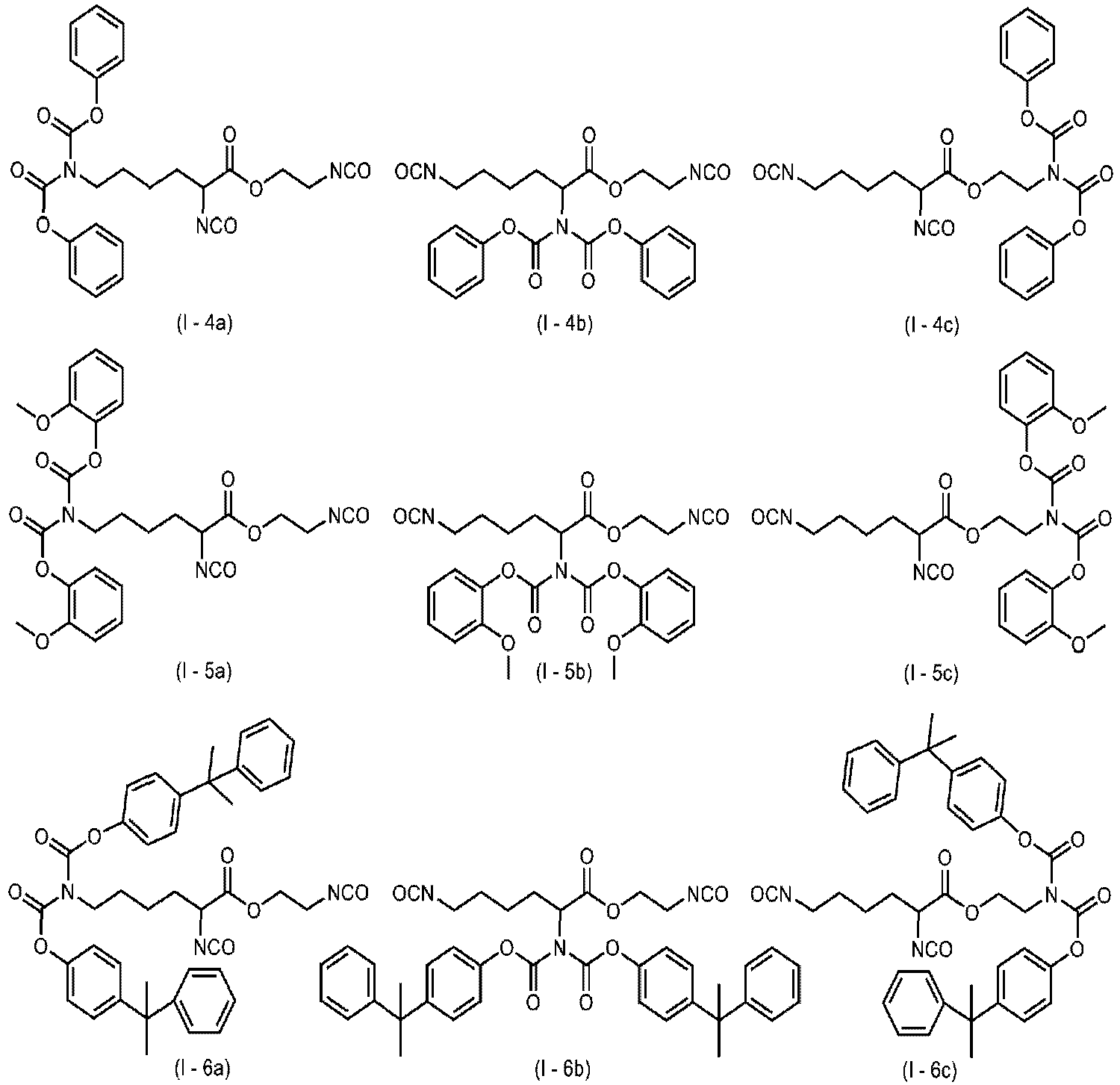


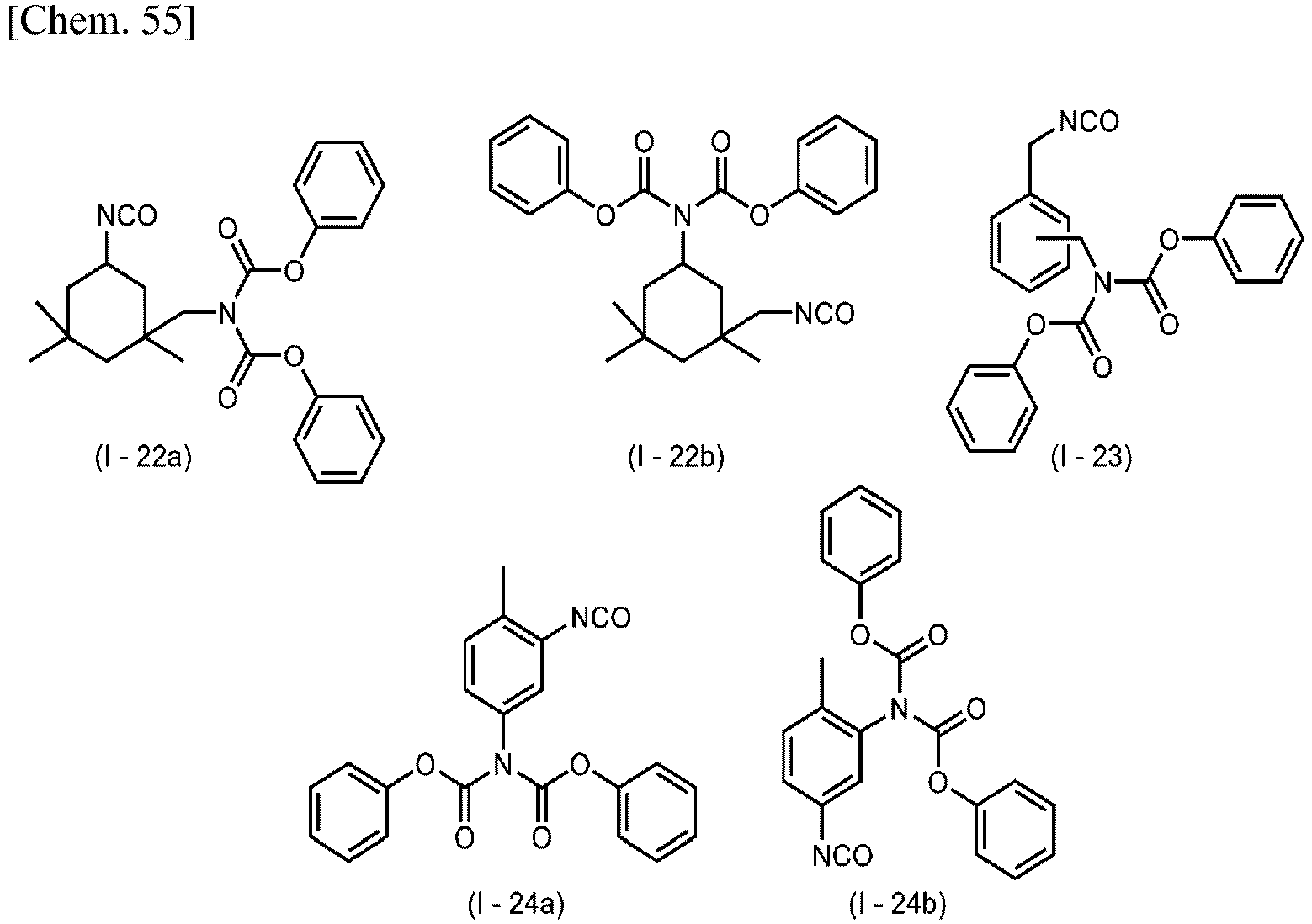
- As the isocyanate compound, a compound represented by General Formula (II) (hereinafter, referred to as "isocyanate compound (ll)" in some cases) is preferably used.

- (In General Formula (II), R21 is an n21-valent organic group, and satisfies a relational formula: R21 = R11. n21 is an integer of 2 or more and 8 or less, and satisfies a relational formula: n21 = n11 + n12.)
- R21 and n21 are as described in <Isocyanate compound> in <<Method for producing carbonyl compound>> described above.
- Examples of the preferable isocyanate compound (II) include 4-isocyanatomethyl-1,8-octamethylene diisocyanate (TTI), 2-isocyanatoethyl-2,6-diisocyanatohexanoate (LTI), lysine methyl ester diisocyanate (LDI), diisocyanatopentane (PDI), diisocyanatohexane (HDI), methylenebis(cyclohexylisocyanate) (HMDI), 1,3-bis(isocyanatomethyl)cyclohexane (HXD1), 3-isocyanatomethyl-3,5,5-trimethylcyclohexyl isocyanate (IPDI), diisocyanatoxylene (XDI), diisocyanatodiphenylmethane (MDI), diisocyanatotoluene (TDI), and the like.
- The isocyanate composition of the present embodiment preferably further contains one or more compounds selected from the group consisting of a carbamate compound and a carbonate, each of which is 2.0 ppm by mass or more and 1.0 × 10⁴ ppm by mass or less.
- The carbamate compound and the carbonate also exhibit the same effect as that of the above-described carbonyl compound (I). The content of these compounds in the isocyanate composition is also preferably increased to suppress the denaturation reaction of the isocyanate compound, but it is preferable that the content thereof not be excessively large in consideration of suppression of coloring or the appearance during use. Therefore, the lower limit value of the content of each of the carbamate compound and the carbonate is preferably 2.0 ppm by mass, more preferably 3.0 ppm by mass, further more preferably 5.0 ppm by mass, and particularly preferably 10 ppm by mass, with respect to the total mass of the isocyanate composition. On the other hand, the upper limit value of the content of each of the carbamate compound and the carbonate is preferably 1.0 × 10⁴ ppm by mass, more preferably 3.0 × 10³ ppm by mass, and further more preferably 1.0 × 10³ ppm by mass, with respect to the total mass of the isocyanate composition.
- That is, the content of each of the carbamate compound and the carbonate is preferably 2.0 ppm by mass or more and 1.0 × 10⁴ ppm by mass or less, more preferably 3.0 ppm by mass or more and 3.0 × 10³ mass ppm or less, further more preferably 5.0 ppm by mass or more and 1.0 × 10³ ppm by mass or less, and particularly preferably 10 ppm by mass or more and 1.0 × 10³ ppm by mass or less, with respect to the total mass of the isocyanate composition.
- In a case where the content of each of the carbamate compound and the carbonate is equal to or more than the lower limit value, the denaturation reaction of the isocyanate compound can be suppressed. On the other hand, in a case where the content of the carbamate compound and the carbonate is equal to or less than the upper limit value, coloring caused by the unsaturated bond can be suppressed, and the appearance can be maintained favorably.
- In a case where the isocyanate composition of the present embodiment contains all of the carbonyl compound (I), the carbamate compound, and the carbonate, the lower limit value of the total content of these compounds is preferably 2.0 ppm by mass, more preferably 3.0 ppm by mass, further more preferably 5.0 ppm by mass, and particularly preferably 10 ppm by mass, with respect to the total mass of the isocyanate composition. On the other hand, the upper limit value of the total content of these compounds is preferably 1.0 × 10⁵ ppm by mass, more preferably 1.0 × 10⁴ ppm by mass, further more preferably 3.0 × 10³ ppm by mass, and particularly preferably 1.0 × 10³ ppm by mass, with respect to the total mass of the isocyanate composition.
- That is, the total content of the carbonyl compound (I), the carbamate compound, and the carbonate is preferably 2.0 ppm by mass or more and 1.0 × 10⁵ ppm by mass or less, more preferably 3.0 ppm by mass or more and 1.0 × 10⁴ ppm by mass or less, further more preferably 5.0 ppm by mass or more and 3.0 × 10³ ppm by mass or less, and particularly preferably 10 ppm by mass or more and 1.0 × 10³ ppm by mass or less, with respect to the total mass of the isocyanate composition.
- In a case where the total content of these compounds is equal to or more than the lower limit value, the denaturation reaction of the isocyanate compound can be further suppressed. On the other hand, in a case where the total content of these compounds is equal to or less than the upper limit value, coloring caused by the unsaturated bond can be further suppressed, and the appearance can be favorably maintained.
- As the carbamate compound, a compound represented by General Formula (III) (hereinafter, referred to as "carbamate compound (III)" in some cases) is preferably used.

- (In General Formula (III), R31 is an (n31 + n32)-valent organic group, and satisfies a relational formula: R31 = R11. R32 is a monovalent organic group, and satisfies a relational formula: R32 = R12. n31 is an integer of 1 or more and 8 or less, n32 is an integer of 0 or more and 7 or less, and a sum of n31 and n32 is an integer of 2 or more and 8 or less, and satisfies a relational formula: n31 + n32 = n11 + n12.)
- R31, R31, n31, and n32 are as described in [Carbamate compound (III)] in <<Method for producing carbonyl compound>> described above.
- Examples of the preferable carbamate compound (III) include compounds represented by Formulae (III-1a) to (III-24b). In addition, carbamate compounds (III-1a) to (III- 1c), carbamate compounds (III-2a) to (III-2c), carbamate compounds (III-3a) to (III-3c), carbamate compounds (III-4a) to (III-4c), carbamate compounds (III-5a) to (III-5c), carbamate compounds (III-6a) to (III-6c), carbamate compounds (III-7a) to (III-7b), carbamate compounds (III-8a) to (III-8b), carbamate compounds (III-9a) to (III-9b), carbamate compounds (111-lOa) to (111-lOb), carbamate compounds (111-11a) to (III-11b), carbamate compounds (III-12a) to (III-12b), carbamate compounds (III-22a) to (III-22b), or carbamate compounds (III-24a) to (III-24b) can be a mixture, or single compounds.


- In addition, the carbamate compound (III) may be used alone or in combination of 2 or more thereof. In a case where 2 or more types of the carbamate compounds (III) are used in combination, since the effects of improving the stability of the isocyanate compound for each carbamate compound (III) are the same, the carbamate compounds (III) can be mixed and used at any ratio.
- As the carbonate, a compound represented by General Formula (IV) (hereinafter, referred to as "carbonate (IV)" in some cases) is preferably used.

- (In General Formula (IV), R41 and R42 are each independently a monovalent organic group, and satisfy a relational formula: R41 = R42 = R12.)
- R41 and R42 are as described in <Carbonate> in <<Method for producing carbonyl compound>> described above.
- Examples of the preferred carbonate (IV) include diphenyl carbonate, bis(2-methoxyphenyl)carbonate, bis(2-ethoxyphenyl)carbonate, and the like.
- The isocyanate composition of the present embodiment can be produced by mixing an isocyanate composition, a carbonyl compound (I), and one or more compounds selected from the group consisting of a carbamate compound and carbonate, depending on the necessity, to a set content.
- Alternatively, a composition including an isocyanate compound (II) obtained by pyrolysis of a carbamate compound represented by General Formula (VI) (hereinafter, referred to as "carbamate compound (VI)" in some cases) can be used as the isocyanate composition of the present embodiment.

- In General Formula (VI), R61 is an n61-valent (di- or higher valent and octa- or lower valent) organic group, and satisfies a relational formula: R61 = R21. That is, R61 is the same as R21.
- In General Formula (VI), R62 is a monovalent organic group, and satisfies a relational formula: R62 = R12. That is, R62 is the same as R12.
n61 represents the number of carbamate groups, is an integer of 2 or more and 8 or less, and satisfies a relational formula: n61 = n21. That is, n61 is the same as n21. - Specifically, a composition containing the isocyanate compound (II) is obtained by pyrolysis of a carbamate compound (VI) in the presence of the carbonate (IV) as a solvent.
- At this time, since a hydroxy compound is generated as a by-product, it is preferable to proceed with the pyrolysis reaction while extracting and separating the hydroxy compound.
- In addition, the pyrolysis reaction is preferably carried out by a continuous method. The continuous method is a method of continuously supplying a reaction solution containing the carbamate compound (VI) to a reactor to carry out a pyrolysis reaction of the carbamate compound (VI), and continuously extracting a hydroxy compound produced as a by-product from the reactor.
- A pyrolysis temperature varies depending on the type of carbamate compound (VI) to be used, but can be, for example, 140°C or higher and 380°C or lower.
- In addition, a reaction pressure varies depending on the type of compound to be used or the reaction temperature, but may be any of reduced pressure, normal pressure, and pressurized pressure. The pressure can be set to a pressure at which a saturated vapor pressure of an aprotic solvent to be used is obtained, and the pressure is preferably in a range of 20 Pa or more and 10 × 106 Pa or less.
- A reaction time (retention time in the case of a continuous method) is not particularly limited, and can be set to 0.001 hours or more and 100 hours or less.
- The carbonyl compound (I) is presumed to be a reaction product of the isocyanate compound (II) and the carbonate (IV), and is considered to be generated under pyrolysis reaction conditions. As a result, the isocyanate composition obtained in the pyrolysis reaction of the carbamate compound (VI) contains a specific amount of the carbonyl compound (1).
- In the pyrolysis reaction, the carbamate compound (III) can also be said to be a reaction intermediate before becoming the isocyanate compound (II) which is a final product, generated from the carbamate compound (VI). As the reaction is stopped at a time point at which the content of the isocyanate compound (11) reaches a specific amount or more, the isocyanate composition including the carbamate compound (III) which is the reaction intermediate is obtained.
- The isocyanate composition obtained in the pyrolysis reaction of the carbamate compound (VI) contains the carbonate (IV) as a solvent, but, in a case where the amount thereof is large, the carbonate (IV) can be separated from the isocyanate composition such that the content of the carbonate (IV) in the isocyanate composition is within a specific range, using a known separation method such as distillation separation.
- In addition, in a case where the isocyanate composition of the present embodiment is produced by mixing the isocyanate compound, the carbonyl compound (1), and one or more compounds selected from the group consisting of a carbamate compound and carbonate, depending on the necessity, so as to reach the above-described content, each of the carbonyl compound, the carbamate compound, and the carbonate can be produced by the method shown below. In addition, for the isocyanate compound, a compound obtained by pyrolysis of the carbamate compound (VI) can be purified and used depending on the necessity.
- The carbonyl compound (I) is obtained by heating a mixture of the isocyanate compound (II) and the carbonate (IV), a mixture of the carbamate compound (III) or the carbamate compound (VI) and the carbonate (IV), or a mixture of the isocyanate compound (II), the carbamate compound (111) or the carbamate compound (VI), the carbonate (IV), and the hydroxy compound (hereinafter, this mixture is referred to as "raw material mixture of carbonyl compound (I)" in some cases). Examples of the hydroxy compound referred to herein include the same one as the hydroxy compound produced as a by-product in the pyrolysis reaction of the carbamate compound (VI), and the details will be described later.
- Regarding the use amount (molar amount) of the carbonate (IV), a use amount of the carbonate solvent is preferably large from the viewpoint of suppressing side reactions, but considering the size of the reactor and the like, the use amount is preferably 0.001 times or more and 100 times or less, more preferably 0.01 times or more and 80 times or less, and further more preferably 0.1 times or more and 50 times or less, in terms of the stoichiometric ratio with respect to a total molar amount of the carbamate compound (III), the carbamate compound (VI), and the isocyanate compound (II).
- A reaction temperature is usually 100°C or higher and 400°C or lower, and a high temperature is preferable to increase the reaction rate. On the other hand, at a high temperature, there is a case where a side reaction is caused by at least any compound of the carbamate compound and the isocyanate compound, and thus the reaction temperature is preferably 130°C or higher and 300°C or lower, and more preferably 150°C or higher and 280°C or lower. To keep the reaction temperature constant, known cooling devices and heating devices may be installed in the reactor.
- In addition, a reaction pressure varies depending on the type of compound to be used and the reaction temperature, but the reaction pressure may be any one of reduced pressure, normal pressure, or pressurized pressure, and is usually in a range of 20 Pa or more and 1 × 10⁶ Pa or less.
- A reaction time (retention time in the case of a continuous method) is not particularly limited, but is usually 0.001 hours or longer and 100 hours or shorter, preferably 0.01 hours or longer and 50 hours or shorter, and more preferably 0.1 hours or longer and 10 hours or shorter.
- In the production of the carbonyl compound by mixing and heating, it is possible to increase the generation rate and generation amount of the carbonyl compound by bringing the raw material liquid into contact with stainless steel and heating the raw material liquid. As the stainless steel, any shape can be used as long as the stainless steel is made of SUS316 or SUS304, and for example, a filling material or a metal piece is preferably used. The filling material is not particularly limited, but DIXON Packing, Me MAHON Packing, Coil Pack, MESH RING, CANNON Packing, HELI PACK, RASCHIG RING, PRICKLE RING, or the like is used.
- In a case where a volume of the raw material liquid of the carbonyl compound is denoted as V and a surface area of the stainless steel is denoted as A, the larger the contact area with stainless steel per unit volume of the raw material liquid, a value of the generation rate A/V of the carbonyl compound is preferably 0.001 m2/m3 or more and 100,000 m2/m3 or less, more preferably 0.01 m2/m3 or more and 50,000 m2/m3 or less, and further more preferably 0.1 m2/m3 or more and 10,000 m2/m3 or less.
- A reaction form is not particularly limited, but a reactor in which the raw material mixture of the carbonyl compound (I), or the raw material mixture of the carbonyl compound (I) and stainless steel can be efficiently mixed and heated is preferable, and for example, a method of heating a raw material liquid in a stirring tank or a distillation column made of stainless steel is preferable.
- The distillation method is not particularly limited as long as the light boiling component of the liquid obtained after heating the raw material mixture of the carbonyl compound (I) may be distilled off, and the light boiling component can be separated as a gas-phase component. The light boiling point component (light boiling component) refers to a component having a boiling point lower than that of the carbonyl compound (I), varies depending on the material to be used, and is mainly one or more compounds selected from the group consisting of the carbonate (IV), the isocyanate compound (II), and the hydroxy compound.
- There is a method of obtaining the carbamate compound (III) by mixing the isocyanate compound (II) and the hydroxy compound represented by Formula (V) (hereinafter, referred to "hydroxy compound (V)" in some times), and heating the mixture, and a method of obtaining the isocyanate compound (II) by pyrolysis of the carbamate compound represented by Formula (VI).
-
R51-OH (V)
- In General Formula (V), R51 is a monovalent organic group, and satisfies a relational formula: R51 = R12. That is, R51 is the same as R12.
- It is preferable that a mixing ratio in a case where the isocyanate compound (II) and the hydroxy compound (V) are mixed and heated to produce a mixture be such that a ratio NCO: OH of the isocyanate group of the isocyanate compound (II) to the hydroxyl group of the hydroxy compound (V) is (n31 + n32): n31.
- A reaction temperature is usually 40°C or higher and 400°C or lower, and a high temperature is preferable to increase the reaction rate. On the other hand, at a high temperature, there is a case where a side reaction is caused by at least any compound of the carbamate compound and the isocyanate compound, and thus the reaction temperature is preferably 80°C or higher and 300°C or lower, and more preferably 100°C or higher and 250°C or lower. To keep the reaction temperature constant, known cooling devices and heating devices may be installed in the reactor.
- In addition, a reaction pressure varies depending on the type of compound to be used and the reaction temperature, but the reaction pressure may be any one of reduced pressure, normal pressure, or pressurized pressure, and is usually in a range of 20 Pa or more and 1 × 10⁶ Pa or less.
- A reaction time (retention time in the case of a continuous method) is not particularly limited, but is usually 0.001 hours or longer and 100 hours or shorter, preferably 0.01 hours or longer and 50 hours or shorter, and more preferably 0.1 hours or longer and 10 hours or shorter.
- In the case of producing by a pyrolysis reaction, the above-described method for producing the isocyanate compound (II) can be used.
- The carbonate (IV) can be synthesized using the methods described in
Japanese Patent No. 3071008 Japanese Patent No. 4137941 - The isocyanate composition of the present embodiment sufficiently suppresses coloring and has excellent storage stability, and thus is suitably used as a curing agent raw material in the fields where appearance quality is required, such as a baking coating material, automobile clear coating material, and coil coating material.
- Hereinafter, the present invention will be described in detail based on examples, but the scope of the present invention is not limited to the examples. Hereinafter, "%" means "% by mass" and "ppm" means "ppm by mass".
- 1H-NMR analysis was implemented using JNM-A400 FT-NMR system manufactured by JEOL Ltd. as a device.
- 0.3 g of a sample solution was weighed, 0.7 g of deuterochloroform and 0.05 g of dimethyldiphenylsilane as an internal standard substance were added thereto, and uniformly mixed to obtain a solution as an NMR analysis sample.
- Analysis was implemented on each standard substance, and quantitative analysis of the analysis sample solution was implemented based on the created calibration curve.
- Analysis was carried out under the following conditions.
-
- Device: GC-2010, manufactured by Shimadzu Corporation
- Column: DB-1
- Diameter 0.25 mm, length 30 m, film thickness 1.0 µm
- Column temperature: 60°C to 300°C
- Inlet temperature: 300°C
- Carrier gas: helium
- Carrier gas flow rate: 40 mL/min
- Detector: FID (hydrogen flame ionization detector)
- 1.0 g of the sample solution was weighed, and 10 g of acetonitrile and 0.1 g of anisole as an internal standard substance were added thereto and uniformly mixed to obtain a solution as a gas chromatography analysis sample.
- Analysis was carried out under the following conditions.
-
- Device: LC-10AT manufactured by Shimadzu Corporation
- Column: Inertsil ODS
-
Particle diameter 5 µm, inner diameter 2.1 mm, length 250 mm - Column temperature: 40°C
- Developing solvent: water/acetonitrile = 90/10
- Developing solvent flow rate: 1 mL/min
- Detector: photodiode array detector
- 1.0 g of the sample solution was weighed, 10 g of acetic acid was added thereto, and uniformly mixed to obtain a solution as a liquid chromatography analysis sample.
- Analysis was implemented on each standard substance, and quantitative analysis of the analysis sample solution was implemented based on the created calibration curve.
- The generated carbonyl compound was isolated under the following conditions.
-
- Device: EPCLC-AI-580S, manufactured by Yamazen Corporation
- Elution position-controlled purification chromatograph
- Injection column: M or L
- Main column: High-flash S, M, or L
- Developing solvent: ethyl acetate/hexane
- Developing solvent flow rate: 0 mL/min to 80 mL/min
- Detector: UV detector
- From measured values of 1H-NMR, GC, and LC, a yield of the generated isocyanate compound and a value of { 3 × (molar amount of isocyanurate group) + 2 × (molar amount of carbodiimide group) + 3 × (molar amount of uretonimine group) + 2 × (molar amount of allophanate group)}/(molar amount of carbonyl compound) was calculated. In addition, the carbonyl compound was quantified from the measured value of LC.
- 100 g of each isocyanate composition was placed in a screwtop bottle having a capacity of 200 mL, and kept and stored at 25°C for 300 days in a nitrogen atmosphere.
- The Hazen color number before and after the storage was measured with a Hazen meter.
- 100 g of each isocyanate composition after storage was pressure-filtered using a membrane filter having a pore size of 1 µm, a filtration residual mass was obtained from a filter mass before and after filtration, and a denaturation amount was calculated by the equation shown below.

- A reaction was carried out using the device shown in
FIG. 1 . The device shown inFIG. 1 was also used in the production of carbamate compounds in Example 1-1 and the subsequent examples. - In a state in which a
line 14 was closed, 3.33 kg (19.2 mol) of 4-aminomethyl-1,8-octanediamine was supplied from astorage tank 101 through aline 11 to areaction container 104 made of SUS with a baffle, 5.50 kg (58.5 mol) of phenol was supplied from astorage tank 102 through aline 12 to thereaction container 104, and stirring was carried out for homogenization. Subsequently, in a state in which aline 16 was closed, 5.50 kg (58.5 mol) of phenol was supplied from thestorage tank 102 through aline 15 to areactor 105 made of SUS with a baffle, and 20.52 kg (95.9 mol) of diphenyl carbonate was supplied from astorage tank 103 through aline 13 to areaction container 105. A liquid temperature of thereaction container 105 was adjusted to 65°C, stirring was carried out for homogenization, and then the mixture solution of 4-aminomethyl-1,8-octanediamine and phenol was supplied from thereaction container 104 through theline 14 so that the internal temperature thereof did not exceed 70°C. After continuing stirring for 2 hours, as a temperature of the reaction solution was raised to 120°C, and the internal pressure was set to about 1 kPa, 15.53 kg of phenol in the solution was extracted to astorage tank 107 through aline 17 and a capacitor (condensing device) A11. - As a result of analyzing the solution after the reaction (hereinafter, referred to as "reaction solution (1-1)") by liquid chromatography, a carbamate compound corresponding to 4-aminomethyl-1,8-octanediamine was generated at a yield of 99% by mass. The
line 16 was opened, and the reaction solution (1-1) was transferred to astorage tank 106 through theline 16. A mass of the reaction solution (1 -1) was 19.40 kg. - The reaction was carried out using the device shown in
FIG. 2 . The device shown inFIG. 2 was also used for the pyrolysis of the carbamate compounds in Example 1-1 and the subsequent examples. - In a state in which a
line 24 was closed, 19.40 kg of diphenyl carbonate was supplied from astorage tank 202 through aline 22 to areaction container 201 made of SUS with a baffle. A temperature of amulti-stage distillation column 203 was raised to 170°C, a jacket temperature of thereaction container 201 was heated to 228°C, and a pressure was reduced to 14 kPa. 19.40 kg of the reaction solution (1-1) recovered in thestorage tank 106 in step (1-1) was heated to 120°C, and supplied to thereaction container 201 through aline 21 for about 15 minutes to carry out pyrolysis of the carbamate compound. The pressure was adjusted in a range of 8 to 14 kPa, and the phenol generated by pyrolysis was separated from diphenyl carbonate or 1,8-diisocyanato-4-isocyanatomethyloctane (TTI) as the product in thedistillation column 203, and was recovered in astorage tank 204 through aline 25, a capacitor A21 and aline 27. A reflux ratio at this time was 1.2. After the entire reaction solution (1-1) was transferred, phenol was continuously extracted at an internal temperature of 220°C. The reaction was ended 4 hours after the transfer of the entire reaction solution (1-1), and the reaction solution was extracted from aline 28 and transferred to astorage tank 205. A mass of the reaction solution transferred to thestorage tank 205 was 18.63 kg. A part of the reaction solution (hereinafter, referred to as "reaction solution (1-2)") was purified with a column fractionation device to isolate the carbonyl compound. The isolated carbonyl compound was a mixture of compounds represented by Formulae (I-1a) to (1-1c). In addition,FIG. 5 shows a 1H-NMR spectrum of the carbonyl compound.
- A calibration curve of LC was created from the obtained carbonyl compound, and the carbonyl compound was quantified by an absolute calibration curve method. In the subsequent examples, the operation of isolating the carbonyl compound was not carried out, and the carbonyl compound was quantified from the calibration curve.
- In addition, as a result of carrying out 1H-NMR and gas chromatography analysis, TTI was generated with a yield of 70% by mass, and a value of {3 × (molar amount of isocyanurate group) + 2 × (molar amount of carbodiimide group) + 3 × (molar amount of uretonimine group) + 2 × (molar amount of allophanate group) }/(molar amount of carbonyl compound) of the reaction solution at this time was 3.7.
- The reaction was carried out using the device shown in
FIG. 3 . The device shown inFIG. 3 was also used for the light boiling separation after Example 1-1. - The reaction solution (1-2) was continuously fed to a middle stage of a continuous
multi-stage distillation column 301 from thestorage tank 205 through aline 31 at 3.73 kg/hour, and distillation separation of the liquid-phase component was carried out. A heat amount required for distillation separation was supplied by circulating a column lower liquid through a reboiler A32 and aline 33. A liquid temperature at a column bottom portion of the continuous multi-stage distillation column was 220°C, and a pressure at the top of the column was 1.5 kPa. The gas distilled from the top of the continuousmulti-stage distillation column 301 was condensed in a capacitor (condensing device) A31 through aline 32, and continuously extracted to astorage tank 302 through aline 36. In addition, an extraction rate of aline 34 in a steady state was 1.49 kg/hour, and continuously extracted to astorage tank 303. The amount of the liquid recovered in the storage tank 303 (hereinafter, referred to as "reaction solution (1-3)") was 7.45 kg, as a result of analysis by NMR, LC, and gas chromatography, TTI was recovered with respect to the supplied reaction solution (1-2) at a yield of 82% by mass, and a value of {3 × (molar amount of isocyanurate group) + 2 × (molar amount of carbodiimide group) + 3 × (molar amount of uretonimine group) + 2 × (molar amount of allophanate group) }/(molar amount of carbonyl compound) of the reaction solution at this time was 4.6. - The reaction was carried out using the device shown in
FIG. 4 . The device shown inFIG. 4 was also used for the high boiling separation in Example 1-1 and the subsequent examples. - A thin-film distillation device 401 (manufactured by Kobelco Eco-Solutions Co., Ltd., Japan) was heated to 190°C, and the internal pressure was set to 0.3 kPa. The reaction solution (1-3) recovered in the
storage tank 303 in step (1-3) was supplied to an upper portion of the thin-film distillation device 401 at about 1.0 kg/hour through aline 41 to carry out separation of the isocyanate and a high boiling component. The generated gas-phase component was transferred to astorage tank 402 through aline 42 and a capacitor (condensing device) A41. An amount of the liquid recovered from thestorage tank 402 was 3.35 kg, and a TTI recovery rate was 121% by mass. The reason why the TTI recovery rate exceeds 100% by mass is that a part of the isocyanate denaturation product generated in the pyrolysis step or the light boiling separation step is regenerated to TTI. - A pyrolysis reaction was carried out by the same operation as that of Example 1-1, except that 19.4 kg of the reaction solution (1-1) of Example 1-1 and 19.4 kg of diphenyl carbonate were used, the reaction solution (1-1) was supplied to the reactor over about 13 minutes to start a reaction, the reaction was carried out at a jacket temperature of 248°C, an internal temperature of 240°C, a reflux ratio of 0.4, and a pressure in a range of 14 to 26 kPa, and extraction of phenol was continued for 3 hours after the transfer of the entire reaction solution (1-1). A mass of the reaction solution transferred to the
storage tank 205 was 20.96 kg. As a result of analysis of the reaction solution (hereinafter, referred to as "reaction solution (2-2)") by NMR, LC, and gas chromatography, TTI was generated at a yield of 78% by mass. A value of {3 × (molar amount of isocyanurate group) + 2 × (molar amount of carbodiimide group) + 3 × (molar amount of uretonimine group) + 2 × (molar amount of allophanate group) }/(molar amount of carbonyl compound) of the reaction solution at this time was 4.3. - Light boiling separation was carried out by the same operation as that of Example 1-1, except that the reaction solution (2-2) was continuously fed at 4.19 kg/hour, and an extraction rate of the
line 34 in a steady state was 1.26 kg/hour. The amount of the liquid recovered in thestorage tank 303 was 6.29 kg, and as a result of analysis by NMR, LC, and gas chromatography, TTI was recovered at a yield of 77% by mass with respect to the supplied reaction solution (2-2), and a value of {3 × (molar amount of isocyanurate group) + 2 × (molar amount of carbodiimide group) + 3 × (molar amount of uretonimine group) + 2 × (molar amount of allophanate group) }/(molar amount of carbonyl compound) of the reaction solution at this time was 6.3. - High boiling separation was carried out by the same operation as that of Example 1-1, except that the liquid recovered in the
storage tank 303 in step (2-3) was used. The amount of the liquid recovered in astorage tank 402 was 3.36 kg, and a TTI recovery rate was 116% by mass. - A pyrolysis reaction was carried out by the same operation as that of Example 1-1, except that 19.4 kg of the reaction solution (1-1) of Example 1-1 and 19.4 kg of diphenyl carbonate were used, the reaction solution (1-1) was supplied to the reactor over about 9 minutes to start the reaction, the reaction was carried out at a jacket temperature of 258°C, an internal temperature of 250°C, a reflux ratio of 2.0, and a pressure in a range of 21 to 32 kPa, and extraction of phenol was continued for 2.5 hours after the transfer of the entire reaction solution (1-1). A mass of the reaction solution transferred to the
storage tank 205 was 22.12 kg. As a result of analysis of the reaction solution (hereinafter, referred to as "reaction solution (3-2)") by NMR, LC, and gas chromatography, TTI was generated at a yield of 73% by mass. A value of {3 × (molar amount of isocyanurate group) + 2 × (molar amount of carbodiimide group) + 3 × (molar amount of uretonimine group) + 2 × (molar amount of allophanate group) }/(molar amount of carbonyl compound) of the reaction solution at this time was 3.9. - Light boiling separation was carried out by the same operation as that of Example 1-1, except that the reaction solution (3-2) was continuously fed at 4.42 kg/hour, and an extraction rate of the
line 34 in a steady state was 1.42 kg/hour. The amount of the liquid recovered in thestorage tank 303 was 7.08 kg, and as a result of analysis by NMR, LC, and gas chromatography, TTI was recovered at a yield of 80% by mass with respect to the supplied reaction solution (3-2), and a value of {3 × (molar amount of isocyanurate group) + 2 × (molar amount of carbodiimide group) + 3 × (molar amount of uretonimine group) + 2 × (molar amount of allophanate group) }/(molar amount of carbonyl compound) of the reaction solution at this time was 5.5. - High boiling separation was carried out by the same operation as that of Example 1-1, except that the liquid recovered in the
storage tank 303 in step (3-3) was used. The amount of the liquid recovered in thestorage tank 402 was 3.35 kg, and the TTI recovery rate was 119% by mass. - A pyrolysis reaction was carried out by the same operation as that of Example 1-1, except that 19.4 kg of the reaction solution (1-1) of Example 1-1 and 19.4 kg of diphenyl carbonate were used, the reaction solution (1-1) was supplied to the reactor over about 14 minutes to start the reaction, the reaction was carried out at a jacket temperature of 238°C, an internal temperature of 230°C, a reflux ratio of 1.5, and a pressure in a range of 8 to 14 kPa, and extraction of phenol was continued for 3 hours after the transfer of the entire reaction solution (1-1). A weight of the reaction solution transferred to a
storage tank 205 was 22.12 kg. As a result of analysis of the reaction solution (hereinafter, referred to as "reaction solution (4-2)") by NMR, LC, and gas chromatography, TTI was generated at a yield of 79% by mass. A value of {3 × (molar amount of isocyanurate group) + 2 × (molar amount of carbodiimide group) + 3 × (molar amount of uretonimine group) + 2 × (molar amount of allophanate group) } /(molar amount of carbonyl compound) of the reaction solution at this time was 1.6. - Light boiling separation was carried out by the same operation as that of Example 1-1, except that the reaction solution (4-2) was continuously fed at 4.42 kg/hour and the extraction rate of the
line 34 in a steady state was 1.68 kg/hour. The amount of the liquid recovered in thestorage tank 303 was 8.41 kg, and, as a result of analysis by NMR, LC, and gas chromatography, TTI was recovered at a yield of 85% by mass with respect to the supplied reaction solution (4-2), and a value of {3 × (molar amount of isocyanurate group) + 2 × (molar amount of carbodiimide group) + 3 × (molar amount of uretonimine group) + 2 × (molar amount of allophanate group) }/(molar amount of carbonyl compound) of the reaction solution at this time was 2.6. - High boiling separation was carried out by the same operation as that of Example 1-1, except that the liquid recovered in the
storage tank 303 in step (4-3) was used. The amount of the liquid recovered in thestorage tank 402 was 4.05 kg, and the TTI recovery rate was 125% by mass. - Carbamate synthesis was carried out by the same operation as that of Example 1-1, except that 0.23 kg (69.2 mol) of urea was used instead of diphenyl carbonate, phenol supplied to the
storage tank 102 was 25.87 kg (275.2 mol), and stirring was performed at a reaction temperature of areactor 104 of 240°C for 30 minutes. The amount of phenol and ammonia extracted into astorage tank 107 was 24.14 kg. - As a result of analysis of the solution after the reaction (hereinafter, referred to as "reaction solution (5-1)") by liquid chromatography, the corresponding carbamate compound was generated at a yield of 99% by mass. The
line 16 was opened, and the reaction solution (5-1) was transferred to thestorage tank 106 through theline 16. A mass of the reaction solution (5-1) was 10.79 kg. - A pyrolysis reaction was carried out by the same operation as that of Example 1 - 1, except that 10.8 kg of the reaction solution (5-1) of Example 1-1 and 28.0 kg of diphenyl carbonate were used, the reaction solution (5-1) was supplied to the reactor over about 13 minutes to start the reaction, the reaction was carried out at a jacket temperature of 238°C, an internal temperature of 230°C, a reflux ratio of 1.7, and a pressure in a range of 8 to 14 kPa, and extraction of phenol was continued for 3 hours after the transfer of the entire reaction solution (5-1). A mass of the reaction solution transferred to the
storage tank 205 was 21.34 kg. As a result of analysis of the reaction solution (hereinafter, referred to as "reaction solution (5-2)") by NMR, LC, and gas chromatography, TTI was generated at a yield of 78% by mass. A value of {3 × (molar amount of isocyanurate group) + 2 × (molar amount of carbodiimide group) + 3 × (molar amount of uretonimine group) + 2 × (molar amount of allophanate group) }/(molar amount of carbonyl compound) of the reaction solution at this time was 1.5. - Light boiling separation was carried out by the same operation as that of Example 1-1, except that the reaction solution (5-2) was continuously fed at 4.27 kg/hour and the extraction rate of the
line 34 in a steady state was 1.75 kg/hour. The amount of the liquid recovered in thestorage tank 303 was 8.75 kg, and as a result of analysis by NMR, LC, and gas chromatography, TTI was recovered at a yield of 84% by mass with respect to the supplied reaction solution (5-2), and a value of {3 × (molar amount of isocyanurate group) + 2 × (molar amount of carbodiimide group) + 3 × (molar amount of uretonimine group) + 2 × (molar amount of allophanate group) }/(molar amount of carbonyl compound) of the reaction solution at this time was 2.5. - High boiling separation was carried out by the same operation as that of Example 1-1, except that the liquid recovered in the
storage tank 303 in step (5-3) was used. The amount of the liquid recovered in thestorage tank 402 was 4.05 kg, and the TTI recovery rate was 128% by mass. - Carbamate synthesis was carried out by the same operation as that of Example 1-5, except that 12.40 kg (58.5 mol) of 4-cumylphenol instead of phenol was supplied to the
reactor 104 made of SUS with a baffle, and 18.97 kg (89.47 mol) of 4-cumylphenol instead of phenol was supplied to thereactor 105 made of SUS with a baffle. The amount of 4-cumylphenol and ammonia extracted into thestorage tank 107 was 16.97 kg. - As a result of analysis of the solution after the reaction (hereinafter, referred to as "reaction solution (6-1)" by liquid chromatography, the corresponding carbamate compound was generated at a yield of 99% by mass. The
line 16 was opened, and the reaction solution (6-1) was transferred to thestorage tank 106 through theline 16. A mass of the reaction solution (6-1) was 17.96 kg. - A pyrolysis reaction was carried out by the same operation as that of Example 1-5, except that 18.0 kg of the reaction solution (6-1) and 28.0 kg of bis(4-cumylphenyl)carbonate were used, the reaction solution (6-1) was supplied to the reactor over about 12 minutes to start the reaction, the reaction was carried out at a jacket temperature of 238°C, an internal temperature of 230°C, a reflux ratio of 1.5, and a pressure in a range of 3 to 5 kPa, and extraction of 4-cumylphenol was continued for 3 hours after the transfer of the entire reaction solution (6-1). A mass of the reaction solution transferred to the
storage tank 205 was 32.19 kg. As a result of analysis of the reaction solution (hereinafter, referred to as "reaction solution (6-2)") by NMR, LC, and gas chromatography, TTI was generated at a yield of 75% by mass. A value of {3 × (molar amount of isocyanurate group) + 2 × (molar amount of carbodiimide group) + 3 × (molar amount of uretonimine group) + 2 × (molar amount of allophanate group)}/(molar amount of carbonyl compound) of the reaction solution at this time was 1.4. A carbonyl compound was isolated by purifying a part of the reaction solution (6-2) with a column fractionation device. The isolated carbonyl compound was a mixture of compounds represented by Formulae (I-3a) to (I-3c).

- Light boiling separation was carried out by the same operation as that of Example 1-1, except that the reaction solution (6-2) was continuously fed at 16.10 kg/hour and the extraction rate of the
line 34 in a steady state was 15.77 kg/hour. The amount of the liquid recovered in thestorage tank 303 was 31.55 kg, and as a result of analysis by NMR, LC, and gas chromatography, TTI was recovered at a yield of 95% by mass with respect to the supplied reaction solution (6-2), and a value of {3 × (molar amount of isocyanurate group) + 2 × (molar amount of carbodiimide group) + 3 × (molar amount of uretonimine group) + 2 × (molar amount of allophanate group) }/(molar amount of carbonyl compound) of the reaction solution at this time was 1.6. - High boiling separation was carried out by the same operation as that of Example 1-1, except that the liquid recovered in the
storage tank 303 in step (6-3) was used. The amount of the liquid recovered in thestorage tank 402 was 4.19 kg, and the TTI recovery rate was 122% by mass. - A pyrolysis reaction was carried out by the same operation as that of Example 1-1, except that 19.4 kg of the reaction solution (1-1) of Example 1-1 and 5.45 kg of Barrel process oil B-03 (benzyl toluene, Matsumura Oil Co., Ltd.) were used, the reaction solution (1-1) was supplied to the reactor over about 14 minutes to start the reaction, the reaction was carried out at a jacket temperature of 238°C, an internal temperature of 230°C, a reflux ratio of 1.5, and a pressure in a range of 25 to 35 kPa, and extraction of phenol was continued for 1.5 hours after the transfer of the entire reaction solution (1-1). A mass of the reaction solution transferred to the
storage tank 205 was 5.71 kg. As a result of analysis of the reaction solution (hereinafter, referred to as "reaction solution (1'-2)") by NMR, LC, and gas chromatography, TTI was generated at a yield of 69% by mass. Generation of a carbonyl compound was not observed in the reaction solution at this time, and by-products having an isocyanurate group, a carbodiimide group, a uretonimine group, or an allophanate group were observed. - Light boiling separation was carried out by the same operation as that of Example 1-1, except that the reaction solution (1'-2) was continuously fed at 4.35 kg/hour and the extraction rate of the
line 34 in a steady state was 1.74 kg/hour, and as a result, the viscosity of the liquid increased during the operation, and continuous operation became difficult. - A reaction was carried out using the device shown in
FIG. 1 . - In a state in which the
line 14 was closed, 3.33 kg (16.8 mol) of 4,4'-diaminodiphenylmethane was supplied from thestorage tank 101 through theline 11 to thereaction container 104 made of SUS with a baffle, 2.53 kg (27.0 mol) of phenol was supplied from thestorage tank 102 through theline 12 to thereaction container 104, and stirring was carried out for homogenization. Subsequently, in a state in which theline 16 was closed, 2.53 kg (27.0 mol) of phenol was supplied from thestorage tank 102 through theline 15 to thereaction container 105 made of SUS with a baffle, and 11.96 kg (55.6 mol) of diphenyl carbonate was supplied from thestorage tank 103 through theline 13 to thereaction container 105. A liquid temperature of thereaction container 105 was adjusted to 65°C, stirring was carried out for homogenization, and then the mixture solution of 4,4'-diaminodiphenylmethane and phenol was supplied from thereaction container 104 through theline 14 so that the internal temperature thereof did not exceed 70°C. After continuing stirring for 2 hours, as the temperature of the reaction solution was raised to 120°C, and the internal pressure was set to about 1 kPa, 7.58 kg of phenol in the solution was extracted to thestorage tank 107 through theline 17 and the capacitor (condensing device) A11. - As a result of analysis of the solution after the reaction (hereinafter, referred to as "reaction solution (7-1)") by liquid chromatography, a carbamate compound corresponding to 4,4'-diaminodiphenylmethane was generated at a yield of 95% by mass. The
line 16 was opened, and the reaction solution (7-1) was transferred to thestorage tank 106 through theline 16. A mass of the reaction solution (7-1) was 12.77 kg. - A pyrolysis reaction was carried out by the same operation as that of Example 1-1, except that 12.77 kg of the reaction solution (7-1) and 12.77 kg of diphenyl carbonate were used, the reaction solution (7-1) was supplied to the reactor over about 10 minutes to start the reaction, the reaction was carried out at a jacket temperature of 238°C, an internal temperature of 230°C, a reflux ratio of 0.8, and a pressure in a range of 11 to 16 kPa, and extraction of phenol was continued for 3 hours after the transfer of the entire reaction solution (7-1). A mass of the reaction solution transferred to the
storage tank 205 was 1 1.75 kg. A carbonyl compound was isolated by purifying a part of the reaction solution (hereinafter, referred to as "reaction solution (7-2)") with a column fractionation device. The isolated carbonyl compound was a compound represented by Formula (1-2).
- A calibration curve of LC was created from the obtained carbonyl compound, and the carbonyl compound was quantified by an absolute calibration curve method. In addition, as a result of analysis by NMR and gas chromatography, diphenylmethane diisocyanate (MDI) was generated at a yield of 70% by mass. A value of { 3 × (molar amount of isocyanurate group) + 2 × (molar amount of carbodiimide group) + 3 × (molar amount of uretonimine group) + 2 × (molar amount of allophanate group) }/(molar amount of carbonyl compound) of the reaction solution at this time was 1.3.
- Light boiling separation was carried out by the same operation as that of Example 1-1, except that the reaction solution (7-2) was continuously fed at 2.35 kg/hour and the extraction rate of the
line 34 in a steady state was 1.97 kg/hour. The amount of the liquid recovered in thestorage tank 303 was 9.87 kg, as a result of analysis by NMR, LC, and gas chromatography, MDI was recovered at a yield of 79% by mass with respect to the supplied reaction solution (7-2), and a value of {3 × (molar amount of isocyanurate group) + 2 × (molar amount of carbodiimide group) + 3 × (molar amount of uretonimine group) + 2 × (molar amount of allophanate group) }/(molar amount of carbonyl compound) of the reaction solution at this time was 2.3. - High boiling separation was carried out by the same operation as that of Example 1-1, except that the liquid recovered in the
storage tank 303 in step (7-3) was used, the operation temperature was set to 170°C, and the internal pressure was set to 0.3 kPa. The amount of the liquid recovered in thestorage tank 402 was 4.54 kg, and the MDI recovery rate was 130% by mass. - In a state in which the
line 14 was closed, 3.33 kg (16.8 mol) of lysine β-aminoethyl ester trihydrochloride was supplied from thestorage tank 101 through theline 11 to thereaction container 104 made of SUS with a baffle, 2.52 kg (26.7 mol) of phenol was supplied from thestorage tank 102 through theline 12 to thereaction container 104, and stirring was carried out for homogenization. Subsequently, in a state in which theline 16 was closed, 2.52 kg (26.7 mol) of phenol was supplied from thestorage tank 102 through theline 15 to thereaction container 105 made of SUS with a baffle, and 11.91 kg (55.6 mol) of diphenyl carbonate was supplied from thestorage tank 103 through theline 13 to thereaction container 105. A liquid temperature of thereaction container 105 was adjusted to 65°C, stirring was carried out for homogenization, and then the mixture solution of lysine β-aminoethyl ester trihydrochloride and phenol was supplied from thereaction container 104 through theline 14 so that the internal temperature thereof did not exceed 70°C. After continuing stirring for 2 hours, as the temperature of the reaction solution was raised to 120°C, and the internal pressure was set to about 1 kPa, 8.22 kg of phenol in the solution was extracted to thestorage tank 107 through theline 17 and the capacitor (condensing device) A11. - As a result of analysis of the solution after the reaction (hereinafter, referred to as "reaction solution (8-1)") by liquid chromatography, a carbamate compound corresponding to lysine β-aminoethyl ester was generated at a yield of 96% by mass. The
line 16 was opened, and the reaction solution (8-1) was transferred to thestorage tank 106 through theline 16. A mass of the reaction solution (8-1) was 11.45 kg. - A pyrolysis reaction was carried out by the same operation as that of Example 1-1, except that 11.45 kg of the reaction solution (8-1) and 10.00 kg of diphenyl carbonate were used, the reaction solution (8-1) was supplied to the reactor over about 15 minutes to start the reaction, the reaction was carried out at a jacket temperature of 238°C, an internal temperature of 230°C, a reflux ratio of 3.2, and a pressure in a range of 11 to 16 kPa, and extraction of phenol was continued for 3 hours after the transfer of the entire reaction solution (8-1). A mass of the reaction solution (hereinafter, referred to as "reaction solution (8-2)") transferred to the
storage tank 205 was 9.01 kg. The results of each of 1H-NMR and gas chromatography-mass spectrometry of the reaction solution (8-2) are shown inFIGS. 6A and6B . In addition, a carbonyl compound was isolated by purifying a part of the reaction solution (8-2) with a column fractionation device. The isolated carbonyl compound was a mixture of compounds represented by Formulae (I-4a) to (I-4c).
- A calibration curve of LC was created from the obtained carbonyl compound, and the carbonyl compound was quantified by an absolute calibration curve method. In addition, as a result of analysis by NMR and gas chromatography, lysine triisocyanate (LTI) was generated at a yield of 77% by mass. A value of {3 × (molar amount of isocyanurate group) + 2 × (molar amount of carbodiimide group) + 3 × (molar amount of uretonimine group) + 2 × (molar amount of allophanate group) }/(molar amount of carbonyl compound) of the reaction solution at this time was 1.4.
- Light boiling separation was carried out by the same operation as that of Example 1-1, except that the reaction solution (8-2) was continuously fed at 1.80 kg/hour and the extraction rate of the
line 34 in a steady state was 1.10 kg/hour. The amount of the liquid recovered in thestorage tank 303 was 5.50 kg, and as a result of analysis by NMR, LC, and gas chromatography, LTI was recovered at a yield of 83% by mass with respect to the supplied reaction solution (8-2), and a value of {3 × (molar amount of isocyanurate group) + 2 × (molar amount of carbodiimide group) + 3 × (molar amount of uretonimine group) + 2 × (molar amount of allophanate group) }/(molar amount of carbonyl compound) of the reaction solution at this time was 2.4. - High boiling separation was carried out by the same operation as that of Example 1-1, except that the liquid recovered in the
storage tank 303 in step (8-3) was used, the operation temperature was set to 190°C, and the internal pressure was set to 0.1 kPa. The amount of the liquid recovered in thestorage tank 402 was 2.38 kg, and the LTI recovery rate was 125% by mass. - Carbamate synthesis was carried out by the same operation as that of Example 1-8, except that 0.84 kg (6.75 mol) of 2-methoxyphenol instead of phenol was supplied to the
reactor 104 made of SUS with a baffle, 0.84 kg (6.75 mol) of 2-methoxyphenol instead of phenol, and 15.26 kg (55.6 mol) of bis(2-methoxyphenyl)carbonate instead of diphenyl carbonate were supplied to thereactor 105 made of SUS with a baffle. The amount of 2-methoxyphenol extracted into thestorage tank 107 was 6.35 kg. - As a result of analysis of the solution after the reaction (hereinafter, referred to as "reaction solution (9-1)") by liquid chromatography, the corresponding carbamate compound was generated at a yield of 98% by mass. The
line 16 was opened, and the reaction solution (9-1) was transferred to thestorage tank 106 through theline 16. A mass of the reaction solution (9-1) was 13.95 kg. - A pyrolysis reaction was carried out by the same operation as that of Example 1-8, except that 14.0 kg of the reaction solution (9-1) and 8.0 kg of bis(2-methoxyphenyl)carbonate were used, the reaction solution (9-1) was supplied to the reactor over about 14 minutes to start the reaction, the reaction was carried out at a jacket temperature of 238°C, an internal temperature of 230°C, a reflux ratio of 3.0, and a pressure in a range of 8 to 13 kPa, and extraction of 2-methoxyphenol was continued for 3 hours after the transfer of the entire reaction solution (9-1). A mass of the reaction solution transferred to the
storage tank 205 was 12.05 kg. As a result of analysis of the reaction solution (hereinafter, referred to as "reaction solution (9-2)") by NMR, LC, and gas chromatography, LTI was generated at a yield of 78% by mass. A value of {3 × (molar amount of isocyanurate group) + 2 × (molar amount of carbodiimide group) + 3 × (molar amount of uretonimine group) + 2 × (molar amount of allophanate group)}/(molar amount of carbonyl compound) of the reaction solution at this time was 1.5. A carbonyl compound was isolated by purifying a part of the reaction solution (9-2) with a column fractionation device. The isolated carbonyl compound was a mixture of compounds represented by Formulae (I-5a) to (I-5c).
- Light boiling separation was carried out by the same operation as that of Example 1-1, except that the reaction solution (9-2) was continuously fed at 2.41 kg/hour under the condition of a pressure of 1.0 kPa, and the extraction rate of the
line 34 in a steady state was 1 .16 kg/hour. The amount of the liquid recovered in thestorage tank 303 was 5.79 kg, and as a result of analysis by NMR, LC, and gas chromatography, LTI was recovered at a yield of 85% by mass with respect to the supplied reaction solution (9-2), and a value of {3 × (molar amount of isocyanurate group) + 2 × (molar amount of carbodiimide group) + 3 × (molar amount of uretonimine group) + 2 × (molar amount of allophanate group)}/(molar amount of carbonyl compound) of the reaction solution at this time was 2.2. - High boiling separation was carried out by the same operation as that of Example 1-1, except that the liquid recovered in the
storage tank 303 in step (9-3) was used. The amount of the liquid recovered in thestorage tank 402 was 2.43 kg, and the LTI recovery rate was 123% by mass. - In a state in which the
line 14 was closed, 3.33 kg (14.3 mol) of lysine methyl ester dihydrochloride was supplied from thestorage tank 101 through theline 11 to thereaction container 104 made of SUS with a baffle, 1.91 kg (20.3 mol) of phenol was supplied from thestorage tank 102 through theline 12 to thereaction container 104, and stirring was carried out for homogenization. Subsequently, in a state in which theline 16 was closed, 1.91 kg (20.3 mol) of phenol was supplied from thestorage tank 102 through theline 15 to thereaction container 105 made of SUS with a baffle, and 10.17 kg (47.5 mol) of diphenyl carbonate was supplied from thestorage tank 103 through theline 13 to thereaction container 105. A liquid temperature of thereaction container 105 was adjusted to 65°C, stirring was carried out for homogenization, and then the mixture solution of lysine methyl ester dihydrochloride and phenol was supplied from thereaction container 104 through theline 14 so that the internal temperature thereof did not exceed 70°C. After continuing stirring for 2 hours, as the temperature of the reaction solution was raised to 120°C, and the internal pressure was set to about 1 kPa, 5.93 kg of phenol in the solution was extracted to thestorage tank 107 through theline 17 and the capacitor (condensing device) A11. - As a result of analysis of the solution after the reaction (hereinafter, referred to as "reaction solution (10-1)") by liquid chromatography, a carbamate compound corresponding to lysine methyl ester was generated at a yield of 97% by mass. The
line 16 was opened, and the reaction solution (10-1) was transferred to thestorage tank 106 through theline 16. A mass of the reaction solution (10-1) was 11.38 kg. - A pyrolysis reaction was carried out by the same operation as that of Example 1-1, except that 11.38 kg of the reaction solution (10-1) and 11.38 kg of diphenyl carbonate were used, the reaction solution (10-1) was supplied to the reactor over about 12 minutes to start the reaction, the reaction was carried out at a jacket temperature of 238°C, an internal temperature of 230°C, a reflux ratio of 0.9, and a pressure in a range of 20 to 29 kPa, and extraction of phenol was continued for 3 hours after the transfer of the entire reaction solution (10-1). A mass of the reaction solution transferred to the
storage tank 205 was 19.35 kg. A carbonyl compound was isolated by purifying a part of the reaction solution (hereinafter, referred to as "reaction solution (10-2)") with a column fractionation device. The isolated carbonyl compound was a mixture of compounds represented by Formulae (I-7a) to (I-7b).
- A calibration curve of LC was created from the obtained carbonyl compound, and the carbonyl compound was quantified by an absolute calibration curve method. In addition, as a result of analysis by NMR and gas chromatography, lysine diisocyanate (LDI) was generated at a yield of 81 % by mass. A value of {3 × (molar amount of isocyanurate group) + 2 × (molar amount of carbodiimide group) + 3 × (molar amount of uretonimine group) + 2 × (molar amount of allophanate group) }/(molar amount of carbonyl compound) of the reaction solution at this time was 1.4.
- Light boiling separation was carried out by the same operation as that of Example 1-1, except that the reaction solution (10-2) was continuously fed at 3.87 kg/hour and the extraction rate of the
line 34 in a steady state was 1.47 kg/hour. The amount of the liquid recovered in thestorage tank 303 was 7.35 kg, and as a result of analysis by NMR, LC, and gas chromatography, LDI was recovered at a yield of 86% by mass with respect to the supplied reaction solution (10-2), and a value of {3 × (molar amount of isocyanurate group) + 2 × (molar amount of carbodiimide group) + 3 × (molar amount of uretonimine group) + 2 × (molar amount of allophanate group) I /(molar amount of carbonyl compound) of the reaction solution at this time was 2.5. - High boiling separation was carried out by the same operation as that of Example 1-1, except that the liquid recovered in the
storage tank 303 in step (10-3) was used, the operation temperature was set to 180°C, and the internal pressure was set to 0.1 kPa. The amount of the liquid recovered in thestorage tank 402 was 4.57 kg, and the LDI recovery rate was 122% by mass. - Carbamate synthesis was carried out by the same operation as that of Example 1-10, except that 3.33 kg (13.5 mol) of lysine ethyl ester dihydrochloride instead of lysine methyl ester dihydrochloride and 1.70 kg (18.04 mol) of phenol were supplied to the
reactor 104 made of SUS with a baffle, and 1.70 kg (18.04 mol) of phenol and 9.59 kg (44.81 mol) of diphenyl carbonate were supplied to thereactor 105 made of SUS with a baffle. The amount of phenol extracted into thestorage tank 107 was 5.59 kg. - As a result of analysis of the solution after the reaction (hereinafter, referred to as "reaction solution (11-1)") by liquid chromatography, the corresponding carbamate compound was generated at a yield of 97% by mass. The
line 16 was opened, and the reaction solution (11-1) was transferred to thestorage tank 106 through theline 16. A mass of the reaction solution (11-1) was 10.74 kg. - A pyrolysis reaction was carried out by the same operation as that of Example 1-10, except that 10.7 kg of the reaction solution (11-1) and 10.74 kg of diphenyl carbonate were used, the reaction solution (11-1) was supplied to the reactor over about 12 minutes to start the reaction, the reaction was carried out at a jacket temperature of 238°C, an internal temperature of 230°C, a reflux ratio of 0.9, and a pressure in a range of 20 to 29 kPa, and extraction of phenol was continued for 3 hours after the transfer of the entire reaction solution (11-1). A mass of the reaction solution transferred to the
storage tank 205 was 18.25 kg. As a result of analysis of the reaction solution (hereinafter, referred to as "reaction solution (11-2)") by NMR, LC, and gas chromatography, LDI-Et was generated at a yield of 82% by mass. A value of {3 × (molar amount of isocyanurate group) + 2 × (molar amount of carbodiimide group) + 3 × (molar amount of uretonimine group) + 2 × (molar amount of allophanate group) }/(molar amount of carbonyl compound) of the reaction solution at this time was 1.3. A carbonyl compound was isolated by purifying a part of the reaction solution (11-2) with a column fractionation device. The isolated carbonyl compound was a mixture of compounds represented by Formulae (I-10a) to (I-10b).
- Light boiling separation was carried out by the same operation as that of Example 1-1, except that the reaction solution (11-2) was continuously fed at 3.65 kg/hour and the extraction rate of the
line 34 in a steady state was 1.31 kg/hour. The amount of the liquid recovered in thestorage tank 303 was 6.57 kg, and as a result of analysis by NMR, LC, and gas chromatography, LDI-Et was recovered at a yield of 85% by mass with respect to the supplied reaction solution (11-2), and a value of {3 × (molar amount of isocyanurate group) + 2 × (molar amount of carbodiimide group) + 3 × (molar amount of uretonimine group) + 2 × (molar amount of allophanate group) }/(molar amount of carbonyl compound) of the reaction solution at this time was 2.2. - High boiling separation was carried out by the same operation as that of Example 1-1, except that the liquid recovered in the
storage tank 303 in step (11-3) was used. The amount of the liquid recovered in thestorage tank 402 was 4.10 kg, and the recovery rate of LDI-Et was 120% by mass. - In a state in which the
line 14 was closed, 3.33 kg (15.8 mol) of 4,4'-methylenebis(cyclohexylamine) was supplied from thestorage tank 101 through theline 11 to thereaction container 104 made of SUS with a baffle, and 2.29 kg (24.4 mol) of phenol was supplied from thestorage tank 102 through theline 12 to thereaction container 104, and stirring was carried out for homogenization. Subsequently, in a state in which theline 16 was closed, 2.29 kg (24.4 mol) of phenol was supplied from thestorage tank 102 through theline 15 to thereaction container 105 made of SUS with a baffle, and 11.27 kg (52.7 mol) of diphenyl carbonate was supplied from thestorage tank 103 through theline 13 to thereaction container 105. The liquid temperature of thereaction container 105 was adjusted to 65°C, stirring was carried out for homogenization, and then the mixture solution of 4,4'-methylenebis(cyclohexylamine) and phenol was supplied from thereaction container 104 through theline 14 so that the internal temperature thereof did not exceed 70°C. After continuing stirring for 2 hours, as the temperature of the reaction solution was raised to 120°C, and the internal pressure was set to about 1 kPa, 6.94 kg of phenol in the solution was extracted to thestorage tank 107 through theline 17 and the capacitor (condensing device) A11. - As a result of analysis of the solution after the reaction (hereinafter, referred to as "reaction solution (12-1)") by liquid chromatography, a carbamate compound corresponding to 4,4'-methylenebis(cyclohexylamine) was generated at a yield of 99% by mass. The
line 16 was opened, and the reaction solution (12-1) was transferred to thestorage tank 106 through theline 16. A mass of the reaction solution (12-1) was 12.24 kg. - A pyrolysis reaction was carried out by the same operation as that of Example 1-1, except that 12.24 kg of the reaction solution (12-1) and 12.24 kg of diphenyl carbonate were used, the reaction solution (12-1) was supplied to the reactor over about 10 minutes to start the reaction, the reaction was carried out at a jacket temperature of 238°C, an internal temperature of 230°C, a reflux ratio of 4.5, and a pressure in a range of 11 to 16 kPa, and extraction of phenol was continued for 3 hours after the transfer of the entire reaction solution (12-1). A mass of the reaction solution transferred to the
storage tank 205 was 9.79 kg. A carbonyl compound was isolated by purifying a part of the reaction solution (hereinafter, referred to as "reaction solution (12-2)") with a column fractionation device. The isolated carbonyl compound was a compound represented by Formula (1-16).
- A calibration curve of LC was created from the obtained carbonyl compound, and the carbonyl compound was quantified by an absolute calibration curve method. In addition, as a result of analysis by NMR, LC, and gas chromatography, methylenebis(cyclohexylisocyanate) (HMDI) was generated at a yield of 76% by mass. A value of {3 × (molar amount of isocyanurate group) + 2 × (molar amount of carbodiimide group) + 3 × (molar amount of uretonimine group) + 2 × (molar amount of allophanate group)}/(molar amount of carbonyl compound) the value of the reaction solution at this time was 2.0.
- Light boiling separation was carried out by the same operation as that of Example 1-1, except that the reaction solution (12-2) was continuously fed at 1.96 kg/hour and the extraction rate of the
line 34 in a steady state was 1.65 kg/hour. The amount of the liquid recovered in thestorage tank 303 was 8.22 kg, and, as a result of analysis by NMR, LC, and gas chromatography, HMDI was recovered at a yield of 82% by mass with respect to the supplied reaction solution (12-2), and a value of {3 × (molar amount of isocyanurate group) + 2 × (molar amount of carbodiimide group) + 3 × (molar amount of uretonimine group) + 2 × (molar amount of allophanate group) }/(molar amount of carbonyl compound) of the reaction solution at this time was 3.4. - High boiling separation was carried out by the same operation as that of Example 1-1, except that the liquid recovered in the
storage tank 303 in step (12-3) was used, the operation temperature was set to 190°C, and the internal pressure was set to 0.3 kPa. The amount of the liquid recovered in thestorage tank 402 was 4.85 kg, and the HMDI recovery rate was 125% by mass. - In a state in which the
line 14 was closed, 3.33 kg (23.1 mol) of 1,3-di(aminomethyl)cyclohexane was supplied from thestorage tank 101 through theline 11 to thereaction container 104 made of SUS with a baffle, 4.11 kg (43.7 mol) of phenol was supplied from thestorage tank 102 through theline 12 to thereaction container 104, and stirring was carried out for homogenization. Subsequently, in a state in which theline 16 was closed, 4.11 kg (43.7 mol) of phenol was supplied from thestorage tank 102 through theline 15 to thereaction container 105 made of SUS with a baffle, and 16.44 kg (76.8 mol) of diphenyl carbonate was supplied from thestorage tank 103 through theline 13 to thereaction container 105. The liquid temperature of thereaction container 105 was adjusted to 65°C, stirring was carried out for homogenization, and then the mixture solution of 1,3-di(aminomethyl)cyclohexane and phenol was supplied from thereaction container 104 through theline 14 so that the internal temperature thereof did not exceed 70°C. After continuing stirring for 2 hours, as the temperature of the reaction solution was raised to 120°C, and the internal pressure was set to about 1 kPa, 11.74 kg of phenol in the solution was extracted to thestorage tank 107 through theline 17 and the capacitor (condensing device) A11. - As a result of analysis of the solution after the reaction (hereinafter, also referred to as "reaction solution (13-1)") by liquid chromatography, a carbamate compound corresponding to 1,3-di(aminomethyl)cyclohexane was generated at a yield of 99% by mass. The
line 16 was opened, and the reaction solution (13-1) was transferred to thestorage tank 106 through theline 16. A mass of the reaction solution (13-1) was 16.24 kg. - A pyrolysis reaction was carried out by the same operation as that of Example 1-1, except that 16.24 kg of the reaction solution (13-1) and 16.24 kg of diphenyl carbonate were used, the reaction solution (13-1) was supplied to the reactor over about 15 minutes to start the reaction, the reaction was carried out at a jacket temperature of 238°C, an internal temperature of 230°C, a reflux ratio of 4.0, and a pressure in a range of 11 to 16 kPa, and extraction of phenol was continued for 3 hours after the transfer of the entire reaction solution (13-1). A mass of the reaction solution transferred to the
storage tank 205 was 13.97 kg. A carbonyl compound was isolated by purifying a part of the reaction solution (hereinafter, referred to as "reaction solution (13-2)") with a column fractionation device. The isolated carbonyl compound was a compound represented by Formula (I-19).
- A calibration curve of LC was created from the obtained carbonyl compound, and the carbonyl compound was quantified by an absolute calibration curve method. In addition, as a result of analysis by NMR, LC, and gas chromatography, 1,3-bis(isocyanatomethyl)cyclohexane (HXDI) was generated at a yield of 78% by mass. A value of {3 × (molar amount of isocyanurate group) + 2 × (molar amount of carbodiimide group) + 3 × (molar amount of uretonimine group) + 2 × (molar amount of allophanate group) }/(molar amount of carbonyl compound) of the reaction solution at this time was 1.7.
- Light boiling separation was carried out by the same operation as that of Example 1-1, except that the reaction solution (13-2) was continuously fed at 2.79 kg/hour and the extraction rate of the
line 34 in a steady state was 1.90 kg/hour. The amount of the liquid recovered in thestorage tank 303 was 9.50 kg, and as a result of analysis by NMR, LC, and gas chromatography, HXDI was recovered at a yield of 77% by mass with respect to the supplied reaction solution (13-2), and a value of {3 × (molar amount of isocyanurate group) + 2 × (molar amount of carbodiimide group) + 3 × (molar amount of uretonimine group) + 2 × (molar amount of allophanate group) }/(molar amount of carbonyl compound) of the reaction solution at this time was 3.6. - High boiling separation was carried out by the same operation as that of Example 1-1, except that the liquid recovered in the
storage tank 303 in step (13-3) was used, the operation temperature was set to 190°C, and the internal pressure was set to 0.3 kPa. The amount of the liquid recovered in thestorage tank 402 was 4.93 kg, and the HXDI recovery rate was 122% by mass. - A reaction was carried out using the device shown in
FIG. 1 . The device shown inFIG. 1 was also used in the production of carbamate compounds after Synthesis Example 1-1. - In a state in which the
line 14 was closed, 3.33 kg (19.2 mol) of 4-aminomethyl-1,8-octanediamine was supplied from thestorage tank 101 through theline 11 to thereaction container 104 made of SUS with a baffle, 5.50 kg (58.5 mol) of phenol was supplied from thestorage tank 102 through theline 12 to thereaction container 104, and stirring was carried out for homogenization. Subsequently, in a state in which theline 16 was closed, 5.50 kg (58.5 mol) of phenol was supplied from thestorage tank 102 through theline 15 to thereactor 105 made of SUS with a baffle, and 20.52 kg (95.9 mol) of diphenyl carbonate was supplied from thestorage tank 103 through theline 13 to thereaction container 105. A liquid temperature of thereaction container 105 was adjusted to 65°C, stirring was carried out for homogenization, and then the mixture solution of 4-aminomethyl-1,8-octanediamine and phenol was supplied from thereaction container 104 through theline 14 so that the internal temperature thereof did not exceed 70°C. After continuing stirring for 2 hours, as a temperature of the reaction solution was raised to 120°C, and the internal pressure was set to about 1 kPa, 15.53 kg of phenol in the solution was extracted to thestorage tank 107 through theline 17 and the capacitor (condensing device) A11. - As a result of analyzing the solution after the reaction (hereinafter, referred to as "reaction solution (1-1)") by liquid chromatography, a carbamate compound corresponding to 4-aminomethyl-1,8-octanediamine was generated at a yield of 99% by mass. The
line 16 was opened, and the reaction solution (1-1) was transferred to thestorage tank 106 through theline 16. A mass of the reaction solution (1-1) was 19.40 kg. - The reaction was carried out using the device shown in
FIG. 2 . The device shown inFIG. 2 was also used for pyrolysis of the carbamate compounds in Synthesis Example 1-1 and the subsequent examples. - In a state in which the
line 24 was closed, 19.40 kg of diphenyl carbonate was supplied from thestorage tank 202 through theline 22 to thereaction container 201 made of SUS with a baffle. A temperature of themulti-stage distillation column 203 was raised to 170°C, a jacket temperature of thereaction container 201 was heated to 228°C, and a pressure was reduced to 14 kPa. 19.40 kg of the reaction solution (1-1) recovered in thestorage tank 106 in step (1-1) was heated to 120°C, and supplied to thereaction container 201 through theline 21 for about 15 minutes to carry out pyrolysis of the carbamate compound. The pressure was adjusted in a range of 8 to 14 kPa, and the phenol generated by pyrolysis was separated from diphenyl carbonate or 1,8-diisocyanato-4-isocyanatomethyloctane (TTl) as the product in thedistillation column 203, and was recovered in thestorage tank 204 through theline 25, the capacitor A21 and theline 27. A reflux ratio at this time was 1.2. After the entire reaction solution (1-1) was transferred, phenol was continuously extracted at an internal temperature of 220°C. The reaction was ended 4 hours after the transfer of the entire reaction solution (1-1), and the reaction solution was extracted from aline 28 and transferred to astorage tank 205. A mass of the reaction solution transferred to thestorage tank 205 was 18.63 kg. A part of the reaction solution (hereinafter, referred to as "reaction solution (1-2)") was purified with a column fractionation device to isolate the carbonyl compound. The isolated carbonyl compound was a mixture of compounds represented by Formulae (I-1a) to (I-1c) (hereinafter, the mixture was referred to as "mixture (I-1)"in some cases). In addition, as a result of 1H-NMR and gas chromatography analysis, TTI was generated at a yield of 70% by mass.
- The reaction was carried out using the device shown in
FIG. 3 . The device shown inFIG. 3 was also used for the light boiling separation in Synthesis Example 1-1 and the subsequent examples. - The reaction solution (1-2) was continuously fed to a middle stage of the continuous
multi-stage distillation column 301 from thestorage tank 205 through theline 31 at 3.73 kg/hour, and distillation separation of the liquid phase component was carried out. A heat amount required for distillation separation was supplied by circulating a column lower liquid through the reboiler A32 and theline 33. A liquid temperature at a column bottom portion of the continuous multi-stage distillation column was 220°C, and a pressure at the top of the column was 1.5 kPa. The gas distilled from the top of the continuousmulti-stage distillation column 301 was condensed in the capacitor (condensing device) A31 through theline 32, and continuously extracted to thestorage tank 302 through theline 36. In addition, an extraction speed of theline 34 in a steady state was 1.49 kg/hour, and continuously extracted to thestorage tank 303. The amount of the liquid recovered in the storage tank 303 (hereinafter, referred to as "reaction solution (1-3)") was 7.45 kg, and as a result of analysis by NMR, LC, and gas chromatography, TTI was recovered at a yield of 82% by mass with respect to the supplied reaction solution (1-2). - The reaction was carried out using the device shown in
FIG. 4 . The device shown inFIG. 4 was also used for the high boiling separation in Synthesis Example 1-1 and the subsequent examples. - The thin-film distillation device 401 (manufactured by Kobelco Eco-Solutions Co., Ltd., Japan) was heated to 190°C, and the internal pressure was set to 0.3 kPa. The reaction solution (1-3) recovered in the
storage tank 303 in step (1-3) was supplied to an upper portion of the thin-film distillation device 401 at about 1.0 kg/hour through theline 41 to carry out separation of the isocyanate and a high boiling component. The generated gas-phase component was transferred to thestorage tank 402 through theline 42 and the capacitor (condensing device) A41. An amount of the liquid recovered from thestorage tank 402 was 3.35 kg, and a TTI recovery rate was 121% by mass. The reason why the TTI recovery rate exceeds 100% by mass is that a part of the isocyanate denaturation product generated in the pyrolysis step or the light boiling separation step is regenerated to TTI. - TTI was produced using the same method as that of Synthesis Example 1-1, except that 2-methoxyphenol was used instead of phenol, and bis(2-methoxyphenyl)carbonate was used instead of diphenyl carbonate in Synthesis Example 1-1. At this time, the isolated carbonyl compound was a mixture of compounds represented by Formulae (I-2a) to (I-2c) (hereinafter, the mixture is referred to as "mixture (1-2)" in some cases).

- TTI was produced using the same method as that of Synthesis Example 1-1, except that 4-cumylphenol was used instead of phenol, and bis(4-cumylphenol)carbonate was used instead of diphenyl carbonate in Synthesis Example 1-1. At this time, the isolated carbonyl compound was a mixture of compounds represented by Formulae (I-3a) to (I-3c) (hereinafter, the mixture is referred to as "mixture (I-3)" in some cases).

- In a state in which the
line 14 was closed, 3.33 kg (16.8 mol) of lysine β-aminoethyl ester trihydrochloride was supplied from thestorage tank 101 through theline 11 to thereaction container 104 made of SUS with a baffle, 2.52 kg (26.7 mol) of phenol was supplied from thestorage tank 102 through theline 12 to thereaction container 104, and stirring was carried out for homogenization. Subsequently, in a state in which theline 16 was closed, 2.52 kg (26.7 mol) of phenol was supplied from thestorage tank 102 through theline 15 to thereaction container 105 made of SUS with a baffle, and 11.91 kg (55.6 mol) of diphenyl carbonate was supplied from thestorage tank 103 through theline 13 to thereaction container 105. A liquid temperature of thereaction container 105 was adjusted to 65°C, stirring was carried out for homogenization, and then the mixture solution of lysine β-aminoethyl ester trihydrochloride and phenol was supplied from thereaction container 104 through theline 14 so that the internal temperature thereof did not exceed 70°C. After continuing stirring for 2 hours, as the temperature of the reaction solution was raised to 120°C, and the internal pressure was set to about 1 kPa, 8.22 kg of phenol in the solution was extracted to thestorage tank 107 through theline 17 and the capacitor (condensing device) A11. - As a result of analysis of the solution after the reaction (hereinafter, referred to as "reaction solution (4-1)") by liquid chromatography, a carbamate compound corresponding to lysine β-aminoethyl ester was generated at a yield of 96% by mass. The
line 16 was opened, and the reaction solution (4-1) was transferred to thestorage tank 106 through theline 16. A mass of the reaction solution (4-1) was 11.45 kg. - A pyrolysis reaction was carried out by the same operation as that of Synthesis Example 1-1, except that 11.45 kg of the reaction solution (4-1) and 10.00 kg of diphenyl carbonate were used, the reaction solution (4-1) was supplied to the reactor over about 15 minutes to start the reaction, the reaction was carried out at a jacket temperature of 238°C, an internal temperature of 230°C, a reflux ratio of 3.2, and a pressure in a range of 11 to 16 kPa, and extraction of phenol was continued for 3 hours after the transfer of the entire reaction solution (4-1). A mass of the reaction solution transferred to the
storage tank 205 was 9.01 kg. A carbonyl compound was isolated by purifying a part of the reaction solution (hereinafter, referred to as "reaction solution (4-2)") with a column fractionation device. The isolated carbonyl compound was a mixture of compounds represented by Formulae (I-4a) to (I-4c). (Hereinafter, the mixture may be referred to as "mixture (1-4)" in some cases). In addition, as a result of analysis by NMR and gas chromatography, lysine triisocyanate (LTI) was generated at a yield of 77% by mass.
- Light boiling separation was carried out by the same operation as that of Synthesis Example 1-1, except that the reaction solution (4-2) was continuously fed at 1.80 kg/hour and the extraction rate of the
line 34 in a steady state was 1.10 kg/hour. The amount of the liquid recovered in thestorage tank 303 was 5.50 kg, and as a result of analysis by NMR, LC, and gas chromatography, LTI was recovered at a yield of 83% by mass with respect to the supplied reaction solution (4-2). - High boiling separation was carried out by the same operation as that of Synthesis Example 1-1, except that the liquid recovered in the
storage tank 303 in step (4-3) was used, the operation temperature was set to 190°C, and the internal pressure was set to 0.1 kPa. The amount of the liquid recovered in thestorage tank 402 was 2.38 kg, and the LTI recovery rate was 125% by mass. - LTI was produced using the same method as that of Synthesis Example 1-4, except that 2-methoxyphenol was used instead of phenol, and bis(2-methoxyphenyl)carbonate was used instead of diphenyl carbonate in Synthesis Example 1-4. At this time, the isolated carbonyl compound was a mixture of compounds represented by Formulae (I-5a) to (I-5c) (hereinafter, the mixture is referred to as "mixture (I-5)" in some cases).

- In a state in which the
line 14 was closed, 3.33 kg (14.3 mol) of lysine methyl ester dihydrochloride was supplied from thestorage tank 101 through theline 11 to thereaction container 104 made of SUS with a baffle, 1.91 kg (20.3 mol) of phenol was supplied from thestorage tank 102 through theline 12 to thereaction container 104, and stirring was carried out for homogenization. Subsequently, in a state in which theline 16 was closed, 1.91 kg (20.3 mol) of phenol was supplied from thestorage tank 102 through theline 15 to thereaction container 105 made of SUS with a baffle, and 10.17 kg (47.5 mol) of diphenyl carbonate was supplied from thestorage tank 103 through theline 13 to thereaction container 105. A liquid temperature of thereaction container 105 was adjusted to 65°C, stirring was carried out for homogenization, and then the mixture solution of lysine methyl ester dihydrochloride and phenol was supplied from thereaction container 104 through theline 14 so that the internal temperature thereof did not exceed 70°C. After continuing stirring for 2 hours, as the temperature of the reaction solution was raised to 120°C, and the internal pressure was set to about 1 kPa, 5.93 kg of phenol in the solution was extracted to thestorage tank 107 through theline 17 and the capacitor (condensing device) A11. - As a result of analysis of the solution after the reaction (hereinafter, referred to as "reaction solution (6-1)") by liquid chromatography, a carbamate compound corresponding to lysine methyl ester was generated at a yield of 97% by mass. The
line 16 was opened, and the reaction solution (6-1) was transferred to thestorage tank 106 through theline 16. A mass of the reaction solution (6-1) was 11.38 kg. - A pyrolysis reaction was carried out by the same operation as that of Synthesis Example 1-1, except that 11.38 kg of the reaction solution (6-1) and 11.38 kg of diphenyl carbonate were used, the reaction solution (6-1) was supplied to the reactor over about 12 minutes to start the reaction, the reaction was carried out at a jacket temperature of 238°C, an internal temperature of 230°C, a reflux ratio of 0.9, and a pressure in a range of 20 to 29 kPa, and extraction of phenol was continued for 3 hours after the transfer of the entire reaction solution (6-1). A mass of the reaction solution transferred to the
storage tank 205 was 19.35 kg. A carbonyl compound was isolated by purifying a part of the reaction solution (hereinafter, referred to as "reaction solution (6-2)") with a column fractionation device. The isolated carbonyl compound was a mixture of compounds represented by Formulae (I-7a) to (I-7b) (hereinafter, the mixture is referred to as "mixture (1-7)" in some cases). In addition, as a result of analysis by NMR and gas chromatography, lysine diisocyanate (LDI) was generated at a yield of 81% by mass.
- Light boiling separation was carried out by the same operation as that of Synthesis Example 1-1, except that the reaction solution (6-2) was continuously fed at 3.87 kg/hour and the extraction rate of the
line 34 in a steady state was 1.47 kg/hour. The amount of the liquid recovered in thestorage tank 303 was 7.35 kg, and as a result of analysis by NMR, LC, and gas chromatography, LDI was recovered at a yield of 86% by mass with respect to the supplied reaction solution (6-2). - High boiling separation was carried out by the same operation as that of Synthesis Example 1-1, except that the liquid recovered in the
storage tank 303 in step (6-3) was used, the operation temperature was set to 180°C, and the internal pressure was set to 0.1 kPa. The amount of the liquid recovered in thestorage tank 402 was 4.57 kg, and the LDI recovery rate was 122% by mass. - LDI)
- LDI was produced using the same method as that of Synthesis Example 1-6, except that 2-methoxyphenol was used instead of phenol, and bis(2-methoxyphenyl)carbonate was used instead of diphenyl carbonate in Synthesis Example 1-6. At this time, the isolated carbonyl compound was a mixture of compounds represented by Formulae (I-8a) to (I-8b) (hereinafter, the mixture is referred to as "mixture (I-8)" in some cases).

- (Production of LDI-Et and carbonyl compounds (I-10a) to (I-10b) corresponding to LDI-Et)
- LDI-Et was produced using the same method as that of Synthesis Example 1-6, except that lysine ethyl ester dihydrochloride was used instead of lysine methyl ester dihydrochloride in Synthesis Example 1-6. At this time, the isolated carbonyl compound was a mixture of compounds represented by Formulae (I-10a) to (I-10b) (hereinafter, the mixture is referred to as "mixture (1-10)" in some cases).

- As a corresponding carbamate was synthesized from hexamethylenediamine, the temperature of the reaction solution was raised to 120°C, and the internal pressure was set to 1.0 kPa, 15.42 kg of phenol in the solution was extracted, by the same method as that in step (1-1), except that 3.33 kg of hexamethylenediamine was used instead of 4-aminomethyl-1,8-octanediamine and 20.40 kg of diphenyl carbonate was used, 5.50 kg of phenol was mixed with hexamethylenediamine, and 5.50 kg of phenol was supplied to the reactor.
- As a result of analysis of the solution after the reaction (hereinafter, referred to as "reaction solution (9-1)") by liquid chromatography, a carbamate compound corresponding to hexamethylenediamine was generated at a yield of 99% by mass. A mass of the reaction solution (9-1) was 19.31 kg.
- A pyrolysis reaction was carried out by the same operation as that of Synthesis Example 1-1, except that 19.31 kg of the reaction solution (9-1) and 19.31 kg of diphenyl carbonate were used, the reaction solution (9-1) was supplied to the reactor over about 15 minutes to start the reaction, the reaction was carried out at a jacket temperature of 238°C, an internal temperature of 230°C, a reflux ratio of 2.2, and a pressure in a range of 20 to 29 kPa, and extraction of phenol was continued for 3 hours after the transfer of the entire reaction solution (9-1). A mass of the reaction solution after the reaction (hereinafter, referred to as "reaction solution (9-2)") was 33.22 kg. The carbonyl compound in the reaction solution (9-2) was isolated. The isolated carbonyl compound was a compound represented by Formula (1-20).


- In addition, as a result of analysis by NMR and gas chromatography, hexamethylene diisocyanate (HDI) was generated at a yield of 78% by mass.
- Light boiling separation was carried out by the same operation as that of Synthesis Example 1-1, except that the reaction solution (9-2) was continuously fed at 6.64 kg/hour and the extraction rate of the
line 34 in a steady state was 0.930 kg/hour. The amount of the liquid recovered in thestorage tank 303 was 4.65 kg, and as a result of analysis by NMR, LC, and gas chromatography, HDI was recovered at a yield of 83% by mass with respect to the supplied reaction solution (9-2). - High boiling separation was carried out by the same operation as that of Synthesis Example 1-1, except that the liquid recovered in the
storage tank 303 in step (9-3) was used, the operation temperature was set to 170°C, and the internal pressure was set to 0.1 kPa. The amount of the liquid recovered in thestorage tank 402 was 3.55 kg, and the HDI recovery rate was 122% by mass. - In a state in which the
line 14 was closed, 3.33 kg (15.8 mol) of 4,4'-methylenebis(cyclohexylamine) was supplied from thestorage tank 101 through theline 11 to thereaction container 104 made of SUS with a baffle, and 2.29 kg (24.4 mol) of phenol was supplied from thestorage tank 102 through theline 12 to thereaction container 104, and stirring was carried out for homogenization. Subsequently, in a state in which theline 16 was closed, 2.29 kg (24.4 mol) of phenol was supplied from thestorage tank 102 through theline 15 to thereaction container 105 made of SUS with a baffle, and 11.27 kg (52.7 mol) of diphenyl carbonate was supplied from thestorage tank 103 through theline 13 to thereaction container 105. The liquid temperature of thereaction container 105 was adjusted to 65°C, stirring was carried out for homogenization, and then the mixture solution of 4,4'-methylenebis(cyclohexylamine) and phenol was supplied from thereaction container 104 through theline 14 so that the internal temperature thereof did not exceed 70°C. After continuing stirring for 2 hours, as the temperature of the reaction solution was raised to 120°C, and the internal pressure was set to about 1 kPa, 6.94 kg of phenol in the solution was extracted to thestorage tank 107 through theline 17 and the capacitor (condensing device) A11. - As a result of analysis of the solution after the reaction (hereinafter, referred to as "reaction solution (10-1)") by liquid chromatography, a carbamate compound corresponding to 4,4'-methylenebis(cyclohexylamine) was generated at a yield of 99% by mass. The
line 16 was opened, and the reaction solution (10-1) was transferred to thestorage tank 106 through theline 16. A mass of the reaction solution (8-1) was 12.24 kg. - A pyrolysis reaction was carried out by the same operation as that of Synthesis Example 1-1, except that 12.24 kg of the reaction solution (10-1) and 12.24 kg of diphenyl carbonate were used, the reaction solution (10-1) was supplied to the reactor over about 10 minutes to start the reaction, the reaction was carried out at a jacket temperature of 238°C, an internal temperature of 230°C, a reflux ratio of 4.5, and a pressure in a range of 11 to 16 kPa, and extraction of phenol was continued for 3 hours after the transfer of the entire reaction solution (10-1). A mass of the reaction solution transferred to the
storage tank 205 was 9.79 kg. A carbonyl compound was isolated by purifying a part of the reaction solution (hereinafter, referred to as "reaction solution (10-2)") with a column fractionation device. The isolated carbonyl compound was a compound represented by Formula (1-16).
- In addition, as a result of analysis by NMR, LC, and gas chromatography, methylenebis(cyclohexylisocyanate) (HMDI) was generated at a yield of 76% by mass.
- Light boiling separation was carried out by the same operation as that of Synthesis Example 1-1, except that the reaction solution (10-2) was continuously fed at 1.96 kg/hour and the extraction rate of the
line 34 in a steady state was 1.65 kg/hour. The amount of the liquid recovered in thestorage tank 303 was 8.22 kg, and as a result of analysis by NMR, LC, and gas chromatography, HMDI was recovered at a yield of 82% by mass with respect to the supplied reaction solution (10-2). - High boiling separation was carried out by the same operation as that of Synthesis Example 1-1, except that the liquid recovered in the
storage tank 303 in step (10-3) was used, the operation temperature was set to 190°C, and the internal pressure was set to 0.3 kPa. The amount of the liquid recovered in thestorage tank 402 was 4.85 kg, and the HMDI recovery rate was 125% by mass. - In a state in which the
line 14 was closed, 3.33 kg (23.1 mol) of 1,3-di(aminomethyl)cyclohexane was supplied from thestorage tank 101 through theline 11 to thereaction container 104 made of SUS with a baffle, 4.11 kg (43.7 mol) of phenol was supplied from thestorage tank 102 through theline 12 to thereaction container 104, and stirring was carried out for homogenization. Subsequently, in a state in which theline 16 was closed, 4.11 kg (43.7 mol) of phenol was supplied from thestorage tank 102 through theline 15 to thereaction container 105 made of SUS with a baffle, and 16.44 kg (76.8 mol) of diphenyl carbonate was supplied from thestorage tank 103 through theline 13 to thereaction container 105. The liquid temperature of thereaction container 105 was adjusted to 65°C, stirring was carried out for homogenization, and then the mixture solution of 1,3-di(aminomethyl)cyclohexane and phenol was supplied from thereaction container 104 through theline 14 so that the internal temperature thereof did not exceed 70°C. After continuing stirring for 2 hours, as the temperature of the reaction solution was raised to 120°C, and the internal pressure was set to about 1 kPa, 11.74 kg of phenol in the solution was extracted to thestorage tank 107 through theline 17 and the capacitor (condenser) A11. - As a result of analysis of the solution after the reaction (hereinafter, also referred to as "reaction solution (11-1)") by liquid chromatography, a carbamate compound corresponding to 1,3-di(aminomethyl)cyclohexane was generated at a yield of 99% by mass. The
line 16 was opened, and the reaction solution (11-1) was transferred to thestorage tank 106 through theline 16. A mass of the reaction solution (11-1) was 16.24 kg. - A pyrolysis reaction was carried out by the same operation as that of Synthesis Example 1-1, except that 16.24 kg of the reaction solution (11-1) and 16.24 kg of diphenyl carbonate were used, the reaction solution (11-1) was supplied to the reactor over about 15 minutes to start the reaction, the reaction was carried out at a jacket temperature of 238°C, an internal temperature of 230°C, a reflux ratio of 4.0, and a pressure in a range of 11 to 16 kPa, and extraction of phenol was continued for 3 hours after the transfer of the entire reaction solution (11-1). A mass of the reaction solution transferred to the
storage tank 205 was 13.97 kg. A carbonyl compound was isolated by purifying a part of the reaction solution (hereinafter, referred to as "reaction solution (11-2)") with a column fractionation device. The isolated carbonyl compound was a compound represented by Formula (1-19).
- In addition, as a result of analysis by NMR, LC, and gas chromatography, 1,3-bis(isocyanatomethyl)cyclohexane (HXDl) was generated at a yield of 78% by mass.
- Light boiling separation was carried out by the same operation as that of Synthesis Example 1-1, except that the reaction solution (11-2) was continuously fed at 2.79 kg/hour and the extraction rate of the
line 34 in a steady state was 1.90 kg/hour. The amount of the liquid recovered in thestorage tank 303 was 9.50 kg, and as a result of analysis by NMR, LC, and gas chromatography, HXDI was recovered at a yield of 77% by mass with respect to the supplied reaction solution (11-2). - High boiling separation was carried out by the same operation as that of Synthesis Example 1-1, except that the liquid recovered in the
storage tank 303 in step (11-3) was used, the operation temperature was set to 190°C, and the internal pressure was set to 0.3 kPa. The amount of the liquid recovered in thestorage tank 402 was 4.93 kg, and the HMDI recovery rate was 122% by mass. - As a corresponding carbamate was synthesized from 1,5-diaminopentane, the temperature of the reaction solution was raised to 120°C, and the internal pressure was set to 1.0 kPa, 18.01 kg of phenol in the solution was extracted, by the same method as that in step (1-1) of Synthesis Example 1-1, except that 3.33 kg of 1,5-diaminopentane was used instead of 4-aminomethyl-1,8-octanediamine and 23.20 kg of diphenyl carbonate was used, 6.48 kg of phenol was mixed with 1,5-diaminopentane, and 6.48 kg of phenol was supplied to the reactor.
- As a result of analysis of the solution after the reaction (hereinafter, referred to as "reaction solution (12-1)") by liquid chromatography, a carbamate compound corresponding to 1,5-diaminopentane was generated at a yield of 99% by mass. The amount of 1,5-diaminopentane in the reaction solution (12-1) was 21.48 kg.
- A pyrolysis reaction was carried out by the same operation as that of Synthesis Example 1-1, except that 21.48 kg of the reaction solution (12-1) and 21.48 kg of diphenyl carbonate were used, the reaction solution (12-1) was supplied to the reactor over about 11 minutes to start the reaction, the reaction was carried out at a jacket temperature of 238°C, an internal temperature of 230°C, a reflux ratio of 4.5, and a pressure in a range of 20 to 29 kPa, and extraction of phenol was continued for 3 hours after the transfer of the entire reaction solution (12-1). A mass of the reaction solution after the reaction was 37.38 kg. A carbonyl compound was isolated by purifying a part of the reaction solution (hereinafter, referred to as "reaction solution (12-2)") with a column fractionation device. The isolated carbonyl compound was a compound represented by Formula (I-21).

- In addition, as a result of analysis by NMR and gas chromatography, pentamethylene diisocyanate (PDI) was generated at a yield of 71% by mass.
- Light boiling separation was carried out by the same operation as that of Synthesis Example 1-1, except that the reaction solution (12-2) was continuously fed at 7.48 kg/hour and the extraction rate of the
line 34 in a steady state was 1.20 kg/hour. The amount of the liquid recovered in thestorage tank 303 was 5.98 kg, and as a result of analysis by NMR, LC, and gas chromatography, PDI was recovered at a yield of 87% by mass with respect to the supplied reaction solution (12-2). - High boiling separation was carried out by the same operation as that of Synthesis Example 1-1, except that the liquid recovered in the
storage tank 303 in step (12-3) was used, the operation temperature was set to 160°C, and the internal pressure was set to 0.3 kPa. The amount of the liquid recovered in thestorage tank 402 was 3.53 kg, and the PDI recovery rate was 115%. - As a corresponding carbamate was synthesized from isophoronediamine, the temperature of the reaction solution was raised to 120°C, and the internal pressure was set to 1.0 kPa, 9.4 kg of phenol in the solution was extracted, using the same method as that of step (1-1) of Synthesis Example 1-1, except that 3.33 kg of isophoronediamine was used instead of 4-aminomethyl-1,8-octanediamine and 13.92 kg of diphenyl carbonate was used, 3.22 kg of phenol was mixed with isophoronediamine, and 3.22 kg of phenol was supplied to the reactor.
- As a result of analysis of the solution after the reaction (hereinafter, referred to as "reaction solution (13-1)") by liquid chromatography, a carbamate compound corresponding to isophoronediamine was generated at a yield of 99% by mass. A mass of the reaction solution (13-1) was 14.29 kg.
- A pyrolysis reaction was carried out by the same operation as that of Synthesis Example 1-1, except that 14.29 kg of the reaction solution (13-2) and 14.29 kg of diphenyl carbonate were used, the reaction solution (13-2) was supplied to the reactor over about 11 minutes to start the reaction, the reaction was carried out at a jacket temperature of 238°C, an internal temperature of 230°C, a reflux ratio of 4.9, and a pressure in a range of 20 to 29 kPa, and extraction of phenol was continued for 3 hours after the transfer of the entire reaction solution (13-2). A mass of the reaction solution after the reaction was 23.44 kg. A carbonyl compound was isolated by purifying a part of the reaction solution (hereinafter, referred to as "reaction solution (13-2)") with a column fractionation device. The isolated carbonyl compound was a mixture of compounds represented by Formulae (I-22a) to (I-22b) (hereinafter, the mixture is referred to as "mixture (I-22)" in some cases).

- In addition, as a result of analysis by NMR and gas chromatography, isophorone diisocyanate (IPDI) was generated at a yield of 75% by mass.
- Light boiling separation was carried out by the same operation as that of Synthesis Example 1-1, except that the reaction solution (13-2) was continuously fed at 4.69 kg/hour and the extraction rate of the
line 34 in a steady state was 0.80 kg/hour. The amount of the liquid recovered in thestorage tank 303 was 3.98 kg, and as a result of analysis by NMR, LC, and gas chromatography, IPDI was recovered at a yield of 82% by mass with respect to the supplied reaction solution (13-2). - High boiling separation was carried out by the same operation as that of Synthesis Example 1-1, except that the liquid recovered in the
storage tank 303 in step (13-3) was used, the operation temperature was set to 190°C, and the internal pressure was set to 0.3 kPa. The amount of the liquid recovered in thestorage tank 402 was 3.18 kg, and the IPDI recovery rate was 120% by mass. - As a corresponding carbamate was synthesized from xylylenediamine, the temperature of the reaction solution was raised to 120°C, and the internal pressure was set to 1.0 kPa, 12.64 kg of phenol in the solution was extracted, using the same method as that of step (1-1) of Synthesis Example 1-1, except that 3.33 kg of xylylenediamine was used instead of 4-aminomethyl-1,8-octanediamine, and 17.42 kg of diphenyl carbonate was used, 4.45 kg of phenol was mixed with xylylenediamine, and 4.45 kg of phenol was supplied to the reactor.
- As a result of analysis of the solution after the reaction (hereinafter, referred to as "reaction solution (14-1)") by liquid chromatography, a carbamate compound corresponding to xylylenediamine was generated at a yield of 98% by mass. A mass of the reaction solution (14-1) was 16.99 kg.
- A pyrolysis reaction was carried out by the same operation as that of Synthesis Example 1-1, except that 16.99 kg of the reaction solution (14-1) and 16.99 kg of diphenyl carbonate were used, the reaction solution (14-1) was supplied to the reactor over about 11 minutes to start the reaction, the reaction was carried out at a jacket temperature of 238°C, an internal temperature of 230°C, a reflux ratio of 4.5, and a pressure in a range of 20 to 29 kPa, and extraction of phenol was continued for 3 hours after the transfer of the entire reaction solution (14-2). A mass of the reaction solution after the reaction was 28.89 kg. A carbonyl compound was isolated by purifying a part of the reaction solution (hereinafter, referred to as "reaction solution (14-2)") with a column fractionation device. The isolated carbonyl compound was a compound represented by Formula (1-23).
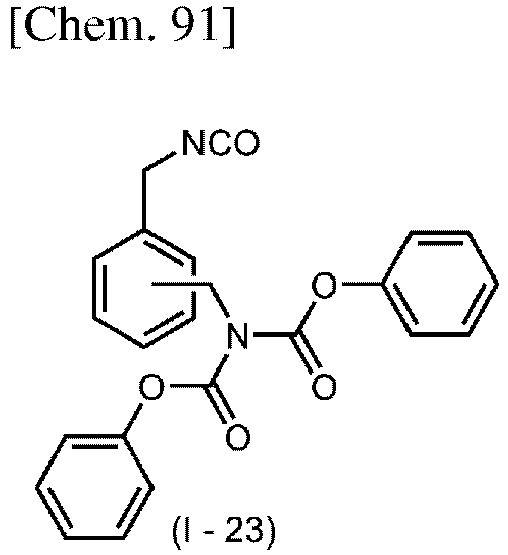
- In addition, as a result of analysis by NMR and gas chromatography, xylylene diisocyanate (XDI) was generated at a yield of 78% by mass.
- Light boiling separation was carried out by the same operation as that of Synthesis Example 1-1, except that the reaction solution (14-2) was continuously fed at 5.78 kg/hour and the extraction rate of the
line 34 in a steady state was 0.87 kg/hour. The amount of the liquid recovered in thestorage tank 303 was 3.98 kg, and as a result of analysis by NMR, LC, and gas chromatography, XDI was recovered at a yield of 88% by mass with respect to the supplied reaction solution (14-2). - High boiling separation was carried out by the same operation as that of Synthesis Example 1-1, except that the liquid recovered in the
storage tank 303 in step (14-3) was used, the operation temperature was set to 170°C, and the internal pressure was set to 0.3 kPa. The amount of the liquid recovered in thestorage tank 402 was 3.87 kg, and the XDI recovery rate was 125% by mass. - In a state in which the
line 14 was closed, 3.33 kg (16.8 mol) of 4,4'-diaminodiphenylmethane was supplied from thestorage tank 101 through theline 11 to thereaction container 104 made of SUS with a baffle, 2.53 kg (27.0 mol) of phenol was supplied from thestorage tank 102 through theline 12 to thereaction container 104, and stirring was carried out for homogenization. Subsequently, in a state in which theline 16 was closed, 2.53 kg (27.0 mol) of phenol was supplied from thestorage tank 102 through theline 15 to thereaction container 105 made of SUS with a baffle, and 11.96 kg (55.6 mol) of diphenyl carbonate was supplied from thestorage tank 103 through theline 13 to thereaction container 105. A liquid temperature of thereaction container 105 was adjusted to 65°C, stirring was carried out for homogenization, and then the mixture solution of 4,4'-diaminodiphenylmethane and phenol was supplied from thereaction container 104 through theline 14 so that the internal temperature thereof did not exceed 70°C. After continuing stirring for 2 hours, as the temperature of the reaction solution was raised to 120°C, and the internal pressure was set to about 1 kPa, 7.58 kg of phenol in the solution was extracted to thestorage tank 107 through theline 17 and the capacitor (condensing device) A11. - As a result of analysis of the solution after the reaction (hereinafter, referred to as "reaction solution (15-1)") by liquid chromatography, a carbamate compound corresponding to 4,4'-diaminodiphenylmethane was generated at a yield of 95% by mass. The
line 16 was opened, and the reaction solution (15-1) was transferred to thestorage tank 106 through theline 16. A mass of the reaction solution (15-1) was 12.77 kg. - A pyrolysis reaction was carried out by the same operation as that of Synthesis Example 1-1, except that 12.77 kg of the reaction solution (15-1) and 12.77 kg of diphenyl carbonate were used, the reaction solution (15-1) was supplied to the reactor over about 10 minutes to start the reaction, the reaction was carried out at a jacket temperature of 238°C, an internal temperature of 230°C, a reflux ratio of 0.8, a pressure in a range of 11 to 16 kPa, and extraction of phenol was continued for 3 hours after the transfer of the entire reaction solution (15-1). A mass of the reaction solution transferred to the
storage tank 205 was 11.75 kg. A carbonyl compound was isolated by purifying a part of the reaction solution (hereinafter, referred to as "reaction solution (15-2)") with a column fractionation device. The isolated carbonyl compound was a compound represented by Formula (1-13).
- In addition, as a result of analysis by NMR and gas chromatography, MDI was generated at a yield of 70% by mass.
- Light boiling separation was carried out by the same operation as that of Synthesis Example 1-1, except that the reaction solution (15-2) was continuously fed at 2.35 kg/hour and the extraction rate of the
line 34 in a steady state was 1.97 kg/hour. The amount of the liquid recovered in thestorage tank 303 was 9.87 kg, and as a result of analysis by NMR, LC, and gas chromatography, MDI was recovered at a yield of 79% by mass with respect to the supplied reaction solution (15-2). - High boiling separation was carried out by the same operation as that of Synthesis Example 1-1, except that the liquid recovered in the
storage tank 303 in step (15-3) was used, the operating temperature was set to 170°C, and the internal pressure was set to 0.3 kPa. The amount of the liquid recovered in thestorage tank 402 was 4.54 kg, and the MDI recovery rate was 130% by mass. - As a corresponding carbamate was synthesized from tolylene-2,4-diamine, the temperature of the reaction solution was raised to 120°C, and the internal pressure was set to 1.0 kPa, 14.49 kg of phenol in the solution was extracted, using the same method as that of step (1-1) of Synthesis Example 1-1, except that 3.33 kg of tolylene-2,4-diamine was used instead of 4-aminomethyl-1,8-octanediamine and 19.41 kg of diphenyl carbonate were used, 5.15 kg of phenol was mixed with xylylenediamine, and 5.15 kg of phenol was supplied to the reactor.
- As a result of analysis of the solution after the reaction (hereinafter, referred to as "reaction solution (16-1)") by liquid chromatography, the corresponding carbamate compound was generated at a yield of 96% by mass. A mass of the reaction solution (16-1) was 18.54 kg.
- A pyrolysis reaction was carried out by the same operation as that of Synthesis Example 1-1, except that 18.54 kg of the reaction solution (16-1) and 18.54 kg of diphenyl carbonate were used, the reaction solution (16-1) was supplied to the reactor over about 11 minutes to start the reaction, the reaction was carried out at a jacket temperature of 238°C, an internal temperature of 230°C, a reflux ratio of 4.7, and a pressure in a range of 20 to 29 kPa, and extraction of phenol was continued for 3 hours after the transfer of the entire reaction solution (16-1). A mass of the reaction solution after the reaction was 11.75 kg. A carbonyl compound was isolated by purifying a part of the reaction solution (hereinafter, referred to as "reaction solution (16-2)") with a column fractionation device. The isolated carbonyl compound was a mixture of compounds represented by Formulae (I-24a) to (I-24b) (hereinafter, the mixture is referred to as "mixture (I-24)" in some cases).

- In addition, as a result of analysis by NMR and gas chromatography, toluene diisocyanate (TDI) was generated at a yield of 71 % by mass.
- Light boiling separation was carried out by the same operation as that of Synthesis Example 1-1, except that the reaction solution (16-2) was continuously fed at 2.35 kg/hour and the extraction rate of the
line 34 in a steady state was 0.94 kg/hour. The amount of the liquid recovered in thestorage tank 303 was 4.70 kg, and as a result of analysis by NMR, LC, and gas chromatography, TDI was recovered at a yield of 85% by mass with respect to the supplied reaction solution (16-2). - High boiling separation was carried out by the same operation as that of Synthesis Example 1-1, except that the liquid recovered in the
storage tank 303 in step (16-3) was used, the operation temperature was set to 160°C, and the internal pressure was set to 0.3 kPa. The amount of the liquid recovered in thestorage tank 402 was 3.27 kg, and the TDI recovery rate was 119% by mass. - A carbamate compound (III) corresponding to each isocyanate compound was synthesized by adding a hydroxy compound (V) of the type and the blending amount described in the following table to 100.0 g of each isocyanate compound, and reacting the mixture at 120°C for 3 hours.
- In addition, carbamate compounds (III-1a) to (III-1c) were obtained as the mixture (III-1) thereof, carbamate compounds (III-2a) to (III-2c) were obtained as the mixture (III-2) thereof, carbamate compounds (III-3a) to (Ill-3c) were obtained as the mixture (III-3) thereof, carbamate compounds (III-4a) to (III-4c) were obtained as the mixture (III-4) thereof, carbamate compounds (III-5a) to (III-5b) were obtained as the mixture (III-5) thereof, carbamate compounds (III-7a) to (III-7b) were obtained as the mixture (III-7) thereof, carbamate compounds (III-8a) to (III-8b) were obtained as the mixture (III-8) thereof, carbamate compounds (III-10a) to (III-10b) were obtained as the mixture (III-10) thereof, carbamate compounds (III-22a) to (III-22b) were obtained as the mixture (III-11) thereof, and carbamate compounds (III-24a) to (III-24b) were obtained as the mixture (III-24) thereof. Structures of these carbamate compounds are as described below.
[Table 1] Carbamate compound (III) Raw material Isocyanate compound (I) Hydroxy compound (V) Type g Type g (III-1) TTI 100.0 Phenol 37.5 (III-2) TTI 100.0 2-methoxyphenol 49.5 (III-3) TTI 100.0 4-cumylphenol 84.6 (III-4) LTI 100.0 Phenol 35.2 (III-5) LTI 100.0 2-methoxyphenol 46.5 (III-7) LDI 100.0 Phenol 44.3 (III-8) LDI 100.0 2-methoxyphenol 58.5 (III-10) LDI-Et 100.0 Phenol 38.0 (III-20) HDI 100.0 Phenol 55.9 (III-16) HMDI 100.0 Phenol 35.8 (III-19) HXDI 100.0 Phenol 48.4 (III-21) PDI 100.0 Phenol 61.0 (III-22) IPDI 100.0 Phenol 42.3 (III-23) XDI 100.0 Phenol 49.9 (III-13) MDI 100.0 Phenol 37.6 (III-24) TDI 100.0 Phenol 54.0 - Each isocyanate composition was obtained by mixing isocyanate compound (II), carbonyl compound (I), carbamate compound (III), and carbonate (IV) such that types and contents thereof are as shown in each table.
- In addition, details of the types of the isocyanate compound (II), the carbonyl compound (I), the carbamate compound (III), and the carbonate (IV) used are as shown below.
- As the isocyanate compound (II), compounds shown below obtained by the above-described synthesis method were used.
- TTI: 4-Isocyanatomethyl-1,8-octamethylene diisocyanate
- LTI: 2-Isocyanatoethyl-2,6-diisocyanatohexanoate (lysine triisocyanate)
- LDT: Lysine methyl ester diisocyanate
- LDI-Et: Lysine ethyl ester diisocyanate
- HDI: Diisocyanatohexane
- HMDI: Methylenebis(cyclohexyl isocyanate)
- HXDI: 1,3-Bis(isocyanatomethyl)cyclohexane
- PDI: Diisocyanatopentane
- IPDI: 3-Isocyanatomethyl-3,5,5-trimethylcyclohexyl isocyanate
- XDI: Diisocyanatoxylene
- MDI: Diisocyanatodiphenylmethane
- TDI: Diisocyanatotoluene
- As the carbonyl compound (I), compounds represented by Formulae (I-1a) to (I-24b) obtained by the above-described synthesis method were used. In addition, for the carbonyl compounds (I-1a) to (I-1c), the mixture (I-1) thereof was used, for the carbonyl compounds (L2a) to (L2c), the mixture (1-2) thereof was used, for the carbonyl compounds (I-3a) to (I-3c), the mixture (1-3) thereof was used, for the carbonyl compounds (I-4a) to (I-4c), the mixture (I-4) thereof was used, for the carbonyl compounds (1-5a) to (1-5b), the mixture (1-5) thereof was used, for the carbonyl compounds (I-7a) to (I-7b), the mixture (I-7) thereof was used, for the carbonyl compounds (1-8a) to (1-8b), the mixture (1-8) thereof was used, for the carbonyl compounds (I-10a) to (I-10b), the mixture (1-10) thereof was used, for the carbonyl compounds (I-22a) to (I-22b), the mixture (1-11) thereof was used, and for the carbonyl compounds (I-24a) to (I-24b), the mixture (1-24) thereof was used.


- As the carbamate compound (III), compounds represented by Formulae (III-1a) to (III-24b), obtained by the above-described synthesis method, were used. In addition, for the carbamate compounds (III-1a) to (III-1c), the mixture (III-1) thereof was used, for the carbamate compounds (III-2a) to (III-2c), the mixture (III-2) thereof was used, for the carbamate compounds (III-3a) to (III-3c), the mixture (III-3) thereof was used, for the carbamate compounds (III-4a) to (III-4c), the mixture (III-4) thereof was used, for the carbamate compounds (III-5a) to (III-5b), the mixture (III-5) thereof was used, for the carbamate compounds (III-7a) to (III-7b), the mixture (III-7) thereof was used, for the carbamate compounds (III-8a) to (III-8b), the mixture (III-8) thereof was used, for the carbamate compounds (III-10a) to (III-10b), the mixture (III-10) thereof was used, for the carbamate compounds (III-22a) to (III-22b), the mixture (lll-11) thereof was used, and for the carbamate compounds (III-24a) to (III-24b), the mixture (III-24) thereof was used.


- As the carbonate (IV), compounds shown below were used.
- DPC: Diphenyl carbonate
- GAC: Bis(2-methoxyphenyl)carbonate
- DPCP: Bis(4-cumylphenyl)carbonate
- The above-described storage test was implemented on each of the obtained isocyanate compositions, and each evaluation was carried out. Results are shown in each table below.
[Table 2] Isocyanate composition Composition Evaluation Isocyanate compound (II) Carbonyl compound (I) Carbamate compound (III) Carbonate (IV) (I) + (III) + (IV) Content (ppm by mass) Immediately after production After storage test Type Content (% by mass) Type Content (ppm by mass) Type Content (ppm by mass) Type Content (ppm by mass) Hazen color number Hazen color number Δ Hazen color number (before and after storage) Amount of denaturation (% by mass) Example 1 A-a1 TTI 98 (I-1) 3.50E+00 (III-1) 3.20E+00 DPC 4.00E+00 1.10E+01 19 34 15 0.07 Example 2 A-a2 TTI 97 (I-1) 5.50E+00 (III-1) 4.70E+03 DPC 5.80E+02 5.30E+03 18 37 19 0.1 Example 3 A-a3 TTI 97 (I-1) 7.50E+03 (III-1) 4.20E+01 DPC 3.70E+00 7.50E+03 16 26 10 0.08 Example 4 A-a4 TTI 99 (I-1) 4.50E+03 (III-1) 2.50E+00 DPC 6.20E+03 1.10E+04 10 21 11 0.09 Example 5 A-a5 TTI 98 (I-1) 9.70E+03 (III-1) 9.60E+03 DPC 9.80E+03 2.90E+04 16 32 16 0.07 Example 6 A-a6 TTI 99 (I-1) 9.00E+03 (III-1) 1.00E+04 DPC 6.20E+03 2.50E+04 14 32 18 0.07 Example 7 A-a7 TTI 97 (I-1) 5.00E+03 (III-1) 1.20E+03 DPC 9.20E+03 1.50E+04 19 29 10 0.02 Example 8 A-a8 TTI 98 (I-1) 8.40E+03 (III-1) 9.10E+03 DPC 4.70E+03 2.20E+04 10 30 20 0.1 Example 9 A-a9 TTI 98 (I-1) 5.60E+03 (III-1) 9.00E+03 DPC 0.00E+00 1.50E+04 17 92 75 20 Example 10 A-a10 TTI 99 (I-1) 3.70E+03 (III-1) 0.00E+00 DPC 2.90E+03 6.70E+03 12 97 85 21 Example 11 A-a11 TTI 98 (I-2) 5.50E+00 (III-2) 6.00E+00 GAC 2.90E+00 1.40E+01 18 29 11 0.02 Example 12 A-a12 TTI 99 (I-2) 9.00E+00 (III-2) 8.30E+03 GAC 6.30E+03 1.50E+04 13 32 19 0.04 Example 13 A-a13 TTI 99 (I-2) 9.60E+02 (III-2) 9.40E+03 GAC 3.30E+00 1.00E+04 19 39 20 0.09 Example 14 A-a14 TTI 98 (I-2) 6.60E+03 (III-2) 4.50E+00 GAC 5.10E+03 1.20E+04 18 38 20 0.02 Example 15 A-a15 TTI 98 (I-2) 9.40E+03 (III-2) 9.30E+03 GAC 9.20E+03 2.80E+04 14 28 14 0.04 Example 16 A-a16 TTI 99 (I-2) 9.00E+03 (III-2) 2.00E+03 GAC 3.00E+03 1.40E+04 17 34 17 0.07 Example 17 A-a17 TTI 99 (I-2) 3.70E+03 (III-2) 5.20E+03 GAC 9.90E+03 1.90E+04 19 31 12 0.07 Example 18 A-a18 TTI 99 (I-2) 3.50E+03 (III-2) 8.90E+03 GAC 6.00E+03 1.80E+04 13 25 12 0.09 Example 19 A-a19 TTI 98 (I-2) 9.00E+03 (III-2) 6.40E+02 GAC 0.00E+00 9.60E+03 12 87 75 10 Example 20 A-a20 TTI 98 (I-2) 4.50E+02 (III-2) 0.00E+00 GAC 1.30E+03 1.80E+03 15 108 93 14 [Table 3] Isocyanate composition Composition Evaluation Isocyanate compound (II) Carbonyl compound (I) Carbamate compound (III) Carbonate (IV) (I) + (III) + (IV) Content (ppm by mass) Immediately after production After storage test Type Content (% by mass) Type Content (ppm by mass) Type Content (ppm by mass) Type Content (ppm by mass) Hazen color number Hazen color number Δ Hazen color number (before and after storage) Amount of denaturation (% by mass) Example 21 A-a21 TTI 99 (I-3) 6.00E+00 (III-3) 2.90E+00 DPCP 3.00E+00 1.19E+01 13 24 11 0.01 Example 22 A-a22 TTI 99 (I-3) 8.50E+00 (III-3) 8.00E+03 DPCP 5.45E+03 1.35E+04 15 30 15 0.05 Example 23 A-a23 TTI 98 (I-3) 8.55E+02 (III-3) 8.50E+03 DPCP 2.50E+00 9.36E+03 18 34 16 0.07 Example 24 A-a24 TTI 99 (I-3) 6.02E+03 (III-3) 5.00E+00 DPCP 5.00E+03 1.10E+04 17 35 18 0.03 Example 25 A-a25 TTI 99 (I-3) 9.20E+03 (III-3) 9.00E+03 DPCP 9.40E+03 2.76E+04 12 24 12 0.05 Example 26 A-a26 TTI 99 (I-3) 8.50E+03 (III-3) 2.00E+03 DPCP 2.50E+03 1.30E+04 14 34 20 0.05 Example 27 A-a27 TTI 98 (I-3) 2.70E+03 (III-3) 4.50E+03 DPCP 9.50E+03 1.67E+04 13 25 12 0.04 Example 28 A-a28 TTI 99 (I-3) 4.00E+03 (III-3) 9.20E+03 DPCP 5.00E+03 1.82E+04 16 33 17 0.03 [Table 4] Isocyanate composition Composition Evaluation Isocyanate compound (II) Carbonyl compound (I) Carbamate compound (III) Carbonate (IV) (I) + (III) + (IV) Content (ppm by mass) Immediately after production After storage test Type Content (% by mass) Type Content (ppm by mass) Type Content (ppm by mass) Type Content (ppm by mass) Hazen color number Hazen color number Δ Hazen color number (before and after storage) Amount of denaturation (% by mass) Comparative Example 1 A-b 1 TTI 90 (I-1) 6.10E+03 (III-1) 8.10E+02 DPC 4.80E+03 1.20E+04 20 81 61 19 Comparative Example 2 A-b2 TTI 99 (I-1) 0.00E+00 (III-1) 4.60E+03 DPC 7.90E+03 1.30E+04 13 106 93 40 Comparative Example 3 A-b3 TTI 97 (I-1) 2.50E+04 (III-1) 7.40E+03 DPC 7.10E+02 3.30E+04 15 99 84 33 Comparative Example 4 A-b4 TTI 89 (I-2) 2.50E+02 (III-2) 3.10E+03 GAC 2.60E+03 6.00E+03 18 80 62 16 Comparative Example 5 A-b5 TTI 97 (I-2) 0.00E+00 (III-2) 3.10E+03 GAC 2.60E+03 5.70E+03 14 87 73 10 Comparative Example 6 A-b6 TTI 99 (I-2) 3.00E+04 (III-2) 6.40E+02 GAC 1.20E+02 3.10E+04 19 99 80 15 [Table 5] Isocyanate composition Composition Evaluation Isocyanate compound (II) Carbonyl compound (I) Carbamate compound (III) Carbonate (IV) (I) + (III) + (IV) Content (ppm by mass) Immediately after production After storage test Type Content (% by mass) Type Content (ppm by mass) Type Content (ppm by mass) Type Content (ppm by mass) Hazen color number Hazen color number Δ Hazen color number (before and after storage) Amount of denaturation (% by mass) Example 29 A-a29 LTI 98 (I-4) 5.50E+00 (III-4) 3.60E+00 DPC 4.40E+00 1.40E+01 15 30 15 0.04 Example 30 A-a30 LTI 97 I1-4) 3.00E+00 (III-4) 9.00E+03 DPC 6.70E+03 1.60E+04 11 26 15 0.02 Example 31 A-a31 LTI 99 (I-4) 9.10E+03 (III-4) 2.10E+03 DPC 2.50E+00 1.10E+04 19 38 19 0.04 Example 32 A-a32 LTI 98 (I-4) 1.60E+02 (III-4) 4.10E+00 DPC 7.30E+03 7.50E+03 14 33 19 0.08 Example 33 A-a33 LTI 97 (I-4) 9.80E+03 (III-4) 9.60E+03 DPC 9.10E+03 2.90E+04 12 22 10 0.04 Example 34 A-a34 LTI 99 (I-4) 9.70E+03 (III-4) 7.70E+02 DPC 2.50E+03 1.30E+04 17 37 20 0.04 Example 35 A-a35 LTI 97 (I-4) 5.20E+03 (III-4) 5.40E+03 DPC 9.60E+03 2.00E+04 17 32 15 0.1 Example 36 A-a36 LTI 97 (I-4) 8.30E+03 (III-4) 9.70E+03 DPC 5.60E+02 1.90E+04 10 23 13 0.03 Example 37 A-a37 LTI 99 (I-5) 2.50E+01 (III-5) 6.10E+02 GAC 1.50E+02 7.80E+02 15 28 13 0.02 Example 38 A-a38 LDI 97 (I-7) 2.50E+00 (III-7) 4.00E+00 DPC 3.00E+00 9.50E+00 11 28 17 0.1 Example 39 A-a39 LDI 99 (I-7) 2.10E+00 (III-7) 3.20E+03 DPC 4.70E+03 7.90E+03 19 34 15 0.07 Example 40 A-a40 LDI 97 (I-7) 3.40E+03 (III-7) 5.80E+03 DPC 3.30E+00 9.20E+03 15 31 16 0.02 Example 41 A-a41 LDI 99 (I-7) 5.10E+02 (III-7) 4.00E+00 DPC 6.00E+03 6.50E+03 10 22 12 0.07 Example 42 A-a42 LDI 99 (I-7) 9.50E+03 (III-7) 9.60E+03 DPC 9.10E+03 2.80E+04 13 24 11 0.05 Example 43 A-a43 LDI 99 (I-7) 9.10E+03 (III-7) 7.50E+03 DPC 3.10E+03 2.00E+04 15 27 12 0.08 Example 44 A-a44 LDI 98 (I-7) 6.60E+03 (III-7) 7.60E+02 DPC 9.70E+03 1.70E+04 15 27 12 0.07 Example 45 A-a45 LDI 98 (I-7) 7.20E+02 (III-7) 9.00E+03 DPC 7.60E+03 1.70E+04 10 20 10 0.03 Example 46 A-a46 LDI 99 (I-8) 1.50E+02 (III-8) 3.30E+03 GAC 2.20E+02 3.70E+03 12 22 10 0.05 [Table 6] Isocyanate composition Composition Evaluation Isocyanate compound (II) Carbonyl compound (I) Carbamate compound (III) Carbonate (IV) (I) + (III) + (IV) Content (ppm by mass) Immediately after production After storage test Type Content (% by mass) Type Content (ppm by mass) Type Content (ppm by mass) Type Content (ppm by mass) Hazen color number Hazen color number Δ Hazen color number (before and after storage) Amount of denaturation (% by mass) Example 47 A-a47 LDI-Et 97 (I-10) 2.10E+00 (III-10) 3.50E+00 DPC 3.20E+00 8.80E+00 12 22 10 0.05 Example 48 A-a48 LDI-Et 99 (I-10) 2.50E+00 (III-10) 3.20E+03 DPC 4.20E+03 7.40E+03 18 30 12 0.05 Example 49 A-a49 LDI-Et 97 (I-10) 3.40E+03 (III-10) 5.00E+03 DPC 2.50E+00 8.40E+03 16 31 15 0.04 Example 50 A-a50 LDI-Et 99 (I-10) 5.00E+02 (III-10) 5.00E+00 DPC 7.00E+03 7.51E+03 14 25 11 0.06 Example 51 A-a51 LDI-Et 99 (I-10) 9.20E+03 (III-10) 9.50E+03 DPC 9.20E+03 2.79E+04 12 25 13 0.03 Example 52 A-a52 LDI-Et 99 (I-10) 9.00E+03 (III-10) 7.00E+03 DPC 3.20E+03 1.92E+04 11 25 14 0.02 Example 53 A-a53 LDI-Et 98 (I-10) 6.50E+03 (III-10) 7.00E+02 DPC 9.00E+03 1.62E+04 12 24 12 0.01 Example 54 A-a54 LDI-Et 98 (I-10) 5.00E+02 (III-10) 9.00E+03 DPC 6.50E+03 1.60E+04 13 26 13 0.08 Example 55 A-a55 HDI 98 (I-20) 9.00E+03 (III-20) 3.50E+03 DPC 9.30E+03 2.20E+04 14 33 19 0.03 Example 56 A-a56 HMDI 97 (I-16) 8.70E+03 (III-16) 4.40E+02 DPC 9.70E+01 9.20E+03 13 26 13 0.07 Example 57 A-a57 HXDI 98 (I-19) 2.10E+03 (III-19) 5.40E+03 DPC 1.40E+03 8.90E+03 14 27 13 0.07 Example 58 A-a58 PDI 97 (I-21) 3.40E+03 (III-21) 1.30E+03 DPC 4.50E+03 9.20E+03 12 22 10 0.07 Example 59 A-a59 IPDI 98 (I-22) 1.40E+03 (III-22) 8.90E+03 DPC 1.80E+03 1.20E+04 11 23 12 0.06 Example 60 A-a60 XDI 99 (I-23) 7.60E+03 (III-23) 4.80E+03 DPC 6.00E+03 1.80E+04 20 36 16 0.08 Example 61 A-a61 MDI 98 (I-13) 8.50E+03 (III-I3) 9.20E+03 DPC 6.30E+03 2.40E+04 22 36 14 0.05 Example 62 A-a62 TDI 99 (I-24) 7.00E+03 (III-24) 6.60E+03 DPC 5.50E+03 1.90E+04 25 38 13 0.05 - From each of the tables above, in isocyanate compositions A-a1 to A-a62 (Examples 1 to 62) containing the isocyanate compound (II) and the carbonyl compound (I) in specific amounts, coloring was sufficiently suppressed, and storage stability was excellent.
- In addition, in isocyanate compositions A-a1 to A-a8, A-a11 to A-a18, and A-a21 to A-a62 (Examples 1 to 8, 11 to 18, and 21 to 62) further containing a carbamate compound (III) and a carbonate (IV), in addition to the isocyanate compound (II) and the carbonyl compound (I), a change in color difference before and after the storage was smaller, the amount of denaturation was smaller, and the storage stability was particularly excellent.
- On the other hand, in isocyanate compositions A-b1 and A-b4 (Comparative Examples 1 and 4) in which a content of the isocyanate compound (II) was less than 97% by mass with respect to a total mass of the isocyanate composition, the change in color difference before and after storage was large, the amount of denaturation was large, and the storage stability was poor.
- In addition, in isocyanate compositions A-b2, A-b3, A-b5, and A-b6 (Comparative Examples 2, 3, 5, and 6) in which the carbonyl compound (I) was not contained, or the content of the carbonyl compound (I) was more than 1.0 × 10⁴ ppm by mass with respect to the total mass of the isocyanate composition, the change in color difference before and after storage was large, the amount of denaturation was also large, and the storage stability was poor.
- According to the carbonyl compound and the method for producing thereof of the present embodiment, it is possible to provide a novel carbonyl compound. The method for producing an isocyanate compound of the present embodiment is a method using the carbonyl compound, and thus it is possible to prevent a by-product from being fixed to a device at the time of production of the isocyanate compound and to improve a yield of the isocyanate compound.
- In addition, according to the isocyanate composition of the present embodiment, it is possible to provide an isocyanate composition in which coloring is sufficiently suppressed and the storage stability is excellent.
-
- 11, 12, 13, 14, 15, 16, 17, 21, 22, 23, 24, 25, 26, 27, 28, 31, 32, 33, 34, 35, 36, 41, 42, 43: Line
- A11, A21, A31, A41: Capacitor
- A32: Reboiler
- 101, 102, 103, 106, 107, 202, 204, 205, 302, 303, 402, 403: Storage tank
- 104, 105, 201: Reaction container made of SUS with a baffle
- 203, 301: Multi-stage distillation column
- 401: Thin-film distillation device
Claims (15)
- A carbonyl compound represented by General Formula (I),

- The carbonyl compound according to Claim 1,wherein R11 is a di- or higher valent and tetra- or lower valent aliphatic hydrocarbon group having 1 or more and 20 or less carbon atoms, or a di- or higher valent and tri- or lower valent aromatic hydrocarbon group having 6 or more and 20 or less carbon atoms, which may have 1 or more and 4 or less ester groups or nitrogen atoms, andR12 is a monovalent aromatic hydrocarbon group having 6 or more and 20 or less carbon atoms, which may contain an oxygen atom.
- The carbonyl compound according to Claim 1 or 2,
wherein R11 is a di- or higher valent and tetra- or lower valent aliphatic hydrocarbon group having 5 or more and 15 or less carbon atoms, or a di- or higher valent and tri- or lower valent aromatic hydrocarbon group having 6 or more and 15 or less carbon atoms, which may have 1 or more and 2 or less ester groups, R12 is a monovalent aromatic hydrocarbon group having 6 or more and 15 or less carbon atoms, which may contain an oxygen atom, n11 is an integer of 1 or more and 4 or less, n12 is an integer of 0 or more and 3 or less, and a sum of n11 and n12 is an integer of 2 or more and 4 or less. - A method for producing the carbonyl compound according to any one of Claims 1 to 3, the production method comprising:mixing one or more compounds selected from the group consisting of an isocyanate compound and a carbamate compound with one or more compounds selected from the group consisting of a carbonate and a hydroxy compound, andheating the mixture to synthesize the carbonyl compound.
- The production method according to Claim 4,wherein the isocyanate compound is a compound represented by General Formula (II)
 (in General Formula (II), R21 is an n21-valent organic group, and satisfies a relational formula: R21 = R11, and n21 is an integer of 2 or more and 8 or less, and satisfies a relational formula: n21 = n11 + n12).
 - The production method according to Claim 4 or 5,wherein the carbamate compound is a compound represented by General Formula (III),
 (in General Formula (III), R31 is an (n31 + n32)-valent organic group, and satisfies a relational formula: R31 = R11, R32 is a monovalent organic group, and satisfies a relational formula: R32 = R12, n31 is an integer of 1 or more and 8 or less, n32 is an integer of 0 or more and 7 or less, and a sum of n31 and n32 is an integer of 2 or more and 8 or less, and satisfies a relational formula: n31 + n32 = n11 + n12).
 - The production method according to any one of Claims 4 to 6,wherein the carbonate is a compound represented by General Formula (IV),
 (in General Formula (IV), R41 and R42 are each independently a monovalent organic group, and satisfy a relational formula: R41 = R42 = R12).
 - The production method according to any one of Claims 4 to 7,wherein the hydroxy compound is a compound represented by General Formula (V),
R51-OH (V)
(in General Formula (V), R51 is a monovalent organic group, and satisfies a relational formula: R51 = R12). - A method for producing an isocyanate compound, comprising:performing distillation purification on a reaction solution including an isocyanate compound represented by General Formula (II) in the presence of the carbonyl compound according to any one of Claims 1 to 3; andcontinuously recovering the isocyanate compound as a gas-phase component,
 (in General Formula (II), R21 is an n21-valent organic group, and satisfies a relational formula: R21 = R11, and n21 is an integer of 2 or more and 8 or less, and satisfies a relational formula: n21 = n11 + n12).
 - An isocyanate composition comprising: with respect to a total mass of the isocyanate composition,97% by mass or more of an isocyanate compound; and2.0 ppm by mass or more and 1.0 × 10⁴ ppm by mass or less of a carbonyl compound represented by General Formula (I),wherein the isocyanate compound and the carbonyl compound are different compounds from each other,
 (in General Formula (I), R11 is an (n11 + n12)-valent organic group, R12 is a monovalent organic group, n11 is an integer of 1 or more and 8 or less, n12 is an integer of 0 or more and 7 or less, and a sum of n11 and n12 is an integer of 2 or more and 8 or less).
 - The isocyanate composition according to Claim 10,wherein R11 is a di- or higher valent and tetra- or lower valent aliphatic hydrocarbon group having 1 or more and 20 or less carbon atoms, or a di- or higher valent and tri- or lower valent aromatic hydrocarbon group having 6 or more and 20 or less carbon atoms, which may have 1 or more and 4 or less ester groups or nitrogen atoms, andR12 is a monovalent aromatic hydrocarbon group having 6 or more and 20 or less carbon atoms, which may contain an oxygen atom.
- The isocyanate composition according to Claim 10 or 11,wherein the isocyanate compound is a compound represented by General Formula (II),
 (in General Formula (II), R21 is an n21-valent organic group, and satisfies a relational formula: R21 = R11, and n21 is an integer of 2 or more and 8 or less, and satisfies a relational formula: n21 = n11 + n12).
 - The isocyanate composition according to any one of Claims 10 to 12, further comprising:
2.0 ppm by mass or more and 1.0 × 10⁴ ppm by mass or less of one or more compounds selected from the group consisting of a carbamate compound and a carbonate with respect to the total mass of the isocyanate composition. - The isocyanate composition according to Claim 13,wherein the carbamate compound is a compound represented by General Formula (III),
 (in General Formula (III), R31 is an (n31 + n32)-valent organic group, and satisfies a relational formula: R31 = R11, R32 is a monovalent organic group, and satisfies a relational formula: R32 = R12, n31 is an integer of 1 or more and 8 or less, n32 is an integer of 0 or more and 7 or less, and a sum of n31 and n32 is an integer of 2 or more and 8 or less, and satisfies a relational formula: n31 + n32 = n11 + n12).
 - The isocyanate composition according to Claim 13 or 14,wherein the carbonate is a compound represented by General Formula (IV),
 (in General Formula (IV), R41 and R42 are each independently a monovalent organic group, and satisfy a relational formula: R41 = R42 = R12).
Applications Claiming Priority (3)
| Application Number | Priority Date | Filing Date | Title |
|---|---|---|---|
| JP2021182192 | 2021-11-08 | ||
| JP2021182189 | 2021-11-08 | ||
| PCT/JP2022/041614 WO2023080258A1 (en) | 2021-11-08 | 2022-11-08 | Carbonyl compound, method for producing carbonyl compound, method for producing isocyanate compound, and isocyanate composition |
Publications (2)
| Publication Number | Publication Date |
|---|---|
| EP4431491A1 true EP4431491A1 (en) | 2024-09-18 |
| EP4431491A4 EP4431491A4 (en) | 2025-03-05 |
Family
ID=86241628
Family Applications (1)
| Application Number | Title | Priority Date | Filing Date |
|---|---|---|---|
| EP22890078.3A Pending EP4431491A4 (en) | 2021-11-08 | 2022-11-08 | CARBONYL COMPOUND, PROCESS FOR PRODUCING CARBONYL COMPOUND, PROCESS FOR PRODUCING ISOCYANATE COMPOUND, AND ISOCYANATE COMPOSITION |
Country Status (3)
| Country | Link |
|---|---|
| EP (1) | EP4431491A4 (en) |
| JP (1) | JP7680560B2 (en) |
| WO (1) | WO2023080258A1 (en) |
Family Cites Families (26)
| Publication number | Priority date | Publication date | Assignee | Title |
|---|---|---|---|---|
| US3976622A (en) | 1973-02-17 | 1976-08-24 | Bayer Aktiengesellschaft | Process for the production of polyisocyanates with a biuret structure |
| BE864326A (en) | 1977-03-01 | 1978-08-28 | Asahi Chemical Ind | PROCESS FOR PREPARING AN ORGANIC POLYISOCYANATE |
| CA1112243A (en) | 1978-09-08 | 1981-11-10 | Manfred Bock | Process for the preparation of polyisocyanates containing isocyanurate groups and the use thereof |
| US4290969A (en) | 1980-08-14 | 1981-09-22 | Asahi Kasei Kogyo Kabushiki Kaisha | Process for the continuous production of polyisocyanate |
| JPS5747319A (en) | 1980-09-03 | 1982-03-18 | Nippon Polyurethan Kogyo Kk | Preparation of aliphatic isocyanurate compound |
| US4412073A (en) | 1981-02-03 | 1983-10-25 | Rhone-Poulenc Specialites Chimiques | Isocyanurate preparation by catalytic, aminosilyl initiated cyclotrimerization of isocyanates |
| JPH0780973B2 (en) | 1986-04-26 | 1995-08-30 | 三井石油化学工業株式会社 | Cyclic olefin-based random copolymer |
| FR2601007B1 (en) | 1986-07-04 | 1988-11-10 | Rhone Poulenc Chim Base | PROCESS FOR THE PREPARATION OF A BIURET GROUP POLYISOCYANATE |
| JPH07116163B2 (en) | 1986-08-29 | 1995-12-13 | 旭化成工業株式会社 | Method for producing polyisocyanate |
| DE3700209A1 (en) | 1987-01-07 | 1988-07-21 | Bayer Ag | METHOD FOR PRODUCING POLYISOCYANATES WITH BIURET STRUCTURE |
| DE3900053A1 (en) | 1989-01-03 | 1990-07-12 | Bayer Ag | PROCESS FOR THE PREPARATION OF POLYISOCYANATES USING URETDION AND ISOCYANATE GROUPS, THE POLYISOCYANATES AVAILABLE FOR THIS PROCESS, AND THEIR USE IN TWO-COMPONENT POLYURETHANE VARNISHES |
| DE4034717A1 (en) | 1990-11-01 | 1992-05-07 | Bayer Ag | METHOD FOR PRODUCING ARYLCARBONATES |
| DE4331083A1 (en) * | 1993-09-13 | 1995-03-16 | Basf Ag | Storage-stable polyisocyanate compositions obtainable by phosgene-free processes, a process for their preparation and their use |
| DE4416321A1 (en) | 1994-05-09 | 1995-11-16 | Bayer Ag | Process for the preparation of light-fast polyisocyanates containing allophanate groups |
| DE4443885A1 (en) | 1994-12-09 | 1996-06-13 | Basf Ag | Process for the preparation of polyisocyanates containing biuret groups |
| JP3518052B2 (en) | 1995-04-24 | 2004-04-12 | 日本ポリウレタン工業株式会社 | Method for producing organic isocyanate with reduced coloring |
| JP5076257B2 (en) * | 2001-02-01 | 2012-11-21 | 旭硝子株式会社 | Water-repellent composition, surface-treated substrate, method for producing the same, and article for transportation equipment |
| JP4109890B2 (en) * | 2001-04-19 | 2008-07-02 | 田辺三菱製薬株式会社 | Pharmaceutical composition |
| RU2329250C2 (en) | 2003-06-27 | 2008-07-20 | Асахи Касеи Кемикалз Корпорейшн | Method of obtaining aromatic carbonate |
| US20060173183A1 (en) * | 2004-12-31 | 2006-08-03 | Alantos Pharmaceuticals, Inc., | Multicyclic bis-amide MMP inhibitors |
| JP5650119B2 (en) | 2008-10-22 | 2015-01-07 | ビーエーエスエフ ソシエタス・ヨーロピアBasf Se | Method for producing colorless polyisocyanate |
| DE102008061138A1 (en) * | 2008-12-09 | 2010-06-10 | Ami Agrolinz Melamine International Gmbh | Preparing triazine carbamate compound, useful in lacquer industry and as crosslinking agent for lacquer, comprises reacting triazine compound with acyclic carbonate compound and/or carbonate compound |
| WO2015030106A1 (en) * | 2013-09-02 | 2015-03-05 | 国立大学法人京都大学 | Compound having ggt inhibitory effect, and ggt-family enzyme inhibitor |
| EP3274346A1 (en) * | 2015-03-27 | 2018-01-31 | Boston Biomedical, Inc. | Water-soluble prodrugs |
| CN113024563B (en) * | 2019-12-24 | 2023-01-03 | 药康众拓(江苏)医药科技有限公司 | Pyrimido five-membered heterocyclic compound or pharmaceutically acceptable salt and isomer thereof, and preparation method, pharmaceutical composition and application thereof |
| CN112661930B (en) * | 2020-11-27 | 2022-08-05 | 万华化学集团股份有限公司 | Xylylene diisocyanate composition and optical resin |
-
2022
- 2022-11-08 JP JP2023558106A patent/JP7680560B2/en active Active
- 2022-11-08 EP EP22890078.3A patent/EP4431491A4/en active Pending
- 2022-11-08 WO PCT/JP2022/041614 patent/WO2023080258A1/en not_active Ceased
Also Published As
| Publication number | Publication date |
|---|---|
| EP4431491A4 (en) | 2025-03-05 |
| WO2023080258A1 (en) | 2023-05-11 |
| JPWO2023080258A1 (en) | 2023-05-11 |
| JP7680560B2 (en) | 2025-05-20 |
Similar Documents
| Publication | Publication Date | Title |
|---|---|---|
| KR101088524B1 (en) | How to prepare isocyanate | |
| EP3153500B1 (en) | Method for producing isocyanate using n-substituted carbamic acid ester, and composition for transferring and storing n-substituted carbamic acid ester containing n-substituted carbamic acid ester and aromatic hydroxy compound | |
| CN101652344B (en) | Method for production of isocyanate using composition comprising carbamic acid ester and aromatic hydroxy compound, and composition for transport or storage of carbamic acid ester | |
| US20100029981A1 (en) | Process for producing isocyanates | |
| EP3527600A1 (en) | Isocyanate composition and production method for isocyanate polymer | |
| EP3527593A1 (en) | Isocyanate composition, production method for isocyanate composition, and production method for isocyanate polymer | |
| EP3214071B1 (en) | Isothiocyanate composition | |
| EP3626704B1 (en) | Isocyanate production method | |
| EP3733644B1 (en) | Organic amine collection method | |
| EP4431491A1 (en) | Carbonyl compound, method for producing carbonyl compound, method for producing isocyanate compound, and isocyanate composition | |
| EP3626705A1 (en) | Isocyanate production method | |
| CN101589022A (en) | Method for producing isocyanate | |
| JP7701467B2 (en) | Method for producing isocyanate compounds, method for producing carbamate compounds, and method for recovering amine compounds | |
| CN118302407A (en) | Carbonyl compound, method for producing isocyanate compound, and isocyanate composition | |
| JP2023092840A (en) | Method for producing isocyanate | |
| CN118215651A (en) | Method for producing isocyanate compound, method for producing carbamate compound, method for recovering amine compound, and isocyanate composition | |
| JP5615644B2 (en) | Method for producing N-unsubstituted carbamic acid ester and method for producing isocyanate | |
| JP2025144058A (en) | Method for producing isocyanate compounds | |
| JP2022170318A (en) | Method for producing isocyanate | |
| JP2025144059A (en) | Method for producing isocyanate compounds | |
| JP2023091331A (en) | Method for producing isocyanate |
Legal Events
| Date | Code | Title | Description |
|---|---|---|---|
| STAA | Information on the status of an ep patent application or granted ep patent |
Free format text: STATUS: THE INTERNATIONAL PUBLICATION HAS BEEN MADE |
|
| PUAI | Public reference made under article 153(3) epc to a published international application that has entered the european phase |
Free format text: ORIGINAL CODE: 0009012 |
|
| STAA | Information on the status of an ep patent application or granted ep patent |
Free format text: STATUS: REQUEST FOR EXAMINATION WAS MADE |
|
| 17P | Request for examination filed |
Effective date: 20240525 |
|
| AK | Designated contracting states |
Kind code of ref document: A1 Designated state(s): AL AT BE BG CH CY CZ DE DK EE ES FI FR GB GR HR HU IE IS IT LI LT LU LV MC ME MK MT NL NO PL PT RO RS SE SI SK SM TR |
|
| DAV | Request for validation of the european patent (deleted) | ||
| DAX | Request for extension of the european patent (deleted) | ||
| STAA | Information on the status of an ep patent application or granted ep patent |
Free format text: STATUS: EXAMINATION IS IN PROGRESS |
|
| A4 | Supplementary search report drawn up and despatched |
Effective date: 20250204 |
|
| RIC1 | Information provided on ipc code assigned before grant |
Ipc: C07C 271/66 20060101ALI20250129BHEP Ipc: C07C 263/18 20060101ALI20250129BHEP Ipc: C07C 265/14 20060101AFI20250129BHEP |
|
| 17Q | First examination report despatched |
Effective date: 20250218 |