EP4428644A1 - Cleaning robot control method and apparatus, cleaning robot, and storage medium - Google Patents
Cleaning robot control method and apparatus, cleaning robot, and storage medium Download PDFInfo
- Publication number
- EP4428644A1 EP4428644A1 EP21963819.4A EP21963819A EP4428644A1 EP 4428644 A1 EP4428644 A1 EP 4428644A1 EP 21963819 A EP21963819 A EP 21963819A EP 4428644 A1 EP4428644 A1 EP 4428644A1
- Authority
- EP
- European Patent Office
- Prior art keywords
- cleaning robot
- coverage score
- cleaning
- grid
- central area
- Prior art date
- Legal status (The legal status is an assumption and is not a legal conclusion. Google has not performed a legal analysis and makes no representation as to the accuracy of the status listed.)
- Pending
Links
Images


Classifications
-
- A—HUMAN NECESSITIES
- A47—FURNITURE; DOMESTIC ARTICLES OR APPLIANCES; COFFEE MILLS; SPICE MILLS; SUCTION CLEANERS IN GENERAL
- A47L—DOMESTIC WASHING OR CLEANING; SUCTION CLEANERS IN GENERAL
- A47L11/00—Machines for cleaning floors, carpets, furniture, walls, or wall coverings
- A47L11/40—Parts or details of machines not provided for in groups A47L11/02 - A47L11/38, or not restricted to one of these groups, e.g. handles, arrangements of switches, skirts, buffers, levers
- A47L11/4011—Regulation of the cleaning machine by electric means; Control systems and remote control systems therefor
-
- A—HUMAN NECESSITIES
- A47—FURNITURE; DOMESTIC ARTICLES OR APPLIANCES; COFFEE MILLS; SPICE MILLS; SUCTION CLEANERS IN GENERAL
- A47L—DOMESTIC WASHING OR CLEANING; SUCTION CLEANERS IN GENERAL
- A47L9/00—Details or accessories of suction cleaners, e.g. mechanical means for controlling the suction or for effecting pulsating action; Storing devices specially adapted to suction cleaners or parts thereof; Carrying-vehicles specially adapted for suction cleaners
- A47L9/28—Installation of the electric equipment, e.g. adaptation or attachment to the suction cleaner; Controlling suction cleaners by electric means
- A47L9/2805—Parameters or conditions being sensed
-
- A—HUMAN NECESSITIES
- A47—FURNITURE; DOMESTIC ARTICLES OR APPLIANCES; COFFEE MILLS; SPICE MILLS; SUCTION CLEANERS IN GENERAL
- A47L—DOMESTIC WASHING OR CLEANING; SUCTION CLEANERS IN GENERAL
- A47L11/00—Machines for cleaning floors, carpets, furniture, walls, or wall coverings
- A47L11/24—Floor-sweeping machines, motor-driven
-
- A—HUMAN NECESSITIES
- A47—FURNITURE; DOMESTIC ARTICLES OR APPLIANCES; COFFEE MILLS; SPICE MILLS; SUCTION CLEANERS IN GENERAL
- A47L—DOMESTIC WASHING OR CLEANING; SUCTION CLEANERS IN GENERAL
- A47L11/00—Machines for cleaning floors, carpets, furniture, walls, or wall coverings
- A47L11/40—Parts or details of machines not provided for in groups A47L11/02 - A47L11/38, or not restricted to one of these groups, e.g. handles, arrangements of switches, skirts, buffers, levers
-
- A—HUMAN NECESSITIES
- A47—FURNITURE; DOMESTIC ARTICLES OR APPLIANCES; COFFEE MILLS; SPICE MILLS; SUCTION CLEANERS IN GENERAL
- A47L—DOMESTIC WASHING OR CLEANING; SUCTION CLEANERS IN GENERAL
- A47L11/00—Machines for cleaning floors, carpets, furniture, walls, or wall coverings
- A47L11/40—Parts or details of machines not provided for in groups A47L11/02 - A47L11/38, or not restricted to one of these groups, e.g. handles, arrangements of switches, skirts, buffers, levers
- A47L11/4002—Installations of electric equipment
-
- A—HUMAN NECESSITIES
- A47—FURNITURE; DOMESTIC ARTICLES OR APPLIANCES; COFFEE MILLS; SPICE MILLS; SUCTION CLEANERS IN GENERAL
- A47L—DOMESTIC WASHING OR CLEANING; SUCTION CLEANERS IN GENERAL
- A47L9/00—Details or accessories of suction cleaners, e.g. mechanical means for controlling the suction or for effecting pulsating action; Storing devices specially adapted to suction cleaners or parts thereof; Carrying-vehicles specially adapted for suction cleaners
- A47L9/28—Installation of the electric equipment, e.g. adaptation or attachment to the suction cleaner; Controlling suction cleaners by electric means
- A47L9/2836—Installation of the electric equipment, e.g. adaptation or attachment to the suction cleaner; Controlling suction cleaners by electric means characterised by the parts which are controlled
- A47L9/2852—Elements for displacement of the vacuum cleaner or the accessories therefor, e.g. wheels, casters or nozzles
-
- B—PERFORMING OPERATIONS; TRANSPORTING
- B25—HAND TOOLS; PORTABLE POWER-DRIVEN TOOLS; MANIPULATORS
- B25J—MANIPULATORS; CHAMBERS PROVIDED WITH MANIPULATION DEVICES
- B25J9/00—Program-controlled manipulators
- B25J9/16—Program controls
- B25J9/1656—Program controls characterised by programming, planning systems for manipulators
- B25J9/1664—Program controls characterised by programming, planning systems for manipulators characterised by motion, path, trajectory planning
-
- G—PHYSICS
- G01—MEASURING; TESTING
- G01C—MEASURING DISTANCES, LEVELS OR BEARINGS; SURVEYING; NAVIGATION; GYROSCOPIC INSTRUMENTS; PHOTOGRAMMETRY OR VIDEOGRAMMETRY
- G01C21/00—Navigation; Navigational instruments not provided for in groups G01C1/00 - G01C19/00
- G01C21/38—Electronic maps specially adapted for navigation; Updating thereof
- G01C21/3804—Creation or updating of map data
- G01C21/3807—Creation or updating of map data characterised by the type of data
- G01C21/383—Indoor data
-
- G—PHYSICS
- G05—CONTROLLING; REGULATING
- G05D—SYSTEMS FOR CONTROLLING OR REGULATING NON-ELECTRIC VARIABLES
- G05D1/00—Control of position, course, altitude or attitude of land, water, air or space vehicles, e.g. using automatic pilots
- G05D1/20—Control system inputs
- G05D1/24—Arrangements for determining position or orientation
- G05D1/246—Arrangements for determining position or orientation using environment maps, e.g. simultaneous localisation and mapping [SLAM]
- G05D1/2464—Arrangements for determining position or orientation using environment maps, e.g. simultaneous localisation and mapping [SLAM] using an occupancy grid
-
- G—PHYSICS
- G05—CONTROLLING; REGULATING
- G05D—SYSTEMS FOR CONTROLLING OR REGULATING NON-ELECTRIC VARIABLES
- G05D1/00—Control of position, course, altitude or attitude of land, water, air or space vehicles, e.g. using automatic pilots
- G05D1/60—Intended control result
- G05D1/644—Optimisation of travel parameters, e.g. of energy consumption, journey time or distance
-
- A—HUMAN NECESSITIES
- A47—FURNITURE; DOMESTIC ARTICLES OR APPLIANCES; COFFEE MILLS; SPICE MILLS; SUCTION CLEANERS IN GENERAL
- A47L—DOMESTIC WASHING OR CLEANING; SUCTION CLEANERS IN GENERAL
- A47L2201/00—Robotic cleaning machines, i.e. with automatic control of the travelling movement or the cleaning operation
- A47L2201/04—Automatic control of the travelling movement; Automatic obstacle detection
-
- A—HUMAN NECESSITIES
- A47—FURNITURE; DOMESTIC ARTICLES OR APPLIANCES; COFFEE MILLS; SPICE MILLS; SUCTION CLEANERS IN GENERAL
- A47L—DOMESTIC WASHING OR CLEANING; SUCTION CLEANERS IN GENERAL
- A47L2201/00—Robotic cleaning machines, i.e. with automatic control of the travelling movement or the cleaning operation
- A47L2201/06—Control of the cleaning action for autonomous devices; Automatic detection of the surface condition before, during or after cleaning
-
- G—PHYSICS
- G05—CONTROLLING; REGULATING
- G05D—SYSTEMS FOR CONTROLLING OR REGULATING NON-ELECTRIC VARIABLES
- G05D2105/00—Specific applications of the controlled vehicles
- G05D2105/10—Specific applications of the controlled vehicles for cleaning, vacuuming or polishing
-
- G—PHYSICS
- G05—CONTROLLING; REGULATING
- G05D—SYSTEMS FOR CONTROLLING OR REGULATING NON-ELECTRIC VARIABLES
- G05D2109/00—Types of controlled vehicles
- G05D2109/10—Land vehicles
Definitions
- the present disclosure relates to the field of household appliance technologies, and more particularly, to a method and a device for controlling a cleaning robot, a cleaning robot, and a storage medium.
- Sweepers also known as automatic cleaning machines, intelligent vacuum cleaners, cleaning robots, etc., are intelligent household appliances with artificial intelligence that can complete floor cleaning work in a room automatically.
- the sweeper has gradually become an indispensable intelligent assistant in people's lives.
- the cleaning robot When the cleaning robot performs coverage cleaning on an area to be cleaned, due to the presence of a low obstacle in the area, the cleaning robot may collide with the obstacle and perform edge cleaning around the obstacle.
- the edge cleaning may be performed on the obstacle once and this isolated area may be marked, which prevents the edge cleaning from being performed again in this area when the cleaning robot is under navigation or performs coverage cleaning.
- the cleaning robot may be guided to the area where the edge cleaning has been performed, due to dynamic obstacles or performing the edge cleaning in other areas. If there is no intervention in this case, the cleaning robot may clean the same obstacle again or even many times, thus reducing the cleaning efficiency of the cleaning robot.
- embodiments of the present disclosure provide a method and a device for controlling a cleaning robot, a cleaning robot, and a storage medium to improve cleaning efficiency of the cleaning robot.
- a method for controlling a cleaning robot comprises: acquiring an edge cleaning trajectory of the cleaning robot marked on a grid map, wherein the grid map being constructed with respect to a target area by the cleaning robot; determining a central area grid associated with the cleaning robot in real time, the central area grid being a grid covered by a central area of the cleaning robot on the grid map and the central area grid comprising a first number of grids; and controlling the cleaning robot to exit an edge cleaning state in response to determining a repeated section of edge cleaning of the cleaning robot based on the edge cleaning trajectory and the central area grid.
- the edge cleaning trajectory marked by the cleaning robot on the grid map is acquired.
- the central area grid associated with the cleaning robot is determined in real time.
- the cleaning robot is controlled to exit the edge cleaning state in response to determining a repeated section of edge cleaning of the cleaning robot based on the edge cleaning trajectory and the central area grid.
- the present disclosure enables the cleaning robot to exit the edge cleaning state in time, avoiding repeated edge cleaning and improving the cleaning efficiency.
- the determining a repeated section of edge cleaning of the cleaning robot based on the edge cleaning trajectory and the central area grid comprises determining a repeated section of edge cleaning of the cleaning robot in response to a presence of an overlapped grid between the central area grid and the edge cleaning trajectory and a number of the overlapped grid being greater than or equal to a preset threshold value.
- the determining the central area grid associated with the cleaning robot in real time comprises updating the central area grid associated with the cleaning robot each time in response to the cleaning robot moves by one grid.
- the determining a repeated section of edge cleaning of the cleaning robot based on the edge cleaning trajectory and the central area grid comprises: determining a coverage score in response to a presence of overlapped grid between the central area grid and the edge cleaning trajectory, the coverage score being a ratio of the number of the overlapped grid to the first number of grids; and determining a repeated section of edge cleaning of the cleaning robot in response to at least two adjacent coverage scores being greater than or equal to a preset coverage score threshold.
- the determining a repeated section of edge cleaning of the cleaning robot based on the edge cleaning trajectory and the central area grid comprises: determining a coverage score in response to a presence of overlapped grid between the central area grid and the edge cleaning trajectory; determining a total coverage score based on a difference between a current coverage score and a prior coverage score; and determining a repeated section of edge cleaning of the cleaning robot in response to the total coverage score being greater than a preset total coverage score threshold.
- the determining the total coverage score based on the difference between the current coverage score and the prior coverage score comprises: determining a latest updated total coverage score; and determining a sum of the current coverage score and the latest updated total coverage score as a present updated total coverage score in response to the difference between the current coverage score and the prior coverage score being smaller than or equal to a preset difference threshold.
- the determining the total coverage score based on the difference between the current coverage score and the prior coverage score comprises: determining a latest updated total coverage score; taking a result, obtained by subtracting the prior coverage score from the latest updated total coverage score, as a present updated total coverage score in response to the difference between the current coverage score and the prior coverage score being greater than a preset difference threshold; and recording the present updated total coverage score as 0 in response to the result, obtained by subtracting the prior coverage score from the latest updated total coverage score, being smaller than or equal to 0.
- a device for controlling a cleaning robot comprises: an acquisition module configured to acquire an edge cleaning trajectory of the cleaning robot marked on a grid map, wherein the grid map being constructed with respect to a target area by the cleaning robot; a determination module configured to determine a central area grid associated with the cleaning robot in real time, the central area grid being a grid covered by a central area of the cleaning robot on the grid map and the central area grid comprising a first number of grids; and a control module configured to control the cleaning robot to exit an edge cleaning state in response to determining a repeated section of edge cleaning of the cleaning robot based on the edge cleaning trajectory and the central area grid.
- the edge cleaning trajectory marked by the cleaning robot on the grid map is acquired.
- the central area grid associated with the cleaning robot is determined in real time.
- the cleaning robot is controlled to exit the edge cleaning state in response to determining a repeated section of edge cleaning of the cleaning robot based on the edge cleaning trajectory and the central area grid.
- the present disclosure enables the cleaning robot to exit the edge cleaning state in time, avoiding repeated edge cleaning and improving the cleaning efficiency.
- control module is configured to determine a repeated section of edge cleaning of the cleaning robot in response to a presence of overlapped grid between the central area grid and the edge cleaning trajectory and the number of the overlapped grid being greater than or equal to a preset threshold value.
- the determination module is further configured to update the central area grid associated with the cleaning robot each time the cleaning robot moves by one grid.
- control module is further configured to: determine a coverage score in response to a presence of overlapped grid between the central area grid and the edge cleaning trajectory, the coverage score being a ratio of the number of the overlapped grid to the first number of grids; and determine a repeated section of edge cleaning of the cleaning robot in response to at least two adjacent coverage scores being greater than or equal to a preset coverage score threshold.
- control module is further configured to: determine a coverage score in response to a presence of overlapped grid between the central area grid and the edge cleaning trajectory; determine a total coverage score based on a difference between a current coverage score and a prior coverage score; and determine a repeated section of edge cleaning of the cleaning robot in response to the total coverage score being greater than a preset total coverage score threshold.
- control module is further configured to: determine a latest updated total coverage score; and determine a sum of the current coverage score and the latest updated total coverage score as a present updated total coverage score in response to the difference between the current coverage score and the prior coverage score being smaller than or equal to a preset difference threshold.
- control module is further configured to: determine a latest updated total coverage score; take a result, obtained by subtracting the prior coverage score from the latest updated total coverage score, as a present updated total coverage score in response to the difference between the current coverage score and the prior coverage score being greater than a preset difference threshold; and record the present updated total coverage score as 0 in response to the result, obtained by subtracting the prior coverage score from the latest updated total coverage score, being smaller than or equal to 0.
- a cleaning robot comprises a memory, a processor, and a computer program stored in the memory and executable on the processor.
- the processor when executing the computer program, implements the method for controlling the cleaning robot according to the above embodiment of the first aspect.
- a computer-readable storage medium has a computer-readable instruction stored thereon.
- the computer-readable instruction when executed by a processor, implements the method for controlling the cleaning robot according to the above embodiment of the first aspect.
- first and second in the present disclosure are only used for descriptive purposes, and cannot be understood as indicating or implying relative importance or implicitly indicating the number of the indicated technical features. Therefore, the features associated with “first” and “second” may explicitly or implicitly comprise at least one of the features.
- “plurality” means at least two, such as two, three, unless otherwise expressly specified.
- connection to In the present disclosure, unless otherwise clearly specified and limited, terms such as “connect to”, “fix” and the like should be understood in a broad sense. For example, it may be a fixed connection or a detachable connection or connection as one piece; mechanical connection or electrical connection; direct connection or indirect connection through an intermediate; internal communication of two components or the interaction relationship between two components, unless otherwise clearly limited.
- connection to In the present disclosure, unless otherwise clearly specified and limited, terms such as “connect to”, “fix” and the like should be understood in a broad sense. For example, it may be a fixed connection or a detachable connection or connection as one piece; mechanical connection or electrical connection; direct connection or indirect connection through an intermediate; internal communication of two components or the interaction relationship between two components, unless otherwise clearly limited.
- the specific meaning of the above-mentioned terms in the present disclosure may be understood according to specific circumstances.
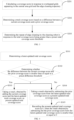
- FIG. 1 shows a flowchart of a method for controlling a cleaning robot according to an embodiment of the present disclosure. As shown in FIG. 1 , the method comprises operations at the following blocks from S101 to S103.
- an edge cleaning trajectory of the cleaning robot marked on a grid map is acquired.
- the grid map is constructed by the cleaning robot with respect to a target area.
- the cleaning robot when the cleaning robot performs coverage cleaning on the target area, the cleaning robot performs autonomous navigation and map drawing.
- the cleaning robot draws the grid map on the target area, and performs edge cleaning on obstacles on the target area.
- the cleaning robot marks an edge-cleaned grid to form an edge cleaning trajectory, as shown in FIG. 2 .
- Each grid in the grid map described above may be represented by a unique identifier. For example, some identifiers indicate the presence of obstacles at these grids, and other identifiers indicate that the cleaning robot passes these grids along the edges.
- a central area grid associated with the cleaning robot is determined in real time.
- the central area grid is a grid covered by a central area of the cleaning robot on the grid map.
- the central area grid comprises a first number of grids.
- the first number of grids may be 9, and the central area of the cleaning robot covers 9 grids on the grid map, comprising a center one and one in each of the 8 surrounding directions. That is, the cleaning robot is represented by 9 grid identifiers as shown in the figure on the grid map.
- the step S102 may be implemented as updating the central area grid associated with the cleaning robot each time the cleaning robot moves by one grid.
- the central area of the cleaning robot may recover 9 grids on the grid map, that is, the central area grid associated with the cleaning robot may be redetermined once.
- the cleaning robot is controlled to exit an edge cleaning state in response to determining a repeated section of edge cleaning of the cleaning robot based on the edge cleaning trajectory and the central area grid.
- the step S103 may be implemented as determining a repeated section of edge cleaning of the cleaning robot in response to a presence of at least one overlapped grid between the central area grid associated with the cleaning robot and the edge cleaning trajectory and the number of the at least one overlapped grid being greater than or equal to a preset threshold value.
- the preset threshold value may be set to 3, as shown in FIG. 2 , 4 overlapped grids present between the central area grid associated with the cleaning robot and the edge cleaning trajectory, which are 1, 2, 3, and 4 respectively.
- the number of the overlapped grids is greater than 3, it may be determined a repeated section of edge cleaning of the cleaning robot due to some reasons.
- the cleaning robot may be controlled to exit the edge cleaning state, such as cleaning in another direction, avoiding repeated edge cleaning, and improving the cleaning efficiency.
- the step S103 may be implemented as: determining a coverage score in response to a presence of at least one overlapped grid between the central area grid associated with the cleaning robot and the edge cleaning trajectory, the coverage score being a ratio of the number of the at least one overlapped grid to the first number of grids; and determining a repeated section of edge cleaning of the cleaning robot in response to at least two adjacent coverage scores being greater than or equal to a preset coverage score threshold.
- the preset coverage score threshold may be set to 3/9, as shown in FIG. 2 , the coverage score is 4/9 when 4 overlapped grids present between the central area grid associated with the cleaning robot and the edge cleaning trajectory.
- the coverage score is 5/9.
- the adjacent two coverage scores are greater than 3/9, it may be determined a repeated section of edge cleaning of the cleaning robot. Therefore, an incorrect determination caused by only one comparison can be avoided. It may also be set that, a repeated section of edge cleaning of the cleaning robot is determine in response to three adjacent coverage scores being greater than 3/9, which is not limited in the present disclosure.
- the step S103 may be implemented as following S201 to S203.
- a coverage score is determined in response to a presence of at least one overlapped grid between the central area grid associated with the cleaning robot and the edge cleaning trajectory.
- a total coverage score is determined based on a difference between a current coverage score and a prior coverage score.
- a repeated section of edge cleaning of the cleaning robot is determined in response to the total coverage score being greater than a preset total coverage score threshold.
- the total coverage score may be understood as a total length of the repeated edge cleaning of the cleaning robot.
- the preset total coverage score threshold may be understood as the tolerance for the total length of the repeated edge cleaning of the cleaning robot.
- the preset total coverage score threshold may be set to 12.1, corresponding to an actual edge cleaning distance of about 50 centimeters. When the tolerance is exceeded, a repeated section of edge cleaning of the cleaning robot is determined.
- the step S202 may comprise following operations S301 to S305.
- a latest updated total coverage score is determined.
- the latest updated total coverage score is 0.
- the latest updated total coverage score is also updated through the following steps, which is a cyclic process.
- the preset difference threshold is set to 0.2 times of the prior coverage score, i.e., 0.2.
- the current coverage score is 1 and the difference between the prior coverage score and the current coverage score is 0, which is smaller than 0.2
- the current coverage score of 1 is added to the latest updated total coverage score of 12 to get the present updated total coverage score of 13, which is greater than the preset total coverage score threshold of 12.1. Then, a repeated section of edge cleaning of the cleaning robot may be determined.
- the coverage score is a fraction only when the cleaning robot first enters or exits the edge cleaning trajectory. In most cases, the coverage score is 1 or 0. Therefore, a situation where the coverage score is consistently a fraction and cumulatively exceeds the preset total coverage score threshold is highly improbable.
- the prior coverage score is 1, and the present difference threshold is set to 0.2.
- the current coverage score is 4/9, the difference between the current coverage score and the prior coverage score is 5/9, which is greater than 0.2.
- the prior coverage score of 1 is subtracted from the latest updated total coverage score of 12 to get the present updated total coverage score of 11, which is smaller than the preset total coverage score threshold of 12.1. Therefore, the cleaning robot cannot be determined to be in repeated edge cleaning.
- an adjacent total coverage score begins to be the same and is smaller than the preset total coverage score threshold, the cleaning robot is no longer accumulating or subtracting coverage scores, that is, the cleaning robot does not repeat the edge cleaning, and the total coverage score is set to 0.
- the cleaning robot marks an edge of the area to be cleaned, and determines a current edge state based on the previous edge cleaning trajectory. Therefore, the cleaning robot avoids repeated edge cleaning due to collisions at the same position.
- the edge cleaning trajectory marked by the cleaning robot on the grid map is acquired.
- the central area grid associated with the cleaning robot is determined in real time.
- the cleaning robot is controlled to exit the edge cleaning state in response to determining a repeated section of edge cleaning of the cleaning robot based on the edge cleaning trajectory and the central area grid.
- the present disclosure enables the cleaning robot to exit the edge cleaning state in time, avoiding repeated edge cleaning and improving the cleaning efficiency.
- the embodiments of the present disclosure further provides the device for controlling the cleaning robot corresponding to the above method for controlling the cleaning robot.
- Relevant parts may refer to part of the description of the foregoing embodiments, and the method embodiment described below is merely illustrative.
- FIG. 5 shows a schematic diagram of the device for controlling the cleaning robot according to an embodiment of the present disclosure.
- a device 10 for controlling the cleaning robot comprises an acquisition module 101, a determination module 102, and a control module 103.
- the acquisition module 101 is configured to acquire an edge cleaning trajectory of the cleaning robot marked on a grid map constructed with respect to a target area.
- the determination module 102 is configured to determine a central area grid associated with the cleaning robot in real time.
- the central area grid is a grid covered by a central area of the cleaning robot on the grid map and the central area grid comprises a first number of grids.
- the control module 103 is configured to control the cleaning robot to exit an edge cleaning state in response to determining a repeated section of edge cleaning of the cleaning robot based on the edge cleaning trajectory and the central area grid.
- control module 103 is configured to determine a repeated section of edge cleaning of the cleaning robot in response to a presence of at least one overlapped grid between the central area grid and the edge cleaning trajectory and the number of the at least one overlapped grid being greater than or equal to a preset threshold value.
- the determination module 102 is further configured to update the central area grid associated with the cleaning robot each time the cleaning robot moves by one grid.
- control module 103 is further configured to: determine a coverage score in response to a presence of at least one overlapped grid between the central area grid and the edge cleaning trajectory, the coverage score being a ratio of the number of the at least one overlapped grid to the first number of grids; and determine a repeated section of edge cleaning of the cleaning robot in response to at least two adjacent coverage scores being greater than or equal to a preset coverage score threshold.
- control module 103 is further configured to: determine a coverage score in response to a presence of at least one overlapped grid between the central area grid and the edge cleaning trajectory; determine a total coverage score based on a difference between a current coverage score and a prior coverage score; and determine a repeated section of edge cleaning of the cleaning robot in response to the total coverage score being greater than a preset total coverage score threshold.
- control module 103 is further configured to: determine a latest updated total coverage score; and determine a sum of the current coverage score and the latest updated total coverage score as a present updated total coverage score in response to the difference between the current coverage score and the prior coverage score being smaller than or equal to a preset difference threshold.
- control module 103 is further configured to: determine a latest updated total coverage score; take a result, obtained by subtracting the prior coverage score from the latest updated total coverage score, as a present updated total coverage score in response to the difference between the current coverage score and the prior coverage score being greater than a preset difference threshold; and record the present updated total coverage score as 0 in response to the result, obtained by subtracting the prior coverage score from the latest updated total coverage score, being smaller than or equal to 0.
- the edge cleaning trajectory marked by the cleaning robot on the grid map is acquired.
- the central area grid associated with the cleaning robot is determined in real time.
- the cleaning robot is controlled to exit the edge cleaning state in response to determining a repeated section of edge cleaning of the cleaning robot based on the edge cleaning trajectory and the central area grid.
- the present disclosure enables the cleaning robot to exit the edge cleaning state in time, avoiding repeated edge cleaning and improving the cleaning efficiency.
- the embodiment of the present disclosure further provides a cleaning robot 20, comprising a memory 201, a processor 202, and a computer program stored in the memory and executable on the processor.
- the processor 202 when executing the computer program, implements the method for controlling the cleaning robot according to any one of the above embodiments.
- the cleaning robot may comprise a processor, a memory, a bus, and a communication interface.
- the processor, the communication interface, and the memory are connected through the bus.
- the memory stores a computer program executable on the processor.
- the processor when executing the computer program, implements the method for controlling the cleaning robot according to any one of the above embodiments.
- the memory may comprise a high-speed random access memory (RAM), and may also comprise a non-volatile memory, such as at least one disk memory.
- RAM random access memory
- a communication connection between this system network element and at least one other network element is realized through at least one communication interface (which may be wired or wireless), either using the Internet, a wide area network, a local area network, a metropolitan area network, and so on.
- the bus may be an ISA bus, a PCI bus, or an EISA bus, etc.
- the bus may be classified as an address bus, a data bus, a control bus, and the like.
- the memory is configured to store a program.
- the processor executes the program in response to receiving an execution instruction.
- the method for controlling the cleaning robot disclosed in any of the foregoing embodiments of the present disclosure may be applied to the processor or implemented by the processor.
- the processor may be an integrated circuit chip having signal processing capabilities.
- actions of the above method may be accomplished by an integrated logic circuit in hardware in the processor or by instructions in the form of software.
- the above processor may be a general-purpose processor, comprising a Central Processing Unit (CPU), a Network Processor (NP), etc.; and may further be a Digital Signal Processor (DSP), an Application Specific Integrated Circuit (ASIC), a Field-Programmable Gate Array (FPGA) or other programmable logic devices, a discrete gate or a transistor logic device, and a discrete hardware component.
- DSP Digital Signal Processor
- ASIC Application Specific Integrated Circuit
- FPGA Field-Programmable Gate Array
- the general-purpose processor may be a microprocessor, or the processor may further be any conventional processor, etc.
- the actions of the method disclosed in combination with any of the embodiments of the present disclosure may be directly embodied as being performed by a hardware decoding processor or being performed by a combination of a hardware module and a software module in a decoding processor.
- the software module may be located in a random memory, a flash memory, a read-only memory, a programmable read-only memory or an electrically erasable programmable memory, a register, and other mature storage media in the art.
- the storage medium is located in the memory.
- the processor reads information in the memory and completes the actions of the above method in combination with the hardware.
- the cleaning robot provided by the embodiments of the present disclosure and the method for controlling the cleaning robot provided by the embodiments of the present disclosure have the same inventive concept, and have the same beneficial effects as the methods adopted, operated or realized by the same.
- the embodiments of the present disclosure further provide a computer-readable storage medium having a computer-readable instruction (i.e., a program product) stored thereon.
- the computer-readable instruction when executed by a processor, implements the method for controlling the cleaning robot of any one of the above embodiments.
- Examples of the computer-readable storage medium comprise, but are not limited to, a Phase-Change Memory (PRAM), a Static RAM (SRAM), a Dynamic RAM (DRAM), other types of RAMs, a Read-Only Memory (ROM), an Electrically Erasable Programmable Read-Only Memory (EEPROM), a flash memory or other memory technologies, or a magnetic storage medium, which will not be repeated here.
- PRAM Phase-Change Memory
- SRAM Static RAM
- DRAM Dynamic RAM
- ROM Read-Only Memory
- EEPROM Electrically Erasable Programmable Read-Only Memory
- flash memory or other memory technologies, or a magnetic storage medium, which will not be repeated here.
- the computer-readable storage medium provided in the above embodiments of the present disclosure has the same inventive concept as the method for controlling the cleaning robot provided in the embodiments of the present disclosure, and has the same beneficial effects as the method adopted, operated or implemented by the application program stored therein.
- each feature sometimes may be grouped into a single embodiment, drawing or corresponding description.
- the disclosed method should not be interpreted as reflecting the intention that more features should be comprised in the present disclosure, compared with those in the claims.
- the present disclosure may be used to solve problem(s) corresponding to a feature used in an embodiment. Therefore, claims following a specific embodiment are thus expressly incorporated into that specific embodiment, each of the claims may be used as an embodiment of the present disclosure.
- modules in the device of an embodiment may be adaptively changed and located in one or more devices different from the embodiment.
- the modules or units or components in the embodiments may be combined into one module or unit or component and, furthermore, may be divided into multiple sub-modules or sub-units or sub-components. Excepting that at least some of such features and/or processes or elements are mutually exclusive, all combinations of features disclosed here (comprising the annexed claims, abstract and drawings) may be applied without contradiction. Unless a clear illustration is given, equivalents of the same, identical or similar purpose may replace each of the features disclosed here (comprising the annexed claims, abstract and drawings).
- Various component embodiments of the present disclosure may be implemented in hardware, or in software modules running on one or more processors, or in a combination thereof.
- DSP digital signal processor
- the present disclosure may also be embodied as apparatus or device programs (e.g., computer programs and computer program products) for performing part or all of the methods described herein.
- Such programs embodying the present disclosure may be stored on a computer readable medium or may be in the form of one or more signals.
- Such a signal may be downloaded from an Internet website, or provided on a carrier signal, or in any other form.
- any reference symbol located between parentheses should not be constructed as a limitation of the claim.
- the word “comprises” does not exclude the existence of elements or steps not listed in the claim.
- the word “one” or “a” before a component does not exclude the existence of multiple such components.
- This disclosure may be implemented by means of hardware comprising a number of different components and by means of a properly programmed computer. In a unit claim that lists several devices, several of these devices may be embodied by the same hardware item.
- the use of the words “first”, “second”, and “third” does not indicate any order. These words can be interpreted as names.
Landscapes
- Engineering & Computer Science (AREA)
- Radar, Positioning & Navigation (AREA)
- Remote Sensing (AREA)
- Physics & Mathematics (AREA)
- General Physics & Mathematics (AREA)
- Automation & Control Theory (AREA)
- Mechanical Engineering (AREA)
- Aviation & Aerospace Engineering (AREA)
- Robotics (AREA)
- Control Of Position, Course, Altitude, Or Attitude Of Moving Bodies (AREA)
- Manipulator (AREA)
- Electric Vacuum Cleaner (AREA)
Abstract
Description
- This application claims a priority to
Chinese Patent Application No. 202111321411.7, entitled "CLEANING ROBOT CONTROL METHOD AND APPARATUS, CLEANING ROBOT, AND STORAGE MEDIUM", and filed on November 9, 2021 - The present disclosure relates to the field of household appliance technologies, and more particularly, to a method and a device for controlling a cleaning robot, a cleaning robot, and a storage medium.
- Sweepers, also known as automatic cleaning machines, intelligent vacuum cleaners, cleaning robots, etc., are intelligent household appliances with artificial intelligence that can complete floor cleaning work in a room automatically. Nowadays, the sweeper has gradually become an indispensable intelligent assistant in people's lives.
- When the cleaning robot performs coverage cleaning on an area to be cleaned, due to the presence of a low obstacle in the area, the cleaning robot may collide with the obstacle and perform edge cleaning around the obstacle. The edge cleaning may be performed on the obstacle once and this isolated area may be marked, which prevents the edge cleaning from being performed again in this area when the cleaning robot is under navigation or performs coverage cleaning. However, the cleaning robot may be guided to the area where the edge cleaning has been performed, due to dynamic obstacles or performing the edge cleaning in other areas. If there is no intervention in this case, the cleaning robot may clean the same obstacle again or even many times, thus reducing the cleaning efficiency of the cleaning robot.
- In view of the above problems, embodiments of the present disclosure provide a method and a device for controlling a cleaning robot, a cleaning robot, and a storage medium to improve cleaning efficiency of the cleaning robot.
- In one embodiment of a first aspect of the present disclosure, a method for controlling a cleaning robot is provided. The method comprises: acquiring an edge cleaning trajectory of the cleaning robot marked on a grid map, wherein the grid map being constructed with respect to a target area by the cleaning robot; determining a central area grid associated with the cleaning robot in real time, the central area grid being a grid covered by a central area of the cleaning robot on the grid map and the central area grid comprising a first number of grids; and controlling the cleaning robot to exit an edge cleaning state in response to determining a repeated section of edge cleaning of the cleaning robot based on the edge cleaning trajectory and the central area grid.
- According to the method for controlling the cleaning robot in the embodiment of the first aspect of the present disclosure, the edge cleaning trajectory marked by the cleaning robot on the grid map is acquired. The central area grid associated with the cleaning robot is determined in real time. The cleaning robot is controlled to exit the edge cleaning state in response to determining a repeated section of edge cleaning of the cleaning robot based on the edge cleaning trajectory and the central area grid. Compared to the related art, the present disclosure enables the cleaning robot to exit the edge cleaning state in time, avoiding repeated edge cleaning and improving the cleaning efficiency.
- In a possible implementation mode, according to the above method for controlling the cleaning robot provided in the present disclosure, the determining a repeated section of edge cleaning of the cleaning robot based on the edge cleaning trajectory and the central area grid comprises determining a repeated section of edge cleaning of the cleaning robot in response to a presence of an overlapped grid between the central area grid and the edge cleaning trajectory and a number of the overlapped grid being greater than or equal to a preset threshold value.
- In a possible implementation mode, according to the above method for controlling the cleaning robot provided in the present disclosure, the determining the central area grid associated with the cleaning robot in real time comprises updating the central area grid associated with the cleaning robot each time in response to the cleaning robot moves by one grid.
- In a possible implementation mode, according to the above method for controlling the cleaning robot provided in the present disclosure, the determining a repeated section of edge cleaning of the cleaning robot based on the edge cleaning trajectory and the central area grid comprises: determining a coverage score in response to a presence of overlapped grid between the central area grid and the edge cleaning trajectory, the coverage score being a ratio of the number of the overlapped grid to the first number of grids; and determining a repeated section of edge cleaning of the cleaning robot in response to at least two adjacent coverage scores being greater than or equal to a preset coverage score threshold.
- In a possible implementation mode, according to the above method for controlling the cleaning robot provided in the present disclosure, the determining a repeated section of edge cleaning of the cleaning robot based on the edge cleaning trajectory and the central area grid comprises: determining a coverage score in response to a presence of overlapped grid between the central area grid and the edge cleaning trajectory; determining a total coverage score based on a difference between a current coverage score and a prior coverage score; and determining a repeated section of edge cleaning of the cleaning robot in response to the total coverage score being greater than a preset total coverage score threshold.
- In a possible implementation mode, according to the above method for controlling the cleaning robot provided in the present disclosure, the determining the total coverage score based on the difference between the current coverage score and the prior coverage score comprises: determining a latest updated total coverage score; and determining a sum of the current coverage score and the latest updated total coverage score as a present updated total coverage score in response to the difference between the current coverage score and the prior coverage score being smaller than or equal to a preset difference threshold.
- In a possible implementation mode, according to the above method for controlling the cleaning robot provided in the present disclosure, the determining the total coverage score based on the difference between the current coverage score and the prior coverage score comprises: determining a latest updated total coverage score; taking a result, obtained by subtracting the prior coverage score from the latest updated total coverage score, as a present updated total coverage score in response to the difference between the current coverage score and the prior coverage score being greater than a preset difference threshold; and recording the present updated total coverage score as 0 in response to the result, obtained by subtracting the prior coverage score from the latest updated total coverage score, being smaller than or equal to 0.
- In one embodiment of a second aspect of the present disclosure, a device for controlling a cleaning robot is provided. The device comprises: an acquisition module configured to acquire an edge cleaning trajectory of the cleaning robot marked on a grid map, wherein the grid map being constructed with respect to a target area by the cleaning robot; a determination module configured to determine a central area grid associated with the cleaning robot in real time, the central area grid being a grid covered by a central area of the cleaning robot on the grid map and the central area grid comprising a first number of grids; and a control module configured to control the cleaning robot to exit an edge cleaning state in response to determining a repeated section of edge cleaning of the cleaning robot based on the edge cleaning trajectory and the central area grid.
- According to the device for controlling the cleaning robot in the embodiment of the second aspect of the present disclosure, the edge cleaning trajectory marked by the cleaning robot on the grid map is acquired. The central area grid associated with the cleaning robot is determined in real time. The cleaning robot is controlled to exit the edge cleaning state in response to determining a repeated section of edge cleaning of the cleaning robot based on the edge cleaning trajectory and the central area grid. Compared to the related art, the present disclosure enables the cleaning robot to exit the edge cleaning state in time, avoiding repeated edge cleaning and improving the cleaning efficiency.
- In a possible implementation mode, according to the above device for controlling the cleaning robot provided in the present disclosure, the control module is configured to determine a repeated section of edge cleaning of the cleaning robot in response to a presence of overlapped grid between the central area grid and the edge cleaning trajectory and the number of the overlapped grid being greater than or equal to a preset threshold value.
- In a possible implementation mode, according to the above device for controlling the cleaning robot provided in the present disclosure, the determination module is further configured to update the central area grid associated with the cleaning robot each time the cleaning robot moves by one grid.
- In a possible implementation mode, according to the above device for controlling the cleaning robot provided in the present disclosure, the control module is further configured to: determine a coverage score in response to a presence of overlapped grid between the central area grid and the edge cleaning trajectory, the coverage score being a ratio of the number of the overlapped grid to the first number of grids; and determine a repeated section of edge cleaning of the cleaning robot in response to at least two adjacent coverage scores being greater than or equal to a preset coverage score threshold.
- In a possible implementation mode, according to the above method for controlling the cleaning robot provided in the present disclosure, the control module is further configured to: determine a coverage score in response to a presence of overlapped grid between the central area grid and the edge cleaning trajectory; determine a total coverage score based on a difference between a current coverage score and a prior coverage score; and determine a repeated section of edge cleaning of the cleaning robot in response to the total coverage score being greater than a preset total coverage score threshold.
- In a possible implementation mode, according to the above method for controlling the cleaning robot provided in the present disclosure, the control module is further configured to: determine a latest updated total coverage score; and determine a sum of the current coverage score and the latest updated total coverage score as a present updated total coverage score in response to the difference between the current coverage score and the prior coverage score being smaller than or equal to a preset difference threshold.
- In a possible implementation mode, according to the above method for controlling the cleaning robot provided in the present disclosure, the control module is further configured to: determine a latest updated total coverage score; take a result, obtained by subtracting the prior coverage score from the latest updated total coverage score, as a present updated total coverage score in response to the difference between the current coverage score and the prior coverage score being greater than a preset difference threshold; and record the present updated total coverage score as 0 in response to the result, obtained by subtracting the prior coverage score from the latest updated total coverage score, being smaller than or equal to 0.
- In one embodiment of a third aspect of the present disclosure, a cleaning robot is provided. The cleaning robot comprises a memory, a processor, and a computer program stored in the memory and executable on the processor. The processor, when executing the computer program, implements the method for controlling the cleaning robot according to the above embodiment of the first aspect.
- In one embodiment of a fourth aspect of the present disclosure, a computer-readable storage medium is provided. The storage medium has a computer-readable instruction stored thereon. The computer-readable instruction, when executed by a processor, implements the method for controlling the cleaning robot according to the above embodiment of the first aspect.
- Various other advantages and benefits will become apparent to those skilled in the art after reading the detailed description of preferred embodiments given below. The accompanying drawings are used for a purpose of illustrating the preferred embodiments only, rather than limiting the present disclosure. Moreover, throughout the accompanying drawings, same elements are denoted by same reference numerals. In the accompanying drawings:
-
FIG. 1 shows a flowchart of a method for controlling a cleaning robot according to an embodiment of the present disclosure; -
FIG. 2 shows a schematic view of a grid map according to an embodiment of the present disclosure; -
FIG. 3 shows a flowchart of S103 according to an embodiment of the present disclosure; -
FIG. 4 shows a flowchart of S202 according to an embodiment of the present disclosure; -
FIG. 5 shows a schematic diagram of a device for controlling a cleaning robot according to an embodiment of the present disclosure; and -
FIG. 6 shows a schematic diagram of a cleaning robot according to an embodiment of the present disclosure. - Objects, functional features and advantages of the present disclosure will be further described in conjunction with embodiments and with reference to the accompanying drawings.
- Technical solutions of embodiments of the present disclosure will be clearly and completely described below in conjunction with accompanying drawings in the present disclosure. Obviously, the embodiments described below are only part of the embodiments of the present disclosure and are not all embodiments of the present disclosure. Based on the embodiments of the present disclosure, other embodiments obtained by those skilled in the art without creative labor are within the protection scope of the present disclosure.
- It should be noted that all directional indications (such as up, down, left, right, front, rear, etc.) in the embodiment of the present disclosure are only used to explain the relative position relationship, motion situation, and the like between various components in a certain specific posture (as shown in the attached drawings). If the specific posture changes, the directional indication will change accordingly.
- In addition, descriptions such as those referring to "first" and "second" in the present disclosure are only used for descriptive purposes, and cannot be understood as indicating or implying relative importance or implicitly indicating the number of the indicated technical features. Therefore, the features associated with "first" and "second" may explicitly or implicitly comprise at least one of the features. In the description of the present disclosure, "plurality" means at least two, such as two, three, unless otherwise expressly specified.
- In the present disclosure, unless otherwise clearly specified and limited, terms such as "connect to", "fix" and the like should be understood in a broad sense. For example, it may be a fixed connection or a detachable connection or connection as one piece; mechanical connection or electrical connection; direct connection or indirect connection through an intermediate; internal communication of two components or the interaction relationship between two components, unless otherwise clearly limited. For those skilled in the art, the specific meaning of the above-mentioned terms in the present disclosure may be understood according to specific circumstances.
- In addition, the technical solutions of various embodiments of the present disclosure can be combined with each other, but it must be based on what can be implemented by those skilled in the art. When the combination of the technical solutions is mutually contradictory or cannot be implemented, it should be considered that such a combination of technical solutions does not exist and is not within the protection scope required by the present disclosure.
-
FIG. 1 shows a flowchart of a method for controlling a cleaning robot according to an embodiment of the present disclosure. As shown inFIG. 1 , the method comprises operations at the following blocks from S101 to S103. - At block S101, an edge cleaning trajectory of the cleaning robot marked on a grid map is acquired. The grid map is constructed by the cleaning robot with respect to a target area.
- In an exemplary embodiment of the present disclosure, when the cleaning robot performs coverage cleaning on the target area, the cleaning robot performs autonomous navigation and map drawing. In the present disclosure, the cleaning robot draws the grid map on the target area, and performs edge cleaning on obstacles on the target area. In addition, the cleaning robot marks an edge-cleaned grid to form an edge cleaning trajectory, as shown in
FIG. 2 . - Each grid in the grid map described above may be represented by a unique identifier. For example, some identifiers indicate the presence of obstacles at these grids, and other identifiers indicate that the cleaning robot passes these grids along the edges.
- At block S102, a central area grid associated with the cleaning robot is determined in real time. The central area grid is a grid covered by a central area of the cleaning robot on the grid map. The central area grid comprises a first number of grids.
- As shown in
FIG. 2 , the first number of grids may be 9, and the central area of the cleaning robot covers 9 grids on the grid map, comprising a center one and one in each of the 8 surrounding directions. That is, the cleaning robot is represented by 9 grid identifiers as shown in the figure on the grid map. - In a possible implementation mode, the step S102 may be implemented as updating the central area grid associated with the cleaning robot each time the cleaning robot moves by one grid.
- In an exemplary embodiment of the present disclosure, every time the cleaning robot moves by one grid, the central area of the cleaning robot may recover 9 grids on the grid map, that is, the central area grid associated with the cleaning robot may be redetermined once.
- At block S103, the cleaning robot is controlled to exit an edge cleaning state in response to determining a repeated section of edge cleaning of the cleaning robot based on the edge cleaning trajectory and the central area grid.
- In a possible implementation mode, the step S103 may be implemented as determining a repeated section of edge cleaning of the cleaning robot in response to a presence of at least one overlapped grid between the central area grid associated with the cleaning robot and the edge cleaning trajectory and the number of the at least one overlapped grid being greater than or equal to a preset threshold value.
- For example, the preset threshold value may be set to 3, as shown in
FIG. 2 ,4 overlapped grids present between the central area grid associated with the cleaning robot and the edge cleaning trajectory, which are 1, 2, 3, and 4 respectively. When the number of the overlapped grids is greater than 3, it may be determined a repeated section of edge cleaning of the cleaning robot due to some reasons. At this time, the cleaning robot may be controlled to exit the edge cleaning state, such as cleaning in another direction, avoiding repeated edge cleaning, and improving the cleaning efficiency. - To avoid over-sensitivity in determining repeated edge cleaning due to parameter problems, in another possible implementation mode, the step S103 may be implemented as: determining a coverage score in response to a presence of at least one overlapped grid between the central area grid associated with the cleaning robot and the edge cleaning trajectory, the coverage score being a ratio of the number of the at least one overlapped grid to the first number of grids; and determining a repeated section of edge cleaning of the cleaning robot in response to at least two adjacent coverage scores being greater than or equal to a preset coverage score threshold.
- For example, the preset coverage score threshold may be set to 3/9, as shown in
FIG. 2 , the coverage score is 4/9 when 4 overlapped grids present between the central area grid associated with the cleaning robot and the edge cleaning trajectory. When 5 overlapped grids present immediately in response to next determining the central area grid associated with the cleaning robot, the coverage score is 5/9. The adjacent two coverage scores are greater than 3/9, it may be determined a repeated section of edge cleaning of the cleaning robot. Therefore, an incorrect determination caused by only one comparison can be avoided. It may also be set that, a repeated section of edge cleaning of the cleaning robot is determine in response to three adjacent coverage scores being greater than 3/9, which is not limited in the present disclosure. - It is worth mentioning that the coverage score is 9/9=1 when the central area grid associated with the cleaning robot and the edge cleaning trajectory are all overlapped. The coverage score is 0/9=0 when the central area grid associated with the cleaning robot and the edge cleaning trajectory are not overlapped.
- In another possible implementation mode, to avoid over-sensitivity in determining repeated edge cleaning due to parameter problems, as shown in
FIG. 3 , the step S103 may be implemented as following S201 to S203. - At block S201, a coverage score is determined in response to a presence of at least one overlapped grid between the central area grid associated with the cleaning robot and the edge cleaning trajectory.
- At block S202, a total coverage score is determined based on a difference between a current coverage score and a prior coverage score.
- At block S203, a repeated section of edge cleaning of the cleaning robot is determined in response to the total coverage score being greater than a preset total coverage score threshold.
- In an exemplary embodiment of the present disclosure, the total coverage score may be understood as a total length of the repeated edge cleaning of the cleaning robot. The preset total coverage score threshold may be understood as the tolerance for the total length of the repeated edge cleaning of the cleaning robot. For example, the preset total coverage score threshold may be set to 12.1, corresponding to an actual edge cleaning distance of about 50 centimeters. When the tolerance is exceeded, a repeated section of edge cleaning of the cleaning robot is determined.
- In an exemplary embodiment of the present disclosure, as shown in
FIG. 4 , the step S202 may comprise following operations S301 to S305. - At block S301, a latest updated total coverage score is determined. In an exemplary embodiment of the present disclosure, when it is the first update, the latest updated total coverage score is 0. When it is not the first update, the latest updated total coverage score is also updated through the following steps, which is a cyclic process.
- At block S302, whether the difference between the current coverage score and the prior coverage score is smaller than or equal to a preset difference threshold is determined.
- At block S303, when the difference between the current coverage score and the prior coverage score is smaller than or equal to the preset difference threshold, a sum of the current coverage score and the latest updated total coverage score is determined as a present updated total coverage score.
- It can be understood that when the difference between the current coverage score and the prior coverage score is small. That is, when the number of current overlapped grids is close to the number of prior overlapped grids, it is considered that the cleaning robot continuously repeats the edge cleaning. When the total coverage score is greater than the present total coverage score threshold, a repeated section of edge cleaning of the cleaning robot may be determined.
- For example, when the prior coverage score is 1, the preset difference threshold is set to 0.2 times of the prior coverage score, i.e., 0.2. When the current coverage score is 1 and the difference between the prior coverage score and the current coverage score is 0, which is smaller than 0.2, the current coverage score of 1 is added to the latest updated total coverage score of 12 to get the present updated total coverage score of 13, which is greater than the preset total coverage score threshold of 12.1. Then, a repeated section of edge cleaning of the cleaning robot may be determined.
- In practice, the coverage score is a fraction only when the cleaning robot first enters or exits the edge cleaning trajectory. In most cases, the coverage score is 1 or 0. Therefore, a situation where the coverage score is consistently a fraction and cumulatively exceeds the preset total coverage score threshold is highly improbable.
- At block S304, when the difference between the current coverage score and the prior coverage score is greater than a preset difference threshold, a result obtained by subtracting the prior coverage score from the latest updated total coverage score is taken as a present updated total coverage score.
- At block S305, when the result obtained by subtracting the prior coverage score from the latest updated total coverage score is smaller than or equal to 0, the present updated total coverage score is recorded as 0.
- For example, the prior coverage score is 1, and the present difference threshold is set to 0.2. When the current coverage score is 4/9, the difference between the current coverage score and the prior coverage score is 5/9, which is greater than 0.2. Then the prior coverage score of 1 is subtracted from the latest updated total coverage score of 12 to get the present updated total coverage score of 11, which is smaller than the preset total coverage score threshold of 12.1. Therefore, the cleaning robot cannot be determined to be in repeated edge cleaning. When an adjacent total coverage score begins to be the same and is smaller than the preset total coverage score threshold, the cleaning robot is no longer accumulating or subtracting coverage scores, that is, the cleaning robot does not repeat the edge cleaning, and the total coverage score is set to 0.
- In the method, the cleaning robot marks an edge of the area to be cleaned, and determines a current edge state based on the previous edge cleaning trajectory. Therefore, the cleaning robot avoids repeated edge cleaning due to collisions at the same position.
- According to the method for controlling the cleaning robot in the embodiment of the present disclosure, the edge cleaning trajectory marked by the cleaning robot on the grid map is acquired. The central area grid associated with the cleaning robot is determined in real time. The cleaning robot is controlled to exit the edge cleaning state in response to determining a repeated section of edge cleaning of the cleaning robot based on the edge cleaning trajectory and the central area grid. Compared to the related art, the present disclosure enables the cleaning robot to exit the edge cleaning state in time, avoiding repeated edge cleaning and improving the cleaning efficiency.
- The embodiments of the present disclosure further provides the device for controlling the cleaning robot corresponding to the above method for controlling the cleaning robot. Relevant parts may refer to part of the description of the foregoing embodiments, and the method embodiment described below is merely illustrative.
-
FIG. 5 shows a schematic diagram of the device for controlling the cleaning robot according to an embodiment of the present disclosure. As shown inFIG. 5 , adevice 10 for controlling the cleaning robot comprises anacquisition module 101, adetermination module 102, and acontrol module 103. - The
acquisition module 101 is configured to acquire an edge cleaning trajectory of the cleaning robot marked on a grid map constructed with respect to a target area. - The
determination module 102 is configured to determine a central area grid associated with the cleaning robot in real time. The central area grid is a grid covered by a central area of the cleaning robot on the grid map and the central area grid comprises a first number of grids. - The
control module 103 is configured to control the cleaning robot to exit an edge cleaning state in response to determining a repeated section of edge cleaning of the cleaning robot based on the edge cleaning trajectory and the central area grid. - In a possible implementation mode, according to the above device for controlling the cleaning robot provided in the present disclosure, the
control module 103 is configured to determine a repeated section of edge cleaning of the cleaning robot in response to a presence of at least one overlapped grid between the central area grid and the edge cleaning trajectory and the number of the at least one overlapped grid being greater than or equal to a preset threshold value. - In a possible implementation mode, according to the above device for controlling the cleaning robot provided in the present disclosure, the
determination module 102 is further configured to update the central area grid associated with the cleaning robot each time the cleaning robot moves by one grid. - In a possible implementation mode, according to the above device for controlling the cleaning robot provided in the present disclosure, the
control module 103 is further configured to: determine a coverage score in response to a presence of at least one overlapped grid between the central area grid and the edge cleaning trajectory, the coverage score being a ratio of the number of the at least one overlapped grid to the first number of grids; and determine a repeated section of edge cleaning of the cleaning robot in response to at least two adjacent coverage scores being greater than or equal to a preset coverage score threshold. - In a possible implementation mode, according to the above method for controlling the cleaning robot provided in the present disclosure, the
control module 103 is further configured to: determine a coverage score in response to a presence of at least one overlapped grid between the central area grid and the edge cleaning trajectory; determine a total coverage score based on a difference between a current coverage score and a prior coverage score; and determine a repeated section of edge cleaning of the cleaning robot in response to the total coverage score being greater than a preset total coverage score threshold. - In a possible implementation mode, according to the above method for controlling the cleaning robot provided in the present disclosure, the
control module 103 is further configured to: determine a latest updated total coverage score; and determine a sum of the current coverage score and the latest updated total coverage score as a present updated total coverage score in response to the difference between the current coverage score and the prior coverage score being smaller than or equal to a preset difference threshold. - In a possible implementation mode, according to the above method for controlling the cleaning robot provided in the present disclosure, the
control module 103 is further configured to: determine a latest updated total coverage score; take a result, obtained by subtracting the prior coverage score from the latest updated total coverage score, as a present updated total coverage score in response to the difference between the current coverage score and the prior coverage score being greater than a preset difference threshold; and record the present updated total coverage score as 0 in response to the result, obtained by subtracting the prior coverage score from the latest updated total coverage score, being smaller than or equal to 0. - According to the device for controlling the cleaning robot in the embodiment of the present disclosure, the edge cleaning trajectory marked by the cleaning robot on the grid map is acquired. The central area grid associated with the cleaning robot is determined in real time. The cleaning robot is controlled to exit the edge cleaning state in response to determining a repeated section of edge cleaning of the cleaning robot based on the edge cleaning trajectory and the central area grid. Compared to the related art, the present disclosure enables the cleaning robot to exit the edge cleaning state in time, avoiding repeated edge cleaning and improving the cleaning efficiency.
- As shown in
FIG. 6 , the embodiment of the present disclosure further provides a cleaningrobot 20, comprising amemory 201, aprocessor 202, and a computer program stored in the memory and executable on the processor. Theprocessor 202, when executing the computer program, implements the method for controlling the cleaning robot according to any one of the above embodiments. - In an exemplary embodiment of the present disclosure, the cleaning robot may comprise a processor, a memory, a bus, and a communication interface. The processor, the communication interface, and the memory are connected through the bus. The memory stores a computer program executable on the processor. The processor, when executing the computer program, implements the method for controlling the cleaning robot according to any one of the above embodiments.
- The memory may comprise a high-speed random access memory (RAM), and may also comprise a non-volatile memory, such as at least one disk memory. A communication connection between this system network element and at least one other network element is realized through at least one communication interface (which may be wired or wireless), either using the Internet, a wide area network, a local area network, a metropolitan area network, and so on.
- The bus may be an ISA bus, a PCI bus, or an EISA bus, etc. The bus may be classified as an address bus, a data bus, a control bus, and the like. The memory is configured to store a program. The processor executes the program in response to receiving an execution instruction. The method for controlling the cleaning robot disclosed in any of the foregoing embodiments of the present disclosure may be applied to the processor or implemented by the processor.
- The processor may be an integrated circuit chip having signal processing capabilities. In an implementation, actions of the above method may be accomplished by an integrated logic circuit in hardware in the processor or by instructions in the form of software. The above processor may be a general-purpose processor, comprising a Central Processing Unit (CPU), a Network Processor (NP), etc.; and may further be a Digital Signal Processor (DSP), an Application Specific Integrated Circuit (ASIC), a Field-Programmable Gate Array (FPGA) or other programmable logic devices, a discrete gate or a transistor logic device, and a discrete hardware component. The method, actions, and logic block diagrams according to any of the embodiments of the present disclosure may be implemented or performed. The general-purpose processor may be a microprocessor, or the processor may further be any conventional processor, etc. The actions of the method disclosed in combination with any of the embodiments of the present disclosure may be directly embodied as being performed by a hardware decoding processor or being performed by a combination of a hardware module and a software module in a decoding processor. The software module may be located in a random memory, a flash memory, a read-only memory, a programmable read-only memory or an electrically erasable programmable memory, a register, and other mature storage media in the art. The storage medium is located in the memory. The processor reads information in the memory and completes the actions of the above method in combination with the hardware.
- The cleaning robot provided by the embodiments of the present disclosure and the method for controlling the cleaning robot provided by the embodiments of the present disclosure have the same inventive concept, and have the same beneficial effects as the methods adopted, operated or realized by the same.
- The embodiments of the present disclosure further provide a computer-readable storage medium having a computer-readable instruction (i.e., a program product) stored thereon. The computer-readable instruction, when executed by a processor, implements the method for controlling the cleaning robot of any one of the above embodiments.
- Examples of the computer-readable storage medium comprise, but are not limited to, a Phase-Change Memory (PRAM), a Static RAM (SRAM), a Dynamic RAM (DRAM), other types of RAMs, a Read-Only Memory (ROM), an Electrically Erasable Programmable Read-Only Memory (EEPROM), a flash memory or other memory technologies, or a magnetic storage medium, which will not be repeated here.
- The computer-readable storage medium provided in the above embodiments of the present disclosure has the same inventive concept as the method for controlling the cleaning robot provided in the embodiments of the present disclosure, and has the same beneficial effects as the method adopted, operated or implemented by the application program stored therein.
- A great number of specific details are provided here. However, it is readily understood that the embodiments of the present disclosure may be implemented without these details. In some embodiment, the method, structure, and technology well known in the art may not be illustrated, to not obscure understanding of the present disclosure.
- Similarly, it is ready understood that for simplifying the present disclosure and facilitating understanding one or several aspects of the present disclosure, in the above description of exemplary embodiments of this disclosure, each feature sometimes may be grouped into a single embodiment, drawing or corresponding description. However, the disclosed method should not be interpreted as reflecting the intention that more features should be comprised in the present disclosure, compared with those in the claims. Specifically, as illustrated in the claims, the present disclosure may be used to solve problem(s) corresponding to a feature used in an embodiment. Therefore, claims following a specific embodiment are thus expressly incorporated into that specific embodiment, each of the claims may be used as an embodiment of the present disclosure.
- Those skilled in the art may understand that the modules in the device of an embodiment may be adaptively changed and located in one or more devices different from the embodiment. The modules or units or components in the embodiments may be combined into one module or unit or component and, furthermore, may be divided into multiple sub-modules or sub-units or sub-components. Excepting that at least some of such features and/or processes or elements are mutually exclusive, all combinations of features disclosed here (comprising the annexed claims, abstract and drawings) may be applied without contradiction. Unless a clear illustration is given, equivalents of the same, identical or similar purpose may replace each of the features disclosed here (comprising the annexed claims, abstract and drawings).
- Further, those skilled in the art may understand that despite some features is comprised in some embodiment, not other features, combinations of features of different embodiments mean various embodiments of the present disclosure. For example, in the claims, any protected embodiment may be used with any combination.
- Various component embodiments of the present disclosure may be implemented in hardware, or in software modules running on one or more processors, or in a combination thereof. Those skilled in the art will appreciate that a microprocessor or digital signal processor (DSP) may be used in practice to implement some or all of the functions of some or all of the components in the apparatus for creating virtual machines according to embodiments of the present disclosure. The present disclosure may also be embodied as apparatus or device programs (e.g., computer programs and computer program products) for performing part or all of the methods described herein. Such programs embodying the present disclosure may be stored on a computer readable medium or may be in the form of one or more signals. Such a signal may be downloaded from an Internet website, or provided on a carrier signal, or in any other form.
- It is to be understood that the above embodiments illustrate rather than limit the present disclosure, and that a person skilled in the art can design alternative embodiments without leaving the scope of the attached claims. In a claim, any reference symbol located between parentheses should not be constructed as a limitation of the claim. The word "comprises" does not exclude the existence of elements or steps not listed in the claim. The word "one" or "a" before a component does not exclude the existence of multiple such components. This disclosure may be implemented by means of hardware comprising a number of different components and by means of a properly programmed computer. In a unit claim that lists several devices, several of these devices may be embodied by the same hardware item. The use of the words "first", "second", and "third" does not indicate any order. These words can be interpreted as names.
- The above description is only a preferred embodiment of the present disclosure, and does not limit the patent scope of the present disclosure. Any equivalent structural transformation made by using the contents of the description and drawings of the present disclosure under the concept of the present disclosure, or directly/indirectly applied to other related technical fields, is comprised in the patent protection scope of the present disclosure.
Claims (10)
- A method for controlling a cleaning robot, comprising:acquiring an edge cleaning trajectory of the cleaning robot marked on a grid map, wherein the grid map being constructed with respect to a target area by the cleaning robot;determining a central area grid associated with the cleaning robot in real time, the central area grid being a grid covered by a central area of the cleaning robot on the grid map and the central area grid comprising a first number of grids; andcontrolling the cleaning robot to exit an edge cleaning state in response to determining a repeated section of the edge cleaning of the cleaning robot based on the edge cleaning trajectory and the central area grid.
- The method according to claim 1, wherein the determining the repeated section of the edge cleaning of the cleaning robot based on the edge cleaning trajectory and the central area grid comprises:
determining the repeated section of edge cleaning of the cleaning robot in response to a presence of an overlapped grid between the central area grid and the edge cleaning trajectory and a number of the overlapped grid being greater than or equal to a preset threshold value. - The method according to claim 1, wherein the determining the central area grid associated with the cleaning robot in real time comprises:
updating the central area grid associated with the cleaning robot each time the cleaning robot moves by one grid. - The method according to claim 3, wherein the determining the repeated section of edge cleaning of the cleaning robot based on the edge cleaning trajectory and the central area grid comprises:determining a coverage score according to the overlapped grid between the central area grid and the edge cleaning trajectory, wherein the coverage score being a ratio of the number of the overlapped grid to the first number of grids; anddetermining the repeated section of edge cleaning of the cleaning robot in response to at least two adjacent coverage scores being greater than or equal to a preset coverage score threshold.
- The method according to claim 3, wherein the determining the repeated section of edge cleaning of the cleaning robot based on the edge cleaning trajectory and the central area grid comprises:determining a coverage score in response to the presence of overlapped grid being at the central area grid and the edge cleaning trajectory;determining a total coverage score based on a difference between a current coverage score and a prior coverage score; anddetermining the repeated section of edge cleaning of the cleaning robot in response to the total coverage score being greater than a preset total coverage score threshold.
- The method according to claim 5, wherein the determining the total coverage score based on the difference between the current coverage score and the prior coverage score comprises:determining a latest updated total coverage score; anddetermining a sum of the current coverage score and the latest updated total coverage score as a present updated total coverage score in response to the difference between the current coverage score and the prior coverage score being smaller than or equal to a preset difference threshold.
- The method according to claim 6, wherein the determining the total coverage score based on the difference between the current coverage score and the prior coverage score comprises:determining the latest updated total coverage score;taking a result, obtained by subtracting the prior coverage score from the latest updated total coverage score, as the present updated total coverage score in response to the difference between the current coverage score and the prior coverage score being greater than a preset difference threshold; andrecording the present updated total coverage score as 0 in response to the result, obtained by subtracting the prior coverage score from the latest updated total coverage score, being smaller than or equal to 0.
- A device for controlling a cleaning robot, comprising:an acquisition module acquiring an edge cleaning trajectory of the cleaning robot marked on a grid map, wherein the grid map being constructed with respect to a target area by the cleaning robot;a determination module determining a central area grid associated with the cleaning robot in real time, the central area grid being a grid covered by a central area of the cleaning robot on the grid map and the central area grid comprising a first number of grids; anda control module controlling the cleaning robot to exit an edge cleaning state in response to determining a repeated section of edge cleaning of the cleaning robot based on the edge cleaning trajectory and the central area grid.
- A cleaning robot, comprising a memory, a processor, and a computer program stored in the memory and executable on the processor, wherein the processor, when executing the computer program, implements a method according to any one of claims 1 to 7.
- A computer-readable storage medium, having a computer-readable instruction stored thereon, wherein the computer-readable instruction, when executed by a processor, implements a method according to any one of claims 1 to 7.
Applications Claiming Priority (2)
| Application Number | Priority Date | Filing Date | Title |
|---|---|---|---|
| CN202111321411.7A CN116098518B (en) | 2021-11-09 | 2021-11-09 | Control method and device of cleaning robot, cleaning robot and storage medium |
| PCT/CN2021/134980 WO2023082381A1 (en) | 2021-11-09 | 2021-12-02 | Cleaning robot control method and apparatus, cleaning robot, and storage medium |
Publications (2)
| Publication Number | Publication Date |
|---|---|
| EP4428644A1 true EP4428644A1 (en) | 2024-09-11 |
| EP4428644A4 EP4428644A4 (en) | 2025-03-05 |
Family
ID=86254856
Family Applications (1)
| Application Number | Title | Priority Date | Filing Date |
|---|---|---|---|
| EP21963819.4A Pending EP4428644A4 (en) | 2021-11-09 | 2021-12-02 | METHOD AND APPARATUS FOR CONTROLLING CLEANING ROBOT, CLEANING ROBOT AND STORAGE MEDIUM |
Country Status (4)
| Country | Link |
|---|---|
| US (1) | US20250000320A1 (en) |
| EP (1) | EP4428644A4 (en) |
| CN (1) | CN116098518B (en) |
| WO (1) | WO2023082381A1 (en) |
Families Citing this family (2)
| Publication number | Priority date | Publication date | Assignee | Title |
|---|---|---|---|---|
| US12443184B2 (en) * | 2021-12-17 | 2025-10-14 | Intel Corporation | Smart sanitation robot |
| EP4479607A4 (en) * | 2022-02-18 | 2025-03-12 | Suzhou Smorobot Technology Co., Ltd. | METHOD, APPARATUS FOR CONTROLLING RETURN OF POOL CLEANING ROBOT AND ASSOCIATED ELECTRONIC DEVICE |
Family Cites Families (12)
| Publication number | Priority date | Publication date | Assignee | Title |
|---|---|---|---|---|
| US20090048727A1 (en) * | 2007-08-17 | 2009-02-19 | Samsung Electronics Co., Ltd. | Robot cleaner and control method and medium of the same |
| KR102506421B1 (en) * | 2016-05-26 | 2023-03-07 | 삼성전자주식회사 | Cleaning robot and controlling method thereof |
| CN107368079B (en) * | 2017-08-31 | 2019-09-06 | 珠海市一微半导体有限公司 | Robot cleaning path planning method and chip |
| KR102032285B1 (en) * | 2017-09-26 | 2019-10-15 | 엘지전자 주식회사 | Moving Robot and controlling method |
| CN107544507A (en) * | 2017-09-28 | 2018-01-05 | 速感科技(北京)有限公司 | Mobile robot control method for movement and device |
| CN107544517B (en) * | 2017-10-11 | 2021-06-01 | 珠海市一微半导体有限公司 | Control method of intelligent cleaning robot |
| CN107703930B (en) * | 2017-10-11 | 2019-11-05 | 珠海市一微半导体有限公司 | The continuous of robot sweeps control method |
| CN107913039B (en) * | 2017-11-17 | 2020-11-13 | 北京奇虎科技有限公司 | Block selection method and device for cleaning robot and robot |
| CN109953700B (en) * | 2017-12-26 | 2020-09-25 | 杭州萤石软件有限公司 | Cleaning method and cleaning robot |
| CN108196555B (en) * | 2018-03-09 | 2019-11-05 | 珠海市一微半导体有限公司 | The control method that autonomous mobile robot is walked along side |
| CN111399524B (en) * | 2020-03-27 | 2023-06-06 | 深圳银星智能集团股份有限公司 | Robot cleaning method and robot |
| CN111596662B (en) * | 2020-05-26 | 2023-03-10 | 珠海一微半导体股份有限公司 | A Judgment Method, Chip, and Vision Robot Along a Circle of the Global Working Area |
-
2021
- 2021-11-09 CN CN202111321411.7A patent/CN116098518B/en active Active
- 2021-12-02 EP EP21963819.4A patent/EP4428644A4/en active Pending
- 2021-12-02 WO PCT/CN2021/134980 patent/WO2023082381A1/en not_active Ceased
- 2021-12-02 US US18/708,598 patent/US20250000320A1/en active Pending
Also Published As
| Publication number | Publication date |
|---|---|
| EP4428644A4 (en) | 2025-03-05 |
| CN116098518B (en) | 2025-07-11 |
| US20250000320A1 (en) | 2025-01-02 |
| WO2023082381A1 (en) | 2023-05-19 |
| CN116098518A (en) | 2023-05-12 |
Similar Documents
| Publication | Publication Date | Title |
|---|---|---|
| EP3764186B1 (en) | Method for controlling autonomous mobile robot to travel along edge | |
| CN107913039B (en) | Block selection method and device for cleaning robot and robot | |
| CN111123932A (en) | Robot cleaning method and robot | |
| EP4428644A1 (en) | Cleaning robot control method and apparatus, cleaning robot, and storage medium | |
| CN115200581B (en) | Path planning methods, devices, cleaning robots, and storage media | |
| CN112987755A (en) | Obstacle avoidance method and device of sweeping robot | |
| CN109582015B (en) | A method, device and robot for indoor cleaning planning | |
| CN109814575B (en) | Lane changing route planning method and device for automatic driving vehicle and terminal | |
| US20180284805A1 (en) | Method and device for controlling automatic sweeper | |
| CN111736580B (en) | Obstacle avoidance and escape method and device of sweeping equipment, electronic equipment and storage medium | |
| US12115674B1 (en) | Self-moving robot, obstacle crossing method, obstacle crossing system and computer-readable storage medium | |
| CN112237403B (en) | Covering path generation method for cleaning device and cleaning device | |
| CN109085841A (en) | A kind of method and device that control robot is cleaned | |
| CN111329398A (en) | Robot control method, robot, electronic device, and readable storage medium | |
| CN114431771A (en) | Sweeping method of sweeping robot and related device | |
| CN110123208A (en) | A kind of method and robot controlling robot cleaner | |
| CN113110445A (en) | Robot path planning method and device, robot and storage medium | |
| CN111493750A (en) | Control method and device of sweeping robot and electronic equipment | |
| CN112558611B (en) | Path planning method and device, computer equipment and storage medium | |
| CN111291440A (en) | Residential house type dynamic line calculation method and device | |
| CN111714029B (en) | Method and device for discriminating cleaning similar area, electronic equipment and readable storage medium | |
| CN119138806A (en) | Control method and device of cleaning robot, medium and electronic equipment | |
| CN113110473A (en) | Connectivity-based region determination method, chip and robot | |
| JP2025539123A (en) | Threshold area identification method and device, medium, and electronic device | |
| CN112107257A (en) | Intelligent cleaning equipment and obstacle avoidance path planning method and device thereof |
Legal Events
| Date | Code | Title | Description |
|---|---|---|---|
| STAA | Information on the status of an ep patent application or granted ep patent |
Free format text: STATUS: THE INTERNATIONAL PUBLICATION HAS BEEN MADE |
|
| PUAI | Public reference made under article 153(3) epc to a published international application that has entered the european phase |
Free format text: ORIGINAL CODE: 0009012 |
|
| STAA | Information on the status of an ep patent application or granted ep patent |
Free format text: STATUS: REQUEST FOR EXAMINATION WAS MADE |
|
| 17P | Request for examination filed |
Effective date: 20240604 |
|
| AK | Designated contracting states |
Kind code of ref document: A1 Designated state(s): AL AT BE BG CH CY CZ DE DK EE ES FI FR GB GR HR HU IE IS IT LI LT LU LV MC MK MT NL NO PL PT RO RS SE SI SK SM TR |
|
| REG | Reference to a national code |
Ref country code: DE Ref legal event code: R079 Free format text: PREVIOUS MAIN CLASS: G05D0001020000 Ipc: A47L0011400000 |
|
| DAV | Request for validation of the european patent (deleted) | ||
| DAX | Request for extension of the european patent (deleted) | ||
| A4 | Supplementary search report drawn up and despatched |
Effective date: 20250203 |
|
| RIC1 | Information provided on ipc code assigned before grant |
Ipc: A47L 11/40 20060101AFI20250128BHEP |