EP4428532A1 - Biological component concentration measurement reagent, measurement method, and sensor - Google Patents
Biological component concentration measurement reagent, measurement method, and sensor Download PDFInfo
- Publication number
- EP4428532A1 EP4428532A1 EP22906977.8A EP22906977A EP4428532A1 EP 4428532 A1 EP4428532 A1 EP 4428532A1 EP 22906977 A EP22906977 A EP 22906977A EP 4428532 A1 EP4428532 A1 EP 4428532A1
- Authority
- EP
- European Patent Office
- Prior art keywords
- reagent
- biological component
- component concentration
- sensor
- group
- Prior art date
- Legal status (The legal status is an assumption and is not a legal conclusion. Google has not performed a legal analysis and makes no representation as to the accuracy of the status listed.)
- Pending
Links
- 239000003153 chemical reaction reagent Substances 0.000 title claims abstract description 208
- 238000005259 measurement Methods 0.000 title description 93
- 238000000691 measurement method Methods 0.000 title description 3
- 210000004369 blood Anatomy 0.000 claims abstract description 174
- 239000008280 blood Substances 0.000 claims abstract description 174
- -1 salt compound Chemical class 0.000 claims abstract description 112
- 239000000049 pigment Substances 0.000 claims abstract description 62
- BAQAVOSOZGMPRM-QBMZZYIRSA-N sucralose Chemical compound O[C@@H]1[C@@H](O)[C@@H](Cl)[C@@H](CO)O[C@@H]1O[C@@]1(CCl)[C@@H](O)[C@H](O)[C@@H](CCl)O1 BAQAVOSOZGMPRM-QBMZZYIRSA-N 0.000 claims abstract description 44
- 235000019408 sucralose Nutrition 0.000 claims abstract description 44
- 239000004376 Sucralose Substances 0.000 claims abstract description 43
- 108090000854 Oxidoreductases Proteins 0.000 claims abstract description 25
- 102000004316 Oxidoreductases Human genes 0.000 claims abstract description 25
- 239000003219 hemolytic agent Substances 0.000 claims abstract description 21
- WQZGKKKJIJFFOK-GASJEMHNSA-N Glucose Natural products OC[C@H]1OC(O)[C@H](O)[C@@H](O)[C@@H]1O WQZGKKKJIJFFOK-GASJEMHNSA-N 0.000 claims description 39
- 239000008103 glucose Substances 0.000 claims description 38
- 238000011161 development Methods 0.000 claims description 36
- 150000005846 sugar alcohols Chemical class 0.000 claims description 35
- 238000000034 method Methods 0.000 claims description 31
- 229910052723 transition metal Inorganic materials 0.000 claims description 29
- IOVCWXUNBOPUCH-UHFFFAOYSA-M nitrite group Chemical group N(=O)[O-] IOVCWXUNBOPUCH-UHFFFAOYSA-M 0.000 claims description 25
- 238000006243 chemical reaction Methods 0.000 claims description 20
- 229930027945 nicotinamide-adenine dinucleotide Natural products 0.000 claims description 18
- FBPFZTCFMRRESA-FSIIMWSLSA-N D-Glucitol Natural products OC[C@H](O)[C@H](O)[C@@H](O)[C@H](O)CO FBPFZTCFMRRESA-FSIIMWSLSA-N 0.000 claims description 17
- FBPFZTCFMRRESA-JGWLITMVSA-N D-glucitol Chemical compound OC[C@H](O)[C@@H](O)[C@H](O)[C@H](O)CO FBPFZTCFMRRESA-JGWLITMVSA-N 0.000 claims description 17
- 239000000600 sorbitol Substances 0.000 claims description 17
- 235000010356 sorbitol Nutrition 0.000 claims description 17
- HVYWMOMLDIMFJA-DPAQBDIFSA-N cholesterol Chemical compound C1C=C2C[C@@H](O)CC[C@]2(C)[C@@H]2[C@@H]1[C@@H]1CC[C@H]([C@H](C)CCCC(C)C)[C@@]1(C)CC2 HVYWMOMLDIMFJA-DPAQBDIFSA-N 0.000 claims description 12
- 239000004386 Erythritol Substances 0.000 claims description 10
- UNXHWFMMPAWVPI-UHFFFAOYSA-N Erythritol Natural products OCC(O)C(O)CO UNXHWFMMPAWVPI-UHFFFAOYSA-N 0.000 claims description 10
- TVXBFESIOXBWNM-UHFFFAOYSA-N Xylitol Natural products OCCC(O)C(O)C(O)CCO TVXBFESIOXBWNM-UHFFFAOYSA-N 0.000 claims description 10
- 235000019414 erythritol Nutrition 0.000 claims description 10
- 229940009714 erythritol Drugs 0.000 claims description 10
- UNXHWFMMPAWVPI-ZXZARUISSA-N erythritol Chemical compound OC[C@H](O)[C@H](O)CO UNXHWFMMPAWVPI-ZXZARUISSA-N 0.000 claims description 10
- 229910017053 inorganic salt Inorganic materials 0.000 claims description 10
- HEBKCHPVOIAQTA-UHFFFAOYSA-N meso ribitol Natural products OCC(O)C(O)C(O)CO HEBKCHPVOIAQTA-UHFFFAOYSA-N 0.000 claims description 10
- 239000000811 xylitol Substances 0.000 claims description 10
- 235000010447 xylitol Nutrition 0.000 claims description 10
- 229960002675 xylitol Drugs 0.000 claims description 10
- HEBKCHPVOIAQTA-SCDXWVJYSA-N xylitol Chemical compound OC[C@H](O)[C@@H](O)[C@H](O)CO HEBKCHPVOIAQTA-SCDXWVJYSA-N 0.000 claims description 10
- FBPFZTCFMRRESA-KVTDHHQDSA-N D-Mannitol Chemical compound OC[C@@H](O)[C@@H](O)[C@H](O)[C@H](O)CO FBPFZTCFMRRESA-KVTDHHQDSA-N 0.000 claims description 9
- 229930195725 Mannitol Natural products 0.000 claims description 9
- 239000000594 mannitol Substances 0.000 claims description 9
- 235000010355 mannitol Nutrition 0.000 claims description 9
- BAWFJGJZGIEFAR-NNYOXOHSSA-N NAD zwitterion Chemical compound NC(=O)C1=CC=C[N+]([C@H]2[C@@H]([C@H](O)[C@@H](COP([O-])(=O)OP(O)(=O)OC[C@@H]3[C@H]([C@@H](O)[C@@H](O3)N3C4=NC=NC(N)=C4N=C3)O)O2)O)=C1 BAWFJGJZGIEFAR-NNYOXOHSSA-N 0.000 claims description 7
- LEHOTFFKMJEONL-UHFFFAOYSA-N Uric Acid Chemical compound N1C(=O)NC(=O)C2=C1NC(=O)N2 LEHOTFFKMJEONL-UHFFFAOYSA-N 0.000 claims description 6
- TVWHNULVHGKJHS-UHFFFAOYSA-N Uric acid Natural products N1C(=O)NC(=O)C2NC(=O)NC21 TVWHNULVHGKJHS-UHFFFAOYSA-N 0.000 claims description 6
- 235000012000 cholesterol Nutrition 0.000 claims description 6
- 229950006238 nadide Drugs 0.000 claims description 6
- 230000007935 neutral effect Effects 0.000 claims description 6
- BOPGDPNILDQYTO-NNYOXOHSSA-N nicotinamide-adenine dinucleotide Chemical compound C1=CCC(C(=O)N)=CN1[C@H]1[C@H](O)[C@H](O)[C@@H](COP(O)(=O)OP(O)(=O)OC[C@@H]2[C@H]([C@@H](O)[C@@H](O2)N2C3=NC=NC(N)=C3N=C2)O)O1 BOPGDPNILDQYTO-NNYOXOHSSA-N 0.000 claims description 6
- 229940116269 uric acid Drugs 0.000 claims description 6
- 150000002632 lipids Chemical class 0.000 claims description 5
- 229960001855 mannitol Drugs 0.000 claims description 5
- 229960002920 sorbitol Drugs 0.000 claims description 5
- 125000002791 glucosyl group Chemical group C1([C@H](O)[C@@H](O)[C@H](O)[C@H](O1)CO)* 0.000 claims description 4
- 239000000832 lactitol Substances 0.000 claims description 4
- 235000010448 lactitol Nutrition 0.000 claims description 4
- VQHSOMBJVWLPSR-JVCRWLNRSA-N lactitol Chemical compound OC[C@H](O)[C@@H](O)[C@@H]([C@H](O)CO)O[C@@H]1O[C@H](CO)[C@H](O)[C@H](O)[C@H]1O VQHSOMBJVWLPSR-JVCRWLNRSA-N 0.000 claims description 4
- 229960003451 lactitol Drugs 0.000 claims description 4
- XJLXINKUBYWONI-NNYOXOHSSA-N NADP zwitterion Chemical compound NC(=O)C1=CC=C[N+]([C@H]2[C@@H]([C@H](O)[C@@H](COP([O-])(=O)OP(O)(=O)OC[C@@H]3[C@H]([C@@H](OP(O)(O)=O)[C@@H](O3)N3C4=NC=NC(N)=C4N=C3)O)O2)O)=C1 XJLXINKUBYWONI-NNYOXOHSSA-N 0.000 claims 2
- 239000000306 component Substances 0.000 abstract description 105
- 239000012503 blood component Substances 0.000 abstract description 2
- 125000003831 tetrazolyl group Chemical group 0.000 description 128
- 239000007788 liquid Substances 0.000 description 97
- 239000011248 coating agent Substances 0.000 description 69
- 238000000576 coating method Methods 0.000 description 69
- 235000002639 sodium chloride Nutrition 0.000 description 61
- BOLDJAUMGUJJKM-LSDHHAIUSA-N renifolin D Natural products CC(=C)[C@@H]1Cc2c(O)c(O)ccc2[C@H]1CC(=O)c3ccc(O)cc3O BOLDJAUMGUJJKM-LSDHHAIUSA-N 0.000 description 50
- 239000000523 sample Substances 0.000 description 48
- VMGAPWLDMVPYIA-HIDZBRGKSA-N n'-amino-n-iminomethanimidamide Chemical compound N\N=C\N=N VMGAPWLDMVPYIA-HIDZBRGKSA-N 0.000 description 43
- XLYOFNOQVPJJNP-UHFFFAOYSA-N water Substances O XLYOFNOQVPJJNP-UHFFFAOYSA-N 0.000 description 42
- WQZGKKKJIJFFOK-VFUOTHLCSA-N beta-D-glucose Chemical compound OC[C@H]1O[C@@H](O)[C@H](O)[C@@H](O)[C@@H]1O WQZGKKKJIJFFOK-VFUOTHLCSA-N 0.000 description 35
- LPXPTNMVRIOKMN-UHFFFAOYSA-M sodium nitrite Chemical compound [Na+].[O-]N=O LPXPTNMVRIOKMN-UHFFFAOYSA-M 0.000 description 30
- 239000012491 analyte Substances 0.000 description 29
- 125000001997 phenyl group Chemical group [H]C1=C([H])C([H])=C(*)C([H])=C1[H] 0.000 description 28
- 238000010521 absorption reaction Methods 0.000 description 27
- 150000001875 compounds Chemical class 0.000 description 26
- 238000003780 insertion Methods 0.000 description 26
- 230000037431 insertion Effects 0.000 description 26
- 238000012360 testing method Methods 0.000 description 26
- 239000000872 buffer Substances 0.000 description 21
- 125000000020 sulfo group Chemical group O=S(=O)([*])O[H] 0.000 description 21
- 238000011156 evaluation Methods 0.000 description 20
- 229910001428 transition metal ion Inorganic materials 0.000 description 20
- 239000000203 mixture Substances 0.000 description 17
- HEMHJVSKTPXQMS-UHFFFAOYSA-M Sodium hydroxide Chemical compound [OH-].[Na+] HEMHJVSKTPXQMS-UHFFFAOYSA-M 0.000 description 16
- 125000001424 substituent group Chemical group 0.000 description 16
- 108010050375 Glucose 1-Dehydrogenase Proteins 0.000 description 15
- 238000002835 absorbance Methods 0.000 description 15
- 210000003743 erythrocyte Anatomy 0.000 description 15
- 125000002496 methyl group Chemical group [H]C([H])([H])* 0.000 description 15
- 235000010288 sodium nitrite Nutrition 0.000 description 15
- ZOIORXHNWRGPMV-UHFFFAOYSA-N acetic acid;zinc Chemical compound [Zn].CC(O)=O.CC(O)=O ZOIORXHNWRGPMV-UHFFFAOYSA-N 0.000 description 14
- 239000013522 chelant Substances 0.000 description 14
- 150000002016 disaccharides Chemical class 0.000 description 14
- 239000000243 solution Substances 0.000 description 14
- 125000006850 spacer group Chemical group 0.000 description 14
- 239000004246 zinc acetate Substances 0.000 description 14
- 102000001554 Hemoglobins Human genes 0.000 description 13
- 108010054147 Hemoglobins Proteins 0.000 description 13
- 125000001164 benzothiazolyl group Chemical group S1C(=NC2=C1C=CC=C2)* 0.000 description 13
- 125000004435 hydrogen atom Chemical group [H]* 0.000 description 13
- 239000007787 solid Substances 0.000 description 13
- PTFCDOFLOPIGGS-UHFFFAOYSA-N Zinc dication Chemical compound [Zn+2] PTFCDOFLOPIGGS-UHFFFAOYSA-N 0.000 description 12
- 229940125904 compound 1 Drugs 0.000 description 12
- XJLXINKUBYWONI-NNYOXOHSSA-O NADP(+) Chemical compound NC(=O)C1=CC=C[N+]([C@H]2[C@@H]([C@H](O)[C@@H](COP(O)(=O)OP(O)(=O)OC[C@@H]3[C@H]([C@@H](OP(O)(O)=O)[C@@H](O3)N3C4=NC=NC(N)=C4N=C3)O)O2)O)=C1 XJLXINKUBYWONI-NNYOXOHSSA-O 0.000 description 11
- 238000002360 preparation method Methods 0.000 description 11
- 125000003178 carboxy group Chemical group [H]OC(*)=O 0.000 description 10
- 125000001495 ethyl group Chemical group [H]C([H])([H])C([H])([H])* 0.000 description 10
- 239000000463 material Substances 0.000 description 10
- LFQSCWFLJHTTHZ-UHFFFAOYSA-N Ethanol Chemical compound CCO LFQSCWFLJHTTHZ-UHFFFAOYSA-N 0.000 description 9
- OKKJLVBELUTLKV-UHFFFAOYSA-N Methanol Chemical compound OC OKKJLVBELUTLKV-UHFFFAOYSA-N 0.000 description 9
- 239000007864 aqueous solution Substances 0.000 description 9
- 229920001971 elastomer Polymers 0.000 description 9
- 239000000806 elastomer Substances 0.000 description 9
- 229920000139 polyethylene terephthalate Polymers 0.000 description 9
- 239000005020 polyethylene terephthalate Substances 0.000 description 9
- KWYUFKZDYYNOTN-UHFFFAOYSA-M Potassium hydroxide Chemical compound [OH-].[K+] KWYUFKZDYYNOTN-UHFFFAOYSA-M 0.000 description 8
- 230000015572 biosynthetic process Effects 0.000 description 8
- 230000008859 change Effects 0.000 description 8
- 238000004737 colorimetric analysis Methods 0.000 description 8
- 125000002887 hydroxy group Chemical group [H]O* 0.000 description 8
- 210000002381 plasma Anatomy 0.000 description 8
- 229920006267 polyester film Polymers 0.000 description 8
- 239000000047 product Substances 0.000 description 8
- 230000035945 sensitivity Effects 0.000 description 8
- 238000006467 substitution reaction Methods 0.000 description 8
- 238000003786 synthesis reaction Methods 0.000 description 8
- 238000002834 transmittance Methods 0.000 description 8
- 108091006149 Electron carriers Proteins 0.000 description 7
- VEXZGXHMUGYJMC-UHFFFAOYSA-N Hydrochloric acid Chemical compound Cl VEXZGXHMUGYJMC-UHFFFAOYSA-N 0.000 description 7
- 238000005534 hematocrit Methods 0.000 description 7
- 150000007857 hydrazones Chemical class 0.000 description 7
- 150000003623 transition metal compounds Chemical class 0.000 description 7
- RTZKZFJDLAIYFH-UHFFFAOYSA-N Diethyl ether Chemical compound CCOCC RTZKZFJDLAIYFH-UHFFFAOYSA-N 0.000 description 6
- 239000007853 buffer solution Substances 0.000 description 6
- 230000000694 effects Effects 0.000 description 6
- 125000000956 methoxy group Chemical group [H]C([H])([H])O* 0.000 description 6
- 125000000449 nitro group Chemical group [O-][N+](*)=O 0.000 description 6
- 239000002736 nonionic surfactant Substances 0.000 description 6
- 239000002244 precipitate Substances 0.000 description 6
- 238000001556 precipitation Methods 0.000 description 6
- 150000003839 salts Chemical class 0.000 description 6
- IOVCWXUNBOPUCH-UHFFFAOYSA-N Nitrous acid Chemical compound ON=O IOVCWXUNBOPUCH-UHFFFAOYSA-N 0.000 description 5
- 229910052783 alkali metal Chemical group 0.000 description 5
- 150000001340 alkali metals Chemical group 0.000 description 5
- 230000009920 chelation Effects 0.000 description 5
- 239000005515 coenzyme Substances 0.000 description 5
- 238000001514 detection method Methods 0.000 description 5
- 125000001301 ethoxy group Chemical group [H]C([H])([H])C([H])([H])O* 0.000 description 5
- 239000002904 solvent Substances 0.000 description 5
- 238000003860 storage Methods 0.000 description 5
- 239000000758 substrate Substances 0.000 description 5
- HDTRYLNUVZCQOY-UHFFFAOYSA-N α-D-glucopyranosyl-α-D-glucopyranoside Natural products OC1C(O)C(O)C(CO)OC1OC1C(O)C(O)C(O)C(CO)O1 HDTRYLNUVZCQOY-UHFFFAOYSA-N 0.000 description 4
- 229920002799 BoPET Polymers 0.000 description 4
- KFZMGEQAYNKOFK-UHFFFAOYSA-N Isopropanol Chemical compound CC(C)O KFZMGEQAYNKOFK-UHFFFAOYSA-N 0.000 description 4
- CSNNHWWHGAXBCP-UHFFFAOYSA-L Magnesium sulfate Chemical compound [Mg+2].[O-][S+2]([O-])([O-])[O-] CSNNHWWHGAXBCP-UHFFFAOYSA-L 0.000 description 4
- PXHVJJICTQNCMI-UHFFFAOYSA-N Nickel Chemical compound [Ni] PXHVJJICTQNCMI-UHFFFAOYSA-N 0.000 description 4
- 229920003171 Poly (ethylene oxide) Polymers 0.000 description 4
- 239000002202 Polyethylene glycol Substances 0.000 description 4
- 229930006000 Sucrose Natural products 0.000 description 4
- CZMRCDWAGMRECN-UGDNZRGBSA-N Sucrose Chemical compound O[C@H]1[C@H](O)[C@@H](CO)O[C@@]1(CO)O[C@@H]1[C@H](O)[C@@H](O)[C@H](O)[C@@H](CO)O1 CZMRCDWAGMRECN-UGDNZRGBSA-N 0.000 description 4
- HDTRYLNUVZCQOY-WSWWMNSNSA-N Trehalose Natural products O[C@@H]1[C@@H](O)[C@@H](O)[C@@H](CO)O[C@@H]1O[C@@H]1[C@H](O)[C@@H](O)[C@@H](O)[C@@H](CO)O1 HDTRYLNUVZCQOY-WSWWMNSNSA-N 0.000 description 4
- HDTRYLNUVZCQOY-LIZSDCNHSA-N alpha,alpha-trehalose Chemical compound O[C@@H]1[C@@H](O)[C@H](O)[C@@H](CO)O[C@@H]1O[C@@H]1[C@H](O)[C@@H](O)[C@H](O)[C@@H](CO)O1 HDTRYLNUVZCQOY-LIZSDCNHSA-N 0.000 description 4
- 239000002585 base Substances 0.000 description 4
- 210000000601 blood cell Anatomy 0.000 description 4
- 230000006866 deterioration Effects 0.000 description 4
- VWWQXMAJTJZDQX-UYBVJOGSSA-N flavin adenine dinucleotide Chemical compound C1=NC2=C(N)N=CN=C2N1[C@@H]([C@H](O)[C@@H]1O)O[C@@H]1CO[P@](O)(=O)O[P@@](O)(=O)OC[C@@H](O)[C@@H](O)[C@@H](O)CN1C2=NC(=O)NC(=O)C2=NC2=C1C=C(C)C(C)=C2 VWWQXMAJTJZDQX-UYBVJOGSSA-N 0.000 description 4
- 150000002826 nitrites Chemical class 0.000 description 4
- ZPIRTVJRHUMMOI-UHFFFAOYSA-N octoxybenzene Chemical compound CCCCCCCCOC1=CC=CC=C1 ZPIRTVJRHUMMOI-UHFFFAOYSA-N 0.000 description 4
- 230000003287 optical effect Effects 0.000 description 4
- 239000008363 phosphate buffer Substances 0.000 description 4
- 229920001223 polyethylene glycol Polymers 0.000 description 4
- 239000005720 sucrose Substances 0.000 description 4
- 239000004094 surface-active agent Substances 0.000 description 4
- 229910021642 ultra pure water Inorganic materials 0.000 description 4
- 239000012498 ultrapure water Substances 0.000 description 4
- QZHPOWUOLXLXGX-UHFFFAOYSA-N 4-[2-(1,3-benzothiazol-2-yl)-5-[4-(2-sulfoethylcarbamoyl)phenyl]-1h-tetrazol-3-yl]-3-methoxybenzoic acid Chemical compound COC1=CC(C(O)=O)=CC=C1N1N(C=2SC3=CC=CC=C3N=2)NC(C=2C=CC(=CC=2)C(=O)NCCS(O)(=O)=O)=N1 QZHPOWUOLXLXGX-UHFFFAOYSA-N 0.000 description 3
- QTBSBXVTEAMEQO-UHFFFAOYSA-N Acetic acid Chemical compound CC(O)=O QTBSBXVTEAMEQO-UHFFFAOYSA-N 0.000 description 3
- 102000004190 Enzymes Human genes 0.000 description 3
- 108090000790 Enzymes Proteins 0.000 description 3
- QQZWEECEMNQSTG-UHFFFAOYSA-N Ethyl nitrite Chemical compound CCON=O QQZWEECEMNQSTG-UHFFFAOYSA-N 0.000 description 3
- 108010015776 Glucose oxidase Proteins 0.000 description 3
- 239000004366 Glucose oxidase Substances 0.000 description 3
- 239000007993 MOPS buffer Substances 0.000 description 3
- AZFNGPAYDKGCRB-XCPIVNJJSA-M [(1s,2s)-2-amino-1,2-diphenylethyl]-(4-methylphenyl)sulfonylazanide;chlororuthenium(1+);1-methyl-4-propan-2-ylbenzene Chemical compound [Ru+]Cl.CC(C)C1=CC=C(C)C=C1.C1=CC(C)=CC=C1S(=O)(=O)[N-][C@@H](C=1C=CC=CC=1)[C@@H](N)C1=CC=CC=C1 AZFNGPAYDKGCRB-XCPIVNJJSA-M 0.000 description 3
- 239000000853 adhesive Substances 0.000 description 3
- 230000001070 adhesive effect Effects 0.000 description 3
- 125000003545 alkoxy group Chemical group 0.000 description 3
- 125000000217 alkyl group Chemical group 0.000 description 3
- 125000004432 carbon atom Chemical group C* 0.000 description 3
- 210000004027 cell Anatomy 0.000 description 3
- 230000009034 developmental inhibition Effects 0.000 description 3
- 229940088598 enzyme Drugs 0.000 description 3
- 238000001914 filtration Methods 0.000 description 3
- 235000019162 flavin adenine dinucleotide Nutrition 0.000 description 3
- 239000011714 flavin adenine dinucleotide Substances 0.000 description 3
- 229940093632 flavin-adenine dinucleotide Drugs 0.000 description 3
- 229940116332 glucose oxidase Drugs 0.000 description 3
- 235000019420 glucose oxidase Nutrition 0.000 description 3
- RAXXELZNTBOGNW-UHFFFAOYSA-N imidazole Natural products C1=CNC=N1 RAXXELZNTBOGNW-UHFFFAOYSA-N 0.000 description 3
- 238000004519 manufacturing process Methods 0.000 description 3
- 229910001453 nickel ion Inorganic materials 0.000 description 3
- NLKNQRATVPKPDG-UHFFFAOYSA-M potassium iodide Chemical compound [K+].[I-] NLKNQRATVPKPDG-UHFFFAOYSA-M 0.000 description 3
- 235000010289 potassium nitrite Nutrition 0.000 description 3
- 239000004304 potassium nitrite Substances 0.000 description 3
- FVAUCKIRQBBSSJ-UHFFFAOYSA-M sodium iodide Chemical compound [Na+].[I-] FVAUCKIRQBBSSJ-UHFFFAOYSA-M 0.000 description 3
- ZDQYSKICYIVCPN-UHFFFAOYSA-L sodium succinate (anhydrous) Chemical compound [Na+].[Na+].[O-]C(=O)CCC([O-])=O ZDQYSKICYIVCPN-UHFFFAOYSA-L 0.000 description 3
- 150000003624 transition metals Chemical class 0.000 description 3
- GPRLSGONYQIRFK-MNYXATJNSA-N triton Chemical compound [3H+] GPRLSGONYQIRFK-MNYXATJNSA-N 0.000 description 3
- MASUWVVNWALEEM-UHFFFAOYSA-M 1-methoxy-5-methylphenazin-5-ium;methyl sulfate Chemical compound COS([O-])(=O)=O.C1=CC=C2N=C3C(OC)=CC=CC3=[N+](C)C2=C1 MASUWVVNWALEEM-UHFFFAOYSA-M 0.000 description 2
- JKMHFZQWWAIEOD-UHFFFAOYSA-N 2-[4-(2-hydroxyethyl)piperazin-1-yl]ethanesulfonic acid Chemical compound OCC[NH+]1CCN(CCS([O-])(=O)=O)CC1 JKMHFZQWWAIEOD-UHFFFAOYSA-N 0.000 description 2
- QKNYBSVHEMOAJP-UHFFFAOYSA-N 2-amino-2-(hydroxymethyl)propane-1,3-diol;hydron;chloride Chemical compound Cl.OCC(N)(CO)CO QKNYBSVHEMOAJP-UHFFFAOYSA-N 0.000 description 2
- GHCZTIFQWKKGSB-UHFFFAOYSA-N 2-hydroxypropane-1,2,3-tricarboxylic acid;phosphoric acid Chemical compound OP(O)(O)=O.OC(=O)CC(O)(C(O)=O)CC(O)=O GHCZTIFQWKKGSB-UHFFFAOYSA-N 0.000 description 2
- DVLFYONBTKHTER-UHFFFAOYSA-N 3-(N-morpholino)propanesulfonic acid Chemical compound OS(=O)(=O)CCCN1CCOCC1 DVLFYONBTKHTER-UHFFFAOYSA-N 0.000 description 2
- RXGJTUSBYWCRBK-UHFFFAOYSA-M 5-methylphenazinium methyl sulfate Chemical compound COS([O-])(=O)=O.C1=CC=C2[N+](C)=C(C=CC=C3)C3=NC2=C1 RXGJTUSBYWCRBK-UHFFFAOYSA-M 0.000 description 2
- NLXLAEXVIDQMFP-UHFFFAOYSA-N Ammonia chloride Chemical compound [NH4+].[Cl-] NLXLAEXVIDQMFP-UHFFFAOYSA-N 0.000 description 2
- BTBUEUYNUDRHOZ-UHFFFAOYSA-N Borate Chemical compound [O-]B([O-])[O-] BTBUEUYNUDRHOZ-UHFFFAOYSA-N 0.000 description 2
- JQJPBYFTQAANLE-UHFFFAOYSA-N Butyl nitrite Chemical compound CCCCON=O JQJPBYFTQAANLE-UHFFFAOYSA-N 0.000 description 2
- VEXZGXHMUGYJMC-UHFFFAOYSA-M Chloride anion Chemical compound [Cl-] VEXZGXHMUGYJMC-UHFFFAOYSA-M 0.000 description 2
- 108010089254 Cholesterol oxidase Proteins 0.000 description 2
- RGHNJXZEOKUKBD-SQOUGZDYSA-N D-gluconic acid Chemical compound OC[C@@H](O)[C@@H](O)[C@H](O)[C@@H](O)C(O)=O RGHNJXZEOKUKBD-SQOUGZDYSA-N 0.000 description 2
- 101710088194 Dehydrogenase Proteins 0.000 description 2
- 206010018910 Haemolysis Diseases 0.000 description 2
- OAKJQQAXSVQMHS-UHFFFAOYSA-N Hydrazine Chemical compound NN OAKJQQAXSVQMHS-UHFFFAOYSA-N 0.000 description 2
- 239000007987 MES buffer Substances 0.000 description 2
- JOCBASBOOFNAJA-UHFFFAOYSA-N N-tris(hydroxymethyl)methyl-2-aminoethanesulfonic acid Chemical compound OCC(CO)(CO)NCCS(O)(=O)=O JOCBASBOOFNAJA-UHFFFAOYSA-N 0.000 description 2
- VEQPNABPJHWNSG-UHFFFAOYSA-N Nickel(2+) Chemical compound [Ni+2] VEQPNABPJHWNSG-UHFFFAOYSA-N 0.000 description 2
- 229910021586 Nickel(II) chloride Inorganic materials 0.000 description 2
- NBIIXXVUZAFLBC-UHFFFAOYSA-N Phosphoric acid Chemical compound OP(O)(O)=O NBIIXXVUZAFLBC-UHFFFAOYSA-N 0.000 description 2
- WCUXLLCKKVVCTQ-UHFFFAOYSA-M Potassium chloride Chemical compound [Cl-].[K+] WCUXLLCKKVVCTQ-UHFFFAOYSA-M 0.000 description 2
- FAPWRFPIFSIZLT-UHFFFAOYSA-M Sodium chloride Chemical compound [Na+].[Cl-] FAPWRFPIFSIZLT-UHFFFAOYSA-M 0.000 description 2
- PPBRXRYQALVLMV-UHFFFAOYSA-N Styrene Chemical compound C=CC1=CC=CC=C1 PPBRXRYQALVLMV-UHFFFAOYSA-N 0.000 description 2
- QAOWNCQODCNURD-UHFFFAOYSA-N Sulfuric acid Chemical compound OS(O)(=O)=O QAOWNCQODCNURD-UHFFFAOYSA-N 0.000 description 2
- 239000008351 acetate buffer Substances 0.000 description 2
- 229910052782 aluminium Inorganic materials 0.000 description 2
- XAGFODPZIPBFFR-UHFFFAOYSA-N aluminium Chemical compound [Al] XAGFODPZIPBFFR-UHFFFAOYSA-N 0.000 description 2
- CAMXVZOXBADHNJ-UHFFFAOYSA-N ammonium nitrite Chemical compound [NH4+].[O-]N=O CAMXVZOXBADHNJ-UHFFFAOYSA-N 0.000 description 2
- 239000002280 amphoteric surfactant Substances 0.000 description 2
- 150000001448 anilines Chemical class 0.000 description 2
- CLRSZXHOSMKUIB-UHFFFAOYSA-M benzenediazonium chloride Chemical compound [Cl-].N#[N+]C1=CC=CC=C1 CLRSZXHOSMKUIB-UHFFFAOYSA-M 0.000 description 2
- 239000012472 biological sample Substances 0.000 description 2
- 230000017531 blood circulation Effects 0.000 description 2
- ZCCIPPOKBCJFDN-UHFFFAOYSA-N calcium nitrate Chemical compound [Ca+2].[O-][N+]([O-])=O.[O-][N+]([O-])=O ZCCIPPOKBCJFDN-UHFFFAOYSA-N 0.000 description 2
- OSGAYBCDTDRGGQ-UHFFFAOYSA-L calcium sulfate Chemical compound [Ca+2].[O-]S([O-])(=O)=O OSGAYBCDTDRGGQ-UHFFFAOYSA-L 0.000 description 2
- 108010023417 cholesterol dehydrogenase Proteins 0.000 description 2
- 239000007979 citrate buffer Substances 0.000 description 2
- XLJKHNWPARRRJB-UHFFFAOYSA-N cobalt(2+) Chemical compound [Co+2] XLJKHNWPARRRJB-UHFFFAOYSA-N 0.000 description 2
- 230000000052 comparative effect Effects 0.000 description 2
- 238000010586 diagram Methods 0.000 description 2
- 238000004090 dissolution Methods 0.000 description 2
- 125000006575 electron-withdrawing group Chemical group 0.000 description 2
- 230000002255 enzymatic effect Effects 0.000 description 2
- 239000000835 fiber Substances 0.000 description 2
- 239000000945 filler Substances 0.000 description 2
- 230000006870 function Effects 0.000 description 2
- 239000011521 glass Substances 0.000 description 2
- 230000008588 hemolysis Effects 0.000 description 2
- 150000002500 ions Chemical class 0.000 description 2
- XEEYBQQBJWHFJM-UHFFFAOYSA-N iron Substances [Fe] XEEYBQQBJWHFJM-UHFFFAOYSA-N 0.000 description 2
- JVTAAEKCZFNVCJ-UHFFFAOYSA-N lactic acid Chemical compound CC(O)C(O)=O JVTAAEKCZFNVCJ-UHFFFAOYSA-N 0.000 description 2
- PQXKHYXIUOZZFA-UHFFFAOYSA-M lithium fluoride Chemical compound [Li+].[F-] PQXKHYXIUOZZFA-UHFFFAOYSA-M 0.000 description 2
- YIXJRHPUWRPCBB-UHFFFAOYSA-N magnesium nitrate Chemical compound [Mg+2].[O-][N+]([O-])=O.[O-][N+]([O-])=O YIXJRHPUWRPCBB-UHFFFAOYSA-N 0.000 description 2
- 229910052943 magnesium sulfate Inorganic materials 0.000 description 2
- 235000019341 magnesium sulphate Nutrition 0.000 description 2
- 230000007246 mechanism Effects 0.000 description 2
- 239000012528 membrane Substances 0.000 description 2
- 239000007769 metal material Substances 0.000 description 2
- QMMRZOWCJAIUJA-UHFFFAOYSA-L nickel dichloride Chemical compound Cl[Ni]Cl QMMRZOWCJAIUJA-UHFFFAOYSA-L 0.000 description 2
- AICOOMRHRUFYCM-ZRRPKQBOSA-N oxazine, 1 Chemical compound C([C@@H]1[C@H](C(C[C@]2(C)[C@@H]([C@H](C)N(C)C)[C@H](O)C[C@]21C)=O)CC1=CC2)C[C@H]1[C@@]1(C)[C@H]2N=C(C(C)C)OC1 AICOOMRHRUFYCM-ZRRPKQBOSA-N 0.000 description 2
- 239000007800 oxidant agent Substances 0.000 description 2
- 239000006174 pH buffer Substances 0.000 description 2
- 229920003023 plastic Polymers 0.000 description 2
- 239000004033 plastic Substances 0.000 description 2
- 229920002647 polyamide Polymers 0.000 description 2
- 229920000728 polyester Polymers 0.000 description 2
- 229920000098 polyolefin Polymers 0.000 description 2
- IOLCXVTUBQKXJR-UHFFFAOYSA-M potassium bromide Chemical compound [K+].[Br-] IOLCXVTUBQKXJR-UHFFFAOYSA-M 0.000 description 2
- NROKBHXJSPEDAR-UHFFFAOYSA-M potassium fluoride Chemical compound [F-].[K+] NROKBHXJSPEDAR-UHFFFAOYSA-M 0.000 description 2
- FGIUAXJPYTZDNR-UHFFFAOYSA-N potassium nitrate Chemical compound [K+].[O-][N+]([O-])=O FGIUAXJPYTZDNR-UHFFFAOYSA-N 0.000 description 2
- 238000006722 reduction reaction Methods 0.000 description 2
- JHJLBTNAGRQEKS-UHFFFAOYSA-M sodium bromide Chemical compound [Na+].[Br-] JHJLBTNAGRQEKS-UHFFFAOYSA-M 0.000 description 2
- PUZPDOWCWNUUKD-UHFFFAOYSA-M sodium fluoride Chemical compound [F-].[Na+] PUZPDOWCWNUUKD-UHFFFAOYSA-M 0.000 description 2
- VWDWKYIASSYTQR-UHFFFAOYSA-N sodium nitrate Chemical compound [Na+].[O-][N+]([O-])=O VWDWKYIASSYTQR-UHFFFAOYSA-N 0.000 description 2
- GEHJYWRUCIMESM-UHFFFAOYSA-L sodium sulfite Chemical compound [Na+].[Na+].[O-]S([O-])=O GEHJYWRUCIMESM-UHFFFAOYSA-L 0.000 description 2
- ZNJHFNUEQDVFCJ-UHFFFAOYSA-M sodium;2-[4-(2-hydroxyethyl)piperazin-1-yl]ethanesulfonic acid;hydroxide Chemical compound [OH-].[Na+].OCCN1CCN(CCS(O)(=O)=O)CC1 ZNJHFNUEQDVFCJ-UHFFFAOYSA-M 0.000 description 2
- 238000001228 spectrum Methods 0.000 description 2
- 229910001220 stainless steel Inorganic materials 0.000 description 2
- 239000010935 stainless steel Substances 0.000 description 2
- 108010085346 steroid delta-isomerase Proteins 0.000 description 2
- 239000000126 substance Substances 0.000 description 2
- 230000002123 temporal effect Effects 0.000 description 2
- 229920002725 thermoplastic elastomer Polymers 0.000 description 2
- 229920005992 thermoplastic resin Polymers 0.000 description 2
- LWIHDJKSTIGBAC-UHFFFAOYSA-K tripotassium phosphate Chemical compound [K+].[K+].[K+].[O-]P([O-])([O-])=O LWIHDJKSTIGBAC-UHFFFAOYSA-K 0.000 description 2
- JIAARYAFYJHUJI-UHFFFAOYSA-L zinc dichloride Chemical compound [Cl-].[Cl-].[Zn+2] JIAARYAFYJHUJI-UHFFFAOYSA-L 0.000 description 2
- QAMZBKMFWQSHDV-UHFFFAOYSA-N (6-methoxy-1,3-benzothiazol-2-yl)hydrazine Chemical compound COC1=CC=C2N=C(NN)SC2=C1 QAMZBKMFWQSHDV-UHFFFAOYSA-N 0.000 description 1
- FFJCNSLCJOQHKM-CLFAGFIQSA-N (z)-1-[(z)-octadec-9-enoxy]octadec-9-ene Chemical compound CCCCCCCC\C=C/CCCCCCCCOCCCCCCCC\C=C/CCCCCCCC FFJCNSLCJOQHKM-CLFAGFIQSA-N 0.000 description 1
- NOGLQXZIGOQIBD-UHFFFAOYSA-N 1-(dimethylazaniumyl)propane-1-sulfonate Chemical compound CCC(N(C)C)S(O)(=O)=O NOGLQXZIGOQIBD-UHFFFAOYSA-N 0.000 description 1
- IEORSVTYLWZQJQ-UHFFFAOYSA-N 2-(2-nonylphenoxy)ethanol Chemical compound CCCCCCCCCC1=CC=CC=C1OCCO IEORSVTYLWZQJQ-UHFFFAOYSA-N 0.000 description 1
- PAWQVTBBRAZDMG-UHFFFAOYSA-N 2-(3-bromo-2-fluorophenyl)acetic acid Chemical compound OC(=O)CC1=CC=CC(Br)=C1F PAWQVTBBRAZDMG-UHFFFAOYSA-N 0.000 description 1
- SXGZJKUKBWWHRA-UHFFFAOYSA-N 2-(N-morpholiniumyl)ethanesulfonate Chemical compound [O-]S(=O)(=O)CC[NH+]1CCOCC1 SXGZJKUKBWWHRA-UHFFFAOYSA-N 0.000 description 1
- KZKGEEGADAWJFS-UHFFFAOYSA-N 2-amino-5-methoxybenzenesulfonic acid Chemical compound COC1=CC=C(N)C(S(O)(=O)=O)=C1 KZKGEEGADAWJFS-UHFFFAOYSA-N 0.000 description 1
- IVLXQGJVBGMLRR-UHFFFAOYSA-N 2-aminoacetic acid;hydron;chloride Chemical compound Cl.NCC(O)=O IVLXQGJVBGMLRR-UHFFFAOYSA-N 0.000 description 1
- UMCMPZBLKLEWAF-BCTGSCMUSA-N 3-[(3-cholamidopropyl)dimethylammonio]propane-1-sulfonate Chemical compound C([C@H]1C[C@H]2O)[C@H](O)CC[C@]1(C)[C@@H]1[C@@H]2[C@@H]2CC[C@H]([C@@H](CCC(=O)NCCC[N+](C)(C)CCCS([O-])(=O)=O)C)[C@@]2(C)[C@@H](O)C1 UMCMPZBLKLEWAF-BCTGSCMUSA-N 0.000 description 1
- DDFHBQSCUXNBSA-UHFFFAOYSA-N 5-(5-carboxythiophen-2-yl)thiophene-2-carboxylic acid Chemical compound S1C(C(=O)O)=CC=C1C1=CC=C(C(O)=O)S1 DDFHBQSCUXNBSA-UHFFFAOYSA-N 0.000 description 1
- QTBSBXVTEAMEQO-UHFFFAOYSA-M Acetate Chemical compound CC([O-])=O QTBSBXVTEAMEQO-UHFFFAOYSA-M 0.000 description 1
- 229920000178 Acrylic resin Polymers 0.000 description 1
- 239000004925 Acrylic resin Substances 0.000 description 1
- CPELXLSAUQHCOX-UHFFFAOYSA-M Bromide Chemical compound [Br-] CPELXLSAUQHCOX-UHFFFAOYSA-M 0.000 description 1
- UXVMQQNJUSDDNG-UHFFFAOYSA-L Calcium chloride Chemical compound [Cl-].[Cl-].[Ca+2] UXVMQQNJUSDDNG-UHFFFAOYSA-L 0.000 description 1
- UNMYWSMUMWPJLR-UHFFFAOYSA-L Calcium iodide Chemical compound [Ca+2].[I-].[I-] UNMYWSMUMWPJLR-UHFFFAOYSA-L 0.000 description 1
- 229920000049 Carbon (fiber) Polymers 0.000 description 1
- 239000004709 Chlorinated polyethylene Substances 0.000 description 1
- JPVYNHNXODAKFH-UHFFFAOYSA-N Cu2+ Chemical compound [Cu+2] JPVYNHNXODAKFH-UHFFFAOYSA-N 0.000 description 1
- 229920000089 Cyclic olefin copolymer Polymers 0.000 description 1
- RGHNJXZEOKUKBD-UHFFFAOYSA-N D-gluconic acid Natural products OCC(O)C(O)C(O)C(O)C(O)=O RGHNJXZEOKUKBD-UHFFFAOYSA-N 0.000 description 1
- VTLYFUHAOXGGBS-UHFFFAOYSA-N Fe3+ Chemical compound [Fe+3] VTLYFUHAOXGGBS-UHFFFAOYSA-N 0.000 description 1
- VWWQXMAJTJZDQX-UHFFFAOYSA-N Flavine adenine dinucleotide Natural products C1=NC2=C(N)N=CN=C2N1C(C(O)C1O)OC1COP(O)(=O)OP(O)(=O)OCC(O)C(O)C(O)CN1C2=NC(=O)NC(=O)C2=NC2=C1C=C(C)C(C)=C2 VWWQXMAJTJZDQX-UHFFFAOYSA-N 0.000 description 1
- 239000006173 Good's buffer Substances 0.000 description 1
- 239000007995 HEPES buffer Substances 0.000 description 1
- 229920002153 Hydroxypropyl cellulose Polymers 0.000 description 1
- DGAQECJNVWCQMB-PUAWFVPOSA-M Ilexoside XXIX Chemical compound C[C@@H]1CC[C@@]2(CC[C@@]3(C(=CC[C@H]4[C@]3(CC[C@@H]5[C@@]4(CC[C@@H](C5(C)C)OS(=O)(=O)[O-])C)C)[C@@H]2[C@]1(C)O)C)C(=O)O[C@H]6[C@@H]([C@H]([C@@H]([C@H](O6)CO)O)O)O.[Na+] DGAQECJNVWCQMB-PUAWFVPOSA-M 0.000 description 1
- DKNPRRRKHAEUMW-UHFFFAOYSA-N Iodine aqueous Chemical compound [K+].I[I-]I DKNPRRRKHAEUMW-UHFFFAOYSA-N 0.000 description 1
- 229920000106 Liquid crystal polymer Polymers 0.000 description 1
- 239000004977 Liquid-crystal polymers (LCPs) Substances 0.000 description 1
- WHXSMMKQMYFTQS-UHFFFAOYSA-N Lithium Chemical compound [Li] WHXSMMKQMYFTQS-UHFFFAOYSA-N 0.000 description 1
- 101710138959 NAD-specific glutamate dehydrogenase Proteins 0.000 description 1
- 101710089878 NADP-specific glutamate dehydrogenase Proteins 0.000 description 1
- GRYLNZFGIOXLOG-UHFFFAOYSA-N Nitric acid Chemical compound O[N+]([O-])=O GRYLNZFGIOXLOG-UHFFFAOYSA-N 0.000 description 1
- ABLZXFCXXLZCGV-UHFFFAOYSA-N Phosphorous acid Chemical compound OP(O)=O ABLZXFCXXLZCGV-UHFFFAOYSA-N 0.000 description 1
- 239000004952 Polyamide Substances 0.000 description 1
- 239000005062 Polybutadiene Substances 0.000 description 1
- 239000004698 Polyethylene Substances 0.000 description 1
- 239000004743 Polypropylene Substances 0.000 description 1
- 229920001214 Polysorbate 60 Polymers 0.000 description 1
- 239000004793 Polystyrene Substances 0.000 description 1
- ZLMJMSJWJFRBEC-UHFFFAOYSA-N Potassium Chemical compound [K] ZLMJMSJWJFRBEC-UHFFFAOYSA-N 0.000 description 1
- PMZURENOXWZQFD-UHFFFAOYSA-L Sodium Sulfate Chemical compound [Na+].[Na+].[O-]S([O-])(=O)=O PMZURENOXWZQFD-UHFFFAOYSA-L 0.000 description 1
- DWAQJAXMDSEUJJ-UHFFFAOYSA-M Sodium bisulfite Chemical compound [Na+].OS([O-])=O DWAQJAXMDSEUJJ-UHFFFAOYSA-M 0.000 description 1
- 239000005708 Sodium hypochlorite Substances 0.000 description 1
- DBMJMQXJHONAFJ-UHFFFAOYSA-M Sodium laurylsulphate Chemical compound [Na+].CCCCCCCCCCCCOS([O-])(=O)=O DBMJMQXJHONAFJ-UHFFFAOYSA-M 0.000 description 1
- 229920002125 Sokalan® Polymers 0.000 description 1
- QAOWNCQODCNURD-UHFFFAOYSA-L Sulfate Chemical compound [O-]S([O-])(=O)=O QAOWNCQODCNURD-UHFFFAOYSA-L 0.000 description 1
- LSNNMFCWUKXFEE-UHFFFAOYSA-N Sulfurous acid Chemical compound OS(O)=O LSNNMFCWUKXFEE-UHFFFAOYSA-N 0.000 description 1
- 239000007994 TES buffer Substances 0.000 description 1
- RTAQQCXQSZGOHL-UHFFFAOYSA-N Titanium Chemical compound [Ti] RTAQQCXQSZGOHL-UHFFFAOYSA-N 0.000 description 1
- HCHKCACWOHOZIP-UHFFFAOYSA-N Zinc Chemical group [Zn] HCHKCACWOHOZIP-UHFFFAOYSA-N 0.000 description 1
- MQRWBMAEBQOWAF-UHFFFAOYSA-N acetic acid;nickel Chemical compound [Ni].CC(O)=O.CC(O)=O MQRWBMAEBQOWAF-UHFFFAOYSA-N 0.000 description 1
- 239000002253 acid Substances 0.000 description 1
- 150000007513 acids Chemical class 0.000 description 1
- 229920000122 acrylonitrile butadiene styrene Polymers 0.000 description 1
- 230000004913 activation Effects 0.000 description 1
- 238000004026 adhesive bonding Methods 0.000 description 1
- 239000002390 adhesive tape Substances 0.000 description 1
- 150000001298 alcohols Chemical class 0.000 description 1
- 150000001299 aldehydes Chemical class 0.000 description 1
- 150000005215 alkyl ethers Chemical class 0.000 description 1
- 229910000147 aluminium phosphate Inorganic materials 0.000 description 1
- 150000001413 amino acids Chemical class 0.000 description 1
- SWLVFNYSXGMGBS-UHFFFAOYSA-N ammonium bromide Chemical compound [NH4+].[Br-] SWLVFNYSXGMGBS-UHFFFAOYSA-N 0.000 description 1
- 235000019270 ammonium chloride Nutrition 0.000 description 1
- LFVGISIMTYGQHF-UHFFFAOYSA-N ammonium dihydrogen phosphate Chemical compound [NH4+].OP(O)([O-])=O LFVGISIMTYGQHF-UHFFFAOYSA-N 0.000 description 1
- 229910000387 ammonium dihydrogen phosphate Inorganic materials 0.000 description 1
- 229910000148 ammonium phosphate Inorganic materials 0.000 description 1
- ZRIUUUJAJJNDSS-UHFFFAOYSA-N ammonium phosphates Chemical compound [NH4+].[NH4+].[NH4+].[O-]P([O-])([O-])=O ZRIUUUJAJJNDSS-UHFFFAOYSA-N 0.000 description 1
- 150000003863 ammonium salts Chemical class 0.000 description 1
- BFNBIHQBYMNNAN-UHFFFAOYSA-N ammonium sulfate Chemical compound N.N.OS(O)(=O)=O BFNBIHQBYMNNAN-UHFFFAOYSA-N 0.000 description 1
- 229910052921 ammonium sulfate Inorganic materials 0.000 description 1
- 235000011130 ammonium sulphate Nutrition 0.000 description 1
- 239000003945 anionic surfactant Substances 0.000 description 1
- 150000001450 anions Chemical class 0.000 description 1
- 239000003125 aqueous solvent Substances 0.000 description 1
- 238000000149 argon plasma sintering Methods 0.000 description 1
- 239000002610 basifying agent Substances 0.000 description 1
- 230000008901 benefit Effects 0.000 description 1
- 150000003935 benzaldehydes Chemical class 0.000 description 1
- 125000000188 beta-D-glucosyl group Chemical group C1([C@H](O)[C@@H](O)[C@H](O)[C@H](O1)CO)* 0.000 description 1
- 230000005540 biological transmission Effects 0.000 description 1
- 210000001124 body fluid Anatomy 0.000 description 1
- 239000010839 body fluid Substances 0.000 description 1
- 229910052792 caesium Inorganic materials 0.000 description 1
- TVFDJXOCXUVLDH-UHFFFAOYSA-N caesium atom Chemical compound [Cs] TVFDJXOCXUVLDH-UHFFFAOYSA-N 0.000 description 1
- 229910001622 calcium bromide Inorganic materials 0.000 description 1
- 239000001110 calcium chloride Substances 0.000 description 1
- 229910001628 calcium chloride Inorganic materials 0.000 description 1
- 235000011148 calcium chloride Nutrition 0.000 description 1
- WGEFECGEFUFIQW-UHFFFAOYSA-L calcium dibromide Chemical compound [Ca+2].[Br-].[Br-] WGEFECGEFUFIQW-UHFFFAOYSA-L 0.000 description 1
- WUKWITHWXAAZEY-UHFFFAOYSA-L calcium difluoride Chemical compound [F-].[F-].[Ca+2] WUKWITHWXAAZEY-UHFFFAOYSA-L 0.000 description 1
- 229910001634 calcium fluoride Inorganic materials 0.000 description 1
- 229940046413 calcium iodide Drugs 0.000 description 1
- 229910001640 calcium iodide Inorganic materials 0.000 description 1
- 159000000007 calcium salts Chemical class 0.000 description 1
- GBAOBIBJACZTNA-UHFFFAOYSA-L calcium sulfite Chemical compound [Ca+2].[O-]S([O-])=O GBAOBIBJACZTNA-UHFFFAOYSA-L 0.000 description 1
- 235000011132 calcium sulphate Nutrition 0.000 description 1
- 235000010261 calcium sulphite Nutrition 0.000 description 1
- 238000004364 calculation method Methods 0.000 description 1
- 238000011088 calibration curve Methods 0.000 description 1
- 239000004917 carbon fiber Substances 0.000 description 1
- 125000002091 cationic group Chemical group 0.000 description 1
- 238000005119 centrifugation Methods 0.000 description 1
- 239000000919 ceramic Substances 0.000 description 1
- 239000003795 chemical substances by application Substances 0.000 description 1
- 238000007705 chemical test Methods 0.000 description 1
- 229910001429 cobalt ion Inorganic materials 0.000 description 1
- 238000004040 coloring Methods 0.000 description 1
- 238000004440 column chromatography Methods 0.000 description 1
- 238000009833 condensation Methods 0.000 description 1
- 230000005494 condensation Effects 0.000 description 1
- 229910001431 copper ion Inorganic materials 0.000 description 1
- 238000012937 correction Methods 0.000 description 1
- 230000009849 deactivation Effects 0.000 description 1
- DTPCFIHYWYONMD-UHFFFAOYSA-N decaethylene glycol Polymers OCCOCCOCCOCCOCCOCCOCCOCCOCCOCCO DTPCFIHYWYONMD-UHFFFAOYSA-N 0.000 description 1
- 230000000593 degrading effect Effects 0.000 description 1
- 230000018044 dehydration Effects 0.000 description 1
- 238000006297 dehydration reaction Methods 0.000 description 1
- 230000001419 dependent effect Effects 0.000 description 1
- 239000012954 diazonium Substances 0.000 description 1
- 150000001989 diazonium salts Chemical class 0.000 description 1
- 238000006193 diazotization reaction Methods 0.000 description 1
- 235000014113 dietary fatty acids Nutrition 0.000 description 1
- ZPWVASYFFYYZEW-UHFFFAOYSA-L dipotassium hydrogen phosphate Chemical compound [K+].[K+].OP([O-])([O-])=O ZPWVASYFFYYZEW-UHFFFAOYSA-L 0.000 description 1
- 229910000396 dipotassium phosphate Inorganic materials 0.000 description 1
- 235000019797 dipotassium phosphate Nutrition 0.000 description 1
- FGRVOLIFQGXPCT-UHFFFAOYSA-L dipotassium;dioxido-oxo-sulfanylidene-$l^{6}-sulfane Chemical compound [K+].[K+].[O-]S([O-])(=O)=S FGRVOLIFQGXPCT-UHFFFAOYSA-L 0.000 description 1
- BNIILDVGGAEEIG-UHFFFAOYSA-L disodium hydrogen phosphate Chemical compound [Na+].[Na+].OP([O-])([O-])=O BNIILDVGGAEEIG-UHFFFAOYSA-L 0.000 description 1
- UUKHCUPMVISNFW-UHFFFAOYSA-L disodium;4-formylbenzene-1,3-disulfonate Chemical compound [Na+].[Na+].[O-]S(=O)(=O)C1=CC=C(C=O)C(S([O-])(=O)=O)=C1 UUKHCUPMVISNFW-UHFFFAOYSA-L 0.000 description 1
- ZUDYLZOBWIAUPC-UHFFFAOYSA-L disodium;pentanedioate Chemical compound [Na+].[Na+].[O-]C(=O)CCCC([O-])=O ZUDYLZOBWIAUPC-UHFFFAOYSA-L 0.000 description 1
- 238000006073 displacement reaction Methods 0.000 description 1
- 238000001035 drying Methods 0.000 description 1
- 238000005516 engineering process Methods 0.000 description 1
- 230000007613 environmental effect Effects 0.000 description 1
- 239000000194 fatty acid Substances 0.000 description 1
- 229930195729 fatty acid Natural products 0.000 description 1
- 229920001973 fluoroelastomer Polymers 0.000 description 1
- 239000000174 gluconic acid Substances 0.000 description 1
- 235000012208 gluconic acid Nutrition 0.000 description 1
- 229960001269 glycine hydrochloride Drugs 0.000 description 1
- 239000007986 glycine-NaOH buffer Substances 0.000 description 1
- 230000005484 gravity Effects 0.000 description 1
- 230000036541 health Effects 0.000 description 1
- 238000010438 heat treatment Methods 0.000 description 1
- 239000001257 hydrogen Substances 0.000 description 1
- 229910052739 hydrogen Inorganic materials 0.000 description 1
- 229920001477 hydrophilic polymer Polymers 0.000 description 1
- 239000001863 hydroxypropyl cellulose Substances 0.000 description 1
- 235000010977 hydroxypropyl cellulose Nutrition 0.000 description 1
- 238000007654 immersion Methods 0.000 description 1
- 238000010348 incorporation Methods 0.000 description 1
- 230000002401 inhibitory effect Effects 0.000 description 1
- 238000001746 injection moulding Methods 0.000 description 1
- 229910052742 iron Inorganic materials 0.000 description 1
- 239000004310 lactic acid Substances 0.000 description 1
- 235000014655 lactic acid Nutrition 0.000 description 1
- 239000004973 liquid crystal related substance Substances 0.000 description 1
- 229910052744 lithium Inorganic materials 0.000 description 1
- 229910003002 lithium salt Inorganic materials 0.000 description 1
- 159000000002 lithium salts Chemical class 0.000 description 1
- INHCSSUBVCNVSK-UHFFFAOYSA-L lithium sulfate Inorganic materials [Li+].[Li+].[O-]S([O-])(=O)=O INHCSSUBVCNVSK-UHFFFAOYSA-L 0.000 description 1
- 159000000003 magnesium salts Chemical class 0.000 description 1
- JESHZQPNPCJVNG-UHFFFAOYSA-L magnesium;sulfite Chemical compound [Mg+2].[O-]S([O-])=O JESHZQPNPCJVNG-UHFFFAOYSA-L 0.000 description 1
- 239000000845 maltitol Substances 0.000 description 1
- 235000010449 maltitol Nutrition 0.000 description 1
- VQHSOMBJVWLPSR-WUJBLJFYSA-N maltitol Chemical compound OC[C@H](O)[C@@H](O)[C@@H]([C@H](O)CO)O[C@H]1O[C@H](CO)[C@@H](O)[C@H](O)[C@H]1O VQHSOMBJVWLPSR-WUJBLJFYSA-N 0.000 description 1
- 229940035436 maltitol Drugs 0.000 description 1
- 229910052751 metal Inorganic materials 0.000 description 1
- 239000002184 metal Substances 0.000 description 1
- VNWKTOKETHGBQD-UHFFFAOYSA-N methane Chemical compound C VNWKTOKETHGBQD-UHFFFAOYSA-N 0.000 description 1
- 239000010445 mica Substances 0.000 description 1
- 229910052618 mica group Inorganic materials 0.000 description 1
- 150000007522 mineralic acids Chemical class 0.000 description 1
- 239000011259 mixed solution Substances 0.000 description 1
- 235000019837 monoammonium phosphate Nutrition 0.000 description 1
- 229910000402 monopotassium phosphate Inorganic materials 0.000 description 1
- 235000019796 monopotassium phosphate Nutrition 0.000 description 1
- 229910000403 monosodium phosphate Inorganic materials 0.000 description 1
- 235000019799 monosodium phosphate Nutrition 0.000 description 1
- 238000000465 moulding Methods 0.000 description 1
- HEGSGKPQLMEBJL-UHFFFAOYSA-N n-octyl beta-D-glucopyranoside Natural products CCCCCCCCOC1OC(CO)C(O)C(O)C1O HEGSGKPQLMEBJL-UHFFFAOYSA-N 0.000 description 1
- 229910052759 nickel Inorganic materials 0.000 description 1
- 229940078494 nickel acetate Drugs 0.000 description 1
- 229940101270 nicotinamide adenine dinucleotide (nad) Drugs 0.000 description 1
- 229910017604 nitric acid Inorganic materials 0.000 description 1
- 229910052757 nitrogen Inorganic materials 0.000 description 1
- 125000004433 nitrogen atom Chemical group N* 0.000 description 1
- 229920000847 nonoxynol Polymers 0.000 description 1
- HEGSGKPQLMEBJL-RKQHYHRCSA-N octyl beta-D-glucopyranoside Chemical compound CCCCCCCCO[C@@H]1O[C@H](CO)[C@@H](O)[C@H](O)[C@H]1O HEGSGKPQLMEBJL-RKQHYHRCSA-N 0.000 description 1
- 125000006353 oxyethylene group Chemical group 0.000 description 1
- 238000004806 packaging method and process Methods 0.000 description 1
- 238000000059 patterning Methods 0.000 description 1
- RAFRTSDUWORDLA-UHFFFAOYSA-N phenyl 3-chloropropanoate Chemical compound ClCCC(=O)OC1=CC=CC=C1 RAFRTSDUWORDLA-UHFFFAOYSA-N 0.000 description 1
- PJNZPQUBCPKICU-UHFFFAOYSA-N phosphoric acid;potassium Chemical compound [K].OP(O)(O)=O PJNZPQUBCPKICU-UHFFFAOYSA-N 0.000 description 1
- DHRLEVQXOMLTIM-UHFFFAOYSA-N phosphoric acid;trioxomolybdenum Chemical compound O=[Mo](=O)=O.O=[Mo](=O)=O.O=[Mo](=O)=O.O=[Mo](=O)=O.O=[Mo](=O)=O.O=[Mo](=O)=O.O=[Mo](=O)=O.O=[Mo](=O)=O.O=[Mo](=O)=O.O=[Mo](=O)=O.O=[Mo](=O)=O.O=[Mo](=O)=O.OP(O)(O)=O DHRLEVQXOMLTIM-UHFFFAOYSA-N 0.000 description 1
- IYDGMDWEHDFVQI-UHFFFAOYSA-N phosphoric acid;trioxotungsten Chemical compound O=[W](=O)=O.O=[W](=O)=O.O=[W](=O)=O.O=[W](=O)=O.O=[W](=O)=O.O=[W](=O)=O.O=[W](=O)=O.O=[W](=O)=O.O=[W](=O)=O.O=[W](=O)=O.O=[W](=O)=O.O=[W](=O)=O.OP(O)(O)=O IYDGMDWEHDFVQI-UHFFFAOYSA-N 0.000 description 1
- 230000000704 physical effect Effects 0.000 description 1
- 210000004180 plasmocyte Anatomy 0.000 description 1
- 238000007747 plating Methods 0.000 description 1
- 229920003207 poly(ethylene-2,6-naphthalate) Polymers 0.000 description 1
- 229920002401 polyacrylamide Polymers 0.000 description 1
- 239000004584 polyacrylic acid Substances 0.000 description 1
- 229920002857 polybutadiene Polymers 0.000 description 1
- 229920000573 polyethylene Polymers 0.000 description 1
- 239000011112 polyethylene naphthalate Substances 0.000 description 1
- 239000002861 polymer material Substances 0.000 description 1
- 229920000259 polyoxyethylene lauryl ether Polymers 0.000 description 1
- 229920001155 polypropylene Polymers 0.000 description 1
- 229920001451 polypropylene glycol Polymers 0.000 description 1
- 229920001296 polysiloxane Polymers 0.000 description 1
- 229920000136 polysorbate Polymers 0.000 description 1
- 229920002223 polystyrene Polymers 0.000 description 1
- 229920002635 polyurethane Polymers 0.000 description 1
- 239000004814 polyurethane Substances 0.000 description 1
- 229920000915 polyvinyl chloride Polymers 0.000 description 1
- 239000004800 polyvinyl chloride Substances 0.000 description 1
- 229920000036 polyvinylpyrrolidone Polymers 0.000 description 1
- 239000001267 polyvinylpyrrolidone Substances 0.000 description 1
- 235000013855 polyvinylpyrrolidone Nutrition 0.000 description 1
- 239000011591 potassium Substances 0.000 description 1
- 229910052700 potassium Inorganic materials 0.000 description 1
- XAEFZNCEHLXOMS-UHFFFAOYSA-M potassium benzoate Chemical compound [K+].[O-]C(=O)C1=CC=CC=C1 XAEFZNCEHLXOMS-UHFFFAOYSA-M 0.000 description 1
- CHKVPAROMQMJNQ-UHFFFAOYSA-M potassium bisulfate Chemical compound [K+].OS([O-])(=O)=O CHKVPAROMQMJNQ-UHFFFAOYSA-M 0.000 description 1
- 229910000343 potassium bisulfate Inorganic materials 0.000 description 1
- 239000001103 potassium chloride Substances 0.000 description 1
- 235000011164 potassium chloride Nutrition 0.000 description 1
- 239000011698 potassium fluoride Substances 0.000 description 1
- 235000003270 potassium fluoride Nutrition 0.000 description 1
- 235000010333 potassium nitrate Nutrition 0.000 description 1
- 239000004323 potassium nitrate Substances 0.000 description 1
- OTYBMLCTZGSZBG-UHFFFAOYSA-L potassium sulfate Chemical compound [K+].[K+].[O-]S([O-])(=O)=O OTYBMLCTZGSZBG-UHFFFAOYSA-L 0.000 description 1
- 229910052939 potassium sulfate Inorganic materials 0.000 description 1
- BHZRJJOHZFYXTO-UHFFFAOYSA-L potassium sulfite Chemical compound [K+].[K+].[O-]S([O-])=O BHZRJJOHZFYXTO-UHFFFAOYSA-L 0.000 description 1
- 235000011151 potassium sulphates Nutrition 0.000 description 1
- 235000019252 potassium sulphite Nutrition 0.000 description 1
- 229940020414 potassium triiodide Drugs 0.000 description 1
- 238000003825 pressing Methods 0.000 description 1
- 238000000746 purification Methods 0.000 description 1
- MMXZSJMASHPLLR-UHFFFAOYSA-N pyrroloquinoline quinone Chemical compound C12=C(C(O)=O)C=C(C(O)=O)N=C2C(=O)C(=O)C2=C1NC(C(=O)O)=C2 MMXZSJMASHPLLR-UHFFFAOYSA-N 0.000 description 1
- 239000010453 quartz Substances 0.000 description 1
- 238000006479 redox reaction Methods 0.000 description 1
- 230000009467 reduction Effects 0.000 description 1
- 229920005989 resin Polymers 0.000 description 1
- 239000011347 resin Substances 0.000 description 1
- 229910052701 rubidium Inorganic materials 0.000 description 1
- IGLNJRXAVVLDKE-UHFFFAOYSA-N rubidium atom Chemical compound [Rb] IGLNJRXAVVLDKE-UHFFFAOYSA-N 0.000 description 1
- 238000000926 separation method Methods 0.000 description 1
- VYPSYNLAJGMNEJ-UHFFFAOYSA-N silicon dioxide Inorganic materials O=[Si]=O VYPSYNLAJGMNEJ-UHFFFAOYSA-N 0.000 description 1
- 239000011734 sodium Substances 0.000 description 1
- 229910052708 sodium Inorganic materials 0.000 description 1
- WBHQBSYUUJJSRZ-UHFFFAOYSA-M sodium bisulfate Chemical compound [Na+].OS([O-])(=O)=O WBHQBSYUUJJSRZ-UHFFFAOYSA-M 0.000 description 1
- 229910000342 sodium bisulfate Inorganic materials 0.000 description 1
- 239000011780 sodium chloride Substances 0.000 description 1
- AJPJDKMHJJGVTQ-UHFFFAOYSA-M sodium dihydrogen phosphate Chemical compound [Na+].OP(O)([O-])=O AJPJDKMHJJGVTQ-UHFFFAOYSA-M 0.000 description 1
- 239000011775 sodium fluoride Substances 0.000 description 1
- 235000013024 sodium fluoride Nutrition 0.000 description 1
- 229940079827 sodium hydrogen sulfite Drugs 0.000 description 1
- 235000010267 sodium hydrogen sulphite Nutrition 0.000 description 1
- SUKJFIGYRHOWBL-UHFFFAOYSA-N sodium hypochlorite Chemical compound [Na+].Cl[O-] SUKJFIGYRHOWBL-UHFFFAOYSA-N 0.000 description 1
- 235000009518 sodium iodide Nutrition 0.000 description 1
- 235000010344 sodium nitrate Nutrition 0.000 description 1
- 239000004317 sodium nitrate Substances 0.000 description 1
- 239000001488 sodium phosphate Substances 0.000 description 1
- 159000000000 sodium salts Chemical class 0.000 description 1
- 229910052938 sodium sulfate Inorganic materials 0.000 description 1
- 235000011152 sodium sulphate Nutrition 0.000 description 1
- 235000010265 sodium sulphite Nutrition 0.000 description 1
- AKHNMLFCWUSKQB-UHFFFAOYSA-L sodium thiosulfate Chemical compound [Na+].[Na+].[O-]S([O-])(=O)=S AKHNMLFCWUSKQB-UHFFFAOYSA-L 0.000 description 1
- 235000019345 sodium thiosulphate Nutrition 0.000 description 1
- ZEDAGFBWUVYFQU-UHFFFAOYSA-M sodium;3-morpholin-4-ylpropane-1-sulfonate;hydrate Chemical compound [OH-].[Na+].OS(=O)(=O)CCCN1CCOCC1 ZEDAGFBWUVYFQU-UHFFFAOYSA-M 0.000 description 1
- 239000008279 sol Substances 0.000 description 1
- 239000007921 spray Substances 0.000 description 1
- 238000003756 stirring Methods 0.000 description 1
- DHCDFWKWKRSZHF-UHFFFAOYSA-N sulfurothioic S-acid Chemical compound OS(O)(=O)=S DHCDFWKWKRSZHF-UHFFFAOYSA-N 0.000 description 1
- 239000006228 supernatant Substances 0.000 description 1
- 239000000725 suspension Substances 0.000 description 1
- 239000013076 target substance Substances 0.000 description 1
- RBTVSNLYYIMMKS-UHFFFAOYSA-N tert-butyl 3-aminoazetidine-1-carboxylate;hydrochloride Chemical compound Cl.CC(C)(C)OC(=O)N1CC(N)C1 RBTVSNLYYIMMKS-UHFFFAOYSA-N 0.000 description 1
- 230000036962 time dependent Effects 0.000 description 1
- 239000010936 titanium Substances 0.000 description 1
- 229910052719 titanium Inorganic materials 0.000 description 1
- 238000002235 transmission spectroscopy Methods 0.000 description 1
- TWQULNDIKKJZPH-UHFFFAOYSA-K trilithium;phosphate Chemical compound [Li+].[Li+].[Li+].[O-]P([O-])([O-])=O TWQULNDIKKJZPH-UHFFFAOYSA-K 0.000 description 1
- 229910000404 tripotassium phosphate Inorganic materials 0.000 description 1
- 235000019798 tripotassium phosphate Nutrition 0.000 description 1
- RYFMWSXOAZQYPI-UHFFFAOYSA-K trisodium phosphate Chemical compound [Na+].[Na+].[Na+].[O-]P([O-])([O-])=O RYFMWSXOAZQYPI-UHFFFAOYSA-K 0.000 description 1
- 229910000406 trisodium phosphate Inorganic materials 0.000 description 1
- 235000019801 trisodium phosphate Nutrition 0.000 description 1
- 238000011144 upstream manufacturing Methods 0.000 description 1
- WQEVDHBJGNOKKO-UHFFFAOYSA-K vanadic acid Chemical compound O[V](O)(O)=O WQEVDHBJGNOKKO-UHFFFAOYSA-K 0.000 description 1
- 239000011592 zinc chloride Substances 0.000 description 1
- 235000005074 zinc chloride Nutrition 0.000 description 1
Images




Classifications
-
- G—PHYSICS
- G01—MEASURING; TESTING
- G01N—INVESTIGATING OR ANALYSING MATERIALS BY DETERMINING THEIR CHEMICAL OR PHYSICAL PROPERTIES
- G01N21/00—Investigating or analysing materials by the use of optical means, i.e. using sub-millimetre waves, infrared, visible or ultraviolet light
- G01N21/75—Systems in which material is subjected to a chemical reaction, the progress or the result of the reaction being investigated
- G01N21/77—Systems in which material is subjected to a chemical reaction, the progress or the result of the reaction being investigated by observing the effect on a chemical indicator
- G01N21/78—Systems in which material is subjected to a chemical reaction, the progress or the result of the reaction being investigated by observing the effect on a chemical indicator producing a change of colour
-
- C—CHEMISTRY; METALLURGY
- C12—BIOCHEMISTRY; BEER; SPIRITS; WINE; VINEGAR; MICROBIOLOGY; ENZYMOLOGY; MUTATION OR GENETIC ENGINEERING
- C12Q—MEASURING OR TESTING PROCESSES INVOLVING ENZYMES, NUCLEIC ACIDS OR MICROORGANISMS; COMPOSITIONS OR TEST PAPERS THEREFOR; PROCESSES OF PREPARING SUCH COMPOSITIONS; CONDITION-RESPONSIVE CONTROL IN MICROBIOLOGICAL OR ENZYMOLOGICAL PROCESSES
- C12Q1/00—Measuring or testing processes involving enzymes, nucleic acids or microorganisms; Compositions therefor; Processes of preparing such compositions
- C12Q1/26—Measuring or testing processes involving enzymes, nucleic acids or microorganisms; Compositions therefor; Processes of preparing such compositions involving oxidoreductase
-
- C—CHEMISTRY; METALLURGY
- C12—BIOCHEMISTRY; BEER; SPIRITS; WINE; VINEGAR; MICROBIOLOGY; ENZYMOLOGY; MUTATION OR GENETIC ENGINEERING
- C12Q—MEASURING OR TESTING PROCESSES INVOLVING ENZYMES, NUCLEIC ACIDS OR MICROORGANISMS; COMPOSITIONS OR TEST PAPERS THEREFOR; PROCESSES OF PREPARING SUCH COMPOSITIONS; CONDITION-RESPONSIVE CONTROL IN MICROBIOLOGICAL OR ENZYMOLOGICAL PROCESSES
- C12Q1/00—Measuring or testing processes involving enzymes, nucleic acids or microorganisms; Compositions therefor; Processes of preparing such compositions
- C12Q1/26—Measuring or testing processes involving enzymes, nucleic acids or microorganisms; Compositions therefor; Processes of preparing such compositions involving oxidoreductase
- C12Q1/32—Measuring or testing processes involving enzymes, nucleic acids or microorganisms; Compositions therefor; Processes of preparing such compositions involving oxidoreductase involving dehydrogenase
-
- C—CHEMISTRY; METALLURGY
- C12—BIOCHEMISTRY; BEER; SPIRITS; WINE; VINEGAR; MICROBIOLOGY; ENZYMOLOGY; MUTATION OR GENETIC ENGINEERING
- C12Q—MEASURING OR TESTING PROCESSES INVOLVING ENZYMES, NUCLEIC ACIDS OR MICROORGANISMS; COMPOSITIONS OR TEST PAPERS THEREFOR; PROCESSES OF PREPARING SUCH COMPOSITIONS; CONDITION-RESPONSIVE CONTROL IN MICROBIOLOGICAL OR ENZYMOLOGICAL PROCESSES
- C12Q1/00—Measuring or testing processes involving enzymes, nucleic acids or microorganisms; Compositions therefor; Processes of preparing such compositions
- C12Q1/54—Measuring or testing processes involving enzymes, nucleic acids or microorganisms; Compositions therefor; Processes of preparing such compositions involving glucose or galactose
-
- G—PHYSICS
- G01—MEASURING; TESTING
- G01N—INVESTIGATING OR ANALYSING MATERIALS BY DETERMINING THEIR CHEMICAL OR PHYSICAL PROPERTIES
- G01N33/00—Investigating or analysing materials by specific methods not covered by groups G01N1/00 - G01N31/00
- G01N33/48—Biological material, e.g. blood, urine; Haemocytometers
- G01N33/50—Chemical analysis of biological material, e.g. blood, urine; Testing involving biospecific ligand binding methods; Immunological testing
- G01N33/52—Use of compounds or compositions for colorimetric, spectrophotometric or fluorometric investigation, e.g. use of reagent paper and including single- and multilayer analytical elements
Definitions
- the present invention relates to a biological component concentration measuring reagent, a biological component concentration measuring method, and a sensor.
- the present invention relates to a biological component concentration measuring reagent, a biological component concentration measuring method, and a sensor, used for measuring a concentration of an analyte such as glucose contained in a whole blood sample.
- analyte for example, glucose
- a color-developing reagent capable of quantifying the analyte with sufficient sensitivity as a whole blood sample is required.
- hemoglobin reduces a color-developing pigment in a reagent, which may cause interference with the measurement. Therefore, for example, in JP 2000-093198 A (corresponding US Patent No. 5902731 ), a reagent contains a nitrite.
- the above-described biological component measuring reagent is often used as a solid reagent (dry reagent) obtained by applying a reagent liquid and then drying the reagent liquid for incorporation into a sensor or the like.
- the dry reagent contains a low-molecular salt compound such as nitrite, there is a problem in terms of accelerating a detection reaction.
- the present invention has been made in view of the above circumstances, and an object thereof is to provide a means capable of quickly measuring a biological component concentration even for a hemolyzed whole blood sample.
- the present invention has found that the above problem can be solved by using sucralose in combination even in the presence of a low-molecular salt compound, and has completed the present invention.
- a first aspect of the present disclosure is a biological component concentration measuring reagent containing a color-developing pigment, an oxidoreductase, a hemolytic agent, and a low-molecular salt compound, and further containing sucralose.
- a second aspect of the present disclosure is a biological component concentration measuring method including: bringing a whole blood sample into contact with the biological component concentration measuring reagent according to the first aspect of the present disclosure; measuring a color development amount; and quantifying a concentration of a biological component in the whole blood sample on the basis of the color development amount.
- a third aspect of the present disclosure is a sensor for measuring a biological component concentration in a whole blood sample, the sensor having a reaction portion, in which the reaction portion includes the biological component concentration measuring reagent according to the first aspect of the present disclosure.
- a concentration of a biological component (analyte) (that is, contained in both blood cells and plasma) can be quickly measured for a hemolyzed whole blood sample.
- biological component concentration measuring reagent is also simply referred to as “reagent” or “reagent of the present disclosure”.
- a range from “X to Y” includes X and Y, and indicates “X or more and Y or less”.
- “M” means mol/L.
- operations and measurements of physical properties and the like are performed at room temperature (20 to 25°C) and at relative humidity of 40 to 50% RH.
- a first aspect of the present disclosure is a biological component concentration measuring reagent containing a color-developing pigment, an oxidoreductase, a hemolytic agent, and a low-molecular salt compound, and further containing sucralose.
- a biological component concentration measuring reagent containing a color-developing pigment, an oxidoreductase, a hemolytic agent, and a low-molecular salt compound, and further containing sucralose.
- the low-molecular compound specifically refers to a compound having a molecular weight of less than 1000, and preferably has a molecular weight of less than 500, more preferably less than 300.
- a lower limit of the molecular weight of the low-molecular salt compound is not particularly limited, but is usually 30 or more. Note that the low-molecular salt compound does not include a color-developing pigment.
- the salt compound is a hydrate, the compound itself excluding water is defined as the salt compound. That is, when the molecular weight is calculated, a molecular weight excluding a molecular weight of water is defined as the molecular weight of the salt compound, and the content of the salt compound excluding the content of water is defined as the content of the salt compound.
- a preferable aspect of the low-molecular salt compound is at least one selected from the group consisting of a transition metal salt and an inorganic salt.
- the low-molecular salt compound may be used singly or in combination of two or more types thereof.
- the reagent of the present disclosure contains a tetrazolium salt of the following formula (1) as a color-developing pigment
- formazan generated by a reduction reaction of the tetrazolium salt has a maximum absorption wavelength on a long wavelength side.
- the tetrazolium salt of the following formula (1) can further shift the maximum absorption wavelength to a longer wavelength side by generating a chelate compound with a transition metal ion. Therefore, the reagent of the present disclosure preferably contains a transition metal salt. That is, in a preferred embodiment of the present invention, the reagent further contains a transition metal salt.
- the biological component concentration measuring reagent contains a tetrazolium salt (particularly, the tetrazolium salt of the following formula (1)) as a color-developing pigment, and further contains a transition metal salt.
- the biological component concentration measuring reagent contains a tetrazolium salt (particularly, the tetrazolium salt of the following formula (1)) as a color-developing pigment, and further contains an oxidoreductase and a transition metal salt.
- formazan has a maximum absorption wavelength in a wavelength range (600 nm or more) that does not overlap with a main absorption band of hemoglobin. Therefore, measurement sensitivity of the biological component concentration can be further improved for a biological sample, particularly even for a whole blood sample.
- the transition metal salt (also referred to as a transition metal compound) is not particularly limited. Specifically, a compound capable of generating a transition metal ion such as a nickel ion (Ni 2+ ), a cobalt ion (Co 2+ ), a zinc ion (Zn 2+ ), or a copper ion (Cu 2+ ) can be used. Such an ion can shift the maximum absorption wavelength of formazan to a longer wavelength side. Among these, a compound capable of generating a nickel ion or a zinc ion is preferable as the transition metal salt.
- a zinc ion is more preferable because a time-dependent structural change hardly occurs when the zinc ion reacts with a tetrazolium salt. Therefore, a reagent containing a compound having a zinc ion as a transition metal compound is less likely to be affected by a change in wavelength characteristics due to a temporal structural change, and therefore is less likely to change color-developing characteristics during a reaction and after completion of the reaction. That is, according to a preferred embodiment of the present invention, the transition metal salt is a zinc salt.
- the compound that generates the transition metal ion is not particularly limited, but is preferably a compound that generates an ion in an aqueous liquid (for example, water, a buffer solution, blood, or a body fluid).
- aqueous liquid for example, water, a buffer solution, blood, or a body fluid.
- transition metal salts such as a chloride, a bromide, a sulfate, and an acetate of the above transition metal.
- nickel chloride, nickel acetate, zinc chloride, and zinc acetate are preferable, nickel chloride and zinc acetate are more preferable, and zinc acetate is particularly preferable.
- the transition metal salt may be used singly or in combination of two or more types thereof.
- the content of the transition metal salt is not particularly limited, but for example, when the color-developing pigment is a tetrazolium salt, the content can be appropriately selected according to a desired maximum absorption wavelength of a formazan compound.
- the content of the transition metal salt is such an amount that the content of the transition metal (transition metal ion) is preferably 0.1 to 10 mol, more preferably 0.5 to 4 mol, and particularly preferably more than 1 mol and less than 3 mol with respect to 1 mol of the tetrazolium salt.
- the content (in terms of solid content) of the transition metal salt is such an amount that the content of the transition metal salt is preferably 5 to 30 parts by mass, more preferably 5 to 15 parts by mass, and particularly preferably more than 5 parts by mass and less than 12 parts by mass with respect to 100 parts by mass of the total amount (solid content) of the reagent.
- a maximum absorption wavelength of a formazan compound can be shifted to a desired wavelength range.
- a change in wavelength characteristics due to a temporal structural change can be further suppressed.
- the content of the transition metal salt is substantially equal to a ratio of the charge amount of the transition metal salt when the reagent is prepared.
- the content of the transition metal salt means the total amount of the transition metal salts to be blended.
- inorganic salt examples include salts of inorganic acids such as hydrochloric acid, nitric acid, nitrous acid, sulfuric acid, sulfurous acid, thiosulfuric acid, phosphonic acid, phosphoric acid, phosphomolybdic acid, phosphotungstic acid, and vanadic acid.
- inorganic salts such as a lithium salt, a sodium salt, a potassium salt, a calcium salt, a magnesium salt, and an ammonium salt.
- the inorganic salt include sodium nitrate, potassium nitrate, ammonium nitrate, magnesium nitrate, calcium nitrate, sodium nitrite, potassium nitrite, ammonium nitrite, sodium sulfate, potassium sulfate, ammonium sulfate, calcium sulfate, magnesium sulfate, sodium sulfite, potassium sulfite, calcium sulfite, magnesium sulfite, potassium thiosulfate, lithium sulfate, magnesium sulfate, sodium thiosulfate, sodium hydrogen sulfite, sodium hydrogen sulfate, potassium hydrogen sulfate, disodium glutarate, lithium fluoride, sodium fluoride, potassium fluoride, calcium fluoride, ammonium fluoride, potassium chloride, sodium chloride, ammonium chloride, calcium chloride, potassium bromide, sodium bromide, ammonium bromide, calcium bromide
- a preferred aspect of the inorganic salt is a nitrite.
- hemoglobin Fe (II)
- red blood cells For example, when a tetrazolium salt is used as a color-developing pigment, hemoglobin non-enzymatically reduces the tetrazolium salt to generate colored formazan, whereby false color development occurs.
- the nitrite that can be contained in the reagent of the present disclosure acts as a methemoglobin-forming agent that oxidizes a divalent iron ion (Fe 2+ ) forming a nucleus in hemoglobin to a trivalent iron ion (Fe 3+ ).
- nitrous acid takes electrons prior to the color-developing pigment with respect to hemoglobin released from red blood cells, and suppresses non-enzymatic reduction (false color development) of the color-developing pigment.
- nitrite examples include sodium nitrite, potassium nitrite, calcium nitrite., and ammonium nitrite.
- Sodium nitrite and potassium nitrite are preferable, and sodium nitrite is more preferable from a viewpoint of further improving the effect of the present invention, high stability, and high versatility.
- the nitrite may be used singly or in combination of two or more types thereof.
- the content of the nitrite in the reagent is, for example, 0.8 to 10.0 parts by mass, preferably 1.5 to 7.5 parts by mass, and more preferably 2.0 parts by mass or more and less than 5.0 parts by mass with respect to 100 parts by mass of the total amount (solid content) of the reagent.
- an analyte concentration for example, a glucose concentration
- the analyte concentration for example, a glucose concentration
- the whole blood sample can be measured with higher sensitivity.
- the content of the nitrite is substantially equal to a ratio of the charge amount of the nitrite when the reagent is prepared.
- the content of the nitrite means the total amount of the nitrites to be blended.
- the content of the nitrite is preferably 50 mol or less with respect to 1 mol of the color-developing pigment. That is, in a preferred embodiment of the present invention, the nitrite is contained at a ratio of 50 mol or less with respect to 1 mol of the color-developing pigment.
- the nitrite competes with the color-developing pigment, and therefore a reaction between the color-developing pigment and an enzyme is inhibited (color development inhibition).
- the nitrite takes electrons from formazan generated from the tetrazolium salt, and a color development amount corresponding to an object to be measured cannot be obtained. In other words, measurement accuracy may be deteriorated.
- the content of the nitrite (in terms of the content of nitrite ions (NO 2 - )) is more preferably less than 10 mol, still more preferably less than 5 mol, and particularly preferably less than 3.0 mol with respect to 1 mol of the color-developing pigment.
- the content of the nitrite is preferably 0.2 mol or more, more preferably more than 0.5 mol, and particularly preferably more than 1.0 mol with respect to 1 mol of the color-developing pigment.
- the content of the nitrite is preferably 0.2 mol or more, more preferably more than 0.5 mol, and particularly preferably more than 1.0 mol with respect to 1 mol of the color-developing pigment.
- the color-developing pigment when the color-developing pigment is a tetrazolium salt and the reagent further contains an oxidoreductase (for example, glucose dehydrogenase), the color-developing pigment can take electrons more preferentially than the nitrite with respect to the oxidoreductase, and therefore color development inhibition by nitrous acid (salt) is suppressed (a color development reaction can be more efficiently advanced). Therefore, an analyte concentration can be measured with higher accuracy even for a hemolyzed whole blood sample.
- an oxidoreductase for example, glucose dehydrogenase
- nitrous acid or a salt thereof is contained at a ratio of 0.2 mol or more and less than 10 mol with respect to 1 mol of the color-developing pigment.
- the nitrite is contained at a ratio of more than 0.5 mol and less than 5 mol with respect to 1 mol of the color-developing pigment.
- nitrous acid or a salt thereof is contained at a ratio of more than 1.0 mol and less than 3.0 mol with respect to 1 mol of the color-developing pigment.
- the content of the nitrite is substantially equal to a ratio of the total charge amount (mol) of the nitrites to the total charge amount (mol) of the color-developing pigments when the reagent is prepared.
- a value obtained by dividing the total charge amount (mol) of the nitrites by the total charge amount (mol) of the color-developing pigments when the reagent is prepared, and rounding off the second decimal place of the calculated value to the first decimal place is adopted.
- the reagent of the present disclosure contains both a transition metal salt and a nitrite.
- the reagent of the present disclosure contains a disaccharide or a derivative thereof. This can suppress precipitation of a low-molecular salt compound such as a nitrite or a transition metal salt, and can make the reagent transparent. More specifically, the dry reagent can be made amorphous by suppressing precipitation of the salt compound. Dissolution of the reagent in blood can be promoted as compared with a case of not containing the disaccharide or a derivative thereof. Therefore, even when a salt compound is contained, a concentration of an analyte (biological component) can be measured more quickly.
- a concentration of an analyte biological component
- the biological component concentration measuring reagent contains a tetrazolium salt (particularly, the tetrazolium salt of the following formula (1)) as a color-developing pigment, and further contains at least any one of sucralose (1',4,6'-trichlorogalactosucrose), sucrose, and trehalose.
- the biological component concentration measuring reagent contains a tetrazolium salt (particularly, the tetrazolium salt of formula (1)) as a color-developing pigment, and further contains sucralose, an oxidoreductase, and a transition metal salt.
- the content of the disaccharide or a derivative thereof is not particularly limited, but can be appropriately selected according to the composition of the reagent and the like.
- the content of the disaccharide or a derivative thereof is such an amount that the content of the disaccharide or a derivative thereof is preferably 10 to 50 parts by mass, more preferably 15 to 45 parts by mass, and particularly preferably more than 15 parts by mass and less than 40 parts by mass with respect to 100 parts by mass of the total amount (solid content) of the reagent.
- the amorphized reagent has transparency. Therefore, a concentration of an analyte (biological component) can be measured still more quickly.
- a content mass ratio of the disaccharide or a derivative thereof to the low-molecular salt compound is preferably 1 to 10, more preferably more than 1 and 5 or less, and still more preferably 1.5 to 5.
- a content mass ratio precipitation of the low-molecular salt compound can be more effectively suppressed, and transparency of the reagent can be more effectively achieved (false color development can be further suppressed and prevented). Therefore, a concentration of an analyte (biological component) can be measured with higher accuracy.
- the content mass ratio of sucralose to the low-molecular salt compound is preferably 1 to 10, more preferably more than 1 and 5 or less, and still more preferably 1.5 to 5.
- the reagent of the present disclosure preferably contains a sugar alcohol. This can improve wettability. Therefore, since an analyte (biological component) quickly spreads over the entire reaction portion (has good spreadability), the analyte (biological component) can react in the entire reaction portion. Therefore, a concentration of the analyte (biological component) can be measured with higher accuracy. That is, in a preferred embodiment of the present invention, the biological component concentration measuring reagent further contains a sugar alcohol. In a more preferred embodiment of the present invention, the biological component concentration measuring reagent contains a tetrazolium salt (particularly, the tetrazolium salt of the following formula (1)) as the color-developing pigment, and further contains a sugar alcohol.
- a tetrazolium salt particularly, the tetrazolium salt of the following formula (1)
- the biological component concentration measuring reagent contains a tetrazolium salt (particularly, the tetrazolium salt of the following formula (1)) as a color-developing pigment, and further contains a sugar alcohol, an oxidoreductase, a transition metal salt, an inorganic salt, and a disaccharide or a derivative thereof. Furthermore, in a particularly preferred embodiment of the present invention, the biological component concentration measuring reagent contains a tetrazolium salt (particularly, the tetrazolium salt of the following formula (1)) as a color-developing pigment, and further contains a sugar alcohol, an oxidoreductase, a transition metal salt, an inorganic salt, and sucralose.
- examples of the sugar alcohol include lactitol, erythritol, sorbitol, xylitol, mannitol, and maltitol.
- the sugar alcohol may be used singly or in combination of two or more types thereof.
- lactitol, erythritol, sorbitol, xylitol, and mannitol are preferable from a viewpoint of suppressing false color development of the color-developing pigment or the like
- erythritol, sorbitol, xylitol, and mannitol are more preferable from a viewpoint of further improving wettability or the like, and sorbitol is particularly preferable.
- the content of the sugar alcohol is not particularly limited, but can be appropriately selected according to the composition of the reagent and the like.
- the content of the sugar alcohol is such an amount that the content of the sugar alcohol is preferably 0.1 to 15 parts by mass, more preferably 0.5 to 15 parts by mass, and particularly preferably more than 1 part by mass and less than 10 parts by mass with respect to 100 parts by mass of the total amount (solid content) of the reagent.
- wettability of the dry reagent can be more effectively improved. Therefore, an analyte (biological component) more quickly spreads over the dry reagent. Therefore, since the analyte (biological component) can more reliably react with the entire dry reagent, a concentration of a target substance can be measured with higher accuracy.
- the sugar alcohol referred to herein does not include sucralose.
- a molar ratio of the sugar alcohol to the disaccharide or a derivative thereof (particularly sucralose) is preferably 10% or more, and more preferably 14% or more.
- the molar ratio of the sugar alcohol to the disaccharide or a derivative thereof (particularly sucralose) is preferably 200% or less, and more preferably 150% or less from a viewpoint of false color developability, still more preferably 100% or less from a viewpoint of transparency, further still more preferably 50% or less from a viewpoint of high temperature deterioration, and particularly preferably 30% or less.
- the molar ratio of the sugar alcohol to the disaccharide or a derivative thereof (particularly sucralose) a value obtained to the first decimal place using each molar concentration is adopted.
- the reagent of the present disclosure contains a hemolytic agent.
- hematocrit value the amount of red blood cells.
- the amount of red blood cells is determined by the amount of hemoglobin in red blood cells.
- the actual amount of red blood cells does not coincide with the amount of hemoglobin in some cases.
- a special measurement method may be required for the measurement itself of the amount of red blood cells.
- the reagent of the present disclosure hemolyzes red blood cells, it is not necessary to consider an influence of light scattering by red blood cells particularly when an analyte is glucose. Therefore, a more accurate amount of hemoglobin (hemoglobin value) can be obtained by a simpler method.
- an analyte for example, glucose
- red blood cells in about the same amount as that contained in plasma.
- the amount of hemoglobin can be corrected by a simpler method, and a concentration of an analyte (biological component) (for example, glucose) in plasma and blood cells (that is, a whole blood sample) can be measured (That is, a concentration of an analyte in a whole blood sample can be found.).
- an operation or a device for example, centrifugation, filtration, or porous membrane for separating red blood cells from whole blood is not required. Since it is not necessary to separate plasma, the sample amount is small.
- the hemolytic agent may be used singly or in combination of two or more types thereof.
- hemolytic agent examples include a nonionic surfactant, an amphoteric surfactant, and an anionic surfactant.
- a nonionic surfactant is preferable from a viewpoint of not inhibiting enzyme activity.
- the nonionic surfactant preferably has an HLB value of 11 or more and 15 or less (more preferably, 12 or more and 14 or less) from a viewpoint of a breaking property of a red blood cell membrane or solubility in water.
- a nonionic surfactant include a polyoxyethylene alkyl ether in which the average number of moles of oxyethylene groups added is 1 or more and 150 or less and an alkyl group has 1 or more and 18 or less carbon atoms, and nonylphenyl polyethylene glycol.
- a synthesized product or a commercially available product may be used.
- Examples of the commercially available product include: a polyoxyethylene p-t-octylphenyl ether (Triton-based surfactant) such as polyoxyethylene (9) octylphenyl ether (octylphenoxy poly(ethyleneoxy) ethanol or octylphenyl-polyethylene glycol) (manufactured by Sigma-Aldrich Co., Ltd., Nonidet TM P-40), Triton (registered trademark) X-100 (polyoxyethylene (10) octylphenyl ether), or Triton (registered trademark) X-114 (polyoxyethylene (8) octylphenyl ether); a polyoxyethylene sorbitan fatty acid ester such as Tween (registered trademark) 85; Dodecyl- ⁇ -D-maltose; Octyl- ⁇ -D-glucoside; Nonidet (registered trademark) P-40 (octylphenoxy
- amphoteric surfactant a synthesized product or a commercially available product may be used.
- the commercially available product include CHAPS (3-(3-cholamidepropyl) dimethylammonio-1-propanesulphonate), alkylpolyaminoethylglycine chloride; and sodium dodecyl sulfate.
- the composition (content) of the hemolytic agent in the reagent can be appropriately selected according to a sample amount (whole blood amount).
- the composition (content) (in terms of solid content) of the hemolytic agent in the reagent is, for example, 1 to 10% by volume with respect to 1.0 ⁇ L of a whole blood sample.
- the content of the hemolytic agent in a sensor shape is 10 to 50% by mass, and preferably 20 to 40% by mass with respect to the total amount (solid content) of the reagent. With such an amount, for example, a sensor that can sufficiently hemolyze a whole blood sample having a hematocrit of 20 to 70% can be obtained.
- the content of the hemolytic agent is substantially equal to a ratio of the charge amount of the hemolytic agent when the reagent is prepared.
- the content of the hemolytic agent means the total amount of the hemolytic agents to be blended.
- the reagent of the present disclosure contains a color-developing pigment.
- the color-developing pigment is preferably a tetrazolium salt from a viewpoint of further improving the effect of the present invention, more preferably 2-benzothiazolyl-3-(4-carboxy-2-methoxyphenyl)-5-[4-(2-sulfoethylcarbamoyl) phenyl]-2H-tetrazolium) or a tetrazolium salt described in WO 2018/051822 A , and particularly preferably the tetrazolium salt described in WO 2018/051822 A .
- the color-developing pigment is a tetrazolium salt.
- the color-developing pigment is at least one selected from the group consisting of 2-benzothiazolyl-3-(4-carboxy-2-methoxyphenyl)-5-[4-(2-sulfoethylcarbamoyl) phenyl]-2H-tetrazolium and the tetrazolium salt represented by the following formula (1).
- the color-developing pigment is the tetrazolium salt represented by the following formula (1).
- R 1 represents any one selected from the group consisting of a hydrogen atom, a hydroxy group, a methoxy group, and an ethoxy group
- R 2 represents any one selected from the group consisting of a nitro group, -OR 4 , and a carboxyl group
- R 3 represents a hydrogen atom, a methyl group, or an ethyl group, in which at least one R 3 is a methyl group or an ethyl group
- R 4 represents a methyl group or an ethyl group
- m represents the number of sulfo groups (-SO 3 - ) bonded to a phenyl group at a 5-position of a tetrazole skeleton, and is 1 or 2
- n represents the number of R 2 s bonded to a phenyl group at a 3-position of the tetrazole skeleton, and is an integer of 0 to 2
- p represents the number of sulfo groups (
- a substituted benzothiazolyl group is present at a 2-position of the tetrazole skeleton.
- the presence of the benzothiazolyl group at a 2-position of the tetrazole ring makes it possible to efficiently and quickly form a chelate compound with a transition metal compound (a maximum absorption wavelength of a formazan compound can be shifted to a longer wavelength range).
- the maximum absorption wavelength at the time of chelation between formazan to be further generated and a transition metal ion such as Zn 2+ is shifted to a longer wavelength side.
- q is 1 or 2.
- q is 1.
- R 3 is a methyl group or an ethyl group, and is preferably a methyl group from a viewpoint of water solubility.
- R 3 is an alkyl group having 3 or more carbon atoms is not preferable because the tetrazolium salt and formazan generated from the tetrazolium salt are poor in water solubility.
- At least one of -OR 3 s of the substituted benzothiazolyl group present at a 2-position of the tetrazole skeleton is preferably bonded to a 6-position of the benzothiazolyl group. According to this embodiment, a maximum absorption wavelength at the time of chelation with a transition metal ion such as Zn 2+ can be shifted to a longer wavelength side.
- a substitution position of -OR 3 which is a substituent of the benzothiazolyl group present at a 2-position of the tetrazole skeleton is not particularly limited, and may be any one of a 4-position, a 5-position, a 6-position, and a 7-position.
- the substitution position of -OR 3 is preferably a 6-position of the benzothiazolyl group. That is, in a preferred embodiment of the present invention, preferably, q is 1 and -OR 3 is bonded to a 6-position of the benzothiazolyl group.
- a maximum absorption wavelength at the time of chelation with a transition metal ion such as Zn 2+ can be shifted to a longer wavelength side.
- R 3 is a hydrogen atom, a methyl group, or an ethyl group, and at least one of R 3 s is a methyl group or an ethyl group.
- OR 3 s may be disposed adjacent to each other, and may form a ring with each other.
- a suitable combination is a combination in which R 3 s are a hydrogen atom and a methyl group or a combination in which R 3 s are a methyl group and a methyl group.
- substitution positions of - OR 3 s which are substituent of the benzothiazolyl group present at a 2-position of the tetrazole skeleton are not particularly limited as long as the two OR 3 s are disposed adjacent to each other, and may be any one of 4,5-positions, 5,6-positions, and 6,7-positions.
- the substitution position of at least one -OR 3 is preferably a 6-position of the benzothiazolyl group, that is, the substitution positions of the two -OR 3 s are preferably 5,6-positions or 6,7-positions from a viewpoint of an effect of a shift of a maximum absorption wavelength to a longer wavelength side at the time of chelation with a transition metal ion such as Zn 2+ .
- the substituted benzothiazolyl group present at a 2-position of the tetrazole skeleton is preferably any one of the following substituents.
- a substituted sulfonated phenyl group present at a 3-position of the tetrazole skeleton is preferably a 4-methoxy-5-sulfophenyl group from a viewpoint of an effect of a shift of a maximum absorption wavelength to a longer wavelength side at the time of chelation with a transition metal ion such as Zn 2+ .
- the color-developing pigment is the tetrazolium salt represented by the above formula (1), in which R 1 represents any one selected from the group consisting of a hydrogen atom, a hydroxy group, a methoxy group, and an ethoxy group, R 2 represents any one selected from the group consisting of a nitro group, -OR 4 , and a carboxyl group, in which at least one R 2 is an -OR 4 group, R 3 represents a hydrogen atom, a methyl group, or an ethyl group, in which at least one R 3 is a methyl group or an ethyl group, R 4 represents a methyl group or an ethyl group, m represents the number of sulfo groups (-SO 3 - ) bonded to a phenyl group at a 5-position of a tetrazole skeleton, and is 1 or 2, n represents the number of R 2 s bonded to a phenyl
- a substituted sulfonated phenyl group is present at a 5-position of the tetrazole skeleton.
- R 1 as a substituent of the sulfonated phenyl group is any one selected from the group consisting of a hydrogen atom, a hydroxy group, a methoxy group, and an ethoxy group.
- R 1 is preferably a hydrogen atom or a hydroxy group from a viewpoint of improving water solubility of the tetrazolium salt and formazan generated from the tetrazolium salt, and R 1 is more preferably a hydrogen atom because a chelate with a transition metal ion can be stably formed in a wide pH range.
- a substitution position thereof is not particularly limited, but is preferably a 4-position.
- m represents the number of sulfo groups (-SO 3 - ) bonded to the phenyl group at a 5-position of the tetrazole skeleton, and is 1 or 2.
- the sulfo group is present at a 2-position or a 4-position, and furthermore, when the sulfo groups are present at 2,4-positions, water solubility can be further improved.
- a case where the sulfo groups are present at 2,4-positions is advantageous in that synthesis of a building block for synthesis is easy.
- p which is the number of sulfo groups (-SO 3 - ) bonded to a phenyl group at a 3-position of the tetrazole skeleton, is preferably 1.
- a bonding position of the sulfo group (-SO 3 - ) to the phenyl group present at a 5-position of the tetrazole skeleton is not particularly limited.
- the sulfo groups (-SO 3 - ) are preferably present at 2,4-positions or 3,5-positions of the phenyl group from viewpoints of further improving water solubility of the tetrazolium salt and formazan generated from the tetrazolium salt and being capable of shifting a maximum absorption wavelength to a longer wavelength side.
- the sulfo groups are particularly preferably present at 2,4-positions of the phenyl group, and a tetrazolium salt compound that is not precipitated even in the presence of a transition metal ion having a high concentration can be formed. That is, by using this tetrazolium salt as a color-developing reagent, a reagent that can be quantified even when an analyte (biological component) has a high concentration can be prepared. That is, in a preferred embodiment of the present invention, the phenyl group at a 5-position of the tetrazole skeleton is preferably a phenyl group in which sulfo groups (-SO 3 - ) are present at 2,4-positions.
- a substituted phenyl group is present at a 3-position of the tetrazole skeleton. Since the phenyl group essentially has a substituent, n + p is 1 or more.
- R 2 as a substituent of the phenyl group at a 3-position of the tetrazole skeleton is any one selected from the group consisting of a nitro group, -OR 4 , and a carboxyl group.
- R 2 is preferably a nitro group or -OR 4 from a viewpoint of chelate formability between formazan and a transition metal ion, and is preferably a carboxyl group from a viewpoint of water solubility.
- n represents the number of R 2 s bonded to the phenyl group at a 3-position of the tetrazole skeleton, and is an integer of 0 to 2.
- n is preferably 1 or 2.
- At least one R 2 is preferably an -OR 4 group. That is, in a preferred embodiment of the present invention, n is 1 or 2, and at least one R 2 is an -OR 4 group.
- the -OR 4 group is preferably a methoxy group from a viewpoint of improving water solubility of the tetrazolium salt and formazan generated from the tetrazolium salt.
- R 4 is a methyl group or an ethyl group, and is preferably a methyl group from a viewpoint of water solubility.
- a case where R 4 is an alkyl group having 3 or more carbon atoms is not preferable because the tetrazolium salt and formazan generated from the tetrazolium salt are poor in water solubility.
- a substitution position of R 2 is not particularly limited, but is preferably a 2-position, a 3-position, a 4-position, a 5-position, or a 6-position of the phenyl group present at a 3-position of the tetrazole skeleton, at least one R 2 is preferably present at a 2-position or a 4-position, and R 2 s are preferably at a 2-position and/or a 4-position.
- p represents the number of sulfo groups (-SO 3 - ) bonded to the phenyl group at a 3-position of the tetrazole skeleton, and is 0 or 1.
- n 1 or 2
- R 2 is preferably any one selected from the group consisting of -OR 4 and a carboxyl group, and more preferably -OR 4 from a viewpoint of improving stability.
- a substitution position of the sulfo group (-SO 3 - ) as a substituent of the phenyl group at a 3-position of the tetrazole skeleton is not particularly limited, but is preferably at a 3-position or a 5-position. With the sulfo group as a substituent at this position, stability of the tetrazolium salt and formazan generated from the tetrazolium salt can be more effectively improved.
- the substituent present at a 3-position of the tetrazole skeleton is preferably a 4-methoxy-3-sulfophenyl group, a 2-methoxy-5-sulfophenyl group, a 2-methoxy-4-nitro-5-sulfophenyl group, a 2-methoxy-4-nitrophenyl group, a 4-sulfophenyl group, a 4-carboxy-2-methoxyphenyl group, a 5-carboxy-2-methoxyphenyl group, a 3-carboxy-4-methoxyphenyl group, or a 4-methoxy-5-sulfophenyl group, more preferably a 4-methoxy-3-sulfophenyl group, a 2-methoxy-5-sulfophenyl group, a 3-carboxy-4-methoxyphenyl group, or a 4-methoxy-5-sulfophenyl group, and particularly preferably a 4-methoxy-3-sul
- the phenyl group present at a 3-position of the tetrazole skeleton is particularly preferably a 4-methoxy-3-sulfophenyl group because a maximum absorption wavelength of the formazan compound itself can be shifted to a longer wavelength range.
- X represents a hydrogen atom or an alkali metal.
- X is present in order to neutralize an anion (sulfo group (-SO 3 - )). Therefore, the type of the alkali metal is not particularly limited, and may be any one of lithium, sodium, potassium, rubidium, and cesium.
- Preferred examples of the tetrazolium salt include those having the following structures.
- X represents an alkali metal.
- a particularly preferred example of the tetrazolium salt is the following structure. That is, in a preferred embodiment of the present invention, the color-developing pigment has the following structure.
- the color-developing pigment a synthesized product or a commercially available product may be used.
- (2-benzothiazolyl-3-(4-carboxy-2-methoxyphenyl)-5-[4-(2-sulfoethylcarbamoyl) phenyl]-2H-tetrazolium) preferably used in the present disclosure is commercially available from Dojindo Molecular Technologies, Inc. under a trade name of WST-4.
- the tetrazolium salt of the above formula (1) preferably used in the present disclosure is not limited to the following, but can be manufactured, for example, by a method described in WO 2018/051822 A or a method in which the method is appropriately modified.
- hydrazone is synthesized by dehydration condensation of aldehyde and hydrazine, and subsequently, a corresponding diazonium salt is caused to react with hydrazone in an aqueous solvent under basic conditions to obtain formazan.
- a basifying agent sodium hydroxide, potassium hydroxide, or the like is used.
- the obtained formazan is oxidized in an alcohol solvent (for example, methanol or ethanol) using an oxidizing agent such as ethyl nitrite, butyl nitrite, or sodium hypochlorite to obtain the tetrazolium salt of formula (1).
- an alcohol solvent for example, methanol or ethanol
- an oxidizing agent such as ethyl nitrite, butyl nitrite, or sodium hypochlorite to obtain the tetrazolium salt of formula (1).
- a hydrazino-substituted benzothiazole having the following structure:
- hydrochloric acid is added to a substituted sulfonated aniline having the following structure:
- the hydrazone compound and the benzenediazonium chloride compound obtained above were caused to react with each other under basic conditions (for example, in the presence of sodium hydroxide or potassium hydroxide) to obtain a formazan compound having the following structure:
- the formazan compound thus obtained is oxidized in an alcohol solvent (for example, methanol or ethanol) using an oxidizing agent (for example, sodium nitrite or a nitrous acid ester such as ethyl nitrite or butyl nitrite) to obtain the tetrazolium salt of the above formula (1).
- an alcohol solvent for example, methanol or ethanol
- an oxidizing agent for example, sodium nitrite or a nitrous acid ester such as ethyl nitrite or butyl nitrite
- the composition (content) (in terms of solid content) of the color-developing pigment in the reagent is, for example, 10 to 40 parts by mass, preferably 15 to 35 parts by mass, and more preferably more than 15 parts by mass and less than 30 parts by mass with respect to 100 parts by mass of the total amount (solid content) of the reagent.
- the color-developing pigment for example, tetrazolium salts
- an analyte concentration for example, a glucose concentration
- the content of the color-developing pigment is substantially equal to a ratio of the charge amount of the color-developing pigment when the reagent is prepared.
- the content of the color-developing pigment means the total amount of the color-developing pigments to be blended.
- Formazan generated from the tetrazolium salt of the above formula (1) or a chelate compound of formazan and a transition metal ion has a large absorption wavelength band in a wavelength range (600 nm or more) that does not overlap with a main absorption band of hemoglobin singly or by forming a chelate compound with a transition metal compound.
- the tetrazolium salt of the above formula (1) has high water solubility. Therefore, by using the tetrazolium salt of the above formula (1), a biological component concentration can be measured with high sensitivity even for a hemolyzed whole blood sample.
- a biological component concentration is hardly affected by absorption of blood, and can be more accurately measured with good sensitivity.
- a 10 mM MOPS aqueous solution is added such that a final concentration of a formazan compound is 50 to 200 mM to prepare a sample.
- an aqueous solution containing 1 M transition metal ions for example, nickel ions is prepared.
- aqueous solution containing transition metal ions is added, and the mixture is quickly stirred to prepare a mixed liquid.
- a spectrum of the mixed solution is measured with a spectrophotometer (measurement cell length: 10 mm).
- a maximum absorption wavelength (nm) at 600 nm or more is obtained on the basis of the spectrum. Note that any wavelength can be selected as the maximum absorption wavelength ( ⁇ max) as long as the wavelength satisfies a maximum absorbance (0.3 or more) at 600 nm or more.
- the reagent of the present disclosure contains an oxidoreductase.
- the biological component concentration measuring reagent contains a tetrazolium salt (particularly, the tetrazolium salt of the above formula (1)) as a color-developing pigment, and further contains an oxidoreductase that specifically reacts with an analyte.
- the oxidoreductase is not particularly limited, and can be appropriately selected depending on the type of biological component to be measured.
- Specific examples thereof include glucose dehydrogenase (GDH) such as glucose dehydrogenase (GDH), glucose dehydrogenase (PQQ-GDH) using pyrroloquinoline quinone (PQQ) as a coenzyme, glucose dehydrogenase (FAD-GDH) using flavin adenine dinucleotide (FAD) as a coenzyme, glucose dehydrogenase (NAD-GDH) using nicotinamide adenine dinucleotide (NAD) as a coenzyme, or glucose dehydrogenase (NADP-GDH) using nicotinamide adenine dinucleotide phosphate (NADP) as a coenzyme, glucose oxidase (GOD), lactic acid dehydrogenase (LDH), cholesterol dehydrogen
- the oxidoreductase may be used singly or in combination of two or more types thereof.
- an analyte biological component
- the oxidoreductase is preferably glucose dehydrogenase or glucose oxidase.
- the oxidoreductase is preferably cholesterol dehydrogenase or cholesterol oxidase.
- the biological component concentration measuring reagent contains an oxidoreductase, the content of the oxidoreductase is not particularly limited, and can be appropriately selected according to the amount of the tetrazolium salt.
- the reagent of the present disclosure essentially contains a color-developing pigment, an oxidoreductase, a hemolytic agent, a low-molecular salt compound, and a disaccharide or a derivative thereof (particularly sucralose).
- the reagent of the present disclosure may contain another component in addition to the above components.
- a component that is appropriately selected according to the type of a biological component to be measured and added for measuring a biological component concentration can be similarly used.
- Specific examples thereof include a transition metal compound, an electron carrier, and a pH buffer.
- each of the above components may be used singly or in combination of two or more types thereof.
- each of the above components may be used singly or in combination of two or more types thereof.
- the reagent of the present disclosure preferably contains no surfactant other than a hemolytic agent.
- the electron carrier is not particularly limited, and a known electron carrier may be used. Specific examples thereof include diaphorase, phenazine methosulfate (PMS), 1-methoxy-5-methylphenazinium methylsulfate (1-methoxy PMS or m-PMS), nicotinamide adenine dinucleotide phosphate (NADPH), and nicotinamide adenine dinucleotide (NADH).
- the electron carrier may be used singly or in combination of two or more types thereof.
- the biological component concentration measuring reagent contains an electron carrier
- the content of the electron carrier is not particularly limited, and can be appropriately selected according to the amount of the tetrazolium salt.
- a use form of the reagent is not particularly limited, and may be any one of a solid form, a gel form, a sol form, and a liquid form.
- the reagent is preferably used in a solid (dry state), that is, the reagent of the present disclosure is preferably a dry reagent.
- the dry reagent is usually formed by applying a coating liquid for forming a dry reagent to a substrate.
- the coating liquid may contain water, a buffer (pH buffer), or the like from a viewpoint of formability.
- the buffer is not particularly limited, and a buffer generally used in measuring a biological component concentration can be used similarly.
- a GOOD buffer such as a phosphate buffer, a citrate buffer, a citrate-phosphate buffer, a tris-hydroxymethylaminomethane-HCl buffer (tris-hydrochloride buffer), a MES buffer (2-morpholinoethanesulfonic acid buffer), a TES buffer (N-tris(hydroxymethyl) methyl-2-aminoethanesulfonic acid buffer), an acetate buffer, a MOPS buffer (3-morpholinopropanesulfonic acid buffer), a MOPS-NaOH buffer, a HEPES buffer (4-(2-hydroxyethyl)-1-piperazineethanesulfonic acid buffer), or a HEPES-NaOH buffer; an amino acid-based buffer such as a glycine-hydrochloride buffer, a glycine-NaOH buffer, a glycylglycine-NaOH buffer, or a glycylglycine-KOH buffer;
- a phosphate buffer, a citrate buffer, a citrate-phosphate buffer, a tris-hydrochloride buffer, a MES buffer, an acetate buffer, a MOPS buffer, and a HEPES-NaOH buffer are preferable.
- a concentration of the buffer is not particularly limited, but is preferably 0.01 to 1.0 M.
- the concentration of the buffer refers to a concentration (M, mol/L) of the buffer contained in a coating liquid.
- the buffer solution preferably has a pH near a neutral value, for example, a pH of about 5.0 to 8.0.
- a concentration of the tetrazolium salt in the coating liquid is not particularly limited as long as a desired biological component concentration can be measured with the concentration of the tetrazolium salt, but the tetrazolium salt is preferably contained in a sufficient amount with respect to the abundance of the desired biological component.
- the concentration of the tetrazolium salt is preferably 0.01 to 0.2 mol/L, and more preferably 0.05 to 0.1 mol/L in the coating liquid.
- the tetrazolium salt reacts according to the amount of substantially all (for example, 95 mol% or more, preferably 98 mol% or more, and particularly preferably 100 mol%) biological components contained in the biological sample. Therefore, a desired biological component concentration can be measured accurately and quickly with good sensitivity.
- a concentration of a specific biological component contained in a whole blood sample can be measured with high accuracy.
- a concentration of a biological component that is, contained in both blood cells and plasma
- a concentration of a biological component can be measured with high accuracy for a hemolyzed whole blood sample.
- the present invention also provides a biological component concentration measuring method including: bringing a whole blood sample into contact with the biological component concentration measuring reagent of the present disclosure; measuring a color development amount; and quantifying a concentration of a biological component in the whole blood sample on the basis of the color development amount.
- the reagent of the present disclosure is used for measuring a concentration of glucose, cholesterol, neutral lipid, nicotinamide adenine dinucleotide phosphate (NADPH), nicotinamide adenine dinucleotide (NADH), or uric acid in whole blood.
- the biological component is glucose, cholesterol, neutral lipid, nicotinamide adenine dinucleotide phosphate (NADPH), nicotinamide adenine dinucleotide (NADH), or uric acid.
- the measurement method is not particularly limited, and can be appropriately selected according to the type of biological component to be measured.
- the color-developing pigment is a tetrazolium salt
- the biological component is ⁇ -D-glucose
- the oxidoreductase is glucose dehydrogenase (GDH)
- glucose is oxidized by GDH to generate gluconic acid.
- the method is roughly divided into a method (colorimetric method) for optically measuring a color degree of a tetrazolium salt (therefore, formazan or a chelate compound of formazan and a transition metal ion) reduced as a result, and a method (electrode method) for measuring a current generated by an oxidation-reduction reaction.
- a method colorimetric method
- a method electrode method for measuring a current generated by an oxidation-reduction reaction.
- measurement of a blood sugar level by the colorimetric method has advantages that it is easy to perform correction using a hematocrit value when calculating the blood sugar level, a manufacturing process is simple, and the like. Therefore, the biological component concentration measuring reagent can be preferably used for the colorimetric method.
- the colorimetric method is preferably used.
- the reagent of the present disclosure may be used for measuring a biological component concentration in a form in which components are mixed, or may be incorporated into a sensor (sensor for measuring a concentration of a whole blood component) in a dry state. That is, the present invention also provides a sensor for measuring a biological component concentration in a whole blood sample, the sensor having a reaction portion, in which the reaction portion includes the biological component concentration measuring reagent of the present disclosure (hereinafter, also simply referred to as "sensor").
- the reagent and the method of the present disclosure can be incorporated into an automatic analyzer, a measurement kit, a simple blood sugar meter, or the like, and can be used for a daily clinical test.
- the reagent of the present disclosure can also be incorporated into a commercially available biosensor.
- the content of the reagent per sensor is not particularly limited, and usually, an amount used in the field can be adopted similarly.
- the color-developing pigment (particularly, the tetrazolium salt of formula (1)) is preferably contained in a sufficient amount with respect to the abundance of a desired biological component.
- a concentration of the color-developing pigment is preferably 3 to 50 nmol, and more preferably 10 to 30 nmol per sensor. With such an amount, the color-developing pigment reacts according to the amounts of substantially all biological components contained in the whole blood sample. Therefore, a desired biological component concentration can be measured accurately and quickly with good sensitivity.
- the measurement sensor colorimetric blood sugar meter
- the present invention is characterized by using the biological component concentration measuring reagent of the present disclosure, and a structure of the sensor is not particularly limited. Therefore, the biological component concentration measuring reagent of the present disclosure may be applied to a commercially available measurement sensor and sensors described in WO 2016/051930 A , WO 2018/51822 A , WO 2020/137532 A , and the like.
- a specific form of a sensor for the purpose of measuring a blood sugar level will be described, but the measurement sensor is not limited to the application, and can be similarly applied to other applications or can be appropriately modified and applied.
- Fig. 1 is a plan view schematically illustrating a blood sugar meter used for detecting glucose (blood sugar) using the measurement sensor according to the present embodiment.
- a blood sugar meter 10 is configured as a device for measuring glucose (blood sugar) in a whole blood sample.
- the blood sugar meter 10 can be mainly used for personal use operated by a user (subject). The user can also measure his or her blood sugar before eating to manage his or her blood sugar.
- a medical worker can also use the blood sugar meter 10 in order to evaluate a health condition of a subject, and in this case, the blood sugar meter 10 may be appropriately modified and configured to be installable in a medical facility or the like.
- the blood sugar meter 10 adopts a principle of a colorimetric method that optically measures the content (blood sugar level) of glucose contained in a whole blood sample.
- the blood sugar meter 10 performs blood sugar measurement by a transmission-type measurement unit 14 that emits measurement light having a predetermined wavelength and receives light that has passed through a measurement area of a measurement sensor 12.
- the measurement sensor 12 including blood is attached, or blood is introduced into the measurement sensor 12 while the measurement sensor 12 is attached to the blood sugar meter 10, and the measurement unit 14 detects glucose.
- the measurement sensor 12 may be configured as a disposable type that is discarded for each measurement.
- the blood sugar meter 10 is preferably configured as a portable and robust device such that a user can easily repeat measurement.
- the measurement sensor 12 includes a sensor main body 18 formed in a plate shape and a cavity 20 (cavity for liquid) extending in a plane direction of a plate surface inside the sensor main body 18.
- the sensor main body 18 is formed in a rectangular shape having a long side 22 in insertion and detachment directions (distal end and proximal end directions of the blood sugar meter 10, that is, direction B) of the blood sugar meter 10 and having a short side 24 in direction A.
- the length of the long side 22 of the sensor main body 18 is preferably set to twice or more the length of the short side 24. As a result, a sufficient insertion amount of the measurement sensor 12 with respect to the blood sugar meter 10 is ensured.
- the thickness of the sensor main body 18 is formed so as to be extremely small (thin) as compared with a side surface formed in a rectangular shape (In Fig. 2 , the sensor main body 18 is illustrated so as to have a sufficient thickness intentionally.).
- the thickness of the sensor main body 18 is preferably set to 1/10 or less of the short side 24 described above.
- the thickness of the sensor main body 18 is preferably designed appropriately according to the shape of an insertion hole 58 of the blood sugar meter 10.
- a pair of plate pieces 30 and a pair of spacers 32 constitute the sensor main body 18 so as to have the cavity 20.
- Fig. 3 is a top view illustrating the measurement sensor in Fig. 1 .
- a corner of the sensor main body 18 is sharp, but for example, the corner may be formed in a round corner.
- the sensor main body 18 is not limited to a thin plate shape, and it is a matter of course that the shape may be freely designed.
- the sensor main body 18 may be formed in a square shape, another polygonal shape, a circular shape (including an elliptical shape), or the like in top view.
- the cavity 20 formed inside the sensor main body 18 is at a midpoint in a short axis direction of the sensor main body 18, and is formed linearly in a longitudinal direction of the sensor main body 18.
- the cavity 20 is connected to a distal end port 20a formed on a distal end side 24a of the sensor main body 18 and a proximal end port 20b formed on a proximal end side 24b, and communicates with the outside of the sensor main body 18.
- the cavity 20 can cause the blood to flow in an extending direction on the basis of a capillary phenomenon.
- an absorption portion (for example, a portion obtained by making the spacer 32 described later only on the proximal end side a porous body) that absorbs blood may be disposed on a side of the proximal end side 24b of the sensor main body 18.
- a reagent (color-developing reagent) 26 that exhibits a color corresponding to a concentration of glucose (blood sugar) in blood by reacting with glucose (blood sugar) in blood is applied to a predetermined position (for example, a position slightly closer to the proximal end than a midpoint between the distal end port 20a and the proximal end port 20b illustrated in Fig. 3 ) of the cavity 20, and a measurement target portion 28 to be measured by the blood sugar meter 10 is set. Blood flowing in the proximal end direction through the cavity 20 comes into contact with the reagent 26 applied to the measurement target portion 28, and the blood and the reagent 26 react with each other to exhibit a color.
- the application position of the reagent 26 and the measurement target portion 28 may be shifted from each other in the longitudinal direction of the cavity 20, and for example, a reaction portion to which the reagent 26 is applied may be disposed on an upstream side of the measurement target portion 28 in the blood flow direction.
- the pair of plate pieces 30 and the pair of spacers 32 constitute the sensor main body 18 so as to have the above-described cavity 20.
- the pair of plate pieces 30 are each formed in the above-described rectangular shape in side view, and are arranged in a stacking direction. That is, the pair of plate pieces 30 constitutes both side surfaces (an upper surface and a lower surface) of the sensor main body 18.
- the plate thickness of each plate piece 30 is very small, and is preferably set to the same dimension of, for example, about 5 to 50 ⁇ m. The thicknesses of the two (one pair of) plate pieces 30 may be different from each other.
- each plate piece 30 maintains a plate shape and has strength not to be plastically deformed even when a certain degree of pressing force is applied thereto from a direction orthogonal to a plane direction.
- each plate piece 30 includes a transparent portion or a semitransparent portion such that measurement light can pass through each plate piece 30.
- each plate piece 30 is preferably formed in a flat plate surface having appropriate hydrophilicity such that blood can flow through the cavity 20.
- thermoplastic resin material examples include: a polymer material such as a polyolefin (for example, polyethylene or polypropylene), a cycloolefin polymer, a polyester (for example, polyethylene terephthalate (PET) or polyethylene naphthalate), polyvinyl chloride, polystyrene, an ABS resin, an acrylic resin, polyamide, or a fluororesin; and a mixture thereof.
- a polymer material such as a polyolefin (for example, polyethylene or polypropylene), a cycloolefin polymer, a polyester (for example, polyethylene terephthalate (PET) or polyethylene naphthalate), polyvinyl chloride, polystyrene, an ABS resin, an acrylic resin, polyamide, or a fluororesin; and a mixture thereof.
- the pair of spacers 32 is disposed so as to be sandwiched between the pair of plate pieces 30, and is firmly bonded to facing surfaces of the plate pieces 30 by a predetermined bonding means (adhesive or the like). That is, each spacer 32 is a member that is disposed between the pair of plate pieces 30 so as to separate the pair of plate pieces 30 from each other, thereby forming the cavity 20 between the pair of plate pieces 30 and the pair of spacers 32 themselves.
- one of the spacers 32 is in contact with an upper long side 22a of the sensor main body 18 in Fig. 3 , and is disposed so as to extend in the distal end and proximal end directions along the upper long side 22a.
- the other spacer 32 is in contact with a lower long side 22b of the sensor main body 18 in Fig. 3 , and is disposed so as to extend in the distal end and proximal end directions along the lower long side 22b.
- a material (substrate) constituting the pair of spacers 32 is not particularly limited, and examples thereof include various thermoplastic elastomers such as a styrene-based elastomer, a polyolefin-based elastomer, a polyurethane-based elastomer, a polyester-based elastomer, a polyamide-based elastomer, a polybutadiene-based elastomer, a transpolyisoprene-based elastomer, a fluororubber-based elastomer, and a chlorinated polyethylene-based elastomer.
- various thermoplastic elastomers such as a styrene-based elastomer, a polyolefin-based elastomer, a polyurethane-based elastomer, a polyester-based elastomer, a polyamide-based elastomer, a polybutad
- the spacer 32 may include an adhesive on one or both surfaces of the substrate, the adhesive bonding the plate pieces 30 to each other in a cured state or a semi-cured state between the pair of plate pieces 30. Furthermore, the spacer 32 may be configured to elute the reagent 26 into the cavity 20 by containing the reagent 26.
- the plate piece 30 and the spacer 32 may be subjected to a hydrophilization treatment.
- a method for performing the hydrophilization treatment include a method for applying an aqueous solution containing a hydrophilic polymer such as polyacrylic acid, polyvinylpyrrolidone, or polyacrylamide in addition to a surfactant, polyethylene glycol, polypropylene glycol, hydroxypropyl cellulose, or water-soluble silicone by an immersion method, a spray method, or the like, and a method such as plasma irradiation, glow discharge, corona discharge, or ultraviolet irradiation (for example, excimer light irradiation), and these methods may be used singly or in combination.
- a hydrophilic polymer such as polyacrylic acid, polyvinylpyrrolidone, or polyacrylamide in addition to a surfactant, polyethylene glycol, polypropylene glycol, hydroxypropyl cellulose, or water-soluble silicone by an immersion method, a spray method, or the
- the blood sugar meter 10 includes a housing 40 constituting an appearance.
- the housing 40 includes: a box unit 44 that has a size that allows a user to easily grip and operate the housing 40 and houses a control unit 42 of the blood sugar meter 10 therein; and a tubular photometric unit 46 that protrudes from one side (distal end side) of the box unit 44 in a distal end direction and houses the measurement unit 14 of an optical system therein.
- a power button 48, an operation button 50, and a display 52 are disposed on an upper surface of the box unit 44, and an eject lever 54 is disposed on an upper surface of the photometric unit 46.
- the power button 48 switches between activation and deactivation of the blood sugar meter 10 under an operation of a user.
- the operation button 50 functions as an operation unit that measures and displays a blood sugar level, switches display of a measurement result (including a past measurement result), and the like on the basis of the operation of the user in the blood sugar meter 10 in an activated state.
- the display 52 is constituted by a liquid crystal, an organic EL, or the like, and displays information to be provided to the user in a measurement operation, such as display of a measurement result or error display.
- the eject lever 54 is disposed movably in distal end and proximal end directions, and unlocks an eject pin (not illustrated) disposed in the photometric unit 46 to allow the eject pin to advance in the distal end direction.
- the photometric unit 46 of the device main body 16 extends long in the distal end direction from the box unit 44 in order to press a distal end thereof against a finger of the user or the like.
- the photometric unit 46 includes a sensor attaching unit 60 having an insertion hole 58 and the measurement unit 14 that optically detects glucose (blood sugar) in blood.
- the sensor attaching unit 60 is formed of a material (for example, stainless steel) having high hardness (rigidity), includes a flange portion 60a protruding outward on a distal end side, and is formed in a tubular shape having a predetermined length in an axial direction.
- the sensor attaching unit 60 is positioned and fixed over a distal end surface and an axial center portion (central portion) of the photometric unit 46 formed of a resin material. As illustrated in Fig. 4A , a fixing wall 46a that firmly fixes the sensor attaching unit 60 is formed so as to protrude on an inner surface of the photometric unit 46.
- Examples of a material constituting the sensor attaching unit 60 include materials that are hard, do not easily change in dimensions, are hardly worn even when the measurement sensor is repeatedly inserted and removed, and can be processed with high dimensional accuracy, such as a metal such as stainless steel or titanium, aluminum that has been subjected to an alumite coating treatment, a liquid crystal polymer, a plastic containing a filler such as glass or mica, a plastic whose surface has been cured and coated with nickel plating or the like, a carbon fiber, and a fine ceramic.
- the insertion hole 58 can be easily formed with high dimensional accuracy at the time of manufacturing the sensor attaching unit 60 (injection molding, press molding, or the like).
- the sensor attaching unit 60 may be integrally molded by forming the photometric unit 46 itself of a hard material (for example, a metal material).
- the insertion hole 58 is formed in an axial center portion of the sensor attaching unit 60 by being surrounded by a wall portion 62 of the sensor attaching unit 60.
- the insertion hole 58 is formed so as to have a rectangular cross section that is long in an insertion direction (direction B) and short in a left-right width direction (direction A).
- the insertion hole 58 has a predetermined depth from a distal end surface thereof toward a depth portion (proximal end direction) thereof in a state where the sensor attaching unit 60 is fixed to the photometric unit 46.
- An insertion opening 58a connected to the insertion hole 58 and communicating with the outside is formed on a distal end side of the sensor attaching unit 60.
- the dimension of the insertion opening 58a in the insertion direction (direction B) coincides with the dimension (length in direction A) of the short side 24 of the measurement sensor 12.
- the dimension of the insertion opening 58a in the left-right width direction, that is, a gap between the pair of wall portions 62 constituting side surfaces of the insertion hole 58 is substantially the same as the thickness of the measurement sensor 12 in a stacking direction (Tall in Fig. 4A ) as illustrated in Fig. 4A .
- the sensor attaching unit 60 forms a pair of element housing spaces 64 in cooperation with a fixing wall 46a of the photometric unit 46 at an intermediate position where the insertion hole 58 (measurement hole 59) extends.
- the pair of element housing spaces 64 is a part of the measurement unit 14, is formed at positions facing each other with the insertion hole 58 interposed therebetween, and communicates with the measurement hole 59 via each light guide unit 66 formed by the sensor attaching unit 60.
- the measurement unit 14 constitutes a light emitting unit 70 by housing a light emitting element 68 in one of the element housing spaces 64, and constitutes a light receiving unit 74 by housing a light receiving element 72 in the other element housing space 64.
- the light guide unit 66 of the sensor attaching unit 60 functions as a so-called aperture by being formed in a circular hole having an appropriate diameter.
- the light emitting element 68 of the light emitting unit 70 includes a first light emitting element 68a that irradiates the measurement sensor 12 with measurement light having a first wavelength and a second light emitting element 68b that irradiates the measurement sensor 12 with measurement light having a second wavelength different from the first wavelength (not illustrated in Fig. 2 ).
- the first light emitting element 68a and the second light emitting element 68b are arranged side by side at positions facing the light guide unit 66 of the element housing space 64.
- the light emitting elements 68 may be each constituted by a light emitting diode (LED).
- the first wavelength is a wavelength for detecting a color-exhibiting concentration of the reagent 26 according to the amount of blood sugar, and is, for example, 600 nm to 680 nm.
- the second wavelength is a wavelength for detecting a red blood cell concentration in blood, and is, for example, 510 nm to 540 nm.
- the control unit 42 in the box unit 44 supplies a drive current to cause each of the first and second light emitting elements 68a and 68b to emit light at a predetermined timing.
- a blood sugar level obtained from the color-exhibiting concentration is corrected using a hematocrit value obtained from the red blood cell concentration to determine a blood sugar level.
- noise caused by a blood cell may be corrected by further performing measurement at another measurement wavelength.
- the light receiving unit 74 is configured by disposing one light receiving element 72 at a position facing the light guide unit 66 of the element housing space 64.
- the light receiving unit 74 receives transmission light from the measurement sensor 12, and can be constituted by, for example, a photodiode (PD).
- PD photodiode
- an eject pin 56 (eject unit) connected to the eject lever 54 is disposed at a bottom (proximal end surface) of the insertion hole 58.
- the eject pin 56 includes a rod portion 56a extending in an axial direction of the photometric unit 46, and a receiving portion 56b having a large diameter radially outward at a distal end of the rod portion 56a.
- the proximal end side 24b of the measurement sensor 12 inserted into the insertion hole 58 is in contact with the receiving portion 56b.
- a coil spring 76 that surrounds the eject pin 56 in a noncontact manner is disposed between a bottom of the insertion hole 58 and the receiving portion 56b of the eject pin 56. The coil spring 76 elastically supports the receiving portion 56b of the eject pin 56.
- the eject pin 56 is displaced in a proximal end direction by the receiving portion 56b being pressed as a user inserts the measurement sensor 12, and is locked (fixed) by a lock mechanism (not illustrated) disposed in the housing 40.
- the coil spring 76 elastically contracts according to displacement of the receiving portion 56b.
- the eject pin 56 slightly moves by an operation of the eject lever 54 by the user, the lock of the lock mechanism is released, and the eject pin 56 slides in a distal end direction by elastic restoring force of the coil spring 76.
- the measurement sensor 12 is pushed out by the eject pin 56 and taken out from the insertion hole 58.
- control unit 42 of the device main body 16 is constituted by, for example, a control circuit including a calculation unit, a storage unit, and an input/output unit (not illustrated).
- a known computer can be applied to this control unit 42.
- the control unit 42 detects and calculates glucose in blood by driving and controlling the measurement unit 14 under an operation of the operation button 50 by a user, and displays the calculated blood sugar level on the display 52.
- the control unit 42 calculates a measurement result on the basis of the Beer-Lambert law represented by the following formula (A).
- A the Beer-Lambert law
- l 0 represents an intensity of light before measurement light is incident on a whole blood sample
- l 1 represents an intensity of light after the measurement light exits from the whole blood sample
- ⁇ represents an absorption coefficient
- L represents a distance (cell length) through which the measurement light passes.
- a compound (tetrazolium salt 1) having the following structure was synthesized according to the following method.
- a mixed liquid of 10 mL of RO water and 10 mL of DMF 0.76 g of the hydrazone compound 1 in the above section 1 was dissolved to prepare a hydrazone compound 1 solution.
- 0.264 g of p-anisidin-3-sulfonic acid manufactured by Tokyo Chemical Industry Co., Ltd.
- 130 ⁇ L of 10 N NaOH was added thereto and dissolved therein. While this solution was maintained at 0°C, 280 ⁇ L of 9.6 N HCl was added thereto, and a sodium nitrite solution was added dropwise thereto to perform diazotization.
- This diazotized solution was maintained at -20°C, and added dropwise to the hydrazone compound 1 solution.
- 300 ⁇ L of 10 N NaOH was added dropwise thereto, and the mixture was stirred for two hours at room temperature (25°C) to prepare a solution containing a formazan compound 1 (formazan compound 1 solution).
- the pH of this formazan compound 1 solution was adjusted to neutrality with 9.6 N HCl, and a solvent was removed.
- the obtained residue was washed with isopropanol, and then a precipitate was separated by filtration. This precipitate was dried to obtain the formazan compound 1.
- the formazan compound 1 in the above section 2 was dissolved in 10 mL of RO water to prepare a formazan compound 1 solution.
- a column chromatography filler manufactured by Nacalai Tesque, Inc., COSMOSIL 40C18-PREP
- a column preparative separation system manufactured by Büch Japan Ltd., trade name: SEPACORE.
- the formazan compound 1 solution was purified using this column system.
- a solvent of a collected fraction was removed, 15 mL of methanol, 250 ⁇ L of 9.6 N HCl, and 5 mL of a 15% ethyl nitrite (CH 3 CH 2 NO 2 )-ethanol solution were added to the obtained solid component, and the mixture was stirred for 72 hours under light shielding at room temperature (25°C).
- 246.4 ⁇ L 246.4 mg
- Table 1-1 Composition of coating liquid Coating liquid 1 2 3 Zinc acetate mg 8.6 8.6 8.6 Tetrazolium salt 1 mg 28.1 28.1 28.1 Sodium nitrite mg 3.6 3.6 3.6 Sucralose mg 33.4 16.7 0 Nonidet P-40 mg 30.045 30.045 30.045 FAD-GDH mg 8.0 8.0 8.0 Sorbitol mg 2.5 2.5 2.5 RO water ⁇ L 702.95 702.95 702.95 Content mass ratio of sucralose to low-molecular salt compound 2.7 1.4 - Coating liquid 1 2 3 Zinc acetate mM 64.0 64.0 64.0 RO water + Nonidet P-40 ⁇ L 731.3 731.3 731.3 Tetrazolium salt 1 mM 55.3 55.3 55.3 Sodium nitrite mM 71.3 71.3 71.3 71.3 71.3 Su
- Transmittance was measured by transmission spectroscopy (900 nm) using the test paper assembled in the section 2.
- Each dry reagent was subjected to image observation using a shape measuring machine (KEYENCE CORPORATION, VR-3200). Results thereof are presented in Table 2 below. In addition, results of the image observation are illustrated in Fig. 6A .
- a contact angle meter (DM301) manufactured by Kyowa Interface Science Co., Ltd. was used as a measurement device. All contact angles were analyzed by a ⁇ /2 method.
- ultrapure water was discharged from a syringe having a distal end attached to the contact angle meter in a downward direction to prepare 1 ⁇ L of an ultrapure water droplet at the distal end of the syringe.
- this syringe was vertically lowered, and the droplet was brought into contact with a reagent application portion of the dry reagent, and 1 ⁇ L of ultrapure water was added dropwise to a surface.
- a transmittance of a dry reagent having a thickness of 3 to 14 um is preferably 68 to 74%.
- the thickness of the dry reagent refers to a thickness from a surface of the PET film to a surface of the dry reagent in the vicinity of a center of an application region after the reagent liquid after application is dried, measured using a shape measuring machine (KEYENCE CORPORATION, LS-1100).
- a blood sample (plasma 400 mg/dL) was applied to a flow path inlet of the measurement sensor.
- An absorbance at 605 nm was measured using a fiber spectrophotometer for 15 seconds after the blood sample reached the reagent unit.
- Fig. 6B Results thereof are illustrated in Fig. 6B .
- reagent images after color development are illustrated in Fig. 6A .
- Fig. 6B it is found that the dry reagents 1 and 2 containing sucralose each have a high color-developing speed. Therefore, it is found that addition of sucralose accelerates a detection reaction. This is considered to be based on the fact that addition of sucralose can make a dry reagent transparent (amorphous), and a dissolution rate of whole blood in the dry reagent is improved as described above.
- Coating liquids 4 to 14 having the compositions described in Table 3 below were prepared in a similar procedure to that of the coating liquid 1.
- Dry reagents 4 to 14 were prepared using the coating liquids 4 to 14 prepared in the section 1, respectively, in a similar manner to Test Example 1.
- the contact angles of the dry reagents 4 to 13 were lower than the contact angle of the dry reagent 14, and it had been found that the contact angle was less than 30° by the addition of a sugar alcohol.
- a low contact angle with respect to water means high wettability to blood. Therefore, the addition of a sugar alcohol improves blood spreadability on the dry reagent to further accelerate a detection reaction of the test.
- the contact angle with respect to water is preferably less than 40°, and more preferably 23 to 29°.
- Test liquids having the compositions presented in Table 4-1 below were prepared.
- the above test liquid was stored in an oven at 60°C. Color development was visually confirmed after three hours and after 60 hours.
- Coating liquids 24 to 31 having the following compositions were prepared in a similar manner to the preparation of the coating liquid 1.
- Blood spreadability means that, in a blood sugar level measuring sensor, blood flowing from a first end side of a reagent layer toward a second end side thereof flows into a space present above a reagent, and the blood and the blood sugar level measuring reagent are uniformly mixed and dissolved. Furthermore, "good spreadability of blood flowing into a blood sugar level measuring sensor” means that when blood flowing from a first end side toward a second end side through a flow path and the blood sugar level measuring reagent are mixed and dissolved, a flow state of the blood is not disturbed, and the blood flows to the second end while being dissolved with the blood sugar level measuring reagent at a speed within a predetermined range. "The flow state of the blood is not disturbed” includes that a distal end of the inflowing blood uniformly advances in the flow path in a flow path cross section.
- a blood sugar meter sensor (blood sugar level measuring sensor) illustrated in Fig. 5 was prepared as follows. First, 3.15 ⁇ L of each of the prepared coating liquids 1, 7, 14, and 24 to 33 was applied onto a polyethylene terephthalate (PET) film (manufacturer name: Toray Industries, Inc., trade name: Lumirror T60, thickness: 188 ⁇ m, 8 mm ⁇ 80 mm) placed on a stage (on a "reagent application surface 3" side in Fig.
- PET polyethylene terephthalate
- a reagent mass per blood sugar level measuring sensor (0.063 ⁇ L as a coating liquid) can be calculated from the composition (mass) of each reagent component added at the time of preparing the coating liquid, the final volume (731.3 ⁇ L) of a prepared reagent liquid, and the number of film pieces 2 prepared from PET with a reagent layer.
- the film piece to which the coating liquid 1 has been applied contains, per piece, 2.4 ⁇ g of tetrazolium salt 1 (color-developing pigment), 0.7 ⁇ g of zinc acetate (transition metal compound), 0.3 ⁇ g of sodium nitrite, 2.9 ⁇ g of sucralose, 0.2 ⁇ g of sorbitol (sugar alcohol), 0.7 ⁇ g of FAD-GDH (oxidoreductase), and 2.6 ⁇ g of Nonidet (hemolytic agent) in a form of a dry reagent.
- Double-sided tapes (manufacturer name: Nitto Denko, trade name: 5605BN, thickness: 50 ⁇ m) ("double-sided tapes 4" in Fig. 5A ) were disposed as a spacer and an adhesive portion (sensor base) on both sides of a hydrophilicized polyester film (manufactured by 3M, trade name: hydrophilicized polyester film 9901P, thickness: 100 ⁇ m) ("polyester film 5" in Fig. 5A ) as a second substrate.
- the film piece (“film piece 2" in Fig. 5A ) prepared above was stuck to this sensor base such that the reagent layer ("reagent application surface 3" in Fig.
- the prepared blood sugar meter sensor (blood sugar level measuring sensor) includes a flow path unit and a measurement unit (reagent unit).
- a flow path length ("L1" in Fig. 5B ) was 9 mm
- a width ("W” in Fig. 5B ) was 1.1 mm
- a thickness (“t1" in Fig. 5B ) was 0.13 mm.
- a reagent length (L2" in Fig. 5B ) was 1.6 mm
- a width ("W” in Fig. 5B ) was 1.1 mm
- a thickness ("t2" in Fig. 5B ) was 0.05 mm.
- the length L1 of the flow path unit in a direction (longitudinal direction of the flow path) orthogonal to a sensor thickness direction is not particularly limited, and can be appropriately selected according to a purpose, but is preferably 5 to 10 mm.
- the long length L1 is advantageous in that attachment (insertion) to a component measurement device is facilitated and entry of ambient light into an optical measurement unit is reduced.
- the short length L1 is advantageous in that a specimen amount can be reduced. Therefore, an upper limit and a lower limit of the length L1 are determined in consideration of a balance among ease of attachment (insertion) to the component measurement device, an influence of ambient light, and a specimen amount.
- a length L2 of a flow path in the reagent unit in a direction (longitudinal direction of the flow path) orthogonal to a sensor thickness direction is not particularly limited, and can be appropriately selected according to a purpose, but is preferably 1 to 4 mm.
- the long length L2 is advantageous in that measurement can be performed with high accuracy because an irradiation spot area can be large in the length direction.
- the short length L2 is advantageous in that a specimen amount can be reduced. Therefore, an upper limit and a lower limit of the length L2 are determined in consideration of a balance between measurement accuracy and a specimen amount.
- the prepared blood sugar level measuring sensor was housed in an aluminum packaging and then stored in a thermo-hygrostat (manufactured by Yamato Scientific Co., Ltd.) at 60°C ⁇ 1°C. After a lapse of three days, the blood sugar level measuring sensor was taken out from the thermo-hygrostat, and false color development and coloring of a dry reagent were evaluated. The evaluation was made by measuring an absorbance at a wavelength of 605 nm and using an absorbance increase with respect to the blood sugar level measuring sensor (blank value) stored at 25°C for three days.
- Comparison between the dry reagent 14 using the coating liquid 14 and the dry reagent 7 using the coating liquid 7 indicates that addition of a sugar alcohol improves blood spreadability. This is considered to be because wettability of whole blood is improved as confirmed above.
- comparison between the coating liquids 28 and 29 indicates that the dry reagent 28 using the coating liquid 28 in which a sugar alcohol ratio to sucralose is 14% or more has better blood spreadability than the dry reagent 29 using the coating liquid 29.
- a high concentration glucose solution (40 g/dL) was added to blood (whole blood, hematocrit value (Ht) 40) to prepare a blood specimen (BG100) having a glucose concentration (BG) of 100 mg/dL, a blood specimen (BG200) having a glucose concentration (BG) of 200 mg/dL, a blood specimen (BG400) having a glucose concentration (BG) of 400 mg/dL, and a blood specimen (BG550) having a glucose concentration (BG) of 550 mg/dL.
- a glucose degrading enzyme was added to blood (whole blood, hematocrit value (Ht) 40) to prepare a blood specimen (BG0) having a glucose concentration (BG) of 0 mg/dL.
- Fig. 7 is a graph illustrating a relationship between a glucose concentration and an absorbance of a chelate compound of formazan and Ni 2+ at a maximum absorption wavelength (605 nm) when each sample is measured by the blood sugar level measuring sensor.
- the absorbance and the glucose concentration have a linear relationship (proportional relationship). From this, it is considered that a blood sugar level can be accurately measured on the basis of the absorbance by using the sensor of the present disclosure.
- a concentration of a biological component in a whole blood sample can be accurately calculated by measuring a color development amount by applying a hemolysis sample of whole blood to the reagent (blood sugar level measuring sensor) of the present disclosure and preparing a calibration curve on the basis of the color development amount.
Landscapes
- Chemical & Material Sciences (AREA)
- Life Sciences & Earth Sciences (AREA)
- Health & Medical Sciences (AREA)
- Engineering & Computer Science (AREA)
- Organic Chemistry (AREA)
- Immunology (AREA)
- Physics & Mathematics (AREA)
- Zoology (AREA)
- Wood Science & Technology (AREA)
- Proteomics, Peptides & Aminoacids (AREA)
- Biochemistry (AREA)
- Molecular Biology (AREA)
- General Health & Medical Sciences (AREA)
- Analytical Chemistry (AREA)
- Microbiology (AREA)
- Biotechnology (AREA)
- Bioinformatics & Cheminformatics (AREA)
- General Engineering & Computer Science (AREA)
- Biophysics (AREA)
- Genetics & Genomics (AREA)
- Hematology (AREA)
- General Physics & Mathematics (AREA)
- Biomedical Technology (AREA)
- Pathology (AREA)
- Urology & Nephrology (AREA)
- Emergency Medicine (AREA)
- Medicinal Chemistry (AREA)
- Food Science & Technology (AREA)
- Cell Biology (AREA)
- Chemical Kinetics & Catalysis (AREA)
- Plasma & Fusion (AREA)
- Investigating Or Analysing Biological Materials (AREA)
- Measuring Or Testing Involving Enzymes Or Micro-Organisms (AREA)
Abstract
Description
- The present invention relates to a biological component concentration measuring reagent, a biological component concentration measuring method, and a sensor. In particular, the present invention relates to a biological component concentration measuring reagent, a biological component concentration measuring method, and a sensor, used for measuring a concentration of an analyte such as glucose contained in a whole blood sample.
- Conventionally, in a clinical chemical test, a technique for measuring an analyte (for example, glucose) contained in blood by an electrochemical means or an optical means (colorimetric method) is known.
- When an analyte is measured from blood, it is complicated to separate a plasma component, and a color-developing reagent capable of quantifying the analyte with sufficient sensitivity as a whole blood sample is required. However, when measurement is performed using a whole blood sample, hemoglobin reduces a color-developing pigment in a reagent, which may cause interference with the measurement. Therefore, for example, in
JP 2000-093198 A US Patent No. 5902731 ), a reagent contains a nitrite. - The above-described biological component measuring reagent is often used as a solid reagent (dry reagent) obtained by applying a reagent liquid and then drying the reagent liquid for incorporation into a sensor or the like.
- However, when the dry reagent contains a low-molecular salt compound such as nitrite, there is a problem in terms of accelerating a detection reaction.
- Therefore, the present invention has been made in view of the above circumstances, and an object thereof is to provide a means capable of quickly measuring a biological component concentration even for a hemolyzed whole blood sample.
- As a result of intensive studies to solve the above problem, the present invention has found that the above problem can be solved by using sucralose in combination even in the presence of a low-molecular salt compound, and has completed the present invention.
- That is, the above object can be achieved by the following.
- 1. A biological component concentration measuring reagent containing a color-developing pigment, an oxidoreductase, a hemolytic agent, and a low-molecular salt compound, and further containing sucralose.
- 2. The biological component concentration measuring reagent according to the
item 1, in which the salt compound is at least one selected from the group consisting of a transition metal salt and an inorganic salt. - 3. The biological component concentration measuring reagent according to the
item 2, in which the inorganic salt is a nitrite. - 4. The biological component concentration measuring reagent according to any one of the
items 1 to 3, in which a content mass ratio of the sucralose to the low-molecular salt compound is 1 to 10. - 5. The biological component concentration measuring reagent according to any one of the
items 1 to 4, further containing a sugar alcohol. - 6. The biological component concentration measuring reagent according to the
item 5, in which the sugar alcohol is at least one selected from the group consisting of lactitol, erythritol, sorbitol, xylitol, and mannitol. - 7. The biological component concentration measuring reagent according to the
item 5 or 6, in which a molar ratio of the sugar alcohol to the sucralose is 10% or more. - 8. A biological component concentration measuring method including: bringing a whole blood sample into contact with the biological component concentration measuring reagent according to any one of the
items 1 to 7; measuring a color development amount; and quantifying a concentration of a biological component in the whole blood sample on the basis of the color development amount. - 9. The method according to the item 8, in which the biological component is glucose, cholesterol, neutral lipid, nicotinamide adenine dinucleotide phosphate (NADPH), nicotinamide adenine dinucleotide (NADH), or uric acid.
- 10. A sensor for measuring a biological component concentration in a whole blood sample, the sensor having a reaction portion, in which the reaction portion includes the biological component concentration measuring reagent according to any one of the
items 1 to 7. -
-
Fig. 1 is a plan view schematically illustrating a blood sugar meter (component measurement device) to which a measurement sensor according to the present embodiment is attached. -
Fig. 2 is an enlarged perspective view illustrating the sensor inFig. 1 and a photometric unit of a device main body. -
Fig. 3 is a top view illustrating the measurement sensor inFig. 1 . -
Fig. 4A is a first plan view illustrating an attachment operation of the measurement sensor and the device main body inFig. 1 . -
Fig. 4B is a second plan cross-sectional view illustrating an attachment operation subsequent toFig. 4A . -
Fig. 5A is a schematic diagram of a blood sugar meter sensor used in Examples. -
Fig. 5B is a diagram for explaining the length, width, and thickness of an inner surface of the blood sugar meter sensor inFig. 5A . -
Fig. 6A is a photograph illustrating an image of a dry reagent and a color-developing image. -
Fig. 6B is a graph illustrating a change in color development absorbance with time. -
Fig. 7 is a graph illustrating a relationship between a glucose concentration and an absorbance of a chelate compound of formazan and Zn2+ when a glucose aqueous solution is caused to act on a blood sugar meter sensor (blood sugar level measuring sensor) to which atetrazolium salt 1 is applied. - Hereinafter, embodiments of the present disclosure will be described. Note that the present disclosure is not limited only to the following embodiments.
- A first aspect of the present disclosure is a biological component concentration measuring reagent containing a color-developing pigment, an oxidoreductase, a hemolytic agent, and a low-molecular salt compound, and further containing sucralose.
- A second aspect of the present disclosure is a biological component concentration measuring method including: bringing a whole blood sample into contact with the biological component concentration measuring reagent according to the first aspect of the present disclosure; measuring a color development amount; and quantifying a concentration of a biological component in the whole blood sample on the basis of the color development amount.
- A third aspect of the present disclosure is a sensor for measuring a biological component concentration in a whole blood sample, the sensor having a reaction portion, in which the reaction portion includes the biological component concentration measuring reagent according to the first aspect of the present disclosure.
- According to the present disclosure, a concentration of a biological component (analyte) (that is, contained in both blood cells and plasma) can be quickly measured for a hemolyzed whole blood sample.
- In the present specification, the biological component concentration measuring reagent is also simply referred to as "reagent" or "reagent of the present disclosure".
- Hereinafter, embodiments of the present invention will be described. Note that the present invention is not limited only to the following embodiments. In addition, dimensional ratios in the drawings are exaggerated for convenience of description, and may be different from actual ratios.
- In addition, in the present specification, a range from "X to Y" includes X and Y, and indicates "X or more and Y or less". "M" means mol/L. In addition, unless otherwise specified, operations and measurements of physical properties and the like are performed at room temperature (20 to 25°C) and at relative humidity of 40 to 50% RH.
- A first aspect of the present disclosure is a biological component concentration measuring reagent containing a color-developing pigment, an oxidoreductase, a hemolytic agent, and a low-molecular salt compound, and further containing sucralose. Hereinafter, each component constituting the reagent will be described in detail.
- The low-molecular compound specifically refers to a compound having a molecular weight of less than 1000, and preferably has a molecular weight of less than 500, more preferably less than 300. A lower limit of the molecular weight of the low-molecular salt compound is not particularly limited, but is usually 30 or more. Note that the low-molecular salt compound does not include a color-developing pigment. In addition, when the salt compound is a hydrate, the compound itself excluding water is defined as the salt compound. That is, when the molecular weight is calculated, a molecular weight excluding a molecular weight of water is defined as the molecular weight of the salt compound, and the content of the salt compound excluding the content of water is defined as the content of the salt compound.
- A preferable aspect of the low-molecular salt compound is at least one selected from the group consisting of a transition metal salt and an inorganic salt. The low-molecular salt compound may be used singly or in combination of two or more types thereof.
- When the reagent of the present disclosure contains a tetrazolium salt of the following formula (1) as a color-developing pigment, formazan generated by a reduction reaction of the tetrazolium salt has a maximum absorption wavelength on a long wavelength side. In particular, the tetrazolium salt of the following formula (1) can further shift the maximum absorption wavelength to a longer wavelength side by generating a chelate compound with a transition metal ion. Therefore, the reagent of the present disclosure preferably contains a transition metal salt. That is, in a preferred embodiment of the present invention, the reagent further contains a transition metal salt. In a more preferred embodiment of the present invention, the biological component concentration measuring reagent contains a tetrazolium salt (particularly, the tetrazolium salt of the following formula (1)) as a color-developing pigment, and further contains a transition metal salt. In a still more preferred embodiment of the present invention, the biological component concentration measuring reagent contains a tetrazolium salt (particularly, the tetrazolium salt of the following formula (1)) as a color-developing pigment, and further contains an oxidoreductase and a transition metal salt. According to this embodiment, even when a biological component concentration in a whole blood sample is measured, formazan has a maximum absorption wavelength in a wavelength range (600 nm or more) that does not overlap with a main absorption band of hemoglobin. Therefore, measurement sensitivity of the biological component concentration can be further improved for a biological sample, particularly even for a whole blood sample.
- The transition metal salt (also referred to as a transition metal compound) is not particularly limited. Specifically, a compound capable of generating a transition metal ion such as a nickel ion (Ni2+), a cobalt ion (Co2+), a zinc ion (Zn2+), or a copper ion (Cu2+) can be used. Such an ion can shift the maximum absorption wavelength of formazan to a longer wavelength side. Among these, a compound capable of generating a nickel ion or a zinc ion is preferable as the transition metal salt. In particular, a zinc ion is more preferable because a time-dependent structural change hardly occurs when the zinc ion reacts with a tetrazolium salt. Therefore, a reagent containing a compound having a zinc ion as a transition metal compound is less likely to be affected by a change in wavelength characteristics due to a temporal structural change, and therefore is less likely to change color-developing characteristics during a reaction and after completion of the reaction. That is, according to a preferred embodiment of the present invention, the transition metal salt is a zinc salt. In addition, the compound that generates the transition metal ion is not particularly limited, but is preferably a compound that generates an ion in an aqueous liquid (for example, water, a buffer solution, blood, or a body fluid). Examples thereof include transition metal salts such as a chloride, a bromide, a sulfate, and an acetate of the above transition metal. Among these, nickel chloride, nickel acetate, zinc chloride, and zinc acetate are preferable, nickel chloride and zinc acetate are more preferable, and zinc acetate is particularly preferable. The transition metal salt may be used singly or in combination of two or more types thereof. In the present embodiment, the content of the transition metal salt is not particularly limited, but for example, when the color-developing pigment is a tetrazolium salt, the content can be appropriately selected according to a desired maximum absorption wavelength of a formazan compound. Specifically, the content of the transition metal salt is such an amount that the content of the transition metal (transition metal ion) is preferably 0.1 to 10 mol, more preferably 0.5 to 4 mol, and particularly preferably more than 1 mol and less than 3 mol with respect to 1 mol of the tetrazolium salt. Alternatively, in the present embodiment, the content (in terms of solid content) of the transition metal salt is such an amount that the content of the transition metal salt is preferably 5 to 30 parts by mass, more preferably 5 to 15 parts by mass, and particularly preferably more than 5 parts by mass and less than 12 parts by mass with respect to 100 parts by mass of the total amount (solid content) of the reagent. With such an amount, a maximum absorption wavelength of a formazan compound can be shifted to a desired wavelength range. In addition, with such an amount, a change in wavelength characteristics due to a temporal structural change can be further suppressed. The content of the transition metal salt is substantially equal to a ratio of the charge amount of the transition metal salt when the reagent is prepared. In addition, when the reagent contains two or more types of transition metal salts, the content of the transition metal salt means the total amount of the transition metal salts to be blended.
- Examples of the inorganic salt include salts of inorganic acids such as hydrochloric acid, nitric acid, nitrous acid, sulfuric acid, sulfurous acid, thiosulfuric acid, phosphonic acid, phosphoric acid, phosphomolybdic acid, phosphotungstic acid, and vanadic acid. Examples of salts of these acids include inorganic salts such as a lithium salt, a sodium salt, a potassium salt, a calcium salt, a magnesium salt, and an ammonium salt. Specific examples of the inorganic salt include sodium nitrate, potassium nitrate, ammonium nitrate, magnesium nitrate, calcium nitrate, sodium nitrite, potassium nitrite, ammonium nitrite, sodium sulfate, potassium sulfate, ammonium sulfate, calcium sulfate, magnesium sulfate, sodium sulfite, potassium sulfite, calcium sulfite, magnesium sulfite, potassium thiosulfate, lithium sulfate, magnesium sulfate, sodium thiosulfate, sodium hydrogen sulfite, sodium hydrogen sulfate, potassium hydrogen sulfate, disodium glutarate, lithium fluoride, sodium fluoride, potassium fluoride, calcium fluoride, ammonium fluoride, potassium chloride, sodium chloride, ammonium chloride, calcium chloride, potassium bromide, sodium bromide, ammonium bromide, calcium bromide, sodium iodide, potassium iodide, potassium triiodide, calcium iodide, trilithium phosphate, tripotassium phosphate, trisodium phosphate, triammonium phosphate, sodium monohydrogen phosphate, potassium monohydrogen phosphate, sodium dihydrogen phosphate, potassium dihydrogen phosphate, and ammonium dihydrogen phosphate.
- A preferred aspect of the inorganic salt is a nitrite. When a hemolyzed whole blood sample is targeted, hemoglobin (Fe (II)) is released from red blood cells. For example, when a tetrazolium salt is used as a color-developing pigment, hemoglobin non-enzymatically reduces the tetrazolium salt to generate colored formazan, whereby false color development occurs. However, the nitrite that can be contained in the reagent of the present disclosure acts as a methemoglobin-forming agent that oxidizes a divalent iron ion (Fe2+) forming a nucleus in hemoglobin to a trivalent iron ion (Fe3+). For this reason, even when a hemolyzed whole blood sample is to be measured, nitrous acid takes electrons prior to the color-developing pigment with respect to hemoglobin released from red blood cells, and suppresses non-enzymatic reduction (false color development) of the color-developing pigment.
- Examples of the nitrite include sodium nitrite, potassium nitrite, calcium nitrite., and ammonium nitrite. Sodium nitrite and potassium nitrite are preferable, and sodium nitrite is more preferable from a viewpoint of further improving the effect of the present invention, high stability, and high versatility. The nitrite may be used singly or in combination of two or more types thereof.
- The content of the nitrite in the reagent is, for example, 0.8 to 10.0 parts by mass, preferably 1.5 to 7.5 parts by mass, and more preferably 2.0 parts by mass or more and less than 5.0 parts by mass with respect to 100 parts by mass of the total amount (solid content) of the reagent. With such an amount, false color development can be more effectively suppressed. Therefore, an analyte concentration (for example, a glucose concentration) can be measured with higher accuracy even for a hemolyzed whole blood sample. In addition, the analyte concentration (for example, a glucose concentration) in the whole blood sample can be measured with higher sensitivity. The content of the nitrite is substantially equal to a ratio of the charge amount of the nitrite when the reagent is prepared. In addition, when the reagent contains two or more types of nitrites, the content of the nitrite means the total amount of the nitrites to be blended.
- In addition, the content of the nitrite is preferably 50 mol or less with respect to 1 mol of the color-developing pigment. That is, in a preferred embodiment of the present invention, the nitrite is contained at a ratio of 50 mol or less with respect to 1 mol of the color-developing pigment. When the content of the nitrite with respect to 1 mol of the color-developing pigment is more than 50 mol, the nitrite competes with the color-developing pigment, and therefore a reaction between the color-developing pigment and an enzyme is inhibited (color development inhibition). In particular, when the color-developing pigment is a tetrazolium salt and the reagent further contains an oxidoreductase, the nitrite takes electrons from formazan generated from the tetrazolium salt, and a color development amount corresponding to an object to be measured cannot be obtained. In other words, measurement accuracy may be deteriorated. The content of the nitrite (in terms of the content of nitrite ions (NO2 -)) is more preferably less than 10 mol, still more preferably less than 5 mol, and particularly preferably less than 3.0 mol with respect to 1 mol of the color-developing pigment.
- In addition, the content of the nitrite is preferably 0.2 mol or more, more preferably more than 0.5 mol, and particularly preferably more than 1.0 mol with respect to 1 mol of the color-developing pigment. Within such a range, non-enzymatic color development and color development inhibition can be more effectively suppressed. In addition, a sufficient color development amount by the color-developing pigment for measuring an object to be measured can be ensured. In particular, when the color-developing pigment is a tetrazolium salt and the reagent further contains an oxidoreductase (for example, glucose dehydrogenase), the color-developing pigment can take electrons more preferentially than the nitrite with respect to the oxidoreductase, and therefore color development inhibition by nitrous acid (salt) is suppressed (a color development reaction can be more efficiently advanced). Therefore, an analyte concentration can be measured with higher accuracy even for a hemolyzed whole blood sample. That is, according to a preferred embodiment of the present disclosure, nitrous acid or a salt thereof is contained at a ratio of 0.2 mol or more and less than 10 mol with respect to 1 mol of the color-developing pigment. According to a more preferred embodiment of the present disclosure, the nitrite is contained at a ratio of more than 0.5 mol and less than 5 mol with respect to 1 mol of the color-developing pigment. According to a particularly preferred embodiment of the present disclosure, nitrous acid or a salt thereof is contained at a ratio of more than 1.0 mol and less than 3.0 mol with respect to 1 mol of the color-developing pigment. The content of the nitrite is substantially equal to a ratio of the total charge amount (mol) of the nitrites to the total charge amount (mol) of the color-developing pigments when the reagent is prepared. In addition, as the content of the nitrite, a value obtained by dividing the total charge amount (mol) of the nitrites by the total charge amount (mol) of the color-developing pigments when the reagent is prepared, and rounding off the second decimal place of the calculated value to the first decimal place is adopted.
- In a preferred embodiment of the present invention, the reagent of the present disclosure contains both a transition metal salt and a nitrite.
- The reagent of the present disclosure contains a disaccharide or a derivative thereof. This can suppress precipitation of a low-molecular salt compound such as a nitrite or a transition metal salt, and can make the reagent transparent. More specifically, the dry reagent can be made amorphous by suppressing precipitation of the salt compound. Dissolution of the reagent in blood can be promoted as compared with a case of not containing the disaccharide or a derivative thereof. Therefore, even when a salt compound is contained, a concentration of an analyte (biological component) can be measured more quickly.
- In a preferred embodiment of the present invention, the biological component concentration measuring reagent contains a tetrazolium salt (particularly, the tetrazolium salt of the following formula (1)) as a color-developing pigment, and further contains at least any one of sucralose (1',4,6'-trichlorogalactosucrose), sucrose, and trehalose. In a particularly preferred embodiment of the present invention, the biological component concentration measuring reagent contains a tetrazolium salt (particularly, the tetrazolium salt of formula (1)) as a color-developing pigment, and further contains sucralose, an oxidoreductase, and a transition metal salt.
- In the reagent of the present disclosure, the content of the disaccharide or a derivative thereof is not particularly limited, but can be appropriately selected according to the composition of the reagent and the like. Specifically, the content of the disaccharide or a derivative thereof is such an amount that the content of the disaccharide or a derivative thereof is preferably 10 to 50 parts by mass, more preferably 15 to 45 parts by mass, and particularly preferably more than 15 parts by mass and less than 40 parts by mass with respect to 100 parts by mass of the total amount (solid content) of the reagent. With such an amount, precipitation of the low-molecular salt compound can be more effectively suppressed, and the reagent can be made amorphous. The amorphized reagent has transparency. Therefore, a concentration of an analyte (biological component) can be measured still more quickly.
- In addition, a content mass ratio of the disaccharide or a derivative thereof to the low-molecular salt compound is preferably 1 to 10, more preferably more than 1 and 5 or less, and still more preferably 1.5 to 5. With such a content mass ratio, precipitation of the low-molecular salt compound can be more effectively suppressed, and transparency of the reagent can be more effectively achieved (false color development can be further suppressed and prevented). Therefore, a concentration of an analyte (biological component) can be measured with higher accuracy. In addition, the content mass ratio of sucralose to the low-molecular salt compound is preferably 1 to 10, more preferably more than 1 and 5 or less, and still more preferably 1.5 to 5. With such a content mass ratio, precipitation of the low-molecular salt compound can be more effectively suppressed, and transparency of the reagent can be more effectively achieved (false color development can be further suppressed and prevented). Therefore, a concentration of an analyte (biological component) can be measured with higher accuracy.
- The reagent of the present disclosure preferably contains a sugar alcohol. This can improve wettability. Therefore, since an analyte (biological component) quickly spreads over the entire reaction portion (has good spreadability), the analyte (biological component) can react in the entire reaction portion. Therefore, a concentration of the analyte (biological component) can be measured with higher accuracy. That is, in a preferred embodiment of the present invention, the biological component concentration measuring reagent further contains a sugar alcohol. In a more preferred embodiment of the present invention, the biological component concentration measuring reagent contains a tetrazolium salt (particularly, the tetrazolium salt of the following formula (1)) as the color-developing pigment, and further contains a sugar alcohol. In a particularly preferred embodiment of the present invention, the biological component concentration measuring reagent contains a tetrazolium salt (particularly, the tetrazolium salt of the following formula (1)) as a color-developing pigment, and further contains a sugar alcohol, an oxidoreductase, a transition metal salt, an inorganic salt, and a disaccharide or a derivative thereof. Furthermore, in a particularly preferred embodiment of the present invention, the biological component concentration measuring reagent contains a tetrazolium salt (particularly, the tetrazolium salt of the following formula (1)) as a color-developing pigment, and further contains a sugar alcohol, an oxidoreductase, a transition metal salt, an inorganic salt, and sucralose. Here, examples of the sugar alcohol include lactitol, erythritol, sorbitol, xylitol, mannitol, and maltitol. The sugar alcohol may be used singly or in combination of two or more types thereof. Among these, lactitol, erythritol, sorbitol, xylitol, and mannitol are preferable from a viewpoint of suppressing false color development of the color-developing pigment or the like, erythritol, sorbitol, xylitol, and mannitol are more preferable from a viewpoint of further improving wettability or the like, and sorbitol is particularly preferable. In the present embodiment, the content of the sugar alcohol is not particularly limited, but can be appropriately selected according to the composition of the reagent and the like. Specifically, the content of the sugar alcohol is such an amount that the content of the sugar alcohol is preferably 0.1 to 15 parts by mass, more preferably 0.5 to 15 parts by mass, and particularly preferably more than 1 part by mass and less than 10 parts by mass with respect to 100 parts by mass of the total amount (solid content) of the reagent. With such an amount, wettability of the dry reagent can be more effectively improved. Therefore, an analyte (biological component) more quickly spreads over the dry reagent. Therefore, since the analyte (biological component) can more reliably react with the entire dry reagent, a concentration of a target substance can be measured with higher accuracy. Note that the sugar alcohol referred to herein does not include sucralose.
- When the reagent of the present disclosure contains a disaccharide or a derivative thereof (particularly sucralose) and a sugar alcohol, a molar ratio of the sugar alcohol to the disaccharide or a derivative thereof (particularly sucralose) is preferably 10% or more, and more preferably 14% or more. By containing the disaccharide or a derivative thereof and the sugar alcohol at such a ratio, blood spreadability is further improved. In addition, the molar ratio of the sugar alcohol to the disaccharide or a derivative thereof (particularly sucralose) is preferably 200% or less, and more preferably 150% or less from a viewpoint of false color developability, still more preferably 100% or less from a viewpoint of transparency, further still more preferably 50% or less from a viewpoint of high temperature deterioration, and particularly preferably 30% or less. As the molar ratio of the sugar alcohol to the disaccharide or a derivative thereof (particularly sucralose), a value obtained to the first decimal place using each molar concentration is adopted.
- The reagent of the present disclosure contains a hemolytic agent. In general, when a glucose concentration in plasma is measured, it is necessary to consider the amount of red blood cells (hematocrit value). Usually, in a case of optical measurement, the amount of red blood cells is determined by the amount of hemoglobin in red blood cells. However, it is difficult to optically and accurately measure the amount of hemoglobin. In addition, the actual amount of red blood cells does not coincide with the amount of hemoglobin in some cases. In addition, due to light confusion caused by red blood cells, a special measurement method may be required for the measurement itself of the amount of red blood cells. Meanwhile, since the reagent of the present disclosure hemolyzes red blood cells, it is not necessary to consider an influence of light scattering by red blood cells particularly when an analyte is glucose. Therefore, a more accurate amount of hemoglobin (hemoglobin value) can be obtained by a simpler method. In addition, usually, an analyte (for example, glucose) is present in red blood cells in about the same amount as that contained in plasma. Therefore, according to the reagent of the present disclosure, the amount of hemoglobin can be corrected by a simpler method, and a concentration of an analyte (biological component) (for example, glucose) in plasma and blood cells (that is, a whole blood sample) can be measured (That is, a concentration of an analyte in a whole blood sample can be found.). In addition, an operation or a device (for example, centrifugation, filtration, or porous membrane) for separating red blood cells from whole blood is not required. Since it is not necessary to separate plasma, the sample amount is small.
- The hemolytic agent may be used singly or in combination of two or more types thereof.
- Examples of the hemolytic agent include a nonionic surfactant, an amphoteric surfactant, and an anionic surfactant. A nonionic surfactant is preferable from a viewpoint of not inhibiting enzyme activity.
- The nonionic surfactant preferably has an HLB value of 11 or more and 15 or less (more preferably, 12 or more and 14 or less) from a viewpoint of a breaking property of a red blood cell membrane or solubility in water. Examples of such a nonionic surfactant include a polyoxyethylene alkyl ether in which the average number of moles of oxyethylene groups added is 1 or more and 150 or less and an alkyl group has 1 or more and 18 or less carbon atoms, and nonylphenyl polyethylene glycol. As such a nonionic surfactant, a synthesized product or a commercially available product may be used. Examples of the commercially available product include: a polyoxyethylene p-t-octylphenyl ether (Triton-based surfactant) such as polyoxyethylene (9) octylphenyl ether (octylphenoxy poly(ethyleneoxy) ethanol or octylphenyl-polyethylene glycol) (manufactured by Sigma-Aldrich Co., Ltd., Nonidet™ P-40), Triton (registered trademark) X-100 (polyoxyethylene (10) octylphenyl ether), or Triton (registered trademark) X-114 (polyoxyethylene (8) octylphenyl ether); a polyoxyethylene sorbitan fatty acid ester such as Tween (registered trademark) 85; Dodecyl-β-D-maltose; Octyl-β-D-glucoside; Nonidet (registered trademark) P-40 (octylphenoxy poly(ethyleneoxy) ethanol) and a substitute for Nonidet (registered trademark) P-40; Tergitol (registered trademark) NP-10 Surfactant (Nonylphenol Ethoxylate); IGEPAL (registered trademark) CA-630 (octylphenoxy poly(ethyleneoxy) ethanol); EMULGEN (registered trademark) 108 (polyoxyethylene lauryl ether) and EMULGEN (registered trademark) 109P; and Brij (registered trademark) 96 polyethylene glycol monooleyl ether (n = about 2).
- As the amphoteric surfactant, a synthesized product or a commercially available product may be used. Examples of the commercially available product include CHAPS (3-(3-cholamidepropyl) dimethylammonio-1-propanesulphonate), alkylpolyaminoethylglycine chloride; and sodium dodecyl sulfate.
- The composition (content) of the hemolytic agent in the reagent can be appropriately selected according to a sample amount (whole blood amount). The composition (content) (in terms of solid content) of the hemolytic agent in the reagent is, for example, 1 to 10% by volume with respect to 1.0 µL of a whole blood sample. In addition, the content of the hemolytic agent in a sensor shape is 10 to 50% by mass, and preferably 20 to 40% by mass with respect to the total amount (solid content) of the reagent. With such an amount, for example, a sensor that can sufficiently hemolyze a whole blood sample having a hematocrit of 20 to 70% can be obtained. The content of the hemolytic agent is substantially equal to a ratio of the charge amount of the hemolytic agent when the reagent is prepared. In addition, when the reagent contains two or more types of hemolytic agents, the content of the hemolytic agent means the total amount of the hemolytic agents to be blended.
- The reagent of the present disclosure contains a color-developing pigment.
- The color-developing pigment is preferably a tetrazolium salt from a viewpoint of further improving the effect of the present invention, more preferably 2-benzothiazolyl-3-(4-carboxy-2-methoxyphenyl)-5-[4-(2-sulfoethylcarbamoyl) phenyl]-2H-tetrazolium) or a tetrazolium salt described in
WO 2018/051822 A , and particularly preferably the tetrazolium salt described inWO 2018/051822 A . - That is, according to a preferred embodiment of the present disclosure, the color-developing pigment is a tetrazolium salt. According to a more preferred embodiment of the present disclosure, the color-developing pigment is at least one selected from the group consisting of 2-benzothiazolyl-3-(4-carboxy-2-methoxyphenyl)-5-[4-(2-sulfoethylcarbamoyl) phenyl]-2H-tetrazolium and the tetrazolium salt represented by the following formula (1). According to a particularly preferred embodiment of the present disclosure, the color-developing pigment is the tetrazolium salt represented by the following formula (1).


- In the above formula (1), R1 represents any one selected from the group consisting of a hydrogen atom, a hydroxy group, a methoxy group, and an ethoxy group, R2 represents any one selected from the group consisting of a nitro group, -OR4, and a carboxyl group, R3 represents a hydrogen atom, a methyl group, or an ethyl group, in which at least one R3 is a methyl group or an ethyl group, R4 represents a methyl group or an ethyl group, m represents the number of sulfo groups (-SO3 -) bonded to a phenyl group at a 5-position of a tetrazole skeleton, and is 1 or 2, n represents the number of R2s bonded to a phenyl group at a 3-position of the tetrazole skeleton, and is an integer of 0 to 2, p represents the number of sulfo groups (-SO3 -) bonded to a phenyl group at a 3-position of the tetrazole skeleton, and is 0 or 1, n + p is equal to or more than 1, q is 1 or 2, when q is 2, OR3s are disposed adjacent to each other, in which OR3s may form a ring with each other, and X represents a hydrogen atom or an alkali metal.
- In formula (1), a substituted benzothiazolyl group is present at a 2-position of the tetrazole skeleton. In the above formula (1), the presence of the benzothiazolyl group at a 2-position of the tetrazole ring makes it possible to efficiently and quickly form a chelate compound with a transition metal compound (a maximum absorption wavelength of a formazan compound can be shifted to a longer wavelength range). When at least one methoxy group or ethoxy group is introduced into the benzothiazolyl group at a 2-position of the tetrazole skeleton, the maximum absorption wavelength at the time of chelation between formazan to be further generated and a transition metal ion such as Zn2+ is shifted to a longer wavelength side.
- In addition, q is 1 or 2. Preferably, q is 1. Here, when q = 1, R3 is a methyl group or an ethyl group, and is preferably a methyl group from a viewpoint of water solubility. A case where R3 is an alkyl group having 3 or more carbon atoms is not preferable because the tetrazolium salt and formazan generated from the tetrazolium salt are poor in water solubility.
- In formula (1), at least one of -OR3s of the substituted benzothiazolyl group present at a 2-position of the tetrazole skeleton is preferably bonded to a 6-position of the benzothiazolyl group. According to this embodiment, a maximum absorption wavelength at the time of chelation with a transition metal ion such as Zn2+ can be shifted to a longer wavelength side.
- When q = 1, a substitution position of -OR3 which is a substituent of the benzothiazolyl group present at a 2-position of the tetrazole skeleton is not particularly limited, and may be any one of a 4-position, a 5-position, a 6-position, and a 7-position. The substitution position of -OR3 is preferably a 6-position of the benzothiazolyl group. That is, in a preferred embodiment of the present invention, preferably, q is 1 and -OR3 is bonded to a 6-position of the benzothiazolyl group. In addition, a maximum absorption wavelength at the time of chelation with a transition metal ion such as Zn2+ can be shifted to a longer wavelength side.
- When q = 2, R3 is a hydrogen atom, a methyl group, or an ethyl group, and at least one of R3s is a methyl group or an ethyl group. In addition, when q is 2, OR3s may be disposed adjacent to each other, and may form a ring with each other. At this time, a suitable combination is a combination in which R3s are a hydrogen atom and a methyl group or a combination in which R3s are a methyl group and a methyl group. When q = 2, substitution positions of - OR3s which are substituent of the benzothiazolyl group present at a 2-position of the tetrazole skeleton are not particularly limited as long as the two OR3s are disposed adjacent to each other, and may be any one of 4,5-positions, 5,6-positions, and 6,7-positions. The substitution position of at least one -OR3 is preferably a 6-position of the benzothiazolyl group, that is, the substitution positions of the two -OR3s are preferably 5,6-positions or 6,7-positions from a viewpoint of an effect of a shift of a maximum absorption wavelength to a longer wavelength side at the time of chelation with a transition metal ion such as Zn2+. Specifically, when q is 2, the substituted benzothiazolyl group present at a 2-position of the tetrazole skeleton is preferably any one of the following substituents.


- Furthermore, when q is 2, when the substituted benzothiazolyl group present at a 2-position of the tetrazole skeleton is any one of the above substituents, a substituted sulfonated phenyl group present at a 3-position of the tetrazole skeleton is preferably a 4-methoxy-5-sulfophenyl group from a viewpoint of an effect of a shift of a maximum absorption wavelength to a longer wavelength side at the time of chelation with a transition metal ion such as Zn2+.
- In a preferred embodiment of the present invention, the color-developing pigment is the tetrazolium salt represented by the above formula (1), in which R1 represents any one selected from the group consisting of a hydrogen atom, a hydroxy group, a methoxy group, and an ethoxy group, R2 represents any one selected from the group consisting of a nitro group, -OR4, and a carboxyl group, in which at least one R2 is an -OR4 group, R3 represents a hydrogen atom, a methyl group, or an ethyl group, in which at least one R3 is a methyl group or an ethyl group, R4 represents a methyl group or an ethyl group, m represents the number of sulfo groups (-SO3 -) bonded to a phenyl group at a 5-position of a tetrazole skeleton, and is 1 or 2, n represents the number of R2s bonded to a phenyl group at a 3-position of the tetrazole skeleton, and is 1 or 2, p represents the number of sulfo groups (-SO3 -) bonded to a phenyl group at a 3-position of the tetrazole skeleton, and is 0 or 1, n + p is equal to or more than 1, q is 1 or 2, when q is 2, OR3s are disposed adjacent to each other, in which OR3s may form a ring with each other, and when OR3s form a ring with each other, a substituted benzothiazolyl group present at a 2-position of the tetrazole skeleton is any one of the following substituents:
-

- and X represents a hydrogen atom or an alkali metal.
- In formula (1), a substituted sulfonated phenyl group is present at a 5-position of the tetrazole skeleton. R1 as a substituent of the sulfonated phenyl group is any one selected from the group consisting of a hydrogen atom, a hydroxy group, a methoxy group, and an ethoxy group. R1 is preferably a hydrogen atom or a hydroxy group from a viewpoint of improving water solubility of the tetrazolium salt and formazan generated from the tetrazolium salt, and R1 is more preferably a hydrogen atom because a chelate with a transition metal ion can be stably formed in a wide pH range. In addition, when R1 is a hydroxy group, a methoxy group, or an ethoxy group, a substitution position thereof is not particularly limited, but is preferably a 4-position.
- At a 5-position of the tetrazole skeleton, at least one sulfo group (-SO3 -) is present (m = 1 or 2) . This is considered to improve water solubility of the tetrazolium salt and formazan generated from the tetrazolium salt. In formula (1), m represents the number of sulfo groups (-SO3 -) bonded to the phenyl group at a 5-position of the tetrazole skeleton, and is 1 or 2. In particular, when the sulfo group is present at a 2-position or a 4-position, and furthermore, when the sulfo groups are present at 2,4-positions, water solubility can be further improved. Furthermore, a case where the sulfo groups are present at 2,4-positions is advantageous in that synthesis of a building block for synthesis is easy. Preferably, m = 2, and more preferably, m = 2 and R1 is a hydrogen atom because high water solubility is obtained and a chelate compound with a transition metal ion can be stably formed in a wide pH range, or water solubility is improved.
- At this time, when m = 2, p, which is the number of sulfo groups (-SO3 -) bonded to a phenyl group at a 3-position of the tetrazole skeleton, is preferably 1. By selecting the number of substituents, water solubility of the tetrazolium salt and formazan generated from the tetrazolium salt is further improved.
- Note that it is preferable to satisfy any one of the following (1) to (4): (1) m = 2 and p = 1, (2) m = 1 and n = 0, (3) in a phenyl group present at a 5-position of the tetrazole skeleton, R1 is a hydroxy group, and at this time, a sulfo group (SO3 -) and the hydroxy group are present at 2,4-positions or 4,6-positions, and (4) p = 0 and at least one R2 is a carboxyl group, and it is more preferable to satisfy (1) m = 2 and p = 1 or (4) p = 0 and at least one R2 is a carboxyl group from a viewpoint of water solubility. In the above (3), it is considered that since the sulfo group (SO3 -) and the hydroxy group are not present as adjacent substituents on the benzene ring, a hydrogen bond is not formed or hardly formed, and both substituents can efficiently contribute to water solubility.
- Here, a bonding position of the sulfo group (-SO3 -) to the phenyl group present at a 5-position of the tetrazole skeleton is not particularly limited. When m = 2, the sulfo groups (-SO3 -) are preferably present at 2,4-positions or 3,5-positions of the phenyl group from viewpoints of further improving water solubility of the tetrazolium salt and formazan generated from the tetrazolium salt and being capable of shifting a maximum absorption wavelength to a longer wavelength side. The sulfo groups are particularly preferably present at 2,4-positions of the phenyl group, and a tetrazolium salt compound that is not precipitated even in the presence of a transition metal ion having a high concentration can be formed. That is, by using this tetrazolium salt as a color-developing reagent, a reagent that can be quantified even when an analyte (biological component) has a high concentration can be prepared. That is, in a preferred embodiment of the present invention, the phenyl group at a 5-position of the tetrazole skeleton is preferably a phenyl group in which sulfo groups (-SO3 -) are present at 2,4-positions.
- In formula (1), a substituted phenyl group is present at a 3-position of the tetrazole skeleton. Since the phenyl group essentially has a substituent, n + p is 1 or more.
- R2 as a substituent of the phenyl group at a 3-position of the tetrazole skeleton is any one selected from the group consisting of a nitro group, -OR4, and a carboxyl group. R2 is preferably a nitro group or -OR4 from a viewpoint of chelate formability between formazan and a transition metal ion, and is preferably a carboxyl group from a viewpoint of water solubility. In addition, n represents the number of R2s bonded to the phenyl group at a 3-position of the tetrazole skeleton, and is an integer of 0 to 2. By introducing R2, a maximum absorption wavelength of the compound can be shifted to a longer wavelength range, or stability of the compound can be improved, and therefore n is preferably 1 or 2. When two R2s are present, that is, when n = 2, R2s may be the same or different.
- When n = 1 or 2, at least one R2 is preferably an -OR4 group. That is, in a preferred embodiment of the present invention, n is 1 or 2, and at least one R2 is an -OR4 group. By introducing an alkoxy group as a substituent of the phenyl group, stability of the compound is improved. The -OR4 group is preferably a methoxy group from a viewpoint of improving water solubility of the tetrazolium salt and formazan generated from the tetrazolium salt. Here, R4 is a methyl group or an ethyl group, and is preferably a methyl group from a viewpoint of water solubility. A case where R4 is an alkyl group having 3 or more carbon atoms is not preferable because the tetrazolium salt and formazan generated from the tetrazolium salt are poor in water solubility.
- When n is 1 or 2, a substitution position of R2 is not particularly limited, but is preferably a 2-position, a 3-position, a 4-position, a 5-position, or a 6-position of the phenyl group present at a 3-position of the tetrazole skeleton, at least one R2 is preferably present at a 2-position or a 4-position, and R2s are preferably at a 2-position and/or a 4-position. With such a structure, water solubility is improved, and stability of the tetrazolium salt and formazan generated from the tetrazolium salt can be improved.
- p represents the number of sulfo groups (-SO3 -) bonded to the phenyl group at a 3-position of the tetrazole skeleton, and is 0 or 1. p = 1 is preferable from a viewpoint of improving water solubility of the tetrazolium salt and formazan generated from the tetrazolium salt. Note that, when p = 1, since the sulfo group is an electron withdrawing group, when there is another electron withdrawing group (for example, a nitro group), a cationic charge of a nitrogen atom on the tetrazolium ring may be destabilized to lower stability of the compound. As described above, stability of the compound is improved by introducing an alkoxy group as a substituent of a phenyl group, but when a nitro group is simultaneously introduced, the stability is not improved in some cases by introduction of the alkoxy group. Therefore, when p = 1, n is 1 or 2, preferably 1, and R2 is preferably any one selected from the group consisting of -OR4 and a carboxyl group, and more preferably -OR4 from a viewpoint of improving stability. Alternatively, preferably, p = 0 and at least one R2 is a carboxyl group from a viewpoint of improving water solubility of the tetrazolium salt and formazan generated from the tetrazolium salt. That is, in a preferred embodiment, in formula (1), p is 1, or p = 0 and at least one R2 is a carboxyl group. More preferably, m = 2 and p = 1, or p = 0 and at least one R2 is a carboxyl group.
- When p = 1, a substitution position of the sulfo group (-SO3 -) as a substituent of the phenyl group at a 3-position of the tetrazole skeleton is not particularly limited, but is preferably at a 3-position or a 5-position. With the sulfo group as a substituent at this position, stability of the tetrazolium salt and formazan generated from the tetrazolium salt can be more effectively improved.
- In addition, in formula (1), the substituent present at a 3-position of the tetrazole skeleton is preferably a 4-methoxy-3-sulfophenyl group, a 2-methoxy-5-sulfophenyl group, a 2-methoxy-4-nitro-5-sulfophenyl group, a 2-methoxy-4-nitrophenyl group, a 4-sulfophenyl group, a 4-carboxy-2-methoxyphenyl group, a 5-carboxy-2-methoxyphenyl group, a 3-carboxy-4-methoxyphenyl group, or a 4-methoxy-5-sulfophenyl group, more preferably a 4-methoxy-3-sulfophenyl group, a 2-methoxy-5-sulfophenyl group, a 3-carboxy-4-methoxyphenyl group, or a 4-methoxy-5-sulfophenyl group, and particularly preferably a 4-methoxy-3-sulfophenyl group, a 4-methoxy-5-sulfophenyl group, or a 2-methoxy-5-sulfophenyl group. With such a structure, color development sensitivity is improved, water solubility is improved, and stability of the tetrazolium salt and formazan generated from the tetrazolium salt can be improved. In addition, the phenyl group present at a 3-position of the tetrazole skeleton is particularly preferably a 4-methoxy-3-sulfophenyl group because a maximum absorption wavelength of the formazan compound itself can be shifted to a longer wavelength range.
- In the above formula (1), X represents a hydrogen atom or an alkali metal. Here, X is present in order to neutralize an anion (sulfo group (-SO3 -)). Therefore, the type of the alkali metal is not particularly limited, and may be any one of lithium, sodium, potassium, rubidium, and cesium.
- Preferred examples of the tetrazolium salt include those having the following structures. In the following structures, X represents an alkali metal.


- A particularly preferred example of the tetrazolium salt is the following structure. That is, in a preferred embodiment of the present invention, the color-developing pigment has the following structure.

- As the color-developing pigment, a synthesized product or a commercially available product may be used. For example, (2-benzothiazolyl-3-(4-carboxy-2-methoxyphenyl)-5-[4-(2-sulfoethylcarbamoyl) phenyl]-2H-tetrazolium) preferably used in the present disclosure is commercially available from Dojindo Molecular Technologies, Inc. under a trade name of WST-4. In addition, the tetrazolium salt of the above formula (1) preferably used in the present disclosure is not limited to the following, but can be manufactured, for example, by a method described in
WO 2018/051822 A or a method in which the method is appropriately modified. As an example, hydrazone is synthesized by dehydration condensation of aldehyde and hydrazine, and subsequently, a corresponding diazonium salt is caused to react with hydrazone in an aqueous solvent under basic conditions to obtain formazan. Here, as a basifying agent, sodium hydroxide, potassium hydroxide, or the like is used. Subsequently, the obtained formazan is oxidized in an alcohol solvent (for example, methanol or ethanol) using an oxidizing agent such as ethyl nitrite, butyl nitrite, or sodium hypochlorite to obtain the tetrazolium salt of formula (1). In one embodiment, a hydrazino-substituted benzothiazole having the following structure: -

- and a substituted sulfonated benzaldehyde having the following structure:
-

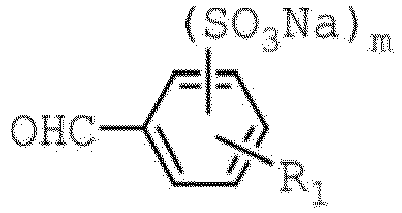
- are caused to react with each other to obtain a hydrazone compound having the following structure:

-
- Meanwhile, hydrochloric acid is added to a substituted sulfonated aniline having the following structure:
-

- while the substituted sulfonated aniline is cooled with ice, and a sodium nitrite solution is further added dropwise thereto to obtain a benzenediazonium chloride compound having the following structure:

- The hydrazone compound and the benzenediazonium chloride compound obtained above were caused to react with each other under basic conditions (for example, in the presence of sodium hydroxide or potassium hydroxide) to obtain a formazan compound having the following structure:

- Subsequently, the formazan compound thus obtained is oxidized in an alcohol solvent (for example, methanol or ethanol) using an oxidizing agent (for example, sodium nitrite or a nitrous acid ester such as ethyl nitrite or butyl nitrite) to obtain the tetrazolium salt of the above formula (1).
- The composition (content) (in terms of solid content) of the color-developing pigment in the reagent is, for example, 10 to 40 parts by mass, preferably 15 to 35 parts by mass, and more preferably more than 15 parts by mass and less than 30 parts by mass with respect to 100 parts by mass of the total amount (solid content) of the reagent. With such an amount, the color-developing pigment (for example, tetrazolium salts) can exhibit a sufficient color development amount with respect to an analyte. Therefore, an analyte concentration (for example, a glucose concentration) in a hemolysis sample can be measured with higher accuracy. The content of the color-developing pigment is substantially equal to a ratio of the charge amount of the color-developing pigment when the reagent is prepared. In addition, when the reagent contains two or more types of color-developing pigments, the content of the color-developing pigment means the total amount of the color-developing pigments to be blended.
- Formazan generated from the tetrazolium salt of the above formula (1) or a chelate compound of formazan and a transition metal ion has a large absorption wavelength band in a wavelength range (600 nm or more) that does not overlap with a main absorption band of hemoglobin singly or by forming a chelate compound with a transition metal compound. In addition, the tetrazolium salt of the above formula (1) has high water solubility. Therefore, by using the tetrazolium salt of the above formula (1), a biological component concentration can be measured with high sensitivity even for a hemolyzed whole blood sample. Specifically, a maximum absorbance (cell length = 0.045 mm in 200 mg/dL glucose aqueous solution) of formazan generated from the tetrazolium salt of the above formula (1) or a chelate compound of formazan and a transition metal ion at a wavelength of 600 nm or more and 800 nm or less is 0.3 or more, and more preferably 0.5 or more. When formazan or a chelate compound of formazan and a transition metal ion (therefore, a tetrazolium salt capable of generating such formazan) having such absorption is used, a biological component concentration is hardly affected by absorption of blood, and can be more accurately measured with good sensitivity. Note that, in the present specification, unless otherwise specified, as a maximum absorption wavelength (λmax) of a chelate compound of formazan and a transition metal ion, a value measured according to the following method is adopted.
- A 10 mM MOPS aqueous solution is added such that a final concentration of a formazan compound is 50 to 200 mM to prepare a sample. Separately, an aqueous solution containing 1 M transition metal ions (for example, nickel ions) is prepared.
- To 100 µL of the sample, 10 µL of the separately prepared aqueous solution containing transition metal ions is added, and the mixture is quickly stirred to prepare a mixed liquid. A spectrum of the mixed solution is measured with a spectrophotometer (measurement cell length: 10 mm). A maximum absorption wavelength (nm) at 600 nm or more is obtained on the basis of the spectrum. Note that any wavelength can be selected as the maximum absorption wavelength (λmax) as long as the wavelength satisfies a maximum absorbance (0.3 or more) at 600 nm or more.
- The reagent of the present disclosure contains an oxidoreductase. In a more preferred embodiment of the present invention, the biological component concentration measuring reagent contains a tetrazolium salt (particularly, the tetrazolium salt of the above formula (1)) as a color-developing pigment, and further contains an oxidoreductase that specifically reacts with an analyte.
- Here, the oxidoreductase is not particularly limited, and can be appropriately selected depending on the type of biological component to be measured. Specific examples thereof include glucose dehydrogenase (GDH) such as glucose dehydrogenase (GDH), glucose dehydrogenase (PQQ-GDH) using pyrroloquinoline quinone (PQQ) as a coenzyme, glucose dehydrogenase (FAD-GDH) using flavin adenine dinucleotide (FAD) as a coenzyme, glucose dehydrogenase (NAD-GDH) using nicotinamide adenine dinucleotide (NAD) as a coenzyme, or glucose dehydrogenase (NADP-GDH) using nicotinamide adenine dinucleotide phosphate (NADP) as a coenzyme, glucose oxidase (GOD), lactic acid dehydrogenase (LDH), cholesterol dehydrogenase, cholesterol oxidase, and uric acid dehydrogenase. Here, the oxidoreductase may be used singly or in combination of two or more types thereof. For example, when an analyte (biological component) is glucose, the oxidoreductase is preferably glucose dehydrogenase or glucose oxidase. In addition, when the analyte (biological component) is cholesterol, the oxidoreductase is preferably cholesterol dehydrogenase or cholesterol oxidase. When the biological component concentration measuring reagent contains an oxidoreductase, the content of the oxidoreductase is not particularly limited, and can be appropriately selected according to the amount of the tetrazolium salt.
- The reagent of the present disclosure essentially contains a color-developing pigment, an oxidoreductase, a hemolytic agent, a low-molecular salt compound, and a disaccharide or a derivative thereof (particularly sucralose). The reagent of the present disclosure may contain another component in addition to the above components. Here, as the other component, usually, a component that is appropriately selected according to the type of a biological component to be measured and added for measuring a biological component concentration can be similarly used. Specific examples thereof include a transition metal compound, an electron carrier, and a pH buffer. Here, each of the above components may be used singly or in combination of two or more types thereof. In addition, each of the above components may be used singly or in combination of two or more types thereof. Note that the reagent of the present disclosure preferably contains no surfactant other than a hemolytic agent.
- The electron carrier is not particularly limited, and a known electron carrier may be used. Specific examples thereof include diaphorase, phenazine methosulfate (PMS), 1-methoxy-5-methylphenazinium methylsulfate (1-methoxy PMS or m-PMS), nicotinamide adenine dinucleotide phosphate (NADPH), and nicotinamide adenine dinucleotide (NADH). Here, the electron carrier may be used singly or in combination of two or more types thereof. When the biological component concentration measuring reagent contains an electron carrier, the content of the electron carrier is not particularly limited, and can be appropriately selected according to the amount of the tetrazolium salt.
- A use form of the reagent is not particularly limited, and may be any one of a solid form, a gel form, a sol form, and a liquid form. In the reagent of the present disclosure, the reagent is preferably used in a solid (dry state), that is, the reagent of the present disclosure is preferably a dry reagent.
- The dry reagent is usually formed by applying a coating liquid for forming a dry reagent to a substrate. The coating liquid may contain water, a buffer (pH buffer), or the like from a viewpoint of formability. Here, the buffer is not particularly limited, and a buffer generally used in measuring a biological component concentration can be used similarly. Specific examples thereof include: a GOOD buffer such as a phosphate buffer, a citrate buffer, a citrate-phosphate buffer, a tris-hydroxymethylaminomethane-HCl buffer (tris-hydrochloride buffer), a MES buffer (2-morpholinoethanesulfonic acid buffer), a TES buffer (N-tris(hydroxymethyl) methyl-2-aminoethanesulfonic acid buffer), an acetate buffer, a MOPS buffer (3-morpholinopropanesulfonic acid buffer), a MOPS-NaOH buffer, a HEPES buffer (4-(2-hydroxyethyl)-1-piperazineethanesulfonic acid buffer), or a HEPES-NaOH buffer; an amino acid-based buffer such as a glycine-hydrochloride buffer, a glycine-NaOH buffer, a glycylglycine-NaOH buffer, or a glycylglycine-KOH buffer; a borate-based buffer such as a tris-borate buffer, a borate-NaOH buffer, or a borate buffer; and an imidazole buffer. Among these, a phosphate buffer, a citrate buffer, a citrate-phosphate buffer, a tris-hydrochloride buffer, a MES buffer, an acetate buffer, a MOPS buffer, and a HEPES-NaOH buffer are preferable. Here, a concentration of the buffer is not particularly limited, but is preferably 0.01 to 1.0 M. Note that, in the present invention, the concentration of the buffer refers to a concentration (M, mol/L) of the buffer contained in a coating liquid. The buffer solution preferably has a pH near a neutral value, for example, a pH of about 5.0 to 8.0. Note that a concentration of the tetrazolium salt in the coating liquid is not particularly limited as long as a desired biological component concentration can be measured with the concentration of the tetrazolium salt, but the tetrazolium salt is preferably contained in a sufficient amount with respect to the abundance of the desired biological component. In consideration of the above viewpoint, a biological component concentration to be usually measured, and the like, the concentration of the tetrazolium salt is preferably 0.01 to 0.2 mol/L, and more preferably 0.05 to 0.1 mol/L in the coating liquid. With such an amount, the tetrazolium salt reacts according to the amount of substantially all (for example, 95 mol% or more, preferably 98 mol% or more, and particularly preferably 100 mol%) biological components contained in the biological sample. Therefore, a desired biological component concentration can be measured accurately and quickly with good sensitivity.
- By using the reagent of the present disclosure, a concentration of a specific biological component contained in a whole blood sample can be measured with high accuracy. In addition, by using the reagent of the present disclosure, a concentration of a biological component (analyte) (that is, contained in both blood cells and plasma) can be measured with high accuracy for a hemolyzed whole blood sample.
- Therefore, the present invention also provides a biological component concentration measuring method including: bringing a whole blood sample into contact with the biological component concentration measuring reagent of the present disclosure; measuring a color development amount; and quantifying a concentration of a biological component in the whole blood sample on the basis of the color development amount.
- In the present disclosure, a sample to be measured is whole blood. A whole blood sample is introduced into a sensor including the biological component concentration measuring reagent of the present disclosure or the pigment or a sensor attached to a component measurement device (for example, a blood sugar meter), the whole blood sample is brought into contact with the reagent, and measurement is thereby performed. In addition, the biological component is not particularly limited, and usually, a biological component to be measured by a colorimetric method or an electrode method can be used similarly. Specific examples thereof include glucose, cholesterol, neutral lipid, nicotinamide adenine dinucleotide phosphate (NADPH), nicotinamide adenine dinucleotide (NADH), and uric acid. That is, according to a preferred embodiment of the present invention, the reagent of the present disclosure is used for measuring a concentration of glucose, cholesterol, neutral lipid, nicotinamide adenine dinucleotide phosphate (NADPH), nicotinamide adenine dinucleotide (NADH), or uric acid in whole blood. In addition, according to a preferred embodiment of the present invention, the biological component is glucose, cholesterol, neutral lipid, nicotinamide adenine dinucleotide phosphate (NADPH), nicotinamide adenine dinucleotide (NADH), or uric acid.
- In the present disclosure, the measurement method is not particularly limited, and can be appropriately selected according to the type of biological component to be measured. For example, when the color-developing pigment is a tetrazolium salt, the biological component is β-D-glucose, and the oxidoreductase is glucose dehydrogenase (GDH), glucose is oxidized by GDH to generate gluconic acid. By using a fact that a coenzyme of GDH or an electron carrier is reduced at this time, specifically, the method is roughly divided into a method (colorimetric method) for optically measuring a color degree of a tetrazolium salt (therefore, formazan or a chelate compound of formazan and a transition metal ion) reduced as a result, and a method (electrode method) for measuring a current generated by an oxidation-reduction reaction. Out of the above methods, measurement of a blood sugar level by the colorimetric method has advantages that it is easy to perform correction using a hematocrit value when calculating the blood sugar level, a manufacturing process is simple, and the like. Therefore, the biological component concentration measuring reagent can be preferably used for the colorimetric method.
- In particular, when a glucose concentration in a whole blood sample is measured, the colorimetric method is preferably used.
- The reagent of the present disclosure may be used for measuring a biological component concentration in a form in which components are mixed, or may be incorporated into a sensor (sensor for measuring a concentration of a whole blood component) in a dry state. That is, the present invention also provides a sensor for measuring a biological component concentration in a whole blood sample, the sensor having a reaction portion, in which the reaction portion includes the biological component concentration measuring reagent of the present disclosure (hereinafter, also simply referred to as "sensor"). In addition, the reagent and the method of the present disclosure can be incorporated into an automatic analyzer, a measurement kit, a simple blood sugar meter, or the like, and can be used for a daily clinical test. In addition, the reagent of the present disclosure can also be incorporated into a commercially available biosensor. Note that when the reagent of the present disclosure is incorporated into a sensor, the content of the reagent per sensor is not particularly limited, and usually, an amount used in the field can be adopted similarly. However, the color-developing pigment (particularly, the tetrazolium salt of formula (1)) is preferably contained in a sufficient amount with respect to the abundance of a desired biological component. In consideration of the above viewpoint, a biological component concentration to be usually measured, and the like, a concentration of the color-developing pigment is preferably 3 to 50 nmol, and more preferably 10 to 30 nmol per sensor. With such an amount, the color-developing pigment reacts according to the amounts of substantially all biological components contained in the whole blood sample. Therefore, a desired biological component concentration can be measured accurately and quickly with good sensitivity.
- Hereinafter, a form of the measurement sensor (colorimetric blood sugar meter) of the present disclosure used to measure a blood sugar level by a colorimetric method will be described with reference to the drawings. However, the present invention is characterized by using the biological component concentration measuring reagent of the present disclosure, and a structure of the sensor is not particularly limited. Therefore, the biological component concentration measuring reagent of the present disclosure may be applied to a commercially available measurement sensor and sensors described in
WO 2016/051930 A ,WO 2018/51822 A WO 2020/137532 A , and the like. Similarly, in the following embodiment, a specific form of a sensor for the purpose of measuring a blood sugar level will be described, but the measurement sensor is not limited to the application, and can be similarly applied to other applications or can be appropriately modified and applied. -
Fig. 1 is a plan view schematically illustrating a blood sugar meter used for detecting glucose (blood sugar) using the measurement sensor according to the present embodiment. - In
Fig. 1 , ablood sugar meter 10 is configured as a device for measuring glucose (blood sugar) in a whole blood sample. Theblood sugar meter 10 can be mainly used for personal use operated by a user (subject). The user can also measure his or her blood sugar before eating to manage his or her blood sugar. In addition, a medical worker can also use theblood sugar meter 10 in order to evaluate a health condition of a subject, and in this case, theblood sugar meter 10 may be appropriately modified and configured to be installable in a medical facility or the like. - The
blood sugar meter 10 adopts a principle of a colorimetric method that optically measures the content (blood sugar level) of glucose contained in a whole blood sample. In particular, theblood sugar meter 10 performs blood sugar measurement by a transmission-type measurement unit 14 that emits measurement light having a predetermined wavelength and receives light that has passed through a measurement area of ameasurement sensor 12. - To the
blood sugar meter 10, themeasurement sensor 12 including blood is attached, or blood is introduced into themeasurement sensor 12 while themeasurement sensor 12 is attached to theblood sugar meter 10, and themeasurement unit 14 detects glucose. Themeasurement sensor 12 may be configured as a disposable type that is discarded for each measurement. Meanwhile, theblood sugar meter 10 is preferably configured as a portable and robust device such that a user can easily repeat measurement. - As illustrated in
Fig. 2 , themeasurement sensor 12 includes a sensormain body 18 formed in a plate shape and a cavity 20 (cavity for liquid) extending in a plane direction of a plate surface inside the sensormain body 18. - As illustrated in
Fig. 2 , the sensormain body 18 is formed in a rectangular shape having along side 22 in insertion and detachment directions (distal end and proximal end directions of theblood sugar meter 10, that is, direction B) of theblood sugar meter 10 and having ashort side 24 in direction A. For example, the length of thelong side 22 of the sensormain body 18 is preferably set to twice or more the length of theshort side 24. As a result, a sufficient insertion amount of themeasurement sensor 12 with respect to theblood sugar meter 10 is ensured. - In addition, the thickness of the sensor
main body 18 is formed so as to be extremely small (thin) as compared with a side surface formed in a rectangular shape (InFig. 2 , the sensormain body 18 is illustrated so as to have a sufficient thickness intentionally.). For example, the thickness of the sensormain body 18 is preferably set to 1/10 or less of theshort side 24 described above. The thickness of the sensormain body 18 is preferably designed appropriately according to the shape of aninsertion hole 58 of theblood sugar meter 10. - In the
measurement sensor 12, a pair ofplate pieces 30 and a pair ofspacers 32 constitute the sensormain body 18 so as to have thecavity 20. -
Fig. 3 is a top view illustrating the measurement sensor inFig. 1 . InFig. 3 , a corner of the sensormain body 18 is sharp, but for example, the corner may be formed in a round corner. In addition, the sensormain body 18 is not limited to a thin plate shape, and it is a matter of course that the shape may be freely designed. For example, the sensormain body 18 may be formed in a square shape, another polygonal shape, a circular shape (including an elliptical shape), or the like in top view. - The
cavity 20 formed inside the sensormain body 18 is at a midpoint in a short axis direction of the sensormain body 18, and is formed linearly in a longitudinal direction of the sensormain body 18. Thecavity 20 is connected to adistal end port 20a formed on adistal end side 24a of the sensormain body 18 and aproximal end port 20b formed on aproximal end side 24b, and communicates with the outside of the sensormain body 18. When blood of a user is taken into thecavity 20 from thedistal end port 20a, thecavity 20 can cause the blood to flow in an extending direction on the basis of a capillary phenomenon. The amount of blood flowing through thecavity 20 is small, and leakage is suppressed by tension even when the blood moves to theproximal end port 20b. Note that an absorption portion (for example, a portion obtained by making thespacer 32 described later only on the proximal end side a porous body) that absorbs blood may be disposed on a side of theproximal end side 24b of the sensormain body 18. - In addition, a reagent (color-developing reagent) 26 that exhibits a color corresponding to a concentration of glucose (blood sugar) in blood by reacting with glucose (blood sugar) in blood is applied to a predetermined position (for example, a position slightly closer to the proximal end than a midpoint between the
distal end port 20a and theproximal end port 20b illustrated inFig. 3 ) of thecavity 20, and ameasurement target portion 28 to be measured by theblood sugar meter 10 is set. Blood flowing in the proximal end direction through thecavity 20 comes into contact with thereagent 26 applied to themeasurement target portion 28, and the blood and thereagent 26 react with each other to exhibit a color. Note that the application position of thereagent 26 and themeasurement target portion 28 may be shifted from each other in the longitudinal direction of thecavity 20, and for example, a reaction portion to which thereagent 26 is applied may be disposed on an upstream side of themeasurement target portion 28 in the blood flow direction. - In the
measurement sensor 12, the pair ofplate pieces 30 and the pair ofspacers 32 constitute the sensormain body 18 so as to have the above-describedcavity 20. The pair ofplate pieces 30 are each formed in the above-described rectangular shape in side view, and are arranged in a stacking direction. That is, the pair ofplate pieces 30 constitutes both side surfaces (an upper surface and a lower surface) of the sensormain body 18. The plate thickness of eachplate piece 30 is very small, and is preferably set to the same dimension of, for example, about 5 to 50 µm. The thicknesses of the two (one pair of)plate pieces 30 may be different from each other. - The pair of
plate pieces 30 maintains a plate shape and has strength not to be plastically deformed even when a certain degree of pressing force is applied thereto from a direction orthogonal to a plane direction. In addition, eachplate piece 30 includes a transparent portion or a semitransparent portion such that measurement light can pass through eachplate piece 30. Furthermore, eachplate piece 30 is preferably formed in a flat plate surface having appropriate hydrophilicity such that blood can flow through thecavity 20. - A material constituting each
plate piece 30 is not particularly limited, but a thermoplastic resin material, glass, quartz, or the like is preferably applied. Examples of the thermoplastic resin material include: a polymer material such as a polyolefin (for example, polyethylene or polypropylene), a cycloolefin polymer, a polyester (for example, polyethylene terephthalate (PET) or polyethylene naphthalate), polyvinyl chloride, polystyrene, an ABS resin, an acrylic resin, polyamide, or a fluororesin; and a mixture thereof. - The pair of
spacers 32 is disposed so as to be sandwiched between the pair ofplate pieces 30, and is firmly bonded to facing surfaces of theplate pieces 30 by a predetermined bonding means (adhesive or the like). That is, eachspacer 32 is a member that is disposed between the pair ofplate pieces 30 so as to separate the pair ofplate pieces 30 from each other, thereby forming thecavity 20 between the pair ofplate pieces 30 and the pair ofspacers 32 themselves. In this case, one of thespacers 32 is in contact with an upperlong side 22a of the sensormain body 18 inFig. 3 , and is disposed so as to extend in the distal end and proximal end directions along the upperlong side 22a. Theother spacer 32 is in contact with a lowerlong side 22b of the sensormain body 18 inFig. 3 , and is disposed so as to extend in the distal end and proximal end directions along the lowerlong side 22b. - A material (substrate) constituting the pair of
spacers 32 is not particularly limited, and examples thereof include various thermoplastic elastomers such as a styrene-based elastomer, a polyolefin-based elastomer, a polyurethane-based elastomer, a polyester-based elastomer, a polyamide-based elastomer, a polybutadiene-based elastomer, a transpolyisoprene-based elastomer, a fluororubber-based elastomer, and a chlorinated polyethylene-based elastomer. Alternatively, various elastically deformable materials other than the thermoplastic elastomers may be applied, and a structure such as an elastically deformable porous body (for example, sponge) may be applied. Furthermore, thespacer 32 may include an adhesive on one or both surfaces of the substrate, the adhesive bonding theplate pieces 30 to each other in a cured state or a semi-cured state between the pair ofplate pieces 30. Furthermore, thespacer 32 may be configured to elute thereagent 26 into thecavity 20 by containing thereagent 26. - The
plate piece 30 and thespacer 32 may be subjected to a hydrophilization treatment. Examples of a method for performing the hydrophilization treatment include a method for applying an aqueous solution containing a hydrophilic polymer such as polyacrylic acid, polyvinylpyrrolidone, or polyacrylamide in addition to a surfactant, polyethylene glycol, polypropylene glycol, hydroxypropyl cellulose, or water-soluble silicone by an immersion method, a spray method, or the like, and a method such as plasma irradiation, glow discharge, corona discharge, or ultraviolet irradiation (for example, excimer light irradiation), and these methods may be used singly or in combination. - Next, a device
main body 16 of theblood sugar meter 10 will be described. As illustrated inFig. 1 , theblood sugar meter 10 includes ahousing 40 constituting an appearance. Thehousing 40 includes: abox unit 44 that has a size that allows a user to easily grip and operate thehousing 40 and houses acontrol unit 42 of theblood sugar meter 10 therein; and a tubularphotometric unit 46 that protrudes from one side (distal end side) of thebox unit 44 in a distal end direction and houses themeasurement unit 14 of an optical system therein. In addition, apower button 48, anoperation button 50, and a display 52 are disposed on an upper surface of thebox unit 44, and aneject lever 54 is disposed on an upper surface of thephotometric unit 46. - The
power button 48 switches between activation and deactivation of theblood sugar meter 10 under an operation of a user. Theoperation button 50 functions as an operation unit that measures and displays a blood sugar level, switches display of a measurement result (including a past measurement result), and the like on the basis of the operation of the user in theblood sugar meter 10 in an activated state. The display 52 is constituted by a liquid crystal, an organic EL, or the like, and displays information to be provided to the user in a measurement operation, such as display of a measurement result or error display. - The
eject lever 54 is disposed movably in distal end and proximal end directions, and unlocks an eject pin (not illustrated) disposed in thephotometric unit 46 to allow the eject pin to advance in the distal end direction. - Meanwhile, the
photometric unit 46 of the devicemain body 16 extends long in the distal end direction from thebox unit 44 in order to press a distal end thereof against a finger of the user or the like. As illustrated inFig. 2 , thephotometric unit 46 includes asensor attaching unit 60 having aninsertion hole 58 and themeasurement unit 14 that optically detects glucose (blood sugar) in blood. - The
sensor attaching unit 60 is formed of a material (for example, stainless steel) having high hardness (rigidity), includes a flange portion 60a protruding outward on a distal end side, and is formed in a tubular shape having a predetermined length in an axial direction. Thesensor attaching unit 60 is positioned and fixed over a distal end surface and an axial center portion (central portion) of thephotometric unit 46 formed of a resin material. As illustrated inFig. 4A , a fixing wall 46a that firmly fixes thesensor attaching unit 60 is formed so as to protrude on an inner surface of thephotometric unit 46. - Examples of a material constituting the
sensor attaching unit 60 include materials that are hard, do not easily change in dimensions, are hardly worn even when the measurement sensor is repeatedly inserted and removed, and can be processed with high dimensional accuracy, such as a metal such as stainless steel or titanium, aluminum that has been subjected to an alumite coating treatment, a liquid crystal polymer, a plastic containing a filler such as glass or mica, a plastic whose surface has been cured and coated with nickel plating or the like, a carbon fiber, and a fine ceramic. Among these, if a metal material is applied, theinsertion hole 58 can be easily formed with high dimensional accuracy at the time of manufacturing the sensor attaching unit 60 (injection molding, press molding, or the like). Note that, in the devicemain body 16, thesensor attaching unit 60 may be integrally molded by forming thephotometric unit 46 itself of a hard material (for example, a metal material). - The
insertion hole 58 is formed in an axial center portion of thesensor attaching unit 60 by being surrounded by awall portion 62 of thesensor attaching unit 60. Theinsertion hole 58 is formed so as to have a rectangular cross section that is long in an insertion direction (direction B) and short in a left-right width direction (direction A). Theinsertion hole 58 has a predetermined depth from a distal end surface thereof toward a depth portion (proximal end direction) thereof in a state where thesensor attaching unit 60 is fixed to thephotometric unit 46. - An
insertion opening 58a connected to theinsertion hole 58 and communicating with the outside is formed on a distal end side of thesensor attaching unit 60. The dimension of theinsertion opening 58a in the insertion direction (direction B) coincides with the dimension (length in direction A) of theshort side 24 of themeasurement sensor 12. In addition, the dimension of theinsertion opening 58a in the left-right width direction, that is, a gap between the pair ofwall portions 62 constituting side surfaces of theinsertion hole 58 is substantially the same as the thickness of themeasurement sensor 12 in a stacking direction (Tall inFig. 4A ) as illustrated inFig. 4A . - The
sensor attaching unit 60 forms a pair ofelement housing spaces 64 in cooperation with a fixing wall 46a of thephotometric unit 46 at an intermediate position where the insertion hole 58 (measurement hole 59) extends. The pair ofelement housing spaces 64 is a part of themeasurement unit 14, is formed at positions facing each other with theinsertion hole 58 interposed therebetween, and communicates with themeasurement hole 59 via each light guide unit 66 formed by thesensor attaching unit 60. - The
measurement unit 14 constitutes alight emitting unit 70 by housing alight emitting element 68 in one of theelement housing spaces 64, and constitutes alight receiving unit 74 by housing alight receiving element 72 in the otherelement housing space 64. The light guide unit 66 of thesensor attaching unit 60 functions as a so-called aperture by being formed in a circular hole having an appropriate diameter. - The
light emitting element 68 of thelight emitting unit 70 includes a firstlight emitting element 68a that irradiates themeasurement sensor 12 with measurement light having a first wavelength and a secondlight emitting element 68b that irradiates themeasurement sensor 12 with measurement light having a second wavelength different from the first wavelength (not illustrated inFig. 2 ). The firstlight emitting element 68a and the secondlight emitting element 68b are arranged side by side at positions facing the light guide unit 66 of theelement housing space 64. - The light emitting elements 68 (first and second
light emitting elements reagent 26 according to the amount of blood sugar, and is, for example, 600 nm to 680 nm. The second wavelength is a wavelength for detecting a red blood cell concentration in blood, and is, for example, 510 nm to 540 nm. Thecontrol unit 42 in thebox unit 44 supplies a drive current to cause each of the first and secondlight emitting elements - The
light receiving unit 74 is configured by disposing onelight receiving element 72 at a position facing the light guide unit 66 of theelement housing space 64. Thelight receiving unit 74 receives transmission light from themeasurement sensor 12, and can be constituted by, for example, a photodiode (PD). - In addition, an eject pin 56 (eject unit) connected to the
eject lever 54 is disposed at a bottom (proximal end surface) of theinsertion hole 58. Theeject pin 56 includes arod portion 56a extending in an axial direction of thephotometric unit 46, and a receivingportion 56b having a large diameter radially outward at a distal end of therod portion 56a. Theproximal end side 24b of themeasurement sensor 12 inserted into theinsertion hole 58 is in contact with the receivingportion 56b. In addition, acoil spring 76 that surrounds theeject pin 56 in a noncontact manner is disposed between a bottom of theinsertion hole 58 and the receivingportion 56b of theeject pin 56. Thecoil spring 76 elastically supports the receivingportion 56b of theeject pin 56. - When insertion of the
measurement sensor 12 is completed, as illustrated inFig. 4B , themeasurement target portion 28 of themeasurement sensor 12 is disposed at a position overlapping with the light guide unit 66. - The
eject pin 56 is displaced in a proximal end direction by the receivingportion 56b being pressed as a user inserts themeasurement sensor 12, and is locked (fixed) by a lock mechanism (not illustrated) disposed in thehousing 40. Thecoil spring 76 elastically contracts according to displacement of the receivingportion 56b. When theeject pin 56 slightly moves by an operation of theeject lever 54 by the user, the lock of the lock mechanism is released, and theeject pin 56 slides in a distal end direction by elastic restoring force of thecoil spring 76. As a result, themeasurement sensor 12 is pushed out by theeject pin 56 and taken out from theinsertion hole 58. - Returning to
Fig. 1 , thecontrol unit 42 of the devicemain body 16 is constituted by, for example, a control circuit including a calculation unit, a storage unit, and an input/output unit (not illustrated). A known computer can be applied to thiscontrol unit 42. For example, thecontrol unit 42 detects and calculates glucose in blood by driving and controlling themeasurement unit 14 under an operation of theoperation button 50 by a user, and displays the calculated blood sugar level on the display 52. - For example, in the
blood sugar meter 10 that measures an analyte (for example, glucose) by causing themeasurement sensor 12 to transmit measurement light, thecontrol unit 42 calculates a measurement result on the basis of the Beer-Lambert law represented by the following formula (A).
[Mathematical Formula 1]
- In the above formula (A), l0 represents an intensity of light before measurement light is incident on a whole blood sample, l1 represents an intensity of light after the measurement light exits from the whole blood sample, α represents an absorption coefficient, and L represents a distance (cell length) through which the measurement light passes.
- The effects of the present invention will be described with reference to the following Examples and Comparative Examples. Note that the technical scope of the present invention is not limited only to the following Examples. Note that, in the following Examples, unless otherwise specified, an operation was performed at room temperature (25°C). In addition, unless otherwise specified, "%" and "parts" mean "% by mass" and "parts by mass", respectively.
- A compound (tetrazolium salt 1) having the following structure was synthesized according to the following method.

- In 60 mL of RO water, 1.59 g of disodium 4-formylbenzene-1,3-disulfonate (manufactured by Tokyo Chemical Industry Co., Ltd.) and 1.0 g of 2-hydrazino-6-methoxy-1,3-benzothiazole (manufactured by Santa Cruz Biotechnology) were suspended. This suspension was heated and stirred in a water bath at 60°C for two hours under an acetic acid acidity. After completion of heating and stirring, a solvent was removed. This residue was washed with isopropanol, and then a precipitate was separated by filtration. This precipitate was dried in a draft to obtain a
hydrazone compound 1. - In a mixed liquid of 10 mL of RO water and 10 mL of DMF, 0.76 g of the
hydrazone compound 1 in theabove section 1 was dissolved to prepare ahydrazone compound 1 solution. In 4.09 mL of RO water, 0.264 g of p-anisidin-3-sulfonic acid (manufactured by Tokyo Chemical Industry Co., Ltd.) was suspended, and 130 µL of 10 N NaOH was added thereto and dissolved therein. While this solution was maintained at 0°C, 280 µL of 9.6 N HCl was added thereto, and a sodium nitrite solution was added dropwise thereto to perform diazotization. This diazotized solution was maintained at -20°C, and added dropwise to thehydrazone compound 1 solution. After completion of the dropwise addition, 300 µL of 10 N NaOH was added dropwise thereto, and the mixture was stirred for two hours at room temperature (25°C) to prepare a solution containing a formazan compound 1 (formazan compound 1 solution). The pH of thisformazan compound 1 solution was adjusted to neutrality with 9.6 N HCl, and a solvent was removed. The obtained residue was washed with isopropanol, and then a precipitate was separated by filtration. This precipitate was dried to obtain theformazan compound 1. - The
formazan compound 1 in theabove section 2 was dissolved in 10 mL of RO water to prepare aformazan compound 1 solution. A column chromatography filler (manufactured by Nacalai Tesque, Inc., COSMOSIL 40C18-PREP) was filled into a disposable column (size: 20 cm × 5 cm), and the disposable column was set in a column preparative separation system (manufactured by Büch Japan Ltd., trade name: SEPACORE). Theformazan compound 1 solution was purified using this column system. A solvent of a collected fraction was removed, 15 mL of methanol, 250 µL of 9.6 N HCl, and 5 mL of a 15% ethyl nitrite (CH3CH2NO2)-ethanol solution were added to the obtained solid component, and the mixture was stirred for 72 hours under light shielding at room temperature (25°C). - Diethyl ether was added to the reaction solution of the
above section 3 to precipitate thetetrazolium salt 1. This precipitate was centrifuged, a supernatant was removed, and then the residue was further washed with diethyl ether. The obtained precipitate was dried in a draft to obtain thetetrazolium salt 1. - 46.8 µL (corresponding to zinc acetate = 8.6 mg as a transition metal compound) of a 1 M zinc acetate aqueous solution (1 M = 183.48 g/L) and 339.6 µL (339.6 mg) of RO water were mixed to prepare a
mixed liquid 1. Next, 3.6 mg of sodium nitrite (1 M = 68.995 g/L) was added to thismixed liquid 1 to prepare amixed liquid 2. Next, 33.4 mg of sucralose (1 M = 397.64 g/L) was added to thismixed liquid 2 to prepare amixed liquid 3. Next, 2.5 mg of sorbitol (1 M = 182.17 g/L) as a sugar alcohol was added to thismixed liquid 3 to prepare a mixed liquid 4. Next, 28.1 mg of the tetrazolium salt 1 (1 M = 693 g/L) of Synthesis Example 1 as a color-developing pigment was added to this mixed liquid 4 to prepare amixed liquid 5. - Separately, 100.2 mg of a nonionic surfactant (polyoxyethylene (9) octylphenyl ether, manufactured by Sigma-Aldrich, Nonidet™ P-40, specific gravity = 1.06 g/mL; hereinafter, also simply referred to as "Nonidet" or "Nonidet P-40") as a hemolytic agent was added to 246.4 µL (246.4 mg) of RO water to prepare a 30% by mass Nonidet aqueous solution.
- The
mixed liquid 5 prepared above, a 30% by mass Nonidet aqueous solution, and flavin adenine dinucleotide-dependent glucose dehydrogenase (FAD-GDH) (Toyobo Co., Ltd., trade name: GLD-351 (D-Glucose: (flavine adenine dinucleotide)-dehydrogenase)) as an oxidoreductase were mixed so as to have the composition of Table 1-1 below to prepare a coating liquid (total amount = 731.3 µL). - A
coating liquid 2 was prepared in a similar manner to thecoating liquid 1 except that the addition amount of sucralose (1 M = 397.64 g/L) was changed to 16.7 mg (57.5 mM) in the composition of thecoating liquid 1. - A
coating liquid 3 was prepared in a similar manner to thecoating liquid 1 except that sucralose (1 M = 397.64 g/L) was not added in the composition of thecoating liquid 1.[Table 1] Table 1-1: Composition of coating liquid Coating liquid 1 2 3 Zinc acetate mg 8.6 8.6 8.6 Tetrazolium salt 1mg 28.1 28.1 28.1 Sodium nitrite mg 3.6 3.6 3.6 Sucralose mg 33.4 16.7 0 Nonidet P-40 mg 30.045 30.045 30.045 FAD-GDH mg 8.0 8.0 8.0 Sorbitol mg 2.5 2.5 2.5 RO water µL 702.95 702.95 702.95 Content mass ratio of sucralose to low-molecular salt compound 2.7 1.4 - Coating liquid 1 2 3 Zinc acetate mM 64.0 64.0 64.0 RO water + Nonidet P-40 µL 731.3 731.3 731.3 Tetrazolium salt 1mM 55.3 55.3 55.3 Sodium nitrite mM 71.3 71.3 71.3 Sucralose mM 114.9 57.5 0 Nonidet P-40 w/w 3.7% 3.7% 3.7% FAD-GDH w/w 1.0% 1.0% 1.0% Sorbitol mM 18.8 18.8 18.8 Molar ratio (%) of sugar alcohol to sucralose 16.4 32.7 - -
- (1) Reagent application: 6.5 µL of a coating liquid was applied in a range of width 1.1 mm × length 75 mm onto a polyethylene terephthalate (PET) film (thickness: 188 µm), and the resulting film was stored at room temperature for 12 hours to obtain a dry reagent. A dry reagent to which the
coating liquid 1 was applied is referred to as adry reagent 1, a dry reagent to which thecoating liquid 2 was applied is referred to as adry reagent 2, and a dry reagent to which thecoating liquid 3 was applied is referred to as adry reagent 3. - (2) Test paper assembly:
Test paper was assembled with three members of a first layer:PET film 100 um (without reagent), a second layer: space layer 45 um (double-sided tape), and a third layer: PET film 188 um (dry reagent). - Transmittance was measured by transmission spectroscopy (900 nm) using the test paper assembled in the
section 2. Each dry reagent was subjected to image observation using a shape measuring machine (KEYENCE CORPORATION, VR-3200). Results thereof are presented in Table 2 below. In addition, results of the image observation are illustrated inFig. 6A . - A contact angle meter (DM301) manufactured by Kyowa Interface Science Co., Ltd. was used as a measurement device. All contact angles were analyzed by a θ/2 method. First, ultrapure water was discharged from a syringe having a distal end attached to the contact angle meter in a downward direction to prepare 1 µL of an ultrapure water droplet at the distal end of the syringe. Next, this syringe was vertically lowered, and the droplet was brought into contact with a reagent application portion of the dry reagent, and 1 µL of ultrapure water was added dropwise to a surface. The droplet that had spread on the surface at this time was photographed from a side, and a contact angle with respect to ultrapure water was obtained using FAMAS which is analysis software attached to the device.
[Table 2] Transmittance (@900 nm) Dry reagent 1Dry reagent 2Dry reagent 373% 73% 61% transparent transparent opaque Contact angle (°) 28.1 27.6 29.5 - As described above, the
dry reagents coating liquids dry reagent 3 to which thecoating liquid 3 was applied was opaque. From the above results, it has been found that a dry reagent having high transparency can be obtained by adding sucralose, and the dry reagent can be made amorphous. - Note that a transmittance of a dry reagent having a thickness of 3 to 14 um is preferably 68 to 74%. Note that the thickness of the dry reagent refers to a thickness from a surface of the PET film to a surface of the dry reagent in the vicinity of a center of an application region after the reagent liquid after application is dried, measured using a shape measuring machine (KEYENCE CORPORATION, LS-1100).
- For the
dry reagents 1 to 3 prepared in Test Example 1, a blood sample (plasma 400 mg/dL) was applied to a flow path inlet of the measurement sensor. An absorbance at 605 nm was measured using a fiber spectrophotometer for 15 seconds after the blood sample reached the reagent unit. - Results thereof are illustrated in
Fig. 6B . In addition, reagent images after color development are illustrated inFig. 6A . As illustrated inFig. 6B , it is found that thedry reagents - Coating liquids 4 to 14 having the compositions described in Table 3 below were prepared in a similar procedure to that of the
coating liquid 1. - Dry reagents 4 to 14 were prepared using the coating liquids 4 to 14 prepared in the
section 1, respectively, in a similar manner to Test Example 1. - A contact angle was measured in a similar manner to Test Example 1. Results thereof are also presented in Table 3 below.
- Transmittance was measured in a similar manner to Test Example 1. Results thereof are also presented in Table 3 below. Note that transmittance of a sensor to which a reagent was not applied was 76%.
[Table 3-1] Coating liquid 4 5 6 7 8 9 10 11 12 13 14 Zinc acetate mg 6.9 6.9 6.9 6.9 6.9 6.9 6.9 6.9 6.9 6.9 6.9 RO water µL 699.3 699.3 699.3 699.3 699.3 699.3 699.3 699.3 699.3 699.3 699.3 Tetrazolium salt 1 mg 22.4 22.4 22.4 22.4 22.4 22.4 22.4 22.4 22.4 22.4 22.4 Sodium nitrite mg 2.9 2.9 2.9 2.9 2.9 2.9 2.9 2.9 2.9 2.9 2.9 Sucralose mg 33.4 33.4 33.4 33.4 33.4 33.4 33.4 33.4 33.4 33.4 33.4 Nonidet P-40 mg 33.7 33.7 33.7 33.7 33.7 33.7 33.7 33.7 33.7 33.7 33.7 FAD-GDH mg 8 8 8 8 8 8 8 8 8 8 8 Erythritol mg 15 2.5 5.0 Xylitol mg 5.0 Sorbitol mg 15 2.5 5.0 3.8 Mannitol mg 2.5 5.0 Content mass ratio of sucralose to low-molecular salt compound 3.4 3.4 3.4 3.4 3.4 3.4 3.4 3.4 3.4 3.4 3.4 [Table 3-2] Coating liquid 4 5 6 7 8 9 10 11 12 13 14 Zinc acetate mM 51.2 51.2 51.2 51.2 51.2 51.2 51.2 51.2 51.2 51.2 51.2 RO water + Nonidet P-40 µL 731.09 731.09 731.09 731.09 731.09 731.09 731.09 731.09 731.09 731.09 731.09 Tetrazolium salt 1 mM 44.3 44.3 44.3 44.3 44.3 44.3 44.3 44.3 44.3 44.3 44.3 Sodium nitrite mM 57.1 57.1 57.1 57.1 57.1 57.1 57.1 57.1 57.1 57.1 57.1 Sucralose mM 115.0 115.0 115.0 115.0 115.0 115.0 115.0 115.0 115.0 115.0 115.0 Nonidet P-40 w/w 4.2% 4.2% 4.2% 4.2% 4.2% 4.2% 4.2% 4.2% 4.2% 4.2% 4.2% FAD-GDH w/w 1.0% 1.0% 1.0% 1.0% 1.0% 1.0% 1.0% 1.0% 1.0% 1.0% 1.0% Erythritol mM 168.0 28.0 56.0 Xylitol mM 44.9 Sorbitol mM 112.6 18.8 37.5 28.2 Mannitol mM 18.8 37.5 Molar ratio (%) of sugar alcohol to sucralose 146.1 97.9 24.3 16.3 16.3 48.7 39.0 32.6 32.6 24.5 - [Table 3-3] Dry reagent 4 5 6 7 8 9 10 11 12 13 14 Contact angle (°) 26.8 25.2 28.3 27.4 26.6 23.5 24.3 27.0 23.6 27.1 37.6 Transmittance (@900 nm) 69% 70% 73% 74% 73% 72% 74% 71% 73% 73% 74% - The contact angles of the dry reagents 4 to 13 were lower than the contact angle of the
dry reagent 14, and it had been found that the contact angle was less than 30° by the addition of a sugar alcohol. In the dry reagent, a low contact angle with respect to water means high wettability to blood. Therefore, the addition of a sugar alcohol improves blood spreadability on the dry reagent to further accelerate a detection reaction of the test. - Note that the contact angle with respect to water is preferably less than 40°, and more preferably 23 to 29°.
- In the detection method using a color-developing pigment, the less false color development is, the better from a viewpoint of improving detection accuracy. Therefore, false color development when sucralose and a sugar alcohol were added was evaluated.
- Test liquids having the compositions presented in Table 4-1 below were prepared.
[Table 4-1] Test liquid 15 16 17 18 19 20 21 22 23 RO water µL 733 733 733 733 733 733 733 733 733 Tetrazolium salt 1mg 22.4 22.4 22.4 22.4 22.4 22.4 22.4 22.4 22.4 Zinc acetate mg 12.0 12.0 12.0 12.0 12.0 12.0 12.0 12.0 12.0 Erythritol mg 20.0 Xylitol mg 20.0 Sorbitol mg 20.0 Mannitol mg 20.0 Sucralose mg 20.0 Disodium succinate mg 20.0 Trehalose mg 20.0 Sucrose mg 20.0 15 16 17 18 19 20 21 22 23 RO water µL 733.0 733.0 733.0 733.0 733.0 733.0 733.0 733.0 733.0 Tetrazolium salt 1mM 44.1 44.1 44.1 44.1 44.1 44.1 44.1 44.1 44.1 Zinc acetate mM 89.5 89.5 89.5 89.5 89.5 89.5 89.5 89.5 89.5 Erythritol mM 223.4 Xylitol mM 179.3 Sorbitol mM 149.8 Mannitol mM 149.8 Sucralose mM 68.6 Disodium succinate mM 101.0 Trehalose mM 72.1 Sucrose mM 79.7 - The above test liquid was stored in an oven at 60°C. Color development was visually confirmed after three hours and after 60 hours.
- Results thereof are presented in Table 4-2 below. A result in which false color development has occurred is described as "present", and a result in which false color development has not occurred is described as "absent".
[Table 4-2] Test liquid 15 16 17 18 19 20 21 22 23 False color development after 3 hours absent absent absent absent absent absent absent absent absent False color development after 60 hours absent - - - - absent absent absent present -: No data - From the above results, in the
test liquids 16 to 20 to which a sugar alcohol was added, thetest liquid 22 to which trehalose was added, and the test liquid 23 to which sucrose was added, false color development did not occur after three hours. Note that, in the test liquid 21 to which disodium succinate that is not a sugar alcohol was added, white precipitation was generated immediately after manufacture. -
Coating liquids 24 to 31 having the following compositions were prepared in a similar manner to the preparation of thecoating liquid 1. - "Blood spreadability" means that, in a blood sugar level measuring sensor, blood flowing from a first end side of a reagent layer toward a second end side thereof flows into a space present above a reagent, and the blood and the blood sugar level measuring reagent are uniformly mixed and dissolved. Furthermore, "good spreadability of blood flowing into a blood sugar level measuring sensor" means that when blood flowing from a first end side toward a second end side through a flow path and the blood sugar level measuring reagent are mixed and dissolved, a flow state of the blood is not disturbed, and the blood flows to the second end while being dissolved with the blood sugar level measuring reagent at a speed within a predetermined range. "The flow state of the blood is not disturbed" includes that a distal end of the inflowing blood uniformly advances in the flow path in a flow path cross section.
- A blood sugar meter sensor (blood sugar level measuring sensor) illustrated in
Fig. 5 was prepared as follows. First, 3.15 µL of each of theprepared coating liquids reagent application surface 3" side inFig. 5A ) with a head having a patterning accuracy within ± 5 to 8 um and a discharge liquid amount of 1 pL to 1000 pL using an inkjet (manufactured by MicroJet, Inc., Labojet-500Bio), and dried at 25°C for 10 minutes to form a reagent layer on a PET film (PET with a reagent layer). This PET with a reagent layer was cut into a predetermined size (8 mm × 1.6 mm) to prepare a film piece ("film piece 2" inFig. 5A ). This film piece had, per piece, 0.063 µL of the coating liquid applied. A reagent mass per blood sugar level measuring sensor (0.063 µL as a coating liquid) can be calculated from the composition (mass) of each reagent component added at the time of preparing the coating liquid, the final volume (731.3 µL) of a prepared reagent liquid, and the number offilm pieces 2 prepared from PET with a reagent layer. For example, the film piece to which thecoating liquid 1 has been applied contains, per piece, 2.4 µg of tetrazolium salt 1 (color-developing pigment), 0.7 µg of zinc acetate (transition metal compound), 0.3 µg of sodium nitrite, 2.9 µg of sucralose, 0.2 µg of sorbitol (sugar alcohol), 0.7 µg of FAD-GDH (oxidoreductase), and 2.6 µg of Nonidet (hemolytic agent) in a form of a dry reagent. - Double-sided tapes (manufacturer name: Nitto Denko, trade name: 5605BN, thickness: 50 µm) ("double-sided tapes 4" in
Fig. 5A ) were disposed as a spacer and an adhesive portion (sensor base) on both sides of a hydrophilicized polyester film (manufactured by 3M, trade name: hydrophilicized polyester film 9901P, thickness: 100 µm) ("polyester film 5" inFig. 5A ) as a second substrate. The film piece ("film piece 2" inFig. 5A ) prepared above was stuck to this sensor base such that the reagent layer ("reagent application surface 3" inFig. 5A ) faced the sensor base and was located at a center of the flow path ("flow path 6" inFig. 5A ). When the film piece was stuck, the film piece was pressed such that a predetermined amount of the film piece was embedded in the double-sided tapes. Furthermore, the sensor base to which the film piece was stuck was covered with a film piece ("polyester film 7" inFig. 5A ) in which a double-sided tape (manufacturer name: 3M, trade name: polyester film substrate, double-sided adhesive tape 9965, thickness: 80 µm) was stuck to a hydrophilicized polyester film to prepare a blood sugar meter sensor (blood sugar level measuring sensor). - The prepared blood sugar meter sensor (blood sugar level measuring sensor) includes a flow path unit and a measurement unit (reagent unit). In the flow path unit in
Fig. 5B , a flow path length ("L1" inFig. 5B ) was 9 mm, a width ("W" inFig. 5B ) was 1.1 mm, and a thickness ("t1" inFig. 5B ) was 0.13 mm. In the measurement unit inFig. 5B , a reagent length ("L2" inFig. 5B ) was 1.6 mm, a width ("W" inFig. 5B ) was 1.1 mm, and a thickness ("t2" inFig. 5B ) was 0.05 mm. - Note that the length L1 of the flow path unit in a direction (longitudinal direction of the flow path) orthogonal to a sensor thickness direction is not particularly limited, and can be appropriately selected according to a purpose, but is preferably 5 to 10 mm. Here, the long length L1 is advantageous in that attachment (insertion) to a component measurement device is facilitated and entry of ambient light into an optical measurement unit is reduced. The short length L1 is advantageous in that a specimen amount can be reduced. Therefore, an upper limit and a lower limit of the length L1 are determined in consideration of a balance among ease of attachment (insertion) to the component measurement device, an influence of ambient light, and a specimen amount. A length L2 of a flow path in the reagent unit in a direction (longitudinal direction of the flow path) orthogonal to a sensor thickness direction is not particularly limited, and can be appropriately selected according to a purpose, but is preferably 1 to 4 mm. Here, the long length L2 is advantageous in that measurement can be performed with high accuracy because an irradiation spot area can be large in the length direction. However, the short length L2 is advantageous in that a specimen amount can be reduced. Therefore, an upper limit and a lower limit of the length L2 are determined in consideration of a balance between measurement accuracy and a specimen amount.
- To the prepared blood sugar level measuring sensor, 1 mm3 of prepared blood (whole blood, hematocrit value (Ht) 60) was spotted, and blood spreadability was visually evaluated according to the following evaluation criteria. Note that an environmental temperature was 25°C.
-
- ⊙: A blood specimen immediately spread over the entire area.
- ∘: A blood specimen quickly spread over a central measurement range, but it took some time for the blood specimen to spread over the entire area.
- △: A blood sample quickly spread over a central measurement range, but it took time for the blood specimen to spread over the entire area.
- The prepared blood sugar level measuring sensor was housed in an aluminum packaging and then stored in a thermo-hygrostat (manufactured by Yamato Scientific Co., Ltd.) at 60°C ± 1°C. After a lapse of three days, the blood sugar level measuring sensor was taken out from the thermo-hygrostat, and false color development and coloring of a dry reagent were evaluated. The evaluation was made by measuring an absorbance at a wavelength of 605 nm and using an absorbance increase with respect to the blood sugar level measuring sensor (blank value) stored at 25°C for three days.
-
- ⊙: An absorbance after storage at 60°C is less than 0.03 with respect to the blank value.
- ∘: An absorbance after storage at 60°C is 0.03 or more and less than 0.07 with respect to the blank value.
- △: An absorbance after storage at 60°C is 0.07 or more and less than 0.15 with respect to the blank value.
- ×: An absorbance after storage at 60°C is more than 0.15 with respect to the blank value.
- Comparison between the
dry reagent 14 using thecoating liquid 14 and thedry reagent 7 using thecoating liquid 7 indicates that addition of a sugar alcohol improves blood spreadability. This is considered to be because wettability of whole blood is improved as confirmed above. In addition, comparison between thecoating liquids 28 and 29 indicates that thedry reagent 28 using thecoating liquid 28 in which a sugar alcohol ratio to sucralose is 14% or more has better blood spreadability than the dry reagent 29 using the coating liquid 29. - A high concentration glucose solution (40 g/dL) was added to blood (whole blood, hematocrit value (Ht) 40) to prepare a blood specimen (BG100) having a glucose concentration (BG) of 100 mg/dL, a blood specimen (BG200) having a glucose concentration (BG) of 200 mg/dL, a blood specimen (BG400) having a glucose concentration (BG) of 400 mg/dL, and a blood specimen (BG550) having a glucose concentration (BG) of 550 mg/dL. In addition, as a control, a glucose degrading enzyme was added to blood (whole blood, hematocrit value (Ht) 40) to prepare a blood specimen (BG0) having a glucose concentration (BG) of 0 mg/dL.
- Blood adjusted to each of BG0, BG100, BG200, BG400, and BG550 was spotted to a flow path inlet of the blood sugar level measuring sensor (the
coating liquid 1 was used as the coating liquid) prepared in the above Test Example 5. Nine seconds after each specimen was spotted to the reagent unit, an absorbance at 605 nm was measured using a fiber spectrophotometer. Results thereof are illustrated inFig. 7. Fig. 7 is a graph illustrating a relationship between a glucose concentration and an absorbance of a chelate compound of formazan and Ni2+ at a maximum absorption wavelength (605 nm) when each sample is measured by the blood sugar level measuring sensor. - As illustrated in
Fig. 7 , the absorbance and the glucose concentration have a linear relationship (proportional relationship). From this, it is considered that a blood sugar level can be accurately measured on the basis of the absorbance by using the sensor of the present disclosure. - From these, a concentration of a biological component in a whole blood sample can be accurately calculated by measuring a color development amount by applying a hemolysis sample of whole blood to the reagent (blood sugar level measuring sensor) of the present disclosure and preparing a calibration curve on the basis of the color development amount.
- This application is based on
Japanese Application No. 2021-201646 filed on December 13, 2021 -
- 1
- Reagent ribbon
- 2
- Film piece
- 3
- Reagent application surface
- 4
- Double-sided tape
- 5
- Polyester film
- 6
- Flow path
- 7
- Polyester film
- 10
- Blood sugar meter
- 12
- Measurement sensor
- 14
- Measurement unit
- 16
- Device main body
- 18
- Sensor main body
- 20
- Cavity
- 20a
- Distal end port
- 20b
- Proximal end port
- 22
- Long side
- 22a
- Upper long side
- 22b
- Lower long side
- 24
- Short side
- 24a
- Distal end side
- 24b
- Proximal end side
- 26
- Reagent
- 28
- Measurement target portion
- 30
- Plate piece
- 32
- Spacer
- 40
- Housing
- 42
- Control unit
- 44
- Box unit
- 46
- Photometric unit
- 48
- Power button
- 50
- Operation button
- 52
- Display
- 54
- Eject lever
- 56
- Eject pin
- 56a
- Rod portion
- 56b
- Receiving portion
- 58
- Insertion hole
- 58a
- Insertion opening
- 59
- Measurement hole
- 60
- Sensor attaching unit
- 60a
- Flange portion
- 62
- Wall portion
- 64
- Element housing space
- 66
- Light guide unit
- 68
- Light emitting element
- 70
- Light emitting unit
- 72
- Light emitting element
- 74
- Light receiving unit
- 76
- Coil spring
| Coating liquid 14 | Coating liquid 7 | Coating liquid 24 | Coating liquid 25 | Coating liquid 26 | Coating liquid 27 | Coating liquid 1 | Coating liquid 28 | Coating liquid 29 | Coating liquid 30 | Coating liquid 31 | ||
| Zinc acetate | mg | 6.9 | 6.9 | 6.9 | 8.6 | 13.7 | 6.9 | 8.6 | 8.6 | 8.6 | 8.6 | 8.6 |
| Tetrazolium salt 1 | mg | 22.4 | 22.4 | 22.4 | 28.1 | 22.4 | 22.4 | 28.1 | 28.1 | 28.1 | 28.1 | 22.4 |
| Sodium nitrite | mg | 2.9 | 2.9 | 2.9 | 3.6 | 2.9 | 2.9 | 3.6 | 3.6 | 3.6 | 2.9 | 2.9 |
| Sucralose | mg | 33.4 | 33.4 | 33.4 | 52.2 | 33.4 | 33.4 | 33.4 | 33.4 | 44.6 | 33.4 | 33.4 |
| FAD-GDH | mg | 8.0 | 8.0 | 8.0 | 8.0 | 8.0 | 8.0 | 8.0 | 8.0 | 8.0 | 8 | 8 |
| Sorbitol | mg | 0.0 | 2.5 | 7.5 (2.5 mg of erythritol, 2.5 mg of xylitol, and 2.5 mg of sorbitol) | 0.0 | 0.0 | 0.0 | 2.5 | 2.5 | 2.5 | 2.5 | 2.5 |
| Nonidet P-40 | mg | 33.7 | 33.7 | 33.7 | 42.1 | 33.7 | 27.1 | 30.0 | 33.7 | 33.7 | 33.7 | 30.0 |
| RO water | mg | 699.3 | 699.3 | 699.3 | 690.9 | 699.3 | 705.9 | 703.0 | 699.3 | 699.3 | 699.3 | 703.0 |
| Coating liquid 14 | Coating liquid 7 | Coating liquid 24 | Coating liquid 25 | Coating liquid 26 | Coating liquid 27 | Coating liquid 1 | Coating liquid 28 | Coating liquid 29 | Coating liquid 30 | Coating liquid 31 | ||
| Zinc acetate | mM | 51.2 | 51.2 | 51.2 | 64.1 | 102.4 | 51.2 | 64.0 | 64.0 | 64.0 | 64.0 | 64.0 |
| Tetrazolium salt 1 | mM | 44.3 | 44.3 | 44.3 | 55.4 | 44.3 | 44.3 | 55.3 | 55.4 | 55.4 | 55.4 | 44.3 |
| Sodium nitrite | mM | 57.1 | 57.1 | 57.1 | 71.4 | 57.1 | 57.1 | 71.3 | 71.4 | 71.4 | 57.1 | 57.1 |
| Sucralose | mM | 115.0 | 133.6 | 115.0 | 179.8 | 115.0 | 114.9 | 114.9 | 115.0 | 153.3 | 115.0 | 114.9 |
| Sorbitol | mM | 0.0 | 18.8 | 69.2 (total of three types of alcohols) | 0.0 | 0.0 | 0.0 | 18.8 | 18.8 | 18.8 | 18.8 | 18.8 |
| Spreadability | △ | ⊙ | ⊙ | △ | △ | △ | ⊙ | ○ | △ | ○ | ○ | |
| 60°C deterioration | ⊙ | ○ | △ | ⊙ | ⊙ | ⊙ | ⊙ | ⊙ | ⊙ | ⊙ | ⊙ | |
| Ratio of sugar alcohol to sucralose | 0% | 14% | 60% | 0% | 0% | 0% | 16% | 16% | 12% | 16% | 16% |
Claims (10)
- A biological component concentration measuring reagent comprising a color-developing pigment, an oxidoreductase, a hemolytic agent, and a low-molecular salt compound, and further comprising
sucralose. - The biological component concentration measuring reagent according to claim 1, wherein the salt compound is at least one selected from the group consisting of a transition metal salt and an inorganic salt.
- The biological component concentration measuring reagent according to claim 2, wherein the inorganic salt is a nitrite.
- The biological component concentration measuring reagent according to claim 1 or 2, wherein a content mass ratio of the sucralose to the low-molecular salt compound is 1 to 10.
- The biological component concentration measuring reagent according to claim 1 or 2, further comprising a sugar alcohol.
- The biological component concentration measuring reagent according to claim 5, wherein the sugar alcohol is at least one selected from the group consisting of lactitol, erythritol, sorbitol, xylitol, and mannitol.
- The biological component concentration measuring reagent according to claim 5, wherein a molar ratio of the sugar alcohol to the sucralose is 10% or more.
- A biological component concentration measuring method comprising: bringing a whole blood sample into contact with the biological component concentration measuring reagent according to claim 1 or 2; measuring a color development amount; and quantifying a concentration of a biological component in the whole blood sample on a basis of the color development amount.
- The method according to claim 8, wherein the biological component is glucose, cholesterol, neutral lipid, nicotinamide adenine dinucleotide phosphate (NADPH), nicotinamide adenine dinucleotide (NADH), or uric acid.
- A sensor for measuring a biological component concentration in a whole blood sample, the sensor having a reaction portion, wherein
the reaction portion includes the biological component concentration measuring reagent according to claim 1 or 2.
Applications Claiming Priority (2)
| Application Number | Priority Date | Filing Date | Title |
|---|---|---|---|
| JP2021201646 | 2021-12-13 | ||
| PCT/JP2022/037473 WO2023112442A1 (en) | 2021-12-13 | 2022-10-06 | Biological component concentration measurement reagent, measurement method, and sensor |
Publications (2)
| Publication Number | Publication Date |
|---|---|
| EP4428532A1 true EP4428532A1 (en) | 2024-09-11 |
| EP4428532A4 EP4428532A4 (en) | 2025-03-12 |
Family
ID=86774344
Family Applications (1)
| Application Number | Title | Priority Date | Filing Date |
|---|---|---|---|
| EP22906977.8A Pending EP4428532A4 (en) | 2021-12-13 | 2022-10-06 | BIOLOGICAL COMPONENT CONCENTRATION MEASURING REAGENT, MEASURING METHOD AND SENSOR |
Country Status (4)
| Country | Link |
|---|---|
| EP (1) | EP4428532A4 (en) |
| JP (1) | JPWO2023112442A1 (en) |
| CN (1) | CN118176419A (en) |
| WO (1) | WO2023112442A1 (en) |
Families Citing this family (1)
| Publication number | Priority date | Publication date | Assignee | Title |
|---|---|---|---|---|
| JPWO2024202448A1 (en) * | 2023-03-27 | 2024-10-03 |
Family Cites Families (16)
| Publication number | Priority date | Publication date | Assignee | Title |
|---|---|---|---|---|
| IT1177513B (en) * | 1984-01-27 | 1987-08-26 | Menarini Sas | READY TO USE LIQUID REACTIVE FOR THE DETERMINATION OF THE CONTENT OF BLOOD IN THE BLOOD |
| US5902731A (en) | 1998-09-28 | 1999-05-11 | Lifescan, Inc. | Diagnostics based on tetrazolium compounds |
| US6656697B1 (en) * | 1998-09-28 | 2003-12-02 | Lifescan, Inc. | Diagnostics based on tetrazolium compounds |
| US6485923B1 (en) * | 2000-02-02 | 2002-11-26 | Lifescan, Inc. | Reagent test strip for analyte determination having hemolyzing agent |
| WO2002027331A1 (en) * | 2000-09-28 | 2002-04-04 | Arkray, Inc. | Assay method with the use of redox reaction |
| JP5646323B2 (en) * | 2008-07-23 | 2014-12-24 | 日本化薬株式会社 | Method for measuring components in blood using hemolyzed whole blood and kit thereof |
| JP5812701B2 (en) * | 2010-06-23 | 2015-11-17 | アークレイ株式会社 | Method for measuring plasma glucose |
| KR101207418B1 (en) * | 2012-02-10 | 2012-12-04 | 주식회사 아이센스 | Hemolysis reagent composition for quantitative analysis of glycated hemoglobin using enzyme method |
| KR102035881B1 (en) * | 2012-03-30 | 2019-10-23 | 세키스이 메디칼 가부시키가이샤 | Method for measuring substance in blood sample |
| CN106233145B (en) | 2014-09-29 | 2017-09-19 | 泰尔茂株式会社 | Component measuring device and chip for measurement |
| WO2018051822A1 (en) | 2016-09-14 | 2018-03-22 | テルモ株式会社 | 2-substituted benzothiazolyl-3-substituted phenyl-5-substituted sulfonated phenyl-2h-tetrazolium salt, biological component concentration measurement reagent containing said salt, and biological component concentration measurement method using said salt |
| JP6904966B2 (en) * | 2016-09-28 | 2021-07-21 | テルモ株式会社 | Methods, compositions and tips for detecting objects of analysis in blood samples |
| EP3736571A4 (en) * | 2018-03-07 | 2021-03-24 | Terumo Kabushiki Kaisha | Method, reagent, and chip, for measuring analyte concentration in biological sample |
| JP7442461B2 (en) | 2018-12-28 | 2024-03-04 | テルモ株式会社 | Component measurement system |
| JP7811170B2 (en) * | 2019-07-22 | 2026-02-04 | オルト-クリニカル ダイアグノスティックス インコーポレイテッド | Glycated hemoglobin measurement |
| CN112710656B (en) * | 2020-12-23 | 2022-03-22 | 中生北控生物科技股份有限公司 | Kit for determining glucose content and application thereof |
-
2022
- 2022-10-06 EP EP22906977.8A patent/EP4428532A4/en active Pending
- 2022-10-06 WO PCT/JP2022/037473 patent/WO2023112442A1/en not_active Ceased
- 2022-10-06 JP JP2023567559A patent/JPWO2023112442A1/ja active Pending
- 2022-10-06 CN CN202280073555.1A patent/CN118176419A/en active Pending
Also Published As
| Publication number | Publication date |
|---|---|
| EP4428532A4 (en) | 2025-03-12 |
| CN118176419A (en) | 2024-06-11 |
| JPWO2023112442A1 (en) | 2023-06-22 |
| WO2023112442A1 (en) | 2023-06-22 |
Similar Documents
| Publication | Publication Date | Title |
|---|---|---|
| US11656182B2 (en) | Method, composition, and chip for detecting analyte in blood sample | |
| US11739083B2 (en) | Disposable sensor chip with reagent including 2-substituted benzothiazolyl-3-substituted phenyl-5-substituted sulfonated phenyl-2H-tetrazolium salt | |
| US10696998B2 (en) | Reagents and methods for detecting analytes | |
| US11815448B2 (en) | Method, reagent, and chip for measuring analyte concentration in specimen | |
| EP3578634B1 (en) | Blood sugar level measurement chip and blood sugar level measurement device set | |
| JP7731784B2 (en) | Biological component concentration measurement reagent, measurement method, and sensor | |
| WO2023112442A1 (en) | Biological component concentration measurement reagent, measurement method, and sensor | |
| JP2023087327A (en) | Biocomponent concentration measurement reagent, measurement method and sensor | |
| WO2024202448A1 (en) | Biological component concentration measurement reagent, measurement method, and sensor | |
| JP6893215B2 (en) | 2-Substituted thiazolyl-3-substituted phenyl-5-sulfolated phenyl-2H-tetrazolium salt, a reagent for measuring the concentration of biological components containing the salt, and a method for measuring the concentration of biological components using the salt. | |
| HK40030244B (en) | Method, reagent, and chip, for measuring analyte concentration in biological sample | |
| HK40030244A (en) | Method, reagent, and chip, for measuring analyte concentration in biological sample | |
| HK40006543A (en) | 2-substituted benzothiazolyl-3-substituted phenyl-5-substituted sulfonated phenyl-2h-tetrazolium salt | |
| HK40006543B (en) | 2-substituted benzothiazolyl-3-substituted phenyl-5-substituted sulfonated phenyl-2h-tetrazolium salt | |
| HK40004461B (en) | Method, composition, and chip for detecting analysis object in blood sample | |
| HK40004461A (en) | Method, composition, and chip for detecting analysis object in blood sample |
Legal Events
| Date | Code | Title | Description |
|---|---|---|---|
| STAA | Information on the status of an ep patent application or granted ep patent |
Free format text: STATUS: THE INTERNATIONAL PUBLICATION HAS BEEN MADE |
|
| PUAI | Public reference made under article 153(3) epc to a published international application that has entered the european phase |
Free format text: ORIGINAL CODE: 0009012 |
|
| STAA | Information on the status of an ep patent application or granted ep patent |
Free format text: STATUS: REQUEST FOR EXAMINATION WAS MADE |
|
| 17P | Request for examination filed |
Effective date: 20240604 |
|
| AK | Designated contracting states |
Kind code of ref document: A1 Designated state(s): AL AT BE BG CH CY CZ DE DK EE ES FI FR GB GR HR HU IE IS IT LI LT LU LV MC ME MK MT NL NO PL PT RO RS SE SI SK SM TR |
|
| A4 | Supplementary search report drawn up and despatched |
Effective date: 20250211 |
|
| RIC1 | Information provided on ipc code assigned before grant |
Ipc: G01N 21/78 20060101ALI20250205BHEP Ipc: C12Q 1/32 20060101ALI20250205BHEP Ipc: G01N 33/52 20060101AFI20250205BHEP |
|
| DAV | Request for validation of the european patent (deleted) | ||
| DAX | Request for extension of the european patent (deleted) |