EP4428129A1 - Substituted phenylpropionic acid derivative and use thereof - Google Patents
Substituted phenylpropionic acid derivative and use thereof Download PDFInfo
- Publication number
- EP4428129A1 EP4428129A1 EP22889355.8A EP22889355A EP4428129A1 EP 4428129 A1 EP4428129 A1 EP 4428129A1 EP 22889355 A EP22889355 A EP 22889355A EP 4428129 A1 EP4428129 A1 EP 4428129A1
- Authority
- EP
- European Patent Office
- Prior art keywords
- compound
- pharmaceutically acceptable
- group
- acceptable salt
- independently selected
- Prior art date
- Legal status (The legal status is an assumption and is not a legal conclusion. Google has not performed a legal analysis and makes no representation as to the accuracy of the status listed.)
- Pending
Links
Classifications
-
- A—HUMAN NECESSITIES
- A61—MEDICAL OR VETERINARY SCIENCE; HYGIENE
- A61P—SPECIFIC THERAPEUTIC ACTIVITY OF CHEMICAL COMPOUNDS OR MEDICINAL PREPARATIONS
- A61P9/00—Drugs for disorders of the cardiovascular system
-
- C—CHEMISTRY; METALLURGY
- C07—ORGANIC CHEMISTRY
- C07D—HETEROCYCLIC COMPOUNDS
- C07D207/00—Heterocyclic compounds containing five-membered rings not condensed with other rings, with one nitrogen atom as the only ring hetero atom
- C07D207/02—Heterocyclic compounds containing five-membered rings not condensed with other rings, with one nitrogen atom as the only ring hetero atom with only hydrogen or carbon atoms directly attached to the ring nitrogen atom
- C07D207/04—Heterocyclic compounds containing five-membered rings not condensed with other rings, with one nitrogen atom as the only ring hetero atom with only hydrogen or carbon atoms directly attached to the ring nitrogen atom having no double bonds between ring members or between ring members and non-ring members
- C07D207/08—Heterocyclic compounds containing five-membered rings not condensed with other rings, with one nitrogen atom as the only ring hetero atom with only hydrogen or carbon atoms directly attached to the ring nitrogen atom having no double bonds between ring members or between ring members and non-ring members with hydrocarbon radicals, substituted by hetero atoms, attached to ring carbon atoms
-
- A—HUMAN NECESSITIES
- A61—MEDICAL OR VETERINARY SCIENCE; HYGIENE
- A61K—PREPARATIONS FOR MEDICAL, DENTAL OR TOILETRY PURPOSES
- A61K31/00—Medicinal preparations containing organic active ingredients
- A61K31/33—Heterocyclic compounds
- A61K31/395—Heterocyclic compounds having nitrogen as a ring hetero atom, e.g. guanethidine or rifamycins
- A61K31/40—Heterocyclic compounds having nitrogen as a ring hetero atom, e.g. guanethidine or rifamycins having five-membered rings with one nitrogen as the only ring hetero atom, e.g. sulpiride, succinimide, tolmetin, buflomedil
- A61K31/4025—Heterocyclic compounds having nitrogen as a ring hetero atom, e.g. guanethidine or rifamycins having five-membered rings with one nitrogen as the only ring hetero atom, e.g. sulpiride, succinimide, tolmetin, buflomedil not condensed and containing further heterocyclic rings, e.g. cromakalim
-
- A—HUMAN NECESSITIES
- A61—MEDICAL OR VETERINARY SCIENCE; HYGIENE
- A61K—PREPARATIONS FOR MEDICAL, DENTAL OR TOILETRY PURPOSES
- A61K31/00—Medicinal preparations containing organic active ingredients
- A61K31/33—Heterocyclic compounds
- A61K31/395—Heterocyclic compounds having nitrogen as a ring hetero atom, e.g. guanethidine or rifamycins
- A61K31/435—Heterocyclic compounds having nitrogen as a ring hetero atom, e.g. guanethidine or rifamycins having six-membered rings with one nitrogen as the only ring hetero atom
- A61K31/44—Non condensed pyridines; Hydrogenated derivatives thereof
- A61K31/445—Non condensed piperidines, e.g. piperocaine
- A61K31/4523—Non condensed piperidines, e.g. piperocaine containing further heterocyclic ring systems
- A61K31/4545—Non condensed piperidines, e.g. piperocaine containing further heterocyclic ring systems containing a six-membered ring with nitrogen as a ring hetero atom, e.g. pipamperone, anabasine
-
- C—CHEMISTRY; METALLURGY
- C07—ORGANIC CHEMISTRY
- C07D—HETEROCYCLIC COMPOUNDS
- C07D207/00—Heterocyclic compounds containing five-membered rings not condensed with other rings, with one nitrogen atom as the only ring hetero atom
- C07D207/02—Heterocyclic compounds containing five-membered rings not condensed with other rings, with one nitrogen atom as the only ring hetero atom with only hydrogen or carbon atoms directly attached to the ring nitrogen atom
- C07D207/04—Heterocyclic compounds containing five-membered rings not condensed with other rings, with one nitrogen atom as the only ring hetero atom with only hydrogen or carbon atoms directly attached to the ring nitrogen atom having no double bonds between ring members or between ring members and non-ring members
- C07D207/08—Heterocyclic compounds containing five-membered rings not condensed with other rings, with one nitrogen atom as the only ring hetero atom with only hydrogen or carbon atoms directly attached to the ring nitrogen atom having no double bonds between ring members or between ring members and non-ring members with hydrocarbon radicals, substituted by hetero atoms, attached to ring carbon atoms
- C07D207/09—Radicals substituted by nitrogen atoms, not forming part of a nitro radical
-
- C—CHEMISTRY; METALLURGY
- C07—ORGANIC CHEMISTRY
- C07D—HETEROCYCLIC COMPOUNDS
- C07D211/00—Heterocyclic compounds containing hydrogenated pyridine rings, not condensed with other rings
- C07D211/04—Heterocyclic compounds containing hydrogenated pyridine rings, not condensed with other rings with only hydrogen or carbon atoms directly attached to the ring nitrogen atom
- C07D211/06—Heterocyclic compounds containing hydrogenated pyridine rings, not condensed with other rings with only hydrogen or carbon atoms directly attached to the ring nitrogen atom having no double bonds between ring members or between ring members and non-ring members
- C07D211/08—Heterocyclic compounds containing hydrogenated pyridine rings, not condensed with other rings with only hydrogen or carbon atoms directly attached to the ring nitrogen atom having no double bonds between ring members or between ring members and non-ring members with hydrocarbon or substituted hydrocarbon radicals directly attached to ring carbon atoms
- C07D211/18—Heterocyclic compounds containing hydrogenated pyridine rings, not condensed with other rings with only hydrogen or carbon atoms directly attached to the ring nitrogen atom having no double bonds between ring members or between ring members and non-ring members with hydrocarbon or substituted hydrocarbon radicals directly attached to ring carbon atoms with substituted hydrocarbon radicals attached to ring carbon atoms
- C07D211/34—Heterocyclic compounds containing hydrogenated pyridine rings, not condensed with other rings with only hydrogen or carbon atoms directly attached to the ring nitrogen atom having no double bonds between ring members or between ring members and non-ring members with hydrocarbon or substituted hydrocarbon radicals directly attached to ring carbon atoms with substituted hydrocarbon radicals attached to ring carbon atoms with hydrocarbon radicals, substituted by carbon atoms having three bonds to hetero atoms with at the most one bond to halogen, e.g. ester or nitrile radicals
-
- C—CHEMISTRY; METALLURGY
- C07—ORGANIC CHEMISTRY
- C07D—HETEROCYCLIC COMPOUNDS
- C07D205/00—Heterocyclic compounds containing four-membered rings with one nitrogen atom as the only ring hetero atom
- C07D205/02—Heterocyclic compounds containing four-membered rings with one nitrogen atom as the only ring hetero atom not condensed with other rings
- C07D205/04—Heterocyclic compounds containing four-membered rings with one nitrogen atom as the only ring hetero atom not condensed with other rings having no double bonds between ring members or between ring members and non-ring members
Definitions
- the disclosure belongs to the field of pharmaceutics and relates to a substituted phenylpropanoic acid derivative and use thereof.
- Lipoprotein(a) is a blood lipid particle similar to low-density lipoprotein, primarily composed of a cholesterol ester-rich core and characteristic apolipoprotein(a) [Apo(a)] and characterized by gene polymorphism and long-term stability. It is distributed among people in a skewed manner. Studies have found that elevated levels of Lp(a) are associated with an increased risk of cardiovascular events and related revascularization. While there have been multiple treatment protocols available for elevated levels of LDL-c, reduced levels of HDL-c, and elevated levels of triglycerides, there have been no approved drugs for patients with elevated concentrations of Lp(a).
- WO2020247429 reports a class of pyrrolidone-based lipoprotein inhibitors that bind to human Apo(a) protein. These compounds bind to Apo(a) protein to inhibit the binding of LDL particles to Apo(a), thereby reducing Lp(a) levels in the plasma,
- the compounds of the disclosure have not been disclosed in any document, and such compounds demonstrate specific binding to human Apo(a) protein, thereby reducing Lp(a) levels in the plasma.
- the disclosure provides a compound represented by formula I or a pharmaceutically acceptable salt thereof,
- R 2 and R 6 are independently selected from deuterium.
- R 2 and R 6 are independently selected from halogen, e.g., fluorine or chlorine. In some embodiments, in the compound of formula I or the pharmaceutically acceptable salt thereof, R 2 and R 6 are independently selected from C 1-6 alkyl, wherein the alkyl is optionally substituted with one or more R 2A , and R 2A is as previously defined. In some embodiments, in the compound of formula I or the pharmaceutically acceptable salt thereof, R 2 and R 6 are independently selected from the group consisting of methyl, ethyl, or propyl.
- R 1 and R 5 are independently selected from hydrogen.
- R 3 and R 7 are independently selected from the group consisting of deuterium or C 1-6 alkoxy, wherein the alkoxy is optionally substituted with one or more R 3A , and R 3A is as previously defined.
- R 3 and R 7 are independently selected from halogen, e.g., fluorine or chlorine. In some embodiments, in the compound of formula I or the pharmaceutically acceptable salt thereof, R 3 and R 7 are independently selected from the group consisting of C 1-6 alkyl or C 1-6 alkoxy, wherein the alkyl or alkoxy is optionally substituted with one or more R 3A , and R 3A is as previously defined.
- L 1 is selected from the group consisting of -CH 2 NHCH 2 -, - CH 2 NH-, -NH-, -O-, -OCH 2 -, -OCH 2 CH 2 O-, and -NHSO 2 NH-, preferably -CH 2 NHCH 2 -, -CH 2 NH-, -NH-, and -OCH 2 CH 2 O-.
- L 1 is selected from wherein o, R a , R b , and R c are as previously defined.
- R b is selected from deuterium.
- R b is selected from halogen, e.g., fluorine or chlorine.
- R b is selected from C 1-6 alkyl, wherein the alkyl is optionally substituted with one or more R 5A , and R 5A is as previously defined.
- R b is independently selected from the group consisting of methyl, ethyl, or propyl.
- R a is selected from hydrogen
- R c is independently selected from the group consisting of hydrogen or C 1-6 alkoxy, wherein the alkoxy is optionally substituted with one or more R 6A , and R 6A is as previously defined.
- R c is independently selected from halogen, e.g., fluorine or chlorine.
- R c is independently selected from the group consisting of C 1-6 alkyl or C 1-6 alkoxy, wherein the alkyl or alkoxy is optionally substituted with one or more R 6A , and R 6A is as previously defined.
- compounds of formula I or pharmaceutically acceptable salts thereof include, but are not limited to:
- the compound of formula I or the pharmaceutically acceptable salt thereof is selected from the group consisting of:
- Another aspect of the disclosure also provides a compound represented by formula II or a pharmaceutically acceptable salt thereof,
- R 12 is independently selected from the group consisting of hydrogen or deuterium.
- R 12 is independently selected from halogen, e.g., fluorine or chlorine.
- R 12 is independently selected from C 1-6 alkyl, wherein the alkyl is optionally substituted with one or more R 12A , and R 12A is as previously defined.
- R 2 and R 6 are independently selected from the group consisting of methyl, ethyl, or propyl.
- R 11 is independently selected from hydrogen.
- R 13 is independently selected from the group consisting of deuterium or C 1-6 alkoxy, wherein the alkoxy is optionally substituted with one or more R 13A , and R 13A is as previously defined.
- R 13 is independently selected from halogen, e.g., fluorine or chlorine.
- L 2 is selected from the group consisting of In some other embodiments, in the compound of formula II or the pharmaceutically acceptable salt thereof, L 2 is selected from the group consisting of
- L 2 is selected from the group consisting of
- L 2 is
- compounds of formula II or pharmaceutically acceptable salts thereof include, but are not limited to:
- the compound represented by formula II or the pharmaceutically acceptable salt thereof is selected from the group consisting of:
- Another aspect of the disclosure also provides a compound represented by formula III or a pharmaceutically acceptable salt thereof,
- R 21 is independently selected from the group consisting of four-membered heterocycloalkyl or six-membered heterocycloalkyl
- R 22 is independently selected from the group consisting of hydrogen, deuterium, halogen, C 1-6 alkyl, or C 1-6 alkoxy, wherein the alkyl, alkoxy, four-membered heterocycloalkyl, or six-membered heterocycloalkyl is optionally substituted with one or more R 21A
- each R 21A is independently selected from the group consisting of hydrogen, deuterium, halogen, and C 1-6 alkyl.
- R 23 is independently selected from the group consisting of deuterium or C 1-6 alkoxy, wherein the alkoxy is optionally substituted with one or more R 23A , and R 23A is as previously defined.
- R 23 is independently selected from halogen, e.g., fluorine or chlorine.
- the compound of formula III or the pharmaceutically acceptable salt thereof is wherein L 3 , R 22 , R 23 , R 24 , R 21A , n2, and m2 are as previously defined.
- L 3 is selected from the group consisting of -CH 2 NHCH 2 -, - CH 2 NH-, -NH-, -S-, -S(O)-, -S(O) 2 -, -O-, -OCH 2 -, -OCH 2 CH 2 O-, -NHSO 2 NH-, and
- the compound of formula III or the pharmaceutically acceptable salt thereof is wherein L 3 , R 22 , R 23 , R 24 , R 21A , and n2 are as previously defined.
- R 21 and R 22 form 5- or 6-membered heterocycloalkyl with the adjacent carbon atom, wherein the heterocycloalkyl is optionally substituted with one or more R 22A , and each R 22A is independently selected from the group consisting of deuterium, halogen, and C 1-6 alkyl.
- the compound of formula III or the pharmaceutically acceptable salt thereof is wherein L 3 , R 22 , R 23 , R 24 , R 22A , and n2 are as previously defined; p is independently selected from the group consisting of integers between 0-2.
- L 3 is selected from the group consisting of -CH 2 NHCH 2 -, -CH 2 NH-, -NH-, - S-, -S(O)-, -S(O) 2 -, -O-, -OCH 2 -, -OCH 2 CH 2 O-, -NHSO 2 NH-, and
- the compound of formula III or the pharmaceutically acceptable salt thereof is wherein L 3 , R 22 , R 23 , R 24 , R 21A , and n2 are as previously defined.
- p is independently selected from the group consisting of 1 or 2.
- L 3 is selected from the group consisting of a nitrogen atom
- L 3 is selected from the group consisting of a nitrogen atom
- R 24 is selected from hydrogen
- R 23 is selected from the group consisting of hydrogen or C 1-6 alkoxy, wherein the alkoxy is optionally substituted with one or more R 23A , and R 23A is as previously defined.
- R 23 is selected from halogen, e.g., fluorine or chlorine.
- R 23 is selected from the group consisting of C 1-6 alkyl or C 1-6 alkoxy, wherein the alkyl or alkoxy is optionally substituted with one or more R 23A , and R 23A is as previously defined.
- R 21A is selected from hydrogen
- compounds represented by formula III or pharmaceutically acceptable salts thereof include, but are not limited to:
- the compound of formula III or the pharmaceutically acceptable salt thereof is selected from the group consisting of:
- the disclosure also provides isotopically substituted forms of the aforementioned compounds or the pharmaceutically acceptable salts thereof.
- the isotopically substituted forms are deuterated forms.
- the in vitro binding affinity of the compounds for the expected target human apolipoprotein(a) is tested.
- the compounds of the disclosure bind to apolipoprotein(a) with a relatively good binding force.
- the compounds of the disclosure bind to apolipoprotein(a) with an IC50 value of 0.01 to 500 nM.
- the compounds of the disclosure bind to apolipoprotein(a) with an IC50 value of 0.01 to 100 nM.
- the compounds of the disclosure bind to apolipoprotein(a) with an IC50 value of 0.01 to 20 nM.
- the compounds of the disclosure bind to apolipoprotein(a) with an IC50 value of 0.01 to 20 nM. 0.1 to 30 nM. In some embodiments, the compounds of the disclosure bind to apolipoprotein(a) with an IC 50 value of ⁇ 50 nM.
- the disclosure also provides a pharmaceutical composition, comprising a therapeutically effective amount of at least one of the aforementioned compounds represented by formula I or II or III or the pharmaceutically acceptable salts thereof, or the isotopically substituted forms thereof and a pharmaceutically acceptable excipient.
- a unit dose of the pharmaceutical composition is 0.001 mg-1000 mg.
- the pharmaceutical composition comprises 0.01-99.99% of an aforementioned compound or a pharmaceutically acceptable salt thereof or an isotopically substituted form thereof based on the total weight of the composition. In certain embodiments, the pharmaceutical composition comprises 0.1-99.9% of an aforementioned compound or a pharmaceutically acceptable salt thereof or an isotopically substituted form thereof. In certain embodiments, the pharmaceutical composition comprises 0.5%-99.5% of an aforementioned compound or a pharmaceutically acceptable salt thereof or an isotopically substituted form thereof. In certain embodiments, the pharmaceutical composition comprises 1%-99% of an aforementioned compound or a pharmaceutically acceptable salt thereof or an isotopically substituted form thereof. In certain embodiments, the pharmaceutical composition comprises 2%-98% of an aforementioned compound or a pharmaceutically acceptable salt thereof or an isotopically substituted form thereof.
- the pharmaceutical composition comprises 0.01%-99.99% of a pharmaceutically acceptable excipient based on the total weight of the composition. In certain embodiments, the pharmaceutical composition comprises 0.1%-99.9% of a pharmaceutically acceptable excipient. In certain embodiments, the pharmaceutical composition comprises 0.5%-99.5% of a pharmaceutically acceptable excipient. In certain embodiments, the pharmaceutical composition comprises 1%-99% of a pharmaceutically acceptable excipient. In certain embodiments, the pharmaceutical composition comprises 2%-98% of a pharmaceutically acceptable excipient.
- the disclosure also provides a method for preventing and/or treating a disease or disorder associated with elevated plasma levels of LP(a), by administering to the patient a therapeutically effective amount of the aforementioned compound represented by formula I or II or III or the pharmaceutically acceptable salt thereof or the isotopically substituted form thereof, or the aforementioned pharmaceutical composition.
- the disease or disorder associated with elevated plasma levels of LP(a) is selected from the group consisting of cardiovascular diseases, including but not limited to stroke, hypertensive heart disease, and coronary heart diseases.
- the disclosure also provides a method for preventing and/or treating a patient afflicted with a cardiovascular disease, comprising administering to the patient a therapeutically effective amount of the aforementioned compound represented by formula I or formula II or formula III or the pharmaceutically acceptable salt thereof or the isotopically substituted form thereof, or the aforementioned pharmaceutical composition.
- the disclosure also provides use of the aforementioned compound represented by formula I or formula II or formula III or the pharmaceutically acceptable salt thereof or the aforementioned pharmaceutical composition in the preparation of a medicament for preventing and/or treating a disease or disorder associated with elevated plasma levels of LP(a).
- the disease or disorder associated with elevated plasma levels of LP(a) is selected from the group consisting of cardiovascular diseases, including but not limited to stroke, hypertensive heart disease, and coronary heart diseases.
- the disclosure also provides use of the aforementioned compound represented by formula I or formula II or formula III or the pharmaceutically acceptable salt thereof or the aforementioned pharmaceutical composition in the preparation of a medicament for preventing and/or treating a cardiovascular disease.
- the pharmaceutically acceptable salts of the compounds described in the disclosure may be selected from the group consisting of inorganic salts or organic salts.
- the compounds of the disclosure may exist in specific geometric or stereoisomeric forms.
- the disclosure contemplates all such compounds, including cis and trans isomers, (-)- and (+)-enantiomers, (R)- and (S)-enantiomers, diastereomers, (D)-isomer, (L)-isomer, and racemic mixtures and other mixtures thereof, such as enantiomerically or diastereomerically enriched mixtures, all of which are within the scope of the disclosure.
- Additional asymmetric carbon atoms may be present in substituents such as an alkyl group. All such isomers and mixtures thereof are included within the scope of the disclosure.
- the compounds of the disclosure containing asymmetric carbon atoms can be isolated in optically active pure form or in racemic form.
- the optically active pure form can be isolated from a racemic mixture or synthesized using chiral starting materials or chiral reagents.
- Optically active (R)- and (S)-enantiomers and D- and L-isomers can be prepared by chiral synthesis, chiral reagents, or other conventional techniques. If one enantiomer of a certain compound of the disclosure is desired, it may be prepared by asymmetric synthesis or derivatization with a chiral auxiliary, wherein the resulting mixture of diastereomers is separated and the auxiliary group is cleaved to provide the pure desired enantiomer.
- salts of diastereomers are formed with an appropriate optically active acid or base, followed by resolution of diastereomers by conventional methods known in the art, and the pure enantiomers are obtained by recovery.
- separation of enantiomers and diastereomers is generally accomplished by chromatography using a chiral stationary phase, optionally in combination with chemical derivatization (e.g., carbamate formation from amines).
- a bond " " indicates an unspecified configuration; that is, if chiral isomers exist in the chemical structure, the bond “ “ “ may be “ “ or “ “”, or includes both the configurations of " “ and “ “.
- a bond " " is not specified with a configuration; that is, they may be in a Z configuration or an E configuration, or contain both configurations.
- tautomer or tautomeric form refers to structural isomers of different energies that can interconvert via a low energy barrier.
- proton tautomers also known as proton transfer tautomers
- proton migration such as keto-enol and imine-enamine
- lactam-lactim isomerization An example of a lactam-lactim equilibrium is present between A and B as shown below.
- the disclosure also includes isotopically labeled compounds that are identical to those recited herein but have one or more atoms replaced by an atom having an atomic mass or mass number different from the atomic mass or mass number usually found in nature.
- isotopes that can be incorporated into the compounds of the disclosure include isotopes of hydrogen, carbon, nitrogen, oxygen, phosphorus, sulfur, fluorine, iodine, and chlorine, such as 2 H, 3 H, 11 C, 13 C, 14 C, 13 N, 15 N, 15 O, 17 O, 18 O, 31 P, 32 P, 35 S, 18 F, 123 I, 125 I, and 36 Cl.
- the position when a position is specifically assigned deuterium (D), the position should be construed as deuterium with an abundance that is at least 1000 times greater than the natural abundance of deuterium (which is 0.015%) (i.e., at least 10% deuterium incorporation).
- the compounds of examples comprise deuterium having an abundance that is greater than at least 1000 times the natural abundance, at least 2000 times the natural abundance, at least 3000 times the natural abundance, at least 4000 times the natural abundance, at least 5000 times the natural abundance, at least 6000 times the natural abundance, or higher times the natural abundance.
- the disclosure also includes various deuterated forms of the compound of formula (I). Each available hydrogen atom connected to a carbon atom may be independently replaced by a deuterium atom.
- deuterated starting materials can be used in preparing the deuterated forms of the compound of formula (I), or they can be synthesized using conventional techniques with deuterated reagents, including but not limited to deuterated borane, tri-deuterated borane in tetrahydrofuran, deuterated lithium aluminum hydride, deuterated iodoethane, deuterated iodomethane, and the like.
- C 1-6 alkyl that is optionally substituted with a halogen or cyano means that the halogen or cyano may, but does not necessarily, exist, and this description includes the instance where the alkyl is substituted with a halogen or cyano and the instance where the alkyl is not substituted with a halogen or cyano.
- “Pharmaceutical composition” refers to a mixture containing one or more of the compounds or the physiologically/pharmaceutically acceptable salts or pro-drugs thereof described herein, and other chemical components, as well as other components, e.g., physiologically/pharmaceutically acceptable carriers and excipients.
- the pharmaceutical composition is intended to promote administration to an organism and facilitate the absorption of the active ingredient so that it can exert its biological activity.
- “Pharmaceutically acceptable excipient” includes, but is not limited to, any adjuvant, carrier, excipient, glidant, sweetener, diluent, preservative, dye/colorant, flavoring agent, surfactant, wetting agent, dispersant, suspending agent, stabilizer, isotonic agent, solvent or emulsifier that has been approved by the drug administration as acceptable for use in humans or livestock animals.
- Effective amount or “therapeutically effective amount” described in the disclosure includes an amount sufficient to ameliorate or prevent a symptom or disorder of a medical disorder.
- An effective amount also refers to an amount sufficient to allow or facilitate diagnosis.
- the effective amount for a particular patient or veterinary subject may vary depending on factors such as the disorder to be treated, the general health of the patient, the method and route and dosage of administration, and the severity of side effects.
- An effective amount may be the maximum dose or administration regimen to avoid significant side effects or toxic effects.
- Alkyl refers to a saturated aliphatic hydrocarbon group, including straight-chain and branched-chain groups of 1 to 6 carbon atoms. Non-limiting examples include methyl, ethyl, n-propyl, isopropyl, n-butyl, isobutyl, tert-butyl, sec-butyl, n-pentyl, 1,1-dimethylpropyl, 1,2-dimethylpropyl, 2,2-dimethylpropyl, various branched isomers thereof, and the like.
- Alkyl may be substituted or unsubstituted, and when it is substituted, the substituent may be substituted at any accessible point of attachment, preferably one or more of the following groups, independently selected from the group consisting of halogen, hydroxy, cyano, or amino.
- heterocycloalkyl refers to a saturated or partially unsaturated monocyclic or polycyclic hydrocarbon substituent containing 3 to 6 ring atoms.
- Non-limiting examples of “heterocycloalkyl” include: or the like.
- Heterocycloalkyl may be optionally substituted or unsubstituted, and when it is substituted, the substituent is preferably one or more of the following groups independently selected from the group consisting of hydrogen, deuterium, halogen, or C 1-6 alkyl.
- alkoxy refers to -O-(alkyl), wherein the alkyl is as defined above.
- alkoxy include: methoxy, ethoxy, propoxy, butoxy, cyclopropyloxy, cyclobutoxy, cyclopentyloxy, and cyclohexyloxy.
- Alkoxy may be optionally substituted or unsubstituted, and when it is substituted, the substituent is preferably one or more of the following groups independently selected from the group consisting of halogen, hydroxy, cyano, or amino.
- heterocyclo means that the atoms that comprise the ring include not only carbon atoms but also other atoms; the term encompasses heterocycloalkyl and heteroaromatic rings.
- hydroxy refers to the -OH group.
- halogen refers to fluorine, chlorine, bromine, or iodine.
- cyano refers to -CN.
- amino refers to -NH 2 .
- Substituted means that one or more, preferably up to 5, and more preferably 1 to 3, hydrogen atoms in the group are independently substituted with a corresponding number of substituents. It goes without saying that a substituent is only in its possible chemical position, and those skilled in the art will be able to determine (experimentally or theoretically) possible or impossible substitutions without undue effort.
- the structures of the compounds were determined by nuclear magnetic resonance (NMR) spectroscopy and/or mass spectrometry (MS).
- NMR nuclear magnetic resonance
- MS mass spectrometry
- the NMR shifts ( ⁇ ) are given in 10 -6 (ppm).
- the NMR analyses were performed on a Bruker AVANCE-400 nuclear magnetic resonance instrument, with dimethyl sulfoxide-D6 (DMSO- d 6 ), chloroform-D (CDCl 3 ), and methanol-D4 (CD 3 OD) as solvents and tetramethylsilane (TMS) as an internal standard.
- DMSO- d 6 dimethyl sulfoxide-D6
- CDCl 3 chloroform-D
- CD 3 OD methanol-D4
- TMS tetramethylsilane
- the HPLC analyses were performed on Waters ACQUITY ultra high performance LC, Shimadzu LC-20A systems, Shimadzu LC-2010HT series, or Agilent 1200 LC high performance liquid chromatograph (ACQUITY UPLC BEH C18 1.7 ⁇ m 2.1 ⁇ 50 mm column, Ultimate XB-C18 3.0 ⁇ 150 mm column, or Xtimate C18 2.1 ⁇ 30 mm column).
- the MS analyses were performed on a Waters SQD2 mass spectrometer in positive/negative ion scan mode with a mass scan range of 100-1200.
- the Chiral HPLC analyses were performed using a Chiralpak IC-3 100 ⁇ 4.6 mm I.D., 3 ⁇ m; Chiralpak AD-3 150 ⁇ 4.6 mm I.D., 3 ⁇ m; Chiralpak AD-3 50 ⁇ 4.6 mm I.D., 3 ⁇ m; Chiralpak AS-3 150 ⁇ 4.6 mm I.D., 3 ⁇ m; Chiralpak AS-3 100 ⁇ 4.6 mm I.D., 3 ⁇ m; ChiralCel OD-3 150 ⁇ 4.6 mm I.D., 3 ⁇ m; Chiralcel OD-3 100 ⁇ 4.6 mm I.D., 3 ⁇ m; ChiralCel OJ-H 150 ⁇ 4.6 mm I.D., 5 ⁇ m; or Chiralcel OJ-3 150 ⁇ 4.6 mm I.D., 3 ⁇ m column.
- the thin-layer chromatography silica gel plates used were Yantai Huanghai HSGF254 or Qingdao GF254 silica gel plates.
- the silica gel plates used in the thin-layer chromatography (TLC) analyses had a layer thickness of 0.15 mm-0.2 mm, and those used in the thin-layer chromatography separations and purifications had a layer thickness of 0.4 mm-0.5 mm.
- the flash column purification system used was Combiflash Rf150 (TELEDYNE ISCO) or Isolara one (Biotage).
- a 100-200 mesh, 200-300 mesh, or 300-400 mesh Yantai Huanghai silica gel was generally used as a carrier, or a Changzhou Santai pre-fill ultrapure normal-phase silica gel column (40-63 ⁇ m, 60 g, 12 g, 25 g, 40 g, 80 g, or other specifications) was used.
- the high-pressure column purification system used was Waters AutoP equipped with a Waters XBridge BEH C18 OBD Prep Column, 130 ⁇ , 5 ⁇ m, 19 mm ⁇ 150 mm or Atlantis T3 OBD Prep Column, 100 ⁇ , 5 ⁇ m, 19 mm ⁇ 150 mm.
- a DAICEL CHIRALPAK IC 250 mm ⁇ 30 mm, 10 ⁇ m
- Phenomenex-Amylose-1 250 mm ⁇ 30 mm, 5 ⁇ m
- the known starting materials in the disclosure may be synthesized by using or following methods known in the art, or may be purchased from companies such as Shanghai Titan Scientific, ABCR GmbH & Co. KG, Acros Organics, Aldrich Chemical Company, Accela ChemBio Inc., and Chembee Chemicals.
- the reactions can all be performed in an argon atmosphere or a nitrogen atmosphere unless otherwise specified.
- the argon atmosphere or nitrogen atmosphere means that the reaction flask is connected to a balloon containing about 1 L of argon or nitrogen gas.
- the hydrogen atmosphere means that the reaction flask is connected to a balloon containing about 1 L of hydrogen gas.
- the pressurized hydrogenation reactions were performed using a Parr 3916EKX hydrogenator and a Qinglan QL-500 hydrogenator, or an HC2-SS hydrogenator.
- the hydrogenation reactions generally involved 3 cycles of vacuumization and hydrogen filling.
- the microwave reactions were performed using a CEM Discover-S 908860 microwave reactor.
- solutions refer to aqueous solutions unless otherwise specified.
- reaction temperature was room temperature, i.e., 20 °C-30 °C, unless otherwise specified.
- the monitoring of reaction progress in the examples was performed using thin-layer chromatography (TLC).
- TLC thin-layer chromatography
- the volume ratio of the solvents was adjusted depending on the polarity of a compound, or by adding a small amount of a basic or acidic reagent such as triethylamine and acetic acid.
- Step 1 Preparation of tert-butyl (R)-3-(2-((S)-4-benzyl-2-oxooxazolidin-3-yl)-2-oxoethyl)pyrrolidine-1-carboxylate ( 1b )
- Step 2 Preparation of tert-butyl (R)-3-((S)-1-((S)-4-benzyl-2-oxooxazolidin-3-yl)-3-(3-bromo-5-fluorophenyl)-1-oxopropan-2-yl)pyrrolidine-1-carboxylate (1c)
- Step 3 Preparation of (S)-3-(3-bromo-5-fluorophenyl)-2-((R)-1-(tert-butoxycarbonyl) pyrrolidin-3-yl)propanoic acid ( 1d )
- Step 4 Preparation of tert-butyl (R)-3-((S)-3-(3-bromo-5-fluorophenyl)-1-(tert-butoxy)-1-oxopropan-2-yl)pyrrolidine-1-carboxylate (1e)
- Step 5 Preparation of tert-butyl (R)-3-((S)-1-(tert-butoxy)-3-(3-fluoro-5-formylphenyl)-1-oxopropan-2-yl)pyrrolidine-1-carboxylate ( 1f )
- reaction mixture was cooled to room temperature, centrifuged, and filtered.
- the filtrate was purified by reversed-phase flash column chromatography (acetonitrile/water) to give compound 1f (173 mg, yield 50%) as a yellow oil.
- Step 6 Preparation of tert-butyl (R)-3-((S)-3-(3-(aminomethyl)-5-fluorophenyl)-1-(tert-butoxy)-1-oxopropan-2-yl)pyrrolidine-1-carboxylate (1g)
- Step 7 Preparation of tert-butyl (3R)-3-[(2S)-3-(3- ⁇ [bis( ⁇ 3-[(2S)-3-(tert-butoxy)-2-[(3R)-1-[(tert-butoxy)carbonyl]pyrrolidin-3-yl]-3-propionyl]-5-fluorophenyl ⁇ methyl)amino]methyl ⁇ -5-fluorophenyl)-1-(tert-butoxy)-1 -oxopropan-2-yl]pyrrolidine-1-carboxylate (1h)
- Step 8 Preparation of (2S)-3-(3- ⁇ [bis( ⁇ 3-[(2S)-2-carboxy-2-[(3R)-pyrrolidin-3-yl]ethyl]-5-fluorophenyl ⁇ methyl)amino]methyl ⁇ -5-fluorophenyl)-2-[(3R)-pyrrolidin-3-yl]propanoic acid (1)
- Step 1 Preparation of tert-butyl (S)-4-(2-(4-benzyl-2-oxooxazolidin-3-yl)-2-oxoethyl)piperidine-1-carboxylate (2b)
- the starting material 1-tert-butoxycarbonyl-4-piperidineacetic acid (compound 2a, 5 g, 21 mmol) was dissolved in anhydrous tetrahydrofuran (50 mL), and the solution was cooled to 0 °C.
- Triethylamine (7.5 mL, 51 mmol) was added, and the mixture was stirred at 0 °C for 5 min.
- Pivaloyl chloride (3.0 g, 24 mmol) was added, during which the temperature was kept at no more than 10 °C.
- Step 2 Preparation of tert-butyl 4-((S)-1-((S)-4-benzyl-2-oxooxazolidin-3-yl)-3-(3-bromophenyl)-1-oxopropan-2-yl)piperidine-1-carboxylate (2e)
- Step 3 Preparation of (S)-3-(3-bromophenyl)-2-(1-(tert-butoxycarbonyl)piperidin-4-yl)propanoic acid (2d)
- the aqueous phase was collected, the pH was adjusted to about 3 with a 2 M aqueous hydrochloric acid solution, and extraction was performed with ethyl acetate (80 mL ⁇ 2).
- the organic phase was separated and concentrated to give compound 2d as a yellow oily liquid.
- the product was directly used in the next step without purification.
- Step 4 Preparation of tert-butyl (S)-4-(3-(3-bromophenyl)-1-(tert-butoxy)-1-oxopropan-2-yl)piperidine-1-carboxylate (2e)
- Step 5 Preparation of tert-butyl (S)-4-(1-(tert-butoxy)-3-(3-formylphenyl)-1-oxopropan-2-yl)piperidine-1-carboxylate (2f)
- Step 6 Preparation of tert-butyl (S)-4-(3-(3-(aminomethyl)phenyl)-1-(tert-butoxy)-1-oxopropan-2-yl)piperidine-1-carboxylate (2g)
- Step 7 Preparation of tert-butyl 4-[(2S)-3-(3- ⁇ [bis( ⁇ 3-[(2S)-3-(tert-butoxy)-2- ⁇ 1-[(tert-butoxy)carbonyl]piperidin-4-yl ⁇ -3-propionyl]phenyl ⁇ methyl)amino]methyl ⁇ phenyl)-1-(tert-butoxy)-1-oxopropan-2-yl]piperidine-1-carboxylate (2h)
- Step 8 Preparation of (2S)-3-(3- ⁇ [bis( ⁇ 3-[(2S)-2-carboxy-2-(piperidin-4-yl)ethyl]phenyl ⁇ methyl)amino]methyl ⁇ phenyl)-2-(piperidin-4-yl)propanoic acid (2)
- Compound 2h 100 mg, 0.08 mmol was dissolved in anhydrous dioxane (0.8 mL), and a 4 M solution of hydrogen chloride in dioxane (2.5 mL) was added. The mixture was left to react at room temperature.
- Step 1 Preparation of tert-butyl (3S)-3-(3-(3-bromophenyl)-1-(tert-butoxy)-2-fluoro-1-oxopropan-2-yl)pyrrolidine-1-carboxylate (3b)
- Step 2 Preparation of tert-butyl (3S)-3-(1-(tert-butoxy)-2-fluoro-3-(3-formylphenyl)-1-oxopropan-2-yl)pyrrolidine-1-carboxylate (3e)
- Step 3 Preparation of tert-butyl (3S)-3-(3-(3-(aminomethyl)phenyl)-1-(tert-butoxy)-2-fluoro-1-oxopropan-2-yl)pyrrolidine-1-carboxylate (3d)
- Step 4 Preparation of tert-butyl (3S)-3-[3-(3- ⁇ [bis( ⁇ 3-[3-(tert-butoxy)-2-[(3S)-1-[(tert-butoxy)carbonyl]pyrrolidin-3-yl]-2-fluoro-3-propionyl]phenyl ⁇ methyl)amino]methyl ⁇ phenyl)-1-(tert-butoxy)-2-fluoro-1-oxopropan-2-yl]pyrrolidine-1-carboxylate (3e)
- Step 5 Preparation of 3-[3-( ⁇ bis[(3- ⁇ 2-carboxy-2-fluoro-2-[(3S)-pyrrolidin-3-yl]ethyl ⁇ phenyl)methyl]amino ⁇ methyl)phenyl]-2-fluoro-2-[(3S)-pyrrolidin-3-yl]propanoic acid (3)
- Step 1 Preparation of tert-butyl (R)-3-((S)-1-(tert-butoxy)-3-(3-formylphenyl)-1-oxopropan-2-yl)pyrrolidine-1-carboxylate (4a)
- Step 2 Preparation of tert-butyl (3R)-3-[(2S)-3- ⁇ 3-[( ⁇ 2-[bis( ⁇ 3-[(2S)-3-(tert-butoxy)-2-[(3R)-1-[(tert-butoxy)carbonyl]pyrrolidin-3-yl]-3-propionyl]phenyl ⁇ methyl)amino]ethyl ⁇ ( ⁇ 3-[(2S)-3-(tert-butoxy)-2-[(3R)-1-[(tert-butoxy)carbonyl]pyrrolidin-3-yl]-3-propionyl]phenyl ⁇ methyl)amino)methyl]phenyl ⁇ -1-(tert-butoxy)-1-oxopropan-2-yl]pyrrolidine-1-carboxylate (4b) and tert-butyl (3R)-3-[(2S)-1-(tert-butoxy)-3-(3- ⁇ [( ⁇ 3-[(2S)-3-(
- Step 3 Preparation of (2S)-3- ⁇ 3-[( ⁇ 2-[bis( ⁇ 3-[(2S)-2-carboxy-2-[(3R)-pyrrolidin-3-yl]ethyl]phenyl ⁇ methyl)amino]ethyl ⁇ ( ⁇ 3-[(2S)-2-carboxy-2-[(3R)-pyrrolidin-3-yl]ethyl]phenyl ⁇ methyl)amino)methyl]phenyl ⁇ -2-[(3R)-pyrrolidin-3-yl]propanoic acid (4)
- Step 1 Preparation of tert-butyl (R)-3-((S)-1-((S)-4-benzyl-2-oxooxazolidin-3-yl)-3-(3-(benzyloxy)phenyl)-1-oxopropan-2-yl)pyrrolidine-1-carboxylate (6a)
- Step 2 Preparation of (S)-3-(3-(benzyloxy)phenyl)-2-((R)-1-(tert-butoxycarbonyl)pyrrolidin-3-yl)propanoic acid (6b)
- Step 3 Preparation of tert-butyl (R)-3-((S)-3-(3-(benzyloxy)phenyl)-1-(tert-butoxy)-1-oxopropan-2-yl)pyrrolidine-1-carboxylate (6e)
- Step 4 Preparation of tert-butyl (R)-3-((S)-1-(tert-butoxy)-3-(3-hydroxyphenyl)-1-oxopropan-2-yl)pyrrolidine-1-carboxylate (6d)
- Step 5 Preparation of tert-butyl (R)-3-((S)-3-(3-(2-(((benzyloxy)carbonyl)amino) ethoxy)phenyl)-1-(tert-butoxy)-1-oxopropan-2-yl)pyrrolidine-1-carboxylate (6e)
- Compound 6d 400 mg, 0.99 mmol
- benzyl N-(2-bromoethyl)carbamate 280 mg, 1.09 mmol
- cesium carbonate 803 mg, 2.47 mmol
- Step 6 Preparation of tert-butyl (R)-3-((S)-3-(3-(2-aminoethoxy)phenyl)-1-(tert-butoxy)-1-oxopropan-2-yl)pyrrolidine-1-carboxylate (6f)
- Step 7 Preparation of tert-butyl (3R)-3-[(2S)-1-(tert-butoxy)-3-(3- ⁇ [(2- ⁇ 3-[(2S)-3-(tert-butoxy)-2-[(3R)-1-[(tert-butoxy)carbonyl]pyrrolidin-3-yl]-3-oxopropyl]phenoxy ⁇ ethyl)( ⁇ 3-[(2S)-3-(tert-butoxy)-2-[(3R)-1-[(tert-butoxy)carbonyl]pyrrolidin-3-yl]-3-oxopropyl]phenyl ⁇ methyl)amino]methyl ⁇ phenyl)-1-oxopropan-2-yl]pyrrolidine-1-carboxylate (6g)
- Step 8 Preparation of (2S)-3-(3- ⁇ [(2- ⁇ 3-[(2S)-2-carboxy-2-[(3R)-pyrrolidin-3-yl]ethyl]phenoxy ⁇ ethyl)( ⁇ 3-[(2S)-2-carboxy-2-[(3R)-pyrrolidin-3-yl]ethyl]phenyl ⁇ methyl)amino]methyl ⁇ phenyl)-2-[(3R)-pyrrolidin-3-yl]propanoic acid tetrahydrochloride (6)
- Step 1 Preparation of tert-butyl (R)-3-((S)-3-(3-((2-(((benzyloxy)carbonyl)amino) ethyl)amino)phenyl)-1-(tert-butoxy)-1 -oxopropan-2-yl)pyrrolidine-1 -carboxylate (7a)
- Compound 3a 700 mg, 1.54 mmol
- N-benzyloxycarbonylethylenediamine (448.81 mg, 2.31 mmol)
- BrettPhos Pd G3 49.9 mg, 0.06 mmol
- potassium carbonate (638.7 mg, 4.62 mmol)
- dioxane (10 mL) were weighed into a reaction flask, and the system was purged with nitrogen gas three times.
- Step 2 Preparation of tert-butyl (R)-3-((S)-3-(3-((2-aminoethyl)amino)phenyl)-1-(tert-butoxy)-1-oxopropan-2-yl)pyrrolidine-1-carboxylate (7b)
- Step 3 Preparation of tert-butyl (3R)-3-[(2S)-1-(tert-butoxy)-3-[3-( ⁇ [2-( ⁇ 3-[(2S)-3-(tert-butoxy)-2-[(3R)-1-[(tert-butoxy)carbonyl]pyrrolidin-3-yl]-3-oxopropyl]phenyl ⁇ amino)ethyl]( ⁇ 3-[(2S)-3-(tert-butoxy)-2-[(3R)-1-[(tert-butoxy)carbonyl]pyrrolidin-3-yl]-3-oxopropyl]phenyl ⁇ methyl)amino ⁇ methyl)phenyl]-1-oxopropan-2-yl]pyrrolidine-1-carboxylate (7c)
- Step 4 Preparation of (2S)-3-[3-( ⁇ [2-( ⁇ 3-[(2S)-2-carboxy-2-[(3R)-pyrrolidin-3-yl]ethyl]phenyl ⁇ amino)ethyl]( ⁇ 3-[(2S)-2-carboxy-2-[(3R)-pyrrolidin-3-yl]ethyl]phenyl ⁇ methyl)amino ⁇ methyl)phenyl]-2-[(3R)-pyrrolidin-3-yl]propanoic acid pentahydrochloride (7)
- Test Example 1 Test for Activity of Compounds in Inhibiting Lp(a) Assembly
- the disclosure used a double antibody ELISA method to measure the efficiency of Apo(a) and ApoB protein assembly.
- the antibodies were ApoB-Capture antibody (Mabtech) and Apo(a)-Detector antibody (Abcam); the test samples were plasma from human transgenic hApo(a) and hApoB mice and were diluted 500-fold before use.
- TMB 3,3',5,5'-tetramethylbenzidine
- the 0% inhibition rate for Apo(a) and ApoB protein assembly corresponds to the OD value where the compound concentration was 0 (1% DMSO); the 100% inhibition rate for Apo(a) and ApoB protein assembly corresponds to the OD value where only ApoB protein solution (a dilution of plasma from hApoB mice) was added.
- Beagles were used as test animals. After intragastric administration of the compound of the disclosure to beagles, plasma concentrations at different time points were determined by LC/MS/MS. The pharmacokinetic behavior of the compound of the disclosure in beagles was studied and its pharmacokinetic profile was evaluated.
- Test animals 2 healthy male beagles aged 8-36 months per group
- Compound solution preparation A certain amount of compound was weighed out and normal saline was added to form a 2 mg/mL colorless clear solution.
- Beagles were intragastrically administered the compound of the disclosure. Blood samples of about 0.6 mL were collected from the peripheral vein at 0.25, 0.5, 1, 2, 4, 6, 8, and 24 h post-dose and placed into test tubes containing EDTA-K2. The blood samples were centrifuged at about 4 °C at 2000 rpm for 10 min to separate plasma, and the plasma was stored at -75 °C.
- the mixture was centrifuged at 4 °C at 3900 rpm for 15 min.
- the supernatants of the plasma samples were taken and 3-fold diluted with water, and 8 ⁇ L of dilution was taken for LC/MS/MS analysis.
- Cynomolgus monkeys were used as test animals. After intragastric administration of the compound of the disclosure to cynomolgus monkeys, plasma concentrations at different time points were determined by LC/MS/MS. The pharmacokinetic behavior of the compound of the disclosure in cynomolgus monkeys was studied and its pharmacokinetic profile was evaluated.
- Test animals 2 healthy cynomolgus monkeys aged 24-36 months per group (one male and one female)
- Compound solution preparation Certain amounts of compound were weighed out and normal saline was added to form 10 mg/mL (reference 1) and 3 mg/mL (compound 6) colorless clear solutions.
- the mixture was centrifuged at 4 °C at 3900 rpm for 15 min.
- the supernatants of the plasma samples were taken and 3-fold diluted with water, and 8 ⁇ L of dilution was taken for LC/MS/MS analysis.
- mice were used as test animals and administered a high dose of the compound of the disclosure by oral gavage. Clinical observations were carried out on the mice, and the safety of the compound of the disclosure was evaluated.
- mice 8 male C57/6J mice were numbered 1-8 and weighed. The mice were fasted for 4 h before the experiment and weighed after the fast (0 h). Six mice with body weights closer to the average were selected and divided into 2 groups of 3.
- the first group (G1) was administered reference 1
- the second group (G2) was administered the compound of the disclosure, Example 6.
- the compounds were administrated by oral gavage at a dose of 1000 mg/kg, with normal saline as a vehicle.
- Clinical observations were carried out on the mice in the experimental group at 15 min, 30 min, 1 h, 2 h, 4 h, 6 h, and 24 h post-dose, and both groups were given food at 2 h post-dose.
- the body weight of the mice was monitored for 7 consecutive days, and the results are shown in Table 4 below. Table 4.
Landscapes
- Chemical & Material Sciences (AREA)
- Organic Chemistry (AREA)
- Health & Medical Sciences (AREA)
- Veterinary Medicine (AREA)
- Medicinal Chemistry (AREA)
- Pharmacology & Pharmacy (AREA)
- Life Sciences & Earth Sciences (AREA)
- Animal Behavior & Ethology (AREA)
- General Health & Medical Sciences (AREA)
- Public Health (AREA)
- Epidemiology (AREA)
- Engineering & Computer Science (AREA)
- Bioinformatics & Cheminformatics (AREA)
- Cardiology (AREA)
- Heart & Thoracic Surgery (AREA)
- Chemical Kinetics & Catalysis (AREA)
- General Chemical & Material Sciences (AREA)
- Nuclear Medicine, Radiotherapy & Molecular Imaging (AREA)
- Pharmaceuticals Containing Other Organic And Inorganic Compounds (AREA)
- Organic Low-Molecular-Weight Compounds And Preparation Thereof (AREA)
- Acyclic And Carbocyclic Compounds In Medicinal Compositions (AREA)
Abstract
Description
- The disclosure belongs to the field of pharmaceutics and relates to a substituted phenylpropanoic acid derivative and use thereof.
- Lipoprotein(a) [Lp(a)] is a blood lipid particle similar to low-density lipoprotein, primarily composed of a cholesterol ester-rich core and characteristic apolipoprotein(a) [Apo(a)] and characterized by gene polymorphism and long-term stability. It is distributed among people in a skewed manner. Studies have found that elevated levels of Lp(a) are associated with an increased risk of cardiovascular events and related revascularization. While there have been multiple treatment protocols available for elevated levels of LDL-c, reduced levels of HDL-c, and elevated levels of triglycerides, there have been no approved drugs for patients with elevated concentrations of Lp(a).
-
WO2020247429 reports a class of pyrrolidone-based lipoprotein inhibitors that bind to human Apo(a) protein. These compounds bind to Apo(a) protein to inhibit the binding of LDL particles to Apo(a), thereby reducing Lp(a) levels in the plasma,
- The compounds of the disclosure have not been disclosed in any document, and such compounds demonstrate specific binding to human Apo(a) protein, thereby reducing Lp(a) levels in the plasma.
- The disclosure provides a compound represented by formula I or a pharmaceutically acceptable salt thereof,

- wherein R1 and R5 are independently selected from the group consisting of hydrogen or C1-6 alkyl, wherein the alkyl is optionally substituted with one or more R1A, and each R1A is independently selected from the group consisting of halogen, hydroxy, cyano, or amino; R2 and R6 are independently selected from the group consisting of hydrogen, deuterium, halogen, or C1-6 alkyl, wherein the alkyl is optionally substituted with one or more R2A, and each R2A is independently selected from the group consisting of halogen, hydroxy, cyano, or amino;
- R3 and R7 are independently selected from the group consisting of hydrogen, deuterium, halogen, cyano, C1-6 alkyl, or C1-6 alkoxy, wherein the alkyl or alkoxy is optionally substituted with one or more R3A, and each R3A is independently selected from the group consisting of halogen, hydroxy, cyano, or amino;
- and R2, R3, R6, and R7 are not simultaneously hydrogen or methyl;
- R4 and R8 are independently selected from the group consisting of hydrogen or C1-6 alkyl; L1 is selected from the group consisting of -CH2NHCH2-, -CH2NH-, -NH-, -S-, -S(O)-, - S(O)2-, -O-, -OCH2-, -OCH2CH2O-, -NHSO2NH-,

- Ra is selected from the group consisting of hydrogen or C1-6 alkyl, wherein the alkyl is optionally substituted with one or more R4A, and each R4A is independently selected from the group consisting of halogen, hydroxy, cyano, or amino;
- Rb is selected from the group consisting of hydrogen, deuterium, halogen, or C1-6 alkyl, wherein the alkyl is optionally substituted with one or more R5A, and each R5A is independently selected from the group consisting of halogen, hydroxy, cyano, or amino; Rc is independently selected from the group consisting of hydrogen, deuterium, halogen, cyano, C1-6 alkyl, or C1-6 alkoxy, wherein the alkyl or alkoxy is optionally substituted with one or more R6A, and each R6A is independently selected from the group consisting of halogen, hydroxy, cyano, or amino;
- Rd is selected from the group consisting of hydrogen or C1-6 alkyl;
- n, m, and o are each independently selected from the group consisting of integers between 0-4.
- In some embodiments, in the compound of formula I or the pharmaceutically acceptable salt thereof, R2 and R6 are independently selected from deuterium.
- In some embodiments, in the compound of formula I or the pharmaceutically acceptable salt thereof, R2 and R6 are independently selected from halogen, e.g., fluorine or chlorine. In some embodiments, in the compound of formula I or the pharmaceutically acceptable salt thereof, R2 and R6 are independently selected from C1-6 alkyl, wherein the alkyl is optionally substituted with one or more R2A, and R2A is as previously defined. In some embodiments, in the compound of formula I or the pharmaceutically acceptable salt thereof, R2 and R6 are independently selected from the group consisting of methyl, ethyl, or propyl.
- In some embodiments, in the compound of formula I or the pharmaceutically acceptable salt thereof, R1 and R5 are independently selected from hydrogen.
- In some embodiments, in the compound of formula I or the pharmaceutically acceptable salt thereof, R3 and R7 are independently selected from the group consisting of deuterium or C1-6 alkoxy, wherein the alkoxy is optionally substituted with one or more R3A, and R3A is as previously defined.
- In some embodiments, in the compound of formula I or the pharmaceutically acceptable salt thereof, R3 and R7 are independently selected from halogen, e.g., fluorine or chlorine. In some embodiments, in the compound of formula I or the pharmaceutically acceptable salt thereof, R3 and R7 are independently selected from the group consisting of C1-6 alkyl or C1-6 alkoxy, wherein the alkyl or alkoxy is optionally substituted with one or more R3A, and R3A is as previously defined.
- Further, in certain embodiments, in the compound of formula I or the pharmaceutically acceptable salt thereof, L1 is selected from the group consisting of -CH2NHCH2-, - CH2NH-, -NH-, -O-, -OCH2-, -OCH2CH2O-, and -NHSO2NH-, preferably -CH2NHCH2-, -CH2NH-, -NH-, and -OCH2CH2O-.
- In some other embodiments, in the compound of formula I or the pharmaceutically acceptable salt thereof, L1 is selected from

- In some other embodiments, in the compound of formula I or the pharmaceutically acceptable salt thereof, Rb is selected from deuterium.
- In some other embodiments, in the compound of formula I or the pharmaceutically acceptable salt thereof, Rb is selected from halogen, e.g., fluorine or chlorine.
- In some other embodiments, in the compound of formula I or the pharmaceutically acceptable salt thereof, Rb is selected from C1-6 alkyl, wherein the alkyl is optionally substituted with one or more R5A, and R5A is as previously defined. In some embodiments, in the compound of formula I or the pharmaceutically acceptable salt thereof, Rb is independently selected from the group consisting of methyl, ethyl, or propyl.
- In some embodiments, in the compound of formula I or the pharmaceutically acceptable salt thereof, Ra is selected from hydrogen.
- In some embodiments, in the compound of formula I or the pharmaceutically acceptable salt thereof, Rc is independently selected from the group consisting of hydrogen or C1-6 alkoxy, wherein the alkoxy is optionally substituted with one or more R6A, and R6A is as previously defined.
- In some embodiments, in the compound of formula I or the pharmaceutically acceptable salt thereof, Rc is independently selected from halogen, e.g., fluorine or chlorine.
- In some embodiments, in the compound of formula I or the pharmaceutically acceptable salt thereof, Rc is independently selected from the group consisting of C1-6 alkyl or C1-6 alkoxy, wherein the alkyl or alkoxy is optionally substituted with one or more R6A, and R6A is as previously defined.
- In the disclosure, compounds of formula I or pharmaceutically acceptable salts thereof include, but are not limited to:


- In some embodiments, the compound of formula I or the pharmaceutically acceptable salt thereof is selected from the group consisting of:


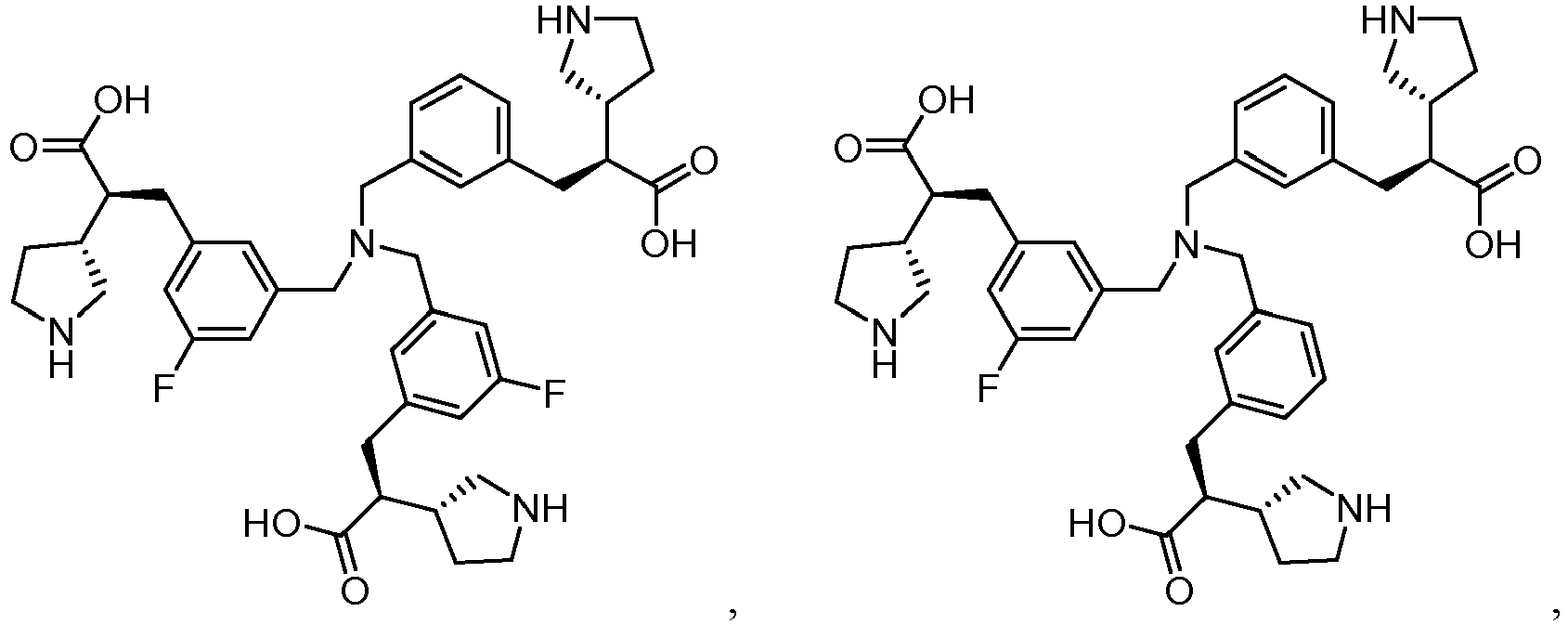


- Another aspect of the disclosure also provides a compound represented by formula II or a pharmaceutically acceptable salt thereof,

- wherein R11 is independently selected from the group consisting of hydrogen or C1-6 alkyl, wherein the alkyl is optionally substituted with one or more R11A, and each R11A is independently selected from the group consisting of halogen, hydroxy, cyano, or amino; R12 is independently selected from the group consisting of hydrogen, deuterium, halogen, or C1-6 alkyl, wherein the alkyl is optionally substituted with one or more R12A, and each R12A is independently selected from the group consisting of halogen, hydroxy, cyano, or amino;
- R13 is independently selected from the group consisting of hydrogen, deuterium, halogen, cyano, C1-6 alkyl, or C1-6 alkoxy, wherein the alkyl or alkoxy is optionally substituted with one or more R13A, and each R13A is independently selected from the group consisting of halogen, hydroxy, cyano, or amino;
- R14 is independently selected from the group consisting of hydrogen or C1-6 alkyl;
- W is selected from the group consisting of 3 or 4;
- L2 is selected from the group consisting of


- n1 is selected from the group consisting of integers between 0-4.
- In some embodiments, in the compound of formula II or the pharmaceutically acceptable salt thereof, R12 is independently selected from the group consisting of hydrogen or deuterium.
- In some embodiments, in the compound of formula II or the pharmaceutically acceptable salt thereof, R12 is independently selected from halogen, e.g., fluorine or chlorine.
- In some embodiments, in the compound of formula II or the pharmaceutically acceptable salt thereof, R12 is independently selected from C1-6 alkyl, wherein the alkyl is optionally substituted with one or more R12A, and R12A is as previously defined. In some other embodiments, in the compound of formula II or the pharmaceutically acceptable salt thereof, R2 and R6 are independently selected from the group consisting of methyl, ethyl, or propyl.
- In some embodiments, in the compound of formula II or the pharmaceutically acceptable salt thereof, R11 is independently selected from hydrogen.
- In some embodiments, in the compound of formula II or the pharmaceutically acceptable salt thereof, R13 is independently selected from the group consisting of deuterium or C1-6 alkoxy, wherein the alkoxy is optionally substituted with one or more R13A, and R13A is as previously defined.
- In some embodiments, in the compound of formula II or the pharmaceutically acceptable salt thereof, R13 is independently selected from halogen, e.g., fluorine or chlorine.
- In some other embodiments, in the compound of formula II or the pharmaceutically acceptable salt thereof, L2 is selected from the group consisting of


- In some other embodiments, in the compound of formula II or the pharmaceutically acceptable salt thereof, L2 is selected from the group consisting of


- In some other embodiments, in the compound of formula II or the pharmaceutically acceptable salt thereof, L2 is

- In the disclosure, compounds of formula II or pharmaceutically acceptable salts thereof include, but are not limited to:


- In some embodiments, the compound represented by formula II or the pharmaceutically acceptable salt thereof is selected from the group consisting of:


- Another aspect of the disclosure also provides a compound represented by formula III or a pharmaceutically acceptable salt thereof,

- wherein R21 and R22 are independently selected from the group consisting of hydrogen, deuterium, halogen, C1-6 alkyl, C1-6 alkoxy, four-membered heterocycloalkyl, and six-membered heterocycloalkyl, wherein the alkyl, alkoxy, four-membered heterocycloalkyl, or six-membered heterocycloalkyl is optionally substituted with one or more R21A, and each R21A is independently selected from the group consisting of hydrogen, deuterium, halogen, or C1-6 alkyl,
- or R21 and R22 form 3-6 membered heterocycloalkyl with the adjacent carbon atom, wherein the heterocycloalkyl is optionally substituted with one or more R22A, and each R22A is independently selected from the group consisting of deuterium, halogen, and C1-6 alkyl;
- R23 is independently selected from the group consisting of hydrogen, deuterium, halogen, cyano, C1-6 alkyl, or C1-6 alkoxy, wherein the alkyl or alkoxy is optionally substituted with one or more R23A, and each R23A is independently selected from the group consisting of halogen, hydroxy, cyano, or amino;
- R24 is independently selected from the group consisting of hydrogen or C1-6 alkyl;
- S is selected from the group consisting of integers between 2-4;
- L3 is selected from the group consisting of -CH2NHCH2-, -CH2NH-, -NH-, -S-, -S(O)-, - S(O)2-, -O-, -OCH2-, -OCH2CH2O-, -NHSO2NH-, a nitrogen atom,
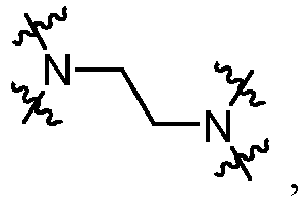


- n1 is selected from the group consisting of integers between 0-4.
- In some embodiments, in the compound of formula III or the pharmaceutically acceptable salt thereof, R21 is independently selected from the group consisting of four-membered heterocycloalkyl or six-membered heterocycloalkyl, and R22 is independently selected from the group consisting of hydrogen, deuterium, halogen, C1-6 alkyl, or C1-6 alkoxy, wherein the alkyl, alkoxy, four-membered heterocycloalkyl, or six-membered heterocycloalkyl is optionally substituted with one or more R21A, and each R21A is independently selected from the group consisting of hydrogen, deuterium, halogen, and C1-6 alkyl.
- In some embodiments, in the compound of formula III or the pharmaceutically acceptable salt thereof, R23 is independently selected from the group consisting of deuterium or C1-6 alkoxy, wherein the alkoxy is optionally substituted with one or more R23A, and R23A is as previously defined.
- In some embodiments, in the compound of formula III or the pharmaceutically acceptable salt thereof, R23 is independently selected from halogen, e.g., fluorine or chlorine.
- In some embodiments, the compound of formula III or the pharmaceutically acceptable salt thereof is

- In some other embodiments, in the compound of formula III or the pharmaceutically acceptable salt thereof, L3 is selected from the group consisting of -CH2NHCH2-, - CH2NH-, -NH-, -S-, -S(O)-, -S(O)2-, -O-, -OCH2-, -OCH2CH2O-, -NHSO2NH-, and

- In some other embodiments, the compound of formula III or the pharmaceutically acceptable salt thereof is


- In some embodiments, in the compound of formula III or the pharmaceutically acceptable salt thereof, R21 and R22 form 5- or 6-membered heterocycloalkyl with the adjacent carbon atom, wherein the heterocycloalkyl is optionally substituted with one or more R22A, and each R22A is independently selected from the group consisting of deuterium, halogen, and C1-6 alkyl.
- In some other embodiments, the compound of formula III or the pharmaceutically acceptable salt thereof is

- In some embodiments, in the compound of formula III or the pharmaceutically acceptable salt thereof, L3 is selected from the group consisting of -CH2NHCH2-, -CH2NH-, -NH-, - S-, -S(O)-, -S(O)2-, -O-, -OCH2-, -OCH2CH2O-, -NHSO2NH-, and

- In some embodiments, the compound of formula III or the pharmaceutically acceptable salt thereof is

- In some embodiments, in the compound of formula III-c or formula III-c1 or the pharmaceutically acceptable salt thereof, p is independently selected from the group consisting of 1 or 2.
- In some embodiments, in the compound of formula III-c or formula III-c1 or the pharmaceutically acceptable salt thereof, L3 is selected from the group consisting of a nitrogen atom,


- In some embodiments, in the compound of formula III-c or formula III-c1 or the pharmaceutically acceptable salt thereof, L3 is selected from the group consisting of a nitrogen atom,
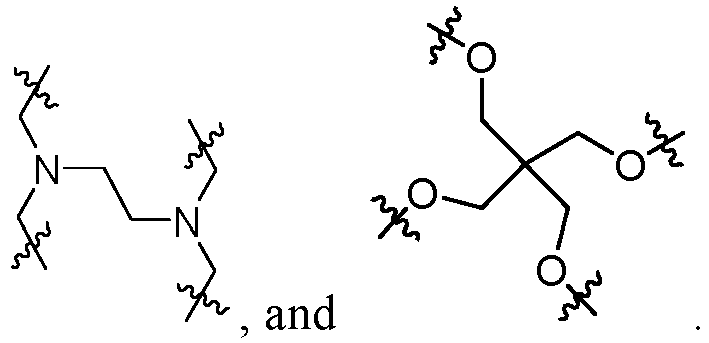
- In some embodiments, in the compound of formula III or formula III-c or formula III-c1 or the pharmaceutically acceptable salt thereof, R24 is selected from hydrogen.
- In some embodiments, in the compound of formula III or the pharmaceutically acceptable salt thereof, R23 is selected from the group consisting of hydrogen or C1-6 alkoxy, wherein the alkoxy is optionally substituted with one or more R23A, and R23A is as previously defined.
- In some embodiments, in the compound of formula III or the pharmaceutically acceptable salt thereof, R23 is selected from halogen, e.g., fluorine or chlorine.
- In some embodiments, in the compound of formula III or the pharmaceutically acceptable salt thereof, R23 is selected from the group consisting of C1-6 alkyl or C1-6 alkoxy, wherein the alkyl or alkoxy is optionally substituted with one or more R23A, and R23A is as previously defined.
- In some embodiments, in the compound of formula III or the pharmaceutically acceptable salt thereof, R21A is selected from hydrogen.
- In the disclosure, compounds represented by formula III or pharmaceutically acceptable salts thereof include, but are not limited to:


- In some embodiments, the compound of formula III or the pharmaceutically acceptable salt thereof is selected from the group consisting of:


- The disclosure also provides isotopically substituted forms of the aforementioned compounds or the pharmaceutically acceptable salts thereof. In some embodiments, the isotopically substituted forms are deuterated forms.
- In a competitive binding assay, the in vitro binding affinity of the compounds for the expected target human apolipoprotein(a) is tested. The compounds of the disclosure bind to apolipoprotein(a) with a relatively good binding force. In some embodiments, the compounds of the disclosure bind to apolipoprotein(a) with an IC50 value of 0.01 to 500 nM. In some embodiments, the compounds of the disclosure bind to apolipoprotein(a) with an IC50 value of 0.01 to 100 nM. In some embodiments, the compounds of the disclosure bind to apolipoprotein(a) with an IC50 value of 0.01 to 20 nM. In some embodiments, the compounds of the disclosure bind to apolipoprotein(a) with an IC50 value of 0.01 to 20 nM. 0.1 to 30 nM. In some embodiments, the compounds of the disclosure bind to apolipoprotein(a) with an IC50 value of <50 nM.
- The disclosure also provides a pharmaceutical composition, comprising a therapeutically effective amount of at least one of the aforementioned compounds represented by formula I or II or III or the pharmaceutically acceptable salts thereof, or the isotopically substituted forms thereof and a pharmaceutically acceptable excipient.
- In some embodiments, a unit dose of the pharmaceutical composition is 0.001 mg-1000 mg.
- In certain embodiments, the pharmaceutical composition comprises 0.01-99.99% of an aforementioned compound or a pharmaceutically acceptable salt thereof or an isotopically substituted form thereof based on the total weight of the composition. In certain embodiments, the pharmaceutical composition comprises 0.1-99.9% of an aforementioned compound or a pharmaceutically acceptable salt thereof or an isotopically substituted form thereof. In certain embodiments, the pharmaceutical composition comprises 0.5%-99.5% of an aforementioned compound or a pharmaceutically acceptable salt thereof or an isotopically substituted form thereof. In certain embodiments, the pharmaceutical composition comprises 1%-99% of an aforementioned compound or a pharmaceutically acceptable salt thereof or an isotopically substituted form thereof. In certain embodiments, the pharmaceutical composition comprises 2%-98% of an aforementioned compound or a pharmaceutically acceptable salt thereof or an isotopically substituted form thereof.
- In certain embodiments, the pharmaceutical composition comprises 0.01%-99.99% of a pharmaceutically acceptable excipient based on the total weight of the composition. In certain embodiments, the pharmaceutical composition comprises 0.1%-99.9% of a pharmaceutically acceptable excipient. In certain embodiments, the pharmaceutical composition comprises 0.5%-99.5% of a pharmaceutically acceptable excipient. In certain embodiments, the pharmaceutical composition comprises 1%-99% of a pharmaceutically acceptable excipient. In certain embodiments, the pharmaceutical composition comprises 2%-98% of a pharmaceutically acceptable excipient.
- The disclosure also provides a method for preventing and/or treating a disease or disorder associated with elevated plasma levels of LP(a), by administering to the patient a therapeutically effective amount of the aforementioned compound represented by formula I or II or III or the pharmaceutically acceptable salt thereof or the isotopically substituted form thereof, or the aforementioned pharmaceutical composition.
- In some embodiments, the disease or disorder associated with elevated plasma levels of LP(a) is selected from the group consisting of cardiovascular diseases, including but not limited to stroke, hypertensive heart disease, and coronary heart diseases.
- The disclosure also provides a method for preventing and/or treating a patient afflicted with a cardiovascular disease, comprising administering to the patient a therapeutically effective amount of the aforementioned compound represented by formula I or formula II or formula III or the pharmaceutically acceptable salt thereof or the isotopically substituted form thereof, or the aforementioned pharmaceutical composition.
- The disclosure also provides use of the aforementioned compound represented by formula I or formula II or formula III or the pharmaceutically acceptable salt thereof or the aforementioned pharmaceutical composition in the preparation of a medicament for preventing and/or treating a disease or disorder associated with elevated plasma levels of LP(a). In some embodiments, the disease or disorder associated with elevated plasma levels of LP(a) is selected from the group consisting of cardiovascular diseases, including but not limited to stroke, hypertensive heart disease, and coronary heart diseases.
- The disclosure also provides use of the aforementioned compound represented by formula I or formula II or formula III or the pharmaceutically acceptable salt thereof or the aforementioned pharmaceutical composition in the preparation of a medicament for preventing and/or treating a cardiovascular disease.
- The pharmaceutically acceptable salts of the compounds described in the disclosure may be selected from the group consisting of inorganic salts or organic salts.
- The compounds of the disclosure may exist in specific geometric or stereoisomeric forms. The disclosure contemplates all such compounds, including cis and trans isomers, (-)- and (+)-enantiomers, (R)- and (S)-enantiomers, diastereomers, (D)-isomer, (L)-isomer, and racemic mixtures and other mixtures thereof, such as enantiomerically or diastereomerically enriched mixtures, all of which are within the scope of the disclosure. Additional asymmetric carbon atoms may be present in substituents such as an alkyl group. All such isomers and mixtures thereof are included within the scope of the disclosure. The compounds of the disclosure containing asymmetric carbon atoms can be isolated in optically active pure form or in racemic form. The optically active pure form can be isolated from a racemic mixture or synthesized using chiral starting materials or chiral reagents.
- Optically active (R)- and (S)-enantiomers and D- and L-isomers can be prepared by chiral synthesis, chiral reagents, or other conventional techniques. If one enantiomer of a certain compound of the disclosure is desired, it may be prepared by asymmetric synthesis or derivatization with a chiral auxiliary, wherein the resulting mixture of diastereomers is separated and the auxiliary group is cleaved to provide the pure desired enantiomer. Alternatively, when the molecule contains a basic functional group (e.g., amino) or an acidic functional group (e.g., carboxyl), salts of diastereomers are formed with an appropriate optically active acid or base, followed by resolution of diastereomers by conventional methods known in the art, and the pure enantiomers are obtained by recovery. In addition, separation of enantiomers and diastereomers is generally accomplished by chromatography using a chiral stationary phase, optionally in combination with chemical derivatization (e.g., carbamate formation from amines).
- In the chemical structure of the compound of the disclosure, a bond "" indicates an unspecified configuration; that is, if chiral isomers exist in the chemical structure, the bond "
 " may be "" or "
 ", or includes both the configurations of "
 " and "". In the chemical structures of the compounds of the disclosure, a bond "" is not specified with a configuration; that is, they may be in a Z configuration or an E configuration, or contain both configurations.
- The compounds and intermediates of the disclosure may also exist in different tautomeric forms, and all such forms are included within the scope of the disclosure. The term "tautomer" or "tautomeric form" refers to structural isomers of different energies that can interconvert via a low energy barrier. For example, proton tautomers (also known as proton transfer tautomers) include interconversion via proton migration, such as keto-enol and imine-enamine, lactam-lactim isomerization. An example of a lactam-lactim equilibrium is present between A and B as shown below.

- All compounds in the disclosure can be drawn as form A or form B. All tautomeric forms are within the scope of the disclosure. The names of the compounds do not exclude any tautomers.
- The disclosure also includes isotopically labeled compounds that are identical to those recited herein but have one or more atoms replaced by an atom having an atomic mass or mass number different from the atomic mass or mass number usually found in nature. Examples of isotopes that can be incorporated into the compounds of the disclosure include isotopes of hydrogen, carbon, nitrogen, oxygen, phosphorus, sulfur, fluorine, iodine, and chlorine, such as 2H, 3H, 11C, 13C, 14C, 13N, 15N, 15O, 17O, 18O, 31P, 32P, 35S, 18F, 123I, 125I, and 36Cl.
- Unless otherwise specified, when a position is specifically assigned deuterium (D), the position should be construed as deuterium with an abundance that is at least 1000 times greater than the natural abundance of deuterium (which is 0.015%) (i.e., at least 10% deuterium incorporation). The compounds of examples comprise deuterium having an abundance that is greater than at least 1000 times the natural abundance, at least 2000 times the natural abundance, at least 3000 times the natural abundance, at least 4000 times the natural abundance, at least 5000 times the natural abundance, at least 6000 times the natural abundance, or higher times the natural abundance. The disclosure also includes various deuterated forms of the compound of formula (I). Each available hydrogen atom connected to a carbon atom may be independently replaced by a deuterium atom. Those skilled in the art are able to synthesize the deuterated forms of the compound of formula (I) according to the relevant literature. Commercially available deuterated starting materials can be used in preparing the deuterated forms of the compound of formula (I), or they can be synthesized using conventional techniques with deuterated reagents, including but not limited to deuterated borane, tri-deuterated borane in tetrahydrofuran, deuterated lithium aluminum hydride, deuterated iodoethane, deuterated iodomethane, and the like.
- "Optionally" or "optional" means that the event or circumstance subsequently described may, but does not necessarily, occur, and this description includes instances where the event or circumstance occurs or does not occur. For example, "C1-6 alkyl that is optionally substituted with a halogen or cyano" means that the halogen or cyano may, but does not necessarily, exist, and this description includes the instance where the alkyl is substituted with a halogen or cyano and the instance where the alkyl is not substituted with a halogen or cyano.
- "Pharmaceutical composition" refers to a mixture containing one or more of the compounds or the physiologically/pharmaceutically acceptable salts or pro-drugs thereof described herein, and other chemical components, as well as other components, e.g., physiologically/pharmaceutically acceptable carriers and excipients. The pharmaceutical composition is intended to promote administration to an organism and facilitate the absorption of the active ingredient so that it can exert its biological activity.
- "Pharmaceutically acceptable excipient" includes, but is not limited to, any adjuvant, carrier, excipient, glidant, sweetener, diluent, preservative, dye/colorant, flavoring agent, surfactant, wetting agent, dispersant, suspending agent, stabilizer, isotonic agent, solvent or emulsifier that has been approved by the drug administration as acceptable for use in humans or livestock animals.
- "Effective amount" or "therapeutically effective amount" described in the disclosure includes an amount sufficient to ameliorate or prevent a symptom or disorder of a medical disorder. An effective amount also refers to an amount sufficient to allow or facilitate diagnosis. The effective amount for a particular patient or veterinary subject may vary depending on factors such as the disorder to be treated, the general health of the patient, the method and route and dosage of administration, and the severity of side effects. An effective amount may be the maximum dose or administration regimen to avoid significant side effects or toxic effects.
- "Alkyl" refers to a saturated aliphatic hydrocarbon group, including straight-chain and branched-chain groups of 1 to 6 carbon atoms. Non-limiting examples include methyl, ethyl, n-propyl, isopropyl, n-butyl, isobutyl, tert-butyl, sec-butyl, n-pentyl, 1,1-dimethylpropyl, 1,2-dimethylpropyl, 2,2-dimethylpropyl, various branched isomers thereof, and the like. Alkyl may be substituted or unsubstituted, and when it is substituted, the substituent may be substituted at any accessible point of attachment, preferably one or more of the following groups, independently selected from the group consisting of halogen, hydroxy, cyano, or amino.
- The term "heterocycloalkyl" refers to a saturated or partially unsaturated monocyclic or polycyclic hydrocarbon substituent containing 3 to 6 ring atoms. Non-limiting examples of "heterocycloalkyl" include:

- Heterocycloalkyl may be optionally substituted or unsubstituted, and when it is substituted, the substituent is preferably one or more of the following groups independently selected from the group consisting of hydrogen, deuterium, halogen, or C1-6 alkyl.
- The term "alkoxy" refers to -O-(alkyl), wherein the alkyl is as defined above. Non-limiting examples of alkoxy include: methoxy, ethoxy, propoxy, butoxy, cyclopropyloxy, cyclobutoxy, cyclopentyloxy, and cyclohexyloxy. Alkoxy may be optionally substituted or unsubstituted, and when it is substituted, the substituent is preferably one or more of the following groups independently selected from the group consisting of halogen, hydroxy, cyano, or amino.
- The term "heterocyclo" means that the atoms that comprise the ring include not only carbon atoms but also other atoms; the term encompasses heterocycloalkyl and heteroaromatic rings.
- The term "hydroxy" refers to the -OH group.
- The term "halogen" refers to fluorine, chlorine, bromine, or iodine.
- The term "cyano" refers to -CN.
- The term "amino" refers to -NH2.
- The term "oxo" refers to the =O substituent.
- "Substituted" means that one or more, preferably up to 5, and more preferably 1 to 3, hydrogen atoms in the group are independently substituted with a corresponding number of substituents. It goes without saying that a substituent is only in its possible chemical position, and those skilled in the art will be able to determine (experimentally or theoretically) possible or impossible substitutions without undue effort.
- The disclosure is further described below using examples. However, these examples do not limit the scope of the disclosure.
- Experimental methods without conditions specified in the examples of the disclosure were generally conducted under conventional conditions, or under conditions recommended by the manufacturers of the starting materials or commercial products. Reagents without specific origins indicated are commercially available conventional reagents.
- The structures of the compounds were determined by nuclear magnetic resonance (NMR) spectroscopy and/or mass spectrometry (MS). The NMR shifts (δ) are given in 10-6 (ppm). The NMR analyses were performed on a Bruker AVANCE-400 nuclear magnetic resonance instrument, with dimethyl sulfoxide-D6 (DMSO-d6 ), chloroform-D (CDCl3), and methanol-D4 (CD3OD) as solvents and tetramethylsilane (TMS) as an internal standard. The spatial configurations of the optical isomers (isomers) of the compounds can be further confirmed by measuring single crystal parameters.
- The HPLC analyses were performed on Waters ACQUITY ultra high performance LC, Shimadzu LC-20A systems, Shimadzu LC-2010HT series, or Agilent 1200 LC high performance liquid chromatograph (ACQUITY UPLC BEH C18 1.7 µm 2.1 × 50 mm column, Ultimate XB-C18 3.0 × 150 mm column, or Xtimate C18 2.1 × 30 mm column). The MS analyses were performed on a Waters SQD2 mass spectrometer in positive/negative ion scan mode with a mass scan range of 100-1200.
- The Chiral HPLC analyses were performed using a Chiralpak IC-3 100 × 4.6 mm I.D., 3 µm; Chiralpak AD-3 150 × 4.6 mm I.D., 3 µm; Chiralpak AD-3 50 × 4.6 mm I.D., 3 µm; Chiralpak AS-3 150 × 4.6 mm I.D., 3 µm; Chiralpak AS-3 100 × 4.6 mm I.D., 3 µm; ChiralCel OD-3 150 × 4.6 mm I.D., 3 µm; Chiralcel OD-3 100 × 4.6 mm I.D., 3 µm; ChiralCel OJ-H 150 × 4.6 mm I.D., 5 µm; or Chiralcel OJ-3 150 × 4.6 mm I.D., 3 µm column.
- The thin-layer chromatography silica gel plates used were Yantai Huanghai HSGF254 or Qingdao GF254 silica gel plates. The silica gel plates used in the thin-layer chromatography (TLC) analyses had a layer thickness of 0.15 mm-0.2 mm, and those used in the thin-layer chromatography separations and purifications had a layer thickness of 0.4 mm-0.5 mm.
- The flash column purification system used was Combiflash Rf150 (TELEDYNE ISCO) or Isolara one (Biotage).
- In the normal-phase column chromatography steps, a 100-200 mesh, 200-300 mesh, or 300-400 mesh Yantai Huanghai silica gel was generally used as a carrier, or a Changzhou Santai pre-fill ultrapure normal-phase silica gel column (40-63 µm, 60 g, 12 g, 25 g, 40 g, 80 g, or other specifications) was used.
- In the reversed-phase column chromatography steps, a Changzhou Santai pre-fill ultrapure C18 silica gel column (20-45 µm, 100 Å, 40 g, 80 g, 120 g, 220 g, or other specifications) was generally used.
- The high-pressure column purification system used was Waters AutoP equipped with a Waters XBridge BEH C18 OBD Prep Column, 130 Å, 5 µm, 19 mm × 150 mm or Atlantis T3 OBD Prep Column, 100 Å, 5 µm, 19 mm × 150 mm.
- In the preparative chiral chromatography steps, a DAICEL CHIRALPAK IC (250 mm × 30 mm, 10 µm) or Phenomenex-Amylose-1 (250 mm × 30 mm, 5 µm) column was used. The known starting materials in the disclosure may be synthesized by using or following methods known in the art, or may be purchased from companies such as Shanghai Titan Scientific, ABCR GmbH & Co. KG, Acros Organics, Aldrich Chemical Company, Accela ChemBio Inc., and Chembee Chemicals.
- In the examples, the reactions can all be performed in an argon atmosphere or a nitrogen atmosphere unless otherwise specified.
- The argon atmosphere or nitrogen atmosphere means that the reaction flask is connected to a balloon containing about 1 L of argon or nitrogen gas.
- The hydrogen atmosphere means that the reaction flask is connected to a balloon containing about 1 L of hydrogen gas.
- The pressurized hydrogenation reactions were performed using a Parr 3916EKX hydrogenator and a Qinglan QL-500 hydrogenator, or an HC2-SS hydrogenator.
- The hydrogenation reactions generally involved 3 cycles of vacuumization and hydrogen filling.
- The microwave reactions were performed using a CEM Discover-S 908860 microwave reactor.
- In the examples, the solutions refer to aqueous solutions unless otherwise specified.
- In the examples, the reaction temperature was room temperature, i.e., 20 °C-30 °C, unless otherwise specified.
- The monitoring of reaction progress in the examples was performed using thin-layer chromatography (TLC). For the developing solvents used in the reactions, the eluent systems used in the column chromatography purifications, and the developing solvent systems for thin-layer chromatography, the volume ratio of the solvents was adjusted depending on the polarity of a compound, or by adding a small amount of a basic or acidic reagent such as triethylamine and acetic acid.
-

-

- The starting material (R)-N-tert-butoxycarbonyl-3-tetrahydropyrroleacetic acid (compound 1a, 9 g, 39 mmol) was dissolved in anhydrous tetrahydrofuran (100 mL), and the solution was cooled to 0 °C. Triethylamine (13.6 mL, 98 mmol) was added, and the mixture was stirred at 0 °C for 5 min. Pivaloyl chloride (5.8 g, 47.1 mmol) was added, during which the temperature was kept at no more than 10 °C. After 15 min of stirring, lithium chloride (1.9 g, 47.1 mmol) and a solution of (S)-4-benzyl-2-oxazolidinone (6.9 g, 39 mmol) in tetrahydrofuran (100 mL) were added. The reaction mixture was warmed to room temperature and stirred for 24 h. A 2 M aqueous hydrochloric acid solution (500 mL) was added. The organic phase was separated and concentrated, and the residue was purified by silica gel flash column chromatography (petroleum ether/ethyl acetate) to give compound 1b (12.5 g, yield 82%) as an oily liquid.
- MS (ESI): m/z = 411.1 [M+Na]+.
- Compound 1b (3.5 g, 9 mmol) was dissolved in anhydrous tetrahydrofuran (50 mL), and the solution was cooled to 0 °C in a nitrogen atmosphere. A 1M solution of lithium bis(trimethylsilyl)amide in tetrahydrofuran (10 mL, 10 mmol) was added dropwise. After 15 min of reaction, a solution of 3-fluoro-5-bromobenzyl bromide (2.8 g, 10.8 mmol) in tetrahydrofuran (25 mL) was slowly added dropwise, and the mixture was left to react overnight. After completion of the reaction as monitored by LCMS, the reaction mixture was quenched with saturated NH4Cl solution (10 mL) and extracted with ethyl acetate. The organic phase was concentrated to give a crude product, and the crude product was purified by reversed-phase flash column chromatography (acetonitrile/water) to give compound 1c (1.8 g, yield 34.6%).
- MS (ESI): m/z = 597.4 [M+Na]+.
- Compound 1c (2 g, 3.5 mol) was dissolved in tetrahydrofuran (20 mL) under an ice bath. After 1 M hydrogen peroxide (5 mL) was added, a 0.5 M aqueous lithium hydroxide solution (10 mL) was slowly added dropwise. The reaction was monitored by LCMS. After completion of the reaction, saturated sodium sulfite (10 mL) was added dropwise to quench the reaction, and the mixture was stirred for 5-10 min. A 5 M aqueous sodium hydroxide solution was added dropwise to adjust the pH to >12. Water was added, and extraction was performed with ethyl acetate (100 mL). The aqueous phase was collected, the pH was adjusted to about 3 with a 2 M aqueous hydrochloric acid solution, and extraction was performed with ethyl acetate (100 mL × 2). The organic phase was separated and concentrated to give compound 1d as a yellow oily liquid. The product was directly used in the next step without purification.
- MS (ESI): m/z = 361.7 [M-C(CH3)3+H]+.
- Compound 1d (1.8 g, 4.3 mmol) was dissolved in 2-methyltetrahydrofuran (25 mL), and O-tert-butyl-N,N'-diisopropylisourea (2.17 g, 10.8 mmol) was added. The mixture was heated to 65 °C. After 3 h of reaction, O-tert-butyl-N,N'-diisopropylisourea (862 mg, 4.3 mmol) was added, and the mixture was stirred overnight. After completion of the reaction as monitored by LCMS, the reaction mixture was filtered. The filtrate was concentrated, and the residue was purified by silica gel flash column chromatography (petroleum ether/ethyl acetate) to give compound 1e (1.3 g, yield 64%).
- MS (ESI) m/z = 361.7 [M-2C(CH3)3+H]+.
- Compound 1e (430 mg, 0.9 mmol), palladium acetate (40 mg, 0.2 mmol), 1,4-bis(diphenylphosphino)butane (83 mg, 0.2 mmol), N-formylsaccharin (442 mg, 2.1 mmol), sodium carbonate (270 mg, 2.5 mmol), and triethylsilane (174 mg, 1.5 mmol) were added to a 20 mL microwave reaction tube. In a nitrogen atmosphere, anhydrous N,N-dimethylformamide (6 mL) was added, and the tube was immediately sealed with a plastic screw cap. The mixture was stirred at room temperature for 10 min, and then the reaction mixture was heated to 75 °C and left to react for 16 h. After completion of the reaction as monitored by LCMS, the reaction mixture was cooled to room temperature, centrifuged, and filtered. The filtrate was purified by reversed-phase flash column chromatography (acetonitrile/water) to give compound 1f (173 mg, yield 50%) as a yellow oil.
- MS (ESI): m/z = 444.4 [M+Na]+.
- Compound 1f (100 mg, 0.23 mmol) was dissolved in a 7 M solution of ammonia in methanol (2 mL). One drop of acetic acid was added, and a molecular sieve was added. After 15 min of stirring at room temperature, sodium cyanoborohydride (150 mg, 2.3 mmol) was added, and the tube was sealed and microwaved at 80 °C for 1 h. After completion of the reaction, the reaction mixture was cooled to room temperature, centrifuged, and filtered. The filtrate was purified by reversed-phase flash column chromatography (acetonitrile/water) to give compound 1g (60 mg, yield 60%) as a yellow oil.
- MS (ESI): m/z = 423.8 [M+H]+.
- Compound 1g (60 mg, 0.14 mmol) was dissolved in absolute methanol (8 mL), and compound 1f (180 mg, 0.412 mmol) was added. At room temperature, 1 drop of acetic acid was added, and a molecular sieve was added. After 15 min of stirring, sodium cyanoborohydride (100 mg, 1.4 mmol) was added, and the mixture was heated to 75 °C. After 4 h of reaction, the mixture was left to react overnight at room temperature. After completion of the reaction as monitored by LCMS, a small amount of DMF was added and dissolved. The mixture was centrifuged and filtered. The filtrate was purified by reversed-phase flash column chromatography (acetonitrile/water) to give compound 1h (130 mg, yield 74.2%) as a white solid.
- MS (ESI): m/z = 1233.9 [M+H]+.
- Compound 1h (130 mg, 0.105 mmol) was dissolved in anhydrous dioxane (1 mL), and a 4 M solution of hydrogen chloride in dioxane (3 mL) was added. The mixture was left to react at room temperature. After completion of the reaction as monitored by LCMS, the reaction mixture was concentrated, and the crude product was purified by preparative reversed-phase chromatography (acetonitrile/water + 1% formic acid) to give the title compound 1 (45 mg, yield 55.8%).
- MS (ESI): m/z = 765.3 [M+H]+.
- 1H NMR (400 MHz, D2O) δ 8.45 (s, 1H), 7.10 (d, J = 9.7 Hz, 3H), 7.06 - 7.00 (m, 6H), 4.27 (s, 6H), 3.64 - 3.54 (m, 3H), 3.49 - 3.38 (m, 3H), 3.32 - 3.22 (m, 3H), 3.08 - 2.99 (m, 3H), 2.88 - 2.73 (m, 6H), 2.56 - 2.42 (m, 6H), 2.20 - 2.08 (m, 3H), 1.78 (d, J = 9.6 Hz, 3H).
-

-

- The starting material 1-tert-butoxycarbonyl-4-piperidineacetic acid (compound 2a, 5 g, 21 mmol) was dissolved in anhydrous tetrahydrofuran (50 mL), and the solution was cooled to 0 °C. Triethylamine (7.5 mL, 51 mmol) was added, and the mixture was stirred at 0 °C for 5 min. Pivaloyl chloride (3.0 g, 24 mmol) was added, during which the temperature was kept at no more than 10 °C. After 15 min of stirring, lithium chloride (1.0 g, 24 mmol) and a solution of (S)-4-benzyl-2-oxazolidinone (3.6 g, 22 mmol) in tetrahydrofuran (50 mL) were added. The reaction mixture was warmed to room temperature and stirred for 24 h. A 2 M aqueous hydrochloric acid solution (250 mL) was added. The organic phase was separated and concentrated, and the residue was purified by silica gel flash column chromatography (petroleum ether/ethyl acetate) to give compound 2b (8 g, yield 96.7%) as an oily liquid.
- MS (ESI): m/z = 425.6 [M+Na]+.
- Compound 2b (5 g, 12 mmol) was dissolved in anhydrous tetrahydrofuran (80 mL), and the solution was cooled to 0 °C in a nitrogen atmosphere.
- A 1M solution of lithium bis(trimethylsilyl)amide in tetrahydrofuran (15 mL, 15 mmol) was added dropwise. After 15 min of reaction, a solution of 3-bromobenzyl bromide (3 g, 12 mmol) in tetrahydrofuran (15 mL) was slowly added dropwise, and the mixture was left to react overnight. After completion of the reaction as monitored by LCMS, the reaction mixture was quenched with saturated NH4Cl solution (15 mL) and extracted with ethyl acetate. The organic phase was concentrated to give a crude product, and the crude product was purified by reversed-phase flash column chromatography (acetonitrile/water) to give compound 2c (1.8 g, yield 25.3%).
- MS (ESI): m/z = 593.5 [M+Na]+.
- Compound 2c (1.5 g, 2.6 mol) was dissolved in tetrahydrofuran (15 mL) under an ice bath. After 1 M hydrogen peroxide (3.5 mL) was added, a 0.5 M aqueous lithium hydroxide solution (7 mL) was slowly added dropwise. The reaction was monitored by LCMS. After completion of the reaction, saturated sodium sulfite (8 mL) was added dropwise to quench the reaction, and the mixture was stirred for 5-10 min. A 5 M aqueous sodium hydroxide solution was added dropwise to adjust the pH to >12. Water was added, and extraction was performed with ethyl acetate (80 mL). The aqueous phase was collected, the pH was adjusted to about 3 with a 2 M aqueous hydrochloric acid solution, and extraction was performed with ethyl acetate (80 mL × 2). The organic phase was separated and concentrated to give compound 2d as a yellow oily liquid. The product was directly used in the next step without purification.
- MS (ESI): m/z = 358.7 [M-C(CH3)3+H]+.
- Compound 2d (1.0 g, 2.4 mmol) was dissolved in 2-methyltetrahydrofuran (20 mL), and O-tert-butyl-N,N'-diisopropylisourea (1.21 g, 6 mmol) was added. The mixture was heated to 65 °C. After 3 h of reaction, O-tert-butyl-N,N'-diisopropylisourea (481 mg, 2.4 mmol) was added, and the mixture was stirred overnight. After completion of the reaction as monitored by LCMS, the reaction mixture was filtered. The filtrate was concentrated, and the residue was purified by silica gel flash column chromatography (petroleum ether/ethyl acetate) to give compound 2e (600 mg, yield 52.8%).
- MS (ESI) m/z = 358.7 [M-2C(CH3)3+H]+.
- Compound 2e (600 mg, 1.2 mmol), palladium acetate (58 mg, 0.3 mmol), 1,4-bis(diphenylphosphino)butane (102 mg, 0.3 mmol), N-formylsaccharin (622 mg, 3.0 mmol), sodium carbonate (380 mg, 3.6 mmol), and triethylsilane (256 mg, 2.2 mmol) were added to a 20 mL microwave reaction tube. In a nitrogen atmosphere, anhydrous N,N-dimethylformamide (10 mL) was added, and the tube was immediately sealed with a plastic screw cap. The mixture was stirred at room temperature for 10 min, and then the reaction mixture was heated to 75 °C and left to react for 16 h. After completion of the reaction as monitored by LCMS, the reaction mixture was cooled to room temperature, centrifuged, and filtered. The filtrate was purified by reversed-phase flash column chromatography (acetonitrile/water) to give compound 2f (180 mg, yield 33.7%) as a yellow oil.
- MS (ESI): m/z = 440.3 [M+Na]+.
- Compound 2f (80 mg, 0.19 mmol) was dissolved in a 7 M solution of ammonia in methanol (2 mL), and 1 drop of acetic acid was added. After 15 min of stirring at room temperature, sodium cyanoborohydride (150 mg, 2.3 mmol) was added, and the tube was sealed and microwaved at 80 °C for 1 h. After completion of the reaction, the reaction mixture was cooled to room temperature, centrifuged, and filtered. The filtrate was purified by reversed-phase flash column chromatography (acetonitrile/water) to give compound 2g (40 mg, yield 50%) as a yellow oil.
- MS (ESI): m/z = 419.4 [M+H]+.
- Compound 2g (50 mg, 0.14 mmol) was dissolved in absolute methanol (8 mL), and 2f (120 mg, 0.412 mmol) was added. At room temperature, 1 drop of acetic acid was added, and a molecular sieve was added. After 15 min of stirring, sodium cyanoborohydride (100 mg, 1.4 mmol) was added, and the mixture was heated to 75 °C. After 4 h of reaction, the mixture was left to react overnight at room temperature. After completion of the reaction as monitored by LCMS, a small amount of DMF was added and dissolved. The mixture was centrifuged and filtered. The filtrate was purified by reversed-phase flash column chromatography (acetonitrile/water) to give compound 2h (100 mg, yield 68.5%) as a white solid.
- MS (ESI): m/z = 1221.9 [M+H]+.
- Step 8: Preparation of (2S)-3-(3-{[bis({3-[(2S)-2-carboxy-2-(piperidin-4-yl)ethyl]phenyl}methyl)amino]methyl}phenyl)-2-(piperidin-4-yl)propanoic acid (2) Compound 2h (100 mg, 0.08 mmol) was dissolved in anhydrous dioxane (0.8 mL), and a 4 M solution of hydrogen chloride in dioxane (2.5 mL) was added. The mixture was left to react at room temperature. After completion of the reaction as monitored by LCMS, the reaction mixture was concentrated, and the crude product was purified by preparative reversed-phase chromatography (acetonitrile/water + 1% formic acid) to give the title compound 2 (30 mg, yield 48.7%).
- MS (ESI): m/z = 753.9 [M+H]+.
- 1H NMR (400 MHz, D2O) δ 8.46 (s, 1H), 7.45 - 7.32 (m, 6H), 7.27 - 7.18 (m, 6H), 4.30 (s, 6H), 3.55 - 3.38 (m, 6H), 3.06 - 2.91 (m, 9H), 2.77 - 2.67 (m, 3H), 2.43 - 2.32 (m, 3H), 2.23 - 2.13 (m, 3H), 1.96 - 1.76 (m, 6H), 1.63 - 1.45 (m, 6H).
-

-

- Compound 3a (2.4 g, 5.28 mmol), prepared using the method in patent
WO2020247429 , was dissolved in anhydrous tetrahydrofuran (50 mL), and the solution was cooled to - 78 °C. A 2 M solution of lithium diisopropylamide in tetrahydrofuran (5.28 mL) was added. After 30 min of reaction at low temperature, N-fluorobisbenzenesulfonamide (5.0 g, 15.85 mmol) was added. The mixture was gradually warmed to room temperature and left to react for 16 h. After completion of the reaction as monitored by LCMS, saturated ammonium chloride solution was added to the reaction mixture, and extraction was performed with ethyl acetate (20 mL × 2). The organic phases were combined, washed with saturated brine, dried over anhydrous sodium sulfate, and filtered. The filtrate was concentrated to give a crude product, and the crude product was purified by reversed-phase flash column chromatography (acetonitrile/water) to give compound 3b (2 g, yield 80%). - MS (ESI) m/z = 372.2 [M+H-100]+.
- Compound 3b (1000 mg, 2.12 mmol), N-formylsaccharin (894 mg, 4.23 mmol), palladium acetate (48 mg, 0.21 mmol), 1,4-bis(diphenylphosphino)butane (181 mg, 0.42 mmol), and triethylsilane (902 mg, 4.23 mmol) were added to a microwave reaction tube, and N,N-dimethylformamide (15 mL) was then added. After nitrogen purging, the mixture was left to react overnight at 80 °C. After completion of the reaction as monitored by LCMS, saturated ammonium chloride solution was added to the reaction mixture, and extraction was performed with ethyl acetate (20 mL × 2). The organic phases were combined, washed with saturated brine, dried over anhydrous sodium sulfate, and filtered. The filtrate was concentrated to give a crude product, and the crude product was purified by reversed-phase flash column chromatography (acetonitrile/water) to give compound 3c (350 mg, yield 39%).
- MS (ESI) m/z = 444.3 [M+Na]+.
- Compound 3c (130 mg, 0.31 mmol) was added to a microwave tube and dissolved with methanol (2 mL), and a 7 M solution of ammonia in methanol (2 mL) and 1 drop of acetic acid were added. After 30 min of stirring at room temperature, sodium cyanoborohydride (92 mg, 1.54 mmol) was added, and the mixture was microwaved at 80 °C for 1 h. After completion of the reaction as monitored by LCMS, the reaction mixture was concentrated under reduced pressure to give a crude product, and the crude product was purified by reversed-phase flash column chromatography (acetonitrile/water) to give compound 3d (50 mg, yield 38%) as a pale yellow oil.
- MS (ESI) m/z = 423.6 [M+H]+.
- Compound 3d (50 mg, 0.12 mmol) and 3c (100 mg, 0.24 mmol) were dissolved in methanol (20 mL), and 1 drop of acetic acid was added. After 30 min of stirring at room temperature, sodium cyanoborohydride (92 mg, 1.54 mmol) was added. The mixture was left to react at 60 °C for 5 h. After completion of the reaction as monitored by LCMS, the reaction mixture was concentrated under reduced pressure to give a crude product, and the crude product was purified by reversed-phase flash column chromatography (acetonitrile/water) to give compound 3e (80 mg, yield 55%) as a pale yellow oil.
- MS (ESI) m/z = 1233.9 [M+H]+.
- Compound 3e (80 mg, 0.07 mmol) was dissolved in dioxane (2 mL), and a 4 M solution of hydrogen chloride in dioxane (2 mL) was added. The mixture was left to react at room temperature for 2 h. After completion of the reaction, the reaction mixture was concentrated under reduced pressure to give a crude product, and the crude product was purified by preparative reversed-phase chromatography (acetonitrile/water + 1% formic acid) to give the title compound 3 (20 mg, yield 40%).
- MS (ESI) m/z = 765.6 [M+H]+.
- 1H NMR (400 MHz, D2O) δ 8.45 (s, 1.5H), 7.41 (t, J = 7.5 Hz, 3H), 7.34 (d, J = 7.7 Hz, 3H), 7.32 - 7.25 (m, 6H), 4.17 (s, 6H), 3.59 - 3.44 (m, 3H), 3.43 - 3.25 (m, 6H), 3.22 (s, 3H), 3.20 - 3.09 (m, 6H), 3.09 - 2.95 (m, 3H), 2.40 - 2.27 (m, 2H), 2.19 - 2.06 (m, 3H), 2.02 - 1.90 (m, 1H).
-

-

- Compound 3a (400 mg, 0.9 mmol), N-formylsaccharin (428 mg, 2.0 mmol), palladium acetate (40 mg, 0.2 mmol), 1,4-bis(diphenylphosphino)butane (83 mg, 0.2 mmol), and triethylsilane (0.24 mL, 1.5 mmol) were added to a microwave reaction tube, and N,N-dimethylformamide (6 mL) was then added. After nitrogen purging, the mixture was left to react overnight at 75 °C. After completion of the reaction as monitored by LCMS, the reaction mixture was cooled to room temperature, centrifuged, and filtered. The filtrate was purified by reversed-phase flash column chromatography (acetonitrile/water) to give compound 4a (270 mg, yield 76%) as a yellow oil.
- MS (ESI): m/z = 404.5 [M+H]+.
- Ethylenediamine (11 mg, 0.18 mmol) and compound 4a (320 mg, 0.79 mmol) were dissolved in methanol (20 mL), and 1 drop of acetic acid was added. After 30 min of stirring at room temperature, sodium cyanoborohydride (60 mg, 0.99 mmol) was added, and the mixture was heated to 60 °C and left to react for 5 h. After completion of the reaction as monitored by LCMS, the reaction mixture was concentrated under reduced pressure to give a crude product, and the crude product was purified by reversed-phase flash column chromatography (water/acetonitrile) to give compound 4b (50 mg, yield 16%) and compound 4c (150 mg, yield 62%) as pale yellow oils.
- Compound 4b: MS (ESI) m/z = 1610.2 [M+H]+.
- Compound 4c: MS (ESI) m/z = 1222.6 [M+H]+.
- Compound 4b (50 mg, 0.07 mmol) was dissolved in dioxane (2 mL), and a 4 M solution of hydrogen chloride in dioxane (2 mL) was added. The mixture was left to react at room temperature for 2 h. After completion of the reaction as monitored by LCMS, the reaction mixture was concentrated under reduced pressure to give a crude product, and the crude product was purified by preparative reversed-phase chromatography (acetonitrile/water + 1% formic acid) to give the title compound 4 (10 mg, yield 87%).
- MS (ESI) m/z = 985.3 [M+H]+.
- 1H NMR (400 MHz, D2O) δ 8.44 (s, 3H), 7.39 - 7.32 (m, 4H), 7.31 - 7.26 (m, 4H), 7.18 - 7.06 (m, 8H), 3.88 (s, 8H), 3.55 - 3.47 (m, 4H), 3.44 - 3.36 (m, 4H), 3.31 - 3.17 (m, 4H), 3.05 - 2.87 (m, 8H), 2.84 - 2.71 (m, 8H), 2.55 - 2.37 (m, 8H), 2.21 - 2.03 (m, 4H), 1.84 - 1.62 (m, 4H).
-

-

- Compound 4c (80 mg, 0.06 mmol) was dissolved in dioxane (2 mL), and a 4 M solution of hydrogen chloride in dioxane (2 mL) was added. The mixture was left to react at room temperature for 2 h. After completion of the reaction as monitored by LCMS, the reaction mixture was concentrated under reduced pressure to give a crude product, and the crude product was purified by preparative reversed-phase chromatography (acetonitrile/water + 1% formic acid) to give the title compound 5 (20 mg, yield 40%).
- MS (ESI) m/z = 754.5 [M+H]+.
- 1H NMR (400 MHz, D2O) δ 8.43 (s, 3H), 7.44 - 7.31 (m, 6H), 7.30 - 7.24 (m, 4H), 7.23 - 7.17 (m, 2H), 4.28 - 4.03 (m, 6H), 3.66 - 3.53 (m, 3H), 3.48 - 3.39 (m, 3H), 3.33 - 2.97 (m, 10H), 2.91 - 2.73 (m, 6H), 2.57 - 2.40 (m, 6H), 2.24 - 2.05 (m, 3H), 1.83 - 1.66 (m, 3H).
-

-
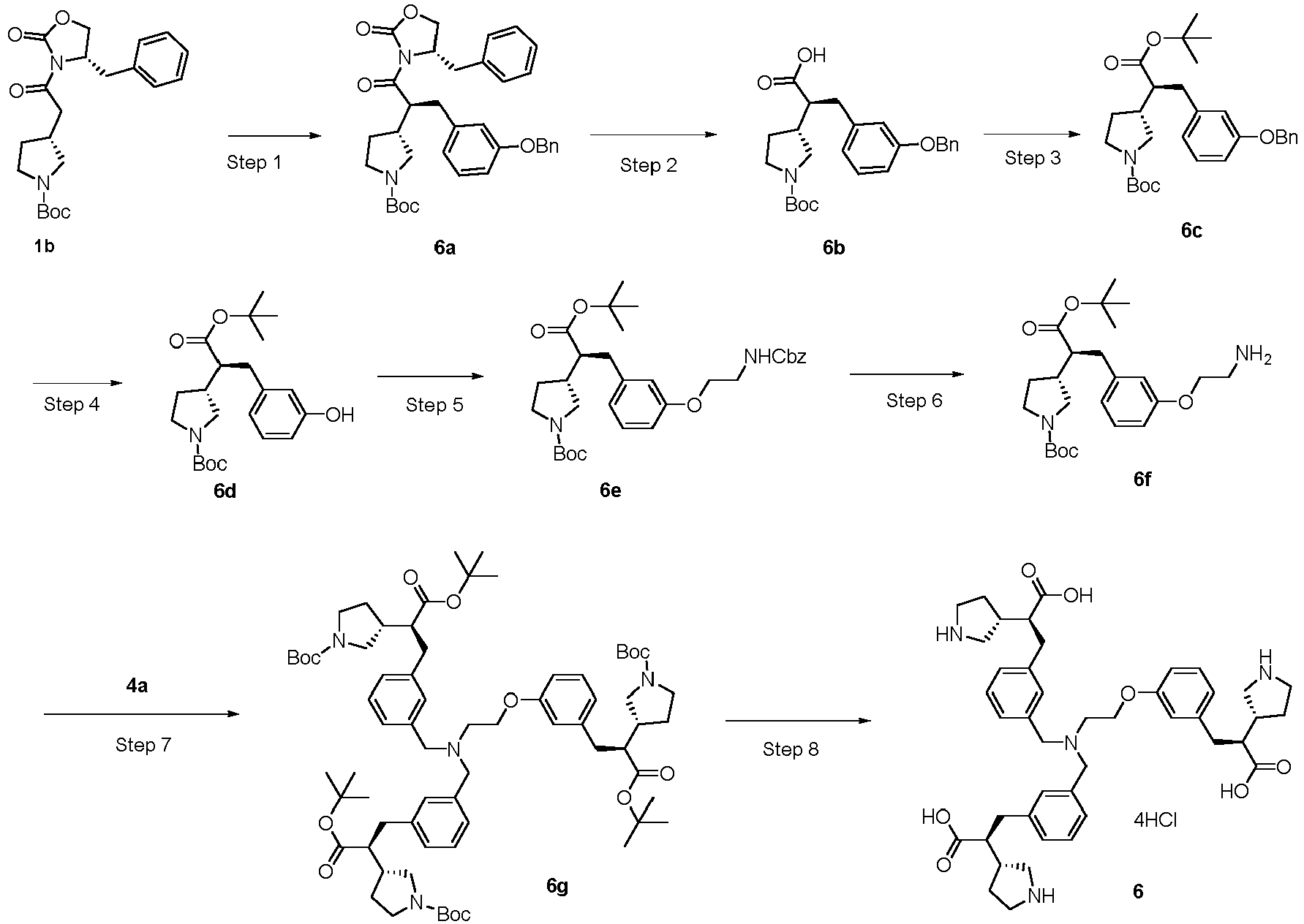
- Compound 1b (10.0 g, 25.74 mmol) was dissolved in tetrahydrofuran (10 mL) in a nitrogen atmosphere, and the solution was cooled to -30 °C. A 1 M solution of lithium bis(trimethylsilyl)amide in tetrahydrofuran (31 mL, 31 mmol) was added dropwise. After the addition, the mixture was left to react for 30 min. A solution of 3-benzyloxybromobenzyl (8.56 g, 30.89 mmol) in tetrahydrofuran (15 mL) was added dropwise. After 1 h of reaction, the mixture was warmed to 0 °C-5 °C and left to react overnight. Saturated ammonium chloride solution (50 mL) was added, and extraction was performed with methyl tert-butyl ether (50 mL × 2). The organic phase was washed with saturated sodium chloride solution (70 mL), dried over anhydrous sodium sulfate, and filtered. The filtrate was concentrated under reduced pressure, and the resulting residue was purified by column chromatography (petroleum ether:ethyl acetate = 4:1) to give compound 6a (7.08 g, yield: 47.0%).
- Compound 6a (7 g, 11.983 mmol) was dissolved in tetrahydrofuran (70 mL) and water (35 mL), and hydrogen peroxide (30%) (4.07 g, 35.95 mmol) and lithium hydroxide monohydrate (431 mg, 17.97 mmol) were added. The mixture was left to react overnight at room temperature. The pH was adjusted to >13 with a 2 M sodium hydroxide solution, and extraction was performed with methyl tert-butyl ether (50 mL × 2). The pH of the aqueous phase was adjusted to <3 with a 2 M hydrochloric acid solution, and extraction was performed with methyl tert-butyl ether (50 mL × 2). The organic phase was washed with saturated sodium chloride solution (70 mL), dried over anhydrous sodium sulfate, and filtered. The filtrate was concentrated to dryness under reduced pressure to give a crude product of compound 6b (3.11 g). The product was directly used in the next step without purification.
- The crude product of compound 6b (3.1 g, 7.29 mmol) from the previous step was dissolved in 2-methyltetrahydrofuran (60 mL), and 2-tert-butyl-1,3-diisopropylisourea (5.84 g, 29.14 mmol) was added. The mixture was heated to 65 °C and left to react overnight. The reaction mixture was filtered, and the filtrate was concentrated to dryness under reduced pressure. The resulting residue was purified by column chromatography (petroleum ether:ethyl acetate = 5:1) to give compound 6c (2.5 g, yield over two steps: 43.3%).
- Compound 6c (2.5 g, 5.19 mmol) was dissolved in MeOH (40 mL) in a hydrogen atmosphere, and Pd/C (0.80 g) was added. The mixture was left to react overnight at room temperature. The reaction mixture was filtered, and the filtrate was concentrated under reduced pressure to give compound 6d (1.78 g, yield: 87.6%).
- Step 5: Preparation of tert-butyl (R)-3-((S)-3-(3-(2-(((benzyloxy)carbonyl)amino) ethoxy)phenyl)-1-(tert-butoxy)-1-oxopropan-2-yl)pyrrolidine-1-carboxylate (6e) Compound 6d (400 mg, 0.99 mmol), benzyl N-(2-bromoethyl)carbamate (280 mg, 1.09 mmol), and cesium carbonate (803 mg, 2.47 mmol) were added to N,N-dimethylformamide (8 mL), and the mixture was heated to 80 °C and left to react for 3 h. Water (40 mL) was added, and extraction was performed with ethyl acetate (30 mL × 2). The organic phase was washed with saturated sodium chloride solution (50 mL), dried over anhydrous sodium sulfate, and filtered. The filtrate was concentrated under pressure to give a residue, and the residue was purified by column chromatography (petroleum ether:ethyl acetate = 8:1) to give compound 6e (300 mg, yield 53.5%).
- Compound 6e (300 mg, 0.528 mmol) was dissolved in MeOH (5 mL) in a hydrogen atmosphere, and Pd/C (100 mg) was added. The mixture was left to react overnight at room temperature. The reaction mixture was filtered, and the filtrate was concentrated under reduced pressure to give compound 6f (150 mg, yield 65.4%).
- Compound 6f (150 mg, 0.35 mmol) and compound 4a (278.6 mg, 0.69 mmol) were dissolved in isopropanol (6 mL) under an ice bath, and 1 drop of glacial acetic acid was added. The mixture was incubated for 30 min. Sodium triacetoxyborohydride (292.6 mg, 1.38 mmol) was added, and the mixture was slowly warmed to room temperature and left to react overnight. The pH was adjusted to 8-9 with saturated sodium bicarbonate solution, and extraction was performed with ethyl acetate (40 mL × 2). The organic phase was washed with saturated sodium chloride solution (60 mL), dried over anhydrous sodium sulfate, and filtered. The filtrate was concentrated to give a crude product (480 mg), and the crude product was purified by preparative liquid chromatography to give compound 6g (250 mg, yield 59.9%).
- Compound 6g (100 mg, 0.083 mmol) was added to a 4 M solution of hydrochloric acid in dioxane (4 mL), and the mixture was stirred overnight at room temperature. The supernatant was removed to give a solid, and the solid was washed with ethyl acetate and lyophilized to give compound 6 (50 mg, yield 68.5%).
- MS m/z (ESI): 741.3 [M+H]+.
- 1H NMR (400 MHz, D2O): δ 7.42-7.16 (m, 9H), 6.86 (d, J = 7.6 Hz, 1H), 6.70 (dd, J = 8.3, 2.6 Hz, 1H), 6.65 (s, 1H), 4.43 (s, 4H), 4.14-3.97 (m, 2H), 3.62-3.45 (m, 5H), 3.45-3.30 (m, 3H), 3.29-3.14 (m, 3H), 3.07-2.98 (m, 3H), 2.93-2.63 (m, 9H), 2.61-2.39 (m, 3H), 2.24-2.02 (m, 3H), 1.78-1.64 (m, 3H).
-

-


- Step 1: Preparation of tert-butyl (R)-3-((S)-3-(3-((2-(((benzyloxy)carbonyl)amino) ethyl)amino)phenyl)-1-(tert-butoxy)-1 -oxopropan-2-yl)pyrrolidine-1 -carboxylate (7a) Compound 3a (700 mg, 1.54 mmol), N-benzyloxycarbonylethylenediamine (448.81 mg, 2.31 mmol), BrettPhos Pd G3 (49.9 mg, 0.06 mmol), potassium carbonate (638.7 mg, 4.62 mmol), and dioxane (10 mL) were weighed into a reaction flask, and the system was purged with nitrogen gas three times. The mixture was left to react overnight at 100 °C. LCMS monitoring showed there was a product generated. Ethyl acetate and water were added to the reaction mixture, and the mixture was separated. The organic phase was washed with saturated brine, dried over anhydrous sodium sulfate, and filtered. The filtrate was concentrated, and the residue was purified by column chromatography to give compound 7a (400 mg, 45.7%).
- Compound 7a (400 mg, 0.71 mmol) and 10% Pd/C (100 mg) were weighed into a reaction flask, and methanol (10 mL) was added. The system was purged with nitrogen gas three times and with hydrogen gas three times, and the mixture was left to react overnight under a hydrogen balloon. LCMS monitoring showed there was a product generated. The reaction mixture was filtered, and the filtrate was concentrated to give a crude product of compound 7b (200 mg, 65.5%).
- Compounds 7b (150 mg, 0.35 mmol) and 4a (349 mg, 0.87 mmol) were weighed into a reaction flask. Isopropanol (10 mL) was added, and one drop of acetic acid was added. The mixture was stirred for 1 h under an ice bath, and sodium triacetoxyborohydride (218.9 mg, 1.04 mmol) was then added. The mixture was left to react overnight. Saturated sodium bicarbonate solution and ethyl acetate were added to the reaction mixture, and the mixture was separated. The organic phase was washed with saturated brine, dried over anhydrous sodium sulfate, and filtered. The filtrate was concentrated to give a crude product, and the crude product was purified by preparative liquid chromatography to give compound 7c (100 mg, 23.9%).
- Compound 7c (100 mg, 8.3 mmol) was weighed out, and a 4 M solution of hydrochloric acid in dioxane (10 mL) was added at room temperature. The mixture was stirred overnight. The supernatant was removed to give a solid. The solid was washed with ethyl acetate and dissolved in water, and the solution was lyophilized to give compound 7 (70 mg, 72.1%).
- MS m/z (ESI): 740.4 [M+1]+.
- 1H NMR (400 MHz, D2O): δ 7.45-7.21 (m, 8H), 7.12 (t, J = 7.8 Hz, 1H), 6.75 (d, J = 7.5 Hz, 1H), 6.53-6.38 (m, 2H), 4.41 (s, 4H), 3.68-3.51 (m, 2H), 3.51-3.39 (m, 3H), 3.38-3.18 (m, 8H), 3.15-2.99 (m, 2H), 2.98-2.67 (m, 9H), 2.66-2.46 (m, 4H), 2.26-2.06 (m, 3H), 1.84-1.69 (m, 3H).
- The disclosure used a double antibody ELISA method to measure the efficiency of Apo(a) and ApoB protein assembly. The antibodies were ApoB-Capture antibody (Mabtech) and Apo(a)-Detector antibody (Abcam); the test samples were plasma from human transgenic hApo(a) and hApoB mice and were diluted 500-fold before use.
- Experimental steps: Equal amounts of Apo(a) and ApoB serum were mixed with a serially diluted test compound (highest concentration at 100 nM, serially diluted 3-fold). The mixture was incubated in a 37 °C incubator for 2 h. The reaction was then terminated by adding 6-aminocaproic acid (EACA, purchased from Sigma) to a final concentration of 150 mM. The post-reaction solution was then added to an ELISA plate pre-coated with ApoB-Capture antibody, and the plate was incubated at room temperature for 2 h. Then the plate was washed 4 times with wash buffer; biotinylated Apo(a)-Detector antibody was added, and the plate was incubated at room temperature for 1 h. The plate was washed, and the chromogenic substrate 3,3',5,5'-tetramethylbenzidine (TMB, purchased from Abcam) solution was added. After the plate was incubated at room temperature for 15 min, a reaction stop solution was added. Immediately after the solution was mixed well, the absorbance at 450 nm was measured using a microplate reader. Finally, data analysis and IC50 calculation were performed using GraphPad Prism 9 software.
- The 0% inhibition rate for Apo(a) and ApoB protein assembly corresponds to the OD value where the compound concentration was 0 (1% DMSO); the 100% inhibition rate for Apo(a) and ApoB protein assembly corresponds to the OD value where only ApoB protein solution (a dilution of plasma from hApoB mice) was added.
-
Table 1. The activity of the compounds of the disclosure in inhibiting Lp(a) assembly Compound Lp(a) assembly, IC50 (nM) 1 0.75 2 1.7 3 1.4 4 0.85 5 0.78 6 0.41 7 0.76 - Conclusion: The compounds of the disclosure exhibited significant inhibitory effects on Lp(a) assembly.

- Beagles were used as test animals. After intragastric administration of the compound of the disclosure to beagles, plasma concentrations at different time points were determined by LC/MS/MS. The pharmacokinetic behavior of the compound of the disclosure in beagles was studied and its pharmacokinetic profile was evaluated.
- Compound solution preparation: A certain amount of compound was weighed out and normal saline was added to form a 2 mg/mL colorless clear solution.
- Administration: Beagles were fasted overnight and then intragastrically dosed. Reference 1 and compound 6 were both administered at a dose of 10 mg/kg.
- Procedure: Beagles were intragastrically administered the compound of the disclosure. Blood samples of about 0.6 mL were collected from the peripheral vein at 0.25, 0.5, 1, 2, 4, 6, 8, and 24 h post-dose and placed into test tubes containing EDTA-K2. The blood samples were centrifuged at about 4 °C at 2000 rpm for 10 min to separate plasma, and the plasma was stored at -75 °C.
- Determination of the content of the test compound in beagle plasma at these different blood collection time points: Samples of 33 µL (30 µL of plasma and 3 µL of blank) of the beagle plasma collected at these time points post-dose were taken and added to 18 µL of a 6% perchloric acid solution. After 30 s of vortexing, the mixture was centrifuged at a temperature of 4 °C at 3900 rpm for 15 min, and 200 µL of alkalinized (the pH was adjusted to 10-11 with ammonia water) acetonitrile solution containing dexamethasone as an internal standard was then added to precipitate protein. After 30 s of vortexing, the mixture was centrifuged at 4 °C at 3900 rpm for 15 min. The supernatants of the plasma samples were taken and 3-fold diluted with water, and 8 µL of dilution was taken for LC/MS/MS analysis.
- After plasma concentrations were determined by LC/MS/MS analysis, pharmacokinetic parameters were calculated using WinNonlin 6.1 software and a non-compartmental model method. Pharmacokinetic parameters of the compound of the disclosure in beagles are shown in Table 2 below.
Table 2. Pharmacokinetic parameters of the compound of the disclosure after oral administration to beagles No. Dose Maximum plasma concentration Area under curve Half-life mg/kg Cmax (ng/mL) AUC (ng/mL*h) T1/2 (h) Reference 1 10 1628 22950 20.7 Compound 6 10 2473 28594 18.3 - Conclusion: Compound 6 exhibited better oral absorption in beagles, resulting in better plasma exposure and a longer half-life. It has an excellent pharmacokinetic profile and, when orally administered, has significant advantages.
- Cynomolgus monkeys were used as test animals. After intragastric administration of the compound of the disclosure to cynomolgus monkeys, plasma concentrations at different time points were determined by LC/MS/MS. The pharmacokinetic behavior of the compound of the disclosure in cynomolgus monkeys was studied and its pharmacokinetic profile was evaluated.
- Compound solution preparation: Certain amounts of compound were weighed out and normal saline was added to form 10 mg/mL (reference 1) and 3 mg/mL (compound 6) colorless clear solutions.
- Administration: Cynomolgus monkeys were fasted overnight and then intragastrically dosed. Reference 1 was administered at a dose of 50 mg/kg, and compound 6 was administered at a dose of 15 mg/kg.
- Procedure: Cynomolgus monkeys were intragastrically administered the compound of the disclosure. Blood samples of about 0.5 mL were collected from the peripheral vein at 0.25, 0.5, 1, 2, 4, 6, 8, and 24 h post-dose and placed into test tubes containing EDTA-K2. The blood samples were centrifuged at about 4 °C at 2000 rpm for 10 min to separate plasma, and the plasma was stored at -75 °C.
- Determination of the content of the test compound in cynomolgus monkey plasma at these different blood collection time points: Samples of 33 µL (30 µL of plasma and 3 µL of blank) of the cynomolgus monkey plasma collected at these time points post-dose were taken and added to 18 µL of a 6% perchloric acid solution. After 30 s of vortexing, the mixture was centrifuged at a temperature of 4 °C at 3900 rpm for 15 min, and 200 µL of alkalinized (the pH was adjusted to 10-11 with ammonia water) acetonitrile solution containing dexamethasone as an internal standard was then added to precipitate protein. After 30 s of vortexing, the mixture was centrifuged at 4 °C at 3900 rpm for 15 min. The supernatants of the plasma samples were taken and 3-fold diluted with water, and 8 µL of dilution was taken for LC/MS/MS analysis.
- After plasma concentrations were determined by LC/MS/MS analysis, pharmacokinetic parameters were calculated using WinNonlin 6.1 software and a non-compartmental model method. Pharmacokinetic parameters of the compound of the disclosure in cynomolgus monkeys are shown in Table 3 below.
Table 3. Pharmacokinetic parameters of the compound of the disclosure after oral administration to cynomolgus monkeys No. Dose Maximum plasma concentration Area under curve Unit-dose area under curve Half-life mg/kg Cmax (ng/mL) AUC (ng/mL*h) AUC/D (mg/mL*h) T1/2 (h) Reference 1 50 2192 22153 443 17.7 Compound 6 15 2367 33067 2204 16.6 - Conclusion: Compound 6 exhibited better oral absorption in cynomolgus monkeys, and its plasma exposure was nearly 5 times that of reference 1, indicating that the pharmacokinetic properties of the compound of the invention are significantly better than those of reference 1.
- C57/6J mice were used as test animals and administered a high dose of the compound of the disclosure by oral gavage. Clinical observations were carried out on the mice, and the safety of the compound of the disclosure was evaluated.
- Experimental method: 8 male C57/6J mice were numbered 1-8 and weighed. The mice were fasted for 4 h before the experiment and weighed after the fast (0 h). Six mice with body weights closer to the average were selected and divided into 2 groups of 3.
- The first group (G1) was administered reference 1, and the second group (G2) was administered the compound of the disclosure, Example 6. In both groups G1 and G2, the compounds were administrated by oral gavage at a dose of 1000 mg/kg, with normal saline as a vehicle. Clinical observations were carried out on the mice in the experimental group at 15 min, 30 min, 1 h, 2 h, 4 h, 6 h, and 24 h post-dose, and both groups were given food at 2 h post-dose. The body weight of the mice was monitored for 7 consecutive days, and the results are shown in Table 4 below.
Table 4. The high-dose single-dose tolerance experiment of the compound of the disclosure on mice Group Mouse body weight (g)a Day 0 Day 3 Day 5 Day 7 Reference 1 25.87 25.70 25.10 24.53 Compound 6 25.83 26.93 26.70 26.67 Note: a. means - Conclusion: 7 d after the high-dose (1000 mg/kg) administration, there was a significant downward trend in the body weight of the mice in the reference 1 group, and the body weight of the mice in the corresponding compound 6 group remained unchanged or even increased. The compound of the disclosure is expected to be capable of demonstrating superior safety over a longer period of administration.
Claims (15)
- A compound represented by formula II or a pharmaceutically acceptable salt thereof,
 wherein R11 is independently selected from the group consisting of hydrogen or C1-6 alkyl, wherein the alkyl is optionally substituted with one or more R11A, and each R11A is independently selected from the group consisting of halogen, hydroxy, cyano, or amino; R12 is independently selected from the group consisting of hydrogen, deuterium, halogen, or C1-6 alkyl, wherein the alkyl is optionally substituted with one or more R12A, and each R12A is independently selected from the group consisting of halogen, hydroxy, cyano, or amino;R13 is independently selected from the group consisting of hydrogen, deuterium, halogen, cyano, C1-6 alkyl, or C1-6 alkoxy, wherein the alkyl or alkoxy is optionally substituted with one or more R13A, and each R13A is independently selected from the group consisting of halogen, hydroxy, cyano, or amino;R14 is independently selected from the group consisting of hydrogen or C1-6 alkyl;W is selected from the group consisting of 3 or 4;L2 is selected from the group consisting of
 n1 is selected from the group consisting of integers between 0-4.
 - The compound or the pharmaceutically acceptable salt thereof according to claim 1, wherein R12 is independently selected from the group consisting of hydrogen or deuterium.
- The compound or the pharmaceutically acceptable salt thereof according to claim 1 or 2, wherein R12 is independently selected from halogen, e.g., fluorine or chlorine; or R12 is independently selected from C1-6 alkyl, wherein the alkyl is optionally substituted with one or more R12A, and R12A is as defined in claim 1.
- The compound or the pharmaceutically acceptable salt thereof according to any of claims 1-3, wherein R11 is independently selected from hydrogen.
- The compound or the pharmaceutically acceptable salt thereof according to any of claims 1-4, wherein R13 is independently selected from the group consisting of hydrogen or deuterium.
- The compound or the pharmaceutically acceptable salt thereof according to any of claims 1-4, wherein R13 is independently selected from the group consisting of deuterium or C1-6 alkoxy, wherein the alkoxy is optionally substituted with one or more R13A, and R13A is as defined in claim 1; or R13 is independently selected from halogen, e.g., fluorine or chlorine.
- The compound or the pharmaceutically acceptable salt thereof according to any of claims 1-6, wherein L2 is selected from the group consisting of


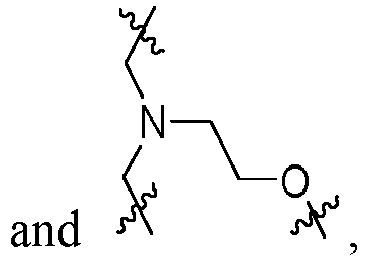

- The compound or the pharmaceutically acceptable salt thereof according to claim 1, being selected from the group consisting of:


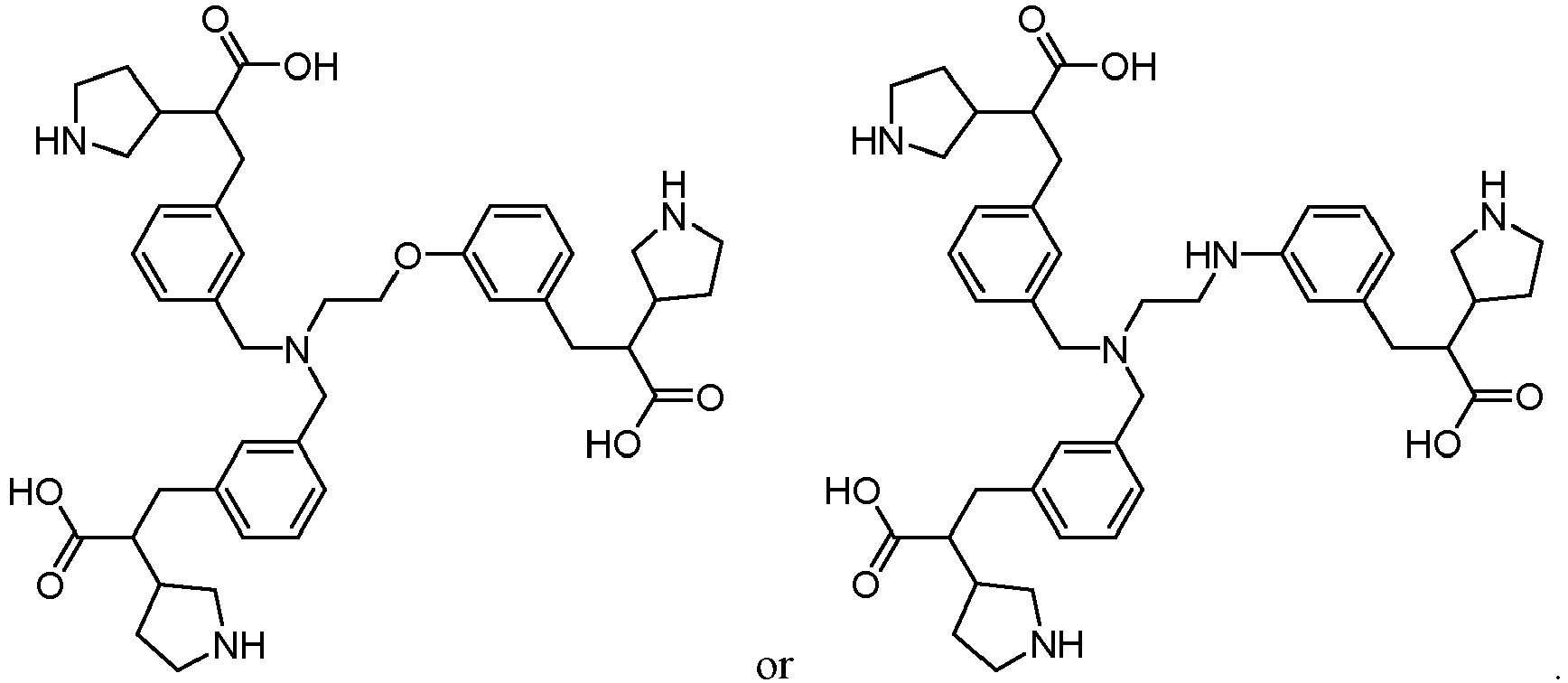
- The compound or the pharmaceutically acceptable salt thereof according to claim 1, being selected from the group consisting of:


- An isotopically substituted form of the compound or the pharmaceutically acceptable salt thereof according to any of claims 1-9, wherein preferably, the isotopically substituted form is a deuterated form.
- A pharmaceutical composition, comprising a therapeutically effective amount of at least one of the compound or the pharmaceutically acceptable salt thereof according to any of claims 1-9 or the isotopically substituted form according to claim 10, and a pharmaceutically acceptable excipient.
- A method for preventing and/or treating a disease or disorder associated with elevated plasma levels of LP(a), by administering to the patient a therapeutically effective amount of the compound or the pharmaceutically acceptable salt thereof according to any of claims 1-9, or the isotopically substituted form according to claim 10, or the pharmaceutical composition according to claim 11.
- A method for preventing and/or treating a patient with a cardiovascular disease, by administering to the patient a therapeutically effective amount of the compound or the pharmaceutically acceptable salt thereof according to any of claims 1-9, or the isotopically substituted form according to claim 10, or the pharmaceutical composition according to claim 11.
- Use of the compound or the pharmaceutically acceptable salt thereof according to any of claims 1-9, or the isotopically substituted form according to claim 10, or the pharmaceutical composition according to claim 11 in the preparation of a medicament for preventing and/or treating a disease or disorder associated with elevated plasma levels of LP(a).
- Use of the compound or the pharmaceutically acceptable salt thereof according to any of claims 1-9, or the isotopically substituted form according to claim 10, or the pharmaceutical composition according to claim 11 in the preparation of a medicament for preventing and/or treating a cardiovascular disease.
Applications Claiming Priority (3)
| Application Number | Priority Date | Filing Date | Title |
|---|---|---|---|
| CN202111293711 | 2021-11-03 | ||
| CN202211033065 | 2022-08-26 | ||
| PCT/CN2022/129479 WO2023078333A1 (en) | 2021-11-03 | 2022-11-03 | Substituted phenylpropionic acid derivative and use thereof |
Publications (2)
| Publication Number | Publication Date |
|---|---|
| EP4428129A1 true EP4428129A1 (en) | 2024-09-11 |
| EP4428129A4 EP4428129A4 (en) | 2025-05-07 |
Family
ID=86240694
Family Applications (1)
| Application Number | Title | Priority Date | Filing Date |
|---|---|---|---|
| EP22889355.8A Pending EP4428129A4 (en) | 2021-11-03 | 2022-11-03 | Substituted phenylpropionic acid derivative and use thereof |
Country Status (10)
| Country | Link |
|---|---|
| US (1) | US20250042847A1 (en) |
| EP (1) | EP4428129A4 (en) |
| JP (1) | JP2024540183A (en) |
| KR (1) | KR20240091010A (en) |
| CN (1) | CN118055927A (en) |
| AU (1) | AU2022381258A1 (en) |
| CA (1) | CA3235992A1 (en) |
| MX (1) | MX2024005304A (en) |
| TW (1) | TW202334116A (en) |
| WO (1) | WO2023078333A1 (en) |
Families Citing this family (15)
| Publication number | Priority date | Publication date | Assignee | Title |
|---|---|---|---|---|
| WO2024217537A1 (en) * | 2023-04-21 | 2024-10-24 | 深圳信立泰药业股份有限公司 | Tertiary amine compound as well as preparation method therefor and medical use thereof |
| TW202444710A (en) * | 2023-05-11 | 2024-11-16 | 大陸商江蘇恆瑞醫藥股份有限公司 | A crystalline form of lipoprotein compounds and preparation method thereof |
| KR20260041098A (en) * | 2023-07-21 | 2026-03-26 | 일라이 릴리 앤드 캄파니 | Pyrrolidine compounds having Lp(a) lowering activity |
| CN121548567A (en) * | 2023-07-21 | 2026-02-17 | 伊莱利利公司 | Piperidine, morpholine, and tetrahydropyridazine compounds with Lp(a)-reducing activity |
| CN119490445A (en) * | 2023-08-15 | 2025-02-21 | 深圳信立泰药业股份有限公司 | Acyl compound and its preparation method and medical use |
| CN122535600A (en) * | 2023-11-17 | 2026-08-07 | 上海翊石医药科技有限公司 | A substituted 2-(pyrrolidine-3-yl)acetic acid derivative, its preparation method and uses |
| CN122270439A (en) * | 2023-11-20 | 2026-06-23 | 上海齐鲁制药研究中心有限公司 | Polycyclic derivative, preparation method and application thereof |
| WO2025199298A1 (en) | 2024-03-21 | 2025-09-25 | Eli Lilly And Company | BIOMARKER ASSAY TO MEASURE LIPOPROTEIN(a) |
| WO2025237188A1 (en) * | 2024-05-14 | 2025-11-20 | 石家庄以岭药业股份有限公司 | Lp(a) inhibitor compound and use thereof |
| CN121627662A (en) * | 2024-09-05 | 2026-03-10 | 成都康弘药业集团股份有限公司 | Aryl propionic acid compound and preparation method and application thereof |
| WO2026061518A1 (en) * | 2024-09-23 | 2026-03-26 | 上海京新生物医药有限公司 | Solid form of cyclic amine derivative, preparation method therefor, and pharmaceutical composition |
| WO2026119122A1 (en) * | 2024-12-02 | 2026-06-11 | 上海喆邺生物科技有限公司 | Phenylpropionic acid derivative and pharmaceutical use thereof |
| WO2026130347A1 (en) * | 2024-12-17 | 2026-06-25 | 上海喆邺生物科技有限公司 | Pyrrolidine derivative and use thereof in drugs |
| WO2026130471A1 (en) * | 2024-12-18 | 2026-06-25 | 江苏恒瑞医药股份有限公司 | Method for preparing pyrrolidine derivative or salt thereof |
| CN121609698B (en) * | 2026-01-30 | 2026-06-02 | 山东京新药业有限公司 | A method for preparing movaperil and its intermediates |
Family Cites Families (9)
| Publication number | Priority date | Publication date | Assignee | Title |
|---|---|---|---|---|
| CN1962596A (en) * | 2000-10-11 | 2007-05-16 | 埃斯佩里安医疗公司 | Ketone compounds and compositions for cholesterol management and related uses |
| MXPA03003021A (en) * | 2000-10-11 | 2003-07-14 | Esperion Therapeutics Inc | Ether compounds and compositions for cholesterol management and related uses. |
| US7371777B2 (en) * | 2001-08-17 | 2008-05-13 | Eisai Co., Ltd. | Cyclic compound and PPAR agonist |
| AU2003300438A1 (en) * | 2003-12-24 | 2005-08-03 | Esperion Therapeutics, Inc. | Ether compounds and compositions for cholesterol management and related uses |
| US7705177B2 (en) * | 2003-12-24 | 2010-04-27 | Esperion Therapuetics, Inc. | Ketone compounds and compositions for cholesterol management and related uses |
| US7919506B2 (en) * | 2006-03-10 | 2011-04-05 | Pfizer Inc. | Dibenzyl amine compounds and derivatives |
| CA2708706A1 (en) * | 2007-12-10 | 2009-06-18 | 7Tm Pharma A/S | Cannabinoid receptor modulators |
| KR102720992B1 (en) | 2019-06-07 | 2024-10-24 | 일라이 릴리 앤드 캄파니 | Pyrrolidine compounds |
| EP4469435A1 (en) * | 2022-01-26 | 2024-12-04 | Eli Lilly and Company | Pyrrolidine compounds |
-
2022
- 2022-11-03 WO PCT/CN2022/129479 patent/WO2023078333A1/en not_active Ceased
- 2022-11-03 TW TW111142050A patent/TW202334116A/en unknown
- 2022-11-03 KR KR1020247017510A patent/KR20240091010A/en active Pending
- 2022-11-03 EP EP22889355.8A patent/EP4428129A4/en active Pending
- 2022-11-03 AU AU2022381258A patent/AU2022381258A1/en active Pending
- 2022-11-03 JP JP2024525662A patent/JP2024540183A/en active Pending
- 2022-11-03 US US18/707,429 patent/US20250042847A1/en active Pending
- 2022-11-03 CA CA3235992A patent/CA3235992A1/en active Pending
- 2022-11-03 MX MX2024005304A patent/MX2024005304A/en unknown
- 2022-11-03 CN CN202280066584.5A patent/CN118055927A/en active Pending
Also Published As
| Publication number | Publication date |
|---|---|
| JP2024540183A (en) | 2024-10-31 |
| WO2023078333A1 (en) | 2023-05-11 |
| MX2024005304A (en) | 2024-05-17 |
| AU2022381258A1 (en) | 2024-05-02 |
| US20250042847A1 (en) | 2025-02-06 |
| TW202334116A (en) | 2023-09-01 |
| CN118055927A (en) | 2024-05-17 |
| EP4428129A4 (en) | 2025-05-07 |
| WO2023078333A8 (en) | 2023-08-10 |
| KR20240091010A (en) | 2024-06-21 |
| CA3235992A1 (en) | 2023-05-11 |
Similar Documents
| Publication | Publication Date | Title |
|---|---|---|
| CA3235992A1 (en) | Substituted phenylpropionic acid derivative and use thereof | |
| EP4596552A1 (en) | Macrocyclic derivative and use thereof | |
| CN114008021B (en) | Pyrrolidine compounds | |
| EP4332102A1 (en) | Isoquinolone compound and use thereof | |
| US11905276B2 (en) | Bicyclic compound that acts as CRBN protein regulator | |
| EP4711355A1 (en) | Crystal form of lipoprotein compound and preparation method therefor | |
| CN113149902B (en) | Benzamide derivatives | |
| NO173825B (en) | ANALOGY PROCEDURE FOR THE PREPARATION OF THERAPEUTIC ACTIVE CARBAMIC ACID ESTERS OF SUBSTITUTED 7-HYDROXY-2,3,4,5-TETRAHYDRO-1H-3-BENZAZEPINES | |
| US12533343B2 (en) | Method for preparing (−)-cibenzoline succinate | |
| AU2020394597A1 (en) | 1,2,4-oxadiazole derivatives as liver X receptor agonists | |
| AU2010288273A1 (en) | Polymorphic forms of manidipine | |
| US9212175B2 (en) | Pharmaceutical hypocholesterolemic compositions | |
| JP2007512357A (en) | Method for preparing a form of atorvastatin calcium substantially free of impurities | |
| CN114621189B (en) | A kind of lactam derivative and its use | |
| US20260098027A1 (en) | Pharmaceutically acceptable salt and crystal form of tetrahydronaphthalene derivative, and preparation method | |
| Ohno et al. | Synthesis of the optical isomers of 4-[1-(4-tert-butylphenyl)-2-oxo-pyrrolidine-4-yl] methyloxybenzoic acid (S-2) and their biological evaluation as antilipidemic agent | |
| WO2026059895A1 (en) | Substituted tricyclicheterocyclylsulfonamide derivatives and uses thereof | |
| WO2025045777A1 (en) | Inhibitors of pcsk9 | |
| DE112023005025T5 (en) | Development of trimethyllysine hydroxylase (TMLH) inhibitors | |
| HK40043660A (en) | Novel method for preparing (-)-cibenzoline succinate |
Legal Events
| Date | Code | Title | Description |
|---|---|---|---|
| STAA | Information on the status of an ep patent application or granted ep patent |
Free format text: STATUS: THE INTERNATIONAL PUBLICATION HAS BEEN MADE |
|
| PUAI | Public reference made under article 153(3) epc to a published international application that has entered the european phase |
Free format text: ORIGINAL CODE: 0009012 |
|
| STAA | Information on the status of an ep patent application or granted ep patent |
Free format text: STATUS: REQUEST FOR EXAMINATION WAS MADE |
|
| 17P | Request for examination filed |
Effective date: 20240425 |
|
| AK | Designated contracting states |
Kind code of ref document: A1 Designated state(s): AL AT BE BG CH CY CZ DE DK EE ES FI FR GB GR HR HU IE IS IT LI LT LU LV MC ME MK MT NL NO PL PT RO RS SE SI SK SM TR |
|
| DAV | Request for validation of the european patent (deleted) | ||
| DAX | Request for extension of the european patent (deleted) | ||
| REG | Reference to a national code |
Ref country code: DE Ref legal event code: R079 Free format text: PREVIOUS MAIN CLASS: C07D0401140000 Ipc: C07D0207090000 |
|
| A4 | Supplementary search report drawn up and despatched |
Effective date: 20250408 |
|
| RIC1 | Information provided on ipc code assigned before grant |
Ipc: A61P 9/00 20060101ALI20250402BHEP Ipc: A61K 31/4025 20060101ALI20250402BHEP Ipc: C07D 401/14 20060101ALI20250402BHEP Ipc: C07D 211/34 20060101ALI20250402BHEP Ipc: C07D 205/04 20060101ALI20250402BHEP Ipc: C07D 207/08 20060101ALI20250402BHEP Ipc: C07D 207/09 20060101AFI20250402BHEP |
|
| RAP1 | Party data changed (applicant data changed or rights of an application transferred) |
Owner name: JIANGSU HENGRUI PHARMACEUTICALS CO., LTD. |