EP4428117A2 - Crystals of 3-hydroxypropionate and process of recovering 3-hydroxypropionic acid - Google Patents
Crystals of 3-hydroxypropionate and process of recovering 3-hydroxypropionic acid Download PDFInfo
- Publication number
- EP4428117A2 EP4428117A2 EP24189166.2A EP24189166A EP4428117A2 EP 4428117 A2 EP4428117 A2 EP 4428117A2 EP 24189166 A EP24189166 A EP 24189166A EP 4428117 A2 EP4428117 A2 EP 4428117A2
- Authority
- EP
- European Patent Office
- Prior art keywords
- hydroxypropionate
- crystal
- less
- hydroxypropionic acid
- cation
- Prior art date
- Legal status (The legal status is an assumption and is not a legal conclusion. Google has not performed a legal analysis and makes no representation as to the accuracy of the status listed.)
- Pending
Links
- ALRHLSYJTWAHJZ-UHFFFAOYSA-N 3-hydroxypropionic acid Chemical compound OCCC(O)=O ALRHLSYJTWAHJZ-UHFFFAOYSA-N 0.000 title claims abstract description 377
- 239000013078 crystal Substances 0.000 title claims abstract description 219
- ALRHLSYJTWAHJZ-UHFFFAOYSA-M 3-hydroxypropionate Chemical compound OCCC([O-])=O ALRHLSYJTWAHJZ-UHFFFAOYSA-M 0.000 title claims abstract description 157
- 238000000034 method Methods 0.000 title abstract description 53
- 230000008569 process Effects 0.000 title abstract description 35
- -1 alkali metal salt Chemical class 0.000 claims abstract description 27
- 229910052783 alkali metal Inorganic materials 0.000 claims abstract description 25
- 238000009826 distribution Methods 0.000 claims description 57
- 150000001768 cations Chemical class 0.000 claims description 39
- 238000004458 analytical method Methods 0.000 claims description 35
- 239000002245 particle Substances 0.000 claims description 31
- 238000002441 X-ray diffraction Methods 0.000 claims description 28
- OKTJSMMVPCPJKN-UHFFFAOYSA-N Carbon Chemical compound [C] OKTJSMMVPCPJKN-UHFFFAOYSA-N 0.000 claims description 24
- 230000002285 radioactive effect Effects 0.000 claims description 19
- 230000009477 glass transition Effects 0.000 claims description 12
- 229910052799 carbon Inorganic materials 0.000 claims description 11
- 238000002844 melting Methods 0.000 claims description 11
- 230000008018 melting Effects 0.000 claims description 11
- XLYOFNOQVPJJNP-UHFFFAOYSA-N water Substances O XLYOFNOQVPJJNP-UHFFFAOYSA-N 0.000 claims description 10
- 238000000113 differential scanning calorimetry Methods 0.000 claims description 9
- 159000000007 calcium salts Chemical class 0.000 claims description 2
- 159000000003 magnesium salts Chemical class 0.000 claims description 2
- 239000012141 concentrate Substances 0.000 abstract description 27
- 239000000243 solution Substances 0.000 description 42
- 239000011575 calcium Substances 0.000 description 27
- 239000011777 magnesium Substances 0.000 description 23
- 238000002425 crystallisation Methods 0.000 description 21
- 230000008025 crystallization Effects 0.000 description 21
- 108090000623 proteins and genes Proteins 0.000 description 19
- PEDCQBHIVMGVHV-UHFFFAOYSA-N Glycerine Chemical compound OCC(O)CO PEDCQBHIVMGVHV-UHFFFAOYSA-N 0.000 description 18
- 238000000855 fermentation Methods 0.000 description 13
- 230000004151 fermentation Effects 0.000 description 13
- 150000007524 organic acids Chemical class 0.000 description 11
- 238000011084 recovery Methods 0.000 description 11
- 238000002360 preparation method Methods 0.000 description 10
- 238000000605 extraction Methods 0.000 description 9
- 238000001914 filtration Methods 0.000 description 9
- 108010025885 Glycerol dehydratase Proteins 0.000 description 8
- QAOWNCQODCNURD-UHFFFAOYSA-N Sulfuric acid Chemical compound OS(O)(=O)=O QAOWNCQODCNURD-UHFFFAOYSA-N 0.000 description 8
- AXCZMVOFGPJBDE-UHFFFAOYSA-L calcium dihydroxide Chemical compound [OH-].[OH-].[Ca+2] AXCZMVOFGPJBDE-UHFFFAOYSA-L 0.000 description 7
- VTHJTEIRLNZDEV-UHFFFAOYSA-L magnesium dihydroxide Chemical compound [OH-].[OH-].[Mg+2] VTHJTEIRLNZDEV-UHFFFAOYSA-L 0.000 description 7
- 239000000347 magnesium hydroxide Substances 0.000 description 7
- 229910001862 magnesium hydroxide Inorganic materials 0.000 description 7
- 235000005985 organic acids Nutrition 0.000 description 7
- 108020002663 Aldehyde Dehydrogenase Proteins 0.000 description 6
- 102000005369 Aldehyde Dehydrogenase Human genes 0.000 description 6
- HEMHJVSKTPXQMS-UHFFFAOYSA-M Sodium hydroxide Chemical compound [OH-].[Na+] HEMHJVSKTPXQMS-UHFFFAOYSA-M 0.000 description 6
- 238000004128 high performance liquid chromatography Methods 0.000 description 6
- 238000000746 purification Methods 0.000 description 6
- LFQSCWFLJHTTHZ-UHFFFAOYSA-N Ethanol Chemical compound CCO LFQSCWFLJHTTHZ-UHFFFAOYSA-N 0.000 description 5
- 239000012535 impurity Substances 0.000 description 5
- 238000004519 manufacturing process Methods 0.000 description 5
- 102000004190 Enzymes Human genes 0.000 description 4
- 108090000790 Enzymes Proteins 0.000 description 4
- CSNNHWWHGAXBCP-UHFFFAOYSA-L Magnesium sulfate Chemical compound [Mg+2].[O-][S+2]([O-])([O-])[O-] CSNNHWWHGAXBCP-UHFFFAOYSA-L 0.000 description 4
- 239000000920 calcium hydroxide Substances 0.000 description 4
- 229910001861 calcium hydroxide Inorganic materials 0.000 description 4
- 238000006243 chemical reaction Methods 0.000 description 4
- 150000001875 compounds Chemical class 0.000 description 4
- 239000007788 liquid Substances 0.000 description 4
- 239000003960 organic solvent Substances 0.000 description 4
- 239000000126 substance Substances 0.000 description 4
- 239000013598 vector Substances 0.000 description 4
- HNSDLXPSAYFUHK-UHFFFAOYSA-N 1,4-bis(2-ethylhexyl) sulfosuccinate Chemical compound CCCCC(CC)COC(=O)CC(S(O)(=O)=O)C(=O)OCC(CC)CCCC HNSDLXPSAYFUHK-UHFFFAOYSA-N 0.000 description 3
- AKXKFZDCRYJKTF-UHFFFAOYSA-N 3-Hydroxypropionaldehyde Chemical compound OCCC=O AKXKFZDCRYJKTF-UHFFFAOYSA-N 0.000 description 3
- 101100246459 Escherichia coli (strain K12) puuC gene Proteins 0.000 description 3
- 150000001412 amines Chemical class 0.000 description 3
- 239000006227 byproduct Substances 0.000 description 3
- OSGAYBCDTDRGGQ-UHFFFAOYSA-L calcium sulfate Chemical compound [Ca+2].[O-]S([O-])(=O)=O OSGAYBCDTDRGGQ-UHFFFAOYSA-L 0.000 description 3
- 238000005119 centrifugation Methods 0.000 description 3
- 230000000694 effects Effects 0.000 description 3
- 239000000463 material Substances 0.000 description 3
- 230000000813 microbial effect Effects 0.000 description 3
- 239000000203 mixture Substances 0.000 description 3
- XTAZYLNFDRKIHJ-UHFFFAOYSA-N n,n-dioctyloctan-1-amine Chemical compound CCCCCCCCN(CCCCCCCC)CCCCCCCC XTAZYLNFDRKIHJ-UHFFFAOYSA-N 0.000 description 3
- 230000007935 neutral effect Effects 0.000 description 3
- 230000035699 permeability Effects 0.000 description 3
- 239000002994 raw material Substances 0.000 description 3
- 238000000926 separation method Methods 0.000 description 3
- 238000004448 titration Methods 0.000 description 3
- IJGRMHOSHXDMSA-UHFFFAOYSA-N Atomic nitrogen Chemical compound N#N IJGRMHOSHXDMSA-UHFFFAOYSA-N 0.000 description 2
- CURLTUGMZLYLDI-UHFFFAOYSA-N Carbon dioxide Chemical compound O=C=O CURLTUGMZLYLDI-UHFFFAOYSA-N 0.000 description 2
- 101100277683 Citrobacter freundii dhaB gene Proteins 0.000 description 2
- AFVFQIVMOAPDHO-UHFFFAOYSA-N Methanesulfonic acid Chemical compound CS(O)(=O)=O AFVFQIVMOAPDHO-UHFFFAOYSA-N 0.000 description 2
- BAPJBEWLBFYGME-UHFFFAOYSA-N Methyl acrylate Chemical compound COC(=O)C=C BAPJBEWLBFYGME-UHFFFAOYSA-N 0.000 description 2
- 229930003779 Vitamin B12 Natural products 0.000 description 2
- 239000000654 additive Substances 0.000 description 2
- 125000003275 alpha amino acid group Chemical group 0.000 description 2
- 238000010170 biological method Methods 0.000 description 2
- 229910052791 calcium Inorganic materials 0.000 description 2
- 125000004432 carbon atom Chemical group C* 0.000 description 2
- AGVAZMGAQJOSFJ-WZHZPDAFSA-M cobalt(2+);[(2r,3s,4r,5s)-5-(5,6-dimethylbenzimidazol-1-yl)-4-hydroxy-2-(hydroxymethyl)oxolan-3-yl] [(2r)-1-[3-[(1r,2r,3r,4z,7s,9z,12s,13s,14z,17s,18s,19r)-2,13,18-tris(2-amino-2-oxoethyl)-7,12,17-tris(3-amino-3-oxopropyl)-3,5,8,8,13,15,18,19-octamethyl-2 Chemical compound [Co+2].N#[C-].[N-]([C@@H]1[C@H](CC(N)=O)[C@@]2(C)CCC(=O)NC[C@@H](C)OP(O)(=O)O[C@H]3[C@H]([C@H](O[C@@H]3CO)N3C4=CC(C)=C(C)C=C4N=C3)O)\C2=C(C)/C([C@H](C\2(C)C)CCC(N)=O)=N/C/2=C\C([C@H]([C@@]/2(CC(N)=O)C)CCC(N)=O)=N\C\2=C(C)/C2=N[C@]1(C)[C@@](C)(CC(N)=O)[C@@H]2CCC(N)=O AGVAZMGAQJOSFJ-WZHZPDAFSA-M 0.000 description 2
- 238000001035 drying Methods 0.000 description 2
- 238000004520 electroporation Methods 0.000 description 2
- 238000001704 evaporation Methods 0.000 description 2
- 238000002474 experimental method Methods 0.000 description 2
- 239000002803 fossil fuel Substances 0.000 description 2
- 229910052602 gypsum Inorganic materials 0.000 description 2
- 239000010440 gypsum Substances 0.000 description 2
- 238000004255 ion exchange chromatography Methods 0.000 description 2
- 150000002500 ions Chemical class 0.000 description 2
- 238000007561 laser diffraction method Methods 0.000 description 2
- 229910052749 magnesium Inorganic materials 0.000 description 2
- 229910052943 magnesium sulfate Inorganic materials 0.000 description 2
- 230000035772 mutation Effects 0.000 description 2
- 239000000047 product Substances 0.000 description 2
- 102000004169 proteins and genes Human genes 0.000 description 2
- 230000009257 reactivity Effects 0.000 description 2
- 239000012925 reference material Substances 0.000 description 2
- 239000007787 solid Substances 0.000 description 2
- 238000003756 stirring Methods 0.000 description 2
- 239000011715 vitamin B12 Substances 0.000 description 2
- 235000019163 vitamin B12 Nutrition 0.000 description 2
- NWUYHJFMYQTDRP-UHFFFAOYSA-N 1,2-bis(ethenyl)benzene;1-ethenyl-2-ethylbenzene;styrene Chemical compound C=CC1=CC=CC=C1.CCC1=CC=CC=C1C=C.C=CC1=CC=CC=C1C=C NWUYHJFMYQTDRP-UHFFFAOYSA-N 0.000 description 1
- SMZOUWXMTYCWNB-UHFFFAOYSA-N 2-(2-methoxy-5-methylphenyl)ethanamine Chemical compound COC1=CC=C(C)C=C1CCN SMZOUWXMTYCWNB-UHFFFAOYSA-N 0.000 description 1
- PKAUICCNAWQPAU-UHFFFAOYSA-N 2-(4-chloro-2-methylphenoxy)acetic acid;n-methylmethanamine Chemical compound CNC.CC1=CC(Cl)=CC=C1OCC(O)=O PKAUICCNAWQPAU-UHFFFAOYSA-N 0.000 description 1
- NIXOWILDQLNWCW-UHFFFAOYSA-N 2-Propenoic acid Natural products OC(=O)C=C NIXOWILDQLNWCW-UHFFFAOYSA-N 0.000 description 1
- HRPVXLWXLXDGHG-UHFFFAOYSA-N Acrylamide Chemical compound NC(=O)C=C HRPVXLWXLXDGHG-UHFFFAOYSA-N 0.000 description 1
- 241000589938 Azospirillum brasilense Species 0.000 description 1
- OYPRJOBELJOOCE-UHFFFAOYSA-N Calcium Chemical compound [Ca] OYPRJOBELJOOCE-UHFFFAOYSA-N 0.000 description 1
- 241000588724 Escherichia coli Species 0.000 description 1
- 241001646716 Escherichia coli K-12 Species 0.000 description 1
- 241001302584 Escherichia coli str. K-12 substr. W3110 Species 0.000 description 1
- 101001027483 Haloferax volcanii (strain ATCC 29605 / DSM 3757 / JCM 8879 / NBRC 14742 / NCIMB 2012 / VKM B-1768 / DS2) Alpha-ketoglutarate semialdehyde dehydrogenase Proteins 0.000 description 1
- 201000008225 Klebsiella pneumonia Diseases 0.000 description 1
- 241000588747 Klebsiella pneumoniae Species 0.000 description 1
- FYYHWMGAXLPEAU-UHFFFAOYSA-N Magnesium Chemical compound [Mg] FYYHWMGAXLPEAU-UHFFFAOYSA-N 0.000 description 1
- 229910019479 Mg(SO4) Inorganic materials 0.000 description 1
- 206010035717 Pneumonia klebsiella Diseases 0.000 description 1
- 238000009825 accumulation Methods 0.000 description 1
- 239000002253 acid Substances 0.000 description 1
- 229910052925 anhydrite Inorganic materials 0.000 description 1
- 239000008346 aqueous phase Substances 0.000 description 1
- 230000003570 biosynthesizing effect Effects 0.000 description 1
- 230000015572 biosynthetic process Effects 0.000 description 1
- 239000001569 carbon dioxide Substances 0.000 description 1
- 229910002092 carbon dioxide Inorganic materials 0.000 description 1
- JJWKPURADFRFRB-UHFFFAOYSA-N carbonyl sulfide Chemical compound O=C=S JJWKPURADFRFRB-UHFFFAOYSA-N 0.000 description 1
- 238000005341 cation exchange Methods 0.000 description 1
- 239000003729 cation exchange resin Substances 0.000 description 1
- 238000010367 cloning Methods 0.000 description 1
- 230000000052 comparative effect Effects 0.000 description 1
- 239000000470 constituent Substances 0.000 description 1
- 101150050862 dhaB gene Proteins 0.000 description 1
- 239000003085 diluting agent Substances 0.000 description 1
- 238000000909 electrodialysis Methods 0.000 description 1
- 239000003480 eluent Substances 0.000 description 1
- 239000000839 emulsion Substances 0.000 description 1
- 230000008020 evaporation Effects 0.000 description 1
- 230000007717 exclusion Effects 0.000 description 1
- 125000000524 functional group Chemical group 0.000 description 1
- 239000007789 gas Substances 0.000 description 1
- 239000010439 graphite Substances 0.000 description 1
- 229910002804 graphite Inorganic materials 0.000 description 1
- 238000010438 heat treatment Methods 0.000 description 1
- XLYOFNOQVPJJNP-ZSJDYOACSA-N heavy water Substances [2H]O[2H] XLYOFNOQVPJJNP-ZSJDYOACSA-N 0.000 description 1
- 230000002209 hydrophobic effect Effects 0.000 description 1
- 230000006872 improvement Effects 0.000 description 1
- 238000002347 injection Methods 0.000 description 1
- 239000007924 injection Substances 0.000 description 1
- 239000007791 liquid phase Substances 0.000 description 1
- 235000019341 magnesium sulphate Nutrition 0.000 description 1
- 238000005259 measurement Methods 0.000 description 1
- 229910052751 metal Inorganic materials 0.000 description 1
- 239000002184 metal Substances 0.000 description 1
- 229940098779 methanesulfonic acid Drugs 0.000 description 1
- 244000005700 microbiome Species 0.000 description 1
- 238000002156 mixing Methods 0.000 description 1
- 229910052757 nitrogen Inorganic materials 0.000 description 1
- 239000012074 organic phase Substances 0.000 description 1
- 239000012071 phase Substances 0.000 description 1
- 239000013612 plasmid Substances 0.000 description 1
- 231100000614 poison Toxicity 0.000 description 1
- 238000001556 precipitation Methods 0.000 description 1
- 230000005588 protonation Effects 0.000 description 1
- 101150097510 puuC gene Proteins 0.000 description 1
- 238000001223 reverse osmosis Methods 0.000 description 1
- 238000002390 rotary evaporation Methods 0.000 description 1
- 150000003839 salts Chemical class 0.000 description 1
- 239000002002 slurry Substances 0.000 description 1
- 238000004611 spectroscopical analysis Methods 0.000 description 1
- 239000000758 substrate Substances 0.000 description 1
- 239000003440 toxic substance Substances 0.000 description 1
- ABVVEAHYODGCLZ-UHFFFAOYSA-N tridecan-1-amine Chemical compound CCCCCCCCCCCCCN ABVVEAHYODGCLZ-UHFFFAOYSA-N 0.000 description 1
Images



Classifications
-
- C—CHEMISTRY; METALLURGY
- C07—ORGANIC CHEMISTRY
- C07C—ACYCLIC OR CARBOCYCLIC COMPOUNDS
- C07C59/00—Compounds having carboxyl groups bound to acyclic carbon atoms and containing any of the groups OH, O—metal, —CHO, keto, ether, groups, groups, or groups
- C07C59/01—Saturated compounds having only one carboxyl group and containing hydroxy or O-metal groups
-
- C—CHEMISTRY; METALLURGY
- C07—ORGANIC CHEMISTRY
- C07C—ACYCLIC OR CARBOCYCLIC COMPOUNDS
- C07C51/00—Preparation of carboxylic acids or their salts, halides or anhydrides
- C07C51/42—Separation; Purification; Stabilisation; Use of additives
- C07C51/43—Separation; Purification; Stabilisation; Use of additives by change of the physical state, e.g. crystallisation
-
- C—CHEMISTRY; METALLURGY
- C12—BIOCHEMISTRY; BEER; SPIRITS; WINE; VINEGAR; MICROBIOLOGY; ENZYMOLOGY; MUTATION OR GENETIC ENGINEERING
- C12N—MICROORGANISMS OR ENZYMES; COMPOSITIONS THEREOF; PROPAGATING, PRESERVING, OR MAINTAINING MICROORGANISMS; MUTATION OR GENETIC ENGINEERING; CULTURE MEDIA
- C12N15/00—Mutation or genetic engineering; DNA or RNA concerning genetic engineering, vectors, e.g. plasmids, or their isolation, preparation or purification; Use of hosts therefor
- C12N15/09—Recombinant DNA-technology
- C12N15/63—Introduction of foreign genetic material using vectors; Vectors; Use of hosts therefor; Regulation of expression
- C12N15/70—Vectors or expression systems specially adapted for E. coli
-
- C—CHEMISTRY; METALLURGY
- C12—BIOCHEMISTRY; BEER; SPIRITS; WINE; VINEGAR; MICROBIOLOGY; ENZYMOLOGY; MUTATION OR GENETIC ENGINEERING
- C12P—FERMENTATION OR ENZYME-USING PROCESSES TO SYNTHESISE A DESIRED CHEMICAL COMPOUND OR COMPOSITION OR TO SEPARATE OPTICAL ISOMERS FROM A RACEMIC MIXTURE
- C12P7/00—Preparation of oxygen-containing organic compounds
- C12P7/40—Preparation of oxygen-containing organic compounds containing a carboxyl group including Peroxycarboxylic acids
- C12P7/42—Hydroxy-carboxylic acids
-
- C—CHEMISTRY; METALLURGY
- C07—ORGANIC CHEMISTRY
- C07B—GENERAL METHODS OF ORGANIC CHEMISTRY; APPARATUS THEREFOR
- C07B2200/00—Indexing scheme relating to specific properties of organic compounds
- C07B2200/13—Crystalline forms, e.g. polymorphs
-
- C—CHEMISTRY; METALLURGY
- C08—ORGANIC MACROMOLECULAR COMPOUNDS; THEIR PREPARATION OR CHEMICAL WORKING-UP; COMPOSITIONS BASED THEREON
- C08G—MACROMOLECULAR COMPOUNDS OBTAINED OTHERWISE THAN BY REACTIONS ONLY INVOLVING UNSATURATED CARBON-TO-CARBON BONDS
- C08G18/00—Polymeric products of isocyanates or isothiocyanates
- C08G18/06—Polymeric products of isocyanates or isothiocyanates with compounds having active hydrogen
- C08G18/08—Processes
- C08G18/0804—Manufacture of polymers containing ionic or ionogenic groups
- C08G18/0819—Manufacture of polymers containing ionic or ionogenic groups containing anionic or anionogenic groups
Definitions
- the present disclosure relates to a crystal of 3-hydroxypropionate and a process of recovering 3-hydroxypropionic acid (3HP). More particularly, it relates to a process of recovering 3-hydroxypropionic acid with crystallization of 3-hydroxypropionate and a crystal of 3-hydroxypropionate formed in this process.
- 3-hydroxypropionic acid is a platform compound which can be converted into various chemicals such as acrylic acid, methyl acrylate, acrylamide, etc.
- 3-hydroxypropionic acid has been actively studied in academic and industrial circles since it was selected as one of top 12 value-added bio-chemicals by the U.S. Department of Energy (DOE) in 2004.
- DOE U.S. Department of Energy
- 3-hydroxypropionic acid Unlike other organic acids produced through a fermentation process, 3-hydroxypropionic acid exhibits high hydrophilicity, high solubility and reactivity in water. Accordingly, it is difficult to apply a conventional process of separating and purifying organic acids such as precipitation or extraction.
- the reaction extraction method is a method of extracting an organic acid with an active diluent such as amine or alcohol having good reactivity with the organic acid, and thus is capable of selectively extracting the organic acid and shows relatively high extraction efficiency. Accordingly, an attempt has been made to apply the reaction extraction method to the separation and purification of 3HP, too. As one example, a method of using trioctylamine (TOA) as the amine has been proposed, but there are problems in that a 3HP extraction efficiency is low and a large amount of organic solvent is required.
- TOA trioctylamine
- a process of recovering 3-hydroxypropionic acid including the step of producing a crystal of 3-hydroxypropionate, and the crystal of 3-hydroxypropionate.
- a process of recovering 3-hydroxypropionic acid including the steps of: forming a crystal of 3-hydroxypropionate in a concentrate containing 3-hydroxypropionic acid in an amount of 300 g/L or more in the presence of an alkali metal salt; and separating the crystal of 3-hydroxypropionate from the concentrate and converting it into 3-hydroxypropionic acid.
- a process of recovering 3-hydroxypropionic acid including the steps of: forming a crystal of 3-hydroxypropionate in a concentrate containing 3-hydroxypropionic acid in an amount of 300 g/L or more in the presence of an alkali metal salt; and separating the crystal of 3-hydroxypropionate from the concentrate and converting it into 3-hydroxypropionic acid.
- the present inventors have confirmed through an experiment that crystals of 3-hydroxypropionate can be formed when 3-hydroxypropionic acid is enriched at a high concentration in the presence of an alkali metal salt, and have also confirmed through an experiment that the resulting crystals of 3-hydroxypropionate can be easily separated (and purified) from a liquid phase, and thus 3-hydroxypropionate can be recovered with high purity and high efficiency, thereby completing the present invention.
- a concentrate containing the 3-hydroxypropionic acid can include 3-hydroxypropionic acid at a concentration of 300 g/L or more, 350 g/L or more, 400 g/L or more, 450 g/L or more, or 500 g/L or more, and 900 g/L or less, 850 g/L or less, or 800 g/L or less.
- the concentration of the crystal of 3-hydroxypropionic acid in the concentrate is higher than a water solubility of the crystal of 3-hydroxypropionic acid, the crystal of 3-hydroxypropionic acid can be more easily produced.
- the water solubility of Ca(3HP) 2 which is the crystal of 3-hydroxypropionic acid
- the concentration of 3-hydroxypropionic acid in the concentrate exceeds 450 g/L
- the generation of Ca(3HP) 2 crystals can be promoted.
- the water solubility of Mg(3HP) 2 which is the crystal of 3-hydroxypropionic acid, is 250 g/L at room temperature, and thus when the concentration of 3-hydroxypropionic acid in the concentrate exceeds 250 g/L, the generation of Mg(3HP) 2 crystals can be promoted.
- the crystal of 3-hydroxypropionate can be formed from the concentrate that satisfies the above-mentioned concentration while containing the alkali metal salt, and the alkali metal salt can be selected without limitation within the appropriate range for forming the crystal of 3-hydroxypropionate.
- the alkali metal salt can include one or more cations selected from the group consisting of Na + , Mg 2+ and Ca 2+ , but when Mg 2+ or Ca 2+ is included, the crystal of 3-hydroxypropionate can be more effectively formed.
- the alkali metal salt can be Ca(OH) 2 , Mg(OH) 2 or a mixture thereof.
- the alkali metal salt can be added and remain in the process of producing the fermented solution of 3-hydroxypropionic acid, or can be added during the process of forming a crystal of 3-hydroxypropionic acid in a concentrate containing the 3-hydroxypropionic acid in an amount of 300 g/L or more.
- the concentration of the alkali metal salt can be 10% to 100%, or 30% to 90% of the concentration of 3-hydroxypropionic acid and, for example, can be present in the concentrate at a concentration of 10 to 900 g/L, 50 to 800 g/L, 100 to 700 g/L, or 200 to 600 g/L.
- the crystal of 3-hydroxypropionate can be in the form of Structural formula 1 or 2 below.
- the crystal of 3-hydroxypropionate can include 3-hydroxypropionate in the form of Structural formula 1 or 2 below.
- Cation can represent a cation
- the 3HP can represent 3-hydroxypropionic acid bonding to the cation
- n can represent a number of 3HPs bonding to the cation, which is an integer of 1 or more.
- m can represent a number of water molecules bonding to Cation(3HP)n in a hydrate, which is an integer of 1 or more.
- the cation can be, for example, Na + , Mg 2+ , or Ca 2+ , but in the case of Mg 2+ or Ca 2+ , the crystal of 3-hydroxypropionate can be more effectively formed.
- the step of forming of the crystal of 3-hydroxypropionate can further include the step of stirring the concentrate.
- the stirring step can be performed at 0 to 70 °C, 0 to 60 °C, 0 to 50 °C, 0 to 40 °C, 0 to 35 °C, 0 to 30 °C, 10 to 70 °C, 10 to 60 °C, 10 to 50 °C, 10 to 40 °C, 10 to 35 °C, 10 to 30 °C, 15 to 70 °C, 15 to 60 °C, 15 to 50 °C, 15 to 40 °C, 15 to 35 °C, 15 to 30 °C, 20 to 70 °C, 20 to 60 °C, 20 to 50 °C, 20 to 40 °C, 20 to 35 °C, or 20 to 30 °C (e.g., at room temperature) and/or 100 to 2000 rpm, 100 to 1500 rpm, 100 to 1000 rpm, 100 to 500 rpm, 100 to 400 rpm, or 200 to 400 rpm (e.g., about 300 rpm).
- the crystal of 3-hydroxypropionate can have a particle size distribution D 50 of 20 ⁇ m or more and 90 ⁇ m or less, 25 ⁇ m or more and 85 ⁇ m or less, 30 ⁇ m or more and 80 ⁇ m or less, or 35 ⁇ m or more and 75 ⁇ m or less.
- the crystal of 3-hydroxypropionate can have a particle size distribution D 10 of 5 ⁇ m or more and 40 ⁇ m or less, 8 ⁇ m or more and 35 ⁇ m or less, or 10 ⁇ m or more and 30 ⁇ m or less, and the crystal of 3-hydroxypropionate can have a particle size distribution D 90 of 50 ⁇ m or more and 200 ⁇ m or less, 60 ⁇ m or more and 190 ⁇ m or less, 65 ⁇ m or more and 180 ⁇ m or less, or 70 ⁇ m or more and 175 ⁇ m or less.
- the particle size distributions D 50 , D 10 , and D 90 can refer to particle diameters corresponding to 50%, 10%, and 90% of a volume accumulation in the particle size distribution curve of the particles, respectively, and the D 50 , D 10 , and D 90 can be measured, for example, by using a laser diffraction method.
- the laser diffraction method can measure a particle diameter of several mm from a submicron region, and can obtain results of high reproducibility and high resolution.
- the crystal of 3-hydroxypropionate has excessively large particle size distributions D 50 , D 10 , and D 90 , impurities to be removed during crystallization can be included in the crystal, resulting in poor purification efficiency. If the particle size distributions are excessively small, the crystal of 3-hydroxypropionate can have low permeability during filtration of the crystals.
- the crystal of 3-hydroxypropionate can have (D 90 -D 10 )/D 50 of 1.00 or more and 3.00 or less, 1.20 or more and 2.80 or less, 1.40 or more and 2.60 or less, or 1.60 or more and 2.40 or less.
- the crystal of 3-hydroxypropionate can have a mean diameter of volume distribution of 30 ⁇ m or more and 100 ⁇ m or less, 35 ⁇ m or more and 95 ⁇ m or less, or 40 ⁇ m or more and 90 ⁇ m or less, a mean diameter of number distribution of 1 ⁇ m or more and 30 ⁇ m or less, 3 ⁇ m or more and 25 ⁇ m or less, or 5 ⁇ m or more and 20 ⁇ m or less, and a mean diameter of area distribution of 10 ⁇ m or more and 70 ⁇ m or less, 15 ⁇ m or more and 60 ⁇ m or less, or 20 ⁇ m or more and 55 ⁇ m or less.
- the crystal of 3-hydroxypropionate has excessively large mean diameters of the volume distribution, number distribution, and area distribution, impurities to be removed during crystallization can be included in the crystal, resulting in poor purification efficiency. If the crystal have excessively small mean diameters of the volume distribution, number distribution, and area distribution, the crystal of 3-hydroxypropionate can have low permeability during filtration of the crystals.
- the crystal of 3-hydroxypropionate can have an aspect ratio (LW Ratio; length to width ratio) and an average aspect ratio of 0.50 or more and 3.00 or less, 0.70 or more and 2.80 or less, or 1.00 or more and 2.50 or less, respectively, in the particle size distributions (D 10 , D 50 , D 90 ). If the crystal of 3-hydroxypropionate has an excessively large aspect ratio, a problem can occur to flowability and clogging during transport of the crystals, and if he crystals have an excessively small aspect ratio, permeability can be lowered during filtration of the crystals.
- LW Ratio length to width ratio
- a moisture content contained in the crystal can be measured by the Karl Fischer method, and the moisture content contained in the crystal of 3-hydroxypropionate can be 200 ppm or more and 5000 ppm or less, 250 ppm or more and 4800 ppm or less, 300 ppm or more and 4600 ppm or less, or 350 ppm or more and 4400 ppm or less.
- the moisture contained in the crystal of 3-hydroxypropionate can refer to the attached moisture contained between the crystals rather than the crystal moisture (for example, Ca(3HP) 2 ⁇ 2H 2 O).
- the crystal can be recovered in the form of slurry rather than a crystalline solid, or impurities can be contained in the moisture, which can cause a problem in that it reduces an improvement in purity.
- the crystal of 3-hydroxypropionate can include a radioactive isotope ( 14 C) as 3-hydroxypropionic acid is prepared through a process of fermenting a strain having a capacity to produce 3-hydroxypropionic acid, etc., as described below.
- a radioactive isotope 14 C
- the radioactive isotope ( 14 C) can be nearly one per 10 12 carbon atoms in the earth's atmosphere and have a half-life of about 5,700 years, and a carbon stock can be abundant in an upper atmosphere due to a nuclear reaction involving cosmic rays and common nitrogen ( 14 N). Meanwhile, in fossil fuels, radioactive isotopes have decayed long ago and thus a 14 C ratio can be substantially zero.
- a content of radioactive carbon isotopes contained in 3-hydroxypropionic acid (percent modern carbon; pMC) and a content of biocarbon can be measured according to ASTM D6866-21 standard.
- carbon atoms included in the compound to be measured can be made into the form of graphite or carbon dioxide gas, and then measured with a mass spectrometer, or according to a liquid scintillation spectroscopy.
- a mass spectrometer or according to a liquid scintillation spectroscopy.
- two isotopes can be separated with an accelerator for separating 14 C ions from 12 C ions together with the mass spectrometer, etc., and thus the content and content ratio can be measured with a mass spectrometer.
- the crystal of 3-hydroxypropionate can have a radioactive isotope content of 20 pMC (percent modern carbon) or more, 50 pMC or more, 90 pMC or more, or 100 pMC or more as measured by ASTM D6866-21 standard, and can have a biocarbon content of 20 wt% or more, 50 wt% or more, 80 wt% or more, 90 wt% or more, or 95 wt% or more.
- the radioactive isotope ratio can refer to a ratio of the radioactive isotope ( 14 C) contained in the crystal of 3-hydroxypropionate and the radioactive isotope ( 14 C) of the modern reference material, in which the effectiveness of a nuclear test program in the 1950s is continuing and not extinguished, and thus can be greater than 100%.
- biocarbon content can refer to the content of biocarbon with respect to a total carbon content included in the crystal of 3-hydroxypropionate, and a higher value can correspond to an eco-friendly compound.
- the crystal state of the crystal of 3-hydroxypropionate can be confirmed through a peak, etc., in an X-ray diffraction (XRD) graph.
- the crystal of 3-hydroxypropionate can show a peak between crystal lattices in a 2 ⁇ range of 8 to 22° in an X-ray diffraction (XRD) analysis.
- XRD X-ray diffraction
- a peak between crystal lattices caused by a bond between 3-hydroxypropionic acid and magnesium can appear in the 2 ⁇ range of 8 to 15° in an X-ray diffraction (XRD) analysis for Mg(3HP) 2 .
- This peak can indicate a result different from the result of X-ray diffraction (XRD) analysis for magnesium hydroxide (Mg(OH) 2 ) or magnesium sulfate (Mg(SO 4 )). If a specific peak appears in the 2 ⁇ range of 8 to 15° as a result of X-ray diffraction (XRD) analysis, it can be confirmed that a crystal of Mg(3HP) 2 is formed.
- At least three, at least four or at least five peaks can appear in the 2 ⁇ range of 8 to 15° in an X-ray diffraction (XRD) analysis for Mg(3HP) 2 .
- XRD X-ray diffraction
- each peak can appear in the 2 ⁇ range of 8.2 to 9.3°, 9.5 to 11.0°, 11.2 to 12.7°, 12.9 to 13.3°, or 13.5 to 14.8°.
- the crystal of 3-hydroxypropionate to be formed is Ca(3HP) 2 due to calcium hydroxide (Ca(OH) 2 ) contained in the concentrate
- a peak between crystal lattices caused by a bond between 3-hydroxypropionic acid and calcium can appear in the 2 ⁇ range of 10 to 22° in an X-ray diffraction (XRD) analysis for Ca(3HP) 2 .
- This peak can indicate a result different from the result of X-ray diffraction (XRD) analysis for calcium hydroxide (Ca(OH) 2 ) or calcium sulfate (Ca(SO 4 )). If a specific peak appears in the 2 ⁇ range of 10 to 22° as a result of X-ray diffraction (XRD) analysis, it can be confirmed that a crystal of Ca(3HP) 2 is formed.
- each peak can appear in the 2 ⁇ range of 10.0 to 22°in an X-ray diffraction (XRD) analysis for Ca(3HP) 2 .
- XRD X-ray diffraction
- each peak can appear in the 2 ⁇ range of 10.0 to 11.0°, 11.1 to 11.6°, 11.6 to 12.5°, 12.7 to 13.6°, 13.8 to 16.0°, 17.0 to 18.0°, 19.0 to 19.8°, 20.2 to 21.2°, or 21.5 to 22.0°.
- the incident angle ( ⁇ ) can refer to an angle between a crystal plane and X-rays when X-rays are irradiated to a specific crystal plane.
- a two-fold value (2 ⁇ ) of the incident angle in X-rays which is a horizontal axis (x axis)
- the peak can refer to a point where a first differential value of a two-fold (2 ⁇ ) value of the incident angle in X-rays, which is a horizontal axis (x axis), for diffraction intensity, which is a vertical axis (y axis)
- the first differential value slope of the tangent line, d
- the crystal of 3-hydroxypropionate can have an interatomic spacing (d value) of 1.00 ⁇ or more and 15.00 ⁇ or less, 1.50 ⁇ or more and 13.00 ⁇ or less, 2.00 ⁇ or more and 11.00 ⁇ or less, or 2.50 ⁇ or more and 10.00 ⁇ or less in a crystal derived from X-ray diffraction (XRD) analysis.
- d value interatomic spacing
- a peak shown in the 2 ⁇ range of 8 to 15° can have an interatomic spacing (d value) of 1.00 ⁇ or more and 15.00 ⁇ or less, 2.00 ⁇ or more and 13.00 ⁇ or less, 4.00 ⁇ or more and 11.00 ⁇ or less, or 5.50 ⁇ or more and 10.00 ⁇ or less in a crystal.
- a peak shown in the 2 ⁇ range of 10 to 22° can have an interatomic spacing (d value) of 1.00 ⁇ or more and 15.00 ⁇ or less, 2.00 ⁇ or more and 13.00 ⁇ or less, 3.00 ⁇ or more and 10.00 ⁇ or less, 3.40 ⁇ or more and 9.00 ⁇ or less, or 4.00 ⁇ or more and 8.50 ⁇ or less in a crystal.
- d value interatomic spacing
- the crystal of 3-hydroxypropionate can have a glass transition temperature of -55 °C or more and -30 °C or less, a melting point of 30 °C or more and 170 °C or less, and a crystallization temperature of 25 °C or more and 170 °C or less.
- the glass transition temperature, melting point, and crystallization temperature can be measured by differential scanning calorimetry (DSC), and a temperature increasing rate can be 1 to 20 °C/min when measured.
- the crystal of 3-hydroxypropionate can have a glass transition temperature of -55 °C or more and -30 °C or less, -50 °C or more and -35 °C or less, or -45 °C or more and - 40 °C or less.
- the crystal of 3-hydroxypropionate can have a melting point of 30 °C or more and 170 °C or less, 31 °C or more and 160 °C or less, or 32 °C or more and 150 °C or less.
- the crystal of 3-hydroxypropionate can have a crystallization temperature of 25 °C or more and 170 °C or less, 27 °C or more and 160 °C or less, or 30 °C or more and 150 °C or less.
- the crystal of 3-hydroxypropionate can have a crystallization stable region of -40 °C to 150 °C.
- the process of recovering 3-hydroxypropionic acid according to the embodiment can include the steps of producing a fermented solution of 3-hydroxypropionic acid by fermenting a strain having a capacity to produce 3-hydroxypropionic acid; and forming a concentrate containing 3-hydroxypropionic acid in an amount of 300 g/L or more by concentrating the fermented solution before the step of producing the crystal of 3-hydroxypropionate.
- the strain having a 3-hydroxypropionic acid-producing capacity can include a gene encoding at least one or two proteins selected from the group consisting of glycerol dehydratase and aldehyde dehydrogenase.
- the 3-hydroxypropionic acid-producing strain can further include a gene (gdrAB) encoding a glycerol dehydratase reactivating enzyme (GdrAB).
- the 3-hydroxypropionic acid-producing strain can be a strain capable of additionally biosynthesizing vitamin B12.
- the glycerol dehydratase can be encoded by a dhaB (GenBank accession no. U30903.1) gene, but is not limited thereto.
- the dhaB gene can be an enzyme derived from Klebsiella pneumonia, but is not limited thereto.
- the gene encoding the glycerol dehydratase can include a gene encoding dhaB1, dhaB2 and/or dhaB3.
- the glycerol dehydratase protein and the gene encoding the same can have a mutation of a gene and/or amino acid sequence within a range of maintaining an enzyme activity for decomposing glycerol into 3-hydroxypropanal (3-HPA) and water (H 2 O).
- aldehyde dehydrogenase can be, for example, aldH (GenBank Accession no. U00096.3; EaldH) gene derived from Escherichia coli or E. coli K12 MG1655 cell line, puuC gene derived from K. pneumoniae, and/or KGSADH gene derived from Azospirillum brasilense, but is not limited thereto.
- aldehyde dehydrogenase protein and the gene encoding the same can have a mutation of a gene and/or amino acid sequence within a range of maintaining an activity for producing 3-hydroxypropionic acid from 3-hydroxypropanal.
- a medium for producing the fermented solution can be selected without limitation in the appropriate range for producing 3-hydroxypropionic acid.
- the medium can include glycerol as a carbon source.
- the medium can be crude glycerol and/or pre-treated crude glycerol, but is not limited thereto.
- the medium for production can further include vitamin B12.
- the concentration of 3-hydroxypropionic acid contained in the 3-hydroxypropionic acid fermented solution can be 1 to 200 g/L, 10 to 150 g/L, 30 to 130 g/L, or 40 to 100 g/L.
- the fermentation can be neutral fermentation, and the pH can be maintained in the range of 6 to 8, 6.5 to 8, 6 to 7.5, or 6.5 to 7.5 during fermentation, but is not limited thereto.
- the pH range can be appropriately adjusted as necessary.
- the alkali metal salt can be added for the neutral fermentation.
- the alkali metal salt can include Mg 2+ , Ca 2 , or a mixture thereof.
- the alkali metal salt can be Ca(OH) 2 or Mg(OH) 2 , but is not limited thereto.
- the process of recovering 3-hydroxypropionic acid according to the embodiment can further include the steps of: after producing the 3-hydroxypropionic acid fermented solution, removing (separating) cells from the fermented solution; purifying and/or decolorizing the fermented solution and/or the fermented solution without the cells; and filtering the fermented solution and/or the fermented solution without the cells.
- the removal (separation) of the cells can be performed by selecting a method known in the art without limitation within the appropriate range of removing the cells (strains).
- the separation of the cells can be performed by centrifugation.
- the purifying and/or decolorizing of the fermented solution and/or the fermented solution without the cells can be performed by selecting a method known in the art without limitation within the appropriate scope of purifying the fermented solution and, for example, can be performed by removing the activated carbon after mixing with the fermented solution, but is not limited thereto.
- the filtering of the fermented solution and/or the fermented solution without the cells can be performed by selecting a method known in the art without limitation within the appropriate scope of removing solid impurities, removing proteins and/or materials with hydrophobic functional groups, and/or decoloration and, for example, can be performed by filter filtration, and/or activated carbon filtration method, but is not limited thereto.
- the process of recovering 3-hydroxypropionic acid according to the embodiment can include the step of forming a concentrate containing 3-hydroxypropionic acid in an amount of 300 g/L or more by concentrating the fermented solution after producing a 3-hydroxypropionic acid fermented solution by fermenting the strain having a capacity to produce 3-hydroxypropionic acid.
- Concentration of the fermented solution can be performed by evaporating the fermented solution (e.g., a liquid component of the fermented solution).
- the concentration can be performed by any means commonly available to evaporate the liquid component of the fermented solution, for example, concentration by rotary evaporation, concentration by evaporation, vacuum concentration, concentration under reduced pressure, etc., but is not limited thereto.
- the concentration of 3-hydroxypropionic acid in the fermented solution after concentration can be increased 2 to 50 times, 2 to 40 times, 2 to 30 times, 2 to 20 times, 2 to 10 times, 5 to 50 times, 5 to 40 times, 5 to 30 times, 5 to 20 times, or 5 to 10 times compared to before concentration.
- the crystal of 3-hydroxypropionate can be formed in a concentrate containing 3-hydroxypropionic acid in an amount of 300 g/L or more in the presence of an alkali metal salt.
- Separating the crystal of 3-hydroxypropionate from the concentrate can be performed by selecting a method known in the art to which the present disclosure pertains without limitation within the appropriate range of separating crystals.
- the recovery of the crystal of 3-hydroxypropionate can be performed by drying (e.g., drying by heating, etc.) and/or filtration, but is not limited thereto.
- converting (purifying) the separated crystal of 3-hydroxypropionate into 3-hydroxypropionic acid can be performed by selecting a method known in the art without limitation within the appropriate scope of purifying 3-hydroxypropionic acid. For example, at least one of the methods listed below can be used, but is not limited thereto.
- the recovery rate of 3-hydroxypropionic acid can be calculated by the equation 1 below.
- 3HP recovery rate (%) ⁇ (3HP content in crystal) / (3HP content in fermented solution before crystallization) ⁇ * 100
- the recovery rate of 3-hydroxypropionic acid in the process of recovering 3-hydroxypropionic acid provided by the present disclosure can be 40% or more, 50% or more, 60% or more, 70% or more, 80% or more, or 90% or more, for example, 40 to 99.9%, 50 to 99.9%, 60 to 99.9%, 70 to 99.9%, 80 to 99.9%, 90 to 99.9%, 40 to 99%, 50 to 99%, 60 to 99%, 70 to 99%, 80 to 99%, 90 to 99%, 40 to 97%, 50 to 97%, 60 to 97%, 70 to 97%, 80 to 97%, 90 to 97%, 40 to 95%, 50 to 95%, 60 to 95%, 70 to 95%, 80 to 95%, or 90 to 95%, but is not limited thereto.
- the recovery rate can be calculated based on weight.
- the purity of 3-hydroxypropionate contained in the crystal of 3-hydroxypropionate can be calculated as a percentage (%) of the mass of a compound having the above structural formula 1 and/or 2 to the mass of the total recovered crystals.
- the purity of 3-hydroxypropionate contained in the crystal of 3-hydroxypropionate to be produced can be 70% or more, 80% or more, 90% or more, 70 to 99.9%, 80 to 99.9%, 90 to 99.9%, 70 to 99%, 80 to 99%, or 90 to 99%, but is not limited thereto.
- Cation can represent a cation
- the 3HP can represent 3-hydroxypropionic acid bonding to the cation
- n can represent a number of 3HPs bonding to the cation, which is an integer of 1 or more.
- m can represent a number of water molecules bonding to Cation(3HP) in a hydrate, which can be an integer of 1 or more.
- the cation can be, for example, Na + , Mg 2+ , or Ca 2+ , but in the case of Mg 2+ or Ca 2+ , the crystal of 3-hydroxypropionate can be more effectively formed.
- the crystal of 3-hydroxypropionate can be formed in the process of recovering 3-hydroxypropionic acid according to the embodiment and, for example, can be formed in the forming of the crystal of 3-hydroxypropionate in the concentrate containing 3-hydroxypropionic acid in an amount of 300 g/L or more in the presence of the alkali metal salt.
- the crystal of 3-hydroxypropionate can have a particle size distribution D 50 of 20 ⁇ m or more and 90 ⁇ m or less, 25 ⁇ m or more and 85 ⁇ m or less, 30 ⁇ m or more and 80 ⁇ m or less, or 35 ⁇ m or more and 75 ⁇ m or less, a particle size distribution D 10 of 5 ⁇ m or more and 40 ⁇ m or less, 8 ⁇ m or more and 35 ⁇ m or less, or 10 ⁇ m or more and 30 ⁇ m or less, and a particle size distribution D 90 of 50 ⁇ m or more and 200 ⁇ m or less, 60 ⁇ m or more and 190 ⁇ m or less, 65 ⁇ m or more and 180 ⁇ m or less, or 70 ⁇ m or more and 175 ⁇ m or less.
- the crystal of 3-hydroxypropionate can have (D 90 -D 10 )/D 50 of 1.00 or more and 3.00 or less, 1.20 or more and 2.80 or less, 1.40 or more and 2.60 or less, or 1.60 or more and 2.40 or less.
- the crystal of 3-hydroxypropionate can have a mean diameter of volume distribution of 30 ⁇ m or more and 100 ⁇ m or less, 35 ⁇ m or more and 95 ⁇ m or less, or 40 ⁇ m or more and 90 ⁇ m or less, a mean diameter of number distribution of 1 ⁇ m or more and 30 ⁇ m or less, 3 ⁇ m or more and 25 ⁇ m or less, or 5 ⁇ m or more and 20 ⁇ m or less, and a mean diameter of area distribution of 10 ⁇ m or more and 70 ⁇ m or less, 15 ⁇ m or more and 60 ⁇ m or less, or 20 ⁇ m or more and 55 ⁇ m or less.
- the crystal of 3-hydroxypropionate can have an aspect ratio (LW Ratio; length to width ratio) and an average aspect ratio of 0.50 or more and 3.00 or less, 0.70 or more and 2.80 or less, or 1.00 or more and 2.50 or less, respectively, in the particle size distributions (D 10 , D 50 , D 90 ).
- LW Ratio length to width ratio
- an average aspect ratio 0.50 or more and 3.00 or less, 0.70 or more and 2.80 or less, or 1.00 or more and 2.50 or less, respectively, in the particle size distributions (D 10 , D 50 , D 90 ).
- a moisture content contained in the crystal of 3-hydroxypropionate can be 200 ppm or more and 5000 ppm or less, 250 ppm or more and 4800 ppm or less, 300 ppm or more and 4600 ppm or less, or 350 ppm or more and 4400 ppm or less.
- the crystal of 3-hydroxypropionate can have a radioactive isotope content of 20 pMC (percent modern carbon) or more, 50 pMC or more, 90 pMC or more, or 100 pMC or more as measured by ASTM D6866-21 standard, and can have a biocarbon content of 20 wt% or more, 50 wt% or more, 80 wt% or more, 90 wt% or more, or 95 wt% or more.
- the crystal of 3-hydroxypropionate can have a peak between crystal lattices in the 2 ⁇ range of 8 to 22° in an X-ray diffraction (XRD) analysis and can have an interatomic spacing (d value) of 1.00 ⁇ or more and 15.00 ⁇ or less, 1.50 ⁇ or more and 13.00 ⁇ or less, 2.00 ⁇ or more and 11.00 ⁇ or less, or 2.50 ⁇ or more and 10.00 ⁇ or less in a crystal derived from XRD analysis.
- XRD X-ray diffraction
- the crystal of 3-hydroxypropionate can have a glass transition temperature of -55 °C or more and -30 °C or less, a melting point of 30 °C or more and 170 °C or less, and a crystallization temperature of 25 °C or more and 170 °C or less.
- the 3-hydroxypropionate included in the crystal of 3-hydroxypropionate can have a purity of 70% or more, 80% or more, 90% or more, 70 to 99.9%, 80 to 99.9%, 90 to 99.9%, 70 to 99%, 80 to 99%, or 90 to 99%.
- conditions for measuring the particle size distributions D 10 , D 50 , D 90 , (D 90 -D 10 )/D 50 mean diameters of the volume distribution, number distribution and area distribution, aspect ratio and average aspect ratio in the particle size distribution (D 10 , D 50 , D 90 ), moisture content, radioactive isotope content, biocarbon content, XRD analysis results (interatomic spacing in crystal (d value), peak shown in a specific 2 ⁇ range), glass transition temperature, melting point, crystallization temperature, purity, and the like can be the same as those described above in the process of recovering 3-hydroxypropionic acid according to the embodiment.
- the crystal of 3-hydroxypropionate which includes an alkali metal salt of 3-hydroxypropionic acid or a hydrate thereof, and has a biocarbon content of 20 wt% or more as measured by ASTM D6866-21 standard.
- the alkali metal salt of 3-hydroxypropionic acid can be a calcium salt or magnesium salt of 3-hydroxypropionic acid.
- alkali metal salt of 3-hydroxypropionic acid can be of Structural formula 1 below
- the hydrate of alkali metal salt of 3-hydroxypropionic acid can be of Structural formula 2 below.
- the following Cation can be Mg 2+ or Ca 2+ .
- the crystal of 3-hydroxypropionate can have a radioactive isotope content of 20 pMC (percent modern carbon) or more, 50 pMC or more, 90 pMC or more, or 100 pMC or more as measured by ASTM D6866-21 standard, and can have a biocarbon content of 20 wt% or more, 50 wt% or more, 80 wt% or more, 90 wt% or more, or 95 wt% or more.
- the crystal of 3-hydroxypropionate can have a mean diameter of volume distribution of 30 ⁇ m or more and 100 ⁇ m or less, 35 ⁇ m or more and 95 ⁇ m or less, or 40 ⁇ m or more and 90 ⁇ m or less, a mean diameter of number distribution of 1 ⁇ m or more and 30 ⁇ m or less, 3 ⁇ m or more and 25 ⁇ m or less, or 5 ⁇ m or more and 20 ⁇ m or less, and a mean diameter of area distribution of 10 ⁇ m or more and 70 ⁇ m or less, 15 ⁇ m or more and 60 ⁇ m or less, or 20 ⁇ m or more and 55 ⁇ m or less.
- the crystal of 3-hydroxypropionate can have an aspect ratio (LW Ratio; length to width ratio) and an average aspect ratio of 0.50 or more and 3.00 or less, 0.70 or more and 2.80 or less, or 1.00 or more and 2.50 or less, respectively, in the particle size distributions (D10, D50, D90).
- LW Ratio length to width ratio
- an average aspect ratio 0.50 or more and 3.00 or less, 0.70 or more and 2.80 or less, or 1.00 or more and 2.50 or less, respectively, in the particle size distributions (D10, D50, D90).
- the crystal of 3-hydroxypropionate can have a particle size distribution D 50 of 20 ⁇ m or more and 90 ⁇ m or less, 25 ⁇ m or more and 85 ⁇ m or less, 30 ⁇ m or more and 80 ⁇ m or less, or 35 ⁇ m or more and 75 ⁇ m or less, a particle size distribution D 10 of 5 ⁇ m or more and 40 ⁇ m or less, 8 ⁇ m or more and 35 ⁇ m or less, or 10 ⁇ m or more and 30 ⁇ m or less, and a particle size distribution D 90 of 50 ⁇ m or more and 200 ⁇ m or less, 60 ⁇ m or more and 190 ⁇ m or less, 65 ⁇ m or more and 180 ⁇ m or less, or 70 ⁇ m or more and 175 ⁇ m or less.
- the crystal of 3-hydroxypropionate can have (D 90 -D 10 )/D 50 of 1.00 or more and 3.00 or less, 1.20 or more and 2.80 or less, 1.40 or more and 2.60 or less, or 1.60 or more and 2.40 or less.
- a moisture content contained in the crystal of 3-hydroxypropionate can be 200 ppm or more and 5000 ppm or less, 250 ppm or more and 4800 ppm or less, 300 ppm or more and 4600 ppm or less, or 350 ppm or more and 4400 ppm or less.
- the crystal of 3-hydroxypropionate can have a peak between crystal lattices in the 2 ⁇ range of 8 to 22° in an X-ray diffraction (XRD) analysis and can have an interatomic spacing (d value) of 1.00 ⁇ or more and 15.00 ⁇ or less, 1.50 ⁇ or more and 13.00 ⁇ or less, 2.00 ⁇ or more and 11.00 ⁇ or less, or 2.50 ⁇ or more and 10.00 ⁇ or less in a crystal derived from XRD analysis.
- XRD X-ray diffraction
- the crystal of 3-hydroxypropionate can have a glass transition temperature of -55 °C or more and -30 °C or less, a melting point of 30 °C or more and 170 °C or less, and a crystallization temperature of 25 °C or more and 170 °C or less.
- the 3-hydroxypropionate included in the crystal of 3-hydroxypropionate can have a purity of 70% or more, 80% or more, 90% or more, 70 to 99.9%, 80 to 99.9%, 90 to 99.9%, 70 to 99%, 80 to 99%, or 90 to 99%.
- conditions for measuring the particle size distributions D 10 , D 50 , D 90 , (D 90 -D 10 )/D 50 mean diameters of the volume distribution, number distribution and area distribution, aspect ratio and average aspect ratio in the particle size distribution (D 10 , D 50 , D 90 ), moisture content, radioactive isotope content, biocarbon content, XRD analysis results (interatomic spacing in crystal (d value), peak shown in a specific 2 ⁇ range), glass transition temperature, melting point, crystallization temperature, purity, and the like as well as detailed description thereof can be the same as those described above in the process of recovering 3-hydroxypropionic acid according to the embodiment.
- the crystal of 3-hydroxypropionate provided by the present disclosure can include 3-hydroxypropionate with high purity and have a specific particle size or shape, thereby facilitating a filtration from impurities such as fermentation by-products, and/or additives.
- the process of recovering (separating, purifying) 3-hydroxypropionic acid can easily separate fermentation by-products and/or additives through the crystallization of 3-hydroxypropionate, and thus 3-hydroxypropionate can be recovered with high purity and the process can be performed without an organic solvent to simplify the process of separating and purifying 3-hydroxypropionic acid, thereby reducing the cost of purifying 3-hydroxypropionic acid.
- Prepared was a recombinant vector incorporating a gene encoding glycerol dehydratase and aldehyde dehydrogenase, which are known to produce 3-hydroxypropionic acid (3HP) using glycerol as a substrate.
- the prepared recombinant vector was introduced into the E . coli W3110 strain to prepare a 3-hydroxypropionic acid-producing strain.
- pCDF_J23101_dhaB_gdrAB_J23100_aldH_btuR vector obtained by cloning BtuR gene encoding adenosyltransferase into plasmid pCDF including a gene (dhaB) encoding glycerol dehydratase, a gene (aldH) encoding aldehyde dehydrogenase and a gene (gdrAB) encoding glycerol dehydratase reactivase, was introduced into W3110 strain (KCCM 40219) by electroporation using an electroporation device (Bio-Rad, Gene Pulser Xcell) to prepare a 3-hydroxypropionic acid-producing strain.
- the process of preparing the 3-hydroxypropionic acid-producing strain of this Preparation Example 1, and the vectors, primers and enzymes used were performed with reference to Example 1 of Korean Patent Publication No. 10-2020-0051375 (incorporated herein by
- the strain for producing 3-hydroxypropionic acid prepared in Preparation Example 1 was fermented and cultured at 35 °C in a 5 L fermenter by using unrefined glycerol as a carbon source, so as to produce 3-hydroxypropionic acid.
- calcium hydroxide (Ca(OH) 2 ) an alkali metal salt, was added to maintain a neutral pH during fermentation.
- primary fermented solution purification was performed by using activated carbon. Specifically, activated carbon was added to the fermented solution, from which the cells were removed by centrifugation, mixed well, and then centrifuged again to separate the activated carbon. After that, the fermented solution, from which the activated carbon was separated, was filtered through a 0.7 ⁇ m filter paper with a vacuum pump to purify the 3-hydroxypropionic acid fermented solution.
- the concentration of 3-hydroxypropionic acid in the fermented solution obtained after the primary purification was at a level of 50 to 100 g/L, and the fermented solution was concentrated at a concentration of 600 g/L using a rotary evaporator (50 °C, 50 mbar) to prepare a concentrate, which was then stirred at room temperature (300 rpm) to produce Ca(3HP) 2 crystals.
- the concentration of the alkali metal salt in the concentrate was 493.3 g/L (based on Ca(OH) 2 ).
- the recovery rate of 3-hydroxypropionic acid recovered as crystals was measured to be about 92%.
- a fermentation process was performed in substantially the same manner as in above Example 1, except for using Mg(OH) 2 instead of Ca(OH) 2 as an alkali metal salt, followed by concentration to produce and recover Mg(3HP) 2 crystals.
- Table 1 shows the recovery rates of Mg(3HP) 2 crystals for each concentration of each concentrate.
- Table 1 Concentration (g/L) 3HP recovery rate through crystals (%) 461.2 92.4 527.9 94.3 576.2 95.9 800.0 96.5
- a fermentation process was performed in the same manner as in above Example 1, and a fermented solution was titrated to pH 2 with sulfuric acid (H 2 SO 4 ).
- the gypsum (Ca(SO) 4 ) generated in the titration process was removed to proceed with protonation of 3-hydroxypropionic acid.
- the fermented solution, from which the gypsum had been removed, was first purified and concentrated in substantially the same manner as in above Example 1, so as to confirm whether crystals were formed or not.
- Ion chromatography (IC) analysis (Dionex Aquion; Eluent: 20 mM Methanesulfonic Acid; Column: Dionex IonPac CS12A; Flow Rate: 1.0 ml/min; Suppressor: Dionex CERS 500 4mm; Current: 59 mA) was performed for a cation analysis of the 3-hydroxypropionate crystals obtained in above Examples 1 and 2, so as to confirm the purity of each 3-hydroxypropionate in the crystals.
- Table 2 shows the results of cation analysis of Ca(3HP) 2 crystals of Example 1, and table 3 below shows the results of measuring purity of 3-hydroxypropionate for each concentration of the Mg(3HP) 2 crystals of Example 2.
- Table 2 Cation type Ca(3HP) 2 crystals ppm Composition (%) Na + 3.06 0.81 Mg 2+ 1.26 0.33 Ca 2+ 374.42 98.53 K + 1.26 0.33 Total Cation 380.00 100.00
- Table 3 Concentration (g/L) of Example 2 Purity of Mg(3HP) 2 461.2 93.2 527.9 92.9 576.2 93.0 800.0 93.5
- HPLC High performance liquid chromatography
- Table 5 below shows the results of HPLC performance for the crystals of Examples 1 and 2.
- 3-hydroxypropionate in the crystals can refer to Ca(3HP) 2 in Example 1 and Mg(3HP) 2 in Example 2.
- Example 1 0.2426 0.1880 0.2302 94.89
- Example 2 0.2580 0.2118 0.2404 93.20
- the particle size distribution D 10 was 13.68 to 27.41 ⁇ m; the particle size distribution D 50 was 36.50 to 71.40 ⁇ m; the particle size distribution D 90 was 74.02 to 170.40; (D 90 -D 10 )/D 50 was 2.00 for Example 1 and was 1.65 for Example 2; the mean diameter of the volume distribution was 41.30 to 88.71 ⁇ m; the mean diameter of the number distribution was 5.13 to 18.99 ⁇ m; the mean diameter of the area distribution was 24.81 to 53.45 ⁇ m; the D 10 aspect ratio (LW Ratio; length to width ratio) was 13.68 to 27.41; the D 50 aspect ratio was 36.50 to 71.40; the D 90 aspect ratio was 74.02 to 170.40; and the average aspect ratio was 41.30 to 88.71.
- LW Ratio length to width ratio
- Example 1 The moisture content in 3-hydroxypropionate crystals (Ca(3HP) 2 ) of Example 1 and in 3-hydroxypropionate crystals (Mg(3HP) 2 ) of Example 2 was analyzed with Karl-Fischer titrator from Metrohm and is shown in Table 8 below. Table 8 Concentration (g/L) Moisture content (ppm) Example 1 600 351 Example 2 800 4370
- a radioactive isotope ratio (pMC) and a biocarbon content in 3-hydroxypropionate crystals (Ca(3HP) 2 ) of Example 1 and in 3-hydroxypropionate crystals (Mg(3HP) 2 ) of Example 2 were analyzed with ASTM D 6866-21(Method B) and the results are shown in Table 9 below.
- the biocarbon content can refer to the content of biocarbon contained in the 3-hydroxypropionate crystals of Examples 1 and 2, respectively, and the radioactive isotope ratio (pMC) can refer to the ratio of the radioactive isotope ( 14 C) contained in the 3-hydroxypropionate crystals and the radioactive isotope ( 14 C) of the modern reference material.
- the crystals prepared in Examples 1 and 2 were irradiated with Cu-K ⁇ rays having a wavelength of 1.54 ⁇ to measure an X-ray diffraction (XRD) pattern in a reflection mode.
- XRD X-ray diffraction
- the measurement equipment used was a Bruker AXS D4 Endeavor XRD.
- the voltage and current used are 40 kV and 40 mA, respectively, and the optics and detector used are as follows:
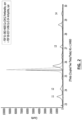
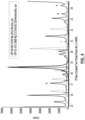
- FIGS. 1 and 2 are graphs of showing results of an X-ray diffraction (XRD) analysis on the crystal of 3-hydroxypropionate of Example 1
- FIGS. 3 and 4 are graphs of showing results of an X-ray diffraction (XRD) analysis on the crystal of 3-hydroxypropionate of Example 2.
- Example 1 a melting point (Tm) of each crystal was confirmed with a differential scanning calorimeter (DSC (Q2000) manufactured by TA Instruments Co., Ltd.).
- DSC differential scanning calorimeter
- a glass transition temperature, a crystallization temperature, etc. were measured in the range of -60 °C to 150 °C at a temperature increasing rate of 10 °C/min.
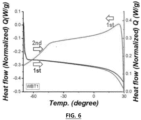
- a glass transition temperature, a crystallization temperature, etc. were measured in the range of -70 °C to 30 °C at a temperature increasing rate of 10 °C/min, and the results are shown in Table 12 below.
- FIG. 5 is a graph of showing results of a differential scanning calorimeter (DSC) analysis on the crystal of 3-hydroxypropionate (Ca(3HP) 2 ) of Example 1
- FIG. 6 is a graph of showing results of a differential scanning calorimeter (DSC) analysis on the crystal of 3-hydroxypropionate (Mg(3HP) 2 ) of Example 2.
- Table 12 Glass transition temperature (Tg, °C) Melting Point (Tm, °C) Crystallization temperature (Tc, °C) Crystallization stable region Metal Example 1 -45 32 30 -40 ⁇ 30 Ca Example 2 -40 155 150 -20 ⁇ 150 Mg
Landscapes
- Chemical & Material Sciences (AREA)
- Organic Chemistry (AREA)
- Engineering & Computer Science (AREA)
- Health & Medical Sciences (AREA)
- Life Sciences & Earth Sciences (AREA)
- Genetics & Genomics (AREA)
- Wood Science & Technology (AREA)
- Zoology (AREA)
- Oil, Petroleum & Natural Gas (AREA)
- Crystallography & Structural Chemistry (AREA)
- Biotechnology (AREA)
- General Engineering & Computer Science (AREA)
- Bioinformatics & Cheminformatics (AREA)
- Microbiology (AREA)
- Biomedical Technology (AREA)
- Biochemistry (AREA)
- General Health & Medical Sciences (AREA)
- Chemical Kinetics & Catalysis (AREA)
- General Chemical & Material Sciences (AREA)
- Biophysics (AREA)
- Plant Pathology (AREA)
- Molecular Biology (AREA)
- Physics & Mathematics (AREA)
- Organic Low-Molecular-Weight Compounds And Preparation Thereof (AREA)
- Manufacturing & Machinery (AREA)
- Medicinal Chemistry (AREA)
- Polymers & Plastics (AREA)
Abstract
Description
- This application is a National Stage Application of International Application No.
PCT/KR2022/000673 filed on January 13, 2022 Korean Patent Applications No. 10-2021-0006246 filed on January 15, 2021 - The present disclosure relates to a crystal of 3-hydroxypropionate and a process of recovering 3-hydroxypropionic acid (3HP). More particularly, it relates to a process of recovering 3-hydroxypropionic acid with crystallization of 3-hydroxypropionate and a crystal of 3-hydroxypropionate formed in this process.
- 3-hydroxypropionic acid (3HP) is a platform compound which can be converted into various chemicals such as acrylic acid, methyl acrylate, acrylamide, etc. 3-hydroxypropionic acid has been actively studied in academic and industrial circles since it was selected as one of top 12 value-added bio-chemicals by the U.S. Department of Energy (DOE) in 2004.
- The production of 3-hydroxypropionic acid is largely performed by two methods: a chemical method and a biological method. However, the chemical method has been criticized that an initial material is expensive and is not eco-friendly because of generating toxic substances during a production process, etc., so an environmentally friendly biological method is in the spotlight.
- In the preparation of organic acids by microbial fermentation, other by-products in addition to organic acids such as 3-hydroxypropionic acid, etc., are also generated in the process of fermenting microorganisms, and thus a process of extracting and separating the organic acids from a fermented solution is required. Electrodialysis, reverse osmosis, solution-organic solvent reaction extraction containing organic acids, and the like are used as a method for extracting and separating organic acids from microbial fermented solution. In particular, a reverse extraction method with sodium hydroxide (NaOH) is widely used due to its high yield. However, these methods result in products in the form of an organic acid salt, and thus have a disadvantage of requiring a process for converting the products into an organic acid and having low purity.
- Unlike other organic acids produced through a fermentation process, 3-hydroxypropionic acid exhibits high hydrophilicity, high solubility and reactivity in water. Accordingly, it is difficult to apply a conventional process of separating and purifying organic acids such as precipitation or extraction.
- The reaction extraction method is a method of extracting an organic acid with an active diluent such as amine or alcohol having good reactivity with the organic acid, and thus is capable of selectively extracting the organic acid and shows relatively high extraction efficiency. Accordingly, an attempt has been made to apply the reaction extraction method to the separation and purification of 3HP, too. As one example, a method of using trioctylamine (TOA) as the amine has been proposed, but there are problems in that a 3HP extraction efficiency is low and a large amount of organic solvent is required. In addition, when tridecylamine is used as the amine, an extraction efficiency of 3HP is higher than that of TOA, but there is a problem of causing an emulsion phenomenon in which an organic phase and an aqueous phase are not separated during extraction.
- Thus, there is a need to develop a process of recovering 3-hydroxypropionic acid with high purity and high yield from a raw material solution containing 3-hydroxypropionic acid, such as a microbial fermented solution, etc.
- In the present disclosure, there are provided a process of recovering 3-hydroxypropionic acid including the step of producing a crystal of 3-hydroxypropionate, and the crystal of 3-hydroxypropionate.
- In the present disclosure, there is provided a process of recovering 3-hydroxypropionic acid including the steps of: forming a crystal of 3-hydroxypropionate in a concentrate containing 3-hydroxypropionic acid in an amount of 300 g/L or more in the presence of an alkali metal salt; and separating the crystal of 3-hydroxypropionate from the concentrate and converting it into 3-hydroxypropionic acid.
- In the present disclosure, there is also provided a crystal of 3-hydroxypropionate of
Structural formula 1 orStructural formula 2 below:
[Structural formula 1] Cation(3HP)n
[Structural formula 2] Cation(3HP)n·mH2O
- wherein the Cation is a cation,
- the 3HP is 3-hydroxypropionic acid bonding to the cation;
- the n is a number of 3HPs bonding to the cation, which is an integer of 1 or more; and
- the m is a number of water molecules in a hydrate, which is an integer of 1 or more.
- Hereinafter, the process of recovering 3-hydroxypropionic acid and the crystal of 3-hydroxypropionate according to specific embodiments of the present invention will be described in more detail.
- With regard to the steps constituting the preparation method described in this specification, it is not interpreted that one step and another step constituting one preparation method are limited to the order described in the specification, unless those steps are described to be sequential or consecutive or particularly mentioned otherwise. Accordingly, the order of the constituent steps of the preparation method can be changed within a range that can be easily understood by those skilled in the art, and in this case, accompanying changes apparent to those skilled in the art are included in the scope of the present disclosure.
- According to one embodiment of the present disclosure, provided is a process of recovering 3-hydroxypropionic acid including the steps of: forming a crystal of 3-hydroxypropionate in a concentrate containing 3-hydroxypropionic acid in an amount of 300 g/L or more in the presence of an alkali metal salt; and separating the crystal of 3-hydroxypropionate from the concentrate and converting it into 3-hydroxypropionic acid.
- The present inventors have confirmed through an experiment that crystals of 3-hydroxypropionate can be formed when 3-hydroxypropionic acid is enriched at a high concentration in the presence of an alkali metal salt, and have also confirmed through an experiment that the resulting crystals of 3-hydroxypropionate can be easily separated (and purified) from a liquid phase, and thus 3-hydroxypropionate can be recovered with high purity and high efficiency, thereby completing the present invention.
- More specifically, a concentrate containing the 3-hydroxypropionic acid can include 3-hydroxypropionic acid at a concentration of 300 g/L or more, 350 g/L or more, 400 g/L or more, 450 g/L or more, or 500 g/L or more, and 900 g/L or less, 850 g/L or less, or 800 g/L or less.
- It appears that the generation of the crystal of 3-hydroxypropionic acid is affected by the presence of an alkali metal salt, the concentration of 3-hydroxypropionic acid in the concentrate, and the like.
- In addition, when the concentration of the crystal of 3-hydroxypropionic acid in the concentrate is higher than a water solubility of the crystal of 3-hydroxypropionic acid, the crystal of 3-hydroxypropionic acid can be more easily produced.
- For example, the water solubility of Ca(3HP)2, which is the crystal of 3-hydroxypropionic acid, is 450 g/L at room temperature, and thus when the concentration of 3-hydroxypropionic acid in the concentrate exceeds 450 g/L, the generation of Ca(3HP)2 crystals can be promoted. In addition, the water solubility of Mg(3HP)2, which is the crystal of 3-hydroxypropionic acid, is 250 g/L at room temperature, and thus when the concentration of 3-hydroxypropionic acid in the concentrate exceeds 250 g/L, the generation of Mg(3HP)2 crystals can be promoted.
- The crystal of 3-hydroxypropionate can be formed from the concentrate that satisfies the above-mentioned concentration while containing the alkali metal salt, and the alkali metal salt can be selected without limitation within the appropriate range for forming the crystal of 3-hydroxypropionate. For example, the alkali metal salt can include one or more cations selected from the group consisting of Na+, Mg2+ and Ca2+, but when Mg2+ or Ca2+ is included, the crystal of 3-hydroxypropionate can be more effectively formed. For example, the alkali metal salt can be Ca(OH)2, Mg(OH)2 or a mixture thereof.
- The alkali metal salt can be added and remain in the process of producing the fermented solution of 3-hydroxypropionic acid, or can be added during the process of forming a crystal of 3-hydroxypropionic acid in a concentrate containing the 3-hydroxypropionic acid in an amount of 300 g/L or more. In addition, the concentration of the alkali metal salt can be 10% to 100%, or 30% to 90% of the concentration of 3-hydroxypropionic acid and, for example, can be present in the concentrate at a concentration of 10 to 900 g/L, 50 to 800 g/L, 100 to 700 g/L, or 200 to 600 g/L.
- The crystal of 3-hydroxypropionate can be in the form of
Structural formula Structural formula - In
Structural formulas structural formula 2 below, m can represent a number of water molecules bonding to Cation(3HP)n in a hydrate, which is an integer of 1 or more. The cation can be, for example, Na+, Mg2+, or Ca2+, but in the case of Mg2+ or Ca2+, the crystal of 3-hydroxypropionate can be more effectively formed.
[Structural formula 1] Cation(3HP)n
[Structural formula 2] Cation(3HP)n·mH2O
- In addition, the step of forming of the crystal of 3-hydroxypropionate can further include the step of stirring the concentrate.
- The stirring step can be performed at 0 to 70 °C, 0 to 60 °C, 0 to 50 °C, 0 to 40 °C, 0 to 35 °C, 0 to 30 °C, 10 to 70 °C, 10 to 60 °C, 10 to 50 °C, 10 to 40 °C, 10 to 35 °C, 10 to 30 °C, 15 to 70 °C, 15 to 60 °C, 15 to 50 °C, 15 to 40 °C, 15 to 35 °C, 15 to 30 °C, 20 to 70 °C, 20 to 60 °C, 20 to 50 °C, 20 to 40 °C, 20 to 35 °C, or 20 to 30 °C (e.g., at room temperature) and/or 100 to 2000 rpm, 100 to 1500 rpm, 100 to 1000 rpm, 100 to 500 rpm, 100 to 400 rpm, or 200 to 400 rpm (e.g., about 300 rpm).
- The crystal of 3-hydroxypropionate can have a particle size distribution D50 of 20 µm or more and 90 µm or less, 25 µm or more and 85 µm or less, 30 µm or more and 80 µm or less, or 35 µm or more and 75 µm or less.
- In addition, the crystal of 3-hydroxypropionate can have a particle size distribution D10 of 5 µm or more and 40 µm or less, 8 µm or more and 35 µm or less, or 10 µm or more and 30 µm or less, and the crystal of 3-hydroxypropionate can have a particle size distribution D90 of 50 µm or more and 200 µm or less, 60 µm or more and 190 µm or less, 65 µm or more and 180 µm or less, or 70 µm or more and 175 µm or less.
- The particle size distributions D50, D10, and D90 can refer to particle diameters corresponding to 50%, 10%, and 90% of a volume accumulation in the particle size distribution curve of the particles, respectively, and the D50, D10, and D90 can be measured, for example, by using a laser diffraction method. In general, the laser diffraction method can measure a particle diameter of several mm from a submicron region, and can obtain results of high reproducibility and high resolution.
- If the crystal of 3-hydroxypropionate has excessively large particle size distributions D50, D10, and D90, impurities to be removed during crystallization can be included in the crystal, resulting in poor purification efficiency. If the particle size distributions are excessively small, the crystal of 3-hydroxypropionate can have low permeability during filtration of the crystals.
- Meanwhile, the crystal of 3-hydroxypropionate can have (D90-D10)/D50 of 1.00 or more and 3.00 or less, 1.20 or more and 2.80 or less, 1.40 or more and 2.60 or less, or 1.60 or more and 2.40 or less.
- In addition, the crystal of 3-hydroxypropionate can have a mean diameter of volume distribution of 30 µm or more and 100 µm or less, 35 µm or more and 95 µm or less, or 40 µm or more and 90 µm or less, a mean diameter of number distribution of 1 µm or more and 30 µm or less, 3 µm or more and 25 µm or less, or 5 µm or more and 20 µm or less, and a mean diameter of area distribution of 10 µm or more and 70 µm or less, 15 µm or more and 60 µm or less, or 20 µm or more and 55 µm or less.
- If the crystal of 3-hydroxypropionate has excessively large mean diameters of the volume distribution, number distribution, and area distribution, impurities to be removed during crystallization can be included in the crystal, resulting in poor purification efficiency. If the crystal have excessively small mean diameters of the volume distribution, number distribution, and area distribution, the crystal of 3-hydroxypropionate can have low permeability during filtration of the crystals.
- In addition, the crystal of 3-hydroxypropionate can have an aspect ratio (LW Ratio; length to width ratio) and an average aspect ratio of 0.50 or more and 3.00 or less, 0.70 or more and 2.80 or less, or 1.00 or more and 2.50 or less, respectively, in the particle size distributions (D10, D50, D90). If the crystal of 3-hydroxypropionate has an excessively large aspect ratio, a problem can occur to flowability and clogging during transport of the crystals, and if he crystals have an excessively small aspect ratio, permeability can be lowered during filtration of the crystals.
- With regard to the crystal of 3-hydroxypropionate, a moisture content contained in the crystal can be measured by the Karl Fischer method, and the moisture content contained in the crystal of 3-hydroxypropionate can be 200 ppm or more and 5000 ppm or less, 250 ppm or more and 4800 ppm or less, 300 ppm or more and 4600 ppm or less, or 350 ppm or more and 4400 ppm or less.
- In this case, the moisture contained in the crystal of 3-hydroxypropionate can refer to the attached moisture contained between the crystals rather than the crystal moisture (for example, Ca(3HP)2·2H2O). In addition, if a moisture content contained in the crystal of 3-hydroxypropionate is too large, the crystal can be recovered in the form of slurry rather than a crystalline solid, or impurities can be contained in the moisture, which can cause a problem in that it reduces an improvement in purity.
- In the process of recovering 3-hydroxypropionic acid according to above one embodiment, the crystal of 3-hydroxypropionate can include a radioactive isotope (14C) as 3-hydroxypropionic acid is prepared through a process of fermenting a strain having a capacity to produce 3-hydroxypropionic acid, etc., as described below.
- The radioactive isotope (14C) can be nearly one per 1012 carbon atoms in the earth's atmosphere and have a half-life of about 5,700 years, and a carbon stock can be abundant in an upper atmosphere due to a nuclear reaction involving cosmic rays and common nitrogen (14N). Meanwhile, in fossil fuels, radioactive isotopes have decayed long ago and thus a 14C ratio can be substantially zero. When bio-derived raw materials are used as a raw material for 3-hydroxypropionic acid or when fossil fuels are used together, a content of radioactive carbon isotopes contained in 3-hydroxypropionic acid (percent modern carbon; pMC) and a content of biocarbon can be measured according to ASTM D6866-21 standard.
- For example, carbon atoms included in the compound to be measured can be made into the form of graphite or carbon dioxide gas, and then measured with a mass spectrometer, or according to a liquid scintillation spectroscopy. In this case, two isotopes can be separated with an accelerator for separating 14C ions from 12C ions together with the mass spectrometer, etc., and thus the content and content ratio can be measured with a mass spectrometer.
- The crystal of 3-hydroxypropionate can have a radioactive isotope content of 20 pMC (percent modern carbon) or more, 50 pMC or more, 90 pMC or more, or 100 pMC or more as measured by ASTM D6866-21 standard, and can have a biocarbon content of 20 wt% or more, 50 wt% or more, 80 wt% or more, 90 wt% or more, or 95 wt% or more.
- The radioactive isotope ratio (pMC) can refer to a ratio of the radioactive isotope (14C) contained in the crystal of 3-hydroxypropionate and the radioactive isotope (14C) of the modern reference material, in which the effectiveness of a nuclear test program in the 1950s is continuing and not extinguished, and thus can be greater than 100%.
- In addition, the biocarbon content can refer to the content of biocarbon with respect to a total carbon content included in the crystal of 3-hydroxypropionate, and a higher value can correspond to an eco-friendly compound.
- Meanwhile, if the crystal of 3-hydroxypropionate has an excessively small content of radioactive isotopes (pMC) and biocarbons, eco-friendliness can be reduced and may not be regarded as a bio-derived material.
- The crystal state of the crystal of 3-hydroxypropionate can be confirmed through a peak, etc., in an X-ray diffraction (XRD) graph.
- For example, the crystal of 3-hydroxypropionate can show a peak between crystal lattices in a 2θ range of 8 to 22° in an X-ray diffraction (XRD) analysis.
- For example, when the crystal of 3-hydroxypropionate to be formed is Mg(3HP)2 due to magnesium hydroxide (Mg(OH)2) contained in the concentrate, a peak between crystal lattices caused by a bond between 3-hydroxypropionic acid and magnesium can appear in the 2θ range of 8 to 15° in an X-ray diffraction (XRD) analysis for Mg(3HP)2. This peak can indicate a result different from the result of X-ray diffraction (XRD) analysis for magnesium hydroxide (Mg(OH)2) or magnesium sulfate (Mg(SO4)). If a specific peak appears in the 2θ range of 8 to 15° as a result of X-ray diffraction (XRD) analysis, it can be confirmed that a crystal of Mg(3HP)2 is formed.
- Specifically, at least three, at least four or at least five peaks can appear in the 2θ range of 8 to 15° in an X-ray diffraction (XRD) analysis for Mg(3HP)2. For example, each peak can appear in the 2θ range of 8.2 to 9.3°, 9.5 to 11.0°, 11.2 to 12.7°, 12.9 to 13.3°, or 13.5 to 14.8°.
- In addition, when the crystal of 3-hydroxypropionate to be formed is Ca(3HP)2 due to calcium hydroxide (Ca(OH)2) contained in the concentrate, a peak between crystal lattices caused by a bond between 3-hydroxypropionic acid and calcium can appear in the 2θ range of 10 to 22° in an X-ray diffraction (XRD) analysis for Ca(3HP)2. This peak can indicate a result different from the result of X-ray diffraction (XRD) analysis for calcium hydroxide (Ca(OH)2) or calcium sulfate (Ca(SO4)). If a specific peak appears in the 2θ range of 10 to 22° as a result of X-ray diffraction (XRD) analysis, it can be confirmed that a crystal of Ca(3HP)2 is formed.
- Specifically, at least three, at least five, at least seven, or at least nine peaks can appear in the 2θ range of 10.0 to 22°in an X-ray diffraction (XRD) analysis for Ca(3HP)2. For example, each peak can appear in the 2θ range of 10.0 to 11.0°, 11.1 to 11.6°, 11.6 to 12.5°, 12.7 to 13.6°, 13.8 to 16.0°, 17.0 to 18.0°, 19.0 to 19.8°, 20.2 to 21.2°, or 21.5 to 22.0°.
- Meanwhile, the incident angle (θ) can refer to an angle between a crystal plane and X-rays when X-rays are irradiated to a specific crystal plane. As a two-fold value (2θ) of the incident angle in X-rays, which is a horizontal axis (x axis), increases in a positive direction in a graph in which a horizontal axis (x axis) on an x-y plane is a two-fold value (2θ) of the incident angle in X-rays and a vertical axis (y axis) on an x-y plane is diffraction intensity, the peak can refer to a point where a first differential value of a two-fold (2θ) value of the incident angle in X-rays, which is a horizontal axis (x axis), for diffraction intensity, which is a vertical axis (y axis), is changed from a positive value to a negative value and the first differential value (slope of the tangent line, dy/dx) becomes zero.
- In addition, the crystal of 3-hydroxypropionate can have an interatomic spacing (d value) of 1.00 Å or more and 15.00 Å or less, 1.50 Å or more and 13.00 Å or less, 2.00 Å or more and 11.00 Å or less, or 2.50 Å or more and 10.00 Å or less in a crystal derived from X-ray diffraction (XRD) analysis.
- For example, when the crystal of 3-hydroxypropionate is Mg(3HP)2, a peak shown in the 2θ range of 8 to 15° can have an interatomic spacing (d value) of 1.00 Å or more and 15.00 Å or less, 2.00 Å or more and 13.00 Å or less, 4.00 Å or more and 11.00 Å or less, or 5.50 Å or more and 10.00 Å or less in a crystal.
- In addition, when the crystal of 3-hydroxypropionate is Ca(3HP)2, a peak shown in the 2θ range of 10 to 22° can have an interatomic spacing (d value) of 1.00 Å or more and 15.00 Å or less, 2.00 Å or more and 13.00 Å or less, 3.00 Å or more and 10.00 Å or less, 3.40 Å or more and 9.00 Å or less, or 4.00 Å or more and 8.50 Å or less in a crystal.
- Furthermore, the crystal of 3-hydroxypropionate can have a glass transition temperature of -55 °C or more and -30 °C or less, a melting point of 30 °C or more and 170 °C or less, and a crystallization temperature of 25 °C or more and 170 °C or less.
- With regard to the crystal of 3-hydroxypropionate, the glass transition temperature, melting point, and crystallization temperature can be measured by differential scanning calorimetry (DSC), and a temperature increasing rate can be 1 to 20 °C/min when measured. In addition, the crystal of 3-hydroxypropionate can have a glass transition temperature of -55 °C or more and -30 °C or less, -50 °C or more and -35 °C or less, or -45 °C or more and - 40 °C or less. Furthermore, the crystal of 3-hydroxypropionate can have a melting point of 30 °C or more and 170 °C or less, 31 °C or more and 160 °C or less, or 32 °C or more and 150 °C or less. Moreover, the crystal of 3-hydroxypropionate can have a crystallization temperature of 25 °C or more and 170 °C or less, 27 °C or more and 160 °C or less, or 30 °C or more and 150 °C or less. Besides, the crystal of 3-hydroxypropionate can have a crystallization stable region of -40 °C to 150 °C.
- The process of recovering 3-hydroxypropionic acid according to the embodiment can include the steps of producing a fermented solution of 3-hydroxypropionic acid by fermenting a strain having a capacity to produce 3-hydroxypropionic acid; and forming a concentrate containing 3-hydroxypropionic acid in an amount of 300 g/L or more by concentrating the fermented solution before the step of producing the crystal of 3-hydroxypropionate.
- The strain having a 3-hydroxypropionic acid-producing capacity can include a gene encoding at least one or two proteins selected from the group consisting of glycerol dehydratase and aldehyde dehydrogenase.
- In one example, the 3-hydroxypropionic acid-producing strain can further include a gene (gdrAB) encoding a glycerol dehydratase reactivating enzyme (GdrAB). In one example, the 3-hydroxypropionic acid-producing strain can be a strain capable of additionally biosynthesizing vitamin B12.
- The glycerol dehydratase can be encoded by a dhaB (GenBank accession no. U30903.1) gene, but is not limited thereto. The dhaB gene can be an enzyme derived from Klebsiella pneumonia, but is not limited thereto. The gene encoding the glycerol dehydratase can include a gene encoding dhaB1, dhaB2 and/or dhaB3. The glycerol dehydratase protein and the gene encoding the same can have a mutation of a gene and/or amino acid sequence within a range of maintaining an enzyme activity for decomposing glycerol into 3-hydroxypropanal (3-HPA) and water (H2O).
- The gene (aldH) encoding the aldehyde dehydrogenase (ALDH) can be, for example, aldH (GenBank Accession no. U00096.3; EaldH) gene derived from Escherichia coli or E. coli K12 MG1655 cell line, puuC gene derived from K. pneumoniae, and/or KGSADH gene derived from Azospirillum brasilense, but is not limited thereto. The aldehyde dehydrogenase protein and the gene encoding the same can have a mutation of a gene and/or amino acid sequence within a range of maintaining an activity for producing 3-hydroxypropionic acid from 3-hydroxypropanal.
- A medium for producing the fermented solution can be selected without limitation in the appropriate range for producing 3-hydroxypropionic acid. In one example, the medium can include glycerol as a carbon source. In another example, the medium can be crude glycerol and/or pre-treated crude glycerol, but is not limited thereto. In one example, the medium for production can further include vitamin B12.
- In the step of producing a 3-hydroxypropionic acid fermented solution by fermenting the strain having a capacity to produce 3-hydroxypropionic acid, the concentration of 3-hydroxypropionic acid contained in the 3-hydroxypropionic acid fermented solution can be 1 to 200 g/L, 10 to 150 g/L, 30 to 130 g/L, or 40 to 100 g/L.
- In addition, the fermentation can be neutral fermentation, and the pH can be maintained in the range of 6 to 8, 6.5 to 8, 6 to 7.5, or 6.5 to 7.5 during fermentation, but is not limited thereto. The pH range can be appropriately adjusted as necessary. The alkali metal salt can be added for the neutral fermentation. The alkali metal salt can include Mg2+, Ca2, or a mixture thereof. In addition, the alkali metal salt can be Ca(OH)2 or Mg(OH)2, but is not limited thereto.
- The process of recovering 3-hydroxypropionic acid according to the embodiment can further include the steps of: after producing the 3-hydroxypropionic acid fermented solution, removing (separating) cells from the fermented solution; purifying and/or decolorizing the fermented solution and/or the fermented solution without the cells; and filtering the fermented solution and/or the fermented solution without the cells.
- The removal (separation) of the cells can be performed by selecting a method known in the art without limitation within the appropriate range of removing the cells (strains). In one example, the separation of the cells can be performed by centrifugation.
- The purifying and/or decolorizing of the fermented solution and/or the fermented solution without the cells can be performed by selecting a method known in the art without limitation within the appropriate scope of purifying the fermented solution and, for example, can be performed by removing the activated carbon after mixing with the fermented solution, but is not limited thereto.
- The filtering of the fermented solution and/or the fermented solution without the cells can be performed by selecting a method known in the art without limitation within the appropriate scope of removing solid impurities, removing proteins and/or materials with hydrophobic functional groups, and/or decoloration and, for example, can be performed by filter filtration, and/or activated carbon filtration method, but is not limited thereto.
- The process of recovering 3-hydroxypropionic acid according to the embodiment can include the step of forming a concentrate containing 3-hydroxypropionic acid in an amount of 300 g/L or more by concentrating the fermented solution after producing a 3-hydroxypropionic acid fermented solution by fermenting the strain having a capacity to produce 3-hydroxypropionic acid.
- Concentration of the fermented solution can be performed by evaporating the fermented solution (e.g., a liquid component of the fermented solution).
- The concentration can be performed by any means commonly available to evaporate the liquid component of the fermented solution, for example, concentration by rotary evaporation, concentration by evaporation, vacuum concentration, concentration under reduced pressure, etc., but is not limited thereto.
- In one example, the concentration of 3-hydroxypropionic acid in the fermented solution after concentration can be increased 2 to 50 times, 2 to 40 times, 2 to 30 times, 2 to 20 times, 2 to 10 times, 5 to 50 times, 5 to 40 times, 5 to 30 times, 5 to 20 times, or 5 to 10 times compared to before concentration.
- As described above, after concentrating the fermented solution to form a concentrate containing 3-hydroxypropionic acid in an amount of 300 g/L or more, the crystal of 3-hydroxypropionate can be formed in a concentrate containing 3-hydroxypropionic acid in an amount of 300 g/L or more in the presence of an alkali metal salt.
- In addition, after forming the crystal of 3-hydroxypropionate, it is possible to separate the crystal of 3-hydroxypropionate from the concentrate and convert it into 3-hydroxypropionic acid.
- Separating the crystal of 3-hydroxypropionate from the concentrate can be performed by selecting a method known in the art to which the present disclosure pertains without limitation within the appropriate range of separating crystals. In one example, the recovery of the crystal of 3-hydroxypropionate can be performed by drying (e.g., drying by heating, etc.) and/or filtration, but is not limited thereto.
- In addition, converting (purifying) the separated crystal of 3-hydroxypropionate into 3-hydroxypropionic acid can be performed by selecting a method known in the art without limitation within the appropriate scope of purifying 3-hydroxypropionic acid. For example, at least one of the methods listed below can be used, but is not limited thereto.
- For example, there can be i) a method of protonating 3-hydroxypropionic acid by removing cations through a cation exchange resin;
- ii) a method of protonating 3-hydroxypropionic acid by extracting cations (e.g., Mg, Ca, etc.) with an organic solvent by using liquid cation exchange; and
- iii) a method of protonating 3-hydroxypropionic acid by titration with an acid (e.g., sulfuric acid, etc.) to prepare a salt (e.g., CaSO4(s) or MgSO4(s)).
- In the process of recovering 3-hydroxypropionic acid (3HP) according to the embodiment, the recovery rate of 3-hydroxypropionic acid can be calculated by the
equation 1 below.3HP recovery rate (%) = {(3HP content in crystal) / (3HP content in fermented solution before crystallization)} * 100 - In one example, the recovery rate of 3-hydroxypropionic acid in the process of recovering 3-hydroxypropionic acid provided by the present disclosure can be 40% or more, 50% or more, 60% or more, 70% or more, 80% or more, or 90% or more, for example, 40 to 99.9%, 50 to 99.9%, 60 to 99.9%, 70 to 99.9%, 80 to 99.9%, 90 to 99.9%, 40 to 99%, 50 to 99%, 60 to 99%, 70 to 99%, 80 to 99%, 90 to 99%, 40 to 97%, 50 to 97%, 60 to 97%, 70 to 97%, 80 to 97%, 90 to 97%, 40 to 95%, 50 to 95%, 60 to 95%, 70 to 95%, 80 to 95%, or 90 to 95%, but is not limited thereto. The recovery rate can be calculated based on weight.
- In addition, in the process of recovering 3-hydroxypropionic acid (3HP), the purity of 3-hydroxypropionate contained in the crystal of 3-hydroxypropionate can be calculated as a percentage (%) of the mass of a compound having the above
structural formula 1 and/or 2 to the mass of the total recovered crystals. In one example, in the process of recovering 3-hydroxypropionic acid provided by the present disclosure, the purity of 3-hydroxypropionate contained in the crystal of 3-hydroxypropionate to be produced can be 70% or more, 80% or more, 90% or more, 70 to 99.9%, 80 to 99.9%, 90 to 99.9%, 70 to 99%, 80 to 99%, or 90 to 99%, but is not limited thereto. - According to another embodiment of the present disclosure, provided is a crystal of 3-hydroxypropionate of
Structural formula
[Structural formula 1] Cation(3HP)n
[Structural formula 2] Cation(3HP)n·mH2O
- In
Structural formulas Structural formula 2, m can represent a number of water molecules bonding to Cation(3HP) in a hydrate, which can be an integer of 1 or more. The cation can be, for example, Na+, Mg2+, or Ca2+, but in the case of Mg2+ or Ca2+, the crystal of 3-hydroxypropionate can be more effectively formed. - The crystal of 3-hydroxypropionate can be formed in the process of recovering 3-hydroxypropionic acid according to the embodiment and, for example, can be formed in the forming of the crystal of 3-hydroxypropionate in the concentrate containing 3-hydroxypropionic acid in an amount of 300 g/L or more in the presence of the alkali metal salt.
- The crystal of 3-hydroxypropionate can have a particle size distribution D50 of 20 µm or more and 90 µm or less, 25 µm or more and 85 µm or less, 30 µm or more and 80 µm or less, or 35 µm or more and 75 µm or less, a particle size distribution D10 of 5 µm or more and 40 µm or less, 8 µm or more and 35 µm or less, or 10 µm or more and 30 µm or less, and a particle size distribution D90 of 50 µm or more and 200 µm or less, 60 µm or more and 190 µm or less, 65 µm or more and 180 µm or less, or 70 µm or more and 175 µm or less.
- In addition, the crystal of 3-hydroxypropionate can have (D90-D10)/D50 of 1.00 or more and 3.00 or less, 1.20 or more and 2.80 or less, 1.40 or more and 2.60 or less, or 1.60 or more and 2.40 or less.
- Furthermore, the crystal of 3-hydroxypropionate can have a mean diameter of volume distribution of 30 µm or more and 100 µm or less, 35 µm or more and 95 µm or less, or 40 µm or more and 90 µm or less, a mean diameter of number distribution of 1 µm or more and 30 µm or less, 3 µm or more and 25 µm or less, or 5 µm or more and 20 µm or less, and a mean diameter of area distribution of 10 µm or more and 70 µm or less, 15 µm or more and 60 µm or less, or 20 µm or more and 55 µm or less.
- In addition, the crystal of 3-hydroxypropionate can have an aspect ratio (LW Ratio; length to width ratio) and an average aspect ratio of 0.50 or more and 3.00 or less, 0.70 or more and 2.80 or less, or 1.00 or more and 2.50 or less, respectively, in the particle size distributions (D10, D50, D90).
- A moisture content contained in the crystal of 3-hydroxypropionate can be 200 ppm or more and 5000 ppm or less, 250 ppm or more and 4800 ppm or less, 300 ppm or more and 4600 ppm or less, or 350 ppm or more and 4400 ppm or less.
- The crystal of 3-hydroxypropionate can have a radioactive isotope content of 20 pMC (percent modern carbon) or more, 50 pMC or more, 90 pMC or more, or 100 pMC or more as measured by ASTM D6866-21 standard, and can have a biocarbon content of 20 wt% or more, 50 wt% or more, 80 wt% or more, 90 wt% or more, or 95 wt% or more.
- In addition, the crystal of 3-hydroxypropionate can have a peak between crystal lattices in the 2θ range of 8 to 22° in an X-ray diffraction (XRD) analysis and can have an interatomic spacing (d value) of 1.00 Å or more and 15.00 Å or less, 1.50 Å or more and 13.00 Å or less, 2.00 Å or more and 11.00 Å or less, or 2.50 Å or more and 10.00 Å or less in a crystal derived from XRD analysis.
- Furthermore, the crystal of 3-hydroxypropionate can have a glass transition temperature of -55 °C or more and -30 °C or less, a melting point of 30 °C or more and 170 °C or less, and a crystallization temperature of 25 °C or more and 170 °C or less.
- Moreover, the 3-hydroxypropionate included in the crystal of 3-hydroxypropionate can have a purity of 70% or more, 80% or more, 90% or more, 70 to 99.9%, 80 to 99.9%, 90 to 99.9%, 70 to 99%, 80 to 99%, or 90 to 99%.
- In addition, with regard to the above-mentioned crystal of 3-hydroxypropionate, conditions for measuring the particle size distributions D10, D50, D90, (D90-D10)/D50, mean diameters of the volume distribution, number distribution and area distribution, aspect ratio and average aspect ratio in the particle size distribution (D10, D50, D90), moisture content, radioactive isotope content, biocarbon content, XRD analysis results (interatomic spacing in crystal (d value), peak shown in a specific 2θ range), glass transition temperature, melting point, crystallization temperature, purity, and the like can be the same as those described above in the process of recovering 3-hydroxypropionic acid according to the embodiment.
- According to another embodiment of the present disclosure, provided is the crystal of 3-hydroxypropionate which includes an alkali metal salt of 3-hydroxypropionic acid or a hydrate thereof, and has a biocarbon content of 20 wt% or more as measured by ASTM D6866-21 standard.
- The alkali metal salt of 3-hydroxypropionic acid can be a calcium salt or magnesium salt of 3-hydroxypropionic acid.
- In addition, the alkali metal salt of 3-hydroxypropionic acid can be of
Structural formula 1 below, and the hydrate of alkali metal salt of 3-hydroxypropionic acid can be ofStructural formula 2 below. The following Cation can be Mg2+ or Ca2+.
[Structural formula 1] Cation(3HP)n
[Structural formula 2] Cation(3HP)n·mH2O
- In addition, the crystal of 3-hydroxypropionate can have a radioactive isotope content of 20 pMC (percent modern carbon) or more, 50 pMC or more, 90 pMC or more, or 100 pMC or more as measured by ASTM D6866-21 standard, and can have a biocarbon content of 20 wt% or more, 50 wt% or more, 80 wt% or more, 90 wt% or more, or 95 wt% or more.
- Furthermore, the crystal of 3-hydroxypropionate can have a mean diameter of volume distribution of 30 µm or more and 100 µm or less, 35 µm or more and 95 µm or less, or 40 µm or more and 90 µm or less, a mean diameter of number distribution of 1 µm or more and 30 µm or less, 3 µm or more and 25 µm or less, or 5 µm or more and 20 µm or less, and a mean diameter of area distribution of 10 µm or more and 70 µm or less, 15 µm or more and 60 µm or less, or 20 µm or more and 55 µm or less.
- Moreover, the crystal of 3-hydroxypropionate can have an aspect ratio (LW Ratio; length to width ratio) and an average aspect ratio of 0.50 or more and 3.00 or less, 0.70 or more and 2.80 or less, or 1.00 or more and 2.50 or less, respectively, in the particle size distributions (D10, D50, D90).
- The crystal of 3-hydroxypropionate can have a particle size distribution D50 of 20 µm or more and 90 µm or less, 25 µm or more and 85 µm or less, 30 µm or more and 80 µm or less, or 35 µm or more and 75 µm or less, a particle size distribution D10 of 5 µm or more and 40 µm or less, 8 µm or more and 35 µm or less, or 10 µm or more and 30 µm or less, and a particle size distribution D90 of 50 µm or more and 200 µm or less, 60 µm or more and 190 µm or less, 65 µm or more and 180 µm or less, or 70 µm or more and 175 µm or less.
- In addition, the crystal of 3-hydroxypropionate can have (D90-D10)/D50 of 1.00 or more and 3.00 or less, 1.20 or more and 2.80 or less, 1.40 or more and 2.60 or less, or 1.60 or more and 2.40 or less.
- A moisture content contained in the crystal of 3-hydroxypropionate can be 200 ppm or more and 5000 ppm or less, 250 ppm or more and 4800 ppm or less, 300 ppm or more and 4600 ppm or less, or 350 ppm or more and 4400 ppm or less.
- In addition, the crystal of 3-hydroxypropionate can have a peak between crystal lattices in the 2θ range of 8 to 22° in an X-ray diffraction (XRD) analysis and can have an interatomic spacing (d value) of 1.00 Å or more and 15.00 Å or less, 1.50 Å or more and 13.00 Å or less, 2.00 Å or more and 11.00 Å or less, or 2.50 Å or more and 10.00 Å or less in a crystal derived from XRD analysis.
- Furthermore, the crystal of 3-hydroxypropionate can have a glass transition temperature of -55 °C or more and -30 °C or less, a melting point of 30 °C or more and 170 °C or less, and a crystallization temperature of 25 °C or more and 170 °C or less.
- Moreover, the 3-hydroxypropionate included in the crystal of 3-hydroxypropionate can have a purity of 70% or more, 80% or more, 90% or more, 70 to 99.9%, 80 to 99.9%, 90 to 99.9%, 70 to 99%, 80 to 99%, or 90 to 99%.
- With regard to the above-mentioned crystal of 3-hydroxypropionate, conditions for measuring the particle size distributions D10, D50, D90, (D90-D10)/D50, mean diameters of the volume distribution, number distribution and area distribution, aspect ratio and average aspect ratio in the particle size distribution (D10, D50, D90), moisture content, radioactive isotope content, biocarbon content, XRD analysis results (interatomic spacing in crystal (d value), peak shown in a specific 2θ range), glass transition temperature, melting point, crystallization temperature, purity, and the like as well as detailed description thereof can be the same as those described above in the process of recovering 3-hydroxypropionic acid according to the embodiment.
- The crystal of 3-hydroxypropionate provided by the present disclosure can include 3-hydroxypropionate with high purity and have a specific particle size or shape, thereby facilitating a filtration from impurities such as fermentation by-products, and/or additives. In addition, the process of recovering (separating, purifying) 3-hydroxypropionic acid can easily separate fermentation by-products and/or additives through the crystallization of 3-hydroxypropionate, and thus 3-hydroxypropionate can be recovered with high purity and the process can be performed without an organic solvent to simplify the process of separating and purifying 3-hydroxypropionic acid, thereby reducing the cost of purifying 3-hydroxypropionic acid.
-
-
FIGS. 1 and2 are graphs of showing results of an X-ray diffraction (XRD) analysis on the crystal of 3-hydroxypropionate (Ca(3HP)2) of Example 1. -
FIGS. 3 and4 are graphs of showing results of an X-ray diffraction (XRD) analysis on the crystal of 3-hydroxypropionate (Mg(3HP)2) of Example 2. -
FIG. 5 is a graph of showing results of a differential scanning calorimetry (DSC) analysis on the crystal of 3-hydroxypropionate (Ca(3HP)2) of Example 1. -
FIG. 6 is a graph of showing results of a differential scanning calorimetry (DSC) analysis on the crystal of 3-hydroxypropionate (Mg(3HP)2) of Example 2. - Hereinafter, the present disclosure will be described in more detail with reference to examples. However, the following examples are provided only for the purpose of illustrating the present disclosure, and thus the scope of the present disclosure is not limited thereto.
- In this disclosure, all temperatures are described in degrees Celsius unless otherwise specified.
- Prepared was a recombinant vector incorporating a gene encoding glycerol dehydratase and aldehyde dehydrogenase, which are known to produce 3-hydroxypropionic acid (3HP) using glycerol as a substrate. The prepared recombinant vector was introduced into the E. coli W3110 strain to prepare a 3-hydroxypropionic acid-producing strain.
- More specifically, pCDF_J23101_dhaB_gdrAB_J23100_aldH_btuR vector, obtained by cloning BtuR gene encoding adenosyltransferase into plasmid pCDF including a gene (dhaB) encoding glycerol dehydratase, a gene (aldH) encoding aldehyde dehydrogenase and a gene (gdrAB) encoding glycerol dehydratase reactivase, was introduced into W3110 strain (KCCM 40219) by electroporation using an electroporation device (Bio-Rad, Gene Pulser Xcell) to prepare a 3-hydroxypropionic acid-producing strain. The process of preparing the 3-hydroxypropionic acid-producing strain of this Preparation Example 1, and the vectors, primers and enzymes used were performed with reference to Example 1 of
Korean Patent Publication No. 10-2020-0051375 - The strain for producing 3-hydroxypropionic acid prepared in Preparation Example 1 was fermented and cultured at 35 °C in a 5 L fermenter by using unrefined glycerol as a carbon source, so as to produce 3-hydroxypropionic acid. In order to prevent a decrease in pH due to the production of 3-hydroxypropionic acid, calcium hydroxide (Ca(OH)2), an alkali metal salt, was added to maintain a neutral pH during fermentation.
- After fermentation culture, cells were removed by centrifugation (4000 rpm, 10 minutes, 4 °C), and primary fermented solution purification (primary purification) was performed by using activated carbon. Specifically, activated carbon was added to the fermented solution, from which the cells were removed by centrifugation, mixed well, and then centrifuged again to separate the activated carbon. After that, the fermented solution, from which the activated carbon was separated, was filtered through a 0.7 µm filter paper with a vacuum pump to purify the 3-hydroxypropionic acid fermented solution.
- The concentration of 3-hydroxypropionic acid in the fermented solution obtained after the primary purification was at a level of 50 to 100 g/L, and the fermented solution was concentrated at a concentration of 600 g/L using a rotary evaporator (50 °C, 50 mbar) to prepare a concentrate, which was then stirred at room temperature (300 rpm) to produce Ca(3HP)2 crystals. At this time, the concentration of the alkali metal salt in the concentrate was 493.3 g/L (based on Ca(OH)2).
- The resulting crystals were washed three times with ethanol (EtOH) and dried in an oven at 50 °C to finally recover crystals. The weight of the crystals was measured, the crystals were dissolved in water, and the amount of 3-hydroxypropionic acid (3HP) was quantified with high performance liquid chromatography (HPLC) to measure the amount of 3-hydroxypropionic acid in the crystals, after which a recovery rate was measured (Equation 1) compared to the amount of 3-hydroxypropionic acid measured by HPLC in the fermented solution.
3HP recovery rate (%) = {(3HP content in crystal) / (3HP content in fermented solution before crystallization)} * 100 - The recovery rate of 3-hydroxypropionic acid recovered as crystals was measured to be about 92%.
- A fermentation process was performed in substantially the same manner as in above Example 1, except for using Mg(OH)2 instead of Ca(OH)2 as an alkali metal salt, followed by concentration to produce and recover Mg(3HP)2 crystals.
- Table 1 below shows the recovery rates of Mg(3HP)2 crystals for each concentration of each concentrate.
Table 1 Concentration (g/L) 3HP recovery rate through crystals (%) 461.2 92.4 527.9 94.3 576.2 95.9 800.0 96.5 - As can be seen in Table 1 above, at least 90% of 3-hydroxypropionic acid was recovered as a result of crystallization after concentration and thus it was confirmed that the recovery rate of 3-hydroxypropionic acid through crystallization was excellent.
- A fermentation process was performed in the same manner as in above Example 1, and a fermented solution was titrated to
pH 2 with sulfuric acid (H2SO4). The gypsum (Ca(SO)4) generated in the titration process was removed to proceed with protonation of 3-hydroxypropionic acid. - The fermented solution, from which the gypsum had been removed, was first purified and concentrated in substantially the same manner as in above Example 1, so as to confirm whether crystals were formed or not.
- However, in the case of concentration at 600 g/L (based on 3HP) during the concentration process, no crystals were formed, and even when concentration was performed up to 1000 g/L (based on 3HP), formation of crystals was not confirmed.
- Ion chromatography (IC) analysis (Dionex Aquion; Eluent: 20 mM Methanesulfonic Acid; Column: Dionex IonPac CS12A; Flow Rate: 1.0 ml/min; Suppressor: Dionex CERS 500 4mm; Current: 59 mA) was performed for a cation analysis of the 3-hydroxypropionate crystals obtained in above Examples 1 and 2, so as to confirm the purity of each 3-hydroxypropionate in the crystals.
- Table 2 below shows the results of cation analysis of Ca(3HP)2 crystals of Example 1, and table 3 below shows the results of measuring purity of 3-hydroxypropionate for each concentration of the Mg(3HP)2 crystals of Example 2.
Table 2 Cation type Ca(3HP)2 crystals ppm Composition (%) Na+ 3.06 0.81 Mg2+ 1.26 0.33 Ca2+ 374.42 98.53 K+ 1.26 0.33 Total Cation 380.00 100.00 Table 3 Concentration (g/L) of Example 2 Purity of Mg(3HP)2 461.2 93.2 527.9 92.9 576.2 93.0 800.0 93.5 - Referring to above Tables 2 and 3, it was confirmed that the purity of 3-hydroxypropionate in the crystals in Examples 1 and 2 was 92.9% or more. The purity of Ca(3HP)2 was confirmed by a proportion of Ca2+ among Cation types in above table 2, and as a result, it was confirmed that the purity was 98% or more, which is very excellent.
- High performance liquid chromatography (HPLC) analysis was performed to analyze the content of 3-hydroxypropionic acid in the crystal of 3-hydroxypropionate obtained in Examples 1 and 2. Specific conditions for HPLC performance are shown in table 4 below.
Table 4 Category Quality Detector RI / UV detector Column Bio-Rad Aminex HPX-87H Ion Exclusion Column 300 mm×7.8mm Mobile Phase 0.5 mM H2SO4 Flow Rate 0.4 mL/min Run Time 35 min Column temperature 35°C Detector temperature 35° C Injection Volume 10 µℓ - Table 5 below shows the results of HPLC performance for the crystals of Examples 1 and 2. In Table 5 below, 3-hydroxypropionate in the crystals can refer to Ca(3HP)2 in Example 1 and Mg(3HP)2 in Example 2.
Table 5 Type Crystal mass (g) 3HP mass in crystal (g) 3HP salt mass in crystal (g) Crystal purity (%) Example 1 0.2426 0.1880 0.2302 94.89 Example 2 0.2580 0.2118 0.2404 93.20 - Referring to Table 5 above, it was confirmed that the purity of 3HP salt in the crystals shown as a result of performing HPLC on the crystals of Examples 1 and 2 was 93.20% or more.
- With regard to crystals of 3-hydroxypropionate (Ca(3HP)2) of Example 1 and crystals of 3-hydroxypropionate (Mg(3HP)2) of Example 2, D10, D50, D90, mean diameters of the volume distribution, number distribution and area distribution were measured respectively with a size and shape particle analyzer (Microtrac TurboSync), and the results are shown in Table 6 below.
- In addition, with regard to crystals of 3-hydroxypropionate of Examples 1 and 2, an aspect ratio (LW Ratio; length to width ratio) and an average aspect ratio at each of D10, D50 and D90 were measured with the size and shape particle analyzer, and the results are shown in Table 7 below.
Table 6 Concentration (g/L) D10 (µm) D50 (µm) D90 (µm) Mean diameter of volume distribution (MV, µm) Mean diameter of number distribution (MN, µm) Mean diameter of area distribution (MA, µm) Example 1 600 27.4 1 71.4 0 170.4 0 88.71 18.99 53.45 Example 2 800 13.6 8 36.5 0 74.02 41.30 5.13 24.81 Table 7 D10 aspect ratio D50 aspect ratio D90 aspect ratio Average aspect ratio Example 1 27.41 71.40 170.40 88.71 Example 2 13.68 36.50 74.02 41.30 - Aspect ratio (LW Ratio; Length to width ratio) - Referring to above Tables 6 and 7, in Examples 1 and 2, it was confirmed that the particle size distribution D10 was 13.68 to 27.41 µm; the particle size distribution D50 was 36.50 to 71.40 µm; the particle size distribution D90 was 74.02 to 170.40; (D90-D10)/D50 was 2.00 for Example 1 and was 1.65 for Example 2; the mean diameter of the volume distribution was 41.30 to 88.71 µm; the mean diameter of the number distribution was 5.13 to 18.99 µm; the mean diameter of the area distribution was 24.81 to 53.45 µm; the D10 aspect ratio (LW Ratio; length to width ratio) was 13.68 to 27.41; the D50 aspect ratio was 36.50 to 71.40; the D90 aspect ratio was 74.02 to 170.40; and the average aspect ratio was 41.30 to 88.71.
- The moisture content in 3-hydroxypropionate crystals (Ca(3HP)2) of Example 1 and in 3-hydroxypropionate crystals (Mg(3HP)2) of Example 2 was analyzed with Karl-Fischer titrator from Metrohm and is shown in Table 8 below.
Table 8 Concentration (g/L) Moisture content (ppm) Example 1 600 351 Example 2 800 4370 - Referring to Table 8 above, it was confirmed that the moisture content of Examples 1 and 2 was 351 to 4370 ppm.
- A radioactive isotope ratio (pMC) and a biocarbon content in 3-hydroxypropionate crystals (Ca(3HP)2) of Example 1 and in 3-hydroxypropionate crystals (Mg(3HP)2) of Example 2 were analyzed with ASTM D 6866-21(Method B) and the results are shown in Table 9 below.
- The biocarbon content can refer to the content of biocarbon contained in the 3-hydroxypropionate crystals of Examples 1 and 2, respectively, and the radioactive isotope ratio (pMC) can refer to the ratio of the radioactive isotope (14C) contained in the 3-hydroxypropionate crystals and the radioactive isotope (14C) of the modern reference material.
Table 9 Concentration (g/L) Radioactive isotope ratio (pMC) Biocarbon content (%) Example 1 600 101.52 100 Example 2 800 102.23 100 - pMC: percent Modern Carbon - Referring to Table 9 above, it was confirmed that all crystals of 3HP salt of above Examples 1 and 2 had 101 pMC or more, and a biocarbon content of 100%.
- The crystals prepared in Examples 1 and 2 were irradiated with Cu-Kα rays having a wavelength of 1.54 Å to measure an X-ray diffraction (XRD) pattern in a reflection mode.
- The measurement equipment used was a Bruker AXS D4 Endeavor XRD. The voltage and current used are 40 kV and 40 mA, respectively, and the optics and detector used are as follows:
- Primary (incident beam) optics: motorized divergence slit, soller slit 2.3°
- Secondary (diffracted beam) optics: soller slit 2.3°
- LynxEye detector (1D detector)
-
FIGS. 1 and2 are graphs of showing results of an X-ray diffraction (XRD) analysis on the crystal of 3-hydroxypropionate of Example 1, andFIGS. 3 and4 are graphs of showing results of an X-ray diffraction (XRD) analysis on the crystal of 3-hydroxypropionate of Example 2. - The 2θ value and lattice plane spacing (d values) of the numbered peaks in the XRD graphs of
FIGS. 1 and2 are shown in Table 10, and the 2θ value and lattice plane spacing of the numbered peaks in the XRD graphs ofFIGS. 3 and4 are shown in Table 11 below.Table 10 Peak No. 2θ value (°) Lattice plane spacing (d value, Å) Peak No. 2θ value (°) Lattice plane spacing (d value, Å) 1 10.0-11.0 8.37 8 20.6-21.2 4.24 2 11.1-11.6 7.75 9 21.5-22.0 4.10 3 11.6-12.4 7.38 10 22.0-22.4 4.01 4 12.9-13.3 6.75 11 23.2-23.7 3.78 5 14.1-14.5 6.17 12 23.9-24.3 3.69 6 17.2-17.6 5.08 13 26.9-27.2 3.29 7 19.2-19.8 4.55 14 29.2-29.6 3.03 Table 11 Peak No. 2θ value (°) Lattice plane spacing (d value, Å) Peak No. 2θ value (°) Lattice plane spacing (d value, Å) 1 8.5-9.2 9.84 6 16.8-17.3 5.29 2 9.5-10.3 8.82 7 20.7-21.0 4.24 3 12.0-12.7 7.10 8 23.3-23.7 3.85 4 12.9-13.2 6.77 9 24.0-24.4 3.66 5 13.5-14.0 5.95 - - - - Referring to Tables 10 and 11, it was confirmed that the crystal of 3-hydroxypropionate prepared in Example 1 was Ca(3HP)2 and the crystal of 3-hydroxypropionate prepared in Example 2 was Mg(3HP)2.
- With regard to the crystals of Examples 1 and 2, a melting point (Tm) of each crystal was confirmed with a differential scanning calorimeter (DSC (Q2000) manufactured by TA Instruments Co., Ltd.). In the case of Example 1, a glass transition temperature, a crystallization temperature, etc. were measured in the range of -60 °C to 150 °C at a temperature increasing rate of 10 °C/min. In the case of Example 2, a glass transition temperature, a crystallization temperature, etc. were measured in the range of -70 °C to 30 °C at a temperature increasing rate of 10 °C/min, and the results are shown in Table 12 below.
-
FIG. 5 is a graph of showing results of a differential scanning calorimeter (DSC) analysis on the crystal of 3-hydroxypropionate (Ca(3HP)2) of Example 1, andFIG. 6 is a graph of showing results of a differential scanning calorimeter (DSC) analysis on the crystal of 3-hydroxypropionate (Mg(3HP)2) of Example 2.Table 12 Glass transition temperature (Tg, °C) Melting Point (Tm, °C) Crystallization temperature (Tc, °C) Crystallization stable region Metal Example 1 -45 32 30 -40∼30 Ca Example 2 -40 155 150 -20~150 Mg - Referring to Table 12, it was confirmed that the glass transition temperature of Examples 1 and 2 was -45 to -40 °C, the melting point was 32 to 155 °C, and the crystallization temperature was 30 to 150 °C.
Claims (13)
- A crystal of 3-hydroxypropionate of Structural formula 1 or Structural formula 2, andwherein the crystal of 3-hydroxypropionate has a biocarbon content of 20 wt% or more as measured by ASTM D6866-21 standard:
[Structural formula 1] Cation(3HP)n
[Structural formula 2] Cation(3HP)n·mH2O
wherein the Cation is a cation,the 3HP is 3-hydroxypropionic acid bonding to the cation;the n is a number of 3HPs bonding to the cation, which is an integer of 1 or more; andthe m is a number of water molecules in a hydrate, which is an integer of 1 or more. - The crystal of 3-hydroxypropionate of claim 1,
wherein the crystal of 3-hydroxypropionate has a particle size distribution D50 of 20 µm or more and 90 µm or less, and (D90-D10)/D50 of 1.00 or more and 3.00 or less. - The crystal of 3-hydroxypropionate of claim 1,
wherein the crystal of 3-hydroxypropionate has an average aspect ratio (LW ratio; length to width ratio) of 0.50 or more and 3.00 or less. - The crystal of 3-hydroxypropionate of claim 1,
wherein the crystal of 3-hydroxypropionate has a radioactive isotope content of 20 pMC (percent modern carbon) or more. - The crystal of 3-hydroxypropionate of claim 1,
wherein the crystal of 3-hydroxypropionate has an interatomic spacing (d value) of 1.00 Å or more and 15.00 Å or less in a crystal derived from X-ray diffraction (XRD) analysis. - The crystal of 3-hydroxypropionate of claim 1,
wherein the crystal of 3-hydroxypropionate shows a peak between crystal lattices in a 2θ range of 8 to 22° in an X-ray diffraction (XRD) analysis. - The crystal of 3-hydroxypropionate of claim 1,
wherein the crystal of 3-hydroxypropionate has a glass transition temperature of - 55 °C or more and -30 °C or less in a differential scanning calorimetry (DSC) analysis. - The crystal of 3-hydroxypropionate of claim 1,
wherein the crystal of 3-hydroxypropionate has a melting point of 30 °C or more and 170 °C or less in a differential scanning calorimetry (DSC) analysis. - The crystal of 3-hydroxypropionate of claim 1,
wherein the 3-hydroxypropionate contained in the crystal of the 3-hydroxypropionate has a purity of 70% or more. - A crystal of 3-hydroxypropionate,
comprising an alkali metal salt of 3-hydroxypropionic acid or a hydrate thereof, wherein a content of biocarbon is 20 wt% or more as measured by ASTM D6866-21 standard. - The crystal of 3-hydroxypropionate of claim 10,
wherein the alkali metal salt of 3-hydroxypropionic acid is a calcium salt or magnesium salt of 3-hydroxypropionic acid. - The crystal of 3-hydroxypropionate of claim 10,
wherein the crystal of 3-hydroxypropionate has a mean diameter of volume distribution of 30 µm or more and 100 µm or less, a mean diameter of number distribution of 1 µm or more and 30 µm or less, and a mean diameter of area distribution of 10 µm or more and 70 µm or less. - The crystal of 3-hydroxypropionate of claim 10,
wherein the crystal of 3-hydroxypropionate has an average aspect ratio (LW ratio; length to width ratio) of 0.50 or more and 3.00 or less.
Applications Claiming Priority (4)
| Application Number | Priority Date | Filing Date | Title |
|---|---|---|---|
| KR20210006246 | 2021-01-15 | ||
| KR1020210119997A KR102770374B1 (en) | 2021-01-15 | 2021-09-08 | Crystals of 3-hydroxypropionate and process of recovering 3-hydroxypropionic acid |
| EP22739730.4A EP4148037A4 (en) | 2021-01-15 | 2022-01-13 | 3-HYDROXYPROPIONATE CRYSTALS AND METHOD FOR RECOVERY OF 3-HYDROXYPROPIONIC ACID |
| PCT/KR2022/000673 WO2022154537A1 (en) | 2021-01-15 | 2022-01-13 | Crystals of 3-hydroxypropionate and process of recovering 3-hydroxypropionic acid |
Related Parent Applications (1)
| Application Number | Title | Priority Date | Filing Date |
|---|---|---|---|
| EP22739730.4A Division EP4148037A4 (en) | 2021-01-15 | 2022-01-13 | 3-HYDROXYPROPIONATE CRYSTALS AND METHOD FOR RECOVERY OF 3-HYDROXYPROPIONIC ACID |
Publications (2)
| Publication Number | Publication Date |
|---|---|
| EP4428117A2 true EP4428117A2 (en) | 2024-09-11 |
| EP4428117A3 EP4428117A3 (en) | 2025-01-01 |
Family
ID=82447545
Family Applications (2)
| Application Number | Title | Priority Date | Filing Date |
|---|---|---|---|
| EP22739730.4A Pending EP4148037A4 (en) | 2021-01-15 | 2022-01-13 | 3-HYDROXYPROPIONATE CRYSTALS AND METHOD FOR RECOVERY OF 3-HYDROXYPROPIONIC ACID |
| EP24189166.2A Pending EP4428117A3 (en) | 2021-01-15 | 2022-01-13 | Crystals of 3-hydroxypropionate and process of recovering 3-hydroxypropionic acid |
Family Applications Before (1)
| Application Number | Title | Priority Date | Filing Date |
|---|---|---|---|
| EP22739730.4A Pending EP4148037A4 (en) | 2021-01-15 | 2022-01-13 | 3-HYDROXYPROPIONATE CRYSTALS AND METHOD FOR RECOVERY OF 3-HYDROXYPROPIONIC ACID |
Country Status (6)
| Country | Link |
|---|---|
| US (1) | US20230250044A1 (en) |
| EP (2) | EP4148037A4 (en) |
| JP (2) | JP7483305B2 (en) |
| KR (1) | KR102772276B1 (en) |
| CN (1) | CN115702136A (en) |
| WO (1) | WO2022154537A1 (en) |
Families Citing this family (2)
| Publication number | Priority date | Publication date | Assignee | Title |
|---|---|---|---|---|
| KR102921587B1 (en) * | 2021-11-29 | 2026-01-30 | 주식회사 엘지화학 | Crystals of 3-hydroxypropionate and preparation method of the same |
| GB2626991A (en) * | 2023-02-10 | 2024-08-14 | Fabricnano Ltd | Enzyme system |
Citations (1)
| Publication number | Priority date | Publication date | Assignee | Title |
|---|---|---|---|---|
| KR20200051375A (en) | 2018-11-05 | 2020-05-13 | 주식회사 엘지화학 | Microorganism transformed by a gene encoding adenosyltransferase and uses thereof |
Family Cites Families (8)
| Publication number | Priority date | Publication date | Assignee | Title |
|---|---|---|---|---|
| US5168055A (en) * | 1986-06-11 | 1992-12-01 | Rathin Datta | Fermentation and purification process for succinic acid |
| JPH0272887A (en) * | 1988-03-07 | 1990-03-13 | Res Assoc Util Of Light Oil | Separation and purification of citric acid |
| CN102482692A (en) | 2009-07-01 | 2012-05-30 | 诺维信北美公司 | Process for separating and recovering 3-hydroxypropionic acid |
| JP5878368B2 (en) | 2011-12-29 | 2016-03-08 | 株式会社日本触媒 | Method for producing acrylic acid and polymer thereof |
| US20130345470A1 (en) | 2012-06-20 | 2013-12-26 | Opx Biotechnologies, Inc. | Purification of 3-Hydroxypropionic Acid from Crude Cell Broth and Production of Acrylamide |
| GB201402173D0 (en) * | 2014-02-07 | 2014-03-26 | Verdant Bioproducts Ltd | Method for producing esters of 3-hydroxypropionic acid |
| EP3137184A1 (en) * | 2014-05-01 | 2017-03-08 | Nederlandse Organisatie voor toegepast- natuurwetenschappelijk onderzoek TNO | Simultaneous recovery of organic compounds and extractants |
| GB201414737D0 (en) * | 2014-08-19 | 2014-10-01 | Verdant Bioproducts Ltd | Method for producing 3-hydroxypropanal |
-
2022
- 2022-01-13 JP JP2022577690A patent/JP7483305B2/en active Active
- 2022-01-13 US US18/010,033 patent/US20230250044A1/en active Pending
- 2022-01-13 WO PCT/KR2022/000673 patent/WO2022154537A1/en not_active Ceased
- 2022-01-13 CN CN202280004945.3A patent/CN115702136A/en active Pending
- 2022-01-13 EP EP22739730.4A patent/EP4148037A4/en active Pending
- 2022-01-13 EP EP24189166.2A patent/EP4428117A3/en active Pending
-
2023
- 2023-11-17 KR KR1020230159783A patent/KR102772276B1/en active Active
-
2024
- 2024-02-20 JP JP2024023746A patent/JP7841765B2/en active Active
Patent Citations (1)
| Publication number | Priority date | Publication date | Assignee | Title |
|---|---|---|---|---|
| KR20200051375A (en) | 2018-11-05 | 2020-05-13 | 주식회사 엘지화학 | Microorganism transformed by a gene encoding adenosyltransferase and uses thereof |
Also Published As
| Publication number | Publication date |
|---|---|
| EP4428117A3 (en) | 2025-01-01 |
| US20230250044A1 (en) | 2023-08-10 |
| WO2022154537A1 (en) | 2022-07-21 |
| JP7483305B2 (en) | 2024-05-15 |
| EP4148037A4 (en) | 2024-02-14 |
| JP7841765B2 (en) | 2026-04-07 |
| KR102772276B1 (en) | 2025-02-25 |
| KR20230161919A (en) | 2023-11-28 |
| CN115702136A (en) | 2023-02-14 |
| EP4148037A1 (en) | 2023-03-15 |
| JP2024045647A (en) | 2024-04-02 |
| JP2023531645A (en) | 2023-07-25 |
Similar Documents
| Publication | Publication Date | Title |
|---|---|---|
| KR20250026239A (en) | Crystals of 3-hydroxypropionate | |
| KR102772276B1 (en) | Crystals of 3-hydroxypropionate | |
| KR20230080036A (en) | Preparation method of crystals of 3-hydroxypropionate and process of recovering 3-hydroxypropionic acid | |
| EP4324817B1 (en) | Process of recovering 3-hydroxypropionic acid and slurry composition comprising 3-hydroxypropionic acid | |
| EP4324816B1 (en) | Process for recovery of 3-hydroxypropionic acid and 3-hydroxypropionic acid-containing slurry composition | |
| KR20230080328A (en) | Process of recovering 3-hydroxypropionic acid and slurry composition comprising 3-hydroxypropionic acid | |
| KR20230079987A (en) | Process of recovering 3-hydroxypropionic acid | |
| EP4328215B1 (en) | Method for collecting alkali metal salt hydrate and 3-hydroxypropionic acid | |
| KR102931736B1 (en) | Process of recovering 3-hydroxypropionic acid and carbonates of alkali metals | |
| EP4328216A1 (en) | Crystal of 3-hydroxypropionic acid salt, method for producing same, and process for recovering 3-hydroxypropionic acid | |
| KR102931737B1 (en) | Process of recovering 3-hydroxypropionic acid and hydroxides of alkali metals | |
| KR20230079821A (en) | Process of recovering 3-hydroxypropionic acid and hydrates of alkali metal salts | |
| KR102931738B1 (en) | Process of recovering 3-hydroxypropionic acid and hydroxides of alkali metals | |
| KR20230080323A (en) | Process of recovering 3-hydroxypropionic acid and slurry composition comprising 3-hydroxypropionic acid | |
| KR20230080327A (en) | Process of recovering 3-hydroxypropionic acid and slurry composition comprising 3-hydroxypropionic acid | |
| KR20230080329A (en) | Process of recovering 3-hydroxypropionic acid and slurry composition comprising 3-hydroxypropionic acid | |
| KR20230079989A (en) | Process of recovering 3-hydroxypropionic acid and hydroxides of alkali earth metals | |
| KR20230079988A (en) | Process of recovering 3-hydroxypropionic acid and salts of organic phosphoric acid | |
| KR102921587B1 (en) | Crystals of 3-hydroxypropionate and preparation method of the same | |
| KR102816065B1 (en) | Process of recovering 3-hydroxypropionic acid and hydrates of alkali metal salts | |
| KR20230080037A (en) | Process of recovering 3-hydroxypropionic | |
| EP4324818A1 (en) | Process for recovering alkali metal sulfate | |
| KR20230080062A (en) | Method for preparation of recovering organic acid alkyl ester | |
| CN117295708A (en) | Process for recovering 3-hydroxypropionic acid and slurry composition containing 3-hydroxypropionic acid | |
| KR20230080343A (en) | Process of recovering alkali metal sulfate |
Legal Events
| Date | Code | Title | Description |
|---|---|---|---|
| PUAI | Public reference made under article 153(3) epc to a published international application that has entered the european phase |
Free format text: ORIGINAL CODE: 0009012 |
|
| STAA | Information on the status of an ep patent application or granted ep patent |
Free format text: STATUS: REQUEST FOR EXAMINATION WAS MADE |
|
| 17P | Request for examination filed |
Effective date: 20240717 |
|
| AC | Divisional application: reference to earlier application |
Ref document number: 4148037 Country of ref document: EP Kind code of ref document: P |
|
| AK | Designated contracting states |
Kind code of ref document: A2 Designated state(s): AL AT BE BG CH CY CZ DE DK EE ES FI FR GB GR HR HU IE IS IT LI LT LU LV MC MK MT NL NO PL PT RO RS SE SI SK SM TR |
|
| REG | Reference to a national code |
Ref country code: DE Ref legal event code: R079 Free format text: PREVIOUS MAIN CLASS: C07C0059010000 Ipc: C07C0051430000 |
|
| PUAL | Search report despatched |
Free format text: ORIGINAL CODE: 0009013 |
|
| AK | Designated contracting states |
Kind code of ref document: A3 Designated state(s): AL AT BE BG CH CY CZ DE DK EE ES FI FR GB GR HR HU IE IS IT LI LT LU LV MC MK MT NL NO PL PT RO RS SE SI SK SM TR |
|
| RIC1 | Information provided on ipc code assigned before grant |
Ipc: C07C 59/01 20060101ALI20241125BHEP Ipc: C07C 51/50 20060101ALI20241125BHEP Ipc: C07C 51/43 20060101AFI20241125BHEP |