EP4428009A2 - Support anti-breaking structure and stroller therewith - Google Patents
Support anti-breaking structure and stroller therewith Download PDFInfo
- Publication number
- EP4428009A2 EP4428009A2 EP24191497.7A EP24191497A EP4428009A2 EP 4428009 A2 EP4428009 A2 EP 4428009A2 EP 24191497 A EP24191497 A EP 24191497A EP 4428009 A2 EP4428009 A2 EP 4428009A2
- Authority
- EP
- European Patent Office
- Prior art keywords
- plate member
- fixing member
- plate
- support anti
- breaking structure
- Prior art date
- Legal status (The legal status is an assumption and is not a legal conclusion. Google has not performed a legal analysis and makes no representation as to the accuracy of the status listed.)
- Pending
Links
Images



Classifications
-
- B—PERFORMING OPERATIONS; TRANSPORTING
- B62—LAND VEHICLES FOR TRAVELLING OTHERWISE THAN ON RAILS
- B62B—HAND-PROPELLED VEHICLES, e.g. HAND CARTS OR PERAMBULATORS; SLEDGES
- B62B7/00—Carriages for children; Perambulators, e.g. dolls' perambulators
- B62B7/04—Carriages for children; Perambulators, e.g. dolls' perambulators having more than one wheel axis; Steering devices therefor
- B62B7/06—Carriages for children; Perambulators, e.g. dolls' perambulators having more than one wheel axis; Steering devices therefor collapsible or foldable
- B62B7/062—Coupling unit between front wheels, rear wheels and handle
-
- B—PERFORMING OPERATIONS; TRANSPORTING
- B62—LAND VEHICLES FOR TRAVELLING OTHERWISE THAN ON RAILS
- B62B—HAND-PROPELLED VEHICLES, e.g. HAND CARTS OR PERAMBULATORS; SLEDGES
- B62B7/00—Carriages for children; Perambulators, e.g. dolls' perambulators
- B62B7/04—Carriages for children; Perambulators, e.g. dolls' perambulators having more than one wheel axis; Steering devices therefor
- B62B7/06—Carriages for children; Perambulators, e.g. dolls' perambulators having more than one wheel axis; Steering devices therefor collapsible or foldable
-
- B—PERFORMING OPERATIONS; TRANSPORTING
- B62—LAND VEHICLES FOR TRAVELLING OTHERWISE THAN ON RAILS
- B62B—HAND-PROPELLED VEHICLES, e.g. HAND CARTS OR PERAMBULATORS; SLEDGES
- B62B7/00—Carriages for children; Perambulators, e.g. dolls' perambulators
- B62B7/04—Carriages for children; Perambulators, e.g. dolls' perambulators having more than one wheel axis; Steering devices therefor
- B62B7/06—Carriages for children; Perambulators, e.g. dolls' perambulators having more than one wheel axis; Steering devices therefor collapsible or foldable
- B62B7/08—Carriages for children; Perambulators, e.g. dolls' perambulators having more than one wheel axis; Steering devices therefor collapsible or foldable in the direction of, or at right angles to, the wheel axis
- B62B7/083—Carriages for children; Perambulators, e.g. dolls' perambulators having more than one wheel axis; Steering devices therefor collapsible or foldable in the direction of, or at right angles to, the wheel axis the wheel axes being moved from each other during folding
-
- B—PERFORMING OPERATIONS; TRANSPORTING
- B62—LAND VEHICLES FOR TRAVELLING OTHERWISE THAN ON RAILS
- B62B—HAND-PROPELLED VEHICLES, e.g. HAND CARTS OR PERAMBULATORS; SLEDGES
- B62B9/00—Accessories or details specially adapted for children's carriages or perambulators
- B62B9/10—Perambulator bodies; Equipment therefor
- B62B9/102—Perambulator bodies; Equipment therefor characterized by details of the seat
-
- B—PERFORMING OPERATIONS; TRANSPORTING
- B62—LAND VEHICLES FOR TRAVELLING OTHERWISE THAN ON RAILS
- B62B—HAND-PROPELLED VEHICLES, e.g. HAND CARTS OR PERAMBULATORS; SLEDGES
- B62B9/00—Accessories or details specially adapted for children's carriages or perambulators
- B62B9/10—Perambulator bodies; Equipment therefor
- B62B9/12—Perambulator bodies; Equipment therefor involving parts that are adjustable, attachable or detachable
-
- B—PERFORMING OPERATIONS; TRANSPORTING
- B62—LAND VEHICLES FOR TRAVELLING OTHERWISE THAN ON RAILS
- B62B—HAND-PROPELLED VEHICLES, e.g. HAND CARTS OR PERAMBULATORS; SLEDGES
- B62B2205/00—Hand-propelled vehicles or sledges being foldable or dismountable when not in use
Definitions
- the present invention relates to a support anti-breaking structure and a stroller therewith according to the pre-characterizing clauses of claims 1 and 13.
- a stroller is designed to provide convenience for babies' outdoor activities.
- the stroller includes a stroller frame and a support part connected to the stroller frame, and the support part is used for the baby to ride.
- the support part usually includes a support member and a protective cover sleeved on the support member.
- the support member includes a headrest plate for the baby's head to rest against, a backrest plate for the baby's back to rest against, a seat plate for supporting the baby, and a leg rest plate for the baby's legs to rest against.
- the headrest plate is pivotally connected to the backrest plate
- the backrest plate is pivotally connected to the seat plate
- the seat plate is pivotally connected to the leg rest plate.
- the present invention aims at providing a support anti-breaking structure which can effectively reduce the probability of breaking the pivotal connections due to incorrect operation of the rotation and folding, and a stroller therewith.
- the claimed support anti-breaking structure includes a first plate member, a second plate member and a first fixing member. An end of the first plate member is pivotally connected to an end of the second plate member at a first pivotal connection.
- the first fixing member is formed by a flexible structure, and the first fixing member is fixed to a side of the first pivotal connection.
- the first fixing member is a tape or made of sponge material.
- the first plate member is a backrest portion for a baby's back to rest against.
- the second plate member is a seat portion for allowing a baby to sit on.
- the support anti-breaking structure further includes a third plate member pivotally connected to another end of the first plate member at a second pivotal connection.
- the support anti-breaking structure further a second fixing member formed by a flexible structure, and the second fixing member is fixed to a side of the second pivotal connection.
- the second fixing member is a tape or made of sponge material.
- the third plate member is a headrest portion for a baby's head to rest against.
- the support anti-breaking structure further includes a fourth plate member pivotally connected to another end of the second plate member at a third pivotal connection.
- the support anti-breaking structure further includes a third fixing member formed by a flexible structure, and the third fixing member is fixed to a side of the third pivotal connection.
- the third fixing member is a tape or made of sponge material.
- the fourth plate member is a leg rest portion for a baby's legs to rest against.
- the claimed stroller includes a stroller frame, a protective cover and the support anti-breaking structure.
- the protective cover covers the support anti-breaking structure and is connected to the stroller frame.
- the stroller includes the support anti-breaking structure for supporting the baby.
- the plate members can press the corresponding fixing member, so that the plate members can be rotatably folded in a direction of pressing the corresponding fixing member.
- the corresponding fixing member will exert a reaction force to the plate members by the structural strength of the corresponding fixing member, thereby restraining the rotation of the one plate member relative to the another plate member in the direction of pulling the corresponding fixing member, so as to effectively reduce the probability of breaking the pivotal connections due to incorrect operation of the rotation and folding, which can ensure the normal use of the stroller.
- FIG. 1 is a diagram of a stroller 200 according to an embodiment of the present invention.
- FIG. 2 is a diagram of the folded stroller 200 according to the embodiment of the present invention.
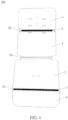
- FIG. 3 and FIG. 4 are diagrams of a support anti-breaking structure 100 at different views according to the embodiment of the present invention.
- the stroller 200 includes a stroller frame 201, a protective cover 202 and the support anti-breaking structure 100.
- the protective cover 202 is sleeved on the support anti-breaking structure 100 and connected to the stroller frame 201. Specifically, the protective cover 202 covers the support anti-breaking structure 100, and the protective cover 202 is sleeved on the stroller frame 201.
- FIG. 5 is a diagram of the adjusted support anti-breaking structure 100 according to the embodiment of the present invention.
- the support anti-breaking structure 100 includes a first plate member 1, a second plate member 2 and a first fixing member 3. An end of the first plate member 1 is pivotally connected to an end of the second plate member 2 at a first pivotal connection S1.
- the first plate member 1 can be a backrest portion for a baby's back to rest against
- the second plate member 2 can be a seat portion for allowing a baby to sit on, but is not limited to it.
- the first fixing member 3 is formed by a flexible structure, so that the first fixing member 3 can be pressed to be deformed.
- the first fixing member 3 is fixed to a side of the first pivotal connection S1.
- the first fixing member 3 is used to restrain the first plate member 1 from rotating relative to the second plate member 2 in a direction of pulling the first fixing member 3.
- the first fixing member 3 is pressed by the first plate member 1 and the second plate member 2, so that the first plate member 1 and the second plate member 2 can be rotatably folded.
- the first fixing member 3 When the first plate member 1 rotates relative to the second plate member 2 in the direction of pulling the first fixing member 3, the first fixing member 3 will exert a reaction force to the first plate member 1 and the second plate member 2 by structural strength of the first fixing member 3, thereby restraining rotation of the first plate member 1 relative to the second plate member 2, so as to effectively reduce the probability of breaking the first pivotal connection S1 due to incorrect operation of the rotation and folding.
- the first fixing member 3 can be a tape, but is not limited to it.
- the first fixing member 3 also can be made of sponge material.
- the support anti-breaking structure 100 further includes a third plate member 4 pivotally connected to another end of the first plate member 1 at a second pivotal connection S2.
- the third plate member 4 can be a headrest portion for a baby's head to rest against, but is not limited to it.
- the support anti-breaking structure 100 further includes a second fixing member 5 formed by a flexible structure, so that the second fixing member 5 can be pressed to be deformed.
- the second fixing member 5 is fixed to a side of the second pivotal connection S2.
- the second fixing member 5 is used to restrain the third plate member 4 from rotating relative to the first plate member 1 in a direction of pulling the second fixing member 5.
- the second fixing member 5 is pressed by the third plate member 4 and the first plate member 1, so that the third plate member 4 and the first plate member 1 can be rotatably folded.
- the second fixing member 5 will exert a reaction force to the third plate member 4 and the first plate member 1 by structural strength of the second fixing member 5, thereby restraining rotation of the third plate member 4 relative to the first plate member 1, so as to effectively reduce the probability of breaking the second pivotal connection S2 due to incorrect operation of the rotation and folding.
- the second fixing member 5 can be a tape, but is not limited to it.
- the second fixing member 5 also can be made of sponge material.
- the support anti-breaking structure 100 further includes a fourth plate member 6 pivotally connected to another end of the second plate member 2 at a third pivotal connection S3.
- the fourth plate member 6 can be a leg rest portion for a baby's legs to rest against, but is not limited to it.
- the support anti-breaking structure 100 further includes a third fixing member 7 formed by a flexible structure, so that the third fixing member 7 can be pressed to be deformed.
- the third fixing member 7 is fixed to a side of the third pivotal connection S3.
- the third fixing member 7 is used to restrain the fourth plate member 6 from rotating relative to the second plate member 2 in a direction of pulling the third fixing member 7.
- the third fixing member 7 is pressed by the fourth plate member 6 and the second plate member 2, so that the fourth plate member 6 and the second plate member 2 can be rotatably folded.
- the third fixing member 7 will exert a reaction force to the fourth plate member 6 and the second plate member 2 by structural strength of the third fixing member 7, thereby restraining rotation of the fourth plate member 6 relative to the second plate member 2, so as to effectively reduce the probability of breaking the third pivotal connection S3 due to incorrect operation of the rotation and folding.
- the third fixing member 7 can be a tape, but is not limited to it.
- the third fixing member 7 also can be made of sponge material.
- the stroller 200 includes the support anti-breaking structure 100 for supporting the baby.
- the first plate member 1 and the second plate member 2 can press the first fixing member 3, so that the first plate member 1 and the second plate member 2 can be rotatably folded in a direction of pressing the first fixing member 3.
- the first fixing member 3 When the first plate member 1 rotates relative to the second plate member 2 in the direction of pulling the first fixing member 3, the first fixing member 3 will exert the reaction force to the first plate member 1 and the second plate member 2 by the structural strength of the first fixing member 3, thereby restraining the rotation of the first plate member 1 relative to the second plate member 2 in the direction of pulling the first fixing member 3, so as to effectively reduce the probability of breaking the first pivotal connection S1 due to incorrect operation of the rotation and folding, which can ensure the normal use of the stroller 200.
- the third plate member 4 and the first plate member 1 can press the second fixing member 5, so that the third plate member 4 and the first plate member 1 can be rotatably folded in a direction of pressing the second fixing member 5.
- the second fixing member 5 When the third plate member 4 rotates relative to the first plate member 1 in the direction of pulling the second fixing member 5, the second fixing member 5 will exert the reaction force to the third plate member 4 and the first plate member 1 by the structural strength of the second fixing member 5, thereby restraining the rotation of the third plate member 4 relative to the first plate member 1 in the direction of pulling the second fixing member 5, so as to effectively reduce the probability of breaking the second pivotal connection S2 due to incorrect operation of the rotation and folding, which can ensure the normal use of the stroller 200.
- the fourth plate member 6 and the second plate member 2 can press the third fixing member 7, so that the fourth plate member 6 and the second plate member 2 can be rotatably folded in a direction of pressing the third fixing member 7.
- the third fixing member 7 will exert the reaction force to the fourth plate member 6 and the second plate member 2 by the structural strength of the third fixing member 7, thereby restraining the rotation of the fourth plate member 6 relative to the second plate member 2 in the direction of pulling the third fixing member 7, so as to effectively reduce the probability of breaking the third pivotal connection S3 due to incorrect operation of the rotation and folding, which can ensure the normal use of the stroller 200.
- the stroller of the present invention includes the support anti-breaking structure for supporting the baby.
- the plate members By disposal of the fixing members formed by the flexible structure and fixed to the pivotal connections where the plate members are pivotally connected, the plate members can press the corresponding fixing member, so that the plate members can be rotatably folded in a direction of pressing the corresponding fixing member.
- the corresponding fixing member When one plate member rotates relative to another plate member in the direction of pulling the corresponding fixing member, the corresponding fixing member will exert the reaction force to the plate members by the structural strength of the corresponding fixing member, thereby restraining the rotation of the one plate member relative to the another plate member in the direction of pulling the corresponding fixing member, so as to effectively reduce the probability of breaking the pivotal connections due to incorrect operation of the rotation and folding, which can ensure the normal use of the stroller.
Landscapes
- Engineering & Computer Science (AREA)
- Chemical & Material Sciences (AREA)
- Combustion & Propulsion (AREA)
- Transportation (AREA)
- Mechanical Engineering (AREA)
- Health & Medical Sciences (AREA)
- Public Health (AREA)
- Carriages For Children, Sleds, And Other Hand-Operated Vehicles (AREA)
Abstract
Description
- The present invention relates to a support anti-breaking structure and a stroller therewith according to the pre-characterizing clauses of
claims 1 and 13. - A stroller is designed to provide convenience for babies' outdoor activities. The stroller includes a stroller frame and a support part connected to the stroller frame, and the support part is used for the baby to ride. The support part usually includes a support member and a protective cover sleeved on the support member. The support member includes a headrest plate for the baby's head to rest against, a backrest plate for the baby's back to rest against, a seat plate for supporting the baby, and a leg rest plate for the baby's legs to rest against. The headrest plate is pivotally connected to the backrest plate, the backrest plate is pivotally connected to the seat plate, and the seat plate is pivotally connected to the leg rest plate. But rotation and folding of the headrest plate relative to the backrest plate, the backrest plate relative to the seat plate, and the leg rest plate relative to the seat plate are only possibly in one direction. If the rotation and folding are operated in the opposite direction by mistake, pivotal connections between the plates might break, so that relative sliding movements might occur between the headrest plate and the backrest plate, between the backrest plate and the seat plate, and between the seat plate and the leg rest plate, which causes a malfunction of the stroller and affects the normal use for the baby.
- Therefore, there is an urgent need for developing an anti-breaking structure for the support member of the stroller that can effectively reduce the probability of breaking the pivotal connections when the rotation and folding is incorrectly operated.
- This is mind, the present invention aims at providing a support anti-breaking structure which can effectively reduce the probability of breaking the pivotal connections due to incorrect operation of the rotation and folding, and a stroller therewith.
- This is achieved by a support anti-breaking structure and a stroller according to
claims 1 and 13. The dependent claims pertain to corresponding further developments and improvements. - As will be seen more clearly from the detail description following below, the claimed support anti-breaking structure includes a first plate member, a second plate member and a first fixing member. An end of the first plate member is pivotally connected to an end of the second plate member at a first pivotal connection. The first fixing member is formed by a flexible structure, and the first fixing member is fixed to a side of the first pivotal connection.
- According to an embodiment of the present invention, the first fixing member is a tape or made of sponge material.
- According to an embodiment of the present invention, the first plate member is a backrest portion for a baby's back to rest against.
- According to an embodiment of the present invention, the second plate member is a seat portion for allowing a baby to sit on.
- According to an embodiment of the present invention, the support anti-breaking structure further includes a third plate member pivotally connected to another end of the first plate member at a second pivotal connection.
- According to an embodiment of the present invention, the support anti-breaking structure further a second fixing member formed by a flexible structure, and the second fixing member is fixed to a side of the second pivotal connection.
- According to an embodiment of the present invention, the second fixing member is a tape or made of sponge material.
- According to an embodiment of the present invention, the third plate member is a headrest portion for a baby's head to rest against.
- According to an embodiment of the present invention, the support anti-breaking structure further includes a fourth plate member pivotally connected to another end of the second plate member at a third pivotal connection.
- According to an embodiment of the present invention, the support anti-breaking structure further includes a third fixing member formed by a flexible structure, and the third fixing member is fixed to a side of the third pivotal connection.
- According to an embodiment of the present invention, the third fixing member is a tape or made of sponge material.
- According to an embodiment of the present invention, the fourth plate member is a leg rest portion for a baby's legs to rest against.
- Furthermore, the claimed stroller includes a stroller frame, a protective cover and the support anti-breaking structure. The protective cover covers the support anti-breaking structure and is connected to the stroller frame.
- In summary, the stroller includes the support anti-breaking structure for supporting the baby. By disposal of the fixing members formed by the flexible structure and fixed to the pivotal connections where the plate members are pivotally connected, the plate members can press the corresponding fixing member, so that the plate members can be rotatably folded in a direction of pressing the corresponding fixing member. When one plate member rotates relative to another plate member in the direction of pulling the corresponding fixing member, the corresponding fixing member will exert a reaction force to the plate members by the structural strength of the corresponding fixing member, thereby restraining the rotation of the one plate member relative to the another plate member in the direction of pulling the corresponding fixing member, so as to effectively reduce the probability of breaking the pivotal connections due to incorrect operation of the rotation and folding, which can ensure the normal use of the stroller.
- These and other objectives of the present invention will no doubt become obvious to those of ordinary skill in the art after reading the following detailed description of the preferred embodiment that is illustrated in the various figures and drawings.
- In the following, the invention is further illustrated by way of example, taking reference to the accompanying drawings. Thereof
-
FIG. 1 is a diagram of a stroller according to an embodiment of the present invention, -
FIG. 2 is a diagram of the folded stroller according to the embodiment of the present invention, -
FIG. 3 andFIG. 4 are diagrams of a support anti-breaking structure at different views according to the embodiment of the present invention, and -
FIG. 5 is a diagram of the adjusted support anti-breaking structure according to the embodiment of the present invention. - In order to illustrate technical specifications and structural features as well as achieved purposes and effects of the present invention, relevant embodiments and figures are described as follows.
- In the following detailed description of the preferred embodiments, reference is made to the accompanying drawings which form a part hereof, and in which is shown by way of illustration specific embodiments in which the invention may be practiced. In this regard, directional terminology, such as "top," "bottom," "front," "back," etc., is used with reference to the orientation of the Figure(s) being described. The members of the present invention can be positioned in a number of different orientations. As such, the directional terminology is used for purposes of illustration and is in no way limiting. Accordingly, the drawings and descriptions will be regarded as illustrative in nature and not as restrictive.
- Please refer to
FIG. 1 to FIG. 4 .FIG. 1 is a diagram of astroller 200 according to an embodiment of the present invention.FIG. 2 is a diagram of the foldedstroller 200 according to the embodiment of the present invention.FIG. 3 andFIG. 4 are diagrams of a supportanti-breaking structure 100 at different views according to the embodiment of the present invention. Thestroller 200 includes astroller frame 201, aprotective cover 202 and the supportanti-breaking structure 100. Theprotective cover 202 is sleeved on the supportanti-breaking structure 100 and connected to thestroller frame 201. Specifically, theprotective cover 202 covers the supportanti-breaking structure 100, and theprotective cover 202 is sleeved on thestroller frame 201. - Please refer to
FIG. 3 to FIG. 5 .FIG. 5 is a diagram of the adjusted supportanti-breaking structure 100 according to the embodiment of the present invention. The supportanti-breaking structure 100 includes afirst plate member 1, asecond plate member 2 and afirst fixing member 3. An end of thefirst plate member 1 is pivotally connected to an end of thesecond plate member 2 at a first pivotal connection S1. In this embodiment, thefirst plate member 1 can be a backrest portion for a baby's back to rest against, thesecond plate member 2 can be a seat portion for allowing a baby to sit on, but is not limited to it. Thefirst fixing member 3 is formed by a flexible structure, so that thefirst fixing member 3 can be pressed to be deformed. Thefirst fixing member 3 is fixed to a side of the first pivotal connection S1. Thefirst fixing member 3 is used to restrain thefirst plate member 1 from rotating relative to thesecond plate member 2 in a direction of pulling thefirst fixing member 3. Thefirst fixing member 3 is pressed by thefirst plate member 1 and thesecond plate member 2, so that thefirst plate member 1 and thesecond plate member 2 can be rotatably folded. When thefirst plate member 1 rotates relative to thesecond plate member 2 in the direction of pulling the first fixingmember 3, the first fixingmember 3 will exert a reaction force to thefirst plate member 1 and thesecond plate member 2 by structural strength of the first fixingmember 3, thereby restraining rotation of thefirst plate member 1 relative to thesecond plate member 2, so as to effectively reduce the probability of breaking the first pivotal connection S1 due to incorrect operation of the rotation and folding. In this embodiment, the first fixingmember 3 can be a tape, but is not limited to it. For example, the first fixingmember 3 also can be made of sponge material. - The support
anti-breaking structure 100 further includes athird plate member 4 pivotally connected to another end of thefirst plate member 1 at a second pivotal connection S2. In this embodiment, thethird plate member 4 can be a headrest portion for a baby's head to rest against, but is not limited to it. Furthermore, the supportanti-breaking structure 100 further includes a second fixing member 5 formed by a flexible structure, so that the second fixing member 5 can be pressed to be deformed. The second fixing member 5 is fixed to a side of the second pivotal connection S2. The second fixing member 5 is used to restrain thethird plate member 4 from rotating relative to thefirst plate member 1 in a direction of pulling the second fixing member 5. The second fixing member 5 is pressed by thethird plate member 4 and thefirst plate member 1, so that thethird plate member 4 and thefirst plate member 1 can be rotatably folded. When thethird plate member 4 rotates relative to thefirst plate member 1 in the direction of pulling the second fixing member 5, the second fixing member 5 will exert a reaction force to thethird plate member 4 and thefirst plate member 1 by structural strength of the second fixing member 5, thereby restraining rotation of thethird plate member 4 relative to thefirst plate member 1, so as to effectively reduce the probability of breaking the second pivotal connection S2 due to incorrect operation of the rotation and folding. In this embodiment, the second fixing member 5 can be a tape, but is not limited to it. For example, the second fixing member 5 also can be made of sponge material. - The support
anti-breaking structure 100 further includes afourth plate member 6 pivotally connected to another end of thesecond plate member 2 at a third pivotal connection S3. In this embodiment, thefourth plate member 6 can be a leg rest portion for a baby's legs to rest against, but is not limited to it. Furthermore, the supportanti-breaking structure 100 further includes athird fixing member 7 formed by a flexible structure, so that the third fixingmember 7 can be pressed to be deformed. Thethird fixing member 7 is fixed to a side of the third pivotal connection S3. Thethird fixing member 7 is used to restrain thefourth plate member 6 from rotating relative to thesecond plate member 2 in a direction of pulling the third fixingmember 7. Thethird fixing member 7 is pressed by thefourth plate member 6 and thesecond plate member 2, so that thefourth plate member 6 and thesecond plate member 2 can be rotatably folded. When thefourth plate member 6 rotates relative to thesecond plate member 2 in the direction of pulling the third fixingmember 7, the third fixingmember 7 will exert a reaction force to thefourth plate member 6 and thesecond plate member 2 by structural strength of the third fixingmember 7, thereby restraining rotation of thefourth plate member 6 relative to thesecond plate member 2, so as to effectively reduce the probability of breaking the third pivotal connection S3 due to incorrect operation of the rotation and folding. In this embodiment, the third fixingmember 7 can be a tape, but is not limited to it. For example, the third fixingmember 7 also can be made of sponge material. - In conclusion, the
stroller 200 includes the supportanti-breaking structure 100 for supporting the baby. By disposal of the first fixingmember 3 formed by the flexible structure and fixed to the side of the first pivotal connection S1 where thefirst plate member 1 and thesecond plate member 2 are pivotally connected, thefirst plate member 1 and thesecond plate member 2 can press the first fixingmember 3, so that thefirst plate member 1 and thesecond plate member 2 can be rotatably folded in a direction of pressing the first fixingmember 3. When thefirst plate member 1 rotates relative to thesecond plate member 2 in the direction of pulling the first fixingmember 3, the first fixingmember 3 will exert the reaction force to thefirst plate member 1 and thesecond plate member 2 by the structural strength of the first fixingmember 3, thereby restraining the rotation of thefirst plate member 1 relative to thesecond plate member 2 in the direction of pulling the first fixingmember 3, so as to effectively reduce the probability of breaking the first pivotal connection S1 due to incorrect operation of the rotation and folding, which can ensure the normal use of thestroller 200. - Besides, by disposal of the second fixing member 5 formed by the flexible structure and fixed to the side of the second pivotal connection S2 where the
third plate member 4 and thefirst plate member 1 are pivotally connected, thethird plate member 4 and thefirst plate member 1 can press the second fixing member 5, so that thethird plate member 4 and thefirst plate member 1 can be rotatably folded in a direction of pressing the second fixing member 5. When thethird plate member 4 rotates relative to thefirst plate member 1 in the direction of pulling the second fixing member 5, the second fixing member 5 will exert the reaction force to thethird plate member 4 and thefirst plate member 1 by the structural strength of the second fixing member 5, thereby restraining the rotation of thethird plate member 4 relative to thefirst plate member 1 in the direction of pulling the second fixing member 5, so as to effectively reduce the probability of breaking the second pivotal connection S2 due to incorrect operation of the rotation and folding, which can ensure the normal use of thestroller 200. - Furthermore, by disposal of the third fixing
member 7 formed by the flexible structure and fixed to the side of the third pivotal connection S3 where thefourth plate member 6 and thesecond plate member 2 are pivotally connected, thefourth plate member 6 and thesecond plate member 2 can press the third fixingmember 7, so that thefourth plate member 6 and thesecond plate member 2 can be rotatably folded in a direction of pressing the third fixingmember 7. When thefourth plate member 6 rotates relative to thesecond plate member 2 in the direction of pulling the third fixingmember 7, the third fixingmember 7 will exert the reaction force to thefourth plate member 6 and thesecond plate member 2 by the structural strength of the third fixingmember 7, thereby restraining the rotation of thefourth plate member 6 relative to thesecond plate member 2 in the direction of pulling the third fixingmember 7, so as to effectively reduce the probability of breaking the third pivotal connection S3 due to incorrect operation of the rotation and folding, which can ensure the normal use of thestroller 200. - In contrast to the prior art, the stroller of the present invention includes the support anti-breaking structure for supporting the baby. By disposal of the fixing members formed by the flexible structure and fixed to the pivotal connections where the plate members are pivotally connected, the plate members can press the corresponding fixing member, so that the plate members can be rotatably folded in a direction of pressing the corresponding fixing member. When one plate member rotates relative to another plate member in the direction of pulling the corresponding fixing member, the corresponding fixing member will exert the reaction force to the plate members by the structural strength of the corresponding fixing member, thereby restraining the rotation of the one plate member relative to the another plate member in the direction of pulling the corresponding fixing member, so as to effectively reduce the probability of breaking the pivotal connections due to incorrect operation of the rotation and folding, which can ensure the normal use of the stroller.
- Those skilled in the art will readily observe that numerous modifications and alterations of the device and method may be made while retaining the teachings of the invention. Accordingly, the above disclosure should be construed as limited only by the metes and bounds of the appended claims.
Claims (13)
- A support anti-breaking structure (100) comprising:a first plate member (1);a second plate member (2), an end of the first plate member (1) being pivotally connected to an end of the second plate member (2) at a first pivotal connection (S1); anda first fixing member (3) formed by a flexible structure, the first fixing member (3) being fixed to a side of the first pivotal connection (S1).
- The support anti-breaking structure (100) of claim 1, characterized in that the first fixing member (3) is a tape or made of sponge material.
- The support anti-breaking structure (100) of claim 1 or 2, characterized in that the first plate member (1) is a backrest portion for a baby's back to rest against.
- The support anti-breaking structure (100) of any one of claims 1 to 3, characterized in that the second plate member (2) is a seat portion for allowing a baby to sit on.
- The support anti-breaking structure (100) of any one of claims 1 to 4, characterized by a third plate member (4) pivotally connected to another end of the first plate member (1) at a second pivotal connection (S2).
- The support anti-breaking structure (100) of claim 5, characterized by a second fixing member (5) formed by a flexible structure, the second fixing member (5) being fixed to a side of the second pivotal connection (S2).
- The support anti-breaking structure (100) of claim 6, characterized in that the second fixing member (5) is a tape or made of sponge material.
- The support anti-breaking structure (100) of any one of claims 5 to 7, characterized in that the third plate member (4) is a headrest portion for a baby's head to rest against.
- The support anti-breaking structure (100) of any one of claims 1 to 8, characterized by a fourth plate member (6) pivotally connected to another end of the second plate member (2) at a third pivotal connection (S3).
- The support anti-breaking structure (100) of claim 9, characterized by a third fixing member (7) formed by a flexible structure, the third fixing member (7) being fixed to a side of the third pivotal connection (S3).
- The support anti-breaking structure (100) of claim 10, characterized in that the third fixing member (7) is a tape or made of sponge material.
- The support anti-breaking structure (100) of any one of claims 9 to 11, characterized in that the fourth plate member (6) is a leg rest portion for a baby's legs to rest against.
- A stroller (200) comprising a stroller frame (201) and a protective cover (202), and characterized by the support anti-breaking structure (100) of any one of claims 1 to 12, and the protective cover (202) covering the support anti-breaking structure (100) and being connected to the stroller frame (201).
Applications Claiming Priority (3)
| Application Number | Priority Date | Filing Date | Title |
|---|---|---|---|
| CN202020067049.XU CN211765815U (en) | 2020-01-13 | 2020-01-13 | Structure for preventing support piece from being broken and baby carriage with same |
| EP21700531.3A EP4072924B1 (en) | 2020-01-13 | 2021-01-11 | Support anti-breaking structure and stroller therewith |
| PCT/EP2021/050387 WO2021144224A1 (en) | 2020-01-13 | 2021-01-11 | Support anti-breaking structure and stroller therewith |
Related Parent Applications (1)
| Application Number | Title | Priority Date | Filing Date |
|---|---|---|---|
| EP21700531.3A Division EP4072924B1 (en) | 2020-01-13 | 2021-01-11 | Support anti-breaking structure and stroller therewith |
Publications (2)
| Publication Number | Publication Date |
|---|---|
| EP4428009A2 true EP4428009A2 (en) | 2024-09-11 |
| EP4428009A3 EP4428009A3 (en) | 2024-11-20 |
Family
ID=72893423
Family Applications (2)
| Application Number | Title | Priority Date | Filing Date |
|---|---|---|---|
| EP21700531.3A Active EP4072924B1 (en) | 2020-01-13 | 2021-01-11 | Support anti-breaking structure and stroller therewith |
| EP24191497.7A Pending EP4428009A3 (en) | 2020-01-13 | 2021-01-11 | Support anti-breaking structure and stroller therewith |
Family Applications Before (1)
| Application Number | Title | Priority Date | Filing Date |
|---|---|---|---|
| EP21700531.3A Active EP4072924B1 (en) | 2020-01-13 | 2021-01-11 | Support anti-breaking structure and stroller therewith |
Country Status (6)
| Country | Link |
|---|---|
| US (1) | US20230039662A1 (en) |
| EP (2) | EP4072924B1 (en) |
| CN (1) | CN211765815U (en) |
| ES (1) | ES2991046T3 (en) |
| TW (1) | TWI760058B (en) |
| WO (1) | WO2021144224A1 (en) |
Families Citing this family (3)
| Publication number | Priority date | Publication date | Assignee | Title |
|---|---|---|---|---|
| CN216269477U (en) | 2021-08-31 | 2022-04-12 | 明门瑞士股份有限公司 | Baby stroller and seat cloth assembly thereof |
| US11667315B1 (en) * | 2021-11-18 | 2023-06-06 | Skip Hop, Inc. | Multi-stage toy walker |
| US12304548B2 (en) * | 2022-06-22 | 2025-05-20 | Wonderland Switzerland Ag | Baby stroller and lateral seat cover portion thereof |
Family Cites Families (30)
| Publication number | Priority date | Publication date | Assignee | Title |
|---|---|---|---|---|
| US2709478A (en) * | 1955-05-31 | Baby bed and chair combination | ||
| US4416462A (en) * | 1982-04-15 | 1983-11-22 | Thompson Judith D | Removeable cushion for a shopping cart |
| AU563327B2 (en) * | 1983-08-22 | 1987-07-02 | Aprica Kassai Kabushiki Kaisha | Baby carriage bed |
| US4773702A (en) * | 1987-06-18 | 1988-09-27 | Combi Co., Ltd. | Reversible seat pad for a baby carriage |
| US4925064A (en) * | 1987-06-19 | 1990-05-15 | Comora Michael E | Backpack cushioning device |
| JPH06234365A (en) * | 1992-12-15 | 1994-08-23 | Aprica Kassai Inc | Chair like bed for infant apparatus |
| US5584422A (en) * | 1993-04-05 | 1996-12-17 | Bond-Madsen; Winnie | Combination backpack and chair cover |
| US5590896A (en) * | 1994-09-09 | 1997-01-07 | Fisher-Price, Inc. | Stroller |
| JP3311163B2 (en) * | 1994-09-21 | 2002-08-05 | アップリカ▲葛▼西株式会社 | Stroller and method of manufacturing seat plate for its seat |
| TW280801B (en) * | 1994-12-26 | 1996-07-11 | Aprica Kassai Kk | |
| DE19524102C2 (en) * | 1995-07-03 | 1999-08-05 | Matthias Huff | Tarpaulin pad / carry bag |
| US5918933A (en) * | 1995-09-21 | 1999-07-06 | Graco Children's Products Inc. | Body support |
| JPH1191587A (en) * | 1997-09-25 | 1999-04-06 | Combi Corp | Baby seat slip prevention equipment |
| US6543844B1 (en) * | 2000-02-15 | 2003-04-08 | Bloorview Macmillan Centre | Seating furniture for children |
| DE60321137D1 (en) * | 2002-06-05 | 2008-07-03 | Aprica Kassai Kk | CART |
| US6890031B2 (en) * | 2002-10-15 | 2005-05-10 | Mattel, Inc. | Adjustable child support structure |
| JP3981023B2 (en) * | 2003-01-28 | 2007-09-26 | アップリカ育児研究会アップリカ▲葛▼西株式会社 | Baby carriage seat hammock |
| JP4140766B2 (en) * | 2003-01-30 | 2008-08-27 | グラコ・チルドレンズ・プロダクツ・インコーポレイテッド | Childcare equipment seats |
| US7222917B2 (en) * | 2004-10-07 | 2007-05-29 | Cosco Management, Inc. | Reversible seat pad |
| DE102012020060A1 (en) * | 2012-10-14 | 2014-04-17 | Cepventures International Corp. | Mat for sitting or lying in sauna, is partially made of textile, which is spacer textile made of plastic, where textile consists of multiple spaced layers, which are connected with each other by fibers, threads or filaments |
| US8899677B2 (en) * | 2013-03-14 | 2014-12-02 | Unsil C. Hurlburt | Combination stadium seat cushion and adaptable banner |
| JP6169416B2 (en) * | 2013-05-22 | 2017-07-26 | コンビ株式会社 | Seat support unit and baby carriage |
| JP6444796B2 (en) * | 2015-03-31 | 2018-12-26 | コンビ株式会社 | Pram seats, prams and seat restraints |
| US9701225B1 (en) * | 2015-07-24 | 2017-07-11 | Switchback Outdoor Products LLC | Convertible tailgate cover and seat |
| US9956980B2 (en) * | 2015-11-04 | 2018-05-01 | Dorel Juvenile Group, Inc. | Juvenile stroller with removable seat cover |
| FR3059968B1 (en) * | 2016-12-13 | 2019-05-24 | Dorel France | CONVERTIBLE SUPPORT BETWEEN AN EXTENDED POSITION AND AT LEAST ONE SITUATED POSITION FOR CHILDREN'S STROLLER AND CORRESPONDING STROLLER |
| US10264888B2 (en) * | 2017-04-11 | 2019-04-23 | Debra Clark | Foldable lounge chair cushion |
| CN207510565U (en) * | 2017-10-28 | 2018-06-19 | 无锡创革科技有限公司 | A kind of folding bike after-frame |
| JP7789661B2 (en) * | 2019-09-12 | 2025-12-22 | サイベックス ゲーエムベーハー | stroller |
| CN113954947B (en) * | 2020-07-21 | 2025-04-08 | 明门瑞士股份有限公司 | Baby carriage with backrest capable of being folded in linkage manner |
-
2020
- 2020-01-13 CN CN202020067049.XU patent/CN211765815U/en active Active
-
2021
- 2021-01-11 ES ES21700531T patent/ES2991046T3/en active Active
- 2021-01-11 WO PCT/EP2021/050387 patent/WO2021144224A1/en not_active Ceased
- 2021-01-11 EP EP21700531.3A patent/EP4072924B1/en active Active
- 2021-01-11 EP EP24191497.7A patent/EP4428009A3/en active Pending
- 2021-01-11 US US17/792,407 patent/US20230039662A1/en active Pending
- 2021-01-11 TW TW110100959A patent/TWI760058B/en active
Also Published As
| Publication number | Publication date |
|---|---|
| WO2021144224A1 (en) | 2021-07-22 |
| ES2991046T3 (en) | 2024-12-02 |
| EP4428009A3 (en) | 2024-11-20 |
| TW202128480A (en) | 2021-08-01 |
| CN211765815U (en) | 2020-10-27 |
| EP4072924B1 (en) | 2024-08-14 |
| EP4072924A1 (en) | 2022-10-19 |
| TWI760058B (en) | 2022-04-01 |
| US20230039662A1 (en) | 2023-02-09 |
Similar Documents
| Publication | Publication Date | Title |
|---|---|---|
| US20230039662A1 (en) | Support anti-breaking structure and stroller therewith | |
| JP4902070B2 (en) | child seat | |
| EP2238870B1 (en) | Playpen hub assembly and playpen using the same | |
| KR100992540B1 (en) | Car folding headrest device | |
| EP0258826A2 (en) | Self-supporting/maintaining mechanism of baby carriage | |
| EP2628415A1 (en) | Infant supporting device | |
| EP2165629A1 (en) | Playpen with a liner | |
| EP2186443A1 (en) | Folding side rail | |
| JP2003191778A (en) | Vehicle headrest device | |
| WO2022167687A1 (en) | Transportation device | |
| US20100060048A1 (en) | Clutch mechanism for vehicle seat | |
| KR20000074025A (en) | Device for full floating seat cushion of automobile | |
| EP1927503A2 (en) | Child vehicle seat | |
| EP2883745B1 (en) | Supporting foot device and child safety seat therewith | |
| CN218045643U (en) | Side guard plate turnover mechanism for sickbed | |
| CN212447211U (en) | Child safety seat | |
| CN212438041U (en) | An adjustable angle basket | |
| CN212828629U (en) | a children's stroller | |
| CN221265648U (en) | Self-adaptive back-chasing | |
| CN222697220U (en) | Leg movement structure and humanoid robot | |
| CN216257911U (en) | Intelligent bedstead | |
| CN224117151U (en) | An infant car seat safety belt positioning structure and an infant car seat | |
| CN219742119U (en) | Angle-adjustable display bracket for single screen on X-shaped desk | |
| JP2576019Y2 (en) | Child seat | |
| JP2009154640A (en) | Erected/tilted headrest device |
Legal Events
| Date | Code | Title | Description |
|---|---|---|---|
| PUAI | Public reference made under article 153(3) epc to a published international application that has entered the european phase |
Free format text: ORIGINAL CODE: 0009012 |
|
| STAA | Information on the status of an ep patent application or granted ep patent |
Free format text: STATUS: THE APPLICATION HAS BEEN PUBLISHED |
|
| AC | Divisional application: reference to earlier application |
Ref document number: 4072924 Country of ref document: EP Kind code of ref document: P |
|
| AK | Designated contracting states |
Kind code of ref document: A2 Designated state(s): AL AT BE BG CH CY CZ DE DK EE ES FI FR GB GR HR HU IE IS IT LI LT LU LV MC MK MT NL NO PL PT RO RS SE SI SK SM TR |
|
| REG | Reference to a national code |
Ref country code: DE Ref legal event code: R079 Free format text: PREVIOUS MAIN CLASS: B62B0009100000 Ipc: B62B0007060000 |
|
| PUAL | Search report despatched |
Free format text: ORIGINAL CODE: 0009013 |
|
| AK | Designated contracting states |
Kind code of ref document: A3 Designated state(s): AL AT BE BG CH CY CZ DE DK EE ES FI FR GB GR HR HU IE IS IT LI LT LU LV MC MK MT NL NO PL PT RO RS SE SI SK SM TR |
|
| RIC1 | Information provided on ipc code assigned before grant |
Ipc: B62B 9/10 20060101ALI20241016BHEP Ipc: B62B 7/06 20060101AFI20241016BHEP |
|
| STAA | Information on the status of an ep patent application or granted ep patent |
Free format text: STATUS: REQUEST FOR EXAMINATION WAS MADE |
|
| 17P | Request for examination filed |
Effective date: 20250514 |
|
| STAA | Information on the status of an ep patent application or granted ep patent |
Free format text: STATUS: EXAMINATION IS IN PROGRESS |
|
| 17Q | First examination report despatched |
Effective date: 20260310 |