EP4427933A1 - Recyclable multilayer films having a sealing layer formed from a blend of polypropylenes - Google Patents
Recyclable multilayer films having a sealing layer formed from a blend of polypropylenes Download PDFInfo
- Publication number
- EP4427933A1 EP4427933A1 EP23160784.7A EP23160784A EP4427933A1 EP 4427933 A1 EP4427933 A1 EP 4427933A1 EP 23160784 A EP23160784 A EP 23160784A EP 4427933 A1 EP4427933 A1 EP 4427933A1
- Authority
- EP
- European Patent Office
- Prior art keywords
- range
- ethylene
- determined
- propylene
- crystex
- Prior art date
- Legal status (The legal status is an assumption and is not a legal conclusion. Google has not performed a legal analysis and makes no representation as to the accuracy of the status listed.)
- Granted
Links
Classifications
-
- C—CHEMISTRY; METALLURGY
- C08—ORGANIC MACROMOLECULAR COMPOUNDS; THEIR PREPARATION OR CHEMICAL WORKING-UP; COMPOSITIONS BASED THEREON
- C08L—COMPOSITIONS OF MACROMOLECULAR COMPOUNDS
- C08L23/00—Compositions of homopolymers or copolymers of unsaturated aliphatic hydrocarbons having only one carbon-to-carbon double bond; Compositions of derivatives of such polymers
- C08L23/02—Compositions of homopolymers or copolymers of unsaturated aliphatic hydrocarbons having only one carbon-to-carbon double bond; Compositions of derivatives of such polymers not modified by chemical after-treatment
- C08L23/04—Homopolymers or copolymers of ethene
-
- B—PERFORMING OPERATIONS; TRANSPORTING
- B32—LAYERED PRODUCTS
- B32B—LAYERED PRODUCTS, i.e. PRODUCTS BUILT-UP OF STRATA OF FLAT OR NON-FLAT, e.g. CELLULAR OR HONEYCOMB, FORM
- B32B27/00—Layered products comprising a layer of synthetic resin
- B32B27/06—Layered products comprising a layer of synthetic resin as the main or only constituent of a layer, which is next to another layer of the same or of a different material
- B32B27/08—Layered products comprising a layer of synthetic resin as the main or only constituent of a layer, which is next to another layer of the same or of a different material of synthetic resin
-
- B—PERFORMING OPERATIONS; TRANSPORTING
- B32—LAYERED PRODUCTS
- B32B—LAYERED PRODUCTS, i.e. PRODUCTS BUILT-UP OF STRATA OF FLAT OR NON-FLAT, e.g. CELLULAR OR HONEYCOMB, FORM
- B32B27/00—Layered products comprising a layer of synthetic resin
- B32B27/18—Layered products comprising a layer of synthetic resin characterised by the use of special additives
-
- B—PERFORMING OPERATIONS; TRANSPORTING
- B32—LAYERED PRODUCTS
- B32B—LAYERED PRODUCTS, i.e. PRODUCTS BUILT-UP OF STRATA OF FLAT OR NON-FLAT, e.g. CELLULAR OR HONEYCOMB, FORM
- B32B27/00—Layered products comprising a layer of synthetic resin
- B32B27/18—Layered products comprising a layer of synthetic resin characterised by the use of special additives
- B32B27/22—Layered products comprising a layer of synthetic resin characterised by the use of special additives using plasticisers
-
- B—PERFORMING OPERATIONS; TRANSPORTING
- B32—LAYERED PRODUCTS
- B32B—LAYERED PRODUCTS, i.e. PRODUCTS BUILT-UP OF STRATA OF FLAT OR NON-FLAT, e.g. CELLULAR OR HONEYCOMB, FORM
- B32B27/00—Layered products comprising a layer of synthetic resin
- B32B27/32—Layered products comprising a layer of synthetic resin comprising polyolefins
-
- C—CHEMISTRY; METALLURGY
- C08—ORGANIC MACROMOLECULAR COMPOUNDS; THEIR PREPARATION OR CHEMICAL WORKING-UP; COMPOSITIONS BASED THEREON
- C08F—MACROMOLECULAR COMPOUNDS OBTAINED BY REACTIONS ONLY INVOLVING CARBON-TO-CARBON UNSATURATED BONDS
- C08F210/00—Copolymers of unsaturated aliphatic hydrocarbons having only one carbon-to-carbon double bond
- C08F210/16—Copolymers of ethene with alpha-alkenes, e.g. EP rubbers
-
- C—CHEMISTRY; METALLURGY
- C08—ORGANIC MACROMOLECULAR COMPOUNDS; THEIR PREPARATION OR CHEMICAL WORKING-UP; COMPOSITIONS BASED THEREON
- C08J—WORKING-UP; GENERAL PROCESSES OF COMPOUNDING; AFTER-TREATMENT NOT COVERED BY SUBCLASSES C08B, C08C, C08F, C08G or C08H
- C08J5/00—Manufacture of articles or shaped materials containing macromolecular substances
- C08J5/18—Manufacture of films or sheets
-
- C—CHEMISTRY; METALLURGY
- C08—ORGANIC MACROMOLECULAR COMPOUNDS; THEIR PREPARATION OR CHEMICAL WORKING-UP; COMPOSITIONS BASED THEREON
- C08L—COMPOSITIONS OF MACROMOLECULAR COMPOUNDS
- C08L23/00—Compositions of homopolymers or copolymers of unsaturated aliphatic hydrocarbons having only one carbon-to-carbon double bond; Compositions of derivatives of such polymers
- C08L23/02—Compositions of homopolymers or copolymers of unsaturated aliphatic hydrocarbons having only one carbon-to-carbon double bond; Compositions of derivatives of such polymers not modified by chemical after-treatment
- C08L23/04—Homopolymers or copolymers of ethene
- C08L23/08—Copolymers of ethene
-
- C—CHEMISTRY; METALLURGY
- C08—ORGANIC MACROMOLECULAR COMPOUNDS; THEIR PREPARATION OR CHEMICAL WORKING-UP; COMPOSITIONS BASED THEREON
- C08L—COMPOSITIONS OF MACROMOLECULAR COMPOUNDS
- C08L23/00—Compositions of homopolymers or copolymers of unsaturated aliphatic hydrocarbons having only one carbon-to-carbon double bond; Compositions of derivatives of such polymers
- C08L23/02—Compositions of homopolymers or copolymers of unsaturated aliphatic hydrocarbons having only one carbon-to-carbon double bond; Compositions of derivatives of such polymers not modified by chemical after-treatment
- C08L23/10—Homopolymers or copolymers of propene
- C08L23/14—Copolymers of propene
-
- B—PERFORMING OPERATIONS; TRANSPORTING
- B32—LAYERED PRODUCTS
- B32B—LAYERED PRODUCTS, i.e. PRODUCTS BUILT-UP OF STRATA OF FLAT OR NON-FLAT, e.g. CELLULAR OR HONEYCOMB, FORM
- B32B2250/00—Layers arrangement
- B32B2250/03—3 layers
-
- B—PERFORMING OPERATIONS; TRANSPORTING
- B32—LAYERED PRODUCTS
- B32B—LAYERED PRODUCTS, i.e. PRODUCTS BUILT-UP OF STRATA OF FLAT OR NON-FLAT, e.g. CELLULAR OR HONEYCOMB, FORM
- B32B2250/00—Layers arrangement
- B32B2250/24—All layers being polymeric
-
- B—PERFORMING OPERATIONS; TRANSPORTING
- B32—LAYERED PRODUCTS
- B32B—LAYERED PRODUCTS, i.e. PRODUCTS BUILT-UP OF STRATA OF FLAT OR NON-FLAT, e.g. CELLULAR OR HONEYCOMB, FORM
- B32B2250/00—Layers arrangement
- B32B2250/24—All layers being polymeric
- B32B2250/242—All polymers belonging to those covered by group B32B27/32
-
- B—PERFORMING OPERATIONS; TRANSPORTING
- B32—LAYERED PRODUCTS
- B32B—LAYERED PRODUCTS, i.e. PRODUCTS BUILT-UP OF STRATA OF FLAT OR NON-FLAT, e.g. CELLULAR OR HONEYCOMB, FORM
- B32B2250/00—Layers arrangement
- B32B2250/40—Symmetrical or sandwich layers, e.g. ABA, ABCBA, ABCCBA
-
- B—PERFORMING OPERATIONS; TRANSPORTING
- B32—LAYERED PRODUCTS
- B32B—LAYERED PRODUCTS, i.e. PRODUCTS BUILT-UP OF STRATA OF FLAT OR NON-FLAT, e.g. CELLULAR OR HONEYCOMB, FORM
- B32B2264/00—Composition or properties of particles which form a particulate layer or are present as additives
-
- B—PERFORMING OPERATIONS; TRANSPORTING
- B32—LAYERED PRODUCTS
- B32B—LAYERED PRODUCTS, i.e. PRODUCTS BUILT-UP OF STRATA OF FLAT OR NON-FLAT, e.g. CELLULAR OR HONEYCOMB, FORM
- B32B2270/00—Resin or rubber layer containing a blend of at least two different polymers
-
- B—PERFORMING OPERATIONS; TRANSPORTING
- B32—LAYERED PRODUCTS
- B32B—LAYERED PRODUCTS, i.e. PRODUCTS BUILT-UP OF STRATA OF FLAT OR NON-FLAT, e.g. CELLULAR OR HONEYCOMB, FORM
- B32B2272/00—Resin or rubber layer comprising scrap, waste or recycling material
-
- B—PERFORMING OPERATIONS; TRANSPORTING
- B32—LAYERED PRODUCTS
- B32B—LAYERED PRODUCTS, i.e. PRODUCTS BUILT-UP OF STRATA OF FLAT OR NON-FLAT, e.g. CELLULAR OR HONEYCOMB, FORM
- B32B2307/00—Properties of the layers or laminate
- B32B2307/30—Properties of the layers or laminate having particular thermal properties
-
- B—PERFORMING OPERATIONS; TRANSPORTING
- B32—LAYERED PRODUCTS
- B32B—LAYERED PRODUCTS, i.e. PRODUCTS BUILT-UP OF STRATA OF FLAT OR NON-FLAT, e.g. CELLULAR OR HONEYCOMB, FORM
- B32B2307/00—Properties of the layers or laminate
- B32B2307/30—Properties of the layers or laminate having particular thermal properties
- B32B2307/31—Heat sealable
-
- B—PERFORMING OPERATIONS; TRANSPORTING
- B32—LAYERED PRODUCTS
- B32B—LAYERED PRODUCTS, i.e. PRODUCTS BUILT-UP OF STRATA OF FLAT OR NON-FLAT, e.g. CELLULAR OR HONEYCOMB, FORM
- B32B2307/00—Properties of the layers or laminate
- B32B2307/40—Properties of the layers or laminate having particular optical properties
-
- B—PERFORMING OPERATIONS; TRANSPORTING
- B32—LAYERED PRODUCTS
- B32B—LAYERED PRODUCTS, i.e. PRODUCTS BUILT-UP OF STRATA OF FLAT OR NON-FLAT, e.g. CELLULAR OR HONEYCOMB, FORM
- B32B2307/00—Properties of the layers or laminate
- B32B2307/40—Properties of the layers or laminate having particular optical properties
- B32B2307/408—Matt, dull surface
-
- B—PERFORMING OPERATIONS; TRANSPORTING
- B32—LAYERED PRODUCTS
- B32B—LAYERED PRODUCTS, i.e. PRODUCTS BUILT-UP OF STRATA OF FLAT OR NON-FLAT, e.g. CELLULAR OR HONEYCOMB, FORM
- B32B2307/00—Properties of the layers or laminate
- B32B2307/50—Properties of the layers or laminate having particular mechanical properties
- B32B2307/54—Yield strength; Tensile strength
-
- B—PERFORMING OPERATIONS; TRANSPORTING
- B32—LAYERED PRODUCTS
- B32B—LAYERED PRODUCTS, i.e. PRODUCTS BUILT-UP OF STRATA OF FLAT OR NON-FLAT, e.g. CELLULAR OR HONEYCOMB, FORM
- B32B2307/00—Properties of the layers or laminate
- B32B2307/50—Properties of the layers or laminate having particular mechanical properties
- B32B2307/546—Flexural strength; Flexion stiffness
-
- B—PERFORMING OPERATIONS; TRANSPORTING
- B32—LAYERED PRODUCTS
- B32B—LAYERED PRODUCTS, i.e. PRODUCTS BUILT-UP OF STRATA OF FLAT OR NON-FLAT, e.g. CELLULAR OR HONEYCOMB, FORM
- B32B2307/00—Properties of the layers or laminate
- B32B2307/50—Properties of the layers or laminate having particular mechanical properties
- B32B2307/558—Impact strength, toughness
-
- B—PERFORMING OPERATIONS; TRANSPORTING
- B32—LAYERED PRODUCTS
- B32B—LAYERED PRODUCTS, i.e. PRODUCTS BUILT-UP OF STRATA OF FLAT OR NON-FLAT, e.g. CELLULAR OR HONEYCOMB, FORM
- B32B2307/00—Properties of the layers or laminate
- B32B2307/70—Other properties
- B32B2307/702—Amorphous
-
- B—PERFORMING OPERATIONS; TRANSPORTING
- B32—LAYERED PRODUCTS
- B32B—LAYERED PRODUCTS, i.e. PRODUCTS BUILT-UP OF STRATA OF FLAT OR NON-FLAT, e.g. CELLULAR OR HONEYCOMB, FORM
- B32B2307/00—Properties of the layers or laminate
- B32B2307/70—Other properties
- B32B2307/704—Crystalline
-
- B—PERFORMING OPERATIONS; TRANSPORTING
- B32—LAYERED PRODUCTS
- B32B—LAYERED PRODUCTS, i.e. PRODUCTS BUILT-UP OF STRATA OF FLAT OR NON-FLAT, e.g. CELLULAR OR HONEYCOMB, FORM
- B32B2307/00—Properties of the layers or laminate
- B32B2307/70—Other properties
- B32B2307/716—Degradable
- B32B2307/7166—Water-soluble, water-dispersible
-
- B—PERFORMING OPERATIONS; TRANSPORTING
- B32—LAYERED PRODUCTS
- B32B—LAYERED PRODUCTS, i.e. PRODUCTS BUILT-UP OF STRATA OF FLAT OR NON-FLAT, e.g. CELLULAR OR HONEYCOMB, FORM
- B32B2307/00—Properties of the layers or laminate
- B32B2307/70—Other properties
- B32B2307/732—Dimensional properties
- B32B2307/737—Dimensions, e.g. volume or area
- B32B2307/7375—Linear, e.g. length, distance or width
- B32B2307/7376—Thickness
-
- B—PERFORMING OPERATIONS; TRANSPORTING
- B32—LAYERED PRODUCTS
- B32B—LAYERED PRODUCTS, i.e. PRODUCTS BUILT-UP OF STRATA OF FLAT OR NON-FLAT, e.g. CELLULAR OR HONEYCOMB, FORM
- B32B2439/00—Containers; Receptacles
-
- B—PERFORMING OPERATIONS; TRANSPORTING
- B32—LAYERED PRODUCTS
- B32B—LAYERED PRODUCTS, i.e. PRODUCTS BUILT-UP OF STRATA OF FLAT OR NON-FLAT, e.g. CELLULAR OR HONEYCOMB, FORM
- B32B2439/00—Containers; Receptacles
- B32B2439/70—Food packaging
Definitions
- the present invention relates to a multilayer film (F) comprising a skin layer, a core layer and a sealing layer, wherein the sealing layer comprises a polypropylene composition comprising a RAHECO and two propylene-ethylene random copolymers.
- Plastic packaging is widely used in daily life due to a favorable cost/performance ratio. Polyolefins are easy and economical to produce with good properties and are widely used in plastic packaging.
- the present invention is directed to a multilayer film (F), comprising, in the given order, the following layers:
- a propylene homopolymer is a polymer that essentially consists of propylene monomer units. Due to impurities especially during commercial polymerization processes, a propylene homopolymer can comprise up to 0.1 mol-% comonomer units, preferably up to 0.05 mol-% comonomer units and most preferably up to 0.01 mol-% comonomer units.
- a propylene copolymer is a copolymer of propylene monomer units and comonomer units, preferably selected from ethylene and C 4 -C 8 alpha-olefins.
- a propylene random copolymer is a propylene copolymer wherein the comonomer units are randomly distributed along the polymer chain, whilst a propylene block copolymer comprises blocks of propylene monomer units and blocks of comonomer units.
- Propylene random copolymers can comprise comonomer units from one or more comonomers different in their amounts of carbon atoms.
- Heterophasic propylene copolymers typically comprise:
- said crystalline matrix phase is a random copolymer of propylene and at least one alpha-olefin comonomer.
- the elastomeric phase can be a propylene copolymer with a high amount of comonomer that is not randomly distributed in the polymer chain but is distributed in a comonomer-rich block structure and a propylene-rich block structure.
- a heterophasic polypropylene usually differentiates from a one-phasic propylene copolymer in that it shows two distinct glass transition temperatures Tg which are attributed to the matrix phase and the elastomeric phase.
- the present invention is directed to a multilayer film (F), comprising, in the given order, the following layers:
- the sealing layer of the present invention comprises at least 90 wt.-% of a polypropylene composition (PC), more preferably at least 95 wt.-% of the polypropylene composition (PC), yet more preferably at least 97 wt.-% of the polypropylene composition (PC), most preferably the polypropylene composition (PC) consists of the polypropylene composition (PC).
- PC polypropylene composition
- the polypropylene composition (PC) comprises the following components:
- the combined amounts of the random-heterophasic propylene-ethylene copolymer (RAHECO), the first propylene-ethylene random copolymer (R-PP1) and the second propylene-ethylene random copolymer (R-PP2) are at least 90 wt.-%, more preferably at least 95 wt.-%, even more preferably at least 97 wt.-%, relative to the total weight of the polypropylene composition (PC).
- polypropylene composition comprises the following components:
- polypropylene composition comprises the following components:
- the polypropylene composition (PC) comprises the following components:
- polypropylene composition comprises the following components:
- polypropylene composition comprises the following components:
- R-PP1 the first propylene-ethylene random copolymer
- R-PP2 the second propylene-ethylene random copolymer
- the additives are preferably selected from pigments, antioxidants, UV-stabilisers, anti-scratch agents, mold release agents, acid scavengers, lubricants, anti-static agents, and mixtures thereof.
- the content of additives includes any carrier polymers used to introduce the additives to the polypropylene composition (PC), i.e. masterbatch carrier polymers.
- PC polypropylene composition
- An example of such a carrier polymer would be a polypropylene homopolymer in the form of powder.
- Random-heterophasic propylene-ethylene copolymer (RAHECO)
- the random-heterophasic propylene-ethylene copolymer (RAHECO) is provided in an amount in the range from 20.0 to 70.0 wt.-%, more preferably in the range from 25.0 to 60.0 wt.-%, most preferably in the range from 30.0 to 50.0 wt.-%, relative to the total weight of the polypropylene composition (PC).
- the random-heterophasic propylene-ethylene copolymer comprises:
- the random-heterophasic propylene-ethylene copolymer has a melt flow rate (MFR 2 ), determined according to ISO 1133 at 230 °C and 2.16 kg, in the range from 0.1 to 10.0 g/10 min, more preferably in the range from 0.3 to 5.0 g/10 min, most preferably in the range from 0.5 to 2.0 g/10 min.
- the random-heterophasic propylene-ethylene copolymer preferably has a melting temperature (Tm), determined by differential scanning calorimetry (DSC), in the range from 130 to 155 °C, more preferably in the range from 134 to 150 °C, most preferably in the range from 138 to 145 °C.
- Tm melting temperature
- DSC differential scanning calorimetry
- the crystalline matrix (M) of the random-heterophasic propylene-ethylene copolymer (RAHECO) is preferably free of 2,1-regiodefects, as determined by 13 C-NMR spectroscopy.
- RHECO random-heterophasic propylene-ethylene copolymer
- RHECO random-heterophasic propylene-ethylene copolymer
- the random-heterophasic propylene-ethylene copolymer preferably has an ethylene content (C2(total)), determined by FT-IR spectroscopy calibrated by quantitative 13 C-NMR spectroscopy in the CRYSTEX QC method, in the range from 3.0 to 15.0 wt.-%, more preferably in the range from 5.0 to 13.0 wt.-%, most preferably in the range from 7.0 to 11.0 wt.-%.
- the polymeric part of the random-heterophasic propylene-ethylene copolymer may be characterized according to the CRYSTEX QC method using trichlorobenzene (TCB) as a solvent. This method is described below in the determination methods section.
- the crystalline fraction (CF) contains for the most part the matrix phase and only a small part of the elastomeric phase and the soluble fraction (SF) contains for the most part the elastomeric phase and only a small part of the matrix phase. In some cases, this method results in more useful data, since the crystalline fraction (CF) and the soluble fraction (SF) more accurately correspond to the matrix and elastomeric phases respectively.
- the random-heterophasic propylene-ethylene copolymer preferably has a soluble fraction (SF) content, determined according to CRYSTEX QC analysis, in the range from 10 to 45 wt.-%, more preferably in the range from 13 to 35 wt.-%, most preferably in the range from 16 to 25 wt.-%.
- SF soluble fraction
- the random-heterophasic propylene-ethylene copolymer preferably has an ethylene content of the soluble fraction (C2(SF)), according to CRYSTEX QC analysis, determined by FT-IR spectroscopy calibrated by quantitative 13 C-NMR spectroscopy in the CRYSTEX QC method, in the range from 17.0 to 60.0 wt.-%, more preferably in the range from 20.0 to 50.0 wt.-%, most preferably in the range from 25.0 to 40.0 wt.-%.
- the random-heterophasic propylene-ethylene copolymer preferably has an intrinsic viscosity, determined according to DIN ISO 1628/1, of the soluble fraction (iV(SF)), according to CRYSTEX QC analysis, in the range from 1.20 to 4.50 dL/g, more preferably in the range from 2.00 to 4.00 dL/g, most preferably in the range from 2.40 to 3.40 dL/g.
- the random-heterophasic propylene-ethylene copolymer preferably has a crystalline fraction (CF) content, determined according to CRYSTEX QC analysis, in the range from 55 to 90 wt.-%, more preferably in the range from 65 to 87 wt.-%, most preferably in the range from 75 to 84 wt.-%.
- CF crystalline fraction
- the random-heterophasic propylene-ethylene copolymer preferably has an ethylene content of the crystalline fraction (C2(CF)), according to CRYSTEX QC analysis, determined by FT-IR spectroscopy calibrated by quantitative 13 C-NMR spectroscopy in the CRYSTEX QC method, in the range from 1.0 to 8.0 wt.-%, more preferably in the range from 2.0 to 7.0 wt.-%, most preferably in the range from 3.0 to 6.0 wt.-%.
- the random-heterophasic propylene-ethylene copolymer preferably has an intrinsic viscosity, determined according to DIN ISO 1628/1, of the crystalline fraction (iV(CF)), according to CRYSTEX QC analysis, in the range from 1.20 to 4.50 dL/g, more preferably in the range from 2.00 to 4.00 dL/g, most preferably in the range from 2.60 to 3.60 dL/g.
- the ratio of the intrinsic viscosity of the soluble and crystalline fractions, (iV(SF)/iV(CF)), determined according to DIN ISO 1628/1, is in the range from 0.50 to 2.00, more preferably in the range from 0.75 to 1.50, most preferably in the range from 0.90 to 1.10.
- the first propylene-ethylene random copolymer (R-PP1) is present in the polypropylene composition (PC) in an amount in the range from 10.0 to 50.0 wt.-%, more preferably from 12.0 to 48.0 wt.-%, most preferably from 15.0 to 45.0 wt.-%, relative to the total weight of the polypropylene composition (PC).
- R-PP1 the first propylene-ethylene random copolymer (R-PP1) is monophasic.
- the first propylene-ethylene random copolymer (R-PP1) is a random copolymer with propylene monomer units and ethylene comonomer units.
- the first propylene-ethylene random copolymer (R-PP1) has a melt flow rate (MFR 2 ), determined according to ISO 1133 at 230 °C and 2.16 kg, in the range from 1.0 to 6.0 g/10 min, more preferably in the range from 1.2 to 4.5 g/10 min, most preferably in the range from 1.6 to 3.0 g/10 min.
- MFR 2 melt flow rate
- the first propylene-ethylene random copolymer (R-PP1) preferably has an ethylene content (C2), determined by quantitative 13 C-NMR spectroscopy, in the range from 1.0 to 5.5 wt.-%, more preferably in the range from 1.0 to 3.5 wt.-%, most preferably in the range from 1.0 to 2.0 wt.-%.
- C2 ethylene content
- the first propylene-ethylene random copolymer (R-PP1) preferably has a xylene cold soluble (XCS) content, determined according to ISO 16152 analysis, in the range from 0.2 to 5.0 wt.-%, more preferably in the range from 0.3 to 3.0 wt.-%, most preferably in the range from 0.4 to 1.0 wt.-%.
- XCS xylene cold soluble
- the first propylene-ethylene random copolymer (R-PP1) preferably has a melting temperature (Tm), determined by differential scanning calorimetry (DSC), in the range from 130 to 155 °C, more preferably in the range from 136 to 151 °C, most preferably in the range from 142 to 148 °C.
- Tm melting temperature
- DSC differential scanning calorimetry
- the first propylene-ethylene random copolymer (R-PP1) preferably has a crystallization temperature (Tc), determined by differential scanning calorimetry (DSC), in the range from 110 to 125 °C, more preferably in the range from 112 to 122 °C, most preferably in the range from 114 to 119 °C.
- Tc crystallization temperature
- the first propylene-ethylene random copolymer (R-PP1) preferably has a content of 2,1-regiodefects, as determined by 13 C-NMR spectroscopy, in the range from 0.05 to 1.40 mol-%, more preferably in the range from 0.10 to 1.10 mol-%, most preferably in the range from 0.20 to 0.90 mol-%.
- R-PP1 first propylene-ethylene random copolymer
- SSC single site catalyst
- the first propylene-ethylene random copolymer (R-PP1) has been polymerized in the presence of a single site catalyst (SSC).
- SSC single site catalyst
- the second propylene-ethylene random copolymer (R-PP2) is present in the polypropylene composition (PC) in an amount in the range from 10.0 to 50.0 wt.-%, more preferably from 12.0 to 48.0 wt.-%, most preferably from 15.0 to 45.0 wt.-%, relative to the total weight of the polypropylene composition (PC).
- R-PP2 the second propylene-ethylene random copolymer
- the second propylene-ethylene random copolymer (R-PP2) is a random copolymer with propylene monomer units and ethylene comonomer units.
- the second propylene-ethylene random copolymer has a melt flow rate (MFR 2 ), determined according to ISO 1133 at 230 °C and 2.16 kg, in the range from 7.0 to 20.0 g/10 min, more preferably in the range from 8.0 to 17.0 g/10 min, most preferably in the range from 9.0 to 14.0 g/10 min.
- MFR 2 melt flow rate
- the second propylene-ethylene random copolymer (R-PP2) preferably has an ethylene content (C2), determined by quantitative 13 C-NMR spectroscopy, in the range from 1.0 to 5.5 wt.-%, more preferably in the range from 1.5 to 4.0 wt.-%, most preferably in the range from 2.0 to 3.0 wt.-%.
- C2 ethylene content
- the second propylene-ethylene random copolymer (R-PP2) preferably has a xylene cold soluble (XCS) content, determined according to ISO 16152 analysis, in the range from 0.2 to 5.0 wt.-%, more preferably in the range from 0.3 to 3.0 wt.-%, most preferably in the range from 0.4 to 1.0 wt.-%.
- XCS xylene cold soluble
- the second propylene-ethylene random copolymer (R-PP2) preferably has a melting temperature (Tm), determined by differential scanning calorimetry (DSC), in the range from 125 to 145 °C, more preferably in the range from 126 to 135 °C, most preferably in the range from 127 to 130 °C.
- Tm melting temperature
- DSC differential scanning calorimetry
- the second propylene-ethylene random copolymer (R-PP2) preferably has a crystallization temperature (Tc), determined by differential scanning calorimetry (DSC), in the range from 100 to 120 °C, more preferably in the range from 103 to 115 °C, most preferably in the range from 106 to 110 °C.
- Tc crystallization temperature
- the second propylene-ethylene random copolymer (R-PP2) preferably has a content of 2,1-regiodefects, as determined by 13 C-NMR spectroscopy, in the range from 0.05 to 1.40 mol-%, more preferably in the range from 0.10 to 1.10 mol-%, most preferably in the range from 0.20 to 0.90 mol%.
- R-PP2 second propylene-ethylene random copolymer
- SSC single site catalyst
- the skin layer (A) and the core layer (B) each comprise at least 90 wt.-%, more preferably at least 95 wt.-%, most preferably at least 97 wt.-%, of a polypropylene or mixture of polypropylenes.
- compositions of skin layer (A) and of core layer (B) may be the same or different.
- the composition of skin layer (A) is the same as the composition of core layer (B).
- any polypropylene may be used for the skin layer (A) and core layer (B).
- the skin layer (A) comprises at least 90 wt.-%, more preferably at least 95 wt.-%, most preferably at least 97 wt.-%, of a heterophasic propylene-ethylene copolymer or a mixture of heterophasic propylene-ethylene copolymers.
- the core layer (B) comprises at least 90 wt.-%, more preferably at least 95 wt.-%, most preferably at least 97 wt.-%, of a heterophasic propylene-ethylene copolymer or a mixture of heterophasic propylene-ethylene copolymers.
- the skin layer (A) comprises at least 90 wt.-%, more preferably at least 95 wt.-%, most preferably at least 97 wt.-%, of a polypropylene composition (PC') that comprises:
- the polypropylene composition (PC') comprises:
- the polypropylene composition (PC') comprises:
- the core layer (B) comprises at least 90 wt.-%, more preferably at least 95 wt.-%, most preferably at least 97 wt.-%, of a polypropylene composition (PC') that comprises:
- the combined amounts of the random-heterophasic propylene-ethylene copolymer (RAHECO') and the heterophasic propylene-ethylene copolymer (HECO) are at least 90 wt.-%, more preferably at least 95 wt.-%, most preferably at least 97 wt.-%, relative to the total weight of the polypropylene composition (PC').
- the polypropylene composition (PC') of the core layer (B) comprises:
- the polypropylene composition (PC') of the core layer (B) comprises:
- RHECO' random-heterophasic propylene-ethylene copolymer
- HECO heterophasic propylene-ethylene copolymer
- the additives are preferably selected from pigments, antioxidants, UV-stabilisers, anti-scratch agents, mold release agents, acid scavengers, lubricants, anti-static agents, and mixtures thereof.
- the content of additives includes any carrier polymers used to introduce the additives to the polypropylene composition (PC'), i.e. masterbatch carrier polymers.
- PC' polypropylene composition
- An example of such a carrier polymer would be a polypropylene homopolymer in the form of powder.
- Random-heterophasic propylene-ethylene copolymer (RAHECO')
- the random-heterophasic propylene-ethylene copolymer (RAHECO') is provided in an amount in the range from 15.0 to 45.0 wt.-%, more preferably in the range from 20.0 to 40.0 wt.-%, most preferably in the range from 25.0 to 35.0 wt.-%, relative to the total weight of the polypropylene composition (PC').
- the random-heterophasic propylene-ethylene copolymer (RAHECO') comprises:
- the random-heterophasic propylene-ethylene copolymer preferably has a melt flow rate (MFR 2 ), determined according to ISO 1133 at 230 °C and 2.16 kg, in the range from 0.1 to 10.0 g/10 min, more preferably in the range from 0.3 to 5.0 g/10 min, most preferably in the range from 0.5 to 2.0 g/10 min.
- MFR 2 melt flow rate
- the random-heterophasic propylene-ethylene copolymer has a melting temperature (Tm), determined by differential scanning calorimetry (DSC), in the range from 130 to 155 °C, more preferably in the range from 134 to 150 °C, most preferably in the range from 138 to 145 °C.
- the crystalline matrix (M) of the random-heterophasic propylene-ethylene copolymer (RAHECO') is preferably free of 2,1-regiodefects, as determined by 13 C-NMR spectroscopy.
- RHECO' random-heterophasic propylene-ethylene copolymer
- RHECO' random-heterophasic propylene-ethylene copolymer
- the random-heterophasic propylene-ethylene copolymer preferably has an ethylene content (C2(total)), determined by FT-IR spectroscopy calibrated by quantitative 13 C-NMR spectroscopy in the CRYSTEX QC method, in the range from 3.0 to 15.0 wt.-%, more preferably in the range from 5.0 to 13.0 wt.-%, most preferably in the range from 7.0 to 11.0 wt.-%.
- the random-heterophasic propylene-ethylene copolymer preferably has a soluble fraction (SF) content, determined according to CRYSTEX QC analysis, in the range from 10 to 45 wt.-%, more preferably in the range from 13 to 35 wt.-%, most preferably in the range from 16 to 25 wt.-%.
- SF soluble fraction
- the random-heterophasic propylene-ethylene copolymer preferably has an ethylene content of the soluble fraction (C2(SF)), according to CRYSTEX QC analysis, determined by FT-IR spectroscopy calibrated by quantitative 13 C-NMR spectroscopy in the CRYSTEX QC method, in the range from 17.0 to 60.0 wt.-%, more preferably in the range from 20.0 to 50.0 wt.-%, most preferably in the range from 25.0 to 40.0 wt.-%.
- the random-heterophasic propylene-ethylene copolymer preferably has an intrinsic viscosity, determined according to DIN ISO 1628/1, of the soluble fraction (iV(SF)), according to CRYSTEX QC analysis, in the range from 1.20 to 4.50 dL/g, more preferably in the range from 2.00 to 4.00 dL/g, most preferably in the range from 2.40 to 3.40 dL/g.
- the random-heterophasic propylene-ethylene copolymer preferably has a crystalline fraction (CF) content, determined according to CRYSTEX QC analysis, in the range from 55 to 90 wt.-%, more preferably in the range from 65 to 87 wt.-%, most preferably in the range from 75 to 84 wt.-%.
- CF crystalline fraction
- the random-heterophasic propylene-ethylene copolymer preferably has an ethylene content of the crystalline fraction (C2(CF)), according to CRYSTEX QC analysis, determined by FT-IR spectroscopy calibrated by quantitative 13 C-NMR spectroscopy in the CRYSTEX QC method, in the range from 1.0 to 8.0 wt.-%, more preferably in the range from 2.0 to 7.0 wt.-%, most preferably in the range from 3.0 to 6.0 wt.-%.
- the random-heterophasic propylene-ethylene copolymer preferably has an intrinsic viscosity, determined according to DIN ISO 1628/1, of the crystalline fraction (iV(CF)), according to CRYSTEX QC analysis, in the range from 1.20 to 4.50 dL/g, more preferably in the range from 2.00 to 4.00 dL/g, most preferably in the range from 2.60 to 3.60 dL/g.
- the ratio of the intrinsic viscosity of the soluble and crystalline fractions, (iV(SF)/iV(CF)), determined according to DIN ISO 1628/1, is in the range from 0.50 to 2.00, more preferably in the range from 0.75 to 1.50, most preferably in the range from 0.90 to 1.10.
- random-heterophasic propylene-ethylene copolymer (RAHECO') of the polypropylene composition (PC') of the skin and/or core layer is the same as the random-heterophasic propylene-ethylene copolymer (RAHECO) of the polypropylene composition (PC) of the sealing layer.
- HECO Heterophasic propylene-ethylene copolymer
- the heterophasic propylene-ethylene copolymer is provided in an amount in the range from 55.0 to 85.0 wt.-%, more preferably in the range from 60.0 to 80.0 wt.-%, most preferably in the range from 65.0 to 75.0 wt.-%, relative to the total weight of the polypropylene composition (PC').
- the heterophasic propylene-ethylene copolymer comprises:
- the heterophasic propylene-ethylene copolymer preferably has a melt flow rate (MFR 2 ), determined according to ISO 1133 at 230 °C and 2.16 kg, in the range from 0.1 to 6.0 g/10 min, more preferably in the range from 0.3 to 3.0 g/10 min, most preferably in the range from 0.5 to 1.0 g/10 min.
- MFR 2 melt flow rate
- the heterophasic propylene-ethylene copolymer has a melting temperature (Tm), determined by differential scanning calorimetry (DSC), in the range from 150 to 170 °C, more preferably in the range from 155 to 168 °C, most preferably in the range from 160 to 167 °C.
- Tm melting temperature
- DSC differential scanning calorimetry
- the crystalline matrix (M) of the heterophasic propylene-ethylene copolymer (HECO) is preferably free of 2,1-regiodefects, as determined by 13 C-NMR spectroscopy.
- HECO heterophasic propylene-ethylene copolymer
- heterophasic propylene-ethylene copolymer has been polymerized in the presence of a Ziegler-Natta catalyst.
- the heterophasic propylene-ethylene copolymer preferably has an ethylene content (C2(total)), determined by FT-IR spectroscopy calibrated by quantitative 13 C-NMR spectroscopy in the CRYSTEX QC method, in the range from 3.0 to 15.0 wt.-%, more preferably in the range from 4.0 to 12.0 wt.-%, most preferably in the range from 5.0 to 9.0 wt.-%.
- the heterophasic propylene-ethylene copolymer preferably has a soluble fraction (SF) content, determined according to CRYSTEX QC analysis, in the range from 5 to 30 wt.-%, more preferably in the range from 10 to 25 wt.-%, most preferably in the range from 12 to 20 wt.-%.
- SF soluble fraction
- the heterophasic propylene-ethylene copolymer preferably has an ethylene content of the soluble fraction (C2(SF)), according to CRYSTEX QC analysis, determined by FT-IR spectroscopy calibrated by quantitative 13 C-NMR spectroscopy in the CRYSTEX QC method, in the range from 17.0 to 60.0 wt.-%, more preferably in the range from 20.0 to 50.0 wt.-%, most preferably in the range from 30.0 to 45.0 wt.-%.
- the heterophasic propylene-ethylene copolymer preferably has an intrinsic viscosity, determined according to DIN ISO 1628/1, of the soluble fraction (iV(SF)), according to CRYSTEX QC analysis, in the range from 1.20 to 4.50 dL/g, more preferably in the range from 1.70 to 4.00 dL/g, most preferably in the range from 2.20 to 3.30 dL/g.
- the heterophasic propylene-ethylene copolymer preferably has a crystalline fraction (CF) content, determined according to CRYSTEX QC analysis, in the range from 70 to 95 wt.-%, more preferably in the range from 75 to 90 wt.-%, most preferably in the range from 80 to 88 wt.-%.
- CF crystalline fraction
- the first heterophasic propylene-ethylene copolymer preferably has an ethylene content of the crystalline fraction (C2(CF)), according to CRYSTEX QC analysis, determined by FT-IR spectroscopy calibrated by quantitative 13 C-NMR spectroscopy in the CRYSTEX QC method, in the range from 1.0 to 8.0 wt.-%, more preferably in the range from 2.0 to 6.0 wt.-%, most preferably in the range from 2.5 to 5.0 wt.-%.
- the heterophasic propylene-ethylene copolymer preferably has an intrinsic viscosity, determined according to DIN ISO 1628/1, of the crystalline fraction (iV(CF)), according to CRYSTEX QC analysis, in the range from 1.20 to 4.50 dL/g, more preferably in the range from 2.00 to 4.00 dL/g, most preferably in the range from 2.50 to 3.50 dL/g.
- the ratio of the intrinsic viscosity of the soluble and crystalline fractions, (iV(SF)/iV(CF)), determined according to DIN ISO 1628/1, is in the range from 0.50 to 2.00, more preferably in the range from 0.75 to 1.50, most preferably in the range from 0.90 to 1.10.
- the multilayer film (F) comprises, in the given order, the following layers:
- any further layers are between the skin layer (A) and the core layer (B) or between the core layer (B) and between the sealing layer (C), most preferably between the skin layer (A) and the core layer (B).
- the multilayer film (F) is a 3-layer film, consisting of layers (A), (B) and (C).
- the multilayer film (F) has a thickness in the range from 20 to 150 ⁇ m, more preferably 30 to 100 ⁇ m, most preferably 50 to 80 ⁇ m.
- the multilayer film (F) has a tensile modulus in the machine direction (TM-MD), measured according to ISO 527-3, in the range from 700 to 1500 MPa, more preferably in the range from 800 to 1300 MPa, most preferably in the range from 850 to 1100 MPa.
- TM-MD machine direction
- the multilayer film (F) has a tensile modulus in the transverse direction (TM-TD), measured according to ISO 527-3, in the range from 700 to 1500 MPa, more preferably in the range from 800 to 1300 MPa, most preferably in the range from 850 to 1100 MPa.
- TM-TD tensile modulus in the transverse direction
- the multilayer film (F) has a dart drop impact strength (DDI), measured according to ISO 7765-1, in the range from 100 to 600 g, more preferably in the range from 200 to 500 g, most preferably in the range from 300 to 400 g.
- DMI dart drop impact strength
- the multilayer film (F) has a haze value, determined according to ASTM D1003, in the range from 10 to 40%, more preferably in the range from 15 to 35%, most preferably in the range from 20 to 30%.
- the multilayer film (F) has a sealing initiation temperature (SIT), determined according to the method specified in the measurement methods, in the range from 115 to 130 °C, more preferably in the range from 119 to 128 °C, most preferably in the range from 122 to 127 °C.
- SIT sealing initiation temperature
- the multilayer film (F) has a seal strength before sterilization (b.s.), determined according to the method specified in the measurement methods, in the range from 15 to 40 N/mm, more preferably in the range from 18 to 35 N/mm, most preferably in the range from 20 to 30 N/mm.
- the multilayer film (F) has a seal strength after sterilization (a.s.) determined according to the method specified in the measurement methods, in the range from 20 to 45 N/mm, more preferably in the range from 23 to 40 N/mm, most preferably in the range from 25 to 35 N/mm.
- the multilayer film (F) has a seal strength after sterilization (a.s.) that is at least 92%, more preferably at least 95%, most preferably at least 98%, of the seal strength before sterilization (b.s.), both determined according to the method specified in the measurement methods.
- the seal strength after sterilization (a.s.) is typically not more than 125% of the seal strength before sterliziation.
- NMR nuclear-magnetic resonance
- Standard single-pulse excitation was employed utilising the NOE at short recycle delays of 3 s ⁇ pollard04, klimke06 ⁇ and the RS-HEPT decoupling scheme ⁇ fillip05,griffin07 ⁇ .
- a total of 1024 (1k) transients were acquired per spectra.
- Quantitative 13 C ⁇ 1 H ⁇ NMR spectra were processed, integrated and relevant quantitative properties determined from the integrals. All chemical shifts are internally referenced to the methyl isotactic pentad ( mmmm ) at 21.85 ppm.
- B I ⁇ B 2 / 2 ⁇ BB / 2
- Characteristic signals corresponding to regiodefects were observed ⁇ resconi00 ⁇ .
- the presence of isolated 2,1-erythro regiodefects was indicated by the presence of the two methyl sites at 17.7 and 17.2 ppm, by the methylene site at 42.4 ppm and confirmed by other characteristic sites.
- the presence of 2,1 regiodefect adjacent an ethylene unit was indicated by the two inequivalent S ⁇ signals at 34.8 ppm and 34.4 ppm respectively and the T ⁇ at 33.7 ppm.
- the crystalline and amorphous fractions are separated through temperature cycles of dissolution at 160 °C, crystallization at 40 °C and re-dissolution in 1,2,4-trichlorobenzene at 160 °C.
- Quantification of SF and CF and determination of ethylene content (C2) are achieved by means of an integrated infrared detector (IR4) and for the determination of the intrinsic viscosity (IV) an online 2-capillary viscometer is used.
- the IR4 detector is a multiple wavelength detector measuring IR absorbance at two different bands (CH 3 stretching vibration (centred at app. 2960 cm -1 ) and the CH stretching vibration (2700-3000 cm -1 ) that are serving for the determination of the concentration and the Ethylene content in Ethylene-Propylene copolymers.
- the IR4 detector is calibrated with series of 8 EP copolymers with known Ethylene content in the range of 2 wt.-% to 69 wt.-% (determined by 13 C-NMR) and each at various concentrations, in the range of 2 and 13mg/ml.
- Amounts of Soluble Fraction (SF) and Crystalline Fraction (CF) are correlated through the XS calibration to the "Xylene Cold Soluble" (XCS) quantity and respectively Xylene Cold Insoluble (XCI) fractions, determined according to standard gravimetric method as per ISO16152.
- XCS Xylene Cold Soluble
- XCI Xylene Cold Insoluble
- the samples to be analyzed are weighed out in concentrations of 10mg/ml to 20mg/ml. To avoid injecting possible gels and/or polymers which do not dissolve in TCB at 160 °C, like PET and PA, the weighed out sample was packed into a stainless steel mesh MW 0,077/D 0,05mmm.
- the sample is dissolved at 160 °C until complete dissolution is achieved, usually for 60 min, with constant stirring of 400rpm. To avoid sample degradation, the polymer solution is blanketed with the N2 atmosphere during dissolution.
- BHT 2,6-tert-butyl-4-methylphenol
- a defined volume of the sample solution is injected into the column filled with inert support where the crystallization of the sample and separation of the soluble fraction from the crystalline part is taking place. This process is repeated two times. During the first injection the whole sample is measured at high temperature, determining the IV[dl/g] and the C2[wt.%] of the PP composition. During the second injection the soluble fraction (at low temperature) and the crystalline fraction (at high temperature) with the crystallization cycle are measured (wt.-% SF, wt.-% C2, IV).
- the intrinsic viscosity (iV) was measured according to DIN ISO 1628/1, October 1999, in Decalin at 135 °C.
- the melt flow rate (MFR) was determined according to ISO 1133 and is indicated in g/10 min.
- the MFR is an indication of the flowability, and hence the processability, of the polymer.
- the MFR 2 of polypropylene was determined at a temperature of 230 °C and a load of 2.16 kg.
- the density was measured according to ISO 1183-187. Sample preparation was done by compression moulding in accordance with ISO 1872-2:2007.
- the xylene soluble fraction at room temperature (XCS, wt.-%): The amount of the polymer soluble in xylene was determined at 25 °C according to ISO 16152; 5 th edition; 2005-07-01.
- This test method covers the determination of the energy that causes films to fail under specified conditions of impact of a free-falling dart from a specified height that would result in failure of 50 % of the specimens tested (Staircase method A).
- a uniform missile mass increment is employed during the test and the missile weight is decreased or increased by the uniform increment after test of each specimen, depending upon the result (failure or no failure) observed for the specimen.
- DDI per unit thickness (in g/micron) is calculated by dividing DDI (in gram) to the thickness of film (in micron).
- Haze was determined according to ASTM D 1003-00 directly on the multilayer film produced in the experimental section.
- This method is used to determine the sealing window (sealing temperature range) of films.
- the procedure is similar to Hot-Tack test and is conducted in the same machine.
- the sealing range determined corresponds to the strength of the seal after it had cooled down (a delay time of 30 s).
- the conditions used are as follows:
- Sealing range (Seal initiation temperature until seal end temperature)
- the determined results provide a quantitatively useful indication of the sealing strength of the films and indicate the temperature range for optimal sealing.
- the lower limit is the sealing temperature at which a sealing average force of 5 N is measured (i.e. the lowest temperature at which such force is measured).
- the upper limit is identified as the first sealing temperature where at least two specimens showed a burn-through failure mode. The maximum sealing force corresponds to the highest measured sealing force.
- the temperature interval is set by default to 5 °C, but can be reduced to 1 °C when the curve shows a sharp increase or decrease in the force values between two temperature steps. This is done in order to represent a better curve profile.
- test parameters sealing pressure, cooling time and test speed are modified.
- the determination of the force/temperature curve is continued until thermal failure of the film.
- additional failure modes are used.
- the heat-seal experiments were performed on at least 3 film specimens of 85 mm wide by 200 mm length cut in the machine direction.
- the 5 mm x 150 mm Teflon coated steel heating bars were set to a temperature of 110 °C.
- Two films were sealed by positioning, one on top of the other using a 0.5 s sealing time and 0.67 N/ mm 2 pressure. The resulting sealed area was 85 mm x 5 mm.
- the specimens were then conditioned for 7 days ( ⁇ 24 h) at 23 °C ( ⁇ 2 °C) / 50 % RH ( ⁇ 10%).
- Tensile modulus in machine and transverse direction was determined according to ISO 527-3 at 23 °C on the multilayer films produced in the experimental section. Testing was performed at a cross-head speed of 1 mm/min.
- a Ziegler-Natta type catalyst as used in for the inventive examples of WO2016/066446 A1 and prepolymerized with vinylcyclohexane to achieve nucleation with poly(vinylcycloxehane) was used.
- the catalyst systems defined above was used in combination with triethyl-aluminium (TEAL) as cocatalyst and dicyclopenta dienyl-dimethoxy silane (Donor D) as external donor.
- TEAL triethyl-aluminium
- Donor D dicyclopenta dienyl-dimethoxy silane
- the matrices of each of RAHECO, HECO 1 and HECO2 are free from 2,1-regiodefects.
- RAHECO was compounded in a co-rotating twin-screw extruder Coperion ZSK 47 at 220 °C with 0.19 wt.-% of an antioxidant blend (Irganox B215FF from BASF AG, Germany; this is a 1:2-mixture of Pentaerythrityl-tetrakis(3-(3',5'-di-tert. butyl-4-hydroxyphenyl)-propionate, CAS-no. 6683-19-8 , and Tris (2,4-di-t-butylphenyl) phosphite, CAS-no. 31570-04-4 ); 0.05 wt.-% of Ca-stearate ( CAS-no.1592-23-0 , commercially available from Faci, Italy).
- an antioxidant blend Irganox B215FF from BASF AG, Germany; this is a 1:2-mixture of Pentaerythrityl-tetrakis(3-(3'
- HECO1 was compounded in a co-rotating twin-screw extruder Coperion ZSK 47 at 220 °C with 0.15 wt.-% of pentaerythrityl-tetrakis(3-(3',5'-di-tert. butyl-4-hydroxyphenyl)-propionate (available as Irganox 1010 from BASF AG, Germany; CAS-no. 6683-19-8 ); and 0.05 wt.-% of Ca-stearate ( CAS-no.1592-23-0 , commercially available from Faci, Italy).
- HECO2 was compounded in a co-rotating twin-screw extruder Coperion ZSK 47 at 220 °C with 0.05 wt.-% of pentaerythrityl-tetrakis(3-(3',5'-di-tert. butyl-4-hydroxyphenyl)-propionate (available as Irganox 1010 from BASF AG, Germany; CAS-no. 6683-19-8 ); 0.10 wt.-% of tris (2,4-di-t-butylphenyl) phosphite (available as Irgafos 168 from BASF AG, Germany; CAS-no.
- the catalyst used in the polymerization process for the propylene-ethylene random copolymers R-PP1 and R-PP2 was prepared as follows:
- the metallocene MC1 rac-anti-dimethylsilandiyl(2-methyl-4-phenyl-5-methoxy-6-tert-butyl-indenyl)(2-methyl-4-(4-tert-butylphenyl)indenyl)zirconium dichloride
- the metallocene MC1 rac-anti-dimethylsilandiyl(2-methyl-4-phenyl-5-methoxy-6-tert-butyl-indenyl)(2-methyl-4-(4-tert-butylphenyl)indenyl)zirconium dichloride
- the catalyst was prepared using metallocene MC1 and a catalyst system of MAO and trityl tetrakis(pentafluorophenyl)borate according to Catalyst 3 of WO 2015/11135 with the proviso that the surfactant is 2,3,3,3-tetrafluoro-2-(1,1,2,2,3,3,3-heptafluoropropoxy)-1-propanol.
- R-PP1 was compounded in a co-rotating twin-screw extruder Coperion ZSK 47 at 220 °C with 0.05 wt.-% of pentaerythrityl-tetrakis(3-(3',5'-di-tert. butyl-4-hydroxyphenyl)-propionate (available as Irganox 1010 from BASF AG, Germany; CAS-no. 6683-19-8 ); 0.05 wt.-% of tris (2,4-di-t-butylphenyl) phosphite (available as Irgafos 168 from BASF AG, Germany; CAS-no.
- R-PP2 was compounded in a co-rotating twin-screw extruder Coperion ZSK 47 at 220 °C with 0.20 wt.-% of erucamide (available as Crodamide ER beads from Croda International, UK; CAS-no. 112-84-5 ); 0.18 wt.-% of amorphous silica (available as Sylobloc 45B from Grace GmbH, Germany; CAS-no. 7631-86-9 ); 0.10 wt.-% of an antioxidant blend (available as Irganox B215FF from BASF AG, Germany; this is a 1:2-mixture of Pentaerythrityl-tetrakis(3-(3',5'-di-tert.
- erucamide available as Crodamide ER beads from Croda International, UK; CAS-no. 112-84-5
- 0.18 wt.-% of amorphous silica available as Sylobloc 45B from Grace GmbH, Germany
- R-PP2 was visbroken using 2,5-bis(tert-butylperoxy)-2,5-dimethylhexane to achieve an MFR 2 of 11.0 g/10 min.
- the XCS, Tm, C2(total) and content of 2,1-regiodefects were not altered during the visbreaking process.
- compositions for each layer were prepared based on the recipes indicated in Table 3 by compounding in a co-rotating twin-screw extruder Coperion ZSK 40 at 220 °C.
- 3-layer films are produced on Collin lab scale blown film line, film thickness 60 ⁇ m, BUR 1:2.5, melt temperature 210°C.
- the film thickness distribution is skin 25%, core 50%, and sealing layer 25%.
- the inventive multilayer films have significantly reduced SIT values, as well as drastically improved seal strength, both before and after sterilization, whilst maintaining acceptable mechanical and optical properties. Furthermore, the seal strength after sterilization is in all cases higher than before sterilization, in contrast to the comparative example, which experiences a reduction in seal strength.
Landscapes
- Chemical & Material Sciences (AREA)
- Health & Medical Sciences (AREA)
- Chemical Kinetics & Catalysis (AREA)
- Medicinal Chemistry (AREA)
- Polymers & Plastics (AREA)
- Organic Chemistry (AREA)
- Engineering & Computer Science (AREA)
- Manufacturing & Machinery (AREA)
- Materials Engineering (AREA)
- Laminated Bodies (AREA)
- Compositions Of Macromolecular Compounds (AREA)
Abstract
Description
- The present invention relates to a multilayer film (F) comprising a skin layer, a core layer and a sealing layer, wherein the sealing layer comprises a polypropylene composition comprising a RAHECO and two propylene-ethylene random copolymers.
- Plastic packaging is widely used in daily life due to a favorable cost/performance ratio. Polyolefins are easy and economical to produce with good properties and are widely used in plastic packaging.
- Conflicting properties are often required in the packing industry. For example, high stiffness and toughness as well as excellent sealing behavior and good optical properties are required in parallel for plastic films. Different types of polyolefin, for example polypropylene and polyethylene, are routinely combined in blends and/or used in different layers of multilayer films to achieve desired properties. However, use of more than one polymer type complicates the task of recycling the resulting plastic packaging.
- One approach to enabling recycling is a 'single material solution', where only one type of polymer material is used. This simplifies recycling of both post-consumer waste and manufacturing waste but limits the range of properties that are available. As such, there is still a need for plastic packaging that may be formed from a single polymer type though comprising various different polymer grades within that polymer type, optimizing the mechanical, optical and sealing properties required for packaging materials, whilst also being straightforward to recycle.
- Therefore, the present invention is directed to a multilayer film (F), comprising, in the given order, the following layers:
- (A) a skin layer, comprising at least 90 wt.-%, based on the total weight of the skin layer, of a polypropylene or mixture of polypropylenes;
- (B) a core layer, comprising at least 90 wt.-%, based on the total weight of the core layer, of a polypropylene or mixture of polypropylenes;
- (C) a sealing layer, comprising at least 90 wt.-%, based on the total weight of the sealing layer, of a polypropylene composition (PC) comprising the following components:
- i) 20 to 70 wt.-%, based on the total weight of the polypropylene composition (PC), of a random-heterophasic propylene-ethylene copolymer (RAHECO), having a melt flow rate (MFR2), determined according to ISO 1133 at 230 °C and 2.16 kg, in the range from 0.1 to 10.0 g/10 min, comprising:
- a) a crystalline matrix (M) being a propylene-ethylene random copolymer; and
- b) an amorphous propylene-ethylene elastomer (E);
- ii) 10 to 50 wt.-%, based on the total weight of the polypropylene composition (PC), of a first propylene-ethylene random copolymer (R-PP1) having a melt flow rate (MFR2), determined according to ISO 1133 at 230 °C and 2.16 kg, in the range from 1.0 to 6.0 g/10 min; and
- iii) 10 to 50 wt.-%, based on the total weight of the polypropylene composition (PC), of a second propylene-ethylene random copolymer (R-PP2) having a melt flow rate (MFR2), determined according to ISO 1133 at 230 °C and 2.16 kg, in the range from 7.0 to 20 g/10 min
- i) 20 to 70 wt.-%, based on the total weight of the polypropylene composition (PC), of a random-heterophasic propylene-ethylene copolymer (RAHECO), having a melt flow rate (MFR2), determined according to ISO 1133 at 230 °C and 2.16 kg, in the range from 0.1 to 10.0 g/10 min, comprising:
- Unless defined otherwise, all technical and scientific terms used herein have the same meaning as commonly understood by one of ordinary skill in the art to which the invention pertains. Although, any methods and materials similar or equivalent to those described herein can be used in practice for testing of the present invention, the preferred materials and methods are described herein. In describing and claiming the present invention, the following terminology will be used in accordance with the definitions set out below.
- Unless clearly indicated otherwise, use of the terms "a," "an," and the like refers to one or more.
- In the following, amounts are given in % by weight (wt.-%) unless it is stated otherwise.
- A propylene homopolymer is a polymer that essentially consists of propylene monomer units. Due to impurities especially during commercial polymerization processes, a propylene homopolymer can comprise up to 0.1 mol-% comonomer units, preferably up to 0.05 mol-% comonomer units and most preferably up to 0.01 mol-% comonomer units.
- A propylene copolymer is a copolymer of propylene monomer units and comonomer units, preferably selected from ethylene and C4-C8 alpha-olefins. A propylene random copolymer is a propylene copolymer wherein the comonomer units are randomly distributed along the polymer chain, whilst a propylene block copolymer comprises blocks of propylene monomer units and blocks of comonomer units. Propylene random copolymers can comprise comonomer units from one or more comonomers different in their amounts of carbon atoms.
- Heterophasic propylene copolymers typically comprise:
- a) a crystalline propylene homopolymer or copolymer matrix (M); and
- b) an elastomeric rubber, preferably a propylene-ethylene elastomer (E);
- In case of a random-heterophasic propylene copolymer, said crystalline matrix phase is a random copolymer of propylene and at least one alpha-olefin comonomer.
- The elastomeric phase can be a propylene copolymer with a high amount of comonomer that is not randomly distributed in the polymer chain but is distributed in a comonomer-rich block structure and a propylene-rich block structure. A heterophasic polypropylene usually differentiates from a one-phasic propylene copolymer in that it shows two distinct glass transition temperatures Tg which are attributed to the matrix phase and the elastomeric phase.
- The present invention will now be described in more detail.
- Therefore, the present invention is directed to a multilayer film (F), comprising, in the given order, the following layers:
- (A) a skin layer;
- (B) a core layer; and
- (C) a sealing layer.
- The sealing layer of the present invention comprises at least 90 wt.-% of a polypropylene composition (PC), more preferably at least 95 wt.-% of the polypropylene composition (PC), yet more preferably at least 97 wt.-% of the polypropylene composition (PC), most preferably the polypropylene composition (PC) consists of the polypropylene composition (PC).
- The polypropylene composition (PC) comprises the following components:
- i) 20 to 70 wt.-%, based on the total weight of the polypropylene composition (PC), of a random-heterophasic propylene-ethylene copolymer (RAHECO);
- ii) 10 to 50 wt.-%, based on the total weight of the polypropylene composition (PC), of a first propylene-ethylene random copolymer (R-PP1); and
- iii) 10 to 50 wt.-%, based on the total weight of the polypropylene composition (PC), of a second propylene-ethylene random copolymer (R-PP2).
- The combined amounts of the random-heterophasic propylene-ethylene copolymer (RAHECO), the first propylene-ethylene random copolymer (R-PP1) and the second propylene-ethylene random copolymer (R-PP2) are at least 90 wt.-%, more preferably at least 95 wt.-%, even more preferably at least 97 wt.-%, relative to the total weight of the polypropylene composition (PC).
- More preferably, the polypropylene composition (PC) comprises the following components:
- i) 25 to 60 wt.-%, based on the total weight of the polypropylene composition (PC), of a random-heterophasic propylene-ethylene copolymer (RAHECO);
- ii) 12 to 48 wt.-%, based on the total weight of the polypropylene composition (PC), of a first propylene-ethylene random copolymer (R-PP1); and
- iii) 12 to 48 wt.-%, based on the total weight of the polypropylene composition (PC), of a second propylene-ethylene random copolymer (R-PP2).
- Most preferably, the polypropylene composition (PC) comprises the following components:
- i) 30 to 50 wt.-%, based on the total weight of the polypropylene composition (PC), of a random-heterophasic propylene-ethylene copolymer (RAHECO);
- ii) 15 to 45 wt.-%, based on the total weight of the polypropylene composition (PC), of a first propylene-ethylene random copolymer (R-PP1); and
- iii) 15 to 45 wt.-%, based on the total weight of the polypropylene composition (PC), of a second propylene-ethylene random copolymer (R-PP2).
- In one particularly preferred embodiment, the polypropylene composition (PC) comprises the following components:
- i) 30 to 50 wt.-%, based on the total weight of the polypropylene composition (PC), of a random-heterophasic propylene-ethylene copolymer (RAHECO);
- ii) 10 to 20 wt.-%, based on the total weight of the polypropylene composition (PC), of a first propylene-ethylene random copolymer (R-PP1); and
- iii) 40 to 50 wt.-%, based on the total weight of the polypropylene composition (PC), of a second propylene-ethylene random copolymer (R-PP2).
- In an alternative embodiment, the polypropylene composition (PC) comprises the following components:
- i) 30 to 50 wt.-%, based on the total weight of the polypropylene composition (PC), of a random-heterophasic propylene-ethylene copolymer (RAHECO);
- ii) 25 to 35 wt.-%, based on the total weight of the polypropylene composition (PC), of a first propylene-ethylene random copolymer (R-PP1); and
- iii) 25 to 35 wt.-%, based on the total weight of the polypropylene composition (PC), of a second propylene-ethylene random copolymer (R-PP2).
- In another alternative embodiment, the polypropylene composition (PC) comprises the following components:
- i) 30 to 50 wt.-%, based on the total weight of the polypropylene composition (PC), of a random-heterophasic propylene-ethylene copolymer (RAHECO);
- ii) 40 to 50 wt.-%, based on the total weight of the polypropylene composition (PC), of a first propylene-ethylene random copolymer (R-PP1); and
- iii) 10 to 20 wt.-%, based on the total weight of the polypropylene composition (PC), of a second propylene-ethylene random copolymer (R-PP2).
- If components other than the random-heterophasic propylene-ethylene copolymer (RAHECO), the first propylene-ethylene random copolymer (R-PP1), and the second propylene-ethylene random copolymer (R-PP2) are present, it is preferred that these are additives.
- The skilled practitioner would be able to select suitable additives that are well known in the art.
- The additives are preferably selected from pigments, antioxidants, UV-stabilisers, anti-scratch agents, mold release agents, acid scavengers, lubricants, anti-static agents, and mixtures thereof.
- It is understood that the content of additives includes any carrier polymers used to introduce the additives to the polypropylene composition (PC), i.e. masterbatch carrier polymers. An example of such a carrier polymer would be a polypropylene homopolymer in the form of powder.
- The individual components will now be described in more detail.
- The random-heterophasic propylene-ethylene copolymer (RAHECO) is provided in an amount in the range from 20.0 to 70.0 wt.-%, more preferably in the range from 25.0 to 60.0 wt.-%, most preferably in the range from 30.0 to 50.0 wt.-%, relative to the total weight of the polypropylene composition (PC).
- The random-heterophasic propylene-ethylene copolymer (RAHECO) comprises:
- a) a crystalline matrix (M) being a propylene-ethylene random copolymer; and
- b) an amorphous propylene-ethylene elastomer (E).
- The random-heterophasic propylene-ethylene copolymer (RAHECO) has a melt flow rate (MFR2), determined according to ISO 1133 at 230 °C and 2.16 kg, in the range from 0.1 to 10.0 g/10 min, more preferably in the range from 0.3 to 5.0 g/10 min, most preferably in the range from 0.5 to 2.0 g/10 min.
- The random-heterophasic propylene-ethylene copolymer (RAHECO) preferably has a melting temperature (Tm), determined by differential scanning calorimetry (DSC), in the range from 130 to 155 °C, more preferably in the range from 134 to 150 °C, most preferably in the range from 138 to 145 °C.
- The crystalline matrix (M) of the random-heterophasic propylene-ethylene copolymer (RAHECO) is preferably free of 2,1-regiodefects, as determined by 13C-NMR spectroscopy.
- Being free of 2,1-regiodefects is an indication that the random-heterophasic propylene-ethylene copolymer (RAHECO) has been polymerized in the presence of a Ziegler-Natta catalyst.
- Therefore, it is further preferred that the random-heterophasic propylene-ethylene copolymer (RAHECO) has been polymerized in the presence of a Ziegler-Natta catalyst.
- The random-heterophasic propylene-ethylene copolymer (RAHECO) preferably has an ethylene content (C2(total)), determined by FT-IR spectroscopy calibrated by quantitative 13C-NMR spectroscopy in the CRYSTEX QC method, in the range from 3.0 to 15.0 wt.-%, more preferably in the range from 5.0 to 13.0 wt.-%, most preferably in the range from 7.0 to 11.0 wt.-%.
- The polymeric part of the random-heterophasic propylene-ethylene copolymer (RAHECO) may be characterized according to the CRYSTEX QC method using trichlorobenzene (TCB) as a solvent. This method is described below in the determination methods section. The crystalline fraction (CF) contains for the most part the matrix phase and only a small part of the elastomeric phase and the soluble fraction (SF) contains for the most part the elastomeric phase and only a small part of the matrix phase. In some cases, this method results in more useful data, since the crystalline fraction (CF) and the soluble fraction (SF) more accurately correspond to the matrix and elastomeric phases respectively. Due to the differences in the separation methods of xylene extraction and CRYSTEX QC method the properties of XCS/XCI fractions on the one hand and crystalline/soluble (CF/SF) fractions on the other hand are not exactly the same, meaning that the amounts of matrix phase and elastomeric phase can differ as well as the properties.
- The random-heterophasic propylene-ethylene copolymer (RAHECO) preferably has a soluble fraction (SF) content, determined according to CRYSTEX QC analysis, in the range from 10 to 45 wt.-%, more preferably in the range from 13 to 35 wt.-%, most preferably in the range from 16 to 25 wt.-%.
- The random-heterophasic propylene-ethylene copolymer (RAHECO) preferably has an ethylene content of the soluble fraction (C2(SF)), according to CRYSTEX QC analysis, determined by FT-IR spectroscopy calibrated by quantitative 13C-NMR spectroscopy in the CRYSTEX QC method, in the range from 17.0 to 60.0 wt.-%, more preferably in the range from 20.0 to 50.0 wt.-%, most preferably in the range from 25.0 to 40.0 wt.-%.
- The random-heterophasic propylene-ethylene copolymer (RAHECO) preferably has an intrinsic viscosity, determined according to DIN ISO 1628/1, of the soluble fraction (iV(SF)), according to CRYSTEX QC analysis, in the range from 1.20 to 4.50 dL/g, more preferably in the range from 2.00 to 4.00 dL/g, most preferably in the range from 2.40 to 3.40 dL/g.
- The random-heterophasic propylene-ethylene copolymer (RAHECO) preferably has a crystalline fraction (CF) content, determined according to CRYSTEX QC analysis, in the range from 55 to 90 wt.-%, more preferably in the range from 65 to 87 wt.-%, most preferably in the range from 75 to 84 wt.-%.
- The random-heterophasic propylene-ethylene copolymer (RAHECO) preferably has an ethylene content of the crystalline fraction (C2(CF)), according to CRYSTEX QC analysis, determined by FT-IR spectroscopy calibrated by quantitative 13C-NMR spectroscopy in the CRYSTEX QC method, in the range from 1.0 to 8.0 wt.-%, more preferably in the range from 2.0 to 7.0 wt.-%, most preferably in the range from 3.0 to 6.0 wt.-%.
- The random-heterophasic propylene-ethylene copolymer (RAHECO) preferably has an intrinsic viscosity, determined according to DIN ISO 1628/1, of the crystalline fraction (iV(CF)), according to CRYSTEX QC analysis, in the range from 1.20 to 4.50 dL/g, more preferably in the range from 2.00 to 4.00 dL/g, most preferably in the range from 2.60 to 3.60 dL/g.
- It is also preferred that the ratio of the intrinsic viscosity of the soluble and crystalline fractions, (iV(SF)/iV(CF)), determined according to DIN ISO 1628/1, is in the range from 0.50 to 2.00, more preferably in the range from 0.75 to 1.50, most preferably in the range from 0.90 to 1.10.
- The first propylene-ethylene random copolymer (R-PP1) is present in the polypropylene composition (PC) in an amount in the range from 10.0 to 50.0 wt.-%, more preferably from 12.0 to 48.0 wt.-%, most preferably from 15.0 to 45.0 wt.-%, relative to the total weight of the polypropylene composition (PC).
- As would be understood by the person skilled in the art, in contrast to the random-heterophasic propylene-ethylene copolymer (RAHECO), the first propylene-ethylene random copolymer (R-PP1) is monophasic.
- The first propylene-ethylene random copolymer (R-PP1) is a random copolymer with propylene monomer units and ethylene comonomer units.
- The first propylene-ethylene random copolymer (R-PP1) has a melt flow rate (MFR2), determined according to ISO 1133 at 230 °C and 2.16 kg, in the range from 1.0 to 6.0 g/10 min, more preferably in the range from 1.2 to 4.5 g/10 min, most preferably in the range from 1.6 to 3.0 g/10 min.
- The first propylene-ethylene random copolymer (R-PP1) preferably has an ethylene content (C2), determined by quantitative 13C-NMR spectroscopy, in the range from 1.0 to 5.5 wt.-%, more preferably in the range from 1.0 to 3.5 wt.-%, most preferably in the range from 1.0 to 2.0 wt.-%.
- The first propylene-ethylene random copolymer (R-PP1) preferably has a xylene cold soluble (XCS) content, determined according to ISO 16152 analysis, in the range from 0.2 to 5.0 wt.-%, more preferably in the range from 0.3 to 3.0 wt.-%, most preferably in the range from 0.4 to 1.0 wt.-%.
- The first propylene-ethylene random copolymer (R-PP1) preferably has a melting temperature (Tm), determined by differential scanning calorimetry (DSC), in the range from 130 to 155 °C, more preferably in the range from 136 to 151 °C, most preferably in the range from 142 to 148 °C.
- The first propylene-ethylene random copolymer (R-PP1) preferably has a crystallization temperature (Tc), determined by differential scanning calorimetry (DSC), in the range from 110 to 125 °C, more preferably in the range from 112 to 122 °C, most preferably in the range from 114 to 119 °C.
- The first propylene-ethylene random copolymer (R-PP1) preferably has a content of 2,1-regiodefects, as determined by 13C-NMR spectroscopy, in the range from 0.05 to 1.40 mol-%, more preferably in the range from 0.10 to 1.10 mol-%, most preferably in the range from 0.20 to 0.90 mol-%.
- The presence of 2,1-regiodefects is an indication that the first propylene-ethylene random copolymer (R-PP1) has been polymerized in the presence of a single site catalyst (SSC).
- Therefore, it is further preferred that the first propylene-ethylene random copolymer (R-PP1) has been polymerized in the presence of a single site catalyst (SSC).
- The second propylene-ethylene random copolymer (R-PP2) is present in the polypropylene composition (PC) in an amount in the range from 10.0 to 50.0 wt.-%, more preferably from 12.0 to 48.0 wt.-%, most preferably from 15.0 to 45.0 wt.-%, relative to the total weight of the polypropylene composition (PC).
- As would be understood by the person skilled in the art, in contrast to the random-heterophasic propylene-ethylene copolymer (RAHECO), the second propylene-ethylene random copolymer (R-PP2) is monophasic.
- The second propylene-ethylene random copolymer (R-PP2) is a random copolymer with propylene monomer units and ethylene comonomer units.
- The second propylene-ethylene random copolymer (R-PP2) has a melt flow rate (MFR2), determined according to ISO 1133 at 230 °C and 2.16 kg, in the range from 7.0 to 20.0 g/10 min, more preferably in the range from 8.0 to 17.0 g/10 min, most preferably in the range from 9.0 to 14.0 g/10 min.
- The second propylene-ethylene random copolymer (R-PP2) preferably has an ethylene content (C2), determined by quantitative 13C-NMR spectroscopy, in the range from 1.0 to 5.5 wt.-%, more preferably in the range from 1.5 to 4.0 wt.-%, most preferably in the range from 2.0 to 3.0 wt.-%.
- The second propylene-ethylene random copolymer (R-PP2) preferably has a xylene cold soluble (XCS) content, determined according to ISO 16152 analysis, in the range from 0.2 to 5.0 wt.-%, more preferably in the range from 0.3 to 3.0 wt.-%, most preferably in the range from 0.4 to 1.0 wt.-%.
- The second propylene-ethylene random copolymer (R-PP2) preferably has a melting temperature (Tm), determined by differential scanning calorimetry (DSC), in the range from 125 to 145 °C, more preferably in the range from 126 to 135 °C, most preferably in the range from 127 to 130 °C.
- The second propylene-ethylene random copolymer (R-PP2) preferably has a crystallization temperature (Tc), determined by differential scanning calorimetry (DSC), in the range from 100 to 120 °C, more preferably in the range from 103 to 115 °C, most preferably in the range from 106 to 110 °C.
- The second propylene-ethylene random copolymer (R-PP2) preferably has a content of 2,1-regiodefects, as determined by 13C-NMR spectroscopy, in the range from 0.05 to 1.40 mol-%, more preferably in the range from 0.10 to 1.10 mol-%, most preferably in the range from 0.20 to 0.90 mol%.
- The presence of 2,1-regiodefects is an indication that the second propylene-ethylene random copolymer (R-PP2) has been polymerized in the presence of a single site catalyst (SSC).
- Therefore, it is further preferred that the second propylene-ethylene random copolymer (R-PP2) has been polymerized in the presence of a single site catalyst (SSC).
- The skin layer (A) and the core layer (B) each comprise at least 90 wt.-%, more preferably at least 95 wt.-%, most preferably at least 97 wt.-%, of a polypropylene or mixture of polypropylenes.
- The compositions of skin layer (A) and of core layer (B) may be the same or different. Preferably, the composition of skin layer (A) is the same as the composition of core layer (B).
- In the broadest sense, any polypropylene may be used for the skin layer (A) and core layer (B).
- It is however, preferred that the skin layer (A) comprises at least 90 wt.-%, more preferably at least 95 wt.-%, most preferably at least 97 wt.-%, of a heterophasic propylene-ethylene copolymer or a mixture of heterophasic propylene-ethylene copolymers.
- Likewise, it is preferred that the core layer (B) comprises at least 90 wt.-%, more preferably at least 95 wt.-%, most preferably at least 97 wt.-%, of a heterophasic propylene-ethylene copolymer or a mixture of heterophasic propylene-ethylene copolymers.
- It is particularly preferred that the skin layer (A) comprises at least 90 wt.-%, more preferably at least 95 wt.-%, most preferably at least 97 wt.-%, of a polypropylene composition (PC') that comprises:
- i) from 15 to 45 wt.-%, based on the total weight of the polypropylene composition (PC'), of a random-heterophasic propylene-ethylene copolymer (RAHECO'), wherein the random-heterophasic propylene-ethylene copolymer (RAHECO') comprises:
- a1) a crystalline matrix (M) being a propylene-ethylene random copolymer; and
- b1) an amorphous propylene-ethylene elastomer (E), and
- ii) from 55 to 85 wt.-%, based on the total weight of the polypropylene composition (PC'), of a heterophasic propylene-ethylene copolymer (HECO),
wherein the heterophasic propylene-ethylene copolymer (HECO) comprises:- a2) a crystalline matrix (M) being a propylene homopolymer; and
- b2) an amorphous propylene-ethylene elastomer (E).
- The combined amounts of the random-heterophasic propylene-ethylene copolymer (RAHECO') and the heterophasic propylene-ethylene copolymer (HECO) are at least 90 wt.-%, more preferably at least 95 wt.-%, most preferably at least 97 wt.-%, relative to the total weight of the polypropylene composition (PC').
- More preferably, the polypropylene composition (PC') comprises:
- i) from 20 to 40 wt.-%, based on the total weight of the polypropylene composition (PC'), of the random-heterophasic propylene-ethylene copolymer (RAHECO'), and
- ii) from 60 to 80 wt.-%, based on the total weight of the polypropylene composition (PC'), of the heterophasic propylene-ethylene copolymer (HECO).
- More preferably, the polypropylene composition (PC') comprises:
- i) from 25 to 35 wt.-%, based on the total weight of the polypropylene composition (PC'), of the random-heterophasic propylene-ethylene copolymer (RAHECO'), and
- ii) from 65 to 75 wt.-%, based on the total weight of the polypropylene composition (PC'), of the heterophasic propylene-ethylene copolymer (HECO).
- It is likewise particularly preferred that the core layer (B) comprises at least 90 wt.-%, more preferably at least 95 wt.-%, most preferably at least 97 wt.-%, of a polypropylene composition (PC') that comprises:
- i) from 15 to 45 wt.-%, based on the total weight of the polypropylene composition (PC'), of a random-heterophasic propylene-ethylene copolymer (RAHECO'), wherein the random-heterophasic propylene-ethylene copolymer (RAHECO') comprises:
- a1) a crystalline matrix (M) being a propylene-ethylene random copolymer; and
- b1) an amorphous propylene-ethylene elastomer (E), and
- ii) from 55 to 85 wt.-%, based on the total weight of the polypropylene composition (PC'), of a heterophasic propylene-ethylene copolymer (HECO),
wherein the heterophasic propylene-ethylene copolymer (HECO) comprises:- a2) a crystalline matrix (M) being a propylene homopolymer; and
- b2) an amorphous propylene-ethylene elastomer (E).
- The combined amounts of the random-heterophasic propylene-ethylene copolymer (RAHECO') and the heterophasic propylene-ethylene copolymer (HECO) are at least 90 wt.-%, more preferably at least 95 wt.-%, most preferably at least 97 wt.-%, relative to the total weight of the polypropylene composition (PC').
- More preferably, the polypropylene composition (PC') of the core layer (B) comprises:
- i) from 20 to 40 wt.-%, based on the total weight of the polypropylene composition (PC'), of the random-heterophasic propylene-ethylene copolymer (RAHECO'), and
- ii) from 60 to 80 wt.-%, based on the total weight of the polypropylene composition (PC'), of the heterophasic propylene-ethylene copolymer (HECO).
- More preferably, the polypropylene composition (PC') of the core layer (B) comprises:
- i) from 25 to 35 wt.-%, based on the total weight of the polypropylene composition (PC'), of the random-heterophasic propylene-ethylene copolymer (RAHECO'), and
- ii) from 65 to 75 wt.-%, based on the total weight of the polypropylene composition (PC'), of the heterophasic propylene-ethylene copolymer (HECO).
- If components other than the random-heterophasic propylene-ethylene copolymer (RAHECO'), and the heterophasic propylene-ethylene copolymer (HECO) are present, it is preferred that these are additives.
- The skilled practitioner would be able to select suitable additives that are well known in the art.
- The additives are preferably selected from pigments, antioxidants, UV-stabilisers, anti-scratch agents, mold release agents, acid scavengers, lubricants, anti-static agents, and mixtures thereof.
- It is understood that the content of additives includes any carrier polymers used to introduce the additives to the polypropylene composition (PC'), i.e. masterbatch carrier polymers. An example of such a carrier polymer would be a polypropylene homopolymer in the form of powder.
- The individual components will now be described in more detail.
- The random-heterophasic propylene-ethylene copolymer (RAHECO') is provided in an amount in the range from 15.0 to 45.0 wt.-%, more preferably in the range from 20.0 to 40.0 wt.-%, most preferably in the range from 25.0 to 35.0 wt.-%, relative to the total weight of the polypropylene composition (PC').
- The random-heterophasic propylene-ethylene copolymer (RAHECO') comprises:
- a1) a crystalline matrix (M) being a propylene-ethylene random copolymer; and
- b1) an amorphous propylene-ethylene elastomer (E).
- The random-heterophasic propylene-ethylene copolymer (RAHECO') preferably has a melt flow rate (MFR2), determined according to ISO 1133 at 230 °C and 2.16 kg, in the range from 0.1 to 10.0 g/10 min, more preferably in the range from 0.3 to 5.0 g/10 min, most preferably in the range from 0.5 to 2.0 g/10 min.
- The random-heterophasic propylene-ethylene copolymer (RAHECO') has a melting temperature (Tm), determined by differential scanning calorimetry (DSC), in the range from 130 to 155 °C, more preferably in the range from 134 to 150 °C, most preferably in the range from 138 to 145 °C.
- The crystalline matrix (M) of the random-heterophasic propylene-ethylene copolymer (RAHECO') is preferably free of 2,1-regiodefects, as determined by 13C-NMR spectroscopy.
- Being free of 2,1-regiodefects is an indication that the random-heterophasic propylene-ethylene copolymer (RAHECO') has been polymerized in the presence of a Ziegler-Natta catalyst.
- Therefore, it is further preferred that the random-heterophasic propylene-ethylene copolymer (RAHECO') has been polymerized in the presence of a Ziegler-Natta catalyst.
- The random-heterophasic propylene-ethylene copolymer (RAHECO') preferably has an ethylene content (C2(total)), determined by FT-IR spectroscopy calibrated by quantitative 13C-NMR spectroscopy in the CRYSTEX QC method, in the range from 3.0 to 15.0 wt.-%, more preferably in the range from 5.0 to 13.0 wt.-%, most preferably in the range from 7.0 to 11.0 wt.-%.
- The random-heterophasic propylene-ethylene copolymer (RAHECO') preferably has a soluble fraction (SF) content, determined according to CRYSTEX QC analysis, in the range from 10 to 45 wt.-%, more preferably in the range from 13 to 35 wt.-%, most preferably in the range from 16 to 25 wt.-%.
- The random-heterophasic propylene-ethylene copolymer (RAHECO') preferably has an ethylene content of the soluble fraction (C2(SF)), according to CRYSTEX QC analysis, determined by FT-IR spectroscopy calibrated by quantitative 13C-NMR spectroscopy in the CRYSTEX QC method, in the range from 17.0 to 60.0 wt.-%, more preferably in the range from 20.0 to 50.0 wt.-%, most preferably in the range from 25.0 to 40.0 wt.-%.
- The random-heterophasic propylene-ethylene copolymer (RAHECO') preferably has an intrinsic viscosity, determined according to DIN ISO 1628/1, of the soluble fraction (iV(SF)), according to CRYSTEX QC analysis, in the range from 1.20 to 4.50 dL/g, more preferably in the range from 2.00 to 4.00 dL/g, most preferably in the range from 2.40 to 3.40 dL/g.
- The random-heterophasic propylene-ethylene copolymer (RAHECO') preferably has a crystalline fraction (CF) content, determined according to CRYSTEX QC analysis, in the range from 55 to 90 wt.-%, more preferably in the range from 65 to 87 wt.-%, most preferably in the range from 75 to 84 wt.-%.
- The random-heterophasic propylene-ethylene copolymer (RAHECO') preferably has an ethylene content of the crystalline fraction (C2(CF)), according to CRYSTEX QC analysis, determined by FT-IR spectroscopy calibrated by quantitative 13C-NMR spectroscopy in the CRYSTEX QC method, in the range from 1.0 to 8.0 wt.-%, more preferably in the range from 2.0 to 7.0 wt.-%, most preferably in the range from 3.0 to 6.0 wt.-%.
- The random-heterophasic propylene-ethylene copolymer (RAHECO') preferably has an intrinsic viscosity, determined according to DIN ISO 1628/1, of the crystalline fraction (iV(CF)), according to CRYSTEX QC analysis, in the range from 1.20 to 4.50 dL/g, more preferably in the range from 2.00 to 4.00 dL/g, most preferably in the range from 2.60 to 3.60 dL/g.
- It is also preferred that the ratio of the intrinsic viscosity of the soluble and crystalline fractions, (iV(SF)/iV(CF)), determined according to DIN ISO 1628/1, is in the range from 0.50 to 2.00, more preferably in the range from 0.75 to 1.50, most preferably in the range from 0.90 to 1.10.
- It is particularly preferred that the random-heterophasic propylene-ethylene copolymer (RAHECO') of the polypropylene composition (PC') of the skin and/or core layer is the same as the random-heterophasic propylene-ethylene copolymer (RAHECO) of the polypropylene composition (PC) of the sealing layer.
- The heterophasic propylene-ethylene copolymer (HECO) is provided in an amount in the range from 55.0 to 85.0 wt.-%, more preferably in the range from 60.0 to 80.0 wt.-%, most preferably in the range from 65.0 to 75.0 wt.-%, relative to the total weight of the polypropylene composition (PC').
- The heterophasic propylene-ethylene copolymer (HECO) comprises:
- a2) a crystalline matrix (M) being a propylene homopolymer; and
- b2) an amorphous propylene-ethylene elastomer (E).
- The heterophasic propylene-ethylene copolymer (HECO) preferably has a melt flow rate (MFR2), determined according to ISO 1133 at 230 °C and 2.16 kg, in the range from 0.1 to 6.0 g/10 min, more preferably in the range from 0.3 to 3.0 g/10 min, most preferably in the range from 0.5 to 1.0 g/10 min.
- The heterophasic propylene-ethylene copolymer (HECO) has a melting temperature (Tm), determined by differential scanning calorimetry (DSC), in the range from 150 to 170 °C, more preferably in the range from 155 to 168 °C, most preferably in the range from 160 to 167 °C.
- The crystalline matrix (M) of the heterophasic propylene-ethylene copolymer (HECO) is preferably free of 2,1-regiodefects, as determined by 13C-NMR spectroscopy.
- Being free of 2,1-regiodefects is an indication that the heterophasic propylene-ethylene copolymer (HECO) has been polymerized in the presence of a Ziegler-Natta catalyst.
- Therefore, it is further preferred that the heterophasic propylene-ethylene copolymer (HECO) has been polymerized in the presence of a Ziegler-Natta catalyst.
- The heterophasic propylene-ethylene copolymer (HECO) preferably has an ethylene content (C2(total)), determined by FT-IR spectroscopy calibrated by quantitative 13C-NMR spectroscopy in the CRYSTEX QC method, in the range from 3.0 to 15.0 wt.-%, more preferably in the range from 4.0 to 12.0 wt.-%, most preferably in the range from 5.0 to 9.0 wt.-%.
- The heterophasic propylene-ethylene copolymer (HECO) preferably has a soluble fraction (SF) content, determined according to CRYSTEX QC analysis, in the range from 5 to 30 wt.-%, more preferably in the range from 10 to 25 wt.-%, most preferably in the range from 12 to 20 wt.-%.
- The heterophasic propylene-ethylene copolymer (HECO) preferably has an ethylene content of the soluble fraction (C2(SF)), according to CRYSTEX QC analysis, determined by FT-IR spectroscopy calibrated by quantitative 13C-NMR spectroscopy in the CRYSTEX QC method, in the range from 17.0 to 60.0 wt.-%, more preferably in the range from 20.0 to 50.0 wt.-%, most preferably in the range from 30.0 to 45.0 wt.-%.
- The heterophasic propylene-ethylene copolymer (HECO) preferably has an intrinsic viscosity, determined according to DIN ISO 1628/1, of the soluble fraction (iV(SF)), according to CRYSTEX QC analysis, in the range from 1.20 to 4.50 dL/g, more preferably in the range from 1.70 to 4.00 dL/g, most preferably in the range from 2.20 to 3.30 dL/g.
- The heterophasic propylene-ethylene copolymer (HECO) preferably has a crystalline fraction (CF) content, determined according to CRYSTEX QC analysis, in the range from 70 to 95 wt.-%, more preferably in the range from 75 to 90 wt.-%, most preferably in the range from 80 to 88 wt.-%.
- The first heterophasic propylene-ethylene copolymer (HECO) preferably has an ethylene content of the crystalline fraction (C2(CF)), according to CRYSTEX QC analysis, determined by FT-IR spectroscopy calibrated by quantitative 13C-NMR spectroscopy in the CRYSTEX QC method, in the range from 1.0 to 8.0 wt.-%, more preferably in the range from 2.0 to 6.0 wt.-%, most preferably in the range from 2.5 to 5.0 wt.-%.
- The heterophasic propylene-ethylene copolymer (HECO) preferably has an intrinsic viscosity, determined according to DIN ISO 1628/1, of the crystalline fraction (iV(CF)), according to CRYSTEX QC analysis, in the range from 1.20 to 4.50 dL/g, more preferably in the range from 2.00 to 4.00 dL/g, most preferably in the range from 2.50 to 3.50 dL/g.
- It is also preferred that the ratio of the intrinsic viscosity of the soluble and crystalline fractions, (iV(SF)/iV(CF)), determined according to DIN ISO 1628/1, is in the range from 0.50 to 2.00, more preferably in the range from 0.75 to 1.50, most preferably in the range from 0.90 to 1.10.
- As described above, the multilayer film (F) comprises, in the given order, the following layers:
- (A) a skin layer;
- (B) a core layer; and
- (C) a sealing layer.
- Although other layers may be present, it is preferred that any further layers, if present, are between the skin layer (A) and the core layer (B) or between the core layer (B) and between the sealing layer (C), most preferably between the skin layer (A) and the core layer (B).
- It is particularly preferred that no further layers are present, i.e. that the multilayer film (F) is a 3-layer film, consisting of layers (A), (B) and (C).
- It is preferred that the multilayer film (F) has a thickness in the range from 20 to 150 µm, more preferably 30 to 100 µm, most preferably 50 to 80 µm.
- It is preferred that:
- a) the skin layer has a thickness in the range from 10 to 40% of the total thickness of the multilayer film (F);
- b) the core layer has a thickness in the range from 30 to 70% of the total thickness of the multilayer film (F); and
- c) the sealing layer has a thickness in the range from 10 to 40% of the total thickness of the multilayer film (F).
- It is further preferred that:
- a) the skin layer has a thickness in the range from 15 to 35% of the total thickness of the multilayer film (F);
- b) the core layer has a thickness in the range from 35 to 65% of the total thickness of the multilayer film (F); and
- c) the sealing layer has a thickness in the range from 15 to 35% of the total thickness of the multilayer film (F).
- It is particularly preferred that:
- a) the skin layer has a thickness in the range from 20 to 30% of the total thickness of the multilayer film (F);
- b) the core layer has a thickness in the range from 40 to 60% of the total thickness of the multilayer film (F); and
- c) the sealing layer has a thickness in the range from 20 to 30% of the total thickness of the multilayer film (F).
- It is preferred that the multilayer film (F) has a tensile modulus in the machine direction (TM-MD), measured according to ISO 527-3, in the range from 700 to 1500 MPa, more preferably in the range from 800 to 1300 MPa, most preferably in the range from 850 to 1100 MPa.
- It is preferred that the multilayer film (F) has a tensile modulus in the transverse direction (TM-TD), measured according to ISO 527-3, in the range from 700 to 1500 MPa, more preferably in the range from 800 to 1300 MPa, most preferably in the range from 850 to 1100 MPa.
- It is preferred that the multilayer film (F) has a dart drop impact strength (DDI), measured according to ISO 7765-1, in the range from 100 to 600 g, more preferably in the range from 200 to 500 g, most preferably in the range from 300 to 400 g.
- It is preferred that the multilayer film (F) has a haze value, determined according to ASTM D1003, in the range from 10 to 40%, more preferably in the range from 15 to 35%, most preferably in the range from 20 to 30%.
- It is preferred that the multilayer film (F) has a sealing initiation temperature (SIT), determined according to the method specified in the measurement methods, in the range from 115 to 130 °C, more preferably in the range from 119 to 128 °C, most preferably in the range from 122 to 127 °C.
- It is preferred that the multilayer film (F) has a seal strength before sterilization (b.s.), determined according to the method specified in the measurement methods, in the range from 15 to 40 N/mm, more preferably in the range from 18 to 35 N/mm, most preferably in the range from 20 to 30 N/mm.
- It is preferred that the multilayer film (F) has a seal strength after sterilization (a.s.) determined according to the method specified in the measurement methods, in the range from 20 to 45 N/mm, more preferably in the range from 23 to 40 N/mm, most preferably in the range from 25 to 35 N/mm.
- It is also preferred that the multilayer film (F) has a seal strength after sterilization (a.s.) that is at least 92%, more preferably at least 95%, most preferably at least 98%, of the seal strength before sterilization (b.s.), both determined according to the method specified in the measurement methods.
- The seal strength after sterilization (a.s.) is typically not more than 125% of the seal strength before sterliziation.
- The following definitions of terms and determination methods apply for the above general description of the invention including the claims as well as to the below examples unless otherwise defined.
- Quantitative nuclear-magnetic resonance (NMR) spectroscopy was used to quantify the comonomer content of the polymers.
- Quantitative 13C{1H} NMR spectra recorded in the molten-state using a Bruker Avance III 500 NMR spectrometer operating at 500.13 and 125.76 MHz for 1H and 13C respectively. All spectra were recorded using a 13C optimised 7 mm magic-angle spinning (MAS) probehead at 180 °C using nitrogen gas for all pneumatics. Approximately 200 mg of material was packed into a 7 mm outer diameter zirconia MAS rotor and spun at 4 kHz. This setup was chosen primarily for the high sensitivity needed for rapid identification and accurate quantification {klimke06, parkinson07, castignolles09}. Standard single-pulse excitation was employed utilising the NOE at short recycle delays of 3 s {pollard04, klimke06} and the RS-HEPT decoupling scheme {fillip05,griffin07}. A total of 1024 (1k) transients were acquired per spectra.
- Quantitative 13C{1H} NMR spectra were processed, integrated and relevant quantitative properties determined from the integrals. All chemical shifts are internally referenced to the methyl isotactic pentad (mmmm) at 21.85 ppm.
- Characteristic signals corresponding to the incorporation of 1-butene were observed {brandolini01} and the comonomer content quantified.
- The amount of isolated 1-butene incorporated in PBP sequences was quantified using the integral of the αB2 sites at 43.6 ppm accounting for the number of reporting sites per comonomer:
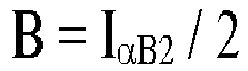
- The amount of consecutively incorporated 1-butene in PBBP sequences was quantified using the integral of the ααB2B2 site at 40.5 ppm accounting for the number of reporting sites per comonomer:

- In presence of BB the value of B must be corrected for the influence of the αB2 sites resulting from BB:

- The total 1-butene content was calculated based on the sum of isolated and consecutively incorporated 1-butene:

- Characteristic signals corresponding to the incorporation of ethylene were observed {brandolini01} and the comonomer content quantified.
- The amount of isolated ethylene incorporated in PEP sequences was quantified using the integral of the Sββ sites at 24.3 ppm accounting for the number of reporting sites per comonomer:

- If characteristic signals corresponding to consecutive incorporation of ethylene in PEE sequence was observed the Sβδ site at 27.0 ppm was used for quantification:

- Characteristic signals corresponding to regiodefects were observed {resconi00}. The presence of isolated 2,1-erythro regiodefects was indicated by the presence of the two methyl sites at 17.7 and 17.2 ppm, by the methylene site at 42.4 ppm and confirmed by other characteristic sites. The presence of 2,1 regiodefect adjacent an ethylene unit was indicated by the two inequivalent Sαβ signals at 34.8 ppm and 34.4 ppm respectively and the Tγγ at 33.7 ppm.
- The amount of isolated 2,1-erythro regiodefects (P21e isolated) was quantified using the integral of the methylene site at 42.4 ppm (Ie9):

- If present the amount of 2,1 regiodefect adjacent to ethylene (PE21) was quantified using the methine site at 33.7 ppm (ITγγ):

- The total ethylene content was then calculated based on the sum of ethylene from isolated, consecutively incorporated and adjacent to 2,1 regiodefects:

- The amount of propylene was quantified based on the Sαα methylene sites at 46.7 ppm including all additional propylene units not covered by Sαα e.g. the factor 3∗P21e isolated accounts for the three missing propylene units from isolated 2,1-erythro regiodefects:

- The total mole fraction of 1-butene and ethylene in the polymer was then calculated as:


- The mole percent comonomer incorporation was calculated from the mole fractions:


- The weight percent comonomer incorporation was calculated from the mole fractions:


- The mole percent of isolated 2,1-erythro regiodefects was quantified with respect to all propylene:

- The mole percent of 2,1 regiodefects adjacent to ethylene was quantified with respect to all propylene:

- The total amount of 2,1 defects was quantified as following:

- Characteristic signals corresponding to other types of regiodefects (2,1-threo, 3,1 insertion) were not observed {resconi00}.
- Literature (as referred to above):
- klimke06
- Klimke, K., Parkinson, M., Piel, C., Kaminsky, W., Spiess, H.W., Wilhelm, M., Macromol. Chem. Phys. 2006;207:382.
- parkinson07
- Parkinson, M., Klimke, K., Spiess, H.W., Wilhelm, M., Macromol. Chem. Phys. 2007;208:2128.
- pollard04
- Pollard, M., Klimke, K., Graf, R., Spiess, H.W., Wilhelm, M., Sperber, O., Piel, C., Kaminsky, W., Macromolecules 2004;37:813.
- filip05
- Filip, X., Tripon, C., Filip, C., J. Mag. Resn. 2005, 176, 239
- griffin07
- Griffin, J.M., Tripon, C., Samoson, A., Filip, C., and Brown, S.P., Mag. Res. in Chem. 2007 45, S 1, S198.
- castignolles09
- Castignolles, P., Graf, R., Parkinson, M., Wilhelm, M., Gaborieau, M., Polymer 50 (2009) 2373.
- resconi00
- Resconi, L., Cavallo, L., Fait, A., Piemontesi, F., Chem. Rev. 2000, 100, 1253.
- brandolini01
- A.J. Brandolini, D.D. Hills, "NMR spectra of polymers and polymer additives", Marcel Deker Inc., 2000
- The crystalline (CF) and soluble fractions (SF) of the polypropylene (PP) compositions as well as the comonomer content and intrinsic viscosities of the respective fractions were analyzed by use of the CRYSTEX instrument, Polymer Char (Valencia, Spain). Details of the technique and the method can be found in literature (Ljiljana Jeremic, Andreas Albrecht, Martina Sandholzer & Markus Gahleitner (2020) Rapid characterization of high-impact ethylene-propylene copolymer composition by crystallization extraction separation: comparability to standard separation methods, International Journal of Polymer Analysis and Characterization, 25:8, 581-596)
- The crystalline and amorphous fractions are separated through temperature cycles of dissolution at 160 °C, crystallization at 40 °C and re-dissolution in 1,2,4-trichlorobenzene at 160 °C. Quantification of SF and CF and determination of ethylene content (C2) are achieved by means of an integrated infrared detector (IR4) and for the determination of the intrinsic viscosity (IV) an online 2-capillary viscometer is used.
- The IR4 detector is a multiple wavelength detector measuring IR absorbance at two different bands (CH3 stretching vibration (centred at app. 2960 cm-1) and the CH stretching vibration (2700-3000 cm-1) that are serving for the determination of the concentration and the Ethylene content in Ethylene-Propylene copolymers. The IR4 detector is calibrated with series of 8 EP copolymers with known Ethylene content in the range of 2 wt.-% to 69 wt.-% (determined by 13C-NMR) and each at various concentrations, in the range of 2 and 13mg/ml. To encounter for both features, concentration and ethylene content at the same time for various polymer concentrations expected during Crystex analyses the following calibration equations were applied:


- The constants a to e for equation 1 and a to f for equation 2 were determined by using least square regression analysis.
- The CH3/1000C is converted to the ethylene content in wt.-% using following relationship:

- Amounts of Soluble Fraction (SF) and Crystalline Fraction (CF) are correlated through the XS calibration to the "Xylene Cold Soluble" (XCS) quantity and respectively Xylene Cold Insoluble (XCI) fractions, determined according to standard gravimetric method as per ISO16152. XS calibration is achieved by testing various EP copolymers with XS content in the range 2-31 wt.-%. The determined XS calibration is linear:

- Intrinsic viscosity (IV) of the parent EP copolymer and its soluble and crystalline fractions are determined with a use of an online 2-capillary viscometer and are correlated to corresponding IV's determined by standard method in decalin according to ISO 1628-3. Calibration is achieved with various EP PP copolymers with IV = 2-4 dL/g. The determined calibration curve is linear:

- The samples to be analyzed are weighed out in concentrations of 10mg/ml to 20mg/ml. To avoid injecting possible gels and/or polymers which do not dissolve in TCB at 160 °C, like PET and PA, the weighed out sample was packed into a stainless steel mesh MW 0,077/D 0,05mmm.
- After automated filling of the vial with 1,2,4-TCB containing 250 mg/l 2,6-tert-butyl-4-methylphenol (BHT) as antioxidant, the sample is dissolved at 160 °C until complete dissolution is achieved, usually for 60 min, with constant stirring of 400rpm. To avoid sample degradation, the polymer solution is blanketed with the N2 atmosphere during dissolution.
- A defined volume of the sample solution is injected into the column filled with inert support where the crystallization of the sample and separation of the soluble fraction from the crystalline part is taking place. This process is repeated two times. During the first injection the whole sample is measured at high temperature, determining the IV[dl/g] and the C2[wt.%] of the PP composition. During the second injection the soluble fraction (at low temperature) and the crystalline fraction (at high temperature) with the crystallization cycle are measured (wt.-% SF, wt.-% C2, IV).
- The intrinsic viscosity (iV) was measured according to DIN ISO 1628/1, October 1999, in Decalin at 135 °C.
- The melt flow rate (MFR) was determined according to ISO 1133 and is indicated in g/10 min. The MFR is an indication of the flowability, and hence the processability, of the polymer. The higher the melt flow rate, the lower the viscosity of the polymer. The MFR2 of polypropylene was determined at a temperature of 230 °C and a load of 2.16 kg.
- The density was measured according to ISO 1183-187. Sample preparation was done by compression moulding in accordance with ISO 1872-2:2007.
- The xylene soluble fraction at room temperature (XCS, wt.-%): The amount of the polymer soluble in xylene was determined at 25 °C according to ISO 16152; 5th edition; 2005-07-01.
- DSC analysis, melting temperature (Tm) and heat of fusion (Hf), crystallization temperature (Tc) and heat of crystallization (Hc): measured with a TA Instrument Q200 differential scanning calorimetry (DSC) on 5 to 7 mg samples. DSC was run according to ISO 11357 / part 3 /method C2 in a heat / cool / heat cycle with a scan rate of 10 °C/min in the temperature range of -30 to +225 °C. Crystallization temperature (Tc) and crystallization enthalpy (Hc) were determined from the cooling step, while melting temperature (Tm) and melting enthalpy (Hm) were determined from the second heating step.
- This test method covers the determination of the energy that causes films to fail under specified conditions of impact of a free-falling dart from a specified height that would result in failure of 50 % of the specimens tested (Staircase method A). A uniform missile mass increment is employed during the test and the missile weight is decreased or increased by the uniform increment after test of each specimen, depending upon the result (failure or no failure) observed for the specimen.
-
- Conditioning time: > 96 h
- Test temperature: 23 °C
- Dart head material: phenolic
- Dart diameter: 38 mm
- Drop height: 660 mm
-
- Impact failure mass [g]
- Minimum thickness [mm]
- Maximum thickness [mm]
- Testing according to ISO7765-1:1988 / Method A was carried out on films with a thickness as indicated and produced as described below under "Examples" and reported in gram (g).
- DDI per unit thickness (in g/micron) is calculated by dividing DDI (in gram) to the thickness of film (in micron).
- Haze was determined according to ASTM D 1003-00 directly on the multilayer film produced in the experimental section.
- This method is used to determine the sealing window (sealing temperature range) of films. The procedure is similar to Hot-Tack test and is conducted in the same machine. In contrast to Hot-Tack, the sealing range determined corresponds to the strength of the seal after it had cooled down (a delay time of 30 s). The conditions used are as follows:
- Sealing time (1 s)
- Sealing pressure (0.4 N/mm2)
- Delay time (30 s)
- Clamp separation rate (42 mm/s)
- Sealing range = (Seal initiation temperature until seal end temperature)
- The determined results provide a quantitatively useful indication of the sealing strength of the films and indicate the temperature range for optimal sealing.
- The lower limit (Sealing Initiation Temperature - SIT) is the sealing temperature at which a sealing average force of 5 N is measured (i.e. the lowest temperature at which such force is measured). The upper limit (Sealing End Temperature - SET) is identified as the first sealing temperature where at least two specimens showed a burn-through failure mode. The maximum sealing force corresponds to the highest measured sealing force.
- The temperature interval is set by default to 5 °C, but can be reduced to 1 °C when the curve shows a sharp increase or decrease in the force values between two temperature steps. This is done in order to represent a better curve profile.
- Deviating from ASTM F1921 - 12, the test parameters sealing pressure, cooling time and test speed are modified. The determination of the force/temperature curve is continued until thermal failure of the film. In addition to failure mode evaluations described in the standard, additional failure modes are used.
- The heat-seal experiments were performed on at least 3 film specimens of 85 mm wide by 200 mm length cut in the machine direction. The 5 mm x 150 mm Teflon coated steel heating bars were set to a temperature of 110 °C. Two films were sealed by positioning, one on top of the other using a 0.5 s sealing time and 0.67 N/ mm2 pressure. The resulting sealed area was 85 mm x 5 mm. The specimens were then conditioned for 7 days (± 24 h) at 23 °C (± 2 °C) / 50 % RH (± 10%). 10 specimens of 15 mm width were cut and tested in tensile mode at 23 °C (± 2 °C) / 50 % RH (± 10%) on a Universal Testing Machine (Zwick Z005). The clamping distance used was 100 mm, and a test speed of 200 mm/min. The yielding force and maximum force were measured for each test specimen.
- Basic sealing:
- Film width: 85 mm
- Film length: > 200 mm
- Sealed seam width: 5 mm
- Sealing temperature: 110 °C
- Sealing pressure: 0,67 N/mm2
- Sealing time: 0,5 s
- Sealing jaws: Teflon coated
- Conditioning
- Conditioning time: 7 days (± 24 h) at 23 °C (± 2 °C) / 50 % RH (± 10%)
- Heat seal strength:
- Test temperature: 23 °C (± 2 °C) / 50 % RH (± 10%)
- Specimen width: 15 mm
- Gripping distance: 100 mm
- Test speed: 200 mm/min
- Test device: Universal Testing Machine
- Tensile modulus in machine and transverse direction was determined according to ISO 527-3 at 23 °C on the multilayer films produced in the experimental section. Testing was performed at a cross-head speed of 1 mm/min.
- Steam sterilization was performed in a Systec D series machine (Systec Inc., USA). The samples were heated up at a heating rate of 5 °C/min starting from 23 °C. After having been kept for 30 min at 130 °C, they were removed immediately from the steam sterilizer and stored at room temperature before being further processed or tested.
- For the polymerization process of HECO2, a Ziegler-Natta type catalyst as used in for the inventive examples of
WO2016/066446 A1 and prepolymerized with vinylcyclohexane to achieve nucleation with poly(vinylcycloxehane) was used. - Nucleation by prepolymerization with vinylcyclohexane is described in
EP290256 B1 EP2960279B1 in detail. - For the polymerizsation process of RAHECO and HECO 1, the same catalyst was used except that no pre-polymerization with vinylcyclohexane was undertaken (i.e. simply the catalyst used for the inventive examples of
WO 2016/066446 A1 was used). - The catalyst systems defined above was used in combination with triethyl-aluminium (TEAL) as cocatalyst and dicyclopenta dienyl-dimethoxy silane (Donor D) as external donor.
- The subsequent polymerizations have been effected under the following conditions.
Table 1 Polymerization conditions for the heterophasic propylene-ethylene copolymers RAHECO HECO1 HECO2 Prepolymerization [Co]/[ED] [mol/mol] 9.5 10.0 8.0 [Co]/[Ti] [mol/mol] 180 200 173 Temperature [°C] 30 30 30 Residence time [min] 15 15 15 Loop reactor Temperature [°C] 80 80 80 Split [wt.-%] 36 41 39 H2/C3 [mol/kmol] 0.24 0.30 0.40 C2/C3 [mol/kmol] 3.5 0.0 0.0 MFR2 [g/10 min] 0.70 0.85 2.40 C2 [wt.-%] 2.5 0.0 0.0 1st Gas phase reactor Temperature [°C] 80 80 80 Split [wt.-%] 46 42 50 H2/C3 [mol/kmol] 2.3 2.9 7.0 C2/C3 [mol/kmol] 5.3 0.0 0.0 MFR2 [g/10 min] 0.70 0.85 2.4 XCS [wt.-%] 8.0 1.7 1.8 C2 [wt.-%] 4.0 0.0 0.0 2nd Gas phase reactor Temperature [°C] 75 75 75 Split [wt.-%] 18 17 11 H2/C3 [mol/kmol] 80 60 116 C2/C3 [mol/kmol] 290 480 210 MFR2 [g/10 min] 0.80 0.85 3.00 C2 [wt.-%] 9.5 7.7 4.9 Final Properties (pellet) MFR2 [g/10 min] 0.80 0.85 3.00 C2 [wt.-%] 9.5 7.7 4.9 SF [wt.-%] 21.1 14.4 11.2 C2(SF) [wt.-%] 30.2 37.5 29.1 iV(SF) [dL/g] 2.89 2.83 2.02 CF [wt.-%] 78.2 85.6 88.8 C2(CF) [wt.-%] 4.9 3.4 2.2 iV(CF) [dL/g] 3.08 3.02 2.66 iV(SF)/iV(CF) [-] 0.94 0.94 0.76 Tm [°C] 141 165 168 - The matrices of each of RAHECO, HECO 1 and HECO2 are free from 2,1-regiodefects.
- RAHECO was compounded in a co-rotating twin-screw extruder Coperion ZSK 47 at 220 °C with 0.19 wt.-% of an antioxidant blend (Irganox B215FF from BASF AG, Germany; this is a 1:2-mixture of Pentaerythrityl-tetrakis(3-(3',5'-di-tert. butyl-4-hydroxyphenyl)-propionate, CAS-no. 6683-19-8, and Tris (2,4-di-t-butylphenyl) phosphite, CAS-no. 31570-04-4); 0.05 wt.-% of Ca-stearate (CAS-no.1592-23-0, commercially available from Faci, Italy).
- HECO1 was compounded in a co-rotating twin-screw extruder Coperion ZSK 47 at 220 °C with 0.15 wt.-% of pentaerythrityl-tetrakis(3-(3',5'-di-tert. butyl-4-hydroxyphenyl)-propionate (available as Irganox 1010 from BASF AG, Germany; CAS-no. 6683-19-8); and 0.05 wt.-% of Ca-stearate (CAS-no.1592-23-0, commercially available from Faci, Italy).
- HECO2 was compounded in a co-rotating twin-screw extruder Coperion ZSK 47 at 220 °C with 0.05 wt.-% of pentaerythrityl-tetrakis(3-(3',5'-di-tert. butyl-4-hydroxyphenyl)-propionate (available as Irganox 1010 from BASF AG, Germany; CAS-no. 6683-19-8); 0.10 wt.-% of tris (2,4-di-t-butylphenyl) phosphite (available as Irgafos 168 from BASF AG, Germany; CAS-no. 31570-04-4); 0.03 wt.-% of synthetic hydrotalcite (available as Hycite 713 from BASF AG, Germany; CAS-no. 11097-59-9); and 0.05 wt.-% of a nucleating agent (available as Hyperform HPN-20E from Milliken, USA; CAS-no (of main component) 491589-22-1).
- The catalyst used in the polymerization process for the propylene-ethylene random copolymers R-PP1 and R-PP2 was prepared as follows:
The metallocene MC1 (rac-anti-dimethylsilandiyl(2-methyl-4-phenyl-5-methoxy-6-tert-butyl-indenyl)(2-methyl-4-(4-tert-butylphenyl)indenyl)zirconium dichloride) has been synthesized as described inWO 2013/007650 . - The catalyst was prepared using metallocene MC1 and a catalyst system of MAO and trityl tetrakis(pentafluorophenyl)borate according to Catalyst 3 of
WO 2015/11135 Table 2 Polymerization conditions for the propylene-ethylene random copolymers R-PP1 R-PP2 Prepolymerization Temperature °C 17 20 Residence time min 0.4 0.4 Loop reactor Temperature °C 68 65 Feed H2/C3 ratio [mol/kmol] 0.1 0.1 Feed C2/C3 ratio [mol/kmol] 15.2 32.1 Split [wt.-%] 63 52 MFR2 [g/10 min] 4.48 2.67 C2 content [wt.-%] 0.51 2.20 First GPR Temperature [°C] 83 83 H2/C3 ratio [mol/kmol] 0.7 1.2 C2/C3 ratio [mol/kmol] 97.6 119.8 Split [wt.-%] 37 48 Pellet C2 total [wt.-%] 1.1 2.5 2,1-regiodefects [mol-%] 0.6 0.5 MFR2 [g/10min] 2.0 1.7 Tm [°C] 145 128 XCS [wt.-%] 0.51 0.57 - R-PP1 was compounded in a co-rotating twin-screw extruder Coperion ZSK 47 at 220 °C with 0.05 wt.-% of pentaerythrityl-tetrakis(3-(3',5'-di-tert. butyl-4-hydroxyphenyl)-propionate (available as Irganox 1010 from BASF AG, Germany; CAS-no. 6683-19-8); 0.05 wt.-% of tris (2,4-di-t-butylphenyl) phosphite (available as Irgafos 168 from BASF AG, Germany; CAS-no. 31570-04-4); 0.03 wt.-% of synthetic hydrotalcite (available as Hycite 713 from BASF AG, Germany; CAS-no. 11097-59-9); and 0.08 wt.-% of a nucleating agent (available as ADK Stab NA-71 from Adeka Corporation, Germany; CAS-no (of main component) 85209-93-4).
- R-PP2 was compounded in a co-rotating twin-screw extruder Coperion ZSK 47 at 220 °C with 0.20 wt.-% of erucamide (available as Crodamide ER beads from Croda International, UK; CAS-no. 112-84-5); 0.18 wt.-% of amorphous silica (available as Sylobloc 45B from Grace GmbH, Germany; CAS-no. 7631-86-9); 0.10 wt.-% of an antioxidant blend (available as Irganox B215FF from BASF AG, Germany; this is a 1:2-mixture of Pentaerythrityl-tetrakis(3-(3',5'-di-tert. butyl-4-hydroxyphenyl)-propionate, CAS-no. 6683-19-8, and Tris (2,4-di-t-butylphenyl) phosphite, CAS-no. 31570-04-4); and 0.04 wt.-% of Ca-stearate (available from Faci, Italy; CAS-no.1592-23-0) and 2.0 wt.-% of the propylene homopolymer described in
EP 3 184 587 , Table 1, IE2. - Furthermore, R-PP2 was visbroken using 2,5-bis(tert-butylperoxy)-2,5-dimethylhexane to achieve an MFR2 of 11.0 g/10 min. The XCS, Tm, C2(total) and content of 2,1-regiodefects were not altered during the visbreaking process.
- The compositions for each layer were prepared based on the recipes indicated in Table 3 by compounding in a co-rotating twin-screw extruder Coperion ZSK 40 at 220 °C.
- 3-layer films are produced on Collin lab scale blown film line, film thickness 60 µm, BUR 1:2.5, melt temperature 210°C. The film thickness distribution is skin 25%, core 50%, and sealing layer 25%.
- The properties of the inventive and comparative compositions are given in Table 4.
Table 3 Recipes for inventive and comparative examples CE1 IE1 IE2 IE3 Skin layer RAHECO [wt.-%] 30 30 30 30 HECO1 [wt.-%] 70 70 70 70 Core layer RAHECO [wt.-%] 30 30 30 30 HECO1 [wt.-%] 70 70 70 70 Sealing layer RAHECO [wt.-%] - 40 40 40 R-PP1 [wt.-%] - 16 30 44 R-PP2 [wt.-%] - 44 30 16 HECO2 [wt.-%] 100 - - - Table 4 Properties of the inventive and comparative multilayer films CE1 IE1 IE2 IE3 Tensile Modulus (MD) [MPa] 1140 860 970 860 Tensile Modulus (TD) [MPa] 1100 850 1010 950 DDI [g] 173 386 138 226 Haze [%] 27.6 32.8 28.5 31.2 SIT [°C] 145 122 125 125 Seal strength (b.s.) [N/15mm] 6.0 22.6 25.6 25.5 Seal strength (a.s.) [N/15mm] 5.4 27.1 30.3 29.4 Seal strength (a.s.)/Seal strength (b.s.) [%] 90 120 118 115 - As can be seen from Table 4, the inventive multilayer films have significantly reduced SIT values, as well as drastically improved seal strength, both before and after sterilization, whilst maintaining acceptable mechanical and optical properties. Furthermore, the seal strength after sterilization is in all cases higher than before sterilization, in contrast to the comparative example, which experiences a reduction in seal strength.
Claims (15)
- A multilayer film (F), comprising, in the given order, the following layers:(A) a skin layer, comprising at least 90 wt.-%, based on the total weight of the skin layer, of a polypropylene or mixture of polypropylenes;(B) a core layer, comprising at least 90 wt.-%, based on the total weight of the core layer, of a polypropylene or mixture of polypropylenes; and(C) a sealing layer, comprising at least 90 wt.-%, based on the total weight of the sealing layer, of a polypropylene composition (PC) comprising the following components:i) 20 to 70 wt.-%, based on the total weight of the polypropylene composition (PC), of a random-heterophasic propylene-ethylene copolymer (RAHECO), having a melt flow rate (MFR2), determined according to ISO 1133 at 230 °C and 2.16 kg, in the range from 0.1 to 10.0 g/10 min, comprising:a) a crystalline matrix (M) being a propylene-ethylene random copolymer; andb) an amorphous propylene-ethylene elastomer (E);ii) 10 to 50 wt.-%, based on the total weight of the polypropylene composition (PC), of a first propylene-ethylene random copolymer (R-PP1) having a melt flow rate (MFR2), determined according to ISO 1133 at 230 °C and 2.16 kg, in the range from 1.0 to 6.0 g/10 min; andiii) 10 to 50 wt.-%, based on the total weight of the polypropylene composition (PC), of a second propylene-ethylene random copolymer (R-PP2) having a melt flow rate (MFR2), determined according to ISO 1133 at 230 °C and 2.16 kg, in the range from 7.0 to 20 g/10 min,wherein the combined amounts of the random-heterophasic propylene-ethylene copolymer (RAHECO), the first propylene-ethylene random copolymer (R-PP1) and the second propylene-ethylene random copolymer (R-PP2) are at least 90 wt.-%, relative to the total weight of the polypropylene composition (PC).
- The multilayer film (F) according to claim 1, wherein the random-heterophasic propylene-ethylene copolymer (RAHECO) has one or more, preferably all, of the following properties:a) a soluble fraction (SF) content in the range from 10 to 45 wt.-% and a crystalline fraction (CF) content in the range from 55 to 90 wt.-%, both determined according to CRYSTEX QC analysis;b) a melting temperature (Tm), determined by differential scanning calorimetry (DSC), in the range from 130 to 155 °C; andc) the crystalline matrix (M) being free from 2,1-regiodefects, as determined by 13C-NMR spectroscopy.
- The multilayer film (F) according to claim 1 or claim 2, wherein the random-heterophasic propylene-ethylene copolymer (RAHECO) has one or more, preferably all, of the following properties:a) an ethylene content (C2(total)), determined by FT-IR spectroscopy calibrated by quantitative 13C-NMR spectroscopy in the CRYSTEX QC method, in the range from 3.0 to 15.0 wt.-%;b) an ethylene content of the soluble fraction (C2(SF)), according to CRYSTEX QC analysis, determined by FT-IR spectroscopy calibrated by quantitative 13C-NMR spectroscopy in the CRYSTEX QC method, in the range from 17.0 to 60.0 wt.-%; andc) an ethylene content of the crystalline fraction (C2(CF)), according to CRYSTEX QC analysis, determined by FT-IR spectroscopy calibrated by quantitative 13C-NMR spectroscopy in the CRYSTEX QC method, in the range from 1.0 to 8.0 wt.-%.
- The multilayer film (F) according to any one of the preceding claims, wherein the random-heterophasic propylene-ethylene copolymer (RAHECO) has one or more, preferably all, of the following properties:a) an intrinsic viscosity of the soluble fraction (iV(SF)) according to CRYSTEX QC analysis, determined according to DIN ISO 1628/1, in the range from 1.20 to 4.50 dL/g;b) an intrinsic viscosity of the crystalline fraction (iV(CF)) according to CRYSTEX QC analysis, determined according to DIN ISO 1628/1, in the range from 1.20 to 4.50 dL/g; andc) an intrinsic viscosity ratio (iV(SF)/iV(CF)), determined according to DIN ISO 1628/1, in the range from 0.50 to 2.00.
- The multilayer film (F) according to any one of the preceding claims, wherein the first propylene-ethylene random copolymer (R-PP1) has one or more, preferably all, of the following properties:a) an ethylene content (C2), determined by quantitative 13C-NMR spectroscopy, in the range from 1.0 to 5.5 wt.-%;b) a xylene cold soluble (XCS) content, determined according to ISO 16152 analysis, in the range from 0.2 to 5.0 wt.-%;c) a melting temperature (Tm), determined by differential scanning calorimetry (DSC), in the range from 130 to 155 °C;d) a crystallization temperature (Tc), determined by differential scanning calorimetry (DSC), in the range from 110 to 125 °C; ande) a content of 2,1-regiodefects, as determined by 13C-NMR spectroscopy, in the range from 0.05 to 1.40 mol-%.
- The multilayer film (F) according to any one of the preceding claims, wherein the second propylene-ethylene random copolymer (R-PP2) has one or more, preferably all, of the following properties:a) an ethylene content (C2), determined by quantitative 13C-NMR spectroscopy, in the range from 1.0 to 5.5 wt.-%;b) a xylene cold soluble (XCS) content, determined according to ISO 16152 analysis, in the range from 0.2 to 5.0 wt.-%;c) a melting temperature (Tm), determined by differential scanning calorimetry (DSC), in the range from 125 to 145 °C;d) a crystallization temperature (Tc), determined by differential scanning calorimetry (DSC), in the range from 100 to 120 °C; ande) a content of 2,1-regiodefects, as determined by 13C-NMR spectroscopy, in the range from 0.05 to 1.40 mol-%.
- The multilayer film (F) according to any one of the preceding claims, wherein:a) the skin layer has a thickness in the range from 10 to 40% of the total thickness of the multilayer film (F);b) the core layer has a thickness in the range from 30 to 70% of the total thickness of the multilayer film (F); andc) the sealing layer has a thickness in the range from 10 to 40% of the total thickness of the multilayer film (F).
- The multilayer film (F) according to any one of the preceding claims, wherein at least one of, preferably both of, the skin layer and the core layer comprise at least 90 wt.-% of a polypropylene composition (PC') comprising the following components:i) from 15 to 45 wt.-%, based on the total weight of the polypropylene composition (PC'), of a random-heterophasic propylene-ethylene copolymer (RAHECO') having a melting temperature (Tm), determined by differential scanning calorimetry (DSC), in the range from 130 to 155 °C,
wherein the random-heterophasic propylene-ethylene copolymer (RAHECO') comprises:a1) a crystalline matrix (M) being a propylene-ethylene random copolymer, preferably being free from 2,1-regiodefects, as determined by quantitative 13C-NMR spectroscopy; andb1) an amorphous propylene-ethylene elastomer (E), andii) from 55 to 85 wt.-%, based on the total weight of the polypropylene composition (PC'), of a heterophasic propylene-ethylene copolymer (HECO) having a melting temperature (Tm), determined by differential scanning calorimetry (DSC), in the range from 150 to 170 °C,
wherein the heterophasic propylene-ethylene copolymer (HECO) comprises:a2) a crystalline matrix (M) being a propylene homopolymer, preferably being free from 2,1-regiodefects, as determined by quantitative 13C-NMR spectroscopy; andb2) an amorphous propylene-ethylene elastomer (E),wherein the combined amounts of the random-heterophasic propylene-ethylene copolymer (RAHECO') and the heterophasic propylene-ethylene copolymer (HECO) are at least 90 wt.-%, relative to the total weight of the polypropylene composition (PC'). - The multilayer film (F) according to claim 8, wherein the random-heterophasic propylene-ethylene copolymer (RAHECO') has one or more, preferably all, of the following properties:a) a melt flow rate (MFR2), determined according to ISO 1133 at 230 °C and 2.16 kg, in the range from 0.1 to 10.0 g/10 min;b) a soluble fraction (SF) content in the range from 10 to 45 wt.-% and a crystalline fraction (CF) content in the range from 55 to 90 wt.-%, both determined according to CRYSTEX QC analysis;c) an ethylene content (C2(total)), determined by FT-IR spectroscopy calibrated by quantitative 13C-NMR spectroscopy in the CRYSTEX QC method, in the range from 3.0 to 15.0 wt.-%;d) an ethylene content of the soluble fraction (C2(SF)), according to CRYSTEX QC analysis, determined by FT-IR spectroscopy calibrated by quantitative 13C-NMR spectroscopy in the CRYSTEX QC method, in the range from 17.0 to 60.0 wt.-%;e) an ethylene content of the crystalline fraction (C2(CF)), according to CRYSTEX QC analysis, determined by FT-IR spectroscopy calibrated by quantitative 13C-NMR spectroscopy in the CRYSTEX QC method, in the range from 1.0 to 8.0 wt.-%;f) an intrinsic viscosity of the soluble fraction (iV(SF)) according to CRYSTEX QC analysis, determined according to DIN ISO 1628/1, in the range from 1.20 to 4.50 dL/g;g) an intrinsic viscosity of the crystalline fraction (iV(CF)) according to CRYSTEX QC analysis, determined according to DIN ISO 1628/1, in the range from 1.20 to 4.50 dL/g; andh) an intrinsic viscosity ratio (iV(SF)/iV(CF)), determined according to DIN ISO 1628/1, in the range from 0.50 to 2.00.
- The multilayer film (F) according to claim 8 or claim 9, wherein the heterophasic propylene-ethylene copolymer (HECO) has one or more, preferably all, of the following properties:a) a melt flow rate (MFR2), determined according to ISO 1133 at 230 °C and 2.16 kg, in the range from 0.1 to 6.0 g/10 min;b) a soluble fraction (SF) content in the range from 5 to 30 wt.-% and a crystalline fraction (CF) content in the range from 70 to 95 wt.-%, both determined according to CRYSTEX QC analysis;c) an ethylene content (C2(total)), determined by FT-IR spectroscopy calibrated by quantitative 13C-NMR spectroscopy in the CRYSTEX QC method, in the range from 3.0 to 15.0 wt.-%;d) an ethylene content of the soluble fraction (C2(SF)), according to CRYSTEX QC analysis, determined by FT-IR spectroscopy calibrated by quantitative 13C-NMR spectroscopy in the CRYSTEX QC method, in the range from 17.0 to 60.0 wt.-%;e) an ethylene content of the crystalline fraction (C2(CF)), according to CRYSTEX QC analysis, determined by FT-IR spectroscopy calibrated by quantitative 13C-NMR spectroscopy in the CRYSTEX QC method, in the range from 1.0 to 8.0 wt.-%;f) an intrinsic viscosity of the soluble fraction (iV(SF)) according to CRYSTEX QC analysis, determined according to DIN ISO 1628/1, in the range from 1.20 to 4.50 dL/g; andg) an intrinsic viscosity of the crystalline fraction (iV(CF)) according to CRYSTEX QC analysis, determined according to DIN ISO 1628/1, in the range from 1.20 to 4.50 dL/g.
- The multilayer film (F) according to any one of claims 8 to 10, wherein the random-heterophasic propylene-ethylene copolymer (RAHECO') is the same as the random-heterophasic propylene-ethylene copolymer (RAHECO).
- The multilayer film (F) according to any one of the preceding claims, having a thickness in the range from 20 to 150 µm.
- The multilayer film (F) according to any one of the preceding claims, having one or more, preferably all, of the following properties:a) a tensile modulus in the machine direction (TM-MD), measured according to ISO 527-3, in the range from 700 to 1500 MPa;b) a tensile modulus in the transverse direction (TM-TD), measured according to ISO 527-3, in the range from 700 to 1500 MPa; andc) a dart drop impact strength (DDI), measured according to ISO 7765-1, in the range from 100 to 600 g.
- The multilayer film (F) according to any one of the preceding claims, having a haze value, determined according to ASTM D1003, in the range from 10 to 40%.
- The multilayer film (F) according to any one of the preceding claims, having one or more, preferably all, of the following properties:a) a sealing initiation temperature (SIT), determined according to the method specified in the measurement methods, in the range from 115 to 130 °C;b) a seal strength before sterilization (b.s.), determined according to the method specified in the measurement methods, in the range from 15 to 40 N/mm; andc) a seal strength after sterilization (a.s.), determined according to the method specified in the measurement methods, in the range from 20 to 45 N/mm.
Priority Applications (6)
| Application Number | Priority Date | Filing Date | Title |
|---|---|---|---|
| EP23160784.7A EP4427933B1 (en) | 2023-03-08 | 2023-03-08 | Recyclable multilayer films having a sealing layer formed from a blend of polypropylenes |
| PL23160784.7T PL4427933T3 (en) | 2023-03-08 | 2023-03-08 | Recyclable multi-layer films containing a heat-sealable layer made of a polypropylene mixture |
| ES23160784T ES3042664T3 (en) | 2023-03-08 | 2023-03-08 | Recyclable multilayer films having a sealing layer formed from a blend of polypropylenes |
| PCT/EP2024/056146 WO2024184505A1 (en) | 2023-03-08 | 2024-03-08 | Recyclable multilayer films having a sealing layer formed from a blend of polypropylenes |
| US19/161,881 US20260116057A1 (en) | 2023-03-08 | 2024-03-08 | Recyclable multilayer films having a sealing layer formed from a blend of polypropylenes |
| CN202480016708.8A CN120882562B (en) | 2023-03-08 | 2024-03-08 | Recyclable multilayer film with sealing layer formed from polypropylene blend |
Applications Claiming Priority (1)
| Application Number | Priority Date | Filing Date | Title |
|---|---|---|---|
| EP23160784.7A EP4427933B1 (en) | 2023-03-08 | 2023-03-08 | Recyclable multilayer films having a sealing layer formed from a blend of polypropylenes |
Publications (2)
| Publication Number | Publication Date |
|---|---|
| EP4427933A1 true EP4427933A1 (en) | 2024-09-11 |
| EP4427933B1 EP4427933B1 (en) | 2025-08-13 |
Family
ID=85556673
Family Applications (1)
| Application Number | Title | Priority Date | Filing Date |
|---|---|---|---|
| EP23160784.7A Active EP4427933B1 (en) | 2023-03-08 | 2023-03-08 | Recyclable multilayer films having a sealing layer formed from a blend of polypropylenes |
Country Status (6)
| Country | Link |
|---|---|
| US (1) | US20260116057A1 (en) |
| EP (1) | EP4427933B1 (en) |
| CN (1) | CN120882562B (en) |
| ES (1) | ES3042664T3 (en) |
| PL (1) | PL4427933T3 (en) |
| WO (1) | WO2024184505A1 (en) |
Cited By (1)
| Publication number | Priority date | Publication date | Assignee | Title |
|---|---|---|---|---|
| WO2026008736A1 (en) * | 2024-07-03 | 2026-01-08 | Borealis Gmbh | Propylene copolymer for cable insulation |
Citations (11)
| Publication number | Priority date | Publication date | Assignee | Title |
|---|---|---|---|---|
| EP0290256B1 (en) | 1987-05-07 | 1993-07-21 | Fujitsu Limited | Data transfer controlling apparatus for direct memory access |
| EP2546298A1 (en) * | 2011-07-15 | 2013-01-16 | Borealis AG | Unoriented film |
| WO2013007650A1 (en) | 2011-07-08 | 2013-01-17 | Borealis Ag | Catalysts |
| WO2015011135A1 (en) | 2013-07-24 | 2015-01-29 | Borealis Ag | Process |
| WO2016066446A1 (en) | 2014-10-27 | 2016-05-06 | Borealis Ag | Heterophasic polypropylene with improved stiffness/impact balance |
| EP3064514A1 (en) * | 2015-03-02 | 2016-09-07 | Borealis AG | C2C3 random copolymer composition with improved balance between sealing initiation temperature and melting point |
| EP3184587A1 (en) | 2015-12-21 | 2017-06-28 | Borealis AG | Extruded articles with improved optical properties |
| EP2960279B1 (en) | 2014-06-27 | 2018-04-11 | Borealis AG | Nucleated polypropylene composition |
| EP3672997A1 (en) * | 2017-08-24 | 2020-07-01 | Borealis AG | Polypropylene copolymers with improved stiffness and impact behaviour |
| WO2021053154A1 (en) * | 2019-09-20 | 2021-03-25 | Borealis Ag | Heterophasic propylene polymer composition with improved property profile |
| EP3912794A1 (en) * | 2020-05-18 | 2021-11-24 | Borealis AG | Multilayer film with improved properties |
Family Cites Families (5)
| Publication number | Priority date | Publication date | Assignee | Title |
|---|---|---|---|---|
| US8653198B2 (en) * | 2009-03-26 | 2014-02-18 | Fina Technology, Inc. | Method for the preparation of a heterophasic copolymer and uses thereof |
| WO2012063914A1 (en) * | 2010-11-10 | 2012-05-18 | 三井化学株式会社 | Polyolefin composite film |
| WO2019166223A1 (en) * | 2018-02-28 | 2019-09-06 | Basell Poliolefine Italia S.R.L. | Permeable polymer film |
| EP3750927A1 (en) * | 2019-06-12 | 2020-12-16 | Borealis AG | Heterophasic propylene copolymer with improved mechanical properties |
| EP4090690B8 (en) * | 2020-01-15 | 2025-08-20 | Borealis GmbH | Heterophasic polypropylene compositions comprising a recycled material as modifier with an improved balance of mechanical properties |
-
2023
- 2023-03-08 ES ES23160784T patent/ES3042664T3/en active Active
- 2023-03-08 EP EP23160784.7A patent/EP4427933B1/en active Active
- 2023-03-08 PL PL23160784.7T patent/PL4427933T3/en unknown
-
2024
- 2024-03-08 US US19/161,881 patent/US20260116057A1/en active Pending
- 2024-03-08 CN CN202480016708.8A patent/CN120882562B/en active Active
- 2024-03-08 WO PCT/EP2024/056146 patent/WO2024184505A1/en not_active Ceased
Patent Citations (11)
| Publication number | Priority date | Publication date | Assignee | Title |
|---|---|---|---|---|
| EP0290256B1 (en) | 1987-05-07 | 1993-07-21 | Fujitsu Limited | Data transfer controlling apparatus for direct memory access |
| WO2013007650A1 (en) | 2011-07-08 | 2013-01-17 | Borealis Ag | Catalysts |
| EP2546298A1 (en) * | 2011-07-15 | 2013-01-16 | Borealis AG | Unoriented film |
| WO2015011135A1 (en) | 2013-07-24 | 2015-01-29 | Borealis Ag | Process |
| EP2960279B1 (en) | 2014-06-27 | 2018-04-11 | Borealis AG | Nucleated polypropylene composition |
| WO2016066446A1 (en) | 2014-10-27 | 2016-05-06 | Borealis Ag | Heterophasic polypropylene with improved stiffness/impact balance |
| EP3064514A1 (en) * | 2015-03-02 | 2016-09-07 | Borealis AG | C2C3 random copolymer composition with improved balance between sealing initiation temperature and melting point |
| EP3184587A1 (en) | 2015-12-21 | 2017-06-28 | Borealis AG | Extruded articles with improved optical properties |
| EP3672997A1 (en) * | 2017-08-24 | 2020-07-01 | Borealis AG | Polypropylene copolymers with improved stiffness and impact behaviour |
| WO2021053154A1 (en) * | 2019-09-20 | 2021-03-25 | Borealis Ag | Heterophasic propylene polymer composition with improved property profile |
| EP3912794A1 (en) * | 2020-05-18 | 2021-11-24 | Borealis AG | Multilayer film with improved properties |
Non-Patent Citations (6)
| Title |
|---|
| A.J. BRANDOLINID.D. HILLS: "NMR spectra of polymers and polymer", 2000, MARCEL DEKER INC |
| CASTIGNOLLES, PGRAF, RPARKINSON, MWILHELM, MGABORIEAU, M, POLYMER, vol. 50, 2009, pages 2373 |
| FILIP, X.TRIPON, CFILIP, C, J. MAG. RESN, vol. 176, 2005, pages 239 |
| GRIFFIN, J.M., TRIPON, C., SAMOSON, A., FILIP, C. BROWN, RES. IN CHEM, vol. 45, no. S 1, 2007, pages S198 |
| LJILJANA JEREMICANDREAS ALBRECHTMARTINA SANDHOLZERMARKUS GAHLEITNER: "Rapid characterization of high-impact ethylene-propylene copolymer composition by crystallization extraction separation: comparability to standard separation methods", INTERNATIONAL JOURNAL OF POLYMER ANALYSIS AND CHARACTERIZATION, vol. 25, no. 8, 2020, pages 581 - 596 |
| RESCONI, LCAVALLO, LFAIT, APIEMONTESI, F, CHEM. REV, 2000, pages 100 |
Cited By (1)
| Publication number | Priority date | Publication date | Assignee | Title |
|---|---|---|---|---|
| WO2026008736A1 (en) * | 2024-07-03 | 2026-01-08 | Borealis Gmbh | Propylene copolymer for cable insulation |
Also Published As
| Publication number | Publication date |
|---|---|
| CN120882562A (en) | 2025-10-31 |
| ES3042664T3 (en) | 2025-11-24 |
| WO2024184505A1 (en) | 2024-09-12 |
| CN120882562B (en) | 2026-03-13 |
| PL4427933T3 (en) | 2026-01-26 |
| EP4427933B1 (en) | 2025-08-13 |
| US20260116057A1 (en) | 2026-04-30 |
Similar Documents
| Publication | Publication Date | Title |
|---|---|---|
| EP4194503B1 (en) | Heterophasic propylene-ethylene copolymer/propylene-butylene random copolymer blend | |
| EP3647356B1 (en) | Polyolefin composition with improved balance of properties | |
| EP4194504A1 (en) | Recyclate-containing polypropylene compositions with excellent surface quality | |
| EP3885137B1 (en) | A multilayer blown film | |
| EP3567079B1 (en) | Heterophasic polypropylene with propylene hexene random copolymer as matrix | |
| EP3940003B1 (en) | Translucent polyolefin blends achieving excellent impact-stiffness balance and flowability | |
| EP4427933B1 (en) | Recyclable multilayer films having a sealing layer formed from a blend of polypropylenes | |
| EP3632677B1 (en) | Propylene 1-hexene copolymer | |
| US12221531B2 (en) | Amorphous polyalphaolefin-containing polyolefin blend | |
| CN114423817B (en) | Heterophasic propylene polymer compositions with improved performance characteristics | |
| RU2859001C2 (en) | Recyclable multilayer films having sealing layer formed from mixture of polypropylenes | |
| EP4656379A1 (en) | Recyclable multilayer films having a raheco/propylene homopolymer-based core layer | |
| EP4523905A1 (en) | Recyclable multilayer films having a raheco-based core layer | |
| EP4523904A1 (en) | Recyclable multilayer films having a sealing layer formed from a blend of polypropylenes | |
| EP4523906A1 (en) | Recyclable multilayer films having a heco-based core layer | |
| EP4523907A1 (en) | Recyclable multilayer films having a heco/ldpe-based core layer | |
| RU2844926C2 (en) | Heterophasic mixture of propylene-ethylene copolymer and propylene-butylene random copolymer | |
| EP3039070B1 (en) | Ethylene-based polymers and articles made therefrom | |
| EP4644436A1 (en) | Heterophasic propylene-ethylene copolymer having excellent stiffness-impact strength balance, optical properties and stress whitening performance | |
| EP4484456A1 (en) | Heterophasic polypropylene composition | |
| EP4636015A1 (en) | Biaxially oriented polyethylene (bope) films comprising a polymeric nucleating agent | |
| EP4461769A1 (en) | Composite material containing bamboo-based fibers and having high impact strength | |
| WO2025027124A1 (en) | Hydrogenated styrene farnesene block copolymer as a modifier for polypropylene compositions | |
| EP4692211A1 (en) | Polymer design and elastomer addition to improve sealing properties | |
| EP4588972A1 (en) | Heterophasic propylene compositions with improved stiffness and impact |
Legal Events
| Date | Code | Title | Description |
|---|---|---|---|
| PUAI | Public reference made under article 153(3) epc to a published international application that has entered the european phase |
Free format text: ORIGINAL CODE: 0009012 |
|
| STAA | Information on the status of an ep patent application or granted ep patent |
Free format text: STATUS: THE APPLICATION HAS BEEN PUBLISHED |
|
| AK | Designated contracting states |
Kind code of ref document: A1 Designated state(s): AL AT BE BG CH CY CZ DE DK EE ES FI FR GB GR HR HU IE IS IT LI LT LU LV MC ME MK MT NL NO PL PT RO RS SE SI SK SM TR |
|
| STAA | Information on the status of an ep patent application or granted ep patent |
Free format text: STATUS: REQUEST FOR EXAMINATION WAS MADE |
|
| 17P | Request for examination filed |
Effective date: 20241125 |
|
| RBV | Designated contracting states (corrected) |
Designated state(s): AL AT BE BG CH CY CZ DE DK EE ES FI FR GB GR HR HU IE IS IT LI LT LU LV MC ME MK MT NL NO PL PT RO RS SE SI SK SM TR |
|
| GRAP | Despatch of communication of intention to grant a patent |
Free format text: ORIGINAL CODE: EPIDOSNIGR1 |
|
| STAA | Information on the status of an ep patent application or granted ep patent |
Free format text: STATUS: GRANT OF PATENT IS INTENDED |
|
| INTG | Intention to grant announced |
Effective date: 20250326 |
|
| P01 | Opt-out of the competence of the unified patent court (upc) registered |
Free format text: CASE NUMBER: APP_22424/2025 Effective date: 20250513 |
|
| GRAS | Grant fee paid |
Free format text: ORIGINAL CODE: EPIDOSNIGR3 |
|
| GRAA | (expected) grant |
Free format text: ORIGINAL CODE: 0009210 |
|
| STAA | Information on the status of an ep patent application or granted ep patent |
Free format text: STATUS: THE PATENT HAS BEEN GRANTED |
|
| RAP3 | Party data changed (applicant data changed or rights of an application transferred) |
Owner name: BOREALIS GMBH |
|
| AK | Designated contracting states |
Kind code of ref document: B1 Designated state(s): AL AT BE BG CH CY CZ DE DK EE ES FI FR GB GR HR HU IE IS IT LI LT LU LV MC ME MK MT NL NO PL PT RO RS SE SI SK SM TR |
|
| REG | Reference to a national code |
Ref country code: GB Ref legal event code: FG4D |
|
| REG | Reference to a national code |
Ref country code: CH Ref legal event code: EP |
|
| REG | Reference to a national code |
Ref country code: DE Ref legal event code: R096 Ref document number: 602023005574 Country of ref document: DE |
|
| REG | Reference to a national code |
Ref country code: IE Ref legal event code: FG4D |
|
| REG | Reference to a national code |
Ref country code: ES Ref legal event code: FG2A Ref document number: 3042664 Country of ref document: ES Kind code of ref document: T3 Effective date: 20251124 |
|
| REG | Reference to a national code |
Ref country code: NL Ref legal event code: MP Effective date: 20250813 |
|
| PG25 | Lapsed in a contracting state [announced via postgrant information from national office to epo] |
Ref country code: IS Free format text: LAPSE BECAUSE OF FAILURE TO SUBMIT A TRANSLATION OF THE DESCRIPTION OR TO PAY THE FEE WITHIN THE PRESCRIBED TIME-LIMIT Effective date: 20251213 |
|
| PG25 | Lapsed in a contracting state [announced via postgrant information from national office to epo] |
Ref country code: NO Free format text: LAPSE BECAUSE OF FAILURE TO SUBMIT A TRANSLATION OF THE DESCRIPTION OR TO PAY THE FEE WITHIN THE PRESCRIBED TIME-LIMIT Effective date: 20251113 |
|
| REG | Reference to a national code |
Ref country code: LT Ref legal event code: MG9D |
|
| PG25 | Lapsed in a contracting state [announced via postgrant information from national office to epo] |
Ref country code: PT Free format text: LAPSE BECAUSE OF FAILURE TO SUBMIT A TRANSLATION OF THE DESCRIPTION OR TO PAY THE FEE WITHIN THE PRESCRIBED TIME-LIMIT Effective date: 20251215 |
|
| PG25 | Lapsed in a contracting state [announced via postgrant information from national office to epo] |
Ref country code: FI Free format text: LAPSE BECAUSE OF FAILURE TO SUBMIT A TRANSLATION OF THE DESCRIPTION OR TO PAY THE FEE WITHIN THE PRESCRIBED TIME-LIMIT Effective date: 20250813 |
|
| PG25 | Lapsed in a contracting state [announced via postgrant information from national office to epo] |
Ref country code: HR Free format text: LAPSE BECAUSE OF FAILURE TO SUBMIT A TRANSLATION OF THE DESCRIPTION OR TO PAY THE FEE WITHIN THE PRESCRIBED TIME-LIMIT Effective date: 20250813 Ref country code: NL Free format text: LAPSE BECAUSE OF FAILURE TO SUBMIT A TRANSLATION OF THE DESCRIPTION OR TO PAY THE FEE WITHIN THE PRESCRIBED TIME-LIMIT Effective date: 20250813 |
|
| PG25 | Lapsed in a contracting state [announced via postgrant information from national office to epo] |
Ref country code: GR Free format text: LAPSE BECAUSE OF FAILURE TO SUBMIT A TRANSLATION OF THE DESCRIPTION OR TO PAY THE FEE WITHIN THE PRESCRIBED TIME-LIMIT Effective date: 20251114 |
|
| PG25 | Lapsed in a contracting state [announced via postgrant information from national office to epo] |
Ref country code: SE Free format text: LAPSE BECAUSE OF FAILURE TO SUBMIT A TRANSLATION OF THE DESCRIPTION OR TO PAY THE FEE WITHIN THE PRESCRIBED TIME-LIMIT Effective date: 20250813 |
|
| PG25 | Lapsed in a contracting state [announced via postgrant information from national office to epo] |
Ref country code: LV Free format text: LAPSE BECAUSE OF FAILURE TO SUBMIT A TRANSLATION OF THE DESCRIPTION OR TO PAY THE FEE WITHIN THE PRESCRIBED TIME-LIMIT Effective date: 20250813 |
|
| PG25 | Lapsed in a contracting state [announced via postgrant information from national office to epo] |
Ref country code: BG Free format text: LAPSE BECAUSE OF FAILURE TO SUBMIT A TRANSLATION OF THE DESCRIPTION OR TO PAY THE FEE WITHIN THE PRESCRIBED TIME-LIMIT Effective date: 20250813 |
|
| PG25 | Lapsed in a contracting state [announced via postgrant information from national office to epo] |
Ref country code: RS Free format text: LAPSE BECAUSE OF FAILURE TO SUBMIT A TRANSLATION OF THE DESCRIPTION OR TO PAY THE FEE WITHIN THE PRESCRIBED TIME-LIMIT Effective date: 20251113 |
|
| REG | Reference to a national code |
Ref country code: AT Ref legal event code: MK05 Ref document number: 1824277 Country of ref document: AT Kind code of ref document: T Effective date: 20250813 |
|
| PG25 | Lapsed in a contracting state [announced via postgrant information from national office to epo] |
Ref country code: SM Free format text: LAPSE BECAUSE OF FAILURE TO SUBMIT A TRANSLATION OF THE DESCRIPTION OR TO PAY THE FEE WITHIN THE PRESCRIBED TIME-LIMIT Effective date: 20250813 |
|
| PG25 | Lapsed in a contracting state [announced via postgrant information from national office to epo] |
Ref country code: DK Free format text: LAPSE BECAUSE OF FAILURE TO SUBMIT A TRANSLATION OF THE DESCRIPTION OR TO PAY THE FEE WITHIN THE PRESCRIBED TIME-LIMIT Effective date: 20250813 |
|
| PGFP | Annual fee paid to national office [announced via postgrant information from national office to epo] |
Ref country code: DE Payment date: 20260319 Year of fee payment: 4 |
|
| PG25 | Lapsed in a contracting state [announced via postgrant information from national office to epo] |
Ref country code: AT Free format text: LAPSE BECAUSE OF FAILURE TO SUBMIT A TRANSLATION OF THE DESCRIPTION OR TO PAY THE FEE WITHIN THE PRESCRIBED TIME-LIMIT Effective date: 20250813 |
|
| PGFP | Annual fee paid to national office [announced via postgrant information from national office to epo] |
Ref country code: HU Payment date: 20260323 Year of fee payment: 4 |
|
| PGFP | Annual fee paid to national office [announced via postgrant information from national office to epo] |
Ref country code: FR Payment date: 20260323 Year of fee payment: 4 |
|
| PG25 | Lapsed in a contracting state [announced via postgrant information from national office to epo] |
Ref country code: CZ Free format text: LAPSE BECAUSE OF FAILURE TO SUBMIT A TRANSLATION OF THE DESCRIPTION OR TO PAY THE FEE WITHIN THE PRESCRIBED TIME-LIMIT Effective date: 20250813 |
|
| PGFP | Annual fee paid to national office [announced via postgrant information from national office to epo] |
Ref country code: PL Payment date: 20260219 Year of fee payment: 4 |
|
| PG25 | Lapsed in a contracting state [announced via postgrant information from national office to epo] |
Ref country code: EE Free format text: LAPSE BECAUSE OF FAILURE TO SUBMIT A TRANSLATION OF THE DESCRIPTION OR TO PAY THE FEE WITHIN THE PRESCRIBED TIME-LIMIT Effective date: 20250813 Ref country code: SK Free format text: LAPSE BECAUSE OF FAILURE TO SUBMIT A TRANSLATION OF THE DESCRIPTION OR TO PAY THE FEE WITHIN THE PRESCRIBED TIME-LIMIT Effective date: 20250813 |