EP4427623A2 - Buckle assembly - Google Patents
Buckle assembly Download PDFInfo
- Publication number
- EP4427623A2 EP4427623A2 EP24182256.8A EP24182256A EP4427623A2 EP 4427623 A2 EP4427623 A2 EP 4427623A2 EP 24182256 A EP24182256 A EP 24182256A EP 4427623 A2 EP4427623 A2 EP 4427623A2
- Authority
- EP
- European Patent Office
- Prior art keywords
- buckle
- locking component
- buckle assembly
- inserting end
- engaging
- Prior art date
- Legal status (The legal status is an assumption and is not a legal conclusion. Google has not performed a legal analysis and makes no representation as to the accuracy of the status listed.)
- Pending
Links
Images




Classifications
-
- A—HUMAN NECESSITIES
- A44—HABERDASHERY; JEWELLERY
- A44B—BUTTONS, PINS, BUCKLES, SLIDE FASTENERS, OR THE LIKE
- A44B11/00—Buckles; Similar fasteners for interconnecting straps or the like, e.g. for safety belts
- A44B11/25—Buckles; Similar fasteners for interconnecting straps or the like, e.g. for safety belts with two or more separable parts
- A44B11/26—Buckles; Similar fasteners for interconnecting straps or the like, e.g. for safety belts with two or more separable parts with push-button fastenings
- A44B11/263—Buckles; Similar fasteners for interconnecting straps or the like, e.g. for safety belts with two or more separable parts with push-button fastenings with a push-button acting perpendicularly to the main plane of the buckle
-
- A—HUMAN NECESSITIES
- A44—HABERDASHERY; JEWELLERY
- A44B—BUTTONS, PINS, BUCKLES, SLIDE FASTENERS, OR THE LIKE
- A44B11/00—Buckles; Similar fasteners for interconnecting straps or the like, e.g. for safety belts
- A44B11/25—Buckles; Similar fasteners for interconnecting straps or the like, e.g. for safety belts with two or more separable parts
- A44B11/2503—Safety buckles
- A44B11/2507—Safety buckles actuated by a push-button
- A44B11/2511—Safety buckles actuated by a push-button acting perpendicularly to the main plane of the buckle, e.g. placed on the front face of the buckle
-
- A—HUMAN NECESSITIES
- A44—HABERDASHERY; JEWELLERY
- A44B—BUTTONS, PINS, BUCKLES, SLIDE FASTENERS, OR THE LIKE
- A44B11/00—Buckles; Similar fasteners for interconnecting straps or the like, e.g. for safety belts
- A44B11/25—Buckles; Similar fasteners for interconnecting straps or the like, e.g. for safety belts with two or more separable parts
- A44B11/2503—Safety buckles
- A44B11/2546—Details
- A44B11/2561—Tongue elements
-
- A—HUMAN NECESSITIES
- A44—HABERDASHERY; JEWELLERY
- A44B—BUTTONS, PINS, BUCKLES, SLIDE FASTENERS, OR THE LIKE
- A44B11/00—Buckles; Similar fasteners for interconnecting straps or the like, e.g. for safety belts
- A44B11/25—Buckles; Similar fasteners for interconnecting straps or the like, e.g. for safety belts with two or more separable parts
- A44B11/2503—Safety buckles
- A44B11/2569—Safety measures
- A44B11/2573—Locking means preventing an unauthorised opening, e.g. by children
-
- B—PERFORMING OPERATIONS; TRANSPORTING
- B60—VEHICLES IN GENERAL
- B60R—VEHICLES, VEHICLE FITTINGS, OR VEHICLE PARTS, NOT OTHERWISE PROVIDED FOR
- B60R22/00—Safety belts or body harnesses in vehicles
- B60R22/18—Anchoring devices
- B60R2022/1806—Anchoring devices for buckles
-
- B—PERFORMING OPERATIONS; TRANSPORTING
- B60—VEHICLES IN GENERAL
- B60R—VEHICLES, VEHICLE FITTINGS, OR VEHICLE PARTS, NOT OTHERWISE PROVIDED FOR
- B60R22/00—Safety belts or body harnesses in vehicles
- B60R22/18—Anchoring devices
- B60R2022/1812—Connections between seat belt and buckle tongue
Definitions
- the present invention relates to a buckle assembly.
- the safety belt buckles usually include a female buckle, a pair of male buckles connected with a waist belt, and a pair of shoulder belt buckles connected with shoulder belts.
- the waist belt and the shoulder straps on the infant can prevent the infant from falling out of the stroller, the safety seat, or the baby swing.
- the shoulder belt buckle and the female buckle do not have any resilient mechanism, it takes a lot of effort to release the shoulder belt buckle from the female buckle. Therefore, it is necessary to provide a convenient buckle for solving the aforementioned problems.
- the present invention aims at providing a buckle assembly having advantages of simplified structure and easy operation.
- the claimed buckle assembly including a first buckle, a second buckle, an operating portion, a locking component and a resilient portion.
- the first buckle includes an inserting end whereon an engaging portion is formed.
- the second buckle can buckle with the first buckle, and an installation slot is formed on the second buckle for receiving the inserting end.
- the operating portion is disposed on the second buckle.
- the locking component is fixedly connected to the operating portion, and the locking component is configured to lock with or release from the engaging portion.
- the resilient portion is biased to separate the inserting end from the installation slot, the operating portion is operated to drive the locking component to release from the engaging portion, and the inserting end separates from the installation slot by the resilient portion, so as to unlock the first buckle and the second buckle.
- an end of the operating portion passes through the second buckle to fixedly connect with the locking component disposed in the installation slot.
- the operating portion includes a pressing part and at least one extending part connected to each other, a penetrating hole is formed on the second buckle, and the at least one extending part passes through the penetrating hole to connect with the locking component.
- an indentation is formed on the second buckle for receiving the pressing part.
- a recovering portion is installed between the pressing part and the indentation for biasing the pressing part to separate from the indentation.
- a positioning notch is formed in the indentation for positioning the recovering portion.
- a receiving portion is formed on the second buckle, the inserting end is located between the locking component and the operating portion, and the operating portion is operated to drive the locking component to the receiving portion so as to release from the engaging portion.
- a hook slot is recessed inwardly on the inserting end to form the engaging portion.
- the second buckle includes a buckling body and a cover engaged with the buckling body.
- the buckling body includes a latching part
- the cover includes a blocking part for engaging with the latching part
- the first buckle further includes a left buckling component and a right buckling component connected to each other, the left buckling component includes a first upper portion and a first lower portion, the right buckling component includes a second upper portion and a second lower portion, the first upper portion and the second upper portion are arranged in a left and right direction, the first lower portion and the second lower portion are arranged in a forward and backward direction, and the first lower portion and the second lower portion form the inserting end cooperatively.
- the left buckling component includes a first upper portion and a first lower portion
- the right buckling component includes a second upper portion and a second lower portion
- the first upper portion and the second upper portion are arranged in a left and right direction
- the first lower portion and the second lower portion are arranged in a forward and backward direction
- the first lower portion and the second lower portion form the inserting end cooperatively.
- an end of the first lower portion bends to form a first protruding portion
- an end of the second lower portion bends to form a second protruding portion
- the second protruding portion is located above the first protruding portion
- the first protruding portion includes a tongue part
- the second protruding portion includes a sunken part for engaging with the tongue part
- a fixing portion is installed between a bottom of the inserting end and the resilient portion, and the resilient portion pushes the fixing portion to move toward the inserting end.
- FIG. 1 is a schematic drawing of a buckle assembly 100 according to an embodiment of the present application.
- FIG. 2 is a schematic drawing of the buckle assembly 100 at another view according to the embodiment of the present application.
- FIG. 3 is a diagram of the buckle assembly 100 without illustrating a second buckle 20 according to the embodiment of the present application.
- FIG. 4 is a diagram of the buckle assembly 100 without illustrating a cover 24 according to the embodiment of the present application.
- FIG. 5 is a diagram of a first buckle 10 of the buckle assembly 100 according to the embodiment of the present application.
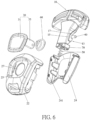
- FIG. 6 is an exploded diagram of the buckle assembly 100 according to the embodiment of the present application.
- the buckle assembly 100 includes the first buckle 10, the second buckle 20, an operating portion 30, a locking component 40, and a resilient portion 50.
- the first buckle 10 includes an inserting end 11 whereon the engaging portion 13 is formed.
- the first buckle 10 and the second buckle 20 can buckle with each other.
- An installation slot 21 is formed on the second buckle 20 for receiving the inserting end 11.
- the operating portion 30 is disposed on the second buckle 20.
- the locking component 40 is fixedly connected to the operating portion 30, and the locking component 40 is configured to lock with or release from the engaging portion 13.
- the resilient portion 50 is biased to separate the inserting end 11 from the installation slot 21, and the operating portion 30 can be operated to drive the locking component 40 to release from the engaging portion 13 by external force.
- the inserting end 11 can separate from the installation slot 21 by the resilient portion 50, so as to unlock the first buckle 10 and the second buckle 20.
- the first buckle 10 and the second buckle 20 can be engaged with each other by an insertion mechanism.
- the first buckle 10 can be a shoulder belt buckle or a male buckle
- the second buckle 20 can be a female buckle.
- the resilient portion 50 can be a spring.
- the operating portion 30 can be operated by external force, so as to release the locking component 40 from the engaging portion 13, and then the resilient portion 50 provides a resilient force to push the inserting end 11, so as to disengage the first buckle 10 from the second buckle 20 for achieving an unlocking operation. Therefore, the present invention has advantages of simplified structure and easy operation.
- an end of the operating portion 30 passes through the second buckle 20 to fixedly connect with the locking component 40 disposed in the installation slot 21. That is, the operating portion 30 and the locking component 40 can move synchronously and in a same direction.
- the operating portion 30 includes a pressing part 31 and at least one extending part 33 connected to each other, a penetrating hole 23 is formed on the second buckle 20, and the extending part 33 passes through the penetrating hole 23 to connect with the locking component 40.
- the operating portion 30 includes two extending parts 33, an end of each extending part 33 is connected to the pressing part 31, another end of each extending part 33 passes through the penetrating hole 23 to extend into the installation slot 21, and the locking component 40 is installed between the two extending parts 33.
- the pressing part 31 and the two extending parts 33 can be formed integrally, so as to extend service life of the operating portion 30.
- an indentation 25 is formed on the second buckle 20 for receiving the pressing part 31, so that the pressing part 31 can be rapidly installed and positioned by the indentation 25.
- a recovering portion 60 is installed between the pressing part 31 and the indentation 25 for biasing the pressing part 31 to separate from the indentation 25.
- the recovering portion 60 can be a spring, but is not limited to it.
- a positioning notch 27 is formed in the indentation 25 for positioning the recovering portion 60.
- FIG. 8 and FIG. 9 are sectional diagram of the locking component 40 and the engaging portion 13 engaging with each other according to the embodiment of the present application.
- FIG. 9 is a sectional diagram of the locking component 40 and the engaging portion 13 releasing from each other according to the embodiment of the present application.
- a receiving portion 29 is formed on the second buckle 20, the inserting end 11 is located between the locking component 40 and the operating portion 30, and the operating portion 30 can be operated to drive the locking component 40 to the receiving portion 29 so as to release from the engaging portion 13.
- the first buckle 10 further includes a left buckling component 15 and a right buckling component 17 connected to each other.
- the left buckling component 15 includes a first upper portion 151 and a first lower portion 153
- the right buckling component 17 includes a second upper portion 171 and a second lower portion 173, the first upper portion 151 and the second upper portion 171 are arranged in a left and right direction
- the first lower portion 153 and the second lower portion 173 are arranged in a forward and backward direction
- the first lower portion 153 and the second lower portion 173 form the inserting end 11 cooperatively.
- first protruding portion 152 bends to form a first protruding portion 152
- second lower portion 173 bends to form a second protruding portion 172
- the second protruding portion 172 is located above the first protruding portion 152
- the first protruding portion 152 and the second protruding portion 172 form the engaging portion 13 cooperatively.
- the first protruding portion 152 includes a tongue part 154
- the second protruding portion 172 includes a sunken part 174 for engaging with the tongue part 154 so as to prevent false engagement.
- the second buckle 20 includes a buckling body 22 and the cover 24 engaged with the buckling body 22.
- the buckling body 22 includes a latching part 221
- the cover 24 includes a blocking part 241 for engaging with the latching part 221, so as to connect the buckling body 22 and the cover 24 by cooperation of the latching part 221 and the blocking part 241.
- a fixing portion 70 is installed between a bottom of the inserting end 11 and the resilient portion 50, and the resilient portion 50 pushes the fixing portion 70 to move toward the inserting end 11, so as to push the inserting end 11 stably and smoothly.
- the operational principle of the buckling assembly 100 is introduced as follows. At first, a user can apply external force to the pressing part 31, so as to drive the extending parts 33 to move the locking component 40 toward the receiving portion 29, so that the engaging portion 13 can disengage from the locking component 40. Then, the resilient portion 50 can push the inserting end 11 to separate from the installation slot 21, so as to unlock the first buckle 10 and the second buckle 20.
- the operating portion 30 of the buckling assembly 100 of the present application can be operated by external force, so as to release the locking component 40 from the engaging portion 13, and then the resilient portion 50 provides the resilient force to push the inserting end 11 to separate from the installation slot 21, so as to unlock the first buckle 10 and the second buckle 20. Therefore, the present invention has advantages of simplified structure and easy operation.
Landscapes
- Buckles (AREA)
- Automotive Seat Belt Assembly (AREA)
Abstract
Description
- The present invention relates to a buckle assembly.
- Current baby carrying devices, such as strollers, safety seats, baby swings, etc., are equipped with safety belt buckles to prevent infants from falling. The safety belt buckles usually include a female buckle, a pair of male buckles connected with a waist belt, and a pair of shoulder belt buckles connected with shoulder belts. When the male buckles and the shoulder belt buckles are locked on the female buckle, the waist belt and the shoulder straps on the infant can prevent the infant from falling out of the stroller, the safety seat, or the baby swing. However, in the current safety belt buckle, since the shoulder belt buckle and the female buckle do not have any resilient mechanism, it takes a lot of effort to release the shoulder belt buckle from the female buckle. Therefore, it is necessary to provide a convenient buckle for solving the aforementioned problems.
- This is mind, the present invention aims at providing a buckle assembly having advantages of simplified structure and easy operation.
- This is achieved by a buckle assembly according to claim 1. The dependent claims pertain to corresponding further developments and improvements.
- As will be seen more clearly from the detail description following below, the claimed buckle assembly including a first buckle, a second buckle, an operating portion, a locking component and a resilient portion. The first buckle includes an inserting end whereon an engaging portion is formed. The second buckle can buckle with the first buckle, and an installation slot is formed on the second buckle for receiving the inserting end. The operating portion is disposed on the second buckle. The locking component is fixedly connected to the operating portion, and the locking component is configured to lock with or release from the engaging portion. The resilient portion is biased to separate the inserting end from the installation slot, the operating portion is operated to drive the locking component to release from the engaging portion, and the inserting end separates from the installation slot by the resilient portion, so as to unlock the first buckle and the second buckle.
- Preferably, an end of the operating portion passes through the second buckle to fixedly connect with the locking component disposed in the installation slot.
- Preferably, the operating portion includes a pressing part and at least one extending part connected to each other, a penetrating hole is formed on the second buckle, and the at least one extending part passes through the penetrating hole to connect with the locking component.
- Preferably, an indentation is formed on the second buckle for receiving the pressing part.
- Preferably, a recovering portion is installed between the pressing part and the indentation for biasing the pressing part to separate from the indentation.
- Preferably, a positioning notch is formed in the indentation for positioning the recovering portion.
- Preferably, a receiving portion is formed on the second buckle, the inserting end is located between the locking component and the operating portion, and the operating portion is operated to drive the locking component to the receiving portion so as to release from the engaging portion.
- Preferably, a hook slot is recessed inwardly on the inserting end to form the engaging portion.
- Preferably, the second buckle includes a buckling body and a cover engaged with the buckling body.
- Preferably, the buckling body includes a latching part, and the cover includes a blocking part for engaging with the latching part.
- Preferably, the first buckle further includes a left buckling component and a right buckling component connected to each other, the left buckling component includes a first upper portion and a first lower portion, the right buckling component includes a second upper portion and a second lower portion, the first upper portion and the second upper portion are arranged in a left and right direction, the first lower portion and the second lower portion are arranged in a forward and backward direction, and the first lower portion and the second lower portion form the inserting end cooperatively.
- Preferably, an end of the first lower portion bends to form a first protruding portion, an end of the second lower portion bends to form a second protruding portion, and the second protruding portion is located above the first protruding portion.
- Preferably, the first protruding portion includes a tongue part, and the second protruding portion includes a sunken part for engaging with the tongue part.
- Preferably, a fixing portion is installed between a bottom of the inserting end and the resilient portion, and the resilient portion pushes the fixing portion to move toward the inserting end.
- These and other objectives of the present invention will no doubt become obvious to those of ordinary skill in the art after reading the following detailed description of the preferred embodiment that is illustrated in the various figures and drawings.
- In the following, the invention is further illustrated by way of example, taking reference to the accompanying drawings. Thereof
-
FIG. 1 is a schematic drawing of a buckle assembly according to an embodiment of the present application, -
FIG. 2 is a schematic drawing of the buckle assembly at another view according to the embodiment of the present application, -
FIG. 3 is a diagram of the buckle assembly without illustrating a second buckle according to the embodiment of the present application, -
FIG. 4 is a diagram of the buckle assembly without illustrating a cover according to the embodiment of the present application, -
FIG. 5 is a diagram of a first buckle of the buckle assembly according to the embodiment of the present application, -
FIG. 6 is an exploded diagram of the buckle assembly according to the embodiment of the present application, -
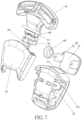
FIG. 7 is an exploded diagram of the buckle assembly at another view according to the embodiment of the present application, -
FIG. 8 is a sectional diagram of a locking component and an engaging portion engaging with each other according to the embodiment of the present application, and -
FIG. 9 is a sectional diagram of the locking component and the engaging portion releasing from each other according to the embodiment of the present application. - In order to illustrate technical specifications and structural features as well as achieved purposes and effects of the present invention, relevant embodiments and figures are described as follows.
- Please refer to
FIG. 1 to FIG. 6 .FIG. 1 is a schematic drawing of abuckle assembly 100 according to an embodiment of the present application.FIG. 2 is a schematic drawing of thebuckle assembly 100 at another view according to the embodiment of the present application.FIG. 3 is a diagram of thebuckle assembly 100 without illustrating asecond buckle 20 according to the embodiment of the present application.FIG. 4 is a diagram of thebuckle assembly 100 without illustrating acover 24 according to the embodiment of the present application.FIG. 5 is a diagram of afirst buckle 10 of thebuckle assembly 100 according to the embodiment of the present application.FIG. 6 is an exploded diagram of thebuckle assembly 100 according to the embodiment of the present application. Thebuckle assembly 100 includes thefirst buckle 10, thesecond buckle 20, anoperating portion 30, alocking component 40, and aresilient portion 50. Thefirst buckle 10 includes aninserting end 11 whereon theengaging portion 13 is formed. Thefirst buckle 10 and thesecond buckle 20 can buckle with each other. Aninstallation slot 21 is formed on thesecond buckle 20 for receiving theinserting end 11. Theoperating portion 30 is disposed on thesecond buckle 20. Thelocking component 40 is fixedly connected to theoperating portion 30, and thelocking component 40 is configured to lock with or release from theengaging portion 13. Theresilient portion 50 is biased to separate theinserting end 11 from theinstallation slot 21, and theoperating portion 30 can be operated to drive thelocking component 40 to release from theengaging portion 13 by external force. Theinserting end 11 can separate from theinstallation slot 21 by theresilient portion 50, so as to unlock thefirst buckle 10 and thesecond buckle 20. Thefirst buckle 10 and thesecond buckle 20 can be engaged with each other by an insertion mechanism. Thefirst buckle 10 can be a shoulder belt buckle or a male buckle, and thesecond buckle 20 can be a female buckle. Theresilient portion 50 can be a spring. However, the present invention is not limited to this embodiment. The operatingportion 30 can be operated by external force, so as to release thelocking component 40 from the engagingportion 13, and then theresilient portion 50 provides a resilient force to push the insertingend 11, so as to disengage thefirst buckle 10 from thesecond buckle 20 for achieving an unlocking operation. Therefore, the present invention has advantages of simplified structure and easy operation. - As shown in
FIG. 3 andFIG. 4 , an end of the operatingportion 30 passes through thesecond buckle 20 to fixedly connect with thelocking component 40 disposed in theinstallation slot 21. That is, the operatingportion 30 and thelocking component 40 can move synchronously and in a same direction. Specifically, the operatingportion 30 includes apressing part 31 and at least one extendingpart 33 connected to each other, a penetratinghole 23 is formed on thesecond buckle 20, and the extendingpart 33 passes through the penetratinghole 23 to connect with thelocking component 40. In this embodiment, the operatingportion 30 includes two extendingparts 33, an end of each extendingpart 33 is connected to thepressing part 31, another end of each extendingpart 33 passes through the penetratinghole 23 to extend into theinstallation slot 21, and thelocking component 40 is installed between the two extendingparts 33. Thepressing part 31 and the two extendingparts 33 can be formed integrally, so as to extend service life of the operatingportion 30. Furthermore, anindentation 25 is formed on thesecond buckle 20 for receiving thepressing part 31, so that thepressing part 31 can be rapidly installed and positioned by theindentation 25. Preferably, a recoveringportion 60 is installed between thepressing part 31 and theindentation 25 for biasing thepressing part 31 to separate from theindentation 25. The recoveringportion 60 can be a spring, but is not limited to it. For convenient installation of the recoveringportion 60, apositioning notch 27 is formed in theindentation 25 for positioning the recoveringportion 60. Please refer toFIG. 8 andFIG. 9 .FIG. 8 is a sectional diagram of thelocking component 40 and the engagingportion 13 engaging with each other according to the embodiment of the present application.FIG. 9 is a sectional diagram of thelocking component 40 and the engagingportion 13 releasing from each other according to the embodiment of the present application. A receivingportion 29 is formed on thesecond buckle 20, the insertingend 11 is located between the lockingcomponent 40 and the operatingportion 30, and the operatingportion 30 can be operated to drive the lockingcomponent 40 to the receivingportion 29 so as to release from the engagingportion 13. - As shown in
FIG. 5 , ahook slot 111 is recessed inwardly on the insertingend 11 to form the engagingportion 13. Specifically, in this embodiment, thefirst buckle 10 further includes a left bucklingcomponent 15 and a right bucklingcomponent 17 connected to each other. The left bucklingcomponent 15 includes a firstupper portion 151 and a firstlower portion 153, theright buckling component 17 includes a secondupper portion 171 and a secondlower portion 173, the firstupper portion 151 and the secondupper portion 171 are arranged in a left and right direction, the firstlower portion 153 and the secondlower portion 173 are arranged in a forward and backward direction, and the firstlower portion 153 and the secondlower portion 173 form the insertingend 11 cooperatively. Furthermore, an end of the firstlower portion 153 bends to form a first protrudingportion 152, an end of the secondlower portion 173 bends to form a second protrudingportion 172, the second protrudingportion 172 is located above the first protrudingportion 152, and the first protrudingportion 152 and the second protrudingportion 172 form the engagingportion 13 cooperatively. The first protrudingportion 152 includes atongue part 154, and the second protrudingportion 172 includes asunken part 174 for engaging with thetongue part 154 so as to prevent false engagement. - As shown in
FIG. 6 andFIG. 7 , thesecond buckle 20 includes a bucklingbody 22 and thecover 24 engaged with the bucklingbody 22. Specifically, the bucklingbody 22 includes a latchingpart 221, and thecover 24 includes a blockingpart 241 for engaging with the latchingpart 221, so as to connect the bucklingbody 22 and thecover 24 by cooperation of the latchingpart 221 and the blockingpart 241. - As shown in
FIG. 8 andFIG. 9 , a fixingportion 70 is installed between a bottom of the insertingend 11 and theresilient portion 50, and theresilient portion 50 pushes the fixingportion 70 to move toward the insertingend 11, so as to push the insertingend 11 stably and smoothly. - Please refer to
FIG. 1 to FIG. 9 . The operational principle of the bucklingassembly 100 is introduced as follows. At first, a user can apply external force to thepressing part 31, so as to drive the extendingparts 33 to move thelocking component 40 toward the receivingportion 29, so that the engagingportion 13 can disengage from the lockingcomponent 40. Then, theresilient portion 50 can push the insertingend 11 to separate from theinstallation slot 21, so as to unlock thefirst buckle 10 and thesecond buckle 20. - In contrast to the prior art, the operating
portion 30 of the bucklingassembly 100 of the present application can be operated by external force, so as to release thelocking component 40 from the engagingportion 13, and then theresilient portion 50 provides the resilient force to push the insertingend 11 to separate from theinstallation slot 21, so as to unlock thefirst buckle 10 and thesecond buckle 20. Therefore, the present invention has advantages of simplified structure and easy operation. - Those skilled in the art will readily observe that numerous modifications and alterations of the device and method may be made while retaining the teachings of the invention. Accordingly, the above disclosure should be construed as limited only by the metes and bounds of the appended claims.
- The present application can also be defined by the following points:
- 1. A buckle assembly (100) comprising:
- a first buckle (10) comprising an inserting end (11) whereon an engaging portion (13) is formed;
- a second buckle (20) for buckling with the first buckle (10), an installation slot (21) being formed on the second buckle (20) for receiving the inserting end (11);
- an operating portion (30) disposed on the second buckle (20);
- a locking component (40) fixedly connected to the operating portion (30), the locking component (40) being configured to lock with or release from the engaging portion (13); and
- a resilient portion (50) being biased to separate the inserting end (11) from the installation slot (21), the operating portion (30) being operated to drive the locking component (40) to release from the engaging portion (13), and the inserting end (11) separating from the installation slot (21) by the resilient portion (50), so as to unlock the first buckle (10) and the second buckle (20).
- 2. The buckle assembly (100) of point 1, characterized in that an end of the operating portion (30) passes through the second buckle (20) to fixedly connect with the locking component (40) disposed in the installation slot (21).
- 3. The buckle assembly (100) of point 2, characterized in that the operating portion (30) comprises a pressing part (31) and at least one extending part (33) connected to each other, a penetrating hole (23) is formed on the second buckle (20), and the at least one extending part (33) passes through the penetrating hole (23) to connect with the locking component (40).
- 4. The buckle assembly (100) of point 3, characterized in that an indentation (25) is formed on the second buckle (20) for receiving the pressing part (31).
- 5. The buckle assembly (100) of point 4, characterized in that a recovering portion (60) is installed between the pressing part (31) and the indentation (25) for biasing the pressing part (31) to separate from the indentation (25).
- 6. The buckle assembly (100) of point 5, characterized in that a positioning notch (27) is formed in the indentation (25) for positioning the recovering portion (60).
- 7. The buckle assembly (100) of point 1, characterized in that a receiving portion (29) is formed on the second buckle (20), the inserting end (11) is located between the locking component (40) and the operating portion (30), and the operating portion (30) is operated to drive the locking component (40) to the receiving portion (29) so as to release from the engaging portion (13).
- 8. The buckle assembly (100) of point 1, characterized in that a hook slot (111) is recessed inwardly on the inserting end (11) to form the engaging portion (13).
- 9. The buckle assembly (100) of point 1, characterized in that the second buckle (20) comprises a buckling body (22) and a cover (24) engaged with the buckling body (22).
- 10. The buckle assembly (100) of point 9, characterized in that the buckling body (22) comprises a latching part (221), and the cover (24) comprises a blocking part (241) for engaging with the latching part (221).
- 11. The buckle assembly (100) of point 1, characterized in that the first buckle (10) further comprises a left buckling component (15) and a right buckling component (17) connected to each other, the left buckling component (15) comprises a first upper portion (151) and a first lower portion (153), the right buckling component (17) comprises a second upper portion (171) and a second lower portion (173), the first upper portion (151) and the second upper portion (171) are arranged in a left and right direction, the first lower portion (153) and the second lower portion (173) are arranged in a forward and backward direction, and the first lower portion (153) and the second lower portion (173) form the inserting end (11) cooperatively.
- 12. The buckle assembly (100) of
point 11, characterized in that an end of the first lower portion (153) bends to form a first protruding portion (152), an end of the second lower portion (173) bends to form a second protruding portion (172), and the second protruding portion (172) is located above the first protruding portion (152). - 13. The buckle assembly (100) of point 12, characterized in that the first protruding portion (152) comprises a tongue part (154), and the second protruding portion (172) comprises a sunken part (174) for engaging with the tongue part (154).
- 14. The buckle assembly (100) of point 1, characterized in that a fixing portion (70) is installed between a bottom of the inserting end (11) and the resilient portion (50), and the resilient portion (50) pushes the fixing portion (70) to move toward the inserting end (11).
Claims (14)
- A buckle assembly (100) comprising:a first buckle (10) comprising an inserting end (11) whereon an engaging portion (13) is formed;a second buckle (20) for buckling with the first buckle (10), an installation slot (21) being formed on the second buckle (20) for receiving the inserting end (11);an operating portion (30) disposed on the second buckle (20);the buckle assembly (100) being characterized by:a locking component (40) fixedly connected to the operating portion (30), the locking component (40) being configured to lock with or release from the engaging portion (13); anda resilient portion (50) being biased to separate the inserting end (11) from the installation slot (21), the operating portion (30) being operated to drive the locking component (40) to release from the engaging portion (13), and the inserting end (11) separating from the installation slot (21) by the resilient portion (50), so as to unlock the first buckle (10) and the second buckle (20),wherein the operating portion (30) comprises a pressing part (31) and two spaced-apart extending parts (33) connected to the pressing part (31), the extending parts (33) pass through the second buckle (20) to fixedly connect with the locking component (40) disposed in the installation slot (21), and the pressing part (31) is operable to drive the locking component (40) to disengage from the engaging portion (13), so as to unlock the first buckle (10) and the second buckle (20).
- The buckle assembly (100) of claim 1, characterized in that an end of the operating portion (30) passes through the second buckle (20) to fixedly connect with the locking component (40) disposed in the installation slot (21).
- The buckle assembly (100) of claim 2, characterized in that a penetrating hole (23) is formed on the second buckle (20), and at least one extending part (33) passes through the penetrating hole (23) to connect with the locking component (40).
- The buckle assembly (100) of claim 3, characterized in that an indentation (25) is formed on the second buckle (20) for receiving the pressing part (31).
- The buckle assembly (100) of claim 4, characterized in that a recovering portion (60) is installed between the pressing part (31) and the indentation (25) for biasing the pressing part (31) to separate from the indentation (25).
- The buckle assembly (100) of claim 5, characterized in that a positioning notch (27) is formed in the indentation (25) for positioning the recovering portion (60).
- The buckle assembly (100) of claim 1, characterized in that a receiving portion (29) is formed on the second buckle (20), the inserting end (11) is located between the locking component (40) and the operating portion (30), and the operating portion (30) is operated to drive the locking component (40) to the receiving portion (29) so as to release from the engaging portion (13).
- The buckle assembly (100) of claim 1, characterized in that a hook slot (111) is recessed inwardly on the inserting end (11) to form the engaging portion (13).
- The buckle assembly (100) of claim 1, characterized in that the second buckle (20) comprises a buckling body (22) and a cover (24) engaged with the buckling body (22).
- The buckle assembly (100) of claim 9, characterized in that the buckling body (22) comprises a latching part (221), and the cover (24) comprises a blocking part (241) for engaging with the latching part (221).
- The buckle assembly (100) of claim 1, characterized in that the first buckle (10) further comprises a left buckling component (15) and a right buckling component (17) connected to each other, the left buckling component (15) comprises a first upper portion (151) and a first lower portion (153), the right buckling component (17) comprises a second upper portion (171) and a second lower portion (173), the first upper portion (151) and the second upper portion (171) are arranged in a left and right direction, the first lower portion (153) and the second lower portion (173) are arranged in a forward and backward direction, and the first lower portion (153) and the second lower portion (173) form the inserting end (11) cooperatively.
- The buckle assembly (100) of claim 11, characterized in that an end of the first lower portion (153) bends to form a first protruding portion (152), an end of the second lower portion (173) bends to form a second protruding portion (172), and the second protruding portion (172) is located above the first protruding portion (152).
- The buckle assembly (100) of claim 12, characterized in that the first protruding portion (152) comprises a tongue part (154), and the second protruding portion (172) comprises a sunken part (174) for engaging with the tongue part (154).
- The buckle assembly (100) of claim 1, characterized in that a fixing portion (70) is installed between a bottom of the inserting end (11) and the resilient portion (50), and the resilient portion (50) pushes the fixing portion (70) to move toward the inserting end (11).
Applications Claiming Priority (2)
| Application Number | Priority Date | Filing Date | Title |
|---|---|---|---|
| CN201921983478.5U CN211354108U (en) | 2019-11-15 | 2019-11-15 | Buckle tool |
| EP20207503.2A EP3821748B8 (en) | 2019-11-15 | 2020-11-13 | Buckle assembly |
Related Parent Applications (1)
| Application Number | Title | Priority Date | Filing Date |
|---|---|---|---|
| EP20207503.2A Division EP3821748B8 (en) | 2019-11-15 | 2020-11-13 | Buckle assembly |
Publications (2)
| Publication Number | Publication Date |
|---|---|
| EP4427623A2 true EP4427623A2 (en) | 2024-09-11 |
| EP4427623A3 EP4427623A3 (en) | 2024-11-20 |
Family
ID=72158888
Family Applications (2)
| Application Number | Title | Priority Date | Filing Date |
|---|---|---|---|
| EP24182256.8A Pending EP4427623A3 (en) | 2019-11-15 | 2020-11-13 | Buckle assembly |
| EP20207503.2A Active EP3821748B8 (en) | 2019-11-15 | 2020-11-13 | Buckle assembly |
Family Applications After (1)
| Application Number | Title | Priority Date | Filing Date |
|---|---|---|---|
| EP20207503.2A Active EP3821748B8 (en) | 2019-11-15 | 2020-11-13 | Buckle assembly |
Country Status (6)
| Country | Link |
|---|---|
| US (1) | US11771181B2 (en) |
| EP (2) | EP4427623A3 (en) |
| JP (2) | JP7301036B2 (en) |
| CN (1) | CN211354108U (en) |
| ES (1) | ES2987245T3 (en) |
| TW (3) | TWM620063U (en) |
Families Citing this family (6)
| Publication number | Priority date | Publication date | Assignee | Title |
|---|---|---|---|---|
| CN211354108U (en) * | 2019-11-15 | 2020-08-28 | 宝钜(中国)儿童用品有限公司 | Buckle tool |
| TWD216754S (en) * | 2020-10-19 | 2022-01-21 | 瑞士商明門瑞士股份有限公司 | Buckle |
| CN114431579B (en) * | 2020-11-06 | 2025-04-08 | 明门瑞士股份有限公司 | Buckling alarm device, buckling alarm system and buckling alarm method |
| USD979453S1 (en) * | 2020-12-18 | 2023-02-28 | Lindarets, LLC | Buckle |
| JP1778207S (en) * | 2022-03-18 | 2024-08-21 | Safety belt lock | |
| USD1077678S1 (en) * | 2023-03-21 | 2025-06-03 | Zedel | Buckle |
Family Cites Families (29)
| Publication number | Priority date | Publication date | Assignee | Title |
|---|---|---|---|---|
| FR2178731B1 (en) * | 1961-10-04 | 1975-03-21 | Ferodo Sa | |
| JPS59168803A (en) | 1983-03-16 | 1984-09-22 | タカタ株式会社 | Toggle link type latch buckle for seat belt |
| FR2584901B1 (en) * | 1985-07-17 | 1987-11-27 | Peugeot Aciers Et Outillage | IMPROVED BUCKLE, ESPECIALLY FOR A SEAT BELT |
| US5023981A (en) | 1989-06-22 | 1991-06-18 | Indiana Mills & Manufacturing, Inc. | Belt buckle with interlocking dual tongue |
| US5142748A (en) * | 1989-06-22 | 1992-09-01 | Indiana Mills And Manufacturing, Inc. | Belt buckle with interlocking dual tongue and floating peg |
| US5283933A (en) * | 1989-06-22 | 1994-02-08 | Indiana Mills & Manufacturing, Inc. | Belt buckle with interactive dual tongues |
| JPH0327709U (en) | 1989-07-27 | 1991-03-20 | ||
| JPH0746166Y2 (en) * | 1990-04-24 | 1995-10-25 | ワイケイケイ株式会社 | Buckle with key lock |
| GB2249340B (en) * | 1990-10-30 | 1994-05-18 | Ronald Allan Proctor | Releasable buckle,especially for seat belts |
| SE468195B (en) * | 1991-03-04 | 1992-11-23 | Holmbergs Fab Ab Brdr | LEAVE TO CAR BELT BELT, SEARCH SIGN CHILD BELT |
| JP4008653B2 (en) | 2000-11-21 | 2007-11-14 | 芦森工業株式会社 | Buckle device with indicator |
| CA2487373A1 (en) * | 2002-07-05 | 2004-01-15 | Indiana Mills & Manufacturing, Inc. | Infant buckle |
| SE0302823D0 (en) * | 2003-10-24 | 2003-10-24 | Kendrion Holmbergs Ab | Seat Belt Arrangements for Child Safety Seats |
| US7698791B2 (en) * | 2006-06-13 | 2010-04-20 | Sabelt S.P.A. | Safety strap buckle, in particular for automotive child safety seats |
| EP2236351B8 (en) | 2009-03-31 | 2012-04-11 | Wonderland Nurserygoods Company Limited | Harness fastener system for an infant carrier apparatus and method of operating the same |
| DE102010005795B3 (en) * | 2010-01-27 | 2011-06-01 | Autoliv Development Ab | Shell element for the lock cap of a buckle, buckle and method of making a shell element |
| ITTO20111122A1 (en) | 2011-12-07 | 2013-06-08 | Novarace S R L | BUCKLE FOR RETAINED BELTS, PARTICULARLY FOR AUTOMOTIVE SAFETY SEATS FOR CHILDREN |
| US8656566B1 (en) * | 2012-11-08 | 2014-02-25 | Tung-Cheng Chen | Buckle of a seat belt |
| CN203860572U (en) * | 2014-05-13 | 2014-10-08 | 好孩子儿童用品有限公司 | Children's safety belt connection buckle |
| RU2726711C1 (en) * | 2015-10-02 | 2020-07-15 | Шилд Рестрейнт Системз, Инк. | Load indicators for individual retention systems and corresponding systems and methods |
| US10357083B2 (en) * | 2016-09-16 | 2019-07-23 | Shield Restraint Systems, Inc. | Buckle assemblies and associated systems and methods for use with child seats and other restraint systems |
| JP6475305B1 (en) * | 2017-11-02 | 2019-02-27 | 株式会社東海理化電機製作所 | Buckle device |
| CN119184421A (en) * | 2018-09-18 | 2024-12-27 | 印第安纳米尔斯生产制造股份有限公司 | Seat belt apparatus and buckle |
| US11124152B2 (en) * | 2018-11-20 | 2021-09-21 | Shield Restraint Systems, Inc. | Buckle assemblies for use with child seats and other personal restraint systems |
| KR102450616B1 (en) * | 2019-06-06 | 2022-10-05 | 원더랜드 스위처랜드 아게 | Magnetic buckle assembly |
| CN119867428A (en) * | 2019-11-13 | 2025-04-25 | 明门瑞士股份有限公司 | Buckle activation device |
| CN211354108U (en) * | 2019-11-15 | 2020-08-28 | 宝钜(中国)儿童用品有限公司 | Buckle tool |
| CN114431579B (en) * | 2020-11-06 | 2025-04-08 | 明门瑞士股份有限公司 | Buckling alarm device, buckling alarm system and buckling alarm method |
| CN114587051B (en) * | 2022-04-18 | 2024-09-20 | 浙江吉利控股集团有限公司 | Safety belt and vehicle |
-
2019
- 2019-11-15 CN CN201921983478.5U patent/CN211354108U/en active Active
-
2020
- 2020-11-12 US US17/096,929 patent/US11771181B2/en active Active
- 2020-11-13 TW TW110208375U patent/TWM620063U/en unknown
- 2020-11-13 JP JP2020189823A patent/JP7301036B2/en active Active
- 2020-11-13 EP EP24182256.8A patent/EP4427623A3/en active Pending
- 2020-11-13 EP EP20207503.2A patent/EP3821748B8/en active Active
- 2020-11-13 TW TW110204829U patent/TWM618099U/en unknown
- 2020-11-13 TW TW109214981U patent/TWM612515U/en unknown
- 2020-11-13 ES ES20207503T patent/ES2987245T3/en active Active
-
2023
- 2023-02-24 JP JP2023000555U patent/JP3242232U/en active Active
Also Published As
| Publication number | Publication date |
|---|---|
| JP3242232U (en) | 2023-06-05 |
| TWM620063U (en) | 2021-11-21 |
| EP3821748A1 (en) | 2021-05-19 |
| EP3821748B8 (en) | 2024-07-17 |
| JP2021079103A (en) | 2021-05-27 |
| EP4427623A3 (en) | 2024-11-20 |
| JP7301036B2 (en) | 2023-06-30 |
| US11771181B2 (en) | 2023-10-03 |
| CN211354108U (en) | 2020-08-28 |
| TWM618099U (en) | 2021-10-11 |
| EP3821748B1 (en) | 2024-06-19 |
| US20210145130A1 (en) | 2021-05-20 |
| ES2987245T3 (en) | 2024-11-14 |
| TWM612515U (en) | 2021-06-01 |
Similar Documents
| Publication | Publication Date | Title |
|---|---|---|
| EP4427623A2 (en) | Buckle assembly | |
| US8256073B2 (en) | Harness fastener system for child carrier device | |
| US7849571B2 (en) | Buckle device | |
| US20100244543A1 (en) | Harness Buckle and Chest Clip Release | |
| EP2476582A1 (en) | Seat belt lock device of a child car seat, and a child car seat | |
| EP2392503B1 (en) | Child harness fastener system | |
| US8950780B2 (en) | Seat belt buckle and seat belt system for a vehicle | |
| US7243403B2 (en) | Buckle safety device | |
| US8813320B2 (en) | Buckle for child restraint harness and its operating method | |
| CN101224056A (en) | Fastener with safety belt adjusting device | |
| EP1372423B1 (en) | Seatbelt with child resistant buckle | |
| CN218390031U (en) | Magnetic fastener | |
| EP1331862B1 (en) | Child resistant buckle | |
| EP0204803A1 (en) | Buckle | |
| US3494007A (en) | Safety belt buckle | |
| CN114847598B (en) | Magnetic buckle device | |
| CN201878911U (en) | Fastener device | |
| CN108688613B (en) | locking device | |
| EP2236351B1 (en) | Harness fastener system for an infant carrier apparatus and method of operating the same | |
| CN111669987B (en) | Shoulder belt positioner | |
| CN114052341A (en) | Double safety lock device | |
| CN205757616U (en) | Convenient button | |
| CN117882924A (en) | A magnetic buckle | |
| WO2026088324A1 (en) | Buckle and seat belt device | |
| CN115723645A (en) | Buckle locking indicator structure and infant carrier with the structure |
Legal Events
| Date | Code | Title | Description |
|---|---|---|---|
| PUAI | Public reference made under article 153(3) epc to a published international application that has entered the european phase |
Free format text: ORIGINAL CODE: 0009012 |
|
| STAA | Information on the status of an ep patent application or granted ep patent |
Free format text: STATUS: THE APPLICATION HAS BEEN PUBLISHED |
|
| AC | Divisional application: reference to earlier application |
Ref document number: 3821748 Country of ref document: EP Kind code of ref document: P |
|
| AK | Designated contracting states |
Kind code of ref document: A2 Designated state(s): AL AT BE BG CH CY CZ DE DK EE ES FI FR GB GR HR HU IE IS IT LI LT LU LV MC MK MT NL NO PL PT RO RS SE SI SK SM TR |
|
| REG | Reference to a national code |
Ref country code: DE Ref legal event code: R079 Free format text: PREVIOUS MAIN CLASS: A44B0011250000 Ipc: A44B0011260000 |
|
| PUAL | Search report despatched |
Free format text: ORIGINAL CODE: 0009013 |
|
| AK | Designated contracting states |
Kind code of ref document: A3 Designated state(s): AL AT BE BG CH CY CZ DE DK EE ES FI FR GB GR HR HU IE IS IT LI LT LU LV MC MK MT NL NO PL PT RO RS SE SI SK SM TR |
|
| RIC1 | Information provided on ipc code assigned before grant |
Ipc: A44B 11/25 20060101ALI20241014BHEP Ipc: A44B 11/26 20060101AFI20241014BHEP |
|
| STAA | Information on the status of an ep patent application or granted ep patent |
Free format text: STATUS: REQUEST FOR EXAMINATION WAS MADE |
|
| 17P | Request for examination filed |
Effective date: 20250512 |
|
| STAA | Information on the status of an ep patent application or granted ep patent |
Free format text: STATUS: EXAMINATION IS IN PROGRESS |