EP4425862A1 - Method and apparatus for issuing in-situ flow information telemetry configuration by means of bgp - Google Patents
Method and apparatus for issuing in-situ flow information telemetry configuration by means of bgp Download PDFInfo
- Publication number
- EP4425862A1 EP4425862A1 EP22934072.4A EP22934072A EP4425862A1 EP 4425862 A1 EP4425862 A1 EP 4425862A1 EP 22934072 A EP22934072 A EP 22934072A EP 4425862 A1 EP4425862 A1 EP 4425862A1
- Authority
- EP
- European Patent Office
- Prior art keywords
- ifit
- headend
- policy
- bgp
- parameters
- Prior art date
- Legal status (The legal status is an assumption and is not a legal conclusion. Google has not performed a legal analysis and makes no representation as to the accuracy of the status listed.)
- Pending
Links
Images

Classifications
-
- H—ELECTRICITY
- H04—ELECTRIC COMMUNICATION TECHNIQUE
- H04L—TRANSMISSION OF DIGITAL INFORMATION, e.g. TELEGRAPHIC COMMUNICATION
- H04L43/00—Arrangements for monitoring or testing data switching networks
- H04L43/02—Capturing of monitoring data
- H04L43/026—Capturing of monitoring data using flow identification
-
- H—ELECTRICITY
- H04—ELECTRIC COMMUNICATION TECHNIQUE
- H04L—TRANSMISSION OF DIGITAL INFORMATION, e.g. TELEGRAPHIC COMMUNICATION
- H04L45/00—Routing or path finding of packets in data switching networks
- H04L45/02—Topology update or discovery
- H04L45/04—Interdomain routing, e.g. hierarchical routing
-
- H—ELECTRICITY
- H04—ELECTRIC COMMUNICATION TECHNIQUE
- H04L—TRANSMISSION OF DIGITAL INFORMATION, e.g. TELEGRAPHIC COMMUNICATION
- H04L41/00—Arrangements for maintenance, administration or management of data switching networks, e.g. of packet switching networks
- H04L41/08—Configuration management of networks or network elements
- H04L41/0803—Configuration setting
- H04L41/0806—Configuration setting for initial configuration or provisioning, e.g. plug-and-play
-
- H—ELECTRICITY
- H04—ELECTRIC COMMUNICATION TECHNIQUE
- H04L—TRANSMISSION OF DIGITAL INFORMATION, e.g. TELEGRAPHIC COMMUNICATION
- H04L41/00—Arrangements for maintenance, administration or management of data switching networks, e.g. of packet switching networks
- H04L41/34—Signalling channels for network management communication
- H04L41/344—Out-of-band transfers
-
- H—ELECTRICITY
- H04—ELECTRIC COMMUNICATION TECHNIQUE
- H04L—TRANSMISSION OF DIGITAL INFORMATION, e.g. TELEGRAPHIC COMMUNICATION
- H04L45/00—Routing or path finding of packets in data switching networks
- H04L45/34—Source routing
-
- H—ELECTRICITY
- H04—ELECTRIC COMMUNICATION TECHNIQUE
- H04L—TRANSMISSION OF DIGITAL INFORMATION, e.g. TELEGRAPHIC COMMUNICATION
- H04L43/00—Arrangements for monitoring or testing data switching networks
- H04L43/06—Generation of reports
- H04L43/062—Generation of reports related to network traffic
Definitions
- the present disclosure relates to network communication technology, and in particular to a method and an apparatus applied to delivering in-situ flow information telemetry (IFIT) configuration through a border gateway protocol (BGP).
- IFIT in-situ flow information telemetry
- BGP border gateway protocol
- IFIT In-situ flow information telemetry
- SLA service level agreement
- the examples of the present application provide a method and an apparatus for delivering in-situ flow information telemetry (IFIT) configuration through a border gateway protocol (BGP), so as to realize the delivering of the IFIT configuration through the BGP.
- IFIT in-situ flow information telemetry
- BGP border gateway protocol
- An example of the present disclosure provides a method for delivering the IFIT configuration through the BGP, which is applied to a network device.
- the method includes:
- An example of the present disclosure also provides an apparatus for delivering the IFIT configuration through the BGP, which is applied to a network device.
- the apparatus includes:
- the extended BGP UPDATE packet carries the IFIT parameters and is dynamically delivered to the headend in the SR policy, which realizes that the network device can dynamically deliver the IFIT parameters based on the BGP.
- IFIT in-situ flow information telemetry
- a headend of the service flow identifies a service packet that needs to be performed the IFIT (the service packet that needs to be performed the IFIT can be identified according to predefined packet characteristics)
- an IFIT option will be inserted into the service flow.
- the IFIT option can be added in a destination options header (DOH) of IPv6 encapsulated by the service packet.
- DOH destination options header
- the IFIT option carries parameters for indicating the IFIT, which at least includes IFIT parameters.
- FIG. 1 illustrates the IFIT parameters carried by the IFIT option.
- the IFIT option shown in FIG. 1 at least includes the following parameters.
- Option Type which is used for indicating the type of the option.
- the option type can occupy 8 bits.
- Option data length (Opt Data Len), which is used for indicating the data length of the IFIT option.
- the option data length can occupy 8 bits.
- Service flow identifier (FlowMonID), which is used for indicating the service flow identifier.
- FlowMonID Service flow identifier
- the service flow identifier can occupy 20 bits.
- D Flag Delay measurement dye flag which can occupy 1 bit.
- D Flag is set to a first value, such as 1, it is required to report timestamp information to an analyzer.
- Measurement period which can occupy 2 bits. For example, a value of 00 indicates 10 seconds (s), a value of 01 indicates 30s, a value of 10 indicates 60s, and a value of 11 indicates 300s.
- Extended data type (ExtData), which can occupy 6 bits. For example, if a value of the extended data type is 000000, it indicates that the extended data is not carried; if the extended data type takes other values, it indicates that the extended data is carried.
- Detection type which can occupy 2 bits, and is used for indicating the detection type. For example, when a value of the detection type is 01, it indicates end-to-end detection; when the value of the detection type is 10, it indicates hop-by-hop detection.
- NodeMonID Device node identifier
- Service flow direction flag which can occupy 1 bit. For example, when a value of the service flow direction flag is a preset value, such as 1, it indicates a forward service flow.
- Report data indicator bit (Trace Type), which can occupy 24 bits, and is represented by a bitmap and is used for indicating the data type to be reported to the analyzer.
- the IFIT option is described in the above examples.
- the IFIT parameters carried by the above IFIT option are all configured through command line or Netconf API (Application Programming Interface) .
- command line and Netconf API are difficult to adapt to dynamically changing networks.
- an example of the present disclosure provides a method for dynamically configuring the IFIT parameters.
- the IFIT parameters can be dynamically configured by extending a border gateway protocol (BGP).
- BGP border gateway protocol
- FIG. 2 is a flowchart of a method according to an example of the present disclosure. This method is applied to a network device.
- the network device can be a designated device in a network for delivering the IFIT parameters, such as a controller, or one of designated routers.
- the process can include the following steps.
- Step 201 a headend in a segment routing (SR) policy is obtained.
- SR segment routing
- the above network device can be a device designated to delivery the SR policy.
- an SR policy is identified by the following triplet.
- Headend a headend node of the SR policy.
- Color an arbitrary 32-bit value, which is used for distinguishing the SR policy.
- Endpoint an endpoint of the SR policy, which can be an IPv4/IPv6 address.
- step 201 when the SR policy is obtained (for example, an externally configured SR policy, etc. is received), it is easy to determine the headend in the SR policy based on the obtained SR policy.
- Step 202 a BGP update (UPDATE) packet is delivered to the headend through a BGP connection with the headend, where the BGP UPDATE packet at least carries the IFIT parameters.
- UPDATE BGP update
- the extended BGP UPDATE packet carries the IFIT parameters.
- the IFIT parameters can be extended and carried by means of a SR policy subsequent address family identifier (SAFI) network layer reachability information (NLRI) field newly added in the BGP UPDATE packet.
- SAFI SR policy subsequent address family identifier
- NLRI network layer reachability information
- the SR policy SAFI NLRI field carries a tunnel encapsulation attribute (Tunnel Encaps Attribute) whose Tunnel-Type is SR policy Type (with a value of 15), and the above IFIT Parameters are extended as one of sub-type-length-values (sub-TLVs) of the Tunnel Encaps Attribute.
- Tunnel Encaps Attribute sub-TLV the IFIT Parameters are used as a Tunnel Encaps Attribute sub-TLV, their specific locations is not limited, such as in front of and behind all other Tunnel Encaps Attribute sub-TLVs, and is not specifically limited in this example.
- IFIT Parameters as a Tunnel Encaps Attribute sub-TLV (referred to as IFIT Parameters Sub-TLV for short), meet the TLV in format, as shown in FIG. 3 .
- Type refers to the type of the IFIT Parameters Sub-TLV, which can be defined by internet assigned numbers authority (IANA), for example, the value can be 6, which is not specifically limited in this example.
- IANA internet assigned numbers authority
- Length which indicates the length of the IFIT Parameters Sub-TLV. For example, it can be 4 bits.
- the IFIT parameters can be set according to the actual IFIT to be performed.
- the IFIT parameters can at least include: a service flow identifier of the service flow to be performed the IFIT, etc., and are not specifically limited in this example.
- the IFIT parameters include parameters shown in Table 1: Table 1 Field Description FlowMonID (e.g. occupying 20 bits) service flow identifier, which is unique in the headend device of the SR policy. Period (e.g. occupying 2 bits) measurement period. For example, values and periods represented by the values are as follows: 00:10s; 01:30s; 10:60s; 11:300s T (e.g. occupying 2 bits) identifies the type of the IFIT, values and types of the IFIT represented by the values are as follows: 00: reserved; 01: end-to-end detection; 10: hop-by-hop detection; 11: reserved NodeMonID (e.g.
- Trace Type (e.g. occupying 24 bits) report data indicator bit, which can be represented by a bitmap, is used for identifying the data type to be reported to the analyzer (i.e., the data type of data for the IFIT).
- the coding structure of the above IFIT Parameters Sub-TLV can be as shown in FIG. 4 .
- R is a reserved field.
- the network device can dynamically deliver the IFIT parameters based on the BGP.
- the timing when the network device delivers the BGP UPDATE packet to the headend can be that it is detected that the SR policy parameters of the SR policy need to be delivered to the headend. That is, when the network device detects that it is necessary to deliver the SR policy parameters of the SR policy to the headend, the network device can further deliver the above BGP UPDATE packet to the headend while delivering the SR policy parameters to the headend.
- the network device can also carry the above SR policy parameters in the above BGP UPDATE packet and deliver them to the headend.
- the headend after obtaining the IFIT parameters based on the above BGP UPDATE packet, if the headend, as an ingress node, recognizes that the IFIT is needed for the service packet according to predefined characteristics when receiving the service packet, the headend inserts the IFIT option similar to that shown in FIG. 1 into the service packet, and collects target statistical data based on the measurement type carried by the IFIT option and reports it to the analyzer. If the IFIT option does not carry the measurement type, target statistical data can be collected based on the default measurement type and reported to the analyzer. For example, the target statistical data reported by the headend is shown in Table 2.
- an intermediate node After receiving the above service packet, if an intermediate node (Transmit) finds that the service packet carries the IFIT option, the intermediate node collects target statistical data based on the measurement type carried by the IFIT option, reports the target statistical data to the analyzer, and continues to forward the service packet. If the IFIT option does not carry the measurement type, target statistical data can be collected based on the default measurement type and reported to the analyzer. For example, the target statistical data reported by the intermediate node is shown in Table 3.
- PeriodID Yes period ID which is a number of seconds from 1970 to the start of the statistical period divided by Period, and used for marking the same time period throughout the network Period Yes statistical period, in seconds, and values are 1s, 30s, 60s, 300s PacketCount No number of packets in a period TimestampSecond No integer value of the second part from 1970 to the time of receiving delay measurement packet TimestampNanoSecon d No remaining nanosecond portion
- an egress node After receiving the above service packet, if an egress node (Egress) finds that the service packet carries the IFIT option, the egress node collects target statistical data based on the measurement type carried by the IFIT option, reports the target statistical data to the analyzer, then removes the IFIT option carried by the service packet and continues to forward the service packet. If the IFIT option does not carry the measurement type, target statistical data can be collected based on the default measurement type and reported to the analyzer. The target statistical data reported by the egress node are similar to Table 3.
- Tx[i] represents the number of packets of the service flow sent in the i-th period reported by the ingress node
- Rx[i] represents the number of packets of the service flow received in the i-th period reported by the egress node
- PacketLoss[i] represents the packets loss number of the service flow in the i-th period.
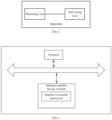
- FIG. 5 is a schematic structural diagram illustrating an apparatus according to an example of the present disclosure.
- the apparatus is applied to a network device, as shown in FIG. 5 , the apparatus can include:
- the delivering unit delivers the BGP update packet to the headend through the BGP connection with the headend when it is detected that SR policy parameters of the SR policy need to be delivered to the headend.
- the BGP update packet further carries the SR policy parameters.
- the BGP update packet carries a SR policy subsequent address family identifier (SAFI) network layer reachability information (NLRI) field; and the IFIT parameters are carried in the SR policy SAFI NLRI field in the BGP update packet.
- SAFI SR policy subsequent address family identifier
- NLRI network layer reachability information
- the SR policy SAFI NLRI field includes a tunnel encapsulation attribute; and the IFIT parameters serve one of sub-type-length-values (sub-TLVs) of the tunnel encapsulation attribute.
- sub-TLVs sub-type-length-values
- the IFIT parameters further includes:
- the examples of the present disclosure also provide the hardware structure of the apparatus shown in FIG. 5 .
- FIG. 6 is a schematic structural diagram illustrating an electronic device according to an example of the present disclosure.
- the hardware structure can include a processor and a machine-readable storage medium which stores machine executable instructions that can be executed by the processor.
- the processor is configured to execute machine executable instructions to implement the methods disclosed in the above examples of the present application.
- an example of the present disclosure also provides a machine-readable storage medium, the machine-readable storage medium stores a number of computer instructions, and when the computer instructions are executed by a processor, the methods disclosed in the above examples of the present disclosure can be implemented.
- the machine-readable storage medium can be any electronic, magnetic, optical, or other physical storage device, which can contain or store information, such as executable instructions, data, and so on.
- the machine-readable storage medium can be a Radom Access Memory (RAM), a volatile memory, a non-volatile memory, a flash memory, a storage drive (such as a hard drive), a solid state drive, and any type of storage disk (such as CD, DVD, or the like), or similar storage media, or a combination thereof.
- a typical implementation device is a computer.
- the specific form of the computer can be a personal computer, a laptop computer, a cellular phone, a camera phone, a smart phone, a personal digital assistant, a media player, a navigation device, an email receiving and sending device, and a game console, a tablet computer, a wearable device, or a combination of any of these devices.
- the examples of the present disclosure can be provided as methods, systems, or computer program products. Therefore, the present disclosure can adopt the form of a complete hardware example, a complete software example, or an example combining software and hardware. Moreover, the examples of the present disclosure can adopt the form of computer program products implemented on one or more computer-usable storage media (including but not limited to disk storage, CD-ROM, optical storage, or the like) containing computer-usable program codes.
- computer-usable storage media including but not limited to disk storage, CD-ROM, optical storage, or the like
- these computer program instructions can also be stored in a computer-readable memory that can guide a computer or other programmable data processing device to work in a specific manner, so that the instructions stored in the computer-readable memory generate manufactured products, the instruction device realizes the functions specified in one or more processes in the flowchart and/or one or more blocks in the block diagram.
- These computer program instructions can also be loaded on a computer or other programmable data processing device, so that a series of operation steps are executed on the computer or other programmable device to produce computer-implemented processing, so that the instructions executed on the computer or other programmable device provide steps for implementing the functions specified in one or more processes in the flowchart and/or one or more blocks in the block diagram.
Landscapes
- Engineering & Computer Science (AREA)
- Computer Networks & Wireless Communication (AREA)
- Signal Processing (AREA)
- Data Exchanges In Wide-Area Networks (AREA)
Abstract
Description
- The present disclosure relates to network communication technology, and in particular to a method and an apparatus applied to delivering in-situ flow information telemetry (IFIT) configuration through a border gateway protocol (BGP).
- In-situ flow information telemetry (IFIT) refers to the detection utilizing a normally forwarded service flow. In the specific implementation, an IFIT option can be inserted into the normally forwarded service flow. A forwarding device can obtain corresponding detection data based on the IFIT option and report it to an analyzer. The analyzer can analyze subtle anomalies in the network based on the detection data, accurately detect the delay, packet loss and other performance information of each service flow, so that the service level agreement (SLA) network quality can be visualized in real time, and rapid fault delimitation and location can be achieved.
- The examples of the present application provide a method and an apparatus for delivering in-situ flow information telemetry (IFIT) configuration through a border gateway protocol (BGP), so as to realize the delivering of the IFIT configuration through the BGP.
- An example of the present disclosure provides a method for delivering the IFIT configuration through the BGP, which is applied to a network device. The method includes:
- obtaining a headend in a segment routing (SR) policy; and
- delivering a BGP update packet to the headend through a BGP connection with the headend; where the BGP update packet at least carries IFIT parameters, which at least include a service flow identifier of a service flow to be performed the IFIT.
- An example of the present disclosure also provides an apparatus for delivering the IFIT configuration through the BGP, which is applied to a network device. The apparatus includes:
- an obtaining unit, configured to obtain a headend in a segment routing (SR) policy; and
- a delivering unit, configured to deliver a BGP update packet to the headend through a BGP connection with the headend; where the BGP update packet at least carries IFIT parameters, which at least include a service flow identifier of a service flow to be performed the IFIT.
- It can be seen from the above technical solution that in the examples of the present disclosure, by extending the BGP UPDATE packet in the BGP, the extended BGP UPDATE packet carries the IFIT parameters and is dynamically delivered to the headend in the SR policy, which realizes that the network device can dynamically deliver the IFIT parameters based on the BGP.
- The accompanying drawings, which are incorporated in and constitute a part of the specification, illustrate examples consistent with the present disclosure and, together with the specification, serve to explain the principles of the present disclosure.
-
FIG. 1 is a schematic diagram illustrating an IFIT option according to an example of the present disclosure; -
FIG. 2 is a flowchart illustrating a method according to an example of the present disclosure; -
FIG. 3 is a schematic diagram illustrating a format of an IFIT parameters sub-TLV according to an example of the present disclosure; -
FIG. 4 is a schematic diagram illustrating an IFIT parameters sub-TLV according to an example of the present disclosure; -
FIG. 5 is a schematic structural diagram illustrating an apparatus according to an example of the present disclosure; -
FIG. 6 is a schematic structural diagram illustrating an electronic device according to an example of the present disclosure. - Examples will be described in detail herein, with the illustrations thereof represented in the drawings. When the following descriptions involve the drawings, like numerals in different drawings refer to like or similar elements unless otherwise indicated. The implementations described in the following examples do not represent all examples consistent with the present disclosure. Rather, they are merely examples of apparatuses and methods consistent with some aspects of the present disclosure.
- The terms used in the present disclosure are for the purpose of describing particular examples only, and are not intended to limit the present disclosure. Terms "a", "the" and "said" in the singular form used in the present disclosure are also intended to include plurality, unless otherwise clearly indicated in the context.
- As described in the background, in-situ flow information telemetry (IFIT) is performed based on a service flow. In specific implementation, when a headend of the service flow identifies a service packet that needs to be performed the IFIT (the service packet that needs to be performed the IFIT can be identified according to predefined packet characteristics), an IFIT option will be inserted into the service flow. Optionally, in this example, the IFIT option can be added in a destination options header (DOH) of IPv6 encapsulated by the service packet.
- Herein, the IFIT option carries parameters for indicating the IFIT, which at least includes IFIT parameters.
FIG. 1 illustrates the IFIT parameters carried by the IFIT option. - The IFIT option shown in
FIG. 1 at least includes the following parameters. - Option type (Option Type), which is used for indicating the type of the option. Optionally, in this example, the option type can occupy 8 bits.
- Option data length (Opt Data Len), which is used for indicating the data length of the IFIT option. Optionally, in this example, the option data length can occupy 8 bits.
- Service flow identifier (FlowMonID), which is used for indicating the service flow identifier. Optionally, in this example, the service flow identifier can occupy 20 bits.
- Packet loss measurement dye flag (L Flag), which can occupy 1 bit.
- Delay measurement dye flag (D Flag), which can occupy 1 bit. When D Flag is set to a first value, such as 1, it is required to report timestamp information to an analyzer.
- Measurement period (T), which can occupy 2 bits. For example, a value of 00 indicates 10 seconds (s), a value of 01 indicates 30s, a value of 10 indicates 60s, and a value of 11 indicates 300s.
- Extended data type (ExtData), which can occupy 6 bits. For example, if a value of the extended data type is 000000, it indicates that the extended data is not carried; if the extended data type takes other values, it indicates that the extended data is carried.
- Detection type (T), which can occupy 2 bits, and is used for indicating the detection type. For example, when a value of the detection type is 01, it indicates end-to-end detection; when the value of the detection type is 10, it indicates hop-by-hop detection.
- Device node identifier (NodeMonID), which can occupy 20 bits, and is used for indicating the node identifier of the headend.
- Service flow direction flag (F Flag), which can occupy 1 bit. For example, when a value of the service flow direction flag is a preset value, such as 1, it indicates a forward service flow.
- Reserved field (Reserved), which can occupy 11 bits.
- Report data indicator bit (Trace Type), which can occupy 24 bits, and is represented by a bitmap and is used for indicating the data type to be reported to the analyzer.
- The IFIT option is described in the above examples.
- However, in applications, the IFIT parameters carried by the above IFIT option are all configured through command line or Netconf API (Application Programming Interface) . However, both command line and Netconf API are difficult to adapt to dynamically changing networks.
- Based on this, an example of the present disclosure provides a method for dynamically configuring the IFIT parameters. Optionally, in this example, the IFIT parameters can be dynamically configured by extending a border gateway protocol (BGP). The description is as follows.
- Please refer to
FIG. 2 , which is a flowchart of a method according to an example of the present disclosure. This method is applied to a network device. Herein, the network device can be a designated device in a network for delivering the IFIT parameters, such as a controller, or one of designated routers. - As shown in
FIG. 2 , the process can include the following steps. -
Step 201, a headend in a segment routing (SR) policy is obtained. - Optionally, in this example, the above network device can be a device designated to delivery the SR policy.
- In an example, an SR policy is identified by the following triplet.
- Headend: a headend node of the SR policy.
- Color: an arbitrary 32-bit value, which is used for distinguishing the SR policy.
- Endpoint: an endpoint of the SR policy, which can be an IPv4/IPv6 address.
- Based on the triplet of the SR policy described above, in
step 201, when the SR policy is obtained (for example, an externally configured SR policy, etc. is received), it is easy to determine the headend in the SR policy based on the obtained SR policy. -
Step 202, a BGP update (UPDATE) packet is delivered to the headend through a BGP connection with the headend, where the BGP UPDATE packet at least carries the IFIT parameters. - In this example, by extending the BGP UPDATE packet in the BGP, the extended BGP UPDATE packet carries the IFIT parameters. In the specific implementation, the IFIT parameters (Parameters) can be extended and carried by means of a SR policy subsequent address family identifier (SAFI) network layer reachability information (NLRI) field newly added in the BGP UPDATE packet. For example, the SR policy SAFI NLRI field carries a tunnel encapsulation attribute (Tunnel Encaps Attribute) whose Tunnel-Type is SR policy Type (with a value of 15), and the above IFIT Parameters are extended as one of sub-type-length-values (sub-TLVs) of the Tunnel Encaps Attribute.
- Below is an example of the IFIT Parameters in the SR policy SAFI NLRI field.
- The coding structure of the SR policy SAFI NLRI field is as follows:


- It should be noted that in this example, although the IFIT Parameters are used as a Tunnel Encaps Attribute sub-TLV, their specific locations is not limited, such as in front of and behind all other Tunnel Encaps Attribute sub-TLVs, and is not specifically limited in this example.
- As described above, the IFIT Parameters, as a Tunnel Encaps Attribute sub-TLV (referred to as IFIT Parameters Sub-TLV for short), meet the TLV in format, as shown in
FIG. 3 . - In
FIG. 3 , Type refers to the type of the IFIT Parameters Sub-TLV, which can be defined by internet assigned numbers authority (IANA), for example, the value can be 6, which is not specifically limited in this example. - Length, which indicates the length of the IFIT Parameters Sub-TLV. For example, it can be 4 bits.
- Value, which represents the IFIT parameters carried by the IFIT Parameters Sub-TLV.
- Optionally, in this example, the IFIT parameters can be set according to the actual IFIT to be performed. For example, the IFIT parameters can at least include: a service flow identifier of the service flow to be performed the IFIT, etc., and are not specifically limited in this example.
- Optionally, in this example, if the IFIT parameters include parameters shown in Table 1:
Table 1 Field Description FlowMonID (e.g. occupying 20 bits) service flow identifier, which is unique in the headend device of the SR policy. Period (e.g. occupying 2 bits) measurement period. For example, values and periods represented by the values are as follows: 00:10s; 01:30s; 10:60s; 11:300s T (e.g. occupying 2 bits) identifies the type of the IFIT, values and types of the IFIT represented by the values are as follows: 00: reserved; 01: end-to-end detection; 10: hop-by-hop detection; 11: reserved NodeMonID (e.g. occupying 20 bits) node identifier of the headend in the SR policy, which is unique in the whole IFIT system. Trace Type (e.g. occupying 24 bits) report data indicator bit, which can be represented by a bitmap, is used for identifying the data type to be reported to the analyzer (i.e., the data type of data for the IFIT). - Optionally, the coding structure of the above IFIT Parameters Sub-TLV can be as shown in
FIG. 4 . InFIG. 4 , R is a reserved field. - Finally, through the
above step 202, it is realized that the network device can dynamically deliver the IFIT parameters based on the BGP. - Optionally, in this example, in order to save bandwidth resources, the timing when the network device delivers the BGP UPDATE packet to the headend can be that it is detected that the SR policy parameters of the SR policy need to be delivered to the headend. That is, when the network device detects that it is necessary to deliver the SR policy parameters of the SR policy to the headend, the network device can further deliver the above BGP UPDATE packet to the headend while delivering the SR policy parameters to the headend.
- Optionally, in this example, the network device can also carry the above SR policy parameters in the above BGP UPDATE packet and deliver them to the headend.
- In this example, after obtaining the IFIT parameters based on the above BGP UPDATE packet, if the headend, as an ingress node, recognizes that the IFIT is needed for the service packet according to predefined characteristics when receiving the service packet, the headend inserts the IFIT option similar to that shown in
FIG. 1 into the service packet, and collects target statistical data based on the measurement type carried by the IFIT option and reports it to the analyzer. If the IFIT option does not carry the measurement type, target statistical data can be collected based on the default measurement type and reported to the analyzer. For example, the target statistical data reported by the headend is shown in Table 2.Table 2 Report Information Is it necessary to carry Desription FlowMonID Yes flow identifier FlowNodeID Yes flow node identifier Address Family Yes address type, IPv4 or IPv6 Source IP No source IP Address Source IP Mask Length No source IP address mask length Destination IP No destination IP address Destination IP Mask Length No destination IP address mask length Source Port No source port number, 0 is an invalid value Destination Port No destination port number, 0 is an invalid value Protocol No protocol number VPN Name No VPN instance name Direction Yes flow direction 1-Ingress 2-TransInput 3-TransOutput 4-Egress Iflndex Yes inbound direction or outbound direction interface index PeriodID Yes period ID, which is a number of seconds from 1970 to the start of the statistical period divided by Period, and used for marking the same time period throughout the network Period Yes statistical period, in seconds, and values are 1s, 30s, 60s, 300s PacketCount No number of packets in a period TimestampSecond No integer value of the second part from 1970 to the time of receiving delay measurement packet TimestampNanoSeco nd No remaining nanosecond portion - After receiving the above service packet, if an intermediate node (Transmit) finds that the service packet carries the IFIT option, the intermediate node collects target statistical data based on the measurement type carried by the IFIT option, reports the target statistical data to the analyzer, and continues to forward the service packet. If the IFIT option does not carry the measurement type, target statistical data can be collected based on the default measurement type and reported to the analyzer. For example, the target statistical data reported by the intermediate node is shown in Table 3.
Table 3 Report Information Is it necessary to bring Description FlowMonID Yes flow identifier FlowNodeID Yes flow node identifier Direction Yes flow direction 1-Ingress 2-TransInput 3-TransOutput 4-Egress IfIndex Yes inbound direction or outbound direction interface index PeriodID Yes period ID, which is a number of seconds from 1970 to the start of the statistical period divided by Period, and used for marking the same time period throughout the network Period Yes statistical period, in seconds, and values are 1s, 30s, 60s, 300s PacketCount No number of packets in a period TimestampSecond No integer value of the second part from 1970 to the time of receiving delay measurement packet TimestampNanoSecon d No remaining nanosecond portion - After receiving the above service packet, if an egress node (Egress) finds that the service packet carries the IFIT option, the egress node collects target statistical data based on the measurement type carried by the IFIT option, reports the target statistical data to the analyzer, then removes the IFIT option carried by the service packet and continues to forward the service packet. If the IFIT option does not carry the measurement type, target statistical data can be collected based on the default measurement type and reported to the analyzer. The target statistical data reported by the egress node are similar to Table 3.
- The analyzer (Analyzer) is responsible for collecting statistical data reported by the ingress node, one or more intermediate nodes, and the egress node, and completing summary and calculation of the data. For example, the analyzer calculates the packets loss number of the service flow in the i-th period according to the statistical data reported by the ingress node and the egress node: PacketLoss[i] = Tx[i] - Rx[i]. Tx[i] represents the number of packets of the service flow sent in the i-th period reported by the ingress node, Rx[i] represents the number of packets of the service flow received in the i-th period reported by the egress node, and PacketLoss[i] represents the packets loss number of the service flow in the i-th period. For another example, the analyzer calculates the two-way delay of the i-th period according to the statistical data reported by the ingress node and the egress node: Delay[i] = one-way delay of forward service flow + one-way delay of reverse service flow.
- The method provided by the examples of the present disclosure has been described above. The apparatus provided by the examples of the present disclosure is described below.
- Refer to
FIG. 5 , which is a schematic structural diagram illustrating an apparatus according to an example of the present disclosure. The apparatus is applied to a network device, as shown inFIG. 5 , the apparatus can include: - an obtaining unit, configured to obtain a headend in a segment routing (SR) policy; and
- a delivering unit, configured to deliver a BGP update packet to the headend through a BGP connection with the headend; where the BGP update packet at least carries IFIT parameters, which at least include a service flow identifier of a service flow to be performed the IFIT.
- Optionally, in this example, the delivering unit delivers the BGP update packet to the headend through the BGP connection with the headend when it is detected that SR policy parameters of the SR policy need to be delivered to the headend.
- Optionally, in this example, the BGP update packet further carries the SR policy parameters.
- Optionally, in this example, the BGP update packet carries a SR policy subsequent address family identifier (SAFI) network layer reachability information (NLRI) field; and
the IFIT parameters are carried in the SR policy SAFI NLRI field in the BGP update packet. - Optionally, in this example, the SR policy SAFI NLRI field includes a tunnel encapsulation attribute; and
the IFIT parameters serve one of sub-type-length-values (sub-TLVs) of the tunnel encapsulation attribute. - Optionally, in this example, the IFIT parameters further includes:
- a node identifier of the headend; and/or,
- an IFIT period; and/or,
- an IFIT type, which at least includes end-to-end detection and hop-by-hop detection; and/or,
- a data type indicator bit, which is for indicating a data type of data for the IFIT.
- The examples of the present disclosure also provide the hardware structure of the apparatus shown in
FIG. 5 . Refer toFIG. 6 , which is a schematic structural diagram illustrating an electronic device according to an example of the present disclosure. As shown inFIG. 6 , the hardware structure can include a processor and a machine-readable storage medium which stores machine executable instructions that can be executed by the processor. The processor is configured to execute machine executable instructions to implement the methods disclosed in the above examples of the present application. - Based on the same application concept as the above method, an example of the present disclosure also provides a machine-readable storage medium, the machine-readable storage medium stores a number of computer instructions, and when the computer instructions are executed by a processor, the methods disclosed in the above examples of the present disclosure can be implemented.
- As an example, the machine-readable storage medium can be any electronic, magnetic, optical, or other physical storage device, which can contain or store information, such as executable instructions, data, and so on. For example, the machine-readable storage medium can be a Radom Access Memory (RAM), a volatile memory, a non-volatile memory, a flash memory, a storage drive (such as a hard drive), a solid state drive, and any type of storage disk (such as CD, DVD, or the like), or similar storage media, or a combination thereof.
- The systems, devices, modules, or units explained in the above examples can be implemented by computer chips or entities, or implemented by products with certain functions. A typical implementation device is a computer. The specific form of the computer can be a personal computer, a laptop computer, a cellular phone, a camera phone, a smart phone, a personal digital assistant, a media player, a navigation device, an email receiving and sending device, and a game console, a tablet computer, a wearable device, or a combination of any of these devices.
- For the convenience of description, when describing the above device, the functions are divided into various units and described separately. Of course, when implementing the present disclosure, the functions of each unit can be implemented in the same or multiple software and/or hardware.
- Those skilled in the art should understand that the examples of the present disclosure can be provided as methods, systems, or computer program products. Therefore, the present disclosure can adopt the form of a complete hardware example, a complete software example, or an example combining software and hardware. Moreover, the examples of the present disclosure can adopt the form of computer program products implemented on one or more computer-usable storage media (including but not limited to disk storage, CD-ROM, optical storage, or the like) containing computer-usable program codes.
- The present disclosure is described with reference to flowcharts and/or block diagrams of methods, devices (systems), and computer program products according to examples of the present disclosure. It should be understood that each process and/or block in the flowchart and/or block diagram, and the combination of processes and/or blocks in the flowchart and/or block diagram can be realized by computer program instructions. These computer program instructions can be provided to the processor of a general-purpose computer, a special-purpose computer, an embedded processor or other programmable data processing device to generate a machine, so that the instructions executed by the processor of the computer or other programmable data processing device generate an apparatus for implementing functions designated in one or more flows of the flowcharts and/or one or more blocks of the block diagrams.
- Moreover, these computer program instructions can also be stored in a computer-readable memory that can guide a computer or other programmable data processing device to work in a specific manner, so that the instructions stored in the computer-readable memory generate manufactured products, the instruction device realizes the functions specified in one or more processes in the flowchart and/or one or more blocks in the block diagram.
- These computer program instructions can also be loaded on a computer or other programmable data processing device, so that a series of operation steps are executed on the computer or other programmable device to produce computer-implemented processing, so that the instructions executed on the computer or other programmable device provide steps for implementing the functions specified in one or more processes in the flowchart and/or one or more blocks in the block diagram.
- The above descriptions are only examples of the present disclosure, and are not intended to limit the present disclosure. For those skilled in the art, the present disclosure can have various modifications and changes. Any modification, equivalent replacement, improvement, or the like made within the spirit and principle of the present disclosure shall be included in the scope of the claims of the present disclosure.
Claims (10)
- A method for delivering in-situ flow information telemetry (IFIT) configuration through a border gateway protocol (BGP), the method being applied to a network device and comprising:obtaining a headend in a segment routing (SR) policy; anddelivering a BGP update packet to the headend through a BGP connection with the headend; wherein the BGP update packet at least carries IFIT parameters, which at least comprise a service flow identifier of a service flow to be performed the IFIT.
- The method according to claim 1, wherein the delivering the BGP update packet to the headend through the BGP connection with the headend is performed when it is detected that SR policy parameters of the SR policy need to be delivered to the headend.
- The method according to claim 2, wherein the BGP update packet further carries the SR policy parameters.
- The method according to claim 1, wherein the BGP update packet carries a SR policy subsequent address family identifier (SAFI) network layer reachability information (NLRI) field; and
the IFIT parameters are carried in the SR policy SAFI NLRI field in the BGP update packet. - The method according to claim 4, wherein the SR policy SAFI NLRI field comprises a tunnel encapsulation attribute; and
the IFIT parameters serve one of sub-type-length-values (sub-TLVs) of the tunnel encapsulation attribute. - The method according to any one of claims 1 to 5, wherein the IFIT parameters further comprise:a node identifier of the headend; and/or,an IFIT period; and/or,an IFIT type, which at least comprises end-to-end detection and hop-by-hop detection; and/or,a data type indicator bit, which is for indicating a data type of data for the IFIT.
- An apparatus for delivering in-situ flow information telemetry (IFIT) configuration through a border gateway protocol (BGP), the apparatus being applied to a network device and comprising:an obtaining unit, configured to obtain a headend in a segment routing (SR) policy; anda delivering unit, configured to deliver a BGP update packet to the headend through a BGP connection with the headend; wherein the BGP update packet at least carries IFIT parameters, which at least comprise a service flow identifier of a service flow to be performed the IFIT and a node identifier of the headend.
- The apparatus according to claim 7, wherein the BGP update packet carries a SR policy subsequent address family identifier (SAFI) network layer reachability information (NLRI) field; and
the IFIT parameters are carried in the SR policy SAFI NLRI field in the BGP update packet. - The apparatus according to claim 8, wherein the SR policy SAFI NLRI field comprises a tunnel encapsulation attribute; and
the IFIT parameters serve one of sub-type-length-values (sub-TLVs) of the tunnel encapsulation attribute. - The apparatus according to any one of claims 7 to 9, wherein the IFIT parameters further comprise:a node identifier of the headend; and/or,an IFIT period; and/or,an IFIT type, which at least comprises end-to-end detection and hop-by-hop detection; and/or,a data type indicator bit, which is for indicating a data type of data for the IFIT.
Applications Claiming Priority (1)
| Application Number | Priority Date | Filing Date | Title |
|---|---|---|---|
| PCT/CN2022/084008 WO2023184218A1 (en) | 2022-03-30 | 2022-03-30 | Method and apparatus for issuing in-situ flow information telemetry configuration by means of bgp |
Publications (2)
| Publication Number | Publication Date |
|---|---|
| EP4425862A1 true EP4425862A1 (en) | 2024-09-04 |
| EP4425862A4 EP4425862A4 (en) | 2025-01-01 |
Family
ID=88198475
Family Applications (1)
| Application Number | Title | Priority Date | Filing Date |
|---|---|---|---|
| EP22934072.4A Pending EP4425862A4 (en) | 2022-03-30 | 2022-03-30 | METHOD AND APPARATUS FOR TRANSMITTING IN-SITU FLOW INFORMATION TELEMETRY CONFIGURATION USING BGP |
Country Status (4)
| Country | Link |
|---|---|
| US (1) | US12542732B2 (en) |
| EP (1) | EP4425862A4 (en) |
| CN (1) | CN117157952A (en) |
| WO (1) | WO2023184218A1 (en) |
Families Citing this family (1)
| Publication number | Priority date | Publication date | Assignee | Title |
|---|---|---|---|---|
| EP4697670A1 (en) * | 2024-06-03 | 2026-02-18 | New H3C Technologies Co., Ltd. | In-situ flow telemetry information configuration method and apparatus, and network device and storage medium |
Family Cites Families (5)
| Publication number | Priority date | Publication date | Assignee | Title |
|---|---|---|---|---|
| US10454821B2 (en) * | 2016-10-14 | 2019-10-22 | Cisco Technology, Inc. | Creating and maintaining segment routed traffic engineering policies via border gateway protocol |
| CN112804075B (en) * | 2019-11-14 | 2022-10-11 | 华为技术有限公司 | Method, device and system for sending message and receiving message for OAM (operation administration and maintenance) |
| CN113079091B (en) * | 2020-01-03 | 2022-07-22 | 华为技术有限公司 | Active stream following detection method, network equipment and communication system |
| US11283704B2 (en) * | 2020-01-16 | 2022-03-22 | Cisco Technology, Inc. | Diagnosing and resolving issues in a network using probe packets |
| CN113315645B (en) * | 2020-02-27 | 2024-06-04 | 华为技术有限公司 | Method for configuring performance detection indication information and related equipment |
-
2022
- 2022-03-30 WO PCT/CN2022/084008 patent/WO2023184218A1/en not_active Ceased
- 2022-03-30 CN CN202280000651.3A patent/CN117157952A/en active Pending
- 2022-03-30 US US18/713,849 patent/US12542732B2/en active Active
- 2022-03-30 EP EP22934072.4A patent/EP4425862A4/en active Pending
Also Published As
| Publication number | Publication date |
|---|---|
| WO2023184218A1 (en) | 2023-10-05 |
| EP4425862A4 (en) | 2025-01-01 |
| US12542732B2 (en) | 2026-02-03 |
| CN117157952A (en) | 2023-12-01 |
| US20250030623A1 (en) | 2025-01-23 |
Similar Documents
| Publication | Publication Date | Title |
|---|---|---|
| US12095662B2 (en) | In-situ flow detection method and electronic device | |
| US11979322B2 (en) | Method and apparatus for providing service for traffic flow | |
| US12542690B2 (en) | Message header processing method and apparatus, storage medium and electronic device | |
| EP4054126B1 (en) | Transmission quality test method and apparatus, system, and storage medium | |
| US11902049B2 (en) | BIER packet sending method and apparatus | |
| CN109756425B (en) | Multicast forwarding method, device and BFR | |
| JP7488921B2 (en) | In situ flow detection method and electronic device | |
| CN108964943B (en) | Method and device for realizing IOAM packaging | |
| US20230327983A1 (en) | Performance measurement in a segment routing network | |
| CN101488835A (en) | Link detection method, apparatus and communication system | |
| US10505759B2 (en) | Access layer-2 virtual private network from layer-3 virtual private network | |
| EP4149065A1 (en) | Processing capability determination method, and node and system | |
| CN115037688A (en) | Flow congestion control method and device | |
| CN117014335A (en) | Message processing methods, devices, equipment and storage media | |
| US12542732B2 (en) | Method for delivering IFIT configuration through BGP, electronic device and storage medium | |
| CN111277426B (en) | IOAM information processing method and device | |
| US12494990B2 (en) | Route notifying methods and electronic devices | |
| CN113037651A (en) | Method, device and equipment for improving QoS (quality of service) of flow forwarding and storage medium | |
| CN114338482B (en) | Method and device for packet statistics | |
| CN111211959A (en) | Method for setting routing weight of virtual network | |
| CN109167731B (en) | Message sending method and device | |
| EP4697670A1 (en) | In-situ flow telemetry information configuration method and apparatus, and network device and storage medium |
Legal Events
| Date | Code | Title | Description |
|---|---|---|---|
| STAA | Information on the status of an ep patent application or granted ep patent |
Free format text: STATUS: THE INTERNATIONAL PUBLICATION HAS BEEN MADE |
|
| PUAI | Public reference made under article 153(3) epc to a published international application that has entered the european phase |
Free format text: ORIGINAL CODE: 0009012 |
|
| STAA | Information on the status of an ep patent application or granted ep patent |
Free format text: STATUS: REQUEST FOR EXAMINATION WAS MADE |
|
| 17P | Request for examination filed |
Effective date: 20240527 |
|
| AK | Designated contracting states |
Kind code of ref document: A1 Designated state(s): AL AT BE BG CH CY CZ DE DK EE ES FI FR GB GR HR HU IE IS IT LI LT LU LV MC MK MT NL NO PL PT RO RS SE SI SK SM TR |
|
| REG | Reference to a national code |
Ref country code: DE Ref legal event code: R079 Free format text: PREVIOUS MAIN CLASS: H04L0041080000 Ipc: H04L0041080600 |
|
| A4 | Supplementary search report drawn up and despatched |
Effective date: 20241128 |
|
| RIC1 | Information provided on ipc code assigned before grant |
Ipc: H04L 43/062 20220101ALN20241122BHEP Ipc: H04L 45/02 20220101ALN20241122BHEP Ipc: H04L 43/026 20220101ALI20241122BHEP Ipc: H04L 41/344 20220101ALI20241122BHEP Ipc: H04L 41/0806 20220101AFI20241122BHEP |
|
| DAV | Request for validation of the european patent (deleted) | ||
| DAX | Request for extension of the european patent (deleted) |