EP4425617A1 - Compositely coated ternary precursor, and preparation method therefor and use thereof - Google Patents
Compositely coated ternary precursor, and preparation method therefor and use thereof Download PDFInfo
- Publication number
- EP4425617A1 EP4425617A1 EP22894349.4A EP22894349A EP4425617A1 EP 4425617 A1 EP4425617 A1 EP 4425617A1 EP 22894349 A EP22894349 A EP 22894349A EP 4425617 A1 EP4425617 A1 EP 4425617A1
- Authority
- EP
- European Patent Office
- Prior art keywords
- ternary precursor
- polyanion
- salt solution
- precursor
- salt
- Prior art date
- Legal status (The legal status is an assumption and is not a legal conclusion. Google has not performed a legal analysis and makes no representation as to the accuracy of the status listed.)
- Pending
Links
- 239000002243 precursor Substances 0.000 title claims abstract description 99
- 238000002360 preparation method Methods 0.000 title claims abstract description 13
- 238000006243 chemical reaction Methods 0.000 claims abstract description 74
- 229920000447 polyanionic polymer Polymers 0.000 claims abstract description 44
- 239000002244 precipitate Substances 0.000 claims abstract description 20
- 229910021645 metal ion Inorganic materials 0.000 claims abstract description 15
- 238000001556 precipitation Methods 0.000 claims abstract description 14
- 239000011247 coating layer Substances 0.000 claims abstract description 9
- 239000012266 salt solution Substances 0.000 claims description 40
- 229910052751 metal Inorganic materials 0.000 claims description 32
- 239000002131 composite material Substances 0.000 claims description 31
- 239000002184 metal Substances 0.000 claims description 31
- HEMHJVSKTPXQMS-UHFFFAOYSA-M Sodium hydroxide Chemical compound [OH-].[Na+] HEMHJVSKTPXQMS-UHFFFAOYSA-M 0.000 claims description 27
- 238000003756 stirring Methods 0.000 claims description 24
- 238000000975 co-precipitation Methods 0.000 claims description 17
- 238000000034 method Methods 0.000 claims description 17
- 150000003839 salts Chemical class 0.000 claims description 16
- VHUUQVKOLVNVRT-UHFFFAOYSA-N Ammonium hydroxide Chemical compound [NH4+].[OH-] VHUUQVKOLVNVRT-UHFFFAOYSA-N 0.000 claims description 9
- QGZKDVFQNNGYKY-UHFFFAOYSA-N ammonia Natural products N QGZKDVFQNNGYKY-UHFFFAOYSA-N 0.000 claims description 9
- 229910015667 MoO4 Inorganic materials 0.000 claims description 8
- 229910020489 SiO3 Inorganic materials 0.000 claims description 8
- 239000010406 cathode material Substances 0.000 claims description 8
- 238000001035 drying Methods 0.000 claims description 8
- 238000005406 washing Methods 0.000 claims description 8
- 238000005245 sintering Methods 0.000 claims description 7
- XLYOFNOQVPJJNP-UHFFFAOYSA-N water Substances O XLYOFNOQVPJJNP-UHFFFAOYSA-N 0.000 claims description 7
- 150000001868 cobalt Chemical class 0.000 claims description 4
- 150000002696 manganese Chemical class 0.000 claims description 4
- 150000002815 nickel Chemical class 0.000 claims description 4
- 239000002002 slurry Substances 0.000 claims description 2
- 239000000463 material Substances 0.000 abstract description 43
- 239000011248 coating agent Substances 0.000 abstract description 35
- 238000000576 coating method Methods 0.000 abstract description 35
- 229910052759 nickel Inorganic materials 0.000 abstract description 5
- 238000007086 side reaction Methods 0.000 abstract description 5
- 238000004090 dissolution Methods 0.000 abstract description 2
- 230000002427 irreversible effect Effects 0.000 abstract description 2
- 239000011241 protective layer Substances 0.000 abstract description 2
- 239000007774 positive electrode material Substances 0.000 abstract 2
- 239000003792 electrolyte Substances 0.000 abstract 1
- 239000012466 permeate Substances 0.000 abstract 1
- 239000000243 solution Substances 0.000 description 32
- 230000000052 comparative effect Effects 0.000 description 19
- 239000002245 particle Substances 0.000 description 15
- 230000008569 process Effects 0.000 description 13
- PXHVJJICTQNCMI-UHFFFAOYSA-N Nickel Chemical compound [Ni] PXHVJJICTQNCMI-UHFFFAOYSA-N 0.000 description 11
- 150000001768 cations Chemical class 0.000 description 9
- 239000004115 Sodium Silicate Substances 0.000 description 7
- 150000001450 anions Chemical class 0.000 description 7
- 229910001416 lithium ion Inorganic materials 0.000 description 7
- NTHWMYGWWRZVTN-UHFFFAOYSA-N sodium silicate Chemical compound [Na+].[Na+].[O-][Si]([O-])=O NTHWMYGWWRZVTN-UHFFFAOYSA-N 0.000 description 7
- 229910052911 sodium silicate Inorganic materials 0.000 description 7
- CSNNHWWHGAXBCP-UHFFFAOYSA-L Magnesium sulfate Chemical compound [Mg+2].[O-][S+2]([O-])([O-])[O-] CSNNHWWHGAXBCP-UHFFFAOYSA-L 0.000 description 6
- 230000032683 aging Effects 0.000 description 6
- 238000001914 filtration Methods 0.000 description 6
- 238000004806 packaging method and process Methods 0.000 description 6
- 238000012216 screening Methods 0.000 description 6
- HBBGRARXTFLTSG-UHFFFAOYSA-N Lithium ion Chemical compound [Li+] HBBGRARXTFLTSG-UHFFFAOYSA-N 0.000 description 5
- KFDQGLPGKXUTMZ-UHFFFAOYSA-N [Mn].[Co].[Ni] Chemical compound [Mn].[Co].[Ni] KFDQGLPGKXUTMZ-UHFFFAOYSA-N 0.000 description 5
- 230000009471 action Effects 0.000 description 5
- 239000008139 complexing agent Substances 0.000 description 5
- 239000011261 inert gas Substances 0.000 description 5
- 239000011259 mixed solution Substances 0.000 description 5
- ZXAUZSQITFJWPS-UHFFFAOYSA-J zirconium(4+);disulfate Chemical compound [Zr+4].[O-]S([O-])(=O)=O.[O-]S([O-])(=O)=O ZXAUZSQITFJWPS-UHFFFAOYSA-J 0.000 description 5
- 229910019142 PO4 Inorganic materials 0.000 description 4
- QVGXLLKOCUKJST-UHFFFAOYSA-N atomic oxygen Chemical compound [O] QVGXLLKOCUKJST-UHFFFAOYSA-N 0.000 description 4
- 238000007599 discharging Methods 0.000 description 4
- 239000011572 manganese Substances 0.000 description 4
- 239000001301 oxygen Substances 0.000 description 4
- 229910052760 oxygen Inorganic materials 0.000 description 4
- WHXSMMKQMYFTQS-UHFFFAOYSA-N Lithium Chemical compound [Li] WHXSMMKQMYFTQS-UHFFFAOYSA-N 0.000 description 3
- 230000000694 effects Effects 0.000 description 3
- 229910052744 lithium Inorganic materials 0.000 description 3
- 229910052943 magnesium sulfate Inorganic materials 0.000 description 3
- 235000019341 magnesium sulphate Nutrition 0.000 description 3
- XMVONEAAOPAGAO-UHFFFAOYSA-N sodium tungstate Chemical compound [Na+].[Na+].[O-][W]([O-])(=O)=O XMVONEAAOPAGAO-UHFFFAOYSA-N 0.000 description 3
- NWONKYPBYAMBJT-UHFFFAOYSA-L zinc sulfate Chemical compound [Zn+2].[O-]S([O-])(=O)=O NWONKYPBYAMBJT-UHFFFAOYSA-L 0.000 description 3
- 229910000368 zinc sulfate Inorganic materials 0.000 description 3
- 229960001763 zinc sulfate Drugs 0.000 description 3
- IJGRMHOSHXDMSA-UHFFFAOYSA-N Atomic nitrogen Chemical compound N#N IJGRMHOSHXDMSA-UHFFFAOYSA-N 0.000 description 2
- 229910016739 Ni0.5Co0.2Mn0.3(OH)2 Inorganic materials 0.000 description 2
- 229910017071 Ni0.6Co0.2Mn0.2(OH)2 Inorganic materials 0.000 description 2
- LFVGISIMTYGQHF-UHFFFAOYSA-N ammonium dihydrogen phosphate Chemical compound [NH4+].OP(O)([O-])=O LFVGISIMTYGQHF-UHFFFAOYSA-N 0.000 description 2
- 229910000387 ammonium dihydrogen phosphate Inorganic materials 0.000 description 2
- 230000005540 biological transmission Effects 0.000 description 2
- 229910000365 copper sulfate Inorganic materials 0.000 description 2
- ARUVKPQLZAKDPS-UHFFFAOYSA-L copper(II) sulfate Chemical compound [Cu+2].[O-][S+2]([O-])([O-])[O-] ARUVKPQLZAKDPS-UHFFFAOYSA-L 0.000 description 2
- 230000007547 defect Effects 0.000 description 2
- HCWCAKKEBCNQJP-UHFFFAOYSA-N magnesium orthosilicate Chemical compound [Mg+2].[Mg+2].[O-][Si]([O-])([O-])[O-] HCWCAKKEBCNQJP-UHFFFAOYSA-N 0.000 description 2
- 239000000391 magnesium silicate Substances 0.000 description 2
- 229910052919 magnesium silicate Inorganic materials 0.000 description 2
- 235000019792 magnesium silicate Nutrition 0.000 description 2
- 230000014759 maintenance of location Effects 0.000 description 2
- 235000019837 monoammonium phosphate Nutrition 0.000 description 2
- 125000004430 oxygen atom Chemical group O* 0.000 description 2
- 239000011684 sodium molybdate Substances 0.000 description 2
- 235000015393 sodium molybdate Nutrition 0.000 description 2
- TVXXNOYZHKPKGW-UHFFFAOYSA-N sodium molybdate (anhydrous) Chemical compound [Na+].[Na+].[O-][Mo]([O-])(=O)=O TVXXNOYZHKPKGW-UHFFFAOYSA-N 0.000 description 2
- 230000002195 synergetic effect Effects 0.000 description 2
- 230000007704 transition Effects 0.000 description 2
- 239000004110 Zinc silicate Substances 0.000 description 1
- 230000009286 beneficial effect Effects 0.000 description 1
- 229910000361 cobalt sulfate Inorganic materials 0.000 description 1
- 229940044175 cobalt sulfate Drugs 0.000 description 1
- KTVIXTQDYHMGHF-UHFFFAOYSA-L cobalt(2+) sulfate Chemical compound [Co+2].[O-]S([O-])(=O)=O KTVIXTQDYHMGHF-UHFFFAOYSA-L 0.000 description 1
- IKUPISAYGBGQDT-UHFFFAOYSA-N copper;dioxido(dioxo)molybdenum Chemical compound [Cu+2].[O-][Mo]([O-])(=O)=O IKUPISAYGBGQDT-UHFFFAOYSA-N 0.000 description 1
- 239000011258 core-shell material Substances 0.000 description 1
- 238000002425 crystallisation Methods 0.000 description 1
- 230000008025 crystallization Effects 0.000 description 1
- OJLGWNFZMTVNCX-UHFFFAOYSA-N dioxido(dioxo)tungsten;zirconium(4+) Chemical compound [Zr+4].[O-][W]([O-])(=O)=O.[O-][W]([O-])(=O)=O OJLGWNFZMTVNCX-UHFFFAOYSA-N 0.000 description 1
- 239000008151 electrolyte solution Substances 0.000 description 1
- 238000005516 engineering process Methods 0.000 description 1
- 238000010438 heat treatment Methods 0.000 description 1
- 230000006872 improvement Effects 0.000 description 1
- 230000002401 inhibitory effect Effects 0.000 description 1
- 229910003002 lithium salt Inorganic materials 0.000 description 1
- 159000000002 lithium salts Chemical class 0.000 description 1
- 229910052749 magnesium Inorganic materials 0.000 description 1
- 239000011777 magnesium Substances 0.000 description 1
- 229960003390 magnesium sulfate Drugs 0.000 description 1
- 229940099596 manganese sulfate Drugs 0.000 description 1
- 239000011702 manganese sulphate Substances 0.000 description 1
- 235000007079 manganese sulphate Nutrition 0.000 description 1
- SQQMAOCOWKFBNP-UHFFFAOYSA-L manganese(II) sulfate Chemical compound [Mn+2].[O-]S([O-])(=O)=O SQQMAOCOWKFBNP-UHFFFAOYSA-L 0.000 description 1
- 230000004048 modification Effects 0.000 description 1
- 238000012986 modification Methods 0.000 description 1
- 238000006386 neutralization reaction Methods 0.000 description 1
- LGQLOGILCSXPEA-UHFFFAOYSA-L nickel sulfate Chemical compound [Ni+2].[O-]S([O-])(=O)=O LGQLOGILCSXPEA-UHFFFAOYSA-L 0.000 description 1
- 229940053662 nickel sulfate Drugs 0.000 description 1
- 229910000363 nickel(II) sulfate Inorganic materials 0.000 description 1
- 229910052757 nitrogen Inorganic materials 0.000 description 1
- 238000010899 nucleation Methods 0.000 description 1
- 230000006911 nucleation Effects 0.000 description 1
- 230000003647 oxidation Effects 0.000 description 1
- 238000007254 oxidation reaction Methods 0.000 description 1
- 238000005086 pumping Methods 0.000 description 1
- 238000011160 research Methods 0.000 description 1
- 238000005204 segregation Methods 0.000 description 1
- 238000012360 testing method Methods 0.000 description 1
- XSMMCTCMFDWXIX-UHFFFAOYSA-N zinc silicate Chemical compound [Zn+2].[O-][Si]([O-])=O XSMMCTCMFDWXIX-UHFFFAOYSA-N 0.000 description 1
- 235000019352 zinc silicate Nutrition 0.000 description 1
- 229910000166 zirconium phosphate Inorganic materials 0.000 description 1
- LEHFSLREWWMLPU-UHFFFAOYSA-B zirconium(4+);tetraphosphate Chemical compound [Zr+4].[Zr+4].[Zr+4].[O-]P([O-])([O-])=O.[O-]P([O-])([O-])=O.[O-]P([O-])([O-])=O.[O-]P([O-])([O-])=O LEHFSLREWWMLPU-UHFFFAOYSA-B 0.000 description 1
Images
Classifications
-
- H—ELECTRICITY
- H01—ELECTRIC ELEMENTS
- H01M—PROCESSES OR MEANS, e.g. BATTERIES, FOR THE DIRECT CONVERSION OF CHEMICAL ENERGY INTO ELECTRICAL ENERGY
- H01M4/00—Electrodes
- H01M4/02—Electrodes composed of, or comprising, active material
- H01M4/36—Selection of substances as active materials, active masses, active liquids
- H01M4/58—Selection of substances as active materials, active masses, active liquids of inorganic compounds other than oxides or hydroxides, e.g. sulfides, selenides, tellurides, halogenides or LiCoFy; of polyanionic structures, e.g. phosphates, silicates or borates
- H01M4/5825—Oxygenated metallic salts or polyanionic structures, e.g. borates, phosphates, silicates, olivines
-
- C—CHEMISTRY; METALLURGY
- C01—INORGANIC CHEMISTRY
- C01G—COMPOUNDS CONTAINING METALS NOT COVERED BY SUBCLASSES C01D OR C01F
- C01G53/00—Compounds of nickel
- C01G53/40—Complex oxides containing nickel and at least one other metal element
- C01G53/42—Complex oxides containing nickel and at least one other metal element containing alkali metals, e.g. LiNiO2
- C01G53/44—Complex oxides containing nickel and at least one other metal element containing alkali metals, e.g. LiNiO2 containing manganese
- C01G53/50—Complex oxides containing nickel and at least one other metal element containing alkali metals, e.g. LiNiO2 containing manganese of the type (MnO2)n-, e.g. Li(NixMn1-x)O2 or Li(MyNixMn1-x-y)O2
- C01G53/502—Complex oxides containing nickel and at least one other metal element containing alkali metals, e.g. LiNiO2 containing manganese of the type (MnO2)n-, e.g. Li(NixMn1-x)O2 or Li(MyNixMn1-x-y)O2 containing lithium and cobalt
- C01G53/504—Complex oxides containing nickel and at least one other metal element containing alkali metals, e.g. LiNiO2 containing manganese of the type (MnO2)n-, e.g. Li(NixMn1-x)O2 or Li(MyNixMn1-x-y)O2 containing lithium and cobalt with the molar ratio of nickel with respect to all the metals other than alkali metals higher than or equal to 0.5, e.g. Li(MzNixCoyMn1-x-y-z)O2 with x ≥ 0.5
-
- C—CHEMISTRY; METALLURGY
- C01—INORGANIC CHEMISTRY
- C01G—COMPOUNDS CONTAINING METALS NOT COVERED BY SUBCLASSES C01D OR C01F
- C01G53/00—Compounds of nickel
- C01G53/40—Complex oxides containing nickel and at least one other metal element
- C01G53/42—Complex oxides containing nickel and at least one other metal element containing alkali metals, e.g. LiNiO2
- C01G53/44—Complex oxides containing nickel and at least one other metal element containing alkali metals, e.g. LiNiO2 containing manganese
- C01G53/50—Complex oxides containing nickel and at least one other metal element containing alkali metals, e.g. LiNiO2 containing manganese of the type (MnO2)n-, e.g. Li(NixMn1-x)O2 or Li(MyNixMn1-x-y)O2
- C01G53/502—Complex oxides containing nickel and at least one other metal element containing alkali metals, e.g. LiNiO2 containing manganese of the type (MnO2)n-, e.g. Li(NixMn1-x)O2 or Li(MyNixMn1-x-y)O2 containing lithium and cobalt
- C01G53/504—Complex oxides containing nickel and at least one other metal element containing alkali metals, e.g. LiNiO2 containing manganese of the type (MnO2)n-, e.g. Li(NixMn1-x)O2 or Li(MyNixMn1-x-y)O2 containing lithium and cobalt with the molar ratio of nickel with respect to all the metals other than alkali metals higher than or equal to 0.5, e.g. Li(MzNixCoyMn1-x-y-z)O2 with x ≥ 0.5
- C01G53/506—Complex oxides containing nickel and at least one other metal element containing alkali metals, e.g. LiNiO2 containing manganese of the type (MnO2)n-, e.g. Li(NixMn1-x)O2 or Li(MyNixMn1-x-y)O2 containing lithium and cobalt with the molar ratio of nickel with respect to all the metals other than alkali metals higher than or equal to 0.5, e.g. Li(MzNixCoyMn1-x-y-z)O2 with x ≥ 0.5 with the molar ratio of nickel with respect to all the metals other than alkali metals higher than or equal to 0.8, e.g. Li(MzNixCoyMn1-x-y-z)O2 with x ≥ 0.8
-
- C—CHEMISTRY; METALLURGY
- C01—INORGANIC CHEMISTRY
- C01G—COMPOUNDS CONTAINING METALS NOT COVERED BY SUBCLASSES C01D OR C01F
- C01G53/00—Compounds of nickel
- C01G53/80—Compounds containing nickel, with or without oxygen or hydrogen, and containing one or more other elements
- C01G53/84—Hydroxides
-
- H—ELECTRICITY
- H01—ELECTRIC ELEMENTS
- H01M—PROCESSES OR MEANS, e.g. BATTERIES, FOR THE DIRECT CONVERSION OF CHEMICAL ENERGY INTO ELECTRICAL ENERGY
- H01M4/00—Electrodes
- H01M4/02—Electrodes composed of, or comprising, active material
- H01M4/04—Processes of manufacture in general
- H01M4/0402—Methods of deposition of the material
- H01M4/0416—Methods of deposition of the material involving impregnation with a solution, dispersion, paste or dry powder
-
- H—ELECTRICITY
- H01—ELECTRIC ELEMENTS
- H01M—PROCESSES OR MEANS, e.g. BATTERIES, FOR THE DIRECT CONVERSION OF CHEMICAL ENERGY INTO ELECTRICAL ENERGY
- H01M4/00—Electrodes
- H01M4/02—Electrodes composed of, or comprising, active material
- H01M4/04—Processes of manufacture in general
- H01M4/0471—Processes of manufacture in general involving thermal treatment, e.g. firing, sintering, backing particulate active material, thermal decomposition, pyrolysis
-
- H—ELECTRICITY
- H01—ELECTRIC ELEMENTS
- H01M—PROCESSES OR MEANS, e.g. BATTERIES, FOR THE DIRECT CONVERSION OF CHEMICAL ENERGY INTO ELECTRICAL ENERGY
- H01M4/00—Electrodes
- H01M4/02—Electrodes composed of, or comprising, active material
- H01M4/13—Electrodes for accumulators with non-aqueous electrolyte, e.g. for lithium-accumulators; Processes of manufacture thereof
- H01M4/139—Processes of manufacture
- H01M4/1397—Processes of manufacture of electrodes based on inorganic compounds other than oxides or hydroxides, e.g. sulfides, selenides, tellurides, halogenides or LiCoFy
-
- H—ELECTRICITY
- H01—ELECTRIC ELEMENTS
- H01M—PROCESSES OR MEANS, e.g. BATTERIES, FOR THE DIRECT CONVERSION OF CHEMICAL ENERGY INTO ELECTRICAL ENERGY
- H01M4/00—Electrodes
- H01M4/02—Electrodes composed of, or comprising, active material
- H01M4/36—Selection of substances as active materials, active masses, active liquids
- H01M4/362—Composites
- H01M4/366—Composites as layered products
-
- H—ELECTRICITY
- H01—ELECTRIC ELEMENTS
- H01M—PROCESSES OR MEANS, e.g. BATTERIES, FOR THE DIRECT CONVERSION OF CHEMICAL ENERGY INTO ELECTRICAL ENERGY
- H01M4/00—Electrodes
- H01M4/02—Electrodes composed of, or comprising, active material
- H01M4/36—Selection of substances as active materials, active masses, active liquids
- H01M4/48—Selection of substances as active materials, active masses, active liquids of inorganic oxides or hydroxides
- H01M4/52—Selection of substances as active materials, active masses, active liquids of inorganic oxides or hydroxides of nickel, cobalt or iron
- H01M4/525—Selection of substances as active materials, active masses, active liquids of inorganic oxides or hydroxides of nickel, cobalt or iron of mixed oxides or hydroxides containing iron, cobalt or nickel for inserting or intercalating light metals, e.g. LiNiO2, LiCoO2 or LiCoOxFy
-
- C—CHEMISTRY; METALLURGY
- C01—INORGANIC CHEMISTRY
- C01P—INDEXING SCHEME RELATING TO STRUCTURAL AND PHYSICAL ASPECTS OF SOLID INORGANIC COMPOUNDS
- C01P2004/00—Particle morphology
- C01P2004/60—Particles characterised by their size
- C01P2004/61—Micrometer sized, i.e. from 1-100 micrometer
-
- C—CHEMISTRY; METALLURGY
- C01—INORGANIC CHEMISTRY
- C01P—INDEXING SCHEME RELATING TO STRUCTURAL AND PHYSICAL ASPECTS OF SOLID INORGANIC COMPOUNDS
- C01P2004/00—Particle morphology
- C01P2004/80—Particles consisting of a mixture of two or more inorganic phases
- C01P2004/82—Particles consisting of a mixture of two or more inorganic phases two phases having the same anion, e.g. both oxidic phases
- C01P2004/84—Particles consisting of a mixture of two or more inorganic phases two phases having the same anion, e.g. both oxidic phases one phase coated with the other
-
- C—CHEMISTRY; METALLURGY
- C01—INORGANIC CHEMISTRY
- C01P—INDEXING SCHEME RELATING TO STRUCTURAL AND PHYSICAL ASPECTS OF SOLID INORGANIC COMPOUNDS
- C01P2006/00—Physical properties of inorganic compounds
- C01P2006/11—Powder tap density
-
- C—CHEMISTRY; METALLURGY
- C01—INORGANIC CHEMISTRY
- C01P—INDEXING SCHEME RELATING TO STRUCTURAL AND PHYSICAL ASPECTS OF SOLID INORGANIC COMPOUNDS
- C01P2006/00—Physical properties of inorganic compounds
- C01P2006/12—Surface area
-
- H—ELECTRICITY
- H01—ELECTRIC ELEMENTS
- H01M—PROCESSES OR MEANS, e.g. BATTERIES, FOR THE DIRECT CONVERSION OF CHEMICAL ENERGY INTO ELECTRICAL ENERGY
- H01M4/00—Electrodes
- H01M4/02—Electrodes composed of, or comprising, active material
- H01M2004/026—Electrodes composed of, or comprising, active material characterised by the polarity
- H01M2004/028—Positive electrodes
-
- Y—GENERAL TAGGING OF NEW TECHNOLOGICAL DEVELOPMENTS; GENERAL TAGGING OF CROSS-SECTIONAL TECHNOLOGIES SPANNING OVER SEVERAL SECTIONS OF THE IPC; TECHNICAL SUBJECTS COVERED BY FORMER USPC CROSS-REFERENCE ART COLLECTIONS [XRACs] AND DIGESTS
- Y02—TECHNOLOGIES OR APPLICATIONS FOR MITIGATION OR ADAPTATION AGAINST CLIMATE CHANGE
- Y02E—REDUCTION OF GREENHOUSE GAS [GHG] EMISSIONS, RELATED TO ENERGY GENERATION, TRANSMISSION OR DISTRIBUTION
- Y02E60/00—Enabling technologies; Technologies with a potential or indirect contribution to GHG emissions mitigation
- Y02E60/10—Energy storage using batteries
Definitions
- the present disclosure belongs to the technical field of cathode materials for lithium ion batteries, and more particularly, relates to a composite coated ternary precursor, and a preparation method therefor and use thereof.
- Ternary cathode materials for lithium-ion batteries comprising NCM materials and NCA materials, have been criticized for safety performances thereof despite high specific capacity and cycle performances thereof.
- electric vehicles using ternary lithium-ion batteries have caught fire for many times, which makes people's demand for the safety of traction batteries more and more intense. How to improve the safety performances of the ternary batteries under the condition of ensuring the energy density has become one of the mainstream research orientations of traction batteries for electric vehicles.
- the modification orientations of ternary cathode materials comprise coating, doping, a core-shell structure, a structure with concentration gradients, quaternary materials and the like, which improves the cycle performances and safety performances of the batteries by improving the stability of the material structure.
- coating elements are mostly added in a sintering stage, which not only increases number of times of sintering, but also causes unevenness of a coating material.
- Some methods are to coat a surface of a precursor, but elements of single property are coated usually, which can only achieve very limited improvement effect, or increases labor cost after multi-stage coating. Moreover, the operation difficulty is increased, and the risk of material segregation is increased.
- the present disclosure aims at solving at least one of the above-mentioned technical problems in the existing technology. Therefore, the present disclosure provides a composite coated ternary precursor, and a preparation method therefor and use thereof.
- a composite coated ternary precursor comprising a ternary precursor and a coating layer attached to a surface of the ternary precursor, wherein the coating layer is obtained by a precipitation reaction between a first metal ion and a first polyanion
- the first metal ion is one or more selected from a group consisting of Mg 2+ , Sc 3+ , Ti 3+ , V 2+ , Cr 2+ , Cu 2+ , Zn 2+ , Ge 2+ , Zr 4+ , Nb 5+ , In 3+ , Sb 3+ , Tb 4+ , Ta 4+ , Re 4+ , Ir 3+ , Pb 4+ or Bi 5+
- the first polyanion is one or more selected from a group consisting of SiO 3 2- , AlO 2 - , B 4 O 7 2- , SO 4 2- , PO 4 3- , BO 3 3- , MoO 4 2- or WO 4 2- .
- a content of the coating layer is 0.5% to 5% of a mass fraction of the ternary precursor.
- a particle size of the ternary precursor is preferably 3 ⁇ m to 12 ⁇ m.
- the ternary precursor is doped with a second metal ion and a second polyanion
- the second metal ion is one or more selected from a group consisting of Mg 2+ , Sc 3+ , Ti 3+ , V 2+ , Cr 2+ , Cu 2+ , Zn 2+ , Ge 2+ , Zr 4+ , Nb 5+ , In 3+ , Sb 3+ , Tb 4+ , Ta 4+ , Re 4+ , Ir 3+ , Pb 4+ or Bi 5+
- the second polyanion is one or more selected from a group consisting of SiO 3 2- , PO 4 3- , MoO 4 2- or B 4 O 7 2- .
- a total doping amount of the second metal ion and the second polyanion is 0.5% to 5% of the mass of the ternary precursor.
- the present disclosure further provides a preparation method for the composite coated ternary precursor, including:
- concentrations of the first metal salt solution and the first polyanion salt solution are independently 0.5 mol/L to 2 mol/L.
- step S2 the first metal salt solution and the first polyanion salt solution are added within 0.5 to 1.5 hours, and aged for 0.5 to 1.5 hours after the addition, and a total volume of the first metal salt solution and the first polyanion salt solution is 5 L to 15 L.
- the ternary precursor when the ternary precursor is doped with the second metal ion and the second polyanion, the ternary precursor is prepared by a method comprising: dissolving soluble nickel salt, cobalt salt, manganese salt and second metal salt in water according to proportions to prepare a mixed metal salt solution, dissolving sodium hydroxide and second polyanion salt in water to prepare a doped precipitant, and stirring the same at a certain speed and temperature, adding aqueous ammonia first, and then adding sodium hydroxide to adjust pH to be between 9.5 and 12.5, and then adding the mixed metal salt solution, the doped precipitant and the aqueous ammonia for a coprecipitation reaction to obtain the ternary precursor, wherein the second metal salt is one or more selected from a group consisting of Mg 2+ , Sc 3+ , Ti 3+ , V 2+ , Cr 2+ , Cu 2+ , Zn 2+ , Ge 2+ , Zr 4+ , Nb 5+
- the second polyanion salt cannot be directly added into the mixed metal salt solution, because the second polyanion salt will be subjected to a precipitation reaction with the metal ions.
- the stirring is carried out at a speed of 200 r/min to 600 r/min
- the coprecipitation reaction is carried out at a reaction temperature of 35 °C to 85 °C
- a concentration of the aqueous ammonia in the coprecipitation reaction is kept at 0.5 g/L to 12 g/L.
- the particle size of the ternary precursor is 3 ⁇ m to 12 ⁇ m.
- Metal elements doped in the mixed salt solution can be evenly mixed on an atomic scale to obtain a precursor with evenly distributed elements.
- Radiuses of the metal cations are similar to those of Li + and Ni 2+ , which can effectively reduce a disordering degree of lithium and nickel and inhibit capacity decay of the material.
- the polyanions doped in a precipitant need to participate in a neutralization reaction before crystallization in the process of coprecipitation, so the polyanions can be slowly released and evenly distributed in particles of the precursor.
- the radiuses of the doped polyanions are large, which can increase volume of a unit cell, play a role of supporting a three-dimensional frame structure of the material, expand a lithium ion transmission channel, inhibit phase transition of the material during charging and discharging processes, and improve electrochemical performances of the material.
- the polyanions can provide a part of oxygen atoms in a sintering process, which can reduce oxygen defects inside the material.
- the polyanions have a strong network structure formed of covalent bonds, which can inhibit oxygen evolution of the material in the charging and discharging processes and reduce side reactions. A synergistic effect of anions and cations can effectively improve the capacity and cycle performances of the ternary material.
- the second metal salt accounts for 0.1% to 2% of a total molar number of the nickel salt, the cobalt salt and the manganese salt.
- a concentration of the mixed metal salt solution is 0.5 mol/L to 2.0 mol/L.
- a concentration of the doped precipitant is 2 mol/L to 10 mol/L, and a molar ratio of the sodium hydroxide to the second polyanion salt in the doped precipitant is (30 to 300): 1.
- the present disclosure further provides a ternary cathode material prepared by sintering the composite coated ternary precursor.
- the present disclosure has at least the following beneficial effects.
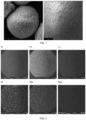
- FIG. 1 is an SEM graph of the composite coated ternary precursor obtained in this example. It can be seen from the figure that although magnesium silicate is coated, the coating uniformly and compactly forms a coating film, which hardly changes the original morphology of the precursor.
- FIG. 2 is an EDS graph of the composite coated ternary precursor obtained in this example. It can be seen from the figure that the coated Mg and Si elements are uniformly distributed.
- a ternary precursor was prepared, which was different from Example 2 in that no coating or doping was carried out.
- an uncoated ternary precursor Ni 0.5 Co 0.2 Mn 0.3 (OH) 2 was prepared, which was different from Example 3 in that only steps (1) and (4) were performed to obtain the uncoated ternary precursor.
- an uncoated ternary precursor Ni 0.6 Co 0.2 Mn 0.2 (OH) 2 was prepared, which was different from Example 4 in that only steps (1) and (4) were performed to obtain the uncoated ternary precursor.
- an uncoated ternary precursor Ni 0.70 Co 0.05 Mn 0.25 (OH) 2 was prepared, which was different from Example 5 in that only steps (1) and (4) were performed to obtain the uncoated ternary precursor.
- the particle sizes, BETs and TDs of the precursor samples prepared in examples and comparative examples are very close.
- the first discharge specific capacities are almost the same, which shows that the coating does not significantly reduce the capacity of the material.
- the capacity retention rates of examples are higher than those of comparatives without being undoped by 10% or more, which indicates that the coated cations and anions can reduce the disordering of lithium and nickel, stabilize the structure of the material, reduce the side reactions and effectively improve the capacity and cycle performances of the ternary materials, through the synergistic effect.
Landscapes
- Chemical & Material Sciences (AREA)
- Chemical Kinetics & Catalysis (AREA)
- Electrochemistry (AREA)
- General Chemical & Material Sciences (AREA)
- Inorganic Chemistry (AREA)
- Organic Chemistry (AREA)
- Engineering & Computer Science (AREA)
- Composite Materials (AREA)
- Manufacturing & Machinery (AREA)
- Crystallography & Structural Chemistry (AREA)
- Dispersion Chemistry (AREA)
- Materials Engineering (AREA)
- Inorganic Compounds Of Heavy Metals (AREA)
- Battery Electrode And Active Subsutance (AREA)
Abstract
Description
- The present disclosure belongs to the technical field of cathode materials for lithium ion batteries, and more particularly, relates to a composite coated ternary precursor, and a preparation method therefor and use thereof.
- Ternary cathode materials for lithium-ion batteries, comprising NCM materials and NCA materials, have been criticized for safety performances thereof despite high specific capacity and cycle performances thereof. In recent years, electric vehicles using ternary lithium-ion batteries have caught fire for many times, which makes people's demand for the safety of traction batteries more and more intense. How to improve the safety performances of the ternary batteries under the condition of ensuring the energy density has become one of the mainstream research orientations of traction batteries for electric vehicles.
- The modification orientations of ternary cathode materials comprise coating, doping, a core-shell structure, a structure with concentration gradients, quaternary materials and the like, which improves the cycle performances and safety performances of the batteries by improving the stability of the material structure. With regard to coating, coating elements are mostly added in a sintering stage, which not only increases number of times of sintering, but also causes unevenness of a coating material. Some methods are to coat a surface of a precursor, but elements of single property are coated usually, which can only achieve very limited improvement effect, or increases labor cost after multi-stage coating. Moreover, the operation difficulty is increased, and the risk of material segregation is increased.
- The present disclosure aims at solving at least one of the above-mentioned technical problems in the existing technology. Therefore, the present disclosure provides a composite coated ternary precursor, and a preparation method therefor and use thereof.
- According to one aspect of the present disclosure, a composite coated ternary precursor is proposed, comprising a ternary precursor and a coating layer attached to a surface of the ternary precursor, wherein the coating layer is obtained by a precipitation reaction between a first metal ion and a first polyanion, the first metal ion is one or more selected from a group consisting of Mg2+, Sc3+, Ti3+, V2+, Cr2+, Cu2+, Zn2+, Ge2+, Zr4+, Nb5+, In3+, Sb3+, Tb4+, Ta4+, Re4+, Ir3+, Pb4+ or Bi5+, and the first polyanion is one or more selected from a group consisting of SiO3 2-, AlO2 -, B4O7 2-, SO4 2-, PO4 3-, BO3 3-, MoO4 2- or WO4 2-.
- In some embodiments of the present disclosure, a content of the coating layer is 0.5% to 5% of a mass fraction of the ternary precursor.
- In some embodiments of the present disclosure, a particle size of the ternary precursor is preferably 3 µm to 12 µm.
- In some embodiments of the present disclosure, the ternary precursor is doped with a second metal ion and a second polyanion, the second metal ion is one or more selected from a group consisting of Mg2+, Sc3+, Ti3+, V2+, Cr2+, Cu2+, Zn2+, Ge2+, Zr4+, Nb5+, In3+, Sb3+, Tb4+, Ta4+, Re4+, Ir3+, Pb4+ or Bi5+, and the second polyanion is one or more selected from a group consisting of SiO3 2-, PO4 3-, MoO4 2- or B4O7 2-.
- In some embodiments of the present disclosure, a total doping amount of the second metal ion and the second polyanion is 0.5% to 5% of the mass of the ternary precursor.
- The present disclosure further provides a preparation method for the composite coated ternary precursor, including:
- S1: respectively preparing a first metal salt solution and a first polyanion salt solution, wherein the first metal salt solution is one or more selected from a group consisting of Mg2+, Sc3+, Ti3+, V2+, Cr2+, Cu2+, Zn2+, Ge2+ , Zr4+, Nb5+, In3+, Sb3+, Tb4+, Ta4+, Re4+, Ir3+, Pb4+ or Bi5+ salt solutions, and the first polyanion salt solution is one or more selected from a group consisting of SiO3 2-, AlO2 -, B4O7 2-, SO4 2-, PO4 3-, BO3 3-, MoO4 2- or WO4 2- salt solutions;
- S2: at a certain stirring speed and temperature, adding the first metal salt solution and the first polyanion salt solution into a ternary precursor slurry to carry out a precipitation reaction, keeping pH of a reaction system to be between 6.0 and 9.0, and obtaining a precipitate after the reaction; and
- S3: washing and drying the precipitate to obtain the composite coated ternary precursor.
- In some embodiments of the present disclosure, in step S1, concentrations of the first metal salt solution and the first polyanion salt solution are independently 0.5 mol/L to 2 mol/L.
- In some embodiments of the present disclosure, in step S2, the first metal salt solution and the first polyanion salt solution are added within 0.5 to 1.5 hours, and aged for 0.5 to 1.5 hours after the addition, and a total volume of the first metal salt solution and the first polyanion salt solution is 5 L to 15 L.
- In some embodiments of the present disclosure, when the ternary precursor is doped with the second metal ion and the second polyanion, the ternary precursor is prepared by a method comprising: dissolving soluble nickel salt, cobalt salt, manganese salt and second metal salt in water according to proportions to prepare a mixed metal salt solution, dissolving sodium hydroxide and second polyanion salt in water to prepare a doped precipitant, and stirring the same at a certain speed and temperature, adding aqueous ammonia first, and then adding sodium hydroxide to adjust pH to be between 9.5 and 12.5, and then adding the mixed metal salt solution, the doped precipitant and the aqueous ammonia for a coprecipitation reaction to obtain the ternary precursor, wherein the second metal salt is one or more selected from a group consisting of Mg2+, Sc3+, Ti3+, V2+, Cr2+, Cu2+, Zn2+, Ge2+, Zr4+, Nb5+, In3+, Sb3+, Tb4+, Ta4+, Re4+, Ir3+, Pb4+ or Bi5+ salt, and the second polyanion salt is one or more selected from a group consisting of SiO3 2-, PO4 3-, MoO4 2- or B4O7 2- salt. The second polyanion salt cannot be directly added into the mixed metal salt solution, because the second polyanion salt will be subjected to a precipitation reaction with the metal ions. Preferably, the stirring is carried out at a speed of 200 r/min to 600 r/min, the coprecipitation reaction is carried out at a reaction temperature of 35 °C to 85 °C, and a concentration of the aqueous ammonia in the coprecipitation reaction is kept at 0.5 g/L to 12 g/L. The particle size of the ternary precursor is 3 µm to 12 µm. Metal elements doped in the mixed salt solution can be evenly mixed on an atomic scale to obtain a precursor with evenly distributed elements. Radiuses of the metal cations are similar to those of Li+ and Ni2+, which can effectively reduce a disordering degree of lithium and nickel and inhibit capacity decay of the material. The polyanions doped in a precipitant need to participate in a neutralization reaction before crystallization in the process of coprecipitation, so the polyanions can be slowly released and evenly distributed in particles of the precursor. The radiuses of the doped polyanions are large, which can increase volume of a unit cell, play a role of supporting a three-dimensional frame structure of the material, expand a lithium ion transmission channel, inhibit phase transition of the material during charging and discharging processes, and improve electrochemical performances of the material. In addition, the polyanions can provide a part of oxygen atoms in a sintering process, which can reduce oxygen defects inside the material. The polyanions have a strong network structure formed of covalent bonds, which can inhibit oxygen evolution of the material in the charging and discharging processes and reduce side reactions. A synergistic effect of anions and cations can effectively improve the capacity and cycle performances of the ternary material.
- In some embodiments of the present disclosure, in the mixed metal salt solution, the second metal salt accounts for 0.1% to 2% of a total molar number of the nickel salt, the cobalt salt and the manganese salt.
- In some embodiments of the present disclosure, a concentration of the mixed metal salt solution is 0.5 mol/L to 2.0 mol/L.
- In some embodiments of the present disclosure, a concentration of the doped precipitant is 2 mol/L to 10 mol/L, and a molar ratio of the sodium hydroxide to the second polyanion salt in the doped precipitant is (30 to 300): 1.
- The present disclosure further provides a ternary cathode material prepared by sintering the composite coated ternary precursor.
- According to a preferred embodiment of the present disclosure, the present disclosure has at least the following beneficial effects.
- 1. The metal ion and the polyanion of the present disclosure can undergo a precipitation reaction to form a precipitate. Due to a large number of active sites on the surface of the ternary precursor, the surface of the ternary precursor has a high specific surface energy, which enables the precipitate to attach and grow easily, thus forming a uniformly distributed coating layer on the surface of the ternary precursor. After the coated precursor is sintered into a cathode material, a part of the coating can form a protective layer on the surface of the material, reducing the dissolution of Ni and Co, inhibiting a side reaction between the cathode material and the electrolytic solution, and reducing irreversible phase changes on a surface of the material, thus improving a stability of a ternary material. Another part of the coating can penetrate into the material to form bulk phase doping.
- 2. Radiuses of the coated metal cations are similar to those of Li+ and Ni2+, which can effectively reduce a disordering degree of lithium and nickel and inhibit capacity decay of the material.
- 3. A part of the coated polyanions penetrates into the material during sintering. Because the radiuses of the polyanions are large, the polyanions can increase volume of a unit cell, play a role of supporting a three-dimensional frame structure of the material, expand a lithium ion transmission channel, inhibit phase transition of the material during charging and discharging processes, and improve electrochemical performances of the material. Moreover, the polyanions can provide a part of oxygen atoms in a sintering process, which can reduce oxygen defects inside the material. The polyanions have a strong network structure formed of covalent bonds, which can inhibit oxygen evolution of the material in the charging and discharging processes and reduce side reactions.
- 4. One-step precipitation method is employed in this technical solution, which can prepare the composite coating on the surface of the ternary precursor. The coating is evenly distributed, and the preparation process thereof is simple and can be widely used. Therefore, a material with high particle sphericity, high capacity, and good cycle performance can be prepared.
- The present disclosure will be further explained with reference to the accompanying drawings and examples hereinafter, wherein:
-
FIG. 1 is an SEM graph of a composite coated ternary precursor obtained in Example 1 of the present disclosure; -
FIG. 2 is an EDS graph of the composite coated ternary precursor obtained in Example 1 of the present disclosure; and -
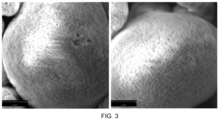
FIG. 3 is an SEM graph of precursor particles obtained in Comparative Example 1 of the present disclosure. - The concepts and the produced technical effects of the present disclosure will be clearly and completely described in conjunction with the examples so as to sufficiently understand the objects, the features and the effects of the present disclosure. Obviously, the described examples are merely some examples of the disclosure, rather than all the examples. Other examples obtained by those skilled in the art without going through any creative effort shall all fall within the protection scope of the present disclosure.
- In this example, a composite coated ternary precursor was prepared, and the specific process was as follows:
- (1) preparing an undoped ternary precursor by coprecipitation: simultaneously introducing a nickel-cobalt-manganese mixed solution prepared according to a molar ratio of 82: 12: 6, a precipitant and a complexing agent into a reaction kettle, keeping an inert gas atmosphere, a stirring speed of 300 r/min, a temperature of 70 °C and pH of a reaction system of 11 to 12, and preparing a precursor Ni0.82Co0.12Mn0.06(OH)2 by a coprecipitation reaction; when particles grew to 10.5 µm, adjusting the pH value of the reaction system to be between 7.0 and 8.0, stopping adding the solution, and leaving the reaction materials in the kettle;
- (2) preparing 1 mol/L of a magnesium sulfate solution and 1 mol/L of a sodium silicate solution;
- (3) preparing a composite coated precursor: keeping the stirring speed and the temperature of the reaction kettle in step (1) unchanged, simultaneously introducing 5 L of magnesium sulfate solution and 5 L of sodium silicate solution into the reaction kettle in step (1) at a flow rate of 5 L/h, keeping the pH value of the reaction system to be between 7.0 and 8.0, under the action of stirring, subjecting cations and anions to a precipitation reaction and uniformly coating on a surface of the precursor to form a magnesium silicate coating film, wherein the coating reaction lasted for 1 hour, and a content of the coating was 1% of a mass fraction of the precursor; and
- (4) collecting materials: collecting the precipitate in step (3) into an aging tank, and then filtering, washing, drying, screening and packaging the precipitate to obtain the composite coated ternary precursor.
-
FIG. 1 is an SEM graph of the composite coated ternary precursor obtained in this example. It can be seen from the figure that although magnesium silicate is coated, the coating uniformly and compactly forms a coating film, which hardly changes the original morphology of the precursor. -
FIG. 2 is an EDS graph of the composite coated ternary precursor obtained in this example. It can be seen from the figure that the coated Mg and Si elements are uniformly distributed. - In this example, a composite coated ternary precursor was prepared, and the specific process was as follows:
- (1) preparing a doped ternary precursor by coprecipitation: dissolving nickel sulfate, cobalt sulfate, manganese sulfate and magnesium sulfate in pure water according to a molar ratio of 0.82: 0.12: 0.05: 0.01, and stirring evenly to prepare 1.6 mol/L of a mixed metal salt solution; dissolving sodium hydroxide in pure water, then adding sodium silicate, and stirring evenly to prepare 5 mol/L of a doped precipitant, wherein a molar ratio of the sodium hydroxide to the sodium silicate was 200: 1; adding a proper amount of pure water into the reaction kettle, starting stirring and heating at a stirring speed of 300 r/min and a reaction temperature of 65 °C, adding aqueous ammonia into the reaction kettle to make a concentration of the aqueous ammonia in the solution in the kettle be 6 g/L, adding a small amount of undoped sodium hydroxide solution to adjust a pH value in the kettle to be between 11.4 and 11.6, and continuously introducing nitrogen into the kettle to prevent oxidation, and meanwhile, pumping the mixed metal salt solution, the doped precipitant and aqueous ammonia into the reaction kettle for coprecipitation reaction, keeping the reaction temperature and the concentration of the aqueous ammonia unchanged, controlling nucleation and growth of precursor particles by adjusting pH of the reaction system to obtain doped ternary precursor particles with a particle size D50 of 10 µm, and leaving the reaction materials in the kettle;
- (2) preparing 0.5 mol/L of a zirconium sulfate solution and 1 mol/L of an ammonium dihydrogen phosphate solution;
- (3) preparing a composite coated precursor: keeping the stirring speed and the temperature of the reaction kettle in step (1) unchanged, simultaneously introducing 4.6 L of the zirconium sulfate solution and 4.6 L of the ammonium dihydrogen phosphate solution into the reaction kettle in step (1) at a flow rate of 3.8 L/h, keeping the pH value of the reaction system to be between 6.5 and 7.5, under the action of stirring, subjecting cations and anions to a precipitation reaction and uniformly coating on a surface of the precursor to form a zirconium phosphate coating film, wherein the coating reaction lasted for 1.2 hours, and a content of the coating was 1.5% of a mass fraction of the precursor; and
- (4) collecting materials: collecting the precipitate in step (3) into an aging tank, and then filtering, washing, drying, screening and packaging the precipitate to obtain the composite coated ternary precursor.
- In this example, a composite coated ternary precursor was prepared, and the specific process was as follows:
- (1) preparing an undoped ternary precursor by coprecipitation: simultaneously introducing a nickel-cobalt-manganese mixed solution prepared according to a ratio of 5: 2: 3, a precipitant and a complexing agent into a reaction kettle, keeping an inert gas atmosphere, a stirring speed of 350 r/min, a temperature of 55 °C and pH of a reaction system of 11 to 12, and preparing a precursor Ni0.5Co0.2Mn0.3(OH)2 by a coprecipitation reaction; when particles grew to 5 µm, adjusting the pH value of the reaction system to be between 7.0 and 8.0, stopping adding the solution, and leaving the reaction materials in the kettle;
- (2) preparing 1.5 mol/L of a copper sulfate solution and 1 mol/L of a sodium molybdate solution;
- (3) preparing a composite coated precursor: keeping the stirring speed and the temperature of the reaction kettle in step (1) unchanged, simultaneously introducing 3.9 L of the copper sulfate solution and 5.9 L of the sodium molybdate solution into the reaction kettle in step (1) at a flow rate of 2.6 L/h, keeping the pH value of the reaction system to be between 7.0 and 8.0, under the action of stirring, subjecting cations and anions to a precipitation reaction and uniformly coating on a surface of the precursor to form a copper molybdate coating film, wherein the coating reaction lasted for 1.5 hours, and a content of the coating was 3% of a mass fraction of the precursor; and
- (4) collecting materials: collecting the precipitate in step (3) into an aging tank, and then filtering, washing, drying, screening and packaging the precipitate to obtain the composite coated ternary precursor.
- In this example, a composite coated ternary precursor was prepared, and the specific process was as follows:
- (1) preparing an undoped ternary precursor by coprecipitation: simultaneously introducing a nickel-cobalt-manganese mixed solution prepared according to a molar ratio of 6: 2: 2, a precipitant and a complexing agent into a reaction kettle, keeping an inert gas atmosphere, a stirring speed of 500 r/min, a temperature of 60 °C and pH of a reaction system of 10 to 12, and preparing a precursor Ni0.6Co0.2Mn0.2(OH)2 by a coprecipitation reaction; when particles grew to 4 µm, adjusting the pH value of the reaction system to be between 7.0 and 8.0, stopping adding the solution, and leaving the reaction materials in the kettle;
- (2) preparing 1.2 mol/L of a zinc sulfate solution and 1.5 mol/L of a sodium silicate solution;
- (3) preparing a composite coated precursor: keeping the stirring speed and the temperature of the reaction kettle in step (1) unchanged, simultaneously introducing 5.9 L of the zinc sulfate solution and 4.7 L of the sodium silicate solution into the reaction kettle in step (1), wherein a flow rate of the zinc sulfate solution was 4.5 L/h, and a flow rate of the sodium silicate solution was 3.6 L/h, keeping the pH value of the reaction system to be between 7.5 and 8.5, under the action of stirring, subjecting cations and anions to a precipitation reaction and uniformly coating on a surface of the precursor to form a zinc silicate coating film, wherein the coating reaction lasted for 1.3 hours, and a content of the coating was 2% of a mass fraction of the precursor; and
- (4) collecting materials: collecting the precipitate in step (3) into an aging tank, and then filtering, washing, drying, screening and packaging the precipitate to obtain the composite coated ternary precursor.
- In this example, a composite coated ternary precursor was prepared, and the specific process was as follows:
- (1) preparing an undoped ternary precursor by coprecipitation: simultaneously introducing a nickel-cobalt-manganese mixed solution prepared according to a molar ratio of 70: 5: 25, a precipitant and a complexing agent into a reaction kettle, keeping an inert gas atmosphere, a stirring speed of 550 r/min, a temperature of 62 °C and pH of a reaction system of 10.5 to 11.5, and preparing a precursor Ni0.70Co0.05Mn0.25(OH)2 by a coprecipitation reaction; when particles grew to 3 µm, adjusting the pH value of the reaction system to be between 7.0 and 8.0, stopping adding the solution, and leaving the reaction materials in the kettle;
- (2) preparing 0.8 mol/L of a zirconium sulfate solution and 0.5 mol/L of a sodium wolframate solution;
- (3) preparing a composite coated precursor: keeping the stirring speed and the temperature of the reaction kettle in step (1) unchanged, simultaneously introducing 1.6 L of the zirconium sulfate solution and 5.1 L of sodium wolframate solution into the reaction kettle in step (1), wherein a flow rate of the zirconium sulfate solution was 1.6 L/h, and a flow rate of the sodium wolframate solution was 5.1 L/h, keeping the pH value of the reaction system to be between 7.0 and 8.0, under the action of stirring, subjecting cations and anions to a precipitation reaction and uniformly coating on a surface of the precursor to form a zirconium tungstate coating film, wherein the coating reaction lasted for 1 hour, and a content of the coating was 1.5% of a mass fraction of the precursor; and
- (4) collecting materials: collecting the precipitate in step (3) into an aging tank, and then filtering, washing, drying, screening and packaging the precipitate to obtain the composite coated ternary precursor.
- In this comparative example, an uncoated ternary precursor was prepared, which was different from Example 1 in that only steps (1) and (4) were performed, and the specific process was as follows:
- (1) preparing an undoped ternary precursor by coprecipitation: simultaneously introducing a nickel-cobalt-manganese mixed solution prepared according to a molar ratio of 82: 12: 6, a precipitant and a complexing agent into a reaction kettle, keeping an inert gas atmosphere, a stirring speed of 300 r/min, a temperature of 70 °C and pH of a reaction system of 11 to 12, and preparing a precursor Ni0.82Co0.12Mn0.06(OH)2 by a coprecipitation reaction; when particles grew to a required particle size, adjusting the pH value of the reaction system to between 7.0 and 8.0, and stopping adding the solution; and
- (2) collecting the precipitate in step (1) into an aging tank, and then filtering, washing, drying, screening and packaging the precipitate to obtain the uncoated ternary precursor.
- In this comparative example, a ternary precursor was prepared, which was different from Example 2 in that no coating or doping was carried out.
- In this comparative example, an uncoated ternary precursor Ni0.5Co0.2Mn0.3(OH)2 was prepared, which was different from Example 3 in that only steps (1) and (4) were performed to obtain the uncoated ternary precursor.
- In this comparative example, an uncoated ternary precursor Ni0.6Co0.2Mn0.2(OH)2 was prepared, which was different from Example 4 in that only steps (1) and (4) were performed to obtain the uncoated ternary precursor.
- In this comparative example, an uncoated ternary precursor Ni0.70Co0.05Mn0.25(OH)2 was prepared, which was different from Example 5 in that only steps (1) and (4) were performed to obtain the uncoated ternary precursor.
- The precursors of examples and comparative examples were mixed with a lithium salt, sintered at 500 °C to 800 °C to obtain cathode materials which were made into button-type half cells, subjected to charge-discharge tests at a voltage of 2.5 V to 3 V and a rate of 1 C. The results were shown in Table 1.
Table 1 Sample D50 (µm) BET (m2/g) TD (g/cm3) First specific discharge capacity (mAh/g) Capacity retention rate after 100 cycles (%) Example 1 10.95 9.22 2.13 188 97.6 Comparative Example 1 10.82 9.97 2.11 186 85.2 Example 2 10.22 3.82 2.03 204 96.4 Comparative Example 2 10.15 4.62 2.05 203 84.3 Example 3 5.18 11.68 1.61 156 97.2 Comparative Example 3 5.06 11.7 1.61 157 84.6 Example 4 3.93 13.6 1.39 166 97.4 Comparative Example 4 3.92 11.74 1.40 164 83.5 Example 5 3.02 13.61 1.35 174 95.1 Comparative Example 5 2.94 14.64 1.32 175 82.9 - As can be seen from Table 1, the particle sizes, BETs and TDs of the precursor samples prepared in examples and comparative examples are very close. The first discharge specific capacities are almost the same, which shows that the coating does not significantly reduce the capacity of the material. However, after 100 cycles, the capacity retention rates of examples are higher than those of comparatives without being undoped by 10% or more, which indicates that the coated cations and anions can reduce the disordering of lithium and nickel, stabilize the structure of the material, reduce the side reactions and effectively improve the capacity and cycle performances of the ternary materials, through the synergistic effect.
- The examples of the present disclosure are described in detail with reference to the drawings above, but the present disclosure is not limited to the above examples, and various changes may also be made within the knowledge scope of those of ordinary skills in the art without departing from the purpose of the present disclosure. In addition, in case of no conflict, the examples in the application and the features in the examples may be combined with each other.
Claims (10)
- A composite coated ternary precursor, comprising a ternary precursor and a coating layer attached to a surface of the ternary precursor, wherein the coating layer is obtained by a precipitation reaction between a first metal ion and a first polyanion, the first metal ion is one or more selected from the group consisting of Mg2+, Sc3+, Ti3+, V2+, Cr2+, Cu2+, Zn2+, Ge2+, Zr4+, Nb5+, In3+, Sb3+, Tb4+, Ta4+, Re4+, Ir3+, Pb4+ and Bi5+, and the first polyanion is one or more selected from the group consisting of SiO3 2-, AlO2 -, B4O7 2-, SO4 2- , PO4 3-, BO3 3-, MoO4 2- and WO4 2-.
- The composite coated ternary precursor of claim 1, wherein the ternary precursor is doped with a second metal ion and a second polyanion, the second metal ion is one or more selected from the group consisting of Mg2+, Sc3+, Ti3+, V2+, Cr2+, Cu2+, Zn2+, Ge2+, Zr4+, Nb5+, In3+, Sb3+, Tb4+, Ta4+, Re4+, Ir3+, Pb4+ and Bi5+, and the second polyanion is one or more selected from the group consisting of SiO3 2-, PO4 3-, MoO4 2- and B4O7 2-.
- A preparation method for the composite coated ternary precursor of claim 1 or 2, comprising:S1: respectively preparing a first metal salt solution and a first polyanion salt solution, wherein the first metal salt solution is one or more selected from the group consisting of Mg2+, Sc3+, Ti3+, V2+, Cr2+, Cu2+, Zn2+, Ge2+, Zr4+, Nb5+, In3+, Sb3+, Tb4+, Ta4+, Re4+, Ir3+, Pb4+ and Bi5+ salt solutions, and the first polyanion salt solution is one or more selected from the group consisting of SiO3 2-, AlO2 -, B4O7 2-, SO4 2- , PO4 3-, BO3 3-, MoO4 2- and WO4 2- salt solutions;S2: at a certain stirring speed and temperature, adding the first metal salt solution and the first polyanion salt solution into a ternary precursor slurry to carry out a precipitation reaction, keeping pH of a reaction system to be between 6.0 and 9.0, and obtaining a precipitate after the reaction; andS3: washing and drying the precipitate to obtain the composite coated ternary precursor.
- The preparation method of claim 3, wherein in step S1, concentrations of the first metal salt solution and the first polyanion salt solution are independently 0.5 mol/L to 2 mol/L.
- The preparation method of claim 3, wherein in step S2, the first metal salt solution and the first polyanion salt solution are added within 0.5 to 1.5 hours, and aged for 0.5 to 1.5 hours after the addition, and a total volume of the first metal salt solution and the first polyanion salt solution is 5 L to 15 L.
- The preparation method of claim 3, wherein, when the ternary precursor is doped with the second metal ion and the second polyanion, the ternary precursor is prepared by a method comprising: dissolving soluble nickel salt, cobalt salt, manganese salt and second metal salt in water according to proportions to prepare a mixed metal salt solution, dissolving sodium hydroxide and a second polyanion salt in water to prepare a doped precipitant, and stirring the same at a certain speed and temperature, adding aqueous ammonia first, and then adding sodium hydroxide to adjust the pH to be between 9.5 and 12.5, and then adding the mixed metal salt solution, the doped precipitant and the aqueous ammonia for a coprecipitation reaction to obtain the ternary precursor, wherein the second metal salt is one or more selected from the group consisting of Mg2+, Sc3+, Ti3+, V2+, Cr2+, Cu2+, Zn2+, Ge2+, Zr4+, Nb5+, In3+, Sb3+, Tb4+, Ta4+, Re4+, Ir3+, Pb4+ and Bi5+ salts, and the second polyanion salt is one or more selected from the group consisting of SiO3 2-, PO4 3-, MoO4 2- and B4O7 2- salts.
- The preparation method of claim 6, wherein in the mixed metal salt solution, the second metal salt accounts for 0.1% to 2% of a total molar number of the nickel salt, the cobalt salt and the manganese salt.
- The preparation method of claim 6, wherein a concentration of the mixed metal salt solution is 0.5 mol/L to 2.0 mol/L.
- The preparation method of claim 6, wherein a concentration of the doped precipitant is 2 mol/L to 10 mol/L, and a molar ratio of the sodium hydroxide to the second polyanion salt in the doped precipitant is (30 to 300): 1.
- A ternary cathode material prepared by sintering the composite coated ternary precursor of claim 1 or 2.
Applications Claiming Priority (2)
| Application Number | Priority Date | Filing Date | Title |
|---|---|---|---|
| CN202111408479.9A CN114242970B (en) | 2021-11-19 | 2021-11-19 | Composite coated ternary precursor and preparation method and application thereof |
| PCT/CN2022/112235 WO2023087806A1 (en) | 2021-11-19 | 2022-08-12 | Compositely coated ternary precursor, and preparation method therefor and use thereof |
Publications (2)
| Publication Number | Publication Date |
|---|---|
| EP4425617A1 true EP4425617A1 (en) | 2024-09-04 |
| EP4425617A4 EP4425617A4 (en) | 2025-04-23 |
Family
ID=80750971
Family Applications (1)
| Application Number | Title | Priority Date | Filing Date |
|---|---|---|---|
| EP22894349.4A Pending EP4425617A4 (en) | 2021-11-19 | 2022-08-12 | TERNARY PRECURSOR WITH COMPOSITE COATING, ITS PREPARATION METHOD AND ITS USE |
Country Status (4)
| Country | Link |
|---|---|
| US (1) | US20250015287A1 (en) |
| EP (1) | EP4425617A4 (en) |
| CN (1) | CN114242970B (en) |
| WO (1) | WO2023087806A1 (en) |
Families Citing this family (5)
| Publication number | Priority date | Publication date | Assignee | Title |
|---|---|---|---|---|
| CN114242970B (en) * | 2021-11-19 | 2025-07-04 | 广东邦普循环科技有限公司 | Composite coated ternary precursor and preparation method and application thereof |
| CN115490276B (en) * | 2022-09-23 | 2024-01-05 | 广东邦普循环科技有限公司 | A surface-modified cathode material precursor and its preparation method and application |
| CN116161712B (en) * | 2022-12-31 | 2025-06-20 | 荆门市格林美新材料有限公司 | A method for improving precursor coating uniformity |
| CN119324216B (en) * | 2024-10-21 | 2025-11-04 | 北京理工大学 | Preparation and application of a high-nickel layered cathode material coated with lithium iron sulfate |
| CN119890257A (en) * | 2024-12-31 | 2025-04-25 | 重庆太蓝新能源有限公司 | A composite positive electrode material and its preparation method and application |
Family Cites Families (12)
| Publication number | Priority date | Publication date | Assignee | Title |
|---|---|---|---|---|
| WO2013052494A1 (en) * | 2011-10-03 | 2013-04-11 | A123 Systems, Inc. | Cathode materials including an oxygen-gettering compound and an ion-storage compound |
| KR101446491B1 (en) * | 2012-03-16 | 2014-10-06 | 주식회사 엘지화학 | Precursor for Preparation of Lithium Composite Transition Metal Oxide and Method for Preparation of the Same |
| CN103199229B (en) * | 2013-03-19 | 2015-04-15 | 南开大学 | Polyanion-doped lithium-enriched layered oxide anode material as well as preparation and application thereof |
| CN103441265B (en) * | 2013-09-24 | 2015-10-28 | 上海空间电源研究所 | Rich lithium composite positive pole of a kind of codope and preparation method thereof |
| CN107492636B (en) * | 2017-07-10 | 2019-08-16 | 河南大学 | A kind of preparation method of lithium ion battery composite cathode material |
| WO2019223705A1 (en) * | 2018-05-21 | 2019-11-28 | Microvast Power Systems Co., Ltd. | Methods for preparing particle precursor and cathode active particles, and particle precursor prepared thereby |
| CN109686938B (en) * | 2018-12-18 | 2021-02-09 | 中南大学 | Magnesium ion doped gradient nickel cobalt lithium manganate positive electrode material and preparation method thereof |
| CN109742347A (en) * | 2018-12-26 | 2019-05-10 | 宁波容百新能源科技股份有限公司 | A kind of nickelic positive electrode and preparation method thereof with uniform clad |
| CN112563507A (en) * | 2020-12-09 | 2021-03-26 | 北京理工大学重庆创新中心 | Method for multiple modification of high-nickel anode material by metal phosphate and obtained anode material |
| CN112993258B (en) * | 2021-05-12 | 2021-08-17 | 蜂巢能源科技有限公司 | Doping and coating method of ternary cathode material, ternary cathode material and lithium ion battery |
| CN113488620A (en) * | 2021-06-28 | 2021-10-08 | 恒大新能源技术(深圳)有限公司 | Ternary positive electrode precursor and preparation method thereof, ternary positive electrode material and preparation method thereof, and lithium ion battery |
| CN114242970B (en) * | 2021-11-19 | 2025-07-04 | 广东邦普循环科技有限公司 | Composite coated ternary precursor and preparation method and application thereof |
-
2021
- 2021-11-19 CN CN202111408479.9A patent/CN114242970B/en active Active
-
2022
- 2022-08-12 WO PCT/CN2022/112235 patent/WO2023087806A1/en not_active Ceased
- 2022-08-12 US US18/711,106 patent/US20250015287A1/en active Pending
- 2022-08-12 EP EP22894349.4A patent/EP4425617A4/en active Pending
Also Published As
| Publication number | Publication date |
|---|---|
| US20250015287A1 (en) | 2025-01-09 |
| WO2023087806A1 (en) | 2023-05-25 |
| CN114242970B (en) | 2025-07-04 |
| EP4425617A4 (en) | 2025-04-23 |
| CN114242970A (en) | 2022-03-25 |
Similar Documents
| Publication | Publication Date | Title |
|---|---|---|
| US20250015287A1 (en) | Composite coated ternary precursor, and preparation method therefor and use thereof | |
| EP4184610B1 (en) | Pre-lithiated lithium ion positive electrode material, preparation method therefor and use thereof | |
| CN112736230B (en) | High-voltage composite spinel-coated cathode material and preparation method thereof | |
| EP1805834B1 (en) | Composition precursor for aluminum-containing lithium transition metal oxide and process for preparation of the same | |
| CN103441255B (en) | Positive pole material of lithium ion battery and preparation method of positive pole material | |
| CN103943854B (en) | Surface-coated modified lithium ion battery cathode material and preparation method thereof | |
| CN109962234B (en) | Concentration gradient single crystal cathode material and preparation method thereof | |
| CN114512649A (en) | Composite lithium manganese iron phosphate cathode material, preparation method and application thereof | |
| CN112289994B (en) | Coated high-nickel ternary material and preparation method and application thereof | |
| CN111268664A (en) | Ferro manganese phosphate intermediate, lithium iron manganese phosphate and their manufacturing method | |
| CN107978752A (en) | A kind of high security lithium ion positive electrode for battery material and preparation method thereof | |
| CN110649230A (en) | Nano rivet core-shell structure cathode material and preparation method thereof | |
| CN112599736A (en) | Boron-doped lithium phosphate coated lithium ion battery positive electrode material and preparation method thereof | |
| CN114649526B (en) | Inner-high-outer low-gradient doped lithium-rich manganese-based layered material and preparation method thereof | |
| CN118970014A (en) | A modified lithium-rich manganese-based positive electrode material and its preparation method and use | |
| CN112310351A (en) | Lithium-rich manganese-based positive electrode material with double-oxide composite coating layer and preparation method thereof | |
| WO2012096294A1 (en) | Positive electrode active material for alkaline storage battery, manufacturing method for positive electrode active material, and alkaline storage battery | |
| US5840269A (en) | Method of preparing a double layered nickel hydroxide active material | |
| CN118970035B (en) | Ni/Co/Mn content non-metering regulated lithium-rich manganese oxide positive electrode material, and preparation method and application thereof | |
| CN115394993A (en) | Surface-coated modified tricobalt tetroxide and its preparation method and application | |
| JP4159161B2 (en) | Positive electrode active material for alkaline storage battery, method for producing the same, and method for producing positive electrode for alkaline storage battery using the positive electrode active material | |
| JP5743185B2 (en) | Positive electrode active material for alkaline storage battery and alkaline storage battery | |
| CN117423829B (en) | Lithium ion battery anode material and preparation method and application thereof | |
| CN117577796B (en) | A manganese-based three-layer core-shell structure positive electrode material for sodium ion batteries | |
| CN111498915A (en) | Cathode material, preparation method thereof and lithium ion battery |
Legal Events
| Date | Code | Title | Description |
|---|---|---|---|
| STAA | Information on the status of an ep patent application or granted ep patent |
Free format text: STATUS: THE INTERNATIONAL PUBLICATION HAS BEEN MADE |
|
| PUAI | Public reference made under article 153(3) epc to a published international application that has entered the european phase |
Free format text: ORIGINAL CODE: 0009012 |
|
| STAA | Information on the status of an ep patent application or granted ep patent |
Free format text: STATUS: REQUEST FOR EXAMINATION WAS MADE |
|
| 17P | Request for examination filed |
Effective date: 20240527 |
|
| AK | Designated contracting states |
Kind code of ref document: A1 Designated state(s): AL AT BE BG CH CY CZ DE DK EE ES FI FR GB GR HR HU IE IS IT LI LT LU LV MC MK MT NL NO PL PT RO RS SE SI SK SM TR |
|
| DAX | Request for extension of the european patent (deleted) | ||
| RAV | Requested validation state of the european patent: fee paid |
Extension state: MA Effective date: 20240527 |
|
| REG | Reference to a national code |
Ref country code: DE Ref legal event code: R079 Free format text: PREVIOUS MAIN CLASS: H01M0004620000 Ipc: H01M0004580000 |
|
| A4 | Supplementary search report drawn up and despatched |
Effective date: 20250321 |
|
| RIC1 | Information provided on ipc code assigned before grant |
Ipc: H01M 4/02 20060101ALN20250317BHEP Ipc: C01G 53/00 20060101ALI20250317BHEP Ipc: C01G 53/84 20250101ALI20250317BHEP Ipc: C01G 53/50 20250101ALI20250317BHEP Ipc: H01M 4/04 20060101ALI20250317BHEP Ipc: H01M 4/525 20100101ALI20250317BHEP Ipc: H01M 4/58 20100101AFI20250317BHEP |