EP4425449A1 - Smart in-cabin monitoring system - Google Patents
Smart in-cabin monitoring system Download PDFInfo
- Publication number
- EP4425449A1 EP4425449A1 EP23208537.3A EP23208537A EP4425449A1 EP 4425449 A1 EP4425449 A1 EP 4425449A1 EP 23208537 A EP23208537 A EP 23208537A EP 4425449 A1 EP4425449 A1 EP 4425449A1
- Authority
- EP
- European Patent Office
- Prior art keywords
- vehicle
- passenger
- driver
- information
- processor
- Prior art date
- Legal status (The legal status is an assumption and is not a legal conclusion. Google has not performed a legal analysis and makes no representation as to the accuracy of the status listed.)
- Pending
Links
Images







Classifications
-
- G—PHYSICS
- G06—COMPUTING OR CALCULATING; COUNTING
- G06V—IMAGE OR VIDEO RECOGNITION OR UNDERSTANDING
- G06V20/00—Scenes; Scene-specific elements
- G06V20/50—Context or environment of the image
- G06V20/59—Context or environment of the image inside of a vehicle, e.g. relating to seat occupancy, driver state or inner lighting conditions
-
- H—ELECTRICITY
- H04—ELECTRIC COMMUNICATION TECHNIQUE
- H04N—PICTORIAL COMMUNICATION, e.g. TELEVISION
- H04N7/00—Television systems
- H04N7/18—Closed-circuit television [CCTV] systems, i.e. systems in which the video signal is not broadcast
-
- B—PERFORMING OPERATIONS; TRANSPORTING
- B60—VEHICLES IN GENERAL
- B60W—CONJOINT CONTROL OF VEHICLE SUB-UNITS OF DIFFERENT TYPE OR DIFFERENT FUNCTION; CONTROL SYSTEMS SPECIALLY ADAPTED FOR HYBRID VEHICLES; ROAD VEHICLE DRIVE CONTROL SYSTEMS FOR PURPOSES NOT RELATED TO THE CONTROL OF A PARTICULAR SUB-UNIT
- B60W40/00—Estimation or calculation of non-directly measurable driving parameters for road vehicle drive control systems not related to the control of a particular sub unit, e.g. by using mathematical models
- B60W40/08—Estimation or calculation of non-directly measurable driving parameters for road vehicle drive control systems not related to the control of a particular sub unit, e.g. by using mathematical models related to drivers or passengers
-
- B—PERFORMING OPERATIONS; TRANSPORTING
- B60—VEHICLES IN GENERAL
- B60R—VEHICLES, VEHICLE FITTINGS, OR VEHICLE PARTS, NOT OTHERWISE PROVIDED FOR
- B60R21/00—Arrangements or fittings on vehicles for protecting or preventing injuries to occupants or pedestrians in case of accidents or other traffic risks
- B60R21/01—Electrical circuits for triggering passive safety arrangements, e.g. airbags, safety belt tighteners, in case of vehicle accidents or impending vehicle accidents
- B60R21/015—Electrical circuits for triggering passive safety arrangements, e.g. airbags, safety belt tighteners, in case of vehicle accidents or impending vehicle accidents including means for detecting the presence or position of passengers, passenger seats or child seats, and the related safety parameters therefor, e.g. speed or timing of airbag inflation in relation to occupant position or seat belt use
- B60R21/01512—Passenger detection systems
-
- B—PERFORMING OPERATIONS; TRANSPORTING
- B60—VEHICLES IN GENERAL
- B60W—CONJOINT CONTROL OF VEHICLE SUB-UNITS OF DIFFERENT TYPE OR DIFFERENT FUNCTION; CONTROL SYSTEMS SPECIALLY ADAPTED FOR HYBRID VEHICLES; ROAD VEHICLE DRIVE CONTROL SYSTEMS FOR PURPOSES NOT RELATED TO THE CONTROL OF A PARTICULAR SUB-UNIT
- B60W10/00—Conjoint control of vehicle sub-units of different type or different function
- B60W10/22—Conjoint control of vehicle sub-units of different type or different function including control of suspension systems
-
- B—PERFORMING OPERATIONS; TRANSPORTING
- B60—VEHICLES IN GENERAL
- B60W—CONJOINT CONTROL OF VEHICLE SUB-UNITS OF DIFFERENT TYPE OR DIFFERENT FUNCTION; CONTROL SYSTEMS SPECIALLY ADAPTED FOR HYBRID VEHICLES; ROAD VEHICLE DRIVE CONTROL SYSTEMS FOR PURPOSES NOT RELATED TO THE CONTROL OF A PARTICULAR SUB-UNIT
- B60W10/00—Conjoint control of vehicle sub-units of different type or different function
- B60W10/30—Conjoint control of vehicle sub-units of different type or different function including control of auxiliary equipment, e.g. air-conditioning compressors or oil pumps
-
- G—PHYSICS
- G06—COMPUTING OR CALCULATING; COUNTING
- G06V—IMAGE OR VIDEO RECOGNITION OR UNDERSTANDING
- G06V20/00—Scenes; Scene-specific elements
- G06V20/50—Context or environment of the image
- G06V20/52—Surveillance or monitoring of activities, e.g. for recognising suspicious objects
-
- G—PHYSICS
- G06—COMPUTING OR CALCULATING; COUNTING
- G06V—IMAGE OR VIDEO RECOGNITION OR UNDERSTANDING
- G06V20/00—Scenes; Scene-specific elements
- G06V20/50—Context or environment of the image
- G06V20/59—Context or environment of the image inside of a vehicle, e.g. relating to seat occupancy, driver state or inner lighting conditions
- G06V20/597—Recognising the driver's state or behaviour, e.g. attention or drowsiness
-
- G—PHYSICS
- G06—COMPUTING OR CALCULATING; COUNTING
- G06V—IMAGE OR VIDEO RECOGNITION OR UNDERSTANDING
- G06V40/00—Recognition of biometric, human-related or animal-related patterns in image or video data
- G06V40/10—Human or animal bodies, e.g. vehicle occupants or pedestrians; Body parts, e.g. hands
- G06V40/16—Human faces, e.g. facial parts, sketches or expressions
- G06V40/174—Facial expression recognition
-
- G—PHYSICS
- G06—COMPUTING OR CALCULATING; COUNTING
- G06V—IMAGE OR VIDEO RECOGNITION OR UNDERSTANDING
- G06V40/00—Recognition of biometric, human-related or animal-related patterns in image or video data
- G06V40/20—Movements or behaviour, e.g. gesture recognition
-
- G—PHYSICS
- G08—SIGNALLING
- G08B—SIGNALLING SYSTEMS, e.g. PERSONAL CALLING SYSTEMS; ORDER TELEGRAPHS; ALARM SYSTEMS
- G08B25/00—Alarm systems in which the location of the alarm condition is signalled to a central station, e.g. fire or police telegraphic systems
- G08B25/001—Alarm cancelling procedures or alarm forwarding decisions, e.g. based on absence of alarm confirmation
-
- B—PERFORMING OPERATIONS; TRANSPORTING
- B60—VEHICLES IN GENERAL
- B60W—CONJOINT CONTROL OF VEHICLE SUB-UNITS OF DIFFERENT TYPE OR DIFFERENT FUNCTION; CONTROL SYSTEMS SPECIALLY ADAPTED FOR HYBRID VEHICLES; ROAD VEHICLE DRIVE CONTROL SYSTEMS FOR PURPOSES NOT RELATED TO THE CONTROL OF A PARTICULAR SUB-UNIT
- B60W40/00—Estimation or calculation of non-directly measurable driving parameters for road vehicle drive control systems not related to the control of a particular sub unit, e.g. by using mathematical models
- B60W40/08—Estimation or calculation of non-directly measurable driving parameters for road vehicle drive control systems not related to the control of a particular sub unit, e.g. by using mathematical models related to drivers or passengers
- B60W2040/0818—Inactivity or incapacity of driver
- B60W2040/0827—Inactivity or incapacity of driver due to sleepiness
-
- B—PERFORMING OPERATIONS; TRANSPORTING
- B60—VEHICLES IN GENERAL
- B60W—CONJOINT CONTROL OF VEHICLE SUB-UNITS OF DIFFERENT TYPE OR DIFFERENT FUNCTION; CONTROL SYSTEMS SPECIALLY ADAPTED FOR HYBRID VEHICLES; ROAD VEHICLE DRIVE CONTROL SYSTEMS FOR PURPOSES NOT RELATED TO THE CONTROL OF A PARTICULAR SUB-UNIT
- B60W2540/00—Input parameters relating to occupants
- B60W2540/223—Posture, e.g. hand, foot, or seat position, turned or inclined
-
- B—PERFORMING OPERATIONS; TRANSPORTING
- B60—VEHICLES IN GENERAL
- B60W—CONJOINT CONTROL OF VEHICLE SUB-UNITS OF DIFFERENT TYPE OR DIFFERENT FUNCTION; CONTROL SYSTEMS SPECIALLY ADAPTED FOR HYBRID VEHICLES; ROAD VEHICLE DRIVE CONTROL SYSTEMS FOR PURPOSES NOT RELATED TO THE CONTROL OF A PARTICULAR SUB-UNIT
- B60W2540/00—Input parameters relating to occupants
- B60W2540/225—Direction of gaze
-
- B—PERFORMING OPERATIONS; TRANSPORTING
- B60—VEHICLES IN GENERAL
- B60W—CONJOINT CONTROL OF VEHICLE SUB-UNITS OF DIFFERENT TYPE OR DIFFERENT FUNCTION; CONTROL SYSTEMS SPECIALLY ADAPTED FOR HYBRID VEHICLES; ROAD VEHICLE DRIVE CONTROL SYSTEMS FOR PURPOSES NOT RELATED TO THE CONTROL OF A PARTICULAR SUB-UNIT
- B60W2540/00—Input parameters relating to occupants
- B60W2540/229—Attention level, e.g. attentive to driving, reading or sleeping
-
- B—PERFORMING OPERATIONS; TRANSPORTING
- B60—VEHICLES IN GENERAL
- B60W—CONJOINT CONTROL OF VEHICLE SUB-UNITS OF DIFFERENT TYPE OR DIFFERENT FUNCTION; CONTROL SYSTEMS SPECIALLY ADAPTED FOR HYBRID VEHICLES; ROAD VEHICLE DRIVE CONTROL SYSTEMS FOR PURPOSES NOT RELATED TO THE CONTROL OF A PARTICULAR SUB-UNIT
- B60W2540/00—Input parameters relating to occupants
- B60W2540/26—Incapacity
-
- B—PERFORMING OPERATIONS; TRANSPORTING
- B60—VEHICLES IN GENERAL
- B60Y—INDEXING SCHEME RELATING TO ASPECTS CROSS-CUTTING VEHICLE TECHNOLOGY
- B60Y2400/00—Special features of vehicle units
- B60Y2400/90—Driver alarms
-
- G—PHYSICS
- G06—COMPUTING OR CALCULATING; COUNTING
- G06V—IMAGE OR VIDEO RECOGNITION OR UNDERSTANDING
- G06V40/00—Recognition of biometric, human-related or animal-related patterns in image or video data
- G06V40/20—Movements or behaviour, e.g. gesture recognition
- G06V40/28—Recognition of hand or arm movements, e.g. recognition of deaf sign language
Definitions
- the present disclosure is related to a smart in-cabin monitoring system, wherein a camera module embedded in an overhead console of a vehicle photographs an interior of the vehicle to generate an image, a processor generates monitoring information based on the image and analyzes the monitoring information using artificial intelligence, thereby transmitting an alarm to a driver or a passenger and providing a convenience function to a driver or a passenger by controlling vehicle's interior devices.
- Vehicles are typically equipped with a variety of devices for providing convenience of a driver and passengers. For example, in case that a driver and passengers are not fastening their seat belt while the vehicle is in operation, an audio device of the vehicle may output an alarm to remind them to fasten their seat belt. Furthermore, in case that a driver is seated in the seat, the driver may press a seat position button to move the seat to a preset seat position. Furthermore, to prevent drowsy driving of a user, various sensors may be equipped to determine whether the user is drowsy, and sounds, vibrations, and the like may be output to prevent drowsiness.
- the present disclosure is to provide a smart in-cabin monitoring system comprising a camera module for photographing a vehicle interior, and a processor for generating monitoring information with the photographed image and analyzing the monitoring information using an artificial intelligence algorithm in order to provide various convenience functions to a driver and passengers, and to transmit notifying alarms.
- the present disclosure is to provide a smart in-cabin monitoring system comprising a processor for setting a plurality of landmarks on a driver's face and monitoring movements of the landmarks to prevent drowsy driving or non-looking ahead of the driver.
- the present disclosure is to provide a smart in-cabin monitoring system comprising a processor capable of generating appearance information such as a number of passengers, physique, and the like, and monitoring the appearance information to control a seat and a suspension of a vehicle in order to adjust a seat position of a passenger and control the suspension of the vehicle.
- the present disclosure is to provide a smart in-cabin monitoring system comprising a processor capable of monitoring vehicle interior information before and after a passenger exits in order to prevent the passenger from missing belongings in the vehicle when exiting.
- a smart in-cabin monitoring system for monitoring a vehicle which comprises a camera module embedded in an overhead console of the vehicle, a memory connected to the camera module, and a processor connected to the camera module and the memory, wherein the camera module photographs a vehicle interior to generate a vehicle interior image, and the processor is configured to generate vehicle interior information with the vehicle interior image, monitor the vehicle interior information, and control vehicle's interior devices or to transmit an alarm to a driver or a passenger.
- a smart in-cabin monitoring system may be provided, wherein the vehicle interior image includes a driver's motion image generated by the camera module by detecting a driver's motion inside the vehicle; a passenger image generated by the camera module by photographing the passenger inside the vehicle; and an interior condition image generated by the camera module by photographing a vehicle interior in which a driver or passenger has boarded and a vehicle interior in which a driver or passenger has disembarked.
- a smart in-cabin monitoring system may be provided, wherein the vehicle interior information includes driver's motion information generated from the driver's motion image, passenger information generated from the passenger image, and interior condition information generated from the interior condition image.
- a smart in-cabin monitoring system may be provided, wherein the driver's motion information includes steering wheel gripping information regarding a driver motion of gripping a steering wheel of the vehicle during operation, and driver's facial motion information for monitoring a driver's facial motion by setting a plurality of landmarks on the driver's face and recognizing movements of the landmarks.
- a smart in-cabin monitoring system may be provided, wherein the passenger information includes seat belt fastening information regarding whether a passenger boarding the vehicle is fastening a seat belt; passenger appearance information regarding the passenger's appearance; passenger motion information for monitoring a passenger's gesture by setting a plurality of landmarks on the passenger's body and recognizing movements of the landmarks; and passenger expression information for monitoring a passenger's facial expression by setting a plurality of other landmarks on passenger's face and recognizing position changes of the other landmarks.
- a smart in-cabin monitoring system may be provided, wherein the interior condition information includes missing belongings information for determining whether the belongings are missing by comparing images before and after a passenger exits, emergency situation information of the vehicle when an emergency situation occurs for the vehicle, and interior brightness information regarding brightness of light inside the vehicle.
- a smart in-cabin monitoring system may be provided, wherein the processor is configured to analyze the steering wheel gripping information and send a grip warning alarm to a driver in case that the driver is not gripping the steering wheel for a predetermined period of time.
- a smart in-cabin monitoring system may be provided, wherein the processor is configured to analyze the driver's facial motion information, determine whether the driver is looking ahead or is drowsy driving based on the movement of the plurality of landmarks, and transmit a warning alarm to the driver when it is recognized that the driver is not looking ahead or is drowsy driving.
- a smart in-cabin monitoring system may be provided, wherein the processor is configured to analyze the passenger appearance information and control a plurality of suspensions equipped in the vehicle.
- a smart in-cabin monitoring system may be provided, wherein the processor is configured to analyze the passenger appearance information and adjust a position of a seat of the vehicle based on a passenger.
- a smart in-cabin monitoring system may be provided, wherein the processor analyzes the passenger motion information and controls the vehicle's interior devices based on a passenger's gesture.
- a smart in-cabin monitoring system may be provided, wherein the processor is configured to analyze the passenger expression information and control the vehicle's interior devices.
- a smart in-cabin monitoring system may be provided, wherein the processor is configured to analyze the missing belongings information and transmit a notifying alarm to a passenger regarding the missing belongings.
- a smart in-cabin monitoring system may be provided, wherein the processor is configured to analyze the emergency situation information and transmit an emergency situation alarm to a hospital adjacent to the vehicle informing an interior image and the emergency situation of the vehicle.
- a smart in-cabin monitoring system may be provided, wherein the processor is configured to analyze the interior brightness information and adjust a height of a window of the vehicle based on a preset interior brightness of the vehicle or a location of the vehicle.
- a smart in-cabin monitoring system may be provided, wherein the memory is configured to store the vehicle interior image generated by the camera module and store the vehicle interior information generated by the processor.
- a smart in-cabin monitoring system may be provided, wherein the vehicle's interior devices include an audio system of the vehicle, a suspension of wheels of the vehicle, a seat of the vehicle, at least one or more window of the vehicle, or a communication device of the vehicle.
- the present disclosure may provide various convenience functions to a passenger and transmit a notifying alarm by equipping a vehicle with a camera module embedded in an overhead console, generating vehicle interior information with an image generated by the camera module, and monitoring the vehicle interior information using an artificial intelligence algorithm.
- the present disclosure comprises a processor for setting a plurality of landmarks on a driver's face and monitoring movements of the landmarks to prevent drowsy driving or the driver from not looking ahead.
- the present disclosure comprises a processor capable of generating appearance information such as a number of passengers, physique, and the like, and monitoring the appearance information to control a seat and a suspension of a vehicle, thereby adjusting a seat position of a passenger and controlling the suspension of the vehicle.
- the present disclosure comprises a processor capable of monitoring vehicle interior information before and after a passenger exits, thereby preventing the passenger from missing belongings in the vehicle when exiting.
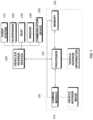
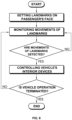
- FIG. 1 is a drawing illustrating a smart in-cabin monitoring system according to an embodiment of the present disclosure
- FIG. 2A is a drawing explaining a camera module of a smart in-cabin monitoring system according to an embodiment of the present disclosure
- FIG. 2B is a drawing explaining a processor of a smart in-cabin monitoring system according to an embodiment of the present disclosure
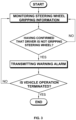
- FIG. 3 is a drawing explaining monitoring of steering wheel gripping information by a processor of a smart in-cabin monitoring system according to an embodiment of the present disclosure
- FIG. 4A is a drawing explaining monitoring of facial motion information by a processor of a smart in-cabin monitoring system according to an embodiment of the present disclosure
- FIG. 4B is a drawing illustrating setting of landmarks by a processor of a smart in-cabin monitoring system according to an embodiment of the present disclosure
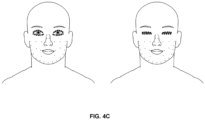
- FIG. 4C is a drawing illustrating landmark movements for monitoring drowsy driving by a processor of a smart in-cabin monitoring system, according to an embodiment of the present disclosure
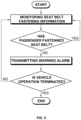
- FIG. 5 is a drawing explaining monitoring of seat belt fastening information by a processor of a smart in-cabin monitoring system according to an embodiment of the present disclosure
- FIG. 6 is a drawing explaining monitoring of passenger appearance information by a processor of a smart in-cabin monitoring system according to an embodiment of the present disclosure
- FIG. 7 is a drawing explaining monitoring of passenger motion information by a processor of a smart in-cabin monitoring system according to an embodiment of the present disclosure
- FIG. 8 is a drawing explaining monitoring of passenger expression information by a processor of a smart in-cabin monitoring system according to an embodiment of the present disclosure
- FIG. 9 is a drawing explaining monitoring of missing belongings information by a processor of a smart in-cabin monitoring system according to an embodiment of the present disclosure
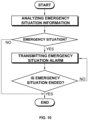
- FIG. 10 is a drawing explaining monitoring of emergency situation information by a processor of a smart in-cabin monitoring system according to an embodiment of the present disclosure
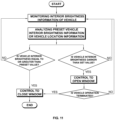
- FIG. 11 is a drawing explaining monitoring of vehicle interior brightness information by a processor of a smart in-cabin monitoring system according to an embodiment of the present disclosure.
- a smart in-cabin monitoring system 100 may comprise a camera module 110, a processor 120, a memory 130 and the like.
- the camera module 110 may be embedded in an overhead console of the vehicle and may photograph a driver, passengers, an interior of the vehicle, and the like.
- the camera module 110 may photograph a driver of the vehicle and detect the driver's motion to generate a driver's motion image.
- the camera module 110 may photograph a passenger of the vehicle to generate a passenger image (wherein the passenger image may include an image of the driver).
- the camera module 110 may photograph an interior of the vehicle in which a driver or passenger has boarded and an interior of the vehicle in which a driver or passenger has disembarked to generate an interior condition image.
- the driver's motion image, the passenger image, and the interior condition image generated by the camera module 110 may be transmitted to the processor 120 to be monitored by the processor 120. Furthermore, the driver's motion image, the passenger image, and the interior condition image generated by the camera module 110 may be transmitted to the memory 130 to be stored in the memory 130.
- the driver's motion image may include such as a steering wheel gripping image in which a driver's motion of gripping a steering wheel is photographed, and a facial image in which a driver's face and the driver's facial movements are photographed.
- the processor 120 may be connected to the camera module 110 and the memory 130, and generate vehicle interior information from images generated by the camera module 110 or vehicle interior images stored in the memory 130. Furthermore, the processor 120 may monitor vehicle interior information to control vehicle's interior device 200, and transmit notifying or warning alarms and the like to the driver or passengers.
- the processor 120 may generate vehicle interior information from vehicle interior images.
- vehicle interior information may include such as driver's motion information generated from the driver's motion image, passenger information generated from the passenger image, and interior condition information generated from the interior condition image.
- the driver's motion information may include steering wheel gripping information regarding a gripping motion of a driver while operating a vehicle, and driver's facial motion information setting a plurality of landmarks on the driver's face and detecting movements of the landmarks and the like.
- the processor 120 may monitor and analyze driver's motion information, passenger information, and interior condition information using various artificial intelligence algorithms.
- the processor 120 may analyze the steering wheel gripping information and transmit a grip warning alarm to a driver in case that the driver is not gripping the steering wheel for a predetermined period of time.
- the driver's motion image generated by the camera module 110 includes such as images of the driver operating a vehicle while gripping the steering wheel with both hands or one hand.
- the processor 120 may generate steering wheel gripping information from a steering wheel gripping image of a driver.
- the steering wheel gripping information may include information such as whether the driver is gripping the steering wheel with one or both hands, and a duration of the grip and the like.
- the processor 120 may analyze the steering wheel gripping information to monitor whether the driver is consistently gripping the steering wheel while driving. In particular, the processor 120 may set a predetermined duration during which the driver does not grip the steering wheel. That is, a driver may temporarily release his/her grip on the steering wheel while driving.
- the processor 120 may set a predetermined duration, such that as long as the driver grips the steering wheel for more than the predetermined duration, the processor 120 may recognize that the driver is still gripping the steering wheel.
- the processor 120 may transmit a warning alarm to remind the driver to grip the steering wheel if the driver has not been gripping the steering wheel for a predetermined duration (or, if no predetermined duration is set, the processor 120 may transmit a warning alarm to the driver immediately if the driver is not gripping the steering wheel). That is, in case of transmitting a warning alarm to the driver, the processor 120 may control the audio system 210 of the vehicle, thereby transmitting a warning alarm to the driver by voice through the audio system 210.
- the processor 120 may terminate monitoring of the steering wheel gripping information.
- the processor 120 may utilize EcaResnet 50 algorithm, among various artificial intelligence algorithms, to monitor steering wheel gripping information.
- the EcaResnet 50 is a deep neural network (DNN) that is often used for image classification and object recognition.
- DNN deep neural network
- the processor 120 may analyze driver's facial motion information to detect movements of landmarks by setting a plurality of landmarks on the driver's face.
- the processor 120 may determine whether the driver is looking ahead or drowsy driving based on the movements of the plurality of landmarks. Furthermore, the processor 120 may transmit a warning alarm to the driver when it is recognized that the driver is not looking ahead or is drowsy driving.
- the processor 120 may extract a driver's facial image by recognizing the driver's face from the driver's motion image. Furthermore, if it is difficult to directly recognize the driver's face from the driver's motion image, the processor 120 may extract the driver's facial image from the driver's motion image and recognize the driver's facial skeleton to recognize the driver's face.
- the processor 120 may generate driver's facial motion information from the extracted driver's facial image.
- Driver's facial motion information may include information about movements of the driver's eyes, nose, mouth and the like.
- the processor 120 may set a plurality of landmarks on the driver's face, particularly the driver's eyes, outer corners of both eyes of the driver, and corners of the driver's mouth in order to monitor whether the driver is looking ahead (Black dots in the drawings: six exemplarily shown on a front face on a left side of the drawing, and three exemplarily shown on a side face on a right side of the drawing).
- the term 'landmark' refers to an imaginary point that the processor 120 sets at a specific position on the driver or passenger (e.g., on a face, joints of arms, both hands, and the like).
- the processor 120 may detect movements of the landmarks themselves, and generate an imaginary straight line from the landmarks (e.g., a straight line generated from the landmarks towards a front of the driver, a straight line generated from the landmarks towards one side of the driver, and the like) to detect movements along which the imaginary straight line moves. For example, if the driver turns his/her face or moves his/her mouth, the landmarks (i.e., point-shaped landmarks or imaginary lines generated from the landmarks) may also move along with movement of the face or mouth.
- an imaginary straight line from the landmarks e.g., a straight line generated from the landmarks towards a front of the driver, a straight line generated from the landmarks towards one side of the driver, and the like
- the landmarks i.e., point-shaped landmarks or imaginary lines generated from the landmarks
- the processor 120 may set a plurality of landmarks on the driver's facial image to generate driver's facial motion information regarding movement information of the landmarks (e.g., movement information of the landmarks forward, backward, upward, downward, left, right, and the like). For example, in case that the driver turns his/her face to the left, the processor 120 may generate facial motion information indicating that landmarks set on the outer corners of both eyes of the driver and a plurality of landmarks located on both corners of the mouth move to the driver's left.
- the facial motion information may include a direction in which the landmarks are moving, a time it takes for the landmarks to move and return to their home position, and the like.
- the processor 120 may analyze this facial motion information to determine that the driver is not looking ahead while driving if the driver is turning his/her face to the left and if the plurality of landmarks do not return to their original positions.
- the processor 120 may determine that the driver's attention is dispersed, such as when the driver is using a mobile phone while driving. Accordingly, the processor 120 may control an audio system 210 to transmit a warning alarm to the driver to enable the driver to focus on driving.
- the processor 120 may set a plurality of landmarks on the driver's face to monitor whether the driver is drowsy driving.
- the processor 120 may determine whether the driver is drowsy through movements of landmarks set on the driver's face. That is, if the landmarks set on the driver's face are repeatedly moving in a downwardly inclined movement along an arc trajectory with respect to the front and then returning, the processor 120 may use this pattern to determine whether the driver is drowsy driving.
- the processor 120 may measure the number of times movement of the plurality of landmarks (i.e., a downwardly inclined movement along the arc trajectory with respective to the front and then returning) is repeated, and an interval time between a forwardly inclined movement of the landmarks and their return, and the like.
- the processor 120 may determine whether the driver temporarily tilts his/her head downward or is drowsy driving through the measured number of times, the interval time, and the like.
- the processor 120 may set a plurality of landmarks on both eyes of the driver.
- the processor 120 may determine whether the driver is drowsy through movements of the landmarks set on both eyes of the driver. That is, when the processor 120 confirms the movement of the landmark where both eyes of the driver are closed, it may measure a number of times both eyes are closed, a duration for which both eyes are closed, and the like.
- the processor 120 may determine whether the driver temporarily closed his/her eyes or is drowsy driving through the measured number of times, duration, and the like.
- the processor 120 may determine whether the driver is drowsy driving by monitoring a movement of at least one of movement of landmarks set on the driver's face and movement of the landmarks set on both eyes of the driver. If the processor 120 confirms the drowsy driving of the driver, the processor 120 may transmit an alarm to alert the driver. Furthermore, the processor 120 may play loud music through the audio system 210 to wake up the driver from drowsiness and control the vehicle's interior devices 200 to open the windows 240 of the vehicle to allow outside air to enter.
- the processor 120 may terminate monitoring of the driver's facial motion information.
- the processor 120 may utilize the Facelnsight (SFD) (Single Shot Scale-Invariant Face Detector) algorithm to monitor driver's facial motion information.
- the Facelnsight (SFD) algorithm is based on a Convolutional Neural Network (CNN), which is primarily an algorithm for detecting faces.
- CNN Convolutional Neural Network
- the processor 120 may recognize the driver's face with the Facelnsight (SFD) algorithm and set landmarks on the driver's face.
- the processor 120 may monitor the movement of the preset landmarks using a custom CNN algorithm.
- the custom CNN algorithm is an algorithm designed for a specific task or problem instead of using an existing CNN algorithm such as ResNet.
- the processor 120 may generate passenger information from the passenger image.
- the passenger information may include information about the passenger's seat belt fastening information, information about the passenger's appearance, and the like (here, the passenger may include the driver).
- the processor 120 may generate seat belt fastening information from the passenger image to determine whether the passenger boarding the vehicle is fastening a seat belt (not shown).
- the processor 120 may monitor seat belt fastening information and, if any of the passengers boarding the vehicle is not fastening a seat belt after the vehicle is started, may transmit an attention alarm to remind the passengers to fasten the seat belt. Furthermore, the processor 120 may continuously monitor seat belt fastening information so that if a passenger unbuckles the seat belt while the vehicle is moving, the processor 120 may recognize this and transmit an attention alarm to remind the passengers to fasten the seat belt.
- the processor 120 may terminate monitoring of the seat belt fastening information.
- the processor 120 may utilize EcaResnet 50 algorithm, among various artificial intelligence algorithms, to monitor seat belt fastening information.
- the EcaResnet 50 is a DNN that is often used for image classification and object recognition.
- the processor 120 may generate passenger appearance information boarding the vehicle from the passenger image.
- the passenger appearance information may include information such as a number of passengers in the vehicle, physique information of the passengers (e.g., height, weight), the passengers' age, gender, and the like.
- the processor 120 may monitor the passenger appearance information to confirm a number of passengers, seating positions of the passengers, the passenger's height, the passenger's weight, and the like.
- the processor 120 may analyze the passenger appearance information to control a position of a seat 230 of the vehicle and a suspension 220 of the vehicle's wheels, and the like. For example, if three passengers (e.g., one middle-aged man, one middle-aged woman, and one female child) are seated in a passenger seat and rear seats of a vehicle, the camera module 110 may photograph appearances of the passengers.
- three passengers e.g., one middle-aged man, one middle-aged woman, and one female child
- the camera module 110 may photograph appearances of the passengers.
- the processor 120 may generate appearance information of the passengers from the appearance image of the passengers, and the appearance information of the passengers may include detailed external information such as three passengers boarding the vehicle, one middle-aged male being in the passenger seat, one middle-aged female being in a rear seat of the driver's seat, one female child being in a rear seat of the passenger seat, weights of the passengers estimated by analyzing the heights, physiques, genders, and the like of the passengers.
- the processor 120 may analyze the appearance information of the middle-aged man and control the passenger seat 230 such that the seat 230 occupied by the middle-aged man is moved to the rear and a backrest of the seat 230 is reclined to a rear (the processor 120 may similarly control the seat occupied by the middle-aged woman and the seat occupied by the female child).
- the processor 120 may analyze the passenger appearance information to control the suspension 220 of the vehicle to provide a comfortable ride for the passenger.
- the camera module 110 may photograph appearances of the passengers.
- the processor 120 may generate appearance information of the passengers from the appearance image of the passengers, and the appearance information of the passengers may include detailed external information such as three passengers boarding the vehicle, one middle-aged male being in the passenger seat, one middle-aged female being in a rear seat of the driver's seat, one female child being in a rear seat of the passenger seat, weights of the passengers estimated by analyzing the heights, physiques, genders, and the like of the passengers.
- the processor 120 may control the suspension 220 of the vehicle by analyzing appearance information such as positions of passengers seated within the vehicle, genders, and weights of the passengers, and the like. That is, by adjusting the suspension 220 of the wheels of the vehicle that carry relatively more weight, the passengers inside vehicle may experience a more stable ride even when the vehicle travels over obstacles such as road bumps.
- the processor 120 may terminate monitoring of the passenger appearance information.
- the processor 120 may utilize EcaResnet 50 algorithm, among various artificial intelligence algorithms, to monitor passenger appearance information.
- the EcaResnet 50 is a DNN that is often used for image classification and object recognition.
- the processor 120 may generate passenger motion information of passengers boarding the vehicle from the passenger image.
- the passenger motion information may include gesture detecting of the passengers.
- the gesture detecting refers to recognizing the motion information of a plurality of landmarks set on a passenger's body (in particular, hands). That is, the processor 120 may set a plurality of landmarks on the passenger's body (in particular, hands), and as the passenger's body (in particular, hands) moves, the landmarks may also move.
- the landmarks will also display a specific direction, shape, and the like, such that the processor 120 may recognize the motion information of these landmarks and perform a control implied by the motion information of the landmarks.
- the processor 120 may recognize motion information of a plurality of landmarks set on the passenger's fingers, and the processor 120 may recognize that such motion information of these landmarks represents a dialing command, and perform a dialing control via the communication device 250 of the vehicle connected to the passenger's mobile phone.
- the processor 120 may monitor this motion information to perform controls to increase or decrease a volume of the audio system 210 (of course, motion information such as dialing, adjusting volume, and the like may be preset by the passenger, and setting, changing, or canceling the motion information may also be performed by the passenger's motion).
- motion information such as dialing, adjusting volume, and the like may be preset by the passenger, and setting, changing, or canceling the motion information may also be performed by the passenger's motion).
- the processor 120 may terminate monitoring of the passenger motion information.
- the processor 120 may utilize EcaResnet 50 algorithm, among various artificial intelligence algorithms, to monitor passenger motion information.
- the EcaResnet 50 is a DNN that is often used for image classification and object recognition.
- the processor 120 may generate passenger expression information of passengers boarding the vehicle from the passenger image.
- the passenger expression information may include facial expression information about emotions such as happiness, sadness, anger, surprise, fear, and the like, exposed on the passenger's face.
- the processor 120 may set a plurality of landmarks on the passenger's face, monitor changes in the position of the landmarks, and analyze the passenger's facial expression, thereby recognizing a current emotion of the passenger.
- the processor 120 may monitor the passenger expression information and control interior devices such as the audio system 210, windows 240, and the like in the vehicle, such that an interior condition of the vehicle may be adjusted to match the current emotional condition of the passenger.
- the processor 120 may recognize that the passenger's current emotion is sad or depressed through monitoring for position changes of the landmarks. In such cases, the processor 120 may control the audio system 210 to play upbeat music to cheer up the passenger, transmit an alarm to prevent aggressive driving, or provide lighthearted banter with the passenger. Furthermore, the processor 120 may perform controls to open the window 240 to allow outside air to enter.
- the processor 120 may terminate monitoring of the passenger expression information.
- the processor 120 may utilize AffectNet-Emotion data to monitor passenger expression information.
- AffectNet is a large dataset of facial expressions that includes an emotion label for each image
- AffectNet-Emotion is a subset of the AffectNet dataset that focuses on recognizing six basic emotions: anger, disgust, fear, happiness, sadness, and surprise.
- the interior condition information may include such as missing belongings information to determine whether belongings are missing by comparing images before and after a passenger exits, emergency situation information of the vehicle when an emergency situation occurs for the vehicle, and interior brightness information regarding brightness of light inside the vehicle.
- the processor 120 may analyze the missing belongings information and transmit a notifying alarm to the passenger regarding missing belongings.
- the interior condition image generated by the camera module 110 may include an image captured before a passenger boards the vehicle, an image captured before a passenger exits the vehicle, and an image captured after a passenger exits the vehicle, and the like.
- the processor 120 may generate missing belongings information from the interior condition image.
- the processor 120 may monitor an image captured before the passenger boards the vehicle, an image captured before the passenger exits the vehicle, and an image captured after the passenger exits the vehicle, and the like to confirm the belongings left behind in the vehicle after the passenger exits the vehicle. That is, the processor 120 may compare the image captured before the passenger boards the vehicle with the image captured after the passenger exits, and if belongings that were not present before the passenger boards the vehicle are left behind after the passenger exits, the processor 120 may recognize these belongings as missing belongings when the passenger exits the vehicle. If the processor 120 recognizes the belongings missed by the passenger, the processor 120 may transmit a notifying alarm for belongings to the passenger who has disembarked. That is, the processor 120 may control the vehicle's communication device 250, thereby transmitting a notifying alarm to a passenger's mobile phone or the like.
- the processor 120 may terminate monitoring of the missing belongings information.
- the processor 120 may utilize ResNet34 algorithm to monitor the missing belongings information.
- the ResNet 34 is a variant of Residual Network (ResNet), a widely used CNN used for image classification, object detection, and other computer vision tasks.
- ResNet Residual Network
- the processor 120 may analyze the emergency situation information and transmit the vehicle interior images and videos to a hospital located adjacent to the vehicle as an emergency situation alarm.
- the camera module 110 may generate an interior condition image of the vehicle, which may include an image of an emergency situation, such as a vehicle accident or a sudden collapse of the driver or passenger.
- an emergency situation such as a vehicle accident or a sudden collapse of the driver or passenger.
- the processor 120 may generate emergency situation information from the emergency situation image.
- the emergency situation information may include photos of the vehicle interior at a time of the emergency situation, photos of the driver or passenger, a location and time of the emergency, and the like.
- the processor 120 may analyze the emergency situation information and, if determined to be an emergency, transmit an emergency situation alarm. For example, if a vehicle is involved in an accident and there is a possibility that the driver or passengers may be injured, the processor 120 may control the communication device 250 of the vehicle to transmit an emergency situation alarm.
- the processor 120 may transmit emergency situation information (e.g., a photo of the vehicle interior, a photo of the driver or passengers, and the like) to a plurality of hospitals, fire stations, police stations, and the like adjacent to the location of the vehicle. Furthermore, if a situation arises where a driver or passenger inside a vehicle suddenly collapses, the processor 120 may analyze such a situation and determine that it is an emergency situation. In such cases, the processor 120 may control the communication device 250 of the vehicle to transmit an emergency situation alarm. That is, the processor 120 may transmit emergency situation information (e.g., a photo of the driver or passengers, and the like) to a plurality of hospitals, fire stations, police stations, and the like adjacent to the location of the vehicle.
- emergency situation information e.g., a photo of the vehicle interior, a photo of the driver or passengers, and the like
- the processor 120 may continue to transmit an emergency situation alarm to nearby hospitals, fire stations, police stations, and the like. Furthermore, the processor 120 may determine that the emergency situation has ended, such as when a driver or passenger in an accident is transported to a hospital, and may terminate monitoring of the emergency situation information.
- the processor 120 may open or close the windows 240 to adjust a height of the at least one or more windows 240 of the vehicle by analyzing interior brightness information regarding brightness of light inside the vehicle.
- the vehicle interior image may include an image of brightness of light detected inside the vehicle.
- the processor 120 may generate interior brightness information by analyzing an image regarding brightness of light inside the vehicle or a location of the vehicle.
- the interior brightness information may include information about preset interior brightness of the vehicle and brightness of light inside the vehicle based on the location of the vehicle.
- the processor 120 may monitor the current vehicle interior brightness information based on a preset value of a preset vehicle interior brightness.
- the preset interior brightness may be set differently depending on a time of day, and the like.
- the processor 120 may control opening the window 240 of the vehicle if a current vehicle interior brightness is equal to or greater than a preset value of a preset vehicle interior brightness.
- the processor 120 may close the window 240 of the vehicle (or, if the window 240 of the vehicle is already closed, may keep it closed) if a current interior brightness of the vehicle is darker than a preset value of a preset interior brightness of the vehicle.
- the processor 120 may set a predetermined amount of brightness inside the vehicle based on a location of the vehicle.
- the processor 120 may monitor the interior brightness information to adjust a height of the at least one window of the vehicle if the vehicle interior is equal to or greater than a preset value or darker than a preset value. For example, if the location of the vehicle is close to a tunnel and brightness of light inside the vehicle is equal to or greater than a predetermined level, the processor 120 may determine that the window 240 of the vehicle is open. Accordingly, the processor 120 may raise a height of the at least one window 240 of the vehicle to a maximum to close the window 240 to prevent entry of tunnel air into the vehicle. Similarly, if the location of the vehicle is outside of the tunnel and brightness of light inside the vehicle is dark because the windows 240 of the vehicle are closed, the processor 120 may control the at least one window 240 of the vehicle to be lowered to a predetermined height.
- the processor 120 may terminate monitoring of the interior brightness information of the vehicle.
- the processor 120 may utilize EcaResnet 50 algorithm, among various artificial intelligence algorithms, to monitor vehicle interior brightness information.
- the EcaResnet 50 is a DNN that is often used for image classification and object recognition.
- the memory 130 is connected to the camera module 110 and may store images generated by the camera module 110.
- the memory 130 may include volatile memory or nonvolatile memory.
- the memory 130 may store driver's motion image, passenger image, and interior condition image of the vehicle. Furthermore, the memory 130 is connected to the processor 120 and may output driver's motion image, passenger image, or vehicle interior condition image to the processor 120 by a signal of the processor 120.
- arrangement of illustrated components may vary depending on requirements or environment in which the invention is implemented. For example, some components may be omitted or some components may be integrated and implemented as one.
Landscapes
- Engineering & Computer Science (AREA)
- Physics & Mathematics (AREA)
- Mechanical Engineering (AREA)
- General Physics & Mathematics (AREA)
- Multimedia (AREA)
- Transportation (AREA)
- Theoretical Computer Science (AREA)
- Chemical & Material Sciences (AREA)
- Combustion & Propulsion (AREA)
- Mathematical Physics (AREA)
- Automation & Control Theory (AREA)
- General Health & Medical Sciences (AREA)
- Human Computer Interaction (AREA)
- Health & Medical Sciences (AREA)
- Business, Economics & Management (AREA)
- Emergency Management (AREA)
- Social Psychology (AREA)
- Computer Vision & Pattern Recognition (AREA)
- Psychiatry (AREA)
- Oral & Maxillofacial Surgery (AREA)
- Signal Processing (AREA)
- Traffic Control Systems (AREA)
- Fittings On The Vehicle Exterior For Carrying Loads, And Devices For Holding Or Mounting Articles (AREA)
- Lock And Its Accessories (AREA)
- Alarm Systems (AREA)
Abstract
The present disclosure is a smart in-cabin monitoring system for monitoring a vehicle, comprising a camera module embedded in an overhead console of the vehicle, a memory connected to the camera module, and a processor connected to the camera module and the memory, wherein the camera module photographs a vehicle interior to generate a vehicle interior image, and the processor is configured to generate a vehicle interior information with the vehicle interior image, monitor the vehicle interior information, and control vehicle's interior devices or to transmit an alarm to a driver or a passenger, thereby enabling the processor to monitor an image photographed by the camera module and providing a convenience function to the driver and the passenger boarding a vehicle by controlling the vehicle's interior devices.
Description
- The present disclosure is related to a smart in-cabin monitoring system, wherein a camera module embedded in an overhead console of a vehicle photographs an interior of the vehicle to generate an image, a processor generates monitoring information based on the image and analyzes the monitoring information using artificial intelligence, thereby transmitting an alarm to a driver or a passenger and providing a convenience function to a driver or a passenger by controlling vehicle's interior devices.
- Vehicles are typically equipped with a variety of devices for providing convenience of a driver and passengers. For example, in case that a driver and passengers are not fastening their seat belt while the vehicle is in operation, an audio device of the vehicle may output an alarm to remind them to fasten their seat belt. Furthermore, in case that a driver is seated in the seat, the driver may press a seat position button to move the seat to a preset seat position. Furthermore, to prevent drowsy driving of a user, various sensors may be equipped to determine whether the user is drowsy, and sounds, vibrations, and the like may be output to prevent drowsiness. However, such a device for convenience of a driver and passengers requires a number of sensors to operate the device, and a plurality of control modules for controlling such sensors must be equipped, and signal lines for connecting the sensors and the control modules must be equipped within the vehicle. As a result, a complex installation of numerous devices inside the vehicle can lead to difficulties in troubleshooting and maintenance when any one function malfunctions.
- The present disclosure is to provide a smart in-cabin monitoring system comprising a camera module for photographing a vehicle interior, and a processor for generating monitoring information with the photographed image and analyzing the monitoring information using an artificial intelligence algorithm in order to provide various convenience functions to a driver and passengers, and to transmit notifying alarms.
- Furthermore, the present disclosure is to provide a smart in-cabin monitoring system comprising a processor for setting a plurality of landmarks on a driver's face and monitoring movements of the landmarks to prevent drowsy driving or non-looking ahead of the driver.
- Furthermore, the present disclosure is to provide a smart in-cabin monitoring system comprising a processor capable of generating appearance information such as a number of passengers, physique, and the like, and monitoring the appearance information to control a seat and a suspension of a vehicle in order to adjust a seat position of a passenger and control the suspension of the vehicle.
- Furthermore, the present disclosure is to provide a smart in-cabin monitoring system comprising a processor capable of monitoring vehicle interior information before and after a passenger exits in order to prevent the passenger from missing belongings in the vehicle when exiting.
- The purpose of the embodiments of the present disclosure is not limited to the above-mentioned purpose, and other purposes not mentioned above will be clearly understood by those skilled in the art to which the present disclosure pertains from the description below.
- According to one aspect of the present disclosure, a smart in-cabin monitoring system for monitoring a vehicle may be provided, which comprises a camera module embedded in an overhead console of the vehicle, a memory connected to the camera module, and a processor connected to the camera module and the memory, wherein the camera module photographs a vehicle interior to generate a vehicle interior image, and the processor is configured to generate vehicle interior information with the vehicle interior image, monitor the vehicle interior information, and control vehicle's interior devices or to transmit an alarm to a driver or a passenger.
- According to an embodiment of the present disclosure, a smart in-cabin monitoring system may be provided, wherein the vehicle interior image includes a driver's motion image generated by the camera module by detecting a driver's motion inside the vehicle; a passenger image generated by the camera module by photographing the passenger inside the vehicle; and an interior condition image generated by the camera module by photographing a vehicle interior in which a driver or passenger has boarded and a vehicle interior in which a driver or passenger has disembarked.
- Furthermore, according to an embodiment of the present disclosure, a smart in-cabin monitoring system may be provided, wherein the vehicle interior information includes driver's motion information generated from the driver's motion image, passenger information generated from the passenger image, and interior condition information generated from the interior condition image.
- Furthermore, according to an embodiment of the present disclosure, a smart in-cabin monitoring system may be provided, wherein the driver's motion information includes steering wheel gripping information regarding a driver motion of gripping a steering wheel of the vehicle during operation, and driver's facial motion information for monitoring a driver's facial motion by setting a plurality of landmarks on the driver's face and recognizing movements of the landmarks.
- Furthermore, according to an embodiment of the present disclosure, a smart in-cabin monitoring system may be provided, wherein the passenger information includes seat belt fastening information regarding whether a passenger boarding the vehicle is fastening a seat belt; passenger appearance information regarding the passenger's appearance; passenger motion information for monitoring a passenger's gesture by setting a plurality of landmarks on the passenger's body and recognizing movements of the landmarks; and passenger expression information for monitoring a passenger's facial expression by setting a plurality of other landmarks on passenger's face and recognizing position changes of the other landmarks.
- Furthermore, according to an embodiment of the present disclosure, a smart in-cabin monitoring system may be provided, wherein the interior condition information includes missing belongings information for determining whether the belongings are missing by comparing images before and after a passenger exits, emergency situation information of the vehicle when an emergency situation occurs for the vehicle, and interior brightness information regarding brightness of light inside the vehicle.
- Furthermore, according to an embodiment of the present disclosure, a smart in-cabin monitoring system may be provided, wherein the processor is configured to analyze the steering wheel gripping information and send a grip warning alarm to a driver in case that the driver is not gripping the steering wheel for a predetermined period of time.
- Furthermore, according to an embodiment of the present disclosure, a smart in-cabin monitoring system may be provided, wherein the processor is configured to analyze the driver's facial motion information, determine whether the driver is looking ahead or is drowsy driving based on the movement of the plurality of landmarks, and transmit a warning alarm to the driver when it is recognized that the driver is not looking ahead or is drowsy driving.
- Furthermore, according to an embodiment of the present disclosure, a smart in-cabin monitoring system may be provided, wherein the processor is configured to analyze the passenger appearance information and control a plurality of suspensions equipped in the vehicle.
- Furthermore, according to an embodiment of the present disclosure, a smart in-cabin monitoring system may be provided, wherein the processor is configured to analyze the passenger appearance information and adjust a position of a seat of the vehicle based on a passenger.
- Furthermore, according to an embodiment of the present disclosure, a smart in-cabin monitoring system may be provided, wherein the processor analyzes the passenger motion information and controls the vehicle's interior devices based on a passenger's gesture.
- Furthermore, according to an embodiment of the present disclosure, a smart in-cabin monitoring system may be provided, wherein the processor is configured to analyze the passenger expression information and control the vehicle's interior devices.
- Furthermore, according to an embodiment of the present disclosure, a smart in-cabin monitoring system may be provided, wherein the processor is configured to analyze the missing belongings information and transmit a notifying alarm to a passenger regarding the missing belongings.
- Furthermore, according to an embodiment of the present disclosure, a smart in-cabin monitoring system may be provided, wherein the processor is configured to analyze the emergency situation information and transmit an emergency situation alarm to a hospital adjacent to the vehicle informing an interior image and the emergency situation of the vehicle.
- Furthermore, according to an embodiment of the present disclosure, a smart in-cabin monitoring system may be provided, wherein the processor is configured to analyze the interior brightness information and adjust a height of a window of the vehicle based on a preset interior brightness of the vehicle or a location of the vehicle.
- Furthermore, according to an embodiment of the present disclosure, a smart in-cabin monitoring system may be provided, wherein the memory is configured to store the vehicle interior image generated by the camera module and store the vehicle interior information generated by the processor.
- Furthermore, according to an embodiment of the present disclosure, a smart in-cabin monitoring system may be provided, wherein the vehicle's interior devices include an audio system of the vehicle, a suspension of wheels of the vehicle, a seat of the vehicle, at least one or more window of the vehicle, or a communication device of the vehicle.
- The present disclosure may provide various convenience functions to a passenger and transmit a notifying alarm by equipping a vehicle with a camera module embedded in an overhead console, generating vehicle interior information with an image generated by the camera module, and monitoring the vehicle interior information using an artificial intelligence algorithm.
- Furthermore, the present disclosure comprises a processor for setting a plurality of landmarks on a driver's face and monitoring movements of the landmarks to prevent drowsy driving or the driver from not looking ahead.
- Furthermore, the present disclosure comprises a processor capable of generating appearance information such as a number of passengers, physique, and the like, and monitoring the appearance information to control a seat and a suspension of a vehicle, thereby adjusting a seat position of a passenger and controlling the suspension of the vehicle.
- Furthermore, the present disclosure comprises a processor capable of monitoring vehicle interior information before and after a passenger exits, thereby preventing the passenger from missing belongings in the vehicle when exiting.
-
-
FIG. 1 is a drawing illustrating a smart in-cabin monitoring system according to an embodiment of the present disclosure. -
FIG. 2A is a drawing explaining a camera module of a smart in-cabin monitoring system according to an embodiment of the present disclosure. -
FIG. 2B is a drawing explaining a processor of a smart in-cabin monitoring system according to an embodiment of the present disclosure. -
FIG. 3 is a drawing explaining monitoring of steering wheel gripping information by a processor of a smart in-cabin monitoring system according to an embodiment of the present disclosure. -
FIG. 4A is a drawing explaining monitoring of facial motion information by a processor of a smart in-cabin monitoring system according to an embodiment of the present disclosure. -
FIG. 4B is a drawing illustrating setting of landmarks by a processor of a smart in-cabin monitoring system according to an embodiment of the present disclosure. -
FIG. 4C is a drawing illustrating landmark movements for monitoring drowsy driving by a processor of a smart in-cabin monitoring system, according to an embodiment of the present disclosure. -
FIG. 5 is a drawing explaining monitoring of seat belt fastening information by a processor of a smart in-cabin monitoring system according to an embodiment of the present disclosure. -
FIG. 6 is a drawing explaining monitoring of passenger appearance information by a processor of a smart in-cabin monitoring system according to an embodiment of the present disclosure. -
FIG. 7 is a drawing explaining monitoring of passenger motion information by a processor of a smart in-cabin monitoring system according to an embodiment of the present disclosure. -
FIG. 8 is a drawing explaining monitoring of passenger expression information by a processor of a smart in-cabin monitoring system according to an embodiment of the present disclosure. -
FIG. 9 is a drawing explaining monitoring of missing belongings information by a processor of a smart in-cabin monitoring system according to an embodiment of the present disclosure. -
FIG. 10 is a drawing explaining monitoring of emergency situation information by a processor of a smart in-cabin monitoring system according to an embodiment of the present disclosure. -
FIG. 11 is a drawing explaining monitoring of vehicle interior brightness information by a processor of a smart in-cabin monitoring system according to an embodiment of the present disclosure. - Advantages and characteristics of the embodiments of the present disclosure, and methods of achieving the same, will become clear with reference to the embodiments described below in detail along with the accompanying drawings. However, the present disclosure is not limited to the embodiments disclosed below and may be implemented in a variety of different forms. These embodiments are provided to make the disclosure of the present disclosure complete, and to fully inform those skilled in the art to which the present disclosure pertains of the scope of the disclosure, and the present disclosure will be defined only by the scope of the claims. The same reference signs designate the same components throughout the specification.
- In describing the embodiments of the present disclosure, if it is determined that a detailed description of a known function or configuration may unnecessarily obscure the subject matter of the present disclosure, such detailed description will be omitted. Furthermore, terms to be described below are terms defined in consideration of functions in the embodiments of the present disclosure, which may vary according to the intention or custom of a user or operator. Therefore, the definition thereof should be made based on the contents throughout this specification.
- Hereinafter, embodiments of the present disclosure will be described in detail with reference to the accompanying drawings.
-
FIG. 1 is a drawing illustrating a smart in-cabin monitoring system according to an embodiment of the present disclosure;FIG. 2A is a drawing explaining a camera module of a smart in-cabin monitoring system according to an embodiment of the present disclosure;FIG. 2B is a drawing explaining a processor of a smart in-cabin monitoring system according to an embodiment of the present disclosure;FIG. 3 is a drawing explaining monitoring of steering wheel gripping information by a processor of a smart in-cabin monitoring system according to an embodiment of the present disclosure;FIG. 4A is a drawing explaining monitoring of facial motion information by a processor of a smart in-cabin monitoring system according to an embodiment of the present disclosure;FIG. 4B is a drawing illustrating setting of landmarks by a processor of a smart in-cabin monitoring system according to an embodiment of the present disclosure;FIG. 4C is a drawing illustrating landmark movements for monitoring drowsy driving by a processor of a smart in-cabin monitoring system, according to an embodiment of the present disclosure;FIG. 5 is a drawing explaining monitoring of seat belt fastening information by a processor of a smart in-cabin monitoring system according to an embodiment of the present disclosure;FIG. 6 is a drawing explaining monitoring of passenger appearance information by a processor of a smart in-cabin monitoring system according to an embodiment of the present disclosure;FIG. 7 is a drawing explaining monitoring of passenger motion information by a processor of a smart in-cabin monitoring system according to an embodiment of the present disclosure;FIG. 8 is a drawing explaining monitoring of passenger expression information by a processor of a smart in-cabin monitoring system according to an embodiment of the present disclosure;FIG. 9 is a drawing explaining monitoring of missing belongings information by a processor of a smart in-cabin monitoring system according to an embodiment of the present disclosure;FIG. 10 is a drawing explaining monitoring of emergency situation information by a processor of a smart in-cabin monitoring system according to an embodiment of the present disclosure; andFIG. 11 is a drawing explaining monitoring of vehicle interior brightness information by a processor of a smart in-cabin monitoring system according to an embodiment of the present disclosure. - Referring to
FIG. 1 to FIG. 11 , according to an embodiment of the present disclosure, a smart in-cabin monitoring system 100 may comprise acamera module 110, aprocessor 120, amemory 130 and the like. - The
camera module 110 may be embedded in an overhead console of the vehicle and may photograph a driver, passengers, an interior of the vehicle, and the like. Thecamera module 110 may photograph a driver of the vehicle and detect the driver's motion to generate a driver's motion image. Furthermore, thecamera module 110 may photograph a passenger of the vehicle to generate a passenger image (wherein the passenger image may include an image of the driver). Furthermore, thecamera module 110 may photograph an interior of the vehicle in which a driver or passenger has boarded and an interior of the vehicle in which a driver or passenger has disembarked to generate an interior condition image. - Referring to
FIG. 1 andFIG. 2A , according to an embodiment of the present disclosure, the driver's motion image, the passenger image, and the interior condition image generated by thecamera module 110 may be transmitted to theprocessor 120 to be monitored by theprocessor 120. Furthermore, the driver's motion image, the passenger image, and the interior condition image generated by thecamera module 110 may be transmitted to thememory 130 to be stored in thememory 130. - According to an embodiment of the present disclosure, the driver's motion image may include such as a steering wheel gripping image in which a driver's motion of gripping a steering wheel is photographed, and a facial image in which a driver's face and the driver's facial movements are photographed.
- Referring to
FIG. 1 andFIG. 2B , theprocessor 120 may be connected to thecamera module 110 and thememory 130, and generate vehicle interior information from images generated by thecamera module 110 or vehicle interior images stored in thememory 130. Furthermore, theprocessor 120 may monitor vehicle interior information to control vehicle'sinterior device 200, and transmit notifying or warning alarms and the like to the driver or passengers. - According to an embodiment of the present disclosure, the
processor 120 may generate vehicle interior information from vehicle interior images. The vehicle interior information may include such as driver's motion information generated from the driver's motion image, passenger information generated from the passenger image, and interior condition information generated from the interior condition image. - According to an embodiment of the present disclosure, the driver's motion information may include steering wheel gripping information regarding a gripping motion of a driver while operating a vehicle, and driver's facial motion information setting a plurality of landmarks on the driver's face and detecting movements of the landmarks and the like.
- According to an embodiment of the present disclosure, the
processor 120 may monitor and analyze driver's motion information, passenger information, and interior condition information using various artificial intelligence algorithms. - Referring to
FIG. 3 , theprocessor 120 may analyze the steering wheel gripping information and transmit a grip warning alarm to a driver in case that the driver is not gripping the steering wheel for a predetermined period of time. - According to an embodiment of the present disclosure, the driver's motion image generated by the
camera module 110 includes such as images of the driver operating a vehicle while gripping the steering wheel with both hands or one hand. - According to an embodiment of the present disclosure, the
processor 120 may generate steering wheel gripping information from a steering wheel gripping image of a driver. The steering wheel gripping information may include information such as whether the driver is gripping the steering wheel with one or both hands, and a duration of the grip and the like. Theprocessor 120 may analyze the steering wheel gripping information to monitor whether the driver is consistently gripping the steering wheel while driving. In particular, theprocessor 120 may set a predetermined duration during which the driver does not grip the steering wheel. That is, a driver may temporarily release his/her grip on the steering wheel while driving. If theprocessor 120 detects such a situation and then immediately transmits a warning alarm to the driver, it could potentially interfere with the driver's driving (e.g., in case that the driver temporarily releases the steering wheel while waiting at a signal). Accordingly, theprocessor 120 may set a predetermined duration, such that as long as the driver grips the steering wheel for more than the predetermined duration, theprocessor 120 may recognize that the driver is still gripping the steering wheel. - According to an embodiment of the present disclosure, the
processor 120 may transmit a warning alarm to remind the driver to grip the steering wheel if the driver has not been gripping the steering wheel for a predetermined duration (or, if no predetermined duration is set, theprocessor 120 may transmit a warning alarm to the driver immediately if the driver is not gripping the steering wheel). That is, in case of transmitting a warning alarm to the driver, theprocessor 120 may control theaudio system 210 of the vehicle, thereby transmitting a warning alarm to the driver by voice through theaudio system 210. - When the vehicle operation ends, the
processor 120 may terminate monitoring of the steering wheel gripping information. - According to an embodiment of the present disclosure, the
processor 120 may utilize EcaResnet 50 algorithm, among various artificial intelligence algorithms, to monitor steering wheel gripping information. The EcaResnet 50 is a deep neural network (DNN) that is often used for image classification and object recognition. - Referring to
FIG. 4A andFIG. 4B , theprocessor 120 may analyze driver's facial motion information to detect movements of landmarks by setting a plurality of landmarks on the driver's face. - According to an embodiment of the present disclosure, the
processor 120 may determine whether the driver is looking ahead or drowsy driving based on the movements of the plurality of landmarks. Furthermore, theprocessor 120 may transmit a warning alarm to the driver when it is recognized that the driver is not looking ahead or is drowsy driving. - Referring to
FIG. 4A , according to an embodiment of the present disclosure, theprocessor 120 may extract a driver's facial image by recognizing the driver's face from the driver's motion image. Furthermore, if it is difficult to directly recognize the driver's face from the driver's motion image, theprocessor 120 may extract the driver's facial image from the driver's motion image and recognize the driver's facial skeleton to recognize the driver's face. - According to an embodiment of the present disclosure, the
processor 120 may generate driver's facial motion information from the extracted driver's facial image. Driver's facial motion information may include information about movements of the driver's eyes, nose, mouth and the like. - Referring to
FIG. 4B andFIG. 4C , theprocessor 120 may set a plurality of landmarks on the driver's face, particularly the driver's eyes, outer corners of both eyes of the driver, and corners of the driver's mouth in order to monitor whether the driver is looking ahead (Black dots in the drawings: six exemplarily shown on a front face on a left side of the drawing, and three exemplarily shown on a side face on a right side of the drawing). Here, the term 'landmark' refers to an imaginary point that theprocessor 120 sets at a specific position on the driver or passenger (e.g., on a face, joints of arms, both hands, and the like). Theprocessor 120 may detect movements of the landmarks themselves, and generate an imaginary straight line from the landmarks (e.g., a straight line generated from the landmarks towards a front of the driver, a straight line generated from the landmarks towards one side of the driver, and the like) to detect movements along which the imaginary straight line moves. For example, if the driver turns his/her face or moves his/her mouth, the landmarks (i.e., point-shaped landmarks or imaginary lines generated from the landmarks) may also move along with movement of the face or mouth. According to an embodiment of the present disclosure, theprocessor 120 may set a plurality of landmarks on the driver's facial image to generate driver's facial motion information regarding movement information of the landmarks (e.g., movement information of the landmarks forward, backward, upward, downward, left, right, and the like). For example, in case that the driver turns his/her face to the left, theprocessor 120 may generate facial motion information indicating that landmarks set on the outer corners of both eyes of the driver and a plurality of landmarks located on both corners of the mouth move to the driver's left. The facial motion information may include a direction in which the landmarks are moving, a time it takes for the landmarks to move and return to their home position, and the like. Theprocessor 120 may analyze this facial motion information to determine that the driver is not looking ahead while driving if the driver is turning his/her face to the left and if the plurality of landmarks do not return to their original positions. - Furthermore, if the landmarks set on both of the driver's eyes are continuously not located along the direction of vehicle travel, the
processor 120 may determine that the driver's attention is dispersed, such as when the driver is using a mobile phone while driving. Accordingly, theprocessor 120 may control anaudio system 210 to transmit a warning alarm to the driver to enable the driver to focus on driving. - Furthermore, the
processor 120 may set a plurality of landmarks on the driver's face to monitor whether the driver is drowsy driving. Theprocessor 120 may determine whether the driver is drowsy through movements of landmarks set on the driver's face. That is, if the landmarks set on the driver's face are repeatedly moving in a downwardly inclined movement along an arc trajectory with respect to the front and then returning, theprocessor 120 may use this pattern to determine whether the driver is drowsy driving. Theprocessor 120 may measure the number of times movement of the plurality of landmarks (i.e., a downwardly inclined movement along the arc trajectory with respective to the front and then returning) is repeated, and an interval time between a forwardly inclined movement of the landmarks and their return, and the like. Theprocessor 120 may determine whether the driver temporarily tilts his/her head downward or is drowsy driving through the measured number of times, the interval time, and the like. - Furthermore, the
processor 120 may set a plurality of landmarks on both eyes of the driver. Theprocessor 120 may determine whether the driver is drowsy through movements of the landmarks set on both eyes of the driver. That is, when theprocessor 120 confirms the movement of the landmark where both eyes of the driver are closed, it may measure a number of times both eyes are closed, a duration for which both eyes are closed, and the like. Theprocessor 120 may determine whether the driver temporarily closed his/her eyes or is drowsy driving through the measured number of times, duration, and the like. - According to an embodiment of the present disclosure, the
processor 120 may determine whether the driver is drowsy driving by monitoring a movement of at least one of movement of landmarks set on the driver's face and movement of the landmarks set on both eyes of the driver. If theprocessor 120 confirms the drowsy driving of the driver, theprocessor 120 may transmit an alarm to alert the driver. Furthermore, theprocessor 120 may play loud music through theaudio system 210 to wake up the driver from drowsiness and control the vehicle'sinterior devices 200 to open thewindows 240 of the vehicle to allow outside air to enter. - When the vehicle operation ends, the
processor 120 may terminate monitoring of the driver's facial motion information. - According to an embodiment of the present disclosure, the
processor 120 may utilize the Facelnsight (SFD) (Single Shot Scale-Invariant Face Detector) algorithm to monitor driver's facial motion information. The Facelnsight (SFD) algorithm is based on a Convolutional Neural Network (CNN), which is primarily an algorithm for detecting faces. Theprocessor 120 may recognize the driver's face with the Facelnsight (SFD) algorithm and set landmarks on the driver's face. Furthermore, theprocessor 120 may monitor the movement of the preset landmarks using a custom CNN algorithm. The custom CNN algorithm is an algorithm designed for a specific task or problem instead of using an existing CNN algorithm such as ResNet. - Referring to
FIG. 5 , theprocessor 120 may generate passenger information from the passenger image. The passenger information may include information about the passenger's seat belt fastening information, information about the passenger's appearance, and the like (here, the passenger may include the driver). - According to an embodiment of the present disclosure, the
processor 120 may generate seat belt fastening information from the passenger image to determine whether the passenger boarding the vehicle is fastening a seat belt (not shown). - The
processor 120 may monitor seat belt fastening information and, if any of the passengers boarding the vehicle is not fastening a seat belt after the vehicle is started, may transmit an attention alarm to remind the passengers to fasten the seat belt. Furthermore, theprocessor 120 may continuously monitor seat belt fastening information so that if a passenger unbuckles the seat belt while the vehicle is moving, theprocessor 120 may recognize this and transmit an attention alarm to remind the passengers to fasten the seat belt. - When the vehicle operation ends, the
processor 120 may terminate monitoring of the seat belt fastening information. - According to an embodiment of the present disclosure, the
processor 120 may utilize EcaResnet 50 algorithm, among various artificial intelligence algorithms, to monitor seat belt fastening information. The EcaResnet 50 is a DNN that is often used for image classification and object recognition. - Referring to
FIG. 6 , theprocessor 120 may generate passenger appearance information boarding the vehicle from the passenger image. The passenger appearance information may include information such as a number of passengers in the vehicle, physique information of the passengers (e.g., height, weight), the passengers' age, gender, and the like. - According to an embodiment of the present disclosure, the
processor 120 may monitor the passenger appearance information to confirm a number of passengers, seating positions of the passengers, the passenger's height, the passenger's weight, and the like. - Furthermore, the
processor 120 may analyze the passenger appearance information to control a position of aseat 230 of the vehicle and asuspension 220 of the vehicle's wheels, and the like. For example, if three passengers (e.g., one middle-aged man, one middle-aged woman, and one female child) are seated in a passenger seat and rear seats of a vehicle, thecamera module 110 may photograph appearances of the passengers. Theprocessor 120 may generate appearance information of the passengers from the appearance image of the passengers, and the appearance information of the passengers may include detailed external information such as three passengers boarding the vehicle, one middle-aged male being in the passenger seat, one middle-aged female being in a rear seat of the driver's seat, one female child being in a rear seat of the passenger seat, weights of the passengers estimated by analyzing the heights, physiques, genders, and the like of the passengers. Furthermore, theprocessor 120 may analyze the appearance information of the middle-aged man and control thepassenger seat 230 such that theseat 230 occupied by the middle-aged man is moved to the rear and a backrest of theseat 230 is reclined to a rear (theprocessor 120 may similarly control the seat occupied by the middle-aged woman and the seat occupied by the female child). - Furthermore, the
processor 120 may analyze the passenger appearance information to control thesuspension 220 of the vehicle to provide a comfortable ride for the passenger. - For example, if three passengers (one middle-aged man, one middle-aged woman, and one female child) are seated in a passenger seat and rear seats of a vehicle, the
camera module 110 may photograph appearances of the passengers. Theprocessor 120 may generate appearance information of the passengers from the appearance image of the passengers, and the appearance information of the passengers may include detailed external information such as three passengers boarding the vehicle, one middle-aged male being in the passenger seat, one middle-aged female being in a rear seat of the driver's seat, one female child being in a rear seat of the passenger seat, weights of the passengers estimated by analyzing the heights, physiques, genders, and the like of the passengers. Furthermore, theprocessor 120 may control thesuspension 220 of the vehicle by analyzing appearance information such as positions of passengers seated within the vehicle, genders, and weights of the passengers, and the like. That is, by adjusting thesuspension 220 of the wheels of the vehicle that carry relatively more weight, the passengers inside vehicle may experience a more stable ride even when the vehicle travels over obstacles such as road bumps. - When the vehicle operation ends, the
processor 120 may terminate monitoring of the passenger appearance information. - According to an embodiment of the present disclosure, the
processor 120 may utilize EcaResnet 50 algorithm, among various artificial intelligence algorithms, to monitor passenger appearance information. The EcaResnet 50 is a DNN that is often used for image classification and object recognition. - Referring to
FIG. 7 , theprocessor 120 may generate passenger motion information of passengers boarding the vehicle from the passenger image. The passenger motion information may include gesture detecting of the passengers. The gesture detecting refers to recognizing the motion information of a plurality of landmarks set on a passenger's body (in particular, hands). That is, theprocessor 120 may set a plurality of landmarks on the passenger's body (in particular, hands), and as the passenger's body (in particular, hands) moves, the landmarks may also move. When a passenger performs an action with a specific (or preset) motion, the landmarks will also display a specific direction, shape, and the like, such that theprocessor 120 may recognize the motion information of these landmarks and perform a control implied by the motion information of the landmarks. For example, if the passenger performs a motion extending a thumb and a little finger and putting them to ears, theprocessor 120 may recognize motion information of a plurality of landmarks set on the passenger's fingers, and theprocessor 120 may recognize that such motion information of these landmarks represents a dialing command, and perform a dialing control via thecommunication device 250 of the vehicle connected to the passenger's mobile phone. Furthermore, for example, if the passenger shakes his/her hand from side to side with an open palm, and then moves the hand up or down, theprocessor 120 may monitor this motion information to perform controls to increase or decrease a volume of the audio system 210 (of course, motion information such as dialing, adjusting volume, and the like may be preset by the passenger, and setting, changing, or canceling the motion information may also be performed by the passenger's motion). - When the vehicle operation ends, the
processor 120 may terminate monitoring of the passenger motion information. - According to an embodiment of the present disclosure, the
processor 120 may utilize EcaResnet 50 algorithm, among various artificial intelligence algorithms, to monitor passenger motion information. The EcaResnet 50 is a DNN that is often used for image classification and object recognition. - Referring to
FIG. 8 , theprocessor 120 may generate passenger expression information of passengers boarding the vehicle from the passenger image. The passenger expression information may include facial expression information about emotions such as happiness, sadness, anger, surprise, fear, and the like, exposed on the passenger's face. According to an embodiment of the present disclosure, theprocessor 120 may set a plurality of landmarks on the passenger's face, monitor changes in the position of the landmarks, and analyze the passenger's facial expression, thereby recognizing a current emotion of the passenger. Theprocessor 120 may monitor the passenger expression information and control interior devices such as theaudio system 210,windows 240, and the like in the vehicle, such that an interior condition of the vehicle may be adjusted to match the current emotional condition of the passenger. For example, theprocessor 120 may recognize that the passenger's current emotion is sad or depressed through monitoring for position changes of the landmarks. In such cases, theprocessor 120 may control theaudio system 210 to play upbeat music to cheer up the passenger, transmit an alarm to prevent aggressive driving, or provide lighthearted banter with the passenger. Furthermore, theprocessor 120 may perform controls to open thewindow 240 to allow outside air to enter. - When the vehicle operation ends, the
processor 120 may terminate monitoring of the passenger expression information. - According to an embodiment of the present disclosure, the
processor 120 may utilize AffectNet-Emotion data to monitor passenger expression information. AffectNet is a large dataset of facial expressions that includes an emotion label for each image, and AffectNet-Emotion is a subset of the AffectNet dataset that focuses on recognizing six basic emotions: anger, disgust, fear, happiness, sadness, and surprise. - According to an embodiment of the present disclosure, the interior condition information may include such as missing belongings information to determine whether belongings are missing by comparing images before and after a passenger exits, emergency situation information of the vehicle when an emergency situation occurs for the vehicle, and interior brightness information regarding brightness of light inside the vehicle.
- Referring to
FIG. 9 , theprocessor 120 may analyze the missing belongings information and transmit a notifying alarm to the passenger regarding missing belongings. - According to an embodiment of the present disclosure, the interior condition image generated by the
camera module 110 may include an image captured before a passenger boards the vehicle, an image captured before a passenger exits the vehicle, and an image captured after a passenger exits the vehicle, and the like. - According to an embodiment of the present disclosure, the
processor 120 may generate missing belongings information from the interior condition image. Theprocessor 120 may monitor an image captured before the passenger boards the vehicle, an image captured before the passenger exits the vehicle, and an image captured after the passenger exits the vehicle, and the like to confirm the belongings left behind in the vehicle after the passenger exits the vehicle. That is, theprocessor 120 may compare the image captured before the passenger boards the vehicle with the image captured after the passenger exits, and if belongings that were not present before the passenger boards the vehicle are left behind after the passenger exits, theprocessor 120 may recognize these belongings as missing belongings when the passenger exits the vehicle. If theprocessor 120 recognizes the belongings missed by the passenger, theprocessor 120 may transmit a notifying alarm for belongings to the passenger who has disembarked. That is, theprocessor 120 may control the vehicle'scommunication device 250, thereby transmitting a notifying alarm to a passenger's mobile phone or the like. - When the vehicle operation ends, the
processor 120 may terminate monitoring of the missing belongings information. - According to an embodiment of the present disclosure, the
processor 120 may utilize ResNet34 algorithm to monitor the missing belongings information. The ResNet 34 is a variant of Residual Network (ResNet), a widely used CNN used for image classification, object detection, and other computer vision tasks. - Referring to
FIG. 10 , in case of an emergency situation involving the vehicle, a driver, or passenger, theprocessor 120 may analyze the emergency situation information and transmit the vehicle interior images and videos to a hospital located adjacent to the vehicle as an emergency situation alarm. - According to an embodiment of the present disclosure, the
camera module 110 may generate an interior condition image of the vehicle, which may include an image of an emergency situation, such as a vehicle accident or a sudden collapse of the driver or passenger. - According to an embodiment of the present disclosure, the
processor 120 may generate emergency situation information from the emergency situation image. The emergency situation information may include photos of the vehicle interior at a time of the emergency situation, photos of the driver or passenger, a location and time of the emergency, and the like. Theprocessor 120 may analyze the emergency situation information and, if determined to be an emergency, transmit an emergency situation alarm. For example, if a vehicle is involved in an accident and there is a possibility that the driver or passengers may be injured, theprocessor 120 may control thecommunication device 250 of the vehicle to transmit an emergency situation alarm. That is, theprocessor 120 may transmit emergency situation information (e.g., a photo of the vehicle interior, a photo of the driver or passengers, and the like) to a plurality of hospitals, fire stations, police stations, and the like adjacent to the location of the vehicle. Furthermore, if a situation arises where a driver or passenger inside a vehicle suddenly collapses, theprocessor 120 may analyze such a situation and determine that it is an emergency situation. In such cases, theprocessor 120 may control thecommunication device 250 of the vehicle to transmit an emergency situation alarm. That is, theprocessor 120 may transmit emergency situation information (e.g., a photo of the driver or passengers, and the like) to a plurality of hospitals, fire stations, police stations, and the like adjacent to the location of the vehicle. - Furthermore, if the emergency situation has not ended even after transmitting the emergency situation alarm, the
processor 120 may continue to transmit an emergency situation alarm to nearby hospitals, fire stations, police stations, and the like. Furthermore, theprocessor 120 may determine that the emergency situation has ended, such as when a driver or passenger in an accident is transported to a hospital, and may terminate monitoring of the emergency situation information. - Referring to
FIG. 11 , theprocessor 120 may open or close thewindows 240 to adjust a height of the at least one ormore windows 240 of the vehicle by analyzing interior brightness information regarding brightness of light inside the vehicle. - The vehicle interior image may include an image of brightness of light detected inside the vehicle. According to an embodiment of the present disclosure, the
processor 120 may generate interior brightness information by analyzing an image regarding brightness of light inside the vehicle or a location of the vehicle. The interior brightness information may include information about preset interior brightness of the vehicle and brightness of light inside the vehicle based on the location of the vehicle. Theprocessor 120 may monitor the current vehicle interior brightness information based on a preset value of a preset vehicle interior brightness. Here, the preset interior brightness may be set differently depending on a time of day, and the like. Theprocessor 120 may control opening thewindow 240 of the vehicle if a current vehicle interior brightness is equal to or greater than a preset value of a preset vehicle interior brightness. Furthermore, theprocessor 120 may close thewindow 240 of the vehicle (or, if thewindow 240 of the vehicle is already closed, may keep it closed) if a current interior brightness of the vehicle is darker than a preset value of a preset interior brightness of the vehicle. - Furthermore, the
processor 120 may set a predetermined amount of brightness inside the vehicle based on a location of the vehicle. Theprocessor 120 may monitor the interior brightness information to adjust a height of the at least one window of the vehicle if the vehicle interior is equal to or greater than a preset value or darker than a preset value. For example, if the location of the vehicle is close to a tunnel and brightness of light inside the vehicle is equal to or greater than a predetermined level, theprocessor 120 may determine that thewindow 240 of the vehicle is open. Accordingly, theprocessor 120 may raise a height of the at least onewindow 240 of the vehicle to a maximum to close thewindow 240 to prevent entry of tunnel air into the vehicle. Similarly, if the location of the vehicle is outside of the tunnel and brightness of light inside the vehicle is dark because thewindows 240 of the vehicle are closed, theprocessor 120 may control the at least onewindow 240 of the vehicle to be lowered to a predetermined height. - When the vehicle operation ends, the
processor 120 may terminate monitoring of the interior brightness information of the vehicle. - According to an embodiment of the present disclosure, the
processor 120 may utilize EcaResnet 50 algorithm, among various artificial intelligence algorithms, to monitor vehicle interior brightness information. The EcaResnet 50 is a DNN that is often used for image classification and object recognition. - The
memory 130 is connected to thecamera module 110 and may store images generated by thecamera module 110. Thememory 130 may include volatile memory or nonvolatile memory. - According to an embodiment of the present disclosure, the
memory 130 may store driver's motion image, passenger image, and interior condition image of the vehicle. Furthermore, thememory 130 is connected to theprocessor 120 and may output driver's motion image, passenger image, or vehicle interior condition image to theprocessor 120 by a signal of theprocessor 120. - Although the above has shown and described various embodiments of the present disclosure, the present disclosure is not limited to the specific embodiments described above. The above-described embodiments can be variously modified and implemented by those skilled in the art to which the present invention pertains without departing from the gist of the present disclosure claimed in the appended claims, and these modified embodiments should not be understood separately from the technical spirit or scope of the present disclosure. Therefore, the technical scope of the present disclosure should be defined only by the appended claims.
- In the embodiments disclosed herein, arrangement of illustrated components may vary depending on requirements or environment in which the invention is implemented. For example, some components may be omitted or some components may be integrated and implemented as one.
Claims (15)
- A smart in-cabin monitoring system for monitoring a vehicle, comprisinga camera module embedded in an overhead console of the vehicle,a memory connected to the camera module, anda processor connected to the camera module and the memory,wherein the camera module photographs a vehicle interior to generate a vehicle interior image, andthe processor is configured to generate vehicle interior information with the vehicle interior image, monitor the vehicle interior information, and control vehicle's interior devices or to transmit an alarm to a driver or a passenger of the vehicle.
- The smart in-cabin monitoring system according to Claim 1,
wherein the vehicle interior image includes:
a driver's motion image generated by the camera module by detecting a driver's motion inside the vehicle; a passenger image generated by the camera module by photographing the passenger inside the vehicle; and an interior condition image generated by the camera module by photographing a vehicle interior in which a driver or passenger has boarded and a vehicle interior in which a driver or passenger has disembarked. - The smart in-cabin monitoring system according to Claim 2,
wherein the vehicle interior information includes:
driver's motion information generated from the driver's motion image, passenger information generated from the passenger image, and interior condition information generated from the interior condition image. - The smart in-cabin monitoring system according to Claim 3,
wherein the driver's motion information includes:
steering wheel gripping information regarding a driver motion of gripping a steering wheel of the vehicle during operation, and driver's facial motion information for monitoring a driver's facial motion by setting a plurality of landmarks on the driver's face and recognizing movements of the landmarks. - The smart in-cabin monitoring system according to Claim 3,
wherein the passenger information includes:
seat belt fastening information regarding whether a passenger boarding the vehicle is fastening a seat belt; passenger appearance information regarding the passenger's appearance; passenger motion information for monitoring a passenger's gesture by setting a plurality of landmarks on the passenger's body and recognizing movements of the landmarks; and passenger expression information for monitoring a passenger's facial expression by setting a plurality of other landmarks on passenger's face and recognizing position changes of the other landmarks. - The smart in-cabin monitoring system according to Claim 3,
wherein the interior condition information includes:
missing belongings information for determining whether the belongings are missing by comparing images before and after a passenger exits, emergency situation information of the vehicle when an emergency situation occurs for the vehicle, and interior brightness information regarding brightness of light inside the vehicle. - The smart in-cabin monitoring system according to Claim 4,
wherein the processor is configured to analyze the steering wheel gripping information and send a grip warning alarm to a driver in case that the driver is not gripping the steering wheel for a predetermined period of time. - The smart in-cabin monitoring system according to Claim 4,
wherein the processor is configured to analyze the driver's facial motion information, determine whether the driver is looking ahead or is drowsy driving based on the movement of the plurality of landmarks, and transmit a warning alarm to the driver when it is recognized that the driver is not looking ahead or is drowsy driving. - The smart in-cabin monitoring system according to Claim 5,wherein the processor is configured to analyze the passenger appearance information andcontrol a plurality of suspensions equipped in the vehicle oradjust a position of a seat of the vehicle based on a passenger.
- The smart in-cabin monitoring system according to Claim 5,
wherein the processor is configured to analyze the passenger motion information and control the vehicle's interior devices based on a passenger's gesture. - The smart in-cabin monitoring system according to Claim 5,
wherein the processor is configured to analyze the passenger expression information and control the vehicle's interior devices. - The smart in-cabin monitoring system according to Claim 6,
wherein the processor is configured to analyze the missing belongings information and transmit a notifying alarm to a passenger regarding missing belongings. - The smart in-cabin monitoring system according to Claim 6,wherein the processor is configured to analyze the emergency situation information and transmit an emergency situation alarm to a hospital adjacent to the vehicle informing an interior image and the emergency situation of the vehicle; andwherein the processor is configured to analyze the interior brightness information and adjust a height of a window of the vehicle based on a preset interior brightness of the vehicle or a location of the vehicle.
- The smart in-cabin monitoring system according to Claim 1,
wherein the memory is configured to store the vehicle interior image generated by the camera module and store the vehicle interior information generated by the processor. - The smart in-cabin monitoring system according to Claim 1,
wherein the vehicle's interior devices include an audio system of the vehicle, a suspension of wheels of the vehicle, a seat of the vehicle, at least one or more window of the vehicle, or a communication device of the vehicle.
Applications Claiming Priority (1)
| Application Number | Priority Date | Filing Date | Title |
|---|---|---|---|
| KR1020230028327A KR102863240B1 (en) | 2023-03-03 | 2023-03-03 | Smart in-cabin monitoring system |
Publications (1)
| Publication Number | Publication Date |
|---|---|
| EP4425449A1 true EP4425449A1 (en) | 2024-09-04 |
Family
ID=88745700
Family Applications (1)
| Application Number | Title | Priority Date | Filing Date |
|---|---|---|---|
| EP23208537.3A Pending EP4425449A1 (en) | 2023-03-03 | 2023-11-08 | Smart in-cabin monitoring system |
Country Status (3)
| Country | Link |
|---|---|
| EP (1) | EP4425449A1 (en) |
| KR (1) | KR102863240B1 (en) |
| CN (1) | CN118590607A (en) |
Citations (3)
| Publication number | Priority date | Publication date | Assignee | Title |
|---|---|---|---|---|
| US20150379362A1 (en) * | 2013-02-21 | 2015-12-31 | Iee International Electronics & Engineering S.A. | Imaging device based occupant monitoring system supporting multiple functions |
| US20190057264A1 (en) * | 2017-08-16 | 2019-02-21 | Ford Global Technologies, Llc | Detecting objects in vehicles |
| WO2021253953A1 (en) * | 2020-06-18 | 2021-12-23 | 北京航迹科技有限公司 | Car window adjustment method and apparatus, electronic device, and readable storage medium |
Family Cites Families (4)
| Publication number | Priority date | Publication date | Assignee | Title |
|---|---|---|---|---|
| KR102272774B1 (en) * | 2015-03-18 | 2021-07-05 | 현대자동차주식회사 | Audio navigation device, vehicle having the same, user device, and method for controlling vehicle |
| JP7005933B2 (en) * | 2017-05-09 | 2022-01-24 | オムロン株式会社 | Driver monitoring device and driver monitoring method |
| WO2020032304A1 (en) * | 2018-08-10 | 2020-02-13 | 엘지전자 주식회사 | Cabin system |
| KR20210086764A (en) * | 2019-12-30 | 2021-07-09 | 주식회사 유라코퍼레이션 | Temparature control system and method of the vehicle |
-
2023
- 2023-03-03 KR KR1020230028327A patent/KR102863240B1/en active Active
- 2023-11-08 EP EP23208537.3A patent/EP4425449A1/en active Pending
- 2023-11-10 CN CN202311494386.1A patent/CN118590607A/en active Pending
Patent Citations (3)
| Publication number | Priority date | Publication date | Assignee | Title |
|---|---|---|---|---|
| US20150379362A1 (en) * | 2013-02-21 | 2015-12-31 | Iee International Electronics & Engineering S.A. | Imaging device based occupant monitoring system supporting multiple functions |
| US20190057264A1 (en) * | 2017-08-16 | 2019-02-21 | Ford Global Technologies, Llc | Detecting objects in vehicles |
| WO2021253953A1 (en) * | 2020-06-18 | 2021-12-23 | 北京航迹科技有限公司 | Car window adjustment method and apparatus, electronic device, and readable storage medium |
Also Published As
| Publication number | Publication date |
|---|---|
| CN118590607A (en) | 2024-09-03 |
| KR102863240B1 (en) | 2025-09-23 |
| KR20240135160A (en) | 2024-09-10 |
Similar Documents
| Publication | Publication Date | Title |
|---|---|---|
| US11383663B2 (en) | Vehicle control method, vehicle control system, vehicle control device, passenger watching-over method, passenger watching-over system, and passenger watching-over device | |
| US10909399B2 (en) | Apparatus detecting driving incapability state of driver | |
| US10572746B2 (en) | Apparatus detecting driving incapability state of driver | |
| CN106463065B (en) | Driving incapability state detection device for driver | |
| US10089543B2 (en) | System and method for detecting distraction and a downward vertical head pose in a vehicle | |
| CN113056390A (en) | Situational driver monitoring system | |
| US11373447B2 (en) | Systems including image detection to inhibit vehicle operation | |
| JP7756749B2 (en) | Vehicle safety support systems | |
| US20250322673A1 (en) | Non-contact depth sensing monitoring in vehicles | |
| KR101513540B1 (en) | Apparatus and method for controlling vehicle by gesture recognition with hand | |
| EP4425449A1 (en) | Smart in-cabin monitoring system | |
| KR20240175363A (en) | Smart in-cabin monitoring system using multi camera | |
| JP2019087018A (en) | Driver monitor system | |
| KR20210019645A (en) | Apparatus for monitoring passengers in autonomous vehicles | |
| US12514766B2 (en) | Device and method for navigating and/or guiding the path of a vehicle, and vehicle | |
| KR20210019646A (en) | Method for monitoring passengers in autonomous vehicles | |
| JP2022096853A (en) | Self-driving vehicle | |
| US20260034991A1 (en) | Vehicle controller, method, and computer program for vehicle control | |
| JP2023124655A (en) | Sit-down judgment device | |
| JP2025161187A (en) | In-vehicle monitoring device, safety status monitoring control program | |
| KR20210019648A (en) | Recording Medium | |
| KR20210019647A (en) | A program for monitoring passengers in autonomous vehicles | |
| JP2024147927A (en) | Driver monitoring device, driver monitoring method and program | |
| CN119489831A (en) | Driver physical condition determination for vehicle safety | |
| KR20230074642A (en) | Driver's emergency awareness system and method |
Legal Events
| Date | Code | Title | Description |
|---|---|---|---|
| PUAI | Public reference made under article 153(3) epc to a published international application that has entered the european phase |
Free format text: ORIGINAL CODE: 0009012 |
|
| STAA | Information on the status of an ep patent application or granted ep patent |
Free format text: STATUS: REQUEST FOR EXAMINATION WAS MADE |
|
| 17P | Request for examination filed |
Effective date: 20231129 |
|
| AK | Designated contracting states |
Kind code of ref document: A1 Designated state(s): AL AT BE BG CH CY CZ DE DK EE ES FI FR GB GR HR HU IE IS IT LI LT LU LV MC ME MK MT NL NO PL PT RO RS SE SI SK SM TR |