EP4425394A1 - Location management system, wireless terminal, location management method, and program - Google Patents
Location management system, wireless terminal, location management method, and program Download PDFInfo
- Publication number
- EP4425394A1 EP4425394A1 EP21962379.0A EP21962379A EP4425394A1 EP 4425394 A1 EP4425394 A1 EP 4425394A1 EP 21962379 A EP21962379 A EP 21962379A EP 4425394 A1 EP4425394 A1 EP 4425394A1
- Authority
- EP
- European Patent Office
- Prior art keywords
- wireless terminal
- location information
- user
- information
- person
- Prior art date
- Legal status (The legal status is an assumption and is not a legal conclusion. Google has not performed a legal analysis and makes no representation as to the accuracy of the status listed.)
- Pending
Links
Images







Classifications
-
- H—ELECTRICITY
- H04—ELECTRIC COMMUNICATION TECHNIQUE
- H04W—WIRELESS COMMUNICATION NETWORKS
- H04W4/00—Services specially adapted for wireless communication networks; Facilities therefor
- H04W4/02—Services making use of location information
- H04W4/029—Location-based management or tracking services
-
- H—ELECTRICITY
- H04—ELECTRIC COMMUNICATION TECHNIQUE
- H04W—WIRELESS COMMUNICATION NETWORKS
- H04W64/00—Locating users or terminals or network equipment for network management purposes, e.g. mobility management
- H04W64/006—Locating users or terminals or network equipment for network management purposes, e.g. mobility management with additional information processing, e.g. for direction or speed determination
-
- G—PHYSICS
- G06—COMPUTING OR CALCULATING; COUNTING
- G06Q—INFORMATION AND COMMUNICATION TECHNOLOGY [ICT] SPECIALLY ADAPTED FOR ADMINISTRATIVE, COMMERCIAL, FINANCIAL, MANAGERIAL OR SUPERVISORY PURPOSES; SYSTEMS OR METHODS SPECIALLY ADAPTED FOR ADMINISTRATIVE, COMMERCIAL, FINANCIAL, MANAGERIAL OR SUPERVISORY PURPOSES, NOT OTHERWISE PROVIDED FOR
- G06Q10/00—Administration; Management
- G06Q10/06—Resources, workflows, human or project management; Enterprise or organisation planning; Enterprise or organisation modelling
-
- H—ELECTRICITY
- H04—ELECTRIC COMMUNICATION TECHNIQUE
- H04L—TRANSMISSION OF DIGITAL INFORMATION, e.g. TELEGRAPHIC COMMUNICATION
- H04L67/00—Network arrangements or protocols for supporting network services or applications
- H04L67/01—Protocols
- H04L67/12—Protocols specially adapted for proprietary or special-purpose networking environments, e.g. medical networks, sensor networks, networks in vehicles or remote metering networks
-
- H—ELECTRICITY
- H04—ELECTRIC COMMUNICATION TECHNIQUE
- H04L—TRANSMISSION OF DIGITAL INFORMATION, e.g. TELEGRAPHIC COMMUNICATION
- H04L67/00—Network arrangements or protocols for supporting network services or applications
- H04L67/2866—Architectures; Arrangements
- H04L67/30—Profiles
- H04L67/306—User profiles
-
- H—ELECTRICITY
- H04—ELECTRIC COMMUNICATION TECHNIQUE
- H04L—TRANSMISSION OF DIGITAL INFORMATION, e.g. TELEGRAPHIC COMMUNICATION
- H04L67/00—Network arrangements or protocols for supporting network services or applications
- H04L67/50—Network services
- H04L67/52—Network services specially adapted for the location of the user terminal
-
- H—ELECTRICITY
- H04—ELECTRIC COMMUNICATION TECHNIQUE
- H04W—WIRELESS COMMUNICATION NETWORKS
- H04W4/00—Services specially adapted for wireless communication networks; Facilities therefor
- H04W4/20—Services signaling; Auxiliary data signalling, i.e. transmitting data via a non-traffic channel
-
- H—ELECTRICITY
- H04—ELECTRIC COMMUNICATION TECHNIQUE
- H04W—WIRELESS COMMUNICATION NETWORKS
- H04W4/00—Services specially adapted for wireless communication networks; Facilities therefor
- H04W4/30—Services specially adapted for particular environments, situations or purposes
- H04W4/33—Services specially adapted for particular environments, situations or purposes for indoor environments, e.g. buildings
-
- H—ELECTRICITY
- H04—ELECTRIC COMMUNICATION TECHNIQUE
- H04W—WIRELESS COMMUNICATION NETWORKS
- H04W4/00—Services specially adapted for wireless communication networks; Facilities therefor
- H04W4/80—Services using short range communication, e.g. near-field communication [NFC], radio-frequency identification [RFID] or low energy communication
-
- H—ELECTRICITY
- H04—ELECTRIC COMMUNICATION TECHNIQUE
- H04W—WIRELESS COMMUNICATION NETWORKS
- H04W8/00—Network data management
- H04W8/18—Processing of user or subscriber data, e.g. subscribed services, user preferences or user profiles; Transfer of user or subscriber data
- H04W8/183—Processing at user equipment or user record carrier
-
- H—ELECTRICITY
- H04—ELECTRIC COMMUNICATION TECHNIQUE
- H04W—WIRELESS COMMUNICATION NETWORKS
- H04W64/00—Locating users or terminals or network equipment for network management purposes, e.g. mobility management
Definitions
- the present disclosure relates to a location management system, a wireless terminal, a location management method, and a program.
- Patent Literature 1 discloses a whereabouts management system that includes mobile terminals to be carried by staff members, multiple wireless servers that are variously arranged at sites in an office building, a main server, and multiple client computers that are usable by each of the staff members and are each hereinafter referred to as the "client".
- each of the wireless servers in response to the mobile terminal carried by a staff member of the staff members entering a communication range of the wireless server, communicates with this mobile terminal, acquires information for identification of this mobile terminal and a user of this mobile terminal from this mobile terminal, and transmits, to the main server, information including the acquired information and information for identification of the wireless server.
- the main server includes a worker table storing names, assigned sections, and the like of the staff members, a wireless server table storing installation locations of the wireless servers, and a location information table storing whereabouts information of the staff members, and upon receiving the aforementioned information from the wireless server, updates the whereabouts information of the corresponding staff member based on the received information.
- the staff members can check the whereabouts information of a desired staff member by accessing the main server through operation of the client.
- Patent Literature 1 Unexamined Japanese Patent Application Publication No. 2003-219453
- a wireless server dedicated for this system is arranged at each of multiple locations in a building. That is, conventional systems for management of a location of a person require installation of multiple dedicated devices for detecting the location of the person and therefore have a problem of an increase in installation cost and engineering cost.
- the present disclosure is made to solve the aforementioned problems, and an objective of the present disclosure is to provide a location management system and the like that can achieve low-cost management of a location of a person in a building.
- a location management system includes a wireless terminal and a facility device installed in a building.
- the wireless terminal includes storage means for storing user identification information of a user of the wireless terminal, communication means for performing wireless communication with the facility device, location information detection means for detecting, based on the wireless communication with the facility device, location information of the wireless terminal, and person location information transmission means for transmitting, to the facility device, person location information that includes the user identification information and the location information of the wireless terminal.
- the facility device includes communication means for performing wireless communication with the wireless terminal and storage means for storing the person location information received from the wireless terminal.
- FIG. 1 illustrates overall configuration of a location management system 1 according to Embodiment 1.
- the location management system 1 is an example of a location management system according to the present disclosure and is a system for managing locations within a building B of users using the building B.
- the building B is an office building, a factory, a lodging facility, a commercial facility, a public facility, or the like.
- the location management system 1 includes a wireless terminal 2 carried by each of the users and at least three facility devices 3.
- the wireless terminal 2 is an example of a wireless terminal according to the present disclosure.
- the wireless terminal 2 is a portable electronic device, such as a smartphone and tablet terminal, that is carried by each of the users who use the building B.
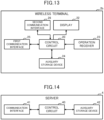
- the wireless terminal 2 includes, as hardware components, a control circuit 20, a communication interface 21, a display 22, an operation receiver 23, and an auxiliary storage device 24.
- the control circuit 20 performs overall control of the wireless terminal 2.
- the control circuit 20 includes, although not illustrated, a central processing unit (CPU), a read only memory (ROM) and a random access memory (RAM). Functions of the wireless terminal 2 that are achieved by the control circuit 20 are described later in detail.
- the communication interface 21 is an example of communication means that is included in the wireless terminal according to the present disclosure.
- the communication interface 21 is an interface for wireless communication with the facility devices 3 by communication in an ad hoc manner and is an interface for performing, for example, Bluetooth ® low energy (BLE) communication.
- BLE Bluetooth ® low energy
- the display 22 is an example of a display that is included in the wireless terminal according to the present disclosure.
- the display 22 includes a display device such as a liquid crystal display and an organic electro luminescence (EL) display.
- the display 22 displays, under control by the control circuit 20, various types of screens or the like.
- the operation receiver 23 includes one or more input devices, such as a pushbutton, a touch panel and a touch pad, receives an input operation from the user, and sends to the control circuit 20 a signal according to the received operation.
- the auxiliary storage device 24 includes, for example, readable/rewritable nonvolatile semiconductor memory that is an electrically erasable programmable read-only memory (EEPROM), a flash memory, or the like.
- the auxiliary storage device 24 stores (i) various programs including an application program, for utilizing a location management service provided by the location management system 1, that is hereinafter referred to as the "location management application” and (ii) data for use in execution of these programs.
- the location management application and an update program for updating the location management application is acquirable by the wireless terminal 2, through communication, from a server that is operated by a manufacturer, a vendor, or the like of the facility devices 3, other program distribution server, or the like.
- These programs can be distributed by storage in a computer-readable recording medium, such as a compact disc read only memory (CD-ROM), a digital versatile disc (DVD), a magneto-optical disc, a universal serial bus (USB) memory, a hard disk drive (HDD), a solid state drive (SSD) and a memory card.
- the wireless terminal 2 may read out and acquire, upon direct or indirect attachment thereto of such recording medium, the location management program and the update program from this recording medium.
- the facility device 3 is an example of a facility device according to the present disclosure.
- the facility device 3 is, for example, an indoor unit of an air conditioner, an illumination device, or the like, and three or more of the facility devices 3 are installed in the building B.
- the facility device 3 includes, as hardware components, a control circuit 30, a communication interface 31 and an auxiliary storage device 32.
- Each of the facility devices 3 is taken to include, in addition to these components, a hardware component for achievement of fundamental functions of the facility device 3, such as a function for performing air conditioning in the case of an indoor unit or a function for performing illumination in the case of an illumination device.
- the control circuit 30 includes a CPU, a ROM and a RAM that are not illustrated, and controls data transfer to and from the wireless terminal 2. Functions of the facility devices 3 that are achieved by the control circuit 30 are described later in detail.
- the communication interface 31 is an example of communication means included in the facility device according to the present disclosure.
- the communication interface 31 is an interface for wireless communication with the wireless terminal 2 by communication in an ad hoc manner and is an interface for performing, for example, BLE communication.
- the auxiliary storage device 32 includes, for example, readable/rewritable nonvolatile semiconductor memory that is an EEPROM, a flash memory, or the like.
- the auxiliary storage device 32 stores (i) an information transfer program that is a program for performing transfer of information to and from the wireless terminal 2 and (ii) data for use in execution of the information transfer program.
- the information transfer program and an update program for updating the information transfer program is acquirable by the facility device 3, through communication, from a server that is operated by a manufacturer, a vendor, or the like of the facility devices 3, other device, or the like.
- These programs can be distributed by storage in a computer-readable recording medium, such as a CD-ROM, a DVD, a magneto-optical disc, a USB memory, an HDD, an SSD and a memory card.
- the facility device 3 may read out and acquire, upon direct or indirect attachment thereto of such recording medium, the information transfer program and the update program from this recording medium.
- FIG. 4 is a block diagram illustrating functional configuration of the wireless terminal 2 and the facility device 3.
- the wireless terminal 2 includes a wireless signal receiver 200, a location information detector 201, a person location information transmitter 202, a person location information acquirer 203, a presence-absence determiner 204, an information display unit 205, a target location information receiver 206, a user notification information transmitter 207 and a user notification information acquirer 208.
- These functional elements are achieved by execution, by the control circuit 20, of the aforementioned location management application stored in the auxiliary storage device 24.
- the facility device 3 includes a wireless signal transmitter 300, a person location information storing unit 301, a person location information transmitter 302, a user notification information storing unit 303 and a user notification information transmitter 304. These functional elements are achieved by execution, by the control circuit 30, of the aforementioned information transfer program stored in the auxiliary storage device 32.
- the wireless signal transmitter 300 of each of the facility devices 3 reads out installation location information that indicates an installation location of the local facility device 3 and that is stored in an information storage 320, for example, XY coordinates within the building B, and periodically transmits, via the communication interface 31, a wireless signal including the read-out installation location information.
- the information storage 320 is an example of storage means included in the facility device according to the present disclosure and is a memory region provided by the auxiliary storage device 32.
- the wireless signal receiver 200 of the wireless terminal 2 receives the aforementioned wireless signal transmitted from each of the facility devices 3 and measures and acquires a radio field strength, also called an electric field strength, at receipt of this wireless signal.
- the wireless signal receiver 200 measures, as the radio field strength, a received signal strength indicator (RSSI) of the wireless signal received from each of the facility devices 3.
- RSSI received signal strength indicator
- the location information detector 201 is an example of location information detection means according to the present disclosure.
- the location information detector 201 detects location information indicating a current location of the wireless terminal 2. Specifically, the location information detector 201 extracts and acquires the installation location information included in the wireless signal received by the wireless signal receiver 200 and stores in the RAM of the control circuit 20 the acquired installation location information in association with the radio field strength of the wireless signal that is acquired by the wireless signal receiver 200. Then the location information detector 201 detects local location information, that is, location information of the wireless terminal 2, using the principle of triangulation that is also called "three-point measurement" based on sets of the installation location information and the radio field strength for the three or more facility devices 3.
- the location information is, for example, XY coordinates within the building B.
- the person location information transmitter 202 is an example of person location information transmission means according to the present disclosure.
- the person location information transmitter 202 reads out, from an information storage 240, a user ID that is identification (ID) of the user of the wireless terminal 2, and transmits to each of the facility devices 3, via the communication interface 21, person location information including the read-out user ID, the location information detected by the location information detector 201, and time information indicating a current time.
- the information storage 240 is an example of storage means included in the wireless terminal according to the present disclosure and is a memory region provided by the auxiliary storage device 24.
- the user ID is an example of user identification information according to the present disclosure.
- the person location information transmitter 202 may perform unicast transmission of the person location information to each of the facility devices 3 as a destination of the wireless signal, or may perform broadcast transmission of the person location information without designation of the facility devices 3.
- the person location information storing unit 301 of the facility devices 3 receives via the communication interface 31 the person location information transmitted from the wireless terminal 2 and stores the received person location information in the information storage 320.
- the person location information acquirer 203 of the wireless terminal 2 is an example of person location information acquisition means according to the present disclosure.
- the person location information acquirer 203 acquires from each of the facility devices 3 the person location information of each of the users periodically, for example, at one-minute intervals. Specifically, the person location information acquirer 203 sends notification for requesting the person location information that is hereinafter referred to as the "person location information request notification" via the communication interface 21 by unicast transmission to each of the facility devices 3 or by broadcast transmission.
- the person location information transmitter 302 of each of the facility devices 3 transmits, upon receiving the above person location information request notification via the communication interface 31, to the wireless terminal 2 as a transmission source of this person location information request notification, the person location information for each user ID that is stored in the information storage 320.
- the person location information acquirer 203 receives and acquires via the communication interface 21 the person location information for each user ID that is transmitted from each of the facility devices 3, and the person location information acquirer 203 stores in the information storage 240 the acquired person location information for each user ID such that (i) latest person location information, that is, the person location information including the time information that is the latest, is stored in the information storage 240 for each user ID and (ii) duplicate storage in the information storage 240 of the person location information that is identical in content, in other words, the person location information that is identical in the user ID, the location information and the time information, does not occur.
- the presence-absence determiner 204 is an example of presence-absence determination means according to the present disclosure.
- the presence-absence determiner 204 determines for each of the users whether the user is present in the building B. Specifically, the presence-absence determiner 204 (i) reads out the person location information of each of the users that is stored in the information storage 240, (ii) compares the time indicated by the time information included in each set of person location information against a current time, (iii) when a difference obtained by the comparison is equal to or shorter than a predetermined time period, for example, two minutes, determines that the corresponding user is present in the building B, and (iv) when the difference between the time indicated by the time information and the current time is longer than the predetermined time period, determines that the corresponding user is absent from the building B.
- a predetermined time period for example, two minutes
- the information display unit 205 is an example of information display means according to the present disclosure.
- the information display unit 205 displays, on the display 22 in a predetermined manner, a location of the user present in the building B.
- the information display unit 205 performs mapping to display, based on the person location information corresponding to this user, while displaying a floor map of the building B, on the floor map an icon indicating this user, such as an icon denoted by a user name that is a full name of this user, a family name of this user, an abbreviation of a name of this user, or the like.
- the information display unit 205 may display on the display 22 a list associating the user name with a name of a place corresponding to the location of this user, such as "meeting room A" or "workroom A".
- the wireless terminal 2 is taken to (i) acquire data relating to the floor map of the building B and data associating the user ID and the user name from other device by communication or acquire the data by reading out from a recording medium that is directly or indirectly attached to the local terminal and (ii) stores the data in the information storage 240 in advance.
- the information display unit 205 displays on the display 22 that this user is absent.
- the target location information receiver 206 is an example of target location information receiving means according to the present disclosure.
- the target location information receiver 206 receives, from the user, designation of a desired user among the users who are present in the building B other than the user and designation of target location information.
- the target location information receiver 206 may receive the designation of the desired user in response to selection, by the user, of information that is displayed on the display 22 by the information display unit 205 and that indicates locations of the users present in the building B, such as the aforementioned icon, an item corresponding to each of the users in the list displayed as above, or the like.
- the target location information receiver 206 may display on the display 22 a list of place names using, for example, a list box, and receive the designation of the target location information in response to selection, by the user, of a name of a desired place, or may receive the designation of the target location information in response to operation by the user tapping a location on the displayed floor map.
- the target location information receiver 206 may display in the display 22 a screen with a field for entry of the user name and a field for entry of the target location information and may receive the designation of the desired user and the target location information in response to text input, by the user, of the desired user name and the target location information.
- the target location information that is input by the user may be coordinates or may be a place name.
- the user notification information transmitter 207 is an example of user notification information transmission means according to the present disclosure.
- the user notification information transmitter 207 transmits, via the communication interface 21 by unicast transmission to each of the facility devices 3 or by broadcast transmission, user notification information that includes (i) the user ID of the designated user that is hereinafter referred to as the "notification target user ID", (ii) the target location information, (iii) the user ID of the user of the wireless terminal 2, in other words, the user having performed the designation, that is hereinafter referred to as the "notification source user ID", and (iv) the time information.
- the user notification information transmitter 207 may include, in one set of the user notification information, the user ID of each designated user as the notification target user ID, or may transmit, to each of the facility devices 3, multiple sets of the user notification information that each correspond to a corresponding single user of the designated users.
- the user notification information storing unit 303 of each of the facility devices 3 receives via the communication interface 31 the user notification information transmitted from the wireless terminal 2 and stores the received user notification information in the information storage 320.
- the user notification information acquirer 208 of the wireless terminal 2 acquires from each of the facility devices 3 the user notification information addressed to the user of the wireless terminal 2 periodically, for example, at one-minute intervals. Specifically, the user notification information acquirer 208 sends notification for requesting the user notification information that is hereinafter referred to as the "user notification information request notification" via the communication interface 21 by unicast transmission to each of the facility devices 3 or by broadcast transmission.
- the user notification information request notification includes the user ID of the user of the wireless terminal 2.
- the user notification information transmitter 304 of each of the facility devices 3 retrieves, upon receiving the user notification information request notification from the wireless terminal 2 via the communication interface 31, from all of the user notification information stored in the information storage 320, the user notification information including the notification target user ID that is identical to the user ID included in this user notification information request notification.
- the user notification information transmitter 304 transmits this user notification information via the communication interface 31 to the wireless terminal 2 that is the transmission source of the user notification information request notification. In this case, the user notification information transmitter 304 deletes the user notification information from the information storage 320. Conversely, in the case in which such user notification information as above does not exist, the user notification information transmitter 304 makes no reply to the wireless terminal 2 that is the transmission source of the user notification information request notification. In the case of such non-existence, the user notification information transmitter 304 may transmit, via the communication interface 31 to the wireless terminal 2 that is the transmission source of the user notification information request notification, reply information indicating that the corresponding user notification information does not exist.
- the user notification information acquirer 208 receives and acquires this user notification information via the communication interface 21, and supplies the acquired user notification information to the information display unit 205. Thereafter, when the user notification information that is identical in content is received, the user notification information acquirer 208 discards this user notification information.
- the information display unit 205 displays, on the display 22 in a predetermined manner, the user notification information acquired by the user notification information acquirer 208. For example, the information display unit 205 displays, on the display 22, notification of issuance of an instruction, from the user corresponding to the notification source user ID, to gather at a place indicated by the target location information, such as the message "at 10: 50, YAMADA issued an instruction to gather at the meeting room A".
- FIG. 5 is a flowchart illustrating a sequence of person location information transmission processing executed by the wireless terminal 2.
- the wireless terminal 2 Upon startup of the location management application by an operation by the user, the wireless terminal 2 executes the person location information transmission processing repeatedly and periodically, for example, at one-minute intervals.
- the wireless terminal 2 receives the wireless signal transmitted from each of the facility devices 3 and measures and acquires a radio field strength at receipt of the wireless signal. Thereafter, the processing by the wireless terminal 2 proceeds to step S101.
- the wireless terminal 2 extracts and acquires, from the wireless signal received from each of the facility devices 3, the installation location information of the facility device 3. Thereafter, the processing by the wireless terminal 2 proceeds to step S102.
- the wireless terminal 2 detects, based on the radio field strengths and the installation location information acquired from the three or more facility devices 3, location information indicating a local location, that is, a location of the wireless terminal 2. Thereafter, the processing by the wireless terminal 2 proceeds to step S103.
- the wireless terminal 2 transmits to each of the facility devices 3 the person location information including (i) the user ID of the user of the local terminal, that is, the user ID read out from the information storage 240, (ii) the detected location information, and (iii) the time information, and ends the person location information transmission processing in the current cycle.
- each of the facility devices 3 Upon receiving the person location information transmitted from the wireless terminal 2, each of the facility devices 3 stores the received person location information in the information storage 320.
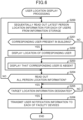
- FIG. 6 is a flowchart illustrating a sequence of user location display processing executed by the wireless terminal 2.
- the wireless terminal 2 executes the user location display processing upon an operation by the user to request display of a location of each of the users.
- the wireless terminal 2 sequentially reads out the latest person location information for each of the users stored in the information storage 240. Thereafter, the processing by the wireless terminal 2 proceeds to step S201.
- the wireless terminal 2 determines, based on the latest person location information that is read out, whether the corresponding user is present in the building B. When the corresponding user is present in the building B (YES in step S201), the processing by the wireless terminal 2 proceeds to step S202. Conversely, when the corresponding user is absent from the building B (NO in step S201), the processing by the wireless terminal 2 proceeds to step S203.
- the wireless terminal 2 displays, on the display 22 in a predetermined manner, a location of the corresponding user. Thereafter, the processing by the wireless terminal 2 proceeds to step S204.
- the wireless terminal 2 displays on the display 22 that the corresponding user is absent. Thereafter, the processing by the wireless terminal 2 proceeds to step S204.
- the wireless terminal 2 determines whether all of the latest person location information for each of the users stored in the information storage 240 is read out. When all of the person location information is read out (YES in step S204), the processing by the wireless terminal 2 proceeds to step S205. Conversely, when readout of all of the person location information is not yet completed (NO in step S204), the processing by the wireless terminal 2 returns to step S200.
- the wireless terminal 2 determines whether the target location information is designated by the user.
- the processing by the wireless terminal 2 proceeds to step S206.
- the wireless terminal 2 continuously executes the processing in step S205.
- the wireless terminal 2 transmits, to each of the facility devices 3, the user notification information that includes (i) the user ID of the designated user, (ii) the target location information, (iii) the user ID of the user having made the designation, and (iv) the time information. Thereafter, the wireless terminal 2 ends the user location display processing.
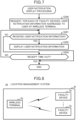
- FIG. 7 is a flowchart illustrating a sequence of user notification display processing executed by the wireless terminal 2.
- the wireless terminal 2 executes the user notification display processing repeatedly and periodically, for example, at one-minute intervals.
- the wireless terminal 2 transmits, to each of the facility devices 3, the user notification information request notification for requesting the user notification information addressed to the user of the wireless terminal 2. Thereafter, the processing by the wireless terminal 2 proceeds to step S301.
- the wireless terminal 2 determines whether the user notification information is received from any of the facility devices 3. When the user notification information is received from any of the facility devices 3 (YES in step S301), the processing by the wireless terminal 2 proceeds to step S302. Conversely, when the user notification information is not received from the facility devices 3 (NO in step S301), the processing by the wireless terminal 2 proceeds to step S303.
- the wireless terminal 2 displays the received user notification information on the display 22 in a predetermined manner and ends the user notification display processing in the current cycle.
- the wireless terminal 2 determines whether receipt time-out occurs, that is, whether a predetermined receipt time-out period is elapsed after transmission of the user notification information request notification. When receipt time-out does not occur (NO in step S303), the processing by the wireless terminal 2 returns to step S301. Conversely, when receipt time-out occurs (YES in step S303), the wireless terminal 2 ends the user notification display processing in the current cycle.
- the wireless terminal 2 carried by each of the users detects the location information of the user through wireless communication with each of the facility devices 3 that are each an indoor unit, an illumination device, or the like that is installed in the building B, and transmits to each of the facility devices 3 the person location information including the user ID of the user and the detected location information.
- Each of the facility devices 3 stores, in the information storage 320, the person location information transmitted from the wireless terminal 2. Due to this configuration, the information storage 320 of each of the facility devices 3 stores the person location information of each of the users.
- detection of a location of a person and management of information of the location are performed using facility devices that are generally installed in a building such as an office building, low-cost management of a location of a person in the building B can be achieved.
- the wireless terminal 2 acquires the person location information of each of the users from the facility devices 3 and determines for each of the users whether the user is present in the building B based on the acquired person location information of the user. Additionally, the wireless terminal 2 displays, for the user present in the building B, the location of this user on the display 22 in a manner in which this user is identifiable, and displays, for the user absent from the building B, on the display 22 that this user is absent.
- This configuration enables easily grasping whereabouts of each of the users in the building B, enabling easy grasping of, for example, whereabouts of each worker in a free address office, attendance of workers in an office in the case of employment of both teleworking and in-office working, or the like.
- the wireless terminal 2 receives, from the user, designation of a desired user among the users who are present in the building B other than the user and designation of the target location information, and transmits, to the facility devices 3, the user notification information that includes (i) the user ID of the designated user and (ii) the designated target location information.
- the facility devices 3 stores, in the information storage 320, the user notification information transmitted from the wireless terminal 2.
- the wireless terminal 2 acquires from the facility devices 3 the user notification information addressed to the user of the wireless terminal 2 and displays the acquired user notification information on the display 22 in a predetermined manner. This configuration allows the user to easily send, to a desired user, notification for gathering at a desired place.
- the wireless terminal 2 may store in advance, in the information storage 240, information associating a device ID of each of the facility devices 3 with the installation location information of the facility device 3.
- the information storage 320 of each of the facility devices 3 stores the device ID instead of the installation location information and each of the facility devices 3 periodically transmits a wireless signal including the device ID.
- Each of the facility devices 3 may periodically perform broadcast transmission of the person location information for each user ID that is stored in the information storage 320. In this case, the person location information acquirer 203 of the wireless terminal 2 need not transmit the person location information request notification to each of the facility devices 3.
- the user notification information transmitter 304 of each of the facility devices 3 may transmit, when the user notification information request notification is received from the wireless terminal 2, to this wireless terminal 2, all of the user notification information stored in the information storage 320. In this case, the user notification information transmitter 304 does not delete the user notification information from the information storage 320.
- the user notification information acquirer 208 of this wireless terminal 2 checks the notification target user IDs included in the user notification information received from the facility devices 3 against the user ID of the user of the wireless terminal 2, and in the case of matching of these IDs, supplies this user notification information to the information display unit 205.
- the user notification information stored in the information storage 320 of each of the facility devices 3 is taken to be deleted after elapse of a predetermined time period from a time of storage.
- Each of the facility devices 3 may periodically transmit, by broadcast transmission, all of the user notification information stored in the information storage 320. In this case, each of the facility devices 3 does not delete the user notification information from the information storage 320.
- the user notification information acquirer 208 of the wireless terminal 2 need not transmit the user notification information request information to each of the facility devices 3, checks the notification target user IDs included in the user notification information received from the facility devices 3 against the user ID of the user of the wireless terminal 2, and in the case of matching of these IDs, supplies this user notification information to the information display unit 205.
- the user notification information stored in the information storage 320 of each of the facility devices 3 is taken to be deleted after elapse of a predetermined time period from a timing of storage.
- this article includes a communication device for wireless communication with the facility devices 3.
- This communication device detects location information of the article through wireless communication with each of the facility devices 3 and transmits, to each of the facility devices 3, article location information including identification information of the article and the detected location information.
- Each of the facility devices 3 stores in the information storage 320 the article location information transmitted from the communication device.
- the communication device may be removably attached to the article.
- Functional elements of the wireless terminal 2 as illustrated in FIG. 4 may be achieved wholly or partially by dedicated hardware. Additionally, functional elements of the facility device 3 as illustrated in FIG. 4 may be achieved wholly or partially by dedicated hardware.
- the dedicated hardware is, for example, a single circuit, a composite circuit, a programmed processor, an application specific integrated circuit (ASIC), a field-programmable gate array (FPGA), or a combination thereof.
- Embodiment 2 of the present disclosure is described.
- structural elements or the like that are common with Embodiment 1 are assigned the same reference sign, and explanation for such elements is omitted.
- FIG. 8 illustrates overall configuration of a location management system 1a according to Embodiment 2.
- the location management system 1a is an example of the location management system according to the present disclosure and is a system for managing locations within a building B of users using the building B.
- the building B is an office building, a factory, a lodging facility, a commercial facility, a public facility, or the like.
- the location management system 1a includes a wireless terminal 2a carried by each of the users and at least three facility devices 3a.
- the wireless terminal 2a is an example of the wireless terminal according to the present disclosure.
- the wireless terminal 2a is a portable electronic device, such as a smartphone and tablet terminal, that is carried by each of the users who use the building B.
- Hardware configuration of the wireless terminal 2a is similar to that of the wireless terminal 2 in Embodiment 1 (see FIG. 2 ).
- the facility device 3a is an example of the facility device according to the present disclosure.
- the facility device 3a is, for example, an indoor unit of an air conditioner, an illumination device, or the like, and three or more of the facility devices 3a are installed in the building B.
- Hardware configuration of the facility device 3a is similar to that of the facility device 3 in Embodiment 1 (see FIG. 3 ).
- FIG. 9 is a block diagram illustrating functional configuration of the wireless terminal 2a and the facility device 3a.
- the wireless terminal 2a includes a wireless signal receiver 200, a location information detector 201, a person location information transmitter 202, a person location information acquirer 203a, a presence-absence determiner 204, an information display unit 205a, a target location information receiver 206, a user notification information transmitter 207, a user notification information acquirer 208, a contact detector 209 and an area person count acquirer 210.
- These functional elements are achieved by execution, by a control circuit 20 included in the wireless terminal 2a, of a location management application that is stored in an auxiliary storage device 24 and that is an application program for utilizing a location management service provided by the location management system 1a.
- the facility device 3a includes a wireless signal transmitter 300, a person location information storing unit 301a, a person location information transmitter 302a, a user notification information storing unit 303 and a user notification information transmitter 304. These functional elements are achieved by execution, by a control circuit 30 included in the facility device 3a, of an information transfer program that is stored in an auxiliary storage device 32 and that is a program for performing transfer of information to and from the wireless terminal 2a.
- the person location information storing unit 301a of the facility device 3a receives via a communication interface 31 the person location information transmitted from the wireless terminal 2a and stores the received person location information in the information storage 320 similarly to the person location information storing unit 301 in Embodiment 1, the person location information storing unit 301a does not perform overwrite saving to the information storage 320 with the latest person location information for each user ID, and stores the received person location information in the information storage 320 in a time series. That is, the information storage 320 stores a history of the person location information for each user ID.
- the person location information acquirer 203a of the wireless terminal 2a acquires from each of the facility devices 3a the history of the person location information of each of the users periodically, for example, at one-minute intervals. Specifically, the person location information acquirer 203a sends notification for requesting the person location information that is hereinafter referred to as the "person location information request notification" via a communication interface 21 by unicast transmission to each of the facility devices 3a or by broadcast transmission.
- the person location information transmitter 302a of each of the facility devices 3a transmits, upon receiving the above person location information request notification via the communication interface 31, to the wireless terminal 2a as a transmission source of this person location information request notification, the history of the person location information for each user ID that is stored in the information storage 320.
- the person location information acquirer 203a receives and acquires via the communication interface 21 the history of the person location information for each user ID that is transmitted from each of the facility devices 3a, and the person location information acquirer 203a stores in an information storage 240 the acquired history of the person location information for each user ID such that duplicate storage in the information storage 240 of the person location information that is identical in content, in other words, the person location information that is identical in the user ID, the location information and the time information, does not occur.
- the contact detector 209 is an example of contact detection means according to the present disclosure.
- the contact detector 209 detects contact between the users in the building B. Specifically, upon the user performing an operation for requesting display of unspecific contact information with no user being specified, the contact detector 209 determines whether contact between the users occurs based on the history of the person location information for each user ID that is stored in the information storage 240, and supplies, to the information display unit 205a, the unspecific contact information including information based on a result of the determination. When a distance between users is shorter than a predetermined threshold, the contact detector 209 determines that contact between these users occurs.
- the contact detector 209 Upon determining that contact between the users occurs, the contact detector 209 supplies to the information display unit 205a the unspecific contact information that includes time information indicating a time of the contact, the user IDs of these users, and a name of a place at which the contact occurs. Conversely, upon determining that contact between the users does not occur, the contact detector 209 supplies to the information display unit 205a the unspecific contact information including information to that effect.
- the contact detector 209 determines whether contact between the specified user that is hereinafter referred to as the "specific user" and a user other than the specific user occurs based on the history of the person location information for each user ID that is stored in the information storage 240, and supplies, to the information display unit 205a, the specific contact information including information based on a result of the determination. Specifically, upon determining that contact between the specific user and a user other than the specific user occurs, the contact detector 209 supplies to the information display unit 205a the specific contact information that includes time information indicating a time of the contact, the user ID of the other user, and a name of a place at which the contact occurs. Conversely, upon determining that contact between the specific user and a user other than the specific user does not occur, the contact detector 209 supplies to the information display unit 205a the specific contact information including information to that effect.
- the information display unit 205a is an example of the information display means according to the present disclosure. Similarly to the information display unit 205 in Embodiment 1, the information display unit 205a displays, based on a result of a determination by the presence-absence determiner 204, on the display 22 in a predetermined manner, a location of the user present in the building B, and displays, on the display 22 in a predetermined manner, the user notification information acquired by the user notification information acquirer 208. Additionally, the information display unit 205a displays, on the display 22 in a predetermined manner, information based on a result of the detection by the contact detector 209, that is, the unspecific contact information or the specific contact information that is supplied from the contact detector 209.
- the area person count acquirer 210 is an example of area person count acquisition means according to the present disclosure.
- the area person count acquirer 210 acquires a person count for a designated area in the building B, such as a designated place, a floor or the whole building B, at a designated time or in a designated time slot.
- the area person count acquirer 210 acquires a person count for the designated area at the designated time based on the history of the person location information for each user ID that is stored in the information storage 240, and supplies, to the information display unit 205a, information including (i) time information indicating this time, (ii) information indicating this area and (iii) information indicating the acquired person count.
- the area person count acquirer 210 acquires a maximum value, a minimum value and an average value of the person count for the designated area in the designated time slot based on the history of the person location information for each user ID that is stored in the information storage 240, and supplies, to the information display unit 205a, information including (i) time slot information indicating this time slot, (ii) information indicating this area and (iii) information indicating the acquired values of the person count.
- the information display unit 205a displays, on the display 22, in a predetermined manner, information based on a result of the acquisition by the area person count acquirer 210, that is, the information supplied from the area person count acquirer 210.
- FIG. 10 is a flowchart illustrating a sequence of contact information display processing executed by the wireless terminal 2a.
- the wireless terminal 2a executes the contact information display processing upon the user performing the operation to request display of the unspecific contact information or the operation to request display of the specific contact information.
- the wireless terminal 2a determines whether a user as a target is unspecific. When the user as the target is unspecific, that is, when no user is specified as the target (YES in step S400), the processing by the wireless terminal 2a proceeds to step S401. Conversely, when the user as the target is specified (NO in step S400), the processing by the wireless terminal 2a proceeds to step S402.
- the wireless terminal 2a determines whether contact between the users occurs based on the history of the person location information for each of the users that is stored in the information storage 240, and upon determining that contact between the users occurs, displays information relating to this contact on the display 22. For example, the wireless terminal 2a performs association between a time of occurrence of the contact, user names of the users undergone the contact and a name of a place at which the contact occurs, and displays to such effect on the display 22. Thereafter, the wireless terminal 2a ends the contact information display processing.
- the wireless terminal 2a determines whether contact between the specific user and a user other than the specific user occurs based on the history of the person location information for each of the users that is stored in the information storage 240, and upon determining that contact between the specific user and a user other than the specific user occurs, displays information relating to this contact on the display 22. For example, the wireless terminal 2a performs association between a time of occurrence of the contact, a user name of the other user undergone the contact with the specific user and a name of a place at which the contact occurs, and displays to such effect on the display 22. Thereafter, the wireless terminal 2a ends the contact information display processing.
- FIG. 11 is a flowchart illustrating a sequence of area person count display processing executed by the wireless terminal 2a. Upon the user performing the operation for requesting display of the area person count, the wireless terminal 2a executes the area person count display processing.
- the wireless terminal 2a determines whether time designation is made, that is, whether a time is designated by the user. When the time designation is made (YES in step S500), the processing by the wireless terminal 2a proceeds to step S501. Conversely, when the time designation is not made (NO in step S500), that is, when time slot designation is made, the processing by the wireless terminal 2a proceeds to step S502.
- the wireless terminal 2a acquires a person count for the designated area at the designated time based on the history of the person location information for each of the users that is stored in the information storage 240, and displays information indicating the acquired person count on the display 22. Thereafter, the wireless terminal 2a ends the area person count display processing.
- the wireless terminal 2a acquires a maximum value, a minimum value and an average value of the person count for the designated area in the designated time slot based on the history of the person location information for each of the users that is stored in the information storage 240, and displays information indicating the acquired values of the person count on the display 22. Thereafter, the wireless terminal 2a ends the area person count display processing.
- the wireless terminal 2a carried by each of the users detects the location information of the user through wireless communication with each of the facility devices 3a that are each an indoor unit, an illumination device, or the like that is installed in the building B, and transmits to each of the facility devices 3a the person location information including the user ID of the user and the detected location information.
- Each of the facility devices 3a stores, in the information storage 320, the person location information transmitted from the wireless terminal 2a. Due to this configuration, the information storage 320 of each of the facility devices 3a stores the person location information of each of the users.
- detection of a location of a person and management of information of the location are performed using facility devices that are generally installed in a building such as an office building, low-cost management of the location of a person in the building B can be achieved.
- the wireless terminal 2a acquires the person location information of each of the users from the facility devices 3a and determines for each of the users whether the user is present in the building B based on the acquired person location information of the user. Additionally, the wireless terminal 2a displays, for the user present in the building B, the location of this user on the display 22 in a manner in which this user is identifiable, and displays, for the user absent from the building B, on the display 22 that this user is absent.
- This configuration enables easily grasping whereabouts of each of the users in the building B, enabling easy grasping of, for example, whereabouts of each worker in a free address office, attendance of workers in an office in the case of employment of both teleworking and in-office working, or the like.
- the wireless terminal 2a receives, from the user, designation of a desired user among the users who are present in the building B other than the user and designation of the target location information, and transmits, to the facility devices 3a, the user notification information that includes (i) the user ID of the designated user and (ii) the designated target location information.
- the facility devices 3a stores, in the information storage 320, the user notification information transmitted from the wireless terminal 2a. Additionally, the wireless terminal 2a acquires from the facility devices 3a the user notification information addressed to the user of the wireless terminal 2a and displays the acquired user notification information on the display 22 in a predetermined manner. This configuration allows the user to easily send, to a desired user, notification for gathering at a desired place.
- the wireless terminal 2a detects contact between the users in the building B based on the history of the person location information for each of the users and displays, on the display 22 in a predetermined manner, information based on a result of the detection. This configuration enables easily grasping a state of contact between the users using the building B.
- the wireless terminal 2a acquires a person count for a designated area in the building B at a designated time or in a designated time slot based on the history of the person location information for each of the users and displays, on the display 22 in a predetermined manner, information based on a result of the acquisition.
- This configuration enables easily grasping a state of a user count for a desired area in the building B.
- the wireless terminal 2a may store in advance, in the information storage 240, information associating a device ID of each of the facility devices 3a with the installation location information of the facility device 3a.
- the information storage 320 of each of the facility devices 3a stores the device ID instead of the installation location information and each of the facility devices 3a periodically transmits a wireless signal including the device ID.
- Each of the facility devices 3a may periodically perform broadcast transmission of the history of the person location information for each user ID that is stored in the information storage 320.
- the person location information acquirer 203a of the wireless terminal 2a need not transmit the person location information request notification to each of the facility devices 3a.
- the user notification information transmitter 304 of each of the facility devices 3a may transmit, when the user notification information request notification from the wireless terminal 2a is received, to this wireless terminal 2a, all of the user notification information stored in the information storage 320. In this case, the user notification information transmitter 304 does not delete the user notification information from the information storage 320.
- the user notification information acquirer 208 of this wireless terminal 2a checks the notification target user IDs included in the user notification information received from the facility devices 3a against the user ID of the user of the wireless terminal 2a, and in the case of matching of these IDs, supplies this user notification information to the information display unit 205a.
- the user notification information stored in the information storage 320 of each of the facility devices 3a is taken to be deleted after elapse of a predetermined time period from a timing of storage.
- Each of the facility devices 3a may periodically transmit, by broadcast transmission, all of the user notification information stored in the information storage 320. In this case, each of the facility devices 3a does not delete the user notification information from the information storage 320.
- the user notification information acquirer 208 of the wireless terminal 2a need not transmit the user notification information request information to each of the facility devices 3a, checks the notification target user IDs included in the user notification information received from the facility devices 3a against the user ID of the user of the wireless terminal 2a, and in the case of matching of these IDs, supplies this user notification information to the information display unit 205a.
- the user notification information stored in the information storage 320 of each of the facility devices 3a is taken to be deleted after elapse of a predetermined time period from a timing of storage.
- this article includes a communication device for wireless communication with the facility devices 3a.
- This communication device detects location information of the article through wireless communication with each of the facility devices 3a and transmits, to each of the facility devices 3a, article location information including identification information of the article and the detected location information.
- Each of the facility devices 3a stores in the information storage 320 the article location information transmitted from the communication device.
- the communication device may be removably attached to the article.
- the person location information acquirer 203a of the wireless terminal 2a may (i) periodically acquire, from each of the facility devices 3a, the latest person location information for each user ID and (ii) upon the user performing the operation requesting display of the contact information or the operation requesting display of the area person count, acquire from each of the facility devices 3a the history of the person location information for each user ID.
- the person location information acquirer 203a of the wireless terminal 2a may (i) periodically acquire, from each of the facility devices 3a, the latest person location information for each user ID and (ii) store the acquired person location information in the information storage 240 in a time series.
- Functional elements of the wireless terminal 2a as illustrated in FIG. 9 may be achieved wholly or partially by dedicated hardware. Additionally, functional elements of the facility device 3a as illustrated in FIG. 9 may be achieved wholly or partially by dedicated hardware.
- the dedicated hardware is, for example, a single circuit, a composite circuit, a programmed processor, an ASIC, an FPGA, or a combination thereof.
- Embodiment 3 of the present disclosure is described.
- structural elements or the like that are common with Embodiment 1 or Embodiment 2 are assigned the same reference sign, and explanation for such elements is omitted.
- FIG. 12 illustrates overall configuration of a location management system 1b according to Embodiment 3.
- the location management system 1b is an example of the location management system according to the present disclosure and is a system for managing locations within a building B of users using the building B.
- the building B is an office building, a factory, a lodging facility, a commercial facility, a public facility, or the like.
- the location management system 1b includes a wireless terminal 2b carried by each of the users, at least three facility devices 3b and a server 4.
- the wireless terminal 2b is an example of the wireless terminal according to the present disclosure.
- the wireless terminal 2b is a portable electronic device, such as a smartphone and tablet terminal, that is carried by each of the users who use the building B.
- the wireless terminal 2b includes, as hardware components, a control circuit 20, a first communication interface 25, a second communication interface 26, a display 22, an operation receiver 23, and an auxiliary storage device 24. That is, hardware configuration of the wireless terminal 2b differs from the hardware configuration of the wireless terminal 2 in Embodiment 1 (see FIG. 2 ) in that the first communication interface 25 and the second communication interface 26 are included instead of the communication interface 21, while other points are similar.
- the first communication interface 25 is an example of first communication means according to the present disclosure. Similarly to the communication interface 21, the first communication interface 25 is an interface for wireless communication with the facility devices 3b by communication in an ad hoc manner and is an interface for performing, for example, BLE communication.
- the second communication interface 26 is an example of second communication means according to the present disclosure.
- the second communication interface 26 is an interface for communication with the server 4 via a network N that is a wide area network such as the Internet.
- Examples of the second communication interface 26 include an interface for performing wireless local area network (LAN) communication and an interface for performing long term evolution (LTE) communication.
- LAN wireless local area network
- LTE long term evolution
- the facility device 3b is an example of the facility device according to the present disclosure.
- the facility device 3b is, for example, an indoor unit of an air conditioner, an illumination device, or the like, and three or more of the facility devices 3b are installed in the building B.
- Hardware configuration of the facility device 3b is similar to that of the facility device 3 in Embodiment 1 (see FIG. 3 ).
- the server 4 is an example of a management device according to the present disclosure.
- the server 4 is a so-called cloud server installed by a manufacturer, a vendor, or the like of the facility devices 3b and is connected to the network N.
- the server 4 includes, as hardware components, a control circuit 40, a communication interface 41 and an auxiliary storage device 42.
- the control circuit 40 performs overall control of the server 4.
- the control circuit 40 includes, although not illustrated, a CPU, a ROM and a RAM. Functions of the server 4 that are achieved by the control circuit 40 are described later in detail.
- the communication interface 41 is an example communication means included in the management device according to the present disclosure.
- the communication interface 41 is an interface that is connectable to the network N to communicate with other devices such as the wireless terminal 2b and is, for example, an Ethernet ® -based interface.
- the auxiliary storage device 42 is a high-capacity storage device that includes readable/rewritable nonvolatile semiconductor memory, an HDD, or the like. Examples of the readable/rewritable nonvolatile semiconductor memory include an EEPROM and a flash memory.
- the auxiliary storage device 42 stores (i) an information transfer program that is a program for performing transfer of information to and from the wireless terminal 2b and (ii) data for use in execution of the information transfer program.
- the information transfer program and an update program for updating the information transfer program is acquirable by the server 4, through communication, from other device.
- These programs can be distributed by storage in a computer-readable recording medium, such as a CD-ROM, a DVD, a magneto-optical disc, a USB memory, an HDD, an SSD, and a memory card.
- the server 4 may read out and acquire, upon direct or indirect attachment thereto of such recording medium, the information transfer program and the update program from this recording medium.
- FIG. 15 is a block diagram illustrating functional configuration of the wireless terminal 2b, the facility device 3b and the server 4.
- the wireless terminal 2b includes a wireless signal receiver 200, a location information detector 201, a person location information transmitter 202a, a person location information acquirer 203b, a presence-absence determiner 204, an information display unit 205a, a target location information receiver 206, a user notification information transmitter 207a, a user notification information acquirer 208a, a contact detector 209 and an area person count acquirer 210.
- These functional elements are achieved by execution, by the control circuit 20 included in the wireless terminal 2b, of a location management application that is stored in the auxiliary storage device 24 and that is an application program for utilizing a location management service provided by the location management system 1b.
- the facility device 3b includes a wireless signal transmitter 300.
- the wireless signal transmitter 300 is achieved by execution, by a control circuit 30 included in the facility device 3b, of a wireless signal transmission program that is stored in the auxiliary storage device 32 and that is a program for periodically transmitting a wireless signal including installation location information indicating an installation location of the facility device 3b.
- the server 4 includes a person location information storing unit 400, a person location information transmitter 401, a user notification information storing unit 402 and a user notification information transmitter 403. These functional elements are achieved by execution, by the control circuit 40, the aforementioned information transfer program stored in the auxiliary storage device 42.
- the person location information transmitter 202a of the wireless terminal 2b is an example of the person location information transmission means according to the present disclosure.
- the person location information transmitter 202a Upon the location information detector 201 detecting the location information of the wireless terminal 2b, the person location information transmitter 202a reads out, from an information storage 240, a user ID of the user of the wireless terminal 2b, and transmits to the server 4, via the second communication interface 26, person location information including the read-out user ID, the detected location information, and time information indicating a current time.
- the person location information storing unit 400 of the server 4 receives via the communication interface 41 the person location information transmitted from the wireless terminal 2b and stores the received person location information in the information storage 420 in a time series for each user ID. That is, the information storage 420 stores a history of the person location information for each user ID.
- the information storage 420 is an example of storage means included in the management device according to the present disclosure and is a memory region provided by the auxiliary storage device 42.
- the person location information acquirer 203b of the wireless terminal 2b acquires from the server 4 the history of the person location information of each of the users periodically, for example, at one-minute intervals. Specifically, the person location information acquirer 203b sends notification for requesting the person location information that is hereinafter referred to as the "person location information request notification" via the second communication interface 26 to the server 4.
- the person location information transmitter 401 of the server 4 transmits, upon receiving the above person location information request notification via the communication interface 41, via the communication interface 41 to the wireless terminal 2b as a transmission source of this person location information request notification, the history of the person location information for each user ID that is stored in the information storage 420.
- the person location information acquirer 203b receives and acquires via the second communication interface 26 the history of the person location information for each user ID that is transmitted from the server 4, and stores in the information storage 240 the acquired history of the person location information for each user ID.
- the user notification information transmitter 207a of the wireless terminal 2b transmits, via the second communication interface 26 to the server 4, user notification information that includes (i) the user ID of the designated user that is hereinafter referred to as the "notification target user ID”, (ii) the target location information, (iii) the user ID of the user of the wireless terminal 2b, in other words, the user having performed the designation, that is hereinafter referred to as the "notification source user ID", and (iv) the time information.
- the user notification information transmitter 207a may include, in one set of the user notification information, the user ID of each designated user as the notification target user ID, or may transmit, to server 4, multiple sets of the user notification information that each correspond to a corresponding single user of the designated users.
- the user notification information storing unit 402 of the server 4 receives via the communication interface 41 the user notification information transmitted from the wireless terminal 2b and stores the received user notification information in the information storage 420.
- the user notification information acquirer 208a of the wireless terminal 2b acquires from the server 4 the user notification information addressed to the user of the wireless terminal 2b periodically, for example, at one-minute intervals. Specifically, the user notification information acquirer 208a periodically sends notification for requesting the user notification information that is hereinafter referred to as the "user notification information request notification" via the second communication interface 26 to the server 4.
- the user notification information request notification includes the user ID of the user of the wireless terminal 2b.
- the user notification information transmitter 403 of the server 4 retrieves, upon receiving the user notification information request notification from the wireless terminal 2b via the communication interface 41, from all of the user notification information stored in the information storage 420 and corresponding to the building B, the user notification information including the notification target user ID that is identical to the user ID included in this user notification information request notification.
- the user notification information transmitter 403 transmits this user notification information via the communication interface 41 to the wireless terminal 2b that is the transmission source of the user notification information request notification. In this case, the user notification information transmitter 403 deletes the user notification information from the information storage 420. Conversely, in the case in which such user notification information as above does not exist, the user notification information transmitter 403 makes no reply to the wireless terminal 2b that is the transmission source of the user notification information request notification. In the case of such non-existence, the user notification information transmitter 403 may transmit, via the communication interface 41 to the wireless terminal 2b that is the transmission source of the user notification information request notification, reply information indicating that the corresponding user notification information does not exist.
- the user notification information acquirer 208a receives and acquires this user notification information via the second communication interface 26, and supplies the acquired user notification information to the information display unit 205a.
- FIG. 16 is a flowchart illustrating a sequence of person location information transmission processing executed by the wireless terminal 2b.
- the wireless terminal 2b executes the person location information transmission processing repeatedly and periodically, for example, at one-minute intervals.
- the wireless terminal 2b receives the wireless signal transmitted from each of the facility devices 3b and measures and acquires a radio field strength at receipt of the wireless signal. Thereafter, the processing by the wireless terminal 2b proceeds to step S601.
- the wireless terminal 2b extracts and acquires, from the wireless signal received from each of the facility devices 3b, the installation location information of the facility device 3b. Thereafter, the processing by the wireless terminal 2b proceeds to step S602.
- the wireless terminal 2b detects, based on the radio field strengths and the installation location information acquired from the three or more facility devices 3b, location information indicating a local location, that is, a location of the wireless terminal 2b. Thereafter, the processing by the wireless terminal 2b proceeds to step S603.
- the wireless terminal 2b transmits to the server 4 the person location information including (i) the user ID of the user of the local terminal, that is, the user ID read out from the auxiliary storage device 240, (ii) the detected location information, and (iii) the time information, and ends the person location information transmission processing in the current cycle.
- the server 4 Upon receiving the person location information transmitted from the wireless terminal 2b, the server 4 stores the received person location information in the information storage 420 in a time series for each user ID.
- FIG. 17 is a flowchart illustrating a sequence of user location display processing executed by the wireless terminal 2b.
- the wireless terminal 2b executes the user location display processing upon an operation by the user to request display of a location of each of the users.
- the wireless terminal 2b sequentially reads out the latest person location information for each of the users stored in the information storage 240. Thereafter, the processing by the wireless terminal 2b proceeds to step S701.
- the wireless terminal 2b determines, based on the latest person location information that is read out, whether the corresponding user is present in the building B.
- the processing by the wireless terminal 2b proceeds to step S702.
- the processing by the wireless terminal 2b proceeds to step S703.
- the wireless terminal 2b displays, on the display 22 in a predetermined manner, a location of the corresponding user. Thereafter, the processing by the wireless terminal 2b proceeds to step S704.
- the wireless terminal 2b displays on the display 22 that the corresponding user is absent. Thereafter, the processing by the wireless terminal 2b proceeds to step S704.
- the wireless terminal 2b determines whether all of the latest person location information for each of the users stored in the information storage 240 is read out. When all of the person location information is read out (YES in step S704), the processing by the wireless terminal 2b proceeds to step S705. Conversely, when readout of all of the person location information is not yet completed (NO in step S704), the processing by the wireless terminal 2b returns to step S700.
- the wireless terminal 2b determines whether the target location information is designated by the user.
- the processing by the wireless terminal 2b proceeds to step S706. Conversely, when the designation of the target location information by the user is not made (NO in step S705), the wireless terminal 2b continuously executes the processing in step S705.
- the wireless terminal 2b transmits, to the server 4, the user notification information that includes (i) the user ID of the designated user, (ii) the target location information, (iii) the user ID of the user having made the designation, and (iv) the time information. Thereafter, the wireless terminal 2b ends the user location display processing.
- FIG. 18 is a flowchart illustrating a sequence of user notification display processing executed by the wireless terminal 2b.
- the wireless terminal 2b executes the user notification display processing repeatedly and periodically, for example, at one-minute intervals.
- the wireless terminal 2b transmits, to the server 4, the user notification information request notification for requesting the user notification information addressed to the user of the wireless terminal 2b. Thereafter, the processing by the wireless terminal 2b proceeds to step S801.
- the wireless terminal 2b determines whether the user notification information is received from the server 4. When the user notification information is received (YES in step S801), the processing by the wireless terminal 2b proceeds to step S802. Conversely, when the user notification information is not received (NO in step S801), the processing by the wireless terminal 2b proceeds to step S803.
- the wireless terminal 2b displays the received user notification information on the display 22 in a predetermined manner and ends the user notification display processing in the current cycle.
- the wireless terminal 2b determines whether receipt time-out occurs, that is, whether a predetermined receipt time-out period is elapsed after transmission of the user notification information request notification. When receipt time-out does not occur (NO in step S803), the processing by the wireless terminal 2b returns to step S801. Conversely, when receipt time-out occurs (YES in step S803), the wireless terminal 2b ends the user notification display processing in the current cycle.
- the wireless terminal 2b carried by each of the users detects the location information of the user through wireless communication with each of the facility devices 3b that are each an indoor unit, an illumination device, or the like that is installed in the building B, and transmits to the server 4 the person location information including the user ID of the user and the detected location information.
- the server 4 stores, in the information storage 420, the person location information transmitted from the wireless terminal 2b. Due to this configuration, the information storage 420 of the server 4 stores the person location information of each of the users.
- since information of a location of a person is detected using facility devices that are generally installed in a building such as an office building, low-cost management of a location of a person in the building B can be achieved.
- the wireless terminal 2b acquires the person location information of each of the users from the server 4 and determines for each of the users whether the user is present in the building B based on the acquired person location information of the user. Additionally, the wireless terminal 2b displays, for the user present in the building B, the location of this user on the display 22 in a manner in which this user is identifiable, and displays, for the user absent from the building B, on the display 22 that this user is absent.
- This configuration enables easily grasping whereabouts of each of the users in the building B, enabling easy grasping of, for example, whereabouts of each worker in a free address office, attendance of workers in an office in the case of employment of both teleworking and in-office working, or the like.
- the wireless terminal 2b receives, from the user, designation of a desired user among the users who are present in the building B other than the user and designation of the target location information, and transmits, to the server 4, the user notification information that includes (i) the user ID of the designated user and (ii) the designated target location information.
- the server 4 stores, in the information storage 420, the user notification information transmitted from the wireless terminal 2b.
- the wireless terminal 2b acquires from the server 4 the user notification information addressed to the user of the wireless terminal 2b and displays the acquired user notification information on the display 22 in a predetermined manner. This configuration allows the user to easily send, to a desired user, notification for gathering at a desired place.
- the wireless terminal 2b detects contact between the users in the building B based on the history of the person location information for each of the users and displays, on the display 22 in a predetermined manner, information based on a result of the detection. This configuration enables easily grasping a state of contact between the users using the building B.
- the wireless terminal 2b acquires a person count for a designated area in the building B at a designated time or a designated time slot based on the history of the person location information for each of the users and displays, on the display 22 in a predetermined manner, information based on a result of the acquisition.
- This configuration enables easily grasping a state of a user count for a desired area in the building B.
- each of the facility devices 3b may be any device that at least has configuration for periodically transmitting a wireless signal including the installation location information of the local device, further reduction in installation cost and engineering cost can be achieved.
- the wireless terminal 2b may store in advance, in the information storage 240, information associating a device ID of each of the facility devices 3b with the installation location information of the facility device 3b.
- the information storage 320 of each of the facility devices 3b stores the device ID instead of the installation location information and each of the facility devices 3b periodically transmits a wireless signal including the device ID.
- this article includes a communication device for wireless communication with the facility devices 3b and the server 4.
- This communication device detects location information of the article through wireless communication with each of the facility devices 3b and transmits, to the server 4, article location information including identification information of the article and the detected location information.
- the server 4 stores in the information storage 420 the article location information transmitted from the communication device.
- the communication device may be removably attached to the article.
- the person location information acquirer 203b of the wireless terminal 2b may (i) periodically acquire, from the server 4, the latest person location information for each user ID and (ii) upon the user performing the operation requesting display of the contact information or the operation requesting display of the area person count, acquire from the server 4 the history of the person location information for each user ID.
- the person location information acquirer 203b of the wireless terminal 2b may (i) periodically acquire, from the server 4, the latest person location information for each user ID and (ii) store the acquired person location information in the information storage 240 in a time series.
- the server 4 may include functional elements similar to a part of the functional elements included in the wireless terminal 2b, for example, similar to the presence-absence determiner 204, the contact detector 209, the area person count acquirer 210, and the like, to perform determination for each of the users whether the user is present in the building B, detection of contact between the users in the building B, acquisition of a person count for a designated area in the building B, and the like.
- the server 4 in response to a request from the wireless terminal 2b, transmits, to this wireless terminal 2b, information indicating for each of the users whether the user is present in the building B, the unspecific contact information or the specific contact information, information indicating an area person count, and the like.
- Functional elements of the wireless terminal 2b as illustrated in FIG. 15 may be achieved wholly or partially by dedicated hardware. Additionally, functional elements of the facility device 3b as illustrated in FIG. 15 may be achieved wholly or partially by dedicated hardware. Moreover, functional elements of the server 4 as illustrated in FIG. 15 may be achieved wholly or partially by dedicated hardware.
- the dedicated hardware is, for example, a single circuit, a composite circuit, a programmed processor, an ASIC, an FPGA, or a combination thereof.
- the present disclosure can be suitably used for a system for managing a location of a person in a building.
Landscapes
- Engineering & Computer Science (AREA)
- Computer Networks & Wireless Communication (AREA)
- Signal Processing (AREA)
- Business, Economics & Management (AREA)
- Economics (AREA)
- Strategic Management (AREA)
- Human Resources & Organizations (AREA)
- Entrepreneurship & Innovation (AREA)
- Databases & Information Systems (AREA)
- General Health & Medical Sciences (AREA)
- Quality & Reliability (AREA)
- Educational Administration (AREA)
- Medical Informatics (AREA)
- Game Theory and Decision Science (AREA)
- Computing Systems (AREA)
- Health & Medical Sciences (AREA)
- Marketing (AREA)
- Operations Research (AREA)
- Development Economics (AREA)
- Tourism & Hospitality (AREA)
- Physics & Mathematics (AREA)
- General Business, Economics & Management (AREA)
- General Physics & Mathematics (AREA)
- Theoretical Computer Science (AREA)
- Telephonic Communication Services (AREA)
- Mobile Radio Communication Systems (AREA)
Abstract
Description
- The present disclosure relates to a location management system, a wireless terminal, a location management method, and a program.
- Various proposals are made heretofore that relate to a technique for management of a location of a person present in a building. For example,
Patent Literature 1 discloses a whereabouts management system that includes mobile terminals to be carried by staff members, multiple wireless servers that are variously arranged at sites in an office building, a main server, and multiple client computers that are usable by each of the staff members and are each hereinafter referred to as the "client". - In this whereabouts management system, each of the wireless servers, in response to the mobile terminal carried by a staff member of the staff members entering a communication range of the wireless server, communicates with this mobile terminal, acquires information for identification of this mobile terminal and a user of this mobile terminal from this mobile terminal, and transmits, to the main server, information including the acquired information and information for identification of the wireless server.
- The main server includes a worker table storing names, assigned sections, and the like of the staff members, a wireless server table storing installation locations of the wireless servers, and a location information table storing whereabouts information of the staff members, and upon receiving the aforementioned information from the wireless server, updates the whereabouts information of the corresponding staff member based on the received information. The staff members can check the whereabouts information of a desired staff member by accessing the main server through operation of the client.
- Patent Literature 1: Unexamined
Japanese Patent Application Publication No. 2003-219453 - In the aforementioned whereabouts management system, a wireless server dedicated for this system is arranged at each of multiple locations in a building. That is, conventional systems for management of a location of a person require installation of multiple dedicated devices for detecting the location of the person and therefore have a problem of an increase in installation cost and engineering cost.
- The present disclosure is made to solve the aforementioned problems, and an objective of the present disclosure is to provide a location management system and the like that can achieve low-cost management of a location of a person in a building.
- To achieve the aforementioned objective, a location management system according to the present disclosure includes a wireless terminal and a facility device installed in a building. The wireless terminal includes storage means for storing user identification information of a user of the wireless terminal, communication means for performing wireless communication with the facility device, location information detection means for detecting, based on the wireless communication with the facility device, location information of the wireless terminal, and person location information transmission means for transmitting, to the facility device, person location information that includes the user identification information and the location information of the wireless terminal. The facility device includes communication means for performing wireless communication with the wireless terminal and storage means for storing the person location information received from the wireless terminal.
- According to the present disclosure, low-cost management of a location of a person in a building is achievable.
-
-
FIG. 1 illustrates overall configuration of a location management system according toEmbodiment 1; -
FIG. 2 is a block diagram illustrating hardware configuration of a wireless terminal according toEmbodiment 1; -
FIG. 3 is a block diagram illustrating hardware configuration of a facility device according toEmbodiment 1; -
FIG. 4 is a block diagram illustrating functional configuration of the wireless terminal and the facility device according toEmbodiment 1; -
FIG. 5 is a flowchart illustrating a sequence of person location information transmission processing executed by the wireless terminal according toEmbodiment 1; -
FIG. 6 is a flowchart illustrating a sequence of user location display processing executed by the wireless terminal according toEmbodiment 1; -
FIG. 7 is a flowchart illustrating a sequence of user notification display processing executed by the wireless terminal according toEmbodiment 1; -
FIG. 8 illustrates overall configuration of a location management system according toEmbodiment 2; -
FIG. 9 is a block diagram illustrating functional configuration of a wireless terminal and a facility device according toEmbodiment 2; -
FIG. 10 is a flowchart illustrating a sequence of contact information display processing executed by the wireless terminal according toEmbodiment 2; -
FIG. 11 is a flowchart illustrating a sequence of area person count display processing executed by the wireless terminal according toEmbodiment 2; -
FIG. 12 illustrates overall configuration of a location management system according toEmbodiment 3; -
FIG. 13 is a block diagram illustrating hardware configuration of a wireless terminal according toEmbodiment 3; -
FIG. 14 is a block diagram illustrating hardware configuration of a server according toEmbodiment 3; -
FIG. 15 is a block diagram illustrating functional configuration of the wireless terminal, a facility device and the server according toEmbodiment 3; -
FIG. 16 is a flowchart illustrating a sequence of person location information transmission processing executed by the wireless terminal according toEmbodiment 3; -
FIG. 17 is a flowchart illustrating a sequence of user location display processing executed by the wireless terminal according toEmbodiment 3; and -
FIG. 18 is a flowchart illustrating a sequence of user notification display processing executed by the wireless terminal according toEmbodiment 3. - Hereinafter, embodiments of the present disclosure are described in detail with reference to the drawings.
-
FIG. 1 illustrates overall configuration of alocation management system 1 according toEmbodiment 1. Thelocation management system 1 is an example of a location management system according to the present disclosure and is a system for managing locations within a building B of users using the building B. The building B is an office building, a factory, a lodging facility, a commercial facility, a public facility, or the like. As illustrated inFIG. 1 , thelocation management system 1 includes awireless terminal 2 carried by each of the users and at least threefacility devices 3. - The
wireless terminal 2 is an example of a wireless terminal according to the present disclosure. Thewireless terminal 2 is a portable electronic device, such as a smartphone and tablet terminal, that is carried by each of the users who use the building B. As illustrated inFIG. 2 , thewireless terminal 2 includes, as hardware components, acontrol circuit 20, acommunication interface 21, adisplay 22, anoperation receiver 23, and anauxiliary storage device 24. - The
control circuit 20 performs overall control of thewireless terminal 2. Thecontrol circuit 20 includes, although not illustrated, a central processing unit (CPU), a read only memory (ROM) and a random access memory (RAM). Functions of thewireless terminal 2 that are achieved by thecontrol circuit 20 are described later in detail. - The
communication interface 21 is an example of communication means that is included in the wireless terminal according to the present disclosure. Thecommunication interface 21 is an interface for wireless communication with thefacility devices 3 by communication in an ad hoc manner and is an interface for performing, for example, Bluetooth® low energy (BLE) communication. - The
display 22 is an example of a display that is included in the wireless terminal according to the present disclosure. Thedisplay 22 includes a display device such as a liquid crystal display and an organic electro luminescence (EL) display. Thedisplay 22 displays, under control by thecontrol circuit 20, various types of screens or the like. Theoperation receiver 23 includes one or more input devices, such as a pushbutton, a touch panel and a touch pad, receives an input operation from the user, and sends to the control circuit 20 a signal according to the received operation. - The
auxiliary storage device 24 includes, for example, readable/rewritable nonvolatile semiconductor memory that is an electrically erasable programmable read-only memory (EEPROM), a flash memory, or the like. Theauxiliary storage device 24 stores (i) various programs including an application program, for utilizing a location management service provided by thelocation management system 1, that is hereinafter referred to as the "location management application" and (ii) data for use in execution of these programs. - The location management application and an update program for updating the location management application is acquirable by the
wireless terminal 2, through communication, from a server that is operated by a manufacturer, a vendor, or the like of thefacility devices 3, other program distribution server, or the like. These programs can be distributed by storage in a computer-readable recording medium, such as a compact disc read only memory (CD-ROM), a digital versatile disc (DVD), a magneto-optical disc, a universal serial bus (USB) memory, a hard disk drive (HDD), a solid state drive (SSD) and a memory card. Thewireless terminal 2 may read out and acquire, upon direct or indirect attachment thereto of such recording medium, the location management program and the update program from this recording medium. - The
facility device 3 is an example of a facility device according to the present disclosure. Thefacility device 3 is, for example, an indoor unit of an air conditioner, an illumination device, or the like, and three or more of thefacility devices 3 are installed in the building B. As illustrated inFIG. 3 , thefacility device 3 includes, as hardware components, acontrol circuit 30, acommunication interface 31 and anauxiliary storage device 32. Each of thefacility devices 3 is taken to include, in addition to these components, a hardware component for achievement of fundamental functions of thefacility device 3, such as a function for performing air conditioning in the case of an indoor unit or a function for performing illumination in the case of an illumination device. - The
control circuit 30 includes a CPU, a ROM and a RAM that are not illustrated, and controls data transfer to and from thewireless terminal 2. Functions of thefacility devices 3 that are achieved by thecontrol circuit 30 are described later in detail. - The
communication interface 31 is an example of communication means included in the facility device according to the present disclosure. Thecommunication interface 31 is an interface for wireless communication with thewireless terminal 2 by communication in an ad hoc manner and is an interface for performing, for example, BLE communication. - The
auxiliary storage device 32 includes, for example, readable/rewritable nonvolatile semiconductor memory that is an EEPROM, a flash memory, or the like. Theauxiliary storage device 32 stores (i) an information transfer program that is a program for performing transfer of information to and from thewireless terminal 2 and (ii) data for use in execution of the information transfer program. - The information transfer program and an update program for updating the information transfer program is acquirable by the
facility device 3, through communication, from a server that is operated by a manufacturer, a vendor, or the like of thefacility devices 3, other device, or the like. These programs can be distributed by storage in a computer-readable recording medium, such as a CD-ROM, a DVD, a magneto-optical disc, a USB memory, an HDD, an SSD and a memory card. Thefacility device 3 may read out and acquire, upon direct or indirect attachment thereto of such recording medium, the information transfer program and the update program from this recording medium. -
FIG. 4 is a block diagram illustrating functional configuration of thewireless terminal 2 and thefacility device 3. As illustrated inFIG. 4 , thewireless terminal 2 includes awireless signal receiver 200, alocation information detector 201, a personlocation information transmitter 202, a personlocation information acquirer 203, a presence-absence determiner 204, aninformation display unit 205, a targetlocation information receiver 206, a usernotification information transmitter 207 and a usernotification information acquirer 208. These functional elements are achieved by execution, by thecontrol circuit 20, of the aforementioned location management application stored in theauxiliary storage device 24. - The
facility device 3 includes awireless signal transmitter 300, a person locationinformation storing unit 301, a personlocation information transmitter 302, a user notificationinformation storing unit 303 and a usernotification information transmitter 304. These functional elements are achieved by execution, by thecontrol circuit 30, of the aforementioned information transfer program stored in theauxiliary storage device 32. - The
wireless signal transmitter 300 of each of thefacility devices 3 reads out installation location information that indicates an installation location of thelocal facility device 3 and that is stored in aninformation storage 320, for example, XY coordinates within the building B, and periodically transmits, via thecommunication interface 31, a wireless signal including the read-out installation location information. Theinformation storage 320 is an example of storage means included in the facility device according to the present disclosure and is a memory region provided by theauxiliary storage device 32. - The
wireless signal receiver 200 of thewireless terminal 2 receives the aforementioned wireless signal transmitted from each of thefacility devices 3 and measures and acquires a radio field strength, also called an electric field strength, at receipt of this wireless signal. In the present embodiment, thewireless signal receiver 200 measures, as the radio field strength, a received signal strength indicator (RSSI) of the wireless signal received from each of thefacility devices 3. - The
location information detector 201 is an example of location information detection means according to the present disclosure. Thelocation information detector 201 detects location information indicating a current location of thewireless terminal 2. Specifically, thelocation information detector 201 extracts and acquires the installation location information included in the wireless signal received by thewireless signal receiver 200 and stores in the RAM of thecontrol circuit 20 the acquired installation location information in association with the radio field strength of the wireless signal that is acquired by thewireless signal receiver 200. Then thelocation information detector 201 detects local location information, that is, location information of thewireless terminal 2, using the principle of triangulation that is also called "three-point measurement" based on sets of the installation location information and the radio field strength for the three ormore facility devices 3. The location information is, for example, XY coordinates within the building B. - The person
location information transmitter 202 is an example of person location information transmission means according to the present disclosure. The personlocation information transmitter 202 reads out, from aninformation storage 240, a user ID that is identification (ID) of the user of thewireless terminal 2, and transmits to each of thefacility devices 3, via thecommunication interface 21, person location information including the read-out user ID, the location information detected by thelocation information detector 201, and time information indicating a current time. Theinformation storage 240 is an example of storage means included in the wireless terminal according to the present disclosure and is a memory region provided by theauxiliary storage device 24. The user ID is an example of user identification information according to the present disclosure. The personlocation information transmitter 202 may perform unicast transmission of the person location information to each of thefacility devices 3 as a destination of the wireless signal, or may perform broadcast transmission of the person location information without designation of thefacility devices 3. - The person location
information storing unit 301 of thefacility devices 3 receives via thecommunication interface 31 the person location information transmitted from thewireless terminal 2 and stores the received person location information in theinformation storage 320. - The person
location information acquirer 203 of thewireless terminal 2 is an example of person location information acquisition means according to the present disclosure. The personlocation information acquirer 203 acquires from each of thefacility devices 3 the person location information of each of the users periodically, for example, at one-minute intervals. Specifically, the personlocation information acquirer 203 sends notification for requesting the person location information that is hereinafter referred to as the "person location information request notification" via thecommunication interface 21 by unicast transmission to each of thefacility devices 3 or by broadcast transmission. The personlocation information transmitter 302 of each of thefacility devices 3 transmits, upon receiving the above person location information request notification via thecommunication interface 31, to thewireless terminal 2 as a transmission source of this person location information request notification, the person location information for each user ID that is stored in theinformation storage 320. - The person
location information acquirer 203 receives and acquires via thecommunication interface 21 the person location information for each user ID that is transmitted from each of thefacility devices 3, and the personlocation information acquirer 203 stores in theinformation storage 240 the acquired person location information for each user ID such that (i) latest person location information, that is, the person location information including the time information that is the latest, is stored in theinformation storage 240 for each user ID and (ii) duplicate storage in theinformation storage 240 of the person location information that is identical in content, in other words, the person location information that is identical in the user ID, the location information and the time information, does not occur. - The presence-
absence determiner 204 is an example of presence-absence determination means according to the present disclosure. The presence-absence determiner 204 determines for each of the users whether the user is present in the building B. Specifically, the presence-absence determiner 204 (i) reads out the person location information of each of the users that is stored in theinformation storage 240, (ii) compares the time indicated by the time information included in each set of person location information against a current time, (iii) when a difference obtained by the comparison is equal to or shorter than a predetermined time period, for example, two minutes, determines that the corresponding user is present in the building B, and (iv) when the difference between the time indicated by the time information and the current time is longer than the predetermined time period, determines that the corresponding user is absent from the building B. - The
information display unit 205 is an example of information display means according to the present disclosure. Theinformation display unit 205 displays, on thedisplay 22 in a predetermined manner, a location of the user present in the building B. For example, theinformation display unit 205 performs mapping to display, based on the person location information corresponding to this user, while displaying a floor map of the building B, on the floor map an icon indicating this user, such as an icon denoted by a user name that is a full name of this user, a family name of this user, an abbreviation of a name of this user, or the like. Theinformation display unit 205 may display on the display 22 a list associating the user name with a name of a place corresponding to the location of this user, such as "meeting room A" or "workroom A". - The
wireless terminal 2 is taken to (i) acquire data relating to the floor map of the building B and data associating the user ID and the user name from other device by communication or acquire the data by reading out from a recording medium that is directly or indirectly attached to the local terminal and (ii) stores the data in theinformation storage 240 in advance. - For the user who is absent from the building B, the
information display unit 205 displays on thedisplay 22 that this user is absent. - The target
location information receiver 206 is an example of target location information receiving means according to the present disclosure. The targetlocation information receiver 206 receives, from the user, designation of a desired user among the users who are present in the building B other than the user and designation of target location information. For example, the targetlocation information receiver 206 may receive the designation of the desired user in response to selection, by the user, of information that is displayed on thedisplay 22 by theinformation display unit 205 and that indicates locations of the users present in the building B, such as the aforementioned icon, an item corresponding to each of the users in the list displayed as above, or the like. The targetlocation information receiver 206 may display on the display 22 a list of place names using, for example, a list box, and receive the designation of the target location information in response to selection, by the user, of a name of a desired place, or may receive the designation of the target location information in response to operation by the user tapping a location on the displayed floor map. - The target
location information receiver 206 may display in the display 22 a screen with a field for entry of the user name and a field for entry of the target location information and may receive the designation of the desired user and the target location information in response to text input, by the user, of the desired user name and the target location information. In this case, the target location information that is input by the user may be coordinates or may be a place name. - The user
notification information transmitter 207 is an example of user notification information transmission means according to the present disclosure. Upon the targetlocation information receiver 206 receiving from the user the designation of the desired user and the target location information, the usernotification information transmitter 207 transmits, via thecommunication interface 21 by unicast transmission to each of thefacility devices 3 or by broadcast transmission, user notification information that includes (i) the user ID of the designated user that is hereinafter referred to as the "notification target user ID", (ii) the target location information, (iii) the user ID of the user of thewireless terminal 2, in other words, the user having performed the designation, that is hereinafter referred to as the "notification source user ID", and (iv) the time information. In the case in which multiple users are designated, the usernotification information transmitter 207 may include, in one set of the user notification information, the user ID of each designated user as the notification target user ID, or may transmit, to each of thefacility devices 3, multiple sets of the user notification information that each correspond to a corresponding single user of the designated users. - The user notification
information storing unit 303 of each of thefacility devices 3 receives via thecommunication interface 31 the user notification information transmitted from thewireless terminal 2 and stores the received user notification information in theinformation storage 320. - The user
notification information acquirer 208 of thewireless terminal 2 acquires from each of thefacility devices 3 the user notification information addressed to the user of thewireless terminal 2 periodically, for example, at one-minute intervals. Specifically, the usernotification information acquirer 208 sends notification for requesting the user notification information that is hereinafter referred to as the "user notification information request notification" via thecommunication interface 21 by unicast transmission to each of thefacility devices 3 or by broadcast transmission. The user notification information request notification includes the user ID of the user of thewireless terminal 2. The usernotification information transmitter 304 of each of thefacility devices 3 retrieves, upon receiving the user notification information request notification from thewireless terminal 2 via thecommunication interface 31, from all of the user notification information stored in theinformation storage 320, the user notification information including the notification target user ID that is identical to the user ID included in this user notification information request notification. - In the case in which such user notification information as above exists, the user
notification information transmitter 304 transmits this user notification information via thecommunication interface 31 to thewireless terminal 2 that is the transmission source of the user notification information request notification. In this case, the usernotification information transmitter 304 deletes the user notification information from theinformation storage 320. Conversely, in the case in which such user notification information as above does not exist, the usernotification information transmitter 304 makes no reply to thewireless terminal 2 that is the transmission source of the user notification information request notification. In the case of such non-existence, the usernotification information transmitter 304 may transmit, via thecommunication interface 31 to thewireless terminal 2 that is the transmission source of the user notification information request notification, reply information indicating that the corresponding user notification information does not exist. - In the case in which the user notification information is transmitted from any of the
facility devices 3, the usernotification information acquirer 208 receives and acquires this user notification information via thecommunication interface 21, and supplies the acquired user notification information to theinformation display unit 205. Thereafter, when the user notification information that is identical in content is received, the usernotification information acquirer 208 discards this user notification information. - The
information display unit 205 displays, on thedisplay 22 in a predetermined manner, the user notification information acquired by the usernotification information acquirer 208. For example, theinformation display unit 205 displays, on thedisplay 22, notification of issuance of an instruction, from the user corresponding to the notification source user ID, to gather at a place indicated by the target location information, such as the message "at 10: 50, YAMADA issued an instruction to gather at the meeting room A". -
FIG. 5 is a flowchart illustrating a sequence of person location information transmission processing executed by thewireless terminal 2. Upon startup of the location management application by an operation by the user, thewireless terminal 2 executes the person location information transmission processing repeatedly and periodically, for example, at one-minute intervals. - The
wireless terminal 2 receives the wireless signal transmitted from each of thefacility devices 3 and measures and acquires a radio field strength at receipt of the wireless signal. Thereafter, the processing by thewireless terminal 2 proceeds to step S101. - The
wireless terminal 2 extracts and acquires, from the wireless signal received from each of thefacility devices 3, the installation location information of thefacility device 3. Thereafter, the processing by thewireless terminal 2 proceeds to step S102. - The
wireless terminal 2 detects, based on the radio field strengths and the installation location information acquired from the three ormore facility devices 3, location information indicating a local location, that is, a location of thewireless terminal 2. Thereafter, the processing by thewireless terminal 2 proceeds to step S103. - The
wireless terminal 2 transmits to each of thefacility devices 3 the person location information including (i) the user ID of the user of the local terminal, that is, the user ID read out from theinformation storage 240, (ii) the detected location information, and (iii) the time information, and ends the person location information transmission processing in the current cycle. Upon receiving the person location information transmitted from thewireless terminal 2, each of thefacility devices 3 stores the received person location information in theinformation storage 320. -
FIG. 6 is a flowchart illustrating a sequence of user location display processing executed by thewireless terminal 2. Thewireless terminal 2 executes the user location display processing upon an operation by the user to request display of a location of each of the users. - The
wireless terminal 2 sequentially reads out the latest person location information for each of the users stored in theinformation storage 240. Thereafter, the processing by thewireless terminal 2 proceeds to step S201. - The
wireless terminal 2 determines, based on the latest person location information that is read out, whether the corresponding user is present in the building B. When the corresponding user is present in the building B (YES in step S201), the processing by thewireless terminal 2 proceeds to step S202. Conversely, when the corresponding user is absent from the building B (NO in step S201), the processing by thewireless terminal 2 proceeds to step S203. - The
wireless terminal 2 displays, on thedisplay 22 in a predetermined manner, a location of the corresponding user. Thereafter, the processing by thewireless terminal 2 proceeds to step S204. - The
wireless terminal 2 displays on thedisplay 22 that the corresponding user is absent. Thereafter, the processing by thewireless terminal 2 proceeds to step S204. - The
wireless terminal 2 determines whether all of the latest person location information for each of the users stored in theinformation storage 240 is read out. When all of the person location information is read out (YES in step S204), the processing by thewireless terminal 2 proceeds to step S205. Conversely, when readout of all of the person location information is not yet completed (NO in step S204), the processing by thewireless terminal 2 returns to step S200. - The
wireless terminal 2 determines whether the target location information is designated by the user. When the target location information is designated by the user (YES in step S205), that is, when designation of a desired user among the users who are present in the building B other than the user and designation of the target location information are received from the user, the processing by thewireless terminal 2 proceeds to step S206. Conversely, when the designation of the target location information by the user is not made (NO in step S205), thewireless terminal 2 continuously executes the processing in step S205. - The
wireless terminal 2 transmits, to each of thefacility devices 3, the user notification information that includes (i) the user ID of the designated user, (ii) the target location information, (iii) the user ID of the user having made the designation, and (iv) the time information. Thereafter, thewireless terminal 2 ends the user location display processing. -
FIG. 7 is a flowchart illustrating a sequence of user notification display processing executed by thewireless terminal 2. Upon startup of the location management application by an operation by the user, thewireless terminal 2 executes the user notification display processing repeatedly and periodically, for example, at one-minute intervals. - The
wireless terminal 2 transmits, to each of thefacility devices 3, the user notification information request notification for requesting the user notification information addressed to the user of thewireless terminal 2. Thereafter, the processing by thewireless terminal 2 proceeds to step S301. - The
wireless terminal 2 determines whether the user notification information is received from any of thefacility devices 3. When the user notification information is received from any of the facility devices 3 (YES in step S301), the processing by thewireless terminal 2 proceeds to step S302. Conversely, when the user notification information is not received from the facility devices 3 (NO in step S301), the processing by thewireless terminal 2 proceeds to step S303. - The
wireless terminal 2 displays the received user notification information on thedisplay 22 in a predetermined manner and ends the user notification display processing in the current cycle. - The
wireless terminal 2 determines whether receipt time-out occurs, that is, whether a predetermined receipt time-out period is elapsed after transmission of the user notification information request notification. When receipt time-out does not occur (NO in step S303), the processing by thewireless terminal 2 returns to step S301. Conversely, when receipt time-out occurs (YES in step S303), thewireless terminal 2 ends the user notification display processing in the current cycle. - As described above, in the
location management system 1 according to the present embodiment, thewireless terminal 2 carried by each of the users detects the location information of the user through wireless communication with each of thefacility devices 3 that are each an indoor unit, an illumination device, or the like that is installed in the building B, and transmits to each of thefacility devices 3 the person location information including the user ID of the user and the detected location information. Each of thefacility devices 3 stores, in theinformation storage 320, the person location information transmitted from thewireless terminal 2. Due to this configuration, theinformation storage 320 of each of thefacility devices 3 stores the person location information of each of the users. As described above, since detection of a location of a person and management of information of the location are performed using facility devices that are generally installed in a building such as an office building, low-cost management of a location of a person in the building B can be achieved. - Furthermore, the
wireless terminal 2 acquires the person location information of each of the users from thefacility devices 3 and determines for each of the users whether the user is present in the building B based on the acquired person location information of the user. Additionally, thewireless terminal 2 displays, for the user present in the building B, the location of this user on thedisplay 22 in a manner in which this user is identifiable, and displays, for the user absent from the building B, on thedisplay 22 that this user is absent. This configuration enables easily grasping whereabouts of each of the users in the building B, enabling easy grasping of, for example, whereabouts of each worker in a free address office, attendance of workers in an office in the case of employment of both teleworking and in-office working, or the like. - Furthermore, the
wireless terminal 2 receives, from the user, designation of a desired user among the users who are present in the building B other than the user and designation of the target location information, and transmits, to thefacility devices 3, the user notification information that includes (i) the user ID of the designated user and (ii) the designated target location information. Thefacility devices 3 stores, in theinformation storage 320, the user notification information transmitted from thewireless terminal 2. Additionally, thewireless terminal 2 acquires from thefacility devices 3 the user notification information addressed to the user of thewireless terminal 2 and displays the acquired user notification information on thedisplay 22 in a predetermined manner. This configuration allows the user to easily send, to a desired user, notification for gathering at a desired place. - The
wireless terminal 2 may store in advance, in theinformation storage 240, information associating a device ID of each of thefacility devices 3 with the installation location information of thefacility device 3. In this case, theinformation storage 320 of each of thefacility devices 3 stores the device ID instead of the installation location information and each of thefacility devices 3 periodically transmits a wireless signal including the device ID. - Each of the
facility devices 3 may periodically perform broadcast transmission of the person location information for each user ID that is stored in theinformation storage 320. In this case, the personlocation information acquirer 203 of thewireless terminal 2 need not transmit the person location information request notification to each of thefacility devices 3. - The user
notification information transmitter 304 of each of thefacility devices 3 may transmit, when the user notification information request notification is received from thewireless terminal 2, to thiswireless terminal 2, all of the user notification information stored in theinformation storage 320. In this case, the usernotification information transmitter 304 does not delete the user notification information from theinformation storage 320. In the case of this configuration, the usernotification information acquirer 208 of thiswireless terminal 2 checks the notification target user IDs included in the user notification information received from thefacility devices 3 against the user ID of the user of thewireless terminal 2, and in the case of matching of these IDs, supplies this user notification information to theinformation display unit 205. In this modified example, the user notification information stored in theinformation storage 320 of each of thefacility devices 3 is taken to be deleted after elapse of a predetermined time period from a time of storage. - Each of the
facility devices 3 may periodically transmit, by broadcast transmission, all of the user notification information stored in theinformation storage 320. In this case, each of thefacility devices 3 does not delete the user notification information from theinformation storage 320. In the case of this configuration, the usernotification information acquirer 208 of thewireless terminal 2 need not transmit the user notification information request information to each of thefacility devices 3, checks the notification target user IDs included in the user notification information received from thefacility devices 3 against the user ID of the user of thewireless terminal 2, and in the case of matching of these IDs, supplies this user notification information to theinformation display unit 205. In this modified example, the user notification information stored in theinformation storage 320 of each of thefacility devices 3 is taken to be deleted after elapse of a predetermined time period from a timing of storage. - Configuration for management of a location of an article installed in the building B, such as a sensor, office furniture or a fixture, may be used. In the case of this configuration, this article includes a communication device for wireless communication with the
facility devices 3. This communication device detects location information of the article through wireless communication with each of thefacility devices 3 and transmits, to each of thefacility devices 3, article location information including identification information of the article and the detected location information. Each of thefacility devices 3 stores in theinformation storage 320 the article location information transmitted from the communication device. The communication device may be removably attached to the article. - Functional elements of the
wireless terminal 2 as illustrated inFIG. 4 may be achieved wholly or partially by dedicated hardware. Additionally, functional elements of thefacility device 3 as illustrated inFIG. 4 may be achieved wholly or partially by dedicated hardware. The dedicated hardware is, for example, a single circuit, a composite circuit, a programmed processor, an application specific integrated circuit (ASIC), a field-programmable gate array (FPGA), or a combination thereof. - The technical concepts according to the above modified examples may be achieved separately of one another or may be achieved in an appropriate combination.
- Next,
Embodiment 2 of the present disclosure is described. In the explanation below, structural elements or the like that are common withEmbodiment 1 are assigned the same reference sign, and explanation for such elements is omitted. -
FIG. 8 illustrates overall configuration of alocation management system 1a according toEmbodiment 2. Thelocation management system 1a is an example of the location management system according to the present disclosure and is a system for managing locations within a building B of users using the building B. The building B is an office building, a factory, a lodging facility, a commercial facility, a public facility, or the like. As illustrated inFIG. 8 , thelocation management system 1a includes awireless terminal 2a carried by each of the users and at least threefacility devices 3a. - The
wireless terminal 2a is an example of the wireless terminal according to the present disclosure. Thewireless terminal 2a is a portable electronic device, such as a smartphone and tablet terminal, that is carried by each of the users who use the building B. Hardware configuration of thewireless terminal 2a is similar to that of thewireless terminal 2 in Embodiment 1 (seeFIG. 2 ). - The
facility device 3a is an example of the facility device according to the present disclosure. Thefacility device 3a is, for example, an indoor unit of an air conditioner, an illumination device, or the like, and three or more of thefacility devices 3a are installed in the building B. Hardware configuration of thefacility device 3a is similar to that of thefacility device 3 in Embodiment 1 (seeFIG. 3 ). -
FIG. 9 is a block diagram illustrating functional configuration of thewireless terminal 2a and thefacility device 3a. As illustrated inFIG. 9 , thewireless terminal 2a includes awireless signal receiver 200, alocation information detector 201, a personlocation information transmitter 202, a personlocation information acquirer 203a, a presence-absence determiner 204, aninformation display unit 205a, a targetlocation information receiver 206, a usernotification information transmitter 207, a usernotification information acquirer 208, acontact detector 209 and an areaperson count acquirer 210. These functional elements are achieved by execution, by acontrol circuit 20 included in thewireless terminal 2a, of a location management application that is stored in anauxiliary storage device 24 and that is an application program for utilizing a location management service provided by thelocation management system 1a. - The
facility device 3a includes awireless signal transmitter 300, a person locationinformation storing unit 301a, a personlocation information transmitter 302a, a user notificationinformation storing unit 303 and a usernotification information transmitter 304. These functional elements are achieved by execution, by acontrol circuit 30 included in thefacility device 3a, of an information transfer program that is stored in anauxiliary storage device 32 and that is a program for performing transfer of information to and from thewireless terminal 2a. - Although the person location
information storing unit 301a of thefacility device 3a receives via acommunication interface 31 the person location information transmitted from thewireless terminal 2a and stores the received person location information in theinformation storage 320 similarly to the person locationinformation storing unit 301 inEmbodiment 1, the person locationinformation storing unit 301a does not perform overwrite saving to theinformation storage 320 with the latest person location information for each user ID, and stores the received person location information in theinformation storage 320 in a time series. That is, theinformation storage 320 stores a history of the person location information for each user ID. - The person
location information acquirer 203a of thewireless terminal 2a acquires from each of thefacility devices 3a the history of the person location information of each of the users periodically, for example, at one-minute intervals. Specifically, the personlocation information acquirer 203a sends notification for requesting the person location information that is hereinafter referred to as the "person location information request notification" via acommunication interface 21 by unicast transmission to each of thefacility devices 3a or by broadcast transmission. The personlocation information transmitter 302a of each of thefacility devices 3a transmits, upon receiving the above person location information request notification via thecommunication interface 31, to thewireless terminal 2a as a transmission source of this person location information request notification, the history of the person location information for each user ID that is stored in theinformation storage 320. - The person
location information acquirer 203a receives and acquires via thecommunication interface 21 the history of the person location information for each user ID that is transmitted from each of thefacility devices 3a, and the personlocation information acquirer 203a stores in aninformation storage 240 the acquired history of the person location information for each user ID such that duplicate storage in theinformation storage 240 of the person location information that is identical in content, in other words, the person location information that is identical in the user ID, the location information and the time information, does not occur. - The
contact detector 209 is an example of contact detection means according to the present disclosure. Thecontact detector 209 detects contact between the users in the building B. Specifically, upon the user performing an operation for requesting display of unspecific contact information with no user being specified, thecontact detector 209 determines whether contact between the users occurs based on the history of the person location information for each user ID that is stored in theinformation storage 240, and supplies, to theinformation display unit 205a, the unspecific contact information including information based on a result of the determination. When a distance between users is shorter than a predetermined threshold, thecontact detector 209 determines that contact between these users occurs. - Upon determining that contact between the users occurs, the
contact detector 209 supplies to theinformation display unit 205a the unspecific contact information that includes time information indicating a time of the contact, the user IDs of these users, and a name of a place at which the contact occurs. Conversely, upon determining that contact between the users does not occur, thecontact detector 209 supplies to theinformation display unit 205a the unspecific contact information including information to that effect. - Further, upon the user performing an operation for requesting display of specific contact information with specification of a user, the
contact detector 209 determines whether contact between the specified user that is hereinafter referred to as the "specific user" and a user other than the specific user occurs based on the history of the person location information for each user ID that is stored in theinformation storage 240, and supplies, to theinformation display unit 205a, the specific contact information including information based on a result of the determination. Specifically, upon determining that contact between the specific user and a user other than the specific user occurs, thecontact detector 209 supplies to theinformation display unit 205a the specific contact information that includes time information indicating a time of the contact, the user ID of the other user, and a name of a place at which the contact occurs. Conversely, upon determining that contact between the specific user and a user other than the specific user does not occur, thecontact detector 209 supplies to theinformation display unit 205a the specific contact information including information to that effect. - The
information display unit 205a is an example of the information display means according to the present disclosure. Similarly to theinformation display unit 205 inEmbodiment 1, theinformation display unit 205a displays, based on a result of a determination by the presence-absence determiner 204, on thedisplay 22 in a predetermined manner, a location of the user present in the building B, and displays, on thedisplay 22 in a predetermined manner, the user notification information acquired by the usernotification information acquirer 208. Additionally, theinformation display unit 205a displays, on thedisplay 22 in a predetermined manner, information based on a result of the detection by thecontact detector 209, that is, the unspecific contact information or the specific contact information that is supplied from thecontact detector 209. - The area
person count acquirer 210 is an example of area person count acquisition means according to the present disclosure. The areaperson count acquirer 210 acquires a person count for a designated area in the building B, such as a designated place, a floor or the whole building B, at a designated time or in a designated time slot. Specifically, upon the user performing an operation for requesting display of an area person count with designation of a time and an area, the areaperson count acquirer 210 acquires a person count for the designated area at the designated time based on the history of the person location information for each user ID that is stored in theinformation storage 240, and supplies, to theinformation display unit 205a, information including (i) time information indicating this time, (ii) information indicating this area and (iii) information indicating the acquired person count. - Additionally, upon the user performing an operation for requesting display of an area person count with designation of a time slot and an area, the area
person count acquirer 210 acquires a maximum value, a minimum value and an average value of the person count for the designated area in the designated time slot based on the history of the person location information for each user ID that is stored in theinformation storage 240, and supplies, to theinformation display unit 205a, information including (i) time slot information indicating this time slot, (ii) information indicating this area and (iii) information indicating the acquired values of the person count. Theinformation display unit 205a displays, on thedisplay 22, in a predetermined manner, information based on a result of the acquisition by the areaperson count acquirer 210, that is, the information supplied from the areaperson count acquirer 210. -
FIG. 10 is a flowchart illustrating a sequence of contact information display processing executed by thewireless terminal 2a. Thewireless terminal 2a executes the contact information display processing upon the user performing the operation to request display of the unspecific contact information or the operation to request display of the specific contact information. - The
wireless terminal 2a determines whether a user as a target is unspecific. When the user as the target is unspecific, that is, when no user is specified as the target (YES in step S400), the processing by thewireless terminal 2a proceeds to step S401. Conversely, when the user as the target is specified (NO in step S400), the processing by thewireless terminal 2a proceeds to step S402. - The
wireless terminal 2a determines whether contact between the users occurs based on the history of the person location information for each of the users that is stored in theinformation storage 240, and upon determining that contact between the users occurs, displays information relating to this contact on thedisplay 22. For example, thewireless terminal 2a performs association between a time of occurrence of the contact, user names of the users undergone the contact and a name of a place at which the contact occurs, and displays to such effect on thedisplay 22. Thereafter, thewireless terminal 2a ends the contact information display processing. - The
wireless terminal 2a determines whether contact between the specific user and a user other than the specific user occurs based on the history of the person location information for each of the users that is stored in theinformation storage 240, and upon determining that contact between the specific user and a user other than the specific user occurs, displays information relating to this contact on thedisplay 22. For example, thewireless terminal 2a performs association between a time of occurrence of the contact, a user name of the other user undergone the contact with the specific user and a name of a place at which the contact occurs, and displays to such effect on thedisplay 22. Thereafter, thewireless terminal 2a ends the contact information display processing. -
FIG. 11 is a flowchart illustrating a sequence of area person count display processing executed by thewireless terminal 2a. Upon the user performing the operation for requesting display of the area person count, thewireless terminal 2a executes the area person count display processing. - The
wireless terminal 2a determines whether time designation is made, that is, whether a time is designated by the user. When the time designation is made (YES in step S500), the processing by thewireless terminal 2a proceeds to step S501. Conversely, when the time designation is not made (NO in step S500), that is, when time slot designation is made, the processing by thewireless terminal 2a proceeds to step S502. - The
wireless terminal 2a acquires a person count for the designated area at the designated time based on the history of the person location information for each of the users that is stored in theinformation storage 240, and displays information indicating the acquired person count on thedisplay 22. Thereafter, thewireless terminal 2a ends the area person count display processing. - The
wireless terminal 2a acquires a maximum value, a minimum value and an average value of the person count for the designated area in the designated time slot based on the history of the person location information for each of the users that is stored in theinformation storage 240, and displays information indicating the acquired values of the person count on thedisplay 22. Thereafter, thewireless terminal 2a ends the area person count display processing. - As described above, in the
location management system 1a according to the present embodiment, thewireless terminal 2a carried by each of the users detects the location information of the user through wireless communication with each of thefacility devices 3a that are each an indoor unit, an illumination device, or the like that is installed in the building B, and transmits to each of thefacility devices 3a the person location information including the user ID of the user and the detected location information. Each of thefacility devices 3a stores, in theinformation storage 320, the person location information transmitted from thewireless terminal 2a. Due to this configuration, theinformation storage 320 of each of thefacility devices 3a stores the person location information of each of the users. As described above, since detection of a location of a person and management of information of the location are performed using facility devices that are generally installed in a building such as an office building, low-cost management of the location of a person in the building B can be achieved. - Furthermore, the
wireless terminal 2a acquires the person location information of each of the users from thefacility devices 3a and determines for each of the users whether the user is present in the building B based on the acquired person location information of the user. Additionally, thewireless terminal 2a displays, for the user present in the building B, the location of this user on thedisplay 22 in a manner in which this user is identifiable, and displays, for the user absent from the building B, on thedisplay 22 that this user is absent. This configuration enables easily grasping whereabouts of each of the users in the building B, enabling easy grasping of, for example, whereabouts of each worker in a free address office, attendance of workers in an office in the case of employment of both teleworking and in-office working, or the like. - Furthermore, the
wireless terminal 2a receives, from the user, designation of a desired user among the users who are present in the building B other than the user and designation of the target location information, and transmits, to thefacility devices 3a, the user notification information that includes (i) the user ID of the designated user and (ii) the designated target location information. Thefacility devices 3a stores, in theinformation storage 320, the user notification information transmitted from thewireless terminal 2a. Additionally, thewireless terminal 2a acquires from thefacility devices 3a the user notification information addressed to the user of thewireless terminal 2a and displays the acquired user notification information on thedisplay 22 in a predetermined manner. This configuration allows the user to easily send, to a desired user, notification for gathering at a desired place. - Furthermore, the
wireless terminal 2a detects contact between the users in the building B based on the history of the person location information for each of the users and displays, on thedisplay 22 in a predetermined manner, information based on a result of the detection. This configuration enables easily grasping a state of contact between the users using the building B. - Furthermore, the
wireless terminal 2a acquires a person count for a designated area in the building B at a designated time or in a designated time slot based on the history of the person location information for each of the users and displays, on thedisplay 22 in a predetermined manner, information based on a result of the acquisition. This configuration enables easily grasping a state of a user count for a desired area in the building B. - The
wireless terminal 2a may store in advance, in theinformation storage 240, information associating a device ID of each of thefacility devices 3a with the installation location information of thefacility device 3a. In this case, theinformation storage 320 of each of thefacility devices 3a stores the device ID instead of the installation location information and each of thefacility devices 3a periodically transmits a wireless signal including the device ID. - Each of the
facility devices 3a may periodically perform broadcast transmission of the history of the person location information for each user ID that is stored in theinformation storage 320. In this case, the personlocation information acquirer 203a of thewireless terminal 2a need not transmit the person location information request notification to each of thefacility devices 3a. - The user
notification information transmitter 304 of each of thefacility devices 3a may transmit, when the user notification information request notification from thewireless terminal 2a is received, to thiswireless terminal 2a, all of the user notification information stored in theinformation storage 320. In this case, the usernotification information transmitter 304 does not delete the user notification information from theinformation storage 320. In the case of this configuration, the usernotification information acquirer 208 of thiswireless terminal 2a checks the notification target user IDs included in the user notification information received from thefacility devices 3a against the user ID of the user of thewireless terminal 2a, and in the case of matching of these IDs, supplies this user notification information to theinformation display unit 205a. In this modified example, the user notification information stored in theinformation storage 320 of each of thefacility devices 3a is taken to be deleted after elapse of a predetermined time period from a timing of storage. - Each of the
facility devices 3a may periodically transmit, by broadcast transmission, all of the user notification information stored in theinformation storage 320. In this case, each of thefacility devices 3a does not delete the user notification information from theinformation storage 320. In the case of this configuration, the usernotification information acquirer 208 of thewireless terminal 2a need not transmit the user notification information request information to each of thefacility devices 3a, checks the notification target user IDs included in the user notification information received from thefacility devices 3a against the user ID of the user of thewireless terminal 2a, and in the case of matching of these IDs, supplies this user notification information to theinformation display unit 205a. In this modified example, the user notification information stored in theinformation storage 320 of each of thefacility devices 3a is taken to be deleted after elapse of a predetermined time period from a timing of storage. - Configuration for management of a location of an article installed in the building B, such as a sensor, office furniture or a fixture, may be used. In the case of this configuration, this article includes a communication device for wireless communication with the
facility devices 3a. This communication device detects location information of the article through wireless communication with each of thefacility devices 3a and transmits, to each of thefacility devices 3a, article location information including identification information of the article and the detected location information. Each of thefacility devices 3a stores in theinformation storage 320 the article location information transmitted from the communication device. The communication device may be removably attached to the article. - Instead of periodically acquiring from each of the
facility devices 3a the history of the person location information for each user ID, the personlocation information acquirer 203a of thewireless terminal 2a may (i) periodically acquire, from each of thefacility devices 3a, the latest person location information for each user ID and (ii) upon the user performing the operation requesting display of the contact information or the operation requesting display of the area person count, acquire from each of thefacility devices 3a the history of the person location information for each user ID. - Instead of periodically acquiring from each of the
facility devices 3a the history of the person location information for each user ID, the personlocation information acquirer 203a of thewireless terminal 2a may (i) periodically acquire, from each of thefacility devices 3a, the latest person location information for each user ID and (ii) store the acquired person location information in theinformation storage 240 in a time series. - Functional elements of the
wireless terminal 2a as illustrated inFIG. 9 may be achieved wholly or partially by dedicated hardware. Additionally, functional elements of thefacility device 3a as illustrated inFIG. 9 may be achieved wholly or partially by dedicated hardware. The dedicated hardware is, for example, a single circuit, a composite circuit, a programmed processor, an ASIC, an FPGA, or a combination thereof. - The technical concepts according to the above modified examples may be achieved separately of one another or may be achieved in an appropriate combination.
- Next,
Embodiment 3 of the present disclosure is described. In the explanation below, structural elements or the like that are common withEmbodiment 1 orEmbodiment 2 are assigned the same reference sign, and explanation for such elements is omitted. -
FIG. 12 illustrates overall configuration of alocation management system 1b according toEmbodiment 3. Thelocation management system 1b is an example of the location management system according to the present disclosure and is a system for managing locations within a building B of users using the building B. The building B is an office building, a factory, a lodging facility, a commercial facility, a public facility, or the like. As illustrated inFIG. 12 , thelocation management system 1b includes awireless terminal 2b carried by each of the users, at least threefacility devices 3b and aserver 4. - The
wireless terminal 2b is an example of the wireless terminal according to the present disclosure. Thewireless terminal 2b is a portable electronic device, such as a smartphone and tablet terminal, that is carried by each of the users who use the building B. As illustrated inFIG. 13 , thewireless terminal 2b includes, as hardware components, acontrol circuit 20, afirst communication interface 25, asecond communication interface 26, adisplay 22, anoperation receiver 23, and anauxiliary storage device 24. That is, hardware configuration of thewireless terminal 2b differs from the hardware configuration of thewireless terminal 2 in Embodiment 1 (seeFIG. 2 ) in that thefirst communication interface 25 and thesecond communication interface 26 are included instead of thecommunication interface 21, while other points are similar. - The
first communication interface 25 is an example of first communication means according to the present disclosure. Similarly to thecommunication interface 21, thefirst communication interface 25 is an interface for wireless communication with thefacility devices 3b by communication in an ad hoc manner and is an interface for performing, for example, BLE communication. - The
second communication interface 26 is an example of second communication means according to the present disclosure. Thesecond communication interface 26 is an interface for communication with theserver 4 via a network N that is a wide area network such as the Internet. Examples of thesecond communication interface 26 include an interface for performing wireless local area network (LAN) communication and an interface for performing long term evolution (LTE) communication. - The
facility device 3b is an example of the facility device according to the present disclosure. Thefacility device 3b is, for example, an indoor unit of an air conditioner, an illumination device, or the like, and three or more of thefacility devices 3b are installed in the building B. Hardware configuration of thefacility device 3b is similar to that of thefacility device 3 in Embodiment 1 (seeFIG. 3 ). - The
server 4 is an example of a management device according to the present disclosure. Theserver 4 is a so-called cloud server installed by a manufacturer, a vendor, or the like of thefacility devices 3b and is connected to the network N. As illustrated inFIG. 14 , theserver 4 includes, as hardware components, acontrol circuit 40, acommunication interface 41 and anauxiliary storage device 42. - The
control circuit 40 performs overall control of theserver 4. Thecontrol circuit 40 includes, although not illustrated, a CPU, a ROM and a RAM. Functions of theserver 4 that are achieved by thecontrol circuit 40 are described later in detail. - The
communication interface 41 is an example communication means included in the management device according to the present disclosure. Thecommunication interface 41 is an interface that is connectable to the network N to communicate with other devices such as thewireless terminal 2b and is, for example, an Ethernet®-based interface. - The
auxiliary storage device 42 is a high-capacity storage device that includes readable/rewritable nonvolatile semiconductor memory, an HDD, or the like. Examples of the readable/rewritable nonvolatile semiconductor memory include an EEPROM and a flash memory. Theauxiliary storage device 42 stores (i) an information transfer program that is a program for performing transfer of information to and from thewireless terminal 2b and (ii) data for use in execution of the information transfer program. - The information transfer program and an update program for updating the information transfer program is acquirable by the
server 4, through communication, from other device. These programs can be distributed by storage in a computer-readable recording medium, such as a CD-ROM, a DVD, a magneto-optical disc, a USB memory, an HDD, an SSD, and a memory card. Theserver 4 may read out and acquire, upon direct or indirect attachment thereto of such recording medium, the information transfer program and the update program from this recording medium. -
FIG. 15 is a block diagram illustrating functional configuration of thewireless terminal 2b, thefacility device 3b and theserver 4. As illustrated inFIG. 15 , thewireless terminal 2b includes awireless signal receiver 200, alocation information detector 201, a personlocation information transmitter 202a, a personlocation information acquirer 203b, a presence-absence determiner 204, aninformation display unit 205a, a targetlocation information receiver 206, a usernotification information transmitter 207a, a usernotification information acquirer 208a, acontact detector 209 and an areaperson count acquirer 210. These functional elements are achieved by execution, by thecontrol circuit 20 included in thewireless terminal 2b, of a location management application that is stored in theauxiliary storage device 24 and that is an application program for utilizing a location management service provided by thelocation management system 1b. - The
facility device 3b includes awireless signal transmitter 300. Thewireless signal transmitter 300 is achieved by execution, by acontrol circuit 30 included in thefacility device 3b, of a wireless signal transmission program that is stored in theauxiliary storage device 32 and that is a program for periodically transmitting a wireless signal including installation location information indicating an installation location of thefacility device 3b. - The
server 4 includes a person locationinformation storing unit 400, a personlocation information transmitter 401, a user notificationinformation storing unit 402 and a usernotification information transmitter 403. These functional elements are achieved by execution, by thecontrol circuit 40, the aforementioned information transfer program stored in theauxiliary storage device 42. - The person
location information transmitter 202a of thewireless terminal 2b is an example of the person location information transmission means according to the present disclosure. Upon thelocation information detector 201 detecting the location information of thewireless terminal 2b, the personlocation information transmitter 202a reads out, from aninformation storage 240, a user ID of the user of thewireless terminal 2b, and transmits to theserver 4, via thesecond communication interface 26, person location information including the read-out user ID, the detected location information, and time information indicating a current time. - The person location
information storing unit 400 of theserver 4 receives via thecommunication interface 41 the person location information transmitted from thewireless terminal 2b and stores the received person location information in theinformation storage 420 in a time series for each user ID. That is, theinformation storage 420 stores a history of the person location information for each user ID. Theinformation storage 420 is an example of storage means included in the management device according to the present disclosure and is a memory region provided by theauxiliary storage device 42. - The person
location information acquirer 203b of thewireless terminal 2b acquires from theserver 4 the history of the person location information of each of the users periodically, for example, at one-minute intervals. Specifically, the personlocation information acquirer 203b sends notification for requesting the person location information that is hereinafter referred to as the "person location information request notification" via thesecond communication interface 26 to theserver 4. The personlocation information transmitter 401 of theserver 4 transmits, upon receiving the above person location information request notification via thecommunication interface 41, via thecommunication interface 41 to thewireless terminal 2b as a transmission source of this person location information request notification, the history of the person location information for each user ID that is stored in theinformation storage 420. - The person
location information acquirer 203b receives and acquires via thesecond communication interface 26 the history of the person location information for each user ID that is transmitted from theserver 4, and stores in theinformation storage 240 the acquired history of the person location information for each user ID. - Upon the target
location information receiver 206 receiving from a user the designation of the desired user and the designation of the target location information, the usernotification information transmitter 207a of thewireless terminal 2b transmits, via thesecond communication interface 26 to theserver 4, user notification information that includes (i) the user ID of the designated user that is hereinafter referred to as the "notification target user ID", (ii) the target location information, (iii) the user ID of the user of thewireless terminal 2b, in other words, the user having performed the designation, that is hereinafter referred to as the "notification source user ID", and (iv) the time information. In the case in which multiple users are designated, the usernotification information transmitter 207a may include, in one set of the user notification information, the user ID of each designated user as the notification target user ID, or may transmit, toserver 4, multiple sets of the user notification information that each correspond to a corresponding single user of the designated users. - The user notification
information storing unit 402 of theserver 4 receives via thecommunication interface 41 the user notification information transmitted from thewireless terminal 2b and stores the received user notification information in theinformation storage 420. - The user
notification information acquirer 208a of thewireless terminal 2b acquires from theserver 4 the user notification information addressed to the user of thewireless terminal 2b periodically, for example, at one-minute intervals. Specifically, the usernotification information acquirer 208a periodically sends notification for requesting the user notification information that is hereinafter referred to as the "user notification information request notification" via thesecond communication interface 26 to theserver 4. The user notification information request notification includes the user ID of the user of thewireless terminal 2b. The usernotification information transmitter 403 of theserver 4 retrieves, upon receiving the user notification information request notification from thewireless terminal 2b via thecommunication interface 41, from all of the user notification information stored in theinformation storage 420 and corresponding to the building B, the user notification information including the notification target user ID that is identical to the user ID included in this user notification information request notification. - In the case in which such user notification information as above exists, the user
notification information transmitter 403 transmits this user notification information via thecommunication interface 41 to thewireless terminal 2b that is the transmission source of the user notification information request notification. In this case, the usernotification information transmitter 403 deletes the user notification information from theinformation storage 420. Conversely, in the case in which such user notification information as above does not exist, the usernotification information transmitter 403 makes no reply to thewireless terminal 2b that is the transmission source of the user notification information request notification. In the case of such non-existence, the usernotification information transmitter 403 may transmit, via thecommunication interface 41 to thewireless terminal 2b that is the transmission source of the user notification information request notification, reply information indicating that the corresponding user notification information does not exist. - In the case in which the user notification information is transmitted from the
server 4, the usernotification information acquirer 208a receives and acquires this user notification information via thesecond communication interface 26, and supplies the acquired user notification information to theinformation display unit 205a. -
FIG. 16 is a flowchart illustrating a sequence of person location information transmission processing executed by thewireless terminal 2b. Upon startup of the location management application by an operation by the user, thewireless terminal 2b executes the person location information transmission processing repeatedly and periodically, for example, at one-minute intervals. - The
wireless terminal 2b receives the wireless signal transmitted from each of thefacility devices 3b and measures and acquires a radio field strength at receipt of the wireless signal. Thereafter, the processing by thewireless terminal 2b proceeds to step S601. - The
wireless terminal 2b extracts and acquires, from the wireless signal received from each of thefacility devices 3b, the installation location information of thefacility device 3b. Thereafter, the processing by thewireless terminal 2b proceeds to step S602. - The
wireless terminal 2b detects, based on the radio field strengths and the installation location information acquired from the three ormore facility devices 3b, location information indicating a local location, that is, a location of thewireless terminal 2b. Thereafter, the processing by thewireless terminal 2b proceeds to step S603. - The
wireless terminal 2b transmits to theserver 4 the person location information including (i) the user ID of the user of the local terminal, that is, the user ID read out from theauxiliary storage device 240, (ii) the detected location information, and (iii) the time information, and ends the person location information transmission processing in the current cycle. Upon receiving the person location information transmitted from thewireless terminal 2b, theserver 4 stores the received person location information in theinformation storage 420 in a time series for each user ID. -
FIG. 17 is a flowchart illustrating a sequence of user location display processing executed by thewireless terminal 2b. Thewireless terminal 2b executes the user location display processing upon an operation by the user to request display of a location of each of the users. - The
wireless terminal 2b sequentially reads out the latest person location information for each of the users stored in theinformation storage 240. Thereafter, the processing by thewireless terminal 2b proceeds to step S701. - The
wireless terminal 2b determines, based on the latest person location information that is read out, whether the corresponding user is present in the building B. When the corresponding user is present in the building B (YES in step S701), the processing by thewireless terminal 2b proceeds to step S702. Conversely, when the corresponding user is absent from the building B (NO in step S701), the processing by thewireless terminal 2b proceeds to step S703. - The
wireless terminal 2b displays, on thedisplay 22 in a predetermined manner, a location of the corresponding user. Thereafter, the processing by thewireless terminal 2b proceeds to step S704. - The
wireless terminal 2b displays on thedisplay 22 that the corresponding user is absent. Thereafter, the processing by thewireless terminal 2b proceeds to step S704. - The
wireless terminal 2b determines whether all of the latest person location information for each of the users stored in theinformation storage 240 is read out. When all of the person location information is read out (YES in step S704), the processing by thewireless terminal 2b proceeds to step S705. Conversely, when readout of all of the person location information is not yet completed (NO in step S704), the processing by thewireless terminal 2b returns to step S700. - The
wireless terminal 2b determines whether the target location information is designated by the user. When the target location information is designated by the user (YES in step S705), that is, when designation of a desired user among the users who are present in the building B other than the user and designation of the target location information are received from the user, the processing by thewireless terminal 2b proceeds to step S706. Conversely, when the designation of the target location information by the user is not made (NO in step S705), thewireless terminal 2b continuously executes the processing in step S705. - The
wireless terminal 2b transmits, to theserver 4, the user notification information that includes (i) the user ID of the designated user, (ii) the target location information, (iii) the user ID of the user having made the designation, and (iv) the time information. Thereafter, thewireless terminal 2b ends the user location display processing. -
FIG. 18 is a flowchart illustrating a sequence of user notification display processing executed by thewireless terminal 2b. Upon startup of the location management application by an operation by the user, thewireless terminal 2b executes the user notification display processing repeatedly and periodically, for example, at one-minute intervals. - The
wireless terminal 2b transmits, to theserver 4, the user notification information request notification for requesting the user notification information addressed to the user of thewireless terminal 2b. Thereafter, the processing by thewireless terminal 2b proceeds to step S801. - The
wireless terminal 2b determines whether the user notification information is received from theserver 4. When the user notification information is received (YES in step S801), the processing by thewireless terminal 2b proceeds to step S802. Conversely, when the user notification information is not received (NO in step S801), the processing by thewireless terminal 2b proceeds to step S803. - The
wireless terminal 2b displays the received user notification information on thedisplay 22 in a predetermined manner and ends the user notification display processing in the current cycle. - The
wireless terminal 2b determines whether receipt time-out occurs, that is, whether a predetermined receipt time-out period is elapsed after transmission of the user notification information request notification. When receipt time-out does not occur (NO in step S803), the processing by thewireless terminal 2b returns to step S801. Conversely, when receipt time-out occurs (YES in step S803), thewireless terminal 2b ends the user notification display processing in the current cycle. - As described above, in the
location management system 1b according to the present embodiment, thewireless terminal 2b carried by each of the users detects the location information of the user through wireless communication with each of thefacility devices 3b that are each an indoor unit, an illumination device, or the like that is installed in the building B, and transmits to theserver 4 the person location information including the user ID of the user and the detected location information. Theserver 4 stores, in theinformation storage 420, the person location information transmitted from thewireless terminal 2b. Due to this configuration, theinformation storage 420 of theserver 4 stores the person location information of each of the users. As described above, since information of a location of a person is detected using facility devices that are generally installed in a building such as an office building, low-cost management of a location of a person in the building B can be achieved. - Furthermore, the
wireless terminal 2b acquires the person location information of each of the users from theserver 4 and determines for each of the users whether the user is present in the building B based on the acquired person location information of the user. Additionally, thewireless terminal 2b displays, for the user present in the building B, the location of this user on thedisplay 22 in a manner in which this user is identifiable, and displays, for the user absent from the building B, on thedisplay 22 that this user is absent. This configuration enables easily grasping whereabouts of each of the users in the building B, enabling easy grasping of, for example, whereabouts of each worker in a free address office, attendance of workers in an office in the case of employment of both teleworking and in-office working, or the like. - Furthermore, the
wireless terminal 2b receives, from the user, designation of a desired user among the users who are present in the building B other than the user and designation of the target location information, and transmits, to theserver 4, the user notification information that includes (i) the user ID of the designated user and (ii) the designated target location information. Theserver 4 stores, in theinformation storage 420, the user notification information transmitted from thewireless terminal 2b. Additionally, thewireless terminal 2b acquires from theserver 4 the user notification information addressed to the user of thewireless terminal 2b and displays the acquired user notification information on thedisplay 22 in a predetermined manner. This configuration allows the user to easily send, to a desired user, notification for gathering at a desired place. - Furthermore, the
wireless terminal 2b detects contact between the users in the building B based on the history of the person location information for each of the users and displays, on thedisplay 22 in a predetermined manner, information based on a result of the detection. This configuration enables easily grasping a state of contact between the users using the building B. - Furthermore, the
wireless terminal 2b acquires a person count for a designated area in the building B at a designated time or a designated time slot based on the history of the person location information for each of the users and displays, on thedisplay 22 in a predetermined manner, information based on a result of the acquisition. This configuration enables easily grasping a state of a user count for a desired area in the building B. - Furthermore, since each of the
facility devices 3b may be any device that at least has configuration for periodically transmitting a wireless signal including the installation location information of the local device, further reduction in installation cost and engineering cost can be achieved. - The
wireless terminal 2b may store in advance, in theinformation storage 240, information associating a device ID of each of thefacility devices 3b with the installation location information of thefacility device 3b. In this case, theinformation storage 320 of each of thefacility devices 3b stores the device ID instead of the installation location information and each of thefacility devices 3b periodically transmits a wireless signal including the device ID. - Configuration for management of a location of an article installed in the building B, such as a sensor, office furniture or a fixture, may be used. In the case of this configuration, this article includes a communication device for wireless communication with the
facility devices 3b and theserver 4. This communication device detects location information of the article through wireless communication with each of thefacility devices 3b and transmits, to theserver 4, article location information including identification information of the article and the detected location information. Theserver 4 stores in theinformation storage 420 the article location information transmitted from the communication device. The communication device may be removably attached to the article. - Instead of periodically acquiring from the
server 4 the history of the person location information for each user ID, the personlocation information acquirer 203b of thewireless terminal 2b may (i) periodically acquire, from theserver 4, the latest person location information for each user ID and (ii) upon the user performing the operation requesting display of the contact information or the operation requesting display of the area person count, acquire from theserver 4 the history of the person location information for each user ID. - Instead of periodically acquiring from the
server 4 the history of the person location information for each user ID, the personlocation information acquirer 203b of thewireless terminal 2b may (i) periodically acquire, from theserver 4, the latest person location information for each user ID and (ii) store the acquired person location information in theinformation storage 240 in a time series. - The
server 4 may include functional elements similar to a part of the functional elements included in thewireless terminal 2b, for example, similar to the presence-absence determiner 204, thecontact detector 209, the areaperson count acquirer 210, and the like, to perform determination for each of the users whether the user is present in the building B, detection of contact between the users in the building B, acquisition of a person count for a designated area in the building B, and the like. In the case of this configuration, in response to a request from thewireless terminal 2b, theserver 4 transmits, to thiswireless terminal 2b, information indicating for each of the users whether the user is present in the building B, the unspecific contact information or the specific contact information, information indicating an area person count, and the like. - Functional elements of the
wireless terminal 2b as illustrated inFIG. 15 may be achieved wholly or partially by dedicated hardware. Additionally, functional elements of thefacility device 3b as illustrated inFIG. 15 may be achieved wholly or partially by dedicated hardware. Moreover, functional elements of theserver 4 as illustrated inFIG. 15 may be achieved wholly or partially by dedicated hardware. The dedicated hardware is, for example, a single circuit, a composite circuit, a programmed processor, an ASIC, an FPGA, or a combination thereof. - The technical concepts according to the above modified examples may be achieved separately of one another or may be achieved in an appropriate combination.
- The foregoing describes some example embodiments for explanatory purposes. Although the foregoing discussion has presented specific embodiments, persons skilled in the art will recognize that changes may be made in form and detail without departing from the broader spirit and scope of the invention. Accordingly, the specification and drawings are to be regarded in an illustrative rather than a restrictive sense. This detailed description, therefore, is not to be taken in a limiting sense, and the scope of the invention is defined only by the included claims, along with the full range of equivalents to which such claims are entitled.
- The present disclosure can be suitably used for a system for managing a location of a person in a building.
-
- 1, 1a, 1b Location management system
- 2, 2a, 2b Wireless terminal
- 3, 3a, 3b Facility device
- 4 Server
- 20, 30, 40 Control circuit
- 21, 31, 41 Communication interface
- 22 Display
- 23 Operation receiver
- 24, 32, 42 Auxiliary storage device
- 25 First communication interface
- 26 Second communication interface
- 200 Wireless signal receiver
- 201 Location information detector
- 202, 202a, 302, 302a, 401 Person location information transmitter
- 203, 203a, 203b Person location information acquirer
- 204 Presence-absence determiner
- 205,205a Information display unit
- 206 Target location information receiver
- 207, 207a, 304, 403 User notification information transmitter
- 208, 208a User notification information acquirer
- 209 Contact detector
- 210 Area person count acquirer
- 240, 320, 420 Information storage
- 300 Wireless signal transmitter
- 301, 301a, 400 Person location information storing unit
- 303, 402 User notification information storing unit
Claims (13)
- A location management system comprising:a wireless terminal; anda facility device installed in a building,the wireless terminal includingstorage means for storing user identification information of a user of the wireless terminal,communication means for performing wireless communication with the facility device,location information detection means for detecting, based on the wireless communication with the facility device, location information of the wireless terminal, andperson location information transmission means for transmitting, to the facility device, person location information that includes the user identification information and the location information of the wireless terminal,the facility device includingcommunication means for performing wireless communication with the wireless terminal, andstorage means for storing the person location information received from the wireless terminal.
- The location management system according to claim 1, whereinthe wireless terminal is a plurality of the wireless terminals of a corresponding plurality of users,each of the plurality of wireless terminals further includesa display,person location information acquisition means for acquiring, from the facility device, the person location information for each of the plurality of users,presence-absence determination means for determining, for each of the plurality of users, whether the user is present in the building, based on the acquired person location information for the user, andinformation display means for displaying on the display a location of the user present in the building, in a manner in which the user present in the building is identifiable.
- The location management system according to claim 2, whereineach of the plurality of wireless terminals further includestarget location information receiving means for receiving, from the user of the wireless terminal, designation of a desired user among the users present in the building and designation of target location information, anduser notification information transmission means for transmitting, to the facility device, user notification information that includes the user identification information of the designated user and the designated target location information, andthe storage means of the facility device further stores the user notification information received from the plurality of wireless terminals.
- The location management system according to claim 3, whereineach of the wireless terminals acquires, from the facility device, the user notification information addressed to the user of the wireless terminal, andthe information display means displays the acquired user notification information on the display in a predetermined manner.
- The location management system according to any one of claims 2 to 4, whereineach of the plurality of wireless terminals further includes contact detection means for detecting, based on a history of the person location information of each of the plurality of users, contact between the plurality of users in the building, andthe information display means of each of the wireless terminals displays, on the display in a predetermined manner, information based on a result of the detection by the contact detection means.
- The location management system according to any one of claims 2 to 5, whereineach of the plurality of wireless terminals further includes area person count acquisition means for acquiring, based on a history of the person location information for each of the plurality of users, a person count for a designated area in the building at a designated time or in a designated time slot, andthe information display means of each of the plurality of wireless terminals displays, on the display in a predetermined manner, information based on a result of the acquisition by the area person count acquisition means.
- A location management system comprising:a wireless terminal;a facility device installed in a building; anda management device,the wireless terminal includingstorage means for storing user identification information of a user of the wireless terminal,first communication means for performing wireless communication with the facility device,second communication means for performing wireless communication with the management device,location information detection means for detecting, based on the wireless communication with the facility device, location information of the wireless terminal, andperson location information transmission means for transmitting, to the management device, person location information that includes the user identification information and the location information of the wireless terminal,the facility device including communication means for performing wireless communication with the wireless terminal,the management device includingcommunication means for performing wireless communication with the wireless terminal, andstorage means for storing the person location information received from the wireless terminal.
- A wireless terminal comprising:storage means for storing user identification information of a user of the wireless terminal;communication means for performing wireless communication with a facility device;location information detection means for detecting, based on the wireless communication with the facility device, location information of the wireless terminal, andperson location information transmission means for transmitting, to the facility device, person location information that includes the user identification information and the location information of the wireless terminal.
- A wireless terminal comprising:storage means for storing user identification information of a user of the wireless terminal;first communication means for performing wireless communication with a facility device;second communication means for performing wireless communication with a management device;location information detection means for detecting, based on the wireless communication with the facility device, location information of the wireless terminal; andperson location information transmission means for transmitting, to the management device, person location information that includes the user identification information and the location information of the wireless terminal.
- A location management method comprising:detecting, by a wireless terminal, based on wireless communication with a facility device, location information of the wireless terminal,transmitting, by the wireless terminal, to the facility device, person location information that includes user identification information of a user of the wireless terminal and the location information of the wireless terminal, andstoring, by the facility device, in storage means included in the facility device, the person location information received from the wireless terminal.
- A location management method comprising:detecting, by a wireless terminal, based on wireless communication with a facility device, location information of the wireless terminal,transmitting, by the wireless terminal, to a management device, person location information that includes user identification information of a user of the wireless terminal and the location information of the wireless terminal, andstoring, by the management device, in storage means included in the management device, the person location information received from the wireless terminal.
- A program for causing a wireless terminal, including storage means for storing user identification information of a user and communication means for performing wireless communication with a facility device, to function as:location information detection means for detecting, based on the wireless communication with the facility device, location information of the wireless terminal, andperson location information transmission means for transmitting, to the facility device, person location information that includes the user identification information and the location information of the wireless terminal.
- A program for causing a wireless terminal, including storage means for storing user identification information of a user, first communication means for performing wireless communication with a facility device and second communication means for performing wireless communication with a management device, to function as:location information detection means for detecting, based on the wireless communication with the facility device, location information of the wireless terminal, andperson location information transmission means for transmitting, to the management device, person location information that includes the user identification information and the location information of the wireless terminal.
Applications Claiming Priority (1)
| Application Number | Priority Date | Filing Date | Title |
|---|---|---|---|
| PCT/JP2021/039645 WO2023073830A1 (en) | 2021-10-27 | 2021-10-27 | Location management system, wireless terminal, location management method, and program |
Publications (2)
| Publication Number | Publication Date |
|---|---|
| EP4425394A1 true EP4425394A1 (en) | 2024-09-04 |
| EP4425394A4 EP4425394A4 (en) | 2024-09-04 |
Family
ID=86159223
Family Applications (1)
| Application Number | Title | Priority Date | Filing Date |
|---|---|---|---|
| EP21962379.0A Pending EP4425394A4 (en) | 2021-10-27 | 2021-10-27 | SITE MANAGEMENT SYSTEM, WIRELESS TERMINAL, SITE MANAGEMENT METHOD AND PROGRAM |
Country Status (5)
| Country | Link |
|---|---|
| US (1) | US20240406930A1 (en) |
| EP (1) | EP4425394A4 (en) |
| JP (1) | JP7607791B2 (en) |
| CN (1) | CN118140239A (en) |
| WO (1) | WO2023073830A1 (en) |
Family Cites Families (9)
| Publication number | Priority date | Publication date | Assignee | Title |
|---|---|---|---|---|
| JPH0948565A (en) * | 1995-08-08 | 1997-02-18 | Toshiba Corp | Living space monitoring controller |
| JP2003219453A (en) | 2002-01-17 | 2003-07-31 | Toshiba Corp | Location management system, program, location management method |
| US7272456B2 (en) * | 2003-01-24 | 2007-09-18 | Rockwell Automation Technologies, Inc. | Position based machine control in an industrial automation environment |
| WO2005086375A1 (en) * | 2004-03-03 | 2005-09-15 | Nec Corporation | Positioning system, positioning method, and program thereof |
| JP2007102392A (en) | 2005-10-03 | 2007-04-19 | Toshiba Corp | Destination bulletin board system |
| JP2014060632A (en) | 2012-09-18 | 2014-04-03 | Ricoh Co Ltd | Management server and information providing method |
| WO2016122618A1 (en) * | 2015-01-30 | 2016-08-04 | Hewlett Packard Enterprise Development Lp | Broadcasting user presence with respect to an indoor positioning system |
| JP6836034B2 (en) | 2015-08-31 | 2021-02-24 | 株式会社日立国際電気 | Entry / exit management system |
| JP2021117903A (en) | 2020-01-29 | 2021-08-10 | パナソニックIpマネジメント株式会社 | Information processing system and information processing method |
-
2021
- 2021-10-27 CN CN202180103576.9A patent/CN118140239A/en active Pending
- 2021-10-27 JP JP2023555951A patent/JP7607791B2/en active Active
- 2021-10-27 US US18/690,876 patent/US20240406930A1/en active Pending
- 2021-10-27 WO PCT/JP2021/039645 patent/WO2023073830A1/en not_active Ceased
- 2021-10-27 EP EP21962379.0A patent/EP4425394A4/en active Pending
Also Published As
| Publication number | Publication date |
|---|---|
| JPWO2023073830A1 (en) | 2023-05-04 |
| CN118140239A (en) | 2024-06-04 |
| US20240406930A1 (en) | 2024-12-05 |
| JP7607791B2 (en) | 2024-12-27 |
| EP4425394A4 (en) | 2024-09-04 |
| WO2023073830A1 (en) | 2023-05-04 |
Similar Documents
| Publication | Publication Date | Title |
|---|---|---|
| US10552458B2 (en) | Data transmission device, data sharing system, data sharing method, and message exchanging system | |
| CN105392150A (en) | beacon managing method, terminal equipment, server and storage medium | |
| CA2933865A1 (en) | A method of locating a mobile device and a cloud computer system employing same | |
| US20140368411A1 (en) | Mobile equipment, information display system and recording medium | |
| US20160037298A1 (en) | Method and electronic device for recognizing area | |
| EP2955946A1 (en) | Electronic device and network connection method of electronic device | |
| JP2019159467A (en) | Vacant house determination device | |
| US20170124592A1 (en) | Information transmission apparatus, control method thereof, system, and storage medium | |
| US20190011269A1 (en) | Position estimation device, position estimation method, and recording medium | |
| US11412348B2 (en) | Electronic devices with location coordinates obtained from mobile devices | |
| JP6796190B2 (en) | Data sharing judgment device | |
| US20160007155A1 (en) | Method and apparatus for providing information regarding a device | |
| EP4425394A1 (en) | Location management system, wireless terminal, location management method, and program | |
| US20160174147A1 (en) | Access point selection for mobile device positioning | |
| US20230196421A1 (en) | Program, information processing method, and information processing apparatus | |
| US11852710B2 (en) | Face-to-face state determination system | |
| JP2020095293A (en) | Human relationship estimation device | |
| US11422539B2 (en) | Control system, control method, and program | |
| US7054651B2 (en) | System and method for providing a site specific location of a device | |
| WO2023090360A1 (en) | System and method for assisting management of product after shipment | |
| JP7621550B2 (en) | Air conditioning control system, wireless terminal, air conditioning control method and program | |
| US20230232215A1 (en) | Address setting system, address setting method, address setting management device and program | |
| JP6939239B2 (en) | Information processing equipment, information processing systems and programs | |
| JP2017053824A (en) | Terminal device, detection method and detection program | |
| US20240333581A1 (en) | Server, system, and method |
Legal Events
| Date | Code | Title | Description |
|---|---|---|---|
| STAA | Information on the status of an ep patent application or granted ep patent |
Free format text: STATUS: THE INTERNATIONAL PUBLICATION HAS BEEN MADE |
|
| PUAI | Public reference made under article 153(3) epc to a published international application that has entered the european phase |
Free format text: ORIGINAL CODE: 0009012 |
|
| STAA | Information on the status of an ep patent application or granted ep patent |
Free format text: STATUS: REQUEST FOR EXAMINATION WAS MADE |
|
| 17P | Request for examination filed |
Effective date: 20240412 |
|
| A4 | Supplementary search report drawn up and despatched |
Effective date: 20240807 |
|
| AK | Designated contracting states |
Kind code of ref document: A1 Designated state(s): AL AT BE BG CH CY CZ DE DK EE ES FI FR GB GR HR HU IE IS IT LI LT LU LV MC MK MT NL NO PL PT RO RS SE SI SK SM TR |
|
| DAV | Request for validation of the european patent (deleted) | ||
| DAX | Request for extension of the european patent (deleted) | ||
| REG | Reference to a national code |
Ref country code: DE Ref legal event code: R079 Free format text: PREVIOUS MAIN CLASS: G06Q0010060000 Ipc: H04L0067120000 |
|
| GRAP | Despatch of communication of intention to grant a patent |
Free format text: ORIGINAL CODE: EPIDOSNIGR1 |
|
| STAA | Information on the status of an ep patent application or granted ep patent |
Free format text: STATUS: GRANT OF PATENT IS INTENDED |
|
| RIC1 | Information provided on ipc code assigned before grant |
Ipc: H04L 67/12 20220101AFI20260304BHEP Ipc: H04L 67/306 20220101ALI20260304BHEP Ipc: H04L 67/52 20220101ALI20260304BHEP Ipc: H04W 4/029 20180101ALI20260304BHEP Ipc: G06Q 10/06 20230101ALI20260304BHEP Ipc: H04W 4/20 20180101ALI20260304BHEP Ipc: H04W 4/33 20180101ALI20260304BHEP Ipc: H04W 4/80 20180101ALI20260304BHEP Ipc: H04W 64/00 20090101ALI20260304BHEP |