EP4422302A1 - Data transmission method and apparatus, and storage medium - Google Patents
Data transmission method and apparatus, and storage medium Download PDFInfo
- Publication number
- EP4422302A1 EP4422302A1 EP22882987.5A EP22882987A EP4422302A1 EP 4422302 A1 EP4422302 A1 EP 4422302A1 EP 22882987 A EP22882987 A EP 22882987A EP 4422302 A1 EP4422302 A1 EP 4422302A1
- Authority
- EP
- European Patent Office
- Prior art keywords
- base station
- terminal
- anchor base
- data packet
- small data
- Prior art date
- Legal status (The legal status is an assumption and is not a legal conclusion. Google has not performed a legal analysis and makes no representation as to the accuracy of the status listed.)
- Pending
Links
- 238000000034 method Methods 0.000 title claims abstract description 134
- 230000005540 biological transmission Effects 0.000 title claims abstract description 107
- 238000012545 processing Methods 0.000 claims description 367
- 230000011664 signaling Effects 0.000 claims description 54
- 238000004590 computer program Methods 0.000 claims description 30
- 230000008569 process Effects 0.000 claims description 30
- 230000004044 response Effects 0.000 claims description 19
- 238000012546 transfer Methods 0.000 claims description 19
- 238000004806 packaging method and process Methods 0.000 claims description 12
- 230000006978 adaptation Effects 0.000 claims description 10
- 230000000977 initiatory effect Effects 0.000 claims description 6
- 102100022734 Acyl carrier protein, mitochondrial Human genes 0.000 claims 3
- 101000678845 Homo sapiens Acyl carrier protein, mitochondrial Proteins 0.000 claims 3
- 238000013461 design Methods 0.000 description 37
- 238000010586 diagram Methods 0.000 description 37
- 230000006870 function Effects 0.000 description 11
- 238000004891 communication Methods 0.000 description 9
- 230000007774 longterm Effects 0.000 description 6
- 230000003287 optical effect Effects 0.000 description 6
- 238000007726 management method Methods 0.000 description 4
- 238000010295 mobile communication Methods 0.000 description 4
- 230000004075 alteration Effects 0.000 description 3
- 230000002093 peripheral effect Effects 0.000 description 3
- 239000003381 stabilizer Substances 0.000 description 3
- 230000009466 transformation Effects 0.000 description 3
- 238000000844 transformation Methods 0.000 description 3
- 239000003795 chemical substances by application Substances 0.000 description 2
- 230000001413 cellular effect Effects 0.000 description 1
- 238000013500 data storage Methods 0.000 description 1
- 238000012217 deletion Methods 0.000 description 1
- 230000037430 deletion Effects 0.000 description 1
- 238000005516 engineering process Methods 0.000 description 1
- 239000000686 essence Substances 0.000 description 1
- 239000004065 semiconductor Substances 0.000 description 1
Images




Classifications
-
- H—ELECTRICITY
- H04—ELECTRIC COMMUNICATION TECHNIQUE
- H04W—WIRELESS COMMUNICATION NETWORKS
- H04W28/00—Network traffic management; Network resource management
- H04W28/02—Traffic management, e.g. flow control or congestion control
- H04W28/0247—Traffic management, e.g. flow control or congestion control based on conditions of the access network or the infrastructure network
-
- H—ELECTRICITY
- H04—ELECTRIC COMMUNICATION TECHNIQUE
- H04W—WIRELESS COMMUNICATION NETWORKS
- H04W76/00—Connection management
- H04W76/20—Manipulation of established connections
- H04W76/27—Transitions between radio resource control [RRC] states
-
- H—ELECTRICITY
- H04—ELECTRIC COMMUNICATION TECHNIQUE
- H04W—WIRELESS COMMUNICATION NETWORKS
- H04W68/00—User notification, e.g. alerting and paging, for incoming communication, change of service or the like
-
- H—ELECTRICITY
- H04—ELECTRIC COMMUNICATION TECHNIQUE
- H04W—WIRELESS COMMUNICATION NETWORKS
- H04W68/00—User notification, e.g. alerting and paging, for incoming communication, change of service or the like
- H04W68/02—Arrangements for increasing efficiency of notification or paging channel
-
- Y—GENERAL TAGGING OF NEW TECHNOLOGICAL DEVELOPMENTS; GENERAL TAGGING OF CROSS-SECTIONAL TECHNOLOGIES SPANNING OVER SEVERAL SECTIONS OF THE IPC; TECHNICAL SUBJECTS COVERED BY FORMER USPC CROSS-REFERENCE ART COLLECTIONS [XRACs] AND DIGESTS
- Y02—TECHNOLOGIES OR APPLICATIONS FOR MITIGATION OR ADAPTATION AGAINST CLIMATE CHANGE
- Y02D—CLIMATE CHANGE MITIGATION TECHNOLOGIES IN INFORMATION AND COMMUNICATION TECHNOLOGIES [ICT], I.E. INFORMATION AND COMMUNICATION TECHNOLOGIES AIMING AT THE REDUCTION OF THEIR OWN ENERGY USE
- Y02D30/00—Reducing energy consumption in communication networks
- Y02D30/70—Reducing energy consumption in communication networks in wireless communication networks
Definitions
- the present disclosure relates to the technical field of communication and, in particular, to a data transmission method, a device, and a storage medium.
- the 3rd Generation Partnership Project proposes a new RRC state, i.e., an RRC Inactive (RRC Inactive) state, on the basis of a Radio Resource Control (Radio Resource Control, RRC) Connected state (RRC Connected) and an RRC Idle state (RRC Idle), for a next generation (e.g., the 5th Generation, 5G) wireless communication network.
- RRC Inactive state aims at achieving power saving and acceptable access delay.
- UE User Equipment
- CM_Connected state Non-access Stratum state
- Radio Access Network Radio Access Network
- RAN Radio Access Network
- the UE in the RRC Inactive state can perform cell reselection and receive broadcast system information and paging messages, except that the UE can be rapidly resumed to a connected state.
- the UE in the RRC Inactive state needs to transmit uplink and downlink data packets
- the UE has to be resumed from the RRC Inactive state to the RRC Connected state firstly, and then, transmit the uplink and downlink data packets in the RRC Connected state.
- Non-access Stratum Non-access Stratum
- NAS Non-access Stratum
- the present disclosure provides a data transmission method, a device, and a storage medium so that a downlink small data transmission process performed by a terminal in an RRC Inactive state is simpler and more efficient.
- the present disclosure provides a data transmission method, applied to a terminal, where the method includes:
- the resuming the SDT-related configuration in the RRC Inactive state includes: resuming SDT-related radio bearer configuration according to preset SDT-related radio bearer configuration information, and sending an RRC resume request message to the first base station, the RRC resume request message being configured to request the first base station to resume SDT-related radio bearer.
- the preset SDT-related configuration information includes SDT configuration information provided by the anchor base station when the terminal enters the RRC Inactive state, or includes preset default SDT configuration information.
- the downlink small data packet includes downlink SDT data or non-access stratum (NAS) signaling.
- NAS non-access stratum
- the method further includes:
- the method further includes:
- the present disclosure provides a data transmission method, applied to an anchor base station, where the method includes:
- the sending the downlink small data packet to the terminal through the non-anchor base station includes:
- the sending the downlink small data packet to the terminal directly includes: if it is determined that the terminal responds to the radio paging message from the anchor base station, performing first processing and second processing on the downlink small data packet, and then, sending the downlink small data packet subjected to the first processing and the second processing to the terminal.
- the sending the terminal context information of the terminal to the non-anchor base station includes:
- the terminal context information request message includes a maximum SDT data processing capacity of the non-anchor base station; and the sending the terminal context information of the terminal to the non-anchor base station in response to the terminal context information request message includes: if it is determined that a data volume of the downlink small data packet satisfies the maximum data processing capacity of the non-anchor base station, determining that the downlink small data packet is transmitted by adopting an SDT process, and sending the terminal context information of the terminal to the non-anchor base station; where the terminal context information includes SDT-related configuration information of the terminal.
- the terminal context information is SDT-related configuration information of the terminal; or the terminal context information is full context information of the terminal, where the full context information includes the SDT-related configuration information of the terminal.
- the method further includes: if it is determined that the data volume of the downlink small data packet does not satisfy the maximum data processing capacity of the non-anchor base station, determining that the downlink small data packet is transmitted without adopting the SDT process, and sending full terminal context information of the terminal and the downlink small data packet to the non-anchor base station so as to perform anchor transfer.
- the first processing includes: packaging the NAS signaling in an RRC message, and performing packet data convergence protocol (PDCP) processing; or, if the downlink small data packet is downlink SDT data, the first processing includes: performing service data adaptation protocol (SDAP) processing and PDCP processing on the downlink SDT data.
- NAS non-access stratum
- PDCP packet data convergence protocol
- SDAP service data adaptation protocol
- the second processing includes at least one of the following: physical layer processing, media access control (MAC) layer processing, or radio link control (RLC) layer processing.
- physical layer processing media access control (MAC) layer processing
- RLC radio link control
- the sending the processed downlink small data packet to the non-anchor base station includes:
- the method further includes: after it is determined that sending the downlink small data packet is completed, generating an RRC release message, and transmitting the RRC release message to the terminal, so that the terminal stops to receive the downlink small data packet according to the RRC release message, and enters an RRC Idle state or the RRC Inactive state.
- the present disclosure provides a data transmission method, applied to a non-anchor base station, where the method includes:
- the acquiring the terminal context information of the terminal from the anchor base station includes:
- the terminal context information request message includes a maximum data processing capacity of the non-anchor base station; and the receiving the terminal context information of the terminal that is sent by the anchor base station according to the terminal context information request message includes: receiving the terminal context information of the terminal that is sent by the anchor base station after it is determined that a data volume of the downlink small data packet satisfies the maximum data processing capacity of the non-anchor base station.
- the method further includes:
- the acquiring the downlink small data packet subjected to the first processing from the anchor base station includes:
- the present disclosure provides a terminal, including a memory, a transceiver, and a processor; the memory being configured to store a computer program; the transceiver being configured to transceive data under control of the processor; and the processor being configured to read the computer program in the memory and perform the following operations:
- the processor when resuming the SDT-related configuration in the RRC Inactive state according to preset SDT-related configuration information, is configured to: resume SDT-related radio bearer configuration according to preset SDT-related radio bearer configuration information, and send an RRC resume request message to the first base station, the RRC resume request message being configured to request the first base station to resume SDT-related radio bearer.
- the preset SDT-related configuration information includes SDT configuration information provided by the anchor base station when the terminal enters the RRC Inactive state, or includes preset default SDT configuration information.
- the downlink small data packet includes downlink SDT data or non-access stratum (NAS) signaling.
- NAS non-access stratum
- the processor is further configured to:
- the processor is further configured to:
- an anchor base station including a memory, a transceiver, and a processor; the memory being configured to store a computer program; the transceiver being configured to transceive data under control of the processor; and the processor being configured to read the computer program in the memory and perform the following operations:
- the processor when sending the downlink small data packet to the terminal through the non-anchor base station, the processor is configured to:
- the processor when sending the downlink small data packet to the terminal directly, is configured to: if it is determined that the terminal responds to the radio paging message from the anchor base station, perform first processing and second processing on the downlink small data packet, and then, send the downlink small data packet subjected to the first processing and the second processing to the terminal.
- the processor when sending the terminal context information of the terminal to the non-anchor base station, the processor is configured to:
- the terminal context information request message includes a maximum SDT data processing capacity of the non-anchor base station; and when sending the terminal context information to the non-anchor base station in response to the terminal context information request message, the processor is configured to: if it is determined that a data volume of the downlink small data packet satisfies the maximum data processing capacity of the non-anchor base station, determine that the downlink small data packet is transmitted by adopting an SDT process, and send the terminal context information to the non-anchor base station.
- the terminal context information is SDT-related configuration information of the terminal; or the terminal context information is full context information of the terminal, where the full context information includes the SDT-related configuration information of the terminal.
- the processor is further configured to: if it is determined that the data volume of the downlink small data packet does not satisfy the maximum data processing capacity of the non-anchor base station, determine that the downlink small data packet is transmitted without adopting the SDT process, and send full terminal context information of the terminal and the downlink small data packet to the non-anchor base station so as to perform anchor transfer.
- the second processing includes at least one of the following: physical layer processing, media access control (MAC) layer processing, or radio link control (RLC) layer processing;
- physical layer processing media access control (MAC) layer processing, or radio link control (RLC) layer processing;
- MAC media access control
- RLC radio link control
- the processor when sending the processed downlink small data packet to the non-anchor base station, the processor is configured to:
- the processor is further configured to: after it is determined that sending the downlink small data packet is completed, generate an RRC release message, and transmit the RRC release message to the terminal, so that the terminal stops to receive the downlink small data packet according to the RRC release message, and enters an RRC Idle state or the RRC Inactive state.
- the present disclosure provides a non-anchor base station, including a memory, a transceiver, and a processor; the memory being configured to store a computer program; the transceiver being configured to transceive data under control of the processor; and the processor being configured to read the computer program in the memory and perform the following operations:
- the processor when acquiring the terminal context information of the terminal from the anchor base station, the processor is configured to:
- the terminal context information request message includes a maximum data processing capacity of the non-anchor base station; and when receiving the terminal context information of the terminal that is sent by the anchor base station according to the terminal context information request message, the processor is configured to: receive the terminal context information of the terminal that is sent by the anchor base station after it is determined that a data volume of the downlink small data packet satisfies the maximum data processing capacity of the non-anchor base station.
- the processor after sending the terminal context information request message to the anchor base station, the processor is further configured to:
- the processor when acquiring the downlink small data packet subjected to the first processing from the anchor base station, the processor is configured to:
- the present disclosure provides a terminal, including:
- an anchor base station including:
- the present disclosure provides a non-anchor base station, including:
- the present disclosure provides a processor-readable storage medium, where the processor-readable storage medium has a computer program stored thereon, and the computer program is configured to cause a processor to perform the method in the first aspect, the second aspect or the third aspect.
- the present disclosure provides a data transmission method, a device, and a storage medium.
- An anchor base station initiates radio paging to a terminal, and initiates RAN paging to a non-anchor base station in an RNA after receiving a downlink small data packet from a core network that is to be sent to the terminal in an RRC Inactive state; a radio paging message and an RAN paging message include indication information on downlink small data transmission (SDT); and after receiving the radio paging message, the terminal may resume SDT-related configuration in the RRC Inactive state according to preset SDT-related configuration information, and the anchor base station may send the downlink small data packet to the terminal directly or through the non-anchor base station.
- SDT downlink small data transmission
- the terminal keeps in the RRC Inactive state and only resumes the SDT-related configuration, in this way, the downlink small data packet sent by the anchor base station directly or through the non-anchor base station can be received according to the resumed SDT-related configuration, so that a downlink small data transmission process is simpler and more efficient.
- a plurality of' in the embodiments of the present disclosure refers to two or more, and other quantifiers are similar to it.
- the 3GPP proposes a new RRC state, i.e., an RRC Inactive state, on the basis of an RRC Connected state and an RRC Idle state, for a next generation (e.g., the 5th Generation, 5G) wireless communication network.
- the RRC Inactive state aims at achieving power saving and acceptable access delay.
- CM_Connected state Non-access Stratum state
- both of an RAN and the UE retain a context of an access stratum of the UE, but radio resources of the UE have been released.
- the UE in the RRC Inactive state can perform cell reselection and receive broadcast system information and paging messages except that the UE can be rapidly resumed to a connected state.
- the UE in the RRC Inactive state needs to transmit uplink and downlink data packets
- the UE has to be resumed from the RRC Inactive state to the RRC Connected state firstly, and then, transmit the uplink and downlink data packets in the RRC Connected state.
- An anchor base station is a base station where a terminal performs RRC connection before entering the RRC Inactive state (the last service base station). After the terminal enters the RRC Inactive state, the anchor base station still keeps being connected to a core network, that is, from the perspective of the core network, the UE is still in a CM_Connected state (non-access stratum state), at the moment, both of the anchor base station and the terminal retain terminal context information during RRC connection, the terminal is not connected to the anchor base station, and radio resources have been released.
- CM_Connected state non-access stratum state
- the terminal in the RRC Inactive state is similar to the terminal in the RRC Idle state except that it can perform cell reselection and receive broadcast system information and paging messages, moreover, the terminal can be rapidly resumed to the RRC Connected state by radio paging from the anchor base station to the terminal as long as the terminal is located in a coverage area of the anchor base station, and thus, the RRC connection between the terminal and the anchor base station can be resumed.
- the anchor base station can initiate RAN paging in the RNA, that is, a non-anchor base station in the RNA is notified to initiate radio paging. If the terminal responds to paging in any non-anchor base station in the RNA, the anchor base station may send a context of the terminal to the non-anchor base station to perform anchor transfer and path changing, and the non-anchor base station is used as a new anchor base station to establish an RRC connection with the terminal and a connection with the core network.
- RAN Radio Access Network, Radio Access Network
- RNA Radio Access Area
- An anchor base station initiates radio paging to a terminal, and initiates RAN paging to a non-anchor base station in an RNA after receiving a downlink small data packet from a core network that is to be sent to the terminal in an RRC Inactive state, so that the non-anchor base station initiates radio paging to the terminal according to an RAN paging message; a radio paging message and the RAN paging message include indication information on downlink small data transmission (SDT); and after receiving the radio paging message, the terminal can resume SDT-related configuration in the RRC Inactive state according to preset SDT-related configuration information, and the anchor base station may send the downlink small data packet to the terminal directly or through the non-anchor base station.
- SDT downlink small data transmission
- the terminal keeps in the RRC Inactive state and only resumes the SDT-related configuration, in this way, the downlink small data packet sent by the anchor base station directly or through the non-anchor base station can be received according to the resumed SDT-related configuration, so that a downlink small data transmission process is simpler and more efficient.
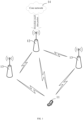
- Embodiments of the present disclosure provide a data transmission method which is suitable for a system shown in FIG. 1 , and the system includes a terminal 11, an anchor base station 12, a non-anchor base station 13, and a core network 14.
- the terminal 11 is in an RRC Inactive state
- the anchor base station 12 initiates radio paging to the terminal 11 and initiates RAN paging to the non-anchor base station 13 in an RNA after receiving a downlink small data packet which needs to be sent to the terminal 11 by the core network 14, so that the non-anchor base station 13 initiates radio paging to the terminal 11 according to an RAN paging message
- a radio paging message and the RAN paging message include indication information on downlink small data transmission (SDT); and after receiving the radio paging message, the terminal 11 may resume SDT-related configuration in the RRC Inactive state according to preset SDT-related configuration information, the anchor base station 12 may send the downlink small data packet to the terminal 11 directly or through the non-anchor base station
- the suitable system may be a global system of mobile communication (global system of mobile communication, GSM), a code division multiple access (code division multiple access, CDMA) system, a Wideband Code Division Multiple Access (Wideband Code Division Multiple Access, WCDMA) general packet radio service (general packet radio service, GPRS) system, a long term evolution (long term evolution, LTE) system, an LTE frequency division duplex (frequency division duplex, FDD) system, an LTE time division duplex (time division duplex, TDD) system, a long term evolution advanced (long term evolution advanced, LTE-A) system, a universal mobile telecommunication system (universal mobile telecommunication system, UMTS), a worldwide interoperability for microwave access (worldwide interoperability for microwave access, WiMAX) system, a 5G New Radio (New Radio, NR) system, etc. All of the various systems include terminal equipment and network equipment.
- GSM global system of mobile communication
- CDMA code division multiple access
- WCDMA Wideband Code Division Multiple Access
- the terminal equipment related to the embodiments of the present disclosure may refer to equipment providing voice and/or data connectivity to a user, handheld equipment with a wireless connection function, or other processing equipment connected to a wireless modem, etc.
- the terminal equipment may also have different names.
- the terminal equipment may be referred to as User Equipment (User Equipment, UE).
- Wireless terminal equipment may communicate with one or more Core Networks (Core Network, CN) through a Radio Access Network (Radio Access Network, RAN), the wireless terminal equipment may be mobile terminal equipment, such as a mobile phone (or referred to as "cellular" phone), and a computer with the mobile terminal equipment, such as a portable mobile device, a pocket mobile device, a handheld mobile device, a mobile device built in computer or a vehicle-mounted mobile device, and they exchange languages and/or data with a radio access network.
- Core Network Core Network
- RAN Radio Access Network
- the wireless terminal equipment may be equipment such as a Personal Communication Service (Personal Communication Service, PCS) phone, a cordless phone, a Session Initiated Protocol (Session Initiated Protocol, SIP) phone, a Wireless Local Loop (Wireless Local Loop, WLL) station, and a Personal Digital Assistant (Personal Digital Assistant, PDA).
- PCS Personal Communication Service
- SIP Session Initiated Protocol
- WLL Wireless Local Loop
- PDA Personal Digital Assistant
- the wireless terminal equipment may also be referred to as a system, a subscriber unit (subscriber unit), a subscriber station (subscriber station), a mobile station (mobile station), a mobile (mobile), a remote station (remote station), an access point (access point), a remote terminal (remote terminal), an access terminal (access terminal), a user terminal (user terminal), a user agent (user agent), and a user device (user device), which is not limited in the embodiments of the present disclosure.
- a base station related to the embodiments of the present disclosure may also be other network equipment, where the base station may include a plurality of cells providing service for a terminal.
- the base station may also be referred to as an access point or may be equipment communicating with the wireless terminal equipment on an air interface in an access network through one or more sectors, or other names.
- the network equipment may be configured to interchange a received aerial frame and an Internet Protocol (Internet Protocol, IP) packet to be used as a router between the wireless terminal equipment and the rest part of the access network, where the rest part of the access network may include an Internet Protocol (IP) communication network.
- IP Internet Protocol
- the network equipment may further coordinate the attribute management for the air interface.
- the network equipment related to the embodiments of the present disclosure may be network equipment (Base Transceiver Station, BTS) in a Global System for Mobile communications (Global System for Mobile communications, GSM) or Code Division Multiple Access (Code Division Multiple Access, CDMA), or network equipment (NodeB) in Wide-band Code Division Multiple Access (Wide-band Code Division Multiple Access, WCDMA), or evolutional network equipment (evolutional Node B, eNB or e-Node) in a long term evolution (long term evolution, LTE) system, a 5G base station (gNB) in a 5G network architecture (next generation system), or a Home evolved Node B (Home evolved Node B, HeNB), a relay node (relay node), a femto (femto), a pico (femto), etc., which is not limited in the embodiments of the present disclosure.
- the network equipment may include a node of a centralized unit (centralized unit, CU) and a node
- the method and the device are based on the same application concept. Since problem solving principles in the method and the device are similar, implementations of the device and the method may refer to each other, and repetitions thereof will be no longer repeated.
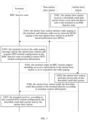
- FIG. 2 is a flow diagram of a data transmission method provided in the present embodiment. As shown in FIG. 2 , the present embodiment provides a data transmission method of which an execution subject is a terminal UE, and the method includes the following specific steps.
- Radio resource control (RRC) inactive (Inactive) state receiving a radio paging message from a first base station to a terminal; where the radio paging message includes indication information on downlink small data transmission (SDT); the terminal is in a radio resource control (RRC) inactive (Inactive) state.
- RRC radio resource control
- the first base station is an anchor base station or a non-anchor base station.
- the anchor base station still keeps being connected to a core network, and therefore, the anchor base station can receive downlink small data packet that is to be sent to the terminal, the downlink small data packet includes downlink SDT (Small Data Transmission, Small Data Transmission) data or NAS signaling (such as NAS PDU).
- the anchor base station may initiate radio paging to the terminal in a coverage area thereof and initiate RAN paging to a non-anchor base station in an RNA area, and the RAN paging is to notify each non-anchor base station in the RNA area to initiate the radio paging to the terminal.
- the radio paging message and an RNA paging message may include indication information on downlink small data transmission (SDT), so that the terminal can know, after the radio paging message is received, that there are downlink small data packet needed to be sent to the terminal.
- SDT downlink small data transmission
- a radio paging message sent by the anchor base station can be received; and if the terminal is not located in the coverage area of the anchor base station, but is located in a coverage area of the non-anchor base station of the RNA area, a radio paging message sent by the non-anchor base station can be received.
- the terminal may keep in the RRC Inactive state and only resume the SDT-related configuration according to preset SDT-related configuration information.
- the preset SDT-related configuration information includes SDT configuration information provided by the anchor base station when the terminal enters the RRC Inactive state (i.e., configuration information for SDT in terminal context information), or includes preset default SDT configuration information.
- the SDT-related configuration information is at least SDT DRB (Data radio bearer, Data radio bearer) configuration.
- the terminal in the present embodiment only resumes the SDT-related configuration, can keep in the RRC Inactive state without resuming to the RRC Connected state so as to be simpler in process and higher in efficiency.
- the terminal may initiate a Resume (Resume) process to the first base station, that is, send an RRC resume request (RRCResumeRequest) to the first base station, where the RRC resume request may include mt-access (response paging) information which represents that the paging is received by the terminal, requests the first base station to resume SDT-related radio bearer, and may initiate an access process for the downlink small data packet.
- a Resume (Resume) process to the first base station, that is, send an RRC resume request (RRCResumeRequest) to the first base station
- the RRC resume request may include mt-access (response paging) information which represents that the paging is received by the terminal, requests the first base station to resume SDT-related radio bearer, and may initiate an access process for the downlink small data packet.
- the first base station may send the downlink small data packet to the terminal, the terminal may receive, according to the resumed SDT-related configuration, the downlink small data packet sent by the first base station, and the specific process thereof needs to be different according to a determination whether the first base station is the anchor base station or the non-anchor base station.
- the specific process that the anchor base station sends the downlink small data packet to the terminal is described as follows: after processing the downlink small data packet, the anchor base station sends the downlink small data packet to the terminal directly according to the terminal context information (including the SDT-related configuration information of the terminal).
- the processing may include: packaging the NAS signaling in an RRC message and performing PDCP (Packet Data Convergence Protocol, Packet Data Convergence Protocol) processing, and then, performing at least one of the following: physical layer processing, MAC (Media Access Control, Media Access Control) layer processing, or RLC (Radio link Control, Radio link Control) layer processing; and if the downlink small data packet is downlink SDT data, the processing may include: performing SDAP (Service Data Adaptation Protocol, Service Data Adaptation Protocol) processing and PDCP processing on the downlink SDT data, and then, performing at least one of the following: physical layer processing, MAC layer processing, or RLC layer processing.
- SDAP Service Data Adaptation Protocol
- Service Data Adaptation Protocol Service Data Adaptation Protocol
- an RRC release message may be generated and sent to the terminal, and the terminal may stop to receive the downlink small data packet according to the RRC release message, and enter an RRC Idle state or continue to keep in the RRC Inactive state (the SDT-related configuration may be released).
- the anchor base station may further determine whether to transmit the downlink small data packet by adopting the above-mentioned SDT process, for example, it is determined whether the downlink small data packet satisfies the maximum data processing capacity of the anchor base station, if yes, the downlink small data packet is transmitted by adopting the above-mentioned SDT process; and if not, the downlink small data packet is transmitted without adopting the above-mentioned SDT process, an RRC resume message is sent to the terminal, so that the terminal resumes full configuration in the RRC Inactive state according to the RRC resume message so as to resume from the RRC Inactive state to an RRC Connected state to receive data in the RRC Connected state.
- the specific process that the base station sends the downlink small data packet to the terminal is described as follows: the anchor base station sends preset terminal context information to the non-anchor base station; in addition, after performing first processing on the downlink small data packet, the anchor base station may send the processed downlink small data packet to the non-anchor base station; and the non-anchor base station performs second processing on the downlink small data packet according to the terminal context information, and sends the downlink small data packet subjected to the second processing to the terminal.
- the preset terminal context information is the SDT-related configuration information of the terminal; or the preset terminal context information may be full context information of the terminal, where the full context information includes the SDT-related configuration information of the terminal.
- the SDT-related configuration information of the terminal at least includes SDT DRB-related RLC configuration.
- the downlink small data packet may be subjected to one-part processing (such as high-level processing) by the anchor base station and the-other-part processing (such as low-level processing) by the non-anchor base station.
- the anchor base station may package the NAS signaling in an RRC message and perform PDCP processing, and then, send the NAS signaling to the non-anchor base station so as to be subjected to at least one of the following: physical layer processing, MAC layer processing, or RLC layer processing; and if the downlink small data packet is downlink SDT data, the anchor base station may perform SDAP processing and PDCP processing on the downlink SDT data, and then, send the downlink SDT data to the non-anchor base station so as to be subjected to at least one of the following: physical layer processing, MAC layer processing, or RLC layer processing.
- NAS non-access stratum
- the anchor base station when the anchor base station sends the downlink small data packet to the non-anchor base station, if the downlink small data packet is the downlink SDT data, downlink SDT data forwarding tunnel information, such as Xn data forwarding channel information corresponding to DL SDT DRB, sent by the non-anchor base station may be received, and then, the anchor base station sends the downlink small data packet to the non-anchor base station through a downlink SDT data forwarding tunnel; and if the downlink small data packet is the NAS signaling, the anchor base station may send the processed downlink small data packet to the non-anchor base station through an Xn interface.
- downlink SDT data forwarding tunnel information such as Xn data forwarding channel information corresponding to DL SDT DRB
- the non-anchor base station may send a terminal context information request message to the anchor base station, so that the anchor base station sends the terminal context information to the non-anchor base station in response to the terminal context information request message.
- the terminal context information request message may carry the maximum SDT data processing capacity of the non-anchor base station
- the anchor base station may determine whether a data volume of the downlink small data packet satisfies the maximum SDT data processing capacity of the non-anchor base station; if yes, it is determined that the downlink small data packet is transmitted by adopting the above-mentioned SDT process, anchor transfer is not performed, and thus, the downlink small data transmission process can be further simplified, and the transmission efficiency is increased; and if not, it is determined that the downlink small data packet is transmitted without adopting the SDT process, anchor transfer and path changing need to be performed, that is, the full context information of the terminal and the downlink small data packet are sent to the non-anchor base station, so that the non-anchor base station is converted into a new anchor base station according to the full context information of the terminal, the new anchor base station performs full processing on the downlink small data packet, and then, sends the downlink small data packet to the terminal, and the RRC resume message may
- an RRC release message may be generated, and may be sent to the terminal by the non-anchor base station, and the terminal may stop to receive the downlink small data packet according to the RRC release message, and enter an RRC Idle state or the RRC Inactive state (the SDT-related configuration may be released).
- an anchor base station initiates radio paging to the terminal and radio paging of a non-anchor base station in an RNA area to the terminal, after receiving a downlink small data packet sent by a core network; a radio paging message and an RAN paging message include indication information on downlink small data transmission (SDT); and after receiving the radio paging message, the terminal can resume SDT-related configuration in the RRC Inactive state according to preset SDT-related configuration information, and the anchor base station can send the downlink small data packet to the terminal directly or through the non-anchor base station.
- SDT downlink small data transmission
- the terminal keeps in the RRC Inactive state and only resumes the SDT-related configuration, in this way, the downlink small data packet sent by the anchor base station directly or through the non-anchor base station can be received according to the resumed SDT-related configuration, so that a downlink small data transmission process is simpler and more efficient.
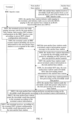
- Example 1 a terminal responds to paging under an anchor base station
- FIG. 3 A signaling diagram of a data transmission method provided in the present example is shown in FIG. 3 , and the method includes the following specific steps.
- the anchor base station receives a downlink small data packet from a core network that is sent to the terminal in an RRC Inactive state.
- the anchor base station initiates radio paging to the terminal, and initiates radio access network (RAN) paging to the non-anchor base station in an RAN-based notification area (RNA); a radio paging message and an RAN paging message include indication information on downlink small data transmission (SDT).
- RAN radio access network
- RNA RAN-based notification area
- the terminal receives the radio paging message sent by the anchor base station, and resumes SDT-related configuration in the RRC Inactive state according to preset SDT-related configuration information.
- the terminal sends an RRC resume request including mt-access information to the anchor base station so as to respond to the radio paging.
- the anchor base station performs processing on the downlink small data packet.
- the processing may include: packaging the NAS signaling in an RRC message, performing PDCP processing, and then, performing at least one of the following: physical layer processing, MAC layer processing, or RLC layer processing; and if the downlink small data packet is downlink SDT data, the processing may include: performing SDAP processing and PDCP processing on the downlink SDT data, and then, performing at least one of the following: physical layer processing, MAC layer processing, or RLC layer processing.
- NAS non-access stratum
- the anchor base station sends the downlink small data packet to the terminal directly according to terminal context information.
- the terminal context information includes SDT-related configuration information of the terminal.
- the terminal receives, according to the resumed SDT-related configuration, the downlink small data packet sent by the anchor base station.
- Example 2 a terminal responds to paging under a non-anchor base station, and an anchor base station decides to transmit a downlink small data packet by adopting an SDT process (anchor transfer is not performed)
- FIG. 4 A signaling diagram of a data transmission method provided in the present example is shown in FIG. 4 , and the method includes the following specific steps.
- the anchor base station receives a downlink small data packet from a core network that is sent to the terminal in an RRC Inactive state.
- the anchor base station initiates radio paging to the terminal, and initiates radio access network (RAN) paging to the non-anchor base station in an RAN-based notification area (RNA); a radio paging message and an RAN paging message include indication information on downlink small data transmission (SDT).
- RAN radio access network
- RNA RAN-based notification area
- the terminal receives the radio paging message sent by the non-anchor base station, and resumes SDT-related configuration in the RRC Inactive state according to preset SDT-related configuration information.
- the terminal sends an RRC resume request including mt-access information to the non-anchor base station so as to respond to the radio paging.
- the non-anchor base station sends a terminal context information request message to the anchor base station.
- the terminal context information request message may carry the maximum SDT data processing capacity of the non-anchor base station, so that it is determined, by the anchor base station, whether a data volume of the downlink small data packet satisfies the maximum SDT data processing capacity of the non-anchor base station.
- the anchor base station determines to transmit the downlink small data packet by adopting an SDT process, and does not perform anchor transfer.
- the anchor base station determines that the data volume of the downlink small data packet satisfies the maximum SDT data processing capacity of the non-anchor base station, and determines to transmit the downlink small data packet by adopting the above-mentioned SDT process, and does not perform anchor transfer.
- the anchor base station sends preset terminal context information to the non-anchor base station.
- the preset terminal context information is the SDT-related configuration information of the terminal; or the preset terminal context information may be full context information of the terminal, where the full context information includes the SDT-related configuration information of the terminal.
- the SDT-related configuration information of the terminal at least includes SDT DRB-related RLC configuration.
- the non-anchor base station sends downlink SDT data forwarding tunnel information to the anchor base station.
- the anchor base station performs first processing on the downlink small data packet.
- the processing may include: performing SDAP processing and PDCP processing on the downlink SDT data; and if the downlink small data packet is non-access stratum (NAS) signaling, the processing may include: packaging the NAS signaling in an RRC message, and performing PDCP processing.
- NAS non-access stratum
- the anchor base station sends the downlink small data packet subjected to the first processing to the non-anchor base station.
- the anchor base station sends the downlink small data packet to the non-anchor base station through a downlink SDT data forwarding tunnel allocated by the non-anchor base station; if the downlink small data packet is the NAS signaling, the anchor base station may send the processed downlink small data packet to the non-anchor base station through an Xn interface.
- the non-anchor base station performs second processing on the downlink small data packet according to the terminal context information.
- the second processing may include at least one of the flowing: physical layer processing, MAC layer processing, or RLC layer processing;
- the non-anchor base station sends the downlink small data packet to the terminal according to the terminal context information.
- the terminal receives, according to the resumed SDT-related configuration, the downlink small data packet sent by the non-anchor base station.
- Example 3 a terminal responds to paging under a non-anchor base station, and an anchor base station decides to perform normal prior data transmission (anchor transfer is performed)
- FIG. 5 A signaling diagram of a data transmission method provided in the present example is shown in FIG. 5 , and the method includes the following specific steps.
- the anchor base station receives a downlink small data packet from a core network that is sent to the terminal in an RRC Inactive state.
- the anchor base station initiates radio paging to the terminal, and initiates radio access network (RAN) paging to the non-anchor base station in an RAN-based notification area (RNA); a radio paging message and an RAN paging message include indication information on downlink small data transmission (SDT).
- RAN radio access network
- RNA RAN-based notification area
- the terminal receives the radio paging message sent by the non-anchor base station, and resumes SDT-related configuration in the RRC Inactive state according to preset SDT-related configuration information.
- the terminal sends an RRC resume request including mt-access information to the non-anchor base station so as to respond to the radio paging.
- the non-anchor base station sends a terminal context information request message to the anchor base station.
- the terminal context information request message may carry the maximum SDT data processing capacity of the non-anchor base station, so that it is determined, by the anchor base station, whether a data volume of the downlink small data packet satisfies the maximum SDT data processing capacity of the non-anchor base station.
- the anchor base station determines to adopt normal prior data transmission, and performs anchor transfer.
- the anchor base station determines that the data volume of the downlink small data packet does not satisfy the maximum SDT data processing capacity of the non-anchor base station, and determines to perform the normal prior data transmission, and performs anchor transfer.
- the anchor base station sends full context information of the terminal and the downlink small data packet to the non-anchor base station.
- the non-anchor base station converts into a new anchor base station according to the full context information of the terminal and sends an RRC resume message to the terminal.
- the terminal resumes from the RRC Inactive state to an RRC Connected state.
- the non-anchor base station performs processing on the downlink small data packet.
- the processing may include: packaging the NAS signaling in an RRC message, performing PDCP processing, and then, performing at least one of the following: physical layer processing, MAC layer processing, or RLC layer processing; and if the downlink small data packet is downlink SDT data, the processing may include: performing SDAP processing and PDCP processing on the downlink SDT data, and then, performing at least one of the following: physical layer processing, MAC layer processing, or RLC layer processing.
- NAS non-access stratum
- the non-anchor base station sends the downlink small data packet to the terminal.
- FIG. 6 is a flow diagram of a data transmission method provided in the present embodiment. As shown in FIG. 6 , the present embodiment provides a data transmission method of which an executive subject is an anchor base station, and the method includes the following specific steps.
- S602 sending a radio paging message to the terminal, and/or, sending a radio access network (RAN) paging message to a non-anchor base station in an RAN-based notification area (RNA), so that the non-anchor base station sends a radio paging message to the terminal according to the RAN paging message;
- RAN paging message and the radio paging messages from the anchor base station and the non-anchor base station include indication information on downlink small data transmission (SDT).
- SDT downlink small data transmission
- the sending the downlink small data packet to the terminal directly in S603 includes: if it is determined that the terminal responds to the radio paging message from the anchor base station, performing first processing and second processing on the downlink small data packet, and then, sending the downlink small data packet subjected to the first processing and the second processing to the terminal.
- the sending the downlink small data packet to the terminal through the non-anchor base station in S603 includes:
- the sending the terminal context information of the terminal to the non-anchor base station includes:
- the terminal context information request message includes the maximum SDT data processing capacity of the non-anchor base station; and the sending the terminal context information of the terminal to the non-anchor base station in response to the terminal context information request message includes: if it is determined that a data volume of the downlink small data packet satisfies the maximum data processing capacity of the non-anchor base station, determining that the downlink small data packet is transmitted by adopting an SDT process, and sending the terminal context information of the terminal to the non-anchor base station.
- the terminal context information is SDT-related configuration information of the terminal; or the terminal context information is full context information of the terminal, where the full context information includes the SDT-related configuration information of the terminal.
- the downlink small data packet if it is determined that the data volume of the downlink small data packet does not satisfy the maximum data processing capacity of the non-anchor base station, it is determined that the downlink small data packet is transmitted without adopting the SDT process, and full terminal context information of the terminal and the downlink small data packet are sent to the non-anchor base station so as to perform anchor transfer, that is, the non-anchor base station is converted into a new anchor base station according to the full terminal context information of the terminal to perform first processing and second processing on the downlink small data packet, and then, send the downlink small data packet subjected to the first processing and the second processing to the terminal.
- the second processing in each of the above-mentioned embodiments includes at least one of the following: physical layer processing, media access control (MAC) layer processing, or radio link control (RLC) layer processing;
- physical layer processing media access control (MAC) layer processing, or radio link control (RLC) layer processing;
- MAC media access control
- RLC radio link control
- the sending the processed downlink small data packet to the non-anchor base station includes:
- an RRC release message is generated, and is transmitted to the terminal, so that the terminal stops to receive the downlink small data packet according to the RRC release message, and enters an RRC Idle state or the RRC Inactive state.
- the data transmission method provided in the present embodiment is the method for an anchor base station side in the above-mentioned embodiment, and is based on the same application concept. Since problem solving principles in the method and the device are similar, repetitions thereof will be no longer repeated.
- FIG. 7 is a flow diagram of a data transmission method provided in the present embodiment. As shown in FIG. 2 , the present embodiment provides a data transmission method of which an executive subject is a non-anchor base station, and the method includes the following specific steps.
- S702 initiating radio paging to a terminal according to the RAN paging message from the anchor base station; where the RAN paging message and a radio paging message include indication information on downlink small data transmission (SDT); and the terminal is in an RRC Inactive state.
- SDT downlink small data transmission
- the acquiring the terminal context information of the terminal from the anchor base station in S703 includes:
- the terminal context information request message includes the maximum data processing capacity of the non-anchor base station; and further, the receiving the terminal context information of the terminal that is sent by the anchor base station according to the terminal context information request message includes: receiving the terminal context information of the terminal that is sent by the anchor base station after it is determined that the data volume of the downlink small data packet satisfies the maximum data processing capacity of the non-anchor base station.
- the method further includes:
- the acquiring the downlink small data packet subjected to the first processing from the anchor base station includes:
- the data transmission method provided in the present embodiment is the method for a non-anchor base station side in the above-mentioned embodiment, and is based on the same application concept. Since problem solving principles in the method and the device are similar, repetitions thereof will be no longer repeated.
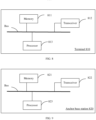
- FIG. 8 is a structural diagram of a terminal provided in an embodiment of the present disclosure.
- the terminal provided in the present embodiment may perform a processing flow provided in a method embodiment for a terminal side.
- the terminal 810 includes a memory 811, a transceiver 812, and a processor 813.
- the bus architecture may include any number of buses and bridges interconnected with each other, and may be specifically configured to link various circuits of one or more processors represented by the processor 813 and a memory represented by the memory 811.
- the bus architecture is also capable of linking various other circuits such as peripheral equipment, a voltage stabilizer and a power management circuit together, which are known by the skilled in the art. Therefore, the further description of the bus architecture is omitted herein.
- a bus interface is provided with an interface.
- the transceiver 812 may be a plurality of elements, i.e., include a transmitter and a receiver, providing units for communication with various other devices on the transmission media, and these transmission media include a wireless channel, a wired channel, an optical cable, etc.
- the processor 813 takes charge of managing the bus architecture and general processing, and the memory 811 is capable of storing data used when the processor 813 performs an operation.
- the processor 813 may be a central processing unit (CPU), an Application Specific Integrated Circuit (Application Specific Integrated Circuit, ASIC), a Field-Programmable Gate Array (Field-Programmable Gate Array, FPGA) or a Complex Programmable Logic Device (Complex Programmable Logic Device, CPLD), and the processor may also adopt a multi-core architecture.
- CPU central processing unit
- ASIC Application Specific Integrated Circuit
- FPGA Field-Programmable Gate Array
- CPLD Complex Programmable Logic Device
- the memory 811 is configured to store a computer program; the transceiver 812 is configured to transceive data under control of the processor 813; and the processor 813 is configured to read the computer program in the memory 811 and perform the following operations:
- the processor 813 when resuming the SDT-related configuration in the RRC Inactive state according to preset SDT-related configuration information, the processor 813 is configured to: resume SDT-related radio bearer configuration according to preset SDT-related radio bearer configuration information, and send an RRC resume request message to the first base station so as to request the first base station to resume SDT-related radio bearer.
- the preset SDT-related configuration information includes SDT configuration information provided by the anchor base station when the terminal enters the RRC Inactive state, or includes preset default SDT configuration information.
- the downlink small data packet includes downlink SDT data or non-access stratum (NAS) signaling.
- NAS non-access stratum
- the processor 813 is further configured to:
- the processor 813 is further configured to:
- the terminal provided in the embodiment of the present disclosure may be specifically configured to perform the method embodiment for the above-mentioned terminal side, and the specific functions thereof will not be repeated herein.
- FIG. 9 is a structural diagram of an anchor base station provided in an embodiment of the present disclosure.
- the base station provided in the present embodiment may perform a processing flow provided in a method embodiment for a base station side.
- the base station 820 includes a memory 821, a transceiver 822, and a processor 823.
- the bus architecture may include any number of buses and bridges interconnected with each other, and may be specifically configured to link various circuits of one or more processors represented by the processor 823 and a memory represented by the memory 821.
- the bus architecture is also capable of linking various other circuits such as peripheral equipment, a voltage stabilizer and a power management circuit together, which are known by the skilled in the art. Therefore, the further description of the bus architecture is omitted herein.
- a bus interface is provided with an interface.
- the transceiver 822 may be a plurality of elements, i.e., include a transmitter and a receiver, providing units for communication with various other devices on the transmission media, and these transmission media include a wireless channel, a wired channel, an optical cable, etc.
- the processor 823 takes charge of managing the bus architecture and general processing, and the memory 821 is capable of storing data used when the processor 823 performs an operation.
- the processor 823 may be a central processing unit (CPU), an Application Specific Integrated Circuit (Application Specific Integrated Circuit, ASIC), a Field-Programmable Gate Array (Field-Programmable Gate Array, FPGA) or a Complex Programmable Logic Device (Complex Programmable Logic Device, CPLD), and the processor may also adopt a multi-core architecture.
- CPU central processing unit
- ASIC Application Specific Integrated Circuit
- FPGA Field-Programmable Gate Array
- CPLD Complex Programmable Logic Device
- the memory 821 is configured to store a computer program; the transceiver 822 is configured to transceive data under control of the processor 823; and the processor 823 is configured to read the computer program in the memory 821 and perform the following operations:
- the processor 823 when sending the downlink small data packet to the terminal through the non-anchor base station, the processor 823 is configured to:
- the processor 823 when sending the downlink small data packet to the terminal directly, is configured to: if it is determined that the terminal responds to the radio paging message from the anchor base station, perform first processing and second processing on the downlink small data packet, and then, send the downlink small data packet subjected to the first processing and the second processing to the terminal.
- the processor 823 when sending the terminal context information of the terminal to the non-anchor base station, the processor 823 is configured to:
- the terminal context information request message includes the maximum SDT data processing capacity of the non-anchor base station; and when sending the terminal context information to the non-anchor base station in response to the terminal context information request message, the processor 823 is configured to: if it is determined that a data volume of the downlink small data packet satisfies the maximum data processing capacity of the non-anchor base station, determine that the downlink small data packet is transmitted by adopting an SDT process, and send the context information of the terminal to the non-anchor base station.
- the terminal context information is SDT-related configuration information of the terminal; or the terminal context information is full context information of the terminal, where the full context information includes the SDT-related configuration information of the terminal.
- the processor 823 is further configured to: if it is determined that the data volume of the downlink small data packet does not satisfy the maximum data processing capacity of the non-anchor base station, determine that the downlink small data packet is transmitted without adopting the SDT process, and send full terminal context information of the terminal and the downlink small data packet to the non-anchor base station so as to perform anchor transfer, that is, the non-anchor base station is converted into a new anchor base station according to the full terminal context information of the terminal to perform first processing and second processing on the downlink small data packet, and then, send the downlink small data packet subjected to the first processing and the second processing to the terminal.
- the second processing includes at least one of the following: physical layer processing, media access control (MAC) layer processing, or radio link control (RLC) layer processing;
- MAC media access control
- RLC radio link control
- the processor 823 when sending the processed downlink small data packet to the non-anchor base station, the processor 823 is configured to:
- the processor 823 is further configured to: after it is determined that sending the downlink small data packet is completed, generate an RRC release message, and transmit the RRC release message to the terminal, so that the terminal stops to receive the downlink small data packet according to the RRC release message, and enters an RRC Idle state or the RRC Inactive state.
- the anchor base station provided in the embodiment of the present disclosure may be specifically configured to perform the method embodiment for the above-mentioned anchor base station side, and the specific functions thereof will not be repeated herein.
- FIG. 10 is a structural diagram of a non-anchor base station provided in an embodiment of the present disclosure.
- the non-anchor base station provided in the present embodiment may perform the processing flow provided in the method embodiment for the non-anchor base station side.
- the non-anchor base station 830 includes a memory 831, a transceiver 832, and a processor 833.
- the bus architecture may include any number of buses and bridges interconnected with each other, and may be specifically configured to link various circuits of one or more processors represented by the processor 833 and a memory represented by the memory 831 together.
- the bus architecture is also capable of linking various other circuits such as peripheral equipment, a voltage stabilizer and a power management circuit together, which are known by the skilled in the art. Therefore, the further description of the bus architecture is omitted herein.
- a bus interface is provided with an interface.
- the transceiver 832 may be a plurality of elements, i.e., include a transmitter and a receiver, providing units for communication with various other devices on the transmission media, and these transmission media include a wireless channel, a wired channel, an optical cable, etc.
- the processor 833 takes charge of managing the bus architecture and general processing, and the memory 831 is capable of storing data used when the processor 833 performs an operation.
- the processor 833 may be a central processing unit (CPU), an Application Specific Integrated Circuit (Application Specific Integrated Circuit, ASIC), a Field-Programmable Gate Array (Field-Programmable Gate Array, FPGA) or a Complex Programmable Logic Device (Complex Programmable Logic Device, CPLD), and the processor may also adopt a multi-core architecture.
- CPU central processing unit
- ASIC Application Specific Integrated Circuit
- FPGA Field-Programmable Gate Array
- CPLD Complex Programmable Logic Device
- the memory 831 is configured to store a computer program; the transceiver 832 is configured to transceive data under control of the processor 833; and the processor 833 is configured to read the computer program in the memory 831 and perform the following operations:
- the processor 833 when acquiring the terminal context information of the terminal from the anchor base station, the processor 833 is configured to:
- the terminal context information request message includes a maximum data processing capacity of the non-anchor base station; and when receiving the terminal context information of the terminal that is sent by the anchor base station according to the terminal context information request message, the processor 833 is configured to: receive the terminal context information of the terminal that is sent by the anchor base station after it is determined that a data volume of the downlink small data packet satisfies the maximum data processing capacity of the non-anchor base station.
- the processor 833 is further configured to:
- the processor 833 when acquiring the downlink small data packet subjected to the first processing from the anchor base station, the processor 833 is configured to:
- the non-anchor base station provided in the embodiment of the present disclosure may be specifically configured to perform the method embodiment for the above-mentioned non-anchor base station side, and the specific functions thereof will not be repeated herein.
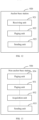
- FIG. 11 is a structural diagram of a terminal provided in an embodiment of the present disclosure.
- the terminal provided in the present embodiment may perform the processing flow provided in the method embodiment for the terminal side.
- the terminal 910 includes a receiving unit 911 and a processing unit 912.
- the receiving unit 911 is configured to receive a radio paging message from a first base station to the terminal, where the radio paging message includes indication information on downlink small data transmission (SDT), the terminal is in a radio resource control (RRC) inactive (Inactive) state, and the first base station is an anchor base station or a non-anchor base station; and
- SDT downlink small data transmission
- RRC radio resource control
- Inactive active
- the processing unit 912 when resuming the SDT-related configuration in the RRC Inactive state according to preset SDT-related configuration information, the processing unit 912 is configured to: resume SDT-related radio bearer configuration according to preset SDT-related radio bearer configuration information, and send an RRC resume request message to the first base station so as to request the first base station to resume SDT-related radio bearer.
- the preset SDT-related configuration information includes SDT configuration information provided by the anchor base station when the terminal enters the RRC Inactive state, or includes preset default SDT configuration information.
- the downlink small data packet includes downlink SDT data or non-access stratum (NAS) signaling.
- NAS non-access stratum
- the receiving unit 911 is further configured to receive an RRC resume message sent by the first base station; and the processing unit 912 is further configured to resume the terminal from the RRC Inactive state to an RRC connected (Connected) state according to the RRC resume message.
- the receiving unit 911 is further configured to receive an RRC release message sent by the first base station; and the processing unit 912 is further configured to stop to receive the SDT downlink small data packet according to the RRC release message, and enter an RRC idle (Idle) state or keep in the RRC Inactive state.
- the terminal provided in the embodiment of the present disclosure may be specifically configured to perform the method embodiment for the above-mentioned terminal side, and the specific functions thereof will not be repeated herein.
- FIG. 12 is a structural diagram of an anchor base station provided in an embodiment of the present disclosure.
- the anchor base station provided in the present embodiment may perform the processing flow provided in the method embodiment for the anchor base station side.
- the anchor base station 920 includes a receiving unit 921, a paging unit 922, and a sending unit 923.
- the receiving unit 921 is configured to receive a downlink small data packet from a core network that is to be sent to a terminal in an RRC Inactive state;
- the sending unit 923 when sending the downlink small data packet to the terminal through the non-anchor base station, the sending unit 923 is configured to:
- the sending unit 923 when sending the downlink small data packet to the terminal directly, is configured to: if it is determined that the terminal responds to the radio paging message from the anchor base station, perform first processing and second processing on the downlink small data packet, and then, send the downlink small data packet subjected to the first processing and the second processing to the terminal.
- the receiving unit 921 when sending the terminal context information of the terminal to the non-anchor base station, the receiving unit 921 receives a terminal context information request message sent by the non-anchor base station; and the sending unit 923 sends the terminal context information of the terminal to the non-anchor base station in response to the terminal context information request message.
- the terminal context information request message includes a maximum SDT data processing capacity of the non-anchor base station; and when sending the terminal context information of the terminal to the non-anchor base station in response to the terminal context information request message, the sending unit 923 is configured to: if it is determined that a data volume of the downlink small data packet satisfies the maximum data processing capacity of the non-anchor base station, determine that the downlink small data packet is transmitted by adopting an SDT process, and send the terminal context information of the terminal to the non-anchor base station.
- the terminal context information is SDT-related configuration information of the terminal; or the terminal context information is full context information of the terminal, where the full context information includes the SDT-related configuration information of the terminal.
- the sending unit 923 sends full terminal context information of the terminal and the downlink small data packet to the non-anchor base station so as to perform anchor transfer, that is, the non-anchor base station is converted into a new anchor base station according to the full terminal context information of the terminal to perform first processing and second processing on the downlink small data packet, and then, send the downlink small data packet subjected to the first processing and the second processing to the terminal.
- the second processing includes at least one of the following: physical layer processing, media access control (MAC) layer processing, or radio link control (RLC) layer processing;
- MAC media access control
- RLC radio link control
- the sending unit 923 when sending the processed downlink small data packet to the non-anchor base station, the sending unit 923 is configured to:
- the sending unit 923 is further configured to: after it is determined that sending the downlink small data packet is completed, generate an RRC release message, and transmit the RRC release message to the terminal, so that the terminal stops to receive the downlink small data packet according to the RRC release message, and enters an RRC Idle state or the RRC Inactive state.
- the anchor base station provided in the embodiment of the present disclosure may be specifically configured to perform the method embodiment for the above-mentioned anchor base station side, and the specific functions thereof will not be repeated herein.
- FIG. 13 is a structural diagram of a non-anchor base station provided in an embodiment of the present disclosure.
- the data transmission device provided in the present embodiment may perform the processing flow provided in the method embodiment for the non-anchor base station side.
- the non-anchor base station 930 includes a paging unit 931, an acquisition unit 932, a sending unit 933, and a receiving unit 934.
- the receiving unit 934 is configured to receive a radio access network (RAN) paging message sent by an anchor base station, the RAN paging message being sent by the anchor base station to the non-anchor base station in an RNA area;
- RAN radio access network
- the acquisition unit 932 when acquiring the terminal context information of the terminal from the anchor base station, is configured to:
- the terminal context information request message includes a maximum data processing capacity of the non-anchor base station; and when receiving the terminal context information of the terminal that is sent by the anchor base station according to the terminal context information request message, the acquisition unit 932 is configured to: receive the terminal context information of the terminal that is sent by the anchor base station after it is determined that a data volume of the downlink small data packet satisfies the maximum data processing capacity of the non-anchor base station.
- the acquisition unit 932 is further configured to receive full context information of the terminal and the downlink small data packet that are sent by the anchor base station after it is determined that a data volume of the downlink small data packet does not satisfy a maximum data processing capacity of the non-anchor base station; and the sending unit 933 is further configured to convert into a new anchor base station according to the full context information of the terminal, and send an RRC resume message to the terminal, so that the terminal resumes from the RRC Inactive state to an RRC Connected state; and perform first processing and second processing on the downlink small data packet according to the full context information of the terminal, and then, send the downlink small data packet subjected to the first processing and the second processing to the terminal.
- the acquisition unit 932 when acquiring the downlink small data packet subjected to the first processing from the anchor base station, the acquisition unit 932 is configured to:
- the data transmission device provided in the embodiment of the present disclosure may be specifically configured to perform the method embodiment for the above-mentioned non-anchor base station side, and the specific functions thereof will not be repeated herein.
- division of units in the above-mentioned embodiments of the present disclosure is schematic and is only logic function division, and there may be other division manners during actual implementation.
- all the functional units in each of the embodiments of the present disclosure may be integrated in one processing unit, or all the units physically exist alone, or two or more units are integrated in one unit.
- the above-mentioned integrated unit may be realized in a form of hardware or a software functional unit.
- the integrated unit When being realized in the form of the software functional unit and used as an independent product to be sold or used, the integrated unit may be stored in a processor-readable storage medium.
- the computer software product is stored in a storage medium and includes a plurality of instructions used to cause a computer device (which may be a personal computer, a server, or a network device, etc.) or a processor to perform all or parts of steps of the method in each of the embodiments of the present disclosure.
- the aforementioned storage medium includes various media, such as a U disk, a mobile hard disk, a Read-Only Memory (Read-Only Memory, ROM), a Random Access Memory (Random Access Memory, RAM), a diskette or an optical disk, capable of storing program codes.
- Another embodiment of the present disclosure further provides a computer-readable storage medium, where the computer-readable storage medium has a computer program stored thereon, and the computer program is configured to cause a processor to perform the data transmission method for a terminal side, or an anchor base station side or a non-anchor base station side.
- the computer-readable storage medium may be any available medium or data storage device that can be accessed by a processor, which includes but is not limited to a magnetic memory (such as a floppy disk, a hard disk, a magnetic tape, and a magneto-optical disc (MO)), an optical memory (such as a CD, a DVD, a BD, and an HVD), and a semiconductor memory (such as an ROM, an EPROM, an EEPROM, a nonvolatile memory (NAND FLASH), and a solid-state disk (SSD)).
- a magnetic memory such as a floppy disk, a hard disk, a magnetic tape, and a magneto-optical disc (MO)
- an optical memory such as a CD, a DVD, a BD, and an HVD
- a semiconductor memory such as an ROM, an EPROM, an EEPROM, a nonvolatile memory (NAND FLASH), and a solid-state disk (SSD)
- Another embodiment of the present disclosure further provides a computer program product, including a computer program, and the computer program is configured to cause a processor to perform the data transmission method for a terminal side, or an anchor base station side or a non-anchor base station side.
- the embodiments of the present disclosure may be provided as a method, a system or a computer program product. Therefore, forms of a complete hardware embodiment, a complete software embodiment or a software and hardware aspect combined embodiment may be adopted in the present disclosure. Moreover, a form of a computer program product executed on one or more computer available storage media (including but not limited to a magnetic disk memory and an optical memory) including computer available program codes may be adopted in the present disclosure.
- the computer-executable instructions may be provided to a general-purpose computer, a special-purpose computer, an embedded processor or processors of other programmable data processing devices to generate a machine, so that an apparatus for realizing functions specified in one or more flows in the flow diagrams and/or one or more blocks in the block diagrams is generated through the instructions executed by the computer or the processors of other programmable data processing devices.
- processor-executable instructions may also be stored in a processor-readable memory capable of guiding the computer or other programmable data processing devices to work in a specific way, so that the instructions stored in the processor-readable memory generate a product including an instruction apparatus, and the instruction apparatus realizes the functions specified in the one or more flows in the flow diagrams and/or one or more blocks in the block diagrams.
- processor-executable instructions may also be loaded in the computer or other programmable data processing devices, so that a series of operation steps are performed on the computer or other programmable data processing devices to generate processing realized by the computer, such that the instructions executed on the computer or other programmable data processing devices provide steps for realizing the functions specified in the one or more flows in the flow diagrams and/or one or more blocks in the block diagrams.
Landscapes
- Engineering & Computer Science (AREA)
- Computer Networks & Wireless Communication (AREA)
- Signal Processing (AREA)
- Mobile Radio Communication Systems (AREA)
Abstract
Description
- The present disclosure claims priority to
Chinese Patent Application No. 202111236396.6, filed to China National Intellectual Property Administration on October 22, 2021 - The present disclosure relates to the technical field of communication and, in particular, to a data transmission method, a device, and a storage medium.
- The 3rd Generation Partnership Project (3rd Generation Partnership Project, 3GPP) proposes a new RRC state, i.e., an RRC Inactive (RRC Inactive) state, on the basis of a Radio Resource Control (Radio Resource Control, RRC) Connected state (RRC Connected) and an RRC Idle state (RRC Idle), for a next generation (e.g., the 5th Generation, 5G) wireless communication network. The RRC Inactive state aims at achieving power saving and acceptable access delay.
- When User Equipment (User Equipment, UE) is in the RRC Inactive state, from the perspective of a core network, the UE is still in a CM_Connected state (Non-access Stratum state), both of a Radio Access Network (Radio Access Network, RAN) and the UE retain a context of an access stratum of the UE, but radio resources of the UE have been released. Similar to the UE in the RRC Idle state, the UE in the RRC Inactive state can perform cell reselection and receive broadcast system information and paging messages, except that the UE can be rapidly resumed to a connected state.
- In the prior art, if the UE in the RRC Inactive state needs to transmit uplink and downlink data packets, the UE has to be resumed from the RRC Inactive state to the RRC Connected state firstly, and then, transmit the uplink and downlink data packets in the RRC Connected state.
- For the transmission of few downlink small data packets or Non-access Stratum (Non-access Stratum, NAS) messages in the prior art, it is also necessary to resume from the RRC Inactive state to the RRC Connected state; in addition, if the UE is not under an anchor base station, anchor transfer and path changing are also needed. The current transmission process is too cumbersome, and the efficiency is also low.
- The present disclosure provides a data transmission method, a device, and a storage medium so that a downlink small data transmission process performed by a terminal in an RRC Inactive state is simpler and more efficient.
- In a first aspect, the present disclosure provides a data transmission method, applied to a terminal, where the method includes:
- receiving a radio paging message from a first base station to the terminal, where the radio paging message includes indication information on downlink small data transmission (SDT), the terminal is in a radio resource control (RRC) inactive (Inactive) state, and the first base station is an anchor base station or a non-anchor base station;
- resuming SDT-related configuration in the RRC Inactive state according to the indication information on the downlink SDT included in the radio paging message; and
- receiving, according to the resumed SDT-related configuration, a downlink small data packet sent by the first base station.
- In a possible design, the resuming the SDT-related configuration in the RRC Inactive state includes:
resuming SDT-related radio bearer configuration according to preset SDT-related radio bearer configuration information, and sending an RRC resume request message to the first base station, the RRC resume request message being configured to request the first base station to resume SDT-related radio bearer. - In a possible design, the preset SDT-related configuration information includes SDT configuration information provided by the anchor base station when the terminal enters the RRC Inactive state, or includes preset default SDT configuration information.
- In a possible design, the downlink small data packet includes downlink SDT data or non-access stratum (NAS) signaling.
- In a possible design, after the resuming the SDT-related configuration in the RRC Inactive state, the method further includes:
- receiving an RRC resume message sent by the first base station; and
- resuming the terminal from the RRC Inactive state to an RRC connected (Connected) state according to the RRC resume message.
- In a possible design, after the resuming the SDT-related configuration in the RRC Inactive state, the method further includes:
- receiving an RRC release message sent by the first base station; and
- stopping to receive the SDT downlink small data packet according to the RRC release message, and entering an RRC idle (Idle) state or keeping in the RRC Inactive state.
- In a second aspect, the present disclosure provides a data transmission method, applied to an anchor base station, where the method includes:
- receiving a downlink small data packet from a core network that is to be sent to a terminal in an RRC Inactive state;
- sending a radio paging message to the terminal, and/or, sending a radio access network (RAN) paging message to a non-anchor base station in an RAN-based notification area (RNA), the RAN paging message being configured to instruct the non-anchor base station to send the radio paging message to the terminal; where the RAN paging message and the radio paging message include indication information on downlink small data transmission (SDT); and
- if it is determined that the terminal responds to the radio paging message, sending the downlink small data packet to the terminal directly or through the non-anchor base station.
- In a possible design, the sending the downlink small data packet to the terminal through the non-anchor base station includes:
- if it is determined that the terminal responds to the radio paging message sent by the non-anchor base station, sending terminal context information of the terminal to the non-anchor base station; and
- after performing first processing on the downlink small data packet, sending the processed downlink small data packet to the non-anchor base station, so that the non-anchor base station performs second processing on the received processed downlink small data packet according to the terminal context information, and sends the downlink small data packet subjected to the second processing to the terminal.
- In a possible design, the sending the downlink small data packet to the terminal directly includes:
if it is determined that the terminal responds to the radio paging message from the anchor base station, performing first processing and second processing on the downlink small data packet, and then, sending the downlink small data packet subjected to the first processing and the second processing to the terminal. - In a possible design, the sending the terminal context information of the terminal to the non-anchor base station includes:
- receiving a terminal context information request message sent by the non-anchor base station; and
- sending the terminal context information to the non-anchor base station in response to the terminal context information request message.
- In a possible design, the terminal context information request message includes a maximum SDT data processing capacity of the non-anchor base station; and
the sending the terminal context information of the terminal to the non-anchor base station in response to the terminal context information request message includes:
if it is determined that a data volume of the downlink small data packet satisfies the maximum data processing capacity of the non-anchor base station, determining that the downlink small data packet is transmitted by adopting an SDT process, and sending the terminal context information of the terminal to the non-anchor base station; where the terminal context information includes SDT-related configuration information of the terminal. - In a possible design, the terminal context information is SDT-related configuration information of the terminal; or
the terminal context information is full context information of the terminal, where the full context information includes the SDT-related configuration information of the terminal. - In a possible design, the method further includes:
if it is determined that the data volume of the downlink small data packet does not satisfy the maximum data processing capacity of the non-anchor base station, determining that the downlink small data packet is transmitted without adopting the SDT process, and sending full terminal context information of the terminal and the downlink small data packet to the non-anchor base station so as to perform anchor transfer. - In a possible design, if the downlink small data packet is non-access stratum (NAS) signaling, the first processing includes: packaging the NAS signaling in an RRC message, and performing packet data convergence protocol (PDCP) processing; or,
if the downlink small data packet is downlink SDT data, the first processing includes: performing service data adaptation protocol (SDAP) processing and PDCP processing on the downlink SDT data. - In a possible design, the second processing includes at least one of the following: physical layer processing, media access control (MAC) layer processing, or radio link control (RLC) layer processing.
- In a possible design, the sending the processed downlink small data packet to the non-anchor base station includes:
- if the downlink small data packet is downlink SDT data, sending the processed downlink small data packet to the non-anchor base station through a downlink SDT data forwarding tunnel allocated by the non-anchor base station; or
- if the downlink small data packet is NAS signaling, sending the processed downlink small data packet to the non-anchor base station through an Xn interface.
- In a possible design, the method further includes:
after it is determined that sending the downlink small data packet is completed, generating an RRC release message, and transmitting the RRC release message to the terminal, so that the terminal stops to receive the downlink small data packet according to the RRC release message, and enters an RRC Idle state or the RRC Inactive state. - In a third aspect, the present disclosure provides a data transmission method, applied to a non-anchor base station, where the method includes:
- receiving a radio access network (RAN) paging message sent by an anchor base station, the RAN paging message being sent by the anchor base station to the non-anchor base station in an RNA area;
- initiating radio paging to a terminal according to the RAN paging message from the anchor base station, where the RAN paging message and a radio paging message include indication information on downlink small data transmission (SDT), and the terminal is in an RRC Inactive state;
- if it is determined that the terminal responds to the radio paging message from the non-anchor base station, acquiring terminal context information of the terminal from the anchor base station;
- acquiring a downlink small data packet subjected to first processing from the anchor base station; and
- performing second processing on the downlink small data packet according to the terminal context information, and sending the downlink small data packet subjected to the second processing to the terminal.
- In a possible design, the acquiring the terminal context information of the terminal from the anchor base station includes:
- sending a terminal context information request message to the anchor base station; and
- receiving the terminal context information of the terminal that is sent by the anchor base station according to the terminal context information request message.
- In a possible design, the terminal context information request message includes a maximum data processing capacity of the non-anchor base station; and
the receiving the terminal context information of the terminal that is sent by the anchor base station according to the terminal context information request message includes:
receiving the terminal context information of the terminal that is sent by the anchor base station after it is determined that a data volume of the downlink small data packet satisfies the maximum data processing capacity of the non-anchor base station. - In a possible design, after the sending the terminal context information request message to the anchor base station, the method further includes:
- receiving full terminal context information of the terminal and the downlink small data packet that are sent by the anchor base station after it is determined that a data volume of the downlink small data packet does not satisfy a maximum data processing capacity of the non-anchor base station;
- converting into a new anchor base station according to the full terminal context information of the terminal, and sending an RRC resume message to the terminal, so that the terminal resumes from the RRC Inactive state to an RRC Connected state; and
- performing first processing and second processing on the downlink small data packet according to the full terminal context information of the terminal, and then, sending the downlink small data packet subjected to the first processing and the second processing to the terminal.
- In a possible design, the acquiring the downlink small data packet subjected to the first processing from the anchor base station includes:
- if the downlink small data packet is downlink SDT data, allocating a downlink SDT data forwarding tunnel to the downlink SDT data, and sending downlink SDT data forwarding tunnel information to the anchor base station;
- receiving the downlink small data packet subjected to the first processing sent by the anchor base station through the downlink SDT data forwarding tunnel; or
- if the downlink small data packet is NAS signaling, receiving the downlink small data packet subjected to the first processing sent by the anchor base station through an Xn interface.
- In a fourth aspect, the present disclosure provides a terminal, including a memory, a transceiver, and a processor;
the memory being configured to store a computer program; the transceiver being configured to transceive data under control of the processor; and the processor being configured to read the computer program in the memory and perform the following operations: - receiving a radio paging message from a first base station to the terminal, where the radio paging message includes indication information on downlink small data transmission (SDT), the terminal is in a radio resource control (RRC) inactive (Inactive) state, and the first base station is an anchor base station or a non-anchor base station;
- resuming SDT-related configuration in the RRC Inactive state according to the indication information on the downlink SDT included in the radio paging message; and
- receiving, according to the resumed SDT-related configuration, a downlink small data packet sent by the first base station.
- In a possible design, when resuming the SDT-related configuration in the RRC Inactive state according to preset SDT-related configuration information, the processor is configured to:
resume SDT-related radio bearer configuration according to preset SDT-related radio bearer configuration information, and send an RRC resume request message to the first base station, the RRC resume request message being configured to request the first base station to resume SDT-related radio bearer. - In a possible design, the preset SDT-related configuration information includes SDT configuration information provided by the anchor base station when the terminal enters the RRC Inactive state, or includes preset default SDT configuration information.
- In a possible design, the downlink small data packet includes downlink SDT data or non-access stratum (NAS) signaling.
- In a possible design, after resuming the SDT-related configuration in the RRC Inactive state, the processor is further configured to:
- receive an RRC resume message sent by the first base station; and
- resume the terminal from the RRC Inactive state to an RRC connected (Connected) state according to the RRC resume message.
- In a possible design, after resuming the SDT-related configuration in the RRC Inactive state, the processor is further configured to:
- receive an RRC release message sent by the first base station; and
- stop to receive the SDT downlink small data packet according to the RRC release message, and enter an RRC idle (Idle) state or keep in the RRC Inactive state.
- In a fifth aspect, the present disclosure provides an anchor base station, including a memory, a transceiver, and a processor;
the memory being configured to store a computer program; the transceiver being configured to transceive data under control of the processor; and the processor being configured to read the computer program in the memory and perform the following operations: - receiving a downlink small data packet from a core network that is to be sent to a terminal in an RRC Inactive state;
- sending a radio paging message to the terminal, and/or, sending a radio access network (RAN) paging message to a non-anchor base station in an RAN-based notification area (RNA), the RAN paging message being configured to instruct the non-anchor base station to send the radio paging message to the terminal; where the RAN paging message and the radio paging message include indication information on downlink small data transmission (SDT); and
- if it is determined that the terminal responds to the radio paging message, sending the downlink small data packet to the terminal directly or through the non-anchor base station.
- In a possible design, when sending the downlink small data packet to the terminal through the non-anchor base station, the processor is configured to:
- if it is determined that the terminal responds to the radio paging message sent by the non-anchor base station, send terminal context information of the terminal to the non-anchor base station; and
- after performing first processing on the downlink small data packet, send the processed downlink small data packet to the non-anchor base station, so that the non-anchor base station performs second processing on the received processed downlink small data packet according to the terminal context information, and sends the downlink small data packet subjected to the second processing to the terminal.
- In a possible design, when sending the downlink small data packet to the terminal directly, the processor is configured to:
if it is determined that the terminal responds to the radio paging message from the anchor base station, perform first processing and second processing on the downlink small data packet, and then, send the downlink small data packet subjected to the first processing and the second processing to the terminal. - In a possible design, when sending the terminal context information of the terminal to the non-anchor base station, the processor is configured to:
- receive a terminal context information request message sent by the non-anchor base station; and
- send the terminal context information to the non-anchor base station in response to the terminal context information request message.
- In a possible design, the terminal context information request message includes a maximum SDT data processing capacity of the non-anchor base station; and
when sending the terminal context information to the non-anchor base station in response to the terminal context information request message, the processor is configured to:
if it is determined that a data volume of the downlink small data packet satisfies the maximum data processing capacity of the non-anchor base station, determine that the downlink small data packet is transmitted by adopting an SDT process, and send the terminal context information to the non-anchor base station. - In a possible design, the terminal context information is SDT-related configuration information of the terminal; or
the terminal context information is full context information of the terminal, where the full context information includes the SDT-related configuration information of the terminal. - In a possible design, the processor is further configured to:
if it is determined that the data volume of the downlink small data packet does not satisfy the maximum data processing capacity of the non-anchor base station, determine that the downlink small data packet is transmitted without adopting the SDT process, and send full terminal context information of the terminal and the downlink small data packet to the non-anchor base station so as to perform anchor transfer. - In a possible design, the second processing includes at least one of the following: physical layer processing, media access control (MAC) layer processing, or radio link control (RLC) layer processing;
- if the downlink small data packet is non-access stratum (NAS) signaling, the first processing includes: packaging the NAS signaling in an RRC message, and performing packet data convergence protocol (PDCP) processing; or,
- if the downlink small data packet is downlink SDT data, the first processing includes: performing service data adaptation protocol (SDAP) processing and PDCP processing on the downlink SDT data.
- In a possible design, when sending the processed downlink small data packet to the non-anchor base station, the processor is configured to:
- if the downlink small data packet is downlink SDT data, send the processed downlink small data packet to the non-anchor base station through a downlink SDT data forwarding tunnel allocated by the non-anchor base station; or
- if the downlink small data packet is NAS signaling, send the processed downlink small data packet to the non-anchor base station through an Xn interface.
- In a possible design, the processor is further configured to:
after it is determined that sending the downlink small data packet is completed, generate an RRC release message, and transmit the RRC release message to the terminal, so that the terminal stops to receive the downlink small data packet according to the RRC release message, and enters an RRC Idle state or the RRC Inactive state. - In a sixth aspect, the present disclosure provides a non-anchor base station, including a memory, a transceiver, and a processor; the memory being configured to store a computer program; the transceiver being configured to transceive data under control of the processor; and the processor being configured to read the computer program in the memory and perform the following operations:
- receiving a radio access network (RAN) paging message sent by an anchor base station, the RAN paging message being sent by the anchor base station to the non-anchor base station in an RNA area;
- initiating radio paging to a terminal according to the RAN paging message from the anchor base station, where the RAN paging message and a radio paging message include indication information on downlink small data transmission (SDT), and the terminal is in an RRC Inactive state;
- if it is determined that the terminal responds to the radio paging message from the non-anchor base station, acquiring terminal context information of the terminal from the anchor base station;
- acquiring a downlink small data packet subjected to first processing from the anchor base station; and
- performing second processing on the downlink small data packet according to the terminal context information, and sending the downlink small data packet subjected to the second processing to the terminal.
- In a possible design, when acquiring the terminal context information of the terminal from the anchor base station, the processor is configured to:
- send a terminal context information request message to the anchor base station; and
- receive the terminal context information of the terminal that is sent by the anchor base station according to the terminal context information request message.
- In a possible design, the terminal context information request message includes a maximum data processing capacity of the non-anchor base station; and
when receiving the terminal context information of the terminal that is sent by the anchor base station according to the terminal context information request message, the processor is configured to:
receive the terminal context information of the terminal that is sent by the anchor base station after it is determined that a data volume of the downlink small data packet satisfies the maximum data processing capacity of the non-anchor base station. - In a possible design, after sending the terminal context information request message to the anchor base station, the processor is further configured to:
- receive full context information of the terminal and the downlink small data packet that are sent by the anchor base station after it is determined that the a data volume of the downlink small data packet does not satisfy a maximum data processing capacity of the non-anchor base station;
- convert into a new anchor base station according to the full context information of the terminal, and send an RRC resume message to the terminal, so that the terminal resumes from the RRC Inactive state to an RRC Connected state; and
- perform first processing and second processing on the downlink small data packet according to the full context information of the terminal, and then, send the downlink small data packet subjected to the first processing and the second processing to the terminal.
- In a possible design, when acquiring the downlink small data packet subjected to the first processing from the anchor base station, the processor is configured to:
- if the downlink small data packet is downlink SDT data, allocate a downlink SDT data forwarding tunnel to the downlink SDT data, and send downlink SDT data forwarding tunnel information to the anchor base station;
- receive the downlink small data packet subjected to the first processing sent by the anchor base station through the downlink SDT data forwarding tunnel; or
- if the downlink small data packet is NAS signaling, receive the downlink small data packet subjected to the first processing sent by the anchor base station through an Xn interface.
- In a seventh aspect, the present disclosure provides a terminal, including:
- a receiving unit configured to receive a radio paging message from a first base station to the terminal, where the radio paging message includes indication information on downlink small data transmission (SDT), the terminal is in a radio resource control (RRC) inactive (Inactive) state, and the first base station is an anchor base station or a non-anchor base station; and
- a processing unit configured to resume SDT-related configuration in the RRC Inactive state according to the indication information on the downlink SDT included in the radio paging message;
- where the receiving unit is further configured to receive, according to the resumed SDT-related configuration, a downlink small data packet sent by the first base station.
- In an eighth aspect, the present disclosure provides an anchor base station, including:
- a receiving unit configured to receive a downlink small data packet from a core network that is to be sent to a terminal in an RRC Inactive state;
- a paging unit configured to send a radio paging message to the terminal, and/or, send a radio access network (RAN) paging message to a non-anchor base station in an RAN-based notification area (RNA), the RAN paging message being configured to instruct the non-anchor base station to send the radio paging message to the terminal; where the RAN paging message and the radio paging message include indication information on downlink small data transmission (SDT); and
- a sending unit configured to, if it is determined that the terminal responds to the radio paging message, send the downlink small data packet to the terminal directly or through the non-anchor base station.
- In a ninth aspect, the present disclosure provides a non-anchor base station, including:
- a receiving unit configured to receive a radio access network (RAN) paging message sent by an anchor base station, the RAN paging message being sent by the anchor base station to the non-anchor base station in an RNA area;
- a paging unit configured to initiate radio paging to a terminal according to the RAN paging message from the anchor base station, where the RAN paging message and a radio paging message include indication information on downlink small data transmission (SDT), and the terminal is in an RRC Inactive state;
- an acquisition unit configured to, if it is determined that the terminal responds to the radio paging message from the non-anchor base station, acquire terminal context information of the terminal from the anchor base station; and acquire a downlink small data packet subjected to first processing from the anchor base station; and
- a sending unit configured to perform second processing on the downlink small data packet according to the terminal context information, and send the downlink small data packet subjected to the second processing to the terminal.
- In a tenth aspect, the present disclosure provides a processor-readable storage medium, where the processor-readable storage medium has a computer program stored thereon, and the computer program is configured to cause a processor to perform the method in the first aspect, the second aspect or the third aspect.
- The present disclosure provides a data transmission method, a device, and a storage medium. An anchor base station initiates radio paging to a terminal, and initiates RAN paging to a non-anchor base station in an RNA after receiving a downlink small data packet from a core network that is to be sent to the terminal in an RRC Inactive state; a radio paging message and an RAN paging message include indication information on downlink small data transmission (SDT); and after receiving the radio paging message, the terminal may resume SDT-related configuration in the RRC Inactive state according to preset SDT-related configuration information, and the anchor base station may send the downlink small data packet to the terminal directly or through the non-anchor base station. According to the data transmission method in the present disclosure, during downlink small data transmission, the terminal keeps in the RRC Inactive state and only resumes the SDT-related configuration, in this way, the downlink small data packet sent by the anchor base station directly or through the non-anchor base station can be received according to the resumed SDT-related configuration, so that a downlink small data transmission process is simpler and more efficient.
- It should be understood that the contents described in the summary are not intended to limit key or important features of embodiments of the present disclosure or limit the scope of the present disclosure. Other features of the present disclosure will be easy to understand through the following description.
- To describe the technical solutions in the present disclosure or the prior art more clearly, the accompanying drawings required for describing the embodiments or the prior art will be briefly introduced below. Apparently, the accompanying drawings in the following description are only some embodiments of the present disclosure, and those of ordinary skill in the art may further derive other drawings from these accompanying drawings without creative work.
-
FIG. 1 is a schematic system diagram of a data transmission method provided in an embodiment of the present disclosure. -
FIG. 2 is a flow diagram of a data transmission method provided in an embodiment of the present disclosure. -
FIG. 3 is a signaling diagram of a data transmission method provided in an embodiment of the present disclosure. -
FIG. 4 is a signaling diagram of a data transmission method provided in another embodiment of the present disclosure. -
FIG. 5 is a signaling diagram of a data transmission method provided in another embodiment of the present disclosure. -
FIG. 6 is a flow diagram of a data transmission method provided in another embodiment of the present disclosure. -
FIG. 7 is a flow diagram of a data transmission method provided in another embodiment of the present disclosure. -
FIG. 8 is a structural diagram of a terminal provided in an embodiment of the present disclosure. -
FIG. 9 is a structural diagram of an anchor base station provided in an embodiment of the present disclosure. -
FIG. 10 is a structural diagram of a non-anchor base station provided in an embodiment of the present disclosure. -
FIG. 11 is a structural diagram of a terminal provided in another embodiment of the present disclosure. -
FIG. 12 is a structural diagram of an anchor base station provided in another embodiment of the present disclosure. -
FIG. 13 is a structural diagram of a non-anchor base station provided in another embodiment of the present disclosure. - The term "and/or" described in the present disclosure describes an association relationship among associated objects and denotes that three relationships may exist. For example, A and/or B may denote three situations that A exists alone; A and B exist at the same time; and B exists alone. The character "/" generally denotes that forward and backward associated objects are in an "or" relationship.
- The term "a plurality of' in the embodiments of the present disclosure refers to two or more, and other quantifiers are similar to it.
- The 3GPP proposes a new RRC state, i.e., an RRC Inactive state, on the basis of an RRC Connected state and an RRC Idle state, for a next generation (e.g., the 5th Generation, 5G) wireless communication network. The RRC Inactive state aims at achieving power saving and acceptable access delay. When UE is in the RRC Inactive state, from the perspective of a core network, the UE is still in a CM_Connected state (Non-access Stratum state), both of an RAN and the UE retain a context of an access stratum of the UE, but radio resources of the UE have been released. Similar to the UE in the RRC Idle state, the UE in the RRC Inactive state can perform cell reselection and receive broadcast system information and paging messages except that the UE can be rapidly resumed to a connected state.
- In the prior art, if the UE in the RRC Inactive state needs to transmit uplink and downlink data packets, the UE has to be resumed from the RRC Inactive state to the RRC Connected state firstly, and then, transmit the uplink and downlink data packets in the RRC Connected state.
- An anchor base station is a base station where a terminal performs RRC connection before entering the RRC Inactive state (the last service base station). After the terminal enters the RRC Inactive state, the anchor base station still keeps being connected to a core network, that is, from the perspective of the core network, the UE is still in a CM_Connected state (non-access stratum state), at the moment, both of the anchor base station and the terminal retain terminal context information during RRC connection, the terminal is not connected to the anchor base station, and radio resources have been released. The terminal in the RRC Inactive state is similar to the terminal in the RRC Idle state except that it can perform cell reselection and receive broadcast system information and paging messages, moreover, the terminal can be rapidly resumed to the RRC Connected state by radio paging from the anchor base station to the terminal as long as the terminal is located in a coverage area of the anchor base station, and thus, the RRC connection between the terminal and the anchor base station can be resumed. If the terminal moves out of the coverage area of the anchor base station, but does not move out of a RAN (Radio Access Network, Radio Access Network)-based Notification Area (RAN Notification Area, RNA), the terminal can move in the RNA without updating a core network tracking area, the anchor base station can initiate RAN paging in the RNA, that is, a non-anchor base station in the RNA is notified to initiate radio paging. If the terminal responds to paging in any non-anchor base station in the RNA, the anchor base station may send a context of the terminal to the non-anchor base station to perform anchor transfer and path changing, and the non-anchor base station is used as a new anchor base station to establish an RRC connection with the terminal and a connection with the core network.
- However, whether small data transmission can be performed and how to perform small data transmission in the RRC Inactive state have been discussed to a certain extent in the early stage of 5G NR, mainly in the aspect of a data transmission method of a radio, but there have been no clear solutions, and there have been no clear solutions for solving the problem how to deal with small data transmission on a base station side. In the normal RRC Inactive state, the arrival of uplink data or downlink data of the terminal will trigger the terminal to be switched from the RRC Inactive state to the RRC Connected state to complete the sending of data in the RRC Connected state.
- However, for the transmission of few downlink small data packets or NAS messages, it is also necessary to resume from the RRC Inactive state to the RRC Connected state; moreover, if the UE is not under an anchor base station, anchor transfer and path changing are also needed, which makes transmission processes of the downlink small data packets or the NAS messages too cumbersome and the efficiency very low.
- In order to solve the above-mentioned technical problems, the present disclosure provides a data transmission method. An anchor base station initiates radio paging to a terminal, and initiates RAN paging to a non-anchor base station in an RNA after receiving a downlink small data packet from a core network that is to be sent to the terminal in an RRC Inactive state, so that the non-anchor base station initiates radio paging to the terminal according to an RAN paging message; a radio paging message and the RAN paging message include indication information on downlink small data transmission (SDT); and after receiving the radio paging message, the terminal can resume SDT-related configuration in the RRC Inactive state according to preset SDT-related configuration information, and the anchor base station may send the downlink small data packet to the terminal directly or through the non-anchor base station. According to the data transmission method in the present disclosure, during downlink small data transmission, the terminal keeps in the RRC Inactive state and only resumes the SDT-related configuration, in this way, the downlink small data packet sent by the anchor base station directly or through the non-anchor base station can be received according to the resumed SDT-related configuration, so that a downlink small data transmission process is simpler and more efficient.
- Embodiments of the present disclosure provide a data transmission method which is suitable for a system shown in
FIG. 1 , and the system includes a terminal 11, ananchor base station 12, anon-anchor base station 13, and acore network 14. The terminal 11 is in an RRC Inactive state, theanchor base station 12 initiates radio paging to the terminal 11 and initiates RAN paging to thenon-anchor base station 13 in an RNA after receiving a downlink small data packet which needs to be sent to the terminal 11 by thecore network 14, so that thenon-anchor base station 13 initiates radio paging to the terminal 11 according to an RAN paging message; a radio paging message and the RAN paging message include indication information on downlink small data transmission (SDT); and after receiving the radio paging message, the terminal 11 may resume SDT-related configuration in the RRC Inactive state according to preset SDT-related configuration information, theanchor base station 12 may send the downlink small data packet to the terminal 11 directly or through thenon-anchor base station 13, and the terminal 11 can receive the downlink small data packet according to the resumed SDT-related configuration. - The technical solutions provided in the embodiments of the present disclosure are suitable for various systems, especially for a 5G system. For example, the suitable system may be a global system of mobile communication (global system of mobile communication, GSM), a code division multiple access (code division multiple access, CDMA) system, a Wideband Code Division Multiple Access (Wideband Code Division Multiple Access, WCDMA) general packet radio service (general packet radio service, GPRS) system, a long term evolution (long term evolution, LTE) system, an LTE frequency division duplex (frequency division duplex, FDD) system, an LTE time division duplex (time division duplex, TDD) system, a long term evolution advanced (long term evolution advanced, LTE-A) system, a universal mobile telecommunication system (universal mobile telecommunication system, UMTS), a worldwide interoperability for microwave access (worldwide interoperability for microwave access, WiMAX) system, a 5G New Radio (New Radio, NR) system, etc. All of the various systems include terminal equipment and network equipment. The system may further include a core network part, such as an Evolved Packet System (Evolved Packet System, EPS) and a 5G system (5G system, 5GS).
- The terminal equipment related to the embodiments of the present disclosure may refer to equipment providing voice and/or data connectivity to a user, handheld equipment with a wireless connection function, or other processing equipment connected to a wireless modem, etc. In different systems, the terminal equipment may also have different names. For example, in a 5G system, the terminal equipment may be referred to as User Equipment (User Equipment, UE). Wireless terminal equipment may communicate with one or more Core Networks (Core Network, CN) through a Radio Access Network (Radio Access Network, RAN), the wireless terminal equipment may be mobile terminal equipment, such as a mobile phone (or referred to as "cellular" phone), and a computer with the mobile terminal equipment, such as a portable mobile device, a pocket mobile device, a handheld mobile device, a mobile device built in computer or a vehicle-mounted mobile device, and they exchange languages and/or data with a radio access network. For example, the wireless terminal equipment may be equipment such as a Personal Communication Service (Personal Communication Service, PCS) phone, a cordless phone, a Session Initiated Protocol (Session Initiated Protocol, SIP) phone, a Wireless Local Loop (Wireless Local Loop, WLL) station, and a Personal Digital Assistant (Personal Digital Assistant, PDA). The wireless terminal equipment may also be referred to as a system, a subscriber unit (subscriber unit), a subscriber station (subscriber station), a mobile station (mobile station), a mobile (mobile), a remote station (remote station), an access point (access point), a remote terminal (remote terminal), an access terminal (access terminal), a user terminal (user terminal), a user agent (user agent), and a user device (user device), which is not limited in the embodiments of the present disclosure.
- A base station related to the embodiments of the present disclosure may also be other network equipment, where the base station may include a plurality of cells providing service for a terminal. According to different specific application occasions, the base station may also be referred to as an access point or may be equipment communicating with the wireless terminal equipment on an air interface in an access network through one or more sectors, or other names. The network equipment may be configured to interchange a received aerial frame and an Internet Protocol (Internet Protocol, IP) packet to be used as a router between the wireless terminal equipment and the rest part of the access network, where the rest part of the access network may include an Internet Protocol (IP) communication network. The network equipment may further coordinate the attribute management for the air interface. For example, the network equipment related to the embodiments of the present disclosure may be network equipment (Base Transceiver Station, BTS) in a Global System for Mobile communications (Global System for Mobile communications, GSM) or Code Division Multiple Access (Code Division Multiple Access, CDMA), or network equipment (NodeB) in Wide-band Code Division Multiple Access (Wide-band Code Division Multiple Access, WCDMA), or evolutional network equipment (evolutional Node B, eNB or e-Node) in a long term evolution (long term evolution, LTE) system, a 5G base station (gNB) in a 5G network architecture (next generation system), or a Home evolved Node B (Home evolved Node B, HeNB), a relay node (relay node), a femto (femto), a pico (femto), etc., which is not limited in the embodiments of the present disclosure. In some network structures, the network equipment may include a node of a centralized unit (centralized unit, CU) and a node of a distributed unit (distributed unit, DU), and the centralized unit and the distributed unit may also be geographically separated.
- The technical solutions in the embodiments of the present disclosure will be described clearly and completely below in conjunction with the accompanying drawings in the embodiments of the present disclosure. Apparently, the described embodiments are only a part of the embodiments of the present disclosure, but not all the embodiments. Based on the embodiments of the present disclosure, all other embodiments obtained by those of ordinary skill in the art without creative work fall within the protection scope of the present disclosure.
- The method and the device are based on the same application concept. Since problem solving principles in the method and the device are similar, implementations of the device and the method may refer to each other, and repetitions thereof will be no longer repeated.
-
FIG. 2 is a flow diagram of a data transmission method provided in the present embodiment. As shown inFIG. 2 , the present embodiment provides a data transmission method of which an execution subject is a terminal UE, and the method includes the following specific steps. - S201, receiving a radio paging message from a first base station to a terminal; where the radio paging message includes indication information on downlink small data transmission (SDT); the terminal is in a radio resource control (RRC) inactive (Inactive) state.
- The first base station is an anchor base station or a non-anchor base station.
- In the present embodiment, for the terminal in the RRC Inactive state, the anchor base station still keeps being connected to a core network, and therefore, the anchor base station can receive downlink small data packet that is to be sent to the terminal, the downlink small data packet includes downlink SDT (Small Data Transmission, Small Data Transmission) data or NAS signaling (such as NAS PDU). The anchor base station may initiate radio paging to the terminal in a coverage area thereof and initiate RAN paging to a non-anchor base station in an RNA area, and the RAN paging is to notify each non-anchor base station in the RNA area to initiate the radio paging to the terminal. In the present embodiment, the radio paging message and an RNA paging message may include indication information on downlink small data transmission (SDT), so that the terminal can know, after the radio paging message is received, that there are downlink small data packet needed to be sent to the terminal.
- It should be noted that, if the terminal is located in a coverage area of the anchor base station, a radio paging message sent by the anchor base station can be received; and if the terminal is not located in the coverage area of the anchor base station, but is located in a coverage area of the non-anchor base station of the RNA area, a radio paging message sent by the non-anchor base station can be received.
- S202, resuming SDT-related configuration in the RRC Inactive state according to the indication information on the downlink SDT included in the radio paging message.
- In the present embodiment, if the terminal knows, after the radio paging message is received, that there is a downlink small data packet needed to be received, the terminal may keep in the RRC Inactive state and only resume the SDT-related configuration according to preset SDT-related configuration information.
- Optionally, the preset SDT-related configuration information includes SDT configuration information provided by the anchor base station when the terminal enters the RRC Inactive state (i.e., configuration information for SDT in terminal context information), or includes preset default SDT configuration information. Optionally, the SDT-related configuration information is at least SDT DRB (Data radio bearer, Data radio bearer) configuration. Compared with the terminal needing to resume full configuration of terminal context information when resumed from the RRC Inactive state to the RRC Connected state, the terminal in the present embodiment only resumes the SDT-related configuration, can keep in the RRC Inactive state without resuming to the RRC Connected state so as to be simpler in process and higher in efficiency.
- Further, after resuming the SDT-related configuration, the terminal may initiate a Resume (Resume) process to the first base station, that is, send an RRC resume request (RRCResumeRequest) to the first base station, where the RRC resume request may include mt-access (response paging) information which represents that the paging is received by the terminal, requests the first base station to resume SDT-related radio bearer, and may initiate an access process for the downlink small data packet.
- S203, receiving a downlink small data packet sent by the first base station according to the resumed SDT-related configuration.
- In the present embodiment, after the terminal resumes the SDT-related configuration, the first base station may send the downlink small data packet to the terminal, the terminal may receive, according to the resumed SDT-related configuration, the downlink small data packet sent by the first base station, and the specific process thereof needs to be different according to a determination whether the first base station is the anchor base station or the non-anchor base station.
- For the case that the first base station is the anchor base station (that is, the terminal responds to paging at the anchor base station), the specific process that the anchor base station sends the downlink small data packet to the terminal is described as follows:
after processing the downlink small data packet, the anchor base station sends the downlink small data packet to the terminal directly according to the terminal context information (including the SDT-related configuration information of the terminal). - For the processing to the downlink small data packet, if the downlink small data packet is non-access stratum (NAS) signaling, the processing may include: packaging the NAS signaling in an RRC message and performing PDCP (Packet Data Convergence Protocol, Packet Data Convergence Protocol) processing, and then, performing at least one of the following: physical layer processing, MAC (Media Access Control, Media Access Control) layer processing, or RLC (Radio link Control, Radio link Control) layer processing; and if the downlink small data packet is downlink SDT data, the processing may include: performing SDAP (Service Data Adaptation Protocol, Service Data Adaptation Protocol) processing and PDCP processing on the downlink SDT data, and then, performing at least one of the following: physical layer processing, MAC layer processing, or RLC layer processing.
- Optionally, after it is determined by the anchor base station that sending all downlink small data packet is completed, an RRC release message may be generated and sent to the terminal, and the terminal may stop to receive the downlink small data packet according to the RRC release message, and enter an RRC Idle state or continue to keep in the RRC Inactive state (the SDT-related configuration may be released).
- Optionally, after receiving the downlink small data packet sent by the core network, the anchor base station may further determine whether to transmit the downlink small data packet by adopting the above-mentioned SDT process, for example, it is determined whether the downlink small data packet satisfies the maximum data processing capacity of the anchor base station, if yes, the downlink small data packet is transmitted by adopting the above-mentioned SDT process; and if not, the downlink small data packet is transmitted without adopting the above-mentioned SDT process, an RRC resume message is sent to the terminal, so that the terminal resumes full configuration in the RRC Inactive state according to the RRC resume message so as to resume from the RRC Inactive state to an RRC Connected state to receive data in the RRC Connected state.
- For the case that the first base station is the non-anchor base station (that is, the terminal responds to paging at the non-anchor base station), the specific process that the base station sends the downlink small data packet to the terminal is described as follows:
the anchor base station sends preset terminal context information to the non-anchor base station; in addition, after performing first processing on the downlink small data packet, the anchor base station may send the processed downlink small data packet to the non-anchor base station; and the non-anchor base station performs second processing on the downlink small data packet according to the terminal context information, and sends the downlink small data packet subjected to the second processing to the terminal. - The preset terminal context information is the SDT-related configuration information of the terminal; or the preset terminal context information may be full context information of the terminal, where the full context information includes the SDT-related configuration information of the terminal. Optionally, the SDT-related configuration information of the terminal at least includes SDT DRB-related RLC configuration.
- The downlink small data packet may be subjected to one-part processing (such as high-level processing) by the anchor base station and the-other-part processing (such as low-level processing) by the non-anchor base station. Specifically, if the downlink small data packet is non-access stratum (NAS) signaling, the anchor base station may package the NAS signaling in an RRC message and perform PDCP processing, and then, send the NAS signaling to the non-anchor base station so as to be subjected to at least one of the following: physical layer processing, MAC layer processing, or RLC layer processing; and if the downlink small data packet is downlink SDT data, the anchor base station may perform SDAP processing and PDCP processing on the downlink SDT data, and then, send the downlink SDT data to the non-anchor base station so as to be subjected to at least one of the following: physical layer processing, MAC layer processing, or RLC layer processing.
- Optionally, when the anchor base station sends the downlink small data packet to the non-anchor base station, if the downlink small data packet is the downlink SDT data, downlink SDT data forwarding tunnel information, such as Xn data forwarding channel information corresponding to DL SDT DRB, sent by the non-anchor base station may be received, and then, the anchor base station sends the downlink small data packet to the non-anchor base station through a downlink SDT data forwarding tunnel; and if the downlink small data packet is the NAS signaling, the anchor base station may send the processed downlink small data packet to the non-anchor base station through an Xn interface.
- Optionally, after receiving a response of the terminal to radio paging, the non-anchor base station may send a terminal context information request message to the anchor base station, so that the anchor base station sends the terminal context information to the non-anchor base station in response to the terminal context information request message. Optionally, the terminal context information request message may carry the maximum SDT data processing capacity of the non-anchor base station, and the anchor base station may determine whether a data volume of the downlink small data packet satisfies the maximum SDT data processing capacity of the non-anchor base station; if yes, it is determined that the downlink small data packet is transmitted by adopting the above-mentioned SDT process, anchor transfer is not performed, and thus, the downlink small data transmission process can be further simplified, and the transmission efficiency is increased; and if not, it is determined that the downlink small data packet is transmitted without adopting the SDT process, anchor transfer and path changing need to be performed, that is, the full context information of the terminal and the downlink small data packet are sent to the non-anchor base station, so that the non-anchor base station is converted into a new anchor base station according to the full context information of the terminal, the new anchor base station performs full processing on the downlink small data packet, and then, sends the downlink small data packet to the terminal, and the RRC resume message may be sent to the terminal, so that the terminal resumes from the RRC Inactive state to the RRC Connected state to receive data, which ensures that data is stably transmitted.
- Optionally, on the basis of the above-mentioned embodiments, if it is determined by the anchor base station or the non-anchor base station that sending all the downlink small data packet is completed, an RRC release message may be generated, and may be sent to the terminal by the non-anchor base station, and the terminal may stop to receive the downlink small data packet according to the RRC release message, and enter an RRC Idle state or the RRC Inactive state (the SDT-related configuration may be released).
- According to the data transmission method provided in the present embodiment, for a terminal in an RRC Inactive state, an anchor base station initiates radio paging to the terminal and radio paging of a non-anchor base station in an RNA area to the terminal, after receiving a downlink small data packet sent by a core network; a radio paging message and an RAN paging message include indication information on downlink small data transmission (SDT); and after receiving the radio paging message, the terminal can resume SDT-related configuration in the RRC Inactive state according to preset SDT-related configuration information, and the anchor base station can send the downlink small data packet to the terminal directly or through the non-anchor base station. According to the data transmission method in the present disclosure, during downlink small data transmission, the terminal keeps in the RRC Inactive state and only resumes the SDT-related configuration, in this way, the downlink small data packet sent by the anchor base station directly or through the non-anchor base station can be received according to the resumed SDT-related configuration, so that a downlink small data transmission process is simpler and more efficient.
- In order to further introduce the above-mentioned data transmission method, embodiments of the present disclosure further provide following examples for detailed illustration.
- A signaling diagram of a data transmission method provided in the present example is shown in
FIG. 3 , and the method includes the following specific steps. - S301, the anchor base station receives a downlink small data packet from a core network that is sent to the terminal in an RRC Inactive state.
- S302, the anchor base station initiates radio paging to the terminal, and initiates radio access network (RAN) paging to the non-anchor base station in an RAN-based notification area (RNA); a radio paging message and an RAN paging message include indication information on downlink small data transmission (SDT).
- S303, the terminal receives the radio paging message sent by the anchor base station, and resumes SDT-related configuration in the RRC Inactive state according to preset SDT-related configuration information.
- S304, the terminal sends an RRC resume request including mt-access information to the anchor base station so as to respond to the radio paging.
- S305, the anchor base station performs processing on the downlink small data packet.
- If the downlink small data packet is non-access stratum (NAS) signaling, the processing may include: packaging the NAS signaling in an RRC message, performing PDCP processing, and then, performing at least one of the following: physical layer processing, MAC layer processing, or RLC layer processing; and if the downlink small data packet is downlink SDT data, the processing may include: performing SDAP processing and PDCP processing on the downlink SDT data, and then, performing at least one of the following: physical layer processing, MAC layer processing, or RLC layer processing.
- S306, the anchor base station sends the downlink small data packet to the terminal directly according to terminal context information.
- The terminal context information includes SDT-related configuration information of the terminal.
- S307, the terminal receives, according to the resumed SDT-related configuration, the downlink small data packet sent by the anchor base station.
- Example 2: a terminal responds to paging under a non-anchor base station, and an anchor base station decides to transmit a downlink small data packet by adopting an SDT process (anchor transfer is not performed)
- A signaling diagram of a data transmission method provided in the present example is shown in
FIG. 4 , and the method includes the following specific steps. - S401, the anchor base station receives a downlink small data packet from a core network that is sent to the terminal in an RRC Inactive state.
- S402, the anchor base station initiates radio paging to the terminal, and initiates radio access network (RAN) paging to the non-anchor base station in an RAN-based notification area (RNA); a radio paging message and an RAN paging message include indication information on downlink small data transmission (SDT).
- S403, the terminal receives the radio paging message sent by the non-anchor base station, and resumes SDT-related configuration in the RRC Inactive state according to preset SDT-related configuration information.
- S404, the terminal sends an RRC resume request including mt-access information to the non-anchor base station so as to respond to the radio paging.
- S405, the non-anchor base station sends a terminal context information request message to the anchor base station.
- The terminal context information request message may carry the maximum SDT data processing capacity of the non-anchor base station, so that it is determined, by the anchor base station, whether a data volume of the downlink small data packet satisfies the maximum SDT data processing capacity of the non-anchor base station.
- S406, the anchor base station determines to transmit the downlink small data packet by adopting an SDT process, and does not perform anchor transfer.
- The anchor base station determines that the data volume of the downlink small data packet satisfies the maximum SDT data processing capacity of the non-anchor base station, and determines to transmit the downlink small data packet by adopting the above-mentioned SDT process, and does not perform anchor transfer.
- S407, the anchor base station sends preset terminal context information to the non-anchor base station.
- The preset terminal context information is the SDT-related configuration information of the terminal; or the preset terminal context information may be full context information of the terminal, where the full context information includes the SDT-related configuration information of the terminal. Optionally, the SDT-related configuration information of the terminal at least includes SDT DRB-related RLC configuration.
- S408, for downlink SDT data, the non-anchor base station sends downlink SDT data forwarding tunnel information to the anchor base station.
- Of course, for downlink NAS signaling, it is unnecessary for the non-anchor base station to allocate an SDT data forwarding tunnel and to send the downlink SDT data forwarding tunnel information to the anchor base station.
- S409, the anchor base station performs first processing on the downlink small data packet.
- If the downlink small data packet is downlink SDT data, the processing may include: performing SDAP processing and PDCP processing on the downlink SDT data; and if the downlink small data packet is non-access stratum (NAS) signaling, the processing may include: packaging the NAS signaling in an RRC message, and performing PDCP processing.
- S410, the anchor base station sends the downlink small data packet subjected to the first processing to the non-anchor base station.
- If the downlink small data packet is the downlink SDT data, the anchor base station sends the downlink small data packet to the non-anchor base station through a downlink SDT data forwarding tunnel allocated by the non-anchor base station; if the downlink small data packet is the NAS signaling, the anchor base station may send the processed downlink small data packet to the non-anchor base station through an Xn interface.
- S4011, the non-anchor base station performs second processing on the downlink small data packet according to the terminal context information.
- The second processing may include at least one of the flowing: physical layer processing, MAC layer processing, or RLC layer processing;
- S4012, the non-anchor base station sends the downlink small data packet to the terminal according to the terminal context information.
- S4013, the terminal receives, according to the resumed SDT-related configuration, the downlink small data packet sent by the non-anchor base station.
- Example 3: a terminal responds to paging under a non-anchor base station, and an anchor base station decides to perform normal prior data transmission (anchor transfer is performed)
- A signaling diagram of a data transmission method provided in the present example is shown in
FIG. 5 , and the method includes the following specific steps. - S501, the anchor base station receives a downlink small data packet from a core network that is sent to the terminal in an RRC Inactive state.
- S502, the anchor base station initiates radio paging to the terminal, and initiates radio access network (RAN) paging to the non-anchor base station in an RAN-based notification area (RNA); a radio paging message and an RAN paging message include indication information on downlink small data transmission (SDT).
- S503, the terminal receives the radio paging message sent by the non-anchor base station, and resumes SDT-related configuration in the RRC Inactive state according to preset SDT-related configuration information.
- S504, the terminal sends an RRC resume request including mt-access information to the non-anchor base station so as to respond to the radio paging.
- S505, the non-anchor base station sends a terminal context information request message to the anchor base station.
- The terminal context information request message may carry the maximum SDT data processing capacity of the non-anchor base station, so that it is determined, by the anchor base station, whether a data volume of the downlink small data packet satisfies the maximum SDT data processing capacity of the non-anchor base station.
- S505, the anchor base station determines to adopt normal prior data transmission, and performs anchor transfer.
- The anchor base station determines that the data volume of the downlink small data packet does not satisfy the maximum SDT data processing capacity of the non-anchor base station, and determines to perform the normal prior data transmission, and performs anchor transfer.
- S506, the anchor base station sends full context information of the terminal and the downlink small data packet to the non-anchor base station.
- S507, the non-anchor base station converts into a new anchor base station according to the full context information of the terminal and sends an RRC resume message to the terminal.
- S508, the terminal resumes from the RRC Inactive state to an RRC Connected state.
- S509, the non-anchor base station performs processing on the downlink small data packet.
- If the downlink small data packet is non-access stratum (NAS) signaling, the processing may include: packaging the NAS signaling in an RRC message, performing PDCP processing, and then, performing at least one of the following: physical layer processing, MAC layer processing, or RLC layer processing; and if the downlink small data packet is downlink SDT data, the processing may include: performing SDAP processing and PDCP processing on the downlink SDT data, and then, performing at least one of the following: physical layer processing, MAC layer processing, or RLC layer processing.
- S5010, the non-anchor base station sends the downlink small data packet to the terminal.
- It should be noted that the above-mentioned examples are only optional implementations, are not intended to limit an order of all the steps, and all the steps may be subjected to adjustment including the adjustment of an execution order, the addition, deletion and emendation of the steps, etc. within a reasonable range.
-
FIG. 6 is a flow diagram of a data transmission method provided in the present embodiment. As shown inFIG. 6 , the present embodiment provides a data transmission method of which an executive subject is an anchor base station, and the method includes the following specific steps. - S601, receiving a downlink small data packet from a core network that is sent to a terminal in an RRC Inactive state.
- S602, sending a radio paging message to the terminal, and/or, sending a radio access network (RAN) paging message to a non-anchor base station in an RAN-based notification area (RNA), so that the non-anchor base station sends a radio paging message to the terminal according to the RAN paging message; where the RAN paging message and the radio paging messages from the anchor base station and the non-anchor base station include indication information on downlink small data transmission (SDT).
- S603, if it is determined that the terminal responds to the radio paging message from the anchor base station or the non-anchor base station, sending the downlink small data packet to the terminal directly or through the non-anchor base station.
- In an optional embodiment, the sending the downlink small data packet to the terminal directly in S603 includes:
if it is determined that the terminal responds to the radio paging message from the anchor base station, performing first processing and second processing on the downlink small data packet, and then, sending the downlink small data packet subjected to the first processing and the second processing to the terminal. - In another optional embodiment, the sending the downlink small data packet to the terminal through the non-anchor base station in S603 includes:
- if it is determined that the terminal responds to the radio paging message from the non-anchor base station, sending terminal context information of the terminal to the non-anchor base station; and
- after performing first processing on the downlink small data packet, sending the processed downlink small data packet to the non-anchor base station, so that the non-anchor base station performs second processing on the received processed downlink small data packet according to the terminal context information, and sends the downlink small data packet subjected to the second processing to the terminal.
- Further, the sending the terminal context information of the terminal to the non-anchor base station includes:
- receiving a terminal context information request message sent by the non-anchor base station; and
- sending the terminal context information of the terminal to the non-anchor base station in response to the terminal context information request message.
- On the basis of the above-mentioned embodiments, optionally, the terminal context information request message includes the maximum SDT data processing capacity of the non-anchor base station; and
the sending the terminal context information of the terminal to the non-anchor base station in response to the terminal context information request message includes:
if it is determined that a data volume of the downlink small data packet satisfies the maximum data processing capacity of the non-anchor base station, determining that the downlink small data packet is transmitted by adopting an SDT process, and sending the terminal context information of the terminal to the non-anchor base station. - On the basis of any one of the above-mentioned embodiments, the terminal context information is SDT-related configuration information of the terminal; or
the terminal context information is full context information of the terminal, where the full context information includes the SDT-related configuration information of the terminal. - In an optional embodiment, if it is determined that the data volume of the downlink small data packet does not satisfy the maximum data processing capacity of the non-anchor base station, it is determined that the downlink small data packet is transmitted without adopting the SDT process, and full terminal context information of the terminal and the downlink small data packet are sent to the non-anchor base station so as to perform anchor transfer, that is, the non-anchor base station is converted into a new anchor base station according to the full terminal context information of the terminal to perform first processing and second processing on the downlink small data packet, and then, send the downlink small data packet subjected to the first processing and the second processing to the terminal.
- Optionally, the second processing in each of the above-mentioned embodiments includes at least one of the following: physical layer processing, media access control (MAC) layer processing, or radio link control (RLC) layer processing;
- if the downlink small data packet is non-access stratum (NAS) signaling, the first processing includes: packaging the NAS signaling in an RRC message, and performing packet data convergence protocol (PDCP) processing; or,
- if the downlink small data packet is downlink SDT data, the first processing includes: performing service data adaptation protocol (SDAP) processing and PDCP processing on the downlink SDT data.
- On the basis of any one of the above-mentioned embodiments, the sending the processed downlink small data packet to the non-anchor base station includes:
- if the downlink small data packet is the downlink SDT data, sending the processed downlink small data packet to the non-anchor base station through a downlink SDT data forwarding tunnel allocated by the non-anchor base station; or
- if the downlink small data packet is the NAS signaling, sending the processed downlink small data packet to the non-anchor base station through an Xn interface.
- On the basis of any one of the above-mentioned embodiments, after it is determined that sending the downlink small data packet is completed, an RRC release message is generated, and is transmitted to the terminal, so that the terminal stops to receive the downlink small data packet according to the RRC release message, and enters an RRC Idle state or the RRC Inactive state.
- The data transmission method provided in the present embodiment is the method for an anchor base station side in the above-mentioned embodiment, and is based on the same application concept. Since problem solving principles in the method and the device are similar, repetitions thereof will be no longer repeated.
-
FIG. 7 is a flow diagram of a data transmission method provided in the present embodiment. As shown inFIG. 2 , the present embodiment provides a data transmission method of which an executive subject is a non-anchor base station, and the method includes the following specific steps. - S701, receiving a radio access network (RAN) paging message sent by an anchor base station, the RAN paging message being sent by the anchor base station to the non-anchor base station in an RNA area.
- S702, initiating radio paging to a terminal according to the RAN paging message from the anchor base station; where the RAN paging message and a radio paging message include indication information on downlink small data transmission (SDT); and the terminal is in an RRC Inactive state.
- S703, if it is determined that the terminal responds to the radio paging message from the non-anchor base station, acquiring terminal context information of the terminal from the anchor base station.
- S704, acquiring a downlink small data packet subjected to first processing from the anchor base station.
- S705, performing second processing on the downlink small data packet according to the terminal context information, and sending the downlink small data packet subjected to the second processing to the terminal.
- Optionally, the acquiring the terminal context information of the terminal from the anchor base station in S703 includes:
- sending a terminal context information request message to the anchor base station; and
- receiving the terminal context information of the terminal that is sent by the anchor base station according to the terminal context information request message.
- Optionally, the terminal context information request message includes the maximum data processing capacity of the non-anchor base station; and
further, the receiving the terminal context information of the terminal that is sent by the anchor base station according to the terminal context information request message includes:
receiving the terminal context information of the terminal that is sent by the anchor base station after it is determined that the data volume of the downlink small data packet satisfies the maximum data processing capacity of the non-anchor base station. - In an optional embodiment, after sending the terminal context information request message to the anchor base station, the method further includes:
- receiving full context information of the terminal and the downlink small data packet that are sent by the anchor base station after it is determined that the data volume of the downlink small data packet does not satisfy the maximum data processing capacity of the non-anchor base station;
- converting into a new anchor base station according to the full context information of the terminal, and sending an RRC resume message to the terminal, so that the terminal resumes from the RRC Inactive state to an RRC Connected state; and
- performing first processing and second processing on the downlink small data packet according to the full context information of the terminal, and then, sending the downlink small data packet subjected the first processing and the second processing to the terminal.
- On the basis of the above-mentioned embodiments, the acquiring the downlink small data packet subjected to the first processing from the anchor base station includes:
- if the downlink small data packet is downlink SDT data, allocating a downlink SDT data forwarding tunnel to the downlink SDT data, and sending downlink SDT data forwarding tunnel information to the anchor base station;
- receiving the downlink small data packet subjected to the first processing sent by the anchor base station through the downlink SDT data forwarding tunnel; or
- if the downlink small data packet is NAS signaling, receiving the downlink small data packet subjected to the first processing sent by the anchor base station through an Xn interface.
- The data transmission method provided in the present embodiment is the method for a non-anchor base station side in the above-mentioned embodiment, and is based on the same application concept. Since problem solving principles in the method and the device are similar, repetitions thereof will be no longer repeated.
-
FIG. 8 is a structural diagram of a terminal provided in an embodiment of the present disclosure. The terminal provided in the present embodiment may perform a processing flow provided in a method embodiment for a terminal side. As shown inFIG. 8 , the terminal 810 includes amemory 811, atransceiver 812, and aprocessor 813. - In
FIG. 8 , the bus architecture may include any number of buses and bridges interconnected with each other, and may be specifically configured to link various circuits of one or more processors represented by theprocessor 813 and a memory represented by thememory 811. The bus architecture is also capable of linking various other circuits such as peripheral equipment, a voltage stabilizer and a power management circuit together, which are known by the skilled in the art. Therefore, the further description of the bus architecture is omitted herein. A bus interface is provided with an interface. Thetransceiver 812 may be a plurality of elements, i.e., include a transmitter and a receiver, providing units for communication with various other devices on the transmission media, and these transmission media include a wireless channel, a wired channel, an optical cable, etc. Theprocessor 813 takes charge of managing the bus architecture and general processing, and thememory 811 is capable of storing data used when theprocessor 813 performs an operation. - The
processor 813 may be a central processing unit (CPU), an Application Specific Integrated Circuit (Application Specific Integrated Circuit, ASIC), a Field-Programmable Gate Array (Field-Programmable Gate Array, FPGA) or a Complex Programmable Logic Device (Complex Programmable Logic Device, CPLD), and the processor may also adopt a multi-core architecture. - The
memory 811 is configured to store a computer program; thetransceiver 812 is configured to transceive data under control of theprocessor 813; and theprocessor 813 is configured to read the computer program in thememory 811 and perform the following operations: - receiving a radio paging message from a first base station to the terminal, where the radio paging message includes indication information on downlink small data transmission (SDT); the terminal is in a radio resource control (RRC) inactive (Inactive) state; and the first base station is an anchor base station or a non-anchor base station;
- resuming SDT-related configuration in the RRC Inactive state according to the indication information on the downlink SDT included in the radio paging message; and
- receiving, according to the resumed SDT-related configuration, a downlink small data packet sent by the first base station.
- On the basis of any one of the above-mentioned embodiments, when resuming the SDT-related configuration in the RRC Inactive state according to preset SDT-related configuration information, the
processor 813 is configured to:
resume SDT-related radio bearer configuration according to preset SDT-related radio bearer configuration information, and send an RRC resume request message to the first base station so as to request the first base station to resume SDT-related radio bearer. - On the basis of any one of the above-mentioned embodiments, the preset SDT-related configuration information includes SDT configuration information provided by the anchor base station when the terminal enters the RRC Inactive state, or includes preset default SDT configuration information.
- On the basis of any one of the above-mentioned embodiments, the downlink small data packet includes downlink SDT data or non-access stratum (NAS) signaling.
- On the basis of any one of the above-mentioned embodiments, after resuming the SDT-related configuration in the RRC Inactive state, the
processor 813 is further configured to: - receive an RRC resume message sent by the first base station; and
- resume the terminal from the RRC Inactive state to an RRC connected (Connected) state according to the RRC resume message.
- On the basis of any one of the above-mentioned embodiments, after resuming the SDT-related configuration in the RRC Inactive state, the
processor 813 is further configured to: - receive an RRC release message sent by the first base station; and
- stop to receive the SDT downlink small data packet according to the RRC release message, and enter an RRC idle (Idle) state or keep in the RRC Inactive state.
- The terminal provided in the embodiment of the present disclosure may be specifically configured to perform the method embodiment for the above-mentioned terminal side, and the specific functions thereof will not be repeated herein.
-
FIG. 9 is a structural diagram of an anchor base station provided in an embodiment of the present disclosure. The base station provided in the present embodiment may perform a processing flow provided in a method embodiment for a base station side. As shown inFIG. 9 , thebase station 820 includes amemory 821, atransceiver 822, and aprocessor 823. - In
FIG. 9 , the bus architecture may include any number of buses and bridges interconnected with each other, and may be specifically configured to link various circuits of one or more processors represented by theprocessor 823 and a memory represented by thememory 821. The bus architecture is also capable of linking various other circuits such as peripheral equipment, a voltage stabilizer and a power management circuit together, which are known by the skilled in the art. Therefore, the further description of the bus architecture is omitted herein. A bus interface is provided with an interface. Thetransceiver 822 may be a plurality of elements, i.e., include a transmitter and a receiver, providing units for communication with various other devices on the transmission media, and these transmission media include a wireless channel, a wired channel, an optical cable, etc. Theprocessor 823 takes charge of managing the bus architecture and general processing, and thememory 821 is capable of storing data used when theprocessor 823 performs an operation. - The
processor 823 may be a central processing unit (CPU), an Application Specific Integrated Circuit (Application Specific Integrated Circuit, ASIC), a Field-Programmable Gate Array (Field-Programmable Gate Array, FPGA) or a Complex Programmable Logic Device (Complex Programmable Logic Device, CPLD), and the processor may also adopt a multi-core architecture. - The
memory 821 is configured to store a computer program; thetransceiver 822 is configured to transceive data under control of theprocessor 823; and theprocessor 823 is configured to read the computer program in thememory 821 and perform the following operations: - receiving a downlink small data packet from a core network that is to be sent to a terminal in an RRC Inactive state;
- sending a radio paging message to the terminal, and/or, sending a radio access network (RAN) paging message to a non-anchor base station in an RAN-based notification area (RNA), so that the non-anchor base station sends a radio paging message to the terminal according to the RAN paging message; where the RAN paging message and the radio paging messages from the anchor base station and the non-anchor base station include indication information on downlink small data transmission (SDT); and
- if it is determined that the terminal responds to the radio paging message from the anchor base station or the non-anchor base station, sending the downlink small data packet to the terminal directly or through the non-anchor base station.
- On the basis of any one of the above-mentioned embodiments, when sending the downlink small data packet to the terminal through the non-anchor base station, the
processor 823 is configured to: - if it is determined that the terminal responds to the radio paging message from the non-anchor base station, send terminal context information of the terminal to the non-anchor base station; and
- after performing first processing on the downlink small data packet, send the processed downlink small data packet to the non-anchor base station, so that the non-anchor base station performs second processing on the received processed downlink small data packet according to the terminal context information, and sends the downlink small data packet subjected to the second processing to the terminal.
- On the basis of any one of the above-mentioned embodiments, when sending the downlink small data packet to the terminal directly, the
processor 823 is configured to:
if it is determined that the terminal responds to the radio paging message from the anchor base station, perform first processing and second processing on the downlink small data packet, and then, send the downlink small data packet subjected to the first processing and the second processing to the terminal. - On the basis of any one of the above-mentioned embodiments, when sending the terminal context information of the terminal to the non-anchor base station, the
processor 823 is configured to: - receive a terminal context information request message sent by the non-anchor base station; and
- send the terminal context information to the non-anchor base station in response to the terminal context information request message.
- On the basis of any one of the above-mentioned embodiments, the terminal context information request message includes the maximum SDT data processing capacity of the non-anchor base station; and
when sending the terminal context information to the non-anchor base station in response to the terminal context information request message, theprocessor 823 is configured to:
if it is determined that a data volume of the downlink small data packet satisfies the maximum data processing capacity of the non-anchor base station, determine that the downlink small data packet is transmitted by adopting an SDT process, and send the context information of the terminal to the non-anchor base station. - On the basis of any one of the above-mentioned embodiments, the terminal context information is SDT-related configuration information of the terminal; or
the terminal context information is full context information of the terminal, where the full context information includes the SDT-related configuration information of the terminal. - On the basis of any one of the above-mentioned embodiments, the
processor 823 is further configured to:
if it is determined that the data volume of the downlink small data packet does not satisfy the maximum data processing capacity of the non-anchor base station, determine that the downlink small data packet is transmitted without adopting the SDT process, and send full terminal context information of the terminal and the downlink small data packet to the non-anchor base station so as to perform anchor transfer, that is, the non-anchor base station is converted into a new anchor base station according to the full terminal context information of the terminal to perform first processing and second processing on the downlink small data packet, and then, send the downlink small data packet subjected to the first processing and the second processing to the terminal. - On the basis of any one of the above-mentioned embodiments, the second processing includes at least one of the following: physical layer processing, media access control (MAC) layer processing, or radio link control (RLC) layer processing;
- if the downlink small data packet is non-access stratum (NAS) signaling, the first processing includes: packaging the NAS signaling in an RRC message, and performing packet data convergence protocol (PDCP) processing; or,
- if the downlink small data packet is downlink SDT data, the first processing includes: performing service data adaptation protocol (SDAP) processing and PDCP processing on the downlink SDT data.
- On the basis of any one of the above-mentioned embodiments, when sending the processed downlink small data packet to the non-anchor base station, the
processor 823 is configured to: - if the downlink small data packet is downlink SDT data, receive downlink SDT data forwarding tunnel information sent by the non-anchor base station;
- send the processed downlink small data packet to the non-anchor base station through a downlink SDT data forwarding tunnel; or
- if the downlink small data packet is NAS signaling, send the processed downlink small data packet to the non-anchor base station through an Xn interface.
- On the basis of any one of the above-mentioned embodiments, the
processor 823 is further configured to:
after it is determined that sending the downlink small data packet is completed, generate an RRC release message, and transmit the RRC release message to the terminal, so that the terminal stops to receive the downlink small data packet according to the RRC release message, and enters an RRC Idle state or the RRC Inactive state. - The anchor base station provided in the embodiment of the present disclosure may be specifically configured to perform the method embodiment for the above-mentioned anchor base station side, and the specific functions thereof will not be repeated herein.
-
FIG. 10 is a structural diagram of a non-anchor base station provided in an embodiment of the present disclosure. The non-anchor base station provided in the present embodiment may perform the processing flow provided in the method embodiment for the non-anchor base station side. As shown inFIG. 9 , thenon-anchor base station 830 includes amemory 831, atransceiver 832, and aprocessor 833. - In
FIG. 10 , the bus architecture may include any number of buses and bridges interconnected with each other, and may be specifically configured to link various circuits of one or more processors represented by theprocessor 833 and a memory represented by thememory 831 together. The bus architecture is also capable of linking various other circuits such as peripheral equipment, a voltage stabilizer and a power management circuit together, which are known by the skilled in the art. Therefore, the further description of the bus architecture is omitted herein. A bus interface is provided with an interface. Thetransceiver 832 may be a plurality of elements, i.e., include a transmitter and a receiver, providing units for communication with various other devices on the transmission media, and these transmission media include a wireless channel, a wired channel, an optical cable, etc. Theprocessor 833 takes charge of managing the bus architecture and general processing, and thememory 831 is capable of storing data used when theprocessor 833 performs an operation. - The
processor 833 may be a central processing unit (CPU), an Application Specific Integrated Circuit (Application Specific Integrated Circuit, ASIC), a Field-Programmable Gate Array (Field-Programmable Gate Array, FPGA) or a Complex Programmable Logic Device (Complex Programmable Logic Device, CPLD), and the processor may also adopt a multi-core architecture. - The
memory 831 is configured to store a computer program; thetransceiver 832 is configured to transceive data under control of theprocessor 833; and theprocessor 833 is configured to read the computer program in thememory 831 and perform the following operations: - receiving a radio access network (RAN) paging message sent by an anchor base station, the RAN paging message being sent by the anchor base station to the non-anchor base station in an RNA area;
- initiating radio paging to a terminal according to the RAN paging message from the anchor base station; where the RAN paging message and a radio paging message include indication information on downlink small data transmission (SDT); and the terminal is in an RRC Inactive state;
- if it is determined that the terminal responds to the radio paging message from the non-anchor base station, acquiring terminal context information of the terminal from the anchor base station;
- acquiring a downlink small data packet subjected to first processing from the anchor base station; and
- performing second processing on the downlink small data packet according to the terminal context information, and sending the downlink small data packet subjected to the second processing to the terminal.
- On the basis of any one of the above-mentioned embodiments, when acquiring the terminal context information of the terminal from the anchor base station, the
processor 833 is configured to: - send a terminal context information request message to the anchor base station; and
- receive the terminal context information of the terminal that is sent by the anchor base station according to the terminal context information request message.
- On the basis of any one of the above-mentioned embodiments, the terminal context information request message includes a maximum data processing capacity of the non-anchor base station; and
when receiving the terminal context information of the terminal that is sent by the anchor base station according to the terminal context information request message, theprocessor 833 is configured to:
receive the terminal context information of the terminal that is sent by the anchor base station after it is determined that a data volume of the downlink small data packet satisfies the maximum data processing capacity of the non-anchor base station. - On the basis of any one of the above-mentioned embodiments, after sending the terminal context information request message to the anchor base station, the
processor 833 is further configured to: - receive full context information of the terminal and the downlink small data packet that are sent by the anchor base station after it is determined that the a data volume of the downlink small data packet does not satisfy a maximum data processing capacity of the non-anchor base station;
- convert into a new anchor base station according to the full context information of the terminal, and send an RRC resume message to the terminal, so that the terminal resumes from the RRC Inactive state to an RRC Connected state; and
- perform first processing and second processing on the downlink small data packet according to the full context information of the terminal, and then, send the downlink small data packet subjected to the first processing and the second processing to the terminal.
- On the basis of any one of the above-mentioned embodiments, when acquiring the downlink small data packet subjected to the first processing from the anchor base station, the
processor 833 is configured to: - if the downlink small data packet is downlink SDT data, allocate a downlink SDT data forwarding tunnel to the downlink SDT data, and send downlink SDT data forwarding tunnel information to the anchor base station;
- receive the downlink small data packet subjected to the first processing sent by the anchor base station through the downlink SDT data forwarding tunnel; or
- if the downlink small data packet is NAS signaling, receive the downlink small data packet subjected to the first processing sent by the anchor base station through an Xn interface.
- The non-anchor base station provided in the embodiment of the present disclosure may be specifically configured to perform the method embodiment for the above-mentioned non-anchor base station side, and the specific functions thereof will not be repeated herein.
-
FIG. 11 is a structural diagram of a terminal provided in an embodiment of the present disclosure. The terminal provided in the present embodiment may perform the processing flow provided in the method embodiment for the terminal side. As shown inFIG. 11 , the terminal 910 includes a receivingunit 911 and aprocessing unit 912. - The receiving
unit 911 is configured to receive a radio paging message from a first base station to the terminal, where the radio paging message includes indication information on downlink small data transmission (SDT), the terminal is in a radio resource control (RRC) inactive (Inactive) state, and the first base station is an anchor base station or a non-anchor base station; and - the
processing unit 912 is configured to resume SDT-related configuration in the RRC Inactive state according to the indication information on the downlink SDT included in the radio paging message; - where the receiving
unit 911 is further configured to receive, according to the resumed SDT-related configuration, a downlink small data packet sent by the first base station. - On the basis of any one of the above-mentioned embodiments, when resuming the SDT-related configuration in the RRC Inactive state according to preset SDT-related configuration information, the
processing unit 912 is configured to:
resume SDT-related radio bearer configuration according to preset SDT-related radio bearer configuration information, and send an RRC resume request message to the first base station so as to request the first base station to resume SDT-related radio bearer. - On the basis of any one of the above-mentioned embodiments, the preset SDT-related configuration information includes SDT configuration information provided by the anchor base station when the terminal enters the RRC Inactive state, or includes preset default SDT configuration information.
- On the basis of any one of the above-mentioned embodiments, the downlink small data packet includes downlink SDT data or non-access stratum (NAS) signaling.
- On the basis of any one of the above-mentioned embodiments, after resuming the SDT-related configuration in the RRC Inactive state, the receiving
unit 911 is further configured to receive an RRC resume message sent by the first base station; and
theprocessing unit 912 is further configured to resume the terminal from the RRC Inactive state to an RRC connected (Connected) state according to the RRC resume message. - On the basis of any one of the above-mentioned embodiments, after resuming the SDT-related configuration in the RRC Inactive state, the receiving
unit 911 is further configured to receive an RRC release message sent by the first base station; and
theprocessing unit 912 is further configured to stop to receive the SDT downlink small data packet according to the RRC release message, and enter an RRC idle (Idle) state or keep in the RRC Inactive state. - The terminal provided in the embodiment of the present disclosure may be specifically configured to perform the method embodiment for the above-mentioned terminal side, and the specific functions thereof will not be repeated herein.
-
FIG. 12 is a structural diagram of an anchor base station provided in an embodiment of the present disclosure. The anchor base station provided in the present embodiment may perform the processing flow provided in the method embodiment for the anchor base station side. As shown inFIG. 12 , theanchor base station 920 includes a receivingunit 921, apaging unit 922, and a sendingunit 923. - The receiving
unit 921 is configured to receive a downlink small data packet from a core network that is to be sent to a terminal in an RRC Inactive state; - the
paging unit 922 is configured to send a radio paging message to the terminal, and/or, send a radio access network (RAN) paging message to a non-anchor base station in an RAN-based notification area (RNA), so that the non-anchor base station sends a radio paging message to the terminal according to the RAN paging message; where the RAN paging message and the radio paging messages from the anchor base station and the non-anchor base station include indication information on downlink small data transmission (SDT); and - the sending
unit 923 is configured to, if it is determined that the terminal responds to the radio paging message from the anchor base station or the non-anchor base station, send the downlink small data packet to the terminal directly or through the non-anchor base station. - On the basis of any one of the above-mentioned embodiments, when sending the downlink small data packet to the terminal through the non-anchor base station, the sending
unit 923 is configured to: - if it is determined that the terminal responds to the radio paging message from the non-anchor base station, send terminal context information of the terminal to the non-anchor base station; and
- after performing first processing on the downlink small data packet, send the processed downlink small data packet to the non-anchor base station, so that the non-anchor base station performs second processing on the received processed downlink small data packet according to the terminal context information, and sends the downlink small data packet subjected to the second processing to the terminal.
- On the basis of any one of the above-mentioned embodiments, when sending the downlink small data packet to the terminal directly, the sending
unit 923 is configured to:
if it is determined that the terminal responds to the radio paging message from the anchor base station, perform first processing and second processing on the downlink small data packet, and then, send the downlink small data packet subjected to the first processing and the second processing to the terminal. - On the basis of any one of the above-mentioned embodiments, when sending the terminal context information of the terminal to the non-anchor base station, the receiving
unit 921 receives a terminal context information request message sent by the non-anchor base station; and
the sendingunit 923 sends the terminal context information of the terminal to the non-anchor base station in response to the terminal context information request message. - On the basis of any one of the above-mentioned embodiments, the terminal context information request message includes a maximum SDT data processing capacity of the non-anchor base station; and
when sending the terminal context information of the terminal to the non-anchor base station in response to the terminal context information request message, the sendingunit 923 is configured to:
if it is determined that a data volume of the downlink small data packet satisfies the maximum data processing capacity of the non-anchor base station, determine that the downlink small data packet is transmitted by adopting an SDT process, and send the terminal context information of the terminal to the non-anchor base station. - On the basis of any one of the above-mentioned embodiments, the terminal context information is SDT-related configuration information of the terminal; or
the terminal context information is full context information of the terminal, where the full context information includes the SDT-related configuration information of the terminal. - On the basis of any one of the above-mentioned embodiments, if it is determined that the data volume of the downlink small data packet does not satisfy the maximum data processing capacity of the non-anchor base station, it is determined that the downlink small data packet is transmitted without adopting the SDT process, and the sending
unit 923 sends full terminal context information of the terminal and the downlink small data packet to the non-anchor base station so as to perform anchor transfer, that is, the non-anchor base station is converted into a new anchor base station according to the full terminal context information of the terminal to perform first processing and second processing on the downlink small data packet, and then, send the downlink small data packet subjected to the first processing and the second processing to the terminal. - On the basis of any one of the above-mentioned embodiments, the second processing includes at least one of the following: physical layer processing, media access control (MAC) layer processing, or radio link control (RLC) layer processing;
- if the downlink small data packet is non-access stratum (NAS) signaling, the first processing includes: packaging the NAS signaling in an RRC message, and performing packet data convergence protocol (PDCP) processing; or,
- if the downlink small data packet is downlink SDT data, the first processing includes: performing service data adaptation protocol (SDAP) processing and PDCP processing on the downlink SDT data.
- On the basis of any one of the above-mentioned embodiments, when sending the processed downlink small data packet to the non-anchor base station, the sending
unit 923 is configured to: - if the downlink small data packet is downlink SDT data, receive downlink SDT data forwarding tunnel information sent by the non-anchor base station;
- send the processed downlink small data packet to the non-anchor base station through a downlink SDT data forwarding tunnel; or
- if the downlink small data packet is NAS signaling, send the processed downlink small data packet to the non-anchor base station through an Xn interface.
- On the basis of any one of the above-mentioned embodiments, the sending
unit 923 is further configured to: after it is determined that sending the downlink small data packet is completed, generate an RRC release message, and transmit the RRC release message to the terminal, so that the terminal stops to receive the downlink small data packet according to the RRC release message, and enters an RRC Idle state or the RRC Inactive state. - The anchor base station provided in the embodiment of the present disclosure may be specifically configured to perform the method embodiment for the above-mentioned anchor base station side, and the specific functions thereof will not be repeated herein.
-
FIG. 13 is a structural diagram of a non-anchor base station provided in an embodiment of the present disclosure. The data transmission device provided in the present embodiment may perform the processing flow provided in the method embodiment for the non-anchor base station side. As shown inFIG. 13 , thenon-anchor base station 930 includes apaging unit 931, anacquisition unit 932, a sendingunit 933, and a receivingunit 934. - The receiving
unit 934 is configured to receive a radio access network (RAN) paging message sent by an anchor base station, the RAN paging message being sent by the anchor base station to the non-anchor base station in an RNA area; - the
paging unit 931 is configured to initiate radio paging to a terminal according to the RAN paging message from the anchor base station, where the RAN paging message and a radio paging message include indication information on downlink small data transmission (SDT), and the terminal is in an RRC Inactive state; - the
acquisition unit 932 is configured to, if it is determined that the terminal responds to the radio paging message from the non-anchor base station, acquire terminal context information of the terminal from the anchor base station; and acquire a downlink small data packet subjected to first processing from the anchor base station; and - the sending
unit 933 is configured to perform second processing on the downlink small data packet according to the terminal context information, and send the downlink small data packet subjected to the second processing to the terminal. - On the basis of any one of the above-mentioned embodiments, when acquiring the terminal context information of the terminal from the anchor base station, the
acquisition unit 932 is configured to: - send a terminal context information request message to the anchor base station; and
- receive the terminal context information of the terminal that is sent by the anchor base station according to the terminal context information request message.
- On the basis of any one of the above-mentioned embodiments, the terminal context information request message includes a maximum data processing capacity of the non-anchor base station; and
when receiving the terminal context information of the terminal that is sent by the anchor base station according to the terminal context information request message, theacquisition unit 932 is configured to:
receive the terminal context information of the terminal that is sent by the anchor base station after it is determined that a data volume of the downlink small data packet satisfies the maximum data processing capacity of the non-anchor base station. - On the basis of any one of the above-mentioned embodiments, after sending the terminal context information request message to the anchor base station, the
acquisition unit 932 is further configured to receive full context information of the terminal and the downlink small data packet that are sent by the anchor base station after it is determined that a data volume of the downlink small data packet does not satisfy a maximum data processing capacity of the non-anchor base station; and
the sendingunit 933 is further configured to convert into a new anchor base station according to the full context information of the terminal, and send an RRC resume message to the terminal, so that the terminal resumes from the RRC Inactive state to an RRC Connected state; and perform first processing and second processing on the downlink small data packet according to the full context information of the terminal, and then, send the downlink small data packet subjected to the first processing and the second processing to the terminal. - On the basis of any one of the above-mentioned embodiments, when acquiring the downlink small data packet subjected to the first processing from the anchor base station, the
acquisition unit 932 is configured to: - if the downlink small data packet is downlink SDT data, allocate a downlink SDT data forwarding tunnel to the downlink SDT data, and send downlink SDT data forwarding tunnel information to the anchor base station;
- receive the downlink small data packet subjected to the first processing sent by the anchor base station through the downlink SDT data forwarding tunnel; or
- if the downlink small data packet is NAS signaling, receive the downlink small data packet subjected to the first processing sent by the anchor base station through an Xn interface.
- The data transmission device provided in the embodiment of the present disclosure may be specifically configured to perform the method embodiment for the above-mentioned non-anchor base station side, and the specific functions thereof will not be repeated herein.
- It should be noted that division of units in the above-mentioned embodiments of the present disclosure is schematic and is only logic function division, and there may be other division manners during actual implementation. In addition, all the functional units in each of the embodiments of the present disclosure may be integrated in one processing unit, or all the units physically exist alone, or two or more units are integrated in one unit. The above-mentioned integrated unit may be realized in a form of hardware or a software functional unit.
- When being realized in the form of the software functional unit and used as an independent product to be sold or used, the integrated unit may be stored in a processor-readable storage medium. Based on such understanding, the essences of the technical solutions of the present disclosure or parts thereof making contributions to the prior art or all or parts of the technical solutions may be embodied in a form of a software product, and the computer software product is stored in a storage medium and includes a plurality of instructions used to cause a computer device (which may be a personal computer, a server, or a network device, etc.) or a processor to perform all or parts of steps of the method in each of the embodiments of the present disclosure. The aforementioned storage medium includes various media, such as a U disk, a mobile hard disk, a Read-Only Memory (Read-Only Memory, ROM), a Random Access Memory (Random Access Memory, RAM), a diskette or an optical disk, capable of storing program codes.
- Another embodiment of the present disclosure further provides a computer-readable storage medium, where the computer-readable storage medium has a computer program stored thereon, and the computer program is configured to cause a processor to perform the data transmission method for a terminal side, or an anchor base station side or a non-anchor base station side.
- The computer-readable storage medium may be any available medium or data storage device that can be accessed by a processor, which includes but is not limited to a magnetic memory (such as a floppy disk, a hard disk, a magnetic tape, and a magneto-optical disc (MO)), an optical memory (such as a CD, a DVD, a BD, and an HVD), and a semiconductor memory (such as an ROM, an EPROM, an EEPROM, a nonvolatile memory (NAND FLASH), and a solid-state disk (SSD)).
- Another embodiment of the present disclosure further provides a computer program product, including a computer program, and the computer program is configured to cause a processor to perform the data transmission method for a terminal side, or an anchor base station side or a non-anchor base station side.
- It should be understood by those skilled in the art that the embodiments of the present disclosure may be provided as a method, a system or a computer program product. Therefore, forms of a complete hardware embodiment, a complete software embodiment or a software and hardware aspect combined embodiment may be adopted in the present disclosure. Moreover, a form of a computer program product executed on one or more computer available storage media (including but not limited to a magnetic disk memory and an optical memory) including computer available program codes may be adopted in the present disclosure.
- The present disclosure is described by referring to flow diagrams and/or block diagrams of the method, device (system) and computer program product according to the embodiments of the present disclosure. It should be understood that each flow and/or block in the flow diagrams and/or block diagrams as well as a combination of flows and/or blocks in the flow diagrams and/or block diagrams may be realized by computer-executable instructions. The computer-executable instructions may be provided to a general-purpose computer, a special-purpose computer, an embedded processor or processors of other programmable data processing devices to generate a machine, so that an apparatus for realizing functions specified in one or more flows in the flow diagrams and/or one or more blocks in the block diagrams is generated through the instructions executed by the computer or the processors of other programmable data processing devices.
- These processor-executable instructions may also be stored in a processor-readable memory capable of guiding the computer or other programmable data processing devices to work in a specific way, so that the instructions stored in the processor-readable memory generate a product including an instruction apparatus, and the instruction apparatus realizes the functions specified in the one or more flows in the flow diagrams and/or one or more blocks in the block diagrams.
- These processor-executable instructions may also be loaded in the computer or other programmable data processing devices, so that a series of operation steps are performed on the computer or other programmable data processing devices to generate processing realized by the computer, such that the instructions executed on the computer or other programmable data processing devices provide steps for realizing the functions specified in the one or more flows in the flow diagrams and/or one or more blocks in the block diagrams.
- Apparently, those skilled in the art can make various alterations and transformations on the present disclosure without departing from the spirit and scope of the present disclosure. In this way, if these alterations and transformations of the present disclosure fall within the scope of the claims of the present disclosure and equivalent technologies of the claims, the present disclosure is also intended to include these alterations and transformations.
Claims (52)
- A data transmission method, applied to a terminal, wherein the method comprises:receiving a radio paging message from a first base station to the terminal, wherein the radio paging message comprises indication information on downlink small data transmission SDT, the terminal is in a radio resource control RRC inactive Inactive state, and the first base station is an anchor base station or a non-anchor base station;resuming SDT-related configuration in the RRC Inactive state according to the indication information on the downlink SDT comprised in the radio paging message; andreceiving, according to the resumed SDT-related configuration, a downlink small data packet sent by the first base station.
- The method according to claim 1, wherein the resuming the SDT-related configuration in the RRC Inactive state comprises:
resuming SDT-related radio bearer configuration according to preset SDT-related radio bearer configuration information, and sending an RRC resume request message to the first base station, the RRC resume request message being configured to request the first base station to resume SDT-related radio bearer. - The method according to claim 1 or 2, wherein after the resuming the SDT-related configuration in the RRC Inactive state, the method further comprises:receiving an RRC resume message sent by the first base station; andresuming the terminal from the RRC Inactive state to an RRC connected Connected state according to the RRC resume message.
- The method according to claim 1, wherein after the resuming the SDT-related configuration in the RRC Inactive state, the method further comprises:receiving an RRC release message sent by the first base station; andstopping to receive the SDT downlink small data packet according to the RRC release message, and entering an RRC idle Idle state or keeping in the RRC Inactive state.
- A data transmission method, applied to an anchor base station, wherein the method comprises:receiving a downlink small data packet from a core network that is to be sent to a terminal in an RRC Inactive state;sending a radio paging message to the terminal, and/or, sending a radio access network RAN paging message to a non-anchor base station in an RAN-based notification area RNA, the RAN paging message being configured to instruct the non-anchor base station to send the radio paging message to the terminal; wherein the RAN paging message and the radio paging message comprise indication information on downlink small data transmission SDT; andif it is determined that the terminal responds to the radio paging message, sending the downlink small data packet to the terminal directly or through the non-anchor base station.
- The method according to claim 5, wherein the sending the downlink small data packet to the terminal through the non-anchor base station comprises:if it is determined that the terminal responds to the radio paging message sent by the non-anchor base station, sending terminal context information of the terminal to the non-anchor base station; andafter performing first processing on the downlink small data packet, sending the processed downlink small data packet to the non-anchor base station, so that the non-anchor base station performs second processing on the received processed downlink small data packet according to the terminal context information, and sends the downlink small data packet subjected to the second processing to the terminal.
- The method according to claim 5, wherein the sending the downlink small data packet to the terminal directly comprises:
if it is determined that the terminal responds to the radio paging message from the anchor base station, performing first processing and second processing on the downlink small data packet, and then, sending the downlink small data packet subjected to the first processing and the second processing to the terminal. - The method according to claim 6 or 7, wherein if the downlink small data packet is non-access stratum NAS signaling, the first processing comprises: packaging the NAS signaling in an RRC message, and performing packet data convergence protocol PDCP processing; or, if the downlink small data packet is downlink SDT data, the first processing comprises: performing service data adaptation protocol SDAP processing and PDCP processing on the downlink SDT data; and
the second processing comprises at least one of the following: physical layer processing, media access control MAC layer processing, or radio link control RLC layer processing. - The method according to claim 6, wherein the sending the terminal context information of the terminal to the non-anchor base station comprises:receiving a terminal context information request message sent by the non-anchor base station; andsending the terminal context information of the terminal to the non-anchor base station in response to the terminal context information request message.
- The method according to claim 9, wherein the terminal context information request message comprises a maximum SDT data processing capacity of the non-anchor base station; and
the sending the terminal context information of the terminal to the non-anchor base station in response to the terminal context information request message comprises:
if it is determined that a data volume of the downlink small data packet satisfies the maximum data processing capacity of the non-anchor base station, determining that the downlink small data packet is transmitted by adopting an SDT process, and sending the terminal context information of the terminal to the non-anchor base station; wherein the terminal context information comprises SDT-related configuration information of the terminal. - The method according to claim 10, wherein after the receiving the terminal context information request message sent by the non-anchor base station, the method further comprises:
if it is determined that the data volume of the downlink small data packet does not satisfy the maximum data processing capacity of the non-anchor base station, determining that the downlink small data packet is transmitted without adopting the SDT process, and sending full terminal context information of the terminal and the downlink small data packet to the non-anchor base station so as to perform anchor transfer. - The method according to claim 6, wherein the sending the processed downlink small data packet to the non-anchor base station comprises:if the downlink small data packet is downlink SDT data, sending the processed downlink small data packet to the non-anchor base station through a downlink SDT data forwarding tunnel allocated by the non-anchor base station; orif the downlink small data packet is NAS signaling, sending the processed downlink small data packet to the non-anchor base station through an Xn interface.
- The method according to any one of claims 5 to 7, wherein the method further comprises:
after it is determined that sending the downlink small data packet is completed, generating an RRC release message, and transmitting the RRC release message to the terminal, so that the terminal stops to receive the downlink small data packet according to the RRC release message, and enters an RRC Idle state or keeps in the RRC Inactive state. - A data transmission method, applied to a non-anchor base station, wherein the method comprises:receiving a radio access network RAN paging message sent by an anchor base station, the RAN paging message being sent by the anchor base station to the non-anchor base station in an RNA area;initiating radio paging to a terminal according to the RAN paging message from the anchor base station, wherein the RAN paging message and a radio paging message comprise indication information on downlink small data transmission SDT, and the terminal is in an RRC Inactive state;if it is determined that the terminal responds to the radio paging message from the non-anchor base station, acquiring terminal context information of the terminal and a downlink small data packet subjected to first processing from the anchor base station; andperforming second processing on the downlink small data packet according to the terminal context information, and sending the downlink small data packet subjected to the second processing to the terminal.
- The method according to claim 14, wherein the acquiring the terminal context information of the terminal from the anchor base station comprises:sending a terminal context information request message to the anchor base station; andreceiving the terminal context information of the terminal that is sent by the anchor base station according to the terminal context information request message.
- The method according to claim 15, wherein the terminal context information request message comprises a maximum data processing capacity of the non-anchor base station; and
the receiving the terminal context information of the terminal that is sent by the anchor base station according to the terminal context information request message comprises:
receiving the terminal context information of the terminal that is sent by the anchor base station after it is determined that a data volume of the downlink small data packet satisfies the maximum data processing capacity of the non-anchor base station. - The method according to claim 15, wherein after the sending the terminal context information request message to the anchor base station, the method further comprises:receiving full context information of the terminal and the downlink small data packet that are sent by the anchor base station after it is determined that a data volume of the downlink small data packet does not satisfy a maximum data processing capacity of the non-anchor base station;converting into a new anchor base station according to the full context information of the terminal, and sending an RRC resume message to the terminal, so that the terminal resumes from the RRC Inactive state to an RRC Connected state; andperforming first processing and second processing on the downlink small data packet according to the full context information of the terminal, and then, sending the downlink small data packet subjected to the first processing and the second processing to the terminal.
- A terminal, comprising a memory, a transceiver, and a processor;
the memory being configured to store a computer program; the transceiver being configured to transceive data under control of the processor; and the processor being configured to read the computer program in the memory and perform the following operations:receiving a radio paging message from a first base station to the terminal, wherein the radio paging message comprises indication information on downlink small data transmission SDT, the terminal is in a radio resource control RRC inactive Inactive state, and the first base station is an anchor base station or a non-anchor base station;resuming SDT-related configuration in the RRC Inactive state according to the indication information on the downlink SDT comprised in the radio paging message; andreceiving, according to the resumed SDT-related configuration, a downlink small data packet sent by the first base station. - The terminal according to claim 18, wherein when resuming the SDT-related configuration in the RRC Inactive state, the processor is configured to:
resume SDT-related radio bearer configuration according to preset SDT-related radio bearer configuration information, and send an RRC resume request message to the first base station, the RRC resume request message being configured to request the first base station to resume SDT-related radio bearer. - The terminal according to claim 18 or 19, wherein after resuming the SDT-related configuration in the RRC Inactive state, the processor is further configured to:receive an RRC resume message sent by the first base station; andresume the terminal from the RRC Inactive state to an RRC connected Connected state according to the RRC resume message.
- The terminal according to claim 18, wherein after resuming the SDT-related configuration in the RRC Inactive state, the processor is further configured to:receive an RRC release message sent by the first base station; andstop to receive the SDT downlink small data packet according to the RRC release message, and enter an RRC idle Idle state or keep in the RRC Inactive state.
- An anchor base station, comprising a memory, a transceiver, and a processor;
the memory being configured to store a computer program; the transceiver being configured to transceive data under control of the processor; and the processor being configured to read the computer program in the memory and perform the following operations:receiving a downlink small data packet from a core network that is to be sent to a terminal in an RRC Inactive state;sending a radio paging message to the terminal, and/or, sending a radio access network RAN paging message to a non-anchor base station in an RAN-based notification area RNA, the RAN paging message being configured to instruct the non-anchor base station to send the radio paging message to the terminal; wherein the RAN paging message and the radio paging message comprise indication information on downlink small data transmission SDT; andif it is determined that the terminal responds to the radio paging message, sending the downlink small data packet to the terminal directly or through the non-anchor base station. - The anchor base station according to claim 22, wherein when sending the downlink small data packet to the terminal through the non-anchor base station, the processor is configured to:if it is determined that the terminal responds to the radio paging message sent by the non-anchor base station, send terminal context information of the terminal to the non-anchor base station; andafter performing first processing on the downlink small data packet, send the processed downlink small data packet to the non-anchor base station, so that the non-anchor base station performs second processing on the received processed downlink small data packet according to the terminal context information, and sends the downlink small data packet subjected to the second processing to the terminal.
- The anchor base station according to claim 22, wherein when sending the downlink small data packet to the terminal directly, the processor is configured to:
if it is determined that the terminal responds to the radio paging message from the anchor base station, perform first processing and second processing on the downlink small data packet, and then, send the downlink small data packet subjected to the first processing and the second processing to the terminal. - The anchor base station according to claim 23 or 24, wherein if the downlink small data packet is non-access stratum NAS signaling, the first processing comprises: packaging the NAS signaling in an RRC message, and performing packet data convergence protocol PDCP processing; or, if the downlink small data packet is downlink SDT data, the first processing comprises: performing service data adaptation protocol SDAP processing and PDCP processing on the downlink SDT data; and
the second processing comprises at least one of the following: physical layer processing, media access control MAC layer processing, or radio link control RLC layer processing. - The anchor base station according to claim 23, wherein when sending the terminal context information of the terminal to the non-anchor base station, the processor is configured to:receive a terminal context information request message sent by the non-anchor base station; andsend the terminal context information of the terminal to the non-anchor base station in response to the terminal context information request message.
- The anchor base station according to claim 26, wherein the terminal context information request message comprises a maximum SDT data processing capacity of the non-anchor base station; and
when sending the terminal context information of the terminal to the non-anchor base station in response to the terminal context information request message, the processor is configured to:
if it is determined that a data volume of the downlink small data packet satisfies the maximum data processing capacity of the non-anchor base station, determine that the downlink small data packet is transmitted by adopting an SDT process, and send the terminal context information of the terminal to the non-anchor base station; wherein the terminal context information comprises SDT-related configuration information of the terminal. - The anchor base station according to claim 27, wherein after receiving the terminal context information request message sent by the non-anchor base station, the processor is further configured to:
if it is determined that the data volume of the downlink small data packet does not satisfy the maximum data processing capacity of the non-anchor base station, determine that the downlink small data packet is transmitted without adopting the SDT process, and send full terminal context information of the terminal and the downlink small data packet to the non-anchor base station so as to perform anchor transfer. - The anchor base station according to claim 23, wherein when sending the processed downlink small data packet to the non-anchor base station, the processor is configured to:if the downlink small data packet is downlink SDT data, send the processed downlink small data packet to the non-anchor base station through a downlink SDT data forwarding tunnel allocated by the non-anchor base station; orif the downlink small data packet is NAS signaling, send the processed downlink small data packet to the non-anchor base station through an Xn interface.
- The anchor base station according to any one of claims 22 to 24, wherein the processor is further configured to:
after it is determined that sending the downlink small data packet is completed, generate an RRC release message, and transmit the RRC release message to the terminal, so that the terminal stops to receive the downlink small data packet according to the RRC release message, and enters an RRC Idle state or keeps in the RRC Inactive state. - A non-anchor base station, comprising a memory, a transceiver, and a processor;
the memory being configured to store a computer program; the transceiver being configured to transceive data under control of the processor; and the processor being configured to read the computer program in the memory and perform the following operations:receiving a radio access network RAN paging message sent by an anchor base station, the RAN paging message being sent by the anchor base station to the non-anchor base station in an RNA area;initiating radio paging to a terminal according to the RAN paging message from the anchor base station, wherein the RAN paging message and a radio paging message comprise indication information on downlink small data transmission SDT, and the terminal is in a radio resource control RRC inactive Inactive state;if it is determined that the terminal responds to the radio paging message from the non-anchor base station, acquiring terminal context information of the terminal from the anchor base station;acquiring a downlink small data packet subjected to first processing from the anchor base station; andperforming second processing on the downlink small data packet according to the terminal context information, and sending the downlink small data packet subjected to the second processing to the terminal. - The non-anchor base station according to claim 31, wherein when acquiring the terminal context information of the terminal from the anchor base station, the processor is configured to:send a terminal context information request message to the anchor base station; andreceive the terminal context information of the terminal that is sent by the anchor base station according to the terminal context information request message.
- The non-anchor base station according to claim 32, wherein the terminal context information request message comprises a maximum data processing capacity of the non-anchor base station; and
when receiving the terminal context information of the terminal that is sent by the anchor base station according to the terminal context information request message, the processor is configured to:
receive the terminal context information of the terminal that is sent by the anchor base station after it is determined that a data volume of the downlink small data packet satisfies the maximum data processing capacity of the non-anchor base station. - The non-anchor base station according to claim 32, wherein after sending the terminal context information request message to the anchor base station, the processor is further configured to:receive full context information of the terminal and the downlink small data packet that are sent by the anchor base station after it is determined that a data volume of the downlink small data packet does not satisfy a maximum data processing capacity of the non-anchor base station;convert into a new anchor base station according to the full context information of the terminal, and send an RRC resume message to the terminal, so that the terminal resumes from the RRC Inactive state to an RRC Connected state; andperform first processing and second processing on the downlink small data packet according to the full context information of the terminal, and then, send the downlink small data packet subjected to the first processing and the second processing to the terminal.
- A terminal, comprising:a receiving unit configured to receive a radio paging message from a first base station to the terminal, wherein the radio paging message comprises indication information on downlink small data transmission SDT, the terminal is in a radio resource control RRC inactive Inactive state, and the first base station is an anchor base station or a non-anchor base station; anda processing unit configured to resume SDT-related configuration in the RRC Inactive state according to the indication information on the downlink SDT comprised in the radio paging message;wherein the receiving unit is further configured to receive, according to the resumed SDT-related configuration, a downlink small data packet sent by the first base station.
- The terminal according to claim 35, wherein when resuming the SDT-related configuration in the RRC Inactive state, the processing unit is configured to:
resume SDT-related radio bearer configuration according to preset SDT-related radio bearer configuration information, and send an RRC resume request message to the first base station, the RRC resume request message being configured to request the first base station to resume SDT-related radio bearer. - The terminal according to claim 35 or 36, wherein after resuming the SDT-related configuration in the RRC Inactive state, the receiving unit is further configured to receive an RRC resume message sent by the first base station; and
the receiving unit is further configured to resume the terminal from the RRC Inactive state to an RRC connected Connected state according to the RRC resume message. - The terminal according to claim 35, wherein after resuming the SDT-related configuration in the RRC Inactive state, the receiving unit is further configured to receive an RRC release message sent by the first base station; and
the processing unit is further configured to stop to receive the SDT downlink small data packet according to the RRC release message, and enter an RRC idle Idle state or keep in the RRC Inactive state. - An anchor base station, comprising:a receiving unit configured to receive a downlink small data packet from a core network that is to be sent to a terminal in an RRC Inactive state;a paging unit configured to send a radio paging message to the terminal, and/or, send a radio access network RAN paging message to a non-anchor base station in an RAN-based notification area RNA, the RAN paging message being configured to instruct the non-anchor base station to send the radio paging message to the terminal; wherein the RAN paging message and the radio paging message comprise indication information on downlink small data transmission SDT; anda sending unit configured to, if it is determined that the terminal responds to the radio paging message, send the downlink small data packet to the terminal directly or through the non-anchor base station.
- The anchor base station according to claim 39, wherein when sending the downlink small data packet to the terminal through the non-anchor base station, the sending unit is configured to:if it is determined that the terminal responds to the radio paging message sent by the non-anchor base station, send terminal context information of the terminal to the non-anchor base station; andafter performing first processing on the downlink small data packet, send the processed downlink small data packet to the non-anchor base station, so that the non-anchor base station performs second processing on the received processed downlink small data packet according to the terminal context information, and sends the downlink small data packet subjected to the second processing to the terminal.
- The anchor base station according to claim 39, wherein when sending the downlink small data packet to the terminal directly, the sending unit is configured to:
if it is determined that the terminal responds to the radio paging message from the anchor base station, perform first processing and second processing on the downlink small data packet, and then, send the downlink small data packet subjected to the first processing and the second processing to the terminal. - The anchor base station according to claim 40 or 41, wherein if the downlink small data packet is non-access stratum NAS signaling, the first processing comprises: packaging the NAS signaling in an RRC message, and performing packet data convergence protocol PDCP processing; or, if the downlink small data packet is downlink SDT data, the first processing comprises: performing service data adaptation protocol SDAP processing and PDCP processing on the downlink SDT data; and
the second processing comprises at least one of the following: physical layer processing, media access control MAC layer processing, or radio link control RLC layer processing. - The anchor base station according to claim 40, wherein when sending the terminal context information of the terminal to the non-anchor base station, the sending unit is configured to:receive, by the receiving unit, a terminal context information request message sent by the non-anchor base station; andsend the terminal context information of the terminal to the non-anchor base station in response to the terminal context information request message.
- The anchor base station according to claim 43, wherein the terminal context information request message comprises a maximum SDT data processing capacity of the non-anchor base station;
when sending the terminal context information of the terminal to the non-anchor base station in response to the terminal context information request message, the sending unit is configured to:
if it is determined that a data volume of the downlink small data packet satisfies the maximum data processing capacity of the non-anchor base station, determine that the downlink small data packet is transmitted by adopting an SDT process, and send the terminal context information of the terminal to the non-anchor base station; wherein the terminal context information comprises SDT-related configuration information of the terminal. - The anchor base station according to claim 44, wherein after receiving the terminal context information request message sent by the non-anchor base station, the sending unit is further configured to:
if it is determined that the data volume of the downlink small data packet does not satisfy the maximum data processing capacity of the non-anchor base station, determine that the downlink small data packet is transmitted without adopting the SDT process, and send full terminal context information of the terminal and the downlink small data packet to the non-anchor base station so as to perform anchor transfer. - The anchor base station according to claim 40, wherein when sending the processed downlink small data packet to the non-anchor base station, the sending unit is configured to:if the downlink small data packet is downlink SDT data, send the processed downlink small data packet to the non-anchor base station through a downlink SDT data forwarding tunnel allocated by the non-anchor base station; orif the downlink small data packet is NAS signaling, send the processed downlink small data packet to the non-anchor base station through an Xn interface.
- The anchor base station according to any one of claims 39 to 41, wherein the sending unit is further configured to:
after it is determined that sending the downlink small data packet is completed, generate an RRC release message, and transmit the RRC release message to the terminal, so that the terminal stops to receive the downlink small data packet according to the RRC release message, and enters an RRC Idle state or keeps in the RRC Inactive state. - A non-anchor base station, comprising:a receiving unit configured to receive a radio access network RAN paging message sent by an anchor base station, the RAN paging message being sent by the anchor base station to the non-anchor base station in an RNA area;a paging unit configured to initiate radio paging to a terminal according to the RAN paging message from the anchor base station, wherein the RAN paging message and a radio paging message comprise indication information on downlink small data transmission SDT, and the terminal is in an RRC Inactive state;an acquisition unit configured to, if it is determined that the terminal responds to the radio paging message from the non-anchor base station, acquire terminal context information of the terminal from the anchor base station; and acquire a downlink small data packet subjected to first processing from the anchor base station; anda sending unit configured to perform second processing on the downlink small data packet according to the terminal context information, and send the downlink small data packet subjected to the second processing to the terminal.
- The method according to claim 48, wherein when acquiring the terminal context information of the terminal from the anchor base station, the acquisition unit is configured to:send a terminal context information request message to the anchor base station; andreceive the terminal context information of the terminalthat is sent by the anchor base station according to the terminal context information request message.
- The method according to claim 49, wherein the terminal context information request message comprises a maximum data processing capacity of the non-anchor base station;
when receiving the terminal context information of the terminal that is sent by the anchor base station according to the terminal context information request message, the acquisition unit is configured to:
receive the terminal context information of the terminal that is sent by the anchor base station after it is determined that a data volume of the downlink small data packet satisfies the maximum data processing capacity of the non-anchor base station. - The method according to claim 49, wherein after sending the terminal context information request message to the anchor base station, the acquisition unit is further configured to:receive full context information of the terminal and the downlink small data packet that are sent by the anchor base station after it is determined that a data volume of the downlink small data packet does not satisfy a maximum data processing capacity of the non-anchor base station; andthe sending unit is further configured to convert into a new anchor base station according to the full context information of the terminal, and send an RRC resume message to the terminal, so that the terminal resumes from the RRC Inactive state to an RRC Connected state; and perform first processing and second processing on the downlink small data packet according to the full context information of the terminal, and then, send the downlink small data packet subjected to the first processing and the second processing to the terminal.
- A processor-readable storage medium, wherein the processor-readable storage medium has a computer program stored thereon, and the computer program is configured to cause a processor to perform the method according to any one of claims 1 to 4, any one of claims 5 to 13, or any one of claims 14 to 17.
Applications Claiming Priority (2)
| Application Number | Priority Date | Filing Date | Title |
|---|---|---|---|
| CN202111236396.6A CN116017557A (en) | 2021-10-22 | 2021-10-22 | Data transmission method, device and storage medium |
| PCT/CN2022/126771 WO2023066383A1 (en) | 2021-10-22 | 2022-10-21 | Data transmission method and apparatus, and storage medium |
Publications (2)
| Publication Number | Publication Date |
|---|---|
| EP4422302A1 true EP4422302A1 (en) | 2024-08-28 |
| EP4422302A4 EP4422302A4 (en) | 2025-01-22 |
Family
ID=86030562
Family Applications (1)
| Application Number | Title | Priority Date | Filing Date |
|---|---|---|---|
| EP22882987.5A Pending EP4422302A4 (en) | 2021-10-22 | 2022-10-21 | Data transmission method and apparatus, and storage medium |
Country Status (4)
| Country | Link |
|---|---|
| US (1) | US20240414802A1 (en) |
| EP (1) | EP4422302A4 (en) |
| CN (1) | CN116017557A (en) |
| WO (1) | WO2023066383A1 (en) |
Families Citing this family (8)
| Publication number | Priority date | Publication date | Assignee | Title |
|---|---|---|---|---|
| EP4456627A4 (en) * | 2021-12-24 | 2025-02-19 | Beijing Xiaomi Mobile Software Co., Ltd. | INFORMATION PROCESSING METHOD AND APPARATUS, COMMUNICATION DEVICE AND STORAGE MEDIUM |
| CN116489719B (en) * | 2022-01-14 | 2026-02-03 | 荣耀终端股份有限公司 | Data transmission method, device and system |
| CN119032599A (en) * | 2022-04-14 | 2024-11-26 | 苹果公司 | Paging technology for small data transmission |
| CN117241325A (en) * | 2022-06-08 | 2023-12-15 | 大唐移动通信设备有限公司 | A processing method, device and readable storage medium for small data transmission |
| CN118433739A (en) * | 2023-05-19 | 2024-08-02 | 中国电信股份有限公司北京研究院 | User plane data arrival notification method and related equipment |
| WO2025030398A1 (en) * | 2023-08-08 | 2025-02-13 | 富士通株式会社 | Small data transmission failure processing method and apparatus and communication system |
| CN119497262A (en) * | 2023-08-18 | 2025-02-21 | 中电信智能网络科技有限公司 | Data transmission method and device |
| CN118019062B (en) * | 2024-01-03 | 2024-07-05 | 北京智联安科技有限公司 | Method for realizing packet data transmission SDT, user equipment and storage medium |
Family Cites Families (15)
| Publication number | Priority date | Publication date | Assignee | Title |
|---|---|---|---|---|
| US7613813B2 (en) * | 2004-09-10 | 2009-11-03 | Cavium Networks, Inc. | Method and apparatus for reducing host overhead in a socket server implementation |
| US7924863B2 (en) * | 2007-01-10 | 2011-04-12 | Etherntty Networks Ltd. | Device and method for processing data chunks |
| US8837501B2 (en) * | 2010-05-18 | 2014-09-16 | Lsi Corporation | Shared task parameters in a scheduler of a network processor |
| CN102340754B (en) * | 2011-09-23 | 2014-07-23 | 电信科学技术研究院 | Data transmission and receiving methods and equipment |
| CN103841547B (en) * | 2012-11-27 | 2017-11-10 | 电信科学技术研究院 | A kind of downlink data transmission method, apparatus and system |
| US9674873B2 (en) * | 2013-03-29 | 2017-06-06 | Lg Electronics Inc. | Method for informing identification of a UE and device therefor |
| CN107370573B (en) * | 2016-05-12 | 2022-10-11 | 大唐移动通信设备有限公司 | Method and equipment for transmitting downlink data |
| CN109644382B (en) * | 2016-09-21 | 2021-07-30 | 富士通株式会社 | Downlink data transmission method, device and communication system |
| CN108738139B (en) * | 2017-04-18 | 2022-01-11 | 华为技术有限公司 | Downlink data transmission method and device |
| US11903032B2 (en) * | 2018-08-13 | 2024-02-13 | Qualcomm Incorporated | Downlink data transmission in RRC inactive mode |
| KR20210005513A (en) * | 2019-07-03 | 2021-01-14 | 주식회사 케이티 | Methods for controlling overload of small data and apparatuses thereof |
| EP4018693A4 (en) * | 2019-08-20 | 2023-05-10 | Qualcomm Incorporated | RADIO SEARCH ALLOWING RECEPTION OF SMALL DATA FOR A MOBILE IN STANDBY AND/OR INACTIVE MODE |
| EP3993558A4 (en) * | 2020-02-13 | 2023-04-05 | NEC Corporation | RAN NODE, RADIO TERMINAL AND ASSOCIATED METHOD |
| EP3869907A1 (en) * | 2020-02-21 | 2021-08-25 | Panasonic Intellectual Property Corporation of America | User equipment (ue) and base station (bs) involved in transmission of small data in inactive state from user equipment (ue) to base station (bs) |
| US11533773B2 (en) * | 2020-03-31 | 2022-12-20 | Ofinno, Llc | Early data transmission |
-
2021
- 2021-10-22 CN CN202111236396.6A patent/CN116017557A/en active Pending
-
2022
- 2022-10-21 US US18/698,788 patent/US20240414802A1/en active Pending
- 2022-10-21 WO PCT/CN2022/126771 patent/WO2023066383A1/en not_active Ceased
- 2022-10-21 EP EP22882987.5A patent/EP4422302A4/en active Pending
Also Published As
| Publication number | Publication date |
|---|---|
| EP4422302A4 (en) | 2025-01-22 |
| US20240414802A1 (en) | 2024-12-12 |
| CN116017557A (en) | 2023-04-25 |
| WO2023066383A1 (en) | 2023-04-27 |
Similar Documents
| Publication | Publication Date | Title |
|---|---|---|
| EP4422302A1 (en) | Data transmission method and apparatus, and storage medium | |
| EP4236424B1 (en) | Data transmission control method and apparatus | |
| JP5920801B2 (en) | Data transfer method, apparatus, and communication system | |
| US10979942B2 (en) | Data transmission method, network device, and terminal device | |
| EP4422332B1 (en) | Endogenous service transmission method and apparatus, and storage medium | |
| CN111787525A (en) | An information transmission method and device, and communication equipment | |
| CN116636239A (en) | Method and apparatus for multicast and broadcast services | |
| CN113383573B (en) | Message sending and its control method and device | |
| CN114205883A (en) | Network slice remapping method, device and storage medium | |
| EP4436299A1 (en) | Random access method, terminal, apparatus and storage medium | |
| CN117641580A (en) | Communication method, terminal equipment and access network equipment | |
| CN113261340B (en) | Information transmission method, terminal equipment, base station and core network equipment | |
| WO2022152092A1 (en) | Data transmission control method and apparatus | |
| CN115707151A (en) | State transition method, device, equipment and storage medium | |
| CN115190527A (en) | Method, device, node and storage medium for realizing deactivation of auxiliary cell group | |
| EP4539541A1 (en) | Small data transmission processing method and apparatus, and readable storage medium | |
| CN114079874A (en) | Transmission mode indication method, device and storage medium of MBMS service | |
| CN114599120B (en) | Method and device for restoring terminal RRC connection | |
| EP4258809A1 (en) | Message notification method and apparatus, terminal device, relay device, and storage medium | |
| CN115134949A (en) | Information transmission method, apparatus, device, and storage medium | |
| CN115379516A (en) | Information transmission method and device, relay terminal and remote terminal | |
| EP4529341A1 (en) | Interaction method and related device | |
| US20250220740A1 (en) | Information processing method, apparatus, user terminal and storage medium | |
| WO2024022199A1 (en) | Information transmission method and apparatus, and storage medium | |
| CN119383668A (en) | Data transmission method, device and equipment |
Legal Events
| Date | Code | Title | Description |
|---|---|---|---|
| STAA | Information on the status of an ep patent application or granted ep patent |
Free format text: STATUS: THE INTERNATIONAL PUBLICATION HAS BEEN MADE |
|
| PUAI | Public reference made under article 153(3) epc to a published international application that has entered the european phase |
Free format text: ORIGINAL CODE: 0009012 |
|
| STAA | Information on the status of an ep patent application or granted ep patent |
Free format text: STATUS: REQUEST FOR EXAMINATION WAS MADE |
|
| 17P | Request for examination filed |
Effective date: 20240328 |
|
| AK | Designated contracting states |
Kind code of ref document: A1 Designated state(s): AL AT BE BG CH CY CZ DE DK EE ES FI FR GB GR HR HU IE IS IT LI LT LU LV MC ME MK MT NL NO PL PT RO RS SE SI SK SM TR |
|
| A4 | Supplementary search report drawn up and despatched |
Effective date: 20250102 |
|
| RIC1 | Information provided on ipc code assigned before grant |
Ipc: H04W 28/02 20090101ALI20241218BHEP Ipc: H04W 72/04 20230101ALI20241218BHEP Ipc: H04W 68/00 20090101AFI20241218BHEP |
|
| DAV | Request for validation of the european patent (deleted) | ||
| DAX | Request for extension of the european patent (deleted) |