EP4422120A1 - Secure identifier exchange in an optical network - Google Patents
Secure identifier exchange in an optical network Download PDFInfo
- Publication number
- EP4422120A1 EP4422120A1 EP23158842.7A EP23158842A EP4422120A1 EP 4422120 A1 EP4422120 A1 EP 4422120A1 EP 23158842 A EP23158842 A EP 23158842A EP 4422120 A1 EP4422120 A1 EP 4422120A1
- Authority
- EP
- European Patent Office
- Prior art keywords
- olt
- preconfigured
- onu
- key
- identifier
- Prior art date
- Legal status (The legal status is an assumption and is not a legal conclusion. Google has not performed a legal analysis and makes no representation as to the accuracy of the status listed.)
- Pending
Links
Images



Classifications
-
- H—ELECTRICITY
- H04—ELECTRIC COMMUNICATION TECHNIQUE
- H04L—TRANSMISSION OF DIGITAL INFORMATION, e.g. TELEGRAPHIC COMMUNICATION
- H04L9/00—Cryptographic mechanisms or cryptographic arrangements for secret or secure communications; Network security protocols
- H04L9/08—Key distribution or management, e.g. generation, sharing or updating, of cryptographic keys or passwords
- H04L9/0816—Key establishment, i.e. cryptographic processes or cryptographic protocols whereby a shared secret becomes available to two or more parties, for subsequent use
- H04L9/0838—Key agreement, i.e. key establishment technique in which a shared key is derived by parties as a function of information contributed by, or associated with, each of these
- H04L9/0847—Key agreement, i.e. key establishment technique in which a shared key is derived by parties as a function of information contributed by, or associated with, each of these involving identity based encryption [IBE] schemes
-
- H—ELECTRICITY
- H04—ELECTRIC COMMUNICATION TECHNIQUE
- H04L—TRANSMISSION OF DIGITAL INFORMATION, e.g. TELEGRAPHIC COMMUNICATION
- H04L9/00—Cryptographic mechanisms or cryptographic arrangements for secret or secure communications; Network security protocols
- H04L9/40—Network security protocols
-
- H—ELECTRICITY
- H04—ELECTRIC COMMUNICATION TECHNIQUE
- H04B—TRANSMISSION
- H04B10/00—Transmission systems employing electromagnetic waves other than radio-waves, e.g. infrared, visible or ultraviolet light, or employing corpuscular radiation, e.g. quantum communication
- H04B10/27—Arrangements for networking
-
- H—ELECTRICITY
- H04—ELECTRIC COMMUNICATION TECHNIQUE
- H04B—TRANSMISSION
- H04B10/00—Transmission systems employing electromagnetic waves other than radio-waves, e.g. infrared, visible or ultraviolet light, or employing corpuscular radiation, e.g. quantum communication
- H04B10/27—Arrangements for networking
- H04B10/272—Star-type networks or tree-type networks
-
- H—ELECTRICITY
- H04—ELECTRIC COMMUNICATION TECHNIQUE
- H04B—TRANSMISSION
- H04B10/00—Transmission systems employing electromagnetic waves other than radio-waves, e.g. infrared, visible or ultraviolet light, or employing corpuscular radiation, e.g. quantum communication
- H04B10/80—Optical aspects relating to the use of optical transmission for specific applications, not provided for in groups H04B10/03 - H04B10/70, e.g. optical power feeding or optical transmission through water
- H04B10/85—Protection from unauthorised access, e.g. eavesdrop protection
-
- H—ELECTRICITY
- H04—ELECTRIC COMMUNICATION TECHNIQUE
- H04J—MULTIPLEX COMMUNICATION
- H04J14/00—Optical multiplex systems
- H04J14/02—Wavelength-division multiplex systems
- H04J14/0227—Operation, administration, maintenance or provisioning [OAMP] of WDM networks, e.g. media access, routing or wavelength allocation
-
- H—ELECTRICITY
- H04—ELECTRIC COMMUNICATION TECHNIQUE
- H04L—TRANSMISSION OF DIGITAL INFORMATION, e.g. TELEGRAPHIC COMMUNICATION
- H04L63/00—Network architectures or network communication protocols for network security
- H04L63/04—Network architectures or network communication protocols for network security for providing a confidential data exchange among entities communicating through data packet networks
- H04L63/0428—Network architectures or network communication protocols for network security for providing a confidential data exchange among entities communicating through data packet networks wherein the data content is protected, e.g. by encrypting or encapsulating the payload
-
- H—ELECTRICITY
- H04—ELECTRIC COMMUNICATION TECHNIQUE
- H04L—TRANSMISSION OF DIGITAL INFORMATION, e.g. TELEGRAPHIC COMMUNICATION
- H04L9/00—Cryptographic mechanisms or cryptographic arrangements for secret or secure communications; Network security protocols
- H04L9/08—Key distribution or management, e.g. generation, sharing or updating, of cryptographic keys or passwords
- H04L9/0816—Key establishment, i.e. cryptographic processes or cryptographic protocols whereby a shared secret becomes available to two or more parties, for subsequent use
- H04L9/085—Secret sharing or secret splitting, e.g. threshold schemes
-
- H—ELECTRICITY
- H04—ELECTRIC COMMUNICATION TECHNIQUE
- H04L—TRANSMISSION OF DIGITAL INFORMATION, e.g. TELEGRAPHIC COMMUNICATION
- H04L9/00—Cryptographic mechanisms or cryptographic arrangements for secret or secure communications; Network security protocols
- H04L9/14—Cryptographic mechanisms or cryptographic arrangements for secret or secure communications; Network security protocols using a plurality of keys or algorithms
-
- H—ELECTRICITY
- H04—ELECTRIC COMMUNICATION TECHNIQUE
- H04Q—SELECTING
- H04Q11/00—Selecting arrangements for multiplex systems
- H04Q11/0001—Selecting arrangements for multiplex systems using optical switching
- H04Q11/0062—Network aspects
Definitions
- Various example embodiments relate to network security of point-to-multipoint optical networks, in particular to determining shared keys during an authentication procedure.
- an optical line terminal, OLT at the network side connects to a plurality of optical network units, ONUs, at the user side.
- a respective ONU typically establishes a secure communication channel with the OLT during an authentication process.
- one or more shared keys are derived based on credentials associated with the respective ONU.
- the ONU's credentials are typically transmitted upstream to the OLT without encryption, i.e. in the clear. This has the problem that intercepting the transmitted credentials allows generating one or more shared keys, thereby compromising the security of the optical network.
- an optical line terminal configured to communicate in a point-to-multipoint optical network with optical network units, ONUs; wherein the OLT and a respective ONU share a set of shared keys.
- the OLT comprising means configured to perform receiving, from a respective ONU, at least one identifier encrypted according to a preconfigured encryption algorithm and a preconfigured key; wherein the at least one identifier is characteristic for the respective ONU.
- the means further being configured to perform decrypting the at least one received identifier according to the preconfigured encryption algorithm and the preconfigured key; and determining at least one shared key based on the at least one decrypted identifier.
- the set of shared keys may include a master session key, MSK, and one or more derived shared keys.
- a derived shared key may be any encryption key that is determined directly or indirectly from the master session key such as, for example, a session key, SK; an ONU management control interface integrity key, OMCI_IK; a physical layer operation administration and maintenance integrity key, PLOAM_IK; and a key encryption key, KEK.
- the set of shared keys allows establishing a secure communication channel between the OLT and the respective ONUs, e.g. by encrypting exchanged data according to an encryption algorithm and a shared key.
- the at least one identifier may be any characteristic that allows to identify a respective ONU.
- the at least one identifier is encrypted according to a preconfigured encryption algorithm and a preconfigured key.
- the at least one identifier may, for example, be encrypted by the respective ONU before being transmitted to the OLT.
- the preconfigured encryption algorithm allows generating an encrypted output based on the preconfigured key.
- the preconfigured encryption algorithm is only known to the OLT and the respective ONUs.
- the preconfigured encryption algorithm may, for example, be an encryption algorithm according to the Advanced Encryption Standard, AES, or the Data Encryption Standard, DES.
- the preconfigured key may be a string of numbers and/or letters only known to the OLT and the ONU, e.g. a 128-bit value.
- the preconfigured encryption algorithm and the preconfigured key are configured in advance into the OLT and into the respective ONUs, i.e. before provisioning or activating a respective ONU. This allows avoiding time-consuming and operationally complex provisioning processes, as the encryption algorithm and key are configured into the OLT and the respective ONUs before provisioning the ONUs in an optical network.
- At least one decrypted identifier is obtained by the OLT.
- One or more shared keys can then be determined by the OLT based on the at least one decrypted identifier. This improves the network security of the optical network as intercepting the encrypted at least one identifier does not allow to generate any shared keys, thereby making eavesdropping ineffective. It is an advantage that this can be easily incorporated into existing optical networks without substantial operational changes to the ONU provisioning process.
- the at least one identifier may comprise a registration identifier characteristic for the respective ONU.
- the registration identifier may be a string of numbers and/or letters assigned to an ONU on the management level that allows to identify the ONU within an optical network.
- the registration identifier may, for example, be a string of ASCII characters having a length of 36 octets.
- the registration identifier may thus be encrypted according to the preconfigured encryption algorithm and the preconfigured key. This encrypting may be performed by an ONU before transmitting the encrypted registration identifier upstream, i.e. to the OLT.
- the OLT may receive an encrypted registration identifier from a respective ONU.
- One or more different encrypted identifiers may further be received by the OLT in addition to the registration identifier.
- the means may further be configured to perform determining a master session key based on the decrypted registration identifier.
- the at least one shared key that is determined by the OLT may thus include the master session key.
- the master session key can be determined based on the registration identifier received and decrypted by the OLT.
- the master session key is a shared value between the OLT and a respective ONU as a result of an authentication procedure.
- the master session key may serve as a starting point for directly or indirectly determining derived shared keys which are used in subsequent secure data exchange, i.e. the other shared keys in the set of shared keys. Determining the master session key based on a securely exchanged, i.e. encrypted, registration identifier allows secure determination of the other shared keys, as the master session key is used to determine the other shared keys.
- the at least one identifier may comprise a serial number characteristic for the respective ONU.
- the serial number allows identifying a particular ONU within an optical network.
- the serial number can be used to address the ONU when an ONU-ID is unavailable or unreliable.
- the serial number may include a vendor identifier, also Vendor_ID, and/or a vendor-specific serial number, VSSN.
- the serial number may, for example, be a string of ASCII characters.
- the serial number may thus be encrypted according to the preconfigured encryption algorithm and the preconfigured key. This encrypting may be performed by an ONU before transmitting the encrypted serial number upstream, i.e. to the OLT.
- the OLT may receive an encrypted serial number from a respective ONU.
- One or more different encrypted identifiers may further be received by the OLT in addition to the serial number.
- the means may be configured to perform determining one or more shared keys based on the decrypted serial number and a master session key.
- the at least one shared key that is determined by the OLT may thus include one or more derived shared keys, e.g. a session key and/or a key encryption key.
- the one or more shared keys can be determined based on the serial number received and decrypted by the OLT, and based on a master session key.
- This master session key may have been determined based on an encrypted registration identifier that was received and decrypted by the OLT, i.e. based on a registration identifier that was transmitted upstream in encrypted form.
- the master session key may have been determined based on an unencrypted registration identifier, i.e. a registration identifier transmitted upstream in the clear.
- the encrypted registration identifier and the encrypted serial number may both be received by the OLT simultaneously, e.g. within the same upstream signal.
- the master session key may first be determined based on the decrypted registration identifier.
- the determined master session key may then be used to determine one or more shared keys based on the decrypted serial number.
- the preconfigured key and the preconfigured encryption algorithm may be identical for the ONUs and the OLT within the point-to-multipoint network.
- the same preconfigured key and preconfigured encryption algorithm may be shared between the OLT and the different ONUs within the optical network. This has the advantage that it further reduces the operational complexity of the optical network.
- the preconfigured encryption algorithm and/or the preconfigured key may be configurable for the OLT and the respective ONUs.
- the preconfigured encryption algorithm and/or the preconfigured key may thus be adjusted for the respective ONUs within the optical network. This allows using different preconfigured encryption algorithms and/or preconfigured keys for the respective ONUs or for respective groups of ONUs. This has the further advantage that it can improve the network security of the optical network.
- the means may further be configured to, for a respective ONU, select a preconfigured encryption algorithm and/or a preconfigured key; and to provide the selected preconfigured encryption algorithm and/or the selected preconfigured key to the respective ONU.
- the OLT may thus select or choose a preconfigured encryption algorithm and/or a preconfigured key for a respective ONU from a plurality of preconfigured encryption algorithms and/or a plurality of preconfigured keys.
- the OLT may, for example, perform this selecting during ONU activation.
- the OLT and the respective ONUs may keep a plurality of preconfigured encryption algorithms and/or preconfigured keys in memory.
- This plurality of preconfigured encryption algorithms and/or preconfigured keys may thus be configured into the OLT and the respective ONUs in advance, i.e. before provisioning or activating the respective ONUs. This can further improve the network security of the optical network without substantially increasing the operational complexity of ONU provisioning.
- the OLT may then provide or communicate the selected preconfigured encryption algorithm and/or the selected preconfigured key to the respective ONUs.
- the selected preconfigured encryption algorithm and/or preconfigured key may be provided to the respective ONU by means of a control message such as, for example, a physical layer operations administration and maintenance, PLOAM, message.
- the means may further be configured to provide, to the respective ONU, an encryption reference indicative for the selected preconfigured encryption algorithm and/or a key reference indicative for the selected preconfigured key.
- the encryption reference and the key reference may, for example, be a string of numbers and/or letters indicative for the selected preconfigured encryption algorithm and preconfigured key, respectively.
- the key reference may be an index of a list comprising a plurality of possible preconfigured keys.
- the means may comprise at least one processor, and at least one memory including computer program code; the at least one memory and computer program code being configured to, with the at least one processor, cause the performance of the OLT according to example embodiments.
- an optical network unit configured to communicate in a point-to-multipoint optical network with an optical network terminal, OLT according to the first example aspect; wherein the OLT and the ONU share a set of shared keys.
- the ONU comprising means configured to perform encrypting at least one identifier according to a preconfigured encryption algorithm and a preconfigured key, wherein the at least one identifier is characteristic for the ONU.
- the means further being configured to perform sending the encrypted at least one identifier to the OLT; and determining at least one shared key based on the at least one identifier.
- a method comprising:
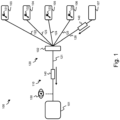
- Fig. 1 shows a schematic block diagram of an example point-to-multipoint optical network 100, in particular a passive optical network, PON.
- the optical network 100 comprises an optical line terminal 101, OLT, and a plurality of optical network units, ONUs 103 - 107, connected via an optical distribution network, ODN 120.
- OLT 101 is connected to five ONUs 103 - 107, however, the OLT 101 may be connected to fewer or more endpoints.
- the ODN 120 has a tree structure comprising an optical feeder fibre 121, one or more passive optical splitters/multiplexors 102, and a plurality of optical distribution fibres or drop fibres 122 - 126 that connect the splitter/multiplexor 102 to the respective ONUs 103 - 107.
- the passive optical splitter/multiplexor 102 splits the optical signal coming from the OLT 101 into lower power optical signals for the connected ONUs 103 - 107, while in the upstream direction, the passive optical splitter/multiplexor 102 multiplexes the optical signals coming from the connected ONUs 103 -107 into a burst signal for the OLT 101.
- the passive optical network 100 may be a Gigabit passive optical network, GPON, according to the ITU-T G.984 standard, a 10x Gigabit passive optical network, 10G-PON, according to the ITU-T G.987 standard, a 10G symmetrical XGS-PON according to the ITU-T G.9807 standard, a four-channel 10G symmetrical NG-PON2 according to the ITU-T G.989 standard, a 25GS-PON, a 50G-PON according to the ITU-T G.9804 standard, or a next generation passive optical network, NG-PON.
- the passive optical network 100 may implement time-division multiplexing, TDM, or timeand wavelength-division multiplexing, TWDM.
- a master session key 131 - 134 is typically derived during an authentication process for the respective ONUs 103 - 107.
- the OLT 101 and a respective ONU 103 - 107 establish a secure communication channel.
- Such an authentication process may, for example, be a registration-based authentication procedure or a secure mutual authentication procedure according to the ITU-T G.9807.1 standard.
- an ONU 107 exchanges one or more credentials 140 associated with the ONU 107, e.g. a registration identifier, with the OLT 101.
- the OLT 101 derives the master session key for ONU 107 from the received credentials 140.
- the ONU 107 independently derives the same master session key from the same credentials 140.
- the one or more credentials 140 may be exchanged or transmitted in the clear, i.e. not encrypted. This has the problem that intercepting 150 or eavesdropping of the credentials 140, in addition to knowledge of ITU-T PON standards, allows generating the master session key. This compromises the security of the PON 100 as most other shared keys can be derived from the master session key. These other shared keys may be referred to as derived shared keys such as, for example, a session key, SK; an ONU management control interface integrity key, OMCI_IK; a physical layer operation administration and maintenance integrity key, PLOAM_IK; and a key encryption key, KEK.
- derived shared keys such as, for example, a session key, SK; an ONU management control interface integrity key, OMCI_IK; a physical layer operation administration and maintenance integrity key, PLOAM_IK; and a key encryption key, KEK.
- PSK pre-shared key
- the PSK is provisioned into the OLT 101 and the respective ONUs 103 - 107, e.g. upon installation by field personnel.
- the PSK can then be used as an additional encryption key when generating the master session key 131 - 134 and/or the derived shared keys.
- the PSK makes eavesdropping 150 ineffective as the PSK is not exchanged between the ONUs 103 - 107 and the OLT 101.
- each ONU 103 - 107 within the PON 100 is assigned a unique PSK.
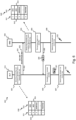
- Fig. 2 shows an example embodiment of an optical line terminal 211 comprising means configured to perform steps 200 according to example embodiments.
- the OLT 211 is configured to communicate in a point-to-multipoint optical network with ONUs 213, 214, 215 such as, for example, the optical network 100 illustrated in Fig. 1 .
- the OLT 211 and the respective ONUs 213, 214, 215 share respective sets of shared keys for enabling secure data exchange between the respective ONUs 213, 214, 215 and the OLT 211.
- each ONU 213, 214, 215 shares a set of shared keys with the OLT 211 that allows the ONUs 213, 214, 215 to exchange data securely with the OLT 211.
- Secure communication, secure data exchange, and network security may relate to protecting the optical network 210 against, amongst others, intercepting of downstream data, replacing of an ONU 213, 214, 215, re-programming of an ONU 213, 214, 215, forging of packets, impersonating an ONU 213, 214, 215, theft of service, intercepting traffic, generating traffic, impersonating an OLT 211, recording intercepted data, and replaying of intercepted data.
- a set of shared keys thus allows establishing a secure communication channel between the OLT 211 and a respective ONU 213, 214, 215, e.g. by encrypting exchanged data according to an encryption algorithm and a shared key.
- the set of shared keys may include a master session key, MSK, and one or more derived shared keys.
- a derived shared key may be any encryption key that is determined directly or indirectly from the master session key such as, for example, a session key, SK; an ONU management control interface integrity key, OMCI_IK; a physical layer operation administration and maintenance integrity key, PLOAM_IK; and a key encryption key, KEK.
- the means of OLT 211 are configured to perform receiving 201 at least one encrypted identifier 220 from a respective ONU 213.
- the OLT 211 may thus receive one or more encrypted identifiers 220 originating from ONU 213.
- the identifier 220 may be any characteristic that allows to identify the respective ONU 213.
- the identifier 220 may comprise a registration identifier associated with a respective ONU 213.
- the registration identifier may also be referred to as Registration_ID or Reg_ID, may be a string of numbers and/or letters assigned to an ONU 213, 214, 215 on the management level that allows to identify the ONU 213, 214, 215 within an optical network 210.
- the registration identifier may, for example, be a string of ASCII characters having a length of 36 octets.
- the identifier 220 may comprise a serial number associated with a respective ONU 213. Such a serial number allows identifying a particular ONU 213, 214, 215 within the optical network 210.
- the serial number may include, amongst others, a vendor specific identifier, also Vendor_ID, and/or a vendor-specific serial number, VSSN.
- the serial number may, for example, be a string of ASCII characters.
- the exchanged identifier 220 may only comprise a registration identifier, may only comprise a serial number, or may comprise both a registration identifier and a serial number. Alternatively or complementary, the identifier 220 may comprise one or more additional characteristics that allow to identify the ONU 213.
- the identifier 220 is encrypted according to a preconfigured encryption algorithm and a preconfigured key.
- the identifier 220 may be encrypted by the ONU 213 before transmitting it upstream to the OLT 211. This improves the network security of the optical network 210 as intercepting the encrypted identifier 220 does not allow to generate any shared keys, thereby making eavesdropping ineffective.
- the preconfigured encryption algorithm allows generating an encrypted output based on the preconfigured key.
- the preconfigured encryption algorithm generates an encrypted identifier 220 from an unencrypted identifier and the preconfigured key.
- the preconfigured key may be a string of numbers and/or letters only known to the OLT 211 and the ONU 213, e.g. a predetermined 128-bit value.
- the preconfigured encryption algorithm may, for example, be an encryption algorithm according to the Advanced Encryption Standard, AES, or the Data Encryption Standard, DES.
- the preconfigured encryption algorithm may be the cipher-based message authentication code, CMAC, algorithm according to NIST SP800-38B with the advanced encryption standard encryption algorithm according to NIST FIPS-197 as the underlying block cipher.
- CMAC cipher-based message authentication code
- the preconfigured encryption algorithm and the preconfigured key are configured in advance into the OLT 211 and into the respective ONUs 213, 214, 215, i.e. before provisioning or activating a respective ONU 213, 214, 215.
- This can, for example, be achieved by providing or storing the preconfigured key and encryption algorithm in a non-volatile memory of the OLT 211 and the respective ONUs 213, 214, 215 before provisioning the ONUs.
- Provisioning an ONU may refer to the process of configuring and activating an ONU 213, 214, 215 within an optical network 210 such that it can exchange data with other devices in the optical network 210, e.g. the OLT 211. This may, for example, include assigning an IP address to the ONU, configuring service options, and provisioning security settings.
- the preconfigured encryption algorithm and the preconfigured key allow avoiding time-consuming and operationally complex provisioning processes, as the preconfigured encryption algorithm and key are configured into the OLT 211 and the respective ONUs 213, 214, 215 before provisioning the ONUs in an optical network 210.
- the means of OLT 211 are further configured to perform decrypting 202 the received encrypted identifier 220.
- the received identifier 220 can be decrypted to obtain a decrypted identifier 221. It will be apparent that, receiving and decrypting a plurality of encrypted identifiers 220 results in a plurality of decrypted identifiers 221.
- the means of OLT 211 are further configured to perform determining 203 at least one shared key 222 based on the at least one decrypted identifier 221.
- decrypting the encrypted identifier 216 allows the OLT 211 to determine one or more of the shared keys 222 of the set of shared keys.
- the at least one shared key 222 may, for example, be determined by a key derivation function. Different shared keys 222 may be determined depending on the identifier 220, 221 that is received by the OLT 211, e.g. a master session key, a session key, or a key encryption key.
- Fig. 3 shows steps 300 performed by an optical line terminal 310, OLT, and an optical network unit 320, ONU, according to example embodiments.
- the ONU 320 may be characterised by a registration identifier 332.
- the ONU 320 may comprise means configured to perform encrypting 301 the registration identifier 332 according to a preconfigured encryption algorithm and a preconfigured key.
- the means of ONU 320 may further be configured to transmit or send 302 the encrypted registration identifier 330 to the OLT 310.
- ONU 320 may include the encrypted registration identifier 330 in a registration PLOAM message during ONU activation in response to a ranging grant, or in response to a request from the OLT 310.
- the OLT 310 may comprise means configured to perform receiving and decrypting 303 the encrypted registration identifier 330 according to the preconfigured encryption algorithm and the preconfigured key, thereby obtaining a decrypted registration identifier 331. Both the OLT 310 and the ONU 320 can then securely determine 304, 305 the master session key 332 based on the registration identifier, i.e. based on the decrypted registration identifier 331 and the unencrypted registration identifier 332 respectively. In other words, the functions to derive the master session key 332 are shared by the OLT 310 and the ONU 320.
- the ONU 320 may determine the master session key 332 at a different moment in time compared to the OLT 310, e.g. upon power up of the ONU 320 or before sending 302 the encrypted registration identifier 330 to the OLT 310.
- Fig. 4 shows steps 400 performed by an optical line terminal 410, OLT, and an optical network unit 420, ONU, according to example embodiments.
- the ONU 420 may be characterised by a serial number 432.
- the ONU 420 may comprise means configured to perform encrypting 401 the serial number 432 according to a preconfigured encryption algorithm and a preconfigured key.
- the means of ONU 420 may further be configured to transmit or send 402 the encrypted serial number 430 to the OLT 410.
- ONU 420 may include the encrypted serial number 430 in a PLOAM message upon request from the OLT 410, e.g. upon completion of the ONU activation before user data traffic is transmitted.
- the OLT 410 may comprise means configured to perform receiving and decrypting 403 the encrypted serial number 430 according to the preconfigured encryption algorithm and the preconfigured key, thereby obtaining a decrypted registration identifier 431. Both the OLT 410 and the ONU 420 can then securely determine 404, 405 one or more derived shared keys, DSKs 432. In other words, the one or more functions to derive the master session key 332 are shared by the OLT 310 and the ONU 320. The OLT 410 may determine these derived shared keys 432 based on the decrypted serial number 431 and a master session key 332.
- the KEK is indirectly derived from the MSK 332.
- a derived shared key 432 may be determined directly from the serial number 430, 431, e.g. the SK in Eq. 3, or indirectly from the serial number 430, e.g. the KEK in Eq. 4.
- the master session key 332 that is used to determine 404, 405 the derived shared keys 432 may have previously been determined by a registration-based authentication procedure according to the ITU-T G9807.1 standard, i.e. based on a registration identifier send in the clear.
- this master session key 332 may have previously been determined by the OLT410 and ONU 420 based on an encrypted registration identifier, i.e. as described in relation to Fig. 3 .
- Fig. 5 shows steps 500 performed by an OLT 510 and an ONU 520 according to example embodiments wherein one or more derived shared keys 432 are determined based on a securely determined MSK 332, i.e. an MSK 332 determined based on an encrypted registration identifier 330.
- the OLT 510 may request 501 the serial number from the ONU 520, e.g. by sending a PLOAM message during ONU activation.
- ONU 520 may encrypt 401 the serial number according to the preconfigured key and encryption algorithm; and send 402 the encrypted serial number 430 to the OLT 510.
- the OLT 510 may then decrypt 403 the serial number 431. Thereafter, e.g.
- the ONU 520 may encrypt 301 the registration identifier according to the preconfigured key and encryption algorithm; and send 302 the encrypted registration identifier 330 to the OLT 510.
- the OLT 510 may then decrypt 303 the registration identifier 331.
- the encrypted registration identifier 330 and the encrypted serial number 430 may both be send to the OLT 510 within a single message or response.
- the OLT 510 can then determine the MSK 332 based on the decrypted registration identifier 331 in step 304, e.g. according to Eq. 2.
- the OLT 510 can further determine one or more derived shared keys 432 based on the determined MSK 332 and the decrypted serial number 431 in step 404, e.g. according to Eq. 3.
- the ONU 520 can determine the same MSK 332 based on the registration identifier 332 in step 305, e.g. according to Eq. 2.
- the ONU 520 can further determine the same one or more derived shared keys 432 based on the determined MSK 332 and the serial number 432 in step 405, e.g. according to Eq. 3.
- Fig. 6 shows steps 600 performed by an OLT 610 and an ONU 620 wherein the preconfigured encryption algorithm and/or the preconfigured key may be configurable, according to example embodiments.
- the means of OLT 610 may be configured to, for a respective ONU 620, select 601 a preconfigured encryption algorithm from a plurality of preconfigured encryption algorithms and/or to select a preconfigured key from a plurality of preconfigured keys.
- This plurality of possible preconfigured encryption algorithms and preconfigured keys may thus be configured into the OLT 610 in advance, i.e. before provisioning or activating the respective ONU 620.
- This plurality of possible preconfigured encryption algorithms and preconfigured keys may, for example, be a list 630 of possible preconfigured encryption algorithms that is stored in a memory of the OLT 610.
- the means of OLT 610 may thus be configured to select 601 a preconfigured encryption algorithm from list 630, e.g. AES 634.
- the possible preconfigured encryption algorithms may be kept in a first list 630 and the possible preconfigured keys may be kept in a second list (not shown in Fig. 6 ). Alternatively, the possible preconfigured encryption algorithms and keys may be kept in the same list.
- the means of OLT 610 may further be configured to provide 602 the selected preconfigured encryption algorithm and/or the selected preconfigured key to ONU 620. This can be achieved by exchanging an encryption reference 652 indicative for the selected preconfigured encryption algorithm and/or a key reference 651 indicative for the selected preconfigured key.
- These references 651, 652 may, for example, be a string of numbers and/or letters indicative for the selected encryption algorithm and/or the selected key respectively.
- the encryption reference 652 may be an index 631 of list 630 such as index "2" to indicate that "AES" is the selected encryption algorithm.
- the references 651, 652 may be provided to the ONU 620 by means of a control message. For example, a dedicated PLOAM message may be send to ONU 620, or by including references 651, 652 within free bits in an existing PLOAM message such as padding bits.
- the list 640 of possible preconfigured encryption algorithms and keys may also be configured into the ONU 620 in advance, i.e. before provisioning or activating the ONU 620.
- the provided indices 651, 652 enable the ONU 620 to determine 603 which encryption algorithm and/or key are selected by the OLT 610.
- the means of ONU 620 may be configured to match the selected preconfigured encryption algorithm and key for encrypting 301 the identifier 330. This allows secure exchange of the selected preconfigured encryption algorithm and/or preconfigured key, as the selected encryption algorithm and/or key can not be deduced or derived by intercepting the references 651, 652.
- the means of ONU 620 may be configured to select a preconfigured encryption algorithm and/or preconfigured key and to provide the selected algorithm and key to the OLT 610.
- ONU 620 may select a preconfigured encryption algorithm and key, e.g. from list 640, and provide the selected algorithm and key to OLT 610.
- the means of OLT 610 may be configured to match the selected preconfigured encryption algorithm and key for decrypting 303 the identifier 330.
- Fig. 7 shows a suitable computing system 700 enabling to implement example embodiments of the method for secure determining of shared keys in an optical network.
- Computing system 700 may in general be formed as a suitable generalpurpose computer and comprise a bus 710, a processor 702, a local memory 704, one or more optional input interfaces 714, one or more optional output interfaces 716, a communication interface 712, a storage element interface 706, and one or more storage elements 708.
- Bus 710 may comprise one or more conductors that permit communication among the components of the computing system 700.
- Processor 702 may include any type of conventional processor or microprocessor that interprets and executes programming instructions.
- Local memory 704 may include a random-access memory (RAM) or another type of dynamic storage device that stores information and instructions for execution by processor 702 and/or a read only memory (ROM) or another type of static storage device that stores static information and instructions for use by processor 702.
- Input interface 714 may comprise one or more conventional mechanisms that permit an operator or user to input information to the computing device 700, such as a keyboard 720, a mouse 730, a pen, voice recognition and/or biometric mechanisms, a camera, etc.
- Output interface 716 may comprise one or more conventional mechanisms that output information to the operator or user, such as a display 740, etc.
- Communication interface 712 may comprise any transceiver-like mechanism such as for example one or more Ethernet interfaces that enables computing system 700 to communicate with other devices and/or systems, for example with optical network units, ONUs 213, 214, 215.
- the communication interface 712 of computing system 700 may be connected to such another computing system by means of a local area network (LAN) or a wide area network (WAN) such as for example the internet.
- Storage element interface 706 may comprise a storage interface such as for example a Serial Advanced Technology Attachment (SATA) interface or a Small Computer System Interface (SCSI) for connecting bus 710 to one or more storage elements 708, such as one or more local disks, for example SATA disk drives, and control the reading and writing of data to and/or from these storage elements 708.
- SATA Serial Advanced Technology Attachment
- SCSI Small Computer System Interface
- Storage element(s) 708 above is/are described as a local disk, in general any other suitable computer-readable media such as a removable magnetic disk, optical storage media such as a CD or DVD, -ROM disk, solid state drives, flash memory cards, ... could be used.
- Computing system 700 could thus correspond to the means of the optical line terminal 211 in the embodiments illustrated by Fig. 2 .
- top, bottom, over, under, and the like are introduced for descriptive purposes and not necessarily to denote relative positions. It is to be understood that the terms so used are interchangeable under appropriate circumstances and embodiments of the invention are capable of operating according to the present invention in other sequences, or in orientations different from the one(s) described or illustrated above.
Landscapes
- Engineering & Computer Science (AREA)
- Computer Networks & Wireless Communication (AREA)
- Signal Processing (AREA)
- Computer Security & Cryptography (AREA)
- Physics & Mathematics (AREA)
- Electromagnetism (AREA)
- Computing Systems (AREA)
- Computer Hardware Design (AREA)
- General Engineering & Computer Science (AREA)
- Small-Scale Networks (AREA)
Abstract
Example embodiments describe an optical line terminal (211), OLT, configured to communicate in a point-to-multipoint optical network (210) with optical network units (213, 214, 215), ONUs; wherein the OLT and a respective ONU share a set of shared keys. The OLT comprising means configured to perform receiving (201), from a respective ONU, at least one identifier (220) encrypted according to a preconfigured encryption algorithm and a preconfigured key; wherein the at least one identifier is characteristic for the respective ONU. The means further configured to perform decrypting (202) the at least one received identifier according to the preconfigured encryption algorithm and the preconfigured key; and determining (203) at least one shared key (222) based on the at least one decrypted identifier (221).
Description
- Various example embodiments relate to network security of point-to-multipoint optical networks, in particular to determining shared keys during an authentication procedure.
- In a point-to-multipoint optical network such as a passive optical network, PON, an optical line terminal, OLT, at the network side connects to a plurality of optical network units, ONUs, at the user side. A respective ONU typically establishes a secure communication channel with the OLT during an authentication process. During such an authentication process, one or more shared keys are derived based on credentials associated with the respective ONU. To this end, the ONU's credentials are typically transmitted upstream to the OLT without encryption, i.e. in the clear. This has the problem that intercepting the transmitted credentials allows generating one or more shared keys, thereby compromising the security of the optical network.
- The scope of protection sought for various embodiments of the invention is set out by the independent claims.
- The embodiments and features described in this specification that do not fall within the scope of the independent claims, if any, are to be interpreted as examples useful for understanding various embodiments of the invention.
- Amongst others, it is an object of embodiments of the invention to improve the network security of an optical network.
- This object is achieved, according to a first example aspect of the present disclosure, by an optical line terminal, OLT, configured to communicate in a point-to-multipoint optical network with optical network units, ONUs; wherein the OLT and a respective ONU share a set of shared keys. The OLT comprising means configured to perform receiving, from a respective ONU, at least one identifier encrypted according to a preconfigured encryption algorithm and a preconfigured key; wherein the at least one identifier is characteristic for the respective ONU. The means further being configured to perform decrypting the at least one received identifier according to the preconfigured encryption algorithm and the preconfigured key; and determining at least one shared key based on the at least one decrypted identifier.
- The set of shared keys may include a master session key, MSK, and one or more derived shared keys. A derived shared key may be any encryption key that is determined directly or indirectly from the master session key such as, for example, a session key, SK; an ONU management control interface integrity key, OMCI_IK; a physical layer operation administration and maintenance integrity key, PLOAM_IK; and a key encryption key, KEK. The set of shared keys allows establishing a secure communication channel between the OLT and the respective ONUs, e.g. by encrypting exchanged data according to an encryption algorithm and a shared key.
- The at least one identifier may be any characteristic that allows to identify a respective ONU. The at least one identifier is encrypted according to a preconfigured encryption algorithm and a preconfigured key. The at least one identifier may, for example, be encrypted by the respective ONU before being transmitted to the OLT. The preconfigured encryption algorithm allows generating an encrypted output based on the preconfigured key. The preconfigured encryption algorithm is only known to the OLT and the respective ONUs. The preconfigured encryption algorithm may, for example, be an encryption algorithm according to the Advanced Encryption Standard, AES, or the Data Encryption Standard, DES. The preconfigured key may be a string of numbers and/or letters only known to the OLT and the ONU, e.g. a 128-bit value.
- The preconfigured encryption algorithm and the preconfigured key are configured in advance into the OLT and into the respective ONUs, i.e. before provisioning or activating a respective ONU. This allows avoiding time-consuming and operationally complex provisioning processes, as the encryption algorithm and key are configured into the OLT and the respective ONUs before provisioning the ONUs in an optical network.
- By decrypting the at least one encrypted identifier, at least one decrypted identifier is obtained by the OLT. One or more shared keys can then be determined by the OLT based on the at least one decrypted identifier. This improves the network security of the optical network as intercepting the encrypted at least one identifier does not allow to generate any shared keys, thereby making eavesdropping ineffective. It is an advantage that this can be easily incorporated into existing optical networks without substantial operational changes to the ONU provisioning process.
- According to an example embodiment, the at least one identifier may comprise a registration identifier characteristic for the respective ONU.
- The registration identifier, also Registration_ID, may be a string of numbers and/or letters assigned to an ONU on the management level that allows to identify the ONU within an optical network. The registration identifier may, for example, be a string of ASCII characters having a length of 36 octets. The registration identifier may thus be encrypted according to the preconfigured encryption algorithm and the preconfigured key. This encrypting may be performed by an ONU before transmitting the encrypted registration identifier upstream, i.e. to the OLT. In other words, the OLT may receive an encrypted registration identifier from a respective ONU. One or more different encrypted identifiers may further be received by the OLT in addition to the registration identifier.
- According to an example embodiment, the means may further be configured to perform determining a master session key based on the decrypted registration identifier.
- The at least one shared key that is determined by the OLT may thus include the master session key. The master session key can be determined based on the registration identifier received and decrypted by the OLT. The master session key is a shared value between the OLT and a respective ONU as a result of an authentication procedure. The master session key may serve as a starting point for directly or indirectly determining derived shared keys which are used in subsequent secure data exchange, i.e. the other shared keys in the set of shared keys. Determining the master session key based on a securely exchanged, i.e. encrypted, registration identifier allows secure determination of the other shared keys, as the master session key is used to determine the other shared keys.
- According to an example embodiment, the at least one identifier may comprise a serial number characteristic for the respective ONU.
- The serial number allows identifying a particular ONU within an optical network. In particular, the serial number can be used to address the ONU when an ONU-ID is unavailable or unreliable. The serial number may include a vendor identifier, also Vendor_ID, and/or a vendor-specific serial number, VSSN. The serial number may, for example, be a string of ASCII characters. The serial number may thus be encrypted according to the preconfigured encryption algorithm and the preconfigured key. This encrypting may be performed by an ONU before transmitting the encrypted serial number upstream, i.e. to the OLT. In other words, the OLT may receive an encrypted serial number from a respective ONU. One or more different encrypted identifiers may further be received by the OLT in addition to the serial number.
- According to an example embodiment, the means may be configured to perform determining one or more shared keys based on the decrypted serial number and a master session key.
- The at least one shared key that is determined by the OLT may thus include one or more derived shared keys, e.g. a session key and/or a key encryption key. The one or more shared keys can be determined based on the serial number received and decrypted by the OLT, and based on a master session key. This master session key may have been determined based on an encrypted registration identifier that was received and decrypted by the OLT, i.e. based on a registration identifier that was transmitted upstream in encrypted form. Alternatively, the master session key may have been determined based on an unencrypted registration identifier, i.e. a registration identifier transmitted upstream in the clear.
- Alternatively, the encrypted registration identifier and the encrypted serial number may both be received by the OLT simultaneously, e.g. within the same upstream signal. In this case, the master session key may first be determined based on the decrypted registration identifier. Hereafter, the determined master session key may then be used to determine one or more shared keys based on the decrypted serial number.
- According to an example embodiment, the preconfigured key and the preconfigured encryption algorithm may be identical for the ONUs and the OLT within the point-to-multipoint network.
- In other words, the same preconfigured key and preconfigured encryption algorithm may be shared between the OLT and the different ONUs within the optical network. This has the advantage that it further reduces the operational complexity of the optical network.
- According to an example embodiment, the preconfigured encryption algorithm and/or the preconfigured key may be configurable for the OLT and the respective ONUs.
- The preconfigured encryption algorithm and/or the preconfigured key may thus be adjusted for the respective ONUs within the optical network. This allows using different preconfigured encryption algorithms and/or preconfigured keys for the respective ONUs or for respective groups of ONUs. This has the further advantage that it can improve the network security of the optical network.
- According to an example embodiment, the means may further be configured to, for a respective ONU, select a preconfigured encryption algorithm and/or a preconfigured key; and to provide the selected preconfigured encryption algorithm and/or the selected preconfigured key to the respective ONU.
- The OLT may thus select or choose a preconfigured encryption algorithm and/or a preconfigured key for a respective ONU from a plurality of preconfigured encryption algorithms and/or a plurality of preconfigured keys. The OLT may, for example, perform this selecting during ONU activation. To this end, the OLT and the respective ONUs may keep a plurality of preconfigured encryption algorithms and/or preconfigured keys in memory. This plurality of preconfigured encryption algorithms and/or preconfigured keys may thus be configured into the OLT and the respective ONUs in advance, i.e. before provisioning or activating the respective ONUs. This can further improve the network security of the optical network without substantially increasing the operational complexity of ONU provisioning.
- The OLT may then provide or communicate the selected preconfigured encryption algorithm and/or the selected preconfigured key to the respective ONUs. The selected preconfigured encryption algorithm and/or preconfigured key may be provided to the respective ONU by means of a control message such as, for example, a physical layer operations administration and maintenance, PLOAM, message.
- According to an example embodiment, the means may further be configured to provide, to the respective ONU, an encryption reference indicative for the selected preconfigured encryption algorithm and/or a key reference indicative for the selected preconfigured key.
- The encryption reference and the key reference may, for example, be a string of numbers and/or letters indicative for the selected preconfigured encryption algorithm and preconfigured key, respectively. For example, the key reference may be an index of a list comprising a plurality of possible preconfigured keys. Providing the encryption reference and/or the key reference allows secure exchange of the selected preconfigured encryption algorithm and/or preconfigured key to a respective ONU, as the selected encryption algorithm and/or key can not be deduced by intercepting control messages.
- According to an example embodiment, the means may comprise at least one processor, and at least one memory including computer program code; the at least one memory and computer program code being configured to, with the at least one processor, cause the performance of the OLT according to example embodiments.
- According to a second example aspect, an optical network unit, ONU, is disclosed configured to communicate in a point-to-multipoint optical network with an optical network terminal, OLT according to the first example aspect; wherein the OLT and the ONU share a set of shared keys. The ONU comprising means configured to perform encrypting at least one identifier according to a preconfigured encryption algorithm and a preconfigured key, wherein the at least one identifier is characteristic for the ONU. The means further being configured to perform sending the encrypted at least one identifier to the OLT; and determining at least one shared key based on the at least one identifier.
- According to a third example aspect, a method is disclosed comprising:
- encrypting at least one identifier according to a preconfigured encryption algorithm and a preconfigured key by an optical network unit, ONU, configured to communicate in a point-to-multipoint optical network with an optical network terminal, OLT; wherein the OLT and the ONU share a set of shared keys; and wherein the at least one identifier is characteristic for the ONU;
- by the OLT, receiving the encrypted at least one identifier from the ONU; and decrypting the at least one received identifier according to the preconfigured encryption algorithm and the preconfigured key; and
- determining, by the OLT, at least one shared key based on the at least one decrypted identifier; and
- determining, by the ONU, the at least one shared key based on the at least one identifier.
- Some example embodiments will now be described with reference to the accompanying drawings.
-
Fig. 1 shows a schematic block diagram of an example point-to-multipointoptical network 100; -
Fig. 2 shows an example embodiment of an optical line terminal, OLT, comprising means configured to perform steps according to example embodiments; -
Fig. 3 shows steps performed by an optical line terminal, OLT, and an optical network unit, ONU, for determining a master session key based on an encrypted registration identifier, according to example embodiments; -
Fig. 4 shows steps performed by an optical line terminal, OLT, and an optical network unit, ONU, for determining one or more shared keys based on an encrypted serial number and a master session key, according to example embodiments; -
Fig. 5 shows steps performed by an optical line terminal, OLT, and an optical network unit, ONU, wherein one or more shared keys are determined based on a master session key precedingly determined based on an encrypted registration identifier; -
Fig. 6 shows steps performed by an optical line terminal, OLT, and an optical network unit, ONU, wherein a preconfigured encryption algorithm and/or preconfigured key may be configurable, according to example embodiments; and -
Fig. 7 shows a suitable computing system enabling to implement example embodiments. -
Fig. 1 shows a schematic block diagram of an example point-to-multipointoptical network 100, in particular a passive optical network, PON. Theoptical network 100 comprises anoptical line terminal 101, OLT, and a plurality of optical network units, ONUs 103 - 107, connected via an optical distribution network,ODN 120. In this example, theOLT 101 is connected to five ONUs 103 - 107, however, theOLT 101 may be connected to fewer or more endpoints. TheODN 120 has a tree structure comprising anoptical feeder fibre 121, one or more passive optical splitters/multiplexors 102, and a plurality of optical distribution fibres or drop fibres 122 - 126 that connect the splitter/multiplexor 102 to the respective ONUs 103 - 107. In the downstream, the passive optical splitter/multiplexor 102 splits the optical signal coming from theOLT 101 into lower power optical signals for the connected ONUs 103 - 107, while in the upstream direction, the passive optical splitter/multiplexor 102 multiplexes the optical signals coming from the connected ONUs 103 -107 into a burst signal for theOLT 101. - The passive
optical network 100 may be a Gigabit passive optical network, GPON, according to the ITU-T G.984 standard, a 10x Gigabit passive optical network, 10G-PON, according to the ITU-T G.987 standard, a 10G symmetrical XGS-PON according to the ITU-T G.9807 standard, a four-channel 10G symmetrical NG-PON2 according to the ITU-T G.989 standard, a 25GS-PON, a 50G-PON according to the ITU-T G.9804 standard, or a next generation passive optical network, NG-PON. The passiveoptical network 100 may implement time-division multiplexing, TDM, or timeand wavelength-division multiplexing, TWDM. - In a passive
optical network 100, a master session key 131 - 134, MSK, is typically derived during an authentication process for the respective ONUs 103 - 107. During such an authentication process theOLT 101 and a respective ONU 103 - 107 establish a secure communication channel. Such an authentication process may, for example, be a registration-based authentication procedure or a secure mutual authentication procedure according to the ITU-T G.9807.1 standard. During the authentication process, anONU 107 exchanges one ormore credentials 140 associated with theONU 107, e.g. a registration identifier, with theOLT 101. TheOLT 101 derives the master session key forONU 107 from the receivedcredentials 140. TheONU 107 independently derives the same master session key from thesame credentials 140. - The one or
more credentials 140 may be exchanged or transmitted in the clear, i.e. not encrypted. This has the problem that intercepting 150 or eavesdropping of thecredentials 140, in addition to knowledge of ITU-T PON standards, allows generating the master session key. This compromises the security of thePON 100 as most other shared keys can be derived from the master session key. These other shared keys may be referred to as derived shared keys such as, for example, a session key, SK; an ONU management control interface integrity key, OMCI_IK; a physical layer operation administration and maintenance integrity key, PLOAM_IK; and a key encryption key, KEK. - To address this challenge, some solutions rely on a pre-shared key, PSK, to allow secure authentication. The PSK is provisioned into the
OLT 101 and the respective ONUs 103 - 107, e.g. upon installation by field personnel. The PSK can then be used as an additional encryption key when generating the master session key 131 - 134 and/or the derived shared keys. The PSK makeseavesdropping 150 ineffective as the PSK is not exchanged between the ONUs 103 - 107 and theOLT 101. To provide adequate security, each ONU 103 - 107 within thePON 100 is assigned a unique PSK. This has the problem that the respective PSKs have to be provisioned into theOLT 101 for each ONU 103 - 107, which is time-consuming and operationally complex. It can thus be desirable to enable secure determination of shared keys in an optical network without time-consuming and operationally complex ONU provisioning. -
Fig. 2 shows an example embodiment of anoptical line terminal 211 comprising means configured to performsteps 200 according to example embodiments. TheOLT 211 is configured to communicate in a point-to-multipoint optical network withONUs optical network 100 illustrated inFig. 1 . TheOLT 211 and therespective ONUs respective ONUs OLT 211. In other words, eachONU OLT 211 that allows theONUs OLT 211. Secure communication, secure data exchange, and network security may relate to protecting theoptical network 210 against, amongst others, intercepting of downstream data, replacing of anONU ONU ONU OLT 211, recording intercepted data, and replaying of intercepted data. - A set of shared keys thus allows establishing a secure communication channel between the
OLT 211 and arespective ONU - The means of
OLT 211 are configured to perform receiving 201 at least oneencrypted identifier 220 from arespective ONU 213. TheOLT 211 may thus receive one or moreencrypted identifiers 220 originating fromONU 213. Theidentifier 220 may be any characteristic that allows to identify therespective ONU 213. - The
identifier 220 may comprise a registration identifier associated with arespective ONU 213. The registration identifier, may also be referred to as Registration_ID or Reg_ID, may be a string of numbers and/or letters assigned to anONU ONU optical network 210. The registration identifier may, for example, be a string of ASCII characters having a length of 36 octets. - Alternatively or complementary, the
identifier 220 may comprise a serial number associated with arespective ONU 213. Such a serial number allows identifying aparticular ONU optical network 210. The serial number may include, amongst others, a vendor specific identifier, also Vendor_ID, and/or a vendor-specific serial number, VSSN. The serial number may, for example, be a string of ASCII characters. - It will be apparent that the exchanged
identifier 220 may only comprise a registration identifier, may only comprise a serial number, or may comprise both a registration identifier and a serial number. Alternatively or complementary, theidentifier 220 may comprise one or more additional characteristics that allow to identify theONU 213. - The
identifier 220 is encrypted according to a preconfigured encryption algorithm and a preconfigured key. Theidentifier 220 may be encrypted by theONU 213 before transmitting it upstream to theOLT 211. This improves the network security of theoptical network 210 as intercepting theencrypted identifier 220 does not allow to generate any shared keys, thereby making eavesdropping ineffective. - The preconfigured encryption algorithm allows generating an encrypted output based on the preconfigured key. In other words, the preconfigured encryption algorithm generates an
encrypted identifier 220 from an unencrypted identifier and the preconfigured key. The preconfigured key may be a string of numbers and/or letters only known to theOLT 211 and theONU 213, e.g. a predetermined 128-bit value. The preconfigured encryption algorithm may, for example, be an encryption algorithm according to the Advanced Encryption Standard, AES, or the Data Encryption Standard, DES. For example, the preconfigured encryption algorithm may be the cipher-based message authentication code, CMAC, algorithm according to NIST SP800-38B with the advanced encryption standard encryption algorithm according to NIST FIPS-197 as the underlying block cipher. Such an AES-CMAC function may, for example, generate an output T of length Tlen based on a block cipher key K, e.g. the preconfigured key, and an information message M, e.g. theidentifier 220, as follows:
- The preconfigured encryption algorithm and the preconfigured key are configured in advance into the
OLT 211 and into therespective ONUs respective ONU OLT 211 and therespective ONUs ONU optical network 210 such that it can exchange data with other devices in theoptical network 210, e.g. theOLT 211. This may, for example, include assigning an IP address to the ONU, configuring service options, and provisioning security settings. - The preconfigured encryption algorithm and the preconfigured key allow avoiding time-consuming and operationally complex provisioning processes, as the preconfigured encryption algorithm and key are configured into the
OLT 211 and therespective ONUs optical network 210. - The means of
OLT 211 are further configured to perform decrypting 202 the receivedencrypted identifier 220. As theOLT 211 is aware of the preconfigured encryption algorithm and the preconfigured key, the receivedidentifier 220 can be decrypted to obtain a decryptedidentifier 221. It will be apparent that, receiving and decrypting a plurality ofencrypted identifiers 220 results in a plurality of decryptedidentifiers 221. - The means of
OLT 211 are further configured to perform determining 203 at least one sharedkey 222 based on the at least one decryptedidentifier 221. In other words, decrypting the encrypted identifier 216 allows theOLT 211 to determine one or more of the sharedkeys 222 of the set of shared keys. The at least one sharedkey 222 may, for example, be determined by a key derivation function. Different sharedkeys 222 may be determined depending on theidentifier OLT 211, e.g. a master session key, a session key, or a key encryption key. -
Fig. 3 showssteps 300 performed by anoptical line terminal 310, OLT, and anoptical network unit 320, ONU, according to example embodiments. TheONU 320 may be characterised by aregistration identifier 332. TheONU 320 may comprise means configured to perform encrypting 301 theregistration identifier 332 according to a preconfigured encryption algorithm and a preconfigured key. The means ofONU 320 may further be configured to transmit or send 302 theencrypted registration identifier 330 to theOLT 310.ONU 320 may include theencrypted registration identifier 330 in a registration PLOAM message during ONU activation in response to a ranging grant, or in response to a request from theOLT 310. - The
OLT 310 may comprise means configured to perform receiving and decrypting 303 theencrypted registration identifier 330 according to the preconfigured encryption algorithm and the preconfigured key, thereby obtaining a decryptedregistration identifier 331. Both theOLT 310 and theONU 320 can then securely determine 304, 305 themaster session key 332 based on the registration identifier, i.e. based on the decryptedregistration identifier 331 and theunencrypted registration identifier 332 respectively. In other words, the functions to derive themaster session key 332 are shared by theOLT 310 and theONU 320. It will be apparent that theONU 320 may determine themaster session key 332 at a different moment in time compared to theOLT 310, e.g. upon power up of theONU 320 or before sending 302 theencrypted registration identifier 330 to theOLT 310. Themaster session key 332 may, for example, be determined as
registration identifier 332 ofONU 310; and L represents the bit length of the determined MSK. -
Fig. 4 showssteps 400 performed by anoptical line terminal 410, OLT, and anoptical network unit 420, ONU, according to example embodiments. TheONU 420 may be characterised by aserial number 432. TheONU 420 may comprise means configured to perform encrypting 401 theserial number 432 according to a preconfigured encryption algorithm and a preconfigured key. The means ofONU 420 may further be configured to transmit or send 402 the encryptedserial number 430 to theOLT 410.ONU 420 may include the encryptedserial number 430 in a PLOAM message upon request from theOLT 410, e.g. upon completion of the ONU activation before user data traffic is transmitted. - The
OLT 410 may comprise means configured to perform receiving and decrypting 403 the encryptedserial number 430 according to the preconfigured encryption algorithm and the preconfigured key, thereby obtaining a decryptedregistration identifier 431. Both theOLT 410 and theONU 420 can then securely determine 404, 405 one or more derived shared keys,DSKs 432. In other words, the one or more functions to derive themaster session key 332 are shared by theOLT 310 and theONU 320. TheOLT 410 may determine these derived sharedkeys 432 based on the decryptedserial number 431 and amaster session key 332. TheONU 420 may determine these derived sharedkeys 432 based on the unencryptedserial number 432 and amaster session key 332. It will be apparent that derived sharedkeys 432 may be determined directly from theMSK 332, or indirectly from theMSK 332. In other words, a first derived shared key may directly be determined from themaster session key 332, and one or more subsequently derived shared keys may be determined based on the first derived shared key, i.e. indirectly from theMSK 332. For example, a session key, SK, can directly be determined from themaster session key 332 as
master session key 332, as
MSK 332. Similarly, it will be apparent that a derived shared key 432 may be determined directly from theserial number serial number 430, e.g. the KEK in Eq. 4. - The
master session key 332 that is used to determine 404, 405 the derived sharedkeys 432 may have previously been determined by a registration-based authentication procedure according to the ITU-T G9807.1 standard, i.e. based on a registration identifier send in the clear. Alternatively, thismaster session key 332 may have previously been determined by the OLT410 andONU 420 based on an encrypted registration identifier, i.e. as described in relation toFig. 3 . -
Fig. 5 showssteps 500 performed by anOLT 510 and anONU 520 according to example embodiments wherein one or more derived sharedkeys 432 are determined based on a securelydetermined MSK 332, i.e. anMSK 332 determined based on anencrypted registration identifier 330. TheOLT 510 may request 501 the serial number from theONU 520, e.g. by sending a PLOAM message during ONU activation. In response to therequest 501,ONU 520 may encrypt 401 the serial number according to the preconfigured key and encryption algorithm; and send 402 the encryptedserial number 430 to theOLT 510. TheOLT 510 may then decrypt 403 theserial number 431. Thereafter, e.g. in response to anadditional request 502, theONU 520 may encrypt 301 the registration identifier according to the preconfigured key and encryption algorithm; and send 302 theencrypted registration identifier 330 to theOLT 510. TheOLT 510 may then decrypt 303 theregistration identifier 331. Alternatively, theencrypted registration identifier 330 and the encryptedserial number 430 may both be send to theOLT 510 within a single message or response. - The
OLT 510 can then determine theMSK 332 based on the decryptedregistration identifier 331 instep 304, e.g. according to Eq. 2. TheOLT 510 can further determine one or more derived sharedkeys 432 based on thedetermined MSK 332 and the decryptedserial number 431 instep 404, e.g. according to Eq. 3. - The
ONU 520 can determine thesame MSK 332 based on theregistration identifier 332 instep 305, e.g. according to Eq. 2. TheONU 520 can further determine the same one or more derived sharedkeys 432 based on thedetermined MSK 332 and theserial number 432 instep 405, e.g. according to Eq. 3. -
Fig. 6 showssteps 600 performed by anOLT 610 and anONU 620 wherein the preconfigured encryption algorithm and/or the preconfigured key may be configurable, according to example embodiments. To this end, the means ofOLT 610 may be configured to, for arespective ONU 620, select 601 a preconfigured encryption algorithm from a plurality of preconfigured encryption algorithms and/or to select a preconfigured key from a plurality of preconfigured keys. This plurality of possible preconfigured encryption algorithms and preconfigured keys may thus be configured into theOLT 610 in advance, i.e. before provisioning or activating therespective ONU 620. This plurality of possible preconfigured encryption algorithms and preconfigured keys may, for example, be alist 630 of possible preconfigured encryption algorithms that is stored in a memory of theOLT 610. The means ofOLT 610 may thus be configured to select 601 a preconfigured encryption algorithm fromlist 630, e.g.AES 634. The possible preconfigured encryption algorithms may be kept in afirst list 630 and the possible preconfigured keys may be kept in a second list (not shown inFig. 6 ). Alternatively, the possible preconfigured encryption algorithms and keys may be kept in the same list. - The means of
OLT 610 may further be configured to provide 602 the selected preconfigured encryption algorithm and/or the selected preconfigured key toONU 620. This can be achieved by exchanging anencryption reference 652 indicative for the selected preconfigured encryption algorithm and/or akey reference 651 indicative for the selected preconfigured key. Thesereferences encryption reference 652 may be anindex 631 oflist 630 such as index "2" to indicate that "AES" is the selected encryption algorithm. Thereferences ONU 620 by means of a control message. For example, a dedicated PLOAM message may be send toONU 620, or by includingreferences - The
list 640 of possible preconfigured encryption algorithms and keys may also be configured into theONU 620 in advance, i.e. before provisioning or activating theONU 620. As such, the providedindices ONU 620 to determine 603 which encryption algorithm and/or key are selected by theOLT 610. In other words, the means ofONU 620 may be configured to match the selected preconfigured encryption algorithm and key for encrypting 301 theidentifier 330. This allows secure exchange of the selected preconfigured encryption algorithm and/or preconfigured key, as the selected encryption algorithm and/or key can not be deduced or derived by intercepting thereferences - This further allows adjusting the preconfigured algorithm and/or the preconfigured key for
different ONUs 620 within an optical network without substantially increasing the operational complexity of ONU provisioning, as the possible preconfigured encryption algorithms and keys are configured into theOLT 610 and therespective ONUs 620 in advance. This has the further advantage that it can improve the network security of the optical network. It is a further advantage that example embodiments can be easily incorporated into existing optical networks without substantial operational changes to the ONU provisioning process of a network provider. - Alternatively, the means of
ONU 620 may be configured to select a preconfigured encryption algorithm and/or preconfigured key and to provide the selected algorithm and key to theOLT 610. In other words,ONU 620 may select a preconfigured encryption algorithm and key, e.g. fromlist 640, and provide the selected algorithm and key toOLT 610. In this case, the means ofOLT 610 may be configured to match the selected preconfigured encryption algorithm and key for decrypting 303 theidentifier 330. -
Fig. 7 shows asuitable computing system 700 enabling to implement example embodiments of the method for secure determining of shared keys in an optical network.Computing system 700 may in general be formed as a suitable generalpurpose computer and comprise abus 710, aprocessor 702, alocal memory 704, one or more optional input interfaces 714, one or moreoptional output interfaces 716, acommunication interface 712, astorage element interface 706, and one ormore storage elements 708.Bus 710 may comprise one or more conductors that permit communication among the components of thecomputing system 700.Processor 702 may include any type of conventional processor or microprocessor that interprets and executes programming instructions.Local memory 704 may include a random-access memory (RAM) or another type of dynamic storage device that stores information and instructions for execution byprocessor 702 and/or a read only memory (ROM) or another type of static storage device that stores static information and instructions for use byprocessor 702.Input interface 714 may comprise one or more conventional mechanisms that permit an operator or user to input information to thecomputing device 700, such as akeyboard 720, amouse 730, a pen, voice recognition and/or biometric mechanisms, a camera, etc.Output interface 716 may comprise one or more conventional mechanisms that output information to the operator or user, such as adisplay 740, etc.Communication interface 712 may comprise any transceiver-like mechanism such as for example one or more Ethernet interfaces that enablescomputing system 700 to communicate with other devices and/or systems, for example with optical network units,ONUs communication interface 712 ofcomputing system 700 may be connected to such another computing system by means of a local area network (LAN) or a wide area network (WAN) such as for example the internet.Storage element interface 706 may comprise a storage interface such as for example a Serial Advanced Technology Attachment (SATA) interface or a Small Computer System Interface (SCSI) for connectingbus 710 to one ormore storage elements 708, such as one or more local disks, for example SATA disk drives, and control the reading and writing of data to and/or from thesestorage elements 708. Although the storage element(s) 708 above is/are described as a local disk, in general any other suitable computer-readable media such as a removable magnetic disk, optical storage media such as a CD or DVD, -ROM disk, solid state drives, flash memory cards, ... could be used.Computing system 700 could thus correspond to the means of theoptical line terminal 211 in the embodiments illustrated byFig. 2 . - Although the present invention has been illustrated by reference to specific embodiments, it will be apparent to those skilled in the art that the invention is not limited to the details of the foregoing illustrative embodiments, and that the present invention may be embodied with various changes and modifications without departing from the scope thereof. The present embodiments are therefore to be considered in all respects as illustrative and not restrictive, the scope of the invention being indicated by the appended claims rather than by the foregoing description, and all changes which come within the scope of the claims are therefore intended to be embraced therein.
- It will furthermore be understood by the reader of this patent application that the words "comprising" or "comprise" do not exclude other elements or steps, that the words "a" or "an" do not exclude a plurality, and that a single element, such as a computer system, a processor, or another integrated unit may fulfil the functions of several means recited in the claims. Any reference signs in the claims shall not be construed as limiting the respective claims concerned. The terms "first", "second", third", "a", "b", "c", and the like, when used in the description or in the claims are introduced to distinguish between similar elements or steps and are not necessarily describing a sequential or chronological order. Similarly, the terms "top", "bottom", "over", "under", and the like are introduced for descriptive purposes and not necessarily to denote relative positions. It is to be understood that the terms so used are interchangeable under appropriate circumstances and embodiments of the invention are capable of operating according to the present invention in other sequences, or in orientations different from the one(s) described or illustrated above.
Claims (12)
- An optical line terminal (211), OLT, configured to communicate in a point-to-multipoint optical network (210) with optical network units (213, 214, 215), ONUs; wherein the OLT and a respective ONU share a set of shared keys; the OLT comprising means configured to perform:- receiving (201), from a respective ONU, at least one identifier (220) encrypted according to a preconfigured encryption algorithm and a preconfigured key; wherein the at least one identifier is characteristic for the respective ONU;- decrypting (202) the at least one received identifier according to the preconfigured encryption algorithm and the preconfigured key; and- determining (203) at least one shared key (222) based on the at least one decrypted identifier (221).
- The optical line terminal, OLT, according to claim 1, wherein the at least one identifier (220) comprises a registration identifier characteristic for the respective ONU (213, 214, 215).
- The optical line terminal, OLT, according to claim 2, wherein the means are configured to perform determining (304) a master session key (332) based on the decrypted registration identifier (331).
- The optical line terminal, OLT, according to any of the preceding claims, wherein the at least one identifier (220) comprises a serial number characteristic for the respective ONU (213, 214, 215).
- The optical line terminal, OLT, according to claim 4, wherein the means are configured to perform determining (404) one or more shared keys (432) based on the decrypted serial number (431) and a master session key (332).
- The optical line terminal, OLT, according to any of the preceding claims, wherein the preconfigured key and the preconfigured encryption algorithm are identical for the ONUs (213, 214, 215) and the OLT (211) within the point-to-multipoint network.
- The optical line terminal, OLT, according to any of the preceding claims, wherein the preconfigured encryption algorithm and/or the preconfigured key are configurable for the OLT (211) and the respective ONUs (213, 214, 215).
- The optical line terminal, OLT, according to claim 7, wherein the means are further configured to, for a respective ONU (620), select (601) a preconfigured encryption algorithm and/or a preconfigured key; and to provide (602) the selected preconfigured encryption algorithm and/or the selected preconfigured key to the respective ONU.
- The optical line terminal, OLT, according to claim 8, wherein the means are further configured to provide, to the respective ONU, an encryption reference (652) indicative for the selected preconfigured encryption algorithm and/or a key reference (651) indicative for the selected preconfigured key.
- An optical line terminal, OLT, according to any of the preceding claims, wherein the means comprise at least one processor, and at least one memory including computer program code; the at least one memory and computer program code being configured to, with the at least one processor, cause the performance of the OLT according to any of claims 1 - 9.
- An optical network unit, ONU (620), configured to communicate in a point-to-multipoint optical network with an optical network terminal, OLT (610) according to any of claims 1 - 10; wherein the OLT and the ONU share a set of shared keys; the ONU comprising means configured to perform:- encrypting (604) at least one identifier (220) according to a preconfigured encryption algorithm and a preconfigured key, wherein the at least one identifier is characteristic for the ONU;- sending (605) the encrypted at least one identifier (220) to the OLT; and- determining (608) at least one shared key (222) based on the at least one identifier.
- A method comprising:- encrypting (604) at least one identifier (220) according to a preconfigured encryption algorithm and a preconfigured key by an optical network unit, ONU (620), configured to communicate in a point-to-multipoint optical network with an optical network terminal, OLT (610); wherein the OLT and the ONU share a set of shared keys; and wherein the at least one identifier is characteristic for the ONU;- by the OLT (610), receiving the encrypted at least one identifier (220) from the ONU (620); and decrypting (606) the at least one received identifier according to the preconfigured encryption algorithm and the preconfigured key; and- determining (607), by the OLT (610), at least one shared key (222) based on the at least one decrypted identifier (221); and- determining (608), by the ONU (620), the at least one shared key (222) based on the at least one identifier.
Priority Applications (3)
| Application Number | Priority Date | Filing Date | Title |
|---|---|---|---|
| EP23158842.7A EP4422120A1 (en) | 2023-02-27 | 2023-02-27 | Secure identifier exchange in an optical network |
| CN202410207207.XA CN118555057A (en) | 2023-02-27 | 2024-02-26 | Secure identifier exchange in optical networks |
| US18/588,121 US20250184162A1 (en) | 2023-02-27 | 2024-02-27 | Secure identifier exchange in an optical network |
Applications Claiming Priority (1)
| Application Number | Priority Date | Filing Date | Title |
|---|---|---|---|
| EP23158842.7A EP4422120A1 (en) | 2023-02-27 | 2023-02-27 | Secure identifier exchange in an optical network |
Publications (1)
| Publication Number | Publication Date |
|---|---|
| EP4422120A1 true EP4422120A1 (en) | 2024-08-28 |
Family
ID=85384513
Family Applications (1)
| Application Number | Title | Priority Date | Filing Date |
|---|---|---|---|
| EP23158842.7A Pending EP4422120A1 (en) | 2023-02-27 | 2023-02-27 | Secure identifier exchange in an optical network |
Country Status (3)
| Country | Link |
|---|---|
| US (1) | US20250184162A1 (en) |
| EP (1) | EP4422120A1 (en) |
| CN (1) | CN118555057A (en) |
Citations (4)
| Publication number | Priority date | Publication date | Assignee | Title |
|---|---|---|---|---|
| US20050008158A1 (en) * | 2003-07-09 | 2005-01-13 | Huh Jae Doo | Key management device and method for providing security service in ethernet-based passive optical network |
| EP2091176A1 (en) * | 2008-02-18 | 2009-08-19 | British Telecommunications Public Limited Company | Data communication |
| WO2011017847A1 (en) * | 2009-08-14 | 2011-02-17 | 华为技术有限公司 | Method and device for exchanging key |
| CN109274489A (en) * | 2018-09-25 | 2019-01-25 | 重庆邮电大学 | Authentication key negotiation method under TWDM-PON system |
Family Cites Families (9)
| Publication number | Priority date | Publication date | Assignee | Title |
|---|---|---|---|---|
| WO2006062345A1 (en) * | 2004-12-07 | 2006-06-15 | Electronics And Telecommunications Research Institute | Method of distributing keys over epon |
| CN101064719A (en) * | 2006-04-27 | 2007-10-31 | 华为技术有限公司 | Cryptographic algorithm negotiating method in PON system |
| CN102223586B (en) * | 2010-04-13 | 2015-06-03 | 中兴通讯股份有限公司 | Registration activation method and system for optical network unit |
| EP2924913A4 (en) * | 2012-12-28 | 2015-11-25 | Huawei Tech Co Ltd | Authentication method, device and system |
| CN106817352A (en) * | 2015-11-30 | 2017-06-09 | 深圳市中兴微电子技术有限公司 | Broadcasting packet encryption method and device |
| CN109039600B (en) * | 2018-07-16 | 2020-01-07 | 烽火通信科技股份有限公司 | Method and system for negotiating encryption algorithm in passive optical network system |
| US12200122B1 (en) * | 2020-08-06 | 2025-01-14 | Cable Television Laboratories, Inc. | Systems and methods for advanced quantum-safe PKI credentials for authentications |
| CN121691967A (en) * | 2020-09-22 | 2026-03-17 | 华为技术有限公司 | Safety communication method and device in passive optical network |
| CN116800442A (en) * | 2022-03-15 | 2023-09-22 | 华为技术有限公司 | An authentication method and device |
-
2023
- 2023-02-27 EP EP23158842.7A patent/EP4422120A1/en active Pending
-
2024
- 2024-02-26 CN CN202410207207.XA patent/CN118555057A/en active Pending
- 2024-02-27 US US18/588,121 patent/US20250184162A1/en active Pending
Patent Citations (4)
| Publication number | Priority date | Publication date | Assignee | Title |
|---|---|---|---|---|
| US20050008158A1 (en) * | 2003-07-09 | 2005-01-13 | Huh Jae Doo | Key management device and method for providing security service in ethernet-based passive optical network |
| EP2091176A1 (en) * | 2008-02-18 | 2009-08-19 | British Telecommunications Public Limited Company | Data communication |
| WO2011017847A1 (en) * | 2009-08-14 | 2011-02-17 | 华为技术有限公司 | Method and device for exchanging key |
| CN109274489A (en) * | 2018-09-25 | 2019-01-25 | 重庆邮电大学 | Authentication key negotiation method under TWDM-PON system |
Also Published As
| Publication number | Publication date |
|---|---|
| US20250184162A1 (en) | 2025-06-05 |
| CN118555057A (en) | 2024-08-27 |
Similar Documents
| Publication | Publication Date | Title |
|---|---|---|
| CA2769226C (en) | Optical network terminal management control interface-based passive optical network security enhancement | |
| EP2351311B1 (en) | Method for increasing security in a passive optical network | |
| US8654979B2 (en) | Quantum key device | |
| KR100715679B1 (en) | WPON system that enables secure transmission through authentication encryption and its authentication encryption method | |
| US20040073788A1 (en) | Method of transmitting security data in an ethernet passive optical network system | |
| CN105409157A (en) | Adaptive Traffic Encryption for Optical Networks | |
| CN102239661B (en) | Method and device for exchanging key | |
| CN100596060C (en) | A method, system and device for preventing counterfeiting of optical network units in a passive optical network system | |
| CN113595735A (en) | Supervised privacy protection block chain crossing system based on CP-ABE | |
| US20250150268A1 (en) | Systems and methods for advanced quantum-safe pki credentials for authentications | |
| US8942378B2 (en) | Method and device for encrypting multicast service in passive optical network system | |
| EP2091176A1 (en) | Data communication | |
| KR100594023B1 (en) | Encryption Method in Gigabit Ethernet Passive Optical Subscriber Network | |
| US20250184162A1 (en) | Secure identifier exchange in an optical network | |
| EP4539385A1 (en) | Passive optical networks | |
| US20250240099A1 (en) | Optical network unit activation in a passive optical network | |
| CN101998180A (en) | Method and system for supporting version compatibility between optical line terminal and optical network unit |
Legal Events
| Date | Code | Title | Description |
|---|---|---|---|
| PUAI | Public reference made under article 153(3) epc to a published international application that has entered the european phase |
Free format text: ORIGINAL CODE: 0009012 |
|
| STAA | Information on the status of an ep patent application or granted ep patent |
Free format text: STATUS: THE APPLICATION HAS BEEN PUBLISHED |
|
| AK | Designated contracting states |
Kind code of ref document: A1 Designated state(s): AL AT BE BG CH CY CZ DE DK EE ES FI FR GB GR HR HU IE IS IT LI LT LU LV MC ME MK MT NL NO PL PT RO RS SE SI SK SM TR |
|
| STAA | Information on the status of an ep patent application or granted ep patent |
Free format text: STATUS: REQUEST FOR EXAMINATION WAS MADE |
|
| 17P | Request for examination filed |
Effective date: 20250228 |