EP4421751A1 - Electronic device and method for selecting region of interest in image - Google Patents
Electronic device and method for selecting region of interest in image Download PDFInfo
- Publication number
- EP4421751A1 EP4421751A1 EP23171765.3A EP23171765A EP4421751A1 EP 4421751 A1 EP4421751 A1 EP 4421751A1 EP 23171765 A EP23171765 A EP 23171765A EP 4421751 A1 EP4421751 A1 EP 4421751A1
- Authority
- EP
- European Patent Office
- Prior art keywords
- roi
- value
- transmission bandwidth
- rois
- data size
- Prior art date
- Legal status (The legal status is an assumption and is not a legal conclusion. Google has not performed a legal analysis and makes no representation as to the accuracy of the status listed.)
- Pending
Links
Images


Classifications
-
- G—PHYSICS
- G06—COMPUTING OR CALCULATING; COUNTING
- G06V—IMAGE OR VIDEO RECOGNITION OR UNDERSTANDING
- G06V20/00—Scenes; Scene-specific elements
- G06V20/50—Context or environment of the image
- G06V20/56—Context or environment of the image exterior to a vehicle by using sensors mounted on the vehicle
-
- G—PHYSICS
- G06—COMPUTING OR CALCULATING; COUNTING
- G06T—IMAGE DATA PROCESSING OR GENERATION, IN GENERAL
- G06T7/00—Image analysis
- G06T7/10—Segmentation; Edge detection
- G06T7/11—Region-based segmentation
-
- G—PHYSICS
- G06—COMPUTING OR CALCULATING; COUNTING
- G06T—IMAGE DATA PROCESSING OR GENERATION, IN GENERAL
- G06T7/00—Image analysis
- G06T7/10—Segmentation; Edge detection
- G06T7/174—Segmentation; Edge detection involving the use of two or more images
-
- G—PHYSICS
- G06—COMPUTING OR CALCULATING; COUNTING
- G06V—IMAGE OR VIDEO RECOGNITION OR UNDERSTANDING
- G06V10/00—Arrangements for image or video recognition or understanding
- G06V10/20—Image preprocessing
- G06V10/25—Determination of region of interest [ROI] or a volume of interest [VOI]
-
- G—PHYSICS
- G06—COMPUTING OR CALCULATING; COUNTING
- G06V—IMAGE OR VIDEO RECOGNITION OR UNDERSTANDING
- G06V10/00—Arrangements for image or video recognition or understanding
- G06V10/96—Management of image or video recognition tasks
-
- G—PHYSICS
- G06—COMPUTING OR CALCULATING; COUNTING
- G06V—IMAGE OR VIDEO RECOGNITION OR UNDERSTANDING
- G06V20/00—Scenes; Scene-specific elements
- G06V20/50—Context or environment of the image
- G06V20/56—Context or environment of the image exterior to a vehicle by using sensors mounted on the vehicle
- G06V20/58—Recognition of moving objects or obstacles, e.g. vehicles or pedestrians; Recognition of traffic objects, e.g. traffic signs, traffic lights or roads
-
- H—ELECTRICITY
- H04—ELECTRIC COMMUNICATION TECHNIQUE
- H04N—PICTORIAL COMMUNICATION, e.g. TELEVISION
- H04N19/00—Methods or arrangements for coding, decoding, compressing or decompressing digital video signals
- H04N19/10—Methods or arrangements for coding, decoding, compressing or decompressing digital video signals using adaptive coding
- H04N19/134—Methods or arrangements for coding, decoding, compressing or decompressing digital video signals using adaptive coding characterised by the element, parameter or criterion affecting or controlling the adaptive coding
- H04N19/167—Position within a video image, e.g. region of interest [ROI]
-
- H—ELECTRICITY
- H04—ELECTRIC COMMUNICATION TECHNIQUE
- H04N—PICTORIAL COMMUNICATION, e.g. TELEVISION
- H04N7/00—Television systems
- H04N7/01—Conversion of standards, e.g. involving analogue television standards or digital television standards processed at pixel level
- H04N7/0127—Conversion of standards, e.g. involving analogue television standards or digital television standards processed at pixel level by changing the field or frame frequency of the incoming video signal, e.g. frame rate converter
-
- G—PHYSICS
- G06—COMPUTING OR CALCULATING; COUNTING
- G06T—IMAGE DATA PROCESSING OR GENERATION, IN GENERAL
- G06T2207/00—Indexing scheme for image analysis or image enhancement
- G06T2207/30—Subject of image; Context of image processing
- G06T2207/30241—Trajectory
-
- G—PHYSICS
- G06—COMPUTING OR CALCULATING; COUNTING
- G06T—IMAGE DATA PROCESSING OR GENERATION, IN GENERAL
- G06T2207/00—Indexing scheme for image analysis or image enhancement
- G06T2207/30—Subject of image; Context of image processing
- G06T2207/30248—Vehicle exterior or interior
- G06T2207/30252—Vehicle exterior; Vicinity of vehicle
- G06T2207/30261—Obstacle
Definitions
- the present disclosure relates to an electronic device and a method for selecting regions of interest (ROIs) in an image.
- ROIs regions of interest
- the disclosure provides an electronic device and a method for selecting regions of interest (ROIs) in an image, which makes it possible to select the ROIs from the image more flexibly.
- ROIs regions of interest
- the electronic device of the present disclosure for selecting ROIs in an image includes a transceiver and a processor.
- the processor is coupled to the transceiver and configured to receive images through the transceiver; use images to obtain multiple ROIs, each of which corresponds to an object danger level value; and select the first ROI from the multiple ROIs by using the object danger level value.
- the method for selecting ROIs in an image of the present disclosure includes the following steps: receiving images; using the images to obtain multiple ROIs and each of the plurality of ROIs corresponding to an object danger level value; and selecting the first ROI from multiple ROIs by using the object danger level value.
- FIG. 1 is a schematic diagram of an electronic device 100 for selecting regions of interest in an image according to an embodiment of the disclosure.
- the electronic device 100 may include a storage medium 110, a transceiver 130 and a processor 150.
- the storage medium 110 is, for example, any type of fixed or removable random access memory (RAM), a read-only memory (ROM), a flash memory, a hard disk drive (HDD), a solid state drive (SSD) or similar components or combinations of the above-mentioned components and is utilized for storing multiple modules or various disclosure programs executed by the processor 150.
- RAM fixed or removable random access memory
- ROM read-only memory
- HDD hard disk drive
- SSD solid state drive
- the transceiver 130 transmits and receives signals in a wireless or wired manner.
- the processor 150 is, for example, a central processing unit (CPU), or other programmable micro control unit (MCU) for general purpose or special purpose, a microprocessor, a digital signal processing (DSP), a programmable controller, an application specific integrated circuit (ASIC), a graphics processing unit (GPU), an image signal processor (ISP), an image processing unit (IPU), an arithmetic logic unit (ALU), a complex programmable logic device (CPLD), a field programmable logic gate array (FPGA) or other similar components or combinations of the above-mentioned components.
- the processor 150 may be coupled to the storage medium 110 and the transceiver 130, and access and execute multiple modules and various application programs stored in the storage medium 110.
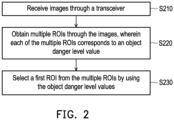
- FIG. 2 is a flowchart of a method for selecting regions of interest in an image according to an embodiment of the disclosure. Please refer to FIG. 1 and FIG. 2 at the same time. The method of the embodiment is applicable to the electronic device 100 in FIG. 1 . The detailed steps of the method for selecting ROIs in an image in the present disclosure will be described below using each component of the electronic device 100.
- the processor 150 may receive images through the transceiver 130.
- the processor 150 may use the images to obtain multiple regions of interest (ROI), and each of the multiple ROIs corresponds to an object danger level value.
- the processor 150 may execute the ROI extraction module (not shown) stored in the storage medium 110 to obtain multiple ROIs by using the images, and obtains the corresponding object danger level value of each of the ROIs.
- the images are, for example, images obtained by monitoring a specific location
- the multiple ROIs are, for example, vehicles such as cars or motorcycles in the images, but the disclosure is not limited thereto.
- the processor 150 may select a first ROI from the multiple ROIs by using the object danger level values. After the first ROI is selected, the processor 150 may use the first ROI of the image as the focus region, and performs image processing on regions outside the focus region, so that the resolution and/or color depth is lower than the focus region.
- the multiple ROIs may include the first ROI and many other ROIs. Furthermore, the object danger level value corresponding to the first ROI is greater than the object danger level value corresponding to each of the other ROIs.
- the processor 150 may sort the multiple ROIs according to the object danger level values, and uses the ROI with the highest object danger level value as the first ROI.
- the first ROI is, for example, the (most dangerous) car closest to the intersection in the image of the specific intersection, but the present disclosure is not limited thereto.
- the object danger level value may be Time to Collision (TTC).
- TTC Time to Collision
- the processor 150 may obtain the TTC of each ROI, and uses the ROI with the shortest TTC as the first ROI.
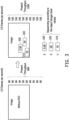
- FIG. 3 is a schematic diagram of selecting regions of interest in an image according to an embodiment of the present disclosure. Please refer to FIG. 1 and FIG. 3 at the same time.
- the processor 150 obtains the ROI 310, the ROI 320, and the ROI 330 by using images.
- the processor 150 may respectively obtain the object danger level values of the ROI 310, the ROI 320, and the ROI 330. It is assumed that the object danger level value of the ROI 310 is greater than the object danger level value of the ROI 320, and it is assumed that the object danger level value of the ROI 320 is greater than the object danger level value of the ROI 330.
- the processor 150 may use the ROI 310 with the highest object danger level value as the first ROI.
- the maximum throughput of the electronic device 100 is "100K bytes/s”
- the minimum resolution data size value of a single image without ROI in the image shown in FIG. 3 is “9K bytes”
- the number of frames per second (FPS) is "10”.
- the processor 150 may use the maximum throughput "100K bytes/s” and the number of frames per second of "10" to determine the maximum data size value per frame to be "10K bytes/frame”.
- the first ROI may correspond to the transmission bandwidth value of the first ROI.
- the ROI 310, the ROI 320 and the ROI 330 may respectively correspond to the transmission bandwidth values of the ROIs.
- the processor 150 may execute the ROI extraction module (not shown) stored in the storage medium 110 to obtain the transmission bandwidth values of the ROIs.
- the ROI 310 i.e. the first ROI
- the ROI 320 corresponds to the transmission bandwidth value of the ROI "2K bytes”
- the ROI 330 corresponds to the transmission bandwidth value of the ROI "0.5K bytes”.
- the sum of the minimum resolution data size value of the single image without ROI in the image and the transmission bandwidth value of the first ROI is less than or equal to the maximum data size value per frame.
- the throughput per frame at this moment is the sum "10K bytes” of the minimum resolution data size value of a single image without ROI, which is “9K bytes”, and the transmission bandwidth value of the first ROI, which is "1K bytes”, and therefore the present throughput is "100K bytes/s", which would not exceed the maximum throughput "100K bytes/s” available to the processor 150.
- the processor 150 takes the first ROI of the image as the focus region, and performs image processing on regions outside the focus region, so that the resolution and/or color depth of the regions outside the focus region are lower than those of the focus region.
- the processor 150 since the sum of the minimum resolution data size value of a single image without ROI, which is "9K bytes", the transmission bandwidth value of the first ROI, which is “1K bytes”, and the transmission bandwidth value of the ROI corresponding to the ROI 320, which is "2K bytes", is greater than the maximum data size value per frame, which is "10K bytes/frame" (9K+1K+2K>10K), in the embodiment, the processor 150 only selects the first ROI, and would not select the ROI 320. Similarly, the processor 150 would not select the ROI 330 either.
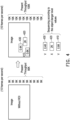
- FIG. 4 is a schematic diagram of selecting regions of interest in an image according to another embodiment of the present disclosure. Please refer to FIG. 1 and FIG. 4 at the same time.
- the processor 150 acquires the ROI 410, the ROI 420, and the ROI 430 by using images. It is assumed that the object danger level value of the ROI 410 is greater than the object danger level value of the ROI 420, and it is assumed that the object danger level value of the ROI 420 is greater than the object danger level value of the ROI 430.
- the processor 150 may use the ROI 410 with the highest object danger level value as the first ROI.
- the maximum throughput of the electronic device 100 is "100K bytes/s”
- the minimum resolution data size value of a single image without ROI in the image shown in FIG. 4 is “9K bytes”
- the number of frames per second is "10”.
- the processor 150 may use the maximum throughput of "100K bytes/s” and the number of frames per second of "10" to determine the maximum data size value per frame to be "10K bytes/frame”.
- the ROI 410 i.e. the first ROI
- the ROI 420 corresponds to the transmission bandwidth value of the ROI, which is "2K bytes”
- the ROI 430 corresponds to the transmission bandwidth value of the first ROI, which is "0.4K bytes”.
- the processor 150 may select a second ROI from the multiple ROIs, and the second ROI is different from the first ROI, and the second ROI corresponds to the transmission bandwidth value of the second ROI.
- the sum of the minimum resolution data size value of a single image without ROI in the image, the transmission bandwidth value of the first ROI, and transmission bandwidth of the second ROI is less than or equal to the maximum data size value per frame.
- the processor 150 may select a second ROI from the many other ROIs (that is, the ROI 420 and the ROI 430).
- the processor 150 would not select the ROI 420 as the second ROI.
- the processor 150 would select the ROI 430 as the second ROI. After selecting the second ROI, the processor 150 may use the first ROI and the second ROI of the image as the focus region, and performs image processing on regions outside the focus region, so that the resolution and/or color depth of the regions outside the focus region are lower than that of the focus region.
- the processor 150 selects one second ROI
- the present disclosure does not specify the number of the second ROIs. That is to say, in other embodiments, as long as the sum of the minimum resolution data size value of a single image without ROI, the transmission bandwidth value of the first ROI, and the transmission bandwidth value of each second ROI is less than or equal to the maximum data size value per frame, the processor 150 may select the second ROIs.
- FIG. 5 is a schematic diagram of selecting regions of interest in an image according to yet another embodiment of the present disclosure. Please refer to FIG. 1 and FIG. 5 at the same time.
- the processor 150 obtains the ROI 510 and the ROI 520 by using images, and it is assumed that the object danger level value of the ROI 510 is greater than the object danger level value of the ROI 520.
- the processor 150 may use the ROI 510 with the highest object danger level value as the first ROI.
- the maximum throughput of the electronic device 100 is "100K byte/s”
- the minimum resolution data size value of a single image without ROI in the image shown in FIG. 5 is “9K bytes”
- the number of frames per second is "10”.
- the processor 150 may use the maximum throughput of "100K bytes/s” and the number of frames per second "10" to determine the maximum data size value per frame to be "10K bytes/frame”.
- ROI 510 i.e. the first ROI
- ROI 520 corresponds to the transmission bandwidth value of the ROI, which is "4K bytes”.
- the processor 150 may adjust the number of frames per second, based on the maximum throughput, the transmission bandwidth value of the first ROI, and the minimum resolution data size value of a single image without ROI. As shown in FIG.
- the processor 150 may adjust the number of frames per second "10" based on the maximum throughput, which is "100K byte/s", the transmission bandwidth value of the first ROI, which is "3K bytes”, and the minimum resolution data size value of a single image without ROI, which is "9K bytes".
- the processor 150 may adjust the number of frames per second to "8". In other words, after the number of frames per second being adjusted to "8", the present throughput is "96K bytes/s", and therefore the present throughput may be less than the maximum throughput, which is "100K bytes/s".
- the electronic device and method for selecting ROIs in an image of the present disclosure may select a first ROI from the multiple ROIs by using the object danger level values.
- the object danger level value of the first ROI may be the ROI corresponding to the highest object danger level value among the multiple ROIs. Based on this, the most dangerous ROI may be selected.
- it may also be determined whether the second ROI may be selected, based on the minimum resolution data size value of a single image without ROI in the image, the transmission bandwidth value of the first ROI, and the maximum data size per frame, or decide that the number of frames per second needs to be adjusted, which improves the flexibility of selecting ROIs from the image.
Landscapes
- Engineering & Computer Science (AREA)
- Physics & Mathematics (AREA)
- General Physics & Mathematics (AREA)
- Theoretical Computer Science (AREA)
- Multimedia (AREA)
- Computer Vision & Pattern Recognition (AREA)
- Signal Processing (AREA)
- Apparatus For Radiation Diagnosis (AREA)
- Compression Or Coding Systems Of Tv Signals (AREA)
- Image Analysis (AREA)
Abstract
Disclosed are an electronic device (100) and a method for selecting a region of interest in an image. The method includes the following steps: receiving an image; using the image to obtain a plurality of regions of interest (310, 320, 330, 410, 410, 430, 510, 520), wherein each of the plurality of regions of interest (310, 320, 330, 410, 410, 430, 510, 520) corresponds to an object danger level value; and using the object danger level value to select a first region of interest from the plurality of regions of interest (310, 320, 330, 410, 410, 430, 510, 520).
Description
- The present disclosure relates to an electronic device and a method for selecting regions of interest (ROIs) in an image.
- At present, the technology of regions of interest in images has been widely adopted in many circumstances. For example, for images obtained by monitoring a specific location, if it is desired to transmit the complete images in a high-resolution manner, a higher transmission bandwidth is required. How to select regions of interest from an image to save the transmission bandwidth of the image is one of the goals that those skilled in the art are committed to achieve.
- The disclosure provides an electronic device and a method for selecting regions of interest (ROIs) in an image, which makes it possible to select the ROIs from the image more flexibly.
- The electronic device of the present disclosure for selecting ROIs in an image includes a transceiver and a processor. The processor is coupled to the transceiver and configured to receive images through the transceiver; use images to obtain multiple ROIs, each of which corresponds to an object danger level value; and select the first ROI from the multiple ROIs by using the object danger level value.
- The method for selecting ROIs in an image of the present disclosure includes the following steps: receiving images; using the images to obtain multiple ROIs and each of the plurality of ROIs corresponding to an object danger level value; and selecting the first ROI from multiple ROIs by using the object danger level value.
-
-
FIG. 1 is a schematic diagram of an electronic device for selecting regions of interest in an image according to an embodiment of the disclosure. -
FIG. 2 is a flowchart of a method for selecting regions of interest in an image according to an embodiment of the disclosure. -
FIG. 3 is a schematic diagram of selecting regions of interest in an image according to an embodiment of the present disclosure. -
FIG. 4 is a schematic diagram of selecting regions of interest in an image according to another embodiment of the present disclosure. -
FIG. 5 is a schematic diagram of selecting a region of interest in an image according to yet another embodiment of the present disclosure. -
FIG. 1 is a schematic diagram of anelectronic device 100 for selecting regions of interest in an image according to an embodiment of the disclosure. Theelectronic device 100 may include astorage medium 110, atransceiver 130 and aprocessor 150. - The
storage medium 110 is, for example, any type of fixed or removable random access memory (RAM), a read-only memory (ROM), a flash memory, a hard disk drive (HDD), a solid state drive (SSD) or similar components or combinations of the above-mentioned components and is utilized for storing multiple modules or various disclosure programs executed by theprocessor 150. - The
transceiver 130 transmits and receives signals in a wireless or wired manner. - The
processor 150 is, for example, a central processing unit (CPU), or other programmable micro control unit (MCU) for general purpose or special purpose, a microprocessor, a digital signal processing (DSP), a programmable controller, an application specific integrated circuit (ASIC), a graphics processing unit (GPU), an image signal processor (ISP), an image processing unit (IPU), an arithmetic logic unit (ALU), a complex programmable logic device (CPLD), a field programmable logic gate array (FPGA) or other similar components or combinations of the above-mentioned components. Theprocessor 150 may be coupled to thestorage medium 110 and thetransceiver 130, and access and execute multiple modules and various application programs stored in thestorage medium 110. -
FIG. 2 is a flowchart of a method for selecting regions of interest in an image according to an embodiment of the disclosure. Please refer toFIG. 1 andFIG. 2 at the same time. The method of the embodiment is applicable to theelectronic device 100 inFIG. 1 . The detailed steps of the method for selecting ROIs in an image in the present disclosure will be described below using each component of theelectronic device 100. - In step S210, the
processor 150 may receive images through thetransceiver 130. Next, in step S220, theprocessor 150 may use the images to obtain multiple regions of interest (ROI), and each of the multiple ROIs corresponds to an object danger level value. For example, theprocessor 150 may execute the ROI extraction module (not shown) stored in thestorage medium 110 to obtain multiple ROIs by using the images, and obtains the corresponding object danger level value of each of the ROIs. In an embodiment, the images are, for example, images obtained by monitoring a specific location, and the multiple ROIs are, for example, vehicles such as cars or motorcycles in the images, but the disclosure is not limited thereto. - Then, in step S230, the
processor 150 may select a first ROI from the multiple ROIs by using the object danger level values. After the first ROI is selected, theprocessor 150 may use the first ROI of the image as the focus region, and performs image processing on regions outside the focus region, so that the resolution and/or color depth is lower than the focus region. - In an embodiment, the multiple ROIs may include the first ROI and many other ROIs. Furthermore, the object danger level value corresponding to the first ROI is greater than the object danger level value corresponding to each of the other ROIs. For instance, the
processor 150 may sort the multiple ROIs according to the object danger level values, and uses the ROI with the highest object danger level value as the first ROI. In an embodiment, the first ROI is, for example, the (most dangerous) car closest to the intersection in the image of the specific intersection, but the present disclosure is not limited thereto. - In an embodiment, the object danger level value may be Time to Collision (TTC). In detail, the
processor 150 may obtain the TTC of each ROI, and uses the ROI with the shortest TTC as the first ROI. -
FIG. 3 is a schematic diagram of selecting regions of interest in an image according to an embodiment of the present disclosure. Please refer toFIG. 1 andFIG. 3 at the same time. In the embodiment, it is assumed that theprocessor 150 obtains theROI 310, theROI 320, and the ROI 330 by using images. As described in the foregoing embodiments, theprocessor 150 may respectively obtain the object danger level values of theROI 310, theROI 320, and theROI 330. It is assumed that the object danger level value of theROI 310 is greater than the object danger level value of theROI 320, and it is assumed that the object danger level value of theROI 320 is greater than the object danger level value of theROI 330. Theprocessor 150 may use the ROI 310 with the highest object danger level value as the first ROI. - In the embodiment, it is assumed that the maximum throughput of the
electronic device 100 is "100K bytes/s", and it is assumed that the minimum resolution data size value of a single image without ROI in the image shown inFIG. 3 is "9K bytes", and it is assumed that the number of frames per second (FPS) is "10". Theprocessor 150 may use the maximum throughput "100K bytes/s" and the number of frames per second of "10" to determine the maximum data size value per frame to be "10K bytes/frame". - In the embodiment, the first ROI may correspond to the transmission bandwidth value of the first ROI. Furthermore, the
ROI 310, theROI 320 and theROI 330 may respectively correspond to the transmission bandwidth values of the ROIs. In an embodiment, theprocessor 150 may execute the ROI extraction module (not shown) stored in thestorage medium 110 to obtain the transmission bandwidth values of the ROIs. As shown inFIG. 3 , it is assumed here that the ROI 310 (i.e. the first ROI) corresponds to the transmission bandwidth value of the first ROI "1K bytes", and theROI 320 corresponds to the transmission bandwidth value of the ROI "2K bytes", and theROI 330 corresponds to the transmission bandwidth value of the ROI "0.5K bytes". - In the embodiment, the sum of the minimum resolution data size value of the single image without ROI in the image and the transmission bandwidth value of the first ROI is less than or equal to the maximum data size value per frame. In other words, in the embodiment, the sum of the minimum resolution data size value of the single image without ROI, which is "9K bytes", and the transmission bandwidth value of the first ROI, which is "1K bytes", is less than or equal to the maximum data size value per frame, which is "10K bytes/frame" (9K+1K=10K). Therefore, after the first ROI is selected, the
processor 150 may use the number of frames per second "10" to transmit the images including the first ROI. As shown inFIG. 3 , the throughput per frame at this moment is the sum "10K bytes" of the minimum resolution data size value of a single image without ROI, which is "9K bytes", and the transmission bandwidth value of the first ROI, which is "1K bytes", and therefore the present throughput is "100K bytes/s", which would not exceed the maximum throughput "100K bytes/s" available to theprocessor 150. Theprocessor 150 takes the first ROI of the image as the focus region, and performs image processing on regions outside the focus region, so that the resolution and/or color depth of the regions outside the focus region are lower than those of the focus region. - It is worth noting that since the sum of the minimum resolution data size value of a single image without ROI, which is "9K bytes", the transmission bandwidth value of the first ROI, which is "1K bytes", and the transmission bandwidth value of the ROI corresponding to the
ROI 320, which is "2K bytes", is greater than the maximum data size value per frame, which is "10K bytes/frame" (9K+1K+2K>10K), in the embodiment, theprocessor 150 only selects the first ROI, and would not select theROI 320. Similarly, theprocessor 150 would not select the ROI 330 either. -
FIG. 4 is a schematic diagram of selecting regions of interest in an image according to another embodiment of the present disclosure. Please refer toFIG. 1 andFIG. 4 at the same time. In the embodiment, it is assumed that theprocessor 150 acquires theROI 410, the ROI 420, and the ROI 430 by using images. It is assumed that the object danger level value of theROI 410 is greater than the object danger level value of theROI 420, and it is assumed that the object danger level value of theROI 420 is greater than the object danger level value of theROI 430. Theprocessor 150 may use theROI 410 with the highest object danger level value as the first ROI. - In the embodiment, it is assumed that the maximum throughput of the
electronic device 100 is "100K bytes/s", and it is assumed that the minimum resolution data size value of a single image without ROI in the image shown inFIG. 4 is "9K bytes", and it is assumed that the number of frames per second is "10". Theprocessor 150 may use the maximum throughput of "100K bytes/s" and the number of frames per second of "10" to determine the maximum data size value per frame to be "10K bytes/frame". - As shown in
FIG. 4 , it is assumed here that the ROI 410 (i.e. the first ROI) corresponds to the transmission bandwidth value of the first ROI, which is "0.6K bytes", and it is assumed that theROI 420 corresponds to the transmission bandwidth value of the ROI, which is "2K bytes", and it is assumed that theROI 430 corresponds to the transmission bandwidth value of the first ROI, which is "0.4K bytes". - In the embodiment, the
processor 150 may select a second ROI from the multiple ROIs, and the second ROI is different from the first ROI, and the second ROI corresponds to the transmission bandwidth value of the second ROI. The sum of the minimum resolution data size value of a single image without ROI in the image, the transmission bandwidth value of the first ROI, and transmission bandwidth of the second ROI is less than or equal to the maximum data size value per frame. In detail, as shown inFIG. 4 , after taking theROI 410 with the maximum object danger level value as the first ROI, theprocessor 150 may select a second ROI from the many other ROIs (that is, theROI 420 and the ROI 430). Specifically, since the sum of the minimum resolution data size value of a single image without ROI, which is "9K bytes", the transmission bandwidth value of the first ROI, which is "0.6K bytes", and the transmission bandwidth value of the ROI corresponding to theROI 420, which is "2K bytes" is greater than the maximum data size value per frame, which is "10K bytes/frame" (9K+0.6K+2K>10K), theprocessor 150 would not select theROI 420 as the second ROI. On the other hand, since the sum of the minimum resolution data size value of a single image without ROI, which is "9K bytes", the transmission bandwidth value of the first ROI, which is "0.6K bytes", and the transmission bandwidth value of the ROI corresponding to theROI 430, which is "0.4K bytes" is less than or equal to the maximum data size value per frame, which is "10K bytes/frame" (9K+0.6K+0.4K=10K), theprocessor 150 would select theROI 430 as the second ROI. After selecting the second ROI, theprocessor 150 may use the first ROI and the second ROI of the image as the focus region, and performs image processing on regions outside the focus region, so that the resolution and/or color depth of the regions outside the focus region are lower than that of the focus region. - It should be noted that although the embodiment is described by an example that the
processor 150 selects one second ROI, the present disclosure does not specify the number of the second ROIs. That is to say, in other embodiments, as long as the sum of the minimum resolution data size value of a single image without ROI, the transmission bandwidth value of the first ROI, and the transmission bandwidth value of each second ROI is less than or equal to the maximum data size value per frame, theprocessor 150 may select the second ROIs. -
FIG. 5 is a schematic diagram of selecting regions of interest in an image according to yet another embodiment of the present disclosure. Please refer toFIG. 1 andFIG. 5 at the same time. In the embodiment, it is assumed that theprocessor 150 obtains theROI 510 and theROI 520 by using images, and it is assumed that the object danger level value of theROI 510 is greater than the object danger level value of theROI 520. Theprocessor 150 may use theROI 510 with the highest object danger level value as the first ROI. - In the embodiment, it is assumed that the maximum throughput of the
electronic device 100 is "100K byte/s", and it is assumed that the minimum resolution data size value of a single image without ROI in the image shown inFIG. 5 is "9K bytes", and it is assumed that the number of frames per second is "10". Theprocessor 150 may use the maximum throughput of "100K bytes/s" and the number of frames per second "10" to determine the maximum data size value per frame to be "10K bytes/frame". - As shown in
FIG. 5 , it is assumed here that ROI 510 (i.e. the first ROI) corresponds to the transmission bandwidth value of the first ROI, which is "3K bytes", and theROI 520 corresponds to the transmission bandwidth value of the ROI, which is "4K bytes". - In the embodiment, when the sum of the transmission bandwidth value of the first ROI and the minimum resolution data size value of a single image without ROI in the image is greater than the maximum data size value per frame, the
processor 150 may adjust the number of frames per second, based on the maximum throughput, the transmission bandwidth value of the first ROI, and the minimum resolution data size value of a single image without ROI. As shown inFIG. 5 , since the sum of the transmission bandwidth value of the first ROI, which is "3K bytes", and the minimum resolution data size value of a single image without ROI, which is "9K bytes", is greater than the maximum data size value per frame, which is "10K bytes" (9K+3K>10K), theprocessor 150 may adjust the number of frames per second "10" based on the maximum throughput, which is "100K byte/s", the transmission bandwidth value of the first ROI, which is "3K bytes", and the minimum resolution data size value of a single image without ROI, which is "9K bytes". In detail, since the throughput per frame at this moment is the sum "12K bytes" of the minimum resolution data size value "9K bytes" of a single image without ROI and the transmission bandwidth value of the first ROI "3K bytes", theprocessor 150 may adjust the number of frames per second to "8". In other words, after the number of frames per second being adjusted to "8", the present throughput is "96K bytes/s", and therefore the present throughput may be less than the maximum throughput, which is "100K bytes/s". - To sum up, the electronic device and method for selecting ROIs in an image of the present disclosure may select a first ROI from the multiple ROIs by using the object danger level values. In particular, the object danger level value of the first ROI may be the ROI corresponding to the highest object danger level value among the multiple ROIs. Based on this, the most dangerous ROI may be selected. Furthermore, it may also be determined whether the second ROI may be selected, based on the minimum resolution data size value of a single image without ROI in the image, the transmission bandwidth value of the first ROI, and the maximum data size per frame, or decide that the number of frames per second needs to be adjusted, which improves the flexibility of selecting ROIs from the image.
Claims (16)
- An electronic device (100) for selecting regions of interest (ROIs) in an image, comprising:a transceiver (130); anda processor (150) coupled to the transceiver (130) and configured to:receive images through the transceiver (130);obtain a plurality of ROIs (310, 320, 330, 410, 410, 430, 510, 520) by using the images,wherein each of the plurality of ROIs (310, 320, 330, 410, 410, 430, 510, 520) corresponds to an object danger level value; anduse the object danger level value to select a first ROI from the plurality of ROIs (310, 320, 330, 410, 410, 430, 510, 520).
- The electronic device (100) of claim 1, wherein the plurality of ROIs (310, 320, 330, 410, 410, 430, 510, 520) comprises the first ROI and a plurality of other ROIs, and the object danger level value corresponding to the first ROI is greater than the object danger level value corresponding to each of the plurality of other ROIs.
- The electronic device (100) of claim 1, wherein the processor (150) is further configured to:
use a maximum throughput and a number of frames per second to determine a maximum data size value per frame. - The electronic device (100) of claim 3, wherein the first ROI corresponds to a transmission bandwidth value of the first ROI, wherein a sum of a minimum resolution data size value of a single image without ROI in the image and the transmission bandwidth value of the first ROI is less than or equal to the maximum data size value per frame.
- The electronic device (100) of claim 1, wherein the first ROI corresponds to a transmission bandwidth value of the first ROI, wherein a sum of a minimum resolution data size value of a single image without ROI in the image and the transmission bandwidth value of the first ROI is less than or equal to a maximum data size value per frame.
- The electronic device (100) of claim 1, wherein the first ROI corresponds to a transmission bandwidth value of the first ROI, and the plurality of ROIs comprise the first ROI and a plurality of other ROIs, wherein the processor (150) is further configured to:
select a second ROI from the plurality of other ROIs, wherein the second ROI is different from the first ROI, wherein the second ROI corresponds to a transmission bandwidth value of the second ROI, and a sum of a minimum resolution data size value of a single image without ROI in the image, the transmission bandwidth value of the first ROI, and the transmission bandwidth value of the second ROI is less than or equal to a maximum data size value per frame. - The electronic device (100) of claim 1, wherein the first ROI corresponds to a transmission bandwidth value of the first ROI, wherein the processor (150) is further configured to:
when a sum of the transmission bandwidth value of the first ROI and a minimum resolution data size value of a single image without ROI in the image is greater than a maximum data size value per frame, adjust a number of frames per second based on a maximum throughput, the transmission bandwidth value of the first ROI, and the minimum resolution data size value of the single image without ROI. - The electronic device (100) of claim 1, wherein the object danger level value is Time to Collision (TTC).
- A method for selecting ROIs in an image, comprising:receiving images;obtaining a plurality of ROIs (310, 320, 330, 410, 410, 430, 510, 520) by using the images, wherein each of the plurality of ROIs (310, 320, 330, 410, 410, 430, 510, 520) corresponds to an object danger level value; andselecting a first ROI from the plurality of ROIs (310, 320, 330, 410, 410, 430, 510, 520) by using the object danger level value.
- The method of claim 9, wherein the plurality of ROIs (310, 320, 330, 410, 410, 430, 510, 520) comprise the first ROI and a plurality of other ROIs, and the object danger level value corresponding to the first ROI is greater than the object danger level value corresponding to each of the plurality of other ROIs.
- The method of claim 9, further comprising:
determining a maximum data size value per frame by using a maximum throughput and a number of frames per second. - The method of claim 11, wherein the first ROI corresponds to a transmission bandwidth value of the first ROI, wherein a sum of a minimum resolution data size value of a single image without ROI in the image and the transmission bandwidth value of the first ROI is less than or equal to the maximum data size value per frame.
- The method of claim 9, wherein the first ROI corresponds to a transmission bandwidth value of the first ROI, wherein a sum of a minimum resolution data size value of a single image without ROI in the image and the transmission bandwidth value of the first ROI is less than or equal to a maximum data size value per frame.
- The method of claim 9, wherein the first ROI corresponds to a transmission bandwidth value of the first ROI, and the plurality of ROIs (310, 320, 330, 410, 410, 430, 510, 520) comprise the first ROI and a plurality of other ROIs, wherein the method further comprises:
selecting a second ROI from the plurality of other ROIs, wherein the second ROI is different from the first ROI, wherein the second ROI corresponds to a transmission bandwidth value of the second ROI, and a sum of a minimum resolution data size value of a single image without ROI in the image, the transmission bandwidth value of the first ROI, and the transmission bandwidth value of the second ROI is less than or equal to a maximum data size value per frame. - The method of claim 9, wherein the first ROI corresponds to a transmission bandwidth value of the first ROI, wherein the method further comprises:
when a sum of the transmission bandwidth value of the first ROI and a minimum resolution data size value of a single image without ROI in the image is greater than a maximum data size value per frame, adjusting a number of frames per second based on a maximum throughput, the transmission bandwidth value of the first ROI, and the minimum resolution data size value of the single image without ROI. - The method of claim 9, wherein the object danger level value is TTC.
Applications Claiming Priority (1)
| Application Number | Priority Date | Filing Date | Title |
|---|---|---|---|
| TW112106992A TWI834503B (en) | 2023-02-24 | 2023-02-24 | Electronic device and method for selecting region of interest in image |
Publications (1)
| Publication Number | Publication Date |
|---|---|
| EP4421751A1 true EP4421751A1 (en) | 2024-08-28 |
Family
ID=86330102
Family Applications (1)
| Application Number | Title | Priority Date | Filing Date |
|---|---|---|---|
| EP23171765.3A Pending EP4421751A1 (en) | 2023-02-24 | 2023-05-05 | Electronic device and method for selecting region of interest in image |
Country Status (3)
| Country | Link |
|---|---|
| US (1) | US12567153B2 (en) |
| EP (1) | EP4421751A1 (en) |
| TW (1) | TWI834503B (en) |
Cited By (1)
| Publication number | Priority date | Publication date | Assignee | Title |
|---|---|---|---|---|
| US12567153B2 (en) * | 2023-02-24 | 2026-03-03 | Industrial Technology Research Institute | Electronic device and method for selecting region of interest in image |
Citations (5)
| Publication number | Priority date | Publication date | Assignee | Title |
|---|---|---|---|---|
| WO1999049412A1 (en) * | 1998-03-20 | 1999-09-30 | University Of Maryland | Method and apparatus for compressing and decompressing images |
| EP1862940A1 (en) * | 1998-03-20 | 2007-12-05 | Mitsubishi Electric Corporation | Image compression |
| EP2461272A2 (en) * | 2010-12-02 | 2012-06-06 | Aisin AW Co., Ltd. | Driving support system and driving support method |
| DE102015216352A1 (en) * | 2015-08-27 | 2017-03-02 | Bayerische Motoren Werke Aktiengesellschaft | Method for detecting a possible collision of a vehicle with a pedestrian on the basis of high-resolution recordings |
| US11284021B1 (en) * | 2019-12-30 | 2022-03-22 | Waymo Llc | Smart sensor scheduler |
Family Cites Families (39)
| Publication number | Priority date | Publication date | Assignee | Title |
|---|---|---|---|---|
| EP1844612B1 (en) | 2005-02-04 | 2017-05-10 | Barco NV | Method and device for image and video transmission over low-bandwidth and high-latency transmission channels |
| US8296813B2 (en) * | 2006-06-22 | 2012-10-23 | Sony Computer Entertainment Inc. | Predictive frame dropping to enhance quality of service in streaming data |
| US7848237B2 (en) | 2007-01-18 | 2010-12-07 | Ineoquest Technologies, Inc. | System and method for selective packet discard for the transport of multiple transportation streams of streaming media in packet-based networks |
| CN103460250B (en) * | 2011-04-11 | 2017-11-28 | 英特尔公司 | Object-of-interest-based image processing |
| DE102011087774A1 (en) * | 2011-12-06 | 2013-06-06 | Robert Bosch Gmbh | Method for monitoring and signaling a traffic situation in the vicinity of a vehicle |
| US9307021B2 (en) * | 2013-02-27 | 2016-04-05 | Comcast Cable Communications, Llc | Adaptive media transmission processing |
| KR102023601B1 (en) * | 2013-04-04 | 2019-09-23 | 삼성전자 주식회사 | Terminal device and method for preventing accident |
| TWI636683B (en) | 2013-10-02 | 2018-09-21 | 知識體科技股份有限公司 | System and method for remote interaction with lower network bandwidth loading |
| US10210399B2 (en) * | 2013-12-20 | 2019-02-19 | Magna Electronics Inc. | Vehicle vision system with image processing |
| KR101659027B1 (en) * | 2014-05-15 | 2016-09-23 | 엘지전자 주식회사 | Mobile terminal and apparatus for controlling a vehicle |
| JP2016001170A (en) * | 2014-05-19 | 2016-01-07 | 株式会社リコー | Processing apparatus, processing program, and processing method |
| US9760970B2 (en) * | 2015-03-18 | 2017-09-12 | Hitachi, Ltd. | Video analysis and post processing of multiple video streams |
| TW201634974A (en) | 2015-03-26 | 2016-10-01 | Chipone Technology Beijing Co Ltd | Head-mounted display system and low-frequency-width transmission method for image |
| US10805696B1 (en) * | 2016-06-20 | 2020-10-13 | Pipbin, Inc. | System for recording and targeting tagged content of user interest |
| KR102581779B1 (en) | 2016-10-11 | 2023-09-25 | 주식회사 에이치엘클레무브 | Apparatus and method for prevention of collision at crossroads |
| JP2018156462A (en) * | 2017-03-17 | 2018-10-04 | 東芝メモリ株式会社 | Mobile object and driving support system including the same |
| US10304154B2 (en) * | 2017-04-24 | 2019-05-28 | Intel Corporation | Coordination and increased utilization of graphics processors during inference |
| US11301692B2 (en) * | 2017-06-30 | 2022-04-12 | Nec Corporation | Information processing apparatus, control method, and program |
| US10726627B2 (en) * | 2017-07-25 | 2020-07-28 | Facebook Technologies, Llc | Sensor system based on stacked sensor layers |
| US10613870B2 (en) * | 2017-09-21 | 2020-04-07 | Qualcomm Incorporated | Fully extensible camera processing pipeline interface |
| US11048927B2 (en) * | 2017-10-24 | 2021-06-29 | Waymo Llc | Pedestrian behavior predictions for autonomous vehicles |
| CN108583571A (en) * | 2018-04-28 | 2018-09-28 | 深圳市商汤科技有限公司 | Collision control method and device, electronic equipment and storage medium |
| EP3598259B1 (en) * | 2018-07-19 | 2021-09-01 | Panasonic Intellectual Property Management Co., Ltd. | Information processing method and information processing system |
| US11556126B2 (en) * | 2019-02-20 | 2023-01-17 | Toyota Research Institute, Inc. | Online agent predictions using semantic maps |
| SG11202108455PA (en) * | 2019-02-28 | 2021-09-29 | Shenzhen Sensetime Technology Co Ltd | Vehicle intelligent driving control method and apparatus, electronic device and storage medium |
| US10887525B2 (en) * | 2019-03-05 | 2021-01-05 | Sony Corporation | Delivery of notifications for feedback over visual quality of images |
| WO2020202741A1 (en) * | 2019-03-29 | 2020-10-08 | ソニー株式会社 | Information processing device, information processing method, computer program, and moving body device |
| US11037968B2 (en) * | 2019-04-05 | 2021-06-15 | Waymo Llc | Image sensor architecture |
| JP7088135B2 (en) * | 2019-07-23 | 2022-06-21 | トヨタ自動車株式会社 | Signal display estimation system |
| KR102271929B1 (en) * | 2019-09-17 | 2021-07-02 | 한국과학기술연구원 | Method for generating video synopsis through scene understanding and system therefor |
| TWI744861B (en) * | 2020-04-15 | 2021-11-01 | 財團法人工業技術研究院 | Application service server, information processing method based on located region, and user equipment |
| CN114119955B (en) | 2020-08-31 | 2026-02-17 | 深圳引望智能技术有限公司 | Method and device for detecting potential dangerous target |
| US11568625B2 (en) * | 2021-01-07 | 2023-01-31 | Nvidia Corporation | Targeted object detection in image processing applications |
| US12211277B2 (en) * | 2021-03-09 | 2025-01-28 | The Research Foundation For The State University Of New York | Interactive video surveillance as an edge service using unsupervised feature queries |
| JPWO2023189084A1 (en) * | 2022-03-30 | 2023-10-05 | ||
| CN120129934A (en) * | 2022-10-24 | 2025-06-10 | 软银集团股份有限公司 | Information processing device, information processing method, and information processing program |
| WO2024113020A1 (en) * | 2022-12-01 | 2024-06-06 | J Humble & A Muthiah | A sensor fusion based early warning system |
| TWI834503B (en) * | 2023-02-24 | 2024-03-01 | 財團法人工業技術研究院 | Electronic device and method for selecting region of interest in image |
| EP4567751A1 (en) * | 2023-12-07 | 2025-06-11 | Aptiv Technologies AG | In-cabin object movement detection |
-
2023
- 2023-02-24 TW TW112106992A patent/TWI834503B/en active
- 2023-04-12 US US18/299,707 patent/US12567153B2/en active Active
- 2023-05-05 EP EP23171765.3A patent/EP4421751A1/en active Pending
Patent Citations (5)
| Publication number | Priority date | Publication date | Assignee | Title |
|---|---|---|---|---|
| WO1999049412A1 (en) * | 1998-03-20 | 1999-09-30 | University Of Maryland | Method and apparatus for compressing and decompressing images |
| EP1862940A1 (en) * | 1998-03-20 | 2007-12-05 | Mitsubishi Electric Corporation | Image compression |
| EP2461272A2 (en) * | 2010-12-02 | 2012-06-06 | Aisin AW Co., Ltd. | Driving support system and driving support method |
| DE102015216352A1 (en) * | 2015-08-27 | 2017-03-02 | Bayerische Motoren Werke Aktiengesellschaft | Method for detecting a possible collision of a vehicle with a pedestrian on the basis of high-resolution recordings |
| US11284021B1 (en) * | 2019-12-30 | 2022-03-22 | Waymo Llc | Smart sensor scheduler |
Non-Patent Citations (4)
| Title |
|---|
| GOENKA UMANG ET AL: "Threat Detection in Self-Driving Vehicles Using Computer Vision", 6 September 2022 (2022-09-06), pages 1 - 15, XP093311344, Retrieved from the Internet <URL:https://arxiv.org/pdf/2209.02438> * |
| JEROME MEESSEN ET AL.: "WCAM: smart encoding for wireless surveillance", SPIE, PO BOX 10 BELLINGHAM WA 98227-0010 USA, 15 March 2005 (2005-03-15), San Jose, XP040198909 * |
| LI H ET AL: "Dynamic region-based wavelet compression for telemedicine application", PROCEEDINGS OF SPIE, IEEE, US, vol. 3031, 23 February 1997 (1997-02-23), pages 851 - 859, XP008049297, ISBN: 978-1-62841-730-2, DOI: 10.1117/12.273971 * |
| SHIM YOUNG-BIN ET AL: "A Study on Surveillance System of Object's Abnormal Behavior by Blob Composition Analysis", INTERNATIONAL JOURNAL OF SECURITY AND ITS APPLICATIONS, vol. 8, no. 2, 31 March 2014 (2014-03-31), pages 333 - 340, XP093311382, ISSN: 1738-9976, Retrieved from the Internet <URL:https://article.nadiapub.com/IJSIA/vol8_no2/34.pdf> DOI: 10.14257/ijsia.2014.8.2.34 * |
Cited By (1)
| Publication number | Priority date | Publication date | Assignee | Title |
|---|---|---|---|---|
| US12567153B2 (en) * | 2023-02-24 | 2026-03-03 | Industrial Technology Research Institute | Electronic device and method for selecting region of interest in image |
Also Published As
| Publication number | Publication date |
|---|---|
| US12567153B2 (en) | 2026-03-03 |
| TW202435166A (en) | 2024-09-01 |
| US20240289961A1 (en) | 2024-08-29 |
| TWI834503B (en) | 2024-03-01 |
Similar Documents
| Publication | Publication Date | Title |
|---|---|---|
| EP3834009B1 (en) | Apparatus and method of sharing a sensor in a multiple system on chip environment | |
| US11301728B2 (en) | Image processing using a neural network system | |
| US12382161B2 (en) | Configuration method and apparatus | |
| CN111176725B (en) | Data processing method, apparatus, device and storage medium | |
| CN108924477A (en) | A kind of long-distance video processing method and system, video processing equipment | |
| US20180276783A1 (en) | Image capturing apparatus, method of controlling same, and storage medium | |
| US11758284B2 (en) | Image processors and image processing methods | |
| US11991461B2 (en) | Imaging apparatus, operation method of imaging apparatus, program, and imaging system | |
| US12567153B2 (en) | Electronic device and method for selecting region of interest in image | |
| EP4024945A1 (en) | Information processing method, apparatus, and device, and computer readable storage medium | |
| CN116912556A (en) | Image classification method, device, electronic device and storage medium | |
| US8786710B2 (en) | Test system and method for testing motherboard of camera | |
| US11620816B1 (en) | Hardware efficient RoI align | |
| US8548233B2 (en) | Image processing apparatus and compression method therefor | |
| CN112399196A (en) | Image processing method and device | |
| CN112308809B (en) | Image synthesis method, device, computer equipment and storage medium | |
| US20230018238A1 (en) | Blur correction device, imaging apparatus, monitoring system, and non-transitory computer-readable storage medium | |
| CN120092457A (en) | Camera device and control method of camera device | |
| CN109887533B (en) | Multifunctional user mobile terminal control system and method | |
| US10896487B2 (en) | Method and apparatus for reducing noise | |
| US20090189985A1 (en) | Image processing device for providing image quality information and method thereof | |
| US20250047997A1 (en) | Image processing device and method of operation thereof | |
| JP7464801B2 (en) | IMAGE PROCESSING APPARATUS AND IMAGE DATA TRANSMISSION METHOD | |
| CN113256763B (en) | Electronic device, image processing method thereof, system-on-chip and medium | |
| CN110674690B (en) | Detection method, detection device and detection equipment |
Legal Events
| Date | Code | Title | Description |
|---|---|---|---|
| PUAI | Public reference made under article 153(3) epc to a published international application that has entered the european phase |
Free format text: ORIGINAL CODE: 0009012 |
|
| STAA | Information on the status of an ep patent application or granted ep patent |
Free format text: STATUS: REQUEST FOR EXAMINATION WAS MADE |
|
| 17P | Request for examination filed |
Effective date: 20230505 |
|
| AK | Designated contracting states |
Kind code of ref document: A1 Designated state(s): AL AT BE BG CH CY CZ DE DK EE ES FI FR GB GR HR HU IE IS IT LI LT LU LV MC ME MK MT NL NO PL PT RO RS SE SI SK SM TR |
|
| STAA | Information on the status of an ep patent application or granted ep patent |
Free format text: STATUS: EXAMINATION IS IN PROGRESS |
|
| 17Q | First examination report despatched |
Effective date: 20250924 |