EP4421610A1 - Printing system, printing method, method for manufacturing printed matter, and control device - Google Patents
Printing system, printing method, method for manufacturing printed matter, and control device Download PDFInfo
- Publication number
- EP4421610A1 EP4421610A1 EP23189939.4A EP23189939A EP4421610A1 EP 4421610 A1 EP4421610 A1 EP 4421610A1 EP 23189939 A EP23189939 A EP 23189939A EP 4421610 A1 EP4421610 A1 EP 4421610A1
- Authority
- EP
- European Patent Office
- Prior art keywords
- printing
- printed matter
- transport
- post
- processing
- Prior art date
- Legal status (The legal status is an assumption and is not a legal conclusion. Google has not performed a legal analysis and makes no representation as to the accuracy of the status listed.)
- Pending
Links
Images


Classifications
-
- G—PHYSICS
- G06—COMPUTING OR CALCULATING; COUNTING
- G06F—ELECTRIC DIGITAL DATA PROCESSING
- G06F3/00—Input arrangements for transferring data to be processed into a form capable of being handled by the computer; Output arrangements for transferring data from processing unit to output unit, e.g. interface arrangements
- G06F3/12—Digital output to print unit, e.g. line printer, chain printer
- G06F3/1201—Dedicated interfaces to print systems
- G06F3/1202—Dedicated interfaces to print systems specifically adapted to achieve a particular effect
- G06F3/1211—Improving printing performance
- G06F3/1217—Improving printing performance achieving reduced idle time at the output device or increased asset utilization
-
- B—PERFORMING OPERATIONS; TRANSPORTING
- B65—CONVEYING; PACKING; STORING; HANDLING THIN OR FILAMENTARY MATERIAL
- B65H—HANDLING THIN OR FILAMENTARY MATERIAL, e.g. SHEETS, WEBS, CABLES
- B65H29/00—Delivering or advancing articles from machines; Advancing articles to or into piles
- B65H29/58—Article switches or diverters
- B65H29/60—Article switches or diverters diverting the stream into alternative paths
-
- B—PERFORMING OPERATIONS; TRANSPORTING
- B41—PRINTING; LINING MACHINES; TYPEWRITERS; STAMPS
- B41F—PRINTING MACHINES OR PRESSES
- B41F19/00—Apparatus or machines for carrying out printing operations combined with other operations
-
- B—PERFORMING OPERATIONS; TRANSPORTING
- B41—PRINTING; LINING MACHINES; TYPEWRITERS; STAMPS
- B41F—PRINTING MACHINES OR PRESSES
- B41F33/00—Indicating, counting, warning, control or safety devices
- B41F33/16—Programming systems for automatic control of sequence of operations
-
- B—PERFORMING OPERATIONS; TRANSPORTING
- B41—PRINTING; LINING MACHINES; TYPEWRITERS; STAMPS
- B41M—PRINTING, DUPLICATING, MARKING, OR COPYING PROCESSES; COLOUR PRINTING
- B41M3/00—Printing processes to produce particular kinds of printed work, e.g. patterns
-
- B—PERFORMING OPERATIONS; TRANSPORTING
- B65—CONVEYING; PACKING; STORING; HANDLING THIN OR FILAMENTARY MATERIAL
- B65H—HANDLING THIN OR FILAMENTARY MATERIAL, e.g. SHEETS, WEBS, CABLES
- B65H29/00—Delivering or advancing articles from machines; Advancing articles to or into piles
- B65H29/20—Delivering or advancing articles from machines; Advancing articles to or into piles by contact with rotating friction members, e.g. rollers, brushes, or cylinders
- B65H29/22—Delivering or advancing articles from machines; Advancing articles to or into piles by contact with rotating friction members, e.g. rollers, brushes, or cylinders and introducing into a pile
-
- B—PERFORMING OPERATIONS; TRANSPORTING
- B65—CONVEYING; PACKING; STORING; HANDLING THIN OR FILAMENTARY MATERIAL
- B65H—HANDLING THIN OR FILAMENTARY MATERIAL, e.g. SHEETS, WEBS, CABLES
- B65H31/00—Pile receivers
- B65H31/02—Pile receivers with stationary end support against which pile accumulates
-
- B—PERFORMING OPERATIONS; TRANSPORTING
- B65—CONVEYING; PACKING; STORING; HANDLING THIN OR FILAMENTARY MATERIAL
- B65H—HANDLING THIN OR FILAMENTARY MATERIAL, e.g. SHEETS, WEBS, CABLES
- B65H31/00—Pile receivers
- B65H31/30—Arrangements for removing completed piles
-
- B—PERFORMING OPERATIONS; TRANSPORTING
- B65—CONVEYING; PACKING; STORING; HANDLING THIN OR FILAMENTARY MATERIAL
- B65H—HANDLING THIN OR FILAMENTARY MATERIAL, e.g. SHEETS, WEBS, CABLES
- B65H43/00—Use of control, checking, or safety devices, e.g. automatic devices comprising an element for sensing a variable
-
- G—PHYSICS
- G06—COMPUTING OR CALCULATING; COUNTING
- G06F—ELECTRIC DIGITAL DATA PROCESSING
- G06F3/00—Input arrangements for transferring data to be processed into a form capable of being handled by the computer; Output arrangements for transferring data from processing unit to output unit, e.g. interface arrangements
- G06F3/12—Digital output to print unit, e.g. line printer, chain printer
- G06F3/1201—Dedicated interfaces to print systems
- G06F3/1223—Dedicated interfaces to print systems specifically adapted to use a particular technique
- G06F3/1237—Print job management
- G06F3/126—Job scheduling, e.g. queuing, determine appropriate device
- G06F3/1264—Job scheduling, e.g. queuing, determine appropriate device by assigning post-processing resources
-
- G—PHYSICS
- G06—COMPUTING OR CALCULATING; COUNTING
- G06F—ELECTRIC DIGITAL DATA PROCESSING
- G06F3/00—Input arrangements for transferring data to be processed into a form capable of being handled by the computer; Output arrangements for transferring data from processing unit to output unit, e.g. interface arrangements
- G06F3/12—Digital output to print unit, e.g. line printer, chain printer
- G06F3/1201—Dedicated interfaces to print systems
- G06F3/1278—Dedicated interfaces to print systems specifically adapted to adopt a particular infrastructure
- G06F3/1285—Remote printer device, e.g. being remote from client or server
Definitions
- the present invention relates to a printing system, a printing method, a method for manufacturing a printed matter, and a control device.
- JP6459571B discloses an image forming system that includes a delivery device which is movable independently of an image forming device and which delivers a printed matter output from the image forming device to a destination and that divides a print job and controls the amount of printing so as not to exceed a loading weight in a case in which it is determined that the weight of the printed matter to be output exceeds the maximum loading weight of the delivery device.
- JP6391357B discloses a printing system that includes a loading unit on which a sheet having an image printed thereon is loaded, determines whether or not it is possible to transfer the sheet already loaded on the loading unit in a case in which it is detected that it is not possible to load the sheet on the loading unit during execution of a print job, and stops the loading of the printed sheet on the loading unit in a case in which it is not possible to transfer the sheet.
- JP2022-070211A discloses a printing overall management device that is connected to a transport management device, which manages a plurality of unmanned transport devices for transporting a sheet loading device on which the sheet discharged from a printing machine can be loaded, to be communicable with the transport management device.
- the printing overall management device generates transport instruction information including identification information of a plurality of sheet loading devices that execute one job and at least one of the order of the sheet loading devices, on which the sheets discharged from the printing machine are loaded, or the order of the sheet loading devices which supply the sheets to the next processing machine.
- various devices such as a printing device, a cutting device, a bookbinding device, and an enclosing device, are used to perform various steps such as printing, processing, and shipping.
- a technique has been proposed which automatically transports a printed matter in order to reduce unnecessary work between these steps. For example, the following is considered: a robot arm automatically loads a printed matter output from a printing device onto a carriage, and the carriage is automatically transported. In this case, in a step in which post-processing is performed after the printed matter is transported, it is determined whether it is possible to start work in a stage in which a part of the printed matter has been transported or it is not possible to start work until all of the printed matter is transported.
- An object of the present invention is to prevent the manufacture of a defective product caused by a shortage of a printed matter in a post-processing step.
- a printing system including: a printing device that performs printing on the basis of a given instruction and outputs a printed matter; a transport device that transports the printed matter output by the printing device; a post-processing device that performs post-processing on the printed matter transported by the transport device; and a control unit that grasps a transport situation of the transport device and controls a process in the post-processing device from the grasped transport situation.
- control unit may control a start of the post-processing in the post-processing device.
- the control unit may acquire the number of transport operations required to start the post-processing in a case in which the printed matter output by the printing device is transported in a plurality of parts by the transport device and may start the post-processing in a case in which the printed matter has been transported the required number of times.
- control unit may start the post-processing in a case in which it is possible to start the post-processing even in a stage in which only a part of the printed matter has been transported.
- control unit may start the post-processing after all of the printed matter is transported.
- the transport situation of the transport device may be a position of the transport device.
- the transport device may transport the printed matter output by the printing device in a loaded state.
- control unit may stop the printing by the printing device in a case in which the transport device is not present at a position where the printed matter is loaded.
- the control unit may calculate a capacity of the printed matter that is capable of being loaded on the transport device and may direct the printing device to perform the printing up to the capacity of the printed matter that is capable of being loaded on the transport device and to pause the printing in a case in which an output amount of the printed matter output by the printing device is larger than the capacity of the printed matter that is capable of being loaded on the transport device.
- control unit may direct the printing device to resume the printing in a case in which a new transport device that is capable of transporting the printed matter is present at the position where the printed matter is loaded in a state in which the printing by the printing device is paused.
- control unit may control an output order in which the printing device outputs the printed matter.
- control unit may direct the printing device to output the printed matter in descending order of a paper size of the printed matter.
- a printing method including: performing printing on the basis of a given instruction and outputting a printed matter; transporting the printed matter output in the printing; and performing post-processing on the printed matter transported in the transporting, in which a control unit that grasps a transport situation of the transporting controls a process in the post-processing from the grasped transport situation.
- a fourteenth aspect of the present disclosure there is provided a method for manufacturing a printed matter, the method including: performing printing on the basis of a given instruction and outputting a printed matter; transporting the printed matter output in the printing; and performing post-processing on the printed matter transported in the transporting, in which a control unit that grasps a transport situation of the transporting controls a process in the post-processing from the grasped transport situation.
- a control device that controls an overall operation of a printing device that performs printing on the basis of a given instruction and outputs a printed matter, a transport device that transports the printed matter output by the printing device, and a post-processing device that performs post-processing on the printed matter transported by the transport device, grasps a transport situation of the transport device, and controls a process in the post-processing device from the grasped transport situation.
- the third aspect of the present disclosure in a case in which the printed matter is transported in a plurality of parts, it is possible to control the time when the post-processing is started.
- the fourth aspect of the present disclosure in a case in which the printed matter is transported in a plurality of parts and it is possible to start the post-processing even in a stage in which only a part of the printed matter has been transported, it is possible to start the post-processing without waiting for the transport of all of the printed matter.
- the fifth aspect of the present disclosure in a case in which the printed matter is transported in a plurality of parts, it is possible to prevent the post-processing from being started before all of the printed matter required to start the post-processing is transported.
- the sixth aspect of the present disclosure it is possible to transport the printed matter in a state in which the printed matter is loaded on the transport device.
- the seventh aspect of the present disclosure it is possible to control the output of the printed matter on the basis of the position of the transport device.
- the eighth aspect of the present disclosure it is possible to prevent the printed matter from overflowing because the printed matter is output in a case in which the transport device is not present at the position where the printed matter is loaded.
- the tenth aspect of the present disclosure it is possible to control the output of the printed matter in a case in which the output amount of the printed matter is larger than the capacity of the transport device.
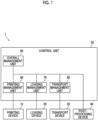
- Fig. 1 is a diagram showing a configuration of a printing system according to the present exemplary embodiment.
- a printing system 1 includes a printing device 10, a loading device 20, a transport device 30, and a post-processing device 40.
- the printing system 1 includes a control unit 50 that controls the printing device 10, the loading device 20, the transport device 30, and the post-processing device 40.
- the control unit 50 includes a printing management unit 60 that manages the printing device 10, a loading management unit 70 that manages the loading device 20, a transport management unit 80 that manages the transport device 30, and an overall management unit 90 that performs the overall management of the printing management unit 60, the loading management unit 70, the transport management unit 80, and the post-processing device 40.
- the printing device 10, the loading device 20, the transport device 30, and the post-processing device 40 are configured to be communicable with the control unit 50 through a network.
- the type of the network is not particularly limited as long as the network can transmit and receive data.
- the network may be the Internet, a local area network (LAN), or a wide area network (WAN).
- a communication line used for data communication may be wired or wireless.
- each device may be configured to be connected through a plurality of networks or communication lines.
- the printing device 10 is a device that has a printer function of printing an image on a recording medium, such as paper, and outputting the recording medium as a printed document.
- the printing device 10 may have other image processing functions, such as a scanner function and a facsimile function, in addition to the printer function. Further, the printing device 10 may be capable of performing color printing or may perform only monochrome printing.
- the printing device 10 performs printing in response to an instruction from the printing management unit 60 and outputs a printed matter.
- the loading device 20 is a device that loads the printed matter output by the printing device 10 on the transport device 30.
- the loading device 20 is configured by, for example, a robot arm, picks up the printed matter output by the printing device 10 with the arm, and loads the printed matter on the transport device 30.
- the loading device 20 loads the printed matter on the transport device 30 in response to an instruction from the loading management unit 70.
- the loading device 20, the loading management unit 70, and a loading instruction unit 93 which will be described later, may not be provided, and the printed matter which has been printed and output by the printing device 10 may be placed on the transport device 30 as it is.
- the transport device 30 is a device that transports the printed matter output by the printing device 10.
- the transport device 30 transports the printed matter in response to an instruction from the transport management unit 80.
- the number of transport devices 30 may be one, or a plurality of transport devices 30 may be provided.
- the transport device 30 is composed of, for example, a carriage on which the printed matter is loaded and an automatic transport device that transports the carriage.
- the printed matter output by the printing device 10 is loaded on the carriage by the loading device 20, and the automatic transport device travels on a predetermined route in response to an instruction from the transport management unit 80.
- the predetermined route is a route that connects the printing device 10 and the post-processing device 40. In this way, the printed matter output by the printing device 10 is transported to the post-processing device 40. Further, in a case in which there are a plurality of post-processing devices 40, the transport device 30 also transports the printed matter between different post-processing devices 40.
- the transport device 30 is not limited to the configuration in which the transport device 30 transports the printed matter in a loaded state.
- the transport device 30 may be configured by a robot arm, may pick up the printed matter output by the printing device 10 with the arm, and may transport the printed matter in a picked-up state.
- the post-processing device 40 is a device that performs post-processing on the printed matter transported by the transport device 30.
- the post-processing device 40 is a device that performs processing on the printed matter, such as a cutting device, a bookbinding device, or a laminating device. Further, the post-processing device 40 may be a device that performs a process for shipping the printed matter, such as a packing device.
- a plurality of types of post-processing devices 40 may be provided and may perform a plurality of types of post-processing on the printed matter. Alternatively, one post-processing device 40 may be provided.
- the post-processing device 40 performs the post-processing on the printed matter in response to an instruction from the overall management unit 90.
- the post-processing device 40 has, for example, a panel (not shown) for displaying an instruction from the overall management unit 90.
- the panel is implemented by, for example, a display mechanism 105 which will be described below.
- An operator starts or stops the post-processing using the post-processing device 40 according to the instruction displayed on the panel. Further, the post-processing device 40 may automatically start or stop the post-processing in response to an instruction from the overall management unit 90.
- the control unit 50 controls the printing device 10, the loading device 20, the transport device 30, and the post-processing device 40.
- the control unit 50 includes the printing management unit 60, the loading management unit 70, the transport management unit 80, and the overall management unit 90.
- the printing management unit 60, the loading management unit 70, the transport management unit 80, and the overall management unit 90 are implemented by, for example, a computer. These units may be implemented by a single computer or by a distribution process by a plurality of computers.
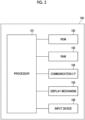
- Fig. 2 is a diagram showing an example of a hardware configuration of a computer 100 that is used as the printing management unit 60, the loading management unit 70, the transport management unit 80, and the overall management unit 90.
- the computer 100 includes a processor 101, a read only memory (ROM) 102, and a random access memory (RAM) 103.
- the processor 101 is, for example, a central processing unit (CPU) and execute a program read from the ROM 102, using the RAM 103 as a work area.
- the computer 100 includes a communication interface 104 for connection to the network and a display mechanism 105 for display output to a display.
- the computer 100 includes an input device 106 that is used by an operator of the computer 100 to perform an input operation.
- the display mechanism 105 and the input device 106 may be configured to be remotely operated.
- the configuration of the computer 100 shown in Fig. 2 is only an example, and the computer used in the present exemplary embodiment is not limited to the example of the configuration shown in Fig. 2 .
- the printing management unit 60 manages the printing device 10.
- the printing management unit 60 is configured to be communicable with the overall management unit 90 and the printing device 10.
- the printing management unit 60 directs the printing device 10 to perform or stop printing on the basis of the received printing instruction.
- the loading management unit 70 manages the loading device 20.
- the loading management unit 70 is configured to be communicable with the overall management unit 90 and the loading device 20.
- the loading management unit 70 gives an instruction to load the printed matter output by the printing device 10 on the transport device 30 to the loading device 20 on the basis of the received loading instruction.
- the transport management unit 80 manages the transport device 30.
- the transport management unit 80 is configured to be communicable with the overall management unit 90 and the transport device 30.
- the transport management unit 80 In a case in which the transport management unit 80 receives a transport instruction from the overall management unit 90, the transport management unit 80 moves the transport device 30 on the basis of the received transport instruction. In addition, the transport management unit 80 grasps a transport situation, such as a position of the moved transport device 30 after the movement, and notifies the overall management unit 90 of the transport situation.
- a transport situation such as a position of the moved transport device 30 after the movement
- the overall management unit 90 performs the overall management of the printing management unit 60, the loading management unit 70, the transport management unit 80, and the post-processing device 40. Functions of the overall management unit 90 will be described with reference to Fig. 3.
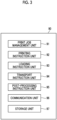
- Fig. 3 is a diagram showing an example of a functional configuration of the overall management unit 90 according to the present exemplary embodiment.
- the overall management unit 90 includes a print job management unit 91 that manages a print job, a printing instruction unit 92 that issues an instruction to the printing management unit 60, a loading instruction unit 93 that issues an instruction to the loading management unit 70, a transport instruction unit 94 that issues an instruction to the transport management unit 80, a post-processing instruction unit 95 that issues an instruction to the post-processing device 40, a communication unit 96 that communicates with the printing management unit 60, the loading management unit 70, the transport management unit 80, and the post-processing device 40, and a storage unit 97 that stores the print job.
- a print job management unit 91 that manages a print job
- a printing instruction unit 92 that issues an instruction to the printing management unit 60
- a loading instruction unit 93 that issues an instruction to the loading management unit 70
- a transport instruction unit 94 that issues an instruction to the transport management unit 80
- a post-processing instruction unit 95 that issues an instruction to the post-processing device 40
- a communication unit 96 that
- the overall management unit 90 receives a print job from, for example, an external device (not shown) through the communication unit 96. Further, the overall management unit 90 may be configured to receive the print job input by an operation on an operation panel (not shown). The operation panel is implemented by, for example, the input device 106. Information of the received print job is stored in the storage unit 97.
- the print job management unit 91 manages various types of information necessary for executing the received print job. For example, the print job management unit 91 manages information of paper necessary for executing the print job and information of a processing step.
- Examples of the information of the paper include a paper size, a paper type, the number of sheets to be printed, and the number of copies to be printed.
- Examples of the information of the processing step include the position of the transport device 30, the transport order of the printed matters by the transport device 30, and the type of post-processing.
- the print job management unit 91 calculates the number of copies of the printed matter output by the printing device 10 related to the execution of the print job. Further, the print job management unit 91 calculates the number of transport operations of the transport device 30 required to transport the printed matter.
- the printing instruction unit 92 issues a printing instruction on the basis of, for example, various types of information managed by the print job management unit 91, the number of output copies calculated by the print job management unit 91, and the number of transport operations.
- the printing instruction from the printing instruction unit 92 is transmitted to the printing management unit 60 through the communication unit 96.
- the printing instruction unit 92 issues an instruction to stop printing by the printing device 10.
- the printing instruction unit 92 issues an instruction for the printing device 10 to perform printing up to the capacity of the printed matter that can be loaded on the transport device 30 and to pause printing. Then, in a case in which a new transport device 30 that can transport the printed matter is present at the loading position in a state in which the printing is paused, the printing instruction unit 92 issues an instruction to restart the printing by the printing device 10.
- the printing instruction unit 92 may issue an instruction related to the output order of the printed matters. For example, in a case in which the printed matters having a plurality of types of paper sizes are output, the printing instruction unit 92 issues an instruction to output the printed matters in descending order of the paper size of the printed matter. In accordance with this, the printed matters to be loaded on the transport device 30 are loaded such that the paper with a large size which has been output first is loaded on the bottom. Therefore, it is possible to prevent the collapse of the loaded printed matters during transport.
- the loading instruction unit 93 issues an instruction to load the printed matter output by the printing device 10 on the transport device 30 on the basis of the printing instruction from the printing instruction unit 92.
- the loading instruction from the loading instruction unit 93 is transmitted to the loading management unit 70 through the communication unit 96.
- the transport instruction unit 94 issues a transport instruction on the basis of, for example, various types of information managed by the print job management unit 91 and the number of output copies and the number of transport operations which are calculated by the print job management unit 91.
- the transport instruction from the transport instruction unit 94 is transmitted to the transport management unit 80 through the communication unit 96.
- the transport instruction unit 94 gives an instruction to move the transport device 30 on the basis of the transport order of the printed matters by the transport device 30.
- the transport instruction unit 94 gives an instruction to move the transport device 30 that can transport the printed matter to the loading position.
- the post-processing instruction unit 95 issues a post-processing instruction on the basis of, for example, various types of information managed by the print job management unit 91 and the number of output copies and the number of transport operations which are calculated by the print job management unit 91.
- the post-processing instruction from the post-processing instruction unit 95 is transmitted to the post-processing device 40 through the communication unit 96.
- the post-processing instruction unit 95 issues an instruction related to whether or not the post-processing may be started.
- the transport device 30 transports the printed matter output by the printing device 10 with one transport operation.
- the post-processing instruction unit 95 issues an instruction to start the post-processing in a case in which the printed matter is transported to the post-processing device by the transport device 30.
- the post-processing instruction unit 95 acquires the number of transport operations required to start the post-processing and issues an instruction to start the post-processing in a case in which the printed matter has been transported the required number of times.
- the number of transport operations required to start the post-processing is calculated by the print job management unit 91.
- the print job management unit 91 calculates the number of transport operations required to start the post-processing on the basis of the information of the paper and the information of the processing step.
- the number of transport operations required to start the post-processing is 1.
- the post-processing instruction unit 95 issues an instruction to start the post-processing.
- the cover and the contents may be transported separately.
- the print job management unit 91 calculates how many times each of the cover and the contents is transported and calculates the number of transport operations required to start the post-processing.
- the post-processing instruction unit 95 issues an instruction to start the post-processing after the number of transport operations required to start the post-processing is completed and all of the printed matter is transported.
- the communication unit 96 functions as an interface that is connected to the network, communicates with the printing management unit 60, the loading management unit 70, the transport management unit 80, and the post-processing device 40, and transmits and receives information.
- the communication unit 96 acquires, for example, positional information of the transport device 30 from the transport management unit 80.
- the storage unit 97 stores a program for implementing various processes and data required to implement various processes.
- the storage unit 97 stores, for example, the capacity of the transport device 30.
- the processor 101 executes a program to implement the functions of the print job management unit 91, the printing instruction unit 92, the loading instruction unit 93, the transport instruction unit 94, and the post-processing instruction unit 95.
- the functions of the communication unit 96 is implemented by, for example, the communication interface 104.
- the storage unit 97 is implemented by, for example, the ROM 102.
- Fig. 4 is a flowchart showing an example of the flow of the process during printing.
- Step S201 the overall management unit 90 receives a print job (Step S201).
- Step S201 the overall management unit 90 receives the print job through, for example, the communication unit 96 and stores the received print job in the storage unit 97.
- the overall management unit 90 determines whether or not the transport device 30 that can transport the printed matter is present at the loading position (Step S202).
- the overall management unit 90 acquires the positional information of the transport device 30 from the transport management unit 80 through the communication unit 96.
- the print job management unit 91 of the overall management unit 90 determines whether or not the transport device 30 that can transport the printed matter is present at the loading position on the basis of the acquired positional information.
- Step S202 In a case in which it is determined that the transport device 30 that can transport the printed matter is not present at the loading position (NO in Step S202), the process in Step S202 is repeated.
- the overall management unit 90 determines whether or not the number of output copies of the printed matter is larger than the capacity of the transport device 30 (Step S203).
- Step S203 the print job management unit 91 of the overall management unit 90 acquires the information of the paper from the print job stored in the storage unit 97.
- the print job management unit 91 acquires the capacity of the transport device 30 from the storage unit 97. Then, the print job management unit 91 determines whether or not the number of output copies of the printed matter is larger than the capacity of the transport device 30.
- Step S203 the printing instruction unit 92 of the overall management unit 90 issues an instruction to print all of the printed matter (Step S204). Then, the printing is ended (Step S207).
- the printing instruction unit 92 of the overall management unit 90 issues an instruction to perform printing up to the capacity of the transport device 30 and to pause the printing (Step S205).
- the print job management unit 91 of the overall management unit 90 determines whether or not all of the printing has been ended (Step S206). In a case in which all of the printing has been ended (YES in Step S206), the printing is ended (Step S207).
- Step S206 In a case in which all of the printing has not been ended (NO in Step S206), the process returns to Step S202 and is performed again along the flow.
- Fig. 5 is a flowchart showing an example of a flow of a process of controlling the time when the post-processing is started.
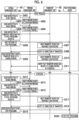
- Fig. 6 is a sequence diagram showing an example of a flow of a process of the control unit 50 from the start of the printing to the start of the post-processing.
- the print job management unit 91 of the overall management unit 90 determines whether or not the printed matter is transported in a plurality of parts (Step S301).
- the print job management unit 91 acquires the information of the paper from the print job stored in the storage unit 97.
- the print job management unit 91 acquires the capacity of the transport device 30 from the storage unit 97.
- the print job management unit 91 calculates how many times the printed matter is to be divided and transported.
- the post-processing instruction unit 95 of the overall management unit 90 issues an instruction to start the post-processing in a case in which the printed matter is transported to the post-processing device 40 (Step S302). Then, the process is ended.
- the post-processing device 40 starts the post-processing in response to the instruction from the post-processing instruction unit 95.
- the print job management unit 91 of the overall management unit 90 determines whether or not it is possible to start the post-processing in a stage in which a part of the printed matter has been transported (Step S303).
- the print job management unit 91 acquires the information of the paper from the print job stored in the storage unit 97 and determines whether or not it is possible to start the post-processing in a stage in which a part of the printed matter has been transported.
- a case in which it is not possible to start the post-processing in a stage in which a part of the printed matter has been transported is, for example, a case in which a cover and contents to be bound by the post-processing device 40 are transported by another transport device 30.
- a case in which it is possible to start the post-processing in a stage in which a part of the printed matter has been transported is, for example, a case in which the printed paper is folded one by one.
- the post-processing instruction unit 95 of the overall management unit 90 issues an instruction to start the post-processing after all of the printed matter is transported to the post-processing device 40 (Step S304). Then, the process is ended.
- the post-processing device 40 starts the post-processing in response to the instruction from the post-processing instruction unit 95.
- the print job management unit 91 of the overall management unit 90 calculates the number of transport operations required to start the post-processing (Step S305).
- the post-processing instruction unit 95 of the overall management unit 90 issues an instruction to start the post-processing after the required number of transport operations is completed (Step S306), and the process is ended.
- the post-processing device 40 starts the post-processing in response to the instruction from the post-processing instruction unit 95.
- Fig. 6 shows a flow of a process in a case in which the printed matter is transported in a plurality of parts.
- the post-processing device 40 starts the post-processing after the transport device 30 transports the printed matter N times will be described.
- the loading device 20 is not provided.
- the overall management unit 90 instructs the loading device 20 to perform loading between the execution of printing and transport by the transport device 30.
- the printing instruction unit 92 of the overall management unit 90 instructs the printing management unit 60 to start printing (Step S401).
- the printing management unit 60 directs the printing device 10 to perform printing on the basis of the printing instruction from the printing instruction unit 92 (Step S402).
- the printing instruction unit 92 issues an instruction to pause the printing (Step S403).
- the printing management unit 60 directs the printing device 10 to pause the printing on the basis of the printing instruction from the printing instruction unit 92 (Step S404).
- the transport instruction unit 94 of the overall management unit 90 instructs the transport management unit 80 to transport the printed matter to the post-processing device 40 (Step S405).
- the post-processing instruction unit 95 of the overall management unit 90 instructs the post-processing device 40 to wait for the start of the post-processing and not to start the post-processing even in a case in which the transport device 30 arrives at the post-processing device 40 (Step S406).
- the transport management unit 80 moves the transport device 30 in response to the transport instruction from the transport instruction unit 94 (Step S407). In a case in which the transport of the printed matter to the post-processing device 40 is completed, the transport management unit 80 notifies the overall management unit 90 that the transport has been completed (Step S408).
- the transport instruction unit 94 of the overall management unit 90 instructs the transport management unit 80 to move the transport device 30 to the loading position (Step S409).
- the transport management unit 80 moves the transport device 30 on the basis of the transport instruction from the transport instruction unit 94 (Step S410).
- the transport management unit 80 notifies the overall management unit 90 that the transport device 30 is located at the loading position (Step S411).
- a process corresponding to one transport operation in which the transport device 30 transports the printed matter output by the printing device 10 to the post-processing device 40 is completed by the process from Step S401 to Step S411.
- the post-processing device 40 starts the post-processing after the transport device 30 transports the printed matter N times.
- the process from Step S401 to Step S411 is repeated until the post-processing device 40 starts the post-processing.
- a process from Step S412 to Step S419 shown in Fig. 6 is performed in an N-th process, the post-processing is started.
- the printing instruction unit 92 of the overall management unit 90 instructs the printing management unit 60 to resume the printing (Step S412).
- a process from Step S413 to Step S416 is performed in the same manner as the process from Step S402 to Step S405 in the first process.
- the transport management unit 80 moves the transport device 30 in response to the instruction from the transport instruction unit 94 (Step S417) and notifies the overall management unit 90 that the transport has been completed (Step S418).
- the transport instruction unit 94 of the overall management unit 90 instructs the post-processing device 40 to start the post-processing (Step S419).
- the post-processing device 40 starts the post-processing in response to the instruction from the overall management unit 90 (Step S420).
- the flow of the process of the control unit 50 from the start of the printing to the start of the post-processing is not limited to the example shown in Fig. 6 .
- the post-processing start waiting instruction in Step S406 may not be issued, and only the post-processing start instruction in Step S419 may be issued to the post-processing device 40.
- an instruction to start the post-processing may be issued first after the transport device 30 performs transport N times, and the post-processing device 40 may start the post-processing after the N-th transport is ended.
Landscapes
- Engineering & Computer Science (AREA)
- Theoretical Computer Science (AREA)
- Mechanical Engineering (AREA)
- Human Computer Interaction (AREA)
- Physics & Mathematics (AREA)
- General Engineering & Computer Science (AREA)
- General Physics & Mathematics (AREA)
- Accessory Devices And Overall Control Thereof (AREA)
- Collation Of Sheets And Webs (AREA)
- Printers Characterized By Their Purpose (AREA)
Abstract
Description
- The present invention relates to a printing system, a printing method, a method for manufacturing a printed matter, and a control device.
-
JP6459571B -
JP6391357B -
JP2022-070211A - In a printing factory, various devices, such as a printing device, a cutting device, a bookbinding device, and an enclosing device, are used to perform various steps such as printing, processing, and shipping. A technique has been proposed which automatically transports a printed matter in order to reduce unnecessary work between these steps. For example, the following is considered: a robot arm automatically loads a printed matter output from a printing device onto a carriage, and the carriage is automatically transported. In this case, in a step in which post-processing is performed after the printed matter is transported, it is determined whether it is possible to start work in a stage in which a part of the printed matter has been transported or it is not possible to start work until all of the printed matter is transported.
- An object of the present invention is to prevent the manufacture of a defective product caused by a shortage of a printed matter in a post-processing step.
- According to a first aspect of the present disclosure, there is provided a printing system including: a printing device that performs printing on the basis of a given instruction and outputs a printed matter; a transport device that transports the printed matter output by the printing device; a post-processing device that performs post-processing on the printed matter transported by the transport device; and a control unit that grasps a transport situation of the transport device and controls a process in the post-processing device from the grasped transport situation.
- According to a second aspect of the present disclosure, in the printing system according to the first aspect, the control unit may control a start of the post-processing in the post-processing device.
- According to a third aspect of the present disclosure, in the printing system according to the second aspect, the control unit may acquire the number of transport operations required to start the post-processing in a case in which the printed matter output by the printing device is transported in a plurality of parts by the transport device and may start the post-processing in a case in which the printed matter has been transported the required number of times.
- According to a fourth aspect of the present disclosure, in the printing system according to the third aspect, the control unit may start the post-processing in a case in which it is possible to start the post-processing even in a stage in which only a part of the printed matter has been transported.
- According to a fifth aspect of the present disclosure, in the printing system according to the third aspect, the control unit may start the post-processing after all of the printed matter is transported.
- According to a sixth aspect of the present disclosure, in the printing system according to the first aspect, the transport situation of the transport device may be a position of the transport device.
- According to a seventh aspect of the present disclosure, in the printing system according to the first aspect, the transport device may transport the printed matter output by the printing device in a loaded state.
- According to an eighth aspect of the present disclosure, in the printing system according to the seventh aspect, the control unit may stop the printing by the printing device in a case in which the transport device is not present at a position where the printed matter is loaded.
- According to a ninth aspect of the present disclosure, in the printing system according to the eighth aspect, the control unit may calculate a capacity of the printed matter that is capable of being loaded on the transport device and may direct the printing device to perform the printing up to the capacity of the printed matter that is capable of being loaded on the transport device and to pause the printing in a case in which an output amount of the printed matter output by the printing device is larger than the capacity of the printed matter that is capable of being loaded on the transport device.
- According to a tenth aspect of the present disclosure, in the printing system according to the ninth aspect, the control unit may direct the printing device to resume the printing in a case in which a new transport device that is capable of transporting the printed matter is present at the position where the printed matter is loaded in a state in which the printing by the printing device is paused.
- According to an eleventh aspect of the present disclosure, in the printing system according to the first aspect, the control unit may control an output order in which the printing device outputs the printed matter.
- According to a twelfth aspect of the present disclosure, in the printing system according to the eleventh aspect, the control unit may direct the printing device to output the printed matter in descending order of a paper size of the printed matter.
- According to a thirteenth aspect of the present disclosure, there is provided a printing method including: performing printing on the basis of a given instruction and outputting a printed matter; transporting the printed matter output in the printing; and performing post-processing on the printed matter transported in the transporting, in which a control unit that grasps a transport situation of the transporting controls a process in the post-processing from the grasped transport situation.
- According to a fourteenth aspect of the present disclosure, there is provided a method for manufacturing a printed matter, the method including: performing printing on the basis of a given instruction and outputting a printed matter; transporting the printed matter output in the printing; and performing post-processing on the printed matter transported in the transporting, in which a control unit that grasps a transport situation of the transporting controls a process in the post-processing from the grasped transport situation.
- According to a fifteenth aspect of the present disclosure, there is provided a control device that controls an overall operation of a printing device that performs printing on the basis of a given instruction and outputs a printed matter, a transport device that transports the printed matter output by the printing device, and a post-processing device that performs post-processing on the printed matter transported by the transport device, grasps a transport situation of the transport device, and controls a process in the post-processing device from the grasped transport situation.
- According to the first, thirteenth, fourteenth, and fifteenth aspects of the present disclosure, it is possible to control the post-processing on the basis of the transport situation of the transport device.
- According to the second aspect of the present disclosure, it is possible to control the start of the post-processing on the basis of the transport situation of the transport device.
- According to the third aspect of the present disclosure, in a case in which the printed matter is transported in a plurality of parts, it is possible to control the time when the post-processing is started.
- According to the fourth aspect of the present disclosure, in a case in which the printed matter is transported in a plurality of parts and it is possible to start the post-processing even in a stage in which only a part of the printed matter has been transported, it is possible to start the post-processing without waiting for the transport of all of the printed matter.
- According to the fifth aspect of the present disclosure, in a case in which the printed matter is transported in a plurality of parts, it is possible to prevent the post-processing from being started before all of the printed matter required to start the post-processing is transported.
- According to the sixth aspect of the present disclosure, it is possible to transport the printed matter in a state in which the printed matter is loaded on the transport device.
- According to the seventh aspect of the present disclosure, it is possible to control the output of the printed matter on the basis of the position of the transport device.
- According to the eighth aspect of the present disclosure, it is possible to prevent the printed matter from overflowing because the printed matter is output in a case in which the transport device is not present at the position where the printed matter is loaded.
- According to the ninth aspect of the present disclosure, it is possible to control the output of the printed matter on the basis of the capacity of the transport device.
- According to the tenth aspect of the present disclosure, it is possible to control the output of the printed matter in a case in which the output amount of the printed matter is larger than the capacity of the transport device.
- According to the eleventh aspect of the present disclosure, it is possible to change the output order of the printed matter.
- According to the twelfth aspect of the present disclosure, it is possible to prevent the collapse of the loaded printed matter during transport.
- Exemplary embodiment(s) of the present invention will be described in detail based on the following figures, wherein:
-
Fig. 1 is a diagram showing an example of a configuration of a printing system according to a present exemplary embodiment; -
Fig. 2 is a diagram showing an example of a hardware configuration of a computer that is used as a printing management unit, a loading management unit, a transport management unit, and an overall management unit according to the present exemplary embodiment; -
Fig. 3 is a diagram showing an example of a functional configuration of the overall management unit according to the present exemplary embodiment; -
Fig. 4 is a flowchart showing an example of a flow of a process during printing; -
Fig. 5 is a flowchart showing an example of a flow of a process of controlling a time when post-processing is started; and -
Fig. 6 is a sequence diagram showing an example of a flow of a process of a control unit from the start of printing to the start of post-processing. - Hereinafter, an exemplary embodiment of the present invention will be described in detail with reference to the accompanying drawings.
-
Fig. 1 is a diagram showing a configuration of a printing system according to the present exemplary embodiment. - A printing system 1 includes a
printing device 10, aloading device 20, atransport device 30, and apost-processing device 40. In addition, the printing system 1 includes acontrol unit 50 that controls theprinting device 10, theloading device 20, thetransport device 30, and thepost-processing device 40. - The
control unit 50 includes aprinting management unit 60 that manages theprinting device 10, aloading management unit 70 that manages theloading device 20, atransport management unit 80 that manages thetransport device 30, and anoverall management unit 90 that performs the overall management of theprinting management unit 60, theloading management unit 70, thetransport management unit 80, and thepost-processing device 40. - The
printing device 10, theloading device 20, thetransport device 30, and thepost-processing device 40 are configured to be communicable with thecontrol unit 50 through a network. The type of the network is not particularly limited as long as the network can transmit and receive data. For example, the network may be the Internet, a local area network (LAN), or a wide area network (WAN). A communication line used for data communication may be wired or wireless. In addition, each device may be configured to be connected through a plurality of networks or communication lines. - The
printing device 10 is a device that has a printer function of printing an image on a recording medium, such as paper, and outputting the recording medium as a printed document. Theprinting device 10 may have other image processing functions, such as a scanner function and a facsimile function, in addition to the printer function. Further, theprinting device 10 may be capable of performing color printing or may perform only monochrome printing. Theprinting device 10 performs printing in response to an instruction from theprinting management unit 60 and outputs a printed matter. - The
loading device 20 is a device that loads the printed matter output by theprinting device 10 on thetransport device 30. Theloading device 20 is configured by, for example, a robot arm, picks up the printed matter output by theprinting device 10 with the arm, and loads the printed matter on thetransport device 30. Theloading device 20 loads the printed matter on thetransport device 30 in response to an instruction from theloading management unit 70. - In addition, the
loading device 20, theloading management unit 70, and aloading instruction unit 93, which will be described later, may not be provided, and the printed matter which has been printed and output by theprinting device 10 may be placed on thetransport device 30 as it is. - The
transport device 30 is a device that transports the printed matter output by theprinting device 10. Thetransport device 30 transports the printed matter in response to an instruction from thetransport management unit 80. The number oftransport devices 30 may be one, or a plurality oftransport devices 30 may be provided. - The
transport device 30 is composed of, for example, a carriage on which the printed matter is loaded and an automatic transport device that transports the carriage. The printed matter output by theprinting device 10 is loaded on the carriage by theloading device 20, and the automatic transport device travels on a predetermined route in response to an instruction from thetransport management unit 80. - The predetermined route is a route that connects the
printing device 10 and thepost-processing device 40. In this way, the printed matter output by theprinting device 10 is transported to thepost-processing device 40. Further, in a case in which there are a plurality ofpost-processing devices 40, thetransport device 30 also transports the printed matter between differentpost-processing devices 40. - In addition, the
transport device 30 is not limited to the configuration in which thetransport device 30 transports the printed matter in a loaded state. For example, thetransport device 30 may be configured by a robot arm, may pick up the printed matter output by theprinting device 10 with the arm, and may transport the printed matter in a picked-up state. - The
post-processing device 40 is a device that performs post-processing on the printed matter transported by thetransport device 30. Thepost-processing device 40 is a device that performs processing on the printed matter, such as a cutting device, a bookbinding device, or a laminating device. Further, thepost-processing device 40 may be a device that performs a process for shipping the printed matter, such as a packing device. A plurality of types ofpost-processing devices 40 may be provided and may perform a plurality of types of post-processing on the printed matter. Alternatively, onepost-processing device 40 may be provided. - The
post-processing device 40 performs the post-processing on the printed matter in response to an instruction from theoverall management unit 90. Thepost-processing device 40 has, for example, a panel (not shown) for displaying an instruction from theoverall management unit 90. The panel is implemented by, for example, adisplay mechanism 105 which will be described below. An operator starts or stops the post-processing using thepost-processing device 40 according to the instruction displayed on the panel. Further, thepost-processing device 40 may automatically start or stop the post-processing in response to an instruction from theoverall management unit 90. - The
control unit 50 controls theprinting device 10, theloading device 20, thetransport device 30, and thepost-processing device 40. Thecontrol unit 50 includes theprinting management unit 60, theloading management unit 70, thetransport management unit 80, and theoverall management unit 90. - The
printing management unit 60, theloading management unit 70, thetransport management unit 80, and theoverall management unit 90 are implemented by, for example, a computer. These units may be implemented by a single computer or by a distribution process by a plurality of computers. -
Fig. 2 is a diagram showing an example of a hardware configuration of acomputer 100 that is used as theprinting management unit 60, theloading management unit 70, thetransport management unit 80, and theoverall management unit 90. Thecomputer 100 includes aprocessor 101, a read only memory (ROM) 102, and a random access memory (RAM) 103. Theprocessor 101 is, for example, a central processing unit (CPU) and execute a program read from theROM 102, using theRAM 103 as a work area. Further, thecomputer 100 includes acommunication interface 104 for connection to the network and adisplay mechanism 105 for display output to a display. In addition, thecomputer 100 includes aninput device 106 that is used by an operator of thecomputer 100 to perform an input operation. Further, thedisplay mechanism 105 and theinput device 106 may be configured to be remotely operated. In addition, the configuration of thecomputer 100 shown inFig. 2 is only an example, and the computer used in the present exemplary embodiment is not limited to the example of the configuration shown inFig. 2 . - The
printing management unit 60 manages theprinting device 10. Theprinting management unit 60 is configured to be communicable with theoverall management unit 90 and theprinting device 10. - In a case in which a printing instruction from the
overall management unit 90 is received, theprinting management unit 60 directs theprinting device 10 to perform or stop printing on the basis of the received printing instruction. - The
loading management unit 70 manages theloading device 20. Theloading management unit 70 is configured to be communicable with theoverall management unit 90 and theloading device 20. - In a case in which a loading instruction is received from the
overall management unit 90, theloading management unit 70 gives an instruction to load the printed matter output by theprinting device 10 on thetransport device 30 to theloading device 20 on the basis of the received loading instruction. - The
transport management unit 80 manages thetransport device 30. Thetransport management unit 80 is configured to be communicable with theoverall management unit 90 and thetransport device 30. - In a case in which the
transport management unit 80 receives a transport instruction from theoverall management unit 90, thetransport management unit 80 moves thetransport device 30 on the basis of the received transport instruction. In addition, thetransport management unit 80 grasps a transport situation, such as a position of the movedtransport device 30 after the movement, and notifies theoverall management unit 90 of the transport situation. - The
overall management unit 90 performs the overall management of theprinting management unit 60, theloading management unit 70, thetransport management unit 80, and thepost-processing device 40. Functions of theoverall management unit 90 will be described with reference toFig. 3. Fig. 3 is a diagram showing an example of a functional configuration of theoverall management unit 90 according to the present exemplary embodiment. - The
overall management unit 90 includes a printjob management unit 91 that manages a print job, aprinting instruction unit 92 that issues an instruction to theprinting management unit 60, aloading instruction unit 93 that issues an instruction to theloading management unit 70, atransport instruction unit 94 that issues an instruction to thetransport management unit 80, apost-processing instruction unit 95 that issues an instruction to thepost-processing device 40, acommunication unit 96 that communicates with theprinting management unit 60, theloading management unit 70, thetransport management unit 80, and thepost-processing device 40, and astorage unit 97 that stores the print job. - The
overall management unit 90 receives a print job from, for example, an external device (not shown) through thecommunication unit 96. Further, theoverall management unit 90 may be configured to receive the print job input by an operation on an operation panel (not shown). The operation panel is implemented by, for example, theinput device 106. Information of the received print job is stored in thestorage unit 97. - The print
job management unit 91 manages various types of information necessary for executing the received print job. For example, the printjob management unit 91 manages information of paper necessary for executing the print job and information of a processing step. - Examples of the information of the paper include a paper size, a paper type, the number of sheets to be printed, and the number of copies to be printed.
- Examples of the information of the processing step include the position of the
transport device 30, the transport order of the printed matters by thetransport device 30, and the type of post-processing. - In addition, the print
job management unit 91 calculates the number of copies of the printed matter output by theprinting device 10 related to the execution of the print job. Further, the printjob management unit 91 calculates the number of transport operations of thetransport device 30 required to transport the printed matter. - The
printing instruction unit 92 issues a printing instruction on the basis of, for example, various types of information managed by the printjob management unit 91, the number of output copies calculated by the printjob management unit 91, and the number of transport operations. The printing instruction from theprinting instruction unit 92 is transmitted to theprinting management unit 60 through thecommunication unit 96. - For example, in a case in which the
transport device 30 is not present at a position (loading position) where the printed matter is loaded, theprinting instruction unit 92 issues an instruction to stop printing by theprinting device 10. - Further, for example, in a case in which the number of copies of the printed matter output by the
printing device 10 is larger than the capacity of the printed matter that can be loaded on thetransport device 30, theprinting instruction unit 92 issues an instruction for theprinting device 10 to perform printing up to the capacity of the printed matter that can be loaded on thetransport device 30 and to pause printing. Then, in a case in which anew transport device 30 that can transport the printed matter is present at the loading position in a state in which the printing is paused, theprinting instruction unit 92 issues an instruction to restart the printing by theprinting device 10. - In addition, the
printing instruction unit 92 may issue an instruction related to the output order of the printed matters. For example, in a case in which the printed matters having a plurality of types of paper sizes are output, theprinting instruction unit 92 issues an instruction to output the printed matters in descending order of the paper size of the printed matter. In accordance with this, the printed matters to be loaded on thetransport device 30 are loaded such that the paper with a large size which has been output first is loaded on the bottom. Therefore, it is possible to prevent the collapse of the loaded printed matters during transport. - The
loading instruction unit 93 issues an instruction to load the printed matter output by theprinting device 10 on thetransport device 30 on the basis of the printing instruction from theprinting instruction unit 92. The loading instruction from theloading instruction unit 93 is transmitted to theloading management unit 70 through thecommunication unit 96. - The
transport instruction unit 94 issues a transport instruction on the basis of, for example, various types of information managed by the printjob management unit 91 and the number of output copies and the number of transport operations which are calculated by the printjob management unit 91. The transport instruction from thetransport instruction unit 94 is transmitted to thetransport management unit 80 through thecommunication unit 96. - For example, the
transport instruction unit 94 gives an instruction to move thetransport device 30 on the basis of the transport order of the printed matters by thetransport device 30. In addition, in a case in which thetransport device 30 that can transport the printed matter is not present at the loading position, thetransport instruction unit 94 gives an instruction to move thetransport device 30 that can transport the printed matter to the loading position. - The
post-processing instruction unit 95 issues a post-processing instruction on the basis of, for example, various types of information managed by the printjob management unit 91 and the number of output copies and the number of transport operations which are calculated by the printjob management unit 91. The post-processing instruction from thepost-processing instruction unit 95 is transmitted to thepost-processing device 40 through thecommunication unit 96. - In a case in which the printed matter has been transported to the
post-processing device 40 by thetransport device 30, thepost-processing instruction unit 95 issues an instruction related to whether or not the post-processing may be started. - For example, in a case in which the number of copies of the printed matter output by the
printing device 10 is smaller than the capacity of the printed matter that can be loaded on thetransport device 30, thetransport device 30 transports the printed matter output by theprinting device 10 with one transport operation. In this case, thepost-processing instruction unit 95 issues an instruction to start the post-processing in a case in which the printed matter is transported to the post-processing device by thetransport device 30. - On the other hand, in a case in which the number of copies of the printed matter output by the
printing device 10 is larger than the capacity of the printed matter that can be loaded on thetransport device 30, the printed matter output by theprinting device 10 is transported in a plurality of parts by thetransport device 30. In this case, thepost-processing instruction unit 95 acquires the number of transport operations required to start the post-processing and issues an instruction to start the post-processing in a case in which the printed matter has been transported the required number of times. The number of transport operations required to start the post-processing is calculated by the printjob management unit 91. The printjob management unit 91 calculates the number of transport operations required to start the post-processing on the basis of the information of the paper and the information of the processing step. - For example, in a case in which the printed matter is a leaflet and a process of folding the printed matters one by one is performed in the post-processing step, the number of transport operations required to start the post-processing is 1. In a case in which the post-processing can be started even in a stage in which only a part of the printed matter has been transported as described above, the
post-processing instruction unit 95 issues an instruction to start the post-processing. - Meanwhile, for example, in a case in which the printed matter consists of a cover and contents to be bound, the cover and the contents may be transported separately. In this case, it is not possible to start the post-processing in a case in which only the cover has been transported first. The print
job management unit 91 calculates how many times each of the cover and the contents is transported and calculates the number of transport operations required to start the post-processing. Thepost-processing instruction unit 95 issues an instruction to start the post-processing after the number of transport operations required to start the post-processing is completed and all of the printed matter is transported. - The
communication unit 96 functions as an interface that is connected to the network, communicates with theprinting management unit 60, theloading management unit 70, thetransport management unit 80, and thepost-processing device 40, and transmits and receives information. Thecommunication unit 96 acquires, for example, positional information of thetransport device 30 from thetransport management unit 80. - The
storage unit 97 stores a program for implementing various processes and data required to implement various processes. Thestorage unit 97 stores, for example, the capacity of thetransport device 30. - In a case in which the
overall management unit 90 shown inFig. 3 is implemented by thecomputer 100 shown inFig. 2 , for example, theprocessor 101 executes a program to implement the functions of the printjob management unit 91, theprinting instruction unit 92, theloading instruction unit 93, thetransport instruction unit 94, and thepost-processing instruction unit 95. The functions of thecommunication unit 96 is implemented by, for example, thecommunication interface 104. Thestorage unit 97 is implemented by, for example, theROM 102. - Next, a flow of a process during printing will be described with reference to
Fig. 4. Fig. 4 is a flowchart showing an example of the flow of the process during printing. - In
Fig. 4 , first, theoverall management unit 90 receives a print job (Step S201). In Step S201, theoverall management unit 90 receives the print job through, for example, thecommunication unit 96 and stores the received print job in thestorage unit 97. - Then, the
overall management unit 90 determines whether or not thetransport device 30 that can transport the printed matter is present at the loading position (Step S202). In Step S202, theoverall management unit 90 acquires the positional information of thetransport device 30 from thetransport management unit 80 through thecommunication unit 96. The printjob management unit 91 of theoverall management unit 90 determines whether or not thetransport device 30 that can transport the printed matter is present at the loading position on the basis of the acquired positional information. - In a case in which it is determined that the
transport device 30 that can transport the printed matter is not present at the loading position (NO in Step S202), the process in Step S202 is repeated. - In a case in which it is determined that the
transport device 30 that can transport the printed matter is present at the loading position (YES in Step S202), theoverall management unit 90 determines whether or not the number of output copies of the printed matter is larger than the capacity of the transport device 30 (Step S203). In Step S203, the printjob management unit 91 of theoverall management unit 90 acquires the information of the paper from the print job stored in thestorage unit 97. In addition, the printjob management unit 91 acquires the capacity of thetransport device 30 from thestorage unit 97. Then, the printjob management unit 91 determines whether or not the number of output copies of the printed matter is larger than the capacity of thetransport device 30. - In a case in which it is determined that the number of output copies of the printed matter is smaller than the capacity of the transport device 30 (NO in Step S203), the
printing instruction unit 92 of theoverall management unit 90 issues an instruction to print all of the printed matter (Step S204). Then, the printing is ended (Step S207). - In a case in which it is determined that the number of output copies of the printed matter is larger than the capacity of the transport device 30 (YES in Step S203), the
printing instruction unit 92 of theoverall management unit 90 issues an instruction to perform printing up to the capacity of thetransport device 30 and to pause the printing (Step S205). The printjob management unit 91 of theoverall management unit 90 determines whether or not all of the printing has been ended (Step S206). In a case in which all of the printing has been ended (YES in Step S206), the printing is ended (Step S207). - In a case in which all of the printing has not been ended (NO in Step S206), the process returns to Step S202 and is performed again along the flow.
- Next, a flow of a process from the start of printing to the start of post-processing will be described with reference to
Figs. 5 and6 .Fig. 5 is a flowchart showing an example of a flow of a process of controlling the time when the post-processing is started.Fig. 6 is a sequence diagram showing an example of a flow of a process of thecontrol unit 50 from the start of the printing to the start of the post-processing. - The flow of the process of controlling the time when the post-processing is started will be described with reference to
Fig. 5 . - In
Fig. 5 , first, the printjob management unit 91 of theoverall management unit 90 determines whether or not the printed matter is transported in a plurality of parts (Step S301). In Step S301, the printjob management unit 91 acquires the information of the paper from the print job stored in thestorage unit 97. In addition, the printjob management unit 91 acquires the capacity of thetransport device 30 from thestorage unit 97. Then, the printjob management unit 91 calculates how many times the printed matter is to be divided and transported. - In a case in which the printed matter is not transported in a plurality of parts (NO in Step S301), the
post-processing instruction unit 95 of theoverall management unit 90 issues an instruction to start the post-processing in a case in which the printed matter is transported to the post-processing device 40 (Step S302). Then, the process is ended. Thepost-processing device 40 starts the post-processing in response to the instruction from thepost-processing instruction unit 95. - In a case in which the printed matter is transported in a plurality of parts (YES in Step S301), the print
job management unit 91 of theoverall management unit 90 determines whether or not it is possible to start the post-processing in a stage in which a part of the printed matter has been transported (Step S303). In Step S303, the printjob management unit 91 acquires the information of the paper from the print job stored in thestorage unit 97 and determines whether or not it is possible to start the post-processing in a stage in which a part of the printed matter has been transported. - A case in which it is not possible to start the post-processing in a stage in which a part of the printed matter has been transported is, for example, a case in which a cover and contents to be bound by the
post-processing device 40 are transported by anothertransport device 30. A case in which it is possible to start the post-processing in a stage in which a part of the printed matter has been transported is, for example, a case in which the printed paper is folded one by one. - In a case in which it is determined that it is not possible to start the post-processing in a stage in which a part of the printed matter has been transported (NO in Step S303), the
post-processing instruction unit 95 of theoverall management unit 90 issues an instruction to start the post-processing after all of the printed matter is transported to the post-processing device 40 (Step S304). Then, the process is ended. Thepost-processing device 40 starts the post-processing in response to the instruction from thepost-processing instruction unit 95. - In a case in which it is determined that it is possible to start the post-processing in a stage in which a part of the printed matter has been transported (YES in Step S303), the print
job management unit 91 of theoverall management unit 90 calculates the number of transport operations required to start the post-processing (Step S305). - Then, the
post-processing instruction unit 95 of theoverall management unit 90 issues an instruction to start the post-processing after the required number of transport operations is completed (Step S306), and the process is ended. Thepost-processing device 40 starts the post-processing in response to the instruction from thepost-processing instruction unit 95. - Next, a flow of a process of the
control unit 50 from the start of printing to the start of post-processing will be described with reference toFig. 6. Fig. 6 shows a flow of a process in a case in which the printed matter is transported in a plurality of parts. Here, a case in which thepost-processing device 40 starts the post-processing after thetransport device 30 transports the printed matter N times will be described. In addition, in the example shown inFig. 6 , theloading device 20 is not provided. In a case in which theloading device 20 is provided, theoverall management unit 90 instructs theloading device 20 to perform loading between the execution of printing and transport by thetransport device 30. - In
Fig. 6 , first, theprinting instruction unit 92 of theoverall management unit 90 instructs theprinting management unit 60 to start printing (Step S401). Theprinting management unit 60 directs theprinting device 10 to perform printing on the basis of the printing instruction from the printing instruction unit 92 (Step S402). Then, in a case in which printing is performed up to the capacity of thetransport device 30, theprinting instruction unit 92 issues an instruction to pause the printing (Step S403). Theprinting management unit 60 directs theprinting device 10 to pause the printing on the basis of the printing instruction from the printing instruction unit 92 (Step S404). - Then, the
transport instruction unit 94 of theoverall management unit 90 instructs thetransport management unit 80 to transport the printed matter to the post-processing device 40 (Step S405). Then, thepost-processing instruction unit 95 of theoverall management unit 90 instructs thepost-processing device 40 to wait for the start of the post-processing and not to start the post-processing even in a case in which thetransport device 30 arrives at the post-processing device 40 (Step S406). - The
transport management unit 80 moves thetransport device 30 in response to the transport instruction from the transport instruction unit 94 (Step S407). In a case in which the transport of the printed matter to thepost-processing device 40 is completed, thetransport management unit 80 notifies theoverall management unit 90 that the transport has been completed (Step S408). - Then, the
transport instruction unit 94 of theoverall management unit 90 instructs thetransport management unit 80 to move thetransport device 30 to the loading position (Step S409). Thetransport management unit 80 moves thetransport device 30 on the basis of the transport instruction from the transport instruction unit 94 (Step S410). Then, in a case in which thetransport device 30 arrives at the loading position, thetransport management unit 80 notifies theoverall management unit 90 that thetransport device 30 is located at the loading position (Step S411). - A process corresponding to one transport operation in which the
transport device 30 transports the printed matter output by theprinting device 10 to thepost-processing device 40 is completed by the process from Step S401 to Step S411. In the example shown inFig. 6 , thepost-processing device 40 starts the post-processing after thetransport device 30 transports the printed matter N times. The process from Step S401 to Step S411 is repeated until thepost-processing device 40 starts the post-processing. After a process from Step S412 to Step S419 shown inFig. 6 is performed in an N-th process, the post-processing is started. - In the N-th process, first, the
printing instruction unit 92 of theoverall management unit 90 instructs theprinting management unit 60 to resume the printing (Step S412). A process from Step S413 to Step S416 is performed in the same manner as the process from Step S402 to Step S405 in the first process. Then, thetransport management unit 80 moves thetransport device 30 in response to the instruction from the transport instruction unit 94 (Step S417) and notifies theoverall management unit 90 that the transport has been completed (Step S418). - Then, the
transport instruction unit 94 of theoverall management unit 90 instructs thepost-processing device 40 to start the post-processing (Step S419). Thepost-processing device 40 starts the post-processing in response to the instruction from the overall management unit 90 (Step S420). - In addition, the flow of the process of the
control unit 50 from the start of the printing to the start of the post-processing is not limited to the example shown inFig. 6 . For example, the post-processing start waiting instruction in Step S406 may not be issued, and only the post-processing start instruction in Step S419 may be issued to thepost-processing device 40. Further, an instruction to start the post-processing may be issued first after thetransport device 30 performs transport N times, and thepost-processing device 40 may start the post-processing after the N-th transport is ended. - Although the exemplary embodiments of the present invention have been described above, the technical scope of the present invention is not limited to the scope described in the above-described exemplary embodiments. It is clear from the claims that combinations of two or more of the above-described exemplary embodiments and various modifications or improvements of the above-described exemplary embodiments are also included in the technical scope of the present invention.
-
- (((1))) A printing system comprising:
- a printing device that performs printing on the basis of a given instruction and outputs a printed matter;
- a transport device that transports the printed matter output by the printing device;
- a post-processing device that performs post-processing on the printed matter transported by the transport device; and
- a control unit that grasps a transport situation of the transport device and controls a process in the post-processing device from the grasped transport situation.
- (((2))) The printing system according to (((1))),
wherein the control unit controls a start of the post-processing in the post-processing device. - (((3))) The printing system according to (((2))),
wherein the control unit acquires the number of transport operations required to start the post-processing in a case in which the printed matter output by the printing device is transported in a plurality of parts by the transport device and starts the post-processing in a case in which the printed matter has been transported the required number of times. - (((4))) The printing system according to (((3))),
wherein the control unit starts the post-processing in a case in which it is possible to start the post-processing even in a stage in which only a part of the printed matter has been transported. - (((5))) The printing system according to (((3))),
wherein the control unit starts the post-processing after all of the printed matter is transported. - (((6))) The printing system according to (((1))),
wherein the transport situation of the transport device is a position of the transport device. - (((7))) The printing system according to (((1))),
wherein the transport device transports the printed matter output by the printing device in a loaded state. - (((8))) The printing system according to (((7))),
wherein the control unit stops the printing by the printing device in a case in which the transport device is not present at a position where the printed matter is loaded. - (((9))) The printing system according to (((8))),
wherein the control unit calculates a capacity of the printed matter that is capable of being loaded on the transport device and directs the printing device to perform the printing up to the capacity of the printed matter that is capable of being loaded on the transport device and to pause the printing in a case in which an output amount of the printed matter output by the printing device is larger than the capacity of the printed matter that is capable of being loaded on the transport device. - (((10))) The printing system according to (((9))),
wherein the control unit directs the printing device to resume the printing in a case in which a new transport device that is capable of transporting the printed matter is present at the position where the printed matter is loaded in a state in which the printing by the printing device is paused. - (((11))) The printing system according to (((1))),
wherein the control unit controls an output order in which the printing device outputs the printed matter. - (((12))) The printing system according to (((11))),
wherein the control unit directs the printing device to output the printed matter in descending order of a paper size of the printed matter. - (((13))) A printing method comprising:
- performing printing on the basis of a given instruction and outputting a printed matter;
- transporting the printed matter output in the printing; and
- performing post-processing on the printed matter transported in the transporting,
- wherein a control unit that grasps a transport situation of the transporting controls a process in the post-processing from the grasped transport situation.
- (((14))) A method for manufacturing a printed matter, the method comprising:
- performing printing on the basis of a given instruction and outputting a printed matter;
- transporting the printed matter output in the printing; and
- performing post-processing on the printed matter transported in the transporting,
- wherein a control unit that grasps a transport situation of the transporting controls a process in the post-processing from the grasped transport situation.
- (((15))) A control device that controls an overall operation of a printing device that performs printing on the basis of a given instruction and outputs a printed matter, a transport device that transports the printed matter output by the printing device, and a post-processing device that performs post-processing on the printed matter transported by the transport device, grasps a transport situation of the transport device, and controls a process in the post-processing device from the grasped transport situation.
- According to the aspects (((1))), (((13))), (((14))), and (((15))), it is possible to control the post-processing on the basis of the transport situation of the transport device.
- According to the aspect (((2))), it is possible to control the start of the post-processing on the basis of the transport situation of the transport device.
- According to the aspect (((3))), in a case in which the printed matter is transported in a plurality of parts, it is possible to control the time when the post-processing is started.
- According to the aspect (((4))), in a case in which the printed matter is transported in a plurality of parts and it is possible to start the post-processing even in a stage in which only a part of the printed matter has been transported, it is possible to start the post-processing without waiting for the transport of all of the printed matter.
- According to the aspect (((5))), in a case in which the printed matter is transported in a plurality of parts, it is possible to prevent the post-processing from being started before all of the printed matter required to start the post-processing is transported.
- According to the aspect (((6))), it is possible to transport the printed matter in a state in which the printed matter is loaded on the transport device.
- According to the aspect (((7))), it is possible to control the output of the printed matter on the basis of the position of the transport device.
- According to the aspect (((8))), it is possible to prevent the printed matter from overflowing because the printed matter is output in a case in which the transport device is not present at the position where the printed matter is loaded.
- According to the aspect (((9))), it is possible to control the output of the printed matter on the basis of the capacity of the transport device.
- According to the aspect (((10))), it is possible to control the output of the printed matter in a case in which the output amount of the printed matter is larger than the capacity of the transport device.
- According to the aspect (((11))), it is possible to change the output order of the printed matter.
- According to the aspect (((12))), it is possible to prevent the collapse of the loaded printed matter during transport.
- The foregoing description of the exemplary embodiments of the present invention has been provided for the purposes of illustration and description. It is not intended to be exhaustive or to limit the invention to the precise forms disclosed. Obviously, many modifications and variations will be apparent to practitioners skilled in the art. The embodiments were chosen and described in order to best explain the principles of the invention and its practical applications, thereby enabling others skilled in the art to understand the invention for various embodiments and with the various modifications as are suited to the particular use contemplated. It is intended that the scope of the invention be defined by the following claims and their equivalents.
-
- 1: printing system
- 10: printing device
- 20: loading device
- 30: transport device
- 40: post-processing device
- 50: control unit
- 60: printing management unit
- 70: loading management unit
- 80: transport management unit
- 90: overall management unit
- 100: computer
Claims (15)
- A printing system comprising:a printing device that performs printing on the basis of a given instruction and outputs a printed matter;a transport device that transports the printed matter output by the printing device;a post-processing device that performs post-processing on the printed matter transported by the transport device; anda control unit that grasps a transport situation of the transport device and controls a process in the post-processing device from the grasped transport situation.
- The printing system according to claim 1,
wherein the control unit controls a start of the post-processing in the post-processing device. - The printing system according to claim 2,
wherein the control unit acquires the number of transport operations required to start the post-processing in a case in which the printed matter output by the printing device is transported in a plurality of parts by the transport device and starts the post-processing in a case in which the printed matter has been transported the required number of times. - The printing system according to claim 3,
wherein the control unit starts the post-processing in a case in which it is possible to start the post-processing even in a stage in which only a part of the printed matter has been transported. - The printing system according to claim 3,
wherein the control unit starts the post-processing after all of the printed matter is transported. - The printing system according to claim 1,
wherein the transport situation of the transport device is a position of the transport device. - The printing system according to claim 1,
wherein the transport device transports the printed matter output by the printing device in a loaded state. - The printing system according to claim 7,
wherein the control unit stops the printing by the printing device in a case in which the transport device is not present at a position where the printed matter is loaded. - The printing system according to claim 8,
wherein the control unit calculates a capacity of the printed matter that is capable of being loaded on the transport device and directs the printing device to perform the printing up to the capacity of the printed matter that is capable of being loaded on the transport device and to pause the printing in a case in which an output amount of the printed matter output by the printing device is larger than the capacity of the printed matter that is capable of being loaded on the transport device. - The printing system according to claim 9,
wherein the control unit directs the printing device to resume the printing in a case in which a new transport device that is capable of transporting the printed matter is present at the position where the printed matter is loaded in a state in which the printing by the printing device is paused. - The printing system according to claim 1,
wherein the control unit controls an output order in which the printing device outputs the printed matter. - The printing system according to claim 11,
wherein the control unit directs the printing device to output the printed matter in descending order of a paper size of the printed matter. - A printing method comprising:performing printing on the basis of a given instruction and outputting a printed matter;transporting the printed matter output in the printing; andperforming post-processing on the printed matter transported in the transporting,wherein a control unit that grasps a transport situation of the transporting controls a process in the post-processing from the grasped transport situation.
- A method for manufacturing a printed matter, the method comprising:performing printing on the basis of a given instruction and outputting a printed matter;transporting the printed matter output in the printing; andperforming post-processing on the printed matter transported in the transporting,wherein a control unit that grasps a transport situation of the transporting controls a process in the post-processing from the grasped transport situation.
- A control device that controls an overall operation of a printing device that performs printing on the basis of a given instruction and outputs a printed matter, a transport device that transports the printed matter output by the printing device, and a post-processing device that performs post-processing on the printed matter transported by the transport device, grasps a transport situation of the transport device, and controls a process in the post-processing device from the grasped transport situation.
Applications Claiming Priority (1)
| Application Number | Priority Date | Filing Date | Title |
|---|---|---|---|
| JP2023025397A JP2024118847A (en) | 2023-02-21 | 2023-02-21 | Printing system, printing method, and printing method and control device |
Publications (1)
| Publication Number | Publication Date |
|---|---|
| EP4421610A1 true EP4421610A1 (en) | 2024-08-28 |
Family
ID=87557871
Family Applications (1)
| Application Number | Title | Priority Date | Filing Date |
|---|---|---|---|
| EP23189939.4A Pending EP4421610A1 (en) | 2023-02-21 | 2023-08-07 | Printing system, printing method, method for manufacturing printed matter, and control device |
Country Status (4)
| Country | Link |
|---|---|
| US (1) | US20240279016A1 (en) |
| EP (1) | EP4421610A1 (en) |
| JP (1) | JP2024118847A (en) |
| CN (1) | CN118528643A (en) |
Citations (6)
| Publication number | Priority date | Publication date | Assignee | Title |
|---|---|---|---|---|
| JPH0159571B2 (en) | 1983-08-09 | 1989-12-18 | Mitsubishi Electric Corp | |
| JP2013082133A (en) * | 2011-10-11 | 2013-05-09 | Konica Minolta Business Technologies Inc | Image forming apparatus, image forming method, and program |
| JP6391357B2 (en) | 2014-08-11 | 2018-09-19 | キヤノン株式会社 | Printing system, printing system control method and program |
| JP2022070211A (en) | 2020-10-26 | 2022-05-12 | 株式会社ホリゾン | Printing control management device, transport management device, and printing system |
| CN217200376U (en) * | 2022-03-25 | 2022-08-16 | 瑞特优化科技股份有限公司 | Automatic collating unmanned operation system for intelligent printing factory |
| US20220269914A1 (en) * | 2021-02-22 | 2022-08-25 | Fujifilm Business Innovation Corp. | Printing control apparatus, printing apparatus, and non-transitory computer readable medium storing program |
-
2023
- 2023-02-21 JP JP2023025397A patent/JP2024118847A/en active Pending
- 2023-08-07 EP EP23189939.4A patent/EP4421610A1/en active Pending
- 2023-08-08 CN CN202310988501.4A patent/CN118528643A/en active Pending
- 2023-08-10 US US18/447,306 patent/US20240279016A1/en active Pending
Patent Citations (6)
| Publication number | Priority date | Publication date | Assignee | Title |
|---|---|---|---|---|
| JPH0159571B2 (en) | 1983-08-09 | 1989-12-18 | Mitsubishi Electric Corp | |
| JP2013082133A (en) * | 2011-10-11 | 2013-05-09 | Konica Minolta Business Technologies Inc | Image forming apparatus, image forming method, and program |
| JP6391357B2 (en) | 2014-08-11 | 2018-09-19 | キヤノン株式会社 | Printing system, printing system control method and program |
| JP2022070211A (en) | 2020-10-26 | 2022-05-12 | 株式会社ホリゾン | Printing control management device, transport management device, and printing system |
| US20220269914A1 (en) * | 2021-02-22 | 2022-08-25 | Fujifilm Business Innovation Corp. | Printing control apparatus, printing apparatus, and non-transitory computer readable medium storing program |
| CN217200376U (en) * | 2022-03-25 | 2022-08-16 | 瑞特优化科技股份有限公司 | Automatic collating unmanned operation system for intelligent printing factory |
Also Published As
| Publication number | Publication date |
|---|---|
| CN118528643A (en) | 2024-08-23 |
| JP2024118847A (en) | 2024-09-02 |
| US20240279016A1 (en) | 2024-08-22 |
Similar Documents
| Publication | Publication Date | Title |
|---|---|---|
| JP6027876B2 (en) | Printing system and control method and program therefor | |
| JP5533263B2 (en) | Image forming apparatus | |
| US8090284B2 (en) | Image forming apparatus and printing control method | |
| JP5768954B2 (en) | Image forming apparatus, image forming system, and image forming program | |
| US10809953B2 (en) | Information processing apparatus for controlling interrupt job and non-transitory computer readable medium storing program | |
| JP5643585B2 (en) | Printing apparatus, printing apparatus control method, and program | |
| US20240279016A1 (en) | Printing system, method for manufacturing printed matter, and control device | |
| US20140368873A1 (en) | Printing apparatus, control method of printing apparatus, and storage medium | |
| JP2022133638A (en) | Imaging system and program | |
| US20240160875A1 (en) | Information processing apparatus and non-transitory computer readable medium | |
| JP2015101016A (en) | Image forming apparatus, image forming system and image forming method | |
| JP2013196104A (en) | Image forming apparatus and image forming system | |
| JP5540606B2 (en) | Image forming apparatus, program, and method | |
| JP2017039268A (en) | Image forming apparatus, control method therefor, and program | |
| JP2018185652A (en) | Printer driver | |
| JP4642917B2 (en) | Information processing apparatus and control method of information processing apparatus | |
| US11200016B2 (en) | Print data control apparatus to instruct another printing apparatus at transmission destination to perform desired process, printing apparatus thereof, and printing system | |
| JP2002211069A (en) | Printing controller, printer, method for controlling printing, recording medium and program | |
| JP4512373B2 (en) | Image forming apparatus, image forming system, computer program, and recording medium | |
| US7949278B2 (en) | Apparatus for registering a predetermined number of jobs simultaneously | |
| JP2006171511A (en) | Print system equipped with post-processing device | |
| JP3507338B2 (en) | Image recording apparatus and control method of the image recording apparatus | |
| EP3654168B1 (en) | Printing system and a method for determining a surplus of media in the device | |
| US11526308B2 (en) | Information control apparatus, print system, and non-transitory computer readable medium | |
| JP7286942B2 (en) | Image forming system and program |
Legal Events
| Date | Code | Title | Description |
|---|---|---|---|
| PUAI | Public reference made under article 153(3) epc to a published international application that has entered the european phase |
Free format text: ORIGINAL CODE: 0009012 |
|
| STAA | Information on the status of an ep patent application or granted ep patent |
Free format text: STATUS: REQUEST FOR EXAMINATION WAS MADE |
|
| 17P | Request for examination filed |
Effective date: 20240430 |
|
| AK | Designated contracting states |
Kind code of ref document: A1 Designated state(s): AL AT BE BG CH CY CZ DE DK EE ES FI FR GB GR HR HU IE IS IT LI LT LU LV MC ME MK MT NL NO PL PT RO RS SE SI SK SM TR |
|
| STAA | Information on the status of an ep patent application or granted ep patent |
Free format text: STATUS: EXAMINATION IS IN PROGRESS |
|
| 17Q | First examination report despatched |
Effective date: 20250527 |
|
| GRAP | Despatch of communication of intention to grant a patent |
Free format text: ORIGINAL CODE: EPIDOSNIGR1 |
|
| STAA | Information on the status of an ep patent application or granted ep patent |
Free format text: STATUS: GRANT OF PATENT IS INTENDED |
|
| INTG | Intention to grant announced |
Effective date: 20260305 |
|
| GRAS | Grant fee paid |
Free format text: ORIGINAL CODE: EPIDOSNIGR3 |
|
| GRAA | (expected) grant |
Free format text: ORIGINAL CODE: 0009210 |
|
| STAA | Information on the status of an ep patent application or granted ep patent |
Free format text: STATUS: THE PATENT HAS BEEN GRANTED |