EP4420798B1 - Air nozzle, oven, and coating system - Google Patents
Air nozzle, oven, and coating system Download PDFInfo
- Publication number
- EP4420798B1 EP4420798B1 EP23731081.8A EP23731081A EP4420798B1 EP 4420798 B1 EP4420798 B1 EP 4420798B1 EP 23731081 A EP23731081 A EP 23731081A EP 4420798 B1 EP4420798 B1 EP 4420798B1
- Authority
- EP
- European Patent Office
- Prior art keywords
- air
- housing
- connecting rod
- application
- rotating rod
- Prior art date
- Legal status (The legal status is an assumption and is not a legal conclusion. Google has not performed a legal analysis and makes no representation as to the accuracy of the status listed.)
- Active
Links
Images



Classifications
-
- F—MECHANICAL ENGINEERING; LIGHTING; HEATING; WEAPONS; BLASTING
- F26—DRYING
- F26B—DRYING SOLID MATERIALS OR OBJECTS BY REMOVING LIQUID THEREFROM
- F26B21/00—Arrangements for supplying or controlling air or other gases for drying solid materials or objects
- F26B21/50—Ducting arrangements from the source of air or other gases to the materials or objects being dried
-
- B—PERFORMING OPERATIONS; TRANSPORTING
- B05—SPRAYING OR ATOMISING IN GENERAL; APPLYING FLUENT MATERIALS TO SURFACES, IN GENERAL
- B05C—APPARATUS FOR APPLYING FLUENT MATERIALS TO SURFACES, IN GENERAL
- B05C9/00—Apparatus or plant for applying liquid or other fluent material to surfaces by means not covered by any preceding group, or in which the means of applying the liquid or other fluent material is not important
- B05C9/08—Apparatus or plant for applying liquid or other fluent material to surfaces by means not covered by any preceding group, or in which the means of applying the liquid or other fluent material is not important for applying liquid or other fluent material and performing an auxiliary operation
- B05C9/14—Apparatus or plant for applying liquid or other fluent material to surfaces by means not covered by any preceding group, or in which the means of applying the liquid or other fluent material is not important for applying liquid or other fluent material and performing an auxiliary operation the auxiliary operation involving heating or cooling
-
- B—PERFORMING OPERATIONS; TRANSPORTING
- B05—SPRAYING OR ATOMISING IN GENERAL; APPLYING FLUENT MATERIALS TO SURFACES, IN GENERAL
- B05D—PROCESSES FOR APPLYING FLUENT MATERIALS TO SURFACES, IN GENERAL
- B05D3/00—Pretreatment of surfaces to which liquids or other fluent materials are to be applied; After-treatment of applied coatings, e.g. intermediate treating of an applied coating preparatory to subsequent applications of liquids or other fluent materials
- B05D3/04—Pretreatment of surfaces to which liquids or other fluent materials are to be applied; After-treatment of applied coatings, e.g. intermediate treating of an applied coating preparatory to subsequent applications of liquids or other fluent materials by exposure to gases
-
- F—MECHANICAL ENGINEERING; LIGHTING; HEATING; WEAPONS; BLASTING
- F26—DRYING
- F26B—DRYING SOLID MATERIALS OR OBJECTS BY REMOVING LIQUID THEREFROM
- F26B21/00—Arrangements for supplying or controlling air or other gases for drying solid materials or objects
- F26B21/30—Controlling, e.g. regulating, parameters of gas supply
- F26B21/37—Velocity of flow; Quantity of flow
-
- F—MECHANICAL ENGINEERING; LIGHTING; HEATING; WEAPONS; BLASTING
- F26—DRYING
- F26B—DRYING SOLID MATERIALS OR OBJECTS BY REMOVING LIQUID THEREFROM
- F26B3/00—Drying solid materials or objects by processes involving the application of heat
- F26B3/02—Drying solid materials or objects by processes involving the application of heat by convection, i.e. heat being conveyed from a heat source to the materials or objects to be dried by a gas or vapour, e.g. air
- F26B3/04—Drying solid materials or objects by processes involving the application of heat by convection, i.e. heat being conveyed from a heat source to the materials or objects to be dried by a gas or vapour, e.g. air the gas or vapour circulating over or surrounding the materials or objects to be dried
-
- H—ELECTRICITY
- H01—ELECTRIC ELEMENTS
- H01M—PROCESSES OR MEANS, e.g. BATTERIES, FOR THE DIRECT CONVERSION OF CHEMICAL ENERGY INTO ELECTRICAL ENERGY
- H01M4/00—Electrodes
- H01M4/02—Electrodes composed of, or comprising, active material
- H01M4/04—Processes of manufacture in general
-
- H—ELECTRICITY
- H01—ELECTRIC ELEMENTS
- H01M—PROCESSES OR MEANS, e.g. BATTERIES, FOR THE DIRECT CONVERSION OF CHEMICAL ENERGY INTO ELECTRICAL ENERGY
- H01M4/00—Electrodes
- H01M4/02—Electrodes composed of, or comprising, active material
- H01M4/04—Processes of manufacture in general
- H01M4/0471—Processes of manufacture in general involving thermal treatment, e.g. firing, sintering, backing particulate active material, thermal decomposition, pyrolysis
-
- Y—GENERAL TAGGING OF NEW TECHNOLOGICAL DEVELOPMENTS; GENERAL TAGGING OF CROSS-SECTIONAL TECHNOLOGIES SPANNING OVER SEVERAL SECTIONS OF THE IPC; TECHNICAL SUBJECTS COVERED BY FORMER USPC CROSS-REFERENCE ART COLLECTIONS [XRACs] AND DIGESTS
- Y02—TECHNOLOGIES OR APPLICATIONS FOR MITIGATION OR ADAPTATION AGAINST CLIMATE CHANGE
- Y02E—REDUCTION OF GREENHOUSE GAS [GHG] EMISSIONS, RELATED TO ENERGY GENERATION, TRANSMISSION OR DISTRIBUTION
- Y02E60/00—Enabling technologies; Technologies with a potential or indirect contribution to GHG emissions mitigation
- Y02E60/10—Energy storage using batteries
Definitions
- This application relates to the field of battery technologies, and in particular, to an air nozzle, an oven, and a coating system.
- Electrode plates are important components of a battery. When an electrode plate has been coated, the slurry applied on the electrode plate needs to be dried. In the related technologies, the drying speed varies in two sides and the middle part of the electrode plate, affecting quality of the electrode plate.
- Blow air nozzles comprising an integrated exhaust air nozzle for a drying oven are shown in CN 217 017 273 U and CN 215 141 756 U .
- an object of this application is to provide an air nozzle, an oven, and a coating system to alleviate the problem of inconsistent drying speeds in the oven.
- Embodiments of a first aspect of this application provide an air nozzle including: a housing including a target air outlet and an air inlet, where air flow enters the housing through the air inlet and leaves the housing through the target air outlet, and an airflow regulation apparatus located at the target air outlet and is capable of moving between at least a first position and a second position, where the airflow regulation apparatus exerts a greater resistance against the air flow in the first position than the airflow regulation apparatus exerts against the air flow in the second position.
- the airflow regulation apparatus when the airflow at the target air outlet needs to be reduced, the airflow regulation apparatus is regulated to the first position to increase the resistance against the air flow at the target air outlet, thereby reducing the airflow at the target air outlet.
- the airflow regulation apparatus is regulated to the second position to reduce the resistance against the air flow at the target air outlet, thereby increasing the airflow at the target air outlet.
- the air nozzle provided in this embodiment of this application is used as the exhaust air nozzle in the oven, the target air outlet is aligned to the two sides of the electrode plate, and the airflow regulation apparatus is regulated to the first position, thereby reducing the airflow on the two sides of the electrode plate. This can balance the drying speeds on both sides of the electrode plate and in the middle part of the electrode plate, alleviating the problem of inconsistent drying speeds and improving the quality of the electrode plate.
- the airflow regulation apparatus includes: a rotating rod rotatably connected to the housing; and a blade located at the target air outlet, where the blade is connected to the rotating rod, and the rotating rod is able to drive the blade to rotate.
- the rotating rod rotates, it drives the blades to rotate, which in turn changes the area of the blade blocking the target air outlet, thereby changing the resistance exerted against the air flow and implementing airflow regulation.
- the airflow can be regulated simply by controlling the rotating rod to rotate, featuring simple structure and easy regulation.
- the rotating rod can be regulated to rotate at different angles, so that the area of the blade blocking the target air outlet varies, allowing the airflow regulation apparatus to regulate a wider range of airflow.
- the airflow regulation apparatus includes at least two rotating rods parallel to each other, and each of the rotating rods is connected to at least one blade.
- the rotating rod and the blade can be disposed based on the position of the target air outlet. In this way, even if there are multiple target air outlets, it is possible to implement airflow regulation at the multiple target air outlets.
- the airflow regulation apparatus includes two rotating rods, where the two rotating rods are arranged along a width direction of the housing.
- the air nozzle further includes a connecting rod mechanism, where two ends of the connecting rod mechanism are each fixedly connected to one rotating rod. With the connecting rod mechanism provided, the two rotating rods can be rotated simultaneously, so that only one rotating rod needs to be rotated to implement simultaneous rotation of the two rotating rods, which is more labor-saving.
- the air nozzle further includes: an actuation mechanism connected to the rotating rod.
- the actuation mechanism actuates the rotating rod to rotate, which is more labor-saving.
- the rotating rod can also be fastened by fastening the actuation mechanism. When the rotating rod is regulated to a specified position at which the rotating rod is unable to rotate, the rotating rod is fastened.
- the actuation mechanism includes: an actuator; a first connecting rod extending in a first direction, where the first connecting rod is connected to an actuating shaft of the actuator, and the first direction is parallel to an extension direction of the rotating rod; a second connecting rod extending in a second direction, where the second direction intersects with the first direction; a first steering gear connected to the first connecting rod and the second connecting rod; and a second steering gear connected to the second connecting rod and the rotating rod.
- the actuator actuates the first connecting rod to rotate, the first connecting rod drives, via the first steering gear, the second connecting rod to rotate, and the second connecting rod drives, via the second steering gear, the rotating rod to rotate, so that the blade rotates to regulate the airflow at the target air outlet.
- the rotating rod extends in a length direction of the housing, and the blade is slidably connected to the rotating rod, where a sliding direction of the blade is parallel to the length direction of the housing.
- the position of the blade is adjusted by sliding the blade.
- the position of the blade can be adjusted based on the position of the target air outlet, thus implementing airflow regulation at different target air outlets.
- the target air outlet is located at the two ends of the housing.
- the air nozzle provided in the embodiment of this application is used in an oven for electrode plate, the air nozzle is arranged along the width direction of the electrode plate, and two ends of the air nozzle correspond to two sides of the electrode plate. Due to the faster drying speed on both sides of the electrode plate, the target air outlet is located at both ends of the housing, meaning that the target air outlet corresponds to both sides of the electrode plate.
- the airflow regulation apparatus is used to regulate the airflow at the target air outlet, so as to reduce the drying speed at the target air outlet and balance the drying speeds on both sides of the electrode plate and in the middle part of the electrode plate, thereby reducing the deviation in drying speed and improving the quality of the electrode plate.
- the housing includes: two side plates; two end plates respectively located at two ends of the two side plates, where the two end plates are both connected to the two side plates, and for each of the side plates, two ends of the side plate are connected to different end plates.
- the two side plates and the two end plates form an overall structure of the housing and are combined to form an air cavity of the housing.
- the end plate is trapezoidal in shape and the two side plates are respectively connected to two waists of the end plate.
- the end plate is arranged to be trapezoidal in shape, and the size of the target air outlet can be adjusted by adjusting the shape of the trapezoid, without changing the size of the air inlet.
- the air inlet is located on the two side plates.
- the area of the side plate is so large that a large number of air inlets can be arranged to improve the overall drying speed of the oven.
- both side plates are provided with multiple air inlets.
- the number of air inlets in a middle part of the side plate is greater than the number of air inlets at either end of the side plate. Because the target air outlet is located at the two ends of the housing, reducing the number of air inlets at both ends of the side plate can also reduce the airflow at the target air outlet.
- a second aspect of the embodiments of this application provides an oven including the air nozzle in the foregoing embodiment.
- a third aspect of the embodiments of this application provides a coating system including the oven in the foregoing embodiment.
- the term "and/or" is only an associative relationship for describing associated objects, indicating that three relationships may be present.
- a and/or B may indicate the following three cases: presence of only A, presence of both A and B, and presence of only B.
- the character "/" in this specification generally indicates an "or" relationship between contextually associated objects.
- multiple means more than two (inclusive).
- multiple groups means more than two (inclusive) groups
- multiple pieces means more than two (inclusive) pieces.
- the terms “mount”, “connect”, “join”, and “fasten” should be understood in their general senses. For example, they may refer to a fixed connection, a detachable connection, or an integral connection, may refer to a mechanical connection or electrical connection, and may refer to a direct connection, an indirect connection via an intermediate medium, or an interaction between two elements. Persons of ordinary skill in the art can understand specific meanings of these terms in this application as appropriate to specific situations.
- Traction batteries have been not only used in energy storage power supply systems such as hydroelectric power plants, thermal power plants, wind power plants, and solar power plants, but also widely used in many other fields including electric transportation tools such as electric bicycles, electric motorcycles, and electric vehicles, military equipment, and aerospace. With continuous expansion of application fields of traction batteries, market demands for the traction batteries are also expanding.
- the oven in the related technology includes an air inlet chamber, an air return chamber, an air return channel, an air inlet nozzle, and an air exhaust nozzle.
- the air inlet and return chamber are arranged along a direction perpendicular to the surface of the electrode plate, and the air inlet chamber is located between the air return chamber and the electrode plate.
- the air inlet and exhaust nozzle are spaced apart along a direction parallel to a convey direction of the electrode plate, and both the air inlet and exhaust nozzles extend along a width direction of the electrode plate, both the air inlet and exhaust nozzles facing the surface of the electrode plate.
- the air inlet nozzle is connected to an outlet of the air inlet chamber, and the air exhaust nozzle is connected to an inlet of the air return chamber through the air return channels located on two sides of the electrode plate. Because the air exhaust nozzle is connected to the inlet of the air return chamber through the air return channels located on two sides of the electrode plate, the airflow on the two sides of the air exhaust nozzle is larger, and the drying speed on both sides of the electrode plate is larger than that in the middle part of the electrode plate. When the middle part of the electrode plate has been dried, cracks may have appeared on both sides of the electrode plate due to excessive drying, seriously affecting the quality of the electrode plate.
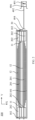
- FIG. 1 is a schematic structural diagram of the air nozzle according to some embodiments of this application.
- the air nozzle 100 includes a housing 10 and an airflow regulation apparatus 20.
- the housing 10 includes a target air outlet 11 and an air inlet 12, where air flow enters the housing 10 through the air inlet 12 and leaves the housing 10 through the target air outlet 11.
- the airflow regulation apparatus 20 is located at the target air outlet 11 and is capable of moving between at least a first position and a second position, where the airflow regulation apparatus 20 exerts a greater resistance against the air flow in the first position than the airflow regulation apparatus 20 exerts against the air flow in the second position.
- the housing 10 is not limited to a specific shape and material.
- the housing 10 has an air cavity, and the target air outlet 11 and the air inlet 12 both communicate with the air cavity.
- the target air outlet 11 is an air outlet at which the airflow needs to be regulated.
- the target air outlet 11 is aligned to a target region, where the target region is a region in which the airflow needs to be regulated.
- the air nozzle 100 provided in this embodiment of this application may be an air inlet nozzle or an air exhaust nozzle.
- the airflow regulation apparatus 20 in the first position exerts a greater resistance against the air flow in the first position than the airflow regulation apparatus 20 exerts against the air flow in the second position, that is, the airflow regulation apparatus 20 can obtain at least two airflows through regulation.
- the airflow regulation apparatus 20 can be fastened at any position between the first position and the second position, or at any position other than between the first position and the second position.
- the airflow regulation apparatus 20 fastened at different positions exerts different resistances on the air flow, allowing the airflow regulation apparatus 20 to regulate a wider range of airflow.
- the airflow regulation apparatus 20 includes a rotating rod 201 and a blade 202.
- the rotating rod 201 is rotatably connected to the housing 10, and the blade 202 is located at the target air outlet 11.
- the blade 202 is connected to the rotating rod 201, and the rotating rod 201 can drive the blade 202 to rotate.
- the rotating rod 201 is rotatable, and the blade 202 is connected to the rotating rod 201. Therefore, when the rotating rod 201 rotates, it can drive the blade 202 to rotate.
- the airflow regulation apparatus 20 includes at least two rotating rods 201 parallel to each other, and each of the rotating rods 201 is connected to at least one blade 202.
- FIG. 2 is a top view of an air nozzle according to some embodiments of this application.
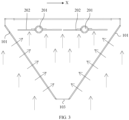
- FIG. 3 is a left view of an air nozzle according to some embodiments of this application.
- FIG. 4 is a top view of an air nozzle in another state according to some embodiments of this application.
- FIG. 5 is a left view of an air nozzle in another state according to some embodiments of this application.
- the airflow regulation apparatus 20 shown in FIG. 2 and FIG. 3 is fastened at the first position.
- the blade 202 is parallel to a width direction X of the housing 10, which maximizes its blocking on the target air outlet 11 and minimizes the airflow at the target air outlet 11.
- the airflow regulation apparatus 20 shown in FIG. 4 and FIG. 5 is fastened at the second position.
- the blade 202 is perpendicular to a width direction X of the housing 10, which minimizes its blocking on the target air outlet 11 and maximizes the airflow at the target air outlet 11.
- the arrows in FIG. 3 and FIG. 5 indicate the directions of air flow.
- two rotating rods 201 can be rotated simultaneously, so that only one rotating rod 201 needs to be rotated to implement simultaneous rotation of the two rotating rods 201, which is more labor-saving.
- the rotation angles of the two rotating rods 201 can be controlled to be the same or different by changing the structure of the connecting rod mechanism 30.
- the connecting rod mechanism 30 when the connecting rod mechanism 30 is an unequal-length double-crank mechanism, the rotation angles of the two rotating rods 201 are different; when the connecting rod mechanism 30 is an equal-length double-crank mechanism, the rotation angles of the two rotating rods 201 are the same.
- the two rotating rods 201 can be controlled to rotate in the same direction or in opposite directions by changing the structure of the connecting rod mechanism 30.
- the connecting rod mechanism 30 can be a parallel double-crank mechanism, and in this case, the two rotating rods 201 rotate in the same direction.
- the connecting rod mechanism 30 can be an anti-parallel double-crank mechanism, and in this case, the two rotating rods 201 rotate in opposite directions.
- the air nozzle 100 further includes an actuation mechanism 40, where the actuation mechanism 40 is connected to the rotating rod 201.
- the actuation mechanism 40 may be electrically actuated or manually actuated.
- the actuation mechanism 40 is used to actuate the rotating rod 201 to rotate, which is more labor-saving.
- the rotating rod 201 can also be fastened by fastening the actuation mechanism 40.
- the rotating rod 201 is regulated to a specified position at which the rotating rod 201 is unable to rotate, the rotating rod 201 is fastened.
- the actuation mechanism 40 includes an actuator 401, a first connecting rod 402, a second connecting rod 403, a first steering gear 404, and a second steering gear 405.
- the first connecting rod 402 extends in a first direction, where the first connecting rod 402 is connected to an actuating shaft of the actuator 401, and the first direction is parallel to an extension direction of the rotating rod 201.
- the second connecting rod 403 extends in a second direction, where the second direction intersects with the first direction.
- the first steering gear 404 is connected to the first connecting rod 402 and the second connecting rod 403, and the second steering gear 405 is connected to the second connecting rod 403 and the rotating rod 201.
- first connecting rod 402 is perpendicular to the second connecting rod 403, and the second connecting rod 403 is perpendicular to the rotating rod 201, the first connecting rod 402 and the rotating rod 201 rotate in the same direction, and the first connecting rod 402 and the second connecting rod 403 rotate in different directions.
- the rotation of the first connecting rod 402 is transmitted to the second connecting rod 403 via the first steering gear 404, enabling the second connecting rod 403 to rotate around its central axis.
- the rotation of the second connecting rod 403 is transmitted to the rotating rod 201 via the second steering gear 405, enabling the rotating rod 201 to rotate around its central axis.
- the actuator 401 actuates the first connecting rod 402 to rotate, the first connecting rod 402 drives, via the first steering gear 404, the second connecting rod 403 to rotate, and the second connecting rod 403 drives, via the second steering gear 405, the rotating rod 201 to rotate, so that the blade 202 rotates to regulate the airflow at the target air outlet 11.
- the actuator 401 is an electric actuator.
- the electric actuator can be controlled by a controller.
- the actuation mechanism 40 includes an actuator base 406, and the actuator base 406 is configured for mounting the actuator 401 to ensure stability of the actuator 401.
- both the connecting rod mechanism 30 and the actuation mechanism 40 are located outside the housing 10, meaning that the control of the airflow regulation apparatus 20 is transmitted to outside the housing 10, making the regulation more convenient.
- the rotating rod 201 extends in the length direction Y of the housing 10, and the blade 202 is slidably connected to the rotating rod 201, where a sliding direction of the blade 202 is parallel to the length direction Y of the housing 10.
- FIG. 7 is a schematic structural diagram of another air nozzle according to some embodiments of this application. Referring to FIG. 1 and FIG. 7 , the blade 202 of the air nozzle 100 shown in FIG. 7 moves toward the middle of the housing.
- two ends of the rotating rod 201 are cylindrical in shape, ensuring that the rotating rod 201 is able to rotate.
- the middle part of the rotating rod 201 is rectangular in shape, and the blade 202 is fitted around the middle part of the rotating rod 201. In this way, the blade 202 can rotate with the rotating rod 201, and the blade 202 can also slide on the rotating rod 201.
- the position of the blade 202 is adjusted by sliding the blade 202.
- the position of the blade 202 can be adjusted based on the position of the target air outlet 11, so as to regulate the airflow at different target air outlets 11.
- the target air outlet 11 is located at both ends of the housing 10.
- the air nozzle 100 When the air nozzle 100 provided in the embodiment of this application is used in an oven for electrode plate, the air nozzle 100 is arranged along a width direction of the electrode plate, and two ends of the air nozzle 100 correspond to two sides of the electrode plate. Due to the faster drying speed on both sides of the electrode plate, the target air outlet 11 is located at the two ends of the housing 10, meaning that the target air outlet 11 corresponds to both sides of the electrode plate.
- the airflow regulation apparatus 20 is used to regulate the airflow at the target air outlet 11, so as to reduce the drying speed at the target air outlet 11 and balance the drying speeds on both sides of the electrode plate and in the middle part of the electrode plate, thereby reducing the deviation in drying speed and improving the quality of the electrode plate.
- the housing 10 includes two side plates 101 and two end plates 102.
- the two end plates 102 are respectively located at two ends of the two side plates 101, where the two end plates 102 are both connected to the two side plates 101, and for each of the side plates 101, two ends of the side plate 101 are connected to different end plates 102.
- the two side plates 101 may be provided in parallel, and the surfaces of the two side plates 101 are opposite each other, or planes on which the surfaces of the two side plates 101 are located intersect.
- the two side plates 101 and the two end plates 102 form an air cavity of the housing 10, and the air cavity has two openings, where one of the openings may be an air outlet, the air outlet including a target air outlet, and the other opening may be an air inlet.
- the side plate 101 and the end plate 102 may be metal plates, and the side plate 101 and the end plate 102 may be connected by welding.
- the two ends of the rotating rod 201 are rotatably connected to the two end plates 102, respectively.
- a spacer 50 is arranged at the joint of the rotating rod 201 and the end plate 102 to reduce friction between the rotating rod 201 and the end plate 102.
- the spacer 50 may be a Teflon gasket.
- the two side plates 101 and the two end plates 102 form an overall structure of the housing 10 and are combined to form the air cavity of the housing 10.
- the end plate 102 is trapezoidal in shape and the two side plates 101 are respectively connected to two waists of the end plate 102.
- the end plate 102 is rectangular in shape, and the two side plates 101 are respectively connected to two opposite side walls of the end plate 102.
- the end plate 102 is arranged to be trapezoidal in shape, and the size of the target air outlet 11 can be adjusted by adjusting the shape of the trapezoid, without changing the size of the air inlet.
- the air inlet 12 is located on the two side plates 101.
- one of the side walls of the two side plates 101 is connected via the connecting plate 103.
- both side plates 101 are provided with multiple air inlets 12.
- the number of air inlets 12 in a middle part of the side plate 101 is larger than the number of air inlets 12 at either end of the side plate 101.
- the two end plates 102 are arranged along the length direction Y of the housing 10.
- the air inlets 12 are arranged in an isosceles trapezoid shape.
- the target air outlet 11 is located at the two ends of the housing 10, reducing the number of air inlets 12 at two ends of the side plate 101 can also reduce the airflow at the target air outlet 11.
- the oven provided in this embodiment of this application can be used to dry electrode plates.
- the oven discharges the evaporated solvent (gaseous NMP from the cathode and water vapor from the anode) from the oven through a duct and an air exhaust nozzle, and sends fresh air into the oven through a fresh air duct and an air outlet nozzle to implement a drying cycle.
- the evaporated solvent gaseous NMP from the cathode and water vapor from the anode
- the oven provided in this embodiment of this application can reduce the drying speed on both sides of the electrode plate, so as to achieve a balance with the drying speed in the middle part of the electrode plate, thereby alleviating the problem of inconsistent drying speeds and improving the quality of the electrode plate.
- This embodiment of this application provides an exhaust air nozzle, where the exhaust air nozzle includes a housing 10, an airflow regulation apparatus 20, a connecting rod mechanism 30, an actuation mechanism 40, and a spacer 50.
- the air inlet 12 is located on the two side plates 101.
- the number of air inlets 12 in a middle part of the side plate 101 is larger than the number of air inlets 12 at either end of the side plate 101.
- the airflow regulation apparatus 20 includes two rotating rods 201 and a blade 202. Two ends of the rotating rod 201 are rotatably connected to the two end plates 102, respectively. Two blades 202 are fitted around one rotating rod 201, and the rotating rod 201 can drive the blades 202 to rotate. The blades 202 are located at the target air outlet 11.
- a spacer 50 is provided at the joint of the rotating rod 201 and the end plate 102.
- Two ends of the connecting rod mechanism 30 are respectively connected to the two rotating rods 201.
- the actuation mechanism 40 includes an actuator 401, a first connecting rod 402, a second connecting rod 403, a first steering gear 404, and a second steering gear 405.
- the first connecting rod 402 extends in a length direction Y of the housing, the first connecting rod 402 is connected to an actuating shaft of the actuator 401, and the second connecting rod 403 is perpendicular to the first connecting rod 402.
- the first steering gear 404 is connected to the first connecting rod 402 and the second connecting rod 403, and the second steering gear 405 is connected to the second connecting rod 403 and the rotating rod 201.
Landscapes
- Engineering & Computer Science (AREA)
- Mechanical Engineering (AREA)
- General Engineering & Computer Science (AREA)
- Life Sciences & Earth Sciences (AREA)
- Microbiology (AREA)
- Manufacturing & Machinery (AREA)
- Chemical & Material Sciences (AREA)
- Chemical Kinetics & Catalysis (AREA)
- Electrochemistry (AREA)
- General Chemical & Material Sciences (AREA)
- Drying Of Solid Materials (AREA)
- Air-Flow Control Members (AREA)
Description
- This application refers to
Chinese Patent Application No. 202320023809.0, filed on January 5, 2023 - This application relates to the field of battery technologies, and in particular, to an air nozzle, an oven, and a coating system.
- Energy saving and emission reduction are crucial to the sustainable development of the automotive industry. Electric vehicles, with their advantages in energy conservation and emission reduction, have become an important part of sustainable development of the automobile industry. For electric vehicles, battery technology is an important factor in connection with their development.
- Electrode plates are important components of a battery. When an electrode plate has been coated, the slurry applied on the electrode plate needs to be dried. In the related technologies, the drying speed varies in two sides and the middle part of the electrode plate, affecting quality of the electrode plate.
- Blow air nozzles comprising an integrated exhaust air nozzle for a drying oven are shown in
CN 217 017 273 U andCN 215 141 756 U . - This application is intended to resolve at least one of the technical problems in the prior art. In view of this, an object of this application is to provide an air nozzle, an oven, and a coating system to alleviate the problem of inconsistent drying speeds in the oven.
- Embodiments of a first aspect of this application provide an air nozzle including: a housing including a target air outlet and an air inlet, where air flow enters the housing through the air inlet and leaves the housing through the target air outlet, and an airflow regulation apparatus located at the target air outlet and is capable of moving between at least a first position and a second position, where the airflow regulation apparatus exerts a greater resistance against the air flow in the first position than the airflow regulation apparatus exerts against the air flow in the second position.
- In the technical solution of this embodiment of this application, when the airflow at the target air outlet needs to be reduced, the airflow regulation apparatus is regulated to the first position to increase the resistance against the air flow at the target air outlet, thereby reducing the airflow at the target air outlet. When the airflow at the target air outlet needs to be increased, the airflow regulation apparatus is regulated to the second position to reduce the resistance against the air flow at the target air outlet, thereby increasing the airflow at the target air outlet. When the air nozzle provided in this embodiment of this application is used as the exhaust air nozzle in the oven, the target air outlet is aligned to the two sides of the electrode plate, and the airflow regulation apparatus is regulated to the first position, thereby reducing the airflow on the two sides of the electrode plate. This can balance the drying speeds on both sides of the electrode plate and in the middle part of the electrode plate, alleviating the problem of inconsistent drying speeds and improving the quality of the electrode plate.
- In some embodiments, the airflow regulation apparatus includes: a rotating rod rotatably connected to the housing; and a blade located at the target air outlet, where the blade is connected to the rotating rod, and the rotating rod is able to drive the blade to rotate. When the rotating rod rotates, it drives the blades to rotate, which in turn changes the area of the blade blocking the target air outlet, thereby changing the resistance exerted against the air flow and implementing airflow regulation. The airflow can be regulated simply by controlling the rotating rod to rotate, featuring simple structure and easy regulation. In addition, the rotating rod can be regulated to rotate at different angles, so that the area of the blade blocking the target air outlet varies, allowing the airflow regulation apparatus to regulate a wider range of airflow.
- In some embodiments, the airflow regulation apparatus includes at least two rotating rods parallel to each other, and each of the rotating rods is connected to at least one blade. The rotating rod and the blade can be disposed based on the position of the target air outlet. In this way, even if there are multiple target air outlets, it is possible to implement airflow regulation at the multiple target air outlets.
- In some embodiments, the airflow regulation apparatus includes two rotating rods, where the two rotating rods are arranged along a width direction of the housing. The air nozzle further includes a connecting rod mechanism, where two ends of the connecting rod mechanism are each fixedly connected to one rotating rod. With the connecting rod mechanism provided, the two rotating rods can be rotated simultaneously, so that only one rotating rod needs to be rotated to implement simultaneous rotation of the two rotating rods, which is more labor-saving.
- In some embodiments, the air nozzle further includes: an actuation mechanism connected to the rotating rod. The actuation mechanism actuates the rotating rod to rotate, which is more labor-saving. The rotating rod can also be fastened by fastening the actuation mechanism. When the rotating rod is regulated to a specified position at which the rotating rod is unable to rotate, the rotating rod is fastened.
- In some embodiments, the actuation mechanism includes: an actuator; a first connecting rod extending in a first direction, where the first connecting rod is connected to an actuating shaft of the actuator, and the first direction is parallel to an extension direction of the rotating rod; a second connecting rod extending in a second direction, where the second direction intersects with the first direction; a first steering gear connected to the first connecting rod and the second connecting rod; and a second steering gear connected to the second connecting rod and the rotating rod. The actuator actuates the first connecting rod to rotate, the first connecting rod drives, via the first steering gear, the second connecting rod to rotate, and the second connecting rod drives, via the second steering gear, the rotating rod to rotate, so that the blade rotates to regulate the airflow at the target air outlet.
- In some embodiments, the rotating rod extends in a length direction of the housing, and the blade is slidably connected to the rotating rod, where a sliding direction of the blade is parallel to the length direction of the housing. The position of the blade is adjusted by sliding the blade. The position of the blade can be adjusted based on the position of the target air outlet, thus implementing airflow regulation at different target air outlets.
- In some embodiments, in the length direction of the housing, the target air outlet is located at the two ends of the housing. When the air nozzle provided in the embodiment of this application is used in an oven for electrode plate, the air nozzle is arranged along the width direction of the electrode plate, and two ends of the air nozzle correspond to two sides of the electrode plate. Due to the faster drying speed on both sides of the electrode plate, the target air outlet is located at both ends of the housing, meaning that the target air outlet corresponds to both sides of the electrode plate. The airflow regulation apparatus is used to regulate the airflow at the target air outlet, so as to reduce the drying speed at the target air outlet and balance the drying speeds on both sides of the electrode plate and in the middle part of the electrode plate, thereby reducing the deviation in drying speed and improving the quality of the electrode plate.
- According to the present invention, the housing includes: two side plates; two end plates respectively located at two ends of the two side plates, where the two end plates are both connected to the two side plates, and for each of the side plates, two ends of the side plate are connected to different end plates. The two side plates and the two end plates form an overall structure of the housing and are combined to form an air cavity of the housing.
- In some embodiments, the end plate is trapezoidal in shape and the two side plates are respectively connected to two waists of the end plate. The end plate is arranged to be trapezoidal in shape, and the size of the target air outlet can be adjusted by adjusting the shape of the trapezoid, without changing the size of the air inlet.
- According to the present invention, the air inlet is located on the two side plates. The area of the side plate is so large that a large number of air inlets can be arranged to improve the overall drying speed of the oven.
- In some embodiments, both side plates are provided with multiple air inlets. For each side plate, along an arrangement direction of the two end plates, the number of air inlets in a middle part of the side plate is greater than the number of air inlets at either end of the side plate. Because the target air outlet is located at the two ends of the housing, reducing the number of air inlets at both ends of the side plate can also reduce the airflow at the target air outlet.
- A second aspect of the embodiments of this application provides an oven including the air nozzle in the foregoing embodiment.
- A third aspect of the embodiments of this application provides a coating system including the oven in the foregoing embodiment.
- The foregoing description is merely an overview of the technical solution of this application. For a better understanding of the technical means in this application such that they can be implemented according to the content of the specification, and to make the above and other objectives, features and advantages of this application more obvious and easier to understand, the following describes specific embodiments of this application.
- In the accompanying drawings, unless otherwise specified, the same reference signs in multiple accompanying drawings denote the same or similar components or elements. The accompanying drawings are not necessarily drawn to scale. It should be understood that these accompanying drawings merely describe some embodiments disclosed in this application, and should not be construed as a limitation on the scope of this application. To describe the technical solutions of the embodiments of this application more clearly, the following briefly describes the accompanying drawings required for describing the embodiments of this application. Apparently, the accompanying drawings described below show merely some embodiments of this application, and persons of ordinary skill in the art may still derive other drawings from the accompanying drawings without creative efforts.
-
FIG. 1 is a schematic structural diagram of an air nozzle according to some embodiments of this application; -
FIG. 2 is a top view of an air nozzle according to some embodiments of this application; -
FIG. 3 is a left view of an air nozzle according to some embodiments of this application; -
FIG. 4 is a top view of an air nozzle in another state according to some embodiments of this application; -
FIG. 5 is a left view of an air nozzle in another state according to some embodiments of this application; -
FIG. 6 is a main view of an air nozzle according to some embodiments of this application; and -
FIG. 7 is a schematic structural diagram of another air nozzle according to some embodiments of this application. - 100. air nozzle; 10. housing; 20. regulation apparatus; 11. target air outlet; 12. air inlet; 101. side plate; 102. end plate; 103. connecting plate; 201. rotating rod; 202. blade; 30. connecting rod mechanism; 40. actuation mechanism; 401. actuator; 402. first connecting rod; 403. second connecting rod; 404. first steering gear; 405. second steering gear; 406. actuator base; and 50. spacer.
- The following describes in detail the embodiments of technical solutions of this application with reference to the accompanying drawings. The following embodiments are merely intended for a clearer description of the technical solutions of this application and therefore are used as just examples which do not constitute any limitations on the protection scope of this application.
- Unless otherwise defined, all technical and scientific terms used herein shall have the same meanings as commonly understood by those skilled in the art to which this application relates. The terms used herein are intended to merely describe the specific embodiments rather than to limit this application. The terms "include", "comprise", and "have" and any other variations thereof in the specification, claims and brief description of drawings of this application are intended to cover non-exclusive inclusions.
- In the description of the embodiments of this application, the terms "first", "second" and the like are merely intended to distinguish between different objects, and shall not be understood as any indication or implication of relative importance or any implicit indication of the number, sequence or primary-secondary relationship of the technical features indicated. In the description of this application, "multiple" means at least two unless otherwise specifically stated.
- In this specification, reference to "embodiment" means that specific features, structures or characteristics described with reference to the embodiment may be incorporated in at least one embodiment of this application. The word "embodiment" appearing in various places in the specification does not necessarily refer to the same embodiment or an independent or alternative embodiment that is exclusive of other embodiments. It is explicitly or implicitly understood by persons skilled in the art that the embodiments described herein may be combined with other embodiments.
- In the description of the embodiments of this application, the term "and/or" is only an associative relationship for describing associated objects, indicating that three relationships may be present. For example, A and/or B may indicate the following three cases: presence of only A, presence of both A and B, and presence of only B. In addition, the character "/" in this specification generally indicates an "or" relationship between contextually associated objects.
- In the description of the embodiments of this application, the term "multiple" means more than two (inclusive). Similarly, "multiple groups" means more than two (inclusive) groups, and "multiple pieces" means more than two (inclusive) pieces.
- In the description of the embodiments of this application, the orientations or positional relationships indicated by the technical terms "center", "longitudinal", "transverse", "length", "width", "thickness", "upper", "lower", "front", "rear", "left", "right", "perpendicular", "horizontal", "top", "bottom", "inside", "outside", "clockwise", "counterclockwise", "axial", "radial", "circumferential", and the like are based on the orientations or positional relationships as shown in the accompanying drawings. These terms are merely for ease and brevity of description of the embodiments of this application rather than indicating or implying that the apparatuses or components mentioned must have specific orientations or must be constructed or manipulated according to specific orientations, and therefore shall not be construed as any limitations on embodiments of this application.
- In the description of the embodiments of this application, unless otherwise specified and defined explicitly, the terms "mount", "connect", "join", and "fasten" should be understood in their general senses. For example, they may refer to a fixed connection, a detachable connection, or an integral connection, may refer to a mechanical connection or electrical connection, and may refer to a direct connection, an indirect connection via an intermediate medium, or an interaction between two elements. Persons of ordinary skill in the art can understand specific meanings of these terms in this application as appropriate to specific situations.
- Currently, from a perspective of market development, application of electric vehicle batteries is becoming more extensive. Traction batteries have been not only used in energy storage power supply systems such as hydroelectric power plants, thermal power plants, wind power plants, and solar power plants, but also widely used in many other fields including electric transportation tools such as electric bicycles, electric motorcycles, and electric vehicles, military equipment, and aerospace. With continuous expansion of application fields of traction batteries, market demands for the traction batteries are also expanding.
- In the process of drying an electrode plate, a substrate coated with slurry is placed on a convey apparatus to go through an oven blowing hot air to make solvent in the slurry evaporate. The applicants have noticed that the drying speed varies in different regions of the electrode plate, seriously affecting the quality of the electrode plate.
- Through research, the applicants have found that the oven in the related technology includes an air inlet chamber, an air return chamber, an air return channel, an air inlet nozzle, and an air exhaust nozzle. The air inlet and return chamber are arranged along a direction perpendicular to the surface of the electrode plate, and the air inlet chamber is located between the air return chamber and the electrode plate. The air inlet and exhaust nozzle are spaced apart along a direction parallel to a convey direction of the electrode plate, and both the air inlet and exhaust nozzles extend along a width direction of the electrode plate, both the air inlet and exhaust nozzles facing the surface of the electrode plate. The air inlet nozzle is connected to an outlet of the air inlet chamber, and the air exhaust nozzle is connected to an inlet of the air return chamber through the air return channels located on two sides of the electrode plate. Because the air exhaust nozzle is connected to the inlet of the air return chamber through the air return channels located on two sides of the electrode plate, the airflow on the two sides of the air exhaust nozzle is larger, and the drying speed on both sides of the electrode plate is larger than that in the middle part of the electrode plate. When the middle part of the electrode plate has been dried, cracks may have appeared on both sides of the electrode plate due to excessive drying, seriously affecting the quality of the electrode plate.
- Out of the foregoing considerations, this application provides an air nozzle. The air nozzle includes a housing and an airflow regulation apparatus. The housing includes a target air outlet and an air inlet, where air flow enters the housing through the air inlet and leaves the housing through the target air outlet. The airflow regulation apparatus is located at the target air outlet and is capable of moving between at least a first position and a second position, where the airflow regulation apparatus exerts a greater resistance against the air flow in the first position than the airflow regulation apparatus exerts against the air flow in the second position. When the air nozzle is used as an air exhaust nozzle in an oven, the target air outlet is aligned to two sides of the electrode plate, and the airflow regulation apparatus is regulated to the first position to increase the resistance against the air flow at the target air outlet, thereby reducing the airflow on the two sides of the electrode plate. This can balance the drying speeds on both sides of the electrode plate and in the middle part of the electrode plate, alleviating the problem of inconsistent drying speeds and improving the quality of the electrode plate.
- Embodiments of this application provide an air nozzle.
FIG. 1 is a schematic structural diagram of the air nozzle according to some embodiments of this application. Referring toFIG. 1 , theair nozzle 100 includes ahousing 10 and anairflow regulation apparatus 20. Thehousing 10 includes atarget air outlet 11 and anair inlet 12, where air flow enters thehousing 10 through theair inlet 12 and leaves thehousing 10 through thetarget air outlet 11. Theairflow regulation apparatus 20 is located at thetarget air outlet 11 and is capable of moving between at least a first position and a second position, where theairflow regulation apparatus 20 exerts a greater resistance against the air flow in the first position than theairflow regulation apparatus 20 exerts against the air flow in the second position. - In this embodiment of this application, the
housing 10 is not limited to a specific shape and material. Thehousing 10 has an air cavity, and thetarget air outlet 11 and theair inlet 12 both communicate with the air cavity. Thetarget air outlet 11 is an air outlet at which the airflow needs to be regulated. When in use, thetarget air outlet 11 is aligned to a target region, where the target region is a region in which the airflow needs to be regulated. - The
air nozzle 100 provided in this embodiment of this application may be an air inlet nozzle or an air exhaust nozzle. - In this embodiment of this application, the
airflow regulation apparatus 20 in the first position exerts a greater resistance against the air flow in the first position than theairflow regulation apparatus 20 exerts against the air flow in the second position, that is, theairflow regulation apparatus 20 can obtain at least two airflows through regulation. - In other embodiments, the
airflow regulation apparatus 20 can be fastened at any position between the first position and the second position, or at any position other than between the first position and the second position. Theairflow regulation apparatus 20 fastened at different positions exerts different resistances on the air flow, allowing theairflow regulation apparatus 20 to regulate a wider range of airflow. - In this embodiment of this application, when the airflow at the
target air outlet 11 needs to be reduced, theairflow regulation apparatus 20 is regulated to the first position to increase the resistance against the air flow at thetarget air outlet 11, thereby reducing the airflow at thetarget air outlet 11. When the airflow at thetarget air outlet 11 needs to be increased, theairflow regulation apparatus 20 is regulated to the second position to reduce the resistance against the air flow at thetarget air outlet 11, thereby increasing the airflow at thetarget air outlet 11. When theair nozzle 100 provided in this embodiment of this application is used as an exhaust air nozzle in the oven, thetarget air outlet 11 is aligned to two sides of the electrode plate, and theairflow regulation apparatus 20 is regulated to the first position, thereby reducing the airflow on the two sides of the electrode plate. This can balance the drying speeds on both sides of the electrode plate and in the middle part of the electrode plate, alleviating the problem of inconsistent drying speeds and improving the quality of the electrode plate. - According to some embodiments of this application, referring to
FIG. 1 , theairflow regulation apparatus 20 includes arotating rod 201 and ablade 202. Therotating rod 201 is rotatably connected to thehousing 10, and theblade 202 is located at thetarget air outlet 11. Theblade 202 is connected to therotating rod 201, and therotating rod 201 can drive theblade 202 to rotate. - In this embodiment of this application, the
rotating rod 201 is rotatable, and theblade 202 is connected to therotating rod 201. Therefore, when therotating rod 201 rotates, it can drive theblade 202 to rotate. - For example, a middle part of the
blade 202 is connected to therotating rod 201, or an end of theblade 202 is connected to therotating rod 201. - In this embodiment of this application, when the
rotating rod 201 rotates, it drives theblade 202 to rotate, to change the area of theblade 202 blocking thetarget air outlet 11, thereby changing the resistance exerted to the air flow and implementing airflow regulation. The airflow can be regulated simply by controlling therotating rod 201 to rotate, featuring simple structure and easy regulation. In addition, therotating rod 201 can be regulated to rotate at different angles, so that the area of theblade 202 blocking thetarget air outlet 11 varies, allowing theairflow regulation apparatus 20 to regulate a wider range of airflow. - According to some embodiments of this application, the
airflow regulation apparatus 20 includes at least tworotating rods 201 parallel to each other, and each of therotating rods 201 is connected to at least oneblade 202. - For example, the angles of rotation of multiple
rotating rods 201 may be the same or different, and the blocking area ofmultiple blades 202 connected to the samerotating rod 201 for thetarget air outlet 11 may be the same or different. - For example, the
airflow regulation apparatus 20 includes tworotating rods 201 parallel to each other, and the numbers ofblades 202 connected to differentrotating rods 201 may be the same or different. For example, eachrotating rod 201 is connected to twoblades 202, and the twoblades 202 are arranged along a length direction of therotating rod 201. - In this embodiment of this application, positions of the
rotating rod 201 and theblades 202 can be determined based on the position of thetarget air outlet 11, so that even if there are multipletarget air outlets 11, it is possible to implement airflow regulation at the multipletarget air outlets 11. -
FIG. 2 is a top view of an air nozzle according to some embodiments of this application.FIG. 3 is a left view of an air nozzle according to some embodiments of this application.FIG. 4 is a top view of an air nozzle in another state according to some embodiments of this application.FIG. 5 is a left view of an air nozzle in another state according to some embodiments of this application. Theairflow regulation apparatus 20 shown inFIG. 2 andFIG. 3 is fastened at the first position. In this case, theblade 202 is parallel to a width direction X of thehousing 10, which maximizes its blocking on thetarget air outlet 11 and minimizes the airflow at thetarget air outlet 11. Theairflow regulation apparatus 20 shown inFIG. 4 andFIG. 5 is fastened at the second position. In this case, theblade 202 is perpendicular to a width direction X of thehousing 10, which minimizes its blocking on thetarget air outlet 11 and maximizes the airflow at thetarget air outlet 11. The arrows inFIG. 3 andFIG. 5 indicate the directions of air flow. - In this embodiment of this application, in the
air nozzle 100 shown inFIG. 2 to FIG. 5 , theairflow regulation apparatus 20 may alternatively be fastened at any position between the first position and the second position. - According to some embodiments of this application, the
airflow regulation apparatus 20 includes tworotating rods 201, where the tworotating rods 201 are arranged along the width direction X of thehousing 10.FIG. 6 is a main view of an air nozzle according to some embodiments of this application. Referring toFIG. 6 , theair nozzle 100 further includes a connectingrod mechanism 30, and two ends of the connectingrod mechanism 30 are each fixedly connected to onerotating rod 201. - For example, both rotating
rods 201 extend in a length direction Y of thehousing 10. - For example, the connecting
rod mechanism 30 may be a double-crank connecting rod. - In this embodiment of this application, with the connecting
rod mechanism 30 provided, two rotatingrods 201 can be rotated simultaneously, so that only onerotating rod 201 needs to be rotated to implement simultaneous rotation of the tworotating rods 201, which is more labor-saving. - In this embodiment of this application, the rotation angles of the two
rotating rods 201 can be controlled to be the same or different by changing the structure of the connectingrod mechanism 30. - For example, when the connecting
rod mechanism 30 is an unequal-length double-crank mechanism, the rotation angles of the tworotating rods 201 are different; when the connectingrod mechanism 30 is an equal-length double-crank mechanism, the rotation angles of the tworotating rods 201 are the same. - In this embodiment of this application, the two
rotating rods 201 can be controlled to rotate in the same direction or in opposite directions by changing the structure of the connectingrod mechanism 30. - For example, the connecting
rod mechanism 30 can be a parallel double-crank mechanism, and in this case, the tworotating rods 201 rotate in the same direction. Alternatively, the connectingrod mechanism 30 can be an anti-parallel double-crank mechanism, and in this case, the tworotating rods 201 rotate in opposite directions. - According to some embodiments of this application, referring to
FIG. 6 , theair nozzle 100 further includes anactuation mechanism 40, where theactuation mechanism 40 is connected to therotating rod 201. - In this embodiment of this application, the
actuation mechanism 40 may be electrically actuated or manually actuated. - In this embodiment of this application, the
actuation mechanism 40 is used to actuate therotating rod 201 to rotate, which is more labor-saving. Therotating rod 201 can also be fastened by fastening theactuation mechanism 40. When therotating rod 201 is regulated to a specified position at which therotating rod 201 is unable to rotate, therotating rod 201 is fastened. - According to some embodiments of this application, referring to
FIG. 6 , theactuation mechanism 40 includes anactuator 401, a first connectingrod 402, a second connectingrod 403, afirst steering gear 404, and asecond steering gear 405. The first connectingrod 402 extends in a first direction, where the first connectingrod 402 is connected to an actuating shaft of theactuator 401, and the first direction is parallel to an extension direction of therotating rod 201. The second connectingrod 403 extends in a second direction, where the second direction intersects with the first direction. Thefirst steering gear 404 is connected to the first connectingrod 402 and the second connectingrod 403, and thesecond steering gear 405 is connected to the second connectingrod 403 and therotating rod 201. - In this embodiment of this application, the first direction is parallel to the length direction Y of the
housing 10, and the second direction is perpendicular to the first direction. - Because the first connecting
rod 402 is perpendicular to the second connectingrod 403, and the second connectingrod 403 is perpendicular to therotating rod 201, the first connectingrod 402 and therotating rod 201 rotate in the same direction, and the first connectingrod 402 and the second connectingrod 403 rotate in different directions. The rotation of the first connectingrod 402 is transmitted to the second connectingrod 403 via thefirst steering gear 404, enabling the second connectingrod 403 to rotate around its central axis. The rotation of the second connectingrod 403 is transmitted to therotating rod 201 via thesecond steering gear 405, enabling therotating rod 201 to rotate around its central axis. - In this embodiment of this application, the
actuator 401 actuates the first connectingrod 402 to rotate, the first connectingrod 402 drives, via thefirst steering gear 404, the second connectingrod 403 to rotate, and the second connectingrod 403 drives, via thesecond steering gear 405, therotating rod 201 to rotate, so that theblade 202 rotates to regulate the airflow at thetarget air outlet 11. - For example, the
actuator 401 is an electric actuator. The electric actuator can be controlled by a controller. - Referring to
FIG. 6 , theactuation mechanism 40 includes anactuator base 406, and theactuator base 406 is configured for mounting theactuator 401 to ensure stability of theactuator 401. - In this embodiment of this application, both the connecting
rod mechanism 30 and theactuation mechanism 40 are located outside thehousing 10, meaning that the control of theairflow regulation apparatus 20 is transmitted to outside thehousing 10, making the regulation more convenient. - According to some embodiments of this application, the
rotating rod 201 extends in the length direction Y of thehousing 10, and theblade 202 is slidably connected to therotating rod 201, where a sliding direction of theblade 202 is parallel to the length direction Y of thehousing 10. -
FIG. 7 is a schematic structural diagram of another air nozzle according to some embodiments of this application. Referring toFIG. 1 andFIG. 7 , theblade 202 of theair nozzle 100 shown inFIG. 7 moves toward the middle of the housing. - For example, two ends of the
rotating rod 201 are cylindrical in shape, ensuring that therotating rod 201 is able to rotate. The middle part of therotating rod 201 is rectangular in shape, and theblade 202 is fitted around the middle part of therotating rod 201. In this way, theblade 202 can rotate with therotating rod 201, and theblade 202 can also slide on therotating rod 201. - In this embodiment of this application, the position of the
blade 202 is adjusted by sliding theblade 202. The position of theblade 202 can be adjusted based on the position of thetarget air outlet 11, so as to regulate the airflow at differenttarget air outlets 11. - According to some embodiments of this application, referring to
FIG. 1 ,FIG. 2 ,FIG. 4 ,FIG. 6 , andFIG. 7 , in the length direction Y of thehousing 10, thetarget air outlet 11 is located at both ends of thehousing 10. - When the
air nozzle 100 provided in the embodiment of this application is used in an oven for electrode plate, theair nozzle 100 is arranged along a width direction of the electrode plate, and two ends of theair nozzle 100 correspond to two sides of the electrode plate. Due to the faster drying speed on both sides of the electrode plate, thetarget air outlet 11 is located at the two ends of thehousing 10, meaning that thetarget air outlet 11 corresponds to both sides of the electrode plate. Theairflow regulation apparatus 20 is used to regulate the airflow at thetarget air outlet 11, so as to reduce the drying speed at thetarget air outlet 11 and balance the drying speeds on both sides of the electrode plate and in the middle part of the electrode plate, thereby reducing the deviation in drying speed and improving the quality of the electrode plate. - According to some embodiments of this application, referring to
FIG. 1 andFIG. 7 , thehousing 10 includes twoside plates 101 and twoend plates 102. The twoend plates 102 are respectively located at two ends of the twoside plates 101, where the twoend plates 102 are both connected to the twoside plates 101, and for each of theside plates 101, two ends of theside plate 101 are connected todifferent end plates 102. - In this embodiment of this application, the two
side plates 101 may be provided in parallel, and the surfaces of the twoside plates 101 are opposite each other, or planes on which the surfaces of the twoside plates 101 are located intersect. - In one embodiment of this application, the two
side plates 101 and the twoend plates 102 form an air cavity of thehousing 10, and the air cavity has two openings, where one of the openings may be an air outlet, the air outlet including a target air outlet, and the other opening may be an air inlet. - In another embodiment of this application, the two
side plates 101 and the twoend plates 102 form an air cavity of thehousing 10, and two openings of the air cavity are each closed by a connecting plate. An air outlet is arranged on one of the connecting plates, the air outlet including a target air outlet, and an air inlet is arranged on the other connecting plate. - In this embodiment of this application, the
side plate 101 and theend plate 102 may be metal plates, and theside plate 101 and theend plate 102 may be connected by welding. - The two ends of the
rotating rod 201 are rotatably connected to the twoend plates 102, respectively. - In this embodiment of this application, a
spacer 50 is arranged at the joint of therotating rod 201 and theend plate 102 to reduce friction between therotating rod 201 and theend plate 102. - For example, the
spacer 50 may be a Teflon gasket. - In this embodiment of this application, the two
side plates 101 and the twoend plates 102 form an overall structure of thehousing 10 and are combined to form the air cavity of thehousing 10. - According to some embodiments of this application, referring to
FIG. 1 andFIG. 7 , theend plate 102 is trapezoidal in shape and the twoside plates 101 are respectively connected to two waists of theend plate 102. - In some other embodiments, the
end plate 102 is rectangular in shape, and the twoside plates 101 are respectively connected to two opposite side walls of theend plate 102. - In this embodiment of this application, the
end plate 102 is arranged to be trapezoidal in shape, and the size of thetarget air outlet 11 can be adjusted by adjusting the shape of the trapezoid, without changing the size of the air inlet. - According to some embodiments of this application, referring to
FIG. 1 ,FIG. 2 ,FIG. 4 ,FIG. 6 , andFIG. 7 , theair inlet 12 is located on the twoside plates 101. - Referring to
FIG. 3 andFIG. 5 , one of the side walls of the twoside plates 101 is connected via the connectingplate 103. - For example, the
air inlet 12 may alternatively be located on the connectingplate 103. - In this embodiment of this application, an area of the
side plate 101 is so large that a large number ofair inlets 12 can be arranged to improve the overall drying speed of the oven. - According to some embodiments of this application, referring to
FIG. 1 ,FIG. 2 ,FIG. 4 ,FIG. 6 , andFIG. 7 , bothside plates 101 are provided withmultiple air inlets 12. For eachside plate 101, along an arrangement direction of the twoend plates 102, the number ofair inlets 12 in a middle part of theside plate 101 is larger than the number ofair inlets 12 at either end of theside plate 101. - In this embodiment of this application, the two
end plates 102 are arranged along the length direction Y of thehousing 10. - Referring to
FIG. 2 ,FIG. 4 andFIG. 6 , theair inlets 12 are arranged in an isosceles trapezoid shape. - In this embodiment of this application, because the
target air outlet 11 is located at the two ends of thehousing 10, reducing the number ofair inlets 12 at two ends of theside plate 101 can also reduce the airflow at thetarget air outlet 11. - The embodiments of this application further provide an oven including the
air nozzle 100 in the foregoing embodiments. - The oven provided in this embodiment of this application can be used to dry electrode plates.
- In this embodiment of this application, the oven discharges the evaporated solvent (gaseous NMP from the cathode and water vapor from the anode) from the oven through a duct and an air exhaust nozzle, and sends fresh air into the oven through a fresh air duct and an air outlet nozzle to implement a drying cycle.
- The oven provided in this embodiment of this application can reduce the drying speed on both sides of the electrode plate, so as to achieve a balance with the drying speed in the middle part of the electrode plate, thereby alleviating the problem of inconsistent drying speeds and improving the quality of the electrode plate.
- The embodiments of this application provide a coating system including the oven in the foregoing embodiment.
- This embodiment of this application provides an exhaust air nozzle, where the exhaust air nozzle includes a
housing 10, anairflow regulation apparatus 20, a connectingrod mechanism 30, anactuation mechanism 40, and aspacer 50. - The
housing 10 includes atarget air outlet 11 and anair inlet 12. Air flow enters thehousing 10 through theair inlet 12 and leaves thehousing 10 through thetarget air outlet 11. Thehousing 10 includes twoside plates 101 and twoend plates 102. The twoend plates 102 are respectively located at two ends of the twoside plates 101, where the twoend plates 102 are both connected to the twoside plates 101, and for each of theside plates 101, two ends of theside plate 101 are connected todifferent end plates 102. The twoside plates 101 and twoend plates 102 form an air cavity, and one opening of the air cavity is closed via a connectingplate 103. The other opening of the air cavity is an air outlet, where the air outlet includes atarget air outlet 11, and thetarget air outlet 11 is located at both ends of thehousing 10. Theair inlet 12 is located on the twoside plates 101. For eachside plate 101, along a length direction Y of thehousing 10, the number ofair inlets 12 in a middle part of theside plate 101 is larger than the number ofair inlets 12 at either end of theside plate 101. - The
airflow regulation apparatus 20 includes tworotating rods 201 and ablade 202. Two ends of therotating rod 201 are rotatably connected to the twoend plates 102, respectively. Twoblades 202 are fitted around one rotatingrod 201, and therotating rod 201 can drive theblades 202 to rotate. Theblades 202 are located at thetarget air outlet 11. - A
spacer 50 is provided at the joint of therotating rod 201 and theend plate 102. - Two ends of the connecting
rod mechanism 30 are respectively connected to the tworotating rods 201. - The
actuation mechanism 40 includes anactuator 401, a first connectingrod 402, a second connectingrod 403, afirst steering gear 404, and asecond steering gear 405. The first connectingrod 402 extends in a length direction Y of the housing, the first connectingrod 402 is connected to an actuating shaft of theactuator 401, and the second connectingrod 403 is perpendicular to the first connectingrod 402. Thefirst steering gear 404 is connected to the first connectingrod 402 and the second connectingrod 403, and thesecond steering gear 405 is connected to the second connectingrod 403 and therotating rod 201. - In conclusion, it should be noted that the foregoing embodiments are for description of the technical solutions of this application only rather than for limiting this application. Although this application has been described in detail with reference to the foregoing embodiments, persons of ordinary skill in the art should appreciate that they can still make modifications to the technical solutions described in the embodiments or make equivalent replacements to some or all technical features thereof without departing from the scope of the technical solutions of the embodiments of this application. All such modifications and equivalent replacements shall fall within the scope of claims and specification of this application. In particular, as long as there is no structural conflict, the various technical features mentioned in the embodiments can be combined in any manner. This application is not limited to the specific embodiments disclosed in this specification but includes all technical solutions falling within the scope of the claims.
Claims (12)
- An air nozzle (100) for an oven of a coating system, comprising:a housing (10) comprising:two side plates (101);two end plates (102), respectively located at two ends of the two side plates (101), wherein the two end plates(102) are both connected to the two side plates (101), and for each of the side plates (101), two ends of the side plate (101) are connected to different end plates (192);a target air outlet (11) and an air inlet (12), wherein air flow enters the housing (10) through the air inlet (12) and leaves the housing (10) through the target air outlet (11); andan airflow regulation apparatus (20) and capable of moving between at least a first position and a second position, wherein the airflow regulation apparatus (20) exerts a greater resistance against the air flow in the first position than the airflow regulation apparatus (20) exerts against the air flow in the second position,characterized in thatthe airflow regulation apparatus (20) is located at the target air outlet (11) andthe air inlet (12) is located on the two side plates (101).
- The air nozzle (100) according to claim 1, wherein the airflow regulation apparatus (20) comprises:a rotating rod (201) rotatably connected to the housing (10); anda blade (202) located at the target air outlet (11), wherein the blade (202) is connected to the rotating rod (201), and the rotating rod (201) is able to drive the blade (202) to rotate.
- The air nozzle (100) according to claim 2, wherein the airflow regulation apparatus (20) comprises at least two rotating rods (201) parallel to each other, and each of the rotating rods (201) is connected to at least one blade (202).
- The air nozzle (100) according to claim 2 or 3, wherein the airflow regulation apparatus (20) comprises two rotating rods (201), the two rotating rods (201) being arranged along a width direction X of the housing (10), and the air nozzle (100) further comprises:
a connecting rod mechanism (30), wherein two ends of the connecting rod mechanism (30) are each fixedly connected to one rotating rod (201). - The air nozzle (100) according to any one of claims 2 to 4, wherein the nozzle further comprises:
an actuation mechanism (40) connected to the rotating rod (201). - The air nozzle (100) according to claim 5, wherein the actuation mechanism (40) comprises:an actuator (401);a first connecting rod (402) extending in a first direction, wherein the first connecting rod (402) is connected to an actuating shaft of the actuator (401), and the first direction is parallel to an extension direction of the rotating rod (201);a second connecting rod (403) extending in a second direction, wherein the second direction intersects with the first direction;a first steering gear (404) connected to the first connecting rod (402) and the second connecting rod (403); anda second steering gear (405) connected to the second connecting rod (403) and the rotating rod (201).
- The air nozzle (100) according to any one of claims 2 to 6, wherein the rotating rod (201) extends along a length direction Y of the housing (10), the blade (202) is slidably connected to the rotating rod (201), and a sliding direction of the blade (202) is parallel to the length direction Y of the housing (10).
- The air nozzle (100) according to any one of claims 1 to 7, wherein the target air outlet (11) is located at both ends of the housing (10) along the length direction Y of the housing (10).
- The air nozzle (100) according to one of the preceding claims, wherein the end plate (102) is trapezoidal in shape, and the two side plates (101) are respectively connected to two waists of the end plate (102).
- The air nozzle (100) according to claim 9, wherein the two side plates (101) are each provided with multiple air inlets (12), and for each of the side plates (101), along an arrangement direction of the two end plates (102), the number of air inlets (12) in a middle part of the side plate (101) is larger than the number of air inlets (12) at either end of the side plate (101).
- An oven, comprising the air nozzle (100) according to any one of claims 1 to 10.
- A coating system, comprising the oven according to claim 11.
Applications Claiming Priority (2)
| Application Number | Priority Date | Filing Date | Title |
|---|---|---|---|
| CN202320023809.0U CN219291942U (en) | 2023-01-05 | 2023-01-05 | Air nozzle, oven and coating system |
| PCT/CN2023/084440 WO2024146014A1 (en) | 2023-01-05 | 2023-03-28 | Air nozzle, drying oven, and coating system |
Publications (3)
| Publication Number | Publication Date |
|---|---|
| EP4420798A1 EP4420798A1 (en) | 2024-08-28 |
| EP4420798A4 EP4420798A4 (en) | 2024-10-30 |
| EP4420798B1 true EP4420798B1 (en) | 2025-06-25 |
Family
ID=91762233
Family Applications (1)
| Application Number | Title | Priority Date | Filing Date |
|---|---|---|---|
| EP23731081.8A Active EP4420798B1 (en) | 2023-01-05 | 2023-03-28 | Air nozzle, oven, and coating system |
Country Status (3)
| Country | Link |
|---|---|
| US (1) | US20240230228A1 (en) |
| EP (1) | EP4420798B1 (en) |
| PL (1) | PL4420798T3 (en) |
Family Cites Families (5)
| Publication number | Priority date | Publication date | Assignee | Title |
|---|---|---|---|---|
| DE3626016A1 (en) * | 1986-07-31 | 1988-02-04 | Kurt Krieger | DEVICE FOR APPLYING MATERIAL RAILS WITH FLOWING MEDIUM |
| US5395029A (en) * | 1989-12-29 | 1995-03-07 | Somerset Technologies, Inc. | Flotation nozzle for web handling equipment |
| CN217017273U (en) * | 2021-04-21 | 2022-07-22 | 广东利元亨智能装备股份有限公司 | Air volume adjusting device and coating equipment |
| CN215141756U (en) * | 2021-04-22 | 2021-12-14 | 深圳市胜之行科技有限公司 | Air nozzle of oven |
| CN217747927U (en) * | 2022-06-17 | 2022-11-08 | 楚能新能源股份有限公司 | Coating machine oven tuyere |
-
2023
- 2023-03-28 PL PL23731081.8T patent/PL4420798T3/en unknown
- 2023-03-28 EP EP23731081.8A patent/EP4420798B1/en active Active
- 2023-06-28 US US18/343,088 patent/US20240230228A1/en active Pending
Also Published As
| Publication number | Publication date |
|---|---|
| EP4420798A4 (en) | 2024-10-30 |
| US20240230228A1 (en) | 2024-07-11 |
| EP4420798A1 (en) | 2024-08-28 |
| PL4420798T3 (en) | 2025-12-22 |
Similar Documents
| Publication | Publication Date | Title |
|---|---|---|
| EP2724029B1 (en) | Centrifugal blower system and fuel cell incorporating same | |
| US5775002A (en) | Apparatus for drying an electrode plate for a battery | |
| US12085335B2 (en) | Oven drying apparatus and coating device | |
| EP4238658A1 (en) | Coating apparatus | |
| EP4235071B1 (en) | Drying apparatus and oven | |
| CN217330617U (en) | Pole piece drying device and battery production equipment | |
| CN109708383B (en) | An air duct component structure for an air-cooled refrigerator and its refrigeration control method | |
| EP4420798A1 (en) | Air nozzle, drying oven, and coating system | |
| WO2023072058A1 (en) | Electrode plate drying device and coating device | |
| US7975402B2 (en) | Nozzle insert for a Yankee impingement hood | |
| US20260104170A1 (en) | Rotary dehumidification device | |
| CN219850555U (en) | Coating machine | |
| CN218480894U (en) | Air knife | |
| CN219291942U (en) | Air nozzle, oven and coating system | |
| US4934600A (en) | Exhaust nozzle thermal distortion control device | |
| CN202180560U (en) | Casting machine | |
| CN224050972U (en) | Air supply device for drying equipment | |
| CN216814370U (en) | Air conditioner indoor unit and air conditioner | |
| CN223197414U (en) | Nozzle structure and coating machine oven | |
| CN213421766U (en) | Multiple air mixing partial dehumidification heat pump drying system | |
| CN224246657U (en) | Drying device and pole piece manufacturing equipment | |
| CN117552256B (en) | Three-sided air bag area paper stabilizing blower box | |
| CN218566103U (en) | Dehumidification type drying-machine | |
| CN211591537U (en) | Corrugated board preheater | |
| CN207474160U (en) | A kind of enameled wire drying unit |
Legal Events
| Date | Code | Title | Description |
|---|---|---|---|
| STAA | Information on the status of an ep patent application or granted ep patent |
Free format text: STATUS: UNKNOWN |
|
| STAA | Information on the status of an ep patent application or granted ep patent |
Free format text: STATUS: THE INTERNATIONAL PUBLICATION HAS BEEN MADE |
|
| PUAI | Public reference made under article 153(3) epc to a published international application that has entered the european phase |
Free format text: ORIGINAL CODE: 0009012 |
|
| STAA | Information on the status of an ep patent application or granted ep patent |
Free format text: STATUS: REQUEST FOR EXAMINATION WAS MADE |
|
| 17P | Request for examination filed |
Effective date: 20230623 |
|
| AK | Designated contracting states |
Kind code of ref document: A1 Designated state(s): AL AT BE BG CH CY CZ DE DK EE ES FI FR GB GR HR HU IE IS IT LI LT LU LV MC ME MK MT NL NO PL PT RO RS SE SI SK SM TR |
|
| RAP1 | Party data changed (applicant data changed or rights of an application transferred) |
Owner name: CONTEMPORARY AMPEREX TECHNOLOGY(HONG KONG) LIMITED |
|
| A4 | Supplementary search report drawn up and despatched |
Effective date: 20240927 |
|
| RIC1 | Information provided on ipc code assigned before grant |
Ipc: F26B 21/12 20060101ALI20240923BHEP Ipc: B05D 3/04 20060101AFI20240923BHEP |
|
| GRAP | Despatch of communication of intention to grant a patent |
Free format text: ORIGINAL CODE: EPIDOSNIGR1 |
|
| STAA | Information on the status of an ep patent application or granted ep patent |
Free format text: STATUS: GRANT OF PATENT IS INTENDED |
|
| INTG | Intention to grant announced |
Effective date: 20250311 |
|
| GRAS | Grant fee paid |
Free format text: ORIGINAL CODE: EPIDOSNIGR3 |
|
| GRAA | (expected) grant |
Free format text: ORIGINAL CODE: 0009210 |
|
| STAA | Information on the status of an ep patent application or granted ep patent |
Free format text: STATUS: THE PATENT HAS BEEN GRANTED |
|
| P01 | Opt-out of the competence of the unified patent court (upc) registered |
Free format text: CASE NUMBER: APP_19262/2025 Effective date: 20250422 |
|
| DAV | Request for validation of the european patent (deleted) | ||
| DAX | Request for extension of the european patent (deleted) | ||
| AK | Designated contracting states |
Kind code of ref document: B1 Designated state(s): AL AT BE BG CH CY CZ DE DK EE ES FI FR GB GR HR HU IE IS IT LI LT LU LV MC ME MK MT NL NO PL PT RO RS SE SI SK SM TR |
|
| REG | Reference to a national code |
Ref country code: GB Ref legal event code: FG4D |
|
| REG | Reference to a national code |
Ref country code: CH Ref legal event code: EP |
|
| REG | Reference to a national code |
Ref country code: CH Ref legal event code: EP |
|
| REG | Reference to a national code |
Ref country code: IE Ref legal event code: FG4D |
|
| REG | Reference to a national code |
Ref country code: DE Ref legal event code: R096 Ref document number: 602023004349 Country of ref document: DE |
|
| PG25 | Lapsed in a contracting state [announced via postgrant information from national office to epo] |
Ref country code: FI Free format text: LAPSE BECAUSE OF FAILURE TO SUBMIT A TRANSLATION OF THE DESCRIPTION OR TO PAY THE FEE WITHIN THE PRESCRIBED TIME-LIMIT Effective date: 20250625 |
|
| REG | Reference to a national code |
Ref country code: LT Ref legal event code: MG9D |
|
| PG25 | Lapsed in a contracting state [announced via postgrant information from national office to epo] |
Ref country code: NO Free format text: LAPSE BECAUSE OF FAILURE TO SUBMIT A TRANSLATION OF THE DESCRIPTION OR TO PAY THE FEE WITHIN THE PRESCRIBED TIME-LIMIT Effective date: 20250925 Ref country code: GR Free format text: LAPSE BECAUSE OF FAILURE TO SUBMIT A TRANSLATION OF THE DESCRIPTION OR TO PAY THE FEE WITHIN THE PRESCRIBED TIME-LIMIT Effective date: 20250926 |
|
| PG25 | Lapsed in a contracting state [announced via postgrant information from national office to epo] |
Ref country code: BG Free format text: LAPSE BECAUSE OF FAILURE TO SUBMIT A TRANSLATION OF THE DESCRIPTION OR TO PAY THE FEE WITHIN THE PRESCRIBED TIME-LIMIT Effective date: 20250625 |
|
| PG25 | Lapsed in a contracting state [announced via postgrant information from national office to epo] |
Ref country code: HR Free format text: LAPSE BECAUSE OF FAILURE TO SUBMIT A TRANSLATION OF THE DESCRIPTION OR TO PAY THE FEE WITHIN THE PRESCRIBED TIME-LIMIT Effective date: 20250625 |
|
| PG25 | Lapsed in a contracting state [announced via postgrant information from national office to epo] |
Ref country code: RS Free format text: LAPSE BECAUSE OF FAILURE TO SUBMIT A TRANSLATION OF THE DESCRIPTION OR TO PAY THE FEE WITHIN THE PRESCRIBED TIME-LIMIT Effective date: 20250925 |
|
| PG25 | Lapsed in a contracting state [announced via postgrant information from national office to epo] |
Ref country code: LV Free format text: LAPSE BECAUSE OF FAILURE TO SUBMIT A TRANSLATION OF THE DESCRIPTION OR TO PAY THE FEE WITHIN THE PRESCRIBED TIME-LIMIT Effective date: 20250625 |
|
| REG | Reference to a national code |
Ref country code: NL Ref legal event code: MP Effective date: 20250625 |
|
| PG25 | Lapsed in a contracting state [announced via postgrant information from national office to epo] |
Ref country code: NL Free format text: LAPSE BECAUSE OF FAILURE TO SUBMIT A TRANSLATION OF THE DESCRIPTION OR TO PAY THE FEE WITHIN THE PRESCRIBED TIME-LIMIT Effective date: 20250625 |
|
| REG | Reference to a national code |
Ref country code: HU Ref legal event code: AG4A Ref document number: E072607 Country of ref document: HU |
|
| PG25 | Lapsed in a contracting state [announced via postgrant information from national office to epo] |
Ref country code: PT Free format text: LAPSE BECAUSE OF FAILURE TO SUBMIT A TRANSLATION OF THE DESCRIPTION OR TO PAY THE FEE WITHIN THE PRESCRIBED TIME-LIMIT Effective date: 20251027 |
|
| REG | Reference to a national code |
Ref country code: AT Ref legal event code: MK05 Ref document number: 1805948 Country of ref document: AT Kind code of ref document: T Effective date: 20250625 |
|
| PG25 | Lapsed in a contracting state [announced via postgrant information from national office to epo] |
Ref country code: IS Free format text: LAPSE BECAUSE OF FAILURE TO SUBMIT A TRANSLATION OF THE DESCRIPTION OR TO PAY THE FEE WITHIN THE PRESCRIBED TIME-LIMIT Effective date: 20251025 |
|
| PG25 | Lapsed in a contracting state [announced via postgrant information from national office to epo] |
Ref country code: AT Free format text: LAPSE BECAUSE OF FAILURE TO SUBMIT A TRANSLATION OF THE DESCRIPTION OR TO PAY THE FEE WITHIN THE PRESCRIBED TIME-LIMIT Effective date: 20250625 Ref country code: SM Free format text: LAPSE BECAUSE OF FAILURE TO SUBMIT A TRANSLATION OF THE DESCRIPTION OR TO PAY THE FEE WITHIN THE PRESCRIBED TIME-LIMIT Effective date: 20250625 |
|
| PG25 | Lapsed in a contracting state [announced via postgrant information from national office to epo] |
Ref country code: CZ Free format text: LAPSE BECAUSE OF FAILURE TO SUBMIT A TRANSLATION OF THE DESCRIPTION OR TO PAY THE FEE WITHIN THE PRESCRIBED TIME-LIMIT Effective date: 20250625 |
|
| PG25 | Lapsed in a contracting state [announced via postgrant information from national office to epo] |
Ref country code: EE Free format text: LAPSE BECAUSE OF FAILURE TO SUBMIT A TRANSLATION OF THE DESCRIPTION OR TO PAY THE FEE WITHIN THE PRESCRIBED TIME-LIMIT Effective date: 20250625 |
|
| PG25 | Lapsed in a contracting state [announced via postgrant information from national office to epo] |
Ref country code: SK Free format text: LAPSE BECAUSE OF FAILURE TO SUBMIT A TRANSLATION OF THE DESCRIPTION OR TO PAY THE FEE WITHIN THE PRESCRIBED TIME-LIMIT Effective date: 20250625 |
|
| PG25 | Lapsed in a contracting state [announced via postgrant information from national office to epo] |
Ref country code: ES Free format text: LAPSE BECAUSE OF FAILURE TO SUBMIT A TRANSLATION OF THE DESCRIPTION OR TO PAY THE FEE WITHIN THE PRESCRIBED TIME-LIMIT Effective date: 20250625 |
|
| PG25 | Lapsed in a contracting state [announced via postgrant information from national office to epo] |
Ref country code: DK Free format text: LAPSE BECAUSE OF FAILURE TO SUBMIT A TRANSLATION OF THE DESCRIPTION OR TO PAY THE FEE WITHIN THE PRESCRIBED TIME-LIMIT Effective date: 20250625 |
|
| PG25 | Lapsed in a contracting state [announced via postgrant information from national office to epo] |
Ref country code: IT Free format text: LAPSE BECAUSE OF FAILURE TO SUBMIT A TRANSLATION OF THE DESCRIPTION OR TO PAY THE FEE WITHIN THE PRESCRIBED TIME-LIMIT Effective date: 20250625 |
|
| PGFP | Annual fee paid to national office [announced via postgrant information from national office to epo] |
Ref country code: HU Payment date: 20260316 Year of fee payment: 4 |
|
| PGFP | Annual fee paid to national office [announced via postgrant information from national office to epo] |
Ref country code: FR Payment date: 20260330 Year of fee payment: 4 |
|
| PGFP | Annual fee paid to national office [announced via postgrant information from national office to epo] |
Ref country code: PL Payment date: 20260226 Year of fee payment: 4 |
|
| PLBE | No opposition filed within time limit |
Free format text: ORIGINAL CODE: 0009261 |
|
| STAA | Information on the status of an ep patent application or granted ep patent |
Free format text: STATUS: NO OPPOSITION FILED WITHIN TIME LIMIT |
|
| REG | Reference to a national code |
Ref country code: CH Ref legal event code: L10 Free format text: ST27 STATUS EVENT CODE: U-0-0-L10-L00 (AS PROVIDED BY THE NATIONAL OFFICE) Effective date: 20260507 |