EP4420644A1 - A method and apparatus for forming groups of absorbent sanitary articles - Google Patents
A method and apparatus for forming groups of absorbent sanitary articles Download PDFInfo
- Publication number
- EP4420644A1 EP4420644A1 EP24157632.1A EP24157632A EP4420644A1 EP 4420644 A1 EP4420644 A1 EP 4420644A1 EP 24157632 A EP24157632 A EP 24157632A EP 4420644 A1 EP4420644 A1 EP 4420644A1
- Authority
- EP
- European Patent Office
- Prior art keywords
- absorbent sanitary
- sanitary articles
- articles
- folding
- speed
- Prior art date
- Legal status (The legal status is an assumption and is not a legal conclusion. Google has not performed a legal analysis and makes no representation as to the accuracy of the status listed.)
- Granted
Links
Images

Classifications
-
- B—PERFORMING OPERATIONS; TRANSPORTING
- B65—CONVEYING; PACKING; STORING; HANDLING THIN OR FILAMENTARY MATERIAL
- B65B—MACHINES, APPARATUS OR DEVICES FOR, OR METHODS OF, PACKAGING ARTICLES OR MATERIALS; UNPACKING
- B65B63/00—Auxiliary devices, not otherwise provided for, for operating on articles or materials to be packaged
- B65B63/04—Auxiliary devices, not otherwise provided for, for operating on articles or materials to be packaged for folding or winding articles, e.g. gloves or stockings
-
- A—HUMAN NECESSITIES
- A61—MEDICAL OR VETERINARY SCIENCE; HYGIENE
- A61F—FILTERS IMPLANTABLE INTO BLOOD VESSELS; PROSTHESES; DEVICES PROVIDING PATENCY TO, OR PREVENTING COLLAPSING OF, TUBULAR STRUCTURES OF THE BODY, e.g. STENTS; ORTHOPAEDIC, NURSING OR CONTRACEPTIVE DEVICES; FOMENTATION; TREATMENT OR PROTECTION OF EYES OR EARS; BANDAGES, DRESSINGS OR ABSORBENT PADS; FIRST-AID KITS
- A61F13/00—Bandages or dressings; Absorbent pads
- A61F13/15—Absorbent pads, e.g. sanitary towels, swabs or tampons for external or internal application to the body; Supporting or fastening means therefor; Tampon applicators
- A61F13/15577—Apparatus or processes for manufacturing
- A61F13/15707—Mechanical treatment, e.g. notching, twisting, compressing, shaping
- A61F13/15747—Folding; Pleating; Coiling; Stacking; Packaging
-
- A—HUMAN NECESSITIES
- A61—MEDICAL OR VETERINARY SCIENCE; HYGIENE
- A61F—FILTERS IMPLANTABLE INTO BLOOD VESSELS; PROSTHESES; DEVICES PROVIDING PATENCY TO, OR PREVENTING COLLAPSING OF, TUBULAR STRUCTURES OF THE BODY, e.g. STENTS; ORTHOPAEDIC, NURSING OR CONTRACEPTIVE DEVICES; FOMENTATION; TREATMENT OR PROTECTION OF EYES OR EARS; BANDAGES, DRESSINGS OR ABSORBENT PADS; FIRST-AID KITS
- A61F13/00—Bandages or dressings; Absorbent pads
- A61F13/15—Absorbent pads, e.g. sanitary towels, swabs or tampons for external or internal application to the body; Supporting or fastening means therefor; Tampon applicators
- A61F13/15577—Apparatus or processes for manufacturing
- A61F13/15764—Transferring, feeding or handling devices; Drives
-
- A—HUMAN NECESSITIES
- A61—MEDICAL OR VETERINARY SCIENCE; HYGIENE
- A61F—FILTERS IMPLANTABLE INTO BLOOD VESSELS; PROSTHESES; DEVICES PROVIDING PATENCY TO, OR PREVENTING COLLAPSING OF, TUBULAR STRUCTURES OF THE BODY, e.g. STENTS; ORTHOPAEDIC, NURSING OR CONTRACEPTIVE DEVICES; FOMENTATION; TREATMENT OR PROTECTION OF EYES OR EARS; BANDAGES, DRESSINGS OR ABSORBENT PADS; FIRST-AID KITS
- A61F13/00—Bandages or dressings; Absorbent pads
- A61F13/15—Absorbent pads, e.g. sanitary towels, swabs or tampons for external or internal application to the body; Supporting or fastening means therefor; Tampon applicators
- A61F13/15577—Apparatus or processes for manufacturing
- A61F13/15804—Plant, e.g. involving several steps
-
- A—HUMAN NECESSITIES
- A61—MEDICAL OR VETERINARY SCIENCE; HYGIENE
- A61F—FILTERS IMPLANTABLE INTO BLOOD VESSELS; PROSTHESES; DEVICES PROVIDING PATENCY TO, OR PREVENTING COLLAPSING OF, TUBULAR STRUCTURES OF THE BODY, e.g. STENTS; ORTHOPAEDIC, NURSING OR CONTRACEPTIVE DEVICES; FOMENTATION; TREATMENT OR PROTECTION OF EYES OR EARS; BANDAGES, DRESSINGS OR ABSORBENT PADS; FIRST-AID KITS
- A61F13/00—Bandages or dressings; Absorbent pads
- A61F13/15—Absorbent pads, e.g. sanitary towels, swabs or tampons for external or internal application to the body; Supporting or fastening means therefor; Tampon applicators
- A61F13/551—Packaging before or after use
- A61F13/5513—Packaging before or after use packaging of feminine sanitary napkins
- A61F13/55135—Packaging before or after use packaging of feminine sanitary napkins before use
- A61F13/55145—Packaging before or after use packaging of feminine sanitary napkins before use multiple packaged items
-
- B—PERFORMING OPERATIONS; TRANSPORTING
- B65—CONVEYING; PACKING; STORING; HANDLING THIN OR FILAMENTARY MATERIAL
- B65B—MACHINES, APPARATUS OR DEVICES FOR, OR METHODS OF, PACKAGING ARTICLES OR MATERIALS; UNPACKING
- B65B35/00—Supplying, feeding, arranging or orientating articles to be packaged
- B65B35/30—Arranging and feeding articles in groups
- B65B35/42—Arranging and feeding articles in groups by roller-ways
-
- B—PERFORMING OPERATIONS; TRANSPORTING
- B65—CONVEYING; PACKING; STORING; HANDLING THIN OR FILAMENTARY MATERIAL
- B65B—MACHINES, APPARATUS OR DEVICES FOR, OR METHODS OF, PACKAGING ARTICLES OR MATERIALS; UNPACKING
- B65B35/00—Supplying, feeding, arranging or orientating articles to be packaged
- B65B35/30—Arranging and feeding articles in groups
- B65B35/44—Arranging and feeding articles in groups by endless belts or chains
-
- B—PERFORMING OPERATIONS; TRANSPORTING
- B65—CONVEYING; PACKING; STORING; HANDLING THIN OR FILAMENTARY MATERIAL
- B65B—MACHINES, APPARATUS OR DEVICES FOR, OR METHODS OF, PACKAGING ARTICLES OR MATERIALS; UNPACKING
- B65B35/00—Supplying, feeding, arranging or orientating articles to be packaged
- B65B35/30—Arranging and feeding articles in groups
- B65B35/50—Stacking one article, or group of articles, upon another before packaging
-
- B—PERFORMING OPERATIONS; TRANSPORTING
- B65—CONVEYING; PACKING; STORING; HANDLING THIN OR FILAMENTARY MATERIAL
- B65B—MACHINES, APPARATUS OR DEVICES FOR, OR METHODS OF, PACKAGING ARTICLES OR MATERIALS; UNPACKING
- B65B63/00—Auxiliary devices, not otherwise provided for, for operating on articles or materials to be packaged
- B65B63/04—Auxiliary devices, not otherwise provided for, for operating on articles or materials to be packaged for folding or winding articles, e.g. gloves or stockings
- B65B63/045—Auxiliary devices, not otherwise provided for, for operating on articles or materials to be packaged for folding or winding articles, e.g. gloves or stockings for folding garments, e.g. stockings, shirts
-
- B—PERFORMING OPERATIONS; TRANSPORTING
- B65—CONVEYING; PACKING; STORING; HANDLING THIN OR FILAMENTARY MATERIAL
- B65B—MACHINES, APPARATUS OR DEVICES FOR, OR METHODS OF, PACKAGING ARTICLES OR MATERIALS; UNPACKING
- B65B65/00—Details peculiar to packaging machines and not otherwise provided for; Arrangements of such details
- B65B65/003—Packaging lines, e.g. general layout
-
- A—HUMAN NECESSITIES
- A61—MEDICAL OR VETERINARY SCIENCE; HYGIENE
- A61F—FILTERS IMPLANTABLE INTO BLOOD VESSELS; PROSTHESES; DEVICES PROVIDING PATENCY TO, OR PREVENTING COLLAPSING OF, TUBULAR STRUCTURES OF THE BODY, e.g. STENTS; ORTHOPAEDIC, NURSING OR CONTRACEPTIVE DEVICES; FOMENTATION; TREATMENT OR PROTECTION OF EYES OR EARS; BANDAGES, DRESSINGS OR ABSORBENT PADS; FIRST-AID KITS
- A61F13/00—Bandages or dressings; Absorbent pads
- A61F13/15—Absorbent pads, e.g. sanitary towels, swabs or tampons for external or internal application to the body; Supporting or fastening means therefor; Tampon applicators
- A61F13/15577—Apparatus or processes for manufacturing
- A61F2013/15821—Apparatus or processes for manufacturing characterized by the apparatus for manufacturing
Definitions
- the present invention generally relates to packaging of absorbent sanitary articles.
- the invention refers to the formation of groups of absorbent sanitary articles folded around one or two transverse folding lines at the end of a production line and upstream of a packaging machine.
- the invention was developed in particular with a view to its application to the field of female sanitary pads, such as for example panty liners, light inco, or the like.
- the invention is not limited to this specific field and can be used in all cases where there is a need to form groups of absorbent sanitary articles folded around one or two transverse folding lines.
- Some absorbent sanitary articles such as female sanitary pads, are often individually packaged in individual pouch-like packaging.
- the individual packaging of absorbent sanitary articles may be carried out by enclosing the individual absorbent sanitary articles between two flexible sheets overlapped on each other, which enclose sandwich-like a respective absorbent sanitary article and joined together at their edges by adhesive.
- each absorbent sanitary article is closed in a casing made up of a single sheet of flexible material folded to form two flaps joined together at their edges by adhesive.
- the packages may be made up of sheets of plastic material, for example, polyethylene, or paper material.
- the absorbent sanitary articles are often folded into two or three. This folding is carried out by folding the absorbent sanitary articles around one or two lines transversal with respect to a longitudinal axis of the article. Female sanitary pads are often folded into three overlapping parts.
- EP-A-2157952 Figure 18, describes a folding apparatus for tri-folding disposable absorbent articles, wherein the absorbent articles are inserted between two opposing belts by folding blades which impact the articles transversally along folding lines.
- a first folding assembly the sanitary articles are folded for approximately one third of their length.
- the partially folded articles are sent to a second folding assembly which folds the remaining part, producing a tri-folded sanitary article made up of three overlapping layers.
- the articles move at extremely high speeds.
- the articles move at a speed of 300 m/min and each of the folding blades impacts the sanitary articles with a frequency of 1000 strokes per minute.
- folded absorbent sanitary articles are usually slowed down before being packaged. This slowdown may be obtained by exploiting the difference in speed between a first pair of belts moving at the speed of the production machine and a second pair of belts moving at the speed of the packaging machine, usually equal to approximately half the speed of the production machine. Slowing down the folded absorbent sanitary articles may lead to production stops, for example, due to uncontrolled movement of the folded articles, resulting in jams.
- the object of the present invention is to provide a method and apparatus for folding absorbent sanitary articles that overcome the problems of the prior art.
- this object is achieved by a method and by an apparatus for folding absorbent sanitary articles having the characteristics forming the subject of claims 1 and 6.
- numeral 10 indicates an apparatus for folding absorbent sanitary articles.
- the apparatus 10 may be arranged at the outlet of a production machine and upstream of a packaging machine (not shown).
- the apparatus 10 comprises an inlet conveyor 12 configured to advance an inlet array 14 along a machine direction MD at a first speed V1.
- the inlet array 14 is formed by a plurality of absorbent sanitary articles 16 aligned with each other.
- the absorbent sanitary articles 16 forming the inlet array are in the state in which they leave a production machine.
- the absorbent sanitary articles 16 in the inlet array 14 are extended in a flat shape and are package-free.
- the absorbent sanitary articles 16 in the inlet array 14 have respective longitudinal axes aligned with each other and parallel to the machine direction MD.
- the absorbent sanitary articles 16 may be substantially in contact with each other, so that the pitch between the absorbent sanitary articles 16 is substantially equal to their length.
- the apparatus 10 comprises at least two folding lines 18, 20 configured to fold the absorbent sanitary articles 16 around respective transversal axes with respect to the longitudinal axes of the absorbent sanitary articles 16.
- the apparatus 10 comprises two folding lines 18, 20. In possible embodiments the apparatus 10 could comprise three or more folding lines.
- Each of the folding lines 18, 20 may be configured to fold the absorbent sanitary articles 16 into two or three.
- the absorbent sanitary articles 16 When folded in two, the absorbent sanitary articles 16 are folded around a central transversal axis, and after folding have two flaps overlapping each other.
- folding in three the absorbent sanitary articles 16 are folded around two transversal axes located approximately at 1/3 and 2/3 of the length of the absorbent sanitary article 16 and after folding they have three flaps overlapping each other.
- each folding line 18, 20 may comprise a belt folding device 22.
- the belt folding device 22 is configured to fold each absorbent sanitary article 16 into three.
- the belt folding device 22 comprises a first belt 24, a second belt 26 and a third belt 28.
- the first belt 24 and the second belt 26 have respective straight sections facing each other which define a first folding channel 30.
- the first belt 24 and the third belt 28 have respective straight sections facing each other which define a second folding channel 32.
- the belt folding device 22 comprises a first inserter device 34 configured to insert successive absorbent sanitary articles 16 into the first folding channel 30, and a second inserter device 36 configured to insert successive absorbent sanitary articles 16 into the second folding channel 32.
- the first and the second inserting devices 34, 36 may have respective rotating folding blades 38, 40.
- the absorbent sanitary articles 16 move along the belt folding device 22 in the direction indicated by the arrows and are folded transversely a first time in the first folding channel 30 and a second time in the second folding channel 32.
- Each of the folding lines 18, 20 comprises a respective slowing device 42 located upstream of the respective belt folding device 22 and configured to slow down the absorbent sanitary articles 16 which are fed to the belt folding device 22 at a second speed V2 less than the first speed V1.
- the second speed V2 may be equal to V1/n, where n is the number of folding lines 18, 20.
- the slowing device 42 may be a rotating repitch device equipped with a plurality of gripping elements 44 which can rotate independently of each other around a common axis.
- Each of the gripping elements 44 picks up, for example by suction, an absorbent sanitary article 16 advancing at the speed V1 and releases it to the belt folding device 22 at the second speed V2.
- the apparatus 10 comprises a routing device 46 configured to alternatively route the absorbent sanitary articles 16 coming from the inlet array 14 towards the at least two folding lines 18, 20.
- the routing device 46 routes an absorbent sanitary article 16 towards the first folding line 18 and the immediately successive absorbent sanitary article 16 towards the second folding line 20, and so on, so that each folding line 18 receives half of the absorbent sanitary articles 16 coming from the inlet array 14.
- the routing device 46 routes one absorbent sanitary article 16 to each folding line every n, so that each folding line receives 1/n of the absorbent sanitary articles 16 coming from the inlet array 14.
- the routing device 46 may comprise a belt having a branch 48 which retains the absorbent sanitary articles 16 by suction and a transfer wheel 50 provided with one or more suction sectors 52, which alternately transfers the absorbent sanitary articles 16 towards the first folding line 18.
- the absorbent sanitary articles 16 that are not picked up by the transfer wheel 50 are routed to the second folding line 20.
- the method involves forming an inlet array 14 formed by a plurality of absorbent sanitary articles 16 aligned with each other.
- the absorbent sanitary articles 16 forming the inlet array 14 in an extended position and without packaging advance along the machine direction MD at the first speed V1.
- the absorbent sanitary articles 16 coming from the inlet array 14 are routed alternately towards at least two folding lines 18, 20.
- the absorbent sanitary articles 16 are shown both in plan and in side view.
- the absorbent sanitary articles may be slowed down to the second speed V2 by respective rotating repitch devices 42.
- the pitch between the absorbent sanitary articles 16 decreases proportionally to the decrease in speed. For example, if the speed V2 is half the speed V1, the pitch between the absorbent sanitary articles 16 moving at the speed V2 is equal to half the pitch between the same absorbent sanitary articles 16 moving at the speed V1.
- the absorbent sanitary articles 16 may advance at different speeds.
- the absorbent sanitary articles 16 are folded around respective transversal axes while advancing at the second speed V2.
- the absorbent sanitary articles 16 may be folded by inserting them into folding channels 30, 32 formed between parallel branches of two belts 24, 26, 28.
- the absorbent sanitary articles 16 may be inserted into the folding channels 30, 32 by rotating folding blades 38, 40.
- the method involves overlapping the folded absorbent sanitary articles 16 coming from at least two folding lines 18, 20, so as to form groups of articles 60 aligned together in a common outlet array 58.
- the folded absorbent sanitary articles 16 coming from a folding line 18, 20 are overlapped with folded absorbent sanitary articles 16 coming from another folding line 18, 20.
- the folding lines may feed respective folded absorbent sanitary articles 16 to the common outlet array 58 in phase with each other.
- Each of the groups of articles 60 comprises at least two folded absorbent sanitary articles 16 overlapped on each other as shown schematically in Figure 4e.
- the groups of articles 60 are fed to a packaging unit which encloses each of the groups of articles 60 in a respective packaging film.
- Figure 4 illustrates a package 62 obtained with the method.
- the package comprises two or more folded absorbent sanitary articles 16 overlapped on each other and enclosed in a packaging film 64.
- the folded absorbent sanitary articles 16 may advance at the same speed V2 at which the absorbent sanitary articles advance along the folding lines 18, 20.
- the solution according to the present invention allows the folding of the absorbent sanitary articles to be carried out at a lower speed (for example halved) compared to the speed at which the absorbent sanitary articles advance at the end of the production machine. This allows a considerable reduction in the risk of damage to the absorbent sanitary articles.
- the solution according to the present invention also allows decreasing (for example halving) the speed of the folded absorbent sanitary articles sent to the packaging unit, without the need to provide belt slowing devices which may lead to the risk of jamming and production stoppages.
- the solution according to the present invention allows two or more folded absorbent sanitary articles 16 overlapping each other to be packaged in a single package, which is not generally possible in solutions according to the prior art.
- the apparatus 10 may also be used to individually package the folded absorbent sanitary articles 16 and may switch from single packaging mode to group packaging mode with a selection at the software level, without the need for format change interventions.
Landscapes
- Health & Medical Sciences (AREA)
- Engineering & Computer Science (AREA)
- Mechanical Engineering (AREA)
- Epidemiology (AREA)
- Life Sciences & Earth Sciences (AREA)
- Animal Behavior & Ethology (AREA)
- Vascular Medicine (AREA)
- Heart & Thoracic Surgery (AREA)
- Biomedical Technology (AREA)
- General Health & Medical Sciences (AREA)
- Public Health (AREA)
- Veterinary Medicine (AREA)
- Manufacturing & Machinery (AREA)
- Botany (AREA)
- Absorbent Articles And Supports Therefor (AREA)
- Auxiliary Devices For And Details Of Packaging Control (AREA)
- Folding Of Thin Sheet-Like Materials, Special Discharging Devices, And Others (AREA)
Abstract
Description
- The present invention generally relates to packaging of absorbent sanitary articles.
- In particular, the invention refers to the formation of groups of absorbent sanitary articles folded around one or two transverse folding lines at the end of a production line and upstream of a packaging machine.
- The invention was developed in particular with a view to its application to the field of female sanitary pads, such as for example panty liners, light inco, or the like.
- The invention, however, is not limited to this specific field and can be used in all cases where there is a need to form groups of absorbent sanitary articles folded around one or two transverse folding lines.
- Some absorbent sanitary articles, such as female sanitary pads, are often individually packaged in individual pouch-like packaging.
- The individual packaging of absorbent sanitary articles may be carried out by enclosing the individual absorbent sanitary articles between two flexible sheets overlapped on each other, which enclose sandwich-like a respective absorbent sanitary article and joined together at their edges by adhesive.
- Solutions are also known wherein each absorbent sanitary article is closed in a casing made up of a single sheet of flexible material folded to form two flaps joined together at their edges by adhesive.
- The packages may be made up of sheets of plastic material, for example, polyethylene, or paper material.
- Before packaging, the absorbent sanitary articles are often folded into two or three. This folding is carried out by folding the absorbent sanitary articles around one or two lines transversal with respect to a longitudinal axis of the article. Female sanitary pads are often folded into three overlapping parts.
-
EP-A-2157952 , Figure 18, describes a folding apparatus for tri-folding disposable absorbent articles, wherein the absorbent articles are inserted between two opposing belts by folding blades which impact the articles transversally along folding lines. In a first folding assembly, the sanitary articles are folded for approximately one third of their length. The partially folded articles are sent to a second folding assembly which folds the remaining part, producing a tri-folded sanitary article made up of three overlapping layers. - In modern machines for producing absorbent sanitary articles, the articles move at extremely high speeds. For example, in the case of absorbent sanitary articles with a length in the machine direction of 300 mm and with a machine operating at a rate of 1000 pieces per minute, the articles move at a speed of 300 m/min and each of the folding blades impacts the sanitary articles with a frequency of 1000 strokes per minute.
- Due to the high linear speed of the absorbent sanitary articles upon impact with the folding blades, there is a risk of damage to the articles. The frequency of damage to the absorbent sanitary articles increases as a function of the speed of advancement of the articles.
- In solutions according to the prior art, folded absorbent sanitary articles are usually slowed down before being packaged. This slowdown may be obtained by exploiting the difference in speed between a first pair of belts moving at the speed of the production machine and a second pair of belts moving at the speed of the packaging machine, usually equal to approximately half the speed of the production machine. Slowing down the folded absorbent sanitary articles may lead to production stops, for example, due to uncontrolled movement of the folded articles, resulting in jams.
- With solutions according to the prior art it is generally not possible to manage the packaging of two folded products overlapping each other.
- The object of the present invention is to provide a method and apparatus for folding absorbent sanitary articles that overcome the problems of the prior art.
- According to the present invention, this object is achieved by a method and by an apparatus for folding absorbent sanitary articles having the characteristics forming the subject of
claims - Preferred embodiments form the subject of the dependent claims.
- The claims form an integral part of the disclosure provided here in relation to the invention.
- The present invention will now be described in detail with reference to the attached drawings, given purely by way of non-limiting example, wherein:
-
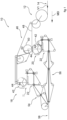
Figure 1 is a schematic side view of an embodiment of an apparatus for folding absorbent sanitary articles according to the present invention, -
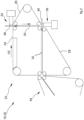
Figure 2 is a view on an enlarged scale of a folding unit indicated by the arrow II inFigure 1 , -
Figures 3a, 3b, 3c, 3d, 3e are schematic views illustrating an embodiment of a method for folding absorbent sanitary articles according to the present invention, and -
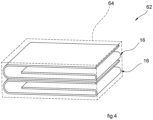
Figure 4 is a schematic view showing a package obtained with a method and an apparatus according to the present invention. - It will be appreciated that the accompanying drawings are schematic and that - in certain figures - some components may not be shown to assist in understanding the Figures. It will be appreciated that the various figures may also not be represented on the same scale.
- With reference to
Figure 1 ,numeral 10 indicates an apparatus for folding absorbent sanitary articles. Theapparatus 10 may be arranged at the outlet of a production machine and upstream of a packaging machine (not shown). - With reference to
Figures 1 and3a , theapparatus 10 comprises aninlet conveyor 12 configured to advance aninlet array 14 along a machine direction MD at a first speed V1. - The
inlet array 14 is formed by a plurality of absorbentsanitary articles 16 aligned with each other. The absorbentsanitary articles 16 forming the inlet array are in the state in which they leave a production machine. In particular, the absorbentsanitary articles 16 in theinlet array 14 are extended in a flat shape and are package-free. - The absorbent
sanitary articles 16 in theinlet array 14 have respective longitudinal axes aligned with each other and parallel to the machine direction MD. - In the
inlet array 14 the absorbentsanitary articles 16 may be substantially in contact with each other, so that the pitch between the absorbentsanitary articles 16 is substantially equal to their length. - The
apparatus 10 comprises at least twofolding lines sanitary articles 16 around respective transversal axes with respect to the longitudinal axes of the absorbentsanitary articles 16. - In the example shown in the figures, the
apparatus 10 comprises twofolding lines apparatus 10 could comprise three or more folding lines. - Each of the
folding lines sanitary articles 16 into two or three. When folded in two, the absorbentsanitary articles 16 are folded around a central transversal axis, and after folding have two flaps overlapping each other. When folding in three, the absorbentsanitary articles 16 are folded around two transversal axes located approximately at 1/3 and 2/3 of the length of the absorbentsanitary article 16 and after folding they have three flaps overlapping each other. - With reference to
Figure 2 , eachfolding line belt folding device 22. In the shown example, thebelt folding device 22 is configured to fold each absorbentsanitary article 16 into three. - The
belt folding device 22 comprises afirst belt 24, asecond belt 26 and athird belt 28. Thefirst belt 24 and thesecond belt 26 have respective straight sections facing each other which define afirst folding channel 30. Thefirst belt 24 and thethird belt 28 have respective straight sections facing each other which define asecond folding channel 32. - The
belt folding device 22 comprises afirst inserter device 34 configured to insert successive absorbentsanitary articles 16 into thefirst folding channel 30, and asecond inserter device 36 configured to insert successive absorbentsanitary articles 16 into thesecond folding channel 32. The first and the secondinserting devices folding blades sanitary articles 16 move along thebelt folding device 22 in the direction indicated by the arrows and are folded transversely a first time in thefirst folding channel 30 and a second time in thesecond folding channel 32. - Each of the
folding lines device 42 located upstream of the respectivebelt folding device 22 and configured to slow down the absorbentsanitary articles 16 which are fed to thebelt folding device 22 at a second speed V2 less than the first speed V1. - In this way, in each
belt folding device 22 the absorbentsanitary articles 16 are folded while advancing at a speed V2 less than the speed V1 at which the absorbentsanitary articles 16 leave the production machine. - The second speed V2 may be equal to V1/n, where n is the number of
folding lines - The slowing
device 42 may be a rotating repitch device equipped with a plurality ofgripping elements 44 which can rotate independently of each other around a common axis. Each of thegripping elements 44 picks up, for example by suction, an absorbentsanitary article 16 advancing at the speed V1 and releases it to thebelt folding device 22 at the second speed V2. - The
apparatus 10 comprises arouting device 46 configured to alternatively route the absorbentsanitary articles 16 coming from theinlet array 14 towards the at least twofolding lines - In the case wherein the
apparatus 10 has twofolding lines routing device 46 routes an absorbentsanitary article 16 towards thefirst folding line 18 and the immediately successive absorbentsanitary article 16 towards thesecond folding line 20, and so on, so that eachfolding line 18 receives half of the absorbentsanitary articles 16 coming from theinlet array 14. - In the case wherein the
apparatus 10 has n folding lines, therouting device 46 routes one absorbentsanitary article 16 to each folding line every n, so that each folding line receives 1/n of the absorbentsanitary articles 16 coming from theinlet array 14. - The
routing device 46 may comprise a belt having abranch 48 which retains the absorbentsanitary articles 16 by suction and atransfer wheel 50 provided with one ormore suction sectors 52, which alternately transfers the absorbentsanitary articles 16 towards thefirst folding line 18. The absorbentsanitary articles 16 that are not picked up by thetransfer wheel 50 are routed to thesecond folding line 20. - The folding lines 18, 20 comprise
respective outlet conveyors sanitary articles 16 from the respectivebelt folding device 22 and feed the folded absorbentsanitary articles 16 into acommon outlet array 58. - With reference to
Figures 3a, 3b, 3c, 3d, 3e , the operating method of theapparatus 10 is as follows. - In a first step shown in
Figure 3a , the method involves forming aninlet array 14 formed by a plurality of absorbentsanitary articles 16 aligned with each other. - The absorbent
sanitary articles 16 forming theinlet array 14 in an extended position and without packaging advance along the machine direction MD at the first speed V1. - Then, as shown schematically in
Figure 3b , the absorbentsanitary articles 16 coming from theinlet array 14 are routed alternately towards at least twofolding lines Figure 3b and in the successive figures, the absorbentsanitary articles 16 are shown both in plan and in side view. - Subsequently, as shown schematically in
Figure 3c , at each of thefolding lines sanitary articles 16 are slowed down to a second speed V2 less than the first speed V1. - At each
folding line repitch devices 42. - The pitch between the absorbent
sanitary articles 16 decreases proportionally to the decrease in speed. For example, if the speed V2 is half the speed V1, the pitch between the absorbentsanitary articles 16 moving at the speed V2 is equal to half the pitch between the same absorbentsanitary articles 16 moving at the speed V1. - In a possible embodiment, at the
folding lines sanitary articles 16 may advance at different speeds. - Then, as shown schematically in
Figure 3d , at each of thefolding lines sanitary articles 16 are folded around respective transversal axes while advancing at the second speed V2. As already described previously, at each of the folding lines the absorbentsanitary articles 16 may be folded by inserting them intofolding channels belts sanitary articles 16 may be inserted into thefolding channels folding blades - With reference to Figures 4d and 4e, the method involves overlapping the folded absorbent
sanitary articles 16 coming from at least twofolding lines articles 60 aligned together in acommon outlet array 58. - In particular, the folded absorbent
sanitary articles 16 coming from afolding line sanitary articles 16 coming from anotherfolding line - As shown schematically in Figure 4d, the folding lines may feed respective folded absorbent
sanitary articles 16 to thecommon outlet array 58 in phase with each other. - Each of the groups of
articles 60 comprises at least two folded absorbentsanitary articles 16 overlapped on each other as shown schematically in Figure 4e. - The groups of
articles 60, each of which comprises two or more folded absorbentsanitary articles 16 overlapped on each other, are fed to a packaging unit which encloses each of the groups ofarticles 60 in a respective packaging film. -
Figure 4 illustrates apackage 62 obtained with the method. The package comprises two or more folded absorbentsanitary articles 16 overlapped on each other and enclosed in apackaging film 64. - In the
common outlet array 58 the folded absorbentsanitary articles 16 may advance at the same speed V2 at which the absorbent sanitary articles advance along thefolding lines - The solution according to the present invention allows the folding of the absorbent sanitary articles to be carried out at a lower speed (for example halved) compared to the speed at which the absorbent sanitary articles advance at the end of the production machine. This allows a considerable reduction in the risk of damage to the absorbent sanitary articles.
- The solution according to the present invention also allows decreasing (for example halving) the speed of the folded absorbent sanitary articles sent to the packaging unit, without the need to provide belt slowing devices which may lead to the risk of jamming and production stoppages.
- Furthermore, the solution according to the present invention allows two or more folded absorbent
sanitary articles 16 overlapping each other to be packaged in a single package, which is not generally possible in solutions according to the prior art. - The fact of packaging two or more folded absorbent
sanitary articles 16 in a single package allows the number of packages to be reduced for the same number of articles produced. - The
apparatus 10 may also be used to individually package the folded absorbentsanitary articles 16 and may switch from single packaging mode to group packaging mode with a selection at the software level, without the need for format change interventions. - Of course, the details of construction and the embodiments can be widely varied with respect to those described and illustrated, without thereby departing from the scope of the present invention as defined by the claims that follow.
Claims (8)
- A method for forming groups of absorbent sanitary articles, comprising:- providing an inlet array (14) formed by a plurality of absorbent sanitary articles (16), wherein in the inlet array (14) the absorbent sanitary articles (16) are unpackaged and advance along a machine direction (MD) at a first speed (V1),- routing the absorbent sanitary articles (16) coming from said inlet array (14) towards at least two folding lines (18, 20),- at each of said at least two folding lines (18, 20) slowing down the absorbent sanitary articles (16) at a respective second speed (V2) less than said first speed (V1),- at each of said at least two folding lines (18, 20) folding said absorbent sanitary articles (16) around respective transversal axes while said absorbent sanitary articles (16) advance at said respective second speed (V2),- overlapping the folded absorbent sanitary articles (16) coming from said at least two folding lines (18, 20) so as to form groups of articles (60), each of which comprises at least two folded absorbent sanitary articles (16) overlapped on each other,- feeding said groups of articles (60) in a common outlet array (58), and- packaging each of said groups of articles (60) in a respective package (62).
- The method of claim 1, wherein at said at least two folding lines (18, 20) said absorbent sanitary articles (16) advance at speeds different from each other.
- The method of claim 1 or claim 2, wherein said at least two folding lines (18, 20) feed respective folded absorbent sanitary articles (16) towards said common outlet array (58) in phase with each other in the machine direction (MD), so that in said common outlet array (58) the folded absorbent sanitary articles (16) coming from a folding line (18, 20) are overlapped on the folded absorbent sanitary articles (16) coming from another folding line (18, 20).
- The method of any of the preceding claims, wherein at each of said at least two folding lines (18, 20) the absorbent sanitary articles (16) are slowed down to a respective second speed (V2) by respective rotating repitch devices (42).
- The method of any of the preceding claims, wherein at each of said at least two folding lines (18, 20) the absorbent sanitary articles (16) are folded by inserting them into folding channels (30, 32) formed between parallel branches of two belts (24, 26, 28).
- An apparatus for forming groups of absorbent sanitary articles, comprising:- an inlet conveyor (12) configured to advance an inlet array (14) formed by a plurality of absorbent sanitary articles (16) along a machine direction (MD) at a first speed (V1),- at least two folding lines (18, 20) each comprising a slowdown device (42) configured to slow down the absorbent sanitary articles (16) to a respective second speed (V2) less than said first speed (V1), wherein said at least two folding lines (18, 20) are configured to fold said absorbent sanitary articles (16) around respective transversal axes while said absorbent sanitary articles (16) advance at said respective second speed (V2),- a routing device (46) configured to route the absorbent sanitary articles (16) coming from said inlet array (14) towards said at least two folding lines (18, 20),- wherein said at least two folding lines (18, 20) are configured to feed the folded absorbent sanitary articles (16) into a common outlet array (58) in mutually overlapped positions so as to form in said common outlet array (58) groups of articles (60) each of which comprises at least two folded absorbent sanitary articles (16) overlapped on each other, and- a packaging unit in which said groups of articles (60) are packaged in respective packages (62).
- The apparatus of claim 6, wherein said at least two folding lines are configured to feed respective folded absorbent sanitary articles (16) to said common outlet array (58) in phase with each other in the machine direction (MD), so that in said common outlet array (58) the folded absorbent sanitary articles (16) coming from a folding line (18, 20) are overlapped with folded absorbent sanitary articles (16) coming from another folding line (18, 20).
- The apparatus of any of claims 6-7, wherein each of said at least two folding lines (18, 20) comprises a rotary repitch device (42) configured to slow down the absorbent sanitary articles to a respective second speed (V2).
Applications Claiming Priority (1)
| Application Number | Priority Date | Filing Date | Title |
|---|---|---|---|
| IT202300003255 | 2023-02-24 |
Publications (3)
| Publication Number | Publication Date |
|---|---|
| EP4420644A1 true EP4420644A1 (en) | 2024-08-28 |
| EP4420644C0 EP4420644C0 (en) | 2025-10-15 |
| EP4420644B1 EP4420644B1 (en) | 2025-10-15 |
Family
ID=86272281
Family Applications (1)
| Application Number | Title | Priority Date | Filing Date |
|---|---|---|---|
| EP24157632.1A Active EP4420644B1 (en) | 2023-02-24 | 2024-02-14 | A method and apparatus for forming groups of absorbent sanitary articles |
Country Status (4)
| Country | Link |
|---|---|
| US (1) | US12534259B2 (en) |
| EP (1) | EP4420644B1 (en) |
| ES (1) | ES3047859T3 (en) |
| PL (1) | PL4420644T3 (en) |
Cited By (1)
| Publication number | Priority date | Publication date | Assignee | Title |
|---|---|---|---|---|
| EP4541742A1 (en) * | 2023-10-18 | 2025-04-23 | Fameccanica.Data S.p.A. | A method and apparatus for folding absorbent sanitary articles |
Citations (3)
| Publication number | Priority date | Publication date | Assignee | Title |
|---|---|---|---|---|
| US20080312624A1 (en) * | 2007-06-18 | 2008-12-18 | Harald Hermann Hundorf | Tri-Folded Disposable Absorbent Article, Packaged Absorbent Article, And Array of Packaged Absorbent Articles With Substantially Continuously Distributed Absorbent Particulate Polymer Material |
| WO2013136252A2 (en) * | 2012-03-16 | 2013-09-19 | Fameccanica.Data S.P.A. | Package of pre-closed disposable absorbent sanitary articles of the pant type, and corresponding manufacturing device and method |
| EP3685812A1 (en) * | 2019-01-24 | 2020-07-29 | Ontex BVBA | On-the-go package of absorbent articles and method of making |
Family Cites Families (2)
| Publication number | Priority date | Publication date | Assignee | Title |
|---|---|---|---|---|
| US11872114B2 (en) * | 2019-01-24 | 2024-01-16 | Curt G. Joa, Inc. | Method and apparatus for high-speed cross-folding of absorbent sanitary products |
| KR102953539B1 (en) * | 2020-09-07 | 2026-04-17 | 엘지전자 주식회사 | Folding machine for clothes and controlling method thereof |
-
2024
- 2024-02-14 EP EP24157632.1A patent/EP4420644B1/en active Active
- 2024-02-14 PL PL24157632.1T patent/PL4420644T3/en unknown
- 2024-02-14 ES ES24157632T patent/ES3047859T3/en active Active
- 2024-02-22 US US18/584,029 patent/US12534259B2/en active Active
Patent Citations (4)
| Publication number | Priority date | Publication date | Assignee | Title |
|---|---|---|---|---|
| US20080312624A1 (en) * | 2007-06-18 | 2008-12-18 | Harald Hermann Hundorf | Tri-Folded Disposable Absorbent Article, Packaged Absorbent Article, And Array of Packaged Absorbent Articles With Substantially Continuously Distributed Absorbent Particulate Polymer Material |
| EP2157952A1 (en) | 2007-06-18 | 2010-03-03 | The Procter & Gamble Company | Tri-folded disposable absorbent article, packaged absorbent article, and array of packaged absorbent articles with substantially continuously distributed absorbent particulate polymer material |
| WO2013136252A2 (en) * | 2012-03-16 | 2013-09-19 | Fameccanica.Data S.P.A. | Package of pre-closed disposable absorbent sanitary articles of the pant type, and corresponding manufacturing device and method |
| EP3685812A1 (en) * | 2019-01-24 | 2020-07-29 | Ontex BVBA | On-the-go package of absorbent articles and method of making |
Cited By (1)
| Publication number | Priority date | Publication date | Assignee | Title |
|---|---|---|---|---|
| EP4541742A1 (en) * | 2023-10-18 | 2025-04-23 | Fameccanica.Data S.p.A. | A method and apparatus for folding absorbent sanitary articles |
Also Published As
| Publication number | Publication date |
|---|---|
| US20240286784A1 (en) | 2024-08-29 |
| US12534259B2 (en) | 2026-01-27 |
| EP4420644C0 (en) | 2025-10-15 |
| ES3047859T3 (en) | 2025-12-05 |
| EP4420644B1 (en) | 2025-10-15 |
| PL4420644T3 (en) | 2025-12-08 |
Similar Documents
| Publication | Publication Date | Title |
|---|---|---|
| US4385479A (en) | Apparatus for the preparation of packaging blanks by severing from a continuous web | |
| US7703264B2 (en) | Machine and method for packaging groups of products | |
| EP1818264B1 (en) | A method and line for the high-speed packaging of filter bags containing an infusion product. | |
| EP4420644B1 (en) | A method and apparatus for forming groups of absorbent sanitary articles | |
| JP7529190B2 (en) | Unit, device and method for breaking a chain of articles | |
| JP4580381B2 (en) | Method and apparatus for folding an onsert and pasting it on a consumer product | |
| KR20060027401A (en) | Folding with conveying device of folded product through folding roller | |
| ITBO980204A1 (en) | EQUIPMENT FOR THE FORMING OF A WELDABLE PAPER WRAP FOR THE PACKAGING OF A PRODUCT. | |
| EP4541742A1 (en) | A method and apparatus for folding absorbent sanitary articles | |
| JPH01252453A (en) | Multiple carry-out device | |
| EP0375196B1 (en) | Method and apparatus for the sequential handling of flexible products | |
| CA2451335C (en) | Method and device for the packaging of flat objects | |
| US11872114B2 (en) | Method and apparatus for high-speed cross-folding of absorbent sanitary products | |
| CN103562072B (en) | Product packaging method and the packaging facilities for performing the method | |
| GB2063811A (en) | Packing of cigarettes | |
| US4911423A (en) | Apparatus for multiple lane stacking of flexible products | |
| CN104768510A (en) | Equipment for producing packed product stacks of folded or unfolded cut products, particularly of hygiene products | |
| US7966788B2 (en) | Method and device for packaging product portions in a wrapper | |
| RS54778B1 (en) | PROCEDURE FOR SEPARATION OF THE PIPE FROM THE FILM CONTAINING THE PRODUCT LINE, A PACKAGING UNIT INTENDED TO PERFORM THIS PROCEDURE AND A PERFORATED PIPE FOR FORMING THE PIPE | |
| EP0728668A1 (en) | Sealing system and process for packaging machine | |
| WO2001015975A2 (en) | System and method for wrapping articles | |
| JPH07121725B2 (en) | Napkin automatic continuous manufacturing equipment | |
| US5617704A (en) | Method of forming a tubular pack of printed products with a transparent foil cover | |
| EP2407385B1 (en) | Unit and method for supplying sheets of material for wrapping cigarette packets and machine for packing said packets | |
| EP1172296A1 (en) | Assembly for packaging a discontinuously supplied stream of products |
Legal Events
| Date | Code | Title | Description |
|---|---|---|---|
| PUAI | Public reference made under article 153(3) epc to a published international application that has entered the european phase |
Free format text: ORIGINAL CODE: 0009012 |
|
| STAA | Information on the status of an ep patent application or granted ep patent |
Free format text: STATUS: THE APPLICATION HAS BEEN PUBLISHED |
|
| AK | Designated contracting states |
Kind code of ref document: A1 Designated state(s): AL AT BE BG CH CY CZ DE DK EE ES FI FR GB GR HR HU IE IS IT LI LT LU LV MC ME MK MT NL NO PL PT RO RS SE SI SK SM TR |
|
| STAA | Information on the status of an ep patent application or granted ep patent |
Free format text: STATUS: REQUEST FOR EXAMINATION WAS MADE |
|
| 17P | Request for examination filed |
Effective date: 20241227 |
|
| GRAP | Despatch of communication of intention to grant a patent |
Free format text: ORIGINAL CODE: EPIDOSNIGR1 |
|
| STAA | Information on the status of an ep patent application or granted ep patent |
Free format text: STATUS: GRANT OF PATENT IS INTENDED |
|
| RIC1 | Information provided on ipc code assigned before grant |
Ipc: B65B 35/44 20060101ALI20250520BHEP Ipc: B65B 35/42 20060101ALI20250520BHEP Ipc: B65B 63/04 20060101ALI20250520BHEP Ipc: B65B 35/50 20060101ALI20250520BHEP Ipc: A61F 13/15 20060101ALI20250520BHEP Ipc: A61F 13/551 20060101AFI20250520BHEP |
|
| INTG | Intention to grant announced |
Effective date: 20250602 |
|
| GRAS | Grant fee paid |
Free format text: ORIGINAL CODE: EPIDOSNIGR3 |
|
| GRAA | (expected) grant |
Free format text: ORIGINAL CODE: 0009210 |
|
| STAA | Information on the status of an ep patent application or granted ep patent |
Free format text: STATUS: THE PATENT HAS BEEN GRANTED |
|
| AK | Designated contracting states |
Kind code of ref document: B1 Designated state(s): AL AT BE BG CH CY CZ DE DK EE ES FI FR GB GR HR HU IE IS IT LI LT LU LV MC ME MK MT NL NO PL PT RO RS SE SI SK SM TR |
|
| REG | Reference to a national code |
Ref country code: GB Ref legal event code: FG4D Ref country code: CH Ref legal event code: F10 Free format text: ST27 STATUS EVENT CODE: U-0-0-F10-F00 (AS PROVIDED BY THE NATIONAL OFFICE) Effective date: 20251015 |
|
| REG | Reference to a national code |
Ref country code: DE Ref legal event code: R096 Ref document number: 602024000885 Country of ref document: DE |
|
| REG | Reference to a national code |
Ref country code: IE Ref legal event code: FG4D |
|
| U01 | Request for unitary effect filed |
Effective date: 20251024 |
|
| U07 | Unitary effect registered |
Designated state(s): AT BE BG DE DK EE FI FR IT LT LU LV MT NL PT RO SE SI Effective date: 20251031 |
|
| REG | Reference to a national code |
Ref country code: ES Ref legal event code: FG2A Ref document number: 3047859 Country of ref document: ES Kind code of ref document: T3 Effective date: 20251205 |
|
| U20 | Renewal fee for the european patent with unitary effect paid |
Year of fee payment: 3 Effective date: 20260227 |
|
| PGFP | Annual fee paid to national office [announced via postgrant information from national office to epo] |
Ref country code: ES Payment date: 20260302 Year of fee payment: 3 |
|
| PG25 | Lapsed in a contracting state [announced via postgrant information from national office to epo] |
Ref country code: NO Free format text: LAPSE BECAUSE OF FAILURE TO SUBMIT A TRANSLATION OF THE DESCRIPTION OR TO PAY THE FEE WITHIN THE PRESCRIBED TIME-LIMIT Effective date: 20260115 |
|
| PG25 | Lapsed in a contracting state [announced via postgrant information from national office to epo] |
Ref country code: HR Free format text: LAPSE BECAUSE OF FAILURE TO SUBMIT A TRANSLATION OF THE DESCRIPTION OR TO PAY THE FEE WITHIN THE PRESCRIBED TIME-LIMIT Effective date: 20251015 |
|
| PG25 | Lapsed in a contracting state [announced via postgrant information from national office to epo] |
Ref country code: RS Free format text: LAPSE BECAUSE OF FAILURE TO SUBMIT A TRANSLATION OF THE DESCRIPTION OR TO PAY THE FEE WITHIN THE PRESCRIBED TIME-LIMIT Effective date: 20260115 |
|
| PG25 | Lapsed in a contracting state [announced via postgrant information from national office to epo] |
Ref country code: IS Free format text: LAPSE BECAUSE OF FAILURE TO SUBMIT A TRANSLATION OF THE DESCRIPTION OR TO PAY THE FEE WITHIN THE PRESCRIBED TIME-LIMIT Effective date: 20260215 |
|
| PGFP | Annual fee paid to national office [announced via postgrant information from national office to epo] |
Ref country code: CZ Payment date: 20260127 Year of fee payment: 3 |
|
| PGFP | Annual fee paid to national office [announced via postgrant information from national office to epo] |
Ref country code: PL Payment date: 20260203 Year of fee payment: 3 |