EP4418778A1 - Self-adaptive adjustment method and apparatus for downlink control channel resource, and storage medium - Google Patents
Self-adaptive adjustment method and apparatus for downlink control channel resource, and storage medium Download PDFInfo
- Publication number
- EP4418778A1 EP4418778A1 EP22880240.1A EP22880240A EP4418778A1 EP 4418778 A1 EP4418778 A1 EP 4418778A1 EP 22880240 A EP22880240 A EP 22880240A EP 4418778 A1 EP4418778 A1 EP 4418778A1
- Authority
- EP
- European Patent Office
- Prior art keywords
- pdcch
- pdcch resource
- resource block
- resources
- adaptive adjustment
- Prior art date
- Legal status (The legal status is an assumption and is not a legal conclusion. Google has not performed a legal analysis and makes no representation as to the accuracy of the status listed.)
- Pending
Links
- 238000000034 method Methods 0.000 title claims abstract description 44
- 238000003860 storage Methods 0.000 title claims abstract description 19
- 230000003044 adaptive effect Effects 0.000 claims abstract description 42
- 238000013468 resource allocation Methods 0.000 claims description 69
- 230000015654 memory Effects 0.000 claims description 17
- 238000004891 communication Methods 0.000 claims description 6
- 238000001228 spectrum Methods 0.000 description 7
- 230000001052 transient effect Effects 0.000 description 7
- 238000005516 engineering process Methods 0.000 description 5
- 238000010586 diagram Methods 0.000 description 4
- 230000008569 process Effects 0.000 description 4
- 230000008859 change Effects 0.000 description 2
- 230000011664 signaling Effects 0.000 description 2
- 230000009466 transformation Effects 0.000 description 2
- 238000000844 transformation Methods 0.000 description 2
- 230000006978 adaptation Effects 0.000 description 1
- 230000005540 biological transmission Effects 0.000 description 1
- 239000000969 carrier Substances 0.000 description 1
- 238000010276 construction Methods 0.000 description 1
- 230000014759 maintenance of location Effects 0.000 description 1
- 230000007246 mechanism Effects 0.000 description 1
- 238000010295 mobile communication Methods 0.000 description 1
- 230000003287 optical effect Effects 0.000 description 1
- 238000005457 optimization Methods 0.000 description 1
- 238000004088 simulation Methods 0.000 description 1
- 230000001960 triggered effect Effects 0.000 description 1
- 239000002699 waste material Substances 0.000 description 1
Images

Classifications
-
- H—ELECTRICITY
- H04—ELECTRIC COMMUNICATION TECHNIQUE
- H04W—WIRELESS COMMUNICATION NETWORKS
- H04W72/00—Local resource management
- H04W72/20—Control channels or signalling for resource management
-
- H—ELECTRICITY
- H04—ELECTRIC COMMUNICATION TECHNIQUE
- H04W—WIRELESS COMMUNICATION NETWORKS
- H04W72/00—Local resource management
- H04W72/12—Wireless traffic scheduling
- H04W72/1263—Mapping of traffic onto schedule, e.g. scheduled allocation or multiplexing of flows
- H04W72/1273—Mapping of traffic onto schedule, e.g. scheduled allocation or multiplexing of flows of downlink data flows
-
- H—ELECTRICITY
- H04—ELECTRIC COMMUNICATION TECHNIQUE
- H04L—TRANSMISSION OF DIGITAL INFORMATION, e.g. TELEGRAPHIC COMMUNICATION
- H04L5/00—Arrangements affording multiple use of the transmission path
- H04L5/003—Arrangements for allocating sub-channels of the transmission path
- H04L5/0053—Allocation of signalling, i.e. of overhead other than pilot signals
-
- H—ELECTRICITY
- H04—ELECTRIC COMMUNICATION TECHNIQUE
- H04L—TRANSMISSION OF DIGITAL INFORMATION, e.g. TELEGRAPHIC COMMUNICATION
- H04L5/00—Arrangements affording multiple use of the transmission path
- H04L5/003—Arrangements for allocating sub-channels of the transmission path
- H04L5/0078—Timing of allocation
- H04L5/0082—Timing of allocation at predetermined intervals
-
- H—ELECTRICITY
- H04—ELECTRIC COMMUNICATION TECHNIQUE
- H04W—WIRELESS COMMUNICATION NETWORKS
- H04W72/00—Local resource management
- H04W72/02—Selection of wireless resources by user or terminal
-
- H—ELECTRICITY
- H04—ELECTRIC COMMUNICATION TECHNIQUE
- H04W—WIRELESS COMMUNICATION NETWORKS
- H04W72/00—Local resource management
- H04W72/04—Wireless resource allocation
- H04W72/044—Wireless resource allocation based on the type of the allocated resource
- H04W72/0446—Resources in time domain, e.g. slots or frames
-
- H—ELECTRICITY
- H04—ELECTRIC COMMUNICATION TECHNIQUE
- H04W—WIRELESS COMMUNICATION NETWORKS
- H04W72/00—Local resource management
- H04W72/50—Allocation or scheduling criteria for wireless resources
- H04W72/52—Allocation or scheduling criteria for wireless resources based on load
-
- H—ELECTRICITY
- H04—ELECTRIC COMMUNICATION TECHNIQUE
- H04W—WIRELESS COMMUNICATION NETWORKS
- H04W72/00—Local resource management
- H04W72/20—Control channels or signalling for resource management
- H04W72/23—Control channels or signalling for resource management in the downlink direction of a wireless link, i.e. towards a terminal
Definitions
- the present invention relates to the field of communication technologies, and in particular, to an adaptive adjustment method and apparatus for downlink control channel resources, and a storage medium.
- a physical downlink control channel is configured to send scheduling control information.
- a user equipment may receive physical downlink shared channel (PDSCH) data or send physical uplink shared channel (PUSCH) data at indicated time based on the scheduling control information.
- PDSCH physical downlink shared channel
- PUSCH physical uplink shared channel
- PDCCH resources are flexibly configured through a control-resource set (CORESET) and a search space.
- the fixed configuration solution for the PDCCH resources may lead to a mismatch between PDCCH resource demands of the UEs and the PDCCH resources of a cell.
- An existing adaptive adjustment technology for the PDCCH resources is mainly achieved by changing the quantities of PDCCH time-domain symbols of all the UEs in the cell.
- the PDCCH resource configuration and change of the 5G NR system need to be notified to the UEs through a reallocation message. If the quantities of the PDCCH time-domain symbols of all the UEs in the cell are changed, all the UEs need to be reallocated, which can lead to a signaling storm.
- Embodiments of the present invention provide an adaptive adjustment method and apparatus for downlink control channel resources, and a storage medium.
- the embodiments of the present invention provide an adaptive adjustment method for downlink control channel resources, including: determining a number and positions of physical downlink control channel (PDCCH) resource blocks in a PDCCH resource pool; if PDCCH resources are allocated to a user equipment (UE), determining a target PDCCH resource block from the PDCCH resource pool based on the number and positions of the PDCCH resource blocks and a size of a resource demand load; allocating the target PDCCH resource block to the UE; and notifying the UE of a time-domain symbol corresponding to the target PDCCH resource block through a search space.
- PDCCH physical downlink control channel
- the embodiments of the present invention provide an adaptive adjustment apparatus for downlink control channel resources, including at least one processor and a memory configured to achieve communication connection with the at least one processor.
- the memory stores instructions that are executed by the at least one processor; and the instructions, when executed by the at least one processor, cause the at least one processor to implement the adaptive adjustment method described in the first aspect.
- the embodiments of the present invention further provide a computer-readable storage medium.
- the computer-readable storage medium stores computer-executable instructions, and the computer-executable instructions are used for causing a computer to implement the adaptive adjustment method described in the first aspect.
- PDCCH resources can be fixedly configured according to a planned number of users and a bandwidth of a cell.
- a base station always occupies a fixed number of PDCCH resources.
- the PDCCH resource demands of the UEs and the PDCCH resources of the cell mismatch. Therefore, the industry has adopted an adaptive method for PDCCH resources to solve the problem of mismatch between the PDCCH resource demands of the UEs and the PDCCH resources of the cell.
- Adaptation of the resources is achieved mainly by changing the number of PDCCH time-domain symbols of all the UEs of the cell. All the UEs can be notified through a control format indicator (CFI, indicating a change in the number of PDCCH symbols) in a 4G system, so that the PDCCH resources on a base station side are the same as those on the UEs, CFI is cancelled in 5G NR systems, and PDCCH resource configuration and changes need to be notified to the UEs through a reallocation message. If the quantities of the PDCCH time-domain symbols of all the UEs in the cell are changed, all the UEs need to be reallocated, which can lead to a signaling storm.
- CFI control format indicator
- the embodiments of the present invention provide an adaptive adjustment method and apparatus for downlink control channel resources, and a computer storage medium.
- how to allocate the resources for the UEs is determined based on resource allocation failure rates of PDCCH resource blocks, so as to automatically balance loads of the PDCCH resource blocks on the base station side, match the PDCCH resource demands of the UEs with the number of PDCCH resources in the cell, and effectively improve the utilization rate of spectrum resources.
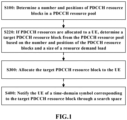
- the embodiments of the present invention provide an adaptive adjustment method for downlink control channel resources, including but not limited to S 100, S200, S300, and S400 below.
- a target PDCCH resource block is determined from the PDCCH resource pool based on the number and positions of the PDCCH resource blocks and a size of a resource demand load.
- the target PDCCH resource block is allocated to the UE.
- the UE is notified of a time-domain symbol corresponding to the target PDCCH resource block through a search space.
- the embodiments of the present invention select one of the PDCCH resource blocks from the PDCCH resource pool based on resource demand loads of the PDCCH resource blocks, and allocate it to the UE. For example, the target PDCCH resource block is automatically selected based on an indicator such as resource demands of the allocated UEs on the PDCCH resource blocks, so as to achieve reasonable allocation of the PDCCH resources.
- the PDCCH resource pool includes a plurality of PDCCH resource blocks that are arranged in sequence. These PDCCH resource blocks are in a one-to-one correspondence to a time-domain symbol and are sequenced according to sizes of the time-domain symbols.
- the PDCCH resource pool includes a first PDCCH resource block and a second PDCCH resource block, the time-domain symbols corresponding to the first PDCCH resource block and the second PDCCH resource block are adjacent, and the time-domain symbol corresponding to the first PDCCH resource block is smaller than the time-domain symbol corresponding to the second PDCCH resource block.
- a target PDCCH resource block is selected, which can be achieved using the following:
- the target PDCCH resource block with a resource allocation failure rate less than a first threshold value is determined based on the order of the time-domain symbols corresponding to the PDCCH resource blocks in the PDCCH resource pool,
- the first threshold value is set for all the PDCCH resource blocks in the PDCCH resource pool.
- the first threshold value is used for limiting allocation failure threshold values of the PDCCH resource blocks in the process of allocating the PDCCH resources to the UE.
- a case of an allocation failure is represented by a resource allocation failure rate of a PDCCH resource block.
- the resource allocation failure rate is calculated based on a number of unsuccessfully allocated resources on a PDCCH resource block.
- the number of the N resources is added to the number of the unsuccessfully allocated resources, thus obtaining a total number of the unsuccessfully allocated resources on the entire PDCCH resource block.
- the resource allocation failure rate can be calculated by the following:
- the resource allocation failure rate of the PDCCH resource block within the current preset period is determined based on a ratio of the total number of the unsuccessfully allocated PDCCH resources to the total number of the PDCCH resources.
- the resource allocation failure rate is calculated by a preset period, and the resource allocation failure rate in this embodiment represents a resource allocation failure situation of a PDCCH resource block within a certain period of time (the preset period).
- the total number of the unsuccessfully allocated PDCCH resources of the PDCCH resource block within the preset period is used as the numerator, and the total number of the PDCCH resources of the PDCCH resource block within the preset period is used as the denominator.
- the calculated ratio is the resource allocation failure rate. It can be understood that a duration of the preset period can be set as needed, such as 1 second and 3 seconds. Furthermore, within the preset period, the allocation situation of the PDCCH resources changes. Therefore, the resource allocation failure rate can be expressed as an average situation of the unsuccessfully allocated resources of a certain PDCCH resource block within a certain preset period.
- the resources are allocated to the UE on the PDCCH resource block with the time-domain symbol of 1; and if no, whether the PDCCH resource block with the time-domain symbol of 2 satisfies the condition is continued to be determined, and so on.
- the UEs can be intensively allocated to PDCCH resource blocks with smaller time-domain symbols, thereby preserving PDCCH resource blocks with larger time-domain symbols for being shared to a physical downlink shared channel (PDSCH).
- PDSCH physical downlink shared channel
- the PDCCH resource block that can allocate the resources to the UE can be selected, and the PDCCH resource block is used as the target PDCCH resource block to send a configuration notification to the UE.
- a control resource set (CORESET) can configure the number of the symbols of the PDCCH resources, the frequency-domain starting positions, and the frequency-domain sizes.
- the search space can configure the time-domain starting symbols of the PDCCH resources. Therefore, in the embodiments of the present invention, the time-domain symbol corresponding to the target PDCCH resource block can be notified to the UE through the search space.
- the search space configured for the UE is determined first, and then a value of monitoringSymbolsWithinSlot in the search space is configured based on the time-domain symbol corresponding to the target PDCCH resource block.
- the monitoringSymbolsWithinSlot corresponds to the time-domain symbol. If which position in the monitoringSymbolsWithinSlot is 1, the resources on which time-domain starting symbol are used to be allocated to the UE.
- the UE can know a PDCCH configuration on the base station side based on the value of the above field in the search space.
- the resources are automatically and reasonably allocated to the UE based on the resource allocation failure rates.
- it can also be ensured that sufficient PDCCH resources can be provided to ensure the number of scheduled UEs, effectively improve the utilization rate of spectrums, bring a better network experience, achieve an optimal system capacity, and balance the number of scheduled users.
- the target PDCCH resource block with the resource allocation failure rate less than the first threshold value is determined based on the order of the time-domain symbols corresponding to the PDCCH resource blocks. Referring to FIG. 3 , this step can be specifically achieved in the following:
- the first PDCCH resource block is determined as the target PDCCH resource block.
- the second PDCCH resource block is determined as the target PDCCH resource block.
- the resource allocation failure rate of the PDCCH resource block corresponding to the time-domain symbol is determined based on the order of the time-domain symbols from small to large. If the resource allocation failure rate of the first PDCCH resource block is less than the first threshold value, the resources are allocated to the UE in the first PDCCH resource block. If the resource allocation failure rate of the first PDCCH resource block is greater than or equal to the first threshold value, whether the resource allocation failure rate of the second PDCCH resource block is greater than the first threshold value is determined.
- the resource allocation failure rates of the PDCCH resource blocks with the time-domain symbols of 0 in the PDCCH resource pool may first reach or exceed the first threshold value, and the resource allocation failure rates of the PDCCH resource blocks with the time-domain symbols of 1 may then reach or exceed the first threshold value, eventually causing the resource allocation failure rates of all the PDCCH resource blocks in the PDCCH resource pool to exceed the first threshold value.
- the following processing can be performed in the following:
- the PDCCH resource block with the smallest resource allocation failure rate is selected as the target PDCCH resource block; or, if the resource allocation failure rates of all the PDCCH resource blocks in the PDCCH resource pool are equal and are greater than or equal to the first threshold value, the PDCCH resource block with the smallest corresponding time-domain symbol is selected as the target PDCCH resource block.
- the PDCCH resource block with the smallest resource allocation failure rate is searched to allocate the resources to the UE. If the resource allocation failure rates of all the PDCCH resource blocks are the same, the PDCCH resource block with the smallest time-domain symbol (usually, the time-domain symbol is 0) is selected, according to the principle of a smallest time-domain symbol first, to allocate the resources to the UE.
- the base station configures a PDCCH resource pool of a current cell, and the PDCCH resource pool is a set of a plurality of PDCCH resource blocks. Lengths of time-domain symbols of all the PDCCH resource blocks can be configured to be the same or different, and all the PDCCH resource blocks occupy different time-domain symbol positions in one slot; and the number (which is usually 0) of allocated UEs of each PDCCH resource block is initialized, and then the number of the allocated UEs of each PDCCH resource block is updated according to an allocation situation of the PDCCH resource block.
- the UEs are intensively allocated to the PDCCH resource blocks with the smaller time-domain symbols, so the PDCCH resource blocks with the larger time-domain symbols can be shared resources of a PDSCH. Specifically, this can be achieved in the following:
- the number of the allocated UEs of each PDCCH resource block is dynamically updated later according to the allocation situation of PDCCH resource block. That is, when the PDCCH resource block is allocated to a UE, the number of the allocated UEs of the PDCCH resource block is added by one; and when the PDCCH resource block loses a UE, the number of the allocated UEs of the PDCCH resource block is subtracted by one, thereby counting the various PDCCH resource blocks occupied by the existing UEs and determining the time-domain symbols occupied by the PDCCH resources of the cell.
- the time-domain symbols not occupied by the PDCCH resources of the cell can be determined according to states of all the PDCCH resource blocks in the PDCCH resource pool.
- PDSCH scheduling requires continuous time-domain symbol resources. Therefore, based on the above adaptive adjustment method, the PDCCH resource blocks with the smaller time-domain symbols are allocated first, and the subsequent time-domain symbols can be continuously used by the PDSCH resources.
- the number of the UEs in the PDCCH resource pool is relatively small, and a fewer of resources are occupied.
- a portion of the UEs are allocated to the PDCCH resource blocks with the larger time-domain symbols.
- the UEs can be reallocated under certain conditions. For example:
- a resource utilization rate of the PDCCH resource pool is less than a second threshold value, a UE on a PDCCH resource block that does not have symbol 0 is reallocated to a symbol in front of the PDCCH resource block that does not have symbol 0.
- the resource utilization rate is determined based on a number of successfully allocated PDCCH resources in the PDCCH resource pool.
- the resource utilization rate is used for representing an occupancy of the resources in the PDCCH resource pool.
- the resource utilization rate is less than the second threshold value, it indicates that only a small number of resources in the PDCCH resource pool are occupied.
- reallocation performed on the UEs is triggered.
- the scattered UEs are concentrated on the PDCCH resource blocks with the time-domain symbols of 0, or the UEs can be allocated to the time-domain symbols in front of the PDCCH resource blocks with the UEs. Thus, continuous PDCCH resource blocks with larger time-domain symbols are preserved for being shared to the PDSCH.
- the resource utilization rate is also calculated based on the resource situation within certain time. Specifically, referring to FIG. 5 :
- the resource utilization rate is calculated by taking the PDCCH resource pool as an object.
- the total number of the successfully allocated PDCCH resources in the PDCCH resource pool is used as the numerator, and the total number of the PDCCH resources in the PDCCH resource pool is used as the denominator.
- the ratio is used as the resource utilization rate of the PDCCH resource pool in the current preset period. It can be understood that a duration of the preset period can be set as needed, such as 1 second and 3 seconds. Furthermore, within the preset period, the allocation situation of the PDCCH resources changes. Therefore, the resource utilization rate can be expressed as an average situation of the successfully allocated resources of the PDCCH resources within a certain preset period.
- the preset period of the resource allocation failure rate and the preset period of the resource utilization rate can be the same, and the two values can be calculated simultaneously. Therefore, the base station side automatically updates the resource allocation failure rate and the resource utilization rate within each preset period, thereby achieving adaptive adjustment of the PDCCH resources and sharing of the PDCCH resources by the PDSCH, effectively improving the utilization rate of spectrums, bringing a better network experience, achieving an optimal system capacity, and balancing the number of scheduled users.
- the base station side performs adaptive configuration on the PDCCH resources, and a specific process is as follows:
- the PDCCH resource allocation failure rate the total number of unsuccessfully allocated PDCCH resources on the PDCCH resource block within the period/the total number of resources of the PDCCH resource block within the period.
- the utilization rate of the PDCCH resource pool the total number of successfully allocated PDCCH resources on all the PDCCH resource blocks within the period/the total number of the resources of all the PDCCH resource blocks within the period.
- one PDCCH resource block in the resource pool is allocated to the UE based on the PDCCH resource allocation failure rate of each PDCCH resource block.
- the resource allocation failure rate of PDCCH resource block 0 is less than threshold I (namely, the first threshold value mentioned above)
- PDCCH resource block 0 is allocated to the UE.
- the resource allocation failure rate of PDCCH resource block 0 is greater than or equal to threshold I, whether PDCCH resource block 1 can be allocated to the UE needs to be determined, and the determining logic is the same as the logic of allocating PDCCH resource block 0.
- the processing performed on PDCCH resource block 2 is in the same way.
- the PDCCH resource block with the smallest resource allocation failure rate is selected and allocated to the UEs. After the PDCCH resource block is selected for the UE, the UE needs to be notified through CORESET and a search space. Configurations of monitoringSymbolsWithinSlot of the search spaces of different resource blocks are as shown in Table 1: Table 1: Correspondence relationships between the PDCCH resource blocks and the values of monitoringSymbolsWithinSlot PDCCH resource block Value of monitoringSymbolsWithinSlot 0 10000000000000 1 01000000000000 2 00100000000000
- threshold I is set to be 0.10, and a scenario is initially constructed for the cell.
- the PDCCH resource allocation failure rates of all the resource blocks are 0. Since the resource allocation failure rate of PDCCH resource block 0 is less than threshold I, resource block 0 is selected and allocated to the UE, and the monitoringSymbolsWithinSlot of the search space configured for the UE is filled in as 10000000000000.
- threshold I is configured to be 0.10
- the PDCCH resource allocation failure rates of PDCCH resource blocks 0, 1, and 2 are 0.20, 0.08, and 0, respectively. If the resource allocation failure rate of PDCCH resource block 0 exceeds threshold I, the resource allocation failure rate of PDCCH resource block 1 is compared with threshold I. Since the resource allocation failure rate of PDCCH resource block 1 is less than threshold I, resource block 1 is selected and allocated to the UE, and the monitoringSymbolsWithinSlot of the search space configured for the UE is filled in as 01000000000000.
- Symbols occupied by the PDCCH resources of the cell can be determined based on the number of the allocated UEs of each PDCCH resource block in the maintained PDCCH resource pool.
- the PDSCH resources can use time-domain resources corresponding to unoccupied PDCCH resources.
- PDCCH resource blocks 0, 1, and 2 are 3, 0, and 0, respectively, time-domain symbol 1 occupied by the PDCCH resources of the cell, and PDCCH resource blocks 1 and 2 are not allocated to the UE, and can be used as PDSCH resources. This avoids a waste of PDCCH resources caused by a fixed configuration of multiple symbols and improves the utilization rate of downlink spectrums.
- PDCCH resource block 2 is not allocated to the UE, and this PDCCH resource block can be used as a PDSCH resource.
- the PDCCH resources use the previous two time-domain symbols (time-domain symbols 0 and 1), and the PDSCH resource can use the last 12 symbols (except for 0 and 1), which not only meets the PDCCH resource demands of scheduled users, but also fully use spectrum resources as PDSCH resources.
- a UE on a PDCCH resource block that does not have symbol 0 can be reallocated.
- the selection of a PDCCH resource block after the reallocation is initiated can refer to Step (4) above.
- threshold II is set to be 0.30.
- the utilization rate of the PDCCH resource pool is 0.20. Since the PDCCH resources continuously occupy symbol 1 and the utilization rate of the PDCCH resource pool is less than threshold II, it is possible to trigger reallocation of five UEs of PDCCH resource block 1.
- Threshold I and threshold II described above can be determined by combining simulation data and an actual test, and are configured by network optimization or planning personnel.
- the UEs are distributed to a plurality of PDCCH resource blocks based on the PDCCH resource allocation failure rates of all the PDCCH resource blocks, which matches the PDCCH resource demands with the number of the PDCCH resources of the cell.
- the number of available PDSCH resources is determined based on the distribution of the quantities of the allocated UEs of the PDCCH resource blocks, achieving a reasonable allocation of the PDCCH resources and the PDSCH resources.
- the embodiments of the present invention further provide an adaptive adjustment apparatus for downlink control channel resources, including at least one processor and a memory configured to achieve communication connection with the at least one processor.
- the memory stores instructions that are executed by the at least one processor; and the instructions, when executed by the at least one processor, cause the at least one processor to implement the foregoing adaptive adjustment method for the downlink control channel resources.
- a control processor 1001 and a memory 1002 in the adaptive adjustment apparatus 1000 can be connected by a bus.
- the memory 1002 as a non-transient computer-readable storage medium, can be configured to store non-transient software programs and non-transient computer-executable programs.
- the memory 1002 may include a high-speed random access memory and may also include a non-transient memory, such as at least one disk memory, a flash memory device, or other non-transient solid-state storage devices.
- the memory 1002 optionally includes a memory remotely arranged with respect to the processor 1001. These remote memories can be connected to the adaptive adjustment apparatus 1000 through a network. Examples of the above network include, but are not limited to, Internets, intranets, local area networks, mobile communication networks, and combinations thereof.
- FIG. 9 do not constitute a limitation on the adaptive adjustment apparatus 1000, and the apparatus may include more or fewer components than those shown in the figure, or some components may be combined, or a different component deployment may be used.
- the embodiments of the present invention further provide a computer-readable storage medium.
- the computer-readable storage medium stores computer-executable instructions.
- the computer-executable instructions are executed by one or more control processors, for example, by one control processor 1001 in FIG. 9 , which can cause the one or more control processors to implement the adaptive adjustment method for the downlink control channel resources in the above method embodiment, for example, to perform S100 to S400 in FIG. 1 , S210 to S220 of the method in FIG. 2 , S230 to S240 of the method in FIG. 3 , S510 to S530 of the method in FIG. 4 , and S610 to S620 of the method in FIG. 5 .
- the apparatus embodiment described above is only illustrative, and the units described as separate components may or may not be physically separated, that is, they can be located in one place or distributed to multiple network units. Some or all of the modules are selected based on actual needs to achieve the objective of the solution of this embodiment.
- the computer-readable medium may include a computer storage medium (or non-transient medium) and a communication medium (or transient medium).
- the term, computer storage medium includes volatile and non-volatile media, and removable and non-removable media implemented by using any method or technology used for storing information (such as computer-readable instructions, data structures, program modules, or other data).
- the computer storage media include but are not limited to a random access memory (RAM), a read only memory (ROM), an electrically erasable programmable read only memory (EEPROM), a flash memory or other storage technologies, a CD-ROM, a digital versatile disc (DVD) or other optical disc storages, a cassette, a magnetic tape, a disk storage or other magnetic storage devices, or any other media that can be used for storing desired information and can be accessed by computers.
- the communication media typically include computer-readable instructions, data structures, program modules, or other data in modulated data signals such as carriers or other transmission mechanisms, and may include any information delivery medium.
Landscapes
- Engineering & Computer Science (AREA)
- Signal Processing (AREA)
- Computer Networks & Wireless Communication (AREA)
- Mobile Radio Communication Systems (AREA)
Abstract
Description
- This application claims priority to
Chinese Application No. 202111191069.3 filed in October 13, 2021 - The present invention relates to the field of communication technologies, and in particular, to an adaptive adjustment method and apparatus for downlink control channel resources, and a storage medium.
- A physical downlink control channel (PDCCH) is configured to send scheduling control information. A user equipment (UE) may receive physical downlink shared channel (PDSCH) data or send physical uplink shared channel (PUSCH) data at indicated time based on the scheduling control information. In a fifth-generation (5G) new radio (NR) system, PDCCH resources are flexibly configured through a control-resource set (CORESET) and a search space.
- As the number of UEs connected to the 5G NR system increases, the fixed configuration solution for the PDCCH resources may lead to a mismatch between PDCCH resource demands of the UEs and the PDCCH resources of a cell. An existing adaptive adjustment technology for the PDCCH resources is mainly achieved by changing the quantities of PDCCH time-domain symbols of all the UEs in the cell. However, the PDCCH resource configuration and change of the 5G NR system need to be notified to the UEs through a reallocation message. If the quantities of the PDCCH time-domain symbols of all the UEs in the cell are changed, all the UEs need to be reallocated, which can lead to a signaling storm.
- The following is a summary of the theme described in detail here. This summary is not intended to limit the protection scope of the claims.
- Embodiments of the present invention provide an adaptive adjustment method and apparatus for downlink control channel resources, and a storage medium.
- In a first aspect, the embodiments of the present invention provide an adaptive adjustment method for downlink control channel resources, including: determining a number and positions of physical downlink control channel (PDCCH) resource blocks in a PDCCH resource pool; if PDCCH resources are allocated to a user equipment (UE), determining a target PDCCH resource block from the PDCCH resource pool based on the number and positions of the PDCCH resource blocks and a size of a resource demand load; allocating the target PDCCH resource block to the UE; and notifying the UE of a time-domain symbol corresponding to the target PDCCH resource block through a search space.
- In a second aspect, the embodiments of the present invention provide an adaptive adjustment apparatus for downlink control channel resources, including at least one processor and a memory configured to achieve communication connection with the at least one processor. The memory stores instructions that are executed by the at least one processor; and the instructions, when executed by the at least one processor, cause the at least one processor to implement the adaptive adjustment method described in the first aspect.
- In a third aspect, the embodiments of the present invention further provide a computer-readable storage medium. The computer-readable storage medium stores computer-executable instructions, and the computer-executable instructions are used for causing a computer to implement the adaptive adjustment method described in the first aspect.
- Other features and advantages of the present invention will be elaborated in subsequent specification, and will be partially apparent from the specification or understood through the implementation of the present invention. The objectives and other advantages of the present invention can be achieved and obtained through the structures specifically pointed out in the specification, claims, and accompanying drawings.
- The accompanying drawings are intended to provide a further understanding of the technical solutions of the present invention disclosure and constitute a part of this specification. The accompanying drawings and the examples of the present invention are used together to explain the technical solutions of the present invention rather than constituting a limitation on the technical solutions of the present invention.
-
FIG. 1 is a flowchart of an overall method of an adaptive adjustment method for downlink control channel resources provided based on an embodiment of the present invention; -
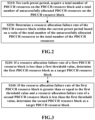
FIG. 2 is a flowchart of calculating a resource allocation failure rate provided based on an embodiment of the present invention; -
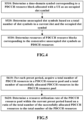
FIG. 3 is a flowchart of determining a target PDCCH resource block provided based on an embodiment of the present invention; -
FIG. 4 is a flowchart of sharing a resource to a PDSCH provided based on an embodiment of the present invention; -
FIG. 5 is a flowchart of calculating a resource utilization rate provided based on an embodiment of the present invention; -
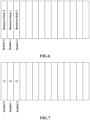
FIG. 6 is a diagram of configuration of a PDCCH resource pool provided based on an example of the present invention; -
FIG. 7 is a diagram I of an adaptive configuration scenario of a PDCCH provided based on an example of the present invention; -
FIG. 8 is a diagram II of an adaptive configuration scenario of a PDCCH provided based on an example of the present invention; and -
FIG. 9 is a schematic structural diagram of an adaptive adjustment apparatus provided based on an example of the present invention. - In order to make the objectives, technical solutions, and advantages of the present disclosure clearer, the following is a further detailed explanation of the present disclosure in conjunction with the accompanying drawings and embodiments. It should be understood that the specific embodiments described here are only intended to explain the present invention and are not intended to limit the present invention.
- In the early stage of 5G network construction, due to a small number of UEs in a network, PDCCH resources can be fixedly configured according to a planned number of users and a bandwidth of a cell. At this time, a base station always occupies a fixed number of PDCCH resources. However, as the number of UEs accessing the base station increases, if the resources are allocated in the fixed configuration manner, the PDCCH resource demands of the UEs and the PDCCH resources of the cell mismatch. Therefore, the industry has adopted an adaptive method for PDCCH resources to solve the problem of mismatch between the PDCCH resource demands of the UEs and the PDCCH resources of the cell. Adaptation of the resources is achieved mainly by changing the number of PDCCH time-domain symbols of all the UEs of the cell. All the UEs can be notified through a control format indicator (CFI, indicating a change in the number of PDCCH symbols) in a 4G system, so that the PDCCH resources on a base station side are the same as those on the UEs, CFI is cancelled in 5G NR systems, and PDCCH resource configuration and changes need to be notified to the UEs through a reallocation message. If the quantities of the PDCCH time-domain symbols of all the UEs in the cell are changed, all the UEs need to be reallocated, which can lead to a signaling storm.
- Based on this, the embodiments of the present invention provide an adaptive adjustment method and apparatus for downlink control channel resources, and a computer storage medium. On the base station side, how to allocate the resources for the UEs is determined based on resource allocation failure rates of PDCCH resource blocks, so as to automatically balance loads of the PDCCH resource blocks on the base station side, match the PDCCH resource demands of the UEs with the number of PDCCH resources in the cell, and effectively improve the utilization rate of spectrum resources.
- Referring to
FIG. 1 , the embodiments of the present invention provide an adaptive adjustment method for downlink control channel resources, including but not limited toS 100, S200, S300, and S400 below. -
S 100, a number and positions of PDCCH resource blocks in a PDCCH resource pool are determined. - S200, if PDCCH resources are allocated to a UE, a target PDCCH resource block is determined from the PDCCH resource pool based on the number and positions of the PDCCH resource blocks and a size of a resource demand load.
- S300, the target PDCCH resource block is allocated to the UE.
- S400, the UE is notified of a time-domain symbol corresponding to the target PDCCH resource block through a search space.
- Since 5G NR uses parameters that can be flexibly configured, such as PDCCH resource time-domain starting symbols, a number of symbols, frequency-domain starting positions, and frequency-domain sizes, to configure the PDCCH resources, based on this characteristic, the embodiments of the present invention select one of the PDCCH resource blocks from the PDCCH resource pool based on resource demand loads of the PDCCH resource blocks, and allocate it to the UE. For example, the target PDCCH resource block is automatically selected based on an indicator such as resource demands of the allocated UEs on the PDCCH resource blocks, so as to achieve reasonable allocation of the PDCCH resources.
- In some cases, the PDCCH resource pool includes a plurality of PDCCH resource blocks that are arranged in sequence. These PDCCH resource blocks are in a one-to-one correspondence to a time-domain symbol and are sequenced according to sizes of the time-domain symbols. For example, the PDCCH resource pool includes a first PDCCH resource block and a second PDCCH resource block, the time-domain symbols corresponding to the first PDCCH resource block and the second PDCCH resource block are adjacent, and the time-domain symbol corresponding to the first PDCCH resource block is smaller than the time-domain symbol corresponding to the second PDCCH resource block.
- In some cases, in S200, a target PDCCH resource block is selected, which can be achieved using the following:
- the target PDCCH resource block with a resource allocation failure rate less than a first threshold value is determined based on the order of the time-domain symbols corresponding to the PDCCH resource blocks in the PDCCH resource pool,
- the resource allocation failure rate is determined based on a number of unsuccessfully allocated PDCCH resources on the PDCCH resource blocks.
- According to the embodiments of the present invention, the first threshold value is set for all the PDCCH resource blocks in the PDCCH resource pool. The first threshold value is used for limiting allocation failure threshold values of the PDCCH resource blocks in the process of allocating the PDCCH resources to the UE. A case of an allocation failure is represented by a resource allocation failure rate of a PDCCH resource block. The resource allocation failure rate is calculated based on a number of unsuccessfully allocated resources on a PDCCH resource block. When an allocation failure occurs in the process that the PDCCH resource block allocates N resources to the UE, the number of the N resources is added to the number of the unsuccessfully allocated resources, thus obtaining a total number of the unsuccessfully allocated resources on the entire PDCCH resource block. As the resource state in the PDCCH resource pool on the base station side constantly changes, how to calculate the resource allocation failure rate needs to be determined. Referring to
FIG. 2 , in an optional case, the resource allocation failure rate can be calculated by the following: - S210, for each preset period, a total number of the PDCCH resources on the PDCCH resource block and a total number of the unsuccessfully allocated PDCCH resources on the PDCCH resource block are acquired.
- S220, the resource allocation failure rate of the PDCCH resource block within the current preset period is determined based on a ratio of the total number of the unsuccessfully allocated PDCCH resources to the total number of the PDCCH resources.
- By the above method, the resource allocation failure rate is calculated by a preset period, and the resource allocation failure rate in this embodiment represents a resource allocation failure situation of a PDCCH resource block within a certain period of time (the preset period). The total number of the unsuccessfully allocated PDCCH resources of the PDCCH resource block within the preset period is used as the numerator, and the total number of the PDCCH resources of the PDCCH resource block within the preset period is used as the denominator. The calculated ratio is the resource allocation failure rate. It can be understood that a duration of the preset period can be set as needed, such as 1 second and 3 seconds. Furthermore, within the preset period, the allocation situation of the PDCCH resources changes. Therefore, the resource allocation failure rate can be expressed as an average situation of the unsuccessfully allocated resources of a certain PDCCH resource block within a certain preset period.
- Based on the resource allocation failure rate and the first threshold value mentioned above, during the allocation of the resources to the UE, the PDCCH resource block with the resource allocation failure rate less than the first threshold value is selected for resource allocation. In the embodiments of the present invention, in order to improve the resource utilization rate, the resource allocation failure rates of the PDCCH resource blocks are determined in sequence based on the order of the time-domain symbols corresponding to the PDCCH resource blocks. For example, if the resource allocation failure rate of the PDCCH resource block with the time-domain symbol of 0 is greater than the first threshold value, the PDCCH resource block with the time-domain symbol of 1 is selected to determine whether the resource allocation failure rate of the PDCCH resource block is less than the first threshold value. If yes, the resources are allocated to the UE on the PDCCH resource block with the time-domain symbol of 1; and if no, whether the PDCCH resource block with the time-domain symbol of 2 satisfies the condition is continued to be determined, and so on. In this way, the UEs can be intensively allocated to PDCCH resource blocks with smaller time-domain symbols, thereby preserving PDCCH resource blocks with larger time-domain symbols for being shared to a physical downlink shared channel (PDSCH).
- Based on the above manner, the PDCCH resource block that can allocate the resources to the UE can be selected, and the PDCCH resource block is used as the target PDCCH resource block to send a configuration notification to the UE. In the 5G NR system, a control resource set (CORESET) can configure the number of the symbols of the PDCCH resources, the frequency-domain starting positions, and the frequency-domain sizes. The search space can configure the time-domain starting symbols of the PDCCH resources. Therefore, in the embodiments of the present invention, the time-domain symbol corresponding to the target PDCCH resource block can be notified to the UE through the search space. For example, the search space configured for the UE is determined first, and then a value of monitoringSymbolsWithinSlot in the search space is configured based on the time-domain symbol corresponding to the target PDCCH resource block. The monitoringSymbolsWithinSlot corresponds to the time-domain symbol. If which position in the monitoringSymbolsWithinSlot is 1, the resources on which time-domain starting symbol are used to be allocated to the UE. The UE can know a PDCCH configuration on the base station side based on the value of the above field in the search space.
- Through the above adaptive adjustment method, the resources are automatically and reasonably allocated to the UE based on the resource allocation failure rates. In a scenario of many UEs, it can also be ensured that sufficient PDCCH resources can be provided to ensure the number of scheduled UEs, effectively improve the utilization rate of spectrums, bring a better network experience, achieve an optimal system capacity, and balance the number of scheduled users.
- Assuming that the time-domain symbol of the first PDCCH resource block is 0 and the time-domain symbol of the second PDCCH resource block is 1, in S200 described above, the target PDCCH resource block with the resource allocation failure rate less than the first threshold value is determined based on the order of the time-domain symbols corresponding to the PDCCH resource blocks. Referring to
FIG. 3 , this step can be specifically achieved in the following: - S230, if the resource allocation failure rate of the first PDCCH resource block is less than the first threshold value, the first PDCCH resource block is determined as the target PDCCH resource block.
- S240, ifthe resource allocation failure rate of the first PDCCH resource block is greater than or equal to the first threshold value and the resource allocation failure rate of the second PDCCH resource block is less than the first threshold value, the second PDCCH resource block is determined as the target PDCCH resource block.
- Since the first threshold value is global, during the allocation of the resources to the UE, the resource allocation failure rate of the PDCCH resource block corresponding to the time-domain symbol is determined based on the order of the time-domain symbols from small to large. If the resource allocation failure rate of the first PDCCH resource block is less than the first threshold value, the resources are allocated to the UE in the first PDCCH resource block. If the resource allocation failure rate of the first PDCCH resource block is greater than or equal to the first threshold value, whether the resource allocation failure rate of the second PDCCH resource block is greater than the first threshold value is determined. It can be understood that as the number of UEs for accessing increases, the resource allocation failure rates of the PDCCH resource blocks with the time-domain symbols of 0 in the PDCCH resource pool may first reach or exceed the first threshold value, and the resource allocation failure rates of the PDCCH resource blocks with the time-domain symbols of 1 may then reach or exceed the first threshold value, eventually causing the resource allocation failure rates of all the PDCCH resource blocks in the PDCCH resource pool to exceed the first threshold value. In this case, if resources need to be allocated to newly connected UEs, the following processing can be performed in the following:
- if the resource allocation failure rates of all the PDCCH resource blocks in the PDCCH resource pool are greater than or equal to the first threshold value, the PDCCH resource block with the smallest resource allocation failure rate is selected as the target PDCCH resource block;
or,
if the resource allocation failure rates of all the PDCCH resource blocks in the PDCCH resource pool are equal and are greater than or equal to the first threshold value, the PDCCH resource block with the smallest corresponding time-domain symbol is selected as the target PDCCH resource block. - According to the above, it can be seen that when the resource allocation failure rates of all the PDCCH resource blocks exceed the first threshold value, the PDCCH resource block with the smallest resource allocation failure rate is searched to allocate the resources to the UE. If the resource allocation failure rates of all the PDCCH resource blocks are the same, the PDCCH resource block with the smallest time-domain symbol (usually, the time-domain symbol is 0) is selected, according to the principle of a smallest time-domain symbol first, to allocate the resources to the UE.
- It can be understood that before the resources are allocated to the UE, the resource situation on the base station side requires initializing configuration. Specifically, the base station configures a PDCCH resource pool of a current cell, and the PDCCH resource pool is a set of a plurality of PDCCH resource blocks. Lengths of time-domain symbols of all the PDCCH resource blocks can be configured to be the same or different, and all the PDCCH resource blocks occupy different time-domain symbol positions in one slot; and the number (which is usually 0) of allocated UEs of each PDCCH resource block is initialized, and then the number of the allocated UEs of each PDCCH resource block is updated according to an allocation situation of the PDCCH resource block.
- Referring to
FIG. 4 , based on the above adaptive adjustment method, the UEs are intensively allocated to the PDCCH resource blocks with the smaller time-domain symbols, so the PDCCH resource blocks with the larger time-domain symbols can be shared resources of a PDSCH. Specifically, this can be achieved in the following: - S510, the time-domain symbol corresponding to the PDCCH resource block allocated with the UE is used as an occupied slot symbol.
- S520, unoccupied slot symbols are determined based on a total number of slot symbols in a current slot and the occupied slot symbol.
- S530, resources of the PDCCH resource blocks corresponding to the consecutive unoccupied slot symbols are used as PDSCH resources.
- After the base station side is initialized, the number of the allocated UEs of each PDCCH resource block is dynamically updated later according to the allocation situation of PDCCH resource block. That is, when the PDCCH resource block is allocated to a UE, the number of the allocated UEs of the PDCCH resource block is added by one; and when the PDCCH resource block loses a UE, the number of the allocated UEs of the PDCCH resource block is subtracted by one, thereby counting the various PDCCH resource blocks occupied by the existing UEs and determining the time-domain symbols occupied by the PDCCH resources of the cell. The time-domain symbols not occupied by the PDCCH resources of the cell can be determined according to states of all the PDCCH resource blocks in the PDCCH resource pool. In the related technology, PDSCH scheduling requires continuous time-domain symbol resources. Therefore, based on the above adaptive adjustment method, the PDCCH resource blocks with the smaller time-domain symbols are allocated first, and the subsequent time-domain symbols can be continuously used by the PDSCH resources.
- It is worth noting that in the process of UE allocation by the base station, after the peak period of UE accessing, the number of the UEs in the PDCCH resource pool is relatively small, and a fewer of resources are occupied. However, during the peak period, a portion of the UEs are allocated to the PDCCH resource blocks with the larger time-domain symbols. In order to improve the utilization rate of spectrum resources, the UEs can be reallocated under certain conditions. For example:
- If a resource utilization rate of the PDCCH resource pool is less than a second threshold value, a UE on a PDCCH resource block that does not have
symbol 0 is reallocated to a symbol in front of the PDCCH resource block that does not havesymbol 0. The resource utilization rate is determined based on a number of successfully allocated PDCCH resources in the PDCCH resource pool. - The resource utilization rate is used for representing an occupancy of the resources in the PDCCH resource pool. When the resource utilization rate is less than the second threshold value, it indicates that only a small number of resources in the PDCCH resource pool are occupied. In order to plan the spectrum resources occupied by the UEs, reallocation performed on the UEs is triggered. The scattered UEs are concentrated on the PDCCH resource blocks with the time-domain symbols of 0, or the UEs can be allocated to the time-domain symbols in front of the PDCCH resource blocks with the UEs. Thus, continuous PDCCH resource blocks with larger time-domain symbols are preserved for being shared to the PDSCH.
- Similar to the resource allocation failure rate, the resource utilization rate is also calculated based on the resource situation within certain time. Specifically, referring to
FIG. 5 : - S610, for each preset period, a total number of the PDCCH resources in the PDCCH resource pool and a total number of the successfully allocated PDCCH resources in the PDCCH resource pool are acquired.
- S620, the resource utilization rate of the PDCCH resource pool within the current preset period is determined based on a ratio of the total number of the successfully allocated PDCCH resources to the total number of the PDCCH resources.
- The resource utilization rate is calculated by taking the PDCCH resource pool as an object. The total number of the successfully allocated PDCCH resources in the PDCCH resource pool is used as the numerator, and the total number of the PDCCH resources in the PDCCH resource pool is used as the denominator. The ratio is used as the resource utilization rate of the PDCCH resource pool in the current preset period. It can be understood that a duration of the preset period can be set as needed, such as 1 second and 3 seconds. Furthermore, within the preset period, the allocation situation of the PDCCH resources changes. Therefore, the resource utilization rate can be expressed as an average situation of the successfully allocated resources of the PDCCH resources within a certain preset period.
- It is worth noting that the preset period of the resource allocation failure rate and the preset period of the resource utilization rate can be the same, and the two values can be calculated simultaneously. Therefore, the base station side automatically updates the resource allocation failure rate and the resource utilization rate within each preset period, thereby achieving adaptive adjustment of the PDCCH resources and sharing of the PDCCH resources by the PDSCH, effectively improving the utilization rate of spectrums, bringing a better network experience, achieving an optimal system capacity, and balancing the number of scheduled users.
- The adaptive adjustment method for the downlink control channel resources of the embodiments of the present invention will be explained below by actual examples:
- The base station side performs adaptive configuration on the PDCCH resources, and a specific process is as follows:
- (1) A configuration of a PDCCH resource pool of a current cell is acquired. As shown in
FIG. 6 , the previous three PDCCH resource blocks in the PDCCH resource pool arePDCCH resource block 0,PDCCH resource block 1, andPDCCH resource block 2, with corresponding slot starting symbols of 0, 1, and 2, respectively. - (2) The number of allocated UEs of each PDCCH resource block in the above PDCCH resource pool is initialized to be 0, and the number of the allocated UEs of each PDCCH resource block is dynamically updated later according to an allocation situation of the PDCCH resource block, that is, when the PDCCH resource block is allocated to a UE, the number of the allocated UEs of the PDCCH resource block is added by one; and when the PDCCH resource block loses a UE, the number of the allocated UEs of the PDCCH resource block is subtracted by one.
- (3) A PDCCH resource allocation failure rate is used to reflect a resource demand of the UEs on each PDCCH resource block. The PDCCH resource allocation failure rate of each PDCCH resource block and the utilization rate of the PDCCH resource pool of the cell are initialized to be 0. At each subsequent preset period point, the PDCCH resource allocation failure rate of each PDCCH resource block and the utilization rate of the PDCCH resource pool of the cell are updated according to scheduling situations of all the UEs within a preset period.
- Where:
The PDCCH resource allocation failure rate=the total number of unsuccessfully allocated PDCCH resources on the PDCCH resource block within the period/the total number of resources of the PDCCH resource block within the period. - The utilization rate of the PDCCH resource pool=the total number of successfully allocated PDCCH resources on all the PDCCH resource blocks within the period/the total number of the resources of all the PDCCH resource blocks within the period.
- (4) When it is necessary to allocate a PDCCH resource block to a UE, one PDCCH resource block in the resource pool is allocated to the UE based on the PDCCH resource allocation failure rate of each PDCCH resource block. When the resource allocation failure rate of
PDCCH resource block 0 is less than threshold I (namely, the first threshold value mentioned above),PDCCH resource block 0 is allocated to the UE. When the resource allocation failure rate ofPDCCH resource block 0 is greater than or equal to threshold I, whetherPDCCH resource block 1 can be allocated to the UE needs to be determined, and the determining logic is the same as the logic of allocatingPDCCH resource block 0. The processing performed onPDCCH resource block 2 is in the same way. If the PDCCH resource allocation failure rates of all the PDCCH resource blocks exceed threshold I, the PDCCH resource block with the smallest resource allocation failure rate is selected and allocated to the UEs. After the PDCCH resource block is selected for the UE, the UE needs to be notified through CORESET and a search space. Configurations of monitoringSymbolsWithinSlot of the search spaces of different resource blocks are as shown in Table 1:Table 1: Correspondence relationships between the PDCCH resource blocks and the values of monitoringSymbolsWithinSlot PDCCH resource block Value of monitoringSymbolsWithinSlot 0 10000000000000 1 01000000000000 2 00100000000000 - For example, threshold I is set to be 0.10, and a scenario is initially constructed for the cell. When a UE initiates access, the PDCCH resource allocation failure rates of all the resource blocks are 0. Since the resource allocation failure rate of
PDCCH resource block 0 is less than threshold I,resource block 0 is selected and allocated to the UE, and the monitoringSymbolsWithinSlot of the search space configured for the UE is filled in as 10000000000000. - For another example, if threshold I is configured to be 0.10, when a UE initiates access, the PDCCH resource allocation failure rates of PDCCH resource blocks 0, 1, and 2 are 0.20, 0.08, and 0, respectively. If the resource allocation failure rate of
PDCCH resource block 0 exceeds threshold I, the resource allocation failure rate ofPDCCH resource block 1 is compared with threshold I. Since the resource allocation failure rate ofPDCCH resource block 1 is less than threshold I,resource block 1 is selected and allocated to the UE, and the monitoringSymbolsWithinSlot of the search space configured for the UE is filled in as 01000000000000. - (5) Symbols occupied by the PDCCH resources of the cell can be determined based on the number of the allocated UEs of each PDCCH resource block in the maintained PDCCH resource pool. The PDSCH resources can use time-domain resources corresponding to unoccupied PDCCH resources.
- For example, as shown in
FIG. 7 , if the quantities of the allocated UEs of PDCCH resource blocks 0, 1, and 2 are 3, 0, and 0, respectively, time-domain symbol 1 occupied by the PDCCH resources of the cell, and PDCCH resource blocks 1 and 2 are not allocated to the UE, and can be used as PDSCH resources. This avoids a waste of PDCCH resources caused by a fixed configuration of multiple symbols and improves the utilization rate of downlink spectrums. - For still another example, as shown in
FIG. 8 , if the quantities of the allocated UEs of PDCCH resource blocks 0, 1, and 2 are 9, 2, and 0, respectively,PDCCH resource block 2 is not allocated to the UE, and this PDCCH resource block can be used as a PDSCH resource. In this case, the PDCCH resources use the previous two time-domain symbols (time-domain symbols 0 and 1), and the PDSCH resource can use the last 12 symbols (except for 0 and 1), which not only meets the PDCCH resource demands of scheduled users, but also fully use spectrum resources as PDSCH resources. - (6) Within a period of time, when the utilization rate of the PDCCH resource pool of the cell is less than threshold II (namely, the second threshold value mentioned above), a UE on a PDCCH resource block that does not have
symbol 0 can be reallocated. The selection of a PDCCH resource block after the reallocation is initiated can refer to Step (4) above. - For example, threshold II is set to be 0.30. Within a certain period of time, if the quantities of the allocated UEs of PDCCH resource blocks 0, 1, and 2 are 0, 5, and 0, respectively, the utilization rate of the PDCCH resource pool is 0.20. Since the PDCCH resources continuously occupy
symbol 1 and the utilization rate of the PDCCH resource pool is less than threshold II, it is possible to trigger reallocation of five UEs ofPDCCH resource block 1. - Threshold I and threshold II described above can be determined by combining simulation data and an actual test, and are configured by network optimization or planning personnel. According to the adaptive adjustment method for the PDCCH resources provided in this example, the UEs are distributed to a plurality of PDCCH resource blocks based on the PDCCH resource allocation failure rates of all the PDCCH resource blocks, which matches the PDCCH resource demands with the number of the PDCCH resources of the cell. Meanwhile, the number of available PDSCH resources is determined based on the distribution of the quantities of the allocated UEs of the PDCCH resource blocks, achieving a reasonable allocation of the PDCCH resources and the PDSCH resources.
- The embodiments of the present invention further provide an adaptive adjustment apparatus for downlink control channel resources, including at least one processor and a memory configured to achieve communication connection with the at least one processor. The memory stores instructions that are executed by the at least one processor; and the instructions, when executed by the at least one processor, cause the at least one processor to implement the foregoing adaptive adjustment method for the downlink control channel resources.
- Referring to
FIG. 9 , by way of example, acontrol processor 1001 and amemory 1002 in theadaptive adjustment apparatus 1000 can be connected by a bus. Thememory 1002, as a non-transient computer-readable storage medium, can be configured to store non-transient software programs and non-transient computer-executable programs. In addition, thememory 1002 may include a high-speed random access memory and may also include a non-transient memory, such as at least one disk memory, a flash memory device, or other non-transient solid-state storage devices. In some implementations, thememory 1002 optionally includes a memory remotely arranged with respect to theprocessor 1001. These remote memories can be connected to theadaptive adjustment apparatus 1000 through a network. Examples of the above network include, but are not limited to, Internets, intranets, local area networks, mobile communication networks, and combinations thereof. - A person skilled in the art may understand that the structures shown in
FIG. 9 do not constitute a limitation on theadaptive adjustment apparatus 1000, and the apparatus may include more or fewer components than those shown in the figure, or some components may be combined, or a different component deployment may be used. - The embodiments of the present invention further provide a computer-readable storage medium. The computer-readable storage medium stores computer-executable instructions. The computer-executable instructions are executed by one or more control processors, for example, by one
control processor 1001 inFIG. 9 , which can cause the one or more control processors to implement the adaptive adjustment method for the downlink control channel resources in the above method embodiment, for example, to perform S100 to S400 inFIG. 1 , S210 to S220 of the method inFIG. 2 , S230 to S240 of the method inFIG. 3 , S510 to S530 of the method inFIG. 4 , and S610 to S620 of the method inFIG. 5 . - The apparatus embodiment described above is only illustrative, and the units described as separate components may or may not be physically separated, that is, they can be located in one place or distributed to multiple network units. Some or all of the modules are selected based on actual needs to achieve the objective of the solution of this embodiment.
- A person of ordinary skill in the art can understand that all or some steps and systems in the disclosed method mentioned above can be implemented as software, firmware, hardware, and their appropriate combinations. Some or all physical components can be implemented as software executed by a processor, such as a central processing unit, a digital signal processor, or a microprocessor, or as hardware, or as integrated circuits, such as dedicated integrated circuits. Such software can be distributed on a computer-readable medium. The computer-readable medium may include a computer storage medium (or non-transient medium) and a communication medium (or transient medium). As known to a person of ordinary skill in the art, the term, computer storage medium, includes volatile and non-volatile media, and removable and non-removable media implemented by using any method or technology used for storing information (such as computer-readable instructions, data structures, program modules, or other data). The computer storage media include but are not limited to a random access memory (RAM), a read only memory (ROM), an electrically erasable programmable read only memory (EEPROM), a flash memory or other storage technologies, a CD-ROM, a digital versatile disc (DVD) or other optical disc storages, a cassette, a magnetic tape, a disk storage or other magnetic storage devices, or any other media that can be used for storing desired information and can be accessed by computers. In addition, it is well known to a person of ordinary skill in the art that the communication media typically include computer-readable instructions, data structures, program modules, or other data in modulated data signals such as carriers or other transmission mechanisms, and may include any information delivery medium.
- The above is a specific explanation of the preferred implementations of the present application, but the present application is not limited to the above implementations. Those skilled in the art can also make various equivalent transformations or replacements without departing from the spirit of the present application. These equivalent transformations or replacements shall all fall within the scope of the claims of the present application.
Claims (12)
- An adaptive adjustment method for downlink control channel resources, comprising:determining a number and positions of physical downlink control channel, PDCCH, resource blocks in a PDCCH resource pool;if PDCCH resources are allocated to a user equipment, UE, determining a target PDCCH resource block from the PDCCH resource pool based on the number and positions of the PDCCH resource blocks and a size of a resource demand load;allocating the target PDCCH resource block to the UE; andnotifying the UE of a time-domain symbol corresponding to the target PDCCH resource block through a search space.
- The adaptive adjustment method of claim 1, wherein the PDCCH resource pool comprises a first PDCCH resource block and a second PDCCH resource block, time-domain symbols corresponding to the first PDCCH resource block and the second PDCCH resource block are adjacent, and the time-domain symbol corresponding to the first PDCCH resource block is smaller than the time-domain symbol corresponding to the second PDCCH resource block.
- The adaptive adjustment method of claim 1, wherein the notifying the UE of a time-domain symbol corresponding to the target PDCCH resource block through a search space comprises:determining the search space configured for the UE; andconfiguring a value of monitoringSymbolsWithinSlot in the search space based on the time-domain symbol corresponding to the target PDCCH resource block.
- The adaptive adjustment method of claim 1, further comprising:determining the time-domain symbol corresponding to the PDCCH resource block allocated to the UE as an occupied slot symbol;determining unoccupied slot symbols based on a total number of slot symbols in a current slot and the occupied slot symbol; anddetermining resources of the PDCCH resource blocks corresponding to the consecutive unoccupied slot symbols as physical downlink shared channel, PDSCH, resources.
- The adaptive adjustment method of claim 2, wherein the number and positions of the PDCCH resource blocks correspond to a number and order of the time-domain symbols, respectively, and the determining a target PDCCH resource block from the PDCCH resource pool based on the number and positions of the PDCCH resource blocks and a size of a resource demand load comprises:determining, based on the order of the time-domain symbols corresponding to the PDCCH resource blocks in the PDCCH resource pool, the target PDCCH resource block with a resource allocation failure rate less than a first threshold value,wherein the resource allocation failure rate is determined based on a number of unsuccessfully allocated PDCCH resources on the PDCCH resource blocks.
- The adaptive adjustment method of claim 5, wherein the resource allocation failure rate is determined based on the following:acquiring, for each preset period, a total number of the PDCCH resources on the PDCCH resource block and a total number of the unsuccessfully allocated PDCCH resources on the PDCCH resource block; anddetermining the resource allocation failure rate of the PDCCH resource block within the current preset period based on a ratio of the total number of the unsuccessfully allocated PDCCH resources to the total number of the PDCCH resources.
- The adaptive adjustment method of claim 5, wherein the determining, based on the order of the time-domain symbols corresponding to the PDCCH resource blocks in the PDCCH resource pool, the target PDCCH resource block with the resource allocation failure rate less than the first threshold value comprises:if the resource allocation failure rate of the first PDCCH resource block is less than the first threshold value, determining the first PDCCH resource block as the target PDCCH resource block; andif the resource allocation failure rate of the first PDCCH resource block is greater than or equal to the first threshold value and the resource allocation failure rate of the second PDCCH resource block is less than the first threshold value, determining the second PDCCH resource block as the target PDCCH resource block.
- The adaptive adjustment method of claim 5, wherein the determining, based on the order of the time-domain symbols corresponding to the PDCCH resource blocks in the PDCCH resource pool, the target PDCCH resource block with the resource allocation failure rate less than the first threshold value comprises:if the resource allocation failure rates of all the PDCCH resource blocks in the PDCCH resource pool are greater than or equal to the first threshold value, selecting the PDCCH resource block with the smallest resource allocation failure rate as the target PDCCH resource block; or,if the resource allocation failure rates of all the PDCCH resource blocks in the PDCCH resource pool are equal and are greater than or equal to the first threshold value, selecting the PDCCH resource block with the smallest corresponding time-domain symbol as the target PDCCH resource block.
- The adaptive adjustment method of claim 1, further comprising:if a resource utilization rate of the PDCCH resource pool is less than a second threshold value, re-allocating a UE on a PDCCH resource block that does not have symbol 0 to a symbol in front of the PDCCH resource block that does not have symbol 0,wherein the resource utilization rate is determined based on a number of successfully allocated PDCCH resources in the PDCCH resource pool.
- The adaptive adjustment method of claim 9, wherein the resource utilization rate is determined based on the following:acquiring, for each preset period, a total number of the PDCCH resources in the PDCCH resource pool and a total number of the successfully allocated PDCCH resources in the PDCCH resource pool; anddetermining the resource utilization rate of the PDCCH resource pool within the current preset period based on a ratio of the total number of the successfully allocated PDCCH resources to the total number of the PDCCH resources.
- An adaptive adjustment apparatus for downlink control channel resources, comprising at least one processor and a memory configured to achieve communication connection with the at least one processor, wherein the memory stores instructions that are executed by the at least one processor; and the instructions, when executed by the at least one processor, cause the at least one processor to perform the adaptive adjustment method of any one of claims 1 to 10.
- A computer-readable storage medium, having computer-executable instructions stored thereon, wherein the computer-executable instructions are used for causing a computer to perform adaptive adjustment method of any one of claims 1 to 10.
Applications Claiming Priority (2)
| Application Number | Priority Date | Filing Date | Title |
|---|---|---|---|
| CN202111191069.3A CN115968020A (en) | 2021-10-13 | 2021-10-13 | Self-adaptive adjustment method and device of downlink control channel resource and storage medium |
| PCT/CN2022/124166 WO2023061301A1 (en) | 2021-10-13 | 2022-10-09 | Self-adaptive adjustment method and apparatus for downlink control channel resource, and storage medium |
Publications (2)
| Publication Number | Publication Date |
|---|---|
| EP4418778A1 true EP4418778A1 (en) | 2024-08-21 |
| EP4418778A4 EP4418778A4 (en) | 2025-02-12 |
Family
ID=85889992
Family Applications (1)
| Application Number | Title | Priority Date | Filing Date |
|---|---|---|---|
| EP22880240.1A Pending EP4418778A4 (en) | 2021-10-13 | 2022-10-09 | SELF-ADAPTIVE ADJUSTMENT METHOD AND APPARATUS FOR DOWNLINK CONTROL CHANNEL RESOURCES AND STORAGE MEDIUM |
Country Status (6)
| Country | Link |
|---|---|
| US (1) | US20240292414A1 (en) |
| EP (1) | EP4418778A4 (en) |
| JP (1) | JP2024538137A (en) |
| KR (1) | KR20240089712A (en) |
| CN (1) | CN115968020A (en) |
| WO (1) | WO2023061301A1 (en) |
Families Citing this family (3)
| Publication number | Priority date | Publication date | Assignee | Title |
|---|---|---|---|---|
| CN118802085B (en) * | 2023-10-07 | 2025-10-24 | 中国移动(浙江)创新研究院有限公司 | CSIRS frequency band adaptive adjustment method, electronic device and storage medium |
| CN118714650A (en) * | 2024-08-29 | 2024-09-27 | 四川创智联恒科技有限公司 | Method, device and base station for allocating time-frequency resources of control channel |
| CN118828933B (en) * | 2024-08-30 | 2025-08-26 | 四川创智联恒科技有限公司 | Time-frequency resource allocation method and device, program product, base station, and storage medium |
Family Cites Families (6)
| Publication number | Priority date | Publication date | Assignee | Title |
|---|---|---|---|---|
| WO2015136325A1 (en) * | 2014-03-11 | 2015-09-17 | Telefonaktiebolaget L M Ericsson (Publ) | Physical downlink control channel (pdcch) inter-cell-interference coordination |
| CN109792372B (en) * | 2017-01-27 | 2020-06-16 | Oppo广东移动通信有限公司 | Method and device for transmitting signals |
| CN113973360A (en) * | 2018-08-10 | 2022-01-25 | 华为技术有限公司 | Communication method, device and apparatus |
| CN111148259B (en) * | 2018-11-02 | 2021-10-26 | 华为技术有限公司 | Communication method and device |
| CN112752348B (en) * | 2019-10-31 | 2025-07-18 | 中兴通讯股份有限公司 | PDCCH scheduling method, base station and storage medium |
| US12335986B2 (en) * | 2020-04-03 | 2025-06-17 | Samsung Electronics Co., Ltd. | Coreset frequency resource configuration for wide-band operation in nr-u |
-
2021
- 2021-10-13 CN CN202111191069.3A patent/CN115968020A/en active Pending
-
2022
- 2022-10-09 JP JP2024522573A patent/JP2024538137A/en active Pending
- 2022-10-09 KR KR1020247015922A patent/KR20240089712A/en active Pending
- 2022-10-09 WO PCT/CN2022/124166 patent/WO2023061301A1/en not_active Ceased
- 2022-10-09 EP EP22880240.1A patent/EP4418778A4/en active Pending
-
2024
- 2024-04-12 US US18/634,006 patent/US20240292414A1/en active Pending
Also Published As
| Publication number | Publication date |
|---|---|
| JP2024538137A (en) | 2024-10-18 |
| EP4418778A4 (en) | 2025-02-12 |
| WO2023061301A1 (en) | 2023-04-20 |
| US20240292414A1 (en) | 2024-08-29 |
| KR20240089712A (en) | 2024-06-20 |
| CN115968020A (en) | 2023-04-14 |
Similar Documents
| Publication | Publication Date | Title |
|---|---|---|
| EP4418778A1 (en) | Self-adaptive adjustment method and apparatus for downlink control channel resource, and storage medium | |
| JP7670679B2 (en) | Multiple simultaneous bandwidth segments for a base station of a cellular network | |
| KR102197559B1 (en) | Apparatus and method for wireless communication system | |
| KR101630563B1 (en) | Spectrum management system and method | |
| US10791566B2 (en) | System and method for dynamic channel allocation | |
| US12335974B2 (en) | Downlink scheduling across a cellular carrier aggregation | |
| US20230103379A1 (en) | Information transmission method, device and apparatus | |
| US6442157B1 (en) | System and method for quality-driven channel selection in a communication network | |
| CN111107629A (en) | 5G communication method and system | |
| US10129861B2 (en) | Downlink control channel resource allocation | |
| CN114978451B (en) | Sidelink transmission method, device and terminal | |
| WO2021004287A1 (en) | Resource allocation method, apparatus and device for intelligent space-divided cell cluster, and storage medium | |
| JP2868111B2 (en) | Wireless channel allocation method | |
| EP2536191B1 (en) | Signal sequence allocating device and signal sequence allocating method | |
| EP4401448A1 (en) | Spectrum sharing method and apparatus, and computer storage medium | |
| CN115580930B (en) | Downlink channel power allocation method, communication device and storage medium | |
| US20240147434A1 (en) | Dynamic frequency resource allocation strategy deployment | |
| CN114158057B (en) | Community configuration information optimization methods, devices, network equipment and storage media | |
| JP2017511011A (en) | Resource block allocation method and apparatus, and storage medium | |
| US20130223355A1 (en) | Method for implementing power grant allocation in a mac scheduler | |
| CN110087315B (en) | Channel resource allocation method and device | |
| EP3007501A1 (en) | Training resource allocation method, apparatus and system | |
| CN117728929A (en) | Resource allocation method and device | |
| KR20200144950A (en) | Method for managing resource in wireless local area network and apparatus therefor |
Legal Events
| Date | Code | Title | Description |
|---|---|---|---|
| STAA | Information on the status of an ep patent application or granted ep patent |
Free format text: STATUS: THE INTERNATIONAL PUBLICATION HAS BEEN MADE |
|
| PUAI | Public reference made under article 153(3) epc to a published international application that has entered the european phase |
Free format text: ORIGINAL CODE: 0009012 |
|
| STAA | Information on the status of an ep patent application or granted ep patent |
Free format text: STATUS: REQUEST FOR EXAMINATION WAS MADE |
|
| 17P | Request for examination filed |
Effective date: 20240513 |
|
| AK | Designated contracting states |
Kind code of ref document: A1 Designated state(s): AL AT BE BG CH CY CZ DE DK EE ES FI FR GB GR HR HU IE IS IT LI LT LU LV MC ME MK MT NL NO PL PT RO RS SE SI SK SM TR |
|
| DAV | Request for validation of the european patent (deleted) | ||
| DAX | Request for extension of the european patent (deleted) | ||
| A4 | Supplementary search report drawn up and despatched |
Effective date: 20250113 |
|
| RIC1 | Information provided on ipc code assigned before grant |
Ipc: H04W 72/20 20230101ALI20250108BHEP Ipc: H04L 5/00 20060101ALI20250108BHEP Ipc: H04W 72/00 20230101AFI20250108BHEP |