EP4418607A1 - Network anti-replay method and apparatus, electronic device, and storage medium - Google Patents
Network anti-replay method and apparatus, electronic device, and storage medium Download PDFInfo
- Publication number
- EP4418607A1 EP4418607A1 EP22894136.5A EP22894136A EP4418607A1 EP 4418607 A1 EP4418607 A1 EP 4418607A1 EP 22894136 A EP22894136 A EP 22894136A EP 4418607 A1 EP4418607 A1 EP 4418607A1
- Authority
- EP
- European Patent Office
- Prior art keywords
- replay
- packet
- packet number
- section
- current packet
- Prior art date
- Legal status (The legal status is an assumption and is not a legal conclusion. Google has not performed a legal analysis and makes no representation as to the accuracy of the status listed.)
- Pending
Links
Images

Classifications
-
- H—ELECTRICITY
- H04—ELECTRIC COMMUNICATION TECHNIQUE
- H04L—TRANSMISSION OF DIGITAL INFORMATION, e.g. TELEGRAPHIC COMMUNICATION
- H04L63/00—Network architectures or network communication protocols for network security
- H04L63/14—Network architectures or network communication protocols for network security for detecting or protecting against malicious traffic
- H04L63/1408—Network architectures or network communication protocols for network security for detecting or protecting against malicious traffic by monitoring network traffic
-
- G—PHYSICS
- G06—COMPUTING OR CALCULATING; COUNTING
- G06F—ELECTRIC DIGITAL DATA PROCESSING
- G06F21/00—Security arrangements for protecting computers, components thereof, programs or data against unauthorised activity
- G06F21/30—Authentication, i.e. establishing the identity or authorisation of security principals
- G06F21/44—Program or device authentication
-
- H—ELECTRICITY
- H04—ELECTRIC COMMUNICATION TECHNIQUE
- H04L—TRANSMISSION OF DIGITAL INFORMATION, e.g. TELEGRAPHIC COMMUNICATION
- H04L63/00—Network architectures or network communication protocols for network security
- H04L63/14—Network architectures or network communication protocols for network security for detecting or protecting against malicious traffic
- H04L63/1408—Network architectures or network communication protocols for network security for detecting or protecting against malicious traffic by monitoring network traffic
- H04L63/1416—Event detection, e.g. attack signature detection
-
- G—PHYSICS
- G06—COMPUTING OR CALCULATING; COUNTING
- G06F—ELECTRIC DIGITAL DATA PROCESSING
- G06F21/00—Security arrangements for protecting computers, components thereof, programs or data against unauthorised activity
- G06F21/60—Protecting data
- G06F21/606—Protecting data by securing the transmission between two devices or processes
-
- H—ELECTRICITY
- H04—ELECTRIC COMMUNICATION TECHNIQUE
- H04L—TRANSMISSION OF DIGITAL INFORMATION, e.g. TELEGRAPHIC COMMUNICATION
- H04L1/00—Arrangements for detecting or preventing errors in the information received
- H04L1/08—Arrangements for detecting or preventing errors in the information received by repeating transmission, e.g. Verdan system
-
- H—ELECTRICITY
- H04—ELECTRIC COMMUNICATION TECHNIQUE
- H04L—TRANSMISSION OF DIGITAL INFORMATION, e.g. TELEGRAPHIC COMMUNICATION
- H04L45/00—Routing or path finding of packets in data switching networks
- H04L45/24—Multipath
-
- H—ELECTRICITY
- H04—ELECTRIC COMMUNICATION TECHNIQUE
- H04L—TRANSMISSION OF DIGITAL INFORMATION, e.g. TELEGRAPHIC COMMUNICATION
- H04L63/00—Network architectures or network communication protocols for network security
- H04L63/12—Applying verification of the received information
- H04L63/123—Applying verification of the received information received data contents, e.g. message integrity
-
- H—ELECTRICITY
- H04—ELECTRIC COMMUNICATION TECHNIQUE
- H04L—TRANSMISSION OF DIGITAL INFORMATION, e.g. TELEGRAPHIC COMMUNICATION
- H04L63/00—Network architectures or network communication protocols for network security
- H04L63/14—Network architectures or network communication protocols for network security for detecting or protecting against malicious traffic
- H04L63/1408—Network architectures or network communication protocols for network security for detecting or protecting against malicious traffic by monitoring network traffic
- H04L63/1425—Traffic logging, e.g. anomaly detection
-
- H—ELECTRICITY
- H04—ELECTRIC COMMUNICATION TECHNIQUE
- H04L—TRANSMISSION OF DIGITAL INFORMATION, e.g. TELEGRAPHIC COMMUNICATION
- H04L63/00—Network architectures or network communication protocols for network security
- H04L63/14—Network architectures or network communication protocols for network security for detecting or protecting against malicious traffic
- H04L63/1441—Countermeasures against malicious traffic
- H04L63/1466—Active attacks involving interception, injection, modification, spoofing of data unit addresses, e.g. hijacking, packet injection or TCP sequence number attacks
-
- H—ELECTRICITY
- H04—ELECTRIC COMMUNICATION TECHNIQUE
- H04L—TRANSMISSION OF DIGITAL INFORMATION, e.g. TELEGRAPHIC COMMUNICATION
- H04L9/00—Cryptographic mechanisms or cryptographic arrangements for secret or secure communications; Network security protocols
- H04L9/40—Network security protocols
Definitions
- Embodiments of the present disclosure relate to the field of communication transmission, and in particular, to a network anti-replay method and apparatus, an electronic device, and a storage medium.
- MACsec Media Access Control Security
- SA Security Association
- PN Packet Number
- IPsec Internet Protocol Security
- a replay window needs to be provided at the receiving side, so as to not only receive the data packets within an out-of-order tolerance range but also filter out delay packets.
- a replay attack may also occur in a process between sending the data packets and receiving the data packets, that is, a third party may intercept the data packets sent by the sending side, and repeatedly send messages to the receiving side in a short or long cycle, thus causing network congestion at the receiving side.
- a replay message may be filtered out if a PN of the replay message falls behind a replay window, but if the PN of the replay message just falls within the replay window, the replay message needs to be identified and filtered.
- a method in the IPsec protocol is marking a received SN so as to identify and discard a replay message.
- one Secure Channel contains 4 SAs, and a plurality of SCs desire a plurality of 512-Mbit RAMs to store the flags.
- SCs Secure Channel
- a plurality of SCs desire a plurality of 512-Mbit RAMs to store the flags.
- IPsec protocol on a security gateway as an example, thousands of connections desire thousands of 128-Mbit RAMs to store the flag bits. All may cause a huge overhead for chip area.
- An embodiment of the present disclosure provides a network anti-replay method, including: determining, according to a current packet number of a currently received data packet, a section to which the current packet number belongs in a replay window, wherein the replay window is divided into a plurality of sections, and each of the plurality of sections is configured to record packet numbers of L received data packets which belong to the section; and L is smaller than T, and T is a total number of packet numbers belonging to the section; and in a case where the current packet number is not coincident with packet numbers recorded in the determined section to which the current packet number belongs and the current packet number is not coincident with packet numbers of recently received N historical data packets, performing integrity authentication on the currently received data packet, with N being a natural number greater than 1.
- An embodiment of the present disclosure further provides a network anti-replay apparatus, including: a section determination module, which is configured to determine, according to a current packet number of a currently received data packet, a section to which the current packet number belongs in a replay window, wherein the replay window is divided into a plurality of sections, and each of the plurality of sections is configured to record packet numbers of L received data packets which belong to the section; and L is smaller than T, and T is a total number of packet numbers belonging to the section; and a detection module, which is configured to perform integrity authentication on the currently received data packet in a case where the current packet number is not coincident with packet numbers recorded in the determined section to which the current packet number belongs and the current packet number is not coincident with packet numbers of recently received N historical data packets, with N being a natural number greater than 1.
- a section determination module which is configured to determine, according to a current packet number of a currently received data packet, a section to which the current packet number belongs in a replay window, wherein the replay window
- An embodiment of the present disclosure further provides an electronic device, including: at least one processor; and a memory, which communicates with and is connected to the at least one processor; wherein the memory stores instructions executable by the at least one processor, and the instructions are executed by the at least one processor to cause the at least one processor to perform the network anti-replay method described above.
- An embodiment of the present disclosure further provides a computer-readable storage medium storing a computer program which, when executed by a processor, implements the network anti-replay method described above.
- An embodiment of the present disclosure relates to a network anti-replay method
- an application scenario of the present embodiment may include, but is not limited to, the MACsec protocol, the IPsec protocol, or other scenarios which desire anti-replay, and advantages of the network anti-replay method provided in the present embodiment are more significant in a high-speed network (100Gbps).
- the flow of the network anti-replay method provided in the present embodiment may be as shown in FIG. 1 , and includes:
- the section of the current packet number in the replay window is determined; the replay window is divided into the plurality of sections, and each of the plurality of sections is configured to record the packet numbers of the L received data packets which belong to the section; and L is smaller than T, and T is the total number of the packet numbers belonging to the section. That is, the replay window is divided into the plurality of sections, and each section records the packet numbers of part of the received data packets; and after the current data packet is subjected to section classification, preliminary detection may be performed according to the packet numbers of part of the received data packets recorded in the section of the current packet number.
- the method before determining the section of the current packet number in the replay window according to the current packet number of the currently received data packet, the method further includes: determining whether the current packet number is smaller than a window lower limit of the replay window. That is, the current packet number may be screened according to the replay window; and if the current packet number is smaller than the window lower limit of the replay window, it is indicated that the current data packet is possibly a data packet of a sending side intercepted by a third party and a message repeatedly sent to a receiving side in a long cycle, so the currently received data packet is discarded without being subjected to further analysis such as section classification, which can reduce data calculation amount to a great extent.
- the current packet number is compared with the lower limit of the replay window, i.e., a lowest acceptable PN (LowestPN). If the current packet number is smaller than the lowest acceptable PN, the currently received data packet is discarded; and if the current packet number is not smaller than the lowest acceptable PN, the section of the current packet number in the replay window is determined according to the current packet number of the currently received data packet. This operation may be called primary anti-replay detection.
- a lowest acceptable PN LowestPN
- the method further includes: in a case where the current packet number is coincident with one of the packet numbers recorded in the determined section of the current packet number or the current packet number is coincident with one of the packet numbers of the recently received N historical data packets, discarding the currently received data packet. That is, after the section of the current packet number is determined, the packet number is compared with the packet numbers recorded in the section. If the packet number is the same as one of the packet numbers recorded in the section, it is indicated that the current data packet is replay data and needs to be discarded, and this process may be called secondary anti-replay detection.
- the current packet number is compared with the packet numbers of the recently received historical data packets which may be N data packets; and if the current packet number is the same as one of the packet numbers of the recently received historical data packets, it is also indicated that the currently received data packet is the replay data and needs to be discarded.
- the process of the comparison with the packet numbers of the recently received historical data packets may be called tertiary anti-replay detection. That is, after the current packet number passes the primary anti-replay detection, the secondary anti-replay detection is performed, and if no same packet number is detected, the tertiary anti-replay detection is then performed. With the detection of the current packet number performed step by step, there is no need to store all historical packet numbers.
- the replay window is divided into 2 M sections; and values of M, L, and N are determined according to a type of a replay attack to be resisted.
- Types of replay attacks to be resisted include a long-cycle replay attack and a short-cycle replay attack.
- the number of the packet numbers recorded in each section in the secondary anti-replay detection is small, which makes it possible that no same packet number is detected.
- the replay attack is the short-cycle replay attack
- the replay data may be included in the recently received historical data packets, so, when the tertiary anti-replay detection is performed, the same packet number may be easily detected when the current packet number is compared with the recently received N historical data packets in the tertiary anti-replay detection. That is, for the short-cycle replay attack, an effect of the tertiary anti-replay detection is better than that of the secondary anti-replay detection, in which case, the larger the value of N, the better.
- the same packet number is not likely to be detected through the comparison with the recently received data packets.
- the secondary anti-replay detection a plurality of data packets in the replay window are compared with the currently received data packet, and the data packets in the secondary anti-replay detection include historical data received before the relatively long period of time, so that the replay data before the relatively long period of time is likely to be detected.
- the secondary anti-replay detection is more effective; and in order to further optimize an effect of the secondary anti -replay detection on the long-cycle replay attack, a larger value may be taken for M, and a larger value may also be taken for L, that is, the number of the sections into which the replay window is divided is made larger, so that the section classification on the currently received data packet is finer, and the number of the packet numbers in each section is larger, which can make it easier to detect the same packet number in the section of the current packet number, that is, the replay data can be detected.
- the current packet number includes: a PN in the MACsec protocol or an SN in the IPsec protocol.
- the MACsec protocol provides functions of encapsulation, integrity protection, and confidentiality protection for data frames transmitted between stations in a Connectivity Association (CA) at a MAC layer.
- CA Connectivity Association
- the IPsec protocol has the same capability, and encapsulation, encryption/decryption, and authenticating may be performed on data messages at an IP layer.
- the replay window is divided into 2 M sections, and L historical PN values are recorded in each section.
- a section where a PN value of the data packet is located is firstly determined according to the PN value; then the PN value is compared with the L historical PN values in the section, the received data packet is discarded if the PN value is the same as one of the L historical PN values in the section, and the received data packet passes the secondary anti-replay detection if the PN value is not the same as any of the L historical PN values in the section.
- the replay window is divided into 1024 sections, and two history PN values are recorded in each section.
- a section where a PN value of the new data packet is located is firstly determined, that is, a result of 1024*(PN-LowestPN)/(NextPN-LowestPN)is calculated and rounded up.
- the result is 3, then the PN value is compared with the two historical PN values in Section 3, and if the PN value is the same as either of the two historical PN values, which indicates that the data packet has been received before and is a replay packet, the data packet is discarded; and if the PN value is different from either of the two historical PN values, the tertiary anti-replay detection process is performed.
- N historical PN values are recorded; and after the PN value is received, the PN value is compared with the N historical PN values, and if the PN value is the same as one of the N historical PN values, the data packet is discarded; and if the PN value is different from any of the N historical PN values, the data packet passes the tertiary anti-replay detection.
- NextPN is a next packet number.
- integrity authentication is performed on the currently received data packet, with N being a natural number greater than 1.
- the currently received data packet is sent to an algorithm core to be subjected to integrity authentication, and if the data packet passes the integrity authentication, other operations such as returning an authentication result are performed, as shown in FIG. 3 .
- the integrity authentication refers to verifying the data packet by an authentication algorithm to generate a message authentication code with a specific length, and comparing with a message authentication code carried by the data packet. If the message authentication code carried by the data packet is the same as the generated message authentication code, it is indicated that the data packet has not been tampered with or lost, so the data packet passes the integrity authentication.
- the method further includes: in a case where the currently received data packet passes the integrity authentication, updating the determined section of the current packet number according to the current packet number, and/or updating the packet numbers of the N historical data packets according to the current packet number. That is, the related parameters in the secondary anti-replay detection and the tertiary anti-replay detection are updated.
- the currently received data packet is sent to the algorithm core for the integrity authentication.
- a PN value of the currently received data packet is stored in a historical record, and a record table is refreshed to cover an earliest historical PN value, thus updating the packet numbers of the N historical data packets, i.e., updating the parameters in the tertiary anti-replay detection, as shown in FIG. 4 .
- this type of attack can be detected according to a partial record, thereby resisting the replay attack.
- the replay window is divided into 1024 sections, and two historical PN values are recorded in each section.
- the PN value is stored in Section 3 to cover the earliest PN value of the two historical PN values. That is, the parameters selected in the secondary anti-replay detection process are updated.
- the replay attack may not be detected according to a recent historical record, but the historical PN values in each section are recorded in a global PN record (i.e., section data in the secondary anti-replay detection), and the replay attack in the relatively long cycle can be resisted by comparison with the values in the global PN record. If the number of the messages intercepted by the attacker is large and PN values of replay messages are different, replay attacks can be resisted by taking a larger value for L to increase the amount of the data stored in each section.
- the method further includes: refreshing the replay window in a case where the currently received data packet passes the integrity authentication and the current packet number is larger than or equal to a window upper limit of the replay window. That is, the current packet number is compared with the upper limit of the replay window, i.e., a next PN (NextPN), and if the current packet number is smaller than NextPN, the window is kept unchanged; and if the current packet number is not smaller than NextPN, the upper limit of the replay window is refreshed to be PN+1, and LowestPN is refreshed synchronously.
- NextPN next PN
- the replay window is divided into 1024 sections and a calculated result of the section where the PN is located exceeds 1024, it is indicated that the PN falls on a right side of the replay window, that is, the PN does not belong to the current replay window, then the PN is directly transmitted to a next stage, and the values recorded in Section 1024 are refreshed after the PN passes the authentication.
- an implementation process of the network anti-replay method is shown in FIG.
- refreshing a global PN refers to updating the packet numbers in the replay window to which the current packet number belongs in the secondary anti-replay detection process
- refreshing a partial PN record table refers to updating the packet numbers of the historical N data packets in the tertiary anti-replay detection process.
- a memory size desired to be occupied is (2 M * L + N) * 32 bit.
- M 10
- L 2
- N 2 17
- interception of two or less replay packets can be resisted, and an overhead of the memory size is 4Mbit, which is reduced by 30 times compared to recording all the historical PN values.
- the replay window is divided, the section of the current packet number of the currently received data packet is identified, and repeatability detection is performed in the section of the current packet number, or further repeatability detection is performed according to the recently received N historical data packets, so as to determine whether the currently received data packet is the replay data.
- An implementation of the present disclosure relates to a network anti-replay apparatus as shown in FIG. 6 , including:
- the section determination module 201 before determining, according to the current packet number of the currently received data packet, the section of the current packet number in the replay window, the section determination module 201 is further configured to determine whether the current packet number is smaller than a window lower limit of the replay window.
- the network anti-replay apparatus is further configured to discard the currently received data packet in a case where the current packet number is coincident with one of the packet numbers recorded in the determined section of the current packet number or the current packet number is coincident with one of the packet numbers of the recently received N historical data packets.
- the replay window is divided into 2 M sections; and values of M, L, and N are determined according to a type of a replay attack to be resisted.
- the current packet number includes: a PN in the MACsec protocol or an SN in the IPsec protocol.
- the detection module 202 is further configured to, in a case where the currently received data packet passes the integrity authentication, update the determined section of the current packet number according to the current packet number, and/or update the packet numbers of the N historical data packets according to the current packet number.
- the network anti-replay apparatus is further configured to refresh the replay window in a case where the currently received data packet passes the integrity authentication and the current packet number is larger than or equal to a window upper limit of the replay window.
- the replay window is divided, the section of the current packet number of the currently received data packet is identified, and repeatability detection is performed in the section of the current packet number, or further repeatability detection is performed according to the recently received N historical data packets, so as to determine whether the currently received data packet is replay data.
- this implementation is a system embodiment corresponding to the aforesaid implementation, and may be implemented in cooperation with the aforesaid implementation.
- the related technical details stated in the aforesaid implementation are still valid in this implementation, and will not be described in detail here for avoiding repetition.
- the related technical details stated in this implementation can also be applied to the aforesaid implementation.
- each module in this implementation is a logic module, and in practical applications, one logical unit may be one physical unit or a part of one physical unit, and may also be implemented as a combination of a plurality of physical units.
- one logical unit may be one physical unit or a part of one physical unit, and may also be implemented as a combination of a plurality of physical units.
- a unit not so closely related to the solution to the technical problem proposed by the present disclosure is not introduced in this implementation, but this does not mean that no other unit is provided in this implementation.
- the electronic device includes: at least one processor 301; and a memory 302 which communicates with and is connected to the at least one processor 301.
- the memory 302 stores instructions executable by the at least one processor 301, and the instructions are executed by the at least one processor 301 to cause the at least one processor 301 to perform the network anti-replay method described in the aforesaid embodiment.
- the memory and the processor are connected by a bus
- the bus may include any number of interconnected buses and bridges, and the buses connect various circuits of one or more of processors and the memory.
- the bus may also connect various other circuits such as a peripheral device, a voltage regulator, and a power management circuit, which is well known in the existing technology and thus will not be further described here.
- a bus interface provides an interface between the bus and a transceiver.
- the transceiver may be one element or a plurality of elements such as a plurality of receivers and a plurality of transmitters, and provides a unit for communicating with various other devices on a transmission medium.
- Data processed by the processor is transmitted on a wireless medium via an antenna. Furthermore, the antenna receives data and transmits the data to the processor.
- the processor is configured to manage the bus and general processing, and may also perform various functions including timing, peripheral interface, voltage regulation, power management and other control functions.
- the memory may be configured to store data used by the processor when performing operations.
- Another embodiment of the present disclosure relates a computer-readable storage medium storing a computer program, which when executed by a processor, causes the processor to implement the above method embodiments.
- implementation of all or part of the operations of the method described in the above embodiments may be achieved by a program instructing related hardware, and the program is stored in a storage medium and includes several instructions to enable a device (which may be a single chip, a chip, etc.) or a processor to perform all or part of the operations of the method described in each embodiment of the present application.
- the above storage medium includes: a Universal Serial Bus Flash Disk (a USB flash disk), a mobile hard disk, a Read-Only Memory (ROM), a Random Access Memory (RAM), a magnetic disk, an optical disc, or various media capable of storing program codes.
Landscapes
- Engineering & Computer Science (AREA)
- Computer Security & Cryptography (AREA)
- Signal Processing (AREA)
- Computer Hardware Design (AREA)
- General Engineering & Computer Science (AREA)
- Computer Networks & Wireless Communication (AREA)
- Computing Systems (AREA)
- Theoretical Computer Science (AREA)
- Software Systems (AREA)
- Physics & Mathematics (AREA)
- General Physics & Mathematics (AREA)
- Health & Medical Sciences (AREA)
- Bioethics (AREA)
- General Health & Medical Sciences (AREA)
- Data Exchanges In Wide-Area Networks (AREA)
Abstract
Description
- The present disclosure is filed based on and claims the priority to
Chinese Patent Application No. 202111370631.9 filed on November 18, 2021 - Embodiments of the present disclosure relate to the field of communication transmission, and in particular, to a network anti-replay method and apparatus, an electronic device, and a storage medium.
- In the Media Access Control Security (MACsec) protocol, parameters for message encapsulation, encryption/decryption, and authentication are all acquired from the Security Association (SA), and include a secret key and an identification number and the like. At a sending side, a 32-bit Packet Number (PN) of user data is marked in a Security Tag (SecTAG), and is subjected to integrity protection or confidentiality protection together with the user data and then sent out together. The PN is automatically added by 1 each time one frame of data is sent, thereby realizing sequential and flow marking. A Sequence Number (SN) in the Internet Protocol Security (IPsec) protocol is equivalent to the PN. Ideally, data packets are received in sequence at a receiving side. But actually, since there is network delay and a path of each packet of data may be different, the data packets may be disordered when arriving at the receiving side. In view of this, a replay window needs to be provided at the receiving side, so as to not only receive the data packets within an out-of-order tolerance range but also filter out delay packets. In addition, a replay attack may also occur in a process between sending the data packets and receiving the data packets, that is, a third party may intercept the data packets sent by the sending side, and repeatedly send messages to the receiving side in a short or long cycle, thus causing network congestion at the receiving side. For example, a replay message may be filtered out if a PN of the replay message falls behind a replay window, but if the PN of the replay message just falls within the replay window, the replay message needs to be identified and filtered. A method in the IPsec protocol is marking a received SN so as to identify and discard a replay message.
- In recent years, the communication technology has been rapidly developed, and the resource space desired to be occupied by replay windows becomes larger and larger due to disorder and delay in high-speed networks. For example, at the traffic of 100Gbps, for a data packet with a typical packet length of 256B, assuming that a delay of 2s is allowed, data packets of a maximum of (100Gbps*2s)/(256*8bit)=97M may be disordered, which desires to set a replay window with the capacity of 227 bits. If all SNs are marked, a single SA desires a 128-Mbit Random Access Memory (RAM) to store flag bits. Taking the MACsec protocol as an example, one Secure Channel (SC) contains 4 SAs, and a plurality of SCs desire a plurality of 512-Mbit RAMs to store the flags. Taking the IPsec protocol on a security gateway as an example, thousands of connections desire thousands of 128-Mbit RAMs to store the flag bits. All may cause a huge overhead for chip area.
- An embodiment of the present disclosure provides a network anti-replay method, including: determining, according to a current packet number of a currently received data packet, a section to which the current packet number belongs in a replay window, wherein the replay window is divided into a plurality of sections, and each of the plurality of sections is configured to record packet numbers of L received data packets which belong to the section; and L is smaller than T, and T is a total number of packet numbers belonging to the section; and in a case where the current packet number is not coincident with packet numbers recorded in the determined section to which the current packet number belongs and the current packet number is not coincident with packet numbers of recently received N historical data packets, performing integrity authentication on the currently received data packet, with N being a natural number greater than 1.
- An embodiment of the present disclosure further provides a network anti-replay apparatus, including: a section determination module, which is configured to determine, according to a current packet number of a currently received data packet, a section to which the current packet number belongs in a replay window, wherein the replay window is divided into a plurality of sections, and each of the plurality of sections is configured to record packet numbers of L received data packets which belong to the section; and L is smaller than T, and T is a total number of packet numbers belonging to the section; and a detection module, which is configured to perform integrity authentication on the currently received data packet in a case where the current packet number is not coincident with packet numbers recorded in the determined section to which the current packet number belongs and the current packet number is not coincident with packet numbers of recently received N historical data packets, with N being a natural number greater than 1.
- An embodiment of the present disclosure further provides an electronic device, including: at least one processor; and a memory, which communicates with and is connected to the at least one processor; wherein the memory stores instructions executable by the at least one processor, and the instructions are executed by the at least one processor to cause the at least one processor to perform the network anti-replay method described above.
- An embodiment of the present disclosure further provides a computer-readable storage medium storing a computer program which, when executed by a processor, implements the network anti-replay method described above.
-
-
FIG. 1 is a flowchart illustrating a network anti-replay method according to an embodiment of the present disclosure; -
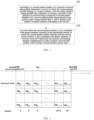
FIG. 2 is a first schematic diagram of a network anti-replay method according to an embodiment of the present disclosure; -
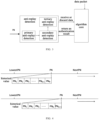
FIG. 3 is a second schematic diagram of a network anti-replay method according to an embodiment of the present disclosure; -
FIG. 4 is a third schematic diagram of a network anti-replay method according to an embodiment of the present disclosure; -
FIG. 5 is a fourth schematic diagram of a network anti-replay method according to an embodiment of the present disclosure; -
FIG. 6 is a schematic diagram of a network anti-replay apparatus according to another embodiment of the present disclosure; and -
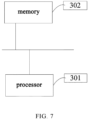
FIG. 7 is a schematic structural diagram of an electronic device according to still another embodiment of the present disclosure. - In order to make the objectives, technical solutions and advantages of the embodiments of the present disclosure clearer, each embodiment of the present disclosure will be described in detail below with reference to the accompanying drawings. However, it should be understood by those of ordinary skill in the art that many technical details are proposed in each embodiment of the present disclosure for enabling a better understanding of the present disclosure. However, the technical solutions claimed in the present disclosure can be implemented even in the absence of those technical details and various changes and modifications based on the following embodiments. The division of the following embodiments is for convenience of description, and should not constitute any limitation to the specific implementations of the present disclosure, and if no conflict is incurred, the embodiments can be combined with each other and cross reference to the embodiments is also allowed.
- An embodiment of the present disclosure relates to a network anti-replay method, an application scenario of the present embodiment may include, but is not limited to, the MACsec protocol, the IPsec protocol, or other scenarios which desire anti-replay, and advantages of the network anti-replay method provided in the present embodiment are more significant in a high-speed network (100Gbps). The flow of the network anti-replay method provided in the present embodiment may be as shown in
FIG. 1 , and includes: -
operation 101, according to a current packet number of a currently received data packet, determining a section to which the current packet number belongs (i.e., a section of the current packet number) in a replay window, with the replay window being divided into a plurality of sections, and each of the plurality of sections being configured to record packet numbers of L received data packets which belong to the section; and L being smaller than T, and T being a total number of packet numbers belonging to the section; and -
operation 102, in a case where the current packet number is not coincident with packet numbers recorded in the determined section of the current packet number and the current packet number is not coincident with packet numbers of recently received N historical data packets, performing integrity authentication on the currently received data packet, with N being a natural number greater than 1. - Implementation details of the network anti-replay method of the present embodiment are described below, and the following contents are merely for facilitating an understanding of the provided implementation details, but are not necessary for implementing the present embodiment.
- At
operation 101, according to the current packet number of the currently received data packet, the section of the current packet number in the replay window is determined; the replay window is divided into the plurality of sections, and each of the plurality of sections is configured to record the packet numbers of the L received data packets which belong to the section; and L is smaller than T, and T is the total number of the packet numbers belonging to the section. That is, the replay window is divided into the plurality of sections, and each section records the packet numbers of part of the received data packets; and after the current data packet is subjected to section classification, preliminary detection may be performed according to the packet numbers of part of the received data packets recorded in the section of the current packet number. - In one example, before determining the section of the current packet number in the replay window according to the current packet number of the currently received data packet, the method further includes: determining whether the current packet number is smaller than a window lower limit of the replay window. That is, the current packet number may be screened according to the replay window; and if the current packet number is smaller than the window lower limit of the replay window, it is indicated that the current data packet is possibly a data packet of a sending side intercepted by a third party and a message repeatedly sent to a receiving side in a long cycle, so the currently received data packet is discarded without being subjected to further analysis such as section classification, which can reduce data calculation amount to a great extent.
- For example, the current packet number is compared with the lower limit of the replay window, i.e., a lowest acceptable PN (LowestPN). If the current packet number is smaller than the lowest acceptable PN, the currently received data packet is discarded; and if the current packet number is not smaller than the lowest acceptable PN, the section of the current packet number in the replay window is determined according to the current packet number of the currently received data packet. This operation may be called primary anti-replay detection.
- In one example, after determining the section of the current packet number in the replay window according to the current packet number of the currently received data packet, the method further includes: in a case where the current packet number is coincident with one of the packet numbers recorded in the determined section of the current packet number or the current packet number is coincident with one of the packet numbers of the recently received N historical data packets, discarding the currently received data packet. That is, after the section of the current packet number is determined, the packet number is compared with the packet numbers recorded in the section. If the packet number is the same as one of the packet numbers recorded in the section, it is indicated that the current data packet is replay data and needs to be discarded, and this process may be called secondary anti-replay detection. If the packet number is not the same as any of the packet numbers recorded in the section, the current packet number is compared with the packet numbers of the recently received historical data packets which may be N data packets; and if the current packet number is the same as one of the packet numbers of the recently received historical data packets, it is also indicated that the currently received data packet is the replay data and needs to be discarded. The process of the comparison with the packet numbers of the recently received historical data packets may be called tertiary anti-replay detection. That is, after the current packet number passes the primary anti-replay detection, the secondary anti-replay detection is performed, and if no same packet number is detected, the tertiary anti-replay detection is then performed. With the detection of the current packet number performed step by step, there is no need to store all historical packet numbers.
- In one example, the replay window is divided into 2M sections; and values of M, L, and N are determined according to a type of a replay attack to be resisted. Types of replay attacks to be resisted include a long-cycle replay attack and a short-cycle replay attack.
- For example, for the short-cycle replay attack, the number of the packet numbers recorded in each section in the secondary anti-replay detection is small, which makes it possible that no same packet number is detected. However, since the replay attack is the short-cycle replay attack, the replay data may be included in the recently received historical data packets, so, when the tertiary anti-replay detection is performed, the same packet number may be easily detected when the current packet number is compared with the recently received N historical data packets in the tertiary anti-replay detection. That is, for the short-cycle replay attack, an effect of the tertiary anti-replay detection is better than that of the secondary anti-replay detection, in which case, the larger the value of N, the better. For the long-cycle replay attack, since it is the recently received N historical data packets that are compared with the current packet number in the tertiary anti-replay detection and the replay data in the long-cycle replay attack is the data before a relatively long period of time, the same packet number is not likely to be detected through the comparison with the recently received data packets. However, in the secondary anti-replay detection, a plurality of data packets in the replay window are compared with the currently received data packet, and the data packets in the secondary anti-replay detection include historical data received before the relatively long period of time, so that the replay data before the relatively long period of time is likely to be detected. That is, for the long-cycle replay attack, the secondary anti-replay detection is more effective; and in order to further optimize an effect of the secondary anti -replay detection on the long-cycle replay attack, a larger value may be taken for M, and a larger value may also be taken for L, that is, the number of the sections into which the replay window is divided is made larger, so that the section classification on the currently received data packet is finer, and the number of the packet numbers in each section is larger, which can make it easier to detect the same packet number in the section of the current packet number, that is, the replay data can be detected.
- In one example, the current packet number includes: a PN in the MACsec protocol or an SN in the IPsec protocol. The MACsec protocol provides functions of encapsulation, integrity protection, and confidentiality protection for data frames transmitted between stations in a Connectivity Association (CA) at a MAC layer. The IPsec protocol has the same capability, and encapsulation, encryption/decryption, and authenticating may be performed on data messages at an IP layer.
- As shown in
FIG. 2 , taking MACsec as an example, in the secondary anti-replay detection, the replay window is divided into 2M sections, and L historical PN values are recorded in each section. When a data packet is received, a section where a PN value of the data packet is located is firstly determined according to the PN value; then the PN value is compared with the L historical PN values in the section, the received data packet is discarded if the PN value is the same as one of the L historical PN values in the section, and the received data packet passes the secondary anti-replay detection if the PN value is not the same as any of the L historical PN values in the section. For example, assuming that a data size of the replay window is 227, M=10, L=2, the replay window is divided into 1024 sections, and two history PN values are recorded in each section. When a new data packet is received, a section where a PN value of the new data packet is located is firstly determined, that is, a result of 1024*(PN-LowestPN)/(NextPN-LowestPN)is calculated and rounded up. For example, the result is 3, then the PN value is compared with the two historical PN values inSection 3, and if the PN value is the same as either of the two historical PN values, which indicates that the data packet has been received before and is a replay packet, the data packet is discarded; and if the PN value is different from either of the two historical PN values, the tertiary anti-replay detection process is performed. In the tertiary anti-replay detection process, N historical PN values are recorded; and after the PN value is received, the PN value is compared with the N historical PN values, and if the PN value is the same as one of the N historical PN values, the data packet is discarded; and if the PN value is different from any of the N historical PN values, the data packet passes the tertiary anti-replay detection. Here, NextPN is a next packet number. - In addition, when the data size of the replay window is 227 and M=10, that is, when the replay window is divided into 1024 sections, T=217.
- At
operation 102, in the case where the current packet number is not coincident with the packet numbers recorded in the determined section of the current packet number and the current packet number is not coincident with the packet numbers of the recently received N historical data packets, integrity authentication is performed on the currently received data packet, with N being a natural number greater than 1. After passing the secondary anti-replay detection and the tertiary anti-replay detection, the currently received data packet is sent to an algorithm core to be subjected to integrity authentication, and if the data packet passes the integrity authentication, other operations such as returning an authentication result are performed, as shown inFIG. 3 . The integrity authentication refers to verifying the data packet by an authentication algorithm to generate a message authentication code with a specific length, and comparing with a message authentication code carried by the data packet. If the message authentication code carried by the data packet is the same as the generated message authentication code, it is indicated that the data packet has not been tampered with or lost, so the data packet passes the integrity authentication. - In one example, after performing integrity authentication on the currently received data packet, the method further includes: in a case where the currently received data packet passes the integrity authentication, updating the determined section of the current packet number according to the current packet number, and/or updating the packet numbers of the N historical data packets according to the current packet number. That is, the related parameters in the secondary anti-replay detection and the tertiary anti-replay detection are updated.
- For example, after passing the secondary anti-replay detection and the tertiary anti-replay detection, the currently received data packet is sent to the algorithm core for the integrity authentication. After the currently received data packet passes the authentication, a PN value of the currently received data packet is stored in a historical record, and a record table is refreshed to cover an earliest historical PN value, thus updating the packet numbers of the N historical data packets, i.e., updating the parameters in the tertiary anti-replay detection, as shown in
FIG. 4 . When an attacker intercepts the message and performs a replay attack in a relatively short cycle, this type of attack can be detected according to a partial record, thereby resisting the replay attack. - In addition, when the data size of the replay window is 227, M=10, L=2, the replay window is divided into 1024 sections, and two historical PN values are recorded in each section. In a case where a new data packet is received and it is determined that a PN value of the new data packet is located in
Section 3, after the new data packet is detected and passes the authentication, the PN value is stored inSection 3 to cover the earliest PN value of the two historical PN values. That is, the parameters selected in the secondary anti-replay detection process are updated. When an attacker intercepts the message and performs a replay attack in a relatively long cycle, the replay attack may not be detected according to a recent historical record, but the historical PN values in each section are recorded in a global PN record (i.e., section data in the secondary anti-replay detection), and the replay attack in the relatively long cycle can be resisted by comparison with the values in the global PN record. If the number of the messages intercepted by the attacker is large and PN values of replay messages are different, replay attacks can be resisted by taking a larger value for L to increase the amount of the data stored in each section. - In one example, after performing integrity authentication on the currently received data packet, the method further includes: refreshing the replay window in a case where the currently received data packet passes the integrity authentication and the current packet number is larger than or equal to a window upper limit of the replay window. That is, the current packet number is compared with the upper limit of the replay window, i.e., a next PN (NextPN), and if the current packet number is smaller than NextPN, the window is kept unchanged; and if the current packet number is not smaller than NextPN, the upper limit of the replay window is refreshed to be PN+1, and LowestPN is refreshed synchronously.
- In an implementation, if the replay window is divided into 1024 sections and a calculated result of the section where the PN is located exceeds 1024, it is indicated that the PN falls on a right side of the replay window, that is, the PN does not belong to the current replay window, then the PN is directly transmitted to a next stage, and the values recorded in Section 1024 are refreshed after the PN passes the authentication. In addition, an implementation process of the network anti-replay method is shown in
FIG. 5 , and in the implementation process, refreshing a global PN refers to updating the packet numbers in the replay window to which the current packet number belongs in the secondary anti-replay detection process, and refreshing a partial PN record table refers to updating the packet numbers of the historical N data packets in the tertiary anti-replay detection process. - In addition, by implementing the method provided in the present implementation, a memory size desired to be occupied is (2M* L + N) * 32 bit. For example, when M is 10, L is 2, and N is 217, interception of two or less replay packets can be resisted, and an overhead of the memory size is 4Mbit, which is reduced by 30 times compared to recording all the historical PN values.
- In this implementation, the replay window is divided, the section of the current packet number of the currently received data packet is identified, and repeatability detection is performed in the section of the current packet number, or further repeatability detection is performed according to the recently received N historical data packets, so as to determine whether the currently received data packet is the replay data. With no need to store flags for all the received historical data packets, storage resources occupied by the replay window in the anti-replay process are greatly reduced, and the demand for RAMs and the overhead of chip area can also be reduced.
- An implementation of the present disclosure relates to a network anti-replay apparatus as shown in
FIG. 6 , including: - a
section determination module 201, which is configured to determine, according to a current packet number of a currently received data packet, a section to which the current packet number belongs (i.e., a section of the current packet number) in a replay window, with the replay window being divided into a plurality of sections, and each of the plurality of sections being configured to record packet numbers of L received data packets which belong to the section; and L being smaller than T, and T being a total number of packet numbers belonging to the section; and - a
detection module 202, which is configured to perform integrity authentication on the currently received data packet in a case where the current packet number is not coincident with packet numbers recorded in the determined section of the current packet number and the current packet number is not coincident with packet numbers of recently received N historical data packets, with N being a natural number greater than 1. - For the
section determination module 201, in one example, before determining, according to the current packet number of the currently received data packet, the section of the current packet number in the replay window, thesection determination module 201 is further configured to determine whether the current packet number is smaller than a window lower limit of the replay window. - In one example, after determining, according to the current packet number of the currently received data packet, the section of the current packet number in the replay window, the network anti-replay apparatus is further configured to discard the currently received data packet in a case where the current packet number is coincident with one of the packet numbers recorded in the determined section of the current packet number or the current packet number is coincident with one of the packet numbers of the recently received N historical data packets.
- In one example, the replay window is divided into 2M sections; and values of M, L, and N are determined according to a type of a replay attack to be resisted.
- In one example, the current packet number includes: a PN in the MACsec protocol or an SN in the IPsec protocol.
- For the
detection module 202, in one example, after performing integrity authentication on the currently received data packet, thedetection module 202 is further configured to, in a case where the currently received data packet passes the integrity authentication, update the determined section of the current packet number according to the current packet number, and/or update the packet numbers of the N historical data packets according to the current packet number. - In one example, after perform integrity authentication on the currently received data packet, the network anti-replay apparatus is further configured to refresh the replay window in a case where the currently received data packet passes the integrity authentication and the current packet number is larger than or equal to a window upper limit of the replay window.
- In this implementation, the replay window is divided, the section of the current packet number of the currently received data packet is identified, and repeatability detection is performed in the section of the current packet number, or further repeatability detection is performed according to the recently received N historical data packets, so as to determine whether the currently received data packet is replay data. With no need to store flags for all the received historical data packets, storage resources occupied by the replay window in an anti-replay process are greatly reduced, and the demand for RAMs and the overhead of chip area can also be reduced.
- Apparently, this implementation is a system embodiment corresponding to the aforesaid implementation, and may be implemented in cooperation with the aforesaid implementation. The related technical details stated in the aforesaid implementation are still valid in this implementation, and will not be described in detail here for avoiding repetition. Correspondingly, the related technical details stated in this implementation can also be applied to the aforesaid implementation.
- It should be noted that each module in this implementation is a logic module, and in practical applications, one logical unit may be one physical unit or a part of one physical unit, and may also be implemented as a combination of a plurality of physical units. In addition, in order to highlight the innovative part of the present disclosure, a unit not so closely related to the solution to the technical problem proposed by the present disclosure is not introduced in this implementation, but this does not mean that no other unit is provided in this implementation.
- Another embodiment of the present disclosure relates to an electronic device. As shown in
FIG. 7 , the electronic device includes: at least oneprocessor 301; and amemory 302 which communicates with and is connected to the at least oneprocessor 301. Thememory 302 stores instructions executable by the at least oneprocessor 301, and the instructions are executed by the at least oneprocessor 301 to cause the at least oneprocessor 301 to perform the network anti-replay method described in the aforesaid embodiment. - The memory and the processor are connected by a bus, the bus may include any number of interconnected buses and bridges, and the buses connect various circuits of one or more of processors and the memory. The bus may also connect various other circuits such as a peripheral device, a voltage regulator, and a power management circuit, which is well known in the existing technology and thus will not be further described here. A bus interface provides an interface between the bus and a transceiver. The transceiver may be one element or a plurality of elements such as a plurality of receivers and a plurality of transmitters, and provides a unit for communicating with various other devices on a transmission medium. Data processed by the processor is transmitted on a wireless medium via an antenna. Furthermore, the antenna receives data and transmits the data to the processor.
- The processor is configured to manage the bus and general processing, and may also perform various functions including timing, peripheral interface, voltage regulation, power management and other control functions. The memory may be configured to store data used by the processor when performing operations.
- Another embodiment of the present disclosure relates a computer-readable storage medium storing a computer program, which when executed by a processor, causes the processor to implement the above method embodiments.
- That is, as can be understood by those of ordinary skill in the art, implementation of all or part of the operations of the method described in the above embodiments may be achieved by a program instructing related hardware, and the program is stored in a storage medium and includes several instructions to enable a device (which may be a single chip, a chip, etc.) or a processor to perform all or part of the operations of the method described in each embodiment of the present application. The above storage medium includes: a Universal Serial Bus Flash Disk (a USB flash disk), a mobile hard disk, a Read-Only Memory (ROM), a Random Access Memory (RAM), a magnetic disk, an optical disc, or various media capable of storing program codes.
- It should be understood by those of ordinary skill in the art that the above implementations are exemplary embodiments of the present disclosure, and various changes in forms and details may be made to the implementations without departing from the spirit and scope of the present disclosure.
Claims (10)
- A network anti-replay method, comprising:determining, according to a current packet number of a currently received data packet, a section to which the current packet number belongs in a replay window, wherein the replay window is divided into a plurality of sections, and each of the plurality of sections is configured to record packet numbers of L received data packets which belong to the section; and L is smaller than T, and T is a total number of packet numbers belonging to the section; andin a case where the current packet number is not coincident with packet numbers recorded in the determined section to which the current packet number belongs and the current packet number is not coincident with packet numbers of recently received N historical data packets, performing integrity authentication on the currently received data packet, with N being a natural number greater than 1.
- The network anti-replay method of claim 1, before determining, according to the current packet number of the currently received data packet, the section to which the current packet number belongs in the replay window, the network anti-replay method further comprises:
determining whether the current packet number is smaller than a window lower limit of the replay window. - The network anti-replay method of claim 1 or 2, after determining, according to the current packet number of the currently received data packet, the section to which the current packet number belongs in the replay window, the network anti-replay method further comprises:
in a case where the current packet number is coincident with one of the packet numbers recorded in the determined section to which the current packet number belongs or the current packet number is coincident with one of the packet numbers of the recently received N historical data packets, discarding the currently received data packet. - The network anti-replay method of any one of claims 1 to 3, after performing integrity authentication on the currently received data packet, the network anti-replay method further comprises:
in a case where the currently received data packet passes the integrity authentication, updating the determined section to which the current packet number belongs according to the current packet number, and/or, updating the packet numbers of the N historical data packets according to the current packet number. - The network anti-replay method of any one of claims 1 to 4, after performing integrity authentication on the currently received data packet, the network anti-replay method further comprises:
refreshing the replay window in a case where the currently received data packet passes the integrity authentication and the current packet number is larger than or equal to a window upper limit of the replay window. - The network anti-replay method of any one of claims 1 to 5, wherein the replay window is divided into 2M sections; and
values of M, L, and N are determined according to a type of a replay attack to be resisted. - The network anti-replay method of any one of claims 1 to 6, wherein the current packet number comprises: a Packet Number in Media Access Control Security (MACsec) protocol or a Sequence Number in Internet Protocol Security (IPsec) protocol.
- A network anti-replay apparatus, comprising:a section determination module configured to determine, according to a current packet number of a currently received data packet, a section to which the current packet number belongs in a replay window, wherein the replay window is divided into a plurality of sections, and each of the plurality of sections is configured to record packet numbers of L received data packets which belong to the section; and L is smaller than T, and T is a total number of packet numbers belonging to the section; anda detection module configured to perform integrity authentication on the currently received data packet in a case where the current packet number is not coincident with packet numbers recorded in the determined section to which the current packet number belongs and the current packet number is not coincident with packet numbers of recently received N historical data packets, with N being a natural number greater than 1.
- An electronic device, comprising:at least one processor; anda memory communicating with and connected to the at least one processor; whereinthe memory stores instructions executable by the at least one processor, and the instructions are executed by the at least one processor to cause the at least one processor to perform the network anti-replay method of any one of claims 1 to 7.
- A computer-readable storage medium storing a computer program which, when executed by a processor, causes the processor to implement the network anti-replay method of any one of claims 1 to 7.
Applications Claiming Priority (2)
| Application Number | Priority Date | Filing Date | Title |
|---|---|---|---|
| CN202111370631.9A CN116137573A (en) | 2021-11-18 | 2021-11-18 | Network anti-replay method, device, electronic equipment and storage medium |
| PCT/CN2022/082122 WO2023087590A1 (en) | 2021-11-18 | 2022-03-21 | Network anti-replay method and apparatus, electronic device, and storage medium |
Publications (2)
| Publication Number | Publication Date |
|---|---|
| EP4418607A1 true EP4418607A1 (en) | 2024-08-21 |
| EP4418607A4 EP4418607A4 (en) | 2025-02-19 |
Family
ID=86333161
Family Applications (1)
| Application Number | Title | Priority Date | Filing Date |
|---|---|---|---|
| EP22894136.5A Pending EP4418607A4 (en) | 2021-11-18 | 2022-03-21 | NETWORK ANTI-REPLAY METHOD AND APPARATUS, ELECTRONIC DEVICE AND STORAGE MEDIUM |
Country Status (4)
| Country | Link |
|---|---|
| US (1) | US20250007927A1 (en) |
| EP (1) | EP4418607A4 (en) |
| CN (1) | CN116137573A (en) |
| WO (1) | WO2023087590A1 (en) |
Families Citing this family (1)
| Publication number | Priority date | Publication date | Assignee | Title |
|---|---|---|---|---|
| CN119544269B (en) * | 2024-11-04 | 2025-10-24 | 矩阵时光数字科技有限公司 | A method and device for preventing ciphertext replay during quantum secure key relay encryption |
Family Cites Families (8)
| Publication number | Priority date | Publication date | Assignee | Title |
|---|---|---|---|---|
| US8438641B2 (en) * | 2010-12-29 | 2013-05-07 | Lsi Corporation | Security protocol processing for anti-replay protection |
| CN102769572B (en) * | 2012-07-30 | 2014-12-24 | 福建星网锐捷网络有限公司 | Message anti-replay method, message anti-replay device and network device |
| CN104038505B (en) * | 2014-06-24 | 2017-09-15 | 新华三技术有限公司 | A kind of method and apparatus of IPSec anti-replays |
| CN105791219B (en) * | 2014-12-22 | 2020-03-20 | 华为技术有限公司 | Anti-replay method and device |
| CN105791218B (en) * | 2014-12-22 | 2019-06-21 | 华为数字技术(苏州)有限公司 | Anti-replay method and device |
| US12425357B2 (en) * | 2017-02-12 | 2025-09-23 | Mellanox Technologies Ltd. | Communication apparatus generating and eliminating redundant data packets |
| US10419327B2 (en) * | 2017-10-12 | 2019-09-17 | Big Switch Networks, Inc. | Systems and methods for controlling switches to record network packets using a traffic monitoring network |
| CN110890960B (en) * | 2019-11-16 | 2023-04-18 | 杭州安恒信息技术股份有限公司 | Data replay attack identification and protection method based on multiple verification mechanisms |
-
2021
- 2021-11-18 CN CN202111370631.9A patent/CN116137573A/en active Pending
-
2022
- 2022-03-21 US US18/708,249 patent/US20250007927A1/en active Pending
- 2022-03-21 EP EP22894136.5A patent/EP4418607A4/en active Pending
- 2022-03-21 WO PCT/CN2022/082122 patent/WO2023087590A1/en not_active Ceased
Also Published As
| Publication number | Publication date |
|---|---|
| WO2023087590A1 (en) | 2023-05-25 |
| EP4418607A4 (en) | 2025-02-19 |
| US20250007927A1 (en) | 2025-01-02 |
| CN116137573A (en) | 2023-05-19 |
Similar Documents
| Publication | Publication Date | Title |
|---|---|---|
| US11539747B2 (en) | Secure communication session resumption in a service function chain | |
| EP3211852A1 (en) | Ssh protocol-based session parsing method and system | |
| US10237151B2 (en) | Attributing network address translation device processed traffic to individual hosts | |
| US20230388339A1 (en) | Secure communication method, apparatus, and system for dc interconnection | |
| WO2019129201A1 (en) | Session management for communications between a device and a dtls server | |
| WO2021139643A1 (en) | Method and apparatus for detecting encrypted network attack traffic, and electronic device | |
| CN111800436B (en) | IPSec isolation network card equipment and secure communication method | |
| CN113839882B (en) | Message flow splitting method and device | |
| CN111786971A (en) | Host blasting attack defense method and device and computer equipment | |
| EP2790354A1 (en) | Security management system having multiple relay servers, and security management method | |
| US20100296395A1 (en) | Packet transmission system, packet transmission apparatus, and packet transmission method | |
| CN104038505A (en) | Method and device for preventing IPSec (internet protocol security) replaying | |
| EP1662700B1 (en) | Network communication security processor and data processing method | |
| US11095610B2 (en) | Methods and apparatus for autonomous network segmentation | |
| RU124102U1 (en) | VULNERABILITY IDENTIFICATION DEVICE IN WIRELESS NETWORK TYPE WI-FI | |
| US20250007927A1 (en) | Network anti-replay method and apparatus, electronic device, and storage medium | |
| EP4293550A1 (en) | Traffic processing method and protection system | |
| KR102421722B1 (en) | Network information security method and apparatus | |
| RU2690749C1 (en) | Method of protecting computer networks | |
| US20210168614A1 (en) | Data Transmission Method and Device | |
| CN114172831B (en) | Brute force cracking method, system, computer and storage medium | |
| US9667650B2 (en) | Anti-replay checking with multiple sequence number spaces | |
| EP4181431A1 (en) | Service transmission method and apparatus, network device, and storage medium | |
| EP3413529B1 (en) | Data security protection method and apparatus | |
| CN109195160B (en) | Tamper-proof storage system and control method for network device resource exploration information |
Legal Events
| Date | Code | Title | Description |
|---|---|---|---|
| STAA | Information on the status of an ep patent application or granted ep patent |
Free format text: STATUS: THE INTERNATIONAL PUBLICATION HAS BEEN MADE |
|
| PUAI | Public reference made under article 153(3) epc to a published international application that has entered the european phase |
Free format text: ORIGINAL CODE: 0009012 |
|
| STAA | Information on the status of an ep patent application or granted ep patent |
Free format text: STATUS: REQUEST FOR EXAMINATION WAS MADE |
|
| 17P | Request for examination filed |
Effective date: 20240513 |
|
| AK | Designated contracting states |
Kind code of ref document: A1 Designated state(s): AL AT BE BG CH CY CZ DE DK EE ES FI FR GB GR HR HU IE IS IT LI LT LU LV MC MK MT NL NO PL PT RO RS SE SI SK SM TR |
|
| A4 | Supplementary search report drawn up and despatched |
Effective date: 20250120 |
|
| RIC1 | Information provided on ipc code assigned before grant |
Ipc: G06F 21/44 20130101ALI20250114BHEP Ipc: H04L 9/40 20220101AFI20250114BHEP |
|
| DAV | Request for validation of the european patent (deleted) | ||
| DAX | Request for extension of the european patent (deleted) | ||
| RAP3 | Party data changed (applicant data changed or rights of an application transferred) |
Owner name: SANECHIPS TECHNOLOGY CO., LTD. |