EP4418157A1 - Information management device, method for managing information, and information management program - Google Patents
Information management device, method for managing information, and information management program Download PDFInfo
- Publication number
- EP4418157A1 EP4418157A1 EP24150864.7A EP24150864A EP4418157A1 EP 4418157 A1 EP4418157 A1 EP 4418157A1 EP 24150864 A EP24150864 A EP 24150864A EP 4418157 A1 EP4418157 A1 EP 4418157A1
- Authority
- EP
- European Patent Office
- Prior art keywords
- jurisdiction
- vehicle
- user
- privacy
- processing circuitry
- Prior art date
- Legal status (The legal status is an assumption and is not a legal conclusion. Google has not performed a legal analysis and makes no representation as to the accuracy of the status listed.)
- Granted
Links
Images


Classifications
-
- G—PHYSICS
- G07—CHECKING-DEVICES
- G07C—TIME OR ATTENDANCE REGISTERS; REGISTERING OR INDICATING THE WORKING OF MACHINES; GENERATING RANDOM NUMBERS; VOTING OR LOTTERY APPARATUS; ARRANGEMENTS, SYSTEMS OR APPARATUS FOR CHECKING NOT PROVIDED FOR ELSEWHERE
- G07C5/00—Registering or indicating the working of vehicles
- G07C5/08—Registering or indicating performance data other than driving, working, idle, or waiting time, with or without registering driving, working, idle or waiting time
- G07C5/0841—Registering performance data
- G07C5/085—Registering performance data using electronic data carriers
-
- G—PHYSICS
- G06—COMPUTING OR CALCULATING; COUNTING
- G06F—ELECTRIC DIGITAL DATA PROCESSING
- G06F21/00—Security arrangements for protecting computers, components thereof, programs or data against unauthorised activity
- G06F21/60—Protecting data
- G06F21/62—Protecting access to data via a platform, e.g. using keys or access control rules
- G06F21/6218—Protecting access to data via a platform, e.g. using keys or access control rules to a system of files or objects, e.g. local or distributed file system or database
- G06F21/6245—Protecting personal data, e.g. for financial or medical purposes
-
- B—PERFORMING OPERATIONS; TRANSPORTING
- B60—VEHICLES IN GENERAL
- B60W—CONJOINT CONTROL OF VEHICLE SUB-UNITS OF DIFFERENT TYPE OR DIFFERENT FUNCTION; CONTROL SYSTEMS SPECIALLY ADAPTED FOR HYBRID VEHICLES; ROAD VEHICLE DRIVE CONTROL SYSTEMS FOR PURPOSES NOT RELATED TO THE CONTROL OF A PARTICULAR SUB-UNIT
- B60W50/00—Details of control systems for road vehicle drive control not related to the control of a particular sub-unit, e.g. process diagnostic or vehicle driver interfaces
- B60W50/08—Interaction between the driver and the control system
- B60W50/14—Means for informing the driver, warning the driver or prompting a driver intervention
-
- G—PHYSICS
- G08—SIGNALLING
- G08G—TRAFFIC CONTROL SYSTEMS
- G08G1/00—Traffic control systems for road vehicles
- G08G1/20—Monitoring the location of vehicles belonging to a group, e.g. fleet of vehicles, countable or determined number of vehicles
- G08G1/207—Monitoring the location of vehicles belonging to a group, e.g. fleet of vehicles, countable or determined number of vehicles with respect to certain areas, e.g. forbidden or allowed areas with possible alerting when inside or outside boundaries
-
- H—ELECTRICITY
- H04—ELECTRIC COMMUNICATION TECHNIQUE
- H04L—TRANSMISSION OF DIGITAL INFORMATION, e.g. TELEGRAPHIC COMMUNICATION
- H04L63/00—Network architectures or network communication protocols for network security
- H04L63/10—Network architectures or network communication protocols for network security for controlling access to devices or network resources
-
- H—ELECTRICITY
- H04—ELECTRIC COMMUNICATION TECHNIQUE
- H04L—TRANSMISSION OF DIGITAL INFORMATION, e.g. TELEGRAPHIC COMMUNICATION
- H04L63/00—Network architectures or network communication protocols for network security
- H04L63/10—Network architectures or network communication protocols for network security for controlling access to devices or network resources
- H04L63/101—Access control lists [ACL]
-
- H—ELECTRICITY
- H04—ELECTRIC COMMUNICATION TECHNIQUE
- H04L—TRANSMISSION OF DIGITAL INFORMATION, e.g. TELEGRAPHIC COMMUNICATION
- H04L63/00—Network architectures or network communication protocols for network security
- H04L63/10—Network architectures or network communication protocols for network security for controlling access to devices or network resources
- H04L63/107—Network architectures or network communication protocols for network security for controlling access to devices or network resources wherein the security policies are location-dependent, e.g. entities privileges depend on current location or allowing specific operations only from locally connected terminals
-
- H—ELECTRICITY
- H04—ELECTRIC COMMUNICATION TECHNIQUE
- H04L—TRANSMISSION OF DIGITAL INFORMATION, e.g. TELEGRAPHIC COMMUNICATION
- H04L63/00—Network architectures or network communication protocols for network security
- H04L63/20—Network architectures or network communication protocols for network security for managing network security; network security policies in general
- H04L63/205—Network architectures or network communication protocols for network security for managing network security; network security policies in general involving negotiation or determination of the one or more network security mechanisms to be used, e.g. by negotiation between the client and the server or between peers or by selection according to the capabilities of the entities involved
-
- H—ELECTRICITY
- H04—ELECTRIC COMMUNICATION TECHNIQUE
- H04L—TRANSMISSION OF DIGITAL INFORMATION, e.g. TELEGRAPHIC COMMUNICATION
- H04L9/00—Cryptographic mechanisms or cryptographic arrangements for secret or secure communications; Network security protocols
- H04L9/40—Network security protocols
-
- B—PERFORMING OPERATIONS; TRANSPORTING
- B60—VEHICLES IN GENERAL
- B60W—CONJOINT CONTROL OF VEHICLE SUB-UNITS OF DIFFERENT TYPE OR DIFFERENT FUNCTION; CONTROL SYSTEMS SPECIALLY ADAPTED FOR HYBRID VEHICLES; ROAD VEHICLE DRIVE CONTROL SYSTEMS FOR PURPOSES NOT RELATED TO THE CONTROL OF A PARTICULAR SUB-UNIT
- B60W2540/00—Input parameters relating to occupants
- B60W2540/215—Selection or confirmation of options
-
- G—PHYSICS
- G06—COMPUTING OR CALCULATING; COUNTING
- G06F—ELECTRIC DIGITAL DATA PROCESSING
- G06F2221/00—Indexing scheme relating to security arrangements for protecting computers, components thereof, programs or data against unauthorised activity
- G06F2221/21—Indexing scheme relating to G06F21/00 and subgroups addressing additional information or applications relating to security arrangements for protecting computers, components thereof, programs or data against unauthorised activity
- G06F2221/2101—Auditing as a secondary aspect
-
- H—ELECTRICITY
- H04—ELECTRIC COMMUNICATION TECHNIQUE
- H04L—TRANSMISSION OF DIGITAL INFORMATION, e.g. TELEGRAPHIC COMMUNICATION
- H04L2209/00—Additional information or applications relating to cryptographic mechanisms or cryptographic arrangements for secret or secure communication H04L9/00
- H04L2209/84—Vehicles
Definitions
- the following description relates to an information management device installed in a vehicle, a method for managing information, and an information management program.
- Japanese Laid-Open Patent Publication No. 2021-170016 discloses an information management device that is installed in a vehicle.
- the information management device inquires of a user of the vehicle as to whether the user will permit storage of privacy information regarding the user in a persistent storage.
- the privacy information includes, for example, the name of the user, position information related to where the user is, and the speed of the vehicle.
- the information management device When the user permits storage of the privacy information in the persistent storage, the information management device stores the privacy information in the persistent storage. When the user refuses storage of the privacy information in the persistent storage, the information management device uploads the privacy information of the user to a volatile memory. In such a case, the privacy information of the user is not stored in the persistent storage.
- the privacy regulation that is in effect may differ from one jurisdiction to another jurisdiction.
- a jurisdiction is, for example, a country, a state, or a province.
- the privacy information may be collected in the country where the privacy regulations are relatively strict in the same manner as in the country where the privacy regulations are relatively lax.
- an information management device is installed in a vehicle.
- the information management device includes processing circuitry and a storage device.
- the storage device stores lists, each including one or more privacy information items that cannot be collected without permission from a user.
- Each of the lists is prepared for one of a plurality of jurisdictions including a first jurisdiction and a second jurisdiction.
- the processing circuitry is configured to issue an inquiry to the user as to whether the user will permit storage of the one or more privacy information items included in one of the lists corresponding to the second jurisdiction to the storage device before the vehicle starts traveling in the second jurisdiction.
- the processing circuitry is configured to store the one or more privacy information items included in the one of the lists corresponding to the second jurisdiction to the storage device on condition that the vehicle is located in the second jurisdiction and that the user has permitted storage of the one or more privacy information items.
- a method for managing information in a vehicle includes storing lists into a storage device, each of the lists including one or more privacy information items that cannot be collected without permission from a user with processing circuitry, each of the lists being prepared for one of a plurality of jurisdictions including a first jurisdiction and a second jurisdiction; when the vehicle travels from the first jurisdiction to the second jurisdiction that differs from the first jurisdiction, issuing an inquiry to the user with the processing circuitry as to whether the user will permit storage of the one or more privacy information items included in one of the lists corresponding to the second jurisdiction to the storage device before the vehicle starts traveling in the second jurisdiction; and storing the one or more privacy information items included in the one of the lists corresponding to the second jurisdiction to the storage device with the processing circuitry on condition that the vehicle is located in the second jurisdiction and that the user has permitted storage of the one or more privacy information items.
- an information management program is executed by an information management device installed in a vehicle.
- the information management device includes processing circuitry and a storage device.
- the processing circuitry running on the information management program is configured to store lists into the storage device, each of the lists including one or more privacy information items that cannot be collected without permission from a user.
- Each of the lists is prepared for one of a plurality of jurisdictions including a first jurisdiction and a second jurisdiction.
- the processing circuitry running on the information management program is configured to issue an inquiry to the user as to whether the user will permit storage of the one or more privacy information items included in one of the lists corresponding to the second jurisdiction to the storage device before the vehicle starts traveling in the second jurisdiction.
- the processing circuitry running on the information management program is configured to store the one or more privacy information items included in the one of the lists corresponding to the second jurisdiction to the storage device on condition that the vehicle is located in the second jurisdiction and that the user has permitted storage of the one or more privacy information items.
- Exemplary embodiments may have different forms, and are not limited to the examples described. However, the examples described are thorough and complete, and convey the full scope of the disclosure to one of ordinary skill in the art.
- a present jurisdiction determination module 12 which will be described later, repeatedly obtains position information of a vehicle from a Global Positioning System (GPS) sensor 22, which will be described later, from when an ignition key is turned to the on position to when the ignition key is turned to the off position.
- the term "jurisdiction" refers to a regional range over which a certain regulation is effective.
- a jurisdiction is, for example, a country, a state, or a province.
- the privacy information includes, for example, information that does not change during a trip of the vehicle, such as the name of the user, the phone number of the user, the address of the user, and a facial image of the user.
- a trip refers to a period of time from when the ignition key is turned to the on position to when the ignition key is turned to the off position.
- the privacy information also includes, for example, information that continuously changes during a trip of the vehicle, such as the position information of the vehicle and the speed of the vehicle.
- a storage permitted data determination module 16 which will be described later, stores a privacy setting for each jurisdiction in the information storage module 20. The privacy setting is not deleted even if the ignition key is turned to the off position.
- the privacy setting indicates whether the user has permitted storage of the privacy information items included in the list to the information storage module 20.
- the privacy setting is stored when the user responds to an inquiry issued to the user. The schedule for issuing an inquiry will be described later with reference to Figs. 3 and 4 .
- the information storage module 20 stores the privacy information in accordance with the list corresponding to the jurisdiction.
- the affirmative privacy setting indicates that the user has permitted collection of the privacy information items included in the list.
- a restriction is imposed on storage of the privacy information in the information storage module 20 in accordance with the list corresponding to the jurisdiction.
- the negative privacy setting indicates that the user has refused collection of the privacy information items indicated in the list.
- the following situations (A) to (C) may occur when a vehicle travels from a first jurisdiction to a second jurisdiction.
- the privacy regulations in the first jurisdiction do not require permission from the user to store the position information of the vehicle in the information storage module 20.
- the privacy regulations in the second jurisdiction require permission from the user to store the position information of the vehicle in the information storage module 20.
- the privacy setting related to the second jurisdiction is negative. In such a case, the information storage module 20 stores the position information of the vehicle from when the vehicle enters the first jurisdiction to when the vehicle leaves the first jurisdiction.
- Storage of the position information of the vehicle in the information storage module 20 is restricted from when the vehicle enters the second jurisdiction to when the vehicle leaves the second jurisdiction.
- the position information of the vehicle from when the vehicle enters the first jurisdiction to when the vehicle leaves the first jurisdiction may be deleted after the vehicle enters the second jurisdiction.
- the position information may be kept stored even after the vehicle enters the second jurisdiction.
- the information management device 100 includes an on-board electronic control unit (ECU) 10.
- the information management device 100 further includes the GPS sensor 22, a user interface 24, and a data communication module (DCM) 26.
- the on-board ECU 10 includes the present jurisdiction determination module 12, a user consent acquisition module 14, the storage permitted data determination module 16, and a control module 18.
- the on-board ECU 10 further includes the information storage module 20.
- the on-board ECU 10 is connected to an updating tool 28 and receives data from the updating tool 28.
- the present jurisdiction determination module 12 repeatedly obtains the position information of the vehicle from the GPS sensor 22.
- the present jurisdiction determination module 12 determines the present jurisdiction in which the vehicle is located from the position information of the vehicle.
- the present jurisdiction determination module 12 provides the storage permitted data determination module 16 with present jurisdiction information.
- the present jurisdiction information indicates the present jurisdiction in which the vehicle is located.
- the present jurisdiction determination module 12 provides the user consent acquisition module 14 with determination information.
- the determination information indicates that the distance from the vehicle to the border of the jurisdiction adjacent to the present jurisdiction in which the vehicle is located is less than or equal to the predetermined distance.
- the predetermined distance is, for example, 5 kilometers.
- the user consent acquisition module 14 issues an inquiry.
- the inquiry is issued from the user interface 24.
- the inquiry refers to a process for issuing an inquiry to the user as to whether the user will permit storage of the privacy information items included in the list corresponding to the present jurisdiction in which the vehicle is located.
- the inquiry does not have to be issued if the privacy setting related to the present jurisdiction in which the vehicle is located has already been stored.
- a case in which the inquiry is issued at a time point at which the ignition key is turned to the on position means that the inquiry is issued before the vehicle starts traveling in the present jurisdiction in which the vehicle is located.
- the user may decide whether to consent to storage of all privacy information items included in the list. Alternatively, the user may select to consent to storage of some of the privacy information items included in the list.
- the user consent acquisition module 14 issues an inquiry when the distance from the vehicle to a border of a jurisdiction adjacent to the present jurisdiction in which the vehicle is located becomes less than or equal to the predetermined distance. This means that the inquiry is issued before the vehicle starts traveling in the jurisdiction adjacent to the present jurisdiction in which the vehicle is located.
- the inquiry is issued from the user interface 24.
- the inquiry corresponds to a process for issuing an inquiry to the user as to whether the user will permit storage of the privacy information items included in the list corresponding to the jurisdiction adjacent to the present jurisdiction in which the vehicle is located.
- the inquiry does not have to be issued if the privacy setting related to the jurisdiction adjacent to the present jurisdiction in which the vehicle is located has already been stored. In this case, the user may decide whether to consent to storage of all privacy information items included in the list. Alternatively, the user may select to consent to storage of some of the privacy information items included in the list.
- the storage permitted data determination module 16 stores the privacy information items included in the list corresponding to the present jurisdiction in which the vehicle is located in the information storage module 20. This process is executed only when an affirmative privacy setting has been provided for the present jurisdiction in which the vehicle is located.
- the storage permitted data determination module 16 is configured to receive an update request for updating a list corresponding to one of the jurisdictions that are stored in the information storage module 20. When the storage permitted data determination module 16 receives an update request, the storage permitted data determination module 16 updates the list corresponding to the one of the jurisdictions in response to the update request.
- the storage permitted data determination module 16 may receive an update request from, for example, the DCM 26. In this case, an over-the-air (OTA) technology is used. Instead of or in addition to the OTA technology, the storage permitted data determination module 16 may receive an update request from the updating tool 28 connected to the on-board ECU 10.
- OTA over-the-air
- the control module 18 obtains various types of control data and provides the information storage module 20 with the obtained control data.
- the on-board ECU 10 repeatedly obtains the position information of the vehicle from the GPS sensor 22. This describes a process executed in a normal mode. However, the on-board ECU 10 may not be able to obtain the position information of the vehicle from the GPS sensor 22. When the on-board ECU 10 is able to obtain the position information of the vehicle, the on-board ECU 10 is switched to the normal mode. When the on-board ECU 10 cannot obtain the position information of the vehicle, the on-board ECU 10 is switched to a restriction mode. In this manner, the on-board ECU 10 is switchable between the two control modes.
- the on-board ECU 10 repeatedly determines whether the position information of the vehicle can be obtained while the ignition key is at the on position.
- step S200 the on-board ECU 10 determines whether the on-board ECU 10 can obtain the position information of the vehicle.
- step S200: YES the on-board ECU 10 proceeds to step S202.
- step S202 the on-board ECU 10 is switched to the normal mode.
- step S204 the on-board ECU 10 is switched to the restriction mode.
- the on-board ECU 10 determines whether to store privacy information items included in a default list to the information storage module 20.
- the default list includes privacy information items that cannot be collected without permission from the user for all jurisdictions.
- the on-board ECU 10 issues an inquiry to the user as to whether the user will permit storage of the privacy information items included in the default list to the information storage module 20. If the privacy setting related to the default list has already been stored, the inquiry does not have to be issued.
- Fig. 3 illustrates the flow of a process executed by the on-board ECU 10 on condition that the control mode is the normal mode when the ignition switch is turned on. The process illustrated in Fig. 3 is also executed when the control mode is switched from the restriction mode to the normal mode.
- step S300 the on-board ECU 10 determines whether the privacy setting related to the present jurisdiction in which the vehicle is located has been stored. When an affirmative determination is given in step S300 (step S300: YES), the on-board ECU 10 ends the process shown in Fig. 3 .
- step S300 When a negative determination is given in step S300 (step S300: NO), the on-board ECU 10 proceeds to step S302.
- step S302 the on-board ECU 10 issues an inquiry to the user as to whether the user will permit storage of the privacy information items included in the list corresponding to the present jurisdiction in which the vehicle is located to the information storage module 20. Since the inquiry is issued at a time point at which the ignition key is turned to the on position, the inquiry is issued before the vehicle starts traveling in the present jurisdiction in which the vehicle is located. Then, the on-board ECU 10 proceeds to step S304.
- step S304 the on-board ECU 10 determines whether the user has permitted storage. When an affirmative determination is given in step S304 (step S304: YES), the on-board ECU 10 proceeds to step S306. In step S306, the on-board ECU 10 stores a privacy setting indicating that the user has permitted storage in the information storage module 20.
- step S304 When a negative determination is given in step S304 (step S304: NO), the on-board ECU 10 proceeds to step S308. In step S308, the on-board ECU 10 stores a privacy setting indicating that the user has refused storage in the information storage module 20.
- step S306 the on-board ECU 10 ends the process shown in Fig. 3 .
- the process illustrated in Fig. 3 is an example of a case in which the vehicle is traveling from the first jurisdiction to the second jurisdiction, which is adjacent to the first jurisdiction.
- the user turns the ignition key to the off position in the second jurisdiction without having responded to an inquiry regarding the second jurisdiction that had been issued before the vehicle entered the second jurisdiction.
- the on-board ECU 10 issues an inquiry to the user as to whether the user will permit storage of the privacy information items included in the list corresponding to the second jurisdiction in the information storage module 20 before the vehicle starts traveling in the second jurisdiction.
- the on-board ECU 10 stores the privacy information items included in the list corresponding to the second jurisdiction to the information storage module 20 on condition that the vehicle is located in the second jurisdiction and the user has permitted storage.
- step S300 the on-board ECU 10 does not issue an inquiry when the privacy setting related to the second jurisdiction has been stored in the information storage module 20.
- Fig. 4 illustrates the flow of a process repeatedly executed by the on-board ECU 10 from when the ignition switch is turned on if the control mode is the normal mode. The process illustrated in Fig. 4 is also repeatedly executed once the control mode is switched from the restriction mode to the normal mode.
- step S400 the on-board ECU 10 determines whether the distance from the vehicle to a border of a jurisdiction adjacent to the present jurisdiction in which the vehicle is located is less than or equal to the predetermined distance.
- step S400: NO the on-board ECU 10 repeats step S400.
- step S400 determines whether an affirmative determination is given in step S400 (step S400: YES).
- step S402 the on-board ECU 10 determines whether the privacy setting related to the jurisdiction adjacent to the present jurisdiction in which the vehicle is located has been stored in the information storage module 20.
- step S402 the on-board ECU 10 ends the process shown in Fig. 4 .
- step S404 the on-board ECU 10 issues an inquiry to the user as to whether the user will permit storage of the privacy information items included in the list corresponding to the jurisdiction adjacent to the present jurisdiction in which the vehicle is located to the information storage module 20.
- step S400 to S404 the on-board ECU 10 issues the inquiry at a point in time at which the distance from the vehicle to the border of the jurisdiction adjacent to the present jurisdiction in which the vehicle is located becomes less than or equal to the predetermined distance. In other words, the inquiry is issued before the vehicle starts traveling in the adjacent jurisdiction. Then, the on-board ECU 10 proceeds to step S406.
- step S406 the on-board ECU 10 determines whether the user has permitted storage of the privacy information. When an affirmative determination is given in step S406 (step S406: YES), the on-board ECU 10 proceeds to step S408. In step S408, the in-vehicle ECU10 stores a privacy setting indicating that the user has permitted storage.
- step S406 determines whether a negative determination is given in step S406 (step S406: NO).
- step S410 the on-board ECU 10 stores a privacy setting indicating that the user has refused storage in the information storage module 20.
- step S408 or S410 the on-board ECU 10 ends the process shown in Fig. 4 .
- Fig. 4 shows an example of a case in which the vehicle travels from the first jurisdiction to the second jurisdiction, which is adjacent to the first jurisdiction.
- the on-board ECU 10 issues an inquiry when the vehicle is located in the first jurisdiction and the distance from the vehicle to the border of the second jurisdiction becomes less than or equal to the predetermined distance.
- the on-board ECU 10 issues an inquiry to the user as to whether the user will permit storage of the privacy information items included in the list corresponding to the second jurisdiction to the information storage module 20 before the vehicle starts traveling in the second jurisdiction.
- the on-board ECU 10 stores the privacy information items included in the list corresponding to the second jurisdiction to the information storage module 20 on condition that the vehicle is located in the second jurisdiction and the user has permitted storage in the information storage module 20.
- step S402 the on-board ECU 10 does not issue an inquiry when the privacy setting related to the second jurisdiction has been stored in the information storage module 20.
- the privacy setting related to the second jurisdiction may already have been stored in the information storage module 20 before the vehicle travels from the first jurisdiction to the second jurisdiction.
- the information management device 100 does not inquire of the user as to whether the user will permit storage of the privacy information regarding the list corresponding to the second jurisdiction to the information storage module 20.
- the user will not have to respond to the inquiry, and the burden on the user will be reduced.
- the present embodiment may be modified as follows.
- the present embodiment and the following modifications can be combined as long as the combined modifications remain technically consistent with each other.
- the information management device 100 inquires of the user as to whether the user will permit storage of the privacy information items included in the list corresponding to the second jurisdiction to the information storage module 20 before the vehicle starts traveling in the second jurisdiction.
- the information management device 100 may be configured to not issue an inquiry when the privacy setting of a list stored in the information storage module 20 in correspondence with a jurisdiction that is not the second jurisdiction is identical to the list corresponding to the second jurisdiction.
- the information management device 100 will not inquire of the user as to whether the user will permit storage of the privacy information regarding the list corresponding to the second jurisdiction to the information storage module 20. Thus, the user will not have to respond to such an inquiry, and the burden on the user will be reduced.
- a jurisdiction is, for example, a country, a state, or a province.
- a jurisdiction there is no limitation to a jurisdiction.
- these countries may be considered as one jurisdiction.
- the on-board ECU 10 issues an inquiry when the distance from the vehicle to the border of the jurisdiction adjacent to the present jurisdiction in which the vehicle is located becomes less than or equal to the predetermined distance.
- the adjacent jurisdiction may be surrounded by a geofence. In such a case, the on-board ECU 10 issues an inquiry when the vehicle passes the geofence.
- the on-board ECU 10 issues an inquiry when the distance from the vehicle to the border of the jurisdiction adjacent to the present jurisdiction in which the vehicle is located becomes less than or equal to the predetermined distance.
- the on-board ECU 10 may issue an inquiry when the distance from the vehicle to the border of jurisdictions differing from the present jurisdiction in which the vehicle is located becomes less than or equal to the predetermined distance. In other words, there may be a different jurisdiction between the present jurisdiction in which the vehicle is located and the jurisdiction related to the inquiry.
- the privacy setting is not deleted even when the ignition key is turned to the off position.
- the privacy setting may be deleted when the ignition key is turned to the off position.
- the information management device 100 includes the on-board ECU 10 containing multiple modules 12 to 18 and the information storage module 20.
- the on-board ECU 10 executes software processing.
- the on-board ECU 10 may include a dedicated hardware circuit (e.g., application specific integrated circuit (ASIC)) that executes at least part of the software processing performed in the above embodiment.
- ASIC application specific integrated circuit
- the on-board ECU 10 may be modified as long as it has any one of the following configurations (a) to (c).
- the on-board ECU 10 includes a processor that executes all processes according to a program and a program storage device such as a ROM that stores the program. In other words, the on-board ECU 10 includes a software execution device.
- the on-board ECU 10 includes a processor that executes part of processes according to a program and a program storage. The on-board ECU 10 further includes a dedicated hardware circuit that executes the remaining processes.
- the on-board ECU 10 includes a dedicated hardware circuit that executes all processes. There may be more than one software execution device and/or more than one dedicated hardware circuit. Specifically, the above-described processes may be executed by processing circuitry including at least one of a software execution device and a dedicated hardware circuit. The processing circuitry may include more than one software execution device and more than one dedicated hardware circuit.
- the program storage device, or computer readable medium includes any type of storage device that is a medium accessible by a versatile computer or a dedicated computer.
Landscapes
- Engineering & Computer Science (AREA)
- Computer Security & Cryptography (AREA)
- Computer Hardware Design (AREA)
- General Engineering & Computer Science (AREA)
- Computer Networks & Wireless Communication (AREA)
- Signal Processing (AREA)
- Physics & Mathematics (AREA)
- General Physics & Mathematics (AREA)
- Theoretical Computer Science (AREA)
- Health & Medical Sciences (AREA)
- Computing Systems (AREA)
- General Health & Medical Sciences (AREA)
- Bioethics (AREA)
- Automation & Control Theory (AREA)
- Software Systems (AREA)
- Databases & Information Systems (AREA)
- Medical Informatics (AREA)
- Human Computer Interaction (AREA)
- Transportation (AREA)
- Mechanical Engineering (AREA)
- Traffic Control Systems (AREA)
- Management, Administration, Business Operations System, And Electronic Commerce (AREA)
Abstract
Description
- The following description relates to an information management device installed in a vehicle, a method for managing information, and an information management program.
-
Japanese Laid-Open Patent Publication No. 2021-170016 - When the user permits storage of the privacy information in the persistent storage, the information management device stores the privacy information in the persistent storage. When the user refuses storage of the privacy information in the persistent storage, the information management device uploads the privacy information of the user to a volatile memory. In such a case, the privacy information of the user is not stored in the persistent storage.
- The privacy regulation that is in effect may differ from one jurisdiction to another jurisdiction. A jurisdiction is, for example, a country, a state, or a province.
- When a user of a vehicle permits collection of his/her privacy information in a country where the privacy regulations are relatively lax and then the vehicle travels to a country where the privacy regulations are relatively strict, the privacy information may be collected in the country where the privacy regulations are relatively strict in the same manner as in the country where the privacy regulations are relatively lax.
- This Summary is provided to introduce a selection of concepts in a simplified form that are further described below in the Detailed Description. This Summary is not intended to identify key features or essential features of the claimed subject matter, nor is it intended to be used as an aid in determining the scope of the claimed subject matter.
- In one general aspect, an information management device is installed in a vehicle. The information management device includes processing circuitry and a storage device. The storage device stores lists, each including one or more privacy information items that cannot be collected without permission from a user. Each of the lists is prepared for one of a plurality of jurisdictions including a first jurisdiction and a second jurisdiction. When the vehicle travels from the first jurisdiction to the second jurisdiction that differs from the first jurisdiction, the processing circuitry is configured to issue an inquiry to the user as to whether the user will permit storage of the one or more privacy information items included in one of the lists corresponding to the second jurisdiction to the storage device before the vehicle starts traveling in the second jurisdiction. The processing circuitry is configured to store the one or more privacy information items included in the one of the lists corresponding to the second jurisdiction to the storage device on condition that the vehicle is located in the second jurisdiction and that the user has permitted storage of the one or more privacy information items.
- In another general aspect, a method for managing information in a vehicle includes storing lists into a storage device, each of the lists including one or more privacy information items that cannot be collected without permission from a user with processing circuitry, each of the lists being prepared for one of a plurality of jurisdictions including a first jurisdiction and a second jurisdiction; when the vehicle travels from the first jurisdiction to the second jurisdiction that differs from the first jurisdiction, issuing an inquiry to the user with the processing circuitry as to whether the user will permit storage of the one or more privacy information items included in one of the lists corresponding to the second jurisdiction to the storage device before the vehicle starts traveling in the second jurisdiction; and storing the one or more privacy information items included in the one of the lists corresponding to the second jurisdiction to the storage device with the processing circuitry on condition that the vehicle is located in the second jurisdiction and that the user has permitted storage of the one or more privacy information items.
- In another general aspect, an information management program is executed by an information management device installed in a vehicle. The information management device includes processing circuitry and a storage device. The processing circuitry running on the information management program is configured to store lists into the storage device, each of the lists including one or more privacy information items that cannot be collected without permission from a user. Each of the lists is prepared for one of a plurality of jurisdictions including a first jurisdiction and a second jurisdiction. When the vehicle travels from the first jurisdiction to the second jurisdiction that differs from the first jurisdiction, the processing circuitry running on the information management program is configured to issue an inquiry to the user as to whether the user will permit storage of the one or more privacy information items included in one of the lists corresponding to the second jurisdiction to the storage device before the vehicle starts traveling in the second jurisdiction. The processing circuitry running on the information management program is configured to store the one or more privacy information items included in the one of the lists corresponding to the second jurisdiction to the storage device on condition that the vehicle is located in the second jurisdiction and that the user has permitted storage of the one or more privacy information items.
- Other features and aspects will be apparent from the following detailed description, the drawings, and the claims.
-
-
Fig. 1 is a schematic diagram of an information management device in accordance with an embodiment. -
Fig. 2 is a flowchart illustrating a process for switching between a normal mode and a restriction mode based on whether the information management device shown inFig. 1 can obtain position information of a vehicle. -
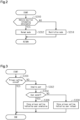
Fig. 3 is a flowchart illustrating a process for storing a privacy setting in a jurisdiction in which the vehicle is presently located. -
Fig. 4 is a flowchart illustrating a process for storing a privacy setting in a jurisdiction to which the vehicle may travel. - Throughout the drawings and the detailed description, the same reference numerals refer to the same elements. The drawings may not be to scale, and the relative size, proportions, and depiction of elements in the drawings may be exaggerated for clarity, illustration, and convenience.
- This description provides a comprehensive understanding of the methods, apparatuses, and/or systems described. Modifications and equivalents of the methods, apparatuses, and/or systems described are apparent to one of ordinary skill in the art. Sequences of operations are exemplary, and may be changed as apparent to one of ordinary skill in the art, with the exception of operations necessarily occurring in a certain order. Descriptions of functions and constructions that are well known to one of ordinary skill in the art may be omitted.
- Exemplary embodiments may have different forms, and are not limited to the examples described. However, the examples described are thorough and complete, and convey the full scope of the disclosure to one of ordinary skill in the art.
- In this specification, "at least one of A and B" should be understood to mean "only A, only B, or both A and B."
- An information management device in accordance with an embodiment will now be described with reference to the drawings.
-
Information Management Device 100 - The schematic configuration of an
information management device 100 installed in a vehicle will be described with reference toFig. 1 . A presentjurisdiction determination module 12, which will be described later, repeatedly obtains position information of a vehicle from a Global Positioning System (GPS)sensor 22, which will be described later, from when an ignition key is turned to the on position to when the ignition key is turned to the off position. Aninformation storage module 20, which will be described later, stores lists, each including of one or more privacy information items that can be collected only when permitted by a user. Each of the lists is prepared for a plurality of jurisdictions. The term "jurisdiction" refers to a regional range over which a certain regulation is effective. A jurisdiction is, for example, a country, a state, or a province. The privacy information includes, for example, information that does not change during a trip of the vehicle, such as the name of the user, the phone number of the user, the address of the user, and a facial image of the user. A trip refers to a period of time from when the ignition key is turned to the on position to when the ignition key is turned to the off position. The privacy information also includes, for example, information that continuously changes during a trip of the vehicle, such as the position information of the vehicle and the speed of the vehicle. A storage permitteddata determination module 16, which will be described later, stores a privacy setting for each jurisdiction in theinformation storage module 20. The privacy setting is not deleted even if the ignition key is turned to the off position. The privacy setting indicates whether the user has permitted storage of the privacy information items included in the list to theinformation storage module 20. The privacy setting is stored when the user responds to an inquiry issued to the user. The schedule for issuing an inquiry will be described later with reference toFigs. 3 and4 . Based on an affirmative privacy setting related to the jurisdiction in which the vehicle is located, theinformation storage module 20 stores the privacy information in accordance with the list corresponding to the jurisdiction. The affirmative privacy setting indicates that the user has permitted collection of the privacy information items included in the list. Based on a negative privacy setting related to the jurisdiction in which the vehicle is located, a restriction is imposed on storage of the privacy information in theinformation storage module 20 in accordance with the list corresponding to the jurisdiction. The negative privacy setting indicates that the user has refused collection of the privacy information items indicated in the list. For example, the following situations (A) to (C) may occur when a vehicle travels from a first jurisdiction to a second jurisdiction. (A) The privacy regulations in the first jurisdiction do not require permission from the user to store the position information of the vehicle in theinformation storage module 20. (B) The privacy regulations in the second jurisdiction require permission from the user to store the position information of the vehicle in theinformation storage module 20. (C) The privacy setting related to the second jurisdiction is negative. In such a case, theinformation storage module 20 stores the position information of the vehicle from when the vehicle enters the first jurisdiction to when the vehicle leaves the first jurisdiction. Storage of the position information of the vehicle in theinformation storage module 20 is restricted from when the vehicle enters the second jurisdiction to when the vehicle leaves the second jurisdiction. The position information of the vehicle from when the vehicle enters the first jurisdiction to when the vehicle leaves the first jurisdiction may be deleted after the vehicle enters the second jurisdiction. Alternatively, the position information may be kept stored even after the vehicle enters the second jurisdiction. - The
information management device 100 includes an on-board electronic control unit (ECU) 10. Theinformation management device 100 further includes theGPS sensor 22, auser interface 24, and a data communication module (DCM) 26. The on-board ECU 10 includes the presentjurisdiction determination module 12, a userconsent acquisition module 14, the storage permitteddata determination module 16, and acontrol module 18. The on-board ECU 10 further includes theinformation storage module 20. The on-board ECU 10 is connected to an updatingtool 28 and receives data from the updatingtool 28. - The present
jurisdiction determination module 12 repeatedly obtains the position information of the vehicle from theGPS sensor 22. The presentjurisdiction determination module 12 determines the present jurisdiction in which the vehicle is located from the position information of the vehicle. The presentjurisdiction determination module 12 provides the storage permitteddata determination module 16 with present jurisdiction information. The present jurisdiction information indicates the present jurisdiction in which the vehicle is located. When the distance from the vehicle to a border of a jurisdiction adjacent to the present jurisdiction in which the vehicle is located becomes less than or equal to a predetermined distance, the presentjurisdiction determination module 12 provides the userconsent acquisition module 14 with determination information. The determination information indicates that the distance from the vehicle to the border of the jurisdiction adjacent to the present jurisdiction in which the vehicle is located is less than or equal to the predetermined distance. The predetermined distance is, for example, 5 kilometers. - If the privacy setting related to the present jurisdiction in which the vehicle is located has not been stored at a time point at which the ignition key is turned to the on position, the user
consent acquisition module 14 issues an inquiry. The inquiry is issued from theuser interface 24. The inquiry refers to a process for issuing an inquiry to the user as to whether the user will permit storage of the privacy information items included in the list corresponding to the present jurisdiction in which the vehicle is located. The inquiry does not have to be issued if the privacy setting related to the present jurisdiction in which the vehicle is located has already been stored. A case in which the inquiry is issued at a time point at which the ignition key is turned to the on position means that the inquiry is issued before the vehicle starts traveling in the present jurisdiction in which the vehicle is located. In this case, the user may decide whether to consent to storage of all privacy information items included in the list. Alternatively, the user may select to consent to storage of some of the privacy information items included in the list. - The user
consent acquisition module 14 issues an inquiry when the distance from the vehicle to a border of a jurisdiction adjacent to the present jurisdiction in which the vehicle is located becomes less than or equal to the predetermined distance. This means that the inquiry is issued before the vehicle starts traveling in the jurisdiction adjacent to the present jurisdiction in which the vehicle is located. The inquiry is issued from theuser interface 24. The inquiry corresponds to a process for issuing an inquiry to the user as to whether the user will permit storage of the privacy information items included in the list corresponding to the jurisdiction adjacent to the present jurisdiction in which the vehicle is located. The inquiry does not have to be issued if the privacy setting related to the jurisdiction adjacent to the present jurisdiction in which the vehicle is located has already been stored. In this case, the user may decide whether to consent to storage of all privacy information items included in the list. Alternatively, the user may select to consent to storage of some of the privacy information items included in the list. - The storage permitted
data determination module 16 stores the privacy information items included in the list corresponding to the present jurisdiction in which the vehicle is located in theinformation storage module 20. This process is executed only when an affirmative privacy setting has been provided for the present jurisdiction in which the vehicle is located. - The storage permitted
data determination module 16 is configured to receive an update request for updating a list corresponding to one of the jurisdictions that are stored in theinformation storage module 20. When the storage permitteddata determination module 16 receives an update request, the storage permitteddata determination module 16 updates the list corresponding to the one of the jurisdictions in response to the update request. The storage permitteddata determination module 16 may receive an update request from, for example, theDCM 26. In this case, an over-the-air (OTA) technology is used. Instead of or in addition to the OTA technology, the storage permitteddata determination module 16 may receive an update request from the updatingtool 28 connected to the on-board ECU 10. - The
control module 18 obtains various types of control data and provides theinformation storage module 20 with the obtained control data. - In the above description referring to
Fig. 1 , the on-board ECU 10 repeatedly obtains the position information of the vehicle from theGPS sensor 22. This describes a process executed in a normal mode. However, the on-board ECU 10 may not be able to obtain the position information of the vehicle from theGPS sensor 22. When the on-board ECU 10 is able to obtain the position information of the vehicle, the on-board ECU 10 is switched to the normal mode. When the on-board ECU 10 cannot obtain the position information of the vehicle, the on-board ECU 10 is switched to a restriction mode. In this manner, the on-board ECU 10 is switchable between the two control modes. - As shown in
Fig. 2 , the on-board ECU 10 repeatedly determines whether the position information of the vehicle can be obtained while the ignition key is at the on position. - In step S200, the on-
board ECU 10 determines whether the on-board ECU 10 can obtain the position information of the vehicle. When an affirmative determination is given in step S200 (step S200: YES), the on-board ECU 10 proceeds to step S202. In step S202, the on-board ECU 10 is switched to the normal mode. When a negative determination is given in step S200 (step S200: NO), the on-board ECU 10 proceeds to step S204. In step S204, the on-board ECU 10 is switched to the restriction mode. - In the restriction mode, when the on-
board ECU 10 cannot obtain the position information of the vehicle, the on-board ECU 10 determines whether to store privacy information items included in a default list to theinformation storage module 20. The default list includes privacy information items that cannot be collected without permission from the user for all jurisdictions. In the restriction mode, the on-board ECU 10 issues an inquiry to the user as to whether the user will permit storage of the privacy information items included in the default list to theinformation storage module 20. If the privacy setting related to the default list has already been stored, the inquiry does not have to be issued. - The flow of processes executed by the on-
board ECU 10 in the normal mode will now be described in detail with reference toFigs. 3 and4 . -
Fig. 3 illustrates the flow of a process executed by the on-board ECU 10 on condition that the control mode is the normal mode when the ignition switch is turned on. The process illustrated inFig. 3 is also executed when the control mode is switched from the restriction mode to the normal mode. - In step S300, the on-
board ECU 10 determines whether the privacy setting related to the present jurisdiction in which the vehicle is located has been stored. When an affirmative determination is given in step S300 (step S300: YES), the on-board ECU 10 ends the process shown inFig. 3 . - When a negative determination is given in step S300 (step S300: NO), the on-
board ECU 10 proceeds to step S302. In step S302, the on-board ECU 10 issues an inquiry to the user as to whether the user will permit storage of the privacy information items included in the list corresponding to the present jurisdiction in which the vehicle is located to theinformation storage module 20. Since the inquiry is issued at a time point at which the ignition key is turned to the on position, the inquiry is issued before the vehicle starts traveling in the present jurisdiction in which the vehicle is located. Then, the on-board ECU 10 proceeds to step S304. - In step S304, the on-
board ECU 10 determines whether the user has permitted storage. When an affirmative determination is given in step S304 (step S304: YES), the on-board ECU 10 proceeds to step S306. In step S306, the on-board ECU 10 stores a privacy setting indicating that the user has permitted storage in theinformation storage module 20. - When a negative determination is given in step S304 (step S304: NO), the on-
board ECU 10 proceeds to step S308. In step S308, the on-board ECU 10 stores a privacy setting indicating that the user has refused storage in theinformation storage module 20. - After the on-
board ECU 10 executes step S306 or step S308, the on-board ECU 10 ends the process shown inFig. 3 . - The process illustrated in
Fig. 3 is an example of a case in which the vehicle is traveling from the first jurisdiction to the second jurisdiction, which is adjacent to the first jurisdiction. For example, the user turns the ignition key to the off position in the second jurisdiction without having responded to an inquiry regarding the second jurisdiction that had been issued before the vehicle entered the second jurisdiction. - As a result of steps S300 and S302, the on-
board ECU 10 issues an inquiry to the user as to whether the user will permit storage of the privacy information items included in the list corresponding to the second jurisdiction in theinformation storage module 20 before the vehicle starts traveling in the second jurisdiction. As a result of steps S202 and S306, the on-board ECU 10 stores the privacy information items included in the list corresponding to the second jurisdiction to theinformation storage module 20 on condition that the vehicle is located in the second jurisdiction and the user has permitted storage. - As a result of step S300, the on-
board ECU 10 does not issue an inquiry when the privacy setting related to the second jurisdiction has been stored in theinformation storage module 20. -
Fig. 4 illustrates the flow of a process repeatedly executed by the on-board ECU 10 from when the ignition switch is turned on if the control mode is the normal mode. The process illustrated inFig. 4 is also repeatedly executed once the control mode is switched from the restriction mode to the normal mode. - In step S400, the on-
board ECU 10 determines whether the distance from the vehicle to a border of a jurisdiction adjacent to the present jurisdiction in which the vehicle is located is less than or equal to the predetermined distance. When a negative determination is given in step S400 (step S400: NO), the on-board ECU 10 repeats step S400. - When an affirmative determination is given in step S400 (step S400: YES), the on-
board ECU 10 proceeds to step S402. - In step S402, the on-
board ECU 10 determines whether the privacy setting related to the jurisdiction adjacent to the present jurisdiction in which the vehicle is located has been stored in theinformation storage module 20. When an affirmative determination is given in step S402 (step S402: YES), the on-board ECU 10 ends the process shown inFig. 4 . - When a negative determination is given in step S402 (step S402: NO), the on-
board ECU 10 proceeds to step S404. In step S404, the on-board ECU 10 issues an inquiry to the user as to whether the user will permit storage of the privacy information items included in the list corresponding to the jurisdiction adjacent to the present jurisdiction in which the vehicle is located to theinformation storage module 20. As a result of steps S400 to S404, the on-board ECU 10 issues the inquiry at a point in time at which the distance from the vehicle to the border of the jurisdiction adjacent to the present jurisdiction in which the vehicle is located becomes less than or equal to the predetermined distance. In other words, the inquiry is issued before the vehicle starts traveling in the adjacent jurisdiction. Then, the on-board ECU 10 proceeds to step S406. - In step S406, the on-
board ECU 10 determines whether the user has permitted storage of the privacy information. When an affirmative determination is given in step S406 (step S406: YES), the on-board ECU 10 proceeds to step S408. In step S408, the in-vehicle ECU10 stores a privacy setting indicating that the user has permitted storage. - When a negative determination is given in step S406 (step S406: NO), the on-
board ECU 10 proceeds to step S410. In step S410, the on-board ECU 10 stores a privacy setting indicating that the user has refused storage in theinformation storage module 20. - After the on-
board ECU 10 executes step S408 or S410, the on-board ECU 10 ends the process shown inFig. 4 . - The process illustrated in
Fig. 4 shows an example of a case in which the vehicle travels from the first jurisdiction to the second jurisdiction, which is adjacent to the first jurisdiction. - As a result of steps S400 to S404, the on-
board ECU 10 issues an inquiry when the vehicle is located in the first jurisdiction and the distance from the vehicle to the border of the second jurisdiction becomes less than or equal to the predetermined distance. - As a result of steps S400 and S404, the on-
board ECU 10 issues an inquiry to the user as to whether the user will permit storage of the privacy information items included in the list corresponding to the second jurisdiction to theinformation storage module 20 before the vehicle starts traveling in the second jurisdiction. As a result of steps S202 and S408, the on-board ECU 10 stores the privacy information items included in the list corresponding to the second jurisdiction to theinformation storage module 20 on condition that the vehicle is located in the second jurisdiction and the user has permitted storage in theinformation storage module 20. - As a result of step S402, the on-
board ECU 10 does not issue an inquiry when the privacy setting related to the second jurisdiction has been stored in theinformation storage module 20. -
- (1) The list prepared for each jurisdiction allows the intention of the user as to whether the user will permit collection of the privacy information to be appropriately reflected even when the vehicle travels from the first jurisdiction to the second jurisdiction.
- (2) The on-
board ECU 10 is configured to store, in theinformation storage module 20, the privacy setting indicating whether the user has permitted storage of the privacy information items included in the list to theinformation storage module 20 for each jurisdiction. When the privacy setting related to the second jurisdiction has already been stored in theinformation storage module 20, the on-board ECU 10 does not issue an inquiry. - The privacy setting related to the second jurisdiction may already have been stored in the
information storage module 20 before the vehicle travels from the first jurisdiction to the second jurisdiction. In such a case, theinformation management device 100 does not inquire of the user as to whether the user will permit storage of the privacy information regarding the list corresponding to the second jurisdiction to theinformation storage module 20. Thus, the user will not have to respond to the inquiry, and the burden on the user will be reduced. - (3) The on-
board ECU 10 is configured to issue an inquiry when the vehicle is located in the first jurisdiction and the distance from the vehicle to the border of the second jurisdiction becomes less than or equal to the predetermined distance. Theinformation management device 100 issues an inquiry when the possibility of the vehicle traveling to the second jurisdiction becomes high. This avoids a situation in which the inquiry is issued even though the possibility that the vehicle travels to the second jurisdiction is low. Thus, unnecessary inquiries will not be issued. - (4) When the position information of the vehicle cannot be obtained, the on-
board ECU 10 is configured to determine whether to store the privacy information items included in the default list to theinformation storage module 20. The default list includes privacy information items that cannot be collected without permission from the user for all jurisdictions. Theinformation management device 100 can be switched between the normal mode and the restriction mode based on whether theinformation management device 100 can obtain the position information of the vehicle. In the restriction mode, theinformation management device 100 determines whether to store the privacy information in theinformation storage module 20 in accordance with the default list. This allows theinformation management device 100 to appropriately protect the privacy information even when theinformation management device 100 cannot obtain the position information of the vehicle. - (5) When the on-
board ECU 10 receives an update request for updating the list corresponding to one of the jurisdictions that are stored in theinformation storage module 20, the on-board ECU 10 updates the list in response to the update request. This appropriately protects the privacy information. - The present embodiment may be modified as follows. The present embodiment and the following modifications can be combined as long as the combined modifications remain technically consistent with each other.
- In the above embodiment, when the vehicle travels from the first jurisdiction to the second jurisdiction, which is adjacent to the first jurisdiction, the
information management device 100 inquires of the user as to whether the user will permit storage of the privacy information items included in the list corresponding to the second jurisdiction to theinformation storage module 20 before the vehicle starts traveling in the second jurisdiction. Theinformation management device 100 may be configured to not issue an inquiry when the privacy setting of a list stored in theinformation storage module 20 in correspondence with a jurisdiction that is not the second jurisdiction is identical to the list corresponding to the second jurisdiction. For example, if the list corresponding to the first jurisdiction is identical to the list corresponding to the second jurisdiction when the privacy setting related to the first jurisdiction has already been stored in theinformation storage module 20, theinformation management device 100 will not inquire of the user as to whether the user will permit storage of the privacy information regarding the list corresponding to the second jurisdiction to theinformation storage module 20. Thus, the user will not have to respond to such an inquiry, and the burden on the user will be reduced. - In the above embodiment, a jurisdiction is, for example, a country, a state, or a province. However, there is no limitation to a jurisdiction. For example, if the same privacy regulations are effective in neighboring countries, these countries may be considered as one jurisdiction.
- In the above embodiment, the on-
board ECU 10 issues an inquiry when the distance from the vehicle to the border of the jurisdiction adjacent to the present jurisdiction in which the vehicle is located becomes less than or equal to the predetermined distance. However, this is merely an example. For example, the adjacent jurisdiction may be surrounded by a geofence. In such a case, the on-board ECU 10 issues an inquiry when the vehicle passes the geofence. - In the above embodiment, the on-
board ECU 10 issues an inquiry when the distance from the vehicle to the border of the jurisdiction adjacent to the present jurisdiction in which the vehicle is located becomes less than or equal to the predetermined distance. However, this is merely an example. The on-board ECU 10 may issue an inquiry when the distance from the vehicle to the border of jurisdictions differing from the present jurisdiction in which the vehicle is located becomes less than or equal to the predetermined distance. In other words, there may be a different jurisdiction between the present jurisdiction in which the vehicle is located and the jurisdiction related to the inquiry. - In the above embodiment, the privacy setting is not deleted even when the ignition key is turned to the off position. Alternatively, the privacy setting may be deleted when the ignition key is turned to the off position.
- In the above embodiment, the
information management device 100 includes the on-board ECU 10 containingmultiple modules 12 to 18 and theinformation storage module 20. The on-board ECU 10 executes software processing. However, this is merely an example. For example, some of themodules 12 to 18 may be part of a single module. Further, for example, the on-board ECU 10 may include a dedicated hardware circuit (e.g., application specific integrated circuit (ASIC)) that executes at least part of the software processing performed in the above embodiment. Specifically, the on-board ECU 10 may be modified as long as it has any one of the following configurations (a) to (c). (a) The on-board ECU 10 includes a processor that executes all processes according to a program and a program storage device such as a ROM that stores the program. In other words, the on-board ECU 10 includes a software execution device. (b) The on-board ECU 10 includes a processor that executes part of processes according to a program and a program storage. The on-board ECU 10 further includes a dedicated hardware circuit that executes the remaining processes. (c) The on-board ECU 10 includes a dedicated hardware circuit that executes all processes. There may be more than one software execution device and/or more than one dedicated hardware circuit. Specifically, the above-described processes may be executed by processing circuitry including at least one of a software execution device and a dedicated hardware circuit. The processing circuitry may include more than one software execution device and more than one dedicated hardware circuit. The program storage device, or computer readable medium, includes any type of storage device that is a medium accessible by a versatile computer or a dedicated computer. - Various changes in form and details may be made to the examples above without departing from the spirit and scope of the claims and their equivalents. The examples are for the sake of description only, and not for purposes of limitation. Descriptions of features in each example are to be considered as being applicable to similar features or aspects in other examples. Suitable results may be achieved if sequences are performed in a different order, and/or if components in a described system, architecture, device, or circuit are combined differently, and/or replaced or supplemented by other components or their equivalents. The scope of the disclosure is not defined by the detailed description, but by the claims and their equivalents. All variations within the scope of the claims and their equivalents are included in the disclosure.
Claims (8)
- An information management device (100) installed in a vehicle, the information management device (100) comprising:processing circuitry (10); anda storage device (20), wherein:the storage device (20) stores lists, each including one or more privacy information items that cannot be collected without permission from a user, each of the lists being prepared for one of a plurality of jurisdictions including a first jurisdiction and a second jurisdiction;when the vehicle travels from the first jurisdiction to the second jurisdiction that differs from the first jurisdiction, the processing circuitry (10) is configured to issue an inquiry to the user as to whether the user will permit storage of the one or more privacy information items included in one of the lists corresponding to the second jurisdiction to the storage device (20) before the vehicle starts traveling in the second jurisdiction; andthe processing circuitry (10) is configured to store the one or more privacy information items included in the one of the lists corresponding to the second jurisdiction to the storage device (20) on condition that the vehicle is located in the second jurisdiction and that the user has permitted storage of the one or more privacy information items.
- The information management device (100) according to claim 1, wherein:the processing circuitry (10) is configured to store, in the storage device (20), a privacy setting, indicating whether the user has permitted storage of the one or more privacy information items included in the lists to the storage device (20), for each of the jurisdictions; andwhen the privacy setting of a further one of the lists stored in the storage device (20) in correspondence with one of the jurisdictions that is not the second jurisdiction is identical to the one of the lists corresponding to the second jurisdiction, the processing circuitry (10) is configured to not issue the inquiry.
- The information management device (100) according to claim 1, wherein:the processing circuitry (10) is configured to store, in the storage device (20), a privacy setting, indicating whether the user has permitted storage of the one or more privacy information items included in the lists to the storage device (20), for each of the jurisdictions; andwhen the privacy setting related to the second jurisdiction has been stored in the storage device (20), the processing circuitry (10) is configured to not issue the inquiry.
- The information management device (100) according to claim 1, wherein the processing circuitry (10) is configured to issue the inquiry when the vehicle is located in the first jurisdiction and a distance from the vehicle to a border of the second jurisdiction becomes less than or equal to a predetermined distance.
- The information management device (100) according to any one of claims 1 to 4, wherein:when the processing circuitry (10) cannot obtain position information of the vehicle, the processing circuitry (10) is configured to determine whether to store the one or more privacy information items included in a default list to the storage device (20); andthe default list includes the one or more privacy information items that cannot be collected without permission from the user for all of the jurisdictions.
- The information management device (100) according to any one of claims 1 to 5, wherein when the processing circuitry (10) receives an update request for updating any one of the lists corresponding to one of the jurisdictions stored in the storage device (20), the processing circuitry (10) is configured to update the any one of the lists corresponding to the one of the jurisdictions in response to the update request.
- A method for managing information in a vehicle, the method comprising:storing lists into a storage device (20), each of the lists including one or more privacy information items that cannot be collected without permission from a user with processing circuitry (10), each of the lists being prepared for one of a plurality of jurisdictions including a first jurisdiction and a second jurisdiction;when the vehicle travels from the first jurisdiction to the second jurisdiction that differs from the first jurisdiction, issuing an inquiry to the user with the processing circuitry (10) as to whether the user will permit storage of the one or more privacy information items included in one of the lists corresponding to the second jurisdiction to the storage device (20) before the vehicle starts traveling in the second jurisdiction; andstoring the one or more privacy information items included in the one of the lists corresponding to the second jurisdiction to the storage device (20) with the processing circuitry (10) on condition that the vehicle is located in the second jurisdiction and that the user has permitted storage of the one or more privacy information items.
- An information management program executed by an information management device (100) installed in a vehicle, the information management device (100) including processing circuitry (10) and a storage device (20), wherein:the processing circuitry (10) running on the information management program is configured to store lists into the storage device (20), each of the lists including one or more privacy information items that cannot be collected without permission from a user, each of the lists being prepared for one of a plurality of jurisdictions including a first jurisdiction and a second jurisdiction;when the vehicle travels from the first jurisdiction to the second jurisdiction that differs from the first jurisdiction, the processing circuitry (10) running on the information management program is configured to issue an inquiry to the user as to whether the user will permit storage of the one or more privacy information items included in one of the lists corresponding to the second jurisdiction to the storage device (20) before the vehicle starts traveling in the second jurisdiction; andthe processing circuitry (10) running on the information management program is configured to store the one or more privacy information items included in the one of the lists corresponding to the second jurisdiction to the storage device (20) on condition that the vehicle is located in the second jurisdiction and that the user has permitted storage of the one or more privacy information items.
Applications Claiming Priority (1)
| Application Number | Priority Date | Filing Date | Title |
|---|---|---|---|
| JP2023020758A JP7826972B2 (en) | 2023-02-14 | 2023-02-14 | Information management device, information management method, and information management program |
Publications (2)
| Publication Number | Publication Date |
|---|---|
| EP4418157A1 true EP4418157A1 (en) | 2024-08-21 |
| EP4418157B1 EP4418157B1 (en) | 2025-06-18 |
Family
ID=89542183
Family Applications (1)
| Application Number | Title | Priority Date | Filing Date |
|---|---|---|---|
| EP24150864.7A Active EP4418157B1 (en) | 2023-02-14 | 2024-01-09 | Information management device, method for managing information, and information management program |
Country Status (4)
| Country | Link |
|---|---|
| US (1) | US12456338B2 (en) |
| EP (1) | EP4418157B1 (en) |
| JP (1) | JP7826972B2 (en) |
| CN (1) | CN118509188A (en) |
Citations (3)
| Publication number | Priority date | Publication date | Assignee | Title |
|---|---|---|---|---|
| US20030163249A1 (en) * | 2002-02-26 | 2003-08-28 | Michael Kapolka | System for remote monitoring of a vehicle and method of determining vehicle mileage, jurisdiction crossing and fuel consumption |
| US20150101007A1 (en) * | 2013-10-04 | 2015-04-09 | Robb Fujioka | Systems and methods for device configuration and activation with automated privacy law compliance |
| US20200051346A1 (en) * | 2018-08-13 | 2020-02-13 | Baidu Usa Llc | Design for user privacy protection on autonomous driving vehicles |
Family Cites Families (7)
| Publication number | Priority date | Publication date | Assignee | Title |
|---|---|---|---|---|
| JP2004118370A (en) * | 2002-09-25 | 2004-04-15 | Hitachi Ltd | Vehicle information collection system and method |
| JP4234062B2 (en) * | 2004-06-08 | 2009-03-04 | 富士通テン株式会社 | Software management device |
| US9384609B2 (en) * | 2012-03-14 | 2016-07-05 | Autoconnect Holdings Llc | Vehicle to vehicle safety and traffic communications |
| JP2021103408A (en) * | 2019-12-25 | 2021-07-15 | パナソニックIpマネジメント株式会社 | Control device, vehicle, program and control method |
| US11907396B2 (en) * | 2020-01-24 | 2024-02-20 | Salesforce, Inc. | Using policies to comply with a request from a person for data that pertains to a person |
| US11972015B2 (en) * | 2021-06-01 | 2024-04-30 | Ford Global Technologies, Llc | Personally identifiable information removal based on private area logic |
| US12380236B2 (en) * | 2021-12-30 | 2025-08-05 | PRIVACY4CARS, Inc. | Data privacy and security management system |
-
2023
- 2023-02-14 JP JP2023020758A patent/JP7826972B2/en active Active
-
2024
- 2024-01-09 EP EP24150864.7A patent/EP4418157B1/en active Active
- 2024-01-15 CN CN202410053499.6A patent/CN118509188A/en active Pending
- 2024-01-19 US US18/417,533 patent/US12456338B2/en active Active
Patent Citations (4)
| Publication number | Priority date | Publication date | Assignee | Title |
|---|---|---|---|---|
| US20030163249A1 (en) * | 2002-02-26 | 2003-08-28 | Michael Kapolka | System for remote monitoring of a vehicle and method of determining vehicle mileage, jurisdiction crossing and fuel consumption |
| US20150101007A1 (en) * | 2013-10-04 | 2015-04-09 | Robb Fujioka | Systems and methods for device configuration and activation with automated privacy law compliance |
| US20200051346A1 (en) * | 2018-08-13 | 2020-02-13 | Baidu Usa Llc | Design for user privacy protection on autonomous driving vehicles |
| JP2021170016A (en) | 2018-08-13 | 2021-10-28 | バイドゥ ユーエスエイ エルエルシーBaidu USA LLC | Designed to protect the privacy of self-driving cars |
Also Published As
| Publication number | Publication date |
|---|---|
| US20240273957A1 (en) | 2024-08-15 |
| JP7826972B2 (en) | 2026-03-10 |
| EP4418157B1 (en) | 2025-06-18 |
| US12456338B2 (en) | 2025-10-28 |
| JP2024115196A (en) | 2024-08-26 |
| CN118509188A (en) | 2024-08-16 |
Similar Documents
| Publication | Publication Date | Title |
|---|---|---|
| US11670117B2 (en) | Vehicle and software update method | |
| JP4518451B2 (en) | Vehicle control and monitoring device | |
| US20150301819A1 (en) | Method of managing a schedule-based software package update | |
| US10479297B2 (en) | Control apparatus, program updating method, and computer program | |
| CN115220752A (en) | Software update method of vehicle control device and vehicle operation system | |
| US20160055116A1 (en) | Dynamic vehicle bus subscription | |
| US20190265948A1 (en) | Method and system for managing vehicle user profiles | |
| US20230296393A1 (en) | Parking assistance method for a drive with a motor vehicle, parking assistance device, storage medium, mobile portable terminal, server device and motor vehicle | |
| US20180208156A1 (en) | Global stolen vehicles tracking | |
| EP4418157B1 (en) | Information management device, method for managing information, and information management program | |
| CN116472548A (en) | Information system, data acquisition device and information terminal | |
| US20160278087A1 (en) | Location-controlled wi-fi module | |
| CN108573319A (en) | A kind of system and method for optimization fleet | |
| US9843499B2 (en) | Distributed database server network and maintenance process | |
| US20140279019A1 (en) | Electronic glovebox for a vehicle | |
| EP4418158B1 (en) | Information management device, method for managing information, and information management program | |
| CN117238157A (en) | A method to expand the operating domain using pre-downloading of tiles for areas with no or low cellular signal | |
| JP2012009941A (en) | On-vehicle gateway device | |
| KR101075237B1 (en) | Telematics system and method for providing telematics service in the same | |
| JP2009124279A (en) | In-vehicle communication terminal | |
| JP3334427B2 (en) | In-vehicle database search device | |
| US20250265368A1 (en) | Information management device | |
| JP7582174B2 (en) | Information processing device, vehicle system, and information processing method | |
| CN114826624B (en) | Method and system for providing online service of vehicle-mounted application to user | |
| JP2013108805A (en) | In-vehicle device |
Legal Events
| Date | Code | Title | Description |
|---|---|---|---|
| PUAI | Public reference made under article 153(3) epc to a published international application that has entered the european phase |
Free format text: ORIGINAL CODE: 0009012 |
|
| STAA | Information on the status of an ep patent application or granted ep patent |
Free format text: STATUS: REQUEST FOR EXAMINATION WAS MADE |
|
| 17P | Request for examination filed |
Effective date: 20240109 |
|
| AK | Designated contracting states |
Kind code of ref document: A1 Designated state(s): AL AT BE BG CH CY CZ DE DK EE ES FI FR GB GR HR HU IE IS IT LI LT LU LV MC ME MK MT NL NO PL PT RO RS SE SI SK SM TR |
|
| GRAP | Despatch of communication of intention to grant a patent |
Free format text: ORIGINAL CODE: EPIDOSNIGR1 |
|
| STAA | Information on the status of an ep patent application or granted ep patent |
Free format text: STATUS: GRANT OF PATENT IS INTENDED |
|
| INTG | Intention to grant announced |
Effective date: 20241121 |
|
| GRAS | Grant fee paid |
Free format text: ORIGINAL CODE: EPIDOSNIGR3 |
|
| GRAA | (expected) grant |
Free format text: ORIGINAL CODE: 0009210 |
|
| STAA | Information on the status of an ep patent application or granted ep patent |
Free format text: STATUS: THE PATENT HAS BEEN GRANTED |
|
| P01 | Opt-out of the competence of the unified patent court (upc) registered |
Free format text: CASE NUMBER: APP_20540/2025 Effective date: 20250430 |
|
| AK | Designated contracting states |
Kind code of ref document: B1 Designated state(s): AL AT BE BG CH CY CZ DE DK EE ES FI FR GB GR HR HU IE IS IT LI LT LU LV MC ME MK MT NL NO PL PT RO RS SE SI SK SM TR |
|
| REG | Reference to a national code |
Ref country code: GB Ref legal event code: FG4D |
|
| REG | Reference to a national code |
Ref country code: CH Ref legal event code: EP |
|
| REG | Reference to a national code |
Ref country code: DE Ref legal event code: R096 Ref document number: 602024000198 Country of ref document: DE |
|
| REG | Reference to a national code |
Ref country code: CH Ref legal event code: EP |
|
| REG | Reference to a national code |
Ref country code: IE Ref legal event code: FG4D |
|
| PG25 | Lapsed in a contracting state [announced via postgrant information from national office to epo] |
Ref country code: FI Free format text: LAPSE BECAUSE OF FAILURE TO SUBMIT A TRANSLATION OF THE DESCRIPTION OR TO PAY THE FEE WITHIN THE PRESCRIBED TIME-LIMIT Effective date: 20250618 |
|
| REG | Reference to a national code |
Ref country code: LT Ref legal event code: MG9D |
|
| PG25 | Lapsed in a contracting state [announced via postgrant information from national office to epo] |
Ref country code: GR Free format text: LAPSE BECAUSE OF FAILURE TO SUBMIT A TRANSLATION OF THE DESCRIPTION OR TO PAY THE FEE WITHIN THE PRESCRIBED TIME-LIMIT Effective date: 20250919 Ref country code: NO Free format text: LAPSE BECAUSE OF FAILURE TO SUBMIT A TRANSLATION OF THE DESCRIPTION OR TO PAY THE FEE WITHIN THE PRESCRIBED TIME-LIMIT Effective date: 20250918 |
|
| PG25 | Lapsed in a contracting state [announced via postgrant information from national office to epo] |
Ref country code: BG Free format text: LAPSE BECAUSE OF FAILURE TO SUBMIT A TRANSLATION OF THE DESCRIPTION OR TO PAY THE FEE WITHIN THE PRESCRIBED TIME-LIMIT Effective date: 20250618 |
|
| PG25 | Lapsed in a contracting state [announced via postgrant information from national office to epo] |
Ref country code: HR Free format text: LAPSE BECAUSE OF FAILURE TO SUBMIT A TRANSLATION OF THE DESCRIPTION OR TO PAY THE FEE WITHIN THE PRESCRIBED TIME-LIMIT Effective date: 20250618 |
|
| PG25 | Lapsed in a contracting state [announced via postgrant information from national office to epo] |
Ref country code: RS Free format text: LAPSE BECAUSE OF FAILURE TO SUBMIT A TRANSLATION OF THE DESCRIPTION OR TO PAY THE FEE WITHIN THE PRESCRIBED TIME-LIMIT Effective date: 20250918 |
|
| REG | Reference to a national code |
Ref country code: NL Ref legal event code: MP Effective date: 20250618 |
|
| PG25 | Lapsed in a contracting state [announced via postgrant information from national office to epo] |
Ref country code: LV Free format text: LAPSE BECAUSE OF FAILURE TO SUBMIT A TRANSLATION OF THE DESCRIPTION OR TO PAY THE FEE WITHIN THE PRESCRIBED TIME-LIMIT Effective date: 20250618 |
|
| PG25 | Lapsed in a contracting state [announced via postgrant information from national office to epo] |
Ref country code: NL Free format text: LAPSE BECAUSE OF FAILURE TO SUBMIT A TRANSLATION OF THE DESCRIPTION OR TO PAY THE FEE WITHIN THE PRESCRIBED TIME-LIMIT Effective date: 20250618 |
|
| PG25 | Lapsed in a contracting state [announced via postgrant information from national office to epo] |
Ref country code: PT Free format text: LAPSE BECAUSE OF FAILURE TO SUBMIT A TRANSLATION OF THE DESCRIPTION OR TO PAY THE FEE WITHIN THE PRESCRIBED TIME-LIMIT Effective date: 20251020 |
|
| REG | Reference to a national code |
Ref country code: AT Ref legal event code: MK05 Ref document number: 1804865 Country of ref document: AT Kind code of ref document: T Effective date: 20250618 |
|
| PG25 | Lapsed in a contracting state [announced via postgrant information from national office to epo] |
Ref country code: IS Free format text: LAPSE BECAUSE OF FAILURE TO SUBMIT A TRANSLATION OF THE DESCRIPTION OR TO PAY THE FEE WITHIN THE PRESCRIBED TIME-LIMIT Effective date: 20251018 |
|
| PG25 | Lapsed in a contracting state [announced via postgrant information from national office to epo] |
Ref country code: AT Free format text: LAPSE BECAUSE OF FAILURE TO SUBMIT A TRANSLATION OF THE DESCRIPTION OR TO PAY THE FEE WITHIN THE PRESCRIBED TIME-LIMIT Effective date: 20250618 Ref country code: SM Free format text: LAPSE BECAUSE OF FAILURE TO SUBMIT A TRANSLATION OF THE DESCRIPTION OR TO PAY THE FEE WITHIN THE PRESCRIBED TIME-LIMIT Effective date: 20250618 |
|
| PGFP | Annual fee paid to national office [announced via postgrant information from national office to epo] |
Ref country code: FR Payment date: 20251128 Year of fee payment: 3 |
|
| PG25 | Lapsed in a contracting state [announced via postgrant information from national office to epo] |
Ref country code: CZ Free format text: LAPSE BECAUSE OF FAILURE TO SUBMIT A TRANSLATION OF THE DESCRIPTION OR TO PAY THE FEE WITHIN THE PRESCRIBED TIME-LIMIT Effective date: 20250618 |
|
| PG25 | Lapsed in a contracting state [announced via postgrant information from national office to epo] |
Ref country code: PL Free format text: LAPSE BECAUSE OF FAILURE TO SUBMIT A TRANSLATION OF THE DESCRIPTION OR TO PAY THE FEE WITHIN THE PRESCRIBED TIME-LIMIT Effective date: 20250618 |
|
| PG25 | Lapsed in a contracting state [announced via postgrant information from national office to epo] |
Ref country code: EE Free format text: LAPSE BECAUSE OF FAILURE TO SUBMIT A TRANSLATION OF THE DESCRIPTION OR TO PAY THE FEE WITHIN THE PRESCRIBED TIME-LIMIT Effective date: 20250618 |
|
| PG25 | Lapsed in a contracting state [announced via postgrant information from national office to epo] |
Ref country code: SK Free format text: LAPSE BECAUSE OF FAILURE TO SUBMIT A TRANSLATION OF THE DESCRIPTION OR TO PAY THE FEE WITHIN THE PRESCRIBED TIME-LIMIT Effective date: 20250618 |
|
| PG25 | Lapsed in a contracting state [announced via postgrant information from national office to epo] |
Ref country code: ES Free format text: LAPSE BECAUSE OF FAILURE TO SUBMIT A TRANSLATION OF THE DESCRIPTION OR TO PAY THE FEE WITHIN THE PRESCRIBED TIME-LIMIT Effective date: 20250618 |
|
| PG25 | Lapsed in a contracting state [announced via postgrant information from national office to epo] |
Ref country code: DK Free format text: LAPSE BECAUSE OF FAILURE TO SUBMIT A TRANSLATION OF THE DESCRIPTION OR TO PAY THE FEE WITHIN THE PRESCRIBED TIME-LIMIT Effective date: 20250618 |
|
| PGFP | Annual fee paid to national office [announced via postgrant information from national office to epo] |
Ref country code: DE Payment date: 20251203 Year of fee payment: 3 |
|
| PG25 | Lapsed in a contracting state [announced via postgrant information from national office to epo] |
Ref country code: IT Free format text: LAPSE BECAUSE OF FAILURE TO SUBMIT A TRANSLATION OF THE DESCRIPTION OR TO PAY THE FEE WITHIN THE PRESCRIBED TIME-LIMIT Effective date: 20250618 |
|
| PLBE | No opposition filed within time limit |
Free format text: ORIGINAL CODE: 0009261 |
|
| STAA | Information on the status of an ep patent application or granted ep patent |
Free format text: STATUS: NO OPPOSITION FILED WITHIN TIME LIMIT |
|
| REG | Reference to a national code |
Ref country code: CH Ref legal event code: L10 Free format text: ST27 STATUS EVENT CODE: U-0-0-L10-L00 (AS PROVIDED BY THE NATIONAL OFFICE) Effective date: 20260430 |