EP4417871A1 - Combustor section support structures - Google Patents
Combustor section support structures Download PDFInfo
- Publication number
- EP4417871A1 EP4417871A1 EP24157545.5A EP24157545A EP4417871A1 EP 4417871 A1 EP4417871 A1 EP 4417871A1 EP 24157545 A EP24157545 A EP 24157545A EP 4417871 A1 EP4417871 A1 EP 4417871A1
- Authority
- EP
- European Patent Office
- Prior art keywords
- engine case
- fuel
- stud
- nut
- fuel manifold
- Prior art date
- Legal status (The legal status is an assumption and is not a legal conclusion. Google has not performed a legal analysis and makes no representation as to the accuracy of the status listed.)
- Withdrawn
Links
Images




Classifications
-
- F—MECHANICAL ENGINEERING; LIGHTING; HEATING; WEAPONS; BLASTING
- F01—MACHINES OR ENGINES IN GENERAL; ENGINE PLANTS IN GENERAL; STEAM ENGINES
- F01D—NON-POSITIVE DISPLACEMENT MACHINES OR ENGINES, e.g. STEAM TURBINES
- F01D11/00—Preventing or minimising internal leakage of working-fluid, e.g. between stages
- F01D11/005—Sealing means between non relatively rotating elements
-
- F—MECHANICAL ENGINEERING; LIGHTING; HEATING; WEAPONS; BLASTING
- F02—COMBUSTION ENGINES; HOT-GAS OR COMBUSTION-PRODUCT ENGINE PLANTS
- F02C—GAS-TURBINE PLANTS; AIR INTAKES FOR JET-PROPULSION PLANTS; CONTROLLING FUEL SUPPLY IN AIR-BREATHING JET-PROPULSION PLANTS
- F02C7/00—Features, components parts, details or accessories, not provided for in, or of interest apart form groups F02C1/00 - F02C6/00; Air intakes for jet-propulsion plants
- F02C7/22—Fuel supply systems
- F02C7/222—Fuel flow conduits, e.g. manifolds
-
- F—MECHANICAL ENGINEERING; LIGHTING; HEATING; WEAPONS; BLASTING
- F23—COMBUSTION APPARATUS; COMBUSTION PROCESSES
- F23R—GENERATING COMBUSTION PRODUCTS OF HIGH PRESSURE OR HIGH VELOCITY, e.g. GAS-TURBINE COMBUSTION CHAMBERS
- F23R3/00—Continuous combustion chambers using liquid or gaseous fuel
- F23R3/28—Continuous combustion chambers using liquid or gaseous fuel characterised by the fuel supply
- F23R3/283—Attaching or cooling of fuel injecting means including supports for fuel injectors, stems, or lances
-
- F—MECHANICAL ENGINEERING; LIGHTING; HEATING; WEAPONS; BLASTING
- F23—COMBUSTION APPARATUS; COMBUSTION PROCESSES
- F23R—GENERATING COMBUSTION PRODUCTS OF HIGH PRESSURE OR HIGH VELOCITY, e.g. GAS-TURBINE COMBUSTION CHAMBERS
- F23R3/00—Continuous combustion chambers using liquid or gaseous fuel
- F23R3/42—Continuous combustion chambers using liquid or gaseous fuel characterised by the arrangement or form of the flame tubes or combustion chambers
- F23R3/60—Support structures; Attaching or mounting means
-
- F—MECHANICAL ENGINEERING; LIGHTING; HEATING; WEAPONS; BLASTING
- F05—INDEXING SCHEMES RELATING TO ENGINES OR PUMPS IN VARIOUS SUBCLASSES OF CLASSES F01-F04
- F05D—INDEXING SCHEME FOR ASPECTS RELATING TO NON-POSITIVE-DISPLACEMENT MACHINES OR ENGINES, GAS-TURBINES OR JET-PROPULSION PLANTS
- F05D2230/00—Manufacture
- F05D2230/60—Assembly methods
- F05D2230/64—Assembly methods using positioning or alignment devices for aligning or centring, e.g. pins
- F05D2230/642—Assembly methods using positioning or alignment devices for aligning or centring, e.g. pins using maintaining alignment while permitting differential dilatation
-
- F—MECHANICAL ENGINEERING; LIGHTING; HEATING; WEAPONS; BLASTING
- F05—INDEXING SCHEMES RELATING TO ENGINES OR PUMPS IN VARIOUS SUBCLASSES OF CLASSES F01-F04
- F05D—INDEXING SCHEME FOR ASPECTS RELATING TO NON-POSITIVE-DISPLACEMENT MACHINES OR ENGINES, GAS-TURBINES OR JET-PROPULSION PLANTS
- F05D2240/00—Components
- F05D2240/55—Seals
-
- F—MECHANICAL ENGINEERING; LIGHTING; HEATING; WEAPONS; BLASTING
- F23—COMBUSTION APPARATUS; COMBUSTION PROCESSES
- F23R—GENERATING COMBUSTION PRODUCTS OF HIGH PRESSURE OR HIGH VELOCITY, e.g. GAS-TURBINE COMBUSTION CHAMBERS
- F23R2900/00—Special features of, or arrangements for continuous combustion chambers; Combustion processes therefor
- F23R2900/00005—Preventing fatigue failures or reducing mechanical stress in gas turbine components
-
- F—MECHANICAL ENGINEERING; LIGHTING; HEATING; WEAPONS; BLASTING
- F23—COMBUSTION APPARATUS; COMBUSTION PROCESSES
- F23R—GENERATING COMBUSTION PRODUCTS OF HIGH PRESSURE OR HIGH VELOCITY, e.g. GAS-TURBINE COMBUSTION CHAMBERS
- F23R2900/00—Special features of, or arrangements for continuous combustion chambers; Combustion processes therefor
- F23R2900/00017—Assembling combustion chamber liners or subparts
Definitions
- This disclosure relates to combustor section support structures, e.g., for turbomachines.
- the combustor section is supported by the engine case.
- the fuel injectors are also typically mounted to the engine case.
- the combustor and case are at different temperatures at different conditions. Two directions of thermal expansion typically can exist. Axial thermal expansion of different components (such as engine case and combustor liner) can occur because of different material properties and different temperatures. Also, radial thermal expansion can occur within circular components which are heated (such as engine case). If a circular component remains cold (such as an internal fuel manifold), it may not grow radially.
- thermal mismatches can cause high stresses in components which are connected rigidly.
- traditional systems include burner seals around fuel injectors and labyrinth or fish-mouth seals at other locations. Such systems may not properly meter air into the combustor (e.g., which can cause hot spots in combustor).
- Such systems can also include many components which adds cost and weight. Additionally, the load is carried through hot components (e.g., a dome plate and combustor liner) which don't typically have high strength at high temperatures.
- a combustor section support structure can include a fuel manifold and one or more radial stud assemblies connected to the fuel manifold and configured to allow the fuel manifold to move radially relative to an engine case and to fix the fuel manifold axially relative to the engine case.
- Each of the one or more radial stud assemblies can include a first portion mounted to the fuel manifold and a second portion configured to mount to an engine case. The first portion and the second portion can be configured to slide relative to each other to allow relative radial movement, but to prevent axial relative movement.
- the first portion can extend from the fuel manifold to a radial distance that is less than an inner diameter of the engine case.
- the structure can include the engine case.
- the one or more radial stud assemblies can be radially aligned with a fuel inlet tube associated with the engine case.
- the structure can include a plurality of fuel nozzles connected to and supported by the fuel manifold, a dome plate connected to the plurality of the fuel nozzles, a combustor liner connected to the dome plate, and a sliding seal configured to extend from the engine case and radially supporting a downstream portion of the combustor liner.
- the first portion can be a stud.
- the second portion can be a nut having a stud channel configured to slidably receive the stud, and outer nut threads configured to thread to a nut socket.
- the one or more radial stud assemblies can further include a nut socket having inner socket threads configured to mesh with the outer nut threads.
- the nut socket can be attached to the engine case.
- the nut socket can be formed in the engine case.
- the first portion can be a nut attached to the fuel manifold.
- the second portion can be a stud configured to be installed through the engine case.
- the nut can include a stud channel configured to slidably receive the stud, for example.
- a turbomachine can include a combustor section support structure.
- the structure can be any suitable embodiment of a structure disclosed herein, for example, e.g., as described above.
- a method can include inserting a fuel manifold axially into an engine case to a mount location such that a radial stud assembly attached to the fuel manifold is aligned with a fuel inlet, moving a nut of the radial stud assembly radially outward relative to a stud of the radial stud assembly and the fuel manifold, and attaching the nut to the engine case such that the nut is configured to allow the stud to move radially relative to the engine case and to constrain the stud axially relative to the engine case.
- attaching the nut can include threading the nut into a socket associated with the engine case while the stud is within a stud channel of the nut.
- a system can include a fuel manifold configured to distribute fuel to one or more fuel nozzles of a turbomachine, and a fuel inlet assembly configured to connect to the fuel manifold through an engine case.
- the fuel inlet assembly can be configured to axially retain the fuel manifold relative to the engine case and to allow radial movement of the fuel manifold relative to the engine case.
- the fuel inlet assembly can include a fuel inlet socket fixed to the fuel manifold, the fuel inlet socket defining one or more socket fuel channels in fluid communication with one or more flow paths of the fuel manifold, and an inner mount configured to abut an inner diameter of the engine case, the inner mount defining an inner mount channel configured to receive the fuel inlet socket such that the fuel inlet socket is configured to slide radially relative to the inner mount but is retained axially by the inner mount.
- the fuel inlet assembly can include an outer mount configured to mount to the inner mount through the engine case to fix the inner mount and the outer mount to the engine case.
- the fuel inlet assembly can include a fuel inlet tube defining one or more inlet fuel channels configured to be in fluid communication the one or more socket fuel channels of the fuel inlet socket.
- the inner mount and the outer mount are configured to radially retain the fuel inlet tube therebetween.
- the fuel inlet assembly can include one or more transfer tubes between the one or more inlet fuel channels and the one or more socket fuel channels.
- the one or more transfer tubes can be configured to move relative to the fuel inlet tube and maintain engagement with the fuel inlet socket to follow radial motion of the fuel inlet socket.
- the one or more transfer tubes can be biased toward the fuel inlet socket with one or more biasing members.
- each of the one or more transfer tubes can be partially disposed within and sealed to a respective inlet fuel channel and a socket fuel channel.
- each of the one or more biasing members can be disposed within a respective inlet fuel channel.
- the inner mount can include an engine case seal channel that is configured to receive a first seal to seal to the inner diameter of the engine case.
- the inner mount can include a fuel inlet tube seal channel configured to receive a second seal to seal to the fuel inlet tube.
- the outer mount includes an outer flange portion and a post portion.
- the post portion can be configured to insert into an opening in the engine case, and the outer flange portion can be configured to limit insertion of the post portion.
- the post portion can be the same length as the engine case is thick to abut the inner mount.
- the outer mount can include an inner flange portion that is configured to radially trap the fuel inlet tube by engaging with a fuel inlet tube flange.
- the outer mount can include a plurality of fastener holes each configured to allow a fastener to extend through the outer mount to interface with the inner mount.
- the inner mount can include a plurality of engagement holes configured to receive the fastener extending through the outer mount.
- Each fastener can be a threaded bolt, and the engagement holes can be threaded to mesh with each threaded bolt.
- the inner mount can be shaped to be conformal to the inner diameter of the engine case.
- the outer mount can be shaped to be conformal to an outer surface of the engine case.
- a turbomachine can include an engine case (e.g., as disclosed above), a fuel manifold (e.g., as disclosed above), a fuel inlet socket (e.g., as disclosed above) fixed to the fuel manifold, an inner mount (e.g., as disclosed above) abutting an inner diameter of an engine case, an outer mount (e.g., as disclosed above) mounted to the inner mount through the engine case to fix the inner mount and the outer mount to the engine case, and a fuel inlet tube (e.g., as disclosed above).
- the inner mount and the outer mount can radially retain the fuel inlet tube therebetween.
- a method can include axially loading a fuel manifold into an engine case of a turbomachine with an inner mount and a fuel inlet socket disposed within an inner mount channel of the inner mount, and inserting an outer mount and a fuel inlet tube having one or more biased transfer tubes into an opening of the engine case to abut the inner mount to the outer mount and to fluidly connect the one or more biased transfer tubes to the fuel inlet socket.
- the method can include attaching the outer mount to the inner mount to fix the outer mount and the inner mount to the engine case to axially fix the fuel manifold, the inner mount, the outer mount, the fuel inlet tube, and the fuel inlet socket such that the fuel inlet socket is configured to radially move relative to the inner mount and the biased transfer tubes are configured to push against the fuel inlet socket to maintain a sealed fluid communication with the fuel inlet socket.
- FIG. 1 an illustrative view of an embodiment of a combustor section support structure in accordance with the disclosure is shown in Fig. 1 and is designated generally by reference character 99.
- FIG. 2-11 Other embodiments and/or aspects of this disclosure are shown in Figs. 2-11 .
- Certain embodiments described herein can be used to provide support that allows radial movement due to thermal mismatch while preventing axial movement of a fuel manifold without causing axial stress.
- a combustor section support structure 100 can include a fuel manifold 101 and one or more radial stud assemblies 103 (e.g., as referenced in Fig. 3 ) connected to the fuel manifold 101 (e.g., as referenced in Fig. 3 ) and configured to allow the fuel manifold 101 to move radially relative to an engine case 105 (e.g., due to thermal growth mismatch) and to fix the fuel manifold 101 axially relative to the engine case 105.
- Each of the one or more radial stud assemblies 103 can include a first portion 103a mounted to the fuel manifold 101 and a second portion 103b configured to mount to the engine case 105.
- the first portion 103a and the second portion 103b can be configured to slide relative to each other to allow relative radial movement, but to prevent axial relative movement.
- the first portion 103a can extend from the fuel manifold 101 to a radial distance that is less than an inner diameter 105a of the engine case 105.
- the structure 100 can include the engine case 105.
- the one or more radial stud assemblies 103 can be radially aligned (e.g., alone an axial plane 107 as shown in Fig. 2 ) with a fuel inlet tube 109 (e.g., with a structural and/or thermal expansion centerline) associated with the engine case 105.
- the structure 100 can include a plurality of fuel nozzles 111 connected to and supported by the fuel manifold 101, a dome plate 113 connected to the plurality of the fuel nozzles 111, a combustor liner 115 connected to the dome plate 113, and a sliding seal 117 configured to extend from the engine case 105 (e.g., mounted to the engine case 105) and radially supporting a downstream portion of the combustor liner 115.
- the sliding seal 117 is configured to allow the combustor liner 115 to move axially (e.g., due to thermal growth when hot) and maintain a sealed relationship with the combustor liner 115.
- the structure 100 can include any other suitable turbomachine combustor and related components.
- the first portion 103a can be a stud (e.g., as shown in Figs. 1-7B ).
- the second portion 103b can be a nut (e.g., as shown in Figs. 4 and 5 ) having a stud channel 119 configured to slidably receive the stud, and outer nut threads 121 configured to thread to a nut socket 123.
- the assembly structure 100 can include a plurality of assemblies 103 (e.g., three evenly spaced circumferentially as shown in Fig. 6 ). Any suitable number and arrangement of assemblies to mount the manifold 101 as disclosed herein to allow relative radial, but not axial, thermal expansion is contemplated herein.
- the one or more radial stud assemblies 103 can further include the nut socket 123 having inner socket threads 125 configured to mesh with the outer nut threads 121.
- the nut socket 123 can be attached to the engine case 105 (e.g., welded or otherwise fixed).
- a method can include inserting a fuel manifold 101 axially into an engine case 105 to a mount location such that a radial stud assembly 103 attached to the fuel manifold 101 is aligned with a fuel inlet 109.
- the method can include moving a nut (e.g., first portion 103b) of the radial stud assembly 103 radially outward relative to a stud (e.g., first portion 103a) of the radial stud assembly 103 and the fuel manifold 101.
- the method can include attaching the nut to the engine case 105 (e.g., threading the second portion 103b to socket 123) such that the nut is configured to allow the stud to move radially relative to the engine case 105 and to constrain the stud axially relative to the engine case 105.
- attaching the nut can include threading the nut into a socket 123 associated with the engine case 105 while the stud is within a stud channel 119 of the nut.
- the nut socket 823 can be formed in the engine case 805 (e.g., as shown in Fig. 8 ).
- the socket 823 can be a threaded aperture define in an engine case 805 that is suitably thick to provide necessary strength.
- the first portion 903a can be a nut attached to the fuel manifold 101.
- the second portion 903b can be a stud configured to be installed through the engine case 105 (e.g., through socket 923).
- the second portion 903b can thread to the socket 923, or can otherwise be inserted into and fixed to the socket 923.
- the nut e.g., the first portion 903a as shown in Fig. 9
- a turbomachine 99 can include a combustor section support structure, e.g., structure 100.
- the structure can be any suitable embodiment of a structure disclosed herein, for example, e.g., structure 100 as described above.
- a system 1000 can include a fuel manifold 101 configured to distribute fuel to one or more fuel nozzles 111 of a turbomachine 99, and a fuel inlet assembly 1001 configured to connect to the fuel manifold 101 through an engine case 105.
- the fuel inlet assembly 1001 can be configured to axially retain the fuel manifold 101 relative to the engine case 105 and to allow radial movement of the fuel manifold 101 relative to the engine case (e.g., due to thermal expansion mismatch).
- the assembly 1001 can work in concert with the structure 103 as disclosed above, and can be aligned along the axial plane 107 as described above, for example.
- the fuel inlet assembly 1001 can include a fuel inlet socket 1003 fixed to the fuel manifold 101.
- the fuel inlet socket 1003 can define one or more (e.g., four) socket fuel channels 1003a in fluid communication with one or more flow paths (not shown) of the fuel manifold 101.
- the fuel inlet assembly 1001 can include an inner mount 1005 configured to abut an inner diameter 105a of the engine case 105.
- the inner mount 1005 can define an inner mount channel 1005a configured to receive the fuel inlet socket 1003 such that the fuel inlet socket 1003 is configured to slide radially relative to the inner mount 1005 but is retained axially by the inner mount 1005.
- the fuel inlet assembly 1001 can include an outer mount configured to mount 1007 to the inner mount 1005 through the engine case 105 to fix the inner mount 1005 and the outer mount 1007 to the engine case 105.
- the fuel inlet assembly 1001 can include a fuel inlet tube 1009 defining one or more inlet fuel channels 1009a configured to be in fluid communication the one or more socket fuel channels 1003a of the fuel inlet socket 1003.
- the inner mount 1005 and the outer mount 1007 are configured to radially retain the fuel inlet tube 1009 therebetween.
- the fuel inlet assembly 1001 can include one or more transfer tubes 1011 between the one or more inlet fuel channels 1009a and the one or more socket fuel channels 1003a.
- the one or more transfer tubes 1011 can be configured to move relative to the fuel inlet tube 1009 and maintain engagement with the fuel inlet socket 1003 to follow radial motion of the fuel inlet socket 1003 (e.g., due to relative thermal contraction of the fuel manifold 101 relative to the engine case 105).
- the one or more transfer tubes 1011 can be biased toward the fuel inlet socket 1003 with one or more biasing members 1013.
- each of the one or more transfer tubes 1011 can be partially disposed within and sealed to a respective inlet fuel channel 1009a and a socket fuel channel 1003a (e.g., via one or more oring seals disposed in one or more seal channels as shown).
- each of the one or more biasing members 1013 can be disposed within a respective inlet fuel channel 1009a (e.g., to push the transfer tubes 1011 against the interior walls of the fuel inlet socket 1003.
- the inner mount 1005 can include an engine case seal channel 1005b that is configured to receive a first seal (not shown) to seal to the inner diameter 105a of the engine case 105.
- the inner mount 1005 can include a fuel inlet tube seal channel 1005c configured to receive a second seal (not shown) to seal to the fuel inlet tube 1009 e.g., an end face of the fuel inlet tube 1009 as shown).
- the outer mount 1007 can include an outer flange portion 1007a and a post portion 1007b.
- the post portion 1007b can be configured to insert into an opening 1015 in the engine case 105.
- the outer flange portion 1007a can be configured to limit insertion of the post portion 1007b (e.g., by contacting an outer surface 105b of the case 105).
- the post portion 1007b can be the same length as the engine case 105 is thick to abut the inner mount 1005 (e.g., as shown in Fig. 10 ).
- the outer mount 1007 can include an inner flange portion 1007c that is configured to radially trap the fuel inlet tube 1009 by engaging with a fuel inlet tube flange 1009b.
- the outer mount 1007 can include a plurality of fastener holes (not shown) each configured to allow a fastener 1017 to extend through the outer mount 1007 to interface with the inner mount 1005.
- the inner mount 1005 can include a plurality of engagement holes (not shown) configured to receive the fastener 1017 extending through the outer mount 1005.
- Each fastener 1007 can be a threaded bolt, and the engagement holes can be threaded to mesh with each threaded bolt.
- the inner mount 1005 can be shaped to be conformal to the inner diameter 105a of the engine case 105 (e.g., to have a matching curvature).
- the outer mount 1007 can be shaped to be conformal to an outer surface 105b of the engine case 105.
- a turbomachine 99 can include an engine case (e.g., as disclosed above), a fuel manifold (e.g., as disclosed above), a fuel inlet socket (e.g., as disclosed above) fixed to the fuel manifold, an inner mount (e.g., as disclosed above) abutting an inner diameter of an engine case, an outer mount (e.g., as disclosed above) mounted to the inner mount through the engine case to fix the inner mount and the outer mount to the engine case, and a fuel inlet tube (e.g., as disclosed above).
- the inner mount and the outer mount can radially retain the fuel inlet tube therebetween, e.g., as disclosed above.
- a method can include axially loading a fuel manifold into an engine case of a turbomachine with an inner mount and a fuel inlet socket disposed within an inner mount channel of the inner mount, and inserting an outer mount and a fuel inlet tube having one or more biased transfer tubes into an opening of the engine case to abut the inner mount to the outer mount and to fluidly connect the one or more biased transfer tubes to the fuel inlet socket.
- the method can include attaching the outer mount to the inner mount to fix the outer mount and the inner mount to the engine case to axially fix the fuel manifold, the inner mount, the outer mount, the fuel inlet tube, and the fuel inlet socket such that the fuel inlet socket is configured to radially move relative to the inner mount and the biased transfer tubes are configured to push against the fuel inlet socket to maintain a sealed fluid communication with the fuel inlet socket.
- Embodiments can provide support of a combustor section, for example.
- Traditional systems require burner seals, for example.
- Traditional systems connect the combustor liner directly to casing, for example, and other components must be sealed in a complex manner due to axial growth.
- traditional systems have a combustor load that is carried through the dome, which requires the dome to be thicker to handle forces while hot.
- the fuel injectors disclosed herein can be mounted to an internal fuel manifold (e.g., via a flexible/coiled inlet hose flow structure) rather than directly to the engine case.
- the combustor dome plates and combustor liner can also be attached to the internal fuel manifold.
- the combustor liner can have a sliding interface near the exit of the combustor.
- the fuel manifold can be fixed axially through studs located circumferentially around the combustor. These studs can lock the combustor section to the engine case at a specific axial location that is coincident with the centerline of the incoming fuel inlet line.
- the studs allow radial movement.
- the studs can have a sliding fit in which the movement axis is perpendicular to the engine centerline axis, for example. This can accommodate any relative radial growth that may happen between a cold fuel manifold and a hot engine case, for example.
- These two or more studs each can have an axis that intersects the centerline of the engine, but are at an angle relative to each other. This can allow them to keep the fuel manifold concentric within the engine case, for example.
- the axial plane of the studs can be the same as the axial plane of the fuel inlet. This reduces the stresses caused by thermal mismatch.
- the studs can be directly attached to the fuel manifold.
- the fuel manifold can be the main structure that supports the nozzles, dome, and combustor liner, for example. Since the manifold can remain cool, it is more capable of supporting this structure than a typical combustor section which attaches the outer combustor liner to case, and uses a hot dome to carry the load of the liner, for example.
- Combustors are supported by the engine case. Fuel injectors are also typically mounted to the engine case. Thermal displacement causes stresses in fuel components. This can cause them to break, or be overdesigned. Also, the load is traditionally carried through hot combustor components, which does not have high strength at high temperatures. Certain embodiments include a method of connecting an internal fuel manifold to the engine case. Embodiments can include a manifold that provides a cold structure to carry the load of the combustor liner. Certain embodiments result in lighter weight components (e.g., more strength at colder temperatures), less stress in fuel components, and a way of assembling an internal manifold into a combustor section.
- Certain embodiments can include an internal fuel manifold and a multipoint fuel array and embodiments for providing fuel to the fuel manifold.
- the fuel can be passed through a high pressure case and can be able to seal both the air and fuel.
- it can accommodate a thermal displacement and supply multiple separate fuel channels to allow fuel staging.
- Embodiments can include a fuel inlet which connects external fuel lines to an internal fuel manifold.
- the inlet can be responsible for thermal compliance (e.g., radially), support multiple separate fuel channels, and can allow installation inside of the engine case.
- the axial plane of the combustor supports can be the same as the axial plane of the fuel inlet. This can reduce the stresses caused by thermal mismatch.
- the inlet only has to accommodate radial thermal growth.
- the inlet can be constrained to prevent axial expansion, and embodiments can provide a structure to properly seal the fuel inlet and account for radial expansion at the fuel inlet.
- the fuel inlet tube can has four fuel channels for example, but can contain fewer or more. Multi-channel fuel inlets can allow flowing fuel to different circuits to control fuel flow in different states (e.g., start up, low flow idle, etc.).
- Embodiments can allow internal manifold installation and connection to an external fuel source. Embodiments can allow thermal expansion of the fuel components, for example.
- any numerical values disclosed herein can be exact values or can be values within a range. Further, any terms of approximation (e.g., “about”, “approximately”, “around”) used in this disclosure can mean the stated value within a range. For example, in certain embodiments, the range can be within (plus or minus) 20%, or within 10%, or within 5%, or within 2%, or within any other suitable percentage or number as appreciated by those having ordinary skill in the art (e.g., for known tolerance limits or error ranges).
- a reference to "A and/or B", when used in conjunction with open-ended language such as “comprising” can refer, in one embodiment, to A only (optionally including elements other than B); in another embodiment, to B only (optionally including elements other than A); in yet another embodiment, to both A and B (optionally including other elements); etc.
Landscapes
- Engineering & Computer Science (AREA)
- Chemical & Material Sciences (AREA)
- Combustion & Propulsion (AREA)
- Mechanical Engineering (AREA)
- General Engineering & Computer Science (AREA)
- Fuel-Injection Apparatus (AREA)
Abstract
A combustor section support structure (100) can include a fuel manifold (101) and one or more radial stud assemblies (103) connected to the fuel manifold (101) and configured to allow the fuel manifold (101) to move radially relative to an engine case (105) and to fix the fuel manifold (101) axially relative to the engine case (105). Each of the one or more radial stud assemblies (103) can include a first portion (103a) mounted to the fuel manifold (101) and a second portion (103b) configured to mount to an engine case (105). The first portion (103a) and the second portion (103b) can be configured to slide relative to each other to allow relative radial movement, but to prevent axial relative movement. A system (1000) can include a fuel manifold (101) configured to distribute fuel to one or more fuel nozzles (111) of a turbomachine (99), anda fuel inlet assembly (1001) configured to connect to the fuel manifold (101) through an engine case (105). The fuel inlet assembly (1001) can be configured to axially retain the fuel manifold (101) relative to the engine case (105) and to allow radial movement of the fuel manifold (101) relative to the engine case (105).
Description
- This disclosure relates to combustor section support structures, e.g., for turbomachines.
- In gas turbine engines, the combustor section is supported by the engine case. The fuel injectors are also typically mounted to the engine case. The combustor and case are at different temperatures at different conditions. Two directions of thermal expansion typically can exist. Axial thermal expansion of different components (such as engine case and combustor liner) can occur because of different material properties and different temperatures. Also, radial thermal expansion can occur within circular components which are heated (such as engine case). If a circular component remains cold (such as an internal fuel manifold), it may not grow radially.
- These thermal mismatches can cause high stresses in components which are connected rigidly. To accommodate, traditional systems include burner seals around fuel injectors and labyrinth or fish-mouth seals at other locations. Such systems may not properly meter air into the combustor (e.g., which can cause hot spots in combustor). Such systems can also include many components which adds cost and weight. Additionally, the load is carried through hot components (e.g., a dome plate and combustor liner) which don't typically have high strength at high temperatures.
- Such conventional methods and systems have generally been considered satisfactory for their intended purpose. However, there is still a need in the art for improvements. The present disclosure provides a solution for this need.
- According to an aspect, there is provided a combustor section support structure can include a fuel manifold and one or more radial stud assemblies connected to the fuel manifold and configured to allow the fuel manifold to move radially relative to an engine case and to fix the fuel manifold axially relative to the engine case. Each of the one or more radial stud assemblies can include a first portion mounted to the fuel manifold and a second portion configured to mount to an engine case. The first portion and the second portion can be configured to slide relative to each other to allow relative radial movement, but to prevent axial relative movement.
- The first portion can extend from the fuel manifold to a radial distance that is less than an inner diameter of the engine case. In certain embodiments, the structure can include the engine case.
- The one or more radial stud assemblies can be radially aligned with a fuel inlet tube associated with the engine case. In certain embodiments, the structure can include a plurality of fuel nozzles connected to and supported by the fuel manifold, a dome plate connected to the plurality of the fuel nozzles, a combustor liner connected to the dome plate, and a sliding seal configured to extend from the engine case and radially supporting a downstream portion of the combustor liner.
- In certain embodiments, the first portion can be a stud. The second portion can be a nut having a stud channel configured to slidably receive the stud, and outer nut threads configured to thread to a nut socket.
- The one or more radial stud assemblies can further include a nut socket having inner socket threads configured to mesh with the outer nut threads. In certain embodiments, the nut socket can be attached to the engine case. In certain embodiments, the nut socket can be formed in the engine case.
- In certain embodiments, the first portion can be a nut attached to the fuel manifold. The second portion can be a stud configured to be installed through the engine case. The nut can include a stud channel configured to slidably receive the stud, for example.
- In accordance with at least one embodiment of this disclosure, a turbomachine can include a combustor section support structure. The structure can be any suitable embodiment of a structure disclosed herein, for example, e.g., as described above.
- According to an aspect, there is provided a method can include inserting a fuel manifold axially into an engine case to a mount location such that a radial stud assembly attached to the fuel manifold is aligned with a fuel inlet, moving a nut of the radial stud assembly radially outward relative to a stud of the radial stud assembly and the fuel manifold, and attaching the nut to the engine case such that the nut is configured to allow the stud to move radially relative to the engine case and to constrain the stud axially relative to the engine case. In certain embodiments, attaching the nut can include threading the nut into a socket associated with the engine case while the stud is within a stud channel of the nut.
- According to an aspect, there is provided a system can include a fuel manifold configured to distribute fuel to one or more fuel nozzles of a turbomachine, and a fuel inlet assembly configured to connect to the fuel manifold through an engine case. The fuel inlet assembly can be configured to axially retain the fuel manifold relative to the engine case and to allow radial movement of the fuel manifold relative to the engine case.
- In certain embodiments, the fuel inlet assembly can include a fuel inlet socket fixed to the fuel manifold, the fuel inlet socket defining one or more socket fuel channels in fluid communication with one or more flow paths of the fuel manifold, and an inner mount configured to abut an inner diameter of the engine case, the inner mount defining an inner mount channel configured to receive the fuel inlet socket such that the fuel inlet socket is configured to slide radially relative to the inner mount but is retained axially by the inner mount. The fuel inlet assembly can include an outer mount configured to mount to the inner mount through the engine case to fix the inner mount and the outer mount to the engine case.
- The fuel inlet assembly can include a fuel inlet tube defining one or more inlet fuel channels configured to be in fluid communication the one or more socket fuel channels of the fuel inlet socket. The inner mount and the outer mount are configured to radially retain the fuel inlet tube therebetween.
- The fuel inlet assembly can include one or more transfer tubes between the one or more inlet fuel channels and the one or more socket fuel channels. The one or more transfer tubes can be configured to move relative to the fuel inlet tube and maintain engagement with the fuel inlet socket to follow radial motion of the fuel inlet socket. The one or more transfer tubes can be biased toward the fuel inlet socket with one or more biasing members. In certain embodiments, each of the one or more transfer tubes can be partially disposed within and sealed to a respective inlet fuel channel and a socket fuel channel. In certain embodiments, each of the one or more biasing members can be disposed within a respective inlet fuel channel.
- The inner mount can include an engine case seal channel that is configured to receive a first seal to seal to the inner diameter of the engine case. The inner mount can include a fuel inlet tube seal channel configured to receive a second seal to seal to the fuel inlet tube.
- In certain embodiments, the outer mount includes an outer flange portion and a post portion. The post portion can be configured to insert into an opening in the engine case, and the outer flange portion can be configured to limit insertion of the post portion. The post portion can be the same length as the engine case is thick to abut the inner mount. The outer mount can include an inner flange portion that is configured to radially trap the fuel inlet tube by engaging with a fuel inlet tube flange. The outer mount can include a plurality of fastener holes each configured to allow a fastener to extend through the outer mount to interface with the inner mount.
- The inner mount can include a plurality of engagement holes configured to receive the fastener extending through the outer mount. Each fastener can be a threaded bolt, and the engagement holes can be threaded to mesh with each threaded bolt.
- In certain embodiments, the inner mount can be shaped to be conformal to the inner diameter of the engine case. The outer mount can be shaped to be conformal to an outer surface of the engine case.
- According to an aspect, there is provided a turbomachine can include an engine case (e.g., as disclosed above), a fuel manifold (e.g., as disclosed above), a fuel inlet socket (e.g., as disclosed above) fixed to the fuel manifold, an inner mount (e.g., as disclosed above) abutting an inner diameter of an engine case, an outer mount (e.g., as disclosed above) mounted to the inner mount through the engine case to fix the inner mount and the outer mount to the engine case, and a fuel inlet tube (e.g., as disclosed above). The inner mount and the outer mount can radially retain the fuel inlet tube therebetween.
- According to an aspect, there is provided a method can include axially loading a fuel manifold into an engine case of a turbomachine with an inner mount and a fuel inlet socket disposed within an inner mount channel of the inner mount, and inserting an outer mount and a fuel inlet tube having one or more biased transfer tubes into an opening of the engine case to abut the inner mount to the outer mount and to fluidly connect the one or more biased transfer tubes to the fuel inlet socket. The method can include attaching the outer mount to the inner mount to fix the outer mount and the inner mount to the engine case to axially fix the fuel manifold, the inner mount, the outer mount, the fuel inlet tube, and the fuel inlet socket such that the fuel inlet socket is configured to radially move relative to the inner mount and the biased transfer tubes are configured to push against the fuel inlet socket to maintain a sealed fluid communication with the fuel inlet socket.
- These and other features of the embodiments of the subject disclosure will become more readily apparent to those skilled in the art from the following detailed description taken in conjunction with the drawings.
- So that those skilled in the art to which the subject disclosure appertains will readily understand how to make and use the devices and methods of the subject disclosure without undue experimentation, embodiments thereof will be described in detail herein below with reference to certain figures, wherein:
-
Fig. 1 is a cross-sectional view of an embodiment of a turbomachine in accordance with this disclosure, shown having a combustor section support structure in accordance with this disclosure; -
Fig. 2 is a cross-sectional view of the embodiment ofFig. 1 , showing an alignment line/fixed axial plane in accordance with this disclosure; -
Fig, 3 is a partial, cross-sectional view of the embodiment ofFig. 1 ; -
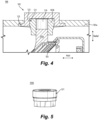
Fig. 4 is a close up view of the embodiment of a support structure ofFig. 1 ; -
Fig. 5 is a perspective view of an embodiment of a nut in accordance with this disclosure; -
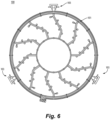
Fig. 6 is a schematic diagram showing an arrangement of a plurality of support structures on an embodiment of a fuel manifold; -
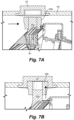
Fig. 7A shows a portion of an embodiment of a method in accordance with this disclosure; -
Fig. 7B shows another portion of the embodiment of a method ofFig. 7A ; -
Fig. 8 shows an embodiment of a support structure in accordance with this disclosure; -
Fig. 9 shows an embodiment of a support structure in accordance with this disclosure; -
Fig. 10 is a cross-sectional view of an embodiment of a system in accordance with this disclosure; and -
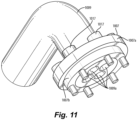
Fig. 11 is a perspective view of an embodiment of a fuel inlet tube and an embodiment of an outer mount of the embodiment ofFig. 10 in accordance with this disclosure. - Reference will now be made to the drawings wherein like reference numerals identify similar structural features or aspects of the subject disclosure. For purposes of explanation and illustration, and not limitation, an illustrative view of an embodiment of a combustor section support structure in accordance with the disclosure is shown in
Fig. 1 and is designated generally byreference character 99. Other embodiments and/or aspects of this disclosure are shown inFigs. 2-11 . Certain embodiments described herein can be used to provide support that allows radial movement due to thermal mismatch while preventing axial movement of a fuel manifold without causing axial stress. - In accordance with at least one aspect of this disclosure, referring to
Figs. 1-6 , a combustorsection support structure 100 can include afuel manifold 101 and one or more radial stud assemblies 103 (e.g., as referenced inFig. 3 ) connected to the fuel manifold 101 (e.g., as referenced inFig. 3 ) and configured to allow thefuel manifold 101 to move radially relative to an engine case 105 (e.g., due to thermal growth mismatch) and to fix thefuel manifold 101 axially relative to theengine case 105. Each of the one or moreradial stud assemblies 103 can include afirst portion 103a mounted to thefuel manifold 101 and asecond portion 103b configured to mount to theengine case 105. Thefirst portion 103a and thesecond portion 103b can be configured to slide relative to each other to allow relative radial movement, but to prevent axial relative movement. - The
first portion 103a can extend from thefuel manifold 101 to a radial distance that is less than aninner diameter 105a of theengine case 105. In certain embodiments, thestructure 100 can include theengine case 105. - The one or more
radial stud assemblies 103 can be radially aligned (e.g., alone anaxial plane 107 as shown inFig. 2 ) with a fuel inlet tube 109 (e.g., with a structural and/or thermal expansion centerline) associated with theengine case 105. In certain embodiments, thestructure 100 can include a plurality offuel nozzles 111 connected to and supported by thefuel manifold 101, adome plate 113 connected to the plurality of thefuel nozzles 111, acombustor liner 115 connected to thedome plate 113, and a slidingseal 117 configured to extend from the engine case 105 (e.g., mounted to the engine case 105) and radially supporting a downstream portion of thecombustor liner 115. The slidingseal 117 is configured to allow thecombustor liner 115 to move axially (e.g., due to thermal growth when hot) and maintain a sealed relationship with thecombustor liner 115. Thestructure 100 can include any other suitable turbomachine combustor and related components. - In certain embodiments, e.g., as shown in
Fig. 4 , thefirst portion 103a can be a stud (e.g., as shown inFigs. 1-7B ). Thesecond portion 103b can be a nut (e.g., as shown inFigs. 4 and 5 ) having astud channel 119 configured to slidably receive the stud, andouter nut threads 121 configured to thread to anut socket 123. Theassembly structure 100 can include a plurality of assemblies 103 (e.g., three evenly spaced circumferentially as shown inFig. 6 ). Any suitable number and arrangement of assemblies to mount the manifold 101 as disclosed herein to allow relative radial, but not axial, thermal expansion is contemplated herein. - The one or more
radial stud assemblies 103 can further include thenut socket 123 havinginner socket threads 125 configured to mesh with theouter nut threads 121. In certain embodiments, thenut socket 123 can be attached to the engine case 105 (e.g., welded or otherwise fixed). - As shown in
Figs. 7A and 7B , in accordance with at least one aspect of this disclosure, a method can include inserting afuel manifold 101 axially into anengine case 105 to a mount location such that aradial stud assembly 103 attached to thefuel manifold 101 is aligned with afuel inlet 109. The method can include moving a nut (e.g.,first portion 103b) of theradial stud assembly 103 radially outward relative to a stud (e.g.,first portion 103a) of theradial stud assembly 103 and thefuel manifold 101. The method can include attaching the nut to the engine case 105 (e.g., threading thesecond portion 103b to socket 123) such that the nut is configured to allow the stud to move radially relative to theengine case 105 and to constrain the stud axially relative to theengine case 105. In certain embodiments, attaching the nut can include threading the nut into asocket 123 associated with theengine case 105 while the stud is within astud channel 119 of the nut. - In certain embodiments, referring to
Fig. 8 , thenut socket 823 can be formed in the engine case 805 (e.g., as shown inFig. 8 ). For example, thesocket 823 can be a threaded aperture define in anengine case 805 that is suitably thick to provide necessary strength. - In certain embodiments, e.g., as shown in
Fig. 9 , thefirst portion 903a can be a nut attached to thefuel manifold 101. Thesecond portion 903b can be a stud configured to be installed through the engine case 105 (e.g., through socket 923). For example, thesecond portion 903b can thread to thesocket 923, or can otherwise be inserted into and fixed to thesocket 923. The nut (e.g., thefirst portion 903a as shown inFig. 9 ) can include a stud channel (e.g., as disclosed above) configured to slidably receive the stud, for example. - In accordance with at least one embodiment of this disclosure, e.g., as shown in
Figs. 1-9 , aturbomachine 99 can include a combustor section support structure, e.g.,structure 100. The structure can be any suitable embodiment of a structure disclosed herein, for example, e.g.,structure 100 as described above. - In accordance with at least one aspect of this disclosure, referring additionally to
Figs. 10 and11 , asystem 1000 can include afuel manifold 101 configured to distribute fuel to one ormore fuel nozzles 111 of aturbomachine 99, and afuel inlet assembly 1001 configured to connect to thefuel manifold 101 through anengine case 105. Thefuel inlet assembly 1001 can be configured to axially retain thefuel manifold 101 relative to theengine case 105 and to allow radial movement of thefuel manifold 101 relative to the engine case (e.g., due to thermal expansion mismatch). Theassembly 1001 can work in concert with thestructure 103 as disclosed above, and can be aligned along theaxial plane 107 as described above, for example. - In certain embodiments, the
fuel inlet assembly 1001 can include afuel inlet socket 1003 fixed to thefuel manifold 101. Thefuel inlet socket 1003 can define one or more (e.g., four)socket fuel channels 1003a in fluid communication with one or more flow paths (not shown) of thefuel manifold 101. - The
fuel inlet assembly 1001 can include aninner mount 1005 configured to abut aninner diameter 105a of theengine case 105. Theinner mount 1005 can define aninner mount channel 1005a configured to receive thefuel inlet socket 1003 such that thefuel inlet socket 1003 is configured to slide radially relative to theinner mount 1005 but is retained axially by theinner mount 1005. Thefuel inlet assembly 1001 can include an outer mount configured to mount 1007 to theinner mount 1005 through theengine case 105 to fix theinner mount 1005 and theouter mount 1007 to theengine case 105. - The
fuel inlet assembly 1001 can include afuel inlet tube 1009 defining one or moreinlet fuel channels 1009a configured to be in fluid communication the one or moresocket fuel channels 1003a of thefuel inlet socket 1003. Theinner mount 1005 and theouter mount 1007 are configured to radially retain thefuel inlet tube 1009 therebetween. - The
fuel inlet assembly 1001 can include one ormore transfer tubes 1011 between the one or moreinlet fuel channels 1009a and the one or moresocket fuel channels 1003a. The one ormore transfer tubes 1011 can be configured to move relative to thefuel inlet tube 1009 and maintain engagement with thefuel inlet socket 1003 to follow radial motion of the fuel inlet socket 1003 (e.g., due to relative thermal contraction of thefuel manifold 101 relative to the engine case 105). The one ormore transfer tubes 1011 can be biased toward thefuel inlet socket 1003 with one ormore biasing members 1013. In certain embodiments, each of the one ormore transfer tubes 1011 can be partially disposed within and sealed to a respectiveinlet fuel channel 1009a and asocket fuel channel 1003a (e.g., via one or more oring seals disposed in one or more seal channels as shown). In certain embodiments, each of the one ormore biasing members 1013 can be disposed within a respectiveinlet fuel channel 1009a (e.g., to push thetransfer tubes 1011 against the interior walls of thefuel inlet socket 1003. - The
inner mount 1005 can include an enginecase seal channel 1005b that is configured to receive a first seal (not shown) to seal to theinner diameter 105a of theengine case 105. Theinner mount 1005 can include a fuel inlettube seal channel 1005c configured to receive a second seal (not shown) to seal to thefuel inlet tube 1009 e.g., an end face of thefuel inlet tube 1009 as shown). - In certain embodiments, the
outer mount 1007 can include anouter flange portion 1007a and apost portion 1007b. Thepost portion 1007b can be configured to insert into anopening 1015 in theengine case 105. Theouter flange portion 1007a can be configured to limit insertion of thepost portion 1007b (e.g., by contacting anouter surface 105b of the case 105). Thepost portion 1007b can be the same length as theengine case 105 is thick to abut the inner mount 1005 (e.g., as shown inFig. 10 ). Theouter mount 1007 can include aninner flange portion 1007c that is configured to radially trap thefuel inlet tube 1009 by engaging with a fuelinlet tube flange 1009b. Theouter mount 1007 can include a plurality of fastener holes (not shown) each configured to allow afastener 1017 to extend through theouter mount 1007 to interface with theinner mount 1005. - For example, the
inner mount 1005 can include a plurality of engagement holes (not shown) configured to receive thefastener 1017 extending through theouter mount 1005. Eachfastener 1007 can be a threaded bolt, and the engagement holes can be threaded to mesh with each threaded bolt. - In certain embodiments, the
inner mount 1005 can be shaped to be conformal to theinner diameter 105a of the engine case 105 (e.g., to have a matching curvature). Theouter mount 1007 can be shaped to be conformal to anouter surface 105b of theengine case 105. - In accordance with at least one aspect of this disclosure, a
turbomachine 99 can include an engine case (e.g., as disclosed above), a fuel manifold (e.g., as disclosed above), a fuel inlet socket (e.g., as disclosed above) fixed to the fuel manifold, an inner mount (e.g., as disclosed above) abutting an inner diameter of an engine case, an outer mount (e.g., as disclosed above) mounted to the inner mount through the engine case to fix the inner mount and the outer mount to the engine case, and a fuel inlet tube (e.g., as disclosed above). The inner mount and the outer mount can radially retain the fuel inlet tube therebetween, e.g., as disclosed above. - In accordance with at least one aspect of this disclosure, a method can include axially loading a fuel manifold into an engine case of a turbomachine with an inner mount and a fuel inlet socket disposed within an inner mount channel of the inner mount, and inserting an outer mount and a fuel inlet tube having one or more biased transfer tubes into an opening of the engine case to abut the inner mount to the outer mount and to fluidly connect the one or more biased transfer tubes to the fuel inlet socket. The method can include attaching the outer mount to the inner mount to fix the outer mount and the inner mount to the engine case to axially fix the fuel manifold, the inner mount, the outer mount, the fuel inlet tube, and the fuel inlet socket such that the fuel inlet socket is configured to radially move relative to the inner mount and the biased transfer tubes are configured to push against the fuel inlet socket to maintain a sealed fluid communication with the fuel inlet socket.
- Embodiments can provide support of a combustor section, for example. Traditional systems require burner seals, for example. Traditional systems connect the combustor liner directly to casing, for example, and other components must be sealed in a complex manner due to axial growth. Additionally, traditional systems have a combustor load that is carried through the dome, which requires the dome to be thicker to handle forces while hot.
- In certain embodiments, the fuel injectors disclosed herein can be mounted to an internal fuel manifold (e.g., via a flexible/coiled inlet hose flow structure) rather than directly to the engine case. The combustor dome plates and combustor liner can also be attached to the internal fuel manifold. To accommodate the axial thermal expansion, the combustor liner can have a sliding interface near the exit of the combustor. The fuel manifold can be fixed axially through studs located circumferentially around the combustor. These studs can lock the combustor section to the engine case at a specific axial location that is coincident with the centerline of the incoming fuel inlet line. By placing the axial location of the studs in-line with the fuel inlet, there is no stress on the manifold inlet line caused by the axial thermal mismatches between the combustor liner and engine case, for example. In embodiments, the studs allow radial movement. The studs can have a sliding fit in which the movement axis is perpendicular to the engine centerline axis, for example. This can accommodate any relative radial growth that may happen between a cold fuel manifold and a hot engine case, for example.
- In certain embodiments, there can be at least two studs which hold up the engine and are located circumferentially around the combustor section. These two or more studs each can have an axis that intersects the centerline of the engine, but are at an angle relative to each other. This can allow them to keep the fuel manifold concentric within the engine case, for example.
- The axial plane of the studs can be the same as the axial plane of the fuel inlet. This reduces the stresses caused by thermal mismatch. The studs can be directly attached to the fuel manifold. The fuel manifold can be the main structure that supports the nozzles, dome, and combustor liner, for example. Since the manifold can remain cool, it is more capable of supporting this structure than a typical combustor section which attaches the outer combustor liner to case, and uses a hot dome to carry the load of the liner, for example.
- Combustors are supported by the engine case. Fuel injectors are also typically mounted to the engine case. Thermal displacement causes stresses in fuel components. This can cause them to break, or be overdesigned. Also, the load is traditionally carried through hot combustor components, which does not have high strength at high temperatures. Certain embodiments include a method of connecting an internal fuel manifold to the engine case. Embodiments can include a manifold that provides a cold structure to carry the load of the combustor liner. Certain embodiments result in lighter weight components (e.g., more strength at colder temperatures), less stress in fuel components, and a way of assembling an internal manifold into a combustor section.
- Certain embodiments can include an internal fuel manifold and a multipoint fuel array and embodiments for providing fuel to the fuel manifold. The fuel can be passed through a high pressure case and can be able to seal both the air and fuel. In addition, it can accommodate a thermal displacement and supply multiple separate fuel channels to allow fuel staging.
- Embodiments can include a fuel inlet which connects external fuel lines to an internal fuel manifold. The inlet can be responsible for thermal compliance (e.g., radially), support multiple separate fuel channels, and can allow installation inside of the engine case. The axial plane of the combustor supports can be the same as the axial plane of the fuel inlet. This can reduce the stresses caused by thermal mismatch. In embodiments, the inlet only has to accommodate radial thermal growth. In embodiments, the inlet can be constrained to prevent axial expansion, and embodiments can provide a structure to properly seal the fuel inlet and account for radial expansion at the fuel inlet. The fuel inlet tube can has four fuel channels for example, but can contain fewer or more. Multi-channel fuel inlets can allow flowing fuel to different circuits to control fuel flow in different states (e.g., start up, low flow idle, etc.).
- Embodiments can allow internal manifold installation and connection to an external fuel source. Embodiments can allow thermal expansion of the fuel components, for example.
- Those having ordinary skill in the art understand that any numerical values disclosed herein can be exact values or can be values within a range. Further, any terms of approximation (e.g., "about", "approximately", "around") used in this disclosure can mean the stated value within a range. For example, in certain embodiments, the range can be within (plus or minus) 20%, or within 10%, or within 5%, or within 2%, or within any other suitable percentage or number as appreciated by those having ordinary skill in the art (e.g., for known tolerance limits or error ranges).
- The articles "a", "an", and "the" as used herein and in the appended claims are used herein to refer to one or to more than one (i.e., to at least one) of the grammatical object of the article unless the context clearly indicates otherwise. By way of example, "an element" means one element or more than one element.
- The phrase "and/or," as used herein in the specification and in the claims, should be understood to mean "either or both" of the elements so conjoined, i.e., elements that are conjunctively present in some cases and disjunctively present in other cases. Multiple elements listed with "and/or" should be construed in the same fashion, i.e., "one or more" of the elements so conjoined. Other elements may optionally be present other than the elements specifically identified by the "and/or" clause, whether related or unrelated to those elements specifically identified. Thus, as a non-limiting example, a reference to "A and/or B", when used in conjunction with open-ended language such as "comprising" can refer, in one embodiment, to A only (optionally including elements other than B); in another embodiment, to B only (optionally including elements other than A); in yet another embodiment, to both A and B (optionally including other elements); etc.
- As used herein in the specification and in the claims, "or" should be understood to have the same meaning as "and/or" as defined above. For example, when separating items in a list, "or" or "and/or" shall be interpreted as being inclusive, i.e., the inclusion of at least one, but also including more than one, of a number or list of elements, and, optionally, additional unlisted items. Only terms clearly indicated to the contrary, such as "only one of' or "exactly one of," or, when used in the claims, "consisting of," will refer to the inclusion of exactly one element of a number or list of elements. In general, the term "or" as used herein shall only be interpreted as indicating exclusive alternatives (i.e., "one or the other but not both") when preceded by terms of exclusivity, such as "either," "one of," "only one of," or "exactly one of."
- Any suitable combination(s) of any disclosed embodiments and/or any suitable portion(s) thereof are contemplated herein as appreciated by those having ordinary skill in the art in view of this disclosure.
- The embodiments of the present disclosure, as described above and shown in the drawings, provide for improvement in the art to which they pertain. While the subject disclosure includes reference to certain embodiments, those skilled in the art will readily appreciate that changes and/or modifications may be made thereto without departing from the spirit and scope of the subject disclosure.
Claims (14)
- A combustor section support structure, comprising:a fuel manifold; andone or more radial stud assemblies connected to the fuel manifold and configured to allow the fuel manifold to move radially relative to an engine case and to fix the fuel manifold axially relative to the engine case, wherein each of the one or more radial stud assemblies include:a first portion mounted to the fuel manifold; anda second portion configured to mount to an engine case, wherein the first portion and the second portion are configured to slide relative to each other to allow relative radial movement, but to prevent axial relative movement.
- The structure of claim 1, wherein the first portion extends from the fuel manifold to a radial distance that is less than an inner diameter of the engine case.
- The structure of claim 1 or 2, further comprising the engine case.
- The structure of claim 3, wherein the one or more radial stud assemblies are radially aligned with a fuel inlet tube associated with the engine case.
- The structure of claim 4, further comprising:a plurality of fuel nozzles connected to and supported by the fuel manifold;a dome plate connected to the plurality of the fuel nozzles;a combustor liner connected to the dome plate; anda sliding seal configured to extend from the engine case and radially supporting a downstream portion of the combustor liner.
- The structure of any preceding claim, wherein the first portion is a stud.
- The structure of claim 6, wherein the second portion is a nut having a stud channel configured to slidably receive the stud, and outer nut threads configured to thread to a nut socket.
- The structure of claim 7, wherein the one or more radial stud assemblies further include a nut socket having inner socket threads configured to mesh with the outer nut threads.
- The structure of claim 8, wherein the nut socket is attached to the engine case.
- The structure of claim 7, wherein the nut socket is formed in the engine case.
- The structure of any preceding claim, wherein the first portion is a nut attached to the fuel manifold, wherein the second portion is a stud configured to be installed through the engine case, wherein the nut includes a stud channel configured to slidably receive the stud.
- A turbomachine, comprising the combustor section support structure as claimed in any preceding claim.
- A method, comprising:inserting a fuel manifold axially into an engine case to a mount location such that a radial stud assembly attached to the fuel manifold is aligned with a fuel inlet;moving a nut of the radial stud assembly radially outward relative to a stud of the radial stud assembly and the fuel manifold; andattaching the nut to the engine case such that the nut is configured to allow the stud to move radially relative to the engine case and to constrain the stud axially relative to the engine case.
- The method of claim 13, wherein attaching the nut includes threading the nut into a socket associated with the engine case while the stud is within a stud channel of the nut.
Applications Claiming Priority (1)
| Application Number | Priority Date | Filing Date | Title |
|---|---|---|---|
| US18/109,768 US20240271570A1 (en) | 2023-02-14 | 2023-02-14 | Combustor section support structures |
Publications (1)
| Publication Number | Publication Date |
|---|---|
| EP4417871A1 true EP4417871A1 (en) | 2024-08-21 |
Family
ID=89941072
Family Applications (1)
| Application Number | Title | Priority Date | Filing Date |
|---|---|---|---|
| EP24157545.5A Withdrawn EP4417871A1 (en) | 2023-02-14 | 2024-02-14 | Combustor section support structures |
Country Status (2)
| Country | Link |
|---|---|
| US (1) | US20240271570A1 (en) |
| EP (1) | EP4417871A1 (en) |
Citations (4)
| Publication number | Priority date | Publication date | Assignee | Title |
|---|---|---|---|---|
| US5771696A (en) * | 1996-10-21 | 1998-06-30 | General Electric Company | Internal manifold fuel injection assembly for gas turbine |
| US20060156731A1 (en) * | 2005-01-18 | 2006-07-20 | Pratt & Whitney Canada Corp. | Heat shield for a fuel manifold and method |
| US20080092545A1 (en) * | 2006-10-24 | 2008-04-24 | Jason Fish | Gas turbine internal manifold mounting arrangement |
| US20200191059A1 (en) * | 2018-12-18 | 2020-06-18 | Delavan Inc. | Heat shielding for internal fuel manifolds |
Family Cites Families (3)
| Publication number | Priority date | Publication date | Assignee | Title |
|---|---|---|---|---|
| US4567730A (en) * | 1983-10-03 | 1986-02-04 | General Electric Company | Shielded combustor |
| US7540157B2 (en) * | 2005-06-14 | 2009-06-02 | Pratt & Whitney Canada Corp. | Internally mounted fuel manifold with support pins |
| WO2015060902A1 (en) * | 2013-10-25 | 2015-04-30 | United Technologies Corporation | Spherical ball bearing housing |
-
2023
- 2023-02-14 US US18/109,768 patent/US20240271570A1/en not_active Abandoned
-
2024
- 2024-02-14 EP EP24157545.5A patent/EP4417871A1/en not_active Withdrawn
Patent Citations (4)
| Publication number | Priority date | Publication date | Assignee | Title |
|---|---|---|---|---|
| US5771696A (en) * | 1996-10-21 | 1998-06-30 | General Electric Company | Internal manifold fuel injection assembly for gas turbine |
| US20060156731A1 (en) * | 2005-01-18 | 2006-07-20 | Pratt & Whitney Canada Corp. | Heat shield for a fuel manifold and method |
| US20080092545A1 (en) * | 2006-10-24 | 2008-04-24 | Jason Fish | Gas turbine internal manifold mounting arrangement |
| US20200191059A1 (en) * | 2018-12-18 | 2020-06-18 | Delavan Inc. | Heat shielding for internal fuel manifolds |
Also Published As
| Publication number | Publication date |
|---|---|
| US20240271570A1 (en) | 2024-08-15 |
Similar Documents
| Publication | Publication Date | Title |
|---|---|---|
| CA2597592C (en) | Gas turbine combustor and fuel manifold mounting arrangement | |
| EP3553383B1 (en) | Fuel injectors for turbomachines | |
| US9932903B2 (en) | Fuel manifold and fuel injector arrangement | |
| US7805946B2 (en) | Combustor flow sleeve attachment system | |
| EP3540314B1 (en) | Combustor liner for a gas turbine | |
| US10605171B2 (en) | Fuel nozzle manifold systems for turbomachines | |
| EP2942509A1 (en) | A fuel manifold and fuel injector arrangment for a combustion chamber | |
| US7721546B2 (en) | Gas turbine internal manifold mounting arrangement | |
| US20180087776A1 (en) | Mounting assembly for gas turbine engine fluid conduit | |
| EP4417871A1 (en) | Combustor section support structures | |
| EP4417873A1 (en) | Combustor section support structures | |
| EP4417872A1 (en) | Combustor section support structures | |
| US10344624B2 (en) | Captive component on a fastener | |
| US11852075B2 (en) | Fuel injector systems and support structures | |
| US12209750B2 (en) | Line replaceable fuel injector panels with single hatch installation | |
| EP4417875B1 (en) | System with replaceable fuel injector panels for a gas turbine engine | |
| US12158108B2 (en) | Slanted loading for line replaceable multipoint fuel injector arrays | |
| KR102934759B1 (en) | Exhuast duct assembly and aircraft including the same |
Legal Events
| Date | Code | Title | Description |
|---|---|---|---|
| PUAI | Public reference made under article 153(3) epc to a published international application that has entered the european phase |
Free format text: ORIGINAL CODE: 0009012 |
|
| STAA | Information on the status of an ep patent application or granted ep patent |
Free format text: STATUS: THE APPLICATION HAS BEEN PUBLISHED |
|
| AK | Designated contracting states |
Kind code of ref document: A1 Designated state(s): AL AT BE BG CH CY CZ DE DK EE ES FI FR GB GR HR HU IE IS IT LI LT LU LV MC ME MK MT NL NO PL PT RO RS SE SI SK SM TR |
|
| STAA | Information on the status of an ep patent application or granted ep patent |
Free format text: STATUS: THE APPLICATION IS DEEMED TO BE WITHDRAWN |
|
| 18D | Application deemed to be withdrawn |
Effective date: 20250222 |