EP4417265A1 - Cosmetic composition - Google Patents
Cosmetic composition Download PDFInfo
- Publication number
- EP4417265A1 EP4417265A1 EP22880798.8A EP22880798A EP4417265A1 EP 4417265 A1 EP4417265 A1 EP 4417265A1 EP 22880798 A EP22880798 A EP 22880798A EP 4417265 A1 EP4417265 A1 EP 4417265A1
- Authority
- EP
- European Patent Office
- Prior art keywords
- mass
- compound
- oil
- parts
- less
- Prior art date
- Legal status (The legal status is an assumption and is not a legal conclusion. Google has not performed a legal analysis and makes no representation as to the accuracy of the status listed.)
- Pending
Links
- 239000000203 mixture Substances 0.000 title claims abstract description 103
- 239000002537 cosmetic Substances 0.000 title claims abstract description 35
- 150000001875 compounds Chemical class 0.000 claims abstract description 120
- 125000001424 substituent group Chemical group 0.000 claims abstract description 13
- 125000003545 alkoxy group Chemical group 0.000 claims abstract description 8
- 125000001997 phenyl group Chemical group [H]C1=C([H])C([H])=C(*)C([H])=C1[H] 0.000 claims abstract description 5
- 229960000601 octocrylene Drugs 0.000 claims description 11
- 229940100498 polysilicone-15 Drugs 0.000 claims description 11
- 229920002282 polysilicones-15 Polymers 0.000 claims description 11
- 229940068171 ethyl hexyl salicylate Drugs 0.000 claims description 10
- 229960000655 ensulizole Drugs 0.000 claims description 9
- 229960004881 homosalate Drugs 0.000 claims description 9
- 229960001679 octinoxate Drugs 0.000 claims description 9
- XLYOFNOQVPJJNP-UHFFFAOYSA-N water Substances O XLYOFNOQVPJJNP-UHFFFAOYSA-N 0.000 claims description 9
- 229960001630 diethylamino hydroxybenzoyl hexyl benzoate Drugs 0.000 claims description 8
- YBGZDTIWKVFICR-JLHYYAGUSA-N Octyl 4-methoxycinnamic acid Chemical compound CCCCC(CC)COC(=O)\C=C\C1=CC=C(OC)C=C1 YBGZDTIWKVFICR-JLHYYAGUSA-N 0.000 claims description 6
- HEAHZSUCFKFERC-UHFFFAOYSA-N ecamsule Chemical compound CC1(C)C2CCC1(CS(O)(=O)=O)C(=O)C2=CC(C=C1)=CC=C1C=C1C(=O)C2(CS(O)(=O)=O)CCC1C2(C)C HEAHZSUCFKFERC-UHFFFAOYSA-N 0.000 claims description 5
- UVCJGUGAGLDPAA-UHFFFAOYSA-N ensulizole Chemical compound N1C2=CC(S(=O)(=O)O)=CC=C2N=C1C1=CC=CC=C1 UVCJGUGAGLDPAA-UHFFFAOYSA-N 0.000 claims description 5
- FMJSMJQBSVNSBF-UHFFFAOYSA-N octocrylene Chemical group C=1C=CC=CC=1C(=C(C#N)C(=O)OCC(CC)CCCC)C1=CC=CC=C1 FMJSMJQBSVNSBF-UHFFFAOYSA-N 0.000 claims description 5
- JGUMTYWKIBJSTN-UHFFFAOYSA-N 2-ethylhexyl 4-[[4,6-bis[4-(2-ethylhexoxycarbonyl)anilino]-1,3,5-triazin-2-yl]amino]benzoate Chemical compound C1=CC(C(=O)OCC(CC)CCCC)=CC=C1NC1=NC(NC=2C=CC(=CC=2)C(=O)OCC(CC)CCCC)=NC(NC=2C=CC(=CC=2)C(=O)OCC(CC)CCCC)=N1 JGUMTYWKIBJSTN-UHFFFAOYSA-N 0.000 claims description 4
- ZSNLEVJATWJBLU-UHFFFAOYSA-N 2-tert-butyl-2-methoxy-1,3-diphenylpropane-1,3-dione Chemical compound C=1C=CC=CC=1C(=O)C(C(C)(C)C)(OC)C(=O)C1=CC=CC=C1 ZSNLEVJATWJBLU-UHFFFAOYSA-N 0.000 claims description 4
- FMRHJJZUHUTGKE-UHFFFAOYSA-N Ethylhexyl salicylate Chemical compound CCCCC(CC)COC(=O)C1=CC=CC=C1O FMRHJJZUHUTGKE-UHFFFAOYSA-N 0.000 claims description 4
- XVAMCHGMPYWHNL-UHFFFAOYSA-N bemotrizinol Chemical compound OC1=CC(OCC(CC)CCCC)=CC=C1C1=NC(C=2C=CC(OC)=CC=2)=NC(C=2C(=CC(OCC(CC)CCCC)=CC=2)O)=N1 XVAMCHGMPYWHNL-UHFFFAOYSA-N 0.000 claims description 4
- WSSJONWNBBTCMG-UHFFFAOYSA-N 2-hydroxybenzoic acid (3,3,5-trimethylcyclohexyl) ester Chemical compound C1C(C)(C)CC(C)CC1OC(=O)C1=CC=CC=C1O WSSJONWNBBTCMG-UHFFFAOYSA-N 0.000 claims description 3
- OOHTWBUKWQKKEE-UHFFFAOYSA-N [6-(diethylamino)-6-hydroxy-7-oxo-7-phenylheptyl] benzoate Chemical compound C=1C=CC=CC=1C(=O)C(O)(N(CC)CC)CCCCCOC(=O)C1=CC=CC=C1 OOHTWBUKWQKKEE-UHFFFAOYSA-N 0.000 claims description 3
- 230000000475 sunscreen effect Effects 0.000 claims description 3
- 239000000516 sunscreening agent Substances 0.000 claims description 3
- 238000010521 absorption reaction Methods 0.000 abstract description 29
- 230000000052 comparative effect Effects 0.000 description 70
- 239000003921 oil Substances 0.000 description 58
- LFQSCWFLJHTTHZ-UHFFFAOYSA-N Ethanol Chemical compound CCO LFQSCWFLJHTTHZ-UHFFFAOYSA-N 0.000 description 18
- -1 polydimethylsiloxane Polymers 0.000 description 17
- 229920002545 silicone oil Polymers 0.000 description 17
- 230000000694 effects Effects 0.000 description 13
- VYPSYNLAJGMNEJ-UHFFFAOYSA-N Silicium dioxide Chemical compound O=[Si]=O VYPSYNLAJGMNEJ-UHFFFAOYSA-N 0.000 description 12
- XLOMVQKBTHCTTD-UHFFFAOYSA-N Zinc monoxide Chemical compound [Zn]=O XLOMVQKBTHCTTD-UHFFFAOYSA-N 0.000 description 12
- XDOFQFKRPWOURC-UHFFFAOYSA-N 16-methylheptadecanoic acid Chemical compound CC(C)CCCCCCCCCCCCCCC(O)=O XDOFQFKRPWOURC-UHFFFAOYSA-N 0.000 description 10
- PEDCQBHIVMGVHV-UHFFFAOYSA-N Glycerine Chemical compound OCC(O)CO PEDCQBHIVMGVHV-UHFFFAOYSA-N 0.000 description 10
- 238000011156 evaluation Methods 0.000 description 9
- 239000002245 particle Substances 0.000 description 9
- 239000004215 Carbon black (E152) Substances 0.000 description 8
- 238000002835 absorbance Methods 0.000 description 8
- 239000003795 chemical substances by application Substances 0.000 description 8
- 239000004205 dimethyl polysiloxane Substances 0.000 description 8
- 235000013870 dimethyl polysiloxane Nutrition 0.000 description 8
- 229930195733 hydrocarbon Natural products 0.000 description 8
- 150000002430 hydrocarbons Chemical class 0.000 description 8
- 229920000435 poly(dimethylsiloxane) Polymers 0.000 description 8
- 229940031569 diisopropyl sebacate Drugs 0.000 description 7
- 229940008099 dimethicone Drugs 0.000 description 7
- XFKBBSZEQRFVSL-UHFFFAOYSA-N dipropan-2-yl decanedioate Chemical compound CC(C)OC(=O)CCCCCCCCC(=O)OC(C)C XFKBBSZEQRFVSL-UHFFFAOYSA-N 0.000 description 7
- 239000000843 powder Substances 0.000 description 7
- 239000000872 buffer Substances 0.000 description 6
- 239000000377 silicon dioxide Substances 0.000 description 6
- 230000002195 synergetic effect Effects 0.000 description 6
- 239000011787 zinc oxide Substances 0.000 description 6
- DGSZGZSCHSQXFV-UHFFFAOYSA-N 2,3-bis(2-ethylhexanoyloxy)propyl 2-ethylhexanoate Chemical compound CCCCC(CC)C(=O)OCC(OC(=O)C(CC)CCCC)COC(=O)C(CC)CCCC DGSZGZSCHSQXFV-UHFFFAOYSA-N 0.000 description 5
- VZSRBBMJRBPUNF-UHFFFAOYSA-N 2-(2,3-dihydro-1H-inden-2-ylamino)-N-[3-oxo-3-(2,4,6,7-tetrahydrotriazolo[4,5-c]pyridin-5-yl)propyl]pyrimidine-5-carboxamide Chemical compound C1C(CC2=CC=CC=C12)NC1=NC=C(C=N1)C(=O)NCCC(N1CC2=C(CC1)NN=N2)=O VZSRBBMJRBPUNF-UHFFFAOYSA-N 0.000 description 5
- QCDWFXQBSFUVSP-UHFFFAOYSA-N 2-phenoxyethanol Chemical compound OCCOC1=CC=CC=C1 QCDWFXQBSFUVSP-UHFFFAOYSA-N 0.000 description 5
- 235000011187 glycerol Nutrition 0.000 description 5
- JEGUKCSWCFPDGT-UHFFFAOYSA-N h2o hydrate Chemical compound O.O JEGUKCSWCFPDGT-UHFFFAOYSA-N 0.000 description 5
- 229960005323 phenoxyethanol Drugs 0.000 description 5
- 239000004094 surface-active agent Substances 0.000 description 5
- 239000006097 ultraviolet radiation absorber Substances 0.000 description 5
- GTJOHISYCKPIMT-UHFFFAOYSA-N 2-methylundecane Chemical compound CCCCCCCCCC(C)C GTJOHISYCKPIMT-UHFFFAOYSA-N 0.000 description 4
- QZKRHPLGUJDVAR-UHFFFAOYSA-K EDTA trisodium salt Chemical compound [Na+].[Na+].[Na+].OC(=O)CN(CC([O-])=O)CCN(CC([O-])=O)CC([O-])=O QZKRHPLGUJDVAR-UHFFFAOYSA-K 0.000 description 4
- SGVYKUFIHHTIFL-UHFFFAOYSA-N Isobutylhexyl Natural products CCCCCCCC(C)C SGVYKUFIHHTIFL-UHFFFAOYSA-N 0.000 description 4
- AFCARXCZXQIEQB-UHFFFAOYSA-N N-[3-oxo-3-(2,4,6,7-tetrahydrotriazolo[4,5-c]pyridin-5-yl)propyl]-2-[[3-(trifluoromethoxy)phenyl]methylamino]pyrimidine-5-carboxamide Chemical compound O=C(CCNC(=O)C=1C=NC(=NC=1)NCC1=CC(=CC=C1)OC(F)(F)F)N1CC2=C(CC1)NN=N2 AFCARXCZXQIEQB-UHFFFAOYSA-N 0.000 description 4
- FAPWRFPIFSIZLT-UHFFFAOYSA-M Sodium chloride Chemical compound [Na+].[Cl-] FAPWRFPIFSIZLT-UHFFFAOYSA-M 0.000 description 4
- VKPSKYDESGTTFR-UHFFFAOYSA-N isododecane Natural products CC(C)(C)CC(C)CC(C)(C)C VKPSKYDESGTTFR-UHFFFAOYSA-N 0.000 description 4
- 229940088608 peg-9 polydimethylsiloxyethyl dimethicone Drugs 0.000 description 4
- GWEVSGVZZGPLCZ-UHFFFAOYSA-N Titan oxide Chemical compound O=[Ti]=O GWEVSGVZZGPLCZ-UHFFFAOYSA-N 0.000 description 3
- 238000010306 acid treatment Methods 0.000 description 3
- 125000002015 acyclic group Chemical group 0.000 description 3
- CEGOLXSVJUTHNZ-UHFFFAOYSA-K aluminium tristearate Chemical compound [Al+3].CCCCCCCCCCCCCCCCCC([O-])=O.CCCCCCCCCCCCCCCCCC([O-])=O.CCCCCCCCCCCCCCCCCC([O-])=O CEGOLXSVJUTHNZ-UHFFFAOYSA-K 0.000 description 3
- 229940063655 aluminum stearate Drugs 0.000 description 3
- KRKNYBCHXYNGOX-UHFFFAOYSA-N citric acid Chemical compound OC(=O)CC(O)(C(O)=O)CC(O)=O KRKNYBCHXYNGOX-UHFFFAOYSA-N 0.000 description 3
- 235000014113 dietary fatty acids Nutrition 0.000 description 3
- 229940102552 disteardimonium hectorite Drugs 0.000 description 3
- 239000000194 fatty acid Substances 0.000 description 3
- 229930195729 fatty acid Natural products 0.000 description 3
- MSRJTTSHWYDFIU-UHFFFAOYSA-N octyltriethoxysilane Chemical compound CCCCCCCC[Si](OCC)(OCC)OCC MSRJTTSHWYDFIU-UHFFFAOYSA-N 0.000 description 3
- 150000002894 organic compounds Chemical class 0.000 description 3
- 238000002360 preparation method Methods 0.000 description 3
- 239000003755 preservative agent Substances 0.000 description 3
- 239000011164 primary particle Substances 0.000 description 3
- PRAKJMSDJKAYCZ-UHFFFAOYSA-N squalane Chemical compound CC(C)CCCC(C)CCCC(C)CCCCC(C)CCCC(C)CCCC(C)C PRAKJMSDJKAYCZ-UHFFFAOYSA-N 0.000 description 3
- OGIDPMRJRNCKJF-UHFFFAOYSA-N titanium oxide Inorganic materials [Ti]=O OGIDPMRJRNCKJF-UHFFFAOYSA-N 0.000 description 3
- PUPZLCDOIYMWBV-UHFFFAOYSA-N (+/-)-1,3-Butanediol Chemical compound CC(O)CCO PUPZLCDOIYMWBV-UHFFFAOYSA-N 0.000 description 2
- RKJGFHYCZPZJPE-UHFFFAOYSA-N 2,2-bis(16-methylheptadecanoyloxymethyl)butyl 16-methylheptadecanoate Chemical compound CC(C)CCCCCCCCCCCCCCC(=O)OCC(CC)(COC(=O)CCCCCCCCCCCCCCC(C)C)COC(=O)CCCCCCCCCCCCCCC(C)C RKJGFHYCZPZJPE-UHFFFAOYSA-N 0.000 description 2
- BANXPJUEBPWEOT-UHFFFAOYSA-N 2-methyl-Pentadecane Chemical compound CCCCCCCCCCCCCC(C)C BANXPJUEBPWEOT-UHFFFAOYSA-N 0.000 description 2
- XMSXQFUHVRWGNA-UHFFFAOYSA-N Decamethylcyclopentasiloxane Chemical compound C[Si]1(C)O[Si](C)(C)O[Si](C)(C)O[Si](C)(C)O[Si](C)(C)O1 XMSXQFUHVRWGNA-UHFFFAOYSA-N 0.000 description 2
- RTZKZFJDLAIYFH-UHFFFAOYSA-N Diethyl ether Chemical compound CCOCC RTZKZFJDLAIYFH-UHFFFAOYSA-N 0.000 description 2
- UQSXHKLRYXJYBZ-UHFFFAOYSA-N Iron oxide Chemical compound [Fe]=O UQSXHKLRYXJYBZ-UHFFFAOYSA-N 0.000 description 2
- LRHPLDYGYMQRHN-UHFFFAOYSA-N N-Butanol Chemical compound CCCCO LRHPLDYGYMQRHN-UHFFFAOYSA-N 0.000 description 2
- AMQJEAYHLZJPGS-UHFFFAOYSA-N N-Pentanol Chemical compound CCCCCO AMQJEAYHLZJPGS-UHFFFAOYSA-N 0.000 description 2
- 230000006750 UV protection Effects 0.000 description 2
- 239000012190 activator Substances 0.000 description 2
- 125000003342 alkenyl group Chemical group 0.000 description 2
- 125000000217 alkyl group Chemical group 0.000 description 2
- 125000000304 alkynyl group Chemical group 0.000 description 2
- 125000003277 amino group Chemical group 0.000 description 2
- 125000003118 aryl group Chemical group 0.000 description 2
- 125000004429 atom Chemical group 0.000 description 2
- 238000009835 boiling Methods 0.000 description 2
- 125000004122 cyclic group Chemical group 0.000 description 2
- 125000000753 cycloalkyl group Chemical group 0.000 description 2
- DIOQZVSQGTUSAI-UHFFFAOYSA-N decane Chemical compound CCCCCCCCCC DIOQZVSQGTUSAI-UHFFFAOYSA-N 0.000 description 2
- GHVNFZFCNZKVNT-UHFFFAOYSA-N decanoic acid Chemical compound CCCCCCCCCC(O)=O GHVNFZFCNZKVNT-UHFFFAOYSA-N 0.000 description 2
- 229940090934 diphenylsiloxy phenyl trimethicone Drugs 0.000 description 2
- 239000002270 dispersing agent Substances 0.000 description 2
- SNRUBQQJIBEYMU-UHFFFAOYSA-N dodecane Chemical compound CCCCCCCCCCCC SNRUBQQJIBEYMU-UHFFFAOYSA-N 0.000 description 2
- 230000001747 exhibiting effect Effects 0.000 description 2
- 150000004665 fatty acids Chemical class 0.000 description 2
- 125000000524 functional group Chemical group 0.000 description 2
- 125000003976 glyceryl group Chemical group [H]C([*])([H])C(O[H])([H])C(O[H])([H])[H] 0.000 description 2
- 125000000623 heterocyclic group Chemical group 0.000 description 2
- ZSIAUFGUXNUGDI-UHFFFAOYSA-N hexan-1-ol Chemical compound CCCCCCO ZSIAUFGUXNUGDI-UHFFFAOYSA-N 0.000 description 2
- 125000002887 hydroxy group Chemical group [H]O* 0.000 description 2
- WWZKQHOCKIZLMA-UHFFFAOYSA-N octanoic acid Chemical compound CCCCCCCC(O)=O WWZKQHOCKIZLMA-UHFFFAOYSA-N 0.000 description 2
- OQILCOQZDHPEAZ-UHFFFAOYSA-N octyl palmitate Chemical compound CCCCCCCCCCCCCCCC(=O)OCCCCCCCC OQILCOQZDHPEAZ-UHFFFAOYSA-N 0.000 description 2
- 229920001296 polysiloxane Polymers 0.000 description 2
- 230000002335 preservative effect Effects 0.000 description 2
- 239000011734 sodium Substances 0.000 description 2
- 239000011780 sodium chloride Substances 0.000 description 2
- 239000002562 thickening agent Substances 0.000 description 2
- 229940118594 trimethylolpropane triisostearate Drugs 0.000 description 2
- NJAYHLDXCVDTEV-ZJSQCTGTSA-N (12z,15z)-9-hydroxy-10-oxooctadeca-12,15-dienoic acid Chemical compound CC\C=C/C\C=C/CC(=O)C(O)CCCCCCCC(O)=O NJAYHLDXCVDTEV-ZJSQCTGTSA-N 0.000 description 1
- JNYAEWCLZODPBN-JGWLITMVSA-N (2r,3r,4s)-2-[(1r)-1,2-dihydroxyethyl]oxolane-3,4-diol Chemical compound OC[C@@H](O)[C@H]1OC[C@H](O)[C@H]1O JNYAEWCLZODPBN-JGWLITMVSA-N 0.000 description 1
- QIVRABJQTNPYAI-QFIPXVFZSA-N (2s)-n,n'-dibutyl-2-(dodecanoylamino)pentanediamide Chemical compound CCCCCCCCCCCC(=O)N[C@H](C(=O)NCCCC)CCC(=O)NCCCC QIVRABJQTNPYAI-QFIPXVFZSA-N 0.000 description 1
- BJDAUCLANVMIOB-UHFFFAOYSA-N (3-decanoyloxy-2,2-dimethylpropyl) decanoate Chemical compound CCCCCCCCCC(=O)OCC(C)(C)COC(=O)CCCCCCCCC BJDAUCLANVMIOB-UHFFFAOYSA-N 0.000 description 1
- NRTKYSGFUISGRQ-UHFFFAOYSA-N (3-heptanoyloxy-2,2-dimethylpropyl) heptanoate Chemical compound CCCCCCC(=O)OCC(C)(C)COC(=O)CCCCCC NRTKYSGFUISGRQ-UHFFFAOYSA-N 0.000 description 1
- YYGNTYWPHWGJRM-UHFFFAOYSA-N (6E,10E,14E,18E)-2,6,10,15,19,23-hexamethyltetracosa-2,6,10,14,18,22-hexaene Chemical compound CC(C)=CCCC(C)=CCCC(C)=CCCC=C(C)CCC=C(C)CCC=C(C)C YYGNTYWPHWGJRM-UHFFFAOYSA-N 0.000 description 1
- QMMJWQMCMRUYTG-UHFFFAOYSA-N 1,2,4,5-tetrachloro-3-(trifluoromethyl)benzene Chemical compound FC(F)(F)C1=C(Cl)C(Cl)=CC(Cl)=C1Cl QMMJWQMCMRUYTG-UHFFFAOYSA-N 0.000 description 1
- 229940058015 1,3-butylene glycol Drugs 0.000 description 1
- WAYINTBTZWQNSN-UHFFFAOYSA-N 11-methyldodecyl 3,5,5-trimethylhexanoate Chemical compound CC(C)CCCCCCCCCCOC(=O)CC(C)CC(C)(C)C WAYINTBTZWQNSN-UHFFFAOYSA-N 0.000 description 1
- ULQISTXYYBZJSJ-UHFFFAOYSA-N 12-hydroxyoctadecanoic acid Chemical compound CCCCCCC(O)CCCCCCCCCCC(O)=O ULQISTXYYBZJSJ-UHFFFAOYSA-N 0.000 description 1
- 229940043268 2,2,4,4,6,8,8-heptamethylnonane Drugs 0.000 description 1
- HFWHTGSLDKKCMD-UHFFFAOYSA-N 2,2-bis(octanoyloxymethyl)butyl octanoate Chemical compound CCCCCCCC(=O)OCC(CC)(COC(=O)CCCCCCC)COC(=O)CCCCCCC HFWHTGSLDKKCMD-UHFFFAOYSA-N 0.000 description 1
- JNAYPSWVMNJOPQ-UHFFFAOYSA-N 2,3-bis(16-methylheptadecanoyloxy)propyl 16-methylheptadecanoate Chemical compound CC(C)CCCCCCCCCCCCCCC(=O)OCC(OC(=O)CCCCCCCCCCCCCCC(C)C)COC(=O)CCCCCCCCCCCCCCC(C)C JNAYPSWVMNJOPQ-UHFFFAOYSA-N 0.000 description 1
- OLZQCKXRHXVSRM-UHFFFAOYSA-N 2-(3-ethyl-1-phenylheptylidene)-1,3-dimethoxyimidazolidine-4,5-dione propanoic acid Chemical compound C(CC)(=O)O.C(C)C(CC(C1=CC=CC=C1)=C1N(C(C(N1OC)=O)=O)OC)CCCC OLZQCKXRHXVSRM-UHFFFAOYSA-N 0.000 description 1
- KIHBGTRZFAVZRV-UHFFFAOYSA-N 2-Hydroxyoctadecanoic acid Natural products CCCCCCCCCCCCCCCCC(O)C(O)=O KIHBGTRZFAVZRV-UHFFFAOYSA-N 0.000 description 1
- XHZPRMZZQOIPDS-UHFFFAOYSA-N 2-Methyl-2-[(1-oxo-2-propenyl)amino]-1-propanesulfonic acid Chemical compound OS(=O)(=O)CC(C)(C)NC(=O)C=C XHZPRMZZQOIPDS-UHFFFAOYSA-N 0.000 description 1
- OUCGJMIVSYHBEC-UHFFFAOYSA-N 2-ethylhexyl 2-ethylhexanoate Chemical compound CCCCC(CC)COC(=O)C(CC)CCCC OUCGJMIVSYHBEC-UHFFFAOYSA-N 0.000 description 1
- SFAAOBGYWOUHLU-UHFFFAOYSA-N 2-ethylhexyl hexadecanoate Chemical compound CCCCCCCCCCCCCCCC(=O)OCC(CC)CCCC SFAAOBGYWOUHLU-UHFFFAOYSA-N 0.000 description 1
- FTLLYZOWBWEERE-UHFFFAOYSA-N 2-phenoxyethyl octanoate Chemical compound CCCCCCCC(=O)OCCOC1=CC=CC=C1 FTLLYZOWBWEERE-UHFFFAOYSA-N 0.000 description 1
- HMUNZKIMDDHJMJ-UHFFFAOYSA-N 2-tert-butyl-2-hydroxy-4,4-dimethyl-3-phenylpentanoic acid Chemical compound OC(=O)C(O)(C(C)(C)C)C(C(C)(C)C)C1=CC=CC=C1 HMUNZKIMDDHJMJ-UHFFFAOYSA-N 0.000 description 1
- UIVPNOBLHXUKDX-UHFFFAOYSA-N 3,5,5-trimethylhexyl 3,5,5-trimethylhexanoate Chemical compound CC(C)(C)CC(C)CCOC(=O)CC(C)CC(C)(C)C UIVPNOBLHXUKDX-UHFFFAOYSA-N 0.000 description 1
- WHNPOQXWAMXPTA-UHFFFAOYSA-N 3-methylbut-2-enamide Chemical compound CC(C)=CC(N)=O WHNPOQXWAMXPTA-UHFFFAOYSA-N 0.000 description 1
- HIQIXEFWDLTDED-UHFFFAOYSA-N 4-hydroxy-1-piperidin-4-ylpyrrolidin-2-one Chemical compound O=C1CC(O)CN1C1CCNCC1 HIQIXEFWDLTDED-UHFFFAOYSA-N 0.000 description 1
- MVJSIAIXMFGVSA-UHFFFAOYSA-N 6-(2-hexyldecoxy)-6-oxohexanoic acid Chemical compound CCCCCCCCC(CCCCCC)COC(=O)CCCCC(O)=O MVJSIAIXMFGVSA-UHFFFAOYSA-N 0.000 description 1
- 239000005632 Capric acid (CAS 334-48-5) Substances 0.000 description 1
- 239000005635 Caprylic acid (CAS 124-07-2) Substances 0.000 description 1
- VEXZGXHMUGYJMC-UHFFFAOYSA-M Chloride anion Chemical compound [Cl-] VEXZGXHMUGYJMC-UHFFFAOYSA-M 0.000 description 1
- RDOFJDLLWVCMRU-UHFFFAOYSA-N Diisobutyl adipate Chemical compound CC(C)COC(=O)CCCCC(=O)OCC(C)C RDOFJDLLWVCMRU-UHFFFAOYSA-N 0.000 description 1
- IUMSDRXLFWAGNT-UHFFFAOYSA-N Dodecamethylcyclohexasiloxane Chemical compound C[Si]1(C)O[Si](C)(C)O[Si](C)(C)O[Si](C)(C)O[Si](C)(C)O[Si](C)(C)O1 IUMSDRXLFWAGNT-UHFFFAOYSA-N 0.000 description 1
- 235000009300 Ehretia acuminata Nutrition 0.000 description 1
- 244000046038 Ehretia acuminata Species 0.000 description 1
- FPVVYTCTZKCSOJ-UHFFFAOYSA-N Ethylene glycol distearate Chemical compound CCCCCCCCCCCCCCCCCC(=O)OCCOC(=O)CCCCCCCCCCCCCCCCC FPVVYTCTZKCSOJ-UHFFFAOYSA-N 0.000 description 1
- CMBYOWLFQAFZCP-UHFFFAOYSA-N Hexyl dodecanoate Chemical compound CCCCCCCCCCCC(=O)OCCCCCC CMBYOWLFQAFZCP-UHFFFAOYSA-N 0.000 description 1
- 206010061218 Inflammation Diseases 0.000 description 1
- 239000004909 Moisturizer Substances 0.000 description 1
- 206010051246 Photodermatosis Diseases 0.000 description 1
- 239000006087 Silane Coupling Agent Substances 0.000 description 1
- 229920002125 Sokalan® Polymers 0.000 description 1
- 229930006000 Sucrose Natural products 0.000 description 1
- 206010042496 Sunburn Diseases 0.000 description 1
- BHEOSNUKNHRBNM-UHFFFAOYSA-N Tetramethylsqualene Natural products CC(=C)C(C)CCC(=C)C(C)CCC(C)=CCCC=C(C)CCC(C)C(=C)CCC(C)C(C)=C BHEOSNUKNHRBNM-UHFFFAOYSA-N 0.000 description 1
- RTAQQCXQSZGOHL-UHFFFAOYSA-N Titanium Chemical compound [Ti] RTAQQCXQSZGOHL-UHFFFAOYSA-N 0.000 description 1
- ZNQPTHOTPFRAQP-UHFFFAOYSA-N [2-bis(trimethylsilyloxy)silyl-4-methylpentan-2-yl] 2,3-dimethoxy-3-(2-methoxyphenyl)prop-2-enoate Chemical compound C[Si](C)(C)O[SiH](O[Si](C)(C)C)C(C)(CC(C)C)OC(=O)C(OC)=C(OC)C1=CC=CC=C1OC ZNQPTHOTPFRAQP-UHFFFAOYSA-N 0.000 description 1
- DRRMRHKHTQRWMB-UHFFFAOYSA-N [3-(2-ethylhexanoyloxy)-2,2-bis(2-ethylhexanoyloxymethyl)propyl] 2-ethylhexanoate Chemical compound CCCCC(CC)C(=O)OCC(COC(=O)C(CC)CCCC)(COC(=O)C(CC)CCCC)COC(=O)C(CC)CCCC DRRMRHKHTQRWMB-UHFFFAOYSA-N 0.000 description 1
- CMPDPBDUZTUXAD-UHFFFAOYSA-N [3-hydroxy-2-(16-methylheptadecanoyloxy)propyl] 16-methylheptadecanoate Chemical compound CC(C)CCCCCCCCCCCCCCC(=O)OCC(CO)OC(=O)CCCCCCCCCCCCCCC(C)C CMPDPBDUZTUXAD-UHFFFAOYSA-N 0.000 description 1
- 239000004480 active ingredient Substances 0.000 description 1
- 150000001298 alcohols Chemical class 0.000 description 1
- 150000001413 amino acids Chemical class 0.000 description 1
- 230000001166 anti-perspirative effect Effects 0.000 description 1
- 239000003963 antioxidant agent Substances 0.000 description 1
- 239000003213 antiperspirant Substances 0.000 description 1
- 239000012298 atmosphere Substances 0.000 description 1
- WPYMKLBDIGXBTP-UHFFFAOYSA-N benzoic acid Chemical compound OC(=O)C1=CC=CC=C1 WPYMKLBDIGXBTP-UHFFFAOYSA-N 0.000 description 1
- HGKOWIQVWAQWDS-UHFFFAOYSA-N bis(16-methylheptadecyl) 2-hydroxybutanedioate Chemical compound CC(C)CCCCCCCCCCCCCCCOC(=O)CC(O)C(=O)OCCCCCCCCCCCCCCCC(C)C HGKOWIQVWAQWDS-UHFFFAOYSA-N 0.000 description 1
- WMNULTDOANGXRT-UHFFFAOYSA-N bis(2-ethylhexyl) butanedioate Chemical compound CCCCC(CC)COC(=O)CCC(=O)OCC(CC)CCCC WMNULTDOANGXRT-UHFFFAOYSA-N 0.000 description 1
- JNFDQAYPZCYWLD-UHFFFAOYSA-N bis[2-(2-ethoxyethoxy)ethyl] cyclohexane-1,4-dicarboxylate Chemical compound CCOCCOCCOC(=O)C1CCC(C(=O)OCCOCCOCC)CC1 JNFDQAYPZCYWLD-UHFFFAOYSA-N 0.000 description 1
- FQUNFJULCYSSOP-UHFFFAOYSA-N bisoctrizole Chemical compound N1=C2C=CC=CC2=NN1C1=CC(C(C)(C)CC(C)(C)C)=CC(CC=2C(=C(C=C(C=2)C(C)(C)CC(C)(C)C)N2N=C3C=CC=CC3=N2)O)=C1O FQUNFJULCYSSOP-UHFFFAOYSA-N 0.000 description 1
- 235000019437 butane-1,3-diol Nutrition 0.000 description 1
- 229910052799 carbon Inorganic materials 0.000 description 1
- 125000004432 carbon atom Chemical group C* 0.000 description 1
- 125000002915 carbonyl group Chemical group [*:2]C([*:1])=O 0.000 description 1
- 239000004359 castor oil Substances 0.000 description 1
- 235000019438 castor oil Nutrition 0.000 description 1
- 229910000420 cerium oxide Inorganic materials 0.000 description 1
- 239000002738 chelating agent Substances 0.000 description 1
- 239000003086 colorant Substances 0.000 description 1
- 239000002826 coolant Substances 0.000 description 1
- 239000007822 coupling agent Substances 0.000 description 1
- 229920006037 cross link polymer Polymers 0.000 description 1
- 229940086555 cyclomethicone Drugs 0.000 description 1
- DTPCFIHYWYONMD-UHFFFAOYSA-N decaethylene glycol Chemical compound OCCOCCOCCOCCOCCOCCOCCOCCOCCOCCO DTPCFIHYWYONMD-UHFFFAOYSA-N 0.000 description 1
- SASYSVUEVMOWPL-NXVVXOECSA-N decyl oleate Chemical compound CCCCCCCCCCOC(=O)CCCCCCC\C=C/CCCCCCCC SASYSVUEVMOWPL-NXVVXOECSA-N 0.000 description 1
- 239000000645 desinfectant Substances 0.000 description 1
- 238000010586 diagram Methods 0.000 description 1
- 229940105984 diethylhexyl succinate Drugs 0.000 description 1
- 229940031769 diisobutyl adipate Drugs 0.000 description 1
- KWABLUYIOFEZOY-UHFFFAOYSA-N dioctyl butanedioate Chemical compound CCCCCCCCOC(=O)CCC(=O)OCCCCCCCC KWABLUYIOFEZOY-UHFFFAOYSA-N 0.000 description 1
- 239000000975 dye Substances 0.000 description 1
- 239000003995 emulsifying agent Substances 0.000 description 1
- 230000002708 enhancing effect Effects 0.000 description 1
- 239000010696 ester oil Substances 0.000 description 1
- 150000002148 esters Chemical class 0.000 description 1
- 125000001301 ethoxy group Chemical group [H]C([H])([H])C([H])([H])O* 0.000 description 1
- 239000000284 extract Substances 0.000 description 1
- 239000010419 fine particle Substances 0.000 description 1
- 150000002222 fluorine compounds Chemical class 0.000 description 1
- 239000003205 fragrance Substances 0.000 description 1
- ZEMPKEQAKRGZGQ-XOQCFJPHSA-N glycerol triricinoleate Natural products CCCCCC[C@@H](O)CC=CCCCCCCCC(=O)OC[C@@H](COC(=O)CCCCCCCC=CC[C@@H](O)CCCCCC)OC(=O)CCCCCCCC=CC[C@H](O)CCCCCC ZEMPKEQAKRGZGQ-XOQCFJPHSA-N 0.000 description 1
- 229940100608 glycol distearate Drugs 0.000 description 1
- 125000005843 halogen group Chemical group 0.000 description 1
- XJNUECKWDBNFJV-UHFFFAOYSA-N hexadecyl 2-ethylhexanoate Chemical compound CCCCCCCCCCCCCCCCOC(=O)C(CC)CCCC XJNUECKWDBNFJV-UHFFFAOYSA-N 0.000 description 1
- 229940100463 hexyl laurate Drugs 0.000 description 1
- 230000004054 inflammatory process Effects 0.000 description 1
- 150000002484 inorganic compounds Chemical class 0.000 description 1
- 229910010272 inorganic material Inorganic materials 0.000 description 1
- 238000011835 investigation Methods 0.000 description 1
- 230000001788 irregular Effects 0.000 description 1
- 229940100554 isononyl isononanoate Drugs 0.000 description 1
- KUVMKLCGXIYSNH-UHFFFAOYSA-N isopentadecane Natural products CCCCCCCCCCCCC(C)C KUVMKLCGXIYSNH-UHFFFAOYSA-N 0.000 description 1
- XUGNVMKQXJXZCD-UHFFFAOYSA-N isopropyl palmitate Chemical compound CCCCCCCCCCCCCCCC(=O)OC(C)C XUGNVMKQXJXZCD-UHFFFAOYSA-N 0.000 description 1
- 229940091554 lauryl peg-9 polydimethylsiloxyethyl dimethicone Drugs 0.000 description 1
- 239000007788 liquid Substances 0.000 description 1
- 229940057995 liquid paraffin Drugs 0.000 description 1
- 229910052751 metal Inorganic materials 0.000 description 1
- 239000002184 metal Substances 0.000 description 1
- 229910044991 metal oxide Inorganic materials 0.000 description 1
- 150000004706 metal oxides Chemical class 0.000 description 1
- 125000000956 methoxy group Chemical group [H]C([H])([H])O* 0.000 description 1
- 230000001333 moisturizer Effects 0.000 description 1
- 229940078812 myristyl myristate Drugs 0.000 description 1
- JXTPJDDICSTXJX-UHFFFAOYSA-N n-Triacontane Natural products CCCCCCCCCCCCCCCCCCCCCCCCCCCCCC JXTPJDDICSTXJX-UHFFFAOYSA-N 0.000 description 1
- 229920005615 natural polymer Polymers 0.000 description 1
- HMMGMWAXVFQUOA-UHFFFAOYSA-N octamethylcyclotetrasiloxane Chemical compound C[Si]1(C)O[Si](C)(C)O[Si](C)(C)O[Si](C)(C)O1 HMMGMWAXVFQUOA-UHFFFAOYSA-N 0.000 description 1
- 229960002446 octanoic acid Drugs 0.000 description 1
- 239000002674 ointment Substances 0.000 description 1
- BMMGVYCKOGBVEV-UHFFFAOYSA-N oxo(oxoceriooxy)cerium Chemical compound [Ce]=O.O=[Ce]=O BMMGVYCKOGBVEV-UHFFFAOYSA-N 0.000 description 1
- 229940056211 paraffin Drugs 0.000 description 1
- 239000012188 paraffin wax Substances 0.000 description 1
- 230000008845 photoaging Effects 0.000 description 1
- 239000000049 pigment Substances 0.000 description 1
- 238000009832 plasma treatment Methods 0.000 description 1
- 239000004584 polyacrylic acid Substances 0.000 description 1
- 229920000642 polymer Polymers 0.000 description 1
- 229940078492 ppg-17 Drugs 0.000 description 1
- BDERNNFJNOPAEC-UHFFFAOYSA-N propan-1-ol Chemical compound CCCO BDERNNFJNOPAEC-UHFFFAOYSA-N 0.000 description 1
- 239000002994 raw material Substances 0.000 description 1
- 238000001878 scanning electron micrograph Methods 0.000 description 1
- 239000003352 sequestering agent Substances 0.000 description 1
- 229910000077 silane Inorganic materials 0.000 description 1
- 229920002050 silicone resin Polymers 0.000 description 1
- 239000000344 soap Substances 0.000 description 1
- 239000001509 sodium citrate Substances 0.000 description 1
- NLJMYIDDQXHKNR-UHFFFAOYSA-K sodium citrate Chemical compound O.O.[Na+].[Na+].[Na+].[O-]C(=O)CC(O)(CC([O-])=O)C([O-])=O NLJMYIDDQXHKNR-UHFFFAOYSA-K 0.000 description 1
- 239000007787 solid Substances 0.000 description 1
- 229940032094 squalane Drugs 0.000 description 1
- 229940031439 squalene Drugs 0.000 description 1
- TUHBEKDERLKLEC-UHFFFAOYSA-N squalene Natural products CC(=CCCC(=CCCC(=CCCC=C(/C)CCC=C(/C)CC=C(C)C)C)C)C TUHBEKDERLKLEC-UHFFFAOYSA-N 0.000 description 1
- 239000000126 substance Substances 0.000 description 1
- 239000005720 sucrose Substances 0.000 description 1
- 125000000542 sulfonic acid group Chemical group 0.000 description 1
- 230000001629 suppression Effects 0.000 description 1
- 239000012756 surface treatment agent Substances 0.000 description 1
- 229920001059 synthetic polymer Polymers 0.000 description 1
- DZKXJUASMGQEMA-UHFFFAOYSA-N tetradecyl tetradecanoate Chemical compound CCCCCCCCCCCCCCOC(=O)CCCCCCCCCCCCC DZKXJUASMGQEMA-UHFFFAOYSA-N 0.000 description 1
- 239000010936 titanium Substances 0.000 description 1
- 229910052719 titanium Inorganic materials 0.000 description 1
- 229940098385 triisostearin Drugs 0.000 description 1
- SCRSFLUHMDMRFP-UHFFFAOYSA-N trimethyl-(methyl-octyl-trimethylsilyloxysilyl)oxysilane Chemical compound CCCCCCCC[Si](C)(O[Si](C)(C)C)O[Si](C)(C)C SCRSFLUHMDMRFP-UHFFFAOYSA-N 0.000 description 1
- ZQTYRTSKQFQYPQ-UHFFFAOYSA-N trisiloxane Chemical compound [SiH3]O[SiH2]O[SiH3] ZQTYRTSKQFQYPQ-UHFFFAOYSA-N 0.000 description 1
Classifications
-
- A—HUMAN NECESSITIES
- A61—MEDICAL OR VETERINARY SCIENCE; HYGIENE
- A61K—PREPARATIONS FOR MEDICAL, DENTAL OR TOILETRY PURPOSES
- A61K8/00—Cosmetics or similar toiletry preparations
- A61K8/18—Cosmetics or similar toiletry preparations characterised by the composition
- A61K8/92—Oils, fats or waxes; Derivatives thereof, e.g. hydrogenation products thereof
-
- A—HUMAN NECESSITIES
- A61—MEDICAL OR VETERINARY SCIENCE; HYGIENE
- A61K—PREPARATIONS FOR MEDICAL, DENTAL OR TOILETRY PURPOSES
- A61K8/00—Cosmetics or similar toiletry preparations
- A61K8/18—Cosmetics or similar toiletry preparations characterised by the composition
- A61K8/30—Cosmetics or similar toiletry preparations characterised by the composition containing organic compounds
- A61K8/33—Cosmetics or similar toiletry preparations characterised by the composition containing organic compounds containing oxygen
- A61K8/37—Esters of carboxylic acids
-
- A—HUMAN NECESSITIES
- A61—MEDICAL OR VETERINARY SCIENCE; HYGIENE
- A61K—PREPARATIONS FOR MEDICAL, DENTAL OR TOILETRY PURPOSES
- A61K8/00—Cosmetics or similar toiletry preparations
- A61K8/02—Cosmetics or similar toiletry preparations characterised by special physical form
- A61K8/04—Dispersions; Emulsions
- A61K8/06—Emulsions
- A61K8/062—Oil-in-water emulsions
-
- A—HUMAN NECESSITIES
- A61—MEDICAL OR VETERINARY SCIENCE; HYGIENE
- A61K—PREPARATIONS FOR MEDICAL, DENTAL OR TOILETRY PURPOSES
- A61K8/00—Cosmetics or similar toiletry preparations
- A61K8/02—Cosmetics or similar toiletry preparations characterised by special physical form
- A61K8/04—Dispersions; Emulsions
- A61K8/06—Emulsions
- A61K8/064—Water-in-oil emulsions, e.g. Water-in-silicone emulsions
-
- A—HUMAN NECESSITIES
- A61—MEDICAL OR VETERINARY SCIENCE; HYGIENE
- A61K—PREPARATIONS FOR MEDICAL, DENTAL OR TOILETRY PURPOSES
- A61K8/00—Cosmetics or similar toiletry preparations
- A61K8/18—Cosmetics or similar toiletry preparations characterised by the composition
- A61K8/30—Cosmetics or similar toiletry preparations characterised by the composition containing organic compounds
- A61K8/33—Cosmetics or similar toiletry preparations characterised by the composition containing organic compounds containing oxygen
- A61K8/35—Ketones, e.g. benzophenone
-
- A—HUMAN NECESSITIES
- A61—MEDICAL OR VETERINARY SCIENCE; HYGIENE
- A61K—PREPARATIONS FOR MEDICAL, DENTAL OR TOILETRY PURPOSES
- A61K8/00—Cosmetics or similar toiletry preparations
- A61K8/18—Cosmetics or similar toiletry preparations characterised by the composition
- A61K8/30—Cosmetics or similar toiletry preparations characterised by the composition containing organic compounds
- A61K8/40—Cosmetics or similar toiletry preparations characterised by the composition containing organic compounds containing nitrogen
-
- A—HUMAN NECESSITIES
- A61—MEDICAL OR VETERINARY SCIENCE; HYGIENE
- A61K—PREPARATIONS FOR MEDICAL, DENTAL OR TOILETRY PURPOSES
- A61K8/00—Cosmetics or similar toiletry preparations
- A61K8/18—Cosmetics or similar toiletry preparations characterised by the composition
- A61K8/30—Cosmetics or similar toiletry preparations characterised by the composition containing organic compounds
- A61K8/46—Cosmetics or similar toiletry preparations characterised by the composition containing organic compounds containing sulfur
- A61K8/466—Cosmetics or similar toiletry preparations characterised by the composition containing organic compounds containing sulfur containing sulfonic acid derivatives; Salts
-
- A—HUMAN NECESSITIES
- A61—MEDICAL OR VETERINARY SCIENCE; HYGIENE
- A61Q—SPECIFIC USE OF COSMETICS OR SIMILAR TOILETRY PREPARATIONS
- A61Q17/00—Barrier preparations; Preparations brought into direct contact with the skin for affording protection against external influences, e.g. sunlight, X-rays or other harmful rays, corrosive materials, bacteria or insect stings
- A61Q17/04—Topical preparations for affording protection against sunlight or other radiation; Topical sun tanning preparations
Definitions
- the present invention relates to a cosmetic composition.
- UVB region wavelength 290 to 320 nm
- UVA region wavelength 320 to 400 nm
- UVA region wavelength 320 to 400 nm
- the ultraviolet absorber disclosed in Patent Literature 1 has absorption capability in both the UVA region and the UVB region, has an ultraviolet suppression effect in a wide range of wavelengths, and has a previously unseen property: the ultraviolet absorption capability thereof increases in the UVA and UVB regions with the passage of time of ultraviolet irradiation.
- the ultraviolet absorber of Patent Literature 1 contains, as an active ingredient, a compound represented by general formula I: where -OA represents an alkoxy group.
- Patent Literature 1 the compound represented by general formula I above is included as-is into an ointment or into a liquid medium to exhibit ultraviolet absorption ability in the UVA and UVB regions.
- Patent Literature 1 still has room for improvement in terms of ultraviolet absorption ability in the UVA and UVB regions.
- the present invention aims to improve the above situation, and an object thereof is to provide a cosmetic composition having further improved ultraviolet absorption ability in the UVA and UVB regions.
- the present invention which can achieve the object described above, is as described below.
- a cosmetic composition comprising components (i) and (ii) described below, and an oil content which is capable of at least partially dissolving these components:
- composition according to Aspect 1 wherein the second compound is at least one compound selected from the group consisting of ethylhexyl methoxycinnamate, octocrylene, ethylhexyl salicylate, homosalate, bisethylhexyloxyphenol methoxyphenyl triazine, diethylaminohydroxybenzoylhexyl benzoate, ethylhexyl triazone, polysilicone-15, t-butylmethoxydibenzoylmethane, phenylbenzimidazole sulfonic acid, and terephthalylidene dicamphor sulfonic acid.
- the second compound is at least one compound selected from the group consisting of ethylhexyl methoxycinnamate, octocrylene, ethylhexyl salicylate, homosalate, bisethylhexyloxyphenol meth
- composition according to Aspect 1 or 2 wherein the oil content contains a polar oil.
- composition according to Aspect 3 wherein the first compound is 0.01 parts by mass or more and 50 parts by mass or less relative to a total of 100 parts by mass of the polar oil and the first compound.
- composition according to any one of Aspects 1 to 4 which is an oil-in-water cosmetic.
- composition according to any one of Aspects 1 to 4, which is an oil-based cosmetic which is an oil-based cosmetic.
- composition according to any one of Aspects 1 to 7, which is a sunscreen cosmetic composition which is a sunscreen cosmetic composition.
- a cosmetic composition having further improved ultraviolet absorption ability in the UVA and UVB regions.
- the cosmetic composition of the present invention (hereinafter also referred to simply as “the composition of the present invention") is: a cosmetic composition, comprising components (i) and (ii) described below, and an oil content which is capable of at least partially dissolving these components:
- composition of the present invention by using, in combination with a first compound having ultraviolet absorption ability in the UVA and UVB regions, a second compound having structural portions which are similar to the first compound and having a predetermined molecular weight (250 or more), a remarkable effect of improving the ultraviolet absorption effect can be obtained. Without being limited by theory, it is believed that by using a specific second compound, self-stacking of the first compound can be suppressed, whereby the ultraviolet absorption effect is further improved.
- the first compound has a structure of the following formula (I): where -OA represents an alkoxy group.
- -OA represents an alkoxy group, and more specific examples thereof include, but are not limited to, a methoxy group and an ethoxy group.
- the first compound may have the same structure as the compound represented by general formula I disclosed in Patent Literature 1.
- the first compound be at least partially in a dissolved state, in particular 50% by mass or more thereof be in a dissolved state, more particularly 90% by mass or more thereof be in a dissolved state, further particularly 99% by mass or more thereof be in a dissolved state, and most particularly 100% by mass thereof be in a dissolved state.
- the content of the first compound is not particularly limited, and may be, relative to the entire cosmetic composition, for example, 0.01% by mass or more, 0.05% by mass or more, 0.1% by mass or more, 0.5% by mass or more, 1.0% by mass or more, 1.5% by mass or more, 2.0% by mass or more, 2.5% by mass or more, 3.0% by mass or more, 3.5% by mass or more, 4.0% by mass or more, 4.5% by mass or more, 5.0% by mass or more, 5.5% by mass or more, 6.0% by mass or more, 6.5% by mass or more, 7.0% by mass or more, 7.5% by mass or more, 8.0% by mass or more, 8.5% by mass or more, 9.0% by mass or more, 9.5% by mass or more, or 10% by mass or more, and may be 50% by mass or less, 40% by mass or less, 30% by mass or less, 20% by mass or less, 10% by mass or less, 8.0% by mass or less, 5.0% by mass or less, or 2.0% by mass or less.
- the second compound is different from the first compound described above, has a structure of any of formulas (II-1), (II-2), (II-3), and (II-4) below, and has a molecular weight of 250 or more: where the benzene ring may have a substituent.
- the second compound contains, in the structural formula thereof, a structure of any of formulas (II-1), (II-2), (II-3), and (II-4) above, the benzene ring of the structure of any of formulas (II-1), (II-2), (II-3), and (II-4) may further have one or more substituents.
- examples of the substituent include, but are not limited thereto, an alkyl group or an alkyl group that may be further substituted with another substituent, a cycloalkyl group or a cycloalkyl group that may be further substituted with another substituent, an alkenyl group or an alkenyl group that may be further substituted with another substituent, an alkynyl group or an alkynyl group that may be further substituted with another substituent, an aryl group or an aryl group which may be further substituted with another substituent, a carbonyl group, a hydroxyl group, an alkoxyl group, an amino group or an amino group that may be further substituted with another substituent, a heterocyclic group or a heterocyclic group that may be further substituted with another substituent, a sulfonic acid group, and a halogen atom.
- the molecular weight of the second compound may be, for example, 250 or more, 260 or more, 270 or more, 280 or more, 290 or more, 300 or more, 310 or more, 320 or more, 330 or more, 340 or more, 350 or more, 360 or more, 370 or more, 380 or more, 390 or more, 400 or more, 450 or more, 500 or more, 550 or more, 600 or more, 650 or more, 700 or more, 750 or more, or 800 or more, and the upper limit thereof is not particularly limited, and may be, for example, 10,000 or less, 8,000 or less, 7,000 or less, 6,000 or less, 5,000 or less, 4,000 or less, 3,000 or less, 2,000 or less, or 1,000 or less.
- the second compound may be, but is not limited to, at least one compound selected from the group consisting of ethylhexyl methoxycinnamate (molecular weight: 290), octocrylene (molecular weight: 361), ethylhexyl salicylate (molecular weight: 250), homosalate (molecular weight: 262), bisethylhexyloxyphenol methoxyphenyl triazine (molecular weight: 628), diethylaminohydroxybenzoylhexyl benzoate (molecular weight: 398), ethylhexyl triazone (molecular weight: 823), polysilicone-15 (molecular weight: approximately 6000), t-butylmethoxydibenzoylmethane (molecular weight: 310), phenylbenzimidazole sulfonic acid (molecular weight: 274), terephthalylidene
- the second compound in the case of a solid be at least partially in a dissolved state, in particular 50% by mass or more thereof be in a dissolved state, more particularly 90% by mass or more thereof be in a dissolved state, further particularly 99% by mass or more thereof be in a dissolved state, and most particularly 100% by mass thereof be in a dissolved state.
- the content of the second compound is not particularly limited, and may be, for example, relative to the entire cosmetic composition, 0.01% by mass or more, 0.05% by mass or more, 0.1% by mass or more, 0.5% by mass or more, 1.0% by mass or more, 1.5% by mass or more, 2.0% by mass or more, 2.5% by mass or more, 3.0% by mass or more, 3.5% by mass or more, 4.0% by mass or more, 4.5% by mass or more, 5.0% by mass or more, 5.5% by mass or more, 6.0% by mass or more, 6.5% by mass or more, 7.0% by mass or more, 7.5% by mass or more, 8.0% by mass or more, 8.5% by mass or more, 9.0% by mass or more, 9.5% by mass or more, or 10% by mass or more, and may be 50% by mass or less, 40% by mass or less, 30% by mass or less, 20% by mass or less, 10% by mass or less, 8.0% by mass or less, 5.0% by mass or less, or 2.0% by mass or less.
- the composition of the present invention contains an oil content.
- the oil content contained in the composition of the present invention is an oil content that can at least partially dissolve the first compound and the second compound, and thus, these components (i.e., the first compound and the second compound) can be at least partially dissolved therein.
- the content of the oil content is not particularly limited, and may be, for example, 5.0% by mass or more, 10% by mass or more, 15% by mass or more, 20% by mass or more, 25% by mass or more, 30% by mass or more, 35% by mass or more, 40% by mass or more, or 50% by mass or more, and may be 99.9% by mass or less, 90% by mass or less, 80% by mass or less, 70% by mass or less, 60% by mass or less, 55% by mass or less, 50% by mass or less, 45% by mass or less, 40% by mass or less, 35% by mass or less, or 30% by mass or less.
- the oil content is not particularly limited as long as the first compound and second compound described above can be at least partially dissolved therein. More specifically, the oil content may contains one or more of, for example, a polar oil, a silicone oil, or a hydrocarbon oil. From the viewpoint of dissolving the first compound described above, the oil content preferably contains a polar oil.
- Poly oil refers to polar oils with high polarity among oils usable in cosmetics, other than silicone oils, and refers to those having an IOB value of, for example, 0.10 or more, 0.11 or more, 0.12 or more, or 0.13 or more.
- the IOB value of the polar oil according to the present invention may be 0.50 or less, 0.45 or less, or 0.40 or less.
- the "inorganic value” or “organic value” is set in a molecule, for example, one carbon atom has an “organic value” of 20 and one hydroxyl group has an “inorganic value” of 100, and by integrating the "inorganic value” or “organic value” of each atom and functional group in an organic compound, the IOB value of the organic compound can be calculated (for example, refer to Yoshio KODA, "Organic Conceptual Diagram - Basics and Applications,” pp. 11-17, published by Sankyo Publishing, 1984 ).
- first compounds and second compounds having an IOB value of 0.10 or more are excluded from the "polar oils" herein.
- the polar oil may be, for example, at least one selected from the group consisting of ester oils, ether oils, higher alcohols, and fatty acids having an IOB value of 0.10 or more.
- the amount of the polar oil contained in the oil content is not particularly limited, and may be, relative to a total of 100 parts by mass of the oil content, for example, 5.0 parts by mass or more, 10 parts by mass or more, 15 parts by mass or more, or 20 parts by mass or more, and may be 90 parts by mass or less, 80 parts by mass or less, 70 parts by mass or less, 60 parts by mass or less, 50 parts by mass or less, 40 parts by mass or less, 30 parts by mass or less, or 20 parts by mass or less.
- the polar oil and the first compound described above may be included at the following composition ratio. More specifically, relative to a total of 100 parts by mass of the polar oil and the first compound, the first compound may be 0.01 parts by mass or more, 0.05 parts by mass or more, 0.1 parts by mass or more, 0.5 parts by mass or more, 1.0 part by mass or more, 1.5 parts by mass or more, 2.0 parts by mass or more, 2.5 parts by mass or more, 3.0 parts by mass or more, 3.5 parts by mass or more, 4.0 parts by mass or more, 4.5 parts by mass or more, 5.0 parts by mass or more, 5.5 parts by mass or more, 6.0 parts by mass or more, 6.5 parts by mass or more, 7.0 parts by mass or more, 7.5 parts by mass or more, 8.0 parts by mass or more, 8.5 parts by mass or more, 9.0 parts by mass or more, 9.5 parts by mass or more, 10 parts by mass or more, 15 parts by mass or more,
- sicone oil refers to oil contents having a main skeleton formed by siloxane bonds among those usable in cosmetics.
- second compounds which have a main skeleton formed by siloxane bonds are excluded from the "silicone oil” herein.
- the silicone oil may be a volatile silicone oil or a nonvolatile silicone oil.
- the boiling point under one atmosphere (101.325 kPa) can be used as a guideline for "volatile.”
- the boiling point may be, for example, 250 °C or lower, 240 °C or lower, or 230 °C or lower, and may be 80 °C or higher, 100 °C or higher, 120 °C or higher, 150 °C or higher, or 160 °C or higher.
- nonvolatile is intended to mean that the volatile content is 5% or less when a sample is placed in a sufficiently large flat-bottomed dish and allowed to stand at 105 °C for 3 hours.
- the silicone oil may be an acyclic silicone oil (i.e., a linear silicone oil) or a cyclic silicone oil.
- the silicone oil include, but are not limited to, acyclic silicone oils such as polydimethylsiloxane (dimethicone), trisiloxane, caprylylmethicone, methylphenylpolysiloxane, and methylhydrogenpolysiloxane, cyclic silicone oils such as octamethylcyclotetrasiloxane, decamethylcyclopentasiloxane, and dodecamethylcyclohexasiloxane, and mixtures of two or more thereof. From the viewpoint of feeling during use, acyclic silicone is particularly preferable as the silicone oil.
- acyclic silicone oils such as polydimethylsiloxane (dimethicone), trisiloxane, caprylylmethicone, methylphenylpolysiloxane, and methylhydrogenpolysiloxane
- cyclic silicone oils such as octamethylcyclotetrasiloxane, deca
- the amount of the silicone oil contained in the oil content is not particularly limited, and may be, relative to a total of 100 parts by mass of the oil content, for example, 5.0 parts by mass or more, 10 parts by mass or more, 15 parts by mass or more, or 20 parts by mass or more, and may be 90 parts by mass or less, 80 parts by mass or less, 70 parts by mass or less, 60 parts by mass or less, 50 parts by mass or less, 40 parts by mass or less, 30 parts by mass or less, or 20 parts by mass or less.
- hydrocarbon oil refers to hydrocarbon oils other than the polar oils described above.
- the hydrocarbon oil may be a volatile hydrocarbon oil or a nonvolatile hydrocarbon oil.
- hydrocarbon oil examples include, but are not limited to, decane, dodecane, isododecane, isohexadecane, liquid paraffin, squalane, squalene, paraffin, and mixtures of two or more thereof.
- composition of the present invention can be suitably used as a cosmetic or a raw material thereof.
- the present invention provides a sunscreen cosmetic composition.
- composition of the present invention is not particularly limited, and may be, for example, an oil-in-water emulsified cosmetic composition, a water-in-oil emulsified cosmetic composition, or an oil-based cosmetic composition.
- the cosmetic composition of the present invention may further contain, in addition to the above-mentioned components, arbitrary aqueous components or other components that can be used in the cosmetics field.
- arbitrary aqueous components or other components that can be used in the cosmetics field.
- other components for example, other components such as ultraviolet scattering particles, surfactants, moisturizers, sequestering agents, natural and synthetic polymers, water-soluble and oil-soluble polymers, various extracts, colorants such as organic dyes, preservatives, antioxidants, pigments, thickeners, pH adjusters, fragrances, cooling agents, antiperspirants, disinfectants, skin activators, other chemicals, and various powders may be further contained, but the other components are not limited thereto.
- composition of the present invention may further contain ultraviolet scattering agent particles from the viewpoint of enhancing the ultraviolet protection effect.
- the ultraviolet scattering agent particles are not particularly limited, and may be, for example, particles of at least one metal oxide selected from the group consisting of titanium oxide, zinc oxide, iron oxide, and cerium oxide.
- the ultraviolet scattering agent particles may be subjected to a hydrophobization treatment.
- the hydrophobization treatment may be performed using a known surface treatment agent for hydrophobization, and examples thereof include a fatty acid treatment, fluorine compound treatment, silicone treatment, silicone resin treatment, pendant treatment, silane coupling agent treatment, titanium coupling agent treatment, oil treatment, N-acylated lysine treatment, polyacrylic acid treatment, metal soap treatment, amino acid treatment, inorganic compound treatment, plasma treatment, mechanochemical treatment, silane compound treatment, and silazane compound treatment.
- the average primary particle diameter of the ultraviolet scattering agent particles is not particularly limited, and may be, for example, 5 nm or more, 10 nm or more, or 15 nm or more, and may be 200 nm or less, 100 nm or less, or 50 nm or less. Note that the "average primary particle diameter" may be determined as the circle equivalent diameter of the projected area of the primary particles in an SEM image.
- the shape of the ultraviolet scattering agent particles is not particularly limited, and examples thereof include spherical, plate-like, rod-like, spindle-like, needle-like, and irregular shapes.
- the content thereof is not particularly limited, and is, for example, 1.0% by mass or more and 15% by mass or less.
- the surfactant may function as a dispersant or an emulsifier, or may have both of these functions.
- the surfactant is not particularly limited, and examples thereof include, but are not limited to, isostearic acid, PEG-10 dimethicone, PEG-9 polydimethylsiloxyethyl dimethicone, and lauryl PEG-9 polydimethylsiloxyethyl dimethicone.
- the content thereof is not particularly limited, and is, for example, 1.0% by mass or more and 10% by mass or less.
- composition of the present invention may further contain a water-soluble component such as a lower alcohol.
- a water-soluble component such as a lower alcohol.
- the lower alcohol include, but are not limited to, ethanol, propanol, butanol, pentanol, and hexanol.
- a water-soluble component when contained, the content thereof is not particularly limited, and may be, for example, 1.0 to 10% by mass.
- Example 1 The compositions of Example 1 and Comparative Examples 1-1 and 1-2 were prepared based on the compositions (% by mass) of Table 1 below.
- the ultraviolet absorption wavelength of each prepared composition was measured, and the integrated value of absorbance at 290 to 400 nm was determined.
- Example 1 As is clear from Table 1, it was found that the composition of Example 1, which contained the first and second compounds, had greatly improved ultraviolet absorption ability in the UVA and UVB regions as compared to Comparative Example 1-1, which did not contain the first compound.
- Comparative Example 1-2 which did not contain the first compound but which contained two second compounds, had a slightly improved ultraviolet absorption ability as compared to Comparative Example 1-1, the improvement in ultraviolet absorption ability was not as great as that of Example 1.
- compositions of Examples 2 to 11 and Comparative Examples 2 to 13 were prepared based on the compositions (% by mass) of Tables 2 and 3 below.
- Example 2 In the same manner as Example 1 above, the integrated value of absorbance at 290 to 400 nm of each prepared composition was determined, and the ultraviolet absorption ability improvement effect of each of the compositions of Examples 2 to 11 and Comparative Example 2 was determined as the "boost rate.” The results are shown in Table 2.
- Examples 2 to 11 which contained the first and second compounds, all had large boost rates (i.e., the ultraviolet absorption ability in the UVA and UVB regions was greatly improved) as compared to Comparative Examples 3 to 12, which contained, among the first to third compounds, only the second compound. From this, it is understood that the combination of the first compound and the second compound produces a synergistic effect.
- Comparative Example 2 which contained the first and third compounds, had a small boost rate (i.e., there was no significant improvement in ultraviolet absorption ability in the UVA and UVB regions) as compared to Comparative Example 13, which contained, among the first to third compounds, only the third compound. From this, it is understood that no synergistic effect is produced by the combination of the first compound and the third compound.
- Reference Example 1 which contained the first compound but did not contain the second compound
- Reference Example 2 which contained the second compound but did not contain the first compound
- compositions of Examples 12 to 20 and Comparative Examples 14 to 24 were prepared based on the compositions (% by mass) of Tables 5 and 6 below. Note that the compositions of Comparative Examples 15 to 23, which did not contain the "first compound” and were compensated with an increased amount of the oil content, were otherwise the same as the compositions of Examples 12 to 20, respectively. Furthermore, the composition of Comparative Example 24, which did not contain the "first compound” and was compensated with an increased amount of the oil content, was otherwise the same as the composition of Comparative Example 14.
- Example 5 the integrated value of absorbance at 290 to 400 nm was determined for each composition prepared, and the ultraviolet absorption ability improvement effect of each of the compositions of Examples 12 to 20 and Comparative Example 14 was determined as the "boost rate.” The results are shown in Table 5.
- Examples 12 to 20 which contained the first and second compounds, all had large boost rates (i.e., the ultraviolet absorption ability in the UVA and UVB regions was greatly improved) as compared to Comparative Examples 15 to 23, which contained, among the first to third compounds, only the second compound. From this, it is understood that the combination of the first compound and the second compound produces a synergistic effect.
- Comparative Example 14 which contained the first and third compounds, had a small boost rate (i.e., there was no significant improvement in ultraviolet absorption ability in the UVA and UVB regions) as compared to Comparative Example 24, which contained, among the first to third compounds, only the third compound. From this, it is understood that no synergistic effect is produced by the combination of the first compound and the third compound.
- compositions of Examples 21 to 31 and Comparative Examples 25 to 37 were prepared based on the compositions of Tables 7 and 8 below. Note that the compositions of Comparative Examples 26 to 36, which did not contain the "first compound” and were compensated with an increased amount of water, were otherwise the same as the composition of Examples 21 to 31, respectively. Furthermore, the composition of Comparative Example 37, which did not contain the "first compound” and was compensated with an increased amount of water, was otherwise the same as the composition of Comparative Example 25.
- Example 7 the integrated value of absorbance at 290 to 400 nm was determined for each prepared composition, and the ultraviolet absorption ability improvement effect of each of the compositions of Examples 21 to 31 and Comparative Example 25 was determined as the "boost rate.” The results are shown in Table 7.
- Examples 21 to 31 which contained the first and second compounds, all had large boost rates (i.e., the ultraviolet absorption ability in the UVA and UVB regions was greatly improved) as compared to Comparative Examples 26 to 36, which contained, among the first to third compounds, only the second compound. From this, it is understood that the combination of the first compound and the second compound produces a synergistic effect.
- Comparative Example 25 which contained the first and third compounds, had a small boost rate (i.e., there was no significant improvement in ultraviolet absorption ability in the UVA and UVB regions) as compared to Comparative Example 37, which contained, among the first to third compounds, only the third compound. From this, it is understood that no synergistic effect is produced by the combination of the first compound and the third compound.
Landscapes
- Health & Medical Sciences (AREA)
- Life Sciences & Earth Sciences (AREA)
- Veterinary Medicine (AREA)
- Animal Behavior & Ethology (AREA)
- General Health & Medical Sciences (AREA)
- Public Health (AREA)
- Birds (AREA)
- Epidemiology (AREA)
- Chemical & Material Sciences (AREA)
- Oil, Petroleum & Natural Gas (AREA)
- Emergency Medicine (AREA)
- Dispersion Chemistry (AREA)
- Dermatology (AREA)
- Cosmetics (AREA)
Abstract
Description
- The present invention relates to a cosmetic composition.
- Protecting the skin from ultraviolet rays is an important issue in skin care and body care. In addition to medium-wavelength ultraviolet rays (UVB region: wavelength 290 to 320 nm), which are known to cause sunburn and inflammation, long-wavelength ultraviolet rays (UVA region: wavelength 320 to 400 nm) are known to have an effect on the skin (photoaging, etc.).
- Conventional cosmetics for ultraviolet protection often include 2-ethylhexyl p-methoxycinnamate as an ultraviolet absorber. Though 2-ethylhexyl p-methoxycinnamate has the effect of absorbing ultraviolet rays in the UVB region, there is a need for an ultraviolet absorber having better ultraviolet absorption ability in the UVA region.
- In connection thereto, the ultraviolet absorber disclosed in Patent Literature 1 has absorption capability in both the UVA region and the UVB region, has an ultraviolet suppression effect in a wide range of wavelengths, and has a previously unseen property: the ultraviolet absorption capability thereof increases in the UVA and UVB regions with the passage of time of ultraviolet irradiation.
- More specifically, the ultraviolet absorber of Patent Literature 1 contains, as an active ingredient, a compound represented by general formula I:

- [PTL 1]
WO 2009/041098 - In Patent Literature 1, the compound represented by general formula I above is included as-is into an ointment or into a liquid medium to exhibit ultraviolet absorption ability in the UVA and UVB regions.
- However, the ultraviolet absorber of Patent Literature 1 still has room for improvement in terms of ultraviolet absorption ability in the UVA and UVB regions.
- The present invention aims to improve the above situation, and an object thereof is to provide a cosmetic composition having further improved ultraviolet absorption ability in the UVA and UVB regions.
- The present invention, which can achieve the object described above, is as described below.
- A cosmetic composition, comprising components (i) and (ii) described below, and an oil content which is capable of at least partially dissolving these components:
- (i) a first compound, which has a structure of formula (I) below:

- (ii) a second compound, which is different from the first compound, has a structure of any of (II-1), (II-2), (II-3), and (II-4) described below, and has a molecular weight of 250 or more:

- The composition according to Aspect 1, wherein the second compound is at least one compound selected from the group consisting of ethylhexyl methoxycinnamate, octocrylene, ethylhexyl salicylate, homosalate, bisethylhexyloxyphenol methoxyphenyl triazine, diethylaminohydroxybenzoylhexyl benzoate, ethylhexyl triazone, polysilicone-15, t-butylmethoxydibenzoylmethane, phenylbenzimidazole sulfonic acid, and terephthalylidene dicamphor sulfonic acid.
- The composition according to Aspect 1 or 2, wherein the oil content contains a polar oil.
- The composition according to Aspect 3, wherein the first compound is 0.01 parts by mass or more and 50 parts by mass or less relative to a total of 100 parts by mass of the polar oil and the first compound.
- The composition according to any one of Aspects 1 to 4, which is an oil-in-water cosmetic.
- The composition according to any one of Aspects 1 to 4, which is a water-in-oil cosmetic.
- The composition according to any one of Aspects 1 to 4, which is an oil-based cosmetic.
- The composition according to any one of Aspects 1 to 7, which is a sunscreen cosmetic composition.
- According to the present invention, there can be provided a cosmetic composition having further improved ultraviolet absorption ability in the UVA and UVB regions.
- The embodiments of the present invention will be described below. Note that the present invention is not limited to the following embodiments, and various changes can be made within the scope of the spirit of the invention.
- The cosmetic composition of the present invention (hereinafter also referred to simply as "the composition of the present invention") is:
a cosmetic composition, comprising components (i) and (ii) described below, and an oil content which is capable of at least partially dissolving these components: - (i) a first compound, which has a structure of formula (I) below:

- (ii) a second compound, which is different from the first compound, has a structure of any of (II-1), (II-2), (II-3), and (II-4) described below, and has a molecular weight of 250 or more.

- As a result of rigorous investigation by the present inventors, it was discovered that by using a first compound in combination with a second compound having a specific structure and specific molecular weight, the ultraviolet absorption ability in the UVA and UVB regions of a conventional cosmetic composition could be further improved.
- More specifically, in the composition of the present invention, by using, in combination with a first compound having ultraviolet absorption ability in the UVA and UVB regions, a second compound having structural portions which are similar to the first compound and having a predetermined molecular weight (250 or more), a remarkable effect of improving the ultraviolet absorption effect can be obtained. Without being limited by theory, it is believed that by using a specific second compound, self-stacking of the first compound can be suppressed, whereby the ultraviolet absorption effect is further improved.
- In the present invention, the first compound has a structure of the following formula (I):

- In formula (I), -OA represents an alkoxy group, and more specific examples thereof include, but are not limited to, a methoxy group and an ethoxy group.
- In the present invention, the first compound may have the same structure as the compound represented by general formula I disclosed in Patent Literature 1.
- Furthermore, in the composition of the present invention, from the viewpoint of further exhibiting the effects of the present invention, it is preferable that the first compound be at least partially in a dissolved state, in particular 50% by mass or more thereof be in a dissolved state, more particularly 90% by mass or more thereof be in a dissolved state, further particularly 99% by mass or more thereof be in a dissolved state, and most particularly 100% by mass thereof be in a dissolved state.
- In the composition of the present invention, the content of the first compound is not particularly limited, and may be, relative to the entire cosmetic composition, for example, 0.01% by mass or more, 0.05% by mass or more, 0.1% by mass or more, 0.5% by mass or more, 1.0% by mass or more, 1.5% by mass or more, 2.0% by mass or more, 2.5% by mass or more, 3.0% by mass or more, 3.5% by mass or more, 4.0% by mass or more, 4.5% by mass or more, 5.0% by mass or more, 5.5% by mass or more, 6.0% by mass or more, 6.5% by mass or more, 7.0% by mass or more, 7.5% by mass or more, 8.0% by mass or more, 8.5% by mass or more, 9.0% by mass or more, 9.5% by mass or more, or 10% by mass or more, and may be 50% by mass or less, 40% by mass or less, 30% by mass or less, 20% by mass or less, 10% by mass or less, 8.0% by mass or less, 5.0% by mass or less, or 2.0% by mass or less.
- In the present invention, the second compound is different from the first compound described above, has a structure of any of formulas (II-1), (II-2), (II-3), and (II-4) below, and has a molecular weight of 250 or more:

- In the present invention, as long as the second compound contains, in the structural formula thereof, a structure of any of formulas (II-1), (II-2), (II-3), and (II-4) above, the benzene ring of the structure of any of formulas (II-1), (II-2), (II-3), and (II-4) may further have one or more substituents.
- In the present invention, examples of the substituent include, but are not limited thereto, an alkyl group or an alkyl group that may be further substituted with another substituent, a cycloalkyl group or a cycloalkyl group that may be further substituted with another substituent, an alkenyl group or an alkenyl group that may be further substituted with another substituent, an alkynyl group or an alkynyl group that may be further substituted with another substituent, an aryl group or an aryl group which may be further substituted with another substituent, a carbonyl group, a hydroxyl group, an alkoxyl group, an amino group or an amino group that may be further substituted with another substituent, a heterocyclic group or a heterocyclic group that may be further substituted with another substituent, a sulfonic acid group, and a halogen atom.
- More specifically, the molecular weight of the second compound may be, for example, 250 or more, 260 or more, 270 or more, 280 or more, 290 or more, 300 or more, 310 or more, 320 or more, 330 or more, 340 or more, 350 or more, 360 or more, 370 or more, 380 or more, 390 or more, 400 or more, 450 or more, 500 or more, 550 or more, 600 or more, 650 or more, 700 or more, 750 or more, or 800 or more, and the upper limit thereof is not particularly limited, and may be, for example, 10,000 or less, 8,000 or less, 7,000 or less, 6,000 or less, 5,000 or less, 4,000 or less, 3,000 or less, 2,000 or less, or 1,000 or less.
- In the present invention, the second compound may be, but is not limited to, at least one compound selected from the group consisting of ethylhexyl methoxycinnamate (molecular weight: 290), octocrylene (molecular weight: 361), ethylhexyl salicylate (molecular weight: 250), homosalate (molecular weight: 262), bisethylhexyloxyphenol methoxyphenyl triazine (molecular weight: 628), diethylaminohydroxybenzoylhexyl benzoate (molecular weight: 398), ethylhexyl triazone (molecular weight: 823), polysilicone-15 (molecular weight: approximately 6000), t-butylmethoxydibenzoylmethane (molecular weight: 310), phenylbenzimidazole sulfonic acid (molecular weight: 274), terephthalylidene dicamphor sulfonic acid (molecular weight: 563), 2-ethylhexyl dimethoxybenzylidene dioxoimidazolidine propionate (molecular weight: 435), methylbis(trimethylsiloxy)silylisopentyl trimethoxycinnamate (molecular weight: 529), and methylenebisbenzotriazolyltetramethylbutylphenol (molecular weight: 659). Among these, at least one compound selected from the group consisting of ethylhexyl salicylate (molecular weight: 250), bisethylhexyloxyphenol methoxyphenyl triazine (molecular weight: 628), ethylhexyl triazone (molecular weight: 823), polysilicone-15 (molecular weight: approximately 6000), t-butylmethoxydibenzoylmethane (molecular weight: 310), phenylbenzimidazole sulfonic acid (molecular weight: 274), and terephthalylidene dicamphor sulfonic acid (molecular weight: 563) is preferable, and at least one compound selected from the group consisting of polysilicone-15 (molecular weight: approximately 6000), phenylbenzimidazole sulfonic acid (molecular weight: 274), and terephthalylidene dicamphor sulfonic acid (molecular weight: 563) is more preferable.
- Furthermore, in the composition of the present invention, from the viewpoint of further exhibiting the effects of the present invention, it is preferable that the second compound in the case of a solid be at least partially in a dissolved state, in particular 50% by mass or more thereof be in a dissolved state, more particularly 90% by mass or more thereof be in a dissolved state, further particularly 99% by mass or more thereof be in a dissolved state, and most particularly 100% by mass thereof be in a dissolved state.
- In the composition of the present invention, the content of the second compound is not particularly limited, and may be, for example, relative to the entire cosmetic composition, 0.01% by mass or more, 0.05% by mass or more, 0.1% by mass or more, 0.5% by mass or more, 1.0% by mass or more, 1.5% by mass or more, 2.0% by mass or more, 2.5% by mass or more, 3.0% by mass or more, 3.5% by mass or more, 4.0% by mass or more, 4.5% by mass or more, 5.0% by mass or more, 5.5% by mass or more, 6.0% by mass or more, 6.5% by mass or more, 7.0% by mass or more, 7.5% by mass or more, 8.0% by mass or more, 8.5% by mass or more, 9.0% by mass or more, 9.5% by mass or more, or 10% by mass or more, and may be 50% by mass or less, 40% by mass or less, 30% by mass or less, 20% by mass or less, 10% by mass or less, 8.0% by mass or less, 5.0% by mass or less, or 2.0% by mass or less.
- The composition of the present invention contains an oil content. The oil content contained in the composition of the present invention is an oil content that can at least partially dissolve the first compound and the second compound, and thus, these components (i.e., the first compound and the second compound) can be at least partially dissolved therein.
- In the composition of the present invention, the content of the oil content is not particularly limited, and may be, for example, 5.0% by mass or more, 10% by mass or more, 15% by mass or more, 20% by mass or more, 25% by mass or more, 30% by mass or more, 35% by mass or more, 40% by mass or more, or 50% by mass or more, and may be 99.9% by mass or less, 90% by mass or less, 80% by mass or less, 70% by mass or less, 60% by mass or less, 55% by mass or less, 50% by mass or less, 45% by mass or less, 40% by mass or less, 35% by mass or less, or 30% by mass or less.
- In the present invention, the oil content is not particularly limited as long as the first compound and second compound described above can be at least partially dissolved therein. More specifically, the oil content may contains one or more of, for example, a polar oil, a silicone oil, or a hydrocarbon oil. From the viewpoint of dissolving the first compound described above, the oil content preferably contains a polar oil.
- "Polar oil" as used herein refers to polar oils with high polarity among oils usable in cosmetics, other than silicone oils, and refers to those having an IOB value of, for example, 0.10 or more, 0.11 or more, 0.12 or more, or 0.13 or more. Furthermore, the IOB value of the polar oil according to the present invention may be 0.50 or less, 0.45 or less, or 0.40 or less. The IOB value is an abbreviation of Inorganic/Organic Balance, is a value representing the ratio of the inorganic value to the organic value, and is an index indicating the degree of polarity of the organic compound. Specifically, the IOB value is expressed as IOB value = inorganic value / organic value. Regarding the "inorganic value" and the "organic value," depending on the type of atom or functional group, the "inorganic value" or "organic value" is set in a molecule, for example, one carbon atom has an "organic value" of 20 and one hydroxyl group has an "inorganic value" of 100, and by integrating the "inorganic value" or "organic value" of each atom and functional group in an organic compound, the IOB value of the organic compound can be calculated (for example, refer to Yoshio KODA, "Organic Conceptual Diagram - Basics and Applications," pp. 11-17, published by Sankyo Publishing, 1984).
- Note that in the present invention, first compounds and second compounds having an IOB value of 0.10 or more are excluded from the "polar oils" herein.
- In the present invention, the polar oil may be, for example, at least one selected from the group consisting of ester oils, ether oils, higher alcohols, and fatty acids having an IOB value of 0.10 or more.
- More specifically, the polar oil may be, for example, at least one selected from the group consisting of bisethoxydiglycol cyclohexane-1,4-dicarboxylate (IOB value 1.03), phenoxyethyl caprylate (IOB value 0.29), PPG-30-BUTETH-30 (IOB value 0.94), diisopropyl sebacate (IOB value 0.4), neopentyl glycol diheptanoate (IOB value 0.33), diethylhexyl succinate (IOB value 0.32), isononyl isononanoate (IOB value 0.2), isopropyl myristate (IOB value = 0.18), octyl palmitate (IOB value = 0.13), isopropyl palmitate (IOB value = 0.16), butyl stearate (IOB value = 0.14), hexyl laurate (IOB value = 0.17), myristyl myristate (IOB value = 0.11), decyl oleate (IOB value = 0.11), isotridecyl isononanoate (IOB value = 0.15), cetyl ethylhexanoate (IOB value = 0.13), pentaerythrityl tetraethylhexanoate (IOB value = 0.35), dioctyl succinate (IOB value = 0.36), glycol distearate (IOB value = 0.16), glyceryl diisostearate (IOB value = 0.29), neopentyl glycol dicaprate (IOB value = 0.25), diisostearyl malate (IOB value = 0.28), trimethylolpropane triisostearate (IOB value = 0.16), glyceryl tri-2-ethylhexanoate (triethylhexanoin) (IOB value = 0.35), trimethylolpropane trioctanoate (IOB value = 0.33), trimethylolpropane triisostearate (IOB value = 0.16), diisobutyl adipate (IOB value = 0.46), N-lauroyl-L-glutamic acid-2-octyldodecyl ester (IOB value = 0.29), 2-hexyldecyl adipate (IOB value = 0.16), ethylhexyl methoxycinnamate (IOB value = 0.28), 2-ethylhexyl palmitate (IOB value = 0.13), 2-ethylhexyl ethylhexanoate (IOB value = 0.2), triisostearin (IOB value = 0.16), PPG-3 dipivalate (IOB value = 0.52), and tri(caprylic acid/capric acid) glyceryl (IOB value = 0.33), but it is not limited thereto.
- In the present invention, the amount of the polar oil contained in the oil content is not particularly limited, and may be, relative to a total of 100 parts by mass of the oil content, for example, 5.0 parts by mass or more, 10 parts by mass or more, 15 parts by mass or more, or 20 parts by mass or more, and may be 90 parts by mass or less, 80 parts by mass or less, 70 parts by mass or less, 60 parts by mass or less, 50 parts by mass or less, 40 parts by mass or less, 30 parts by mass or less, or 20 parts by mass or less.
- Moreover, when the oil content of the composition of the present invention contains a polar oil, the polar oil and the first compound described above may be included at the following composition ratio. More specifically, relative to a total of 100 parts by mass of the polar oil and the first compound, the first compound may be 0.01 parts by mass or more, 0.05 parts by mass or more, 0.1 parts by mass or more, 0.5 parts by mass or more, 1.0 part by mass or more, 1.5 parts by mass or more, 2.0 parts by mass or more, 2.5 parts by mass or more, 3.0 parts by mass or more, 3.5 parts by mass or more, 4.0 parts by mass or more, 4.5 parts by mass or more, 5.0 parts by mass or more, 5.5 parts by mass or more, 6.0 parts by mass or more, 6.5 parts by mass or more, 7.0 parts by mass or more, 7.5 parts by mass or more, 8.0 parts by mass or more, 8.5 parts by mass or more, 9.0 parts by mass or more, 9.5 parts by mass or more, 10 parts by mass or more, 15 parts by mass or more, or 20 parts by mass or more, and may be 50 parts by mass or less, 45 parts by mass or less, 40 parts by mass or less, 35 parts by mass or less, 30 parts by mass or less, 25 parts by mass or less, 20 parts by mass or less, 15 parts by mass or less, or 10 parts by mass or less..
- In the present invention, "silicone oil" refers to oil contents having a main skeleton formed by siloxane bonds among those usable in cosmetics. In the present invention, second compounds which have a main skeleton formed by siloxane bonds are excluded from the "silicone oil" herein.
- In the present invention, the silicone oil may be a volatile silicone oil or a nonvolatile silicone oil.
- In the present invention, the boiling point under one atmosphere (101.325 kPa) can be used as a guideline for "volatile." The boiling point may be, for example, 250 °C or lower, 240 °C or lower, or 230 °C or lower, and may be 80 °C or higher, 100 °C or higher, 120 °C or higher, 150 °C or higher, or 160 °C or higher. Furthermore, in the present disclosure, "nonvolatile" is intended to mean that the volatile content is 5% or less when a sample is placed in a sufficiently large flat-bottomed dish and allowed to stand at 105 °C for 3 hours.
- Furthermore, in the present invention, the silicone oil may be an acyclic silicone oil (i.e., a linear silicone oil) or a cyclic silicone oil.
- Specific examples of the silicone oil include, but are not limited to, acyclic silicone oils such as polydimethylsiloxane (dimethicone), trisiloxane, caprylylmethicone, methylphenylpolysiloxane, and methylhydrogenpolysiloxane, cyclic silicone oils such as octamethylcyclotetrasiloxane, decamethylcyclopentasiloxane, and dodecamethylcyclohexasiloxane, and mixtures of two or more thereof. From the viewpoint of feeling during use, acyclic silicone is particularly preferable as the silicone oil.
- In the present invention, the amount of the silicone oil contained in the oil content is not particularly limited, and may be, relative to a total of 100 parts by mass of the oil content, for example, 5.0 parts by mass or more, 10 parts by mass or more, 15 parts by mass or more, or 20 parts by mass or more, and may be 90 parts by mass or less, 80 parts by mass or less, 70 parts by mass or less, 60 parts by mass or less, 50 parts by mass or less, 40 parts by mass or less, 30 parts by mass or less, or 20 parts by mass or less.
- In the present invention, "hydrocarbon oil" refers to hydrocarbon oils other than the polar oils described above.
- The hydrocarbon oil may be a volatile hydrocarbon oil or a nonvolatile hydrocarbon oil.
- Specific examples of the hydrocarbon oil include, but are not limited to, decane, dodecane, isododecane, isohexadecane, liquid paraffin, squalane, squalene, paraffin, and mixtures of two or more thereof.
- The composition of the present invention can be suitably used as a cosmetic or a raw material thereof. Thus, in particular, the present invention provides a sunscreen cosmetic composition.
- The form of the composition of the present invention is not particularly limited, and may be, for example, an oil-in-water emulsified cosmetic composition, a water-in-oil emulsified cosmetic composition, or an oil-based cosmetic composition.
- The cosmetic composition of the present invention may further contain, in addition to the above-mentioned components, arbitrary aqueous components or other components that can be used in the cosmetics field. As the other components, for example, other components such as ultraviolet scattering particles, surfactants, moisturizers, sequestering agents, natural and synthetic polymers, water-soluble and oil-soluble polymers, various extracts, colorants such as organic dyes, preservatives, antioxidants, pigments, thickeners, pH adjusters, fragrances, cooling agents, antiperspirants, disinfectants, skin activators, other chemicals, and various powders may be further contained, but the other components are not limited thereto.
- The composition of the present invention may further contain ultraviolet scattering agent particles from the viewpoint of enhancing the ultraviolet protection effect.
- The ultraviolet scattering agent particles are not particularly limited, and may be, for example, particles of at least one metal oxide selected from the group consisting of titanium oxide, zinc oxide, iron oxide, and cerium oxide.
- The ultraviolet scattering agent particles may be subjected to a hydrophobization treatment. The hydrophobization treatment may be performed using a known surface treatment agent for hydrophobization, and examples thereof include a fatty acid treatment, fluorine compound treatment, silicone treatment, silicone resin treatment, pendant treatment, silane coupling agent treatment, titanium coupling agent treatment, oil treatment, N-acylated lysine treatment, polyacrylic acid treatment, metal soap treatment, amino acid treatment, inorganic compound treatment, plasma treatment, mechanochemical treatment, silane compound treatment, and silazane compound treatment.
- The average primary particle diameter of the ultraviolet scattering agent particles is not particularly limited, and may be, for example, 5 nm or more, 10 nm or more, or 15 nm or more, and may be 200 nm or less, 100 nm or less, or 50 nm or less. Note that the "average primary particle diameter" may be determined as the circle equivalent diameter of the projected area of the primary particles in an SEM image.
- The shape of the ultraviolet scattering agent particles is not particularly limited, and examples thereof include spherical, plate-like, rod-like, spindle-like, needle-like, and irregular shapes.
- In the composition of the present invention, when ultraviolet scattering agent particles are contained, the content thereof is not particularly limited, and is, for example, 1.0% by mass or more and 15% by mass or less.
- In the present invention, the surfactant may function as a dispersant or an emulsifier, or may have both of these functions.
- The surfactant is not particularly limited, and examples thereof include, but are not limited to, isostearic acid, PEG-10 dimethicone, PEG-9 polydimethylsiloxyethyl dimethicone, and lauryl PEG-9 polydimethylsiloxyethyl dimethicone.
- In the composition of the present invention, when a surfactant is contained, the content thereof is not particularly limited, and is, for example, 1.0% by mass or more and 10% by mass or less.
- The composition of the present invention may further contain a water-soluble component such as a lower alcohol. Examples of the lower alcohol include, but are not limited to, ethanol, propanol, butanol, pentanol, and hexanol.
- Furthermore, when a water-soluble component is contained, the content thereof is not particularly limited, and may be, for example, 1.0 to 10% by mass.
- The present invention will be described in more detail below with reference to the Examples, but the present invention is not limited thereto.
- The compositions of Example 1 and Comparative Examples 1-1 and 1-2 were prepared based on the compositions (% by mass) of Table 1 below.
- Note that in Example 1 and Examples 2 to 11, which are described later, compound I represented by the following structural formula was used as the first compound:

- The ultraviolet absorption wavelength of each prepared composition was measured, and the integrated value of absorbance at 290 to 400 nm was determined. The ultraviolet absorption ability improvement effect of each of the compositions of Example 1 and Comparative Example 1-2 relative to Comparative Example 1-1 (reference) was determined as the "boost rate." Specifically, the "boost rate" was calculated using the following formula:
Boost rate = (integrated value of absorbance of Example 1 or Comparative Example 1-2 / integrated value of absorbance of Comparative Example 1-1) × 100% - Results of the obtained boost rates are shown in Table 1.
-
(Table 1) Composition Comparative Example 1-1 Example 1 Comparative Example 1-2 Water 33.2 32.2 32.2 Ethanol 5.0 5.0 5.0 Glycerin 1.0 1.0 1.0 Disteardimonium hectorite 0.5 0.5 0.5 PEG-9 polydimethylsiloxyethyl dimethicone 2.0 2.0 2.0 Isostearic acid 0.5 0.5 0.5 Diisopropyl sebacate (oil content) 10 10 10 Triethylhexanoin (oil content) 10 10 10 Isododecane (oil content) 10 10 10 Dimethicone (oil content) 10 10 10 Compound I (first compound) - 1.0 - Ethylhexyl methoxycinnamate (molecular weight: 290) (second compound) 5.0 5.0 5.0 Octocrylene (molecular weight: 361) (second compound) - - 1.0 Aluminum stearate-treated titanium oxide 2.0 2.0 2.0 Triethoxycaprylylsilane-treated zinc oxide 5.0 5.0 5.0 Silica powder 5.0 5.0 5.0 Phenoxyethanol 0.5 0.5 0.5 Sodium chloride 0.1 0.1 0.1 EDTA-3Na 0.2 0.2 0.2 Total 100 100 100 Boost rate Reference 138% 115% - As is clear from Table 1, it was found that the composition of Example 1, which contained the first and second compounds, had greatly improved ultraviolet absorption ability in the UVA and UVB regions as compared to Comparative Example 1-1, which did not contain the first compound.
- Furthermore, it was found that though the composition of Comparative Example 1-2, which did not contain the first compound but which contained two second compounds, had a slightly improved ultraviolet absorption ability as compared to Comparative Example 1-1, the improvement in ultraviolet absorption ability was not as great as that of Example 1.
- The compositions of Examples 2 to 11 and Comparative Examples 2 to 13 were prepared based on the compositions (% by mass) of Tables 2 and 3 below. The compositions of Comparative Examples 3 to 12, which did not contain the "first compound" and were compensated with an increased amount of water, were otherwise the same as the compositions of Examples 2 to 11, respectively. Furthermore, the composition of Comparative Example 13, which did not contain the "first compound" and was compensated with an increased amount of water, was otherwise the same as the composition of Comparative Example 2.
- In the same manner as Example 1 above, the integrated value of absorbance at 290 to 400 nm of each prepared composition was determined, and the ultraviolet absorption ability improvement effect of each of the compositions of Examples 2 to 11 and Comparative Example 2 was determined as the "boost rate." The results are shown in Table 2.
- Note that when calculating the boost rate, Comparative Examples 3 to 13 were used as references for Examples 2 to 11 and Comparative Example 2, respectively.
[Table 2] (Table 2: Example 2 to 11 and Comparative Example 2) Composition Example 2 Example 3 Example 4 Example 5 Example 6 Example 7 Example 8 Example 9 Example 10 Example 11 Comparati ve Example 2 Water Water 32.2 32.2 32.2 34.2 34.2 35.2 32.2 34.2 35.2 35.2 35.2 First compound Compound I 1.0 1.0 1.0 1.0 1.0 1.0 1.0 1.0 1.0 1.0 1.0 Octocrylene (molecular weight: 361) 5.0 - - - - - - - - - - Ethylhexyl salicylate (molecular weight: 250) - 5.0 - - - - - - - - - Homosalate (molecular weight: 262) - - 5.0 - - - - - - - - Bisethylhexyloxyphenolmethoxyphenyltriazine (molecular weight: 628) - - - 3.0 - - - - - - - Second compound Diethylaminohydroxybenzoylhexyl benzoate (molecular weight: 398) - - - - 3.0 - - - - - - Ethylhexyltriazone (molecular weight: 823) - - - - - 2.0 - - - - - Polysilicone-15 (molecular weight: approx. 6000) - - - - - - 5.0 - - - - t-butylmethoxydibenzoylmethane (molecular weight: 310) - - - - - - - 3.0 - - - Phenylbenzimidazole sulfonic acid (molecular weight: 274) - - - - - - - - 2.0 - - Terephthalylidene dicamphor sulfonic acid (molecular weight: 563) - - - - - - - - - 2.0 - Third compound Oxybenzone-3 (molecular weight: 228) - - - - - - - - - - 2.0 Other Other 61.8 61.8 61.8 61.8 61.8 61.8 61.8 61.8 61.8 61.8 61.8 Total 100 100 100 100 100 100 100 100 100 100 100 Evaluation Boost rate 145% 161% 142% 160% 158% 164% 167% 161% 168% 167% 110% Boost rate calculation reference Comp Ex 3 Comp Ex 4 Comp Ex 5 Comp Ex 6 Comp Ex 7 Comp Ex 8 Comp Ex 9 Comp Ex 10 Comp Ex 11 Comp Ex 12 Comp Ex 13 [Table 3] (Table 3: Comp Ex 3 to 13) Composition Comparati ve Example 3 Comparati ve Example 4 Comparati ve Eamplex 5 Comparati ve Example 6 Comparati ve Example 7 Comparati ve Example 8 Comparati ve Example 9 Comparati ve Example 10 Comparati ve Example 11 Comparati ve Example 12 Comparati ve Example 13 Water Water 33.2 33.2 33.2 35.2 35.2 36.2 33.2 35.2 36.2 36.2 36.2 First compound Compound I - - - - - - - - - - - Second compound Octocrylene (molecular weight: 361) 5.0 - - - - - - - - - - Ethylhexyl salicylate (molecular weight: 250) - 5.0 - - - - - - - - - Homosalate (molecular weight: 262) - - 5.0 - - - - - - - - Bisethylhexyloxyphenolmethoxyphenyltriazine (molecular weight: 628) - - - 3.0 - - - - - - - Diethylaminohydroxybenzoylhexyl benzoate (molecular weight: 398) - - - - 3.0 - - - - - - Ethylhexyltriazone (molecular weight: 823) - - - - - 2.0 - - - - - Polysilicone-15 (molecular weight: approx. 6000) - - - - - - 5.0 - - - - t-butylmethoxydibenzoylmethane (molecular weight: 310) - - - - - - - 3.0 - - - Phenylbenzimidazole sulfonic acid (molecular weight: 274) - - - - - - - - 2.0 - - Terephthalylidene dicamphor sulfonic acid (molecular weight: 563) - - - - - - - - - 2.0 - Third compound Oxybenzone-3 (molecular weight: 228) - - - - - - - - - - 2.0 Other Other 61.8 61.8 61.8 61.8 61.8 61.8 61.8 61.8 61.8 61.8 61.8 Total 100 100 100 100 100 100 100 100 100 100 100 - The details of "other" components of Tables 2 and 3 are as follows:
·Ethanol 5.0% by mass ·Glycerin 1.0% by mass ·Disteardimonium hectorite 0.5% by mass ·PEG-9 polydimethylsiloxyethyl dimethicone 2.0% by mass ·Isostearic acid 0.5% by mass ·Diisopropyl sebacate 10% by mass ·Triethylhexanoin 10% by mass ·Isododecane 10% by mass ·Dimethicone 10% by mass Aluminum stearate-treated zinc oxide 2.0% by mass ·Triethoxycaprylylsilane-treated zinc oxide 5.0% by mass ·Silica powder 5.0% by mass ·Phenoxyethanol 5.0% by mass ·Na chloride 0.1% by mass ·EDTA-3Na 0.2% by mass - As is clear from Table 2, Examples 2 to 11, which contained the first and second compounds, all had large boost rates (i.e., the ultraviolet absorption ability in the UVA and UVB regions was greatly improved) as compared to Comparative Examples 3 to 12, which contained, among the first to third compounds, only the second compound. From this, it is understood that the combination of the first compound and the second compound produces a synergistic effect.
- Comparative Example 2, which contained the first and third compounds, had a small boost rate (i.e., there was no significant improvement in ultraviolet absorption ability in the UVA and UVB regions) as compared to Comparative Example 13, which contained, among the first to third compounds, only the third compound. From this, it is understood that no synergistic effect is produced by the combination of the first compound and the third compound.
- The compositions of Reference Example 1, which contained the first compound but did not contain the second compound, and Reference Example 2, which contained the second compound but did not contain the first compound, were prepared based on the compositions of Table 4 below. Note that the "first compound" of Reference Example 1 was the same compound I as in Example 1 described above.
- The integrated value of absorbance at 290 to 400 nm of each prepared composition was determined, and the "boost rate" of one of the compositions was determined using the other as a reference. The results are shown in Table 4.
[Table 4] (Table 4: Reference Example 1 and 2) Composition Reference Example 1 Reference Example 2 Water Water 37.2 37.2 Alcohol Ethanol 5.0 5.0 Moisturize r Glycerin 1.0 1.0 Thickener disteardimonium hectorite 0.5 0.5 Activator PEG-9 polydimethylsiloxyethyl dimethicone 2.0 2.0 Dispersant Isostearic acid 0.5 0.5 Oil content Diisopropyl sebacate 10 10 Triethylhexanoin 10 10 Isododecane 10 10 Dimethicone 10 10 First compound Compound I 1.0 - Second compound Octocrylene (molecular weight: 361) - 1.0 UV scattering agent Aluminum stearate-treated titanium oxide 2.0 2.0 Triethoxycaprylylsilane-treated zinc oxide 5.0 5.0 Usability powder Silica powder 5.0 5.0 Preservati ve Phenoxyethanol 0.5 0.5 Buffer Sodium chloride 0.1 0.1 Chelating agent EDTA-3Na 0.2 0.2 Total 100 100 Evaluation Integrated value of absorbance Same degree as Reference Example 2 Same degree as Reference Example 1 - As shown in Table 4, when the ultraviolet absorption abilities of the composition of Reference Example 1 and the composition of Reference Example 2 were compared, it was found that they were at the same level. From this, it is understood that in these compositions, the ultraviolet absorption ability of the first compound and the ultraviolet absorption ability of the second compound are comparable.
- The compositions of Examples 12 to 20 and Comparative Examples 14 to 24 were prepared based on the compositions (% by mass) of Tables 5 and 6 below. Note that the compositions of Comparative Examples 15 to 23, which did not contain the "first compound" and were compensated with an increased amount of the oil content, were otherwise the same as the compositions of Examples 12 to 20, respectively. Furthermore, the composition of Comparative Example 24, which did not contain the "first compound" and was compensated with an increased amount of the oil content, was otherwise the same as the composition of Comparative Example 14.
- In the same manner as Example 1 described above, the integrated value of absorbance at 290 to 400 nm was determined for each composition prepared, and the ultraviolet absorption ability improvement effect of each of the compositions of Examples 12 to 20 and Comparative Example 14 was determined as the "boost rate." The results are shown in Table 5.
- Note that when calculating the boost rate, Comparative Examples 15 to 24 were used as references for Examples 12 to 20 and Comparative Example 14, respectively.
[Table 5] (Table 5: Example 12 to 20 and Comparative Example 14) Composition Example 12 Example 13 Example 14 Example 15 Example 16 Example 17 Example 18 Example 19 Example 20 Comparative Example 14 Oil content Diisopropyl sebacate 33 33 33 33 35 35 36 33 35 36 Hydrogenated polydecene 20 20 20 20 20 20 20 20 20 20 Diphenylsiloxyphenyl trimethicone 20 20 20 20 20 20 20 20 20 20 First compound Compound I 1.0 1.0 1.0 1.0 1.0 1.0 1.0 1.0 1.0 1.0 Second compound Ethylhexyl methoxycinnamate 5.0 - - - - - - - - - Octocrylene - 5.0 - - - - - - - - Ethylhexyl salicylate - - 5.0 - - - - - - - Homosalate - - - 5.0 - - - - - - Bisethylhexyloxyphenol methoxyphenyltriazine - - - - 3.0 - - - - - Diethylaminohydroxybenzoylhexyl benzoate - - - - - 3.0 - - - - Ethylhexyltriazone - - - - - - 2.0 - - - Polysilicone-15 - - - - - - - 5.0 - - t-butylmethoxydibenzoylmethane - - - - - - - - 3.0 - Third compound Oxybenzone-3 - - - - - - - - - 2.0 Other Other 21 21 21 21 21 21 21 21 21 21 Total 100 100 100 100 100 100 100 100 100 100 Evaluation Boost rate 122% 132% 140% 135% 141% 143% 150% 149% 142% 111% Boost rate calculation reference Comparative Ex ample 15 Comparative Example 16 Comparative Ex ample 17 Comparative Ex ample 18 Comparative Ex ample 19 Comparative Ex ample 20 Comparative Ex ample 21 Comparative Ex ample 22 Comparative Ex ample 23 Comparative Ex ample 24 [Table 6] (Table 6: Comparative Example 15 to 24) Composition Comparative Example 15 Comparative Example 16 Comparative Example 17 Comparative Example 18 Comparative Example 19 Comparative Example 20 Comparative Example 21 Comparative Example 22 Comparative Example 23 Comparative Example 24 Oil content Diisopropyl sebacate 34 34 34 34 36 36 37 34 36 37 Hydrogenated polydecene 20 20 20 20 20 20 20 20 20 20 Diphenylsiloxyphenyl trimethicone 20 20 20 20 20 20 20 20 20 20 First compound Compound I - - - - - - - - - - Second compound Ethylhexyl methoxycinnamate 5.0 - - - - - - - - - Octocrylene - 5.0 - - - - - - - - Ethylhexyl salicylate - - 5.0 - - - - - - - Homosalate - - - 5.0 - - - - - - Bisethylhexyloxyphenol methoxyphenyltriazine - - - - 3.0 - - - - - Diethylaminohydroxybenzoylhexyl benzoate - - - - - 3.0 - - - - Ethylhexyltriazone - - - - - - 2.0 - - - Polysilicone-15 - - - - - - - 5.0 - - t-butylmethoxydibenzoylmethane - - - - - - - - 3.0 - Third compound Oxybenzone-3 - - - - - - - - - 2.0 Other Other 21 21 21 21 21 21 21 21 21 21 Total 100 100 100 100 100 100 100 100 100 100 - The details of "other" components of Tables 5 and 6 are as follows:
·Ethanol 5.0% by mass ·Glycerin 1.0% by mass ·Hydroxystearic acid 6.0% by mass ·Polyamide-8, pentaerythrityl tetra(di-t-butylhydroxyhydrocinnamate) 2.0% by mass ·Dibutyl lauroyl glutamide 2.0% by mass ·Silica powder 5.0% by mass - As is clear from Table 5, Examples 12 to 20, which contained the first and second compounds, all had large boost rates (i.e., the ultraviolet absorption ability in the UVA and UVB regions was greatly improved) as compared to Comparative Examples 15 to 23, which contained, among the first to third compounds, only the second compound. From this, it is understood that the combination of the first compound and the second compound produces a synergistic effect.
- Comparative Example 14, which contained the first and third compounds, had a small boost rate (i.e., there was no significant improvement in ultraviolet absorption ability in the UVA and UVB regions) as compared to Comparative Example 24, which contained, among the first to third compounds, only the third compound. From this, it is understood that no synergistic effect is produced by the combination of the first compound and the third compound.
- The compositions of Examples 21 to 31 and Comparative Examples 25 to 37 were prepared based on the compositions of Tables 7 and 8 below. Note that the compositions of Comparative Examples 26 to 36, which did not contain the "first compound" and were compensated with an increased amount of water, were otherwise the same as the composition of Examples 21 to 31, respectively. Furthermore, the composition of Comparative Example 37, which did not contain the "first compound" and was compensated with an increased amount of water, was otherwise the same as the composition of Comparative Example 25.
- In the same manner as Example 1 above, the integrated value of absorbance at 290 to 400 nm was determined for each prepared composition, and the ultraviolet absorption ability improvement effect of each of the compositions of Examples 21 to 31 and Comparative Example 25 was determined as the "boost rate." The results are shown in Table 7.
- Note that when calculating the boost rate, Comparative Examples 26 to 37 were used as references for Examples 21 to 31 and Comparative Example 25, respectively.
[Table 7] (Table 7: Example 21 to 31 and Comparative Example 25) Composition Example 21 Example 22 Example 23 Example 24 Example 25 Example 26 Example 27 Example 28 Example 29 Example 30 Example 31 Comparativ e Example 25 Water Water Balance Balance Balance Balance Balance Balance Balance Balance Balance Balance Balance Balance First compound Compound I 1.0 1.0 1.0 1.0 1.0 1.0 1.0 1.0 1.0 1.0 1.0 1.0 Second compound Ethylhexyl methoxycinnamate 5.0 - - - - - - - - - - - Octocrylene - 5.0 - - - - - - - - - - Ethylhexyl salicylate ATE - - 5.0 - - - - - - - - - Homosalate - - - 5.0 - - - - - - - - Bisethylhexyloxyphenol methoxyphenyltriazine - - - - 3.0 - - - - - - - Diethylaminohydroxybenzoylhex yl benzoate - - - - - 3.0 - - - - - - Ethylhexyltriazone - - - - - - 2.0 - - - - - Polysilicone-15 - - - - - - - 5.0 - - - - t-butylmethoxydibenzoylmethane - - - - - - - - 3.0 - - - Phenylbenzimidazole sulfonic acid - - - - - - - - - 2.0 - - Terephthalylidene dicamphor sulfonic acid - - - - - - - - - - 2.0 - Third compound Oxybenzone-3 - - - - - - - - - - - 2.0 Buffer Buffer Appropriat e amount Appropriat e amount Appropriat e amount Appropriat e amount Appropriat e amount Appropriat e amount Appropriat e amount Appropriat e amount Appropriat e amount Appropriat e amount Appropriat e amount Appropriat e amount Preservative Phenoxyethanol Appropriat e amount Appropriat e amount Appropriat e amount Appropriat e amount Appropriat e amount Appropriat e amount Appropriat e amount Appropriat e amount Appropriat e amount Appropriat e amount Appropriat e amount Appropriat e amount Other Other 52.82 52.82 52.82 52.82 52.82 52.82 52.82 52.82 52.82 52.82 52.82 52.82 Total 100 100 100 100 100 100 100 100 100 100 100 100 Evaluation Boost rate 121% 131% 133% 125% 136% 139% 142% 141% 135% 138% 129% 112% Boost rate calculation reference Comp Ex 26 Comp Ex 27 Comp Ex 28 Comp Ex 29 Comp Ex 30 Comp Ex 31 Comp Ex 32 Comp Ex 33 Comp Ex 34 Comp Ex 35 Comp Ex 36 Comp Ex 37 [Table 8] (Table 8: Comparative Example 26 to 37) Composition Comparativ e Example 26 Comparativ e Example 27 Comparativ e Example 28 Comparativ e Example 29 Comparativ e Example 30 Comparativ e Example 31 Comparativ e Example 32 Comparativ e Example 33 Comparativ e Example 34 Comparativ e Example 35 Comparativ e Example 36 Comparativ e Example 37 Water Water Balance Balance Balance Balance Balance Balance Balance Balance Balance Balance Balance Balance First compound Compound I - - - - - - - - - - - - Second compound Ethylhexyl methoxycinnamate 5.0 - - - - - - - - - - - Octocrylene - 5.0 - - - - - - - - - - Ethylhexyl salicylate ATE - - 5.0 - - - - - - - - - Homosalate - - - 5.0 - - - - - - - - Bisethylhexyloxyphenol methoxyphenyltriazine - - - - 3.0 - - - - - - - Diethylaminohydroxybenzoylhexyl benzoate - - - - - 3.0 - - - - - - Ethylhexyltriazone - - - - - - 2.0 - - - - - Polysilicone-15 - - - - - - - 5.0 - - - - t-butylmethoxydibenzoylmethane - - - - - - - - 3.0 - - - Phenylbenzimidazole sulfonic acid - - - - - - - - - 2.0 - - Terephthalylidene dicamphor sulfonic acid - - - - - - - - - - 2.0 - Third compound Oxybenzone-3 - - - - - - - - - - - 2.0 Buffer Buffer Appropriat e amount Appropriat e amount Appropriat e amount Appropriat e amount Appropriat e amount Appropriat e amount Appropriat e amount Appropriat e amount Appropriat e amount Appropriat e amount Appropriat e amount Appropriat e amount Preservative Phenoxyethanol Appropriat e amount Appropriat e amount Appropriat e amount Appropriat e amount Appropriat e amount Appropriat e amount Appropriat e amount Appropriat e amount Appropriat e amount Appropriat e amount Appropriat e amount Appropriat e amount Other Other 52.82 52.82 52.82 52.82 52.82 52.82 52.82 52.82 52.82 52.82 52.82 52.82 Total 100 100 100 100 100 100 100 100 100 100 100 100 - The details of "other" components of Tables 7 and 8 are as follows:
·Glycerin 4.0% by mass ·1,3-Butylene glycol 7.0% by mass ·Succinoglycan 0.12% by mass ·Sucrose fatty acid ester 3.0% by mass ·(Dimethylacrylamide/acryloyldimethyltaurine Na) crosspolymer 0.6% by mass ·PEG-60 hydrogenated castor oil 1.6% by mass ·Diisopropyl sebacate 4.0% by mass ·Non-volatile dimethicone 2.0% by mass ·PPG-17 1.0% by mass ·Cyclomethicone 12% by mass ·Triethylhexanoin 5.0% by mass ·Isostearic acid 1.0% by mass ·Sorbitan sesquiisostearate 0.5% by mass ·Dimethicone-treated silica-coated fine particle zinc oxide 10% by mass ·Silica powder 1.0% by mass - The details of "buffers" of Tables 7 and 8 are as follows:
- Citric acid: appropriate amount
- Sodium citrate: appropriate amount
- EDTA-3Na: appropriate amount
- As is clear from Table 7, Examples 21 to 31, which contained the first and second compounds, all had large boost rates (i.e., the ultraviolet absorption ability in the UVA and UVB regions was greatly improved) as compared to Comparative Examples 26 to 36, which contained, among the first to third compounds, only the second compound. From this, it is understood that the combination of the first compound and the second compound produces a synergistic effect.
- Comparative Example 25, which contained the first and third compounds, had a small boost rate (i.e., there was no significant improvement in ultraviolet absorption ability in the UVA and UVB regions) as compared to Comparative Example 37, which contained, among the first to third compounds, only the third compound. From this, it is understood that no synergistic effect is produced by the combination of the first compound and the third compound.
Claims (8)
- A cosmetic composition, comprising components (i) and (ii) described below, and an oil content which is capable of at least partially dissolving these components:(i) a first compound, which has a structure of formula (I) below:
 (ii) a second compound, which is different from the first compound, has a structure of any of (II-1), (II-2), (II-3), and (II-4) described below, and has a molecular weight of 250 or more: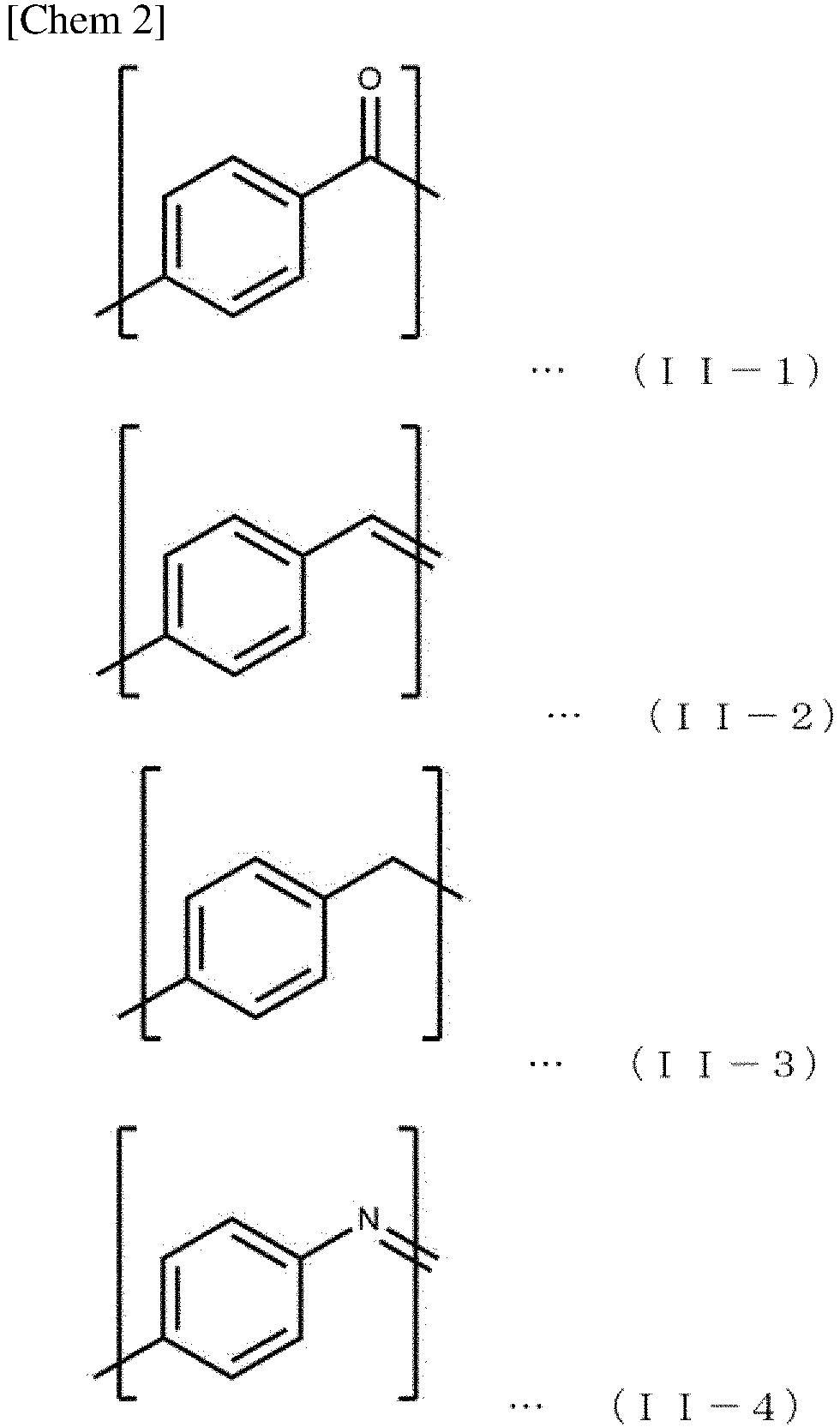
- The composition according to claim 1, wherein the second compound is at least one compound selected from the group consisting of ethylhexyl methoxycinnamate, octocrylene, ethylhexyl salicylate, homosalate, bisethylhexyloxyphenol methoxyphenyl triazine, diethylaminohydroxybenzoylhexyl benzoate, ethylhexyl triazone, polysilicone-15, t-butylmethoxydibenzoylmethane, phenylbenzimidazole sulfonic acid, and terephthalylidene dicamphor sulfonic acid.
- The composition according to claim 1 or 2, wherein the oil content contains a polar oil.
- The composition according to claim 3, wherein the first compound is 0.01 parts by mass or more and 50 parts by mass or less relative to a total of 100 parts by mass of the polar oil and the first compound.
- The composition according to any one of claims 1 to 4, which is an oil-in-water cosmetic.
- The composition according to any one of claims 1 to 4, which is a water-in-oil cosmetic.
- The composition according to any one of claims 1 to 4, which is an oil-based cosmetic.
- The composition according to any one of claims 1 to 7, which is a sunscreen cosmetic composition.
Applications Claiming Priority (2)
| Application Number | Priority Date | Filing Date | Title |
|---|---|---|---|
| JP2021168438 | 2021-10-13 | ||
| PCT/JP2022/036521 WO2023063102A1 (en) | 2021-10-13 | 2022-09-29 | Cosmetic composition |
Publications (2)
| Publication Number | Publication Date |
|---|---|
| EP4417265A1 true EP4417265A1 (en) | 2024-08-21 |
| EP4417265A4 EP4417265A4 (en) | 2025-02-12 |
Family
ID=85988307
Family Applications (1)
| Application Number | Title | Priority Date | Filing Date |
|---|---|---|---|
| EP22880798.8A Pending EP4417265A4 (en) | 2021-10-13 | 2022-09-29 | COSMETIC COMPOSITION |
Country Status (5)
| Country | Link |
|---|---|
| US (1) | US20240423886A1 (en) |
| EP (1) | EP4417265A4 (en) |
| JP (1) | JPWO2023063102A1 (en) |
| CN (1) | CN117940104A (en) |
| WO (1) | WO2023063102A1 (en) |
Family Cites Families (6)
| Publication number | Priority date | Publication date | Assignee | Title |
|---|---|---|---|---|
| WO2009040917A1 (en) * | 2007-09-27 | 2009-04-02 | Lead Chemical Co. , Ltd. | Ultraviolet absorber |
| KR101748459B1 (en) * | 2010-01-14 | 2017-06-16 | 바스프 에스이 | Water-resistant cosmetic formulations comprising a hydrophobically modified vinylpyrrolidone copolymer |
| JP5123333B2 (en) * | 2010-01-26 | 2013-01-23 | 株式会社 資生堂 | Water-in-oil emulsified sunscreen cosmetics |
| FR2964867B1 (en) * | 2010-09-20 | 2014-03-21 | Natura Cosmeticos Sa | HIGHLY UVA / UVB PROTECTIVE COMPOSITION, PROCESS FOR PREPARING THE SAME, AND TOPICAL COSMETIC COMPOSITION |
| BR112016023485B1 (en) * | 2014-04-11 | 2020-12-22 | Basf Se | cosmetic makeup |
| JP6569304B2 (en) * | 2014-06-03 | 2019-09-04 | 大正製薬株式会社 | Sunscreen composition |
-
2022
- 2022-09-29 US US18/691,616 patent/US20240423886A1/en active Pending
- 2022-09-29 WO PCT/JP2022/036521 patent/WO2023063102A1/en not_active Ceased
- 2022-09-29 CN CN202280061839.9A patent/CN117940104A/en active Pending
- 2022-09-29 EP EP22880798.8A patent/EP4417265A4/en active Pending
- 2022-09-29 JP JP2023555108A patent/JPWO2023063102A1/ja active Pending
Also Published As
| Publication number | Publication date |
|---|---|
| WO2023063102A1 (en) | 2023-04-20 |
| US20240423886A1 (en) | 2024-12-26 |
| JPWO2023063102A1 (en) | 2023-04-20 |
| EP4417265A4 (en) | 2025-02-12 |
| CN117940104A (en) | 2024-04-26 |
Similar Documents
| Publication | Publication Date | Title |
|---|---|---|
| US8557227B2 (en) | Sunscreen compositions having synergistic combination of UV filters | |
| US9107843B2 (en) | Sunscreen compositions having synergistic combination of UV filters | |
| US8992895B2 (en) | Sunscreen compositions | |
| EP3870309B1 (en) | Mineral sunscreen compositions with improved efficacy | |
| US8691192B1 (en) | Sunscreen compositions having synergistic combination of UV filters | |
| EP3525750B1 (en) | Cosmetic compositions | |
| US8652449B1 (en) | Sunscreen compositions having synergistic combination of UV filters | |
| US9138396B2 (en) | Sunscreen compositions having synergistic combination of UV filters | |
| US20160120786A1 (en) | Use of specific acrylates copolymer as spf booster | |
| US9132074B2 (en) | Sunscreen compositions having synergistic combination of UV filters | |
| US20190231669A1 (en) | Cosmetic compositions | |
| US9138395B2 (en) | Sunscreen compositions having synergistic combination of UV filters | |
| EP2938330B1 (en) | Sunscreen compositions having synergistic combination of titanium dioxide uv filters | |
| US9572759B2 (en) | Sunscreen compositions having synergistic combination of UV filters | |
| EP4417184A1 (en) | Cosmetic composition | |
| US9539195B1 (en) | Sunscreen compositions having synergistic combination of UV filters | |
| EP2934430B1 (en) | Sunscreen compositions having synergistic combination of uv filters | |
| US20240423886A1 (en) | Cosmetic composition | |
| EP4417185A1 (en) | Cosmetic composition | |
| US9539194B1 (en) | Sunscreen compositions having synergistic combination of UV filters | |
| WO2016209695A1 (en) | Sunscreen compositions having synergistic combination of uv filters | |
| EP4417266A1 (en) | Cosmetic composition | |
| US20160120785A1 (en) | Use of specific acrylates copolymer as spf booster | |
| EP1796622A1 (en) | Cosmetic compositions containing a triazine derivative, an amide-based oil and a eutectic mixture of n-butyl-phthalimide/isopropylphthalimide |
Legal Events
| Date | Code | Title | Description |
|---|---|---|---|
| STAA | Information on the status of an ep patent application or granted ep patent |
Free format text: STATUS: THE INTERNATIONAL PUBLICATION HAS BEEN MADE |
|
| PUAI | Public reference made under article 153(3) epc to a published international application that has entered the european phase |
Free format text: ORIGINAL CODE: 0009012 |
|
| STAA | Information on the status of an ep patent application or granted ep patent |
Free format text: STATUS: REQUEST FOR EXAMINATION WAS MADE |
|
| 17P | Request for examination filed |
Effective date: 20240313 |
|
| AK | Designated contracting states |
Kind code of ref document: A1 Designated state(s): AL AT BE BG CH CY CZ DE DK EE ES FI FR GB GR HR HU IE IS IT LI LT LU LV MC MK MT NL NO PL PT RO RS SE SI SK SM TR |
|
| DAV | Request for validation of the european patent (deleted) | ||
| DAX | Request for extension of the european patent (deleted) | ||
| A4 | Supplementary search report drawn up and despatched |
Effective date: 20250114 |
|
| RIC1 | Information provided on ipc code assigned before grant |
Ipc: A61K 8/35 20060101ALI20250108BHEP Ipc: A61K 8/92 20060101ALI20250108BHEP Ipc: A61K 8/37 20060101ALI20250108BHEP Ipc: A61Q 17/04 20060101AFI20250108BHEP |