EP4415340A1 - Management and control method for white list, and device and storage medium - Google Patents
Management and control method for white list, and device and storage medium Download PDFInfo
- Publication number
- EP4415340A1 EP4415340A1 EP22885263.8A EP22885263A EP4415340A1 EP 4415340 A1 EP4415340 A1 EP 4415340A1 EP 22885263 A EP22885263 A EP 22885263A EP 4415340 A1 EP4415340 A1 EP 4415340A1
- Authority
- EP
- European Patent Office
- Prior art keywords
- application
- whitelist
- cloner
- user
- applications
- Prior art date
- Legal status (The legal status is an assumption and is not a legal conclusion. Google has not performed a legal analysis and makes no representation as to the accuracy of the status listed.)
- Pending
Links
Images

Classifications
-
- H—ELECTRICITY
- H04—ELECTRIC COMMUNICATION TECHNIQUE
- H04M—TELEPHONIC COMMUNICATION
- H04M1/00—Substation equipment, e.g. for use by subscribers
- H04M1/72—Mobile telephones; Cordless telephones, i.e. devices for establishing wireless links to base stations without route selection
- H04M1/724—User interfaces specially adapted for cordless or mobile telephones
- H04M1/72403—User interfaces specially adapted for cordless or mobile telephones with means for local support of applications that increase the functionality
-
- G—PHYSICS
- G06—COMPUTING OR CALCULATING; COUNTING
- G06F—ELECTRIC DIGITAL DATA PROCESSING
- G06F1/00—Details not covered by groups G06F3/00 - G06F13/00 and G06F21/00
- G06F1/26—Power supply means, e.g. regulation thereof
- G06F1/32—Means for saving power
- G06F1/3203—Power management, i.e. event-based initiation of a power-saving mode
- G06F1/3234—Power saving characterised by the action undertaken
- G06F1/3246—Power saving characterised by the action undertaken by software initiated power-off
-
- H—ELECTRICITY
- H04—ELECTRIC COMMUNICATION TECHNIQUE
- H04W—WIRELESS COMMUNICATION NETWORKS
- H04W52/00—Power management, e.g. Transmission Power Control [TPC] or power classes
- H04W52/02—Power saving arrangements
- H04W52/0209—Power saving arrangements in terminal devices
- H04W52/0261—Power saving arrangements in terminal devices managing power supply demand, e.g. depending on battery level
- H04W52/0264—Power saving arrangements in terminal devices managing power supply demand, e.g. depending on battery level by selectively disabling software applications
-
- H—ELECTRICITY
- H04—ELECTRIC COMMUNICATION TECHNIQUE
- H04M—TELEPHONIC COMMUNICATION
- H04M1/00—Substation equipment, e.g. for use by subscribers
- H04M1/72—Mobile telephones; Cordless telephones, i.e. devices for establishing wireless links to base stations without route selection
- H04M1/724—User interfaces specially adapted for cordless or mobile telephones
- H04M1/72448—User interfaces specially adapted for cordless or mobile telephones with means for adapting the functionality of the device according to specific conditions
- H04M1/72463—User interfaces specially adapted for cordless or mobile telephones with means for adapting the functionality of the device according to specific conditions to restrict the functionality of the device
-
- Y—GENERAL TAGGING OF NEW TECHNOLOGICAL DEVELOPMENTS; GENERAL TAGGING OF CROSS-SECTIONAL TECHNOLOGIES SPANNING OVER SEVERAL SECTIONS OF THE IPC; TECHNICAL SUBJECTS COVERED BY FORMER USPC CROSS-REFERENCE ART COLLECTIONS [XRACs] AND DIGESTS
- Y02—TECHNOLOGIES OR APPLICATIONS FOR MITIGATION OR ADAPTATION AGAINST CLIMATE CHANGE
- Y02D—CLIMATE CHANGE MITIGATION TECHNOLOGIES IN INFORMATION AND COMMUNICATION TECHNOLOGIES [ICT], I.E. INFORMATION AND COMMUNICATION TECHNOLOGIES AIMING AT THE REDUCTION OF THEIR OWN ENERGY USE
- Y02D30/00—Reducing energy consumption in communication networks
- Y02D30/70—Reducing energy consumption in communication networks in wireless communication networks
Definitions
- Embodiments of the present disclosure relate to, but are not limited to, the technical field of communications, for example, to a whitelist managing method, a device, and a storage medium.
- Standby hibernation mode is a power-saving function introduced by a terminal, such as the Doze mode and application(App) standby mode, which helps users to extend the battery life of the terminal by managing the behavior of the application when the terminal is not connected to the power supply.
- a cloner application is usually created for an application so that the same terminal device can use applications of different accounts at the same time, so that when the terminal device enters the standby hibernation mode, the main application corresponding to the cloner application runs normally.
- the cloner application is often managed to achieve the purpose of power saving, in which case the user cannot use this cloner application normally and this will increase the management power consumption of the current terminal device.
- Embodiments of the present disclosure provide a whitelist managing method, a device, and a storage medium that can reduce the management power consumption.
- an embodiment provides a whitelist managing method, including: receiving a cloner application creation request from a first user, where the cloner application creation request is used to request the creation of a cloner application corresponding to a main application; acquiring a first whitelist corresponding to the first user, where the first whitelist is a list of applications allowed to enter a standby hibernation mode; and adding the cloner application to the first whitelist in the case where the main application is in the first whitelist.
- an embodiment further provides an electronic device, the device including: a receiving processing module for receiving a cloner application creation request from a first user, where the cloner application creation request is used to request the creation of a cloner application corresponding to a main application; an acquisition module for acquiring a first whitelist corresponding to the first user, where the first whitelist is a list of applications allowed to enter a standby hibernation mode; and a list processing module for adding the cloner application to the first whitelist in the case where the main application is in the first whitelist.
- an embodiment further provides an electronic device, including: a memory, a processor, and a computer program stored in the memory and executable by the processor, where the computer program, when executed by the processor, causes the processor to implement a whitelist managing method of any one of the first aspects.
- an embodiment further provides a computer-readable storage medium storing computer-executable instructions configured to cause a computer to perform a whitelist managing method of any one of the first aspects.
- the standby hibernation mode a power-saving function introduced into the terminal device
- a cloner application is usually created for an application, and when the terminal device enters the standby hibernation mode, although the application corresponding to the cloner application is running, the cloner application is often managed to achieve the purpose of power saving, which results in delayed receiving of messages or even failure to receive messages of the cloner application.
- embodiments of the present disclosure provide a whitelist managing method, a device, and a storage medium that reduce unnecessary management and thus can reduce the management power consumption.
- the Doze mode is a mode that reduces battery consumption by delaying background CPU and network activities of applications when the device is in an idle state for a long period of time.
- the App standby mode indicates that when the user has not touched the application for a period of time, applications are disabled from accessing the network and prohibited from performing any pending jobs and synchronization. If the device is in an idle state for a long period of time, the system will allow idle applications to access the network on a frequency of approximately once per day.
- an electronic device including:
- the standby hibernation mode includes at least one of a doze mode or an App standby mode
- the electronic device is a terminal device, such as a cell phone, a tablet, or the like.
- a terminal device such as a cell phone, a tablet, or the like.
- the cell phone receives a cloner application creation request from an application A of the first user, it obtains a cloner application B.
- the application A is in the first whitelist, it means that the application A can continue to run normally in the background in the standby hibernation mode, in which case the cloner application B is automatically added to the first whitelist through the acquisition module 200 and the list processing module 300.
- the application A and the cloner application B when the application A and the cloner application B are running, if the terminal device is switched from the normal mode to the standby hibernation mode, the application A and the cloner application B will continue to run normally. In some other embodiments, when the cloner application B is running normally, if the terminal device is switched from the normal mode to the standby hibernation mode, the cloner application B will still run normally. Therefore, by means of the embodiments of the present disclosure, unnecessary management of the cloner application B can be reduced, which in turn can reduce the management power consumption of the entire device.
- the device further includes a cloner application listening module 400 and a multi-user listening module 500, where the multi-user listening module 500 listens to the state of execution of the operations of user creation and user switching, and collects a list of applications of the current user, and sends the list of users to the list processing module 300, and the list processing module 300 adjusts the whitelist of the current user according to the list of users and the first whitelist.
- the multi-user listening module 500 listens to the state of execution of the operations of user creation and user switching, and collects a list of applications of the current user, and sends the list of users to the list processing module 300, and the list processing module 300 adjusts the whitelist of the current user according to the list of users and the first whitelist.
- the application cloner listening module 400 listens for the successful creation of the cloner application of the receiving processing module 100, it obtains information about the cloner application B and sends it to the list processing module 300 for the adjustment of the first whitelist. In the case of multiple users, after successful user switching, the adjustment of the whitelist for the current user is re-performed.
- the receiving processing module 100 processes a user switching request and switches to the second user; and when the multi-user listening module 500 listens for successful switching, it sends the information about the list of applications of the second user to the list processing module 300, and the list processing module 300 carries out a list adjustment based on the list of applications.
- the multi-user listening module 500 listens for the successful creation of the second user, it sends the user information of the second user to the list processing module 300, so that the list processing module 300 can obtain a list of applications corresponding to the user information of the second user, and at this time, by traversing this list of applications, it determines whether there exists an application with the same application name as an application in the first list, and in the case where it exists, the application identifier of the cloner application corresponding to the application name is added to the first list.
- both the main application and the corresponding cloner application can operate normally after the terminal device enters the standby hibernation mode without the need for unnecessary management of the cloner application. Therefore, embodiments of the present disclosure are capable of reducing the management power consumption compared to the conventional way that requires managing the cloner application after entering the standby hibernation mode.
- FIG. 1 does not constitute a limitation on the embodiments of the present disclosure, and there may be more or fewer modules than illustrated, or some of the modules may be combined, or a different arrangement of the modules may be used.
- an embodiment further provides a whitelist managing method.
- the whitelist managing method includes: At S 100, a cloner application creation request from a first user is received, where the cloner application creation request is used to request the creation of a cloner application corresponding to a main application.
- the main application is one that comes with the terminal system or is downloaded from an application market, and that when the cloner application processing request is created successfully, a cloner application with an application function and an application name that are consistent with those of the main application is generated, and the main application and the cloner application may be operated under the same system user at the same time, for example, the first user may log in to the main application and the cloner application separately using two different login accounts.
- the cloner application has the same application name as the main application. In some embodiments, for the cloner application, it will be assigned an application identifier after being successfully created, which is unique, and as to the main application, it is also provided with a unique application identifier. In some embodiments, the application identifier is a string of numbers.
- the terminal device After the first user initiates a cloner application creation request with respect to the main application A, the terminal device generates a cloner application B corresponding to the main application A and, in some embodiments, generates an application identifier of the cloner application B.
- a first whitelist corresponding to the first user is acquired, where the first whitelist is a list of applications allowed to enter a standby hibernation mode.
- the first whitelist is a whitelist that the terminal device is currently running, and by setting the first whitelist, the terminal device manages the applications other than those in the first whitelist after entering the standby hibernation mode so that only the applications in the first whitelist run normally, thereby achieving the purpose of power saving.
- the cloner application is added to the first whitelist in the case where the main application is in the first whitelist.
- the application functions of the main application and the cloner application are the same.
- the first user has two WeChat accounts, in which case he or she can log in WeChat account 1 on WeChat A and WeChat account 2 on the cloner application of WeChat A, so that he or she can use two WeChats on the same terminal device in order to deal with different things separately; and for the first user, the demands for WeChat A and the corresponding cloner application are similar or the same, and he or she needs to acquire the information on both WeChats in time for processing, and therefore by determining whether the main application is in the first whitelist and then automatically adding the cloner application, it is possible to reduce the unnecessary management of the cloner application in the standby hibernation mode, and at the same time, it is possible to reduce the user's operations of the cloner application, thereby providing a better user experience.
- listening may be performed by the cloner application listening module 400 to obtain the information about the cloner application B, which is sent to the list processing module 300 for the processing step S300, so that list processing is performed in synchronization with user request processing, and at the same time, modular processing is more efficient.
- both the main application and the corresponding cloner application can operate normally after the terminal device enters the standby hibernation mode without the need for management of the cloner application. Therefore, embodiments of the present disclosure are capable of reducing the management power consumption compared to the conventional way that requires managing the cloner application after entering the standby hibernation mode.
- the standby hibernation mode includes at least one of a doze mode or an App standby mode; and correspondingly, the first whitelist includes at least one of a doze whitelist or an App standby whitelist, where the doze whitelist is a list of applications allowed to enter the doze mode, and the App standby whitelist is a list of applications allowed to enter the App standby mode.
- the terminal device supports both the doze mode and the App standby mode, in which case a doze whitelist is set for the doze mode and an App standby whitelist is set for the App standby mode.
- the doze whitelist and the App standby whitelist are separately acquired via S200, and step S300 is performed separately for the doze whitelist and the App standby whitelist to update the doze whitelist and the App standby whitelist under the first user.
- the terminal device supports only the doze mode, in which case, after acquiring the doze whitelist at step S200, an updated doze whitelist is obtained via step S300.
- the terminal device supports only the App standby mode, so after the App standby whitelist is acquired at step S200, an updated App standby whitelist is obtained via step S300. After the corresponding whitelist is updated, the terminal system runs the updated whitelist.
- step S300 of adding the cloner application to the first whitelist in the case where the main application corresponding to the cloner application is in the first whitelist includes: acquiring an application name set corresponding to the first whitelist; and adding the cloner application to the first whitelist in the case where there exists an application in the application name set that has an application name matching that of the main application.
- each application in the first whitelist corresponds to an application name
- the set of application names of all applications in the first whitelist is the application name set.
- the cloner application B corresponding to the main application is automatically added to the first whitelist.
- the application names of application C, application D, application E, application F, and application G are all different from that of the main application, then there is no need to perform operations on the cloner application B.
- adding the cloner application to the first whitelist includes: adding an application identifier of the cloner application to the first whitelist.
- each application (including the main application and the cloner application) has a unique identifier (i.e., an application identifier) on the terminal device for the purpose of differentiation.
- an application identifier i.e., an application identifier
- the first whitelist is ⁇ 1,2,3,4,5,6 ⁇ after the cloner application is added.
- the method of the embodiment of the present disclosure further includes: At S400, a current user of a terminal device is switched from the first user to a second user in response to a received user switching request.
- a first application set corresponding to the second user is acquired, where the first application set is a list of applications of the second user that are allowed to enter the standby hibernation mode.
- the first application set is a list of applications configured by the second user. For each application on the terminal device, it contains application configuration information for different users.
- adjustment processing is performed on the first whitelist according to the first application set to obtain a second whitelist of the second user.
- the adjustment processing includes at least one of
- the first whitelist still contains the application information of the former user before switching, so that when the application exists in the system of the second user, after the application has been started, the application is still allowed to run by the system after the system enters the standby hibernation mode, and performs power-consuming behaviors, such as data services. Therefore, removing the application identifier of an application that does not exist in the first application set from the first whitelist can ensure that the applications that can run must be the ones that the second user has set.
- the first whitelist is ⁇ 1,2,3,4,5 ⁇ , where 1, 2, 3, 4, and 5 correspond to application C, application D, application E, application F, and application G, respectively.
- the first application set is ⁇ Application C, Application D, Application E, Application F ⁇ , then the application with an application identifier of 5 in the first whitelist needs to be removed to obtain a second whitelist of ⁇ 1,2,3,4 ⁇ .
- the first application set corresponds to application identifiers ⁇ 1,2,3,4,7 ⁇ , which correspond to application C, application D, application E, application F, application G, and application H, respectively, then it is necessary to separately remove an application with an application identifier of 5 from the first whitelist and add an application with an application identifier of 7 to the first whitelist, in order to obtain the second whitelist of ⁇ 1,2,3,4,7 ⁇ , in which case application C, application D, application E, application F, and application H can run in the standby hibernation mode.
- the second whitelist is the whitelist that the terminal device runs after step S600 is performed.
- the embodiment of the present disclosure further includes: responding to a user creation request from a second user and acquiring a first application set corresponding to the second user; and adding a first application that exists in the first application set and has an application name matching that of an application in the first whitelist to the first whitelist.
- application matching indicates application name matching
- the first application is a main application or a cloner application.
- a cloner application of the second user that matches an application in the first whitelist is added to the whitelist so that in the case of switching from the first user to the second user, only an application for which the main application is not in the first whitelist and its corresponding cloner application need to be added, which reduces the application adjustments of the second whitelist, and can thus enhance the efficiency of switching when performing the switching of the second user.
- adding a first application that exists in the first application set and has an application name matching that of an application in the first whitelist to the first whitelist includes: acquiring an application name set corresponding to the first whitelist; traversing each application in the application name set and performing application name matching with applications in the first whitelist to obtain several first applications; and adding application identifiers of cloner applications corresponding to the first applications separately to the first whitelist.
- the first whitelist is managed through application identifiers, and for a multi-user system, in some embodiments, each main application shares an application identifier under different users, and therefore it is only necessary to add the cloner application of the application to the first whitelist, which in turn can enable the cloner application to be in effect quickly after switching.
- a cloner application B is created for the main application A.
- the application identifier 6 of the cloner application B is added to the first whitelist, namely, the first whitelist is ⁇ 1,2,3,4,5,6 ⁇ .
- the terminal device only supports the addition of a cloner application of steps S100 to steps S300.
- the terminal device supports steps S100-S300 as well as the identification and removal of applications of non-current users during switching between multiple users, thereby ensuring automatic operations of the whitelist of cloner applications of a single user and that applications entering the standby hibernation mode in the case of multiple users are all applications that the current user allows to be executed, so as to reduce the power-consuming behaviors of non-normal applications.
- the terminal device supports steps S100-S300 and the addition of cloner applications during the creation of a new user.
- the terminal device supports steps S100-S300, the addition of cloner applications during the creation of a new user, and the identification and removal of applications of non-current users during switching between multiple users.
- an embodiment of the present disclosure further provides an electronic device, including: a memory, a processor, and a computer program stored in the memory and executable by the processor, where the computer program, when executed by the processor, causes the processor to implement the above whitelist managing method.
- the memory can be configured to store a non-transitory software program and a non-transitory computer-executable program.
- the memory may include a high-speed random-access memory and a non-transitory memory, for example, at least one magnetic disk storage device, a flash memory device, or another non-transitory solid-state storage device.
- the memory may optionally include memories remotely located with respect to the processor, and these remote memories may be connected to the processor via a network. Examples of the above-mentioned network include, but are not limited to, the Internet, an intranet, a local area network, a mobile communication network, and a combination thereof.
- the network device in this embodiment can be applied as an electronic device of the network architecture of the embodiment shown in FIG. 1 , and the electronic device in this embodiment has the same inventive concept as the electronic device of the embodiment shown in FIG. 1 and the whitelist managing method as shown in FIG. 2 , so these embodiments have the same implementation principle and technical effect, which will not be described in detail herein.
- a non-transitory software program and instructions required to implement the information processing method of the above embodiments are stored in a memory and, when executed by a processor, perform the information processing method of the above embodiments, for example, perform the method steps S100 to S300 of FIG. 2 described above, or the method steps corresponding to steps S100 to S300, steps S400 to S600 and their sub-steps shown in FIGs. 2 and 3 .
- a processor when executed by a processor, perform the information processing method of the above embodiments, for example, perform the method steps S100 to S300 of FIG. 2 described above, or the method steps corresponding to steps S100 to S300, steps S400 to S600 and their sub-steps shown in FIGs. 2 and 3 .
- FIG. 1 Exemplarily, referring to the embodiment shown in FIG.
- the processor listens to the main application processing request from the first user to obtain the application information of the cloner application and acquires a first whitelist, and compares the application name of each application in the first whitelist separately with the application name of the main application and in the case where there is an application in the first whitelist that has a matching application name, the application identifier of the cloner application is added to the first whitelist.
- the present disclosure further provides a computer-readable storage medium storing computer-executable instructions, the computer-executable instructions being used to perform the above method for managing a first whitelist, for example, perform the method steps S100 to S300 of FIG. 2 described above, or the method steps corresponding to steps S100 to S300, steps S400 to S600 and their sub-steps shown in FIGs. 2 and 3 .
- the term computer-readable storage medium includes volatile and nonvolatile, removable and non-removable media implemented in any method or technique for storing information, such as computer-readable instructions, data structures, program modules or other data.
- a computer-readable storage medium includes but is not limited to RAM, ROM, EEPROM, flash memory or other memory technologies, CD-ROM, digital versatile disk (DVD) or other optical disk storage, cassettes, magnetic tapes, magnetic disk storage or other magnetic storage apparatuses, or any other medium that can be configured to store desired information and can be accessed by a computer.
- communication media typically contain computer-readable instructions, data structures, program modules or other data in a modulated data signal such as a carrier wave or other transmission mechanism, and may include any information transmission media.
Landscapes
- Engineering & Computer Science (AREA)
- Computer Networks & Wireless Communication (AREA)
- Signal Processing (AREA)
- Theoretical Computer Science (AREA)
- Physics & Mathematics (AREA)
- General Engineering & Computer Science (AREA)
- General Physics & Mathematics (AREA)
- Human Computer Interaction (AREA)
- Power Sources (AREA)
- Stored Programmes (AREA)
- Microcomputers (AREA)
Abstract
Description
- This application is based on and claims the priority of
Chinese patent application No. 202111238364.X filed on October 25, 2021 - Embodiments of the present disclosure relate to, but are not limited to, the technical field of communications, for example, to a whitelist managing method, a device, and a storage medium.
- Standby hibernation mode is a power-saving function introduced by a terminal, such as the Doze mode and application(App) standby mode, which helps users to extend the battery life of the terminal by managing the behavior of the application when the terminal is not connected to the power supply. In the practical application process, a cloner application is usually created for an application so that the same terminal device can use applications of different accounts at the same time, so that when the terminal device enters the standby hibernation mode, the main application corresponding to the cloner application runs normally. However, the cloner application is often managed to achieve the purpose of power saving, in which case the user cannot use this cloner application normally and this will increase the management power consumption of the current terminal device.
- The following is a summary of the subject matters described in detail herein. This summary is not intended to limit the scope of protection of the claims.
- Embodiments of the present disclosure provide a whitelist managing method, a device, and a storage medium that can reduce the management power consumption.
- In accordance with a first aspect of the present disclosure, an embodiment provides a whitelist managing method, including: receiving a cloner application creation request from a first user, where the cloner application creation request is used to request the creation of a cloner application corresponding to a main application; acquiring a first whitelist corresponding to the first user, where the first whitelist is a list of applications allowed to enter a standby hibernation mode; and adding the cloner application to the first whitelist in the case where the main application is in the first whitelist.
- In accordance with a second aspect of the present disclosure, an embodiment further provides an electronic device, the device including: a receiving processing module for receiving a cloner application creation request from a first user, where the cloner application creation request is used to request the creation of a cloner application corresponding to a main application; an acquisition module for acquiring a first whitelist corresponding to the first user, where the first whitelist is a list of applications allowed to enter a standby hibernation mode; and a list processing module for adding the cloner application to the first whitelist in the case where the main application is in the first whitelist.
- In accordance with a third aspect of the present disclosure, an embodiment further provides an electronic device, including: a memory, a processor, and a computer program stored in the memory and executable by the processor, where the computer program, when executed by the processor, causes the processor to implement a whitelist managing method of any one of the first aspects.
- In accordance with a fourth aspect of the present disclosure, an embodiment further provides a computer-readable storage medium storing computer-executable instructions configured to cause a computer to perform a whitelist managing method of any one of the first aspects.
- Additional features and advantages of the present disclosure will be set forth in the subsequent description, and in part will become apparent from the description, or may be learned by practice of the present disclosure. The purposes and other advantages of the present disclosure can be realized and obtained by structures particularly noted in the description, the claims and the accompanying drawings.
- The accompanying drawings are used to provide further understanding of the technical schemes of the present disclosure and constitute a part of the description. The accompanying drawings are used to explain the technical schemes of the present disclosure together with the embodiments of the present disclosure, and do not constitute a restriction on the technical schemes of the present disclosure.
-
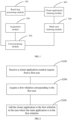
FIG. 1 is a schematic module block diagram of an electronic device of an embodiment of the present disclosure; -
FIG. 2 is a flowchart of a whitelist managing method of an embodiment of the present disclosure; and -
FIG. 3 is a flowchart of user switching in the whitelist managing method of an embodiment of the present disclosure. -
Receiving processing module 100,acquisition module 200,list processing module 300, clonerapplication listening module 400, andmulti-user listening module 500. - In order to make the objectives, technical schemes and advantages of the present disclosure more apparent, the present disclosure is further described in detail in conjunction with the accompanying drawings and embodiments. It should be understood that the particular embodiments described herein are only intended to explain the present disclosure, and are not intended to limit the present disclosure.
- It is to be noted that although a functional module division is shown in a schematic diagram of an apparatus and a logical order is shown in a flowchart, the steps shown or described may be executed, in some cases, with a different module division from that of the apparatus or in a different order from that in the flowchart. The terms such as "first" and "second" in the description, claims and above-mentioned drawings are intended to distinguish between similar objects and are not necessarily to describe a specific order or sequence.
- In related technology, the standby hibernation mode, a power-saving function introduced into the terminal device, is an application mode, such as the Doze mode and the App Standby mode, of the terminal device that helps the user to extend the battery life of the terminal device by managing the way applications behave when the terminal device is not connected to a power source. Meanwhile, in the practical application process, a cloner application is usually created for an application, and when the terminal device enters the standby hibernation mode, although the application corresponding to the cloner application is running, the cloner application is often managed to achieve the purpose of power saving, which results in delayed receiving of messages or even failure to receive messages of the cloner application. For example, in the case where a cloner has been created for a social application, after the social application enters the standby hibernation mode, the messages from its application cloner are delayed or even not received. To this end, the user needs to frequently switch between the standby hibernation mode and the normal mode to be able to normally receive the messages of the cloner application, in which case the management energy consumption of the terminal device increases. In view of this, embodiments of the present disclosure provide a whitelist managing method, a device, and a storage medium that reduce unnecessary management and thus can reduce the management power consumption.
- First, relevant terminology involved in the embodiments of the present disclosure is described as follows.
- The Doze mode is a mode that reduces battery consumption by delaying background CPU and network activities of applications when the device is in an idle state for a long period of time.
- The App standby mode indicates that when the user has not touched the application for a period of time, applications are disabled from accessing the network and prohibited from performing any pending jobs and synchronization. If the device is in an idle state for a long period of time, the system will allow idle applications to access the network on a frequency of approximately once per day.
- With reference to the embodiment shown in
FIG. 1 , the embodiment of the present disclosure provides an electronic device, including: - a
receiving processing module 100 for receiving a cloner application creation request from a first user, where the cloner application creation request is used to request the creation of a cloner application corresponding to a main application; - an
acquisition module 200 for acquiring a first whitelist corresponding to the first user, where the first whitelist is a list of applications allowed to enter a standby hibernation mode; and - a
list processing module 300 for adding the cloner application to the first whitelist in the case where the main application is in the first whitelist. - It is to be noted that the standby hibernation mode includes at least one of a doze mode or an App standby mode, and the electronic device is a terminal device, such as a cell phone, a tablet, or the like. Taking a cell phone as an example, when the cell phone receives a cloner application creation request from an application A of the first user, it obtains a cloner application B. When the application A is in the first whitelist, it means that the application A can continue to run normally in the background in the standby hibernation mode, in which case the cloner application B is automatically added to the first whitelist through the
acquisition module 200 and thelist processing module 300. In this case, in some embodiments, when the application A and the cloner application B are running, if the terminal device is switched from the normal mode to the standby hibernation mode, the application A and the cloner application B will continue to run normally. In some other embodiments, when the cloner application B is running normally, if the terminal device is switched from the normal mode to the standby hibernation mode, the cloner application B will still run normally. Therefore, by means of the embodiments of the present disclosure, unnecessary management of the cloner application B can be reduced, which in turn can reduce the management power consumption of the entire device. - It is to be noted that with reference to the embodiment of
FIG. 1 , the device further includes a clonerapplication listening module 400 and amulti-user listening module 500, where themulti-user listening module 500 listens to the state of execution of the operations of user creation and user switching, and collects a list of applications of the current user, and sends the list of users to thelist processing module 300, and thelist processing module 300 adjusts the whitelist of the current user according to the list of users and the first whitelist. For a single user or a certain user in a multi-system, after the applicationcloner listening module 400 listens for the successful creation of the cloner application of thereceiving processing module 100, it obtains information about the cloner application B and sends it to thelist processing module 300 for the adjustment of the first whitelist. In the case of multiple users, after successful user switching, the adjustment of the whitelist for the current user is re-performed. Exemplarily, taking the first user being the current user and the second user being the user to be switched to as an example, thereceiving processing module 100 processes a user switching request and switches to the second user; and when themulti-user listening module 500 listens for successful switching, it sends the information about the list of applications of the second user to thelist processing module 300, and thelist processing module 300 carries out a list adjustment based on the list of applications. Exemplarily, taking the new creation of the second user as an example, when themulti-user listening module 500 listens for the successful creation of the second user, it sends the user information of the second user to thelist processing module 300, so that thelist processing module 300 can obtain a list of applications corresponding to the user information of the second user, and at this time, by traversing this list of applications, it determines whether there exists an application with the same application name as an application in the first list, and in the case where it exists, the application identifier of the cloner application corresponding to the application name is added to the first list. - It is to be noted that for the
multi-user listening module 500 and the applicationcloner listening module 400, separate threads may be created for listening, thereby realizing real-time and efficient list adjustment. - Therefore, based on the above embodiment, by automatically adding the cloner application corresponding to the main application to the first whitelist, both the main application and the corresponding cloner application can operate normally after the terminal device enters the standby hibernation mode without the need for unnecessary management of the cloner application. Therefore, embodiments of the present disclosure are capable of reducing the management power consumption compared to the conventional way that requires managing the cloner application after entering the standby hibernation mode.
- Those of ordinary skill in the art may understand that the topological structure shown in
FIG. 1 does not constitute a limitation on the embodiments of the present disclosure, and there may be more or fewer modules than illustrated, or some of the modules may be combined, or a different arrangement of the modules may be used. - In accordance with another aspect of the present disclosure, an embodiment further provides a whitelist managing method. Various embodiments of the embodiments of the present disclosure are further described below in conjunction with the accompanying drawings.
- Referring to the embodiment shown in
FIG. 2 , the whitelist managing method includes:
AtS 100, a cloner application creation request from a first user is received, where the cloner application creation request is used to request the creation of a cloner application corresponding to a main application. - It is to be noted that the main application is one that comes with the terminal system or is downloaded from an application market, and that when the cloner application processing request is created successfully, a cloner application with an application function and an application name that are consistent with those of the main application is generated, and the main application and the cloner application may be operated under the same system user at the same time, for example, the first user may log in to the main application and the cloner application separately using two different login accounts.
- It is to be noted that the cloner application has the same application name as the main application. In some embodiments, for the cloner application, it will be assigned an application identifier after being successfully created, which is unique, and as to the main application, it is also provided with a unique application identifier. In some embodiments, the application identifier is a string of numbers.
- Exemplarily, taking the main application A as an example, after the first user initiates a cloner application creation request with respect to the main application A, the terminal device generates a cloner application B corresponding to the main application A and, in some embodiments, generates an application identifier of the cloner application B.
- At S200, a first whitelist corresponding to the first user is acquired, where the first whitelist is a list of applications allowed to enter a standby hibernation mode.
- It is to be noted that the first whitelist is a whitelist that the terminal device is currently running, and by setting the first whitelist, the terminal device manages the applications other than those in the first whitelist after entering the standby hibernation mode so that only the applications in the first whitelist run normally, thereby achieving the purpose of power saving.
- At S300, the cloner application is added to the first whitelist in the case where the main application is in the first whitelist.
- It is to be noted that the application functions of the main application and the cloner application are the same. For the same system user, taking WeChat as an example, the first user has two WeChat accounts, in which case he or she can log in WeChat account 1 on WeChat A and WeChat account 2 on the cloner application of WeChat A, so that he or she can use two WeChats on the same terminal device in order to deal with different things separately; and for the first user, the demands for WeChat A and the corresponding cloner application are similar or the same, and he or she needs to acquire the information on both WeChats in time for processing, and therefore by determining whether the main application is in the first whitelist and then automatically adding the cloner application, it is possible to reduce the unnecessary management of the cloner application in the standby hibernation mode, and at the same time, it is possible to reduce the user's operations of the cloner application, thereby providing a better user experience.
- It is to be noted that, in some embodiments, referring to the embodiment of
FIG. 1 , afterstep S 100, listening may be performed by the clonerapplication listening module 400 to obtain the information about the cloner application B, which is sent to thelist processing module 300 for the processing step S300, so that list processing is performed in synchronization with user request processing, and at the same time, modular processing is more efficient. - Therefore, by automatically adding the cloner application corresponding to the main application to the first whitelist, both the main application and the corresponding cloner application can operate normally after the terminal device enters the standby hibernation mode without the need for management of the cloner application. Therefore, embodiments of the present disclosure are capable of reducing the management power consumption compared to the conventional way that requires managing the cloner application after entering the standby hibernation mode.
- It is to be understood that the standby hibernation mode includes at least one of a doze mode or an App standby mode; and correspondingly, the first whitelist includes at least one of a doze whitelist or an App standby whitelist, where the doze whitelist is a list of applications allowed to enter the doze mode, and the App standby whitelist is a list of applications allowed to enter the App standby mode.
- It is to be noted that, in some embodiments, the terminal device supports both the doze mode and the App standby mode, in which case a doze whitelist is set for the doze mode and an App standby whitelist is set for the App standby mode. The doze whitelist and the App standby whitelist are separately acquired via S200, and step S300 is performed separately for the doze whitelist and the App standby whitelist to update the doze whitelist and the App standby whitelist under the first user. In some other embodiments, the terminal device supports only the doze mode, in which case, after acquiring the doze whitelist at step S200, an updated doze whitelist is obtained via step S300. In some other embodiments, the terminal device supports only the App standby mode, so after the App standby whitelist is acquired at step S200, an updated App standby whitelist is obtained via step S300. After the corresponding whitelist is updated, the terminal system runs the updated whitelist.
- It is to be understood that step S300 of adding the cloner application to the first whitelist in the case where the main application corresponding to the cloner application is in the first whitelist includes: acquiring an application name set corresponding to the first whitelist; and adding the cloner application to the first whitelist in the case where there exists an application in the application name set that has an application name matching that of the main application.
- It is to be noted that each application in the first whitelist corresponds to an application name, and the set of application names of all applications in the first whitelist is the application name set.
- Exemplarily, assuming that there is application information corresponding to application C, application D, application E, application F, and application G in the first whitelist, then in the case where the application name of application D is the same as that of the main application (i.e., there is currently a cloner application creation request for application D), the cloner application B corresponding to the main application is automatically added to the first whitelist. In the case where the application names of application C, application D, application E, application F, and application G are all different from that of the main application, then there is no need to perform operations on the cloner application B.
- It is to be understood that adding the cloner application to the first whitelist includes: adding an application identifier of the cloner application to the first whitelist.
- It is to be noted that each application (including the main application and the cloner application) has a unique identifier (i.e., an application identifier) on the terminal device for the purpose of differentiation. By adding the application identifier to the first whitelist, when the terminal device manages and maintains the currently running first whitelist, it can maintain only application identifiers, which is simpler and more efficient.
- Exemplarily, assuming that there are application identifiers {1,2,3,4,5} corresponding to application C, application D, application E, application F, and application G in the first whitelist, and the application identifier of the cloner application is 6, the first whitelist is {1,2,3,4,5,6} after the cloner application is added.
- Understandably, after a new user account is logged in, there are applications of other users in the first whitelist, so the applications of the other users are still allowed to run by the system of the terminal device, which then leads to an increase in power consumption due to the fact that the applications of the other users are executing data services. On this basis, with reference to the embodiment shown in
FIG. 3 , in a multi-user system, taking the current user being the first user as an example, the method of the embodiment of the present disclosure further includes:
At S400, a current user of a terminal device is switched from the first user to a second user in response to a received user switching request. - At S500, a first application set corresponding to the second user is acquired, where the first application set is a list of applications of the second user that are allowed to enter the standby hibernation mode.
- It is to be noted that the first application set is a list of applications configured by the second user. For each application on the terminal device, it contains application configuration information for different users.
- At S600, adjustment processing is performed on the first whitelist according to the first application set to obtain a second whitelist of the second user. Herein, the adjustment processing includes at least one of
- removing an application that does not exist in the first application set from the first whitelist; or
- adding an application that exists in the first application set and does not exist in the first whitelist to the first whitelist.
- It is to be noted that in a multi-user system, after user switching is performed, the first whitelist still contains the application information of the former user before switching, so that when the application exists in the system of the second user, after the application has been started, the application is still allowed to run by the system after the system enters the standby hibernation mode, and performs power-consuming behaviors, such as data services. Therefore, removing the application identifier of an application that does not exist in the first application set from the first whitelist can ensure that the applications that can run must be the ones that the second user has set.
- It is to be noted that there are cases where the lists of applications allowed to be whitelisted by the first user and the second user are different, for example, there are cases where certain applications set by the second user, such as drawing software, are not in the first whitelist for the time of running by the first user, and therefore there is a need to also add applications of the second user that are not in the first whitelist.
- It is to be noted that only one, or possibly two, of the above two adjustment approaches exist in some embodiments, and there is no conflict between the two adjustment approaches.
- Exemplarily, it is assumed that the first whitelist is {1,2,3,4,5}, where 1, 2, 3, 4, and 5 correspond to application C, application D, application E, application F, and application G, respectively. In some embodiments, the first application set is {Application C, Application D, Application E, Application F}, then the application with an application identifier of 5 in the first whitelist needs to be removed to obtain a second whitelist of {1,2,3,4}. In some other embodiments, the first application set corresponds to application identifiers {1,2,3,4,7}, which correspond to application C, application D, application E, application F, application G, and application H, respectively, then it is necessary to separately remove an application with an application identifier of 5 from the first whitelist and add an application with an application identifier of 7 to the first whitelist, in order to obtain the second whitelist of {1,2,3,4,7}, in which case application C, application D, application E, application F, and application H can run in the standby hibernation mode.
- It is to be noted that the second whitelist is the whitelist that the terminal device runs after step S600 is performed.
- It is to be understood that for the case of multiple users, the creation of a new user is allowed, and taking the second user being a user to be created as an example, the embodiment of the present disclosure further includes: responding to a user creation request from a second user and acquiring a first application set corresponding to the second user; and adding a first application that exists in the first application set and has an application name matching that of an application in the first whitelist to the first whitelist.
- It is to be noted that application matching indicates application name matching, and as to the first application, the first application is a main application or a cloner application.
- It is to be noted that a cloner application of the second user that matches an application in the first whitelist is added to the whitelist so that in the case of switching from the first user to the second user, only an application for which the main application is not in the first whitelist and its corresponding cloner application need to be added, which reduces the application adjustments of the second whitelist, and can thus enhance the efficiency of switching when performing the switching of the second user.
- It is to be understood that adding a first application that exists in the first application set and has an application name matching that of an application in the first whitelist to the first whitelist includes: acquiring an application name set corresponding to the first whitelist; traversing each application in the application name set and performing application name matching with applications in the first whitelist to obtain several first applications; and adding application identifiers of cloner applications corresponding to the first applications separately to the first whitelist.
- It is to be noted that the first whitelist is managed through application identifiers, and for a multi-user system, in some embodiments, each main application shares an application identifier under different users, and therefore it is only necessary to add the cloner application of the application to the first whitelist, which in turn can enable the cloner application to be in effect quickly after switching.
- Exemplarily, when the second user is created, a cloner application B is created for the main application A. Assuming that the first whitelist is {1,2,3,4,5} and that the application name of the main application A is the same as that of the application corresponding to the application identifier 1, the application identifier 6 of the cloner application B is added to the first whitelist, namely, the first whitelist is {1,2,3,4,5,6}.
- It is to be noted that with reference to the embodiments shown in
FIGs. 2 and3 , in some embodiments, the terminal device only supports the addition of a cloner application of steps S100 to steps S300. In some other embodiments, the terminal device supports steps S100-S300 as well as the identification and removal of applications of non-current users during switching between multiple users, thereby ensuring automatic operations of the whitelist of cloner applications of a single user and that applications entering the standby hibernation mode in the case of multiple users are all applications that the current user allows to be executed, so as to reduce the power-consuming behaviors of non-normal applications. In some other embodiments, the terminal device supports steps S100-S300 and the addition of cloner applications during the creation of a new user. In some other embodiments, the terminal device supports steps S100-S300, the addition of cloner applications during the creation of a new user, and the identification and removal of applications of non-current users during switching between multiple users. - It is to be noted that in a multi-user system, the creation of a new user and the switching between users are performed in no particular order.
- It can be understood as that an embodiment of the present disclosure further provides an electronic device, including: a memory, a processor, and a computer program stored in the memory and executable by the processor, where the computer program, when executed by the processor, causes the processor to implement the above whitelist managing method.
- As a non-transitory computer-readable storage medium, the memory can be configured to store a non-transitory software program and a non-transitory computer-executable program. In addition, the memory may include a high-speed random-access memory and a non-transitory memory, for example, at least one magnetic disk storage device, a flash memory device, or another non-transitory solid-state storage device. In some implementations, the memory may optionally include memories remotely located with respect to the processor, and these remote memories may be connected to the processor via a network. Examples of the above-mentioned network include, but are not limited to, the Internet, an intranet, a local area network, a mobile communication network, and a combination thereof.
- It should be noted that the network device in this embodiment can be applied as an electronic device of the network architecture of the embodiment shown in
FIG. 1 , and the electronic device in this embodiment has the same inventive concept as the electronic device of the embodiment shown inFIG. 1 and the whitelist managing method as shown inFIG. 2 , so these embodiments have the same implementation principle and technical effect, which will not be described in detail herein. - A non-transitory software program and instructions required to implement the information processing method of the above embodiments are stored in a memory and, when executed by a processor, perform the information processing method of the above embodiments, for example, perform the method steps S100 to S300 of
FIG. 2 described above, or the method steps corresponding to steps S100 to S300, steps S400 to S600 and their sub-steps shown inFIGs. 2 and3 . Exemplarily, referring to the embodiment shown inFIG. 2 , the processor listens to the main application processing request from the first user to obtain the application information of the cloner application and acquires a first whitelist, and compares the application name of each application in the first whitelist separately with the application name of the main application and in the case where there is an application in the first whitelist that has a matching application name, the application identifier of the cloner application is added to the first whitelist. - It is to be understood that the present disclosure further provides a computer-readable storage medium storing computer-executable instructions, the computer-executable instructions being used to perform the above method for managing a first whitelist, for example, perform the method steps S100 to S300 of
FIG. 2 described above, or the method steps corresponding to steps S100 to S300, steps S400 to S600 and their sub-steps shown inFIGs. 2 and3 . - It can be understood by those of ordinary skill in the art that all or some of the steps of the methods and systems disclosed above may be implemented as software, firmware, hardware, and appropriate combinations thereof. Some or all of the physical components may be implemented as software executed by a processor, such as a central processing unit, a digital signal processor or a microprocessor, or as hardware, or as an integrated circuit, such as an application-specific integrated circuit. Such software may be distributed on computer-readable media, which may include computer-readable storage media (or non-transitory media) and communication media (or transitory media). As well known to those of ordinary skill in the art, the term computer-readable storage medium includes volatile and nonvolatile, removable and non-removable media implemented in any method or technique for storing information, such as computer-readable instructions, data structures, program modules or other data. A computer-readable storage medium includes but is not limited to RAM, ROM, EEPROM, flash memory or other memory technologies, CD-ROM, digital versatile disk (DVD) or other optical disk storage, cassettes, magnetic tapes, magnetic disk storage or other magnetic storage apparatuses, or any other medium that can be configured to store desired information and can be accessed by a computer. Furthermore, it is well known to those of ordinary skill in the art that communication media typically contain computer-readable instructions, data structures, program modules or other data in a modulated data signal such as a carrier wave or other transmission mechanism, and may include any information transmission media.
- The above is a detailed description of some implementations of the present disclosure, but the present disclosure is not limited to the above-mentioned embodiments. Those having ordinary skill in the art can also make various equivalent modifications or replacements without departing from the principle of the present disclosure, and these equivalent modifications or replacements are all included in the scope defined by the claims of the present disclosure.
Claims (10)
- A whitelist managing method, comprising:receiving a cloner application creation request from a first user, wherein the cloner application creation request is used to request the creation of a cloner application corresponding to a main application;acquiring a first whitelist corresponding to the first user, wherein the first whitelist is a list of applications allowed to enter a standby hibernation mode; andadding the cloner application to the first whitelist in the case where the main application is in the first whitelist.
- The method of claim 1, whereinthe standby hibernation mode comprises at least one of a doze mode or an application standby mode; andcorrespondingly, the first whitelist comprises at least one of a doze whitelist or an application standby whitelist, wherein the doze whitelist is a list of applications allowed to enter the doze mode, and the application standby whitelist is a list of applications allowed to enter the application standby mode.
- The method of claim 1, wherein
said adding the cloner application to the first whitelist in the case where the main application is in the first whitelist comprises:acquiring an application name set corresponding to the first whitelist; andadding the cloner application to the first whitelist in the case where there exists an application in the application name set that has an application name matching that of the main application. - The method of claim 3, wherein
said adding the cloner application to the first whitelist comprises:
adding an application identifier of the cloner application to the first whitelist. - The method of claim 1, further comprising:switching a current user of a terminal device from the first user to a second user in response to a received user switching request;acquiring a first application set corresponding to the second user, wherein the first application set is a list of applications of the second user that are allowed to enter the standby hibernation mode; andperforming adjustment processing on the first whitelist according to the first application set to obtain a second whitelist of the second user,wherein the adjustment processing comprises at least one ofremoving an application that does not exist in the first application set from the first whitelist; oradding an application that exists in the first application set and does not exist in the first whitelist to the first whitelist.
- The method of claim 1, further comprising:responding to a user creation request from a second user and acquiring a first application set corresponding to the second user; andadding a first application that exists in the first application set and has an application name matching that of an application in the first whitelist to the first whitelist.
- The method of claim 6, wherein
said adding a first application that exists in the first application set and has an application name matching that of an application in the first whitelist to the first whitelist comprises:acquiring an application name set corresponding to the first whitelist;traversing each application in the application name set and performing application name matching with applications in the first whitelist to obtain several first applications; andadding application identifiers of cloner applications corresponding to the first applications separately to the first whitelist. - An electronic device, the device comprising:a receiving processing module for receiving a cloner application creation request from a first user, wherein the cloner application creation request is used to request the creation of a cloner application corresponding to a main application;an acquisition module for acquiring a first whitelist corresponding to the first user, wherein the first whitelist is a list of applications allowed to enter a standby hibernation mode; anda list processing module for adding the cloner application to the first whitelist in the case where the main application is in the first whitelist.
- An electronic device, comprising: a memory, a processor, and a computer program stored in the memory and executable by the processor, wherein the computer program, when executed by the processor, causes the processor to implement a whitelist managing method of any one of claims 1 to 7.
- A computer-readable storage medium storing computer-executable instructions configured to cause a computer to perform a whitelist managing method of at least any one of claims 1 to 7.
Applications Claiming Priority (2)
| Application Number | Priority Date | Filing Date | Title |
|---|---|---|---|
| CN202111238364.XA CN116027881A (en) | 2021-10-25 | 2021-10-25 | Whitelist control method, equipment and storage medium |
| PCT/CN2022/109787 WO2023071363A1 (en) | 2021-10-25 | 2022-08-02 | Management and control method for white list, and device and storage medium |
Publications (2)
| Publication Number | Publication Date |
|---|---|
| EP4415340A1 true EP4415340A1 (en) | 2024-08-14 |
| EP4415340A4 EP4415340A4 (en) | 2025-03-19 |
Family
ID=86074573
Family Applications (1)
| Application Number | Title | Priority Date | Filing Date |
|---|---|---|---|
| EP22885263.8A Pending EP4415340A4 (en) | 2021-10-25 | 2022-08-02 | WHITE LIST MANAGEMENT AND CONTROL METHOD, AND RECORDING DEVICE AND MEDIUM |
Country Status (4)
| Country | Link |
|---|---|
| EP (1) | EP4415340A4 (en) |
| JP (1) | JP7762799B2 (en) |
| CN (1) | CN116027881A (en) |
| WO (1) | WO2023071363A1 (en) |
Family Cites Families (11)
| Publication number | Priority date | Publication date | Assignee | Title |
|---|---|---|---|---|
| US9588568B2 (en) | 2012-11-16 | 2017-03-07 | Samsung Electronics Co., Ltd. | Monitoring and managing processor activity in power save mode of portable electronic device |
| CN105824392A (en) | 2015-11-26 | 2016-08-03 | 维沃移动通信有限公司 | Application program management method and terminal |
| CN107346253A (en) | 2016-05-06 | 2017-11-14 | 中兴通讯股份有限公司 | Using synchronous method and device |
| CN105979095B (en) * | 2016-06-27 | 2019-08-16 | 努比亚技术有限公司 | Mobile terminal and apply power consumption control method |
| CN106502730B (en) * | 2016-10-10 | 2020-01-14 | Oppo广东移动通信有限公司 | Multi-open application association management method and device and terminal |
| CN106406986B (en) * | 2016-11-24 | 2019-11-12 | 宇龙计算机通信科技(深圳)有限公司 | A resource sharing method and device |
| CN106933326B (en) | 2017-03-10 | 2019-08-30 | Oppo广东移动通信有限公司 | Method and device for dynamically adjusting energy-saving level of terminal and mobile terminal |
| CN108810630A (en) | 2018-06-13 | 2018-11-13 | 康佳集团股份有限公司 | A kind of standby startup method of smart television, smart television and storage medium |
| CN111045507B (en) | 2019-11-27 | 2022-04-19 | RealMe重庆移动通信有限公司 | List management and control method, device, mobile terminal and storage medium |
| CN111427709B (en) * | 2020-03-30 | 2023-07-21 | 努比亚技术有限公司 | Application program splitting control method, device and computer readable storage medium |
| CN112434283A (en) | 2020-11-23 | 2021-03-02 | 深圳传音控股股份有限公司 | Control method of mobile terminal, mobile terminal and storage medium |
-
2021
- 2021-10-25 CN CN202111238364.XA patent/CN116027881A/en active Pending
-
2022
- 2022-08-02 WO PCT/CN2022/109787 patent/WO2023071363A1/en not_active Ceased
- 2022-08-02 JP JP2024521361A patent/JP7762799B2/en active Active
- 2022-08-02 EP EP22885263.8A patent/EP4415340A4/en active Pending
Also Published As
| Publication number | Publication date |
|---|---|
| JP2024538041A (en) | 2024-10-18 |
| WO2023071363A1 (en) | 2023-05-04 |
| CN116027881A (en) | 2023-04-28 |
| EP4415340A4 (en) | 2025-03-19 |
| JP7762799B2 (en) | 2025-10-30 |
Similar Documents
| Publication | Publication Date | Title |
|---|---|---|
| EP3825852B1 (en) | Occupation control method and apparatus for camera application | |
| RU2686673C1 (en) | Device and method of terminal control and terminal | |
| US10182340B2 (en) | Profile switching method and terminal | |
| CN104244379B (en) | The wireless network control method and device of mobile terminal | |
| CN105228182B (en) | Dual-card configuration method and device of multi-mode dual-card mobile terminal | |
| US10542199B2 (en) | Image capture apparatus comprising image transmission function | |
| TWI553464B (en) | An intelligent device and related management method of service or application | |
| US11895364B2 (en) | Bluetooth connection method and television | |
| CN103338473A (en) | Method and device for processing community failure | |
| WO2017161638A1 (en) | Method and device for freezing and waking up multiple systems | |
| EP3531676A1 (en) | Task processing apparatus, intelligent device, task processing method, and baseband processor | |
| EP3197170B1 (en) | Multimedia processing device, multimedia processing server and method therefor | |
| CN110139294A (en) | A kind of wake-up area determination method, the network equipment and user terminal | |
| CN110677890B (en) | Multi-card multi-4G mobile terminal and network reselection method thereof | |
| CN115038130A (en) | Mobile data service switching method, terminal and computer storage medium | |
| EP4415340A1 (en) | Management and control method for white list, and device and storage medium | |
| WO2017076331A1 (en) | Startup method and device | |
| CN103533182B (en) | A kind of method for managing power supply and subscriber equipment | |
| CN105868006A (en) | Application operation control method and apparatus | |
| CN112235842A (en) | Communication method and device of Internet of things equipment | |
| JP5733145B2 (en) | Policy setting system and policy setting method | |
| CN116055318B (en) | Router upgrading method and device, router and readable storage medium | |
| US12445246B2 (en) | Control apparatus, control method, communication system, and storage medium | |
| CN115568007B (en) | Power supply control methods, devices, systems and terminals | |
| CN118590973A (en) | Device wakeup method, device, electronic device, and computer-readable storage medium |
Legal Events
| Date | Code | Title | Description |
|---|---|---|---|
| STAA | Information on the status of an ep patent application or granted ep patent |
Free format text: STATUS: THE INTERNATIONAL PUBLICATION HAS BEEN MADE |
|
| PUAI | Public reference made under article 153(3) epc to a published international application that has entered the european phase |
Free format text: ORIGINAL CODE: 0009012 |
|
| STAA | Information on the status of an ep patent application or granted ep patent |
Free format text: STATUS: REQUEST FOR EXAMINATION WAS MADE |
|
| 17P | Request for examination filed |
Effective date: 20240509 |
|
| AK | Designated contracting states |
Kind code of ref document: A1 Designated state(s): AL AT BE BG CH CY CZ DE DK EE ES FI FR GB GR HR HU IE IS IT LI LT LU LV MC MK MT NL NO PL PT RO RS SE SI SK SM TR |
|
| DAV | Request for validation of the european patent (deleted) | ||
| DAX | Request for extension of the european patent (deleted) | ||
| A4 | Supplementary search report drawn up and despatched |
Effective date: 20250218 |
|
| RIC1 | Information provided on ipc code assigned before grant |
Ipc: H04W 52/02 20090101ALN20250212BHEP Ipc: H04M 1/72403 20210101ALN20250212BHEP Ipc: H04M 1/72463 20210101ALN20250212BHEP Ipc: G06F 1/3246 20190101ALI20250212BHEP Ipc: H04M 1/73 20060101AFI20250212BHEP |