EP4414875A1 - Systems and methods for detecting attack vectors to application data - Google Patents
Systems and methods for detecting attack vectors to application data Download PDFInfo
- Publication number
- EP4414875A1 EP4414875A1 EP23215058.1A EP23215058A EP4414875A1 EP 4414875 A1 EP4414875 A1 EP 4414875A1 EP 23215058 A EP23215058 A EP 23215058A EP 4414875 A1 EP4414875 A1 EP 4414875A1
- Authority
- EP
- European Patent Office
- Prior art keywords
- span
- attack
- marked
- context
- data
- Prior art date
- Legal status (The legal status is an assumption and is not a legal conclusion. Google has not performed a legal analysis and makes no representation as to the accuracy of the status listed.)
- Granted
Links
Images


Classifications
-
- H—ELECTRICITY
- H04—ELECTRIC COMMUNICATION TECHNIQUE
- H04L—TRANSMISSION OF DIGITAL INFORMATION, e.g. TELEGRAPHIC COMMUNICATION
- H04L63/00—Network architectures or network communication protocols for network security
- H04L63/14—Network architectures or network communication protocols for network security for detecting or protecting against malicious traffic
- H04L63/1408—Network architectures or network communication protocols for network security for detecting or protecting against malicious traffic by monitoring network traffic
- H04L63/1416—Event detection, e.g. attack signature detection
-
- G—PHYSICS
- G06—COMPUTING OR CALCULATING; COUNTING
- G06F—ELECTRIC DIGITAL DATA PROCESSING
- G06F21/00—Security arrangements for protecting computers, components thereof, programs or data against unauthorised activity
- G06F21/50—Monitoring users, programs or devices to maintain the integrity of platforms, e.g. of processors, firmware or operating systems
- G06F21/55—Detecting local intrusion or implementing counter-measures
- G06F21/552—Detecting local intrusion or implementing counter-measures involving long-term monitoring or reporting
-
- G—PHYSICS
- G06—COMPUTING OR CALCULATING; COUNTING
- G06F—ELECTRIC DIGITAL DATA PROCESSING
- G06F21/00—Security arrangements for protecting computers, components thereof, programs or data against unauthorised activity
- G06F21/50—Monitoring users, programs or devices to maintain the integrity of platforms, e.g. of processors, firmware or operating systems
- G06F21/55—Detecting local intrusion or implementing counter-measures
- G06F21/56—Computer malware detection or handling, e.g. anti-virus arrangements
- G06F21/566—Dynamic detection, i.e. detection performed at run-time, e.g. emulation, suspicious activities
-
- G—PHYSICS
- G06—COMPUTING OR CALCULATING; COUNTING
- G06F—ELECTRIC DIGITAL DATA PROCESSING
- G06F21/00—Security arrangements for protecting computers, components thereof, programs or data against unauthorised activity
- G06F21/50—Monitoring users, programs or devices to maintain the integrity of platforms, e.g. of processors, firmware or operating systems
- G06F21/57—Certifying or maintaining trusted computer platforms, e.g. secure boots or power-downs, version controls, system software checks, secure updates or assessing vulnerabilities
- G06F21/577—Assessing vulnerabilities and evaluating computer system security
-
- G—PHYSICS
- G06—COMPUTING OR CALCULATING; COUNTING
- G06F—ELECTRIC DIGITAL DATA PROCESSING
- G06F21/00—Security arrangements for protecting computers, components thereof, programs or data against unauthorised activity
- G06F21/50—Monitoring users, programs or devices to maintain the integrity of platforms, e.g. of processors, firmware or operating systems
- G06F21/55—Detecting local intrusion or implementing counter-measures
-
- G—PHYSICS
- G06—COMPUTING OR CALCULATING; COUNTING
- G06F—ELECTRIC DIGITAL DATA PROCESSING
- G06F21/00—Security arrangements for protecting computers, components thereof, programs or data against unauthorised activity
- G06F21/50—Monitoring users, programs or devices to maintain the integrity of platforms, e.g. of processors, firmware or operating systems
- G06F21/55—Detecting local intrusion or implementing counter-measures
- G06F21/554—Detecting local intrusion or implementing counter-measures involving event detection and direct action
Definitions
- the present disclosure relates generally to application security monitoring, and more particularly, to detecting attack vectors to application data.
- CVE Common Vulnerabilities and Exposures
- a system may include one or more processors and one or more computer-readable non-transitory storage media coupled to one or more of the processors.
- the one or more computer-readable non-transitory storage media may include instructions operable, when executed by one or more of the processors, to cause the system to receive a marked span that has been flagged for inspection.
- the instructions are further operable, when executed by the one or more processors, to cause the system to conduct a root cause analysis to determine if the marked span should be classified as an attack.
- the instructions are further operable, when executed by the one or more processors, to cause the system to determine whether the marked span engaged with data corresponding to one or more application services defining the marked span in response to a determination that the marked span should be classified as an attack.
- the instructions are further operable, when executed by the one or more processors, to cause the system to designate the data corresponding to the one or more application services as compromised in response to a determination that the marked span did engage with said data.
- a method, by a system, for detecting an unknown attack vector may include receiving a marked span that has been flagged for inspection. The method further includes conducting a root cause analysis to determine if the marked span should be classified as an attack. In response to a determination that the marked span should be classified as an attack, the method further includes determining whether the marked span engaged with data corresponding to one or more application services defining the marked span. The method further includes designate the data corresponding to the one or more application services as compromised in response to a determination that the marked span did engage with said data.
- one or more computer-readable non-transitory storage media may embody software that is operable, when executed by a processor, to receive a marked span that has been flagged for inspection.
- the software may be further operable, when executed, to conduct a root cause analysis to determine if the marked span should be classified as an attack.
- the software may be further operable, when executed, to determine whether the marked span engaged with data corresponding to one or more application services defining the marked span in response to a determination that the marked span should be classified as an attack.
- the software may be further operable, when executed, to designate the data corresponding to the one or more application services as compromised in response to a determination that the marked span did engage with said data.
- Certain systems and methods described herein may increase data security and protect from unauthorized extraction of sensitive data by unknown attack vectors.
- This disclosure provides systems and methods to capture, catalog, encode, instrument, and propagate attestable contexts when application services interact with sensitive data at rest.
- the embodiments described herein provide for detecting attack vectors to application data belonging to application services.
- the present disclosure contemplates systems and methods to capture, catalog, encode, instrument, and propagate attestable contexts when application services interact with sensitive data, in certain examples at rest.
- a system and method for leveraging telemetry to detect vulnerabilities is provided. The method includes analyzing spans, generating contexts, storing the contexts in a context catalog, and integrating the contexts into a continuous integration (CI) pipeline by a context generator during a learning phase.
- CI continuous integration
- the system and method also include analyzing a service, determining whether the service is an unknown/unexpected context, marking/flagging the span for investigation, determining whether to deny the service, and determining whether to enforce a policy by a distributed incident detection module.
- the system and method further include receiving a marked span, conducting a root cause analysis to determining if the incident should be classified as an attack, determining whether the incident is considered an attack, and depending on the response, either removing the mark from the span or marking the incident for investigation by a span investigation module.
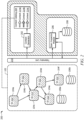
- FIG. 1 illustrates illustrates an example system 100 for leveraging telemetry to detect vulnerabilities.
- System 100 may include one or more application services (and/or microservices) located in a cloud infrastructure 102.
- application services and/or microservices
- application data 106 may be associated with or correspond to certain microservices 104. Without limitations, the application data 106 may include personally identifiable information (PII) and/or payment card industry (PCI) data.
- PII personally identifiable information
- PCI payment card industry
- the microservices 104 and application data 106 may be subject to the owner's control (e.g., a data controller or a data processor).
- preemptive mechanisms include leveraging telemetry that can be instrumented in microservices 104 (e.g., application services).
- microservices 104 e.g., application services
- Such telemetry may allow system 100 to capture distributed tracing/logging to/from databases and assets with sensitive data (e.g., application data 106 at rest (e.g., using OpenTelemetry)).
- sensitive data e.g., application data 106 at rest (e.g., using OpenTelemetry)
- a span may be the invoked service call path between at least two microservices 104 to access certain application data 106, and each span may be stored in the system 100 for reference in detecting unknown attack vectors from an external entity.
- a span can contain sub-spans in a tree-like structure - having one root span, and any number of child span layers.
- One span can be generated with code running on just one service 104a, but can also invoke other sub-spans if service 104a calls on the functionality of other services 104.
- a service call invoked at microservice 104a to access the application data 106 of microservice 104e may correspond to three individual spans 108, 110, and 112.
- Parent span 108 includes, as sub-spans, communications from microservice 104a to microservice 104b, then to microservice 104c, and then to microservice 104e.
- Parent span 110 includes, as sub-spans, communications from microservice 104a to microservice 104c, and then to microservice 104e.
- Parent span 112 includes, as sub-spans, communications from microservice 104a to microservice 104c, then to microservice 104d, and then to microservice 104e.
- the system 100 may be exposed to an unknown span 114 that includes communications from microservice 104f to microservice 104c and then to microservice 104e.
- the system 100 may not know the identity of the microservice 104f and may monitor the span 114 as it propagates through the cloud infrastructure 102.
- the system 100 may determine that the span 114 is an attack vector and deny the microservice 104f access to the application data 106.
- preemptive mechanisms may include creating patterns of programmed behavior.
- the programmed behavior may be learned, cataloged, and/or captured as contexts (e.g., context 214a, context 214b, and/or context 214c as shown in FIG. 2 ) in a context catalog (e.g., during testing, staging, and/or in production).
- contexts may represent a template for spans, considering one span per invocation path.
- W3C World Wide Web Consortium
- the traceparent field may ensure interoperability across telemetry tools.
- KVPs Key-value pairs
- a simple KVP may be: (DS1.1, GET PII), (DS1.2, PUT PII), (DS1.3, POST PII), etc., which may represent some of the cataloged contexts.
- KVPs may include a sequenced list of members.
- the sequenced list of members may include the request's position in a distributed tracing graph.
- W3C's tracestate context supports lists of members to convey vendor-specific context.
- the purpose herein may be to carry an attestable list of microservices 104 associated to the context carried and propagated in the headers through the application services. For each given context, the microservice 104 may know its predecessor and its potential successor, wherein contexts might be signed and hence cannot be forged.
- preemptive mechanisms include allowing contextual analysis and/or deterministic detection of unclassified patterns (e.g., deviations from known/classified contexts) (such as span 114).
- system 100 may automatically check for contexts on service invocation, and, upon detecting an unexpected behavior (e.g., a context ID not present in the CI-generated list), the system 100 may include ways to (1) conduct root cause analysis and disambiguation (e.g., detect deviations due to communication failures, new load balancing configuration, or an attack to application data); (2) isolate communications to/from a given service (e.g., microservice 104f in FIG. 1 or any other microservice); and/or (3) infer malicious behavior and notify the need to update the attack vector and attack path knowledge base.
- root cause analysis and disambiguation e.g., detect deviations due to communication failures, new load balancing configuration, or an attack to application data
- isolate communications to/from a given service e.g., microservice 104f in FIG. 1 or any other microservice
- FIG. 1 illustrates a particular number of components of system 100, this disclosure contemplates any suitable number of components. Although FIG. 1 illustrates a particular arrangement of the components of system 100, this disclosure contemplates any suitable arrangement of the components. Furthermore, although FIG. 1 describes and illustrates particular components, devices, or systems carrying out particular actions, this disclosure contemplates any suitable combination of any suitable components, devices, or systems carrying out any suitable actions.
- FIG. 2 illustrates an example preemptive system 200 for detecting attack vectors for application data 106.
- System 200 may include the plurality of microservices 104 located on the cloud infrastructure 102, a context generator 202, a context catalog 204, a span inspector module 206, a local database 208, and a telemetry unit 210.
- microservices 104a through 104f may be endowed with a distributed Incident Detection (ID) processor 212 with local access to the context catalog 204.
- the context catalog 204 may store one or more contexts 214 generated by the context generator 202.
- the context generator 202 may receive signals associated with a span for an invoked service call on the cloud infrastructure 102 and may store the span as one of the one or more contexts 214 for a given microservice 104.
- the context generator 202 may receive said signals from via the telemetry unit 210.
- the telemetry unit 210 may employ one or more scanners and/or collectors to collect and communicate the signals between the microservices 104.
- Each ID processor 212 may provide ways to inject, propagate, and/or extract the learned contexts 214 (e.g., by instrumentation in the application service).
- ID processors 212 may: (1) receive telemetry information and know which context 214 invoked the service (e.g., information available from the context catalog 204); (2) mark spans when context 214 is unknown or unexpected and/or flag them for inspection; and/or (3) isolate and/or block invocations/communications outside of known contexts 214 (e.g., by pushing filters to sidecars or by an alternative means).
- both the context generator 202 and the span inspector module 206 may be communicatively coupled to the telemetry unit 210.
- Span inspector module 206 may: (4) receive the spans marked for inspection from telemetry unit 210; (5) analyze and/or determine if the incident should be classified as an attack; (6) if the incident should not be classified as an attack, remove the mark from the span, otherwise, query the local database 208 for the attack vector knowledge base; (7) analyze and determine if the incident is rooted on a known attack vector / attack path (hence requiring prioritization) or belongs to a new category for which there is no known vector; and/or (8) when applicable, notify the need for creating new attack vectors in the local database 208.
- the local database 208 may be configured to store known attack vectors or attack paths.
- FIG. 2 illustrates a particular number of components of system 200, this disclosure contemplates any suitable number of components. Although FIG. 2 illustrates a particular arrangement of the components of system 200, this disclosure contemplates any suitable arrangement of the components. Furthermore, although FIG. 2 describes and illustrates particular components, devices, or systems carrying out particular actions, this disclosure contemplates any suitable combination of any suitable components, devices, or systems carrying out any suitable actions.
- FIGs. 3-6 illustrate example methods for leveraging telemetry to detect vulnerabilities.
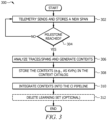
- FIG. 3 illustrates a method 300 performed by context generator 202 of FIG. 2 during a learning phase.
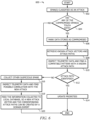
- FIG. 4 illustrates a method 400 performed by distributed ID processors 212 of FIG. 2 .
- FIGs. 5-6 illustrate a method 500, 600 performed by span inspector module 206 of FIG. 2 .
- Method 300 of FIG. 3 may include the following steps.
- Method 300 may initiate at step 302 with the telemetry unit 210 (referring to FIG. 2 ) sending and storing a new span.
- the context generator 202 may determine whether a milestone has been reached.
- a milestone may be reached: (1) by manual finish of the learning phase (at the end of continuous integration and continuous delivery/continuous deployment (CI/CD) testing cycle); (2) after a certain number of samples; (3) after a time period, or any other suitable milestone. If the milestone has been reached, method 300 moves from step 304 to step 306. Otherwise, the method 300 proceeds back to step 302.
- traces/spans may be analyzed and contexts 214 (referring to FIG. 2 ) may be generated.
- this may be implemented as a variation of unsupervised learning such as a K-Means clustering algorithm run to extract centroids (contexts) from collected data samples (spans).
- this may be seeded by running certain telemetry spans in a privileged mode (e.g., admin flag/certificate) denoting a new span as the "golden run," which may be automatically approved.
- Method 300 then may proceed from step 306 to step 308.
- contexts 214 may be stored in the context catalog 204 (referring to FIG. 2 ).
- storing contexts 214 may represent persisting the contexts 214 in a database and/or in memory databases accessible by ID processors 212.
- storing contexts 214 may include storing KVPs and any additional metadata needed for context description (e.g., signed/attestable member lists, etc.).
- Method 300 then proceeds from step 308 to step 310.
- the contexts 214 may be integrated into the CI pipeline. After storing contexts 214 and generating appropriate key-value pairs, each service may receive encoded at build time with context KVP values that it should expect to see when invoked at run-time. In certain embodiments, after integrating the contexts into the CI pipeline, the learning set may be deleted in an optional step 312. Method 300 then proceeds to end.
- Method 400 of FIG. 4 may include the following steps.
- Method 400 may initiate at step 402 with invoking a service.
- a service call may be invoked for any one of the microservices 104 (referring to FIGs. 1-2 ).
- the distributed ID processors 212 (referring to FIG. 2 ) may each determine whether the service belongs to one of the contexts 214 (referring to FIG. 2 ) stored in the context catalog 204 (referring to FIG. 2 ). For example, a whitelist instrumentation may compare the context identifier in the request's header to a list of known contexts 214 which access the microservice 104 (e.g., retrieved from the context catalog 204 in memory).
- contexts 214 may include a list of members (e.g., in the form of required signatures of earlier service steps present in the header). Techniques such as hashing and/or forward signing contexts within tracing information in the telemetry may substantially reduce the attack surface for the application data 106 (referring to FIG. 1 ). In some cases, the context 214 may be known but it may have been propagated through an unexpected predecessor (e.g., due to a failure, redirection, and retry process, due to a new load balancing process, due to an attack, etc.).
- step 404 the service call is continued at step 406. If, at step 404, the service does not belong to a known and expected context, method 400 moves from step 404 to step 408, where the span is flagged for investigation. In certain embodiments, the service detecting a misbehavior adds a metadata flag to the span. In some embodiments, telemetry collection backend of telemetry unit 210 may accept all spans and stores the spans. In certain embodiments, the span inspector module 206 may sit behind the telemetry collection and reacts to marked spans. Method 400 may then proceed from step 408 to step 410.
- a determination may be made as to whether any services should be denied. For example, a service denial/rule enforcement may be used to deny unknown contexts. If, at step 410, the service is not denied, the service call is continued at step 406. If, at step 410, the service is denied, the distributed ID processors 212 may enforce the policy at a step 412. Method 400 then may proceed to end.
- a service denial/rule enforcement may be used to deny unknown contexts. If, at step 410, the service is not denied, the service call is continued at step 406. If, at step 410, the service is denied, the distributed ID processors 212 may enforce the policy at a step 412. Method 400 then may proceed to end.
- Method 500 of FIG. 5 may include the following steps.
- Method 500 may begin at step 502 with the span inspector module 206 receiving marked spans.
- the received marked spans have each been flagged for inspection.
- span inspector module 206 may conduct a root cause analysis to determine if the incident that flagged the marked span should be classified as an attack.
- Various possible operations might be conducted by the span inspector module 206 to this end. For example, additional telemetry and operational information may be collected to detect unusual events, such as services not responding, redirections, and retries, which might correspond to valid behavior programmed in the application services but not necessarily captured by the context generator 202 (referring to FIG. 2 ) during the learning phase.
- a new load balancing process may be enforced without having yet retrained the incident detection processes.
- traffic redirection might also correspond to valid patterns that are not yet captured by the context generator 202. Additional operational information and correlation analysis may help with identifying valid situations that were not captured during the learning phase.
- the span inspector module 206 may determine if the marked span is an attack, based on the results of step 504. If the incident is not considered an attack, the mark and/or flag may be removed from the span at step 508. If the incident is considered an attack, method 500 then proceeds from step 506 to step 510.
- an incident investigation may be performed (i.e., wherein method 600 of FIG. 6 is illustrative of an incident investigation). Method 500 may then proceed to end. Step 510 is described in more detail in FIG. 6 .
- Method 600 of FIG. 6 may illustrate step 510 of FIG. 5 and may include the following steps.
- Method 600 may begin at step 602 with one or more spans being classified as an attack.
- step 604 if any of the compromised spans touched data (such as application data 106), method 600 moves to step 606, where the data stores are marked as compromised.
- the span inspector module 206 may have access to the span store from the telemetry collection backend of telemetry unit 210 (referring to FIG. 2 ).
- the span inspector module 206 may check all steps present in the span involving data read/writes.
- the span inspector module 206 may interact with a data security posture management (DSPM), a data inventory or data control tool, an application security solution, and/or the like to indicate or mark certain data sources as compromised. As yet another example, the span inspector module 206 may notify the corresponding data controller and/or processor about the issue. Method 600 then moves to step 608.
- DSPM data security posture management
- the span inspector module 206 may interact with a data security posture management (DSPM), a data inventory or data control tool, an application security solution, and/or the like to indicate or mark certain data sources as compromised.
- DSPM data security posture management
- the span inspector module 206 may notify the corresponding data controller and/or processor about the issue. Method 600 then moves to step 608.
- known attack vectors and attack paths may be retrieved.
- the span inspector module 206 may retrieve information from security profiles stored in a database (e.g., local database 208).
- the telemetry information may be inspected to find a compatible pattern with a known attack path.
- the span inspector module 206 may look for an intersection between the steps present in the context 214 (referring to FIG. 2 ) flagged for inspection and known (possible) points of attack.
- step 612 If, at step 612, an attack path is identified, method 600 moves from step 612 to step 614, where priorities may be updated. For example, the span investigation process may raise the priority and severity of the identified attack path in the local database 208, as the identified attack path is being actively exploited. Method 600 may then end. If, at step 612, an attack path is not identified, method 600 proceeds from step 612 to step 616, where other suspicious spans may be collected.
- the span inspector module 206 may inspect the telemetry data or information and find possible correlations with the new attack. For example, the span inspector module 206 may collect other suspicious spans and/or check for any other spans marked for investigation. Method 600 then proceeds to step 620, where collected information may be fed to the database (e.g., local database 208) such that new attack vector and the corresponding attack paths may be created by a domain expert. For example, the span inspector module 206 may notify the need for creating a new attack vector and the corresponding (new) attack paths. Method 600 then proceeds to end. In certain embodiments, potential attacks to the telemetry and/or instrumentation process may be mitigated and proactively captured as "known" attack vectors to the CI/CD pipeline (at build /deploy time).
- FIGs. 3-6 describe and illustrate particular steps for the methods of FIGs. 3-6 as occurring in a particular order, this disclosure contemplates any suitable steps for the methods of FIGs. 3-6 occurring in any suitable order.
- this disclosure describes and illustrates an example method for leveraging telemetry to detect vulnerabilities including the particular steps of method 300, 400, 500, and 600
- this disclosure contemplates any suitable method for leveraging telemetry to detect vulnerabilities including any suitable steps, which may include all, some, or none of the steps of method 300, 400, 500, and 600, where appropriate.
- FIGs. 3-6 describe and illustrate particular components, devices, or systems carrying out particular actions, this disclosure contemplates any suitable combination of any suitable components, devices, or systems carrying out any suitable actions.
- This disclosure describes systems and methods that capture, catalog, encode, instrument, and/or propagate attestable contexts when application services (such as microservices 104) interact with sensitive data at rest and/or in-memory databases.
- application services such as microservices 104
- Certain systems and methods described herein allow contextual analysis and deterministic detection of unclassified service call patterns (e.g., deviations from known/classified contexts).
- Certain embodiments of this disclosure automatically check for contexts on service invocation, and upon detecting an unexpected behavior, take further actions.
- the further actions may include conducting root cause analysis and disambiguation to determine if the incident should be classified as an attack, reprioritizing known attack vectors/paths that are being exploited, notifying the need to create new attack vectors when there are no attack vectors in the knowledge base matching the current attack detected, and the like.
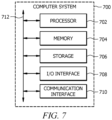
- FIG. 7 illustrates an example computer system 700.
- one or more computer systems 700 perform one or more steps of one or more methods described or illustrated herein.
- one or more computer systems 700 provide functionality described or illustrated herein.
- software running on one or more computer systems 700 performs one or more steps of one or more methods described or illustrated herein or provides functionality described or illustrated herein.
- Particular embodiments include one or more portions of one or more computer systems 700.
- reference to a computer system may encompass a computing device, and vice versa, where appropriate.
- reference to a computer system may encompass one or more computer systems, where appropriate.
- the context generator 202 (referring to FIG. 2 ) and/or the span inspector module 206 (referring to FIG. 2 ) may utilize or function as one or more computer systems 700.
- computer system 700 may be an embedded computer system, a system-on-chip (SOC), a single-board computer system (SBC) (such as, for example, a computer-on-module (COM) or system-on-module (SOM)), a desktop computer system, a laptop or notebook computer system, an interactive kiosk, a mainframe, a mesh of computer systems, a mobile telephone, a personal digital assistant (PDA), a server, a tablet computer system, an augmented/virtual reality device, or a combination of two or more of these.
- SOC system-on-chip
- SBC single-board computer system
- COM computer-on-module
- SOM system-on-module
- computer system 700 may include one or more computer systems 700; be unitary or distributed; span multiple locations; span multiple machines; span multiple data centers; or reside in a cloud, which may include one or more cloud components in one or more networks.
- one or more computer systems 700 may perform without substantial spatial or temporal limitation one or more steps of one or more methods described or illustrated herein.
- one or more computer systems 700 may perform in real time or in batch mode one or more steps of one or more methods described or illustrated herein.
- One or more computer systems 700 may perform at different times or at different locations one or more steps of one or more methods described or illustrated herein, where appropriate.
- computer system 700 includes a processor 702, a memory 704, a storage 706, an input/output (I/O) interface 708, a communication interface 710, and a bus 712.
- processor 702 a processor
- memory 704 a memory
- storage 706 an input/output (I/O) interface 708, a communication interface 710, and a bus 712.
- I/O input/output
- this disclosure describes and illustrates a particular computer system having a particular number of particular components in a particular arrangement, this disclosure contemplates any suitable computer system having any suitable number of any suitable components in any suitable arrangement.
- processor 702 includes hardware for executing instructions, such as those making up a computer program.
- processor 702 may retrieve (or fetch) the instructions from an internal register, an internal cache, memory 704, or storage 706; decode and execute them; and then write one or more results to an internal register, an internal cache, memory 704, or storage 706.
- processor 702 may include one or more internal caches for data, instructions, or addresses. This disclosure contemplates processor 702 including any suitable number of any suitable internal caches, where appropriate.
- processor 702 may include one or more instruction caches, one or more data caches, and one or more translation lookaside buffers (TLBs).
- TLBs translation lookaside buffers
- Instructions in the instruction caches may be copies of instructions in memory 704 or storage 706, and the instruction caches may speed up retrieval of those instructions by processor 702.
- Data in the data caches may be copies of data in memory 704 or storage 706 for instructions executing at processor 702 to operate on; the results of previous instructions executed at processor 702 for access by subsequent instructions executing at processor 702 or for writing to memory 704 or storage 706; or other suitable data.
- the data caches may speed up read or write operations by processor 702.
- the TLBs may speed up virtual-address translation for processor 702.
- processor 702 may include one or more internal registers for data, instructions, or addresses. This disclosure contemplates processor 702 including any suitable number of any suitable internal registers, where appropriate. Where appropriate, processor 702 may include one or more arithmetic logic units (ALUs); be a multi-core processor; or include one or more processors 702. Although this disclosure describes and illustrates a particular processor, this disclosure contemplates any suitable processor.
- ALUs
- memory 704 includes main memory for storing instructions for processor 702 to execute or data for processor 702 to operate on.
- computer system 700 may load instructions from storage 706 or another source (such as, for example, another computer system 700) to memory 704.
- Processor 702 may then load the instructions from memory 704 to an internal register or internal cache.
- processor 702 may retrieve the instructions from the internal register or internal cache and decode them.
- processor 702 may write one or more results (which may be intermediate or final results) to the internal register or internal cache.
- Processor 702 may then write one or more of those results to memory 704.
- processor 702 executes only instructions in one or more internal registers or internal caches or in memory 704 (as opposed to storage 706 or elsewhere) and operates only on data in one or more internal registers or internal caches or in memory 704 (as opposed to storage 706 or elsewhere).
- One or more memory buses (which may each include an address bus and a data bus) may couple processor 702 to memory 704.
- Bus 712 may include one or more memory buses, as described below.
- one or more memory management units (MMUs) reside between processor 702 and memory 704 and facilitate accesses to memory 704 requested by processor 702.
- memory 704 includes random access memory (RAM). This RAM may be volatile memory, where appropriate.
- this RAM may be dynamic RAM (DRAM) or static RAM (SRAM). Moreover, where appropriate, this RAM may be single-ported or multi-ported RAM. This disclosure contemplates any suitable RAM.
- Memory 704 may include one or more memories 704, where appropriate. Although this disclosure describes and illustrates particular memory, this disclosure contemplates any suitable memory.
- storage 706 includes mass storage for data or instructions.
- storage 706 may include a hard disk drive (HDD), a floppy disk drive, flash memory, an optical disc, a magneto-optical disc, magnetic tape, or a Universal Serial Bus (USB) drive or a combination of two or more of these.
- Storage 706 may include removable or non-removable (or fixed) media, where appropriate.
- Storage 706 may be internal or external to computer system 700, where appropriate.
- storage 706 is non-volatile, solid-state memory.
- storage 706 includes read-only memory (ROM).
- this ROM may be mask-programmed ROM, programmable ROM (PROM), erasable PROM (EPROM), electrically erasable PROM (EEPROM), electrically alterable ROM (EAROM), or flash memory or a combination of two or more of these.
- This disclosure contemplates mass storage 706 taking any suitable physical form.
- Storage 706 may include one or more storage control units facilitating communication between processor 702 and storage 706, where appropriate. Where appropriate, storage 706 may include one or more storages 706. Although this disclosure describes and illustrates particular storage, this disclosure contemplates any suitable storage.
- I/O interface 708 includes hardware, software, or both, providing one or more interfaces for communication between computer system 700 and one or more I/O devices.
- Computer system 700 may include one or more of these I/O devices, where appropriate.
- One or more of these I/O devices may enable communication between a person and computer system 700.
- an I/O device may include a keyboard, keypad, microphone, monitor, mouse, printer, scanner, speaker, still camera, stylus, tablet, touch screen, trackball, video camera, another suitable I/O device or a combination of two or more of these.
- An I/O device may include one or more sensors. This disclosure contemplates any suitable I/O devices and any suitable I/O interfaces 708 for them.
- I/O interface 708 may include one or more device or software drivers enabling processor 702 to drive one or more of these I/O devices.
- I/O interface 708 may include one or more I/O interfaces 708, where appropriate.
- communication interface 710 includes hardware, software, or both providing one or more interfaces for communication (such as, for example, packet-based communication) between computer system 700 and one or more other computer system 700 or one or more networks.
- communication interface 710 may include a network interface controller (NIC) or network adapter for communicating with an Ethernet or other wire-based network or a wireless NIC (WNIC) or wireless adapter for communicating with a wireless network, such as a WI-FI network.
- NIC network interface controller
- WNIC wireless NIC
- WI-FI network wireless network
- computer system 700 may communicate with an ad hoc network, a personal area network (PAN), a local area network (LAN), a wide area network (WAN), a metropolitan area network (MAN), or one or more portions of the Internet or a combination of two or more of these.
- PAN personal area network
- LAN local area network
- WAN wide area network
- MAN metropolitan area network
- computer system 700 may communicate with a wireless PAN (WPAN) (such as, for example, a BLUETOOTH WPAN), a WI-FI network, a WI-MAX network, a cellular telephone network (such as, for example, a Global System for Mobile Communications (GSM) network), or other suitable wireless network or a combination of two or more of these.
- WPAN wireless PAN
- WI-FI wireless personal area network
- WI-MAX wireless personal area network
- WI-MAX wireless personal area network
- cellular telephone network such as, for example, a Global System for Mobile Communications (GSM) network
- GSM Global System
- bus 712 includes hardware, software, or both coupling components of computer system 700 to each other.
- bus 712 may include an Accelerated Graphics Port (AGP) or other graphics bus, an Enhanced Industry Standard Architecture (EISA) bus, a front-side bus (FSB), a HYPERTRANSPORT (HT) interconnect, an Industry Standard Architecture (ISA) bus, an INFINIBAND interconnect, a low-pin-count (LPC) bus, a memory bus, a Micro Channel Architecture (MCA) bus, a Peripheral Component Interconnect (PCI) bus, a PCI-Express (PCIe) bus, a serial advanced technology attachment (SATA) bus, a Video Electronics Standards Association local (VLB) bus, or another suitable bus or a combination of two or more of these.
- Bus 712 may include one or more buses 712, where appropriate.
- a computer-readable non-transitory storage medium or media may include one or more semiconductor-based or other integrated circuits (ICs) (such, as for example, field-programmable gate arrays (FPGAs) or application-specific ICs (ASICs)), hard disk drives (HDDs), hybrid hard drives (HHDs), optical discs, optical disc drives (ODDs), magneto-optical discs, magneto-optical drives, floppy diskettes, floppy disk drives (FDDs), magnetic tapes, solid-state drives (SSDs), RAM-drives, SECURE DIGITAL cards or drives, any other suitable computer-readable non-transitory storage media, or any suitable combination of two or more of these, where appropriate.
- ICs such, as for example, field-programmable gate arrays (FPGAs) or application-specific ICs (ASICs)
- HDDs hard disk drives
- HHDs hybrid hard drives
- ODDs optical disc drives
- magneto-optical discs magneto-optical drives
- references in the appended claims to an apparatus or system or a component of an apparatus or system being adapted to, arranged to, capable of, configured to, enabled to, operable to, or operative to perform a particular function encompasses that apparatus, system, component, whether or not it or that particular function is activated, turned on, or unlocked, as long as that apparatus, system, or component is so adapted, arranged, capable, configured, enabled, operable, or operative. Additionally, although this disclosure describes or illustrates particular embodiments as providing particular advantages, particular embodiments may provide none, some, or all of these advantages.
- Embodiments disclosed herein are only examples, and the scope of this disclosure is not limited to them. Particular embodiments may include all, some, or none of the components, elements, features, functions, operations, or steps of the embodiments disclosed herein within the scope of the appended claims.
- Embodiments disclosed herein include a method, an apparatus, a storage medium, a system and a computer program product, wherein any feature mentioned in one category, e.g., a method, can be applied in another category, e.g., a system, as well.
Landscapes
- Engineering & Computer Science (AREA)
- Computer Security & Cryptography (AREA)
- Computer Hardware Design (AREA)
- General Engineering & Computer Science (AREA)
- Software Systems (AREA)
- Theoretical Computer Science (AREA)
- General Physics & Mathematics (AREA)
- Physics & Mathematics (AREA)
- Computing Systems (AREA)
- Computer Networks & Wireless Communication (AREA)
- Signal Processing (AREA)
- Virology (AREA)
- Health & Medical Sciences (AREA)
- General Health & Medical Sciences (AREA)
- Computer And Data Communications (AREA)
Abstract
Description
- The present disclosure relates generally to application security monitoring, and more particularly, to detecting attack vectors to application data.
- Certain cybersecurity flaws are publicly known. For example, Common Vulnerabilities and Exposures (CVE) publishes a list of publicly available cybersecurity flaws. However, vulnerabilities for which there is no CVE or known attack vector may remain undetected. Further, there is a challenge to identify deviations from programmed behavior on application data flows between application services.
-
-
FIG. 1 illustrates an example system for leveraging telemetry to detect vulnerabilities, in accordance with certain embodiments. -
FIG. 2 illustrates an example system for detecting attack vectors for application data, in accordance with certain embodiments. -
FIG. 3 illustrates an example method for generating a context between application services, in accordance with certain examples. -
FIG. 4 illustrates an example method for context detection, in accordance with certain examples. -
FIG. 5 illustrates an example method for analyzing flagged spans, in accordance with certain examples. -
FIG. 6 illustrates an example method for determining a flagged span as an attack vector, in accordance with certain examples. -
FIG. 7 illustrates an example computer system, in accordance with certain embodiments. - Aspects of the invention are set out in the independent claims and preferred features are set out in the dependent claims. Features of one aspect may be applied to each aspect alone or in combination with other features.
- In particular embodiments, a system may include one or more processors and one or more computer-readable non-transitory storage media coupled to one or more of the processors. The one or more computer-readable non-transitory storage media may include instructions operable, when executed by one or more of the processors, to cause the system to receive a marked span that has been flagged for inspection. The instructions are further operable, when executed by the one or more processors, to cause the system to conduct a root cause analysis to determine if the marked span should be classified as an attack. The instructions are further operable, when executed by the one or more processors, to cause the system to determine whether the marked span engaged with data corresponding to one or more application services defining the marked span in response to a determination that the marked span should be classified as an attack. The instructions are further operable, when executed by the one or more processors, to cause the system to designate the data corresponding to the one or more application services as compromised in response to a determination that the marked span did engage with said data.
- In particular embodiments, a method, by a system, for detecting an unknown attack vector may include receiving a marked span that has been flagged for inspection. The method further includes conducting a root cause analysis to determine if the marked span should be classified as an attack. In response to a determination that the marked span should be classified as an attack, the method further includes determining whether the marked span engaged with data corresponding to one or more application services defining the marked span. The method further includes designate the data corresponding to the one or more application services as compromised in response to a determination that the marked span did engage with said data.
- In particular embodiments, one or more computer-readable non-transitory storage media may embody software that is operable, when executed by a processor, to receive a marked span that has been flagged for inspection. The software may be further operable, when executed, to conduct a root cause analysis to determine if the marked span should be classified as an attack. The software may be further operable, when executed, to determine whether the marked span engaged with data corresponding to one or more application services defining the marked span in response to a determination that the marked span should be classified as an attack. The software may be further operable, when executed, to designate the data corresponding to the one or more application services as compromised in response to a determination that the marked span did engage with said data.
- Technical advantages of certain embodiments of this disclosure may include one or more of the following. Certain systems and methods described herein may increase data security and protect from unauthorized extraction of sensitive data by unknown attack vectors. This disclosure provides systems and methods to capture, catalog, encode, instrument, and propagate attestable contexts when application services interact with sensitive data at rest.
- Other technical advantages will be readily apparent to one skilled in the art from the following figures, descriptions, and claims. Moreover, while specific advantages have been enumerated above, various embodiments may include all, some, or none of the enumerated advantages.
- The embodiments described herein provide for detecting attack vectors to application data belonging to application services. The present disclosure contemplates systems and methods to capture, catalog, encode, instrument, and propagate attestable contexts when application services interact with sensitive data, in certain examples at rest. In certain embodiments, a system and method for leveraging telemetry to detect vulnerabilities is provided. The method includes analyzing spans, generating contexts, storing the contexts in a context catalog, and integrating the contexts into a continuous integration (CI) pipeline by a context generator during a learning phase. The system and method also include analyzing a service, determining whether the service is an unknown/unexpected context, marking/flagging the span for investigation, determining whether to deny the service, and determining whether to enforce a policy by a distributed incident detection module. The system and method further include receiving a marked span, conducting a root cause analysis to determining if the incident should be classified as an attack, determining whether the incident is considered an attack, and depending on the response, either removing the mark from the span or marking the incident for investigation by a span investigation module.
-
FIG. 1 illustrates illustrates anexample system 100 for leveraging telemetry to detect vulnerabilities.System 100 may include one or more application services (and/or microservices) located in acloud infrastructure 102. For example, there may be a plurality of microservices 104 located within the cloud infrastructure 102 (such asmicroservice 104a throughmicroservice 104f, where there may be any suitable integer of microservices). In one or more embodiments,application data 106 may be associated with or correspond to certain microservices 104. Without limitations, theapplication data 106 may include personally identifiable information (PII) and/or payment card industry (PCI) data. The microservices 104 andapplication data 106 may be subject to the owner's control (e.g., a data controller or a data processor). - In certain embodiments, preemptive mechanisms include leveraging telemetry that can be instrumented in microservices 104 (e.g., application services). Such telemetry may allow
system 100 to capture distributed tracing/logging to/from databases and assets with sensitive data (e.g.,application data 106 at rest (e.g., using OpenTelemetry)). For example, there may be a service call invoked at any one of the microservices 104 to access theapplication data 106 of another microservice 104, and thesystem 100 may be configured to monitor and analyze the communication pathways between each microservice 104 (i.e., a "span"). As disclosed herein, a span may be the invoked service call path between at least two microservices 104 to accesscertain application data 106, and each span may be stored in thesystem 100 for reference in detecting unknown attack vectors from an external entity. A span can contain sub-spans in a tree-like structure - having one root span, and any number of child span layers. One span can be generated with code running on just oneservice 104a, but can also invoke other sub-spans ifservice 104a calls on the functionality of other services 104. - As illustrated in
FIG. 1 , a service call invoked atmicroservice 104a to access theapplication data 106 ofmicroservice 104e may correspond to threeindividual spans Parent span 108 includes, as sub-spans, communications frommicroservice 104a tomicroservice 104b, then tomicroservice 104c, and then tomicroservice 104e.Parent span 110 includes, as sub-spans, communications frommicroservice 104a tomicroservice 104c, and then tomicroservice 104e.Parent span 112 includes, as sub-spans, communications frommicroservice 104a tomicroservice 104c, then tomicroservice 104d, and then tomicroservice 104e. - As illustrated, the
system 100 may be exposed to anunknown span 114 that includes communications frommicroservice 104f tomicroservice 104c and then tomicroservice 104e. In embodiments, thesystem 100 may not know the identity of themicroservice 104f and may monitor thespan 114 as it propagates through thecloud infrastructure 102. In certain embodiments, thesystem 100 may determine that thespan 114 is an attack vector and deny themicroservice 104f access to theapplication data 106. - In embodiments, preemptive mechanisms may include creating patterns of programmed behavior. The programmed behavior may be learned, cataloged, and/or captured as contexts (e.g., context 214a,
context 214b, and/orcontext 214c as shown inFIG. 2 ) in a context catalog (e.g., during testing, staging, and/or in production). Such contexts may represent a template for spans, considering one span per invocation path. More specifically, once such patterns are learned, they may be integrated into the CI pipeline in order to be propagated as contexts. In certain embodiments, this is done using World Wide Web Consortium (W3C) trace context. The traceparent field may ensure interoperability across telemetry tools. The tracestate field may allow the addition of App-specific context in the form of key-value pairs (KVPs). For example, a simple KVP may be: (DS1.1, GET PII), (DS1.2, PUT PII), (DS1.3, POST PII), etc., which may represent some of the cataloged contexts. In some embodiments, KVPs may include a sequenced list of members. The sequenced list of members may include the request's position in a distributed tracing graph. For example, W3C's tracestate context supports lists of members to convey vendor-specific context. The purpose herein may be to carry an attestable list of microservices 104 associated to the context carried and propagated in the headers through the application services. For each given context, the microservice 104 may know its predecessor and its potential successor, wherein contexts might be signed and hence cannot be forged. - In certain embodiments, preemptive mechanisms include allowing contextual analysis and/or deterministic detection of unclassified patterns (e.g., deviations from known/classified contexts) (such as span 114). For example,
system 100 may automatically check for contexts on service invocation, and, upon detecting an unexpected behavior (e.g., a context ID not present in the CI-generated list), thesystem 100 may include ways to (1) conduct root cause analysis and disambiguation (e.g., detect deviations due to communication failures, new load balancing configuration, or an attack to application data); (2) isolate communications to/from a given service (e.g.,microservice 104f inFIG. 1 or any other microservice); and/or (3) infer malicious behavior and notify the need to update the attack vector and attack path knowledge base. - Although
FIG. 1 illustrates a particular number of components ofsystem 100, this disclosure contemplates any suitable number of components. AlthoughFIG. 1 illustrates a particular arrangement of the components ofsystem 100, this disclosure contemplates any suitable arrangement of the components. Furthermore, althoughFIG. 1 describes and illustrates particular components, devices, or systems carrying out particular actions, this disclosure contemplates any suitable combination of any suitable components, devices, or systems carrying out any suitable actions. -
FIG. 2 illustrates an examplepreemptive system 200 for detecting attack vectors forapplication data 106.System 200 may include the plurality of microservices 104 located on thecloud infrastructure 102, acontext generator 202, acontext catalog 204, aspan inspector module 206, alocal database 208, and atelemetry unit 210. - In the illustrated embodiment of
FIG. 2 , microservices 104a through 104f may be endowed with a distributed Incident Detection (ID)processor 212 with local access to thecontext catalog 204. Thecontext catalog 204 may store one or more contexts 214 generated by thecontext generator 202. In embodiments, thecontext generator 202 may receive signals associated with a span for an invoked service call on thecloud infrastructure 102 and may store the span as one of the one or more contexts 214 for a given microservice 104. Thecontext generator 202 may receive said signals from via thetelemetry unit 210. In embodiments, thetelemetry unit 210 may employ one or more scanners and/or collectors to collect and communicate the signals between the microservices 104. - Each
ID processor 212 may provide ways to inject, propagate, and/or extract the learned contexts 214 (e.g., by instrumentation in the application service). In certain embodiments,ID processors 212 may: (1) receive telemetry information and know which context 214 invoked the service (e.g., information available from the context catalog 204); (2) mark spans when context 214 is unknown or unexpected and/or flag them for inspection; and/or (3) isolate and/or block invocations/communications outside of known contexts 214 (e.g., by pushing filters to sidecars or by an alternative means). - In embodiments, both the
context generator 202 and thespan inspector module 206 may be communicatively coupled to thetelemetry unit 210.Span inspector module 206 may: (4) receive the spans marked for inspection fromtelemetry unit 210; (5) analyze and/or determine if the incident should be classified as an attack; (6) if the incident should not be classified as an attack, remove the mark from the span, otherwise, query thelocal database 208 for the attack vector knowledge base; (7) analyze and determine if the incident is rooted on a known attack vector / attack path (hence requiring prioritization) or belongs to a new category for which there is no known vector; and/or (8) when applicable, notify the need for creating new attack vectors in thelocal database 208. In embodiments, thelocal database 208 may be configured to store known attack vectors or attack paths. - Although
FIG. 2 illustrates a particular number of components ofsystem 200, this disclosure contemplates any suitable number of components. AlthoughFIG. 2 illustrates a particular arrangement of the components ofsystem 200, this disclosure contemplates any suitable arrangement of the components. Furthermore, althoughFIG. 2 describes and illustrates particular components, devices, or systems carrying out particular actions, this disclosure contemplates any suitable combination of any suitable components, devices, or systems carrying out any suitable actions. -
FIGs. 3-6 illustrate example methods for leveraging telemetry to detect vulnerabilities.FIG. 3 illustrates amethod 300 performed bycontext generator 202 ofFIG. 2 during a learning phase.FIG. 4 illustrates amethod 400 performed by distributedID processors 212 ofFIG. 2 .FIGs. 5-6 illustrate amethod span inspector module 206 ofFIG. 2 . -
Method 300 ofFIG. 3 may include the following steps.Method 300 may initiate atstep 302 with the telemetry unit 210 (referring toFIG. 2 ) sending and storing a new span. Atstep 304 ofmethod 300, thecontext generator 202 may determine whether a milestone has been reached. A milestone may be reached: (1) by manual finish of the learning phase (at the end of continuous integration and continuous delivery/continuous deployment (CI/CD) testing cycle); (2) after a certain number of samples; (3) after a time period, or any other suitable milestone. If the milestone has been reached,method 300 moves fromstep 304 to step 306. Otherwise, themethod 300 proceeds back tostep 302. - At
step 306 ofmethod 300, traces/spans may be analyzed and contexts 214 (referring toFIG. 2 ) may be generated. In certain embodiments, this may be implemented as a variation of unsupervised learning such as a K-Means clustering algorithm run to extract centroids (contexts) from collected data samples (spans). In some embodiments, this may be seeded by running certain telemetry spans in a privileged mode (e.g., admin flag/certificate) denoting a new span as the "golden run," which may be automatically approved.Method 300 then may proceed fromstep 306 to step 308. - At
step 308 ofmethod 300, contexts 214 may be stored in the context catalog 204 (referring toFIG. 2 ). In some embodiments, storing contexts 214 may represent persisting the contexts 214 in a database and/or in memory databases accessible byID processors 212. In certain embodiments, storing contexts 214 may include storing KVPs and any additional metadata needed for context description (e.g., signed/attestable member lists, etc.).Method 300 then proceeds fromstep 308 to step 310. - At
step 310 ofmethod 300, the contexts 214 may be integrated into the CI pipeline. After storing contexts 214 and generating appropriate key-value pairs, each service may receive encoded at build time with context KVP values that it should expect to see when invoked at run-time. In certain embodiments, after integrating the contexts into the CI pipeline, the learning set may be deleted in anoptional step 312.Method 300 then proceeds to end. -
Method 400 ofFIG. 4 may include the following steps.Method 400 may initiate atstep 402 with invoking a service. Atstep 402, a service call may be invoked for any one of the microservices 104 (referring toFIGs. 1-2 ). Atstep 404 ofmethod 400, the distributed ID processors 212 (referring toFIG. 2 ) may each determine whether the service belongs to one of the contexts 214 (referring toFIG. 2 ) stored in the context catalog 204 (referring toFIG. 2 ). For example, a whitelist instrumentation may compare the context identifier in the request's header to a list of known contexts 214 which access the microservice 104 (e.g., retrieved from thecontext catalog 204 in memory). In certain embodiments, contexts 214 may include a list of members (e.g., in the form of required signatures of earlier service steps present in the header). Techniques such as hashing and/or forward signing contexts within tracing information in the telemetry may substantially reduce the attack surface for the application data 106 (referring toFIG. 1 ). In some cases, the context 214 may be known but it may have been propagated through an unexpected predecessor (e.g., due to a failure, redirection, and retry process, due to a new load balancing process, due to an attack, etc.). - If, at
step 404, the service belongs to a known and expected context, the service call is continued atstep 406. If, atstep 404, the service does not belong to a known and expected context,method 400 moves fromstep 404 to step 408, where the span is flagged for investigation. In certain embodiments, the service detecting a misbehavior adds a metadata flag to the span. In some embodiments, telemetry collection backend oftelemetry unit 210 may accept all spans and stores the spans. In certain embodiments, thespan inspector module 206 may sit behind the telemetry collection and reacts to marked spans.Method 400 may then proceed fromstep 408 to step 410. - At
step 410 ofmethod 400, a determination may be made as to whether any services should be denied. For example, a service denial/rule enforcement may be used to deny unknown contexts. If, atstep 410, the service is not denied, the service call is continued atstep 406. If, atstep 410, the service is denied, the distributedID processors 212 may enforce the policy at astep 412.Method 400 then may proceed to end. -
Method 500 ofFIG. 5 may include the following steps.Method 500 may begin atstep 502 with thespan inspector module 206 receiving marked spans. In embodiments, the received marked spans have each been flagged for inspection. Atstep 504,span inspector module 206 may conduct a root cause analysis to determine if the incident that flagged the marked span should be classified as an attack. Various possible operations might be conducted by thespan inspector module 206 to this end. For example, additional telemetry and operational information may be collected to detect unusual events, such as services not responding, redirections, and retries, which might correspond to valid behavior programmed in the application services but not necessarily captured by the context generator 202 (referring toFIG. 2 ) during the learning phase. As another example, a new load balancing process may be enforced without having yet retrained the incident detection processes. Hence, such traffic redirection might also correspond to valid patterns that are not yet captured by thecontext generator 202. Additional operational information and correlation analysis may help with identifying valid situations that were not captured during the learning phase. - At
step 506, thespan inspector module 206 may may determine if the marked span is an attack, based on the results ofstep 504. If the incident is not considered an attack, the mark and/or flag may be removed from the span atstep 508. If the incident is considered an attack,method 500 then proceeds fromstep 506 to step 510. Atstep 510, an incident investigation may be performed (i.e., whereinmethod 600 ofFIG. 6 is illustrative of an incident investigation).Method 500 may then proceed to end. Step 510 is described in more detail inFIG. 6 . -
Method 600 ofFIG. 6 may illustrate step 510 ofFIG. 5 and may include the following steps.Method 600 may begin atstep 602 with one or more spans being classified as an attack. Atstep 604, if any of the compromised spans touched data (such as application data 106),method 600 moves to step 606, where the data stores are marked as compromised. For example, thespan inspector module 206 may have access to the span store from the telemetry collection backend of telemetry unit 210 (referring toFIG. 2 ). As another example, thespan inspector module 206 may check all steps present in the span involving data read/writes. As still another example, thespan inspector module 206 may interact with a data security posture management (DSPM), a data inventory or data control tool, an application security solution, and/or the like to indicate or mark certain data sources as compromised. As yet another example, thespan inspector module 206 may notify the corresponding data controller and/or processor about the issue.Method 600 then moves to step 608. - At
step 608, known attack vectors and attack paths may be retrieved. For example, thespan inspector module 206 may retrieve information from security profiles stored in a database (e.g., local database 208). Atstep 610, the telemetry information may be inspected to find a compatible pattern with a known attack path. For example, thespan inspector module 206 may look for an intersection between the steps present in the context 214 (referring toFIG. 2 ) flagged for inspection and known (possible) points of attack. - If, at
step 612, an attack path is identified,method 600 moves fromstep 612 to step 614, where priorities may be updated. For example, the span investigation process may raise the priority and severity of the identified attack path in thelocal database 208, as the identified attack path is being actively exploited.Method 600 may then end. If, atstep 612, an attack path is not identified,method 600 proceeds fromstep 612 to step 616, where other suspicious spans may be collected. - At
step 618, thespan inspector module 206 may inspect the telemetry data or information and find possible correlations with the new attack. For example, thespan inspector module 206 may collect other suspicious spans and/or check for any other spans marked for investigation.Method 600 then proceeds to step 620, where collected information may be fed to the database (e.g., local database 208) such that new attack vector and the corresponding attack paths may be created by a domain expert. For example, thespan inspector module 206 may notify the need for creating a new attack vector and the corresponding (new) attack paths.Method 600 then proceeds to end. In certain embodiments, potential attacks to the telemetry and/or instrumentation process may be mitigated and proactively captured as "known" attack vectors to the CI/CD pipeline (at build /deploy time). - Although this disclosure describes and illustrates particular steps for the methods of
FIGs. 3-6 as occurring in a particular order, this disclosure contemplates any suitable steps for the methods ofFIGs. 3-6 occurring in any suitable order. Although this disclosure describes and illustrates an example method for leveraging telemetry to detect vulnerabilities including the particular steps ofmethod method FIGs. 3-6 describe and illustrate particular components, devices, or systems carrying out particular actions, this disclosure contemplates any suitable combination of any suitable components, devices, or systems carrying out any suitable actions. - Technical advantages of certain embodiments of this disclosure may include one or more of the following. This disclosure describes systems and methods that capture, catalog, encode, instrument, and/or propagate attestable contexts when application services (such as microservices 104) interact with sensitive data at rest and/or in-memory databases. Certain systems and methods described herein allow contextual analysis and deterministic detection of unclassified service call patterns (e.g., deviations from known/classified contexts). Certain embodiments of this disclosure automatically check for contexts on service invocation, and upon detecting an unexpected behavior, take further actions. The further actions may include conducting root cause analysis and disambiguation to determine if the incident should be classified as an attack, reprioritizing known attack vectors/paths that are being exploited, notifying the need to create new attack vectors when there are no attack vectors in the knowledge base matching the current attack detected, and the like.
- Other technical advantages will be readily apparent to one skilled in the art from the following figures, descriptions, and claims. Moreover, while specific advantages have been enumerated above, various embodiments may include all, some, or none of the enumerated advantages.
-
FIG. 7 illustrates anexample computer system 700. In particular embodiments, one ormore computer systems 700 perform one or more steps of one or more methods described or illustrated herein. In particular embodiments, one ormore computer systems 700 provide functionality described or illustrated herein. In particular embodiments, software running on one ormore computer systems 700 performs one or more steps of one or more methods described or illustrated herein or provides functionality described or illustrated herein. Particular embodiments include one or more portions of one ormore computer systems 700. Herein, reference to a computer system may encompass a computing device, and vice versa, where appropriate. Moreover, reference to a computer system may encompass one or more computer systems, where appropriate. In one or more embodiments, the context generator 202 (referring toFIG. 2 ) and/or the span inspector module 206 (referring toFIG. 2 ) may utilize or function as one ormore computer systems 700. - This disclosure contemplates any suitable number of
computer systems 700. This disclosure contemplatescomputer system 700 taking any suitable physical form. As example and not by way of limitation,computer system 700 may be an embedded computer system, a system-on-chip (SOC), a single-board computer system (SBC) (such as, for example, a computer-on-module (COM) or system-on-module (SOM)), a desktop computer system, a laptop or notebook computer system, an interactive kiosk, a mainframe, a mesh of computer systems, a mobile telephone, a personal digital assistant (PDA), a server, a tablet computer system, an augmented/virtual reality device, or a combination of two or more of these. Where appropriate,computer system 700 may include one ormore computer systems 700; be unitary or distributed; span multiple locations; span multiple machines; span multiple data centers; or reside in a cloud, which may include one or more cloud components in one or more networks. Where appropriate, one ormore computer systems 700 may perform without substantial spatial or temporal limitation one or more steps of one or more methods described or illustrated herein. As an example, and not by way of limitation, one ormore computer systems 700 may perform in real time or in batch mode one or more steps of one or more methods described or illustrated herein. One ormore computer systems 700 may perform at different times or at different locations one or more steps of one or more methods described or illustrated herein, where appropriate. - In particular embodiments,
computer system 700 includes aprocessor 702, amemory 704, astorage 706, an input/output (I/O)interface 708, acommunication interface 710, and abus 712. Although this disclosure describes and illustrates a particular computer system having a particular number of particular components in a particular arrangement, this disclosure contemplates any suitable computer system having any suitable number of any suitable components in any suitable arrangement. - In particular embodiments,
processor 702 includes hardware for executing instructions, such as those making up a computer program. As an example and not by way of limitation, to execute instructions,processor 702 may retrieve (or fetch) the instructions from an internal register, an internal cache,memory 704, orstorage 706; decode and execute them; and then write one or more results to an internal register, an internal cache,memory 704, orstorage 706. In particular embodiments,processor 702 may include one or more internal caches for data, instructions, or addresses. This disclosure contemplatesprocessor 702 including any suitable number of any suitable internal caches, where appropriate. As an example and not by way of limitation,processor 702 may include one or more instruction caches, one or more data caches, and one or more translation lookaside buffers (TLBs). Instructions in the instruction caches may be copies of instructions inmemory 704 orstorage 706, and the instruction caches may speed up retrieval of those instructions byprocessor 702. Data in the data caches may be copies of data inmemory 704 orstorage 706 for instructions executing atprocessor 702 to operate on; the results of previous instructions executed atprocessor 702 for access by subsequent instructions executing atprocessor 702 or for writing tomemory 704 orstorage 706; or other suitable data. The data caches may speed up read or write operations byprocessor 702. The TLBs may speed up virtual-address translation forprocessor 702. In particular embodiments,processor 702 may include one or more internal registers for data, instructions, or addresses. This disclosure contemplatesprocessor 702 including any suitable number of any suitable internal registers, where appropriate. Where appropriate,processor 702 may include one or more arithmetic logic units (ALUs); be a multi-core processor; or include one ormore processors 702. Although this disclosure describes and illustrates a particular processor, this disclosure contemplates any suitable processor. - In particular embodiments,
memory 704 includes main memory for storing instructions forprocessor 702 to execute or data forprocessor 702 to operate on. As an example and not by way of limitation,computer system 700 may load instructions fromstorage 706 or another source (such as, for example, another computer system 700) tomemory 704.Processor 702 may then load the instructions frommemory 704 to an internal register or internal cache. To execute the instructions,processor 702 may retrieve the instructions from the internal register or internal cache and decode them. During or after execution of the instructions,processor 702 may write one or more results (which may be intermediate or final results) to the internal register or internal cache.Processor 702 may then write one or more of those results tomemory 704. In particular embodiments,processor 702 executes only instructions in one or more internal registers or internal caches or in memory 704 (as opposed tostorage 706 or elsewhere) and operates only on data in one or more internal registers or internal caches or in memory 704 (as opposed tostorage 706 or elsewhere). One or more memory buses (which may each include an address bus and a data bus) may coupleprocessor 702 tomemory 704.Bus 712 may include one or more memory buses, as described below. In particular embodiments, one or more memory management units (MMUs) reside betweenprocessor 702 andmemory 704 and facilitate accesses tomemory 704 requested byprocessor 702. In particular embodiments,memory 704 includes random access memory (RAM). This RAM may be volatile memory, where appropriate. Where appropriate, this RAM may be dynamic RAM (DRAM) or static RAM (SRAM). Moreover, where appropriate, this RAM may be single-ported or multi-ported RAM. This disclosure contemplates any suitable RAM.Memory 704 may include one ormore memories 704, where appropriate. Although this disclosure describes and illustrates particular memory, this disclosure contemplates any suitable memory. - In particular embodiments,
storage 706 includes mass storage for data or instructions. As an example and not by way of limitation,storage 706 may include a hard disk drive (HDD), a floppy disk drive, flash memory, an optical disc, a magneto-optical disc, magnetic tape, or a Universal Serial Bus (USB) drive or a combination of two or more of these.Storage 706 may include removable or non-removable (or fixed) media, where appropriate.Storage 706 may be internal or external tocomputer system 700, where appropriate. In particular embodiments,storage 706 is non-volatile, solid-state memory. In particular embodiments,storage 706 includes read-only memory (ROM). Where appropriate, this ROM may be mask-programmed ROM, programmable ROM (PROM), erasable PROM (EPROM), electrically erasable PROM (EEPROM), electrically alterable ROM (EAROM), or flash memory or a combination of two or more of these. This disclosure contemplatesmass storage 706 taking any suitable physical form.Storage 706 may include one or more storage control units facilitating communication betweenprocessor 702 andstorage 706, where appropriate. Where appropriate,storage 706 may include one ormore storages 706. Although this disclosure describes and illustrates particular storage, this disclosure contemplates any suitable storage. - In particular embodiments, I/
O interface 708 includes hardware, software, or both, providing one or more interfaces for communication betweencomputer system 700 and one or more I/O devices.Computer system 700 may include one or more of these I/O devices, where appropriate. One or more of these I/O devices may enable communication between a person andcomputer system 700. As an example and not by way of limitation, an I/O device may include a keyboard, keypad, microphone, monitor, mouse, printer, scanner, speaker, still camera, stylus, tablet, touch screen, trackball, video camera, another suitable I/O device or a combination of two or more of these. An I/O device may include one or more sensors. This disclosure contemplates any suitable I/O devices and any suitable I/O interfaces 708 for them. Where appropriate, I/O interface 708 may include one or more device or softwaredrivers enabling processor 702 to drive one or more of these I/O devices. I/O interface 708 may include one or more I/O interfaces 708, where appropriate. Although this disclosure describes and illustrates a particular I/O interface, this disclosure contemplates any suitable I/O interface. - In particular embodiments,
communication interface 710 includes hardware, software, or both providing one or more interfaces for communication (such as, for example, packet-based communication) betweencomputer system 700 and one or moreother computer system 700 or one or more networks. As an example and not by way of limitation,communication interface 710 may include a network interface controller (NIC) or network adapter for communicating with an Ethernet or other wire-based network or a wireless NIC (WNIC) or wireless adapter for communicating with a wireless network, such as a WI-FI network. This disclosure contemplates any suitable network and anysuitable communication interface 710 for it. As an example and not by way of limitation,computer system 700 may communicate with an ad hoc network, a personal area network (PAN), a local area network (LAN), a wide area network (WAN), a metropolitan area network (MAN), or one or more portions of the Internet or a combination of two or more of these. One or more portions of one or more of these networks may be wired or wireless. As an example,computer system 700 may communicate with a wireless PAN (WPAN) (such as, for example, a BLUETOOTH WPAN), a WI-FI network, a WI-MAX network, a cellular telephone network (such as, for example, a Global System for Mobile Communications (GSM) network), or other suitable wireless network or a combination of two or more of these.Computer system 700 may include anysuitable communication interface 710 for any of these networks, where appropriate.Communication interface 710 may include one ormore communication interfaces 710, where appropriate. Although this disclosure describes and illustrates a particular communication interface, this disclosure contemplates any suitable communication interface. - In particular embodiments,
bus 712 includes hardware, software, or both coupling components ofcomputer system 700 to each other. As an example and not by way of limitation,bus 712 may include an Accelerated Graphics Port (AGP) or other graphics bus, an Enhanced Industry Standard Architecture (EISA) bus, a front-side bus (FSB), a HYPERTRANSPORT (HT) interconnect, an Industry Standard Architecture (ISA) bus, an INFINIBAND interconnect, a low-pin-count (LPC) bus, a memory bus, a Micro Channel Architecture (MCA) bus, a Peripheral Component Interconnect (PCI) bus, a PCI-Express (PCIe) bus, a serial advanced technology attachment (SATA) bus, a Video Electronics Standards Association local (VLB) bus, or another suitable bus or a combination of two or more of these.Bus 712 may include one ormore buses 712, where appropriate. Although this disclosure describes and illustrates a particular bus, this disclosure contemplates any suitable bus or interconnect. - Herein, a computer-readable non-transitory storage medium or media may include one or more semiconductor-based or other integrated circuits (ICs) (such, as for example, field-programmable gate arrays (FPGAs) or application-specific ICs (ASICs)), hard disk drives (HDDs), hybrid hard drives (HHDs), optical discs, optical disc drives (ODDs), magneto-optical discs, magneto-optical drives, floppy diskettes, floppy disk drives (FDDs), magnetic tapes, solid-state drives (SSDs), RAM-drives, SECURE DIGITAL cards or drives, any other suitable computer-readable non-transitory storage media, or any suitable combination of two or more of these, where appropriate. A computer-readable non-transitory storage medium may be volatile, non-volatile, or a combination of volatile and non-volatile, where appropriate.
- Herein, "or" is inclusive and not exclusive, unless expressly indicated otherwise or indicated otherwise by context. Therefore, herein, "A or B" means "A, B, or both," unless expressly indicated otherwise or indicated otherwise by context. Moreover, "and" is both joint and several, unless expressly indicated otherwise or indicated otherwise by context. Therefore, herein, "A and B" means "A and B, jointly or severally," unless expressly indicated otherwise or indicated otherwise by context.
- The scope of this disclosure encompasses all changes, substitutions, variations, alterations, and modifications to the example embodiments described or illustrated herein that a person having ordinary skill in the art would comprehend within the scope of the claims. The scope of the claims is not limited to the example embodiments described or illustrated herein. Moreover, although this disclosure describes and illustrates respective embodiments herein as including particular components, elements, feature, functions, operations, or steps, any of these embodiments may include any combination or permutation of any of the components, elements, features, functions, operations, or steps described or illustrated anywhere herein that a person having ordinary skill in the art would comprehend. Furthermore, reference in the appended claims to an apparatus or system or a component of an apparatus or system being adapted to, arranged to, capable of, configured to, enabled to, operable to, or operative to perform a particular function encompasses that apparatus, system, component, whether or not it or that particular function is activated, turned on, or unlocked, as long as that apparatus, system, or component is so adapted, arranged, capable, configured, enabled, operable, or operative. Additionally, although this disclosure describes or illustrates particular embodiments as providing particular advantages, particular embodiments may provide none, some, or all of these advantages.
- The embodiments disclosed herein are only examples, and the scope of this disclosure is not limited to them. Particular embodiments may include all, some, or none of the components, elements, features, functions, operations, or steps of the embodiments disclosed herein within the scope of the appended claims. Embodiments disclosed herein include a method, an apparatus, a storage medium, a system and a computer program product, wherein any feature mentioned in one category, e.g., a method, can be applied in another category, e.g., a system, as well.
Claims (15)
- Apparatus comprising:means for receiving a marked span that has been flagged for inspection;means for conducting a root cause analysis to determine if the marked span should be classified as an attack;means for determining, in response to a determination that the marked span should be classified as the attack, whether the marked span engaged with data corresponding to one or more application services defining the marked span; andmeans for designating the data corresponding to the one or more application services as compromised in response to a determination that the marked span did engage with said data.
- The apparatus of claim 1, further comprising:
means for removing metadata corresponding to a flag for the marked span in response to a determination that the marked span should not be classified as the attack. - The apparatus of claim 1 or 2, further comprising:
means for notifying an associated data controller in response to a determination that the marked span did engage with said data. - The apparatus of any of claims 1 to 3, further comprising:means for receiving telemetry information corresponding to invoking a service call to a first application service to access application data of a second application service; andmeans for verifying whether a context identifier stored in a header of the first application service corresponds to a context stored in a context catalog.
- The apparatus of claim 4, further comprising:
means for inhibiting the invoked service call in response to a determination that the context identifier stored in the header of the first application service does not correspond to the context stored in the context catalog. - The apparatus of any of claims 1 to 5, further comprising means for accessing a local database storing one or more known attack vectors.
- The apparatus of claim 6, further comprising:means for comparing the marked span to the one or more known attack vectors for overlapping points of attack; andmeans for generating a new attack vector based on the marked span for storage in the local database.
- A method for detecting an unknown attack vector, comprising:receiving a marked span that has been flagged for inspection;conducting a root cause analysis to determine if the marked span should be classified as an attack;in response to a determination that the marked span should be classified as the attack, determining whether the marked span engaged with data corresponding to one or more application services defining the marked span; anddesignating the data corresponding to the one or more application services as compromised in response to a determination that the marked span did engage with said data.
- The method of claim 8, further comprising:
in response to a determination that the marked span should not be classified as the attack, removing metadata corresponding to a flag for the marked span. - The method of claim 8 or 9, further comprising:
notifying an associated data controller in response to a determination that the marked span did engage with said data. - The method of any of claims 8 to 10, further comprising:receiving telemetry information corresponding to invoking a service call to a first application service to access application data of a second application service; andverifying whether a context identifier stored in a header of the first application service corresponds to a context stored in a context catalog.
- The method of claim 11, further comprising:
inhibiting the invoked service call in response to a determination that the context identifier stored in the header of the first application service does not correspond to the context stored in the context catalog. - The method of any of claims 8 to 12, further comprising:
accessing a local database storing one or more known attack vectors. - The method of claim 13, further comprising:comparing the marked span to the one or more known attack vectors for overlapping points of attack; andgenerating a new attack vector based on the marked span for storage in the local database.
- A computer program, computer program product or computer readable medium comprising instructions which, when executed by a computer, cause the computer to carry out the steps of the method of any of claims 8 to 14.
Applications Claiming Priority (2)
| Application Number | Priority Date | Filing Date | Title |
|---|---|---|---|
| US202363484632P | 2023-02-13 | 2023-02-13 | |
| US18/326,402 US20240273203A1 (en) | 2023-02-13 | 2023-05-31 | Systems and Methods for Detecting Attack Vectors to Application Data |
Publications (2)
| Publication Number | Publication Date |
|---|---|
| EP4414875A1 true EP4414875A1 (en) | 2024-08-14 |
| EP4414875B1 EP4414875B1 (en) | 2026-01-28 |
Family
ID=89122122
Family Applications (1)
| Application Number | Title | Priority Date | Filing Date |
|---|---|---|---|
| EP23215058.1A Active EP4414875B1 (en) | 2023-02-13 | 2023-12-07 | Systems and methods for detecting attack vectors to application data |
Country Status (2)
| Country | Link |
|---|---|
| US (1) | US20240273203A1 (en) |
| EP (1) | EP4414875B1 (en) |
Families Citing this family (3)
| Publication number | Priority date | Publication date | Assignee | Title |
|---|---|---|---|---|
| US10657262B1 (en) * | 2014-09-28 | 2020-05-19 | Red Balloon Security, Inc. | Method and apparatus for securing embedded device firmware |
| US12445465B2 (en) * | 2023-06-09 | 2025-10-14 | Palo Alto Networks, Inc. | Unknown exploit detection using attack traffic analysis and real-time attack event streaming |
| US12452293B1 (en) | 2025-03-04 | 2025-10-21 | Wiz, Inc. | Detection of stale data objects and associated cybersecurity risk |
Citations (3)
| Publication number | Priority date | Publication date | Assignee | Title |
|---|---|---|---|---|
| CN114021040A (en) * | 2021-11-15 | 2022-02-08 | 北京华清信安科技有限公司 | Method and system for alarming and protecting malicious event based on service access |
| CN113014549B (en) * | 2021-02-01 | 2022-04-08 | 北京邮电大学 | HTTP-based malicious traffic classification method and related equipment |
| US20220300653A1 (en) * | 2021-03-18 | 2022-09-22 | Zen Privata, Inc. | Systems, media, and methods for identifying, determining, measuring, scoring, and/or predicting one or more data privacy issues and/or remediating the one or more data privacy issues |
Family Cites Families (8)
| Publication number | Priority date | Publication date | Assignee | Title |
|---|---|---|---|---|
| US20060015630A1 (en) * | 2003-11-12 | 2006-01-19 | The Trustees Of Columbia University In The City Of New York | Apparatus method and medium for identifying files using n-gram distribution of data |
| US9860261B2 (en) * | 2015-10-12 | 2018-01-02 | Guy HALFON | System for analyzing and maintaining data security in backup data and method thereof |
| WO2017100364A1 (en) * | 2015-12-07 | 2017-06-15 | Prismo Systems Inc. | Systems and methods for detecting and responding to security threats using application execution and connection lineage tracing |
| US20180124018A1 (en) * | 2016-11-01 | 2018-05-03 | Qualcomm Incorporated | Coordinated application firewall |
| US11263305B2 (en) * | 2018-05-09 | 2022-03-01 | Netflix, Inc. | Multilayered approach to protecting cloud credentials |
| US11475132B2 (en) * | 2020-04-24 | 2022-10-18 | Netapp, Inc. | Systems and methods for protecting against malware attacks |
| US20230412629A1 (en) * | 2022-06-17 | 2023-12-21 | Vmware, Inc. | Securing an Anomaly Detection System for Microservice-Based Applications |
| US20230421592A1 (en) * | 2022-06-27 | 2023-12-28 | Truefort, Inc. | Application profile definition for cyber behaviors |
-
2023
- 2023-05-31 US US18/326,402 patent/US20240273203A1/en active Pending
- 2023-12-07 EP EP23215058.1A patent/EP4414875B1/en active Active
Patent Citations (3)
| Publication number | Priority date | Publication date | Assignee | Title |
|---|---|---|---|---|
| CN113014549B (en) * | 2021-02-01 | 2022-04-08 | 北京邮电大学 | HTTP-based malicious traffic classification method and related equipment |
| US20220300653A1 (en) * | 2021-03-18 | 2022-09-22 | Zen Privata, Inc. | Systems, media, and methods for identifying, determining, measuring, scoring, and/or predicting one or more data privacy issues and/or remediating the one or more data privacy issues |
| CN114021040A (en) * | 2021-11-15 | 2022-02-08 | 北京华清信安科技有限公司 | Method and system for alarming and protecting malicious event based on service access |
Also Published As
| Publication number | Publication date |
|---|---|
| EP4414875B1 (en) | 2026-01-28 |
| US20240273203A1 (en) | 2024-08-15 |
Similar Documents
| Publication | Publication Date | Title |
|---|---|---|
| EP4414875B1 (en) | Systems and methods for detecting attack vectors to application data | |
| Alsaheel et al. | {ATLAS}: A sequence-based learning approach for attack investigation | |
| CN112866023B (en) | Network detection method, model training method, device, equipment and storage medium | |
| US10915659B2 (en) | Privacy detection of a mobile application program | |
| US11797668B2 (en) | Sample data generation apparatus, sample data generation method, and computer readable medium | |
| US20250016185A1 (en) | Apparatus and method for automatically analyzing malicious event log | |
| US20190138719A1 (en) | Methods and apparatus for detecting a side channel attack using a cache state | |
| US12314821B2 (en) | Techniques for actively identifying parameters of computing interfaces based on requests and for active testing using such parameters | |
| EP3051767A1 (en) | Method and apparatus for automatically identifying signature of malicious traffic using latent dirichlet allocation | |
| EP3566166A1 (en) | Management of security vulnerabilities | |
| Pundir et al. | RanStop: A hardware-assisted runtime crypto-ransomware detection technique | |
| CN108718307B (en) | Behavior tracing detection method for internal threats under IaaS cloud environment | |
| US11232202B2 (en) | System and method for identifying activity in a computer system | |
| EP4364019A1 (en) | Assessing security vulnerabilities in cloud-native applications | |
| US20250317467A1 (en) | Systems and methods for training machine-learning models on attack paths | |
| US20210034489A1 (en) | Physical Execution Monitor | |
| Li et al. | Interaction-aware vulnerability detection in smart contract bytecodes | |
| CN118611938A (en) | A network security assessment method based on big data analysis and AI vulnerability monitoring | |
| US20170142145A1 (en) | Computation apparatus and method for identifying attacks on a technical system on the basis of events of an event sequence | |
| Congyi et al. | Method for detecting android malware based on ensemble learning | |
| Lin et al. | Btdetect: An insider threats detection approach based on behavior traceability for iaas environments | |
| US12236284B2 (en) | Active testing techniques for identifying vulnerabilities in computing interfaces using dependency resolution | |
| CN117540368A (en) | Data leakage detection method, device, equipment and storage medium | |
| CN117056918A (en) | A code analysis method and related equipment | |
| Bhardwaj et al. | Fuzz testing in stack-based buffer overflow |
Legal Events
| Date | Code | Title | Description |
|---|---|---|---|
| PUAI | Public reference made under article 153(3) epc to a published international application that has entered the european phase |
Free format text: ORIGINAL CODE: 0009012 |
|
| STAA | Information on the status of an ep patent application or granted ep patent |
Free format text: STATUS: THE APPLICATION HAS BEEN PUBLISHED |
|
| AK | Designated contracting states |
Kind code of ref document: A1 Designated state(s): AL AT BE BG CH CY CZ DE DK EE ES FI FR GB GR HR HU IE IS IT LI LT LU LV MC ME MK MT NL NO PL PT RO RS SE SI SK SM TR |
|
| STAA | Information on the status of an ep patent application or granted ep patent |
Free format text: STATUS: REQUEST FOR EXAMINATION WAS MADE |
|
| 17P | Request for examination filed |
Effective date: 20241210 |
|
| GRAP | Despatch of communication of intention to grant a patent |
Free format text: ORIGINAL CODE: EPIDOSNIGR1 |
|
| STAA | Information on the status of an ep patent application or granted ep patent |
Free format text: STATUS: GRANT OF PATENT IS INTENDED |
|
| INTG | Intention to grant announced |
Effective date: 20250919 |
|
| RIN1 | Information on inventor provided before grant (corrected) |
Inventor name: RACA, MIRKO Inventor name: NAPPER, JEFFREY Inventor name: YANNUZZI, MARCELO Inventor name: BOSCH, HENDRIKUS |
|
| GRAS | Grant fee paid |
Free format text: ORIGINAL CODE: EPIDOSNIGR3 |
|
| P01 | Opt-out of the competence of the unified patent court (upc) registered |
Free format text: CASE NUMBER: UPC_APP_0010940_4414875/2025 Effective date: 20251023 |
|
| GRAA | (expected) grant |
Free format text: ORIGINAL CODE: 0009210 |
|
| STAA | Information on the status of an ep patent application or granted ep patent |
Free format text: STATUS: THE PATENT HAS BEEN GRANTED |
|
| AK | Designated contracting states |
Kind code of ref document: B1 Designated state(s): AL AT BE BG CH CY CZ DE DK EE ES FI FR GB GR HR HU IE IS IT LI LT LU LV MC ME MK MT NL NO PL PT RO RS SE SI SK SM TR |
|
| REG | Reference to a national code |
Ref country code: CH Ref legal event code: F10 Free format text: ST27 STATUS EVENT CODE: U-0-0-F10-F00 (AS PROVIDED BY THE NATIONAL OFFICE) Effective date: 20260128 Ref country code: GB Ref legal event code: FG4D |
|
| REG | Reference to a national code |
Ref country code: DE Ref legal event code: R096 Ref document number: 602023011271 Country of ref document: DE |
|
| REG | Reference to a national code |
Ref country code: IE Ref legal event code: FG4D |