EP4414265A1 - Executive and vip seating integrated air ionizer - Google Patents
Executive and vip seating integrated air ionizer Download PDFInfo
- Publication number
- EP4414265A1 EP4414265A1 EP24156681.9A EP24156681A EP4414265A1 EP 4414265 A1 EP4414265 A1 EP 4414265A1 EP 24156681 A EP24156681 A EP 24156681A EP 4414265 A1 EP4414265 A1 EP 4414265A1
- Authority
- EP
- European Patent Office
- Prior art keywords
- air
- electrode
- air ionizer
- ionizer
- aircraft
- Prior art date
- Legal status (The legal status is an assumption and is not a legal conclusion. Google has not performed a legal analysis and makes no representation as to the accuracy of the status listed.)
- Pending
Links
Images



Classifications
-
- B—PERFORMING OPERATIONS; TRANSPORTING
- B64—AIRCRAFT; AVIATION; COSMONAUTICS
- B64D—EQUIPMENT FOR FITTING IN OR TO AIRCRAFT; FLIGHT SUITS; PARACHUTES; ARRANGEMENT OR MOUNTING OF POWER PLANTS OR PROPULSION TRANSMISSIONS IN AIRCRAFT
- B64D11/00—Passenger or crew accommodation; Flight-deck installations not otherwise provided for
- B64D11/06—Arrangements of seats, or adaptations or details specially adapted for aircraft seats
- B64D11/0602—Seat modules, i.e. seat systems including furniture separate from the seat itself
-
- B—PERFORMING OPERATIONS; TRANSPORTING
- B64—AIRCRAFT; AVIATION; COSMONAUTICS
- B64D—EQUIPMENT FOR FITTING IN OR TO AIRCRAFT; FLIGHT SUITS; PARACHUTES; ARRANGEMENT OR MOUNTING OF POWER PLANTS OR PROPULSION TRANSMISSIONS IN AIRCRAFT
- B64D11/00—Passenger or crew accommodation; Flight-deck installations not otherwise provided for
- B64D2011/0053—Cabin passenger reading lights
-
- B—PERFORMING OPERATIONS; TRANSPORTING
- B64—AIRCRAFT; AVIATION; COSMONAUTICS
- B64D—EQUIPMENT FOR FITTING IN OR TO AIRCRAFT; FLIGHT SUITS; PARACHUTES; ARRANGEMENT OR MOUNTING OF POWER PLANTS OR PROPULSION TRANSMISSIONS IN AIRCRAFT
- B64D13/00—Arrangements or adaptations of air-treatment apparatus for aircraft crew or passengers, or freight space
- B64D13/06—Arrangements or adaptations of air-treatment apparatus for aircraft crew or passengers, or freight space the air being conditioned
- B64D2013/0603—Environmental Control Systems
- B64D2013/067—Environmental Control Systems with air ionizers
Definitions
- Air ionizers are being designed and developed primarily for mitigating volatile organic compounds, electrical fumes, smoke, molds, dust, malodor, and pathogens through ionization.
- aerospace grade air ionizers are integrated directly into ECS ducting only. Such installation is ineffective due to decay, neutralization through charge recombination, grounded / non-grounded surface neutralization, low humidity inflight conditions, and air passing through multiple filters, humidifier, manifolds, and new (off gassing) materials that neutralize ions within the ECS.
- cabin air quality is poor with volatile organic compounds present; the cabin air comprises 50% recirculated air and 50% turbo-compressor bled air; and the cabin air may contain electrical fumes, alcohol, or human odor.
- volatile organic compounds are mitigated; the cabin air is fresh; electrical fumes are removed; and alcohol and human odors are mitigated.
- the Ion count is inversely proportional to the distance travelled from source of emission, so it would be advantageous to reduce the distance traveled.
- controller within air ionizers for user specific requirements.
- embodiments of the inventive concepts disclosed herein are directed to an air ionizer integrated into aircraft executive and VIP suites.
- the integrated air ionizers provide personalized fresh air and ionization to the passenger's comfort.
- Air ionizers integrated in aircraft suites is effective, provides increased ion concentration, and reduces malodor, improve cabin air quality, and increase confidence to fly.
- the air ionizer provides IFE controlled ionization level.
- inventive concepts are not limited in their application to the arrangement of the components or steps or methodologies set forth in the following description or illustrated in the drawings.
- inventive concepts disclosed herein may be practiced without these specific details.
- well-known features may not be described in detail to avoid unnecessarily complicating the instant disclosure.
- inventive concepts disclosed herein are capable of other embodiments or of being practiced or carried out in various ways. Also, it is to be understood that the phraseology and terminology employed herein is for the purpose of description and should not be regarded as limiting.
- a letter following a reference numeral is intended to reference an embodiment of a feature or element that may be similar, but not necessarily identical, to a previously described element or feature bearing the same reference numeral (e.g., 1, 1a, 1b).
- reference numeral e.g. 1, 1a, 1b
- Such shorthand notations are used for purposes of convenience only, and should not be construed to limit the inventive concepts disclosed herein in any way unless expressly stated to the contrary.
- any reference to "one embodiment,” or “some embodiments” means that a particular element, feature, structure, or characteristic described in connection with the embodiment is included in at least one embodiment of the inventive concepts disclosed herein.
- the appearances of the phrase “in at least one embodiment” in the specification does not necessarily refer to the same embodiment.
- Embodiments of the inventive concepts disclosed may include one or more of the features expressly described or inherently present herein, or any combination or sub-combination of two or more such features.
- embodiments of the inventive concepts disclosed herein are directed to an air ionizer integrated into aircraft executive and VIP suites.
- the integrated air ionizers provide personalized fresh air and ionization to the passenger's comfort.
- Air ionizers integrated in aircraft suites is effective, provides increased ion concentration, and reduces malodor, improve cabin air quality, and increase confidence to fly.
- the air ionizer provides IFE controlled ionization level.
- the air ionizer 100 includes a controller 102 that is adjustable via control signals and / or an LCD keypad 104.
- the air Ionizer is able to scale / descale the ion count according to human requirements; a feedback system may allow the controller 102 to maintain a predefined ion concentration.
- the air ionizer 100 is modular and may be integrated according to packaging requirement.
- the air ionizer 100 may consume approximately 4 W and draw approximately 142 mA.
- the air ionizer 100 includes an enclosure that may be aluminum with a coating such as Teflon.
- the air ionizer 100 includes one or more electrodes. The electrodes may be comprised of carbon fiber.
- FIGS. 2A-2B a representation of ion concentrations under different environmental conditions and a graph of ion concentrations at different humidity's and distances from a discharge electrode are shown.
- Ion concentration is directly correlated to air quality.
- Fair-weather ion concentrations are greater than eight hundred to one thousand ions per cubic centimeter, with the fresh air threshold greater than one thousand ions per cubic centimeter.
- the ion count in human seating space may be less than one hundred ions per cubic meter.
- the distance to an air ionizer should be less than one meter.
- ion concentration generated by an air ionizer is inversely correlated to distance and humidity from the electrode.
- a suitable suite includes a passenger seat 300, and may include a reading lamp assembly 302.
- the aircraft suite includes an air ionizer control unit 400, an electrode 402, and a power supply 404.
- control unit 400 of the air ionizer is disposed within an available space in the passenger seat 300 (i.e., within a side armrest bracket).
- the control unit 400 is modular and therefore not limited to a single location.
- the control unit 400 may include an enclosure with modular mounting holes to allow the control unit 400 to be assembled at any location.
- a power supply 404 may be derived from existing power modules, and may be disposed separately from the control unit 400.
- An electrode 402 is disposed in the aircraft suite, proximal to the passenger seat 300.
- the electrode 402 may be place in conjunction with the reading lamp assembly 302. Such disposition produces proximity between the source of ionization (the electrode 402) and the passenger of less than 3 feet (1 meter).
- FIG. 5 perspective views of an electrode housing 500 according to an exemplary embodiment are shown.
- the electrode housing 500 encases a swivel mechanism 502 to facilitate the opening and closing of the electrode 504; the swivel mechanism 502 safeguards the electrode 504 when it is not in use.
- a non-conducting mesh structure 506 guards the electrode 504 when it is in use.
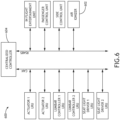
- FIG. 6 a block diagram of a system 600 according to an exemplary embodiment is shown.
- the system 600 includes existing suite specific controllers and line replaceable units.
- An air ionizer 602 may be incorporated into the system 600 by connecting an air ionizer controller to a system communication channel (bus, RS485, CAN, etc.).
- a centralized controller 604 may manipulate the output of the air ionizer 602 via control signals through the system communication channel.
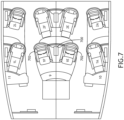
- a single air ionizer 700 may be integrated into multiple, proximal aircraft suites with appropriate electrode placement. It is desirable that the distance between the electrodes 702, 704 and the corresponding passenger be less than 3 feet (1 meter) where the ion concentration is experimentally determined at 100,000 ions per cubic centimeters. In at least one embodiment, the electrodes 702, 704 are individually addressable via a controller.
- FIG. 8 a perspective view of an aircraft suite according to an exemplary embodiment is shown.
- a swivel mechanism 802 When a swivel mechanism 802 is opened, an enclosed electrode begins to emit ions 804 to the surrounding air.
- the number / concentration of ions 804 emitted may be based on the passenger's requirements.
- a control unit 800 maintains the ions 804 being emitted.
- the ions 804 are generally closer to the passenger than existing systems to provide purified air with better cabin air quality.
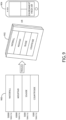
- a suite controller or air ionizer control unit may provide a user interface 900 with preset ionization levels for each corresponding aircraft suite.
- the user interface 900 may be accessible via an in-suite control panel 902. Alternatively, or in addition, the user interface 900 may be accessible via a separate device app 904.
- the user interface 900 may be incorporated into, and interact with, other environmental settings accessible via such control panel 902 and / or device app 904.
- passengers may select an ionization concentration separate from the preset ionization levels.
- Embodiments of the present disclosure enable a seat integrated air ionizer.
- the placement of the air ionizer closer to the passenger provides a personalized purification to the passenger.
- a single air ionizer may be used to influence two or more seats to reduce the incurred cost per seat. Closer proximity of the air ionizer to the passenger extends the life of the electrodes and reduces the number of ionizers required.
Landscapes
- Engineering & Computer Science (AREA)
- Aviation & Aerospace Engineering (AREA)
- Electrostatic Separation (AREA)
Abstract
Description
- The present application claims the benefit of
Indian Patent App. No. 202311008095 (filed February 8, 2023 US application No. 18/417,964 filed on 19 January 2024 - Air ionizers are being designed and developed primarily for mitigating volatile organic compounds, electrical fumes, smoke, molds, dust, malodor, and pathogens through ionization. Currently, aerospace grade air ionizers are integrated directly into ECS ducting only. Such installation is ineffective due to decay, neutralization through charge recombination, grounded / non-grounded surface neutralization, low humidity inflight conditions, and air passing through multiple filters, humidifier, manifolds, and new (off gassing) materials that neutralize ions within the ECS. Without air ionizers, cabin air quality is poor with volatile organic compounds present; the cabin air comprises 50% recirculated air and 50% turbo-compressor bled air; and the cabin air may contain electrical fumes, alcohol, or human odor. With an air ionizer, volatile organic compounds are mitigated; the cabin air is fresh; electrical fumes are removed; and alcohol and human odors are mitigated.
- The Ion count is inversely proportional to the distance travelled from source of emission, so it would be advantageous to reduce the distance traveled. However, there is no controller within air ionizers for user specific requirements.
- In one aspect, embodiments of the inventive concepts disclosed herein are directed to an air ionizer integrated into aircraft executive and VIP suites. The integrated air ionizers provide personalized fresh air and ionization to the passenger's comfort. Air ionizers integrated in aircraft suites is effective, provides increased ion concentration, and reduces malodor, improve cabin air quality, and increase confidence to fly.
- In an embodiment, the air ionizer provides IFE controlled ionization level.
- It is to be understood that both the foregoing general description and the following detailed description are exemplary and explanatory only and should not restrict the scope of the claims. The accompanying drawings, which are incorporated in and constitute a part of the specification, illustrate exemplary embodiments of the inventive concepts disclosed herein and together with the general description, serve to explain the principles.
- The numerous advantages of the embodiments of the inventive concepts disclosed herein may be better understood by those skilled in the art by reference to the accompanying figures in which:
-
FIG. 1 shows a block diagram of an air ionizer according to an exemplary embodiment; -
FIG. 2A shows a representation of ion concentrations under different environmental conditions; -
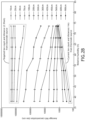
FIG. 2B shows a graph of ion concentrations at different humidity's and distances from a discharge electrode; -
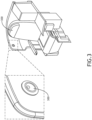
FIG. 3 shows an environmental view of an aircraft suite suitable for an exemplary embodiment; -
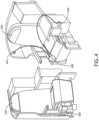
FIG. 4 shows perspective views of an aircraft suite according to an exemplary embodiment; -
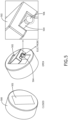
FIG. 5 shows perspective views of an electrode housing according to an exemplary embodiment; -
FIG. 6 shows a block diagram of a system according to an exemplary embodiment; -
FIG. 7 shows an environmental view of an aircraft with aircraft suites according to an exemplary embodiment; -
FIG. 8 shows perspective views of an aircraft suite according to an exemplary embodiment; -
FIG. 9 shows a representation of a user interface or control mechanism according to an exemplary embodiment; - Before explaining various embodiments of the inventive concepts disclosed herein in detail, it is to be understood that the inventive concepts are not limited in their application to the arrangement of the components or steps or methodologies set forth in the following description or illustrated in the drawings. In the following detailed description of embodiments of the instant inventive concepts, numerous specific details are set forth in order to provide a more thorough understanding of the inventive concepts. However, it will be apparent to one of ordinary skill in the art having the benefit of the instant disclosure that the inventive concepts disclosed herein may be practiced without these specific details. In other instances, well-known features may not be described in detail to avoid unnecessarily complicating the instant disclosure. The inventive concepts disclosed herein are capable of other embodiments or of being practiced or carried out in various ways. Also, it is to be understood that the phraseology and terminology employed herein is for the purpose of description and should not be regarded as limiting.
- As used herein a letter following a reference numeral is intended to reference an embodiment of a feature or element that may be similar, but not necessarily identical, to a previously described element or feature bearing the same reference numeral (e.g., 1, 1a, 1b). Such shorthand notations are used for purposes of convenience only, and should not be construed to limit the inventive concepts disclosed herein in any way unless expressly stated to the contrary.
- Further, unless expressly stated to the contrary, "or" refers to an inclusive or and not to an exclusive or. For example, a condition A or B is satisfied by anyone of the following: A is true (or present) and B is false (or not present), A is false (or not present) and B is true (or present), and both A and B are true (or present).
- In addition, use of "a" or "an" are employed to describe elements and components of embodiments of the instant inventive concepts. This is done merely for convenience and to give a general sense of the inventive concepts, and "a" and "an" are intended to include one or at least one and the singular also includes the plural unless it is obvious that it is meant otherwise.
- Also, while various components may be depicted as being connected directly, direct connection is not a requirement. Components may be in data communication with intervening components that are not illustrated or described.
- Finally, as used herein any reference to "one embodiment," or "some embodiments" means that a particular element, feature, structure, or characteristic described in connection with the embodiment is included in at least one embodiment of the inventive concepts disclosed herein. The appearances of the phrase "in at least one embodiment" in the specification does not necessarily refer to the same embodiment. Embodiments of the inventive concepts disclosed may include one or more of the features expressly described or inherently present herein, or any combination or sub-combination of two or more such features.
- Broadly, embodiments of the inventive concepts disclosed herein are directed to an air ionizer integrated into aircraft executive and VIP suites. The integrated air ionizers provide personalized fresh air and ionization to the passenger's comfort. Air ionizers integrated in aircraft suites is effective, provides increased ion concentration, and reduces malodor, improve cabin air quality, and increase confidence to fly. The air ionizer provides IFE controlled ionization level.
- Referring to
FIG. 1 , a block diagram of anair ionizer 100 according to an exemplary embodiment is shown. Theair ionizer 100 includes acontroller 102 that is adjustable via control signals and / or anLCD keypad 104. The air Ionizer is able to scale / descale the ion count according to human requirements; a feedback system may allow thecontroller 102 to maintain a predefined ion concentration. Theair ionizer 100 is modular and may be integrated according to packaging requirement. - In at least one embodiment, the
air ionizer 100 may consume approximately 4 W and draw approximately 142 mA. In at least one embodiment, theair ionizer 100 includes an enclosure that may be aluminum with a coating such as Teflon. In at least one embodiment, theair ionizer 100 includes one or more electrodes. The electrodes may be comprised of carbon fiber. - Referring to
FIGS. 2A-2B , a representation of ion concentrations under different environmental conditions and a graph of ion concentrations at different humidity's and distances from a discharge electrode are shown. Ion concentration is directly correlated to air quality. Fair-weather ion concentrations are greater than eight hundred to one thousand ions per cubic centimeter, with the fresh air threshold greater than one thousand ions per cubic centimeter. The ion count in human seating space may be less than one hundred ions per cubic meter. To be effective, the distance to an air ionizer should be less than one meter. By contrast ion concentration generated by an air ionizer is inversely correlated to distance and humidity from the electrode. - Referring to
FIGS. 3 and4 , environmental views of an aircraft suite according to an exemplary embodiment are shown. A suitable suite includes apassenger seat 300, and may include a reading lamp assembly 302. In at least one embodiment, the aircraft suite includes an airionizer control unit 400, anelectrode 402, and apower supply 404. - In at least one embodiment, the
control unit 400 of the air ionizer is disposed within an available space in the passenger seat 300 (i.e., within a side armrest bracket). Thecontrol unit 400 is modular and therefore not limited to a single location. Thecontrol unit 400 may include an enclosure with modular mounting holes to allow thecontrol unit 400 to be assembled at any location. Apower supply 404 may be derived from existing power modules, and may be disposed separately from thecontrol unit 400. - An
electrode 402 is disposed in the aircraft suite, proximal to thepassenger seat 300. In at least one embodiment, theelectrode 402 may be place in conjunction with the reading lamp assembly 302. Such disposition produces proximity between the source of ionization (the electrode 402) and the passenger of less than 3 feet (1 meter). - Referring to
FIG. 5 , perspective views of anelectrode housing 500 according to an exemplary embodiment are shown. Theelectrode housing 500 encases aswivel mechanism 502 to facilitate the opening and closing of theelectrode 504; theswivel mechanism 502 safeguards theelectrode 504 when it is not in use. In at least one embodiment, anon-conducting mesh structure 506 guards theelectrode 504 when it is in use. - Referring to
FIG. 6 , a block diagram of asystem 600 according to an exemplary embodiment is shown. Thesystem 600 includes existing suite specific controllers and line replaceable units. Anair ionizer 602 according to an exemplary embodiment may be incorporated into thesystem 600 by connecting an air ionizer controller to a system communication channel (bus, RS485, CAN, etc.). Acentralized controller 604 may manipulate the output of theair ionizer 602 via control signals through the system communication channel. - Referring to
FIG. 7 , an environmental view of an aircraft with aircraft suites according to an exemplary embodiment is shown. In at least one embodiment, asingle air ionizer 700 may be integrated into multiple, proximal aircraft suites with appropriate electrode placement. It is desirable that the distance between theelectrodes 702, 704 and the corresponding passenger be less than 3 feet (1 meter) where the ion concentration is experimentally determined at 100,000 ions per cubic centimeters. In at least one embodiment, theelectrodes 702, 704 are individually addressable via a controller. - Referring to
FIG. 8 , a perspective view of an aircraft suite according to an exemplary embodiment is shown. When aswivel mechanism 802 is opened, an enclosed electrode begins to emitions 804 to the surrounding air. The number / concentration ofions 804 emitted may be based on the passenger's requirements. Acontrol unit 800 maintains theions 804 being emitted. Theions 804 are generally closer to the passenger than existing systems to provide purified air with better cabin air quality. - Referring to
FIG. 9 , a representation of a user interface or control mechanism according to an exemplary embodiment is shown. In at least one embodiment, a suite controller or air ionizer control unit may provide auser interface 900 with preset ionization levels for each corresponding aircraft suite. Theuser interface 900 may be accessible via an in-suite control panel 902. Alternatively, or in addition, theuser interface 900 may be accessible via aseparate device app 904. Theuser interface 900 may be incorporated into, and interact with, other environmental settings accessible viasuch control panel 902 and / ordevice app 904. In at least one embodiment, passengers may select an ionization concentration separate from the preset ionization levels. - Embodiments of the present disclosure enable a seat integrated air ionizer. The placement of the air ionizer closer to the passenger provides a personalized purification to the passenger. A single air ionizer may be used to influence two or more seats to reduce the incurred cost per seat. Closer proximity of the air ionizer to the passenger extends the life of the electrodes and reduces the number of ionizers required.
- It is believed that the inventive concepts disclosed herein and many of their attendant advantages will be understood by the foregoing description of embodiments of the inventive concepts, and it will be apparent that various changes may be made in the form, construction, and arrangement of the components thereof without departing from the scope of the invention as defined by the claims.
Claims (11)
- An air ionizer comprising:an electrode (402);a power supply (404);a control unit (400) configured to:receive a user specific ionization profile; andactuate the electrode to provide the user specific ionization profile.
- The air ionizer of Claim 1, further comprising an electrode enclosure (500).
- The air ionizer of Claim 2, wherein the electrode enclosure comprises a swivel mechanism (502) to switch the enclosure from an open orientation and a closed orientation.
- The air ionizer of Claim 2, further comprising a non-conductive mesh (506) disposed around the electrode.
- The air ionizer of any preceding Claim, further comprising a user interface (900) configured to adjust the user specific ionization profile.
- The air ionizer of any preceding Claim, further comprising a housing defining a plurality of modular mounting elements.
- An aircraft suite comprising:
an air ionizer (100) as claimed in any preceding claim. - The aircraft suite of Claim 7, further comprising a reading lamp assembly (302), wherein the electrode is disposed within the reading lamp assembly.
- An aircraft suite air quality control system comprising:
an air ionizer as claimed in any of claims 1 to 6. - The system of claim 9, further comprising a reading lamp assembly, wherein the
electrode is disposed within the reading lamp assembly. - The system of Claim 9 or 10, wherein:the air ionizer further comprises a second electrode; andthe electrode and second electrode are disposed in separate aircraft suites.
Applications Claiming Priority (2)
| Application Number | Priority Date | Filing Date | Title |
|---|---|---|---|
| IN202311008095 | 2023-02-08 | ||
| US18/417,964 US20240262509A1 (en) | 2023-02-08 | 2024-01-19 | Executive and vip seating integrated air ionizer |
Publications (1)
| Publication Number | Publication Date |
|---|---|
| EP4414265A1 true EP4414265A1 (en) | 2024-08-14 |
Family
ID=89897277
Family Applications (1)
| Application Number | Title | Priority Date | Filing Date |
|---|---|---|---|
| EP24156681.9A Pending EP4414265A1 (en) | 2023-02-08 | 2024-02-08 | Executive and vip seating integrated air ionizer |
Country Status (1)
| Country | Link |
|---|---|
| EP (1) | EP4414265A1 (en) |
Citations (5)
| Publication number | Priority date | Publication date | Assignee | Title |
|---|---|---|---|---|
| US20040184975A1 (en) * | 1999-07-05 | 2004-09-23 | Koji Anno | Air cleaner |
| US20060021509A1 (en) * | 2004-07-23 | 2006-02-02 | Taylor Charles E | Air conditioner device with individually removable driver electrodes |
| US20060125648A1 (en) * | 2004-11-30 | 2006-06-15 | Ranco Incorporated Of Delaware | Surface mount or low profile hazardous condition detector |
| US20130299717A1 (en) * | 2010-12-28 | 2013-11-14 | Koganei Corporation | Ion generator |
| US20160090192A1 (en) * | 2014-09-29 | 2016-03-31 | B/E Aerospace, Inc. | Smart passenger service unit |
-
2024
- 2024-02-08 EP EP24156681.9A patent/EP4414265A1/en active Pending
Patent Citations (5)
| Publication number | Priority date | Publication date | Assignee | Title |
|---|---|---|---|---|
| US20040184975A1 (en) * | 1999-07-05 | 2004-09-23 | Koji Anno | Air cleaner |
| US20060021509A1 (en) * | 2004-07-23 | 2006-02-02 | Taylor Charles E | Air conditioner device with individually removable driver electrodes |
| US20060125648A1 (en) * | 2004-11-30 | 2006-06-15 | Ranco Incorporated Of Delaware | Surface mount or low profile hazardous condition detector |
| US20130299717A1 (en) * | 2010-12-28 | 2013-11-14 | Koganei Corporation | Ion generator |
| US20160090192A1 (en) * | 2014-09-29 | 2016-03-31 | B/E Aerospace, Inc. | Smart passenger service unit |
Similar Documents
| Publication | Publication Date | Title |
|---|---|---|
| US11491496B1 (en) | Aviation proactive air and surface purification component | |
| US20180319256A1 (en) | Ventilation system in a mobile structure and method for operating a ventilation system in a mobile structure | |
| US5010777A (en) | Apparatus and method for establishing selected environmental characteristics | |
| US10882055B2 (en) | Ionization air purification system for the passenger cabin of a vehicle | |
| CN101001767A (en) | Air pollution sensor system | |
| KR20070045245A (en) | Air pollution sensor system | |
| JP4744769B2 (en) | In-line gas ionization apparatus and method | |
| US20030150222A1 (en) | Air treatment system for airplanes | |
| US20060032199A1 (en) | Portable air purifier | |
| US20220184252A1 (en) | Ultraviolet light sanitizing system and method with distributed power | |
| GB2125536A (en) | Ionising ventilating air in aircraft | |
| US20240262509A1 (en) | Executive and vip seating integrated air ionizer | |
| KR102194242B1 (en) | Locker type air purifier and indoor air purification system and indoor air cleaning method | |
| DE102020007008A1 (en) | Vehicle ventilation system and method for operating such a vehicle ventilation system | |
| GB2301179A (en) | Air purifier | |
| KR101762804B1 (en) | An airconditioning system for vehicles | |
| US20180361007A1 (en) | Ultraviolet germicidal irradiation device and method | |
| US12017749B2 (en) | Electrically operated window shade assembly for an aircraft window having opaque and translucent shades | |
| JP2005337611A (en) | Air ion transport system | |
| US12603481B2 (en) | Smart air ionizer | |
| JP6287822B2 (en) | Dust remover for air conditioner, air conditioner equipped with the dust remover, and vehicle equipped with the air conditioner | |
| RU2286271C1 (en) | Railway car ventilation and air-conditioning system | |
| JP2012131489A (en) | Ionizer for supplying negative ion to air in space such as air in car compartment of automobile for instance | |
| JP2019188864A (en) | Vehicle cabin air-conditioning system | |
| EP0380037A2 (en) | Apparatus and method for establishing selected environmental characteristics |
Legal Events
| Date | Code | Title | Description |
|---|---|---|---|
| PUAI | Public reference made under article 153(3) epc to a published international application that has entered the european phase |
Free format text: ORIGINAL CODE: 0009012 |
|
| STAA | Information on the status of an ep patent application or granted ep patent |
Free format text: STATUS: THE APPLICATION HAS BEEN PUBLISHED |
|
| AK | Designated contracting states |
Kind code of ref document: A1 Designated state(s): AL AT BE BG CH CY CZ DE DK EE ES FI FR GB GR HR HU IE IS IT LI LT LU LV MC ME MK MT NL NO PL PT RO RS SE SI SK SM TR |
|
| STAA | Information on the status of an ep patent application or granted ep patent |
Free format text: STATUS: REQUEST FOR EXAMINATION WAS MADE |
|
| 17P | Request for examination filed |
Effective date: 20250213 |
|
| STAA | Information on the status of an ep patent application or granted ep patent |
Free format text: STATUS: EXAMINATION IS IN PROGRESS |
|
| 17Q | First examination report despatched |
Effective date: 20251024 |