EP4412207A1 - Video coding unit division method and apparatus, and computer device and computer-readable storage medium - Google Patents
Video coding unit division method and apparatus, and computer device and computer-readable storage medium Download PDFInfo
- Publication number
- EP4412207A1 EP4412207A1 EP22874968.5A EP22874968A EP4412207A1 EP 4412207 A1 EP4412207 A1 EP 4412207A1 EP 22874968 A EP22874968 A EP 22874968A EP 4412207 A1 EP4412207 A1 EP 4412207A1
- Authority
- EP
- European Patent Office
- Prior art keywords
- division
- model
- division information
- video image
- sequence
- Prior art date
- Legal status (The legal status is an assumption and is not a legal conclusion. Google has not performed a legal analysis and makes no representation as to the accuracy of the status listed.)
- Pending
Links
Images


Classifications
-
- G—PHYSICS
- G06—COMPUTING OR CALCULATING; COUNTING
- G06N—COMPUTING ARRANGEMENTS BASED ON SPECIFIC COMPUTATIONAL MODELS
- G06N3/00—Computing arrangements based on biological models
- G06N3/02—Neural networks
- G06N3/04—Architecture, e.g. interconnection topology
- G06N3/045—Combinations of networks
-
- G—PHYSICS
- G06—COMPUTING OR CALCULATING; COUNTING
- G06N—COMPUTING ARRANGEMENTS BASED ON SPECIFIC COMPUTATIONAL MODELS
- G06N3/00—Computing arrangements based on biological models
- G06N3/02—Neural networks
- G06N3/04—Architecture, e.g. interconnection topology
- G06N3/044—Recurrent networks, e.g. Hopfield networks
-
- G—PHYSICS
- G06—COMPUTING OR CALCULATING; COUNTING
- G06N—COMPUTING ARRANGEMENTS BASED ON SPECIFIC COMPUTATIONAL MODELS
- G06N3/00—Computing arrangements based on biological models
- G06N3/02—Neural networks
- G06N3/04—Architecture, e.g. interconnection topology
- G06N3/045—Combinations of networks
- G06N3/0455—Auto-encoder networks; Encoder-decoder networks
-
- G—PHYSICS
- G06—COMPUTING OR CALCULATING; COUNTING
- G06N—COMPUTING ARRANGEMENTS BASED ON SPECIFIC COMPUTATIONAL MODELS
- G06N3/00—Computing arrangements based on biological models
- G06N3/02—Neural networks
- G06N3/04—Architecture, e.g. interconnection topology
- G06N3/0464—Convolutional networks [CNN, ConvNet]
-
- G—PHYSICS
- G06—COMPUTING OR CALCULATING; COUNTING
- G06N—COMPUTING ARRANGEMENTS BASED ON SPECIFIC COMPUTATIONAL MODELS
- G06N3/00—Computing arrangements based on biological models
- G06N3/02—Neural networks
- G06N3/04—Architecture, e.g. interconnection topology
- G06N3/0475—Generative networks
-
- G—PHYSICS
- G06—COMPUTING OR CALCULATING; COUNTING
- G06N—COMPUTING ARRANGEMENTS BASED ON SPECIFIC COMPUTATIONAL MODELS
- G06N3/00—Computing arrangements based on biological models
- G06N3/02—Neural networks
- G06N3/08—Learning methods
- G06N3/094—Adversarial learning
-
- H—ELECTRICITY
- H04—ELECTRIC COMMUNICATION TECHNIQUE
- H04N—PICTORIAL COMMUNICATION, e.g. TELEVISION
- H04N19/00—Methods or arrangements for coding, decoding, compressing or decompressing digital video signals
- H04N19/10—Methods or arrangements for coding, decoding, compressing or decompressing digital video signals using adaptive coding
- H04N19/102—Methods or arrangements for coding, decoding, compressing or decompressing digital video signals using adaptive coding characterised by the element, parameter or selection affected or controlled by the adaptive coding
- H04N19/119—Adaptive subdivision aspects, e.g. subdivision of a picture into rectangular or non-rectangular coding blocks
-
- H—ELECTRICITY
- H04—ELECTRIC COMMUNICATION TECHNIQUE
- H04N—PICTORIAL COMMUNICATION, e.g. TELEVISION
- H04N19/00—Methods or arrangements for coding, decoding, compressing or decompressing digital video signals
- H04N19/10—Methods or arrangements for coding, decoding, compressing or decompressing digital video signals using adaptive coding
- H04N19/169—Methods or arrangements for coding, decoding, compressing or decompressing digital video signals using adaptive coding characterised by the coding unit, i.e. the structural portion or semantic portion of the video signal being the object or the subject of the adaptive coding
- H04N19/17—Methods or arrangements for coding, decoding, compressing or decompressing digital video signals using adaptive coding characterised by the coding unit, i.e. the structural portion or semantic portion of the video signal being the object or the subject of the adaptive coding the unit being an image region, e.g. an object
- H04N19/172—Methods or arrangements for coding, decoding, compressing or decompressing digital video signals using adaptive coding characterised by the coding unit, i.e. the structural portion or semantic portion of the video signal being the object or the subject of the adaptive coding the unit being an image region, e.g. an object the region being a picture, frame or field
-
- H—ELECTRICITY
- H04—ELECTRIC COMMUNICATION TECHNIQUE
- H04N—PICTORIAL COMMUNICATION, e.g. TELEVISION
- H04N19/00—Methods or arrangements for coding, decoding, compressing or decompressing digital video signals
- H04N19/10—Methods or arrangements for coding, decoding, compressing or decompressing digital video signals using adaptive coding
- H04N19/169—Methods or arrangements for coding, decoding, compressing or decompressing digital video signals using adaptive coding characterised by the coding unit, i.e. the structural portion or semantic portion of the video signal being the object or the subject of the adaptive coding
- H04N19/17—Methods or arrangements for coding, decoding, compressing or decompressing digital video signals using adaptive coding characterised by the coding unit, i.e. the structural portion or semantic portion of the video signal being the object or the subject of the adaptive coding the unit being an image region, e.g. an object
- H04N19/176—Methods or arrangements for coding, decoding, compressing or decompressing digital video signals using adaptive coding characterised by the coding unit, i.e. the structural portion or semantic portion of the video signal being the object or the subject of the adaptive coding the unit being an image region, e.g. an object the region being a block, e.g. a macroblock
Definitions
- the present disclosure relates to the field of computer vision technologies, and in particular, to a video coding unit division method, a video coding unit division apparatus, a computer device, and a computer-readable storage medium.
- a size of a basic processing structure is called a coding tree unit (CTU) in high efficiency video coding (HEVC) and versatile video coding (VVC), and is called a partition tree in AV1, with a size of a maximum unit being increased from 64 ⁇ 64luma samples in HEVC to 128 ⁇ 128 samples.
- CTU may be further divided or partitioned into coding units (CUs).
- CUs coding units
- PUs prediction units
- an embodiment of the present disclosure provides a video coding unit division method, including: acquiring a video image sequence including a plurality of images arranged in sequence; acquiring a convolutional neural network model trained by a deep learning algorithm as a video coding unit (CU) division model; and inputting the video image sequence into the CU division model to obtain CU division information corresponding to each image in the video image sequence.
- a video coding unit division method including: acquiring a video image sequence including a plurality of images arranged in sequence; acquiring a convolutional neural network model trained by a deep learning algorithm as a video coding unit (CU) division model; and inputting the video image sequence into the CU division model to obtain CU division information corresponding to each image in the video image sequence.
- CU video coding unit
- an embodiment of the present disclosure provides a video coding unit division apparatus, including: an acquisition module and a CU division module, the acquisition module is configured to acquire a video image sequence including a plurality of images arranged in sequence, and acquire a convolutional neural network model trained by a deep learning algorithm as a video CU division model; the CU division module is configured to input the video image sequence into the CU division model to obtain CU division information corresponding to each image in the video image sequence.
- an embodiment of the present disclosure provides a computer device, including: at least one processor; and a storage device having at least one computer program stored thereon; the at least one computer program, executed by the at least one processor, causes the at least one processor to implement the video coding unit division method described above.
- an embodiment of the present disclosure provides a computer-readable storage medium having a computer program stored thereon, the computer program, executed by a processor, causes the processor to implement the video coding unit division method described above.
- VVC intra-frame coding can realize about 50% improvement of compression efficiency, and provides an important guarantee for industrial application.
- the VVC usually adopts a coding unit (CU) division mode combining a quad-tree, a ternary tree and a binary tree.
- CU coding unit
- all possible CU division modes are desired to be traversed recursively, so that the CU division mode with a minimum rate-distortion cost in all the possible CU division modes is selected as a final CU division mode.
- the coding unit division process described above improves video compressibility, but greatly increases computation complexity, resulting in a prolonged computation processing time duration and a relatively low compression rate, so that real-time performance of coding is greatly challenged.
- an algorithm such as sum of absolute differences (SAD) is used to increase the compression rate, but in this way, the video quality may be difficult to be guaranteed.
- An embodiment of the present disclosure provides a video coding unit division method, as shown in Fig. 1 , applied to a video coding process, for performing video coding unit division on a video image through an Artificial Intelligence (AI) technique before performing video image coding.
- a video coding unit division process supports basic operations and algorithms of deep learning, such as Convolution, Deconvolution, Rectified Linear Unit (ReLU), Sigmoid function, Full-Connection, Reshape function, and the like.
- the video coding unit division method provided in the embodiment of the present disclosure includes following operations S21 to S23.
- a length of the video image sequence is N, i.e., the video image sequence includes N images arranged in sequence.
- the CU division model is the convolutional neural network model trained in advance, and is obtained by training through a deep learning algorithm, and the convolutional neural network model includes, but not is limited to, a GAN model, a RNN model, or an encoder-decoder model.
- the video image sequence in the operation S21 is used as an input of the CU division model, and an output of the CU division model is the CU division information corresponding to each image in the video image sequence, i.e., N pieces of CU division information corresponding to N images in the video image sequence can be obtained by the CU division model.
- the video coding unit division method includes: acquiring a video image sequence including a plurality of images arranged in sequence; acquiring a convolutional neural network model trained by a deep learning algorithm as a video CU division model; and inputting the video image sequence into the CU division model to obtain CU division information corresponding to each image in the video image sequence.
- the convolutional neural network trained based on the deep learning algorithm serves as the CU division model, both relatively high video quality of a full search algorithm and relatively high real-time performance of an algorithm for accelerating can be guaranteed, the computation complexity in a reasoning process can be reduced and the compression rate can also be increased, the video image sequence is automatically divided into coding units by the neural network, the video quality can be guaranteed, and simultaneously, video encoding efficiency can be greatly improved, so that real-time and high-quality encoding is possible.
- operations of training the CU division model include following operations S31 to S34.
- creating a training data set and a test data set the training data set and the test data set include a plurality of video image sequences, and each video image sequence includes a plurality of images arranged in sequence.
- Data of the training data set and the test data set may be obtained from data sets disclosed by Vimeo90K, REDS4, VID4 and the like, and then the obtained data is randomly divided into the training data set and the test data set according to a ratio of 9: 1 or 8: 2.
- the data in the training data set and the test data set includes a plurality of video image sequences, and each video image sequence includes a plurality of images arranged in sequence.
- Fig. 4 is a schematic diagram of acquiring GT, and as shown in Fig. 4 , the full search algorithm is adopted to perform CU division on each image in the video image sequence in the training data set, so as to obtain the first CU division information CU GT corresponding to each image of the video image sequence in the training data set.
- the full search algorithm is that all possible CU division modes are traversed recursively, the CU division mode with a minimum rate-distortion cost in all the possible CU division modes is selected as a final CU division mode, therefore, accuracy of the CU division information obtained by adopting the full search algorithm is relatively high, and the CU division information (i.e., the first CU division information CU GT ) obtained by adopting the full search algorithm is taken as the GT and as a reference value for subsequently training the CU division model, and the first CU division information CU GT includes a real sample.
- the initial CU division model is trained by using the data in the training data set to obtain the second CU division information CU PD corresponding to each image, the second CU division information CU PD includes a generated sample generated by training.
- a preset deep learning algorithm and a loss function are adopted in the training process, and after multiple iterations, if the loss function including the second CU division information CU PD and the first CU division information CU GT converges, the training is stopped, so as to obtain the trained CU division model.
- This operation is a performance test for the CU division model, and in this operation, the data in the test data set is adopted to perform performance test on the trained CU division model, and if a quality of a video image generated by performing video image coding based on the third CU division information obtained through the trained CU division model is qualified, it is indicated that the trained CU division model passes the performance test, and thus the trained CU division model is output to be used for reasoning (i.e., for video image CU division).
- the operation S33 is to be executed again, that is, the CU division model continues to be trained, and if the loss function converges again, the operation S34 continues to be executed to perform the performance test on the current CU division model again.
- the video coding unit division method may further include: after obtaining the first CU division information corresponding to each image (i.e., after the operation S32), converting the first CU division information in a first format into the first CU division information in a second format.
- the first CU division information CU GT in the first format is integrated into a single-channel two-dimensional matrix with the same length and width as the corresponding image.
- the video coding unit division method may further include: in the operation S34, after obtaining the third CU division information corresponding to each image and before performing video coding according to the third CU division information to obtain the video coding sequence, converting the third CU division information in a second format into the third CU division information in a first format.
- the third CU division information in a two-dimensional matrix format is converted into a desired format (i.e., the first format), so as to obtain the video coding sequence in a corresponding format through subsequent coding.
- performing video coding according to the third CU division information to obtain the video coding sequence includes: performing video coding according to the third CU division information in the first format to obtain the video coding sequence.
- the CU division model may be a GAN model
- the GAN model is an important model in the field of image generation and proposed by Goodfellow in 2014
- a process of training the GAN model is a process of training two adversarial networks, i.e., a generator and a discriminator.
- a random noise z is input into the GAN model, so that the GAN model outputs a generated image G(z).
- the format of the CU division information is a single-channel two-dimensional matrix with the same length and width as the image, it is very suitable for applying the GAN model as the CU division model.
- an input of the GAN model is a video image sequence with a length of N
- an output of the GAN model is CU division information with a length of N.
- Fig. 5 is a schematic structural diagram of a GAN model, and as shown in Fig. 5 , the GAN model includes a generator G and a discriminator D, the generator G is configured to output the second CU division information CU PD and input the second CU division information CU PD into the discriminator D, the first CU division information CU GT is another input of the discriminator D, the discriminator D is configured to discriminate whether the loss function converges.
- a generated sample i.e., the second CU division information CU PD
- a real sample i.e., the first CU division information CU GT
- the GAN model is trained by: training the generator G or the discriminator D individually, until the generator G and the discriminator D reach Nash equilibrium, stop the training. Specifically, the generator G is fixed during training the discriminator D individually; the discriminator D is fixed during training the generator G individually.
- the generator G may be first trained individually and then the discriminator D is trained individually, or the discriminator D may be first trained individually and then the generator G is trained individually.
- the discriminator D being trained firstly is taken as an example to for illustration.
- the generator G is fixed, and the discriminator D is trained to enable that the discriminator D can distinguish the generated sample from the real sample; and then the trained discriminator D is fixed, and the generator G is trained to enable the generated sample to be approaching the real sample, so that the current discriminator D is cheated; and through multiple iterations, the generator G and the discriminator D reach equilibrium, the generated sample is infinitely approaching the real sample, the discriminator D cannot distinguish the generated sample from the real sample, and in this case, the loss function converges.
- the GAN model is started to be trained after other parameters such as an optimizer and the like are determined, and training the GAN model is to be stopped in response to that the loss function converges.
- the loss function may be in a form of a loss function extracted by adopting a rGAN algorithm or a wGAN algorithm, or may be a weighted sum of a loss of the GAN model and a loss such as L1 loss or L2 loss.
- frequencies of training the generator G and the discriminator D are not necessarily 1:1, and may be set and adjusted as desired.
- training the generator G or the discriminator D individually includes: training the generator G or the discriminator D individually according to a preset ratio of training frequencies; the preset ratio of training frequencies being a ratio of a total number of times for training the generator G individually to a total number of times for training the discriminator D individually.
- the discriminator D and the generator G are used in the process of training the GAN model, i.e., the discriminator D and the generator G are trained, and in a reasoning application process, only the generator G of the GAN model is used.
- the CU division model may be a RNN model, the RNN model utilizes serialization information, and moreover, RNN is called a recurrent neural network because it performs the same task on each element in the sequence, and serialization information can be clearly seen, and therefore the RNN is suitable for processing video sequences.
- an input of the RNN model is a video image sequence with a length of N
- an output of the RNN model is CU division information with a length of N.
- Fig. 6 is a schematic structural diagram of a RNN model, and as shown in Fig. 6 , the RNN model includes a plurality of residual blocks (RBs), and each RB is configured to output CU division information corresponding to a current frame in the video image sequence.
- RBs residual blocks
- Training the RNN model includes following operations S1 to S3.
- each processed video image sequence by taking each image in the video image sequence as a current image, each processed video image sequence including one current image and 2t reference images, and t being an integer greater than or equal to 1.
- each image in the video image sequence is sequentially used as the current image, and the video image sequence is processed, to obtain N processed video image sequences, each processed video image sequence includes one current image and 2t reference images, and there are t reference images prior to the current image, and there are t reference images subsequent to the current image.
- N processed video image sequences are sequentially input into the initial RNN model, and the second CU division information CU PD corresponding to the current image in each processed video image sequence is obtained in response to that each processed video image sequence is input.
- N pieces of second CU division information CU PD are obtained, and the N pieces of second CU division information CU PD include CU division information corresponding to each image of the video image sequence in the training data set.
- the loss function including the second CU division information CU PD and the first CU division information CU GT does not converge, it is indicated that the current RNN model is still desired to be trained, therefore the next video image sequence in the training data set is acquired and the operations S1 and S2 are executed. If the loss function converges, the training is stopped, and the current RNN model is a trained RNN model.
- the processed video image sequence is generated by: in response to that a total number of reference images prior to the current image is less than t, enabling the number of the reference images prior to the current image to be equal to t by supplementing 0 or copying an image, to obtain the processed video image sequence including the current image; or in response to that a total number of reference images subsequent to the current image is less than t, enabling the number of the reference images subsequent to the current image to be equal to t by supplementing 0 or copying an image, to obtain the processed video image sequence including the current image.
- the video image sequence includes an image 1, an image 2, whils and an image 10
- a processed video image sequence P1 with the image 1 serving as the current image a processed video image sequences P2 with the image 2 serving as the current image, whils and a processed video image sequence P10 with the image 10 serving as the current image are generated respectively.
- t is equal to two, by taking the processed video image sequence P2 with the image 2 serving as the current image as an example, there is only one reference image (i.e., the image 1) prior to the image 2, and thus one reference image may be added prior to the image 2 by supplementing 0 or copying an image, thereby obtaining the processed video image sequence P2 including five images, the image 2 is located at the middle of the P2, i.e., the image 2 is the third image in the P2.
- the loss function for training the RNN model may be an L1 function or a mean square error (MSE) function, or the like.
- the present disclosure provides a RNN intelligent video coding unit division method based on deep learning, a CU division/partition function in video coding is implemented by optimizing the CU division model, the input of the CU division model is an un-coded video image sequence, the output of the CU division model is the CU division information corresponding to each image in the video image sequence, and the CU division information corresponding to each image is output for guiding subsequent coding operations.
- the method provided in the embodiment of the present disclosure trains the CU division model based on the deep learning algorithm, and the deep learning algorithm can continuously improve the performance of the CU division model by training the CU division model, so that the CU division method provided in the embodiment of the present disclosure can not only have the relatively high image quality of the full search algorithm but also have the relatively high real-time performance of the algorithm for accelerating.
- the algorithm may be continuously accelerated by avoiding repeated low time complexity and by hardware such as a Graphics Processing Unit (GPU) and the like or software, so that the video quality is guaranteed with the coding speed being improved, the video coding efficiency is greatly improved with the video image quality being guaranteed, thereby real-time high-quality encoding is possible.
- GPU Graphics Processing Unit
- the video coding unit division method provided in the embodiment of the present disclosure can be applied to all aspects in which video coding is to be performed, such as a video processing unit (VPU), an algorithm built in a video codec chip, intelligent cockpit, video compression, video transmission, and the like.
- VPU video processing unit
- intelligent cockpit video compression, video transmission, and the like.
- an embodiment of the present disclosure provides a video CU division apparatus, and as shown in Fig. 7 , the video CU division apparatus includes an acquisition module 101 and a CU division module 102.
- the acquisition module 101 is configured to acquire a video image sequence including a plurality of images arranged in sequence, and acquire a convolutional neural network model trained by a deep learning algorithm as a video CU division model.
- the CU division module 102 is configured to input the video image sequence into the CU division model to obtain CU division information corresponding to each image in the video image sequence.
- the video CU division apparatus further includes a train module 103.
- the train module 103 is configured to create a training data set and a test data set, the training data set and the test data set including a plurality of video image sequences, and each video image sequence including a plurality of images arranged in sequence; perform CU division on each image in the video image sequence in the training data set by adopting a full search algorithm to obtain first CU division information corresponding to each image; train a preset initial CU division model by the video image sequence in the training data set by adopting an iteration mode to obtain second CU division information corresponding to each image, until a loss function including the second CU division information and the first CU division information converges, stop training to obtain a trained CU division model; and input the video image sequence in the test data set into the trained CU division model to obtain third CU division information corresponding to each image in the video image sequence in the test data set, perform video coding according to the third CU division information to obtain a video coding sequence, and in response to that a quality of the video coding sequence meets a preset condition
- the train module 103 is further configured to, after obtaining the first CU division information corresponding to each image, convert the first CU division information in a first format into the first CU division information in a second format; after obtaining the third CU division information corresponding to each image and before performing video coding according to the third CU division information to obtain the video coding sequence, convert the third CU division information in a second format into the third CU division information in a first format.
- the train module 103 is configured to perform video coding according to the third CU division information in the first format to obtain the video coding sequence.
- the CU division model may be a GAN model including a generator and a discriminator
- the generator is configured to output the second CU division information and input the second CU division information into the discriminator
- the first CU division information is another input of the discriminator
- the discriminator is configured to discriminate whether the loss function converges.
- the train module 103 is configured to train the generator or the discriminator individually, until the generator and the discriminator reach Nash equilibrium, stop training; the generator is fixed during the discriminator being trained individually; the discriminator is fixed during the generator being trained individually.
- the train module 103 is configured to train the generator or the discriminator individually according to a preset ratio of training frequencies; the preset ratio of training frequencies is a ratio of a total number of times for training the generator individually to a total number of times for training the discriminator individually.
- the CU division model includes a RNN model
- the train module 103 is configured to, for any video image sequence in the training data set, generate each processed video image sequence by taking each image in the video image sequence as a current image, each processed video image sequence including one current image and 2t reference images, and t being an integer greater than or equal to 1; input each processed video image sequence into a preset initial RNN model sequentially, until the second CU division information corresponding to the current image in each processed video image sequence is obtained, the second CU division information corresponding to the current image being obtained in response to that each processed video image sequence is input; and calculate the loss function including the second CU division information and the first CU division information, and in response to that the loss function does not converge, acquire a next video image sequence in the training data set to generate the processed video image sequence corresponding thereto, until the loss function converges, stop training.
- the train module 103 is configured to, in response to that a total number of reference images prior to the current image is less than t, enable the number of the reference images prior to the current image to be equal to t by supplementing 0 or copying an image, to obtain the processed video image sequence including the current image; or in response to that a total number of reference images subsequent to the current image is less than t, enable the number of the reference images subsequent to the current image to be equal to t by supplementing 0 or copying an image, to obtain the processed video image sequence including the current image.
- An embodiment of the present disclosure further provides a computer device 900, and as shown in Fig. 9 , the computer device 900 includes: at least one processor 901; and a storage device 902 having at least one computer program stored thereon; the at least one computer program, executed by the at least one processor 901, causes the at least one processor 901 to implement the video coding unit division method described above.
- An embodiment of the present disclosure further provides a computer-readable storage medium having a computer program stored thereon, the computer program, executed by a processor, causes the processor to implement the video coding unit division method described above.
- the functional modules/components in the apparatuses applied above may be implemented as software, firmware, hardware, or suitable combinations thereof.
- the division between the functional modules/components stated above does not correspond to the division of physical components; for example, one physical component may have a plurality of functions, or one function or operation may be performed through a cooperation of several physical components.
- Some or all of the physical components may be implemented as software executed by a processor, such as a central processing unit, a digital signal processor or a microprocessor, or may be implemented as hardware, or may be implemented as an integrated circuit, such as an application specific integrated circuit.
- Such software may be allocated on a computer-readable medium
- the computer-readable medium may include computer storage medium (or non-transitory medium) and communication medium (or transitory medium).
- the computer storage medium includes volatile/nonvolatile or removable/non-removable medium used in any method or technology for storing information (such as computer-readable instructions, data structures, program modules and other data).
- the computer storage medium includes, but is not limited to, a Random Access Memory (RAM), a Read-Only Memory (ROM), an Electrically Erasable Programmable Read-Only Memory (EEPROM), a flash memory or other memory techniques, a Compact Disc Read-Only Memory (CD-ROM), a Digital Video Disk (DVD) or other optical discs, magnetic cassettes, magnetic tapes, magnetic disks or other magnetic storage devices, or any other medium which can be used to store the desired information and can be accessed by a computer.
- the communication medium generally includes computer-readable instructions, data structures, program modules or other data in a modulated data signal, such as a carrier wave or other transmission mechanism, and may include any information delivery medium.
Landscapes
- Engineering & Computer Science (AREA)
- Theoretical Computer Science (AREA)
- Physics & Mathematics (AREA)
- General Health & Medical Sciences (AREA)
- Computing Systems (AREA)
- Biomedical Technology (AREA)
- Biophysics (AREA)
- Computational Linguistics (AREA)
- Data Mining & Analysis (AREA)
- Evolutionary Computation (AREA)
- Life Sciences & Earth Sciences (AREA)
- Molecular Biology (AREA)
- Artificial Intelligence (AREA)
- General Engineering & Computer Science (AREA)
- General Physics & Mathematics (AREA)
- Mathematical Physics (AREA)
- Software Systems (AREA)
- Health & Medical Sciences (AREA)
- Multimedia (AREA)
- Signal Processing (AREA)
- Compression Or Coding Systems Of Tv Signals (AREA)
- Image Analysis (AREA)
Abstract
Description
- The present disclosure claims the priority of
Chinese Patent Application No. 202111164005.4, filed on September 30, 2021 - The present disclosure relates to the field of computer vision technologies, and in particular, to a video coding unit division method, a video coding unit division apparatus, a computer device, and a computer-readable storage medium.
- In current coding unit division (also called coding unit partition) of basic video coding, a size of a basic processing structure is called a coding tree unit (CTU) in high efficiency video coding (HEVC) and versatile video coding (VVC), and is called a partition tree in AV1, with a size of a maximum unit being increased from 64×64luma samples in HEVC to 128×128 samples. Currently, relatively large homogeneous areas and relatively large pictures can be processed more efficiently. The CTU may be further divided or partitioned into coding units (CUs). The CTU and the CU may also be divided into prediction units (PUs), and share a common parameter, such as coding mode.
- In an aspect, an embodiment of the present disclosure provides a video coding unit division method, including: acquiring a video image sequence including a plurality of images arranged in sequence; acquiring a convolutional neural network model trained by a deep learning algorithm as a video coding unit (CU) division model; and inputting the video image sequence into the CU division model to obtain CU division information corresponding to each image in the video image sequence.
- In an aspect, an embodiment of the present disclosure provides a video coding unit division apparatus, including: an acquisition module and a CU division module, the acquisition module is configured to acquire a video image sequence including a plurality of images arranged in sequence, and acquire a convolutional neural network model trained by a deep learning algorithm as a video CU division model; the CU division module is configured to input the video image sequence into the CU division model to obtain CU division information corresponding to each image in the video image sequence.
- In an aspect, an embodiment of the present disclosure provides a computer device, including: at least one processor; and a storage device having at least one computer program stored thereon; the at least one computer program, executed by the at least one processor, causes the at least one processor to implement the video coding unit division method described above.
- In an aspect, an embodiment of the present disclosure provides a computer-readable storage medium having a computer program stored thereon, the computer program, executed by a processor, causes the processor to implement the video coding unit division method described above.
-
-
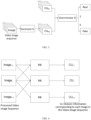
Fig. 1 is a schematic diagram of an application location of a video coding unit division method according to an embodiment of the present disclosure; -
Fig. 2 is a schematic flowchart of a video coding unit division method according to an embodiment of the present disclosure; -
Fig. 3 is a schematic flowchart of training a video coding unit (CU) division model according to an embodiment of the present disclosure; -
Fig. 4 is a schematic diagram of acquiring ground truth (GT) according to an embodiment of the present disclosure; -
Fig. 5 is a schematic structural diagram of a generative adversarial network (GAN) model according to an embodiment of the present disclosure; -
Fig. 6 is a schematic structural diagram of a recurrent neural network (RNN) model according to an embodiment of the present disclosure; -
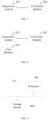
Fig. 7 is a schematic structural diagram of a video coding unit division apparatus according to an embodiment of the present disclosure; -
Fig. 8 is a schematic structural diagram of a video coding unit division apparatus according to an embodiment of the present disclosure; and -
Fig. 9 is a block diagram of a computer device according to an embodiment of the present disclosure. - Exemplary embodiments are described in detail below with reference to the accompanying drawings, but the present disclosure may be embodied in different forms, and should not be construed as limited to the embodiments set forth herein. The embodiments are illustrated to make the present disclosure more thorough and complete, and for those skilled in the art more fully understanding the scope of the present disclosure.
- As used herein, a term "and/or" includes any and all combinations of at least one of listed items.
- The terms used in the present disclosure are for a purpose of describing particular embodiments only, and are not intended to limit the present disclosure. As used in the present disclosure, singular forms "a" and "the" are intended to include plural forms as well, i.e., to represent at least one, unless the context clearly defines otherwise. It should further be understood that terms "includes/comprises" and/or "made of/consisted of" in the present disclosure are used to specify a presence of at least one of recited features, integers, steps, operations, elements or components, but do not preclude a presence or an addition of at least one of other features, integers, steps, operations, elements, components or groups thereof.
- The embodiments of the present disclosure may be described with reference to plan and/or cross-sectional views with the help of idealized schematic illustrations of the present disclosure. Therefore, the example illustrations may be modified in accordance with manufacturing techniques and/or tolerances. The embodiments of the present disclosure are not limited to those shown in the accompanying drawings, but include modifications of any configuration formed based on a manufacturing process. Therefore, areas illustrated in the accompanying drawings have schematic properties, and shapes of the areas illustrated in the accompanying drawings illustrate specific shapes of the areas of elements, but are not limiting.
- Unless otherwise defined, meanings of all terms (including technical terms and scientific terms) used herein are the same as meanings commonly understood by one of ordinary skills in the art. It should further be understood that terms, such as those defined in common dictionaries, should be construed as having a meaning that is consistent with that in background of the existing art and the present disclosure, and should not be construed as having an idealized or over-formal meaning, unless expressly defined in the present disclosure.
- For the same video quality, VVC intra-frame coding can realize about 50% improvement of compression efficiency, and provides an important guarantee for industrial application. In a coding unit compression process, the VVC usually adopts a coding unit (CU) division mode combining a quad-tree, a ternary tree and a binary tree. In a whole coding unit division process, all possible CU division modes are desired to be traversed recursively, so that the CU division mode with a minimum rate-distortion cost in all the possible CU division modes is selected as a final CU division mode.
- The coding unit division process described above improves video compressibility, but greatly increases computation complexity, resulting in a prolonged computation processing time duration and a relatively low compression rate, so that real-time performance of coding is greatly challenged. In order to solve this problem, in the existing art, an algorithm such as sum of absolute differences (SAD) is used to increase the compression rate, but in this way, the video quality may be difficult to be guaranteed.
- An embodiment of the present disclosure provides a video coding unit division method, as shown in
Fig. 1 , applied to a video coding process, for performing video coding unit division on a video image through an Artificial Intelligence (AI) technique before performing video image coding. A video coding unit division process supports basic operations and algorithms of deep learning, such as Convolution, Deconvolution, Rectified Linear Unit (ReLU), Sigmoid function, Full-Connection, Reshape function, and the like. - As shown in
Fig. 2 , the video coding unit division method provided in the embodiment of the present disclosure includes following operations S21 to S23. - At operation S21, acquiring a video image sequence including a plurality of images arranged in sequence.
- A length of the video image sequence is N, i.e., the video image sequence includes N images arranged in sequence.
- At operation S22, acquiring a convolutional neural network model trained by a deep learning algorithm as a video CU division model.
- The CU division model is the convolutional neural network model trained in advance, and is obtained by training through a deep learning algorithm, and the convolutional neural network model includes, but not is limited to, a GAN model, a RNN model, or an encoder-decoder model.
- At operation S23, inputting the video image sequence into the CU division model to obtain CU division information corresponding to each image in the video image sequence.
- In this operation, the video image sequence in the operation S21 is used as an input of the CU division model, and an output of the CU division model is the CU division information corresponding to each image in the video image sequence, i.e., N pieces of CU division information corresponding to N images in the video image sequence can be obtained by the CU division model.
- The video coding unit division method provided in the embodiment of the present disclosure includes: acquiring a video image sequence including a plurality of images arranged in sequence; acquiring a convolutional neural network model trained by a deep learning algorithm as a video CU division model; and inputting the video image sequence into the CU division model to obtain CU division information corresponding to each image in the video image sequence. According to the embodiment of the present disclosure, the convolutional neural network trained based on the deep learning algorithm serves as the CU division model, both relatively high video quality of a full search algorithm and relatively high real-time performance of an algorithm for accelerating can be guaranteed, the computation complexity in a reasoning process can be reduced and the compression rate can also be increased, the video image sequence is automatically divided into coding units by the neural network, the video quality can be guaranteed, and simultaneously, video encoding efficiency can be greatly improved, so that real-time and high-quality encoding is possible.
- The process of training the CU division model is described in detail below with reference to
Fig. 3 . As shown inFig. 3 , operations of training the CU division model include following operations S31 to S34. - At operation S31, creating a training data set and a test data set, the training data set and the test data set include a plurality of video image sequences, and each video image sequence includes a plurality of images arranged in sequence.
- Data of the training data set and the test data set may be obtained from data sets disclosed by Vimeo90K, REDS4, VID4 and the like, and then the obtained data is randomly divided into the training data set and the test data set according to a ratio of 9: 1 or 8: 2. The data in the training data set and the test data set includes a plurality of video image sequences, and each video image sequence includes a plurality of images arranged in sequence.
- At operation S32, performing CU division on each image in the video image sequence in the training data set by adopting a full search algorithm to obtain first CU division information corresponding to each image.
-
Fig. 4 is a schematic diagram of acquiring GT, and as shown inFig. 4 , the full search algorithm is adopted to perform CU division on each image in the video image sequence in the training data set, so as to obtain the first CU division information CUGT corresponding to each image of the video image sequence in the training data set. - The full search algorithm is that all possible CU division modes are traversed recursively, the CU division mode with a minimum rate-distortion cost in all the possible CU division modes is selected as a final CU division mode, therefore, accuracy of the CU division information obtained by adopting the full search algorithm is relatively high, and the CU division information (i.e., the first CU division information CUGT) obtained by adopting the full search algorithm is taken as the GT and as a reference value for subsequently training the CU division model, and the first CU division information CUGT includes a real sample.
- At operation S33, training a preset initial CU division model by using the video image sequence in the training data set through an iteration mode to obtain second CU division information corresponding to each image, until a loss function including the second CU division information and the first CU division information converges, stopping the training to obtain a trained CU division model.
- In this operation, the initial CU division model is trained by using the data in the training data set to obtain the second CU division information CUPD corresponding to each image, the second CU division information CUPD includes a generated sample generated by training. A preset deep learning algorithm and a loss function are adopted in the training process, and after multiple iterations, if the loss function including the second CU division information CUPD and the first CU division information CUGT converges, the training is stopped, so as to obtain the trained CU division model.
- The process of training the CU division model is described in detail below with reference to specific implementations by taking different CU division models and different loss functions as examples.
- At operation S34, inputting the video image sequence in the test data set into the trained CU division model to obtain third CU division information corresponding to each image in the video image sequence in the test data set, performing video coding according to the third CU division information to obtain a video coding sequence, and in response to that a quality of the video coding sequence meets a preset condition, outputting the trained CU division model.
- This operation is a performance test for the CU division model, and in this operation, the data in the test data set is adopted to perform performance test on the trained CU division model, and if a quality of a video image generated by performing video image coding based on the third CU division information obtained through the trained CU division model is qualified, it is indicated that the trained CU division model passes the performance test, and thus the trained CU division model is output to be used for reasoning (i.e., for video image CU division).
- It should be noted that, if the quality of the video image generated by performing video image coding based on the third CU division information obtained through the trained CU division model is substandard, it is indicated that the trained CU division model fails to pass the performance test, the operation S33 is to be executed again, that is, the CU division model continues to be trained, and if the loss function converges again, the operation S34 continues to be executed to perform the performance test on the current CU division model again.
- In some implementations, the video coding unit division method may further include: after obtaining the first CU division information corresponding to each image (i.e., after the operation S32), converting the first CU division information in a first format into the first CU division information in a second format. In this operation, the first CU division information CUGT in the first format is integrated into a single-channel two-dimensional matrix with the same length and width as the corresponding image.
- Correspondingly, the video coding unit division method may further include: in the operation S34, after obtaining the third CU division information corresponding to each image and before performing video coding according to the third CU division information to obtain the video coding sequence, converting the third CU division information in a second format into the third CU division information in a first format. In this operation, the third CU division information in a two-dimensional matrix format is converted into a desired format (i.e., the first format), so as to obtain the video coding sequence in a corresponding format through subsequent coding.
- Correspondingly, performing video coding according to the third CU division information to obtain the video coding sequence includes: performing video coding according to the third CU division information in the first format to obtain the video coding sequence.
- The CU division model may be a GAN model, the GAN model is an important model in the field of image generation and proposed by Goodfellow in 2014, a process of training the GAN model is a process of training two adversarial networks, i.e., a generator and a discriminator. In response to training the generator and the discriminator to be equilibrium, a random noise z is input into the GAN model, so that the GAN model outputs a generated image G(z). Since the format of the CU division information is a single-channel two-dimensional matrix with the same length and width as the image, it is very suitable for applying the GAN model as the CU division model. In the embodiment of the present application, an input of the GAN model is a video image sequence with a length of N, an output of the GAN model is CU division information with a length of N.
- In a case where the CU division model is the GAN model, a process of training the GAN model is described in detail below with reference to
Fig. 5. Fig. 5 is a schematic structural diagram of a GAN model, and as shown inFig. 5 , the GAN model includes a generator G and a discriminator D, the generator G is configured to output the second CU division information CUPD and input the second CU division information CUPD into the discriminator D, the first CU division information CUGT is another input of the discriminator D, the discriminator D is configured to discriminate whether the loss function converges. If a generated sample (i.e., the second CU division information CUPD) generated by the generator G is nearly the same as a real sample (i.e., the first CU division information CUGT) obtained by adopting the full search algorithm, the loss function converges, and if the loss function converges, the discriminator D outputs 1, otherwise, the discriminator D outputs 0. - The GAN model is trained by: training the generator G or the discriminator D individually, until the generator G and the discriminator D reach Nash equilibrium, stop the training. Specifically, the generator G is fixed during training the discriminator D individually; the discriminator D is fixed during training the generator G individually.
- For training the GAN model, the generator G may be first trained individually and then the discriminator D is trained individually, or the discriminator D may be first trained individually and then the generator G is trained individually. In the embodiment of the present application, the discriminator D being trained firstly is taken as an example to for illustration. Firstly, the generator G is fixed, and the discriminator D is trained to enable that the discriminator D can distinguish the generated sample from the real sample; and then the trained discriminator D is fixed, and the generator G is trained to enable the generated sample to be approaching the real sample, so that the current discriminator D is cheated; and through multiple iterations, the generator G and the discriminator D reach equilibrium, the generated sample is infinitely approaching the real sample, the discriminator D cannot distinguish the generated sample from the real sample, and in this case, the loss function converges.
- After the loss function is determined, the GAN model is started to be trained after other parameters such as an optimizer and the like are determined, and training the GAN model is to be stopped in response to that the loss function converges.
- The loss function may be a binary cross-entropy loss function, as shown in equation (1):

- It should be noted that the loss function may be in a form of a loss function extracted by adopting a rGAN algorithm or a wGAN algorithm, or may be a weighted sum of a loss of the GAN model and a loss such as L1 loss or L2 loss.
- In the process of training the GAN model, frequencies of training the generator G and the discriminator D are not necessarily 1:1, and may be set and adjusted as desired.
- Therefore, in some implementations, training the generator G or the discriminator D individually includes: training the generator G or the discriminator D individually according to a preset ratio of training frequencies; the preset ratio of training frequencies being a ratio of a total number of times for training the generator G individually to a total number of times for training the discriminator D individually.
- It should be noted that, the discriminator D and the generator G are used in the process of training the GAN model, i.e., the discriminator D and the generator G are trained, and in a reasoning application process, only the generator G of the GAN model is used.
- The CU division model may be a RNN model, the RNN model utilizes serialization information, and moreover, RNN is called a recurrent neural network because it performs the same task on each element in the sequence, and serialization information can be clearly seen, and therefore the RNN is suitable for processing video sequences. In the embodiment of the present disclosure, an input of the RNN model is a video image sequence with a length of N, an output of the RNN model is CU division information with a length of N.
- In a case where the CU division model is the RNN model, a process of training the RNN model is described in detail below with reference to
Fig. 6. Fig. 6 is a schematic structural diagram of a RNN model, and as shown inFig. 6 , the RNN model includes a plurality of residual blocks (RBs), and each RB is configured to output CU division information corresponding to a current frame in the video image sequence. - Training the RNN model includes following operations S1 to S3.
- At operation S1, for any video image sequence in the training data set, generating each processed video image sequence by taking each image in the video image sequence as a current image, each processed video image sequence including one current image and 2t reference images, and t being an integer greater than or equal to 1.
- In this operation, for any video image sequence, each image in the video image sequence is sequentially used as the current image, and the video image sequence is processed, to obtain N processed video image sequences, each processed video image sequence includes one current image and 2t reference images, and there are t reference images prior to the current image, and there are t reference images subsequent to the current image.
- At operation S2, inputting each processed video image sequence into a preset initial RNN model sequentially, until the second CU division information CUPD corresponding to the current image in each processed video image sequence is obtained, i.e., in response to each processed video image sequence being input, the second CU division information CUPD corresponding to the current image is obtained.
- In this operation, N processed video image sequences are sequentially input into the initial RNN model, and the second CU division information CUPD corresponding to the current image in each processed video image sequence is obtained in response to that each processed video image sequence is input. After the N processed video image sequences are all input into the initial RNN model, N pieces of second CU division information CUPD are obtained, and the N pieces of second CU division information CUPD include CU division information corresponding to each image of the video image sequence in the training data set.
- At operation S3, calculating the loss function including the second CU division information CUPD and the first CU division information CUGT, and in response to that the loss function does not converge, acquiring a next video image sequence in the training data set to generate a corresponding processed video image sequence, until the loss function converges, stopping training.
- In this operation, if the loss function including the second CU division information CUPD and the first CU division information CUGT does not converge, it is indicated that the current RNN model is still desired to be trained, therefore the next video image sequence in the training data set is acquired and the operations S1 and S2 are executed. If the loss function converges, the training is stopped, and the current RNN model is a trained RNN model.
- In some implementations, the processed video image sequence is generated by: in response to that a total number of reference images prior to the current image is less than t, enabling the number of the reference images prior to the current image to be equal to t by supplementing 0 or copying an image, to obtain the processed video image sequence including the current image; or in response to that a total number of reference images subsequent to the current image is less than t, enabling the number of the reference images subsequent to the current image to be equal to t by supplementing 0 or copying an image, to obtain the processed video image sequence including the current image.
- For example, assuming that a length N of any video image sequence is equal to ten, the video image sequence includes an
image 1, an image 2, ...... and an image 10, a processed video image sequence P1 with theimage 1 serving as the current image, a processed video image sequences P2 with the image 2 serving as the current image, ......, and a processed video image sequence P10 with the image 10 serving as the current image are generated respectively. If t is equal to two, by taking the processed video image sequence P2 with the image 2 serving as the current image as an example, there is only one reference image (i.e., the image 1) prior to the image 2, and thus one reference image may be added prior to the image 2 by supplementing 0 or copying an image, thereby obtaining the processed video image sequence P2 including five images, the image 2 is located at the middle of the P2, i.e., the image 2 is the third image in the P2. - The loss function for training the RNN model may be an L1 function or a mean square error (MSE) function, or the like.
- The present disclosure provides a RNN intelligent video coding unit division method based on deep learning, a CU division/partition function in video coding is implemented by optimizing the CU division model, the input of the CU division model is an un-coded video image sequence, the output of the CU division model is the CU division information corresponding to each image in the video image sequence, and the CU division information corresponding to each image is output for guiding subsequent coding operations.
- Different from performing CU division by the full research algorithm or the existing algorithm for accelerating, the method provided in the embodiment of the present disclosure trains the CU division model based on the deep learning algorithm, and the deep learning algorithm can continuously improve the performance of the CU division model by training the CU division model, so that the CU division method provided in the embodiment of the present disclosure can not only have the relatively high image quality of the full search algorithm but also have the relatively high real-time performance of the algorithm for accelerating. During reasoning, the algorithm may be continuously accelerated by avoiding repeated low time complexity and by hardware such as a Graphics Processing Unit (GPU) and the like or software, so that the video quality is guaranteed with the coding speed being improved, the video coding efficiency is greatly improved with the video image quality being guaranteed, thereby real-time high-quality encoding is possible.
- The video coding unit division method provided in the embodiment of the present disclosure can be applied to all aspects in which video coding is to be performed, such as a video processing unit (VPU), an algorithm built in a video codec chip, intelligent cockpit, video compression, video transmission, and the like.
- Based on the same technical concept as above, an embodiment of the present disclosure provides a video CU division apparatus, and as shown in
Fig. 7 , the video CU division apparatus includes anacquisition module 101 and aCU division module 102. - The
acquisition module 101 is configured to acquire a video image sequence including a plurality of images arranged in sequence, and acquire a convolutional neural network model trained by a deep learning algorithm as a video CU division model. - The
CU division module 102 is configured to input the video image sequence into the CU division model to obtain CU division information corresponding to each image in the video image sequence. - In some implementations, as shown in
Fig. 8 , the video CU division apparatus further includes atrain module 103. - The
train module 103 is configured to create a training data set and a test data set, the training data set and the test data set including a plurality of video image sequences, and each video image sequence including a plurality of images arranged in sequence; perform CU division on each image in the video image sequence in the training data set by adopting a full search algorithm to obtain first CU division information corresponding to each image; train a preset initial CU division model by the video image sequence in the training data set by adopting an iteration mode to obtain second CU division information corresponding to each image, until a loss function including the second CU division information and the first CU division information converges, stop training to obtain a trained CU division model; and input the video image sequence in the test data set into the trained CU division model to obtain third CU division information corresponding to each image in the video image sequence in the test data set, perform video coding according to the third CU division information to obtain a video coding sequence, and in response to that a quality of the video coding sequence meets a preset condition, output the trained CU division model. - In some implementations, the
train module 103 is further configured to, after obtaining the first CU division information corresponding to each image, convert the first CU division information in a first format into the first CU division information in a second format; after obtaining the third CU division information corresponding to each image and before performing video coding according to the third CU division information to obtain the video coding sequence, convert the third CU division information in a second format into the third CU division information in a first format. - The
train module 103 is configured to perform video coding according to the third CU division information in the first format to obtain the video coding sequence. - In some implementations, the CU division model may be a GAN model including a generator and a discriminator, the generator is configured to output the second CU division information and input the second CU division information into the discriminator, the first CU division information is another input of the discriminator, and the discriminator is configured to discriminate whether the loss function converges.
- The
train module 103 is configured to train the generator or the discriminator individually, until the generator and the discriminator reach Nash equilibrium, stop training; the generator is fixed during the discriminator being trained individually; the discriminator is fixed during the generator being trained individually. - In some implementations, the
train module 103 is configured to train the generator or the discriminator individually according to a preset ratio of training frequencies; the preset ratio of training frequencies is a ratio of a total number of times for training the generator individually to a total number of times for training the discriminator individually. - In some implementations, the CU division model includes a RNN model, the
train module 103 is configured to, for any video image sequence in the training data set, generate each processed video image sequence by taking each image in the video image sequence as a current image, each processed video image sequence including one current image and 2t reference images, and t being an integer greater than or equal to 1; input each processed video image sequence into a preset initial RNN model sequentially, until the second CU division information corresponding to the current image in each processed video image sequence is obtained, the second CU division information corresponding to the current image being obtained in response to that each processed video image sequence is input; and calculate the loss function including the second CU division information and the first CU division information, and in response to that the loss function does not converge, acquire a next video image sequence in the training data set to generate the processed video image sequence corresponding thereto, until the loss function converges, stop training. - In some implementations, the
train module 103 is configured to, in response to that a total number of reference images prior to the current image is less than t, enable the number of the reference images prior to the current image to be equal to t by supplementing 0 or copying an image, to obtain the processed video image sequence including the current image; or in response to that a total number of reference images subsequent to the current image is less than t, enable the number of the reference images subsequent to the current image to be equal to t by supplementing 0 or copying an image, to obtain the processed video image sequence including the current image. - An embodiment of the present disclosure further provides a
computer device 900, and as shown inFig. 9 , thecomputer device 900 includes: at least oneprocessor 901; and astorage device 902 having at least one computer program stored thereon; the at least one computer program, executed by the at least oneprocessor 901, causes the at least oneprocessor 901 to implement the video coding unit division method described above. - An embodiment of the present disclosure further provides a computer-readable storage medium having a computer program stored thereon, the computer program, executed by a processor, causes the processor to implement the video coding unit division method described above.
- It should be understood by those of ordinary skill in the art that all or some of the operations in the method, the functional modules/components in the apparatuses applied above may be implemented as software, firmware, hardware, or suitable combinations thereof. In a hardware implementation, the division between the functional modules/components stated above does not correspond to the division of physical components; for example, one physical component may have a plurality of functions, or one function or operation may be performed through a cooperation of several physical components. Some or all of the physical components may be implemented as software executed by a processor, such as a central processing unit, a digital signal processor or a microprocessor, or may be implemented as hardware, or may be implemented as an integrated circuit, such as an application specific integrated circuit. Such software may be allocated on a computer-readable medium, the computer-readable medium may include computer storage medium (or non-transitory medium) and communication medium (or transitory medium). The computer storage medium includes volatile/nonvolatile or removable/non-removable medium used in any method or technology for storing information (such as computer-readable instructions, data structures, program modules and other data). The computer storage medium includes, but is not limited to, a Random Access Memory (RAM), a Read-Only Memory (ROM), an Electrically Erasable Programmable Read-Only Memory (EEPROM), a flash memory or other memory techniques, a Compact Disc Read-Only Memory (CD-ROM), a Digital Video Disk (DVD) or other optical discs, magnetic cassettes, magnetic tapes, magnetic disks or other magnetic storage devices, or any other medium which can be used to store the desired information and can be accessed by a computer. The communication medium generally includes computer-readable instructions, data structures, program modules or other data in a modulated data signal, such as a carrier wave or other transmission mechanism, and may include any information delivery medium.
- The present disclosure illustrates the exemplary embodiments, and although specific terms are employed, they are used and should only be interpreted in a generic and descriptive meaning but not for purposes of a limitation. It is apparent to those skilled in the art that features, characteristics and/or elements described in connection with specific embodiments may be used alone or in combination with features, characteristics and/or elements described in connection with other embodiments, unless explicitly stated otherwise. Therefore, it should be understood by those skilled in the art that various changes in form and details may be made without departing from the scope of the present disclosure as set forth in the appended claims.
Claims (11)
- A video coding unit division method, comprising:acquiring a video image sequence comprising a plurality of images arranged in sequence;acquiring a convolutional neural network model trained by a deep learning algorithm as a video coding unit (CU) division model; andinputting the video image sequence into the CU division model to obtain CU division information corresponding to each image in the video image sequence.
- The method of claim 1, wherein the CU division model is trained by:creating a training data set and a test data set, wherein the training data set and the test data set comprise a plurality of video image sequences, and each video image sequence comprises a plurality of images arranged in sequence;performing CU division on each image in the video image sequence in the training data set by adopting a full search algorithm to obtain first CU division information corresponding to each image;training a preset initial CU division model by the video image sequence in the training data set by adopting an iteration mode to obtain second CU division information corresponding to each image, until a loss function comprising the second CU division information and the first CU division information converges, stopping the training to obtain a trained CU division model; andinputting the video image sequence in the test data set into the trained CU division model to obtain third CU division information corresponding to each image in the video image sequence in the test data set, performing video coding according to the third CU division information to obtain a video coding sequence, and in response to that a quality of the video coding sequence meets a preset condition, outputting the trained CU division model.
- The method of claim 2, further comprising:
after obtaining the first CU division information corresponding to each image, converting the first CU division information in a first format into the first CU division information in a second format. - The method of claim 2, further comprising:after obtaining the third CU division information corresponding to each image and before performing video coding according to the third CU division information to obtain the video coding sequence, converting the third CU division information in a second format into the third CU division information in a first format;performing video coding according to the third CU division information to obtain the video coding sequence comprises:
performing video coding according to the third CU division information in the first format to obtain the video coding sequence. - The method of claim 2, wherein the CU division model comprises a generative adversarial network (GAN) model comprising a generator and a discriminator, the generator is configured to output the second CU division information and input the second CU division information into the discriminator, the first CU division information is another input of the discriminator, the discriminator is configured to discriminate whether the loss function converges;
the GAN model is trained by:
training the generator or the discriminator individually, until the generator and the discriminator reach Nash equilibrium, stop training; wherein the generator is fixed during the discriminator being trained individually; the discriminator is fixed during the generator is trained individually. - The method of claim 5, wherein the training the generator or the discriminator individually comprises:
training the generator or the discriminator individually according to a preset ratio of training frequencies; the preset ratio of the training frequencies is a ratio of a total number of times for training the generator individually to a total number of times for training the discriminator individually. - The method of claim 2, wherein the CU division model comprises a recurrent neural network (RNN) model trained by:for any video image sequence in the training data set, generating each processed video image sequence by taking each image in the video image sequence as a current image, each processed video image sequence comprising one current image and 2t reference images, and t being an integer greater than or equal to 1;inputting each processed video image sequence into a preset initial RNN model sequentially, until the second CU division information corresponding to the current image in each processed video image sequence is obtained, wherein the second CU division information corresponding to the current image is obtained in response to that each processed video image sequence is input; andcalculating the loss function comprising the second CU division information and the first CU division information, and in response to that the loss function fails to converge, acquiring a next video image sequence in the training data set to generate the processed video image sequence, until the loss function converges, stop training.
- The method of claim 7, wherein the processed video image sequence is generated by:in response to that a total number of reference images prior to the current image is less than t, enabling the number of the reference images prior to the current image to be equal to t by supplementing 0 or copying an image, to obtain the processed video image sequence comprising the current image; orin response to that a total number of reference images subjected to the current image is less than t, enabling the number of the reference images subjected to the current image to be equal to t by supplementing 0 or copying an image, to obtain the processed video image sequence comprising the current image.
- A video coding unit division apparatus, comprising an acquisition module and a coding unit (CU) division module, the acquisition module is configured to acquire a video image sequence comprising a plurality of images arranged in sequence, and acquire a convolutional neural network model trained by a deep learning algorithm as a video CU division model;
the CU division module is configured to input the video image sequence into the CU division model to obtain CU division information corresponding to each image in the video image sequence. - A computer device, comprising:at least one processor; anda storage device having at least one computer program stored thereon;the at least one computer program, executed by the at least one processor, causes the at least one processor to implement the video coding unit division method of any one of claims 1 to 8.
- A computer-readable storage medium having a computer program stored thereon, the computer program, executed by a processor, causes the processor to implement the video coding unit division method of any one of claims 1 to 8.
Applications Claiming Priority (2)
| Application Number | Priority Date | Filing Date | Title |
|---|---|---|---|
| CN202111164005.4A CN115941962A (en) | 2021-09-30 | 2021-09-30 | Video coding unit dividing method, device, computer equipment and readable medium |
| PCT/CN2022/122030 WO2023051583A1 (en) | 2021-09-30 | 2022-09-28 | Video coding unit division method and apparatus, and computer device and computer-readable storage medium |
Publications (2)
| Publication Number | Publication Date |
|---|---|
| EP4412207A1 true EP4412207A1 (en) | 2024-08-07 |
| EP4412207A4 EP4412207A4 (en) | 2025-10-08 |
Family
ID=85781322
Family Applications (1)
| Application Number | Title | Priority Date | Filing Date |
|---|---|---|---|
| EP22874968.5A Pending EP4412207A4 (en) | 2021-09-30 | 2022-09-28 | Method and device for splitting a video coding unit, as well as computer device and computer-readable storage medium |
Country Status (3)
| Country | Link |
|---|---|
| EP (1) | EP4412207A4 (en) |
| CN (1) | CN115941962A (en) |
| WO (1) | WO2023051583A1 (en) |
Families Citing this family (4)
| Publication number | Priority date | Publication date | Assignee | Title |
|---|---|---|---|---|
| CN116489352B (en) * | 2023-04-23 | 2025-11-04 | 北京达佳互联信息技术有限公司 | Video encoding methods, apparatus, electronic devices and storage media |
| CN117014610B (en) * | 2023-10-07 | 2023-12-29 | 华侨大学 | H.266VVC screen content intra-frame CU rapid division method and device based on multi-task learning |
| CN119676437A (en) * | 2024-12-10 | 2025-03-21 | 重庆邮电大学 | A VVC fast CU division method based on random forest and residual network |
| CN119815000A (en) * | 2024-12-18 | 2025-04-11 | 韦玛实业集团有限公司 | A low-complexity iterative CU fast partitioning method based on decision tree, electronic device and storage medium |
Family Cites Families (10)
| Publication number | Priority date | Publication date | Assignee | Title |
|---|---|---|---|---|
| CN108737841B (en) * | 2017-04-21 | 2020-11-24 | 腾讯科技(深圳)有限公司 | Coding unit depth determination method and device |
| US11363302B2 (en) * | 2017-10-12 | 2022-06-14 | Mediatek Inc. | Method and apparatus of neural network for video coding |
| CN110225339A (en) * | 2019-05-10 | 2019-09-10 | 上海德衡数据科技有限公司 | A kind of HEVC video sequence coding/decoding accelerated method |
| EP3754548B1 (en) * | 2019-06-17 | 2026-03-04 | Sap Se | A method for recognizing an object in an image using feature vectors of an encoding neural network |
| CN111355956B (en) * | 2020-03-09 | 2023-05-09 | 蔡晓刚 | Deep learning-based rate distortion optimization rapid decision system and method in HEVC intra-frame coding |
| CN111429497B (en) * | 2020-03-20 | 2023-05-05 | 郑州轻工业大学 | Self-adaptive CU splitting decision method based on deep learning and multi-feature fusion |
| CN111510728B (en) * | 2020-04-12 | 2022-05-06 | 北京工业大学 | A fast coding method for HEVC intraframe based on deep feature representation and learning |
| CN111866511B (en) * | 2020-08-10 | 2022-03-15 | 西安电子科技大学 | Video damage repairing method based on convolution long-short term memory neural network |
| CN112887712B (en) * | 2021-02-03 | 2021-11-19 | 重庆邮电大学 | HEVC intra-frame CTU partitioning method based on convolutional neural network |
| CN112929658B (en) * | 2021-02-05 | 2022-12-09 | 郑州轻大产业技术研究院有限公司 | A Fast CU Partitioning Method Based on Deep Reinforcement Learning for VVC |
-
2021
- 2021-09-30 CN CN202111164005.4A patent/CN115941962A/en active Pending
-
2022
- 2022-09-28 EP EP22874968.5A patent/EP4412207A4/en active Pending
- 2022-09-28 WO PCT/CN2022/122030 patent/WO2023051583A1/en not_active Ceased
Also Published As
| Publication number | Publication date |
|---|---|
| WO2023051583A1 (en) | 2023-04-06 |
| EP4412207A4 (en) | 2025-10-08 |
| CN115941962A (en) | 2023-04-07 |
Similar Documents
| Publication | Publication Date | Title |
|---|---|---|
| US20240105193A1 (en) | Feature Data Encoding and Decoding Method and Apparatus | |
| WO2023051583A1 (en) | Video coding unit division method and apparatus, and computer device and computer-readable storage medium | |
| CN115714627B (en) | Adaptive semantic communication transmission method and electronic device | |
| CN114979711A (en) | Audio/video or image layered compression method and device | |
| CN107646112B (en) | Method for correcting eye image using machine learning and method for machine learning | |
| CN107256554B (en) | A single-layer spiking neural network structure for image segmentation | |
| CN113395603B (en) | Point cloud video stream self-adaptive transmission method based on model predictive control | |
| CN119180879A (en) | Image generation method and system based on AI identification | |
| US12058340B2 (en) | Video compression technique using a machine learning system | |
| Vougioukas et al. | Dino: A conditional energy-based gan for domain translation | |
| JP2024533578A (en) | Feature map encoding and decoding method and apparatus | |
| CN113542780A (en) | Method and device for removing compression artifacts of live web video | |
| CN115996292A (en) | Fluidic model training method, device, computer equipment and storage medium | |
| CN114119428B (en) | Image deblurring method and device | |
| CN115546588A (en) | Optical coherence tomography image generation model training method, generation method and device | |
| Banerjee | Learning based intelligent imaging | |
| CN119729112B (en) | Video semantic transmission method based on priority division | |
| US20250133221A1 (en) | Apparatus for encoding/decoding feature map and method for performing thereof | |
| US20260057659A1 (en) | Image feature map encoding/decoding method, device and recording medium based on latent expression distribution expansion | |
| EP4531395A1 (en) | Encoding mode prediction method and apparatus, electronic device and storage medium | |
| EP4693196A1 (en) | Progressive coding for autoencoders | |
| CN120013818B (en) | A blind face restoration method based on image quality prior | |
| EP0348321B1 (en) | Method of regulating the auxiliary data rate for the reconstruction of undersampled electronic images | |
| Liu et al. | Shufflenetv2-Based Coding Unit Partition in Intra Coding | |
| US12634488B2 (en) | Tunable hybrid neural video representations |
Legal Events
| Date | Code | Title | Description |
|---|---|---|---|
| STAA | Information on the status of an ep patent application or granted ep patent |
Free format text: STATUS: THE INTERNATIONAL PUBLICATION HAS BEEN MADE |
|
| PUAI | Public reference made under article 153(3) epc to a published international application that has entered the european phase |
Free format text: ORIGINAL CODE: 0009012 |
|
| STAA | Information on the status of an ep patent application or granted ep patent |
Free format text: STATUS: REQUEST FOR EXAMINATION WAS MADE |
|
| 17P | Request for examination filed |
Effective date: 20240424 |
|
| AK | Designated contracting states |
Kind code of ref document: A1 Designated state(s): AL AT BE BG CH CY CZ DE DK EE ES FI FR GB GR HR HU IE IS IT LI LT LU LV MC MK MT NL NO PL PT RO RS SE SI SK SM TR |
|
| DAV | Request for validation of the european patent (deleted) | ||
| DAX | Request for extension of the european patent (deleted) | ||
| RAP3 | Party data changed (applicant data changed or rights of an application transferred) |
Owner name: SANECHIPS TECHNOLOGY CO., LTD. |
|
| A4 | Supplementary search report drawn up and despatched |
Effective date: 20250910 |
|
| RIC1 | Information provided on ipc code assigned before grant |
Ipc: H04N 19/42 20140101AFI20250904BHEP Ipc: G06N 3/044 20230101ALI20250904BHEP Ipc: G06N 3/0455 20230101ALI20250904BHEP Ipc: G06N 3/0464 20230101ALI20250904BHEP Ipc: G06N 3/0475 20230101ALI20250904BHEP Ipc: G06N 3/094 20230101ALI20250904BHEP Ipc: H04N 19/119 20140101ALI20250904BHEP Ipc: H04N 19/17 20140101ALI20250904BHEP Ipc: G06N 3/045 20230101ALI20250904BHEP Ipc: H04N 19/172 20140101ALI20250904BHEP Ipc: H04N 19/176 20140101ALI20250904BHEP |