EP4411875A1 - Production method for composite particles and electrode for electrochemical element - Google Patents
Production method for composite particles and electrode for electrochemical element Download PDFInfo
- Publication number
- EP4411875A1 EP4411875A1 EP22875530.2A EP22875530A EP4411875A1 EP 4411875 A1 EP4411875 A1 EP 4411875A1 EP 22875530 A EP22875530 A EP 22875530A EP 4411875 A1 EP4411875 A1 EP 4411875A1
- Authority
- EP
- European Patent Office
- Prior art keywords
- composite particles
- electrode
- stirring
- binder
- active material
- Prior art date
- Legal status (The legal status is an assumption and is not a legal conclusion. Google has not performed a legal analysis and makes no representation as to the accuracy of the status listed.)
- Pending
Links
Images
Classifications
-
- H—ELECTRICITY
- H01—ELECTRIC ELEMENTS
- H01M—PROCESSES OR MEANS, e.g. BATTERIES, FOR THE DIRECT CONVERSION OF CHEMICAL ENERGY INTO ELECTRICAL ENERGY
- H01M4/00—Electrodes
- H01M4/02—Electrodes composed of, or comprising, active material
- H01M4/13—Electrodes for accumulators with non-aqueous electrolyte, e.g. for lithium-accumulators; Processes of manufacture thereof
- H01M4/139—Processes of manufacture
- H01M4/1391—Processes of manufacture of electrodes based on mixed oxides or hydroxides, or on mixtures of oxides or hydroxides, e.g. LiCoOx
-
- H—ELECTRICITY
- H01—ELECTRIC ELEMENTS
- H01M—PROCESSES OR MEANS, e.g. BATTERIES, FOR THE DIRECT CONVERSION OF CHEMICAL ENERGY INTO ELECTRICAL ENERGY
- H01M4/00—Electrodes
- H01M4/02—Electrodes composed of, or comprising, active material
- H01M4/04—Processes of manufacture in general
-
- B—PERFORMING OPERATIONS; TRANSPORTING
- B01—PHYSICAL OR CHEMICAL PROCESSES OR APPARATUS IN GENERAL
- B01F—MIXING, e.g. DISSOLVING, EMULSIFYING OR DISPERSING
- B01F35/00—Accessories for mixers; Auxiliary operations or auxiliary devices; Parts or details of general application
- B01F35/20—Measuring; Control or regulation
- B01F35/22—Control or regulation
- B01F35/221—Control or regulation of operational parameters, e.g. level of material in the mixer, temperature or pressure
- B01F35/2215—Temperature
-
- B—PERFORMING OPERATIONS; TRANSPORTING
- B01—PHYSICAL OR CHEMICAL PROCESSES OR APPARATUS IN GENERAL
- B01F—MIXING, e.g. DISSOLVING, EMULSIFYING OR DISPERSING
- B01F35/00—Accessories for mixers; Auxiliary operations or auxiliary devices; Parts or details of general application
- B01F35/71—Feed mechanisms
- B01F35/717—Feed mechanisms characterised by the means for feeding the components to the mixer
- B01F35/7179—Feed mechanisms characterised by the means for feeding the components to the mixer using sprayers, nozzles or jets
-
- B—PERFORMING OPERATIONS; TRANSPORTING
- B01—PHYSICAL OR CHEMICAL PROCESSES OR APPARATUS IN GENERAL
- B01J—CHEMICAL OR PHYSICAL PROCESSES, e.g. CATALYSIS OR COLLOID CHEMISTRY; THEIR RELEVANT APPARATUS
- B01J2/00—Processes or devices for granulating materials, e.g. fertilisers in general; Rendering particulate materials free flowing in general, e.g. making them hydrophobic
- B01J2/10—Processes or devices for granulating materials, e.g. fertilisers in general; Rendering particulate materials free flowing in general, e.g. making them hydrophobic in stationary drums or troughs, provided with kneading or mixing appliances
-
- H—ELECTRICITY
- H01—ELECTRIC ELEMENTS
- H01G—CAPACITORS; CAPACITORS, RECTIFIERS, DETECTORS, SWITCHING DEVICES, LIGHT-SENSITIVE OR TEMPERATURE-SENSITIVE DEVICES OF THE ELECTROLYTIC TYPE
- H01G11/00—Hybrid capacitors, i.e. capacitors having different positive and negative electrodes; Electric double-layer [EDL] capacitors; Processes for the manufacture thereof or of parts thereof
- H01G11/22—Electrodes
- H01G11/30—Electrodes characterised by their material
- H01G11/32—Carbon-based
- H01G11/38—Carbon pastes or blends; Binders or additives therein
-
- H—ELECTRICITY
- H01—ELECTRIC ELEMENTS
- H01G—CAPACITORS; CAPACITORS, RECTIFIERS, DETECTORS, SWITCHING DEVICES, LIGHT-SENSITIVE OR TEMPERATURE-SENSITIVE DEVICES OF THE ELECTROLYTIC TYPE
- H01G11/00—Hybrid capacitors, i.e. capacitors having different positive and negative electrodes; Electric double-layer [EDL] capacitors; Processes for the manufacture thereof or of parts thereof
- H01G11/22—Electrodes
- H01G11/30—Electrodes characterised by their material
- H01G11/50—Electrodes characterised by their material specially adapted for lithium-ion capacitors, e.g. for lithium-doping or for intercalation
-
- H—ELECTRICITY
- H01—ELECTRIC ELEMENTS
- H01G—CAPACITORS; CAPACITORS, RECTIFIERS, DETECTORS, SWITCHING DEVICES, LIGHT-SENSITIVE OR TEMPERATURE-SENSITIVE DEVICES OF THE ELECTROLYTIC TYPE
- H01G11/00—Hybrid capacitors, i.e. capacitors having different positive and negative electrodes; Electric double-layer [EDL] capacitors; Processes for the manufacture thereof or of parts thereof
- H01G11/84—Processes for the manufacture of hybrid or EDL capacitors, or components thereof
- H01G11/86—Processes for the manufacture of hybrid or EDL capacitors, or components thereof specially adapted for electrodes
-
- H—ELECTRICITY
- H01—ELECTRIC ELEMENTS
- H01M—PROCESSES OR MEANS, e.g. BATTERIES, FOR THE DIRECT CONVERSION OF CHEMICAL ENERGY INTO ELECTRICAL ENERGY
- H01M10/00—Secondary cells; Manufacture thereof
- H01M10/05—Accumulators with non-aqueous electrolyte
- H01M10/052—Li-accumulators
- H01M10/0525—Rocking-chair batteries, i.e. batteries with lithium insertion or intercalation in both electrodes; Lithium-ion batteries
-
- H—ELECTRICITY
- H01—ELECTRIC ELEMENTS
- H01M—PROCESSES OR MEANS, e.g. BATTERIES, FOR THE DIRECT CONVERSION OF CHEMICAL ENERGY INTO ELECTRICAL ENERGY
- H01M4/00—Electrodes
- H01M4/02—Electrodes composed of, or comprising, active material
- H01M4/13—Electrodes for accumulators with non-aqueous electrolyte, e.g. for lithium-accumulators; Processes of manufacture thereof
- H01M4/139—Processes of manufacture
-
- H—ELECTRICITY
- H01—ELECTRIC ELEMENTS
- H01M—PROCESSES OR MEANS, e.g. BATTERIES, FOR THE DIRECT CONVERSION OF CHEMICAL ENERGY INTO ELECTRICAL ENERGY
- H01M4/00—Electrodes
- H01M4/02—Electrodes composed of, or comprising, active material
- H01M4/36—Selection of substances as active materials, active masses, active liquids
-
- H—ELECTRICITY
- H01—ELECTRIC ELEMENTS
- H01M—PROCESSES OR MEANS, e.g. BATTERIES, FOR THE DIRECT CONVERSION OF CHEMICAL ENERGY INTO ELECTRICAL ENERGY
- H01M4/00—Electrodes
- H01M4/02—Electrodes composed of, or comprising, active material
- H01M4/36—Selection of substances as active materials, active masses, active liquids
- H01M4/48—Selection of substances as active materials, active masses, active liquids of inorganic oxides or hydroxides
- H01M4/52—Selection of substances as active materials, active masses, active liquids of inorganic oxides or hydroxides of nickel, cobalt or iron
- H01M4/525—Selection of substances as active materials, active masses, active liquids of inorganic oxides or hydroxides of nickel, cobalt or iron of mixed oxides or hydroxides containing iron, cobalt or nickel for inserting or intercalating light metals, e.g. LiNiO2, LiCoO2 or LiCoOxFy
-
- H—ELECTRICITY
- H01—ELECTRIC ELEMENTS
- H01M—PROCESSES OR MEANS, e.g. BATTERIES, FOR THE DIRECT CONVERSION OF CHEMICAL ENERGY INTO ELECTRICAL ENERGY
- H01M4/00—Electrodes
- H01M4/02—Electrodes composed of, or comprising, active material
- H01M4/62—Selection of inactive substances as ingredients for active masses, e.g. binders, fillers
- H01M4/621—Binders
- H01M4/622—Binders being polymers
-
- H—ELECTRICITY
- H01—ELECTRIC ELEMENTS
- H01M—PROCESSES OR MEANS, e.g. BATTERIES, FOR THE DIRECT CONVERSION OF CHEMICAL ENERGY INTO ELECTRICAL ENERGY
- H01M4/00—Electrodes
- H01M4/02—Electrodes composed of, or comprising, active material
- H01M2004/026—Electrodes composed of, or comprising, active material characterised by the polarity
- H01M2004/028—Positive electrodes
-
- Y—GENERAL TAGGING OF NEW TECHNOLOGICAL DEVELOPMENTS; GENERAL TAGGING OF CROSS-SECTIONAL TECHNOLOGIES SPANNING OVER SEVERAL SECTIONS OF THE IPC; TECHNICAL SUBJECTS COVERED BY FORMER USPC CROSS-REFERENCE ART COLLECTIONS [XRACs] AND DIGESTS
- Y02—TECHNOLOGIES OR APPLICATIONS FOR MITIGATION OR ADAPTATION AGAINST CLIMATE CHANGE
- Y02E—REDUCTION OF GREENHOUSE GAS [GHG] EMISSIONS, RELATED TO ENERGY GENERATION, TRANSMISSION OR DISTRIBUTION
- Y02E60/00—Enabling technologies; Technologies with a potential or indirect contribution to GHG emissions mitigation
- Y02E60/10—Energy storage using batteries
Definitions
- the present disclosure relates to methods of producing composite particles and an electrode for an electrochemical device.
- Electrochemical devices such as lithium ion secondary batteries have characteristics such as compact size, light weight, high energy-density, and the ability to be repeatedly charged and discharged, and are used in a wide variety of applications.
- An electrode for an electrochemical device has a structure in which an electrode mixed material layer is disposed on an electrode substrate.
- the electrode mixed material layer contains an electrode active material as a main component and may contain other components such as a conductive material and a binder as necessary in order to impart characteristic functions such as electrical conductivity, close adherence, and flexibility to the electrode. From a viewpoint of improving electrochemical device performance, it is preferable that the electrode active material and other components are uniformly dispersed in the electrode mixed material layer.
- a method in which a slurry composition containing an electrode active material, a conductive material, a binder, and a solvent is applied onto and dried on an electrode substrate to form an electrode mixed material layer and a method in which composite particles are obtained through spray drying or the like of a slurry composition containing an electrode active material, a conductive material, a binder, and a solvent, and then the resultant granulated particles are pressure formed on an electrode substrate to form an electrode mixed material layer, for example, have previously been studied.
- Patent Literature 1 a method in which a slurry composition is spray dried as previously described (for example, refer to Patent Literature (PTL) 1), a fluidized bed granulation method in which a powder is granulated while in a suspended state in a fluid such as a gas flow blown up from below (for example, refer to PTL 2), and a granulation method including stirring and subsequently pulverizing an electrode active material and a binder (for example, refer to PTL 3) have been studied.
- PTL Patent Literature
- one object of the present disclosure is to provide a method of producing composite particles that can increase the flexibility of an electrode and inhibit cracking of an electrode active material in the electrode, and that can also improve cycle characteristics of an electrochemical device including the electrode.
- Another object of the present disclosure is to provide a method of producing an electrode for an electrochemical device using composite particles that have been obtained according to a presently disclosed production method.
- the inventors conducted diligent investigation with the aim of solving the problem set forth above.
- the inventors made a new discovery that by forming composite particles under specific stirring conditions, it is possible to produce composite particles that can improve properties of an obtained electrode and electrochemical device as described above, and, in this manner, the inventors completed the present disclosure.
- the present disclosure aims to advantageously solve the problem set forth above.
- the presently disclosed method of producing composite particles makes it possible to efficiently produce composite particles that can advantageously be used as a component that is compounded in an electrode mixed material layer included in an electrode of an electrochemical device such as a secondary battery.
- the presently disclosed method of producing an electrode for an electrochemical device includes pressure forming composite particles that have been obtained according to the presently disclosed production method.
- the presently disclosed method of producing composite particles includes in stated order, performed inside of a granulation tank including two or more agitators having different stirring axes to one another:
- the granulation tank is required to include two or more agitators having different stirring axes to one another.
- the inclusion of two or more agitators having different stirring axes to one another increases uniformity of chemical composition of the obtained composite particles and, as a result, can enhance cycle characteristics of an electrochemical device including an electrode formed using these composite particles.
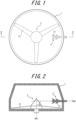
- a granulation tank according to one example is described with reference to FIGS. 1 and 2.
- FIG. 1 is a plan view of a granulation tank 1
- FIG. 2 is a cross-sectional view at a sectioning line A-A indicated in FIG. 1 .
- the granulation tank 1 includes a main agitator 2 and an auxiliary agitator 3 having a different stirring axis to the main agitator 2.
- the number of agitators is not specifically limited so long as it is two or more. As a result of the uniformity of chemical composition of the composite particles being increased through the inclusion of two or more agitators, it is possible to enhance cycle characteristics of an electrochemical device including an electrode formed using the composite particles.
- the granulation tank 1 also includes at least one supply means that is capable of supplying a liquid composition.
- This supply means may be a spray nozzle that is configured so as to be capable of supplying a liquid material in the form of a mist or may be a dropping funnel.
- the number of supply means is not specifically limited, and a plurality of supply means may be arranged separately from one another depending on the size of the granulation tank.
- the granulation tank 1 can include a powder material supply port and a discharge port configured so as to be capable of discharging composite particles that are formed.
- a stirring axis of the main agitator 2 is indicated by a dashed line as a first stirring axis RA1
- a stirring axis of the auxiliary agitator is indicated by a dashed line as a second stirring axis RA2.
- an angle ⁇ that is formed by the first stirring axis RA1 and the second stirring axis RA2 is approximately 90°. Note that the angle formed by the first stirring axis RA1 and the second stirring axis RA2 is taken to be an angle at an acute side among angles that are formed by these two axes.
- the phrase "different stirring axes to one another" as used in the present specification means that an angle ⁇ formed by the stirring axes is not less than 20° and not more than 90°.
- the angle ⁇ formed by the stirring axes is preferably 30° or more, more preferably 45° or more, and even more preferably 85° or more.
- this enables effective stirring of the powder material and good control of the particle diameter and coefficient of variation of the obtained composite particles.
- flexibility of an electrode formed using the composite particles can be increased and cracking of an electrode active material in the electrode can be inhibited, and cycle characteristics of an obtained electrochemical device can be enhanced.
- coefficient of variation refers to the coefficient of variation of a particle diameter distribution of the composite particles and can be calculated according to a method described in the EXAMPLES section of the present specification as a value obtained by dividing the standard deviation of area-equivalent diameter of the composite particles by the average value of area-equivalent diameter and converting to a percentage.
- the shape of the granulation tank may be a circular tube shape in which a bottom surface and a top surface each have a circular shape and in which an upper part in a height direction is tapered like the granulation tank 1 illustrated in FIGS. 1 and 2 . Note that in a case in which the shape of the granulation tank is a specific circular tube shape such as illustrated in FIGS.
- one of the two or more stirring axes may correspond to a central axis of the circular tube and another of the stirring axes may correspond to a direction perpendicular to the central axis.
- a value obtained by dividing the diameter of the bottom surface by the height (diameter/height) is preferably 0.1 or more, more preferably 0.3 or more, and even more preferably 0.5 or more, and is preferably 2.5 or less, more preferably 2.0 or less, and even more preferably 1.5 or less. This enables effective stirring of the powder material.
- the main agitator 2 includes three main blades 21. No specific limitations are placed on the shape and number of main blades 21.
- the auxiliary agitator 3 includes two auxiliary blades 31.
- the auxiliary blades 31 are illustrated as anchor blades in FIGS. 1 and 2 but are not limited thereto.
- the number of auxiliary blades 31 is not limited to the illustrated configuration and may be one or may be three or more.
- the granulation tank 1 can further include a ventilation mechanism configured such as to be capable of inhibiting the powder material from entering into driving parts of the main agitator 2 and the auxiliary agitator 3 through air ventilation.
- Examples of granulation tanks satisfying conditions such as set forth above that can be used include a High Speed Mixer produced by EarthTechnica Co., Ltd., a Henschel Mixer produced by Mitsui Miike Machinery Co., Ltd., a Vertical Granulator produced by Powrex Corporation, a CF Granulator produced by Freund Corporation, a Nara Mixer and Granulator produced by Nara Machinery Co., Ltd., an SP Granulator produced by Dalton Corporation, and a Balance Gran produced by Freund Corporation.
- a powder material is stirred to place the powder material in a stirred state.
- the powder material is required to contain an electrode active material and may optionally contain a conductive material.
- a known positive electrode active material such as lithium-containing cobalt oxide (lithium cobalt oxide, LiCoO 2 ), lithium manganate (LiMn 2 O 4 ), lithium-containing nickel oxide (LiNiO 2 ), a lithium-containing complex oxide of Co-Ni-Mn (Li(Co Mn Ni)O 2 ), a lithium-containing complex oxide of Ni-Mn-Al, a lithium-containing complex oxide of Ni-Co-Al, olivine-type lithium iron phosphate (LiFePO 4 ), olivine-type lithium manganese phosphate (LiMnPO 4 ), a Li 2 MnO 3 -LiNiO 2 -based solid solution, a lithium-rich spinel compound represented by Li 1+x Mn 2-x O 4 (0 ⁇ x ⁇ 2), Li[Ni 0.17 Li 0.2 Co 0.07 Mn 0.56 ]O 2 , or LiNi 0.5 Mn 1.5 O 4 , for example, may be used as a positive electrode active
- the particle diameter of the electrode active material is preferably 0.03 ⁇ m or more, more preferably 0.1 ⁇ m or more, and even more preferably 0.5 ⁇ m or more, and is preferably 500 ⁇ m or less, more preferably 200 ⁇ m or less, and even more preferably 30 ⁇ m or less.
- the particle diameter of the electrode active material can be measured by laser diffraction. More specifically, it is preferable that the particle diameter D50 at which cumulative volume calculated from a small diameter end of a particle diameter distribution (by volume) measured using a laser diffraction particle size analyzer reaches 50% is taken to be the volume-average particle diameter and that this value satisfies any of the particle diameter ranges set forth above.
- the particle diameter of the electrode active material is not more than any of the upper limits set forth above, it is possible to homogenize the chemical composition inside of the composite particles. Moreover, when the particle diameter of the electrode active material is not more than any of the upper limits set forth above, it is possible to increase the electrode density of an obtained electrode, and this also enables electrochemical reaction optimization when an electrochemical device is formed as a result of the electrode active material having a sufficiently large specific surface area.
- the particle diameter of the electrode active material is not less than any of the lower limits set forth above, handleability of the powder material as a material in production of the composite particles improves, and producibility of the composite particles improves. Moreover, when the particle diameter of the electrode active material is not less than any of the lower limits set forth above, this enables good inhibition of electrode active material degradation when charging and discharging of an electrochemical device are performed repeatedly.
- Examples of conductive materials that can be used include, but are not specifically limited to, conductive carbon materials such as carbon black (for example, acetylene black, Ketjenblack ® (Ketjenblack is a registered trademark in Japan, other countries, or both), and furnace black), single-walled and multi-walled carbon nanotubes (multi-walled carbon nanotubes are inclusive of cup-stacked carbon nanotubes), carbon nanohorns, vapor-grown carbon fiber, milled carbon fiber obtained through pyrolysis and subsequent pulverization of polymer fiber, single-layer and multi-layer graphene, and carbon non-woven fabric sheet obtained through pyrolysis of non-woven fabric formed of polymer fiber; and fibers, foils, and the like of various metals.
- conductive carbon materials such as carbon black (for example, acetylene black, Ketjenblack ® (Ketjenblack is a registered trademark in Japan, other countries, or both), and furnace black), single-walled and multi-walled carbon nanotubes (multi
- a liquid component is not compounded in the preliminary stirring operation.
- the powder material can unavoidably contain a small amount of a liquid component under the influence of water or the like that can become attached during production, storage, etc.
- the solid content concentration of the powder material at the start of the preliminary stirring operation is less than 100 mass%.
- the solid content concentration of the powder material is increased through the preliminary stirring operation being performed.
- the solid content concentration of the powder material at the end of the preliminary stirring operation is preferably 95 mass% or more, more preferably 97 mass% or more, and even more preferably 98 mass% or more.
- the solid content concentration of the powder material can be measured by a method described in the EXAMPLES section.
- the circumferential speed of the main agitator and the auxiliary agitator in the preliminary stirring operation is preferably not less than 1 m/s and not more than 20 m/s. When the circumferential speed is within this range, it is possible to increase the homogeneity of chemical composition of the obtained composite particles and to thereby inhibit cracking of the electrode active material in an obtained electrode and enhance cycle characteristics of an electrochemical device including the electrode.
- the main agitator and the auxiliary agitator may have the same circumferential speed or different circumferential speeds in the preliminary stirring operation. However, in a case in which the circumferential speeds of the main agitator and the auxiliary agitator differ, it is preferable that the circumferential speed of the auxiliary agitator is faster than the circumferential speed of the main agitator.
- the ventilation rate in the preliminary stirring operation in terms of a value obtained by dividing the flow rate of air flowing into the granulation tank by the capacity of the granulation tank (flow rate/capacity) is preferably not less than 0.1/min and not more than 100/min. When the ventilation rate is within this range, it is possible to increase the solid content concentration of the powder material well in the preliminary stirring operation.
- the ventilation rate can be the ventilation rate through a ventilation mechanism for preventing the powder material from entering driving parts of the main agitator and the auxiliary agitator as previously described.
- the temperature of ventilated air is preferably lower than 50°C, more preferably 45°C or lower, even more preferably 40°C or lower, and particularly preferably 30°C or lower.
- the preliminary stirring time is preferably a time that allows the solid content concentration to reach not less than any of the preferable threshold values set forth above.
- the preliminary stirring time can, for example, be not less than 5 minutes and not more than 60 minutes.
- the preliminary stirring operation may be split into a plurality of stages.
- a preliminary stirring operation using a stirring device (hereinafter, also referred to as "stirring device A") differing from the granulation tank including agitators that is described above is performed prior to a preliminary stirring operation in the granulation tank including agitators that is described above.
- the stirring device A may be a dry mixing device or a wet mixing device, for example, without any specific limitations so long as it is a different stirring device to the granulation tank including agitators that is described above. Examples of dry mixing devices that can be used include a Miracle KCK produced by Asada Iron Works Co., Ltd. and a Nara Hybridization System produced by Nara Machinery Co., Ltd.
- wet mixing devices examples include a Planetary Despa produced by Asada Iron Works Co., Ltd.
- a Planetary Despa produced by Asada Iron Works Co., Ltd.
- a composition containing a binder and a solvent is added to the powder material that is in a stirred state to obtain pre-composite particles.
- Any binder that is known as a binder that can be compounded in an electrode for an electrochemical device can be used without any specific limitations as the binder.
- the mode of addition when the composition containing the binder and the solvent is added to the powder material in the pre-composite particle formation operation is not specifically limited so long as it is a mode other than single batch addition.
- a mode of addition in which the composition is added continuously throughout the pre-composite particle formation operation or a mode of addition in which the composition is added intermittently with one or a plurality of addition suspension periods interposed while the pre-composite particle formation operation is being performed may be adopted.
- continuous addition is preferable.
- a pre-composite particle formation effect and a particle adjustment effect can proceed concurrently in the presence of the solvent during the pre-composite particle formation operation.
- pre-composite particles can be formed while also undergoing particle adjustment in the pre-composite particle formation operation.
- the addition means in addition of the composition containing the binder and the solvent to the powder material may be a spray nozzle, a dropping funnel, or the like as previously described.
- the use of a spray nozzle is preferable from a viewpoint of efficiency.
- the gas-liquid ratio gas volume/liquid volume
- the gas-liquid ratio is preferably 1.30 or more, more preferably 1.40 or more, and even more preferably 1.45 or more, and is preferably 1.80 or less, more preferably 1.70 or less, and even more preferably 1.60 or less.
- the gas-liquid ratio is not less than any of the lower limits set forth above, it is possible to suppress enlargement of the particle diameter of the composite particles. Moreover, when the gas-liquid ratio is not more than any of the upper limits set forth above, it is possible to inhibit the particle diameter of the composite particles from becoming excessively small.
- a value of spray area density (g/mm 2 /min) that is a value corresponding to the sprayed amount of the composition per unit area with respect to a stationary surface is preferably 0.20 (g/mm 2 /min) or more, more preferably 0.25 (g/mm 2 /min) or more, and even more preferably 0.38 (g/mm 2 /min) or more, and is preferably 0.60 (g/mm 2 /min) or less, more preferably 0.50 (g/mm 2 /min) or less, and even more preferably 0.41 (g/mm 2 /min) or less.
- the particle diameter of the obtained composite particles can be controlled well by controlling the gas-liquid ratio and/or the spray area density to within a suitable range.
- a conjugated diene polymer, an acrylic polymer, an aromatic vinyl block polymer, a fluoropolymer, a cellulosic polymer, a cycloolefinic polymer, or the like, for example, can be used as the binder.
- One binder may be used individually, or two or more binders may be used in combination.
- the conjugated diene polymer is a polymer that includes a conjugated diene monomer unit.
- Specific examples of the conjugated diene polymer include, but are not specifically limited to, a copolymer that includes an aromatic vinyl monomer unit and an aliphatic conjugated diene monomer unit (for example, a styrene-butadiene copolymer (SBR)), butadiene rubber (BR), acrylic rubber (NBR) (copolymer including an acrylonitrile unit and a butadiene unit), and hydrogenated products thereof.
- SBR styrene-butadiene copolymer
- BR butadiene rubber
- NBR acrylic rubber
- the acrylic polymer may be a polymer that includes a cross-linkable monomer unit, a (meth)acrylic acid ester monomer unit, and an acidic group-containing monomer unit, for example, but is not specifically limited thereto.
- the proportion constituted by the (meth)acrylic acid ester monomer unit in the acrylic polymer is preferably 50 mass% or more, more preferably 55 mass% or more, and even more preferably 58 mass% or more, and is preferably 98 mass% or less, more preferably 97 mass% or less, and even more preferably 96 mass% or less.
- the aromatic vinyl block polymer may be a block polymer that includes a block region formed of an aromatic vinyl monomer unit.
- the aromatic vinyl monomer may be styrene, styrene sulfonic acid or a salt thereof, ⁇ -methylstyrene, p-t-butylstyrene, butoxystyrene, vinyltoluene, chlorostyrene, or vinylnaphthalene, for example, of which, styrene is preferable.
- the aromatic vinyl block polymer is preferably a styrene-isoprene-styrene block copolymer, a styrene-butadiene-styrene copolymer, a hydrogenated product of either thereof, or the like.
- the fluoropolymer is a polymer that includes a fluorine-containing monomer unit and that may further include a unit of a monomer that does not include fluorine (non-fluorine-containing monomer).
- the fluorine-containing monomer may be vinylidene fluoride, tetrafluoroethylene, hexafluoropropylene, trifluorovinyl chloride, vinyl fluoride, trifluoroethylene, trifluorochloroethylene, 2,3,3,3-tetrafluoropropene, a perfluoroalkyl vinyl ether, or the like, for example, but is not specifically limited thereto.
- the fluoropolymer may be polytetrafluoroethylene, polychlorotrifluoroethylene, polyvinylidene fluoride, polyvinyl fluoride, a perfluoroalkoxy fluororesin, a tetrafluoroethylene-hexafluoropropylene copolymer, an ethylene-tetrafluoroethylene copolymer, an ethylene-chlorotrifluoroethylene copolymer, a vinylidene fluoride-hexafluoropropylene copolymer, or the like, but is not specifically limited thereto.
- the cellulosic polymer may be cellulose acetate, cellulose acetate butyrate, cellulose acetate propionate, cyanoethyl pullulan, cyanoethyl polyvinyl alcohol, cyanoethyl cellulose, cyanoethyl sucrose, pullulan, carboxymethyl cellulose, or the like, for example, but is not specifically limited thereto.
- the cycloolefinic polymer may be a polymer (addition polymer or ring-opened polymer) synthesized using a cycloolefin compound as a monomer or a hydrogenated product thereof, or may be a hydrogenated product of a polymer obtained using an aromatic vinyl compound as a monomer, for example, but is not specifically limited thereto.
- a hydrogenated product of a ring-opened polymer obtained using a cycloolefin compound as a monomer and a hydrogenated product of a polymer obtained using an aromatic vinyl compound as a monomer are preferable due to the ease of adjusting the degree of swelling in electrolyte solution and glass-transition temperature to suitable magnitudes.
- cycloolefin compound examples include, but are not specifically limited to:
- a non-polar norbornene-based monomer is preferable as the cycloolefin compound, and a norbornene that is unsubstituted or includes an alkyl group (for example, norbornene or 8-ethyltetracyclododecene), a norbornene that includes an alkenyl group (for example, ethylidenetetracyclododecene (8-ethylidenetetracyclododecene)), dicyclopentadiene, a norbornene derivative that includes an aromatic ring (for example, tetracyclo[9.2.1.02,10.03,8]tetradeca-3,5,7,12-tetraene (also referred to as 1,4-methano-1,4,4a,9a-tetrahydro-9H-fluorene)), or a tetracyclododecene that is unsubstituted or includes an alkyl group
- the optionally hydrogenated polymer obtained using a cycloolefin compound as a monomer may be a polymer obtained using only a cycloolefin compound as a monomer or may be a polymer obtained using a cycloolefin compound and a copolymerizable compound other than a cycloolefin compound as monomers, but is preferably a polymer obtained using only a cycloolefin compound as a monomer.
- the optionally hydrogenated polymer obtained using a cycloolefin compound as a monomer is preferably a polymer obtained using tetracyclododecene, dicyclopentadiene, and norbornene as monomers, and more preferably a ring-opened polymer obtained using tetracyclododecene, dicyclopentadiene, and norbornene as monomers.
- any solvent in which the above-described binder can be dissolved or dispersed can be used without any specific limitations as the solvent.
- water or an organic solvent such as N-methyl-2-pyrrolidone, cyclohexane, n-hexane, acetone, methyl ethyl ketone, ethyl acetate, tetrahydrofuran, methylene chloride, or chloroform can be used as the solvent.
- a non-aqueous solvent having a boiling point of 95°C or lower at 1 atm from a viewpoint of efficiently removing the solvent inside of the granulation tank and reducing drying energy in formation of the pre-composite particles.
- the boiling point of the non-aqueous solvent at 1 atm is more preferably 90°C or lower, and even more preferably 85°C or lower from a viewpoint of even better achieving this effect.
- the boiling point is preferably 50°C or higher from a viewpoint of increasing stability in formation of the pre-composite particles.
- solvents satisfying this condition include cyclohexane, n-hexane, acetone, methyl ethyl ketone, ethyl acetate, tetrahydrofuran, methylene chloride, chloroform, and so forth.
- One of these solvents may be used individually, or two or more of these solvents may be used in combination in a freely selected ratio.
- a viscosity index of the composition containing the binder and the solvent that is continuously added into the granulation tank in the pre-composite particle formation operation is preferably not less than 100 mPa ⁇ s and not more than 1,000 mPa ⁇ s.
- the viscosity index of the composition that contains the binder and the solvent being within the range set forth above enables good control of the particle diameter and coefficient of variation of the obtained composite particles.
- the viscosity index of the composition is a value obtained by dividing the viscosity of the composition by the solid content concentration and then multiplying by 100 and can be measured and calculated by a method described in the EXAMPLES section.
- the circumferential speed of the main agitator and the auxiliary agitator in the pre-composite particle formation operation is preferably not less than 1 m/s and not more than 20 m/s.
- the circumferential speed of the main agitator is within the range set forth above, this enables good control of the particle diameter of the obtained composite particles.
- the circumferential speed of the auxiliary agitator is within the range set forth above, this enables good control of the coefficient of variation of the obtained composite particles.
- the circumferential speed of the main agitator is preferably 6 m/s or more from a viewpoint of increasing a particle adjustment effect arising while the pre-composite particle formation operation is performed and suppressing gas evolution during high-temperature storage of an electrode formed using the composite particles.
- the ventilation rate in the pre-composite particle formation operation in terms of a value obtained by dividing the flow rate of air flowing into the granulation tank by the capacity of the granulation tank (flow rate/capacity) is preferably not less than 0.1/min and not more than 100/min. When the ventilation rate is within this range, this enables good control of the amount of solvent vapor inside of the granulation tank and efficient formation of the pre-composite particles.
- the pre-composite particle formation time can, for example, be not less than 5 minutes and not more than 60 minutes.
- the pre-composite particles are stirred after addition of the composition is complete (i.e., after the pre-composite particle formation operation (ii) is complete) so as to perform particle adjustment and obtain composite particles.
- the circumferential speed of the main agitator and the auxiliary agitator in the particle adjustment operation is preferably not less than 0.1 m/s and not more than 10 m/s.
- the circumferential speed of the main agitator is within the range set forth above, this enables good control of the coefficient of density and area circularity of the obtained composite particles.
- the circumferential speed of the auxiliary agitator is within the range set forth above, this enables good control of the coefficient of variation and convexity of the obtained composite particles.
- the "convexity" of the composite particles is a value that serves as an index for the roughness of the peripheries of the particles and can be measured according to a method described in the EXAMPLES section of the present specification.
- the ventilation rate in the particle adjustment operation in terms of a value obtained by dividing the flow rate of air flowing into the granulation tank by the capacity of the granulation tank (flow rate/capacity) is preferably not less than 0.1/min and not more than 100/min. When the ventilation rate is within this range, this enables good control of a wet state of the composite particles and efficient formation of the composite particles in the particle adjustment operation.
- the particle adjustment time may be 10 seconds or more, and may be 60 minutes or less, preferably 20 minutes or less, preferably 8 minutes or less, and more preferably 3 minutes or less.
- the temperature inside of the granulation tank throughout operations (i) to (iii) described above is preferably lower than 50°C, more preferably 45°C or lower, and even more preferably 40°C or lower. Through any of these temperature conditions being satisfied, it is possible to effectively inhibit degradation of the electrode active material contained in the obtained composite particles and to effectively inhibit cracking of the electrode active material in an electrode formed using the composite particles.
- the composite particles that are obtained through operations (i) to (iii) described above preferably satisfy the following attributes.
- the particle diameter of the composite particles is preferably 20 ⁇ m or more, more preferably 30 ⁇ m or more, and even more preferably 40 ⁇ m or more, and is preferably 250 ⁇ m or less, more preferably 200 ⁇ m or less, and even more preferably 150 ⁇ m or less.
- the particle diameter of the composite particles refers to the area-equivalent diameter and can be measured according to a method described in the EXAMPLES section of the present specification.
- the particle diameter of the composite particles is not less than any of the lower limits set forth above, it is possible to increase the flexibility of an electrode formed using the composite particles, and it is also possible to enhance rate characteristics of an electrochemical device including the electrode.
- the particle diameter of the composite particles is not more than any of the upper limits set forth above, it is possible to enhance cycle characteristics of an obtained electrochemical device.
- the coefficient of variation of the composite particles is preferably 5% or more, more preferably 7% or more, and even more preferably 10% or more, and is preferably 50% or less, more preferably 45% or less, and even more preferably 40% or less.
- the coefficient of variation is not less than any of the lower limits set forth above, this enables good inhibition of cracking of the electrode active material in an electrode formed using the composite particles.
- the coefficient of variation is not more than any of the upper limits set forth above, it is possible to improve the flexibility of an obtained electrode.
- the bulk density of the composite particles is preferably not less than 1.0 and not more than 4.0.
- the bulk density is not less than the lower limit set forth above, it is possible to inhibit cracking of the electrode active material in an electrode formed using the composite particles.
- the bulk density is not more than the upper limit set forth above, it is possible to increase the flexibility of an obtained electrode.
- the area circularity of the composite particles is preferably 0.50 or more, more preferably 0.60 or more, and even more preferably 0.70 or more, and is preferably 0.93 or less, more preferably 0.92 or less, and even more preferably 0.91 or less.
- the area circularity of the composite particles is not less than any of the lower limits set forth above, it is possible to inhibit cracking of the electrode active material in an electrode formed using the composite particles.
- the area circularity of the composite particles is not more than any of the upper limits set forth above, it is possible to enhance rate characteristics of an obtained electrochemical device.
- the convexity of the composite particles is preferably 0.70 or more, more preferably 0.72 or more, and even more preferably 0.75 or more, and is preferably 0.97 or less, more preferably 0.94 or less, and even more preferably 0.92 or less.
- the convexity of the composite particles is not less than any of the lower limits set forth above, it is possible to increase the flexibility of an electrode formed using the composite particles.
- the convexity of the composite particles is not more than any of the upper limits set forth above, it is possible to enhance cycle characteristics of an obtained electrochemical device.
- the fluidity of the composite particles can be evaluated through the angle of repose and the angle of collapse measured using a powder tester and can also be evaluated, as described in the EXAMPLES section of the present application, based on the roughness of a surface that has been leveled by a doctor blade.
- the surface roughness in terms of spatial volume per 5.4 mm 2 is preferably 0.50 ⁇ m 3 or less, more preferably 0.30 ⁇ m 3 or less, and even more preferably 0.20 ⁇ m 3 or less.
- the presently disclosed method of producing an electrode for an electrochemical device includes producing composite particles according to the presently disclosed production method set forth above and pressure forming the composite particles that have been produced on an electrode substrate to form an electrode mixed material layer (pressure forming operation).
- An electrode for an electrochemical device that is obtained according to this production method has excellent flexibility, little cracking of an electrode active material included therein, and can improve cycle characteristics of an electrochemical device that includes the electrode.
- the pressure forming operation can be performed according to a known method.
- composite particles produced according to the presently disclosed production method can be supplied to a roll press and be subjected to roll pressing on an electrode substrate so as to perform pressure forming of the composite particles on the electrode substrate and form an electrode mixed material layer.
- the pressure during pressing can be set as appropriate in accordance with the target electrode density.
- the electrode substrate is a material having electrical conductivity and electrochemical durability. Specifically, a current collector made of iron, copper, aluminum, nickel, stainless steel, titanium, tantalum, gold, platinum, or the like can be used as the electrode substrate. Note that one of the above-described materials may be used individually, or two or more of the above-described materials may be used in combination in a freely selected ratio.
- An electrochemical device that is formed using the presently disclosed electrode for an electrochemical device set forth above may be a lithium ion secondary battery, an electric double-layer capacitor, or a lithium ion capacitor, for example, without any specific limitations, and may preferably be a lithium ion secondary battery.
- An electrochemical device that is formed using the presently disclosed electrode for an electrochemical device has excellent cycle characteristics.
- a lithium ion secondary battery corresponding to the presently disclosed electrochemical device normally includes electrodes (positive electrode and negative electrode), an electrolyte solution, and a separator and has the presently disclosed electrode for an electrochemical device as at least one of the positive electrode and the negative electrode.
- any known electrode can be used without any specific limitations as an electrode other than the presently disclosed electrode for an electrochemical device set forth above that can be used in the lithium ion secondary battery corresponding to the electrochemical device.
- an electrode obtained by forming an electrode mixed material layer on a current collector by a known production method can be used as an electrode other than the electrode for an electrochemical device set forth above.
- the electrolyte solution is normally an organic electrolyte solution obtained by dissolving a supporting electrolyte in an organic solvent.
- the supporting electrolyte may, for example, be a lithium salt.
- lithium salts that may be used include LiPF 6 , LiAsF 6 , LiBF 4 , LiSbF 6 , LiAlCl 4 , LiClO 4 , CF 3 SO 3 Li, C 4 F 9 SO 3 Li, CF 3 COOLi, (CF 3 CO) 2 NLi, (CF 3 SO 2 ) 2 NLi, and (C 2 F 5 SO 2 )NLi.
- LiPF 6 LiClO 4 , and CF 3 SO 3 Li are preferable because they readily dissolve in solvents and exhibit a high degree of dissociation, with LiPF 6 being particularly preferable.
- One electrolyte may be used individually, or two or more electrolytes may be used in combination in a freely selected ratio.
- the organic solvent used in the electrolyte solution is not specifically limited so long as the supporting electrolyte can dissolve therein.
- organic solvents that can suitably be used include carbonates such as dimethyl carbonate (DMC), ethylene carbonate (EC), diethyl carbonate (DEC), propylene carbonate (PC), butylene carbonate (BC), and methyl ethyl carbonate (EMC); esters such as ⁇ -butyrolactone and methyl formate; ethers such as 1,2-dimethoxyethane and tetrahydrofuran; and sulfur-containing compounds such as sulfolane and dimethyl sulfoxide. Furthermore, a mixture of such solvents may be used.
- DMC dimethyl carbonate
- EC ethylene carbonate
- DEC diethyl carbonate
- PC propylene carbonate
- BC butylene carbonate
- EMC methyl ethyl carbonate
- esters such as ⁇ -butyrolactone and methyl formate
- the concentration of the electrolyte in the electrolyte solution can be adjusted as appropriate.
- Known additives such as vinylene carbonate, fluoroethylene carbonate, and ethyl methyl sulfone may be added to the electrolyte solution.
- separator can be used without any specific limitations as the separator.
- a microporous membrane formed of a polyolefinic (polyethylene, polypropylene, polybutene, or polyvinyl chloride) resin is preferable.
- the separator may be a functional layer-equipped separator that includes a functional layer (porous membrane layer or adhesive layer) at one side or both sides of a separator substrate.
- the lithium ion secondary battery can be produced by, for example, stacking the positive electrode and the negative electrode with the separator in-between, performing rolling, folding, or the like of the resultant laminate in accordance with the battery shape, as necessary, to place the laminate in a battery container, injecting the electrolyte solution into the battery container, and sealing the battery container.
- an overcurrent preventing device such as a fuse or a PTC device; an expanded metal; or a lead plate may be provided as necessary.
- the shape of the secondary battery may be a coin type, button type, sheet type, cylinder type, prismatic type, flat type, or the like.
- the proportion constituted by a repeating unit (monomer unit) that is formed through polymerization of a given monomer in the polymer is normally, unless otherwise specified, the same as the ratio (charging ratio) of the given monomer among all monomers used in polymerization of the polymer.
- a viscosity index of a composition (binder solution) containing a binder and a solvent was calculated by the following formula from the viscosity measured by the following method and the solid content concentration measured by the previously described method.
- Image analysis processing was performed with respect to composite particles produced in each example or comparative example based on an image analysis method based on JIS Z 8827-1, and specific physical properties were calculated. Specifically, a Morphologi G3 produced by Malvern Panalytical Ltd. was used to perform binarization and analysis of images of 4,000 composite particles produced in each example or comparative example so as to determine the following physical properties. Note that the definitions of terms are in accordance with "Particle characterization of particulate systems-Vocabulary" of JIS Z 8890.
- Particle diameter Average value D A ( ⁇ m) of area-equivalent diameter of 4,000 analyzed composite particles
- Average area circularity Average value C A of area circularity calculated by 4 ⁇ A/P 2 (A: projected area; P: perimeter) for 4,000 analyzed particles
- Average convexity Average value of values determined by dividing the perimeter of a convex circumscribing shape (minimum convex hull) by the perimeter P for all particles in an observed viewing field
- the bulk density (g/cm 3 ) of composite particles was measured based on the constant volume measurement method described in JIS R 1628-1997.
- a positive electrode produced in each example or comparative example was wound around rods of different diameters and the occurrence or absence of cracking of the positive electrode mixed material layer was evaluated. Winding around a rod of smaller diameter without cracking of the positive electrode mixed material layer indicates that the electrode has excellent flexibility and windability.
- the flexibility of the electrode was evaluated by the following standard according to the diameter of a thinnest rod with which cracking of the positive electrode mixed material layer did not occur.
- a cross-sectional SEM image of a positive electrode produced in each example or comparative example was observed at ⁇ 1,000 and was evaluated as follows according to the number of active material cracks that were observed.
- a lithium ion secondary battery produced as an electrochemical device in each example or comparative example was left at rest at a temperature of 25°C for 5 hours after injection of electrolyte solution.
- the lithium ion secondary battery was charged to a cell voltage of 3.65 V by a 0.2C constant-current method at a temperature of 25°C and was then subjected to 12 hours of aging at a temperature of 60°C.
- the lithium ion secondary battery was subsequently discharged to a cell voltage of 3.00 V by a 0.2C constant-current method at a temperature of 25°C.
- CC-CV charging upper limit cell voltage 4.20 V
- CC discharging was performed to 3.00 V by a 0.2C constant-current method. This charging and discharging at 0.2C was repeated three times to obtain an evaluation cell.
- the evaluation cell was subjected to 100 cycles of a charge/discharge operation with a cell voltage of 4.20 V to 3.00 V and a charge/discharge rate of 0.5C in an environment having a temperature of 45°C.
- the discharge capacity of the 1 st cycle was defined as X1
- the discharge capacity of the 100 th cycle was defined as X2.
- An evaluation cell prepared as previously described in the "Cycle characteristics" section was CC-CV charged (upper limit cell voltage 4.20 V) by a 0.2C constant-current method at a temperature of 25°C and was subsequently stored in a 60°C constant-temperature environment for 1 week.
- the cell volume was measured before and after storage, the increase of volume was taken to be the amount of gas evolution, and the amount of gas evolution was evaluated by the following standard.
- a lithium ion secondary battery produced as an electrochemical device in each example or comparative example was left at rest at a temperature of 25°C for 5 hours after injection of electrolyte solution.
- the lithium ion secondary battery was charged to a cell voltage of 3.65 V by a 0.2C constant-current method at a temperature of 25°C and was then subjected to 12 hours of aging at a temperature of 60°C.
- the lithium ion secondary battery was subsequently discharged to a cell voltage of 3.00 V by a 0.2C constant-current method at a temperature of 25°C.
- CC-CV charging upper limit cell voltage 4.20 V
- CC discharging was performed to 3.00 V by a 0.2C constant-current method. This charging and discharging at 0.2C was repeated three times.
- the lithium ion secondary battery was charged to 4.2 V by a 0.1C constant-current method and subsequently discharged to 3.0 V at 0.1C in an environment having a temperature of 25°C, and the 0.1C discharge capacity was determined.
- the lithium ion secondary battery was charged to 4.2 V at 0.1C and subsequently discharged to 3.0 V at 1C, and the 1C discharge capacity was determined.
- These measurements were performed for 10 cells for each lithium ion secondary battery produced as an electrochemical device in the examples and comparative examples, and average values of these measured values were taken to be the 0.1C discharge capacity (a) and the 1C discharge capacity (b).
- a reactor that included a stirring device and that had been thoroughly internally purged with nitrogen was charged with 270 parts of dehydrated cyclohexane and 0.53 parts of ethylene glycol dibutyl ether, and then 0.47 parts of n-butyllithium (15% cyclohexane solution) was further added thereto. All contents of the reactor were stirred at 60°C while 12.5 parts of dehydrated styrene was continuously added into the reactor over 40 minutes. Once this addition was complete, all contents of the reactor were further stirred in this state at 60°C for 20 minutes. The polymerization conversion rate at this point was determined to be 99.5% upon measurement of the reaction liquid by gas chromatography.
- this polymer solution was transferred to a pressure-resistant reactor including a stirring device, 7.0 parts of nickel catalyst supported on diatomaceous earth carrier (produced by JGC Catalysts and Chemicals Ltd.; product name: E22U; supported nickel content: 60%) as a hydrogenation catalyst and 80 parts of dehydrated cyclohexane were added thereto, and mixing was performed.
- the inside of the reactor was purged with hydrogen gas, and hydrogen was also supplied into the reactor while stirring the solution so as to perform a hydrogenation reaction at a temperature of 190°C and a pressure of 4.5 MPa for 6 hours.
- reaction solution was filtered to remove the hydrogenation catalyst, and then 1.0 parts of a xylene solution having 0.1 parts of pentaerythrityl tetrakis[3-(3,5-di-t-butyl-4-hydroxyphenyl)propionate] (produced by KOYO Chemical Research Center; product name: Songnox 1010) dissolved therein as a phenolic antioxidant was added to and dissolved in the filtrate. Cyclohexane was further added to produce a binder A1 solution of a specific concentration.
- the proportion constituted by structural units derived through 1,2- and 3,4-addition polymerization among chain conjugated diene compound-derived structural units in a polymer block [B] was calculated from a ratio of 1 H bonded to carbon of a carbon-carbon unsaturated bond section in a polymer main chain and 1 H bonded to carbon of a carbon-carbon unsaturated bond section in a polymer side chain in a 1 H-NMR spectrum (in deuterated chloroform) of the block copolymer [C].
- a composite particle production device including a circular tube shaped vessel having an internal diameter of 180 mm and an internal capacity of 2 L and including agitators at two axes in a vertical direction (axial direction of circular tube shaped vessel) and a horizontal direction (vertical direction corresponding to main agitator and horizontal direction corresponding to auxiliary agitator) inside of the circular tube shaped vessel was prepared as a granulation tank.
- the main agitator was an inclined paddle including three main blades of 170 mm in diameter
- the auxiliary agitator had a V-type anchor blade of 30 mm in diameter.
- a mechanism by which feedstock was prevented from entering driving parts of the main agitator and the auxiliary agitator through sealing by air ventilation was also included.
- the composite particle production device was used to perform a preliminary stirring operation (i), a pre-composite particle formation operation (ii), and a particle adjustment operation (iii) in stated order to produce composite particles.
- ventilation with 20 L/min (ventilation rate: 10/min) of room temperature air (hereinafter, also referred to as "sealing air”) for sealing driving parts of the main agitator and the auxiliary agitator was performed, and 15 minutes of stirring was performed under operating conditions of a main agitator circumferential speed of 5 m/s and an auxiliary agitator circumferential speed of 6 m/s.
- the solid content concentration of the powder material after stirring was measured and was determined to be 99 mass% or more.
- ventilation with 20 L/min of room temperature sealing air (ventilation rate: 10/min) was performed, and 2 parts by mass of solid content (280 g) of a composition containing the binder A1 and a solvent (solid content concentration: 10 mass%; viscosity index: 200 mPa ⁇ s; solvent: cyclohexane) was continuously added by a dropping funnel over 15 minutes under operating conditions of a main agitator circumferential speed of 5 m/s and an auxiliary agitator circumferential speed of 6 m/s.
- the produced composite particles were supplied to pressing rolls (roll temperature: 100°C; pressing line pressure: 500 kN/m) of a roll press (Press Cutting Rough Surface Hot Roll produced by Hirano Gikenkogyo Co., Ltd.) using a metering feeder (NIKKA K-V SPRAYER produced by Nikka Ltd.).
- Aluminum foil of 20 ⁇ m in thickness was inserted between the pressing rolls, the composite particles supplied from the metering feeder were attached onto the aluminum foil, and pressure forming was performed with a forming rate of 1.5 m/min to obtain a positive electrode web for a lithium ion secondary battery including a positive electrode active material layer having a mass per unit area of 30 mg/cm 2 .
- This positive electrode web was rolled by roll pressing to produce a sheet-shaped positive electrode including the aluminum foil and a positive electrode mixed material layer of 3.5 g/cm 3 in density.
- a 5 MPa pressure-resistant vessel equipped with a stirrer was charged with 33 parts of 1,3-butadiene as an aliphatic conjugated diene monomer, 3.5 parts of itaconic acid as an acidic group-containing monomer, 63.5 parts of styrene as an aromatic vinyl monomer, 0.4 parts of sodium dodecylbenzenesulfonate as an emulsifier, 150 parts of deionized water, and 0.5 parts of potassium persulfate as a polymerization initiator. These materials were thoroughly stirred and were then heated to 50°C to initiate polymerization.
- deionized water was added so as to adjust the viscosity to 3,000 ⁇ 500 mPa ⁇ s (measured by B-type viscometer at 25°C and 60 rpm) and thereby produce a slurry for a negative electrode mixed material layer.
- Copper foil of 15 ⁇ m in thickness was then prepared as a current collector.
- the slurry for a negative electrode mixed material layer was applied onto the copper foil such as to have a coating weight after drying of 15 mg/cm 2 and was dried at 60°C for 20 minutes and at 120°C for 20 minutes. Thereafter, 2 hours of heat treatment was performed at 150°C to obtain a negative electrode web.
- This negative electrode web was rolled by roll pressing to produce a sheet-shaped negative electrode including the copper foil and negative electrode mixed material layers (both sides) of 1.6 g/cm 3 in density.
- hydroxylamine sulfate was added per 100 parts of monomer to stop the polymerization.
- heating was performed and then steam distillation was performed under reduced pressure at approximately 90°C to recover residual monomer.
- BHT dibutylhydroxytoluene
- a 25 mass% aqueous solution of calcium chloride (CaCh) was added as a coagulant under stirring in an amount such that the amount of calcium chloride was 3 parts relative to 100 parts of polymer solid content in the obtained water dispersion so as to cause coagulation of the polymer in the water dispersion.
- the polymer was filtered off and was water washed by passing deionized water in an amount 50 times that of the obtained polymer.
- the polymer was subsequently dried under reduced pressure at a temperature of 90°C to yield a polymer precursor.
- the polymer precursor was hydrogenated by adopting an oil-layer hydrogenation method as a hydrogenation method.
- the polymer precursor was dissolved in acetone such that the concentration thereof was 12% to obtain an acetone solution of the polymer precursor as a hydrogenation subject.
- This acetone solution of the polymer precursor was loaded into an autoclave, 500 ppm of palladium/silica (Pd/SiO 2 ) as a catalyst was added relative to 100% of the polymer precursor serving as a hydrogenation subject, and then a hydrogenation reaction was performed at a hydrogen pressure of 3.0 MPa and a temperature of 90°C for 6 hours to yield a hydrogenation reaction product. Once the hydrogenation reaction was complete, the palladium/silica was filtered off, and acetone was added such as to give a specific solid content concentration and yield a binder A2 solution.
- a mixture of a conductive material, a binder, and a solvent was prepared in a total amount of 1 kg with a solid content concentration of 10% by mixing 2 parts of carbon black (BET specific surface area: 62 m 2 /g; bulk density: 0.16 g/cm 3 ) as a conductive material and 2 parts in terms of solid content of a binder solution A2 produced in the same way as in Example 2 and further adding acetone as a solvent.
- carbon black BET specific surface area: 62 m 2 /g; bulk density: 0.16 g/cm 3
- the obtained mixture was then subjected to 1 hour of dispersing treatment at a circumferential speed of 12 m/s using a bead mill (LMZ015 produced by Ashizawa Finetech Ltd.) in which zirconia beads of 0.5 mm in diameter were used so as to produce a composition containing a conductive material, a binder, and a solvent.
- the obtained composition had a solid content concentration of 10 mass% and a viscosity index of 300 mPa ⁇ s.
- the preliminary stirring operation (i) of "Production of composite particles” was split into two stages. Specifically, the time of a preliminary stirring operation inside of the granulation tank under the same conditions as in Example 1 was shortened to 1 minute.
- a Miracle KCK ® (Miracle KCK is a registered trademark in Japan, other countries, or both) (model: M ⁇ KCK-L) produced by Asada Iron Works Co., Ltd.
- the addition means of the composition was changed to two-fluid spraying, and the composition was continuously added into the system with a gas-liquid ratio (gas volume/liquid volume) and a spray area density indicated in Table 1. Furthermore, the circumferential speed of the main agitator was changed to 8 m/s and the ventilation rate was changed to 5/min in the pre-composite particle formation operation (ii).
- the maximum temperature in the system throughout these steps was 40°C.
- the preliminary stirring operation (i) of "Production of composite particles” was split into two stages. Specifically, the time of a preliminary stirring operation inside of the granulation tank under the same conditions as in Example 1 was shortened to 1 minute.
- a Miracle KCK ® (model: M ⁇ KCK-L) produced by Asada Iron Works Co., Ltd. was used to mix a mixture of NMC532 as a positive electrode active material for a lithium ion battery and carbon black as a conductive material under conditions of a rotation speed 40 rpm, a treatment rate of 1 L/h, and a treatment time of 10 minutes, and the resultant powder material was subjected to the preliminary stirring operation with a stirring time set as 1 minute.
- the circumferential speed of the main agitator was changed to 8 m/s and the ventilation rate was changed to 5/min in the pre-composite particle formation operation (ii) of "Production of composite particles".
- the maximum temperature in the system throughout steps (i) to (iii) was 40°C.
- the maximum temperature in the system throughout steps (i) to (iii) was 40°C.
- the addition means of the composition was changed to two-fluid spraying, and the composition was continuously added into the system with a gas-liquid ratio (gas volume/liquid volume) and a spray area density indicated in Table 2. Moreover, the circumferential speed of the main agitator was changed to 15 m/s and the circumferential speed of the auxiliary agitator was changed to 2 m/s in the pre-composite particle formation operation (ii).
- the maximum temperature in the system throughout steps (i) to (iii) was 42°C.
- the addition means of the composition was changed to two-fluid spraying, and the composition was continuously added into the system with a gas-liquid ratio (gas volume/liquid volume) and a spray area density indicated in Table 2. Moreover, the circumferential speed of the main agitator was changed to 3 m/s and the circumferential speed of the auxiliary agitator was changed to 10 m/s in the pre-composite particle formation operation (ii).
- the addition means of the composition was changed to two-fluid spraying, and the composition was continuously added into the system with a gas-liquid ratio (gas volume/liquid volume) and a spray area density indicated in Table 2. Moreover, the circumferential speed of the main agitator was changed to 8 m/s in the pre-composite particle formation operation (ii).
- the addition means of the composition was changed to two-fluid spraying, and the composition was continuously added into the system with a gas-liquid ratio (gas volume/liquid volume) and a spray area density indicated in Table 2. Moreover, the circumferential speed of the auxiliary agitator was changed to 10 m/s in the pre-composite particle formation operation (ii).
- Example 3 Various operations, measurements, and evaluations were performed in the same way as in Example 1 with the exception that a granulation tank in which the rotation axis of an auxiliary agitator was in a vertical direction was used as the granulation tank and that the circumferential speeds of both agitators were set as the same speed. The results are shown in Table 3.
- a composition that did not contain a binder i.e., just a solvent
- ventilation with 20 L/min of sealing air (ventilation rate: 10/min) was performed, the main agitator and the auxiliary agitator were caused to rotate under operating conditions of a circumferential speed of 5 m/s and a circumferential speed of 6 m/s, respectively, and 280 g of cyclohexane as a solvent was continuously added into the granulation tank over 15 minutes.
Landscapes
- Chemical & Material Sciences (AREA)
- Engineering & Computer Science (AREA)
- Chemical Kinetics & Catalysis (AREA)
- Electrochemistry (AREA)
- General Chemical & Material Sciences (AREA)
- Manufacturing & Machinery (AREA)
- Materials Engineering (AREA)
- Power Engineering (AREA)
- Microelectronics & Electronic Packaging (AREA)
- Inorganic Chemistry (AREA)
- Organic Chemistry (AREA)
- Battery Electrode And Active Subsutance (AREA)
Abstract
Description
- The present disclosure relates to methods of producing composite particles and an electrode for an electrochemical device.
- Electrochemical devices such as lithium ion secondary batteries have characteristics such as compact size, light weight, high energy-density, and the ability to be repeatedly charged and discharged, and are used in a wide variety of applications.
- Various improvements are being made to materials used to form electrodes for electrochemical devices with the aim of improving electrochemical device performance. An electrode for an electrochemical device has a structure in which an electrode mixed material layer is disposed on an electrode substrate. The electrode mixed material layer contains an electrode active material as a main component and may contain other components such as a conductive material and a binder as necessary in order to impart characteristic functions such as electrical conductivity, close adherence, and flexibility to the electrode. From a viewpoint of improving electrochemical device performance, it is preferable that the electrode active material and other components are uniformly dispersed in the electrode mixed material layer.
- With regards to methods of forming electrode mixed material layers, a method in which a slurry composition containing an electrode active material, a conductive material, a binder, and a solvent is applied onto and dried on an electrode substrate to form an electrode mixed material layer and a method in which composite particles are obtained through spray drying or the like of a slurry composition containing an electrode active material, a conductive material, a binder, and a solvent, and then the resultant granulated particles are pressure formed on an electrode substrate to form an electrode mixed material layer, for example, have previously been studied.
- With regards to methods of producing composite particles, a method in which a slurry composition is spray dried as previously described (for example, refer to Patent Literature (PTL) 1), a fluidized bed granulation method in which a powder is granulated while in a suspended state in a fluid such as a gas flow blown up from below (for example, refer to PTL 2), and a granulation method including stirring and subsequently pulverizing an electrode active material and a binder (for example, refer to PTL 3) have been studied.
-
- PTL 1:
WO2005/124801A1 - PTL 2:
JP2006-060193A - PTL 3:
WO2015/029829A1 - However, in conventional methods of producing granulated particles, there is room for further improvement of properties of an electrode that is formed using the obtained granulated particles and an electrochemical device that includes this electrode.
- Accordingly, one object of the present disclosure is to provide a method of producing composite particles that can increase the flexibility of an electrode and inhibit cracking of an electrode active material in the electrode, and that can also improve cycle characteristics of an electrochemical device including the electrode.
- Another object of the present disclosure is to provide a method of producing an electrode for an electrochemical device using composite particles that have been obtained according to a presently disclosed production method.
- The inventors conducted diligent investigation with the aim of solving the problem set forth above. The inventors made a new discovery that by forming composite particles under specific stirring conditions, it is possible to produce composite particles that can improve properties of an obtained electrode and electrochemical device as described above, and, in this manner, the inventors completed the present disclosure.
- Specifically, the present disclosure aims to advantageously solve the problem set forth above.
- [1] A presently disclosed method of producing composite particles comprises in stated order, performed inside of a granulation tank including two or more agitators having different stirring axes to one another:
- (i) stirring a powder material containing an electrode active material to place the powder material in a stirred state;
- (ii) adding a composition containing a binder and a solvent to the powder material in the stirred state to obtain pre-composite particles; and
- (iii) stirring the pre-composite particles after addition of the composition is complete to perform particle adjustment and obtain composite particles.
By performing operations (i) to (iii) in stated order inside of a granulation tank that includes two or more agitators having different stirring axes to one another, it is possible to provide composite particles that can increase the flexibility of an electrode and inhibit cracking of an electrode active material in the electrode, and that can also improve cycle characteristics of an electrochemical device including the electrode. - [2] In the presently disclosed method of producing composite particles according to the foregoing [1], the solvent contained in the composition is preferably a non-aqueous solvent having a boiling point of 95°C or lower at 1 atm. By using a composition that contains a solvent satisfy this condition in operation (ii), it is possible to efficiently produce composite particles.
- [3] In the presently disclosed method of producing composite particles according to the foregoing [1] or [2], an addition means in addition of the composition is preferably a spray nozzle. By using a spray nozzle in operation (ii), it is possible to efficiently produce composite particles.
- [4] In the presently disclosed method of producing composite particles according to any one of the foregoing [1] to [3], a temperature inside of the granulation tank is preferably lower than 50°C throughout operations (i) to (iii). When the temperature inside of the granulation tank is lower than 50°C throughout operations (i) to (iii), this enables even better inhibition of cracking of an electrode active material in an electrode.
- [5] Moreover, the present disclosure aims to advantageously solve the problem set forth above, and a presently disclosed method of producing an electrode for an electrochemical device comprises: producing composite particles according to the method of producing composite particles according to any one of the foregoing [1] to [4]; and pressure forming the composite particles that have been produced on an electrode substrate to form an electrode mixed material layer. An electrode that includes an electrode mixed material layer formed using composite particles that have been obtained according to any one of the methods of producing composite particles set forth above has excellent flexibility, little cracking of an electrode active material included therein, and can improve cycle characteristics of an electrochemical device including the electrode.
- According to the present disclosure, it is possible to provide a method of producing composite particles that can increase the flexibility of an electrode and inhibit cracking of an electrode active material in the electrode, and that can also improve cycle characteristics of an electrochemical device including the electrode.
- Moreover, according to the present disclosure, it is possible to provide a method of producing an electrode for an electrochemical device using composite particles that have been obtained according to the presently disclosed production method.
- In the accompanying drawings:
-
FIG. 1 is a plan view of a granulation tank according to an example; and -
FIG. 2 is a cross-sectional view at a sectioning line A-A indicated inFIG. 1 . - The following provides a detailed description of embodiments of the present disclosure.
- The presently disclosed method of producing composite particles makes it possible to efficiently produce composite particles that can advantageously be used as a component that is compounded in an electrode mixed material layer included in an electrode of an electrochemical device such as a secondary battery. Moreover, the presently disclosed method of producing an electrode for an electrochemical device includes pressure forming composite particles that have been obtained according to the presently disclosed production method.
- The presently disclosed method of producing composite particles includes in stated order, performed inside of a granulation tank including two or more agitators having different stirring axes to one another:
- (i) stirring a powder material containing an electrode active material to place the powder material in a stirred state (preliminary stirring operation);
- (ii) adding a composition containing a binder and a solvent to the powder material in the stirred state to obtain pre-composite particles (pre-composite particle formation operation); and
- (iii) stirring the pre-composite particles after addition of the composition is complete to perform particle adjustment and obtain composite particles (particle adjustment operation).
- By performing operations (i) to (iii) in stated order inside of a granulation tank that includes two or more agitators having different stirring axes to one another, it is possible to provide composite particles that can increase the flexibility of an electrode and inhibit cracking of an electrode active material in the electrode, and that can also improve cycle characteristics of an electrochemical device including the electrode.
- The granulation tank is required to include two or more agitators having different stirring axes to one another. The inclusion of two or more agitators having different stirring axes to one another increases uniformity of chemical composition of the obtained composite particles and, as a result, can enhance cycle characteristics of an electrochemical device including an electrode formed using these composite particles. A granulation tank according to one example is described with reference to
FIGS. 1 and 2. FIG. 1 is a plan view of a granulation tank 1, andFIG. 2 is a cross-sectional view at a sectioning line A-A indicated inFIG. 1 . The granulation tank 1 includes amain agitator 2 and an auxiliary agitator 3 having a different stirring axis to themain agitator 2. Note that the number of agitators is not specifically limited so long as it is two or more. As a result of the uniformity of chemical composition of the composite particles being increased through the inclusion of two or more agitators, it is possible to enhance cycle characteristics of an electrochemical device including an electrode formed using the composite particles. - Although not illustrated, the granulation tank 1 also includes at least one supply means that is capable of supplying a liquid composition. This supply means may be a spray nozzle that is configured so as to be capable of supplying a liquid material in the form of a mist or may be a dropping funnel. The number of supply means is not specifically limited, and a plurality of supply means may be arranged separately from one another depending on the size of the granulation tank. Moreover, although not illustrated, the granulation tank 1 can include a powder material supply port and a discharge port configured so as to be capable of discharging composite particles that are formed.
- In
FIG. 2 , a stirring axis of themain agitator 2 is indicated by a dashed line as a first stirring axis RA1, and a stirring axis of the auxiliary agitator is indicated by a dashed line as a second stirring axis RA2. InFIG. 2 , an angle θ that is formed by the first stirring axis RA1 and the second stirring axis RA2 is approximately 90°. Note that the angle formed by the first stirring axis RA1 and the second stirring axis RA2 is taken to be an angle at an acute side among angles that are formed by these two axes. The phrase "different stirring axes to one another" as used in the present specification means that an angle θ formed by the stirring axes is not less than 20° and not more than 90°. The angle θ formed by the stirring axes is preferably 30° or more, more preferably 45° or more, and even more preferably 85° or more. When the angle θ formed by the stirring axes is within any of the ranges set forth above, this enables effective stirring of the powder material and good control of the particle diameter and coefficient of variation of the obtained composite particles. As a result, flexibility of an electrode formed using the composite particles can be increased and cracking of an electrode active material in the electrode can be inhibited, and cycle characteristics of an obtained electrochemical device can be enhanced. Note that the "coefficient of variation" refers to the coefficient of variation of a particle diameter distribution of the composite particles and can be calculated according to a method described in the EXAMPLES section of the present specification as a value obtained by dividing the standard deviation of area-equivalent diameter of the composite particles by the average value of area-equivalent diameter and converting to a percentage. - No specific limitations are placed on the shape of the granulation tank so long as the granulation tank is capable of accommodating the powder material containing the electrode active material inside thereof for a specific time and is capable of performing stirring through the two or more agitators. For example, the shape of the granulation tank may be a circular tube shape in which a bottom surface and a top surface each have a circular shape and in which an upper part in a height direction is tapered like the granulation tank 1 illustrated in
FIGS. 1 and 2 . Note that in a case in which the shape of the granulation tank is a specific circular tube shape such as illustrated inFIGS. 1 and 2 , one of the two or more stirring axes may correspond to a central axis of the circular tube and another of the stirring axes may correspond to a direction perpendicular to the central axis. Moreover, in a case in which the shape of the granulation tank is a specific circular tube shape such as illustrated inFIGS. 1 and 2 , a value obtained by dividing the diameter of the bottom surface by the height (diameter/height) is preferably 0.1 or more, more preferably 0.3 or more, and even more preferably 0.5 or more, and is preferably 2.5 or less, more preferably 2.0 or less, and even more preferably 1.5 or less. This enables effective stirring of the powder material. - The
main agitator 2 includes threemain blades 21. No specific limitations are placed on the shape and number ofmain blades 21. The auxiliary agitator 3 includes twoauxiliary blades 31. Theauxiliary blades 31 are illustrated as anchor blades inFIGS. 1 and 2 but are not limited thereto. Moreover, the number ofauxiliary blades 31 is not limited to the illustrated configuration and may be one or may be three or more. Although not illustrated, the granulation tank 1 can further include a ventilation mechanism configured such as to be capable of inhibiting the powder material from entering into driving parts of themain agitator 2 and the auxiliary agitator 3 through air ventilation. - Examples of granulation tanks satisfying conditions such as set forth above that can be used include a High Speed Mixer produced by EarthTechnica Co., Ltd., a Henschel Mixer produced by Mitsui Miike Machinery Co., Ltd., a Vertical Granulator produced by Powrex Corporation, a CF Granulator produced by Freund Corporation, a Nara Mixer and Granulator produced by Nara Machinery Co., Ltd., an SP Granulator produced by Dalton Corporation, and a Balance Gran produced by Freund Corporation.
- The following describes various operations that are performed inside of the granulation tank.
- In the preliminary stirring operation, a powder material is stirred to place the powder material in a stirred state. The powder material is required to contain an electrode active material and may optionally contain a conductive material. By performing the preliminary stirring operation, it is possible to enhance cycle characteristics of an electrochemical device including an electrode formed using the obtained composite particles.
- A known positive electrode active material such as lithium-containing cobalt oxide (lithium cobalt oxide, LiCoO2), lithium manganate (LiMn2O4), lithium-containing nickel oxide (LiNiO2), a lithium-containing complex oxide of Co-Ni-Mn (Li(Co Mn Ni)O2), a lithium-containing complex oxide of Ni-Mn-Al, a lithium-containing complex oxide of Ni-Co-Al, olivine-type lithium iron phosphate (LiFePO4), olivine-type lithium manganese phosphate (LiMnPO4), a Li2MnO3-LiNiO2-based solid solution, a lithium-rich spinel compound represented by Li1+xMn2-xO4 (0 < x < 2), Li[Ni0.17Li0.2Co0.07Mn0.56]O2, or LiNi0.5Mn1.5O4, for example, may be used as a positive electrode active material without any specific limitations. Moreover, a carbon-based negative electrode active material, a metal-based negative electrode active material, a negative electrode active material that is a combination thereof, or the like may be used as a negative electrode active material.
- The particle diameter of the electrode active material is preferably 0.03 µm or more, more preferably 0.1 µm or more, and even more preferably 0.5 µm or more, and is preferably 500 µm or less, more preferably 200 µm or less, and even more preferably 30 µm or less. The particle diameter of the electrode active material can be measured by laser diffraction. More specifically, it is preferable that the particle diameter D50 at which cumulative volume calculated from a small diameter end of a particle diameter distribution (by volume) measured using a laser diffraction particle size analyzer reaches 50% is taken to be the volume-average particle diameter and that this value satisfies any of the particle diameter ranges set forth above. When the particle diameter of the electrode active material is not more than any of the upper limits set forth above, it is possible to homogenize the chemical composition inside of the composite particles. Moreover, when the particle diameter of the electrode active material is not more than any of the upper limits set forth above, it is possible to increase the electrode density of an obtained electrode, and this also enables electrochemical reaction optimization when an electrochemical device is formed as a result of the electrode active material having a sufficiently large specific surface area. When the particle diameter of the electrode active material is not less than any of the lower limits set forth above, handleability of the powder material as a material in production of the composite particles improves, and producibility of the composite particles improves. Moreover, when the particle diameter of the electrode active material is not less than any of the lower limits set forth above, this enables good inhibition of electrode active material degradation when charging and discharging of an electrochemical device are performed repeatedly.
- Examples of conductive materials that can be used include, but are not specifically limited to, conductive carbon materials such as carbon black (for example, acetylene black, Ketjenblack® (Ketjenblack is a registered trademark in Japan, other countries, or both), and furnace black), single-walled and multi-walled carbon nanotubes (multi-walled carbon nanotubes are inclusive of cup-stacked carbon nanotubes), carbon nanohorns, vapor-grown carbon fiber, milled carbon fiber obtained through pyrolysis and subsequent pulverization of polymer fiber, single-layer and multi-layer graphene, and carbon non-woven fabric sheet obtained through pyrolysis of non-woven fabric formed of polymer fiber; and fibers, foils, and the like of various metals. One of these conductive materials can be used individually, or a plurality of these conductive materials can be used in combination.
- No specific limitations are placed on the quantitative ratio when an electrode active material and a conductive material are used together, and a typical quantitative ratio in which these materials are contained in an electrode for an electrochemical device can be adopted. Moreover, in a situation in which composite particles containing an electrode active material and a conductive material are to be produced, by performing preliminary stirring of the conductive material in a dry state in this operation rather than compounding and adding the conductive material in a solution that is added in the pre-composite particle formation operation, which is the next operation, it is possible to enhance cycle characteristics of an electrochemical device containing the obtained composite particles.
- It is preferable that a liquid component is not compounded in the preliminary stirring operation. The powder material can unavoidably contain a small amount of a liquid component under the influence of water or the like that can become attached during production, storage, etc. In other words, it is highly likely that the solid content concentration of the powder material at the start of the preliminary stirring operation is less than 100 mass%. From a viewpoint of enhancing properties of the obtained composite particles and production efficiency of the composite particles, it is preferable that the solid content concentration of the powder material is increased through the preliminary stirring operation being performed. Specifically, the solid content concentration of the powder material at the end of the preliminary stirring operation is preferably 95 mass% or more, more preferably 97 mass% or more, and even more preferably 98 mass% or more. The solid content concentration of the powder material can be measured by a method described in the EXAMPLES section.
- The circumferential speed of the main agitator and the auxiliary agitator in the preliminary stirring operation is preferably not less than 1 m/s and not more than 20 m/s. When the circumferential speed is within this range, it is possible to increase the homogeneity of chemical composition of the obtained composite particles and to thereby inhibit cracking of the electrode active material in an obtained electrode and enhance cycle characteristics of an electrochemical device including the electrode. The main agitator and the auxiliary agitator may have the same circumferential speed or different circumferential speeds in the preliminary stirring operation. However, in a case in which the circumferential speeds of the main agitator and the auxiliary agitator differ, it is preferable that the circumferential speed of the auxiliary agitator is faster than the circumferential speed of the main agitator.
- The ventilation rate in the preliminary stirring operation in terms of a value obtained by dividing the flow rate of air flowing into the granulation tank by the capacity of the granulation tank (flow rate/capacity) is preferably not less than 0.1/min and not more than 100/min. When the ventilation rate is within this range, it is possible to increase the solid content concentration of the powder material well in the preliminary stirring operation. Note that the ventilation rate can be the ventilation rate through a ventilation mechanism for preventing the powder material from entering driving parts of the main agitator and the auxiliary agitator as previously described. The temperature of ventilated air is preferably lower than 50°C, more preferably 45°C or lower, even more preferably 40°C or lower, and particularly preferably 30°C or lower.
- No specific limitations are placed on the time for which the preliminary stirring operation is performed (preliminary stirring time). For example, the preliminary stirring time is preferably a time that allows the solid content concentration to reach not less than any of the preferable threshold values set forth above. The preliminary stirring time can, for example, be not less than 5 minutes and not more than 60 minutes.
- Note that the preliminary stirring operation may be split into a plurality of stages. In this case, it is preferable that a preliminary stirring operation using a stirring device (hereinafter, also referred to as "stirring device A") differing from the granulation tank including agitators that is described above is performed prior to a preliminary stirring operation in the granulation tank including agitators that is described above. The stirring device A may be a dry mixing device or a wet mixing device, for example, without any specific limitations so long as it is a different stirring device to the granulation tank including agitators that is described above. Examples of dry mixing devices that can be used include a Miracle KCK produced by Asada Iron Works Co., Ltd. and a Nara Hybridization System produced by Nara Machinery Co., Ltd. Examples of wet mixing devices that can be used include a Planetary Despa produced by Asada Iron Works Co., Ltd. By performing a preliminary stirring operation using the stirring device A in this manner prior to a preliminary stirring operation using the granulation tank including agitators that is described above, it is possible to enhance rate characteristics of an obtained electrochemical device. This is thought to be because volume resistivity of the obtained composite particles can be reduced by performing a preliminary stirring operation using the stirring device A.
- In the pre-composite particle formation operation, a composition containing a binder and a solvent is added to the powder material that is in a stirred state to obtain pre-composite particles. Any binder that is known as a binder that can be compounded in an electrode for an electrochemical device can be used without any specific limitations as the binder. Moreover, the mode of addition when the composition containing the binder and the solvent is added to the powder material in the pre-composite particle formation operation is not specifically limited so long as it is a mode other than single batch addition. For example, a mode of addition in which the composition is added continuously throughout the pre-composite particle formation operation or a mode of addition in which the composition is added intermittently with one or a plurality of addition suspension periods interposed while the pre-composite particle formation operation is being performed may be adopted. Of these examples, continuous addition is preferable. While the pre-composite particle formation operation is being performed (i.e., under an atmosphere where the powder material, the solvent, and the binder are all placed in a stirred state together), a particle adjustment effect can arise through collisions between particles and between particles and the solvent while pre-composite particles of the powder material and the binder are gradually formed. In other words, a pre-composite particle formation effect and a particle adjustment effect can proceed concurrently in the presence of the solvent during the pre-composite particle formation operation. In this manner, pre-composite particles can be formed while also undergoing particle adjustment in the pre-composite particle formation operation.
- The addition means in addition of the composition containing the binder and the solvent to the powder material may be a spray nozzle, a dropping funnel, or the like as previously described. Of these examples, the use of a spray nozzle is preferable from a viewpoint of efficiency. In a case in which a two-fluid spray including a mechanism that pulverizes/micronizes and sprays out a liquid through gas flow is used as a spray nozzle, the gas-liquid ratio (gas volume/liquid volume) is preferably 1.30 or more, more preferably 1.40 or more, and even more preferably 1.45 or more, and is preferably 1.80 or less, more preferably 1.70 or less, and even more preferably 1.60 or less. When the gas-liquid ratio is not less than any of the lower limits set forth above, it is possible to suppress enlargement of the particle diameter of the composite particles. Moreover, when the gas-liquid ratio is not more than any of the upper limits set forth above, it is possible to inhibit the particle diameter of the composite particles from becoming excessively small. A value of spray area density (g/mm2/min) that is a value corresponding to the sprayed amount of the composition per unit area with respect to a stationary surface is preferably 0.20 (g/mm2/min) or more, more preferably 0.25 (g/mm2/min) or more, and even more preferably 0.38 (g/mm2/min) or more, and is preferably 0.60 (g/mm2/min) or less, more preferably 0.50 (g/mm2/min) or less, and even more preferably 0.41 (g/mm2/min) or less. When the value of the spray area density (g/mm2/min) is not less than any of the lower limits set forth above, it is possible to inhibit the particle diameter of the composite particles from becoming excessively small. In other words, the particle diameter of the obtained composite particles can be controlled well by controlling the gas-liquid ratio and/or the spray area density to within a suitable range.
- A conjugated diene polymer, an acrylic polymer, an aromatic vinyl block polymer, a fluoropolymer, a cellulosic polymer, a cycloolefinic polymer, or the like, for example, can be used as the binder. One binder may be used individually, or two or more binders may be used in combination.
- The conjugated diene polymer is a polymer that includes a conjugated diene monomer unit. Specific examples of the conjugated diene polymer include, but are not specifically limited to, a copolymer that includes an aromatic vinyl monomer unit and an aliphatic conjugated diene monomer unit (for example, a styrene-butadiene copolymer (SBR)), butadiene rubber (BR), acrylic rubber (NBR) (copolymer including an acrylonitrile unit and a butadiene unit), and hydrogenated products thereof.
- The acrylic polymer may be a polymer that includes a cross-linkable monomer unit, a (meth)acrylic acid ester monomer unit, and an acidic group-containing monomer unit, for example, but is not specifically limited thereto. The proportion constituted by the (meth)acrylic acid ester monomer unit in the acrylic polymer is preferably 50 mass% or more, more preferably 55 mass% or more, and even more preferably 58 mass% or more, and is preferably 98 mass% or less, more preferably 97 mass% or less, and even more preferably 96 mass% or less.
- The aromatic vinyl block polymer may be a block polymer that includes a block region formed of an aromatic vinyl monomer unit. The aromatic vinyl monomer may be styrene, styrene sulfonic acid or a salt thereof, α-methylstyrene, p-t-butylstyrene, butoxystyrene, vinyltoluene, chlorostyrene, or vinylnaphthalene, for example, of which, styrene is preferable. The aromatic vinyl block polymer is preferably a styrene-isoprene-styrene block copolymer, a styrene-butadiene-styrene copolymer, a hydrogenated product of either thereof, or the like.
- The fluoropolymer is a polymer that includes a fluorine-containing monomer unit and that may further include a unit of a monomer that does not include fluorine (non-fluorine-containing monomer). The fluorine-containing monomer may be vinylidene fluoride, tetrafluoroethylene, hexafluoropropylene, trifluorovinyl chloride, vinyl fluoride, trifluoroethylene, trifluorochloroethylene, 2,3,3,3-tetrafluoropropene, a perfluoroalkyl vinyl ether, or the like, for example, but is not specifically limited thereto. The fluoropolymer may be polytetrafluoroethylene, polychlorotrifluoroethylene, polyvinylidene fluoride, polyvinyl fluoride, a perfluoroalkoxy fluororesin, a tetrafluoroethylene-hexafluoropropylene copolymer, an ethylene-tetrafluoroethylene copolymer, an ethylene-chlorotrifluoroethylene copolymer, a vinylidene fluoride-hexafluoropropylene copolymer, or the like, but is not specifically limited thereto.
- The cellulosic polymer may be cellulose acetate, cellulose acetate butyrate, cellulose acetate propionate, cyanoethyl pullulan, cyanoethyl polyvinyl alcohol, cyanoethyl cellulose, cyanoethyl sucrose, pullulan, carboxymethyl cellulose, or the like, for example, but is not specifically limited thereto.
- The cycloolefinic polymer may be a polymer (addition polymer or ring-opened polymer) synthesized using a cycloolefin compound as a monomer or a hydrogenated product thereof, or may be a hydrogenated product of a polymer obtained using an aromatic vinyl compound as a monomer, for example, but is not specifically limited thereto. Of these examples, a hydrogenated product of a ring-opened polymer obtained using a cycloolefin compound as a monomer and a hydrogenated product of a polymer obtained using an aromatic vinyl compound as a monomer are preferable due to the ease of adjusting the degree of swelling in electrolyte solution and glass-transition temperature to suitable magnitudes.
- Examples of the cycloolefin compound include, but are not specifically limited to:
- norbornenes that are unsubstituted or include an alkyl group such as norbornene, 5-methylnorbornene, 5-ethylnorbornene, 5-butylnorbornene, 5-hexylnorbornene, 5-decylnorbornene, 5-cyclohexylnorbornene, and 5-cyclopentylnorbornene;
- norbornenes that include an alkenyl group such as 5-ethylidenenorbornene, 5-vinylnorbornene, 5-propenylnorbornene, 5-cyclohexenylnorbornene, and 5-cyclopentenylnorbornene;
- norbornenes that include an aromatic ring such as 5-phenylnorbornene;
- norbornenes that include an oxygen atom-containing polar group such as 5-methoxycarbonylnorbornene, 5-ethoxycarbonylnorbornene, 5-methyl-5-methoxycarbonylnorbornene, 5-methyl-5-ethoxycarbonylnorbornene, norbornenyl-2-methylpropionate, norbornenyl-2-methyloctanoate, 5-hydroxymethylnorbornene, 5,6-di(hydroxymethyl)norbornene, 5,5-di(hydroxymethyl)norbornene, 5-hydroxy-i-propylnorbornene, 5,6-dicarboxynorbornene, and 5-methoxycarbonyl-6-carboxynorbornene;
- norbornenes that include a nitrogen atom-containing polar group such as 5-cyanonorbornene;
- polycyclic norbornenes including three or more rings that do not include an aromatic ring structure such as dicyclopentadiene, methyldicyclopentadiene, and tricyclo[5.2.1.02,6]dec-8-ene;
- polycyclic norbornenes including three or more rings that include an aromatic ring such as tetracyclo[9.2.1.02,10.03,8]tetradeca-3,5,7,12-tetraene (also referred to as 1,4-methano-1,4,4a,9a-tetrahydro-9H-fluorene) and tetracyclo[10.2.1.02,11.04,9]pentadeca-4,6,8,13-tetraene (also referred to as 1,4-methano-1,4,4a,9,9a,10-hexahydroanthracene);
- tetracyclododecenes that are unsubstituted or include an alkyl group such as tetracyclododecene, 8-methyltetracyclododecene, 8-ethyltetracyclododecene, 8-cyclohexyltetracyclododecene, 8-cyclopentyltetracyclododecene, and 8-methoxycarbonyl-8-methyltetracyclo[4.4.0.12,5.17,10]-3-dodecene;
- tetracyclododecenes that include a double bond outside of a ring such as 8-methylidenetetracyclododecene, 8-ethylidenetetracyclododecene, 8-vinyltetracyclododecene, 8-propenyltetracyclododecene, 8-cyclohexenyltetracyclododecene, and 8-cyclopentenyltetracyclododecene;
- tetracyclododecenes that include an aromatic ring such as 8-phenyltetracyclododecene;
- tetracyclododecenes that include an oxygen atom-containing substituent such as 8-methoxycarbonyltetracyclododecene, 8-methyl-8-methoxycarbonyltetracyclododecene, 8-hydroxymethyltetracyclododecene, 8-carboxytetracyclododecene, tetracyclododecene-8,9-dicarboxylic acid, and tetracyclododecene-8,9-dicarboxylic acid anhydride;
- tetracyclododecenes that include a nitrogen atom-containing substituent such as 8-cyanotetracyclododecene and tetracyclododecene-8,9-dicarboxylic acid imide;
- tetracyclododecenes that include a halogen atom-containing substituent such as 8-chlorotetracyclododecene;
- tetracyclododecenes that include a silicon atom-containing substituent such as 8-trimethoxysilyltetracyclododecene; and
- hexacycloheptadecenes such as a Diels-Alder adduct of a tetracyclododecene such as described above and cyclopentadiene.
- Of these examples, a non-polar norbornene-based monomer is preferable as the cycloolefin compound, and a norbornene that is unsubstituted or includes an alkyl group (for example, norbornene or 8-ethyltetracyclododecene), a norbornene that includes an alkenyl group (for example, ethylidenetetracyclododecene (8-ethylidenetetracyclododecene)), dicyclopentadiene, a norbornene derivative that includes an aromatic ring (for example, tetracyclo[9.2.1.02,10.03,8]tetradeca-3,5,7,12-tetraene (also referred to as 1,4-methano-1,4,4a,9a-tetrahydro-9H-fluorene)), or a tetracyclododecene that is unsubstituted or includes an alkyl group (for example, tetracyclododecene or 8-methoxycarbonyl-8-methyltetracyclo[4.4.0.12,5.17,10]-3-dodecene) is more preferable as the cycloolefin compound.
- Note that the optionally hydrogenated polymer obtained using a cycloolefin compound as a monomer may be a polymer obtained using only a cycloolefin compound as a monomer or may be a polymer obtained using a cycloolefin compound and a copolymerizable compound other than a cycloolefin compound as monomers, but is preferably a polymer obtained using only a cycloolefin compound as a monomer.
- Moreover, the optionally hydrogenated polymer obtained using a cycloolefin compound as a monomer is preferably a polymer obtained using tetracyclododecene, dicyclopentadiene, and norbornene as monomers, and more preferably a ring-opened polymer obtained using tetracyclododecene, dicyclopentadiene, and norbornene as monomers.
- Any solvent in which the above-described binder can be dissolved or dispersed can be used without any specific limitations as the solvent. For example, water or an organic solvent such as N-methyl-2-pyrrolidone, cyclohexane, n-hexane, acetone, methyl ethyl ketone, ethyl acetate, tetrahydrofuran, methylene chloride, or chloroform can be used as the solvent. In particular, it is preferable to use a non-aqueous solvent having a boiling point of 95°C or lower at 1 atm from a viewpoint of efficiently removing the solvent inside of the granulation tank and reducing drying energy in formation of the pre-composite particles. The boiling point of the non-aqueous solvent at 1 atm is more preferably 90°C or lower, and even more preferably 85°C or lower from a viewpoint of even better achieving this effect. Although no specific limitations are placed on the lower limit for the boiling point of the non-aqueous solvent at 1 atm, the boiling point is preferably 50°C or higher from a viewpoint of increasing stability in formation of the pre-composite particles. Examples of solvents satisfying this condition include cyclohexane, n-hexane, acetone, methyl ethyl ketone, ethyl acetate, tetrahydrofuran, methylene chloride, chloroform, and so forth. One of these solvents may be used individually, or two or more of these solvents may be used in combination in a freely selected ratio.
- A viscosity index of the composition containing the binder and the solvent that is continuously added into the granulation tank in the pre-composite particle formation operation is preferably not less than 100 mPa·s and not more than 1,000 mPa·s. The viscosity index of the composition that contains the binder and the solvent being within the range set forth above enables good control of the particle diameter and coefficient of variation of the obtained composite particles. Note that the viscosity index of the composition is a value obtained by dividing the viscosity of the composition by the solid content concentration and then multiplying by 100 and can be measured and calculated by a method described in the EXAMPLES section.
- The circumferential speed of the main agitator and the auxiliary agitator in the pre-composite particle formation operation is preferably not less than 1 m/s and not more than 20 m/s. When the circumferential speed of the main agitator is within the range set forth above, this enables good control of the particle diameter of the obtained composite particles. Moreover, when the circumferential speed of the auxiliary agitator is within the range set forth above, this enables good control of the coefficient of variation of the obtained composite particles. Furthermore, the circumferential speed of the main agitator is preferably 6 m/s or more from a viewpoint of increasing a particle adjustment effect arising while the pre-composite particle formation operation is performed and suppressing gas evolution during high-temperature storage of an electrode formed using the composite particles.
- The ventilation rate in the pre-composite particle formation operation in terms of a value obtained by dividing the flow rate of air flowing into the granulation tank by the capacity of the granulation tank (flow rate/capacity) is preferably not less than 0.1/min and not more than 100/min. When the ventilation rate is within this range, this enables good control of the amount of solvent vapor inside of the granulation tank and efficient formation of the pre-composite particles.
- No specific limitations are placed on the duration (pre-composite particle formation time) of the pre-composite particle formation operation. The pre-composite particle formation time can, for example, be not less than 5 minutes and not more than 60 minutes.
- In the particle adjustment operation, the pre-composite particles are stirred after addition of the composition is complete (i.e., after the pre-composite particle formation operation (ii) is complete) so as to perform particle adjustment and obtain composite particles.
- The circumferential speed of the main agitator and the auxiliary agitator in the particle adjustment operation is preferably not less than 0.1 m/s and not more than 10 m/s. When the circumferential speed of the main agitator is within the range set forth above, this enables good control of the coefficient of density and area circularity of the obtained composite particles. Moreover, when the circumferential speed of the auxiliary agitator is within the range set forth above, this enables good control of the coefficient of variation and convexity of the obtained composite particles. Note that the "convexity" of the composite particles is a value that serves as an index for the roughness of the peripheries of the particles and can be measured according to a method described in the EXAMPLES section of the present specification.
- The ventilation rate in the particle adjustment operation in terms of a value obtained by dividing the flow rate of air flowing into the granulation tank by the capacity of the granulation tank (flow rate/capacity) is preferably not less than 0.1/min and not more than 100/min. When the ventilation rate is within this range, this enables good control of a wet state of the composite particles and efficient formation of the composite particles in the particle adjustment operation.
- No specific limitations are placed on the duration (particle adjustment time) of the particle adjustment operation. For example, the particle adjustment time may be 10 seconds or more, and may be 60 minutes or less, preferably 20 minutes or less, preferably 8 minutes or less, and more preferably 3 minutes or less. By setting the time of the particle adjustment operation as not more than any of the upper limits set forth above, it is possible to reduce the amount of gas evolution when an electrode formed using the composite particles is stored under high-temperature conditions.
- The temperature inside of the granulation tank throughout operations (i) to (iii) described above is preferably lower than 50°C, more preferably 45°C or lower, and even more preferably 40°C or lower. Through any of these temperature conditions being satisfied, it is possible to effectively inhibit degradation of the electrode active material contained in the obtained composite particles and to effectively inhibit cracking of the electrode active material in an electrode formed using the composite particles.
- The composite particles that are obtained through operations (i) to (iii) described above preferably satisfy the following attributes.
- The particle diameter of the composite particles is preferably 20 µm or more, more preferably 30 µm or more, and even more preferably 40 µm or more, and is preferably 250 µm or less, more preferably 200 µm or less, and even more preferably 150 µm or less. Note that the particle diameter of the composite particles refers to the area-equivalent diameter and can be measured according to a method described in the EXAMPLES section of the present specification. When the particle diameter of the composite particles is not less than any of the lower limits set forth above, it is possible to increase the flexibility of an electrode formed using the composite particles, and it is also possible to enhance rate characteristics of an electrochemical device including the electrode. Moreover, when the particle diameter of the composite particles is not more than any of the upper limits set forth above, it is possible to enhance cycle characteristics of an obtained electrochemical device.
- The coefficient of variation of the composite particles is preferably 5% or more, more preferably 7% or more, and even more preferably 10% or more, and is preferably 50% or less, more preferably 45% or less, and even more preferably 40% or less. When the coefficient of variation is not less than any of the lower limits set forth above, this enables good inhibition of cracking of the electrode active material in an electrode formed using the composite particles. Moreover, when the coefficient of variation is not more than any of the upper limits set forth above, it is possible to improve the flexibility of an obtained electrode.
- The bulk density of the composite particles is preferably not less than 1.0 and not more than 4.0. When the bulk density is not less than the lower limit set forth above, it is possible to inhibit cracking of the electrode active material in an electrode formed using the composite particles. Moreover, when the bulk density is not more than the upper limit set forth above, it is possible to increase the flexibility of an obtained electrode.
- The area circularity of the composite particles is preferably 0.50 or more, more preferably 0.60 or more, and even more preferably 0.70 or more, and is preferably 0.93 or less, more preferably 0.92 or less, and even more preferably 0.91 or less. When the area circularity of the composite particles is not less than any of the lower limits set forth above, it is possible to inhibit cracking of the electrode active material in an electrode formed using the composite particles. Moreover, when the area circularity of the composite particles is not more than any of the upper limits set forth above, it is possible to enhance rate characteristics of an obtained electrochemical device.
- The convexity of the composite particles is preferably 0.70 or more, more preferably 0.72 or more, and even more preferably 0.75 or more, and is preferably 0.97 or less, more preferably 0.94 or less, and even more preferably 0.92 or less. When the convexity of the composite particles is not less than any of the lower limits set forth above, it is possible to increase the flexibility of an electrode formed using the composite particles. When the convexity of the composite particles is not more than any of the upper limits set forth above, it is possible to enhance cycle characteristics of an obtained electrochemical device.
- The fluidity of the composite particles can be evaluated through the angle of repose and the angle of collapse measured using a powder tester and can also be evaluated, as described in the EXAMPLES section of the present application, based on the roughness of a surface that has been leveled by a doctor blade. The surface roughness in terms of spatial volume per 5.4 mm2 is preferably 0.50 µm3 or less, more preferably 0.30 µm3 or less, and even more preferably 0.20 µm3 or less. When the composite particles have excellent fluidity, it is possible to increase the smoothness of the surface of an obtained electrode and to thereby reduce internal resistance and enhance rate characteristics of an electrochemical device.
- The presently disclosed method of producing an electrode for an electrochemical device includes producing composite particles according to the presently disclosed production method set forth above and pressure forming the composite particles that have been produced on an electrode substrate to form an electrode mixed material layer (pressure forming operation). An electrode for an electrochemical device that is obtained according to this production method has excellent flexibility, little cracking of an electrode active material included therein, and can improve cycle characteristics of an electrochemical device that includes the electrode.
- The pressure forming operation can be performed according to a known method. For example, composite particles produced according to the presently disclosed production method can be supplied to a roll press and be subjected to roll pressing on an electrode substrate so as to perform pressure forming of the composite particles on the electrode substrate and form an electrode mixed material layer. The pressure during pressing can be set as appropriate in accordance with the target electrode density.
- The electrode substrate is a material having electrical conductivity and electrochemical durability. Specifically, a current collector made of iron, copper, aluminum, nickel, stainless steel, titanium, tantalum, gold, platinum, or the like can be used as the electrode substrate. Note that one of the above-described materials may be used individually, or two or more of the above-described materials may be used in combination in a freely selected ratio.
- An electrochemical device that is formed using the presently disclosed electrode for an electrochemical device set forth above may be a lithium ion secondary battery, an electric double-layer capacitor, or a lithium ion capacitor, for example, without any specific limitations, and may preferably be a lithium ion secondary battery. An electrochemical device that is formed using the presently disclosed electrode for an electrochemical device has excellent cycle characteristics.
- Although the following describes, as one example, a case in which the electrochemical device is a lithium ion secondary battery, the present disclosure is not limited to the following example. A lithium ion secondary battery corresponding to the presently disclosed electrochemical device normally includes electrodes (positive electrode and negative electrode), an electrolyte solution, and a separator and has the presently disclosed electrode for an electrochemical device as at least one of the positive electrode and the negative electrode.
- Any known electrode can be used without any specific limitations as an electrode other than the presently disclosed electrode for an electrochemical device set forth above that can be used in the lithium ion secondary battery corresponding to the electrochemical device. Specifically, an electrode obtained by forming an electrode mixed material layer on a current collector by a known production method can be used as an electrode other than the electrode for an electrochemical device set forth above.
- The electrolyte solution is normally an organic electrolyte solution obtained by dissolving a supporting electrolyte in an organic solvent. The supporting electrolyte may, for example, be a lithium salt. Examples of lithium salts that may be used include LiPF6, LiAsF6, LiBF4, LiSbF6, LiAlCl4, LiClO4, CF3SO3Li, C4F9SO3Li, CF3COOLi, (CF3CO)2NLi, (CF3SO2)2NLi, and (C2F5SO2)NLi. Of these lithium salts, LiPF6, LiClO4, and CF3SO3Li are preferable because they readily dissolve in solvents and exhibit a high degree of dissociation, with LiPF6 being particularly preferable. One electrolyte may be used individually, or two or more electrolytes may be used in combination in a freely selected ratio.
- The organic solvent used in the electrolyte solution is not specifically limited so long as the supporting electrolyte can dissolve therein. Examples of organic solvents that can suitably be used include carbonates such as dimethyl carbonate (DMC), ethylene carbonate (EC), diethyl carbonate (DEC), propylene carbonate (PC), butylene carbonate (BC), and methyl ethyl carbonate (EMC); esters such as γ-butyrolactone and methyl formate; ethers such as 1,2-dimethoxyethane and tetrahydrofuran; and sulfur-containing compounds such as sulfolane and dimethyl sulfoxide. Furthermore, a mixture of such solvents may be used. The concentration of the electrolyte in the electrolyte solution can be adjusted as appropriate. Known additives such as vinylene carbonate, fluoroethylene carbonate, and ethyl methyl sulfone may be added to the electrolyte solution.
- Any known separator can be used without any specific limitations as the separator. In particular, a microporous membrane formed of a polyolefinic (polyethylene, polypropylene, polybutene, or polyvinyl chloride) resin is preferable. Moreover, the separator may be a functional layer-equipped separator that includes a functional layer (porous membrane layer or adhesive layer) at one side or both sides of a separator substrate.
- The lithium ion secondary battery can be produced by, for example, stacking the positive electrode and the negative electrode with the separator in-between, performing rolling, folding, or the like of the resultant laminate in accordance with the battery shape, as necessary, to place the laminate in a battery container, injecting the electrolyte solution into the battery container, and sealing the battery container. In order to prevent pressure increase inside the secondary battery and occurrence of overcharging or overdischarging, an overcurrent preventing device such as a fuse or a PTC device; an expanded metal; or a lead plate may be provided as necessary. The shape of the secondary battery may be a coin type, button type, sheet type, cylinder type, prismatic type, flat type, or the like.
- The following provides a more specific description of the present disclosure based on examples. However, the present disclosure is not limited to the following examples. In the following description, "%" and "parts" used in expressing quantities are by mass, unless otherwise specified.
- Moreover, in the case of a polymer that is produced through copolymerization of a plurality of types of monomers, the proportion constituted by a repeating unit (monomer unit) that is formed through polymerization of a given monomer in the polymer is normally, unless otherwise specified, the same as the ratio (charging ratio) of the given monomer among all monomers used in polymerization of the polymer.
- Measurements and evaluations of various attributes in the examples and comparative examples were performed according to the following methods.
- Wo [g] of a measurement subject was weighed onto an aluminum pan of mass Wa [g] and was heated by a 130°C hot plate for 1 hour. The mass W [g] after heating was measured, and the solid content concentration Cs [%] of the powder material was calculated from the following formula.

- A viscosity index of a composition (binder solution) containing a binder and a solvent was calculated by the following formula from the viscosity measured by the following method and the solid content concentration measured by the previously described method.
- Viscosity measurement: Viscosity η measured at 25°C and 60 rpm using B-type viscometer (TVB-10M produced by Toki Sangyo Co., Ltd.) with used rotor changed as appropriate according to viscosity

- Image analysis processing was performed with respect to composite particles produced in each example or comparative example based on an image analysis method based on JIS Z 8827-1, and specific physical properties were calculated. Specifically, a Morphologi G3 produced by Malvern Panalytical Ltd. was used to perform binarization and analysis of images of 4,000 composite particles produced in each example or comparative example so as to determine the following physical properties. Note that the definitions of terms are in accordance with "Particle characterization of particulate systems-Vocabulary" of JIS Z 8890.
- Particle diameter: Average value DA (µm) of area-equivalent diameter of 4,000 analyzed composite particles
- Coefficient of variation of particle diameter distribution: Value CV calculated from average value DA of area-equivalent diameter of 4,000 analyzed composite particles and standard deviation σ thereof

- Average area circularity: Average value CA of area circularity calculated by 4πA/P2 (A: projected area; P: perimeter) for 4,000 analyzed particles
- Average convexity: Average value of values determined by dividing the perimeter of a convex circumscribing shape (minimum convex hull) by the perimeter P for all particles in an observed viewing field
- The bulk density (g/cm3) of composite particles was measured based on the constant volume measurement method described in JIS R 1628-1997.
- On a glass plate of 20 cm-square having a smooth surface, 25 g of composite particles produced in each example or comparative example were arranged such as to have a diameter of approximately 20 mm and were leveled using a 280 µm doctor blade. A laser microscope was used to measure spatial volume (µm3) per 5.4 mm2 with respect to the leveled surface.
- A positive electrode produced in each example or comparative example was wound around rods of different diameters and the occurrence or absence of cracking of the positive electrode mixed material layer was evaluated. Winding around a rod of smaller diameter without cracking of the positive electrode mixed material layer indicates that the electrode has excellent flexibility and windability. The flexibility of the electrode was evaluated by the following standard according to the diameter of a thinnest rod with which cracking of the positive electrode mixed material layer did not occur.
- A: No cracking even upon winding around rod of 1.50 mm in diameter
- B: No cracking even upon winding around rod of 1.80 mm in diameter
- C: No cracking even upon winding around rod of 2.10 mm in diameter
- D: No cracking even upon winding around rod of 3.00 mm in diameter
- A cross-sectional SEM image of a positive electrode produced in each example or comparative example was observed at × 1,000 and was evaluated as follows according to the number of active material cracks that were observed.
- A: Positive electrode active material cracks not observed
- B: Number of positive electrode active material cracks is not less than 1 and less than 3
- C: Number of positive electrode active material cracks is not less than 3 and less than 5
- D: Number of positive electrode active material cracks is 5 or more
- A lithium ion secondary battery produced as an electrochemical device in each example or comparative example was left at rest at a temperature of 25°C for 5 hours after injection of electrolyte solution. Next, the lithium ion secondary battery was charged to a cell voltage of 3.65 V by a 0.2C constant-current method at a temperature of 25°C and was then subjected to 12 hours of aging at a temperature of 60°C. The lithium ion secondary battery was subsequently discharged to a cell voltage of 3.00 V by a 0.2C constant-current method at a temperature of 25°C. Thereafter, CC-CV charging (upper limit cell voltage 4.20 V) was performed by a 0.2C constant-current method and CC discharging was performed to 3.00 V by a 0.2C constant-current method. This charging and discharging at 0.2C was repeated three times to obtain an evaluation cell.
- Next, the evaluation cell was subjected to 100 cycles of a charge/discharge operation with a cell voltage of 4.20 V to 3.00 V and a charge/discharge rate of 0.5C in an environment having a temperature of 45°C. The discharge capacity of the 1st cycle was defined as X1, and the discharge capacity of the 100th cycle was defined as X2. The discharge capacity X1 and the discharge capacity X2 were used to calculate a capacity maintenance rate (= (X2/X1) × 100(%)), which was then evaluated by the following standard. A larger value for the capacity maintenance rate indicates that the lithium ion secondary battery has better cycle characteristics.
- A: Capacity maintenance rate of 90% or more
- B: Capacity maintenance rate of not less than 85% and less than 90%
- C: Capacity maintenance rate of not less than 80% and less than 85%
- D: Capacity maintenance rate of less than 80%
- An evaluation cell prepared as previously described in the "Cycle characteristics" section was CC-CV charged (upper limit cell voltage 4.20 V) by a 0.2C constant-current method at a temperature of 25°C and was subsequently stored in a 60°C constant-temperature environment for 1 week. The cell volume was measured before and after storage, the increase of volume was taken to be the amount of gas evolution, and the amount of gas evolution was evaluated by the following standard.
- A: Amount of gas evolution of less than 5%
- B: Amount of gas evolution of not less than 5% and less than 10%
- C: Amount of gas evolution of not less than 10% and less than 20%
- D: Amount of gas evolution of 20% or more
- A lithium ion secondary battery produced as an electrochemical device in each example or comparative example was left at rest at a temperature of 25°C for 5 hours after injection of electrolyte solution. Next, the lithium ion secondary battery was charged to a cell voltage of 3.65 V by a 0.2C constant-current method at a temperature of 25°C and was then subjected to 12 hours of aging at a temperature of 60°C. The lithium ion secondary battery was subsequently discharged to a cell voltage of 3.00 V by a 0.2C constant-current method at a temperature of 25°C. Thereafter, CC-CV charging (upper limit cell voltage 4.20 V) was performed by a 0.2C constant-current method and CC discharging was performed to 3.00 V by a 0.2C constant-current method. This charging and discharging at 0.2C was repeated three times.
- Next, the lithium ion secondary battery was charged to 4.2 V by a 0.1C constant-current method and subsequently discharged to 3.0 V at 0.1C in an environment having a temperature of 25°C, and the 0.1C discharge capacity was determined. In addition, the lithium ion secondary battery was charged to 4.2 V at 0.1C and subsequently discharged to 3.0 V at 1C, and the 1C discharge capacity was determined. These measurements were performed for 10 cells for each lithium ion secondary battery produced as an electrochemical device in the examples and comparative examples, and average values of these measured values were taken to be the 0.1C discharge capacity (a) and the 1C discharge capacity (b). A ratio of the electric capacities was calculated (= b/a × 100(%)) and was evaluated by the following standard. A larger value for the ratio of electric capacities indicates that the lithium ion secondary battery (electrochemical device) has better rate characteristics.
- A: Electric capacity ratio of 90% or more
- B: Electric capacity ratio of not less than 80% and less than 90%
- C: Electric capacity ratio of not less than 70% and less than 80%
- D: Electric capacity ratio of less than 70%
- A reactor that included a stirring device and that had been thoroughly internally purged with nitrogen was charged with 270 parts of dehydrated cyclohexane and 0.53 parts of ethylene glycol dibutyl ether, and then 0.47 parts of n-butyllithium (15% cyclohexane solution) was further added thereto. All contents of the reactor were stirred at 60°C while 12.5 parts of dehydrated styrene was continuously added into the reactor over 40 minutes. Once this addition was complete, all contents of the reactor were further stirred in this state at 60°C for 20 minutes. The polymerization conversion rate at this point was determined to be 99.5% upon measurement of the reaction liquid by gas chromatography. Next, 75.0 parts of dehydrated isoprene was continuously added to the reaction liquid over 100 minutes, and stirring was continued in this state for 20 minutes after completion of the addition. The polymerization conversion rate at this point was 99.5%. Thereafter, a further 12.5 parts of dehydrated styrene was continuously added over 60 minutes, and stirring of all contents of the reactor was continued in this state for 30 minutes after completion of this addition. The polymerization conversion rate at this point was almost 100%. At this point, 0.5 parts of isopropyl alcohol was added to the reaction liquid to stop the reaction. In the resultant block copolymer [C1], the proportion constituted by structural units derived through 1,2- and 3,4-addition polymerization among all isoprene-derived structural units was 58%. Next, this polymer solution was transferred to a pressure-resistant reactor including a stirring device, 7.0 parts of nickel catalyst supported on diatomaceous earth carrier (produced by JGC Catalysts and Chemicals Ltd.; product name: E22U; supported nickel content: 60%) as a hydrogenation catalyst and 80 parts of dehydrated cyclohexane were added thereto, and mixing was performed. The inside of the reactor was purged with hydrogen gas, and hydrogen was also supplied into the reactor while stirring the solution so as to perform a hydrogenation reaction at a temperature of 190°C and a pressure of 4.5 MPa for 6 hours. Once the hydrogenation reaction was complete, the reaction solution was filtered to remove the hydrogenation catalyst, and then 1.0 parts of a xylene solution having 0.1 parts of pentaerythrityl tetrakis[3-(3,5-di-t-butyl-4-hydroxyphenyl)propionate] (produced by KOYO Chemical Research Center; product name: Songnox 1010) dissolved therein as a phenolic antioxidant was added to and dissolved in the filtrate. Cyclohexane was further added to produce a binder A1 solution of a specific concentration.
- The proportion constituted by structural units derived through 1,2- and 3,4-addition polymerization among chain conjugated diene compound-derived structural units in a polymer block [B] was calculated from a ratio of 1H bonded to carbon of a carbon-carbon unsaturated bond section in a polymer main chain and 1H bonded to carbon of a carbon-carbon unsaturated bond section in a polymer side chain in a 1H-NMR spectrum (in deuterated chloroform) of the block copolymer [C].
- A composite particle production device including a circular tube shaped vessel having an internal diameter of 180 mm and an internal capacity of 2 L and including agitators at two axes in a vertical direction (axial direction of circular tube shaped vessel) and a horizontal direction (vertical direction corresponding to main agitator and horizontal direction corresponding to auxiliary agitator) inside of the circular tube shaped vessel was prepared as a granulation tank. Note that the main agitator was an inclined paddle including three main blades of 170 mm in diameter, and the auxiliary agitator had a V-type anchor blade of 30 mm in diameter. A mechanism by which feedstock was prevented from entering driving parts of the main agitator and the auxiliary agitator through sealing by air ventilation was also included. The composite particle production device was used to perform a preliminary stirring operation (i), a pre-composite particle formation operation (ii), and a particle adjustment operation (iii) in stated order to produce composite particles.
- First, in the preliminary stirring operation (i), 96 parts by mass (1,344 g) of NMC532 (average particle diameter: 6 µm) as a positive electrode active material for a lithium ion battery and 2 parts by mass (28 g) of carbon black (BET specific surface area: 62 m2/g; bulk density: 0.16 g/cm3) as a conductive material were loaded into the granulation tank. Next, ventilation with 20 L/min (ventilation rate: 10/min) of room temperature air (hereinafter, also referred to as "sealing air") for sealing driving parts of the main agitator and the auxiliary agitator was performed, and 15 minutes of stirring was performed under operating conditions of a main agitator circumferential speed of 5 m/s and an auxiliary agitator circumferential speed of 6 m/s. The solid content concentration of the powder material after stirring was measured and was determined to be 99 mass% or more.
- Next, as the pre-composite particle formation operation (ii), ventilation with 20 L/min of room temperature sealing air (ventilation rate: 10/min) was performed, and 2 parts by mass of solid content (280 g) of a composition containing the binder A1 and a solvent (solid content concentration: 10 mass%; viscosity index: 200 mPa·s; solvent: cyclohexane) was continuously added by a dropping funnel over 15 minutes under operating conditions of a main agitator circumferential speed of 5 m/s and an auxiliary agitator circumferential speed of 6 m/s.
- Next, as the particle adjustment operation (iii), ventilation with 20 L/min of room temperature sealing air (ventilation rate: 10/min) was performed, and operation was performed under operating conditions of a main agitator circumferential speed of 2 m/s and an auxiliary agitator circumferential speed of 2 m/s for 10 minutes.
- Various measurements were performed with respect to the composite particles that were produced by performing the above-described operations (i) to (iii) in stated order. The results are shown in Table 1.
- The produced composite particles were supplied to pressing rolls (roll temperature: 100°C; pressing line pressure: 500 kN/m) of a roll press (Press Cutting Rough Surface Hot Roll produced by Hirano Gikenkogyo Co., Ltd.) using a metering feeder (NIKKA K-V SPRAYER produced by Nikka Ltd.). Aluminum foil of 20 µm in thickness was inserted between the pressing rolls, the composite particles supplied from the metering feeder were attached onto the aluminum foil, and pressure forming was performed with a forming rate of 1.5 m/min to obtain a positive electrode web for a lithium ion secondary battery including a positive electrode active material layer having a mass per unit area of 30 mg/cm2. This positive electrode web was rolled by roll pressing to produce a sheet-shaped positive electrode including the aluminum foil and a positive electrode mixed material layer of 3.5 g/cm3 in density.
- A 5 MPa pressure-resistant vessel equipped with a stirrer was charged with 33 parts of 1,3-butadiene as an aliphatic conjugated diene monomer, 3.5 parts of itaconic acid as an acidic group-containing monomer, 63.5 parts of styrene as an aromatic vinyl monomer, 0.4 parts of sodium dodecylbenzenesulfonate as an emulsifier, 150 parts of deionized water, and 0.5 parts of potassium persulfate as a polymerization initiator. These materials were thoroughly stirred and were then heated to 50°C to initiate polymerization. At the point at which the polymerization conversion rate reached 96%, cooling was performed to quench the polymerization reaction to yield a mixture containing a particulate binder (styrene-butadiene copolymer). This mixture was adjusted to pH 8 through addition of 5% sodium hydroxide aqueous solution and was subsequently subjected to thermal-vacuum distillation to remove unreacted monomer. Thereafter, the mixture was cooled to 30°C or lower to obtain a water dispersion containing a binder for a negative electrode.
- Next, 48.75 parts of artificial graphite and 48.75 parts of natural graphite as negative electrode active materials and 1 part of carboxymethyl cellulose as a thickener were loaded into a planetary mixer. These materials were diluted to a solid content concentration of 60% using deionized water and were subsequently kneaded at a rotation speed of 45 rpm for 60 minutes. Thereafter, 1.5 parts in terms of solid content of the water dispersion containing the binder for a negative electrode obtained as described above was added and was kneaded therewith at a rotation speed of 40 rpm for 40 minutes. Next, deionized water was added so as to adjust the viscosity to 3,000 ± 500 mPa·s (measured by B-type viscometer at 25°C and 60 rpm) and thereby produce a slurry for a negative electrode mixed material layer.
- Copper foil of 15 µm in thickness was then prepared as a current collector. The slurry for a negative electrode mixed material layer was applied onto the copper foil such as to have a coating weight after drying of 15 mg/cm2 and was dried at 60°C for 20 minutes and at 120°C for 20 minutes. Thereafter, 2 hours of heat treatment was performed at 150°C to obtain a negative electrode web. This negative electrode web was rolled by roll pressing to produce a sheet-shaped negative electrode including the copper foil and negative electrode mixed material layers (both sides) of 1.6 g/cm3 in density.
- The positive electrode and negative electrode described above and a separator (made of polyethylene; thickness: 12 µm) were used to produce a single-layer laminate cell (discharge capacity equivalent to 250 mAh) and were arranged inside aluminum packing. Thereafter, the inside of the aluminum packing was filled with a LiPF6 solution of 1.0 M in concentration (solvent: mixed solvent of ethylene carbonate (EC)/diethyl carbonate (DEC) = 3/7 (volume ratio); additive: containing 2 volume% (solvent ratio) of vinylene carbonate) as an electrolyte solution. The aluminum packing was then closed by heat sealing at a temperature of 150°C to tightly seal an opening of the aluminum packing and thereby produce a lithium ion secondary battery. This lithium ion secondary battery was used to evaluate cycle characteristics. The result is shown in Table 1.
- Various operations, measurements, and evaluations were performed in the same way as in Example 1 with the exception that a composition produced using a binder A2 (solid content concentration: 10 mass%; binder liquid viscosity: 400 mPa·s; solvent: acetone) that was produced as described below instead of the binder A1 was used in the pre-composite particle formation operation (ii) of "Production of composite particles". The results are shown in Table 1.
- In a reactor having an internal capacity of 10 L, 100 parts of deionized water, 35 parts of acrylonitrile as a nitrile group-containing monomer, and 65 parts of 1,3-butadiene as an aliphatic conjugated diene monomer were loaded, 2 parts of potassium oleate as an emulsifier, 0.1 parts of potassium phosphate as a stabilizer, and 0.4 parts of tert-dodecyl mercaptan (TDM) as a molecular weight modifier were added thereto, and emulsion polymerization was performed at a temperature of 530°C in the presence of 0.35 parts of potassium persulfate as a polymerization initiator to cause copolymerization of acrylonitrile and 1,3-butadiene. At the point at which the polymerization conversion rate reached 95%, 0.2 parts of hydroxylamine sulfate was added per 100 parts of monomer to stop the polymerization. Next, heating was performed and then steam distillation was performed under reduced pressure at approximately 90°C to recover residual monomer. Thereafter, 0.1 parts of dibutylhydroxytoluene (BHT) as a substituted phenol was added to obtain a water dispersion of a polymer. A 25 mass% aqueous solution of calcium chloride (CaCh) was added as a coagulant under stirring in an amount such that the amount of calcium chloride was 3 parts relative to 100 parts of polymer solid content in the obtained water dispersion so as to cause coagulation of the polymer in the water dispersion. Thereafter, the polymer was filtered off and was water washed by passing deionized water in an amount 50 times that of the obtained polymer. The polymer was subsequently dried under reduced pressure at a temperature of 90°C to yield a polymer precursor. Next, the polymer precursor was hydrogenated by adopting an oil-layer hydrogenation method as a hydrogenation method. The polymer precursor was dissolved in acetone such that the concentration thereof was 12% to obtain an acetone solution of the polymer precursor as a hydrogenation subject. This acetone solution of the polymer precursor was loaded into an autoclave, 500 ppm of palladium/silica (Pd/SiO2) as a catalyst was added relative to 100% of the polymer precursor serving as a hydrogenation subject, and then a hydrogenation reaction was performed at a hydrogen pressure of 3.0 MPa and a temperature of 90°C for 6 hours to yield a hydrogenation reaction product. Once the hydrogenation reaction was complete, the palladium/silica was filtered off, and acetone was added such as to give a specific solid content concentration and yield a binder A2 solution.
- Various operations, measurements, and evaluations were performed in the same way as in Example 2 with the exception that a conductive material was not charged into the stirring tank in the preliminary stirring operation (i) of "Production of composite particles" and that the composition added into the stirring tank in the pre-composite particle formation operation (ii) of "Production of composite particles" was changed to a composition containing a binder, a solvent, and a conductive material that was produced as described below. The results are shown in Table 1.
- A mixture of a conductive material, a binder, and a solvent was prepared in a total amount of 1 kg with a solid content concentration of 10% by mixing 2 parts of carbon black (BET specific surface area: 62 m2/g; bulk density: 0.16 g/cm3) as a conductive material and 2 parts in terms of solid content of a binder solution A2 produced in the same way as in Example 2 and further adding acetone as a solvent. The obtained mixture was then subjected to 1 hour of dispersing treatment at a circumferential speed of 12 m/s using a bead mill (LMZ015 produced by Ashizawa Finetech Ltd.) in which zirconia beads of 0.5 mm in diameter were used so as to produce a composition containing a conductive material, a binder, and a solvent. The obtained composition had a solid content concentration of 10 mass% and a viscosity index of 300 mPa·s.
- Various operations, measurements, and evaluations were performed in the same way as in Example 1 with the exception that the "Production of composite particles" step was changed as follows. The results are shown in Table 1.
- The preliminary stirring operation (i) of "Production of composite particles" was split into two stages. Specifically, the time of a preliminary stirring operation inside of the granulation tank under the same conditions as in Example 1 was shortened to 1 minute. In addition, prior to that operation, a Miracle KCK® (Miracle KCK is a registered trademark in Japan, other countries, or both) (model: M·KCK-L) produced by Asada Iron Works Co., Ltd. was used to mix a mixture of NMC532 as a positive electrode active material for a lithium ion battery and carbon black as a conductive material under conditions of a rotation speed 40 rpm, a treatment rate of 1 L/h, and a treatment time of 10 minutes, and the resultant powder material was subjected to the preliminary stirring operation with a stirring time set as 1 minute.
- Moreover, in the pre-composite particle formation operation (ii), the addition means of the composition was changed to two-fluid spraying, and the composition was continuously added into the system with a gas-liquid ratio (gas volume/liquid volume) and a spray area density indicated in Table 1. Furthermore, the circumferential speed of the main agitator was changed to 8 m/s and the ventilation rate was changed to 5/min in the pre-composite particle formation operation (ii).
- Also, the operation time was changed to 1 minute in the particle adjustment operation (iii).
- The maximum temperature in the system throughout these steps was 40°C.
- Various operations, measurements, and evaluations were performed in the same way as in Example 1 with the exception that the "Production of composite particles" step was changed as follows. The results are shown in Table 1.
- The preliminary stirring operation (i) of "Production of composite particles" was split into two stages. Specifically, the time of a preliminary stirring operation inside of the granulation tank under the same conditions as in Example 1 was shortened to 1 minute. In addition, prior to that operation, a Miracle KCK® (model: M·KCK-L) produced by Asada Iron Works Co., Ltd. was used to mix a mixture of NMC532 as a positive electrode active material for a lithium ion battery and carbon black as a conductive material under conditions of a rotation speed 40 rpm, a treatment rate of 1 L/h, and a treatment time of 10 minutes, and the resultant powder material was subjected to the preliminary stirring operation with a stirring time set as 1 minute.
- Various operations, measurements, and evaluations were performed in the same way as in Example 1 with the exception that the "Production of composite particles" step was changed as follows. The results are shown in Table 1.
- The circumferential speed of the main agitator was changed to 8 m/s and the ventilation rate was changed to 5/min in the pre-composite particle formation operation (ii) of "Production of composite particles".
- Moreover, the operation time was changed to 1 minute in the particle adjustment operation (iii).
- The maximum temperature in the system throughout steps (i) to (iii) was 40°C.
- Various operations, measurements, and evaluations were performed in the same way as in Example 1 with the exception that the "Production of composite particles" step was changed as follows. The results are shown in Table 2.
- In the pre-composite particle formation operation (ii) of "Production of composite particles", the addition means of the composition was changed to two-fluid spraying, and the composition was continuously added into the system with a gas-liquid ratio (gas volume/liquid volume) and a spray area density indicated in Table 2.
- The maximum temperature in the system throughout steps (i) to (iii) was 40°C.
- Various operations, measurements, and evaluations were performed in the same way as in Example 1 with the exception that the "Production of composite particles" step was changed as follows. The results are shown in Table 2.
- In the pre-composite particle formation operation (ii) of "Production of composite particles", the addition means of the composition was changed to two-fluid spraying, and the composition was continuously added into the system with a gas-liquid ratio (gas volume/liquid volume) and a spray area density indicated in Table 2.
- The maximum temperature in the system throughout steps (i) to (iii) was 36°C.
- Various operations, measurements, and evaluations were performed in the same way as in Example 1 with the exception that the "Production of composite particles" step was changed as follows. The results are shown in Table 2.
- In the pre-composite particle formation operation (ii) of "Production of composite particles", the addition means of the composition was changed to two-fluid spraying, and the composition was continuously added into the system with a gas-liquid ratio (gas volume/liquid volume) and a spray area density indicated in Table 2. Moreover, the circumferential speed of the main agitator was changed to 15 m/s and the circumferential speed of the auxiliary agitator was changed to 2 m/s in the pre-composite particle formation operation (ii).
- Furthermore, the circumferential speed of the auxiliary agitator was changed to 10 m/s in the particle adjustment operation (iii).
- The maximum temperature in the system throughout steps (i) to (iii) was 42°C.
- Various operations, measurements, and evaluations were performed in the same way as in Example 1 with the exception that the "Production of composite particles" step was changed as follows. The results are shown in Table 2.
- In the pre-composite particle formation operation (ii) of "Production of composite particles", the addition means of the composition was changed to two-fluid spraying, and the composition was continuously added into the system with a gas-liquid ratio (gas volume/liquid volume) and a spray area density indicated in Table 2. Moreover, the circumferential speed of the main agitator was changed to 3 m/s and the circumferential speed of the auxiliary agitator was changed to 10 m/s in the pre-composite particle formation operation (ii).
- The maximum temperature in the system throughout steps (i) to (iii) was 34°C.
- Various operations, measurements, and evaluations were performed in the same way as in Example 1 with the exception that the "Production of composite particles" step was changed as follows. The results are shown in Table 2.
- In the pre-composite particle formation operation (ii) of "Production of composite particles", the addition means of the composition was changed to two-fluid spraying, and the composition was continuously added into the system with a gas-liquid ratio (gas volume/liquid volume) and a spray area density indicated in Table 2. Moreover, the circumferential speed of the main agitator was changed to 8 m/s in the pre-composite particle formation operation (ii).
- Furthermore, the circumferential speed of the main agitator was changed to 0.4 m/s in the particle adjustment operation (iii).
- The maximum temperature in the system throughout steps (i) to (iii) was 38°C.
- Various operations, measurements, and evaluations were performed in the same way as in Example 1 with the exception that the "Production of composite particles" step was changed as follows. The results are shown in Table 2.
- In the pre-composite particle formation operation (ii) of "Production of composite particles", the addition means of the composition was changed to two-fluid spraying, and the composition was continuously added into the system with a gas-liquid ratio (gas volume/liquid volume) and a spray area density indicated in Table 2. Moreover, the circumferential speed of the auxiliary agitator was changed to 10 m/s in the pre-composite particle formation operation (ii).
- Furthermore, the circumferential speed of the main agitator was changed to 6 m/s in the particle adjustment operation (iii).
- The maximum temperature in the system throughout steps (i) to (iii) was 38°C.
- Various operations, measurements, and evaluations were performed in the same way as in Example 1 with the exception that a granulation tank that did not include an auxiliary agitator was used as the granulation tank. The results are shown in Table 3.
- Various operations, measurements, and evaluations were performed in the same way as in Example 1 with the exception that a granulation tank in which the rotation axis of an auxiliary agitator was in a vertical direction was used as the granulation tank and that the circumferential speeds of both agitators were set as the same speed. The results are shown in Table 3.
- Various operations, measurements, and evaluations were performed in the same way as in Example 1 with the exception that the preliminary stirring operation (i) was not performed and that the electrode active material and the conductive material were loaded into the granulation tank at the start of the pre-composite particle formation operation (ii). The results are shown in Table 3.
- Various operations, measurements, and evaluations were performed in the same way as in Example 1 with the exception that pre-composite particle formation operation (ii) was not performed, that a composition containing the electrode active material, the conductive material, the binder, and the solvent was added as a single batch and stirred in the preliminary stirring operation (i), and that the particle adjustment operation (iii) was performed thereafter. The results are shown in Table 3.
- Various operations, measurements, and evaluations were performed in the same way as in Example 1 with the exception that the particle adjustment operation (iii) was not performed. The results are shown in Table 3.
- In the pre-composite particle formation operation (ii), a composition that did not contain a binder (i.e., just a solvent) was added into the granulation tank. Specifically, in the pre-composite particle formation operation (ii), ventilation with 20 L/min of sealing air (ventilation rate: 10/min) was performed, the main agitator and the auxiliary agitator were caused to rotate under operating conditions of a circumferential speed of 5 m/s and a circumferential speed of 6 m/s, respectively, and 280 g of cyclohexane as a solvent was continuously added into the granulation tank over 15 minutes. With the exception of these points, various operations, measurements, and evaluations were performed in the same way as in Example 1. The results are shown in Table 3.
[Table 1] Example 1 Example 2 Example 3 Example 4 Example 5 Example 6 Electrode active material Type NMC532 NMC532 NMC532 NMC532 NMC532 NMC532 Amount (parts by mass) 96 96 96 96 96 96 Particle diameter (µm) 6 6 6 6 6 6 Conductive material Type Carbon black Materials Amount (parts by mass) 2 2 2 2 2 2 Binder Type Binder A1 Binder A2 Binder A2 Binder A1 Binder A1 Binder A1 Amount (parts by mass) 2 2 2 2 2 Solvent Type Cyclohexane Acetone Acetone Cyclohexane Cyclohexane Cyclohexane Boiling point (°C) 80.8 56 56 80.8 80.8 80.8 Production device Granulation tank Capacity (L) 2 2 2 2 2 2 Structure (diameter/height) 12 1.2 1.2 1.2 1.2 1.2 Agitator Number of axes (axes) 2 2 2 2 2 2 Stirring axis arrangement Main axis vertical, auxiliary axis horizontal Angle θ formed by stirring axes (°) 90 90 90 90 90 90 Powder material type Active material, conductive material Active material, conductive material Active material Active material. conductive material Active material, conductive material Active material, conductive material First stage (M·KCK-L) Rotation speed (rpm) - - - 40 40 - Treatment rate (L/h) - - - 1 1 - (i) Preliminary stirring operation Treatment time (min) - - - 10 10 - Second stage (granulation tank) Time (min) 15 15 15 1 1 15 Solid content concentration (mass%) 99 99 99 99 99 99 Main agitator circumferential speed (m/s) 5 5 5 5 5 5 Auxiliary agitator circumferential speed (m/s) 6 6 6 6 6 6 Production method Ventilation rate (flow rate/device capacity;/min) 10 10 10 10 10 10 Composition Contents Binder, solvent Binder, solvent Conductive material, binder, solvent Binder, solvent Binder, solvent Binder, solvent Operations Addition time (min) 15 15 15 15 15 15 Mode of addition Dropping funnel Dropping funnel Dropping funnel Two-fluid sprav Dropping funnel Dropping funnel (ii) Pre-composite particle formation operation Gas-liquid ratio during spray addition (-) - - - 1.5 - - (g/mm2/min) Spray area density during sprav addition (g/mm2/min) - - - 0.39 - - Stirring conditions Main agitator circumferential speed (m/s) 5 5 5 8 5 8 Auxiliary agitator circumferential speed (m/s) 6 6 6 6 6 6 Ventilation rate (flow rate/device capacity; /min) 10 10 10 5 10 5 Composition viscosity index (viscosity/solid content) (units: mPa·s) 20/0.1 = 200 20/0.1 = 200 30/0.1 = 300 20/0.1 = 200 20/0.1 = 200 20/0.1 = 200 (iii) Particle adjusiment operation Inclusion of operation Yes Yes Yes Yes Yes Yes Main agitator circumferential speed (m/s) 2 2 2 2 2 2 Auxiliary agitator circumferential speed (m/s) 2 2 2 2 2 2 Time (min) 10 10 10 1 10 1 Ventilation rate (flowrate/device capacity; /min) 10 10 10 10 10 10 Maximum temperature in operations (i) to (iii) (°C) 38 30 33 40 38 40 Attributes Particle diameter (µm) 75 70 12 75 75 70 Coefficient of variation (%) 20 22 10 20 20 20 Bulk density (g/cm3) 1.9 1.9 1.5 2.0 2.0 20 Fluidity (evaluation by surface roughness) (µm3/5.4 = 2) 0.26 0.22 0.80 0.20 0.28 0.26 Area circularity (-) 0.80 0.87 0.86 0.80 0.80 0.85 Convexitv(-) 0.85 0.89 0.93 0.85 0.85 0.87 Evaluation Electrode flexibility A A A A A A Presence of active material cracking A A A A A A Cvcle characteristics A A B A A A Amount of gas evolution during high-temperature storage C C C A B B Rate characteristics A A A AA AA A [Table 2] Example 7 Example 8 Example 9 Example 10 Example 11 Example 12 Electode active material Type NMC532 NMC532 NMC532 NMC532 NMC532 NMC532 Amount (parts bv mass) 96 96 96 96 96 96 Particle diameter (µm) 6 6 6 6 6 6 Materials Conductive material Type Carbon black Amount (parts by mass) 2 2 2 2 2 2 Binder Type Binder A1 Binder A1 Binder A1 Binder A1 Binder A1 Binder A1 Amount (parts by mass) 2 2 2 2 2 2 Solvent Tvpe Cyclohexane Cyclohexane Cyclohexane Cyclohexane Cyclohexane Cyclohexane Boiling point (°C) 80.8 80.8 80.8 80.8 80.8 80.8 Production device Granulation tank Capacity (L) 2 2 2 2 2 2 Structure (diameter/height) 12 1.2 1.2 1.2 12 1.2 Agitator Number of axes (axes) 2 2 2 2 2 2 Stirring axis arrangement Main axis vertical, auxiliary axis horizontal Angle θ formed bv stirring axes (°) 90 90 90 90 90 90 Powder material type Active material, conductive material Active material, conductive material Active material, conductive material Active material, conductive material Active material, conductive material Active material, conductive material, First stage (M·KCK-L) Rotation speed (mm) - - - - - - Treatment rate (L/h) - - - - - - (i) Preliminary stirring operation Treatment time (min) - - - - - - Second stage (granulation tank) Time (min) 15 15 15 15 15 15 Solid content concentration (mass%) 99 99 99 99 99 99 Main agitator circumferential speed (m/s) 5 5 5 5 5 5 Auxiliary agitator circumferential speed (m/s) 6 6 6 6 6 6 Production method Ventilation rate (flow rate/device capacity; /min) 10 10 10 10 10 10 Composition Contents Binder, solvent Binder, solvent Binder, solvent Binder, solvent Binder, solvent Binder, solvent Addition time (nin) 15 15 15 15 15 15 Operations Mode of addition Two-fluid sprav Two-fluid sprav Two-fluid sprav Two-fluid sprav Two-fluid sprav Two-fluid sprav (ii) Pre-composite particle formation operation Gas-liquid ratio during spray addition (-) 1.7 1.4 1.8 1.3 1.5 1.5 Spray area density during sprav addition (g/mm2/min) 0.36 0.43 0.33 0.46 0.39 0.39 Stirring conditions Main agitator circumferential speed (m/s) 5 5 15 3 8 5 Auxiliary agitator circumferential speed (m/s) 6 6 2 10 6 10 Ventilation rate (flow rate/device capacity; /min) 10 10 10 10 10 10 Composition viscosity index (viscosity/solid content) (units: mPa·s) 20/0.1 = 200 20/0.1 = 200 20/0.1 = 200 20101 = 200 20/0.1 = 200 20/0.1 = 200 (iii) Particle adjustment operation Inclusion of operation Yes Yes Yes Yes Yes Yes Main agitator circumferential speed (m/s) 2 2 2 2 0.4 6 Auxiliary agitator circumferential speed (m/s) 2 2 10 2 2 2 Time (min) 10 10 10 10 10 10 Ventilation rate (flow rate/device capacity; /min) 10 10 10 10 10 10 Maximum temperature in operations (i) to (iii) (°C) 40 36 42 34 38 38 Attributes Particle diameter (µm) 50 90 25 120 68 75 Coefficient of variation (%) 20 20 40 10 41 10 Bulk density (g/cm3) 1.9 1.9 1.8 20 1.9 1.9 Fluidity (evaluation by surface roughness) (µm3/5.4 mm2) 0.60 0.28 0.70 0.40 0.50 0.15 Area circularity (-) 0.82 0.83 0.72 0.90 0.701 0.908 Convexitv (-) 0.87 0.88 0.92 0.83 0.742 0.913 Evaluation Electrode flexibility A A B A B A Presence of active material cracking A A A B B A Cvcle characteristics B B A B B A Amount of gas evolution during high-temperature storage B B C B C B Rate characteristics A A B A B A [Table 3] Comparative Example 1 Comparative Example 2 Comparative Example 3 Comparative Example 4 Comparative Example 5 Comparative Example 6 Electrode active material Type NMC532 NMC532 NMC532 NMC532 NMC532 NMC532 Amount (parts by mass) 96 96 96 96 96 96 Particle diameter (pm) 6 6 6 6 6 6 Materials Conductive material Type Carbon black Amount (parts by mass) 2 2 2 2 2 2 Binder Type Binder A1 Binder A1 Binder A1 Binder A1 Binder A1 None Amount (parts by mass) 2 2 2 2 2 Solvent Type Cyclohexane Cyclohexane Cyclohexane Cyclohexane Cyclohexane Cyclohexane Boiling point (°C) point 80.8 80.8 80.8 80.8 80.8 80.8°C Production device Granulation tank Capacity (L) 2 2 2 2 2 2 Structure (diameter/height) 1.2 1.2 1.2 1.2 1.2 1.2 Agitator Number , of axes (axes) 1 2 2 2 2 2 Stirring axis arrangement Vertical direction Vertical direction, two stage Main axis vertical, auxiliary axis horizontal Angle θ formed by stirring axes (°) 0 90 90 90 90 Powder material, type Active material, conductive material, Active material, conductive material, Active material, conductive material, Active material, conductive material, binder liquid Active material, conductive material, Active material, conductive material First stage (M·KCK-L) Rotation speed (mm) - - - - - - (i) Preliminary stirring operation Treatment rate (L/h) - - - - - - Treatment time (mm) - - - - - - Second stage (granulation tank) Time (min) 15 15 None 15 15 15 Solid content concentration (mass%) 99 99 - 99 99 99 Main agitator circumferential speed (m/s) 5 5 - 5 5 5 Auxiliary agitator circumferential speed (m/s) 6 - 6 6 6 Production method Ventilation rate (flow rate/device capacity; /min) 10 10 - 10 10 10 Composition Contents Binder, solvent Binder, solvent Binder, solvent - Binder, solvent Solvent Addition time (min) 15 15 15 - 15 15 Operations Mode of addition Dropping funnel Dropping funnel Dropping funnel Dropping funnel Dropping funnel Dropping funnel Gas-liquid ratio during spray addition (-) - - - - - - (ii) Pre-composite particle formation operation Spray area density during spray addition (g/mm2/min) - - - - - - Stirring conditions Main agitator circumferential speed (m/s) 5 5 5 - 5 5 Auxiliary agitator circumferential speed (m/s) - 5 6 - 6 Ventilation rate (flow rate/device capacity;/min) 10 10 10 - 10 10 Composition viscosity index (viscosity/solid content) (units: mPa·s) 20/0.1 -200 20/0.1 -200 20/0.1 -200 - 20/0.1 = 200 20/0.1 = 200 (iii) Particle adjustment operation Inclusion of operation Yes Yes Yes Yes No Yes Main agitator circumferential speed (m/s) 2 2 2 2 - 2 Auxiliary agitator circumferential speed (m/s) 2 2 2 - 2 Time (min) 10 10 10 10 - 10 Ventilation rate (flow rate/device capacity; /min) 10 10 10 10 - 10 Maximum temperature in operations (i) to (iii) (°C) 38 38 38 52 38 38 Attributes Particle diameter (µm) 280 15 75 160 75 75 Coefficient of variation (%) 50 23 20 45 39 50 Bulk density (g/cm3) 1.8 1.5 1.5 1.7 1.7 1.9 Fluidity (evaluation by surface roughness) (µm3/5.4 mm2) 1.50 0.80 0.30 1.10 0.54 0.25 Area circularity (-) 0.75 0.82 0.80 0.78 0.49 0.95 Convexity (-) 0.85 0.78 0.85 0.84 0.68 0.96 Evaluation Electrode flexibility C D B B D D Presence of active material, cracking D C D C D C Cycle characteristics D D D D D D Amount of gas evolution during high-temperature storage D D D D D D Rate characteristics - - - - - - - It can be seen from Tables 1 to 3 that in Examples 1 to 12 in which (i) stirring a powder material containing an electrode active material to place the powder material in a stirred state; (ii) adding a composition containing a binder and a solvent to the powder material in the stirred state to obtain pre-composite particles; and (iii) stirring the pre-composite particles after addition of the composition is complete to perform particle adjustment and obtain composite particles were performed in stated order inside of a granulation tank including two or more agitators having different stirring axes to one another, it was possible to produce composite particles that can increase the flexibility of an electrode and inhibit cracking of an electrode active material in the electrode, and that can also improve cycle characteristics of an electrochemical device including the electrode.
- According to the present disclosure, it is possible to provide a method of producing composite particles that can increase the flexibility of an electrode and inhibit cracking of an electrode active material in the electrode, and that can also improve cycle characteristics of an electrochemical device including the electrode.
- Moreover, according to the present disclosure, it is possible to provide a method of producing an electrode for an electrochemical device using composite particles that have been obtained according to the presently disclosed production method.
-
- 1
- granulation tank
- 2
- main agitator
- 21
- main blade
- 3
- auxiliary agitator
- 31
- auxiliary blade
- RA1
- first stirring axis
- RA2
- second stirring axis
Claims (5)
- A method of producing composite particles comprising in stated order, performed inside of a granulation tank including two or more agitators having different stirring axes to one another:(i) stirring a powder material containing an electrode active material to place the powder material in a stirred state;(ii) adding a composition containing a binder and a solvent to the powder material in the stirred state to obtain pre-composite particles; and(iii) stirring the pre-composite particles after addition of the composition is complete to perform particle adjustment and obtain composite particles.
- The method of producing composite particles according to claim 1, wherein the solvent contained in the composition is a non-aqueous solvent having a boiling point of 95°C or lower at 1 atm.
- The method of producing composite particles according to claim 1, wherein an addition means in addition of the composition in operation (ii) is a spray nozzle.
- The method of producing composite particles according to claim 1, wherein a temperature inside of the granulation tank is lower than 50°C throughout operations (i) to (iii).
- A method of producing an electrode for an electrochemical device comprising:producing composite particles according to the method of producing composite particles according to any one of claims 1 to 4; andpressure forming the composite particles that have been produced on an electrode substrate to form an electrode mixed material layer.
Applications Claiming Priority (2)
| Application Number | Priority Date | Filing Date | Title |
|---|---|---|---|
| JP2021160036 | 2021-09-29 | ||
| PCT/JP2022/026401 WO2023053651A1 (en) | 2021-09-29 | 2022-06-30 | Production method for composite particles and electrode for electrochemical element |
Publications (2)
| Publication Number | Publication Date |
|---|---|
| EP4411875A1 true EP4411875A1 (en) | 2024-08-07 |
| EP4411875A4 EP4411875A4 (en) | 2025-11-26 |
Family
ID=85782221
Family Applications (1)
| Application Number | Title | Priority Date | Filing Date |
|---|---|---|---|
| EP22875530.2A Pending EP4411875A4 (en) | 2021-09-29 | 2022-06-30 | MANUFACTURING PROCESS FOR COMPOSITE PARTICLES AND ELECTRODE FOR ELECTROCHEMICAL ELEMENT |
Country Status (6)
| Country | Link |
|---|---|
| US (1) | US20240372070A1 (en) |
| EP (1) | EP4411875A4 (en) |
| JP (1) | JPWO2023053651A1 (en) |
| KR (1) | KR20240070511A (en) |
| CN (1) | CN117769769A (en) |
| WO (1) | WO2023053651A1 (en) |
Families Citing this family (4)
| Publication number | Priority date | Publication date | Assignee | Title |
|---|---|---|---|---|
| WO2024204433A1 (en) * | 2023-03-31 | 2024-10-03 | 日本ゼオン株式会社 | Method for manufacturing composite particles and electrode for electrochemical element |
| WO2025080646A1 (en) * | 2023-10-09 | 2025-04-17 | NantG Power, LLC | Multifunctional polynorbornene binder system |
| WO2025205057A1 (en) * | 2024-03-29 | 2025-10-02 | 日本ゼオン株式会社 | Electrochemical element positive electrode composite particles, production method for same, electrochemical element positive electrode, and electrochemical element |
| WO2025205056A1 (en) * | 2024-03-29 | 2025-10-02 | 日本ゼオン株式会社 | Production method for electrochemical element positive electrode composite particles, production methods for electrochemical element positive electrode and electrochemical element, electrochemical element positive electrode composite particles, electrochemical element positive electrode, and electrochemical element |
Family Cites Families (9)
| Publication number | Priority date | Publication date | Assignee | Title |
|---|---|---|---|---|
| US7567429B2 (en) | 2004-06-22 | 2009-07-28 | Zeon Corporation | Electrode material for electric double layer capacitor and process for producing the same |
| JP4899354B2 (en) | 2004-07-22 | 2012-03-21 | 日本ゼオン株式会社 | Method for producing composite particles, electrode material for electrochemical element, method for producing electrode for electrochemical element, and electrode for electrochemical element |
| JP6380397B2 (en) | 2013-08-26 | 2018-08-29 | 日本ゼオン株式会社 | Method for producing granulated particles for electrochemical element, electrode for electrochemical element, and electrochemical element |
| JP6136801B2 (en) * | 2013-09-18 | 2017-05-31 | トヨタ自動車株式会社 | Electrode paste manufacturing method |
| JP6136917B2 (en) * | 2013-12-26 | 2017-05-31 | トヨタ自動車株式会社 | Continuous extrusion kneader for mixture for electrode active material layer |
| JP6465091B2 (en) * | 2016-09-30 | 2019-02-06 | トヨタ自動車株式会社 | Biaxial extrusion kneader and method for producing electrode paste using the same |
| CN108172753B (en) * | 2017-12-26 | 2020-12-22 | 北京国能电池科技有限公司 | Lithium battery electrode slurry stirring and processing method and lithium battery electrode slurry obtained by processing |
| CN111834608B (en) * | 2020-06-09 | 2021-10-15 | 广东省科学院稀有金属研究所 | Preparation method of lithium ion battery silicon monoxide negative electrode slurry |
| KR20240067872A (en) * | 2021-09-29 | 2024-05-17 | 니폰 제온 가부시키가이샤 | Composite particles, electrodes for electrochemical devices, and electrochemical devices |
-
2022
- 2022-06-30 US US18/684,688 patent/US20240372070A1/en active Pending
- 2022-06-30 WO PCT/JP2022/026401 patent/WO2023053651A1/en not_active Ceased
- 2022-06-30 CN CN202280053316.XA patent/CN117769769A/en active Pending
- 2022-06-30 KR KR1020247006645A patent/KR20240070511A/en active Pending
- 2022-06-30 EP EP22875530.2A patent/EP4411875A4/en active Pending
- 2022-06-30 JP JP2023550389A patent/JPWO2023053651A1/ja active Pending
Also Published As
| Publication number | Publication date |
|---|---|
| US20240372070A1 (en) | 2024-11-07 |
| EP4411875A4 (en) | 2025-11-26 |
| CN117769769A (en) | 2024-03-26 |
| JPWO2023053651A1 (en) | 2023-04-06 |
| WO2023053651A1 (en) | 2023-04-06 |
| KR20240070511A (en) | 2024-05-21 |
Similar Documents
| Publication | Publication Date | Title |
|---|---|---|
| EP4411875A1 (en) | Production method for composite particles and electrode for electrochemical element | |
| EP3324468B1 (en) | Binder composition for secondary battery electrode, conductive material paste composition for secondary battery electrode, slurry composition for secondary battery electrode, electrode for secondary battery, and secondary battery | |
| CN107408701B (en) | Binder composition, slurry for positive electrode, positive electrode, and lithium ion secondary battery | |
| EP3598544A1 (en) | Conductive material dispersion liquid for electrochemical element electrodes, slurry composition for electrochemical element electrodes, method for producing same, electrode for electrochemical elements, and electrochemical element | |
| CN106104859B (en) | Slurry for positive electrode of lithium ion secondary battery and method for producing the same, and method for producing lithium ion secondary battery and positive electrode thereof | |
| EP4411887A1 (en) | Composite particles, electrode for electrochemical element, and electrochemical element | |
| EP4207346A1 (en) | Conductive material dispersion liquid for electrochemical element, slurry for electrochemical element electrode, electrochemical element electrode, and electrochemical element | |
| EP4207330A1 (en) | Electrode for electrochemical element, and electrochemical element | |
| EP4207344A1 (en) | Conductive material dispersed liquid for electrochemical element, slurry for electrochemical element electrode, electrode for electrochemical element, and electrochemical element | |
| EP4443550A1 (en) | Composite particles and producing method thereof, electrode for electrochemical device, and electrochemical device | |
| EP4645470A1 (en) | Composite particle, electrode for secondary battery, and secondary battery | |
| EP4300625A1 (en) | Slurry composition for electrochemical element positive electrode, electrochemical element positive electrode, and electrochemical element | |
| EP4113646B1 (en) | Dispersant composition for electrochemical element, conductor dispersion for electrochemical element, slurry for electrochemical element electrode, electrode for electrochemical element, and electrochemical element | |
| KR20240140910A (en) | Composite particles for electrochemical device positive electrode and method for producing the same, positive electrode for electrochemical device, and electrochemical device | |
| WO2024204433A1 (en) | Method for manufacturing composite particles and electrode for electrochemical element | |
| EP4693451A1 (en) | Composite particles | |
| EP4583181A1 (en) | Composite particles and production method for same, electrochemical element electrode, and electrochemical element | |
| WO2025205875A1 (en) | Composite particles for electrochemical element positive electrode, production method for same, positive electrode for electrochemical element, and electrochemical element | |
| WO2025205876A1 (en) | Composite particle for electrochemical element positive electrode, method for producing same, positive electrode for electrochemical element, method for producing same, and electrochemical element | |
| WO2025205057A1 (en) | Electrochemical element positive electrode composite particles, production method for same, electrochemical element positive electrode, and electrochemical element | |
| WO2024018997A1 (en) | Conductive material dispersion liquid for electrochemical elements, slurry for electrochemical element electrodes, electrode for electrochemical elements, and electrochemical element |
Legal Events
| Date | Code | Title | Description |
|---|---|---|---|
| STAA | Information on the status of an ep patent application or granted ep patent |
Free format text: STATUS: THE INTERNATIONAL PUBLICATION HAS BEEN MADE |
|
| PUAI | Public reference made under article 153(3) epc to a published international application that has entered the european phase |
Free format text: ORIGINAL CODE: 0009012 |
|
| STAA | Information on the status of an ep patent application or granted ep patent |
Free format text: STATUS: REQUEST FOR EXAMINATION WAS MADE |
|
| 17P | Request for examination filed |
Effective date: 20240312 |
|
| AK | Designated contracting states |
Kind code of ref document: A1 Designated state(s): AL AT BE BG CH CY CZ DE DK EE ES FI FR GB GR HR HU IE IS IT LI LT LU LV MC MK MT NL NO PL PT RO RS SE SI SK SM TR |
|
| DAV | Request for validation of the european patent (deleted) | ||
| DAX | Request for extension of the european patent (deleted) | ||
| A4 | Supplementary search report drawn up and despatched |
Effective date: 20251023 |
|
| RIC1 | Information provided on ipc code assigned before grant |
Ipc: H01M 4/36 20060101AFI20251017BHEP Ipc: H01G 11/86 20130101ALI20251017BHEP Ipc: H01M 4/04 20060101ALI20251017BHEP Ipc: H01M 4/139 20100101ALI20251017BHEP |