EP4410884A2 - Composition comprising recycled resin and ethylene-acrylic acid copolymer and preparation method thereof - Google Patents
Composition comprising recycled resin and ethylene-acrylic acid copolymer and preparation method thereof Download PDFInfo
- Publication number
- EP4410884A2 EP4410884A2 EP23208700.7A EP23208700A EP4410884A2 EP 4410884 A2 EP4410884 A2 EP 4410884A2 EP 23208700 A EP23208700 A EP 23208700A EP 4410884 A2 EP4410884 A2 EP 4410884A2
- Authority
- EP
- European Patent Office
- Prior art keywords
- pcr
- acrylic acid
- ethylene
- acid copolymer
- adhesive composition
- Prior art date
- Legal status (The legal status is an assumption and is not a legal conclusion. Google has not performed a legal analysis and makes no representation as to the accuracy of the status listed.)
- Pending
Links
Images
Classifications
-
- C—CHEMISTRY; METALLURGY
- C09—DYES; PAINTS; POLISHES; NATURAL RESINS; ADHESIVES; COMPOSITIONS NOT OTHERWISE PROVIDED FOR; APPLICATIONS OF MATERIALS NOT OTHERWISE PROVIDED FOR
- C09J—ADHESIVES; NON-MECHANICAL ASPECTS OF ADHESIVE PROCESSES IN GENERAL; ADHESIVE PROCESSES NOT PROVIDED FOR ELSEWHERE; USE OF MATERIALS AS ADHESIVES
- C09J123/00—Adhesives based on homopolymers or copolymers of unsaturated aliphatic hydrocarbons having only one carbon-to-carbon double bond; Adhesives based on derivatives of such polymers
- C09J123/02—Adhesives based on homopolymers or copolymers of unsaturated aliphatic hydrocarbons having only one carbon-to-carbon double bond; Adhesives based on derivatives of such polymers not modified by chemical after-treatment
- C09J123/04—Homopolymers or copolymers of ethene
- C09J123/08—Copolymers of ethene
- C09J123/0846—Copolymers of ethene with unsaturated hydrocarbons containing other atoms than carbon or hydrogen atoms
- C09J123/0869—Acids or derivatives thereof
-
- C—CHEMISTRY; METALLURGY
- C09—DYES; PAINTS; POLISHES; NATURAL RESINS; ADHESIVES; COMPOSITIONS NOT OTHERWISE PROVIDED FOR; APPLICATIONS OF MATERIALS NOT OTHERWISE PROVIDED FOR
- C09D—COATING COMPOSITIONS, e.g. PAINTS, VARNISHES OR LACQUERS; FILLING PASTES; CHEMICAL PAINT OR INK REMOVERS; INKS; CORRECTING FLUIDS; WOODSTAINS; PASTES OR SOLIDS FOR COLOURING OR PRINTING; USE OF MATERIALS THEREFOR
- C09D123/00—Coating compositions based on homopolymers or copolymers of unsaturated aliphatic hydrocarbons having only one carbon-to-carbon double bond; Coating compositions based on derivatives of such polymers
- C09D123/02—Coating compositions based on homopolymers or copolymers of unsaturated aliphatic hydrocarbons having only one carbon-to-carbon double bond; Coating compositions based on derivatives of such polymers not modified by chemical after-treatment
- C09D123/04—Homopolymers or copolymers of ethene
- C09D123/08—Copolymers of ethene
- C09D123/0846—Copolymers of ethene with unsaturated hydrocarbons containing other atoms than carbon or hydrogen atoms
- C09D123/0869—Acids or derivatives thereof
-
- B—PERFORMING OPERATIONS; TRANSPORTING
- B29—WORKING OF PLASTICS; WORKING OF SUBSTANCES IN A PLASTIC STATE IN GENERAL
- B29B—PREPARATION OR PRETREATMENT OF THE MATERIAL TO BE SHAPED; MAKING GRANULES OR PREFORMS; RECOVERY OF PLASTICS OR OTHER CONSTITUENTS OF WASTE MATERIAL CONTAINING PLASTICS
- B29B9/00—Making granules
- B29B9/12—Making granules characterised by structure or composition
-
- B—PERFORMING OPERATIONS; TRANSPORTING
- B32—LAYERED PRODUCTS
- B32B—LAYERED PRODUCTS, i.e. PRODUCTS BUILT-UP OF STRATA OF FLAT OR NON-FLAT, e.g. CELLULAR OR HONEYCOMB, FORM
- B32B11/00—Layered products comprising a layer of bituminous or tarry substances
- B32B11/10—Layered products comprising a layer of bituminous or tarry substances next to a fibrous or filamentary layer
-
- C—CHEMISTRY; METALLURGY
- C08—ORGANIC MACROMOLECULAR COMPOUNDS; THEIR PREPARATION OR CHEMICAL WORKING-UP; COMPOSITIONS BASED THEREON
- C08L—COMPOSITIONS OF MACROMOLECULAR COMPOUNDS
- C08L101/00—Compositions of unspecified macromolecular compounds
-
- C—CHEMISTRY; METALLURGY
- C08—ORGANIC MACROMOLECULAR COMPOUNDS; THEIR PREPARATION OR CHEMICAL WORKING-UP; COMPOSITIONS BASED THEREON
- C08L—COMPOSITIONS OF MACROMOLECULAR COMPOUNDS
- C08L23/00—Compositions of homopolymers or copolymers of unsaturated aliphatic hydrocarbons having only one carbon-to-carbon double bond; Compositions of derivatives of such polymers
- C08L23/02—Compositions of homopolymers or copolymers of unsaturated aliphatic hydrocarbons having only one carbon-to-carbon double bond; Compositions of derivatives of such polymers not modified by chemical after-treatment
- C08L23/04—Homopolymers or copolymers of ethene
- C08L23/08—Copolymers of ethene
- C08L23/0846—Copolymers of ethene with unsaturated hydrocarbons containing atoms other than carbon or hydrogen
- C08L23/0869—Copolymers of ethene with unsaturated hydrocarbons containing atoms other than carbon or hydrogen with unsaturated acids, e.g. [meth]acrylic acid; with unsaturated esters, e.g. [meth]acrylic acid esters
-
- C—CHEMISTRY; METALLURGY
- C09—DYES; PAINTS; POLISHES; NATURAL RESINS; ADHESIVES; COMPOSITIONS NOT OTHERWISE PROVIDED FOR; APPLICATIONS OF MATERIALS NOT OTHERWISE PROVIDED FOR
- C09J—ADHESIVES; NON-MECHANICAL ASPECTS OF ADHESIVE PROCESSES IN GENERAL; ADHESIVE PROCESSES NOT PROVIDED FOR ELSEWHERE; USE OF MATERIALS AS ADHESIVES
- C09J123/00—Adhesives based on homopolymers or copolymers of unsaturated aliphatic hydrocarbons having only one carbon-to-carbon double bond; Adhesives based on derivatives of such polymers
- C09J123/02—Adhesives based on homopolymers or copolymers of unsaturated aliphatic hydrocarbons having only one carbon-to-carbon double bond; Adhesives based on derivatives of such polymers not modified by chemical after-treatment
- C09J123/04—Homopolymers or copolymers of ethene
- C09J123/06—Polyethylene
-
- C—CHEMISTRY; METALLURGY
- C09—DYES; PAINTS; POLISHES; NATURAL RESINS; ADHESIVES; COMPOSITIONS NOT OTHERWISE PROVIDED FOR; APPLICATIONS OF MATERIALS NOT OTHERWISE PROVIDED FOR
- C09J—ADHESIVES; NON-MECHANICAL ASPECTS OF ADHESIVE PROCESSES IN GENERAL; ADHESIVE PROCESSES NOT PROVIDED FOR ELSEWHERE; USE OF MATERIALS AS ADHESIVES
- C09J201/00—Adhesives based on unspecified macromolecular compounds
-
- C—CHEMISTRY; METALLURGY
- C08—ORGANIC MACROMOLECULAR COMPOUNDS; THEIR PREPARATION OR CHEMICAL WORKING-UP; COMPOSITIONS BASED THEREON
- C08L—COMPOSITIONS OF MACROMOLECULAR COMPOUNDS
- C08L2207/00—Properties characterising the ingredient of the composition
- C08L2207/06—Properties of polyethylene
- C08L2207/066—LDPE (radical process)
-
- C—CHEMISTRY; METALLURGY
- C08—ORGANIC MACROMOLECULAR COMPOUNDS; THEIR PREPARATION OR CHEMICAL WORKING-UP; COMPOSITIONS BASED THEREON
- C08L—COMPOSITIONS OF MACROMOLECULAR COMPOUNDS
- C08L2207/00—Properties characterising the ingredient of the composition
- C08L2207/20—Recycled plastic
-
- C—CHEMISTRY; METALLURGY
- C09—DYES; PAINTS; POLISHES; NATURAL RESINS; ADHESIVES; COMPOSITIONS NOT OTHERWISE PROVIDED FOR; APPLICATIONS OF MATERIALS NOT OTHERWISE PROVIDED FOR
- C09J—ADHESIVES; NON-MECHANICAL ASPECTS OF ADHESIVE PROCESSES IN GENERAL; ADHESIVE PROCESSES NOT PROVIDED FOR ELSEWHERE; USE OF MATERIALS AS ADHESIVES
- C09J2301/00—Additional features of adhesives in the form of films or foils
- C09J2301/30—Additional features of adhesives in the form of films or foils characterized by the chemical, physicochemical or physical properties of the adhesive or the carrier
- C09J2301/312—Additional features of adhesives in the form of films or foils characterized by the chemical, physicochemical or physical properties of the adhesive or the carrier parameters being the characterizing feature
-
- C—CHEMISTRY; METALLURGY
- C09—DYES; PAINTS; POLISHES; NATURAL RESINS; ADHESIVES; COMPOSITIONS NOT OTHERWISE PROVIDED FOR; APPLICATIONS OF MATERIALS NOT OTHERWISE PROVIDED FOR
- C09J—ADHESIVES; NON-MECHANICAL ASPECTS OF ADHESIVE PROCESSES IN GENERAL; ADHESIVE PROCESSES NOT PROVIDED FOR ELSEWHERE; USE OF MATERIALS AS ADHESIVES
- C09J2301/00—Additional features of adhesives in the form of films or foils
- C09J2301/50—Additional features of adhesives in the form of films or foils characterized by process specific features
-
- Y—GENERAL TAGGING OF NEW TECHNOLOGICAL DEVELOPMENTS; GENERAL TAGGING OF CROSS-SECTIONAL TECHNOLOGIES SPANNING OVER SEVERAL SECTIONS OF THE IPC; TECHNICAL SUBJECTS COVERED BY FORMER USPC CROSS-REFERENCE ART COLLECTIONS [XRACs] AND DIGESTS
- Y02—TECHNOLOGIES OR APPLICATIONS FOR MITIGATION OR ADAPTATION AGAINST CLIMATE CHANGE
- Y02W—CLIMATE CHANGE MITIGATION TECHNOLOGIES RELATED TO WASTEWATER TREATMENT OR WASTE MANAGEMENT
- Y02W30/00—Technologies for solid waste management
- Y02W30/50—Reuse, recycling or recovery technologies
- Y02W30/62—Plastics recycling; Rubber recycling
Definitions
- the present invention relates to a composition comprising a recycled resin and an ethylene-acrylic acid copolymer, and a preparation method thereof.
- a post consumer resin means a recycled resin, and currently, research on recycling it has been continuously conducted.
- the PCR is a polymer resin such as polyethylene (PE), polyethylene terephthalate (PET), polypropylene (PP), vinyl chloride (PVC), and polystyrene (PS), and the polymer resin is mainly used for clothing, carpets, bottles, plastic wood, pipes, floor tiles, packaging, and textiles, etc., and accordingly, the amount of PCR produced has increased year by year.
- the wrapping paper used for packaging goods in hypermarkets among polyethylene (PE) resins is bulky and may secure a large amount of resin with the same properties, so research on recycling it has been continuously conducted.
- the present invention aims to providing an adhesive composition having excellent adhesive properties and physical properties, comprising an ethylene-acrylic acid copolymer and a PCR resin.
- the present invention further aims to providing an adhesive composition comprising a grade A PCR resin with a small content of foreign matter that is easily identified using a capillary rheometer device.
- the invention provides an adhesive composition, comprising: a) an ethylene-acrylic acid copolymer and b) a post-consumer recycled resin (PCR), wherein a) the ethylene-acrylic acid copolymer has a melt index (190°C, 2.16 kg, ASTM D1238) of 1 to 30 g/10 min, and b) the PCR has a melt index (190°C, 2.16 kg, ASTM D1238) of 1 to 10 g/10 min.
- a) the ethylene-acrylic acid copolymer has a melt index (190°C, 2.16 kg, ASTM D1238) of 1 to 30 g/10 min
- the PCR has a melt index (190°C, 2.16 kg, ASTM D1238) of 1 to 10 g/10 min.
- the melt indices (190°C, 2.16 kg, ASTM D1238) of the ethylene-acrylic acid copolymer and the PCR may satisfy the following Equation 1: MI 1 ⁇ MI 2 ⁇ 20 wherein MI 1 is a melt index (190°C, 2.16 kg, ASTM D1238) of the ethylene-acrylic acid copolymer, and MI 2 is a melt index (190°C, 2.16 kg, ASTM D1238) of the PCR.
- the PCR When the PCR is passed through a capillary rheometer, the PCR may satisfy the following Equation 2, or, preferably, Equation 3: P t ⁇ P A T R ⁇ T A ⁇ 0.2 P t ⁇ P A T R ⁇ T A ⁇ 0.1 wherein T A is the time at which the initial pressure is observed in the capillary rheometer, T B is the time at which a mesh is destroyed, P A is an initial pressure value at which the pressure is first measured by a pressure observer of the capillary rheometer, and Pt means a pressure value just before a mesh is destroyed.
- the capillary rheometer device is a Rheograph 25 model from GOTTFERT, wherein the capillary used for measurement is 20 mm in diameter and 250 mm in length, the piston is 15 m in diameter, the capillary die is 25 mm in length, and the hole is 2 mm in diameter, so LID is 25/2. A mesh is provided on the hole, the mesh is 120 mesh, and the material is 304 sus. When the slope is measured, an internal temperature of the capillary rheometer is 190°C. A speed at which the piston is pushed down the capillary rheometer is 0.1 mm/s, and the amount of PCR introduced is 50 g.
- the adhesive composition may have a PCR resin content of 20 to 70% by weight.
- the adhesive composition may have an adhesive strength of 800 gf/in or more with an aluminum plate.
- the adhesive composition may have an adhesive strength of 1,000 gf/in or more with an aluminum plate.
- the adhesive composition may have a melt index (190°C, 2.16 kg, ASTM D1238)) of 1 to 20 g/10 min.
- the invention further relates to a preparation method of an adhesive composition, the method comprising the following steps: S1) preparing a polymer mixture by mixing an ethylene-acrylic acid copolymer having a melt index (190°C, 2.16 kg, ASTM D1238) of 1 to 30 g/10 min and a post-consumer recycled resin (PCR) having a melt index (190°C, 2.16 kg, ASTM D1238) of 1 to 10 g/10 min; S2) melt-extruding the polymer mixture; and S3) preparing the extruded mixture into a pellet through a pelletizer.
- S1 preparing a polymer mixture by mixing an ethylene-acrylic acid copolymer having a melt index (190°C, 2.16 kg, ASTM D1238) of 1 to 30 g/10 min and a post-consumer recycled resin (PCR) having a melt index (190°C, 2.16 kg, ASTM D1238) of 1 to 10 g/10 min
- S2 melt-extruding the polymer mixture
- S3
- the melt indices (190°C, 2.16 kg, ASTM D1238) of the ethylene-acrylic acid copolymer and the PCR may satisfy the following Equation 1: MI 1 ⁇ MI 2 ⁇ 20 wherein MI 1 is a melt index (190°C, 2.16 kg, ASTM D1238) of the ethylene-acrylic acid copolymer, and MI 2 is a melt index (190°C, 2.16 kg, ASTM D1238) of the PCR.
- the PCR When the PCR is passed through a capillary rheometer, the PCR may satisfy Equation 2, or, preferably, Equation 3, both as specified further above.
- a temperature of the melt extrusion in S2) may be 150 to 300°C.
- the present invention provides an adhesive composition
- an adhesive composition comprising: a) an ethylene-acrylic acid copolymer and b) a post-consumer recycled resin (PCR), wherein a) the ethylene-acrylic acid copolymer has a melt index (190°C, 2.16 kg, ASTM D1238) of 1 to 30 g/10 min, and b) the PCR has a melt index (190°C, 2.16 kg, ASTM D1238) of 1 to 10 g/10 min.
- the adhesive composition has excellent miscibility and excellent adhesive properties.
- the acrylic acid content may be 1% by weight or more, 3% by weight or more, 5% by weight or more, 10% by weight or more, or 15% by weight or more as a lower limit, and 50% by weight or less, 40% by weight or less, 30% by weight or less, 25% by weight or less, or 20% by weight or less, specifically 1 to 30% by weight, specifically 3 to 25% by weight, and 5 to 20% by weight as an upper limit, based on the total weight of the ethylene-acrylic acid copolymer.
- the ethylene-acrylic acid copolymer may have a weight average molecular weight of 10,000 g/mol or more, 20,000 g/mol or more, 30,000 g/mol or more, 50,000 g/mol or more, or 70,000 g/mol or more as a lower limit, and 1,000,000 g/mol or less, 800,000 g/mol or less, 500,000 g/mol or less, or 300,000 g/mol or less, specifically 30,000 to 1,000,000 g/mol, specifically 30,000 to 500,000 g/mol, and specifically 70,000 to 300,000 g/mol as an upper limit.
- the ethylene-acrylic acid copolymer may have a molecular weight distribution (polydispersity index, PI) of 2 or more, 3 or more, or 5 or more as a lower limit, and 20 or less, 15 or less, or 10 or less, specifically 2 to 15, specifically 3 to 10, and specifically 5 to 10 as an upper limit.
- PI polydispersity index
- the ethylene-acrylic acid copolymer may have a melt index (190°C/2.16 kg, ASTM D 1238) of 3 g/10 min or more or 5 g/10 min or more as a lower limit, and 50 g/10 min or less, 40 g/10 min or less, 30 g/10 min or less, 25 g/10 min or less, 20 g/10 min or less, 15 g/10 min or less, or 10 g/10 min or less, specifically 3 to 50 g/10 min, specifically 5 to 30 g/10 min, specifically 5 to 20 g/10 min, specifically 5 to 15 g/10 min, and specifically 5 to 10 g/10 min as un upper limit.
- a melt index 190°C/2.16 kg, ASTM D 1238
- the PCR may have a melt index (190° C/2.16 kg, ASTM D 1238) of 1 g/10 min or more, 2 g/10 min or more, or 3 g/10 min or more as a lower limit, and 30 g/10 min or less, 25 g/10 min or less, 20 g/10 min or less, 15 g/10 min or less, 10 g/10 min or less, or 5 g/10 min or less, specifically 1 to 30 g/10 min, specifically 1 to 20 g / 10 min, specifically 2 to 10 g/10 min, and specifically 3 to 5 g/10 min as an upper limit.
- a melt index 190° C/2.16 kg, ASTM D 1238
- the ethylene-acrylic acid copolymer and PCR may be mixed with a certain difference in melt index values.
- a melt indices (190° C/2.16 kg, ASTM D 1238) of the ethylene-acrylic acid copolymer and PCR may satisfy the following Equation 1, wherein the upper limit of the melt index may be 20 g/10 min or less, 19 g/10 min or less, 18 g/10 min or less, 17 g/10 min or less, 16 g/10 min or less, 15 g/10 min or less, 13 g/10 min or less, 12 g/10 min or less, 10 g/10 min or less, or 8 g/10 min or less, and the lower limit of the melt index may be 1 g/10 min or more , 2 g/10 min or more, 3 g/10 min or more, 4 g/10 min or more, may be 5 g/10 min or more, specifically 1 to 20 g/10 min, specifically 1 to 10 g/10 min, and specifically 3 to 8 g/10 min: MI 1 ⁇ MI 2 ⁇ 20 wherein, MI 1 is a melt index of an ethylene-acrylic acid copolymer, and MI 2
- the present invention provides a method for easily distinguishing the grade-A PCR using a capillary rheometer device.
- the PCR when the PCR is passed through a capillary rheometer, the PCR may satisfy the following Equation 2, and specifically, in the case of the PCR that satisfies the following Equation 3, it has excellent physical properties, and very excellent miscibility with ethylene-acrylic acid copolymer, and adhesive properties, and in particular, continuous extrusion is possible without clogging during extrusion, and the physical properties of the article discharged from the extruder are also uniform.
- T A is the time at which the initial pressure is observed in the capillary rheometer
- T B is the time at which a mesh is destroyed
- P A is an initial pressure value at which the pressure is first measured by a pressure observer of the capillary rheometer
- Pt means a pressure value just before a mesh is destroyed.
- the capillary rheometer device is a Rheograph 25 model from GOTTFERT, wherein the capillary used for measurement is 20 mm in diameter and 250 mm in length, the piston is 15 m in diameter, the capillary die is 25 mm in length, and the hole is 2 mm in diameter, so LID is 25/2. A mesh is provided on the hole, the mesh is 120 mesh, and the material is 304 sus. When the slope is measured, an internal temperature of the capillary rheometer is 190°C. A speed at which the piston is pushed down the capillary rheometer is 0.1 mm/s, and the amount of PCR introduced is 50 g.
- the mesh is not destroyed because there are no foreign matters accumulated until all of the PCR inside the capillary rheometer device is discharged. That is, if the mesh is not destroyed, it is a clean grade C PCR with almost no foreign matter content.
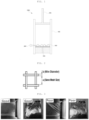
- FIG. 1 is a view illustrating a capillary rheometer of the present invention.
- the capillary rheometer device 1000 is composed of a cylinder body 100, a piston 200, a pressure measuring instrument 300, a mesh 400, and a capillary die 500, but additional components may be added as needed.
- the piston 200 After adding the PCR material to the capillary rheometer device 1000 and raising a temperature of the cylinder body 100 until it melts, the piston 200 is pushed at a constant speed to discharge the molten PCR through the capillary tube of the capillary die 500.
- the mesh 400 is installed under the cylinder body 100, and when the molten PCR is discharged, the pressure inside the cylinder body 100 rises while foreign matters inside the PCR clog the holes of the mesh.
- the pressure rises rapidly even when the piston 200 is slightly pressed, and the mesh may burst when excessive pressure is applied. Equation 1 and Equation 2 may distinguish high-grade or low-grade PCR by measuring the slope of the pressure and the time until the mesh bursts.
- the adhesive composition may have a PCR resin content of 10% by weight or more, 15% by weight or more, 20% by weight or more, 25% by weight or more as a lower limit, and 90% by weight or less, 80% by weight or less, 70% by weight or less, 60% by weight or less, 50% by weight or less, or 40% by weight or less, specifically 20 to 70% by weight, specifically 20 to 60% by weight, specifically 25 to 50% by weight, and specifically 25 to 40% by weight as an upper limit.
- the adhesive composition has excellent economic efficiency and also has excellent mechanical properties and adhesive properties.
- the adhesive composition may have adhesive strength with aluminum foil or plate of 800 gf/in or more, specifically 900 gf/in or more, specifically 1,000 gf/in or more, specifically 1,100 gf/in or more, specifically, 1,200 gf/in or more, specifically, 1,000 to 1,300 gf/in, and specifically, 1,000 to 1,200 gf/in.
- the adhesive composition may have a melt index (190°C, 2.16 kg, ASTM D 1238) of 20 g/10 min or less, 19 g/10 min or less, 18 g/10 min or less, 17 g/10 min or less, 16 g/10 min or less, 15 g/10 min or less, 13 g/10 min or less, 12 g/10 min or less, 10 g/10 min or less, or 8 g/10 min or less as an upper limit, and 1 g/10 min or more, 2 g/10 min or more, 3 g/10 min or more, 4 g/10 min or more, or 5 g/10 min or more, specifically 1 to 20 g/10 min, specifically 1 to 10 g/10 min, and specifically 3 to 8 g/10 min as a lower limit.
- a melt index 190°C, 2.16 kg, ASTM D 1238
- the adhesive composition As the melt index of the adhesive composition satisfies the above range, the adhesive composition has excellent processability and excellent adhesive properties.
- the adhesive composition may further comprise an additive, and examples thereof may further include, for example, an antioxidant or a plasticizer.
- the preparation method of the adhesive composition is not limited thereto as long as it is a preparation method of an adhesive composition comprising a conventional ethylene-acrylic acid copolymer.
- a preparation method of an adhesive composition comprising a conventional ethylene-acrylic acid copolymer.
- the extrusion temperature may be 180 to 220°C.
- the mixed adhesive composition may be prepared in a form of a film.
- the film may be manufactured into a film through co-extrusion of the blended resin prepared above through an extrusion coating equipment or a casting equipment.
- the film may have a thickness of 1 to 200 um, specifically 10 to 150 ⁇ m, 10 to 100 um, specifically 20 to 80 ⁇ m, and specifically 30 to 50 ⁇ m.
- a Rheograph 25 model from GOTTFERT was used as a capillary rheometer device for measuring the gradient of the high-grade PCR resin.
- the capillary used for measurement is 20 mm in diameter and 250 mm in length
- the piston is 15 mm in diameter
- the capillary die is 25 mm in length
- the hole is 2 mm in diameter, so LID is 25/2.
- a mesh is provided on the hole, the mesh is 120 mesh, and the material is 304 sus.
- an internal temperature of the capillary rheometer is 190°C.
- a speed at which the piston is pushed down the capillary rheometer is 0.1 mm/s, and the amount of PCR introduced is 50g.
- the adhesive strength of the sample was evaluated according to ASTM D3330, and specifically, the lamination film was cut to a size of 1 inch in width and peeled between the aluminum and the PCR-EAA blended film.
- the sample was attached to a flat SUS plate and the peel strength between aluminum and the peeled PCR-EAA Blended film was measured using UTM equipment. Peeling conditions were set at an angle of 180 degrees in a MD direction and a speed of 50 mm/min.
- the melt index was obtained by measuring the weight of the resin discharged for 10 minutes under the condition of 2.16 kg at 190°C according to ASTM D1238.
- the blended resin in a mixed state prepared above was extrusion coated on an aluminum fabric using an extrusion coating (EC) facility.
- the aluminum fabric had a thickness of 20 um
- the PCR-EAA blend resin had an extrusion thickness of 40 um, so a lamination film having a total thickness of 60 um was manufactured.
- the extrusion temperature is 240 to 280°C.
- EAA_F 300 296.4 X (No Film to be manufactured) *EAA_A has an AA content of 9.7% and a weight average molecular weight of 90,000 to 110,000 g/mol.
- EAA_B has an AA content of 9.7% and a weight average molecular weight of 90,000 to 100,000 g/mol.
- EAA_C has an AA content of 13.5% and a weight average molecular weight of 70,000 to 80,000 g/mol.
- EAA_D has an AA content of 13.5% and a weight average molecular weight of 60,000 to 70,000 g/mol.
- EAA_E has an AA content of 13.5% and a weight average molecular weight of 50,000 to 60,000 g/mol.
- EAA_F has an AA content of 20.5% and a weight average molecular weight of 20,000 to 30,000 g/mol.
- Table 1 above is the result of setting a comparative group according to an MI difference between PCR and EAA based on the same LDPE, and evaluating the appearance through filming. Thus, it could de confirmed that the film stability was secured when the MI difference between the blended resins was 20 or less.
- Table 3 above shows numerical values quantifying the level of the foreign matters in the blending resin by securing discriminating data between low and high grade PCR using a Capillary Rheometer System. Specifically, it could be confirmed that the pressure that increases according to the elapsed time was quantified by the slope, and when the slope was 0.2 or less, there was no degradation of other physical properties including AL adhesive strength even after blending.
- FIG. 3 is an image obtained by co-extruding the adhesive compositions of Example 3 and Comparative Example 1 with a film or aluminum foil.
- Example 3 a film in an intact form was obtained, but in Comparative Example 1, a film having low quality such as tearing was obtained by performing extrusion.
- the present invention may provide an adhesive composition having excellent processability, low gel content, and excellent adhesive strength by simply and easily distinguishing a PCR resin having a low content of foreign matters by a capillary rheometer and mixing the PCR resin with an ethylene-acrylic acid copolymer.
Landscapes
- Chemical & Material Sciences (AREA)
- Organic Chemistry (AREA)
- Polymers & Plastics (AREA)
- Health & Medical Sciences (AREA)
- Chemical Kinetics & Catalysis (AREA)
- Medicinal Chemistry (AREA)
- Engineering & Computer Science (AREA)
- Mechanical Engineering (AREA)
- Life Sciences & Earth Sciences (AREA)
- Materials Engineering (AREA)
- Wood Science & Technology (AREA)
- Addition Polymer Or Copolymer, Post-Treatments, Or Chemical Modifications (AREA)
- Adhesives Or Adhesive Processes (AREA)
- Separation, Recovery Or Treatment Of Waste Materials Containing Plastics (AREA)
Abstract
Description
- The present invention relates to a composition comprising a recycled resin and an ethylene-acrylic acid copolymer, and a preparation method thereof.
- A post consumer resin (PCR) means a recycled resin, and currently, research on recycling it has been continuously conducted. The PCR is a polymer resin such as polyethylene (PE), polyethylene terephthalate (PET), polypropylene (PP), vinyl chloride (PVC), and polystyrene (PS), and the polymer resin is mainly used for clothing, carpets, bottles, plastic wood, pipes, floor tiles, packaging, and textiles, etc., and accordingly, the amount of PCR produced has increased year by year.
- Among the PCR materials, the wrapping paper used for packaging goods in hypermarkets among polyethylene (PE) resins is bulky and may secure a large amount of resin with the same properties, so research on recycling it has been continuously conducted.
- In particular, research has been conducted to provide an adhesive composition by mixing an ethylene-acrylic acid resin with the polyethylene PCR. However, the polyethylene PCR generally has lower physical properties and processability than those of new polymer resins, making it difficult to reuse it. In particular, there is a problem in that due to foreign matters remaining in the polyethylene PCR resin after processing, physical properties are greatly deteriorated, the polyethylene PCR and the ethylene-acrylic acid copolymer are not uniformly mixed, and in particular, adhesive properties to a substrate are also deteriorated.
- Accordingly, among the collected polyethylene PCR resins, it is necessary to differentiate and classify them into grade A resins that may be mixed uniformly with ethylene-acrylic acid copolymers and grade C resins that cannot be recycled. However, there is a disadvantage that it is difficult to distinguish the grade A and grade C PCRs with the naked eye, ICP elemental analysis, TGA pyrolysis analysis, etc., and the cost for such analysis is also high
- The present invention aims to providing an adhesive composition having excellent adhesive properties and physical properties, comprising an ethylene-acrylic acid copolymer and a PCR resin.
- The present invention further aims to providing an adhesive composition comprising a grade A PCR resin with a small content of foreign matter that is easily identified using a capillary rheometer device.
- Against this background, the invention provides an adhesive composition, comprising: a) an ethylene-acrylic acid copolymer and b) a post-consumer recycled resin (PCR), wherein a) the ethylene-acrylic acid copolymer has a melt index (190°C, 2.16 kg, ASTM D1238) of 1 to 30 g/10 min, and b) the PCR has a melt index (190°C, 2.16 kg, ASTM D1238) of 1 to 10 g/10 min.
- The melt indices (190°C, 2.16 kg, ASTM D1238) of the ethylene-acrylic acid copolymer and the PCR may satisfy the following Equation 1:

wherein MI1 is a melt index (190°C, 2.16 kg, ASTM D1238) of the ethylene-acrylic acid copolymer, and MI2 is a melt index (190°C, 2.16 kg, ASTM D1238) of the PCR. - When the PCR is passed through a capillary rheometer, the PCR may satisfy the following Equation 2, or, preferably, Equation 3:

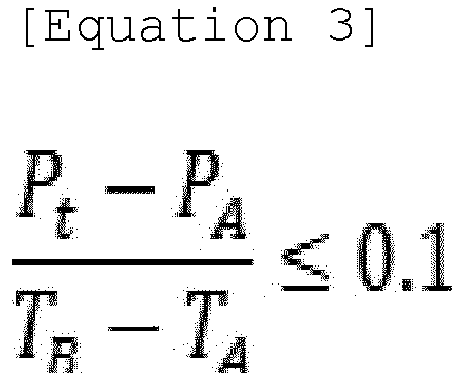
wherein TA is the time at which the initial pressure is observed in the capillary rheometer, TB is the time at which a mesh is destroyed, PA is an initial pressure value at which the pressure is first measured by a pressure observer of the capillary rheometer, and Pt means a pressure value just before a mesh is destroyed. The capillary rheometer device is a Rheograph 25 model from GOTTFERT, wherein the capillary used for measurement is 20 mm in diameter and 250 mm in length, the piston is 15 m in diameter, the capillary die is 25 mm in length, and the hole is 2 mm in diameter, so LID is 25/2. A mesh is provided on the hole, the mesh is 120 mesh, and the material is 304 sus. When the slope is measured, an internal temperature of the capillary rheometer is 190°C. A speed at which the piston is pushed down the capillary rheometer is 0.1 mm/s, and the amount of PCR introduced is 50 g. - The adhesive composition may have a PCR resin content of 20 to 70% by weight.
- The adhesive composition may have an adhesive strength of 800 gf/in or more with an aluminum plate.
- The adhesive composition may have an adhesive strength of 1,000 gf/in or more with an aluminum plate.
- The adhesive composition may have a melt index (190°C, 2.16 kg, ASTM D1238)) of 1 to 20 g/10 min.
- The invention further relates to a preparation method of an adhesive composition, the method comprising the following steps: S1) preparing a polymer mixture by mixing an ethylene-acrylic acid copolymer having a melt index (190°C, 2.16 kg, ASTM D1238) of 1 to 30 g/10 min and a post-consumer recycled resin (PCR) having a melt index (190°C, 2.16 kg, ASTM D1238) of 1 to 10 g/10 min; S2) melt-extruding the polymer mixture; and S3) preparing the extruded mixture into a pellet through a pelletizer.
- The melt indices (190°C, 2.16 kg, ASTM D1238) of the ethylene-acrylic acid copolymer and the PCR may satisfy the following Equation 1:

wherein MI1 is a melt index (190°C, 2.16 kg, ASTM D1238) of the ethylene-acrylic acid copolymer, and MI2 is a melt index (190°C, 2.16 kg, ASTM D1238) of the PCR. - When the PCR is passed through a capillary rheometer, the PCR may satisfy Equation 2, or, preferably, Equation 3, both as specified further above.
- A temperature of the melt extrusion in S2) may be 150 to 300°C.
-
-
FIG. 1 is a schematic diagram of a capillary rheometer device. -
FIG. 2 is a schematic diagram of a mesh of a capillary rheometer device. -
FIG. 3 are images illustrating surface states of adhesive films of Example 3 and Comparative Example 1 - Hereinafter, the present invention will be described in more detail with reference to embodiments and examples including accompanying drawings.
- The present invention provides an adhesive composition comprising: a) an ethylene-acrylic acid copolymer and b) a post-consumer recycled resin (PCR), wherein a) the ethylene-acrylic acid copolymer has a melt index (190°C, 2.16 kg, ASTM D1238) of 1 to 30 g/10 min, and b) the PCR has a melt index (190°C, 2.16 kg, ASTM D1238) of 1 to 10 g/10 min. Thus, the adhesive composition has excellent miscibility and excellent adhesive properties.
- The acrylic acid content may be 1% by weight or more, 3% by weight or more, 5% by weight or more, 10% by weight or more, or 15% by weight or more as a lower limit, and 50% by weight or less, 40% by weight or less, 30% by weight or less, 25% by weight or less, or 20% by weight or less, specifically 1 to 30% by weight, specifically 3 to 25% by weight, and 5 to 20% by weight as an upper limit, based on the total weight of the ethylene-acrylic acid copolymer.
- In addition, the ethylene-acrylic acid copolymer may have a weight average molecular weight of 10,000 g/mol or more, 20,000 g/mol or more, 30,000 g/mol or more, 50,000 g/mol or more, or 70,000 g/mol or more as a lower limit, and 1,000,000 g/mol or less, 800,000 g/mol or less, 500,000 g/mol or less, or 300,000 g/mol or less, specifically 30,000 to 1,000,000 g/mol, specifically 30,000 to 500,000 g/mol, and specifically 70,000 to 300,000 g/mol as an upper limit.
- In addition, the ethylene-acrylic acid copolymer may have a molecular weight distribution (polydispersity index, PI) of 2 or more, 3 or more, or 5 or more as a lower limit, and 20 or less, 15 or less, or 10 or less, specifically 2 to 15, specifically 3 to 10, and specifically 5 to 10 as an upper limit.
- Further, the ethylene-acrylic acid copolymer may have a melt index (190°C/2.16 kg, ASTM D 1238) of 3 g/10 min or more or 5 g/10 min or more as a lower limit, and 50 g/10 min or less, 40 g/10 min or less, 30 g/10 min or less, 25 g/10 min or less, 20 g/10 min or less, 15 g/10 min or less, or 10 g/10 min or less, specifically 3 to 50 g/10 min, specifically 5 to 30 g/10 min, specifically 5 to 20 g/10 min, specifically 5 to 15 g/10 min, and specifically 5 to 10 g/10 min as un upper limit.
- In an embodiment, the PCR may have a melt index (190° C/2.16 kg, ASTM D 1238) of 1 g/10 min or more, 2 g/10 min or more, or 3 g/10 min or more as a lower limit, and 30 g/10 min or less, 25 g/10 min or less, 20 g/10 min or less, 15 g/10 min or less, 10 g/10 min or less, or 5 g/10 min or less, specifically 1 to 30 g/10 min, specifically 1 to 20 g / 10 min, specifically 2 to 10 g/10 min, and specifically 3 to 5 g/10 min as an upper limit.
- The ethylene-acrylic acid copolymer and PCR may be mixed with a certain difference in melt index values.
- In an embodiment, a melt indices (190° C/2.16 kg, ASTM D 1238) of the ethylene-acrylic acid copolymer and PCR may satisfy the following Equation 1, wherein the upper limit of the melt index may be 20 g/10 min or less, 19 g/10 min or less, 18 g/10 min or less, 17 g/10 min or less, 16 g/10 min or less, 15 g/10 min or less, 13 g/10 min or less, 12 g/10 min or less, 10 g/10 min or less, or 8 g/10 min or less, and the lower limit of the melt index may be 1 g/10 min or more , 2 g/10 min or more, 3 g/10 min or more, 4 g/10 min or more, may be 5 g/10 min or more, specifically 1 to 20 g/10 min, specifically 1 to 10 g/10 min, and specifically 3 to 8 g/10 min:

wherein, MI1 is a melt index of an ethylene-acrylic acid copolymer, and MI2 is a melt index of a PCR. - As a difference in the melt index between the ethylene-acrylic acid copolymer and the PCR satisfies the above range, there is an advantage in that the miscibility is excellent and the adhesive properties are also excellent.
- Among the conventionally collected PCR resins, in the case of a grade C PCR having a high content of foreign matters, miscibility with the ethylene-acrylic acid copolymer is deteriorated, problems such as deterioration in quality during extrusion or clogging of an extrusion nozzle due to excessive foreign matters may occur, and adhesive strength of the adhesive composition mixed with the grade C PCR and the ethylene-acrylic acid copolymer may also be reduced.
- Accordingly, among the collected PCR resins, it is necessary to differentiate and classify them into grade A resin having a low content of foreign matters and grade C resin having a high content of foreign matters. However, there is a disadvantage that it is difficult to distinguish the grade A and grade C PCRs with the naked eye, ICP elemental analysis, TGA pyrolysis analysis, etc., and the cost for such analysis is also high.
- Thus, the present invention provides a method for easily distinguishing the grade-A PCR using a capillary rheometer device.
- In an embodiment, when the PCR is passed through a capillary rheometer, the PCR may satisfy the following Equation 2, and specifically, in the case of the PCR that satisfies the following Equation 3, it has excellent physical properties, and very excellent miscibility with ethylene-acrylic acid copolymer, and adhesive properties, and in particular, continuous extrusion is possible without clogging during extrusion, and the physical properties of the article discharged from the extruder are also uniform.


wherein TA is the time at which the initial pressure is observed in the capillary rheometer, TB is the time at which a mesh is destroyed, PA is an initial pressure value at which the pressure is first measured by a pressure observer of the capillary rheometer, and Pt means a pressure value just before a mesh is destroyed. The capillary rheometer device is a Rheograph 25 model from GOTTFERT, wherein the capillary used for measurement is 20 mm in diameter and 250 mm in length, the piston is 15 m in diameter, the capillary die is 25 mm in length, and the hole is 2 mm in diameter, so LID is 25/2. A mesh is provided on the hole, the mesh is 120 mesh, and the material is 304 sus. When the slope is measured, an internal temperature of the capillary rheometer is 190°C. A speed at which the piston is pushed down the capillary rheometer is 0.1 mm/s, and the amount of PCR introduced is 50 g. - Through a PCR measurement method in which the extrusion molding is easy, it is possible to easily identify highquality PCR materials that may be continuously extruded among the collected PCRs without special analysis and devices.
- However, in the case of PCR with a very small content of foreign matters, the mesh is not destroyed because there are no foreign matters accumulated until all of the PCR inside the capillary rheometer device is discharged. That is, if the mesh is not destroyed, it is a clean grade C PCR with almost no foreign matter content.
-
FIG. 1 is a view illustrating a capillary rheometer of the present invention. - The capillary rheometer device 1000 is composed of a cylinder body 100, a piston 200, a pressure measuring instrument 300, a mesh 400, and a capillary die 500, but additional components may be added as needed.
- After adding the PCR material to the capillary rheometer device 1000 and raising a temperature of the cylinder body 100 until it melts, the piston 200 is pushed at a constant speed to discharge the molten PCR through the capillary tube of the capillary die 500.
- The mesh 400 is installed under the cylinder body 100, and when the molten PCR is discharged, the pressure inside the cylinder body 100 rises while foreign matters inside the PCR clog the holes of the mesh. Here, as the content of the foreign matters increases, the pressure rises rapidly even when the piston 200 is slightly pressed, and the mesh may burst when excessive pressure is applied. Equation 1 and Equation 2 may distinguish high-grade or low-grade PCR by measuring the slope of the pressure and the time until the mesh bursts.
- The specific specifications of the capillary rheometer device have been described in detail above, and thus will be omitted here.
- In an embodiment, the adhesive composition may have a PCR resin content of 10% by weight or more, 15% by weight or more, 20% by weight or more, 25% by weight or more as a lower limit, and 90% by weight or less, 80% by weight or less, 70% by weight or less, 60% by weight or less, 50% by weight or less, or 40% by weight or less, specifically 20 to 70% by weight, specifically 20 to 60% by weight, specifically 25 to 50% by weight, and specifically 25 to 40% by weight as an upper limit.
- As the PCR content satisfies the above range, the adhesive composition has excellent economic efficiency and also has excellent mechanical properties and adhesive properties.
- In an embodiment, the adhesive composition may have adhesive strength with aluminum foil or plate of 800 gf/in or more, specifically 900 gf/in or more, specifically 1,000 gf/in or more, specifically 1,100 gf/in or more, specifically, 1,200 gf/in or more, specifically, 1,000 to 1,300 gf/in, and specifically, 1,000 to 1,200 gf/in.
- In an embodiment, the adhesive composition may have a melt index (190°C, 2.16 kg, ASTM D 1238) of 20 g/10 min or less, 19 g/10 min or less, 18 g/10 min or less, 17 g/10 min or less, 16 g/10 min or less, 15 g/10 min or less, 13 g/10 min or less, 12 g/10 min or less, 10 g/10 min or less, or 8 g/10 min or less as an upper limit, and 1 g/10 min or more, 2 g/10 min or more, 3 g/10 min or more, 4 g/10 min or more, or 5 g/10 min or more, specifically 1 to 20 g/10 min, specifically 1 to 10 g/10 min, and specifically 3 to 8 g/10 min as a lower limit.
- As the melt index of the adhesive composition satisfies the above range, the adhesive composition has excellent processability and excellent adhesive properties.
- In addition, the adhesive composition may further comprise an additive, and examples thereof may further include, for example, an antioxidant or a plasticizer.
- In an embodiment, the preparation method of the adhesive composition is not limited thereto as long as it is a preparation method of an adhesive composition comprising a conventional ethylene-acrylic acid copolymer. For example, after dry blending the PCR and the ethylene-acrylic acid copolymer, the mixture was again extruded by melt blending using a twin extruder.
- Thereafter, water cooling may be performed to obtain a mixture in the form of pellets through a pelletizer (cutter). The extrusion temperature may be 180 to 220°C.
- In an embodiment, the mixed adhesive composition may be prepared in a form of a film. The film may be manufactured into a film through co-extrusion of the blended resin prepared above through an extrusion coating equipment or a casting equipment.
- In an embodiment, the film may have a thickness of 1 to 200 um, specifically 10 to 150 µm, 10 to 100 um, specifically 20 to 80 µm, and specifically 30 to 50 µm.
- Hereinafter, the present invention will be described in more detail on the basis of Examples and Comparative Examples.
- [PCR resin gradient measurement]
- The PCR resin slope was measured through the following slope K Equation:

wherein TA is the time at which the initial pressure is observed in the capillary rheometer, TB is the time at which a mesh is destroyed, PA is an initial pressure value at which the pressure is first measured by a pressure observer of the capillary rheometer, and Pt means a pressure value just before a mesh is destroyed. - A Rheograph 25 model from GOTTFERT was used as a capillary rheometer device for measuring the gradient of the high-grade PCR resin. Specifically, the capillary used for measurement is 20 mm in diameter and 250 mm in length, the piston is 15 mm in diameter, the capillary die is 25 mm in length, and the hole is 2 mm in diameter, so LID is 25/2. A mesh is provided on the hole, the mesh is 120 mesh, and the material is 304 sus. When the slope is measured, an internal temperature of the capillary rheometer is 190°C. A speed at which the piston is pushed down the capillary rheometer is 0.1 mm/s, and the amount of PCR introduced is 50g.
- The adhesive strength of the sample was evaluated according to ASTM D3330, and specifically, the lamination film was cut to a size of 1 inch in width and peeled between the aluminum and the PCR-EAA blended film. The sample was attached to a flat SUS plate and the peel strength between aluminum and the peeled PCR-EAA Blended film was measured using UTM equipment. Peeling conditions were set at an angle of 180 degrees in a MD direction and a speed of 50 mm/min.
- The melt index was obtained by measuring the weight of the resin discharged for 10 minutes under the condition of 2.16 kg at 190°C according to ASTM D1238.
- To a mixture mixed in the weight ratio of the mixture of EAA and PCR described in Tables 1 to 3 below, 0.01 parts by weight of Irganox 1010 as an antioxidant and Irgafos 168 as a stabilizer were added to a mixing container (Planetary mixer (KURABO, KK-250s)), respectively, based on 100 parts by weight of the mixture, and stirred to prepare an adhesive composition.
- In order to evaluate the adhesive strength of the PCR-EAA blender film with aluminum, the blended resin in a mixed state prepared above was extrusion coated on an aluminum fabric using an extrusion coating (EC) facility. The aluminum fabric had a thickness of 20 um, and the PCR-EAA blend resin had an extrusion thickness of 40 um, so a lamination film having a total thickness of 60 um was manufactured. The extrusion temperature is 240 to 280°C.
[Table 1] EAA PCR MI difference between PCR-EAAs Appearance difference Sample MI Sample MI Examp le 1 EAA_A (70%) 5 Sample C (30%) 3.6 1.4 ○ (film stability good) Examp le 2 EAA_B (70%) 10 6.4 ○ (film stability good) Examp le 3 EAA_C (70%) 23 19.4 ○ (film stability good) Comp. Examp le 1 EAA_D (70%) 25 21.4 X (No film to be manufactured) Comp. Examp le 2 EAA_E (70%) 60 56.4 X (No film to be manufactured) Comp. Examp le 3 EAA_F (70%) 300 296.4 X (No Film to be manufactured) *EAA_A has an AA content of 9.7% and a weight average molecular weight of 90,000 to 110,000 g/mol.
EAA_B has an AA content of 9.7% and a weight average molecular weight of 90,000 to 100,000 g/mol.
EAA_C has an AA content of 13.5% and a weight average molecular weight of 70,000 to 80,000 g/mol.
EAA_D has an AA content of 13.5% and a weight average molecular weight of 60,000 to 70,000 g/mol.
EAA_E has an AA content of 13.5% and a weight average molecular weight of 50,000 to 60,000 g/mol.
EAA_F has an AA content of 20.5% and a weight average molecular weight of 20,000 to 30,000 g/mol.[Table 2] EAA PCR Total Capillary rheometer slope of adhesive composition AL adhesive strength (gf/in) Sampl e Ratio Sampl e Ratio Example 2 A EAA B 100% Sample C (0%) 100% 0.001 1470 Example 2 B EAA B 90% Sample C (10%) 100% 0.0028 1308 Example 2 C EAA B 70% Sample C (30%) 100% 0.0074 1169 Example 2 D EAA B 50% Sample C (50%) 100% 0.126 1087 Example 2 E EAA B 30% Sample C (70%) 100% 0.183 1024 Example 2 F EAA B 10% Sample C (90%) 100% 0.246 624 Example 2 G EAA B 0% Sample C (100%) 100% 0.285 489 [Table 3] EAA PCR Capillary rheometer slope of PCR AL adhesive strength (gf/in) Example 4 EAA B (70%) Sample A (30%) 0.0077 1024 Example 5 Sample B (30%) 0.0099 1210 Example 6 Sample C (30%) 0.0285 1169 Example 7 Sample D (30%) 0.0657 1152 Example 8 Sample E (30%) 0.173 1056 Example 9 Sample F (30%) 0.3851 868 Example 10 Sample G (30%) 0.4305 845 Example Sample H (30%) 0.5478 922 11 Example 12 Sample I (30%) 0.6324 997 Example 13 Sample J (30%) 0.8491 962 *Samples A to J were collected from hypermarkets, respectively. - Table 1 above is the result of setting a comparative group according to an MI difference between PCR and EAA based on the same LDPE, and evaluating the appearance through filming. Thus, it could de confirmed that the film stability was secured when the MI difference between the blended resins was 20 or less.
- It could be confirmed from Table 2 that when a composition ratio of the recycled resin had a weight ratio of 10% to 70%, a blending resin having a gel level with a rheometer slope of 0.2 or less and adhesive properties of 1,000 gf/in or more may be manufactured.
- Table 3 above shows numerical values quantifying the level of the foreign matters in the blending resin by securing discriminating data between low and high grade PCR using a Capillary Rheometer System. Specifically, it could be confirmed that the pressure that increases according to the elapsed time was quantified by the slope, and when the slope was 0.2 or less, there was no degradation of other physical properties including AL adhesive strength even after blending.
-
FIG. 3 is an image obtained by co-extruding the adhesive compositions of Example 3 and Comparative Example 1 with a film or aluminum foil. In Example 3, a film in an intact form was obtained, but in Comparative Example 1, a film having low quality such as tearing was obtained by performing extrusion. - The present invention may provide an adhesive composition having excellent processability, low gel content, and excellent adhesive strength by simply and easily distinguishing a PCR resin having a low content of foreign matters by a capillary rheometer and mixing the PCR resin with an ethylene-acrylic acid copolymer.
Claims (15)
- An adhesive composition, comprising:a) an ethylene-acrylic acid copolymer; andb) a post-consumer recycled resin (PCR);wherein the ethylene-acrylic acid copolymer a) has a melt index (190°C, 2.16 kg, ASTM D1238) of 1 to 30 g/10 min; andwherein the PCR b) has a melt index (190°C, 2.16 kg, ASTM D1238) of 1 to 10 g/10 min.
- The adhesive composition of claim 1, wherein an acrylic acid content of the ethylene-acrylic acid copolymer a) is 3 to 25% by weight, preferably 5 to 20% by weight, based on the total weight of the ethylene-acrylic acid copolymer.
- The adhesive composition of any preceding claim, wherein the ethylene-acrylic acid copolymer a) has a weight average molecular weight of 30,000 to 500,000 g/mol, and preferably 70,000 to 300,000 g/mol.
- The adhesive composition of any preceding claim, wherein the ethylene-acrylic acid copolymer a) has a polydispersity index of 2 to 15, preferably of 3 to 10, and more preferably of 5 to 10.
- The adhesive composition of any preceding claim, wherein the ethylene-acrylic acid copolymer a) has a melt index (190°C/2.16 kg, ASTM D 1238) of 5 to 20 g/10 min, preferably 5 to 15 g/10 min, and more preferably 5 to 10 g/10 min.
- The adhesive composition of any preceding claim, wherein the PCR b) has a melt index (190°C/2.16 kg, ASTM D 1238) of 2 to 10 g/10 min, preferably 3 to 5 g/10 min.
- The adhesive composition of any preceding claim, wherein the melt indices of the ethylene-acrylic acid copolymer and the PCR satisfy the following Equation 1:

- The adhesive composition of any preceding claim, wherein when the PCR is passed through a capillary rheometer, in a manner as specified in the description, the PCR satisfies the following Equation 2, or, preferably, the following Equation 3:


- The adhesive composition of any preceding claim, wherein the adhesive composition has a PCR resin content of 20 to 70%, preferably 25 to 50% by weight, and more preferably 25 to 40% by weight.
- A method for preparing an adhesive composition, the method comprising:S1) preparing a polymer mixture by mixing an ethylene-acrylic acid copolymer having a melt index (190°C, 2.16 kg, ASTM D1238) of 1 to 30 g/10 min and a post-consumer recycled resin (PCR) having a melt index (190°C, 2.16 kg, ASTM D1238) of 1 to 10 g/10 min; andS2) melt-extruding the polymer mixture.
- The method of claim 10, further comprising:
S3) preparing the extruded mixture into a pellet through a pelletizer. - The method of claim 10, wherein step S2) comprises extruding the polymer mixture into a film, preferably co-extruding of the polymer mixture through an extrusion coating equipment or a casting equipment into a film.
- The method of claim 12, wherein the film has a thickness of 10 to 100 um, preferably 30 to 50 µm.
- The method of any one of claims 10 to 13, wherein the ethylene-acrylic acid copolymer and/or the PCR and/or the relative contents are configured as described in any one of claims 1 to 9.
- The method of any one of claims 10 to 14, wherein a temperature of the melt extrusion in S2) is 150 to 300°C, preferably 180 to 220°C.
Applications Claiming Priority (1)
| Application Number | Priority Date | Filing Date | Title |
|---|---|---|---|
| KR1020220176075A KR20240093120A (en) | 2022-12-15 | 2022-12-15 | Recycled resin and ethylene-acrylic acid copolymer composition and manufacturing method thereof |
Publications (2)
| Publication Number | Publication Date |
|---|---|
| EP4410884A2 true EP4410884A2 (en) | 2024-08-07 |
| EP4410884A3 EP4410884A3 (en) | 2024-10-23 |
Family
ID=88779493
Family Applications (1)
| Application Number | Title | Priority Date | Filing Date |
|---|---|---|---|
| EP23208700.7A Pending EP4410884A3 (en) | 2022-12-15 | 2023-11-09 | Composition comprising recycled resin and ethylene-acrylic acid copolymer and preparation method thereof |
Country Status (4)
| Country | Link |
|---|---|
| US (1) | US12152171B2 (en) |
| EP (1) | EP4410884A3 (en) |
| KR (1) | KR20240093120A (en) |
| CN (1) | CN118206936A (en) |
Family Cites Families (5)
| Publication number | Priority date | Publication date | Assignee | Title |
|---|---|---|---|---|
| US4292463A (en) | 1977-12-14 | 1981-09-29 | The Dow Chemical Company | Cable shielding tape and cable |
| KR100802814B1 (en) | 2006-05-11 | 2008-02-12 | 현대자동차주식회사 | Polyethylene resin composition for hot melt adhesive |
| CN109575855A (en) | 2018-12-25 | 2019-04-05 | 广州市合诚化学有限公司 | A kind of anti-nozzle absciss layer polyethylene liner steel pipe hot melt adhesive and the preparation method and application thereof |
| US11685845B1 (en) * | 2019-10-04 | 2023-06-27 | Rs Industrial, Inc. | Adhesives containing post-consumer polymer, adhesive additives containing post-consumer polymer and methods of making the same |
| US11753534B2 (en) | 2020-11-16 | 2023-09-12 | Equistar Chemicals, Lp | Compatibilization of post consumer resins |
-
2022
- 2022-12-15 KR KR1020220176075A patent/KR20240093120A/en active Pending
-
2023
- 2023-07-19 US US18/354,989 patent/US12152171B2/en active Active
- 2023-10-18 CN CN202311352686.6A patent/CN118206936A/en active Pending
- 2023-11-09 EP EP23208700.7A patent/EP4410884A3/en active Pending
Also Published As
| Publication number | Publication date |
|---|---|
| KR20240093120A (en) | 2024-06-24 |
| CN118206936A (en) | 2024-06-18 |
| US20240199926A1 (en) | 2024-06-20 |
| US12152171B2 (en) | 2024-11-26 |
| EP4410884A3 (en) | 2024-10-23 |
Similar Documents
| Publication | Publication Date | Title |
|---|---|---|
| CN112795067A (en) | Special material for polyolefin breathable film with high breathability and high permeation resistance as well as preparation method and application of special material | |
| CN111361248B (en) | A kind of extinction PE material and its preparation method and application | |
| CN102407644B (en) | Biodegradable multilayer composite polyethylene film and preparation method thereof | |
| EP4389780A1 (en) | Process for obtaining a polyethylene having a reduced content of gels | |
| US4151159A (en) | Plastics shaped articles | |
| CN112538321B (en) | Degradable self-adhesive film material and preparation method and application thereof | |
| CN107018827A (en) | A kind of environment whole degrading film material and preparation method thereof | |
| CN115707575A (en) | Multilayer film and preparation method and application thereof | |
| DE69009492T2 (en) | LAMINATES AND ADHESIVE COMPOSITIONS FROM WHITE-PIGMENTED MELT-RESISTANT ETHYLENE / CARBONIC ACID COPOLYMERS. | |
| CN112679842A (en) | Polypropylene composition capable of efficiently improving flow marks and preparation method and application thereof | |
| US3022541A (en) | Producing indicia in film by modification of film opacity | |
| US12152171B2 (en) | Composition comprising recycled resin and ethylene-acrylic acid copolymer and preparation method thereof | |
| CN108997682A (en) | A kind of colored alloy material and preparation method thereof can be used for ultra-thin co-extrusion | |
| JP2001115791A (en) | Tunnel tarpaulin | |
| US20030219612A1 (en) | Polymeric films | |
| KR100220892B1 (en) | A calenderable polypropylene film, sheet composition, and its preparing method | |
| JP2003026866A (en) | Olefin-based resin sheet additive and sheet resin composition comprising the same | |
| JP3442035B2 (en) | Film made of recycled polyethylene resin and method for producing the same | |
| WO2024110650A1 (en) | Mechanical recycling of adhesive tapes and the use thereof | |
| KR100544398B1 (en) | Polypropylene-based composition for calendar sheet capable of calendering and method for producing polypropylene film and sheet using same | |
| US20030188823A1 (en) | Process for producing multilayer structures having a layer formed from a blend of an ethylene-alpha-olefin interpolymer and an ethylene-alkyl acrylate interpolymer | |
| CN115536929B (en) | High-haze HDPE extinction master batch and preparation method thereof | |
| CN115368715B (en) | Completely biodegradable self-adhesive film material and preparation method thereof | |
| DE102023115891B4 (en) | Methods for the production of sustainable adhesive elements and adhesive elements | |
| KR101132756B1 (en) | Protecting Film |
Legal Events
| Date | Code | Title | Description |
|---|---|---|---|
| PUAI | Public reference made under article 153(3) epc to a published international application that has entered the european phase |
Free format text: ORIGINAL CODE: 0009012 |
|
| STAA | Information on the status of an ep patent application or granted ep patent |
Free format text: STATUS: REQUEST FOR EXAMINATION WAS MADE |
|
| 17P | Request for examination filed |
Effective date: 20231109 |
|
| AK | Designated contracting states |
Kind code of ref document: A2 Designated state(s): AL AT BE BG CH CY CZ DE DK EE ES FI FR GB GR HR HU IE IS IT LI LT LU LV MC ME MK MT NL NO PL PT RO RS SE SI SK SM TR |
|
| PUAL | Search report despatched |
Free format text: ORIGINAL CODE: 0009013 |
|
| AK | Designated contracting states |
Kind code of ref document: A3 Designated state(s): AL AT BE BG CH CY CZ DE DK EE ES FI FR GB GR HR HU IE IS IT LI LT LU LV MC ME MK MT NL NO PL PT RO RS SE SI SK SM TR |
|
| RIC1 | Information provided on ipc code assigned before grant |
Ipc: C09D 123/08 20060101ALI20240917BHEP Ipc: C08L 23/08 20060101AFI20240917BHEP |