EP4410878A1 - Porous polymer particle and protein purification column using same - Google Patents
Porous polymer particle and protein purification column using same Download PDFInfo
- Publication number
- EP4410878A1 EP4410878A1 EP23865875.1A EP23865875A EP4410878A1 EP 4410878 A1 EP4410878 A1 EP 4410878A1 EP 23865875 A EP23865875 A EP 23865875A EP 4410878 A1 EP4410878 A1 EP 4410878A1
- Authority
- EP
- European Patent Office
- Prior art keywords
- polymer particles
- porous polymer
- phase solution
- dispersive
- based compound
- Prior art date
- Legal status (The legal status is an assumption and is not a legal conclusion. Google has not performed a legal analysis and makes no representation as to the accuracy of the status listed.)
- Pending
Links
Images


Classifications
-
- B—PERFORMING OPERATIONS; TRANSPORTING
- B01—PHYSICAL OR CHEMICAL PROCESSES OR APPARATUS IN GENERAL
- B01J—CHEMICAL OR PHYSICAL PROCESSES, e.g. CATALYSIS OR COLLOID CHEMISTRY; THEIR RELEVANT APPARATUS
- B01J20/00—Solid sorbent compositions or filter aid compositions; Sorbents for chromatography; Processes for preparing, regenerating or reactivating thereof
- B01J20/22—Solid sorbent compositions or filter aid compositions; Sorbents for chromatography; Processes for preparing, regenerating or reactivating thereof comprising organic material
- B01J20/26—Synthetic macromolecular compounds
- B01J20/265—Synthetic macromolecular compounds modified or post-treated polymers
- B01J20/267—Cross-linked polymers
-
- B—PERFORMING OPERATIONS; TRANSPORTING
- B01—PHYSICAL OR CHEMICAL PROCESSES OR APPARATUS IN GENERAL
- B01D—SEPARATION
- B01D15/00—Separating processes involving the treatment of liquids with solid sorbents; Apparatus therefor
- B01D15/08—Selective adsorption, e.g. chromatography
-
- B—PERFORMING OPERATIONS; TRANSPORTING
- B01—PHYSICAL OR CHEMICAL PROCESSES OR APPARATUS IN GENERAL
- B01J—CHEMICAL OR PHYSICAL PROCESSES, e.g. CATALYSIS OR COLLOID CHEMISTRY; THEIR RELEVANT APPARATUS
- B01J20/00—Solid sorbent compositions or filter aid compositions; Sorbents for chromatography; Processes for preparing, regenerating or reactivating thereof
- B01J20/22—Solid sorbent compositions or filter aid compositions; Sorbents for chromatography; Processes for preparing, regenerating or reactivating thereof comprising organic material
- B01J20/26—Synthetic macromolecular compounds
- B01J20/261—Synthetic macromolecular compounds obtained by reactions only involving carbon to carbon unsaturated bonds
-
- B—PERFORMING OPERATIONS; TRANSPORTING
- B01—PHYSICAL OR CHEMICAL PROCESSES OR APPARATUS IN GENERAL
- B01J—CHEMICAL OR PHYSICAL PROCESSES, e.g. CATALYSIS OR COLLOID CHEMISTRY; THEIR RELEVANT APPARATUS
- B01J20/00—Solid sorbent compositions or filter aid compositions; Sorbents for chromatography; Processes for preparing, regenerating or reactivating thereof
- B01J20/28—Solid sorbent compositions or filter aid compositions; Sorbents for chromatography; Processes for preparing, regenerating or reactivating thereof characterised by their form or physical properties
- B01J20/28002—Solid sorbent compositions or filter aid compositions; Sorbents for chromatography; Processes for preparing, regenerating or reactivating thereof characterised by their form or physical properties characterised by their physical properties
- B01J20/28004—Sorbent size or size distribution, e.g. particle size
-
- B—PERFORMING OPERATIONS; TRANSPORTING
- B01—PHYSICAL OR CHEMICAL PROCESSES OR APPARATUS IN GENERAL
- B01J—CHEMICAL OR PHYSICAL PROCESSES, e.g. CATALYSIS OR COLLOID CHEMISTRY; THEIR RELEVANT APPARATUS
- B01J20/00—Solid sorbent compositions or filter aid compositions; Sorbents for chromatography; Processes for preparing, regenerating or reactivating thereof
- B01J20/28—Solid sorbent compositions or filter aid compositions; Sorbents for chromatography; Processes for preparing, regenerating or reactivating thereof characterised by their form or physical properties
- B01J20/28002—Solid sorbent compositions or filter aid compositions; Sorbents for chromatography; Processes for preparing, regenerating or reactivating thereof characterised by their form or physical properties characterised by their physical properties
- B01J20/28011—Other properties, e.g. density, crush strength
-
- B—PERFORMING OPERATIONS; TRANSPORTING
- B01—PHYSICAL OR CHEMICAL PROCESSES OR APPARATUS IN GENERAL
- B01J—CHEMICAL OR PHYSICAL PROCESSES, e.g. CATALYSIS OR COLLOID CHEMISTRY; THEIR RELEVANT APPARATUS
- B01J20/00—Solid sorbent compositions or filter aid compositions; Sorbents for chromatography; Processes for preparing, regenerating or reactivating thereof
- B01J20/28—Solid sorbent compositions or filter aid compositions; Sorbents for chromatography; Processes for preparing, regenerating or reactivating thereof characterised by their form or physical properties
- B01J20/28014—Solid sorbent compositions or filter aid compositions; Sorbents for chromatography; Processes for preparing, regenerating or reactivating thereof characterised by their form or physical properties characterised by their form
- B01J20/28016—Particle form
-
- B—PERFORMING OPERATIONS; TRANSPORTING
- B01—PHYSICAL OR CHEMICAL PROCESSES OR APPARATUS IN GENERAL
- B01J—CHEMICAL OR PHYSICAL PROCESSES, e.g. CATALYSIS OR COLLOID CHEMISTRY; THEIR RELEVANT APPARATUS
- B01J20/00—Solid sorbent compositions or filter aid compositions; Sorbents for chromatography; Processes for preparing, regenerating or reactivating thereof
- B01J20/28—Solid sorbent compositions or filter aid compositions; Sorbents for chromatography; Processes for preparing, regenerating or reactivating thereof characterised by their form or physical properties
- B01J20/28054—Solid sorbent compositions or filter aid compositions; Sorbents for chromatography; Processes for preparing, regenerating or reactivating thereof characterised by their form or physical properties characterised by their surface properties or porosity
- B01J20/28078—Pore diameter
- B01J20/28083—Pore diameter being in the range 2-50 nm, i.e. mesopores
-
- B—PERFORMING OPERATIONS; TRANSPORTING
- B01—PHYSICAL OR CHEMICAL PROCESSES OR APPARATUS IN GENERAL
- B01J—CHEMICAL OR PHYSICAL PROCESSES, e.g. CATALYSIS OR COLLOID CHEMISTRY; THEIR RELEVANT APPARATUS
- B01J20/00—Solid sorbent compositions or filter aid compositions; Sorbents for chromatography; Processes for preparing, regenerating or reactivating thereof
- B01J20/28—Solid sorbent compositions or filter aid compositions; Sorbents for chromatography; Processes for preparing, regenerating or reactivating thereof characterised by their form or physical properties
- B01J20/28054—Solid sorbent compositions or filter aid compositions; Sorbents for chromatography; Processes for preparing, regenerating or reactivating thereof characterised by their form or physical properties characterised by their surface properties or porosity
- B01J20/28078—Pore diameter
- B01J20/28085—Pore diameter being more than 50 nm, i.e. macropores
-
- B—PERFORMING OPERATIONS; TRANSPORTING
- B01—PHYSICAL OR CHEMICAL PROCESSES OR APPARATUS IN GENERAL
- B01J—CHEMICAL OR PHYSICAL PROCESSES, e.g. CATALYSIS OR COLLOID CHEMISTRY; THEIR RELEVANT APPARATUS
- B01J20/00—Solid sorbent compositions or filter aid compositions; Sorbents for chromatography; Processes for preparing, regenerating or reactivating thereof
- B01J20/281—Sorbents specially adapted for preparative, analytical or investigative chromatography
- B01J20/282—Porous sorbents
- B01J20/285—Porous sorbents based on polymers
-
- B—PERFORMING OPERATIONS; TRANSPORTING
- B01—PHYSICAL OR CHEMICAL PROCESSES OR APPARATUS IN GENERAL
- B01J—CHEMICAL OR PHYSICAL PROCESSES, e.g. CATALYSIS OR COLLOID CHEMISTRY; THEIR RELEVANT APPARATUS
- B01J20/00—Solid sorbent compositions or filter aid compositions; Sorbents for chromatography; Processes for preparing, regenerating or reactivating thereof
- B01J20/30—Processes for preparing, regenerating, or reactivating
- B01J20/305—Addition of material, later completely removed, e.g. as result of heat treatment, leaching or washing, e.g. for forming pores
- B01J20/3064—Addition of pore forming agents, e.g. pore inducing or porogenic agents
-
- B—PERFORMING OPERATIONS; TRANSPORTING
- B01—PHYSICAL OR CHEMICAL PROCESSES OR APPARATUS IN GENERAL
- B01J—CHEMICAL OR PHYSICAL PROCESSES, e.g. CATALYSIS OR COLLOID CHEMISTRY; THEIR RELEVANT APPARATUS
- B01J20/00—Solid sorbent compositions or filter aid compositions; Sorbents for chromatography; Processes for preparing, regenerating or reactivating thereof
- B01J20/30—Processes for preparing, regenerating, or reactivating
- B01J20/3085—Chemical treatments not covered by groups B01J20/3007 - B01J20/3078
-
- C—CHEMISTRY; METALLURGY
- C08—ORGANIC MACROMOLECULAR COMPOUNDS; THEIR PREPARATION OR CHEMICAL WORKING-UP; COMPOSITIONS BASED THEREON
- C08F—MACROMOLECULAR COMPOUNDS OBTAINED BY REACTIONS ONLY INVOLVING CARBON-TO-CARBON UNSATURATED BONDS
- C08F2/00—Processes of polymerisation
- C08F2/01—Processes of polymerisation characterised by special features of the polymerisation apparatus used
-
- C—CHEMISTRY; METALLURGY
- C08—ORGANIC MACROMOLECULAR COMPOUNDS; THEIR PREPARATION OR CHEMICAL WORKING-UP; COMPOSITIONS BASED THEREON
- C08F—MACROMOLECULAR COMPOUNDS OBTAINED BY REACTIONS ONLY INVOLVING CARBON-TO-CARBON UNSATURATED BONDS
- C08F2/00—Processes of polymerisation
- C08F2/12—Polymerisation in non-solvents
- C08F2/16—Aqueous medium
- C08F2/22—Emulsion polymerisation
- C08F2/24—Emulsion polymerisation with the aid of emulsifying agents
- C08F2/26—Emulsion polymerisation with the aid of emulsifying agents anionic
-
- C—CHEMISTRY; METALLURGY
- C08—ORGANIC MACROMOLECULAR COMPOUNDS; THEIR PREPARATION OR CHEMICAL WORKING-UP; COMPOSITIONS BASED THEREON
- C08F—MACROMOLECULAR COMPOUNDS OBTAINED BY REACTIONS ONLY INVOLVING CARBON-TO-CARBON UNSATURATED BONDS
- C08F2/00—Processes of polymerisation
- C08F2/46—Polymerisation initiated by wave energy or particle radiation
- C08F2/48—Polymerisation initiated by wave energy or particle radiation by ultraviolet or visible light
- C08F2/50—Polymerisation initiated by wave energy or particle radiation by ultraviolet or visible light with sensitising agents
-
- C—CHEMISTRY; METALLURGY
- C08—ORGANIC MACROMOLECULAR COMPOUNDS; THEIR PREPARATION OR CHEMICAL WORKING-UP; COMPOSITIONS BASED THEREON
- C08F—MACROMOLECULAR COMPOUNDS OBTAINED BY REACTIONS ONLY INVOLVING CARBON-TO-CARBON UNSATURATED BONDS
- C08F220/00—Copolymers of compounds having one or more unsaturated aliphatic radicals, each having only one carbon-to-carbon double bond, and only one being terminated by only one carboxyl radical or a salt, anhydride ester, amide, imide or nitrile thereof
- C08F220/02—Monocarboxylic acids having less than ten carbon atoms; Derivatives thereof
- C08F220/10—Esters
- C08F220/26—Esters containing oxygen in addition to the carboxy oxygen
- C08F220/32—Esters containing oxygen in addition to the carboxy oxygen containing epoxy radicals
- C08F220/325—Esters containing oxygen in addition to the carboxy oxygen containing epoxy radicals containing glycidyl radical, e.g. glycidyl (meth)acrylate
-
- C—CHEMISTRY; METALLURGY
- C08—ORGANIC MACROMOLECULAR COMPOUNDS; THEIR PREPARATION OR CHEMICAL WORKING-UP; COMPOSITIONS BASED THEREON
- C08J—WORKING-UP; GENERAL PROCESSES OF COMPOUNDING; AFTER-TREATMENT NOT COVERED BY SUBCLASSES C08B, C08C, C08F, C08G or C08H
- C08J9/00—Working-up of macromolecular substances to porous or cellular articles or materials; After-treatment thereof
- C08J9/28—Working-up of macromolecular substances to porous or cellular articles or materials; After-treatment thereof by elimination of a liquid phase from a macromolecular composition or article, e.g. drying of coagulum
-
- B—PERFORMING OPERATIONS; TRANSPORTING
- B01—PHYSICAL OR CHEMICAL PROCESSES OR APPARATUS IN GENERAL
- B01J—CHEMICAL OR PHYSICAL PROCESSES, e.g. CATALYSIS OR COLLOID CHEMISTRY; THEIR RELEVANT APPARATUS
- B01J2220/00—Aspects relating to sorbent materials
- B01J2220/50—Aspects relating to the use of sorbent or filter aid materials
- B01J2220/52—Sorbents specially adapted for preparative chromatography
-
- C—CHEMISTRY; METALLURGY
- C08—ORGANIC MACROMOLECULAR COMPOUNDS; THEIR PREPARATION OR CHEMICAL WORKING-UP; COMPOSITIONS BASED THEREON
- C08F—MACROMOLECULAR COMPOUNDS OBTAINED BY REACTIONS ONLY INVOLVING CARBON-TO-CARBON UNSATURATED BONDS
- C08F2810/00—Chemical modification of a polymer
- C08F2810/20—Chemical modification of a polymer leading to a crosslinking, either explicitly or inherently
-
- C—CHEMISTRY; METALLURGY
- C08—ORGANIC MACROMOLECULAR COMPOUNDS; THEIR PREPARATION OR CHEMICAL WORKING-UP; COMPOSITIONS BASED THEREON
- C08J—WORKING-UP; GENERAL PROCESSES OF COMPOUNDING; AFTER-TREATMENT NOT COVERED BY SUBCLASSES C08B, C08C, C08F, C08G or C08H
- C08J2201/00—Foams characterised by the foaming process
- C08J2201/02—Foams characterised by the foaming process characterised by mechanical pre- or post-treatments
- C08J2201/026—Crosslinking before of after foaming
-
- C—CHEMISTRY; METALLURGY
- C08—ORGANIC MACROMOLECULAR COMPOUNDS; THEIR PREPARATION OR CHEMICAL WORKING-UP; COMPOSITIONS BASED THEREON
- C08J—WORKING-UP; GENERAL PROCESSES OF COMPOUNDING; AFTER-TREATMENT NOT COVERED BY SUBCLASSES C08B, C08C, C08F, C08G or C08H
- C08J2201/00—Foams characterised by the foaming process
- C08J2201/04—Foams characterised by the foaming process characterised by the elimination of a liquid or solid component, e.g. precipitation, leaching out, evaporation
- C08J2201/05—Elimination by evaporation or heat degradation of a liquid phase
-
- C—CHEMISTRY; METALLURGY
- C08—ORGANIC MACROMOLECULAR COMPOUNDS; THEIR PREPARATION OR CHEMICAL WORKING-UP; COMPOSITIONS BASED THEREON
- C08J—WORKING-UP; GENERAL PROCESSES OF COMPOUNDING; AFTER-TREATMENT NOT COVERED BY SUBCLASSES C08B, C08C, C08F, C08G or C08H
- C08J2205/00—Foams characterised by their properties
- C08J2205/04—Foams characterised by their properties characterised by the foam pores
- C08J2205/042—Nanopores, i.e. the average diameter being smaller than 0,1 micrometer
-
- C—CHEMISTRY; METALLURGY
- C08—ORGANIC MACROMOLECULAR COMPOUNDS; THEIR PREPARATION OR CHEMICAL WORKING-UP; COMPOSITIONS BASED THEREON
- C08J—WORKING-UP; GENERAL PROCESSES OF COMPOUNDING; AFTER-TREATMENT NOT COVERED BY SUBCLASSES C08B, C08C, C08F, C08G or C08H
- C08J2335/00—Characterised by the use of homopolymers or copolymers of compounds having one or more unsaturated aliphatic radicals, each having only one carbon-to-carbon double bond, and at least one being terminated by a carboxyl radical, and containing at least one other carboxyl radical in the molecule, or of salts, anhydrides, esters, amides, imides or nitriles thereof; Derivatives of such polymers
- C08J2335/02—Characterised by the use of homopolymers or copolymers of esters
Definitions
- the present invention relates to porous polymer particles and a column for protein purification using the same.
- Fine emulsion droplets are formed, for example, by using two types of fluids that have low affinity and thus do not mix with each other, such as water and oil, and dispersing one type of fluid within the other type of fluid.
- Typical emulsions include Water in Oil (W/O) emulsion in which water droplets are dispersed in oil, and Oil in Water (O/W) emulsion in which oil is dispersed in water.
- An emulsification apparatus for generating these emulsion droplets is fabricated by adhering two materials to each other, wherein one of the materials has a flow path of a predetermined shape formed thereon, and the other material has an injection port for injecting oil and water into the oil path.
- the pore forming material injected for forming pores has a high viscosity, thereby making it difficult to reuse due to adsorption in the emulsification device, and reducing the production rate.
- porous polymer particles comprising: a polymer matrix; and a pore dispersed in the polymer matrix and having a diameter of 50 nm to 500 nm, wherein the epoxy content contained in 1g of porous polymer particles measured by the following Equation 1 is 500 ⁇ mol or more and less than 5000 ⁇ mol.
- V is the amount (mL) of a base used for the titration of an experimental group sample containing porous polymer particles
- V 0 is the amount (mL) of a base used for the titration of a control sample using distilled water instead of the porous polymer particles in the experimental group sample
- C base is the concentration (M) of a base used for the titration
- W is the mass (g) of the porous polymer particles used for the titration.
- Also provided herein is a column for protein purification comprising the porous polymer particles.
- porous polymer particles and a column for protein purification using the same will be described in more detail.
- ordinal numbers such as "a first”, “a second”, etc. are used herein only for the purpose of distinguishing one component from another component, and are not limited by the ordinal numbers.
- a first component may be referred to as a second component, or similarly, the second component may be referred to as the first component, without departing from the scope of the present invention.
- porous particles may refer to particles which have pores inside and/or on the surface of the particles.
- the (meth)acrylate as used herein means including both acrylate and methacrylate.
- the temperature at which the preparation process is performed (or each preparation step) or the temperature at which the numerical features of the produced particles are calculated or measured may be room temperature.
- the "room temperature” refers to a temperature in a state where the temperature is not particularly increased or decreased, for example, a temperature in the range of 15°C to 30°C, or 20°C to 30°C.
- substituted means that another functional group bonds instead of a hydrogen atom in the compound, and a position to be substituted is not limited as long as it is a position at which the hydrogen atom is substituted, namely, a position at which it is substitutable with the substituent.
- the two or more substituents may be identical to or different from each other.
- substituted or unsubstituted means being unsubstituted or substituted with one or more substituents selected from the group consisting of deuterium; a halogen group; a cyano group; a nitro group; a hydroxy group; a carbonyl group; an ester group; an imide group; an amide group; a primary amino group; a carboxy group; a sulfonic acid group; a sulfonamide group; a phosphine oxide group; an alkoxy group; an aryloxy group; an alkylthioxy group; an arylthioxy group; an alkylsulfoxy group; an arylsulfoxy group; a silyl group; a boron group; an alkyl group; a cycloalkyl group; an alkenyl group; an aryl group; an aralkyl group; an aralkenyl group; an alkylaryl group
- the substituent to which two or more substituents are connected may be a biphenyl group.
- the biphenyl group may also be an aryl group, and may be interpreted as a substituent to which two phenyl groups are connected.
- the aromatic is a characteristic that satisfies Huckel's rule, and a compound can be defined as aromatic if it satisfy all of the following three conditions according to Huckel's rule.
- the aliphatic refers to the remaining organic compounds excluding the aromatics mentioned above.
- the alkyl group is a monovalent functional group derived from an alkane, and may be linear or branched, and the carbon number of the linear alkyl group is not particularly limited, but preferably 1 to 20. Also, the carbon number of the branched alkyl group is 3 to 20.
- alkyl group may include methyl, ethyl, propyl, n-propyl, isopropyl, butyl, n-butyl, isobutyl, tert-butyl, sec-butyl, 1-methyl-butyl, 1-ethyl-butyl, pentyl, n-pentyl, isopentyl, neopentyl, tert-pentyl, hexyl, n-hexyl, 1-methylpentyl, 2-methylpentyl, 4-methyl-2-pentyl, 3,3-dimethylbutyl, 2-ethylbutyl, heptyl, n-heptyl, 1-methylhexyl, octyl, n-octyl, tert-octyl, 1-methylheptyl, 2-ethylhexyl, 2-propylpentyl, n-nony
- porous polymer particles comprising: a polymer matrix; and a pore dispersed in the polymer matrix and having a diameter of 50 nm to 500 nm, wherein the epoxy content contained in 1g of porous polymer particles measured by the following Equation 1 is 500 ⁇ mol or more and less than 5000 ⁇ mol.
- V is the amount (mL) of a base used for the titration of an experimental group sample containing porous polymer particles
- V 0 is the amount (mL) of a base used for the titration of a control sample using distilled water instead of the porous polymer particles in the experimental group sample
- C base is the concentration (M) of a base used for the titration
- W is the mass (g) of the porous polymer particles used for the titration.
- the porous polymer particles of one embodiment is adjusted to have the diameter of pores distributed in the particles of 50 nm to 500 nm, thus providing a large surface area, and can be suitable for application as particles for protein purification used in the production of pharmaceuticals through processes such as ligand attachment, and completed the invention.
- the particle production process can be simplified.
- the one type of single pore inducing material has a low viscosity, it can pass through the step emulsification microfluidic device at high speed, thereby increasing process efficiency.
- one type of single pore inducing material that forms the pores has appropriate miscibility with a monomer, a crosslinking agent and a polymer that form the polymer matrix, and thereby can stably form pores having the above-mentioned appropriate size range during polymerization of the porous polymer particles.
- the inventors has found through experiments that it is possible to achieve an excellent protein purification efficiency equivalent to or higher than that of the conventional case as compared to the case of mixing two or more types of pore inducing materials as in the past, and completed the invention.
- the pores are derived from a pore inducing material containing a mixture of an alcohol-based compound and an aromatic hydrocarbon-based compound
- the pores introduce completely different pore features than when only one type of alcohol compound or one type of aromatic hydrocarbon compound is used as in the past, thereby achieving optimal performance for application as particles for protein purification used in the production of pharmaceuticals through processes such as ligand attachment.
- porous polymer particles of one embodiment are prepared through a step emulsification microfluidic device, which enable preparation of particles of uniform size, thereby maximizing particle performance.
- the porous polymer particles of one embodiment may include a polymer matrix.
- the matrix acts as a substrate, a matrix, or a binder for the porous polymer particles, and the pores may be dispersed inside or outside the matrix.
- the polymer matrix may include repeating units derived from monomers.
- the monomer-derived repeating unit is a repeating unit contained in a polymer formed by polymerization of a monomer compound.
- the monomer is not particularly limited, but the monomer is, for example, a monomer containing an epoxy group, wherein glycidyl methacrylate, glycidyl acrylate, and glycidyl acrylamide can be used alone, or in combination with a monomer not containing an epoxy group.
- the monomer not containing an epoxy group includes methyl methacrylate, methyl acrylate, ethyl acrylate, ethyl hexyl acrylate, butyl acrylate, hydroxyethyl methacrylate, trimethylolpropane triacrylate, N-isopropylacrylamide, N-butyl acrylate, and the like.
- the polymer matrix may further include repeating units derived from a crosslinking agent.
- the type of the crosslinking agent is not particularly limited, but for example, multifunctional (meth)acrylate such as ethylene glycol dimethyl (meth)acrylate, ethylene glycol di(meth)acrylate, trimethylolpropane tri(meth)acrylate, pentaerythritol tri(meth)acrylate or dipentaerythritol hexa(meth)acrylate may be used.
- multifunctional (meth)acrylate such as ethylene glycol dimethyl (meth)acrylate, ethylene glycol di(meth)acrylate, trimethylolpropane tri(meth)acrylate, pentaerythritol tri(meth)acrylate or dipentaerythritol hexa(meth)acrylate may be used.
- at least one component of the above-listed crosslinking agents may be used together. Considering the formation of a hydrophilic surface of the
- the porous polymer particles of one embodiment may include pores.
- the pores may be induced from one to two types of pore inducing materials described below.
- the pore inducing material may be contained within droplets that are particle precursors used in the process of preparing porous polymer particles, and may be converted into pores during the pore formation process that forms porous polymer particles from droplets.
- the pores when the pores are derived from a pore inducing material containing a mixture of an alcohol-based compound and an aromatic hydrocarbon-based compound, the pores introduce completely different pore features than when only one type of alcohol compound or one type of aromatic hydrocarbon compound is used as in the past, thereby achieving optimal performance for application as particles for protein purification used in the preparation of pharmaceuticals through processes such as ligand attachment.
- the pores may be dispersed in the polymer matrix.
- the pores may be distributed inside or outside the matrix.
- the pores may have a diameter of 50 nm to 500 nm, or 50 nm to 400 nm, or 50 nm to 300 nm, or 50 nm to 250 nm, or 50 nm to 200 nm, or 100 nm to 400 nm.
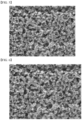
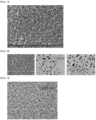
- the pore diameter may be a value measured for pores formed inside or on the surface of the porous polymer particles, and the measurement method thereof is not limited, but it can be measured by, for example, SEM.
- the porous polymer particles may have a particle surface pore diameter of 50 nm to 500 nm, or 50 nm to 400 nm, or 50 nm to 300 nm, or 50 nm to 250 nm, or 50 nm to 200 nm, or 100 nm to 400 nm, as measured by SEM.
- the pore diameter may refer to the distance between two points where a straight line passing through the center of gravity of the pore shape meets the boundary line of the pore for each pore having various shapes. That is, "the pores having a diameter of 50 nm to 500 nm" means that the pore diameter is a maximum of 500 nm or less and a minimum of 50 nm or more.
- the porous polymer particles provide a large surface area, and may be suitable for application as particles for protein purification used in the preparation of pharmaceuticals through processes such as ligand attachment.
- the pore diameter excessively decreases to less than 50 nm, a sufficient space for attaching the ligand and target protein is not secured, which may cause a problem of deterioration of purification performance.
- the pore diameter excessively increases to more than 500 nm, the strength of the particles may become weak, and the specific surface area of the particles may become small, which may cause a problem of deterioration of purification performance.
- a numerical value range of the upper limit of the epoxy content contained in 1 g of the porous polymer particles measured according to the following Equation 1 may be less than 5000 ⁇ mol, or less than 4000 ⁇ mol, or less than 3000 ⁇ mol, or less than 2700 ⁇ mol, or less than 2500 ⁇ mol, or less than 2000 ⁇ mol, or less than 1500 ⁇ mol, or less than 1300 ⁇ mol, or less than 1150 ⁇ mol, or less than 1000 ⁇ mol, and the numerical value range of the lower limit thereof may be 500 ⁇ mol or more, or 800 ⁇ mol or more.
- the numerical value range between the lower limit and the upper limit can also be satisfied.
- An example of the numerical value range between the lower limit and the upper limit may be 500 ⁇ mol or more and less than 5000 ⁇ mol.
- the epoxy content refers to the content of epoxy functional groups contained in the polymer matrix that is contained in the porous polymer particles, and can be measured through the titration method of the following Equation 1.
- Epoxy content ⁇ mol/g V 0 ⁇ V ⁇ C base ⁇ 1000 / W
- V is the amount (mL) of a base used for the titration of an experimental group sample containing porous polymer particles
- V 0 is the amount (mL) of a base used for the titration of a control sample using distilled water instead of the porous polymer particles in the experimental group sample
- C base is the concentration (M) of a base used for the titration
- W is the mass (g) of the porous polymer particles used for the titration.
- the experimental group sample containing porous polymer particles corresponds to a sample in which an indicator is added after the porous polymer particles are dissolved in a solvent
- specific types of solvent and indicator can be used without any particular limitation.
- an experimental group sample containing the porous polymer particles there may be mentioned a solution in which 0.1 g of porous polymer particles are mixed with 1 mL HCl/acetone solution (volume ratio of 1/40), and sonicated for 4 minutes, and an indicator solution (0.1% cresol red and 0.1% thymol blue are mixed in a 1:3 volume ratio, and then adjusted to pH 7.0 using NaOH in a concentration range of 1 to 1000 mM) is added to the resulting mixture.
- the control sample using distilled water instead of the porous polymer particles in the experimental group sample is identical to the experimental group sample, except that distilled water is dissolved in the solvent instead of porous polymer particles.
- examples of the base used for the titration are not particularly limited, and bases commonly used in the field of acid-base titration can be applied without limitation.
- an example of the base used for the titration may be NaOH.
- porous polymer particles of one embodiment have the advantage that pores of the appropriate range mentioned above can be stably formed in large quantities, as the epoxy content contained in 1 g of porous polymer particles measured by the following Equation 1 satisfies 500 ⁇ mol or more and less than 5000 ⁇ mol.
- the porous polymer particles may have a particle diameter of 10 ⁇ m to 150 ⁇ m, 30 ⁇ m to 50 ⁇ m, or 35 ⁇ m to 45 ⁇ m, as measured by an optical microscope.
- the inside of the column is filled with protein purification particles, and the material to be purified flows out.
- the size of the particles for protein purification is smaller than the above range, it is difficult for reactants such as protein particles to pass through the column.
- the size exceeds the above range, that is, if the size of the packing material present in the column is too large, a lot of vacant space (space between particles) is generated in the column and thus, the material to be purified may pass through the column without adhering to the particle surface, which may result in a decrease in purification efficiency.
- the particle diameter may refer to the distance between two points where a straight line passing through the center of gravity of the particle meets the boundary line of the particle for each particle having various shapes. That is, "the porous polymer particles having a diameter of 10 ⁇ m to 150 ⁇ m " means that the diameter of the porous polymer particles is a maximum of 150 ⁇ m or less and a minimum of 10 ⁇ m or more.
- porous polymer particles may have a variation coefficient of particle diameter of 20% or less, or 15% or less, or 10% or less, or 7% or less, or 6.8% or less, or 0.1% or more, or 0.1% to 20%, or 0.1% to 15%, or 0.1% to 10%, or 0.1% to 7%, or 0.1% to 6.8%, as measured by an optical microscope.
- the porous polymer particles enable preparation of particles of uniform size, thereby maximizing particle performance.
- the porous polymer particles may be spherical particles.
- Spherical shape generally means having a shape close to a sphere, and can be confirmed with the naked eye, and for example, it may mean that the length of the longest dimension in the shape of a particle divided by the average diameter is about 0.80 or more. If the particles have a spherical shape, a large surface area can be secured, and protein purification performance can be improved.
- the porous polymer particles may be particles for protein purification.
- the porous polymer particles may be a polymerization reaction product of a dispersive phase solution and a continuous phase aqueous solution, wherein the dispersive phase solution contains one to two types of pore inducing material, a monomer, and a crosslinking agent.
- the porous polymer particles can be produced through the polymerization.
- the polymerization may be carried out at the interface between the continuous phase and the dispersive phase (i.e., the surface of the dispersive phase droplets) and/or inside the dispersive phase, which is formed after mixing the dispersive phase solution and the continuous phase aqueous solution.
- examples of the method for producing the porous polymer particles of one embodiment is not particularly limited, but as an example, a method for preparing porous polymer particles can be used, which method includes mixing a dispersive phase solution and a continuous phase aqueous solution, wherein the dispersive phase solution contains one or two pore inducing materials, a monomer, and a crosslinking agent, and then subjecting the mixture to a polymerization reaction.
- the dispersive phase solution refers to a composition that can form a dispersive phase (or droplets) after being mixed with a continuous phase aqueous solution.
- the continuous phase aqueous solution refers to a composition that can form a continuous phase after being mixed with a dispersive phase solution.
- the continuous phase may be an aqueous phase.
- the aqueous solution that can be used as the continuous phase may be, but is not limited to, a solution containing water and an ionic surfactant or a non-ionic surfactant.
- the ionic surfactant may be sodium dodecyl sulfate(SDS)
- the nonionic surfactant may be Tween 20, Tween 40, Tween 60, Tween 80, Triton X-100, polyvinyl alcohol(PVA), polyethylene glycol(PEG), and the like.
- a 0.5% SDS solution may be used as the continuous phase.
- the water may be distilled water or deionized water.
- the dispersive phase is not particularly limited, but may be a material that is insoluble in the continuous phase, and can be polymerized through a crosslinking reaction thereafter.
- the dispersive phase solution may contain one to two types of pore inducing materials, a monomer, and a crosslinking agent.
- the monomer is not particularly limited, but for example, the monomer is a monomer containing an epoxy group, and glycidyl methacrylate, glycidyl acrylate, and glycidyl acrylamide can be used alone, or in combination with a monomer not containing an epoxy group.
- the monomer not containing an epoxy group includes methyl methacrylate, methyl acrylate, ethyl acrylate, ethyl hexyl acrylate, butyl acrylate, hydroxyethyl methacrylate, trimethylolpropane triacrylate, N-isopropylacrylamide, N-butyl acrylate, and the like.
- the content of the monomer may be 10 wt.% to 60 wt.%, or 10 wt.% to 50 wt.%, or 10 wt.% to 40 wt.%, or 17 wt.% to 33 wt.%, based on 100 wt.% of the dispersive phase solution.
- the epoxy content contained in 1g of the porous polymer particles measured by Equation 1 increases excessively to 5000 ⁇ mol or more, the formation of a polymer matrix by the monomer (or crosslinking agent) is not sufficiently achieved due to the epoxy-containing monomer having low affinity for pore inducing materials, whereby as the pore diameter increases excessively, the strength of the particles become weaker, and the specific surface area of the particles become smaller, which may cause a problem of deterioration of purification performance.
- the content of the monomer in the dispersive phase solution excessively decreases to less than 10 wt.% or the like based on 100 wt.% of the dispersive phase solution
- the epoxy content contained in 1 g of the porous polymer particles measured by Equation 1 decreases excessively to less than 500 ⁇ mol or the like, and the formation of a polymer matrix by the monomer (or crosslinking agent) other than an epoxy-containing monomer having low affinity for a pore inducing material is excessively achieved, whereby as the pore diameter excessively decreases, a sufficient space attaching the ligand and target protein is not secured, which may cause a problem of deterioration of purification performance.
- the type of the crosslinking agent is not particularly limited, but for example, multifunctional (meth)acrylate such as ethylene glycol dimethyl (meth)acrylate, ethylene glycol di(meth)acrylate, trimethylolpropane tri(meth)acrylate, pentaerythritol tri(meth)acrylate or dipentaerythritol hexa(meth)acrylate may be used. Alternatively, at least one component of the above-listed crosslinking agents may be used together. Considering the formation of a hydrophilic surface of the particles, and the like, it may be preferable to use ethylene glycol di(meth)acrylate.
- the content of the crosslinking agent in the dispersive phase solution may be 10 wt.% to 60 wt.%, or 10 wt.% to 50 wt.%, or 10 wt.% to 40 wt.%, or 17 wt.% to 37 wt.%, based on 100 wt.% of the dispersive phase solution.
- the dispersive phase may be a mixed solution of glycidyl methacrylate (GMA) and ethylene glycol dimethacrylate (EGDMA) in a mass ratio of 5:1 to 1:5, 4:1 to 1:4, or 3:1 to 1:3, or 2:1 to 1:2.
- GMA glycidyl methacrylate
- EGDMA ethylene glycol dimethacrylate
- the content ratio of the crosslinking agent to 1 part by weight of the monomer may be 0.1 parts by weight to 10 parts by weight, or 0.5 parts by weight to 2 parts by weight.
- the pore inducing material may include one type of single compound or a mixture of two types.
- the content of one to two types of pore inducing materials may be 10 wt.% to 80 wt.%, or 20 wt.% to 80 wt.%, or 40 wt.% to 80 wt.%, or 45 wt.% to 80 wt.%, or 44 wt.% to 55 wt.%, based on 100 wt.% of the dispersive phase solution.
- the average diameter of pores in the porous polymer particles is excessively reduced, which makes it difficult to secure a sufficient space for binding a protein.
- the content of the pore inducing material excessively increases to more than 80 wt.%, the average diameter of pores in the porous polymer particles increases excessively, which makes it difficult to secure the strength of the particles.
- the one type of the pore inducing material is characterized in that the viscosity measured at 20°C is 0.5 cP to 15 cP, or 0.8 cP to 15 cP, or 0.8 cP to 10 cP, or 0.8 cP to 5 cP, or 0.8 cP to 1.5 cP, or 0.8 cP to 1.2 cP.
- the one type of single pore inducing material has a low viscosity, it can pass through the step emulsification microfluidic device at a high speed, thereby increasing process efficiency.
- Examples of the method of measuring the viscosity is not particularly limited, and conventional viscosity measurement methods can be applied without limitation.
- the viscosity can be measured at a temperature of 20 to 25°C and a fixed RPM of 200 after mounting a spindle No. 61 for low viscosity measurement onto a Brookfield DV2T viscometer.
- the present invention is not necessarily limited thereto, and generally, if the RPM value is the same and the viscosity range of the sample (e.g., solution) to be measured is about 10 to 1000 cp, the viscosity can be measured using another measuring device.
- the one type of pore inducing material may include one type of compound selected from the group consisting of an aromatic hydrocarbon-based compound, a ketone-based compound and an acetate-based compound. That is, the one type of pore inducing material may include one type of aromatic hydrocarbon compound, one type of ketone type compound, or one type of acetate type compound.
- the aromatic hydrocarbon-based compound may include an aromatic hydrocarbon compound, or a derivative compound in which some of the hydrogen atoms contained in the aromatic hydrocarbon compound are substituted with other functional groups.
- the aromatic hydrocarbon-based compound may include an aromatic hydrocarbon compound having 6 to 20 carbon atoms which is substituted by one or more alkyl groups having 1 to 10 carbon atoms.
- the alkyl group having 1 to 10 carbon atoms may be substituted with at least 1 or more, or 1 to 6, or 1 to 5, or 1 to 4.
- Examples of the aromatic hydrocarbon-based compound are not particularly limited, but may include mesitylene as an example.
- the ketone-based compound may include a ketone compound, or a derivative compound in which some of the hydrogen atoms contained in the ketone compound are substituted with other functional groups.
- the ketone-based compound may include an aliphatic ketone compound having 5 to 20 carbon atoms. Examples of the ketone-based compound are not particularly limited, but may include diisobutyl ketone as an example.
- the acetate-based compound may include an acetate compound, or a derivative compound in which some of the hydrogen atoms contained in the acetate compound are substituted with other functional groups.
- the acetate-based compound may include an aliphatic acetate compound having 6 to 20 carbon atoms.
- Examples of the acetate-based compound are not particularly limited, but may include amyl acetate or hexyl acetate as an example.
- the pore inducing material may include a mixture of an alcohol-based compound and an aromatic hydrocarbon-based compound.
- the content of the pore-inducing material including a mixture of an alcohol-based compound and an aromatic hydrocarbon-based compound may be 10 wt.% to 80 wt.%. If the content of the pore-inducing material excessively decreases to less than 10 wt.%, the average diameter of pores in the porous polymer particles excessively decreases, which makes it difficult to secure a sufficient space for binding a protein. On the other hand, if the content of the pore-inducing material excessively increases to more than 80 wt.%, the average diameter of pores in the porous polymer particles increases excessively, which makes it difficult to secure the strength of the particles.
- the content of the aromatic hydrocarbon-based compound may be 10 parts by weight to 1000 parts by weight based on 100 parts by weight of the alcohol-based compound.
- the pore size and particle size suitable for application as particles for protein purification can be satisfied.
- the alcohol-based compound may have 11 or less carbon atoms, or 10 or less carbon atoms, or 1 or more carbon atoms, or 1 to 11 carbon atoms, or 1 to 10 carbon atoms.
- the carbon number of the alcohol-based compound increases excessively to more than 11 or the like, phase separation occurs too quickly within the dispersive phase during particle polymerization, which can form core-shell shaped particles rather than porous particles.
- a ligand to which the protein to be purified can be attached is attached to the particle surface, but core-shell particles have fewer sites to which ligands can attach as compared to porous particles, thereby being unsuitable for protein purification.
- the alcohol-based compound may include an aliphatic alcohol having 1 to 11 carbon atoms.
- the aliphatic alcohol having 1 to 11 carbon atoms may be substituted or unsubstituted, and when substituted, examples of the substituents are as described above.
- aliphatic alcohol having 1 to 11 carbon atoms are not particularly limited, but may include, for example, one or more compounds selected from the group consisting of 1-decanol, 1-butanol, 1-pentanol, 1-hexanol, 1-heptanol, 1-octanol, and 1-nonanol.
- the aromatic hydrocarbon-based compound may have 11 or less carbon atoms, or 10 or less carbon atoms, or 6 or more carbon atoms, or 6 to 11 carbon atoms, or 6 to 10 carbon atoms.
- an aliphatic hydrocarbon-based compound is used instead of the aromatic hydrocarbon-based compound, phase separation occurs too quickly within the dispersed phase during particle polymerization, resulting in the formation of core-shell particles instead of porous particles.
- a ligand to which the protein to be purified can be attached is attached to the particle surface, but core-shell particles have fewer sites to which ligands can attach as compared to porous particles, thereby being unsuitable for protein purification.
- the aromatic hydrocarbon-based compound may include an aromatic hydrocarbon compound having 6 to 8 carbon atoms which is substituted with an alkyl group having 1 to 3 carbon atoms.
- the aromatic hydrocarbon-based compound may include toluene.
- the dispersive phase solution may include 10 to 1000 parts by weight, or 60 to 500 parts by weight of the pore inducing material based on 100 parts by weight of the monomer.
- the lower limit of the content of the pore-inducing material may be, for example, 10 parts by weight or more, 60 parts by weight or more, 200 parts by weight or more, 250 parts by weight or more, 300 parts by weight or more, 350 parts by weight or more, 400 parts by weight or more, 450 parts by weight or more, or 500 parts by weight or more based on 100 parts by weight of the monomer.
- the upper limit of the content of the pore inducing material may be, for example, 1000 parts by weight or less, 550 parts by weight or less, 500 parts by weight or less, 450 parts by weight or less, 400 parts by weight or less, 350 parts by weight or less, 300 parts by weight or less, 250 parts by weight or less, or 200 parts by weight or less, based on 100 parts by weight of the monomer.
- the above-mentioned content it is advantageous for stably forming an emulsion and securing particle strength and morphological features through crosslinking at a desired level.
- the dispersive phase solution may further include an initiator.
- the type of the initiator is not particularly limited, such as a photopolymerization initiator or a thermal polymerization initiator, as long as the initiator does not interfere with securing particle properties by the preparation method of the present invention.
- Various examples widely used in the field of conventional polymer particle production can be applied without limitation.
- initiators such as a ketone initiator, an organic peroxide initiator, an azo initiator, and the like can be used.
- compounds such as 2,2-dimethoxy-2-phenylacetophenone, 2-hydroxy-4'-(2-hydroxyethoxy)-2-methylpropiophenone, 1-hydroxycyclohexyl phenyl ketone, benzoyl peroxide, di-t-amyl peroxide, t-butyl peroxybenzoate, 2,5-dimethyl-2,5 - di-(t-butylperoxy)hexane, 2,5-dimethyl-2,5-di-(t-butylperoxy)hexyne-3 or di-cumyl peroxide, and mixtures thereof may be used, but are not limited thereto.
- the content of the initiator is not particularly limited.
- the initiator can be used by an appropriate amount at a level that does not interfere with securing the desired particle properties.
- the initiator may be contained in an amount of 0.01 parts by weight or more, specifically 0.05 parts by weight or more, 0.10 parts by weight or more, 0.15 parts by weight or more, or 0.20 parts by weight or more based on 100 parts by weight of the dispersive solution.
- the upper limit of the content of the initiator may be, for example, 5.0 parts by weight or less, specifically, 4.5 parts by weight or less, 4.0 parts by weight or less, 3.5 parts by weight or less, 3.0 parts by weight or less, 2.5 parts by weight or less, 2.0 parts by weight or less, 1.5 parts by weight or less, or 1.0 parts by weight or less.
- the polymerization can be carried out under conditions that do not interfere with securing particle properties.
- the temperature and stirring speed at which polymerization is performed can be appropriately controlled by a person skilled in the art.
- the porous polymer particles may be a polymerization reaction product of droplets obtained by passing a dispersive phase solution and a continuous phase aqueous solution through a step emulsification microfluidic device, wherein the dispersive phase solution contains one to two types of pore-inducing materials, a monomer, and a crosslinking agent.
- the dispersive phase solution contains one to two types of pore-inducing materials, a monomer, and a crosslinking agent.
- O/W droplets can be produced into uniform sizes by using the step emulsification microfluidic device.
- the detailed descriptions concerning the dispersive phase solution containing the pore-inducing material, monomer, and crosslinking agent, and the continuous phase aqueous solution are the same as those described above.
- the step emulsification microfluidic device may include a first injection port for injecting the dispersive phase solution; a second injection port for injecting a continuous phase solution; a dispersive phase flow path through which the dispersive phase solution flows; a continuous phase flow path through which the continuous phase solution flows; and a microchannel through which the dispersive phase solution flows out to the continuous phase flow path to form droplets.
- the viscosity of the one type of single pore-inducing material is low and thus, when passing through the step emulsification microfluidic device to obtain droplets, the maximum droplet generation speed becomes high and they do not stick to the inside of the step emulsification microfluidic device, so that droplet generation is smooth even during repeatedly use, thereby improving process efficiency.
- the viscosity of the pore-inducing material containing the mixture of the alcohol-based compound and the aromatic hydrocarbon-based compound is low, and thus, when passing through the step emulsification microfluidic device to obtain droplets, the maximum droplet generation rate becomes high and they do not stick to the inside of the step emulsification microfluidic device, whereby droplet generation is smooth even during repeated use, thus improving process efficiency.
- the speed of the dispersive phase flowing through the dispersive phase flow path is not limited thereto, but may be 1 ⁇ l /min to 10 mf/min.
- the speed of the continuous phase flowing through the continuous phase flow path is not limited thereto, but may be 0.1 ⁇ l/min to 100 mf/min.
- the porous polymer particles can be obtained by a preparation method in which the step of passing a dispersive phase solution containing one to two types of pore inducing materials, a monomer, and a crosslinking agent and a continuous phase aqueous solution through a step emulsification microfluidic device includes injecting the dispersive phase solution into a first injection port; injecting the continuous phase solution into a second injection port; and allowing the dispersive phase flowing in the dispersive phase flow path to flow out to the continuous phase flow path through a microchannel to form droplets.
- the step emulsification microfluidic device is manufactured by adhering a silicon substrate 1 having a set emulsification pattern 10 formed thereon and a glass substrate 2 having first and second injection ports 52 and 54 and discharge ports 56 formed thereon to each other, and thermally oxidizing a silicon substrate 1 and a glass substrate 2 that have been adhered to each other.
- the dispersive phase solution is injected into the dispersive phase supply unit 22 of the dispersive phase channel 20 through a first injection port 52 (S210).
- a monomer, a crosslinking agent, an initiators, and the like may be mixed into the dispersive phase depending on the purpose.
- the dispersive phase may be injected into the first injection port 52 through a syringe pump, but is not limited thereto.
- the dispersive phase injected into the dispersive phase supply unit 22 via a first injection port 52 flows through the dispersive phase flow path 24.
- the speed of the dispersive phase is not limited thereto, but may be 1 ⁇ l /min to 10 mf/min.
- the dispersive phase flowing through the dispersive phase flow path 24 flows into the continuous phase flow path 34 via a plurality of microchannels 40.
- the continuous phase is injected into the continuous phase supply unit 32 of the continuous phase channel 30 via the second injection port 54 (S220).
- the continuous phase may be injected into the second injection port 54 via a syringe pump, but is not limited thereto.
- the continuous phase injected into the continuous phase supply unit 32 via the second injection port 54 flows through the continuous phase flow path 34.
- the speed of the continuous phase is not limited thereto, but may be 0.1 ⁇ l /min to 100 mf/min.
- the dispersive phase flowing into the continuous phase flow path 34 via the plurality of microchannels 40 meets the continuous phase flowing through the continuous phase flow path 34, and penetrates into the continuous phase to form O/W droplets (S230).
- the O/W droplets flow along the continuous phase flow path 34 to the discharge part 36 together with the continuous phase, and are discharged to the outside of the emulsification device via the discharge port 56.
- the polymerization in the step of polymerizing the droplets obtained from the step emulsification microfluidic device, can be either photopolymerization or thermal polymerization.
- a photopolymerization initiator or a thermal polymerization initiator are added to the above-mentioned dispersive phase, the polymerization reaction can proceed.
- Specific examples of the photopolymerization initiator or thermal polymerization initiator, or specific conditions for photopolymerization or thermal polymerization are not particularly limited, and various examples and conditions widely used in the field of conventional polymer particle production can be applied without limitation.
- a column for protein purification comprising the porous polymer particles of one embodiment.
- the details concerning the porous polymer particles include all those described above in one embodiment.
- Examples of the protein are not particularly limited, and for example, antibody drugs can be used.
- the porous polymer particles can be applied as beads used in the column for protein purification, and regarding other compositions and structures of the column for protein purification, various compositions and structures widely known in the field of existing purification columns can be applied without limitation.
- porous polymer particles that are prepared by a method with high production efficiency and have a particle size and pore size suitable for realizing high protein purification performance in a column for protein purification, and a column for protein purification using the same can be provided.
- glycidyl methacrylate (GMA) as a monomer, ethylene glycol dimethacrylate (EGDMA) as a crosslinking agent, and a pore inducing material (Porogen) were stirred in a vial.
- Irgacure 651 as a photoinitiator was further added to the vial at 1 wt.% based on the weight of the stirred solution, and the mixture was stirred at room temperature for about 5 minutes to prepare a dispersive phase solution.
- SDS sodium dodecyl sulfate
- a connector was connected to a step emulsification microfluidic device, wherein a dispersive phase was injected into a first injection port 52, a continuous phase into a second injection port 54 using a syringe pump, the dispersive phase flowed out to the dispersive phase flow path 24 at a rate of 20 ⁇ l /min, and the continuous phase flowed out to the continuous phase flow path 34 at a rate of 80 ⁇ l /min.
- microdroplets with a diameter of about 37 ⁇ m as measured by an optical microscope were generated (see FIGS. 10 and 11 below).
- the generated droplets were collected in a 3% PVA (molecular weight 85,000 to 125,000) aqueous solution, shaken so that the droplets were evenly dispersed in the solution, and then photopolymerized using a spot UV curing machine to produce porous polymer particles.
- PVA molecular weight 85,000 to 125,000
- a dispersive phase solution was prepared in the same manner as in the Examples, except that glycidyl methacrylate (GMA) as a monomer, ethylene glycol dimethacrylate (EGDMA) as a crosslinking agent, and a pore inducing material (Porogen) were used similar to the material and contents (based on content: 100 wt.% of dispersive phase solution) listed in Table 1 below.
- GMA glycidyl methacrylate
- EGDMA ethylene glycol dimethacrylate
- Porogen pore inducing material
- a continuous phase solution was prepared in the same manner as in the Examples.
- Porous polymer particles were prepared in the same manner as in the Examples, except that the dispersive phase obtained in the Comparative Example was used.
- glycidyl methacrylate(GMA), ethylene glycol dimethacrylate (EGDMA) and initiator were dissolved in the pore inducing material solution depending on the ratio of the total volume of glycidyl methacrylate(GMA), ethylene glycol dimethacrylate(EGDMA) and initiator to the volume of pore inducing material of 1:0.5, and stirred to form a transparent homogeneous mixed solution, thereby preparing the oil phase.
- the pore inducing material solution was prepared by mixing n-hexane and dodecanol in a volume ratio of 1:1.
- polyvinyl alcohol (PVA) with a molecular weight of 1800 as a stabilizer and sodium dodecyl sulfate (SDS) as a surfactant were dissolved in deionized water to form a colorless and transparent homogeneous mixed solution, thereby preparing an aqueous phase with a stabilizer concentration of 0.1% and a surfactant concentration of 3.0%.
- PVA polyvinyl alcohol
- SDS sodium dodecyl sulfate
- a dispersive phase solution was prepared in the same manner as in Example 5.
- a continuous phase solution was prepared in the same manner as in the Example 5.
- Porous polymer particles were prepared using a conventional batch suspension polymerization method without using the step emulsification microfluidic device.
- Epoxy content contained in 1g of porous polymer particles was calculated using the following Equation 1.
- Epoxy content ⁇ mol/g V 0 ⁇ V ⁇ C NaOH ⁇ 1000 / W wherein in Equation 1,
Landscapes
- Chemical & Material Sciences (AREA)
- Chemical Kinetics & Catalysis (AREA)
- Organic Chemistry (AREA)
- Analytical Chemistry (AREA)
- Medicinal Chemistry (AREA)
- Health & Medical Sciences (AREA)
- Polymers & Plastics (AREA)
- Engineering & Computer Science (AREA)
- Nanotechnology (AREA)
- Thermal Sciences (AREA)
- Physics & Mathematics (AREA)
- Materials Engineering (AREA)
- Addition Polymer Or Copolymer, Post-Treatments, Or Chemical Modifications (AREA)
- Solid-Sorbent Or Filter-Aiding Compositions (AREA)
Abstract
Description
- This application claims priority benefit of
Korean Patent Application No. 10-2022-0117461 filed on September 16, 2022 Korean Patent Application No. 10-2023-0121985 filed on September 13, 2023 - The present invention relates to porous polymer particles and a column for protein purification using the same.
- As the fields of biopharmaceuticals and regenerative medicine expand, the need for systems that can efficiently separate or purify cells, tissues, microorganisms, and the like is increasing.
- In a conventional technique, a resin for purification made from hydrophilic agarose was mainly used, but such a resin is swollen by a buffer during the purification process, which exhibits a problem that the strength decreases, and as a result, the purification speed and efficiency decrease.
- On the other hand, when a synthetic polymer is used as a resin for protein purification, it has the advantage of providing higher strength than agarose. However, when a synthetic polymer exhibits low sphericity and large particle size deviation, there is a problem that differences in the movement path of the separated products (or purified products) occur, thereby lowering the separation efficiency. Further, another problem is that proteins are non-specifically adsorbed due to the surface properties of synthetic polymers, resulting in a decrease in purification efficiency.
- Therefore, a technology for producing polymer particles suitable for use as resin for protein purification is being actively researched. In recent years, in order to produce polymer particles, research is being progressing on emulsification devices that can form fine emulsion droplets. Fine emulsion droplets are formed, for example, by using two types of fluids that have low affinity and thus do not mix with each other, such as water and oil, and dispersing one type of fluid within the other type of fluid. Typical emulsions include Water in Oil (W/O) emulsion in which water droplets are dispersed in oil, and Oil in Water (O/W) emulsion in which oil is dispersed in water.
- An emulsification apparatus for generating these emulsion droplets is fabricated by adhering two materials to each other, wherein one of the materials has a flow path of a predetermined shape formed thereon, and the other material has an injection port for injecting oil and water into the oil path.
- However, in the case of conventionally prepared polymer particles, the pore forming material injected for forming pores has a high viscosity, thereby making it difficult to reuse due to adsorption in the emulsification device, and reducing the production rate.
- It is an object of the present invention to provide porous polymer particles that are prepared by a method with high preparation efficiency, and have particle and pore sizes suitable for achieving high protein purification performance in columns for protein purification.
- It is another object of the present invention to provide a column for protein purification comprising the porous polymer particles.
- In order to achieve the above object, provided herein is porous polymer particles comprising: a polymer matrix; and a pore dispersed in the polymer matrix and having a diameter of 50 nm to 500 nm, wherein the epoxy content contained in 1g of porous polymer particles measured by the following Equation 1 is 500 µmol or more and less than 5000 µmol.

- Also provided herein is a column for protein purification comprising the porous polymer particles.
- Now, porous polymer particles and a column for protein purification using the same according to specific embodiments of the invention will be described in more detail.
- Unless explicitly stated herein, the technical terms used herein are for the purpose of describing specific embodiments only and is not intended to limit the scope of the invention.
- The singular forms "a," "an" and "the" used herein are intended to include plural forms, unless the context clearly indicates otherwise.
- It should be understood that the terms "comprise," "include", "have", etc. are used herein to specify the presence of stated feature, region, integer, step, action, element and/or component, but do not preclude the presence or addition of one or more other feature, region, integer, step, action, element, component and/or group.
- Further, the terms including ordinal numbers such as "a first", "a second", etc. are used herein only for the purpose of distinguishing one component from another component, and are not limited by the ordinal numbers. For instance, a first component may be referred to as a second component, or similarly, the second component may be referred to as the first component, without departing from the scope of the present invention.
- As used herein, the term "porous particles" may refer to particles which have pores inside and/or on the surface of the particles.
- The (meth)acrylate as used herein means including both acrylate and methacrylate.
- Unless otherwise specifically defined or explained herein, the temperature at which the preparation process is performed (or each preparation step) or the temperature at which the numerical features of the produced particles are calculated or measured may be room temperature. Specifically, as used herein, the "room temperature" refers to a temperature in a state where the temperature is not particularly increased or decreased, for example, a temperature in the range of 15°C to 30°C, or 20°C to 30°C.
- In the present invention, examples of the substituent groups are described below, but is not limited thereto.
- As used herein, the term "substituted" means that another functional group bonds instead of a hydrogen atom in the compound, and a position to be substituted is not limited as long as it is a position at which the hydrogen atom is substituted, namely, a position at which it is substitutable with the substituent. When two or more substituents are substituted, the two or more substituents may be identical to or different from each other.
- As used herein, the term "substituted or unsubstituted" means being unsubstituted or substituted with one or more substituents selected from the group consisting of deuterium; a halogen group; a cyano group; a nitro group; a hydroxy group; a carbonyl group; an ester group; an imide group; an amide group; a primary amino group; a carboxy group; a sulfonic acid group; a sulfonamide group; a phosphine oxide group; an alkoxy group; an aryloxy group; an alkylthioxy group; an arylthioxy group; an alkylsulfoxy group; an arylsulfoxy group; a silyl group; a boron group; an alkyl group; a cycloalkyl group; an alkenyl group; an aryl group; an aralkyl group; an aralkenyl group; an alkylaryl group; an alkoxysilylalkyl group; an arylphosphine group; or a heterocyclic group containing at least one of N, O and S atoms, or being unsubstituted or substituted with a substituent to which two or more substituents are connected among the substituents exemplified above. For example, "the substituent to which two or more substituents are connected" may be a biphenyl group. Namely, the biphenyl group may also be an aryl group, and may be interpreted as a substituent to which two phenyl groups are connected.
- As used herein, the aromatic is a characteristic that satisfies Huckel's rule, and a compound can be defined as aromatic if it satisfy all of the following three conditions according to Huckel's rule.
- 1) There must exist 4n+2 electrons which are fully conjugated by vacant p-orbital, unsaturated bond, unpaired electron pair, and so on.
- 2) 4n+2 electrons must constitute a planar isomer and form a ring structure.
- 3) All atoms in the ring must be able to participate in the conjugation.
- As used herein, the aliphatic refers to the remaining organic compounds excluding the aromatics mentioned above.
- As used herein, the alkyl group is a monovalent functional group derived from an alkane, and may be linear or branched, and the carbon number of the linear alkyl group is not particularly limited, but preferably 1 to 20. Also, the carbon number of the branched alkyl group is 3 to 20. Specific examples of the alkyl group may include methyl, ethyl, propyl, n-propyl, isopropyl, butyl, n-butyl, isobutyl, tert-butyl, sec-butyl, 1-methyl-butyl, 1-ethyl-butyl, pentyl, n-pentyl, isopentyl, neopentyl, tert-pentyl, hexyl, n-hexyl, 1-methylpentyl, 2-methylpentyl, 4-methyl-2-pentyl, 3,3-dimethylbutyl, 2-ethylbutyl, heptyl, n-heptyl, 1-methylhexyl, octyl, n-octyl, tert-octyl, 1-methylheptyl, 2-ethylhexyl, 2-propylpentyl, n-nonyl, 2,2-dimethylheptyl, 1-ethyl-propyl, 1,1-dimethylpropyl, isohexyl, 4-methylhexyl, 5-methylhexyl, 2,6-dimethylheptan-4-yl, and the like, but are not limited thereto. The alkyl group may be substituted or unsubstituted, and if substituted, examples of the substituent are as described above.
- Below, the present invention will be described in more detail.
- According to one embodiment of the present invention, there can be provided porous polymer particles comprising: a polymer matrix; and a pore dispersed in the polymer matrix and having a diameter of 50 nm to 500 nm, wherein the epoxy content contained in 1g of porous polymer particles measured by the following Equation 1 is 500 µmol or more and less than 5000 µmol.

- The present inventors have found through experiments that the porous polymer particles of one embodiment is adjusted to have the diameter of pores distributed in the particles of 50 nm to 500 nm, thus providing a large surface area, and can be suitable for application as particles for protein purification used in the production of pharmaceuticals through processes such as ligand attachment, and completed the invention.
- Particularly, as the pores are derived from one type of single pore inducing material as will be described later, the particle production process can be simplified. As the one type of single pore inducing material has a low viscosity, it can pass through the step emulsification microfluidic device at high speed, thereby increasing process efficiency.
- Further, one type of single pore inducing material that forms the pores has appropriate miscibility with a monomer, a crosslinking agent and a polymer that form the polymer matrix, and thereby can stably form pores having the above-mentioned appropriate size range during polymerization of the porous polymer particles.
- On the other hand, the inventors has found through experiments that it is possible to achieve an excellent protein purification efficiency equivalent to or higher than that of the conventional case as compared to the case of mixing two or more types of pore inducing materials as in the past, and completed the invention.
- Further, in case where the pores are derived from a pore inducing material containing a mixture of an alcohol-based compound and an aromatic hydrocarbon-based compound, the pores introduce completely different pore features than when only one type of alcohol compound or one type of aromatic hydrocarbon compound is used as in the past, thereby achieving optimal performance for application as particles for protein purification used in the production of pharmaceuticals through processes such as ligand attachment.
- Further, the porous polymer particles of one embodiment are prepared through a step emulsification microfluidic device, which enable preparation of particles of uniform size, thereby maximizing particle performance.
- Specifically, the porous polymer particles of one embodiment may include a polymer matrix. The matrix acts as a substrate, a matrix, or a binder for the porous polymer particles, and the pores may be dispersed inside or outside the matrix.
- The polymer matrix may include repeating units derived from monomers. The monomer-derived repeating unit is a repeating unit contained in a polymer formed by polymerization of a monomer compound. The monomer is not particularly limited, but the monomer is, for example, a monomer containing an epoxy group, wherein glycidyl methacrylate, glycidyl acrylate, and glycidyl acrylamide can be used alone, or in combination with a monomer not containing an epoxy group.
- The monomer not containing an epoxy group includes methyl methacrylate, methyl acrylate, ethyl acrylate, ethyl hexyl acrylate, butyl acrylate, hydroxyethyl methacrylate, trimethylolpropane triacrylate, N-isopropylacrylamide, N-butyl acrylate, and the like.
- The polymer matrix may further include repeating units derived from a crosslinking agent. The type of the crosslinking agent is not particularly limited, but for example, multifunctional (meth)acrylate such as ethylene glycol dimethyl (meth)acrylate, ethylene glycol di(meth)acrylate, trimethylolpropane tri(meth)acrylate, pentaerythritol tri(meth)acrylate or dipentaerythritol hexa(meth)acrylate may be used. Alternatively, at least one component of the above-listed crosslinking agents may be used together. Considering the formation of a hydrophilic surface of the particles, and the like, it may be preferable to use ethylene glycol di(meth)acrylate.
- On the other hand, the porous polymer particles of one embodiment may include pores. The pores may be induced from one to two types of pore inducing materials described below. The pore inducing material (Porogen) may be contained within droplets that are particle precursors used in the process of preparing porous polymer particles, and may be converted into pores during the pore formation process that forms porous polymer particles from droplets.
- Further, when the pores are derived from a pore inducing material containing a mixture of an alcohol-based compound and an aromatic hydrocarbon-based compound, the pores introduce completely different pore features than when only one type of alcohol compound or one type of aromatic hydrocarbon compound is used as in the past, thereby achieving optimal performance for application as particles for protein purification used in the preparation of pharmaceuticals through processes such as ligand attachment.
- The pores may be dispersed in the polymer matrix. The pores may be distributed inside or outside the matrix.
- The pores may have a diameter of 50 nm to 500 nm, or 50 nm to 400 nm, or 50 nm to 300 nm, or 50 nm to 250 nm, or 50 nm to 200 nm, or 100 nm to 400 nm. Particularly, the pore diameter may be a value measured for pores formed inside or on the surface of the porous polymer particles, and the measurement method thereof is not limited, but it can be measured by, for example, SEM.
- Specifically, the porous polymer particles may have a particle surface pore diameter of 50 nm to 500 nm, or 50 nm to 400 nm, or 50 nm to 300 nm, or 50 nm to 250 nm, or 50 nm to 200 nm, or 100 nm to 400 nm, as measured by SEM.
- The pore diameter may refer to the distance between two points where a straight line passing through the center of gravity of the pore shape meets the boundary line of the pore for each pore having various shapes. That is, "the pores having a diameter of 50 nm to 500 nm" means that the pore diameter is a maximum of 500 nm or less and a minimum of 50 nm or more.
- Therefore, the porous polymer particles provide a large surface area, and may be suitable for application as particles for protein purification used in the preparation of pharmaceuticals through processes such as ligand attachment. On the other hand, if the pore diameter excessively decreases to less than 50 nm, a sufficient space for attaching the ligand and target protein is not secured, which may cause a problem of deterioration of purification performance. Further, if the pore diameter excessively increases to more than 500 nm, the strength of the particles may become weak, and the specific surface area of the particles may become small, which may cause a problem of deterioration of purification performance.
- On the other hand, in the porous polymer particles of one embodiment, a numerical value range of the upper limit of the epoxy content contained in 1 g of the porous polymer particles measured according to the following Equation 1 may be less than 5000 µmol, or less than 4000 µmol, or less than 3000 µmol, or less than 2700 µmol, or less than 2500 µmol, or less than 2000 µmol, or less than 1500 µmol, or less than 1300 µmol, or less than 1150 µmol, or less than 1000 µmol, and the numerical value range of the lower limit thereof may be 500 µmol or more, or 800 µmol or more. By combining the numerical value range of the upper limit and the numerical value range of the lower limit, the numerical value range between the lower limit and the upper limit can also be satisfied. An example of the numerical value range between the lower limit and the upper limit may be 500 µmol or more and less than 5000 µmol.
- The epoxy content refers to the content of epoxy functional groups contained in the polymer matrix that is contained in the porous polymer particles, and can be measured through the titration method of the following Equation 1.

- In the Equation 1, the experimental group sample containing porous polymer particles corresponds to a sample in which an indicator is added after the porous polymer particles are dissolved in a solvent, and specific types of solvent and indicator can be used without any particular limitation. However, when explanation is made by way of an example of an experimental group sample containing the porous polymer particles, there may be mentioned a solution in which 0.1 g of porous polymer particles are mixed with 1 mL HCl/acetone solution (volume ratio of 1/40), and sonicated for 4 minutes, and an indicator solution (0.1% cresol red and 0.1% thymol blue are mixed in a 1:3 volume ratio, and then adjusted to pH 7.0 using NaOH in a concentration range of 1 to 1000 mM) is added to the resulting mixture.
- In the Equation 1, the control sample using distilled water instead of the porous polymer particles in the experimental group sample is identical to the experimental group sample, except that distilled water is dissolved in the solvent instead of porous polymer particles. When explanation is made by way of an example of the control sample, there may be mentioned a solution in which 0.1 g of distilled water is mixed with 1 mL HCl/acetone solution (volume ratio 1/40), and sonicated for 4 minutes, and an indicator solution (0.1% cresol red and 0.1% thymol blue are mixed at a volume ratio of 1:3 and adjusted to pH 7.0 using NaOH in a concentration range of 1 to 1000 mM) is added to the resulting mixture.
- In the Equation 1, examples of the base used for the titration are not particularly limited, and bases commonly used in the field of acid-base titration can be applied without limitation. However, an example of the base used for the titration may be NaOH.
- The porous polymer particles of one embodiment have the advantage that pores of the appropriate range mentioned above can be stably formed in large quantities, as the epoxy content contained in 1 g of porous polymer particles measured by the following Equation 1 satisfies 500 µmol or more and less than 5000 µmol.
- When the epoxy content contained in 1 g of porous polymer particles measured by the Equation 1 increases excessively to 5000 µmol or more, the formation of a polymer matrix by the monomer (or crosslinking agent) is not sufficiently achieved due to the epoxy-containing monomer having low affinity for pore inducing materials, whereby as the pore diameter increases excessively, the strength of the particles become weaker, and the specific surface area of the particles become smaller, which may cause a problem of deterioration of purification performance.
- Further, when the epoxy content contained in 1g of porous polymer particles measured by the Equation 1 decreases excessively to less than 500 µmol or the like, the formation of a polymer matrix by the monomer (or crosslinking agent) other than the epoxy-containing monomer having low affinity for pore inducing material is excessively achieved, the pore diameter decreases excessively, and a sufficient space for attaching the ligand and target protein is not secured, which may cause a problem of deterioration of purification performance.
- On the other hand, the porous polymer particles may have a particle diameter of 10 µm to 150 µm, 30 µm to 50 µm, or 35 µm to 45 µm, as measured by an optical microscope. During protein purification, the inside of the column is filled with protein purification particles, and the material to be purified flows out. However, if the size of the particles for protein purification is smaller than the above range, it is difficult for reactants such as protein particles to pass through the column. Further, if the size exceeds the above range, that is, if the size of the packing material present in the column is too large, a lot of vacant space (space between particles) is generated in the column and thus, the material to be purified may pass through the column without adhering to the particle surface, which may result in a decrease in purification efficiency.
- The particle diameter may refer to the distance between two points where a straight line passing through the center of gravity of the particle meets the boundary line of the particle for each particle having various shapes. That is, "the porous polymer particles having a diameter of 10 µm to 150 µm" means that the diameter of the porous polymer particles is a maximum of 150 µm or less and a minimum of 10 µm or more.
- Further, the porous polymer particles may have a variation coefficient of particle diameter of 20% or less, or 15% or less, or 10% or less, or 7% or less, or 6.8% or less, or 0.1% or more, or 0.1% to 20%, or 0.1% to 15%, or 0.1% to 10%, or 0.1% to 7%, or 0.1% to 6.8%, as measured by an optical microscope.
- Examples of methods for measuring the variation coefficient of the porous polymer particles are not limited, but can be calculated, for example, according to the following
Equation 2.Coefficient of variation (%) = (Standard deviation of particle diameter / Average particle diameter) × 100 - As the variation coefficient of the particle diameter of the porous polymer particles decreases to the above-mentioned range, the porous polymer particles enable preparation of particles of uniform size, thereby maximizing particle performance.
- On the other hand, when the variation coefficient of the particle diameter of the porous polymer particles increases excessively to more than 20% or the like, variation in particle diameter is large, and the particle diameter is non-uniform to thereby form giant particles, which may be unsuitable for application as particles for protein purification used in the production of pharmaceuticals.
- On the other hand, the porous polymer particles may be spherical particles. Spherical shape generally means having a shape close to a sphere, and can be confirmed with the naked eye, and for example, it may mean that the length of the longest dimension in the shape of a particle divided by the average diameter is about 0.80 or more. If the particles have a spherical shape, a large surface area can be secured, and protein purification performance can be improved.
- On the other hand, the porous polymer particles may be particles for protein purification.
- On the other hand, the porous polymer particles may be a polymerization reaction product of a dispersive phase solution and a continuous phase aqueous solution, wherein the dispersive phase solution contains one to two types of pore inducing material, a monomer, and a crosslinking agent. The porous polymer particles can be produced through the polymerization. At this time, the polymerization may be carried out at the interface between the continuous phase and the dispersive phase (i.e., the surface of the dispersive phase droplets) and/or inside the dispersive phase, which is formed after mixing the dispersive phase solution and the continuous phase aqueous solution.
- That is, examples of the method for producing the porous polymer particles of one embodiment is not particularly limited, but as an example, a method for preparing porous polymer particles can be used, which method includes mixing a dispersive phase solution and a continuous phase aqueous solution, wherein the dispersive phase solution contains one or two pore inducing materials, a monomer, and a crosslinking agent, and then subjecting the mixture to a polymerization reaction.
- The dispersive phase solution refers to a composition that can form a dispersive phase (or droplets) after being mixed with a continuous phase aqueous solution. The continuous phase aqueous solution refers to a composition that can form a continuous phase after being mixed with a dispersive phase solution.
- The continuous phase may be an aqueous phase. The aqueous solution that can be used as the continuous phase may be, but is not limited to, a solution containing water and an ionic surfactant or a non-ionic surfactant. For example, the ionic surfactant may be sodium dodecyl sulfate(SDS), and the nonionic surfactant may be
Tween 20,Tween 40, Tween 60, Tween 80, Triton X-100, polyvinyl alcohol(PVA), polyethylene glycol(PEG), and the like. In one example, a 0.5% SDS solution may be used as the continuous phase. Although not particularly limited, the water may be distilled water or deionized water. - On the other hand, the dispersive phase is not particularly limited, but may be a material that is insoluble in the continuous phase, and can be polymerized through a crosslinking reaction thereafter. The dispersive phase solution may contain one to two types of pore inducing materials, a monomer, and a crosslinking agent.
- The monomer is not particularly limited, but for example, the monomer is a monomer containing an epoxy group, and glycidyl methacrylate, glycidyl acrylate, and glycidyl acrylamide can be used alone, or in combination with a monomer not containing an epoxy group.
- The monomer not containing an epoxy group includes methyl methacrylate, methyl acrylate, ethyl acrylate, ethyl hexyl acrylate, butyl acrylate, hydroxyethyl methacrylate, trimethylolpropane triacrylate, N-isopropylacrylamide, N-butyl acrylate, and the like.
- In the dispersive phase solution, the content of the monomer may be 10 wt.% to 60 wt.%, or 10 wt.% to 50 wt.%, or 10 wt.% to 40 wt.%, or 17 wt.% to 33 wt.%, based on 100 wt.% of the dispersive phase solution.
- If the content of the monomer in the dispersive phase solution increases excessively to more than 60 wt.% or the like based on 100 wt.% of the dispersive phase solution, the epoxy content contained in 1g of the porous polymer particles measured by Equation 1 increases excessively to 5000 µmol or more, the formation of a polymer matrix by the monomer (or crosslinking agent) is not sufficiently achieved due to the epoxy-containing monomer having low affinity for pore inducing materials, whereby as the pore diameter increases excessively, the strength of the particles become weaker, and the specific surface area of the particles become smaller, which may cause a problem of deterioration of purification performance.
- Further, if the content of the monomer in the dispersive phase solution excessively decreases to less than 10 wt.% or the like based on 100 wt.% of the dispersive phase solution, the epoxy content contained in 1 g of the porous polymer particles measured by Equation 1 decreases excessively to less than 500 µmol or the like, and the formation of a polymer matrix by the monomer (or crosslinking agent) other than an epoxy-containing monomer having low affinity for a pore inducing material is excessively achieved, whereby as the pore diameter excessively decreases, a sufficient space attaching the ligand and target protein is not secured, which may cause a problem of deterioration of purification performance.
- The type of the crosslinking agent is not particularly limited, but for example, multifunctional (meth)acrylate such as ethylene glycol dimethyl (meth)acrylate, ethylene glycol di(meth)acrylate, trimethylolpropane tri(meth)acrylate, pentaerythritol tri(meth)acrylate or dipentaerythritol hexa(meth)acrylate may be used. Alternatively, at least one component of the above-listed crosslinking agents may be used together. Considering the formation of a hydrophilic surface of the particles, and the like, it may be preferable to use ethylene glycol di(meth)acrylate.
- The content of the crosslinking agent in the dispersive phase solution may be 10 wt.% to 60 wt.%, or 10 wt.% to 50 wt.%, or 10 wt.% to 40 wt.%, or 17 wt.% to 37 wt.%, based on 100 wt.% of the dispersive phase solution.
- In one example, the dispersive phase may be a mixed solution of glycidyl methacrylate (GMA) and ethylene glycol dimethacrylate (EGDMA) in a mass ratio of 5:1 to 1:5, 4:1 to 1:4, or 3:1 to 1:3, or 2:1 to 1:2.
- That is, the content ratio of the crosslinking agent to 1 part by weight of the monomer may be 0.1 parts by weight to 10 parts by weight, or 0.5 parts by weight to 2 parts by weight. When the above-mentioned content is satisfied, it is advantageous for stably forming an emulsion and securing particle strength and morphological feature through crosslinking at a desired level.
- On the other hand, the pore inducing material may include one type of single compound or a mixture of two types. In the dispersive phase solution, the content of one to two types of pore inducing materials may be 10 wt.% to 80 wt.%, or 20 wt.% to 80 wt.%, or 40 wt.% to 80 wt.%, or 45 wt.% to 80 wt.%, or 44 wt.% to 55 wt.%, based on 100 wt.% of the dispersive phase solution.
- If the content of the pore inducing material is excessively reduced to less than 10 wt.%, the average diameter of pores in the porous polymer particles is excessively reduced, which makes it difficult to secure a sufficient space for binding a protein. On the other hand, if the content of the pore inducing material excessively increases to more than 80 wt.%, the average diameter of pores in the porous polymer particles increases excessively, which makes it difficult to secure the strength of the particles.
- The one type of the pore inducing material is characterized in that the viscosity measured at 20°C is 0.5 cP to 15 cP, or 0.8 cP to 15 cP, or 0.8 cP to 10 cP, or 0.8 cP to 5 cP, or 0.8 cP to 1.5 cP, or 0.8 cP to 1.2 cP. As the one type of single pore inducing material has a low viscosity, it can pass through the step emulsification microfluidic device at a high speed, thereby increasing process efficiency.
- Examples of the method of measuring the viscosity is not particularly limited, and conventional viscosity measurement methods can be applied without limitation. However, when explanation is made by way of an example, the viscosity can be measured at a temperature of 20 to 25°C and a fixed RPM of 200 after mounting a spindle No. 61 for low viscosity measurement onto a Brookfield DV2T viscometer. However, the present invention is not necessarily limited thereto, and generally, if the RPM value is the same and the viscosity range of the sample (e.g., solution) to be measured is about 10 to 1000 cp, the viscosity can be measured using another measuring device.
- The one type of pore inducing material may include one type of compound selected from the group consisting of an aromatic hydrocarbon-based compound, a ketone-based compound and an acetate-based compound. That is, the one type of pore inducing material may include one type of aromatic hydrocarbon compound, one type of ketone type compound, or one type of acetate type compound.
- The aromatic hydrocarbon-based compound may include an aromatic hydrocarbon compound, or a derivative compound in which some of the hydrogen atoms contained in the aromatic hydrocarbon compound are substituted with other functional groups. Specifically, the aromatic hydrocarbon-based compound may include an aromatic hydrocarbon compound having 6 to 20 carbon atoms which is substituted by one or more alkyl groups having 1 to 10 carbon atoms. In the aromatic hydrocarbon compound having 6 to 20 carbon atoms which is substituted by one or more alkyl groups having 1 to 10 carbon atoms, the alkyl group having 1 to 10 carbon atoms may be substituted with at least 1 or more, or 1 to 6, or 1 to 5, or 1 to 4. Examples of the aromatic hydrocarbon-based compound are not particularly limited, but may include mesitylene as an example.
- The ketone-based compound may include a ketone compound, or a derivative compound in which some of the hydrogen atoms contained in the ketone compound are substituted with other functional groups. Specifically, the ketone-based compound may include an aliphatic ketone compound having 5 to 20 carbon atoms. Examples of the ketone-based compound are not particularly limited, but may include diisobutyl ketone as an example.
- The acetate-based compound may include an acetate compound, or a derivative compound in which some of the hydrogen atoms contained in the acetate compound are substituted with other functional groups. Specifically, the acetate-based compound may include an aliphatic acetate compound having 6 to 20 carbon atoms. Examples of the acetate-based compound are not particularly limited, but may include amyl acetate or hexyl acetate as an example.
- On the other hand, the pore inducing material may include a mixture of an alcohol-based compound and an aromatic hydrocarbon-based compound. In the dispersive phase solution, the content of the pore-inducing material including a mixture of an alcohol-based compound and an aromatic hydrocarbon-based compound may be 10 wt.% to 80 wt.%. If the content of the pore-inducing material excessively decreases to less than 10 wt.%, the average diameter of pores in the porous polymer particles excessively decreases, which makes it difficult to secure a sufficient space for binding a protein. On the other hand, if the content of the pore-inducing material excessively increases to more than 80 wt.%, the average diameter of pores in the porous polymer particles increases excessively, which makes it difficult to secure the strength of the particles.
- On the other hand, the content of the aromatic hydrocarbon-based compound may be 10 parts by weight to 1000 parts by weight based on 100 parts by weight of the alcohol-based compound. Within the above range, the pore size and particle size suitable for application as particles for protein purification can be satisfied.
- The alcohol-based compound may have 11 or less carbon atoms, or 10 or less carbon atoms, or 1 or more carbon atoms, or 1 to 11 carbon atoms, or 1 to 10 carbon atoms. When the carbon number of the alcohol-based compound increases excessively to more than 11 or the like, phase separation occurs too quickly within the dispersive phase during particle polymerization, which can form core-shell shaped particles rather than porous particles. When purifying a protein, a ligand to which the protein to be purified can be attached is attached to the particle surface, but core-shell particles have fewer sites to which ligands can attach as compared to porous particles, thereby being unsuitable for protein purification.
- More specifically, the alcohol-based compound may include an aliphatic alcohol having 1 to 11 carbon atoms. The aliphatic alcohol having 1 to 11 carbon atoms may be substituted or unsubstituted, and when substituted, examples of the substituents are as described above.
- Specific examples of the aliphatic alcohol having 1 to 11 carbon atoms are not particularly limited, but may include, for example, one or more compounds selected from the group consisting of 1-decanol, 1-butanol, 1-pentanol, 1-hexanol, 1-heptanol, 1-octanol, and 1-nonanol.
- The aromatic hydrocarbon-based compound may have 11 or less carbon atoms, or 10 or less carbon atoms, or 6 or more carbon atoms, or 6 to 11 carbon atoms, or 6 to 10 carbon atoms. When an aliphatic hydrocarbon-based compound is used instead of the aromatic hydrocarbon-based compound, phase separation occurs too quickly within the dispersed phase during particle polymerization, resulting in the formation of core-shell particles instead of porous particles. When purifying a protein, a ligand to which the protein to be purified can be attached is attached to the particle surface, but core-shell particles have fewer sites to which ligands can attach as compared to porous particles, thereby being unsuitable for protein purification.
- Further, the aromatic hydrocarbon-based compound may include an aromatic hydrocarbon compound having 6 to 8 carbon atoms which is substituted with an alkyl group having 1 to 3 carbon atoms. The aromatic hydrocarbon-based compound may include toluene.
- In one example, the dispersive phase solution may include 10 to 1000 parts by weight, or 60 to 500 parts by weight of the pore inducing material based on 100 parts by weight of the monomer. Specifically, the lower limit of the content of the pore-inducing material may be, for example, 10 parts by weight or more, 60 parts by weight or more, 200 parts by weight or more, 250 parts by weight or more, 300 parts by weight or more, 350 parts by weight or more, 400 parts by weight or more, 450 parts by weight or more, or 500 parts by weight or more based on 100 parts by weight of the monomer. Further, the upper limit of the content of the pore inducing material may be, for example, 1000 parts by weight or less, 550 parts by weight or less, 500 parts by weight or less, 450 parts by weight or less, 400 parts by weight or less, 350 parts by weight or less, 300 parts by weight or less, 250 parts by weight or less, or 200 parts by weight or less, based on 100 parts by weight of the monomer. When the above-mentioned content is satisfied, it is advantageous for stably forming an emulsion and securing particle strength and morphological features through crosslinking at a desired level.
- The dispersive phase solution may further include an initiator. The type of the initiator is not particularly limited, such as a photopolymerization initiator or a thermal polymerization initiator, as long as the initiator does not interfere with securing particle properties by the preparation method of the present invention. Various examples widely used in the field of conventional polymer particle production can be applied without limitation.
- By way of example, initiators such as a ketone initiator, an organic peroxide initiator, an azo initiator, and the like can be used. Specifically, compounds such as 2,2-dimethoxy-2-phenylacetophenone, 2-hydroxy-4'-(2-hydroxyethoxy)-2-methylpropiophenone, 1-hydroxycyclohexyl phenyl ketone, benzoyl peroxide, di-t-amyl peroxide, t-butyl peroxybenzoate, 2,5-dimethyl-2,5 - di-(t-butylperoxy)hexane, 2,5-dimethyl-2,5-di-(t-butylperoxy)hexyne-3 or di-cumyl peroxide, and mixtures thereof may be used, but are not limited thereto.
- The content of the initiator is not particularly limited. The initiator can be used by an appropriate amount at a level that does not interfere with securing the desired particle properties. For example, the initiator may be contained in an amount of 0.01 parts by weight or more, specifically 0.05 parts by weight or more, 0.10 parts by weight or more, 0.15 parts by weight or more, or 0.20 parts by weight or more based on 100 parts by weight of the dispersive solution. And, the upper limit of the content of the initiator may be, for example, 5.0 parts by weight or less, specifically, 4.5 parts by weight or less, 4.0 parts by weight or less, 3.5 parts by weight or less, 3.0 parts by weight or less, 2.5 parts by weight or less, 2.0 parts by weight or less, 1.5 parts by weight or less, or 1.0 parts by weight or less.
- The polymerization can be carried out under conditions that do not interfere with securing particle properties. For example, the temperature and stirring speed at which polymerization is performed can be appropriately controlled by a person skilled in the art.
- On the other hand, the porous polymer particles may be a polymerization reaction product of droplets obtained by passing a dispersive phase solution and a continuous phase aqueous solution through a step emulsification microfluidic device, wherein the dispersive phase solution contains one to two types of pore-inducing materials, a monomer, and a crosslinking agent. Various types of O/W droplets can be produced into uniform sizes by using the step emulsification microfluidic device. The detailed descriptions concerning the dispersive phase solution containing the pore-inducing material, monomer, and crosslinking agent, and the continuous phase aqueous solution are the same as those described above.
- On the other hand, in the case of a conventional O/W droplet production device (e.g., batch suspension polymerization method) rather than a step emulsification microfluidic device, the variation coefficient of the particle diameter rapidly increases, which may cause a problem that deviation in large particle diameter is large and the particle size is non-uniform.
- The step emulsification microfluidic device may include a first injection port for injecting the dispersive phase solution; a second injection port for injecting a continuous phase solution; a dispersive phase flow path through which the dispersive phase solution flows; a continuous phase flow path through which the continuous phase solution flows; and a microchannel through which the dispersive phase solution flows out to the continuous phase flow path to form droplets.
- In particular, the viscosity of the one type of single pore-inducing material is low and thus, when passing through the step emulsification microfluidic device to obtain droplets, the maximum droplet generation speed becomes high and they do not stick to the inside of the step emulsification microfluidic device, so that droplet generation is smooth even during repeatedly use, thereby improving process efficiency.
- Further, the viscosity of the pore-inducing material containing the mixture of the alcohol-based compound and the aromatic hydrocarbon-based compound is low, and thus, when passing through the step emulsification microfluidic device to obtain droplets, the maximum droplet generation rate becomes high and they do not stick to the inside of the step emulsification microfluidic device, whereby droplet generation is smooth even during repeated use, thus improving process efficiency.
- The speed of the dispersive phase flowing through the dispersive phase flow path is not limited thereto, but may be 1 µℓ/min to 10 mf/min. The speed of the continuous phase flowing through the continuous phase flow path is not limited thereto, but may be 0.1 µℓ/min to 100 mf/min.
- Specifically, the porous polymer particles can be obtained by a preparation method in which the step of passing a dispersive phase solution containing one to two types of pore inducing materials, a monomer, and a crosslinking agent and a continuous phase aqueous solution through a step emulsification microfluidic device includes injecting the dispersive phase solution into a first injection port; injecting the continuous phase solution into a second injection port; and allowing the dispersive phase flowing in the dispersive phase flow path to flow out to the continuous phase flow path through a microchannel to form droplets.
- More specifically, referring to
FIGS. 10 and 11 , the step emulsification microfluidic device is manufactured by adhering a silicon substrate 1 having a setemulsification pattern 10 formed thereon and aglass substrate 2 having first andsecond injection ports 52 and 54 anddischarge ports 56 formed thereon to each other, and thermally oxidizing a silicon substrate 1 and aglass substrate 2 that have been adhered to each other. - When the emulsification device is prepared, the dispersive phase solution is injected into the dispersive phase supply unit 22 of the
dispersive phase channel 20 through a first injection port 52 (S210). Here, a monomer, a crosslinking agent, an initiators, and the like may be mixed into the dispersive phase depending on the purpose. The dispersive phase may be injected into thefirst injection port 52 through a syringe pump, but is not limited thereto. The dispersive phase injected into the dispersive phase supply unit 22 via afirst injection port 52 flows through the dispersivephase flow path 24. At this time, the speed of the dispersive phase is not limited thereto, but may be 1 µℓ/min to 10 mf/min. The dispersive phase flowing through the dispersivephase flow path 24 flows into the continuousphase flow path 34 via a plurality ofmicrochannels 40. - Further, the continuous phase is injected into the continuous
phase supply unit 32 of thecontinuous phase channel 30 via the second injection port 54 (S220). The continuous phase may be injected into the second injection port 54 via a syringe pump, but is not limited thereto. The continuous phase injected into the continuousphase supply unit 32 via the second injection port 54 flows through the continuousphase flow path 34. At this time, the speed of the continuous phase is not limited thereto, but may be 0.1 µℓ/min to 100 mf/min. - The dispersive phase flowing into the continuous
phase flow path 34 via the plurality ofmicrochannels 40 meets the continuous phase flowing through the continuousphase flow path 34, and penetrates into the continuous phase to form O/W droplets (S230). - The O/W droplets flow along the continuous
phase flow path 34 to thedischarge part 36 together with the continuous phase, and are discharged to the outside of the emulsification device via thedischarge port 56. - On the other hand, in the step of polymerizing the droplets obtained from the step emulsification microfluidic device, the polymerization can be either photopolymerization or thermal polymerization. As a photopolymerization initiator or a thermal polymerization initiator are added to the above-mentioned dispersive phase, the polymerization reaction can proceed. Specific examples of the photopolymerization initiator or thermal polymerization initiator, or specific conditions for photopolymerization or thermal polymerization are not particularly limited, and various examples and conditions widely used in the field of conventional polymer particle production can be applied without limitation.
- According to another embodiment of the invention, there can be provided a column for protein purification comprising the porous polymer particles of one embodiment. The details concerning the porous polymer particles include all those described above in one embodiment.
- Examples of the protein are not particularly limited, and for example, antibody drugs can be used. The porous polymer particles can be applied as beads used in the column for protein purification, and regarding other compositions and structures of the column for protein purification, various compositions and structures widely known in the field of existing purification columns can be applied without limitation.
- According to the present invention, porous polymer particles that are prepared by a method with high production efficiency and have a particle size and pore size suitable for realizing high protein purification performance in a column for protein purification, and a column for protein purification using the same can be provided.
-
-
FIG. 1 shows an SEM image (starting from the left and going to the right: particle surface, particle outer contour cross section, and particle center cross section) of the porous polymer particles obtained in Example 1. -
FIG. 2 shows an SEM image (starting from the left and going to the right: particle surface, particle outer contour cross section, and particle center cross section) of the porous polymer particles obtained in Example 2. -
FIG. 3 shows an SEM image (starting from the left and going to the right: particle surface, particle outer contour cross section, and particle center cross section) of the porous polymer particles obtained in Example 3. -
FIG. 4 shows an SEM image (particle surface) of the porous polymer particles obtained in Example 4. -
FIG. 5 shows an SEM image of the porous polymer particles obtained in Example 5. -
FIG. 6 shows an SEM image of the porous polymer particles obtained in Example 6. -
FIG. 7 shows an SEM image of the porous polymer particles obtained in Example 7. -
FIG. 8 shows an SEM image (starting from the left and going to the right: particle surface, particle outer contour cross section, and particle center cross section) of the porous polymer particles obtained in Comparative Example 1. -
FIG. 9 shows an SEM image (particle surface) of the porous polymer particles obtained in Comparative Example 2. -
FIG. 10 is a plan view of a first substrate of the emulsification device according to an embodiment of the present invention. -
FIG. 11 is a plan view of a second substrate of the emulsification device according to an embodiment of the present invention. - Hereinafter, the present invention will be described in more detail with reference to examples. However, the following examples are for illustrative purposes only, and are not intended to limit the scope of the present invention.
- Similar to the materials and contents (based on content: 100 wt.% of dispersive phase solution) listed in Table 1 below, glycidyl methacrylate (GMA) as a monomer, ethylene glycol dimethacrylate (EGDMA) as a crosslinking agent, and a pore inducing material (Porogen) were stirred in a vial. Then, Irgacure 651 as a photoinitiator was further added to the vial at 1 wt.% based on the weight of the stirred solution, and the mixture was stirred at room temperature for about 5 minutes to prepare a dispersive phase solution.
- Sodium dodecyl sulfate (SDS) was dissolved at a concentration of 0.5% in DI water to prepare a continuous phase solution.
- A connector was connected to a step emulsification microfluidic device, wherein a dispersive phase was injected into a
first injection port 52, a continuous phase into a second injection port 54 using a syringe pump, the dispersive phase flowed out to the dispersivephase flow path 24 at a rate of 20 µℓ/min, and the continuous phase flowed out to the continuousphase flow path 34 at a rate of 80 µℓ/min. Thereby, microdroplets with a diameter of about 37 µm as measured by an optical microscope were generated (seeFIGS. 10 and 11 below). - The generated droplets were collected in a 3% PVA (molecular weight 85,000 to 125,000) aqueous solution, shaken so that the droplets were evenly dispersed in the solution, and then photopolymerized using a spot UV curing machine to produce porous polymer particles.
- A dispersive phase solution was prepared in the same manner as in the Examples, except that glycidyl methacrylate (GMA) as a monomer, ethylene glycol dimethacrylate (EGDMA) as a crosslinking agent, and a pore inducing material (Porogen) were used similar to the material and contents (based on content: 100 wt.% of dispersive phase solution) listed in Table 1 below.
- A continuous phase solution was prepared in the same manner as in the Examples.
- Porous polymer particles were prepared in the same manner as in the Examples, except that the dispersive phase obtained in the Comparative Example was used.
- Similar to the materials and contents (based on content: 100 wt.% of dispersive phase solution) shown in Table 1 below, glycidyl methacrylate(GMA), ethylene glycol dimethacrylate (EGDMA) and initiator were dissolved in the pore inducing material solution depending on the ratio of the total volume of glycidyl methacrylate(GMA), ethylene glycol dimethacrylate(EGDMA) and initiator to the volume of pore inducing material of 1:0.5, and stirred to form a transparent homogeneous mixed solution, thereby preparing the oil phase. The pore inducing material solution was prepared by mixing n-hexane and dodecanol in a volume ratio of 1:1.
- Then, polyvinyl alcohol (PVA) with a molecular weight of 1800 as a stabilizer and sodium dodecyl sulfate (SDS) as a surfactant were dissolved in deionized water to form a colorless and transparent homogeneous mixed solution, thereby preparing an aqueous phase with a stabilizer concentration of 0.1% and a surfactant concentration of 3.0%.
- Then, the oil phase was added to the aqueous phase under mechanical stirring conditions, and the polymerization reaction was performed. The reaction solution was sequentially washed with deionized water and ethanol to remove unreacted residues, and then vacuum dried at 70°C to prepare porous polymer particles.
- A dispersive phase solution was prepared in the same manner as in Example 5.
- A continuous phase solution was prepared in the same manner as in the Example 5.
- Porous polymer particles were prepared using a conventional batch suspension polymerization method without using the step emulsification microfluidic device.
- The physical properties of the porous polymer particles obtained in the Examples, Comparative Examples and Reference Example were measured by the following method, and the results are shown in Table 1 below.
- 0.1 g of the porous polymer particles obtained in the Examples, Comparative Examples and Reference Example were mixed with 1 mL HCl/acetone solution (volume ratio of 1/40), and sonicated for 4 minutes. An indicator solution was added to the mixed solution (0.1% cresol red and 0.1% thymol blue were mixed in a 1:3 volume ratio and then adjusted pH to 7.0 using 0.01M NaOH). Titration proceeded with 0.1M NaOH until the solution color became purple-blue.
- Titration was performed on the control group sample in the same manner as the experimental group sample, except that distilled water was used instead of the porous polymer particles obtained in the Examples, Comparative Examples and Reference Example.
- The epoxy content contained in 1g of porous polymer particles was calculated using the following Equation 1.

- V is the amount (mL) of NaOH used for the titration of an experimental group sample containing porous polymer particles,
- V0 is the amount (mL) of NaOH used for the titration of a control sample using distilled water instead of the porous polymer particles in the experimental group sample,
- CNaOH is the concentration (M) of NaOH used for the titration, and
- W is the mass (g) of the porous polymer particles used for the titration.
- The porous polymer particles obtained in the Examples, Comparative Examples and Reference Example were observed using an optical microscope at room temperature, and the particle diameter and its coefficient of variation (CV) were measured. Specifically, the particle diameter and variation coefficient of 100 particle samples were measured using an optical microscope at room temperature, and calculated using the following
Equation 2.Coefficient of variation (%) = (Standard deviation of particle diameter / Average particle diameter) X 100 - Regarding the porous polymer particles obtained in the Examples, Comparative Examples and Reference Example, the pore diameter ranges of the particle surface, outer contour cut surface, and center cut surface were confirmed through SEM images (see
FIGS. 1 to 9 below).[Table 1] Category Monomer Crosslinking agent Pore inducing material Particles GMA EGDMA Epoxy content (µmol/g) Diameter (µm) CV(%) Pore diameter range (nm) Example 1 17 wt.% 33 wt.% Mesitylene 50 wt.% 1200 37.2 ∼ 42.6 µm 6.8% 50∼300 Example 2 17 wt.% 33 wt.% Diisobutyl ketone 50 wt.% 900 37.2 ∼ 42.6 µm 6.8% 50∼300 Example 3 30 wt.% 15 wt.% Amyl acetate 55 wt.% 2600 37.2 ∼ 42.6 µm 6.8% 50∼200 Example 4 33 wt.% 17 wt.% Hexyl acetate 50 wt.% 2600 37.2 ∼ 42.6 µm 6.8% 100∼400 Example 5 17 wt.% 33 wt.% 1-Decanol 25 wt.% + toluene 25 wt.% 1100 37.2 ∼ 42.6 µm 6.8% 50∼250 Example 6 19 wt.% 37 wt.% 1-Decanol 22 wt.% + toluene 22 wt.% 1100 37.2 ∼ 42.6 µm 6.8% 50∼200 Example 7 19 wt.% 37 wt.% 1-Decanol 24 wt.% + toluene 20 wt.% 1100 37.2 ∼ 42.6 µm 6.8% 50∼200 Comparative Example 1 33 wt.% 17 wt.% Diisobutyl ketone 12 wt.% + toluene 38 wt.% 2700 37.2 ∼ 42.6 µm 6.8% Less than 50 Comparative Example 2 29 wt.% 14 wt.% n-Butyl acetate 57 wt.% 2500 37.2 ∼ 42.6 µm 6.8% Less than 50 Comparative Example 3 60 wt.% 6.6 wt.% n-hexane 16.7 wt.% + dodecanol 16.7 wt.% 5500 12.9∼51.1 µm 38% More than 500 Comparative Example 4 6.6 wt.% 60 wt.% n-hexane 16.7 wt.% + dodecanol 16.7 wt.% 300 10.1∼49.0 µm 43% 100∼400 Reference Example 1 17 wt.% 33 wt.% 1-Decanol 25 wt.% + toluene 25 wt.% 1100 34.4 µm 23.3% - - Mesitylene: viscosity: 1.0 cP (20°C)
- Diisobutyl ketone: viscosity: 0.9 cP (20°C)
- Amyl acetate: viscosity: 0.9 cP (20°C)
- Hexyl acetate: viscosity: 1.2 cP (20°C)
- 1-Decanol: viscosity: 12.0 cP (20°C)
- Toluene: viscosity: 0.56 cP (25°C)
- N-butyl acetate: viscosity: 0.685 cP (25°C)
| 1: | first substrate | 2: | second substrate |
| 10: | emulsification pattern | 20: | dispersive phase channel |
| 22: | dispersive phase supply part | 24: | dispersive phase flow path |
| 30: | continuous phase channel | 32: | continuous phase supply part |
| 34: | continuous phase flow path | 36: | discharge part |
| 40: | microchannel | 52: | first injection port |
| 54: | second injection port | 56: | discharge port |
Claims (20)
- Porous polymer particles comprising:a polymer matrix; anda pore dispersed in the polymer matrix and having a diameter of 50 nm to 500 nm,wherein the epoxy content contained in 1g of porous polymer particles measured by the following Equation 1 is 500 µmol or more and less than 5000 µmol:
 V is the amount (mL) of a base used for the titration of an experimental group sample containing porous polymer particles,V0 is the amount (mL) of a base used for the titration of a control sample using distilled water instead of the porous polymer particles in the experimental group sample,Cbase is the concentration (M) of a base used for the titration, andW is the mass (g) of the porous polymer particles used for the titration.
 - The porous polymer particles as claimed in claim 1, wherein:
the porous polymer particles have a particle surface pore diameter of 50 nm to 500 nm as measured by SEM. - The porous polymer particles as claimed in claim 1, wherein:
the porous polymer particles have a particle diameter of 10 µm to 150 µm as measured by an optical microscope. - The porous polymer particles as claimed in claim 1, wherein:
the porous polymer particles have a particle diameter variation coefficient of 20% or less as measured by an optical microscope. - The porous polymer particles as claimed in claim 1, wherein:
the porous polymer particles are particles for protein purification. - The porous polymer particles as claimed in claim 1, wherein:
the porous polymer particles are a polymerization reaction product of a dispersive phase solution and a continuous phase aqueous solution, wherein the dispersive phase solution contains one or two types of pore inducing materials, a monomer and a crosslinking agent. - The porous polymer particles as claimed in claim 6, wherein:
the one type of pore inducing material comprises one type of compound selected from the group consisting of an aromatic hydrocarbon-based compound, a ketone-based compound and an acetate-based compound. - The porous polymer particles as claimed in claim 7, wherein:
the aromatic hydrocarbon-based compound comprises mesitylene. - The porous polymer particles as claimed in claim 7, wherein:
the ketone-based compound comprises diisobutyl ketone. - The porous polymer particles as claimed in claim 7, wherein:
the acetate-based compound comprises amyl acetate, or hexyl acetate. - The porous polymer particles as claimed in claim 6, wherein:
the one type of pore inducing material has a viscosity of 0.5 cP to 15 cP as measured at 20°C. - The porous polymer particles as claimed in claim 6, wherein:
the two types of pore inducing materials comprises a mixture of an alcohol-based compound and an aromatic hydrocarbon-based compound. - The porous polymer particles as claimed in claim 12, wherein:
the alcohol-based compound comprises an aliphatic alcohol having 1 to 11 carbon atoms. - The porous polymer particles as claimed in claim 12, wherein:
the aromatic hydrocarbon-based compound comprises an aromatic hydrocarbon compound having 6 to 8 carbon atoms which is substituted with an alkyl group having 1 to 3 carbon atoms. - The porous polymer particles as claimed in claim 6, wherein:
the content of one to two types of pore inducing materials in the dispersive phase solution is 10 wt.% to 80 wt.% based on 100 wt.% of the dispersive phase solution. - The porous polymer particles as claimed in claim 6, wherein:
the content of monomer in the dispersive phase solution is 10 wt.% to 60 wt.% based on 100 wt.% of the dispersive phase solution. - The porous polymer particles as claimed in claim 6, wherein:
the content of the crosslinking agent in the dispersive phase solution is 10 wt.% to 60 wt.% based on 100 wt.% of the dispersive phase solution. - The porous polymer particles as claimed in claim 1, wherein:the porous polymer particles area polymerization reaction product of droplets obtained by passing a dispersive phase solution and a continuous phase aqueous solution through a step emulsification microfluidic device, wherein the dispersive phase solution contains one or two types of pore inducing materials, a monomer and a crosslinking agent.
- The porous polymer particles as claimed in claim 18, wherein:the step emulsification microfluidic device comprises,a first injection port for injecting the dispersive phase solution;a second injection port for injecting a continuous phase solution;a dispersive phase flow path through which the dispersive phase solution flows;a continuous phase flow path through which the continuous phase solution flows; anda microchannel through which the dispersive phase solution flows out to the continuous phase flow path to form droplets.
- A column for protein purification comprising the porous polymer particles as claimed in claim 1.
Applications Claiming Priority (3)
| Application Number | Priority Date | Filing Date | Title |
|---|---|---|---|
| KR20220117461 | 2022-09-16 | ||
| KR1020230121985A KR20240038617A (en) | 2022-09-16 | 2023-09-13 | Porous polymer particle, and columns for protein purification using the same |
| PCT/KR2023/013849 WO2024058579A1 (en) | 2022-09-16 | 2023-09-14 | Porous polymer particle and protein purification column using same |
Publications (2)
| Publication Number | Publication Date |
|---|---|
| EP4410878A1 true EP4410878A1 (en) | 2024-08-07 |
| EP4410878A4 EP4410878A4 (en) | 2025-10-29 |
Family
ID=90275315
Family Applications (1)
| Application Number | Title | Priority Date | Filing Date |
|---|---|---|---|
| EP23865875.1A Pending EP4410878A4 (en) | 2022-09-16 | 2023-09-14 | POROUS POLYMER PARTICLES AND PROTEIN PURIFICATION COLUMN WITH THIS |
Country Status (4)
| Country | Link |
|---|---|
| US (1) | US20250010269A1 (en) |
| EP (1) | EP4410878A4 (en) |
| JP (1) | JP2024541002A (en) |
| WO (1) | WO2024058579A1 (en) |
Cited By (1)
| Publication number | Priority date | Publication date | Assignee | Title |
|---|---|---|---|---|
| EP4537932A4 (en) * | 2023-02-01 | 2026-02-18 | Lg Chemical Ltd | POROUS PARTICLE AND METHOD FOR PRODUCING IT |
Family Cites Families (11)
| Publication number | Priority date | Publication date | Assignee | Title |
|---|---|---|---|---|
| JP3723201B1 (en) * | 2004-10-18 | 2005-12-07 | 独立行政法人食品総合研究所 | Method for producing microsphere using metal substrate having through hole |
| CN102165312B (en) * | 2008-09-25 | 2015-04-22 | Jsr株式会社 | Filler for affinity chromatography |
| KR20100042322A (en) * | 2008-10-16 | 2010-04-26 | 동우 화인켐 주식회사 | Mono-dispersed polymer particle having high air gap and manufacturing method of the same |
| JP2010189290A (en) * | 2009-02-17 | 2010-09-02 | Jsr Corp | Ligand-bonded carrier and method for producing the same |
| US9162161B2 (en) * | 2010-03-31 | 2015-10-20 | Jsr Corporation | Filler for affinity chromatography |
| KR102006097B1 (en) * | 2010-03-31 | 2019-07-31 | 제이에스알 가부시끼가이샤 | Filler for affinity chromatography |
| CN104245745B (en) * | 2012-02-09 | 2017-03-29 | 生命技术公司 | Hydrophilic polymer particle and its preparation method |
| JP6630036B2 (en) * | 2014-09-30 | 2020-01-15 | Jsr株式会社 | Method for purifying target substance and carrier for mixed mode |
| WO2016117574A1 (en) * | 2015-01-19 | 2016-07-28 | 日立化成株式会社 | Separation material |
| JP7468234B2 (en) * | 2020-08-03 | 2024-04-16 | Jsr株式会社 | DEVICE HAVING MICRO-FLUID CHANNEL, LIQUID TRANSPORT SYSTEM AND METHOD FOR PRODUCING PARTICLES |
| KR20230057538A (en) * | 2021-10-21 | 2023-05-02 | 주식회사 엘지화학 | Preparation method of porous polymer particle, and columns for protein purification using the same |
-
2023
- 2023-09-14 EP EP23865875.1A patent/EP4410878A4/en active Pending
- 2023-09-14 US US18/708,401 patent/US20250010269A1/en active Pending
- 2023-09-14 JP JP2024524466A patent/JP2024541002A/en active Pending
- 2023-09-14 WO PCT/KR2023/013849 patent/WO2024058579A1/en not_active Ceased
Cited By (1)
| Publication number | Priority date | Publication date | Assignee | Title |
|---|---|---|---|---|
| EP4537932A4 (en) * | 2023-02-01 | 2026-02-18 | Lg Chemical Ltd | POROUS PARTICLE AND METHOD FOR PRODUCING IT |
Also Published As
| Publication number | Publication date |
|---|---|
| US20250010269A1 (en) | 2025-01-09 |
| JP2024541002A (en) | 2024-11-06 |
| WO2024058579A1 (en) | 2024-03-21 |
| EP4410878A4 (en) | 2025-10-29 |
Similar Documents
| Publication | Publication Date | Title |
|---|---|---|
| EP2295473B1 (en) | Swellable particles | |
| US6290853B1 (en) | Chromotographic method and device in which a continuous macroporous organic matrix is used | |
| EP0763064B1 (en) | A method of manufacturing particles, and particles that can be produced in accordance with the method | |
| EP4410878A1 (en) | Porous polymer particle and protein purification column using same | |
| TW201718666A (en) | Porous particle, method for producing porous particle, and block copolymer | |
| JP2001002716A (en) | Monodisperse particle size, method for producing the same, and application using the same | |
| KR20230057538A (en) | Preparation method of porous polymer particle, and columns for protein purification using the same | |
| KR20240038617A (en) | Porous polymer particle, and columns for protein purification using the same | |
| CN118176246A (en) | Porous polymer particles and column for protein purification using the same | |
| CN114634596A (en) | Preparation method of polyacrylate polymer microspheres | |
| JP2013079317A (en) | Capsule including curing agent and/or curing accelerator, and thermosetting resin composition | |
| KR100993008B1 (en) | Method for producing polystyrene particles with uniform particle size distribution by precipitation polymerization method | |
| EP2285485B1 (en) | Ce(iv)-initiated graft polymerization on polymers not containing hydroxyl groups | |
| KR102425901B1 (en) | Droplet Based Hydrogel and Manufacturing Method Thereof | |
| KR20250125187A (en) | Paricle composite, and cell culture composition, preparation method of cell therapy using the same | |
| KR20250127533A (en) | Porous polymer particle | |
| KR102864804B1 (en) | Micro-carrier for cell culture and method for preparing the same | |
| JP7132659B2 (en) | Porous body and method for producing porous body | |
| KR20230049566A (en) | Porous particles and method for preparing the same | |
| EP4050090A1 (en) | Micro-carrier for cell culture, and preparation method therefor | |
| TWI870023B (en) | Porous microspheres and stationary phase medium and chromatographic column comprising same | |
| CN121226784A (en) | Snowman-shaped Janus particles, their preparation methods and uses | |
| KR20240048866A (en) | Method for preparing porous particles | |
| KR100761239B1 (en) | Method for producing vinyl polymer particles with uniform particle size distribution by dispersion polymerization | |
| KR102786565B1 (en) | An interpenetrating network micro bead and a method for preparing the same |
Legal Events
| Date | Code | Title | Description |
|---|---|---|---|
| STAA | Information on the status of an ep patent application or granted ep patent |
Free format text: STATUS: THE INTERNATIONAL PUBLICATION HAS BEEN MADE |
|
| PUAI | Public reference made under article 153(3) epc to a published international application that has entered the european phase |
Free format text: ORIGINAL CODE: 0009012 |
|
| STAA | Information on the status of an ep patent application or granted ep patent |
Free format text: STATUS: REQUEST FOR EXAMINATION WAS MADE |
|
| 17P | Request for examination filed |
Effective date: 20240502 |
|
| AK | Designated contracting states |
Kind code of ref document: A1 Designated state(s): AL AT BE BG CH CY CZ DE DK EE ES FI FR GB GR HR HU IE IS IT LI LT LU LV MC ME MK MT NL NO PL PT RO RS SE SI SK SM TR |
|
| A4 | Supplementary search report drawn up and despatched |
Effective date: 20250929 |
|
| RIC1 | Information provided on ipc code assigned before grant |
Ipc: C08J 9/14 20060101ALI20250923BHEP Ipc: C08J 9/16 20060101AFI20250923BHEP Ipc: C08F 2/22 20060101ALI20250923BHEP Ipc: C08F 2/44 20060101ALI20250923BHEP Ipc: C08F 2/01 20060101ALI20250923BHEP Ipc: B01J 20/26 20060101ALI20250923BHEP Ipc: B01J 20/28 20060101ALI20250923BHEP Ipc: B01J 20/30 20060101ALI20250923BHEP |
|
| DAV | Request for validation of the european patent (deleted) | ||
| DAX | Request for extension of the european patent (deleted) |