EP4410339A1 - Spray device and air treatment device - Google Patents
Spray device and air treatment device Download PDFInfo
- Publication number
- EP4410339A1 EP4410339A1 EP22907489.3A EP22907489A EP4410339A1 EP 4410339 A1 EP4410339 A1 EP 4410339A1 EP 22907489 A EP22907489 A EP 22907489A EP 4410339 A1 EP4410339 A1 EP 4410339A1
- Authority
- EP
- European Patent Office
- Prior art keywords
- useful substance
- sprayer
- spray
- spray device
- controller
- Prior art date
- Legal status (The legal status is an assumption and is not a legal conclusion. Google has not performed a legal analysis and makes no representation as to the accuracy of the status listed.)
- Pending
Links
Images



Classifications
-
- A—HUMAN NECESSITIES
- A61—MEDICAL OR VETERINARY SCIENCE; HYGIENE
- A61M—DEVICES FOR INTRODUCING MEDIA INTO, OR ONTO, THE BODY; DEVICES FOR TRANSDUCING BODY MEDIA OR FOR TAKING MEDIA FROM THE BODY; DEVICES FOR PRODUCING OR ENDING SLEEP OR STUPOR
- A61M11/00—Sprayers or atomisers specially adapted for therapeutic purposes
- A61M11/001—Particle size control
-
- A—HUMAN NECESSITIES
- A61—MEDICAL OR VETERINARY SCIENCE; HYGIENE
- A61L—METHODS OR APPARATUS FOR STERILISING MATERIALS OR OBJECTS IN GENERAL; DISINFECTION, STERILISATION OR DEODORISATION OF AIR; CHEMICAL ASPECTS OF BANDAGES, DRESSINGS, ABSORBENT PADS OR SURGICAL ARTICLES; MATERIALS FOR BANDAGES, DRESSINGS, ABSORBENT PADS OR SURGICAL ARTICLES
- A61L9/00—Disinfection, sterilisation or deodorisation of air
- A61L9/14—Disinfection, sterilisation or deodorisation of air using sprayed or atomised substances including air-liquid contact processes
-
- A—HUMAN NECESSITIES
- A61—MEDICAL OR VETERINARY SCIENCE; HYGIENE
- A61L—METHODS OR APPARATUS FOR STERILISING MATERIALS OR OBJECTS IN GENERAL; DISINFECTION, STERILISATION OR DEODORISATION OF AIR; CHEMICAL ASPECTS OF BANDAGES, DRESSINGS, ABSORBENT PADS OR SURGICAL ARTICLES; MATERIALS FOR BANDAGES, DRESSINGS, ABSORBENT PADS OR SURGICAL ARTICLES
- A61L9/00—Disinfection, sterilisation or deodorisation of air
- A61L9/01—Deodorant compositions
- A61L9/013—Deodorant compositions containing animal or plant extracts, or vegetable material
-
- A—HUMAN NECESSITIES
- A61—MEDICAL OR VETERINARY SCIENCE; HYGIENE
- A61M—DEVICES FOR INTRODUCING MEDIA INTO, OR ONTO, THE BODY; DEVICES FOR TRANSDUCING BODY MEDIA OR FOR TAKING MEDIA FROM THE BODY; DEVICES FOR PRODUCING OR ENDING SLEEP OR STUPOR
- A61M11/00—Sprayers or atomisers specially adapted for therapeutic purposes
- A61M11/04—Sprayers or atomisers specially adapted for therapeutic purposes operated by the vapour pressure of the liquid to be sprayed or atomised
- A61M11/041—Sprayers or atomisers specially adapted for therapeutic purposes operated by the vapour pressure of the liquid to be sprayed or atomised using heaters
- A61M11/042—Sprayers or atomisers specially adapted for therapeutic purposes operated by the vapour pressure of the liquid to be sprayed or atomised using heaters electrical
-
- A—HUMAN NECESSITIES
- A61—MEDICAL OR VETERINARY SCIENCE; HYGIENE
- A61M—DEVICES FOR INTRODUCING MEDIA INTO, OR ONTO, THE BODY; DEVICES FOR TRANSDUCING BODY MEDIA OR FOR TAKING MEDIA FROM THE BODY; DEVICES FOR PRODUCING OR ENDING SLEEP OR STUPOR
- A61M11/00—Sprayers or atomisers specially adapted for therapeutic purposes
- A61M11/06—Sprayers or atomisers specially adapted for therapeutic purposes of the injector type
-
- B—PERFORMING OPERATIONS; TRANSPORTING
- B05—SPRAYING OR ATOMISING IN GENERAL; APPLYING FLUENT MATERIALS TO SURFACES, IN GENERAL
- B05B—SPRAYING APPARATUS; ATOMISING APPARATUS; NOZZLES
- B05B12/00—Arrangements for controlling delivery; Arrangements for controlling the spray area
- B05B12/02—Arrangements for controlling delivery; Arrangements for controlling the spray area for controlling time, or sequence, of delivery
-
- B—PERFORMING OPERATIONS; TRANSPORTING
- B05—SPRAYING OR ATOMISING IN GENERAL; APPLYING FLUENT MATERIALS TO SURFACES, IN GENERAL
- B05B—SPRAYING APPARATUS; ATOMISING APPARATUS; NOZZLES
- B05B12/00—Arrangements for controlling delivery; Arrangements for controlling the spray area
- B05B12/08—Arrangements for controlling delivery; Arrangements for controlling the spray area responsive to condition of liquid or other fluent material to be discharged, of ambient medium or of target ; responsive to condition of spray devices or of supply means, e.g. pipes, pumps or their drive means
- B05B12/12—Arrangements for controlling delivery; Arrangements for controlling the spray area responsive to condition of liquid or other fluent material to be discharged, of ambient medium or of target ; responsive to condition of spray devices or of supply means, e.g. pipes, pumps or their drive means responsive to conditions of ambient medium or target, e.g. humidity, temperature position or movement of the target relative to the spray apparatus
-
- A—HUMAN NECESSITIES
- A61—MEDICAL OR VETERINARY SCIENCE; HYGIENE
- A61L—METHODS OR APPARATUS FOR STERILISING MATERIALS OR OBJECTS IN GENERAL; DISINFECTION, STERILISATION OR DEODORISATION OF AIR; CHEMICAL ASPECTS OF BANDAGES, DRESSINGS, ABSORBENT PADS OR SURGICAL ARTICLES; MATERIALS FOR BANDAGES, DRESSINGS, ABSORBENT PADS OR SURGICAL ARTICLES
- A61L2209/00—Aspects relating to disinfection, sterilisation or deodorisation of air
- A61L2209/10—Apparatus features
- A61L2209/11—Apparatus for controlling air treatment
- A61L2209/111—Sensor means, e.g. motion, brightness, scent, contaminant sensors
-
- A—HUMAN NECESSITIES
- A61—MEDICAL OR VETERINARY SCIENCE; HYGIENE
- A61L—METHODS OR APPARATUS FOR STERILISING MATERIALS OR OBJECTS IN GENERAL; DISINFECTION, STERILISATION OR DEODORISATION OF AIR; CHEMICAL ASPECTS OF BANDAGES, DRESSINGS, ABSORBENT PADS OR SURGICAL ARTICLES; MATERIALS FOR BANDAGES, DRESSINGS, ABSORBENT PADS OR SURGICAL ARTICLES
- A61L2209/00—Aspects relating to disinfection, sterilisation or deodorisation of air
- A61L2209/10—Apparatus features
- A61L2209/13—Dispensing or storing means for active compounds
- A61L2209/133—Replaceable cartridges, refills
-
- A—HUMAN NECESSITIES
- A61—MEDICAL OR VETERINARY SCIENCE; HYGIENE
- A61L—METHODS OR APPARATUS FOR STERILISING MATERIALS OR OBJECTS IN GENERAL; DISINFECTION, STERILISATION OR DEODORISATION OF AIR; CHEMICAL ASPECTS OF BANDAGES, DRESSINGS, ABSORBENT PADS OR SURGICAL ARTICLES; MATERIALS FOR BANDAGES, DRESSINGS, ABSORBENT PADS OR SURGICAL ARTICLES
- A61L2209/00—Aspects relating to disinfection, sterilisation or deodorisation of air
- A61L2209/10—Apparatus features
- A61L2209/13—Dispensing or storing means for active compounds
- A61L2209/134—Distributing means, e.g. baffles, valves, manifolds, nozzles
-
- A—HUMAN NECESSITIES
- A61—MEDICAL OR VETERINARY SCIENCE; HYGIENE
- A61M—DEVICES FOR INTRODUCING MEDIA INTO, OR ONTO, THE BODY; DEVICES FOR TRANSDUCING BODY MEDIA OR FOR TAKING MEDIA FROM THE BODY; DEVICES FOR PRODUCING OR ENDING SLEEP OR STUPOR
- A61M11/00—Sprayers or atomisers specially adapted for therapeutic purposes
- A61M11/005—Sprayers or atomisers specially adapted for therapeutic purposes using ultrasonics
-
- A—HUMAN NECESSITIES
- A61—MEDICAL OR VETERINARY SCIENCE; HYGIENE
- A61M—DEVICES FOR INTRODUCING MEDIA INTO, OR ONTO, THE BODY; DEVICES FOR TRANSDUCING BODY MEDIA OR FOR TAKING MEDIA FROM THE BODY; DEVICES FOR PRODUCING OR ENDING SLEEP OR STUPOR
- A61M15/00—Inhalators
- A61M15/0001—Details of inhalators; Constructional features thereof
- A61M15/0003—Details of inhalators; Constructional features thereof with means for dispensing more than one drug
-
- A—HUMAN NECESSITIES
- A61—MEDICAL OR VETERINARY SCIENCE; HYGIENE
- A61M—DEVICES FOR INTRODUCING MEDIA INTO, OR ONTO, THE BODY; DEVICES FOR TRANSDUCING BODY MEDIA OR FOR TAKING MEDIA FROM THE BODY; DEVICES FOR PRODUCING OR ENDING SLEEP OR STUPOR
- A61M15/00—Inhalators
- A61M15/0065—Inhalators with dosage or measuring devices
- A61M15/0066—Inhalators with dosage or measuring devices with means for varying the dose size
-
- A—HUMAN NECESSITIES
- A61—MEDICAL OR VETERINARY SCIENCE; HYGIENE
- A61M—DEVICES FOR INTRODUCING MEDIA INTO, OR ONTO, THE BODY; DEVICES FOR TRANSDUCING BODY MEDIA OR FOR TAKING MEDIA FROM THE BODY; DEVICES FOR PRODUCING OR ENDING SLEEP OR STUPOR
- A61M15/00—Inhalators
- A61M15/0065—Inhalators with dosage or measuring devices
- A61M15/0068—Indicating or counting the number of dispensed doses or of remaining doses
- A61M15/0081—Locking means
-
- A—HUMAN NECESSITIES
- A61—MEDICAL OR VETERINARY SCIENCE; HYGIENE
- A61M—DEVICES FOR INTRODUCING MEDIA INTO, OR ONTO, THE BODY; DEVICES FOR TRANSDUCING BODY MEDIA OR FOR TAKING MEDIA FROM THE BODY; DEVICES FOR PRODUCING OR ENDING SLEEP OR STUPOR
- A61M15/00—Inhalators
- A61M15/0085—Inhalators using ultrasonics
-
- A—HUMAN NECESSITIES
- A61—MEDICAL OR VETERINARY SCIENCE; HYGIENE
- A61M—DEVICES FOR INTRODUCING MEDIA INTO, OR ONTO, THE BODY; DEVICES FOR TRANSDUCING BODY MEDIA OR FOR TAKING MEDIA FROM THE BODY; DEVICES FOR PRODUCING OR ENDING SLEEP OR STUPOR
- A61M15/00—Inhalators
- A61M15/02—Inhalators with activated or ionised fluids, e.g. electrohydrodynamic [EHD] or electrostatic devices; Ozone-inhalators with radioactive tagged particles
-
- A—HUMAN NECESSITIES
- A61—MEDICAL OR VETERINARY SCIENCE; HYGIENE
- A61M—DEVICES FOR INTRODUCING MEDIA INTO, OR ONTO, THE BODY; DEVICES FOR TRANSDUCING BODY MEDIA OR FOR TAKING MEDIA FROM THE BODY; DEVICES FOR PRODUCING OR ENDING SLEEP OR STUPOR
- A61M16/00—Devices for influencing the respiratory system of patients by gas treatment, e.g. ventilators; Tracheal tubes
- A61M16/10—Preparation of respiratory gases or vapours
- A61M16/14—Preparation of respiratory gases or vapours by mixing different fluids, one of them being in a liquid phase
- A61M16/16—Devices to humidify the respiration air
- A61M16/161—Devices to humidify the respiration air with means for measuring the humidity
-
- A—HUMAN NECESSITIES
- A61—MEDICAL OR VETERINARY SCIENCE; HYGIENE
- A61M—DEVICES FOR INTRODUCING MEDIA INTO, OR ONTO, THE BODY; DEVICES FOR TRANSDUCING BODY MEDIA OR FOR TAKING MEDIA FROM THE BODY; DEVICES FOR PRODUCING OR ENDING SLEEP OR STUPOR
- A61M2205/00—General characteristics of the apparatus
- A61M2205/07—General characteristics of the apparatus having air pumping means
-
- A—HUMAN NECESSITIES
- A61—MEDICAL OR VETERINARY SCIENCE; HYGIENE
- A61M—DEVICES FOR INTRODUCING MEDIA INTO, OR ONTO, THE BODY; DEVICES FOR TRANSDUCING BODY MEDIA OR FOR TAKING MEDIA FROM THE BODY; DEVICES FOR PRODUCING OR ENDING SLEEP OR STUPOR
- A61M2205/00—General characteristics of the apparatus
- A61M2205/10—General characteristics of the apparatus with powered movement mechanisms
-
- A—HUMAN NECESSITIES
- A61—MEDICAL OR VETERINARY SCIENCE; HYGIENE
- A61M—DEVICES FOR INTRODUCING MEDIA INTO, OR ONTO, THE BODY; DEVICES FOR TRANSDUCING BODY MEDIA OR FOR TAKING MEDIA FROM THE BODY; DEVICES FOR PRODUCING OR ENDING SLEEP OR STUPOR
- A61M2205/00—General characteristics of the apparatus
- A61M2205/35—Communication
- A61M2205/3576—Communication with non implanted data transmission devices, e.g. using external transmitter or receiver
- A61M2205/3592—Communication with non implanted data transmission devices, e.g. using external transmitter or receiver using telemetric means, e.g. radio or optical transmission
-
- A—HUMAN NECESSITIES
- A61—MEDICAL OR VETERINARY SCIENCE; HYGIENE
- A61M—DEVICES FOR INTRODUCING MEDIA INTO, OR ONTO, THE BODY; DEVICES FOR TRANSDUCING BODY MEDIA OR FOR TAKING MEDIA FROM THE BODY; DEVICES FOR PRODUCING OR ENDING SLEEP OR STUPOR
- A61M2205/00—General characteristics of the apparatus
- A61M2205/36—General characteristics of the apparatus related to heating or cooling
-
- A—HUMAN NECESSITIES
- A61—MEDICAL OR VETERINARY SCIENCE; HYGIENE
- A61M—DEVICES FOR INTRODUCING MEDIA INTO, OR ONTO, THE BODY; DEVICES FOR TRANSDUCING BODY MEDIA OR FOR TAKING MEDIA FROM THE BODY; DEVICES FOR PRODUCING OR ENDING SLEEP OR STUPOR
- A61M2209/00—Ancillary equipment
- A61M2209/08—Supports for equipment
- A61M2209/088—Supports for equipment on the body
-
- A—HUMAN NECESSITIES
- A61—MEDICAL OR VETERINARY SCIENCE; HYGIENE
- A61M—DEVICES FOR INTRODUCING MEDIA INTO, OR ONTO, THE BODY; DEVICES FOR TRANSDUCING BODY MEDIA OR FOR TAKING MEDIA FROM THE BODY; DEVICES FOR PRODUCING OR ENDING SLEEP OR STUPOR
- A61M2230/00—Measuring parameters of the user
- A61M2230/04—Heartbeat characteristics, e.g. ECG, blood pressure modulation
- A61M2230/06—Heartbeat rate only
-
- A—HUMAN NECESSITIES
- A61—MEDICAL OR VETERINARY SCIENCE; HYGIENE
- A61M—DEVICES FOR INTRODUCING MEDIA INTO, OR ONTO, THE BODY; DEVICES FOR TRANSDUCING BODY MEDIA OR FOR TAKING MEDIA FROM THE BODY; DEVICES FOR PRODUCING OR ENDING SLEEP OR STUPOR
- A61M2230/00—Measuring parameters of the user
- A61M2230/20—Blood composition characteristics
-
- A—HUMAN NECESSITIES
- A61—MEDICAL OR VETERINARY SCIENCE; HYGIENE
- A61M—DEVICES FOR INTRODUCING MEDIA INTO, OR ONTO, THE BODY; DEVICES FOR TRANSDUCING BODY MEDIA OR FOR TAKING MEDIA FROM THE BODY; DEVICES FOR PRODUCING OR ENDING SLEEP OR STUPOR
- A61M2230/00—Measuring parameters of the user
- A61M2230/20—Blood composition characteristics
- A61M2230/201—Glucose concentration
-
- A—HUMAN NECESSITIES
- A61—MEDICAL OR VETERINARY SCIENCE; HYGIENE
- A61M—DEVICES FOR INTRODUCING MEDIA INTO, OR ONTO, THE BODY; DEVICES FOR TRANSDUCING BODY MEDIA OR FOR TAKING MEDIA FROM THE BODY; DEVICES FOR PRODUCING OR ENDING SLEEP OR STUPOR
- A61M2230/00—Measuring parameters of the user
- A61M2230/30—Blood pressure
-
- A—HUMAN NECESSITIES
- A61—MEDICAL OR VETERINARY SCIENCE; HYGIENE
- A61M—DEVICES FOR INTRODUCING MEDIA INTO, OR ONTO, THE BODY; DEVICES FOR TRANSDUCING BODY MEDIA OR FOR TAKING MEDIA FROM THE BODY; DEVICES FOR PRODUCING OR ENDING SLEEP OR STUPOR
- A61M2230/00—Measuring parameters of the user
- A61M2230/40—Respiratory characteristics
- A61M2230/42—Rate
-
- A—HUMAN NECESSITIES
- A61—MEDICAL OR VETERINARY SCIENCE; HYGIENE
- A61M—DEVICES FOR INTRODUCING MEDIA INTO, OR ONTO, THE BODY; DEVICES FOR TRANSDUCING BODY MEDIA OR FOR TAKING MEDIA FROM THE BODY; DEVICES FOR PRODUCING OR ENDING SLEEP OR STUPOR
- A61M2230/00—Measuring parameters of the user
- A61M2230/50—Temperature
-
- F—MECHANICAL ENGINEERING; LIGHTING; HEATING; WEAPONS; BLASTING
- F24—HEATING; RANGES; VENTILATING
- F24F—AIR-CONDITIONING; AIR-HUMIDIFICATION; VENTILATION; USE OF AIR CURRENTS FOR SCREENING
- F24F6/00—Air-humidification, e.g. cooling by humidification
- F24F6/12—Air-humidification, e.g. cooling by humidification by forming water dispersions in the air
- F24F6/14—Air-humidification, e.g. cooling by humidification by forming water dispersions in the air using nozzles
Definitions
- the present disclosure relates to a spray device and an air treatment device.
- Patent Document 1 discloses a method for producing broccoli processed food effectively containing sulforaphane as a component having an antioxidative effect.
- Patent Document 1 Japanese Unexamined Patent Publication No. 2020-110047
- the antioxidative effect and the anti-inflammatory effect are obtained by orally ingesting food
- useful substances having an antioxidative effect and an anti-inflammatory effect are absorbed by the body in the stage in which ingested food is digested in the body, thereby obtaining these effects.
- the present disclosure is intended to efficiently absorb useful substances having an antioxidative effect and an anti-inflammatory effect in the body.
- a first aspect is directed to a spray device including: a useful substance having an antioxidative effect or an anti-inflammatory effect; a sprayer (20) configured to spray the useful substance into a space (S) where a target person (T) is present; and a controller (30) configured to control the sprayer (20), wherein the useful substance sprayed by the sprayer (20) has a particle diameter from 1 ⁇ m to 10 ⁇ m inclusive.
- the useful substance having a particle diameter from 1 ⁇ m to 10 ⁇ m inclusive is sprayed by the sprayer (20).
- the useful substance is captured on the nasal mucosa or oral mucosa of the target person (T). This allows the useful substance to be efficiently absorbed into the body through the nasal mucosa or oral mucosa.
- a second aspect is an embodiment of the first aspect.
- the useful substance sprayed by the sprayer (20) has a particle diameter from 5 ⁇ m to 10 ⁇ m inclusive.
- the useful substance having a particle diameter from 5 ⁇ m to 10 ⁇ m inclusive is sprayed by the sprayer (20).
- the sprayer (20) most of the useful substance is captured on the nasal mucosa without reaching the trachea or bronchi. This allows the useful substance to be efficiently absorbed into the body through the autonomic nervous system and the mucosal immune system of the person.
- a third aspect is an embodiment of the first or second aspect.
- the spray device further includes: a humidity control unit (14) configured to control a humidity of air in the space (S); and a storage (31) configured to store data including the useful substance and a set humidity associated with the useful substance.
- the controller (30) acquires the set humidity associated with the useful substance sprayed by the sprayer (20) based on the data stored in the storage (31) and controls the humidity control unit (14) so as to satisfy the set humidity.
- the controller (30) controls the humidity control unit (14) so as to satisfy the set humidity associated with the useful substance sprayed by the sprayer (20) based on the data stored in the storage (31). Accordingly, information on the humidity at which the useful substance efficiently acts on the target person (T) is stored in the storage (31). This allows the useful substance to be efficiently absorbed into the body of the target person (T).
- a fourth aspect is an embodiment of any one of the first to third aspects.
- the spray device further includes: a humidity control unit (14) configured to control a humidity of air in the space (S).
- the controller (30) controls the humidity control unit (14) such that the humidity of the space (S) becomes 50% or more during operation of the sprayer (20).
- the controller (30) controls the humidity control unit (14) to maintain the humidity of the space (S) at 50% or more during the operation of the sprayer (20). This makes it possible to prepare an environment in which the useful substance is easily absorbed into the body.
- a fifth aspect of the present disclosure is an embodiment of the fourth aspect.
- the controller (30) controls the humidity control unit (14) such that the humidity of the space (S) becomes 70% or more and 85% or less during the operation of the sprayer (20).
- the controller (30) controls the humidity control unit (14) to maintain the humidity of the space (S) at 70% or more and 85% or less during the operation of the sprayer (20). This makes it possible to prepare an environment in which the useful substance is more easily absorbed into the body.
- a sixth aspect is an embodiment of any one of the first to fifth aspects.
- the spray device further includes: a position sensor (16) configured to detect a position of nose of the target person (T); and a direction change unit (13) configured to change a direction in which the useful substance is sprayed by the sprayer (20).
- Tthe controller (30) drives the direction change unit (13) such that the useful substance is sprayed toward the nose of the target person (T) in accordance with a result of the detection of the position by the position sensor (16).
- the direction change unit (13) can change the direction in which the useful substance is sprayed, to the direction of the nose of the target person (T), so that the useful substance can reach the area around the nose of the target person (T). This allows the useful substance to be efficiently absorbed into the body.
- a seventh aspect is an embodiment of any one of the first to sixth aspects.
- the spray device further includes: a biosensor (15) configured to detect biological information of the target person (T).
- the useful substance has an antioxidative effect
- the controller (30) causes the sprayer (20) to spray the useful substance if it is determined based on the detected biological information acquired by the biosensor (15) that the parasympathetic nerve of the target person (T) is dominant.
- the useful substance having an antioxidative effect is sprayed when the parasympathetic nerve of the target person (T) is dominant.
- the target person (T) can efficiently obtain the antioxidative effect.
- the useful substance includes at least one natural product selected from grape, black rice, blueberry, sesame, broccoli, garlic, spinach, tomato, watermelon, citrus, rosemary, oregano, thyme, sesame seed, tabasco pepper, pepper, ginger, plantago seed, and osbeckia chinensis.
- a ninth aspect is an embodiment of the seventh or eighth aspect.
- the useful substance includes at least one substance selected from anthocyanin, sesaminol, sulforaphane, allicin, lutein, lycopene, limonene, rosmanol, rosmari diphenol, protocatechuic acid, caffeic acid, rosmarinic acid, thymol, carvacrol, capsaicin, hydrocapsaicin, piperine, zingerone, gingerol, ginger all, geniposidic acid, and osbekic acid.
- a tenth aspect is an embodiment of any one of the seventh to ninth aspects.
- the useful substance includes sulforaphane
- the controller (30) causes the sprayer (20) to spray the useful substance so that a total spray amount of the sulforaphane in one day is from 10 ⁇ mol to 1000 ⁇ mol inclusive.
- the amount of the sulforaphane suitable for the target person to obtain a high antioxidative effect can be sprayed.
- the spray device further includes: a biosensor (15) configured to detect biological information of the target person (T).
- the useful substance has an anti-inflammatory effect
- the controller (30) causes the sprayer (20) to spray the useful substance if it is determined based on the biological information detected by the biosensor (15) that the sympathetic nerve of the target person (T) is dominant.
- the useful substance having an anti-inflammatory effect is sprayed when the sympathetic nerve of the target person (T) is dominant.
- the target person (T) can efficiently obtain the anti-inflammatory effect.
- a twelfth aspect is an embodiment of the eleventh aspect.
- the useful substance includes at least one natural product selected from lemongrass, red thyme, patchouli, spearmint, eucalyptus, tea tree, true lavender, geranium bourbon, juniper, chamomile, German chamomile, frankincense, lemon, ginger, black pepper, clove, cinnamon, oregano, winter savory, star anise, lemon balm, citronella, melissa officinalis, lemon gum, and verbena.
- a thirteenth aspect of the present disclosure is an embodiment of the eleventh or twelfth aspect.
- the useful substance includes at least one substance selected from citral, thymol, patchoulol, carvone, 1,8-cineole, terpinene-4-ol, linalool, geraniol, ⁇ -citronellol, ⁇ -pinene, chamazulene, farnesene, bisabolene, eugenol, carvacrol, anethole, citronellal, and neral.
- a fourteenth aspect is an embodiment of any one of the eleventh to thirteenth aspects.
- the useful substance includes a terpinene-4-ol
- the controller (30) causes the sprayer (20) to spray the useful substance so that a total spray amount of the terpinene-4-ol in one day is from 10 ⁇ mol to 1000 ⁇ mol inclusive.
- the amount of terpinene-4-ol suitable for the target person to obtain a high anti-inflammatory effect can be sprayed.
- a fifteenth aspect is directed to an air treatment device including the spray device (10) of any one of the first to fourteenth aspects.
- the spray device (10) is applicable to the air treatment device (A).
- a spray device (10) of a first embodiment will be described.
- the spray device (10) of this embodiment is placed in an indoor space (S) in which a target person (T) is present.
- the spray device (10) is installed on a floor surface of the indoor space (S).
- the indoor space (S) corresponds to a space of the present disclosure.
- the target person (T) sleeps on bedding such as a bed in the indoor space (S), for example.
- the spray device (10) sprays a useful substance having an antioxidative effect or an anti-inflammatory effect toward the target person (T).
- the spray device (10) of this embodiment sprays a drug solution containing the useful substance having an antioxidative effect.
- the useful substance contained in the drug solution contains sulforaphane as a substance having an antioxidative effect.
- Sulforaphane is a component mainly contained in broccoli sprouts and the like.
- the "antioxidative effect" in the present disclosure is not limited to an effect of suppressing oxidation of an object (for example, food or industrial raw materials) by the action of a substance itself, and includes an effect of enhancing an effect of reducing active oxygen (antioxidative function) originally possessed by humans by taking the substance into the body. Details of the useful substance having an antioxidative effect will be described later.
- the drug solution of this embodiment may contain a substance other than the useful substance having an antioxidative effect.
- the useful substance merely needs to be blended in an amount sufficient to exhibit an antioxidative effect in the drug solution containing the useful substance, and the amount of each component blended in the drug solution is selected appropriately according, for example, to the other components to be blended together with the useful substance, and is not particularly limited.
- the spray device (10) sprays the useful substance having a particle diameter from 1 ⁇ m to 10 ⁇ m inclusive toward the nose and the mouth of the target person (T).
- the "particle diameter” herein refers to a mean particle diameter.
- the spray device (10) sprays the useful substance having a predetermined particle diameter toward an area around the nose of the target person (T), so that the useful substance can be efficiently absorbed from the nasal mucosa of the target person (T).
- the useful substance is sprayed toward the nose and mouth of the target person (T).
- the spray device (10) includes a casing (11), a sprayer (20), a nozzle movable motor (13), a humidity control unit (14), a biosensor (15), a camera (16), a humidity sensor (17), and a controller (30).
- the sprayer (20), the nozzle movable motor (13), the humidity control unit (14), and the controller (30) are housed inside the casing (11).
- the casing (11) is hollow.
- the casing (11) has a supply port (12).
- An atomized drug solution is supplied into an indoor space (S) through the supply port (12).
- the sprayer (20) sprays the useful substance into the indoor space (S). As illustrated in FIG. 3 , the sprayer (20) has a liquid reservoir (21), a gas supply section (24), and a two-fluid nozzle (29).
- the liquid reservoir (21) supplies the drug solution stored therein to the two-fluid nozzle (29).
- the liquid reservoir (21) includes a tank (22) and a liquid-side joint (23).
- the tank (22) stores a drug solution.
- the tank (22) is connected to a two-fluid nozzle (29) via the liquid-side joint (23).
- a cap (22a) is attached to the top of the tank (22).
- a pipe (22b) is arranged inside the tank (22). The pipe (22b) sucks the drug solution in the tank (22) and sends the drug solution to the two-fluid nozzle (29).
- the tank (22) is detachable from the liquid-side joint (23).
- liquid-side joint (23) One end of the liquid-side joint (23) is attached to the cap (22a) of the tank (22) and is connected to the upper end of the pipe (22b).
- the other end of the liquid-side joint (23) is connected to a liquid suction port (29b) of the two-fluid nozzle (29) to be described later. This allows the inside of the tank (22) and the two-fluid nozzle (29) to communicate with each other via the liquid-side joint (23).
- the gas supply section (24) supplies compressed air to the two-fluid nozzle (29).
- the gas supply section (24) includes an air pump (25), an air flow path (26), an electromagnetic valve (27), and a gas-side joint (28).
- the air pump (25) sucks the air in the indoor space (S) and discharges the sucked air to the air flow path (26).
- the air pump (25) has a discharge portion connected to the air flow path (26).
- the air flow path (26) connects the gas-side joint (28) and the air pump (25).
- the air flow path (26) of this embodiment is configured as a tube. The air which has passed through the air flow path (26) is supplied to the two-fluid nozzle (29) through the gas-side joint (28).
- the electromagnetic valve (27) is arranged in the air flow path (26).
- the electromagnetic valve (27) is an on-off valve which opens and closes the air flow path (26).
- a flow rate control valve may be used which is capable of finely controlling the opening degree of the air flow path (26).
- the gas-side joint (28) connects the air flow path (26) and the two-fluid nozzle (29). One end of the gas-side joint (28) is connected to an outflow end of air flow path (26). The other end of the gas-side joint (28) is connected to a gas inlet (29a) of the two-fluid nozzle (29) to be described later.
- the two-fluid nozzle (29) constitutes an atomization mechanism that atomizes the drug solution in the tank (22). Specifically, the two-fluid nozzle (29) atomizes the film of the drug solution using the shearing force of the airflow.
- the atomization mechanism may be of another type, such as a piezoelectric type, an electrostatic spraying type, or an ultrasonic type.
- the two-fluid nozzle (29) has a gas inlet (29a), a liquid suction port (29b), and a spray port (29c).
- the gas inlet (29a) allows air to flow therein.
- the gas inlet (29a) is provided for the rear end of the two-fluid nozzle (29).
- the liquid suction port (29b) sucks the drug solution.
- the liquid suction port (29b) is provided for the lower portion of the two-fluid nozzle (29).
- the spray port (29c) discharges the atomized drug solution.
- the spray port (29c) is provided for the front end of the two-fluid nozzle (29).
- the spray port (29c) communicates with the supply port (12) of the casing (11).
- the drug solution to be discharged through the spray port (29c) has a particle diameter from 1 ⁇ m to 10 ⁇ m inclusive.
- the particle diameter of the drug solution is larger than 10 ⁇ m, the drug solution is not captured on the nasal mucosa or oral mucosa of the target person (T), and most of the drug solution passes through the throat and flows into the stomach.
- the particle diameter of the drug solution is sufficiently small, so that the useful substance contained in the drug solution is easily captured on the nasal mucosa and oral mucosa of the target person (T).
- the useful substance captured on these mucosae enters the blood vessel or lymph and thus can act in the body.
- the particle diameter of the drug solution discharged through the spray port (29c) is more preferably from 5 ⁇ m to 10 ⁇ m inclusive.
- the drug solution having a particle diameter from 5 ⁇ m to 10 ⁇ m inclusive is easily captured particularly on the nasal mucosa.
- the particle diameter is less than 5 ⁇ m, the drug solution passes through the nasal cavity and then flows into the trachea and the bronchi to reach the pulmonary alveolus.
- the drug solution having a particle diameter from 5 ⁇ m to 10 ⁇ m inclusive remains on and is absorbed in the nasal mucosa.
- the drug solution can thus act on the autonomic nervous system and the immune system in the body through the olfactory nerve from the nasal mucosa.
- the nozzle movable motor (13) corresponds to a direction change unit of the present disclosure.
- the nozzle movable motor (13) shown in FIG. 2 changes the direction in which the useful substance is sprayed by the sprayer (20).
- the nozzle movable motor (13) is coupled with the two-fluid nozzle (29) via the shaft. When the shaft is rotated and driven by the nozzle movable motor (13), the direction of the two-fluid nozzle (29) is adjusted.
- the humidity control unit (14) controls the humidity of the air in the indoor space (S).
- the humidity control unit (14) of this embodiment sucks the air in the indoor space (S) and humidifies the air.
- the humidity control unit (14) may be of any type, such as a vaporizing type, a heating type, a hybrid type, or an ultrasonic type, and is not particularly limited.
- the humidity control unit (14) may have a dehumidifying function of dehumidifying the air in the indoor space (S) in addition to the humidifying function.
- the biosensor (15) detects signals that underlie the heart rate of the target person (T).
- the biosensor (15) may be of a contact type or a non-contact type.
- the biosensor (15) of this embodiment is a contact-type biosensor (15).
- the biosensor (15) of this embodiment is a wearable sensor integral with a wristwatch, and is worn on the arm of the target person (T).
- the biosensor (15) may detect signals that underlie the biological information (e.g., a body temperature, blood pressure, blood sugar, body motion, or the like) other than the heart rate.
- the camera (16) is attached to the casing (11), and captures an image of the target person (T) present in the indoor space (S).
- the camera (16) detects the positions of the nose and mouth of the target person (T).
- the camera (16) is a position sensor that identifies the positional information of predetermined portions of the target person (T).
- the camera (16) may detect only the position of the nose.
- the camera (16) may detect information (e.g., biological information such as a respiratory cycle, a heart rate, a pulse wave, and a countenance) other than the positional information of the predetermined portions of the target person (T).
- information e.g., biological information such as a respiratory cycle, a heart rate, a pulse wave, and a countenance
- the camera (16) is a biosensor.
- the humidity sensor (17) measures the humidity of the indoor space (S).
- the humidity sensor (17) of this embodiment is attached to the casing (11).
- the humidity sensor (17) may be separately installed in the indoor space (S).
- the controller (30) includes a microcomputer mounted on a control board, and a memory device (specifically, a semiconductor memory) storing software for operating the microcomputer. As illustrated in FIG. 2 , the controller (30) includes a storage (31). The controller (30) may include a storage (31) separate from the control board.
- the storage (31) stores data including various types of useful substances and total spray amounts associated with the respective useful substances.
- the total spray amount associated with the useful substance refers to a total spray amount (cumulative spray amount) of the useful substance in one day (24 hours).
- the useful substance stored in the storage (31) may be a single substance, or may be a mixed substance in which multiple substances are mixed. The mixed substance may be different from other mixed substances in the mixing ratio of the substances contained.
- the controller (30) is connected to the sprayer (20), the nozzle movable motor (13), the humidity control unit (14), the biosensor (15), the camera (16), and the humidity sensor (17) in a wired or wireless manner, and is configured to be able to transmit and receive signals to and from these components.
- the controller (30) controls a spray operation of the sprayer (20). Specifically, the controller (30) operates an air pump (25) and opens the electromagnetic valve (27) to spray the drug solution from the sprayer (20).
- the spray operation of the sprayer (20) may be performed continuously or intermittently.
- the controller (30) controls the sprayer (20) based on the biological information (information of the heart rate) detected by the biosensor (15).
- the controller (30) causes the sprayer (20) to spray the atomized drug solution if it is determined based on the biological information detected by the biosensor (15) that the parasympathetic nerve of the target person (T) is dominant. Accordingly, the useful substance is sprayed when the antioxidative effect is likely to be exhibited in the body, so that the target person (T) can obtain high antioxidative effect.
- the controller (30) acquires, based on the data stored in the storage (31), information on the total spray amount in one day, associated with the useful substance stored in the sprayer (20), and controls the sprayer (20) such that the acquired, predetermined total spray amount of the useful substance is sprayed.
- the controller (30) stops the operation of the spray device (10) if the total spray amount of the useful substance sprayed from the sprayer (20) exceeds the predetermined total spray amount acquired from the storage (31) during a period from the predetermined starting time to the ending time which is after 24 hours from the predetermined starting time.
- the total spray amount of the useful substance may be calculated based on the cumulative time of the time during which the electromagnetic valve (27) is open from the predetermined start time to the ending time which is after 24 hours from the predetermined starting time, or may be calculated by other methods.
- the controller (30) sprays the drug solution from the sprayer (20) such that the total spray amount of sulforaphane in one day is from 10 ⁇ mol to 1000 ⁇ mol inclusive. This allows an appropriate amount of the useful substance for the target person (T) to obtain the effects of the useful substance to be sprayed.
- the controller (30) drives the nozzle movable motor (13) such that the drug solution (useful substance) is sprayed toward the nose and mouth of the target person (T) in accordance with the results of detection of the positions of the nose and mouth by the camera (16).
- the useful substance can be efficiently absorbed through the nose and mouth of the target person (T).
- the controller (30) controls the humidity control unit (14) such that the humidity of the indoor space (S) becomes 50% or more during operation of the sprayer (20). It is preferred that the controller (30) controls the humidity control unit (14) such that the humidity of the indoor space (S) is from 70% to 85% inclusive during operation of the sprayer (20). When the humidity of the indoor space (S) is 50% or more, the useful substance is easily absorbed into the body, and when the humidity of the indoor space (S) is from 70% to 85% inclusive, the useful substance is more easily absorbed into the body. Therefore, the controller (30) controls the humidity control unit (14) to prepare an environment in which the useful substance sprayed from the sprayer (20) is easily absorbed into the body.
- the controller (30) may be provided in a place other than the casing (11).
- the controller (30) may be provided in a server device connected to a local network, the Internet, and the like, or various communication terminals (a portable terminal, a personal computer, and the like).
- the useful substance having an antioxidative effect which is sprayed from the spray device (10), includes a natural product or a substance described below.
- a substance other than sulforaphane may be employed as the useful substance having an antioxidative effect.
- the useful substance having an antioxidative effect is not limited to a substance having an effect of reducing oxidization by the useful substance itself, and includes a substance having an effect of enhancing or accelerating an antioxidative function possessed by humans.
- the useful substance of this embodiment includes at least one natural product selected from grape, black rice, blueberry, sesame, broccoli, garlic, spinach, tomato, watermelon, citrus, rosemary, oregano, thyme, sesame seed, tabasco pepper, pepper, ginger, plantago seed, and osbeckia chinensis.
- the useful substance of this embodiment includes at least one substance selected from anthocyanins, sesaminol, sulforaphane, allicin, lutein, lycopene, limonene, rosmanol, rosmari diphenol, protocatechuic acid, caffeic acid, rosmarinic acid, thymol, carvacrol, capsaicin, hydrocapsaicin, piperine, zingerone, gingerol, ginger all, geniposidic acid, and osbekic acid.
- the humans have a homeostasis function.
- the homeostasis function is a function in which a person tries to maintain his/her living body environment in a normal state, which is a function of maintaining a body environment in a comfortable, constant state at all times even when the person is infected with a virus or a bacterium which causes a disease, for example.
- the homeostasis function consists of the immune system, the autonomic nervous system, and the endocrine system, which are interacted with each other.
- the activity of the sympathetic nerve which is an autonomic nervous system, increases in a time zone in which the activity of the body increases in one day, and decreases in a time zone in which the activity of the body decreases in one day (circadian variation).
- the lymphocytes are inhibited from escaping from the lymph node, and the number of lymphocytes in the lymph node increases. This increases the response of the immune system in the time zone in which the activity of the sympathetic nerve increases.
- lymphocytes escape from the lymph node and circulate in the body via lymph fluid and blood. This results in a decrease in the number of lymphocytes in the lymph node. This increases the response of the immune system in the time zone in which the activity of the sympathetic nerve increases.
- the useful substance having an antioxidative effect is sprayed toward the target person (T) when the parasympathetic nerve of the target person (T) is dominant.
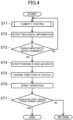
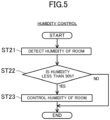
- the controller (30) controls the humidity control unit (14) (Step ST1). Specifically, as illustrated in FIG. 5 , the humidity sensor (17) detects a humidity of the indoor space (S) (Step ST21). Next, the controller (30) determines whether or not the humidity of the indoor space (S) detected by the humidity sensor (17) is less than 50% (Step ST22). When the humidity of the indoor space (S) is less than 50%, (YES in Step ST22), the controller (30) causes the humidity control unit (14) to humidify the indoor space (S) such that the humidity of the indoor space (S) becomes 50% or more. This makes it possible to prepare an environment in which the useful substance is easily absorbed into the body of the target person (T) during the operation of the sprayer (20).
- the biosensor (15) detects the heart rate of the target person (T) (Step ST2).
- the controller (30) determines whether or not the parasympathetic nerve of the target person (T) is dominant (Step ST3). Specifically, the controller (30) acquires information on the RR interval of the heart rate detected by the biosensor (15) to determine whether or not the parasympathetic nerve of the target person (T) is dominant.
- Step ST3 When the parasympathetic nerve of the target person (T) is dominant (YES in Step ST3), the camera (16) detects the positions of the nose and mouth of the target person (T) (Step ST4).
- the controller (30) causes the direction of the two-fluid nozzle (29) to be changed.
- the controller (30) controls the nozzle movable motor (13) based on the detected values by the camera (16) such that the spray port (29c) of the two-fluid nozzle (29) faces the nose and mouth of the target person (T). This allows the drug solution containing the useful substance to be sprayed toward the nose and mouth of the target person (T).
- the controller (30) causes the sprayer (20) to perform a spray operation of spraying the drug solution containing the useful substance (Step ST6).
- the air pump (25) is turned ON, the electromagnetic valve (27) is open, and the air transferred by the air pump (25) is introduced into the gas inlet (29a) of the two-fluid nozzle (29).
- the drug solution stored in the tank (22) is sucked into the liquid suction port (29b) of the two-fluid nozzle (29) through the pipe (22b).
- the drug solution which has sucked through the liquid suction port (29b) is atomized by the airflow of air which has flowed in through the gas inlet (29a).
- the atomized drug solution is supplied to the outside of the casing (11) through the spray port (29c) and the supply port (12).
- the useful substance sprayed at this time by the sprayer (20) has a particle diameter from 5 ⁇ m to 10 ⁇ m inclusive.
- the atomized useful substance is sprayed toward the nose and mouth of the target person (T), and thus is captured on the nasal mucosa and oral mucosa and is absorbed into the body.
- the useful substance is sprayed toward the nose and mouth of the target person (T), so that the amount of the useful substance used can be reduced compared to when it is emitted into the indoor space (S).
- the controller (30) determines whether or not the total spray amount (cumulative spray amount) of the useful substance in one day at this time is equal to or larger than the predetermined amount (Step ST7). In this embodiment, the controller determines whether or not the total spray amount of sulforaphane in one day at this time is 100 ⁇ mol or more.
- the sprayer (20) needs to perform a spray operation such that the total spray amount of sulforaphane in one day is from 10 ⁇ mol to 1000 ⁇ mol inclusive, and the upper limit of the total spray amount of sulforaphane in one day shown herein is a mere example.
- Step ST7 When the cumulative spray amount of the useful substance sprayed from the sprayer (20) is a predetermined amount or more (YES in Step ST7), the controller (30) stops the operation of the spray device (10). When the cumulative spray amount of the useful substance sprayed from the sprayer (20) is the predetermined amount or more (NO in Step ST7), the controller (30) returns to Step ST1. This allows the useful substance to be kept from being sprayed more than necessary.
- the useful substance sprayed by the sprayer (20) has a particle diameter from 1 ⁇ m to 10 ⁇ m inclusive. According to this, the useful substance to be sprayed is atomized to have a predetermined particle diameter, and thus, the useful substance is easily captured on the nasal mucosa or oral mucosa of the target person (T). This allows the useful substance to be efficiently absorbed into the body.
- the useful substance sprayed by the sprayer (20) has a particle diameter from 5 ⁇ m to 10 ⁇ m inclusive.
- the particle diameter of the useful substance is less than 5 ⁇ m, most of the useful substance flows into the trachea or bronchi through the nasal cavity or oral cavity of the target person (T).
- the useful substance has a particle diameter from 5 ⁇ m to 10 ⁇ m inclusive.
- the useful substance is captured on the nasal mucosa and oral mucosa without reaching the trachea or bronchi.
- the useful substance having a particle diameter from 5 ⁇ m to 10 ⁇ m inclusive is more likely to be captured on the nasal mucosa.
- the useful substance can be efficiently absorbed into the body through the autonomic nervous system and mucosal immune system.
- the controller (30) controls the humidity control unit (14) such that the humidity of the indoor space (S) becomes 50% or more during operation of the sprayer (20). According to this, the humidity of the indoor space (S) is maintained at 50% or more during the operation of the sprayer (20). This makes it possible to prepare an environment in which the useful substance is easily absorbed into the body.
- the controller (30) controls the humidity control unit (14) such that the humidity of the indoor space (S) is from 70% to 85% inclusive during operation of the sprayer (20). This makes it possible to maintain the indoor space (S) at a humidity from 70% to 85% inclusive during operation of the sprayer (20), and thus, an environment in which the useful substance is easily absorbed into the body can be prepared.
- the controller (30) drives the nozzle movable motor (13) such that the useful substance is sprayed toward the nose and mouth of the target person in accordance with the results of detection of the positions by the camera (16). This allows the useful substance to reach an area around the nose and mouth of the target person (T), and hence allows the useful substance to be absorbed efficiently into the body through the nasal mucosa and oral mucosa.
- the useful substance is sprayed over an area around the nose and mouth of the target person (T).
- the amount of the useful substance used can be reduced as compared with the case where the useful substance is sprayed into the indoor space (S).
- coloring due to adhesion of the useful substance to walls and clothes can be reduced, and the cost of the useful substance can be reduced.
- the controller (30) causes the sprayer (20) to spray the useful substance having an antioxidative effect. According to this, the useful substance having an antioxidative effect is sprayed when the parasympathetic nerve of the target person (T) is dominant. Thus, the target person (T) can efficiently obtain the antioxidative effect.
- the controller (30) causes the sprayer (20) to spray the useful substance such that a total spray amount of the sulforaphane in one day is from 10 ⁇ mol to 1000 ⁇ mol inclusive. This allows an appropriate amount of sulforaphane for the target person (T) to obtain the antioxidative effect to be sprayed.
- a spray device (10) of a second embodiment will be described.
- the spray device (10) of this embodiment is the spray device (10) of the first embodiment wherein the useful substance contained in the drug solution is changed to a useful substance having an anti-inflammatory effect.
- the following description will be focused on the differences of the spray device (10) of this embodiment from the spray device (10) of the first embodiment.
- the target person (T) sits on a chair in the indoor space (S), for example.
- the spray device (10) is disposed on a desk placed in front of the target person (T).
- a drug solution of this embodiment contains a useful substance having an antioxidative effect.
- the drug solution contains terpinene-4-ol as the substance having an anti-inflammatory effect.
- Terpinene-4-ol is obtained as an extract from leaves, branches, and bark of tea tree.
- the controller (30) causes the sprayer (20) to spray the atomized drug solution if it is determined based on the biological information (information about the heart rate) detected by the biosensor (15) that the sympathetic nerve of the target person (T) is dominant. Accordingly, the useful substance is sprayed when the anti-inflammatory effect is easily exerted in the body, so that the target person (T) can obtain high anti-inflammatory effect.
- the controller (30) causes the sprayer (20) to spray the drug solution such that a total spray amount of the terpinene-4-ol in one day is from 10 ⁇ mol to 1000 ⁇ mol inclusive, based on the data stored in the storage (31).
- the useful substance having an anti-inflammatory effect which is sprayed from the spray device (10), includes a natural product or a substance described below.
- a substance other than terpinene-4-ol may be employed as the useful substance having an anti-inflammatory effect, which is sprayed from the spray device (10).
- the useful substance of this embodiment includes at least one natural product selected from lemongrass, red thyme, patchouli, spearmint, eucalyptus, tea tree, true lavender, geranium bourbon, juniper, chamomile, German chamomile, frankincense, lemon, ginger, black pepper, clove, cinnamon, oregano, winter savory, star anise, lemon balm, citronella, melissa officinalis, lemon gum, and verbena.
- the useful substance of this embodiment includes at least one substance selected from citral, thymol, patchoulol, carvone, 1,8-cineole, terpinene-4-ol, linalool, geraniol, beta-citronellol, alpha-pinene, chamazulene, farnesene, bisabolene, eugenol, carvacrol, anethole, citronellal, and neral.
- the operation of the spray device (10) of this embodiment is different from the operation of the spray device (10) of the first embodiment in Steps ST3 and ST7.
- Step ST3 the controller (30) determines whether or not the sympathetic nerve of the target person (T) is dominant. Specifically, the controller (30) acquires information on the RR interval of the heart rate detected by the biosensor (15) to determine whether or not the sympathetic nerve of the target person (T) is dominant.
- the camera (16) detects the positions of the nose and mouth of the target person (T) (Step ST4).
- Step ST7 the controller (30) determines whether or not the total spray amount (cumulative spray amount) of the useful substance in one day at this time is equal to or larger than the predetermined amount. In this embodiment, the controller determines whether or not the total spray amount of terpinene-4-ol in one day at this time is 100 ⁇ mol or more.
- the sprayer (20) needs to perform a spray operation such that the total spray amount of terpinene-4-ol in one day is from 10 ⁇ mol to 1000 ⁇ mol inclusive, and the upper limit of the total spray amount of sulforaphane in one day shown herein is a mere example.
- the controller (30) causes the sprayer (20) to spray the useful substance having an anti-inflammatory effect. According to this, the useful substance having an anti-inflammatory effect is sprayed when the sympathetic nerve of the target person (T) is dominant. Thus, the target person (T) can efficiently obtain the anti-inflammatory effect.
- the controller (30) causes the sprayer (20) to spray the useful substance such that a total spray amount of the terpinene-4-ol in one day is from 10 ⁇ mol to 1000 ⁇ mol inclusive. This allows an appropriate amount of terpinene-4-ol for the target person (T) to obtain the anti-inflammatory effect to be sprayed.
- a spray device (10) of a third embodiment will be described.
- the spray device (10) of this embodiment is the spray device (10) of the first embodiment in which the controller (30) has been changed.
- the following description will be focused on the differences of the spray device (10) of this embodiment from the spray device (10) of the first embodiment.
- the controller (30) includes a storage (31) and a determination unit (32).
- the storage (31) stores a control table. As illustrated in FIG. 10 , the control table defines data including a plurality of kinds of useful substances, the total spray amounts and the set humidities associated with the respective useful substances.
- the total spray amount used here is a total spray amount (cumulative spray amount) of the useful substance in one day (24 hours) as in the first embodiment.
- the set humidity is a humidity at which the useful substance efficiently acts on the target person (T).
- the total spray amount and the set humidity vary for each associated one of the useful substances.
- the set humidity is defined to be 50% or more.
- the control table may define, in addition to the total spray amounts and the set humidities associated with the respective useful substances, set temperatures associated with the respective useful substances, the concentrations of the useful substances, spray target portion, and the like.
- the spray target portion is a part of the body set to allow the useful substance to efficiently act on the target person (T). For example, when the mouth and nose are set as spray target portions, the useful substance is sprayed toward the mouth and nose of the target person (T). In other words, the data of the spray target portion is information indicating the spray direction.
- the determination unit (32) determines the useful substance to be sprayed from the sprayer (20). For example, when the target person (T) inputs a specific useful substance by means of a switch or touch panel button, or when the tank (22) of the spray device (10) is attached to the liquid-side joint (23), the determination unit (32) acquires information on the type of the useful substance to be sprayed and determines the useful substance.
- the controller (30) acquires information on the total spray amount and the set humidity associated with the useful substance based on the useful substance determined and the control table of FIG. 10 .
- the controller (30) controls the sprayer (20) such that the acquired total spray amount of the useful substance is sprayed.
- the controller (30) controls the humidity control unit (14) so as to satisfy the acquired set humidity.
- the operation of the spray device (10) of this embodiment differs from the operation of the spray device (10) of the first embodiment in humidity control.
- the humidity control of this embodiment will be described below.
- the controller (30) acquires a set humidity associated with the determined useful substance based on the data stored in the storage (31) (Step ST31).
- the controller (30) detects a humidity of the indoor space (S) based on an output from the humidity sensor (17) (Step ST32).
- the controller compares the acquired set humidity with the humidity of the indoor space (S) (Step ST33).
- the controller controls the humidity control unit (14) such that the humidity of the indoor space (S) is the set humidity (Step ST34).
- the humidity of the indoor space (S) is controlled to the humidity at which the target person (T) easily absorbs the predetermined useful substance (U), so that the useful substance can be efficiently absorbed into the body of the target person (T).
- the useful substance contained in the drug solution for the spray devices (10) of each of the embodiments may be changed to the useful substance having an anti-inflammatory effect shown in the second embodiment.
- the spray device (10) of each of the embodiments may be installed in an air treatment device.
- the spray device (10) may be integral with the air conditioner as the air treatment device (A).
- the air conditioner controls the temperature of air in the indoor space (S).
- the controller (30) may control the air treatment device (A) such that the temperature of the indoor space (S) becomes a temperature at which the useful substance is easily absorbed into the body during the operation of the sprayer (20).
- the air treatment device (A) and the spray device (10) may be provided separately from each other.
- the position sensor (16) of the spray device (10) of each embodiment may not be attached to the casing (11), and may be attached to the ceiling or lighting device.
- the spray device (10) of each embodiment sprays a drug solution containing a useful substance, but may spray a powdered solid containing the useful substance.
- the spray device (10) of each embodiment may include a plurality of tanks (22).
- the respective tanks (22) may store a drug solution containing a useful substance having an antioxidative effect and a drug solution containing a useful substance having an anti-inflammatory effect.
- the respective tanks (22) may store drug solutions containing useful substances having different kinds of antioxidative effects or drug solutions containing useful substances having different kinds of anti-inflammatory effect.
- the present disclosure is useful for a spray device and an air treatment device.
Landscapes
- Health & Medical Sciences (AREA)
- Life Sciences & Earth Sciences (AREA)
- Veterinary Medicine (AREA)
- Public Health (AREA)
- General Health & Medical Sciences (AREA)
- Animal Behavior & Ethology (AREA)
- Heart & Thoracic Surgery (AREA)
- Hematology (AREA)
- Biomedical Technology (AREA)
- Anesthesiology (AREA)
- Engineering & Computer Science (AREA)
- Epidemiology (AREA)
- Botany (AREA)
- Zoology (AREA)
- Disinfection, Sterilisation Or Deodorisation Of Air (AREA)
- Coloring Foods And Improving Nutritive Qualities (AREA)
- Nozzles (AREA)
- Spray Control Apparatus (AREA)
- Medicines Containing Plant Substances (AREA)
Abstract
Description
- The present disclosure relates to a spray device and an air treatment device.
- As a means for people to easily obtain an antioxidative effect or an anti-inflammatory effect, a means for orally ingesting food (e.g., vegetables, fruits, supplements) containing components having an antioxidative effect and an anti-inflammatory effect has been known.
Patent Document 1 discloses a method for producing broccoli processed food effectively containing sulforaphane as a component having an antioxidative effect. - Patent Document 1:
Japanese Unexamined Patent Publication No. 2020-110047 - In the case where the antioxidative effect and the anti-inflammatory effect are obtained by orally ingesting food, useful substances having an antioxidative effect and an anti-inflammatory effect are absorbed by the body in the stage in which ingested food is digested in the body, thereby obtaining these effects. However, in such an oral ingestion, it takes time to digest the food, and the degree of digestion varies among individuals, and thus, the useful substances are not sufficiently absorbed into the body in some cases.
- The present disclosure is intended to efficiently absorb useful substances having an antioxidative effect and an anti-inflammatory effect in the body.
- A first aspect is directed to a spray device including: a useful substance having an antioxidative effect or an anti-inflammatory effect; a sprayer (20) configured to spray the useful substance into a space (S) where a target person (T) is present; and a controller (30) configured to control the sprayer (20), wherein the useful substance sprayed by the sprayer (20) has a particle diameter from 1 µm to 10 µm inclusive.
- In the first aspect, the useful substance having a particle diameter from 1 µm to 10 µm inclusive is sprayed by the sprayer (20). Thus, the useful substance is captured on the nasal mucosa or oral mucosa of the target person (T). This allows the useful substance to be efficiently absorbed into the body through the nasal mucosa or oral mucosa.
- A second aspect is an embodiment of the first aspect. In the second aspect, the useful substance sprayed by the sprayer (20) has a particle diameter from 5 µm to 10 µm inclusive.
- In the second aspect, the useful substance having a particle diameter from 5 µm to 10 µm inclusive is sprayed by the sprayer (20). Thus, most of the useful substance is captured on the nasal mucosa without reaching the trachea or bronchi. This allows the useful substance to be efficiently absorbed into the body through the autonomic nervous system and the mucosal immune system of the person.
- A third aspect is an embodiment of the first or second aspect. In the third aspect, the spray device further includes: a humidity control unit (14) configured to control a humidity of air in the space (S); and a storage (31) configured to store data including the useful substance and a set humidity associated with the useful substance. The controller (30) acquires the set humidity associated with the useful substance sprayed by the sprayer (20) based on the data stored in the storage (31) and controls the humidity control unit (14) so as to satisfy the set humidity.
- In the third aspect, the controller (30) controls the humidity control unit (14) so as to satisfy the set humidity associated with the useful substance sprayed by the sprayer (20) based on the data stored in the storage (31). Accordingly, information on the humidity at which the useful substance efficiently acts on the target person (T) is stored in the storage (31). This allows the useful substance to be efficiently absorbed into the body of the target person (T).
- A fourth aspect is an embodiment of any one of the first to third aspects. In the fourth aspect, the spray device further includes: a humidity control unit (14) configured to control a humidity of air in the space (S). The controller (30) controls the humidity control unit (14) such that the humidity of the space (S) becomes 50% or more during operation of the sprayer (20).
- In the fourth aspect, the controller (30) controls the humidity control unit (14) to maintain the humidity of the space (S) at 50% or more during the operation of the sprayer (20). This makes it possible to prepare an environment in which the useful substance is easily absorbed into the body.
- A fifth aspect of the present disclosure is an embodiment of the fourth aspect. In the fifth aspect, the controller (30) controls the humidity control unit (14) such that the humidity of the space (S) becomes 70% or more and 85% or less during the operation of the sprayer (20).
- In the fifth aspect, the controller (30) controls the humidity control unit (14) to maintain the humidity of the space (S) at 70% or more and 85% or less during the operation of the sprayer (20). This makes it possible to prepare an environment in which the useful substance is more easily absorbed into the body.
- A sixth aspect is an embodiment of any one of the first to fifth aspects. In the sixth aspect, the spray device further includes: a position sensor (16) configured to detect a position of nose of the target person (T); and a direction change unit (13) configured to change a direction in which the useful substance is sprayed by the sprayer (20). Tthe controller (30) drives the direction change unit (13) such that the useful substance is sprayed toward the nose of the target person (T) in accordance with a result of the detection of the position by the position sensor (16).
- In the sixth aspect, the direction change unit (13) can change the direction in which the useful substance is sprayed, to the direction of the nose of the target person (T), so that the useful substance can reach the area around the nose of the target person (T). This allows the useful substance to be efficiently absorbed into the body.
- A seventh aspect is an embodiment of any one of the first to sixth aspects. In the seventh aspect, the spray device further includes: a biosensor (15) configured to detect biological information of the target person (T). The useful substance has an antioxidative effect, and the controller (30) causes the sprayer (20) to spray the useful substance if it is determined based on the detected biological information acquired by the biosensor (15) that the parasympathetic nerve of the target person (T) is dominant.
- In the seventh aspect, the useful substance having an antioxidative effect is sprayed when the parasympathetic nerve of the target person (T) is dominant. Thus, the target person (T) can efficiently obtain the antioxidative effect.
- An eighth aspect of the present disclosure is an embodiment of the seventh aspect. In the eighth aspect, the useful substance includes at least one natural product selected from grape, black rice, blueberry, sesame, broccoli, garlic, spinach, tomato, watermelon, citrus, rosemary, oregano, thyme, sesame seed, tabasco pepper, pepper, ginger, plantago seed, and osbeckia chinensis.
- A ninth aspect is an embodiment of the seventh or eighth aspect. In the ninth aspect, the useful substance includes at least one substance selected from anthocyanin, sesaminol, sulforaphane, allicin, lutein, lycopene, limonene, rosmanol, rosmari diphenol, protocatechuic acid, caffeic acid, rosmarinic acid, thymol, carvacrol, capsaicin, hydrocapsaicin, piperine, zingerone, gingerol, ginger all, geniposidic acid, and osbekic acid.
- A tenth aspect is an embodiment of any one of the seventh to ninth aspects. In the tenth aspect, the useful substance includes sulforaphane, and the controller (30) causes the sprayer (20) to spray the useful substance so that a total spray amount of the sulforaphane in one day is from 10 µmol to 1000 µmol inclusive.
- In the tenth aspect, the amount of the sulforaphane suitable for the target person to obtain a high antioxidative effect can be sprayed.
- An eleventh aspect is an embodiment of any one of the first to sixth aspects. In the eleventh aspect, the spray device further includes: a biosensor (15) configured to detect biological information of the target person (T). The useful substance has an anti-inflammatory effect, and the controller (30) causes the sprayer (20) to spray the useful substance if it is determined based on the biological information detected by the biosensor (15) that the sympathetic nerve of the target person (T) is dominant.
- In the eleventh aspect, the useful substance having an anti-inflammatory effect is sprayed when the sympathetic nerve of the target person (T) is dominant. Thus, the target person (T) can efficiently obtain the anti-inflammatory effect.
- A twelfth aspect is an embodiment of the eleventh aspect. In the twelfth aspect, the useful substance includes at least one natural product selected from lemongrass, red thyme, patchouli, spearmint, eucalyptus, tea tree, true lavender, geranium bourbon, juniper, chamomile, German chamomile, frankincense, lemon, ginger, black pepper, clove, cinnamon, oregano, winter savory, star anise, lemon balm, citronella, melissa officinalis, lemon gum, and verbena.
- A thirteenth aspect of the present disclosure is an embodiment of the eleventh or twelfth aspect. In the thirteenth aspect, the useful substance includes at least one substance selected from citral, thymol, patchoulol, carvone, 1,8-cineole, terpinene-4-ol, linalool, geraniol, β-citronellol, α-pinene, chamazulene, farnesene, bisabolene, eugenol, carvacrol, anethole, citronellal, and neral.
- A fourteenth aspect is an embodiment of any one of the eleventh to thirteenth aspects. In the fourteenth aspect, the useful substance includes a terpinene-4-ol, and the controller (30) causes the sprayer (20) to spray the useful substance so that a total spray amount of the terpinene-4-ol in one day is from 10 µmol to 1000 µmol inclusive.
- In the fourteenth aspect, the amount of terpinene-4-ol suitable for the target person to obtain a high anti-inflammatory effect can be sprayed.
- A fifteenth aspect is directed to an air treatment device including the spray device (10) of any one of the first to fourteenth aspects.
- In the fifteenth aspect, the spray device (10) is applicable to the air treatment device (A).
-
-
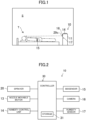
FIG. 1 is a diagram schematically illustrating a general configuration of a spray device of a first embodiment. -
FIG. 2 is a block diagram schematically illustrating the spray device. -
FIG. 3 is a longitudinal sectional view of a sprayer. -
FIG. 4 is a flowchart illustrating a process flow performed by a controller. -
FIG. 5 is a flowchart of humidity control. -
FIG. 6 is a diagram corresponding toFIG. 1 and illustrates a second embodiment. -
FIG. 7 is a diagram corresponding toFIG. 4 and illustrates the second embodiment. -
FIG. 8 corresponds toFIG. 1 and illustrates another embodiment. -
FIG. 9 is a diagram corresponding toFIG. 2 and illustrates a third embodiment. -
FIG. 10 is a schematic view of a control table of the third embodiment. -
FIG. 11 is a diagram corresponding toFIG. 5 and illustrates the third embodiment. - Embodiments of the present disclosure will be described in detail below with reference to the drawings. The present disclosure is not limited to the embodiments shown below, and various changes can be made within the scope without departing from the technical concept of the present disclosure. Since each of the drawings is intended to illustrate the present disclosure conceptually, dimensions, ratios, or numbers may be exaggerated or simplified as necessary for the sake of ease of understanding.
- A spray device (10) of a first embodiment will be described.
- As illustrated in
FIG. 1 , the spray device (10) of this embodiment is placed in an indoor space (S) in which a target person (T) is present. The spray device (10) is installed on a floor surface of the indoor space (S). The indoor space (S) corresponds to a space of the present disclosure. The target person (T) sleeps on bedding such as a bed in the indoor space (S), for example. - The spray device (10) sprays a useful substance having an antioxidative effect or an anti-inflammatory effect toward the target person (T). The spray device (10) of this embodiment sprays a drug solution containing the useful substance having an antioxidative effect. Specifically, the useful substance contained in the drug solution contains sulforaphane as a substance having an antioxidative effect. Sulforaphane is a component mainly contained in broccoli sprouts and the like.
- Part of oxygen taken in the human body by respiration or the like is changed to generate active oxygen. This active oxygen has a strong ability to oxidize cells, and if it is excessively generated in the body, it attacks normal cells. In contrast, humans have a function of suppressing the active oxygen (antioxidative function). The "antioxidative effect" in the present disclosure is not limited to an effect of suppressing oxidation of an object (for example, food or industrial raw materials) by the action of a substance itself, and includes an effect of enhancing an effect of reducing active oxygen (antioxidative function) originally possessed by humans by taking the substance into the body. Details of the useful substance having an antioxidative effect will be described later.
- The drug solution of this embodiment may contain a substance other than the useful substance having an antioxidative effect. The useful substance merely needs to be blended in an amount sufficient to exhibit an antioxidative effect in the drug solution containing the useful substance, and the amount of each component blended in the drug solution is selected appropriately according, for example, to the other components to be blended together with the useful substance, and is not particularly limited.
- The spray device (10) sprays the useful substance having a particle diameter from 1 µm to 10 µm inclusive toward the nose and the mouth of the target person (T). The "particle diameter" herein refers to a mean particle diameter. The spray device (10) sprays the useful substance having a predetermined particle diameter toward an area around the nose of the target person (T), so that the useful substance can be efficiently absorbed from the nasal mucosa of the target person (T). In the spray device (10) of this embodiment, the useful substance is sprayed toward the nose and mouth of the target person (T).
- As illustrated in
FIGS. 1 to 3 , the spray device (10) includes a casing (11), a sprayer (20), a nozzle movable motor (13), a humidity control unit (14), a biosensor (15), a camera (16), a humidity sensor (17), and a controller (30). In this embodiment, the sprayer (20), the nozzle movable motor (13), the humidity control unit (14), and the controller (30) are housed inside the casing (11). - The casing (11) is hollow. The casing (11) has a supply port (12). An atomized drug solution is supplied into an indoor space (S) through the supply port (12).
- The sprayer (20) sprays the useful substance into the indoor space (S). As illustrated in
FIG. 3 , the sprayer (20) has a liquid reservoir (21), a gas supply section (24), and a two-fluid nozzle (29). - The liquid reservoir (21) supplies the drug solution stored therein to the two-fluid nozzle (29). The liquid reservoir (21) includes a tank (22) and a liquid-side joint (23). The tank (22) stores a drug solution. The tank (22) is connected to a two-fluid nozzle (29) via the liquid-side joint (23). A cap (22a) is attached to the top of the tank (22). A pipe (22b) is arranged inside the tank (22). The pipe (22b) sucks the drug solution in the tank (22) and sends the drug solution to the two-fluid nozzle (29). The tank (22) is detachable from the liquid-side joint (23).
- One end of the liquid-side joint (23) is attached to the cap (22a) of the tank (22) and is connected to the upper end of the pipe (22b). The other end of the liquid-side joint (23) is connected to a liquid suction port (29b) of the two-fluid nozzle (29) to be described later. This allows the inside of the tank (22) and the two-fluid nozzle (29) to communicate with each other via the liquid-side joint (23).
- The gas supply section (24) supplies compressed air to the two-fluid nozzle (29). The gas supply section (24) includes an air pump (25), an air flow path (26), an electromagnetic valve (27), and a gas-side joint (28).
- The air pump (25) sucks the air in the indoor space (S) and discharges the sucked air to the air flow path (26). The air pump (25) has a discharge portion connected to the air flow path (26).
- The air flow path (26) connects the gas-side joint (28) and the air pump (25). The air flow path (26) of this embodiment is configured as a tube. The air which has passed through the air flow path (26) is supplied to the two-fluid nozzle (29) through the gas-side joint (28).
- The electromagnetic valve (27) is arranged in the air flow path (26). The electromagnetic valve (27) is an on-off valve which opens and closes the air flow path (26). Instead of the electromagnetic valve (27), a flow rate control valve may be used which is capable of finely controlling the opening degree of the air flow path (26).
- The gas-side joint (28) connects the air flow path (26) and the two-fluid nozzle (29). One end of the gas-side joint (28) is connected to an outflow end of air flow path (26). The other end of the gas-side joint (28) is connected to a gas inlet (29a) of the two-fluid nozzle (29) to be described later.
- The two-fluid nozzle (29) constitutes an atomization mechanism that atomizes the drug solution in the tank (22). Specifically, the two-fluid nozzle (29) atomizes the film of the drug solution using the shearing force of the airflow. The atomization mechanism may be of another type, such as a piezoelectric type, an electrostatic spraying type, or an ultrasonic type. The two-fluid nozzle (29) has a gas inlet (29a), a liquid suction port (29b), and a spray port (29c).
- The gas inlet (29a) allows air to flow therein. The gas inlet (29a) is provided for the rear end of the two-fluid nozzle (29). The liquid suction port (29b) sucks the drug solution. The liquid suction port (29b) is provided for the lower portion of the two-fluid nozzle (29). The spray port (29c) discharges the atomized drug solution. The spray port (29c) is provided for the front end of the two-fluid nozzle (29). The spray port (29c) communicates with the supply port (12) of the casing (11).
- The drug solution to be discharged through the spray port (29c) has a particle diameter from 1 µm to 10 µm inclusive. When the particle diameter of the drug solution is larger than 10 µm, the drug solution is not captured on the nasal mucosa or oral mucosa of the target person (T), and most of the drug solution passes through the throat and flows into the stomach. In this embodiment, the particle diameter of the drug solution is sufficiently small, so that the useful substance contained in the drug solution is easily captured on the nasal mucosa and oral mucosa of the target person (T). The useful substance captured on these mucosae enters the blood vessel or lymph and thus can act in the body.
- The particle diameter of the drug solution discharged through the spray port (29c) is more preferably from 5 µm to 10 µm inclusive. The drug solution having a particle diameter from 5 µm to 10 µm inclusive is easily captured particularly on the nasal mucosa. When the particle diameter is less than 5 µm, the drug solution passes through the nasal cavity and then flows into the trachea and the bronchi to reach the pulmonary alveolus. In contrast, the drug solution having a particle diameter from 5 µm to 10 µm inclusive remains on and is absorbed in the nasal mucosa. The drug solution can thus act on the autonomic nervous system and the immune system in the body through the olfactory nerve from the nasal mucosa.
- The nozzle movable motor (13) corresponds to a direction change unit of the present disclosure. The nozzle movable motor (13) shown in
FIG. 2 changes the direction in which the useful substance is sprayed by the sprayer (20). The nozzle movable motor (13) is coupled with the two-fluid nozzle (29) via the shaft. When the shaft is rotated and driven by the nozzle movable motor (13), the direction of the two-fluid nozzle (29) is adjusted. - The humidity control unit (14) controls the humidity of the air in the indoor space (S). The humidity control unit (14) of this embodiment sucks the air in the indoor space (S) and humidifies the air. The humidity control unit (14) may be of any type, such as a vaporizing type, a heating type, a hybrid type, or an ultrasonic type, and is not particularly limited. The humidity control unit (14) may have a dehumidifying function of dehumidifying the air in the indoor space (S) in addition to the humidifying function.
- The biosensor (15) detects signals that underlie the heart rate of the target person (T). The biosensor (15) may be of a contact type or a non-contact type. The biosensor (15) of this embodiment is a contact-type biosensor (15). Specifically, the biosensor (15) of this embodiment is a wearable sensor integral with a wristwatch, and is worn on the arm of the target person (T). The biosensor (15) may detect signals that underlie the biological information (e.g., a body temperature, blood pressure, blood sugar, body motion, or the like) other than the heart rate.
- The camera (16) is attached to the casing (11), and captures an image of the target person (T) present in the indoor space (S). The camera (16) detects the positions of the nose and mouth of the target person (T). In other words, the camera (16) is a position sensor that identifies the positional information of predetermined portions of the target person (T). The camera (16) may detect only the position of the nose.
- The camera (16) may detect information (e.g., biological information such as a respiratory cycle, a heart rate, a pulse wave, and a countenance) other than the positional information of the predetermined portions of the target person (T). In such a case, the camera (16) is a biosensor.
- The humidity sensor (17) measures the humidity of the indoor space (S). The humidity sensor (17) of this embodiment is attached to the casing (11). The humidity sensor (17) may be separately installed in the indoor space (S).
- The controller (30) includes a microcomputer mounted on a control board, and a memory device (specifically, a semiconductor memory) storing software for operating the microcomputer. As illustrated in
FIG. 2 , the controller (30) includes a storage (31). The controller (30) may include a storage (31) separate from the control board. - The storage (31) stores data including various types of useful substances and total spray amounts associated with the respective useful substances. The total spray amount associated with the useful substance refers to a total spray amount (cumulative spray amount) of the useful substance in one day (24 hours). The useful substance stored in the storage (31) may be a single substance, or may be a mixed substance in which multiple substances are mixed. The mixed substance may be different from other mixed substances in the mixing ratio of the substances contained.
- As illustrated in
FIG. 2 , the controller (30) is connected to the sprayer (20), the nozzle movable motor (13), the humidity control unit (14), the biosensor (15), the camera (16), and the humidity sensor (17) in a wired or wireless manner, and is configured to be able to transmit and receive signals to and from these components. - The controller (30) controls a spray operation of the sprayer (20). Specifically, the controller (30) operates an air pump (25) and opens the electromagnetic valve (27) to spray the drug solution from the sprayer (20). The spray operation of the sprayer (20) may be performed continuously or intermittently.
- The controller (30) controls the sprayer (20) based on the biological information (information of the heart rate) detected by the biosensor (15). In this embodiment, the controller (30) causes the sprayer (20) to spray the atomized drug solution if it is determined based on the biological information detected by the biosensor (15) that the parasympathetic nerve of the target person (T) is dominant. Accordingly, the useful substance is sprayed when the antioxidative effect is likely to be exhibited in the body, so that the target person (T) can obtain high antioxidative effect.
- The controller (30) acquires, based on the data stored in the storage (31), information on the total spray amount in one day, associated with the useful substance stored in the sprayer (20), and controls the sprayer (20) such that the acquired, predetermined total spray amount of the useful substance is sprayed. In other words, the controller (30) stops the operation of the spray device (10) if the total spray amount of the useful substance sprayed from the sprayer (20) exceeds the predetermined total spray amount acquired from the storage (31) during a period from the predetermined starting time to the ending time which is after 24 hours from the predetermined starting time. The total spray amount of the useful substance may be calculated based on the cumulative time of the time during which the electromagnetic valve (27) is open from the predetermined start time to the ending time which is after 24 hours from the predetermined starting time, or may be calculated by other methods.
- In this embodiment, the controller (30) sprays the drug solution from the sprayer (20) such that the total spray amount of sulforaphane in one day is from 10 µmol to 1000 µmol inclusive. This allows an appropriate amount of the useful substance for the target person (T) to obtain the effects of the useful substance to be sprayed.
- The controller (30) drives the nozzle movable motor (13) such that the drug solution (useful substance) is sprayed toward the nose and mouth of the target person (T) in accordance with the results of detection of the positions of the nose and mouth by the camera (16). Thus, the useful substance can be efficiently absorbed through the nose and mouth of the target person (T).
- The controller (30) controls the humidity control unit (14) such that the humidity of the indoor space (S) becomes 50% or more during operation of the sprayer (20). It is preferred that the controller (30) controls the humidity control unit (14) such that the humidity of the indoor space (S) is from 70% to 85% inclusive during operation of the sprayer (20). When the humidity of the indoor space (S) is 50% or more, the useful substance is easily absorbed into the body, and when the humidity of the indoor space (S) is from 70% to 85% inclusive, the useful substance is more easily absorbed into the body. Therefore, the controller (30) controls the humidity control unit (14) to prepare an environment in which the useful substance sprayed from the sprayer (20) is easily absorbed into the body.
- The controller (30) may be provided in a place other than the casing (11). For example, the controller (30) may be provided in a server device connected to a local network, the Internet, and the like, or various communication terminals (a portable terminal, a personal computer, and the like).
- The useful substance having an antioxidative effect, which is sprayed from the spray device (10), includes a natural product or a substance described below. In other words, as the useful substance having an antioxidative effect, whish is sprayed from the spray device (10), a substance other than sulforaphane may be employed. The useful substance having an antioxidative effect is not limited to a substance having an effect of reducing oxidization by the useful substance itself, and includes a substance having an effect of enhancing or accelerating an antioxidative function possessed by humans.
- The useful substance of this embodiment includes at least one natural product selected from grape, black rice, blueberry, sesame, broccoli, garlic, spinach, tomato, watermelon, citrus, rosemary, oregano, thyme, sesame seed, tabasco pepper, pepper, ginger, plantago seed, and osbeckia chinensis.
- The useful substance of this embodiment includes at least one substance selected from anthocyanins, sesaminol, sulforaphane, allicin, lutein, lycopene, limonene, rosmanol, rosmari diphenol, protocatechuic acid, caffeic acid, rosmarinic acid, thymol, carvacrol, capsaicin, hydrocapsaicin, piperine, zingerone, gingerol, ginger all, geniposidic acid, and osbekic acid.
- The humans have a homeostasis function. The homeostasis function is a function in which a person tries to maintain his/her living body environment in a normal state, which is a function of maintaining a body environment in a comfortable, constant state at all times even when the person is infected with a virus or a bacterium which causes a disease, for example. The homeostasis function consists of the immune system, the autonomic nervous system, and the endocrine system, which are interacted with each other.
- The activity of the sympathetic nerve, which is an autonomic nervous system, increases in a time zone in which the activity of the body increases in one day, and decreases in a time zone in which the activity of the body decreases in one day (circadian variation). In the time zone in which the activity of the sympathetic nerve increases, the lymphocytes are inhibited from escaping from the lymph node, and the number of lymphocytes in the lymph node increases. This increases the response of the immune system in the time zone in which the activity of the sympathetic nerve increases. On the other hand, in a time zone in which the activity of the sympathetic nerve is low (the parasympathetic nerve is dominant over the sympathetic nerve), lymphocytes escape from the lymph node and circulate in the body via lymph fluid and blood. This results in a decrease in the number of lymphocytes in the lymph node. This increases the response of the immune system in the time zone in which the activity of the sympathetic nerve increases.
- Due to the nature of the homeostasis function of humans, when the activity of the sympathetic nerve increases (the sympathetic nerve is dominant), which increases the response of the immune system, the anti-inflammatory effect is efficiently exerted. On the other hand, when the activity of the sympathetic nerve is low (the parasympathetic nerve is dominant), which weakens the response of the immune system, the antioxidative effect is efficiently exerted. In this way, due to the nature of the homeostasis function of humans, in this embodiment, the useful substance having an antioxidative effect is sprayed toward the target person (T) when the parasympathetic nerve of the target person (T) is dominant.
- The operation of the spray device will be described with reference to
FIGS. 1 to 5 . - As illustrated in
FIG. 4 , when the spray device (10) is in an operating state, the controller (30) controls the humidity control unit (14) (Step ST1). Specifically, as illustrated inFIG. 5 , the humidity sensor (17) detects a humidity of the indoor space (S) (Step ST21). Next, the controller (30) determines whether or not the humidity of the indoor space (S) detected by the humidity sensor (17) is less than 50% (Step ST22). When the humidity of the indoor space (S) is less than 50%, (YES in Step ST22), the controller (30) causes the humidity control unit (14) to humidify the indoor space (S) such that the humidity of the indoor space (S) becomes 50% or more. This makes it possible to prepare an environment in which the useful substance is easily absorbed into the body of the target person (T) during the operation of the sprayer (20). - As illustrated in
FIG. 4 , the biosensor (15) detects the heart rate of the target person (T) (Step ST2). Next, the controller (30) determines whether or not the parasympathetic nerve of the target person (T) is dominant (Step ST3). Specifically, the controller (30) acquires information on the RR interval of the heart rate detected by the biosensor (15) to determine whether or not the parasympathetic nerve of the target person (T) is dominant. - When the parasympathetic nerve of the target person (T) is dominant (YES in Step ST3), the camera (16) detects the positions of the nose and mouth of the target person (T) (Step ST4). Next, the controller (30) causes the direction of the two-fluid nozzle (29) to be changed. Specifically, the controller (30) controls the nozzle movable motor (13) based on the detected values by the camera (16) such that the spray port (29c) of the two-fluid nozzle (29) faces the nose and mouth of the target person (T). This allows the drug solution containing the useful substance to be sprayed toward the nose and mouth of the target person (T).
- Next, the controller (30) causes the sprayer (20) to perform a spray operation of spraying the drug solution containing the useful substance (Step ST6). Specifically, in the spray operation, the air pump (25) is turned ON, the electromagnetic valve (27) is open, and the air transferred by the air pump (25) is introduced into the gas inlet (29a) of the two-fluid nozzle (29). At the same time, the drug solution stored in the tank (22) is sucked into the liquid suction port (29b) of the two-fluid nozzle (29) through the pipe (22b). In the two-fluid nozzle (29), the drug solution which has sucked through the liquid suction port (29b) is atomized by the airflow of air which has flowed in through the gas inlet (29a). The atomized drug solution is supplied to the outside of the casing (11) through the spray port (29c) and the supply port (12). The useful substance sprayed at this time by the sprayer (20) has a particle diameter from 5 µm to 10 µm inclusive.
- According to this, the atomized useful substance is sprayed toward the nose and mouth of the target person (T), and thus is captured on the nasal mucosa and oral mucosa and is absorbed into the body. The useful substance is sprayed toward the nose and mouth of the target person (T), so that the amount of the useful substance used can be reduced compared to when it is emitted into the indoor space (S).
- Then, the controller (30) determines whether or not the total spray amount (cumulative spray amount) of the useful substance in one day at this time is equal to or larger than the predetermined amount (Step ST7). In this embodiment, the controller determines whether or not the total spray amount of sulforaphane in one day at this time is 100 µmol or more. The sprayer (20) needs to perform a spray operation such that the total spray amount of sulforaphane in one day is from 10 µmol to 1000 µmol inclusive, and the upper limit of the total spray amount of sulforaphane in one day shown herein is a mere example.
- When the cumulative spray amount of the useful substance sprayed from the sprayer (20) is a predetermined amount or more (YES in Step ST7), the controller (30) stops the operation of the spray device (10). When the cumulative spray amount of the useful substance sprayed from the sprayer (20) is the predetermined amount or more (NO in Step ST7), the controller (30) returns to Step ST1. This allows the useful substance to be kept from being sprayed more than necessary.
- (5-1)
The useful substance sprayed by the sprayer (20) has a particle diameter from 1 µm to 10 µm inclusive. According to this, the useful substance to be sprayed is atomized to have a predetermined particle diameter, and thus, the useful substance is easily captured on the nasal mucosa or oral mucosa of the target person (T). This allows the useful substance to be efficiently absorbed into the body. - (5-2)
The useful substance sprayed by the sprayer (20) has a particle diameter from 5 µm to 10 µm inclusive. When the particle diameter of the useful substance is less than 5 µm, most of the useful substance flows into the trachea or bronchi through the nasal cavity or oral cavity of the target person (T). In this embodiment, the useful substance has a particle diameter from 5 µm to 10 µm inclusive. Thus, the useful substance is captured on the nasal mucosa and oral mucosa without reaching the trachea or bronchi. In particular, the useful substance having a particle diameter from 5 µm to 10 µm inclusive is more likely to be captured on the nasal mucosa. As a result, the useful substance can be efficiently absorbed into the body through the autonomic nervous system and mucosal immune system. - (5-3)
The controller (30) controls the humidity control unit (14) such that the humidity of the indoor space (S) becomes 50% or more during operation of the sprayer (20). According to this, the humidity of the indoor space (S) is maintained at 50% or more during the operation of the sprayer (20). This makes it possible to prepare an environment in which the useful substance is easily absorbed into the body. - (5-4)
The controller (30) controls the humidity control unit (14) such that the humidity of the indoor space (S) is from 70% to 85% inclusive during operation of the sprayer (20). This makes it possible to maintain the indoor space (S) at a humidity from 70% to 85% inclusive during operation of the sprayer (20), and thus, an environment in which the useful substance is easily absorbed into the body can be prepared. - (5-5)
The controller (30) drives the nozzle movable motor (13) such that the useful substance is sprayed toward the nose and mouth of the target person in accordance with the results of detection of the positions by the camera (16). This allows the useful substance to reach an area around the nose and mouth of the target person (T), and hence allows the useful substance to be absorbed efficiently into the body through the nasal mucosa and oral mucosa. - In addition, the useful substance is sprayed over an area around the nose and mouth of the target person (T). Thus, the amount of the useful substance used can be reduced as compared with the case where the useful substance is sprayed into the indoor space (S). As a result, coloring due to adhesion of the useful substance to walls and clothes can be reduced, and the cost of the useful substance can be reduced.
- (5-6)
When it is determined that the parasympathetic nerve of the target person (T) is dominant based on the biological information detected by the biosensor (15), the controller (30) causes the sprayer (20) to spray the useful substance having an antioxidative effect. According to this, the useful substance having an antioxidative effect is sprayed when the parasympathetic nerve of the target person (T) is dominant. Thus, the target person (T) can efficiently obtain the antioxidative effect. - (5-7)
The controller (30) causes the sprayer (20) to spray the useful substance such that a total spray amount of the sulforaphane in one day is from 10 µmol to 1000 µmol inclusive. This allows an appropriate amount of sulforaphane for the target person (T) to obtain the antioxidative effect to be sprayed. - A spray device (10) of a second embodiment will be described. The spray device (10) of this embodiment is the spray device (10) of the first embodiment wherein the useful substance contained in the drug solution is changed to a useful substance having an anti-inflammatory effect. Thus, the following description will be focused on the differences of the spray device (10) of this embodiment from the spray device (10) of the first embodiment.
- As illustrated in
FIG. 6 , in this embodiment, the target person (T) sits on a chair in the indoor space (S), for example. The spray device (10) is disposed on a desk placed in front of the target person (T). - A drug solution of this embodiment contains a useful substance having an antioxidative effect. Specifically, the drug solution contains terpinene-4-ol as the substance having an anti-inflammatory effect. Terpinene-4-ol is obtained as an extract from leaves, branches, and bark of tea tree.
- In this embodiment, the controller (30) causes the sprayer (20) to spray the atomized drug solution if it is determined based on the biological information (information about the heart rate) detected by the biosensor (15) that the sympathetic nerve of the target person (T) is dominant. Accordingly, the useful substance is sprayed when the anti-inflammatory effect is easily exerted in the body, so that the target person (T) can obtain high anti-inflammatory effect.
- The controller (30) causes the sprayer (20) to spray the drug solution such that a total spray amount of the terpinene-4-ol in one day is from 10 µmol to 1000 µmol inclusive, based on the data stored in the storage (31).
- The useful substance having an anti-inflammatory effect, which is sprayed from the spray device (10), includes a natural product or a substance described below. In other words, as the useful substance having an anti-inflammatory effect, which is sprayed from the spray device (10), a substance other than terpinene-4-ol may be employed.
- The useful substance of this embodiment includes at least one natural product selected from lemongrass, red thyme, patchouli, spearmint, eucalyptus, tea tree, true lavender, geranium bourbon, juniper, chamomile, German chamomile, frankincense, lemon, ginger, black pepper, clove, cinnamon, oregano, winter savory, star anise, lemon balm, citronella, melissa officinalis, lemon gum, and verbena.
- The useful substance of this embodiment includes at least one substance selected from citral, thymol, patchoulol, carvone, 1,8-cineole, terpinene-4-ol, linalool, geraniol, beta-citronellol, alpha-pinene, chamazulene, farnesene, bisabolene, eugenol, carvacrol, anethole, citronellal, and neral.
- As illustrated in
FIG. 7 , the operation of the spray device (10) of this embodiment is different from the operation of the spray device (10) of the first embodiment in Steps ST3 and ST7. - In Step ST3, the controller (30) determines whether or not the sympathetic nerve of the target person (T) is dominant. Specifically, the controller (30) acquires information on the RR interval of the heart rate detected by the biosensor (15) to determine whether or not the sympathetic nerve of the target person (T) is dominant. When the sympathetic nerve of the target person (T) is dominant (YES in Step ST3), the camera (16) detects the positions of the nose and mouth of the target person (T) (Step ST4).
- In Step ST7, the controller (30) determines whether or not the total spray amount (cumulative spray amount) of the useful substance in one day at this time is equal to or larger than the predetermined amount. In this embodiment, the controller determines whether or not the total spray amount of terpinene-4-ol in one day at this time is 100 µmol or more. The sprayer (20) needs to perform a spray operation such that the total spray amount of terpinene-4-ol in one day is from 10 µmol to 1000 µmol inclusive, and the upper limit of the total spray amount of sulforaphane in one day shown herein is a mere example.
- (4-1)
If it is determined that the sympathetic nerve of the target person (T) is dominant based on the biological information detected by the biosensor (15), the controller (30) causes the sprayer (20) to spray the useful substance having an anti-inflammatory effect. According to this, the useful substance having an anti-inflammatory effect is sprayed when the sympathetic nerve of the target person (T) is dominant. Thus, the target person (T) can efficiently obtain the anti-inflammatory effect. - (4-2)
The controller (30) causes the sprayer (20) to spray the useful substance such that a total spray amount of the terpinene-4-ol in one day is from 10 µmol to 1000 µmol inclusive. This allows an appropriate amount of terpinene-4-ol for the target person (T) to obtain the anti-inflammatory effect to be sprayed. - A spray device (10) of a third embodiment will be described. The spray device (10) of this embodiment is the spray device (10) of the first embodiment in which the controller (30) has been changed. Thus, the following description will be focused on the differences of the spray device (10) of this embodiment from the spray device (10) of the first embodiment.
- As illustrated in
FIG. 9 , the controller (30) includes a storage (31) and a determination unit (32). - The storage (31) stores a control table. As illustrated in
FIG. 10 , the control table defines data including a plurality of kinds of useful substances, the total spray amounts and the set humidities associated with the respective useful substances. The total spray amount used here is a total spray amount (cumulative spray amount) of the useful substance in one day (24 hours) as in the first embodiment. The set humidity is a humidity at which the useful substance efficiently acts on the target person (T). The total spray amount and the set humidity vary for each associated one of the useful substances. The set humidity is defined to be 50% or more. The set humidity is defined to be preferably from 70% to 85% inclusive. Numerical values shown inFIG. 10 are mere examples, and not limited thereto. - The control table may define, in addition to the total spray amounts and the set humidities associated with the respective useful substances, set temperatures associated with the respective useful substances, the concentrations of the useful substances, spray target portion, and the like. The spray target portion is a part of the body set to allow the useful substance to efficiently act on the target person (T). For example, when the mouth and nose are set as spray target portions, the useful substance is sprayed toward the mouth and nose of the target person (T). In other words, the data of the spray target portion is information indicating the spray direction.
- The determination unit (32) determines the useful substance to be sprayed from the sprayer (20). For example, when the target person (T) inputs a specific useful substance by means of a switch or touch panel button, or when the tank (22) of the spray device (10) is attached to the liquid-side joint (23), the determination unit (32) acquires information on the type of the useful substance to be sprayed and determines the useful substance.
- When the useful substance to be sprayed is determined, the controller (30) acquires information on the total spray amount and the set humidity associated with the useful substance based on the useful substance determined and the control table of
FIG. 10 . The controller (30) controls the sprayer (20) such that the acquired total spray amount of the useful substance is sprayed. The controller (30) controls the humidity control unit (14) so as to satisfy the acquired set humidity. - The operation of the spray device (10) of this embodiment differs from the operation of the spray device (10) of the first embodiment in humidity control. The humidity control of this embodiment will be described below.
- As illustrated in
FIG. 11 , the controller (30) acquires a set humidity associated with the determined useful substance based on the data stored in the storage (31) (Step ST31). Next, the controller (30) detects a humidity of the indoor space (S) based on an output from the humidity sensor (17) (Step ST32). - Then, the controller compares the acquired set humidity with the humidity of the indoor space (S) (Step ST33). Next, based on the result of the comparison in step ST33, the controller (30) controls the humidity control unit (14) such that the humidity of the indoor space (S) is the set humidity (Step ST34). As described above, the humidity of the indoor space (S) is controlled to the humidity at which the target person (T) easily absorbs the predetermined useful substance (U), so that the useful substance can be efficiently absorbed into the body of the target person (T).
- Although the differences of the embodiments from the first embodiment have been described above, the useful substance contained in the drug solution for the spray devices (10) of each of the embodiments may be changed to the useful substance having an anti-inflammatory effect shown in the second embodiment.
- The above embodiments may be modified as follows. In the following description, differences from each embodiment will be described.
- The spray device (10) of each of the embodiments may be installed in an air treatment device. Specifically, for example, as illustrated in
FIG. 8 , the spray device (10) may be integral with the air conditioner as the air treatment device (A). The air conditioner controls the temperature of air in the indoor space (S). In such a case, the controller (30) may control the air treatment device (A) such that the temperature of the indoor space (S) becomes a temperature at which the useful substance is easily absorbed into the body during the operation of the sprayer (20). The air treatment device (A) and the spray device (10) may be provided separately from each other. - The position sensor (16) of the spray device (10) of each embodiment may not be attached to the casing (11), and may be attached to the ceiling or lighting device.
- The spray device (10) of each embodiment sprays a drug solution containing a useful substance, but may spray a powdered solid containing the useful substance.
- The spray device (10) of each embodiment may include a plurality of tanks (22). In such a case, the respective tanks (22) may store a drug solution containing a useful substance having an antioxidative effect and a drug solution containing a useful substance having an anti-inflammatory effect. The respective tanks (22) may store drug solutions containing useful substances having different kinds of antioxidative effects or drug solutions containing useful substances having different kinds of anti-inflammatory effect.
- While the embodiments and variations thereof have been described above, it will be understood that various changes in form and details may be made without departing from the spirit and scope of the claims. The elements according to embodiments, the variations thereof, and the other embodiments may be combined and replaced with each other.
- As can be seen from the foregoing description, the present disclosure is useful for a spray device and an air treatment device.
-
- 10
- Spray Device
- 13
- Nozzle Movable Motor (Direction Change Unit)
- 14
- Humidity Control Unit
- 15
- Biosensor
- 16
- Camera (Position Sensor)
- 20
- Sprayer
- 30
- Controller
- 31
- Storage
- A
- Air Treatment Device
- S
- Indoor Space (Space)
- T
- Target Person
Claims (15)
- A spray device comprising:a useful substance having an antioxidative effect or an anti-inflammatory effect;a sprayer (20) configured to spray the useful substance into a space (S) where a target person (T) is present; anda controller (30) configured to control the sprayer (20), whereinthe useful substance sprayed by the sprayer (20) has a particle diameter from 1 µm to 10 µm inclusive.
- The spray device of claim 1, wherein
the useful substance sprayed by the sprayer (20) has a particle diameter from 5 µm to 10 µm inclusive. - The spray device of claim 1 or 2, further comprising:a humidity control unit (14) configured to control a humidity of air in the space (S); anda storage (31) configured to store data including the useful substance and a set humidity associated with the useful substance, whereinthe controller (30) acquires the set humidity associated with the useful substance sprayed by the sprayer (20) based on the data stored in the storage (31) and controls the humidity control unit (14) so as to satisfy the set humidity.
- The spray device of any one of claims 1 to 3, further comprising:a humidity control unit (14) configured to control a humidity of air in the space (S), whereinthe controller (30) controls the humidity control unit (14) such that the humidity of the space (S) becomes 50% or more during operation of the sprayer (20).
- The spray device of claim 4, wherein
the controller (30) controls the humidity control unit (14) such that the humidity of the space (S) becomes 70% or more and 85% or less during the operation of the sprayer (20). - The spray device of any one of claims 1 to 5, further comprising:a position sensor (16) configured to detect a position of nose of the target person (T); anda direction change unit (13) configured to change a direction in which the useful substance is sprayed by the sprayer (20), whereinthe controller (30) drives the direction change unit (13) such that the useful substance is sprayed toward the nose of the target person (T) in accordance with a result of the detection of the position by the position sensor (16).
- The spray device of any one of claims 1 to 6, further comprising:a biosensor (15) configured to detect biological information of the target person (T), whereinthe useful substance has an antioxidative effect, andthe controller (30) causes the sprayer (20) to spray the useful substance if it is determined based on the biological information detected by the biosensor (15) that the parasympathetic nerve of the target person (T) is dominant.
- The spray device of claim 7, wherein
the useful substance includes at least one natural product selected from grape, black rice, blueberry, sesame, broccoli, garlic, spinach, tomato, watermelon, citrus, rosemary, oregano, thyme, sesame seed, tabasco pepper, pepper, ginger, plantago seed, and osbeckia chinensis. - The spray device of claim 7 or 8, wherein
the useful substance includes at least one substance selected from anthocyanin, sesaminol, sulforaphane, allicin, lutein, lycopene, limonene, rosmanol, rosmari diphenol, protocatechuic acid, caffeic acid, rosmarinic acid, thymol, carvacrol, capsaicin, hydrocapsaicin, piperine, zingerone, gingerol, ginger all, geniposidic acid, and osbekic acid. - The spray device of any one of claims 7 to 9, whereinthe useful substance includes sulforaphane, andthe controller (30) causes the sprayer (20) to spray the useful substance so that a total spray amount of the sulforaphane in one day is from 10 µmol to 1000 µmol inclusive.
- The spray device of any one of claims 1 to 6, further comprising:a biosensor (15) configured to detect biological information of the target person (T), whereinthe useful substance has an anti-inflammatory effect, andthe controller (30) causes the sprayer (20) to spray the useful substance if it is determined based on the biological information detected by the biosensor (15) that the sympathetic nerve of the target person (T) is dominant.
- The spray device of claim 11, wherein
the useful substance includes at least one natural product selected from lemongrass, red thyme, patchouli, spearmint, eucalyptus, tea tree, true lavender, geranium bourbon, juniper, chamomile, German chamomile, frankincense, lemon, ginger, black pepper, clove, cinnamon, oregano, winter savory, star anise, lemon balm, citronella, melissa officinalis, lemon gum, and verbena. - The spray device of claim 11 or 12, wherein
the useful substance includes at least one substance selected from citral, thymol, patchoulol, carvone, 1,8-cineole, terpinene-4-ol, linalool, geraniol, β-citronellol, α-pinene, chamazulene, farnesene, bisabolene, eugenol, carvacrol, anethole, citronellal, and neral. - The spray device of any one of claims 11 to 13, whereinthe useful substance includes a terpinene-4-ol, andthe controller (30) causes the sprayer (20) to spray the useful substance so that a total spray amount of the terpinene-4-ol in one day is from 10 µmol to 1000 µmol inclusive.
- An air treatment device comprising the spray device (10) of any one of claims 1 to 14.
Applications Claiming Priority (2)
| Application Number | Priority Date | Filing Date | Title |
|---|---|---|---|
| JP2021202619 | 2021-12-14 | ||
| PCT/JP2022/046074 WO2023112966A1 (en) | 2021-12-14 | 2022-12-14 | Spray device and air treatment device |
Publications (2)
| Publication Number | Publication Date |
|---|---|
| EP4410339A1 true EP4410339A1 (en) | 2024-08-07 |
| EP4410339A4 EP4410339A4 (en) | 2025-09-10 |
Family
ID=86774769
Family Applications (1)
| Application Number | Title | Priority Date | Filing Date |
|---|---|---|---|
| EP22907489.3A Pending EP4410339A4 (en) | 2021-12-14 | 2022-12-14 | SPRAYING DEVICE AND AIR TREATMENT DEVICE |
Country Status (5)
| Country | Link |
|---|---|
| US (1) | US20240293628A1 (en) |
| EP (1) | EP4410339A4 (en) |
| JP (1) | JP7401814B2 (en) |
| CN (1) | CN118382474A (en) |
| WO (1) | WO2023112966A1 (en) |
Family Cites Families (14)
| Publication number | Priority date | Publication date | Assignee | Title |
|---|---|---|---|---|
| JPH01218458A (en) * | 1988-02-26 | 1989-08-31 | Nissan Motor Co Ltd | Method and device for spreading aromatic |
| JP3779987B2 (en) * | 1996-07-24 | 2006-05-31 | 雅信 鯨田 | Fragrance equipment |
| US6131570A (en) * | 1998-06-30 | 2000-10-17 | Aradigm Corporation | Temperature controlling device for aerosol drug delivery |
| US7521068B2 (en) * | 1998-11-12 | 2009-04-21 | Elan Pharma International Ltd. | Dry powder aerosols of nanoparticulate drugs |
| JP2008049127A (en) * | 2006-07-24 | 2008-03-06 | Canon Inc | Inhaler |
| JPWO2008084864A1 (en) * | 2007-01-11 | 2010-05-06 | 日清ファルマ株式会社 | Capsaicin receptor activator and apparatus for spraying the same |
| EP2030644A1 (en) * | 2007-08-31 | 2009-03-04 | PARI Pharma GmbH | Aerosols for sinunasal drug delivery |
| JP5503351B2 (en) * | 2010-03-17 | 2014-05-28 | 大阪瓦斯株式会社 | Mist generator |
| JP2017033226A (en) * | 2015-07-31 | 2017-02-09 | 大日本印刷株式会社 | Aroma generation apparatus, aroma generation method, aroma learning server, aroma generation system and program |
| JP7000230B2 (en) * | 2018-03-30 | 2022-02-04 | ダイキン工業株式会社 | Fragrance release system |
| JP2020110047A (en) | 2019-01-08 | 2020-07-27 | 長野精工金属株式会社 | Manufacturing method of broccoli processed food |
| WO2020158560A1 (en) * | 2019-01-31 | 2020-08-06 | パナソニックIpマネジメント株式会社 | Environment control system and environment control method |
| CN213374464U (en) * | 2020-04-24 | 2021-06-08 | 上海燕雀阁医疗器械有限公司 | A new type of medical nebulizer |
| JP3234047U (en) * | 2021-07-08 | 2021-09-16 | 経済復興Ltd有限会社 | Sterilizer |
-
2022
- 2022-12-14 EP EP22907489.3A patent/EP4410339A4/en active Pending
- 2022-12-14 CN CN202280082622.6A patent/CN118382474A/en active Pending
- 2022-12-14 WO PCT/JP2022/046074 patent/WO2023112966A1/en not_active Ceased
- 2022-12-14 JP JP2022199352A patent/JP7401814B2/en active Active
-
2024
- 2024-05-08 US US18/658,680 patent/US20240293628A1/en active Pending
Also Published As
| Publication number | Publication date |
|---|---|
| JP2023088316A (en) | 2023-06-26 |
| WO2023112966A1 (en) | 2023-06-22 |
| EP4410339A4 (en) | 2025-09-10 |
| JP7401814B2 (en) | 2023-12-20 |
| US20240293628A1 (en) | 2024-09-05 |
| CN118382474A (en) | 2024-07-23 |
Similar Documents
| Publication | Publication Date | Title |
|---|---|---|
| CN100341523C (en) | Volatile liquid composition for inhibiting hyperglycemia, and its volatiling device and its use | |
| US11553730B2 (en) | Pre-filled vaporizing liquid container and personal vaporizing devices for using such container | |
| US20190038853A1 (en) | Device and a method for controlled administering of a therapeutic composition to a patient | |
| EP3664876A1 (en) | Pulmonary delivery devices | |
| WO2014089174A2 (en) | Aerosol dispenser with edible cartridge | |
| TWM437821U (en) | Atomizer with liquid replenishment container | |
| US20240293628A1 (en) | Spray device and air treatment device | |
| US20060045849A1 (en) | Method of customizing the fragrance of nasal medications | |
| CN1451324A (en) | Health Chinese medicinal herb cigeratte as tobacco substitute | |
| CN106108113A (en) | A kind of electronic cigarette tobacco tar with gum health effect and preparation method thereof | |
| JP3586173B2 (en) | Liquid composition for volatilization for suppressing increase in blood sugar level, vaporizer of the composition and use thereof | |
| CN2728528Y (en) | Evaporation type inbalation administration device | |
| WO2019052537A1 (en) | Atomized inhalation-type health care product and system | |
| US20220062569A1 (en) | Ultrasonic diffuser apparatus and related system and method of administering water-compatible nanoemulsions | |
| EP4275724A1 (en) | Discharge device | |
| CN113543663B (en) | Device and method for extracting and inhaling active ingredients, in particular from cannabis plants | |
| EP4637885A1 (en) | Pulmonary delivery devices | |
| TW201325640A (en) | Nutrient delivery device and method thereof | |
| JP2018131423A (en) | Oral composition for preventing or relaxing upper respiratory tract infection | |
| US20090145433A1 (en) | Apparatus for dispensing a powdered composition into the aerodigestive tract | |
| CN108607139A (en) | Thrombocyte plasma solution, which is will be enriched in, via sucking is delivered to personal system | |
| CN114209772A (en) | Pummelo peel atomized liquid and preparation method thereof | |
| CN115382055A (en) | Small-sized atomizer with function of extracting traditional Chinese medicine components | |
| Chartrand | Patents; A system that makes taking supplemental vitamins as easy as breathing in and out | |
| CN117243847A (en) | Breath freshener containing vitamin C for atomizer and application method thereof |
Legal Events
| Date | Code | Title | Description |
|---|---|---|---|
| STAA | Information on the status of an ep patent application or granted ep patent |
Free format text: STATUS: THE INTERNATIONAL PUBLICATION HAS BEEN MADE |
|
| PUAI | Public reference made under article 153(3) epc to a published international application that has entered the european phase |
Free format text: ORIGINAL CODE: 0009012 |
|
| STAA | Information on the status of an ep patent application or granted ep patent |
Free format text: STATUS: REQUEST FOR EXAMINATION WAS MADE |
|
| 17P | Request for examination filed |
Effective date: 20240503 |
|
| AK | Designated contracting states |
Kind code of ref document: A1 Designated state(s): AL AT BE BG CH CY CZ DE DK EE ES FI FR GB GR HR HU IE IS IT LI LT LU LV MC ME MK MT NL NO PL PT RO RS SE SI SK SM TR |
|
| P01 | Opt-out of the competence of the unified patent court (upc) registered |
Free format text: CASE NUMBER: APP_919/2025 Effective date: 20250108 |
|
| DAV | Request for validation of the european patent (deleted) | ||
| DAX | Request for extension of the european patent (deleted) | ||
| A4 | Supplementary search report drawn up and despatched |
Effective date: 20250811 |
|
| RIC1 | Information provided on ipc code assigned before grant |
Ipc: A61M 11/00 20060101AFI20250805BHEP Ipc: A61L 9/14 20060101ALI20250805BHEP Ipc: B05B 12/02 20060101ALI20250805BHEP Ipc: B05B 12/12 20060101ALI20250805BHEP Ipc: F24F 1/008 20190101ALI20250805BHEP Ipc: F24F 6/14 20060101ALI20250805BHEP |
|
| GRAP | Despatch of communication of intention to grant a patent |
Free format text: ORIGINAL CODE: EPIDOSNIGR1 |
|
| STAA | Information on the status of an ep patent application or granted ep patent |
Free format text: STATUS: GRANT OF PATENT IS INTENDED |
|
| INTG | Intention to grant announced |
Effective date: 20260313 |