EP4407924A1 - Distributed registration method for controlling anonymous access - Google Patents
Distributed registration method for controlling anonymous access Download PDFInfo
- Publication number
- EP4407924A1 EP4407924A1 EP22872265.8A EP22872265A EP4407924A1 EP 4407924 A1 EP4407924 A1 EP 4407924A1 EP 22872265 A EP22872265 A EP 22872265A EP 4407924 A1 EP4407924 A1 EP 4407924A1
- Authority
- EP
- European Patent Office
- Prior art keywords
- value
- function
- distributor
- user
- distributors
- Prior art date
- Legal status (The legal status is an assumption and is not a legal conclusion. Google has not performed a legal analysis and makes no representation as to the accuracy of the status listed.)
- Pending
Links
Images


Classifications
-
- H—ELECTRICITY
- H04—ELECTRIC COMMUNICATION TECHNIQUE
- H04L—TRANSMISSION OF DIGITAL INFORMATION, e.g. TELEGRAPHIC COMMUNICATION
- H04L9/00—Cryptographic mechanisms or cryptographic arrangements for secret or secure communications; Network security protocols
- H04L9/08—Key distribution or management, e.g. generation, sharing or updating, of cryptographic keys or passwords
- H04L9/0816—Key establishment, i.e. cryptographic processes or cryptographic protocols whereby a shared secret becomes available to two or more parties, for subsequent use
- H04L9/085—Secret sharing or secret splitting, e.g. threshold schemes
-
- H—ELECTRICITY
- H04—ELECTRIC COMMUNICATION TECHNIQUE
- H04L—TRANSMISSION OF DIGITAL INFORMATION, e.g. TELEGRAPHIC COMMUNICATION
- H04L9/00—Cryptographic mechanisms or cryptographic arrangements for secret or secure communications; Network security protocols
- H04L9/32—Cryptographic mechanisms or cryptographic arrangements for secret or secure communications; Network security protocols including means for verifying the identity or authority of a user of the system or for message authentication, e.g. authorization, entity authentication, data integrity or data verification, non-repudiation, key authentication or verification of credentials
- H04L9/3218—Cryptographic mechanisms or cryptographic arrangements for secret or secure communications; Network security protocols including means for verifying the identity or authority of a user of the system or for message authentication, e.g. authorization, entity authentication, data integrity or data verification, non-repudiation, key authentication or verification of credentials using proof of knowledge, e.g. Fiat-Shamir, GQ, Schnorr, ornon-interactive zero-knowledge proofs
-
- G—PHYSICS
- G06—COMPUTING OR CALCULATING; COUNTING
- G06F—ELECTRIC DIGITAL DATA PROCESSING
- G06F21/00—Security arrangements for protecting computers, components thereof, programs or data against unauthorised activity
- G06F21/60—Protecting data
- G06F21/62—Protecting access to data via a platform, e.g. using keys or access control rules
-
- H—ELECTRICITY
- H04—ELECTRIC COMMUNICATION TECHNIQUE
- H04L—TRANSMISSION OF DIGITAL INFORMATION, e.g. TELEGRAPHIC COMMUNICATION
- H04L9/00—Cryptographic mechanisms or cryptographic arrangements for secret or secure communications; Network security protocols
- H04L9/008—Cryptographic mechanisms or cryptographic arrangements for secret or secure communications; Network security protocols involving homomorphic encryption
-
- H—ELECTRICITY
- H04—ELECTRIC COMMUNICATION TECHNIQUE
- H04L—TRANSMISSION OF DIGITAL INFORMATION, e.g. TELEGRAPHIC COMMUNICATION
- H04L9/00—Cryptographic mechanisms or cryptographic arrangements for secret or secure communications; Network security protocols
- H04L9/08—Key distribution or management, e.g. generation, sharing or updating, of cryptographic keys or passwords
- H04L9/0861—Generation of secret information including derivation or calculation of cryptographic keys or passwords
- H04L9/0869—Generation of secret information including derivation or calculation of cryptographic keys or passwords involving random numbers or seeds
-
- H—ELECTRICITY
- H04—ELECTRIC COMMUNICATION TECHNIQUE
- H04L—TRANSMISSION OF DIGITAL INFORMATION, e.g. TELEGRAPHIC COMMUNICATION
- H04L2209/00—Additional information or applications relating to cryptographic mechanisms or cryptographic arrangements for secret or secure communication H04L9/00
- H04L2209/42—Anonymization, e.g. involving pseudonyms
-
- H—ELECTRICITY
- H04—ELECTRIC COMMUNICATION TECHNIQUE
- H04L—TRANSMISSION OF DIGITAL INFORMATION, e.g. TELEGRAPHIC COMMUNICATION
- H04L2209/00—Additional information or applications relating to cryptographic mechanisms or cryptographic arrangements for secret or secure communication H04L9/00
- H04L2209/46—Secure multiparty computation, e.g. millionaire problem
Definitions
- the invention relates to a distributed registration method and system for controlling anonymous access to resources and services.
- a first object of the invention relates to a computer-assisted distributed registration method that allows controlling access with limited communication between parties, minimal user interaction, and without the need to store identification information.
- Another object of the invention relates to a distributed registration system comprising means for managing anonymous access to resources and services.
- Some solutions relate to distributed network systems that provide privacy, security, and freedom to their users, facilitating their intercommunication and anonymous access to their own or shared resources. These systems allow access by means of anonymous authentication using encryption algorithms.
- document WO2017145010A1 (NCHAIN HOLDINGS) describes a computer-implemented method which controls access to a digital wallet implemented using blockchain technology.
- the method divides a verification element (private key) into multiple fractions that are transmitted by means of a common secret between two or more nodes.
- Document CN111416705A introduces a system and method for electronic voting based on cryptographic anonymous identification, blockchain, and secret sharing technologies, capable of resisting quantum computing attacks and reducing computing times for the use of blind digital signatures.
- Document ES2255455A1 (SCYTL ON LINE WORLD SECURITY ) describes a method to securely conduct electronic voting and poll over a communications network by means of interrelated cryptographic processes and protocols, designed to facilitate the tasks of vote casting, counting, and secure verification, allowing voter privacy, result accuracy, and the impossibility of coercion and sale of votes.
- the present invention relates to a computer-assisted method for controlling anonymous and distributed access to remote resources or services which uses one or more central authorities, or distributors, and N authorities responsible for controlling access to the resource or service, referred to as guards, wherein N is greater than or equal to 1, and wherein the method comprises the steps of:
- Two different methods for controlling access to a remote resource (such as an electronic voting ballot box, a blockchain, or a smart parcel box, for example) that solve the problem in controlling distributed and anonymous access to a guarded resource, can preferably be obtained from the steps of the method.
- a remote resource such as an electronic voting ballot box, a blockchain, or a smart parcel box, for example
- the aim is to give access to a resource guarded by a set of guards that distrust one another.
- all the guards must verify that the credentials presented are correct.
- the credentials must not reveal any type of information about the user seeking access, guaranteeing the owner of the credential a single access to the resource.
- the first method preferably has a respectable central authority (distributor) that is assumed to be honest and is responsible for generating access credentials, regardless of the form they may take.
- a set of N authorities responsible for controlling access to a certain resource or service is incorporated.
- the set of guards does not consider the distributor as a member.
- the scenario is completed with a set of m duly identified users.
- the distributor's job is twofold: first, it establishes the system by distributing credentials (regardless of the form they may take) to users and validation tools to guards and, secondly, it is responsible for auditing possible identification errors among the users and guards.
- the distributor can link users to their credentials; on the other hand, the distributor is not provided with any information about how that protected resource will be used.
- the second method furthermore allows distributing the responsibility for generating access credentials among a set of accredited authorities or distributors.
- a set of N authorities which is distinct from the set of distributors responsible for controlling access (or guards), and a set of m duly identified users are included.
- the prior credential and the received accreditation component can allow the user to obtain an anonymous credential that is impossible for distributors to link to his/her identity.
- the invention also relates to a system for controlling anonymous and distributed access to remote resources or services comprising a first set of one or more processing units acting as distributors, a second set of one or more processing units acting as guards, and a third set of one or more processing units acting as users, configured for carrying out the steps of the described method.
- the method of the invention solves the problem of access to a guarded resource in a distributed, efficient, and simpler manner insofar as the dialogue between the different parties involved is reduced and with less computational cost for the parties.
- the present invention relates to a method for controlling anonymous and distributed access which allows controlling access to a resource or service anonymously and distributing access control and credential generation.
- the first example allows providing single-use credentials, guaranteeing the maintenance of user anonymity along with the guarantee that, unless all access control authorities (guards) are compromised, it is not possible to fraudulently generate valid credentials.
- the method also comprises a set of N guards (2) responsible for controlling access and a set of duly accredited m users (3).
- the distributor (1) is responsible for establishing the system by distributing credentials to users (3) and auditing possible identification errors among the users (3) and guards (2).
- the distributor (1) can link users (3) to their credentials; while on the other hand, the distributor (1) is not provided with any information about how the protected resource will be used.
- This first embodiment of the method of the invention begins with the generation (100) of a sufficiently large prime number p, and the generation (101) of a polynomial of degree m, taking into consideration the result modulo p, when it is necessary to calculate the value of the polynomial for a specific value x.
- the value of m, the maximum degree of the polynomial must be less than p-1, and it is not necessary to take into consideration a polynomial with all coefficients other than zero:
- q x a m x m + a m ⁇ 1 x m ⁇ 1 + ⁇ + a 1 x + a o mod p
- each of the fractional polynomials is assigned and sent (103) securely to each of the guards (2). Therefore, unless all guards (2) collaborate, it is impossible for a subset of guards (2) to obtain the original polynomial q ( x ).
- users (3) are allowed to obtain their credentials. To that end, the users (3) send (109) their identifications to the distributor (1), which once verified as relevant, the distributor (1) generates a random P tu value and use the polynomial to calculate and send (111) to the user (3) the ( P tu , q ( P tu )) point of the polynomial q ( x ). These points function as anonymous credentials for the guards (2) that guard the resource.
- the distributor (1) is responsible for not generating two points with the same P tu coordinate.
- the size of modulo p has no relevant influence on the security of the system, but it must be greater than m. Furthermore, the use of modular arithmetic limits the size of credentials while not restricting working with a large number of users (3). Therefore, for example, a value of m of 30 bits is not large in terms of computational time and is large enough to provide credentials to everyone on earth.
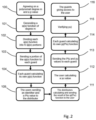
- Figure 1 shows a diagram of the first embodiment of the method of the invention. This implementation provides the possibility of accessing a resource anonymously.
- the second implementation distributes credential generation among a set of D distributors (1) that are assumed to be honest, guaranteeing the anonymity of the users (3) with respect to the guards (2) and the impossibility of generating fraudulent accreditations, even in a post-quantum scenario, unless either all the distributors (1) or all the guards (2) agree to violate the system.
- the distributors (1) first agree (100) on a modular value p and the degree m of a polynomial q ( x ) to be built.
- each distributor (1) independently generates (101) a polynomial q i ( x ) of degree m and modulo p.
- p j ( x ) is the result of adding up all the functions received from each distributor (1), such that the polynomial of each guard (2) cannot be known by any distributor (1), unless all of them agree to share their polynomial q i ( x ) and violate the system.
- the users (3) send (109) their identification along with a P tu integer such that p > P tu to each of the distributors (1). These are responsible for ensuring that there are no duplicates of P tu , in which case, the user (3) will be prompted to choose a different P tu or he/she will be assigned one agreed upon by the distributors (1).
- the third proposed implementation allows maintaining the anonymity of users (3) also with respect to the distributors (1).
- this implementation guarantees the anonymity of users (3) with respect to any authority involved, making it impossible for information extracted from compromised authorities to allow the generation of malicious credentials as long as there is an uncompromised authority and there is no solution for the discrete logarithm problem (current basis of security in public key cryptographic systems). Therefore, this implementation allows the privacy of the user (3) to be protected during the registration phase, eliminating the connection existing between the identity of the user (3) and his/her credentials.
- homomorphic cryptography is used to hide the credential information that distributors (1) have access to.
- the implementation presented guarantees the anonymity of users (3) with respect to the authorities (even in post-quantum scenarios), preventing the generation of malicious credentials as long as the problem of the discrete logarithm (basis of many current public key cryptographic protocols) remain secure.
- D distributors (1) responsible for generating access credentials and a group of N guards (2) are taken into consideration.
- each user (3) In the identification phase, before starting communication with the distributors (1), each user (3) generates (108) a pair of integers s and v such that the product v*s reduction modulo (p-1) is equal to 1.
- the registration phase begins when user u privately selects an integer P tu , which, to avoid attacks based on the homomorphic properties of the modular product, contains the result of a redundancy function previously agreed upon (105). Thus, P tu it is calculated (107) as the result of the concatenation of a random value r previously generated (106) and the result of f ( r ).
- each distributor (1) calculates and sends (111) the P tu ′ m i value reduction modulo p to the user.
- access (116) is given to the user (3) after the guards (2) verify the received credential, or the requested action (116) is performed, and the user (3) is provided with guarantee (117) that the action has been performed.
Landscapes
- Engineering & Computer Science (AREA)
- Computer Security & Cryptography (AREA)
- Computer Networks & Wireless Communication (AREA)
- Signal Processing (AREA)
- Theoretical Computer Science (AREA)
- General Health & Medical Sciences (AREA)
- Bioethics (AREA)
- Computer Hardware Design (AREA)
- Software Systems (AREA)
- Physics & Mathematics (AREA)
- General Engineering & Computer Science (AREA)
- General Physics & Mathematics (AREA)
- Health & Medical Sciences (AREA)
- Storage Device Security (AREA)
Abstract


Description
- The invention relates to a distributed registration method and system for controlling anonymous access to resources and services.
- A first object of the invention relates to a computer-assisted distributed registration method that allows controlling access with limited communication between parties, minimal user interaction, and without the need to store identification information.
- Another object of the invention relates to a distributed registration system comprising means for managing anonymous access to resources and services.
- There are various solutions in the field of anonymous authentication methods and systems.
- Some solutions, such as those reflected in documents
WO2008065341A2 (MAIDSAFE FOUND ) andGB2444346 - In turn, document
WO2017145010A1 (NCHAIN HOLDINGS) describes a computer-implemented method which controls access to a digital wallet implemented using blockchain technology. The method divides a verification element (private key) into multiple fractions that are transmitted by means of a common secret between two or more nodes. To divide the secret S into fractions (n being the number of participants), a polynomial y=f(x) of degree k-1 (mod p) is constructed in a random or pseudo-random manner, where k is a threshold number and p a prime number, such that the secret can be divided into portions and later reconstructed by means of a set of known points. - Document
CN111416705A (NANJING RUBAN QUANTUM TECHNOLOGY ) introduces a system and method for electronic voting based on cryptographic anonymous identification, blockchain, and secret sharing technologies, capable of resisting quantum computing attacks and reducing computing times for the use of blind digital signatures. - Document
ES2255455A1 (SCYTL ON LINE WORLD SECURITY - However, the solutions provided by the state of the art do not allow controlling access to a guarded resource in a distributed, efficient, and simpler manner with less computational cost for the parties.
- The present invention relates to a computer-assisted method for controlling anonymous and distributed access to remote resources or services which uses one or more central authorities, or distributors, and N authorities responsible for controlling access to the resource or service, referred to as guards, wherein N is greater than or equal to 1, and wherein the method comprises the steps of:
- each of the distributors generating a qi (x) function or a mi value;
- dividing each qi (x) function or each mi value into N portions (qij (x) or mij ), such that the qi (x) function is a linear combination of the qij (x) portions or the mi value is equal to the sum total of the N portions mij ;
- each distributor sending a portion of its qij (x) function or its mij value to each guard;
- if there is more than one distributor, each guard calculating its own pj (x) function equal to the sum total of the functions received from each distributor or its own nj value equal to the sum total of the values mij received from each distributor;
- the user sending one or more distributors an identifier and a Ptu value;
- one or more distributors calculating and sending to the user the result of the generated qi (x) function for Ptu or the

- if there is more than one distributor, the user calculating a yu value equal to the reduction modulo p of the sum total of the results of the generated qi (x) function of each distributor for Ptu or of the product total of the results of the

- sending to each guard the Ptu and yu values;
- each guard calculating the result for Ptu of its own function pj (x) or the result of

- verifying that yu is equal to the reduction modulo p of the sum of the result of all own pj (x) functions or the product total of the

- giving access to a resource if the verification is positive.
- Two different methods for controlling access to a remote resource (such as an electronic voting ballot box, a blockchain, or a smart parcel box, for example) that solve the problem in controlling distributed and anonymous access to a guarded resource, can preferably be obtained from the steps of the method.
- Therefore, the aim is to give access to a resource guarded by a set of guards that distrust one another. To access the resource, all the guards must verify that the credentials presented are correct. At the same time, the credentials must not reveal any type of information about the user seeking access, guaranteeing the owner of the credential a single access to the resource.
- The first method preferably has a respectable central authority (distributor) that is assumed to be honest and is responsible for generating access credentials, regardless of the form they may take.
- Furthermore, a set of N authorities responsible for controlling access to a certain resource or service (or guards) is incorporated. The set of guards does not consider the distributor as a member. The scenario is completed with a set of m duly identified users.
- The distributor's job is twofold: first, it establishes the system by distributing credentials (regardless of the form they may take) to users and validation tools to guards and, secondly, it is responsible for auditing possible identification errors among the users and guards.
- On the one hand, only the distributor can link users to their credentials; on the other hand, the distributor is not provided with any information about how that protected resource will be used.
- Therefore, in this first method the following set of steps is followed:
- 1. System configuration
- 1.1. The central authority (or distributor) distributes enough information to the access control authorities (or guards) that it is necessary for them all to collaborate to agree on the validity of a credential.
- 1.2. The distributor generates sufficient structures to check for the prior issuance of credentials to users.
- 2. User identification and registration
- 2.1. A user sends his/her identification to the central authority.
- 2.2. The central authority verifies the received identification and the prior issuance of credentials to that user.
- 2.3. If the checking of identification and prior issuance so allow, an anonymous access credential is returned to the user.
- 3. Access control
- 3.1. The users send their access credential to all guards and the action to be performed on the resource.
- 3.2. The guards collectively agree on the validity or non-validity of the credential.
- 3.3. If correct, the action indicated by the user is performed.
- 3.4. The guards provide the user with guarantee that the action has been performed or provide the user with permission to perform the action.
- 4. Guard audit
4.1. If necessary (denial of access), the user can turn to the distributor to detect errors or malicious behaviour of any of the guards. - The second method furthermore allows distributing the responsibility for generating access credentials among a set of accredited authorities or distributors.
- Likewise, a set of N authorities, which is distinct from the set of distributors responsible for controlling access (or guards), and a set of m duly identified users are included.
- Therefore, in this second method the following set of steps is followed:
- 1. System configuration
- 1.1. Each of the distributors generates sufficient structures to be able to check for the prior issuance of credentials to users.
- 1.2. Each of the registration authorities (distributors) sends to all the access control authorities (guards) individualised information to participate in access control.
- 1.3. Each of the guards configures, with the information received from each and every one of the distributors, their access control tool.
- 2. User identification and registration
- 2.1. The users send to each and every one of the distributors, their identification along with a prior credential to build the accreditation therefrom.
- 2.2. Each of the distributors verifies the identification credentials received, returning to the user, if said credentials are correct, an anonymous access accreditation component built from the prior credential received. Therefore, this accreditation component, in isolation, is not valid for access to the resource.
- 2.3. Once all the accreditation components have been received, the user combines all of them to obtain the access accreditation.
- 3. Access control
- 3.1. The users send their access credential to all guards and the action to be performed on the resource.
- 3.2. The guards collectively agree on the validity or non-validity of the credential.
- 3.3. If the credentials are correct, the indicated action is performed, or the user is enabled to perform it.
- 3.4. If the action is performed, the guards provide the user with a guarantee that the action has been performed.
- 4. Guard audit
4.1. If necessary (such as denial of access, for example), a user can turn to the distributors to detect errors or malicious behaviour of any of the guards. - In this second method, it is considered that the prior credential and the received accreditation component can allow the user to obtain an anonymous credential that is impossible for distributors to link to his/her identity.
- The invention also relates to a system for controlling anonymous and distributed access to remote resources or services comprising a first set of one or more processing units acting as distributors, a second set of one or more processing units acting as guards, and a third set of one or more processing units acting as users, configured for carrying out the steps of the described method.
- Some of the possible applications of the method of the invention are, among others:
- Electronic voting: For controlling access to the voters' ballot box and its unique access, maintaining and respecting privacy so that the vote remains secret.
- Access to blockchains: For controlling user access in a blockchain environment, preventing the "double spending" problem that would allow malicious users to spend more resources (coins) than they actually have.
- Credit cards: For generating access credentials but requiring that the credential be only known to the user and not be stored on any server.
- Access to smart parcel boxes: Allowing courier companies to control user access to lockers (guaranteeing single access to them), with the possibility of distributing access control between the locker itself, the courier company, and the user.
- Secret sharing: By means of a counter guarded by guards to manage a "secret" (regardless of the form it may take) that should only be accessible to the members of a group, being able to force the "secret" to be only accessible if all users of the group consider it as such.
- Likewise, the following advantages are identified with respect to solutions of the state of the art:
- The protocols allow unidentified user access, allowing use thereof in sensitive contexts.
- It distributes access control, and even the attainment of credentials, maintaining the anonymity of users with respect to access control authorities or distributors.
- Despite distributing access control, communication between the different parties is limited, allowing a low computational cost implementation.
- User interaction is minimal. It only required one message to obtain credentials and another message to access the resource. It is a protocol that does not require active user participation, in which the authorities do not depend on the user response, reducing the dialogue between the parties involved, so the execution of the phases is not blocked waiting for previous results, reducing the possibility of denial-of-service attacks.
- It can be implemented without storing information on servers that act as guards or distributors, being resistant to various types of attacks.
- In summary, the method of the invention solves the problem of access to a guarded resource in a distributed, efficient, and simpler manner insofar as the dialogue between the different parties involved is reduced and with less computational cost for the parties.
- In order to complement the description being made and with the object of helping to better understand the features of the invention, in accordance with a preferred practical exemplary embodiment thereof, said description is accompanied, as an integral part thereof, by a set of drawings where, in an illustrative and non-limiting manner, the following has been represented:
-
Figure 1 shows a block diagram depicting a preferred embodiment of the first implementation of the method of the invention. -
Figure 2 shows a block diagram depicting a preferred embodiment of the second implementation of the method of the invention. -
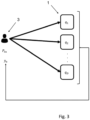
Figure 3 shows a diagram of the distribution of the polynomials generated by the distributors among the guards and the generation of the own function of each guard. -
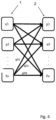
Figure 4 shows a diagram of the identification and assignment of credentials to a user who sends his/her identification to the distributors. -
Figure 5 shows a block diagram depicting a preferred embodiment of the third implementation of the method of the invention. - The present invention relates to a method for controlling anonymous and distributed access which allows controlling access to a resource or service anonymously and distributing access control and credential generation.
- Three implementation examples with post-quantum security and/or anonymity properties are presented below.
- The first example allows providing single-use credentials, guaranteeing the maintenance of user anonymity along with the guarantee that, unless all access control authorities (guards) are compromised, it is not possible to fraudulently generate valid credentials.
- In this case, the existence of an honest central entity that acts as distributor (1) is assumed, the method also comprises a set of N guards (2) responsible for controlling access and a set of duly accredited m users (3).
- The distributor (1) is responsible for establishing the system by distributing credentials to users (3) and auditing possible identification errors among the users (3) and guards (2).
- On the one hand, in this case, only the distributor (1) can link users (3) to their credentials; while on the other hand, the distributor (1) is not provided with any information about how the protected resource will be used.
- This first embodiment of the method of the invention begins with the generation (100) of a sufficiently large prime number p, and the generation (101) of a polynomial of degree m, taking into consideration the result modulo p, when it is necessary to calculate the value of the polynomial for a specific value x. The value of m, the maximum degree of the polynomial, must be less than p-1, and it is not necessary to take into consideration a polynomial with all coefficients other than zero:

- Once q(x) is generated, the authority divides (102) it into N polynomials (pj (x)):


- Each of the fractional polynomials is assigned and sent (103) securely to each of the guards (2). Therefore, unless all guards (2) collaborate, it is impossible for a subset of guards (2) to obtain the original polynomial q(x).
- Once the system has been configured, users (3) are allowed to obtain their credentials. To that end, the users (3) send (109) their identifications to the distributor (1), which once verified as relevant, the distributor (1) generates a random Ptu value and use the polynomial to calculate and send (111) to the user (3) the (Ptu , q(Ptu )) point of the polynomial q(x). These points function as anonymous credentials for the guards (2) that guard the resource. The distributor (1) is responsible for not generating two points with the same Ptu coordinate.
- Unless the number of users (3) exceeds the limit m, it is impossible for any set of users (3) to forge new credentials.
- In the proposed method, the size of modulo p has no relevant influence on the security of the system, but it must be greater than m. Furthermore, the use of modular arithmetic limits the size of credentials while not restricting working with a large number of users (3). Therefore, for example, a value of m of 30 bits is not large in terms of computational time and is large enough to provide credentials to everyone on earth.
- Once the credentials have been delivered, for the users (3) to be able to access the resource or service, they must send (113) their credentials to all the guards (2) which calculate (114) the result of pj (Ptu ), and collaborate to verify (115) that the received credential (Ptu , q(Ptu )) meets the following:

- Finally, access is given (116) to the user (3) after the guards (2) verify the received credential.
-
Figure 1 shows a diagram of the first embodiment of the method of the invention. This implementation provides the possibility of accessing a resource anonymously. - The second implementation distributes credential generation among a set of D distributors (1) that are assumed to be honest, guaranteeing the anonymity of the users (3) with respect to the guards (2) and the impossibility of generating fraudulent accreditations, even in a post-quantum scenario, unless either all the distributors (1) or all the guards (2) agree to violate the system.
- To initially configure the system, the distributors (1) first agree (100) on a modular value p and the degree m of a polynomial q(x) to be built. Next, each distributor (1) independently generates (101) a polynomial qi (x) of degree m and modulo p. This polynomial qi (x) is divided (102) independently and freely into N complementary qij (x)portions, such that:

- Next, the distributors (1) send (103) over a secure channel to each guard (2) one of the partitions qij. In this way, each guard (2) receives the partitions from each of the distributors (1) and calculates (104) its own polynomial pj (x) as:

- Therefore, pj (x) is the result of adding up all the functions received from each distributor (1), such that the polynomial of each guard (2) cannot be known by any distributor (1), unless all of them agree to share their polynomial qi (x) and violate the system.
- Furthermore, with respect to the polynomials known by the distributors (1) and the guards (2), the following is met:

- To obtain their credentials, the users (3) send (109) their identification along with a Ptu integer such that p > Ptu to each of the distributors (1). These are responsible for ensuring that there are no duplicates of Ptu, in which case, the user (3) will be prompted to choose a different Ptu or he/she will be assigned one agreed upon by the distributors (1).
- Each distributor (1) checks the identification of the user (3) and, if it is correct, responds by calculating and sending (111) the result of qi (Ptu ) mod p. Once the response is received from all the distributors (1), the users (3) can calculate (112) their credentials as:

- Once the credentials have been delivered, for the users to be able to access the resource or service, they must send (113) their credentials (Ptu ,yu ) to all the guards which must calculate (114) the result of pj (Ptu ), and collaborate to verify (115) that the received credential meets the following:

- Finally, access is given (116) to the user (3) after the guards (2) verify the received credential.
- The third proposed implementation allows maintaining the anonymity of users (3) also with respect to the distributors (1). In fact, this implementation guarantees the anonymity of users (3) with respect to any authority involved, making it impossible for information extracted from compromised authorities to allow the generation of malicious credentials as long as there is an uncompromised authority and there is no solution for the discrete logarithm problem (current basis of security in public key cryptographic systems). Therefore, this implementation allows the privacy of the user (3) to be protected during the registration phase, eliminating the connection existing between the identity of the user (3) and his/her credentials. For this work, homomorphic cryptography is used to hide the credential information that distributors (1) have access to. The implementation presented guarantees the anonymity of users (3) with respect to the authorities (even in post-quantum scenarios), preventing the generation of malicious credentials as long as the problem of the discrete logarithm (basis of many current public key cryptographic protocols) remain secure.
- In this implementation, D distributors (1) responsible for generating access credentials and a group of N guards (2) are taken into consideration.
- The configuration of the system implies that the distributors (1) agree (100) in advance on a prime modular value p, and that each of the distributors (1) generates (101) a random mi integer less than (p-1). Furthermore, the distributors (1) agree (105) on a redundancy function f(x). Next, each distributor (1) divides (102) the mi integer into N portions such that:

- The portions mij are sent (103) to the guards (2) through secure channels. Each guard (2) can then calculate (104) its own value from the portions received from the distributors (1):

- Therefore, at the end of the distribution phase, both the distributors (1) and the guards (2) have different information to build the same secret integer m that is never stored anywhere. That is, m is the result of the sums:

- In the identification phase, before starting communication with the distributors (1), each user (3) generates (108) a pair of integers s and v such that the product v*s reduction modulo (p-1) is equal to 1. The registration phase begins when user u privately selects an integer Ptu, which, to avoid attacks based on the homomorphic properties of the modular product, contains the result of a redundancy function previously agreed upon (105). Thus, Ptu it is calculated (107) as the result of the concatenation of a random value r previously generated (106) and the result of f(r).
- The generated value will be part of the credential of the user (3), so in order for the distributors (1) to not be able to link the received credential to the identifier of the user (3), the integer Ptu is masked as

- If the identification is correct and it is previously checked (110) that there is no prior issuance of credentials to said user (3), each distributor (1) calculates and sends (111) the

- For a sufficiently large p value, the probability that two users (3) generate the same Ptu is extremely low, practically negligible with p values of 1024 bits, which is a conservative number of bits by current standards.
- Once the response from the distributors (1) is received, the user (3) can calculate (112) his/her access credentials as:

- Such that:

- Furthermore,


- Finally, access (116) is given to the user (3) after the guards (2) verify the received credential, or the requested action (116) is performed, and the user (3) is provided with guarantee (117) that the action has been performed.
Claims (8)
- A computer-assisted method for controlling anonymous and distributed access to remote resources or services which uses one or more central authorities, or distributors (1), and N authorities responsible for controlling access to the resource or service, referred to as guards (2), wherein N is greater than or equal to 1, and wherein the method comprises the steps of:- the distributors (1) agreeing (100) on a prime p value, such that the generated polynomial qi (x) is obtained taking into consideration the result reduction modulo p;- each of the distributors (1) generating (101) a qi (x) function or a mi value;- dividing (102) each qi (x) function or each mi value into N portions, such that the qi (x) function is a linear combination of the qij (x) portions or the mi value is equal to the sum total of the N portions mij ;- each distributor (1) sending (103) a portion of its qij (x) function or its mij value to each guard (2);- if there is more than one distributor (1), each guard (2) calculating (104) its own pj (x) function equal to the sum total of the functions received from each distributor or its own nj value equal to the sum total of the values received from each distributor;- a user (3) sending (109) to the one or more distributors an identifier and, if more than one distributor is taken into consideration, a Ptu value;- one or more distributors (1) calculating and sending (111) to the user (3) the result of the generated qi (x) function for Ptu or the
 - if there is more than one distributor (1), the user calculating (112) a yu value equal to the reduction modulo p of the sum total of the results of the generated qi (x) function of each distributor (1) for Ptu or of the product total of the results of the
 - sending (113) to each guard (2) the Ptu and yu values;- each guard (2) calculating (114) the result for Ptu of its own function pj (x) or the result of
 - verifying (115) that yu is equal to the reduction modulo p of the sum of the result of all own pj (x) functions or the product total of the
 - giving access (116) to a resource if the verification is positive.
 - The method according to claim 1, wherein the distributors (1) agree (105) on a redundancy function f and the user (3) randomly generates (106) a value r, such that Ptu is calculated (107) as the concatenation of r and f(r).
- The method according to any of claims 1 to 2, wherein, if there is more than one distributor (1), the user (3) generates two values (108) s and v, such that the product s*v reduction modulo (p-1) is equal to 1; and wherein the value that is sent (109) to the one or more distributors along with the identifier is


- The method according to any of claims 1 to 3, wherein in the step of the one or more distributors (1) calculating and sending (111) to the user (3) the result of the generated qi (x) function for Ptu or of the

- The method according to any of claims 1 to 4, wherein the user (3) specifies an action to be performed on a resource to the guards (2), which perform said action or give access (116) to the user (3) to perform the action if the verification step is positive and provide the user (3) with guarantee (117) that the action has been performed.
- A system for controlling anonymous and distributed access to remote resources or services comprising a first set of one or more processing units acting as distributors, a second set of one or more processing units acting as guards, and a third set of one or more processing units acting as users, configured for carrying out the steps of:- each of the distributors (1) generating (101) a qi (x) function or a mi value;- dividing (102) each qi (x) function or each mi value into N portions, such that the qi (x) function is a linear combination of the qij (x) portions or the mi value is equal to the sum total of the N portions mij ;- each distributor (1) sending (103) a portion of its qij (x) function or its mij value to each guard (2);- if there is more than one distributor (1), each guard (2) calculating (104) its own pj (x) function equal to the sum total of the functions received from each distributor or its own nj value equal to the sum total of the values received from each distributor;- a user (3) sending (109) to the one or more distributors an identifier and a Ptu value;- one or more distributors (1) calculating and sending (111) to the user (3) the result of the generated qi (x) function for Ptu or the
 - if there is more than one distributor (1), the user calculating (112) a yu value equal to the reduction modulo p of the sum total of the results of the generated qi (x) function of each distributor (1) for Ptu or of the product total of the results of the
 - sending (113) to each guard (2) the Ptu and yu values;- each guard (2) calculating (114) the result for Ptu of its own function pj (x) or the result of
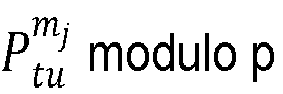 - verifying (115) that yu is equal to the reduction modulo p of the sum of the result of all own pj (x) functions or the product total of the
 - giving access (116) to a resource if the verification is positive.
 - A computer program, characterised in that it is adapted to cause the processing units to perform the steps of the method according to any of claims 1 to 5.
- A machine-readable storage device, characterised in that it comprises the computer program according to claim 7.
Applications Claiming Priority (2)
| Application Number | Priority Date | Filing Date | Title |
|---|---|---|---|
| ES202130890A ES2904423B2 (en) | 2021-09-22 | 2021-09-22 | DISTRIBUTED LOG METHOD FOR ANONYMOUS ACCESS CONTROL |
| PCT/ES2022/070587 WO2023047003A1 (en) | 2021-09-22 | 2022-09-16 | Distributed registration method for controlling anonymous access |
Publications (2)
| Publication Number | Publication Date |
|---|---|
| EP4407924A1 true EP4407924A1 (en) | 2024-07-31 |
| EP4407924A4 EP4407924A4 (en) | 2025-10-01 |
Family
ID=80997512
Family Applications (1)
| Application Number | Title | Priority Date | Filing Date |
|---|---|---|---|
| EP22872265.8A Pending EP4407924A4 (en) | 2021-09-22 | 2022-09-16 | DISTRIBUTED REGISTRATION PROCESS FOR CONTROLLING ANONYMOUS ACCESS |
Country Status (4)
| Country | Link |
|---|---|
| US (1) | US20250119276A1 (en) |
| EP (1) | EP4407924A4 (en) |
| ES (1) | ES2904423B2 (en) |
| WO (1) | WO2023047003A1 (en) |
Family Cites Families (10)
| Publication number | Priority date | Publication date | Assignee | Title |
|---|---|---|---|---|
| ATE424593T1 (en) | 2001-12-12 | 2009-03-15 | Scytl Secure Electronic Voting | METHOD FOR SECURE ELECTRONIC VOTING AND CRYPTOGRAPHIC PROTOCOLS AND COMPUTER PROGRAMS THEREOF |
| GB2446199A (en) | 2006-12-01 | 2008-08-06 | David Irvine | Secure, decentralised and anonymous peer-to-peer network |
| GB2446171A (en) | 2006-12-01 | 2008-08-06 | David Irvine | Anonymous authentication in a distributed or peer-to-peer network |
| JP6799061B2 (en) | 2016-02-23 | 2020-12-09 | エヌチェーン ホールディングス リミテッドNchain Holdings Limited | Secure multi-party loss resistant storage and transfer of cryptographic keys for blockchain-based systems combined with wallet management systems |
| EP3379767B1 (en) * | 2017-03-24 | 2021-01-13 | Hewlett-Packard Development Company, L.P. | Distributed authentication |
| KR102667837B1 (en) * | 2017-08-30 | 2024-05-21 | 인퍼, 인코포레이티드 | High-precision privacy-preserving real-value function evaluation |
| US11240220B2 (en) * | 2018-06-13 | 2022-02-01 | Paypal, Inc. | Systems and methods for user authentication based on multiple devices |
| WO2020033033A1 (en) * | 2018-08-09 | 2020-02-13 | Hrl Laboratories, Llc | Anonymous allocation and majority voting in a compromised environment |
| CN109495248B (en) * | 2018-11-23 | 2021-07-20 | 曹鸣佩 | A supervised privacy communication method based on a secret sharing scheme |
| CN111416705A (en) | 2020-02-29 | 2020-07-14 | 南京如般量子科技有限公司 | Quantum computing resistance alliance chain voting system and method based on identity cryptography |
-
2021
- 2021-09-22 ES ES202130890A patent/ES2904423B2/en active Active
-
2022
- 2022-09-16 EP EP22872265.8A patent/EP4407924A4/en active Pending
- 2022-09-16 US US18/694,744 patent/US20250119276A1/en active Pending
- 2022-09-16 WO PCT/ES2022/070587 patent/WO2023047003A1/en not_active Ceased
Also Published As
| Publication number | Publication date |
|---|---|
| WO2023047003A1 (en) | 2023-03-30 |
| ES2904423A1 (en) | 2022-04-04 |
| US20250119276A1 (en) | 2025-04-10 |
| ES2904423B2 (en) | 2023-01-09 |
| EP4407924A4 (en) | 2025-10-01 |
Similar Documents
| Publication | Publication Date | Title |
|---|---|---|
| Zaghloul et al. | d-BAME: distributed blockchain-based anonymous mobile electronic voting | |
| Joaquim et al. | REVS–a robust electronic voting system | |
| Hao et al. | Every Vote Counts: Ensuring Integrity in {Large-Scale} Electronic Voting | |
| KR102171568B1 (en) | A voter terminal, an authentication server, a voting server, and Electronic voting system | |
| US6651167B1 (en) | Authentication method and system employing secret functions in finite Abelian group | |
| Weber et al. | On coercion-resistant electronic elections with linear work | |
| KR20060010873A (en) | Verifiable Secret Shuffles and Their Applications to Electronic Voting | |
| KR102372718B1 (en) | Method for decentralized group signature for issuer anonymized credential system | |
| Kiayias et al. | An efficient E2E verifiable e-voting system without setup assumptions | |
| Budurushi et al. | Pretty understandable democracy-a secure and understandable internet voting scheme | |
| Haenni et al. | Cast-as-intended verification in electronic elections based on oblivious transfer | |
| Kulyk et al. | Coercion-resistant proxy voting | |
| Azougaghe et al. | An electronic voting system based on homomorphic encryption and prime numbers | |
| EP3041165B1 (en) | A method for the verification of the correct content of an encoded message | |
| Larriba et al. | How to grant anonymous access | |
| Ye et al. | A coercion-resistant e-voting system based on blockchain technology | |
| Qureshi et al. | VSPReP: verifiable, secure and privacy-preserving remote polling with untrusted computing devices | |
| Clarkson et al. | Civitas: A secure remote voting system | |
| US20250119276A1 (en) | Distributed registration method for controlling anonymous access | |
| Sheikhi et al. | Receipt-Free Electronic Voting from zk-SNARK. | |
| Sarier | Efficient and usable coercion-resistant E-voting on the blockchain | |
| Liu et al. | Privacy-preserving and verifiable electronic voting scheme based on smart contract of blockchain | |
| Akinyokun et al. | Receipt-Free, Universally and Individually Verifiable Poll Attendance | |
| Clarkson et al. | Civitas: A secure voting system | |
| Sangroula et al. | Blockchain based anonymous voting system using ring-signature |
Legal Events
| Date | Code | Title | Description |
|---|---|---|---|
| STAA | Information on the status of an ep patent application or granted ep patent |
Free format text: STATUS: THE INTERNATIONAL PUBLICATION HAS BEEN MADE |
|
| PUAI | Public reference made under article 153(3) epc to a published international application that has entered the european phase |
Free format text: ORIGINAL CODE: 0009012 |
|
| STAA | Information on the status of an ep patent application or granted ep patent |
Free format text: STATUS: REQUEST FOR EXAMINATION WAS MADE |
|
| 17P | Request for examination filed |
Effective date: 20240416 |
|
| AK | Designated contracting states |
Kind code of ref document: A1 Designated state(s): AL AT BE BG CH CY CZ DE DK EE ES FI FR GB GR HR HU IE IS IT LI LT LU LV MC MK MT NL NO PL PT RO RS SE SI SK SM TR |
|
| DAV | Request for validation of the european patent (deleted) | ||
| DAX | Request for extension of the european patent (deleted) | ||
| A4 | Supplementary search report drawn up and despatched |
Effective date: 20250903 |
|
| RIC1 | Information provided on ipc code assigned before grant |
Ipc: H04L 9/06 20060101AFI20250828BHEP |