EP4407508A1 - Text editing method and apparatus - Google Patents
Text editing method and apparatus Download PDFInfo
- Publication number
- EP4407508A1 EP4407508A1 EP22871965.4A EP22871965A EP4407508A1 EP 4407508 A1 EP4407508 A1 EP 4407508A1 EP 22871965 A EP22871965 A EP 22871965A EP 4407508 A1 EP4407508 A1 EP 4407508A1
- Authority
- EP
- European Patent Office
- Prior art keywords
- text
- text editing
- input
- function
- editing function
- Prior art date
- Legal status (The legal status is an assumption and is not a legal conclusion. Google has not performed a legal analysis and makes no representation as to the accuracy of the status listed.)
- Pending
Links
Images



Classifications
-
- G—PHYSICS
- G06—COMPUTING OR CALCULATING; COUNTING
- G06F—ELECTRIC DIGITAL DATA PROCESSING
- G06F40/00—Handling natural language data
- G06F40/10—Text processing
- G06F40/166—Editing, e.g. inserting or deleting
-
- G—PHYSICS
- G06—COMPUTING OR CALCULATING; COUNTING
- G06F—ELECTRIC DIGITAL DATA PROCESSING
- G06F3/00—Input arrangements for transferring data to be processed into a form capable of being handled by the computer; Output arrangements for transferring data from processing unit to output unit, e.g. interface arrangements
- G06F3/01—Input arrangements or combined input and output arrangements for interaction between user and computer
- G06F3/02—Input arrangements using manually operated switches, e.g. using keyboards or dials
- G06F3/023—Arrangements for converting discrete items of information into a coded form, e.g. arrangements for interpreting keyboard generated codes as alphanumeric codes, operand codes or instruction codes
- G06F3/0233—Character input methods
-
- G—PHYSICS
- G06—COMPUTING OR CALCULATING; COUNTING
- G06F—ELECTRIC DIGITAL DATA PROCESSING
- G06F3/00—Input arrangements for transferring data to be processed into a form capable of being handled by the computer; Output arrangements for transferring data from processing unit to output unit, e.g. interface arrangements
- G06F3/01—Input arrangements or combined input and output arrangements for interaction between user and computer
- G06F3/048—Interaction techniques based on graphical user interfaces [GUI]
- G06F3/0484—Interaction techniques based on graphical user interfaces [GUI] for the control of specific functions or operations, e.g. selecting or manipulating an object, an image or a displayed text element, setting a parameter value or selecting a range
- G06F3/04842—Selection of displayed objects or displayed text elements
-
- G—PHYSICS
- G06—COMPUTING OR CALCULATING; COUNTING
- G06F—ELECTRIC DIGITAL DATA PROCESSING
- G06F3/00—Input arrangements for transferring data to be processed into a form capable of being handled by the computer; Output arrangements for transferring data from processing unit to output unit, e.g. interface arrangements
- G06F3/01—Input arrangements or combined input and output arrangements for interaction between user and computer
- G06F3/048—Interaction techniques based on graphical user interfaces [GUI]
- G06F3/0487—Interaction techniques based on graphical user interfaces [GUI] using specific features provided by the input device, e.g. functions controlled by the rotation of a mouse with dual sensing arrangements, or of the nature of the input device, e.g. tap gestures based on pressure sensed by a digitiser
- G06F3/0488—Interaction techniques based on graphical user interfaces [GUI] using specific features provided by the input device, e.g. functions controlled by the rotation of a mouse with dual sensing arrangements, or of the nature of the input device, e.g. tap gestures based on pressure sensed by a digitiser using a touch-screen or digitiser, e.g. input of commands through traced gestures
-
- G—PHYSICS
- G06—COMPUTING OR CALCULATING; COUNTING
- G06F—ELECTRIC DIGITAL DATA PROCESSING
- G06F3/00—Input arrangements for transferring data to be processed into a form capable of being handled by the computer; Output arrangements for transferring data from processing unit to output unit, e.g. interface arrangements
- G06F3/01—Input arrangements or combined input and output arrangements for interaction between user and computer
- G06F3/048—Interaction techniques based on graphical user interfaces [GUI]
- G06F3/0487—Interaction techniques based on graphical user interfaces [GUI] using specific features provided by the input device, e.g. functions controlled by the rotation of a mouse with dual sensing arrangements, or of the nature of the input device, e.g. tap gestures based on pressure sensed by a digitiser
- G06F3/0488—Interaction techniques based on graphical user interfaces [GUI] using specific features provided by the input device, e.g. functions controlled by the rotation of a mouse with dual sensing arrangements, or of the nature of the input device, e.g. tap gestures based on pressure sensed by a digitiser using a touch-screen or digitiser, e.g. input of commands through traced gestures
- G06F3/04883—Interaction techniques based on graphical user interfaces [GUI] using specific features provided by the input device, e.g. functions controlled by the rotation of a mouse with dual sensing arrangements, or of the nature of the input device, e.g. tap gestures based on pressure sensed by a digitiser using a touch-screen or digitiser, e.g. input of commands through traced gestures for inputting data by handwriting, e.g. gesture or text
-
- G—PHYSICS
- G06—COMPUTING OR CALCULATING; COUNTING
- G06F—ELECTRIC DIGITAL DATA PROCESSING
- G06F9/00—Arrangements for program control, e.g. control units
- G06F9/06—Arrangements for program control, e.g. control units using stored programs, i.e. using an internal store of processing equipment to receive or retain programs
- G06F9/44—Arrangements for executing specific programs
- G06F9/451—Execution arrangements for user interfaces
-
- G—PHYSICS
- G06—COMPUTING OR CALCULATING; COUNTING
- G06F—ELECTRIC DIGITAL DATA PROCESSING
- G06F2203/00—Indexing scheme relating to G06F3/00 - G06F3/048
- G06F2203/048—Indexing scheme relating to G06F3/048
- G06F2203/04808—Several contacts: gestures triggering a specific function, e.g. scrolling, zooming, right-click, when the user establishes several contacts with the surface simultaneously; e.g. using several fingers or a combination of fingers and pen
Definitions
- This application pertains to the field of communication technologies, and specifically relates to a text editing method and apparatus.
- a user When editing text in a note, a user needs to select a target function option with a finger in advance before changing text in an editing area if the user wants to change a text size, a color, or a font. However, this changes all text in the editing area. The user has to select a text area that the user wants to change in the editing area in advance, and then select a function option for text setting. This requires the user to frequently switch between selecting a target text editing area and selecting a function option for text setting.
- a text function option such as font enlargement
- all text in the text area is enlarged.
- the user has to select a target change area in advance, and then select a text function option, so as to change a paragraph font setting of the target area. If there is a large amount of text needing to be changed, the user needs to frequently select a target text area, and then select a function option, affecting text operating experience of using notes by the user.
- efficiency of a single-finger operation is low, and other fingers cannot be fully utilized for additional editing operations.
- Embodiments of this application aim to provide a text editing method and apparatus, to resolve a problem of low efficiency of a text editing operation in notes in the prior art.
- an embodiment of this application provides a text editing method, including:
- an embodiment of this application provides a text editing apparatus, including:
- an embodiment of this application provides an electronic device.
- the electronic device includes a processor, a memory, and a program or instructions stored in the memory and executable on the processor. When the program or the instructions are executed by the processor, steps of the method according to the first aspect are implemented.
- an embodiment of this application provides a readable storage medium.
- the readable storage medium stores a program or instructions. When the program or the instructions are executed by a processor, steps of the method according to the first aspect are implemented.
- an embodiment of this application provides a chip.
- the chip includes a processor and a communication interface, the communication interface is coupled to the processor, and the processor is configured to run a program or instructions to implement the method according to the first aspect.
- a computer program product is provided.
- the computer program product is stored in a non-volatile storage medium.
- the computer program product is executed by at least one processor to implement steps of the method according to the first aspect.
- an electronic device is provided, and configured to perform steps of the method according to the first aspect.
- a first text editing function in a case that a first text editing function is enabled, a first input performed on to-be-edited text by a user is received, where the first input is used for text selection; and a text editing operation associated with a target text editing function is performed, in response to the first input, on text selected based on the first input.
- the user can select a plurality of non-consecutive text paragraphs, and the text editing operation associated with the target text editing function is automatically performed on the selected text paragraphs, where the target text editing function is the same as or different from the first text editing function, to prevent the user from frequently switching between a text editing area and a function option for text setting, thereby improving text editing efficiency.
- first”, “second”, and the like in this specification and claims of this application are used to distinguish between similar objects instead of describing a specific order or sequence. It should be understood that, terms used in such a way are interchangeable in proper circumstances, so that the embodiments of this application can be implemented in an order other than the order illustrated or described herein.
- Objects classified by "first”, “second”, and the like are usually of a same type, and the number of objects is not limited. For example, there may be one or more first objects.
- "and/or" indicates at least one of connected objects, and a character “/" generally indicates an "or” relationship between associated objects.
- this application provides a text editing method, specifically including the following steps.
- Step 11 In a case that a first text editing function is enabled, receive a first input performed on to-be-edited text by a user, where the first input is used for text selection.
- the received first input performed on the to-be-edited text by the user may include N text selection inputs for selecting N non-consecutive parts of text performed on the to-be-edited text by the user, where N is a positive integer.
- Step 12 Control, in response to the first input, text selected based on the first input to perform a text editing operation associated with a target text editing function.
- the text editing operation associated with the target text editing function may be performed, in response to the N th first input used for text selection, on the selected N th non-consecutive part of text.
- the text editing operation associated with the target text editing function is simultaneously performed, in response to the N first inputs used for text selection, on the selected N non-consecutive parts of text.
- the target text editing function is the same as or different from the first text editing function.
- the target text editing function in an input process of text selection, in a case that an input operation performed by the user to update a text editing function is not received, the target text editing function is the same as the first text editing function.
- the target text editing function in a case that an input operation performed by the user to update a text editing function is received, the target text editing function is different from the first text editing function, and the target text editing function is an updated second text editing function.
- the first text editing function in the case that the first text editing function is enabled, the first input performed on the to-be-edited text by the user is received, where the first input is used for text selection; and the text editing operation associated with the target text editing function is performed, in response to the first input, on the text selected based on the first input.
- the user in the case that the first text editing function is enabled, the user can select a plurality of non-consecutive text paragraphs, and the text editing operation associated with the target text editing function is automatically performed on the selected text paragraphs, where the target text editing function is the same as or different from the first text editing function, to prevent the user from frequently switching between a text editing area and a function option for text setting, thereby improving text editing efficiency.
- step 11 includes: receiving a first touch sub-input performed on a first position in the to-be-edited text by a first finger of the user, and in a case that it is determined that the first finger is stationary, receiving a second touch sub-input performed on a second position in the to-be-edited text by a second finger of the user, where text between the first position and the second position is the selected text.
- the user when the user edits text in a text editing area of a note and wants to change a size, a color, a font, an underline, or the like of text in some paragraphs, the user uses a first finger (for example, an index finger shown in FIG. 2 ) to first select a function option for text editing, for example, select an option to underline text, and places the first finger (for example, the index finger) at a start position (a first position) of a target paragraph; and then starts to use a second finger, and moves and places the second finger at an end position (a second position) of the target paragraph.
- a first finger for example, an index finger shown in FIG. 2
- a function option for text editing for example, select an option to underline text
- the first finger for example, the index finger
- a cursor pops up on a screen
- a position of the cursor indicates the end position of the target paragraph
- the end position of the target paragraph can be adjusted by moving the cursor left or right.
- FIG. 2 shows one finger, but in this method there should actually be two different fingers.
- the index finger is in the first position, and at the same time, a middle finger is in the second position.
- a multi-finger characteristic of human can be fully utilized, different fingers trigger different instructions and operate different areas, and they are dynamically associated to increase interaction manners of text editing and improve operating experience of the user.
- this can reduce repeated operations for the user during text editing, improve operating efficiency of editing text by the user, and reduce time costs of the user.
- step 11 includes: receiving a sliding input for sliding from a third position to a fourth position along a first direction performed by a finger of the user, where text between the third position and the fourth position is the selected text.
- the user when the user edits text in a text editing area a of a note and wants to change a size, a color, a font, an underline, or the like of text in some paragraphs, the user uses a first finger (for example, an index finger shown in FIG. 2 ) to first select a function option for text editing, for example, select an option to underline text, places the index finger at a start position (a third position) of a target paragraph, and then drags and slides the index finger to an end position (a fourth position) of the target paragraph.
- a first finger for example, an index finger shown in FIG. 2
- a function option for text editing for example, select an option to underline text
- places the index finger at a start position (a third position) of a target paragraph places the index finger at a start position (a third position) of a target paragraph, and then drags and slides the index finger to an end position (a fourth position) of the target paragraph.
- a cursor pops up on a screen at a position of the index finger, a position of the cursor indicates the end position of the target paragraph, and the end position of the target paragraph can be adjusted by moving the cursor left or right.
- text between the third position and the fourth position is the selected text and is successfully set with an underline, and text in other areas is unchanged.
- enabling the first text editing function is further included, which specifically includes the following steps: receiving an input operation performed on an option of the first text editing function by the user; and enabling the first text editing function in response to the input operation.
- the input operation includes but is not limited to: tapping, pressing, sliding, dragging, double-tapping, or the like.
- an input operation, performed by the user, of tapping an icon of any first text editing function in a function option area b for text setting is received, and the first text editing function is enabled in response to the input operation.
- the method before step 12, the method further includes:
- Different second inputs correspond to different second text editing functions.
- different second inputs are associated with different second text editing functions.
- association relationships or correspondences between different second inputs and different second text editing functions may be preset.
- the corresponding second text editing function is a bold font function
- the corresponding second text editing function is a red font function
- the corresponding second text editing function is an underline function
- step 11 includes receiving a first touch sub-input performed on a first position in the to-be-edited text by a first finger of the user, and in a case that it is determined that the first finger is stationary, receiving a second touch sub-input performed on a second position in the to-be-edited text by a second finger of the user: when the user selects the end position (the second position) of the target paragraph, because a setting option of the first text editing function has been selected, if the user does not want to use the first text editing function for text editing at this time, there is no need to stop an input operation for text selection to re-select a text editing function in the function option area b for text setting, and the user only needs to keep the first finger stationary and perform a second input operation by using the second finger, to switch from the first text editing function to the second text editing function.
- step 11 includes receiving a sliding input for sliding from a third position to a fourth position along a first direction performed by a finger of the user: when the user selects the end position (the fourth position) of the target paragraph by using one finger, because a setting option of the first text editing function has been selected, if the user does not want to use the first text editing function for text editing at this time, there is no need to stop an input operation for text selection to re-select a text editing function in the function option area b for text setting, and the user only needs to keep the finger that performs the input operation for text selection stationary and perform a second input operation (for example, a double-tap operation) by using another finger, to switch from the first text editing function to the second text editing function.
- a second input operation for example, a double-tap operation
- the user can conveniently switch editing functions, and reduce repeated single-finger operations during text editing. This can remove unnecessary or redundant single-finger operations, improve operating efficiency of editing text by the user, and reduce time costs of the user.
- the method before step 12, the method further includes:
- step 11 includes receiving a first touch sub-input performed on a first position in the to-be-edited text by a first finger of the user, and in a case that it is determined that the first finger is stationary, receiving a second touch sub-input performed on a second position in the to-be-edited text by a second finger of the user: as shown in FIG.
- the user when the user edits text in a text editing area a of a note and wants to change a size, a color, a font, an underline, or the like of text in some paragraphs, the user uses a first finger to first select a target text function option, for example, select an option to add a strikethrough, and places the first finger at a start position of a target paragraph; and then starts to use a second finger, and moves or places the second finger at an end position of the target paragraph.
- a target text function option for example, select an option to add a strikethrough
- FIG. 3 shows only one finger, but this is merely an example for description.
- the finger at the second position and performing the third input is the second finger.
- the finger at the second position may be the second finger, and the finger performing the third input may be a third finger. This is not limited herein.
- step 11 includes receiving a sliding input for sliding from a third position to a fourth position along a first direction performed by a finger of the user: when the user selects an end position (the fourth position) of a target paragraph by using one finger, because a setting option of the first text editing function has been selected, if the user does not want to use the first text editing function for text editing at this time, there is no need to stop an input operation for text selection to re-select a text editing function in a function option area b for text setting.
- the user only needs to keep the finger that performs the input operation for text selection stationary and perform a third input operation (for example, a double-tap operation) by using another finger, and a recent text function option box c of the user pops up at a current position on a screen, and then the user needs to select a target function option (the second text editing function) by using a second finger. Then an area between the first finger and the second finger is set according to the selected function option (the second text editing function).
- a target function option the second text editing function
- step 12 includes: performing, in response to the first input, a text editing operation associated with the second text editing function on the text selected based on the first input.
- the target text editing function is the second text editing function that is different from the first text editing function. In this way, the user can conveniently switch text editing functions, to improve text editing efficiency, thereby improving operating experience of using notes by the user.
- the method mainly includes the following steps.
- Step 101 When a user has a requirement for recording matters in text, start notes to display a note editing interface.
- Step 102 After the note interface is displayed, select a note adding option to display a text editing area.
- Step 103 Edit text in the text editing area, to complete recording of matters according to a personal requirement.
- Step 104 After text editing is completed, detect whether the user determines to perform a function option setting on text in the text editing area. If yes, step 105 is performed, or if no, step 104 is performed.
- Step 105 Use a first finger to select a target function option (a first text editing function), such as a text size, a font, or a color, in a text function option area.
- a target function option a first text editing function
- Step 106 After the target function option is selected, place the first finger at a start position of a target paragraph, where the start position is used as a start point of a text change area.
- Step 107 Keep the first finger stationary at the start position of the target paragraph, and move or place a second finger at an end position of the target paragraph.
- Step 108 A cursor pops up at the position at which the second finger is placed, where the end position of the paragraph can be adjusted by moving the cursor.
- Step 109 Detect whether the user determines to replace the target function option (the first text editing function) selected by using the first finger. If yes, step 110 is performed, or if no, step 112 is performed.
- Step 110 Use the second finger to double-tap a screen, to display, in the form of pop-up box, frequently-used function options of the user.
- the first finger When the user wants to replace the target function option selected by using the first finger, the first finger is still stationary, the user uses the second finger to double-tap the screen, and a floating pop-up box pops up to list frequently-used function options of the user, for example, a text size, a font, a color, and a format.
- Step 111 Use the second finger to select another text function option in the pop-up box, where after the another text function option is tapped, the previous function option selected by using the first finger is replaced.
- a to-be-set text function option is selected and tapped by using the second finger, and after the tap, a background instruction is used to associatively trigger replacement of the text function option selected by using the first finger.
- Step 112 Determine whether the first finger and the second finger leave the current screen. If yes, step 113 is performed, or if no, step 109 is performed.
- Step 113 Perform a text editing operation associated with the selected function option on a text area between the first finger and the second finger.
- the selected function option for text setting is applied and takes effect. For example, if the user selects text enlargement or reduction, or a color setting, text in the area between the first finger and the second finger becomes larger or smaller, or a color changes, and other areas are unchanged.
- the foregoing solutions can implement a combination of a plurality of instructions of text editing operations, and provide a user with a novel interaction manner of text editing, to greatly improve editing efficiency of note text, reduce repetition of single-finger operations, and improve note operating experience of a user.
- the text editing method provided in the embodiments of this application may be performed by a text editing apparatus, or a control module that is in the text editing apparatus and that is configured to perform the text editing method.
- the text editing apparatus provided in the embodiments of this application is described by using an example in which the text editing apparatus performs the text editing method.
- this application provides a text editing apparatus 500, including:
- the first receiving module 501 includes: a first receiving sub-module, configured to receive a first touch sub-input performed on a first position in the to-be-edited text by a first finger of the user, and in a case that it is determined that the first finger is stationary, receive a second touch sub-input performed on a second position in the to-be-edited text by a second finger of the user, where text between the first position and the second position is the selected text.
- a first receiving sub-module configured to receive a first touch sub-input performed on a first position in the to-be-edited text by a first finger of the user, and in a case that it is determined that the first finger is stationary, receive a second touch sub-input performed on a second position in the to-be-edited text by a second finger of the user, where text between the first position and the second position is the selected text.
- the apparatus 500 further includes:
- the apparatus 500 further includes:
- the first response module 502 includes: a first response sub-module, configured to perform, in response to the first input, a text editing operation associated with the second text editing function on the text selected based on the first input.
- the apparatus 500 provided in this application receives, in the case that the first text editing function is enabled, the first input performed on the to-be-edited text by the user, where the first input is used for text selection; and performs, in response to the first input, the text editing operation associated with the target text editing function on the text selected based on the first input.
- the user can select a plurality of non-consecutive text paragraphs, and the text editing operation associated with the target text editing function is automatically performed on the selected text paragraphs, where the target text editing function is the same as or different from the first text editing function, to prevent the user from frequently switching between a text editing area and a function option for text setting, thereby improving text editing efficiency.
- the text editing apparatus in the embodiments of this application may be an apparatus, or may be a component, an integrated circuit, or a chip in a terminal.
- the apparatus may be a mobile electronic device, or may be a non-mobile electronic device.
- the mobile electronic device may be a mobile phone, a tablet computer, a notebook computer, a palmtop computer, an in-vehicle electronic device, a wearable device, an ultra-mobile personal computer (ultra-mobile personal computer, UMPC), a netbook, a personal digital assistant (personal digital assistant, PDA), or the like.
- the non-mobile electronic device may be a server, a network attached storage (Network Attached Storage, NAS), a personal computer (personal computer, PC), a television (television, TV), a teller machine, a self-service machine, or the like. This is not specifically limited in the embodiments of this application.
- the text editing apparatus in the embodiments of this application may be an apparatus with an operating system.
- the operating system may be an Android (Android) operating system, an iOS operating system, or another possible operating system. This is not specifically limited in the embodiments of this application.
- the text editing apparatus provided in the embodiments of this application can implement processes implemented in the method embodiments in FIG. 1 to FIG. 3 . To avoid repetition, details are not described herein again.
- an embodiment of this application further provides an electronic device 600, including a processor 601, a memory 602, and a program or instructions stored in the memory 602 and executable on the processor 601.
- an electronic device 600 including a processor 601, a memory 602, and a program or instructions stored in the memory 602 and executable on the processor 601.
- the program or the instructions are executed by the processor 601
- processes of the foregoing text editing method embodiments are implemented, and a same technical effect can be achieved. To avoid repetition, details are not described herein again.
- the electronic device in this embodiment of this application includes the foregoing mobile electronic device and the foregoing non-mobile electronic device.
- FIG. 7 is a schematic diagram of a hardware structure of an electronic device according to an embodiment of this application.
- the electronic device 700 includes but is not limited to components such as a radio frequency unit 701, a network module 702, an audio output unit 703, an input unit 704, a sensor 705, a display unit 706, a user input unit 707, an interface unit 708, a memory 709, and a processor 710.
- the electronic device 700 may further include a power supply (such as a battery) that supplies power to each component.
- the power supply may be logically connected to the processor 710 by using a power supply management system, to implement functions such as charging and discharging management, and power consumption management by using the power supply management system.
- the structure of the electronic device shown in FIG. 7 does not constitute a limitation on the electronic device.
- the electronic device may include components more or fewer than those shown in the figure, or combine some components, or have a different component arrangement. Details are not described herein.
- the user input unit 707 is configured to receive, in a case that a first text editing function is enabled, a first input performed on to-be-edited text by a user, where the first input is used for text selection.
- the processor 710 is configured to control, in response to the first input, text selected based on the first input to perform a text editing operation associated with a target text editing function.
- the user input unit 707 is specifically configured to receive a first touch sub-input performed on a first position in the to-be-edited text by a first finger of the user, and in a case that it is determined that the first finger is stationary, receive a second touch sub-input performed on a second position in the to-be-edited text by a second finger of the user, where text between the first position and the second position is used as the selected text.
- the user input unit 707 is further configured to receive a second input.
- the processor 710 is configured to disable the first text editing function and enable a second text editing function in response to the second input.
- the user input unit 707 is further configured to receive a third input.
- the processor 710 is further configured to display, in response to the third input, a function selection control, where the function selection control includes a control corresponding to a second text editing function.
- the user input unit 707 is configured to receive a fourth input performed on the control corresponding to the second text editing function.
- the processor 710 is further configured to disable the first text editing function and enable the second text editing function in response to the fourth input.
- the processor 710 is specifically configured to perform, in response to the first input, a text editing operation associated with the second text editing function on the text selected based on the first input.
- the electronic device 700 provided in this application receives, in the case that the first text editing function is enabled, the first input performed on the to-be-edited text by the user, where the first input is used for text selection; and performs, in response to the first input, the text editing operation associated with the target text editing function on the text selected based on the first input.
- the user can select a plurality of non-consecutive text paragraphs, and the text editing operation associated with the target text editing function is automatically performed on the selected text paragraphs, where the target text editing function is the same as or different from the first text editing function, to prevent the user from frequently switching between a text editing area and a function option for text setting, thereby improving text editing efficiency.
- the input unit 704 may include a graphics processing unit (Graphics Processing Unit, GPU) 7041 and a microphone 7042, and the graphics processing unit 7041 processes image data of a still picture or a video obtained by an image capture apparatus (such as a camera) in a video capture mode or an image capture mode.
- the display unit 706 may include a display panel 7061.
- the display panel 7061 may be configured in a form such as a liquid crystal display or an organic light-emitting diode.
- the user input unit 707 includes a touch panel 7071 and another input device 7072.
- the touch panel 7071 is also referred to as a touchscreen.
- the touch panel 7071 may include two parts: a touch detection apparatus and a touch controller.
- the another input device 7072 may include but is not limited to a physical keyboard, a functional button (such as a volume control button or a power on/off button), a trackball, a mouse, or a joystick. Details are not described herein.
- the memory 709 may be configured to store a software program and various data, including but not limited to an application program and an operating system.
- An application processor and a modem processor may be integrated into the processor 710, the application processor mainly processes an operating system, a user interface, an application program, and the like, and the modem processor mainly processes wireless communication. It can be understood that, alternatively, the modem processor may not be integrated into the processor 710.
- An embodiment of this application further provides a readable storage medium.
- the readable storage medium stores a program or instructions.
- the program or the instructions are executed by a processor, processes of the foregoing text editing method embodiments are implemented, and a same technical effect can be achieved. To avoid repetition, details are not described herein again.
- the processor is a processor in the electronic device in the foregoing embodiment.
- the readable storage medium includes a computer-readable storage medium, such as a computer read-only memory (Read-Only Memory, ROM), a random access memory (Random Access Memory, RAM), a magnetic disk, or an optical disc.
- An embodiment of this application further provides a chip.
- the chip includes a processor and a communication interface, the communication interface is coupled to the processor, and the processor is configured to run a program or instructions to implement processes of the foregoing text editing method embodiments, and a same technical effect can be achieved. To avoid repetition, details are not described herein again.
- the chip mentioned in this embodiment of this application may also be referred to as a system-level chip, a system chip, a chip system, or an on-chip system chip.
- An embodiment of this application further provides a computer program product.
- the computer program product is stored in a readable storage medium, and the computer program product is executed by at least one processor to implement processes of the foregoing text editing method embodiments, and a same technical effect can be achieved. To avoid repetition, details are not described herein again.
- the scope of the method and the apparatus in the implementations of this application is not limited to performing functions in an illustrated or discussed sequence, and may further include performing functions in a basically simultaneous manner or in a reverse sequence based on the functions involved.
- the described method may be performed in an order different from the described order, and various steps may be added, omitted, or combined.
- features described with reference to some examples may be combined in other examples.
- the method in the foregoing embodiment may be implemented by software in addition to a necessary universal hardware platform or by hardware only. In most circumstances, the former is a preferred implementation. Based on such an understanding, the technical solutions of this application essentially or a part contributing to the prior art may be implemented in a form of a computer software product.
- the computer software product is stored in a storage medium (such as a ROM/RAM, a magnetic disk, or an optical disc), and includes several instructions for instructing a terminal (which may be a mobile phone, a computer, a server, a network device, or the like) to perform the methods described in the embodiments of this application.
Landscapes
- Engineering & Computer Science (AREA)
- Theoretical Computer Science (AREA)
- General Engineering & Computer Science (AREA)
- Physics & Mathematics (AREA)
- General Physics & Mathematics (AREA)
- Human Computer Interaction (AREA)
- Health & Medical Sciences (AREA)
- Artificial Intelligence (AREA)
- Audiology, Speech & Language Pathology (AREA)
- Computational Linguistics (AREA)
- General Health & Medical Sciences (AREA)
- Software Systems (AREA)
- User Interface Of Digital Computer (AREA)
Abstract
Description
- This application claims priority to
Chinese Patent Application No. 202111120003.5 filed in China on September 24, 2021 - This application pertains to the field of communication technologies, and specifically relates to a text editing method and apparatus.
- Notes on terminals are commonly used software for text recording, and users are accustomed to using notes on their mobile phones to record daily matters, such as bills, feelings, and other text-related matters.
- When editing text in a note, a user needs to select a target function option with a finger in advance before changing text in an editing area if the user wants to change a text size, a color, or a font. However, this changes all text in the editing area. The user has to select a text area that the user wants to change in the editing area in advance, and then select a function option for text setting. This requires the user to frequently switch between selecting a target text editing area and selecting a function option for text setting.
- For example, when the user edits a large amount of text in a text area, and wants to change a size, a font, a color, an underline, or the like of text in some paragraph areas, if the user directly selects a text function option, such as font enlargement, all text in the text area is enlarged. The user has to select a target change area in advance, and then select a text function option, so as to change a paragraph font setting of the target area. If there is a large amount of text needing to be changed, the user needs to frequently select a target text area, and then select a function option, affecting text operating experience of using notes by the user. In addition, efficiency of a single-finger operation is low, and other fingers cannot be fully utilized for additional editing operations.
- Embodiments of this application aim to provide a text editing method and apparatus, to resolve a problem of low efficiency of a text editing operation in notes in the prior art.
- According to a first aspect, an embodiment of this application provides a text editing method, including:
- in a case that a first text editing function is enabled, receiving a first input performed on to-be-edited text by a user, where the first input is used for text selection; and
- controlling, in response to the first input, text selected based on the first input to perform a text editing operation associated with a target text editing function.
- According to a second aspect, an embodiment of this application provides a text editing apparatus, including:
- a first receiving module, configured to receive, in a case that a first text editing function is enabled, a first input performed on to-be-edited text by a user, where the first input is used for text selection; and
- a first response module, configured to control, in response to the first input, text selected based on the first input to perform a text editing operation associated with a target text editing function.
- According to a third aspect, an embodiment of this application provides an electronic device. The electronic device includes a processor, a memory, and a program or instructions stored in the memory and executable on the processor. When the program or the instructions are executed by the processor, steps of the method according to the first aspect are implemented.
- According to a fourth aspect, an embodiment of this application provides a readable storage medium. The readable storage medium stores a program or instructions. When the program or the instructions are executed by a processor, steps of the method according to the first aspect are implemented.
- According to a fifth aspect, an embodiment of this application provides a chip. The chip includes a processor and a communication interface, the communication interface is coupled to the processor, and the processor is configured to run a program or instructions to implement the method according to the first aspect.
- According to a sixth aspect, a computer program product is provided. The computer program product is stored in a non-volatile storage medium. The computer program product is executed by at least one processor to implement steps of the method according to the first aspect.
- According to a seventh aspect, an electronic device is provided, and configured to perform steps of the method according to the first aspect.
- In embodiments of this application, in a case that a first text editing function is enabled, a first input performed on to-be-edited text by a user is received, where the first input is used for text selection; and a text editing operation associated with a target text editing function is performed, in response to the first input, on text selected based on the first input. In this way, in the case that the first text editing function is enabled, the user can select a plurality of non-consecutive text paragraphs, and the text editing operation associated with the target text editing function is automatically performed on the selected text paragraphs, where the target text editing function is the same as or different from the first text editing function, to prevent the user from frequently switching between a text editing area and a function option for text setting, thereby improving text editing efficiency.
-
-
FIG. 1 is a flowchart 1 of a text editing method according to an embodiment of this application; -
FIG. 2 is a schematic diagram 1 of text editing according to an embodiment of this application; -
FIG. 3 is a schematic diagram 2 of text editing according to an embodiment of this application; -
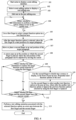
FIG. 4 is a flowchart 2 of a text editing method according to an embodiment of this application; -
FIG. 5 is a block diagram of a structure of a text editing apparatus according to an embodiment of this application; -
FIG. 6 is a block diagram of a structure of an electronic device according to an embodiment of this application; and -
FIG. 7 is a schematic diagram of a hardware structure of an electronic device according to an embodiment of this application. - Technical solutions in embodiments of this application are clearly described below with reference to accompanying drawings in the embodiments of this application. Apparently, the described embodiments are some but not all of the embodiments of this application. All other embodiments obtained by a person of ordinary skill in the art based on the embodiments of this application shall fall within the protection scope of this application.
- The terms "first", "second", and the like in this specification and claims of this application are used to distinguish between similar objects instead of describing a specific order or sequence. It should be understood that, terms used in such a way are interchangeable in proper circumstances, so that the embodiments of this application can be implemented in an order other than the order illustrated or described herein. Objects classified by "first", "second", and the like are usually of a same type, and the number of objects is not limited. For example, there may be one or more first objects. In addition, in the specification and the claims, "and/or" indicates at least one of connected objects, and a character "/" generally indicates an "or" relationship between associated objects.
- A text editing method according to an embodiment of this application is described below in detail by using specific embodiments and application scenarios thereof with reference to the accompanying drawings.
- As shown in
FIG. 1 , this application provides a text editing method, specifically including the following steps. - Step 11: In a case that a first text editing function is enabled, receive a first input performed on to-be-edited text by a user, where the first input is used for text selection.
- In this step, the received first input performed on the to-be-edited text by the user may include N text selection inputs for selecting N non-consecutive parts of text performed on the to-be-edited text by the user, where N is a positive integer.
- Step 12: Control, in response to the first input, text selected based on the first input to perform a text editing operation associated with a target text editing function.
- In this step, the text editing operation associated with the target text editing function may be performed, in response to the Nth first input used for text selection, on the selected Nth non-consecutive part of text. Alternatively, the text editing operation associated with the target text editing function is simultaneously performed, in response to the N first inputs used for text selection, on the selected N non-consecutive parts of text.
- It should be noted that, the target text editing function is the same as or different from the first text editing function. Specifically, in an input process of text selection, in a case that an input operation performed by the user to update a text editing function is not received, the target text editing function is the same as the first text editing function. In an input process of text selection, in a case that an input operation performed by the user to update a text editing function is received, the target text editing function is different from the first text editing function, and the target text editing function is an updated second text editing function.
- In the foregoing embodiment, in the case that the first text editing function is enabled, the first input performed on the to-be-edited text by the user is received, where the first input is used for text selection; and the text editing operation associated with the target text editing function is performed, in response to the first input, on the text selected based on the first input. In this way, in the case that the first text editing function is enabled, the user can select a plurality of non-consecutive text paragraphs, and the text editing operation associated with the target text editing function is automatically performed on the selected text paragraphs, where the target text editing function is the same as or different from the first text editing function, to prevent the user from frequently switching between a text editing area and a function option for text setting, thereby improving text editing efficiency.
- Specifically, in an implementation,
step 11 includes:
receiving a first touch sub-input performed on a first position in the to-be-edited text by a first finger of the user, and in a case that it is determined that the first finger is stationary, receiving a second touch sub-input performed on a second position in the to-be-edited text by a second finger of the user, where text between the first position and the second position is the selected text. - For example, as shown in
FIG. 2 , when the user edits text in a text editing area of a note and wants to change a size, a color, a font, an underline, or the like of text in some paragraphs, the user uses a first finger (for example, an index finger shown inFIG. 2 ) to first select a function option for text editing, for example, select an option to underline text, and places the first finger (for example, the index finger) at a start position (a first position) of a target paragraph; and then starts to use a second finger, and moves and places the second finger at an end position (a second position) of the target paragraph. In this case, a cursor pops up on a screen, a position of the cursor indicates the end position of the target paragraph, and the end position of the target paragraph can be adjusted by moving the cursor left or right. After the end position of the target paragraph is selected, both fingers leave the screen simultaneously. Text between the first finger and the second finger is the selected text and is successfully set with an underline editing effect, and text in other areas is unchanged. - It should be noted that,
FIG. 2 shows one finger, but in this method there should actually be two different fingers. For example, the index finger is in the first position, and at the same time, a middle finger is in the second position. - In this method, a multi-finger characteristic of human can be fully utilized, different fingers trigger different instructions and operate different areas, and they are dynamically associated to increase interaction manners of text editing and improve operating experience of the user. In addition, this can reduce repeated operations for the user during text editing, improve operating efficiency of editing text by the user, and reduce time costs of the user.
- In another implementation,
step 11 includes:
receiving a sliding input for sliding from a third position to a fourth position along a first direction performed by a finger of the user, where text between the third position and the fourth position is the selected text. - For example, as shown in
FIG. 2 , when the user edits text in a text editing area a of a note and wants to change a size, a color, a font, an underline, or the like of text in some paragraphs, the user uses a first finger (for example, an index finger shown inFIG. 2 ) to first select a function option for text editing, for example, select an option to underline text, places the index finger at a start position (a third position) of a target paragraph, and then drags and slides the index finger to an end position (a fourth position) of the target paragraph. In a sliding process of the index finger, a cursor pops up on a screen at a position of the index finger, a position of the cursor indicates the end position of the target paragraph, and the end position of the target paragraph can be adjusted by moving the cursor left or right. When the index finger leaves the screen, text between the third position and the fourth position is the selected text and is successfully set with an underline, and text in other areas is unchanged. - In an embodiment, before
step 11, enabling the first text editing function is further included, which specifically includes the following steps:
receiving an input operation performed on an option of the first text editing function by the user; and enabling the first text editing function in response to the input operation. - The input operation includes but is not limited to: tapping, pressing, sliding, dragging, double-tapping, or the like.
- As shown in
FIG. 2 , an input operation, performed by the user, of tapping an icon of any first text editing function in a function option area b for text setting is received, and the first text editing function is enabled in response to the input operation. - In an embodiment, in an implementation, before
step 12, the method further includes: - receiving a second input; and
- in response to the second input, disabling the first text editing function and enabling a second text editing function.
- Different second inputs correspond to different second text editing functions. Alternatively, different second inputs are associated with different second text editing functions. Specifically, association relationships or correspondences between different second inputs and different second text editing functions may be preset.
- For example, when the second input is a double-tap operation, the corresponding second text editing function is a bold font function; when the second input is a tap operation, the corresponding second text editing function is a red font function; and when the second input is an input operation of pressing for first duration, the corresponding second text editing function is an underline function. The foregoing descriptions are merely examples, and do not constitute a limitation.
- For example, in a case that step 11 includes receiving a first touch sub-input performed on a first position in the to-be-edited text by a first finger of the user, and in a case that it is determined that the first finger is stationary, receiving a second touch sub-input performed on a second position in the to-be-edited text by a second finger of the user: when the user selects the end position (the second position) of the target paragraph, because a setting option of the first text editing function has been selected, if the user does not want to use the first text editing function for text editing at this time, there is no need to stop an input operation for text selection to re-select a text editing function in the function option area b for text setting, and the user only needs to keep the first finger stationary and perform a second input operation by using the second finger, to switch from the first text editing function to the second text editing function.
- For example, in a case that step 11 includes receiving a sliding input for sliding from a third position to a fourth position along a first direction performed by a finger of the user: when the user selects the end position (the fourth position) of the target paragraph by using one finger, because a setting option of the first text editing function has been selected, if the user does not want to use the first text editing function for text editing at this time, there is no need to stop an input operation for text selection to re-select a text editing function in the function option area b for text setting, and the user only needs to keep the finger that performs the input operation for text selection stationary and perform a second input operation (for example, a double-tap operation) by using another finger, to switch from the first text editing function to the second text editing function.
- With the use of the foregoing embodiment, the user can conveniently switch editing functions, and reduce repeated single-finger operations during text editing. This can remove unnecessary or redundant single-finger operations, improve operating efficiency of editing text by the user, and reduce time costs of the user.
- In an embodiment, in another implementation, before
step 12, the method further includes: - receiving a third input;
- displaying, in response to the third input, a function selection control, where the function selection control includes a control corresponding to a second text editing function;
- receiving a fourth input performed on the control corresponding to the second text editing function; and
- in response to the fourth input, disabling the first text editing function and enabling the second text editing function.
- For example, in a case that step 11 includes receiving a first touch sub-input performed on a first position in the to-be-edited text by a first finger of the user, and in a case that it is determined that the first finger is stationary, receiving a second touch sub-input performed on a second position in the to-be-edited text by a second finger of the user: as shown in
FIG. 3 , when the user edits text in a text editing area a of a note and wants to change a size, a color, a font, an underline, or the like of text in some paragraphs, the user uses a first finger to first select a target text function option, for example, select an option to add a strikethrough, and places the first finger at a start position of a target paragraph; and then starts to use a second finger, and moves or places the second finger at an end position of the target paragraph. When the user selects the end position (the second position) of the target paragraph, because a setting option of the first text editing function has been selected, if the user does not want to use the first text editing function for text editing at this time, there is no need to stop an input operation for text selection to re-select a text editing function in a function option area b for text setting. The user only needs to double-tap (the third input) a screen by using the second finger, and a recent text function option box c of the user pops up at a current position on the screen, and then the user needs to select a target function option (the second text editing function) by using the second finger. Then a text area between the first finger and the second finger is set according to the selected function option (the second text editing function). - It should be noted that,
FIG. 3 shows only one finger, but this is merely an example for description. Actually, when the first finger is stationary at the first position, the finger at the second position and performing the third input is the second finger. Alternatively, when the first finger is stationary at the first position, the finger at the second position may be the second finger, and the finger performing the third input may be a third finger. This is not limited herein. - For example, in a case that step 11 includes receiving a sliding input for sliding from a third position to a fourth position along a first direction performed by a finger of the user: when the user selects an end position (the fourth position) of a target paragraph by using one finger, because a setting option of the first text editing function has been selected, if the user does not want to use the first text editing function for text editing at this time, there is no need to stop an input operation for text selection to re-select a text editing function in a function option area b for text setting. The user only needs to keep the finger that performs the input operation for text selection stationary and perform a third input operation (for example, a double-tap operation) by using another finger, and a recent text function option box c of the user pops up at a current position on a screen, and then the user needs to select a target function option (the second text editing function) by using a second finger. Then an area between the first finger and the second finger is set according to the selected function option (the second text editing function).
- Further, in the case that the first text editing function is disabled and the second text editing function is enabled,
step 12 includes:
performing, in response to the first input, a text editing operation associated with the second text editing function on the text selected based on the first input. - In this embodiment, in the case that the first text editing function is disabled and the second text editing function is enabled, the target text editing function is the second text editing function that is different from the first text editing function. In this way, the user can conveniently switch text editing functions, to improve text editing efficiency, thereby improving operating experience of using notes by the user.
- The text editing method in this application is described below by using a specific example.
- As shown in
FIG. 4 , the method mainly includes the following steps. - Step 101: When a user has a requirement for recording matters in text, start notes to display a note editing interface.
- Step 102: After the note interface is displayed, select a note adding option to display a text editing area.
- Step 103: Edit text in the text editing area, to complete recording of matters according to a personal requirement.
- Step 104: After text editing is completed, detect whether the user determines to perform a function option setting on text in the text editing area. If yes, step 105 is performed, or if no, step 104 is performed.
- Step 105: Use a first finger to select a target function option (a first text editing function), such as a text size, a font, or a color, in a text function option area.
- Step 106: After the target function option is selected, place the first finger at a start position of a target paragraph, where the start position is used as a start point of a text change area.
- Step 107: Keep the first finger stationary at the start position of the target paragraph, and move or place a second finger at an end position of the target paragraph.
- Step 108: A cursor pops up at the position at which the second finger is placed, where the end position of the paragraph can be adjusted by moving the cursor.
- Step 109: Detect whether the user determines to replace the target function option (the first text editing function) selected by using the first finger. If yes, step 110 is performed, or if no, step 112 is performed.
- Step 110: Use the second finger to double-tap a screen, to display, in the form of pop-up box, frequently-used function options of the user.
- When the user wants to replace the target function option selected by using the first finger, the first finger is still stationary, the user uses the second finger to double-tap the screen, and a floating pop-up box pops up to list frequently-used function options of the user, for example, a text size, a font, a color, and a format.
- Step 111: Use the second finger to select another text function option in the pop-up box, where after the another text function option is tapped, the previous function option selected by using the first finger is replaced.
- A to-be-set text function option is selected and tapped by using the second finger, and after the tap, a background instruction is used to associatively trigger replacement of the text function option selected by using the first finger.
- Step 112: Determine whether the first finger and the second finger leave the current screen. If yes, step 113 is performed, or if no, step 109 is performed.
- Step 113: Perform a text editing operation associated with the selected function option on a text area between the first finger and the second finger.
- After the two fingers leave the screen, in the text area selected by the first finger and the second finger, the selected function option for text setting is applied and takes effect. For example, if the user selects text enlargement or reduction, or a color setting, text in the area between the first finger and the second finger becomes larger or smaller, or a color changes, and other areas are unchanged.
- In the foregoing embodiment, when the user edits text in the text editing area of the notes, a multi-finger characteristic is fully utilized, different fingers trigger different instructions and operate different areas, and they are dynamically associated to increase interaction manners of text editing and improve operating experience of the user. In addition, this can reduce repeated single-finger operations for the user during text editing, and remove unnecessary or redundant single-finger operations, to improve operating efficiency of editing text by the user, and reduce time costs of the user. Therefore, the foregoing solutions can implement a combination of a plurality of instructions of text editing operations, and provide a user with a novel interaction manner of text editing, to greatly improve editing efficiency of note text, reduce repetition of single-finger operations, and improve note operating experience of a user.
- It should be noted that, the text editing method provided in the embodiments of this application may be performed by a text editing apparatus, or a control module that is in the text editing apparatus and that is configured to perform the text editing method. In an embodiment of this application, the text editing apparatus provided in the embodiments of this application is described by using an example in which the text editing apparatus performs the text editing method.
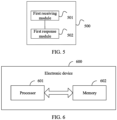
- As shown in
FIG. 5 , this application provides atext editing apparatus 500, including: - a
first receiving module 501, configured to receive, in a case that a first text editing function is enabled, a first input performed on to-be-edited text by a user, where the first input is used for text selection; and - a
first response module 502, configured to control, in response to the first input, text selected based on the first input to perform a text editing operation associated with a target text editing function. - Optionally, the
first receiving module 501 includes:
a first receiving sub-module, configured to receive a first touch sub-input performed on a first position in the to-be-edited text by a first finger of the user, and in a case that it is determined that the first finger is stationary, receive a second touch sub-input performed on a second position in the to-be-edited text by a second finger of the user, where text between the first position and the second position is the selected text. - Optionally, the
apparatus 500 further includes: - a second receiving module, configured to receive a second input; and
- a second response module, configured to disable the first text editing function and enable a second text editing function in response to the second input.
- Optionally, the
apparatus 500 further includes: - a third receiving module, configured to receive a third input;
- a third response module, configured to display, in response to the third input, a function selection control, where the function selection control includes a control corresponding to a second text editing function;
- a fourth receiving module, configured to receive a fourth input performed on the control corresponding to the second text editing function; and
- a fourth response module, configured to disable the first text editing function and enable the second text editing function in response to the fourth input.
- Optionally, in the case that the first text editing function is disabled and the second text editing function is enabled, the
first response module 502 includes:
a first response sub-module, configured to perform, in response to the first input, a text editing operation associated with the second text editing function on the text selected based on the first input. - The
apparatus 500 provided in this application receives, in the case that the first text editing function is enabled, the first input performed on the to-be-edited text by the user, where the first input is used for text selection; and performs, in response to the first input, the text editing operation associated with the target text editing function on the text selected based on the first input. In this way, in the case that the first text editing function is enabled, the user can select a plurality of non-consecutive text paragraphs, and the text editing operation associated with the target text editing function is automatically performed on the selected text paragraphs, where the target text editing function is the same as or different from the first text editing function, to prevent the user from frequently switching between a text editing area and a function option for text setting, thereby improving text editing efficiency. - The text editing apparatus in the embodiments of this application may be an apparatus, or may be a component, an integrated circuit, or a chip in a terminal. The apparatus may be a mobile electronic device, or may be a non-mobile electronic device. For example, the mobile electronic device may be a mobile phone, a tablet computer, a notebook computer, a palmtop computer, an in-vehicle electronic device, a wearable device, an ultra-mobile personal computer (ultra-mobile personal computer, UMPC), a netbook, a personal digital assistant (personal digital assistant, PDA), or the like. The non-mobile electronic device may be a server, a network attached storage (Network Attached Storage, NAS), a personal computer (personal computer, PC), a television (television, TV), a teller machine, a self-service machine, or the like. This is not specifically limited in the embodiments of this application.
- The text editing apparatus in the embodiments of this application may be an apparatus with an operating system. The operating system may be an Android (Android) operating system, an iOS operating system, or another possible operating system. This is not specifically limited in the embodiments of this application.
- The text editing apparatus provided in the embodiments of this application can implement processes implemented in the method embodiments in
FIG. 1 to FIG. 3 . To avoid repetition, details are not described herein again. - Optionally, as shown in
FIG. 6 , an embodiment of this application further provides anelectronic device 600, including aprocessor 601, amemory 602, and a program or instructions stored in thememory 602 and executable on theprocessor 601. When the program or the instructions are executed by theprocessor 601, processes of the foregoing text editing method embodiments are implemented, and a same technical effect can be achieved. To avoid repetition, details are not described herein again. - It should be noted that, the electronic device in this embodiment of this application includes the foregoing mobile electronic device and the foregoing non-mobile electronic device.
-
FIG. 7 is a schematic diagram of a hardware structure of an electronic device according to an embodiment of this application. - The
electronic device 700 includes but is not limited to components such as aradio frequency unit 701, anetwork module 702, anaudio output unit 703, aninput unit 704, asensor 705, adisplay unit 706, auser input unit 707, aninterface unit 708, amemory 709, and aprocessor 710. - A person skilled in the art can understand that the
electronic device 700 may further include a power supply (such as a battery) that supplies power to each component. The power supply may be logically connected to theprocessor 710 by using a power supply management system, to implement functions such as charging and discharging management, and power consumption management by using the power supply management system. The structure of the electronic device shown inFIG. 7 does not constitute a limitation on the electronic device. The electronic device may include components more or fewer than those shown in the figure, or combine some components, or have a different component arrangement. Details are not described herein. - The
user input unit 707 is configured to receive, in a case that a first text editing function is enabled, a first input performed on to-be-edited text by a user, where the first input is used for text selection. - The
processor 710 is configured to control, in response to the first input, text selected based on the first input to perform a text editing operation associated with a target text editing function. - Optionally, the
user input unit 707 is specifically configured to receive a first touch sub-input performed on a first position in the to-be-edited text by a first finger of the user, and in a case that it is determined that the first finger is stationary, receive a second touch sub-input performed on a second position in the to-be-edited text by a second finger of the user, where text between the first position and the second position is used as the selected text. - Optionally, before the
processor 710 controls, in response to the first input, the text selected based on the first input to perform the text editing operation associated with the target text editing function, theuser input unit 707 is further configured to receive a second input. - The
processor 710 is configured to disable the first text editing function and enable a second text editing function in response to the second input. - Optionally, before the
processor 710 controls, in response to the first input, the text selected based on the first input to perform the text editing operation associated with the target text editing function, theuser input unit 707 is further configured to receive a third input. - The
processor 710 is further configured to display, in response to the third input, a function selection control, where the function selection control includes a control corresponding to a second text editing function. - The
user input unit 707 is configured to receive a fourth input performed on the control corresponding to the second text editing function. - The
processor 710 is further configured to disable the first text editing function and enable the second text editing function in response to the fourth input. - Optionally, in the case that the first text editing function is disabled and the second text editing function is enabled, the
processor 710 is specifically configured to perform, in response to the first input, a text editing operation associated with the second text editing function on the text selected based on the first input. - The
electronic device 700 provided in this application receives, in the case that the first text editing function is enabled, the first input performed on the to-be-edited text by the user, where the first input is used for text selection; and performs, in response to the first input, the text editing operation associated with the target text editing function on the text selected based on the first input. In this way, in the case that the first text editing function is enabled, the user can select a plurality of non-consecutive text paragraphs, and the text editing operation associated with the target text editing function is automatically performed on the selected text paragraphs, where the target text editing function is the same as or different from the first text editing function, to prevent the user from frequently switching between a text editing area and a function option for text setting, thereby improving text editing efficiency. - It should be understood that, in this embodiment of this application, the
input unit 704 may include a graphics processing unit (Graphics Processing Unit, GPU) 7041 and amicrophone 7042, and thegraphics processing unit 7041 processes image data of a still picture or a video obtained by an image capture apparatus (such as a camera) in a video capture mode or an image capture mode. Thedisplay unit 706 may include adisplay panel 7061. Thedisplay panel 7061 may be configured in a form such as a liquid crystal display or an organic light-emitting diode. Theuser input unit 707 includes a touch panel 7071 and anotherinput device 7072. The touch panel 7071 is also referred to as a touchscreen. The touch panel 7071 may include two parts: a touch detection apparatus and a touch controller. The anotherinput device 7072 may include but is not limited to a physical keyboard, a functional button (such as a volume control button or a power on/off button), a trackball, a mouse, or a joystick. Details are not described herein. Thememory 709 may be configured to store a software program and various data, including but not limited to an application program and an operating system. An application processor and a modem processor may be integrated into theprocessor 710, the application processor mainly processes an operating system, a user interface, an application program, and the like, and the modem processor mainly processes wireless communication. It can be understood that, alternatively, the modem processor may not be integrated into theprocessor 710. - An embodiment of this application further provides a readable storage medium. The readable storage medium stores a program or instructions. When the program or the instructions are executed by a processor, processes of the foregoing text editing method embodiments are implemented, and a same technical effect can be achieved. To avoid repetition, details are not described herein again.
- The processor is a processor in the electronic device in the foregoing embodiment. The readable storage medium includes a computer-readable storage medium, such as a computer read-only memory (Read-Only Memory, ROM), a random access memory (Random Access Memory, RAM), a magnetic disk, or an optical disc.
- An embodiment of this application further provides a chip. The chip includes a processor and a communication interface, the communication interface is coupled to the processor, and the processor is configured to run a program or instructions to implement processes of the foregoing text editing method embodiments, and a same technical effect can be achieved. To avoid repetition, details are not described herein again.
- It should be understood that, the chip mentioned in this embodiment of this application may also be referred to as a system-level chip, a system chip, a chip system, or an on-chip system chip.
- An embodiment of this application further provides a computer program product. The computer program product is stored in a readable storage medium, and the computer program product is executed by at least one processor to implement processes of the foregoing text editing method embodiments, and a same technical effect can be achieved. To avoid repetition, details are not described herein again.
- It should be noted that, in this specification, the term "include", "comprise", or any other variant thereof is intended to cover a non-exclusive inclusion, so that a process, a method, an article, or an apparatus that includes a list of elements not only includes those elements but also includes other elements which are not expressly listed, or further includes elements inherent to such process, method, article, or apparatus. In absence of more constraints, an element defined by "includes a..." does not preclude the existence of other identical elements in the process, method, article, or apparatus that includes the element. In addition, it should be noted that, the scope of the method and the apparatus in the implementations of this application is not limited to performing functions in an illustrated or discussed sequence, and may further include performing functions in a basically simultaneous manner or in a reverse sequence based on the functions involved. For example, the described method may be performed in an order different from the described order, and various steps may be added, omitted, or combined. In addition, features described with reference to some examples may be combined in other examples.
- Based on the descriptions of the foregoing implementations, a person skilled in the art may clearly understand that the method in the foregoing embodiment may be implemented by software in addition to a necessary universal hardware platform or by hardware only. In most circumstances, the former is a preferred implementation. Based on such an understanding, the technical solutions of this application essentially or a part contributing to the prior art may be implemented in a form of a computer software product. The computer software product is stored in a storage medium (such as a ROM/RAM, a magnetic disk, or an optical disc), and includes several instructions for instructing a terminal (which may be a mobile phone, a computer, a server, a network device, or the like) to perform the methods described in the embodiments of this application.
- The embodiments of this application are described above with reference to the accompanying drawings, but this application is not limited to the foregoing specific implementations, and the specific implementations are only illustrative and not restrictive. Under the enlightenment of this application, a person of ordinary skill in the art can make many forms without departing from the purpose of this application and the protection scope of the claims, all of which fall within the protection of this application.
Claims (13)
- A text editing method, comprising:in a case that a first text editing function is enabled, receiving a first input performed on to-be-edited text by a user, wherein the first input is used for text selection; andcontrolling, in response to the first input, text selected based on the first input to perform a text editing operation associated with a target text editing function.
- The method according to claim 1, wherein the receiving a first input performed on to-be-edited text by a user comprises:
receiving a first touch sub-input performed on a first position in the to-be-edited text by a first finger of the user, and in a case that it is determined that the first finger is stationary, receiving a second touch sub-input performed on a second position in the to-be-edited text by a second finger of the user, wherein text between the first position and the second position is used as the selected text. - The method according to claim 1, wherein before the controlling, in response to the first input, text selected based on the first input to perform a text editing operation associated with a target text editing function, the method further comprises:receiving a second input; andin response to the second input, disabling the first text editing function and enabling a second text editing function.
- The method according to claim 1, wherein before the controlling, in response to the first input, text selected based on the first input to perform a text editing operation associated with a target text editing function, the method further comprises:receiving a third input;displaying, in response to the third input, a function selection control, wherein the function selection control comprises a control corresponding to a second text editing function;receiving a fourth input performed on the control corresponding to the second text editing function; andin response to the fourth input, disabling the first text editing function and enabling the second text editing function.
- The method according to claim 3 or 4, wherein in the case that the first text editing function is disabled and the second text editing function is enabled, the controlling, in response to the first input, text selected based on the first input to perform a text editing operation associated with a target text editing function comprises:
performing, in response to the first input, a text editing operation associated with the second text editing function on the text selected based on the first input. - A text editing apparatus, comprising:a first receiving module, configured to receive, in a case that a first text editing function is enabled, a first input performed on to-be-edited text by a user, wherein the first input is used for text selection; anda first response module, configured to control, in response to the first input, text selected based on the first input to perform a text editing operation associated with a target text editing function.
- The text editing apparatus according to claim 6, wherein the first receiving module comprises:
a first receiving sub-module, configured to receive a first touch sub-input performed on a first position in the to-be-edited text by a first finger of the user, and in a case that it is determined that the first finger is stationary, receive a second touch sub-input performed on a second position in the to-be-edited text by a second finger of the user, wherein text between the first position and the second position is the selected text. - The text editing apparatus according to claim 6, wherein the apparatus further comprises:a second receiving module, configured to receive a second input; anda second response module, configured to disable the first text editing function and enable a second text editing function in response to the second input.
- The text editing apparatus according to claim 6, wherein the apparatus further comprises:a third receiving module, configured to receive a third input;a third response module, configured to display, in response to the third input, a function selection control, wherein the function selection control comprises a control corresponding to a second text editing function;a fourth receiving module, configured to receive a fourth input performed on the control corresponding to the second text editing function; anda fourth response module, configured to disable the first text editing function and enable the second text editing function in response to the fourth input.
- The text editing apparatus according to claim 8 or 9, wherein in the case that the first text editing function is disabled and the second text editing function is enabled, the first response module comprises:
a first response sub-module, configured to perform, in response to the first input, a text editing operation associated with the second text editing function on the text selected based on the first input. - A chip, wherein the chip comprises a processor and a communication interface, the communication interface is coupled to the processor, and the processor is configured to run a program or instructions of a network device to implement steps of the text editing method according to any one of claims 1 to 5.
- A computer program product, wherein the computer program product is stored in a non-volatile storage medium, and the computer program product is executed by at least one processor, to implement steps of the text editing method according to any one of claims 1 to 5.
- An electronic device, configured to perform steps of the text editing method according to any one of claims 1 to 5.
Applications Claiming Priority (2)
| Application Number | Priority Date | Filing Date | Title |
|---|---|---|---|
| CN202111120003.5A CN113807057B (en) | 2021-09-24 | 2021-09-24 | Text editing method and device |
| PCT/CN2022/119900 WO2023045919A1 (en) | 2021-09-24 | 2022-09-20 | Text editing method and apparatus |
Publications (2)
| Publication Number | Publication Date |
|---|---|
| EP4407508A1 true EP4407508A1 (en) | 2024-07-31 |
| EP4407508A4 EP4407508A4 (en) | 2024-12-25 |
Family
ID=78940105
Family Applications (1)
| Application Number | Title | Priority Date | Filing Date |
|---|---|---|---|
| EP22871965.4A Pending EP4407508A4 (en) | 2021-09-24 | 2022-09-20 | METHOD AND APPARATUS FOR EDITING TEXT |
Country Status (4)
| Country | Link |
|---|---|
| US (1) | US20240220711A1 (en) |
| EP (1) | EP4407508A4 (en) |
| CN (1) | CN113807057B (en) |
| WO (1) | WO2023045919A1 (en) |
Families Citing this family (2)
| Publication number | Priority date | Publication date | Assignee | Title |
|---|---|---|---|---|
| CN113807057B (en) * | 2021-09-24 | 2024-10-29 | 维沃移动通信有限公司 | Text editing method and device |
| CN114518827B (en) * | 2022-02-21 | 2025-09-05 | 维沃移动通信有限公司 | Text processing method and device |
Family Cites Families (13)
| Publication number | Priority date | Publication date | Assignee | Title |
|---|---|---|---|---|
| KR101677636B1 (en) * | 2010-08-30 | 2016-11-18 | 엘지전자 주식회사 | Mobile terminal and method for editing text thereof |
| KR20120102262A (en) * | 2011-03-08 | 2012-09-18 | 삼성전자주식회사 | The method for selecting a desired contents from text in portable terminal and device thererof |
| CN102591851B (en) * | 2011-12-31 | 2015-08-19 | 上海聚力传媒技术有限公司 | A kind of method and apparatus for editing target text based on keyboard |
| CN103257804A (en) * | 2012-02-16 | 2013-08-21 | 深圳富泰宏精密工业有限公司 | Method and system for editing texts |
| CN102880422A (en) * | 2012-09-27 | 2013-01-16 | 深圳Tcl新技术有限公司 | Method and device for processing words of touch screen by aid of intelligent equipment |
| US9792272B2 (en) * | 2013-12-31 | 2017-10-17 | Barnes & Noble College Booksellers, Llc | Deleting annotations of paginated digital content |
| CN103744833A (en) * | 2014-01-21 | 2014-04-23 | 厦门美图网科技有限公司 | Path based text creating method |
| CN107967093B (en) * | 2017-12-21 | 2020-01-31 | 维沃移动通信有限公司 | multi-segment text copying method and mobile terminal |
| CN110472199B (en) * | 2018-05-11 | 2023-10-27 | 成都野望数码科技有限公司 | Method and device for adjusting object style |
| CN109343783A (en) * | 2018-08-15 | 2019-02-15 | 信利光电股份有限公司 | It is a kind of to facilitate the input method and device for changing text attribute |
| CN109815469B (en) * | 2018-12-29 | 2023-09-26 | 天津字节跳动科技有限公司 | Text editing method, text editing device, medium and electronic equipment |
| CN112486377B (en) * | 2020-12-07 | 2022-07-12 | 网易(杭州)网络有限公司 | Text editing method and device and electronic equipment |
| CN113807057B (en) * | 2021-09-24 | 2024-10-29 | 维沃移动通信有限公司 | Text editing method and device |
-
2021
- 2021-09-24 CN CN202111120003.5A patent/CN113807057B/en active Active
-
2022
- 2022-09-20 WO PCT/CN2022/119900 patent/WO2023045919A1/en not_active Ceased
- 2022-09-20 EP EP22871965.4A patent/EP4407508A4/en active Pending
-
2024
- 2024-03-14 US US18/605,443 patent/US20240220711A1/en active Pending
Also Published As
| Publication number | Publication date |
|---|---|
| WO2023045919A1 (en) | 2023-03-30 |
| EP4407508A4 (en) | 2024-12-25 |
| CN113807057B (en) | 2024-10-29 |
| US20240220711A1 (en) | 2024-07-04 |
| CN113807057A (en) | 2021-12-17 |
Similar Documents
| Publication | Publication Date | Title |
|---|---|---|
| US12563285B2 (en) | Display control method and apparatus, electronic device, and medium | |
| CN112135181B (en) | Video preview method and device and electronic equipment | |
| US11972274B2 (en) | Application management method and apparatus, and electronic device | |
| US20240256305A1 (en) | Display method and apparatus, electronic device, and readable storage medium | |
| EP3002664B1 (en) | Text processing method and touchscreen device | |
| US20240220711A1 (en) | Text editing method and apparatus | |
| US20230087284A1 (en) | Application icon display method and apparatus, and electronic device | |
| EP4407420A1 (en) | Application icon display method and apparatus, and electronic device and storage medium | |
| US20230236708A1 (en) | Menu display method and apparatus, electronic device, and storage medium | |
| WO2023005920A1 (en) | Screen splitting method and apparatus, and electronic device | |
| US20120023433A1 (en) | Method and apparatus for inputting character in a portable terminal | |
| EP4228226A1 (en) | File sending method and apparatus, and electronic device | |
| WO2022121903A1 (en) | Desktop arrangement method and apparatus, and electronic device | |
| WO2022242586A1 (en) | Application interface method and apparatus, and electronic device | |
| EP4432060A1 (en) | Text selection method, text selection apparatus, and electronic device | |
| US12621558B2 (en) | Photographing method applied to a photographing apparatus having a scroll screen, electronic device, and non-transitory readable storage medium | |
| CN113986076B (en) | Icon display control method, device, electronic device and storage medium | |
| US20230104250A1 (en) | Application icon display method and apparatus, and electronic device | |
| US20250251849A1 (en) | Icon Management Method, Electronic Device and Non-Transitory Readable Storage Medium | |
| WO2023045927A1 (en) | Object moving method and electronic device | |
| WO2022253181A1 (en) | Icon arrangement method and apparatus, and electronic device | |
| CN112752029B (en) | Focusing method, focusing device, electronic equipment and medium | |
| US20240288988A1 (en) | File editing processing method and apparatus and electronic device | |
| CN114116087A (en) | Interface operation method and device between two systems, electronic equipment and medium | |
| WO2022247787A1 (en) | Application classification method and apparatus, and electronic device |
Legal Events
| Date | Code | Title | Description |
|---|---|---|---|
| STAA | Information on the status of an ep patent application or granted ep patent |
Free format text: STATUS: THE INTERNATIONAL PUBLICATION HAS BEEN MADE |
|
| PUAI | Public reference made under article 153(3) epc to a published international application that has entered the european phase |
Free format text: ORIGINAL CODE: 0009012 |
|
| STAA | Information on the status of an ep patent application or granted ep patent |
Free format text: STATUS: REQUEST FOR EXAMINATION WAS MADE |
|
| 17P | Request for examination filed |
Effective date: 20240129 |
|
| AK | Designated contracting states |
Kind code of ref document: A1 Designated state(s): AL AT BE BG CH CY CZ DE DK EE ES FI FR GB GR HR HU IE IS IT LI LT LU LV MC MK MT NL NO PL PT RO RS SE SI SK SM TR |
|
| A4 | Supplementary search report drawn up and despatched |
Effective date: 20241127 |
|
| RIC1 | Information provided on ipc code assigned before grant |
Ipc: G06F 40/166 20200101AFI20241121BHEP |
|
| DAV | Request for validation of the european patent (deleted) | ||
| DAX | Request for extension of the european patent (deleted) |