EP4407479A1 - Recommendation system - Google Patents
Recommendation system Download PDFInfo
- Publication number
- EP4407479A1 EP4407479A1 EP22872898.6A EP22872898A EP4407479A1 EP 4407479 A1 EP4407479 A1 EP 4407479A1 EP 22872898 A EP22872898 A EP 22872898A EP 4407479 A1 EP4407479 A1 EP 4407479A1
- Authority
- EP
- European Patent Office
- Prior art keywords
- content
- interest
- user
- attribute
- rank
- Prior art date
- Legal status (The legal status is an assumption and is not a legal conclusion. Google has not performed a legal analysis and makes no representation as to the accuracy of the status listed.)
- Withdrawn
Links
Images


Classifications
-
- G—PHYSICS
- G06—COMPUTING OR CALCULATING; COUNTING
- G06Q—INFORMATION AND COMMUNICATION TECHNOLOGY [ICT] SPECIALLY ADAPTED FOR ADMINISTRATIVE, COMMERCIAL, FINANCIAL, MANAGERIAL OR SUPERVISORY PURPOSES; SYSTEMS OR METHODS SPECIALLY ADAPTED FOR ADMINISTRATIVE, COMMERCIAL, FINANCIAL, MANAGERIAL OR SUPERVISORY PURPOSES, NOT OTHERWISE PROVIDED FOR
- G06Q30/00—Commerce
- G06Q30/06—Buying, selling or leasing transactions
- G06Q30/0601—Electronic shopping [e-shopping]
- G06Q30/0631—Recommending goods or services
-
- G—PHYSICS
- G01—MEASURING; TESTING
- G01C—MEASURING DISTANCES, LEVELS OR BEARINGS; SURVEYING; NAVIGATION; GYROSCOPIC INSTRUMENTS; PHOTOGRAMMETRY OR VIDEOGRAMMETRY
- G01C21/00—Navigation; Navigational instruments not provided for in groups G01C1/00 - G01C19/00
- G01C21/26—Navigation; Navigational instruments not provided for in groups G01C1/00 - G01C19/00 specially adapted for navigation in a road network
- G01C21/34—Route searching; Route guidance
- G01C21/36—Input/output arrangements for on-board computers
- G01C21/3679—Retrieval, searching and output of POI information, e.g. hotels, restaurants, shops, filling stations, parking facilities
-
- G—PHYSICS
- G06—COMPUTING OR CALCULATING; COUNTING
- G06F—ELECTRIC DIGITAL DATA PROCESSING
- G06F16/00—Information retrieval; Database structures therefor; File system structures therefor
-
- G—PHYSICS
- G06—COMPUTING OR CALCULATING; COUNTING
- G06F—ELECTRIC DIGITAL DATA PROCESSING
- G06F16/00—Information retrieval; Database structures therefor; File system structures therefor
- G06F16/90—Details of database functions independent of the retrieved data types
- G06F16/95—Retrieval from the web
- G06F16/953—Querying, e.g. by the use of web search engines
- G06F16/9535—Search customisation based on user profiles and personalisation
-
- G—PHYSICS
- G06—COMPUTING OR CALCULATING; COUNTING
- G06F—ELECTRIC DIGITAL DATA PROCESSING
- G06F16/00—Information retrieval; Database structures therefor; File system structures therefor
- G06F16/90—Details of database functions independent of the retrieved data types
- G06F16/95—Retrieval from the web
- G06F16/953—Querying, e.g. by the use of web search engines
- G06F16/9536—Search customisation based on social or collaborative filtering
-
- G—PHYSICS
- G06—COMPUTING OR CALCULATING; COUNTING
- G06Q—INFORMATION AND COMMUNICATION TECHNOLOGY [ICT] SPECIALLY ADAPTED FOR ADMINISTRATIVE, COMMERCIAL, FINANCIAL, MANAGERIAL OR SUPERVISORY PURPOSES; SYSTEMS OR METHODS SPECIALLY ADAPTED FOR ADMINISTRATIVE, COMMERCIAL, FINANCIAL, MANAGERIAL OR SUPERVISORY PURPOSES, NOT OTHERWISE PROVIDED FOR
- G06Q10/00—Administration; Management
- G06Q10/40—Business processes related to social networking or social networking services
- G06Q10/42—Determination of affinities or common interests between users
-
- G—PHYSICS
- G06—COMPUTING OR CALCULATING; COUNTING
- G06Q—INFORMATION AND COMMUNICATION TECHNOLOGY [ICT] SPECIALLY ADAPTED FOR ADMINISTRATIVE, COMMERCIAL, FINANCIAL, MANAGERIAL OR SUPERVISORY PURPOSES; SYSTEMS OR METHODS SPECIALLY ADAPTED FOR ADMINISTRATIVE, COMMERCIAL, FINANCIAL, MANAGERIAL OR SUPERVISORY PURPOSES, NOT OTHERWISE PROVIDED FOR
- G06Q30/00—Commerce
- G06Q30/02—Marketing; Price estimation or determination; Fundraising
- G06Q30/0282—Rating or review of business operators or products
Definitions
- the present disclosure relates to a recommendation system.
- Patent Literature 1 describes a method of recommending a product with a product profile having a high matching degree with a user profile to a user. It is described that the product profile is generated on the basis of a keyword included in a comment sent to the product, and the user profile is generated on the basis of a keyword included in a comment for the product purchased by the user in the past.
- Patent Literature 1 JP 2019-215717 A
- the present disclosure has been made in view of the above problems, and an aspect of the present disclosure is to provide a technique of recommending a content that is unexpected for a user.
- a recommendation system includes a content data acquisition unit that acquires content data including an attribute of a content and information indicating popularity, a user data acquisition unit that acquires user data including an interest attribute indicating an attribute of interest to a user and a content of interest to the user, a recommended content acquisition unit that acquires, on the basis of the user data, a content of interest to another user with an interest attribute that is same as or similar to an interest attribute of a target user in an order in which an interest of the target user is estimated to be strong, a rank change unit that changes a rank of a content of interest acquired on the basis of the information indicating popularity, and a content recommendation unit that recommends a content of interest to the target user on the basis of a rank changed.
- the ranking of the contents of interest arranged in the order in which the interest of the target user is estimated to be strong is changed on the basis of the information indicating the popularity of each content, and the contents of interest are recommended to the target user in the changed ranking. Therefore, according to the recommendation system, it is possible to increase the possibility that the content in which the target user is interested and that is novel and unexpected to the target user can be recommended to the target user.
- Fig. 1 is a block diagram illustrating a configuration of a recommendation system 10 according to the present disclosure.
- the recommendation system 10 includes a server computer, and recommends a content to a user of a navigation system 50 as a client. There may be a plurality of clients of the recommendation system 10, but one of which is illustrated in Fig. 1 .
- the content recommended in the present embodiment is a facility (point of interest (POI)) that can be set as a destination or the like in a navigation system.
- POI point of interest
- the recommendation system 10 includes a control unit 20 including a CPU, a RAM, a ROM, and the like, a recording medium 30, and a communication unit 41, and can execute a program stored in the recording medium 30 or the ROM in the control unit 20.
- a recommendation program 21 can be executed as this program.
- the communication unit 41 includes a circuit that communicates with the navigation system 50, and the control unit 20 can communicate with the navigation system 50 by processing of the recommendation program 21.
- the navigation system 50 is a device having a navigation function to a destination.
- the navigation system 50 may be configured as an in-vehicle device, or may be configured as a portable terminal such as a tablet or a smartphone.
- the navigation system 50 includes a communication unit 50a, a GNSS reception unit 50b, a control unit 50c, and a user I/F unit 50d.
- the control unit 50c includes a CPU, a ROM, a RAM, and a recording medium, and the CPU can execute various programs including a navigation program recorded in the ROM or the recording medium.
- the communication unit 50a includes a communication circuit for wirelessly communicating with other devices.
- the navigation system 50 can communicate with the recommendation system 10 by the communication unit 50a.
- the user I/F unit 50d is an interface unit with which the user inputs an instruction and which provides various types of information to the user.
- the user I/F unit 50d includes a touch panel display, a switch, a speaker, and the like (not illustrated). That is, the user I/F unit 50d includes an output unit of an image and a sound, and an input unit of an instruction from the user.
- the GNSS reception unit 50b is a device that receives a global navigation satellite system signal.
- the GNSS reception unit 50b receives a radio wave from a navigation satellite, and outputs a signal for calculating the position of the navigation system 50 via an interface (not illustrated).
- the control unit 50c acquires this signal and acquires the position of the navigation system 50.
- the control unit 50c acquires time from a clocking unit (not illustrated). In a case where the position of the navigation system 50 stays within the predetermined range for a predetermined time or more on the basis of the position and the time, the control unit 50c estimates that the user of the navigation system 50 stays at the position.
- the control unit 50c specifies a facility present at the position on the basis of map information.
- the map information may be recorded in a recording medium of the navigation system 50 or may be acquired from a navigation server (not illustrated).
- the map information includes at least facility data including a position, a name, a facility ID, a telephone number, a facility genre, and the like of a facility that can be a POI.
- the control unit 50c transmits the facility ID of the facility where the user is estimated to visit or stay to the recommendation system 10 in association with a user ID.
- the control unit 50c transmits review data to the recommendation system 10 in association with the user ID.
- the review data includes at least text data. Note that it is needless to mention that image data captured in the time period of stay in the facility may be included in the review data.
- the control unit 50c transmits the favorite facility genre of the user to the recommendation system 10 in association with the user ID.
- the control unit 50c transmits a recommendation request to the recommendation system 10 together with the user ID.
- the recommendation request includes a target area
- the recommendation system 10 acquires a facility in the target area as a recommended facility.
- the control unit 50c displays the facility returned from the recommendation system 10 in response to the recommendation request on the display unit of the user I/F unit 50d.
- the predetermined conditions may include that the user performs the specific operation such as the facility search for setting the destination, that a predetermined time elapses, that the user moves by a predetermined distance, and the like.
- the target area may be an area designated by the user, or may be a predetermined range including the current location.
- the recommendation system 10 acquires data transmitted from the navigation system 50 via the communication unit 41.
- content data 30a and user data 30b are recorded.
- the content data 30a is data in which various pieces of information related to the facility are associated with the facility ID of each content, that is, in the case of the present embodiment, each facility. More specifically, the content data includes in advance, a name, location information, an address, a telephone number, and a facility genre of the facility in association with the facility ID.
- the facility genre indicates a genre to which the facility belongs when the genre is classified.
- the facility genre may have a hierarchical structure. Note that the keyword of the facility designated on the facility side may be included in the content data in advance.
- the review data for the facility is transmitted from the user and accumulated in association with the facility.
- the review data is data indicating an impression or the like that the user has of the facility, and is stored as text data associated with the user ID of the user who has performed the review.
- the review data is transmitted from the navigation system 50 or other various information terminals to the recommendation system 10 in association with the user ID.
- the user data 30b is data in which various types of information related to the user are associated with the user ID.
- the user data includes an interest attribute indicating an attribute of interest to the user and a content of interest to the user.
- the interest attribute is a (favorite) facility genre in which the user is interested, a keyword in which the user is interested, or the like.
- the interest attribute and the content of interest are recorded on the basis of information transmitted from the navigation system 50. Details will be described later.
- the recommendation program 21 includes a content data acquisition unit 21a, a user data acquisition unit 21b, a recommended content acquisition unit 21c, a rank change unit 21d, and a content recommendation unit 21e in order to implement a function of recommending a facility that is unexpected for the user of the navigation system 50.
- the control unit 20 acquires content data including an attribute of a content and information indicating popularity.
- the control unit 20 acquires a keyword from review data. In a case where the review data includes a word designated by the user as a keyword, the control unit 20 acquires the word as a keyword.
- the control unit 20 acquires the word as a keyword.
- keywords with similar meanings although the expressions are different are classified in advance (for example, reasonable, low price, inexpensive, and the like), and the keywords are acquired for each classification.
- the control unit 20 records the keyword acquired in this manner in association with the facility ID (see, for example, Fig. 2A ).
- the facility genre corresponds to the attribute of the content in the present embodiment.
- control unit 20 counts the total number of reviews from the number of users who have transmitted the review data, and records the total number of reviews in association with the facility ID (see, for example, Fig. 2A ). Note that the description will be continued assuming that one user can post only one review to one facility.
- the total number of reviews corresponds to information indicating the popularity of the content in the present embodiment. In the recommendation system 10 of the present embodiment, the facility with a larger total number of reviews is considered to have higher popularity.
- the control unit 20 acquires the content data 30a recorded in the recording medium 30 through such processing by the function of the content data acquisition unit 21a.
- the control unit 20 acquires user data including the interest attribute indicating an attribute of interest to the user and a content of interest to the user.
- the interest attribute is a facility genre or a keyword in which the user is interested (see Fig. 2B ).
- the content of interest is an individual facility in which the user is interested.
- the control unit 20 acquires a facility genre and a keyword of interest, which are input by the user himself or herself and transmitted from the navigation system 50, as the interest attribute.
- the control unit 20 may automatically acquire the interest attribute from the history of the behavior of the user transmitted from the navigation system 50. Specifically, for example, in a case where the user has used or visited facilities of the same facility genre a predetermined number of times or more in the past, the facility genre may be acquired as the interest attribute of the user.
- control unit 20 acquires, as the content of interest to the user, a facility that the user has visited in the past a predetermined number of times or more, a facility registered in the navigation system 50 as a favorite facility of the user, a facility for which the user has created and transmitted the review data, and the like.
- the control unit 20 stores the interest attribute of the user and the content of interest to the user acquired in this manner in the recording medium 30 as user data in association with the user ID (see, for example, Fig. 2B ).
- the control unit 20 acquires a content of interest to another user with an interest attribute that is the same as or similar to the interest attribute of the target user on the basis of the user data in the order in which the interest of the target user is estimated to be strong. That is, when acquiring a recommendation request from the navigation system 50, the control unit 20 refers to the user data 30b and specifies the interest attribute of the user (that is, the target user to be recommended) of the navigation system 50 that is the transmission source of the recommendation request. The control unit 20 then refers to the interest attribute of each user in the user data 30b and extracts another user with the same interest attribute as the specified interest attribute.
- the interest attribute includes a facility genre and a keyword.
- the similarity with another facility genre is defined in advance, and the control unit 20 specifies a predetermined type of facility genre in descending order of similarity to the facility genre of interest to the target user.
- the control unit 20 then refers to the interest attribute of each user in the user data 30b and extracts another user with the facility genre as the facility genre of interest.
- the control unit 20 then refers to the interest attribute of each user in the user data 30b and extracts another user with the same keyword as the keyword of interest to the target user as the interest attribute.
- keywords keywords with similar meanings although the expressions are different are classified in advance, and the control unit 20 also extracts another user with a keyword of another expression belonging to the classification to which the keyword of interest to the target user belongs as the interest attribute. There may be a plurality of such other users.
- the control unit 20 further extracts facilities within the target area in the recommendation request from the extracted contents of interest (facilities of interest) to another user, and ranks the extracted facilities in the order in which the interest of the target user is estimated to be strong. For example, the control unit 20 assigns a value R 1 indicating the similarity of the facility genre to each content of interest. R 1 is the maximum in a case where the facility genre is the same, and increases as the similarity increases. In addition, the control unit 20 assigns a value R 2 indicating the matching degree with the keyword of interest to the target user to each content of interest. R 2 increases as the content of interest has more keywords whose classification matches the classification of the keywords of interest to the target user.
- the value R 2 assigned to the content associated with the classification of all the keywords is the maximum
- the value R 2 assigned to the content associated with two of the keywords is the second largest
- the value R 2 assigned to the content associated with one of the keywords is the third largest
- the value R 2 assigned to the content associated with none of the three keywords is the minimum.
- the control unit 20 calculates an evaluation value V 1 obtained by adding the value R 1 and the value R 2 assigned to each content and sorts the contents in descending order (order in which the interest of the target user is estimated to be strong). That is, the control unit 20 acquires the content of interest in the order in which the interest of the target user is estimated to be strong. Note that, at this stage, there is a possibility that a content known to the target user is included in a high rank.
- the control unit 20 changes the ranking of the contents of interest acquired as described above on the basis of the information indicating popularity.
- the information indicating popularity is the total number of reviews performed on the content.
- the control unit 20 determines that the higher the total number of reviews (the larger the number of users who have reviewed), the higher the popularity.
- the control unit 20 changes the ranking by using a weight set in such a manner that the content of interest with a larger total number of reviews is ranked higher. For example, the control unit 20 normalizes the total number of reviews first.
- the control unit 20 normalizes the total number of reviews of each extracted content of interest in a manner that the maximum value of the total number of reviews of the extracted content of interest is R max .
- the control unit 20 assigns a value R 3 obtained by multiplying the value obtained by normalizing the total number of reviews by a weighting factor of 1 or more to each content, and adds the value R 3 to the evaluation value V 1 of the value R 1 and the value R 2 .
- the control unit 20 sorts evaluation values V 2 after addition in descending order. In this way, it is possible to make it easy to increase the rank of a content that is low in rank before sorting but has high popularity. Therefore, the rank of the content that is novel and unexpected to the target user is likely to increase.
- the control unit 20 changes the ranking by using a weight set to increase the rank of a content of interest including the contents indicating the interest attribute of the target user in the review data and having an attribute other than the interest attribute of the target user, among the contents of interest whose ranks have been changed on the basis of the information indicating the popularity. That is, in the present embodiment, the weight is set in such a manner that the content with at least a part of the interest attribute of the target user being included in the review data, which does not belong to the facility genre of interest to the target user, is easily ranked higher.
- the interest attribute of the user 1 includes Italian restaurant (facility genre), near the station (keyword), reasonable (keyword), and family (keyword).
- the ranking after sorting based on the popularity is, for example, illustrated in Fig. 2A , for French restaurant C in the eighth place, "Italian food" indicating the interest attribute of the target user is included in the keyword (extracted from the review data), but French restaurant C is a facility belonging to a facility genre (French restaurant) other than the interest attribute (facility genre of interest to) of the target user.
- innovative cuisine restaurant A in the ninth place also includes "Italian food" indicating the interest attribute of the target user in the keyword, but is a facility belonging to a facility genre (innovative cuisine restaurant) other than the interest attribute (facility genre of interest to) of the target user.
- the control unit 20 extracts a facility of a facility genre including the contents indicating the interest attribute of the target user in the keyword extracted from the review data but out of the facility genre as the interest attribute of the target user, multiplies the evaluation value V 2 of the facility by, for example, a weighting factor of 1 or more, and sorts the processed evaluation values V 2 in descending order. In this way, it is possible to make it easy to increase the rank of a content that is low in rank before sorting and is difficult to be recommended to the target user.
- the control unit 20 recommends the content of interest to the target user on the basis of the changed ranking. That is, the control unit 20 transmits information of the top X facilities among the ranks sorted by the function of the rank change unit 21d as described above to the navigation system 50.
- the navigation system 50 causes the user I/F unit 50d to display X contents.
- the ranking of contents of interest arranged in the order in which the interest of the target user is estimated to be strong is changed on the basis of information indicating the popularity of each content, and furthermore, the ranking is changed using the weight set in a manner that the content including the contents indicating the interest attribute of the target user but belonging to the interest attribute other than the interest attribute of the target user is easily ranked higher. Then, the contents of interest are recommended to the target user in the changed ranking. Therefore, according to the present embodiment, it is possible to increase the possibility that the content in which the target user is interested and that is novel and unexpected to the target user can be recommended to the target user.
- the recommendation processing is performed in a case where the control unit 20 receives a recommendation request for the target user from the navigation system 50 via the communication unit 41.
- the control unit 20 acquires a content of interest to another user with an interest attribute that is the same as or similar to the interest attribute of the target user in the order in which the interest of the target user is estimated to be strong (step S100). That is, the control unit 20 specifies the interest attribute of the target user on the basis of the user ID of the target user and the user data 30b acquired from the navigation system 50.
- the control unit 20 specifies another user with an interest attribute that is the same as or similar to the interest attribute of the target user. Then, the control unit 20 specifies a content of interest to the specified another user, and sorts the contents in the order in which the interest of the target user is estimated to be strong. More specifically, the contents are sorted in descending order based on the evaluation value V 1 described above.
- the control unit 20 changes the ranking of the contents of interest acquired on the basis of information indicating popularity (step S105).
- the control unit 20 changes the ranking by using a weight set in such a manner that the content of interest with a larger total number of reviews is ranked higher. Specifically, the ranking is sorted in descending order based on the evaluation value V 2 described above.
- the control unit 20 changes the ranking by using a weight set to increase the rank of a content of interest including the contents indicating the interest attribute of the target user in the review data and having an attribute other than the interest attribute of the target user (step S110). Specifically, the control unit 20 multiplies the evaluation value V 2 of a facility including the contents indicating the interest attribute (facility genre) of the target user in the keyword but belonging to a facility genre different from the facility genre of interest to the target user by, for example, a weighting factor of 1 or more, and sorts the processed evaluation values V 2 in descending order.
- control unit 20 outputs the top X contents of interest to the navigation system 50 by the function of the content recommendation unit 21e (step S115). Specifically, the control unit 20 transmits information of the top X facilities in the ranking after the processing in step S110 to the navigation system 50 that is the transmission source of the recommendation request.
- the navigation system 50 causes the user I/F unit 50d to display X contents.
- the recommendation system 10 may include a plurality of devices (a server, a client, and the like)
- the recommended content acquisition unit 21c, the rank change unit 21d, and the content recommendation unit 21e constituting the recommendation system may be present in a client device.
- Some configurations of the above embodiment may be omitted, or the order of processing may be changed or omitted.
- the content to be recommended by the recommendation system is not limited to a facility that can be a destination in the navigation function.
- the content may be event information.
- the present disclosure can also be applied to a case where recommendations of products, services, or functions are presented in a shopping site, another site, a smartphone application, or the like other than the navigation system, for example.
- the attribute is an index indicating a feature of a content belonging to a group when the contents are classified into the same type of group. For example, in a case where the user is interested in a particular type of content, the particular type is the interest attribute. In addition, the individual content in which the user is interested is the content of interest.
- the recommended content acquisition unit is only required to acquire a content of interest to another user with an interest attribute that is the same as or similar to the interest attribute of the target user on the basis of the user data in the order in which the interest of the target user is estimated to be strong, and the method thereof is not limited to the example of the above embodiment.
- another user with user profiles such as a residential area, an age group, a gender, and a family structure similar to those of the target user may be estimated to have a similar interest attribute to the target user, and another user may be extracted. Then, the extracted contents of interest to a plurality of other users may be sorted in descending order of the number of overlapped contents (the number of users having an interest in the content).
- Information indicating the intensity of interest may be predefined and the intensity of interest may be quantified on the basis of the information. Then, the descending order of interest to another user with an interest attribute that is the same as similar to that of the target user may be regarded as the order of interest to the target user.
- the popularity is an index indicating whether or not it is known to a large number of users (the target user may or may not be included), and the information indicating the popularity of a content may be the number of media postings, display ranking in a search engine, or the like.
- the information indicating the popularity of a content may be defined by the number of users who have taken some action on the content.
- the action of the user may be a review of the content, or may be, for example, browsing of the information of the content, marking the content as a favorite, or the like.
- the ranking is changed using the weight set in such a manner that the content of interest with a larger total number of reviews is ranked higher, but the ranking may be changed using the weight set in such a manner that the content of interest with a larger total number of reviews is ranked lower.
- the rank of the content with high popularity is likely to decrease, and as a result, the rank of the content with low popularity is likely to increase. Therefore, in a case where the content is recommended in order from the top, there is a high possibility that the content with low popularity, that is, unknown and unexpected to the target user can be recommended.
- the value R 3 in the above embodiment by replacing the value R 3 in the above embodiment with a value obtained by multiplying a value calculated by normalizing the total number of reviews by a negative weighting factor, it is possible to easily lower the rank of the content with a large total number of reviews.
- the rank change unit may be configured to switch the mode of a rank change based on information indicating popularity depending on whether or not the total number of reviews for the content meets the criterion indicating the credibility. Specifically, the rank change unit may be configured to change the ranking by using a weight set in such a manner that the content of interest with a larger total number is ranked higher in a case where the total number does not meet the criterion, and change the ranking by using a weight set in such a manner that the content of interest with a larger total number is ranked lower in a case where the total number of reviews meets the criterion.
- the criterion indicating the credibility is an index indicating that the total number of reviews of each content of interest acquired by the recommended content acquisition unit is sufficient to be determined to be correlated with the popularity of each content of interest (that is, a content with a relatively large total number has relatively high popularity, and a content with a relatively small total number has relatively low popularity).
- the rank change unit determines that the number of reviews of each content has credibility as information indicating the popularity of the content, and in a case where the criterion is not met, the rank change unit determines that the number of reviews of each content does not have credibility as information indicating the popularity of the content.
- the rank change unit determines the content with a relatively small total number of reviews as the content with relatively low popularity, and changes the ranking by using the weight set in such a manner that the content of interest with a larger total number (higher popularity) is ranked lower.
- the rank of the content of interest with a small total number (low popularity) is likely to increase.
- the possibility of being capable of recommending a content that is unknown and unexpected to the target user is increased.
- the rank change unit determines that it is difficult to determine whether the content has a relatively small total number of reviews because the popularity is low or the number of reviews is accidentally small although the popularity is not low. Furthermore, in a case where the total number of reviews of the content does not meet the criterion, the rank change unit determines that the content with a relatively large total number of reviews is possibly not low in popularity. In a case where the total number of content reviews does not meet the criterion, the rank change unit changes the ranking by using a weight set in such a manner that the content of interest with a larger total number of reviews is ranked higher. As a result, it is possible to make it easy to increase the rank of a content that is low in rank before sorting but possibly has high popularity. Therefore, the rank of the content that is novel and unexpected to the target user is likely to increase.
- criterion indicating the credibility As an example of the criterion indicating the credibility, the following criterion may be adopted.
- Fig. 4 is a graph illustrating the total number of reviews of N contents of interest, and is an example of a graph in which the contents are sorted in the order of total number of reviews for convenience of description (it does not show the ranking of contents before a rank change by the rank change unit or the ranking of contents after the rank change.).
- the vertical axis represents the total number of reviews, and the horizontal axis represents each content.
- the rank change unit determines that the total number of reviews of each content meets the criterion indicating the credibility, and in a case where the proportion is less than 50%, the rank change unit determines that the criterion is not met.
- a distribution d1 shows an example in which the number of contents whose number of reviews is equal to or larger than the threshold Th is equal to or more than 50%
- a distribution d2 shows an example in which the number of contents whose number of reviews is equal to or larger than the threshold Th is less than 50%.
- the rank change unit enables the rank of the content of interest with a relatively small total number (low popularity) to easily increase as described above, and in a case where the criterion indicating the credibility is not met as in the distribution d2, the rank change unit enables the rank of the content of interest with a relatively large total number (possibly not low popularity) to easily increase as described above.
- the rank change unit compares a value corresponding to, for example, 50% of the total number of reviews of the content with the largest total number of reviews among the contents of interest with the threshold Th. In a case where the value is equal to or larger than the threshold Th, the rank change unit determines that the total number of reviews of each content meets the criterion indicating the credibility, and in a case where the value is less than the threshold Th, the rank change unit determines that the total number of reviews of each content does not meet the criterion indicating the credibility.
- the distribution d1 shows an example in which a value L 1 of 50% of the maximum number of reviews (L 1max ) is equal to or more than the threshold Th
- the distribution d2 shows an example in which a value L 2 of 50% of the maximum number of reviews (L 2max ) is less than the threshold Th.
- the rank change unit enables the rank of the content of interest with a relatively small total number (low popularity) to easily increase as described above, and in a case where the criterion indicating the credibility is not met as in the distribution d2, the rank change unit enables the rank of the content of interest with a relatively large total number (possibly not low popularity) to easily increase as described above.
- the rank change unit may be configured to change the ranking by using the weight set to lower the rank of a content of interest including the contents indicating the interest attribute of the target user in the review data and having an attribute other than the interest attribute of the target user, among the contents of interest whose ranks have been changed on the basis of the information indicating the popularity.
- the evaluation value V 2 of the content of interest that is the content of interest including the contents indicating the interest attribute of the target user in the review data and having an attribute other than the interest attribute of the target user may be multiplied by a weighting factor of less than 1.
- the rank of the content of interest with an attribute other than the interest attribute of the target user is changed, however, the content of interest may be recommended in the ranking changed on the basis of the information indicating the popularity.
- present disclosure is applicable not only to keywords but also to key phrases.
- present disclosure can be similarly applied to sentences with modifiers such as "Japanese style Italian food” and "restaurant with good ambience”.
- the method of the present disclosure can also be applied as a program or a method.
- the system, the program, and the method described above may be implemented as a single device or may be implemented by using a component shared with each unit included in a vehicle, and include various modes. Moreover, it can be changed as appropriate in a manner that a part is software and a part is hardware.
- the disclosure is also established as a recording medium of a program for controlling a system. It is needless to mention that, the recording medium of the program may be a magnetic recording medium or a semiconductor memory, and can be considered in exactly the same manner in any recording medium to be developed in the future.
Landscapes
- Engineering & Computer Science (AREA)
- Business, Economics & Management (AREA)
- Theoretical Computer Science (AREA)
- General Physics & Mathematics (AREA)
- Physics & Mathematics (AREA)
- Databases & Information Systems (AREA)
- Accounting & Taxation (AREA)
- Finance (AREA)
- Strategic Management (AREA)
- Marketing (AREA)
- Economics (AREA)
- General Business, Economics & Management (AREA)
- Development Economics (AREA)
- Entrepreneurship & Innovation (AREA)
- Remote Sensing (AREA)
- Data Mining & Analysis (AREA)
- General Engineering & Computer Science (AREA)
- Radar, Positioning & Navigation (AREA)
- Human Resources & Organizations (AREA)
- Operations Research (AREA)
- Quality & Reliability (AREA)
- Tourism & Hospitality (AREA)
- Game Theory and Decision Science (AREA)
- Automation & Control Theory (AREA)
- Information Retrieval, Db Structures And Fs Structures Therefor (AREA)
- Computing Systems (AREA)
Abstract
Description
- The present disclosure relates to a recommendation system.
- Conventionally, a technique of, in a WEB site such as a shopping site, recommending a product or the like to an individual user who browses the site is known.
Patent Literature 1 describes a method of recommending a product with a product profile having a high matching degree with a user profile to a user. It is described that the product profile is generated on the basis of a keyword included in a comment sent to the product, and the user profile is generated on the basis of a keyword included in a comment for the product purchased by the user in the past. - Patent Literature 1:
JP 2019-215717 A - However, in the conventional technique, products matching the tastes and preferences of a user are recommended, and thus there are many products known to the user and similar products, and it is difficult for the user to find an unknown content or a content that has not been tried yet. Therefore, there is a problem that the user tends not to access a recommended content that is not novel for the user.
- The present disclosure has been made in view of the above problems, and an aspect of the present disclosure is to provide a technique of recommending a content that is unexpected for a user.
- In order to achieve the above aspects, a recommendation system includes a content data acquisition unit that acquires content data including an attribute of a content and information indicating popularity, a user data acquisition unit that acquires user data including an interest attribute indicating an attribute of interest to a user and a content of interest to the user, a recommended content acquisition unit that acquires, on the basis of the user data, a content of interest to another user with an interest attribute that is same as or similar to an interest attribute of a target user in an order in which an interest of the target user is estimated to be strong, a rank change unit that changes a rank of a content of interest acquired on the basis of the information indicating popularity, and a content recommendation unit that recommends a content of interest to the target user on the basis of a rank changed.
- That is, in the recommendation system, the ranking of the contents of interest arranged in the order in which the interest of the target user is estimated to be strong is changed on the basis of the information indicating the popularity of each content, and the contents of interest are recommended to the target user in the changed ranking. Therefore, according to the recommendation system, it is possible to increase the possibility that the content in which the target user is interested and that is novel and unexpected to the target user can be recommended to the target user.
-
-
Fig. 1 is a block diagram illustrating a configuration of a recommendation system. -
Fig. 2A is a diagram illustrating an example of content data, andFig. 2B is a diagram illustrating an example of user data. -
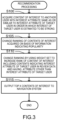
Fig. 3 is a flowchart of recommendation processing. -
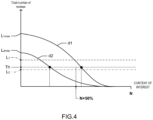
Fig. 4 is a diagram illustrating an example of distribution of the total number of reviews. - Here, embodiments of the present disclosure will be described in the following order.
- (1) Configuration of Recommendation System:
- (2) Recommendation Processing:
- (3) Other Embodiments:
-
Fig. 1 is a block diagram illustrating a configuration of arecommendation system 10 according to the present disclosure. In the present embodiment, therecommendation system 10 includes a server computer, and recommends a content to a user of anavigation system 50 as a client. There may be a plurality of clients of therecommendation system 10, but one of which is illustrated inFig. 1 . The content recommended in the present embodiment is a facility (point of interest (POI)) that can be set as a destination or the like in a navigation system. - The
recommendation system 10 includes acontrol unit 20 including a CPU, a RAM, a ROM, and the like, arecording medium 30, and acommunication unit 41, and can execute a program stored in therecording medium 30 or the ROM in thecontrol unit 20. In the present embodiment, arecommendation program 21 can be executed as this program. Thecommunication unit 41 includes a circuit that communicates with thenavigation system 50, and thecontrol unit 20 can communicate with thenavigation system 50 by processing of therecommendation program 21. - The
navigation system 50 is a device having a navigation function to a destination. Thenavigation system 50 may be configured as an in-vehicle device, or may be configured as a portable terminal such as a tablet or a smartphone. Thenavigation system 50 includes acommunication unit 50a, aGNSS reception unit 50b, acontrol unit 50c, and a user I/F unit 50d. Thecontrol unit 50c includes a CPU, a ROM, a RAM, and a recording medium, and the CPU can execute various programs including a navigation program recorded in the ROM or the recording medium. - The
communication unit 50a includes a communication circuit for wirelessly communicating with other devices. Thenavigation system 50 can communicate with therecommendation system 10 by thecommunication unit 50a. The user I/F unit 50d is an interface unit with which the user inputs an instruction and which provides various types of information to the user. The user I/F unit 50d includes a touch panel display, a switch, a speaker, and the like (not illustrated). That is, the user I/F unit 50d includes an output unit of an image and a sound, and an input unit of an instruction from the user. - The GNSS
reception unit 50b is a device that receives a global navigation satellite system signal. The GNSSreception unit 50b receives a radio wave from a navigation satellite, and outputs a signal for calculating the position of thenavigation system 50 via an interface (not illustrated). By executing the navigation program, thecontrol unit 50c acquires this signal and acquires the position of thenavigation system 50. Furthermore, thecontrol unit 50c acquires time from a clocking unit (not illustrated). In a case where the position of thenavigation system 50 stays within the predetermined range for a predetermined time or more on the basis of the position and the time, thecontrol unit 50c estimates that the user of thenavigation system 50 stays at the position. Thecontrol unit 50c specifies a facility present at the position on the basis of map information. Note that the map information may be recorded in a recording medium of thenavigation system 50 or may be acquired from a navigation server (not illustrated). In any case, the map information includes at least facility data including a position, a name, a facility ID, a telephone number, a facility genre, and the like of a facility that can be a POI. Thecontrol unit 50c transmits the facility ID of the facility where the user is estimated to visit or stay to therecommendation system 10 in association with a user ID. - In addition, when the user operates the user I/
F unit 50d to input a review of the facility visited by the user to thenavigation system 50, thecontrol unit 50c transmits review data to therecommendation system 10 in association with the user ID. In the present embodiment, the review data includes at least text data. Note that it is needless to mention that image data captured in the time period of stay in the facility may be included in the review data. Furthermore, when the user operates the user I/F unit 50d to input a favorite facility genre, thecontrol unit 50c transmits the favorite facility genre of the user to therecommendation system 10 in association with the user ID. - In the
navigation system 50, in a case where predetermined conditions for presenting a recommended facility are satisfied, thecontrol unit 50c transmits a recommendation request to therecommendation system 10 together with the user ID. Note that, in the present embodiment, the recommendation request includes a target area, and therecommendation system 10 acquires a facility in the target area as a recommended facility. Thecontrol unit 50c displays the facility returned from therecommendation system 10 in response to the recommendation request on the display unit of the user I/F unit 50d. Note that the predetermined conditions may include that the user performs the specific operation such as the facility search for setting the destination, that a predetermined time elapses, that the user moves by a predetermined distance, and the like. The target area may be an area designated by the user, or may be a predetermined range including the current location. - The
recommendation system 10 acquires data transmitted from thenavigation system 50 via thecommunication unit 41. In therecording medium 30 of therecommendation system 10,content data 30a anduser data 30b are recorded. Thecontent data 30a is data in which various pieces of information related to the facility are associated with the facility ID of each content, that is, in the case of the present embodiment, each facility. More specifically, the content data includes in advance, a name, location information, an address, a telephone number, and a facility genre of the facility in association with the facility ID. The facility genre indicates a genre to which the facility belongs when the genre is classified. The facility genre may have a hierarchical structure. Note that the keyword of the facility designated on the facility side may be included in the content data in advance. In the operation process of therecommendation system 10, the review data for the facility is transmitted from the user and accumulated in association with the facility. The review data is data indicating an impression or the like that the user has of the facility, and is stored as text data associated with the user ID of the user who has performed the review. The review data is transmitted from thenavigation system 50 or other various information terminals to therecommendation system 10 in association with the user ID. - The
user data 30b is data in which various types of information related to the user are associated with the user ID. Specifically, the user data includes an interest attribute indicating an attribute of interest to the user and a content of interest to the user. The interest attribute is a (favorite) facility genre in which the user is interested, a keyword in which the user is interested, or the like. In the present embodiment, the interest attribute and the content of interest are recorded on the basis of information transmitted from thenavigation system 50. Details will be described later. - The
recommendation program 21 includes a contentdata acquisition unit 21a, a userdata acquisition unit 21b, a recommendedcontent acquisition unit 21c, arank change unit 21d, and acontent recommendation unit 21e in order to implement a function of recommending a facility that is unexpected for the user of thenavigation system 50. By the function of the contentdata acquisition unit 21a, thecontrol unit 20 acquires content data including an attribute of a content and information indicating popularity. In the present embodiment, thecontrol unit 20 acquires a keyword from review data. In a case where the review data includes a word designated by the user as a keyword, thecontrol unit 20 acquires the word as a keyword. In addition, in a case where any of the words determined in advance as the words indicating the features of the facility is included in the sentence of the review, thecontrol unit 20 acquires the word as a keyword. Note that, with regard to the keywords, keywords with similar meanings although the expressions are different are classified in advance (for example, reasonable, low price, inexpensive, and the like), and the keywords are acquired for each classification. Thecontrol unit 20 records the keyword acquired in this manner in association with the facility ID (see, for example,Fig. 2A ). The facility genre corresponds to the attribute of the content in the present embodiment. - Furthermore, the
control unit 20 counts the total number of reviews from the number of users who have transmitted the review data, and records the total number of reviews in association with the facility ID (see, for example,Fig. 2A ). Note that the description will be continued assuming that one user can post only one review to one facility. The total number of reviews corresponds to information indicating the popularity of the content in the present embodiment. In therecommendation system 10 of the present embodiment, the facility with a larger total number of reviews is considered to have higher popularity. Thecontrol unit 20 acquires thecontent data 30a recorded in therecording medium 30 through such processing by the function of the contentdata acquisition unit 21a. - By the function of the user
data acquisition unit 21b, thecontrol unit 20 acquires user data including the interest attribute indicating an attribute of interest to the user and a content of interest to the user. In the present embodiment, the interest attribute is a facility genre or a keyword in which the user is interested (seeFig. 2B ). The content of interest is an individual facility in which the user is interested. Thecontrol unit 20 acquires a facility genre and a keyword of interest, which are input by the user himself or herself and transmitted from thenavigation system 50, as the interest attribute. In addition, for example, thecontrol unit 20 may automatically acquire the interest attribute from the history of the behavior of the user transmitted from thenavigation system 50. Specifically, for example, in a case where the user has used or visited facilities of the same facility genre a predetermined number of times or more in the past, the facility genre may be acquired as the interest attribute of the user. - In addition, the
control unit 20 acquires, as the content of interest to the user, a facility that the user has visited in the past a predetermined number of times or more, a facility registered in thenavigation system 50 as a favorite facility of the user, a facility for which the user has created and transmitted the review data, and the like. Thecontrol unit 20 stores the interest attribute of the user and the content of interest to the user acquired in this manner in therecording medium 30 as user data in association with the user ID (see, for example,Fig. 2B ). - By the function of the recommended
content acquisition unit 21c, thecontrol unit 20 acquires a content of interest to another user with an interest attribute that is the same as or similar to the interest attribute of the target user on the basis of the user data in the order in which the interest of the target user is estimated to be strong. That is, when acquiring a recommendation request from thenavigation system 50, thecontrol unit 20 refers to theuser data 30b and specifies the interest attribute of the user (that is, the target user to be recommended) of thenavigation system 50 that is the transmission source of the recommendation request. Thecontrol unit 20 then refers to the interest attribute of each user in theuser data 30b and extracts another user with the same interest attribute as the specified interest attribute. In the present embodiment, the interest attribute includes a facility genre and a keyword. In the facility genre, the similarity with another facility genre is defined in advance, and thecontrol unit 20 specifies a predetermined type of facility genre in descending order of similarity to the facility genre of interest to the target user. Thecontrol unit 20 then refers to the interest attribute of each user in theuser data 30b and extracts another user with the facility genre as the facility genre of interest. In addition, thecontrol unit 20 then refers to the interest attribute of each user in theuser data 30b and extracts another user with the same keyword as the keyword of interest to the target user as the interest attribute. With regard to the keywords, keywords with similar meanings although the expressions are different are classified in advance, and thecontrol unit 20 also extracts another user with a keyword of another expression belonging to the classification to which the keyword of interest to the target user belongs as the interest attribute. There may be a plurality of such other users. - The
control unit 20 further extracts facilities within the target area in the recommendation request from the extracted contents of interest (facilities of interest) to another user, and ranks the extracted facilities in the order in which the interest of the target user is estimated to be strong. For example, thecontrol unit 20 assigns a value R1 indicating the similarity of the facility genre to each content of interest. R1 is the maximum in a case where the facility genre is the same, and increases as the similarity increases. In addition, thecontrol unit 20 assigns a value R2 indicating the matching degree with the keyword of interest to the target user to each content of interest. R2 increases as the content of interest has more keywords whose classification matches the classification of the keywords of interest to the target user. For example, in a case where there are three keywords of interest to the target user, "near the station", "reasonable", and "family", the value R2 assigned to the content associated with the classification of all the keywords is the maximum, the value R2 assigned to the content associated with two of the keywords is the second largest, the value R2 assigned to the content associated with one of the keywords is the third largest, and the value R2 assigned to the content associated with none of the three keywords is the minimum. - The
control unit 20 calculates an evaluation value V1 obtained by adding the value R1 and the value R2 assigned to each content and sorts the contents in descending order (order in which the interest of the target user is estimated to be strong). That is, thecontrol unit 20 acquires the content of interest in the order in which the interest of the target user is estimated to be strong. Note that, at this stage, there is a possibility that a content known to the target user is included in a high rank. - Subsequently, by the function of the
rank change unit 21d, thecontrol unit 20 changes the ranking of the contents of interest acquired as described above on the basis of the information indicating popularity. In the present embodiment, the information indicating popularity is the total number of reviews performed on the content. In the present embodiment, thecontrol unit 20 determines that the higher the total number of reviews (the larger the number of users who have reviewed), the higher the popularity. Thecontrol unit 20 changes the ranking by using a weight set in such a manner that the content of interest with a larger total number of reviews is ranked higher. For example, thecontrol unit 20 normalizes the total number of reviews first. Specifically, for example, in a case where the possible range of the value R1 and the value R2 is 0 to Rmax, thecontrol unit 20 normalizes the total number of reviews of each extracted content of interest in a manner that the maximum value of the total number of reviews of the extracted content of interest is Rmax. Thecontrol unit 20 then assigns a value R3 obtained by multiplying the value obtained by normalizing the total number of reviews by a weighting factor of 1 or more to each content, and adds the value R3 to the evaluation value V1 of the value R1 and the value R2. Thecontrol unit 20 sorts evaluation values V2 after addition in descending order. In this way, it is possible to make it easy to increase the rank of a content that is low in rank before sorting but has high popularity. Therefore, the rank of the content that is novel and unexpected to the target user is likely to increase. - Subsequently, by the function of the
rank change unit 21d, thecontrol unit 20 changes the ranking by using a weight set to increase the rank of a content of interest including the contents indicating the interest attribute of the target user in the review data and having an attribute other than the interest attribute of the target user, among the contents of interest whose ranks have been changed on the basis of the information indicating the popularity. That is, in the present embodiment, the weight is set in such a manner that the content with at least a part of the interest attribute of the target user being included in the review data, which does not belong to the facility genre of interest to the target user, is easily ranked higher. - The description will be continued assuming that the
user 1 illustrated inFig. 2B is, for example, the target user. The interest attribute of theuser 1 includes Italian restaurant (facility genre), near the station (keyword), reasonable (keyword), and family (keyword). Assuming that the ranking after sorting based on the popularity is, for example, illustrated inFig. 2A , for French restaurant C in the eighth place, "Italian food" indicating the interest attribute of the target user is included in the keyword (extracted from the review data), but French restaurant C is a facility belonging to a facility genre (French restaurant) other than the interest attribute (facility genre of interest to) of the target user. Similarly, innovative cuisine restaurant A in the ninth place also includes "Italian food" indicating the interest attribute of the target user in the keyword, but is a facility belonging to a facility genre (innovative cuisine restaurant) other than the interest attribute (facility genre of interest to) of the target user. In this manner, thecontrol unit 20 extracts a facility of a facility genre including the contents indicating the interest attribute of the target user in the keyword extracted from the review data but out of the facility genre as the interest attribute of the target user, multiplies the evaluation value V2 of the facility by, for example, a weighting factor of 1 or more, and sorts the processed evaluation values V2 in descending order. In this way, it is possible to make it easy to increase the rank of a content that is low in rank before sorting and is difficult to be recommended to the target user. - Subsequently, by the function of the
content recommendation unit 21e, thecontrol unit 20 recommends the content of interest to the target user on the basis of the changed ranking. That is, thecontrol unit 20 transmits information of the top X facilities among the ranks sorted by the function of therank change unit 21d as described above to thenavigation system 50. When receiving the information of the top X facilities from therecommendation system 10, thenavigation system 50 causes the user I/F unit 50d to display X contents. - As described above, according to the present embodiment, the ranking of contents of interest arranged in the order in which the interest of the target user is estimated to be strong is changed on the basis of information indicating the popularity of each content, and furthermore, the ranking is changed using the weight set in a manner that the content including the contents indicating the interest attribute of the target user but belonging to the interest attribute other than the interest attribute of the target user is easily ranked higher. Then, the contents of interest are recommended to the target user in the changed ranking. Therefore, according to the present embodiment, it is possible to increase the possibility that the content in which the target user is interested and that is novel and unexpected to the target user can be recommended to the target user.
- Next, the recommendation processing performed by the
control unit 20 will be described with reference toFig. 3 . The recommendation processing is performed in a case where thecontrol unit 20 receives a recommendation request for the target user from thenavigation system 50 via thecommunication unit 41. When the recommendation processing is started, by the function of the recommendedcontent acquisition unit 21c, thecontrol unit 20 acquires a content of interest to another user with an interest attribute that is the same as or similar to the interest attribute of the target user in the order in which the interest of the target user is estimated to be strong (step S100). That is, thecontrol unit 20 specifies the interest attribute of the target user on the basis of the user ID of the target user and theuser data 30b acquired from thenavigation system 50. Thecontrol unit 20 specifies another user with an interest attribute that is the same as or similar to the interest attribute of the target user. Then, thecontrol unit 20 specifies a content of interest to the specified another user, and sorts the contents in the order in which the interest of the target user is estimated to be strong. More specifically, the contents are sorted in descending order based on the evaluation value V1 described above. - Subsequently, by the function of the
rank change unit 21d, thecontrol unit 20 changes the ranking of the contents of interest acquired on the basis of information indicating popularity (step S105). In the present embodiment, thecontrol unit 20 changes the ranking by using a weight set in such a manner that the content of interest with a larger total number of reviews is ranked higher. Specifically, the ranking is sorted in descending order based on the evaluation value V2 described above. - Subsequently, by the function of the
rank change unit 21d, thecontrol unit 20 changes the ranking by using a weight set to increase the rank of a content of interest including the contents indicating the interest attribute of the target user in the review data and having an attribute other than the interest attribute of the target user (step S110). Specifically, thecontrol unit 20 multiplies the evaluation value V2 of a facility including the contents indicating the interest attribute (facility genre) of the target user in the keyword but belonging to a facility genre different from the facility genre of interest to the target user by, for example, a weighting factor of 1 or more, and sorts the processed evaluation values V2 in descending order. - Subsequently, the
control unit 20 outputs the top X contents of interest to thenavigation system 50 by the function of thecontent recommendation unit 21e (step S115). Specifically, thecontrol unit 20 transmits information of the top X facilities in the ranking after the processing in step S110 to thenavigation system 50 that is the transmission source of the recommendation request. When receiving the information of the top X facilities from therecommendation system 10, thenavigation system 50 causes the user I/F unit 50d to display X contents. - The above embodiment is an example for carrying out various aspects of the present disclosure, and various other embodiments can be adopted. For example, the
recommendation system 10 may include a plurality of devices (a server, a client, and the like) For example, the recommendedcontent acquisition unit 21c, therank change unit 21d, and thecontent recommendation unit 21e constituting the recommendation system may be present in a client device. Some configurations of the above embodiment may be omitted, or the order of processing may be changed or omitted. - The content to be recommended by the recommendation system is not limited to a facility that can be a destination in the navigation function. The content may be event information. Moreover, the present disclosure can also be applied to a case where recommendations of products, services, or functions are presented in a shopping site, another site, a smartphone application, or the like other than the navigation system, for example.
- The attribute is an index indicating a feature of a content belonging to a group when the contents are classified into the same type of group. For example, in a case where the user is interested in a particular type of content, the particular type is the interest attribute. In addition, the individual content in which the user is interested is the content of interest. The recommended content acquisition unit is only required to acquire a content of interest to another user with an interest attribute that is the same as or similar to the interest attribute of the target user on the basis of the user data in the order in which the interest of the target user is estimated to be strong, and the method thereof is not limited to the example of the above embodiment. For example, another user with user profiles such as a residential area, an age group, a gender, and a family structure similar to those of the target user may be estimated to have a similar interest attribute to the target user, and another user may be extracted. Then, the extracted contents of interest to a plurality of other users may be sorted in descending order of the number of overlapped contents (the number of users having an interest in the content).
- Information indicating the intensity of interest (for example, the frequency of designation by the operation of the user, or the like) may be predefined and the intensity of interest may be quantified on the basis of the information. Then, the descending order of interest to another user with an interest attribute that is the same as similar to that of the target user may be regarded as the order of interest to the target user.
- The popularity is an index indicating whether or not it is known to a large number of users (the target user may or may not be included), and the information indicating the popularity of a content may be the number of media postings, display ranking in a search engine, or the like. The information indicating the popularity of a content may be defined by the number of users who have taken some action on the content. The action of the user may be a review of the content, or may be, for example, browsing of the information of the content, marking the content as a favorite, or the like.
- In the above embodiment, the ranking is changed using the weight set in such a manner that the content of interest with a larger total number of reviews is ranked higher, but the ranking may be changed using the weight set in such a manner that the content of interest with a larger total number of reviews is ranked lower. In this case, the rank of the content with high popularity is likely to decrease, and as a result, the rank of the content with low popularity is likely to increase. Therefore, in a case where the content is recommended in order from the top, there is a high possibility that the content with low popularity, that is, unknown and unexpected to the target user can be recommended. For example, by replacing the value R3 in the above embodiment with a value obtained by multiplying a value calculated by normalizing the total number of reviews by a negative weighting factor, it is possible to easily lower the rank of the content with a large total number of reviews.
- The rank change unit may be configured to switch the mode of a rank change based on information indicating popularity depending on whether or not the total number of reviews for the content meets the criterion indicating the credibility. Specifically, the rank change unit may be configured to change the ranking by using a weight set in such a manner that the content of interest with a larger total number is ranked higher in a case where the total number does not meet the criterion, and change the ranking by using a weight set in such a manner that the content of interest with a larger total number is ranked lower in a case where the total number of reviews meets the criterion.
- The criterion indicating the credibility is an index indicating that the total number of reviews of each content of interest acquired by the recommended content acquisition unit is sufficient to be determined to be correlated with the popularity of each content of interest (that is, a content with a relatively large total number has relatively high popularity, and a content with a relatively small total number has relatively low popularity). In a case where the criterion is met, the rank change unit determines that the number of reviews of each content has credibility as information indicating the popularity of the content, and in a case where the criterion is not met, the rank change unit determines that the number of reviews of each content does not have credibility as information indicating the popularity of the content.
- In a case where the total number of reviews of the content meets the criterion, the rank change unit determines the content with a relatively small total number of reviews as the content with relatively low popularity, and changes the ranking by using the weight set in such a manner that the content of interest with a larger total number (higher popularity) is ranked lower. As a result, the rank of the content of interest with a small total number (low popularity) is likely to increase. As a result, the possibility of being capable of recommending a content that is unknown and unexpected to the target user is increased.
- On the other hand, in a case where the total number of reviews of the content does not meet the criterion, the rank change unit determines that it is difficult to determine whether the content has a relatively small total number of reviews because the popularity is low or the number of reviews is accidentally small although the popularity is not low. Furthermore, in a case where the total number of reviews of the content does not meet the criterion, the rank change unit determines that the content with a relatively large total number of reviews is possibly not low in popularity. In a case where the total number of content reviews does not meet the criterion, the rank change unit changes the ranking by using a weight set in such a manner that the content of interest with a larger total number of reviews is ranked higher. As a result, it is possible to make it easy to increase the rank of a content that is low in rank before sorting but possibly has high popularity. Therefore, the rank of the content that is novel and unexpected to the target user is likely to increase.
- Various modes can be assumed as the criterion indicating the credibility. As an example of the criterion indicating the credibility, the following criterion may be adopted.
Fig. 4 is a graph illustrating the total number of reviews of N contents of interest, and is an example of a graph in which the contents are sorted in the order of total number of reviews for convenience of description (it does not show the ranking of contents before a rank change by the rank change unit or the ranking of contents after the rank change.). The vertical axis represents the total number of reviews, and the horizontal axis represents each content. In a case where the proportion of contents whose number of reviews is equal to or larger than a threshold Th to N contents is, for example, equal to or more than 50%, the rank change unit determines that the total number of reviews of each content meets the criterion indicating the credibility, and in a case where the proportion is less than 50%, the rank change unit determines that the criterion is not met. For example, a distribution d1 shows an example in which the number of contents whose number of reviews is equal to or larger than the threshold Th is equal to or more than 50%, and a distribution d2 shows an example in which the number of contents whose number of reviews is equal to or larger than the threshold Th is less than 50%. In a case where the criterion indicating the credibility is met as in the distribution d1, the rank change unit enables the rank of the content of interest with a relatively small total number (low popularity) to easily increase as described above, and in a case where the criterion indicating the credibility is not met as in the distribution d2, the rank change unit enables the rank of the content of interest with a relatively large total number (possibly not low popularity) to easily increase as described above. - Note that as an example of the criterion indicating the credibility, the following criterion may be adopted. The rank change unit compares a value corresponding to, for example, 50% of the total number of reviews of the content with the largest total number of reviews among the contents of interest with the threshold Th. In a case where the value is equal to or larger than the threshold Th, the rank change unit determines that the total number of reviews of each content meets the criterion indicating the credibility, and in a case where the value is less than the threshold Th, the rank change unit determines that the total number of reviews of each content does not meet the criterion indicating the credibility. For example, the distribution d1 shows an example in which a value L1 of 50% of the maximum number of reviews (L1max) is equal to or more than the threshold Th, and the distribution d2 shows an example in which a value L2 of 50% of the maximum number of reviews (L2max) is less than the threshold Th. In a case where the criterion indicating the credibility is met as in the distribution d1, the rank change unit enables the rank of the content of interest with a relatively small total number (low popularity) to easily increase as described above, and in a case where the criterion indicating the credibility is not met as in the distribution d2, the rank change unit enables the rank of the content of interest with a relatively large total number (possibly not low popularity) to easily increase as described above.
- The rank change unit may be configured to change the ranking by using the weight set to lower the rank of a content of interest including the contents indicating the interest attribute of the target user in the review data and having an attribute other than the interest attribute of the target user, among the contents of interest whose ranks have been changed on the basis of the information indicating the popularity. For example, the evaluation value V2 of the content of interest that is the content of interest including the contents indicating the interest attribute of the target user in the review data and having an attribute other than the interest attribute of the target user may be multiplied by a weighting factor of less than 1. By performing such an operation, for example, in the example of
Fig. 2A , the rank of the facility including the keyword "Italian food" can be easily lowered for the user who likes Italian food. As a result, it is possible to relatively increase the rank of a content that is unexpected for the target user. - Note that, in the above embodiment, after the ranking is changed on the basis of the information indicating the popularity, the rank of the content of interest with an attribute other than the interest attribute of the target user is changed, however, the content of interest may be recommended in the ranking changed on the basis of the information indicating the popularity.
- Furthermore, the present disclosure is applicable not only to keywords but also to key phrases. For example, the present disclosure can be similarly applied to sentences with modifiers such as "Japanese style Italian food" and "restaurant with good ambience".
- Furthermore, the method of the present disclosure can also be applied as a program or a method. In addition, the system, the program, and the method described above may be implemented as a single device or may be implemented by using a component shared with each unit included in a vehicle, and include various modes. Moreover, it can be changed as appropriate in a manner that a part is software and a part is hardware. Further, the disclosure is also established as a recording medium of a program for controlling a system. It is needless to mention that, the recording medium of the program may be a magnetic recording medium or a semiconductor memory, and can be considered in exactly the same manner in any recording medium to be developed in the future.
-
- 10
- recommendation system
- 20
- control unit
- 21
- recommendation program
- 21a
- content data acquisition unit
- 21b
- user data acquisition unit
- 21c
- recommended content acquisition unit
- 21d
- rank change unit
- 21e
- content recommendation unit
- 30
- recording medium
- 30a
- content data
- 30b
- user data
- 41
- communication unit
- 50
- navigation system
- 50a
- communication unit
- 50b
- GNSS reception unit
- 50c
- control unit
- 50d
- user I/F unit
Claims (6)
- A recommendation system comprising:a content data acquisition unit that acquires content data including an attribute of a content and information indicating popularity;a user data acquisition unit that acquires user data including an interest attribute indicating an attribute of interest to a user and a content of interest to the user;a recommended content acquisition unit that acquires, on a basis of the user data, a content of interest to another user with an interest attribute that is same as or similar to an interest attribute of a target user in an order in which an interest of the target user is estimated to be strong;a rank change unit that changes a rank of a content of interest acquired on a basis of the information indicating popularity; anda content recommendation unit that recommends a content of interest to the target user on a basis of a rank changed.
- The recommendation system according to claim 1, whereinthe information indicating popularity includes a total number of reviews performed on the content,the rank change unit changes a ranking by using a weight set so as to increase a rank of a content of interest with the total number being large, andthe content recommendation unit recommends a content of interest in order from a top.
- The recommendation system according to claim 1, whereinthe information indicating popularity includes a total number of reviews performed on the content,the rank change unit changes a ranking by using a weight set so as to lower a rank of a content of interest with the total number being large, andthe content recommendation unit recommends a content of interest in order from a top.
- The recommendation system according to claim 1, whereinthe information indicating popularity includes a total number of reviews performed on the content,the rank change unit changes a ranking by using a weight set so as to increase a rank of a content of interest with the total number being large in a case where the total number does not meet a criterion indicating credibility, andchanges a ranking by using a weight set so as to lower a rank of a content of interest with the total number being large in a case where the total number meets the criterion, andthe content recommendation unit recommends a content of interest in order from a top.
- The recommendation system according to any one of claims 1 to 4, whereinthe content data includes review data for the content, andthe rank change unit changes a ranking by using a weight set so as to increase a rank of a content of interest including contents indicating an interest attribute of the target user in the review data and having an attribute other than an interest attribute of the target user, among contents of interest whose ranks have been changed on a basis of the information indicating popularity.
- The recommendation system according to any one of claims 1 to 4, whereinthe content data includes review data for the content, andthe rank change unit changes a ranking by using a weight set so as to lower a rank of a content of interest including contents indicating an interest attribute of the target user in the review data and having an attribute other than an interest attribute of the target user, among contents of interest whose ranks have been changed on a basis of the information indicating popularity.
Applications Claiming Priority (2)
| Application Number | Priority Date | Filing Date | Title |
|---|---|---|---|
| JP2021153232 | 2021-09-21 | ||
| PCT/JP2022/035019 WO2023048146A1 (en) | 2021-09-21 | 2022-09-20 | Recommendation system |
Publications (2)
| Publication Number | Publication Date |
|---|---|
| EP4407479A1 true EP4407479A1 (en) | 2024-07-31 |
| EP4407479A4 EP4407479A4 (en) | 2024-08-21 |
Family
ID=85719479
Family Applications (1)
| Application Number | Title | Priority Date | Filing Date |
|---|---|---|---|
| EP22872898.6A Withdrawn EP4407479A4 (en) | 2021-09-21 | 2022-09-20 | RECOMMENDATION SYSTEM |
Country Status (4)
| Country | Link |
|---|---|
| US (1) | US20240386474A1 (en) |
| EP (1) | EP4407479A4 (en) |
| JP (1) | JP7555083B2 (en) |
| WO (1) | WO2023048146A1 (en) |
Families Citing this family (1)
| Publication number | Priority date | Publication date | Assignee | Title |
|---|---|---|---|---|
| JP2025049107A (en) * | 2023-09-20 | 2025-04-03 | ソフトバンクグループ株式会社 | system |
Family Cites Families (10)
| Publication number | Priority date | Publication date | Assignee | Title |
|---|---|---|---|---|
| JP2009157500A (en) | 2007-12-25 | 2009-07-16 | Ntt Docomo Inc | Distribution server and distribution method |
| JP2010067175A (en) | 2008-09-12 | 2010-03-25 | Toshiba Corp | Hybrid content recommendation server, recommendation system, and recommendation method |
| WO2011122583A1 (en) | 2010-03-29 | 2011-10-06 | 楽天株式会社 | Server device, information providing method, information providing program, recording medium on which information providing program is recorded and information providing system |
| JP5095794B2 (en) | 2010-10-05 | 2012-12-12 | ヤフー株式会社 | Recommendation cooperation apparatus and method |
| JP5548654B2 (en) | 2011-06-22 | 2014-07-16 | 楽天株式会社 | Information processing apparatus, information processing method, information processing program, and recording medium on which information processing program is recorded |
| JP6397704B2 (en) * | 2014-09-19 | 2018-09-26 | 株式会社東芝 | Information processing apparatus, information processing system, information processing method, and program |
| US10025863B2 (en) * | 2014-10-31 | 2018-07-17 | Oath Inc. | Recommending contents using a base profile |
| US20180336282A1 (en) | 2017-05-22 | 2018-11-22 | Inshorts Medialabs Private Limited | System and method for providing personalized news feed to a user |
| JP2019215717A (en) | 2018-06-13 | 2019-12-19 | 潤一 野元 | Matching system, matching method, and computer program |
| KR102195686B1 (en) | 2018-08-01 | 2020-12-29 | 주식회사 마이셀럽스 | Apparatus and method of recommending items based on areas |
-
2022
- 2022-09-20 US US18/692,922 patent/US20240386474A1/en not_active Abandoned
- 2022-09-20 EP EP22872898.6A patent/EP4407479A4/en not_active Withdrawn
- 2022-09-20 WO PCT/JP2022/035019 patent/WO2023048146A1/en not_active Ceased
- 2022-09-20 JP JP2023549702A patent/JP7555083B2/en active Active
Also Published As
| Publication number | Publication date |
|---|---|
| JP7555083B2 (en) | 2024-09-24 |
| US20240386474A1 (en) | 2024-11-21 |
| EP4407479A4 (en) | 2024-08-21 |
| WO2023048146A1 (en) | 2023-03-30 |
| JPWO2023048146A1 (en) | 2023-03-30 |
Similar Documents
| Publication | Publication Date | Title |
|---|---|---|
| CN115168700B (en) | Information flow recommendation method, system and medium based on pre-training algorithm | |
| US8234311B2 (en) | Information processing device, importance calculation method, and program | |
| JP5603337B2 (en) | System and method for supporting search request by vertical proposal | |
| US8001135B2 (en) | Search support apparatus, computer program product, and search support system | |
| US8024326B2 (en) | Methods and systems for improving a search ranking using related queries | |
| US9116982B1 (en) | Identifying interesting commonalities between entities | |
| CN105912669B (en) | Method and device for complementing search terms and establishing individual interest model | |
| RU2670494C2 (en) | Method for processing search requests, server and machine-readable media for its implementation | |
| US10558666B2 (en) | Systems and methods for the creation, update and use of models in finding and analyzing content | |
| US20150161255A1 (en) | Systems and Methods for Deriving and Using an Interaction Profile | |
| CN107193987B (en) | Method, device and system for acquiring search terms related to page | |
| CN105069103B (en) | Method and system for APP search engine using user comments | |
| CN107562939B (en) | Vertical domain news recommendation method and device and readable storage medium | |
| EP1938221A2 (en) | Generation of topical subjects from alert search terms | |
| EP3529714A1 (en) | Animated snippets for search results | |
| US20140156464A1 (en) | Information processing apparatus, information processing method, information processing program, recording medium having stored therein information processing program | |
| KR20010007715A (en) | Information guiding service system according to a sensitive index and the method thereof | |
| CN111723296B (en) | Search processing method, device and computer equipment | |
| CN104050243B (en) | It is a kind of to search for the network search method combined with social activity and its system | |
| US20240386474A1 (en) | Recommendation system | |
| CN113420209A (en) | Recommendation method, device and equipment based on weather search and storage medium | |
| JP2020057188A (en) | Provision device, provision method, and provision program | |
| JP4891638B2 (en) | How to classify target data into categories | |
| RU2589856C2 (en) | Method of processing target message, method of processing new target message and server (versions) | |
| RU2839310C1 (en) | System and method for ranking search results in search engine |
Legal Events
| Date | Code | Title | Description |
|---|---|---|---|
| STAA | Information on the status of an ep patent application or granted ep patent |
Free format text: STATUS: THE INTERNATIONAL PUBLICATION HAS BEEN MADE |
|
| PUAI | Public reference made under article 153(3) epc to a published international application that has entered the european phase |
Free format text: ORIGINAL CODE: 0009012 |
|
| STAA | Information on the status of an ep patent application or granted ep patent |
Free format text: STATUS: REQUEST FOR EXAMINATION WAS MADE |
|
| REG | Reference to a national code |
Ref country code: DE Ref legal event code: R079 Free format text: PREVIOUS MAIN CLASS: G06F0016953600 Ipc: G06Q0030060100 |
|
| 17P | Request for examination filed |
Effective date: 20240417 |
|
| AK | Designated contracting states |
Kind code of ref document: A1 Designated state(s): AL AT BE BG CH CY CZ DE DK EE ES FI FR GB GR HR HU IE IS IT LI LT LU LV MC MK MT NL NO PL PT RO RS SE SI SK SM TR |
|
| A4 | Supplementary search report drawn up and despatched |
Effective date: 20240724 |
|
| RIC1 | Information provided on ipc code assigned before grant |
Ipc: G06F 16/9535 20190101ALI20240718BHEP Ipc: G01C 21/36 20060101ALI20240718BHEP Ipc: G06F 16/9536 20190101ALI20240718BHEP Ipc: G06Q 30/0601 20230101AFI20240718BHEP |
|
| DAV | Request for validation of the european patent (deleted) | ||
| DAX | Request for extension of the european patent (deleted) | ||
| STAA | Information on the status of an ep patent application or granted ep patent |
Free format text: STATUS: THE APPLICATION IS DEEMED TO BE WITHDRAWN |
|
| 18D | Application deemed to be withdrawn |
Effective date: 20250214 |