Field of the Invention
-
The present invention relates to aqueous precious metal plating bath compositions for plating of precious metal layers onto a substrate and a method for depositing precious metal. The plating bath is particularly suitable in the manufacture of printed circuit boards, IC substrates, semiconducting devices, interposers made of glass and the like.
Background of the Invention
-
Precious metal layers are of paramount interest in the manufacturing of electronic components and in the semiconductor industry. Gold layers are frequently used as solderable and/or wire bondable surfaces in the manufacture of printed circuit boards, IC substrates, semiconducting devices and the like. Typically, they are used as a final finish before soldering and wire bonding. In order to provide electrical connections of sufficient conductivity and robustness between the copper lines and wires that are bonded thereto while providing a good strength for wire bonding, there are various layer assemblies which are used conventionally in the art. Among others, there are electroless nickel electroless gold (ENIG), electroless nickel electroless palladium immersion gold (ENEPIG), direct immersion gold (DIG), electroless palladium immersion gold (EPIG) and electroless palladium autocatalytic gold (EPAG). Even though these techniques have been established some time ago, there are still many challenges unresolved. Such challenges are the corrosion of nickel layers which are placed between gold and copper lines (nickel corrosion) and insufficient stabilities of gold plating baths which is highly undesirable due to the cost of said baths. Also, it is highly desirable to deposit gold layers with sufficient plating rates to run manufacturing processes economically. Another desired property of the gold layer is the optical appearance that should be lemon yellow as a discolouration of the gold layer is not acceptable.
-
Silver is a cost-efficient replacement for gold in many applications.
-
Due to the minuscule sizes of electrical components nowadays, it is not possible to use electrolytic processes which require electrical connections to the substrates. Therefore, electroless metal deposition processes (electroless plating) are used. Electroless plating generally describes methods without using external current sources for reduction of metal ions. Plating processes using external current sources are commonly described as electrolytic or galvanic plating methods. Non-metallic surfaces may be pretreated to make them receptive or catalytic for metal deposition. All or selected portions of a surface may suitably be pretreated.
-
In principle, two types of electroless precious metal plating baths can be differentiated: autocatalytic precious metal plating baths and immersion-type precious metal plating baths. Also mixed forms of autocatalytic and immersion-type plating and electrolytic plating baths are known. In the context of the instant invention the foregoing terms are applied. However, in the literature the differentiation is often not so clear and e.g. the more general term 'electroless' might be used instead of the more specific term 'autocatalytic'. This also applies mutatis mutandis for the replacement of the term 'immersion-type' by the term 'electroless' in the literature
-
Typically, the main components of autocatalytic metal baths are the metal salt, a reducing agent, and, as optional ingredients, a complexing agent, a pH adjuster, and additives, as for example stabilising agents. Complexing agents (also called chelating agents in the art) are used to chelate the metal being deposited and prevent the metal from being precipitated from solution (i.e. as the hydroxide and the like). Chelating metal renders the metal available to the reducing agent that converts the metal ions to metallic form.
-
A further form of metal deposition is immersion plating. Immersion plating is another deposition of metal using neither external current sources nor chemical reducing agents. The mechanism relies on the substitution of metals from an underlying substrate for metal ions present in the immersion plating solution. This is a distinct disadvantage of immersion plating because deposition of thicker layers is normally limited by the layer porosity.
-
In most cases, electroless gold plating baths use one or both types of electroless plating. Even if reducing agents have been added to the plating bath, immersion-type plating may occur albeit in a significantly reduced proportion.
-
EP 343 816 A1 discloses an aqueous liquor for use as an electroless gold deposition bath, comprising a source of gold and a reducing agent. This liquor also contains a reduction-stabilising agent selected from a variety of compounds, i.e. mixtures of an alkali metal or ammonium ferrocyanide and an alkali metal or ammonium ferricyanide; 1-H-tetrazole; redox mediators; and mixtures thereof.
-
WO 2017/050662 discloses electroless plating baths and ethylenediamine derivatives as plating bath enhancers.
Objective of the Invention
-
It is the objective of the present invention to provide an aqueous precious metal plating bath composition from which precious metal layers can be deposited with sufficient plating rate and a method for said purpose. It is another objective of the present invention to provide an aqueous precious metal plating bath which has sufficient stability and which can be used for prolonged duration of time.
-
It is another objective to improve the corrosion performance of the plating baths of the state of the art.
-
It is common to use cyanide containing compounds as the source of gold ions. However, in order to stabilize the plating baths it is common to use additional cyanide-containing compounds such as potassium cyanide. These baths have two disadvantages: the toxicity of these additional cyanide-containing compounds leads to issues in the process itself due to establishment of appropriate safety measures and in the waste-water treatment. In addition, the dosing of additional cyanide-containing compounds is not easy and underdosing as well as overdosing occurs and leads to issues such as decreased plating. Hence, it is yet another objective to provide plating baths with a reduced cyanide content. It is yet another objective that the precious metal layers, which are formed, show no discolouration.
Summary of the Invention
-
These objectives are solved by the aqueous precious metal plating bath according to the invention, which comprises
- (a) at least one source of precious metal ions;
- (b) at least one source of hexacyanoferrate (II) ions and/or hexacyanoferrate (III) ions;
- (c) optionally, at least one source of halogenide ions;
- (d) at least one complexing agent;
- (e) at least one reducing agent for precious metal ions;
- (f) optionally, at least one wetting agent; and
- (g) optionally, at least one accelerator.
-
These objectives can further be solved by the method for depositing gold layers from the plating bath above and the use of the plating enhancer compound above in a gold plating bath, comprising at least one source of gold ions and at least one reducing agent for gold ions.
Description of Figures
-
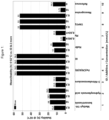
- Figure 1 shows the stability of a variety of plating baths (see Example 1).
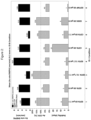
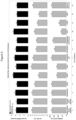
- Figures 2 to 5 show the stability as well as the ENEPIG plating rate of plating baths according to Examples 2 to 5.
Detailed Description of the invention
Plating bath
-
The aqueous precious metal plating bath according to the invention is synonymously named an aqueous solution. The term "aqueous solution" means that the prevailing liquid medium, which is the solvent in the solution, is water. Further liquids, that are miscible with water, as for example alcohols and other polar organic liquids, that are miscible with water, may be added. In principle, an aqueous solution comprises more than 50 percent water by weight.
-
Preferredly, the inventive plating baths are electroless precious metal plating baths. Electroless precious metal plating baths comprise different types such as but not limited to immersion-type precious metal plating baths, autocatalytic precious metal plating baths and precious metal plating baths using a mixture of autocatalytic and immersion-type plating and electrolytic plating baths. In a more preferred embodiment, the inventive precious metal plating baths are autocatalytic precious metal plating baths.
-
Immersion-type precious metal plating baths typically comprise at least the following components: at least one chelating agent; at least one gold source; and at least one pH adjuster. In addition, immersion-type precious metal plating baths can comprise additives such as but not limited to at least one grain refiner, at least one wetting agent, and/or at least one accelerator.
-
Autocatalytic precious metal plating baths typically comprise at least the following components: at least one chelating agent; at least one gold source; at least one pH adjuster; at least one reducing agent, and at least one stabilizer. In addition, autocatalytic precious metal plating baths can comprise additives such as but not limited to at least one grain refiner, at least one wetting agent, and/or at least one accelerator.
-
The plating bath according to the invention may be prepared by dissolving all components in aqueous liquid medium, preferably in water.
(a) source of precious metal ions
-
The aqueous precious metal plating bath according to the invention comprises at least one source of precious metal ions.
-
Within the context of the instant invention, the term 'precious metal' shall describe a metal selected from the group consisting of Ru, Rh, Pd, Ag, Os, Ir, Pt, Au. These are the elements in Groups 8 to 11 of Periods 5 and 6 of the Periodic System of the Elements. Preferred, the precious metal is selected from the group consisting of Au and Ag. More preferred, the precious metal is Au. The concentration of precious metal ions in the aqueous precious metal plating bath according to the invention preferably ranges from 0.5 to 50 mmol/L, more preferably from 1.0 to 30 mmol/L and most preferably from 2.0 to 10 mmol/L. If two or more precious metal ions are contained in the aqueous precious metal plating bath according to the invention the concentration is based on the total amount of substance of precious metal ions.
-
Gold ions can be in either Au+, Au3+ or both oxidation states. The source of gold ions can be any water soluble gold salt having said oxidation states. Preferably, the source of gold ions is selected from the group consisting of gold cyanide, gold ammonium cyanide, gold (I) alkali cyanides including gold (I) potassium cyanide, gold (I) sodium cyanide, trisodium gold disulphite, tripotassium gold disulphite and triammonium gold disulphite, gold thiosulphate, gold thiocyanide, gold sulphate, gold chloride, and gold bromide. Preferably, the source of gold ions is a gold (I) alkali cyanide and may be added to the aqueous plating bath in the form of a solution containing this salt. The concentration of gold ions in the aqueous gold plating bath according to the invention preferably ranges from 0.5 to 50 mmol/L, more preferably from 1.0 to 30 mmol/L and most preferably from 2.0 to 10 mmol/L.
-
Silver ions are in the Ag+ oxidation state. The source of silver ions can be any water soluble silver salt having said oxidation state. Preferably, the source of silver ions is selected from the group consisting of silver cyanide [list more silver compounds]. Preferably, the source of silver ions is silver cyanide and may be added to the aqueous plating bath in the form of a solution containing this salt. The concentration of silver ions in the aqueous silver plating bath according to the invention preferably ranges from 0.5 to 50 mmol/L, more preferably from 1.5 to 30 mmol/L and most preferably from 4.0 to 20 mmol/L.
(b) source of hexacyanoferrate (II) ions and/or hexacyanoferrate (III) ions
-
It is known that cyanide ions form stable complexes with iron (II) ions and/or iron (III) ions. The respective complexes are known as hexacyanoferrate (II) ions and hexacyanoferrate (III), respectively. These are anions bear four (in case of hexacyanoferrate (II)) and three (in case of hexacyanoferrate (III)) negative charges. Typically, these are neutralized by appropriate cations. The source of hexacyanoferrate (II) ions and/or hexacyanoferrate (III) ions can be any water soluble thereof. Preferably, the source of hexacyanoferrate (II) ions and/or hexacyanoferrate (III) ions is selected from the group consisting of ammonium hexacyanoferrate (II), alkali hexacyanoferrate (II) ions including potassium hexacyanoferrate (II) and sodium hexacyanoferrate (II); ammonium hexacyanoferrate (III), alkali hexacyanoferrate (III) including potassium hexacyanoferrate (III) and sodium hexacyanoferrate (III); and mixtures thereof. Preferably, the source of hexacyanoferrate (II) ions and/or hexacyanoferrate (III) ions is selected from potassium hexacyanoferrate (II), potassium hexacyanoferrate (III) and mixtures thereof and may be added to the aqueous plating bath in the form of a solution containing this salt. The concentration of hexacyanoferrate (II) ions and/or hexacyanoferrate (III) ions in the aqueous precious metal plating bath according to the invention preferably ranges from 0.1 to 50 mmol/L, more preferably from 0.3 to 30 mmol/L and most preferably from 0.6 to 10 mmol/L. If both, hexacyanoferrate (II) ions and hexacyanoferrate (III), are contained in the aqueous precious metal plating bath according to the invention the concentration is based on the total amount of substance of hexacyanoferrate (II) ions and hexacyanoferrate (III).
(c) source of halogenide
-
The source of halogenide can be any water soluble halogenide. Preferred, the halogenide is bromide and/or iodide. Preferably, the source of halogenide is selected from the group consisting of ammonium bromide, alkali bromide including potassium bromide, sodium bromide; ammonium iodide, alkali iodide including potassium iodide and sodium iodide; and mixtures thereof. Preferably, the source of halogenide may be added to the aqueous plating bath in the form of a solution containing this salt. The concentration of halogenide in the electroless aqueous gold plating bath according to the invention preferably ranges from 0.1 to 50 mmol/L, more preferably from 0.3 to 30 mmol/L and most preferably from 1.0 to 10 mmol/L. If two or more halogenide ions are contained in the aqueous precious metal plating bath according to the invention the concentration is based on the total amount of substance of halogenide ions.
-
If silver ions are present as precious metal ions (a) in the precious metal plating bath, the concentration of halogenide ions is zero, i.e. no halogenide ions shall be present in the precious metal plating bath.
(d) at least one complexing agent
-
The aqueous precious metal plating bath according to the invention optionally further comprises at least one complexing agent. The optional at least one complexing agent present in the aqueous precious metal plating bath according to the invention is preferably selected from the group consisting of carboxylic acids, hydroxycarboxylic acids, aminocarboxylic acids, diamine carboxylic acids, phosphonic acids, aminophosphonic acids or a salt of the aforementioned. The optional at least one complexing agent serves as a complexing agent for precious metal ions as well as for metal ions dissolved from the substrate during plating, e.g., nickel ions or copper ions. A preferred carboxylic acid is for example oxalic acid or a salt thereof. Preferred hydroxycarboxylic acids are for example tartaric acid, citric acid, lactic acid, malic acid, gluconic acid and salts of the aforementioned. Preferred aminocarboxylic acids are for example glycine, cysteine, methionine and salts of the aforementioned. Preferred diamine carboxylic acids are cyclohexane diamine tetracarboxylic acid (CDTA) and ethylene diamine tetracarboxylic acid (EDTA). A preferred phosphonic acid is 1- hydroxyethane-(1,1,-diphosphonic acid) (HEDP). Preferred aminophosphonic acids are nitrilotri(methylphosphonic acid) (commonly abbreviated as ATMP), diethylenetriaminepentakis(methylphosphonic acid) (commonly abbreviated as DTPMP) and ethylenediaminetetra(methylenphosphonic acid) (commonly abbreviated as EDTMP). In all cases also the sodium, potassium and ammonium salts of said compounds are also suitable. The concentration of the optional at least one complexing agent preferably ranges from 0.25 to 250 mmol/L, more preferably from 1.0 to 150 mmol/L.
-
More preferably, the aqueous precious metal plating bath according to the invention comprises two different complexing agents and/or salts thereof, such as a aminocarboxylic acid or a salt thereof and a phosphonic acid or a salt thereof.
(e) reducing agent for precious metal ions
-
The aqueous precious metal plating bath further comprises at least one reducing agent for precious metal ions.
-
The reducing agents for precious metal ions is preferably selected from the group consisting of aliphatic aldehydes such as formaldehyde, acetoaldehyde, propionaldehyde, n-butylaldehyde, α-methylvaleraldehyde, β-methylvaleraldehyde, γ-methylvaleraldehyde or the like; aliphatic dialdehydes such as glyoxal, succindialdehdye or the like; aliphatic unsaturated aldehydes such as croton aldehyde or the like; aromatic aldehydes such as benzaldehyde, o-nitrobenzaldehyde, m-nitrobenzaldehyde, p-nitrobenzaldehyde, o-tolaldehyde, m-tolaldehyde, p-tolaldehyde, o-hydroxybenzaldehyde, m-hydroxybenzaldehyde, p-hydroxybenzaldehyde, phenylacetoaldehyde or the like; sugars having an aldehyde group (-CHO) such as glucose, galactose, mannose, ribose, maltose, lactose or the like; and precursors of formaldehyde such as urotropin, 1,3-bis(hydroxymethyl)-5,5-dimethylimidazolidine-2,4-dione (DMDM-hydantoin), paraformaldehyde, glyoxylic acid, sources of glyoxylic acid and glycolic acid. The term "source of glyoxylic acid" encompasses glyoxylic acid and all compounds that can be converted to glyoxylic acid in aqueous solution. In aqueous solution, the aldehyde containing acid is in equilibrium with its hydrate. A suitable source of glyoxylic acid is dihaloacetic acid, such as dichloroacetic acid, which will hydrolyse in an aqueous medium to the hydrate of glyoxylic acid. An alternative source of glyoxylic acid is the bisulphite adduct as is a hydrolysable ester or other acid derivative. The bisulphite adduct may be added to the electroless aqueous gold plating bath according to the invention or formed in situ. The bisulphite adduct may be made from glyoxylate and either bisulphite, sulphite or metabisulphite. Formaldehyde, sources of glyoxylic acid and glyoxylic acid are preferred, most preferred is formaldehyde.
-
The concentration of the at least one reducing agent for precious metal ions preferably ranges 0.1 to 500 mmol/L, more preferably 1 to 300 mmol/L, even more preferably 2 to 200 mmol/L and most preferably from 5 to 100 mmol/L.
(f) wetting agent;
-
A wetting agent is a surface-active molecule used to reduce the surface tension of water. While a number of wetting agents and how they are applied are known to the skilled person, a preferred wetting agent is ethylene glycole. The concentration of the at least one wetting agent for precious metal ions preferably ranges from 0,02 to 9,0 mol/L, more preferably 0,2 to 5,4 mol/L, even more preferably 1,0 to 3,6 mol/L.
(g) accelerator
-
The aqueous precious metal plating bath according to the invention optionally comprises an accelerator which is selected from the group consisting of thallium ions, arsenic ions, selenium ions and lead ions. Such crystal adjuster is preferably added to the electroless aqueous precious metal plating bath according to the invention in a concentration range of 0.00005 to 0.5 mmol/L, more preferably 0.0001 to 0.25 mmol/L and most preferably from 0.00015 to 0.1 mmol/L. Useful sources for said ions can be water-soluble salts thereof such as the respective nitrates, sulphates and halides.
-
Besides these listed components the inventive precious metal plating bath can comprise further components such as, but not limited to, one or more stabilizing agents, and/or one or more plating enhancers
Optional further component - stabilising agent
-
The electroless aqueous gold plating bath according to the invention optionally comprises at least one stabilising agent selected from the group consisting of sources of cyanide ions, hydantoin and alkyl derivatives thereof such as alkylhydantoin and dialkylhydantoin wherein alkyl residues in this context comprise C1 to C8 alkyls, preferably methyl, which can be cyclic and/or alicyclic, branched or unbranched, sulphur compounds such as 2-mercaptobenzothiazole, 2-mercaptobenzoimidazole, mercaptoacetic acid, 3-(2-benz-thiazolylthio)-1-propanesulphonic acid, mercaptosuccinic acid, thiosulphuric acid, thioglycol, thiourea, thiomalic acid and the like, and aromatic nitrogen compounds such as benzotriazole, 1,2,4-aminotriazole and the like. Suitable source of cyanide ions can be any soluble cyanide salts such as alkali cyanides including sodium cyanide, potassium cyanide.
-
Due to the toxicity and the problematic dosing it was an objective of the instant invention to minimize or even exclude the use of stabilizing agents selected from cyanide ions. Therefore, in a preferred embodiment of the invention the inventive plating solution does not comprise stabilizing agents selected from cyanide ions. Such cyanide ion stabilizing agents contain cyanide ions in free form. Even though it is evident, it is stated that hexacyanoferrate compounds do not fall under this definition since the cyano group ligands form highly stable complexes with the iron core.
-
However, e.g. where HSE regulations are less strict the inventive plating baths can comprise at least one stabilizing agent selected from cyanide ions.
-
The concentration of the optional stabilising agent can be selected dependant on its chemical structure and can be determined in routine experiments by anyone known in the art. The concentration of the optional stabilising agent preferably ranges 0.0001 to 200 mmol/L, it ranges more preferably from 0.001 to 125 mmol/L and most preferably from 0.01 to 75 mmol/L. Such stabilising agents are conventionally added to electroless gold plating baths to improve their lifetime and to prevent plate-out.
-
In a preferred embodiment, two or more stabilising agents are used. More preferably, a source of cyanide ions in a concentration of 0.0003 to 5 mmol/L and one or more of hydantoin and alkyl derivatives thereof in a concentration of 1 to 200 mmol/L, more preferably from 10 to 125 mmol/L and most preferably from 20 to 75 mmol/L and/or sulphur compounds in a concentration of 0.001 to 50 mmol/L, more preferably from 0.001 to 30 mmol/L and most preferably from 0.001 to 20 mmol/L is selected.
Optional further component - plating enhancer
-
The inventive plating baths can further comprise at least one ethylenediamine derivative of formula (I) as disclosed in
WO 2017/050662 as plating bath enhancers. The ethylenediamine derivative according to formula (I) will be referred to herein as plating enhancer compound.
-
The plating enhancer compound according to formula (I)
bears the residues R
1 and R
2 which comprise 2 to 12 carbon atoms and are selected from the group consisting of branched alkyl, unbranched alkyl, cycloalkyl or combinations thereof wherein the individual residues R
1 and R
2 are the same or different.
-
The amine moieties in the plating enhancer compound of formula (I) are secondary amine moieties.
-
In a preferred embodiment of the present invention the residues R1 and R2 of the plating enhancer compound of formula (I) comprise 2 to 8 carbon atoms, more preferred 2 to 6 carbon atoms, even more preferred 2 to 4 carbon atoms.
-
In another preferred embodiment of the present invention the residues R1 and R2 in formula (I) are the same. In yet another preferred embodiment of the present invention the alkyl residues R1 and R2 in formula (I) are free of terminal hydroxy moieties (-OH). In even another preferred embodiment of the present invention the residues R1 and R2 in formula (I) are free of terminal primary amino moieties. In another more preferred embodiment of the present invention, residues R1 and R2 are free of any further amino moieties and/or any hydroxy moieties. It is even more preferable that the alkyl residues are free of substituents and consist of carbon and hydrogen atoms only.
-
It is particularly preferred to select the plating enhancer compound from the following group consisting of N1,N2 -diethylethane-1,2-diamine, N1,N2 -dipropylethane-1,2-diamine, N1,N2 -di-iso-propylethane-1,2-diamine, N1,N2 -dibutylethane-1,2-diamine, N1,N2-di-iso-butylethane-1,2-diamine, N1,N2 -di-tert-butylethane-1,2-diamine, N1,N2 -dipentylethane-1,2-diamine, N1,N2 -di-iso-pentylethane-1,2-diamine, N1,N2 -di-sec-pentylethane-1,2-diamine, N1,N2 -di-tert-pentylethane-1,2-diamine, N1,N2 -di-neo-pentylethane-1,2-diamine, N1,N2 -dihexylethane-1,2-diamine, N1,N2 -di-(1-methylpentyl)ethane-1,2-diamine, N1,N2 -di-(2-methylpentyl)ethane-1,2-diamine, N1,N2 -di-(3-methylpentyl)ethane-1,2-diamine, N1,N2 -di-(4-methylpentyl)ethane-1,2-diamine, N1,N2 -di-(1,1-dimethylbutyl)ethane-1,2-diamine, N1,N2 -di-(1,2-dimethylbutyl)ethane-1,2-diamine, N1,N2 -di-(1,3-dimethylbutyl)-ethane-1,2-diamine, N1,N2 -di-(2,2-dimethylbutyl)ethane-1,2-diamine, N1,N2 -di-(2,3-dimethylbutyl)ethane-1,2-diamine and N1,N2 -di-(3,3-dimethylbutyl)ethane-1,2-diamine.
-
It is most preferred that R1 and R2 are branched alkyl residues having 3 to 6 carbon atoms.
-
The concentration of the at least one plating enhancer compound according to formula (I) in the aqueous precious metal plating bath according to the invention preferably ranges from 0,5 - 1000 mmol/L, more preferably from 1 to 200 mmol/L, even more preferably from 5 to 75 mmol/L and most preferably from 10 to 50 mmol/L. If more than one plating enhancer compound is contained in the aqueous precious metal plating bath according to the invention the concentration is based on the total amount of substance of all plating enhancer compounds.
-
In another preferred embodiment of the present invention, the electroless aqueous precious metal plating bath according to the invention is free of intentionally added second sources of reducible metal ions (disregarding trace of impurities commonly present in technical raw materials) allowing for pure precious metal deposits to be formed. Pure precious metal deposits are soft, malleable, and particularly suitable for wire bonding and soldering. Traces of impurities are understood as compounds present in a technical raw material of 1 wt.-% or less.
-
The pH of the electroless aqueous precious metal plating bath according to the invention preferably ranges from 5 to 10, more preferably from 7 to 9, even more preferably from 8 to 9. The target pH value is adjusted by using for example acids such as phosphoric acid or bases such as sodium hydroxide or potassium hydroxide. It is advantageous and thus preferable to continuously control and adjust the pH value during plating as this also improves the plating bath lifetime.
Method
-
The method for depositing a precious metal layer onto a substrate, comprising, in this order, the steps
- (i) providing a substrate;
- (ii) contacting at least a portion of the surface of the substrate with the aqueous precious metal plating baths according to the invention described above;
and thereby depositing a precious metal layer onto at least a portion of the surface of the substrate.
-
This contacting is preferably accomplished by dipping the substrate or the at least a portion of the surface of substrate into the plating bath or by spraying the plating bath onto the substrate or onto the at least a portion of surface of the substrate.
-
The at least a portion of the surface of the substrate preferably consists of a metal or metal alloy and precious metal is then deposited onto the at least a portion of the surface of the substrate consisting of a metal or metal alloy, selected from the group consisting of nickel, nickel alloys such as nickel phosphorous alloys, nickel boron alloys, cobalt, cobalt alloys such as cobalt phosphorous alloys, cobalt molybdenum phosphorous alloys, cobalt molybdenum boron alloys, cobalt molybdenum boron phosphorous alloys, cobalt tungsten phosphorous alloys, cobalt tungsten boron alloys, cobalt tungsten boron phosphorous alloys, palladium, palladium alloys such as palladium phosphorous alloys, palladium boron alloys, copper and copper alloys and precious metal or precious metal alloys. The aqueous precious metal plating bath according to the invention can be used to deposit precious metal layers on precious metal substrates and may be utilised to thicken existing precious metal layers obtained for example from an immersion-type precious metal plating baths.
-
The substrates can be pretreated prior to plating, as it is known in the art. Such pretreatment includes cleaning steps with solvents and/or surfactants to remove mostly organic contaminants, etching steps with acids and optionally, oxidising or reducing agents to remove oxides and activation steps. The latter are to deposit a noble metal on the surface or a part thereof to make it more receptive for plating. Such noble metal can be palladium which can be deposited as a salt before it is reduced to elementary palladium on the surface. Or it can be deposited in a colloidal form and - where appropriate - be subjected to an acceleration step with an acid such as hydrochloric acid to remove any protective colloids such as tin colloids. Such an activation layer normally is not a discrete layer but an aggregation of island structures of palladium. However, activation layers are considered as metal substrates in the context of the present invention.
-
Preferably, the plating baths of the inventive method are electroless precious metal plating baths. Electroless precious metal plating baths comprise different types such as but not limited to immersion-type precious metal plating baths, autocatalytic precious metal plating baths and precious metal plating baths using a mixture of autocatalytic and immersion-type plating and electrolytic plating baths. In a more preferred embodiment, the precious metal plating baths of the inventive method are autocatalytic precious metal plating baths.
-
The temperature of the aqueous precious metal plating bath according to the invention is preferably in the range of 30 to 95 °C, more preferably from 70 to 90 °C, even more preferably from 75 to 85 °C, yet even more preferably from 77 to 84 °C during plating. The plating time is preferably in the range of 1 to 60 min, more preferably in the range of 5 to 30 min. However, if thinner or thicker deposits are desired, the plating time can be outside above-described ranges and adjusted accordingly.
-
It is preferable to continuously or in certain intervals replenish components which are being used during plating. Such components are inter alia the source of precious metal ions, the reducing agent for precious metal ions, the at least one stabilising agent and the plating enhancer compound. If necessary, the pH value can be adjusted continuously or in intervals as well.
-
The aqueous precious metal plating bath according to the invention may be used with horizontal, vertical and spray plating equipment.
-
It is an advantage of the present invention that the stability of the aqueous precious metal plating baths according to the invention is improved compared to precious metal plating baths known in the art (see examples 1 to 5). Stability herein is to be understood as the lifetime of the bath prior to precipitation of compounds from the bath ("plate-out") rendering it useless for plating purposes.
-
It is another advantage that the aqueous precious metal plating baths according to the invention allows for sufficient plating rates (deposited thickness of the plated metal layer over time) (see examples2 to 4). Most plating baths known in the art which are somewhat stable do not allow for sufficient plating rates.
-
It is therefore a unique feature of the aqueous precious metal plating bath according to the invention to provide highly stable precious metal plating baths with sufficient plating rates and thus allowing for more economically feasible precious metal plating processes.
-
The aqueous precious metal plating baths according to the invention form homogeneous precious metal deposits with little layer thickness diversion. The standard deviation of the precious metal layer thickness is below 10% or even below 8%. This little deviation is advantageously achievable even when plating on various substrates having different sizes.
-
The following non-limiting examples further illustrate the present invention.
Examples
General Procedures
-
Pro Select S8, MicroEtch C, Aurotech® Pre Dip, Aurotech® Activator 1000, Aurotech® CNN mod and PD-Tech® PC 1 are products available from Atotech Deutschland GmbH. The source of gold ions was in all cases K[Au(CN)2]. The source of silver ions was K[Ag(CN)2].
-
Printed circuit test boards having a multitude of copper pads of different sizes ranging from 0.25 to 49 mm2 on one side were used in all experiments as substrates. They were cleaned and etched prior to activation with palladium. Then, nickel was deposited on the copper surfaces for ENIG or nickel/palladium for ENEPIG before the gold layer was plated thereon. The individual pads had the following areas 1: 0.25 mm2, 2: 1 mm2, 3: 4 mm2, 4: 9 mm2, 5: 25 mm2, 6: 49 mm2.
Determination of thickness of the metal deposits and plating rate
-
The deposit thickness was measured at 6 pads on one side of the test boards. The chosen copper pads had different sizes and are used to determine the layer thickness by XRF using the XRF instrument Fischerscope XDV-SDD (Helmut Fischer GmbH, Germany). By assuming a layered structure of the deposit the layer thickness can be calculated from such XRF data. The plating rate was calculated by dividing the obtained layer thickness by the time necessary to obtain said layer thickness.
-
The layer thickness homogeneity expressed as Coefficient of Variation (COV) was determined as the standard deviation from the average thickness value. In case of gold, this term is abbreviated as Au COV.
Example 1:
-
Gold plating baths containing the following components were prepared by dissolution of all components in water:
Table 1: | | | 1 | 2 | 3 | 4 | 5 | 6 | 7 | 8 | 9 | 10 ( Ref) |
| potassium hydroxide | to adjust pH to range from 7.0 to 7.2 | x | x | x | x | x | x | x | x | x | x |
| plating enhancer compound | (mmol/L) | (50) | (50) | (50) | (50) | (50) | (50) | (50) | (50) | (50) | (50) |
| complexing agent | (mmol/L) | EDTA (89) | EDTA (89) | EDTA (89) | EDTA (89) | EDTA (89) | EDTA (89) | EDTA (89) | EDTA (89) | EDTA (89) | EDTA (89) |
| 5,5-dimethylhydantoin | (mol/L) | (47) | (47) | (47) | (47) | (47) | (47) | (47) | (47) | (47) | (47) |
| thallium ions | (mmol/L) | (0.01) | (0.01) | (0.01) | (0.01) | (0.01) | (0.01) | (0.01) | (0.01) | (0.01) | (0.01) |
| potassium cyanide | (mmol/L) | - | - | - | - | - | - | - | - | - | (0.6) |
| Methy-1H-benzotriazol | (mmol/L) | (a.0.5) (b: 10) | - | - | - | - | - | - | - | - | - |
| Hydroxybenzoic acid | (mmol/L) | - | (a.0.5) (b: 10) | - | - | - | - | - | - | - | - |
| 3-nitrobenzoic acid | (mmol/L) | - | - | (a.0.5) (b: 10) | - | - | - | - | - | - | - |
| Fe(III)(CN)6 | (mmol/L) | - | - | - | (a.0.5) (b: 10) | - | - | - | - | - | - |
| Potassium iodide | (mmol/L) | - | - | - | - | (a.0.5) (b: 10) | - | - | - | - | - |
| Sodium bromide | (mmol/L) | - | - | - | - | - | (a.0.5) (b: 10) | - | - | - | - |
| Lead | (mmol/L) | - | - | - | - | - | - | (a: 0.0024) (b: 0.0241) | - | - | - |
| TPPTS | (mmol/L) | - | - | - | - | - | - | - | (a.0.5) (b: 10) | | - |
| Neocuproine | (mmol/L) | - | - | - | - | - | - | - | - | (a.0.5) (b: 10) | - |
| Formaldehyde | (mmol/L) | (34.5) | (34.5) | (34.5) | (34.5) | (34.5) | (34.5) | (34.5) | (34.5) | (34.5) | (345) |
| gold ions | (mmol/L) | 5.1 | 5.1 | 5.1 | 5.1 | 5.1 | 5.1 | 5.1 | 5.1 | 5.1 | 5.1 |
-
The stability of the baths has been examined at 82°C. The results are displayed in Figure 1. Tests were stopped after 56.5 hours.
Example 2:
-
Gold plating baths containing the following components were prepared by dissolution of all components in water:
Table 2: | | | 1 | 2 | 3 | 4 | 5 | 6 | 7 | 8 |
| potassium hydroxide | to adjust pH to range from 7.1 to 9.0 | 7.1 | 9.0 | 7.1 | 9.0 | 9.0 | 7.1 | 9.0 | 9.0 |
| plating enhancer compound | (mmol/L) | (70) | (20) | (70) | (20) | (70) | (20) | (20) | (20) |
| complexing agent | (mmol/L) | EDTA (89) | EDTA (89) | EDTA (14) | EDTA (14) | CDTA (89) | CDTA (89) | EDDS (89) | EDTMP (89) |
| 5,5-dimethylhydantoin | (mol/L) | (47) | (47) | (47) | (47) | (47) | (47) | (47) | (47) |
| thallium ions | (mmol/L) | (0.003) | (0.003) | (0.003) | (0.003) | (0.003) | (0.003) | (0.003) | (0.003) |
| Fe(II)(CN)6 | (mmol/L) | (0.4) | (0.4) | (0.4) | (0.4) | (0.4) | (0.4) | (0.4) | (0.4) |
| Potassium iodide | (mmol/L) | (1.5) | (1.5) | (1.5) | (1.5) | (1.5) | (1.5) | (1.5) | (1.5) |
| Formaldehyde | (mmol/L) | (70.0) | (20.0) | (70.0) | (20.0) | (20.0) | (70.0) | (20.0) | (20.0) |
| gold ions | (mmol/L) | 2.0 | 2.0 | 2.0 | 2.0 | 2.0 | 2.0 | 2.0 | 2.0 |
-
A substrate was subjected to the following process steps (Table A) by dipping the substrates into the respective solutions employing the given parameters:
Table A: Process sequence for gold plating. | # | Process step | Solution | T [°C] | t [min] |
| 1 | Cleaner | Pro Select S8 | 40 | 5 |
| 2 | Rinse | DI water | 20 | 1 |
| 3 | Etch Cleaner | MicroEtch C | 35 | 2 |
| 4 | Rinse | DI water | 20 | 1 |
| 5 | PreDip | Aurotech® Pre Dip | 20 | 3 |
| 6 | Activation | Aurotech® Activator | 20 | 1 |
| 7 | Rinse | DI water | 20 | 1 |
| 8 | Electroless Ni | Aurotech® CNN mod | 85 | 25 |
| 9 | Rinse | DI water | 20 | 2 |
| 10 | Electroless Pd | PD-Tech® PC 1 | 52 | 6 |
| 11 | Rinse | DI water | 20 | 2 |
| 12 | Electroless Au | Gold plating bath | 82 | 20 |
| 13 | Rinse | DI water | 20 | 2 |
| 14 | Hot Rinse | DI water (< 2 µS/cm) | 50 | 2 |
| 15 | Drying | - | 60 | 15 |
-
After this process sequence the thicknesses of the individual metal layers were measured. The plating rate was calculated as described above.
-
The stability as well as the ENEPIG plating rate of the baths has been examined. The results are displayed in Figure 2.
Example 3:
-
Gold plating baths containing the following components were prepared by dissolution of all components in water:
Table 3: | | | 1 | 2 | 3 | 4 | 5 | 6 | 7 | 8 | 9 | 10 | 11 | 12 | 13 |
| potassium hydroxide | to adjust pH to range from 8.8 to 9.2 | 9.0 | 9.0 | 9.0 | 9.0 | 9.0 | 9.0 | 9.0 | 9.0 | 9.0 | 9.0 | 9.0 | 9.0 | 9.0 |
| plating enhancer compound | (mmol/L) | (20) | (20) | (20) | (20) | (20) | (20) | (20) | (20) | (20) | (20) | (20) | (20) | (20) |
| complexing agent | (mmol/L) | CDTA (25) | CDTA (25) | CDTA (25) | CDTA (25) | CDTA (25) | CDTA (25) | CDTA (25) | CDTA (25) | CDTA (25) | CDTA (25) | CDTA (25) | CDTA (25) | CDTA (25) |
| Auxiliary complexing agent | (mmol/L) | Sodium tartrate dibasic dihydrate (75) | Trisodium citrate dihydrate (75) | Gluconate (75) | EDDS (75) | HEDTA (75) | DTPA (75) | Iminodiacetic acid (75) | Sodium salicylate (75) | 5-Sulfosalicylic acid dihydrate (75) | EDTP (75) | ATMP (75) | HEDP (75) | - |
| 5,5-dimethylhydantoin | (mol/L) | (47) | (47) | (47) | (47) | (47) | (47) | (47) | (47) | (47) | (47) | (47) | (47) | (47) |
| thallium ions | (mmol/L) | (0.003) | (0.003) | (0.003) | (0.003) | (0.003) | (0.003) | (0.003) | (0.003) | (0.003) | (0.003) | (0.003) | (0.003) | (0.003) |
| Fe(II)(CN)6 | (mmol/L) | (0.4) | (0.4) | (0.4) | (0.4) | (0.4) | (0.4) | (0.4) | (0.4) | (0.4) | (0.4) | (0.4) | (0.4) | (0.4) |
| Potassium iodide | (mmol/L) | (1.5) | (1.5) | (1.5) | (1.5) | (1.5) | (1.5) | (1.5) | (1.5) | (1.5) | (1.5) | (1.5) | (1.5) | (15) |
| Formaldehyde | (mmol/L) | (20.0) | (20.0) | (20.0) | (20.0) | (20.0) | (20.0) | (20.0) | (20.0) | (20.0) | (20.0) | (20.0) | (20.0) | (200) |
| gold ions | (mmol/L) | 2.0 | 2.0 | 2.0 | 2.0 | 2.0 | 2.0 | 2.0 | 2.0 | 2.0 | 2.0 | 2.0 | 2.0 | 2.0 |
-
A substrate was subjected to the process steps described in Table A of Example 2 by dipping the substrates into the respective solutions:
After this process sequence the thicknesses of the individual metal layers were measured. The plating rate was calculated as described above.
-
The stability as well as the ENEPIG plating rate of the baths has been examined. The results are displayed in Figure 3. Tests were stopped after 174 hours.
Example 4:
-
Gold plating baths containing the following components were prepared by dissolution of all components in water:
Table 4: | | | 1 | 2 | 3 | 4 | 5 | 6 | 7 | 8 | 9 |
| potassium hydroxide | to adjust pH to range from 8.8 to 9.2 | 9.0 | 9.0 | 9.0 | 9.0 | 9.0 | 9.0 | 9.0 | 9.0 | 9.0 |
| plating enhancer compound | (mmol/L) | (20) | (20) | (20) | (20) | (20) | (20) | (20) | (20) | (20) |
| complexing agent | (mmol/L) | CDTA (25) | CDTA (25) | CDTA (25) | CDTA (25) | CDTA (25) | CDTA (25) | CDTA (25) | CDTA (25) | CDTA (25) |
| Auxiliary complexing agent | (mmol/L) | | EDDS (25) | HEDTA (25) | Iminodiacetic acid (25) | HEDP (25) | EDDS (75) | HEDTA (75) | Iminodiacetic acid (75) | HEDP (75) |
| Cu2+ | (mmol/L) | (a. 0) (b 0.16) | (a. 0) (b 0.16) | (a. 0) (b 0.16) | (a. 0) (b 0.16) | (a. 0) (b 0.16) | (a. 0) (b 0.16) | (a. 0) (b 0.16) | (a. 0) (b 0.16) | (a. 0) (b 0.16) |
| Ni2+ | (mmol/L) | (a. 0) (b 50) | (a. 0) (b 50) | (a. 0) (b 50) | (a. 0) (b 50) | (a. 0) (b 50) | (a. 0) (b 50) | (a. 0) (b 50) | (a. 0) (b 50) | (a. 0) (b 5.0) |
| Fe2+ | (mmol/L) | (a. 0) (b 20) | (a. 0) (b 20) | (a. 0) (b 20) | (a. 0) (b 20) | (a. 0) (b 20) | (a. 0) (b 20) | (a. 0) (b 20) | (a. 0) (b 20) | (a. 0) (b 2.0) |
| 5,5-dimethylhydantoin | (mol/L) | (47) | (47) | (47) | (47) | (47) | (47) | (47) | (47) | (47) |
| thallium ions | (mmol/L) | (0.003) | (0.003) | (0.003) | (0.003) | (0.003) | (0.003) | (0.003) | (0.003) | (0.003) |
| Fe(II)(CN)6 | (mmol/L) | (0.4) | (0.4) | (0.4) | (0.4) | (0.4) | (0.4) | (0.4) | (0.4) | (0.4) |
| Potassium iodide | (mmol/L) | (1.5) | (1.5) | (1.5) | (1.5) | (1.5) | (1.5) | (1.5) | (1.5) | (1.5) |
| Formaldehyde | (mmol/L) | (20.0) | (20.0) | (20.0) | (20.0) | (20.0) | (20.0) | (20.0) | (20.0) | (20.0) |
| gold ions | (mmol/L) | 2.0 | 2.0 | 2.0 | 2.0 | 2.0 | 2.0 | 2.0 | 2.0 | 2.0 |
-
A substrate was subjected to the process steps described in Table A of Example 2 by dipping the substrates into the respective solutions:
After this process sequence the thicknesses of the individual metal layers were measured. The plating rate was calculated as described above.
-
The ENEPIG plating rate and Au COV of the baths with and without Cu2+/Ni2+/Fe2+ ions have been examined. The results are displayed in Figure 4.
Example 5:
-
Gold plating baths containing the following components were prepared by dissolution of all components in water:
Table 5: | | | 1 | 2 | 3 | 4 | 5 | 6 | 7 | 8 |
| potassium hydroxide | to adjust pH to range from 8.8 to 9.2 | 9.0 | 9.0 | 9.0 | 9.0 | 9.0 | 9.0 | 9.0 | 9.0 |
| plating enhancer compound | (mmol/L) | (20) | (20) | (20) | (20) | (20) | (20) | (20) | (20) |
| complexing agent | (mmol/L) | CDTA (15) | CDTA (15) | CDTA (15) | CDTA (15) | CDTA (15) | CDTA (15) | CDTA (15) | CDTA (15) |
| Auxiliary complexing agent | (mmol/L) | HEDP (75) | HEDP (75) | HEDP (75) | HEDP (75) | HEDP (75) | HEDP (75) | HEDP (75) | HEDP (75) |
| Glycols | (mol/L) | Ethylene glycol (2.7) | Diethylene glycol (1,3) | | Polyethylene glycol 200 (0,7) | Polyethylene glycol 400 (0,3) | 1,2-Propylene glycol (2,7) | Diethylene glycol monobutyl ether (1,3) | Dipropylene glycol (1,3) |
| 5,5-dimethylhydantoin | (mol/L) | (47) | (47) | (47) | (47) | (47) | (47) | (47) | (47) |
| thallium ions | (mmol/L) | (0.003) | (0.003) | (0.003) | (0.003) | (0.003) | (0.003) | (0.003) | (0.003) |
| Fe(II)(CN)6 | (mmol/L) | (0.8) | (0.8) | (0.8) | (0.8) | (0.8) | (0.8) | (0.8) | (0.8) |
| Potassium iodide | (mmol/L) | (2.3) | (2.3) | (2.3) | (2.3) | (2.3) | (2.3) | (2.3) | (2.3) |
| Formaldehyde | (mmol/L) | (20.0) | (20.0) | (20.0) | (20.0) | (20.0) | (20.0) | (20.0) | (200) |
| gold ions | (mmol/L) | 2.0 | 2.0 | 2.0 | 2.0 | 2.0 | 2.0 | 2.0 | 2.0 |
-
A substrate was subjected to the process steps described in Table A of Example 2 by dipping the substrates into the respective solutions:
After this process sequence the thicknesses of the individual metal layers were measured. The plating rate was calculated as described above.
-
The ENEPIG plating rate, Au COV as well as stability of the baths with and without glycol derivates have been examined. All conditions were aged until a total Au metal turnover of 2 g/L with no Au plate out. The results are displayed in Figure 5.
-
Other embodiments of the present invention will be apparent to those skilled in the art from a consideration of this specification or practice of the invention disclosed herein. It is intended that the specification and examples be considered as exemplary only, with the true scope of the invention being defined by the following claims only.