EP4404333A2 - Smart battery temperature compensation method - Google Patents
Smart battery temperature compensation method Download PDFInfo
- Publication number
- EP4404333A2 EP4404333A2 EP23175986.1A EP23175986A EP4404333A2 EP 4404333 A2 EP4404333 A2 EP 4404333A2 EP 23175986 A EP23175986 A EP 23175986A EP 4404333 A2 EP4404333 A2 EP 4404333A2
- Authority
- EP
- European Patent Office
- Prior art keywords
- battery temperature
- battery
- electronic device
- cooling operation
- difference
- Prior art date
- Legal status (The legal status is an assumption and is not a legal conclusion. Google has not performed a legal analysis and makes no representation as to the accuracy of the status listed.)
- Pending
Links
Images






Classifications
-
- G—PHYSICS
- G01—MEASURING; TESTING
- G01R—MEASURING ELECTRIC VARIABLES; MEASURING MAGNETIC VARIABLES
- G01R31/00—Arrangements for testing electric properties; Arrangements for locating electric faults; Arrangements for electrical testing characterised by what is being tested not provided for elsewhere
- G01R31/36—Arrangements for testing, measuring or monitoring the electrical condition of accumulators or electric batteries, e.g. capacity or state of charge [SoC]
- G01R31/367—Software therefor, e.g. for battery testing using modelling or look-up tables
-
- H—ELECTRICITY
- H01—ELECTRIC ELEMENTS
- H01M—PROCESSES OR MEANS, e.g. BATTERIES, FOR THE DIRECT CONVERSION OF CHEMICAL ENERGY INTO ELECTRICAL ENERGY
- H01M10/00—Secondary cells; Manufacture thereof
- H01M10/60—Heating or cooling; Temperature control
- H01M10/63—Control systems
- H01M10/635—Control systems based on ambient temperature
-
- H—ELECTRICITY
- H01—ELECTRIC ELEMENTS
- H01M—PROCESSES OR MEANS, e.g. BATTERIES, FOR THE DIRECT CONVERSION OF CHEMICAL ENERGY INTO ELECTRICAL ENERGY
- H01M10/00—Secondary cells; Manufacture thereof
- H01M10/42—Methods or arrangements for servicing or maintenance of secondary cells or secondary half-cells
- H01M10/48—Accumulators combined with arrangements for measuring, testing or indicating the condition of cells, e.g. the level or density of the electrolyte
- H01M10/486—Accumulators combined with arrangements for measuring, testing or indicating the condition of cells, e.g. the level or density of the electrolyte for measuring temperature
-
- G—PHYSICS
- G06—COMPUTING OR CALCULATING; COUNTING
- G06F—ELECTRIC DIGITAL DATA PROCESSING
- G06F1/00—Details not covered by groups G06F3/00 - G06F13/00 and G06F21/00
- G06F1/16—Constructional details or arrangements
- G06F1/20—Cooling means
- G06F1/206—Cooling means comprising thermal management
-
- H—ELECTRICITY
- H01—ELECTRIC ELEMENTS
- H01M—PROCESSES OR MEANS, e.g. BATTERIES, FOR THE DIRECT CONVERSION OF CHEMICAL ENERGY INTO ELECTRICAL ENERGY
- H01M10/00—Secondary cells; Manufacture thereof
- H01M10/60—Heating or cooling; Temperature control
- H01M10/61—Types of temperature control
- H01M10/613—Cooling or keeping cold
-
- H—ELECTRICITY
- H01—ELECTRIC ELEMENTS
- H01M—PROCESSES OR MEANS, e.g. BATTERIES, FOR THE DIRECT CONVERSION OF CHEMICAL ENERGY INTO ELECTRICAL ENERGY
- H01M10/00—Secondary cells; Manufacture thereof
- H01M10/60—Heating or cooling; Temperature control
- H01M10/63—Control systems
- H01M10/633—Control systems characterised by algorithms, flow charts, software details or the like
-
- H—ELECTRICITY
- H01—ELECTRIC ELEMENTS
- H01M—PROCESSES OR MEANS, e.g. BATTERIES, FOR THE DIRECT CONVERSION OF CHEMICAL ENERGY INTO ELECTRICAL ENERGY
- H01M10/00—Secondary cells; Manufacture thereof
- H01M10/60—Heating or cooling; Temperature control
- H01M10/65—Means for temperature control structurally associated with the cells
- H01M10/656—Means for temperature control structurally associated with the cells characterised by the type of heat-exchange fluid
- H01M10/6561—Gases
- H01M10/6563—Gases with forced flow, e.g. by blowers
-
- Y—GENERAL TAGGING OF NEW TECHNOLOGICAL DEVELOPMENTS; GENERAL TAGGING OF CROSS-SECTIONAL TECHNOLOGIES SPANNING OVER SEVERAL SECTIONS OF THE IPC; TECHNICAL SUBJECTS COVERED BY FORMER USPC CROSS-REFERENCE ART COLLECTIONS [XRACs] AND DIGESTS
- Y02—TECHNOLOGIES OR APPLICATIONS FOR MITIGATION OR ADAPTATION AGAINST CLIMATE CHANGE
- Y02E—REDUCTION OF GREENHOUSE GAS [GHG] EMISSIONS, RELATED TO ENERGY GENERATION, TRANSMISSION OR DISTRIBUTION
- Y02E60/00—Enabling technologies; Technologies with a potential or indirect contribution to GHG emissions mitigation
- Y02E60/10—Energy storage using batteries
Definitions
- the present invention relates to battery temperature compensation method, and, in particular, to a battery temperature compensation method that uses multiple cooling operations to match the battery temperature with the simulated battery temperature.
- a temperature sensor is usually disposed in the battery device to detect the battery temperature of the battery device in these electronic devices.
- the detected battery temperature can be used for various applications. For example, it can be determined whether the battery is at an undesirably high temperature, so that various protection mechanisms can be employed to prevent the battery from being damaged.
- the battery device in the existing electronic device has a large area, and a temperature sensor only uses one detection point at which to detect the battery temperature of the battery device.
- the battery temperature as detected by the temperature sensor is not the average battery temperature of the entire battery device. Therefore, there is a need for a method for compensating the battery temperature to match the detected battery temperature to a simulated battery temperature.
- the present disclosure provides a smart battery temperature compensation method.
- the smart battery temperature compensation method includes detecting a battery temperature of a battery device in an electronic device; and determining whether a difference between the battery temperature and a simulated battery temperature of the battery device is within a tolerance value.
- the simulated battery temperature is simulated according to a current power consumption of the electronic device.
- the smart battery temperature compensation method further includes when it is determined that the difference between the battery temperature of the battery device and the simulated battery temperature is not within the tolerance value, performing a multi-level cooling operation until the difference between the battery temperature of the battery device and the simulated battery temperature is within the tolerance value.
- first and second features are formed in direct contact
- additional features may be formed between the first and second features, such that the first and second features may not be in direct contact
- present disclosure may repeat reference numerals and/or letters in the various examples. This repetition is for the purpose of simplicity and clarity and does not in itself dictate a relationship between the various embodiments and/or configurations discussed.
- spatially relative terms such as “beneath,” “below,” “lower,” “above,” “upper” and the like, may be used herein for ease of description to describe one element or feature's relationship to another element(s) or feature(s) as illustrated in the figures.
- the spatially relative terms are intended to encompass different orientations of the device in use or operation in addition to the orientation depicted in the figures. For example, if the device in the figures is turned over, elements described as being “below” or “beneath” other elements or features would then be oriented “above” the other elements or features.
- the exemplary term “below” can encompass both an orientation of above and below.
- the apparatus may be otherwise oriented (rotated 90 degrees or at other orientations) and the spatially relative descriptors used herein may likewise be interpreted accordingly.
- FIG. 1 illustrates a schematic diagram of an electronic device 100, in accordance with some embodiments of the present disclosure.
- the electronic device 100 includes a processor 102 and a battery device 104.
- the battery device 104 further includes battery cells 106A, 106B, 106C, and 106D (may be collectively referred to as battery cells 106), a circuit board 108, and temperature sensors 110A and 110B (may be collectively referred to as temperature sensors 110).
- the battery device 104 is coupled to the processor 102 to communicate with the electronic device 100. Specifically, the battery cells 106 are connected to the circuit board 108, and the temperature sensors 110 are disposed on the circuit board 108.
- the circuit board 108 is coupled to the processor 102, so that the power stored in the battery cells 106 may be transmitted to the processor 102 of the electronic device 100, and the battery temperature of the battery device 104 sensed by the temperature sensors 110 may be transmitted to the processor 102 of the electronic device 100. It should be understood that other configurations and inclusion or omission of various items in the electronic device 100 may be possible.
- the electronic device 100 is exemplary, and is not intended to limit the disclosure beyond what is explicitly recited in the claims.
- the temperature sensor 110A is disposed on the circuit board 108 and disposed adjacent to the right side of the electric cells 106A and 106B, as well as the temperature sensor 110B is disposed on the circuit board 108 and disposed adjacent to the left side of the cells 106C and 106D.
- Each of the temperature sensors 110 only uses its location as a detection point to detect the battery temperatures of the battery cells 106, and the battery cells 106A, 106B, 106C, and 106D each have a large area (relative to the respective detection points of the temperature sensors 110A and 110B). Therefore, the battery temperature of the battery device 104 detected by the temperature sensors 110 is not the overall battery temperature. Therefore, a temperature compensation method is needed to reduce the difference between the battery temperature detected by the temperature sensor 110 and the simulated overall battery temperature.
- FIG. 2 further illustrates a schematic diagram of a battery device 104, in accordance with some embodiments of the present disclosure.
- the battery device 104 described above may further include the battery cells 106, the temperature sensors 110, a management chip 112, a sensing resistor 114, a charging transistor 116, a discharging transistor 118 , a sub-management chip 120, and a fuse 122. It should be understood that other configurations and inclusion or omission of various items in the battery device 104 may be possible.
- the battery device 104 is exemplary, and is not intended to limit the disclosure beyond what is explicitly recited in the claims.
- the battery cell 106 can store power.
- the battery cells 106 may be lithium-ion batteries.
- the lithium-ion battery is a rechargeable battery (secondary battery) that operates by moving lithium ions between positive and negative electrodes.
- the positive electrode of the lithium-ion battery is generally composed of a metal oxide containing lithium ions
- the negative electrode is generally a lattice composed of graphite.
- the lithium ions move toward the graphite's lattice.
- the lithium ions move toward the metal oxide.
- the process of lithium ions entering the positive electrode is called intercalation, and the process of leaving is called deintercalation; the process of lithium ions entering the negative electrode (graphite lattice) is called insertion, and the process of leaving is called extraction.
- the management chip 112 is connected to the battery cells 106 to detect the voltage or capacity of the battery cells 106.
- the charging transistor 116 and the discharging transistor 118 are coupled between the battery cells 106 and the positive terminals P+ of the battery device 104.
- the management chip 112 is connected to the charging transistor 116 and the discharging transistor 118 to control the charging transistor 116 and the discharging transistor 118, thereby controlling the charging and discharging of the battery device 104.
- the charging transistor 116 changes its state according to the control signal sent by the management chip 112 through the control line 124.
- the charging transistor 116 when the control signal of the control line 124 is "0", the charging transistor 116 only allows the current to flow from the node B to the node A, but forbids the current to flow from the node A to the node B.
- the control signal of the control line 124 is "1”
- the charging transistor 116 is fully turned on.
- the discharge transistor 118 changes its state according to the control signal sent by the management chip 112 through the control line 126. For example, when the control signal of the control line 126 is "0", the discharge transistor 118 only allows the current to flow from the node A to the node B, but forbids the current to flow from the node B to the node A.
- the control signal of the control line 126 is "1"
- the discharge transistor 118 is fully turned on.
- the management chip 112 When the battery device 104 is connected to an external power source (e.g., a DC power source, or a DC power source converted from an AC power source), and the management chip 112 transmits a control signal "1" to the charge transistor 116 and transmits a control signal "0" to the discharge transistor 118, the battery cells 106 can be connected to the external power source, so that the received power can be stored in the battery cells 106.
- the management chip 112 transmits a control signal "0" to the charging transistor 116 and a control signal "0" to the discharging transistor 118, the battery cells 106 can be disconnected from the external power source, so that the battery device 104 stops being charged.
- the management chip 112 When the management chip 112 transmits a control signal "0" to the charge transistor 116 and transmits a control signal "1" to the discharge transistor 118, the battery cells 106 can be connected to the processor 102 of the electronic device 100, so that the battery device 104 can provide power to the electronic device 100.
- the management chip 112 transmits a control signal "0" to the charge transistor 116 and a control signal "0" to the discharge transistor 118, the battery cells 106 can be disconnected from the electronic device 100, so that the battery device 104 stops providing power.
- the management chip 112 is an integrated circuit device, which may include processor, microprocessor, controller, memory, other suitable integrated circuits, or combinations thereof.
- the management chip 112 may detect the voltage, capacity, etc. of the battery cells 106 (or the battery device 104), and control the battery device 104 according to the detected data.
- the sensing resistor 114 is coupled to the battery cells 102, the management chip 112, and the negative electrodes P- of the battery device 104.
- the sensing resistor 114 may detect the discharge current of the battery device 104.
- the management chip 445 may check whether the discharge current of the battery device 104 detected by the sensing resistor 114 exceeds the protection value.
- the management chip 112 may control the charging transistor 116 and the discharging transistor 118 to stop the battery device 104 from providing power, so as to avoid damage or danger to the battery device 104.
- the fuse 112 is coupled between the battery cells 106 and the charging transistor 116.
- the sub-management chip 120 is coupled to the fuse 112, the management chip 104, and the battery cells 102.
- the sub-management chip 110 and the fuse 112 serve as the secondary protection of the battery device 104.
- the management chip 112 instructs the sub-management chip 120 to disconnect the fuse 122 so that the battery device 104 stops providing power.
- the sub-management chip 120 is also an integrated circuit device that may include a processor, a microprocessor, a controller, a memory, other suitable integrated circuits, or a combination thereof.
- the battery device 104 further includes a plurality of pins. As shown in FIG. 2 , the battery device 104 further includes a clock pin SMBus_Clock, a data pin SMBus_Data, an identification pin Battery_ID, and an identification pin System_ID.
- the battery device 104 can communicate with the processor 102 of the electronic device 100 through the clock pin SMBus_Clock and the data pin SMBus_Data.
- the identification pin Battery_ID makes the electronic device 100 powered by the battery device 104 to identify the battery device 104.
- the identification pin System_ID makes the battery device 104 to identify the electronic device 100 powered by the battery device 104.
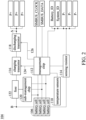
- FIG. 3 further illustrates a schematic diagram of the electronic device 100, in accordance with some embodiments of the present disclosure.
- the electronic device 100 described above may further include the processor 102, the battery device 104, a selector 202, a battery charger 204, a host power supply unit 206, a power management unit 208, at least one fan 210, a display 212 , a plurality of universal serial bus (USB) ports 214.
- USB universal serial bus
- the power supply 200 is connected to the selector 202 of the electronic device 100.
- the selector 202 is coupled to the battery charger 204 and the host power supply unit 206 for selecting to transmit the power provided by the power supply 200 to the battery charger 204 or the host power supply unit 206. If the selector 202 transmits power to the battery charger 204, the battery charger 204 further transmits power to the battery device 104 to charge the battery device 104. If the selector 202 transmits power to the host power supply unit 206, the host power supply unit 206 further transmits power to the power management unit 208, so that the power management unit 208 then transmits power to the processor 102 to power the electronic device 100.
- the battery device 104 transmits power to the processor 102 through the battery charger 204, the selector 202, the host power supply unit 206, and the power management unit 208 to supply power to the electronic device 100.
- the battery device 104 is also connected to the processor 102 through a signal line 218. It should be noted that the signal line 218 only enables the battery device 104 to communicate with the processor 102, but does not enable the battery device 104 to transmit power to the processor 102.
- the battery charger 204 is also connected to the processor 102 through a signal line 216.
- the processor 102 is also connected to the fan 210, the display 212, and the USB ports 214.
- the present disclosure implements a temperature compensation method to reduce the difference between the battery temperature detected by the temperature sensor 110 and the simulated overall battery temperature (which may be referred to as simulated battery temperature), so that the detected battery temperature does not exceed the simulated battery temperature too much.
- the processor 102 may simulate the simulated battery temperature of the battery device 104 according to the current power consumption of the electronic device 100, and the temperature sensor 110 (shown in FIG. 2 ) of the battery device 104 detects the battery temperature of the battery device 104.
- the management chip 112 (shown in FIG. 2 ) of the battery device 104 then compares the simulated battery temperature with the battery temperature detected by the temperature sensor 110.
- the management chip 112 determines that the difference between the detected battery temperature and the simulated battery temperature is not within a tolerance value, the electronic device 100 performs a multi-level cooling operation until the difference between the detected battery temperature of the battery device 104 and the simulated battery temperature is within the tolerance value.
- the multi-level cooling operation in the embodiments of the present disclosure includes a first-level cooling operation, a second-level cooling operation, a third-level cooling operation, a fourth-level cooling operation, a fifth-level cooling operation, a sixth-level cooling operation, and a seventh-level cooling operation.
- Each subsequent level of the cooling operation has a higher cooling effect than the previous level of cooling operation.
- the fifth-level cooling operation has a higher cooling effect than the fourth-level cooling operation.
- the electronic device 100 may perform the next cooling operation in the multi-level cooling operation until the difference between the detected battery temperature of the battery device 104 and the simulated battery temperature is within the tolerance value.
- the electronic device 100 may perform the next cooling operation in the multi-level cooling operation until the difference between the detected battery temperature of the battery device 104 and the simulated battery temperature is within the tolerance value.
- after performing one level of the cooling operations of the multi-level cooling operation after an interval of 60 seconds, it is determined whether the difference between the detected battery temperature and the simulated battery temperature is within the tolerance value, and then it is decided whether to perform the next level of the cooling operations.
- the processor 102 increases the rotational speed of the fan 210.
- the rotational speed of the fan 210 is increased from 1500 RPM to 3500 RPM.
- the battery device 104 instructs the processor 102 to set the operating frequency of the processor 102 at 75% of the maximum operating frequency of the processor 102 through the signal line 218. For example, if the maximum operating frequency of the processor 102 is 1200 MHz, when the electronic device 100 performs the second-level cooling operation, the operating frequency of the processor 102 is set at 900 MHz.
- the battery device 104 instructs the processor 102 to set the operating frequency of the processor 102 at 50% of the maximum operating frequency of the processor 102 through the signal line 218. For example, if the maximum operating frequency of the processor 102 is 1200 MHz, when the electronic device 100 performs the third-level cooling operation, the operating frequency of the processor 102 is set at 600 MHz.
- the battery device 104 instructs the processor 102 to set the operating frequency of the processor 102 at 25% of the maximum operating frequency of the processor 102 through the signal line 218. For example, if the maximum operating frequency of the processor 102 is 1200 MHz, when the electronic device 100 performs the fourth-level cooling operation, the operating frequency of the processor 102 is set at 300 MHz.
- the battery device 104 instructs the processor 102 to set the operating frequency of the processor 102 below 25% of the maximum operating frequency of the processor 102 through the signal line 216. For example, if the maximum operating frequency of the processor 102 is 1200 MHz, when the electronic device 100 performs the fifth-level cooling operation, the operating frequency of the processor 102 is set below 300 MHz.
- the second-level cooling operation to the fourth-level cooling operation are performed by the battery device 104 instructing the processor 102 through the signal line 218, and the fifth-level cooling operation is performed by the battery charger 204 instructing the processor 102 through the signal line 216.
- the processor 102 receives an instruction from the battery device 104, the processor 102 sets the operating frequency of the processor 102 with a software mechanism, and when the processor 102 receives an instruction from the battery charger 204, the processor 102 sets the operating frequency of the processor 102 by a hardware mechanism. Compared with the software mechanism, the speed of setting the operating frequency by the hardware mechanism is faster. Therefore, the fifth-level cooling operation can reduce the battery temperature of the battery device 104 more urgently and effectively.
- the next level of the cooling operations is performed. For example, as discussed above, if the maximum operating frequency of the processor 102 is 1200 MHz, when the electronic device 100 performs the third-level cooling operation, the operating frequency of the processor 102 is set at 600 MHz. However, if the current operating frequency of the processor 102 is already lower than 600MHz (such as 500MHz) when the third-level cooling operation is performed, the next level of the cooling operations (e.g., the fourth-level cooling operation) is performed, and the operating frequency of the processor 102 is set at 300MHz.
- 600MHz such as 500MHz
- the processor 102 reduces the brightness of the display 212.
- the brightness of the display 212 is reduced from 80 to 50.
- the processor 102 closes the USB ports 214. For example, close the USB ports 214, so that the external device(s) connected to the electronic device 100 through the USB port(s) 214 is disconnected from the electronic device 100, such as keyboard, mouse, microphone, external hard drive, USB storage device, etc.
- FIG. 4 illustrates a flow chart of a battery temperature compensation method 300, in accordance with some embodiments of the present disclosure, which shows a method for classifying the electronic device 100 as being in a light-load operation, a middle-load operation, or a high-load operation.
- the processor 102 determines whether the current power consumption of the electronic device 100 is in a light-load operation, a middle-load operation, or a high-load operation. Specifically, when the current power consumption of the electronic device 100 is between 1% and 35% of the maximum power consumption of the electronic device 100, the processor 102 determines that the electronic device 100 is in the light-load operation.
- the processor 102 determines that the electronic device 100 is in the middle-load operation.
- the processor 102 determines that the electronic device 100 is in high-load operation.
- the light-load operation is defined as between 1% and 35% of the maximum power consumption of the electronic device 100
- the middle-load operation is defined as between 36% and 75% of the maximum power consumption of the electronic device 100
- the high-load operation is defined as between 76% and 100% of the maximum power consumption of the electronic device 100.
- FIG. 4 when it is determined that the electronic device 100 is operating in the light-load operation, the battery temperature compensation method 400 is performed. When it is determined that the electronic device 100 is operating in the middle-load operation, the battery temperature compensation method 500 is performed. When it is determined that the electronic device 100 is operating in the high-load operation, the battery temperature compensation method 600 is performed.
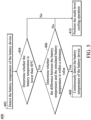
- FIG. 5 illustrates a flow chart of the battery temperature compensation method 400, in accordance with some embodiments of the present disclosure, which shows the battery temperature compensation method of the electronic device 100 in the light-load operation.
- the battery temperature of the battery device 104 in the electronic device 100 is detected.
- the temperature sensor 110 in the battery device 104 can detect the battery temperature of the battery device 104. In some embodiments, the temperature sensor 110 detects the battery temperature of the battery device 104 every 60 seconds.
- the management chip 112 of the battery device 104 determines whether the battery temperature detected by the temperature sensor 110 is lower than 40°C. If yes, the battery temperature compensation method 400 proceeds to operation 406; if no, the battery temperature compensation method 400 proceeds to operation 410.
- the management chip 112 of the battery device 104 determines whether the difference between the battery temperature detected by the temperature sensor 110 and the simulated battery temperature of the battery device 104 is within a tolerance value. If yes, the battery temperature compensation method 400 proceeds to operation 408; if no, the battery temperature compensation method 400 proceeds to operation 410. In some embodiments, this tolerance value in light-load operation is set lower than 3°C, but is not limited thereto. For example, assuming that the simulated battery temperature of the battery device 104 is 33°C, when the battery temperature detected by the temperature sensor 110 is 35°C, the difference is within the tolerance value, and the battery temperature compensation method 400 proceeds to operation 408.
- the simulated battery temperature of the battery device 104 is °C
- the difference is not within the tolerance value, and the battery temperature compensation method 400 proceeds to operation 410.
- the simulated battery temperature of the battery device 104 is simulated by the processor 102 according to the current power consumption of the electronic device 100.
- the simulated battery temperature of the battery device 104 is pre-simulated data stored in the electronic device 100 in advance.
- the temperature sensor 110 when it is determined that the difference between the battery temperature detected by the temperature sensor 110 of the battery device 104 and the simulated battery temperature is within the tolerance value (e.g., lower than 3°C), the temperature sensor 110 continuously detects the battery temperature of the battery device 104. In other words, it may return to operation 402 to detect the battery temperature of the battery device 104. In some embodiments, it may return to operation 302 of the battery temperature compensation method 300 to re-determine whether the current power consumption of the electronic device 100 is in light-load operation, middle-load operation, or high-load operation.
- the tolerance value e.g., lower than 3°C
- the multi-level cooling operation discussed above is performed.
- the multi-level cooling operation discussed above is performed until the battery temperature of the battery device 104 is reduced to lower than 40°C.
- the tolerance value e.g., greater than or equal to 3°C
- the multi-level cooling operation discussed above is performed until the difference between the battery temperature detected by the temperature sensor 110 and the simulated battery temperature of the battery device 104 is within the tolerance value (e.g., lower than 3°C).
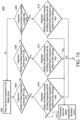
- FIGS. 6A and 6B illustrate a flow chart of the battery temperature compensation method 500, in accordance with some embodiments of the present disclosure, which shows the battery temperature compensation method of the electronic device 100 in the middle-load operation.
- the battery temperature of the battery device 104 in the electronic device 100 is detected.
- the temperature sensor 110 in the battery device 104 can detect the battery temperature of the battery device 104.
- the temperature sensor 110 detects the battery temperature of the battery device 104 every 60 seconds.
- the management chip 112 of the battery device 104 determines whether the battery temperature detected by the temperature sensor 110 is lower than 40°C. If yes, the battery temperature compensation method 500 proceeds to operation 518; if no, the battery temperature compensation method 500 proceeds to operation 506.
- the management chip 112 of the battery device 104 determines whether the battery temperature detected by the temperature sensor 110 is between 40°C and 50°C. If yes, the battery temperature compensation method 500 proceeds to operation 520; if no, the battery temperature compensation method 500 proceeds to operation 508.
- the management chip 112 of the battery device 104 determines whether the battery temperature detected by the temperature sensor 110 is between 50°C and 60°C. If yes, the battery temperature compensation method 500 proceeds to operation 522; if no, the battery temperature compensation method 500 proceeds to operation 510.
- the management chip 112 of the battery device 104 determines whether the battery temperature detected by the temperature sensor 110 is greater than 60°C. If yes, the battery temperature compensation method 500 proceeds to operation 512; if no, since operation 508 has determined that the battery temperature is not between 50°C and 60°C, an error may occur in the detection, and the battery temperature compensation method 500 proceeds to operation 502 to again detect the battery temperature of the battery device 104 in the electronic device 100.
- the management chip 112 of the battery device 104 determines whether the battery temperature detected by the temperature sensor 110 is greater than 63°C. If yes, the battery temperature compensation method 500 proceeds to operation 516; if no, the battery temperature compensation method 500 proceeds to operation 514.
- the multi-level cooling operation discussed above is performed.
- the processor 102 closes the USB ports 214 to perform the multi-level cooling operation from the seventh-level cooling operation.
- the management chip 112 of the battery device 104 determines whether the difference between the battery temperature detected by the temperature sensor 110 and the simulated battery temperature of the battery device 104 is within the tolerance value. If yes, the battery temperature compensation method 500 proceeds to operation 524; if no, the battery temperature compensation method 500 proceeds to operation 526. In some embodiments, this tolerance value in middle-load operation is set lower than 5°C, but is not limited thereto.
- the temperature sensor 110 continuously detects the battery temperature of the battery device 104. In other words, it may return to operation 502 to detect the battery temperature of the battery device 104. In some embodiments, it may return to operation 302 of the battery temperature compensation method 300 to re-determine whether the current power consumption of the electronic device 100 is in light-load operation, middle-load operation, or high-load operation.
- the multi-level cooling operation discussed above is performed.
- the multi-level cooling operation discussed above is performed until the difference between the battery temperature detected by the temperature sensor 110 and the simulated battery temperature of the battery device 104 is within the tolerance value (e.g., lower than 5°C).
- FIGS. 7A and 7B illustrate a flow chart of the battery temperature compensation method 600, in accordance with some embodiments of the present disclosure, which shows the battery temperature compensation method of the electronic device 100 in the high-load operation.
- the battery temperature of the battery device 104 in the electronic device 100 is detected.
- the temperature sensor 110 in the battery device 104 can detect the battery temperature of the battery device 104.
- the temperature sensor 110 detects the battery temperature of the battery device 104 every 60 seconds.
- the management chip 112 of the battery device 104 determines whether the battery temperature detected by the temperature sensor 110 is between 40°C and 50°C. If yes, the battery temperature compensation method 600 proceeds to operation 610; if no, the battery temperature compensation method 600 proceeds to operation 606.
- the management chip 112 of the battery device 104 determines whether the battery temperature detected by the temperature sensor 110 is between 50°C and 60°C. If yes, the battery temperature compensation method 600 proceeds to operation 612; if no, the battery temperature compensation method 600 proceeds to operation 608.
- the management chip 112 of the battery device 104 determines whether the battery temperature detected by the temperature sensor 110 is greater than 60°C. If yes, the battery temperature compensation method 600 proceeds to operation 614; if no, since operation 508 has determined that the battery temperature is not between 50°C and 60°C, an error may occur in the detection, and the battery temperature compensation method 600 proceeds to operation 602 to again detect the battery temperature of the battery device 104 in the electronic device 100.
- the management chip 112 of the battery device 104 determines whether the difference between the battery temperature detected by the temperature sensor 110 and the simulated battery temperature of the battery device 104 is within a first tolerance value. If yes, the battery temperature compensation method 600 proceeds to operation 616; if no, the battery temperature compensation method 600 proceeds to operation 618. In some embodiments, this first tolerance value in high-load operation is set lower than 8°C, but is not limited thereto.
- the temperature sensor 110 continuously detects the battery temperature of the battery device 104. In other words, it may return to operation 602 to detect the battery temperature of the battery device 104. In some embodiments, it may return to operation 302 of the battery temperature compensation method 300 to re-determine whether the current power consumption of the electronic device 100 is in light-load operation, middle-load operation, or high-load operation.
- the management chip 112 of the battery device 104 determines whether the difference between the battery temperature detected by the temperature sensor 110 and the simulated battery temperature of the battery device 104 is within a second tolerance value. If yes, the battery temperature compensation method 600 proceeds to operation 620; if no, the battery temperature compensation method 600 proceeds to operation 622. In some embodiments, this second tolerance value in high-load operation is set lower than 9°C, but is not limited thereto.
- the multi-level cooling operation discussed above is performed. However, it should be noted that in order to quickly and effectively reduce the battery temperature, in operation 620, the multi-level cooling operation is performed from the fifth-level cooling operation, and the operating frequency of the processor 102 is set below 25% of the maximum operating frequency of the processor 102.
- the management chip 112 of the battery device 104 determines whether the difference between the battery temperature detected by the temperature sensor 110 and the simulated battery temperature of the battery device 104 is within a third tolerance value. If yes, the battery temperature compensation method 600 proceeds to operation 624; if no, the battery temperature compensation method 600 proceeds to operation 626. In some embodiments, this third tolerance value in high-load operation is set lower than 10°C, but is not limited thereto.
- operation 624 the multi-level cooling operation discussed above is performed. However, it should be noted that in order to quickly and effectively reduce the battery temperature, in operation 624, the multi-level cooling operation is performed from the sixth-level cooling operation, and the brightness of the display 212 is reduced.
- the management chip 112 of the battery device 104 determines whether the difference between the battery temperature detected by the temperature sensor 110 and the simulated battery temperature of the battery device 104 is within a fourth tolerance value. If yes, the battery temperature compensation method 600 proceeds to operation 628; if no, the battery temperature compensation method 600 proceeds to operation 630. In some embodiments, this fourth tolerance value in high-load operation is set lower than 11°C, but is not limited thereto.
- the multi-level cooling operation discussed above is performed. However, it should be noted that in order to quickly and effectively reduce the battery temperature, in operation 628, the multi-level cooling operation is performed from the seventh-level cooling operation, and the processor 102 closes the USB ports 214.
- the electronic device 100 needs to be shut down, so as to avoid damage to the battery device 104 or damage to the electronic device 100 caused by the battery device 104.
- the embodiments of the present disclosure offer advantages over existing art, though it should be understood that other embodiments may offer different advantages, not all advantages are necessarily discussed herein, and that no particular advantage is required for all embodiments.
- the devices and methods of the present disclosure may quickly compensate the battery temperature of the battery device to match the detected battery temperature to the simulated battery temperature.
Landscapes
- Engineering & Computer Science (AREA)
- Chemical & Material Sciences (AREA)
- General Chemical & Material Sciences (AREA)
- Electrochemistry (AREA)
- Chemical Kinetics & Catalysis (AREA)
- Manufacturing & Machinery (AREA)
- Automation & Control Theory (AREA)
- General Physics & Mathematics (AREA)
- Theoretical Computer Science (AREA)
- Physics & Mathematics (AREA)
- General Engineering & Computer Science (AREA)
- Human Computer Interaction (AREA)
- Charge And Discharge Circuits For Batteries Or The Like (AREA)
- Secondary Cells (AREA)
- Protection Of Static Devices (AREA)
- Testing Electric Properties And Detecting Electric Faults (AREA)
Abstract
Description
- This Application claims priority of
Taiwan Patent Application No. 112101957, filed on January 17, 2023 - The present invention relates to battery temperature compensation method, and, in particular, to a battery temperature compensation method that uses multiple cooling operations to match the battery temperature with the simulated battery temperature.
- With the development of technology, many existing electronic devices such as servers, electric vehicles, and mobile devices are powered by battery devices. A temperature sensor is usually disposed in the battery device to detect the battery temperature of the battery device in these electronic devices. The detected battery temperature can be used for various applications. For example, it can be determined whether the battery is at an undesirably high temperature, so that various protection mechanisms can be employed to prevent the battery from being damaged.
- However, the battery device in the existing electronic device has a large area, and a temperature sensor only uses one detection point at which to detect the battery temperature of the battery device. In other words, the battery temperature as detected by the temperature sensor is not the average battery temperature of the entire battery device. Therefore, there is a need for a method for compensating the battery temperature to match the detected battery temperature to a simulated battery temperature.
- The present disclosure provides a smart battery temperature compensation method. The smart battery temperature compensation method includes detecting a battery temperature of a battery device in an electronic device; and determining whether a difference between the battery temperature and a simulated battery temperature of the battery device is within a tolerance value. The simulated battery temperature is simulated according to a current power consumption of the electronic device. The smart battery temperature compensation method further includes when it is determined that the difference between the battery temperature of the battery device and the simulated battery temperature is not within the tolerance value, performing a multi-level cooling operation until the difference between the battery temperature of the battery device and the simulated battery temperature is within the tolerance value.
- In order to describe the manner in which the above-recited and other advantages and features of the disclosure can be obtained, a more particular description of the principles briefly described above will be rendered by reference to specific examples thereof which are illustrated in the appended drawings. Understanding that these drawings depict only exemplary aspects of the disclosure and are not therefore to be considered to be limiting of its scope, the principles herein are described and explained with additional specificity and detail through the use of the accompanying drawings.
-
FIG. 1 illustrates a schematic diagram of an electronic device, in accordance with some embodiments of the present disclosure. -
FIG. 2 illustrates a schematic diagram of a battery device, in accordance with some embodiments of the present disclosure. -
FIG. 3 illustrates a schematic diagram of the electronic device, in accordance with some embodiments of the present disclosure. -
FIG. 4 illustrates a flow chart of a battery temperature compensation method, in accordance with some embodiments of the present disclosure, which shows a method for classifying the electronic device as being in a light-load operation, a middle-load operation, or a high-load operation. -
FIG. 5 illustrates a flow chart of the battery temperature compensation method, in accordance with some embodiments of the present disclosure, which shows the battery temperature compensation method of the electronic device in the light-load operation. -
FIGS. 6A and6B illustrate a flow chart of the battery temperature compensation method, in accordance with some embodiments of the present disclosure, which shows the battery temperature compensation method of the electronic device in the middle-load operation. -
FIGS. 7A and7B illustrate a flow chart of the battery temperature compensation method, in accordance with some embodiments of the present disclosure, which shows the battery temperature compensation method of the electronic device in the high-load operation. - The following disclosure provides many different embodiments, or examples, for implementing different features of the invention. Specific examples of components and arrangements are described below to simplify the present disclosure. These are, of course, merely examples and are not intended to be limiting. For example, the formation of a first feature over or on a second feature in the description that follows may include embodiments in which the first and second features are formed in direct contact, and may also include embodiments in which additional features may be formed between the first and second features, such that the first and second features may not be in direct contact. In addition, the present disclosure may repeat reference numerals and/or letters in the various examples. This repetition is for the purpose of simplicity and clarity and does not in itself dictate a relationship between the various embodiments and/or configurations discussed.
- For purposes of the present detailed description, unless specifically disclaimed, the singular includes the plural and vice versa; and the word "including" means "including without limitation." Moreover, words of approximation, such as "about," "almost," " substantially," "approximately," and the like, can be used herein to mean "at, near, or nearly at," or "within 3-5% of," or "within acceptable manufacturing tolerances," or any logical combination thereof, for example.
- Furthermore, spatially relative terms, such as "beneath," "below," "lower," "above," "upper" and the like, may be used herein for ease of description to describe one element or feature's relationship to another element(s) or feature(s) as illustrated in the figures. The spatially relative terms are intended to encompass different orientations of the device in use or operation in addition to the orientation depicted in the figures. For example, if the device in the figures is turned over, elements described as being "below" or "beneath" other elements or features would then be oriented "above" the other elements or features. Thus, the exemplary term "below" can encompass both an orientation of above and below. The apparatus may be otherwise oriented (rotated 90 degrees or at other orientations) and the spatially relative descriptors used herein may likewise be interpreted accordingly.
- The terminology used herein is for the purpose of describing particular embodiments only, and is not intended to be limiting of the invention. As used herein, the singular forms "a", "an" and "the" are intended to include the plural forms as well, unless the context clearly indicates otherwise. Furthermore, to the extent that the terms "including," "includes," "having," "has," "with," or variants thereof, are used in either the detailed description and/or the claims, such terms are intended to be inclusive in a manner similar to the term "comprising."
- Unless otherwise defined, all terms (including technical and scientific terms) used herein have the same meaning as commonly understood by one of ordinary skill in the art. Furthermore terms, such as those defined in commonly used dictionaries, should be interpreted as having a meaning that is consistent with their meaning in the context of the relevant art, and will not be interpreted in an idealized or overly formal sense unless expressly so defined herein.
-
FIG. 1 illustrates a schematic diagram of anelectronic device 100, in accordance with some embodiments of the present disclosure. Theelectronic device 100 includes aprocessor 102 and abattery device 104. Thebattery device 104 further includesbattery cells circuit board 108, andtemperature sensors battery device 104 is coupled to theprocessor 102 to communicate with theelectronic device 100. Specifically, thebattery cells 106 are connected to thecircuit board 108, and thetemperature sensors 110 are disposed on thecircuit board 108. Thecircuit board 108 is coupled to theprocessor 102, so that the power stored in thebattery cells 106 may be transmitted to theprocessor 102 of theelectronic device 100, and the battery temperature of thebattery device 104 sensed by thetemperature sensors 110 may be transmitted to theprocessor 102 of theelectronic device 100. It should be understood that other configurations and inclusion or omission of various items in theelectronic device 100 may be possible. Theelectronic device 100 is exemplary, and is not intended to limit the disclosure beyond what is explicitly recited in the claims. - As shown in
FIG. 1 , in some embodiments, thetemperature sensor 110A is disposed on thecircuit board 108 and disposed adjacent to the right side of theelectric cells temperature sensor 110B is disposed on thecircuit board 108 and disposed adjacent to the left side of thecells temperature sensors 110 only uses its location as a detection point to detect the battery temperatures of thebattery cells 106, and thebattery cells temperature sensors battery device 104 detected by thetemperature sensors 110 is not the overall battery temperature. Therefore, a temperature compensation method is needed to reduce the difference between the battery temperature detected by thetemperature sensor 110 and the simulated overall battery temperature. -
FIG. 2 further illustrates a schematic diagram of abattery device 104, in accordance with some embodiments of the present disclosure. As shown inFIG. 2 , thebattery device 104 described above may further include thebattery cells 106, thetemperature sensors 110, amanagement chip 112, asensing resistor 114, acharging transistor 116, adischarging transistor 118 , asub-management chip 120, and afuse 122. It should be understood that other configurations and inclusion or omission of various items in thebattery device 104 may be possible. Thebattery device 104 is exemplary, and is not intended to limit the disclosure beyond what is explicitly recited in the claims. - The
battery cell 106 can store power. In the present embodiment, thebattery cells 106 may be lithium-ion batteries. The lithium-ion battery is a rechargeable battery (secondary battery) that operates by moving lithium ions between positive and negative electrodes. The positive electrode of the lithium-ion battery is generally composed of a metal oxide containing lithium ions, and the negative electrode is generally a lattice composed of graphite. During charging, the lithium ions move toward the graphite's lattice. During discharge, the lithium ions move toward the metal oxide. The process of lithium ions entering the positive electrode (metal oxide) is called intercalation, and the process of leaving is called deintercalation; the process of lithium ions entering the negative electrode (graphite lattice) is called insertion, and the process of leaving is called extraction. - The
management chip 112 is connected to thebattery cells 106 to detect the voltage or capacity of thebattery cells 106. The chargingtransistor 116 and the dischargingtransistor 118 are coupled between thebattery cells 106 and the positive terminals P+ of thebattery device 104. Themanagement chip 112 is connected to the chargingtransistor 116 and the dischargingtransistor 118 to control the chargingtransistor 116 and the dischargingtransistor 118, thereby controlling the charging and discharging of thebattery device 104. For example, the chargingtransistor 116 changes its state according to the control signal sent by themanagement chip 112 through thecontrol line 124. For example, when the control signal of thecontrol line 124 is "0", the chargingtransistor 116 only allows the current to flow from the node B to the node A, but forbids the current to flow from the node A to the node B. When the control signal of thecontrol line 124 is "1", the chargingtransistor 116 is fully turned on. In some embodiments, thedischarge transistor 118 changes its state according to the control signal sent by themanagement chip 112 through thecontrol line 126. For example, when the control signal of thecontrol line 126 is "0", thedischarge transistor 118 only allows the current to flow from the node A to the node B, but forbids the current to flow from the node B to the node A. When the control signal of thecontrol line 126 is "1", thedischarge transistor 118 is fully turned on. - When the
battery device 104 is connected to an external power source (e.g., a DC power source, or a DC power source converted from an AC power source), and themanagement chip 112 transmits a control signal "1" to thecharge transistor 116 and transmits a control signal "0" to thedischarge transistor 118, thebattery cells 106 can be connected to the external power source, so that the received power can be stored in thebattery cells 106. When themanagement chip 112 transmits a control signal "0" to the chargingtransistor 116 and a control signal "0" to the dischargingtransistor 118, thebattery cells 106 can be disconnected from the external power source, so that thebattery device 104 stops being charged. - When the
management chip 112 transmits a control signal "0" to thecharge transistor 116 and transmits a control signal "1" to thedischarge transistor 118, thebattery cells 106 can be connected to theprocessor 102 of theelectronic device 100, so that thebattery device 104 can provide power to theelectronic device 100. When themanagement chip 112 transmits a control signal "0" to thecharge transistor 116 and a control signal "0" to thedischarge transistor 118, thebattery cells 106 can be disconnected from theelectronic device 100, so that thebattery device 104 stops providing power. - The
management chip 112 is an integrated circuit device, which may include processor, microprocessor, controller, memory, other suitable integrated circuits, or combinations thereof. Themanagement chip 112 may detect the voltage, capacity, etc. of the battery cells 106 (or the battery device 104), and control thebattery device 104 according to the detected data. - The
sensing resistor 114 is coupled to thebattery cells 102, themanagement chip 112, and the negative electrodes P- of thebattery device 104. Thesensing resistor 114 may detect the discharge current of thebattery device 104. In some embodiments, when thebattery device 104 is connected to theprocessor 102 of theelectronic device 100, the management chip 445 may check whether the discharge current of thebattery device 104 detected by thesensing resistor 114 exceeds the protection value. When the discharge current of thebattery device 104 exceeds the protection value, themanagement chip 112 may control the chargingtransistor 116 and the dischargingtransistor 118 to stop thebattery device 104 from providing power, so as to avoid damage or danger to thebattery device 104. - The
fuse 112 is coupled between thebattery cells 106 and the chargingtransistor 116. Thesub-management chip 120 is coupled to thefuse 112, themanagement chip 104, and thebattery cells 102. Thesub-management chip 110 and thefuse 112 serve as the secondary protection of thebattery device 104. For example, when themain management chip 112 detects that the chargingtransistor 116 and the dischargingtransistor 118 fail and cannot be turned off so that thebattery device 104 stops providing power, themanagement chip 112 instructs thesub-management chip 120 to disconnect thefuse 122 so that thebattery device 104 stops providing power. Thesub-management chip 120 is also an integrated circuit device that may include a processor, a microprocessor, a controller, a memory, other suitable integrated circuits, or a combination thereof. - In the present embodiment, the
battery device 104 further includes a plurality of pins. As shown inFIG. 2 , thebattery device 104 further includes a clock pin SMBus_Clock, a data pin SMBus_Data, an identification pin Battery_ID, and an identification pin System_ID. Thebattery device 104 can communicate with theprocessor 102 of theelectronic device 100 through the clock pin SMBus_Clock and the data pin SMBus_Data. The identification pin Battery_ID makes theelectronic device 100 powered by thebattery device 104 to identify thebattery device 104. The identification pin System_ID makes thebattery device 104 to identify theelectronic device 100 powered by thebattery device 104. -
FIG. 3 further illustrates a schematic diagram of theelectronic device 100, in accordance with some embodiments of the present disclosure. As shown inFIG. 3 , theelectronic device 100 described above may further include theprocessor 102, thebattery device 104, aselector 202, abattery charger 204, a hostpower supply unit 206, apower management unit 208, at least onefan 210, adisplay 212 , a plurality of universal serial bus (USB)ports 214. - The
power supply 200 is connected to theselector 202 of theelectronic device 100. Theselector 202 is coupled to thebattery charger 204 and the hostpower supply unit 206 for selecting to transmit the power provided by thepower supply 200 to thebattery charger 204 or the hostpower supply unit 206. If theselector 202 transmits power to thebattery charger 204, thebattery charger 204 further transmits power to thebattery device 104 to charge thebattery device 104. If theselector 202 transmits power to the hostpower supply unit 206, the hostpower supply unit 206 further transmits power to thepower management unit 208, so that thepower management unit 208 then transmits power to theprocessor 102 to power theelectronic device 100. If the connection between thepower supply 200 and theelectronic device 100 is disconnected or thepower supply 200 stops supplying power, thebattery device 104 transmits power to theprocessor 102 through thebattery charger 204, theselector 202, the hostpower supply unit 206, and thepower management unit 208 to supply power to theelectronic device 100. Thebattery device 104 is also connected to theprocessor 102 through asignal line 218. It should be noted that thesignal line 218 only enables thebattery device 104 to communicate with theprocessor 102, but does not enable thebattery device 104 to transmit power to theprocessor 102. In addition, as shown inFIG. 3 , thebattery charger 204 is also connected to theprocessor 102 through asignal line 216. In some embodiments, theprocessor 102 is also connected to thefan 210, thedisplay 212, and theUSB ports 214. - As discussed above, the present disclosure implements a temperature compensation method to reduce the difference between the battery temperature detected by the
temperature sensor 110 and the simulated overall battery temperature (which may be referred to as simulated battery temperature), so that the detected battery temperature does not exceed the simulated battery temperature too much. Specifically, theprocessor 102 may simulate the simulated battery temperature of thebattery device 104 according to the current power consumption of theelectronic device 100, and the temperature sensor 110 (shown inFIG. 2 ) of thebattery device 104 detects the battery temperature of thebattery device 104. The management chip 112 (shown inFIG. 2 ) of thebattery device 104 then compares the simulated battery temperature with the battery temperature detected by thetemperature sensor 110. If themanagement chip 112 determines that the difference between the detected battery temperature and the simulated battery temperature is not within a tolerance value, theelectronic device 100 performs a multi-level cooling operation until the difference between the detected battery temperature of thebattery device 104 and the simulated battery temperature is within the tolerance value. - The multi-level cooling operation in the embodiments of the present disclosure includes a first-level cooling operation, a second-level cooling operation, a third-level cooling operation, a fourth-level cooling operation, a fifth-level cooling operation, a sixth-level cooling operation, and a seventh-level cooling operation. Each subsequent level of the cooling operation has a higher cooling effect than the previous level of cooling operation. For example, the fifth-level cooling operation has a higher cooling effect than the fourth-level cooling operation. When one level of the cooling operations of the multi-level cooling operation performed by the
electronic device 100 cannot effectively bring the difference between the detected battery temperature of thebattery device 104 and the simulated battery temperature within the tolerance value, theelectronic device 100 may perform the next cooling operation in the multi-level cooling operation until the difference between the detected battery temperature of thebattery device 104 and the simulated battery temperature is within the tolerance value. In some embodiments, after performing one level of the cooling operations of the multi-level cooling operation, after an interval of 60 seconds, it is determined whether the difference between the detected battery temperature and the simulated battery temperature is within the tolerance value, and then it is decided whether to perform the next level of the cooling operations. - When the
electronic device 100 performs the first-level cooling operation, theprocessor 102 increases the rotational speed of thefan 210. For example, the rotational speed of thefan 210 is increased from 1500 RPM to 3500 RPM. - When the
electronic device 100 performs the second-level cooling operation, thebattery device 104 instructs theprocessor 102 to set the operating frequency of theprocessor 102 at 75% of the maximum operating frequency of theprocessor 102 through thesignal line 218. For example, if the maximum operating frequency of theprocessor 102 is 1200 MHz, when theelectronic device 100 performs the second-level cooling operation, the operating frequency of theprocessor 102 is set at 900 MHz. - When the
electronic device 100 performs the third-level cooling operation, thebattery device 104 instructs theprocessor 102 to set the operating frequency of theprocessor 102 at 50% of the maximum operating frequency of theprocessor 102 through thesignal line 218. For example, if the maximum operating frequency of theprocessor 102 is 1200 MHz, when theelectronic device 100 performs the third-level cooling operation, the operating frequency of theprocessor 102 is set at 600 MHz. - When the
electronic device 100 performs the fourth-level cooling operation, thebattery device 104 instructs theprocessor 102 to set the operating frequency of theprocessor 102 at 25% of the maximum operating frequency of theprocessor 102 through thesignal line 218. For example, if the maximum operating frequency of theprocessor 102 is 1200 MHz, when theelectronic device 100 performs the fourth-level cooling operation, the operating frequency of theprocessor 102 is set at 300 MHz. - When the
electronic device 100 performs the fifth-level cooling operation, thebattery device 104 instructs theprocessor 102 to set the operating frequency of theprocessor 102 below 25% of the maximum operating frequency of theprocessor 102 through thesignal line 216. For example, if the maximum operating frequency of theprocessor 102 is 1200 MHz, when theelectronic device 100 performs the fifth-level cooling operation, the operating frequency of theprocessor 102 is set below 300 MHz. - It should be noted that the second-level cooling operation to the fourth-level cooling operation are performed by the
battery device 104 instructing theprocessor 102 through thesignal line 218, and the fifth-level cooling operation is performed by thebattery charger 204 instructing theprocessor 102 through thesignal line 216. When theprocessor 102 receives an instruction from thebattery device 104, theprocessor 102 sets the operating frequency of theprocessor 102 with a software mechanism, and when theprocessor 102 receives an instruction from thebattery charger 204, theprocessor 102 sets the operating frequency of theprocessor 102 by a hardware mechanism. Compared with the software mechanism, the speed of setting the operating frequency by the hardware mechanism is faster. Therefore, the fifth-level cooling operation can reduce the battery temperature of thebattery device 104 more urgently and effectively. - In some embodiments, when the current operating frequency of the
processor 102 is already lower than the operating frequency to be set for the cooling operation, the next level of the cooling operations is performed. For example, as discussed above, if the maximum operating frequency of theprocessor 102 is 1200 MHz, when theelectronic device 100 performs the third-level cooling operation, the operating frequency of theprocessor 102 is set at 600 MHz. However, if the current operating frequency of theprocessor 102 is already lower than 600MHz (such as 500MHz) when the third-level cooling operation is performed, the next level of the cooling operations (e.g., the fourth-level cooling operation) is performed, and the operating frequency of theprocessor 102 is set at 300MHz. - When the
electronic device 100 performs the sixth-level cooling operation, theprocessor 102 reduces the brightness of thedisplay 212. For example, the brightness of thedisplay 212 is reduced from 80 to 50. - When the
electronic device 100 performs the seventh-level cooling operation, theprocessor 102 closes theUSB ports 214. For example, close theUSB ports 214, so that the external device(s) connected to theelectronic device 100 through the USB port(s) 214 is disconnected from theelectronic device 100, such as keyboard, mouse, microphone, external hard drive, USB storage device, etc. -
FIG. 4 illustrates a flow chart of a batterytemperature compensation method 300, in accordance with some embodiments of the present disclosure, which shows a method for classifying theelectronic device 100 as being in a light-load operation, a middle-load operation, or a high-load operation. Inoperation 302, theprocessor 102 determines whether the current power consumption of theelectronic device 100 is in a light-load operation, a middle-load operation, or a high-load operation. Specifically, when the current power consumption of theelectronic device 100 is between 1% and 35% of the maximum power consumption of theelectronic device 100, theprocessor 102 determines that theelectronic device 100 is in the light-load operation. When the current power consumption of theelectronic device 100 is between 36% and 75% of the maximum power consumption of theelectronic device 100, theprocessor 102 determines that theelectronic device 100 is in the middle-load operation. When the current power consumption of theelectronic device 100 is between 76% and 100% of the maximum power consumption of theelectronic device 100, theprocessor 102 determines that theelectronic device 100 is in high-load operation. In other words, the light-load operation is defined as between 1% and 35% of the maximum power consumption of theelectronic device 100, the middle-load operation is defined as between 36% and 75% of the maximum power consumption of theelectronic device 100, and the high-load operation is defined as between 76% and 100% of the maximum power consumption of theelectronic device 100. - As shown in
FIG. 4 , when it is determined that theelectronic device 100 is operating in the light-load operation, the batterytemperature compensation method 400 is performed. When it is determined that theelectronic device 100 is operating in the middle-load operation, the batterytemperature compensation method 500 is performed. When it is determined that theelectronic device 100 is operating in the high-load operation, the batterytemperature compensation method 600 is performed.FIG. 5 illustrates a flow chart of the batterytemperature compensation method 400, in accordance with some embodiments of the present disclosure, which shows the battery temperature compensation method of theelectronic device 100 in the light-load operation. Inoperation 402, the battery temperature of thebattery device 104 in theelectronic device 100 is detected. Specifically, thetemperature sensor 110 in thebattery device 104 can detect the battery temperature of thebattery device 104. In some embodiments, thetemperature sensor 110 detects the battery temperature of thebattery device 104 every 60 seconds. - In
operation 404, themanagement chip 112 of thebattery device 104 determines whether the battery temperature detected by thetemperature sensor 110 is lower than 40°C. If yes, the batterytemperature compensation method 400 proceeds tooperation 406; if no, the batterytemperature compensation method 400 proceeds tooperation 410. - In
operation 406, themanagement chip 112 of thebattery device 104 determines whether the difference between the battery temperature detected by thetemperature sensor 110 and the simulated battery temperature of thebattery device 104 is within a tolerance value. If yes, the batterytemperature compensation method 400 proceeds tooperation 408; if no, the batterytemperature compensation method 400 proceeds tooperation 410. In some embodiments, this tolerance value in light-load operation is set lower than 3°C, but is not limited thereto. For example, assuming that the simulated battery temperature of thebattery device 104 is 33°C, when the battery temperature detected by thetemperature sensor 110 is 35°C, the difference is within the tolerance value, and the batterytemperature compensation method 400 proceeds tooperation 408. On the contrary, assuming that the simulated battery temperature of thebattery device 104 is °C, when the battery temperature detected by thetemperature sensor 110 is 37°C, the difference is not within the tolerance value, and the batterytemperature compensation method 400 proceeds tooperation 410. In some embodiments, the simulated battery temperature of thebattery device 104 is simulated by theprocessor 102 according to the current power consumption of theelectronic device 100. In other embodiments, the simulated battery temperature of thebattery device 104 is pre-simulated data stored in theelectronic device 100 in advance. - In
operation 408, when it is determined that the difference between the battery temperature detected by thetemperature sensor 110 of thebattery device 104 and the simulated battery temperature is within the tolerance value (e.g., lower than 3°C), thetemperature sensor 110 continuously detects the battery temperature of thebattery device 104. In other words, it may return tooperation 402 to detect the battery temperature of thebattery device 104. In some embodiments, it may return tooperation 302 of the batterytemperature compensation method 300 to re-determine whether the current power consumption of theelectronic device 100 is in light-load operation, middle-load operation, or high-load operation. - In
operation 410, the multi-level cooling operation discussed above is performed. In some embodiments, when themanagement chip 112 of thebattery device 104 determines that the temperature of the battery detected by thetemperature sensor 110 is not lower than 40°C, the multi-level cooling operation discussed above is performed until the battery temperature of thebattery device 104 is reduced to lower than 40°C. In other embodiments, when it is determined that the difference between the battery temperature detected by thetemperature sensor 110 and the simulated battery temperature of thebattery device 104 is not within the tolerance value (e.g., greater than or equal to 3°C), the multi-level cooling operation discussed above is performed until the difference between the battery temperature detected by thetemperature sensor 110 and the simulated battery temperature of thebattery device 104 is within the tolerance value (e.g., lower than 3°C). -
FIGS. 6A and6B illustrate a flow chart of the batterytemperature compensation method 500, in accordance with some embodiments of the present disclosure, which shows the battery temperature compensation method of theelectronic device 100 in the middle-load operation. Inoperation 502, the battery temperature of thebattery device 104 in theelectronic device 100 is detected. Specifically, thetemperature sensor 110 in thebattery device 104 can detect the battery temperature of thebattery device 104. In some embodiments, thetemperature sensor 110 detects the battery temperature of thebattery device 104 every 60 seconds. - In
operation 504, themanagement chip 112 of thebattery device 104 determines whether the battery temperature detected by thetemperature sensor 110 is lower than 40°C. If yes, the batterytemperature compensation method 500 proceeds tooperation 518; if no, the batterytemperature compensation method 500 proceeds tooperation 506. - In
operation 506, themanagement chip 112 of thebattery device 104 determines whether the battery temperature detected by thetemperature sensor 110 is between 40°C and 50°C. If yes, the batterytemperature compensation method 500 proceeds tooperation 520; if no, the batterytemperature compensation method 500 proceeds tooperation 508. - In
operation 508, themanagement chip 112 of thebattery device 104 determines whether the battery temperature detected by thetemperature sensor 110 is between 50°C and 60°C. If yes, the batterytemperature compensation method 500 proceeds tooperation 522; if no, the batterytemperature compensation method 500 proceeds tooperation 510. - In
operation 510, themanagement chip 112 of thebattery device 104 determines whether the battery temperature detected by thetemperature sensor 110 is greater than 60°C. If yes, the batterytemperature compensation method 500 proceeds tooperation 512; if no, sinceoperation 508 has determined that the battery temperature is not between 50°C and 60°C, an error may occur in the detection, and the batterytemperature compensation method 500 proceeds tooperation 502 to again detect the battery temperature of thebattery device 104 in theelectronic device 100. - In
operation 512, themanagement chip 112 of thebattery device 104 determines whether the battery temperature detected by thetemperature sensor 110 is greater than 63°C. If yes, the batterytemperature compensation method 500 proceeds tooperation 516; if no, the batterytemperature compensation method 500 proceeds tooperation 514. - In
operation 514, the multi-level cooling operation discussed above is performed. However, it should be noted that since the battery temperature of thebattery device 104 has exceeded 60°C, it is necessary to quickly and effectively reduce the battery temperature. Therefore, inoperation 514, theprocessor 102 closes theUSB ports 214 to perform the multi-level cooling operation from the seventh-level cooling operation. - In
operation 516, since the battery temperature of thebattery device 104 has exceeded 63°C, theelectronic device 100 needs to be shut down, so as to avoid damage to thebattery device 104 or damage to theelectronic device 100 caused by thebattery device 104. - In
operations management chip 112 of thebattery device 104 determines whether the difference between the battery temperature detected by thetemperature sensor 110 and the simulated battery temperature of thebattery device 104 is within the tolerance value. If yes, the batterytemperature compensation method 500 proceeds tooperation 524; if no, the batterytemperature compensation method 500 proceeds tooperation 526. In some embodiments, this tolerance value in middle-load operation is set lower than 5°C, but is not limited thereto. - In
operation 524, when it is determined that the difference between the battery temperature detected by thetemperature sensor 110 and the simulated battery temperature of thebattery device 104 is within the tolerance value (e.g., lower than 5°C), thetemperature sensor 110 continuously detects the battery temperature of thebattery device 104. In other words, it may return tooperation 502 to detect the battery temperature of thebattery device 104. In some embodiments, it may return tooperation 302 of the batterytemperature compensation method 300 to re-determine whether the current power consumption of theelectronic device 100 is in light-load operation, middle-load operation, or high-load operation. - In
operation 526, the multi-level cooling operation discussed above is performed. In other embodiments, when it is determined that the difference between the battery temperature detected by thetemperature sensor 110 and the simulated battery temperature of thebattery device 104 is not within the tolerance value (e.g., greater than or equal to 5°C), the multi-level cooling operation discussed above is performed until the difference between the battery temperature detected by thetemperature sensor 110 and the simulated battery temperature of thebattery device 104 is within the tolerance value (e.g., lower than 5°C). -
FIGS. 7A and7B illustrate a flow chart of the batterytemperature compensation method 600, in accordance with some embodiments of the present disclosure, which shows the battery temperature compensation method of theelectronic device 100 in the high-load operation. Inoperation 602, the battery temperature of thebattery device 104 in theelectronic device 100 is detected. Specifically, thetemperature sensor 110 in thebattery device 104 can detect the battery temperature of thebattery device 104. In some embodiments, thetemperature sensor 110 detects the battery temperature of thebattery device 104 every 60 seconds. - In
operation 604, themanagement chip 112 of thebattery device 104 determines whether the battery temperature detected by thetemperature sensor 110 is between 40°C and 50°C. If yes, the batterytemperature compensation method 600 proceeds tooperation 610; if no, the batterytemperature compensation method 600 proceeds tooperation 606. - In
operation 606, themanagement chip 112 of thebattery device 104 determines whether the battery temperature detected by thetemperature sensor 110 is between 50°C and 60°C. If yes, the batterytemperature compensation method 600 proceeds tooperation 612; if no, the batterytemperature compensation method 600 proceeds tooperation 608. - In
operation 608, themanagement chip 112 of thebattery device 104 determines whether the battery temperature detected by thetemperature sensor 110 is greater than 60°C. If yes, the batterytemperature compensation method 600 proceeds tooperation 614; if no, sinceoperation 508 has determined that the battery temperature is not between 50°C and 60°C, an error may occur in the detection, and the batterytemperature compensation method 600 proceeds tooperation 602 to again detect the battery temperature of thebattery device 104 in theelectronic device 100. - In
operations management chip 112 of thebattery device 104 determines whether the difference between the battery temperature detected by thetemperature sensor 110 and the simulated battery temperature of thebattery device 104 is within a first tolerance value. If yes, the batterytemperature compensation method 600 proceeds tooperation 616; if no, the batterytemperature compensation method 600 proceeds tooperation 618. In some embodiments, this first tolerance value in high-load operation is set lower than 8°C, but is not limited thereto. - In
operation 606, when it is determined that the difference between the battery temperature detected by thetemperature sensor 110 and the simulated battery temperature of thebattery device 104 is within the tolerance value (e.g., lower than 8°C), thetemperature sensor 110 continuously detects the battery temperature of thebattery device 104. In other words, it may return tooperation 602 to detect the battery temperature of thebattery device 104. In some embodiments, it may return tooperation 302 of the batterytemperature compensation method 300 to re-determine whether the current power consumption of theelectronic device 100 is in light-load operation, middle-load operation, or high-load operation. - In
operation 618, themanagement chip 112 of thebattery device 104 determines whether the difference between the battery temperature detected by thetemperature sensor 110 and the simulated battery temperature of thebattery device 104 is within a second tolerance value. If yes, the batterytemperature compensation method 600 proceeds tooperation 620; if no, the batterytemperature compensation method 600 proceeds tooperation 622. In some embodiments, this second tolerance value in high-load operation is set lower than 9°C, but is not limited thereto. - In
operation 620, the multi-level cooling operation discussed above is performed. However, it should be noted that in order to quickly and effectively reduce the battery temperature, inoperation 620, the multi-level cooling operation is performed from the fifth-level cooling operation, and the operating frequency of theprocessor 102 is set below 25% of the maximum operating frequency of theprocessor 102. - In
operation 622, themanagement chip 112 of thebattery device 104 determines whether the difference between the battery temperature detected by thetemperature sensor 110 and the simulated battery temperature of thebattery device 104 is within a third tolerance value. If yes, the batterytemperature compensation method 600 proceeds tooperation 624; if no, the batterytemperature compensation method 600 proceeds tooperation 626. In some embodiments, this third tolerance value in high-load operation is set lower than 10°C, but is not limited thereto. - In
operation 624, the multi-level cooling operation discussed above is performed. However, it should be noted that in order to quickly and effectively reduce the battery temperature, inoperation 624, the multi-level cooling operation is performed from the sixth-level cooling operation, and the brightness of thedisplay 212 is reduced. - In
operation 626, themanagement chip 112 of thebattery device 104 determines whether the difference between the battery temperature detected by thetemperature sensor 110 and the simulated battery temperature of thebattery device 104 is within a fourth tolerance value. If yes, the batterytemperature compensation method 600 proceeds tooperation 628; if no, the batterytemperature compensation method 600 proceeds tooperation 630. In some embodiments, this fourth tolerance value in high-load operation is set lower than 11°C, but is not limited thereto. - In
operation 628, the multi-level cooling operation discussed above is performed. However, it should be noted that in order to quickly and effectively reduce the battery temperature, inoperation 628, the multi-level cooling operation is performed from the seventh-level cooling operation, and theprocessor 102 closes theUSB ports 214. - In
operation 630, since the battery temperature of thebattery device 104 has exceeded 60°C and the difference between the battery temperature of thebattery device 104 and the simulated battery temperature is greater than or equal to 11°C (the battery temperature is over 71°C.), theelectronic device 100 needs to be shut down, so as to avoid damage to thebattery device 104 or damage to theelectronic device 100 caused by thebattery device 104. - The embodiments of the present disclosure offer advantages over existing art, though it should be understood that other embodiments may offer different advantages, not all advantages are necessarily discussed herein, and that no particular advantage is required for all embodiments. By using the embodiments of the present disclosure, the devices and methods of the present disclosure may quickly compensate the battery temperature of the battery device to match the detected battery temperature to the simulated battery temperature.
- The foregoing outlines features of several embodiments so that those skilled in the art may better understand the aspects of the present disclosure. Those skilled in the art should appreciate that they may readily use the present disclosure as a basis for designing or modifying other processes and structures for carrying out the same purposes and/or achieving the same advantages of the embodiments introduced herein. Those skilled in the art should also realize that such equivalent constructions do not depart from the spirit and scope of the present disclosure, and that they may make various changes, substitutions, and alterations herein without departing from the spirit and scope of the present disclosure.
Claims (10)
- A smart battery temperature compensation method, comprising:detecting a battery temperature of a battery device in an electronic device;determining whether a difference between the battery temperature and a simulated battery temperature of the battery device is within a tolerance value, wherein the simulated battery temperature is simulated according to a current power consumption of the electronic device; andwhen it is determined that the difference between the battery temperature of the battery device and the simulated battery temperature is not within the tolerance value, performing a multi-level cooling operation until the difference between the battery temperature of the battery device and the simulated battery temperature is within the tolerance value.
- The smart battery temperature compensation method as claimed in claim 1, wherein the multi-level cooling operation comprises:a first-level cooling operation, increasing a rotational speed of at least one fan of the electronic device;a second-level cooling operation, setting an operating frequency of a processor of the electronic device at 75% of a maximum operating frequency;a third-level cooling operation, setting the operating frequency of the processor of the electronic device at 50% of the maximum operating frequency;a fourth-level cooling operation, setting the operating frequency of the processor of the electronic device at 25% of the maximum operating frequency;a fifth-level cooling operation, setting the operating frequency of the processor of the electronic device below 25% of the maximum operating frequency;a sixth-level cooling operation, reducing a brightness of a display of the electronic device; anda seventh-level cooling operation, closing a plurality of universal serial bus ports of the electronic devices;wherein each subsequent level of the cooling operation has a higher cooling effect than the previous level of the cooling operation,wherein when performing one level of the cooling operations of the multi-level cooling operation cannot effectively bring the difference between the battery temperature of the battery device and the simulated battery temperature within the tolerance value, a next level of the cooling operations of the multi-level cooling operation is performed.
- The smart battery temperature compensation method as claimed in claim 2, further comprising:determining whether the current power consumption of the electronic device is in a light-load operation, a middle-load operation, or a high-load operation;wherein the light-load operation is when the current power consumption of the electronic device is between 1% and 35% of a maximum power consumption of the electronic device;wherein the middle-load operation is when the current power consumption of the electronic device is between 36 and 75% of the maximum power consumption of the electronic device, andwherein the high-load operation is when the current power consumption of the electronic device is between 76% and 100% of the maximum power consumption of the electronic device.
- The smart battery temperature compensation method as claimed in claim 3, wherein when it is determined that the electronic device is in the light-load operation, the tolerance value is less than 3°C.
- The smart battery temperature compensation method as claimed in claim 3, wherein when it is determined that the electronic device is in the middle-load operation, the tolerance value is less than 5°C.
- The smart battery temperature compensation method as claimed in claim 3, wherein when it is determined that the electronic device is in the high-load operation, the tolerance value is less than 8°C.
- The smart battery temperature compensation method as claimed in claim 6, further comprising:when the difference between the battery temperature of the battery device and the simulated battery temperature is not within the tolerance value, determining whether the difference is less than 9°C; andWhen it is determined that the difference is less than 9°C, performing the multi-level cooling operation from the fifth-level cooling operation until the difference between the battery temperature of the battery device and the simulated battery temperature is within the tolerance value.
- The smart battery temperature compensation method as claimed in claim 6, further comprising:when the difference between the battery temperature of the battery device and the simulated battery temperature is not within the tolerance value, determining whether the difference is less than 10°C; andWhen it is determined that the difference is less than 10°C, performing the multi-level cooling operation from the sixth-level cooling operation until the difference between the battery temperature of the battery device and the simulated battery temperature is within the tolerance value.
- The smart battery temperature compensation method as claimed in claim 6, further comprising:when the difference between the battery temperature of the battery device and the simulated battery temperature is not within the tolerance value, determining whether the difference is less than 11°C; andWhen it is determined that the difference is less than 11°C, performing the multi-level cooling operation from the seventh-level cooling operation until the difference between the battery temperature of the battery device and the simulated battery temperature is within the tolerance value.
- The smart battery temperature compensation method as claimed in claim 9, further comprising:
When it is determined that the difference is greater than 11°C, turning off the electronic device.
Applications Claiming Priority (1)
| Application Number | Priority Date | Filing Date | Title |
|---|---|---|---|
| TW112101957A TWI858514B (en) | 2023-01-17 | 2023-01-17 | Smart battery temperature compensation method |
Publications (2)
| Publication Number | Publication Date |
|---|---|
| EP4404333A2 true EP4404333A2 (en) | 2024-07-24 |
| EP4404333A3 EP4404333A3 (en) | 2024-08-14 |
Family
ID=86609754
Family Applications (1)
| Application Number | Title | Priority Date | Filing Date |
|---|---|---|---|
| EP23175986.1A Pending EP4404333A3 (en) | 2023-01-17 | 2023-05-30 | Smart battery temperature compensation method |
Country Status (6)
| Country | Link |
|---|---|
| US (1) | US20240241181A1 (en) |
| EP (1) | EP4404333A3 (en) |
| JP (1) | JP7659022B2 (en) |
| KR (1) | KR102943578B1 (en) |
| CN (1) | CN118367250A (en) |
| TW (1) | TWI858514B (en) |
Family Cites Families (13)
| Publication number | Priority date | Publication date | Assignee | Title |
|---|---|---|---|---|
| JP4872143B2 (en) | 2000-05-01 | 2012-02-08 | トヨタ自動車株式会社 | Cooling device for secondary battery |
| US7270910B2 (en) * | 2003-10-03 | 2007-09-18 | Black & Decker Inc. | Thermal management systems for battery packs |
| JP5008863B2 (en) * | 2005-11-30 | 2012-08-22 | プライムアースEvエナジー株式会社 | Secondary battery control device, secondary battery deterioration determination method using secondary battery temperature estimation method |
| JP4932340B2 (en) * | 2006-06-22 | 2012-05-16 | プライムアースEvエナジー株式会社 | Battery cooling device and cooling air volume control device |
| KR101416308B1 (en) * | 2011-01-31 | 2014-07-10 | 한국과학기술원 | Independent cooling method for operating temperature optimizations of medium and large sized batteries electric vehicles |
| US9083198B2 (en) * | 2011-10-05 | 2015-07-14 | Blackberry Limited | System and method for wirelessly charging a rechargeable battery |
| KR20150067842A (en) * | 2013-12-10 | 2015-06-19 | 현대자동차주식회사 | Apparatus and Method for controlling cooler fan for battery |
| CN108418265A (en) | 2018-03-09 | 2018-08-17 | 昆山市青少年科技教育协会 | A kind of explosion-proof charger and charge control method |
| TWI688180B (en) * | 2018-11-20 | 2020-03-11 | 緯創資通股份有限公司 | Portable electronic apparatus and battery temperature control method thereof |
| JP7301121B2 (en) | 2019-03-06 | 2023-06-30 | 三洋電機株式会社 | Abnormal diagnosis system and vehicle power supply system |
| JP7218989B2 (en) * | 2019-03-25 | 2023-02-07 | 株式会社Subaru | Vehicle battery cooling system |
| TWI800777B (en) * | 2020-12-15 | 2023-05-01 | 宏碁股份有限公司 | Temperature control method and data storage system |
| TWI796641B (en) * | 2021-03-03 | 2023-03-21 | 廣達電腦股份有限公司 | Smart battery device and operation method thereof |
-
2023
- 2023-01-17 TW TW112101957A patent/TWI858514B/en active
- 2023-03-15 CN CN202310247739.1A patent/CN118367250A/en active Pending
- 2023-05-04 US US18/312,001 patent/US20240241181A1/en active Pending
- 2023-05-30 EP EP23175986.1A patent/EP4404333A3/en active Pending
- 2023-07-31 KR KR1020230099423A patent/KR102943578B1/en active Active
- 2023-09-14 JP JP2023149364A patent/JP7659022B2/en active Active
Also Published As
| Publication number | Publication date |
|---|---|
| US20240241181A1 (en) | 2024-07-18 |
| KR20240114683A (en) | 2024-07-24 |
| KR102943578B1 (en) | 2026-03-24 |
| TWI858514B (en) | 2024-10-11 |
| JP7659022B2 (en) | 2025-04-08 |
| JP2024101526A (en) | 2024-07-29 |
| CN118367250A (en) | 2024-07-19 |
| TW202431745A (en) | 2024-08-01 |
| EP4404333A3 (en) | 2024-08-14 |
Similar Documents
| Publication | Publication Date | Title |
|---|---|---|
| US9015514B2 (en) | Systems and methods for implementing persistent battery shutdown for information handling systems | |
| US9035618B2 (en) | Battery pack and method of controlling the same | |
| CN101471460B (en) | Method for equilibrium control of battery set and battery set charging method | |
| JP3976268B2 (en) | Battery pack, electrical device, computer apparatus, battery control method, power supply method, and program | |
| US7595609B2 (en) | Battery system power path configuration and methods for implementing same | |
| US20020167294A1 (en) | Rechargeable power supply system and method of protection against abnormal charging | |
| US20110140650A1 (en) | Battery pack with balancing management | |
| US20110316483A1 (en) | Battery pack with balancing management | |
| US11909243B2 (en) | Information handling systems and improved battery charge control methods | |
| CN103683375A (en) | Hybrid Rechargeable Battery Module | |
| JP2001268813A (en) | Power supply device, power supply-switching device, and computer | |
| US20030098679A1 (en) | Electrical apparatus, computer equipment, intelligent, and power-supply control method | |
| KR20200021368A (en) | Battery Management system based on Cell Charge up Current | |
| CN113904005A (en) | On-line measurement of anode potential for maximizing charging power at low temperatures | |
| US12051925B2 (en) | Charging control method of a battery pack for portable electronic devices | |
| CN117458668B (en) | Battery protection circuit, battery protection board and electronic equipment | |
| EP4404333A2 (en) | Smart battery temperature compensation method | |
| CN105612677A (en) | Battery management unit for preventing execution of erroneous control algorithms due to communication errors | |
| CN116073482A (en) | Charging method, device, charging equipment and storage medium of UPS energy storage system | |
| KR101213479B1 (en) | A battery pack and a charging system including the battery pack and method for controlling the charging system | |
| CN201303255Y (en) | Battery pack | |
| CN115483727A (en) | Power supply control method and related portable electronic device | |
| CN114825516A (en) | Battery management system and battery device | |
| TWI870893B (en) | Smart battery cycle charging method and device thereof | |
| CN118769998B (en) | Power battery system capable of eliminating circulation impact, control method thereof and vehicle |
Legal Events
| Date | Code | Title | Description |
|---|---|---|---|
| PUAI | Public reference made under article 153(3) epc to a published international application that has entered the european phase |
Free format text: ORIGINAL CODE: 0009012 |
|
| STAA | Information on the status of an ep patent application or granted ep patent |
Free format text: STATUS: THE APPLICATION HAS BEEN PUBLISHED |
|
| PUAL | Search report despatched |
Free format text: ORIGINAL CODE: 0009013 |
|
| AK | Designated contracting states |
Kind code of ref document: A2 Designated state(s): AL AT BE BG CH CY CZ DE DK EE ES FI FR GB GR HR HU IE IS IT LI LT LU LV MC ME MK MT NL NO PL PT RO RS SE SI SK SM TR |
|
| AK | Designated contracting states |
Kind code of ref document: A3 Designated state(s): AL AT BE BG CH CY CZ DE DK EE ES FI FR GB GR HR HU IE IS IT LI LT LU LV MC ME MK MT NL NO PL PT RO RS SE SI SK SM TR |
|
| RIC1 | Information provided on ipc code assigned before grant |
Ipc: H01M 10/6563 20140101ALI20240708BHEP Ipc: H01M 10/633 20140101ALI20240708BHEP Ipc: H01M 10/613 20140101AFI20240708BHEP |
|
| STAA | Information on the status of an ep patent application or granted ep patent |
Free format text: STATUS: REQUEST FOR EXAMINATION WAS MADE |
|
| 17P | Request for examination filed |
Effective date: 20250124 |