EP4404090A2 - A system and a method for optimizing the energy consumption of cyber security products - Google Patents
A system and a method for optimizing the energy consumption of cyber security products Download PDFInfo
- Publication number
- EP4404090A2 EP4404090A2 EP24152717.5A EP24152717A EP4404090A2 EP 4404090 A2 EP4404090 A2 EP 4404090A2 EP 24152717 A EP24152717 A EP 24152717A EP 4404090 A2 EP4404090 A2 EP 4404090A2
- Authority
- EP
- European Patent Office
- Prior art keywords
- local
- optimizer
- files
- file
- cyber security
- Prior art date
- Legal status (The legal status is an assumption and is not a legal conclusion. Google has not performed a legal analysis and makes no representation as to the accuracy of the status listed.)
- Pending
Links
Images

Classifications
-
- G—PHYSICS
- G06—COMPUTING OR CALCULATING; COUNTING
- G06F—ELECTRIC DIGITAL DATA PROCESSING
- G06F21/00—Security arrangements for protecting computers, components thereof, programs or data against unauthorised activity
- G06F21/50—Monitoring users, programs or devices to maintain the integrity of platforms, e.g. of processors, firmware or operating systems
- G06F21/55—Detecting local intrusion or implementing counter-measures
- G06F21/56—Computer malware detection or handling, e.g. anti-virus arrangements
-
- H—ELECTRICITY
- H04—ELECTRIC COMMUNICATION TECHNIQUE
- H04L—TRANSMISSION OF DIGITAL INFORMATION, e.g. TELEGRAPHIC COMMUNICATION
- H04L63/00—Network architectures or network communication protocols for network security
- H04L63/02—Network architectures or network communication protocols for network security for separating internal from external traffic, e.g. firewalls
- H04L63/0281—Proxies
-
- H—ELECTRICITY
- H04—ELECTRIC COMMUNICATION TECHNIQUE
- H04L—TRANSMISSION OF DIGITAL INFORMATION, e.g. TELEGRAPHIC COMMUNICATION
- H04L63/00—Network architectures or network communication protocols for network security
- H04L63/14—Network architectures or network communication protocols for network security for detecting or protecting against malicious traffic
Definitions
- the present invention relates to the field of cyber security. More particularly, the invention relates to a system and method for optimizing the energy consumption of cyber security products.
- Cybersecurity products are a popular set of Information Technology (IT - related fields that encompass computer systems, software, programming languages and data and information processing and storage) tools for consumers and businesses use, in order to achieve a high-security level against cyber threats.
- IT Information Technology
- One of the challenges with IT tools is inefficiency in resource consumption, due to the rapid technological change, resulting in an excessive energy footprint.
- ICT Information and Communication Technologies
- Cloud data centers (buildings, dedicated spaces within a building, or a group of buildings used to house computer systems and associated components, such as telecommunications and storage systems) address high energy costs by relocating infrastructure into areas with cheaper energy sources, as well as offloading the high costs onto customer bills.
- cooling infrastructure is the largest energy consumer of a typical data center, cool-climate countries turned out to be attractive locations for new data centers.
- vendors of ICT equipment resorted to optimization efforts that focused on developing more energy-efficient hardware. For example, Graphics Processing Unit (GPU) vendors continuously invest in producing more energy-efficient architectures.
- GPU Graphics Processing Unit
- an object of the present invention to provide a method for making the cybersecurity product category much more energy efficient.
- a method for optimizing the energy consumption of cyber security products comprising:
- the Local Optimizer optimizes the operation of local security products by:
- the monitored objects may be selected from the group of:
- a Parallel Scan may be performed by:
- Cyber security tasks may be relocated to locations/times where energy cost is lower by:
- the workload shift may be performed via communications between the Central Optimizer and the Local Optimizers of the source and destination computing devices, where the workload is being relocated.
- the method may further comprise the steps of:
- the method may further comprise the steps of:
- the file may be compressed, by the Local Optimizer, with password protection by utilizing the database for recording the password.
- optimization may be performed by:
- the energy efficiency of an AV that handles web browser-based files may be optimized by:
- a system for optimizing the energy consumption of cyber security products comprising:
- the present invention provides a system and method for optimizing the energy consumption of cyber security products.
- the proposed method optimizes the energetic footprint of cyber security products without compromising security and/or is adapted to balance the required security level with the lowest possible energy consumption level.
- the method of the present invention encompasses energy optimization of existing security products using only different orchestration strategies, as well as new approaches to change the way existing cyber security products work to achieve energy efficiency.
- the proposed system consists of a central unit, which is responsible for taking energy optimization decisions in a computer network(s), where there is a local unit responsible for local energy optimization decisions on each computer.
- the local and central units are responsible for how different cyber security products operate across the network, so as to achieve high energy efficiency without compromising security or usability.
- the invention exemplifies energy efficiency across anti-malware protection and network defense cyber security tools.
- the invention also supports other examples of use related to cyber security products.
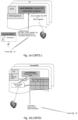
- Fig. 1 illustrates a system for optimizing the energy footprint of cyber security products in a network/enterprise setup without compromising security.
- the system comprises a software agent (a "Local Optimizer”), located in every computing device where there is a cyber security function that should be optimized, and a single centralized software agent (a "Central/Master Optimizer”) located in a computing device that is accessible to the Local Optimizer software agents and acts as a coordinating decision making unit that can impact the decisions of the Local Optimizers.
- a software agent a "Local Optimizer”
- Central/Master Optimizer centralized software agent
- the Local Optimizer can optimize the operation of local (on-host) security products by the following steps:
- the Central Optimizer maintains a global view of monitored objects (i.e., files, data streams, URLs, etc.) and the state of the Local Optimizers.
- the Central Optimizer optimizes the inspection of the objects across all machines (i.e., Local Optimizers). For example, if a file was inspected by an AV on a machine, the Local Optimizer on that machine will update the Global Optimizer, and other machines with the same file will not activate the AV for inspecting that file.
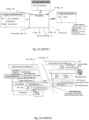
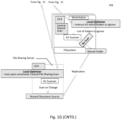
- Fig. 1 shows a flowchart of high-level architecture and examples of use in the present invention to perform various actions.
- a Parallel Scan (shown in UC1 block of Fig. 1 ) supports two energy efficiency optimizations: (1) relocating cyber security tasks to locations (determined by geo files used to associate Internet resources with geographical locations)/times where energy cost is lower and (2) conducting parallelization of malware scanning with user activity.
- the Local Optimizer of the workstation receives a command from the Central Optimizer to initiate scanning of Geo Files.
- the Local Optimizer monitors the CPU% and when the CPU% is about a medium level, starts scanning the file system by the AV scanner and reports the Geolocation back to the Central Optimizer.
- the Local Optimizer of the workstation receives a command from the Central Optimizer which files to ignore and reports about new scanned files.
- the Local Optimizer initiates scanning the file system by the AV scanner which scans files which were not ignored, as well as file types with updated signatures, udates the SCAN_SYNC_DATABASE and reports the latest list of scanned files .
- the input to the Central Optimizer is a table with information on different locations, where computing resources are available and their respective variable energy costs over time.
- the Central Optimizer continuously evaluates the content of the table and information on future cyber security workloads to be executed via the network of local optimizers.
- the Central Optimizer continuously instructs the Local Optimizers to shift cyber security workloads (such as malware scanning) to operate in an advantageous energy location and/or at different times.
- the workload shift is performed via communications between the Central Optimizer and the Local Optimizers of the source and destination computing devices where the workload is being relocated, and all workload-required information is transferred.
- Anti-malware tools including antiviruses (AV) and Next-Generation AVs (NGAVs - prevent all types of attacks, known and unknown, by monitoring, responding to attacker tactics, techniques and procedures) scan the contents residing on a computer (e.g., files, cache memory, etc.) periodically, and/or when content is created/changed/accessed, to verify whether it contains malicious code that can harm the computer and prevent its execution before the damage is done.
- AVs antiviruses
- NGAVs Next-Generation AVs
- the Local Optimizer continuously monitors the CPU % usage of the computing device it runs in. Based on user-defined schedule of the AV, it dynamically postpones the periodic scan to times where the CPU% usage over the time the AV is expected to run, based on historical data that represents medium level activity. Therefore, the scan of the AV will enjoy resource sharing and low energy consumption and will not impose unnecessary overhead on the usability of the computer.
- a further enhancement for the periodic scan of files by the AV is the reduction of file Input/Output (I/O) operations (such as open, close, read, write and append, all of which deal with standard disk or tape files).
- I/O file Input/Output
- the major contributors to the energetic cost of AVs are the file operations occurring during a scan, where each file is required to be opened, read, and closed by the AV.
- the energetic cost is associated with the high energy requirements to operate different non-volatile storage devices, and optimization in such cases is to persist the files on volatile storage such as RAM where the files (all the files or specific type of files that are accessed frequently or are considered as more offensive potentially) will be read once from the non-volatile memory into the volatile memory. Then, every following files scan will be done on the RAM and will result in lower energetic cost as RAM access has lower energetic cost vs. long term storage.
- Unique Scan (UC2 in Fig. 1 ) and Central Shared Scan (UC4 in Fig. 1 ) are examples that enable saving resources in how AVs operate, where scanning a new file for malware is critical to verify its integrity and as long as the file's content does not change, any following scan is redundant and results in wasted energy.
- the Central Optimizer holds an updated list of scanned files where in a certain potential implementation, the list can be maintained as a table (named "SCAN_SYNC_DATABASE”) including all the files scanned at least once in a network of computers.
- Each file that has been scanned in a computing device for the first time is reported by the Local Optimizer of that device, along with metadata (such as the last changed date of the file, hash calculation of its content, and other attributes that can help identify the same file in the future).
- the SCAN_SYNC_DATABASE table is replicated across all the computing devices running the Local Optimizer and is used to decide which files the AV should ignore in its future scanning operations as long as its contents do not change.
- Other attributes of the file may be recorded within the database of SCAN_SYNC_DATABASE, and these values are used for comparison before the next scan of a file takes place. In case these metadata attributes have not changed, the file is skipped.
- Parts of the file in X random locations are read, while reading Y bytes per each location. Then a hash value on the joined read areas of the file are created, and the hash value and the X and Y combinations in the SCAN_SYNC_DATABASE are recorded, following a scan of the file. Before the following scan, the X and Y parameters of the hash value are read from SCAN_SYNC_DATABASE. Then, the same areas of the file are read, and the same hash function is run on the combined read areas, to verify whether the file has changed, so as to prevent the next scan from running.
- the proposed method will save creating a hash for huge files, which will result in reading the complete file.
- the proposed method will also prevent scanning the same file in terms of content but with different names in the file system and will save wasted energy on scanning exact copies of the same file.
- the Local Optimizer can compress the file with password protection by utilizing the SCAN_SYNC_DATABASE for recording the password.
- the password protection will prevent the AV from rescanning the file, and if and when the user re-accesses the file, the password can be retrieved from the SCAN_SYNC_DATABASE and automatically be uncompressed.
- the SCAN_SYNC_DATABASE can eliminate redundant scans of the same file in different computers, as the data of which files have been scanned is shared via the Central Optimizer.
- Central Web Scan allows AVs to save resources during web browsing sessions (by ignoring Web Scan)
- Web browsers download the files of each website a user is visiting, including HTML, JS, and Cascading Style Sheets (CSSs - files that describe how HTML elements are displayed on the screen, paper, etc.) to be able to render the website properly inside the browser and to enable proper interaction with the elements in the web page (the "Web Assets").
- the Web Assets are treated as regular new files which are copied to a computer from the point of view of the AV and are scanned on every visit to a website unless the web browser caching mechanism is used and the files are not updated in the file system.
- the method proposed by the present invention may be used for FW Optimal Rules and IDS Unique Scan (shown in block UC6 of Fig. 1 ).
- Many cyber security products are utilized to scan network traffic across an enterprise network and inside computers in the forms of firewalls which decide the type of traffic that is allowed/disallowed from a certain computer to others, as well as an Intrusion Detection System (IDS)/Intrusion Prevention System (IPS) products that inspect the traffic components looking for malicious code or artifacts that can imply on malicious activity.
- IDS Intrusion Detection System
- IPS Intrusion Prevention System
Landscapes
- Engineering & Computer Science (AREA)
- Computer Security & Cryptography (AREA)
- Computer Hardware Design (AREA)
- General Engineering & Computer Science (AREA)
- Software Systems (AREA)
- Computing Systems (AREA)
- Computer Networks & Wireless Communication (AREA)
- Signal Processing (AREA)
- Theoretical Computer Science (AREA)
- General Health & Medical Sciences (AREA)
- Virology (AREA)
- Physics & Mathematics (AREA)
- General Physics & Mathematics (AREA)
- Health & Medical Sciences (AREA)
- Information Retrieval, Db Structures And Fs Structures Therefor (AREA)
- Feedback Control In General (AREA)
- Stored Programmes (AREA)
- Power Sources (AREA)
Abstract
Description
- The present invention relates to the field of cyber security. More particularly, the invention relates to a system and method for optimizing the energy consumption of cyber security products.
- Cybersecurity products are a popular set of Information Technology (IT - related fields that encompass computer systems, software, programming languages and data and information processing and storage) tools for consumers and businesses use, in order to achieve a high-security level against cyber threats. There are different cyber security tools to protect different assets or protect against different threats. One of the challenges with IT tools is inefficiency in resource consumption, due to the rapid technological change, resulting in an excessive energy footprint.
- Information and Communication Technologies (ICT - the infrastructure and components that enable modern computing) consume significant energy, causing high costs, apply pressures on the energy supply, and a being growing contributing factor to climate change. Unfortunately, with the increasing demand for computational power in the unfolding era of information, the energy demand is expected to grow to meet the insatiable energetic requirements of digitalization.
- Cloud data centers (buildings, dedicated spaces within a building, or a group of buildings used to house computer systems and associated components, such as telecommunications and storage systems) address high energy costs by relocating infrastructure into areas with cheaper energy sources, as well as offloading the high costs onto customer bills. In addition, since cooling infrastructure is the largest energy consumer of a typical data center, cool-climate countries turned out to be attractive locations for new data centers. As a more profound and more technologically challenging line of defense, vendors of ICT equipment resorted to optimization efforts that focused on developing more energy-efficient hardware. For example, Graphics Processing Unit (GPU) vendors continuously invest in producing more energy-efficient architectures. Recently, there have been efforts to invest in software-level energy efficiency, which entails energy-aware operating systems, virtualization layers, and even individual software components. Such efforts are significant due to their energy-saving potential, since replacing inefficient software components with energy-aware code is easier than replacing hardware.
- It is, therefore, an object of the present invention to provide a method for making the cybersecurity product category much more energy efficient.
- It is another object of the present invention to provide a systematic method for optimizing the energetic footprint of cyber security products without compromising security.
- It is a further object of the present invention to provide a systematic method for optimizing the energetic footprint of cyber security products without balancing the required security level with the lowest possible energy consumption level.
- Other objects and advantages of the invention will become apparent as the description proceeds.
- A method for optimizing the energy consumption of cyber security products, comprising:
- a) installing Local Optimizer being a software agent on every computing device where there is a cyber security function that should be optimized;
- b) installing a Central Optimizer being a single centralized software agent on a computing device being accessible to all Local Optimizer software agents; and
- c) operating the Central Optimizer as a coordinating decision making unit, for impacting optimization decisions taken by all Local Optimizers.
- The Local Optimizer optimizes the operation of local security products by:
- a) adapting/re-configuring the operation of the local security products;
- b) generating a behavioral profile of the user or machine and adapting the operation of each security product, accordingly; and
- c) using Artificial Intelligence (Al) to orchestrate the local security products to minimize their energy consumption;
- d) collecting data regarding monitored objects and the state of the Local Optimizers; and
- e) optimizing, by the Central Optimizer, using rule-based logic or AI, the inspection of the objects across all computers having Local Optimizers.
- The monitored objects may be selected from the group of:
- files;
- data streams;
- URLs.
- A Parallel Scan may be performed by:
- a) relocating cyber security tasks to locations/times where energy cost is lower; and
- b) conducting parallelization of malware scanning with user activity.
- Cyber security tasks may be relocated to locations/times where energy cost is lower by:
- c) inputting to the Central Optimizer, a table with information on different locations, where computing resources are available and their respective variable energy costs over time;
- d) continuously evaluating, by the Central Optimizer, the content of the table and information on future cyber security workloads to be executed via the network of local optimizers; and
- e) continuously instructing, by the Central Optimizer, the Local Optimizers to shift cyber security workloads to operate in preferable energy location and/or at different times
- The workload shift may be performed via communications between the Central Optimizer and the Local Optimizers of the source and destination computing devices, where the workload is being relocated.
- Excessive energy consumption during the periodic scan of the AV conducts may be prevented by:
- a) continuously monitoring, by the Local Optimizer, the CPU% usage of the computing device the Local Optimizer runs in; and
- b) dynamically postponing the periodic scan to times where the CPU% usage over the time the AV is expected to run, based on historical data that represents medium level activity.
- File Input/Output (I/O) operations may be reduced by:
- a) persisting the files on volatile storage such that the files are read once from a non-volatile memory into a volatile memory; and
- b) performing every following files scan on the volatile storage.
- The method may further comprise the steps of:
- a) allowing the Central Optimizer to hold an updated list of scanned files where the list is maintained as a table, including all the files scanned at least once in a network of computers.
- b) reporting, by the Local Optimizer of the device, each file that has been scanned in a computing device for the first time is, along with metadata;
- c) replicating the table across all the computing devices running the Local Optimizer; and
- d) deciding which files the AV should ignore in its future scanning operations.
- The method may further comprise the steps of:
- a) recording other metadata attributes of the file within the database;
- b) using the values for comparison before the next scan of a file; and
- c) skipping the file whenever the metadata attributes have not changed.
- The file may be compressed, by the Local Optimizer, with password protection by utilizing the database for recording the password.
- Whenever an AV has an update to its signatures database to identify previously unknown malware, optimization may be performed by:
- a) splitting the AV signatures database, based on file type and re-scan only the files within a file type category that had changes in its signatures database;
- b) adding an initiation date to each signature that states when the malicious code was created;
- c) scanning only files created or modified after the initiation date; and
- d) scanning all the required files only with a subset of the signatures database that contains the increment of the signatures that have been added or modified since the recent scan.
- The energy efficiency of an AV that handles web browser-based files may be optimized by:
- a) scanning the web asset files in a centralized proxy server or a web gateway once, orchestrated by the Local Optimizer inside the Proxy Server;
- b) instructing every other computing device which browses the web via the Proxy Server to eliminate redundant scans to the web assets files that were previously scanned;
- c) orchestrating, by the Central Optimizer, the settings across the proxy clients and the proxy itself; and
- d) activating the browser in a remote server with lower energy cost and allowing the user to use the browser in a terminal mode in which keystroke and mouse movements are sent to the server and graphical and audio output are sent back to the user.
- A system for optimizing the energy consumption of cyber security products, comprising:
- a) a plurality of computerized devices, each running a cyber security function to be optimized and having a Local Optimizer being a software agent on every computing device where there is a cyber security function that should be optimized; and
- b) a Central Optimizer being a single centralized software agent installed on a computing device being accessible to all Local Optimizer software agents, the Central Optimizer being a coordinating decision making unit, for impacting optimization decisions taken by all Local Optimizers.
- The above and other characteristics and advantages of the invention will be better understood through the following illustrative and non-limitative detailed description of preferred embodiments thereof, with reference to the appended drawings, wherein:
-
Fig. 1 shows a flowchart of high-level architecture and examples of various actions performed. - The present invention provides a system and method for optimizing the energy consumption of cyber security products. The proposed method optimizes the energetic footprint of cyber security products without compromising security and/or is adapted to balance the required security level with the lowest possible energy consumption level. The method of the present invention encompasses energy optimization of existing security products using only different orchestration strategies, as well as new approaches to change the way existing cyber security products work to achieve energy efficiency.
- The proposed system consists of a central unit, which is responsible for taking energy optimization decisions in a computer network(s), where there is a local unit responsible for local energy optimization decisions on each computer. The local and central units are responsible for how different cyber security products operate across the network, so as to achieve high energy efficiency without compromising security or usability. The invention exemplifies energy efficiency across anti-malware protection and network defense cyber security tools. The invention also supports other examples of use related to cyber security products.
-
Fig. 1 illustrates a system for optimizing the energy footprint of cyber security products in a network/enterprise setup without compromising security. The system comprises a software agent (a "Local Optimizer"), located in every computing device where there is a cyber security function that should be optimized, and a single centralized software agent (a "Central/Master Optimizer") located in a computing device that is accessible to the Local Optimizer software agents and acts as a coordinating decision making unit that can impact the decisions of the Local Optimizers. - The Local Optimizer can optimize the operation of local (on-host) security products by the following steps:
- 1. Adapting/re-configuring the operation of the security products (e.g., scheduling the scanning of Anti-Virus (AV) to different time windows, reordering the Fire-Wall rules, which are the major components of firewall policies that determine which types of traffic your firewall allows in and out of your network, and which are blocked).
- 2. Generating a behavioral profile of the user or machine and adapting the operation of the security product accordingly (e.g., if the user does not open *.pdf files coming from a certain email account, they will not be scanned by the AV).
- 3. Utilizing Artificial Intelligence (Al) methods to orchestrate local security products in a way that will minimize energy consumption with minimal impact on security (e.g., if a specific file was checked by the local AV, it will not be dynamically monitored by the local Endpoint Detection and Response (EDR - an integrated endpoint security solution that combines real-time continuous monitoring and collection of endpoint data with rules-based automated response and analysis capabilities).
- The Central Optimizer maintains a global view of monitored objects (i.e., files, data streams, URLs, etc.) and the state of the Local Optimizers. By using rule-based logic or Al-based approach, the Central Optimizer optimizes the inspection of the objects across all machines (i.e., Local Optimizers). For example, if a file was inspected by an AV on a machine, the Local Optimizer on that machine will update the Global Optimizer, and other machines with the same file will not activate the AV for inspecting that file.
-
Fig. 1 shows a flowchart of high-level architecture and examples of use in the present invention to perform various actions. - According to one embodiment, a Parallel Scan (shown in UC1 block of
Fig. 1 ) supports two energy efficiency optimizations: (1) relocating cyber security tasks to locations (determined by geo files used to associate Internet resources with geographical locations)/times where energy cost is lower and (2) conducting parallelization of malware scanning with user activity. - In the example of UC1, the Local Optimizer of the workstation receives a command from the Central Optimizer to initiate scanning of Geo Files. The Local Optimizer monitors the CPU% and when the CPU% is about a medium level, starts scanning the file system by the AV scanner and reports the Geolocation back to the Central Optimizer.
- In the example of UC2, the Local Optimizer of the workstation receives a command from the Central Optimizer which files to ignore and reports about new scanned files. The Local Optimizer initiates scanning the file system by the AV scanner which scans files which were not ignored, as well as file types with updated signatures, udates the SCAN_SYNC_DATABASE and reports the latest list of scanned files .
- According to this optimization, the input to the Central Optimizer is a table with information on different locations, where computing resources are available and their respective variable energy costs over time. The Central Optimizer continuously evaluates the content of the table and information on future cyber security workloads to be executed via the network of local optimizers. The Central Optimizer continuously instructs the Local Optimizers to shift cyber security workloads (such as malware scanning) to operate in an advantageous energy location and/or at different times. The workload shift is performed via communications between the Central Optimizer and the Local Optimizers of the source and destination computing devices where the workload is being relocated, and all workload-required information is transferred.
- Anti-malware tools, including antiviruses (AV) and Next-Generation AVs (NGAVs - prevent all types of attacks, known and unknown, by monitoring, responding to attacker tactics, techniques and procedures) scan the contents residing on a computer (e.g., files, cache memory, etc.) periodically, and/or when content is created/changed/accessed, to verify whether it contains malicious code that can harm the computer and prevent its execution before the damage is done. Periodic scan of AVs that are executed when the computer is not active (such as during weekends or nights) causes excessive energy consumption because whenever a program starts running in a computer that is in an idle mode, it requires starting up a multitude of services and hardware components (such as the motherboard or the cooling fan) in the computer to become active. Whenever more than one active program is running at a certain point in time, these resources are efficiently shared across all the running programs. To prevent excessive energy consumption during the periodic scan that the AV conducts, the Local Optimizer continuously monitors the CPU % usage of the computing device it runs in. Based on user-defined schedule of the AV, it dynamically postpones the periodic scan to times where the CPU% usage over the time the AV is expected to run, based on historical data that represents medium level activity. Therefore, the scan of the AV will enjoy resource sharing and low energy consumption and will not impose unnecessary overhead on the usability of the computer.
- A further enhancement for the periodic scan of files by the AV is the reduction of file Input/Output (I/O) operations (such as open, close, read, write and append, all of which deal with standard disk or tape files). The major contributors to the energetic cost of AVs are the file operations occurring during a scan, where each file is required to be opened, read, and closed by the AV. The energetic cost is associated with the high energy requirements to operate different non-volatile storage devices, and optimization in such cases is to persist the files on volatile storage such as RAM where the files (all the files or specific type of files that are accessed frequently or are considered as more offensive potentially) will be read once from the non-volatile memory into the volatile memory. Then, every following files scan will be done on the RAM and will result in lower energetic cost as RAM access has lower energetic cost vs. long term storage.
- Unique Scan (UC2 in
Fig. 1 ) and Central Shared Scan (UC4 inFig. 1 ) are examples that enable saving resources in how AVs operate, where scanning a new file for malware is critical to verify its integrity and as long as the file's content does not change, any following scan is redundant and results in wasted energy. To achieve this optimization, the Central Optimizer holds an updated list of scanned files where in a certain potential implementation, the list can be maintained as a table (named "SCAN_SYNC_DATABASE") including all the files scanned at least once in a network of computers. Each file that has been scanned in a computing device for the first time is reported by the Local Optimizer of that device, along with metadata (such as the last changed date of the file, hash calculation of its content, and other attributes that can help identify the same file in the future). The SCAN_SYNC_DATABASE table is replicated across all the computing devices running the Local Optimizer and is used to decide which files the AV should ignore in its future scanning operations as long as its contents do not change. - Other attributes of the file (such as its file size and creation date of the file) may be recorded within the database of SCAN_SYNC_DATABASE, and these values are used for comparison before the next scan of a file takes place. In case these metadata attributes have not changed, the file is skipped.
- Parts of the file in X random locations are read, while reading Y bytes per each location. Then a hash value on the joined read areas of the file are created, and the hash value and the X and Y combinations in the SCAN_SYNC_DATABASE are recorded, following a scan of the file. Before the following scan, the X and Y parameters of the hash value are read from SCAN_SYNC_DATABASE. Then, the same areas of the file are read, and the same hash function is run on the combined read areas, to verify whether the file has changed, so as to prevent the next scan from running. The proposed method will save creating a hash for huge files, which will result in reading the complete file. The proposed method will also prevent scanning the same file in terms of content but with different names in the file system and will save wasted energy on scanning exact copies of the same file.
- To prevent rescanning of files that were scanned before and not accessible by users frequently, the Local Optimizer can compress the file with password protection by utilizing the SCAN_SYNC_DATABASE for recording the password. The password protection will prevent the AV from rescanning the file, and if and when the user re-accesses the file, the password can be retrieved from the SCAN_SYNC_DATABASE and automatically be uncompressed.
- In an organization where the same file can appear on different computers or passes through a choke point such as an email gateway, the SCAN_SYNC_DATABASE can eliminate redundant scans of the same file in different computers, as the data of which files have been scanned is shared via the Central Optimizer.
- In case of a file sharing service, both internal file sharing (as depicted in
Fig. 1 Example of use 4) such as a SharePoint server or usage of a third-party service such as Dropbox or Google Drive, the new files in the original folder will be scanned by the AV orchestrated by the respective Local Optimizer, while saving any other computing device from repeated scans of the same files on each other computing device. - In case when an AV has an update to its signatures database (which reflects the need to rescan previously scanned files even though they have not changed) to identify previously unknown malware, the following methods can be used for optimization:
- ∘ The AV signatures database are split, based on file type and re-scan only the files within a file type category that had changes in its signatures database.
- ∘ An initiation date is added for each signature that states when the malicious code was created, and only files created or modified after that date will be scanned.
- ∘ All the required files will be scanned only with a subset of the signatures database that contains the increment of the signatures that have been added or modified since the recent scan to achieve faster scan times.
- An example of Central Web Scan (shown in block UC3 of
Fig. 1 ) allows AVs to save resources during web browsing sessions (by ignoring Web Scan) Web browsers download the files of each website a user is visiting, including HTML, JS, and Cascading Style Sheets (CSSs - files that describe how HTML elements are displayed on the screen, paper, etc.) to be able to render the website properly inside the browser and to enable proper interaction with the elements in the web page (the "Web Assets"). The Web Assets are treated as regular new files which are copied to a computer from the point of view of the AV and are scanned on every visit to a website unless the web browser caching mechanism is used and the files are not updated in the file system. - To optimize the energy efficiency of an AV that handles web browser-based files, the following steps are performed:
- Scanning the web asset files in a centralized proxy server or a web gateway once, orchestrated by the Local Optimizer inside the Proxy Server. Every other computing device which browses the web via the mentioned Proxy Server will be instructed by its respective Local Optimizer to eliminate redundant scans to the web assets files that were previously scanned. The Central Optimizer will orchestrate the settings across the proxy clients and the proxy itself.
- A preemptive scanning of the Web Assets of the most popular websites visited by a specific company that can be scheduled in an energy-efficient schedule can prevent rescanning of the web browser files of highly popular websites on each local computer utilizing the SCAN_SYNC_DATABASE mechanism.
- Activating the browser in a remote server with lower energy cost and allowing the user to use the browser in a terminal mode where keystroke and mouse movements are sent to the server and graphical and audio output are sent back to the user resulting in minimal processing and energetic cost on the local computer.
- The method proposed by the present invention may be used for FW Optimal Rules and IDS Unique Scan (shown in block UC6 of
Fig. 1 ). Many cyber security products are utilized to scan network traffic across an enterprise network and inside computers in the forms of firewalls which decide the type of traffic that is allowed/disallowed from a certain computer to others, as well as an Intrusion Detection System (IDS)/Intrusion Prevention System (IPS) products that inspect the traffic components looking for malicious code or artifacts that can imply on malicious activity. - The following is a set of optimizations that can result in a lower energy footprint without sacrificing the level of security required (as shown in block UC5 of
Fig. 1 ): - The FW/IDS rules are reordered to evaluate against traffic in descending order of the most popular ones. The popularity will be re-orded as Hits in a column in a table inside the computing device, where the Local Optimizer will update the Hits counter routinely and will re-order the evaluation rules based on popularity. This optimization will eliminate unnecessary verifications of traffic against less popular rules in an arbitrary manner.
- The data structure holding the rules of FW and IDS (which inspect traffic from a list of rules to a tree of rules) will be changed, where the organization of the tree will allow traversal to the most relevant rules in the shortest path and by that will enable minimum scanning of the traffic to be scanned only by the most relevant rules. The Local Optimizer will record the parent-child relationship in a table using Rule ID and Parent ID columns. This table will be used by the IDS/FW in the rules evaluation algorithm.
- Tagging complex traffic payloads that have gone through deep packet inspection or deep content analysis so that other IDS in the organization will be aware that the payload has been scanned and will be skipped resulting in less energy consumption. The tagging of the payload will be recorded in a shared table (called DPI_SCAN_IGNORE_CACHE) where for each Binary Large Object (BLOB - a generic term used to describe the handling and storage of long strings of data by database management systems. A BLOB is characterized by large size, which can place extreme demands on storage systems and network bandwidth), a hash will be calculated, and the current time timestamp will be recorded. Before scanning the following blob in any IDS in the network and upon the condition that such hash exists and its timestamp is not older than X seconds (as part of a caching mechanism) then the blob will be ignored from a DPI scan.
- Reduction of the ruleset in firewalls only to the relevant rules per each FW relevant to its connected topology so only the relevant rules in each FW will be evaluated. This optimization is effective when a global list of rules is distributed and replicated across multiple FWs in a single network.
- The above examples and description have of course been provided only for the purpose of illustration, and are not intended to limit the invention in any way. As will be appreciated by the skilled person, the invention can be carried out in a great variety of ways, employing more than one technique from those described above, all without exceeding the scope of the invention.
Claims (14)
- A method for optimizing the energy consumption of cyber security products, comprising:a) installing Local Optimizer being a software agent on every computing device where there is a cyber security function that should be optimized;b) installing a Central Optimizer being a single centralized software agent on a computing device being accessible to all Local Optimizer software agents; andc) operating said Central Optimizer as a coordinating decision making unit, for impacting optimization decisions taken by all Local Optimizers.
- A method according to claim 1, wherein the Local Optimizer optimizes the operation of local security products by:a) adapting/re-configuring the operation of the local security products;b) generating a behavioral profile of the user or machine and adapting the operation of each security product, accordingly; andc) using Artificial Intelligence (Al) to orchestrate said local security products to minimize their energy consumption;d) collecting data regarding monitored objects and the state of the Local Optimizers; ande) optimizing, by the Central Optimizer, using rule-based logic or Al, the inspection of the objects across all computers having Local Optimizers.
- A method according to claim 1, wherein the monitored objects are selected from the group of:- files;- data streams;- URLs.
- A method according to claim 1, further comprising performing a Parallel Scan by:a) relocating cyber security tasks to locations/times where energy cost is lower; andb) conducting parallelization of malware scanning with user activity.
- A method according to claim 1, wherein cyber security tasks are relocated to locations/times where energy cost is lower by:a) inputting to the Central Optimizer, a table with information on different locations, where computing resources are available and their respective variable energy costs over time;b) continuously evaluating, by said Central Optimizer, the content of said table and information on future cyber security workloads to be executed via the network of local optimizers; andc) continuously instructing, by said Central Optimizer, the Local Optimizers to shift cyber security workloads to operate in preferable energy location and/or at different times
- A method according to claim 5, wherein the workload shift is performed via communications between the Central Optimizer and the Local Optimizers of the source and destination computing devices, where the workload is being relocated.
- A method according to claim 5, wherein excessive energy consumption during the periodic scan of the AV conducts is prevented by:a) continuously monitoring, by the Local Optimizer, the CPU% usage of the computing device said Local Optimizer runs in; andb) dynamically postponing said periodic scan to times where the CPU% usage over the time the AV is expected to run, based on historical data that represents medium level activity.
- A method according to claim 5, further comprising reducing file Input/Output (I/O) operations by:a) persisting the files on volatile storage such that the files are read once from a non-volatile memory into a volatile memory; andb) performing every following files scan on said volatile storage.
- A method according to claim 5, further comprising:a) allowing the Central Optimizer to hold an updated list of scanned files where the list is maintained as a table, including all the files scanned at least once in a network of computers.b) reporting, by the Local Optimizer of said device, each file that has been scanned in a computing device for the first time is, along with metadata;c) replicating said table across all the computing devices running the Local Optimizer; andd) deciding which files the AV should ignore in its future scanning operations.
- A method according to claim 5, further comprising:a) recording other metadata attributes of the file within the database;b) using the values for comparison before the next scan of a file; andc) skipping the file whenever said metadata attributes have not changed.
- A method according to claim 5, further comprising compressing the file, by the Local Optimizer, with password protection by utilizing the database for recording the password.
- A method according to claim 5, wherein whenever an AV has an update to its signatures database to identify previously unknown malware, performing optimization by:a) splitting the AV signatures database, based on file type and re-scan only the files within a file type category that had changes in its signatures database;b) adding an initiation date to each signature that states when the malicious code was created;c) scanning only files created or modified after said initiation date; andd) scanning all the required files only with a subset of the signatures database that contains the increment of the signatures that have been added or modified since the recent scan.
- A method according to claim 5, wherein the energy efficiency of an AV that handles web browser-based files is optimized by:a) scanning the web asset files in a centralized proxy server or a web gateway once, orchestrated by the Local Optimizer inside the Proxy Server;b) instructing every other computing device which browses the web via the Proxy Server to eliminate redundant scans to the web assets files that were previously scanned;c) orchestrating, by the Central Optimizer, the settings across the proxy clients and the proxy itself; andd) activating the browser in a remote server with lower energy cost and allowing the user to use the browser in a terminal mode in which keystroke and mouse movements are sent to the server and graphical and audio output are sent back to the user.
- A system for optimizing the energy consumption of cyber security products, comprising:a) a plurality of computerized devices, each running a cyber security function to be optimized and having a Local Optimizer being a software agent on every computing device where there is a cyber security function that should be optimized; andb) a Central Optimizer being a single centralized software agent installed on a computing device being accessible to all Local Optimizer software agents, said Central Optimizer being a coordinating decision making unit, for impacting optimization decisions taken by all Local Optimizers.
Applications Claiming Priority (1)
| Application Number | Priority Date | Filing Date | Title |
|---|---|---|---|
| US202363480517P | 2023-01-19 | 2023-01-19 |
Publications (2)
| Publication Number | Publication Date |
|---|---|
| EP4404090A2 true EP4404090A2 (en) | 2024-07-24 |
| EP4404090A3 EP4404090A3 (en) | 2024-08-21 |
Family
ID=89661183
Family Applications (1)
| Application Number | Title | Priority Date | Filing Date |
|---|---|---|---|
| EP24152717.5A Pending EP4404090A3 (en) | 2023-01-19 | 2024-01-18 | A system and a method for optimizing the energy consumption of cyber security products |
Country Status (1)
| Country | Link |
|---|---|
| EP (1) | EP4404090A3 (en) |
Family Cites Families (6)
| Publication number | Priority date | Publication date | Assignee | Title |
|---|---|---|---|---|
| KR101201118B1 (en) * | 2004-11-08 | 2012-11-13 | 마이크로소프트 코포레이션 | System and method of aggregating the knowledge base of antivirus software applications |
| US8214843B2 (en) * | 2008-09-03 | 2012-07-03 | International Business Machines Corporation | Framework for distribution of computer workloads based on real-time energy costs |
| RU2494453C2 (en) * | 2011-11-24 | 2013-09-27 | Закрытое акционерное общество "Лаборатория Касперского" | Method for distributed performance of computer security tasks |
| US11126720B2 (en) * | 2012-09-26 | 2021-09-21 | Bluvector, Inc. | System and method for automated machine-learning, zero-day malware detection |
| IL258345B2 (en) * | 2018-03-25 | 2024-01-01 | B G Negev Technologies And Applications Ltd At Ben Gurion Univ – 907553 | A rapid framework for ensuring cyber protection, inspired by biological systems |
| US11550913B2 (en) * | 2019-03-08 | 2023-01-10 | Acronis International Gmbh | System and method for performing an antivirus scan using file level deduplication |
-
2024
- 2024-01-18 EP EP24152717.5A patent/EP4404090A3/en active Pending
Also Published As
| Publication number | Publication date |
|---|---|
| EP4404090A3 (en) | 2024-08-21 |
Similar Documents
| Publication | Publication Date | Title |
|---|---|---|
| CN106874487B (en) | Distributed crawler management system and method thereof | |
| US10003547B2 (en) | Monitoring computer process resource usage | |
| US8533841B2 (en) | Deriving remediations from security compliance rules | |
| EP4010835B1 (en) | Data clean room | |
| US11477226B2 (en) | Online system identification for data reliability enhancement | |
| US11687531B2 (en) | Estimated execution time for query execution | |
| US11416631B2 (en) | Dynamic monitoring of movement of data | |
| US20220100852A1 (en) | Distributed security introspection | |
| WO2020257428A1 (en) | Dynamically controlling access to linked content in electronic communications | |
| EP2510431A1 (en) | Systems and methods for facilitating data discovery | |
| EP3574418B1 (en) | Management of cloud-based shared content using predictive cost modeling | |
| WO2011135567A1 (en) | System and method for efficient inspection of content | |
| Khan et al. | Optimizing hadoop parameter settings with gene expression programming guided PSO | |
| US12541506B2 (en) | Data clean room using defined access via native applications | |
| EP3497586A1 (en) | Discovery of calling application for control of file hydration behavior | |
| Irandoost et al. | Mapreduce data skewness handling: a systematic literature review | |
| CN102375881A (en) | Content signature notification | |
| CN113887863A (en) | Wind control strategy evaluation method, system, electronic equipment and storage medium | |
| Nurdianingsih et al. | Comparative analysis of cloud storage architectures for scalability and security | |
| US20260030385A1 (en) | Intelligent Fabrication of Secured Data Through Smart Phase Change Memory (PCM) Computing | |
| CN112929237B (en) | Analysis method, system, equipment and medium for website subdivision flow | |
| Shabbir et al. | Aggregation-based partitioning algorithm for traffic congestion in MapReduce | |
| Samarasinghe et al. | Prediction of user intentions using Web history | |
| CN108449355A (en) | A kind of vulnerability scanning method and system | |
| Siddesh et al. | Optimizing crawler4j using mapreduce programming model |
Legal Events
| Date | Code | Title | Description |
|---|---|---|---|
| PUAI | Public reference made under article 153(3) epc to a published international application that has entered the european phase |
Free format text: ORIGINAL CODE: 0009012 |
|
| STAA | Information on the status of an ep patent application or granted ep patent |
Free format text: STATUS: REQUEST FOR EXAMINATION WAS MADE |
|
| PUAL | Search report despatched |
Free format text: ORIGINAL CODE: 0009013 |
|
| 17P | Request for examination filed |
Effective date: 20240118 |
|
| AK | Designated contracting states |
Kind code of ref document: A2 Designated state(s): AL AT BE BG CH CY CZ DE DK EE ES FI FR GB GR HR HU IE IS IT LI LT LU LV MC ME MK MT NL NO PL PT RO RS SE SI SK SM TR |
|
| AK | Designated contracting states |
Kind code of ref document: A3 Designated state(s): AL AT BE BG CH CY CZ DE DK EE ES FI FR GB GR HR HU IE IS IT LI LT LU LV MC ME MK MT NL NO PL PT RO RS SE SI SK SM TR |
|
| RIC1 | Information provided on ipc code assigned before grant |
Ipc: H04L 9/40 20220101ALI20240716BHEP Ipc: G06F 21/56 20130101AFI20240716BHEP |
|
| GRAP | Despatch of communication of intention to grant a patent |
Free format text: ORIGINAL CODE: EPIDOSNIGR1 |
|
| STAA | Information on the status of an ep patent application or granted ep patent |
Free format text: STATUS: GRANT OF PATENT IS INTENDED |
|
| INTG | Intention to grant announced |
Effective date: 20251031 |
|
| GRAJ | Information related to disapproval of communication of intention to grant by the applicant or resumption of examination proceedings by the epo deleted |
Free format text: ORIGINAL CODE: EPIDOSDIGR1 |
|
| STAA | Information on the status of an ep patent application or granted ep patent |
Free format text: STATUS: REQUEST FOR EXAMINATION WAS MADE |
|
| INTC | Intention to grant announced (deleted) | ||
| GRAP | Despatch of communication of intention to grant a patent |
Free format text: ORIGINAL CODE: EPIDOSNIGR1 |
|
| STAA | Information on the status of an ep patent application or granted ep patent |
Free format text: STATUS: GRANT OF PATENT IS INTENDED |
|
| INTG | Intention to grant announced |
Effective date: 20260330 |
|
| GRAS | Grant fee paid |
Free format text: ORIGINAL CODE: EPIDOSNIGR3 |
|
| GRAA | (expected) grant |
Free format text: ORIGINAL CODE: 0009210 |
|
| STAA | Information on the status of an ep patent application or granted ep patent |
Free format text: STATUS: THE PATENT HAS BEEN GRANTED |