EP4404062A1 - Input data management in a data processing system - Google Patents
Input data management in a data processing system Download PDFInfo
- Publication number
- EP4404062A1 EP4404062A1 EP23152923.1A EP23152923A EP4404062A1 EP 4404062 A1 EP4404062 A1 EP 4404062A1 EP 23152923 A EP23152923 A EP 23152923A EP 4404062 A1 EP4404062 A1 EP 4404062A1
- Authority
- EP
- European Patent Office
- Prior art keywords
- service
- sensor data
- memory location
- memory
- feature
- Prior art date
- Legal status (The legal status is an assumption and is not a legal conclusion. Google has not performed a legal analysis and makes no representation as to the accuracy of the status listed.)
- Pending
Links
Images





Classifications
-
- G—PHYSICS
- G06—COMPUTING OR CALCULATING; COUNTING
- G06F—ELECTRIC DIGITAL DATA PROCESSING
- G06F9/00—Arrangements for program control, e.g. control units
- G06F9/06—Arrangements for program control, e.g. control units using stored programs, i.e. using an internal store of processing equipment to receive or retain programs
- G06F9/46—Multiprogramming arrangements
- G06F9/52—Program synchronisation; Mutual exclusion, e.g. by means of semaphores
- G06F9/526—Mutual exclusion algorithms
-
- G—PHYSICS
- G06—COMPUTING OR CALCULATING; COUNTING
- G06F—ELECTRIC DIGITAL DATA PROCESSING
- G06F9/00—Arrangements for program control, e.g. control units
- G06F9/06—Arrangements for program control, e.g. control units using stored programs, i.e. using an internal store of processing equipment to receive or retain programs
- G06F9/30—Arrangements for executing machine instructions, e.g. instruction decode
- G06F9/30003—Arrangements for executing specific machine instructions
- G06F9/3004—Arrangements for executing specific machine instructions to perform operations on memory
-
- G—PHYSICS
- G06—COMPUTING OR CALCULATING; COUNTING
- G06F—ELECTRIC DIGITAL DATA PROCESSING
- G06F9/00—Arrangements for program control, e.g. control units
- G06F9/06—Arrangements for program control, e.g. control units using stored programs, i.e. using an internal store of processing equipment to receive or retain programs
- G06F9/46—Multiprogramming arrangements
- G06F9/48—Program initiating; Program switching, e.g. by interrupt
- G06F9/4806—Task transfer initiation or dispatching
- G06F9/4843—Task transfer initiation or dispatching by program, e.g. task dispatcher, supervisor, operating system
- G06F9/4881—Scheduling strategies for dispatcher, e.g. round robin, multi-level priority queues
-
- G—PHYSICS
- G06—COMPUTING OR CALCULATING; COUNTING
- G06F—ELECTRIC DIGITAL DATA PROCESSING
- G06F9/00—Arrangements for program control, e.g. control units
- G06F9/06—Arrangements for program control, e.g. control units using stored programs, i.e. using an internal store of processing equipment to receive or retain programs
- G06F9/30—Arrangements for executing machine instructions, e.g. instruction decode
- G06F9/38—Concurrent instruction execution, e.g. pipeline or look ahead
- G06F9/3867—Concurrent instruction execution, e.g. pipeline or look ahead using instruction pipelines
-
- G—PHYSICS
- G06—COMPUTING OR CALCULATING; COUNTING
- G06F—ELECTRIC DIGITAL DATA PROCESSING
- G06F9/00—Arrangements for program control, e.g. control units
- G06F9/06—Arrangements for program control, e.g. control units using stored programs, i.e. using an internal store of processing equipment to receive or retain programs
- G06F9/44—Arrangements for executing specific programs
- G06F9/445—Program loading or initiating
- G06F9/44505—Configuring for program initiating, e.g. using registry, configuration files
-
- G—PHYSICS
- G06—COMPUTING OR CALCULATING; COUNTING
- G06F—ELECTRIC DIGITAL DATA PROCESSING
- G06F9/00—Arrangements for program control, e.g. control units
- G06F9/06—Arrangements for program control, e.g. control units using stored programs, i.e. using an internal store of processing equipment to receive or retain programs
- G06F9/46—Multiprogramming arrangements
- G06F9/54—Interprogram communication
-
- G—PHYSICS
- G06—COMPUTING OR CALCULATING; COUNTING
- G06F—ELECTRIC DIGITAL DATA PROCESSING
- G06F9/00—Arrangements for program control, e.g. control units
- G06F9/06—Arrangements for program control, e.g. control units using stored programs, i.e. using an internal store of processing equipment to receive or retain programs
- G06F9/46—Multiprogramming arrangements
- G06F9/54—Interprogram communication
- G06F9/542—Event management; Broadcasting; Multicasting; Notifications
Definitions
- the present methodologies relate to input data management in a data processing system. More specifically, they relate to input data management in a data processing system throughout one or more asynchronous environments like artificial intelligence or machine learning.
- EP21185445.0 relates to a method for scheduling execution of feature services within a distributed data flow service (DDFS)-framework including a main system-on-chip, (SoC), with a standard core and accelerator cores.
- Sensing systems provides input data containing sensor data and feature services process the input data, wherein each feature services includes a common pattern with an algorithm for processing the input data.
- the present methodologies are generally directed to improve input data management in a data processing system.
- the main aspects are set out by the independent claims.
- a method for input data management in a data processing system comprises, determining registration of at least one feature services for processing sensor data stored in at least one of the memory locations.
- the method further comprises, locking the at least one memory location to prevent overwriting of the sensor data stored in the at least one memory location.
- the method further comprises, upon determining completion of processing of the sensor data by the at least one feature services, unlocking the at least one memory location.
- an apparatus comprising a memory with a plurality of memory locations configured to store sensor data obtained from a sensor system.
- the apparatus further comprises at least one service pipeline comprising a plurality of feature services configured to process sensor data stored in the memory locations.
- the present disclosure relates to a data processing system, especially to a data processing system, in asynchronous environments like artificial intelligence or machine learning.
- An exemplary use case of the present disclosure is a data processing in a vehicle in which input data is generated by one or more sensor or camera systems and processed by artificial intelligence or machine learning processes.
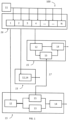
- FIG. 1 shows an input data processing system 100, wherein the data processing system 100 comprises a memory 16 comprising a plurality of memory locations, e.g. memory locations 1- ,..., N in a circular memory.
- a circular memory is a memory that uses a single, fixed size buffer as if it were connected end-to-end.
- the memory locations are configured to store sensor data obtained from a sensor system 11.
- the data processing system 100 comprises at least one service pipeline 15 which comprises a plurality of feature services 12, 13, 14. configured to process sensor data stored in the memory locations.
- the feature services 12, 13, 14 are configured to process sensor data stored in the memory locations of the memory 16 and provide outputs for further feature services 12, 13, 14 in the same service pipeline 15 or via cross dependencies 17 to feature services 12, 13, 14 of other service pipelines 15.
- a feature service 12, 13, 14 is designed to provide one or more features, e.g., each feature service is part of a seat occupancy detection or a vehicle exit assistance or any other related detection method.
- Feature services 12, 13, 14 are applied on sensor data received from various sensors systems, e.g., interior and exterior cameras, radars or any other detecting system.
- Feature services 12, 13, 14 provide results based on the sensor data for further processing.
- the feature services 12, 13, 14 provide either a final output or an intermediate output serving as input to another feature service 12, 13, 14, which further process these results and produces further outputs.
- One or a plurality of connected feature services 12, 13, 14 are generally referred to as a service pipeline 15.
- a plurality of service pipelines 15 is able to run in parallel to each other in a data processing system 100, wherein each service pipeline 15 contains at least one feature service 12, 13, 14.
- the memory 16 is a volatile memory, e.g., a random-access memory (RAM) in an embedded system.
- the memory 16 provides short access time to the sensor data stored in a plurality of memory locations.
- the memory 16 allows the data processing system 100 fast and parallel access to the memory locations from different feature services 12, 13, 14 belonging to different service pipelines 15.
- the different memory locations of the memory 16 have usually the same size for storing the sensor data, e.g., image or data frames. For example, if images from a camera are stored in the memory 16, those sensor data usually have the same data size.
- the number of memory locations of the memory 16 is suitable to allow sufficient free and unlocked memory locations for the particular storage frequency of the sensor system 11 and the amount of time used by the service pipelines 15 for process the sensor data stored at the memory locations of the memory 16.
- the memory size and the number of memory locations of the data processing system 100 is sufficiently dimensioned to avoid any deadlocks or processing interruptions due to the asynchronous character of data storage by the sensor system 11 and data processing by the service pipelines 15.
- the sensor system 11, e.g., a camera, a radar or any other detecting system, of the data processing system 100 works asynchronously from the plurality of feature services 12, 13, 14 in the at least one service pipeline 15.
- the sensor system 11 provides sensor data typically at a high rate, e.g., the sensor system 11 provides sensor data with a rate of 90 data or image frames per second, also other frequencies for providing sensor data are possible.
- the feature services 12. 13, 14 of the at least one service pipeline 15 read sensor data stored in the memory with a lower rate than the sensing service 11, e.g., the feature services 12 of the service pipelines 15 read with a rate of 10 data or image frames per second, also other frequencies for reading sensor data are possible, wherein the reading frequencies of the feature services 12, 13, 14 are lower than the frequencies for providing sensor data by the sensor system 11.
- the sensor system 11 scans through the plurality of memory locations of the memory 16 for an unlocked memory location of the memory 16, e.g., an unlocked memory location is a memory location with no overwrite protection or contains an overwrite permission. After detecting an unlocked memory location of the memory 16 by the sensor system 11, the sensor data of the sensor system 11 such as a data frame or image are written to the unlocked memory location of the memory 16.
- An information of the stored sensor data in an unlocked memory location is published to the plurality of feature services 12, 13, 14 of the at least one service pipeline 15.
- the information about the stored sensor data is received by the feature services 12, 13, 14 of the at least one pipeline 15.
- the published information of the stored sensor data is a specific information regarding the sensor data, e.g., the information contains a timestamp, a geo-location, a data size or any other data specific information.
- the published information also contains the exact memory location of the sensor data, e.g., memory location 5, 42 or any other memory location in the memory 16.
- the information is published via a journal (not shown) which is part of the data processing system 100 wherein all feature services 12, 13, 14 have access to the published information in the journal.
- the information is published directly via a signal to the plurality of feature services 12, 13, 14, which are part of the at least one service pipeline 16.
- one or more of the feature services 12, 13, 14 either register the memory location with stored sensor data for processing or none of the feature services 12, 13, 14 of the at least one service pipeline 15 register the memory location with stored sensor data for processing.
- the registration of a memory location is realized by a signal from the feature service 12, 13, 14 to the data processing system 100, e.g., the signal is sent to a controller or a memory controller of the data processing system (not shown), the controller resides either in the sensor system, in the memory or as a controller for several sensor systems outside of the data processing system.
- the signal of the registration contains information about the memory location of the registered sensor data.
- the signal of the registration contains the memory location of the registered sensor data and further specific information regarding the sensor data e.g., the information contains a timestamp, a geo-location, a data size or any other specific information regarding the sensor data.
- the memory location of the memory 16 remains unlocked, e.g., for the memory location no write protection is set, the memory location contains a write permission. As a consequence, the sensor system 11 is still allowed to write further sensor data to the unlocked memory location of the memory 16.
- the memory location of the memory 16 is locked to prevent overwriting of the stored sensor data until the processing of the at least one service pipeline 15 is concluded.
- the sensor system 11 is not able to overwrite the locked memory location with further sensor data until the memory location of the memory 16 is unlocked by all feature services 12, 13, 14 of the at least one service pipeline 15.
- the sensor system 11 continues to search for another memory location of the memory 16 which is unlocked in order to store subsequent data or image frames. If two or more feature services 12, 13, 14 of the at least one service pipeline 15 register for processing the memory location with stored sensor data, then the memory location of the memory 16 is locked until all feature services 12, 13, 14 of the at least one service pipeline 15 unlocks the memory location of the memory 16.
- the unlocking of a memory location upon determining completion of processing of the stored sensor data, is realized by a signal from the feature service 12, 13, 14 to the data processing system 100, e.g., the signal is sent to a controller or a memory controller of the data processing system (not shown), the controller resides either in the sensor system 11, in the memory 16 or as a controller for several sensor systems outside of the data processing system 100.
- the signal for unlocking contains the information about the memory location of the registered sensor data and that the sensor data are processed by the corresponding service pipeline 15.
- the signal contains the memory location of the registered sensor data and further specific information regarding the sensor data e.g., the information contains a timestamp, a geo-location, a data size or any other specific information regarding the sensor data.
- the feature service(s) 12, 13, 14 of the at least one service pipeline 15 provide the information about the selected sensor data to (possible) further feature services 12, 13, 14 in the corresponding service pipeline 15.
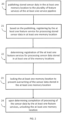
- FIG. 2 shows schematically a method for input data management in a data processing system 100.
- the controller determines that stored sensor data in the at least one memory location are published to the plurality of feature services 11, 12, 13 of the at least one service pipeline 15. The controller further determines that based on the publishing, the stored sensor data in at least one memory location are registered for processing by the at least one feature service 11, 12, 13.
- the controller determines that a registration of the at least one feature services 12, 13, 14 is determined for processing sensor data stored in at least one of the memory locations.
- the controller further determines that the at least one memory location is locked to prevent overwriting of the sensor data stored in the at least one memory location.
- the controller further determines that upon determining completion of processing of the sensor data by the at least one feature services 12, 13, 14. the at least one memory location is unlocked.
- the feature service 12, 13, 14 provides the information of the processed sensor data to all feature services 12, 13, 14 in the corresponding service pipeline 15, it is guaranteed that the same sensor data from one memory location of the memory 16 are processed by all feature service(s) of the corresponding service pipeline 15. It is also guaranteed that feature services 12, 13, 14 of several service pipelines 15 using sensor data from the same memory location process the same sensor data.
- a further advantage is that the sensor data are processed by the service pipelines 15 and their feature services directly in the memory locations of the memory 16. Thus, in the data processing system, no copies of sensor data need to be used. Therefore, efficient memory utilization is facilitated.
- the at least one sensor system overwrites sensor data, e.g. image or date frames, that are in use.
- sensor data e.g. image or date frames
- only sensor data which are registered as selected for processing remain stored in the memory locations of the memory 16 until processing of the feature services of the service pipelines 15 is concluded.
- the remaining memory locations can be used for storing further sensor data from the sensor system 11.
- the input data management presented here achieves that no additional storage of sensor data is necessary and thus the required memory limits are kept at a minimum. In other words, the memory 15 is more efficiently used.
- the feature service 12 which is the feature service in the service pipeline 15 that first processes the sensor data is the master feature service 12.
- the feature service 14, which is the feature service in the service pipeline 15 that last processes the same sensor data is the final feature service 14 (e.g., slave and final feature service outputting the processing result of the overall service pipeline 15).
- a feature service 13 which is not a master or a final feature service is called a feature service 13 (e.g., slave feature service).
- the master feature service 12 informs all other feature services 13, 14 about the processed sensor data of the memory location and ensures that all feature service in the service pipeline process the same sensor data.
- the master feature service 15 is the feature service that performs the tasks of monitoring the published details of the stored sensor data in the memory location and the registration for processing stored sensor data in the at least one memory location, i.e. it performs the communication with the environment outside of the service pipeline 15 (e.g., a controller or a memory controller of the data processing system (not shown), the controller resides either in the sensor system 11, in the memory 16 or as a controller for several sensor systems outside of the data processing system 100), as described above.
- the environment outside of the service pipeline 15 e.g., a controller or a memory controller of the data processing system (not shown)
- the controller resides either in the sensor system 11, in the memory 16 or as a controller for several sensor systems outside of the data processing system 100), as described above.
- the master feature service 15 may report the completion of processing of the stored sensor data in the memory location by the service pipeline 15 to the environment outside of the service pipeline 15, when the final feature service 14 informs the master feature service 15 about the completion of processing of the stored sensor data in the memory location by the service pipeline 15.
- the final feature service 14 reports the completion of processing of the stored sensor data in the memory location by the service pipeline 15 directly to the environment outside of the service pipeline 15.
- the master feature service 12 receives the published information about stored sensor data in a memory location via a journal or via a signal as described above.
- the master feature service 12 either registers the stored sensor data in the memory location of the memory 16 as selected for processing or does not register it. If the feature service 12 registers the stored sensor data for processing, the master feature service 12 provides the information about the registered sensor data for processing to the further feature services 13, 14 (e.g. slave feature service and slave and final feature service) in the corresponding service pipeline 15.
- the further feature services 13, 14 e.g. slave feature service and slave and final feature service
- the master feature service 12 of the at least one service pipeline 15 locks the memory location of the memory 16 with the stored sensor data to prevent overwriting of the corresponding sensor data.
- the master feature service 12 processes the sensor data from the locked memory location and provide output to further feature services 13, 14 in the corresponding service pipeline 15. If there is a feature service 13 (e.g., slave feature service) present in the service pipeline 15 then this feature service 13 processes the same stored sensor data from the locked memory location for processing and provides output to further feature services 13, 14.
- a feature service 13 e.g., slave feature service
- this feature service 14 processes the same stored sensor data from the locked memory location and provides a final output.
- the final feature service 14 removes the lock of the corresponding service pipeline 15 from the memory location of the memory 16 via a signal as described above. If there are further locks registered for the memory location from other master feature services 12 of other service pipelines 15 then the memory location remains locked, e.g., sensor system 11 is not able to overwrite the locked memory location with further sensor data. If there are no further locks registered for the memory location then the memory location is unlocked, e.g., able to store further sensor data from the sensor system 11.
- FIG. 3 shows a refinement of the method for input data processing system 100.
- the controller determines that the stored sensor data in a memory location are published 25 to the master feature service 12 of the at least one service pipeline 15 and based on the publishing 26, the stored sensor data in the first memory location are registered for processing by the master feature service 12.
- each of the at least one service pipeline 15 comprises a master feature service 12 and a final feature service
- the controller determines that a registration of a master feature service 12 of the at least one service pipeline 15 is determined 27 for processing stored sensor data in a first memory location of the memory locations.
- the controller further determines that the first memory location is locked 28 to prevent overwriting of the corresponding stored sensor data.
- the controller further determines that upon determining completion of processing 29 of the sensor data stored in the first memory location by a final feature service 14 of the at least one service pipeline 15, the memory location is unlocked.
- the controller determines that further sensor data are stored to a next unlocked memory location.
- the master feature service(s) 12 of the at least one service pipeline 15 After registering the stored sensor data in a memory location for processing, the master feature service(s) 12 of the at least one service pipeline 15 provides the information about the selected sensor data for processing to the other feature services 13, 14 of the at least one service pipeline 15. Therefore, it is guaranteed that all feature services 12, 13, 14 in the corresponding service pipeline 15 process the same sensor data stored in the corresponding memory location. It is also guaranteed that feature services 12, 13, 14 of several service pipelines 15 using sensor data from the same memory location process the same sensor data. It also prevents the at least one sensor system 11 from overwriting sensor data in a used memory location. Furthermore, only sensor data which are registered as selected for processing are stored in the memory 16. A further result is that the overall requirement for storing sensor data is reduced.
- This input data management ensures that no additional storage of sensor data is required, thus keeping the necessary memory size small.
- a further advantage is that the sensor data are processed by the service pipelines 15 and their feature services directly in the memory locations of the memory 16. Thus, in the data processing system, no copies of sensor data need to be used. Therefore, efficient memory utilization is facilitated.
- FIG. 4 shows an example of the internal structure of a feature service 12, 13, 14, which comprises a feature input interface 60, a feature output interface 61 and a configuration file 62.
- Each feature service 12, 13, 14 is designed to provide one or more features.
- Each feature is realized by one or more algorithms. These features either provide a final output or an intermediate output serving as input to another feature service, which further process these results and produces further outputs.
- Examples of algorithms are data processing algorithms (e.g., face detection, drowsiness, among others) that can be based either on classical or machine learning (AI/ML) methods.
- data processing algorithms e.g., face detection, drowsiness, among others
- AI/ML machine learning
- the configuration file 62 specifies parameters that define how the feature service 12, 13, 14 operates.
- the feature service configuration can be modified without the need of a feature service 12, 13, 14 recompilation, e.g. during runtime.
- master feature service e.g., slave feature service
- final feature service e.g., slave and final feature service outputting the processing result of the overall pipeline
- the feature service which acts in one pipeline as a master feature service 12 can be used as a final feature service 14 or as feature service 13 in another pipeline.
- the configuration file 62 assigns roles of one feature service to three different pipelines 15.
- the feature service is part of three pipelines, wherein the names of the different service pipelines 15 are 'pipeline1', 'pipeline2', and ⁇ pipeline3'.
- this feature service is the master feature service 12.
- the master feature service 12 is the feature service which registers further sensor data as selected for processing by all other feature frames belonging to the corresponding service pipeline 15, e.g., 'pipeline1' .
- this feature service is configured to be the slave feature service to the ⁇ pipeline2 ⁇ .
- the slave feature service 13 processes the sensor data selected by the respective master feature service 12 and provides output for further feature services 13 or the final feature services 14.
- this feature service is the final feature service this means that 'pipeline3' finished processing of the selected input frame and unlocks the memory location of the memory 16 which contains the sensor data for this pipeline 16.
- the memory location of the memory 16 is unlocked and able to store further sensor data from the sensor system 11, if no further locks are present for the memory location.
- each of a plurality of service pipelines 15 comprises a master feature service 12 and a final feature service 14.
- the controller determines that in response to determining registration of the plurality of master feature services 12 of a plurality of service pipelines 15 for processing sensor data stored in the first memory location, the first memory location is locked to prevent overwriting of the corresponding stored sensor data.
- the controller further determines that in response to determining completion of processing of the sensor data by all final feature services 14 of the plurality of service pipelines 15, the first memory location is unlocked.
- the controller determines that in response to determining registration of a plurality of master feature services 12 of the plurality of service pipelines 15 for processing sensor data stored in the first memory location, a lock counter 17 of the first memory location is incremented for each master feature service 14, e.g., the lock counter 17 of the memory location changes the value stepwise from 0 to 42, wherein 42 master feature services 12 have registered for processing sensor data in the memory location and the start value of the lock counter of the unlocked memory location is zero.
- the controller further determines that in response to determining completion of processing of the sensor data by all final feature services 12 of the plurality of service pipelines 15, the lock counter 17 of the first memory location is decremented for each final feature service (14)., e.g., the lock counter 17 of the memory location changes the value stepwise from 42 to 0, wherein all 42 master feature services 12 completed the processing of the sensor data and the value of the lock counter 17 is zero after all final feature services completed processing.
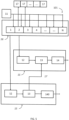
- FIG. 5 shows an embodiment of an input data processing system 101, wherein the data processing system 101 comprises a memory 16 comprising a plurality of memory locations, e.g. memory locations 1- ,..., N in a circular memory.
- the memory locations are configured to store sensor data obtained from a sensor system 11.
- the data processing system 101 comprises at least one service pipeline 15 comprising a plurality of feature services 12, 13, 14 configured to process sensor data stored in the memory locations.
- the two-master feature service 12 of the two service pipelines 15 process stored sensor data from the memory locations of the memory 16 and provide outputs for further feature services 13, 14 in the same service pipeline 15 or provide outputs via cross dependencies 17 to feature services of other service pipelines 15.
- the system 101 comprises a lock counter 17.
- Each lock counter 17 is connected with a memory location of the memory 16.
- the lock counter 17 is incremented in response to determining stored sensor data as selected for processing by a master feature service of at least one service pipeline 15 and decremented in response to determining completion of processing of stored sensor data by a final feature service 14 of at least one service pipeline 15.
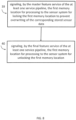
- FIG. 6 shows schematically a method for an input data processing system 101.
- the controller determines that in response to determining registration 31 of a first master feature service 12 of a first service pipeline 15 for processing sensor data stored in the first memory location, the first memory location is locked to prevent overwriting of the corresponding stored sensor data.
- the controller further determines that in response to determining registration 32 of a second master feature service 12 of a second service pipeline 15 for processing sensor data stored in the memory location, the locking of the first memory location is maintained to prevent overwriting of the sensor data stored in the first memory location.
- FIG. 7 shows a further embodiment of the method.
- the controller determines that in response to determining registration 35 of the first master feature service 12 of the first service pipeline 15 for processing sensor data stored in the memory location, a lock counter 17 of the first memory location is incremented, e.g., the lock counter 17 of the memory location changes the value from 0 to 1.
- the controller further determines that, in response to determining registration 36 of the second master feature service 12 of the second service pipeline 15 for processing sensor data stored in the first memory location, the lock counter 17 of the first memory location is incremented, e.g., the lock counter 17 of the memory location changes the value from 1 to 2.
- the controller further determines that, in response to determining completion of processing 37 of the sensor data by the first final feature service 14 of the first service pipeline 15, the lock counter 17 of the first memory location is decremented, e.g., the lock counter 17 of the memory location changes the value from 2 to 1.
- the controller further determines that in response to determining completion of processing 38 of the sensor data by the second final feature service 14 of the second service pipeline 15, the lock counter 17 of the first memory location is decremented, e.g., the lock counter of the memory location changes the value from 1 to 0. If the lock counter 17 indicates a value of 0, this corresponds to an unlocked memory location of the memory 16.
- the controller further determines that, the lock counter 17 of the first memory location is stored in the memory 16 or in the sensor system 11.
- the lock counter 17 is stored in a controller or a memory controller of the data processing system 101 (not shown), the controller resides either in the sensor system 11, in the memory 16 or as a controller for several sensor systems outside of the data processing system 101.
- FIG. 8 shows a further embodiment of the method.
- the controller determines that the master feature service 12 of the at least one service pipeline 15 signals to the sensor system 11 that the first memory location for processing is locked to prevent overwriting of the corresponding stored sensor data.
- the controller further determines that the final feature service 14 of the at least one service pipeline 15 signals to the sensor system 11, that the first memory location for processing is unlocked.
- the method for input data processing system further comprises providing, by the final feature service, an output of the at least one service pipeline to a further processing system.
- the method for input data processing system further comprises processing the same stored sensor data in a memory location by different service pipelines at least in part simultaneously.
- the method for input data processing system further comprises providing an output of a feature service in the service pipeline as input for the next feature service in the service pipeline.
- the method for input data processing system further comprises processing the same stored sensor data in a memory location by different service pipelines at least in part simultaneously.
- the method for input data processing system wherein the memory is a memory with a given fixed number of memory locations, and the method further comprising the sensor system storing sensor data in a next unlocked memory location of the memory in a circular manner.
- a circular memory is a memory that uses a single, fixed size buffer as if it were connected end-to-end.
- FIG. 9 is a diagrammatic representation of internal components of a data processing system 200 implementing the functionality as described herein.
- the data processing system 200 may be located in the data processing system 100 and includes at least one processor 201, a user interface 202, a network interface 203 and a main memory 206, that communicate with each other via a bus 205.
- the data processing system 200 may further include a static memory 207 and a disk-drive unit (not shown) that also communicate with each other via the bus 205.
- a video display, an alpha-numeric input device and a cursor control device may be provided as examples of user interface 202.
- the data processing system 200 may also comprise a specified sensing interface 204 to communicate with the data processing system 100.
- the data processing system 200 may communicate with data processing system 100 via the network interface 203.
- the data processing system 200 may also be connected to database systems (not shown) via the network interface, wherein the database systems store at least part of the images needed for providing the functionalities described herein.
- the main memory 206 may be a random-access memory (RAM) and/or any further volatile memory.
- the main memory 206 may store program code for the data processing system 100.
- the memory 206 may also store additional program data required for providing the functionalities described herein.
- Part of the program data 210, the data processing system 100 may also be stored in a separate, e.g., cloud memory and executed at least in part remotely.
- the memory 206 may store the current occupancy and seat states according to the methods describes herein in a cache 211.
- a computer program comprising instructions. These instructions, when the program is executed by a computer, cause the computer to carry out the methods described herein.
- the program code embodied in any of the systems described herein is capable of being individually or collectively distributed as a program product in a variety of different forms.
- the program code may be distributed using a computer readable storage medium having computer readable program instructions thereon for causing a processor to carry out aspects of the embodiments described herein.
- Computer readable storage media which are inherently non-transitory, may include volatile and non-volatile, and removable and non-removable tangible media implemented in any method or technology for storage of information, such as computer-readable instructions, data structures, program modules, or other data.
- Computer readable storage media may further include random access memory (RAM), read-only memory (ROM), erasable programmable read-only memory (EPROM), electrically erasable programmable read-only memory (EEPROM), flash memory or other solid state memory technology, portable compact disc read-only memory (CD-ROM), or other optical storage, magnetic cassettes, magnetic tape, magnetic disk storage or other magnetic storage devices, or any other medium that can be used to store the desired information and which can be read by a computer.
- RAM random access memory
- ROM read-only memory
- EPROM erasable programmable read-only memory
- EEPROM electrically erasable programmable read-only memory
- CD-ROM portable compact disc read-only memory
- magnetic cassettes magnetic tape
- magnetic disk storage
- a computer readable storage medium should not be construed as transitory signals per se (e.g., radio waves or other propagating electromagnetic waves, electromagnetic waves propagating through a transmission media such as a waveguide, or electrical signals transmitted through a wire).
- Computer readable program instructions may be downloaded to a computer, another type of programmable data processing apparatus, or another device from a computer readable storage medium or to an external computer or external storage device via a network.
- any of the flowcharts, sequence diagrams, and/or block diagrams may include more or fewer blocks than those illustrated consistent with embodiments of the invention.
Landscapes
- Engineering & Computer Science (AREA)
- Software Systems (AREA)
- Theoretical Computer Science (AREA)
- Physics & Mathematics (AREA)
- General Engineering & Computer Science (AREA)
- General Physics & Mathematics (AREA)
- Multimedia (AREA)
- Image Processing (AREA)
- Arrangements For Transmission Of Measured Signals (AREA)
Abstract
Methods and apparatuses are provided for an input data management in a data processing system. The method comprises, determining registration of the at least one feature services for processing sensor data stored in at least one of the memory locations. The method further comprises, locking the at least one memory location to prevent overwriting of the sensor data stored in the at least one memory location. The method further comprises, upon determining completion of processing of the sensor data by the at least one feature services, unlocking the at least one memory location.
Description
- The present methodologies relate to input data management in a data processing system. More specifically, they relate to input data management in a data processing system throughout one or more asynchronous environments like artificial intelligence or machine learning.
-
EP21185445.0 - The present methodologies are generally directed to improve input data management in a data processing system. The main aspects are set out by the independent claims.
- In this respect, according to a first aspect a method for input data management in a data processing system is provided. The method comprises, determining registration of at least one feature services for processing sensor data stored in at least one of the memory locations. The method further comprises, locking the at least one memory location to prevent overwriting of the sensor data stored in the at least one memory location. The method further comprises, upon determining completion of processing of the sensor data by the at least one feature services, unlocking the at least one memory location.
- In another aspect, an apparatus is provided comprising a memory with a plurality of memory locations configured to store sensor data obtained from a sensor system. The apparatus further comprises at least one service pipeline comprising a plurality of feature services configured to process sensor data stored in the memory locations.
- Further refinements are set forth by the dependent claims.
- These and other objects, embodiments and advantages will become readily apparent to those skilled in the art from the following detailed description of the embodiments having reference to the attached figures, the invention not being limited to any particular embodiments.
- Aspects and examples of the present disclosure are described with reference to the following figures, in which,
-
FIG. 1 shows a data processing system with a sensor system, a memory and a plurality of feature services. -
FIG. 2 shows a first sequence for input data management in a data processing system. -
FIG. 3 shows a second sequence for input data management in a data processing system. -
FIG. 4 shows an example of the structure of a feature service. -
FIG. 5 shows a further example of a data processing system with a sensor system, a memory and a plurality of feature services. -
FIG. 6 shows a third sequence for input data management in a data processing system. -
FIG. 7 shows a fourth sequence for input data management in a data processing system. -
FIG. 8 shows a fifth sequence for input data management in a data processing system. -
FIG. 9 is a diagrammatic representation of internal components of a data processing system comprises by the system for vehicle exit assistance. - The present disclosure relates to a data processing system, especially to a data processing system, in asynchronous environments like artificial intelligence or machine learning. An exemplary use case of the present disclosure is a data processing in a vehicle in which input data is generated by one or more sensor or camera systems and processed by artificial intelligence or machine learning processes.
-
FIG. 1 shows an inputdata processing system 100, wherein thedata processing system 100 comprises amemory 16 comprising a plurality of memory locations, e.g. memory locations 1- ,..., N in a circular memory. A circular memory is a memory that uses a single, fixed size buffer as if it were connected end-to-end. The memory locations are configured to store sensor data obtained from asensor system 11. In addition, thedata processing system 100 comprises at least oneservice pipeline 15 which comprises a plurality offeature services feature services memory 16 and provide outputs forfurther feature services same service pipeline 15 or viacross dependencies 17 to featureservices other service pipelines 15. - In some embodiments, a
feature service Feature services Feature services feature services feature service - One or a plurality of connected
feature services service pipeline 15. A plurality ofservice pipelines 15 is able to run in parallel to each other in adata processing system 100, wherein eachservice pipeline 15 contains at least onefeature service - In some embodiments the
memory 16 is a volatile memory, e.g., a random-access memory (RAM) in an embedded system. Thememory 16 provides short access time to the sensor data stored in a plurality of memory locations. Furthermore, thememory 16 allows thedata processing system 100 fast and parallel access to the memory locations fromdifferent feature services different service pipelines 15. In some embodiments the different memory locations of thememory 16 have usually the same size for storing the sensor data, e.g., image or data frames. For example, if images from a camera are stored in thememory 16, those sensor data usually have the same data size. - In a practical use case, the number of memory locations of the
memory 16 is suitable to allow sufficient free and unlocked memory locations for the particular storage frequency of thesensor system 11 and the amount of time used by theservice pipelines 15 for process the sensor data stored at the memory locations of thememory 16. In other words, the memory size and the number of memory locations of thedata processing system 100 is sufficiently dimensioned to avoid any deadlocks or processing interruptions due to the asynchronous character of data storage by thesensor system 11 and data processing by theservice pipelines 15. - The
sensor system 11, e.g., a camera, a radar or any other detecting system, of thedata processing system 100 works asynchronously from the plurality offeature services service pipeline 15. Thesensor system 11 provides sensor data typically at a high rate, e.g., thesensor system 11 provides sensor data with a rate of 90 data or image frames per second, also other frequencies for providing sensor data are possible. - The
feature services 12. 13, 14 of the at least oneservice pipeline 15 read sensor data stored in the memory with a lower rate than thesensing service 11, e.g., thefeature services 12 of theservice pipelines 15 read with a rate of 10 data or image frames per second, also other frequencies for reading sensor data are possible, wherein the reading frequencies of thefeature services sensor system 11. - After providing sensor data, the
sensor system 11 scans through the plurality of memory locations of thememory 16 for an unlocked memory location of thememory 16, e.g., an unlocked memory location is a memory location with no overwrite protection or contains an overwrite permission. After detecting an unlocked memory location of thememory 16 by thesensor system 11, the sensor data of thesensor system 11 such as a data frame or image are written to the unlocked memory location of thememory 16. - An information of the stored sensor data in an unlocked memory location is published to the plurality of
feature services service pipeline 15. The information about the stored sensor data is received by thefeature services pipeline 15. - In some embodiments the published information of the stored sensor data is a specific information regarding the sensor data, e.g., the information contains a timestamp, a geo-location, a data size or any other data specific information. In some embodiments the published information also contains the exact memory location of the sensor data, e.g., memory location 5, 42 or any other memory location in the
memory 16. - In some embodiments the information is published via a journal (not shown) which is part of the
data processing system 100 wherein allfeature services feature services service pipeline 16. - Based on the published information to the
feature services pipeline 15 about the stored sensor data in a memory location, one or more of thefeature services feature services service pipeline 15 register the memory location with stored sensor data for processing. - The registration of a memory location is realized by a signal from the
feature service data processing system 100, e.g., the signal is sent to a controller or a memory controller of the data processing system (not shown), the controller resides either in the sensor system, in the memory or as a controller for several sensor systems outside of the data processing system. In some embodiments the signal of the registration contains information about the memory location of the registered sensor data. In some embodiments the signal of the registration contains the memory location of the registered sensor data and further specific information regarding the sensor data e.g., the information contains a timestamp, a geo-location, a data size or any other specific information regarding the sensor data. - In the latter case, if no
feature service service pipeline 15 registers the memory location with stored sensor data for processing, the memory location of thememory 16 remains unlocked, e.g., for the memory location no write protection is set, the memory location contains a write permission. As a consequence, thesensor system 11 is still allowed to write further sensor data to the unlocked memory location of thememory 16. - In the former case, if at least one
feature service service pipeline 15 registers the memory location with stored sensor data for processing, the memory location of thememory 16 is locked to prevent overwriting of the stored sensor data until the processing of the at least oneservice pipeline 15 is concluded. As a consequence, thesensor system 11 is not able to overwrite the locked memory location with further sensor data until the memory location of thememory 16 is unlocked by allfeature services service pipeline 15. In this case, thesensor system 11 continues to search for another memory location of thememory 16 which is unlocked in order to store subsequent data or image frames. If two ormore feature services service pipeline 15 register for processing the memory location with stored sensor data, then the memory location of thememory 16 is locked until allfeature services service pipeline 15 unlocks the memory location of thememory 16. - The unlocking of a memory location, upon determining completion of processing of the stored sensor data, is realized by a signal from the
feature service data processing system 100, e.g., the signal is sent to a controller or a memory controller of the data processing system (not shown), the controller resides either in thesensor system 11, in thememory 16 or as a controller for several sensor systems outside of thedata processing system 100. In some embodiments the signal for unlocking contains the information about the memory location of the registered sensor data and that the sensor data are processed by thecorresponding service pipeline 15. In some embodiments the signal contains the memory location of the registered sensor data and further specific information regarding the sensor data e.g., the information contains a timestamp, a geo-location, a data size or any other specific information regarding the sensor data. - In addition, the feature service(s) 12, 13, 14 of the at least one
service pipeline 15 provide the information about the selected sensor data to (possible)further feature services corresponding service pipeline 15. -
FIG. 2 shows schematically a method for input data management in adata processing system 100. In some embodiments, the controller determines that stored sensor data in the at least one memory location are published to the plurality offeature services service pipeline 15. The controller further determines that based on the publishing, the stored sensor data in at least one memory location are registered for processing by the at least onefeature service - In a further embodiment, the controller determines that a registration of the at least one
feature services feature services - Since the
feature service feature services corresponding service pipeline 15, it is guaranteed that the same sensor data from one memory location of thememory 16 are processed by all feature service(s) of thecorresponding service pipeline 15. It is also guaranteed thatfeature services several service pipelines 15 using sensor data from the same memory location process the same sensor data. A further advantage is that the sensor data are processed by theservice pipelines 15 and their feature services directly in the memory locations of thememory 16. Thus, in the data processing system, no copies of sensor data need to be used. Therefore, efficient memory utilization is facilitated. - Furthermore, it is prevented that the at least one sensor system overwrites sensor data, e.g. image or date frames, that are in use. In addition, only sensor data which are registered as selected for processing remain stored in the memory locations of the
memory 16 until processing of the feature services of theservice pipelines 15 is concluded. The remaining memory locations can be used for storing further sensor data from thesensor system 11. - Furthermore, the overall requirement for storing sensor data is reduced. The input data management presented here achieves that no additional storage of sensor data is necessary and thus the required memory limits are kept at a minimum. In other words, the
memory 15 is more efficiently used. - Referring back to
FIG. 1 showingseveral service pipelines 15 with at least onefeature service feature service 12, which is the feature service in theservice pipeline 15 that first processes the sensor data is themaster feature service 12. Thefeature service 14, which is the feature service in theservice pipeline 15 that last processes the same sensor data is the final feature service 14 (e.g., slave and final feature service outputting the processing result of the overall service pipeline 15). Afeature service 13 which is not a master or a final feature service is called a feature service 13 (e.g., slave feature service). Themaster feature service 12 informs allother feature services - The
master feature service 15 is the feature service that performs the tasks of monitoring the published details of the stored sensor data in the memory location and the registration for processing stored sensor data in the at least one memory location, i.e. it performs the communication with the environment outside of the service pipeline 15 (e.g., a controller or a memory controller of the data processing system (not shown), the controller resides either in thesensor system 11, in thememory 16 or as a controller for several sensor systems outside of the data processing system 100), as described above. In a further embodiment, themaster feature service 15 may report the completion of processing of the stored sensor data in the memory location by theservice pipeline 15 to the environment outside of theservice pipeline 15, when thefinal feature service 14 informs themaster feature service 15 about the completion of processing of the stored sensor data in the memory location by theservice pipeline 15. In an alternative embodiment, thefinal feature service 14 reports the completion of processing of the stored sensor data in the memory location by theservice pipeline 15 directly to the environment outside of theservice pipeline 15. - In some embodiments the
master feature service 12 receives the published information about stored sensor data in a memory location via a journal or via a signal as described above. Themaster feature service 12 either registers the stored sensor data in the memory location of thememory 16 as selected for processing or does not register it. If thefeature service 12 registers the stored sensor data for processing, themaster feature service 12 provides the information about the registered sensor data for processing to thefurther feature services 13, 14 (e.g. slave feature service and slave and final feature service) in thecorresponding service pipeline 15. - Furthermore, the
master feature service 12 of the at least oneservice pipeline 15 locks the memory location of thememory 16 with the stored sensor data to prevent overwriting of the corresponding sensor data. In addition, themaster feature service 12 processes the sensor data from the locked memory location and provide output tofurther feature services corresponding service pipeline 15. If there is a feature service 13 (e.g., slave feature service) present in theservice pipeline 15 then thisfeature service 13 processes the same stored sensor data from the locked memory location for processing and provides output tofurther feature services - If the feature service is a final feature service 14 (e.g., slave and final feature service) then this
feature service 14 processes the same stored sensor data from the locked memory location and provides a final output. In addition, upon completion of processing 29 of the sensor data stored in the memory location by afinal feature service 14, thefinal feature service 14 removes the lock of thecorresponding service pipeline 15 from the memory location of thememory 16 via a signal as described above. If there are further locks registered for the memory location from othermaster feature services 12 ofother service pipelines 15 then the memory location remains locked, e.g.,sensor system 11 is not able to overwrite the locked memory location with further sensor data. If there are no further locks registered for the memory location then the memory location is unlocked, e.g., able to store further sensor data from thesensor system 11. -
FIG. 3 shows a refinement of the method for inputdata processing system 100. In some embodiments, the controller determines that the stored sensor data in a memory location are published 25 to themaster feature service 12 of the at least oneservice pipeline 15 and based on thepublishing 26, the stored sensor data in the first memory location are registered for processing by themaster feature service 12. - In a further embodiment, each of the at least one
service pipeline 15 comprises amaster feature service 12 and a final feature service, the controller determines that a registration of amaster feature service 12 of the at least oneservice pipeline 15 is determined 27 for processing stored sensor data in a first memory location of the memory locations. The controller further determines that the first memory location is locked 28 to prevent overwriting of the corresponding stored sensor data. The controller further determines that upon determining completion of processing 29 of the sensor data stored in the first memory location by afinal feature service 14 of the at least oneservice pipeline 15, the memory location is unlocked. - In a further embodiment of the method, the controller determines that further sensor data are stored to a next unlocked memory location.
- After registering the stored sensor data in a memory location for processing, the master feature service(s) 12 of the at least one
service pipeline 15 provides the information about the selected sensor data for processing to theother feature services service pipeline 15. Therefore, it is guaranteed that allfeature services corresponding service pipeline 15 process the same sensor data stored in the corresponding memory location. It is also guaranteed thatfeature services several service pipelines 15 using sensor data from the same memory location process the same sensor data. It also prevents the at least onesensor system 11 from overwriting sensor data in a used memory location. Furthermore, only sensor data which are registered as selected for processing are stored in thememory 16. A further result is that the overall requirement for storing sensor data is reduced. This input data management ensures that no additional storage of sensor data is required, thus keeping the necessary memory size small. A further advantage is that the sensor data are processed by theservice pipelines 15 and their feature services directly in the memory locations of thememory 16. Thus, in the data processing system, no copies of sensor data need to be used. Therefore, efficient memory utilization is facilitated. -
FIG. 4 shows an example of the internal structure of afeature service feature input interface 60, afeature output interface 61 and aconfiguration file 62. Eachfeature service - Examples of algorithms are data processing algorithms (e.g., face detection, drowsiness, among others) that can be based either on classical or machine learning (AI/ML) methods.
- The
configuration file 62 specifies parameters that define how thefeature service feature service configuration file 62 the information about theservice pipelines 15 and the perspective roles, master feature service, feature service, (e.g., slave feature service) and final feature service, (e.g., slave and final feature service outputting the processing result of the overall pipeline) of thedifferent feature services - Therefore, it is also possible to reconfigure the roles of the different features services in the pipeline as
master feature service 12,feature service 13 andfinal feature service 14. The feature service which acts in one pipeline as amaster feature service 12, can be used as afinal feature service 14 or asfeature service 13 in another pipeline. - In an example of a
configuration file 62 of a feature service, theconfiguration file 62 assigns roles of one feature service to threedifferent pipelines 15. In this example, the feature service is part of three pipelines, wherein the names of thedifferent service pipelines 15 are 'pipeline1', 'pipeline2', and `pipeline3'. - For 'pipeline1', this feature service is the
master feature service 12. Themaster feature service 12 is the feature service which registers further sensor data as selected for processing by all other feature frames belonging to thecorresponding service pipeline 15, e.g., 'pipeline1' . - For 'pipeline2' this feature service is configured to be the slave feature service to the `pipeline2`. The
slave feature service 13 processes the sensor data selected by the respectivemaster feature service 12 and provides output forfurther feature services 13 or the final feature services 14. - Finally, for 'pipeline3' this feature service is the final feature service this means that 'pipeline3' finished processing of the selected input frame and unlocks the memory location of the
memory 16 which contains the sensor data for thispipeline 16. When allfinal feature services 14 of all service pipelines 15 'pipeline1', 'pipeline2', 'pipeline3' finished processing of the selected sensor data, the memory location of thememory 16 is unlocked and able to store further sensor data from thesensor system 11, if no further locks are present for the memory location. - In a further embodiment of the method, each of a plurality of
service pipelines 15 comprises amaster feature service 12 and afinal feature service 14. The controller determines that in response to determining registration of the plurality ofmaster feature services 12 of a plurality ofservice pipelines 15 for processing sensor data stored in the first memory location, the first memory location is locked to prevent overwriting of the corresponding stored sensor data. The controller further determines that in response to determining completion of processing of the sensor data by allfinal feature services 14 of the plurality ofservice pipelines 15, the first memory location is unlocked. - In a further embodiment of the method, the controller determines that in response to determining registration of a plurality of
master feature services 12 of the plurality ofservice pipelines 15 for processing sensor data stored in the first memory location, alock counter 17 of the first memory location is incremented for eachmaster feature service 14, e.g., thelock counter 17 of the memory location changes the value stepwise from 0 to 42, wherein 42master feature services 12 have registered for processing sensor data in the memory location and the start value of the lock counter of the unlocked memory location is zero. The controller further determines that in response to determining completion of processing of the sensor data by allfinal feature services 12 of the plurality ofservice pipelines 15, thelock counter 17 of the first memory location is decremented for each final feature service (14)., e.g., thelock counter 17 of the memory location changes the value stepwise from 42 to 0, wherein all 42master feature services 12 completed the processing of the sensor data and the value of thelock counter 17 is zero after all final feature services completed processing. - This ensures that the sensor data in the memory location remains locked (e.g., overwrite protected and the
sensor system 11 is not able to overwrite the locked memory location with further sensor data) until the last of the plurality ofservice pipelines 15 reading the sensor data has also finished its processing. This enables asynchrony between the plurality of service pipelines 15 (i.e. their different processing times due to different algorithms or number of feature services) and ensures that allfeature services service pipelines 15 process the same sensor data. -
FIG. 5 shows an embodiment of an inputdata processing system 101, wherein thedata processing system 101 comprises amemory 16 comprising a plurality of memory locations, e.g. memory locations 1- ,..., N in a circular memory. The memory locations are configured to store sensor data obtained from asensor system 11. In addition, thedata processing system 101 comprises at least oneservice pipeline 15 comprising a plurality offeature services - The two-
master feature service 12 of the twoservice pipelines 15 process stored sensor data from the memory locations of thememory 16 and provide outputs forfurther feature services same service pipeline 15 or provide outputs viacross dependencies 17 to feature services ofother service pipelines 15. - In a further embodiment of an input
data processing system 101, thesystem 101 comprises alock counter 17. Eachlock counter 17 is connected with a memory location of thememory 16. Thelock counter 17 is incremented in response to determining stored sensor data as selected for processing by a master feature service of at least oneservice pipeline 15 and decremented in response to determining completion of processing of stored sensor data by afinal feature service 14 of at least oneservice pipeline 15. -
FIG. 6 shows schematically a method for an inputdata processing system 101. In some embodiments, the controller determines that in response to determiningregistration 31 of a firstmaster feature service 12 of afirst service pipeline 15 for processing sensor data stored in the first memory location, the first memory location is locked to prevent overwriting of the corresponding stored sensor data. The controller further determines that in response to determiningregistration 32 of a secondmaster feature service 12 of asecond service pipeline 15 for processing sensor data stored in the memory location, the locking of the first memory location is maintained to prevent overwriting of the sensor data stored in the first memory location. The controller further determines that in response to determining completion of processing 32 of the sensor data by a firstfinal feature service 14 of thefirst service pipeline 15, the locking of the memory location is maintained to prevent overwriting of the sensor data stored in the first memory location. The controller further determines that in response to determining completion of processing 33 of the sensor data by a second final feature service of the second service pipeline, the first memory location is unlocked. -
FIG. 7 shows a further embodiment of the method. In some embodiments, the controller determines that in response to determiningregistration 35 of the firstmaster feature service 12 of thefirst service pipeline 15 for processing sensor data stored in the memory location, alock counter 17 of the first memory location is incremented, e.g., thelock counter 17 of the memory location changes the value from 0 to 1. The controller further determines that, in response to determiningregistration 36 of the secondmaster feature service 12 of thesecond service pipeline 15 for processing sensor data stored in the first memory location, thelock counter 17 of the first memory location is incremented, e.g., thelock counter 17 of the memory location changes the value from 1 to 2. The controller further determines that, in response to determining completion of processing 37 of the sensor data by the firstfinal feature service 14 of thefirst service pipeline 15, thelock counter 17 of the first memory location is decremented, e.g., thelock counter 17 of the memory location changes the value from 2 to 1. The controller further determines that in response to determining completion of processing 38 of the sensor data by the secondfinal feature service 14 of thesecond service pipeline 15, thelock counter 17 of the first memory location is decremented, e.g., the lock counter of the memory location changes the value from 1 to 0. If thelock counter 17 indicates a value of 0, this corresponds to an unlocked memory location of thememory 16. - In some embodiments, the controller further determines that, the
lock counter 17 of the first memory location is stored in thememory 16 or in thesensor system 11. In a further embodiment thelock counter 17 is stored in a controller or a memory controller of the data processing system 101 (not shown), the controller resides either in thesensor system 11, in thememory 16 or as a controller for several sensor systems outside of thedata processing system 101. -
FIG. 8 shows a further embodiment of the method. In some embodiments, the controller determines that themaster feature service 12 of the at least oneservice pipeline 15 signals to thesensor system 11 that the first memory location for processing is locked to prevent overwriting of the corresponding stored sensor data. The controller further determines that thefinal feature service 14 of the at least oneservice pipeline 15 signals to thesensor system 11, that the first memory location for processing is unlocked. - In a further embodiment the method for input data processing system, wherein multiple service pipelines are connected by cross dependencies, wherein two service pipelines share a first feature service and/or a final feature service.
- In a further embodiment the method for input data processing system further comprises providing, by the final feature service, an output of the at least one service pipeline to a further processing system.
- In a further embodiment the method for input data processing system further comprises processing the same stored sensor data in a memory location by different service pipelines at least in part simultaneously.
- In a further embodiment the method for input data processing system further comprises providing an output of a feature service in the service pipeline as input for the next feature service in the service pipeline.
- In a further embodiment the method for input data processing system further comprises processing the same stored sensor data in a memory location by different service pipelines at least in part simultaneously.
- In a further embodiment the method for input data processing system, wherein the memory is a memory with a given fixed number of memory locations, and the method further comprising the sensor system storing sensor data in a next unlocked memory location of the memory in a circular manner. A circular memory is a memory that uses a single, fixed size buffer as if it were connected end-to-end.
- According an aspect, a data processing system for input data management is provided, comprising a
memory 16, at least oneservice pipeline 15 comprising a plurality offeature services FIG. 9 is a diagrammatic representation of internal components of adata processing system 200 implementing the functionality as described herein. Thedata processing system 200 may be located in thedata processing system 100 and includes at least oneprocessor 201, auser interface 202, anetwork interface 203 and amain memory 206, that communicate with each other via abus 205. Optionally, thedata processing system 200 may further include astatic memory 207 and a disk-drive unit (not shown) that also communicate with each other via thebus 205. A video display, an alpha-numeric input device and a cursor control device may be provided as examples ofuser interface 202. - Furthermore, the
data processing system 200 may also comprise a specifiedsensing interface 204 to communicate with thedata processing system 100. Alternatively, thedata processing system 200 may communicate withdata processing system 100 via thenetwork interface 203. Thedata processing system 200 may also be connected to database systems (not shown) via the network interface, wherein the database systems store at least part of the images needed for providing the functionalities described herein. - The
main memory 206 may be a random-access memory (RAM) and/or any further volatile memory. Themain memory 206 may store program code for thedata processing system 100. Thememory 206 may also store additional program data required for providing the functionalities described herein. Part of theprogram data 210, thedata processing system 100 may also be stored in a separate, e.g., cloud memory and executed at least in part remotely. In such an exemplary embodiment, thememory 206 may store the current occupancy and seat states according to the methods describes herein in acache 211. - According to an aspect, a computer program comprising instructions is provided. These instructions, when the program is executed by a computer, cause the computer to carry out the methods described herein. The program code embodied in any of the systems described herein is capable of being individually or collectively distributed as a program product in a variety of different forms. In particular, the program code may be distributed using a computer readable storage medium having computer readable program instructions thereon for causing a processor to carry out aspects of the embodiments described herein.
- Computer readable storage media, which are inherently non-transitory, may include volatile and non-volatile, and removable and non-removable tangible media implemented in any method or technology for storage of information, such as computer-readable instructions, data structures, program modules, or other data. Computer readable storage media may further include random access memory (RAM), read-only memory (ROM), erasable programmable read-only memory (EPROM), electrically erasable programmable read-only memory (EEPROM), flash memory or other solid state memory technology, portable compact disc read-only memory (CD-ROM), or other optical storage, magnetic cassettes, magnetic tape, magnetic disk storage or other magnetic storage devices, or any other medium that can be used to store the desired information and which can be read by a computer.
- A computer readable storage medium should not be construed as transitory signals per se (e.g., radio waves or other propagating electromagnetic waves, electromagnetic waves propagating through a transmission media such as a waveguide, or electrical signals transmitted through a wire). Computer readable program instructions may be downloaded to a computer, another type of programmable data processing apparatus, or another device from a computer readable storage medium or to an external computer or external storage device via a network.
- It should be appreciated that while particular embodiments and variations have been described herein, further modifications and alternatives will be apparent to persons skilled in the relevant arts. In particular, the examples are offered by way of illustrating the principles, and to provide a number of specific methods and arrangements for putting those principles into effect.
- In certain embodiments, the functions and/or acts specified in the flowcharts, sequence diagrams, and/or block diagrams may be re-ordered, processed serially, and/or processed concurrently without departing from the scope of the invention. Moreover, any of the flowcharts, sequence diagrams, and/or block diagrams may include more or fewer blocks than those illustrated consistent with embodiments of the invention.
- The terminology used herein is for the purpose of describing particular embodiments only and is not intended to be limiting of the embodiments of the disclosure. It will be further understood that the terms "comprise" and/or "comprising," when used in this specification, specify the presence of stated features, integers, steps, operations, elements, and/or components, but do not preclude the presence or addition of one or more other features, integers, steps, operations, elements, components, and/or groups thereof. Furthermore, to the extent that the terms "include", "having", "has", "with", "comprised of", or variants thereof are used in either the detailed description or the claims, such terms are intended to be inclusive in a manner similar to the term "comprising".
- While a description of various embodiments has illustrated all of the inventions and while these embodiments have been described in considerable detail, it is not the intention of the applicants to restrict or in any way limit the scope of the appended claims to such detail. Additional advantages and modifications will readily appear to those skilled in the art. The invention in its broader aspects is therefore not limited to the specific details, representative apparatus and method, and illustrative examples shown and described. Accordingly, the described embodiments should be understood as being provided by way of example, for the purpose of teaching the general features and principles, but should not be understood as limiting the scope, which is as defined in the appended claims.
Claims (15)
- A method for input data management in a data processing system (100),
the data processing system (100) comprising:a memory (16) comprising a plurality of memory locations configured to store sensor data obtained from a sensor system (11), andat least one service pipeline (15) comprising a plurality of feature services (12, 13, 14) configured to process sensor data stored in the memory locations;the method comprising:- determining registration (22) of the at least one feature services (12, 13, 14) for processing sensor data stored in at least one of the memory locations;- locking (23) the at least one memory location to prevent overwriting of the sensor data stored in the at least one memory location; and- upon determining completion of processing (24) of the sensor data by the at least one feature services (12, 13, 14), unlocking the at least one memory location. - The method of claim 1, further comprising:- publishing (20) stored sensor data in the at least one memory location to the plurality of feature services of the at least one service pipeline (15);- based on the publishing, registering (21) by the at least one feature service (12, 13, 14) for processing stored sensor data in at least one memory location.
- The method of any preceding claim, wherein each of the at least one service pipeline (15) comprises a master feature service (12) and a final feature service (14), further comprising:- determining registration (27) of the master feature service (12) of the at least one service pipeline (15) for processing stored sensor data in a first memory location of the memory locations,- locking (28) the first memory location to prevent overwriting of the corresponding stored sensor data; and- upon determining completion of processing (29) of the sensor data stored in the first memory location by the final feature service (14) of the at least one service pipeline (15) unlocking the memory location.
- The method of claim 3, further comprising:- publishing (25) the stored sensor data in the first memory location to the master feature service (12) of the at least one service pipeline (15);- based on the publishing, registering (26), by the master feature service (12), for processing the stored sensor data in the first memory location.
- The method of any preceding claim, further comprising:- storing further sensor data to a next unlocked memory location.
- The method of any one of claims 3-5, wherein each of a plurality of service pipelines (15) comprises a master feature service (12) and a final feature service (14), further comprising:- in response to determining registration of the plurality of the master feature services (12) of the plurality of service pipelines (15) for processing sensor data stored in the first memory location locking the first memory location to prevent overwriting of the corresponding stored sensor data;- in response to determining completion of processing of the sensor data by all final feature services (14) of the plurality of service pipelines (15) unlocking the first memory location.
- The method of claim 6, further comprising:- in response to determining registration of the plurality of the master feature services (12) of the plurality of service pipelines (15) for processing sensor data stored in the first memory location, incrementing a lock counter (17) of the first memory location for each master feature service (14);- in response to determining completion of processing of the sensor data by each final feature service (14) of the plurality of service pipelines (15), decrementing the lock counter (17) of the first memory location for each final feature service (14).
- The method of claim 7, further comprising:- storing the lock counter (17) of the first memory location in the memory (16) or in the sensor system (11).
- The method of any one of claims 3-8, further comprising:- signaling (39), by the master feature service (12) of the at least one service pipeline (15), the first memory location for processing to the sensor system (11) for locking the first memory location to prevent overwriting of the corresponding stored sensor data;- signaling (40), by the final feature service (14) of the at least one service pipeline (15), the first memory location for processing to the sensor system (11) for unlocking the first memory location.
- The method of any one of claims 3-9, wherein multiple service pipelines (15) are connected by cross dependencies (17), wherein two service pipelines (15) share a master feature service (12) and/or a final feature service (14).
- The method of any of claims 3-10, further comprising:
providing, by the final feature service (14), an output of the at least one service pipeline (15) to a further processing system. - The method of any preceding claim, further comprising:
processing the same stored sensor data in a memory location by different service pipelines (15) at least in part simultaneously. - The method of any one of the preceding claims, wherein the memory (16) is a memory (16) with a given fixed number of memory locations, and the method further comprising:
the sensor system (11) storing sensor data in a next unlocked memory location of the memory (16) in a circular manner. - An apparatus comprising means for performing the method of any of claims 1 to 13.
- A computer program product comprising instructions which, when the computer program product is executed by a computer, cause the computer to carry out the method of any one of claims 1 to 13.
Priority Applications (3)
| Application Number | Priority Date | Filing Date | Title |
|---|---|---|---|
| EP23152923.1A EP4404062A1 (en) | 2023-01-23 | 2023-01-23 | Input data management in a data processing system |
| US18/418,229 US12455742B2 (en) | 2023-01-23 | 2024-01-20 | Input data management in a data processing system |
| CN202410088881.0A CN118377588A (en) | 2023-01-23 | 2024-01-22 | Input Data Management in Data Processing Systems |
Applications Claiming Priority (1)
| Application Number | Priority Date | Filing Date | Title |
|---|---|---|---|
| EP23152923.1A EP4404062A1 (en) | 2023-01-23 | 2023-01-23 | Input data management in a data processing system |
Publications (1)
| Publication Number | Publication Date |
|---|---|
| EP4404062A1 true EP4404062A1 (en) | 2024-07-24 |
Family
ID=85036313
Family Applications (1)
| Application Number | Title | Priority Date | Filing Date |
|---|---|---|---|
| EP23152923.1A Pending EP4404062A1 (en) | 2023-01-23 | 2023-01-23 | Input data management in a data processing system |
Country Status (3)
| Country | Link |
|---|---|
| US (1) | US12455742B2 (en) |
| EP (1) | EP4404062A1 (en) |
| CN (1) | CN118377588A (en) |
Citations (2)
| Publication number | Priority date | Publication date | Assignee | Title |
|---|---|---|---|---|
| US20070101057A1 (en) * | 2005-10-25 | 2007-05-03 | Holt John M | Modified machine architecture with advanced synchronization |
| US20190138368A1 (en) * | 2018-12-28 | 2019-05-09 | Grzegorz JERECZEK | Distributed lock for data acquisition systems |
Family Cites Families (7)
| Publication number | Priority date | Publication date | Assignee | Title |
|---|---|---|---|---|
| US6370625B1 (en) * | 1999-12-29 | 2002-04-09 | Intel Corporation | Method and apparatus for lock synchronization in a microprocessor system |
| US8239876B2 (en) * | 2007-06-12 | 2012-08-07 | Ricoh Company, Ltd. | Efficient web services application status self-control system on image-forming device |
| WO2016045708A1 (en) * | 2014-09-23 | 2016-03-31 | Nokia Solutions And Networks Oy | Control of communication using service function chaining |
| US10395515B2 (en) * | 2017-12-28 | 2019-08-27 | Intel Corporation | Sensor aggregation and virtual sensors |
| US11195336B2 (en) * | 2018-06-08 | 2021-12-07 | Vulcan Inc. | Framework for augmented reality applications |
| US11356826B2 (en) * | 2019-06-17 | 2022-06-07 | Hall Labs Llc | Medical internet of things device discovery |
| EP4120078A1 (en) | 2021-07-13 | 2023-01-18 | Aptiv Technologies Limited | Method for scheduling feature services within a distributed data flow service framework |
-
2023
- 2023-01-23 EP EP23152923.1A patent/EP4404062A1/en active Pending
-
2024
- 2024-01-20 US US18/418,229 patent/US12455742B2/en active Active
- 2024-01-22 CN CN202410088881.0A patent/CN118377588A/en active Pending
Patent Citations (2)
| Publication number | Priority date | Publication date | Assignee | Title |
|---|---|---|---|---|
| US20070101057A1 (en) * | 2005-10-25 | 2007-05-03 | Holt John M | Modified machine architecture with advanced synchronization |
| US20190138368A1 (en) * | 2018-12-28 | 2019-05-09 | Grzegorz JERECZEK | Distributed lock for data acquisition systems |
Also Published As
| Publication number | Publication date |
|---|---|
| US20240248715A1 (en) | 2024-07-25 |
| CN118377588A (en) | 2024-07-23 |
| US12455742B2 (en) | 2025-10-28 |
Similar Documents
| Publication | Publication Date | Title |
|---|---|---|
| CN110852385B (en) | Image processing method, device, equipment and storage medium | |
| EP4036794A1 (en) | Crowd overdensity prediction method and device | |
| US11055271B2 (en) | Funnel locking for sleepable read-copy update | |
| KR102874623B1 (en) | Capability management methods and computer devices | |
| CN109684566B (en) | Label engine implementation method and device, computer equipment and storage medium | |
| US10303360B2 (en) | Replicating data in a data storage system | |
| US12455742B2 (en) | Input data management in a data processing system | |
| US10761741B1 (en) | Method and system for managing and sharing data using smart pointers | |
| CN109299613B (en) | Database partition authority setting method and terminal equipment | |
| CN110837411A (en) | Internal concurrent I/O scheduling method and system for data server side partition | |
| US20210234883A1 (en) | Combinatorial test design for optimizing parameter list testing | |
| CN112699316A (en) | Parking position recommendation method and device | |
| US9135058B2 (en) | Method for managing tasks in a microprocessor or in a microprocessor assembly | |
| CN116740529B (en) | A method to improve the ELAN module in the YOLOv7 algorithm | |
| EP1977551B1 (en) | Binding a protected application program to shell code | |
| US9418175B2 (en) | Enumeration of a concurrent data structure | |
| CN112860779B (en) | Batch data importing method and device | |
| JPH07152694A (en) | Synchronizing device for barrier of multiprocessor system | |
| CN119544891B (en) | Data update methods and equipment | |
| EP4621591A1 (en) | Feature synchronization method and apparatus, and computer device, storage medium and program product | |
| CN113971772A (en) | Video target detection method and device | |
| US11409548B2 (en) | Keypress event smoothener and predictor | |
| CN120353560B (en) | A method and apparatus for constructing extended semaphores in a Linux environment | |
| CN113743807B (en) | Scheduling information generation method, device, electronic equipment and computer readable medium | |
| CN103534610A (en) | Flattening method and flattening device |
Legal Events
| Date | Code | Title | Description |
|---|---|---|---|
| PUAI | Public reference made under article 153(3) epc to a published international application that has entered the european phase |
Free format text: ORIGINAL CODE: 0009012 |
|
| STAA | Information on the status of an ep patent application or granted ep patent |
Free format text: STATUS: THE APPLICATION HAS BEEN PUBLISHED |
|
| AK | Designated contracting states |
Kind code of ref document: A1 Designated state(s): AL AT BE BG CH CY CZ DE DK EE ES FI FR GB GR HR HU IE IS IT LI LT LU LV MC ME MK MT NL NO PL PT RO RS SE SI SK SM TR |
|
| RAP3 | Party data changed (applicant data changed or rights of an application transferred) |
Owner name: APTIV TECHNOLOGIES AG |
|
| STAA | Information on the status of an ep patent application or granted ep patent |
Free format text: STATUS: REQUEST FOR EXAMINATION WAS MADE |
|
| 17P | Request for examination filed |
Effective date: 20250121 |