EP4401051A1 - Automatic biometric door lock - Google Patents
Automatic biometric door lock Download PDFInfo
- Publication number
- EP4401051A1 EP4401051A1 EP23151196.5A EP23151196A EP4401051A1 EP 4401051 A1 EP4401051 A1 EP 4401051A1 EP 23151196 A EP23151196 A EP 23151196A EP 4401051 A1 EP4401051 A1 EP 4401051A1
- Authority
- EP
- European Patent Office
- Prior art keywords
- door
- secondary latch
- biometric
- latch
- biometric device
- Prior art date
- Legal status (The legal status is an assumption and is not a legal conclusion. Google has not performed a legal analysis and makes no representation as to the accuracy of the status listed.)
- Pending
Links
Images



Classifications
-
- G—PHYSICS
- G07—CHECKING-DEVICES
- G07C—TIME OR ATTENDANCE REGISTERS; REGISTERING OR INDICATING THE WORKING OF MACHINES; GENERATING RANDOM NUMBERS; VOTING OR LOTTERY APPARATUS; ARRANGEMENTS, SYSTEMS OR APPARATUS FOR CHECKING NOT PROVIDED FOR ELSEWHERE
- G07C9/00—Individual registration on entry or exit
- G07C9/00174—Electronically operated locks; Circuits therefor; Nonmechanical keys therefor, e.g. passive or active electrical keys or other data carriers without mechanical keys
- G07C9/00563—Electronically operated locks; Circuits therefor; Nonmechanical keys therefor, e.g. passive or active electrical keys or other data carriers without mechanical keys using personal physical data of the operator, e.g. finger prints, retinal images, voicepatterns
-
- F—MECHANICAL ENGINEERING; LIGHTING; HEATING; WEAPONS; BLASTING
- F24—HEATING; RANGES; VENTILATING
- F24C—DOMESTIC STOVES OR RANGES ; DETAILS OF DOMESTIC STOVES OR RANGES, OF GENERAL APPLICATION
- F24C15/00—Details
- F24C15/02—Doors specially adapted for stoves or ranges
- F24C15/022—Latches
-
- F—MECHANICAL ENGINEERING; LIGHTING; HEATING; WEAPONS; BLASTING
- F24—HEATING; RANGES; VENTILATING
- F24C—DOMESTIC STOVES OR RANGES ; DETAILS OF DOMESTIC STOVES OR RANGES, OF GENERAL APPLICATION
- F24C7/00—Stoves or ranges heated by electric energy
- F24C7/08—Arrangement or mounting of control or safety devices
- F24C7/082—Arrangement or mounting of control or safety devices on ranges, e.g. control panels, illumination
- F24C7/085—Arrangement or mounting of control or safety devices on ranges, e.g. control panels, illumination on baking ovens
-
- G—PHYSICS
- G07—CHECKING-DEVICES
- G07C—TIME OR ATTENDANCE REGISTERS; REGISTERING OR INDICATING THE WORKING OF MACHINES; GENERATING RANDOM NUMBERS; VOTING OR LOTTERY APPARATUS; ARRANGEMENTS, SYSTEMS OR APPARATUS FOR CHECKING NOT PROVIDED FOR ELSEWHERE
- G07C9/00—Individual registration on entry or exit
- G07C9/00174—Electronically operated locks; Circuits therefor; Nonmechanical keys therefor, e.g. passive or active electrical keys or other data carriers without mechanical keys
- G07C9/00896—Electronically operated locks; Circuits therefor; Nonmechanical keys therefor, e.g. passive or active electrical keys or other data carriers without mechanical keys specially adapted for particular uses
-
- G—PHYSICS
- G07—CHECKING-DEVICES
- G07C—TIME OR ATTENDANCE REGISTERS; REGISTERING OR INDICATING THE WORKING OF MACHINES; GENERATING RANDOM NUMBERS; VOTING OR LOTTERY APPARATUS; ARRANGEMENTS, SYSTEMS OR APPARATUS FOR CHECKING NOT PROVIDED FOR ELSEWHERE
- G07C9/00—Individual registration on entry or exit
- G07C9/30—Individual registration on entry or exit not involving the use of a pass
- G07C9/32—Individual registration on entry or exit not involving the use of a pass in combination with an identity check
- G07C9/37—Individual registration on entry or exit not involving the use of a pass in combination with an identity check using biometric data, e.g. fingerprints, iris scans or voice recognition
Definitions
- the examples disclosed herein relate to automatic door locks.
- Door locks may be used for a variety of different types of doors.
- current locks on an aircraft use a secondary mechanical door latch to lock doors on devices such as ovens, hatches etc.
- a door locking system for a galley oven insert comprises a primary latch that is moved by a user in use to open the door; and a biometric device installed relative to said primary latch such that activation of said biometric device results in locking or unlocking of said oven door.
- a door locking system for a galley oven insert comprising a primary latch that is moved by a user in use to open the door of the locking system, and secondary latch that is provided internally of said oven, a biometric device installed relative to said primary and secondary latch such that activation of said biometric device results in movement of said secondary latch.
- the movement of the secondary latch results in the locking or unlocking of the oven door.
- the biometric device may detect and confirm a registered biometric feature.
- the biometric feature may comprise one or more that one of a fingerprint, facial features, eye features.
- recognition of an authorised biometric feature by the biometric device may result in movement of an internal actuating gear, which actuates the secondary latch.
- the secondary latch may comprise a secondary latch mechanism comprising a striker slider that locks or unlocks a door on which the locking mechanism is installed.
- n actuating motor or device may be provided within the secondary latch mechanism that is configured to trigger the secondary Slider mechanism of the secondary latch when a biometric feature is detected by the biometric device.
- a method for manufacturing a door locking system for a galley insert oven comprising: providing a galley insert oven having a door, providing a primary latch that is moved by a user in use to open the door; installing a biometric device relative to said primary latch such that activation of said biometric device results in said door being configured to be locked or unlocked.
- a method for manufacturing any of the door locking systems for a galley insert oven as described herein comprises: providing said galley insert oven, said oven having a door, providing a primary latch that is moved by a user in use to open the door; and providing a secondary latch internally of said oven; installing a biometric device relative to said primary latch and said secondary latch such that activation of said biometric device results in movement of said secondary latch.
- movement of the secondary latch results in the door being unlocked or locked.
- said step of installing said biometric device may comprise installing a biometric device that is configured to detect and confirm a registered biometric feature.
- the biometric feature may comprise one or more that one of a fingerprint, facial features, eye features.
- recognition of an authorised biometric feature by said biometric device may result in movement of an internal actuating gear, which actuates the secondary latch.
- said step of providing said secondary latch may comprise providing a secondary latch that comprises a secondary latch mechanism comprising a striker slider that locks or unlocks a door on which the locking mechanism is installed.
- the method may further comprise providing an actuating motor or device within the secondary latch mechanism that is configured to trigger the secondary Slider mechanism of the secondary latch when a biometric feature is detected by the biometric device.
- Door locks are currently used on a variety of different devices. For example, they are used in vehicles such as an aircraft, for locking oven doors, hatches etc.
- the door locks described herein could be used to prevent an attack such as a terrorist attack in a vehicle such as an aircraft, wherein a heat generating product such as an oven could be used as a detonating device. In this way, the locks described herein may prevent any such future attacks.
- the door locking system for an oven galley insert door may comprise a locking system wherein a biometric device is provided, such that the oven door cannot open unless a recognised biometric feature is detected.
- FIG. 1 The internal components and functioning of one type of door lock that is used for an oven galley insert door having a primary and secondary latch is shown in figure 1 .
- the biometric device can, however, also be used with door locking systems having different components and the examples described herein are not limited to this one type of door locking system.
- the locking system comprises a primary latch 10 that is moved by the user in order to open the door.
- the internal actuating gear 11 translates movement to a push rod 12 which is moved in a vertical direction as shown in figure 1 .
- This actuates a secondary latch 20, the mechanism 21 of which can be seen in figure 1 .
- the secondary latch mechanism 21 comprises a striker slider mechanism that moves relative to the primary latch 10 to allow the primary latch 10 to open the door.
- a biometric device such as an automatic biometric lock 30 is incorporated into the locking system.
- the incorporation of the biometric device 30 into the locking system can be configured such that it activates the secondary lock 20 of the locking system and can only be opened by the detection of a registered fingerprint (or other biometric features) of the cabin crew. This therefore prevents unauthorised use of the heat generating device.
- an actuating motor or device is provided within the secondary latch mechanism 21 so that once a fingerprint is detected the actuator motor or device will Lock or Unlock the mechanism.
- the automatic biometric lock 30 is shown in figure 2 .
- the striker slider mechanism may comprise a striker 23 and a striker slider 22.
- the biometric device 30 may be configured to indicate to the user whether or not the lock is in the unlocked position. For example, as shown in figure 3 , the biometric device 30 may glow red when locked, or may show an icon indicating that it is locked. In this unlocked position, the striker slider 21 is not engaged with the striker 22 and the door is unlocked.
- Figures 5 and 6 depict the locking mechanism when the door is in the locked position.
- the biometric device 30 may indicate to the user, e.g. with colour, icon, etc, that the door is locked.
- the striker slider 21 when in the locked position, the striker slider 21 is in a position wherein it engages the striker 22.
- Figure 7a depicts a front view of a traditional door locking system.
- the door locking system has a secondary latch 210 that has a manual mechanism.
- Figure 7c depicts a back view of the same traditional locking system.
- the feature 210 is replaced with a biometric device in the new examples described herein.
- Figure 8a depicts a biometric device 30 that may be used in the examples described herein.
- the device may have a fingerprint screen 310.
- a USB port 320 may be provided.
- Figure 8b depicts the components of the biometric device of figure 8a , showing the cylinder 330 that may be configured to move up and down and thereby actuate the secondary latch in use.
- the biometric device may have a series of gears that are controlled by electronics and which may be triggered by the authorized biometric feature, e.g. Fingerprint. The trigger would make the cylinder 330 move up and down to actuate the slider for locking and unlocking the oven door.
- a memory chip may also be included to store the biometric data.
- the installation of the Automatic Biometric Lock device 30 to the door locking system will therefore activate the Secondary Door Latch through locking and unlocking. It can only be opened by the registered fingerprint, or other biometric indication (e.g. facial, eye recognition etc.) of the authorized person, e.g. cabin crew. This will prevent the unauthorized use or operation of the Oven.
- biometric indication e.g. facial, eye recognition etc.
- the door locking system for the galley insert oven may be manufactured via a method that comprises providing the galley insert oven, wherein the oven has a door, providing the primary latch 10 as described above, that is moved by a user in use to open the door; and providing a secondary latch 20, as also described above, such that it is positioned internally of the oven.
- the method may further involve installing the biometric device as described above relative to the primary latch and the secondary latch such that, in use, activation of the biometric device results in movement of the secondary latch 20.
- the biometric device that is installed may be configured to detect and confirm a registered biometric feature.
- the biometric feature may comprise one or more that one of a fingerprint, facial features, eye features and recognition of an authorised biometric feature by the biometric device may result in movement of an internal actuating gear 11, which actuates the secondary latch 20.
- the method of manufacture may further comprise providing a secondary latch that comprises a secondary latch mechanism comprising a striker slider that locks or unlocks a door on which the locking mechanism is installed.
- the method of manufacture may further comprise providing an actuating motor or device within the secondary latch mechanism 21 that is configured to trigger the secondary Slider mechanism 21 of the secondary latch when a biometric feature is detected by the biometric device 30.
Landscapes
- Engineering & Computer Science (AREA)
- Physics & Mathematics (AREA)
- General Physics & Mathematics (AREA)
- Chemical & Material Sciences (AREA)
- Combustion & Propulsion (AREA)
- Mechanical Engineering (AREA)
- General Engineering & Computer Science (AREA)
- Human Computer Interaction (AREA)
- Lock And Its Accessories (AREA)
Abstract
Description
- The examples disclosed herein relate to automatic door locks.
- Door locks may be used for a variety of different types of doors. For example, current locks on an aircraft use a secondary mechanical door latch to lock doors on devices such as ovens, hatches etc.
- According to a first aspect, a door locking system for a galley oven insert is described herein and comprises a primary latch that is moved by a user in use to open the door; and a biometric device installed relative to said primary latch such that activation of said biometric device results in locking or unlocking of said oven door.
- A door locking system for a galley oven insert is described herein comprising a primary latch that is moved by a user in use to open the door of the locking system, and secondary latch that is provided internally of said oven, a biometric device installed relative to said primary and secondary latch such that activation of said biometric device results in movement of said secondary latch. In this example the movement of the secondary latch results in the locking or unlocking of the oven door.
- In some examples described herein, the biometric device may detect and confirm a registered biometric feature.
- In some examples described herein, the biometric feature may comprise one or more that one of a fingerprint, facial features, eye features.
- In some examples described herein, recognition of an authorised biometric feature by the biometric device may result in movement of an internal actuating gear, which actuates the secondary latch.
- In some examples described herein, the secondary latch may comprise a secondary latch mechanism comprising a striker slider that locks or unlocks a door on which the locking mechanism is installed.
- In some examples described herein, n actuating motor or device may be provided within the secondary latch mechanism that is configured to trigger the secondary Slider mechanism of the secondary latch when a biometric feature is detected by the biometric device.
- According to a second aspect, a method for manufacturing a door locking system for a galley insert oven is described herein comprising: providing a galley insert oven having a door, providing a primary latch that is moved by a user in use to open the door; installing a biometric device relative to said primary latch such that activation of said biometric device results in said door being configured to be locked or unlocked.
- A method for manufacturing any of the door locking systems for a galley insert oven as described herein is also described. The method comprises: providing said galley insert oven, said oven having a door, providing a primary latch that is moved by a user in use to open the door; and providing a secondary latch internally of said oven; installing a biometric device relative to said primary latch and said secondary latch such that activation of said biometric device results in movement of said secondary latch. In this example, movement of the secondary latch results in the door being unlocked or locked.
- In some examples said step of installing said biometric device may comprise installing a biometric device that is configured to detect and confirm a registered biometric feature.
- In some examples, the biometric feature may comprise one or more that one of a fingerprint, facial features, eye features.
- In some examples recognition of an authorised biometric feature by said biometric device may result in movement of an internal actuating gear, which actuates the secondary latch.
- In some examples, said step of providing said secondary latch may comprise providing a secondary latch that comprises a secondary latch mechanism comprising a striker slider that locks or unlocks a door on which the locking mechanism is installed.
- In some examples, the method may further comprise providing an actuating motor or device within the secondary latch mechanism that is configured to trigger the secondary Slider mechanism of the secondary latch when a biometric feature is detected by the biometric device.
-
-
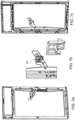
Figure 1 shows the internal components of a door lock having a primary and secondary latch. -
Figure 2 shows a door lock having a primary and secondary latch and a biometric device installed which can actuate the secondary latch. -
Figure 3 shows a door lock wherein the biometric device indicates that the door is in the unlocked position. -
Figure 4 shows the internal components of a door lock that is in the unlocked position. -
Figure 5 shows a door lock wherein the biometric device indicates that the door is in the locked position. -
Figure 6 shows the internal components of a door lock that is in the locked position. -
Figure 7a depicts a front view of a traditional door locking system. -
Figure 7b depicts a closer view of the traditional door locking system offigure 7a . -
Figure 7c depicts a back view of a traditional door locking system. -
Figure 8a depicts a biometric device that may be used in the examples described herein. -
Figure 8b depicts the components of the biometric device offigure 8a . - The examples described herein relate to door locks and in particular automatic door locks. Door locks are currently used on a variety of different devices. For example, they are used in vehicles such as an aircraft, for locking oven doors, hatches etc. The door locks described herein could be used to prevent an attack such as a terrorist attack in a vehicle such as an aircraft, wherein a heat generating product such as an oven could be used as a detonating device. In this way, the locks described herein may prevent any such future attacks.
- Although the description here is given mainly in relation to an oven door of an aircraft, the locking system described herein could be used for any door wherein it is not intended that unauthorised people are able to unlock the door.
- The door locking system for an oven galley insert door may comprise a locking system wherein a biometric device is provided, such that the oven door cannot open unless a recognised biometric feature is detected.
- The internal components and functioning of one type of door lock that is used for an oven galley insert door having a primary and secondary latch is shown in
figure 1 . The biometric device can, however, also be used with door locking systems having different components and the examples described herein are not limited to this one type of door locking system. - As can be seen in
figure 1 , the locking system comprises aprimary latch 10 that is moved by the user in order to open the door. Theinternal actuating gear 11 translates movement to apush rod 12 which is moved in a vertical direction as shown infigure 1 . This, in turn, actuates asecondary latch 20, themechanism 21 of which can be seen infigure 1 . Thesecondary latch mechanism 21 comprises a striker slider mechanism that moves relative to theprimary latch 10 to allow theprimary latch 10 to open the door. - In the locking system shown in
figure 2 , a biometric device such as an automaticbiometric lock 30 is incorporated into the locking system. The incorporation of thebiometric device 30 into the locking system can be configured such that it activates thesecondary lock 20 of the locking system and can only be opened by the detection of a registered fingerprint (or other biometric features) of the cabin crew. This therefore prevents unauthorised use of the heat generating device. In this example, in order to trigger theStriker Slider mechanism 21 of the secondary latch, an actuating motor or device is provided within thesecondary latch mechanism 21 so that once a fingerprint is detected the actuator motor or device will Lock or Unlock the mechanism. The automaticbiometric lock 30 is shown infigure 2 . - As depicted in
figure 4 , the striker slider mechanism may comprise astriker 23 and astriker slider 22. In some examples, thebiometric device 30 may be configured to indicate to the user whether or not the lock is in the unlocked position. For example, as shown infigure 3 , thebiometric device 30 may glow red when locked, or may show an icon indicating that it is locked. In this unlocked position, thestriker slider 21 is not engaged with thestriker 22 and the door is unlocked. -
Figures 5 and 6 depict the locking mechanism when the door is in the locked position. As can be seen infigure 5 , in the locked position, thebiometric device 30 may indicate to the user, e.g. with colour, icon, etc, that the door is locked. As shown infigure 6 , when in the locked position, thestriker slider 21 is in a position wherein it engages thestriker 22. -
Figure 7a depicts a front view of a traditional door locking system. The door locking system has asecondary latch 210 that has a manual mechanism.Figure 7c depicts a back view of the same traditional locking system. As can be seen infigure 7b , thefeature 210 is replaced with a biometric device in the new examples described herein. -
Figure 8a depicts abiometric device 30 that may be used in the examples described herein. The device may have afingerprint screen 310. In some examples, aUSB port 320 may be provided.Figure 8b depicts the components of the biometric device offigure 8a , showing thecylinder 330 that may be configured to move up and down and thereby actuate the secondary latch in use. Internally, the biometric device may have a series of gears that are controlled by electronics and which may be triggered by the authorized biometric feature, e.g. Fingerprint. The trigger would make thecylinder 330 move up and down to actuate the slider for locking and unlocking the oven door. A memory chip may also be included to store the biometric data. - In summary, the installation of the Automatic
Biometric Lock device 30 to the door locking system will therefore activate the Secondary Door Latch through locking and unlocking. It can only be opened by the registered fingerprint, or other biometric indication (e.g. facial, eye recognition etc.) of the authorized person, e.g. cabin crew. This will prevent the unauthorized use or operation of the Oven. - The door locking system for the galley insert oven may be manufactured via a method that comprises providing the galley insert oven, wherein the oven has a door, providing the
primary latch 10 as described above, that is moved by a user in use to open the door; and providing asecondary latch 20, as also described above, such that it is positioned internally of the oven. The method may further involve installing the biometric device as described above relative to the primary latch and the secondary latch such that, in use, activation of the biometric device results in movement of thesecondary latch 20. - As described above, the biometric device that is installed may be configured to detect and confirm a registered biometric feature.
- As also described above, the biometric feature may comprise one or more that one of a fingerprint, facial features, eye features and recognition of an authorised biometric feature by the biometric device may result in movement of an
internal actuating gear 11, which actuates thesecondary latch 20. - The method of manufacture may further comprise providing a secondary latch that comprises a secondary latch mechanism comprising a striker slider that locks or unlocks a door on which the locking mechanism is installed.
- The method of manufacture may further comprise providing an actuating motor or device within the
secondary latch mechanism 21 that is configured to trigger thesecondary Slider mechanism 21 of the secondary latch when a biometric feature is detected by thebiometric device 30. - Although this disclosure has been described in terms of preferred examples, it should be understood that these examples are illustrative only and that the claims are not limited to those examples. Those skilled in the art will be able to make modifications and alternatives in view of the disclosure which are contemplated as falling within the scope of the appended claims.
Claims (14)
- A door locking system for a galley insert oven, comprising:a primary latch (10) that is moved by a user in use to open the door; anda biometric device (30) installed relative to said primary latch such that activation of said biometric device (30) results in locking or unlocking of said oven door.
- The door locking system of claim 1, further comprising:a secondary latch (20) provided internally of said oven;said biometric device (30) installed relative to said primary latch (10) and said secondary latch (20) such that activation of said biometric device (30) results in movement of said secondary latch (20).
- The locking system of claim 1 or 2 wherein said biometric device (30) detects and confirms a registered biometric feature.
- The locking system of claim 3 wherein said biometric feature comprises one or more that one of a fingerprint, facial features, eye features.
- The locking system of any of claims 3 or 4, wherein recognition of an authorised biometric feature by said biometric device results in movement of an internal actuating gear (11), which actuates the secondary latch (20).
- The locking system of any preceding claim wherein the secondary latch comprises a secondary latch mechanism (21) comprising a striker slider (22) that locks or unlocks a door on which the locking mechanism is installed.
- The locking mechanism of claim 6 wherein an actuating motor or device is provided within the secondary latch mechanism (21) that is configured to trigger the secondary Slider mechanism (21) of the secondary latch when a biometric feature is detected by the biometric device (30).
- A method for manufacturing a door locking system for a galley insert oven, comprising:providing said galley insert oven, said oven having a door,providing a primary latch (10) that is moved by a user in use to open the door;installing a biometric device (30) relative to said primary latch (10) such that activation of said biometric device (30) results in said door being configured to be locked or unlocked.
- The method of claim 8 further comprising:providing a secondary latch (20 internally of said oven;and wherein said step of installing said biometric device (30) comprises installing the bioemetric device relative to said primary latch (10) and said secondary latch (20) such that activation of said biometric device (30) results in movement of said secondary latch (20).
- The method of claim 8 or 9 wherein said step of installing said biometric device (30) comprises installing a biometric device that is configured to detect and confirm a registered biometric feature.
- The method of claim 10 wherein said biometric feature comprises one or more that one of a fingerprint, facial features, eye features.
- The method of claims 8, 9 or 10, wherein recognition of an authorised biometric feature by said biometric device results in movement of an internal actuating gear (11), which actuates the secondary latch (20).
- The method of any of claims 8 to 12, wherein said step of providing said secondary latch (20) comprises providing a secondary latch that comprises a secondary latch mechanism (21) comprising a striker slider (22) that locks or unlocks a door on which the locking mechanism is installed.
- The method of claim 13 further comprising providing an actuating motor or device within the secondary latch mechanism (21) that is configured to trigger the secondary Slider mechanism (21) of the secondary latch when a biometric feature is detected by the biometric device (30).
Priority Applications (2)
| Application Number | Priority Date | Filing Date | Title |
|---|---|---|---|
| EP23151196.5A EP4401051A1 (en) | 2023-01-11 | 2023-01-11 | Automatic biometric door lock |
| US18/408,823 US12510250B2 (en) | 2023-01-11 | 2024-01-10 | Automatic biometric door lock |
Applications Claiming Priority (1)
| Application Number | Priority Date | Filing Date | Title |
|---|---|---|---|
| EP23151196.5A EP4401051A1 (en) | 2023-01-11 | 2023-01-11 | Automatic biometric door lock |
Publications (1)
| Publication Number | Publication Date |
|---|---|
| EP4401051A1 true EP4401051A1 (en) | 2024-07-17 |
Family
ID=85150543
Family Applications (1)
| Application Number | Title | Priority Date | Filing Date |
|---|---|---|---|
| EP23151196.5A Pending EP4401051A1 (en) | 2023-01-11 | 2023-01-11 | Automatic biometric door lock |
Country Status (2)
| Country | Link |
|---|---|
| US (1) | US12510250B2 (en) |
| EP (1) | EP4401051A1 (en) |
Citations (5)
| Publication number | Priority date | Publication date | Assignee | Title |
|---|---|---|---|---|
| US20040160335A1 (en) * | 2001-01-30 | 2004-08-19 | Willibald Reitmeier | Method and device for controlling household appliances |
| US20130334369A1 (en) * | 2010-02-19 | 2013-12-19 | Airbus Operations Gmbh | Modular cabin segment, cabin for a vehicle and vehicle with a cabin |
| US20160076776A1 (en) * | 2014-09-12 | 2016-03-17 | General Electric Company | Voice latching of appliance door |
| CN111335747A (en) * | 2018-12-17 | 2020-06-26 | 西安思能网络科技有限公司 | Hidden fingerprint lock slides with secondary locking structure |
| EP3725684A2 (en) * | 2009-04-14 | 2020-10-21 | The Boeing Company | Customizable service space |
Family Cites Families (7)
| Publication number | Priority date | Publication date | Assignee | Title |
|---|---|---|---|---|
| US5690206A (en) * | 1996-01-30 | 1997-11-25 | Carroll, Jr.; James M. | Appliance interlocking mechanism |
| PL2649597T3 (en) * | 2010-12-08 | 2019-03-29 | Apex Industrial Technologies Llc | Direct access dispensing system |
| DE202015106958U1 (en) | 2015-12-21 | 2016-01-19 | Airbus Operations Gmbh | Use for an aircraft galley for storage and charging of Personal Electronic Devices (PEDs) |
| DE102018200141A1 (en) | 2018-01-08 | 2019-07-11 | Airbus Operations Gmbh | PORCH COOKING MONUMENT WITH ELECTRIC LOCK FOR AN AIR-OR SPACE VEHICLE |
| US20190309548A1 (en) | 2018-04-05 | 2019-10-10 | Harper Engineering Co. | Aircraft latch apparatus and methods to use the same |
| US20210285268A1 (en) | 2020-03-13 | 2021-09-16 | Koninklijke Fabriek Inventum B.V. | Door Latch Mechanism System for Vehicle |
| EP4112464B1 (en) * | 2021-06-28 | 2025-01-01 | B/E Aerospace, Inc. | Galley inserts |
-
2023
- 2023-01-11 EP EP23151196.5A patent/EP4401051A1/en active Pending
-
2024
- 2024-01-10 US US18/408,823 patent/US12510250B2/en active Active
Patent Citations (5)
| Publication number | Priority date | Publication date | Assignee | Title |
|---|---|---|---|---|
| US20040160335A1 (en) * | 2001-01-30 | 2004-08-19 | Willibald Reitmeier | Method and device for controlling household appliances |
| EP3725684A2 (en) * | 2009-04-14 | 2020-10-21 | The Boeing Company | Customizable service space |
| US20130334369A1 (en) * | 2010-02-19 | 2013-12-19 | Airbus Operations Gmbh | Modular cabin segment, cabin for a vehicle and vehicle with a cabin |
| US20160076776A1 (en) * | 2014-09-12 | 2016-03-17 | General Electric Company | Voice latching of appliance door |
| CN111335747A (en) * | 2018-12-17 | 2020-06-26 | 西安思能网络科技有限公司 | Hidden fingerprint lock slides with secondary locking structure |
Also Published As
| Publication number | Publication date |
|---|---|
| US20240230105A1 (en) | 2024-07-11 |
| US12510250B2 (en) | 2025-12-30 |
Similar Documents
| Publication | Publication Date | Title |
|---|---|---|
| US12624574B2 (en) | Locking assembly with spring mechanism | |
| US4807455A (en) | Electromagnetically blocking and unblocking a lock for a safety deposit box, strong box or the like | |
| EP2172608B1 (en) | Method for identifying keys for controlling locks | |
| US6659401B1 (en) | Airplane door lock system | |
| US6874339B2 (en) | Emergency release system for door lock | |
| US9845623B1 (en) | Touch control of vehicle door locks | |
| WO2003025318A1 (en) | Access apparatus | |
| EP4011781B1 (en) | Cockpit door security system | |
| US12510250B2 (en) | Automatic biometric door lock | |
| EP1353027B1 (en) | Dead bolt lock assembly for flight deck door of an aircraft | |
| EP4332332B1 (en) | Electronic lock for cargo vehicle doors | |
| CN110145184A (en) | A kind of dual control lock of built-in electronic executing agency and mechanical emergency mechanism | |
| US7051780B2 (en) | Latch assembly for a bifold cockpit door | |
| US20070137267A1 (en) | Lock set to deadbolt interlock | |
| EP3274286B1 (en) | Elevator operation and service panel | |
| MX2024015432A (en) | Elevator | |
| GB2459248A (en) | Control system comprising a magnetically controlled switch with first and second states | |
| WO2018006120A1 (en) | Vehicle security measures | |
| GB2562271A (en) | A control system for a vehicle bonnet release system | |
| CN118774500A (en) | Hidden door handle assembly | |
| WO2004074053A1 (en) | Keyless steering lock | |
| MX2008007840A (en) | Lock set to deadbolt interlock | |
| DE102016210206A1 (en) | Locking system for a vehicle |
Legal Events
| Date | Code | Title | Description |
|---|---|---|---|
| PUAI | Public reference made under article 153(3) epc to a published international application that has entered the european phase |
Free format text: ORIGINAL CODE: 0009012 |
|
| STAA | Information on the status of an ep patent application or granted ep patent |
Free format text: STATUS: THE APPLICATION HAS BEEN PUBLISHED |
|
| AK | Designated contracting states |
Kind code of ref document: A1 Designated state(s): AL AT BE BG CH CY CZ DE DK EE ES FI FR GB GR HR HU IE IS IT LI LT LU LV MC ME MK MT NL NO PL PT RO RS SE SI SK SM TR |
|
| STAA | Information on the status of an ep patent application or granted ep patent |
Free format text: STATUS: REQUEST FOR EXAMINATION WAS MADE |
|
| 17P | Request for examination filed |
Effective date: 20250117 |
|
| STAA | Information on the status of an ep patent application or granted ep patent |
Free format text: STATUS: EXAMINATION IS IN PROGRESS |
|
| 17Q | First examination report despatched |
Effective date: 20250528 |