EP4401024A1 - Method and system for enabling pay from card through open banking - Google Patents
Method and system for enabling pay from card through open banking Download PDFInfo
- Publication number
- EP4401024A1 EP4401024A1 EP23151208.8A EP23151208A EP4401024A1 EP 4401024 A1 EP4401024 A1 EP 4401024A1 EP 23151208 A EP23151208 A EP 23151208A EP 4401024 A1 EP4401024 A1 EP 4401024A1
- Authority
- EP
- European Patent Office
- Prior art keywords
- account
- processing server
- payment
- identifier
- transaction
- Prior art date
- Legal status (The legal status is an assumption and is not a legal conclusion. Google has not performed a legal analysis and makes no representation as to the accuracy of the status listed.)
- Pending
Links
Images



Classifications
-
- G—PHYSICS
- G06—COMPUTING OR CALCULATING; COUNTING
- G06Q—INFORMATION AND COMMUNICATION TECHNOLOGY [ICT] SPECIALLY ADAPTED FOR ADMINISTRATIVE, COMMERCIAL, FINANCIAL, MANAGERIAL OR SUPERVISORY PURPOSES; SYSTEMS OR METHODS SPECIALLY ADAPTED FOR ADMINISTRATIVE, COMMERCIAL, FINANCIAL, MANAGERIAL OR SUPERVISORY PURPOSES, NOT OTHERWISE PROVIDED FOR
- G06Q20/00—Payment architectures, schemes or protocols
- G06Q20/04—Payment circuits
-
- G—PHYSICS
- G06—COMPUTING OR CALCULATING; COUNTING
- G06Q—INFORMATION AND COMMUNICATION TECHNOLOGY [ICT] SPECIALLY ADAPTED FOR ADMINISTRATIVE, COMMERCIAL, FINANCIAL, MANAGERIAL OR SUPERVISORY PURPOSES; SYSTEMS OR METHODS SPECIALLY ADAPTED FOR ADMINISTRATIVE, COMMERCIAL, FINANCIAL, MANAGERIAL OR SUPERVISORY PURPOSES, NOT OTHERWISE PROVIDED FOR
- G06Q20/00—Payment architectures, schemes or protocols
- G06Q20/02—Payment architectures, schemes or protocols involving a neutral party, e.g. certification authority, notary or trusted third party [TTP]
-
- G—PHYSICS
- G06—COMPUTING OR CALCULATING; COUNTING
- G06Q—INFORMATION AND COMMUNICATION TECHNOLOGY [ICT] SPECIALLY ADAPTED FOR ADMINISTRATIVE, COMMERCIAL, FINANCIAL, MANAGERIAL OR SUPERVISORY PURPOSES; SYSTEMS OR METHODS SPECIALLY ADAPTED FOR ADMINISTRATIVE, COMMERCIAL, FINANCIAL, MANAGERIAL OR SUPERVISORY PURPOSES, NOT OTHERWISE PROVIDED FOR
- G06Q20/00—Payment architectures, schemes or protocols
- G06Q20/04—Payment circuits
- G06Q20/06—Private payment circuits, e.g. involving electronic currency used among participants of a common payment scheme
-
- G—PHYSICS
- G06—COMPUTING OR CALCULATING; COUNTING
- G06Q—INFORMATION AND COMMUNICATION TECHNOLOGY [ICT] SPECIALLY ADAPTED FOR ADMINISTRATIVE, COMMERCIAL, FINANCIAL, MANAGERIAL OR SUPERVISORY PURPOSES; SYSTEMS OR METHODS SPECIALLY ADAPTED FOR ADMINISTRATIVE, COMMERCIAL, FINANCIAL, MANAGERIAL OR SUPERVISORY PURPOSES, NOT OTHERWISE PROVIDED FOR
- G06Q20/00—Payment architectures, schemes or protocols
- G06Q20/08—Payment architectures
- G06Q20/085—Payment architectures involving remote charge determination or related payment systems
- G06Q20/0855—Payment architectures involving remote charge determination or related payment systems involving a third party
-
- G—PHYSICS
- G06—COMPUTING OR CALCULATING; COUNTING
- G06Q—INFORMATION AND COMMUNICATION TECHNOLOGY [ICT] SPECIALLY ADAPTED FOR ADMINISTRATIVE, COMMERCIAL, FINANCIAL, MANAGERIAL OR SUPERVISORY PURPOSES; SYSTEMS OR METHODS SPECIALLY ADAPTED FOR ADMINISTRATIVE, COMMERCIAL, FINANCIAL, MANAGERIAL OR SUPERVISORY PURPOSES, NOT OTHERWISE PROVIDED FOR
- G06Q20/00—Payment architectures, schemes or protocols
- G06Q20/30—Payment architectures, schemes or protocols characterised by the use of specific devices or networks
- G06Q20/36—Payment architectures, schemes or protocols characterised by the use of specific devices or networks using electronic wallets or electronic money safes
- G06Q20/367—Payment architectures, schemes or protocols characterised by the use of specific devices or networks using electronic wallets or electronic money safes involving electronic purses or money safes
- G06Q20/3676—Balancing accounts
-
- G—PHYSICS
- G06—COMPUTING OR CALCULATING; COUNTING
- G06Q—INFORMATION AND COMMUNICATION TECHNOLOGY [ICT] SPECIALLY ADAPTED FOR ADMINISTRATIVE, COMMERCIAL, FINANCIAL, MANAGERIAL OR SUPERVISORY PURPOSES; SYSTEMS OR METHODS SPECIALLY ADAPTED FOR ADMINISTRATIVE, COMMERCIAL, FINANCIAL, MANAGERIAL OR SUPERVISORY PURPOSES, NOT OTHERWISE PROVIDED FOR
- G06Q20/00—Payment architectures, schemes or protocols
- G06Q20/38—Payment protocols; Details thereof
- G06Q20/384—Payment protocols; Details thereof using social networks
-
- G—PHYSICS
- G06—COMPUTING OR CALCULATING; COUNTING
- G06Q—INFORMATION AND COMMUNICATION TECHNOLOGY [ICT] SPECIALLY ADAPTED FOR ADMINISTRATIVE, COMMERCIAL, FINANCIAL, MANAGERIAL OR SUPERVISORY PURPOSES; SYSTEMS OR METHODS SPECIALLY ADAPTED FOR ADMINISTRATIVE, COMMERCIAL, FINANCIAL, MANAGERIAL OR SUPERVISORY PURPOSES, NOT OTHERWISE PROVIDED FOR
- G06Q20/00—Payment architectures, schemes or protocols
- G06Q20/38—Payment protocols; Details thereof
- G06Q20/385—Payment protocols; Details thereof using an alias or single-use codes
Definitions
- the present disclosure relates to enabling card payments through open banking, specifically enabling card payments to be made via an open banking structure through the use of a mapped virtual account.
- Payment rails operate their own communication infrastructure separate from the Internet, also known as "payment rails," that is used for transmission of transaction messages.
- An entity wanting to participate in payment transactions would have to have some manner of connecting to these payment rails, often via an authorized entity such as a financial institution.
- Payment rails provide a safe and trusted infrastructure to use for payment transactions but can sometimes pose a high barrier for entry for a new entity.
- Open banking refers to banking through the use of infrastructure separate from payment rails, which most often utilizes the Internet and operates through a series of application programming interfaces (APIs) between participants. While banks and other traditional financial institutions utilize open banking, the lower barrier to entry and wider availability for open banking has left to participation by new financial service providers.
- APIs application programming interfaces
- the present disclosure provides a description of systems and methods for enabling credit card payments in open banking via a mapped virtual account.
- a consumer interested in using a credit card via open banking can register their credit card with an open banking provider or another entity associated therewith.
- the provider can generate a virtual account that appears as a standard debit account that is then mapped to the credit card account.
- the consumer is presented the mapped virtual account along with any debit accounts for selection for payment in a transaction. If the consumer selects the mapped virtual account, the provider identifies the mapped credit card account and initiates a standard credit card transaction for payment from the credit card account to the merchant.
- the merchant is notified that payment was made successfully from the consumer via the open banking platform using the virtual account, which appears to the merchant as a standard debit account with the open banking provider.
- the result is payment made by the consumer via open banking, without any change in behavior or operation by the merchant and with the consumer participation being limited to the onboarding of their credit card account, which provides significant advantages and new opportunities over traditional systems.
- a method for enabling credit card payments in open banking via a mapped virtual account includes: receiving, by a receiver of a processing server, a registration request, the registration request including at least payment details for a credit transaction account and a profile identifier; generating, by a processor of the processing server, a virtual account, the generated virtual account including at least an account identifier and a balance; mapping, by the processor of the processing server, the generated virtual account to the credit transaction account in a mapping database of the processing server; storing, in an account database of the processing server, at least the account identifier for the generated virtual account in an account profile associated with the profile identifier; and transmitting, by a transmitter of the processing server, at least the account identifier upon receipt of a payment request for payment via an open banking infrastructure.
- a system for enabling credit card payments in open banking via a mapped virtual account includes: an open banking infrastructure; and a processing server, the processing server including a receiver receiving a registration request, the registration request including at least payment details for a credit transaction account and a profile identifier, a processor generating a virtual account, the generated virtual account including at least an account identifier and a balance, mapping the generated virtual account to the credit transaction account in a mapping database of the processing server, and storing, in an account database of the processing server, at least the account identifier for the generated virtual account in an account profile associated with the profile identifier, and a transmitter transmitting at least the account identifier upon receipt of a payment request for payment via the open banking infrastructure.
- FIG. 1 illustrates a system 100 for enabling credit card payments to be made using open banking infrastructure via the use of mapped virtual account.
- the system 100 can include a processing server 102.
- the processing server 102 can be a computing system that provides for the generation and mapping of virtual accounts on behalf of an open banking provider, such as an open banking entity 110 discussed in more detail below.
- the processing server 102 can be an open banking provider, such as the open banking entity 110 or other entity configured to provide open banking services to consumers.
- the system 100 can also include a consumer device 104.
- the consumer device 104 can be a computing device used by a consumer to interact with other components in the system 100 for making payments via an open banking infrastructure 108 including credit card payments made using the open banking infrastructure 108.
- the consumer device 104 can be any type of computing device suitable for performing the functions discussed herein, such as a desktop computer, laptop computer, notebook computer, tablet computer, cellular phone, smart phone, smart watch, smart television, wearable computing device, implantable computing device, etc.
- open banking can refer to banking that is performed through the use of infrastructure separate from payment networks and their associated infrastructure, also known as payment rails, as discussed below.
- Open banking typically utilizes the Internet, where the open banking infrastructure 108 can refer to APIs and other communication methods and paths between open banking entities 110 and other participants in open banking, such as the consumer device 104, merchant system 106, and processing server 102.
- participant in open banking can be entities not traditionally involved in financial services. Because of the open nature of the open banking infrastructure 108, any entity with a sufficient and secure Internet connection can participate in open banking and offer services to other participants, even entities that are not financial institutions or directly involved in transaction accounts or payment transactions.
- open banking has enabled third party service providers to provide budgeting assistance to consumers, can speed up the process for mortgages and loans by providing direct access to financial data upon consumer approval, and can make it easier for friends and family to make payments back and forth.
- open banking has enabled more service providers to offer services regarding invoice generation, payment tracking, cash flow projections, and payroll management, as well as providing another avenue to receive payment to reach a greater number of potential customers.
- the consumer can interact with a merchant system 106 via their consumer device 104 using any suitable communication network and method, such as via an application program executed on the consumer device 104 associated with the merchant system 106, a web page associated with the merchant system 106, or other interface in communication with an API of the merchant system 106.
- the consumer device 104 can initiate a process to make a payment to a merchant associated with the merchant system 106, such as part of a transaction for goods or services.
- the merchant system 106 can prompt the consumer, via the consumer device 104, to select a payment method, where the prompt can include open banking as a potential payment method.
- the consumer device 104 can be directed to an open banking entity 110 via the open banking infrastructure 108.
- the open banking entity 110 can be an entity that offers financial services to consumers via the open banking infrastructure 108.
- the open banking infrastructure 108 can refer to any devices and communication paths that are utilized to provide communications for transactions and other services. In some cases, the open banking infrastructure 108 can utilize specially programmed computing systems, the Internet, and APIs between the computing systems.
- the open banking entity 110 can provide an interface, such as via a web page, application program, API, etc. to the consumer device 104 to prompt the consumer to select one or more available depository, or debit, accounts registered by the consumer for use in making the desired payment with the merchant system 106.
- the consumer device 104 would receive a selection of a debit account from the consumer, the consumer device 104 would communicate the selected debit account to the open banking entity 110, and then the open banking entity 110 would debit the selected debit account, transfer the appropriate amount to the merchant system 106 via the open banking infrastructure, and provide notifications to the consumer device 104 and merchant system 106 of the completed transaction.
- transaction account refers to financial account that can be used to fund a transaction, where the transaction account can be associated with a consumer, which can be any suitable type of entity associated with a payment account, which can include a person, family, company, corporation, governmental entity, etc.
- a credit card transaction account can refer to a transaction account that operates via credit that traditionally is used via a payment card issued to a consumer, where payment card details (e.g., credit card number, expiration date, security code, street address, and name) are supplied by the consumer via a physical payment card or an electronic form, for use in making payment via the associated transaction account.
- payment card details e.g., credit card number, expiration date, security code, street address, and name
- the system 100 can include an issuing financial institution 112.
- An issuing financial institution 112 can be an entity that establishes (e.g., opens) a letter or line of credit in favor of a beneficiary, and honors drafts drawn by the beneficiary against the amount specified in the letter or line of credit.
- the issuing financial institution 112 can be a bank or other financial institution authorized to open lines of credit.
- any entity that can extend a line of credit to a beneficiary can be considered an issuing financial institution 112.
- the line of credit opened by the issuer can be represented in the form of a credit card transaction account.
- An issuing financial institution 112 can also offer additional types of payment accounts to consumers as will be apparent to persons having skill in the relevant art, such as debit accounts, prepaid accounts, electronic wallet accounts, savings accounts, checking accounts, etc., and may provide consumers with physical or non-physical means for accessing and/or utilizing such an account, such as debit cards, prepaid cards, automated teller machine cards, electronic wallets, checks, etc.
- the issuing financial institution 112 can issue the credit card transaction account to the consumer and, as part of the issuance, issue a credit card to the consumer that includes suitable payment details.
- the consumer can, via the consumer device 104, register the credit card with the processing server 102.
- the processing server 102 can provide services on behalf of the open banking entity 110 for enabling credit card payments.
- the processing server 102 and open banking entity 110 can be the same system, where any functions discussed herein performed by the processing server 102 or open banking entity 110 can be performed by either system.
- the consumer device 104 may provide payment details for the credit card to the processing server 102.
- Payment details can include any data suitable for use by an issuing financial institution 112 or other entity in identifying the associated transaction account and processing payment therefrom.
- Payment details can include, for example, a transaction account number, name, billing address, security code, digital token, controlled payment number, etc.
- the consumer device 104 can directly transmit the payment details to the processing server 102 via a suitable communication network and method.
- the consumer device 104 can provide authentication information to the processing server 102 to authenticate the identity of the consumer, which the processing server 102 can provide to the issuing financial institution 112 in a request for the payment details.
- the issuing financial institution 112 can authenticate the consumer, identify the payment details, and provide them to the processing server 102 using a suitable communication network and method. In some cases, the issuing financial institution 112 can request permission from the consumer, via the consumer device 104, to release the payment details to the processing server 102.
- the processing server 102 can generate a virtual account that will be used in communications made via the open banking infrastructure.
- the virtual account can be represented to the merchant system 106 as a traditional debit account and represented to the consumer device 104 as the associated credit card transaction account, such as by using the same name and last four digits of the payment card.
- the virtual account can be generated with a balance that is equivalent to the current available credit for the associated credit card transaction account, where the balance can be available as an amount eligible for use by the consumer in making a payment.
- the processing server 102 can map the generated virtual account to the credit card transaction account in a memory, such as a mapping database, of the processing server 102.
- the mapping can indicate a direct association between the generated virtual account and the credit card transaction account, where payments initiated from the generated virtual account will be paid via the mapped credit card transaction account.
- the consumer device 104 can be presented with the virtual account in the list of accounts available for making a payment to the merchant associated with the merchant system 106.
- the consumer device 104 can display the list of available accounts, including the virtual account, to the consumer for selection for the desired payment.
- the consumer can select the virtual account, which can result in an electronic transmission of an account identifier for the virtual account from the consumer device 104 to the processing server 102 using a suitable communication network and method, along with any other suitable data, such as the payment amount or a transaction identifier that can be included in any communications made with the processing server 102 related to the desired transaction.
- An account identifier can be any unique value associated with an account used for the identification thereof, such as a unique number, alphanumeric value, hash value, etc.
- the account identifier can be unique as to all accounts associated with the consumer of the consumer device 104.
- the account identifier can be a value set by the consumer for identification of the associated account, such as a custom name.
- all communications between the processing server 102 and the consumer device 104 can be made using the open banking infrastructure 108.
- the processing server 102 can receive the account selection from the consumer device 104 and identify the account associated with the provided account identifier. The processing server 102 can identify that the account is a virtual account and can then identify the mapped credit card transaction account. The processing server 102 can then generate an authorization request for a credit card payment transaction, where the payment details for the credit card transaction account are used for the funding source in the authorization request and account details for the merchant's transaction account are used for the funding destination in the authorization request. The authorization request can then be electronically transmitted to a payment network 114 for processing of the credit card payment transaction using traditional methods.
- transmissions between the processing server 102 and the payment network 114 can be made using payment rails associated with the payment network 114, which can refer to the physical payment network, such as the equipment, hardware, and software comprising the payment network.
- An authorization request can be a transaction message, which is a specially formatted data message that is configured for transmission via the payment rails that is formatted pursuant to one or more standards governing financial transaction messages, such as the International Organization of Standardization's ISO 8583 or ISO 20022 formats.
- the processing server 102 can provide a notification of the successful transaction to the consumer device 104, open banking entity 110, and/or merchant system 106.
- the open banking entity 110 can transmit a notification message to the merchant system 106.
- the notification message transmitted to the merchant system 106 can indicate that the transaction was completed using the virtual account and the open banking infrastructure 108, which can enable the consumer to use a credit card for payments to the merchant without requiring any change or modification to merchant systems 106.
- the processing server 102 can utilize a different transaction account for a merchant system 106 for receipt of credit card payments.
- the processing server 102 can identify (e.g., via information provided by the merchant system 106 or an associated entity, such as an acquiring financial institution) a transaction account used by the merchant system 106 in receiving credit card payments. This transaction account can be mapped to the standard account used by the merchant system 106 for open banking transactions.
- the processing server 102 receives the account selection from the consumer device 104 that indicates use of a virtual account mapped to a credit card transaction account, the processing server 102 can identify the transaction account mapped to the merchant's standard account for inclusion in the authorization request.
- the processing server 102 can also utilize a mapped merchant account for use in receiving credit card payments, which can be used to ensure the merchant system 106 receives the funds only using the open banking infrastructure 108.
- the mapped merchant account can be associated with the specific merchant system 106 and be unique to that merchant system 106 or can be a general account used by the processing server 102 for credit card transactions.
- the processing server 102 can identify the mapped merchant account for inclusion in the authorization request as the funding destination for the credit card transaction.
- the credit card transaction can be processed, which can result in payment from the consumer's credit card transaction account to the mapped merchant account.
- the processing server 102 can then transfer the payment amount from the mapped merchant account to the generated virtual account, and then from the generated virtual account to the merchant system's standard account, or directly between the mapped merchant account to the merchant system's standard account, using standard processes of the open banking infrastructure 108.
- the merchant system 106 will receive the payment via a debit account used in the open banking infrastructure 108.
- the merchant system 106 can be unaware of the payment being initially from a credit card transaction account.
- open banking can be subject to one or more standards, such as open banking standards that are applicable in the United Kingdom and apply to all communications made via an open banking infrastructure 108.
- the processing server 102 can be configured to ensure that all communications made via the open banking infrastructure are in compliance with all applicable standards, such as with respect to provided user interfaces and use of APIs.
- regulations can apply to functions performed by the components of the system 100 discussed herein.
- the Revised Payment Services Directive (PSD2) is a directive of the European Union that is applicable to open banking and defines rules and standards that must be followed by participants.
- the processing server 102 can ensure that all communications and transactions comply with the applicable regulations.
- the processing server 102 can be configured to ensure that the credit card payment transaction complies with all standards and regulations applicable to such a transaction while also ensuring that the messaging and transfers made via open banking are also in compliance with any applicable standards and regulations.
- the methods and systems discussed herein enable a consumer to make a credit card payment via an open banking infrastructure 108 via the use of a virtual account mapped to the credit card transaction account.
- the result provides for significantly greater convenience and security to consumers, while not requiring any changes to existing merchants' systems 106 to provide for wide adoption.
- This provides for significant improvements over traditional open banking systems that can benefit both consumers and merchants, as well as increase engagement between consumers and existing open banking entities 110.
- the systems and methods discussed herein can provide even greater convenience for participants by streamlining what could be a significantly difficult new service to adopt for merchants.
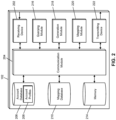
- FIG. 2 illustrates an embodiment of a processing server 102.
- the embodiment of the processing server 102 illustrated in FIG. 2 is provided as illustration only and cannot be exhaustive to all possible configurations of the processing server 102 suitable for performing the functions as discussed herein.
- the computer system 500 illustrated in FIG. 5 and discussed in more detail below can be a suitable configuration of the processing server 102.
- additional components of the system 100 such as the consumer device 104, merchant system 106, open banking entity 110, and issuing financial institution 112 can include the components illustrated in FIG. 2 and discussed below.
- the processing server 102 can include a receiving device 202.
- the receiving device 202 can be configured to receive data over one or more networks via one or more network protocols.
- the receiving device 202 can be configured to receive data from consumer devices 104, merchant systems 106, open banking entities 110, issuing financial institutions 112, payment networks 114, and other systems and entities via one or more communication methods, such as radio frequency, local area networks, wireless area networks, cellular communication networks, Bluetooth, the Internet, etc.
- the receiving device 202 can be comprised of multiple devices, such as different receiving devices for receiving data over different networks, such as a first receiving device for receiving data over a local area network and a second receiving device for receiving data via the Internet, or a first receiving device for receiving data via the open banking infrastructure 108 and a second receiving device for receiving data via payment rails of a payment network 114.
- the receiving device 202 can receive electronically transmitted data signals, where data can be superimposed or otherwise encoded on the data signal and decoded, parsed, read, or otherwise obtained via receipt of the data signal by the receiving device 202.
- the receiving device 202 can include a parsing module for parsing the received data signal to obtain the data superimposed thereon.
- the receiving device 202 can include a parser program configured to receive and transform the received data signal into usable input for the functions performed by the processing device to carry out the methods and systems described herein.
- the receiving device 202 can be configured to receive data signals electronically transmitted by consumer devices 104 that can be superimposed or otherwise encoded with payment requests, payment details, authentication data, etc.
- the receiving device 202 can also be configured to receive data signals electronically transmitted by merchant systems 106, which can be superimposed or otherwise encoded with account data, routing information, etc.
- the receiving device 202 can also be configured to receive data signals electronically transmitted by open banking entities 110 that can be superimposed or otherwise encoded with payment requests, account data, payment details, virtual account data, mapping data, etc.
- the receiving device 202 can also be configured to receive data signals electronically transmitted by issuing financial institutions 112, which can be superimposed or otherwise encoded with payment details, authentication requests, authorization responses, transaction messages, etc.
- the receiving device 202 can also be configured to receive data signals electronically transmitted by a payment network 114 that can be superimposed or otherwise encoded with transaction messages.
- the processing server 102 can also include a communication module 204.
- the communication module 204 can be configured to transmit data between modules, engines, databases, memories, and other components of the processing server 102 for use in performing the functions discussed herein.
- the communication module 204 can be comprised of one or more communication types and utilize various communication methods for communications within a computing device.
- the communication module 204 can be comprised of a bus, contact pin connectors, wires, etc.
- the communication module 204 can also be configured to communicate between internal components of the processing server 102 and external components of the processing server 102, such as externally connected databases, display devices, input devices, etc.
- the processing server 102 can also include a processing device.
- the processing device can be configured to perform the functions of the processing server 102 discussed herein as will be apparent to persons having skill in the relevant art.
- the processing device can include and/or be comprised of a plurality of engines and/or modules specially configured to perform one or more functions of the processing device, such as a querying module 216, generation module 218, mapping module 220, etc.
- the term "module" can be software or hardware particularly programmed to receive an input, perform one or more processes using the input, and provides an output. The input, output, and processes performed by various modules will be apparent to one skilled in the art based upon the present disclosure.
- the processing server 102 can also an account database 206.
- the account database 206 can be configured to store one or more account profiles 208 using a suitable data storage format and schema.
- the account database 206 can be a relational database that utilizes structured query language for the storage, identification, modifying, updating, accessing, etc. of structured data sets stored therein.
- Each account profile 208 can be a structured data set configured to store data related to a consumer account, which can include, for example, account identifiers for one or more debit accounts, generated virtual account information, payment details for one or more credit card transaction accounts, balance information, contact information for a consumer device 104, etc.
- the processing server 102 can also include a mapping database 210.
- the mapping database 210 can be configured to store data regarding links between virtual accounts and credit card transaction accounts using a suitable data storage format and schema.
- the mapping database 210 can be a relational database that utilizes structured query language for the storage, identification, modifying, updating, accessing, etc. of structured data sets stored therein.
- the mapping database 210 can include structured data sets configured to store data related to the links between virtual accounts and credit card transaction accounts, such as account identifiers, payment details, etc.
- the processing server 102 can also include a memory 214.
- the memory 214 can be configured to store data for use by the processing server 102 in performing the functions discussed herein, such as public and private keys, symmetric keys, etc.
- the memory 214 can be configured to store data using suitable data formatting methods and schema and can be any suitable type of memory, such as read-only memory, random access memory, etc.
- the memory 214 can include, for example, encryption keys and algorithms, communication protocols and standards, data formatting standards and protocols, program code for modules and application programs of the processing device, and other data that can be suitable for use by the processing server 102 in the performance of the functions disclosed herein as will be apparent to persons having skill in the relevant art.
- the processing server 102 can include a querying module 216.
- the querying module 216 can be configured to execute queries on databases to identify information.
- the querying module 216 can receive one or more data values or query strings, and can execute a query string based thereon on an indicated database, such as the entity database 206 of the processing server 102 to identify information stored therein.
- the querying module 216 can then output the identified information to an appropriate engine or module of the processing server 102 as necessary.
- the querying module 216 can, for example, execute a query on the account database 206 to identify an account profile 208 that includes an account identifier included in a payment request to identify the connected debit accounts and any virtual accounts.
- the processing server 102 can also include a generation module 218.
- the generation module 218 can be configured to generate data for use by the processing server 102 in performing the functions discussed herein.
- the generation module 218 can receive instructions as input, can generate data based on the instructions, and can output the generated data to one or more modules of the processing server 102.
- the generation module 218 can be configured to generate data messages, notification messages, cryptographic keys, transaction messages, virtual accounts, etc.
- the processing server 102 can also include a mapping module 220.
- the mapping module 220 can be configured to map virtual accounts to transaction accounts and identify mapped accounts for the processing server 102 as part of the functions discussed herein.
- the mapping module 220 can receive instructions as input, which can also include data to be used in performing a mapping or identification, can perform a mapping or identification as requested, and can output a result of the mapping or identification to another module or engine of the processing server 102.
- the mapping module 220 can, for example, be configured to map a generated virtual account to a credit card transaction account, map a mapped merchant account to a standard account for a merchant system 106, and identify a credit card transaction account mapped to a generated virtual account.
- the processing server 102 can also include a transmitting device 222.
- the transmitting device 222 can be configured to transmit data over one or more networks via one or more network protocols.
- the transmitting device 222 can be configured to transmit data consumer devices 104, merchant systems 106, open banking entities 110, issuing financial institution 112, payment networks 114, and other entities via one or more communication methods, local area networks, wireless area networks, cellular communication, Bluetooth, radio frequency, the Internet, etc.
- the transmitting device 222 can be comprised of multiple devices, such as different transmitting devices for transmitting data over different networks, such as a first transmitting device for transmitting data over a local area network and a second transmitting device for transmitting data via the Internet, or a first transmitting device for transmitting data via the open banking infrastructure 108 and a second transmitting device for transmitting data via payment rails of the payment network 114.
- the transmitting device 222 can electronically transmit data signals that have data superimposed that can be parsed by a receiving computing device.
- the transmitting device 222 can include one or more modules for superimposing, encoding, or otherwise formatting data into data signals suitable for transmission.
- the transmitting device 222 can be configured to electronically transmit data signals to consumer devices 104 that are superimposed or otherwise encoded with account lists, requests for authentication data or payment details, notification messages, etc.
- the transmitting device 222 can also be configured to electronically transmit data signals to merchant systems 106, which can be superimposed or otherwise encoded with requests for account data, notification messages, transaction messages, etc.
- the transmitting device 222 can also be configured to electronically transmit data signals to open banking entities 110 that can be superimposed or otherwise encoded with payment request data, requests for account data, requests for payment details, transaction messages, notification messages, currency transfer requests, etc.
- the transmitting device 222 can also be configured to electronically transmit data signals to issuing financial institutions 112, which can be superimposed or otherwise encoded with authentication data, requests for payment details, transaction messages, notification messages, etc.
- the transmitting device 222 can also be configured to electronically transmit data signals to payment networks 114 that can be superimposed or otherwise encoded with transaction messages.
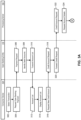
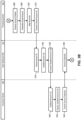
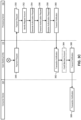
- FIGS. 3A-3C illustrates a process for enabling credit card payments to be made via open banking infrastructure 108 in the system 100 of FIG. 1 .
- the consumer device 104 can present an interface to a user thereof and receive a selection of a transaction desired by the user.
- the transaction can be a payment to be made to a merchant of a specific transaction amount, such as for the purchase of goods or services.
- the consumer device 104 can request, as a result of selections by the user, that the payment be made via open banking.
- the request can be electronically transmitted by the consumer device 104 (e.g., directly or via a merchant system 106, such as via an application program or web page of the merchant system 106) to an open banking entity 110, such as via the open banking infrastructure 108.
- the open banking entity 110 can receive (e.g., via a receiving device 202) the payment request.
- the payment request can include at least a profile identifier associated with the consumer that is associated with an account registered by the consumer with the open banking platform.
- the payment request can also include an identifier associated with the merchant or a transaction account of the merchant, as well as the transaction amount for the desired transaction.
- the open banking entity 110 can identify (e.g., via a querying module 216) a list of all debit accounts registered with the consumer for use in funding payments (e.g., in an account profile 208 identified using the profile identifier).
- the open banking entity 110 can transmit (e.g., via a transmitting device 222) the account list to the consumer device 104.
- the consumer device 104 can receive the account list.
- the account list can include a name or other reference to each debit account, an available balance for each debit account, as well as an account identifier associated with each debit account.
- the consumer device 104 can display the list of debit accounts can to the user. In some cases, only the name and balance for each account may be displayed.
- the consumer device 104 can also display, as part of the account list, an option for the user to add a new account, which can be a debit account or a credit account. The user may select the option to add a new credit account via a suitable input device of the consumer device 104.
- the consumer device 104 can electronically transmit a request for a new credit account to the open banking entity 110, such as using the open banking infrastructure 108.
- the open banking entity 110 can receive (e.g., via a receiving device 202) the new credit account request from the consumer device 104.
- the credit account request can include at least the account identifier associated with the consumer as well as information identifying the consumer and the desired credit card transaction account for the issuing financial institution 112 that issued the credit card transaction account.
- the information identifying the consumer can include, for instance, a username, e-mail address, password, name, etc. or a combination thereof.
- the information identifying the desired credit card transaction account can include the account number, a portion (e.g., last four digits) of the account number, a reference name for the account, etc.
- the open banking entity 110 can forward (e.g., via a transmitting device 222) the credit account request to the processing server 102, such as via the open banking infrastructure 108.
- the receiving device 202 of the processing server 102 can receive the credit account request from the open banking entity 110.
- the transmitting device 222 of the processing server 102 can electronically transmit a request for account details to the issuing financial institution 112 that issued the credit card transaction account, which can be identified using data included in the credit account request.
- the request for account details can use the identification information included in the credit account request.
- the issuing financial institution 112 can use the identification information to identify the consumer's accounts with the institution including the desired credit card transaction account. In some cases, the issuing financial institution 112 can separately communicate with the consumer device 104 to request approval to identify the credit card transaction account for the processing server 102.
- the issuing financial institution 112 can identify the payment details for the credit card transaction account and transmit the payment details to the processing server 102 for receipt by the receiving device 202 of the processing server, in step 326.
- the generation module 218 of the processing server 102 can generate a new virtual account to use in the open banking infrastructure 108 in place of the credit card transaction account for making payments.
- the new virtual account can have a name that matches the credit card transaction account (e.g., name of the issuing financial institution 112, reference name provided by the consumer, etc.) as well as an available balance that matches the available credit for the credit card transaction account.
- the mapping module 220 of the processing server 102 can map the generated virtual account to the credit card transaction account, such as by storing an account identifier for the generated virtual account and the payment details for the credit card transaction account in the mapping database 210 of the processing server 102.
- the transmitting device 222 of the processing server 102 can electronically transmit the account identifier for the generated virtual account to the open banking entity 110, such as using the open banking infrastructure 108.
- the open banking entity 110 can (e.g., via a receiving device 202) receive the account identifier for the generated virtual account from the processing server 102. In some cases, the open banking entity 110 can also receive the name and available balance for the virtual account.
- the open banking entity 110 can update the account list for the consumer to include the newly registered virtual account.
- the open banking entity 110 can (e.g., via a transmitting device 222) transmit the updated account list to the consumer device 104, such as using the open banking infrastructure 108.
- the consumer device 104 can receive the updated account list.
- the consumer device 104 can display the updated account list to the consumer, which will also display the newly added virtual account that is mapped to the consumer's credit card transaction account. Using a suitable input device of the consumer device 104, the consumer can select the virtual account for use in funding the desired payment transaction.
- the consumer device 104 can submit the selection of the virtual account to the open banking entity 110 by transmitting the account identifier associated therewith to the open banking entity 110, such as using the open banking infrastructure 108, along with any other suitable data, such as the profile identifier associated with the consumer or a transaction identifier for use in identifying the desired transaction to which the selection corresponds.
- the open banking entity 110 can receive (e.g., via a receiving device 202) the account selection from the consumer device 104 that includes the account identifier for the generated virtual account.
- the open banking entity 110 can transmit (e.g., via a transmitting device 222) a payment request to the processing server 102 using a suitable communication network and method, such as the open banking infrastructure 108.
- the payment request can include the account identifier for the virtual account, an account identifier for the merchant account associated with the merchant that is to receive payment, and the transaction amount.
- the receiving device 202 of the processing server 102 can receive the payment request from the open banking entity 110.
- the processing server 102 can identify that the account identifier in the payment request is associated with a virtual account and can instruct the querying module 216 of the processing server 102 to execute a query on the mapping database 210 of the processing server 102 to identify the credit card transaction account mapped to the generated virtual account.
- the generation module 218 of the processing server 102 can generate an authorization request for an electronic payment transaction that includes the payment details for the credit card transaction account identified in step 352, the account identifier for the merchant account included in the payment request, and the transaction amount included in the payment request.
- the transmitting device 222 of the processing server 102 can electronically transmit the authorization request, which is a specially formatted transaction messaged, to a payment network 114 for processing using traditional methods.
- the payment network 114 can process the electronic payment transaction for payment of the transaction amount from the credit card transaction account to the merchant's transaction account.
- the receiving device 202 of the processing server 102 can receive an authorization response for the electronic payment transaction that indicates approval of the payment transaction.
- the generation module 218 of the processing server 102 can generate a notification message, which can be transmitted, by the transmitting device 222 of the processing server 102, to the open banking entity 110, such as using the open banking infrastructure 108.
- the notification message can include an indication of the successful payment from the consumer to the merchant, and can include references to the transaction accounts, the transaction amount, or any other suitable information.
- the open banking entity 110 can receive (e.g., via a receiving device 202) the notification message from the processing server 102.
- the process can include step 364, where the open banking entity 110 can identify (e.g., via a querying module 216) the standard transaction account for the merchant that is mapped to the mapped merchant account and can transfer the funds from the mapped merchant account to the standard transaction account to credit the merchant for the payment.
- the open banking entity 110 can transmit (e.g., via a transmitting device 222) a notification message to the consumer device 104 indicating successful credit card payment to the merchant for the transaction amount, such as via the open banking infrastructure 108.
- the consumer device 104 can receive the notification message, which can be displayed to the consumer to inform them of the successful payment.
- FIG. 4 illustrates a method 400 for enabling credit card payments in open banking through the use of a mapped virtual account.
- a registration request can be received by a receiver (e.g., receiving device 202) of a processing server (e.g., processing server 102), the registration request including at least payment details for a credit transaction account and a profile identifier.
- a virtual account can be generated by a processor (e.g., generation module 218), the generated virtual account including at least an account identifier and a balance.
- the generated virtual account can be mapped by the processor (e.g., mapping module 220) of the processing server to the credit transaction account in a mapping database (e.g., mapping database 210) of the processing server.
- At least the account identifier for the generated virtual account can be stored in an account database (e.g., account database 206) of the processing server in an account profile (e.g., account profile 208) associated with the profile identifier.
- at least the account identifier can be transmitted by a transmitter (e.g., transmitting device 222) of the processing server upon receipt of a payment request for payment via an open banking infrastructure (e.g., open banking infrastructure 108).
- the method 400 can further include: receiving, by the receiver of a processing server, the payment request from a computing device (e.g., consumer device 104), the payment request including at least the profile identifier; and identifying, by the processor (e.g., querying module 216) of the processing server, the account profile based on the profile identifier, the account profile further including an identifier associated with each of one or more debit accounts, wherein the identifier associated with each of the one or more debit accounts is transmitted with the account identifier, and the identifier associated with each of the one or more debit accounts and the account identifier are transmitted to the computing device.
- a computing device e.g., consumer device 104
- the processor e.g., querying module 216
- the account profile further including an identifier associated with each of one or more debit accounts, wherein the identifier associated with each of the one or more debit accounts is transmitted with the account identifier, and the identifier associated with each of the one or more debit accounts and the account identifier
- the method 400 can even further include: receiving, by the receiver of the processing server, an account selection message from the computing device, the account selection message including at least the account identifier; and transmitting, by the transmitter of the processing server, the account identifier to an open banking computing system (e.g., open banking entity 110).
- an open banking computing system e.g., open banking entity 110
- the account identifier can be transmitted to the open banking computing system using the open banking infrastructure.
- the method 400 can also include: receiving, by the receiver of the processing server, a payment message from a merchant computing system (e.g., merchant system 106), the payment message including at least the account identifier and a transaction amount; identifying, by the processor (e.g., querying module 216) of the processing server, the payment details for the credit transaction account mapped to the generated virtual account based on the account identifier; generating, by the processor (e.g., generation module 218) of the processing server, an authorization request for a credit transaction, the authorization request including at least the payment details and the transaction amount; and transmitting, by the transmitter of the processing server, the generated authorization request to a financial institution (e.g., issuing financial institution 112) associated with the credit transaction account using payment rails.
- the financial institution can reduce an available credit amount for the credit transaction account based on the transaction amount.
- the registration request can be received from the computing device.
- the method 400 can also include: transmitting, by the transmitter of the processing server, a detail request message to a financial institution (e.g., issuing financial institution 112) associated with the credit transaction account, the detail request message including at least the payment details; and receiving, by the receiver of the processing server, transaction account data from the financial institution, the transaction account data including at least an available credit amount, wherein the balance is based on the available credit amount.
- a financial institution e.g., issuing financial institution 112
- FIG. 5 illustrates a computer system 500 in which embodiments of the present disclosure, or portions thereof, can be implemented as computer-readable code.
- the processing server 102, consumer device 104, merchant system 106, open banking entity 110, and issuing financial institution 112 can be implemented in the computer system 500 using hardware, non-transitory computer readable media having instructions stored thereon, or a combination thereof and can be implemented in one or more computer systems or other processing systems.
- Hardware can embody modules and components used to implement the methods of FIGS. 3A-3C and 4 .
- programmable logic can execute on a commercially available processing platform configured by executable software code to become a specific purpose computer or a special purpose device (e.g., programmable logic array, application-specific integrated circuit, etc.).
- a person having ordinary skill in the art can appreciate that embodiments of the disclosed subject matter can be practiced with various computer system configurations, including multi-core multiprocessor systems, minicomputers, mainframe computers, computers linked or clustered with distributed functions, as well as pervasive or miniature computers that can be embedded into virtually any device.
- at least one processor device and a memory can be used to implement the above-described embodiments.
- a processor unit or device as discussed herein can be a single processor, a plurality of processors, or combinations thereof. Processor devices can have one or more processor “cores.”
- the terms "computer program medium,” “non-transitory computer readable medium,” and “computer usable medium” as discussed herein are used to generally refer to tangible media such as a removable storage unit 518, a removable storage unit 522, and a hard disk installed in hard disk drive 512.
- Processor device 504 can be a special purpose or a general-purpose processor device specifically configured to perform the functions discussed herein.
- the processor device 504 can be connected to a communications infrastructure 506, such as a bus, message queue, network, multi-core message-passing scheme, etc.
- the network can be any network suitable for performing the functions as disclosed herein and can include a local area network (LAN), a wide area network (WAN), a wireless network (e.g., WiFi), a mobile communication network, a satellite network, the Internet, fiber optic, coaxial cable, infrared, radio frequency (RF), or any combination thereof.
- LAN local area network
- WAN wide area network
- WiFi wireless network
- mobile communication network e.g., a mobile communication network
- satellite network the Internet, fiber optic, coaxial cable, infrared, radio frequency (RF), or any combination thereof.
- RF radio frequency
- the computer system 500 can also include a main memory 508 (e.g., random access memory, read-only memory, etc.), and can also include a secondary memory 510.
- the secondary memory 510 can include the hard disk drive 512 and a removable storage drive 514, such as a floppy disk drive, a magnetic tape drive, an optical disk drive, a flash memory, etc.
- the removable storage drive 514 can read from and/or write to the removable storage unit 518 in a well-known manner.
- the removable storage unit 518 can include a removable storage media that can be read by and written to by the removable storage drive 514.
- the removable storage drive 514 is a floppy disk drive or universal serial bus port
- the removable storage unit 518 can be a floppy disk or portable flash drive, respectively.
- the removable storage unit 518 can be non-transitory computer readable recording media.
- the secondary memory 510 can include alternative means for allowing computer programs or other instructions to be loaded into the computer system 500, for example, the removable storage unit 522 and an interface 520.
- Examples of such means can include a program cartridge and cartridge interface (e.g., as found in video game systems), a removable memory chip (e.g., EEPROM, PROM, etc.) and associated socket, and other removable storage units 522 and interfaces 520 as will be apparent to persons having skill in the relevant art.
- Data stored in the computer system 500 can be stored on any type of suitable computer readable media, such as optical storage (e.g., a compact disc, digital versatile disc, Blu-ray disc, etc.) or magnetic tape storage (e.g., a hard disk drive).
- the data can be configured in any type of suitable database configuration, such as a relational database, a structured query language (SQL) database, a distributed database, an object database, etc. Suitable configurations and storage types will be apparent to persons having skill in the relevant art.
- the computer system 500 can also include a communications interface 524.
- the communications interface 524 can be configured to allow software and data to be transferred between the computer system 500 and external devices.
- Exemplary communications interfaces 524 can include a modem, a network interface (e.g., an Ethernet card), a communications port, a PCMCIA slot and card, etc.
- Software and data transferred via the communications interface 524 can be in the form of signals, which can be electronic, electromagnetic, optical, or other signals as will be apparent to persons having skill in the relevant art.
- the signals can travel via a communications path 526, which can be configured to carry the signals and can be implemented using wire, cable, fiber optics, a phone line, a cellular phone link, a radio frequency link, etc.
- the computer system 500 can further include a display interface 502.
- the display interface 502 can be configured to allow data to be transferred between the computer system 500 and external display 530.
- Exemplary display interfaces 502 can include high-definition multimedia interface (HDMI), digital visual interface (DVI), video graphics array (VGA), etc.
- the display 530 can be any suitable type of display for displaying data transmitted via the display interface 502 of the computer system 500, including a cathode ray tube (CRT) display, liquid crystal display (LCD), light-emitting diode (LED) display, capacitive touch display, thin-film transistor (TFT) display, etc.
- CTR cathode ray tube
- LCD liquid crystal display
- LED light-emitting diode
- TFT thin-film transistor
- Computer program medium and computer usable medium can refer to memories, such as the main memory 508 and secondary memory 510, which can be memory semiconductors (e.g., DRAMs, etc.). These computer program products can be means for providing software to the computer system 500.
- Computer programs e.g., computer control logic
- Such computer programs can enable computer system 500 to implement the present methods as discussed herein.
- the computer programs when executed, can enable processor device 504 to implement the methods illustrated by FIGS. 3A-3C and 4 , as discussed herein. Accordingly, such computer programs can represent controllers of the computer system 500.
- the software can be stored in a computer program product and loaded into the computer system 500 using the removable storage drive 514, interface 520, and hard disk drive 512, or communications interface 524.
- the processor device 504 can comprise one or more modules or engines configured to perform the functions of the computer system 500.
- Each of the modules or engines can be implemented using hardware and, in some instances, can also utilize software, such as corresponding to program code and/or programs stored in the main memory 508 or secondary memory 510.
- program code can be compiled by the processor device 504 (e.g., by a compiling module or engine) prior to execution by the hardware of the computer system 500.
- the program code can be source code written in a programming language that is translated into a lower level language, such as assembly language or machine code, for execution by the processor device 504 and/or any additional hardware components of the computer system 500.
- the process of compiling can include the use of lexical analysis, preprocessing, parsing, semantic analysis, syntax-directed translation, code generation, code optimization, and any other techniques that can be suitable for translation of program code into a lower-level language suitable for controlling the computer system 500 to perform the functions disclosed herein. It will be apparent to persons having skill in the relevant art that such processes result in the computer system 500 being a specially configured computer system 500 uniquely programmed to perform the functions discussed above.
Landscapes
- Business, Economics & Management (AREA)
- Accounting & Taxation (AREA)
- Engineering & Computer Science (AREA)
- General Physics & Mathematics (AREA)
- Physics & Mathematics (AREA)
- General Business, Economics & Management (AREA)
- Strategic Management (AREA)
- Theoretical Computer Science (AREA)
- Finance (AREA)
- Development Economics (AREA)
- Economics (AREA)
- Computer Networks & Wireless Communication (AREA)
- Computer Security & Cryptography (AREA)
- Financial Or Insurance-Related Operations Such As Payment And Settlement (AREA)
Abstract
Methods and systems for enabling credit card payments in open banking via a mapped virtual account includes: receiving, by a receiver of a processing server, a registration request, the registration request including at least payment details for a credit transaction account and a profile identifier; generating, by a processor of the processing server, a virtual account, the generated virtual account including at least an account identifier and a balance; mapping, by the processor of the processing server, the generated virtual account to the credit transaction account in a mapping database of the processing server; storing, in an account database of the processing server, at least the account identifier for the generated virtual account in an account profile associated with the profile identifier; and transmitting, by a transmitter of the processing server, at least the account identifier upon receipt of a payment request for payment via an open banking infrastructure.
Description
- The present disclosure relates to enabling card payments through open banking, specifically enabling card payments to be made via an open banking structure through the use of a mapped virtual account.
- Traditionally, payment transactions have been conducted via the use of payment networks, which operate their own communication infrastructure separate from the Internet, also known as "payment rails," that is used for transmission of transaction messages. An entity wanting to participate in payment transactions would have to have some manner of connecting to these payment rails, often via an authorized entity such as a financial institution. Payment rails provide a safe and trusted infrastructure to use for payment transactions but can sometimes pose a high barrier for entry for a new entity. In addition, there are only a handful of payment networks that operate, which leaves an interested entity with few options with respect to traditional payment transactions.
- In recent years, advancements in network technology have resulted in a faster, more far reaching, and more secure Internet. As a result, a new system has formed that can be used by consumers and merchants for banking services, referred to as "open banking." Open banking refers to banking through the use of infrastructure separate from payment rails, which most often utilizes the Internet and operates through a series of application programming interfaces (APIs) between participants. While banks and other traditional financial institutions utilize open banking, the lower barrier to entry and wider availability for open banking has left to participation by new financial service providers.
- In a traditional open banking transaction, a first party will transfer money to a second party from an established depository account authorized for use through an open banking provider. Currently, there are no capabilities with open banking to enable the use of a credit card for payment. This can significantly hamper adoption of open banking due to consumers that rely on credit when making transactions as well as consumers that are interested in the added values provided by credit card accounts, such as the consumer protections, fraud protections, and reward programs. Thus, there is a need for a technological improvement to open banking systems to enable a credit card transaction to be conducted through an open banking infrastructure.
- The present disclosure provides a description of systems and methods for enabling credit card payments in open banking via a mapped virtual account. A consumer interested in using a credit card via open banking can register their credit card with an open banking provider or another entity associated therewith. The provider can generate a virtual account that appears as a standard debit account that is then mapped to the credit card account. The consumer is presented the mapped virtual account along with any debit accounts for selection for payment in a transaction. If the consumer selects the mapped virtual account, the provider identifies the mapped credit card account and initiates a standard credit card transaction for payment from the credit card account to the merchant. The merchant is notified that payment was made successfully from the consumer via the open banking platform using the virtual account, which appears to the merchant as a standard debit account with the open banking provider. The result is payment made by the consumer via open banking, without any change in behavior or operation by the merchant and with the consumer participation being limited to the onboarding of their credit card account, which provides significant advantages and new opportunities over traditional systems.
- A method for enabling credit card payments in open banking via a mapped virtual account includes: receiving, by a receiver of a processing server, a registration request, the registration request including at least payment details for a credit transaction account and a profile identifier; generating, by a processor of the processing server, a virtual account, the generated virtual account including at least an account identifier and a balance; mapping, by the processor of the processing server, the generated virtual account to the credit transaction account in a mapping database of the processing server; storing, in an account database of the processing server, at least the account identifier for the generated virtual account in an account profile associated with the profile identifier; and transmitting, by a transmitter of the processing server, at least the account identifier upon receipt of a payment request for payment via an open banking infrastructure.
- A system for enabling credit card payments in open banking via a mapped virtual account includes: an open banking infrastructure; and a processing server, the processing server including a receiver receiving a registration request, the registration request including at least payment details for a credit transaction account and a profile identifier, a processor generating a virtual account, the generated virtual account including at least an account identifier and a balance, mapping the generated virtual account to the credit transaction account in a mapping database of the processing server, and storing, in an account database of the processing server, at least the account identifier for the generated virtual account in an account profile associated with the profile identifier, and a transmitter transmitting at least the account identifier upon receipt of a payment request for payment via the open banking infrastructure.
- The scope of the present disclosure is best understood from the following detailed description of exemplary embodiments when read in conjunction with the accompanying drawings. Included in the drawings are the following figures:
-
FIG. 1 is a block diagram illustrating a high-level system architecture for enabling credit card payments in open banking in accordance with exemplary embodiments. -
FIG. 2 is a block diagram illustrating the processing server in the system ofFIG. 1 for enabling credit card payments in open banking in accordance with exemplary embodiments. -
FIGS. 3A-3C are a flow diagram illustrating a process for enabling credit card payments in open banking in the system ofFIG. 1 in accordance with exemplary embodiments. -
FIG. 4 is a flow chart illustrating an exemplary method for enabling credit card payments in open banking via a mapped virtual account in accordance with exemplary embodiments. -
FIG. 5 is a block diagram illustrating a computer system architecture in accordance with exemplary embodiments. - Further areas of applicability of the present disclosure will become apparent from the detailed description provided hereinafter. It should be understood that the detailed description of exemplary embodiments are intended for illustration purposes only and are, therefore, not intended to necessarily limit the scope of the disclosure.
-
FIG. 1 illustrates asystem 100 for enabling credit card payments to be made using open banking infrastructure via the use of mapped virtual account. - The
system 100 can include aprocessing server 102. Theprocessing server 102, discussed in more detail below, can be a computing system that provides for the generation and mapping of virtual accounts on behalf of an open banking provider, such as anopen banking entity 110 discussed in more detail below. In some embodiments, theprocessing server 102 can be an open banking provider, such as theopen banking entity 110 or other entity configured to provide open banking services to consumers. - The
system 100 can also include aconsumer device 104. Theconsumer device 104 can be a computing device used by a consumer to interact with other components in thesystem 100 for making payments via anopen banking infrastructure 108 including credit card payments made using theopen banking infrastructure 108. Theconsumer device 104 can be any type of computing device suitable for performing the functions discussed herein, such as a desktop computer, laptop computer, notebook computer, tablet computer, cellular phone, smart phone, smart watch, smart television, wearable computing device, implantable computing device, etc. - As noted above, when used herein "open banking" can refer to banking that is performed through the use of infrastructure separate from payment networks and their associated infrastructure, also known as payment rails, as discussed below. Open banking typically utilizes the Internet, where the
open banking infrastructure 108 can refer to APIs and other communication methods and paths betweenopen banking entities 110 and other participants in open banking, such as theconsumer device 104,merchant system 106, andprocessing server 102. - In many cases, participants in open banking can be entities not traditionally involved in financial services. Because of the open nature of the
open banking infrastructure 108, any entity with a sufficient and secure Internet connection can participate in open banking and offer services to other participants, even entities that are not financial institutions or directly involved in transaction accounts or payment transactions. For instance, open banking has enabled third party service providers to provide budgeting assistance to consumers, can speed up the process for mortgages and loans by providing direct access to financial data upon consumer approval, and can make it easier for friends and family to make payments back and forth. For businesses, open banking has enabled more service providers to offer services regarding invoice generation, payment tracking, cash flow projections, and payroll management, as well as providing another avenue to receive payment to reach a greater number of potential customers. - The consumer can interact with a
merchant system 106 via theirconsumer device 104 using any suitable communication network and method, such as via an application program executed on theconsumer device 104 associated with themerchant system 106, a web page associated with themerchant system 106, or other interface in communication with an API of themerchant system 106. Theconsumer device 104 can initiate a process to make a payment to a merchant associated with themerchant system 106, such as part of a transaction for goods or services. As part of the process, themerchant system 106 can prompt the consumer, via theconsumer device 104, to select a payment method, where the prompt can include open banking as a potential payment method. - If the consumer, via the
consumer device 104, selects open banking as their preferred method for paying the merchant, then theconsumer device 104 can be directed to anopen banking entity 110 via theopen banking infrastructure 108. Theopen banking entity 110 can be an entity that offers financial services to consumers via theopen banking infrastructure 108. Theopen banking infrastructure 108 can refer to any devices and communication paths that are utilized to provide communications for transactions and other services. In some cases, theopen banking infrastructure 108 can utilize specially programmed computing systems, the Internet, and APIs between the computing systems. - The
open banking entity 110 can provide an interface, such as via a web page, application program, API, etc. to theconsumer device 104 to prompt the consumer to select one or more available depository, or debit, accounts registered by the consumer for use in making the desired payment with themerchant system 106. In a traditional process, theconsumer device 104 would receive a selection of a debit account from the consumer, theconsumer device 104 would communicate the selected debit account to theopen banking entity 110, and then theopen banking entity 110 would debit the selected debit account, transfer the appropriate amount to themerchant system 106 via the open banking infrastructure, and provide notifications to theconsumer device 104 andmerchant system 106 of the completed transaction. - In the
system 100, the consumer can be interested in registering a credit card transaction account for use in making the payment to themerchant system 106 using the open banking infrastructure. As used herein, transaction account refers to financial account that can be used to fund a transaction, where the transaction account can be associated with a consumer, which can be any suitable type of entity associated with a payment account, which can include a person, family, company, corporation, governmental entity, etc. A credit card transaction account, as used herein, can refer to a transaction account that operates via credit that traditionally is used via a payment card issued to a consumer, where payment card details (e.g., credit card number, expiration date, security code, street address, and name) are supplied by the consumer via a physical payment card or an electronic form, for use in making payment via the associated transaction account. - The
system 100 can include an issuingfinancial institution 112. An issuingfinancial institution 112 can be an entity that establishes (e.g., opens) a letter or line of credit in favor of a beneficiary, and honors drafts drawn by the beneficiary against the amount specified in the letter or line of credit. In many instances, the issuingfinancial institution 112 can be a bank or other financial institution authorized to open lines of credit. In some instances, any entity that can extend a line of credit to a beneficiary can be considered an issuingfinancial institution 112. The line of credit opened by the issuer can be represented in the form of a credit card transaction account. An issuingfinancial institution 112 can also offer additional types of payment accounts to consumers as will be apparent to persons having skill in the relevant art, such as debit accounts, prepaid accounts, electronic wallet accounts, savings accounts, checking accounts, etc., and may provide consumers with physical or non-physical means for accessing and/or utilizing such an account, such as debit cards, prepaid cards, automated teller machine cards, electronic wallets, checks, etc. - In the
system 100, the issuingfinancial institution 112 can issue the credit card transaction account to the consumer and, as part of the issuance, issue a credit card to the consumer that includes suitable payment details. The consumer can, via theconsumer device 104, register the credit card with theprocessing server 102. As discussed herein, theprocessing server 102 can provide services on behalf of theopen banking entity 110 for enabling credit card payments. In some embodiments, theprocessing server 102 andopen banking entity 110 can be the same system, where any functions discussed herein performed by theprocessing server 102 oropen banking entity 110 can be performed by either system. - To register the credit card, the
consumer device 104 may provide payment details for the credit card to theprocessing server 102. Payment details can include any data suitable for use by an issuingfinancial institution 112 or other entity in identifying the associated transaction account and processing payment therefrom. Payment details can include, for example, a transaction account number, name, billing address, security code, digital token, controlled payment number, etc. In some embodiments, theconsumer device 104 can directly transmit the payment details to theprocessing server 102 via a suitable communication network and method. In other embodiments, theconsumer device 104 can provide authentication information to theprocessing server 102 to authenticate the identity of the consumer, which theprocessing server 102 can provide to the issuingfinancial institution 112 in a request for the payment details. The issuingfinancial institution 112 can authenticate the consumer, identify the payment details, and provide them to theprocessing server 102 using a suitable communication network and method. In some cases, the issuingfinancial institution 112 can request permission from the consumer, via theconsumer device 104, to release the payment details to theprocessing server 102. - Once the
processing server 102 has received the payment details for the credit card transaction account, theprocessing server 102 can generate a virtual account that will be used in communications made via the open banking infrastructure. The virtual account can be represented to themerchant system 106 as a traditional debit account and represented to theconsumer device 104 as the associated credit card transaction account, such as by using the same name and last four digits of the payment card. The virtual account can be generated with a balance that is equivalent to the current available credit for the associated credit card transaction account, where the balance can be available as an amount eligible for use by the consumer in making a payment. Once the virtual account has been generated, theprocessing server 102 can map the generated virtual account to the credit card transaction account in a memory, such as a mapping database, of theprocessing server 102. The mapping can indicate a direct association between the generated virtual account and the credit card transaction account, where payments initiated from the generated virtual account will be paid via the mapped credit card transaction account. - After the registration process is complete, the
consumer device 104 can be presented with the virtual account in the list of accounts available for making a payment to the merchant associated with themerchant system 106. Theconsumer device 104 can display the list of available accounts, including the virtual account, to the consumer for selection for the desired payment. The consumer can select the virtual account, which can result in an electronic transmission of an account identifier for the virtual account from theconsumer device 104 to theprocessing server 102 using a suitable communication network and method, along with any other suitable data, such as the payment amount or a transaction identifier that can be included in any communications made with theprocessing server 102 related to the desired transaction. An account identifier can be any unique value associated with an account used for the identification thereof, such as a unique number, alphanumeric value, hash value, etc. In some cases, the account identifier can be unique as to all accounts associated with the consumer of theconsumer device 104. In such cases, the account identifier can be a value set by the consumer for identification of the associated account, such as a custom name. In some embodiments, all communications between theprocessing server 102 and theconsumer device 104 can be made using theopen banking infrastructure 108. - The
processing server 102 can receive the account selection from theconsumer device 104 and identify the account associated with the provided account identifier. Theprocessing server 102 can identify that the account is a virtual account and can then identify the mapped credit card transaction account. Theprocessing server 102 can then generate an authorization request for a credit card payment transaction, where the payment details for the credit card transaction account are used for the funding source in the authorization request and account details for the merchant's transaction account are used for the funding destination in the authorization request. The authorization request can then be electronically transmitted to apayment network 114 for processing of the credit card payment transaction using traditional methods. In some cases, transmissions between theprocessing server 102 and thepayment network 114 can be made using payment rails associated with thepayment network 114, which can refer to the physical payment network, such as the equipment, hardware, and software comprising the payment network. An authorization request can be a transaction message, which is a specially formatted data message that is configured for transmission via the payment rails that is formatted pursuant to one or more standards governing financial transaction messages, such as the International Organization of Standardization's ISO 8583 or ISO 20022 formats. - When the credit card payment transaction is completed, such as can be indicated by receipt of an authorization response from the
payment network 114 by theprocessing server 102, theprocessing server 102 can provide a notification of the successful transaction to theconsumer device 104,open banking entity 110, and/ormerchant system 106. In cases where theprocessing server 102 operates on behalf of theopen banking entity 110, theopen banking entity 110 can transmit a notification message to themerchant system 106. The notification message transmitted to themerchant system 106 can indicate that the transaction was completed using the virtual account and theopen banking infrastructure 108, which can enable the consumer to use a credit card for payments to the merchant without requiring any change or modification tomerchant systems 106. - In some embodiments, the
processing server 102 can utilize a different transaction account for amerchant system 106 for receipt of credit card payments. In such embodiments, theprocessing server 102 can identify (e.g., via information provided by themerchant system 106 or an associated entity, such as an acquiring financial institution) a transaction account used by themerchant system 106 in receiving credit card payments. This transaction account can be mapped to the standard account used by themerchant system 106 for open banking transactions. When theprocessing server 102 receives the account selection from theconsumer device 104 that indicates use of a virtual account mapped to a credit card transaction account, theprocessing server 102 can identify the transaction account mapped to the merchant's standard account for inclusion in the authorization request. - In some cases, the
processing server 102 can also utilize a mapped merchant account for use in receiving credit card payments, which can be used to ensure themerchant system 106 receives the funds only using theopen banking infrastructure 108. In such cases, the mapped merchant account can be associated with thespecific merchant system 106 and be unique to thatmerchant system 106 or can be a general account used by theprocessing server 102 for credit card transactions. In such an embodiment, when a credit card payment is desired by theconsumer device 104, theprocessing server 102 can identify the mapped merchant account for inclusion in the authorization request as the funding destination for the credit card transaction. The credit card transaction can be processed, which can result in payment from the consumer's credit card transaction account to the mapped merchant account. Theprocessing server 102 can then transfer the payment amount from the mapped merchant account to the generated virtual account, and then from the generated virtual account to the merchant system's standard account, or directly between the mapped merchant account to the merchant system's standard account, using standard processes of theopen banking infrastructure 108. In such an instance, themerchant system 106 will receive the payment via a debit account used in theopen banking infrastructure 108. In such cases, themerchant system 106 can be unaware of the payment being initially from a credit card transaction account. - In some cases, open banking can be subject to one or more standards, such as open banking standards that are applicable in the United Kingdom and apply to all communications made via an
open banking infrastructure 108. In such cases, theprocessing server 102 can be configured to ensure that all communications made via the open banking infrastructure are in compliance with all applicable standards, such as with respect to provided user interfaces and use of APIs. In some instances, regulations can apply to functions performed by the components of thesystem 100 discussed herein. For example, the Revised Payment Services Directive (PSD2) is a directive of the European Union that is applicable to open banking and defines rules and standards that must be followed by participants. In such instances, theprocessing server 102 can ensure that all communications and transactions comply with the applicable regulations. In some cases, theprocessing server 102 can be configured to ensure that the credit card payment transaction complies with all standards and regulations applicable to such a transaction while also ensuring that the messaging and transfers made via open banking are also in compliance with any applicable standards and regulations. - The methods and systems discussed herein enable a consumer to make a credit card payment via an
open banking infrastructure 108 via the use of a virtual account mapped to the credit card transaction account. The result provides for significantly greater convenience and security to consumers, while not requiring any changes to existing merchants'systems 106 to provide for wide adoption. This, in turn, provides for significant improvements over traditional open banking systems that can benefit both consumers and merchants, as well as increase engagement between consumers and existingopen banking entities 110. In cases where standards and regulations govern open banking and/or credit card transactions, the systems and methods discussed herein can provide even greater convenience for participants by streamlining what could be a significantly difficult new service to adopt for merchants. -
FIG. 2 illustrates an embodiment of aprocessing server 102. It will be apparent to persons having skill in the relevant art that the embodiment of theprocessing server 102 illustrated inFIG. 2 is provided as illustration only and cannot be exhaustive to all possible configurations of theprocessing server 102 suitable for performing the functions as discussed herein. For example, thecomputer system 500 illustrated inFIG. 5 and discussed in more detail below can be a suitable configuration of theprocessing server 102. In some cases, additional components of thesystem 100, such as theconsumer device 104,merchant system 106,open banking entity 110, and issuingfinancial institution 112 can include the components illustrated inFIG. 2 and discussed below. - The
processing server 102 can include a receivingdevice 202. The receivingdevice 202 can be configured to receive data over one or more networks via one or more network protocols. In some instances, the receivingdevice 202 can be configured to receive data fromconsumer devices 104,merchant systems 106,open banking entities 110, issuingfinancial institutions 112,payment networks 114, and other systems and entities via one or more communication methods, such as radio frequency, local area networks, wireless area networks, cellular communication networks, Bluetooth, the Internet, etc. In some embodiments, the receivingdevice 202 can be comprised of multiple devices, such as different receiving devices for receiving data over different networks, such as a first receiving device for receiving data over a local area network and a second receiving device for receiving data via the Internet, or a first receiving device for receiving data via theopen banking infrastructure 108 and a second receiving device for receiving data via payment rails of apayment network 114. The receivingdevice 202 can receive electronically transmitted data signals, where data can be superimposed or otherwise encoded on the data signal and decoded, parsed, read, or otherwise obtained via receipt of the data signal by the receivingdevice 202. In some instances, the receivingdevice 202 can include a parsing module for parsing the received data signal to obtain the data superimposed thereon. For example, the receivingdevice 202 can include a parser program configured to receive and transform the received data signal into usable input for the functions performed by the processing device to carry out the methods and systems described herein. - The receiving
device 202 can be configured to receive data signals electronically transmitted byconsumer devices 104 that can be superimposed or otherwise encoded with payment requests, payment details, authentication data, etc. The receivingdevice 202 can also be configured to receive data signals electronically transmitted bymerchant systems 106, which can be superimposed or otherwise encoded with account data, routing information, etc. The receivingdevice 202 can also be configured to receive data signals electronically transmitted byopen banking entities 110 that can be superimposed or otherwise encoded with payment requests, account data, payment details, virtual account data, mapping data, etc. The receivingdevice 202 can also be configured to receive data signals electronically transmitted by issuingfinancial institutions 112, which can be superimposed or otherwise encoded with payment details, authentication requests, authorization responses, transaction messages, etc. The receivingdevice 202 can also be configured to receive data signals electronically transmitted by apayment network 114 that can be superimposed or otherwise encoded with transaction messages. - The
processing server 102 can also include acommunication module 204. Thecommunication module 204 can be configured to transmit data between modules, engines, databases, memories, and other components of theprocessing server 102 for use in performing the functions discussed herein. Thecommunication module 204 can be comprised of one or more communication types and utilize various communication methods for communications within a computing device. For example, thecommunication module 204 can be comprised of a bus, contact pin connectors, wires, etc. In some embodiments, thecommunication module 204 can also be configured to communicate between internal components of theprocessing server 102 and external components of theprocessing server 102, such as externally connected databases, display devices, input devices, etc. Theprocessing server 102 can also include a processing device. The processing device can be configured to perform the functions of theprocessing server 102 discussed herein as will be apparent to persons having skill in the relevant art. In some embodiments, the processing device can include and/or be comprised of a plurality of engines and/or modules specially configured to perform one or more functions of the processing device, such as aquerying module 216,generation module 218,mapping module 220, etc. As used herein, the term "module" can be software or hardware particularly programmed to receive an input, perform one or more processes using the input, and provides an output. The input, output, and processes performed by various modules will be apparent to one skilled in the art based upon the present disclosure. - The
processing server 102 can also anaccount database 206. Theaccount database 206 can be configured to store one ormore account profiles 208 using a suitable data storage format and schema. Theaccount database 206 can be a relational database that utilizes structured query language for the storage, identification, modifying, updating, accessing, etc. of structured data sets stored therein. Eachaccount profile 208 can be a structured data set configured to store data related to a consumer account, which can include, for example, account identifiers for one or more debit accounts, generated virtual account information, payment details for one or more credit card transaction accounts, balance information, contact information for aconsumer device 104, etc. - The
processing server 102 can also include amapping database 210. The mapping database 210can be configured to store data regarding links between virtual accounts and credit card transaction accounts using a suitable data storage format and schema. Themapping database 210 can be a relational database that utilizes structured query language for the storage, identification, modifying, updating, accessing, etc. of structured data sets stored therein. Themapping database 210 can include structured data sets configured to store data related to the links between virtual accounts and credit card transaction accounts, such as account identifiers, payment details, etc. - The
processing server 102 can also include amemory 214. Thememory 214 can be configured to store data for use by theprocessing server 102 in performing the functions discussed herein, such as public and private keys, symmetric keys, etc. Thememory 214 can be configured to store data using suitable data formatting methods and schema and can be any suitable type of memory, such as read-only memory, random access memory, etc. Thememory 214 can include, for example, encryption keys and algorithms, communication protocols and standards, data formatting standards and protocols, program code for modules and application programs of the processing device, and other data that can be suitable for use by theprocessing server 102 in the performance of the functions disclosed herein as will be apparent to persons having skill in the relevant art. In some embodiments, thememory 214 can be comprised of or can otherwise include a relational database that utilizes structured query language for the storage, identification, modifying, updating, accessing, etc. of structured data sets stored therein. Thememory 214 can be configured to store, for example, cryptographic keys, cryptographic key pairs, cryptographic algorithms, encryption algorithms, communication information, data formatting rules, network identifiers, authentication data, messaging protocol data, etc. - The
processing server 102 can include aquerying module 216. Thequerying module 216 can be configured to execute queries on databases to identify information. Thequerying module 216 can receive one or more data values or query strings, and can execute a query string based thereon on an indicated database, such as theentity database 206 of theprocessing server 102 to identify information stored therein. Thequerying module 216 can then output the identified information to an appropriate engine or module of theprocessing server 102 as necessary. Thequerying module 216 can, for example, execute a query on theaccount database 206 to identify anaccount profile 208 that includes an account identifier included in a payment request to identify the connected debit accounts and any virtual accounts. - The
processing server 102 can also include ageneration module 218. Thegeneration module 218 can be configured to generate data for use by theprocessing server 102 in performing the functions discussed herein. Thegeneration module 218 can receive instructions as input, can generate data based on the instructions, and can output the generated data to one or more modules of theprocessing server 102. For example, thegeneration module 218 can be configured to generate data messages, notification messages, cryptographic keys, transaction messages, virtual accounts, etc. - The
processing server 102 can also include amapping module 220. Themapping module 220 can be configured to map virtual accounts to transaction accounts and identify mapped accounts for theprocessing server 102 as part of the functions discussed herein. Themapping module 220 can receive instructions as input, which can also include data to be used in performing a mapping or identification, can perform a mapping or identification as requested, and can output a result of the mapping or identification to another module or engine of theprocessing server 102. Themapping module 220 can, for example, be configured to map a generated virtual account to a credit card transaction account, map a mapped merchant account to a standard account for amerchant system 106, and identify a credit card transaction account mapped to a generated virtual account. - The
processing server 102 can also include atransmitting device 222. The transmittingdevice 222 can be configured to transmit data over one or more networks via one or more network protocols. In some instances, the transmittingdevice 222 can be configured to transmitdata consumer devices 104,merchant systems 106,open banking entities 110, issuingfinancial institution 112,payment networks 114, and other entities via one or more communication methods, local area networks, wireless area networks, cellular communication, Bluetooth, radio frequency, the Internet, etc. In some embodiments, the transmittingdevice 222 can be comprised of multiple devices, such as different transmitting devices for transmitting data over different networks, such as a first transmitting device for transmitting data over a local area network and a second transmitting device for transmitting data via the Internet, or a first transmitting device for transmitting data via theopen banking infrastructure 108 and a second transmitting device for transmitting data via payment rails of thepayment network 114. The transmittingdevice 222 can electronically transmit data signals that have data superimposed that can be parsed by a receiving computing device. In some instances, the transmittingdevice 222 can include one or more modules for superimposing, encoding, or otherwise formatting data into data signals suitable for transmission. - The transmitting
device 222 can be configured to electronically transmit data signals toconsumer devices 104 that are superimposed or otherwise encoded with account lists, requests for authentication data or payment details, notification messages, etc. The transmittingdevice 222 can also be configured to electronically transmit data signals tomerchant systems 106, which can be superimposed or otherwise encoded with requests for account data, notification messages, transaction messages, etc. The transmittingdevice 222 can also be configured to electronically transmit data signals to openbanking entities 110 that can be superimposed or otherwise encoded with payment request data, requests for account data, requests for payment details, transaction messages, notification messages, currency transfer requests, etc. The transmittingdevice 222 can also be configured to electronically transmit data signals to issuingfinancial institutions 112, which can be superimposed or otherwise encoded with authentication data, requests for payment details, transaction messages, notification messages, etc. The transmittingdevice 222 can also be configured to electronically transmit data signals topayment networks 114 that can be superimposed or otherwise encoded with transaction messages. -
FIGS. 3A-3C illustrates a process for enabling credit card payments to be made viaopen banking infrastructure 108 in thesystem 100 ofFIG. 1 . - In
step 302, theconsumer device 104 can present an interface to a user thereof and receive a selection of a transaction desired by the user. The transaction can be a payment to be made to a merchant of a specific transaction amount, such as for the purchase of goods or services. Instep 304, theconsumer device 104 can request, as a result of selections by the user, that the payment be made via open banking. The request can be electronically transmitted by the consumer device 104 (e.g., directly or via amerchant system 106, such as via an application program or web page of the merchant system 106) to anopen banking entity 110, such as via theopen banking infrastructure 108. - In
step 306, theopen banking entity 110 can receive (e.g., via a receiving device 202) the payment request. The payment request can include at least a profile identifier associated with the consumer that is associated with an account registered by the consumer with the open banking platform. The payment request can also include an identifier associated with the merchant or a transaction account of the merchant, as well as the transaction amount for the desired transaction. Instep 308, theopen banking entity 110 can identify (e.g., via a querying module 216) a list of all debit accounts registered with the consumer for use in funding payments (e.g., in anaccount profile 208 identified using the profile identifier). Instep 310, theopen banking entity 110 can transmit (e.g., via a transmitting device 222) the account list to theconsumer device 104. - In
step 312, theconsumer device 104 can receive the account list. The account list can include a name or other reference to each debit account, an available balance for each debit account, as well as an account identifier associated with each debit account. Instep 314, theconsumer device 104 can display the list of debit accounts can to the user. In some cases, only the name and balance for each account may be displayed. Theconsumer device 104 can also display, as part of the account list, an option for the user to add a new account, which can be a debit account or a credit account. The user may select the option to add a new credit account via a suitable input device of theconsumer device 104. Then, instep 316, theconsumer device 104 can electronically transmit a request for a new credit account to theopen banking entity 110, such as using theopen banking infrastructure 108. - In
step 318, theopen banking entity 110 can receive (e.g., via a receiving device 202) the new credit account request from theconsumer device 104. The credit account request can include at least the account identifier associated with the consumer as well as information identifying the consumer and the desired credit card transaction account for the issuingfinancial institution 112 that issued the credit card transaction account. The information identifying the consumer can include, for instance, a username, e-mail address, password, name, etc. or a combination thereof. The information identifying the desired credit card transaction account can include the account number, a portion (e.g., last four digits) of the account number, a reference name for the account, etc. Instep 320, theopen banking entity 110 can forward (e.g., via a transmitting device 222) the credit account request to theprocessing server 102, such as via theopen banking infrastructure 108. - In
step 322, the receivingdevice 202 of theprocessing server 102 can receive the credit account request from theopen banking entity 110. Instep 324, the transmittingdevice 222 of theprocessing server 102 can electronically transmit a request for account details to the issuingfinancial institution 112 that issued the credit card transaction account, which can be identified using data included in the credit account request. The request for account details can use the identification information included in the credit account request. The issuingfinancial institution 112 can use the identification information to identify the consumer's accounts with the institution including the desired credit card transaction account. In some cases, the issuingfinancial institution 112 can separately communicate with theconsumer device 104 to request approval to identify the credit card transaction account for theprocessing server 102. Once the issuingfinancial institution 112 identifies the credit card transaction account, the issuingfinancial institution 112 can identify the payment details for the credit card transaction account and transmit the payment details to theprocessing server 102 for receipt by the receivingdevice 202 of the processing server, instep 326. - In
step 328, thegeneration module 218 of theprocessing server 102 can generate a new virtual account to use in theopen banking infrastructure 108 in place of the credit card transaction account for making payments. The new virtual account can have a name that matches the credit card transaction account (e.g., name of the issuingfinancial institution 112, reference name provided by the consumer, etc.) as well as an available balance that matches the available credit for the credit card transaction account. Instep 330, themapping module 220 of theprocessing server 102 can map the generated virtual account to the credit card transaction account, such as by storing an account identifier for the generated virtual account and the payment details for the credit card transaction account in themapping database 210 of theprocessing server 102. Instep 332, the transmittingdevice 222 of theprocessing server 102 can electronically transmit the account identifier for the generated virtual account to theopen banking entity 110, such as using theopen banking infrastructure 108. - In
step 334, theopen banking entity 110 can (e.g., via a receiving device 202) receive the account identifier for the generated virtual account from theprocessing server 102. In some cases, theopen banking entity 110 can also receive the name and available balance for the virtual account. Instep 336, theopen banking entity 110 can update the account list for the consumer to include the newly registered virtual account. Instep 338, theopen banking entity 110 can (e.g., via a transmitting device 222) transmit the updated account list to theconsumer device 104, such as using theopen banking infrastructure 108. Instep 340, theconsumer device 104 can receive the updated account list. - In
step 342, theconsumer device 104 can display the updated account list to the consumer, which will also display the newly added virtual account that is mapped to the consumer's credit card transaction account. Using a suitable input device of theconsumer device 104, the consumer can select the virtual account for use in funding the desired payment transaction. Instep 344, theconsumer device 104 can submit the selection of the virtual account to theopen banking entity 110 by transmitting the account identifier associated therewith to theopen banking entity 110, such as using theopen banking infrastructure 108, along with any other suitable data, such as the profile identifier associated with the consumer or a transaction identifier for use in identifying the desired transaction to which the selection corresponds. - In
step 346, theopen banking entity 110 can receive (e.g., via a receiving device 202) the account selection from theconsumer device 104 that includes the account identifier for the generated virtual account. Instep 348, theopen banking entity 110 can transmit (e.g., via a transmitting device 222) a payment request to theprocessing server 102 using a suitable communication network and method, such as theopen banking infrastructure 108. The payment request can include the account identifier for the virtual account, an account identifier for the merchant account associated with the merchant that is to receive payment, and the transaction amount. Instep 350, the receivingdevice 202 of theprocessing server 102 can receive the payment request from theopen banking entity 110. - In
step 352, theprocessing server 102 can identify that the account identifier in the payment request is associated with a virtual account and can instruct thequerying module 216 of theprocessing server 102 to execute a query on themapping database 210 of theprocessing server 102 to identify the credit card transaction account mapped to the generated virtual account. Instep 354, thegeneration module 218 of theprocessing server 102 can generate an authorization request for an electronic payment transaction that includes the payment details for the credit card transaction account identified instep 352, the account identifier for the merchant account included in the payment request, and the transaction amount included in the payment request. Instep 356, the transmittingdevice 222 of theprocessing server 102 can electronically transmit the authorization request, which is a specially formatted transaction messaged, to apayment network 114 for processing using traditional methods. - The
payment network 114 can process the electronic payment transaction for payment of the transaction amount from the credit card transaction account to the merchant's transaction account. Instep 358, the receivingdevice 202 of theprocessing server 102 can receive an authorization response for the electronic payment transaction that indicates approval of the payment transaction. Instep 360, thegeneration module 218 of theprocessing server 102 can generate a notification message, which can be transmitted, by the transmittingdevice 222 of theprocessing server 102, to theopen banking entity 110, such as using theopen banking infrastructure 108. The notification message can include an indication of the successful payment from the consumer to the merchant, and can include references to the transaction accounts, the transaction amount, or any other suitable information. - In
step 362, theopen banking entity 110 can receive (e.g., via a receiving device 202) the notification message from theprocessing server 102. In cases where the credit card payment is made to a mapped merchant account, the process can includestep 364, where theopen banking entity 110 can identify (e.g., via a querying module 216) the standard transaction account for the merchant that is mapped to the mapped merchant account and can transfer the funds from the mapped merchant account to the standard transaction account to credit the merchant for the payment. Instep 366, theopen banking entity 110 can transmit (e.g., via a transmitting device 222) a notification message to theconsumer device 104 indicating successful credit card payment to the merchant for the transaction amount, such as via theopen banking infrastructure 108. Instep 368, theconsumer device 104 can receive the notification message, which can be displayed to the consumer to inform them of the successful payment. -
FIG. 4 illustrates amethod 400 for enabling credit card payments in open banking through the use of a mapped virtual account. - In
step 402, a registration request can be received by a receiver (e.g., receiving device 202) of a processing server (e.g., processing server 102), the registration request including at least payment details for a credit transaction account and a profile identifier. Instep 404, a virtual account can be generated by a processor (e.g., generation module 218), the generated virtual account including at least an account identifier and a balance. Instep 406, the generated virtual account can be mapped by the processor (e.g., mapping module 220) of the processing server to the credit transaction account in a mapping database (e.g., mapping database 210) of the processing server. - In
step 408, at least the account identifier for the generated virtual account can be stored in an account database (e.g., account database 206) of the processing server in an account profile (e.g., account profile 208) associated with the profile identifier. Instep 410, at least the account identifier can be transmitted by a transmitter (e.g., transmitting device 222) of the processing server upon receipt of a payment request for payment via an open banking infrastructure (e.g., open banking infrastructure 108). - In one embodiment, the
method 400 can further include: receiving, by the receiver of a processing server, the payment request from a computing device (e.g., consumer device 104), the payment request including at least the profile identifier; and identifying, by the processor (e.g., querying module 216) of the processing server, the account profile based on the profile identifier, the account profile further including an identifier associated with each of one or more debit accounts, wherein the identifier associated with each of the one or more debit accounts is transmitted with the account identifier, and the identifier associated with each of the one or more debit accounts and the account identifier are transmitted to the computing device. In a further embodiment, themethod 400 can even further include: receiving, by the receiver of the processing server, an account selection message from the computing device, the account selection message including at least the account identifier; and transmitting, by the transmitter of the processing server, the account identifier to an open banking computing system (e.g., open banking entity 110). - In an even further embodiment, the account identifier can be transmitted to the open banking computing system using the open banking infrastructure. In another even further embodiment, the
method 400 can also include: receiving, by the receiver of the processing server, a payment message from a merchant computing system (e.g., merchant system 106), the payment message including at least the account identifier and a transaction amount; identifying, by the processor (e.g., querying module 216) of the processing server, the payment details for the credit transaction account mapped to the generated virtual account based on the account identifier; generating, by the processor (e.g., generation module 218) of the processing server, an authorization request for a credit transaction, the authorization request including at least the payment details and the transaction amount; and transmitting, by the transmitter of the processing server, the generated authorization request to a financial institution (e.g., issuing financial institution 112) associated with the credit transaction account using payment rails. In a still further embodiment, the financial institution can reduce an available credit amount for the credit transaction account based on the transaction amount. - In some embodiments, the registration request can be received from the computing device. In one embodiment, the
method 400 can also include: transmitting, by the transmitter of the processing server, a detail request message to a financial institution (e.g., issuing financial institution 112) associated with the credit transaction account, the detail request message including at least the payment details; and receiving, by the receiver of the processing server, transaction account data from the financial institution, the transaction account data including at least an available credit amount, wherein the balance is based on the available credit amount. -
FIG. 5 illustrates acomputer system 500 in which embodiments of the present disclosure, or portions thereof, can be implemented as computer-readable code. For example, theprocessing server 102,consumer device 104,merchant system 106,open banking entity 110, and issuingfinancial institution 112 can be implemented in thecomputer system 500 using hardware, non-transitory computer readable media having instructions stored thereon, or a combination thereof and can be implemented in one or more computer systems or other processing systems. Hardware can embody modules and components used to implement the methods ofFIGS. 3A-3C and4 . - If programmable logic is used, such logic can execute on a commercially available processing platform configured by executable software code to become a specific purpose computer or a special purpose device (e.g., programmable logic array, application-specific integrated circuit, etc.). A person having ordinary skill in the art can appreciate that embodiments of the disclosed subject matter can be practiced with various computer system configurations, including multi-core multiprocessor systems, minicomputers, mainframe computers, computers linked or clustered with distributed functions, as well as pervasive or miniature computers that can be embedded into virtually any device. For instance, at least one processor device and a memory can be used to implement the above-described embodiments.
- A processor unit or device as discussed herein can be a single processor, a plurality of processors, or combinations thereof. Processor devices can have one or more processor "cores." The terms "computer program medium," "non-transitory computer readable medium," and "computer usable medium" as discussed herein are used to generally refer to tangible media such as a
removable storage unit 518, aremovable storage unit 522, and a hard disk installed inhard disk drive 512. - Various embodiments of the present disclosure are described in terms of this
example computer system 500. After reading this description, it will become apparent to a person skilled in the relevant art how to implement the present disclosure using other computer systems and/or computer architectures. Although operations can be described as a sequential process, some of the operations can in fact be performed in parallel, concurrently, and/or in a distributed environment, and with program code stored locally or remotely for access by single or multi-processor machines. In addition, in some embodiments the order of operations can be rearranged without departing from the spirit of the disclosed subject matter. -
Processor device 504 can be a special purpose or a general-purpose processor device specifically configured to perform the functions discussed herein. Theprocessor device 504 can be connected to acommunications infrastructure 506, such as a bus, message queue, network, multi-core message-passing scheme, etc. The network can be any network suitable for performing the functions as disclosed herein and can include a local area network (LAN), a wide area network (WAN), a wireless network (e.g., WiFi), a mobile communication network, a satellite network, the Internet, fiber optic, coaxial cable, infrared, radio frequency (RF), or any combination thereof. Other suitable network types and configurations will be apparent to persons having skill in the relevant art. Thecomputer system 500 can also include a main memory 508 (e.g., random access memory, read-only memory, etc.), and can also include asecondary memory 510. Thesecondary memory 510 can include thehard disk drive 512 and aremovable storage drive 514, such as a floppy disk drive, a magnetic tape drive, an optical disk drive, a flash memory, etc. - The
removable storage drive 514 can read from and/or write to theremovable storage unit 518 in a well-known manner. Theremovable storage unit 518 can include a removable storage media that can be read by and written to by theremovable storage drive 514. For example, if theremovable storage drive 514 is a floppy disk drive or universal serial bus port, theremovable storage unit 518 can be a floppy disk or portable flash drive, respectively. In one embodiment, theremovable storage unit 518 can be non-transitory computer readable recording media. - In some embodiments, the
secondary memory 510 can include alternative means for allowing computer programs or other instructions to be loaded into thecomputer system 500, for example, theremovable storage unit 522 and aninterface 520. Examples of such means can include a program cartridge and cartridge interface (e.g., as found in video game systems), a removable memory chip (e.g., EEPROM, PROM, etc.) and associated socket, and otherremovable storage units 522 andinterfaces 520 as will be apparent to persons having skill in the relevant art. - Data stored in the computer system 500 (e.g., in the
main memory 508 and/or the secondary memory 510) can be stored on any type of suitable computer readable media, such as optical storage (e.g., a compact disc, digital versatile disc, Blu-ray disc, etc.) or magnetic tape storage (e.g., a hard disk drive). The data can be configured in any type of suitable database configuration, such as a relational database, a structured query language (SQL) database, a distributed database, an object database, etc. Suitable configurations and storage types will be apparent to persons having skill in the relevant art. - The
computer system 500 can also include acommunications interface 524. Thecommunications interface 524 can be configured to allow software and data to be transferred between thecomputer system 500 and external devices. Exemplary communications interfaces 524 can include a modem, a network interface (e.g., an Ethernet card), a communications port, a PCMCIA slot and card, etc. Software and data transferred via thecommunications interface 524 can be in the form of signals, which can be electronic, electromagnetic, optical, or other signals as will be apparent to persons having skill in the relevant art. The signals can travel via acommunications path 526, which can be configured to carry the signals and can be implemented using wire, cable, fiber optics, a phone line, a cellular phone link, a radio frequency link, etc. - The
computer system 500 can further include adisplay interface 502. Thedisplay interface 502 can be configured to allow data to be transferred between thecomputer system 500 andexternal display 530. Exemplary display interfaces 502 can include high-definition multimedia interface (HDMI), digital visual interface (DVI), video graphics array (VGA), etc. Thedisplay 530 can be any suitable type of display for displaying data transmitted via thedisplay interface 502 of thecomputer system 500, including a cathode ray tube (CRT) display, liquid crystal display (LCD), light-emitting diode (LED) display, capacitive touch display, thin-film transistor (TFT) display, etc. - Computer program medium and computer usable medium can refer to memories, such as the
main memory 508 andsecondary memory 510, which can be memory semiconductors (e.g., DRAMs, etc.). These computer program products can be means for providing software to thecomputer system 500. Computer programs (e.g., computer control logic) can be stored in themain memory 508 and/or thesecondary memory 510. Computer programs can also be received via thecommunications interface 524. Such computer programs, when executed, can enablecomputer system 500 to implement the present methods as discussed herein. In particular, the computer programs, when executed, can enableprocessor device 504 to implement the methods illustrated byFIGS. 3A-3C and4 , as discussed herein. Accordingly, such computer programs can represent controllers of thecomputer system 500. Where the present disclosure is implemented using software, the software can be stored in a computer program product and loaded into thecomputer system 500 using theremovable storage drive 514,interface 520, andhard disk drive 512, orcommunications interface 524. - The
processor device 504 can comprise one or more modules or engines configured to perform the functions of thecomputer system 500. Each of the modules or engines can be implemented using hardware and, in some instances, can also utilize software, such as corresponding to program code and/or programs stored in themain memory 508 orsecondary memory 510. In such instances, program code can be compiled by the processor device 504 (e.g., by a compiling module or engine) prior to execution by the hardware of thecomputer system 500. For example, the program code can be source code written in a programming language that is translated into a lower level language, such as assembly language or machine code, for execution by theprocessor device 504 and/or any additional hardware components of thecomputer system 500. The process of compiling can include the use of lexical analysis, preprocessing, parsing, semantic analysis, syntax-directed translation, code generation, code optimization, and any other techniques that can be suitable for translation of program code into a lower-level language suitable for controlling thecomputer system 500 to perform the functions disclosed herein. It will be apparent to persons having skill in the relevant art that such processes result in thecomputer system 500 being a specially configuredcomputer system 500 uniquely programmed to perform the functions discussed above. - Techniques consistent with the present disclosure provide, among other features, systems and methods for enabling credit card payments in open banking via a mapped virtual account. While various exemplary embodiments of the disclosed system and method have been described above it should be understood that they have been presented for purposes of example only, not limitations. It is not exhaustive and does not limit the disclosure to the precise form disclosed. Modifications and variations are possible in light of the above teachings or can be acquired from practicing of the disclosure, without departing from the breadth or scope.
Claims (15)
- A method for enabling credit card payments for open banking via a mapped virtual account, comprising:receiving, by a receiver 202 of a processing server 102, a registration request, the registration request including at least a payment detail for a credit transaction account and a profile identifier;generating, by a processor 504 of the processing server 102, a virtual account, the generated virtual account including at least an account identifier and a balance;mapping, by the processor 504 of the processing server 102, the generated virtual account to the credit transaction account in a mapping database 210 of the processing server 102;storing, in an account database 206 of the processing server 102, at least the account identifier for the generated virtual account in an account profile 208 associated with the profile identifier; andtransmitting, by a transmitter 222 of the processing server, at least the account identifier upon receipt of a payment request for payment via an open banking infrastructure 108.
- The method of claim 1, further comprising:receiving, by the receiver 202 of the processing server 102, the payment request from a computing device 104, the payment request including at least the profile identifier; andidentifying, by the processor 504 of the processing server 102, the account profile 208 based on the profile identifier, the account profile 208 further including an identifier associated with each of one or more debit accounts, whereinthe identifier associated with each of the one or more debit accounts is transmitted with the account identifier, andthe identifier associated with each of the one or more debit accounts and the account identifier are transmitted to the computing device 104.
- The method of claim 2, further comprising:receiving, by the receiver 202 of the processing server 102, an account selection message from the computing device 104, the account selection message including at least the account identifier; andtransmitting, by the transmitter 222 of the processing server 102, the account identifier to an open banking computing system 110.
- The method of claim 3, wherein the account identifier is transmitted to the open banking computing system 110 using the open banking infrastructure 108.
- The method of claim 3, further comprising:receiving, by the receiver 202 of the processing server 102, a payment message from a merchant computing system 106, the payment message including at least the account identifier and a transaction amount;identifying, by the processor 504 of the processing server 102, the payment detail for the credit transaction account mapped to the generated virtual account based on the account identifier;generating, by the processor 504 of the processing server 102, an authorization request for a credit transaction, the authorization request including at least the payment detail and the transaction amount; andtransmitting, by the transmitter 222 of the processing server 102, the generated authorization request to a financial institution 112 associated with the credit transaction account using payment rails 114.
- The method of claim 5, wherein
the financial institution reduces an available credit amount for the credit transaction account based on the transaction amount. - The method of claim 1, wherein the registration request is received from the computing device 104.
- The method of claim 1, further comprising:transmitting, by the transmitter 222 of the processing server 102, a detail request message to a financial institution 112 associated with the credit transaction account, the detail request message including at least the payment detail; andreceiving, by the receiver 202 of the processing server 108, transaction account data from the financial institution 112, the transaction account data including at least an available credit amount, whereinthe balance is based on the available credit amount.
- A system for enabling credit card payments for open banking via a mapped virtual account, comprising:an open banking infrastructure 108; anda processing server 102, the processing server 102 includinga receiver 202 receiving a registration request, the registration request including at least a payment detail for a credit transaction account and a profile identifier,a processor 504generating a virtual account, the generated virtual account including at least an account identifier and a balance,mapping the generated virtual account to the credit transaction account in a mapping database 210 of the processing server 102, andstoring, in an account database 206 of the processing server, at least the account identifier for the generated virtual account in an account profile 208 associated with the profile identifier, anda transmitter 222 transmitting at least the account identifier upon receipt of a payment request for payment via the open banking infrastructure 108.
- The system of claim 9, further comprising:a computing device 104, whereinthe receiver 202 of the processing server 102 receives the payment request from the computing device 104, the payment request including at least the profile identifier,the processor 504 of the processing server 102 identifies the account profile 208 based on the profile identifier, the account profile 208 further including an identifier associated with each of one or more debit accounts,the identifier associated with each of the one or more debit accounts is transmitted with the account identifier, andthe identifier associated with each of the one or more debit accounts and the account identifier are transmitted to the computing device.
- The system of claim 10, further comprising:an open banking computing system 110, whereinthe receiver 202 of the processing server 102 receives an account selection message from the computing device 104, the account selection message including at least the account identifier, andthe transmitter 222 of the processing server 102 transmits the account identifier to the open banking computing system 110.
- The system of claim 11, wherein the account identifier is transmitted to the open banking computing system 110 using the open banking infrastructure 108.
- The system of claim 11, further comprising:a merchant computing system 106; anda financial institution 112 associated with the credit transaction account,whereinthe receiver 202 of the processing server 102 receives a payment message from the merchant computing system 106, the payment message including at least the account identifier and a transaction amount,the processor 504 of the processing server 102 identifies the payment detail for the credit transaction account mapped to the generated virtual account based on the account identifier,the processor 504 of the processing server 102 generates an authorization request for a credit transaction, the authorization request including at least the payment detail and the transaction amount, andthe transmitter 222 of the processing server 102 transmits the generated authorization request to the financial institution 112 using payment rails 114.
- The system of claim 9, wherein the registration request is received from the computing device 104.
- The system of claim 9, whereinthe transmitter 222 of the processing server 102 transmits a detail request message to a financial institution 112 associated with the credit transaction account, the detail request message including at least the payment detail,the receiver 202 of the processing server 102 receives transaction account data from the financial institution 112, the transaction account data including at least an available credit amount, andthe balance is based on the available credit amount.
Priority Applications (1)
| Application Number | Priority Date | Filing Date | Title |
|---|---|---|---|
| EP23151208.8A EP4401024A1 (en) | 2023-01-11 | 2023-01-11 | Method and system for enabling pay from card through open banking |
Applications Claiming Priority (1)
| Application Number | Priority Date | Filing Date | Title |
|---|---|---|---|
| EP23151208.8A EP4401024A1 (en) | 2023-01-11 | 2023-01-11 | Method and system for enabling pay from card through open banking |
Publications (1)
| Publication Number | Publication Date |
|---|---|
| EP4401024A1 true EP4401024A1 (en) | 2024-07-17 |
Family
ID=84923401
Family Applications (1)
| Application Number | Title | Priority Date | Filing Date |
|---|---|---|---|
| EP23151208.8A Pending EP4401024A1 (en) | 2023-01-11 | 2023-01-11 | Method and system for enabling pay from card through open banking |
Country Status (1)
| Country | Link |
|---|---|
| EP (1) | EP4401024A1 (en) |
Citations (2)
| Publication number | Priority date | Publication date | Assignee | Title |
|---|---|---|---|---|
| US20170098218A1 (en) * | 2015-10-05 | 2017-04-06 | Mastercard International Incorporated | Method and system for distribution of social benefits |
| US11526865B2 (en) * | 2016-09-04 | 2022-12-13 | Mastercard International Incorporated | Method and system for cardless ATM transaction via mobile device |
-
2023
- 2023-01-11 EP EP23151208.8A patent/EP4401024A1/en active Pending
Patent Citations (2)
| Publication number | Priority date | Publication date | Assignee | Title |
|---|---|---|---|---|
| US20170098218A1 (en) * | 2015-10-05 | 2017-04-06 | Mastercard International Incorporated | Method and system for distribution of social benefits |
| US11526865B2 (en) * | 2016-09-04 | 2022-12-13 | Mastercard International Incorporated | Method and system for cardless ATM transaction via mobile device |
Similar Documents
| Publication | Publication Date | Title |
|---|---|---|
| US12118537B2 (en) | Method and system for merchant acceptance of cryptocurrency via payment rails | |
| US12217246B2 (en) | Method and system for use of an EMV card in a multi-signature wallet for cryptocurrency transactions | |
| US20220222674A1 (en) | Method and system for transaction authorization via controlled blockchain | |
| US12002017B2 (en) | Method and system for multi-account check processing via blockchain | |
| US20220129897A1 (en) | Method and system for implementing chargebacks on a distributed ledger system | |
| US20200027084A1 (en) | Method and System for Hybrid Payment Authorization | |
| US20190213584A1 (en) | Method and system for tokenized replacement of crypto currency addresses | |
| US20210133710A1 (en) | Method and system for enabling cardless transactions at an atm for any institutional entity | |
| US20210406887A1 (en) | Method and system for merchant acceptance of cryptocurrency via payment rails | |
| US20240412202A1 (en) | Method and system of integrating blockchain technology with existing computer architecture | |
| US20250094982A1 (en) | Method and system for enabling e-commerce via digital wallets | |
| US20170098212A1 (en) | Method and system for identification of credentials stored in a computing device | |
| CA3082806A1 (en) | Method and system for servicing and cofunding of installments | |
| US20190156413A1 (en) | Method and system for real time installment options on inter- and intra-bank transactions | |
| US20230186300A1 (en) | Method and system of providing interoperability between different payment rails | |
| EP3743868B1 (en) | Method and system for shared payments with tokenized and digitized payment cards | |
| US20240338692A1 (en) | Method and system of a blockchain payment solution for payment cards with self-custodial wallets | |
| US20190005478A1 (en) | Method and system for offline digital exchanges via cellular communication |
Legal Events
| Date | Code | Title | Description |
|---|---|---|---|
| PUAI | Public reference made under article 153(3) epc to a published international application that has entered the european phase |
Free format text: ORIGINAL CODE: 0009012 |
|
| STAA | Information on the status of an ep patent application or granted ep patent |
Free format text: STATUS: THE APPLICATION HAS BEEN PUBLISHED |
|
| AK | Designated contracting states |
Kind code of ref document: A1 Designated state(s): AL AT BE BG CH CY CZ DE DK EE ES FI FR GB GR HR HU IE IS IT LI LT LU LV MC ME MK MT NL NO PL PT RO RS SE SI SK SM TR |
|
| STAA | Information on the status of an ep patent application or granted ep patent |
Free format text: STATUS: REQUEST FOR EXAMINATION WAS MADE |
|
| 17P | Request for examination filed |
Effective date: 20241220 |