EP4401017A1 - Training device, prediction device, prediction system, training method, prediction method, and prediction program - Google Patents
Training device, prediction device, prediction system, training method, prediction method, and prediction program Download PDFInfo
- Publication number
- EP4401017A1 EP4401017A1 EP21961379.1A EP21961379A EP4401017A1 EP 4401017 A1 EP4401017 A1 EP 4401017A1 EP 21961379 A EP21961379 A EP 21961379A EP 4401017 A1 EP4401017 A1 EP 4401017A1
- Authority
- EP
- European Patent Office
- Prior art keywords
- data
- prediction
- emergency
- learned model
- normal
- Prior art date
- Legal status (The legal status is an assumption and is not a legal conclusion. Google has not performed a legal analysis and makes no representation as to the accuracy of the status listed.)
- Pending
Links
Images



Classifications
-
- G—PHYSICS
- G06—COMPUTING OR CALCULATING; COUNTING
- G06Q—INFORMATION AND COMMUNICATION TECHNOLOGY [ICT] SPECIALLY ADAPTED FOR ADMINISTRATIVE, COMMERCIAL, FINANCIAL, MANAGERIAL OR SUPERVISORY PURPOSES; SYSTEMS OR METHODS SPECIALLY ADAPTED FOR ADMINISTRATIVE, COMMERCIAL, FINANCIAL, MANAGERIAL OR SUPERVISORY PURPOSES, NOT OTHERWISE PROVIDED FOR
- G06Q10/00—Administration; Management
- G06Q10/04—Forecasting or optimisation specially adapted for administrative or management purposes, e.g. linear programming or "cutting stock problem"
-
- G—PHYSICS
- G06—COMPUTING OR CALCULATING; COUNTING
- G06F—ELECTRIC DIGITAL DATA PROCESSING
- G06F18/00—Pattern recognition
- G06F18/20—Analysing
- G06F18/21—Design or setup of recognition systems or techniques; Extraction of features in feature space; Blind source separation
- G06F18/214—Generating training patterns; Bootstrap methods, e.g. bagging or boosting
-
- G—PHYSICS
- G06—COMPUTING OR CALCULATING; COUNTING
- G06N—COMPUTING ARRANGEMENTS BASED ON SPECIFIC COMPUTATIONAL MODELS
- G06N20/00—Machine learning
-
- G—PHYSICS
- G06—COMPUTING OR CALCULATING; COUNTING
- G06N—COMPUTING ARRANGEMENTS BASED ON SPECIFIC COMPUTATIONAL MODELS
- G06N3/00—Computing arrangements based on biological models
- G06N3/02—Neural networks
- G06N3/08—Learning methods
-
- G—PHYSICS
- G06—COMPUTING OR CALCULATING; COUNTING
- G06Q—INFORMATION AND COMMUNICATION TECHNOLOGY [ICT] SPECIALLY ADAPTED FOR ADMINISTRATIVE, COMMERCIAL, FINANCIAL, MANAGERIAL OR SUPERVISORY PURPOSES; SYSTEMS OR METHODS SPECIALLY ADAPTED FOR ADMINISTRATIVE, COMMERCIAL, FINANCIAL, MANAGERIAL OR SUPERVISORY PURPOSES, NOT OTHERWISE PROVIDED FOR
- G06Q50/00—Information and communication technology [ICT] specially adapted for implementation of business processes of specific business sectors, e.g. utilities or tourism
- G06Q50/40—Business processes related to the transportation industry
Definitions
- Patent Reference 1 proposes a learning method for a model that makes a prediction.
- Patent Reference 1 Japanese Patent Application Publication No. 2019-125048
- learning data is necessary for generating a learned model.
- data in normal times are prepared as the learning data.
- the learned model for making the prediction in normal times is generated.
- An object of the present disclosure is to make it possible to make high-accuracy predictions in normal times and in emergency times.
- the learning device includes an acquisition unit that acquires first learning data as information indicating at least one of weather at a first spot at a plurality of times and congestion information as information regarding congestion, a normal prediction learned model that outputs a number of people in normal times at the first spot at a certain time when first information indicating at least one of the congestion information and the weather at the first spot at the certain time is inputted thereto, and true value information including true values indicating the numbers of people in normal times at the first spot at a plurality of times and true values indicating the numbers of people in emergency times at the first spot at a plurality of times, a learning generation unit that generates an emergency prediction learned model that outputs the number of people in emergency times at the first spot at the certain time when the first information is inputted thereto by using the first learning data, the normal prediction learned model and the true value information, and an output unit that outputs the normal prediction learned model and the emergency prediction learned model.
- Fig. 1 is a diagram showing hardware included in a learning device in a first embodiment.
- the learning device 100 executes a learning method.
- the learning device 100 includes a processor 101, a volatile storage device 102 and a nonvolatile storage device 103.
- the processor 101 controls the whole of the learning device 100.
- the processor 101 is a Central Processing Unit (CPU), a Field Programmable Gate Array (FPGA) or the like, for example.
- the processor 101 can also be a multiprocessor.
- the learning device 100 may include a processing circuitry.
- the volatile storage device 102 is main storage of the learning device 100.
- the volatile storage device 102 is a RAM (Random Access Memory), for example.
- the nonvolatile storage device 103 is auxiliary storage of the learning device 100.
- the nonvolatile storage device 103 is an HDD (Hard Disk Drive) or an SSD (Solid State Drive), for example.
- Fig. 2 is a block diagram showing the functions of the learning device in the first embodiment.
- the learning device 100 includes a storage unit 110, an acquisition unit 120, a learning generation unit 130 and an output unit 140.
- the storage unit 110 may be implemented as a storage area reserved in the volatile storage device 102 or the nonvolatile storage device 103.
- Part or all of the acquisition unit 120, the learning generation unit 130 and the output unit 140 may be implemented by the processing circuitry. Further, part or all of the acquisition unit 120, the learning generation unit 130 and the output unit 140 may be implemented as modules of a program executed by the processor 101. For example, the program executed by the processor 101 is referred to also as a learning program. The learning program has been recorded in a record medium, for example.
- the storage unit 110 may store first learning data 111, a normal prediction learned model 112, true value information 113 and second learning data 114.
- the first learning data 111 is information indicating at least one of weather at a first spot at a plurality of times and congestion information as information regarding congestion.
- the first spot is a certain station.
- the weather is fine weather, cloudy weather, rain, typhoon, torrential rain, or the like.
- fine weather, cloudy weather and rain are normal weather.
- Typhoon and torrential rain are emergency weather.
- the congestion information is information indicating whether or not an event is ongoing at the first spot or in the vicinity of the first spot.
- the congestion information when no event is ongoing represents normality.
- the congestion information when an event is ongoing represents emergency.
- the event is an event held in the station or an event held in the vicinity of the station (e.g., soccer or baseball).
- the first learning data 111 can include operation schedule information (i.e., train schedule) on trains traveling through the station and operation information on the trains traveling through the station.
- the operation information on the trains is information indicating whether an accident (e.g., derailment accident) has occurred or not, for example. Then, the operation information when no accident has occurred represents normality. The operation information when an accident has occurred represents emergency.
- the first learning data 111 may also be generated by a user.
- the normal prediction learned model 112 When information indicating at least one of the congestion information and the weather at the first spot at a certain time (referred to also as first information, for example) is inputted thereto, the normal prediction learned model 112 outputs the number of people in normal times at the first spot at the certain time. Further, in cases where the first spot is a station, when information indicating at least one of the congestion information and the weather at the first spot at a certain time and information indicating at least one of the operation schedule information on the trains and the operation information on the trains are inputted thereto, the normal prediction learned model 112 outputs the number of people in normal times at the first spot at the certain time.
- the true value information 113 includes true values indicating the numbers of people in normal times at the first spot at a plurality of times and true values indicating the numbers of people in emergency times at the first spot at a plurality of times.
- the true values may be referred to also as learning true values.
- the second learning data 114 is information indicating at least one of the congestion information and the weather at a spot other than the first spot at a plurality of times.
- the spot other than the first spot can be Osaka, Nagoya or the like.
- the second learning data 114 can include the operation information on trains traveling through the station.
- the acquisition unit 120 acquires the first learning data 111, the normal prediction learned model 112, the true value information 113 and the second learning data 114.
- the acquisition unit 120 acquires the first learning data 111, the normal prediction learned model 112, the true value information 113 and the second learning data 114 from the storage unit 110.
- the acquisition unit 120 acquires the first learning data 111, the normal prediction learned model 112, the true value information 113 and the second learning data 114 from an external device.
- the learning generation unit 130 generates an emergency prediction learned model 200 by using the first learning data 111, the normal prediction learned model 112 and the true value information 113.
- the emergency prediction learned model 200 outputs the number of people in emergency times at the first spot at the certain time.
- the emergency prediction learned model 200 outputs the number of people in emergency times at the first spot at the certain time.
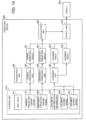
- Fig. 3 is a diagram (No. 1) for explaining the generation of the emergency prediction learned model in the first embodiment.
- a description will be given of a case where the emergency prediction learned model 200 is generated by means of learning.
- Gradient Boosting Decision Tree (GBDT), Long Short Term Memory (LSTM) or the like may be used in the learning.
- the learning generation unit 130 inputs the first learning data 111 to the normal prediction learned model 112. Accordingly, the normal prediction learned model 112 outputs the number of people at the first spot at a certain time. For example, when the first learning data 111 is information indicating the weather at the first spot at 8 o'clock, the learning generation unit 130 inputs the information indicating the weather at the first spot at 8 o'clock to the normal prediction learned model 112. Accordingly, the normal prediction learned model 112 outputs the number of people at the first spot at 8 o'clock.
- the learning generation unit 130 inputs the congestion information at the first spot at 9 o'clock to the normal prediction learned model 112. Accordingly, the normal prediction learned model 112 outputs the number of people at the first spot at 9 o'clock. Further, the normal prediction learned model 112 outputs a greater number of people since an event is ongoing at the first spot. Incidentally, the value outputted by the normal prediction learned model 112 is referred to also as a predictive value.
- Fig. 3 shows normal-time true values 113_1.
- the normal-time true values 113_1 are true values included in the true value information 113 and indicating the numbers of people in normal times at the first spot at a plurality of times.
- the learning generation unit 130 calculates an error by comparing the predictive value and the normal-time true value 113_1. For example, the learning generation unit 130 calculates the error by comparing the predictive value based on the information indicating the weather at the first spot at 8 o'clock and the true value indicating the number of people at the first spot at 8 o'clock included in the normal-time true values 113_1. As above, the learning generation unit 130 calculates the error by comparing the predictive value and the true value on the basis of the same time.
- the learning generation unit 130 calculates the numbers of people at the first spot at a plurality of times as a plurality of predictive values by using the first learning data 111 and the normal prediction learned model 112. Then, the learning generation unit 130 calculates a plurality of errors based on the normal-time true values 113_1 in the true value information 113 and the plurality of predictive values.
- the learning generation unit 130 generates new learning data 10 based on the plurality of errors. The generation of the new learning data 10 will be described in detail below.
- Fig. 4 is a diagram (No. 1) showing an example of a new learning data generation method in the first embodiment.
- Fig. 4 shows Data01 to Data04 as the first learning data 111.
- Data01 is information indicating the weather at the first spot at 8 o'clock.
- Data02 is information indicating the weather at the first spot at 8:30.
- Data03 is information indicating the weather at the first spot at 9 o'clock.
- Data04 is information indicating the weather at the first spot at 9:30.
- the learning generation unit 130 calculates errors w1 to w4 by comparing the four predictive values and the normal-time true values 113_1.
- the learning generation unit 130 calculates a proportion of each of the plurality of errors w1 to w4 in all the errors based on the errors w1 to w4. For example, the learning generation unit 130 calculates the proportion P1 of the error w1 by using expression (1).
- P 1 w 1 sum w 1 + w 2 + w 3 + w 4
- the learning generation unit 130 increases the number of pieces of data included in the first learning data 111 depending on the proportion.
- the increased data is data whose proportion is a great value.
- the data whose proportion is a great value is data whose error is great.
- the data whose error is great is data in emergency times.
- Fig. 4 indicates that the number of pieces of the data Data02 is increased.
- Data02 can be regarded as data in emergency times.
- Data01, Data03 and Data04 can be regarded as data in normal times.
- the learning generation unit 130 increases the number of pieces of data in emergency times included in the first learning data 111 depending on the proportion.
- the learning generation unit 130 generates the first learning data 111, in which the number of pieces of data in emergency times has been increased, as the new learning data 10.
- the learning generation unit 130 generates a normal-time covariate distribution based on the data in normal times included in the first learning data 111.
- Fig. 3 indicates an emergency prediction model 11. Parameters as initial values have been set to the emergency prediction model 11.
- the learning generation unit 130 inputs the new learning data 10 to the emergency prediction model 11.
- the emergency prediction model 11 is learned by using a large number of pieces of data in emergency times.
- the emergency prediction model 11 outputs the number of people in emergency times at the first spot at a certain time. Further, in cases where the first spot is a station, when information indicating at least one of the congestion information and the weather at the first spot at a certain time and information indicating at least one of the operation schedule information on the trains and the operation information on the trains are inputted thereto, the emergency prediction model 11 outputs the number of people in emergency times at the first spot at the certain time. Incidentally, the value outputted by the emergency prediction model 11 is referred to also as a predictive value.
- Fig. 3 indicates emergency-time true values 113_2.
- the emergency-time true values 113_2 are true values included in the true value information 113 and indicating the numbers of people in emergency times at the first spot at a plurality of times.
- the learning generation unit 130 calculates an error by comparing the predictive value and the emergency-time true value 113_2. For example, the learning generation unit 130 calculates the error by comparing the predictive value based on the information indicating the weather at the first spot at 9 o'clock and the true value indicating the number of people at the first spot at 9 o'clock included in the emergency-time true values 113_2. As above, the learning generation unit 130 calculates the error by comparing the predictive value and the true value on the basis of the same time. The learning generation unit 130 generates new learning data 12 based on the error. The generation of the new learning data 12 will be described in detail below.
- Fig. 5 is a diagram (No. 2) showing the example of the new learning data generation method in the first embodiment.
- Fig. 5 shows Data01 to Data04 as the new learning data 10.
- the new learning data 10 is inputted to the emergency prediction model 11. Accordingly, six predictive values are outputted.
- the learning generation unit 130 calculates errors w11 to w16 by comparing the six predictive values and the emergency-time true values 113_2.
- the learning generation unit 130 calculates the proportion of each of the plurality of errors w11 to w16 in all the errors based on the errors w11 to w16.
- the learning generation unit 130 increases the number of pieces of data included in the new learning data 10 depending on the proportion.
- the learning generation unit 130 generates the new learning data 12 by increasing the number of pieces of data included in the new learning data 10.
- the new learning data 12 is referred to also as learning information including the first learning data 111.
- the learning generation unit 130 generates an emergency-time covariate distribution based on the data in emergency times included in the new learning data 10.
- the learning generation unit 130 adjusts the parameters in the emergency prediction model 11. That is, since the emergency prediction model 11 forms a neural network, the learning generation unit 130 adjusts the parameters as weights used in the neural network.
- the learning generation unit 130 inputs the new learning data 12 to the normal prediction learned model 112. Then, the learning generation unit 130 generates the new learning data 10. The learning generation unit 130 inputs the generated new learning data 10 to the emergency prediction model 11. The learning generation unit 130 repeats the process of inputting learning data to the normal prediction learned model 112 and the emergency prediction model 11 until the error when the emergency prediction model 11 has been made to learn data in emergency times becomes less than or equal to the threshold value and the error converges. Then, when the error has converged, the emergency prediction learned model 200 is generated.
- the learning generation unit 130 generates the emergency prediction learned model 200 by using the emergency-time true values 113_2 in the true value information 113 and the new learning data 10.
- covariate distribution information 210 Information including the normal-time covariate distribution and the emergency-time covariate distribution is referred to as covariate distribution information 210.
- the learning generation unit 130 may also make the normal prediction learned model 112 perform relearning. In short, the learning generation unit 130 makes the normal prediction learned model 112 perform the relearning while making the emergency prediction model 11 perform the learning.
- the relearning will be explained below.
- Fig. 6 is a diagram for explaining the relearning in the first embodiment.
- the learning generation unit 130 calculates the number of people at the first spot at a certain time as the predictive value by using the data in normal times included in the first learning data 111 or the new learning data 12 and the normal prediction learned model 112.
- the learning generation unit 130 calculates the error between the normal-time true value 113_1 and the predictive value.
- the learning generation unit 130 adjusts parameters in the normal prediction learned model 112.
- the learning generation unit 130 adjusts the parameters as weights used in the neural network.
- the range is a range of small values.
- the learning generation unit 130 relearns the normal prediction learned model 112.
- the learning generation unit 130 is capable of reducing the error.
- the learning generation unit 130 is capable of increasing the prediction accuracy of the normal prediction learned model 112.
- Fig. 7 is a diagram (No. 2) for explaining the generation of the emergency prediction learned model in the first embodiment.
- the learning generation unit 130 inputs the first learning data 111 to the normal prediction learned model 112. Accordingly, the normal prediction learned model 112 outputs the number of people at the first spot at a certain time.
- the learning generation unit 130 calculates the error by comparing the predictive value and the normal-time true value 113_1.
- the learning generation unit 130 identifies data included in the first learning data 111 and corresponding to an error greater than or equal to a predetermined threshold value.
- the normal prediction learned model 112 has not learned data in emergency times, and thus the error becomes large when data in emergency times is inputted to the normal prediction learned model 112. Therefore, such data whose error between the predictive value and the normal-time true value 113_1 is greater than or equal to the threshold value can be regarded as data in emergency times.
- the identified data are data in emergency times.
- the learning generation unit 130 generates the identified data in emergency times as new learning data 21. Thus, all of the data included in the new learning data 21 are data in emergency times.
- the learning generation unit 130 identifies data in emergency times out of the first learning data 111 by using the first learning data 111, the normal prediction learned model 112, and the normal-time true values 113_1 in the true value information 113. Then, the learning generation unit 130 generates the identified data in emergency times as the new learning data 21.
- the learning generation unit 130 identifies data in normal times out of the first learning data 111 based on the new learning data 21 (i.e., the data in emergency times). In short, the learning generation unit 130 identifies the data in normal times by excluding the new learning data 21 from the first learning data 111. The learning generation unit 130 generates the normal-time covariate distribution based on the data in normal times. The learning generation unit 130 generates the emergency-time covariate distribution based on the new learning data 21 (i.e., the data in emergency times).
- the learning generation unit 130 inputs the new learning data 21 to the emergency prediction model 11.
- the emergency prediction model 11 outputs the number of people at the first spot at a certain time.
- the value outputted by the emergency prediction model 11 is referred to also as a predictive value.
- the learning generation unit 130 calculates the error by comparing the predictive value and the emergency-time true value 113_2.
- the learning generation unit 130 generates data included in the new learning data 21 and corresponding to an error greater than or equal to a predetermined threshold value as new learning data 22.
- data corresponding to an error greater than or equal to the threshold value are data in emergency times in a case where the learning has not been performed adequately.
- the learning generation unit 130 adjusts the parameters in the emergency prediction model 11.
- the learning generation unit 130 inputs the new learning data 22 to the emergency prediction model 11 in order to confirm that the prediction accuracy of the emergency prediction model 11 has increased.
- the learning generation unit 130 repeats the process of inputting learning data to the emergency prediction model 11 until the error when the learning of data in emergency times has been performed by the emergency prediction model 11 becomes less than the threshold value and the error converges. Then, when the error has converged, the emergency prediction learned model 200 is generated.
- the learning generation unit 130 generates the emergency prediction learned model 200 by using the new learning data 21 and the emergency-time true values 113_2 in the true value information 113.
- the covariate distribution information 210 Information including the normal-time covariate distribution and the emergency-time covariate distribution is referred to as the covariate distribution information 210.
- the learning methods of the emergency prediction model 11 in Figs. 3 , 6 and 7 have a characteristic in that the learning can be carried out without the need of putting a label indicating whether or not data is data in normal times or data in emergency times on the first learning data 111.
- the burden on a user for preparing the learning data can be lightened.
- the learning generation unit 130 generates a judgment learned model 220 that outputs information indicating whether input information is data in normal times or data in emergency times when information indicating at least one of the congestion information and the weather at the first spot at a certain time is inputted thereto, by using the first learning data 111. For example, when information indicating that the weather at the first spot at 10 o'clock is fine weather is inputted thereto, the judgment learned model 220 outputs information indicating that the input information is data in normal times. Further, for example, when information indicating that the weather at the first spot at 11 o'clock is torrential rain is inputted thereto, the judgment learned model 220 outputs information indicating that the input information is data in emergency times.
- the judgment learned model 220 is referred to also as a first judgment learned model.
- the learning generation unit 130 may generate a judgment learned model 220 that outputs information indicating whether input information, including information indicating at least one of the congestion information and the weather at the first spot at a certain time and the operation information, is data in normal times or data in emergency times when the information indicating at least one of the congestion information and the weather at the first spot at a certain time and the operation information are inputted thereto, by using the first learning data 111.
- the learning generation unit 130 may generate a judgment learned model 220 that outputs a probability that input information is data in normal times and a probability that the input information is data in emergency times when information indicating at least one of the congestion information and the weather at the first spot at a certain time is inputted thereto, by using the first learning data 111.
- the learning generation unit 130 may generate a judgment learned model 220 that outputs a probability that input information, including information indicating at least one of the congestion information and the weather at the first spot at a certain time and the operation information, is data in normal times and a probability that the input information is data in emergency times when the information indicating at least one of the congestion information and the weather at the first spot at a certain time and the operation information are inputted thereto, by using the first learning data 111.
- the learning generation unit 130 generates each judgment learned model 230, 231 that outputs information indicating whether input information is data in normal times or data in emergency times when information indicating at least one of the congestion information and the weather at a spot other than the first spot at a certain time (referred to also as second information, for example) is inputted thereto, by using the second learning data 114.
- the learning generation unit 130 generates the judgment learned model 230 that outputs information indicating whether input information is data in normal times or data in emergency times when information indicating at least one of the congestion information and the weather at Osaka at a certain time is inputted thereto, by using the second learning data 114.
- the learning generation unit 130 generates the judgment learned model 231 that outputs information indicating whether input information is data in normal times or data in emergency times when information indicating at least one of the congestion information and the weather at Nagoya at a certain time is inputted thereto, by using the second learning data 114.
- each of the judgment learned models 230 and 231 is referred to also as a second judgment learned model.
- the spot other than the first spot is desired to be a spot near to the first spot.
- each judgment learned model 230, 231 that outputs information indicating whether input information, including information indicating at least one of the congestion information and the weather at a spot other than the first spot at a certain time and the operation information, is data in normal times or data in emergency times when the information indicating at least one of the congestion information and the weather at a spot other than the first spot at a certain time and the operation information are inputted thereto, by using the second learning data 114.
- the learning generation unit 130 may generate each judgment learned model 230, 231 that outputs a probability that input information is data in normal times and a probability that the input information is data in emergency times when information indicating at least one of the congestion information and the weather at a spot other than the first spot at a certain time is inputted thereto, by using the second learning data 114.
- each judgment learned model 230, 231 that outputs a probability that input information, including information indicating at least one of the congestion information and the weather at a spot other than the first spot at a certain time and the operation information, is data in normal times and a probability that the input information is data in emergency times when the information indicating at least one of the congestion information and the weather at a spot other than the first spot at a certain time and the operation information are inputted thereto, by using the second learning data 114.
- the above description has been given of cases where two judgment learned models (i.e., the judgment learned models 230 and 231) are generated.
- the learning generation unit 130 may also be configured to generate one judgment learned model (e.g., the judgment learned model 230) .
- the learning device 100 generates the emergency prediction learned model 200, the covariate distribution information 210, the judgment learned model 220, the judgment learned model 230 and the judgment learned model 231. Further, in cases where the normal prediction learned model 112 has been relearned, the learning device 100 generates the relearned normal prediction learned model 112.
- the output unit 140 outputs information.
- the output unit 140 outputs the information to the storage unit 110.
- the output unit 140 outputs the information to an external device.
- the information is, for example, the normal prediction learned model 112, the emergency prediction learned model 200, the covariate distribution information 210, the judgment learned model 220, the judgment learned model 230 and the judgment learned model 231.
- the output unit 140 may output the relearned normal prediction learned model 112.
- the learning device 100 prepares the normal prediction learned model 112 and the emergency prediction learned model 200. As will be described later, high-accuracy predictions in normal times and in emergency times can be made by using the normal prediction learned model 112 and the emergency prediction learned model 200. Thus, thanks to the preparation of the normal prediction learned model 112 and the emergency prediction learned model 200, high-accuracy predictions in normal times and in emergency times can be made.
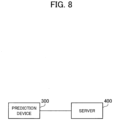
- Fig. 8 is a diagram showing a prediction system in the first embodiment.
- the prediction system includes a prediction device 300 and a server 400.
- the prediction device 300 executes a prediction method.
- the prediction device 300 includes a processor, a volatile storage device and a nonvolatile storage device. Further, the prediction device 300 may include a processing circuitry.
- the server 400 is a cloud server, for example.
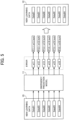
- Fig. 9 is a block diagram showing functions of the prediction device in the first embodiment.
- the prediction device 300 includes a storage unit 310, an acquisition unit 320, a normal prediction unit 330, an emergency prediction unit 340, a judgment unit 350, a calculation unit 360 and an output unit 370.
- the storage unit 310 may be implemented as a storage area reserved in the volatile storage device or the nonvolatile storage device included in the prediction device 300.
- Part or all of the acquisition unit 320, the normal prediction unit 330, the emergency prediction unit 340, the judgment unit 350, the calculation unit 360 and the output unit 370 may be implemented by the processing circuitry included in the prediction device 300. Further, part or all of the acquisition unit 320, the normal prediction unit 330, the emergency prediction unit 340, the judgment unit 350, the calculation unit 360 and the output unit 370 may be implemented as modules of a program executed by the processor included in the prediction device 300. For example, the program is referred to also as a prediction program. The prediction program has been recorded in a record medium, for example.
- the storage unit 310 may store real data 311, the normal prediction learned model 112, the emergency prediction learned model 200, the covariate distribution information 210 and the judgment learned model 220.
- the real data 311 is information indicating at least one of the weather at the first spot at a certain time and the congestion information as information regarding congestion. Further, in cases where the first spot is a station, the real data 311 may include the operation schedule information (i.e., train schedule) on the trains traveling through the station and the operation information on the trains traveling through the station.
- the operation schedule information i.e., train schedule
- the server 400 may store the real data 311, the normal prediction learned model 112, the emergency prediction learned model 200, the covariate distribution information 210 and the judgment learned model 220.
- the normal prediction learned model 112 stored in the storage unit 310 or the server 400 is the relearned learned model.
- the acquisition unit 320 acquires the real data 311, the normal prediction learned model 112, the emergency prediction learned model 200, the covariate distribution information 210 and the judgment learned model 220.
- the acquisition unit 320 acquires the real data 311, the normal prediction learned model 112, the emergency prediction learned model 200, the covariate distribution information 210 and the judgment learned model 220 from the storage unit 310.
- the acquisition unit 320 acquires the real data 311, the normal prediction learned model 112, the emergency prediction learned model 200, the covariate distribution information 210 and the judgment learned model 220 from the server 400.
- the normal prediction unit 330 predicts the number of people at the first spot at a time indicated by the real data 311 by using the real data 311 and the normal prediction learned model 112.
- the result of the prediction is referred to as a normal prediction result 331. That is, the normal prediction result 331 indicates the number of people in normal times.
- the emergency prediction unit 340 predicts the number of people at the first spot at a time indicated by the real data 311 by using the real data 311 and the emergency prediction learned model 200.
- the result of the prediction is referred to as an emergency prediction result 341. That is, the emergency prediction result 341 indicates the number of people in emergency times.
- the judgment unit 350 judges whether the real data 311 is data in normal times or data in emergency times by using the real data 311 and the judgment learned model 220.
- the result of the judgment is referred to as a judgment result 351.
- the judgment unit 350 It is also possible for the judgment unit 350 to judge whether the real data 311 is data in normal times or data in emergency times by using the real data 311, the covariate distribution information 210 and the judgment learned model 220. By use of the covariate distribution information 210, the judgment unit 350 is capable of making a high-accuracy judgment.
- the calculation unit 360 calculates the number of people at the first spot at a time indicated by the real data 311 by using the normal prediction result 331, the emergency prediction result 341 and the judgment result 351. For example, when the judgment result 351 indicates that the real data 311 is data in normal times, the calculation unit 360 calculates the result indicated by the normal prediction result 331 as the number of people at the first spot at the time indicated by the real data 311. This calculation may be considered as follows. The calculation unit 360 calculates the number of people at the first spot at the time indicated by the real data 311 by multiplying the normal prediction result 331 by "1" and multiplying the emergency prediction result 341 by "0". Further, for example, when the judgment result 351 indicates that the real data 311 is data in emergency times, the calculation unit 360 calculates the result indicated by the emergency prediction result 341 as the number of people at the first spot at the time indicated by the real data 311.
- the judgment learned model 220 outputs the probability that the input information is data in normal times and the probability that the input information is data in emergency times.
- the judgment unit 350 judges the probability that the real data 311 is data in normal times and the probability that the real data 311 is data in emergency times, by using the real data 311 and the judgment learned model 220. Then, the result of the judgment is referred to as the judgment result 351. It is also possible for the judgment unit 350 to judge the probability that the real data 311 is data in normal times and the probability that the real data 311 is data in emergency times, by using the real data 311, the covariate distribution information 210 and the judgment learned model 220.
- the calculation unit 360 calculates the number of people at the first spot at the time indicated by the real data 311 by using the normal prediction result 331, the emergency prediction result 341 and the judgment result 351.
- the judgment result 351 is assumed to indicate that the probability "80%" of being data in normal times and the probability "20%” of being data in emergency times.
- the calculation unit 360 calculates the number of people at the first spot at the time indicated by the real data 311 by using a weighted average. Specifically, the calculation unit 360 calculates the number of people by using expression (2).
- THE NUMBER OF PEOPLE NORMAL PREDICTION RESULT THE NUMBER OF PEOPLE ⁇ 0.8 + EMERGENCY PREDICTION RESULT THE NUMBER OF PEOPLE ⁇ 0.2 / 0.8 + 0.2
- the calculation unit 360 may calculate the number of people by using the expression (2).
- the output unit 370 outputs the result 500 of the calculation. For example, the output unit 370 outputs the result 500 to a display connected to the prediction device 300. Alternatively, for example, the output unit 370 outputs the result 500 to a different device.
- the prediction device 300 makes high-accuracy predictions in normal times and in emergency times by using the normal prediction learned model 112 and the emergency prediction learned model 200.
- the prediction device 300 is capable of making high-accuracy predictions in normal times and in emergency times.
- the server 400 may store the judgment learned models 230 and 231.
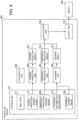
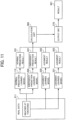
- Fig. 10 is a block diagram showing functions of a prediction device in the second embodiment.
- the storage unit 310 may store the judgment learned models 230 and 231.
- the acquisition unit 320 acquires the judgment learned models 230 and 231 instead of the judgment learned model 220.
- the acquisition unit 320 acquires the judgment learned models 230 and 231 from the storage unit 310.
- the acquisition unit 320 acquires the judgment learned models 230 and 231 from the server 400.
- the judgment unit 350 judges whether the real data 311 is data in normal times or data in emergency times by using the real data 311 and the judgment learned model 230.
- the result of the judgment is referred to as a judgment result 352. It is also possible for the judgment unit 350 to judge whether the real data 311 is data in normal times or data in emergency times by using the real data 311, the covariate distribution information 210 and the judgment learned model 230.
- the judgment unit 350 judges whether the real data 311 is data in normal times or data in emergency times by using the real data 311 and the judgment learned model 231.
- the result of the judgment is referred to as a judgment result 353. It is also possible for the judgment unit 350 to judge whether the real data 311 is data in normal times or data in emergency times by using the real data 311, the covariate distribution information 210 and the judgment learned model 231.
- the calculation unit 360 calculates the number of people at the first spot at the time indicated by the real data 311 by using the normal prediction result 331, the emergency prediction result 341 and the judgment results 352 and 353. For example, when the judgment results 352 and 353 indicate that the real data 311 is data in normal times, the calculation unit 360 calculates the result indicated by the normal prediction result 331 as the number of people at the first spot at the time indicated by the real data 311. Further, for example, when the judgment results 352 and 353 indicate that the real data 311 is data in emergency times, the calculation unit 360 calculates the result indicated by the emergency prediction result 341 as the number of people at the first spot at the time indicated by the real data 311.
- the calculation unit 360 judges that the probability that the real data 311 is data in normal times is "50 %" and the probability that the real data 311 is data in emergency times is "50 %”.
- the calculation unit 360 calculates the number of people at the first spot at the time indicated by the real data 311 by using the weighted average like the expression (2).
- each judgment learned model 230, 231 it is also possible for each judgment learned model 230, 231 to output the probability that the input information is data in normal times and the probability that the input information is data in emergency times.
- the judgment unit 350 judges the probability that the real data 311 is data in normal times and the probability that the real data 311 is data in emergency times, by using the real data 311 and the judgment learned model 230. Then, the result of the judgment is referred to as the judgment result 352.
- the judgment unit 350 judges the probability that the real data 311 is data in normal times and the probability that the real data 311 is data in emergency times, by using the real data 311 and the judgment learned model 231. Then, the result of the judgment is referred to as the judgment result 353.
- the calculation unit 360 calculates the probability that the real data 311 is data in normal times and the probability that the real data 311 is data in emergency times, by using the real data 311, the covariate distribution information 210 and the judgment learned models 230 and 231. Specifically, the calculation unit 360 calculates the probability that the real data 311 is data in normal times (e.g., 60 %) and the probability that the real data 311 is data in emergency times (e.g., 40 %) by using the real data 311 and the judgment learned model 230.
- the calculation unit 360 calculates the probability that the real data 311 is data in normal times (e.g., 60 %) and the probability that the real data 311 is data in emergency times (e.g., 40 %) by using the real data 311 and the judgment learned model 231.
- the calculation unit 360 calculates the probability that the real data 311 is data in normal times (e.g., 60 %) by using the normal-time covariate distribution included in the covariate distribution information 210 and the real data 311.
- the calculation unit 360 calculates the probability that the real data 311 is data in emergency times (e.g., 40 %) by using the emergency-time covariate distribution included in the covariate distribution information 210 and the real data 311.
- the calculation unit 360 calculates the probability that the real data 311 is data in normal times by using coefficients. For example, the calculation unit 360 calculates the probability that the real data 311 is data in normal times by using expression (3).
- a coefficient for the output result of the judgment learned model 230 is assumed to be 0.4.
- a coefficient for the output result of the judgment learned model 231 is assumed to be 0.2.
- a coefficient for the result when using the normal-time covariate distribution is assumed to be 0.4.
- 0.6 0.6 ⁇ 0.4 + 0.6 + 0.2 ⁇ 0.6 + 0.4
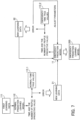
- Fig. 11 is a diagram showing a concrete example of the second embodiment.
- the real data 311 includes information regarding the weather at Yokohama at 7 o'clock.
- the normal prediction unit 330 predicts the number of people at Yokohama at 7 o'clock by using the information regarding the weather at Yokohama at 7 o'clock and the normal prediction learned model 112. The result of the prediction is the normal prediction result 331.
- the emergency prediction unit 340 predicts the number of people at Yokohama at 7 o'clock by using the information regarding the weather at Yokohama at 7 o'clock and the emergency prediction learned model 200. The result of the prediction is the emergency prediction result 341.
- the judgment learned model 230 is assumed to be a learned model that outputs information indicating whether input information is data in normal times or data in emergency times when information regarding the weather at Osaka at a certain time is inputted thereto.
- the judgment learned model 231 is assumed to be a learned model that outputs information indicating whether input information is data in normal times or data in emergency times when information regarding the weather at Nagoya at a certain time is inputted thereto.
- the judgment unit 350 judges whether the information regarding the weather at Yokohama at 7 o'clock is data in normal times or data in emergency times by using the information regarding the weather at Yokohama at 7 o'clock and the judgment learned model 230. The result of the judgment is the judgment result 352.
- the judgment unit 350 judges whether the information regarding the weather at Yokohama at 7 o'clock is data in normal times or data in emergency times by using the information regarding the weather at Yokohama at 7 o'clock and the judgment learned model 231. The result of the judgment is the judgment result 353.
- the calculation unit 360 calculates the number of people at Yokohama at 7 o'clock by using the normal prediction result 331, the emergency prediction result 341, and the judgment results 352 and 353.
- the output unit 370 outputs the result 501 of the calculation.
- the judgment learned model 230 is a learned model that outputs information indicating whether the information regarding the weather at Osaka at a certain time is data in normal times or data in emergency times. Even so, the judgment unit 350 judges whether the information regarding the weather at Yokohama at 7 o'clock is data in normal times or data in emergency times by using the judgment learned model 230.
- the reason for making the judgment by using the judgment learned model 230 is as follows. The difference between the judgment learned model 220 and the judgment learned model 230 is the spot indicated by the learning data at the time of the learning. The contents of the judgment do not change even when the spot is different.
- the judgment learned model 220 when information indicating that the weather at Yokohama is fine weather is inputted to the judgment learned model 220, the judgment learned model 220 outputs information indicating that the real data 311 is data in normal times.
- the judgment learned model 230 outputs information indicating that the real data 311 is data in normal times.
- the contents of the judgment do not change.
- the judgment unit 350 uses the judgment learned model 230.
- the reason why the judgment unit 350 uses the judgment learned model 231 is also the same.
- the judgment unit 350 is capable of judging the information regarding the weather at Yokohama without using the judgment learned model 220 as in the first embodiment.
Landscapes
- Engineering & Computer Science (AREA)
- Theoretical Computer Science (AREA)
- Business, Economics & Management (AREA)
- Physics & Mathematics (AREA)
- General Physics & Mathematics (AREA)
- Human Resources & Organizations (AREA)
- Strategic Management (AREA)
- Economics (AREA)
- Data Mining & Analysis (AREA)
- Tourism & Hospitality (AREA)
- Marketing (AREA)
- General Business, Economics & Management (AREA)
- Evolutionary Computation (AREA)
- General Engineering & Computer Science (AREA)
- Software Systems (AREA)
- Artificial Intelligence (AREA)
- Quality & Reliability (AREA)
- General Health & Medical Sciences (AREA)
- Entrepreneurship & Innovation (AREA)
- Game Theory and Decision Science (AREA)
- Operations Research (AREA)
- Health & Medical Sciences (AREA)
- Development Economics (AREA)
- Life Sciences & Earth Sciences (AREA)
- Computer Vision & Pattern Recognition (AREA)
- Mathematical Physics (AREA)
- Computing Systems (AREA)
- Primary Health Care (AREA)
- Biophysics (AREA)
- Molecular Biology (AREA)
- Computational Linguistics (AREA)
- Biomedical Technology (AREA)
- Medical Informatics (AREA)
- Bioinformatics & Cheminformatics (AREA)
- Bioinformatics & Computational Biology (AREA)
- Evolutionary Biology (AREA)
- Management, Administration, Business Operations System, And Electronic Commerce (AREA)
Abstract
Description
- The present disclosure relates to a learning device, a prediction device, a prediction system, a learning method, a prediction method and a prediction program.
- There has been known a method of making a prediction by using a learned model. For example, Patent Reference 1 proposes a learning method for a model that makes a prediction.
- Patent Reference 1:
Japanese Patent Application Publication No. 2019-125048 - Incidentally, learning data is necessary for generating a learned model. When it is desired to generate a learned model for making a prediction in normal times, data in normal times are prepared as the learning data. By using the learning data, the learned model for making the prediction in normal times is generated.
- There is a case where a prediction needs to be made even in a time of emergency. In such the case, data in emergency times are also prepared as the learning data. When a large amount of data in emergency times have been prepared, prediction accuracy in normal times with the generated learned model is low. On the other hand, when a small amount of data in emergency times have been prepared, the prediction accuracy in emergency times with the generated learned model is low. As above, how to make high-accuracy predictions in normal times and in emergency times is an important issue.
- An object of the present disclosure is to make it possible to make high-accuracy predictions in normal times and in emergency times.
- A learning device according to an aspect of the present disclosure is provided. The learning device includes an acquisition unit that acquires first learning data as information indicating at least one of weather at a first spot at a plurality of times and congestion information as information regarding congestion, a normal prediction learned model that outputs a number of people in normal times at the first spot at a certain time when first information indicating at least one of the congestion information and the weather at the first spot at the certain time is inputted thereto, and true value information including true values indicating the numbers of people in normal times at the first spot at a plurality of times and true values indicating the numbers of people in emergency times at the first spot at a plurality of times, a learning generation unit that generates an emergency prediction learned model that outputs the number of people in emergency times at the first spot at the certain time when the first information is inputted thereto by using the first learning data, the normal prediction learned model and the true value information, and an output unit that outputs the normal prediction learned model and the emergency prediction learned model.
- According to the present disclosure, high-accuracy predictions in normal times and in emergency times can be made.
-
-
Fig. 1 is a diagram showing hardware included in a learning device in a first embodiment. -
Fig. 2 is a block diagram showing functions of the learning device in the first embodiment. -
Fig. 3 is a diagram (No. 1) for explaining a generation of an emergency prediction learned model in the first embodiment. -
Fig. 4 is a diagram (No. 1) showing an example of a new learning data generation method in the first embodiment. -
Fig. 5 is a diagram (No. 2) showing the example of the new learning data generation method in the first embodiment. -
Fig. 6 is a diagram for explaining relearning in the first embodiment. -
Fig. 7 is a diagram (No. 2) for explaining the generation of the emergency prediction learned model in the first embodiment. -
Fig. 8 is a diagram showing a prediction system in the first embodiment. -
Fig. 9 is a block diagram showing functions of a prediction device in the first embodiment. -
Fig. 10 is a block diagram showing functions of a prediction device in a second embodiment. -
Fig. 11 is a diagram showing a concrete example of the second embodiment. - Embodiments will be described below with reference to the drawings. The following embodiments are just examples and a variety of modifications are possible within the scope of the present disclosure.
-
Fig. 1 is a diagram showing hardware included in a learning device in a first embodiment. Thelearning device 100 executes a learning method. Thelearning device 100 includes aprocessor 101, avolatile storage device 102 and anonvolatile storage device 103. - The
processor 101 controls the whole of thelearning device 100. Theprocessor 101 is a Central Processing Unit (CPU), a Field Programmable Gate Array (FPGA) or the like, for example. Theprocessor 101 can also be a multiprocessor. Further, thelearning device 100 may include a processing circuitry. - The
volatile storage device 102 is main storage of thelearning device 100. Thevolatile storage device 102 is a RAM (Random Access Memory), for example. Thenonvolatile storage device 103 is auxiliary storage of thelearning device 100. Thenonvolatile storage device 103 is an HDD (Hard Disk Drive) or an SSD (Solid State Drive), for example. - Next, functions of the
learning device 100 will be described below. -
Fig. 2 is a block diagram showing the functions of the learning device in the first embodiment. Thelearning device 100 includes astorage unit 110, anacquisition unit 120, alearning generation unit 130 and anoutput unit 140. - The
storage unit 110 may be implemented as a storage area reserved in thevolatile storage device 102 or thenonvolatile storage device 103. - Part or all of the
acquisition unit 120, thelearning generation unit 130 and theoutput unit 140 may be implemented by the processing circuitry. Further, part or all of theacquisition unit 120, thelearning generation unit 130 and theoutput unit 140 may be implemented as modules of a program executed by theprocessor 101. For example, the program executed by theprocessor 101 is referred to also as a learning program. The learning program has been recorded in a record medium, for example. - The
storage unit 110 may storefirst learning data 111, a normal prediction learnedmodel 112,true value information 113 andsecond learning data 114. - The
first learning data 111 is information indicating at least one of weather at a first spot at a plurality of times and congestion information as information regarding congestion. For example, the first spot is a certain station. The weather is fine weather, cloudy weather, rain, typhoon, torrential rain, or the like. Incidentally, fine weather, cloudy weather and rain are normal weather. Typhoon and torrential rain are emergency weather. The congestion information is information indicating whether or not an event is ongoing at the first spot or in the vicinity of the first spot. The congestion information when no event is ongoing represents normality. The congestion information when an event is ongoing represents emergency. Incidentally, in cases where the first spot is a station, for example, the event is an event held in the station or an event held in the vicinity of the station (e.g., soccer or baseball). Further, in cases where the first spot is a station, thefirst learning data 111 can include operation schedule information (i.e., train schedule) on trains traveling through the station and operation information on the trains traveling through the station. Incidentally, the operation information on the trains is information indicating whether an accident (e.g., derailment accident) has occurred or not, for example. Then, the operation information when no accident has occurred represents normality. The operation information when an accident has occurred represents emergency. Furthermore, thefirst learning data 111 may also be generated by a user. - When information indicating at least one of the congestion information and the weather at the first spot at a certain time (referred to also as first information, for example) is inputted thereto, the normal prediction learned
model 112 outputs the number of people in normal times at the first spot at the certain time. Further, in cases where the first spot is a station, when information indicating at least one of the congestion information and the weather at the first spot at a certain time and information indicating at least one of the operation schedule information on the trains and the operation information on the trains are inputted thereto, the normal prediction learnedmodel 112 outputs the number of people in normal times at the first spot at the certain time. - The
true value information 113 includes true values indicating the numbers of people in normal times at the first spot at a plurality of times and true values indicating the numbers of people in emergency times at the first spot at a plurality of times. Incidentally, the true values may be referred to also as learning true values. - The
second learning data 114 is information indicating at least one of the congestion information and the weather at a spot other than the first spot at a plurality of times. For example, in cases where the first spot is Yokohama, the spot other than the first spot can be Osaka, Nagoya or the like. In cases where the spot other than the first spot is a station, thesecond learning data 114 can include the operation information on trains traveling through the station. - The
acquisition unit 120 acquires thefirst learning data 111, the normal prediction learnedmodel 112, thetrue value information 113 and thesecond learning data 114. For example, theacquisition unit 120 acquires thefirst learning data 111, the normal prediction learnedmodel 112, thetrue value information 113 and thesecond learning data 114 from thestorage unit 110. Alternatively, for example, theacquisition unit 120 acquires thefirst learning data 111, the normal prediction learnedmodel 112, thetrue value information 113 and thesecond learning data 114 from an external device. - The
learning generation unit 130 generates an emergency prediction learnedmodel 200 by using thefirst learning data 111, the normal prediction learnedmodel 112 and thetrue value information 113. When information indicating at least one of the congestion information and the weather at the first spot at a certain time is inputted thereto, the emergency prediction learnedmodel 200 outputs the number of people in emergency times at the first spot at the certain time. Further, in cases where the first spot is a station, when information indicating at least one of the congestion information and the weather at the first spot at a certain time and information indicating at least one of the operation schedule information on the trains and the operation information on the trains are inputted thereto, the emergency prediction learnedmodel 200 outputs the number of people in emergency times at the first spot at the certain time. - Next, the generation of the emergency prediction learned model will be explained in detail below.
-
Fig. 3 is a diagram (No. 1) for explaining the generation of the emergency prediction learned model in the first embodiment. Referring toFig. 3 , a description will be given of a case where the emergency prediction learnedmodel 200 is generated by means of learning. Gradient Boosting Decision Tree (GBDT), Long Short Term Memory (LSTM) or the like may be used in the learning. - The
learning generation unit 130 inputs thefirst learning data 111 to the normal prediction learnedmodel 112. Accordingly, the normal prediction learnedmodel 112 outputs the number of people at the first spot at a certain time. For example, when thefirst learning data 111 is information indicating the weather at the first spot at 8 o'clock, thelearning generation unit 130 inputs the information indicating the weather at the first spot at 8 o'clock to the normal prediction learnedmodel 112. Accordingly, the normal prediction learnedmodel 112 outputs the number of people at the first spot at 8 o'clock. Further, for example, when thefirst learning data 111 is the congestion information at the first spot at 9 o'clock and the congestion information indicates that an event is ongoing at the first spot, thelearning generation unit 130 inputs the congestion information at the first spot at 9 o'clock to the normal prediction learnedmodel 112. Accordingly, the normal prediction learnedmodel 112 outputs the number of people at the first spot at 9 o'clock. Further, the normal prediction learnedmodel 112 outputs a greater number of people since an event is ongoing at the first spot. Incidentally, the value outputted by the normal prediction learnedmodel 112 is referred to also as a predictive value. -
Fig. 3 shows normal-time true values 113_1. The normal-time true values 113_1 are true values included in thetrue value information 113 and indicating the numbers of people in normal times at the first spot at a plurality of times. - The
learning generation unit 130 calculates an error by comparing the predictive value and the normal-time true value 113_1. For example, thelearning generation unit 130 calculates the error by comparing the predictive value based on the information indicating the weather at the first spot at 8 o'clock and the true value indicating the number of people at the first spot at 8 o'clock included in the normal-time true values 113_1. As above, thelearning generation unit 130 calculates the error by comparing the predictive value and the true value on the basis of the same time. - As above, the
learning generation unit 130 calculates the numbers of people at the first spot at a plurality of times as a plurality of predictive values by using thefirst learning data 111 and the normal prediction learnedmodel 112. Then, thelearning generation unit 130 calculates a plurality of errors based on the normal-time true values 113_1 in thetrue value information 113 and the plurality of predictive values. - The
learning generation unit 130 generatesnew learning data 10 based on the plurality of errors. The generation of thenew learning data 10 will be described in detail below. -
Fig. 4 is a diagram (No. 1) showing an example of a new learning data generation method in the first embodiment.Fig. 4 shows Data01 to Data04 as thefirst learning data 111. For example, Data01 is information indicating the weather at the first spot at 8 o'clock. For example, Data02 is information indicating the weather at the first spot at 8:30. For example, Data03 is information indicating the weather at the first spot at 9 o'clock. For example, Data04 is information indicating the weather at the first spot at 9:30. - As explained above, Data01 to Data04 are inputted to the normal prediction learned
model 112. Accordingly, four predictive values are outputted. Thelearning generation unit 130 calculates errors w1 to w4 by comparing the four predictive values and the normal-time true values 113_1. Thelearning generation unit 130 calculates a proportion of each of the plurality of errors w1 to w4 in all the errors based on the errors w1 to w4. For example, thelearning generation unit 130 calculates the proportion P1 of the error w1 by using expression (1).
- The
learning generation unit 130 increases the number of pieces of data included in thefirst learning data 111 depending on the proportion. Here, the increased data is data whose proportion is a great value. The data whose proportion is a great value is data whose error is great. The data whose error is great is data in emergency times.Fig. 4 indicates that the number of pieces of the data Data02 is increased. Thus, Data02 can be regarded as data in emergency times. Then, Data01, Data03 and Data04 can be regarded as data in normal times. - As above, the
learning generation unit 130 increases the number of pieces of data in emergency times included in thefirst learning data 111 depending on the proportion. Thelearning generation unit 130 generates thefirst learning data 111, in which the number of pieces of data in emergency times has been increased, as thenew learning data 10. - Further, the
learning generation unit 130 generates a normal-time covariate distribution based on the data in normal times included in thefirst learning data 111. - Returning to
Fig. 3 , the explanation of the generation of the emergency prediction learned model is continued. -
Fig. 3 indicates anemergency prediction model 11. Parameters as initial values have been set to theemergency prediction model 11. - The
learning generation unit 130 inputs thenew learning data 10 to theemergency prediction model 11. Here, by inputting thenew learning data 10 to theemergency prediction model 11, theemergency prediction model 11 is learned by using a large number of pieces of data in emergency times. - The
emergency prediction model 11 outputs the number of people in emergency times at the first spot at a certain time. Further, in cases where the first spot is a station, when information indicating at least one of the congestion information and the weather at the first spot at a certain time and information indicating at least one of the operation schedule information on the trains and the operation information on the trains are inputted thereto, theemergency prediction model 11 outputs the number of people in emergency times at the first spot at the certain time. Incidentally, the value outputted by theemergency prediction model 11 is referred to also as a predictive value. -
Fig. 3 indicates emergency-time true values 113_2. The emergency-time true values 113_2 are true values included in thetrue value information 113 and indicating the numbers of people in emergency times at the first spot at a plurality of times. - The
learning generation unit 130 calculates an error by comparing the predictive value and the emergency-time true value 113_2. For example, thelearning generation unit 130 calculates the error by comparing the predictive value based on the information indicating the weather at the first spot at 9 o'clock and the true value indicating the number of people at the first spot at 9 o'clock included in the emergency-time true values 113_2. As above, thelearning generation unit 130 calculates the error by comparing the predictive value and the true value on the basis of the same time. Thelearning generation unit 130 generatesnew learning data 12 based on the error. The generation of thenew learning data 12 will be described in detail below. -
Fig. 5 is a diagram (No. 2) showing the example of the new learning data generation method in the first embodiment.Fig. 5 shows Data01 to Data04 as thenew learning data 10. As explained earlier, thenew learning data 10 is inputted to theemergency prediction model 11. Accordingly, six predictive values are outputted. Thelearning generation unit 130 calculates errors w11 to w16 by comparing the six predictive values and the emergency-time true values 113_2. Thelearning generation unit 130 calculates the proportion of each of the plurality of errors w11 to w16 in all the errors based on the errors w11 to w16. - The
learning generation unit 130 increases the number of pieces of data included in thenew learning data 10 depending on the proportion. Thelearning generation unit 130 generates thenew learning data 12 by increasing the number of pieces of data included in thenew learning data 10. Here, thenew learning data 12 is referred to also as learning information including thefirst learning data 111. - Further, the
learning generation unit 130 generates an emergency-time covariate distribution based on the data in emergency times included in thenew learning data 10. - Returning to
Fig. 3 , the explanation of the generation of the emergency prediction learned model is continued. - If the error when the
emergency prediction model 11 has been made to perform the learning by using data in emergency times is greater than a predetermined threshold value, thelearning generation unit 130 adjusts the parameters in theemergency prediction model 11. That is, since theemergency prediction model 11 forms a neural network, thelearning generation unit 130 adjusts the parameters as weights used in the neural network. - The
learning generation unit 130 inputs thenew learning data 12 to the normal prediction learnedmodel 112. Then, thelearning generation unit 130 generates thenew learning data 10. Thelearning generation unit 130 inputs the generatednew learning data 10 to theemergency prediction model 11. Thelearning generation unit 130 repeats the process of inputting learning data to the normal prediction learnedmodel 112 and theemergency prediction model 11 until the error when theemergency prediction model 11 has been made to learn data in emergency times becomes less than or equal to the threshold value and the error converges. Then, when the error has converged, the emergency prediction learnedmodel 200 is generated. - As above, the
learning generation unit 130 generates the emergency prediction learnedmodel 200 by using the emergency-time true values 113_2 in thetrue value information 113 and thenew learning data 10. - It has been described above that the normal-time covariate distribution and the emergency-time covariate distribution are generated. Information including the normal-time covariate distribution and the emergency-time covariate distribution is referred to as
covariate distribution information 210. - The above explanation of
Fig. 3 has been given of the case where theemergency prediction model 11 is learned. Thelearning generation unit 130 may also make the normal prediction learnedmodel 112 perform relearning. In short, thelearning generation unit 130 makes the normal prediction learnedmodel 112 perform the relearning while making theemergency prediction model 11 perform the learning. The relearning will be explained below. -
Fig. 6 is a diagram for explaining the relearning in the first embodiment. Thelearning generation unit 130 calculates the number of people at the first spot at a certain time as the predictive value by using the data in normal times included in thefirst learning data 111 or thenew learning data 12 and the normal prediction learnedmodel 112. Thelearning generation unit 130 calculates the error between the normal-time true value 113_1 and the predictive value. When the calculated error is included in a predetermined range, thelearning generation unit 130 adjusts parameters in the normal prediction learnedmodel 112. In short, since the normal prediction learnedmodel 112 forms a neural network, thelearning generation unit 130 adjusts the parameters as weights used in the neural network. Incidentally, the range is a range of small values. - As above, the
learning generation unit 130 relearns the normal prediction learnedmodel 112. By the relearning, thelearning generation unit 130 is capable of reducing the error. In other words, thelearning generation unit 130 is capable of increasing the prediction accuracy of the normal prediction learnedmodel 112. - The above description with reference to
Figs. 3 and6 has been given of the case where the process of inputting learning data to the normal prediction learnedmodel 112 and theemergency prediction model 11 is repeated. A method different from that ofFigs. 3 and6 will be described below. -
Fig. 7 is a diagram (No. 2) for explaining the generation of the emergency prediction learned model in the first embodiment. - The
learning generation unit 130 inputs thefirst learning data 111 to the normal prediction learnedmodel 112. Accordingly, the normal prediction learnedmodel 112 outputs the number of people at the first spot at a certain time. - The
learning generation unit 130 calculates the error by comparing the predictive value and the normal-time true value 113_1. Thelearning generation unit 130 identifies data included in thefirst learning data 111 and corresponding to an error greater than or equal to a predetermined threshold value. Here, the normal prediction learnedmodel 112 has not learned data in emergency times, and thus the error becomes large when data in emergency times is inputted to the normal prediction learnedmodel 112. Therefore, such data whose error between the predictive value and the normal-time true value 113_1 is greater than or equal to the threshold value can be regarded as data in emergency times. Thus, the identified data are data in emergency times. Thelearning generation unit 130 generates the identified data in emergency times asnew learning data 21. Thus, all of the data included in thenew learning data 21 are data in emergency times. - As above, the
learning generation unit 130 identifies data in emergency times out of thefirst learning data 111 by using thefirst learning data 111, the normal prediction learnedmodel 112, and the normal-time true values 113_1 in thetrue value information 113. Then, thelearning generation unit 130 generates the identified data in emergency times as thenew learning data 21. - The
learning generation unit 130 identifies data in normal times out of thefirst learning data 111 based on the new learning data 21 (i.e., the data in emergency times). In short, thelearning generation unit 130 identifies the data in normal times by excluding thenew learning data 21 from thefirst learning data 111. Thelearning generation unit 130 generates the normal-time covariate distribution based on the data in normal times. Thelearning generation unit 130 generates the emergency-time covariate distribution based on the new learning data 21 (i.e., the data in emergency times). - The
learning generation unit 130 inputs thenew learning data 21 to theemergency prediction model 11. Theemergency prediction model 11 outputs the number of people at the first spot at a certain time. Incidentally, the value outputted by theemergency prediction model 11 is referred to also as a predictive value. - The
learning generation unit 130 calculates the error by comparing the predictive value and the emergency-time true value 113_2. Thelearning generation unit 130 generates data included in thenew learning data 21 and corresponding to an error greater than or equal to a predetermined threshold value asnew learning data 22. Here, such data corresponding to an error greater than or equal to the threshold value are data in emergency times in a case where the learning has not been performed adequately. - Further, if the error when the
emergency prediction model 11 has been made to perform the learning by using data in emergency times is greater than or equal to the threshold value, thelearning generation unit 130 adjusts the parameters in theemergency prediction model 11. - Since the parameters in the
emergency prediction model 11 have been adjusted, thelearning generation unit 130 inputs thenew learning data 22 to theemergency prediction model 11 in order to confirm that the prediction accuracy of theemergency prediction model 11 has increased. Thelearning generation unit 130 repeats the process of inputting learning data to theemergency prediction model 11 until the error when the learning of data in emergency times has been performed by theemergency prediction model 11 becomes less than the threshold value and the error converges. Then, when the error has converged, the emergency prediction learnedmodel 200 is generated. - As above, the
learning generation unit 130 generates the emergency prediction learnedmodel 200 by using thenew learning data 21 and the emergency-time true values 113_2 in thetrue value information 113. - It has been described above that the normal-time covariate distribution and the emergency-time covariate distribution are generated. Information including the normal-time covariate distribution and the emergency-time covariate distribution is referred to as the
covariate distribution information 210. - The learning methods of the
emergency prediction model 11 inFigs. 3 ,6 and7 have a characteristic in that the learning can be carried out without the need of putting a label indicating whether or not data is data in normal times or data in emergency times on thefirst learning data 111. Thus, by using the learning methods, the burden on a user for preparing the learning data can be lightened. - Returning to
Fig. 2 , the functions of thelearning generation unit 130 will be described further. - The
learning generation unit 130 generates a judgment learnedmodel 220 that outputs information indicating whether input information is data in normal times or data in emergency times when information indicating at least one of the congestion information and the weather at the first spot at a certain time is inputted thereto, by using thefirst learning data 111. For example, when information indicating that the weather at the first spot at 10 o'clock is fine weather is inputted thereto, the judgment learnedmodel 220 outputs information indicating that the input information is data in normal times. Further, for example, when information indicating that the weather at the first spot at 11 o'clock is torrential rain is inputted thereto, the judgment learnedmodel 220 outputs information indicating that the input information is data in emergency times. Here, the judgment learnedmodel 220 is referred to also as a first judgment learned model. - It is also possible for the
learning generation unit 130 to generate a judgment learnedmodel 220 that outputs information indicating whether input information, including information indicating at least one of the congestion information and the weather at the first spot at a certain time and the operation information, is data in normal times or data in emergency times when the information indicating at least one of the congestion information and the weather at the first spot at a certain time and the operation information are inputted thereto, by using thefirst learning data 111. - Further, it is also possible for the
learning generation unit 130 to generate a judgment learnedmodel 220 that outputs a probability that input information is data in normal times and a probability that the input information is data in emergency times when information indicating at least one of the congestion information and the weather at the first spot at a certain time is inputted thereto, by using thefirst learning data 111. - Furthermore, it is also possible for the
learning generation unit 130 to generate a judgment learnedmodel 220 that outputs a probability that input information, including information indicating at least one of the congestion information and the weather at the first spot at a certain time and the operation information, is data in normal times and a probability that the input information is data in emergency times when the information indicating at least one of the congestion information and the weather at the first spot at a certain time and the operation information are inputted thereto, by using thefirst learning data 111. - The
learning generation unit 130 generates each judgment learnedmodel second learning data 114. For example, thelearning generation unit 130 generates the judgment learnedmodel 230 that outputs information indicating whether input information is data in normal times or data in emergency times when information indicating at least one of the congestion information and the weather at Osaka at a certain time is inputted thereto, by using thesecond learning data 114. Further, for example, thelearning generation unit 130 generates the judgment learnedmodel 231 that outputs information indicating whether input information is data in normal times or data in emergency times when information indicating at least one of the congestion information and the weather at Nagoya at a certain time is inputted thereto, by using thesecond learning data 114. Here, each of the judgment learnedmodels - Incidentally, the spot other than the first spot is desired to be a spot near to the first spot.
- It is also possible for the
learning generation unit 130 to generate each judgment learnedmodel second learning data 114. - Further, it is also possible for the
learning generation unit 130 to generate each judgment learnedmodel second learning data 114. - Furthermore, it is also possible for the
learning generation unit 130 to generate each judgment learnedmodel second learning data 114. Incidentally, the above description has been given of cases where two judgment learned models (i.e., the judgment learnedmodels 230 and 231) are generated. Thelearning generation unit 130 may also be configured to generate one judgment learned model (e.g., the judgment learned model 230) . - As shown in
Fig. 2 , thelearning device 100 generates the emergency prediction learnedmodel 200, thecovariate distribution information 210, the judgment learnedmodel 220, the judgment learnedmodel 230 and the judgment learnedmodel 231. Further, in cases where the normal prediction learnedmodel 112 has been relearned, thelearning device 100 generates the relearned normal prediction learnedmodel 112. - The
output unit 140 outputs information. For example, theoutput unit 140 outputs the information to thestorage unit 110. For example, theoutput unit 140 outputs the information to an external device. Incidentally, the information is, for example, the normal prediction learnedmodel 112, the emergency prediction learnedmodel 200, thecovariate distribution information 210, the judgment learnedmodel 220, the judgment learnedmodel 230 and the judgment learnedmodel 231. Theoutput unit 140 may output the relearned normal prediction learnedmodel 112. - According to the learning phase, the
learning device 100 prepares the normal prediction learnedmodel 112 and the emergency prediction learnedmodel 200. As will be described later, high-accuracy predictions in normal times and in emergency times can be made by using the normal prediction learnedmodel 112 and the emergency prediction learnedmodel 200. Thus, thanks to the preparation of the normal prediction learnedmodel 112 and the emergency prediction learnedmodel 200, high-accuracy predictions in normal times and in emergency times can be made. - Next, a utilization phase will be described below.
-
Fig. 8 is a diagram showing a prediction system in the first embodiment. The prediction system includes aprediction device 300 and aserver 400. Theprediction device 300 executes a prediction method. Theprediction device 300 includes a processor, a volatile storage device and a nonvolatile storage device. Further, theprediction device 300 may include a processing circuitry. Theserver 400 is a cloud server, for example. -
Fig. 9 is a block diagram showing functions of the prediction device in the first embodiment. Theprediction device 300 includes astorage unit 310, anacquisition unit 320, anormal prediction unit 330, anemergency prediction unit 340, ajudgment unit 350, acalculation unit 360 and anoutput unit 370. - The
storage unit 310 may be implemented as a storage area reserved in the volatile storage device or the nonvolatile storage device included in theprediction device 300. - Part or all of the
acquisition unit 320, thenormal prediction unit 330, theemergency prediction unit 340, thejudgment unit 350, thecalculation unit 360 and theoutput unit 370 may be implemented by the processing circuitry included in theprediction device 300. Further, part or all of theacquisition unit 320, thenormal prediction unit 330, theemergency prediction unit 340, thejudgment unit 350, thecalculation unit 360 and theoutput unit 370 may be implemented as modules of a program executed by the processor included in theprediction device 300. For example, the program is referred to also as a prediction program. The prediction program has been recorded in a record medium, for example. - The
storage unit 310 may storereal data 311, the normal prediction learnedmodel 112, the emergency prediction learnedmodel 200, thecovariate distribution information 210 and the judgment learnedmodel 220. - The
real data 311 is information indicating at least one of the weather at the first spot at a certain time and the congestion information as information regarding congestion. Further, in cases where the first spot is a station, thereal data 311 may include the operation schedule information (i.e., train schedule) on the trains traveling through the station and the operation information on the trains traveling through the station. - Here, the
server 400 may store thereal data 311, the normal prediction learnedmodel 112, the emergency prediction learnedmodel 200, thecovariate distribution information 210 and the judgment learnedmodel 220. - Incidentally, in cases where the normal prediction learned
model 112 has been relearned by thelearning device 100, the normal prediction learnedmodel 112 stored in thestorage unit 310 or theserver 400 is the relearned learned model. - The
acquisition unit 320 acquires thereal data 311, the normal prediction learnedmodel 112, the emergency prediction learnedmodel 200, thecovariate distribution information 210 and the judgment learnedmodel 220. For example, theacquisition unit 320 acquires thereal data 311, the normal prediction learnedmodel 112, the emergency prediction learnedmodel 200, thecovariate distribution information 210 and the judgment learnedmodel 220 from thestorage unit 310. Alternatively, for example, theacquisition unit 320 acquires thereal data 311, the normal prediction learnedmodel 112, the emergency prediction learnedmodel 200, thecovariate distribution information 210 and the judgment learnedmodel 220 from theserver 400. - The
normal prediction unit 330 predicts the number of people at the first spot at a time indicated by thereal data 311 by using thereal data 311 and the normal prediction learnedmodel 112. The result of the prediction is referred to as anormal prediction result 331. That is, thenormal prediction result 331 indicates the number of people in normal times. - The
emergency prediction unit 340 predicts the number of people at the first spot at a time indicated by thereal data 311 by using thereal data 311 and the emergency prediction learnedmodel 200. The result of the prediction is referred to as anemergency prediction result 341. That is, theemergency prediction result 341 indicates the number of people in emergency times. - The
judgment unit 350 judges whether thereal data 311 is data in normal times or data in emergency times by using thereal data 311 and the judgment learnedmodel 220. The result of the judgment is referred to as ajudgment result 351. - It is also possible for the
judgment unit 350 to judge whether thereal data 311 is data in normal times or data in emergency times by using thereal data 311, thecovariate distribution information 210 and the judgment learnedmodel 220. By use of thecovariate distribution information 210, thejudgment unit 350 is capable of making a high-accuracy judgment. - The
calculation unit 360 calculates the number of people at the first spot at a time indicated by thereal data 311 by using thenormal prediction result 331, theemergency prediction result 341 and thejudgment result 351. For example, when thejudgment result 351 indicates that thereal data 311 is data in normal times, thecalculation unit 360 calculates the result indicated by thenormal prediction result 331 as the number of people at the first spot at the time indicated by thereal data 311. This calculation may be considered as follows. Thecalculation unit 360 calculates the number of people at the first spot at the time indicated by thereal data 311 by multiplying thenormal prediction result 331 by "1" and multiplying theemergency prediction result 341 by "0". Further, for example, when thejudgment result 351 indicates that thereal data 311 is data in emergency times, thecalculation unit 360 calculates the result indicated by theemergency prediction result 341 as the number of people at the first spot at the time indicated by thereal data 311. - Here, as mentioned earlier, it is also possible for the judgment learned
model 220 to output the probability that the input information is data in normal times and the probability that the input information is data in emergency times. In cases where the judgment learnedmodel 220 is capable of outputting the two probabilities, thejudgment unit 350 judges the probability that thereal data 311 is data in normal times and the probability that thereal data 311 is data in emergency times, by using thereal data 311 and the judgment learnedmodel 220. Then, the result of the judgment is referred to as thejudgment result 351. It is also possible for thejudgment unit 350 to judge the probability that thereal data 311 is data in normal times and the probability that thereal data 311 is data in emergency times, by using thereal data 311, thecovariate distribution information 210 and the judgment learnedmodel 220. - In the cases where the judgment learned
model 220 is capable of outputting the two probabilities, thecalculation unit 360 calculates the number of people at the first spot at the time indicated by thereal data 311 by using thenormal prediction result 331, theemergency prediction result 341 and thejudgment result 351. For example, thejudgment result 351 is assumed to indicate that the probability "80%" of being data in normal times and the probability "20%" of being data in emergency times. Thecalculation unit 360 calculates the number of people at the first spot at the time indicated by thereal data 311 by using a weighted average. Specifically, thecalculation unit 360 calculates the number of people by using expression (2).
- As above, the
calculation unit 360 may calculate the number of people by using the expression (2). - The
output unit 370 outputs theresult 500 of the calculation. For example, theoutput unit 370 outputs theresult 500 to a display connected to theprediction device 300. Alternatively, for example, theoutput unit 370 outputs theresult 500 to a different device. - According to the utilization phase, the
prediction device 300 makes high-accuracy predictions in normal times and in emergency times by using the normal prediction learnedmodel 112 and the emergency prediction learnedmodel 200. Thus, theprediction device 300 is capable of making high-accuracy predictions in normal times and in emergency times. - Next, a second embodiment will be described below. In the second embodiment, the description will be given mainly of features different from those in the first embodiment. In the second embodiment, the description is omitted for features in common with the first embodiment.
- In the first embodiment, a description was given of cases where the judgment learned
model 220 is used. In the second embodiment, a description will be given of cases where the judgment learnedmodels - Here, the
server 400 may store the judgment learnedmodels -
Fig. 10 is a block diagram showing functions of a prediction device in the second embodiment. Thestorage unit 310 may store the judgment learnedmodels - The
acquisition unit 320 acquires the judgment learnedmodels model 220. For example, theacquisition unit 320 acquires the judgment learnedmodels storage unit 310. Alternatively, for example, theacquisition unit 320 acquires the judgment learnedmodels server 400. - The
judgment unit 350 judges whether thereal data 311 is data in normal times or data in emergency times by using thereal data 311 and the judgment learnedmodel 230. The result of the judgment is referred to as ajudgment result 352. It is also possible for thejudgment unit 350 to judge whether thereal data 311 is data in normal times or data in emergency times by using thereal data 311, thecovariate distribution information 210 and the judgment learnedmodel 230. - The
judgment unit 350 judges whether thereal data 311 is data in normal times or data in emergency times by using thereal data 311 and the judgment learnedmodel 231. The result of the judgment is referred to as ajudgment result 353. It is also possible for thejudgment unit 350 to judge whether thereal data 311 is data in normal times or data in emergency times by using thereal data 311, thecovariate distribution information 210 and the judgment learnedmodel 231. - The
calculation unit 360 calculates the number of people at the first spot at the time indicated by thereal data 311 by using thenormal prediction result 331, theemergency prediction result 341 and the judgment results 352 and 353. For example, when the judgment results 352 and 353 indicate that thereal data 311 is data in normal times, thecalculation unit 360 calculates the result indicated by thenormal prediction result 331 as the number of people at the first spot at the time indicated by thereal data 311. Further, for example, when the judgment results 352 and 353 indicate that thereal data 311 is data in emergency times, thecalculation unit 360 calculates the result indicated by theemergency prediction result 341 as the number of people at the first spot at the time indicated by thereal data 311. When thejudgment result 352 and thejudgment result 353 differ from each other, thecalculation unit 360 judges that the probability that thereal data 311 is data in normal times is "50 %" and the probability that thereal data 311 is data in emergency times is "50 %". Thecalculation unit 360 calculates the number of people at the first spot at the time indicated by thereal data 311 by using the weighted average like the expression (2). - Here, as mentioned earlier, it is also possible for each judgment learned
model model 230 is capable of outputting the two probabilities, thejudgment unit 350 judges the probability that thereal data 311 is data in normal times and the probability that thereal data 311 is data in emergency times, by using thereal data 311 and the judgment learnedmodel 230. Then, the result of the judgment is referred to as thejudgment result 352. In cases where the judgment learnedmodel 231 is capable of outputting the two probabilities, thejudgment unit 350 judges the probability that thereal data 311 is data in normal times and the probability that thereal data 311 is data in emergency times, by using thereal data 311 and the judgment learnedmodel 231. Then, the result of the judgment is referred to as thejudgment result 353. - In cases where each judgment learned
model calculation unit 360 calculates the average of the probabilities of being data in normal times indicated by the judgment results 352 and 353. For example, when the average value is "80 %", thecalculation unit 360 determines that the probability of being data in emergency times is "20 % (= 100 - 80)". It is also possible for thecalculation unit 360 to calculate the average of the probabilities of being data in emergency times indicated by the judgment results 352 and 353 and thereafter calculate the probability of being data in normal times (e.g., 80 %) by using the average value (e.g., 20 %). Thecalculation unit 360 calculates the number of people at the first spot at the time indicated by thereal data 311 as shown in the expression (2). - It is also possible for the
calculation unit 360 to calculate the probability that thereal data 311 is data in normal times and the probability that thereal data 311 is data in emergency times, by using thereal data 311, thecovariate distribution information 210 and the judgment learnedmodels calculation unit 360 calculates the probability that thereal data 311 is data in normal times (e.g., 60 %) and the probability that thereal data 311 is data in emergency times (e.g., 40 %) by using thereal data 311 and the judgment learnedmodel 230. Thecalculation unit 360 calculates the probability that thereal data 311 is data in normal times (e.g., 60 %) and the probability that thereal data 311 is data in emergency times (e.g., 40 %) by using thereal data 311 and the judgment learnedmodel 231. Thecalculation unit 360 calculates the probability that thereal data 311 is data in normal times (e.g., 60 %) by using the normal-time covariate distribution included in thecovariate distribution information 210 and thereal data 311. Thecalculation unit 360 calculates the probability that thereal data 311 is data in emergency times (e.g., 40 %) by using the emergency-time covariate distribution included in thecovariate distribution information 210 and thereal data 311. Thecalculation unit 360 calculates the probability that thereal data 311 is data in normal times by using coefficients. For example, thecalculation unit 360 calculates the probability that thereal data 311 is data in normal times by using expression (3). Here, a coefficient for the output result of the judgment learnedmodel 230 is assumed to be 0.4. A coefficient for the output result of the judgment learnedmodel 231 is assumed to be 0.2. A coefficient for the result when using the normal-time covariate distribution is assumed to be 0.4.
- The
calculation unit 360 calculates the probability of being data in normal times (e.g., 60 %) by multiplying the result by 100. When the probability is "60 %", thecalculation unit 360 determines that the probability of being data in emergency times is "40 % (= 100 - 60)". Thecalculation unit 360 calculates the number of people at the first spot at the time indicated by thereal data 311 by using the weighted average like the expression (2). The above description was given of the case where the probability of being data in emergency times is calculated after the probability of being data in normal times is calculated. However, it is also possible for thecalculation unit 360 to calculate the probability that thereal data 311 is data in normal times after calculating the probability of being data in emergency times according to a similar method. - Next, a concrete example will be described below.
-
Fig. 11 is a diagram showing a concrete example of the second embodiment. Thereal data 311 includes information regarding the weather at Yokohama at 7 o'clock. - The
normal prediction unit 330 predicts the number of people at Yokohama at 7 o'clock by using the information regarding the weather at Yokohama at 7 o'clock and the normal prediction learnedmodel 112. The result of the prediction is thenormal prediction result 331. - The
emergency prediction unit 340 predicts the number of people at Yokohama at 7 o'clock by using the information regarding the weather at Yokohama at 7 o'clock and the emergency prediction learnedmodel 200. The result of the prediction is theemergency prediction result 341. - Here, the judgment learned
model 230 is assumed to be a learned model that outputs information indicating whether input information is data in normal times or data in emergency times when information regarding the weather at Osaka at a certain time is inputted thereto. The judgment learnedmodel 231 is assumed to be a learned model that outputs information indicating whether input information is data in normal times or data in emergency times when information regarding the weather at Nagoya at a certain time is inputted thereto. - The
judgment unit 350 judges whether the information regarding the weather at Yokohama at 7 o'clock is data in normal times or data in emergency times by using the information regarding the weather at Yokohama at 7 o'clock and the judgment learnedmodel 230. The result of the judgment is thejudgment result 352. - The
judgment unit 350 judges whether the information regarding the weather at Yokohama at 7 o'clock is data in normal times or data in emergency times by using the information regarding the weather at Yokohama at 7 o'clock and the judgment learnedmodel 231. The result of the judgment is thejudgment result 353. - The
calculation unit 360 calculates the number of people at Yokohama at 7 o'clock by using thenormal prediction result 331, theemergency prediction result 341, and the judgment results 352 and 353. - The
output unit 370 outputs theresult 501 of the calculation. - As described above, the judgment learned
model 230 is a learned model that outputs information indicating whether the information regarding the weather at Osaka at a certain time is data in normal times or data in emergency times. Even so, thejudgment unit 350 judges whether the information regarding the weather at Yokohama at 7 o'clock is data in normal times or data in emergency times by using the judgment learnedmodel 230. The reason for making the judgment by using the judgment learnedmodel 230 is as follows. The difference between the judgment learnedmodel 220 and the judgment learnedmodel 230 is the spot indicated by the learning data at the time of the learning. The contents of the judgment do not change even when the spot is different. For example, when information indicating that the weather at Yokohama is fine weather is inputted to the judgment learnedmodel 220, the judgment learnedmodel 220 outputs information indicating that thereal data 311 is data in normal times. When information indicating that the weather at Osaka is fine weather is inputted to the judgment learnedmodel 230, the judgment learnedmodel 230 outputs information indicating that thereal data 311 is data in normal times. As above, the contents of the judgment do not change. Thus, it can be considered that there is no problem even if the judgment learnedmodel 230 is used instead of the judgment learnedmodel 220. Therefore, thejudgment unit 350 uses the judgment learnedmodel 230. The reason why thejudgment unit 350 uses the judgment learnedmodel 231 is also the same. - As above, the
judgment unit 350 is capable of judging the information regarding the weather at Yokohama without using the judgment learnedmodel 220 as in the first embodiment. - In the second embodiment, the description has been given of the case where two judgment learned models are used. It is permissible even if one judgment learned model is used.
- Features in the embodiments described above can be appropriately combined with each other.
- 10: new learning data, 11: emergency prediction model, 12: new learning data, 21: new learning data, 22: new learning data, 100: learning device, 101: processor, 102: volatile storage device, 103: nonvolatile storage device, 110: storage unit, 111: first learning data, 112: normal prediction learned model, 113: true value information, 113_1: normal-time true value, 113_2: emergency-time true value, 114: second learning data, 120: acquisition unit, 130: learning generation unit, 140: output unit, 200: emergency prediction learned model, 210: covariate distribution information, 220: judgment learned model, 230: judgment learned model, 231: judgment learned model, 300: prediction device, 310: storage unit, 311: real data, 320: acquisition unit, 330: normal prediction unit, 331: normal prediction result, 340: emergency prediction unit, 341: emergency prediction result, 350: judgment unit, 351: judgment result, 352: judgment result, 353: judgment result, 360: calculation unit, 370: output unit, 400: server, 500: result, 501: result
Claims (24)
- A learning device comprising:an acquisition unit that acquires first learning data as information indicating at least one of weather at a first spot at a plurality of times and congestion information as information regarding congestion, a normal prediction learned model that outputs a number of people in normal times at the first spot at a certain time when first information indicating at least one of the congestion information and the weather at the first spot at the certain time is inputted thereto, and true value information including true values indicating the numbers of people in normal times at the first spot at a plurality of times and true values indicating the numbers of people in emergency times at the first spot at a plurality of times;a learning generation unit that generates an emergency prediction learned model that outputs the number of people in emergency times at the first spot at the certain time when the first information is inputted thereto by using the first learning data, the normal prediction learned model and the true value information; andan output unit that outputs the normal prediction learned model and the emergency prediction learned model.
- The learning device according to claim 1, wherein in a case where the first spot is a station, the first learning data includes operation information on trains traveling through the station.
- The learning device according to claim 1 or 2, wherein the learning generation unitcalculates the numbers of people at the first spot at a plurality of times as a plurality of predictive values by using the first learning data, or learning information including the first learning data, and the normal prediction learned model,calculates a plurality of errors based on the true values indicating the numbers of people in normal times at the first spot at the plurality of times and the plurality of predictive values,calculates a proportion of each of the plurality of errors in all the errors,increases the number of pieces of data in emergency times included in the first learning data or the learning information depending on the proportion,generates the first learning data or the learning information, in which the number of pieces of data in emergency times has been increased, as new learning data, andgenerates the emergency prediction learned model by using the true values indicating the numbers of people in emergency times at the first spot at the plurality of times and the new learning data.
- The learning device according to claim 3, whereinthe learning generation unitcalculates the number of people at the first spot at a certain time by using data in normal times included in the first learning data or the learning information and the normal prediction learned model,calculates an error between the true value indicating the number of people in normal times at the first spot and the calculated number of people, andrelearns the normal prediction learned model when the calculated error is included in a predetermined range, andthe output unit outputs the relearned normal prediction learned model and the emergency prediction learned model.
- The learning device according to claim 1 or 2, wherein the learning generation unitidentifies data in emergency times out of the first learning data by using the first learning data, the normal prediction learned model, and the true values indicating the numbers of people in normal times at the first spot at the plurality of times,generates the identified data in emergency times as new learning data, andgenerates the emergency prediction learned model by using the new learning data and the true values indicating the numbers of people in emergency times at the first spot at the plurality of times.
- The learning device according to claim 1, wherein the learning generation unit generates a first judgment learned model that outputs information indicating whether the first information is data in normal times or data in emergency times when the first information is inputted thereto or a first judgment learned model that outputs a probability that the first information is data in normal times and a probability that the first information is data in emergency times when the first information is inputted thereto by using the first learning data.
- The learning device according to claim 1, whereinIn a case where the first spot is a station, the first learning data includes operation information on trains traveling through the station, andthe learning generation unit generates a first judgment learned model that outputs information indicating whether information including the first information and the operation information is data in normal times or data in emergency times when the first information and the operation information are inputted thereto or a first judgment learned model that outputs a probability that the information including the first information and the operation information is data in normal times and a probability that the information including the first information and the operation information is data in emergency times when the first information and the operation information are inputted thereto by using the first learning data.
- The learning device according to claim 1, whereinthe acquisition unit acquires second learning data as information indicating at least one of the congestion information and the weather at a spot other than the first spot at a plurality of times, andthe learning generation unit generates a second judgment learned model that outputs information indicating whether second information indicating at least one of the congestion information and the weather at a spot other than the first spot at a certain time is data in normal times or data in emergency times when the second information is inputted thereto or a second judgment learned model that outputs a probability that the second information is data in normal times and a probability that the second information is data in emergency times when the second information is inputted thereto by using the second learning data.
- A prediction device comprising:an acquisition unit that acquires real data as information indicating at least one of weather at a first spot at a certain time and congestion information as information regarding congestion, a normal prediction learned model, an emergency prediction learned model, and a first judgment learned model;a normal prediction unit that predicts a number of people in normal times at the first spot at the certain time by using the real data and the normal prediction learned model;an emergency prediction unit that predicts the number of people in emergency times at the first spot at the certain time by using the real data and the emergency prediction learned model;a judgment unit that judges whether the real data is data in normal times or data in emergency times by using the real data and the first judgment learned model;a calculation unit that calculates the number of people at the first spot at the certain time by using a normal prediction result indicating the number of people in normal times, an emergency prediction result indicating the number of people in emergency times, and a judgment result as a result of the judgment; andan output unit that outputs a result of the calculation.
- The prediction device according to claim 9, whereinthe acquisition unit acquires covariate distribution information including a normal-time covariate distribution and an emergency-time covariate distribution, andthe judgment unit judges whether the real data is data in normal times or data in emergency times by using the real data, the covariate distribution information and the first judgment learned model.
- The prediction device according to claim 9, wherein the judgment unit judges a probability that the real data is data in normal times and a probability that the real data is data in emergency times by using the real data and the first judgment learned model.
- The prediction device according to claim 11, whereinthe acquisition unit acquires covariate distribution information including a normal-time covariate distribution and an emergency-time covariate distribution, andthe judgment unit judges the probability that the real data is data in normal times and the probability that the real data is data in emergency times by using the real data, the covariate distribution information and the first judgment learned model.
- The prediction device according to any one of claims 9 to 12, wherein in a case where the first spot is a station, the real data includes operation information on trains traveling through the station.
- A prediction device comprising:an acquisition unit that acquires real data as information indicating at least one of weather at a first spot at a certain time and congestion information as information regarding congestion, a normal prediction learned model, an emergency prediction learned model, and a second judgment learned model that outputs information indicating whether input information is data in normal times or data in emergency times when information indicating at least one of the congestion information and the weather at a spot other than the first spot at the certain time is inputted thereto;a normal prediction unit that predicts a number of people in normal times at the first spot at the certain time by using the real data and the normal prediction learned model;an emergency prediction unit that predicts the number of people in emergency times at the first spot at the certain time by using the real data and the emergency prediction learned model;a judgment unit that judges whether the real data is data in normal times or data in emergency times by using the real data and the second judgment learned model;a calculation unit that calculates the number of people at the first spot at the certain time by using a normal prediction result indicating the number of people in normal times, an emergency prediction result indicating the number of people in emergency times, and a judgment result as a result of the judgment; andan output unit that outputs a result of the calculation.
- The prediction device according to claim 14, whereinthe acquisition unit acquires covariate distribution information including a normal-time covariate distribution and an emergency-time covariate distribution, andthe judgment unit judges whether the real data is data in normal times or data in emergency times by using the real data, the covariate distribution information and the second judgment learned model.
- The prediction device according to claim 14, whereinthe second judgment learned model is a learned model that outputs a probability that the input information is data in normal times and a probability that the input information is data in emergency times when the information indicating at least one of the congestion information and the weather at a spot other than the first spot at the certain time is inputted thereto, andthe judgment unit judges a probability that the real data is data in normal times and a probability that the real data is data in emergency times by using the real data and the second judgment learned model.
- The prediction device according to claim 14, whereinthe acquisition unit acquires covariate distribution information including a normal-time covariate distribution and an emergency-time covariate distribution, andthe judgment unit judges a probability that the real data is data in normal times and a probability that the real data is data in emergency times by using the real data, the covariate distribution information and the second judgment learned model.
- A prediction system comprising:a server that stores real data as information indicating at least one of weather at a first spot at a certain time and congestion information as information regarding congestion, a normal prediction learned model, an emergency prediction learned model, and a first judgment learned model; anda prediction device,wherein the prediction device includes:an acquisition unit that acquires the real data, the normal prediction learned model, the emergency prediction learned model and the first judgment learned model from the server;a normal prediction unit that predicts a number of people in normal times at the first spot at the certain time by using the real data and the normal prediction learned model;an emergency prediction unit that predicts the number of people in emergency times at the first spot at the certain time by using the real data and the emergency prediction learned model;a judgment unit that judges whether the real data is data in normal times or data in emergency times by using the real data and the first judgment learned model;a calculation unit that calculates the number of people at the first spot at the certain time by using a normal prediction result indicating the number of people in normal times, an emergency prediction result indicating the number of people in emergency times, and a judgment result as a result of the judgment; andan output unit that outputs a result of the calculation.
- A prediction system comprising:a server that stores real data as information indicating at least one of weather at a first spot at a certain time and congestion information as information regarding congestion, a normal prediction learned model, an emergency prediction learned model, and a second judgment learned model that outputs information indicating whether input information is data in normal times or data in emergency times when information indicating at least one of the congestion information and the weather at a spot other than the first spot at the certain time is inputted thereto; anda prediction device,wherein the prediction device includes:an acquisition unit that acquires the real data, the normal prediction learned model, the emergency prediction learned model and the second judgment learned model from the server;a normal prediction unit that predicts a number of people in normal times at the first spot at the certain time by using the real data and the normal prediction learned model;an emergency prediction unit that predicts the number of people in emergency times at the first spot at the certain time by using the real data and the emergency prediction learned model;a judgment unit that judges whether the real data is data in normal times or data in emergency times by using the real data and the second judgment learned model;a calculation unit that calculates the number of people at the first spot at the certain time by using a normal prediction result indicating the number of people in normal times, an emergency prediction result indicating the number of people in emergency times, and a judgment result as a result of the judgment; andan output unit that outputs a result of the calculation.
- A learning method performed by a learning device, the learning method comprising:acquiring first learning data as information indicating at least one of weather at a first spot at a plurality of times and congestion information as information regarding congestion, a normal prediction learned model that outputs a number of people in normal times at the first spot at a certain time when first information indicating at least one of the congestion information and the weather at the first spot at the certain time is inputted thereto, and true value information including true values indicating the numbers of people in normal times at the first spot at a plurality of times and true values indicating the numbers of people in emergency times at the first spot at a plurality of times;generating an emergency prediction learned model that outputs the number of people in emergency times at the first spot at the certain time when the first information is inputted thereto by using the first learning data, the normal prediction learned model and the true value information; andoutputting the normal prediction learned model and the emergency prediction learned model.
- A prediction method performed by a prediction device, the prediction method comprising:acquiring real data as information indicating at least one of weather at a first spot at a certain time and congestion information as information regarding congestion, a normal prediction learned model, an emergency prediction learned model, and a first judgment learned model;predicting a number of people in normal times at the first spot at the certain time by using the real data and the normal prediction learned model, predicting the number of people in emergency times at the first spot at the certain time by using the real data and the emergency prediction learned model, and judging whether the real data is data in normal times or data in emergency times by using the real data and the first judgment learned model;calculating the number of people at the first spot at the certain time by using a normal prediction result indicating the number of people in normal times, an emergency prediction result indicating the number of people in emergency times, and a judgment result as a result of the judgment; andoutputting a result of the calculation.
- A prediction method performed by a prediction device, the prediction method comprising:acquiring real data as information indicating at least one of weather at a first spot at a certain time and congestion information as information regarding congestion, a normal prediction learned model, an emergency prediction learned model, and a second judgment learned model that outputs information indicating whether input information is data in normal times or data in emergency times when information indicating at least one of the congestion information and the weather at a spot other than the first spot at the certain time is inputted thereto;predicting a number of people in normal times at the first spot at the certain time by using the real data and the normal prediction learned model, predicting the number of people in emergency times at the first spot at the certain time by using the real data and the emergency prediction learned model, and judging whether the real data is data in normal times or data in emergency times by using the real data and the second judgment learned model;calculating the number of people at the first spot at the certain time by using a normal prediction result indicating the number of people in normal times, an emergency prediction result indicating the number of people in emergency times, and a judgment result as a result of the judgment; andoutputting a result of the calculation.
- A prediction program that causes a prediction device to execute a process of:acquiring real data as information indicating at least one of weather at a first spot at a certain time and congestion information as information regarding congestion, a normal prediction learned model, an emergency prediction learned model, and a first judgment learned model;predicting a number of people in normal times at the first spot at the certain time by using the real data and the normal prediction learned model, predicting the number of people in emergency times at the first spot at the certain time by using the real data and the emergency prediction learned model, and judging whether the real data is data in normal times or data in emergency times by using the real data and the first judgment learned model;calculating the number of people at the first spot at the certain time by using a normal prediction result indicating the number of people in normal times, an emergency prediction result indicating the number of people in emergency times, and a judgment result as a result of the judgment; andoutputting a result of the calculation.
- A prediction program that causes a prediction device to execute a process of:acquiring real data as information indicating at least one of weather at a first spot at a certain time and congestion information as information regarding congestion, a normal prediction learned model, an emergency prediction learned model, and a second judgment learned model that outputs information indicating whether input information is data in normal times or data in emergency times when information indicating at least one of the congestion information and the weather at a spot other than the first spot at the certain time is inputted thereto;predicting a number of people in normal times at the first spot at the certain time by using the real data and the normal prediction learned model, predicting the number of people in emergency times at the first spot at the certain time by using the real data and the emergency prediction learned model, and judging whether the real data is data in normal times or data in emergency times by using the real data and the second judgment learned model;calculating the number of people at the first spot at the certain time by using a normal prediction result indicating the number of people in normal times, an emergency prediction result indicating the number of people in emergency times, and a judgment result as a result of the judgment; andoutputting a result of the calculation.
Applications Claiming Priority (1)
| Application Number | Priority Date | Filing Date | Title |
|---|---|---|---|
| PCT/JP2021/038771 WO2023067726A1 (en) | 2021-10-20 | 2021-10-20 | Training device, prediction device, prediction system, training method, prediction method, and prediction program |
Publications (2)
| Publication Number | Publication Date |
|---|---|
| EP4401017A1 true EP4401017A1 (en) | 2024-07-17 |
| EP4401017A4 EP4401017A4 (en) | 2025-01-22 |
Family
ID=86058011
Family Applications (1)
| Application Number | Title | Priority Date | Filing Date |
|---|---|---|---|
| EP21961379.1A Pending EP4401017A4 (en) | 2021-10-20 | 2021-10-20 | TRAINING DEVICE, PREDICTION DEVICE, PREDICTION SYSTEM, TRAINING METHOD, PREDICTION METHOD AND PREDICTION PROGRAM |
Country Status (5)
| Country | Link |
|---|---|
| US (1) | US20240249209A1 (en) |
| EP (1) | EP4401017A4 (en) |
| JP (1) | JP7475549B2 (en) |
| CN (1) | CN118103855A (en) |
| WO (1) | WO2023067726A1 (en) |
Family Cites Families (11)
| Publication number | Priority date | Publication date | Assignee | Title |
|---|---|---|---|---|
| DE102004040057A1 (en) * | 2004-08-18 | 2006-03-09 | Rauch, Jürgen, Dr.-Ing. | traffic Management System |
| US20110119109A1 (en) * | 2009-11-13 | 2011-05-19 | Bank Of America Corporation | Headcount forecasting system |
| US11494390B2 (en) * | 2014-08-21 | 2022-11-08 | Affectomatics Ltd. | Crowd-based scores for hotels from measurements of affective response |
| JP6947219B2 (en) * | 2017-09-06 | 2021-10-13 | 日本電信電話株式会社 | Abnormal sound detection device, abnormal model learning device, abnormal detection device, abnormal sound detection method, abnormal sound generation device, abnormal data generation device, abnormal sound generation method, and program |
| JP6981188B2 (en) * | 2017-11-14 | 2021-12-15 | 沖電気工業株式会社 | Information processing equipment, information processing methods and programs |
| JP6992526B2 (en) | 2018-01-12 | 2022-01-13 | 富士通株式会社 | Demand forecasting program, demand forecasting method and demand forecasting device |
| AU2019100806A4 (en) * | 2019-07-24 | 2019-08-29 | Dynamic Crowd Measurement Pty Ltd | Real-Time Crowd Measurement And Management Systems And Methods Thereof |
| CN110941999B (en) * | 2019-11-12 | 2023-02-17 | 通号通信信息集团有限公司 | Method for adaptively calculating size of Gaussian kernel in crowd counting system |
| US11106904B2 (en) * | 2019-11-20 | 2021-08-31 | Omron Corporation | Methods and systems for forecasting crowd dynamics |
| US20230030127A1 (en) * | 2019-12-25 | 2023-02-02 | Nippon Telegraph And Telephone Corporation | People flow prediction device, people flow prediction method, and people flow prediction program |
| US20230107088A1 (en) * | 2020-03-25 | 2023-04-06 | Hiroshima University | Method and system for determining event class by ai |
-
2021
- 2021-10-20 WO PCT/JP2021/038771 patent/WO2023067726A1/en not_active Ceased
- 2021-10-20 EP EP21961379.1A patent/EP4401017A4/en active Pending
- 2021-10-20 CN CN202180103229.6A patent/CN118103855A/en active Pending
- 2021-10-20 JP JP2023541248A patent/JP7475549B2/en active Active
-
2024
- 2024-04-05 US US18/628,202 patent/US20240249209A1/en active Pending
Also Published As
| Publication number | Publication date |
|---|---|
| JPWO2023067726A1 (en) | 2023-04-27 |
| CN118103855A (en) | 2024-05-28 |
| WO2023067726A1 (en) | 2023-04-27 |
| EP4401017A4 (en) | 2025-01-22 |
| US20240249209A1 (en) | 2024-07-25 |
| JP7475549B2 (en) | 2024-04-26 |
Similar Documents
| Publication | Publication Date | Title |
|---|---|---|
| US20240249170A1 (en) | Data source correlation techniques for machine learning and convolutional neural models | |
| Zhang et al. | Bayesian neural networks for flight trajectory prediction and safety assessment | |
| US11675641B2 (en) | Failure prediction | |
| Jiang et al. | Very short-term wind speed forecasting with Bayesian structural break model | |
| US10379146B2 (en) | Detecting non-technical losses in electrical networks based on multi-layered statistical techniques from smart meter data | |
| CN114611753A (en) | Flight airplane trajectory data prediction system and method | |
| EP3923213A1 (en) | Method and computing system for performing a prognostic health analysis for an asset | |
| CN120429021B (en) | Aircraft multimodal instruction conflict resolution method and system | |
| CN108133279B (en) | Wind power probabilistic prediction method, storage medium and device | |
| US20210056675A1 (en) | Image generation device, image generation method, and image generation program | |
| US10769866B2 (en) | Generating estimates of failure risk for a vehicular component | |
| Dursun | Air-traffic flow prediction with deep learning: a case study for Diyarbakır airport | |
| Yarramsetty et al. | Composite power system reliability evaluation using artificial neural networks | |
| Xu et al. | Pretrain, prompt, and transfer: Evolving digital twins for time-to-event analysis in cyber-physical systems | |
| US20220207401A1 (en) | Optimization device, optimization method, and program | |
| EP4401017A1 (en) | Training device, prediction device, prediction system, training method, prediction method, and prediction program | |
| CN111160594A (en) | Method and device for estimating arrival time and storage medium | |
| Triana et al. | Bagging and boosting techniques in prediction of particulate matters | |
| Kirschenmann et al. | Decision dependent stochastic processes | |
| Derras et al. | Prediction of recovery time of infrastructure functionalities after an earthquake using machine learning | |
| US20240303436A1 (en) | Text-based relation extraction method and device | |
| EP4343643A1 (en) | Information processing device, program, and information processing method | |
| Manderfield et al. | A Neural Network Approach for Data Assimilation in Traffic Flow Management | |
| US20250363265A1 (en) | Information processing apparatus, information processing method, and computer readable recording medium | |
| CN120069846B (en) | Aviation equipment maintenance management system based on real-time data |
Legal Events
| Date | Code | Title | Description |
|---|---|---|---|
| STAA | Information on the status of an ep patent application or granted ep patent |
Free format text: STATUS: THE INTERNATIONAL PUBLICATION HAS BEEN MADE |
|
| PUAI | Public reference made under article 153(3) epc to a published international application that has entered the european phase |
Free format text: ORIGINAL CODE: 0009012 |
|
| STAA | Information on the status of an ep patent application or granted ep patent |
Free format text: STATUS: REQUEST FOR EXAMINATION WAS MADE |
|
| 17P | Request for examination filed |
Effective date: 20240325 |
|
| AK | Designated contracting states |
Kind code of ref document: A1 Designated state(s): AL AT BE BG CH CY CZ DE DK EE ES FI FR GB GR HR HU IE IS IT LI LT LU LV MC MK MT NL NO PL PT RO RS SE SI SK SM TR |
|
| RIC1 | Information provided on ipc code assigned before grant |
Ipc: G06Q 10/04 20230101AFI20240814BHEP |
|
| A4 | Supplementary search report drawn up and despatched |
Effective date: 20241219 |
|
| RIC1 | Information provided on ipc code assigned before grant |
Ipc: G06Q 10/04 20230101AFI20241213BHEP |
|
| DAV | Request for validation of the european patent (deleted) | ||
| DAX | Request for extension of the european patent (deleted) | ||
| STAA | Information on the status of an ep patent application or granted ep patent |
Free format text: STATUS: EXAMINATION IS IN PROGRESS |
|
| 17Q | First examination report despatched |
Effective date: 20251014 |
|
| GRAP | Despatch of communication of intention to grant a patent |
Free format text: ORIGINAL CODE: EPIDOSNIGR1 |
|
| STAA | Information on the status of an ep patent application or granted ep patent |
Free format text: STATUS: GRANT OF PATENT IS INTENDED |