EP4400586A1 - Composition for modifying nucleic acid sequence, and method for modifying target site of nucleic acid sequence - Google Patents
Composition for modifying nucleic acid sequence, and method for modifying target site of nucleic acid sequence Download PDFInfo
- Publication number
- EP4400586A1 EP4400586A1 EP22867342.2A EP22867342A EP4400586A1 EP 4400586 A1 EP4400586 A1 EP 4400586A1 EP 22867342 A EP22867342 A EP 22867342A EP 4400586 A1 EP4400586 A1 EP 4400586A1
- Authority
- EP
- European Patent Office
- Prior art keywords
- nucleic acid
- acid sequence
- rna
- region
- fusion protein
- Prior art date
- Legal status (The legal status is an assumption and is not a legal conclusion. Google has not performed a legal analysis and makes no representation as to the accuracy of the status listed.)
- Pending
Links
- 150000007523 nucleic acids Chemical group 0.000 title claims abstract description 99
- 108091028043 Nucleic acid sequence Proteins 0.000 title claims abstract description 98
- 239000000203 mixture Substances 0.000 title claims abstract description 98
- 238000000034 method Methods 0.000 title claims abstract description 43
- 108020001507 fusion proteins Proteins 0.000 claims abstract description 107
- 102000037865 fusion proteins Human genes 0.000 claims abstract description 107
- 230000004048 modification Effects 0.000 claims abstract description 67
- 238000012986 modification Methods 0.000 claims abstract description 67
- 238000009396 hybridization Methods 0.000 claims abstract description 49
- 230000027455 binding Effects 0.000 claims abstract description 39
- 108090000623 proteins and genes Proteins 0.000 claims abstract description 28
- 102000004169 proteins and genes Human genes 0.000 claims abstract description 27
- 108091032973 (ribonucleotides)n+m Proteins 0.000 claims description 106
- 108020004414 DNA Proteins 0.000 claims description 97
- 230000000295 complement effect Effects 0.000 claims description 16
- 102000039446 nucleic acids Human genes 0.000 claims description 15
- 108020004707 nucleic acids Proteins 0.000 claims description 15
- 238000003776 cleavage reaction Methods 0.000 claims description 4
- 230000007017 scission Effects 0.000 claims description 4
- 230000004570 RNA-binding Effects 0.000 claims description 3
- 102100035102 E3 ubiquitin-protein ligase MYCBP2 Human genes 0.000 abstract description 14
- 210000004027 cell Anatomy 0.000 description 34
- 108091033409 CRISPR Proteins 0.000 description 24
- 235000018102 proteins Nutrition 0.000 description 24
- 239000000047 product Substances 0.000 description 16
- 102000004190 Enzymes Human genes 0.000 description 15
- 108090000790 Enzymes Proteins 0.000 description 15
- 241000700605 Viruses Species 0.000 description 14
- 229920002401 polyacrylamide Polymers 0.000 description 14
- 101710163270 Nuclease Proteins 0.000 description 13
- 102000053602 DNA Human genes 0.000 description 12
- 108020004999 messenger RNA Proteins 0.000 description 11
- 108010033040 Histones Proteins 0.000 description 10
- 238000010354 CRISPR gene editing Methods 0.000 description 9
- 241000588724 Escherichia coli Species 0.000 description 9
- 230000003321 amplification Effects 0.000 description 9
- 238000010586 diagram Methods 0.000 description 9
- 238000003199 nucleic acid amplification method Methods 0.000 description 9
- 238000011144 upstream manufacturing Methods 0.000 description 9
- 238000001962 electrophoresis Methods 0.000 description 8
- 239000003153 chemical reaction reagent Substances 0.000 description 7
- 238000013461 design Methods 0.000 description 7
- 239000012634 fragment Substances 0.000 description 7
- 238000010362 genome editing Methods 0.000 description 7
- 108010008532 Deoxyribonuclease I Proteins 0.000 description 6
- 102000007260 Deoxyribonuclease I Human genes 0.000 description 6
- PEDCQBHIVMGVHV-UHFFFAOYSA-N Glycerine Chemical compound OCC(O)CO PEDCQBHIVMGVHV-UHFFFAOYSA-N 0.000 description 6
- 239000000872 buffer Substances 0.000 description 6
- RAXXELZNTBOGNW-UHFFFAOYSA-N imidazole Natural products C1=CNC=N1 RAXXELZNTBOGNW-UHFFFAOYSA-N 0.000 description 6
- 239000013600 plasmid vector Substances 0.000 description 6
- 238000013518 transcription Methods 0.000 description 6
- 230000035897 transcription Effects 0.000 description 6
- 230000014616 translation Effects 0.000 description 6
- 102000044126 RNA-Binding Proteins Human genes 0.000 description 5
- 150000001413 amino acids Chemical group 0.000 description 5
- 230000000694 effects Effects 0.000 description 5
- 238000002474 experimental method Methods 0.000 description 5
- 238000004519 manufacturing process Methods 0.000 description 5
- 238000002715 modification method Methods 0.000 description 5
- 101710159080 Aconitate hydratase A Proteins 0.000 description 4
- 101710159078 Aconitate hydratase B Proteins 0.000 description 4
- 230000007018 DNA scission Effects 0.000 description 4
- 241000196324 Embryophyta Species 0.000 description 4
- 108020005004 Guide RNA Proteins 0.000 description 4
- 108700021638 Neuro-Oncological Ventral Antigen Proteins 0.000 description 4
- 101710105008 RNA-binding protein Proteins 0.000 description 4
- FAPWRFPIFSIZLT-UHFFFAOYSA-M Sodium chloride Chemical compound [Na+].[Cl-] FAPWRFPIFSIZLT-UHFFFAOYSA-M 0.000 description 4
- 238000010459 TALEN Methods 0.000 description 4
- 108010043645 Transcription Activator-Like Effector Nucleases Proteins 0.000 description 4
- HCHKCACWOHOZIP-UHFFFAOYSA-N Zinc Chemical compound [Zn] HCHKCACWOHOZIP-UHFFFAOYSA-N 0.000 description 4
- 230000035772 mutation Effects 0.000 description 4
- 238000000751 protein extraction Methods 0.000 description 4
- 239000011347 resin Substances 0.000 description 4
- 229920005989 resin Polymers 0.000 description 4
- 239000000243 solution Substances 0.000 description 4
- 229910052725 zinc Inorganic materials 0.000 description 4
- 239000011701 zinc Substances 0.000 description 4
- 101710169336 5'-deoxyadenosine deaminase Proteins 0.000 description 3
- 102000055025 Adenosine deaminases Human genes 0.000 description 3
- 241000894006 Bacteria Species 0.000 description 3
- 102220605874 Cytosolic arginine sensor for mTORC1 subunit 2_D10A_mutation Human genes 0.000 description 3
- 230000004568 DNA-binding Effects 0.000 description 3
- 101000615488 Homo sapiens Methyl-CpG-binding domain protein 2 Proteins 0.000 description 3
- 102100021299 Methyl-CpG-binding domain protein 2 Human genes 0.000 description 3
- 108010017070 Zinc Finger Nucleases Proteins 0.000 description 3
- 239000003242 anti bacterial agent Substances 0.000 description 3
- 229940088710 antibiotic agent Drugs 0.000 description 3
- 239000013604 expression vector Substances 0.000 description 3
- 239000013612 plasmid Substances 0.000 description 3
- 108091008146 restriction endonucleases Proteins 0.000 description 3
- 239000013598 vector Substances 0.000 description 3
- 102100033647 Activity-regulated cytoskeleton-associated protein Human genes 0.000 description 2
- 102100033210 CUGBP Elav-like family member 2 Human genes 0.000 description 2
- 102100026846 Cytidine deaminase Human genes 0.000 description 2
- 108010031325 Cytidine deaminase Proteins 0.000 description 2
- 241000702421 Dependoparvovirus Species 0.000 description 2
- DHMQDGOQFOQNFH-UHFFFAOYSA-N Glycine Chemical compound NCC(O)=O DHMQDGOQFOQNFH-UHFFFAOYSA-N 0.000 description 2
- 102000029812 HNH nuclease Human genes 0.000 description 2
- 108060003760 HNH nuclease Proteins 0.000 description 2
- 241000238631 Hexapoda Species 0.000 description 2
- 102000003893 Histone acetyltransferases Human genes 0.000 description 2
- 108090000246 Histone acetyltransferases Proteins 0.000 description 2
- 102100023408 KH domain-containing, RNA-binding, signal transduction-associated protein 1 Human genes 0.000 description 2
- 241000713666 Lentivirus Species 0.000 description 2
- 206010028980 Neoplasm Diseases 0.000 description 2
- 108010077850 Nuclear Localization Signals Proteins 0.000 description 2
- 108091005804 Peptidases Proteins 0.000 description 2
- NBIIXXVUZAFLBC-UHFFFAOYSA-N Phosphoric acid Chemical compound OP(O)(O)=O NBIIXXVUZAFLBC-UHFFFAOYSA-N 0.000 description 2
- 239000004365 Protease Substances 0.000 description 2
- 102000018120 Recombinases Human genes 0.000 description 2
- 108010091086 Recombinases Proteins 0.000 description 2
- 102100037486 Reverse transcriptase/ribonuclease H Human genes 0.000 description 2
- 240000004808 Saccharomyces cerevisiae Species 0.000 description 2
- 241000205091 Sulfolobus solfataricus Species 0.000 description 2
- 108010073062 Transcription Activator-Like Effectors Proteins 0.000 description 2
- 102100027654 Transcription factor PU.1 Human genes 0.000 description 2
- 201000011510 cancer Diseases 0.000 description 2
- 239000012149 elution buffer Substances 0.000 description 2
- 238000005516 engineering process Methods 0.000 description 2
- 230000004927 fusion Effects 0.000 description 2
- 108010079923 lambda Spi-1 Proteins 0.000 description 2
- 239000003550 marker Substances 0.000 description 2
- 102000035118 modified proteins Human genes 0.000 description 2
- 108091005573 modified proteins Proteins 0.000 description 2
- 239000002773 nucleotide Substances 0.000 description 2
- 125000003729 nucleotide group Chemical group 0.000 description 2
- 108010008929 proto-oncogene protein Spi-1 Proteins 0.000 description 2
- 238000000746 purification Methods 0.000 description 2
- 239000011780 sodium chloride Substances 0.000 description 2
- 239000001488 sodium phosphate Substances 0.000 description 2
- 229910000162 sodium phosphate Inorganic materials 0.000 description 2
- 241000894007 species Species 0.000 description 2
- 108091006106 transcriptional activators Proteins 0.000 description 2
- 108091006107 transcriptional repressors Proteins 0.000 description 2
- 238000013519 translation Methods 0.000 description 2
- RYFMWSXOAZQYPI-UHFFFAOYSA-K trisodium phosphate Chemical compound [Na+].[Na+].[Na+].[O-]P([O-])([O-])=O RYFMWSXOAZQYPI-UHFFFAOYSA-K 0.000 description 2
- LRSASMSXMSNRBT-UHFFFAOYSA-N 5-methylcytosine Chemical compound CC1=CNC(=O)N=C1N LRSASMSXMSNRBT-UHFFFAOYSA-N 0.000 description 1
- OSXFATOLZGZLSK-UHFFFAOYSA-N 6,7-dimethoxy-2-(4-methyl-1,4-diazepan-1-yl)-N-[1-(phenylmethyl)-4-piperidinyl]-4-quinazolinamine Chemical compound C=12C=C(OC)C(OC)=CC2=NC(N2CCN(C)CCC2)=NC=1NC(CC1)CCN1CC1=CC=CC=C1 OSXFATOLZGZLSK-UHFFFAOYSA-N 0.000 description 1
- 241000093740 Acidaminococcus sp. Species 0.000 description 1
- 102000007469 Actins Human genes 0.000 description 1
- 108010085238 Actins Proteins 0.000 description 1
- 108010039206 Biotinidase Proteins 0.000 description 1
- 102100026044 Biotinidase Human genes 0.000 description 1
- 239000002126 C01EB10 - Adenosine Substances 0.000 description 1
- 101150069031 CSN2 gene Proteins 0.000 description 1
- 102100029949 Caprin-1 Human genes 0.000 description 1
- 230000035131 DNA demethylation Effects 0.000 description 1
- 102100033672 Deleted in azoospermia-like Human genes 0.000 description 1
- 102000001477 Deubiquitinating Enzymes Human genes 0.000 description 1
- 108010093668 Deubiquitinating Enzymes Proteins 0.000 description 1
- 102100029791 Double-stranded RNA-specific adenosine deaminase Human genes 0.000 description 1
- 101710093299 Double-stranded RNA-specific adenosine deaminase Proteins 0.000 description 1
- 241000589599 Francisella tularensis subsp. novicida Species 0.000 description 1
- 239000004471 Glycine Substances 0.000 description 1
- 241001152403 Haloquadratum walsbyi Species 0.000 description 1
- 102100027685 Hemoglobin subunit alpha Human genes 0.000 description 1
- 108091005902 Hemoglobin subunit alpha Proteins 0.000 description 1
- 102100028909 Heterogeneous nuclear ribonucleoprotein K Human genes 0.000 description 1
- 108010084680 Heterogeneous-Nuclear Ribonucleoprotein K Proteins 0.000 description 1
- 102000008157 Histone Demethylases Human genes 0.000 description 1
- 108010074870 Histone Demethylases Proteins 0.000 description 1
- 102000011787 Histone Methyltransferases Human genes 0.000 description 1
- 108010036115 Histone Methyltransferases Proteins 0.000 description 1
- 102000003964 Histone deacetylase Human genes 0.000 description 1
- 108090000353 Histone deacetylase Proteins 0.000 description 1
- 102000043851 Histone deacetylase domains Human genes 0.000 description 1
- 108700038236 Histone deacetylase domains Proteins 0.000 description 1
- 108010016918 Histone-Lysine N-Methyltransferase Proteins 0.000 description 1
- 102000000581 Histone-lysine N-methyltransferase Human genes 0.000 description 1
- 101000944448 Homo sapiens CUGBP Elav-like family member 1 Proteins 0.000 description 1
- 101000793727 Homo sapiens Caprin-1 Proteins 0.000 description 1
- 101000871280 Homo sapiens Deleted in azoospermia-like Proteins 0.000 description 1
- 101001082138 Homo sapiens Pumilio homolog 2 Proteins 0.000 description 1
- 102100037924 Insulin-like growth factor 2 mRNA-binding protein 1 Human genes 0.000 description 1
- 101710126181 Insulin-like growth factor 2 mRNA-binding protein 1 Proteins 0.000 description 1
- 102100034343 Integrase Human genes 0.000 description 1
- 108010061833 Integrases Proteins 0.000 description 1
- 101710094958 KH domain-containing, RNA-binding, signal transduction-associated protein 1 Proteins 0.000 description 1
- QNAYBMKLOCPYGJ-REOHCLBHSA-N L-alanine Chemical compound C[C@H](N)C(O)=O QNAYBMKLOCPYGJ-REOHCLBHSA-N 0.000 description 1
- CKLJMWTZIZZHCS-REOHCLBHSA-N L-aspartic acid Chemical compound OC(=O)[C@@H](N)CC(O)=O CKLJMWTZIZZHCS-REOHCLBHSA-N 0.000 description 1
- 239000004472 Lysine Substances 0.000 description 1
- KDXKERNSBIXSRK-UHFFFAOYSA-N Lysine Natural products NCCCCC(N)C(O)=O KDXKERNSBIXSRK-UHFFFAOYSA-N 0.000 description 1
- 241000124008 Mammalia Species 0.000 description 1
- 102000016397 Methyltransferase Human genes 0.000 description 1
- 108060004795 Methyltransferase Proteins 0.000 description 1
- 108700011259 MicroRNAs Proteins 0.000 description 1
- 102000008109 Mixed Function Oxygenases Human genes 0.000 description 1
- 108010074633 Mixed Function Oxygenases Proteins 0.000 description 1
- 102100028102 Non-POU domain-containing octamer-binding protein Human genes 0.000 description 1
- 108091007494 Nucleic acid- binding domains Proteins 0.000 description 1
- 240000007594 Oryza sativa Species 0.000 description 1
- 235000007164 Oryza sativa Nutrition 0.000 description 1
- 238000012157 PAR-CLIP Methods 0.000 description 1
- 238000012408 PCR amplification Methods 0.000 description 1
- 102100031950 Polyunsaturated fatty acid lipoxygenase ALOX15 Human genes 0.000 description 1
- 101710164073 Polyunsaturated fatty acid lipoxygenase ALOX15 Proteins 0.000 description 1
- 108010043400 Protamine Kinase Proteins 0.000 description 1
- 102000001253 Protein Kinase Human genes 0.000 description 1
- 102100027352 Pumilio homolog 2 Human genes 0.000 description 1
- 238000012181 QIAquick gel extraction kit Methods 0.000 description 1
- 238000010357 RNA editing Methods 0.000 description 1
- 230000026279 RNA modification Effects 0.000 description 1
- 108700020471 RNA-Binding Proteins Proteins 0.000 description 1
- 101150084101 RNA2 gene Proteins 0.000 description 1
- 108091030071 RNAI Proteins 0.000 description 1
- 102000006382 Ribonucleases Human genes 0.000 description 1
- 108010083644 Ribonucleases Proteins 0.000 description 1
- 101100353432 Saccharomyces cerevisiae (strain ATCC 204508 / S288c) PRP2 gene Proteins 0.000 description 1
- 108020004682 Single-Stranded DNA Proteins 0.000 description 1
- 241000193985 Streptococcus agalactiae Species 0.000 description 1
- 241000193996 Streptococcus pyogenes Species 0.000 description 1
- 241000194020 Streptococcus thermophilus Species 0.000 description 1
- 108091027544 Subgenomic mRNA Proteins 0.000 description 1
- 108091023040 Transcription factor Proteins 0.000 description 1
- 102000040945 Transcription factor Human genes 0.000 description 1
- 102000008579 Transposases Human genes 0.000 description 1
- 108010020764 Transposases Proteins 0.000 description 1
- 239000007983 Tris buffer Substances 0.000 description 1
- 241000209140 Triticum Species 0.000 description 1
- 235000021307 Triticum Nutrition 0.000 description 1
- 108020004417 Untranslated RNA Proteins 0.000 description 1
- 102000039634 Untranslated RNA Human genes 0.000 description 1
- 108091023045 Untranslated Region Proteins 0.000 description 1
- 241000589634 Xanthomonas Species 0.000 description 1
- 239000012190 activator Substances 0.000 description 1
- 230000003044 adaptive effect Effects 0.000 description 1
- 229960005305 adenosine Drugs 0.000 description 1
- 235000004279 alanine Nutrition 0.000 description 1
- 229910000147 aluminium phosphate Inorganic materials 0.000 description 1
- 235000001014 amino acid Nutrition 0.000 description 1
- 210000004102 animal cell Anatomy 0.000 description 1
- 238000003491 array Methods 0.000 description 1
- 235000003704 aspartic acid Nutrition 0.000 description 1
- 230000001580 bacterial effect Effects 0.000 description 1
- 230000008970 bacterial immunity Effects 0.000 description 1
- 230000008901 benefit Effects 0.000 description 1
- 108010051210 beta-Fructofuranosidase Proteins 0.000 description 1
- OQFSQFPPLPISGP-UHFFFAOYSA-N beta-carboxyaspartic acid Natural products OC(=O)C(N)C(C(O)=O)C(O)=O OQFSQFPPLPISGP-UHFFFAOYSA-N 0.000 description 1
- 238000010364 biochemical engineering Methods 0.000 description 1
- 230000003115 biocidal effect Effects 0.000 description 1
- 230000033228 biological regulation Effects 0.000 description 1
- 230000015572 biosynthetic process Effects 0.000 description 1
- 230000003197 catalytic effect Effects 0.000 description 1
- 210000003855 cell nucleus Anatomy 0.000 description 1
- 230000004700 cellular uptake Effects 0.000 description 1
- 230000008859 change Effects 0.000 description 1
- 238000006243 chemical reaction Methods 0.000 description 1
- 238000010367 cloning Methods 0.000 description 1
- 238000012790 confirmation Methods 0.000 description 1
- 101150055601 cops2 gene Proteins 0.000 description 1
- 238000012258 culturing Methods 0.000 description 1
- OPTASPLRGRRNAP-UHFFFAOYSA-N cytosine Chemical class NC=1C=CNC(=O)N=1 OPTASPLRGRRNAP-UHFFFAOYSA-N 0.000 description 1
- 239000000539 dimer Substances 0.000 description 1
- 241001493065 dsRNA viruses Species 0.000 description 1
- 239000012636 effector Substances 0.000 description 1
- 238000004520 electroporation Methods 0.000 description 1
- 238000011156 evaluation Methods 0.000 description 1
- 230000009368 gene silencing by RNA Effects 0.000 description 1
- 239000008187 granular material Substances 0.000 description 1
- 238000000338 in vitro Methods 0.000 description 1
- 238000001727 in vivo Methods 0.000 description 1
- 239000003112 inhibitor Substances 0.000 description 1
- 238000003780 insertion Methods 0.000 description 1
- 230000037431 insertion Effects 0.000 description 1
- 239000001573 invertase Substances 0.000 description 1
- 235000011073 invertase Nutrition 0.000 description 1
- BPHPUYQFMNQIOC-NXRLNHOXSA-N isopropyl beta-D-thiogalactopyranoside Chemical compound CC(C)S[C@@H]1O[C@H](CO)[C@H](O)[C@H](O)[C@H]1O BPHPUYQFMNQIOC-NXRLNHOXSA-N 0.000 description 1
- 229960000318 kanamycin Drugs 0.000 description 1
- 229930027917 kanamycin Natural products 0.000 description 1
- SBUJHOSQTJFQJX-NOAMYHISSA-N kanamycin Chemical compound O[C@@H]1[C@@H](O)[C@H](O)[C@@H](CN)O[C@@H]1O[C@H]1[C@H](O)[C@@H](O[C@@H]2[C@@H]([C@@H](N)[C@H](O)[C@@H](CO)O2)O)[C@H](N)C[C@@H]1N SBUJHOSQTJFQJX-NOAMYHISSA-N 0.000 description 1
- 229930182823 kanamycin A Natural products 0.000 description 1
- 239000007788 liquid Substances 0.000 description 1
- 230000001404 mediated effect Effects 0.000 description 1
- 229910052751 metal Inorganic materials 0.000 description 1
- 239000002184 metal Substances 0.000 description 1
- 125000002496 methyl group Chemical group [H]C([H])([H])* 0.000 description 1
- 230000000813 microbial effect Effects 0.000 description 1
- 239000000178 monomer Substances 0.000 description 1
- 210000000653 nervous system Anatomy 0.000 description 1
- 230000001537 neural effect Effects 0.000 description 1
- 244000000003 plant pathogen Species 0.000 description 1
- 230000037039 plant physiology Effects 0.000 description 1
- 230000029279 positive regulation of transcription, DNA-dependent Effects 0.000 description 1
- 238000001556 precipitation Methods 0.000 description 1
- 230000001737 promoting effect Effects 0.000 description 1
- 238000001243 protein synthesis Methods 0.000 description 1
- 230000006798 recombination Effects 0.000 description 1
- 238000005215 recombination Methods 0.000 description 1
- 230000007115 recruitment Effects 0.000 description 1
- 230000022532 regulation of transcription, DNA-dependent Effects 0.000 description 1
- 230000001105 regulatory effect Effects 0.000 description 1
- 230000008439 repair process Effects 0.000 description 1
- 238000011160 research Methods 0.000 description 1
- 235000009566 rice Nutrition 0.000 description 1
- 230000035939 shock Effects 0.000 description 1
- 239000006228 supernatant Substances 0.000 description 1
- 238000003786 synthesis reaction Methods 0.000 description 1
- 238000007669 thermal treatment Methods 0.000 description 1
- 230000002103 transcriptional effect Effects 0.000 description 1
- LENZDBCJOHFCAS-UHFFFAOYSA-N tris Chemical compound OCC(N)(CO)CO LENZDBCJOHFCAS-UHFFFAOYSA-N 0.000 description 1
Images
Classifications
-
- C—CHEMISTRY; METALLURGY
- C12—BIOCHEMISTRY; BEER; SPIRITS; WINE; VINEGAR; MICROBIOLOGY; ENZYMOLOGY; MUTATION OR GENETIC ENGINEERING
- C12N—MICROORGANISMS OR ENZYMES; COMPOSITIONS THEREOF; PROPAGATING, PRESERVING, OR MAINTAINING MICROORGANISMS; MUTATION OR GENETIC ENGINEERING; CULTURE MEDIA
- C12N15/00—Mutation or genetic engineering; DNA or RNA concerning genetic engineering, vectors, e.g. plasmids, or their isolation, preparation or purification; Use of hosts therefor
- C12N15/09—Recombinant DNA-technology
- C12N15/11—DNA or RNA fragments; Modified forms thereof; Non-coding nucleic acids having a biological activity
-
- C—CHEMISTRY; METALLURGY
- C12—BIOCHEMISTRY; BEER; SPIRITS; WINE; VINEGAR; MICROBIOLOGY; ENZYMOLOGY; MUTATION OR GENETIC ENGINEERING
- C12N—MICROORGANISMS OR ENZYMES; COMPOSITIONS THEREOF; PROPAGATING, PRESERVING, OR MAINTAINING MICROORGANISMS; MUTATION OR GENETIC ENGINEERING; CULTURE MEDIA
- C12N15/00—Mutation or genetic engineering; DNA or RNA concerning genetic engineering, vectors, e.g. plasmids, or their isolation, preparation or purification; Use of hosts therefor
- C12N15/09—Recombinant DNA-technology
- C12N15/11—DNA or RNA fragments; Modified forms thereof; Non-coding nucleic acids having a biological activity
- C12N15/111—General methods applicable to biologically active non-coding nucleic acids
-
- C—CHEMISTRY; METALLURGY
- C07—ORGANIC CHEMISTRY
- C07K—PEPTIDES
- C07K19/00—Hybrid peptides, i.e. peptides covalently bound to nucleic acids, or non-covalently bound protein-protein complexes
-
- C—CHEMISTRY; METALLURGY
- C12—BIOCHEMISTRY; BEER; SPIRITS; WINE; VINEGAR; MICROBIOLOGY; ENZYMOLOGY; MUTATION OR GENETIC ENGINEERING
- C12N—MICROORGANISMS OR ENZYMES; COMPOSITIONS THEREOF; PROPAGATING, PRESERVING, OR MAINTAINING MICROORGANISMS; MUTATION OR GENETIC ENGINEERING; CULTURE MEDIA
- C12N15/00—Mutation or genetic engineering; DNA or RNA concerning genetic engineering, vectors, e.g. plasmids, or their isolation, preparation or purification; Use of hosts therefor
- C12N15/09—Recombinant DNA-technology
- C12N15/10—Processes for the isolation, preparation or purification of DNA or RNA
- C12N15/102—Mutagenizing nucleic acids
-
- C—CHEMISTRY; METALLURGY
- C12—BIOCHEMISTRY; BEER; SPIRITS; WINE; VINEGAR; MICROBIOLOGY; ENZYMOLOGY; MUTATION OR GENETIC ENGINEERING
- C12N—MICROORGANISMS OR ENZYMES; COMPOSITIONS THEREOF; PROPAGATING, PRESERVING, OR MAINTAINING MICROORGANISMS; MUTATION OR GENETIC ENGINEERING; CULTURE MEDIA
- C12N15/00—Mutation or genetic engineering; DNA or RNA concerning genetic engineering, vectors, e.g. plasmids, or their isolation, preparation or purification; Use of hosts therefor
- C12N15/09—Recombinant DNA-technology
- C12N15/11—DNA or RNA fragments; Modified forms thereof; Non-coding nucleic acids having a biological activity
- C12N15/113—Non-coding nucleic acids modulating the expression of genes, e.g. antisense oligonucleotides; Antisense DNA or RNA; Triplex- forming oligonucleotides; Catalytic nucleic acids, e.g. ribozymes; Nucleic acids used in co-suppression or gene silencing
-
- C—CHEMISTRY; METALLURGY
- C12—BIOCHEMISTRY; BEER; SPIRITS; WINE; VINEGAR; MICROBIOLOGY; ENZYMOLOGY; MUTATION OR GENETIC ENGINEERING
- C12N—MICROORGANISMS OR ENZYMES; COMPOSITIONS THEREOF; PROPAGATING, PRESERVING, OR MAINTAINING MICROORGANISMS; MUTATION OR GENETIC ENGINEERING; CULTURE MEDIA
- C12N9/00—Enzymes; Proenzymes; Compositions thereof; Processes for preparing, activating, inhibiting, separating or purifying enzymes
- C12N9/14—Hydrolases (3)
- C12N9/16—Hydrolases (3) acting on ester bonds (3.1)
- C12N9/22—Ribonucleases [RNase]; Deoxyribonucleases [DNase]
-
- C—CHEMISTRY; METALLURGY
- C07—ORGANIC CHEMISTRY
- C07K—PEPTIDES
- C07K2319/00—Fusion polypeptide
-
- C—CHEMISTRY; METALLURGY
- C07—ORGANIC CHEMISTRY
- C07K—PEPTIDES
- C07K2319/00—Fusion polypeptide
- C07K2319/85—Fusion polypeptide containing an RNA binding domain
-
- C—CHEMISTRY; METALLURGY
- C12—BIOCHEMISTRY; BEER; SPIRITS; WINE; VINEGAR; MICROBIOLOGY; ENZYMOLOGY; MUTATION OR GENETIC ENGINEERING
- C12N—MICROORGANISMS OR ENZYMES; COMPOSITIONS THEREOF; PROPAGATING, PRESERVING, OR MAINTAINING MICROORGANISMS; MUTATION OR GENETIC ENGINEERING; CULTURE MEDIA
- C12N2310/00—Structure or type of the nucleic acid
- C12N2310/10—Type of nucleic acid
- C12N2310/20—Type of nucleic acid involving clustered regularly interspaced short palindromic repeats [CRISPR]
Definitions
- the disclosure in the present application relates to a nucleic acid sequence modifying composition and a method for modifying a target site of a nucleic acid sequence.
- genome editing that is a technology for modifying target sites of genome DNA in various species has attracted attention.
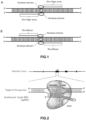
- genome editing methods the followings are known, for example, (1) a method of performing recombination in a host plant cell or insect cell at a targeted locus in DNA by using a zinc finger nuclease (ZFN) in which a zinc finger DNA binding domain (zinc finger array) and a nonspecific DNA cleavage domain (Nuclease domain) are linked to each other (Patent Literature 1, see FIG.
- ZFN zinc finger nuclease
- Patent Literature 1 As illustrated in FIG. 1A , however, the method disclosed in Patent Literature 1 described above requires two domains (zinc finger array) that recognize genome DNA and are formed of proteins, respectively. Further, two domains that recognize genome DNA are designed so as to recognize the 3' side from a target site of double-stranded DNA, respectively. Therefore, there is a problem that it is required to design a pair of zinc finger arrays having different sequences when the target site of genome DNA is modified.
- the method disclosed in Patent Literature 2 described above differs from the method disclosed in Patent Literature 1 in that the direction of the domain that recognizes genome DNA (TAL effector) is on the 5' side from the target site of double-stranded DNA.
- TAL effector the direction of the domain that recognizes genome DNA
- CRISPR/Cas9 As a technology for modifying a target site of genome DNA, CRISPR/Cas9 has attracted attention in recent years (see Patent Literatures 3 to 6). As illustrated in FIG. 2 , CRISPR/Cas9 is formed of guide RNA having a sequence complementary to DNA intended to modify and a Cas9 protein forming a complex with the guide RNA.
- the guide RNA of CRISPR/Cas9 is only required to recognize only one strand of the double-stranded DNA to form a complementary pair. Therefore, unlike Patent Literatures 1 and 2 described above, there is an advantage that only single guide RNA is sufficient for guiding the nuclease domain that modifies a target site of genome DNA.
- a base at the third to fourth upstream base of a PAM sequence of genome DNA (5'-NGG-3' or the like) is cleaved by Cas9 endonuclease as illustrated in FIG. 2 . That is, the method using CRISPR/Cas9 has a problem of the target site of genome DNA being restricted to a part near the PAM sequence. Further, it is known to modify RNA by using Cas13, however, also in such a case, there is a problem of the target site being restricted to a part near a protospacer flanking site (PFS) sequence.
- PFS protospacer flanking site
- RNA including a hybridization region and a recognition region and (2) a fusion protein forming a complex with the recognition region enables modification of a nucleic acid sequence without depending on a PAM sequence or a PFS sequence. That is, an object of the disclosure in the present application is to provide a nucleic acid sequence modifying composition and a method for modifying a target site of a nucleic acid sequence that do not depend on a PAM sequence or a PFS sequence.
- nucleic acid sequence modifying composition and the method for modifying a target site of a nucleic acid sequence disclosed in the present application it is possible to modify a nucleic acid sequence without depending on a PAM sequence or a PFS sequence.
- nucleic acid sequence modifying composition hereafter, which may be referred to as "modifying composition”
- modification method a method for modifying a target site of a nucleic acid sequence
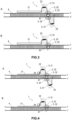
- FIG. 3A and FIG. 3B are schematic diagrams illustrating the overview of the modifying composition 1.
- FIG. 4A and FIG. 4B are schematic diagrams illustrating the overview of a modified example of the modifying composition 1. Note that, in the following description, the description common to FIG. 3A and FIG. 3B may be simply denoted as " FIG. 3 ".
- the modifying composition 1 includes RNA 2 and fusion proteins 3.
- the RNA 2 includes a hybridization region 21 that may hybridize to genome DNA 4 on the 5' side from a target site (modification site) 41 of the genome DNA 4 having double-helix structure and a guide region 22 that guides the fusion proteins 3.
- the hybridization region 21 hybridizes to the genome DNA 4 on the 5' side from the target site 41.
- the hybridization region 21 may be formed to hybridize to the genome DNA 4 on the 3' side from the target site 41.
- the guide region 22 is arranged adjacent to the hybridization region 21.
- the guide region 22 includes recognition regions 23 that recognize binding domains 31 of the fusion proteins 3 to form a complex with the fusion proteins 3.
- FIG. 3 and FIG. 4 illustrate an example in which the target to be modified by the modifying composition 1 is the genome DNA 4.
- the modifying composition 1 may modify RNA, which is a nucleic acid sequence.
- the target to be modified by the modifying composition 1 is the genome DNA 4
- the same applies to a part other than the description for the modification domain 32 regardless of whether the target to be modified by the modifying composition 1 is the genome DNA 4 or the RNA 4.
- the word "genome DNA 4" can be replaced with the word "RNA 4".
- Each fusion protein 3 includes the binding domain 31 forming a complex with the recognition region 23 of the RNA 2 and the modification domain 32 that modifies the target site 41 of the genome DNA 4.
- the length of the hybridization region 21 is not particularly limited as long as it is a length where the RNA 2 can be positioned on the 5' side or the 3' side of the target site 41 of the genome DNA 4.
- a shorter length of the hybridization region 21 has a risk of off-target. Therefore, it is preferable to set the length as appropriate taking a risk of off-target into consideration.
- the length may be, but is not limited to, 15 bp or longer, 20 bp or longer, 25 bp or longer, 30 bp or longer, 35 bp or longer, 40 bp or longer, or 45 bp or longer.
- the length of the hybridization region 21 is not particularly limited, a longer hybridization region 21 will cause higher manufacturing cost of the RNA 2. Therefore, the length may be, for example, but is not limited to, 6 kbp or shorter, 5 kbp or shorter, 4 kbp or shorter, 3 kbp or shorter, 2 kbp or shorter, 1 kbp or shorter, 750 bp or shorter, 500 bp or shorter, 300 bp or shorter, 200 bp or shorter, 100 bp or shorter, 90 bp or shorter, 80 bp or shorter, 70 bp or shorter, 60 bp or shorter, or 50 bp or shorter.
- the guide region 22 may include a stem loop.
- the guide region 22 since the target site 41 is modified with the pair of fusion proteins 3 (more specifically, a pair of modification domains 32), the guide region 22 includes two recognition regions 23.
- the two recognition regions 23 can be arranged close to each other in a three-dimensional structure.
- two stem loops can be formed so that the recognition regions 23 are arranged in the loop portion.
- the number of stem loops and the portion where the recognition regions 23 are arranged are a mere example. As long as the pair of modification domains 32 are arranged in a positional relationship to enable modification of the target site 41, the number of stem loops may be one, three, or four. Further, the recognition region 23 may be arranged in a stem or may be arranged so as to span the stem and the loop. It is also preferable to adjust the length between the recognition regions 23 (the length of a part of the guide region 22) as appropriate taking the size of the fusion protein 3 or the like into consideration.
- the RNA sequence of the recognition region 23 may be determined based on the type of the fusion protein 3 so that the recognition region 23 can form a complex with the binding domain 31 of the fusion protein 3. The combination of the RNA sequence of the recognition region 23 and the binding domain 31 will be described later.
- FIG. 3A illustrates the example in which the pair of the modification domains 32 of fusion proteins 3 are arranged at the target site 41 of the genome DNA 4 to modify the target site 41. Therefore, two recognition regions 23 are included in the guide region 22.
- a pair of the modifying compositions 1 may be used to hybridize the pair of the hybridization regions 21 to the genome DNA 4 so that the modification domains 32 face the target site 41. This requires designing of two hybridization regions 21 and leads to increased costs or the like but is technically possible.
- a single modification domain 32 of the fusion protein 3 can modify the target site 41, this may require only a single recognition region 23 included in the guide region 22, as illustrated in FIG. 3B .
- the guide region 22 may include a stem loop. Further, the recognition region 23 may be arranged in the loop portion, may be arranged in the stem portion, or may be arranged so as to span the stem and the loop. Note that FIG. 3A and FIG. 3B illustrate examples in which each recognition region 23 is a part of the guide region 22. Alternatively, the length of the recognition region 23 may match the length of the guide region 22. In the present specification, that the guide region 22 includes the recognition region 23 means to encompass both of the case where the recognition region 23 is a part of the guide region 22 and the case where the length of the recognition region 23 matches the length of the guide region 22.
- the fusion protein 3 is not particularly limited as long as it includes (1) the binding domain 31 that recognizes a specific sequence (the recognition region 23) included in the guide region 22 of the RNA 2 and forms a complex with the recognition region 23 and (2) the modification domain 32 that modifies the target site 41 of the genome DNA 4.
- the "fusion protein” is a protein that is artificially synthesized so as to include the binding domain 31 and the modification domain 32 as described above and does not exist naturally.
- the fusion protein 3 can be made by fusing a protein that can form a complex with the recognition region 23 and a protein that modifies the genome DNA 4. Note that, when a known protein is used to produce the fusion protein 3, it is not required to include all the amino acid sequences of the known protein.
- RNA 2 For example, in a case of the protein binding to the recognition region 23 of the RNA 2, only the region binding to the recognition region 23 may be used. Further, in a case of a protein that modifies the genome DNA 4, only the region having a function of modifying the genome DNA 4 may be used.
- the fusion protein 3 can be produced by a known method.
- a nucleic acid sequence can be designed based on the amino acid sequence of the designed fusion protein 3, and a cell-free protein synthesis system can be used to synthesize the designed fusion protein 3.
- a nucleic acid sequence may be designed to include a promoter or the like, the designed nucleic acid sequence may be introduced into plasmid, and the fusion protein 3 may be synthesized by using cells.
- a "fusion protein" when a "fusion protein" is stated, the natural protein itself is excluded.
- the fusion protein 3 is not particularly limited as long as it includes the binding domain 31 and the modification domain 32, and any sequence may be added if necessary.
- a linker sequence for linking the binding domain 31 and the modification domain 32 to each other or a nuclear localization signal/sequence (NLS) serving as a mark for transporting the fusion protein 3 to cell nuclei may be added.
- NLS nuclear localization signal/sequence
- a known sequence may be used for the NLS.
- a position of NLS arrangement is not particularly limited as long as the function achieved by the NLS is obtained.
- the NLS may be arranged upstream of the binding domain 31, arranged between the binding domain 31 and the modification domain 32, or arranged downstream of the modification domain 32. Further, when the fusion protein 3 is formed in the order of the modification domain 32 to the binding domain 31 from upstream, the NLS may be arranged upstream of the modification domain 32, arranged between the modification domain 32 and the binding domain 31, or arranged downstream of the binding domain 31.
- modifying means turning the state of the target site 41 of double-stranded DNA 4 or single-stranded (double-stranded) RNA 4 into a physically and/or functionally different state from the original state.
- the modification domain 32 has a function of turning a nucleic acid sequence into the "different state”.
- the modification domain 32 that turns the state of the target site 41 of the genome DNA 4 into a physically different state may be, for example, but is not limited to, those having the following functions.
- the modification domain 32 that turns the state of the target site 41 of the genome DNA 4 into a functionally different state may be, for example, but is not limited to, those having the following functions.
- modification domain 32 More specific examples of the modification domain 32 listed in the above (1) to (7) are illustrated below. Note that enzymes disclosed in Patent Literatures and Non-Patent Literatures may be used as the modification domain 32 without change. Alternatively, as long as the disclosed enzyme achieves a function of modifying the genome DNA 4, some region may be deleted or may be added.
- This enzyme is produced such that the 10th amino acid of Cas9 is changed from aspartic acid (D) to alanine (A). Since nuclease activity of the RuvC-like domain of the two nuclease domains of Cas9 is lost, the D10A mutant acts as nickase and generates single-stranded DNA cleavage (nick) rather than double-stranded DNA cleavage. In a double nicking method, two sgRNA and Cas9 nickase to be guided to each strand of the target sequences of double-stranded DNA are caused to act. (2-2) HNH nuclease domain H840A point mutation (see the references disclosed in the above (2-1); it is also available from WAKENYAKU CO., LTD.)
- Histone acetyltransferase histone deacetylase, histone lysine methyltransferase, histone lysine demethyltransferase, and the like
- the enzyme that modifies the genome DNA 4 by two modification domains 32 as illustrated in FIG. 3A the enzyme that modifies the genome DNA 4 by one modification domain 32 as illustrated in FIG. 3B , or the enzyme that modifies the genome DNA 4 by four modification domains may be of the following types, for example.
- FokI adenosine deaminase
- cytidine deaminase Vp16
- modification domain 32 that turns the state of the target site 41 of the RNA 4 into a functionally different state may be, for example, but is not limited to, Adenosine Deaminase Acting on RNA (ADAR) ( Marina et al., "Evaluation of Engineered CRISPR-Cas-Mediated Systems for Site-Specific RNA Editing", Cell Reports 33, 108350, November 3, 2020 ), which is double-stranded RNA specific adenosine deaminase, or the like.
- ADAR Adenosine Deaminase Acting on RNA
- the sequence of the binding domain 31 and the recognition region 23 is not particularly limited as long as it is a combination of a protein that can recognize the recognition region 23 of the RNA 2 and form a complex with the recognition region 23 and an RNA sequence. Therefore, when the guide region 22 includes two or more recognition regions 23, the recognition region 23 having the same RNA sequence 31 may be included for the same binding domain 31, or the recognition region 23 having different RNA sequences may be included for the same binding domain 31. For the same reason, when the guide region 22 includes two or more recognition regions 23, the same binding domain 31 may form a complex for the same RNA sequence (recognition region 23), or different binding domains 31 may form a complex for the same RNA sequence (recognition region 23).
- the sequence of the binding domain 31 and the recognition region 23 may be, for example, but is not limited to, the following combinations.
- Nova: 5'-UCAY-3' K. Jensen et al., "The tetranucleotide UCAY directs the specific recognition of RNA by the Nova K-homology 3 domain", PNAS, 2000, 97 (11), 5740-5745 , and hereafter, this paper may be referred to as "Non-Patent Literature 1"
- this paper may be referred to as "Non-Patent Literature 1"
- this paper may be referred to as "Non-Patent Literature 1"
- RNA sequence element in FIG.6 (3) TLS:5'-GGUG-3'( Wang et al.,”Induced ncRNAs allosterically modify RNA-binding proteins in cis to inhibit transcription",nature,Vol 454,3,July 2008 ) Further, although the RNA sequence is not explicitly indicated, proteins binding to RNA may be the following proteins. Since it is well known to bind to RNA, the RNA sequence can be designed as appropriate. (4) RNG105( N. Shiinaet et al.,”A Novel RNA-Binding Protein in Neuronal RNA Granules: Regulatory Machinery for Local Translation",The Journal of Neuroscience,April 27,2005 ⁇ 25(17):4420-4434 ) (5) NAPOR( W.
- the binding domain 31 disclosed in the present application includes a protein that recognizes and binds to a PAM sequence or a PFS sequence, and a region that recognizes a PAM sequence or a PFS sequence of the protein.
- the binding domain 31 includes an RNA recognition region of a Cas protein group.
- the Cas protein group may be, for example, Cas9, Cpf1, Cas3, Cas8a-c, Cas10, Cse1, Csy1, Csn2, Cas4, Csm2, Cm5, or the like.
- the region that modifies a nucleic acid sequence may be included as the modification domain 32.
- the hybridization region 21 and the guide region 22 of the RNA 2 are in direct contact with each other.
- the RNA 2 includes a first complementary region 24 connected to one end of the hybridization region 21. Further, the first complementary region 24 forms a complementary pair with the one end side of the guide region 22, and thereby the hybridization region 21 and the guide region 22 are connected indirectly to each other.
- the modifying composition 1 since the hybridization region 21 and the guide region 22 are in direct connection with each other, it is required to form the RNA 2 in an integrated manner. In contrast, in Modified example 1, only the hybridization region 21 and the first complementary region 24 are required to be formed in accordance with the target site 41. Therefore, costs can be reduced by mass production of the guide regions 22 and the fusion proteins 3. Further, a business entity that provides the modifying composition 1 may provide only the guide regions 22 and the fusion proteins 3, and it is possible to design and synthesize the hybridization region 21 and the first complementary region 24 on the user side, which allows the user to start an experiment promptly.
- the modifying composition 1 is formed of the RNA 2 and the fusion protein 3.
- the modifying composition 1 may be formed by using a nucleic acid serving as a template for transcribing the RNA 2 (hereafter, which may be referred to as "template for the RNA 2") and a nucleic acid serving as a template for translating the fusion protein 3 (hereafter, which may be referred to as "template for the fusion protein 3").
- DNA or RNA can be used for the template for the RNA 2 and the template for the fusion protein 3.
- the template for the RNA 2 is required to include at least a sequence for transcribing the RNA 2. Further, the template for the fusion protein 3 is required to include at least a sequence for translating the fusion protein 3.
- the template for the RNA 2 and the template for the fusion protein 3 may include a promoter or an untranslated region used for promoting translation if necessary.
- RNA 2 and the template for the fusion protein 3 are DNA
- a promoter for RNA transcription is linked upstream of the template for the RNA 2
- a promoter for protein translation is linked upstream of the template for the fusion protein 3.
- the template for the RNA 2 and the template for the fusion protein 3 are DNA
- these templates may be inserted in the same plasmid vector together with a promoter or may be inserted in different plasmid vectors.
- the template for the RNA 2 and the template for the fusion protein 3 may be inserted in a DNA type virus such as an adeno-associated virus (AAV) together with a promoter instead of a plasmid vector.
- AAV adeno-associated virus
- the modifying composition 1 is formed in the cell. Note that, when the plasmid vector or the DNA type virus has already included a promoter, the template for the RNA 2 and the template for the fusion protein 3 that include no promoter can be inserted in the plasmid vector or the DNA type virus.
- RNA type virus such as a lentivirus can be used instead of the DNA type virus.
- DNA is first reverse-transcribed from the template for the RNA 2 and the template for the fusion protein 3 inserted in the RNA type virus introduced into a cell.
- the RNA 2 is then transcribed from the reverse-transcribed DNA, and mRNA is transcribed from the reverse-transcribed DNA, and the fusion protein 3 is translated from the mRNA.
- the template for the fusion protein 3 may be mRNA.
- the template for the fusion protein 3 is mRNA, it is not required to link a promoter to mRNA. Once mRNA is introduced into a cell, the fusion protein 3 can be directly translated from mRNA in the cell.
- nucleic acid serving as a template for transcribing RNA this represents a concept that the nucleic acid serving as a template includes a template that indirectly transcribes the RNA 2 (template RNA) in addition to the template that directly transcribes the RNA 2 (template DNA).
- nucleic acid serving as a template for translating a fusion protein includes a template that indirectly translates the fusion protein 3 (template DNA, template RNA) in addition to the template that directly translates the fusion protein 3 (mRNA).
- the type (template DNA, template RNA, mRNA) and the form (whether or not there is insertion into a vector or a virus) may be the same or may be different as long as the modifying composition 1 is finally formed in a cell.
- the promoter for RNA transcription, the promoter for protein translation, the plasmid, the DNA type virus, and the RNA type virus are not particularly limited as long as the functions described above are achieved, and those that are known can be used.
- the promoter for RNA transcription may be U6 Promoter or the like, but is not limited thereto.
- the promoter for protein translation may be CMV Promoter or the like.
- the plasmid may be pcDNA3.1 for mammals, pBluescriptII KS and pET system for bacteria; pPIC system for yeasts, or the like.
- the DNA type virus may be the adeno-associated virus (AAV) described above.
- the RNA type virus may be the lentivirus or the like described above.
- the modifying composition 1 according to Modified example 2 may be rephrased as a composition for forming a modifying composition.
- Modified example 3 of the modifying composition 1 according to the embodiment will be described.
- the RNA 2 and the fusion protein 3 form the modifying composition 1 in combination.
- the template for the RNA 2 and the template for the fusion protein 3 form the modifying composition 1 in combination.
- only one of the combined elements forming the modifying composition 1 is provided, and thereby the modifying composition 1 may be formed by combining the separately provided elements in use.
- RNA 2 described in the modifying composition 1 according to the embodiment or described in the Modified example 1 is provided as the RNA 2 used for forming the modifying composition 1
- fusion protein 3 described in the modifying composition 1 according to the embodiment or described in the Modified example 1 is provided as the fusion protein 3 used for forming the modifying composition 1
- only the template for the RNA 2 described in Modified example 2 is provided as the template for the RNA 2 used for forming the modifying composition 1
- (4) only the template for the fusion protein 3 described in Modified example 2 is provided as the template for the fusion protein 3 used for forming the modifying composition 1.
- RNA 2 and the fusion protein 3 have already been described in the modifying composition 1 according to the embodiment and Modified example 1, and the template for the RNA 2 and the template for the fusion protein 3 have already been described in Modified example 2. Thus, the specific description thereof will be omitted to avoid duplicated description.
- the modification method includes an introduction step of introducing, into a cell, the modifying composition 1 described in the embodiment and the modified examples of the above modifying composition and a modification step of the modification domain 32 modifying the target site 41 of the nucleic acid sequence 4.
- the cell is not particularly limited as long as it includes the nucleic acid sequence 4.
- the cell may be, for example, human or non-human animal cells; plant cells; insect cells; microbial cells such as E. coli, yeasts, molds; or the like. Further, the cell may be a single cell or a mass of aggregated cells (spheroid). In the present specification, when a "cell" is stated, this encompasses both concepts of a single cell and a mass of multiple aggregated cells.
- the introduction step is not particularly limited as long as it is possible to introduce the modifying composition 1 into a cell, and a known method such as electroporation may be used. Further, when a DNA virus or an RNA virus is used as the modifying composition according to Modified example 2, a cell can be infected via a known method. Note that, when the modifying composition 1 according to Modified example 2 is used, a step of the RNA 2 and the fusion protein 3 being formed in the cell is included after the introduction step.
- the hybridization region 21 of the modifying composition 1 introduced into a cell hybridizes to the nucleic acid sequence 4, and the modification domain 32 modifies the target site 41 of the nucleic acid sequence 4.
- the number of hybridization regions 21 required for modifying one target site 41 may be one or two.
- the modifying composition 1 disclosed in the present application can include two or more recognition regions 23 in one guide region 22. Therefore, even with one hybridization region 21 required for modifying one target site 41, it is possible to design the recognition region 23 so as to form a complex with a required number of fusion proteins 3 for modification of the nucleic acid sequence 4. In a case of one hybridization region 21 required for modifying one target site 41, the manufacturing cost can be reduced, and convenience of experiment can be improved.
- the modification method may include, before the introduction step, a hybridization region determination step of determining the hybridization region 21 that may hybridize to the sequence on the 5' side or the 3' side of the target site 41 of the nucleic acid sequence 4.
- the entire RNA 2 may be produced to include the hybridization region 21 determined in the hybridization region determination step.
- the modifying composition 1 may be produced and the modification method may be implemented by preparing the hybridization region 21 and the first complementary region 24 on the user side and combining therewith the guide region 22 and the fusion protein 3 that are separately provided.
- the modification method may include, before the introduction step, a guide region designing step of designing at least the number and the RNA sequence of recognition regions 23 so that a complex can be formed with the required number of fusion proteins 3 for modification of the nucleic acid sequence 4.
- the guide region designing step may include designing of a linker sequence that links to two or more recognition regions 23 if necessary. It has not been known that one guide region 22 forms a complex with two or more fusion proteins 3 and the modification domains 32 included in the fusion proteins 3 modify the nucleic acid sequence 4. Therefore, the guide region designing step described above is a novel step.
- DNA has a self-repair function. Therefore, when the nucleic acid sequence 4 is genome DNA, a step of introducing DNA into the target site 41 may be performed, if necessary, after the modification step is performed.
- the modification domain 32 is an enzyme that cleaves the genome DNA 4, such as FokI
- the target site 41 of the genome DNA 4 is cleaved and modified into a physically different state by the modification step. As a result, the genome DNA 4 may lose the function (knock out).
- the cleaved genome DNA 4 may repair the cleaved portion by the self-repair function.
- the modifying composition 1 was produced in accordance with the following procedure.
- FokI-Nova was produced.
- the amino acid sequence of FokI-Nova is indicated in SEQ. ID. 1 (sequence No. 1).
- the underlined part (“Q" at the seventh character from the right on the first line to "F” at the eleventh character from the left on the fifth line) represents the cleavage region of FokI (the modification domain 32)
- the double-underlined part (“K” at the 28th character from the left on the fifth line to "G” at the eighth character from the right on the sixth line) represents the RNA binding region of NOVA (the binding domain 31)
- the bold underlined part (“P” at the third character from the right on the sixth line to "V” at the fourth character from the left on the seventh line) represents the NLS.
- the remaining is a linker sequence or the like.
- NAME SEQUENCE SEQ. ID. FokI-Nova 1
- An expression vector designed so as to express the FokI-Nova indicated in sequence No. 1 was cloned into E. coli for expression. Then, 1 ⁇ L of expression vector adjusted to a concentration of 10 ng/uL and 50 ⁇ L of E. coli for expression were mixed and allowed to stand on ice for 20 minutes. Then, the mixture was subjected to heat shock in treatment at 42 °C for 1 minute and then returned to be placed on the ice. The whole transformed E. coli and 250 ⁇ L of SOC medium were mixed and cultured at 37 °C for 1 hour. From this mixture, 100 ⁇ L thereof was plated on an LB plate (containing antibiotics) and cultured at 37 °C overnight.
- a single colony was picked up from the plate and cultured at 37 °C overnight. The same amount of the cultured solution and 50% glycerol solution were mixed and then stored at -80 °C.
- Bacteria were inoculated from E. coli glycerol stock and cultured in 10 ml of LB medium (containing antibiotics) at 37 °C overnight. Then, 10 ml of the previous cultured solution was added to 100 mL of LB medium (containing antibiotics) and cultured at 37 °C. It was confirmed that OD was around 0.6, IPTG was added to have the final concentration of 1 mM, and the mixture was cultured at 25 °C overnight. The bacteria were suspended with 5 ml of protein extraction reagent. The protein extraction reagent, 10 ⁇ l of Lysonase Bioprocessing Reagent (Novagen) was added, and the mixture was stirred at room temperature for 5 minutes.
- the mixture was centrifuged to collect supernatant as a soluble fraction. Then, 1 ml of resin was loaded to a column for precipitation. After the stored liquid was drained, 10 bed volumes of equilibrium buffer was added to equilibrate the resin.
- the soluble fraction was loaded to the column to bind a His-Tag fusion protein.
- the column was washed with 8 bed volumes of equilibrium buffer.
- the column was washed with 7 bed volumes of equilibrium buffer (containing 10 mM of Imidazole).
- the His-Tag fusion protein was eluted with 3 bed volumes of elution buffer.
- the purified protein was mixed with the same amount of EzApply (ATTO) and subjected to thermal treatment at 95 °C for 5 minutes to prepare an electrophoresis sample.
- the sample was applied to 5 to 20% polyacrylamide gel and subjected to electrophoresis at 20 mA for 70 minutes.
- the FokI antibody was used to confirm that a FokI-Nova fusion protein having the designed size was synthesized.
- RNA 2 (Hybridization Region 21 + Guide Region 22)
- the sequence of the RNA 2 produced in Examples is indicated in SEQ. ID. 2.
- the RNA 2 was produced by the following procedure.
- SEQ. IDs. 4 and 5 are sequences forming a complementary pair with the DNA sequence 4 coding the GFP illustrated in FIG. 5 (both ends of the hybridization region 21). Note that, in FIG. 5 , depiction of "ID.” for sequence numbers is omitted due to space limitation.
- RNA 2 includes two ⁇ 2-glyR (GCAGUCUCAUCAUCAUUUUCAUUUUG: SEQ. ID. 8) of FIG. 6 of Non-Patent Literature 1 as the recognition regions 23 via a linker.
- GCAGUCUCAUCAUCAUUUUCAUUUUG SEQ. ID. 8
- SEQ. ID. 8 NAME SEQUENCE SEQ. ID. RNA2 2 pEGF P-N1 3
- Example 2 The modifying composition 1 produced in Example 1 was used to perform cleavage experiment of the genome DNA 4 (SEQ. ID. 9) coding the GFP in the following procedure.
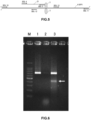
- FIG. 5 is a diagram illustrating the overview of Example 2.
- a template having SEQ. ID. 3 was used, and the following primer was used to obtain a PCR product of the GFP indicated by SEQ. ID. 9 by an ordinary method.
- - Fw primer (5'-GTGAGCAAGGGCGAGGAGCTG-3': SEQ. ID. 10)
- Rv primer 5'-CTTGTACAGCTCGTCCATGCCG-3': SEQ. ID. 11
- NAME SEQUENCE SEQ. ID. GFP 9
- FIG. 6 illustrates the result. Each lane of an electrophoresis photograph illustrated in FIG. 6 is as follows.
- the hybridization region 21 was designed so as to be cleaved near substantially the center of the sequence coding the GFP (714 bp).
- an experiment was performed to confirm that the DNA fragment indicated by the arrow to Lane 3 of FIG. 6 includes both the upstream and downstream of the sequence coding the GFP.
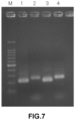
- band extract The band indicated by the arrow to Lane 3 of FIG. 6 was gel-extracted using QIAquick Gel Extraction Kit by QIAGEN K.K. (hereafter, referred to as "band extract"). The overview of the confirmation experiment will be described with reference to FIG. 5 .
- SEQ. IDs. 12 and 13 are as follows.
- FIG. 7 illustrates the result.
- Lane M of FIG. 7 represents 100 bp marker
- Lanes 1 to 4 of FIG. 7 correspond to amplification products described in above 1 to 4. It was confirmed from the result indicated by Lanes 1 and 2 of FIG. 7 that the band extract cleaved by the fusion protein 3 includes the upstream and downstream of the sequence coding the GFP fragment.
- the use of the modifying composition disclosed in the present application enables modification of a nucleic acid sequence without depending on a PAM sequence or a PFS sequence.
- nucleic acid sequence modifying composition and the method for modifying a target site of a nucleic acid sequence disclosed in the present application it is possible to modify a nucleic acid sequence without depending on a PAM sequence or a PFS sequence. Therefore, the nucleic acid sequence modifying composition and the method for modifying a target site of a nucleic acid sequence disclosed in the present application are useful for industries that require genome editing, such as pharmaceutical industry, research institutions, or the like.
Landscapes
- Health & Medical Sciences (AREA)
- Life Sciences & Earth Sciences (AREA)
- Engineering & Computer Science (AREA)
- Genetics & Genomics (AREA)
- Chemical & Material Sciences (AREA)
- Biomedical Technology (AREA)
- Organic Chemistry (AREA)
- Zoology (AREA)
- Bioinformatics & Cheminformatics (AREA)
- Wood Science & Technology (AREA)
- Molecular Biology (AREA)
- Biotechnology (AREA)
- General Engineering & Computer Science (AREA)
- Biochemistry (AREA)
- General Health & Medical Sciences (AREA)
- Microbiology (AREA)
- Biophysics (AREA)
- Plant Pathology (AREA)
- Physics & Mathematics (AREA)
- Medicinal Chemistry (AREA)
- Crystallography & Structural Chemistry (AREA)
- Proteomics, Peptides & Aminoacids (AREA)
- Peptides Or Proteins (AREA)
- Measuring Or Testing Involving Enzymes Or Micro-Organisms (AREA)
Abstract
Description
- The disclosure in the present application relates to a nucleic acid sequence modifying composition and a method for modifying a target site of a nucleic acid sequence.
- In recent years, genome editing that is a technology for modifying target sites of genome DNA in various species has attracted attention. As genome editing methods, the followings are known, for example, (1) a method of performing recombination in a host plant cell or insect cell at a targeted locus in DNA by using a zinc finger nuclease (ZFN) in which a zinc finger DNA binding domain (zinc finger array) and a nonspecific DNA cleavage domain (Nuclease domain) are linked to each other (
Patent Literature 1, seeFIG. 1A) and (2 ) a method of cleaving and modifying target genes at a site within or adjacent to a particular nucleotide sequence by using TALEN in which a transcriptional activator-like (TAL) effector of a DNA binding module of plant pathogen Xanthomonas and DNA endonuclease (Nuclease domain) are linked to each other (Patent Literature 2, seeFIG. 1B ). - As illustrated in
FIG. 1A , however, the method disclosed inPatent Literature 1 described above requires two domains (zinc finger array) that recognize genome DNA and are formed of proteins, respectively. Further, two domains that recognize genome DNA are designed so as to recognize the 3' side from a target site of double-stranded DNA, respectively. Therefore, there is a problem that it is required to design a pair of zinc finger arrays having different sequences when the target site of genome DNA is modified. - Further, as illustrated in
FIG. 1B , the method disclosed inPatent Literature 2 described above differs from the method disclosed inPatent Literature 1 in that the direction of the domain that recognizes genome DNA (TAL effector) is on the 5' side from the target site of double-stranded DNA. In the same manner as in the method disclosed inPatent Literature 1, however, there is a problem that it is required to design of a pair of TAL effectors having different sequences when the target site of genome DNA is modified. - On the other hand, as a technology for modifying a target site of genome DNA, CRISPR/Cas9 has attracted attention in recent years (see
Patent Literatures 3 to 6). As illustrated inFIG. 2 , CRISPR/Cas9 is formed of guide RNA having a sequence complementary to DNA intended to modify and a Cas9 protein forming a complex with the guide RNA. The guide RNA of CRISPR/Cas9 is only required to recognize only one strand of the double-stranded DNA to form a complementary pair. Therefore, unlikePatent Literatures -
- Patent Literature 1:
Japanese Patent No. 4968498 - Patent Literature 2:
Japanese Patent Application Laid-Open No. 2013-513389 - Patent Literature 3:
Japanese Patent Application Laid-Open No. 2015-527889 - Patent Literature 4:
Japanese Patent Application Laid-Open No. 2016-500262 - Patent Literature 5:
Japanese Patent Application Laid-Open No. 2016-501531 - Patent Literature 6:
Japanese Patent Application Laid-Open No. 2016-501532 - In the method using CRISPR/Cas9 disclosed in
Patent Literatures 3 to 6, however, a base at the third to fourth upstream base of a PAM sequence of genome DNA (5'-NGG-3' or the like) is cleaved by Cas9 endonuclease as illustrated inFIG. 2 . That is, the method using CRISPR/Cas9 has a problem of the target site of genome DNA being restricted to a part near the PAM sequence. Further, it is known to modify RNA by using Cas13, however, also in such a case, there is a problem of the target site being restricted to a part near a protospacer flanking site (PFS) sequence. - The disclosure in the present application has been made in order to solve the above problems, and according to an intensive study, it has been newly found that the use of (1) RNA including a hybridization region and a recognition region and (2) a fusion protein forming a complex with the recognition region enables modification of a nucleic acid sequence without depending on a PAM sequence or a PFS sequence. That is, an object of the disclosure in the present application is to provide a nucleic acid sequence modifying composition and a method for modifying a target site of a nucleic acid sequence that do not depend on a PAM sequence or a PFS sequence.
-
- (1) A nucleic acid sequence modifying composition comprising RNA and a fusion protein,
wherein the RNA includes- a hybridization region adapted to hybridize to a sequence on the 5' side or the 3' side of a target site of a nucleic acid sequence, and
- a guide region that guides the fusion protein,
- wherein the guide region includes at least one recognition region that forms a complex with the fusion protein, and
- wherein the fusion protein includes
- a binding domain that recognizes the recognition region of the RNA and forms a complex with the recognition region, where it is excluded that the binding domain includes an RNA recognition region of a Cas protein group, and
- a modification domain that modifies the target site of the nucleic acid sequence.
- (2) The nucleic acid sequence modifying composition according to (1) above, wherein the fusion protein includes a linker sequence that links the binding domain and the modification domain to each other.
- (3) The nucleic acid sequence modifying composition according to (1) or (2) above, wherein the guide region includes two recognition regions.
- (4) The nucleic acid sequence modifying composition according to any one of (1) to (3) above further comprising a first complementary region connected to one end of the hybridization region,
wherein the hybridization region and the guide region are indirectly connected to each other when the first complementary region forms a complementary pair with one end side of the guide region. - (5) The nucleic acid sequence modifying composition according to any one of (1) to (4) above, wherein the guide region includes a stem loop.
- (6) The nucleic acid sequence modifying composition according to any one of (1) to (5) above,
- wherein the binding domain includes an RNA binding region of Nova, and
- wherein the modification domain includes a cleavage region of FokI that cleaves genome DNA.
- (7) The nucleic acid sequence modifying composition according to any one of (1) to (6) above, wherein the nucleic acid sequence is genome DNA.
- (8) A nucleic acid sequence modifying composition comprising:
- a nucleic acid that serves as a template used for transcribing the RNA according to any one of (1) to (7) above; and
- a nucleic acid that serves as a template used for translating the fusion protein according to any one of (1) to (7) above.
- (9) RNA for forming the nucleic acid sequence modifying composition according to any one of (1) to (7) above.
- (10) A nucleic acid that serves as the template used for transcribing the RNA for forming the nucleic acid sequence modifying composition according to (8) above.
- (11) A fusion protein for forming the nucleic acid sequence modifying composition according to any one of (1) to (7) above.
- (12) A nucleic acid that serves as the template used for translating the fusion protein for forming the nucleic acid sequence modifying composition according to (8) above.
- (13) A method for modifying a target site of a nucleic acid sequence, the method comprising:
- an introduction step of introducing the nucleic acid sequence modifying composition according to any one of (1) to (8) above into a cell; and
- a modification step of the modification domain modifying the target site of the nucleic acid sequence.
- (14) The method according to (13) above further comprising, before the introduction step, a hybridization region determination step of determining a hybridization region adapted to hybridize to a sequence on the 5' side or the 3' side of the target site of the nucleic acid sequence.
- (15) The method according to (13) or (14) above, wherein one hybridization region is required for modifying one target site.
- (16) The method according to (15) above, wherein the guide region includes two recognition regions.
- (17) The method according to (16) above further comprising, before the introduction step, a guide region designing step of designing at least the number and an RNA sequence of recognition regions so as to be able to form a complex with a required number of fusion proteins for modification of the nucleic acid sequence.
- According to the nucleic acid sequence modifying composition and the method for modifying a target site of a nucleic acid sequence disclosed in the present application, it is possible to modify a nucleic acid sequence without depending on a PAM sequence or a PFS sequence.
-
- [
FIG. 1] FIG. 1A is a schematic diagram illustrating an overview of a genome editing method using zinc finger nuclease.FIG. 1B is a schematic diagram illustrating an overview of a genome editing method using TALEN. - [
FIG. 2] FIG. 2 is a schematic diagram illustrating an overview of a genome editing method using CRISPR/Cas9. - [
FIG. 3] FIG. 3A and FIG. 3B are schematic diagrams illustrating an overview of a modifyingcomposition 1. - [
FIG. 4] FIG. 4A and FIG. 4B are schematic diagrams illustrating an overview of a modified example of the modifyingcomposition 1. - [
FIG. 5] FIG. 5 is a diagram illustrating an overview of Example 2. - [
FIG. 6] FIG. 6 is a photograph substitute for a drawing, which is a photograph of electrophoresis of Example 2. - [
FIG. 7] FIG. 7 is a photograph substitute for a drawing, which is a photograph of electrophoresis to observe a band indicated by the arrow toLane 3 of Example 2. - Embodiments of a nucleic acid sequence modifying composition (hereafter, which may be referred to as "modifying composition") and a method for modifying a target site of a nucleic acid sequence (hereafter, which may be referred to as "modification method") will be described below in detail with reference to the drawings. Note that, in the present specification, members having the same type of functions are labeled with the same or similar reference numerals. Further, duplicated description for the members labeled with the same or similar reference numerals may be omitted.
- Further, the position, size, range, or the like of respective components illustrated in the drawings may be depicted differently from the actual position, size, range, or the like for easier understanding. Thus, the disclosure in the present application is not necessarily limited to the position, size, range, or the like disclosed in the drawings.
- A modifying
composition 1 according to an embodiment will be described with reference toFIG. 3 and FIG. 4. FIG. 3A and FIG. 3B are schematic diagrams illustrating the overview of the modifyingcomposition 1.FIG. 4A and FIG. 4B are schematic diagrams illustrating the overview of a modified example of the modifyingcomposition 1. Note that, in the following description, the description common toFIG. 3A and FIG. 3B may be simply denoted as "FIG. 3 ". - The modifying
composition 1 includesRNA 2 andfusion proteins 3. In the example illustrated inFIG. 3 , theRNA 2 includes ahybridization region 21 that may hybridize togenome DNA 4 on the 5' side from a target site (modification site) 41 of thegenome DNA 4 having double-helix structure and a guide region 22 that guides thefusion proteins 3. Note that, in the example illustrated inFIG. 3 , thehybridization region 21 hybridizes to thegenome DNA 4 on the 5' side from thetarget site 41. Alternatively, although not illustrated, thehybridization region 21 may be formed to hybridize to thegenome DNA 4 on the 3' side from thetarget site 41. The guide region 22 is arranged adjacent to thehybridization region 21. Further, the guide region 22 includesrecognition regions 23 that recognize binding domains 31 of thefusion proteins 3 to form a complex with thefusion proteins 3. Note thatFIG. 3 and FIG. 4 illustrate an example in which the target to be modified by the modifyingcomposition 1 is thegenome DNA 4. Alternatively, the modifyingcomposition 1 may modify RNA, which is a nucleic acid sequence. In the following description, although an example in which the target to be modified by the modifyingcomposition 1 is thegenome DNA 4 will be described, the same applies to a part other than the description for the modification domain 32 regardless of whether the target to be modified by the modifyingcomposition 1 is thegenome DNA 4 or theRNA 4. For the part other than the description for the modification domain 32, the word "genome DNA 4" can be replaced with the word "RNA 4". - Each
fusion protein 3 includes the binding domain 31 forming a complex with therecognition region 23 of theRNA 2 and the modification domain 32 that modifies thetarget site 41 of thegenome DNA 4. - The length of the
hybridization region 21 is not particularly limited as long as it is a length where theRNA 2 can be positioned on the 5' side or the 3' side of thetarget site 41 of thegenome DNA 4. A shorter length of thehybridization region 21 has a risk of off-target. Therefore, it is preferable to set the length as appropriate taking a risk of off-target into consideration. For example, the length may be, but is not limited to, 15 bp or longer, 20 bp or longer, 25 bp or longer, 30 bp or longer, 35 bp or longer, 40 bp or longer, or 45 bp or longer. On the other hand, in terms of positioning of theRNA 2, although the length of thehybridization region 21 is not particularly limited, alonger hybridization region 21 will cause higher manufacturing cost of theRNA 2. Therefore, the length may be, for example, but is not limited to, 6 kbp or shorter, 5 kbp or shorter, 4 kbp or shorter, 3 kbp or shorter, 2 kbp or shorter, 1 kbp or shorter, 750 bp or shorter, 500 bp or shorter, 300 bp or shorter, 200 bp or shorter, 100 bp or shorter, 90 bp or shorter, 80 bp or shorter, 70 bp or shorter, 60 bp or shorter, or 50 bp or shorter. - It is preferable to adjust the length of the guide region 22 as appropriate taking the size of the
fusion protein 3, the distance from the end of thehybridization region 21 to thetarget site 41, or the like into consideration. Further, the guide region 22 may include a stem loop. In the example illustrated inFIG. 3A , since thetarget site 41 is modified with the pair of fusion proteins 3 (more specifically, a pair of modification domains 32), the guide region 22 includes tworecognition regions 23. When the guide region 22 includes a stem loop, the tworecognition regions 23 can be arranged close to each other in a three-dimensional structure. In the example illustrated inFIG. 3A , for example, two stem loops can be formed so that therecognition regions 23 are arranged in the loop portion. Note that the number of stem loops and the portion where therecognition regions 23 are arranged are a mere example. As long as the pair of modification domains 32 are arranged in a positional relationship to enable modification of thetarget site 41, the number of stem loops may be one, three, or four. Further, therecognition region 23 may be arranged in a stem or may be arranged so as to span the stem and the loop. It is also preferable to adjust the length between the recognition regions 23 (the length of a part of the guide region 22) as appropriate taking the size of thefusion protein 3 or the like into consideration. - The RNA sequence of the
recognition region 23 may be determined based on the type of thefusion protein 3 so that therecognition region 23 can form a complex with the binding domain 31 of thefusion protein 3. The combination of the RNA sequence of therecognition region 23 and the binding domain 31 will be described later. - Note that
FIG. 3A illustrates the example in which the pair of the modification domains 32 offusion proteins 3 are arranged at thetarget site 41 of thegenome DNA 4 to modify thetarget site 41. Therefore, tworecognition regions 23 are included in the guide region 22. Alternatively, as illustrated inFIG. 1A and FIG. 1B , a pair of the modifyingcompositions 1 may be used to hybridize the pair of thehybridization regions 21 to thegenome DNA 4 so that the modification domains 32 face thetarget site 41. This requires designing of twohybridization regions 21 and leads to increased costs or the like but is technically possible. Further alternatively, when a single modification domain 32 of thefusion protein 3 can modify thetarget site 41, this may require only asingle recognition region 23 included in the guide region 22, as illustrated inFIG. 3B . Even with only onerecognition region 23 being included in the guide region 22, the guide region 22 may include a stem loop. Further, therecognition region 23 may be arranged in the loop portion, may be arranged in the stem portion, or may be arranged so as to span the stem and the loop. Note thatFIG. 3A and FIG. 3B illustrate examples in which eachrecognition region 23 is a part of the guide region 22. Alternatively, the length of therecognition region 23 may match the length of the guide region 22. In the present specification, that the guide region 22 includes therecognition region 23 means to encompass both of the case where therecognition region 23 is a part of the guide region 22 and the case where the length of therecognition region 23 matches the length of the guide region 22. - The
fusion protein 3 is not particularly limited as long as it includes (1) the binding domain 31 that recognizes a specific sequence (the recognition region 23) included in the guide region 22 of theRNA 2 and forms a complex with therecognition region 23 and (2) the modification domain 32 that modifies thetarget site 41 of thegenome DNA 4. Note that, in the present specification, the "fusion protein" is a protein that is artificially synthesized so as to include the binding domain 31 and the modification domain 32 as described above and does not exist naturally. For example, thefusion protein 3 can be made by fusing a protein that can form a complex with therecognition region 23 and a protein that modifies thegenome DNA 4. Note that, when a known protein is used to produce thefusion protein 3, it is not required to include all the amino acid sequences of the known protein. For example, in a case of the protein binding to therecognition region 23 of theRNA 2, only the region binding to therecognition region 23 may be used. Further, in a case of a protein that modifies thegenome DNA 4, only the region having a function of modifying thegenome DNA 4 may be used. - The
fusion protein 3 can be produced by a known method. For example, a nucleic acid sequence can be designed based on the amino acid sequence of the designedfusion protein 3, and a cell-free protein synthesis system can be used to synthesize the designedfusion protein 3. Alternatively, a nucleic acid sequence may be designed to include a promoter or the like, the designed nucleic acid sequence may be introduced into plasmid, and thefusion protein 3 may be synthesized by using cells. As described above, in the present specification, when a "fusion protein" is stated, the natural protein itself is excluded. - As described above, the
fusion protein 3 is not particularly limited as long as it includes the binding domain 31 and the modification domain 32, and any sequence may be added if necessary. For example, a linker sequence for linking the binding domain 31 and the modification domain 32 to each other or a nuclear localization signal/sequence (NLS) serving as a mark for transporting thefusion protein 3 to cell nuclei may be added. A known sequence may be used for the NLS. When the NLS is added, a position of NLS arrangement is not particularly limited as long as the function achieved by the NLS is obtained. For example, when thefusion protein 3 is formed in the order of the binding domain 31 to the modification domain 32 from upstream when viewed as the amino acid sequence, the NLS may be arranged upstream of the binding domain 31, arranged between the binding domain 31 and the modification domain 32, or arranged downstream of the modification domain 32. Further, when thefusion protein 3 is formed in the order of the modification domain 32 to the binding domain 31 from upstream, the NLS may be arranged upstream of the modification domain 32, arranged between the modification domain 32 and the binding domain 31, or arranged downstream of the binding domain 31. - Further, in the present specification, "modifying" the
target site 41 of a nucleic acid sequence (more specifically, thegenome DNA 4 or the RNA 4) means turning the state of thetarget site 41 of double-strandedDNA 4 or single-stranded (double-stranded)RNA 4 into a physically and/or functionally different state from the original state. In other words, it means that the modification domain 32 has a function of turning a nucleic acid sequence into the "different state". - The modification domain 32 that turns the state of the
target site 41 of thegenome DNA 4 into a physically different state (when being physically different, the function is also often different as a result) may be, for example, but is not limited to, those having the following functions. - (1) Nuclease that hydrolyzes a phosphodiester bond between a sugar and a phosphoric acid of double-stranded DNA into nucleotide
- (2) Nickase that introduces nick into one strand of double-stranded DNA
- (3) DNA demethylase that demethylates a methyl group of DNA (for example, 5-methylcytosine)
- (4) Deaminase that changes NH2 included in bases of DNA to c=O
- (5) Enzyme that substitutes a group of DNA other than the above (3) and (4)
- The modification domain 32 that turns the state of the
target site 41 of thegenome DNA 4 into a functionally different state may be, for example, but is not limited to, those having the following functions. - (6) Transcriptional activator
- (7) Transcriptional repressor
- More specific examples of the modification domain 32 listed in the above (1) to (7) are illustrated below. Note that enzymes disclosed in Patent Literatures and Non-Patent Literatures may be used as the modification domain 32 without change. Alternatively, as long as the disclosed enzyme achieves a function of modifying the
genome DNA 4, some region may be deleted or may be added. -
- (1-1) FokI (
Japanese Patent No. 5266210 - (1-2) FirmCut nuclease (International Publication No.
2020/045281 ) - (2-1) RuvC nuclease domain D10A point mutation (M. Jinek et al., "A Programmable Dual-RNA-Guided DNA Endonuclease in Adaptive Bacterial Immunity", Science (2012), Vol. 337, Issue 6096, pp. 816-821; it is also available from WAKENYAKU CO., LTD.)
- This enzyme is produced such that the 10th amino acid of Cas9 is changed from aspartic acid (D) to alanine (A). Since nuclease activity of the RuvC-like domain of the two nuclease domains of Cas9 is lost, the D10A mutant acts as nickase and generates single-stranded DNA cleavage (nick) rather than double-stranded DNA cleavage. In a double nicking method, two sgRNA and Cas9 nickase to be guided to each strand of the target sequences of double-stranded DNA are caused to act. (2-2) HNH nuclease domain H840A point mutation (see the references disclosed in the above (2-1); it is also available from WAKENYAKU CO., LTD.)
- While the enzyme listed in the above (2-1) cleaves only the target strand of DNA, the enzyme listed in the above (2-2) cleaves the non-target strand.
- (3-1) Methylated cytosine hydroxylase Tet1 (S. Morita et al., "Targeted DNA demethylation in vivo using dCas9-peptide repeat and scFv-TET1 catalytic domain fusions", Nature Biotechnology 34, p:1060-1065 (2016))
-
- (4-1) Adenosine deaminase (C. Li et al., "Expanded base editing in rice and wheat using a Cas9-adenosine deaminase fusion", Genome Biology 19, Article number:59 (2018))
- (4-2) Cytidine deaminase (A. Komor et al., "Programmable editing of a target base in genomic DNA without double-stranded DNA cleavage", nature 533, p:420-424 (2016))
- Histone acetyltransferase, histone deacetylase, histone lysine methyltransferase, histone lysine demethyltransferase, and the like
-
- (6-1) Vp64 (L. Lowder et al., "Robust Transcriptional Activation in Plants Using Multiplexed CRISPR-Act 2.0 and mTALE-Act Systems", Molecular Plant, )
- (6-2) Vp16 (see the reference listed in the above (6-1))
-
- (7-1) KRAB (M. Boettcher et al., "Choosing the Right Tool for the Job: RNAi, TALEN, or CRISPR", Molecular Cell, 2015 21; 58(4) :575-85)
- (7-2) SRDX(L. Lowder et al., "A CRISPR/Cas9 Toolbox for Multiplexed Plant Genome Editing and Transcriptional Regulation", Plant Physiology, 2015, 169(2) :971-85)
- Further, although partially duplicated with the above (1) to (7), "transposase domain, integrase domain, recombinase domain, resolvase domain, invertase domain, protease domain, DNA methyltransferase domain, DNA hydroxymethylase domain, DNA demethylase domain, histone acetylase domain, histone deacetylase domain, nuclease domain, repressor domain, activator domain, nuclear localization signal domain, transcription-regulatory protein (or transcription complex recruitment) domain, cellular uptake activity-related domain, nucleic acid binding domain, antibody presentation domain, histone modifying enzymes, recruiter of histone modifying enzymes; inhibitors of histone modifying enzymes, histone methyltransferases, histone demethylases, histone kinases, histone phosphatases, histone ribosylase, histone deribosylase, histone ubiquitinase, histone deubiquitinase, histone biotinase, and histone tail protease" or the like disclosed in
Japanese Patent Application Laid-Open No. 2015-527889 Japanese Patent Application Laid-Open No. 2015-527889 - Among the enzymes that can form the modification domain 32 illustrated above as examples, the enzyme that modifies the
genome DNA 4 by two modification domains 32 as illustrated inFIG. 3A , the enzyme that modifies thegenome DNA 4 by one modification domain 32 as illustrated inFIG. 3B , or the enzyme that modifies thegenome DNA 4 by four modification domains may be of the following types, for example. - RuvC nuclease domain D10A point mutation, HNH nuclease domain H840A point mutation
- FokI, adenosine deaminase, cytidine deaminase, Vp16
- Further, the modification domain 32 that turns the state of the
target site 41 of theRNA 4 into a functionally different state may be, for example, but is not limited to, Adenosine Deaminase Acting on RNA (ADAR) (Marina et al., "Evaluation of Engineered CRISPR-Cas-Mediated Systems for Site-Specific RNA Editing", Cell Reports 33, 108350, November 3, 2020), which is double-stranded RNA specific adenosine deaminase, or the like. - The sequence of the binding domain 31 and the
recognition region 23 is not particularly limited as long as it is a combination of a protein that can recognize therecognition region 23 of theRNA 2 and form a complex with therecognition region 23 and an RNA sequence. Therefore, when the guide region 22 includes two ormore recognition regions 23, therecognition region 23 having the same RNA sequence 31 may be included for the same binding domain 31, or therecognition region 23 having different RNA sequences may be included for the same binding domain 31. For the same reason, when the guide region 22 includes two ormore recognition regions 23, the same binding domain 31 may form a complex for the same RNA sequence (recognition region 23), or different binding domains 31 may form a complex for the same RNA sequence (recognition region 23). - The sequence of the binding domain 31 and the
recognition region 23 may be, for example, but is not limited to, the following combinations.
(1) Nova: 5'-UCAY-3' (K. Jensen et al., "The tetranucleotide UCAY directs the specific recognition of RNA by the Nova K-, and hereafter, this paper may be referred to as "Non-Patent Literature 1")
Note that the above 5'-UCAY-3' is formed in the loop portion of the stem loop.
(2) Combinations disclosed inFIG. 6 ofNon-Patent Literature 1 stated above (see Table 1 below)[Table 1] No. RNA binding protein name RNA name RNA sequence 1 Nova-1 α2-glyR See sequence element in FIG.6 2 Nova (KH3) 10021 See sequence element in FIG.6 3 ZBP-1 β-actin See sequence element in FIG.6 4 hnRNP-E/hnRNP-K 15-LOX See sequence element in FIG.6 5 hnRNP-E α-globin See sequence element in FIG.6 6 BBP/SF1 branchpt. See sequence element in FIG.6
(3) TLS:5'-GGUG-3'(Wang et al.,"Induced ncRNAs allosterically modify RNA-binding proteins in cis to inhibit transcription",nature,)
Further, although the RNA sequence is not explicitly indicated, proteins binding to RNA may be the following proteins. Since it is well known to bind to RNA, the RNA sequence can be designed as appropriate.
(4) RNG105(N. Shiinaet et al.,"A Novel RNA-Binding Protein in Neuronal RNA Granules: Regulatory Machinery for Local Translation",The Journal of Neuroscience,April 27,2005·25(17):4420-4434)
(5) NAPOR(W. ZHANGet et al.,"Region-specific alternative splicing in the nervous system: Implications for regulation by the RNA-binding protein NAPOR",RNA(2002),8:671-685) .Cambridge University Press)
(6) DAZL and RBFOX(D. Sharma1 et al., "The kinetic landscape of an RNA-binding protein in cells" ,Nature,)
(7) Sam68(P. Bielli et al.,"The RNA-binding protein Sam68 is a multifunctional player in human cancer",Endocrine-Related Cancer (2011) 18 R91-R102)
(8) Spi-1/PU.1(M. Hallier et al.,"The Transcription Factor Spi-1/PU.1 Binds RNA and Interferes with the RNA-binding Protein p54nrb"),THE JOURNAL OF BIOLOGICAL CHEMISTRY,Vol.271,No.19,pp.11177-11181,1996)
(9) PUM2 Protein, QKI Protein,IGF2BP Protein(M. Hafner et al., "Transcriptome-wide Identification of RNA-Binding Protein and MicroRNA Target Sites by PAR-CLIP" ,Cell,141,129-141,2010) - The disclosure of each paper cited for indicating specific examples of the binding domain 31 and the modification domain 32 described above and the disclosure of paper cited by each paper are incorporated in the present specification by reference.
- Note that it is well known that Cas9 and the like, which are the Cas protein group, recognize a PAM sequence of the
genome DNA 4. Further, it is also well known that PAM sequences differ in accordance with bacterial species from which nuclease is derived and the type/subtype of nuclease (see Table 2 below). Furthermore, it is well known that Cas13, which is the Cas protein group, recognizes the PFS sequence of RNA. It is therefore excluded that the binding domain 31 disclosed in the present application includes a protein that recognizes and binds to a PAM sequence or a PFS sequence, and a region that recognizes a PAM sequence or a PFS sequence of the protein. Alternatively, it may be rephrased in that it is excluded that the binding domain 31 includes an RNA recognition region of a Cas protein group. The Cas protein group may be, for example, Cas9, Cpf1, Cas3, Cas8a-c, Cas10, Cse1, Csy1, Csn2, Cas4, Csm2, Cm5, or the like. On the other hand, among the Cas protein group, the region that modifies a nucleic acid sequence may be included as the modification domain 32.[Table 2] strain subtype PAM sequence S. pyogenes II 5'-NGG S. aureus II- A 5'-NNGRRT S. solfataricus I- A1 5'-CCN S. solfataricus I- A2 5'-TCN H. walsbyi I-B 5'-TTC E. coli I-E 5'-AWG E. coli I-F 5'-CC P. aeruginosa I-F 5'-CC S. thermophilus II- A 5'-NNAGAA S. agalactiae II- A 5'-NGG F. novicida V-A TTTN-'3 Acidaminococcus sp. V-A TTTN-'3 - The use of the modifying composition according to the first embodiment achieves the following advantageous effects.
- (1) The
RNA 2 includes thehybridization region 21 that hybridizes to thegenome DNA 4 orRNA 4 and the guide region 22. Further, the guide region 22 includes one ormore recognition regions 23 that form a complex with thefusion protein 3. Therefore, as illustrated inFIG. 3A and FIG. 3B , only onehybridization region 21 is required regardless of whether it is a monomer or a dimer (or a higher multimer) by which the modification domain 32 has the modification function. This facilitates the design of thehybridization region 21. - (2) In the CRISPR/Cas9 disclosed in
Patent Literatures 3 to 6, thetarget site 41 of thegenome DNA 4 is restricted to a part near the PAM sequence. Further, also in a case of Cas13, thetarget site 41 of theRNA 4 is restricted to a part near the PFS sequence. In contrast, in the modifyingcomposition 1 according to the first embodiment, thetarget site 41 can be determined without restriction of the sequence of thegenome DNA 4 or theRNA 4. - (3) The number of
recognition regions 23 included in the guide region 22 can be designed to be any number. Therefore, the guide region 22 can be designed in accordance with the type of thefusion protein 3, and this improves flexibility in the design of the guide region 22. - (4) Unlike natural proteins (and partially modified proteins), the
fusion protein 3 can be formed by selecting and fusing a region functioning as the binding domain 31 and a region functioning as the modification domain 32 each other. Therefore, the size of thefusion protein 3 can be reduced compared with the conventional natural proteins (and partially modified proteins). Furthermore, flexibility in the design of thefusion protein 3 is improved. - Next, Modified example 1 of the modifying
composition 1 according to the embodiment will be described with reference toFIG. 4A and FIG. 4B . In the example illustrated inFIG. 3 , thehybridization region 21 and the guide region 22 of theRNA 2 are in direct contact with each other. In contrast, in the modified examples illustrated inFIG. 4A and FIG. 4B , theRNA 2 includes a firstcomplementary region 24 connected to one end of thehybridization region 21. Further, the firstcomplementary region 24 forms a complementary pair with the one end side of the guide region 22, and thereby thehybridization region 21 and the guide region 22 are connected indirectly to each other. - In the case of the modifying
composition 1 according to the embodiment, since thehybridization region 21 and the guide region 22 are in direct connection with each other, it is required to form theRNA 2 in an integrated manner. In contrast, in Modified example 1, only thehybridization region 21 and the firstcomplementary region 24 are required to be formed in accordance with thetarget site 41. Therefore, costs can be reduced by mass production of the guide regions 22 and thefusion proteins 3. Further, a business entity that provides the modifyingcomposition 1 may provide only the guide regions 22 and thefusion proteins 3, and it is possible to design and synthesize thehybridization region 21 and the firstcomplementary region 24 on the user side, which allows the user to start an experiment promptly. - Next, Modified example 2 of the modifying
composition 1 according to the embodiment will be described. In the modifyingcomposition 1 according to the above embodiment and Modified example 1, the modifyingcomposition 1 is formed of theRNA 2 and thefusion protein 3. Alternatively, as Modified example 2, the modifyingcomposition 1 may be formed by using a nucleic acid serving as a template for transcribing the RNA 2 (hereafter, which may be referred to as "template for theRNA 2") and a nucleic acid serving as a template for translating the fusion protein 3 (hereafter, which may be referred to as "template for thefusion protein 3"). DNA or RNA can be used for the template for theRNA 2 and the template for thefusion protein 3. The template for theRNA 2 is required to include at least a sequence for transcribing theRNA 2. Further, the template for thefusion protein 3 is required to include at least a sequence for translating thefusion protein 3. The template for theRNA 2 and the template for thefusion protein 3 may include a promoter or an untranslated region used for promoting translation if necessary. - More specifically, when the template for the
RNA 2 and the template for thefusion protein 3 are DNA, a promoter for RNA transcription is linked upstream of the template for theRNA 2, and a promoter for protein translation is linked upstream of the template for thefusion protein 3. Further, once the template for theRNA 2 and the template for thefusion protein 3 are introduced into a cell, then, in the cell, (1) theRNA 2 is transcribed from the template for theRNA 2, (2) mRNA is transcribed from the template for thefusion protein 3, and thefusion protein 3 is translated from the transcribed mRNA, and (3) the modifyingcomposition 1 is formed in the cell. - Further, when the template for the
RNA 2 and the template for thefusion protein 3 are DNA, these templates may be inserted in the same plasmid vector together with a promoter or may be inserted in different plasmid vectors. Alternatively, the template for theRNA 2 and the template for thefusion protein 3 may be inserted in a DNA type virus such as an adeno-associated virus (AAV) together with a promoter instead of a plasmid vector. Once the plasmid vector or the DNA type virus is introduced into a cell, the modifyingcomposition 1 is formed in the cell. Note that, when the plasmid vector or the DNA type virus has already included a promoter, the template for theRNA 2 and the template for thefusion protein 3 that include no promoter can be inserted in the plasmid vector or the DNA type virus. - When the template for the
RNA 2 and the template for thefusion protein 3 are RNA, an RNA type virus such as a lentivirus can be used instead of the DNA type virus. When the RNA type virus is used, DNA is first reverse-transcribed from the template for theRNA 2 and the template for thefusion protein 3 inserted in the RNA type virus introduced into a cell. TheRNA 2 is then transcribed from the reverse-transcribed DNA, and mRNA is transcribed from the reverse-transcribed DNA, and thefusion protein 3 is translated from the mRNA. Note that the template for thefusion protein 3 may be mRNA. When the template for thefusion protein 3 is mRNA, it is not required to link a promoter to mRNA. Once mRNA is introduced into a cell, thefusion protein 3 can be directly translated from mRNA in the cell. - As described above, the path from which the
RNA 2 and thefusion protein 3 are finally obtained differs in accordance with the type of nucleic acid serving as a template. In the present specification, when "nucleic acid serving as a template for transcribing RNA" is stated, this represents a concept that the nucleic acid serving as a template includes a template that indirectly transcribes the RNA 2 (template RNA) in addition to the template that directly transcribes the RNA 2 (template DNA). Similarly, when a "nucleic acid serving as a template for translating a fusion protein" is stated, this represents a concept that the nucleic acid serving as a template includes a template that indirectly translates the fusion protein 3 (template DNA, template RNA) in addition to the template that directly translates the fusion protein 3 (mRNA). - Note that, for the template for the
RNA 2 and the template for thefusion protein 3, the type (template DNA, template RNA, mRNA) and the form (whether or not there is insertion into a vector or a virus) may be the same or may be different as long as the modifyingcomposition 1 is finally formed in a cell. - The promoter for RNA transcription, the promoter for protein translation, the plasmid, the DNA type virus, and the RNA type virus are not particularly limited as long as the functions described above are achieved, and those that are known can be used. For example, the promoter for RNA transcription may be U6 Promoter or the like, but is not limited thereto. The promoter for protein translation may be CMV Promoter or the like. The plasmid may be pcDNA3.1 for mammals, pBluescriptII KS and pET system for bacteria; pPIC system for yeasts, or the like. The DNA type virus may be the adeno-associated virus (AAV) described above. The RNA type virus may be the lentivirus or the like described above. Note that the modifying
composition 1 according to Modified example 2 may be rephrased as a composition for forming a modifying composition. - Next, Modified example 3 of the modifying
composition 1 according to the embodiment will be described. In the modifyingcomposition 1 according to the embodiment described above and Modified example 1, theRNA 2 and thefusion protein 3 form the modifyingcomposition 1 in combination. Further, in Modified example 2, the template for theRNA 2 and the template for thefusion protein 3 form the modifyingcomposition 1 in combination. Alternatively, in Modified example 3, only one of the combined elements forming the modifyingcomposition 1 is provided, and thereby the modifyingcomposition 1 may be formed by combining the separately provided elements in use. - More specifically, (1) only the
RNA 2 described in the modifyingcomposition 1 according to the embodiment or described in the Modified example 1 is provided as theRNA 2 used for forming the modifyingcomposition 1, (2) only thefusion protein 3 described in the modifyingcomposition 1 according to the embodiment or described in the Modified example 1 is provided as thefusion protein 3 used for forming the modifyingcomposition 1, (3) only the template for theRNA 2 described in Modified example 2 is provided as the template for theRNA 2 used for forming the modifyingcomposition 1, and (4) only the template for thefusion protein 3 described in Modified example 2 is provided as the template for thefusion protein 3 used for forming the modifyingcomposition 1. TheRNA 2 and thefusion protein 3 have already been described in the modifyingcomposition 1 according to the embodiment and Modified example 1, and the template for theRNA 2 and the template for thefusion protein 3 have already been described in Modified example 2. Thus, the specific description thereof will be omitted to avoid duplicated description. - The modification method includes an introduction step of introducing, into a cell, the modifying
composition 1 described in the embodiment and the modified examples of the above modifying composition and a modification step of the modification domain 32 modifying thetarget site 41 of thenucleic acid sequence 4. - The cell is not particularly limited as long as it includes the
nucleic acid sequence 4. The cell may be, for example, human or non-human animal cells; plant cells; insect cells; microbial cells such as E. coli, yeasts, molds; or the like. Further, the cell may be a single cell or a mass of aggregated cells (spheroid). In the present specification, when a "cell" is stated, this encompasses both concepts of a single cell and a mass of multiple aggregated cells. - The introduction step is not particularly limited as long as it is possible to introduce the modifying
composition 1 into a cell, and a known method such as electroporation may be used. Further, when a DNA virus or an RNA virus is used as the modifying composition according to Modified example 2, a cell can be infected via a known method. Note that, when the modifyingcomposition 1 according to Modified example 2 is used, a step of theRNA 2 and thefusion protein 3 being formed in the cell is included after the introduction step. - In the modification step, the
hybridization region 21 of the modifyingcomposition 1 introduced into a cell hybridizes to thenucleic acid sequence 4, and the modification domain 32 modifies thetarget site 41 of thenucleic acid sequence 4. Note that, as described above, the number ofhybridization regions 21 required for modifying onetarget site 41 may be one or two. However, the modifyingcomposition 1 disclosed in the present application can include two ormore recognition regions 23 in one guide region 22. Therefore, even with onehybridization region 21 required for modifying onetarget site 41, it is possible to design therecognition region 23 so as to form a complex with a required number offusion proteins 3 for modification of thenucleic acid sequence 4. In a case of onehybridization region 21 required for modifying onetarget site 41, the manufacturing cost can be reduced, and convenience of experiment can be improved. - The modification method may include, before the introduction step, a hybridization region determination step of determining the
hybridization region 21 that may hybridize to the sequence on the 5' side or the 3' side of thetarget site 41 of thenucleic acid sequence 4. Theentire RNA 2 may be produced to include thehybridization region 21 determined in the hybridization region determination step. Further, the modifyingcomposition 1 may be produced and the modification method may be implemented by preparing thehybridization region 21 and the firstcomplementary region 24 on the user side and combining therewith the guide region 22 and thefusion protein 3 that are separately provided. - The modification method may include, before the introduction step, a guide region designing step of designing at least the number and the RNA sequence of
recognition regions 23 so that a complex can be formed with the required number offusion proteins 3 for modification of thenucleic acid sequence 4. The guide region designing step may include designing of a linker sequence that links to two ormore recognition regions 23 if necessary. It has not been known that one guide region 22 forms a complex with two ormore fusion proteins 3 and the modification domains 32 included in thefusion proteins 3 modify thenucleic acid sequence 4. Therefore, the guide region designing step described above is a novel step. - Further, DNA has a self-repair function. Therefore, when the
nucleic acid sequence 4 is genome DNA, a step of introducing DNA into thetarget site 41 may be performed, if necessary, after the modification step is performed. When the modification domain 32 is an enzyme that cleaves thegenome DNA 4, such as FokI, thetarget site 41 of thegenome DNA 4 is cleaved and modified into a physically different state by the modification step. As a result, thegenome DNA 4 may lose the function (knock out). On the other hand, the cleavedgenome DNA 4 may repair the cleaved portion by the self-repair function. By introducing ssODN, ssDNA, or dsDNA into a cell together with the modifyingcomposition 1 at the same time, it is possible to insert a desired DNA fragment into the cleaved portion when repairing thetarget site 41 of thegenome DNA 4 cleaved by the modification step. By inserting a desired DNA fragment, it is also possible to add an intended function to the genome DNA 4 (knock in). - Note that the disclosure in the present application is not limited to the embodiments described above. Any combination of each embodiment described above or modification of any component or omission of any component in each embodiment is possible within the scope of the disclosure in the present application.
- Although Examples will be presented below to specifically describe the embodiment disclosed in the present application, these Examples are only for the purpose of illustration of the embodiment and are not intended to limit or restrict the scope of the invention disclosed in the present application.
- The modifying
composition 1 was produced in accordance with the following procedure. - As the
fusion protein 3, FokI-Nova was produced. The amino acid sequence of FokI-Nova is indicated in SEQ. ID. 1 (sequence No. 1). Note that, in SEQ. ID. 1 indicated in Table 3 below, the underlined part ("Q" at the seventh character from the right on the first line to "F" at the eleventh character from the left on the fifth line) represents the cleavage region of FokI (the modification domain 32), the double-underlined part ("K" at the 28th character from the left on the fifth line to "G" at the eighth character from the right on the sixth line) represents the RNA binding region of NOVA (the binding domain 31), and the bold underlined part ("P" at the third character from the right on the sixth line to "V" at the fourth character from the left on the seventh line) represents the NLS. The remaining is a linker sequence or the like.[Table 3] NAME SEQUENCE SEQ. ID. FokI- Nova 
1 - An expression vector designed so as to express the FokI-Nova indicated in sequence No. 1 was cloned into E. coli for expression. Then, 1 µL of expression vector adjusted to a concentration of 10 ng/uL and 50 µL of E. coli for expression were mixed and allowed to stand on ice for 20 minutes. Then, the mixture was subjected to heat shock in treatment at 42 °C for 1 minute and then returned to be placed on the ice. The whole transformed E. coli and 250 µL of SOC medium were mixed and cultured at 37 °C for 1 hour. From this mixture, 100 µL thereof was plated on an LB plate (containing antibiotics) and cultured at 37 °C overnight.
- A single colony was picked up from the plate and cultured at 37 °C overnight. The same amount of the cultured solution and 50% glycerol solution were mixed and then stored at -80 °C.
-
- E. coli for expression: BL21(DE3)pLysS
- Antibiotic: Kanamycin
- Bacteria were inoculated from E. coli glycerol stock and cultured in 10 ml of LB medium (containing antibiotics) at 37 °C overnight. Then, 10 ml of the previous cultured solution was added to 100 mL of LB medium (containing antibiotics) and cultured at 37 °C. It was confirmed that OD was around 0.6, IPTG was added to have the final concentration of 1 mM, and the mixture was cultured at 25 °C overnight. The bacteria were suspended with 5 ml of protein extraction reagent. The protein extraction reagent, 10 µl of Lysonase Bioprocessing Reagent (Novagen) was added, and the mixture was stirred at room temperature for 5 minutes. The mixture was centrifuged to collect supernatant as a soluble fraction. Then, 1 ml of resin was loaded to a column for precipitation. After the stored liquid was drained, 10 bed volumes of equilibrium buffer was added to equilibrate the resin.
- The soluble fraction was loaded to the column to bind a His-Tag fusion protein. The column was washed with 8 bed volumes of equilibrium buffer. The column was washed with 7 bed volumes of equilibrium buffer (containing 10 mM of Imidazole). The His-Tag fusion protein was eluted with 3 bed volumes of elution buffer.
- The purified protein was mixed with the same amount of EzApply (ATTO) and subjected to thermal treatment at 95 °C for 5 minutes to prepare an electrophoresis sample. The sample was applied to 5 to 20% polyacrylamide gel and subjected to electrophoresis at 20 mA for 70 minutes. The FokI antibody was used to confirm that a FokI-Nova fusion protein having the designed size was synthesized.
-
- Protein extraction reagent: BugBuster Protein Extraction Reagent (Novagen)
- Purification resin: TALON Metal Affinity Resin (Takara Bio)
- Equilibrium buffer: 50 mM sodium phosphate, 300 mM sodium chloride; pH 7.4
- Elution buffer: 50 mM sodium phosphate, 300 mM sodium chloride, 150 mM imidazole; pH 7.4
- Electrophoresis buffer: 25 mM Tris pH 8.3, 192 mM Glycine, 0.1% SDS
- (2) Production of RNA 2 (
Hybridization Region 21 + Guide Region 22)
The sequence of theRNA 2 produced in Examples is indicated in SEQ. ID. 2. TheRNA 2 was produced by the following procedure. - (a)
Hybridization Region 21
pEGFP-N1 (SEQ. ID. 3) is used as a template,- Fw primer (eGFP Xba5P: 5'-GCTCTAGAAAACGGCCACAAGTTCAGCGTGTC-3': SEQ. ID. 4)
- Rv primer (eGFP Spe3P: 5'-TGACTAGTGGGTGTCGCCCTCGAACTTCACCT-3': SEQ. ID. 5)
- Note that the underlined parts of SEQ. IDs. 4 and 5 are sequences forming a complementary pair with the
DNA sequence 4 coding the GFP illustrated inFIG. 5 (both ends of the hybridization region 21). Note that, inFIG. 5 , depiction of "ID." for sequence numbers is omitted due to space limitation. - (b) Guide Region 22
UCAY5P (5'-TCGGATCCGCAGTCTCATCATCATTTTCATTTTGTTCGTTAGCACATTGGGCAGT CTCAT-3': SEQ. ID. 6) and UCAY3P (5'-GAAGATCTCAAAATGAAAATGATGATGAGACTGCCCAATGTGCTAACGAACAAAA TGAAA-3': SEQ. ID. 7) were annealed and subjected to an elongation reaction. A template annealed on a BamHI site was subjected to restriction enzyme treatment with BamHI and BglII, and ligation was performed on the downstream of the above (a) by an ordinary method. - (c) Synthesis of
RNA 2
Restriction enzyme treatment was performed on the pCR2.1 vector with HindIII, and RNA was synthesized with in vitro Transcription T7 Kit. - Note that the
RNA 2 includes two α2-glyR (GCAGUCUCAUCAUCAUUUUCAUUUUG: SEQ. ID. 8) ofFIG. 6 ofNon-Patent Literature 1 as therecognition regions 23 via a linker.[Table 4] NAME SEQUENCE SEQ. ID. RNA2 
2 pEGF P- N1 
3 

- The modifying
composition 1 produced in Example 1 was used to perform cleavage experiment of the genome DNA 4 (SEQ. ID. 9) coding the GFP in the following procedure.FIG. 5 is a diagram illustrating the overview of Example 2. - A template having SEQ. ID. 3 was used, and the following primer was used to obtain a PCR product of the GFP indicated by SEQ. ID. 9 by an ordinary method.
- Fw primer (5'-GTGAGCAAGGGCGAGGAGCTG-3': SEQ. ID. 10)
- Rv primer (5'-CTTGTACAGCTCGTCCATGCCG-3': SEQ. ID. 11)[Table 5] NAME SEQUENCE SEQ. ID. GFP 
9 - (2) 200 ng of the PCR product obtained in above (1), 200 ng of the RNA produced in Example 1, and 125 ng of the fusion protein (Nova-FokI) produced in Example 1 were used. CutSmart Buffer was used to perform treatment at 37 °C for 2 hours, then RNase treatment was performed, and electrophoresis was performed.
FIG. 6 illustrates the result. Each lane of an electrophoresis photograph illustrated inFIG. 6 is as follows. - M: 100 bp Marker
- 1: only PCR product of GFP
- 2: PCR product of GFP + fusion protein
- 3: PCR product of GFP + fusion protein + RNA
- As illustrated in
FIG. 6 , in "PCR product of GFP + fusion protein" ofLane 2, it was confirmed that the PCR product was cleaved at random by FokI. In contrast, in "PCR product of GFP + fusion protein + RNA" ofLane 3, it was confirmed that the PCR product was cleaved by a predetermined length, because thehybridization region 21 of the modifyingcomposition 1 hybridizes to the PCR product of the GFP. - Note that, as illustrated in
FIG. 5 , thehybridization region 21 was designed so as to be cleaved near substantially the center of the sequence coding the GFP (714 bp). Thus, an experiment was performed to confirm that the DNA fragment indicated by the arrow toLane 3 ofFIG. 6 includes both the upstream and downstream of the sequence coding the GFP. - The band indicated by the arrow to
Lane 3 ofFIG. 6 was gel-extracted using QIAquick Gel Extraction Kit by QIAGEN K.K. (hereafter, referred to as "band extract"). The overview of the confirmation experiment will be described with reference toFIG. 5 . - (1) Amplification of a band extract
- 1: Fw primer having SEQ. ID. 10 and Rv primer having SEQ. ID. 12 were used to amplify the band extract. The length of the amplification product was 221 bp.
- 2: Fw primer having SEQ. ID. 13 and Rv primer having SEQ. ID. 11 were used to amplify the band extract. The length of the amplification product was 251 bp.
- (2) Amplification of a GFP fragment with a template having SEQ. ID. 3
- 3: Fw primer having SEQ. ID. 10 and Rv primer having SEQ. ID. 12 were used to amplify the sequence coding the GFP fragment. The length of the amplification product was 221 bp.
- 4: Fw primer having SEQ. ID. 13 and Rv primer having SEQ. ID. 11 were used to amplify the sequence coding the GFP fragment. The length of the amplification product was 251 bp.
- Note that SEQ. IDs. 12 and 13 are as follows.
- SEQ. ID. 12: 5'-TAGCGGCTGAAGCACTGCAC-3'
- SEQ. ID. 13: 5'-ACAAGCAGAAGAACGGCATCAAG-3'
- Electrophoresis of the above amplification products was performed.
FIG. 7 illustrates the result. Lane M ofFIG. 7 represents 100 bp marker, andLanes 1 to 4 ofFIG. 7 correspond to amplification products described in above 1 to 4. It was confirmed from the result indicated byLanes FIG. 7 that the band extract cleaved by thefusion protein 3 includes the upstream and downstream of the sequence coding the GFP fragment. In accordance with the above result, it was confirmed that the use of the modifying composition disclosed in the present application enables modification of a nucleic acid sequence without depending on a PAM sequence or a PFS sequence. - With the use of the nucleic acid sequence modifying composition and the method for modifying a target site of a nucleic acid sequence disclosed in the present application, it is possible to modify a nucleic acid sequence without depending on a PAM sequence or a PFS sequence. Therefore, the nucleic acid sequence modifying composition and the method for modifying a target site of a nucleic acid sequence disclosed in the present application are useful for industries that require genome editing, such as pharmaceutical industry, research institutions, or the like.
-
- 1
- genome DNA modifying composition
- 2
- RNA
- 21
- hybridization region
- 22
- guide region
- 23
- recognition region
- 24
- first complementary region
- 3
- fusion protein
- 31
- binding domain
- 32
- modification domain
- 4
- nucleic acid sequence, genome DNA, RNA
- 41
- target site
- M21062PCT.xml
Claims (17)
- A nucleic acid sequence modifying composition comprising RNA and a fusion protein,
wherein the RNA includesa hybridization region adapted to hybridize to a sequence on the 5' side or the 3' side of a target site of a nucleic acid sequence, anda guide region that guides the fusion protein,wherein the guide region includes at least one recognition region that forms a complex with the fusion protein, andwherein the fusion protein includesa binding domain that recognizes the recognition region of the RNA and forms a complex with the recognition region, where it is excluded that the binding domain includes an RNA recognition region of a Cas protein group, anda modification domain that modifies the target site of the nucleic acid sequence. - The nucleic acid sequence modifying composition according to claim 1, wherein the fusion protein includes a linker sequence that links the binding domain and the modification domain to each other.
- The nucleic acid sequence modifying composition according to claim 1 or 2, wherein the guide region includes two recognition regions.
- The nucleic acid sequence modifying composition according to any one of claims 1 to 3 further comprising a first complementary region connected to one end of the hybridization region,
wherein the hybridization region and the guide region are indirectly connected to each other when the first complementary region forms a complementary pair with one end side of the guide region. - The nucleic acid sequence modifying composition according to any one of claims 1 to 4, wherein the guide region includes a stem loop.
- The nucleic acid sequence modifying composition according to any one of claims 1 to 5,wherein the binding domain includes an RNA binding region of Nova, andwherein the modification domain includes a cleavage region of FokI that cleaves genome DNA.
- The nucleic acid sequence modifying composition according to any one of claims 1 to 6, wherein the nucleic acid sequence is genome DNA.
- A nucleic acid sequence modifying composition comprising:a nucleic acid that serves as a template used for transcribing the RNA according to any one of claims 1 to 7; anda nucleic acid that serves as a template used for translating the fusion protein according to any one of claims 1 to 7.
- RNA for forming the nucleic acid sequence modifying composition according to any one of claims 1 to 7.
- A nucleic acid that serves as the template used for transcribing the RNA for forming the nucleic acid sequence modifying composition according to claim 8.
- A fusion protein for forming the nucleic acid sequence modifying composition according to any one of claims 1 to 7.
- A nucleic acid that serves as the template used for translating the fusion protein for forming the nucleic acid sequence modifying composition according to claim 8.
- A method for modifying a target site of a nucleic acid sequence, the method comprising:an introduction step of introducing the nucleic acid sequence modifying composition according to any one of claims 1 to 8 into a cell; anda modification step of the modification domain modifying the target site of the nucleic acid sequence.
- The method according to claim 13 further comprising, before the introduction step, a hybridization region determination step of determining a hybridization region adapted to hybridize to a sequence on the 5' side or the 3' side of the target site of the nucleic acid sequence.
- The method according to claim 13 or 14, wherein one hybridization region is required for modifying one target site.
- The method according to claim 15, wherein the guide region includes two recognition regions.
- The method according to claim 16 further comprising, before the introduction step, a guide region designing step of designing at least the number and an RNA sequence of recognition regions so as to be able to form a complex with a required number of fusion proteins for modification of the nucleic acid sequence.
Applications Claiming Priority (2)
| Application Number | Priority Date | Filing Date | Title |
|---|---|---|---|
| JP2021145726A JP7125727B1 (en) | 2021-09-07 | 2021-09-07 | Compositions for modifying nucleic acid sequences and methods for modifying target sites in nucleic acid sequences |
| PCT/JP2022/033375 WO2023038020A1 (en) | 2021-09-07 | 2022-09-06 | Composition for modifying nucleic acid sequence, and method for modifying target site of nucleic acid sequence |
Publications (2)
| Publication Number | Publication Date |
|---|---|
| EP4400586A1 true EP4400586A1 (en) | 2024-07-17 |
| EP4400586A4 EP4400586A4 (en) | 2025-04-30 |
Family
ID=83005040
Family Applications (1)
| Application Number | Title | Priority Date | Filing Date |
|---|---|---|---|
| EP22867342.2A Pending EP4400586A4 (en) | 2021-09-07 | 2022-09-06 | Composition for modifying a nucleic acid sequence and method for modifying the target site of a nucleic acid sequence |
Country Status (5)
| Country | Link |
|---|---|
| US (1) | US20250034560A1 (en) |
| EP (1) | EP4400586A4 (en) |
| JP (2) | JP7125727B1 (en) |
| CN (1) | CN117916370A (en) |
| WO (1) | WO2023038020A1 (en) |
Family Cites Families (17)
| Publication number | Priority date | Publication date | Assignee | Title |
|---|---|---|---|---|
| AU2003251286B2 (en) | 2002-01-23 | 2007-08-16 | The University Of Utah Research Foundation | Targeted chromosomal mutagenesis using zinc finger nucleases |
| JP5266210B2 (en) | 2006-05-25 | 2013-08-21 | サンガモ バイオサイエンシズ インコーポレイテッド | Modified cleavage half-domain |
| NO2510096T3 (en) | 2009-12-10 | 2015-03-21 | ||
| WO2013058404A1 (en) | 2011-10-21 | 2013-04-25 | 国立大学法人九州大学 | Design method for rna-binding protein using ppr motif, and use thereof |
| JP2015527889A (en) | 2012-07-25 | 2015-09-24 | ザ ブロード インスティテュート, インコーポレイテッド | Inducible DNA binding protein and genomic disruption tools and their applications |
| US8697359B1 (en) | 2012-12-12 | 2014-04-15 | The Broad Institute, Inc. | CRISPR-Cas systems and methods for altering expression of gene products |
| IL239317B (en) | 2012-12-12 | 2022-07-01 | Broad Inst Inc | Delivery, engineering and optimization of systems, methods and compositions for sequence manipulation and therapeutic applications |
| ES2576126T3 (en) | 2012-12-12 | 2016-07-05 | The Broad Institute, Inc. | Modification by genetic technology and optimization of improved enzyme systems, methods and compositions for sequence manipulation |
| JPWO2018030488A1 (en) | 2016-08-10 | 2019-06-13 | 富士フイルム和光純薬株式会社 | DNA binding protein utilizing PPR motif and use thereof |
| EP3592381A1 (en) | 2017-03-09 | 2020-01-15 | President and Fellows of Harvard College | Cancer vaccine |
| US20200291383A1 (en) * | 2017-10-06 | 2020-09-17 | Oregon Health & Science University | Compositions and methods for editing rna |
| US12398182B2 (en) | 2018-05-01 | 2025-08-26 | Wake Forest University Health Sciences | Lentiviral-based vectors and related systems and methods for eukaryotic gene editing |
| AU2019265019B2 (en) | 2018-05-11 | 2025-11-06 | Beam Therapeutics Inc. | Methods of substituting pathogenic amino acids using programmable base editor systems |
| EP3845651B1 (en) | 2018-08-27 | 2025-07-02 | Hiroshima University | Novel nuclease domain and uses thereof |
| CN113966340A (en) | 2019-05-29 | 2022-01-21 | 日商基因编辑力股份有限公司 | PPR protein with less aggregation and application thereof |
| JP7606176B2 (en) * | 2019-12-18 | 2024-12-25 | イースト チャイナ ノーマル ユニバーシティ | Fusion proteins for improving genome editing efficiency and uses thereof |
| EP4242237A4 (en) | 2020-11-06 | 2025-01-01 | Editforce, Inc. | Foki nuclease domain variant |
-
2021
- 2021-09-07 JP JP2021145726A patent/JP7125727B1/en active Active
-
2022
- 2022-08-03 JP JP2022123946A patent/JP2023038910A/en active Pending
- 2022-09-06 WO PCT/JP2022/033375 patent/WO2023038020A1/en not_active Ceased
- 2022-09-06 US US18/689,848 patent/US20250034560A1/en active Pending
- 2022-09-06 EP EP22867342.2A patent/EP4400586A4/en active Pending
- 2022-09-06 CN CN202280059262.8A patent/CN117916370A/en active Pending
Also Published As
| Publication number | Publication date |
|---|---|
| JP2023038910A (en) | 2023-03-17 |
| US20250034560A1 (en) | 2025-01-30 |
| JP2023038817A (en) | 2023-03-17 |
| EP4400586A4 (en) | 2025-04-30 |
| CN117916370A (en) | 2024-04-19 |
| WO2023038020A1 (en) | 2023-03-16 |
| JP7125727B1 (en) | 2022-08-25 |
Similar Documents
| Publication | Publication Date | Title |
|---|---|---|
| JP7836846B2 (en) | S. pyogenes CAS9 mutant gene and polypeptide encoded thereby | |
| US20230348876A1 (en) | Base editing enzymes | |
| JP7785139B2 (en) | Class 2 Type II CRISPR system | |
| KR102623312B1 (en) | Enzyme with RUVC domain | |
| EP3765616B1 (en) | Novel crispr dna and rna targeting enzymes and systems | |
| CN109983124B (en) | Enhancing targeted genomic modifications using programmable DNA binding proteins | |
| Alfonzo et al. | C to U editing of the anticodon of imported mitochondrial tRNATrp allows decoding of the UGA stop codon in Leishmania tarentolae | |
| WO2018145068A1 (en) | An integrated system for programmable dna methylation | |
| KR20240055073A (en) | Class II, type V CRISPR systems | |
| JP2024541402A (en) | Endonuclease system | |
| US20230348877A1 (en) | Base editing enzymes | |
| US20230175078A1 (en) | Rna detection and transcription-dependent editing with reprogrammed tracrrnas | |
| Hall et al. | The ribonuclease P family | |
| CN118202044A (en) | Base editing enzymes | |
| Nasef et al. | The effect of crRNA–target mismatches on cOA-mediated interference by a type III-A CRISPR-Cas system | |
| US20250034560A1 (en) | Composition for modifying nucleic acid sequence, and method for modifying target site of nucleic acid sequence | |
| CN116867897A (en) | base editing enzyme | |
| Slat | Exploration of the cyanidioschyzon merolae intron landscape | |
| HK40065084A (en) | Enzymes with ruvc domains | |
| Stansfield et al. | Schaum's easy outlines | |
| HK40004431B (en) | Using programmable dna binding proteins to enhance targeted genome modification |
Legal Events
| Date | Code | Title | Description |
|---|---|---|---|
| STAA | Information on the status of an ep patent application or granted ep patent |
Free format text: STATUS: THE INTERNATIONAL PUBLICATION HAS BEEN MADE |
|
| PUAI | Public reference made under article 153(3) epc to a published international application that has entered the european phase |
Free format text: ORIGINAL CODE: 0009012 |
|
| STAA | Information on the status of an ep patent application or granted ep patent |
Free format text: STATUS: REQUEST FOR EXAMINATION WAS MADE |
|
| 17P | Request for examination filed |
Effective date: 20240328 |
|
| AK | Designated contracting states |
Kind code of ref document: A1 Designated state(s): AL AT BE BG CH CY CZ DE DK EE ES FI FR GB GR HR HU IE IS IT LI LT LU LV MC MK MT NL NO PL PT RO RS SE SI SK SM TR |
|
| DAV | Request for validation of the european patent (deleted) | ||
| DAX | Request for extension of the european patent (deleted) | ||
| A4 | Supplementary search report drawn up and despatched |
Effective date: 20250331 |
|
| RIC1 | Information provided on ipc code assigned before grant |
Ipc: C12N 15/62 20060101ALI20250325BHEP Ipc: C12N 15/55 20060101ALI20250325BHEP Ipc: C12N 15/12 20060101ALI20250325BHEP Ipc: C12N 15/11 20060101ALI20250325BHEP Ipc: C07K 19/00 20060101ALI20250325BHEP Ipc: C12N 15/09 20060101AFI20250325BHEP |