EP4398186A1 - Image processing device, image processing method, and image processing program - Google Patents
Image processing device, image processing method, and image processing program Download PDFInfo
- Publication number
- EP4398186A1 EP4398186A1 EP22863950.6A EP22863950A EP4398186A1 EP 4398186 A1 EP4398186 A1 EP 4398186A1 EP 22863950 A EP22863950 A EP 22863950A EP 4398186 A1 EP4398186 A1 EP 4398186A1
- Authority
- EP
- European Patent Office
- Prior art keywords
- class
- additional
- base class
- neural network
- base
- Prior art date
- Legal status (The legal status is an assumption and is not a legal conclusion. Google has not performed a legal analysis and makes no representation as to the accuracy of the status listed.)
- Granted
Links
Images

Classifications
-
- G—PHYSICS
- G06—COMPUTING OR CALCULATING; COUNTING
- G06N—COMPUTING ARRANGEMENTS BASED ON SPECIFIC COMPUTATIONAL MODELS
- G06N3/00—Computing arrangements based on biological models
- G06N3/02—Neural networks
- G06N3/04—Architecture, e.g. interconnection topology
- G06N3/045—Combinations of networks
-
- G—PHYSICS
- G06—COMPUTING OR CALCULATING; COUNTING
- G06N—COMPUTING ARRANGEMENTS BASED ON SPECIFIC COMPUTATIONAL MODELS
- G06N3/00—Computing arrangements based on biological models
- G06N3/02—Neural networks
- G06N3/04—Architecture, e.g. interconnection topology
- G06N3/0464—Convolutional networks [CNN, ConvNet]
-
- G—PHYSICS
- G06—COMPUTING OR CALCULATING; COUNTING
- G06N—COMPUTING ARRANGEMENTS BASED ON SPECIFIC COMPUTATIONAL MODELS
- G06N3/00—Computing arrangements based on biological models
- G06N3/02—Neural networks
- G06N3/08—Learning methods
- G06N3/09—Supervised learning
-
- G—PHYSICS
- G06—COMPUTING OR CALCULATING; COUNTING
- G06V—IMAGE OR VIDEO RECOGNITION OR UNDERSTANDING
- G06V10/00—Arrangements for image or video recognition or understanding
- G06V10/70—Arrangements for image or video recognition or understanding using pattern recognition or machine learning
- G06V10/764—Arrangements for image or video recognition or understanding using pattern recognition or machine learning using classification, e.g. of video objects
-
- G—PHYSICS
- G06—COMPUTING OR CALCULATING; COUNTING
- G06V—IMAGE OR VIDEO RECOGNITION OR UNDERSTANDING
- G06V10/00—Arrangements for image or video recognition or understanding
- G06V10/70—Arrangements for image or video recognition or understanding using pattern recognition or machine learning
- G06V10/82—Arrangements for image or video recognition or understanding using pattern recognition or machine learning using neural networks
Definitions
- the present invention relates to an image processing technology based on machine learning.
- CNN convolutional neutral network
- Incremental learning or continual learning is proposed as a scheme to avoid catastrophic forgetting.
- Continual learning is a learning method that improves a current trained model to learn new tasks and new data as they occur, instead of training the model from scratch.
- One scheme of continual learning is known as regularization-based continual learning, in which learning is performed by using regularization loss
- the present invention addresses the issue described above, and a purpose thereof is to provide an image processing technology based on machine learning capable of reducing catastrophic forgetting.
- an image processing technology based on machine learning capable of reducing catastrophic forgetting can be provided.
- the additional class selection unit 40 then deletes the centroid vector of the base class stored (S70). It is assumed here that the number of centroid vectors of the base classes deleted is the number of additional classes added in learning session I. It is assumed that the centroid vector of the base class to be deleted is the one nearest the centroid vector of the additional class added in the learning session i. After all the centroid vectors of the selected base classes are deleted, the centroid vectors are not deleted. This ensures that the number of centroid vectors stored by the basic class selection unit 20 and the number of centroid vectors stored by the additional class selection unit 40 are identical.
- the continual learning unit 50 calculates the total loss L as given by the following expression by adding the metric loss Lml and the regularization loss Lr.
- the continual learning unit 50 trains the neural network so as to minimize the overall loss L.
- L ⁇ Lml + Lr where ⁇ indicates taking a sum with for an input image.
- the basic neural network processing unit 10 inputs an image subject to classification to the basic neural network
- the additional neural network processing unit 30 inputs the image subject to classification to the additional neural network subjected to continual learning (S100).
Landscapes
- Engineering & Computer Science (AREA)
- Theoretical Computer Science (AREA)
- Physics & Mathematics (AREA)
- Evolutionary Computation (AREA)
- General Health & Medical Sciences (AREA)
- Health & Medical Sciences (AREA)
- Artificial Intelligence (AREA)
- Software Systems (AREA)
- General Physics & Mathematics (AREA)
- Computing Systems (AREA)
- Computer Vision & Pattern Recognition (AREA)
- Databases & Information Systems (AREA)
- Multimedia (AREA)
- Medical Informatics (AREA)
- Computational Linguistics (AREA)
- Mathematical Physics (AREA)
- Biophysics (AREA)
- Biomedical Technology (AREA)
- Life Sciences & Earth Sciences (AREA)
- Molecular Biology (AREA)
- General Engineering & Computer Science (AREA)
- Data Mining & Analysis (AREA)
- Image Analysis (AREA)
- Editing Of Facsimile Originals (AREA)
- Image Processing (AREA)
Abstract
Description
- The present invention relates to an image processing technology based on machine learning.
- Human beings can learn new knowledge through experiences over a long period of time and can maintain old knowledge without forgetting it. Meanwhile, the knowledge of a convolutional neutral network (CNN) depends on the dataset used in learning. To adapt to a change in data distribution, it is necessary to re-train CNN parameters in response to the entirety of the dataset. In CNN, the precision estimation for old tasks will be decreased as new tasks are learned. Thus, catastrophic forgetting cannot be avoided in CNN. Namely, the result of learning old tasks is forgotten as new tasks are being learned in successive learning.
- Incremental learning or continual learning is proposed as a scheme to avoid catastrophic forgetting. Continual learning is a learning method that improves a current trained model to learn new tasks and new data as they occur, instead of training the model from scratch. One scheme of continual learning is known as regularization-based continual learning, in which learning is performed by using regularization loss
- PATENT LITERATURE 1:
WO2017/145852 -
- NON-PATENT LITERATURE 1: Thomas Mensink, Jakob Verbeek, Florent Perronnin, Gabriela Csurka, "Distance-Based Image Classification: Generalizing to new classes at near-zero cost", IEEE Transactions on Pattern Analysis and Machine Intelligence, Institute of Electrical and Electronics Engineers, 2013, 35 (11), pp.2624-2637
- NON-PATENT LITERATURE 2: Lu Yu, Bartlomiej Twardowski, Xialei Liu, Luis Herranz, Kai Wang, Yongmei Cheng, Shangling Jui, Joost van de Weijer, "Semantic Drift Compensation for Class-Incremental Learning", 2020 Computer Vision and Pattern Recognition, pp 6982-6991
- NON-PATENT LITERATURE 3: Hanbin Zhao, Yongjian Fu, Mintong Kang, Qi Tian, Fei Wu, Xi Li, "MgSvF: Multi-Grained Slow vs. Fast Framework for Few-Shot Class-Incremental Learning", arXiv: 2006.15524, 2021
- The technology described in PATENT
LITERATURE 1 has a problem in that catastrophic forgetting cannot be sufficiently reduced. - The present invention addresses the issue described above, and a purpose thereof is to provide an image processing technology based on machine learning capable of reducing catastrophic forgetting.
- An image processing apparatus according to an embodiment includes: a basic class selection unit that selects, in response to input data, a base class based on an embedding vector output by a basic neural network that has learned the base class and a centroid vector of the base class; a continual learning unit that continually learns an additional class by using an additional neural network that has learned the base class; an additional class selection unit that selects, in response to the input data, an additional class based on an embedding vector output by the additional neural network subjected to continual learning and centroid vectors of the base class and the additional class; and a classification determination unit that classifies the input data based on the base class selected by the base class selection unit and the additional class selected by the additional class selection unit.
- Another embodiment of this embodiment relates to an image processing method. The method includes: selecting, in response to input data, a base class based on an embedding vector output by a basic neural network that has learned the base class and a centroid vector of the base class; continually learning an additional class by using an additional neural network that has learned the base class; selecting, in response to the input data, an additional class based on an embedding vector output by the additional neural network subjected to continual learning and centroid vectors of the base class and the additional class; and classifying the input data based on the base class selected by the selecting of a base class and the additional class selected by the selecting of an additional class.
- Optional combinations of the aforementioned constituting elements, and implementations of the embodiment in the form of methods, apparatuses, systems, recording mediums, and computer programs may also be practiced as additional modes of the present embodiment.
- According to this embodiment, an image processing technology based on machine learning capable of reducing catastrophic forgetting can be provided.
-
-
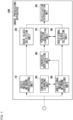
FIG. 1 is a configuration diagram of animage processing apparatus 100 according to the embodiment. -
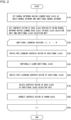
FIG. 2 is a flowchart illustrating a continual learning process performed by the image processing apparatus ofFIG. 1 . -
FIG. 3 is a diagram illustrating the structure of a neural network model used in the basic neural network processing unit and the additional neural network processing unit ofFIG. 1 . -
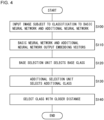
FIG. 4 is a flowchart illustrating a classification determination process performed by the image processing apparatus ofFIG. 1 . -
FIG. 1 is a configuration diagram of animage processing apparatus 100 according to the embodiment. Theimage processing apparatus 100 includes a basic neuralnetwork processing unit 10, a base class selection unit 20, an additional neuralnetwork processing unit 30, an additionalclass selection unit 40, acontinual learning unit 50, acentroid derivation unit 60, a centroidvector correction unit 70, and aclassification determination unit 80. - In this embodiment, machine learning in which continual learning and metric learning are combined is performed. An image will be described here as an example of input data, but the input data is not limited to an image. Metric learning is known as a method of learning a embedding space (feature space) by considering the relationship between images (see, for example, NON-PATENT LITERATURE 1). Metric learning is used in various fields such as information retrieval, data classification, and image recognition. Continual learning that uses regularization loss for the purpose of learning can be combined with metric learning that uses metric loss.
- In this embodiment, class incremental learning, which is a type of continual learning, is used (see, for example, NON-PATENT
LITERATURE 2, NON-PATENT LITERATURE 3). NON-PATENTLITERATURE 2 teaches performing class incremental learning in one neural network. NON-PATENTLITERATURE 3 teaches performing class incremental learning in two neural networks having different learning rates to perform classification in a connected feature space in which the feature spaces of the two neural networks are connected. - In this embodiment, the basic neural network that has learned a base class is not changed, and an additional neural network that has learned the base class and continues to learn an additional class is updated. Classification (class selection) is applied to the input image by using the basic neural network and the additional neural network, respectively, and the input image is classified into a class with a higher accuracy (closer distance).
-
FIG. 2 is a flowchart illustrating continual learning by theimage processing apparatus 100. The configuration and overall operation of continual learning will be described with reference toFIGS. 1 and2 . - First, a neural network that has learned the base class and the centroid vector of the base class derived by using the neural network are acquired. The neural network that has learned the base class may be acquired from a network, or a neural network may be trained by using a dataset including the base class. It is desirable that the neural network that has learned the base class is not trained for classification learning but trained for metric learning (embedding learning). The centroid vector of the base class may be acquired from the network. Alternatively, an image of the base class may be input to a trained neural network, and the centroid vector of each class may be derived by determining, for each class, the centroid of the embedding vectors output from the trained neural network. The number of centroid vectors per class is assumed to be 1 but may be plural.
- The neural network that has learned the base class is set to be the basic neural
network processing unit 10 and the additional neural network processing unit 30 (S10). - The centroid vector of the base class derived by using the neural network that has learned the base class is set in the base class selection unit 20 and the additional class selection unit 40 (S20). The base class selection unit 20 and the additional
class selection unit 40 store the centroid vector of the base class, respectively. - Next, a learning session i, which is continual learning, is repeated N times (i=1, 2, ..., N) (S30).
- First, the additional neural
network processing unit 30 inputs all images of each additional class included in an additional training dataset to the additional neural network prior to the learning session i, thereby deriving embedding vectors in all images of the additional class. Thecentroid derivation unit 60 derives the centroid vector of the additional class from the embedding vectors of all images of the additional class (S40). The centroid vector of the additional class in this case is the pre-learning centroid vector. It is noted that the centroid vector of the additional class is derived for all additional classes. - The
continual learning unit 50 then proceeds to the learning session i and subjects the additional neural network to continual learning by using the additional training dataset including the additional class (S50). - The additional neural
network processing unit 30 then inputs all images of each additional class included in the additional training dataset to the additional neural network subjected to the learning session i, thereby deriving embedding vectors in all images of the additional class. Thecentroid derivation unit 60 derives the centroid vector of the additional class from the embedding vectors of all images of the additional class (S60). The centroid vector of the additional class in this case is the post-learning centroid vector. It is noted that the centroid vector of the additional class is derived for all additional classes. - The additional
class selection unit 40 then deletes the centroid vector of the base class stored (S70). It is assumed here that the number of centroid vectors of the base classes deleted is the number of additional classes added in learning session I. It is assumed that the centroid vector of the base class to be deleted is the one nearest the centroid vector of the additional class added in the learning session i. After all the centroid vectors of the selected base classes are deleted, the centroid vectors are not deleted. This ensures that the number of centroid vectors stored by the basic class selection unit 20 and the number of centroid vectors stored by the additionalclass selection unit 40 are identical. - The centroid
vector correction unit 70 then corrects the centroid vector of known classes stored by the additional class selection unit 40 (S80). The known classes include base classes and additional classes in the learning session (i-1). Additional classes in learning session i do not need to be corrected. i is incremented by 1 (S90), control is returned to step S30, steps S40-S80 are repeated until i=N, and the process is ended when i exceeds N. - For correction of the centroid vector of the learned (known) class, the method described with reference to
FIG. 3 inNON-PATENT LITERATURE 2 is used with improvements. - The centroid
vector correction unit 70 corrects the centroid vector of the learned class based on the centroid vector of the class prior to continuation learning and the centroid vector of the class subsequent to continuation learning within a predetermined distance from the centroid vector of the learned class (known class). Specifically, the centroidvector correction unit 70 determines the amount of movement from the centroid vector of the class prior to continual learning to the centroid vector of the class subsequent to continual learning and calculates the average movement amount by referring to the amounts of movement. The centroidvector correction unit 70 corrects the centroid vector of the learned class by adding the average movement amount to the centroid vector of the learned class. - In
NON-PATENT LITERATURE 2, a pre-learning embedding vector within the radius R of the centroid vector of a known class is used for correction. This embodiment differs in that both the centroid vector of the class prior to continual learning and the centroid vector of the class subsequent to continual learning are used for correction. Calculation of the average movement amount will be less affected by fine image-to-image fluctuations by using a large number of centroid vectors. In this embodiment, therefore, both the centroid vector of the class prior to continual learning and the centroid vector of the class subsequent to continual learning within a predetermined distance from the centroid vector of the learned class are used for correction. - The configuration and operation of the
continual learning unit 50 will be described in further detail. - The basic training dataset is a supervised dataset including a large number of base classes (e.g., about 100 to 1000 classes), wherein each class is comprised of a large number of images (e.g., 3000 images). The basic training dataset is assumed to have a sufficient amount of data to allow learning a general classification task alone.
- On the other hand, the additional training dataset is a supervised dataset including a small number of additional classes (e.g., about 2 to 10 classes), wherein each additional class is comprised of a small number of images (e.g., about 1 to 5 images). Training data comprised of a set of three images, including an anchor image belonging to a given class, a positive image belonging to the same class as the anchor image, and a negative image belonging to a class different from that of the anchor image, is input to the neural network that should be trained. The reason that two classes are assumed as a small number of classes is that a class that contains negative images and that is not learned is necessary even if the number of classes learned is one. It is assumed here that the set includes a small number of images but may include a large number of images provided that the number of classes is small.
-
FIG. 3 is a diagram illustrating the structure of a neural network model used in the basic neuralnetwork processing unit 10 and the additional neuralnetwork processing unit 30. The neural network is a deep neural network that includes a convolutional layer and a pooling layer and does not include a fully connected layer. The network is configured to include CONV-1 to CONV-5, which are ResNet-18 convolutional layers shown inFIG. 3 , followed by a global average pooling layer. The network outputs 512 dimensional embedding vectors. - The
continual learning unit 50 calculates the total loss L as given by the following expression by adding the metric loss Lml and the regularization loss Lr. Thecontinual learning unit 50 trains the neural network so as to minimize the overall loss L.
- Triplet loss is used as metric loss. The triplet loss Lml is calculated by the following expression based on the embedding vector of the anchor image, the embedding vector of the positive image, and the embedding vector of the negative image.

- The regularization loss Lr is an embedding vector loss Lrv as given by the following expression for minimizing the difference between embedding vectors output before and after the learning session when an image is input to the neural network.

-
FIG. 4 is a flowchart illustrating classification determination by theimage processing apparatus 100. With reference toFIGS. 1 and4 , the configuration and overall operation of classification determination will be described. - The basic neural
network processing unit 10 inputs an image subject to classification to the basic neural network, and the additional neuralnetwork processing unit 30 inputs the image subject to classification to the additional neural network subjected to continual learning (S100). - The basic neural
network processing unit 10 supplies the embedding vector of the image subject to classification output from the basic neural network to the basic class selection unit 20. The additional neuralnetwork processing unit 30 supplies the embedding vector of the image subject to classification output from the additional neural network to the additional class selection unit 40 (S110). - The base class selection unit 20 selects a base class based on the base embedding vector output by the basic neural network (S120). Specifically, a base class having a centroid vector closest to the base embedding vector is selected.
- The additional
class selection unit 40 selects an additional class based on the additional embedding vector output by the additional neural network (S130). Specifically, an additional class having a centroid vector closest to the additional embedding vector is selected. The additionalclass selection unit 40 does not select a base class even if the class having a centroid vector closest to the additional embedding vector is a base class. - The
classification determination unit 80 compares the base class selected by the base class selection unit 20 and the additional class selected by the additionalclass selection unit 40 and determines the class characterized by the closest distance between the centroid vector and the embedding vector to be class resulting from classification of the image subject to classification (S140). A reciprocal of the distance between the centroid vector and the embedding vector may be taken and treated as if it indicates a probability. Relative magnitude of the probability may be examined, and the class associated with a higher probability may be determined to be the class resulting from classification. When the distance between the centroid vector and the embedding vector is the same between the selected base class and the selected additional class, the additional class is selected as the class resulting from classification. - A variation of the additional
class selection unit 40 and theclassification determination unit 80 will be described. Only the operations that differ from those of the embodiment will be described. The additionalclass selection unit 40 selects the centroid vector having the closest distance to the additional embedding vector regardless of whether the class is a base class or an additional class. When the base class selected by the base class selection unit 20 and the base class selected by the additionalclass selection unit 40 are different, theclassification determination unit 80 selects the base class selected by the base class selection unit 20 as the class resulting from classification. The reason that theclassification determination unit 80 selects the base class selected by the basic class selection unit 20 as the class resulting from classification is that the basic neural network has learned more data for the basic class. That is, theclassification determination unit 80 selects the classification result of the neural network trained with more data. - The above-described various processes in the
image processing apparatus 100 can of course be implemented by hardware-based apparatuses such as a CPU and a memory and can also be implemented by firmware stored in a ROM (read-only memory), a flash memory, etc., or by software on a computer, etc. The firmware program or the software program may be made available on, for example, a computer readable recording medium. Alternatively, the program may be transmitted and received to and from a server via a wired or wireless network. Still alternatively, the program may be transmitted and received in the form of data broadcast over terrestrial or satellite digital broadcast systems. - As described above, according to the
image processing apparatus 100 of this embodiment, the basic neural network is not subject to continual learning and so does not forget the basic class. Even if the learning session progresses, therefore, the basic neural network can classify into the base class with a high probability. Since the basic neural network does not continually learn an additional class, the basic neural network cannot select an additional class. However, the additional neural network can learn the base class and the additional class such that the features of both are considered and can select an additional class, by continually learning the additional class in addition to the base class. - According to this embodiment, the result of classification by the basic neural network that does not forget the base class and the result of classification by the additional neural network trained to learn the additional class continually are evaluated, and the result of classification having a higher accuracy is selected. Accordingly, it is possible to mitigate catastrophic forgetting and improve accuracy of classification at the same time.
- In the case the additional neural network learns only the additional class, the centroid vector of the additional class is likely to be overfitted because the number of data items in the additional class is small. Also, it is highly likely that the centroid vector is overcorrected. In the training of the additional neural network, therefore, it is possible to prevent the centroid vector of the additional class and correction of the centroid vector from varying significantly through overfitting and to reduce overfitting to the centroid vector of the additional class and correction of the centroid vector, by considering, along with the additional class, the embedding vector output by the basic neural network that has learned the base classes with more data.
- Further, by keeping the total number of classes comprising the base classes and the additional classes in the additional
class selection unit 40 constant, the embedding spaces of the basic neural network and the additional neural network can be kept at similar densities, and the distance in the embedding space of the basic class selection unit 20 and the additionalclass selection unit 40 can be dealt with as being similar. It is possible to prevent a bias in class selection from being created between the base class selection unit 20 and the additionalclass selection unit 40. - Described above is an explanation based on an exemplary embodiment. The embodiment is intended to be illustrative only and it will be understood by those skilled in the art that various modifications to combinations of constituting elements and processes are possible and that such modifications are also within the scope of the present invention.
- The present invention can be used in image processing technology based on machine learning.
- 10 basic neural network processing unit, 20 base class selection unit, 30 additional neural network processing unit, 40 additional class selection unit, 50 continual learning unit, 60 centroid derivation unit, 70 centroid vector correction unit, 80 classification determination unit, 100 image processing apparatus
Claims (6)
- An image processing apparatus comprising:a basic class selection unit that selects, in response to input data, a base class based on an embedding vector output by a basic neural network that has learned the base class and a centroid vector of the base class;a continual learning unit that continually learns an additional class by using an additional neural network that has learned the base class;an additional class selection unit that selects, in response to the input data, an additional class based on an embedding vector output by the additional neural network subjected to continual learning and centroid vectors of the base class and the additional class; anda classification determination unit that classifies the input data based on the base class selected by the base class selection unit and the additional class selected by the additional class selection unit.
- The image processing apparatus according to claim 1, further comprising:a centroid derivation unit that derives a centroid vector from an embedding vector output by the additional neural network; anda centroid correction unit that corrects a centroid vector of a class known before continual learning based on the centroid vector before continual learning and the centroid vector after continual learning derived by the centroid derivation unit.
- The image processing apparatus according to claim 1, wherein the additional class selection unit deletes centroid vectors of the base classes, the number of centroid vectors deleted being equal to the number of additional classes in continual learning.
- The image processing apparatus according to claim 1, wherein the classification determination unit determines that the base class selected by the base class selection unit to be a result of classification, when a class selected by the additional class selection unit is a base class and when the base class selected by the additional class selection unit and the base class selected by the base class selection unit differ.
- An image processing method comprising:selecting, in response to input data, a base class based on an embedding vector output by a basic neural network that has learned the base class and a centroid vector of the base class;continually learning an additional class by using an additional neural network that has learned the base class;selecting, in response to the input data, an additional class based on an embedding vector output by the additional neural network subjected to continual learning and centroid vectors of the base class and the additional class; andclassifying the input data based on the base class selected by the selecting of a base class and the additional class selected by the selecting of an additional class.
- An image processing program comprising computer-implemented modules including:a module that selects, in response to input data, a base class based on an embedding vector output by a basic neural network that has learned the base class and a centroid vector of the base class;a module that continually learns an additional class by using an additional neural network that has learned the base class;a module that selects, in response to the input data, an additional class based on an embedding vector output by the additional neural network subjected to continual learning and centroid vectors of the base class and the additional class; anda module that classifies the input data based on the base class selected by the module that selects a base class and the additional class selected by the module that selects an additional class.
Applications Claiming Priority (2)
| Application Number | Priority Date | Filing Date | Title |
|---|---|---|---|
| JP2021140819A JP7582127B2 (en) | 2021-08-31 | 2021-08-31 | IMAGE PROCESSING APPARATUS, IMAGE PROCESSING METHOD, AND IMAGE PROCESSING PROGRAM |
| PCT/JP2022/021174 WO2023032360A1 (en) | 2021-08-31 | 2022-05-24 | Image processing device, image processing method, and image processing program |
Publications (3)
| Publication Number | Publication Date |
|---|---|
| EP4398186A1 true EP4398186A1 (en) | 2024-07-10 |
| EP4398186A4 EP4398186A4 (en) | 2024-12-25 |
| EP4398186B1 EP4398186B1 (en) | 2025-12-03 |
Family
ID=85411159
Family Applications (1)
| Application Number | Title | Priority Date | Filing Date |
|---|---|---|---|
| EP22863950.6A Active EP4398186B1 (en) | 2021-08-31 | 2022-05-24 | Image processing device, image processing method, and image processing program |
Country Status (5)
| Country | Link |
|---|---|
| US (1) | US20240212323A1 (en) |
| EP (1) | EP4398186B1 (en) |
| JP (1) | JP7582127B2 (en) |
| CN (1) | CN117813633A (en) |
| WO (1) | WO2023032360A1 (en) |
Families Citing this family (2)
| Publication number | Priority date | Publication date | Assignee | Title |
|---|---|---|---|---|
| CN117056726B (en) * | 2023-07-25 | 2025-10-10 | 清华大学 | A Wasserstein centroid matching layer method and product for message passing neural networks |
| JP7812524B2 (en) * | 2024-03-29 | 2026-02-10 | クラシエ株式会社 | Health management support system, health management support device, health management support method, and program |
Family Cites Families (1)
| Publication number | Priority date | Publication date | Assignee | Title |
|---|---|---|---|---|
| US11308353B2 (en) | 2019-10-23 | 2022-04-19 | Adobe Inc. | Classifying digital images in few-shot tasks based on neural networks trained using manifold mixup regularization and self-supervision |
-
2021
- 2021-08-31 JP JP2021140819A patent/JP7582127B2/en active Active
-
2022
- 2022-05-24 WO PCT/JP2022/021174 patent/WO2023032360A1/en not_active Ceased
- 2022-05-24 CN CN202280055588.3A patent/CN117813633A/en active Pending
- 2022-05-24 EP EP22863950.6A patent/EP4398186B1/en active Active
-
2024
- 2024-02-27 US US18/588,056 patent/US20240212323A1/en active Pending
Also Published As
| Publication number | Publication date |
|---|---|
| US20240212323A1 (en) | 2024-06-27 |
| CN117813633A (en) | 2024-04-02 |
| EP4398186A4 (en) | 2024-12-25 |
| WO2023032360A1 (en) | 2023-03-09 |
| JP7582127B2 (en) | 2024-11-13 |
| JP2023034530A (en) | 2023-03-13 |
| EP4398186B1 (en) | 2025-12-03 |
Similar Documents
| Publication | Publication Date | Title |
|---|---|---|
| US20240212323A1 (en) | Image processing apparatus, image processing method, and non-transitory computer-readable medium having image processing program | |
| US11562250B2 (en) | Information processing apparatus and method | |
| CN111742333B (en) | Method and device for performing deep neural network learning | |
| EP4550217A1 (en) | Machine learning device, machine learning method, and machine learning program | |
| US20240265257A1 (en) | Machine learning device, machine learning method, and non-transitory computer-readable recording medium embodied thereon machine learning program | |
| JP7472471B2 (en) | Estimation system, estimation device, and estimation method | |
| US11676027B2 (en) | Classification using hyper-opinions | |
| Heim et al. | A learnable safety measure | |
| Theocharous et al. | Posterior sampling for large scale reinforcement learning | |
| US20240330703A1 (en) | Machine learning device, machine learning method, and non-transitory computer-readable medium having machine learning program | |
| Lee et al. | Local manifold approximation and projection for manifold-aware diffusion planning | |
| US20240037445A1 (en) | Pessimistic offline reinforcement learning system and method | |
| JP2021047751A (en) | Active learning device, active learning method, and program | |
| Wang et al. | Adaptive contrastive learning for learning robust representations under label noise | |
| JP2023011312A (en) | Machine learning device, machine learning method, and machine learning program | |
| Kim | Active label correction using robust parameter update and entropy propagation | |
| Hofer et al. | Research Agenda for Reducing Feature Descriptor Sizes in Networked Visual-SLAM | |
| JP7600768B2 (en) | Machine learning device, inference device, machine learning method, and machine learning program | |
| US20260011138A1 (en) | Image classification apparatus, image classification method, and non-transitory computer-readable medium having image classification program | |
| CN116776119A (en) | Method, device and related medium for inhibiting catastrophic forgetfulness | |
| Tscheschner et al. | Incremental Learning with Repetition via Pseudo-Feature Projection | |
| CN111291771B (en) | Method and device for optimizing pooling layer characteristics | |
| US20240312186A1 (en) | Machine learning device, machine learning method, and non-transitory computer-readable medium having machine learning program | |
| Katayama et al. | Recognition of rotated images by angle estimation using feature map with CNN | |
| Tatsumi et al. | Xcs-cr: Determining accuracy of classifier by its collective reward in action set toward environment with action noise |
Legal Events
| Date | Code | Title | Description |
|---|---|---|---|
| STAA | Information on the status of an ep patent application or granted ep patent |
Free format text: STATUS: THE INTERNATIONAL PUBLICATION HAS BEEN MADE |
|
| PUAI | Public reference made under article 153(3) epc to a published international application that has entered the european phase |
Free format text: ORIGINAL CODE: 0009012 |
|
| STAA | Information on the status of an ep patent application or granted ep patent |
Free format text: STATUS: REQUEST FOR EXAMINATION WAS MADE |
|
| 17P | Request for examination filed |
Effective date: 20240228 |
|
| AK | Designated contracting states |
Kind code of ref document: A1 Designated state(s): AL AT BE BG CH CY CZ DE DK EE ES FI FR GB GR HR HU IE IS IT LI LT LU LV MC MK MT NL NO PL PT RO RS SE SI SK SM TR |
|
| REG | Reference to a national code |
Free format text: PREVIOUS MAIN CLASS: G06T0007000000 Ipc: G06N0003045000 Ref country code: DE Ref legal event code: R079 Ref document number: 602022026334 Country of ref document: DE |
|
| DAV | Request for validation of the european patent (deleted) | ||
| DAX | Request for extension of the european patent (deleted) | ||
| A4 | Supplementary search report drawn up and despatched |
Effective date: 20241127 |
|
| RIC1 | Information provided on ipc code assigned before grant |
Ipc: G06N 20/00 20190101ALI20241121BHEP Ipc: G06N 3/08 20230101ALI20241121BHEP Ipc: G06T 7/00 20170101ALI20241121BHEP Ipc: G06N 3/045 20230101AFI20241121BHEP |
|
| GRAP | Despatch of communication of intention to grant a patent |
Free format text: ORIGINAL CODE: EPIDOSNIGR1 |
|
| STAA | Information on the status of an ep patent application or granted ep patent |
Free format text: STATUS: GRANT OF PATENT IS INTENDED |
|
| INTG | Intention to grant announced |
Effective date: 20250707 |
|
| GRAS | Grant fee paid |
Free format text: ORIGINAL CODE: EPIDOSNIGR3 |
|
| GRAA | (expected) grant |
Free format text: ORIGINAL CODE: 0009210 |
|
| STAA | Information on the status of an ep patent application or granted ep patent |
Free format text: STATUS: THE PATENT HAS BEEN GRANTED |
|
| AK | Designated contracting states |
Kind code of ref document: B1 Designated state(s): AL AT BE BG CH CY CZ DE DK EE ES FI FR GB GR HR HU IE IS IT LI LT LU LV MC MK MT NL NO PL PT RO RS SE SI SK SM TR |
|
| RAP3 | Party data changed (applicant data changed or rights of an application transferred) |
Owner name: JVCKENWOOD CORPORATION |
|
| REG | Reference to a national code |
Ref country code: CH Ref legal event code: F10 Free format text: ST27 STATUS EVENT CODE: U-0-0-F10-F00 (AS PROVIDED BY THE NATIONAL OFFICE) Effective date: 20251203 Ref country code: GB Ref legal event code: FG4D |
|
| REG | Reference to a national code |
Ref country code: DE Ref legal event code: R096 Ref document number: 602022026334 Country of ref document: DE |
|
| REG | Reference to a national code |
Ref country code: IE Ref legal event code: FG4D |
|
| REG | Reference to a national code |
Ref country code: NL Ref legal event code: MP Effective date: 20251203 |
|
| PGFP | Annual fee paid to national office [announced via postgrant information from national office to epo] |
Ref country code: GB Payment date: 20260323 Year of fee payment: 5 |
|
| PG25 | Lapsed in a contracting state [announced via postgrant information from national office to epo] |
Ref country code: ES Free format text: LAPSE BECAUSE OF FAILURE TO SUBMIT A TRANSLATION OF THE DESCRIPTION OR TO PAY THE FEE WITHIN THE PRESCRIBED TIME-LIMIT Effective date: 20251203 |
|
| REG | Reference to a national code |
Ref country code: LT Ref legal event code: MG9D |
|
| PG25 | Lapsed in a contracting state [announced via postgrant information from national office to epo] |
Ref country code: NO Free format text: LAPSE BECAUSE OF FAILURE TO SUBMIT A TRANSLATION OF THE DESCRIPTION OR TO PAY THE FEE WITHIN THE PRESCRIBED TIME-LIMIT Effective date: 20260303 |
|
| PG25 | Lapsed in a contracting state [announced via postgrant information from national office to epo] |
Ref country code: FI Free format text: LAPSE BECAUSE OF FAILURE TO SUBMIT A TRANSLATION OF THE DESCRIPTION OR TO PAY THE FEE WITHIN THE PRESCRIBED TIME-LIMIT Effective date: 20251203 Ref country code: HR Free format text: LAPSE BECAUSE OF FAILURE TO SUBMIT A TRANSLATION OF THE DESCRIPTION OR TO PAY THE FEE WITHIN THE PRESCRIBED TIME-LIMIT Effective date: 20251203 |
|
| PG25 | Lapsed in a contracting state [announced via postgrant information from national office to epo] |
Ref country code: RS Free format text: LAPSE BECAUSE OF FAILURE TO SUBMIT A TRANSLATION OF THE DESCRIPTION OR TO PAY THE FEE WITHIN THE PRESCRIBED TIME-LIMIT Effective date: 20260303 |
|
| PG25 | Lapsed in a contracting state [announced via postgrant information from national office to epo] |
Ref country code: PL Free format text: LAPSE BECAUSE OF FAILURE TO SUBMIT A TRANSLATION OF THE DESCRIPTION OR TO PAY THE FEE WITHIN THE PRESCRIBED TIME-LIMIT Effective date: 20251203 |
|
| PG25 | Lapsed in a contracting state [announced via postgrant information from national office to epo] |
Ref country code: LV Free format text: LAPSE BECAUSE OF FAILURE TO SUBMIT A TRANSLATION OF THE DESCRIPTION OR TO PAY THE FEE WITHIN THE PRESCRIBED TIME-LIMIT Effective date: 20251203 |
|
| PG25 | Lapsed in a contracting state [announced via postgrant information from national office to epo] |
Ref country code: BG Free format text: LAPSE BECAUSE OF FAILURE TO SUBMIT A TRANSLATION OF THE DESCRIPTION OR TO PAY THE FEE WITHIN THE PRESCRIBED TIME-LIMIT Effective date: 20251203 |