EP4398123A1 - Control method and device of data processing device - Google Patents
Control method and device of data processing device Download PDFInfo
- Publication number
- EP4398123A1 EP4398123A1 EP23795265.0A EP23795265A EP4398123A1 EP 4398123 A1 EP4398123 A1 EP 4398123A1 EP 23795265 A EP23795265 A EP 23795265A EP 4398123 A1 EP4398123 A1 EP 4398123A1
- Authority
- EP
- European Patent Office
- Prior art keywords
- data
- key
- value
- vertex
- processing
- Prior art date
- Legal status (The legal status is an assumption and is not a legal conclusion. Google has not performed a legal analysis and makes no representation as to the accuracy of the status listed.)
- Pending
Links
Images





Classifications
-
- G—PHYSICS
- G06—COMPUTING OR CALCULATING; COUNTING
- G06F—ELECTRIC DIGITAL DATA PROCESSING
- G06F16/00—Information retrieval; Database structures therefor; File system structures therefor
- G06F16/20—Information retrieval; Database structures therefor; File system structures therefor of structured data, e.g. relational data
- G06F16/24—Querying
- G06F16/245—Query processing
- G06F16/2458—Special types of queries, e.g. statistical queries, fuzzy queries or distributed queries
- G06F16/2465—Query processing support for facilitating data mining operations in structured databases
-
- G—PHYSICS
- G06—COMPUTING OR CALCULATING; COUNTING
- G06F—ELECTRIC DIGITAL DATA PROCESSING
- G06F16/00—Information retrieval; Database structures therefor; File system structures therefor
- G06F16/90—Details of database functions independent of the retrieved data types
- G06F16/901—Indexing; Data structures therefor; Storage structures
- G06F16/9024—Graphs; Linked lists
-
- G—PHYSICS
- G06—COMPUTING OR CALCULATING; COUNTING
- G06F—ELECTRIC DIGITAL DATA PROCESSING
- G06F17/00—Digital computing or data processing equipment or methods, specially adapted for specific functions
- G06F17/10—Complex mathematical operations
- G06F17/16—Matrix or vector computation, e.g. matrix-matrix or matrix-vector multiplication, matrix factorization
-
- G—PHYSICS
- G06—COMPUTING OR CALCULATING; COUNTING
- G06F—ELECTRIC DIGITAL DATA PROCESSING
- G06F16/00—Information retrieval; Database structures therefor; File system structures therefor
- G06F16/20—Information retrieval; Database structures therefor; File system structures therefor of structured data, e.g. relational data
- G06F16/22—Indexing; Data structures therefor; Storage structures
- G06F16/2228—Indexing structures
- G06F16/2237—Vectors, bitmaps or matrices
-
- G—PHYSICS
- G06—COMPUTING OR CALCULATING; COUNTING
- G06F—ELECTRIC DIGITAL DATA PROCESSING
- G06F16/00—Information retrieval; Database structures therefor; File system structures therefor
- G06F16/20—Information retrieval; Database structures therefor; File system structures therefor of structured data, e.g. relational data
- G06F16/24—Querying
- G06F16/245—Query processing
- G06F16/2453—Query optimisation
-
- G—PHYSICS
- G06—COMPUTING OR CALCULATING; COUNTING
- G06F—ELECTRIC DIGITAL DATA PROCESSING
- G06F16/00—Information retrieval; Database structures therefor; File system structures therefor
- G06F16/20—Information retrieval; Database structures therefor; File system structures therefor of structured data, e.g. relational data
- G06F16/24—Querying
- G06F16/245—Query processing
- G06F16/2455—Query execution
- G06F16/24553—Query execution of query operations
- G06F16/24558—Binary matching operations
- G06F16/2456—Join operations
-
- G—PHYSICS
- G06—COMPUTING OR CALCULATING; COUNTING
- G06F—ELECTRIC DIGITAL DATA PROCESSING
- G06F16/00—Information retrieval; Database structures therefor; File system structures therefor
- G06F16/20—Information retrieval; Database structures therefor; File system structures therefor of structured data, e.g. relational data
- G06F16/24—Querying
- G06F16/245—Query processing
- G06F16/2458—Special types of queries, e.g. statistical queries, fuzzy queries or distributed queries
- G06F16/2474—Sequence data queries, e.g. querying versioned data
Definitions
- Each iteration includes: inputting the first target data group and the second target data group to a data processing apparatus, where the data processing apparatus is configured to determine an equal key value in the first target data group and second target data; and when the data groups in each data set are arranged according to the first sequence and a first key value is less than or equal to a second key value, obtaining a first data group following the first target data group in the first data set as another first target data group, where the first key value is a largest key value in the first target data group, the second key value is a largest key value in the second target data group; or when the data groups in each data set are arranged according to the second sequence and a third key value is greater than or equal to a fourth key value, obtaining a first data group following the first target data group in the first data set as another first target data group, where the third key value is a smallest key value in the first target data group, and the fourth key value is a smallest key value in the second target data group.
- the ⁇ key, value> pairs of the vertices in the graph are used to determine an equal key value in ⁇ key, value> pairs of two target vertices in the graph, and determine, based on relationship value groups of the two vertices corresponding to the equal key value, a query vertex whose relationships with the two target vertices meet a preset condition.
- processing time needed for determining the query vertex can be reduced.
- Key values in the first data set are arranged in ascending or descending order, so that at least one piece of data may be obtained from the first data set as a first target data group, and first target data groups obtained for a plurality of times are first data groups. In this way, the first data groups are more flexibly divided.
- the data groups in each data set are arranged according to the first sequence, and the first key value is greater than or equal to the second key value, a second data group following the second target data group in the second data set is obtained as another second target data group.
- the data groups in each data set are arranged according to the second sequence and the third key value is less than or equal to the fourth key value, a second data group following the second target data group in the second data set is obtained as another second target data group.
- the first direction is a direction from the second edge to the inside of the processing matrix and perpendicular to the second edge.
- the second direction is a direction from the first edge to the inside of the processing matrix and perpendicular to the first edge.
- Each processing element in the processing matrix is configured to: determine whether a key value in first data input to the processing element is equal to a key value in second data input to the processing element in a same input cycle. When v is greater than 1, each processing element in the processing matrix is further configured to: in a next input cycle after the first data and the second data are received, transmit the first data to a next processing element in the first direction, and transmit the second data to a next processing element in the second direction.
- Each processing element in the processing matrix is configured to: when the key value in the first data is not equal to the key value in the second data, transmit the first data to the next processing element in the first direction, and transmit the second data to the next processing element in the second direction.
- the data processing apparatus further includes a filter matrix.
- the filter matrix includes v filter units.
- the v filter units separately follow a last processing element in the second direction in each of v rows of the processing matrix in the first direction.
- Each processing element in the processing matrix is further configured to: when the key value in the first data is equal to the key value in the second data, transmit a processing result of the processing element to a next unit in the second direction in the next input cycle after the first data and the second data are received, where the unit is a processing element or a filter unit, and the processing result includes the equal key value; or transmit the processing result to a next unit in the second direction in a next input cycle after the processing result is received.
- the processing module is further configured to: when the first key value is greater than or equal to the second key value, control the v filter units in the first direction to sequentially output processing results corresponding to the second target data group based on input cycles.
- different key values correspond to different vertex sets in a graph.
- the first data indicates whether a first target vertex in the graph has a relationship with at least one vertex in a vertex set corresponding to a key value in the first data.
- the second data indicates whether a second target vertex in the graph has a relationship with at least one vertex in a vertex set corresponding to a key value in the second data.
- Each processing matrix is further configured to output a processing result when the key value in the first data is equal to the key value in the second data.
- the processing result indicates a query vertex in the graph. Relationships between the query vertex and the two target vertices meet a preset condition.
- the first data further includes a first relationship value group of the first target vertex corresponding to the key value.
- the second data further includes a second relationship value group of the second target vertex corresponding to the key value.
- Each processing element in the processing matrix is further configured to: when the key value in the first data is equal to the key value in the second data, perform a preset operation on each bit in the first relationship value group and the second relationship value group.
- a same bit in the first relationship value group and in the second relationship value group corresponding to the equal key value corresponds to a same vertex in the vertex sets corresponding to the equal key value.
- a result of the preset operation on each bit indicates whether relationships between the vertex corresponding to the bit and the two target vertices meet the preset condition.
- a data processing apparatus controlling apparatus including a memory and at least one processor.
- the memory is configured to store a program.
- the controlling apparatus is configured to perform the method according to any one of the first aspect.
- the vertex having a relationship with the target vertex exists in the vertex set corresponding to the key value in each ⁇ key, value> pair of the target vertex.
- a vertex having a relationship with the target vertex exists in a vertex set corresponding to a key value in each ⁇ key, value> pair.
- the obtaining at least one ⁇ key, value> pair of each of two target vertices in a graph includes: obtaining data of the graph, where the data of the graph includes a row offset vector, a key value vector, and a relationship value vector; and determining the at least one ⁇ key, value> pair of each of the two target vertices based on the graph data.
- the key value vector includes at least one key value of each vertex in a plurality of vertices in the graph.
- the row offset vector indicates a location of at least one key value of each vertex in the key value vector.
- the relationship value vector includes relationship value groups of vertices corresponding to key values of each vertex in a plurality of vertices. A ranking of at least one key value of each vertex in the key value vector is the same as a ranking of a relationship value group of a vertex corresponding to the key value of each vertex in the relationship value vector.
- different key values correspond to an equal quantity of vertices in the vertex sets.
- the determining a query vertex in the graph based on the relationship value group of the first target vertex and the relationship value group of the second target vertex that correspond to the equal key value includes: processing the relationship value group of the first target vertex and the relationship value group of the second target vertex that correspond to the same key value based on the processing matrix, to determine the query vertex.
- Each of the plurality of processing elements is configured to: when the key value of the first target vertex is equal to the key value of the second target vertex, determine the query vertex in the graph based on the relationship value group of the first target vertex input to the processing element and the relationship value group of the second target vertex input to the processing element, where relationships between the query vertex and the two target vertices meet the preset condition.
- Each of the plurality of processing elements is further configured to: transmit the ⁇ key, value> pair of the first target vertex to a next processing element in the first direction, and transmit the ⁇ key, value> pair of the second target vertex to a next processing element in the second direction based on the input cycles.
- each of the plurality of processing elements is specifically configured to: when the key value of the first target vertex is not equal to the key value of the second target vertex, transmit the ⁇ key, value> pair of the first target vertex to the next processing element in the first direction, and transmit the ⁇ key, value> pair of the second target vertex to the next processing element in the second direction.
- Key values in ⁇ key, value> pairs of a target vertex are different.
- the processing element transmits the key value of the first target vertex and the key value of the second target vertex.
- the ⁇ key, value> pairs are no longer transmitted. Therefore, the equal key value may not be compared with another key value, thereby reducing an operation amount.
- the sequentially inputting the at least one ⁇ key, value> pair of the first target vertex in a second direction to a plurality of processing elements at a first edge in a processing matrix based on the input cycles, and sequentially inputting the at least one ⁇ key, value> pair of the second target vertex in a first direction to a plurality of processing elements at a second edge in the processing matrix based on the input cycles includes: before the performing a plurality of iterations and after each iteration, sequentially inputting a plurality of ⁇ key, value> pairs in the third ⁇ key, value> pair group to the plurality of processing elements at the first edge in the processing matrix based on the input cycles, and sequentially inputting a plurality of ⁇ key, value> pairs in the fourth ⁇ key, value> pair group to the plurality of processing elements at the second edge in the processing matrix in the plurality of processing elements based on the input cycles.
- the processing module is configured to: determine an equal key value in the at least one key value of the first target vertex and the at least one key value of the second target vertex.
- the processing module is further configured to: determine a query vertex in the graph based on the relationship value group of the first target vertex and the relationship value group of the second target vertex that correspond to the equal key value, where relationships between the query vertex and the two target vertices meet a preset condition.
- the obtaining module is specifically configured to: obtain data of the graph, where the data of the graph includes a row offset vector, a key value vector, and a relationship value vector; and determine the at least one ⁇ key, value> pair of each of the two target vertices based on the graph data.
- the key value vector includes at least one key value of each vertex in a plurality of vertices in the graph.
- the row offset vector indicates a location of at least one key value of each vertex in the key value vector.
- the relationship value vector includes relationship value groups of vertices corresponding to key values of each vertex in the plurality of vertices. A ranking of at least one key value of each vertex in the key value vector is the same as a ranking of a relationship value group of a vertex corresponding to the key value of each vertex in the relationship value vector.
- different key values correspond to an equal quantity of vertices in the vertex sets.
- the processing module is specifically configured to perform a preset operation on each bit of the relationship value group of the first target vertex and each bit of the relationship value group of the second target vertex that correspond to the equal key value.
- a same bit in relationship value groups that correspond to key values and that are of different vertices corresponds to a same vertex in vertex sets corresponding to the key values.
- a result of the preset operation on each bit indicates whether relationships between the vertex corresponding to the bit and the two target vertices meet the preset condition.
- the processing module includes: a controller and a processing matrix.
- the processing matrix includes v ⁇ v processing elements, and v is an integer greater than 1.
- the controller is configured to: sequentially input the at least one ⁇ key, value> pair of the first target vertex in the two target vertices in the graph in a second direction to a plurality of processing elements at a first edge in the processing matrix based on input cycles, and sequentially input the at least one ⁇ key, value> pair of the second target vertex in the two target vertices in a first direction to a plurality of processing elements at a second edge in the processing matrix based on the input cycles.
- the at least one ⁇ key, value> pair of the first target vertex and the at least one ⁇ key, value> pair of the second target vertex start to be input to the processing matrix in a same input cycle.
- the first edge is adjacent to the second edge.
- the first direction is a direction away from the second edge.
- the second direction is a direction away from the first edge.
- Each ⁇ key, value> pair of the target vertex include a key value of the target vertex and a relationship value group of the target vertex corresponding to the key value. Different key values correspond to different vertex sets in the graph.
- the relationship value group of the target vertex corresponding to the key value of the target vertex indicates whether the target vertex has a relationship with vertices in a vertex set corresponding to the key value.
- each of the plurality of processing elements is specifically configured to: when the key value of the first target vertex is not equal to the key value of the second target vertex, transmit the ⁇ key, value> pair of the first target vertex to the next processing element in the first direction, and transmit the ⁇ key, value> pair of the second target vertex to the next processing element in the second direction.
- a quantity of ⁇ key, value> pairs of the first target vertex is greater than v
- the controller is further configured to: divide the at least one ⁇ key, value> pair of the first target vertex into a plurality of first ⁇ key, value> pair groups according to a sequence of key values in the ⁇ key, value> pairs, and divide the at least one ⁇ key, value> pair of the second target vertex into at least one second ⁇ key, value> pair group according to a sequence of key values in the ⁇ key, value> pairs, where a quantity of ⁇ key, value> pairs in each of the plurality of first ⁇ key, value> pair groups and the at least one second ⁇ key, value> pair group is less than or equal to v, a ⁇ key, value> pair group having smallest key values in the plurality of first ⁇ key, value> pair groups is a third ⁇ key, value> pair group, and a ⁇ key, value> pair group having smallest key values in
- the iteration includes: sequentially inputting at least one ⁇ key, value> pair in the third ⁇ key, value> pair group to a plurality of processing elements at the first edge in the plurality of processing elements based on the input cycles, and sequentially inputting at least one ⁇ key, value> pair in the fourth ⁇ key, value> pair group to a plurality of processing elements at the second edge in the plurality of processing elements based on the input cycles; and when the largest key value in the third ⁇ key, value> pair group is less than the largest key value in the fourth ⁇ key, value> pair group, using a next first ⁇ key, value> pair group of the third ⁇ key, value> pair group in the plurality of first ⁇ key, value> pair groups arranged in ascending order of key values as another third ⁇ key, value> pair group.
- the controller is specifically configured to: before the performing a plurality of iterations and after each iteration, sequentially inputting a plurality of ⁇ key, value> pairs in the third ⁇ key, value> pair group to the plurality of processing elements at the first edge in the processing matrix based on the input cycles, and sequentially inputting a plurality of ⁇ key, value> pairs in the fourth ⁇ key, value> pair group to the plurality of processing elements at the second edge in the processing matrix in the plurality of processing elements based on the input cycles.
- the at least one ⁇ key, value> pair of the first target vertex and the at least one ⁇ key, value> pair of the second target vertex start to be input to the processing matrix in a same input cycle.
- the first edge is adjacent to the second edge.
- the first direction is a direction away from the second edge.
- the second direction is a direction away from the first edge.
- Each ⁇ key, value> pair of the target vertex include a key value of the target vertex and a relationship value group of the target vertex corresponding to the key value. Different key values correspond to different vertex sets in the graph.
- the relationship value group of the target vertex corresponding to the key value of the target vertex indicates whether the target vertex has a relationship with vertices in a vertex set corresponding to the key value.
- Each of the plurality of processing elements is configured to: determine whether a key value of the first target vertex input to the processing element is equal to a key value of the second target vertex input to the processing element; and when the key value of the first target vertex is equal to the key value of the second target vertex, determine the query vertex in the graph based on the relationship value group of the first target vertex input to the processing element and the relationship value group of the second target vertex input to the processing element, where relationships between the query vertex and the two target vertices meet the preset condition; or transmit the ⁇ key, value> pair of the first target vertex to a next processing element in the first direction, and transmit the ⁇ key, value> pair of the second target vertex to a next processing element in the second direction based on the input cycles.
- the first direction is perpendicular to the first edge
- the second direction is perpen
- each of the plurality of processing elements is specifically configured to: when the key value of the first target vertex is not equal to the key value of the second target vertex, transmit the ⁇ key, value> pair of the first target vertex to the next processing element in the first direction, and transmit the ⁇ key, value> pair of the second target vertex to the next processing element in the second direction.
- Key values in ⁇ key, value> pairs of a target vertex are different.
- the processing element transmits the key value of the first target vertex and the key value of the second target vertex.
- the ⁇ key, value> pairs are no longer transmitted. Therefore, the equal key value may not be compared with another key value, thereby reducing an operation amount.
- the controller is further configured to: determine the at least one ⁇ key, value> pair of the first target vertex and the at least one ⁇ key, value> pair of the second target vertex based on graph data.
- the graph data includes a row offset vector, a key value vector, and a relationship value vector.
- the key value vector includes at least one key value of each vertex in a plurality of vertices in the graph.
- the row offset vector indicates a location of at least one key value of each vertex in the key value vector.
- the relationship value vector includes relationship value groups of vertices corresponding to key values of each vertex in the plurality of vertices. A ranking of at least one key value of each vertex in the key value vector is the same as a ranking of a relationship value group of a vertex corresponding to the key value of each vertex in the relationship value vector.
- the ⁇ key, value> pair of each vertex in the graph may be determined based on the graph data. Storing graphs in a graph data format can reduce storage space.
- the controller is further configured to determine at least one ⁇ key, value> pair of the first target vertex and at least one ⁇ key, value> pair of the second target vertex based on the stored graph data.
- different key values correspond to an equal quantity of vertices in the vertex sets.
- a vertex v2 is a neighbor shared by the vertex v0 and the vertex v1.
- vertices in neighbors shared by the vertex u0 and the vertex u1 are sequentially used as the vertex v2.
- the neighbors shared by the vertex u0 and the vertex u1 belong to an intersection of neighbors of the vertex u0 and neighbors of the vertex u1 in the graph 110.
- the graph 110 shown in FIG. 1 may be stored in a compressed sparse row (compressed sparse row, CSR) format.
- CSR compressed sparse row
- the adjacency matrix may be stored in a CSR format, that is, data in a CSR format may indicate a graph.
- the data in the CSR format is obtained by encoding the entire data.
- the data in the CSR format includes three parts: row offsets, column indices, and graph data values.
- An i th number in the row offsets indicates a start location of a 1 st non-zero element in an i th row of a matrix.
- the column indices indicate column coordinates of columns in which non-zero elements in the matrix are located.
- the graph data values indicate specific values of the non-zero elements.
- Column coordinates of columns in which non-zero elements are located in the 0 th row are respectively 1, 3, 6, and 7, and there are 4 bits in total.
- Column coordinates of columns in which non-zero elements are located in the 1 st row are respectively 0, 2, 4, 5, and 6, and there are 5 bits in total. Therefore, the adjacency matrix can be indicated in the CSR format as the row offsets (row) "0, 4, ", the column indices " 1, 3, 6, 7, 0, 2, 4, 5, 6, ", and the graph data values "1, 1, 1, 1, 1, 1, 1, 1, 1, ## .
- sequence numbers for locations of non-zero values in a vector corresponding to a vertex 0 are respectively a 0 th number to a 3 rd number in the column indices
- sequence numbers for locations of non-zero values in a vector corresponding to a vertex 1 are respectively a 4 th number to an 8 th number in the column indices.
- the 0 th number to the 3 rd number in the column indices are compared with the 4 th number to the 8 th number in the column indices, that is, the neighbor set of the vertex 0 is compared with the neighbor set of the vertex 1, and an intersection of the neighbor set of the vertex 0 and the neighbor set of the vertex 1 is determined.
- a data processing apparatus may be configured to compare column index parts of the two vertices. However, a processing capability of the data processing apparatus is limited. The data processing apparatus may compare two neighbor sets, and a quantity of sequence numbers included in each of the two neighbor sets does not exceed a preset value.
- the data processing apparatus may separately compare the plurality of arrays with the other column of indices in the two columns of indices. As a result, an operation amount needed is large, and processing time needed is long.
- an embodiment of this application provides a data processing method.
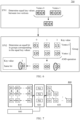
- FIG. 19 is a schematic flowchart of a data processing method based on a data processing apparatus according to this embodiment of this application.
- the data processing apparatus includes a processing matrix.
- the processing matrix includes v ⁇ v processing elements, and v is a positive integer.
- the method 2200 includes S2210 and S2220.
- S2210 Obtain a first target data group and a second target data group, where the first target data group is a 1 st data group in a plurality of first data groups in a first data set, the second target data group is a 1 st data group in at least one second data group in a second data set, each data group in each of the first data set and the second data set includes at least one piece of data, each piece of data includes a key value, the data groups in each data set are arranged according to a first sequence or a second sequence, and when the data groups in each data set are arranged according to the first sequence, key values in any data group in each data set are less than key values in a data group following the any data group, or when the data groups in each data set are arranged according to the second sequence, key values in any data group in each data set are greater than key values in a data group following the any data group.
- the first data set and the second data set may be stored in a memory.
- the first data set includes the plurality of first data groups
- the second data set includes a plurality of second data groups.
- the obtaining a first target data group and a second target data group may be reading the first target data group and the second target data group from the memory.
- Each iteration includes inputting the first target data group and the second target data group to the data processing apparatus.
- the data processing apparatus is configured to determine an equal key value in the first target data group and second target data.
- FIG. 10 shows an example in which a first sequence is the same as a second sequence.
- a left column is a first data set
- a right column is a second data set.
- the first data set includes five pieces of data whose key values are 1, 4, 7, 8, and 10
- the second data set includes nine pieces of data whose key values are 1, 2, 3, 4, 5, 6, 7, 8, and 9.
- the first data set may include two first data groups.
- a 1 st first data group includes three pieces of data whose key values are 1, 4, and 7, and a 2 nd first data group includes two pieces of data whose key values are 8 and 10.
- the second data set may include three second data groups.
- method 2200 not all first data groups and second data groups need to be obtained in advance, thereby reducing requirements for a processing capability and a storage capability of an apparatus for performing the method 2200, and improving flexibility and adaptability of the method.
- the largest key value 7 in the first target data group is greater than the largest key value 6 in the second target data group
- the next second data group of the 2 nd second data group may be obtained and used as still another second target data group.
- each processing element in the processing matrix is further configured to: in a next input cycle after the first data and the second data are received, transmit the first data to a next processing element in the first direction, and transmit the second data to a next processing element in the second direction.
- the v rows of compaction units may separately follow a filter unit in the second direction.
- At least one piece of first data and at least one piece of second data may be obtained.
- the at least one piece of first data is the first target data group
- the at least one piece of second data is the second target data group.
- at least one piece of first data obtained each time may be used as one first target data group
- at least one piece of second data obtained each time is a second target data group.
- at least one piece of first data that has not been obtained may be used as one or more first data groups
- at least one piece of second data that has not been obtained may be used as one or more second data groups.
- S530 Determine a query vertex in the graph based on the relationship value group of the first target vertex and the relationship value group of the second target vertex that correspond to the equal key value, where relationships between the query vertex and the two target vertices meet a preset condition.
- graph data may be obtained, and at least one ⁇ key, value> pair of each of the two target vertices is determined based on the graph data.
- the key value vector includes at least one key value of each vertex in the graph.
- a start location of a relationship value group corresponding to each key value of a target vertex in a relationship value vector may be determined based on a quantity of vertices in a vertex set corresponding to each key value preceding at least one key value of the target vertex in a key value vector. Then, the start location is used as a start vertex.
- a relationship value group corresponding to each key value of the target vertex is determined based on a quantity of vertices in a vertex set corresponding to the key value of the target vertex.
- a preset operation may be performed on each bit of the relationship value group of the first target vertex and each bit of the relationship value group of the second target vertex that correspond to the equal key value.
- different bits may correspond to different vertices in the vertex set corresponding to the key value, so that a computing amount can be reduced.
- Preset operations may be respectively performed in parallel on bits in the relationship value groups of the two target vertices corresponding to the same key value. Therefore, computing efficiency can be improved.
- the at least one ⁇ key, value> pair of the first target vertex may be sequentially input to a plurality of processing elements at a first edge in the processing matrix, and the at least one ⁇ key, value> pair of the second target vertex is sequentially input to a plurality of processing elements at a second edge in the processing matrix, to determine the equal key value.
- the processing matrix includes v ⁇ v processing elements, and v is an integer greater than 1.
- An i th ⁇ key, value> pair in the first target data group is input in a second direction to a j th processing element in at least one processing element at the first edge in a j th input cycle.
- a p th ⁇ key, value> pair in the second target data is input in a first direction to a q th processing element in at least one processing element at a second edge in a q th input cycle.
- the first edge is adjacent to the second edge.
- the first direction is a direction from the second edge to the inside of the processing matrix and perpendicular to the second edge.
- the second direction is a direction from the first edge to the inside of the processing matrix and perpendicular to the first edge.
- Each processing element is configured to determine whether a key value of the first target vertex input to the processing element is equal to a key value of the second target vertex input to the processing element.
- the processing matrix may be understood as a systolic array (systolic array).
- a ⁇ key, value> pair of each target vertex "flows" rhythmically between processing elements in the processing matrix in a "pipelined” method.
- Data passing through is processed by the processing elements in parallel to improve a processing speed and reduce processing time.
- Each of the plurality of processing elements may be specifically configured to: when the key value of the first target vertex is not equal to the key value of the second target vertex, transmit the ⁇ key, value> pair of the first target vertex to the next processing element in the first direction, and transmit the ⁇ key, value> pair of the second target vertex to the next processing element in the second direction.
- the processing matrix may still process ⁇ key, value> pairs of the first target vertex and ⁇ key, value> pairs of the second target vertex.
- ⁇ key value> pairs of the first target vertex
- ⁇ key value> pairs of the second target vertex
- FIG. 5 is a schematic flowchart of a method for generating graph data according to an embodiment of this application.
- the method 600 for generating graph data includes S601 to S603.
- a graph includes a plurality of interconnected vertices and edges for connecting the vertices.
- the graph may be indicated by neighbor vectors of the vertices in the graph.
- Each neighbor vector includes a same quantity of bits.
- An i th bit in a neighbor vector of each vertex indicates whether a relationship exists between the vertex and an i th vertex in the graph.
- the i th bit in the neighbor vector corresponds to the i th vertex in the graph. "0" may indicate that no relationship exists, and "1" indicates that a relationship exists.
- S601 Divide neighbor vectors to a plurality of groups in a preset manner.
- All groups may include a same quantity of bits.
- the following describes an example in which the neighbor vectors are divided based on to a quantity of bits that is 2.
- bits corresponding to the vertex 0 and the vertex 1 form a group
- bits corresponding to a vertex 2 and a vertex 3 form a group, and so on, to complete division of the neighbor vectors.
- a divided neighbor vector N(0) includes four groups, which are sequentially 01, 01, 00, and 11.
- a divided neighbor vector N(1) includes four groups, which are sequentially 10, 10, 11, and 11.
- a key value of a group may also be understood as an identifier of the group.
- Groups obtained after different neighbor vectors are divided include groups that have a same bit in the neighbor vectors and have a same key value.
- a key value of each group may be a sequence number of the group in the plurality of groups obtained after the neighbor vectors are divided.
- N(0) is divided into four groups 01, 01, 00, and 11, which respectively correspond to key values 0, 1, 2, and 3.
- N(1) is divided into four groups 10, 10, 11, and 11, which respectively correspond to key values 0, 1, 2, and 3.
- a key value array of each vertex may include a plurality of key values of the array. Not all bits of a group corresponding to a key value in the key value array are 0. In other words, when a key value array is formed, a key value corresponding to a group whose bits are all 0 is discarded.
- a key value array of the vertex 0 may include 0, 1, and 3
- a key value array of the vertex 1 may include 0, 1, 2, and 3.
- key values may be arranged according to a preset sequence.
- the key values may be arranged in ascending or descending order. The following describes an example in which key values in a key value array are arranged in ascending order.
- a key value in a key value array corresponding to each vertex and a group corresponding to the key value may be understood as a ⁇ key, value> pair ( ⁇ key, value> pair, KVP).
- each vertex may have one or more ⁇ key, value> pairs.
- the graph data includes row offsets, a key value vector, and a relationship value vector.
- the relationship value vector includes key value arrays of the vertices in the graph.
- a j th relationship value array in the relationship value vector is a relationship value array of a j th vertex in the graph.
- the row offsets indicate start locations of relationship value arrays of the vertices in the graph in the relationship value vector.
- the row offsets may also be referred to as row data.
- a j th number of the row offsets indicates a start location of a key value array of the j th vertex in the graph in the relationship value vector.
- the key value vector may also be referred to as key data.
- a data format of the graph data may be referred to as a format of bitmap with compressed sparse row (bitmap with compressed sparse row, BCSR).
- a neighborhood matrix includes a plurality of rows, and each field indicates a neighbor vector of a vertex.
- the neighborhood matrix can be compacted. Especially when a proportion of "0" in the neighborhood matrix is high, compaction effect is good.
- the graph data generated according to the method 600 may be processed according to a data processing method shown in FIG. 6 .
- FIG. 6 is a schematic flowchart of a data processing method according to an embodiment of this application.
- the method 700 includes S701 and S702.
- the graph data indicates whether a relationship exists between vertices in a graph.
- the graph data includes row offsets, a key value vector, and a relationship value vector.
- S701 Determine an equal key value of two vertices based on the graph data.
- the two vertices may be determined based on a subgraph pattern.
- ⁇ key, value> pairs of the vertices in the graph may be determined.
- key value arrays of the vertices and groups corresponding to key values in the key value arrays of the vertices are determined.
- a key value array "0, 1, and 3" of a vertex 0 and a key value array "0, 1, 2, and 3" of a vertex 1 may be determined.
- the key value 0 corresponds to a group 01
- the key value 1 corresponds to a group 01
- the key value 3 corresponds to a group 11.
- the key value 0 corresponds to a group 10
- the key value 1 corresponds to a group 10
- the key value 2 corresponds to a group 11
- the key value 3 corresponds to a group 10.
- equal key values include 0, 1, and 3.
- S702 Determine a bit whose value is 1 in a computing result obtained in a preset computing manner and that is in groups corresponding to equal key values of the two vertices.
- Different preset computing manners correspond to different relationships between the two vertices.
- the preset computing manner is a ⁇ b, where a and b indicate values of the two vertices at a specific bit.
- the preset computing manner is a ⁇ b , where a indicates a value of a vertex A at a specific bit, and b indicates negation of a value of a vertex B at the specific bit. Therefore, a bit whose computing result is 1 may be understood as a bit whose relationships with the two vertices meets a preset condition.
- the following describes an example of determining a neighbor shared by the two vertices.
- the group corresponding to the vertex 0 is 01, and the group corresponding to the vertex 1 is 10. Bitwise comparison is performed on "01" and "10" to determine a bit whose bitwise AND operation result is 1.
- a bitwise AND operation may be performed on a group corresponding to each equal key value of the two vertices, and a bit whose computing result is 1 is a bit corresponding to a vertex having a relationship with both the two vertices.
- a vertex set corresponding to an equal key value may be determined based on the equal key value. Then, a vertex in the graph corresponding to the bit may be determined based on a location of the bit whose computing result is 1 in the group to which the bit belongs.
- a group division manner of a neighborhood matrix may be further obtained.
- the vertex in the graph corresponding to the bit is determined based on the group division manner of the neighborhood matrix, a key value corresponding to the group including the bit whose computing result is 1, and the location of the bit whose computing result is 1 in the group to which the bit belongs.
- the groups corresponding to the key value 0, the groups corresponding to the key value 1, and the groups corresponding to the key value 3 are respectively compared for the vertex 0 and the vertex 1. It may be determined that the groups corresponding to the key value 0 and the groups corresponding to the key value 1 do not have a bit whose computing result is 1, and a bit whose computing result is 1 in the groups whose key values are 3 is a 0 th bit in the groups.
- the groups corresponding to the key value 3 in the neighborhood matrix include a vertex 6 and a vertex 7. A vertex corresponding to the 0 th bit is the vertex 6. Therefore, it may be determined that the neighbor shared by the vertex 0 and the vertex 1 is the vertex 6.
- a neighbor shared by two vertices may be determined by determining an equal key value in key value arrays corresponding to the two vertices, and determining an equal bit in groups corresponding to each equal key value of the two vertices.
- the equal key value in the key value arrays corresponding to the two vertices may be determined through set merging based on queuing shown in FIG. 3 .
- the equal bit in the groups corresponding to each equal key value of the two vertices may be determined through bitwise comparison.
- values of a plurality of bits may be compared in parallel, and computing efficiency is higher.
- determining an equal key value in key value arrays corresponding to the two vertices can effectively reduce an amount of data that needs to be compared, and improve processing efficiency.
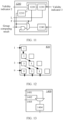
- FIG. 7 is a schematic diagram of a structure of a data processing apparatus according to an embodiment of this application.
- the processing matrix 810 includes v ⁇ v processing elements (processing elements, PEs), configured to process ⁇ key, value> pairs of the two vertices.
- PEs processing elements
- ⁇ Key, value> pairs of each vertex include a key value array of the vertex and groups corresponding to key values.
- v leftmost processing elements in the processing matrix 810 may receive a plurality of ⁇ key, value> pairs of a vertex A in the graph, and different processing elements are configured to receive different ⁇ key, value> pairs in the ⁇ key, value> pairs of the vertex A.
- v topmost processing elements in the processing matrix 810 may receive a plurality of ⁇ key, value> pairs of a vertex B in the graph, and different processing elements are configured to receive different ⁇ key, value> pairs in the ⁇ key, value> pairs of the vertex B.
- the vertex A and the vertex B are different vertices.
- v leftmost processing elements from top to down one clock cycle after a previous processing element receives a ⁇ key, value> pair, a next processing element receives a ⁇ key, value> pair.
- v topmost processing elements from left to right one clock cycle after a previous processing element receives a ⁇ key, value> pair, a next processing element receives a ⁇ key, value> pair.
- the processing element is configured to compare key values in received ⁇ key, value> pairs of the two vertices. It may also be understood that the processing element is configured to match the key values in the received ⁇ key, value> pairs of the two vertices. If the key values in the received ⁇ key, value> pairs of the two vertices are equal, it may be considered that the key values of the two vertices are successfully matched.
- the processing element performs computing in a preset computing manner on groups in the ⁇ key, value> pairs of the two vertices, to determine a bit that is in the groups and that meets a relationship corresponding to the preset computing manner, and outputs the key values and a computing result.
- the processing element no longer performs computing and comparison in the preset computing manner on groups in the ⁇ key, value> pairs of the two vertices, and in a next clock cycle, transmits a ⁇ key, value> pair received from an adjacent processing element on a left side to an adjacent processing element on a right side, and transmits a key value received from an adjacent processing element on an upper side and a group corresponding to the key value to an adjacent processing element on a lower side.
- a ⁇ key, value> pair A0 of a vertex A is input to a processing element PE 0 in a first row and a first column from the left side
- a ⁇ key, value> pair B0 of a vertex B is input to the PE 0 from the upper side.
- the PE 0 compares a key value in the ⁇ key, value> pair A0 with a key value in the ⁇ key, value> pair B0. If the key value in the ⁇ key, value> pair A0 is equal to the key value in the ⁇ key, value> pair B0, the PE 0 performs computing in a preset computing manner on each bit in a group in the ⁇ key, value> pair A0 and a group in the ⁇ key, value> pair B0. The PE 0 no longer transmits the ⁇ key, value> pair A0 and the ⁇ key, value> pair B0.
- the processing matrix 810 may output the equal key value and a computing result.
- the PE 0 may no longer perform computing in a preset computing manner on the group in the ⁇ key, value> pair A0 and the group in the ⁇ key, value> pair B0.
- the PE 0 may transmit the ⁇ key, value> pair A0 to a PE 1 on the right side, that is, in the first row and a second column, and transmit the ⁇ key, value> pair B0 to a PE 2 on the lower side, that is, in a second row and the first column.
- a ⁇ key, value> pair A1 of the vertex A is input to the processing element PE 2 in the second row and the first column from the left side
- a ⁇ key, value> pair B 1 of the vertex B is input to the PE 1 from the upper side.
- the filter unit may be further configured to determine, based on computing results of bits of the group vt and the group vl, whether a vertex that meets a preset relationship exists.
- the vertex that meets the preset relationship is a vertex corresponding to a bit whose computing result is 1.
- the filter unit 1200 includes a logic processing element 1210, a validity indicator updating unit 1220, a validity indicator register 1230, and a result register 1240.
- a size relationship between a largest key value in the ⁇ key, value> pair set of the vertex A and a largest key value in the ⁇ key, value> pair set of the vertex B may be determined.
- a new validity indicator result may be determined based on the output of the logic processing element 1210 and the validity indicator 2 output by the last processing element 1000 in the row that corresponds to the filter unit 1200 and that is in the processing matrix 810.
- the new validity indicator result may be valid, that is, the validity indicator 3 indicates valid.
- the new validity indicator result may be invalid, that is, the validity indicator 3 indicates invalid.
- the 3 rd filter unit outputs valid data.
- a 1 st compaction unit in the 3 rd row (that is, a leftmost compaction unit in the 3 rd row) in the compaction triangle 830 receives the valid data output by the 3 rd filter unit.
- Other compaction units in the 3 rd row in the compaction triangle 830 obtain data from an upper left compaction unit of the filter unit in the 2 nd row in the compaction triangle 830.
- a 2 nd compaction unit and a 3 rd compaction unit in the 3 rd row in the compaction triangle 830 respectively obtain data from the two compaction units in the 2 nd row.
- the counting unit may record a quantity of key values output by the compaction triangle 830.
- the counting unit may perform cumulative counting.
- the at least one ⁇ key, value> pair of the first target vertex and the at least one ⁇ key, value> pair of the second target vertex start to be input to the processing matrix in a same input cycle.
- the processing matrix 1620 may be understood as a systolic array architecture (systolic array architecture).
- systolic array architecture data "flows" rhythmically between processing elements in the matrix in a predefined “pipelined” method.
- all processing elements process, in parallel, the data that flows through the processing elements, so that a very high parallel processing speed can be reached.
- a ⁇ key, value> pair group having smallest key values in the plurality of first ⁇ key, value> pair groups is a third ⁇ key, value> pair group.
- a ⁇ key, value> pair group having smallest key values in the plurality of second ⁇ key, value> pair groups is a fourth ⁇ key, value> pair group.
- the ⁇ key, value> pairs of a target vertex When a quantity of ⁇ key, value> pairs of a target vertex is greater than a quantity of ⁇ key, value> pairs of an edge in the processing matrix, the ⁇ key, value> pairs of the target vertex may be grouped based on key values in the ⁇ key, value> pairs of the target vertex. Then, a ⁇ key, value> pair group with smallest key values may be selected in ascending order of key values and input to the processing matrix.
- FIG. 16 is a schematic diagram of a structure of a data processing system according to an embodiment of this application.
- the data processing system 1700 includes an apparatus 800 and a memory 1710.
- the memory is configured to store graph data and a processing result obtained by processing the graph data by the apparatus 800.
- the data processing system 1700 may be understood as a storage-compute decoupled computing system.
- FIG. 17 is a schematic diagram of a structure of a data processing system according to an embodiment of this application.
- the data processing system 1800 includes an address index module 1810, two units of storage (rank) level near memory computing (near memory computing, NMC) 1820, and a storage module 1830.
- the storage module 1830 may include a plurality of dynamic random access memory (dynamic random access memory, DRAM) chips (chips) 1831.
- DRAM dynamic random access memory
- an 8-byte (x8) DRAM chip When an 8-byte (x8) DRAM chip is used, there may be eight x8 DRAM chips in the storage module 1830, and a half rank provides data (32 bytes (bytes)) for one unit of NMC. In other words, 64-byte data of one rank is split into two pieces of 32-byte data, each of which provides data for one unit of NMC.
- the address index module 1810 may be a registering clock driver (registering clock driver, RCD).
- the storage module 1830 may include a KVP data area, a KVP address index area, and a result data area.
- the KVP data area is used to store a KVP of each vertex in a graph.
- the KVP of each vertex in the graph may be determined based on graph data.
- the graph data includes a row offset vector, a key value vector, and a relationship value vector.
- the KVP of each vertex may be stored as 32 bits (bits).
- a key value may be located in a less significant bit of the 32 bits, and a relationship value group corresponding to the key value may be located in a more significant bit of the 32 bits.
- 32 bits indicates 4 bytes.
- One x8 DRAM chip can output ⁇ key, value> pairs of two vertices at the same time.
- the result data area is used to store an intermediate calculation result, a final calculation result, and the like of the NMC 1820.
- the result data area may include a register 1230 and a result register 1240 that effectively indicate each filter unit 1200, a register 1404 for each compaction unit 1400, and the like.
- the index address may include a chip select (chip select, CS) signal and a command/address signal (command/address, C/A).
- the NMC 1820 may determine, based on the index address, a location at which a KVP of the vertex is stored in the KVP data area.
- the NMC 1820 may perform the method 500 and the method 700.
- the NMC 1820 may include a data processing apparatus 800, or the NMC 1820 may be a data processing system 1600.
- the NMC 1820 may be referred to as DIMMining.
- the data processing system 1800 is implemented without changing a conventional storage function of the LRDIMM or modifying an internal circuit of a dynamic random access memory (dynamic random access memory, DRAM) chip (chip).
- a dynamic random access memory dynamic random access memory, DRAM
- the NMC 1820 includes a controller, a data forwarding unit, and a data processing apparatus 800.
- the storage module 1830 may further include a data buffer (data buffer, DB), a cache (cache), and the like.
- a KVP of each vertex in the graph may be stored in the DRAM chip.
- the KVP of each vertex in the graph may be loaded to the DB.
- a frequently accessed KVP of a vertex may be stored in the cache. For example, when access frequency of a KVP of a vertex is higher than a first preset value, the KVP of the vertex may be stored in the cache; or when access frequency of a KVP of a vertex is lower than a second preset value, the KVP of the vertex may be deleted from the cache.
- the second preset value may be less than or equal to the first preset value.
- Access frequency of a KVP of a vertex may be determined based on a quantity of access times within a period of time. Duration of the period of time may be preset.
- the data forwarding (data forwarding) unit is configured to obtain data in the DRAM chip, the DB, or the cache (cache), and input the data into a processing array 810 of the data processing apparatus 800.
- memory rank level parallel computing may be implemented by a DIMM-based near memory graph mining computing architecture.
- a plurality of DIMM ranks may be read and computed in parallel, to improve operation efficiency.
- the data processing system 1800 avoids frequent data transfer between a CPU and a memory, and the plurality of ranks do not need to contend for a right to use a memory bus. Therefore, the near memory computing architecture can significantly improve performance compared with the conventional CPU+memory storage-compute decoupled architecture.
- FIG. 18 is a schematic diagram of performance comparison between data processing systems according to an embodiment of this application.
- the system 1700 and the system 1800 separately process ⁇ key, value> pairs of vertices in the graph.
- Total time needed for processing by the system 1700 is 1, and total time needed for processing by the system 1800 is shown in FIG. 18 .
- a graph 1 and a graph 2 are different graph data.
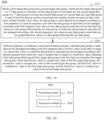
- FIG. 20 is a schematic diagram of a structure of a data processing apparatus controlling apparatus according to an embodiment of this application.
- the obtaining module 2010 is configured to obtain a first target data group and a second target data group.
- the first target data group is a 1 st data group in a plurality of first data groups in a first data set.
- the second target data group is a 1 st data group in at least one second data group in a second data set.
- Each data group in each of the first data set and the second data set includes at least one piece of data.
- Each piece of data includes a key value.
- the data groups in each data set are arranged according to a first sequence or a second sequence. When the data groups in each data set are arranged according to the first sequence, key values in any data group in each data set are less than key values in a data group following the any data group. Alternatively, when the data groups in each data set are arranged according to the second sequence, key values in any data group in each data set are greater than key values in a data group following the any data group.
- the processing module 2020 is configured to perform a plurality of iterations.
- Each iteration includes: inputting the first target data group and the second target data group to the data processing apparatus.
- the data processing apparatus is configured to determine an equal key value in the first target data group and second target data.
- Each iteration further includes: when the data groups in each data set are arranged according to the first sequence and a first key value is less than or equal to a second key value, or when the data groups in each data set are arranged according to the second sequence and a third key value is greater than or equal to a fourth key value, obtaining a first data group following the first target data group in the first data set as another first target data group.
- the first key value is a largest key value in the first target data group.
- the second key value is a largest key value in the second target data group.
- the third key value is a smallest key value in the first target data group.
- the fourth key value is a smallest key value in the second target data group.
- the data processing apparatus includes a processing matrix.
- the processing matrix includes v ⁇ v processing elements, and v is a positive integer.
- a quantity of pieces of data in each of the first target data group and the second target data group is less than or equal to v.
- the inputting the first target data group and the second target data group to the data processing apparatus includes: inputting the first target data group and the second target data group to the processing matrix according to an input rule.
- the input rule at least one piece of data in the second target data group is sequentially input in a first direction to the processing elements at a second edge based on input cycles
- at least one piece of data in the first target data group is sequentially input in a second direction to the processing elements at a first edge based on the input cycles.
- the first target data group and the second data group start to be input in a same input cycle.
- the first edge is adjacent to the second edge.
- the first direction is a direction away from the second edge.
- the second direction is a direction away from the first edge.
- Each processing element in the processing matrix is configured to: determine whether a key value in first data input to the processing element is equal to a key value in second data input to the processing element in a same input cycle.
- the first data is data belonging to the first target data group
- the second data is data belonging to the second target data group.
- each processing element in the processing matrix is further configured to: in a next input cycle after the first data and the second data are received, transmit the first data to a next processing element in the first direction, and transmit the second data to a next processing element in the second direction.
- Each processing element in the processing matrix is further configured to: when the key value in the first data is equal to the key value in the second data, transmit a processing result of the processing element to a next unit in the second direction in the next input cycle after the first data and the second data are received, where the unit is a processing element or a filter unit, and the processing result includes the equal key value; or transmit the processing result to a next unit in the second direction in a next input cycle after the processing result is received.
- the processing module 2020 is further configured to: when the first key value is greater than or equal to the second key value, control the v filter units in the first direction to sequentially output processing results corresponding to the second target data group based on input cycles.
- Each of the plurality of compaction units is configured to: receive a processing result output by a filter unit preceding the compaction unit in the second direction, or receive a processing result output by a compaction unit in a previous row in the first direction.
- different key values correspond to different vertex sets in a graph.
- the first data indicates whether a first target vertex in the graph has a relationship with at least one vertex in a vertex set corresponding to a key value in the first data.
- the second data indicates whether a second target vertex in the graph has a relationship with at least one vertex in a vertex set corresponding to a key value in the second data.
- Each processing matrix is further configured to output a processing result when the key value in the first data is equal to the key value in the second data.
- the processing result indicates a query vertex in the graph. Relationships between the query vertex and the two target vertices meet a preset condition.
- the first data further includes a first relationship value group of the first target vertex corresponding to the key value.
- the second data further includes a second relationship value group of the second target vertex corresponding to the key value.
- Each processing element in the processing matrix is further configured to: when the key value in the first data is equal to the key value in the second data, perform a preset operation on each bit in the first relationship value group and the second relationship value group.
- a same bit in the first relationship value group and in the second relationship value group corresponding to the equal key value corresponds to a same vertex in the vertex sets corresponding to the equal key value.
- a result of the preset operation on each bit indicates whether relationships between the vertex corresponding to the bit and the two target vertices meet the preset condition.
- key values in each first data group are arranged in ascending order.
- key values in each first data group are arranged in descending order.
- the apparatus 2000 may alternatively be a data processing apparatus.
- the obtaining module 2010 is configured to: obtain data of the graph, where the data of the graph includes a row offset vector, a key value vector, and a relationship value vector; and determine the at least one ⁇ key, value> pair of each of the two target vertices based on the graph data.
- the key value vector includes at least one key value of each vertex in a plurality of vertices in the graph.
- the row offset vector indicates a location of at least one key value of each vertex in the key value vector.
- the relationship value vector includes relationship value groups of vertices corresponding to key values of each vertex in the plurality of vertices. A ranking of at least one key value of each vertex in the key value vector is the same as a ranking of a relationship value group of a vertex corresponding to the key value of each vertex in the relationship value vector.
- Each of the plurality of processing elements is configured to: when the key value of the first target vertex is equal to the key value of the second target vertex, determine the query vertex in the graph based on the relationship value group of the first target vertex input to the processing element and the relationship value group of the second target vertex input to the processing element. Relationships between the query vertex and the two target vertices meet the preset condition.
- the data processing apparatus includes a processing matrix.
- the processing matrix includes v ⁇ v processing elements, and v is a positive integer.
- a quantity of pieces of data in each of the first target data group and the second target data group is less than or equal to v.
- different key values correspond to different vertex sets in a graph.
- the first data indicates whether a first target vertex in the graph has a relationship with at least one vertex in a vertex set corresponding to a key value in the first data.
- the second data indicates whether a second target vertex in the graph has a relationship with at least one vertex in a vertex set corresponding to a key value in the second data.
- the units of the apparatus may be integrated, or may be implemented independently.
- the units may be integrated together and implemented in a form of a system-on-a-chip (system-on-a-chip, SOC).
- SOC system-on-a-chip
- the SOC may include at least one processor, configured to implement any one of the methods or implement functions of the units of the apparatus.
- Types of the at least one processor may be different, for example, the at least one processor includes a CPU and an FPGA, a CPU and an artificial intelligence processor, and a CPU and a graphics processing unit (graphics processing unit, GPU).
- the processor in embodiments of this application may be a central processing unit (central processing unit, CPU).
- the processor may alternatively be another general-purpose processor, a digital signal processor (digital signal processor, DSP), an application-specific integrated circuit (application-specific integrated circuit, ASIC), a field programmable gate array (field programmable gate array, FPGA) or another programmable logic device, a discrete gate or a transistor logic device, a discrete hardware component, or the like.
- the general-purpose processor may be a microprocessor, or the processor may be any conventional processor or the like.
- the functions When the functions are implemented in the form of a software functional unit and sold or used as an independent product, the functions may be stored in a computer-readable storage medium. Based on such an understanding, the technical solutions of this application essentially, or the part contributing to the prior art, or some of the technical solutions may be implemented in a form of a software product.
- the software product is stored in a storage medium, and includes several instructions for instructing a computer device (which may be a personal computer, a server, or a network device) to perform all or some of the steps of the methods described in the embodiments of this application.
- the foregoing storage medium includes any medium that can store program code, such as a USB flash drive, a removable hard disk, a read-only memory (Read-Only Memory, ROM), a random access memory (Random Access Memory, RAM), a magnetic disk, or an optical disc.
- program code such as a USB flash drive, a removable hard disk, a read-only memory (Read-Only Memory, ROM), a random access memory (Random Access Memory, RAM), a magnetic disk, or an optical disc.
Landscapes
- Engineering & Computer Science (AREA)
- Physics & Mathematics (AREA)
- Theoretical Computer Science (AREA)
- General Physics & Mathematics (AREA)
- Data Mining & Analysis (AREA)
- Databases & Information Systems (AREA)
- Mathematical Physics (AREA)
- General Engineering & Computer Science (AREA)
- Software Systems (AREA)
- Pure & Applied Mathematics (AREA)
- Mathematical Optimization (AREA)
- Mathematical Analysis (AREA)
- Computational Mathematics (AREA)
- Computational Linguistics (AREA)
- Algebra (AREA)
- Computing Systems (AREA)
- Fuzzy Systems (AREA)
- Probability & Statistics with Applications (AREA)
- Complex Calculations (AREA)
Abstract
Description
- This application claims priority to
Chinese Patent Application No. 202210447052.8, filed with the China National Intellectual Property Administration on April 26, 2022 - This application relates to the data processing field, and more specifically, to a data processing apparatus controlling method and apparatus.
- A graph mining algorithm is a typical graph processing algorithm and data mining algorithm, and is used to search for a specific subgraph pattern and collect statistics on occurrence frequency of the subgraph pattern in a complete graph data structure. The graph mining algorithm is widely used. Common application cases include community network analysis in social media, protein analysis in bioinformatics, and drug discovery in the computational chemistry field.
- A neighbor set of a vertex may indicate whether a relationship exists between the vertex and another vertex in a graph. The neighbor set of the vertex includes a plurality of numbers, and a value of each number is a sequence number of a vertex having a relationship with the vertex. In a graph mining process, a data processing apparatus may compare neighbor sets of two vertices in the graph, and determine an equal sequence number. The equal sequence number is a sequence number of a vertex having a relationship with both the two vertices in the graph.
- A processing capability of the data processing apparatus is limited. Generally, the data processing apparatus may compare two columns of indices whose quantities of included numbers do not exceed a preset value. When a quantity of numbers in a column of indices in the two columns of indices exceeds the preset value, the numbers in the column of indices need to be grouped to obtain a plurality of arrays. Then, the data processing apparatus may separately compare the plurality of arrays with the other column of indices in the two columns of indices.
- The plurality of arrays are separately compared with the other column of indices in the two columns of indices. Consequently, an operation amount is large, and processing time needed is long.
- This application provides a data processing apparatus controlling method and apparatus, to reduce an operation amount and data processing time.
- According to a first aspect, a data processing apparatus controlling method is provided. The method includes: obtaining a first target data group and a second target data group, where the first target data group is a 1st data group in a plurality of first data groups in a first data set, the second target data group is a 1st data group in at least one second data group in a second data set, each data group in each of the first data set and the second data set includes at least one piece of data, each piece of data includes a key value, the data groups in each data set are arranged according to a first sequence or a second sequence, and when the data groups in each data set are arranged according to the first sequence, key values in any data group in each data set are less than key values in a data group following the any data group, or when the data groups in each data set are arranged according to the second sequence, key values in any data group in each data set are greater than key values in a data group following the any data group; and performing a plurality of iterations. Each iteration includes: inputting the first target data group and the second target data group to a data processing apparatus, where the data processing apparatus is configured to determine an equal key value in the first target data group and second target data; and when the data groups in each data set are arranged according to the first sequence and a first key value is less than or equal to a second key value, obtaining a first data group following the first target data group in the first data set as another first target data group, where the first key value is a largest key value in the first target data group, the second key value is a largest key value in the second target data group; or when the data groups in each data set are arranged according to the second sequence and a third key value is greater than or equal to a fourth key value, obtaining a first data group following the first target data group in the first data set as another first target data group, where the third key value is a smallest key value in the first target data group, and the fourth key value is a smallest key value in the second target data group.
- For two data sets, data groups in each data set are arranged according to a sequence of key values. When the data processing apparatus performs data processing, if there are a plurality of first data groups in a first data set, through iteration, first data groups whose key values exceed a key value range of a second target data group may not be input to the data processing apparatus. In other words, the first data groups are no longer compared with the second target data group, and a quantity of first data groups compared with the second target data group is reduced, thereby reducing an operation amount.
- When key values in the plurality of first data groups are arranged in ascending order, the key value range of the second target data group may be less than or equal to a largest key value in the second target data group. In other words, when a largest value in key values in a first target data group is greater than or equal to the largest key value in the second target data group, a next first data group may no longer be used as another first target data group for comparison with the second target data group.
- When key values in the plurality of first data groups are arranged in descending order, the key value range of the second target data group may be greater than or equal to a smallest key value in the second target data group. In other words, when a smallest value in key values in a first target data group is less than or equal to the largest key value in the second target data group, a next first data group may no longer be used as another first target data group for comparison with the second target data group.
- With reference to the first aspect, in some possible implementations, there are a plurality of second data groups. When the data groups in each data set are arranged according to the first sequence and the first key value is greater than or equal to the second key value, a second data group following the second target data group in the second data set is obtained as another second target data group. When the data groups in each data set are arranged according to the second sequence and the third key value is less than or equal to the fourth key value, a second data group following the second target data group in the second data set is obtained as another second target data group.
- In this way, a data group in another data set compared with a specific data group in a specific data set includes key values in a range that is greater than or equal to a smallest value in key values in the specific array group and less than or equal to a largest value in key values in the specific data group. In addition, a possibility of comparing the specific array group with a data group including only key values outside the range in the another data set is reduced. Therefore, operation efficiency is improved and an operation amount is reduced.
- With reference to the first aspect, in some implementations, the data processing apparatus includes a processing matrix. The processing matrix includes v×v processing elements, and v is a positive integer. A quantity of pieces of data in each of the first target data group and the second target data group is less than or equal to v. An ith piece of first data in the first target data group is input in a second direction to a jth processing element in v processing elements at a first edge in a jth input cycle of the iterations. A pth piece of second data in the second target data is input in a first direction to a qth processing element in v processing elements at a second edge in a qth input cycle of the iterations. The first edge is adjacent to the second edge. Different data in each target data group is input to different processing elements. The first direction is a direction from the second edge to the inside of the processing matrix and perpendicular to the second edge. The second direction is a direction from the first edge to the inside of the processing matrix and perpendicular to the first edge. i, j, p, and q are all positive integers. Each processing element in the processing matrix is configured to: determine whether a key value in first data input to the processing element is equal to a key value in second data input to the processing element in a same input cycle. When v is greater than 1, each processing element in the processing matrix is further configured to: in a next input cycle after the first data and the second data are received, transmit the first data to a next processing element in the first direction, and transmit the second data to a next processing element in the second direction.
- Processing the first target data group and the second target data group based on the processing matrix can improve processing efficiency.
- With reference to the first aspect, in some possible implementations, key values in different data in each data set are different. Each processing element in the processing matrix is configured to: when the key value in the first data is not equal to the key value in the second data, transmit the first data to the next processing element in the first direction, and transmit the second data to the next processing element in the second direction.
- When key values in different data in the data sets are different, and when the key value in the first data is equal to the key value in the second data, the equal key value is no longer equal to a key value in other data. Therefore, the processing element may transmit the first data to the next processing element in the first direction, and transmit the second data to the next processing element in the second direction only when the key value in the first data is not equal to the key value in the second data. Therefore, data transmission can be reduced, and an operation amount can be reduced.
- With reference to the first aspect, in some possible implementations, the data processing apparatus further includes a filter matrix, the filter matrix includes v filter units, and the v filter units separately follow a last processing element in the second direction in each of v rows of the processing matrix in the first direction. Each processing element in the processing matrix is further configured to: when the key value in the first data is equal to the key value in the second data, transmit a processing result of the processing element to a next unit in the second direction in the next input cycle after the first data and the second data are received, where the unit is a processing element or a filter unit, and the processing result includes the equal key value; or transmit the processing result to a next unit in the second direction in a next input cycle after the processing result is received. The method further includes: when the first key value is greater than or equal to the second key value, controlling the v filter units in the first direction to sequentially output processing results corresponding to the second target data group based on input cycles.
- Processing results corresponding to key values in a second data group may be uniformly output after the second data group is input to the data processing apparatus for the last time, thereby improving flexibility of outputting the processing results.
- With reference to the first aspect, in some possible implementations, the data processing apparatus further includes a compaction triangle matrix. The compaction triangle matrix includes v rows of compaction units in the first direction, and quantities of compaction units increase row by row in the first direction. Each of the plurality of compaction units is configured to: receive a processing result output by a filter unit preceding the compaction unit in the second direction, or receive a processing result output by a compaction unit in a previous row in the first direction; and transmit the processing result to a compaction unit in a next row in the first direction in a next input cycle after the processing result is received.
- The compaction triangle matrix is disposed in the data processing apparatus, so that processing results corresponding to a specific second data group may be output in a same input cycle, thereby improving flexibility of outputting the processing results.
- With reference to the first aspect, in some possible implementations, different key values correspond to different vertex sets in a graph. The first data indicates whether a first target vertex in the graph has a relationship with at least one vertex in a vertex set corresponding to a key value in the first data. The second data indicates whether a second target vertex in the graph has a relationship with at least one vertex in a vertex set corresponding to a key value in the second data. Each processing matrix is further configured to output a processing result when the key value in the first data is equal to the key value in the second data. The processing result indicates a query vertex in the graph. Relationships between the query vertex and the two target vertices meet a preset condition.
- The query vertex in the graph having connections with the two target vertices that meet the preset condition can be determined, so that a subgraph with a structure of a specific subgraph pattern in the graph can be identified to implement graph mining.
- With reference to the first aspect, in some possible implementations, the first data further includes a first relationship value group of the first target vertex corresponding to the key value, and the second data further includes a second relationship value group of the second target vertex corresponding to the key value. Each processing element in the processing matrix is further configured to: when the key value in the first data is equal to the key value in the second data, perform a preset operation on each bit in the first relationship value group and the second relationship value group. A same bit in the first relationship value group and in the second relationship value group corresponding to the equal key value corresponds to a same vertex in the vertex sets corresponding to the equal key value. A result of the preset operation on each bit indicates whether relationships between the vertex corresponding to the bit and the two target vertices meet the preset condition.
- The key value in the first data is equal to the key value in the second data. In other words, the key value in the first data and the key value in the second data indicate a same vertex set. Therefore, the query vertex may be determined based on a result of a bitwise preset operation on the first relationship value group and the second relationship value group.
- The <key, value> pairs of the vertices in the graph are used to determine an equal key value in <key, value> pairs of two target vertices in the graph, and determine, based on relationship value groups of the two vertices corresponding to the equal key value, a query vertex whose relationships with the two target vertices meet a preset condition. In addition to reducing an amount of data indicating the graph, processing time needed for determining the query vertex can be reduced.
- With reference to the first aspect, in some possible implementations, when the data groups in each data set are arranged according to the first sequence, key values in each first data group are arranged in ascending order. Alternatively, when the data groups in each data set are arranged according to the second sequence, key values in each first data group are arranged in descending order.
- Key values in the first data set are arranged in ascending or descending order, so that at least one piece of data may be obtained from the first data set as a first target data group, and first target data groups obtained for a plurality of times are first data groups. In this way, the first data groups are more flexibly divided.
- According to a second aspect, a data processing apparatus controlling apparatus is provided, including an obtaining module and a processing module. The obtaining module is configured to obtain a first target data group and a second target data group. The first target data group is a 1st data group in a plurality of first data groups in a first data set. The second target data group is a 1st data group in at least one second data group in a second data set. Each data group in each of the first data set and the second data set includes at least one piece of data. The data groups in each data set are arranged according to a first sequence or a second sequence. When the data groups in each data set are arranged according to the first sequence, key values in any data group in each data set are less than key values in a data group following the any data group. Alternatively, when the data groups in each data set are arranged according to the second sequence, key values in any data group in each data set are greater than key values in a data group following the any data group. The processing module is configured to perform a plurality of iterations. Each iteration includes: inputting the first target data group and the second target data group to the data processing apparatus. The data processing apparatus is configured to determine an equal key value in the first target data group and second target data. Each iteration further includes: when the data groups in each data set are arranged according to the first sequence and a first key value is less than or equal to a second key value, obtaining a first data group following the first target data group in the first data set as another first target data group. The first key value is a largest key value in the first target data group. The second key value is a largest key value in the second target data group. Each iteration further includes: when the data groups in each data set are arranged according to the second sequence and a third key value is greater than or equal to a fourth key value, obtaining a first data group following the first target data group in the first data set as another first target data group. The third key value is a smallest key value in the first target data group. The fourth key value is a smallest key value in the second target data group.
- With reference to the second aspect, in some possible implementations, there are a plurality of second data groups. When the data groups in each data set are arranged according to the first sequence, and the first key value is greater than or equal to the second key value, a second data group following the second target data group in the second data set is obtained as another second target data group. When the data groups in each data set are arranged according to the second sequence and the third key value is less than or equal to the fourth key value, a second data group following the second target data group in the second data set is obtained as another second target data group.
- With reference to the second aspect, in some implementations, the data processing apparatus includes a processing matrix. The processing matrix includes v×v processing elements, and v is a positive integer. A quantity of pieces of data in each of the first target data group and the second target data group is less than or equal to v. An ith piece of first data in the first target data group is input in a second direction to a jth processing element in v processing elements at a first edge in a jth input cycle of the iterations. A pth piece of second data in the second target data is input in a first direction to a qth processing element in v processing elements at a second edge in a qth input cycle of the iterations. The first edge is adjacent to the second edge. Different data in each target data group is input to different processing elements. The first direction is a direction from the second edge to the inside of the processing matrix and perpendicular to the second edge. The second direction is a direction from the first edge to the inside of the processing matrix and perpendicular to the first edge. Each processing element in the processing matrix is configured to: determine whether a key value in first data input to the processing element is equal to a key value in second data input to the processing element in a same input cycle. When v is greater than 1, each processing element in the processing matrix is further configured to: in a next input cycle after the first data and the second data are received, transmit the first data to a next processing element in the first direction, and transmit the second data to a next processing element in the second direction.
- With reference to the second aspect, in some possible implementations, key values in different data in each data set are different. Each processing element in the processing matrix is configured to: when the key value in the first data is not equal to the key value in the second data, transmit the first data to the next processing element in the first direction, and transmit the second data to the next processing element in the second direction.
- With reference to the second aspect, in some possible implementations, the data processing apparatus further includes a filter matrix. The filter matrix includes v filter units. The v filter units separately follow a last processing element in the second direction in each of v rows of the processing matrix in the first direction. Each processing element in the processing matrix is further configured to: when the key value in the first data is equal to the key value in the second data, transmit a processing result of the processing element to a next unit in the second direction in the next input cycle after the first data and the second data are received, where the unit is a processing element or a filter unit, and the processing result includes the equal key value; or transmit the processing result to a next unit in the second direction in a next input cycle after the processing result is received. The processing module is further configured to: when the first key value is greater than or equal to the second key value, control the v filter units in the first direction to sequentially output processing results corresponding to the second target data group based on input cycles.
- With reference to the second aspect, in some possible implementations, the data processing apparatus further includes a compaction triangle matrix. The compaction triangle matrix includes v rows of compaction units in the first direction, and quantities of compaction units increase row by row in the first direction. Each of the plurality of compaction units is configured to: receive a processing result output by a filter unit preceding the compaction unit in the second direction, or receive a processing result output by a compaction unit in a previous row in the first direction. Each of the plurality of compaction units is further configured to transmit the processing result to a compaction unit in a next row in the first direction in a next input cycle after the processing result is received.
- With reference to the second aspect, in some possible implementations, different key values correspond to different vertex sets in a graph. The first data indicates whether a first target vertex in the graph has a relationship with at least one vertex in a vertex set corresponding to a key value in the first data. The second data indicates whether a second target vertex in the graph has a relationship with at least one vertex in a vertex set corresponding to a key value in the second data. Each processing matrix is further configured to output a processing result when the key value in the first data is equal to the key value in the second data. The processing result indicates a query vertex in the graph. Relationships between the query vertex and the two target vertices meet a preset condition.
- With reference to the second aspect, in some possible implementations, the first data further includes a first relationship value group of the first target vertex corresponding to the key value. The second data further includes a second relationship value group of the second target vertex corresponding to the key value. Each processing element in the processing matrix is further configured to: when the key value in the first data is equal to the key value in the second data, perform a preset operation on each bit in the first relationship value group and the second relationship value group. A same bit in the first relationship value group and in the second relationship value group corresponding to the equal key value corresponds to a same vertex in the vertex sets corresponding to the equal key value. A result of the preset operation on each bit indicates whether relationships between the vertex corresponding to the bit and the two target vertices meet the preset condition.
- With reference to the second aspect, in some possible implementations, when the data groups in each data set are arranged according to the first sequence, key values in each first data group are arranged in ascending order. Alternatively, when the data groups in each data set are arranged according to the second sequence, key values in each first data group are arranged in descending order.
- According to a third aspect, a data processing apparatus controlling apparatus is provided, including a memory and at least one processor. The memory is configured to store a program. When the program is executed in the at least one processor, the controlling apparatus is configured to perform the method according to any one of the first aspect.
- According to a fourth aspect, a data processing method is provided, including: obtaining at least one <key, value> pair of a first target vertex and at least one <key, value> pair of a second target vertex in two target vertices in a graph, where each <key, value> pair of the target vertex includes a key value of the target vertex and a relationship value group of the target vertex corresponding to the key value, different key values correspond to different vertex sets in the graph, the relationship value group of the target vertex corresponding to the key value of the target vertex indicates whether a relationship exists between the target vertex and vertices in a vertex set corresponding to the key value, and a vertex having a relationship with the target vertex exists in the vertex set corresponding to the key value in each <key, value> pair of the target vertex; determining an equal key value in the at least one key value of the first target vertex and the at least one key value of the second target vertex; and determining a query vertex in the graph based on the relationship value group of the first target vertex and the relationship value group of the second target vertex that correspond to the equal key value, where relationships between the query vertex and the two target vertices meet a preset condition.
- The vertex having a relationship with the target vertex exists in the vertex set corresponding to the key value in each <key, value> pair of the target vertex. In other words, for each target vertex, a vertex having a relationship with the target vertex exists in a vertex set corresponding to a key value in each <key, value> pair.
- The <key, value> pairs of the vertices in the graph are used to determine an equal key value in <key, value> pairs of two target vertices in the graph, and determine, based on relationship value groups of the two vertices corresponding to the equal key value, a query vertex whose relationships with the two target vertices meet the preset condition. In addition to reducing an amount of data indicating the graph, processing time needed for determining the query vertex can be reduced.
- With reference to the fourth aspect, in some possible implementations, the obtaining at least one <key, value> pair of each of two target vertices in a graph includes: obtaining data of the graph, where the data of the graph includes a row offset vector, a key value vector, and a relationship value vector; and determining the at least one <key, value> pair of each of the two target vertices based on the graph data. The key value vector includes at least one key value of each vertex in a plurality of vertices in the graph. The row offset vector indicates a location of at least one key value of each vertex in the key value vector. The relationship value vector includes relationship value groups of vertices corresponding to key values of each vertex in a plurality of vertices. A ranking of at least one key value of each vertex in the key value vector is the same as a ranking of a relationship value group of a vertex corresponding to the key value of each vertex in the relationship value vector.
- The <key, value> pair of each vertex in the graph may be determined based on the graph data. Storing graphs in a graph data format can reduce storage space.
- With reference to the fourth aspect, in some possible implementations, different key values correspond to an equal quantity of vertices in the vertex sets.
- Quantities of vertices in the vertex sets corresponding to different key values are equal. Therefore, a manner of determining a <key, value> pair of the target vertex based on the graph data is more convenient.
- With reference to the fourth aspect, in some possible implementations, the determining a query vertex in the graph based on the relationship value group of the first target vertex and the relationship value group of the second target vertex that correspond to the equal key value includes: performing a preset operation on each bit of the relationship value group of the first target vertex and each bit of the relationship value group of the second target vertex that correspond to the equal key value. A same bit in relationship value groups that correspond to key values and that are of different vertices corresponds to a same vertex in vertex sets corresponding to the key values. A result of the preset operation on each bit indicates whether relationships between the vertex corresponding to the bit and the two target vertices meet the preset condition.
- The preset operation is performed on each bit in relationship value groups that are of the two target vertices and that correspond to the equal key value of the two target vertices. The operation may be performed in parallel, to reduce operation time.
- With reference to the fourth aspect, in some possible implementations, the determining an equal key value in the at least one key value of the first target vertex and the at least one key value of the second target vertex includes: sequentially inputting the at least one <key, value> pair of the first target vertex in a second direction to a plurality of processing elements at a first edge in a processing matrix based on input cycles, and sequentially inputting the at least one <key, value> pair of the second target vertex in a first direction to a plurality of processing elements at a second edge in the processing matrix based on the input cycles, to determine the equal key value. The processing matrix includes v×v processing elements, and v is an integer greater than 1. The at least one <key, value> pair of the first target vertex and the at least one <key, value> pair of the second target vertex start to be input to the processing matrix in a same input cycle. The first edge is adjacent to the second edge. The first direction is a direction away from the second edge. The second direction is a direction away from the first edge. Each processing element is configured to determine whether a key value of the first target vertex input to the processing element is equal to a key value of the second target vertex input to the processing element. The determining a query vertex in the graph based on the relationship value group of the first target vertex and the relationship value group of the second target vertex that correspond to the equal key value includes: processing the relationship value group of the first target vertex and the relationship value group of the second target vertex that correspond to the same key value based on the processing matrix, to determine the query vertex. Each of the plurality of processing elements is configured to: when the key value of the first target vertex is equal to the key value of the second target vertex, determine the query vertex in the graph based on the relationship value group of the first target vertex input to the processing element and the relationship value group of the second target vertex input to the processing element, where relationships between the query vertex and the two target vertices meet the preset condition. Each of the plurality of processing elements is further configured to: transmit the <key, value> pair of the first target vertex to a next processing element in the first direction, and transmit the <key, value> pair of the second target vertex to a next processing element in the second direction based on the input cycles.
- The processing matrix may be understood as a systolic array (systolic array). A <key, value> pair of each target vertex "flows" rhythmically between processing elements in the processing matrix in a "pipelined" method. Data passing through is processed by the processing elements in parallel to improve a processing speed and reduce processing time.
- With reference to the fourth aspect, in some possible implementations, each of the plurality of processing elements is specifically configured to: when the key value of the first target vertex is not equal to the key value of the second target vertex, transmit the <key, value> pair of the first target vertex to the next processing element in the first direction, and transmit the <key, value> pair of the second target vertex to the next processing element in the second direction.
- Key values in <key, value> pairs of a target vertex are different. When the key value of the first target vertex is not equal to the key value of the second target vertex, the processing element transmits the key value of the first target vertex and the key value of the second target vertex. When the key value of the first target vertex is equal to the key value of the second target vertex, the <key, value> pairs are no longer transmitted. Therefore, the equal key value may not be compared with another key value, thereby reducing an operation amount.
- With reference to the fourth aspect, in some possible implementations, a quantity of <key, value> pairs of the first target vertex is greater than v. The method further includes: dividing the at least one <key, value> pair of the first target vertex into a plurality of first <key, value> pair groups according to a sequence of key values in the <key, value> pairs, and dividing the at least one <key, value> pair of the second target vertex into at least one second <key, value> pair group according to a sequence of key values in the <key, value> pairs, where a quantity of <key, value> pairs in each of the plurality of first <key, value> pair groups and the at least one second <key, value> pair group is less than or equal to v, a <key, value> pair group having smallest key values in the plurality of first <key, value> pair groups is a third <key, value> pair group, and a <key, value> pair group having smallest key values in the plurality of second <key, value> pair groups is a fourth <key, value> pair group; performing a plurality of iterations, until a largest key value in the third <key, value> pair group is greater than a largest key value in the fourth <key, value> pair group. The iteration includes: sequentially inputting at least one <key, value> pair in the third <key, value> pair group to a plurality of processing elements at the first edge in the plurality of processing elements based on input cycles, and sequentially inputting at least one <key, value> pair in the fourth <key, value> pair group to a plurality of processing elements at the second edge in the plurality of processing elements based on input cycles; and when the largest key value in the third <key, value> pair group is less than the largest key value in the fourth <key, value> pair group, using a next first <key, value> pair group of the third <key, value> pair group in the plurality of first <key, value> pair groups arranged in ascending order of key values as another third <key, value> pair group. The sequentially inputting the at least one <key, value> pair of the first target vertex in a second direction to a plurality of processing elements at a first edge in a processing matrix based on the input cycles, and sequentially inputting the at least one <key, value> pair of the second target vertex in a first direction to a plurality of processing elements at a second edge in the processing matrix based on the input cycles includes: before the performing a plurality of iterations and after each iteration, sequentially inputting a plurality of <key, value> pairs in the third <key, value> pair group to the plurality of processing elements at the first edge in the processing matrix based on the input cycles, and sequentially inputting a plurality of <key, value> pairs in the fourth <key, value> pair group to the plurality of processing elements at the second edge in the processing matrix in the plurality of processing elements based on the input cycles.
- A plurality of first <key, value> pair groups are compared with a second <key, value> pair group in ascending order of key values. When a largest key value in a first <key, value> pair group is less than a largest key value in the second <key, value> pair group, a next first <key, value> pair group is input to the processing matrix for comparison with the second <key, value> pair group. When a largest key value in a first <key, value> pair group is greater than or equal to a largest key value in the second <key, value> pair group, comparison with the second <key, value> pair group may be no longer performed, to reduce the operation amount.
- Particularly, when there are a plurality of first <key, value> pair groups and a plurality of second <key, value> pair groups, compared with a manner of comparing each first <key, value> pair group with each second <key, value> pair group, the method provided in this application can significantly reduce the operation amount and the operation time.
- According to a fifth aspect, a data processing apparatus is provided, including: an obtaining module and a processing module. The obtaining module is configured to obtain at least one <key, value> pair of a first target vertex and at least one <key, value> pair of a second target vertex in two target vertices in a graph, where each <key, value> pair of the target vertex includes a key value of the target vertex and a relationship value group of the target vertex corresponding to the key value, different key values correspond to different vertex sets in the graph, the relationship value group of the target vertex corresponding to the key value of the target vertex indicates whether a relationship exists between the target vertex and vertices in a vertex set corresponding to the key value, and a vertex having a relationship with the target vertex exists in the vertex set corresponding to the key value in each <key, value> pair of the target vertex. The processing module is configured to: determine an equal key value in the at least one key value of the first target vertex and the at least one key value of the second target vertex. The processing module is further configured to: determine a query vertex in the graph based on the relationship value group of the first target vertex and the relationship value group of the second target vertex that correspond to the equal key value, where relationships between the query vertex and the two target vertices meet a preset condition.
- With reference to the fifth aspect, in some possible implementations, the obtaining module is specifically configured to: obtain data of the graph, where the data of the graph includes a row offset vector, a key value vector, and a relationship value vector; and determine the at least one <key, value> pair of each of the two target vertices based on the graph data. The key value vector includes at least one key value of each vertex in a plurality of vertices in the graph. The row offset vector indicates a location of at least one key value of each vertex in the key value vector. The relationship value vector includes relationship value groups of vertices corresponding to key values of each vertex in the plurality of vertices. A ranking of at least one key value of each vertex in the key value vector is the same as a ranking of a relationship value group of a vertex corresponding to the key value of each vertex in the relationship value vector.
- With reference to the fifth aspect, in some possible implementations, different key values correspond to an equal quantity of vertices in the vertex sets.
- With reference to the fifth aspect, in some possible implementations, the processing module is specifically configured to perform a preset operation on each bit of the relationship value group of the first target vertex and each bit of the relationship value group of the second target vertex that correspond to the equal key value. A same bit in relationship value groups that correspond to key values and that are of different vertices corresponds to a same vertex in vertex sets corresponding to the key values. A result of the preset operation on each bit indicates whether relationships between the vertex corresponding to the bit and the two target vertices meet the preset condition.
- With reference to the fifth aspect, in some possible implementations, the processing module includes: a controller and a processing matrix. The processing matrix includes v×v processing elements, and v is an integer greater than 1. The controller is configured to: sequentially input the at least one <key, value> pair of the first target vertex in the two target vertices in the graph in a second direction to a plurality of processing elements at a first edge in the processing matrix based on input cycles, and sequentially input the at least one <key, value> pair of the second target vertex in the two target vertices in a first direction to a plurality of processing elements at a second edge in the processing matrix based on the input cycles. The at least one <key, value> pair of the first target vertex and the at least one <key, value> pair of the second target vertex start to be input to the processing matrix in a same input cycle. The first edge is adjacent to the second edge. The first direction is a direction away from the second edge. The second direction is a direction away from the first edge. Each <key, value> pair of the target vertex include a key value of the target vertex and a relationship value group of the target vertex corresponding to the key value. Different key values correspond to different vertex sets in the graph. The relationship value group of the target vertex corresponding to the key value of the target vertex indicates whether the target vertex has a relationship with vertices in a vertex set corresponding to the key value. A vertex having a relationship with the target vertex exists in the vertex set corresponding to the key value in each <key, value> pair of the target vertex. Each of the plurality of processing elements is configured to: determine whether a key value of the first target vertex input to the processing element is equal to a key value of the second target vertex input to the processing element; and when the key value of the first target vertex is equal to the key value of the second target vertex, determine the query vertex in the graph based on the relationship value group of the first target vertex input to the processing element and the relationship value group of the second target vertex input to the processing element, where relationships between the query vertex and the two target vertices meet the preset condition; or transmit the <key, value> pair of the first target vertex to a next processing element in the first direction, and transmit the <key, value> pair of the second target vertex to a next processing element in the second direction based on the input cycles.
- With reference to the fifth aspect, in some possible implementations, each of the plurality of processing elements is specifically configured to: when the key value of the first target vertex is not equal to the key value of the second target vertex, transmit the <key, value> pair of the first target vertex to the next processing element in the first direction, and transmit the <key, value> pair of the second target vertex to the next processing element in the second direction.
- With reference to the fifth aspect, in some possible implementations, a quantity of <key, value> pairs of the first target vertex is greater than v, and the controller is further configured to:
divide the at least one <key, value> pair of the first target vertex into a plurality of first <key, value> pair groups according to a sequence of key values in the <key, value> pairs, and divide the at least one <key, value> pair of the second target vertex into at least one second <key, value> pair group according to a sequence of key values in the <key, value> pairs, where a quantity of <key, value> pairs in each of the plurality of first <key, value> pair groups and the at least one second <key, value> pair group is less than or equal to v, a <key, value> pair group having smallest key values in the plurality of first <key, value> pair groups is a third <key, value> pair group, and a <key, value> pair group having smallest key values in the plurality of second <key, value> pair groups is a fourth <key, value> pair group; perform a plurality of iterations, until a largest key value in the third <key, value> pair group is greater than a largest key value in the fourth <key, value> pair group. The iteration includes: sequentially inputting at least one <key, value> pair in the third <key, value> pair group to a plurality of processing elements at the first edge in the plurality of processing elements based on the input cycles, and sequentially inputting at least one <key, value> pair in the fourth <key, value> pair group to a plurality of processing elements at the second edge in the plurality of processing elements based on the input cycles; and when the largest key value in the third <key, value> pair group is less than the largest key value in the fourth <key, value> pair group, using a next first <key, value> pair group of the third <key, value> pair group in the plurality of first <key, value> pair groups arranged in ascending order of key values as another third <key, value> pair group. The controller is specifically configured to: before the performing a plurality of iterations and after each iteration, sequentially inputting a plurality of <key, value> pairs in the third <key, value> pair group to the plurality of processing elements at the first edge in the processing matrix based on the input cycles, and sequentially inputting a plurality of <key, value> pairs in the fourth <key, value> pair group to the plurality of processing elements at the second edge in the processing matrix in the plurality of processing elements based on the input cycles. - According to a sixth aspect, a data processing apparatus is provided, including: a controller and a processing matrix. The processing matrix includes v×v processing elements, and v is an integer greater than 1. The controller is configured to: sequentially input at least one <key, value> pair of a first target vertex in two target vertices in a graph in a second direction to a plurality of processing elements at a first edge in the processing matrix in the plurality of processing elements based on the input cycles, and sequentially input at least one <key, value> pair of a second target vertex in the two target vertices in a first direction to a plurality of processing elements at a second edge in the processing matrix in the plurality of processing elements based on the input cycles. The at least one <key, value> pair of the first target vertex and the at least one <key, value> pair of the second target vertex start to be input to the processing matrix in a same input cycle. The first edge is adjacent to the second edge. The first direction is a direction away from the second edge. The second direction is a direction away from the first edge. Each <key, value> pair of the target vertex include a key value of the target vertex and a relationship value group of the target vertex corresponding to the key value. Different key values correspond to different vertex sets in the graph. The relationship value group of the target vertex corresponding to the key value of the target vertex indicates whether the target vertex has a relationship with vertices in a vertex set corresponding to the key value. A vertex having a relationship with the target vertex exists in the vertex set corresponding to the key value in each <key, value> pair of the target vertex. Each of the plurality of processing elements is configured to: determine whether a key value of the first target vertex input to the processing element is equal to a key value of the second target vertex input to the processing element; and when the key value of the first target vertex is equal to the key value of the second target vertex, determine the query vertex in the graph based on the relationship value group of the first target vertex input to the processing element and the relationship value group of the second target vertex input to the processing element, where relationships between the query vertex and the two target vertices meet the preset condition; or transmit the <key, value> pair of the first target vertex to a next processing element in the first direction, and transmit the <key, value> pair of the second target vertex to a next processing element in the second direction based on the input cycles. The first direction is perpendicular to the first edge, and the second direction is perpendicular to the second edge.
- With reference to the sixth aspect, in some possible implementations, each of the plurality of processing elements is specifically configured to: when the key value of the first target vertex is not equal to the key value of the second target vertex, transmit the <key, value> pair of the first target vertex to the next processing element in the first direction, and transmit the <key, value> pair of the second target vertex to the next processing element in the second direction.
- Key values in <key, value> pairs of a target vertex are different. When the key value of the first target vertex is not equal to the key value of the second target vertex, the processing element transmits the key value of the first target vertex and the key value of the second target vertex. When the key value of the first target vertex is equal to the key value of the second target vertex, the <key, value> pairs are no longer transmitted. Therefore, the equal key value may not be compared with another key value, thereby reducing an operation amount.
- With reference to the sixth aspect, in some possible implementations, the controller is further configured to: determine the at least one <key, value> pair of the first target vertex and the at least one <key, value> pair of the second target vertex based on graph data. The graph data includes a row offset vector, a key value vector, and a relationship value vector. The key value vector includes at least one key value of each vertex in a plurality of vertices in the graph. The row offset vector indicates a location of at least one key value of each vertex in the key value vector. The relationship value vector includes relationship value groups of vertices corresponding to key values of each vertex in the plurality of vertices. A ranking of at least one key value of each vertex in the key value vector is the same as a ranking of a relationship value group of a vertex corresponding to the key value of each vertex in the relationship value vector.
- The <key, value> pair of each vertex in the graph may be determined based on the graph data. Storing graphs in a graph data format can reduce storage space.
- For example, the controller is further configured to determine at least one <key, value> pair of the first target vertex and at least one <key, value> pair of the second target vertex based on the stored graph data.
- With reference to the sixth aspect, in some possible implementations, different key values correspond to an equal quantity of vertices in the vertex sets.
- Quantities of vertices in the vertex sets corresponding to different key values are equal. Therefore, a manner of determining a <key, value> pair of the target vertex based on the graph data is more convenient.
- With reference to the sixth aspect, in some possible implementations, each of the plurality of processing elements is configured to: when the key value of the first target vertex is equal to the key value of the second target vertex, perform a preset operation on each bit of the relationship value group of the first target vertex and each bit of the relationship value group of the second target vertex that correspond to the equal key value. A same bit in relationship value groups that correspond to key values and that are of different vertices corresponds to a same vertex in vertex sets corresponding to the key values. A result of the preset operation on each bit indicates whether relationships between the vertex corresponding to the bit and the two target vertices meet the preset condition.
- The preset operation is performed on each bit in relationship value groups that are of the two target vertices and that correspond to the equal key value of the two target vertices. The operation may be performed in parallel, to reduce operation time.
- With reference to the sixth aspect, in some possible implementations, a quantity of <key, value> pairs of the first target vertex is greater than v, and the controller is specifically configured to: divide the at least one <key, value> pair of the first target vertex into a plurality of first <key, value> pair groups according to a sequence of key values in the <key, value> pairs, and divide the at least one <key, value> pair of the second target vertex into at least one second <key, value> pair group according to a sequence of key values in the <key, value> pairs, where a quantity of <key, value> pairs in each of the plurality of first <key, value> pair groups and the at least one second <key, value> pair group is less than or equal to v, a <key, value> pair group having smallest key values in the plurality of first <key, value> pair groups is a third <key, value> pair group, and a <key, value> pair group having smallest key values in the plurality of second <key, value> pair groups is a fourth <key, value> pair group; perform an iteration, until a largest key value in the third <key, value> pair group is greater than a largest key value in the fourth <key, value> pair group. The iteration includes: sequentially inputting a plurality of <key, value> pairs in the third <key, value> pair group to a plurality of processing elements at the first edge in the plurality of processing elements based on the input cycles, and sequentially inputting a plurality of <key, value> pairs in the fourth <key, value> pair group to a plurality of processing elements at the second edge in the plurality of processing elements based on the input cycles; and when the largest key value in the third <key, value> pair group is less than the largest key value in the fourth <key, value> pair group, using a next first <key, value> pair group of the third <key, value> pair group in the plurality of first <key, value> pair groups arranged in ascending order of key values as another third <key, value> pair group. The controller is specifically configured to: before the performing a plurality of iterations and after each iteration, sequentially inputting the plurality of <key, value> pairs in the third <key, value> pair group to the plurality of processing elements at the first edge in the processing matrix based on the input cycles, and sequentially inputting the plurality of <key, value> pairs in the fourth <key, value> pair group to the plurality of processing elements at the second edge in the processing matrix in the plurality of processing elements based on the input cycles.
- When the quantity of <key, value> pairs of the first target vertex is greater than v, the at least one <key, value> pair of the first target vertex is divided into the plurality of first <key, value> pair groups in ascending order of key values, and is separately compared with the at least one second <key, value> pair group of the first target vertex.
- A plurality of first <key, value> pair groups are compared with a second <key, value> pair group in ascending order of key values. When a largest key value in a first <key, value> pair group is less than a largest key value in the second <key, value> pair group, a next first <key, value> pair group is input to the processing matrix for comparison with the second <key, value> pair group. When a largest key value in a first <key, value> pair group is greater than or equal to a largest key value in the second <key, value> pair group, comparison with the second <key, value> pair group may be no longer performed, to reduce the operation amount.
- Particularly, when there are a plurality of first <key, value> pair groups and a plurality of second <key, value> pair groups, compared with comparing each first <key, value> pair group with each second <key, value> pair group, the method provided in this application can significantly reduce the operation amount and the operation time.
- According to a seventh aspect, a data processing apparatus is provided, including a memory and at least one processor. The memory is configured to store a program. When the program is executed in the at least one processor, the processor is configured to perform the method according to any one of the first aspect or the implementations of the first aspect.
- According to an eighth aspect, a computer-readable medium is provided. The computer-readable medium stores program code to be executed by a device, and the program code is used to perform the method according to any one of the first aspect or the fourth aspect or the implementations of the first aspect or the fourth aspect.
- According to a ninth aspect, a computer program product including instructions is provided. When the computer program product runs on a computer, the computer is enabled to perform the method according to any one of the first aspect or the fourth aspect or the implementations of the first aspect or the fourth aspect.
- According to a tenth aspect, a chip is provided. The chip includes a processor and a data interface, and the processor reads, through the data interface, instructions stored in a memory, to perform the method according to any one of the first aspect or the fourth aspect or the implementations of the first aspect or the fourth aspect.
- According to an eleventh aspect, a data processing system is provided, including the data processing apparatus controlling apparatus according to the first aspect and a data sorting apparatus.
- Optionally, in an implementation, the chip may further include a memory, and the memory stores instructions. A processor is configured to execute the instructions stored in the memory. When the instructions are executed, the processor is configured to perform the method according to any one of the first aspect or the fourth aspect or the implementations of the first aspect or the fourth aspect.
- The chip may be specifically a field-programmable gate array (field-programmable gate array, FPGA) or an application-specific integrated circuit (application-specific integrated circuit, ASIC).
- It should be understood that, in this application, the method in the first aspect may specifically indicates the method according to any one of the first aspect or the implementations of the first aspect.
-
-
FIG. 1 is a schematic diagram of a structure of a graph mining algorithm; -
FIG. 2 is a schematic diagram of a data format; -
FIG. 3 is a schematic diagram of set merging based on queuing; -
FIG. 4 is a schematic diagram of a structure of a data processing method according to an embodiment of this application; -
FIG. 5 is a schematic flowchart of a method for generating graph data according to an embodiment of this application; -
FIG. 6 is a schematic flowchart of another data processing method according to an embodiment of this application; -
FIG. 7 is a schematic diagram of a structure of a data processing apparatus according to an embodiment of this application; -
FIG. 8 is a schematic flowchart of still another data processing method according to an embodiment of this application; -
FIG. 9 is a schematic diagram of a structure of a processing element according to an embodiment of this application; -
FIG. 10 is a schematic diagram of a <key, value> pair set according to an embodiment of this application; -
FIG. 11 is a schematic diagram of a structure of a filter unit according to an embodiment of this application; -
FIG. 12 is a schematic diagram of a structure of a compaction triangle according to an embodiment of this application; -
FIG. 13 is a schematic diagram of a structure of a compaction unit according to an embodiment of this application; -
FIG. 14 is a schematic diagram of processing time of a data processing apparatus according to an embodiment of this application; -
FIG. 15 is a schematic diagram of a structure of a data processing apparatus according to an embodiment of this application; -
FIG. 16 is a schematic diagram of a structure of a data processing system according to an embodiment of this application; -
FIG. 17 is a schematic diagram of a structure of another data processing system according to an embodiment of this application; -
FIG. 18 is a schematic diagram of performance comparison between data processing systems according to an embodiment of this application; -
FIG. 19 is a schematic flowchart of a data processing apparatus controlling method according to an embodiment of this application; -
FIG. 20 is a schematic diagram of a structure of a data processing apparatus controlling apparatus according to an embodiment of this application; -
FIG. 21 is a schematic diagram of a structure of a data processing apparatus controlling apparatus according to an embodiment of this application; and -
FIG. 22 is a schematic diagram of a structure of a data processing system according to an embodiment of this application. - The following describes technical solutions of this application with reference to accompanying drawings.
- A graph mining algorithm is a typical graph processing algorithm and data mining algorithm, and is used to search for a specific subgraph pattern and collect statistics on occurrence frequency of the subgraph pattern in a complete graph data structure. The graph mining algorithm is widely used. Common application cases include community network analysis in social media, protein analysis in bioinformatics, and drug discovery in the computational chemistry field.
-
FIG. 1 is a schematic diagram of a structure of a graph mining algorithm. - Vertices (that is, a
vertex 1 to a vertex N) in agraph 110 are sequentially used as a vertex v0 in a subgraph pattern. - The graph may also be referred to as a spectral graph or a graph data structure, and indicates whether a relationship exists between nodes. That a relationship exists between two nodes may also be understood as that two nodes have a relationship.
- The graph includes interconnected vertices and edges. A vertex in the graph may also be referred to as a node, and may indicate an entity. An edge between two vertices in the graph may indicate that a relationship exists between the two vertices.
- The entity indicates something that can be distinguished and exists independently, for example, a person, a city, a plant, a commodity, a device, or an atom.
- When a relationship exists between two vertices, the two vertices are connected over an "edge". When no relationship exists between two vertices, no "edge" exists between the two vertices. Two vertices connected over an "edge" are neighbors to each other.
- A relationship network may be obtained by connecting different types of information over the graph. This provides a capability of analyzing a problem from a perspective of a "relationship" over the graph.
- In the subgraph pattern, a vertex v1 is a neighbor of the vertex v0. When it is determined that a vertex u0 in the
graph 110 is the vertex v0, neighbors of the vertex u0 are sequentially used as the vertex v1. - In the subgraph pattern, a vertex v2 is a neighbor shared by the vertex v0 and the vertex v1. When it is determined that a vertex u1 in the
graph 110 is the vertex v1, vertices in neighbors shared by the vertex u0 and the vertex u1 are sequentially used as the vertex v2. The neighbors shared by the vertex u0 and the vertex u1 belong to an intersection of neighbors of the vertex u0 and neighbors of the vertex u1 in thegraph 110. - In the subgraph pattern, a vertex v3 is a neighbor shared by the vertex v0 and the vertex v1, but not a neighbor of the vertex v2. When it is determined that a vertex u2 in the
graph 110 is the vertex v2, vertices that are in the neighbors shared by the vertex u0 and the vertex u1 and that does not belong to neighbors of the vertex u2 are sequentially used as the vertex v3. - The vertices that are in the neighbors shared by the vertex u0 and the vertex u1 and that does not belong to the neighbors of the vertex u2 are sequentially used as a vertex u3. Therefore, a valid subgraph may be determined.
- A core of a depth-first search algorithm is a series of nested for loops and set operations.
for u0∈A
            for u1∈N(u0)
               for u2∈N(u0)∩N(u1)
                 for u3∈N(u0∩N(u1)-N(u2)
divide the at least one <key, value> pair of the first target vertex into a plurality of first <key, value> pair groups according to a sequence of key values in the <key, value> pairs, and divide the at least one <key, value> pair of the second target vertex into at least one second <key, value> pair group according to a sequence of key values in the <key, value> pairs. A quantity of <key, value> pairs in each of the plurality of first <key, value> pair groups and the at least one second <key, value> pair group is less than or equal to v. A<key, value> pair group having smallest key values in the plurality of first <key, value> pair groups is a third <key, value> pair group. A <key, value> pair group having smallest key values in the plurality of second <key, value> pair groups is a fourth <key, value> pair group.
Claims (23)
- A data processing apparatus controlling method, wherein the method comprises:obtaining a first target data group and a second target data group, wherein the first target data group is a 1st data group in a plurality of first data groups in a first data set, the second target data group is a 1st data group in at least one second data group in a second data set, each data group in each of the first data set and the second data set comprises at least one piece of data, each piece of data comprises a key value, the data groups in each data set are arranged according to a first sequence or a second sequence, and when the data groups in each data set are arranged according to the first sequence, key values in any data group in each data set are less than key values in a data group following the any data group, or when the data groups in each data set are arranged according to the second sequence, key values in any data group in each data set are greater than key values in a data group following the any data group; andperforming a plurality of iterations, wherein each iteration comprises:inputting the first target data group and the second target data group to a data processing apparatus, wherein the data processing apparatus is configured to determine an equal key value in the first target data group and second target data; andwhen the data groups in each data set are arranged according to the first sequence and a first key value is less than or equal to a second key value, or when the data groups in each data set are arranged according to the second sequence and a third key value is greater than or equal to a fourth key value, obtaining a first data group following the first target data group in the first data set as another first target data group, wherein the first key value is a largest key value in the first target data group, the second key value is a largest key value in the second target data group, the third key value is a smallest key value in the first target data group, and the fourth key value is a smallest key value in the second target data group.
- The method according to claim 1, wherein there are a plurality of second data groups; and
when the data groups in each data set are arranged according to the first sequence and the first key value is greater than or equal to the second key value, or when the data groups in each data set are arranged according to the second sequence and the third key value is less than or equal to the fourth key value, a second data group following the second target data group in the second data set is obtained as another second target data group. - The method according to claim 1 or 2, wherein the data processing apparatus comprises a processing matrix, the processing matrix comprises v×v processing elements, v is a positive integer, and a quantity of pieces of data in each of the first target data group and the second target data group is less than or equal to v;an ith piece of first data in the first target data group is input in a second direction to a jth processing element in v processing elements at a first edge in a jth input cycle of the iterations, a pth piece of second data in the second target data is input in a first direction to a qth processing element in v processing elements at a second edge in a qth input cycle of the iterations, the first edge is adjacent to the second edge, different data in each target data group is input to different processing elements, the first direction is a direction from the second edge to the inside of the processing matrix and perpendicular to the second edge, the second direction is a direction from the first edge to the inside of the processing matrix and perpendicular to the first edge, and i, j, p, and q are all positive integers;each processing element in the processing matrix is configured to: determine whether a key value in first data input to the processing element is equal to a key value in second data input to the processing element in a same input cycle; andwhen v is greater than 1, each processing element in the processing matrix is further configured to: in a next input cycle after the first data and the second data are received, transmit the first data to a next processing element in the first direction, and transmit the second data to a next processing element in the second direction.
- The method according to claim 3, wherein key values in different data in each data set are different, and each processing element in the processing matrix is configured to: when the key value in the first data is not equal to the key value in the second data, transmit the first data to the next processing element in the first direction, and transmit the second data to the next processing element in the second direction.
- The method according to claim 3 or 4, wherein the data processing apparatus further comprises a filter matrix, the filter matrix comprises v filter units, and the v filter units separately follow a last processing element in the second direction in each of v rows of the processing matrix in the first direction;
each processing element in the processing matrix is further configured to:when the key value in the first data is equal to the key value in the second data, transmit a processing result of the processing element to a next unit in the second direction in the next input cycle after the first data and the second data are received, wherein the unit is a processing element or a filter unit, and the processing result comprises the equal key value; ortransmit the processing result to a next unit in the second direction in a next input cycle after the processing result is received; andthe method further comprises: when the first key value is greater than or equal to the second key value, controlling the v filter units in the first direction to sequentially output processing results corresponding to the second target data group based on input cycles. - The method according to claim 5, wherein the data processing apparatus further comprises a compaction triangle matrix, the compaction triangle matrix comprises v rows of compaction units in the first direction, and quantities of compaction units increase row by row in the first direction; and
each of the plurality of compaction units is configured to:receive a processing result output by a filter unit preceding the compaction unit in the second direction, or receive a processing result output by a compaction unit in a previous row in the first direction; andtransmit the processing result to a compaction unit in a next row in the first direction in a next input cycle after the processing result is received. - The method according to any one of claims 3 to 6, wherein different key values correspond to different vertex sets in a graph, the first data indicates whether a first target vertex in the graph has a relationship with at least one vertex in a vertex set corresponding to a key value in the first data, and the second data indicates whether a second target vertex in the graph has a relationship with at least one vertex in a vertex set corresponding to a key value in the second data; and
each processing matrix is further configured to output a processing result when the key value in the first data is equal to the key value in the second data, wherein the processing result indicates a query vertex in the graph, and relationships between the query vertex and the two target vertices meet a preset condition. - The method according to any one of claims 3 to 7, wherein the first data further comprises a first relationship value group of the first target vertex corresponding to the key value, and the second data further comprises a second relationship value group of the second target vertex corresponding to the key value; and
each processing element in the processing matrix is further configured to: when the key value in the first data is equal to the key value in the second data, perform a preset operation on each bit in the first relationship value group and the second relationship value group, wherein a same bit in the first relationship value group and in the second relationship value group corresponding to the equal key value corresponds to a same vertex in the vertex sets corresponding to the equal key value, and a result of the preset operation on each bit indicates whether relationships between the vertex corresponding to the bit and the two target vertices meet the preset condition. - The method according to any one of claims 1 to 8, wherein when the data groups in each data set are arranged according to the first sequence, key values in each first data group are arranged in ascending order; or when the data groups in each data set are arranged according to the second sequence, key values in each first data group are arranged in descending order.
- A data processing apparatus controlling apparatus, comprising an obtaining module and a processing module, whereinthe obtaining module is configured to obtain a first target data group and a second target data group, wherein the first target data group is a 1st data group in a plurality of first data groups in a first data set, the second target data group is a 1st data group in at least one second data group in a second data set, each data group in each of the first data set and the second data set comprises at least one piece of data, each piece of data comprises a key value, the data groups in each data set are arranged according to a first sequence or a second sequence, and when the data groups in each data set are arranged according to the first sequence, key values in any data group in each data set are less than key values in a data group following the any data group, or when the data groups in each data set are arranged according to the second sequence, key values in any data group in each data set are greater than key values in a data group following the any data group; andthe processing module is configured to perform a plurality of iterations, wherein each iteration comprises:inputting the first target data group and the second target data group to a data processing apparatus, wherein the data processing apparatus is configured to determine an equal key value in the first target data group and second target data; andwhen the data groups in each data set are arranged according to the first sequence and a first key value is less than or equal to a second key value, or when the data groups in each data set are arranged according to the second sequence and a third key value is greater than or equal to a fourth key value, obtaining a first data group following the first target data group in the first data set as another first target data group, wherein the first key value is a largest key value in the first target data group, the second key value is a largest key value in the second target data group, the third key value is a smallest key value in the first target data group, and the fourth key value is a smallest key value in the second target data group.
- The apparatus according to claim 10, wherein there are a plurality of second data groups; and
when the data groups in each data set are arranged according to the first sequence and the first key value is greater than or equal to the second key value, or when the data groups in each data set are arranged according to the second sequence and the third key value is less than or equal to the fourth key value, a second data group following the second target data group in the second data set is obtained as another second target data group. - The apparatus according to claim 10 or 11, wherein the data processing apparatus comprises a processing matrix, the processing matrix comprises v×v processing elements, v is a positive integer, and a quantity of pieces of data in each of the first target data group and the second target data group is less than or equal to v;an ith piece of first data in the first target data group is input in a second direction to a jth processing element in v processing elements at a first edge in a jth input cycle of the iterations, a pth piece of second data in the second target data is input in a first direction to a qth processing element in v processing elements at a second edge in a qth input cycle of the iterations, the first edge is adjacent to the second edge, different data in each target data group is input to different processing elements, the first direction is a direction from the second edge to the inside of the processing matrix and perpendicular to the second edge, the second direction is a direction from the first edge to the inside of the processing matrix and perpendicular to the first edge, and i, j, p, and q are all positive integers;each processing element in the processing matrix is configured to: determine whether a key value in first data input to the processing element is equal to a key value in second data input to the processing element in a same input cycle; andwhen v is greater than 1, each processing element in the processing matrix is further configured to: in a next input cycle after the first data and the second data are received, transmit the first data to a next processing element in the first direction, and transmit the second data to a next processing element in the second direction.
- The apparatus according to claim 12, wherein key values in different data in each data set are different, and each processing element in the processing matrix is configured to: when the key value in the first data is not equal to the key value in the second data, transmit the first data to the next processing element in the first direction, and transmit the second data to the next processing element in the second direction.
- The apparatus according to claim 12 or 13, wherein the data processing apparatus further comprises a filter matrix, the filter matrix comprises v filter units, and the v filter units separately follow a last processing element in the second direction in each of v rows of the processing matrix in the first direction;each processing element in the processing matrix is further configured to: when the key value in the first data is equal to the key value in the second data, transmit a processing result of the processing element to a next unit in the second direction in the next input cycle after the first data and the second data are received, wherein the unit is a processing element or a filter unit, and the processing result comprises the equal key value; or transmit the processing result to a next unit in the second direction in a next input cycle after the processing result is received; andthe processing module is further configured to: when the first key value is greater than or equal to the second key value, control the v filter units in the first direction to sequentially output processing results corresponding to the second target data group based on input cycles.
- The apparatus according to claim 14, wherein the data processing apparatus further comprises a compaction triangle matrix, the compaction triangle matrix comprises v rows of compaction units in the first direction, and quantities of compaction units increase row by row in the first direction; and
each of the plurality of compaction units is configured to:receive a processing result output by a filter unit preceding the compaction unit in the second direction, or receive a processing result output by a compaction unit in a previous row in the first direction; andtransmit the processing result to a compaction unit in a next row in the first direction in a next input cycle after the processing result is received. - The apparatus according to any one of claims 12 to 15, wherein different key values correspond to different vertex sets in a graph, the first data indicates whether a first target vertex in the graph has a relationship with at least one vertex in a vertex set corresponding to a key value in the first data, and the second data indicates whether a second target vertex in the graph has a relationship with at least one vertex in a vertex set corresponding to a key value in the second data; and
each processing matrix is further configured to output a processing result when the key value in the first data is equal to the key value in the second data, wherein the processing result indicates a query vertex in the graph, and relationships between the query vertex and the two target vertices meet a preset condition. - The apparatus according to any one of claims 12 to 16, wherein the first data further comprises a first relationship value group of the first target vertex corresponding to the key value, and the second data further comprises a second relationship value group of the second target vertex corresponding to the key value; and
each processing element in the processing matrix is further configured to: when the key value in the first data is equal to the key value in the second data, perform a preset operation on each bit in the first relationship value group and the second relationship value group, wherein a same bit in the first relationship value group and in the second relationship value group corresponding to the equal key value corresponds to a same vertex in the vertex sets corresponding to the equal key value, and a result of the preset operation on each bit indicates whether relationships between the vertex corresponding to the bit and the two target vertices meet the preset condition. - The apparatus according to any one of claims 10 to 17, wherein when the data groups in each data set are arranged according to the first sequence, key values in each first data group are arranged in ascending order; or when the data groups in each data set are arranged according to the second sequence, key values in each first data group are arranged in descending order.
- A data processing apparatus controlling apparatus, comprising a memory and at least one processor, wherein the memory is configured to store a program, and when the program is executed in the at least one processor, the processor is configured to perform the method according to any one of claims 1 to 9.
- A computer program product, comprising program instructions, wherein when the program instructions are executed, the method according to any one of claims 1 to 9 is performed.
- A computer-readable storage medium, wherein the computer-readable medium stores program code to be executed by a device, and when the program instructions are executed, the method according to any one of claims 1 to 9 is performed.
- A chip, wherein the chip comprises at least one processor, and when program instructions are executed by the at least one processor, the method according to any one of claims 1 to 9 is performed.
- A data processing system, comprising the data processing apparatus controlling apparatus according to any one of claims 10 to 19 and the data processing apparatus.
Applications Claiming Priority (2)
| Application Number | Priority Date | Filing Date | Title |
|---|---|---|---|
| CN202210447052.8A CN116991910B (en) | 2022-04-26 | 2022-04-26 | Control methods and devices for data processing devices |
| PCT/CN2023/090020 WO2023207832A1 (en) | 2022-04-26 | 2023-04-23 | Control method and device of data processing device |
Publications (2)
| Publication Number | Publication Date |
|---|---|
| EP4398123A1 true EP4398123A1 (en) | 2024-07-10 |
| EP4398123A4 EP4398123A4 (en) | 2025-01-22 |
Family
ID=88517679
Family Applications (1)
| Application Number | Title | Priority Date | Filing Date |
|---|---|---|---|
| EP23795265.0A Pending EP4398123A4 (en) | 2022-04-26 | 2023-04-23 | Control method and device of data processing device |
Country Status (4)
| Country | Link |
|---|---|
| US (1) | US20240273164A1 (en) |
| EP (1) | EP4398123A4 (en) |
| CN (1) | CN116991910B (en) |
| WO (1) | WO2023207832A1 (en) |
Families Citing this family (1)
| Publication number | Priority date | Publication date | Assignee | Title |
|---|---|---|---|---|
| CN118012929B (en) * | 2024-02-02 | 2025-11-14 | 北京航空航天大学 | A complete graph counting method based on a hybrid storage architecture |
Family Cites Families (10)
| Publication number | Priority date | Publication date | Assignee | Title |
|---|---|---|---|---|
| GB1323230A (en) * | 1971-01-15 | 1973-07-11 | Ibm | Data processing apparatus |
| JP2637862B2 (en) * | 1991-05-29 | 1997-08-06 | 甲府日本電気株式会社 | Element number calculation device |
| JP2001306300A (en) * | 2000-04-25 | 2001-11-02 | Nec Microcomputer Technology Ltd | Sort processing method, and method for deciding sequence of transmission and reception data |
| AU2003231521A1 (en) * | 2002-04-26 | 2003-11-10 | Nihon University School Juridical Person | Parallel merge/sort processing device, method, and program |
| CN103294702A (en) * | 2012-02-27 | 2013-09-11 | 上海淼云文化传播有限公司 | Data processing method, device and system |
| CN109802897B (en) * | 2017-11-17 | 2020-12-01 | 华为技术有限公司 | A data transmission method and communication device |
| CA3041158A1 (en) * | 2018-11-07 | 2019-04-18 | Alibaba Group Holding Limited | Traversing smart contract database through logic map |
| CN110019989B (en) * | 2019-04-08 | 2023-11-03 | 腾讯科技(深圳)有限公司 | A data processing method and device |
| CN111259012B (en) * | 2020-01-20 | 2024-03-12 | 中国平安人寿保险股份有限公司 | Data homogenizing method, device, computer equipment and storage medium |
| CN113850395B (en) * | 2021-09-24 | 2022-11-25 | 北京九章云极科技有限公司 | A data processing method and system |
-
2022
- 2022-04-26 CN CN202210447052.8A patent/CN116991910B/en active Active
-
2023
- 2023-04-23 EP EP23795265.0A patent/EP4398123A4/en active Pending
- 2023-04-23 WO PCT/CN2023/090020 patent/WO2023207832A1/en not_active Ceased
-
2024
- 2024-04-19 US US18/641,086 patent/US20240273164A1/en active Pending
Also Published As
| Publication number | Publication date |
|---|---|
| CN116991910B (en) | 2025-11-14 |
| EP4398123A4 (en) | 2025-01-22 |
| CN116991910A (en) | 2023-11-03 |
| US20240273164A1 (en) | 2024-08-15 |
| WO2023207832A1 (en) | 2023-11-02 |
Similar Documents
| Publication | Publication Date | Title |
|---|---|---|
| US11321092B1 (en) | Tensor-based memory access | |
| US8094157B1 (en) | Performing an occurence count of radices | |
| US12190113B2 (en) | Method and tensor traversal engine for strided memory access during execution of neural networks | |
| US11734554B2 (en) | Pooling processing method and system applied to convolutional neural network | |
| Dillinger et al. | Fast succinct retrieval and approximate membership using ribbon | |
| US7689541B1 (en) | Reordering data using a series of offsets | |
| CN109726314B (en) | Bitmap-based sparse matrix compression storage method | |
| US7624107B1 (en) | Radix sort algorithm for graphics processing units | |
| Zhang et al. | cublastp: Fine-grained parallelization of protein sequence search on cpu+ gpu | |
| Hanson et al. | Cascading structured pruning: enabling high data reuse for sparse dnn accelerators | |
| US20240273164A1 (en) | Data processing apparatus controlling method and apparatus | |
| US11423291B2 (en) | Arithmetic device and arithmetic method | |
| CN118484322A (en) | Method, computing device, medium and program product for matrix reduction computing | |
| KR102890191B1 (en) | Pattern-based cache block compression | |
| US9570125B1 (en) | Apparatuses and methods for shifting data during a masked write to a buffer | |
| JP4881435B2 (en) | Method and apparatus for aggregating tabular data in a shared memory parallel processing system | |
| CN107341113B (en) | Cache compression method and device | |
| JP5821503B2 (en) | Method and system for processing BDD using window algorithm using maximum parallelism | |
| JP5821501B2 (en) | Method and system for determining optimal variable order of BDD using recursion | |
| JP5884389B2 (en) | Method, system and software for processing BDD | |
| CN117873395A (en) | Data storage system and data storage method | |
| JP5987289B2 (en) | Method and system for determining optimal variable order of BDD using pairwise variable grouping | |
| JP5821500B2 (en) | Method and system for determining optimal layer exchange schedule for BDD | |
| JP5821502B2 (en) | Method and system for processing BDD using parallel window algorithm | |
| CN103942162B (en) | Method, apparatus and storage system for multiple access in memory |
Legal Events
| Date | Code | Title | Description |
|---|---|---|---|
| STAA | Information on the status of an ep patent application or granted ep patent |
Free format text: STATUS: THE INTERNATIONAL PUBLICATION HAS BEEN MADE |
|
| PUAI | Public reference made under article 153(3) epc to a published international application that has entered the european phase |
Free format text: ORIGINAL CODE: 0009012 |
|
| STAA | Information on the status of an ep patent application or granted ep patent |
Free format text: STATUS: REQUEST FOR EXAMINATION WAS MADE |
|
| 17P | Request for examination filed |
Effective date: 20240403 |
|
| AK | Designated contracting states |
Kind code of ref document: A1 Designated state(s): AL AT BE BG CH CY CZ DE DK EE ES FI FR GB GR HR HU IE IS IT LI LT LU LV MC ME MK MT NL NO PL PT RO RS SE SI SK SM TR |
|
| A4 | Supplementary search report drawn up and despatched |
Effective date: 20241223 |
|
| RIC1 | Information provided on ipc code assigned before grant |
Ipc: G06F 17/16 20060101ALI20241217BHEP Ipc: G06F 16/901 20190101ALI20241217BHEP Ipc: G06F 16/2458 20190101AFI20241217BHEP |
|
| DAV | Request for validation of the european patent (deleted) | ||
| DAX | Request for extension of the european patent (deleted) |