EP4397919A2 - Automatic control method and apparatus for water heater, and water heater and electronic device - Google Patents
Automatic control method and apparatus for water heater, and water heater and electronic device Download PDFInfo
- Publication number
- EP4397919A2 EP4397919A2 EP24178477.6A EP24178477A EP4397919A2 EP 4397919 A2 EP4397919 A2 EP 4397919A2 EP 24178477 A EP24178477 A EP 24178477A EP 4397919 A2 EP4397919 A2 EP 4397919A2
- Authority
- EP
- European Patent Office
- Prior art keywords
- water
- temperature
- water heater
- amount
- different periods
- Prior art date
- Legal status (The legal status is an assumption and is not a legal conclusion. Google has not performed a legal analysis and makes no representation as to the accuracy of the status listed.)
- Granted
Links
Images
Classifications
-
- F—MECHANICAL ENGINEERING; LIGHTING; HEATING; WEAPONS; BLASTING
- F24—HEATING; RANGES; VENTILATING
- F24H—FLUID HEATERS, e.g. WATER OR AIR HEATERS, HAVING HEAT-GENERATING MEANS, e.g. HEAT PUMPS, IN GENERAL
- F24H9/00—Details
- F24H9/20—Arrangement or mounting of control or safety devices
- F24H9/2007—Arrangement or mounting of control or safety devices for water heaters
- F24H9/2014—Arrangement or mounting of control or safety devices for water heaters using electrical energy supply
-
- F—MECHANICAL ENGINEERING; LIGHTING; HEATING; WEAPONS; BLASTING
- F24—HEATING; RANGES; VENTILATING
- F24H—FLUID HEATERS, e.g. WATER OR AIR HEATERS, HAVING HEAT-GENERATING MEANS, e.g. HEAT PUMPS, IN GENERAL
- F24H15/00—Control of fluid heaters
- F24H15/10—Control of fluid heaters characterised by the purpose of the control
- F24H15/144—Measuring or calculating energy consumption
-
- F—MECHANICAL ENGINEERING; LIGHTING; HEATING; WEAPONS; BLASTING
- F24—HEATING; RANGES; VENTILATING
- F24H—FLUID HEATERS, e.g. WATER OR AIR HEATERS, HAVING HEAT-GENERATING MEANS, e.g. HEAT PUMPS, IN GENERAL
- F24H15/00—Control of fluid heaters
- F24H15/10—Control of fluid heaters characterised by the purpose of the control
- F24H15/144—Measuring or calculating energy consumption
- F24H15/152—Forecasting future energy consumption
-
- F—MECHANICAL ENGINEERING; LIGHTING; HEATING; WEAPONS; BLASTING
- F24—HEATING; RANGES; VENTILATING
- F24H—FLUID HEATERS, e.g. WATER OR AIR HEATERS, HAVING HEAT-GENERATING MEANS, e.g. HEAT PUMPS, IN GENERAL
- F24H15/00—Control of fluid heaters
- F24H15/10—Control of fluid heaters characterised by the purpose of the control
- F24H15/156—Reducing the quantity of energy consumed; Increasing efficiency
-
- F—MECHANICAL ENGINEERING; LIGHTING; HEATING; WEAPONS; BLASTING
- F24—HEATING; RANGES; VENTILATING
- F24H—FLUID HEATERS, e.g. WATER OR AIR HEATERS, HAVING HEAT-GENERATING MEANS, e.g. HEAT PUMPS, IN GENERAL
- F24H15/00—Control of fluid heaters
- F24H15/10—Control of fluid heaters characterised by the purpose of the control
- F24H15/174—Supplying heated water with desired temperature or desired range of temperature
Definitions
- a method for automatically controlling a water heater including:
- the amount of water in the different periods shown above may be the amount of water under different temperature conditions.
- the amount of water in the time period of 12:00-14:00 and the time period of 20:00-22:00 may correspond to different inlet water temperatures and intra-tank temperatures.
- no attention is paid to the difference between the inlet water temperature and the intra-tank temperature, and the corresponding setting temperature is predicted at different periods based on the amount of water.
- the amount of water under different temperature conditions is unified to the amount of water under the standard-temperature, referred to as the amount of used standard-temperature water, which is explained in other subsequent embodiments.
- the setting temperature of the water heater at different periods in a future water usage process is predicted and thus a method for automatically controlling the water heater capable of being adaptive to a water usage behavior of a user, which not only solves the problem that a user manually reserves the temperature of the water heater, but also may allow the water heater to operate in a manner of low energy consumption under the premise of ensuring the water demand, thereby intelligently controlling the water heater.
- the step 101 of determining the amount of water used at different periods in a historical water usage process includes the following steps: step 101': determining the amount of standard-temperature water used at different periods in the historical water usage process; wherein the amount of used standard-temperature water is obtained by converting the amount of water under different temperature conditions into the amount of used water at the standard-temperature.
- the step 102' of determining the amount of standard-temperature water that the water heater can supply at different setting temperatures includes the following steps:
- the processing methods of steps B1-B2 are adopted.
- the amount of water supplied at different setting temperatures may be converted to the amount of used standard-temperature water by using the model of the second preset amount of used standard-temperature water and thus the amount of standard-temperature water supplied at the different setting temperatures are obtained. Therefore, more accurate matching result may be obtained when the amount of standard-temperature water supplied at different setting temperatures is matched with the amount of standard-temperature water used at different periods in a historical water usage processes.
- the step 103 of predicting a setting temperature of the water heater at different periods in a future water usage process, based on the amount of water used at different periods in a historical water usage process and the amount of water that the water heater can supply at different setting temperatures specifically includes: step 103': predicting a setting temperature of the water heater at different periods in a future water usage process, based on the amount of standard-temperature water used at different periods in a historical water usage process and the amount of standard-temperature water that the water heater can supply at different setting temperatures.
- the amount of standard-temperature water used at different periods in a historical water usage process and the amount of standard-temperature water that the water heater can supply at different setting temperatures are obtained and thus the setting temperature of the water heater at different periods in a future water usage process is predicted by mapping the amount of used standard-temperature water with each other based on the amount of standard-temperature water used at different periods in a historical water usage process and the amount of standard-temperature water that the water heater can supply at different setting temperatures.
- the amount of standard-temperature water that the water heater can supply is greater than or equal to the amount of standard-temperature water used at a corresponding period in the historical water usage process and needs to be closest to the amount of standard-temperature water used the corresponding period in historical water usage process.
- the amount of standard-temperature water used at the corresponding period in historical water usage process may be further discretized using the amount of water difference between the amount of water may be supplied at two setting temperatures and thus the influence of abnormal sensor data on results.
- the amount of standard-temperature water that may be supplied at 40°C setting temperature is 10 liters and the amount of water that can be supplied at 45°C setting temperature is 15 liters
- the setting temperature corresponding to the different periods of each day in the historical water usage days is first determined based on the amount of standard-temperature water used at different periods of the day in the historical water usage days and the amount of standard-temperature water that the water heater can supply at the different setting temperatures and the setting temperature of the water heater at different periods of each day in the future water usage process may be predicted based on the setting temperature of the water heater corresponding to the different periods of each day in the historical water usage days.
- the temperature voting mechanism is used to determine the setting temperature of the water heater at different periods of a day in a future water usage process.
- a probability threshold can be set. The larger the probability threshold, the lower the tolerance for small-probability water usage events. For example, for setting temperatures (setting temperatures matched well in step 103)) in a certain period, i.e., past six days, a voting mechanism is used to vote against a setting temperature that should be set for this time period in the next day.
- the voting mechanism here refers to transmitting the setting temperature of the water heater at different periods in the past 6 days to a use device, and then allowing the user to vote against the setting temperature of the water heater at different periods in past 6 days separately.
- the setting temperature corresponding to the period of 00:00-02:00 in past 6 days is 40°C, 40°C, 45°C, 45°C, 40°C, 40° C, 40° C
- these setting temperatures are then transmitted to the user and the user votes against these setting temperatures, and the final statistical voting result includes: 5 votes for 40°C setting temperature and 1 vote for 45°C setting temperature.
- the highest gear of all the historical corresponding setting temperatures is selected as the predicted setting temperature at the period of next day. For example, for the period of 00:00-02:00 in six days of the above example, the 45°C setting temperature is selected as the predicted setting temperature at the period of next day.
- the probability threshold is used as the predicted setting temperature, such that the predicted setting temperature can meet the user's water usage behavior with the greatest probability.
- the probability of occasional water usage events is estimated, and tolerance of minor-probability water usage events is controlled by controlling the probability threshold parameter.
- the step C2 of predicting a setting temperature of the water heater at different periods of a day in a future water usage process, based on the setting temperature of the water heater at different periods of a day in historical water usage days specifically includes:
- the present embodiment does not need to use a voting mechanism, but directly uses the highest setting temperature among all setting temperatures under different historical water usage days corresponding to each time period as the predicted value of the setting temperature at different periods of the day in future water usage process, so as to ensure that the predicted setting temperature can meet the user's water demand with the greatest probability.
- the method for automatically controlling the water heater further includes:
- the method for automatically controlling the water heater further includes:
- the power costs that can be saved after implementing the method for automatically controlling the water heater control according to the present embodiment are further given, so that the user can intuitively see the saved power, thereby improving user experience.
- the original setting temperature data before the water heater is turned on is recorded (if it is not turned on, the water heater will be heated and kept at the original setting temperature).
- the water heater is automatically adjusted based on the predicted setting temperature output in the present embodiment.
- the original setting temperature, the predicted setting temperature output in the present embodiment, the ambient temperature and the water usage data are used to estimate saved power after the water heater is turned on by a fitting equation.
- a heating time of the water heater, a rated power of the water heater and the data of the ladder-type pricing data in the local area are obtained, and the consumed power during the operation of the water heater is calculated.
- Pricing 1 and pricing 2 are ladder-type pricing.
- a certain degree of data loss can also be tolerated because the user's water usage habits in a certain period have no change in a short period, so even if the data of a certain period of a day is missing, it will not have significant influence on the final prediction result.
- a certain degree of abnormal value can also be tolerated because the amount of actually used standard-temperature water is discretized by using the amount of standard-temperature water corresponding to a temperature section, which can effectively avoid influence of very large or very small abnormal value on the results.
- a device for automatically controlling a water heater includes: a first determiner11, a second determiner 12, a predictor 13 and controller 14, where
- the device for automatically controlling a water heater according to the present embodiment can be used to implement the method for automatically controlling a water heater described in the foregoing embodiment, it has similar working principles and beneficial effects to the method, so that they will not be described in detail here, and the specific content can be referred to the introduction of the foregoing embodiment.
- a water heater including the device for automatically controlling a water heater according to the above embodiment.
- the water heater according to the present embodiment includes the device for automatically controlling a water heater according to the above embodiment, it has similar working principles and beneficial effects to the method, so that they will not be described in detail here, and the specific content can be referred to the introduction of the foregoing embodiment.
- an electronic device in yet another embodiment of the present application, specifically includes: a processor 301, a memory 302, a communication interface 303, and a bus 304;
- the electronic device mentioned in the present embodiment may be a mobile terminal or a cloud server.
- the device embodiments described above are merely illustrative, wherein the units described as separate components may or may not be physically separate, and the components displayed as units may or may not be physical units, that is, may be located at the same place, or it can be distributed to multiple network units. Some or all of the modules may be selected according to actual needs to achieve the purpose of the solution of the embodiment. Those of ordinary skill in the art can understand and implement the embodiments described above without paying creative labors.
- relational terms such as “first” and “second” are only used to distinguish one entity or operation from another entity or operation, and do not necessarily require or imply any such actual relation or order among these entities or operations.
- the terms “include”, “including” or any other variants thereof are intended to cover non-exclusive inclusion, so that a process, a method, an article, or a device that includes a series of elements includes not only those elements, but also includes other elements which are not explicitly listed or also include elements inherent to the process, the method, the article or the device. If there are no more limitations, the element defined by the sentence “including a" does not exclude the existence of other same elements in the process, method, article, or equipment including the element.
Landscapes
- Engineering & Computer Science (AREA)
- Physics & Mathematics (AREA)
- Thermal Sciences (AREA)
- Chemical & Material Sciences (AREA)
- Combustion & Propulsion (AREA)
- Mechanical Engineering (AREA)
- General Engineering & Computer Science (AREA)
- Heat-Pump Type And Storage Water Heaters (AREA)
Abstract
Description
- The present application claims priority to
Chinese patent application No. 2019108757046 filed on September 17, 2019 - The present application relates to the technical field of intelligent control, and in particular to a method and a device for automatically controlling a water heater, water heater and an electronic device.
- During the use of an electric water heater, most users will set a temperature of the water heater at a higher level permanently and run it 24 hours a day, but the electric water heater is only used a little time during each day, and is in idle state during most time of the day, and thus it will cause wasting energy.
- The above-mentioned problem has always been pain points in the use of the water heater. The user expects to lower the temperature or even turn off the water heater during not being used so as to save energy. The current solution solves this problem mainly through manual operation by the user.
- However, the manual operation has problems such as difficult operations, easiness in forgetting, and poor user experience.
- In view of the problems in the prior art, according to embodiments of the present application, a method and a device for automatically controlling a water heater, a water heater, and an electronic device are provided.
- In order to solve the technical problems above, the following technical solutions are provided according to embodiments of the present application.
- According to a first aspect of the present application, a method for automatically controlling a water heater is provided, including:
- determining amount of water used at different periods in a historical water usage process;
- determining amount of water that the water heater is able to supply at corresponding different setting temperatures;
- predicting a setting temperature of the water heater at corresponding different periods in a future water usage process, based on the amount of water used at different periods in the historical water usage process and the amount of water that the water heater is able to supply at different setting temperatures; and
- controlling the water heater based on the predicted setting temperature of the water heater at corresponding different periods in the future water usage process.
- Further, the determining the amount of water used at different periods in a historical water usage process specifically includes:
determining the amount of standard-temperature water used at different periods in the historical water usage process; wherein the amount of used standard-temperature water is obtained by converting the amount of water used at different temperature conditions into the amount of water used at the standard-temperature. - Further, the determining the amount of standard-temperature water used at different periods in the historical water usage process specifically includes:
- determining the amount of actually used water, an intra-tank temperature and an inlet water temperature at different periods in the historical water usage process; and
- determining, based on the amount of actually used water, the intra-tank temperature and the inlet water temperature at different periods in the historical water usage process, amount of standard-temperature water used at different periods in the historical water usage process by a model of a first preset amount of used standard-temperature water;
- the model of the first preset amount of used standard-temperature water is a model that represents a corresponding relationship between the amount of actually used water and the amount of used standard-temperature water at different intra-tank temperatures and inlet water temperatures.
- Further, the model of the first preset amount of used standard-temperature water is as follows:

where Q 1 represents a first amount of used standard-temperature water, Q 0 represents the amount of actually used water, T 0 represents the standard-temperature, T 1 represents the intra-tank temperature, and T 2 represents the inlet water temperature. - Further, the determining the amount of water that the water heater is able to supply at different setting temperatures specifically includes:
determining the amount of standard-temperature water that the water heater is able to supply at different setting temperatures; - Further, the determining the amount of standard-temperature water that the water heater is able to supply at different setting temperatures specifically includes:
- determining, based on different setting temperatures, inlet water temperatures and a rated capacity of the water heater, the amount of standard-temperature water that the water heater is able to supply at different setting temperatures by a model of second preset amount of used standard-temperature water;
- the model of the second preset amount of used standard-temperature water is a model that represents a corresponding relationship between the rated capacity of the water heater and the amount of used standard-temperature water at different setting temperatures and inlet water temperatures.
- Further, the model of the second preset amount of used standard-temperature water is as follows:

where Q 2 represents a second amount of used standard-temperature water, Q represents the rated capacity of the water heater, T 2 represents the setting temperature, T 0 represents the standard-temperature, and T 2 represents the inlet water temperature. - Further, the predicting the setting temperature of the water heater at corresponding different periods in the future water usage process, based on the amount of water used at different periods in the historical water usage process and the amount of water that the water heater is able to supply at different setting temperatures specifically includes:
predicting the setting temperature of the water heater at different periods in the future water usage process, based on the amount of standard-temperature water used at different periods in a historical water usage process and the amount of standard-temperature water that the water heater is able to supply at different setting temperatures. - Further, the predicting the setting temperature of the water heater at different periods in the future water usage process, based on the amount of standard-temperature water used at different periods in the historical water usage process and the amount of standard-temperature water that the water heater is able to supply at different setting temperatures specifically includes:
- determining the setting temperature of the water heater at different periods of a day in historical water usage days, based on the amount of standard-temperature water used at different periods of the day in the historical water usage days and the amount of standard-temperature water that the water heater is able to supply at different setting temperatures; and
- predicting the setting temperature of the water heater at corresponding different periods of a day in the future water usage process, based on the setting temperature of the water heater at different periods of the day in historical water usage days.
- Further, the predicting a setting temperature of the water heater at corresponding different periods of the day in the future water usage process, based on the setting temperature of the water heater at different periods of the day in historical water usage days specifically includes:
- transmitting the setting temperature of the water heater at different periods of the day in historical water usage days to a client device;
- receiving a voting value for the setting temperature of the water heater at different periods of the day in historical water usage days transmitted by the client device; and
- predicting the setting temperature of the water heater at corresponding different periods of the day in the future water usage process, based on the voting value for the setting temperature of the water heater at different periods of the day.
- Further, the predicting the setting temperature of the water heater at corresponding different periods of the day in the future water usage process, based on the setting temperature of the water heater at different periods of the day in historical water usage days specifically includes:
- determining a highest setting temperature of the water heater at different periods of the day, based on the setting temperature of the water heater at different periods of the day in historical water usage days and
- determining the highest setting temperature of the water heater at different periods of the day as the setting temperature of the water heater at corresponding different periods of the day in the future water usage process.
- Further, the method for automatically controlling a water heater further includes:
- determining atmospheric temperature data at different periods in the future water usage process;
- correcting the predicted setting temperature of the water heater at corresponding different periods of a day in corresponding future water usage process, based on the atmospheric temperature data at different periods in a future water usage process and
- controlling the water heater based on the corrected setting temperature.
- Further, the method for automatically controlling a water heater further includes:
- determining saved power after the water heater is automatically controlled based on the predicted setting temperature of the water heater at different periods in the future water usage process;
- determining consumed power after the water heater is automatically controlled based on the predicted setting temperature of the water heater at corresponding different periods in the future water usage process; and
- determining saved power cost based on the saved power, the consumed power and a ladder-type pricing model.
- According to a second aspect of the present application, a device for automatically controlling a water heater is further provided, including:
- a first determiner configured to determine the amount of water used at different periods in a historical water usage process;
- a second determiner configured to determine the amount of water that the water heater is able to supply at different setting temperatures;
- a predictor configured to predict a setting temperature of the water heater at corresponding different periods in a future water usage process, based on the amount of water used at different periods in a historical water usage process and the amount of water that the water heater is able to supply at different setting temperatures; and
- a controller configured to control the water heater based on the predicted setting temperature of the water heater at corresponding different periods in a future water usage process.
- According to a third aspect of the present application, a water heater, including the device for automatically controlling a water heater as described in the second aspect is further provided.
- According to a fourth aspect of the present application, an electronic device, including a processor, and a memory configured to store computer programs that, when executed by the processor, causes the processor to perform a method for automatically controlling the water heater in the first aspect is further provided.
- According to a fifth aspect of the present application, a non-transitory computer-readable storage medium having stored thereon computer programs that are executed by a processor to perform a method for automatically controlling a water heater in the first aspect is further provided.
- From the above technical solutions that according to the method and device for automatically controlling the water heater, the water heater and the electronic device of the present application, a setting temperature of the water heater at different periods in a future water usage process is predicted based on the amount of water used at different periods in a historical water usage process and the amount of water that the water heater can supply at different setting temperatures and the water heater is controlled based on the predicted setting temperature of the water heater at different periods in a future water usage process. It can also be seen from the above embodiments, by combining the amount of water used at different periods in a historical water usage process and the amount of water that the water heater can supply at different setting temperatures, the setting temperature of the water heater at different periods in a future water usage process is predicted and thus a method for automatically controlling the water heater capable of being adaptive to a water usage behavior of a user, which not only solves the problem that a user manually reserves the temperature of the water heater, but also may allow the water heater to operate in a manner of low energy consumption under the premise of ensuring the water demand, thereby intelligently controlling the water heater.
- In order to more clearly illustrate technical solutions disclosed in the embodiments of the present application or the prior art, the drawings used in the descriptions of the embodiments or the prior art will be briefly described below. The drawings in the following description are only certain embodiments of the present application, and other drawings can be obtained according to the drawings without any creative work for those skilled in the art.
-
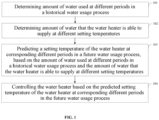
Fig. 1 is a flowchart of a method for automatically controlling a water heater according to an embodiment of the present application; -
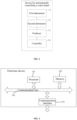
Fig. 2 is a schematic structural diagram of a device for automatically controlling a water heater according to an embodiment of the present application; and -
Fig. 3 is a schematic structural diagram of an electronic device according to an embodiment of the present application. - In order to make the object, technical solutions and advantages of the embodiments of the present application more clear, the technical solutions in the embodiments of the present application are clearly and completely described in the following with reference to the accompanying drawings in the embodiments of the present application. These embodiments are a part of the embodiments of the present application, and not all of the embodiments. All other embodiments obtained by a person of ordinary skill in the art based on the embodiments of the present application without any creative work belong to the scope of the present application.
- According to the present application, it is intended to predict a setting temperature of the water heater at different periods in a future water usage process, based on the amount of water used at different periods in a historical water usage process and the amount of water that the water heater can supply at different setting temperatures. According to the present application, a problem of waste of energy consumption caused by the user constantly setting the temperature of the water heater to a higher gear for operation during the use of the electric water heater may be solved. The working principle and working process of a method for automatically controlling a water heater according to the present application will be explained in detail below through specific embodiments.
-
FIG. 1 shows a flowchart of a method for automatically controlling a water heater according to an embodiment of the present application. Referring toFIG. 1 , the method for automatically controlling a water heater according to an embodiment of the present application includes: - step 101: determining the amount of water used at different periods in a historical water usage process;
- step 102: determining the amount of water that the water heater can supply at different setting temperatures;
- step 103: predicting a setting temperature of the water heater at different periods in a future water usage process, based on the amount of water used at different periods in a historical water usage process and the amount of water that the water heater can supply at different setting temperatures; and
- step 104: controlling the water heater based on the predicted setting temperature of the water heater at different periods in a future water usage process.
- In the present embodiment, the different periods may refer to different periods within a day, such as 12:00-14:00, 14:00-16:00, and 16:00-18:00. It may also refer to different periods within a week, such as Monday, Tuesday, Wednesday, etc. It may also refer to the combination of both, such as 12:00-14:00, 14:00-16:00, 16:00-18:00 on Mondays, and 12:00-14:00, 14:00-16 on Tuesdays :00, 16:00-18:00, Wednesday 12:00-14:00, 14:00-16:00, 16:00-18:00, etc. In the present embodiment, the historical water usage process may refer to a historical water usage process of a day, or may refer to a historical water usage process of multiple days. For example, it is possible to predict a setting temperature of the water heater at different periods in a next day, based on the amount of water at different periods of each day in a historical water usage process for seven days. For another example, it is possible to predict a setting temperature of the water heater at different periods from Monday to Sunday in the next week based on the amount of water at different periods from Monday to Sunday during the historical water usage process for seven says.
- In the present embodiment, when the setting temperature of the water heater at different periods in a future water usage process is predicted based on the amount of water at different periods in a historical water usage process, the prediction may further be made by determining a typical day in the historical water usage days, for example, the first day, on Monday having a relatively large reference value, determining a setting temperature at different periods on Monday based on the amount of water used at different periods on this day and the amount of water that the water heater can supply at different setting temperatures and finally predicting the setting temperature of the water heater at different periods of the day in the future water usage process.
- In the present embodiment, the setting temperature of the water heater herein may be a discrete physical temperature adjustment gear (such as 40°C, 45°C, 50°C) in the water heater, or continuous setting temperature, such as 41°C, 41.5°C, 42°C, 43°C, 44°C, 45°C, etc. which can be controlled in real time through an electronic control algorithm.
- In the present embodiment, it should be noted that before performing the
above step 101, it is necessary to perform the step of obtaining historical water usage data. The historical water usage data refers to data generated by the user during the historical use of the water heater, such as the amount of water (determined according to the water flow rate and the duration of water usage), a intra-tank temperature and an inlet water temperature, and so on. Specifically, when the historical water usage data are obtained, a water usage event may be constructed based on the status data reported by sensors (including temperature sensors, flow sensors, timers, etc.) disposed inside the water heater, and then the (average) water flow rate, (average) intra-tank temperature, (average) water inlet temperature, water usage duration and other indicators of the water usage event may be obtained. The average water flow rate and water usage duration of the water use event at different periods may be used to calculate the amount of water of the water usage event at different periods. For example, when the water heater has historical status reporting data for 14 consecutive days, every two adjacent statuses (a piece of status data representing the status of the water heater at the time of reporting, including a current water flow rate, a current intra-tank temperature, and the current point in time and other information) constitute a water usage event, in which the intra-tank temperature is data obtained by the central temperature sensor. - In the present embodiment, after the historical water usage data are obtained, the setting temperature of the water heater at different periods in a future water usage process may be predicted based on the amount of water at different periods in a historical water usage process. It is necessary to predict the setting temperature of the water heater at different periods in a future water usage process based on the amount of water used at different periods in a historical water usage process and the amount of water that the water heater can supply at different setting temperatures when the setting temperature of the water heater at different periods in a future water usage process may be predicted based on the amount of water at different periods in a historical water usage process. For example, the setting temperature corresponding to the different periods of each day in the historical water usage days may be determined based on the amount of water at different periods of the day in the historical water usage days and the amount of water that the water heater can supply at the different setting temperatures and the setting temperature of the water heater at different periods of each day in the future water usage process may be predicted based on the setting temperature corresponding to the different periods of each day in the historical water usage days.
- By the way of example, it is assumed that the historical water usage data includes 6 days of historical water usage. The amount of water used at different periods in each day of the 6 days based on the historical water usage data are as follows:
- in a first day:
- 00:00-02:00: 0 liter;
- 02:00-04:00: 0 liter;
- 04:00-06:00: 0 liter;
- 06:00-08:00: 10 liters;
- 08:00-10:00: 10 liters;
- 10:00-12:00: 5 liters;
- 12:00-14:00: 5 liters;
- 14:00-16:00: 0 liter;
- 16:00-18:00: 0 liter;
- 18:00-20:00: 25 liters;
- 20:00-22:00: 50 liters;
- 22:00-24:00: 5 liters;
- in a second day:
- 12:00-02:00: 0 liter;
- 02:00-04:00: 0 liter;
- 04:00-06:00: 0 liter;
- 06:00-08:00: 10 liters;
- 08:00-10:00: 5 liters;
- 10:00-12:00: 0 liter;
- 12:00-14:00: 5 liters;
- 14:00-16:00: 0 liter;
- 16:00-18:00: 0 liter;
- 18:00-20:00: 25 liters;
- 20:00-22:00: 50 liters;
- 22:00-24:00: 10 liters;
- in a third day:
- 12:00-02:00: 0 liter;
- 02:00-04:00: 0 liter;
- 04:00-06:00: 0 liter;
- 06:00-08:00: 5 liters;
- 08:00-10:00: 10 liters;
- 10:00-12:00: 0 liter;
- 12:00-14:00: 10 liters;
- 14:00-16:00: 0 liter;
- 16:00-18:00: 0 liter;
- 18:00-20:00: 25 liters;
- 20:00-22:00: 50 liters;
- 22:00-24:00: 10 liters;
- in a fourth day:
- 12:00-02:00: 0 liter;
- 02:00-04:00: 0 liter;
- 04:00-06:00: 0 liter;
- 06:00-08:00: 10 liters;
- 08:00-10:00: 10 liters;
- 10:00-12:00: 0 liter;
- 12:00-14:00: 10 liters;
- 14:00-16:00: 0 liter;
- 16:00-18:00: 0 liter;
- 18:00-20:00: 25 liters;
- 20:00-22:00: 50 liters;
- 22:00-24:00: 5 liters;
- in a fifth day:
- 12:00-02:00: 0 liter;
- 02:00-04:00: 0 liter;
- 04:00-06:00: 0 liter;
- 06:00-08:00: 10 liters;
- 08:00-10:00: 20 liters;
- 10:00-12:00: 0 liter;
- 12:00-14:00: 10 liters;
- 14:00-16:00: 0 liter;
- 16:00-18:00: 0 liter;
- 18:00-20:00: 25 liters;
- 20:00-22:00: 50 liters;
- 22:00-24:00: 0 liter;
- in a sixth day:
- 12:00-02:00: 0 liter;
- 02:00-04:00: 0 liter;
- 04:00-06:00: 0 liter;
- 06:00-08:00: 10 liters;
- 08:00-10:00: 5 liters;
- 10:00-12:00: 0 liter;
- 12:00-14:00: 5 liters;
- 14:00-16:00: 0 liter;
- 16:00-18:00: 0 liter;
- 18:00-20:00: 50 liters;
- 20:00-22:00: 50 liters;
- 22:00-24:00: 5 liters.
- In the present embodiment, the amount of water in the different periods shown above may be the amount of water under different temperature conditions. For example, the amount of water in the time period of 12:00-14:00 and the time period of 20:00-22:00 may correspond to different inlet water temperatures and intra-tank temperatures. In the present embodiment, no attention is paid to the difference between the inlet water temperature and the intra-tank temperature, and the corresponding setting temperature is predicted at different periods based on the amount of water. However, in other embodiments of the present application, the amount of water under different temperature conditions is unified to the amount of water under the standard-temperature, referred to as the amount of used standard-temperature water, which is explained in other subsequent embodiments.
- After obtaining the above historical water usage data, the method proceeds to the next step, that is, to determine the amount of water that the water heater can supply at the different setting temperatures. For example, it is assumed that the water heater has 8 setting temperatures (not limited to this, here is only used for illustration), the amount of water that the water heater can supply at the different setting temperatures include:
- 5 liters of water that may be supplied at the 40°C setting temperature;
- 8 liters of water that may be supplied at the 45°C setting temperature;
- 10 liters of water that may be supplied at the 50°C setting temperature;
- 20 liters of water that may be supplied at the 55°C setting temperature;
- 25 liters of water that may be supplied at the 60°C setting temperature;
- 40 liters of water that may be supplied at the 65°C setting temperature;
- 50 liters of water that may be supplied at the 70°C setting temperature; and
- 60 liters of water that may be supplied at the 75°C setting temperature;
- In the present embodiment, the amount of water that may be supplied at different setting temperatures here refers to the amount of water that may be supplied within a preset temperature range in a unit time (for example, within one hour) when the water heater is at different setting temperatures. The preset temperature range here refers to the appropriate temperature when the user uses water and may be 38°C-50°C. For example, 5 liters of water that may be supplied at the 40°C setting temperature means that the water heater may supply 5 liters of water with a temperature of 38°C-50°C per hour at the 40°C setting temperature. For another example, 25 liters of water that may be supplied at the 60°C setting temperature means that the water heater may supply 25 liters of water with a temperature of 38°C-50°C per hour at the 60°C setting temperature.
- In the present embodiment, it should be noted that the amount of water that may be supplied at different setting temperatures here does not consider the feature of water temperature, but only considers the water heater may be supplied at different setting temperatures of the water heater when the water temperature is within a certain preset temperature range. However, in other embodiments of the present application, the amount of water that may be supplied under different setting temperature conditions is unified to the amount of water that may be supplied under the standard-temperature, referred to as the amount of used standard-temperature water, which is explained in other subsequent embodiments.
- After obtaining the amount of water that the above water heater can supply at different setting temperatures, the method proceeds to the next step, that is, to determine a setting temperature of the water heater at different periods of a day in historical water usage days based on the amount of water at different periods of each day in the historical water usage days and the amount of water that the water heater can supply at the setting temperature. When performing this step, the setting temperature of the water heater at different periods of a day in historical water usage days may be determined based on a matching relationship between above the amount of water,
- in a first day:
- 00:00-02:00: 40°C setting temperature (because the amount of water at 40°C setting temperature is 5 liters, which can meet the water usage demand of 0 liters during this time period, the following description has similar principle to it, and will not be explained one by one);
- 002:00-04:00: 40°C setting temperature;
- 04:00-06:00: 40°C setting temperature;
- 06:00-08:00: 50°C setting temperature (because the amount of water at 50°C setting temperature is 10 liters, which can meet the water usage demand of 10 liters during this time period, the following description has similar principle to it, and will not be explained one by one);
- 08:00-10:00: 50°C setting temperature;
- 10:00-12:00: 40°C setting temperature;
- 12:00-14:00: 40°C setting temperature;
- 14:00-16:00: 40°C setting temperature;
- 16:00-18:00: 40°C setting temperature;
- 18:00-20:00: 60°C setting temperature;
- 20:00-22:00: 70°C setting temperature;
- 22:00-24:00: 40°C setting temperature;
- in a second day:
- 12:00-02:00: 40°C setting temperature;
- 02:00-04:00: 40°C setting temperature;
- 04:00-06:00: 40°C setting temperature;
- 06:00-08:00: 50°C setting temperature;
- 08:00-10:00: 40°C setting temperature;
- 10:00-12:00: 40°C setting temperature;
- 12:00-14:00: 40°C setting temperature;
- 14:00-16:00: 40°C setting temperature;
- 16:00-18:00: 40°C setting temperature;
- 18:00-20:00: 60°C setting temperature;
- 20:00-22:00: 70°C setting temperature;
- 22:00-24:00: 50°C setting temperature;
- in a third day:
- 12:00-02:00: 40°C setting temperature;
- 02:00-04:00: 40°C setting temperature;
- 04:00-06:00: 40°C setting temperature;
- 06:00-08:00: 40°C setting temperature;
- 08:00-10:00: 50°C setting temperature;
- 10:00-12:00: 40°C setting temperature;
- 12:00-14:00: 50°C setting temperature;
- 14:00-16:00: 40°C setting temperature;
- 16:00-18:00: 40°C setting temperature;
- 18:00-20:00: 60°C setting temperature;
- 20:00-22:00: 70°C setting temperature;
- 22:00-24:00: 50°C setting temperature;
- in a fourth day:
- 12:00-02:00: 40°C setting temperature;
- 02:00-04:00: 40°C setting temperature;
- 04:00-06:00: 40°C setting temperature;
- 06:00-08:00: 50°C setting temperature;
- 08:00-10:00: 50°C setting temperature;
- 10:00-12:00: 40°C setting temperature;
- 12:00-14:00: 50°C setting temperature;
- 14:00-16:00: 40°C setting temperature;
- 16:00-18:00: 40°C setting temperature;
- 18:00-20:00: 60°C setting temperature;
- 20:00-22:00: 70°C setting temperature;
- 22:00-24:00: 40°C setting temperature;
- in a fifth day:
- 12:00-02:00: 40°C setting temperature;
- 02:00-04:00: 40°C setting temperature;
- 04:00-06:00: 40°C setting temperature;
- 06:00-08:00: 50°C setting temperature;
- 08:00-10:00: 55°C setting temperature;
- 10:00-12:00: 40°C setting temperature;
- 12:00-14:00: 50°C setting temperature;
- 14:00-16:00: 40°C setting temperature;
- 16:00-18:00: 40°C setting temperature;
- 18:00-20:00: 60°C setting temperature;
- 20:00-22:00: 70°C setting temperature;
- 22:00-24:00: 40°C setting temperature;
- in a sixth day:
- 12:00-02:00: 40°C setting temperature;
- 02:00-04:00: 40°C setting temperature;
- 04:00-06:00: 40°C setting temperature;
- 06:00-08:00: 50°C setting temperature;
- 08:00-10:00: 40°C setting temperature;
- 10:00-12:00: 40°C setting temperature;
- 12:00-14:00: 40°C setting temperature;
- 14:00-16:00: 40°C setting temperature;
- 16:00-18:00: 40°C setting temperature;
- 18:00-20:00: 70°C setting temperature;
- 20:00-22:00: 70°C setting temperature;
- 22:00-24:00: 40°C setting temperature;
- It should be noted that in order to deal with a user's minor-probability water usage event, the setting temperature may be set to 40°C during the time period when the water usage is 0, so as to meet user's demand for water usage when a temporary minor-probability water usage event occurs. However, from the perspective of energy saving, the heating function of the water heater during the time period when the amount of water is zero may be turned off so as to save energy. It may be determined to set a lower 40°C setting temperature or turn off the heating function of the water heater during the time period when the water usage is 0 based on specific needs.
- After determining the setting temperature of the water heater at different periods of a day in historical water usage days, it is necessary to predict a setting temperature of the water heater at different periods of a day in a future water usage process based on the setting temperature of the water heater at different periods of a day in historical water usage days.
- For example, for each period, the highest setting temperature at the corresponding period in six days may be selected as a predicted value of the setting temperature at the corresponding period. For example, for the period from 08:00 to 10:00 of a day, the corresponding highest setting temperature in 6 days is 55°C. Therefore, the 55°C of setting temperature may be regarded as the predicted value of the setting temperature at the corresponding period. In addition, the setting temperature with the most occurrence numbers at the corresponding period in 6 days may also be selected as the predicted value of the setting temperature at the corresponding period. For example, for the period from 08:00 to 10:00 of a day, the corresponding highest setting temperature in 6 days is 55°C. The 55°C setting temperature appears once, the 40°C setting temperature appears twice, and the 50°C setting temperature appears 3 times, and the 50°C setting temperature with the most occurrence numbers may be used as the predicted setting temperature at corresponding period. In addition, the predicted value of the setting temperature at the corresponding period may also be determined according to the user's voting result on the setting temperature that appears at the corresponding period of 6 days. For example, the user's voting results on the setting temperature at the corresponding period of these 6 days include 0 vote for 40°C, 0 vote for 55°C, and 3 votes for 50°C, so that the 50°C setting temperature votes with the most votes may be determined as the predicted value of the setting temperature at the corresponding period.
- In the present embodiment, it should be noted that the two implementation methods of selecting the highest setting temperature or the setting temperature with the most occurrence numbers as the predicted value of the setting temperature at the corresponding period are respectively given above. It is understandable that selecting the highest setting temperature as the predicted setting temperature at the corresponding period may meet the needs of hot water usage, that is, selecting the highest setting temperature as the predicted setting temperature at the corresponding period considers a satisfaction level for hot water. Selecting the setting temperature with the most occurrence numbers as the predicted value of the setting temperature at the corresponding period can meet the accuracy of hot water usage, that is, selecting the setting temperature with the most occurrence numbers as the predicted value of the setting temperature at the corresponding period considers the accuracy rate. In actual processing, these two factors of hot water satisfaction level and accuracy rate may be considered comprehensively, which can be achieved by setting a probability threshold. For example, when the frequency at which a certain setting temperature appears exceeds the probability threshold, this setting temperature can be used as the predicted value of the setting temperature at the corresponding period, otherwise, the highest setting temperature is used as the predicted value of the setting temperature at the corresponding period.
- In addition, in the present embodiment, it should be noted that when predicting based on water usage data in historical water usage days, it is not that the more historical water usage days, the better. Since older behaviors have less influence on the current behavior, it is necessary to appropriately "forget" preceding behavioral data. Experiments have shown that too many or too few days will affect the accuracy rate and relatively good prediction results will be obtained using 14 historical water usage days.
- It can be seen from the above technical solutions that according to the method for automatically controlling the water heater, the water heater of the present application, a setting temperature of the water heater at different periods in a future water usage process can be predicted based on the amount of water used at different periods in a historical water usage process and the amount of water that the water heater can supply at different setting temperatures and the water heater is controlled based on the predicted setting temperature of the water heater at different periods in a future water usage process. It can also be seen from the above embodiments, by combining the amount of water at different periods in a historical water usage process and the amount of water that the water heater can supply at different setting temperatures, the setting temperature of the water heater at different periods in a future water usage process is predicted and thus a method for automatically controlling the water heater capable of being adaptive to a water usage behavior of a user, which not only solves the problem that a user manually reserves the temperature of the water heater, but also may allow the water heater to operate in a manner of low energy consumption under the premise of ensuring the water demand, thereby intelligently controlling the water heater.
- Based on the content of the foregoing embodiment, in the present embodiment, the
step 101 of determining the amount of water used at different periods in a historical water usage process includes the following steps:
step 101': determining the amount of standard-temperature water used at different periods in the historical water usage process; wherein the amount of used standard-temperature water is obtained by converting the amount of water under different temperature conditions into the amount of used water at the standard-temperature. - In the present embodiment, in order to solve the problem that the amount of water cannot be compared at different temperatures, a method of standardizing the amount of water at different temperatures through a unified standard-temperature to obtain the amount of used standard-temperature water is adopted in the present embodiment. Adopting the processing method of the present embodiment has such advantage that there is no need to consider whether the amount of water corresponding to each period is comparable when the temperature in the water heater is different at different periods.
- Based on the content of the foregoing embodiment, in the present embodiment, the step 101' of determining the amount of standard-temperature water used at different periods in a historical water usage process includes the following steps:
- step A1: determining the amount of actually used water, an intra-tank temperature and an inlet water temperature at different periods in the historical water usage process; and
- step A2: determining the amount of standard-temperature water used at different periods in the historical water usage process by the model of the first preset amount of used standard-temperature water based on the amount of actually used water, the intra-tank temperature and the inlet water temperature at different periods in the historical water usage process; where the model of the first preset amount of used standard-temperature water is a model that characterizes a corresponding relationship between the amount of actually used water and the amount of used standard-temperature water at different intra-tank temperatures and inlet water temperatures;
- In the present embodiment, when the amount of standard-temperature water used at different periods in the historical water usage process is determined, the processing methods of steps A1-A2 are adopted. The amount of actually used water at different periods in the historical water usage process may be converted to the amount of used standard-temperature water by using the model of the first preset amount of used standard-temperature water. Since the amount of actually used water at different periods in the historical water usage process may be converted to the amount of used standard-temperature water, accurate prediction results may be obtained when subsequent calculations and predictions are performed based on the amount of standard-temperature water at different periods in the historical water usage process which eliminates the influence of the fluctuation factor of different temperatures on the amount of water.
- In the present embodiment, it can be understood that the model of the first preset amount of used standard-temperature water is a model that characterizes a corresponding relationship between the amount of actually used water under different temperature conditions and the amount of used standard-temperature water unified to the standard-temperature conditions. In addition, in the present embodiment, the model of the first preset amount of used standard-temperature water has the following equation:
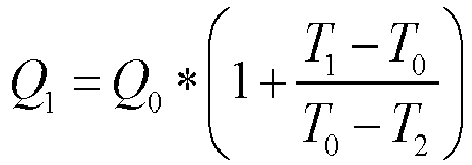
where Q 1 represents a first amount of used standard-temperature water, Q 0 represents the amount of actually used water, T 0 represents the standard-temperature, T 1 represents the intra-tank temperature, and T 2 represents the inlet water temperature. - It should be noted that the model of the first preset amount of used standard-temperature water mentioned in the present embodiment is not limited to the above-mentioned form, and can also have other forms as required, for example:

where k 1 represents a first adjustment factor and has values can be set according to actual needs, k 1 represents an adjustment factor representing the influence of differences between the water inlet temperature and the standard-temperature and the intra-tank temperature and the standard-temperature on the relationship between the amount of actually used water and the amount of used standard-temperature water and has value of 0.8-0.95. - Based on the content of the foregoing embodiment, in the present embodiment, the
step 102 of determining the amount of water that the water heater can supply at different setting temperatures includes the following steps:
determining the amount of standard-temperature water that the water heater can supply at different setting temperatures. - In the present embodiment, in order to solve the problem that the amount of water that the water heater can supply at different setting temperatures are not well unified, a method of standardizing the amount of water that the water heater can supply at different setting temperatures through a unified standard-temperature to obtain the amount of standard-temperature water that the water heater can supply at different setting temperatures is adopted in the present embodiment. Adopting the processing method of the present embodiment has such advantage that there is no need to consider whether the amount of water that the water heater can supply at different setting temperatures is comparable.
- Based on the content of the foregoing embodiment, in the present embodiment, the step 102' of determining the amount of standard-temperature water that the water heater can supply at different setting temperatures includes the following steps:
- step B1: determining a rated capacity of the water heater;
- step B2: determining the amount of standard-temperature water that the water heater can supply at different setting temperatures by a model of the second preset amount of used standard-temperature water based on different setting temperatures, inlet water temperatures and a rated capacity of the water heater;
- where the model of the second preset amount of used standard-temperature water is a model that characterizes a corresponding relationship between the rated capacity of the water heater and the amount of used standard-temperature water at different setting temperatures and inlet water temperatures.
- In the present embodiment, when the amount of standard-temperature water that the water heater can supply at different setting temperatures is determined, the processing methods of steps B1-B2 are adopted. The amount of water supplied at different setting temperatures may be converted to the amount of used standard-temperature water by using the model of the second preset amount of used standard-temperature water and thus the amount of standard-temperature water supplied at the different setting temperatures are obtained. Therefore, more accurate matching result may be obtained when the amount of standard-temperature water supplied at different setting temperatures is matched with the amount of standard-temperature water used at different periods in a historical water usage processes.
- In addition, in the present embodiment, the model of the second preset amount of used standard-temperature water has the following equation:

where Q 2 represents a second amount of used standard-temperature water, Q represents the rated capacity of the water heater, T 2 represents the set temperature, T 0 represents the standard-temperature, and T 2 represents the inlet water temperature. - It should be noted that the model of the second preset amount of used standard-temperature water mentioned in the present embodiment is not limited to the above-mentioned one form, and can also have other forms as required, for example:
where k 2 represents a second adjustment factor and has values can be set according to actual needs, k 2 represents an adjustment factor representing the influence of differences between the water inlet temperature and the standard-temperature and the setting temperature and the standard-temperature on the relationship between the rated capacity of the water heater and the amount of standard-temperature water that the water heater can supply at different setting temperatures and has value of 0.7-0.95. - Based on the content of the foregoing embodiment, in the present embodiment, the
step 103 of predicting a setting temperature of the water heater at different periods in a future water usage process, based on the amount of water used at different periods in a historical water usage process and the amount of water that the water heater can supply at different setting temperatures specifically includes:
step 103': predicting a setting temperature of the water heater at different periods in a future water usage process, based on the amount of standard-temperature water used at different periods in a historical water usage process and the amount of standard-temperature water that the water heater can supply at different setting temperatures. - In the present embodiment, it should be noted that by processing in the above embodiments, the amount of standard-temperature water used at different periods in a historical water usage process and the amount of standard-temperature water that the water heater can supply at different setting temperatures are obtained and thus the setting temperature of the water heater at different periods in a future water usage process is predicted by mapping the amount of used standard-temperature water with each other based on the amount of standard-temperature water used at different periods in a historical water usage process and the amount of standard-temperature water that the water heater can supply at different setting temperatures. When the amount of used standard-temperature water are mapped with each other, a principle needs to be followed, that is, the amount of standard-temperature water that the water heater can supply is greater than or equal to the amount of standard-temperature water used at a corresponding period in the historical water usage process and needs to be closest to the amount of standard-temperature water used the corresponding period in historical water usage process.
- In addition, when the amount of used standard-temperature water are mapped with each other, the amount of standard-temperature water used at the corresponding period in historical water usage process may be further discretized using the amount of water difference between the amount of water may be supplied at two setting temperatures and thus the influence of abnormal sensor data on results. For example, assuming that the amount of standard-temperature water that may be supplied at 40°C setting temperature is 10 liters and the amount of water that can be supplied at 45°C setting temperature is 15 liters, the amount of standard-temperature water used at the corresponding period in historical water usage process may be further discretized using the amount of water difference (15-10=5) between the amount of used standard-temperature water may be supplied at 40°C setting temperature and 45°C setting temperature, that is, the amount of standard-temperature water used at the corresponding period in historical water usage process is processed into discrete data points such as 5 liters, 10 liters, 15 liters, 20 liters, and 25 liters.
- Based on the content of the foregoing embodiment, in the present embodiment, the step 103' of predicting a setting temperature of the water heater at different periods in a future water usage process, based on the amount of standard-temperature water used at different periods in a historical water usage process and the amount of standard-temperature water that the water heater can supply at different setting temperatures specifically includes:
- step C1: determining a setting temperature of the water heater at different periods of a day in historical water usage days, based on the amount of standard-temperature water used at different periods of the day in the historical water usage days and the amount of standard-temperature water that the water heater can supply at different setting temperatures; and
- step C2: predicting a setting temperature of the water heater at different periods of a day in a future water usage process, based on the setting temperature of the water heater at different periods of a day in historical water usage days.
- In the present embodiment, the setting temperature corresponding to the different periods of each day in the historical water usage days is first determined based on the amount of standard-temperature water used at different periods of the day in the historical water usage days and the amount of standard-temperature water that the water heater can supply at the different setting temperatures and the setting temperature of the water heater at different periods of each day in the future water usage process may be predicted based on the setting temperature of the water heater corresponding to the different periods of each day in the historical water usage days.
- Based on the content of the foregoing embodiment, in the present embodiment, the step C2 of predicting a setting temperature of the water heater at different periods of a day in a future water usage process, based on the setting temperature of the water heater at different periods of a day in historical water usage days specifically includes:
- step C21: transmitting the setting temperature of the water heater at different periods of a day in historical water usage days to a client device;
- step C22: receiving a voting value for the setting temperature of the water heater at different periods of a day in historical water usage days transmitted by the client device; and
- step C23: predicting the setting temperature of the water heater at different periods of a day in a future water usage process, based on the voting value for the setting temperature of the water heater at different periods of a day.
- In the present embodiment, the temperature voting mechanism is used to determine the setting temperature of the water heater at different periods of a day in a future water usage process. In the present embodiment, a probability threshold can be set. The larger the probability threshold, the lower the tolerance for small-probability water usage events. For example, for setting temperatures (setting temperatures matched well in step 103)) in a certain period, i.e., past six days, a voting mechanism is used to vote against a setting temperature that should be set for this time period in the next day. The voting mechanism here refers to transmitting the setting temperature of the water heater at different periods in the past 6 days to a use device, and then allowing the user to vote against the setting temperature of the water heater at different periods in past 6 days separately. For example, assuming that after matching in
step 103, it is determined that the setting temperature corresponding to the period of 00:00-02:00 in past 6 days is 40°C, 40°C, 45°C, 45°C, 40°C, 40° C, these setting temperatures are then transmitted to the user and the user votes against these setting temperatures, and the final statistical voting result includes: 5 votes for 40°C setting temperature and 1 vote for 45°C setting temperature. It can be seen that the proportion of votes for 40°C setting temperature 40 is 5/6=0.83, and the proportion of votes for 45°C setting temperature of is 1/6=0.16. It should be noted that when the percentage of votes for a certain setting temperature (referring to the ratio of the number of votes for a certain setting temperature to that of historical water usage days) exceeds the set probability threshold (which can be 0.8), the setting temperature is regarded as the predicted setting temperature of the time period (also called the predicted value of the setting temperature the corresponding period) next day. According to the above example, for the period 00:00-02:00 in six days in the above example, the proportion of votes for 40°C setting temperature exceeds the set probability threshold of 0.8, so that 40°C setting temperature can be used as the predicted setting temperature at the present period of the next day. After the user votes, it is found that there is no setting temperature that the proportion of votes exceeds the set probability threshold, the highest gear of all the historical corresponding setting temperatures is selected as the predicted setting temperature at the period of next day. For example, for the period of 00:00-02:00 in six days of the above example, the 45°C setting temperature is selected as the predicted setting temperature at the period of next day. - It can be seen from the above scheme that in the present embodiment, using the temperature voting mechanism, and the setting temperature whose number of votes exceeds the set probability threshold is used as the predicted setting temperature, such that the predicted setting temperature can meet the user's water usage behavior with the greatest probability. In addition, in the present embodiment, the probability of occasional water usage events is estimated, and tolerance of minor-probability water usage events is controlled by controlling the probability threshold parameter.
- Based on the content of the foregoing embodiment, in the present embodiment, the step C2 of predicting a setting temperature of the water heater at different periods of a day in a future water usage process, based on the setting temperature of the water heater at different periods of a day in historical water usage days specifically includes:
- determining a highest setting temperature of the water heater at different periods of a day, based on the setting temperature of the water heater at different periods of a day in historical water usage days and
- determining the highest setting temperature of the water heater at different periods of a day as the setting temperature of the water heater at different periods of a day in a future water usage process.
- In the present embodiment, unlike the above-mentioned embodiments, the present embodiment does not need to use a voting mechanism, but directly uses the highest setting temperature among all setting temperatures under different historical water usage days corresponding to each time period as the predicted value of the setting temperature at different periods of the day in future water usage process, so as to ensure that the predicted setting temperature can meet the user's water demand with the greatest probability.
- In addition, it should be noted that the historical water usage days in the present embodiment refers to the continuous historical water usage days by default. However, if the water heater has no continuous historical water usage days, the date of missing water usage data can be ignored. However, in practical applications, the allowable number of days of missing water usage data may be set. When the number of days of missing water usage data exceeds the allowable number of days of missing water usage data, and no prediction is made for the water heater. For example, the number of days of missing water usage data may be set to three days. When the number of days of missing water usage data exceeds three days and no prediction is made for the water heater. For example, when the water heater does not have 14 consecutive days of data, the most recent 14 days of data may be selected and the missing dates are ignored. In the present embodiment, the allowable number of missing days is 3 days, and no prediction is made for the water heater when the number of days of missing water usage data exceeds 3 days.
- Based on the content of the foregoing embodiment, in the present embodiment, the method for automatically controlling the water heater further includes:
- determining atmospheric temperature data at different periods in a future water usage process;
- correcting the predicted setting temperature of the water heater at different periods of a day in a future water usage process, based on the atmospheric temperature data at different periods in a future water usage process; and
- controlling the water heater based on the corrected setting temperature.
- In the present embodiment, in order to precisely predict the water heater in various periods next day, the external atmospheric temperature data is further considered which is particularly important for areas where the outdoor temperature changes significantly. In the present embodiment, temperature data of the local weather forecast in next day needs to be obtained first as correction parameters. The difference between the specific implementation method and the above-mentioned embodiment is that after obtaining the setting temperature at different periods of the day in the future water usage process, the predicted setting temperature of the water heater at different periods of a day in a future water usage process is corrected using the atmospheric temperature data at different periods one day in a future water usage process and the water heater is controlled automatically based on the corrected setting temperature. when making specific corrections, the following corresponding relationship can be used, for example, the setting temperature of the corresponding time period increases by 5 degrees (maximum 75 degrees) when the atmospheric temperature decreases every 10 degrees.
- Based on the content of the foregoing embodiment, in the present embodiment, the method for automatically controlling the water heater further includes:
- determining saved power after the water heater is automatically controlled based on the predicted setting temperature of the water heater at different periods in a future water usage process;
- determining a consumed power after the water heater is automatically controlled based on the predicted setting temperature of the water heater at different periods in a future water usage process; and
- determining saved power cost based on the saved power, the consumed power and a ladder-type pricing model.
- In the present embodiment, the power costs that can be saved after implementing the method for automatically controlling the water heater control according to the present embodiment are further given, so that the user can intuitively see the saved power, thereby improving user experience.
- In the present embodiment, when the water heater is turned on first, the original setting temperature data before the water heater is turned on is recorded (if it is not turned on, the water heater will be heated and kept at the original setting temperature). After the water heater is turned on, it is automatically adjusted based on the predicted setting temperature output in the present embodiment. The original setting temperature, the predicted setting temperature output in the present embodiment, the ambient temperature and the water usage data are used to estimate saved power after the water heater is turned on by a fitting equation. After the saved power is estimated, a heating time of the water heater, a rated power of the water heater and the data of the ladder-type pricing data in the local area are obtained, and the consumed power during the operation of the water heater is calculated. Saved power costs (=consumed power+saved power)*pricing 1-consumed power*pricing 2 is then calculated.
Pricing 1 and pricing 2 are ladder-type pricing. - According to the above description and analysis, it can be seen that the method for automatically controlling the water heater according to the present embodiment can adapt to the user's water usage behavior, so that the water heater can operate in a low energy consumption mode under the premise of ensuring the water demand. In addition, in the present embodiment, using the temperature voting mechanism, and the setting temperature whose number of votes exceeds the set probability threshold is used as the predicted setting temperature, such that the predicted setting temperature can meet the user's water usage behavior with the greatest probability. In addition, in another embodiment, the maximum setting temperature is used as the predicted setting temperature, which ensures that the setting temperature meets the user's water demand with the greatest probability.
- In addition, in the present embodiment, a certain degree of data loss can also be tolerated because the user's water usage habits in a certain period have no change in a short period, so even if the data of a certain period of a day is missing, it will not have significant influence on the final prediction result.
- In addition, in the present embodiment, a certain degree of abnormal value can also be tolerated because the amount of actually used standard-temperature water is discretized by using the amount of standard-temperature water corresponding to a temperature section, which can effectively avoid influence of very large or very small abnormal value on the results.
- In the present embodiment, it should be noted that the method for automatically controlling a water heater according to the present embodiment can be used in a storage-type electric water heater that uses water for bathing or catering. The present application does not limit this. According to actual needs, the method for automatically controlling a water heater according to the present embodiment can also be used in storage-type electric water heaters for other purposes.
- In another embodiment of the present application, a device for automatically controlling a water heater is provided. Referring to
FIG. 2 , the device for automatically controlling a water heater includes: a first determiner11, asecond determiner 12, apredictor 13 andcontroller 14, where - a first determiner 11 configured to determine the amount of water used at different periods in a historical water usage process;
- a
second determiner 12 configured to determine the amount of water that the water heater can supply at different setting temperatures; - a
predictor 13 configured to predict a setting temperature of the water heater at different periods in a future water usage process, based on the amount of water used at different periods in a historical water usage process and the amount of water that the water heater can supply at different setting temperatures; and - a
controller 14 configured to control the water heater based on the predicted setting temperature of the water heater at different periods in a future water usage process. - Since the device for automatically controlling a water heater according to the present embodiment can be used to implement the method for automatically controlling a water heater described in the foregoing embodiment, it has similar working principles and beneficial effects to the method, so that they will not be described in detail here, and the specific content can be referred to the introduction of the foregoing embodiment.
- In still another embodiment of the present application, a water heater is provided including the device for automatically controlling a water heater according to the above embodiment.
- Since the water heater according to the present embodiment includes the device for automatically controlling a water heater according to the above embodiment, it has similar working principles and beneficial effects to the method, so that they will not be described in detail here, and the specific content can be referred to the introduction of the foregoing embodiment.
- In yet another embodiment of the present application, an electronic device is provided. Referring to
Fig. 3 , the electronic device specifically includes: aprocessor 301, amemory 302, acommunication interface 303, and abus 304; - wherein the
processor 301, thememory 302 and thecommunication interface 303 communicate with each other through thebus 304; thecommunication interface 303 is configured to implement information transmission between various modeling software and intelligent manufacturing equipment module libraries and other related equipment transmission; and - the
processor 301 is configured to call computer programs in thememory 302, when executed by the processor, the computer programs cause the processor to implement steps of the method for automatically controlling the water heater mentioned above, for example, determining the amount of water used at different periods in a historical water usage process; determining the amount of water that the water heater can supply at different setting temperatures; predicting a setting temperature of the water heater at different periods in a future water usage process, based on the amount of water used at different periods in a historical water usage process and the amount of water that the water heater can supply at different setting temperatures; and controlling the water heater based on the predicted setting temperature of the water heater at different periods in a future water usage process. - It should be noted that the electronic device mentioned in the present embodiment may be a mobile terminal or a cloud server.
- According to yet still another embodiment of the present application, a non-transitory computer-readable storage medium having stored thereon computer programs, when executed by a processor, the computer programs cause the processor to implement steps of the method for automatically controlling the water heater mentioned above, for example, determining the amount of water used at different periods in a historical water usage process; determining the amount of water that the water heater can supply at different setting temperatures; predicting a setting temperature of the water heater at different periods in a future water usage process, based on the amount of water used at different periods in a historical water usage process and the amount of water that the water heater can supply at different setting temperatures; and controlling the water heater based on the predicted setting temperature of the water heater at different periods in a future water usage process.
- In addition, the logic instructions in the memory described above may be implemented in the form of a software functional unit and may be stored in a computer readable storage medium while being sold or used as a separate product. Based on such understanding, the technical solution of the present application or a part of the technical solution, which is essential or contributes to the prior art, may be embodied in the form of a software product, which is stored in a storage medium, including several instructions to cause a computer device (which may be a personal computer, server, or network device, etc.) to perform all or part of the steps of the methods described in various embodiments of the present application. The storage medium described above includes: a U disk, a mobile hard disk, a read-only memory (ROM), a random access memory (RAM), a magnetic disk, or an optical disk, and the like.
- The device embodiments described above are merely illustrative, wherein the units described as separate components may or may not be physically separate, and the components displayed as units may or may not be physical units, that is, may be located at the same place, or it can be distributed to multiple network units. Some or all of the modules may be selected according to actual needs to achieve the purpose of the solution of the embodiment. Those of ordinary skill in the art can understand and implement the embodiments described above without paying creative labors.
- Through the description of the embodiments above, those skilled in the art can clearly understand that the various embodiments can be implemented by means of software and a necessary general hardware platform, and of course, by hardware. Based on such understanding, the technical solution of the present application or a part of the technical solution, which is essential or contributes to the prior art, may be embodied in the form of a software product, which is stored in a storage medium such as ROM/RAM, magnetic Discs, optical discs, etc., including several instructions to cause a computer device (which may be a personal computer, server, or network device, etc.) to perform various embodiments or a part of the methods described in various embodiments.
- In the description of the present application, it is to be noted that the orientation or positional relationships indicated by terms such as "upper", "lower", etc. are based on the orientation or positional relationship shown in the drawings, and are merely for the convenience of describing the present application and simplifying the description, rather than indicating or implying that the device or component stated must have a particular orientation, is constructed and operated in a particular orientation, and thus is not to be construed as limiting the disclosure. Unless explicitly stated and defined otherwise, the terms "installed," "connected with," and "connected" shall be understood broadly, for example, it may be either fixedly connected or detachably connected, or can be integrated; it may be mechanically connected, or electrically connected; it may be directly connected, or indirectly connected through an intermediate medium and the communication between the interior of two elements. The specific meanings of the terms above in the present application can be understood by a person skilled in the art in accordance with specific conditions.
- In addition, in the present application, terms such as "first" and "second" are only used for descriptive purposes, and cannot be understood as indicating or implying relative importance or implicitly indicating the number of technical features indicated. Therefore, the features defined with "first" and "second" may explicitly or implicitly include at least one of the features. In the description of the present application, "a plurality of" means at least two, such as two, three, etc., unless specifically defined otherwise.
- Further, in the present application, relational terms such as "first" and "second" are only used to distinguish one entity or operation from another entity or operation, and do not necessarily require or imply any such actual relation or order among these entities or operations. Also, the terms "include", "including" or any other variants thereof are intended to cover non-exclusive inclusion, so that a process, a method, an article, or a device that includes a series of elements includes not only those elements, but also includes other elements which are not explicitly listed or also include elements inherent to the process, the method, the article or the device. If there are no more limitations, the element defined by the sentence "including a..." does not exclude the existence of other same elements in the process, method, article, or equipment including the element.
- In the description of this specification, descriptions with reference to the terms "one embodiment", "some embodiments", "examples", "specific examples", or "some examples" etc. mean that specific features, structure, materials or characteristics described in conjunction with the embodiment or example are included in at least one embodiment or example of the embodiments of the present application. In this specification, the schematic expressions of the above terms do not necessarily refer to the same embodiment or example. Also, the described specific features, structures, materials or characteristics can be combined in any one or more embodiments or examples in a suitable manner. In addition, those skilled in the art may integrate and combine the different embodiments or examples and the features of the different embodiments or examples described in this specification without contradicting each other.
- Finally, it should be noted that the above embodiments are only used to explain the technical solutions of the present application, and are not limited thereto; although the present application is described in detail with reference to the foregoing embodiments, it should be understood by those skilled in the art that they can still modify the technical solutions described in the foregoing embodiments and make equivalent replacements to a part of the technical features and these modifications and substitutions do not depart from the spirit and scope of the technical solutions of the embodiments of the present application.
- Alternative embodiments are set out in the following clauses.
- 1. A method for automatically controlling a water heater, comprising: determining amount of water used at different periods in a historical water usage process; determining amount of water that the water heater is able to supply at different setting temperatures; predicting a setting temperature of the water heater at corresponding different periods in a future water usage process, based on the amount of water used at different periods in the historical water usage process and the amount of water that the water heater is able to supply at different setting temperatures; and controlling the water heater based on the predicted setting temperature of the water heater at corresponding different periods in the future water usage process.
- 2. The method for automatically controlling the water heater of
clause 1, wherein the determining the amount of water used at different periods in the historical water usage process comprising: determining amount of standard-temperature water used at different periods in the historical water usage process, wherein the amount of the used standard-temperature water is obtained by converting amount of water used at different temperature conditions into amount of water used at the standard-temperature. - 3. The method for automatically controlling the water heater of clause 2, wherein the determining the amount of standard-temperature water used at different periods in the historical water usage process comprising: determining amount of actually used water, an intra-tank temperature and an inlet water temperature at different periods in the historical water usage process; and determining, based on the amount of actually used water, the intra-tank temperature and the inlet water temperature at different periods in the historical water usage process, the amount of standard-temperature water used at different periods in the historical water usage process by using a model of the first preset amount of used standard-temperature water; wherein the model of the first preset amount of used standard-temperature water is a model that represents a corresponding relationship between the amount of actually used water and the amount of used standard-temperature water at different intra-tank temperatures and inlet water temperatures.
- 4. The method for automatically controlling the water heater of clause 3, wherein the model of the first preset amount of used standard-temperature water is as follows:

- 5. The method for automatically controlling the water heater of any one of clauses 2 to 4, wherein the determining the amount of water that the water heater is able to supply at different setting temperatures comprises: determining the amount of standard-temperature water that the water heater is able to supply at different setting temperatures.
- 6. The method for automatically controlling the water heater of clause 5, wherein the determining the amount of standard-temperature water that the water heater is able to supply at different setting temperatures comprises: determining, based on different setting temperatures, inlet water temperatures and a rated capacity of the water heater, the amount of standard-temperature water that the water heater is able to supply at different setting temperatures by a model of second preset amount of used standard-temperature water; wherein the model of the second preset amount of used standard-temperature water is a model that represents a corresponding relationship between the rated capacity of the water heater and the amount of used standard-temperature water at different setting temperatures and inlet water temperatures.
- 7. The method for automatically controlling the water heater of clause 6, wherein the model of the second preset amount of used standard-temperature water is as follows:

- 8. The method for automatically controlling the water heater of clause 5, wherein the predicting the setting temperature of the water heater at corresponding different periods in the future water usage process, based on the amount of water used at different periods in the historical water usage process and the amount of water that the water heater is able to supply at different setting temperatures comprises: predicting the setting temperature of the water heater at different periods in the future water usage process, based on the amount of the standard-temperature water used at different periods in the historical water usage process and the amount of standard-temperature water that the water heater is able to supply at different setting temperatures.
- 9. The method for automatically controlling the water heater of clause 8, wherein the predicting the setting temperature of the water heater at different periods in the future water usage process, based on the amount of standard-temperature water used at different periods in the historical water usage process and the amount of standard-temperature water that the water heater is able to supply at different setting temperatures comprises: determining the setting temperature of the water heater at different periods of a day in historical water usage days, based on the amount of standard-temperature water used at different periods of the day in the historical water usage days and the amount of standard-temperature water that the water heater is able to supply at different setting temperatures; and predicting the setting temperature of the water heater at corresponding different periods of a day in the future water usage process, based on the setting temperature of the water heater at different periods of the day in historical water usage days.
- 10. The method for automatically controlling the water heater of clause 9, wherein the predicting the setting temperature of the water heater at corresponding different periods of the day in the future water usage process, based on the setting temperature of the water heater at different periods of the day in historical water usage days comprises: transmitting the setting temperature of the water heater at different periods of the day in historical water usage days to a client device; receiving a voting value for the setting temperature of the water heater at different periods of the day in historical water usage days transmitted by the client device; and predicting the setting temperature of the water heater at corresponding different periods of the day in the future water usage process, based on the voting value for the setting temperature of the water heater at different periods of the day.
- 11. The method for automatically controlling the water heater of clause 9, wherein the predicting the setting temperature of the water heater at corresponding different periods of the day in the future water usage process, based on the setting temperature of the water heater at different periods of the day in historical water usage days comprises: determining a highest setting temperature of the water heater at different periods of the day, based on the setting temperature of the water heater at different periods of the day in historical water usage days, and determining the highest setting temperature of the water heater at different periods of the day as the setting temperature of the water heater at corresponding different periods of the day in the future water usage process.
- 12. The method for automatically controlling the water heater of
clause 1, further comprising: determining atmospheric temperature data at different periods in the future water usage process; correcting the predicted setting temperature of the water heater at corresponding different periods in the future water usage process, based on the atmospheric temperature data at different periods in the future water usage process; and controlling the water heater based on the corrected setting temperature. - 13. The method for automatically controlling the water heater of
clause 1, further comprising: determining saved power after the water heater is automatically controlled based on predicted setting temperature of the water heater at corresponding different periods in the future water usage process; determining consumed power after the water heater is automatically controlled based on the predicted setting temperature of the water heater at corresponding different periods in the future water usage process; and determining saved power cost based on the saved power, the consumed power and a ladder-type pricing model. - 14. A device for automatically controlling a water heater, comprising: a first determiner configured to determine amount of water used at different periods in a historical water usage process; a second determiner configured to determine amount of water that the water heater is able to supply at different setting temperatures; a predictor configured to predict a setting temperature of the water heater at corresponding different periods in the future water usage process, based on the amount of water used at different periods in the historical water usage process and the amount of water that the water heater is able to supply at different setting temperatures; and a controller configured to control the water heater based on the predicted setting temperature of the water heater at corresponding different periods in the future water usage process.
- 15. A water heater, comprising the device for automatically controlling the water heater of
clause 14. - 16. An electronic device comprising: a processor; and a memory configured to store computer programs that, when executed by the processor, causes the processor to perform a method for automatically controlling a water heater of any one of
clauses 1 to 13. - 17. A non-transitory computer-readable storage medium storing computer programs which are executed by a processor to perform a method for automatically controlling a water heater of any one of
clauses 1 to 13.
Claims (15)
- A method for automatically controlling a water heater, comprising: determining amount of water used at different periods in a historical water usage process (step 101); determining amount of water that the water heater is able to supply at different setting temperatures (step 102); predicting a setting temperature of the water heater at corresponding different periods in a future water usage process, based on the amount of water used at different periods in the historical water usage process and the amount of water that the water heater is able to supply at different setting temperatures (step 103); and controlling the water heater based on the predicted setting temperature of the water heater at corresponding different periods in the future water usage process (step 104); wherein the determining the amount of water used at different periods in the historical water usage process comprising: determining amount of standard-temperature water used at different periods in the historical water usage process, wherein the amount of the used standard-temperature water is obtained by converting amount of water used at different temperature conditions into amount of water used at the standard-temperature; wherein the determining the amount of standard-temperature water used at different periods in the historical water usage process comprising: determining amount of actually used water, an intra-tank temperature and an inlet water temperature at different periods in the historical water usage process; and determining, based on the amount of actually used water, the intra-tank temperature and the inlet water temperature at different periods in the historical water usage process, the amount of standard-temperature water used at different periods in the historical water usage process by using a model of the first preset amount of used standard-temperature water; wherein the model of the first preset amount of used standard-temperature water is a model that represents a corresponding relationship between the amount of actually used water and the amount of used standard-temperature water at different intra-tank temperatures and inlet water temperatures.
- The method for automatically controlling the water heater of claim 1, wherein the model of the first preset amount of used standard-temperature water is as follows:

- The method for automatically controlling the water heater of claims 1 or 2, wherein the determining the amount of water that the water heater is able to supply at different setting temperatures comprises: determining the amount of standard-temperature water that the water heater is able to supply at different setting
- The method for automatically controlling the water heater of claim 3, wherein the determining the amount of standard-temperature water that the water heater is able to supply at different setting temperatures comprises: determining, based on different setting temperatures, inlet water temperatures and a rated capacity of the water heater, the amount of standard-temperature water that the water heater is able to supply at different setting temperatures by a model of second preset amount of used standard-temperature water; wherein the model of the second preset amount of used standard-temperature water is a model that represents a corresponding relationship between the rated capacity of the water heater and the amount of used standard-temperature water at different setting temperatures and inlet water temperatures.
- The method for automatically controlling the water heater of claim 4, wherein the model of the second preset amount of used standard-temperature water is as follows:

- The method for automatically controlling the water heater of claim 3, wherein the predicting the setting temperature of the water heater at corresponding different periods in the future water usage process, based on the amount of water used at different periods in the historical water usage process and the amount of water that the water heater is able to supply at different setting temperatures comprises: predicting the setting temperature of the water heater at different periods in the future water usage process, based on the amount of the standard-temperature water used at different periods in the historical water usage process and the amount of standard-temperature water that the water heater is able to supply at different setting temperatures.
- The method for automatically controlling the water heater of claim 6, wherein the predicting the setting temperature of the water heater at different periods in the future water usage process, based on the amount of standard-temperature water used at different periods in the historical water usage process and the amount of standard-temperature water that the water heater is able to supply at different setting temperatures comprises: determining the setting temperature of the water heater at different periods of a day in historical water usage days, based on the amount of standard-temperature water used at different periods of the day in the historical water usage days and the amount of standard-temperature water that the water heater is able to supply at different setting temperatures; and predicting the setting temperature of the water heater at corresponding different periods of a day in the future water usage process, based on the setting temperature of the water heater at different periods of the day in historical water usage days.
- The method for automatically controlling the water heater of claim 7, wherein the predicting the setting temperature of the water heater at corresponding different periods of the day in the future water usage process, based on the setting temperature of the water heater at different periods of the day in historical water usage days comprises: transmitting the setting temperature of the water heater at different periods of the day in historical water usage days to a client device; receiving a voting value for the setting temperature of the water heater at different periods of the day in historical water usage days transmitted by the client device; and predicting the setting temperature of the water heater at corresponding different periods of the day in the future water usage process, based on the voting value for the setting temperature of the water heater at different periods of the day.
- The method for automatically controlling the water heater of claim 7, wherein the predicting the setting temperature of the water heater at corresponding different periods of the day in the future water usage process, based on the setting temperature of the water heater at different periods of the day in historical water usage days comprises: determining a highest setting temperature of the water heater at different periods of the day, based on the setting temperature of the water heater at different periods of the day in historical water usage days, and determining the highest setting temperature of the water heater at different periods of the day as the setting temperature of the water heater at corresponding different periods of the day in the future water usage process.
- The method for automatically controlling the water heater of claim 1, further comprising: determining atmospheric temperature data at different periods in the future water usage process; correcting the predicted setting temperature of the water heater at corresponding different periods in the future water usage process, based on the atmospheric temperature data at different periods in the future water usage process; and controlling the water heater based on the corrected setting temperature.
- The method for automatically controlling the water heater of claim 1, further comprising: determining saved power after the water heater is automatically controlled based on predicted setting temperature of the water heater at corresponding different periods in the future water usage process; determining consumed power after the water heater is automatically controlled based on the predicted setting temperature of the water heater at corresponding different periods in the future water usage process; and determining saved power cost based on the saved power, the consumed power and a ladder-type pricing model.
- A device for automatically controlling a water heater, comprising: a first determiner (11) configured to determine amount of water used at different periods in a historical water usage process; a second determiner (12) configured to determine amount of water that the water heater is able to supply at different setting temperatures; a predictor (13) configured to predict a setting temperature of the water heater at corresponding different periods in the future water usage process, based on the amount of water used at different periods in the historical water usage process and the amount of water that the water heater is able to supply at different setting temperatures; and a controller (14) configured to control the water heater based on the predicted setting temperature of the water heater at corresponding different periods in the future water usage process.
- A water heater, comprising the device for automatically controlling the water heater of claim 12.
- An electronic device comprising: a processor; and a memory configured to store computer programs that, when executed by the processor, causes the processor to perform a method for automatically controlling a water heater of any one of claims 1 to 11.
- A non-transitory computer-readable storage medium storing computer programs which are executed by a processor to perform a method for automatically controlling a water heater of any one of claims 1 to 11.
Applications Claiming Priority (3)
| Application Number | Priority Date | Filing Date | Title |
|---|---|---|---|
| CN201910875704.6A CN110530035B (en) | 2019-09-17 | 2019-09-17 | Automatic control method and device for water heater, water heater and electronic equipment |
| PCT/CN2019/130501 WO2021051715A1 (en) | 2019-09-17 | 2019-12-31 | Automatic control method and apparatus for water heater, and water heater and electronic device |
| EP19945913.2A EP3978824B1 (en) | 2019-09-17 | 2019-12-31 | Automatic control method and apparatus for water heater, and water heater and electronic device |
Related Parent Applications (2)
| Application Number | Title | Priority Date | Filing Date |
|---|---|---|---|
| EP19945913.2A Division EP3978824B1 (en) | 2019-09-17 | 2019-12-31 | Automatic control method and apparatus for water heater, and water heater and electronic device |
| EP19945913.2A Division-Into EP3978824B1 (en) | 2019-09-17 | 2019-12-31 | Automatic control method and apparatus for water heater, and water heater and electronic device |
Publications (4)
| Publication Number | Publication Date |
|---|---|
| EP4397919A2 true EP4397919A2 (en) | 2024-07-10 |
| EP4397919A3 EP4397919A3 (en) | 2024-09-04 |
| EP4397919C0 EP4397919C0 (en) | 2025-05-28 |
| EP4397919B1 EP4397919B1 (en) | 2025-05-28 |
Family
ID=68668901
Family Applications (2)
| Application Number | Title | Priority Date | Filing Date |
|---|---|---|---|
| EP24178477.6A Active EP4397919B1 (en) | 2019-09-17 | 2019-12-31 | Automatic control method and apparatus for water heater, and water heater and electronic device |
| EP19945913.2A Active EP3978824B1 (en) | 2019-09-17 | 2019-12-31 | Automatic control method and apparatus for water heater, and water heater and electronic device |
Family Applications After (1)
| Application Number | Title | Priority Date | Filing Date |
|---|---|---|---|
| EP19945913.2A Active EP3978824B1 (en) | 2019-09-17 | 2019-12-31 | Automatic control method and apparatus for water heater, and water heater and electronic device |
Country Status (4)
| Country | Link |
|---|---|
| EP (2) | EP4397919B1 (en) |
| CN (2) | CN110530035B (en) |
| ES (2) | ES2984249T3 (en) |
| WO (1) | WO2021051715A1 (en) |
Families Citing this family (18)
| Publication number | Priority date | Publication date | Assignee | Title |
|---|---|---|---|---|
| CN110530035B (en) * | 2019-09-17 | 2020-10-02 | 美的集团股份有限公司 | Automatic control method and device for water heater, water heater and electronic equipment |
| CN110887240B (en) * | 2019-12-03 | 2021-03-16 | 美的集团股份有限公司 | Water heater temperature control method and device, water heater and electronic equipment |
| CN112902458B (en) * | 2019-12-03 | 2022-07-12 | 美的集团股份有限公司 | Water consumption determination method and device, water heater and electronic equipment |
| CN113091323A (en) * | 2020-01-09 | 2021-07-09 | 佛山市云米电器科技有限公司 | Household appliance control method, household appliance system and storage medium |
| CN114528747B (en) * | 2020-11-05 | 2025-06-06 | 美的集团股份有限公司 | Water heater water consumption prediction method, water heater and storage medium |
| CN114459160B (en) * | 2020-11-05 | 2023-05-05 | 美的集团股份有限公司 | Method for setting temperature of water heater, water heater and storage medium |
| CN112446169B (en) * | 2020-11-05 | 2024-07-05 | 美的集团股份有限公司 | Water heater water consumption prediction method, water heater and storage medium |
| CN112880201B (en) * | 2021-01-28 | 2022-03-18 | 珠海格力电器股份有限公司 | Water heater parameter adjustment method, device, equipment and storage medium |
| CN115540358A (en) * | 2021-06-29 | 2022-12-30 | 青岛海尔科技有限公司 | Water heater reservation processing method and device, storage medium and electronic device |
| CN114396728B (en) * | 2021-12-29 | 2024-03-15 | 广东万和新电气股份有限公司 | Heating control method of electric water heater and establishing method of effective energy consumption prediction model |
| CN114992852A (en) * | 2022-02-28 | 2022-09-02 | 青岛经济技术开发区海尔热水器有限公司 | Control method, equipment and dual-tank water heater for a dual-tank water heater |
| CN115164416A (en) * | 2022-06-30 | 2022-10-11 | 青岛海尔空调电子有限公司 | Method and device for controlling water heater, electronic equipment and storage medium |
| CN115560488A (en) * | 2022-09-29 | 2023-01-03 | 珠海格力电器股份有限公司 | Water heater heating control method, device, storage medium and electronic equipment |
| CN115751725A (en) * | 2022-11-30 | 2023-03-07 | 珠海格力电器股份有限公司 | Method and device for setting running temperature of water heater, processor and electronic equipment |
| CN115717783B (en) * | 2022-11-30 | 2024-12-13 | 珠海格力电器股份有限公司 | Heating control method and device for water heater, and water heater |
| CN117167979A (en) * | 2023-08-16 | 2023-12-05 | 美的集团股份有限公司 | Temperature control method, device, electronic equipment and storage medium for gas-fired water heater |
| CN117167978A (en) * | 2023-08-16 | 2023-12-05 | 美的集团股份有限公司 | Temperature control method, device, electronic equipment and storage medium for water heater |
| CN117735634A (en) * | 2023-12-12 | 2024-03-22 | 成都清渟科技有限公司 | Water supply machine control method and device |
Family Cites Families (16)
| Publication number | Priority date | Publication date | Assignee | Title |
|---|---|---|---|---|
| JPS60134142A (en) * | 1983-12-23 | 1985-07-17 | Matsushita Electric Ind Co Ltd | water heater |
| GB2428782A (en) * | 2005-07-26 | 2007-02-07 | Cametrics Ltd | Storage Heater Control Systems Using Weather Forecast Data |
| US9535434B2 (en) * | 2013-03-15 | 2017-01-03 | International Business Machines Corporation | Managing hot water storage and delivery |
| CN203893438U (en) * | 2014-06-03 | 2014-10-22 | 芜湖美的厨卫电器制造有限公司 | Electric water heater |
| CN105972829B (en) * | 2016-06-14 | 2018-10-12 | 珠海格力电器股份有限公司 | Preheating method and device for water heater and water heater |
| CN106052141B (en) * | 2016-06-28 | 2019-09-03 | 广东美的暖通设备有限公司 | Water heater and its water temperature setting method and water temperature setting device |
| CN106225246B (en) * | 2016-07-20 | 2019-07-26 | 合肥美的暖通设备有限公司 | Air energy water heater and its method for heating and controlling and device |
| CN107918795A (en) * | 2016-10-11 | 2018-04-17 | 青岛经济技术开发区海尔热水器有限公司 | Method for predicting bath temperature and water heater |
| CN106322776B (en) * | 2016-11-15 | 2019-03-22 | 广东美的暖通设备有限公司 | Water heater control method, controller and water heater |
| CN106839468A (en) * | 2017-04-14 | 2017-06-13 | 广州机智云物联网科技有限公司 | A kind of solar water heater runoff investigation method and system |
| CN108931060A (en) * | 2017-05-22 | 2018-12-04 | 李海磊 | A kind of intelligent water heater power-economizing method based on cloud computing |
| CN109425117B (en) * | 2017-07-21 | 2022-01-18 | 青岛经济技术开发区海尔热水器有限公司 | Intelligent operation-free control method of water heater and water heater |
| KR101959526B1 (en) * | 2017-11-23 | 2019-03-18 | 린나이코리아 주식회사 | Automatic Control of Heating and Hot Water Temperature of Boiler by Prediction of Water Supply Temperature |
| CN109990480B (en) * | 2017-12-29 | 2021-02-26 | 芜湖美的厨卫电器制造有限公司 | Control method of electric water heater, computer readable storage medium and electric water heater |
| CN108826701A (en) * | 2018-06-19 | 2018-11-16 | 青岛海尔科技有限公司 | A kind of intelligent control method and device of storage-type electric water heater |
| CN110530035B (en) * | 2019-09-17 | 2020-10-02 | 美的集团股份有限公司 | Automatic control method and device for water heater, water heater and electronic equipment |
-
2019
- 2019-09-17 CN CN201910875704.6A patent/CN110530035B/en active Active
- 2019-09-17 CN CN202010733458.3A patent/CN112524806B/en active Active
- 2019-12-31 ES ES19945913T patent/ES2984249T3/en active Active
- 2019-12-31 ES ES24178477T patent/ES3033975T3/en active Active
- 2019-12-31 WO PCT/CN2019/130501 patent/WO2021051715A1/en not_active Ceased
- 2019-12-31 EP EP24178477.6A patent/EP4397919B1/en active Active
- 2019-12-31 EP EP19945913.2A patent/EP3978824B1/en active Active
Also Published As
| Publication number | Publication date |
|---|---|
| WO2021051715A1 (en) | 2021-03-25 |
| CN110530035B (en) | 2020-10-02 |
| CN110530035A (en) | 2019-12-03 |
| EP3978824C0 (en) | 2024-07-10 |
| CN112524806A (en) | 2021-03-19 |
| EP4397919C0 (en) | 2025-05-28 |
| EP3978824A1 (en) | 2022-04-06 |
| EP4397919A3 (en) | 2024-09-04 |
| ES3033975T3 (en) | 2025-08-11 |
| EP4397919B1 (en) | 2025-05-28 |
| EP3978824A4 (en) | 2022-08-17 |
| ES2984249T3 (en) | 2024-10-29 |
| EP3978824B1 (en) | 2024-07-10 |
| CN112524806B (en) | 2021-12-17 |
Similar Documents
| Publication | Publication Date | Title |
|---|---|---|
| EP4397919B1 (en) | Automatic control method and apparatus for water heater, and water heater and electronic device | |
| CN110887240B (en) | Water heater temperature control method and device, water heater and electronic equipment | |
| EP2339517A1 (en) | Method and system for demand response management in a network | |
| US9448550B2 (en) | Energy management in a building | |
| KR20110134499A (en) | Intelligent power monitoring | |
| JP2014021555A (en) | Natural energy amount prediction device | |
| CN114865752A (en) | Charging and discharging control method and control device for energy storage equipment | |
| CN115579915A (en) | Energy storage control method and system for new energy consumption | |
| CN118297366B (en) | Early warning method and system based on artificial intelligence power supply quality | |
| KR20210048848A (en) | Energy management system and management method therefor | |
| CN118629109A (en) | Control method of smart door lock and smart door lock | |
| JPWO2018033993A1 (en) | Controller and management system | |
| EP3669123A1 (en) | Method, system and apparatus for optimising energy consumption | |
| CN114727370A (en) | A cell energy saving control method, apparatus, device and readable storage medium | |
| CN110866647A (en) | User side energy storage control method, device, equipment and storage medium | |
| CN116243605B (en) | An integrated energy adaptive coordination control system for buildings | |
| CN107817700B (en) | Power consumption control device, power consumption control system, and power consumption control method | |
| CN114338778B (en) | Control method and device, storage medium and electronic device for gateway equipment | |
| CN114066039B (en) | Scheduling method and device, computer storage medium, and electronic device | |
| KR20170089549A (en) | System and method for managing bid based on intelligent demand response | |
| CN117707523B (en) | Visual management method and management application platform for custom configuration | |
| EP4224656A1 (en) | Method and energy management system for preventing high energy usage peaks | |
| EP4414918A1 (en) | Method and energy management system for preventing high energy usage peaks | |
| CN120710137A (en) | Power supply method and related equipment of power supply system | |
| CN121787632A (en) | Electric charge reminding method, device and equipment based on electric power demand prediction |
Legal Events
| Date | Code | Title | Description |
|---|---|---|---|
| PUAI | Public reference made under article 153(3) epc to a published international application that has entered the european phase |
Free format text: ORIGINAL CODE: 0009012 |
|
| STAA | Information on the status of an ep patent application or granted ep patent |
Free format text: STATUS: THE APPLICATION HAS BEEN PUBLISHED |
|
| AC | Divisional application: reference to earlier application |
Ref document number: 3978824 Country of ref document: EP Kind code of ref document: P |
|
| AK | Designated contracting states |
Kind code of ref document: A2 Designated state(s): AL AT BE BG CH CY CZ DE DK EE ES FI FR GB GR HR HU IE IS IT LI LT LU LV MC MK MT NL NO PL PT RO RS SE SI SK SM TR |
|
| REG | Reference to a national code |
Ref country code: DE Ipc: F24H0015144000 Ref legal event code: R079 Ref document number: 602019070665 Country of ref document: DE Free format text: PREVIOUS MAIN CLASS: F24H0015156000 |
|
| PUAL | Search report despatched |
Free format text: ORIGINAL CODE: 0009013 |
|
| AK | Designated contracting states |
Kind code of ref document: A3 Designated state(s): AL AT BE BG CH CY CZ DE DK EE ES FI FR GB GR HR HU IE IS IT LI LT LU LV MC MK MT NL NO PL PT RO RS SE SI SK SM TR |
|
| RIC1 | Information provided on ipc code assigned before grant |
Ipc: F24H 15/156 20220101ALI20240731BHEP Ipc: F24H 15/174 20220101ALI20240731BHEP Ipc: F24H 15/152 20220101ALI20240731BHEP Ipc: F24H 15/144 20220101AFI20240731BHEP |
|
| STAA | Information on the status of an ep patent application or granted ep patent |
Free format text: STATUS: REQUEST FOR EXAMINATION WAS MADE |
|
| 17P | Request for examination filed |
Effective date: 20241112 |
|
| RBV | Designated contracting states (corrected) |
Designated state(s): AL AT BE BG CH CY CZ DE DK EE ES FI FR GB GR HR HU IE IS IT LI LT LU LV MC MK MT NL NO PL PT RO RS SE SI SK SM TR |
|
| GRAP | Despatch of communication of intention to grant a patent |
Free format text: ORIGINAL CODE: EPIDOSNIGR1 |
|
| STAA | Information on the status of an ep patent application or granted ep patent |
Free format text: STATUS: GRANT OF PATENT IS INTENDED |
|
| INTG | Intention to grant announced |
Effective date: 20250311 |
|
| GRAS | Grant fee paid |
Free format text: ORIGINAL CODE: EPIDOSNIGR3 |
|
| GRAA | (expected) grant |
Free format text: ORIGINAL CODE: 0009210 |
|
| STAA | Information on the status of an ep patent application or granted ep patent |
Free format text: STATUS: THE PATENT HAS BEEN GRANTED |
|
| AC | Divisional application: reference to earlier application |
Ref document number: 3978824 Country of ref document: EP Kind code of ref document: P |
|
| AK | Designated contracting states |
Kind code of ref document: B1 Designated state(s): AL AT BE BG CH CY CZ DE DK EE ES FI FR GB GR HR HU IE IS IT LI LT LU LV MC MK MT NL NO PL PT RO RS SE SI SK SM TR |
|
| REG | Reference to a national code |
Ref country code: GB Ref legal event code: FG4D |
|
| REG | Reference to a national code |
Ref country code: CH Ref legal event code: EP |
|
| REG | Reference to a national code |
Ref country code: IE Ref legal event code: FG4D Ref country code: DE Ref legal event code: R096 Ref document number: 602019070665 Country of ref document: DE |
|
| U01 | Request for unitary effect filed |
Effective date: 20250618 |
|
| U07 | Unitary effect registered |
Designated state(s): AT BE BG DE DK EE FI FR IT LT LU LV MT NL PT RO SE SI Effective date: 20250627 |
|
| REG | Reference to a national code |
Ref country code: ES Ref legal event code: FG2A Ref document number: 3033975 Country of ref document: ES Kind code of ref document: T3 Effective date: 20250811 |
|
| PG25 | Lapsed in a contracting state [announced via postgrant information from national office to epo] |
Ref country code: GR Free format text: LAPSE BECAUSE OF FAILURE TO SUBMIT A TRANSLATION OF THE DESCRIPTION OR TO PAY THE FEE WITHIN THE PRESCRIBED TIME-LIMIT Effective date: 20250829 Ref country code: NO Free format text: LAPSE BECAUSE OF FAILURE TO SUBMIT A TRANSLATION OF THE DESCRIPTION OR TO PAY THE FEE WITHIN THE PRESCRIBED TIME-LIMIT Effective date: 20250828 |
|
| PG25 | Lapsed in a contracting state [announced via postgrant information from national office to epo] |
Ref country code: PL Free format text: LAPSE BECAUSE OF FAILURE TO SUBMIT A TRANSLATION OF THE DESCRIPTION OR TO PAY THE FEE WITHIN THE PRESCRIBED TIME-LIMIT Effective date: 20250528 |
|
| PG25 | Lapsed in a contracting state [announced via postgrant information from national office to epo] |
Ref country code: HR Free format text: LAPSE BECAUSE OF FAILURE TO SUBMIT A TRANSLATION OF THE DESCRIPTION OR TO PAY THE FEE WITHIN THE PRESCRIBED TIME-LIMIT Effective date: 20250528 |
|
| PG25 | Lapsed in a contracting state [announced via postgrant information from national office to epo] |
Ref country code: RS Free format text: LAPSE BECAUSE OF FAILURE TO SUBMIT A TRANSLATION OF THE DESCRIPTION OR TO PAY THE FEE WITHIN THE PRESCRIBED TIME-LIMIT Effective date: 20250828 |
|
| PG25 | Lapsed in a contracting state [announced via postgrant information from national office to epo] |
Ref country code: IS Free format text: LAPSE BECAUSE OF FAILURE TO SUBMIT A TRANSLATION OF THE DESCRIPTION OR TO PAY THE FEE WITHIN THE PRESCRIBED TIME-LIMIT Effective date: 20250928 |
|
| PG25 | Lapsed in a contracting state [announced via postgrant information from national office to epo] |
Ref country code: SM Free format text: LAPSE BECAUSE OF FAILURE TO SUBMIT A TRANSLATION OF THE DESCRIPTION OR TO PAY THE FEE WITHIN THE PRESCRIBED TIME-LIMIT Effective date: 20250528 |
|
| PG25 | Lapsed in a contracting state [announced via postgrant information from national office to epo] |
Ref country code: CZ Free format text: LAPSE BECAUSE OF FAILURE TO SUBMIT A TRANSLATION OF THE DESCRIPTION OR TO PAY THE FEE WITHIN THE PRESCRIBED TIME-LIMIT Effective date: 20250528 |
|
| U20 | Renewal fee for the european patent with unitary effect paid |
Year of fee payment: 7 Effective date: 20251217 |
|
| PG25 | Lapsed in a contracting state [announced via postgrant information from national office to epo] |
Ref country code: SK Free format text: LAPSE BECAUSE OF FAILURE TO SUBMIT A TRANSLATION OF THE DESCRIPTION OR TO PAY THE FEE WITHIN THE PRESCRIBED TIME-LIMIT Effective date: 20250528 |
|
| PLBE | No opposition filed within time limit |
Free format text: ORIGINAL CODE: 0009261 |
|
| STAA | Information on the status of an ep patent application or granted ep patent |
Free format text: STATUS: NO OPPOSITION FILED WITHIN TIME LIMIT |
|
| REG | Reference to a national code |
Ref country code: CH Ref legal event code: L10 Free format text: ST27 STATUS EVENT CODE: U-0-0-L10-L00 (AS PROVIDED BY THE NATIONAL OFFICE) Effective date: 20260409 |
|
| PGFP | Annual fee paid to national office [announced via postgrant information from national office to epo] |
Ref country code: ES Payment date: 20260105 Year of fee payment: 7 |