EP4397781A1 - Hot-rolled ferritic stainless steel sheet having excellent formability and method for manufacturing same - Google Patents
Hot-rolled ferritic stainless steel sheet having excellent formability and method for manufacturing same Download PDFInfo
- Publication number
- EP4397781A1 EP4397781A1 EP22887587.8A EP22887587A EP4397781A1 EP 4397781 A1 EP4397781 A1 EP 4397781A1 EP 22887587 A EP22887587 A EP 22887587A EP 4397781 A1 EP4397781 A1 EP 4397781A1
- Authority
- EP
- European Patent Office
- Prior art keywords
- hot
- rolled
- rolling
- stainless steel
- ferritic stainless
- Prior art date
- Legal status (The legal status is an assumption and is not a legal conclusion. Google has not performed a legal analysis and makes no representation as to the accuracy of the status listed.)
- Pending
Links
Images


Classifications
-
- C—CHEMISTRY; METALLURGY
- C21—METALLURGY OF IRON
- C21D—MODIFYING THE PHYSICAL STRUCTURE OF FERROUS METALS; GENERAL DEVICES FOR HEAT TREATMENT OF FERROUS OR NON-FERROUS METALS OR ALLOYS; MAKING METAL MALLEABLE, e.g. BY DECARBURISATION OR TEMPERING
- C21D9/00—Heat treatment, e.g. annealing, hardening, quenching or tempering, adapted for particular articles; Furnaces therefor
- C21D9/46—Heat treatment, e.g. annealing, hardening, quenching or tempering, adapted for particular articles; Furnaces therefor for sheet metals
-
- B—PERFORMING OPERATIONS; TRANSPORTING
- B22—CASTING; POWDER METALLURGY
- B22D—CASTING OF METALS; CASTING OF OTHER SUBSTANCES BY THE SAME PROCESSES OR DEVICES
- B22D11/00—Continuous casting of metals, i.e. casting in indefinite lengths
- B22D11/001—Continuous casting of metals, i.e. casting in indefinite lengths of specific alloys
- B22D11/002—Stainless steels
-
- C—CHEMISTRY; METALLURGY
- C21—METALLURGY OF IRON
- C21D—MODIFYING THE PHYSICAL STRUCTURE OF FERROUS METALS; GENERAL DEVICES FOR HEAT TREATMENT OF FERROUS OR NON-FERROUS METALS OR ALLOYS; MAKING METAL MALLEABLE, e.g. BY DECARBURISATION OR TEMPERING
- C21D6/00—Heat treatment of ferrous alloys
- C21D6/002—Heat treatment of ferrous alloys containing Cr
-
- C—CHEMISTRY; METALLURGY
- C21—METALLURGY OF IRON
- C21D—MODIFYING THE PHYSICAL STRUCTURE OF FERROUS METALS; GENERAL DEVICES FOR HEAT TREATMENT OF FERROUS OR NON-FERROUS METALS OR ALLOYS; MAKING METAL MALLEABLE, e.g. BY DECARBURISATION OR TEMPERING
- C21D6/00—Heat treatment of ferrous alloys
- C21D6/004—Heat treatment of ferrous alloys containing Cr and Ni
-
- C—CHEMISTRY; METALLURGY
- C21—METALLURGY OF IRON
- C21D—MODIFYING THE PHYSICAL STRUCTURE OF FERROUS METALS; GENERAL DEVICES FOR HEAT TREATMENT OF FERROUS OR NON-FERROUS METALS OR ALLOYS; MAKING METAL MALLEABLE, e.g. BY DECARBURISATION OR TEMPERING
- C21D6/00—Heat treatment of ferrous alloys
- C21D6/005—Heat treatment of ferrous alloys containing Mn
-
- C—CHEMISTRY; METALLURGY
- C21—METALLURGY OF IRON
- C21D—MODIFYING THE PHYSICAL STRUCTURE OF FERROUS METALS; GENERAL DEVICES FOR HEAT TREATMENT OF FERROUS OR NON-FERROUS METALS OR ALLOYS; MAKING METAL MALLEABLE, e.g. BY DECARBURISATION OR TEMPERING
- C21D6/00—Heat treatment of ferrous alloys
- C21D6/008—Heat treatment of ferrous alloys containing Si
-
- C—CHEMISTRY; METALLURGY
- C21—METALLURGY OF IRON
- C21D—MODIFYING THE PHYSICAL STRUCTURE OF FERROUS METALS; GENERAL DEVICES FOR HEAT TREATMENT OF FERROUS OR NON-FERROUS METALS OR ALLOYS; MAKING METAL MALLEABLE, e.g. BY DECARBURISATION OR TEMPERING
- C21D8/00—Modifying the physical properties of ferrous metals or ferrous alloys by deformation combined with, or followed by, heat treatment
- C21D8/02—Modifying the physical properties of ferrous metals or ferrous alloys by deformation combined with, or followed by, heat treatment during manufacturing of plates or strips
-
- C—CHEMISTRY; METALLURGY
- C21—METALLURGY OF IRON
- C21D—MODIFYING THE PHYSICAL STRUCTURE OF FERROUS METALS; GENERAL DEVICES FOR HEAT TREATMENT OF FERROUS OR NON-FERROUS METALS OR ALLOYS; MAKING METAL MALLEABLE, e.g. BY DECARBURISATION OR TEMPERING
- C21D8/00—Modifying the physical properties of ferrous metals or ferrous alloys by deformation combined with, or followed by, heat treatment
- C21D8/02—Modifying the physical properties of ferrous metals or ferrous alloys by deformation combined with, or followed by, heat treatment during manufacturing of plates or strips
- C21D8/0221—Modifying the physical properties of ferrous metals or ferrous alloys by deformation combined with, or followed by, heat treatment during manufacturing of plates or strips characterised by the working steps
- C21D8/0226—Hot rolling
-
- C—CHEMISTRY; METALLURGY
- C21—METALLURGY OF IRON
- C21D—MODIFYING THE PHYSICAL STRUCTURE OF FERROUS METALS; GENERAL DEVICES FOR HEAT TREATMENT OF FERROUS OR NON-FERROUS METALS OR ALLOYS; MAKING METAL MALLEABLE, e.g. BY DECARBURISATION OR TEMPERING
- C21D8/00—Modifying the physical properties of ferrous metals or ferrous alloys by deformation combined with, or followed by, heat treatment
- C21D8/02—Modifying the physical properties of ferrous metals or ferrous alloys by deformation combined with, or followed by, heat treatment during manufacturing of plates or strips
- C21D8/0247—Modifying the physical properties of ferrous metals or ferrous alloys by deformation combined with, or followed by, heat treatment during manufacturing of plates or strips characterised by the heat treatment
- C21D8/0263—Modifying the physical properties of ferrous metals or ferrous alloys by deformation combined with, or followed by, heat treatment during manufacturing of plates or strips characterised by the heat treatment following hot rolling
-
- C—CHEMISTRY; METALLURGY
- C21—METALLURGY OF IRON
- C21D—MODIFYING THE PHYSICAL STRUCTURE OF FERROUS METALS; GENERAL DEVICES FOR HEAT TREATMENT OF FERROUS OR NON-FERROUS METALS OR ALLOYS; MAKING METAL MALLEABLE, e.g. BY DECARBURISATION OR TEMPERING
- C21D8/00—Modifying the physical properties of ferrous metals or ferrous alloys by deformation combined with, or followed by, heat treatment
- C21D8/02—Modifying the physical properties of ferrous metals or ferrous alloys by deformation combined with, or followed by, heat treatment during manufacturing of plates or strips
- C21D8/0247—Modifying the physical properties of ferrous metals or ferrous alloys by deformation combined with, or followed by, heat treatment during manufacturing of plates or strips characterised by the heat treatment
- C21D8/0273—Final recrystallisation annealing
-
- C—CHEMISTRY; METALLURGY
- C22—METALLURGY; FERROUS OR NON-FERROUS ALLOYS; TREATMENT OF ALLOYS OR NON-FERROUS METALS
- C22C—ALLOYS
- C22C38/00—Ferrous alloys, e.g. steel alloys
- C22C38/001—Ferrous alloys, e.g. steel alloys containing N
-
- C—CHEMISTRY; METALLURGY
- C22—METALLURGY; FERROUS OR NON-FERROUS ALLOYS; TREATMENT OF ALLOYS OR NON-FERROUS METALS
- C22C—ALLOYS
- C22C38/00—Ferrous alloys, e.g. steel alloys
- C22C38/004—Very low carbon steels, i.e. having a carbon content of less than 0,01%
-
- C—CHEMISTRY; METALLURGY
- C22—METALLURGY; FERROUS OR NON-FERROUS ALLOYS; TREATMENT OF ALLOYS OR NON-FERROUS METALS
- C22C—ALLOYS
- C22C38/00—Ferrous alloys, e.g. steel alloys
- C22C38/02—Ferrous alloys, e.g. steel alloys containing silicon
-
- C—CHEMISTRY; METALLURGY
- C22—METALLURGY; FERROUS OR NON-FERROUS ALLOYS; TREATMENT OF ALLOYS OR NON-FERROUS METALS
- C22C—ALLOYS
- C22C38/00—Ferrous alloys, e.g. steel alloys
- C22C38/04—Ferrous alloys, e.g. steel alloys containing manganese
-
- C—CHEMISTRY; METALLURGY
- C22—METALLURGY; FERROUS OR NON-FERROUS ALLOYS; TREATMENT OF ALLOYS OR NON-FERROUS METALS
- C22C—ALLOYS
- C22C38/00—Ferrous alloys, e.g. steel alloys
- C22C38/06—Ferrous alloys, e.g. steel alloys containing aluminium
-
- C—CHEMISTRY; METALLURGY
- C22—METALLURGY; FERROUS OR NON-FERROUS ALLOYS; TREATMENT OF ALLOYS OR NON-FERROUS METALS
- C22C—ALLOYS
- C22C38/00—Ferrous alloys, e.g. steel alloys
- C22C38/18—Ferrous alloys, e.g. steel alloys containing chromium
- C22C38/40—Ferrous alloys, e.g. steel alloys containing chromium with nickel
- C22C38/42—Ferrous alloys, e.g. steel alloys containing chromium with nickel with copper
-
- C—CHEMISTRY; METALLURGY
- C22—METALLURGY; FERROUS OR NON-FERROUS ALLOYS; TREATMENT OF ALLOYS OR NON-FERROUS METALS
- C22C—ALLOYS
- C22C38/00—Ferrous alloys, e.g. steel alloys
- C22C38/18—Ferrous alloys, e.g. steel alloys containing chromium
- C22C38/40—Ferrous alloys, e.g. steel alloys containing chromium with nickel
- C22C38/48—Ferrous alloys, e.g. steel alloys containing chromium with nickel with niobium or tantalum
-
- C—CHEMISTRY; METALLURGY
- C22—METALLURGY; FERROUS OR NON-FERROUS ALLOYS; TREATMENT OF ALLOYS OR NON-FERROUS METALS
- C22C—ALLOYS
- C22C38/00—Ferrous alloys, e.g. steel alloys
- C22C38/18—Ferrous alloys, e.g. steel alloys containing chromium
- C22C38/40—Ferrous alloys, e.g. steel alloys containing chromium with nickel
- C22C38/50—Ferrous alloys, e.g. steel alloys containing chromium with nickel with titanium or zirconium
-
- C—CHEMISTRY; METALLURGY
- C21—METALLURGY OF IRON
- C21D—MODIFYING THE PHYSICAL STRUCTURE OF FERROUS METALS; GENERAL DEVICES FOR HEAT TREATMENT OF FERROUS OR NON-FERROUS METALS OR ALLOYS; MAKING METAL MALLEABLE, e.g. BY DECARBURISATION OR TEMPERING
- C21D2211/00—Microstructure comprising significant phases
- C21D2211/005—Ferrite
Definitions
- ferritic stainless steel Although many researches have made efforts to increase formability of the ferritic stainless steel, the ferritic stainless steel has problem being vulnerable to stretching forming. Furthermore, hot-rolled materials have a low strain rate, which leads to difficulty in generating dislocations, so even with the same thickness, have difficulty in securing as much formability as a cold-rolled annealed material, and thus, there are limits to applying the hot-rolled material to a product that requires high formability.
- an objective of the disclosure is to manufacture a hot-rolled stainless steel sheet that exhibits similar formability to cold-rolled materials despite being a hot-rolled material by rolling a hot-rolled steel sheet at a certain reduction rate to control a banded structure formed in the hot-rolled material before annealing the hot-rolled steel sheet, and additionally activating generation of dislocations to refine crystal grains and simultaneously, increase formability after hot annealing.
- a method of manufacturing a hot-rolled ferritic stainless steel sheet with excellent formability comprises manufacturing a slab by continuously casting a steel comprising, in percent by weight (wt%), 0.001 to 0.1% of C, 10.0 to 14.0% of Cr, 0.001 to 0.5% of Ti, 0.001 to 0.5% of Nb, 0.001 to 1.5% of Ni, 0.001 to 1.5% of Mn, 0.001 to 1.0% of Cu, 0.001 to 2.0% of Si, 0.001 to 0.1% of N, 0.1% or less of Al and the remainder having Fe and unavoidable impurities; reheating the manufactured slab; hot rolling the reheated slab; performing pre-rolling at a reduction rate of 30% or more to satisfy a value of R-bar being 1.08 or more and a ratio of yield strength (YS) and tensile strength (TS), TS/YS ⁇ 1.5; and performing hot annealing.
- wt% percent by weight
- a hot-rolled ferritic stainless steel sheet with excellent formability satisfies a value of R-bar being 1.08 or more and a ratio of yield strength (YS) and tensile strength (TS), TS/YS ⁇ 1.5, after hot rolling a steel comprising, in percent by weight (wt%), 0.001 to 0.1% of C, 10.0 to 14.0% of Cr, 0.001 to 0.5% of Ti, 0.001 to 0.5% of Nb, 0.001 to 1.5% of Ni, 0.001 to 1.5% of Mn, 0.001 to 1.0% of Cu, 0.001 to 2.0% of Si, 0.001 to 0.1% of N, 0.1% or less of Al and the remainder having Fe and unavoidable impurities and pre-rolling the steel at a reduction rate of 30% or more.
- the disclosure provides a method of manufacturing a ferritic stainless steel that exhibits similar formability to cold-rolled materials by rolling a hot-rolled steel sheet at a certain reduction rate to control a banded structure formed in the hot-rolled material before annealing the hot-rolled steel sheet, and additionally activating generation of dislocations to refine crystal grains and simultaneously, increase formability after hot annealing.
- a hot-rolled ferritic stainless steel sheet with excellent formability satisfies a value of R-bar being 1.08 or more and a ratio of yield strength (YS) and tensile strength (TS), TS/YS ⁇ 1.5, after hot rolling a steel comprising, in percent by weight (wt%), 0.001 to 0.1% of C, 10.0 to 14.0% of Cr, 0.001 to 0.5% of Ti, 0.001 to 0.5% of Nb, 0.001 to 1.5% of Ni, 0.001 to 1.5% of Mn, 0.001 to 1.0% of Cu, 0.001 to 2.0% of Si, 0.001 to 0.1% of N, 0.1% or less of Al and the remainder having Fe and unavoidable impurities and pre-rolling the steel at a reduction rate of 30% or more, wherein a reduction rate of pre-rolling may be 35% or more.
- chrome is desirably 10.0 to 14.0%.
- Chrome is an important element to be added to secure corrosion resistance of the stainless steel, and in the disclosure, 10.0% or more of chrome is added to increase corrosion resistance. When chrome C exceeds 14.0%, it causes hot rolling sticking defects, so 14.0% or less is desirable.
- the amount of titanium is desirably 0.001 to 0.5%.
- the amount of titanium is less than 0.001%, the amount of TiN crystallization decreases, which lowers the equiaxed crystal ratio of the slab, and the dissolved C and N elements increase, causing a decrease in elongation rate, and when it exceeds 0.5%, Ti-based oxides increase, which deteriorates processability.
- Niobium preferentially combines with carbon and nitrogen to form precipitates that suppress the deterioration of corrosion resistance, but when added in excess, it causes poor appearance and reduced toughness due to the inclusions and increases raw material costs, so the content of the niobium is limited to 0.001 to 0.5%.
- the amount of nickel is desirably 0.001 to 1.5%.
- Nickel is an element that enhances corrosion resistance, but when added in a large amount, it may not only harden but also cause stress corrosion cracking, so it is desirable for nickel to be 1.5% or less.
- the amount of manganese is desirably 0.001 to 1.5%.
- Manganese has an effect of increasing the strength of steel but when contained excessively, generation of Mn-based fume rapidly increases, which deteriorates weldability, and ductility of the steel deteriorates due to excessive formation of MnS precipitates, so manganese is contained at 1.5% or less.
- Silicon is an element that is added for deoxidization of molten steel and ferrite stabilization during steelmaking and is desirably 0.001% or more, but when the content is excessive, it causes hardening of the material and thus, deteriorates ductility of the steel, so the content is limited to 2.0% or less.
- a method of manufacturing a hot-rolled ferritic stainless steel sheet with excellent formability comprises manufacturing a slab by continuously casting a steel comprising, in percent by weight (wt%), 0.001 to 0.1% of C, 10.0 to 14.0% of Cr, 0.001 to 0.5% of Ti, 0.001 to 0.5% of Nb, 0.001 to 1.5% of Ni, 0.001 to 1.5% of Mn, 0.001 to 1.0% of Cu, 0.001 to 2.0% of Si, 0.001 to 0.1% of N, 0.1% or less of Al and the remainder having Fe and unavoidable impurities; reheating the manufactured slab; hot rolling the reheated slab; performing pre-rolling at a reduction rate of 30% or more to satisfy a value of R-bar being 1.08 or more and a ratio of yield strength (YS) and tensile strength (TS), TS/YS ⁇ 1.5; and performing hot annealing.
- wt% percent by weight
- Reheating temperature of hot rolling ranges from 1100 °C to 1280 °C.
- a coarse banded structure is more likely to remain, causing deterioration of formability, and when the slab is reheated at less than 1100 °C, the rolling load increases during hot rolling, which may be likely to reduce productivity.
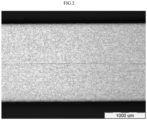
- Example 2 shows a microstructure of a material obtained by pre-rolling a hot-rolled steel sheet with a thickness of 4.0t at a reduction rate of about 35% and performing hot annealing, and the crystal grain size is refined to a level of about 50 ⁇ m, so it may be understood that the higher the pre-rolling reduction rate, the finer the crystal grains.
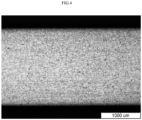
- a normal cold-rolled annealed material obtained by hot annealing/pickling a 5.0t hot-rolled material and then performing cold rolling at a reduction rate of about 60% appears to have crystal grains of about 55 ⁇ m, which is similar to Example 2 in which pre-rolling is performed to a level of about 50%.
- [Table 2] section Thickness of hot rolling Thickness after pre-rolling Pre-rolling reduction rate Grain size Example 1 3.1t 2.0t 35% 59.5 ⁇ m Example 2 4.0t 2.0t 50% 50.7 ⁇ m Comparative example 1 2.0t 2.0t 0% 121.5 ⁇ m Comparative example 2 5.0t 2.0t Cold rolling reduction rate 60% 54.9 ⁇ m
- Table 3 shows formality (R values) of a hot-rolled annealed material and formality of a normal cold annealed material with pre-rolling reduction rates.
- Table 4 shows tensile properties of each material, and there is no noticeable difference in tensile strength between Example 2 (with a hot-rolled annealed 2.0t material after about 50% of pre-rolling) and comparative example 2 (with a normal cold-rolled annealed material) but the yield strength appears to be higher by about 10% or more in Example 2.
- the pre-rolled material exhibits higher yield strength than the normal cold-rolled annealed material because the pre-rolled material has additional dislocations introduced thereto and goes through only one hot annealing process while the normal cold-rolled material goes through a total of 2 or more annealing processes comprising hot annealing and cold annealing.
- a hot-rolled ferritic stainless steel sheet exhibits similar formality to a cold-rolled material despite being a hot-rolled material, so the industrial applicability is acknowledged.
Landscapes
- Chemical & Material Sciences (AREA)
- Engineering & Computer Science (AREA)
- Mechanical Engineering (AREA)
- Materials Engineering (AREA)
- Metallurgy (AREA)
- Organic Chemistry (AREA)
- Physics & Mathematics (AREA)
- Thermal Sciences (AREA)
- Crystallography & Structural Chemistry (AREA)
- Heat Treatment Of Steel (AREA)
- Heat Treatment Of Sheet Steel (AREA)
Abstract
Description
- The disclosure relates to a hot-rolled ferritic stainless steel sheet having excellent formability and manufacturing method thereof.
- Cold-rolled ferritic stainless steel products have excellent high-temperature characteristics such as thermal expansion coefficient and thermal fatigue, are robust to stress corrosion cracking, and also have excellent high-temperature strength. Based on these characteristics, the ferritic stainless steel is applied to vehicle exhaust systems, household tools, structures, home appliances, elevators, etc. To expand the application ranges of the ferritic stainless steel, it is important to secure formability. As the deformation mechanism of the ferritic stainless steel causes transformation according to generation and movement of dislocations unlike an austenitic stainless steel, which has high processability according to plastic induced transformation, the ferritic stainless steel is characterized by having formability changing by increasing an amount of rolling to activate generation and movement of dislocations or controlling impurities that interfere the movement of dislocations. Although many researches have made efforts to increase formability of the ferritic stainless steel, the ferritic stainless steel has problem being vulnerable to stretching forming. Furthermore, hot-rolled materials have a low strain rate, which leads to difficulty in generating dislocations, so even with the same thickness, have difficulty in securing as much formability as a cold-rolled annealed material, and thus, there are limits to applying the hot-rolled material to a product that requires high formability.
- To solve the above problem, an objective of the disclosure is to manufacture a hot-rolled stainless steel sheet that exhibits similar formability to cold-rolled materials despite being a hot-rolled material by rolling a hot-rolled steel sheet at a certain reduction rate to control a banded structure formed in the hot-rolled material before annealing the hot-rolled steel sheet, and additionally activating generation of dislocations to refine crystal grains and simultaneously, increase formability after hot annealing.
- According to an embodiment of the disclosure, a hot-rolled ferritic stainless steel sheet with excellent formability satisfies a value of R-bar being 1.08 or more and a ratio of yield strength (YS) and tensile strength (TS), TS/YS≤1.5, after hot rolling a steel comprising, in percent by weight (wt%), 0.001 to 0.1% of C, 10.0 to 14.0% of Cr, 0.001 to 0.5% of Ti, 0.001 to 0.5% of Nb, 0.001 to 1.5% of Ni, 0.001 to 1.5% of Mn, 0.001 to 1.0% of Cu, 0.001 to 2.0% of Si, 0.001 to 0.1% of N, 0.1% or less of Al and the remainder having Fe and unavoidable impurities and pre-rolling the steel at a reduction rate of 30% or more.
- According to another embodiment of the disclosure, a method of manufacturing a hot-rolled ferritic stainless steel sheet with excellent formability comprises manufacturing a slab by continuously casting a steel comprising, in percent by weight (wt%), 0.001 to 0.1% of C, 10.0 to 14.0% of Cr, 0.001 to 0.5% of Ti, 0.001 to 0.5% of Nb, 0.001 to 1.5% of Ni, 0.001 to 1.5% of Mn, 0.001 to 1.0% of Cu, 0.001 to 2.0% of Si, 0.001 to 0.1% of N, 0.1% or less of Al and the remainder having Fe and unavoidable impurities; reheating the manufactured slab; hot rolling the reheated slab; performing pre-rolling at a reduction rate of 30% or more to satisfy a value of R-bar being 1.08 or more and a ratio of yield strength (YS) and tensile strength (TS), TS/YS≤1.5; and performing hot annealing.
- According to the disclosure, a hot-rolled stainless steel sheet that exhibits similar formability to cold-rolled materials despite being a hot-rolled material by controlling a banded structure formed in the hot-rolled material in a case of rolling the hot-rolled steel sheet at a reduction rate of 30% or more before annealing the hot-rolled steel sheet, and additionally activating generation of dislocations to refine crystal grains and simultaneously, increase formability after hot annealing.
-
-
FIG. 1 illustrates a microstructure of embodiment 1 (ferritic stainless steel 35% pre-rolling annealed material). -
FIG. 2 illustrates a microstructure of embodiment 2 (ferritic stainless steel 50% pre-rolling annealed material). -
FIG. 3 illustrates a microstructure of comparative example 1 (hot-rolled annealed material (2.0t) of ferritic stainless steel). -
FIG. 4 illustrates a microstructure of comparative example 2 (ordinary cold annealed material of ferritic stainless steel). - According to an embodiment of the disclosure, a hot-rolled ferritic stainless steel sheet with excellent formability satisfies a value of R-bar being 1.08 or more and a ratio of yield strength (YS) and tensile strength (TS), TS/YS≤1.5, after hot rolling a steel comprising, in percent by weight (wt%), 0.001 to 0.1% of C, 10.0 to 14.0% of Cr, 0.001 to 0.5% of Ti, 0.001 to 0.5% of Nb, 0.001 to 1.5% of Ni, 0.001 to 1.5% of Mn, 0.001 to 1.0% of Cu, 0.001 to 2.0% of Si, 0.001 to 0.1% of N, 0.1% or less of Al and the remainder having Fe and unavoidable impurities and pre-rolling the steel at a reduction rate of 30% or more.
- Various methods have thus far been examined to enhance formality of ferritic stainless steel. In general, there is a method of facilitating recrystallization by keeping the hot rolling reheating temperature low or rolling at a high reduction rate in a rear stage of rough rolling to activate the introduction of dislocations, but there is a clear limit to actually applying the method because the method makes it difficult to form surface oxidation scales at a low reheating temperature when applied in actual production, causing various surface defects including sticking defects or in severe cases, causing a problem with fracture due to cracks.
- To overcome the shortcomings, the disclosure provides a method of manufacturing a ferritic stainless steel that exhibits similar formability to cold-rolled materials by rolling a hot-rolled steel sheet at a certain reduction rate to control a banded structure formed in the hot-rolled material before annealing the hot-rolled steel sheet, and additionally activating generation of dislocations to refine crystal grains and simultaneously, increase formability after hot annealing.
- According to an embodiment of the disclosure, a hot-rolled ferritic stainless steel sheet with excellent formability satisfies a value of R-bar being 1.08 or more and a ratio of yield strength (YS) and tensile strength (TS), TS/YS≤1.5, after hot rolling a steel comprising, in percent by weight (wt%), 0.001 to 0.1% of C, 10.0 to 14.0% of Cr, 0.001 to 0.5% of Ti, 0.001 to 0.5% of Nb, 0.001 to 1.5% of Ni, 0.001 to 1.5% of Mn, 0.001 to 1.0% of Cu, 0.001 to 2.0% of Si, 0.001 to 0.1% of N, 0.1% or less of Al and the remainder having Fe and unavoidable impurities and pre-rolling the steel at a reduction rate of 30% or more, wherein a reduction rate of pre-rolling may be 35% or more.
- Furthermore, according to another embodiment of the disclosure, a hot-rolled ferritic stainless steel sheet with excellent formability may have a ferrite crystal grain size of 60µm or less when the crystal grain size is measured in an electron backscattering diffraction (EBSD) analysis method with intergranular misorientation ranging from 15 ° to 180 °.
- Aunit of wt% will now be used unless otherwise mentioned. The term "include (or including)" or "comprise (or comprising)" is inclusive or open-ended and does not exclude additional, unrecited elements or method steps, unless otherwise mentioned.
- When there is a large amount of carbon, strength is enhanced but processability is reduced. In order to obtain sufficient strength, 0.001% or more of carbon needs to be contained, but when the carbon exceeds 0.1%, it leads to reduction in processability.
- The amount of chrome is desirably 10.0 to 14.0%. Chrome is an important element to be added to secure corrosion resistance of the stainless steel, and in the disclosure, 10.0% or more of chrome is added to increase corrosion resistance. When chrome C exceeds 14.0%, it causes hot rolling sticking defects, so 14.0% or less is desirable.
- The amount of titanium is desirably 0.001 to 0.5%. When the amount of titanium is less than 0.001%, the amount of TiN crystallization decreases, which lowers the equiaxed crystal ratio of the slab, and the dissolved C and N elements increase, causing a decrease in elongation rate, and when it exceeds 0.5%, Ti-based oxides increase, which deteriorates processability.
- The amount of niobium is desirably 0.001 to 0.5%. Niobium preferentially combines with carbon and nitrogen to form precipitates that suppress the deterioration of corrosion resistance, but when added in excess, it causes poor appearance and reduced toughness due to the inclusions and increases raw material costs, so the content of the niobium is limited to 0.001 to 0.5%.
- The amount of nickel is desirably 0.001 to 1.5%. Nickel is an element that enhances corrosion resistance, but when added in a large amount, it may not only harden but also cause stress corrosion cracking, so it is desirable for nickel to be 1.5% or less.
- The amount of manganese is desirably 0.001 to 1.5%. Manganese has an effect of increasing the strength of steel but when contained excessively, generation of Mn-based fume rapidly increases, which deteriorates weldability, and ductility of the steel deteriorates due to excessive formation of MnS precipitates, so manganese is contained at 1.5% or less.
- The amount of copper is desirably 1.0% or less. Copper has an effect of enhancing corrosion resistance, but when it is over 1.0%, it deteriorates processability.
- Silicon is an element that is added for deoxidization of molten steel and ferrite stabilization during steelmaking and is desirably 0.001% or more, but when the content is excessive, it causes hardening of the material and thus, deteriorates ductility of the steel, so the content is limited to 2.0% or less.
- The amount of nitrogen is desirably 0.001 to 0.1%. Like carbon, nitrogen has an effect of increasing the strength of material. When the amount of nitrogen is less than 0.001%, TiN crystallization decreases and thus, the equiaxed crystal ratio of the slab is lowered, and when it exceeds 0.1%, impurities in the material increase, causing a decrease in elongation rate.
- The amount of aluminum is desirably 0.1% or less. When the amount of aluminum exceeds 0.1%, impurities in the material increase and the elongation rate is lowered.
- According to an embodiment of the disclosure, a method of manufacturing a hot-rolled ferritic stainless steel sheet with excellent formability comprises manufacturing a slab by continuously casting a steel comprising, in percent by weight (wt%), 0.001 to 0.1% of C, 10.0 to 14.0% of Cr, 0.001 to 0.5% of Ti, 0.001 to 0.5% of Nb, 0.001 to 1.5% of Ni, 0.001 to 1.5% of Mn, 0.001 to 1.0% of Cu, 0.001 to 2.0% of Si, 0.001 to 0.1% of N, 0.1% or less of Al and the remainder having Fe and unavoidable impurities; reheating the manufactured slab; hot rolling the reheated slab; performing pre-rolling at a reduction rate of 30% or more to satisfy a value of R-bar being 1.08 or more and a ratio of yield strength (YS) and tensile strength (TS), TS/YS≤1.5; and
performing hot annealing. - Reheating temperature of hot rolling ranges from 1100 °C to 1280 °C. When the slab is reheated at a temperature of more than 1280 °C or more, a coarse banded structure is more likely to remain, causing deterioration of formability, and when the slab is reheated at less than 1100 °C, the rolling load increases during hot rolling, which may be likely to reduce productivity.
- Embodiments of the disclosure will now be described in more detail.
- The following embodiments are provided to deliver the idea of the disclosure to those of ordinary skill in the art, but the disclosure is not limited to the embodiments and may be implemented in other forms.
- For a hot-rolled ferritic stainless steel sheet obtained by manufacturing a slab by continuously casting, reheating the slab, performing hot rolling, performing pre-rolling with a hot rolling thickness of 2.0 to 5.0t, a thickness of 2.0t after the pre-rolling, and a reduction rate of 0 to 50 %, and performing hot annealing, grain size, R values (R0, R45, R90, and R-bar), yield strength, tensile strength, TS/YS and an elongation rate were measured.
[Table 1] section (wt%) C Si Mn Cr Ni Cu Ti Nb N Al Example 1 0.00 7 0.44 6 0.26 11.1 2 0.07 5 0.0 13 0.19 0.0 02 0.00 77 0.03 2 Example 2 0.00 6 0.44 7 0.26 11.3 0 0.07 3 0.0 10 0.21 0.0 03 0.00 52 0.02 2 Comparati ve example 1 0.00 6 0.47 2 0.37 11.1 5 0.06 7 0.0 09 0.18 0.0 02 0.00 57 0.02 3 Comparati ve example 2 0.00 8 0.46 6 0.36 11.1 7 0.07 2 0.0 08 0.22 0.0 02 0.00 79 0.05 2 - It shows microstructures of a hot-rolled annealed material (2.0t) and a normal cold-rolled annealed material (2.0t) according to reduction rates. Comparative example 1 is a normal 2.0t hot-rolled material that appears to have an average crystal grain size of about 120 µm, which is very coarse. Example 1 shows a microstructure of a material obtained by pre-rolling a hot-rolled steel sheet with a thickness of 3.1t at a reduction rate of about 35% and performing hot annealing, and the crystal grain size appears to be about 60 µm as shown in Table 2, so it may be understood that the crystal grains are refined to a level of 50% as compared to the microstructure of comparative example 1 obtained by annealing the existing hot-rolled 2.0t steel sheet. With this, it may be assumed that crystal grains are refined due to additional generation of dislocations introduced in rolling a hot-rolled material at a reduction rate of 30% or more. Example 2 shows a microstructure of a material obtained by pre-rolling a hot-rolled steel sheet with a thickness of 4.0t at a reduction rate of about 35% and performing hot annealing, and the crystal grain size is refined to a level of about 50 µm, so it may be understood that the higher the pre-rolling reduction rate, the finer the crystal grains. In comparative example 2, a normal cold-rolled annealed material obtained by hot annealing/pickling a 5.0t hot-rolled material and then performing cold rolling at a reduction rate of about 60% appears to have crystal grains of about 55 µm, which is similar to Example 2 in which pre-rolling is performed to a level of about 50%.
[Table 2] section Thickness of hot rolling Thickness after pre-rolling Pre-rolling reduction rate Grain size Example 1 3.1t 2.0t 35% 59.5 µm Example 2 4.0t 2.0t 50% 50.7 µm Comparative example 1 2.0t 2.0t 0% 121.5 µm Comparative example 2 5.0t 2.0t Cold rolling reduction rate 60% 54.9 µm - Table 3 shows formality (R values) of a hot-rolled annealed material and formality of a normal cold annealed material with pre-rolling reduction rates. The R-bar value that represents vertical anisotropy of the material has the same properties in the face direction of the sheet and have different properties in the thickness direction, and as most rolled sheets have planar anisotropy whose plasticity changes even in the face direction, an average of R values measured by stretching in directions of 0, 45 and 90 degrees from the rolling direction (R-bar=(R0 + 2R45 + R90)/4) is used.
- The R-bar value in comparative 1 (with a normal 2.0t hot-rolled annealed material) is about 1.01, which is very poor, but it may be understood that with a gradual increase in pre-rolling reduction rate, the R-bar value gradually increases. Furthermore, the R-bar value in Example 2 (with a hot-rolled annealed material that goes through 50% pre-rolling) is about 1.21, which is similar to the R-bar value in comparative example 2 (with a normal cold-rolled annealed material).
[Table 3] section Thickne ss of hot rolling Thickne ss after pre-rolling Pre-rolling reductio n rate R0 R45 R90 R-bar Exampl e 1 3.1t 2.0t 35% 0.77 1.02 1.51 1.08 Exampl e 2 4.0t 2.0t 50% 1.16 0.99 1.7 1.21 Compar ative example 1 2.0t 2.0t 0% 0.54 0.77 1.01 0.77 Compar ative example 2 5.0t 2.0t Cold rolling reductio n rate 60% 1.22 0.85 2.14 1.27 - Table 4 shows tensile properties of each material, and there is no noticeable difference in tensile strength between Example 2 (with a hot-rolled annealed 2.0t material after about 50% of pre-rolling) and comparative example 2 (with a normal cold-rolled annealed material) but the yield strength appears to be higher by about 10% or more in Example 2. With this, it is determined that the pre-rolled material exhibits higher yield strength than the normal cold-rolled annealed material because the pre-rolled material has additional dislocations introduced thereto and goes through only one hot annealing process while the normal cold-rolled material goes through a total of 2 or more annealing processes comprising hot annealing and cold annealing. It is determined that these characteristics may not only be applied to product groups requiring high-strength of the material, but also help extend the lifespan of the existing products.
[Table 4] section Thickness of hot rolling Thickness after pre-rolling Pre-rolling reduction rate YS (MPa) TS (MPa) TS/YS EL(%) Example 1 3.1t 2.0t 35% 306 415 1.36 33 Example 2 4.0t 2.0t 50% 293 405 1.38 36 Comparat ive example 1 2.0t 2.0t 0% 270 419 1.55 34 Comparat ive example 2 5.0t 2.0t Cold rolling reduction rate 60% 261 397 1.52 35 - According to an embodiment of the disclosure, a hot-rolled ferritic stainless steel sheet exhibits similar formality to a cold-rolled material despite being a hot-rolled material, so the industrial applicability is acknowledged.
Claims (3)
- A hot-rolled ferritic stainless steel sheet with excellent formability having a value of R-bar being 1.08 or more and satisfying a ratio of yield strength (YS) and tensile strength (TS), TS/YS≤1.5, after hot rolling a steel comprising, in percent by weight (wt%), 0.001 to 0.1% of C, 10.0 to 14.0% of Cr, 0.001 to 0.5% of Ti, 0.001 to 0.5% of Nb, 0.001 to 1.5% of Ni, 0.001 to 1.5% of Mn, 0.001 to 1.0% of Cu, 0.001 to 2.0% of Si, 0.001 to 0.1% of N, 0.1% or less of Al and the remainder having Fe and unavoidable impurities and pre-rolling the steel at a reduction rate of 30% or more.
- The hot-rolled ferritic stainless steel sheet with excellent formability of claim 1, wherein a ferrite crystal grain size is 60 µm or less when the crystal grain size is measured in an electron backscattering diffraction analysis (EBSD) method with intergranular misorientation ranging from 15 ° to 180 °.
- A method of manufacturing a hot-rolled ferritic stainless steel sheet with excellent formability, the method comprising:manufacturing a slab by continuously casting a steel comprising, in percent by weight (wt%), 0.001 to 0.1% of C, 10.0 to 14.0% of Cr, 0.001 to 0.5% of Ti, 0.001 to 0.5% of Nb, 0.001 to 1.5% of Ni, 0.001 to 1.5% of Mn, 0.001 to 1.0% of Cu, 0.001 to 2.0% of Si, 0.001 to 0.1% of N, 0.1% or less of Al and the remainder having Fe and unavoidable impurities;reheating the manufactured slab;hot rolling the reheated slab;performing pre-rolling at a reduction rate of 30% or more to satisfy a value of R-bar being 1.08 or more and a ratio of yield strength (YS) and tensile strength (TS), TS/YS≤1.5; andperforming hot annealing.
Applications Claiming Priority (2)
| Application Number | Priority Date | Filing Date | Title |
|---|---|---|---|
| KR1020210143703A KR20230059478A (en) | 2021-10-26 | 2021-10-26 | Ferritic stainless hot-rolled steel plate excellent in formability and method for production thereof |
| PCT/KR2022/016420 WO2023075391A1 (en) | 2021-10-26 | 2022-10-26 | Hot-rolled ferritic stainless steel sheet having excellent formability and method for manufacturing same |
Publications (2)
| Publication Number | Publication Date |
|---|---|
| EP4397781A1 true EP4397781A1 (en) | 2024-07-10 |
| EP4397781A4 EP4397781A4 (en) | 2025-10-29 |
Family
ID=86159818
Family Applications (1)
| Application Number | Title | Priority Date | Filing Date |
|---|---|---|---|
| EP22887587.8A Pending EP4397781A4 (en) | 2021-10-26 | 2022-10-26 | Hot-rolled ferritic stainless steel sheet with excellent formability and method for its production |
Country Status (5)
| Country | Link |
|---|---|
| US (1) | US20240401165A1 (en) |
| EP (1) | EP4397781A4 (en) |
| KR (1) | KR20230059478A (en) |
| CN (1) | CN118159681A (en) |
| WO (1) | WO2023075391A1 (en) |
Family Cites Families (10)
| Publication number | Priority date | Publication date | Assignee | Title |
|---|---|---|---|---|
| JP3941363B2 (en) * | 1999-09-09 | 2007-07-04 | Jfeスチール株式会社 | Ferritic stainless cold-rolled steel sheet excellent in ductility, workability and ridging resistance, and method for producing the same |
| JP2001098327A (en) * | 1999-09-24 | 2001-04-10 | Kawasaki Steel Corp | Method for producing ferritic stainless steel sheet with excellent ductility, workability and ridging resistance |
| CN101768702B (en) * | 2008-12-31 | 2012-05-30 | 宝山钢铁股份有限公司 | Medium-chromium ferrite stainless steel for automobile with high formability and acidic corrosion resistance as well as manufacturing method thereof |
| KR101421832B1 (en) * | 2012-12-20 | 2014-07-22 | 주식회사 포스코 | Ferritic stainless steel sheet with excellent ridging resistance and manufacturing method thereof |
| JP6326265B2 (en) * | 2014-03-31 | 2018-05-16 | 新日鐵住金ステンレス株式会社 | Austenitic stainless steel excellent in hot workability and hydrogen embrittlement resistance and its production method |
| CN106256919B (en) * | 2015-06-17 | 2020-07-14 | 宝钢德盛不锈钢有限公司 | Low-cost ferritic stainless steel with condensate corrosion resistance and manufacturing method thereof |
| CN109136735A (en) * | 2017-06-27 | 2019-01-04 | 宝钢不锈钢有限公司 | Ferritic stainless steel and its manufacturing method with favorable forming property |
| KR102020509B1 (en) * | 2017-12-04 | 2019-09-10 | 주식회사 포스코 | Ferritic stainless steel excellent in workability and manufacturing method thereof |
| US11377702B2 (en) * | 2018-07-18 | 2022-07-05 | Jfe Steel Corporation | Ferritic stainless steel sheet and method of producing same |
| KR102120697B1 (en) * | 2018-09-19 | 2020-06-09 | 주식회사 포스코 | Manufacturing method of ferritic stainless steel having excellent ridging property and formability |
-
2021
- 2021-10-26 KR KR1020210143703A patent/KR20230059478A/en active Pending
-
2022
- 2022-10-26 CN CN202280072128.1A patent/CN118159681A/en active Pending
- 2022-10-26 EP EP22887587.8A patent/EP4397781A4/en active Pending
- 2022-10-26 US US18/696,206 patent/US20240401165A1/en active Pending
- 2022-10-26 WO PCT/KR2022/016420 patent/WO2023075391A1/en not_active Ceased
Also Published As
| Publication number | Publication date |
|---|---|
| KR20230059478A (en) | 2023-05-03 |
| US20240401165A1 (en) | 2024-12-05 |
| WO2023075391A1 (en) | 2023-05-04 |
| EP4397781A4 (en) | 2025-10-29 |
| CN118159681A (en) | 2024-06-07 |
Similar Documents
| Publication | Publication Date | Title |
|---|---|---|
| EP2415893B1 (en) | Steel sheet excellent in workability and method for producing the same | |
| EP2554699B1 (en) | Steel sheet with high tensile strength and superior ductility and method for producing same | |
| EP2649214B1 (en) | Process for manufacturing high manganese content steel with high mechanical resistance and formability, and steel so obtainable | |
| EP3859041A1 (en) | High-strength cold rolled steel sheet having high hole expansion ratio, high-strength hot-dip galvanized steel sheet, and manufacturing methods therefor | |
| KR101674751B1 (en) | Precipitation hardening steel sheet having excellent hole expandability and method for manufacturing the same | |
| EP2290111B1 (en) | Dual phase steel sheet and method of manufacturing the same | |
| EP3885462B1 (en) | High-yield-ratio cold-rolled dual-phase steel plate and manufacturing method therefor | |
| EP3450586B1 (en) | Ultrahigh-strength and high-ductility steel sheet having excellent yield ratio and manufacturing method therefor | |
| KR20180033202A (en) | A moldable lightweight steel having improved mechanical properties and a method for producing a semi-finished product from said steel | |
| EP1741800A1 (en) | Steel sheet for can and method for production thereof | |
| EP3498877B1 (en) | High strength steel sheet having excellent formability and manufacturing method thereof | |
| JP7579887B2 (en) | High strength austenitic stainless steel cold rolled annealed steel sheet and its manufacturing method | |
| EP4389926A1 (en) | Steel material for hot forming, hot-formed member, and manufacturing method therefor | |
| EP2527481B1 (en) | Quenched steel sheet having excellent hot press formability, and method for manufacturing same | |
| EP3978643A2 (en) | Austenitic stainless steel having improved strength, and method for manufacturing same | |
| JPH08253818A (en) | Method for producing ferritic stainless steel strip with small in-plane anisotropy and excellent strength-elongation balance | |
| KR102020511B1 (en) | Ferritic stainless steel with excellent impact toughness and manufacturing method thereof | |
| EP2455499B1 (en) | Process for production of cold-rolled steel sheet having excellent press moldability | |
| JP2005029889A (en) | High strength low specific gravity steel plate excellent in ductility and method for producing the same | |
| EP3231886B1 (en) | Complex-phase steel sheet with excellent formability and manufacturing method therefor | |
| KR101421832B1 (en) | Ferritic stainless steel sheet with excellent ridging resistance and manufacturing method thereof | |
| US20240401165A1 (en) | Hot-rolled ferritic stainless steel sheet having excellent formability and method for manufacturing same | |
| KR101657799B1 (en) | Galvanized steel sheet having excellent elogation and method for manufacturing the same | |
| JP3142975B2 (en) | Manufacturing method of high strength cold rolled steel sheet with excellent deep drawability | |
| KR20250092022A (en) | High strength cold rolled steel sheet and method of manufacturing the same |
Legal Events
| Date | Code | Title | Description |
|---|---|---|---|
| STAA | Information on the status of an ep patent application or granted ep patent |
Free format text: STATUS: THE INTERNATIONAL PUBLICATION HAS BEEN MADE |
|
| PUAI | Public reference made under article 153(3) epc to a published international application that has entered the european phase |
Free format text: ORIGINAL CODE: 0009012 |
|
| STAA | Information on the status of an ep patent application or granted ep patent |
Free format text: STATUS: REQUEST FOR EXAMINATION WAS MADE |
|
| 17P | Request for examination filed |
Effective date: 20240325 |
|
| AK | Designated contracting states |
Kind code of ref document: A1 Designated state(s): AL AT BE BG CH CY CZ DE DK EE ES FI FR GB GR HR HU IE IS IT LI LT LU LV MC ME MK MT NL NO PL PT RO RS SE SI SK SM TR |
|
| DAV | Request for validation of the european patent (deleted) | ||
| DAX | Request for extension of the european patent (deleted) | ||
| A4 | Supplementary search report drawn up and despatched |
Effective date: 20250926 |
|
| RIC1 | Information provided on ipc code assigned before grant |
Ipc: C22C 38/50 20060101AFI20250922BHEP Ipc: C22C 38/42 20060101ALI20250922BHEP Ipc: C22C 38/48 20060101ALI20250922BHEP Ipc: C22C 38/02 20060101ALI20250922BHEP Ipc: C22C 38/04 20060101ALI20250922BHEP Ipc: C22C 38/06 20060101ALI20250922BHEP Ipc: C22C 38/00 20060101ALI20250922BHEP Ipc: C21D 9/46 20060101ALI20250922BHEP Ipc: C21D 8/02 20060101ALI20250922BHEP Ipc: C21D 6/00 20060101ALI20250922BHEP |