EP4397560A1 - Determing air drag of a vehicle using images and a machine learning algorithm - Google Patents
Determing air drag of a vehicle using images and a machine learning algorithm Download PDFInfo
- Publication number
- EP4397560A1 EP4397560A1 EP23150774.0A EP23150774A EP4397560A1 EP 4397560 A1 EP4397560 A1 EP 4397560A1 EP 23150774 A EP23150774 A EP 23150774A EP 4397560 A1 EP4397560 A1 EP 4397560A1
- Authority
- EP
- European Patent Office
- Prior art keywords
- air drag
- vehicle
- processor device
- image
- computer
- Prior art date
- Legal status (The legal status is an assumption and is not a legal conclusion. Google has not performed a legal analysis and makes no representation as to the accuracy of the status listed.)
- Pending
Links
Images


Classifications
-
- G—PHYSICS
- G06—COMPUTING OR CALCULATING; COUNTING
- G06V—IMAGE OR VIDEO RECOGNITION OR UNDERSTANDING
- G06V10/00—Arrangements for image or video recognition or understanding
- G06V10/70—Arrangements for image or video recognition or understanding using pattern recognition or machine learning
- G06V10/764—Arrangements for image or video recognition or understanding using pattern recognition or machine learning using classification, e.g. of video objects
-
- B—PERFORMING OPERATIONS; TRANSPORTING
- B60—VEHICLES IN GENERAL
- B60W—CONJOINT CONTROL OF VEHICLE SUB-UNITS OF DIFFERENT TYPE OR DIFFERENT FUNCTION; CONTROL SYSTEMS SPECIALLY ADAPTED FOR HYBRID VEHICLES; ROAD VEHICLE DRIVE CONTROL SYSTEMS FOR PURPOSES NOT RELATED TO THE CONTROL OF A PARTICULAR SUB-UNIT
- B60W40/00—Estimation or calculation of non-directly measurable driving parameters for road vehicle drive control systems not related to the control of a particular sub unit, e.g. by using mathematical models
- B60W40/10—Estimation or calculation of non-directly measurable driving parameters for road vehicle drive control systems not related to the control of a particular sub unit, e.g. by using mathematical models related to vehicle motion
- B60W40/1005—Driving resistance
-
- B—PERFORMING OPERATIONS; TRANSPORTING
- B60—VEHICLES IN GENERAL
- B60W—CONJOINT CONTROL OF VEHICLE SUB-UNITS OF DIFFERENT TYPE OR DIFFERENT FUNCTION; CONTROL SYSTEMS SPECIALLY ADAPTED FOR HYBRID VEHICLES; ROAD VEHICLE DRIVE CONTROL SYSTEMS FOR PURPOSES NOT RELATED TO THE CONTROL OF A PARTICULAR SUB-UNIT
- B60W50/00—Details of control systems for road vehicle drive control not related to the control of a particular sub-unit, e.g. process diagnostic or vehicle driver interfaces
- B60W50/08—Interaction between the driver and the control system
- B60W50/14—Means for informing the driver, warning the driver or prompting a driver intervention
-
- G—PHYSICS
- G06—COMPUTING OR CALCULATING; COUNTING
- G06V—IMAGE OR VIDEO RECOGNITION OR UNDERSTANDING
- G06V10/00—Arrangements for image or video recognition or understanding
- G06V10/98—Detection or correction of errors, e.g. by rescanning the pattern or by human intervention; Evaluation of the quality of the acquired patterns
- G06V10/993—Evaluation of the quality of the acquired pattern
-
- G—PHYSICS
- G07—CHECKING-DEVICES
- G07C—TIME OR ATTENDANCE REGISTERS; REGISTERING OR INDICATING THE WORKING OF MACHINES; GENERATING RANDOM NUMBERS; VOTING OR LOTTERY APPARATUS; ARRANGEMENTS, SYSTEMS OR APPARATUS FOR CHECKING NOT PROVIDED FOR ELSEWHERE
- G07C5/00—Registering or indicating the working of vehicles
- G07C5/08—Registering or indicating performance data other than driving, working, idle, or waiting time, with or without registering driving, working, idle or waiting time
- G07C5/0808—Diagnosing performance data
-
- B—PERFORMING OPERATIONS; TRANSPORTING
- B60—VEHICLES IN GENERAL
- B60W—CONJOINT CONTROL OF VEHICLE SUB-UNITS OF DIFFERENT TYPE OR DIFFERENT FUNCTION; CONTROL SYSTEMS SPECIALLY ADAPTED FOR HYBRID VEHICLES; ROAD VEHICLE DRIVE CONTROL SYSTEMS FOR PURPOSES NOT RELATED TO THE CONTROL OF A PARTICULAR SUB-UNIT
- B60W50/00—Details of control systems for road vehicle drive control not related to the control of a particular sub-unit, e.g. process diagnostic or vehicle driver interfaces
- B60W50/08—Interaction between the driver and the control system
- B60W50/14—Means for informing the driver, warning the driver or prompting a driver intervention
- B60W2050/146—Display means
-
- B—PERFORMING OPERATIONS; TRANSPORTING
- B60—VEHICLES IN GENERAL
- B60W—CONJOINT CONTROL OF VEHICLE SUB-UNITS OF DIFFERENT TYPE OR DIFFERENT FUNCTION; CONTROL SYSTEMS SPECIALLY ADAPTED FOR HYBRID VEHICLES; ROAD VEHICLE DRIVE CONTROL SYSTEMS FOR PURPOSES NOT RELATED TO THE CONTROL OF A PARTICULAR SUB-UNIT
- B60W2420/00—Indexing codes relating to the type of sensors based on the principle of their operation
- B60W2420/40—Photo, light or radio wave sensitive means, e.g. infrared sensors
- B60W2420/403—Image sensing, e.g. optical camera
-
- G—PHYSICS
- G06—COMPUTING OR CALCULATING; COUNTING
- G06V—IMAGE OR VIDEO RECOGNITION OR UNDERSTANDING
- G06V2201/00—Indexing scheme relating to image or video recognition or understanding
- G06V2201/08—Detecting or categorising vehicles
Definitions
- the method may comprise:
- a non-transitory computer-readable storage medium comprising instructions, which when executed by a processor device, cause the processor device to perform the method of the second aspect.
- Technical benefits of the sixth aspect of the disclosure are largely analogous to the technical benefits of the first, second, third, fourth and the fifth aspect of the disclosure. It shall also be noted that all examples of the fifth aspect of the disclosure are combinable with all embodiments of the first, second, third, fourth and the fifth aspect of the disclosure, and vice versa.
- Step 205 A machine learning algorithm may be applied on the at least one images to estimate the air drag of the vehicle 100, i.e., the air drag of the whole vehicle 100. Consequently, the machine learning algorithm is implemented and executed on the control unit 103 and/or the processor device 602.
- the machine learning algorithm may be pre-trained using data and other images of other vehicles 100 with different vehicle setup in combination with known air drag.
- the input to the machine learning algorithm may be historic data, e.g., historic or previous estimations of air drag of the vehicle 100 or of other vehicles 100.
- the output of the machine learning algorithm is the estimated air drag of the vehicle 100.
- the machine learning algorithm may be based on deep learning and, for image processing, convolutional neural networks.
- the second machine learning algorithm 205b is arranged to enhance the air drag resistance data from the air drag resistance database 206 by combing that data together with the at least one image of the vehicle 100.
- the output of the second machine learning algorithm 205 is the air drag resistance value of the whole vehicle 100, including the at least one air drag portion 103.
- the air drag resistance data is enhanced in that the air drag resistance database 206 is able to return an air resistance for a combination of vehicle 100 and air drag affecting portions 103. If the given combination of vehicle 100 and air drag affecting portion 103 is not comprised in the air drag resistance database 206, the air drag resistance database 206 may offer to return its closest match.
- ML Machine Learning
- the information in the air drag resistance database 206 is generalized so that the ML algorithm may give an estimation of the air drag even for a combination of vehicle 100 and air drag affecting portion 103 it has not seen before. The estimate may be better than just returning the closest match from the air drag resistance database 206.
- the machine learning algorithm may be described as a type of artificial intelligence (AI).
- AI artificial intelligence
- the machine learning algorithm automatically learns and improves from previous executions of the algorithm without being explicitly instructed to do so.
- the machine learning algorithm uses historic data as input to provide new output data.
- a machine learning algorithm may be described as aiming to imitate the human brain when it comes to processing of data.
- the machine learning algorithm may generalize, e.g., it may perform predictions on air drag affection portions 103 that it previously has not handled or made predictions on.
- a technical benefit of using a machine learning algorithm is that the accuracy of the estimation is improved, as compared to not using the machine learning algorithm.
- a machine learning algorithm is an efficient algorithm, its time consumption is low, and it provides outputs and results of high accuracy, i.e., accuracy above a threshold.
- Step 207 The control unit 103 and/or the processor device 602 estimates an impact that the at least one air drag affecting portion 103 has on the vehicle's air drag and energy consumption.
- the impact may be estimated using a machine learning algorithm.
- the input to step 207 may be the air drag resistance value, as exemplified in FIG. 3 and FIG.4 .
- the energy may be electric energy, it may be fuel such as diesel, petrol, it may be gas, it may be fuel cell energy, or any other suitable energy type arranged to power the vehicle 100 etc.
- the at least one air drag affection portion 103 may have an impact on for example urea that is added to the fuel.
- Information associated with the estimated impact and estimated air drag may be provided to a display unit to viewed by a user or an operator.
- the display unit may be a standalone display unit, or it may be comprised in any suitable unit, e.g. a user equipment such as a mobile phone, a tablet computer or any other suitable handheld unit, it may an onboard vehicle display, it may be comprised in a stationary computer located at a central location etc.
- FIG. 2 and FIG. 4 may be summarized as follows:
- Step 503 This step corresponds to steps 205, 205a, 205b in FIG. 2 .
- the control unit 101, the control system or the processor device 602 estimates an air drag of the vehicle 100 comprising the at least one air drag affecting portion 103 using the machine learning algorithm.
- the machine learning algorithm may be pre-trained using data and other images of other vehicles 100 with different vehicle setup in combination with known air drag.
- Step 505 This step corresponds to step 207 in FIG. 2 .
- the control unit 101, the control system or the processor device 602 estimates an impact that the at least one air drag affecting portion 103 has on the vehicle's air drag and energy consumption.
- Step 506 The control unit 101, the control system or the processor device 602 may determine a change in vehicle setup based on the impact that the at least one air drag affecting portion 103 has on the vehicle's air drag and energy consumption.
- the determined change may be associated with a reduced air drag and reduced energy consumption.
- Step 507 The control unit 101, the control system or the processor device 602 may provide information associated with the estimated impact and estimated air drag to a display unit
- a computer system 600 comprising a processor device 602 configured to:
- the vehicle 100 comprises the control unit 101, the control system or the processor device 602 to perform the method described herein.
- a computer program product comprises program code for performing, when executed by the control unit 101, the control system or the processor device 602, the method described herein.
- the control system comprises one or more control units 101 configured to perform the method described herein.
- a non-transitory computer-readable storage medium comprises instructions, which when executed by the control unit 101, the control system or the processor device 602, cause the control unit 101, the control system or the processor device 602, to perform the method described herein.
- FIG. 6 is a schematic diagram of a computer system 600 for implementing examples disclosed herein.
- the computer system 600 is adapted to execute instructions from a computer-readable medium to perform these and/or any of the functions or processing described herein.
- the computer system 600 may be connected (e.g., networked) to other machines in a LAN, an intranet, an extranet, or the Internet. While only a single device is illustrated, the computer system 600 may include any collection of devices that individually or jointly execute a set (or multiple sets) of instructions to perform any one or more of the methodologies discussed herein.
- any reference in the disclosure and/or claims to a computer system, computing system, computer device, computing device, control system, control unit, electronic control unit (ECU), processor device, etc. includes reference to one or more such devices to individually or jointly execute a set (or multiple sets) of instructions to perform any one or more of the methodologies discussed herein.
- control system may include a single control unit or a plurality of control units connected or otherwise communicatively coupled to each other, such that any performed function may be distributed between the control units as desired.
- such devices may communicate with each other or other devices by various system architectures, such as directly or via a Controller Area Network (CAN) bus, etc.
- CAN Controller Area Network
- the computer system 600 may comprise at least one computing device or electronic device capable of including firmware, hardware, and/or executing software instructions to implement the functionality described herein.
- the computer system 600 may include a processor device 602 (may also be referred to as a control unit), a memory 604, and a system bus 606.
- the computer system 600 may include at least one computing device having the processor device 602.
- the system bus 606 provides an interface for system components including, but not limited to, the memory 604 and the processor device 602.
- the processor device 602 may include any number of hardware components for conducting data or signal processing or for executing computer code stored in memory 604.
- the processor device 602 may, for example, include a general-purpose processor, an application specific processor, a Digital Signal Processor (DSP), an Application Specific Integrated Circuit (ASIC), a Field Programmable Gate Array (FPGA), a circuit containing processing components, a group of distributed processing components, a group of distributed computers configured for processing, or other programmable logic device, discrete gate or transistor logic, discrete hardware components, or any combination thereof designed to perform the functions described herein.
- the processor device may further include computer executable code that controls operation of the programmable device.
- the system bus 606 may be any of several types of bus structures that may further interconnect to a memory bus (with or without a memory controller), a peripheral bus, and/or a local bus using any of a variety of bus architectures.
- the memory 604 may be one or more devices for storing data and/or computer code for completing or facilitating methods described herein.
- the memory 604 may include database components, object code components, script components, or other types of information structure for supporting the various activities herein. Any distributed or local memory device may be utilized with the systems and methods of this description.
- the memory 604 may be communicably connected to the processor device 602 (e.g., via a circuit or any other wired, wireless, or network connection) and may include computer code for executing one or more processes described herein.
- the memory 604 may include non-volatile memory 608 (e.g., read-only memory (ROM), erasable programmable read-only memory (EPROM), electrically erasable programmable read-only memory (EEPROM), etc.), and volatile memory 610 (e.g., random-access memory (RAM)), or any other medium which can be used to carry or store desired program code in the form of machine-executable instructions or data structures and which can be accessed by a computer or other machine with a processor device 602.
- a basic input/output system (BIOS) 6 12 may be stored in the non-volatile memory 608 and can include the basic routines that help to transfer information between elements within the computer system 600.
- BIOS basic input/output system
- the computer system 600 may further include or be coupled to a non-transitory computer-readable storage medium such as the storage device 614, which may comprise, for example, an internal or external hard disk drive (HDD) (e.g., enhanced integrated drive electronics (EIDE) or serial advanced technology attachment (SATA)), HDD (e.g., EIDE or SATA) for storage, flash memory, or the like.
- HDD enhanced integrated drive electronics
- SATA serial advanced technology attachment
- the storage device 614 and other drives associated with computer-readable media and computer-usable media may provide non-volatile storage of data, data structures, computer-executable instructions, and the like.
- a number of modules can be implemented as software and/or hard-coded in circuitry to implement the functionality described herein in whole or in part.
- the modules may be stored in the storage device 614 and/or in the volatile memory 610, which may include an operating system 616 and/or one or more program modules 618. All or a portion of the examples disclosed herein may be implemented as a computer program product 620 stored on a transitory or non-transitory computer-usable or computer-readable storage medium (e.g., single medium or multiple media), such as the storage device 614, which includes complex programming instructions (e.g., complex computer-readable program code) to cause the processor device 602 to carry out the steps described herein.
- the computer-readable program code can comprise software instructions for implementing the functionality of the examples described herein when executed by the processor device 602.
- the processor device 602 may serve as a controller or control system for the computer system 600 that is to implement the functionality described herein.
- the computer system 600 also may include an input device interface 622 (e.g., input device interface and/or output device interface).
- the input device interface 622 may be configured to receive input and selections to be communicated to the computer system 600 when executing instructions, such as from a keyboard, mouse, touch-sensitive surface, etc.
- Such input devices may be connected to the processor device 602 through the input device interface 622 coupled to the system bus 606 but can be connected through other interfaces such as a parallel port, an Institute of Electrical and Electronic Engineers (IEEE) 1394 serial port, a Universal Serial Bus (USB) port, an IR interface, and the like.
- IEEE Institute of Electrical and Electronic Engineers
- USB Universal Serial Bus
- the computer system 600 may include an output device interface 624 configured to forward output, such as to a display, a video display unit (e.g., a liquid crystal display (LCD) or a cathode ray tube (CRT)).
- a video display unit e.g., a liquid crystal display (LCD) or a cathode ray tube (CRT)
- the computer system 600 may also include a communications interface 626 suitable for communicating with a network as appropriate or desired.
- the present disclosure simplifies the process of estimating air drag while improving the accuracy compared to only using stock data.
- the present disclosure utilizes machine learning in combination with at least one images from an image capturing device and/or together with existing and collected data. Given the at least one image of the vehicle 100, it is possible to point out critical elements, i.e., at least one air drag affecting portions 103, of the vehicle 100 and also give an estimate on potential energy savings.
- Relative terms such as “below” or “above” or “upper” or “lower” or “horizontal” or “vertical” may be used herein to describe a relationship of one element to another element as illustrated in the Figures. It will be understood that these terms and those discussed above are intended to encompass different orientations of the device in addition to the orientation depicted in the Figures. It will be understood that when an element is referred to as being “connected” or “coupled” to another element, it can be directly connected or coupled to the other element, or intervening elements may be present. In contrast, when an element is referred to as being “directly connected” or “directly coupled” to another element, there are no intervening elements present.
Landscapes
- Engineering & Computer Science (AREA)
- Physics & Mathematics (AREA)
- Theoretical Computer Science (AREA)
- General Physics & Mathematics (AREA)
- Multimedia (AREA)
- Automation & Control Theory (AREA)
- Quality & Reliability (AREA)
- Mechanical Engineering (AREA)
- Transportation (AREA)
- Health & Medical Sciences (AREA)
- Artificial Intelligence (AREA)
- Computer Vision & Pattern Recognition (AREA)
- Computing Systems (AREA)
- Databases & Information Systems (AREA)
- Evolutionary Computation (AREA)
- General Health & Medical Sciences (AREA)
- Medical Informatics (AREA)
- Software Systems (AREA)
- Mathematical Physics (AREA)
- Human Computer Interaction (AREA)
- Image Analysis (AREA)
Abstract
- obtain at least one image of a vehicle (100), wherein the at least one image comprises at least one air drag affecting portion (103) of the vehicle (100) affecting the air drag of the vehicle (100);
- estimate an air drag of the vehicle (100) comprising the at least one air drag affecting portion (103) using a machine learning algorithm;
- identify the at least one air drag affecting portion (103) in the at least one image; and to
- estimate an impact that the at least one air drag affecting portion (103) has on the vehicle's air drag and energy consumption.
Description
- The disclosure relates generally to a computer system, a computer-implemented method, a vehicle, a computer program product, a control system and a non-transitory computer-readable storage medium. In particular aspects, the disclosure relates to air drag of a vehicle. The disclosure can be applied in heavy-duty vehicles, such as trucks, buses, marine vessels and construction equipment. Although the disclosure may be described with respect to a particular vehicle, the disclosure is not restricted to any particular vehicle.
- There is ongoing work aimed at optimizing and reduce energy consumption of a vehicle. Energy consumption is influenced by a number of parameters, aerodynamic drag or air drag is one of them. Air drag may be described as a force acting in opposition to the relative motion of an object passing through air. Reducing the air drag on the vehicle will reduce the energy required to propel the vehicle. The external design on the vehicle together with all external and/or protruding parts mounted on the vehicle may influence the air drag. Trailer design in combination with how it is mounted to the towing vehicle is another example of what is affecting air drag of the vehicle.
- It is a strive to develop further improved technology relating to air drag of vehicles.
- According to a first aspect of the disclosure, there is provided a computer system comprising a processor device configured to
- obtain at least one image of a vehicle, wherein the at least one image comprises at least one air drag affecting portion of the vehicle affecting the air drag of the vehicle;
- estimate an air drag of the vehicle comprising the at least one air drag affecting portion using a machine learning algorithm;
- identify the at least one air drag affecting portion in the at least one image; and to
- estimate an impact that the at least one air drag affecting portion has on the vehicle's air drag and energy consumption.
- The first aspect of the disclosure may seek to improve handling of air drag and energy consumption of a vehicle. A technical benefit may include that handling of air drag and energy consumption of a vehicle is improved. Another technical benefit may be that it enables to identify air drag problems and improves energy efficiency of the vehicle. Using a machine learning algorithm provide an estimate of the air drag that is accurate. Furthermore, the estimation of the air drag is performed fast thanks to the machine learning algorithm.
- According to a second aspect of the disclosure, there is provided a computer-implemented method, comprising:
- obtaining, by a processor device of a computer system, at least one image of a vehicle, wherein the at least one image comprises at least one air drag affecting portion of the vehicle affecting the air drag of the vehicle;
- estimating, by the processor device, an air drag of the vehicle comprising the at least one air drag affecting portion using a machine learning algorithm;
- identifying, by the processor device, the at least one air drag affecting portion in the at least one image; and
- estimating, by the processor device, an impact that the at least one air drag affecting portion has on the vehicle's air drag and energy consumption.
- Technical benefits of the second aspect of the disclosure are largely analogous to the technical benefits of the first aspect of the disclosure. It shall also be noted that all examples of the second aspect of the disclosure are combinable with all embodiments of the first aspect of the disclosure, and vice versa.
- In some examples, the method may comprise:
- determining, by the processor device, a change in vehicle setup based on the impact that the at least one air drag affecting portion has on the vehicle's air drag and energy consumption, wherein the determined change is associated with a reduced air drag and reduced energy consumption.
- In some examples, the machine learning algorithm may be pre-trained using data and other images of other vehicles with different vehicle setup in combination with known air drag. A technical benefit may include that the estimated air drag has high accuracy since data and other images of other vehicles with different vehicle setup is used in combination with known air drag.
- In some examples, the method may comprise:
- determining, by the processor device, that quality of the at least one image is below a quality threshold or that it has reached or is above the quality threshold.
- In some examples, the method may comprise:
- when a plurality of images is obtained, determining, by the processor device, that a quantity of the plurality of images is below a quantity threshold or that it has reached or is above the quantity threshold.
- In some examples, the method may comprise:
- Providing, by the processor device, information associated with the estimated impact and estimated air drag to a display unit.
- In some examples, the at least one image may be obtained from an image capturing device located offboard the vehicle. For example, the image capturing device may be comprised in a user equipment, e.g., a mobile phone, a tablet computer etc., used by a user or operator of the vehicle. When using an image capturing device located offboard the vehicle, an image of the whole vehicle may be obtained and possibly also in one image, as compared to image capturing devices located onboard the vehicle. An image capturing device located offboard the vehicle is easy to use and access.
- According to a third aspect of the disclosure, there is provided a vehicle comprising a processor device to perform the method of the second aspect. Technical benefits of the third aspect of the disclosure are largely analogous to the technical benefits of the first aspect and the second aspect of the disclosure. It shall also be noted that all examples of the third aspect of the disclosure are combinable with all embodiments of the first aspect and the second aspect of the disclosure, and vice versa.
- According to a fourth aspect of the disclosure, there is provided a computer program product comprising program code for performing, when executed by a processor device, the method of the second aspect. Technical benefits of the fourth aspect of the disclosure are largely analogous to the technical benefits of the first, second and the third aspect of the disclosure. It shall also be noted that all examples of the fourth aspect of the disclosure are combinable with all embodiments of the first, second and the third aspect of the disclosure, and vice versa.
- According to a fifth aspect of the disclosure, there is provided a control system comprising one or more control units configured to perform the method of the second aspect. Technical benefits of the fifth aspect of the disclosure are largely analogous to the technical benefits of the first, second, third and the fourth aspect of the disclosure. It shall also be noted that all examples of the fifth aspect of the disclosure are combinable with all embodiments of the first, second, third and the fourth aspect of the disclosure, and vice versa.
- According to a sixth aspect of the disclosure, there is provided a non-transitory computer-readable storage medium comprising instructions, which when executed by a processor device, cause the processor device to perform the method of the second aspect. Technical benefits of the sixth aspect of the disclosure are largely analogous to the technical benefits of the first, second, third, fourth and the fifth aspect of the disclosure. It shall also be noted that all examples of the fifth aspect of the disclosure are combinable with all embodiments of the first, second, third, fourth and the fifth aspect of the disclosure, and vice versa.
- The above aspects, accompanying claims, and/or examples disclosed herein above and later below may be suitably combined with each other as would be apparent to anyone of ordinary skill in the art.
- Additional features and advantages are disclosed in the following description, claims, and drawings, and in part will be readily apparent therefrom to those skilled in the art or recognized by practicing the disclosure as described herein. There are also disclosed herein control units, computer readable media, and computer program products associated with the above discussed technical benefits.
- With reference to the appended drawings, below follows a more detailed description of aspects of the disclosure cited as examples.
-
FIG. 1 is an exemplary illustration of a vehicle, according to one example. -
FIG. 2 is an exemplary illustration of a method, according to one example. -
FIG. 3 is an exemplary illustration of a method, according to one example. -
FIG. 4 is an exemplary illustration of a method, according to one example. -
FIG. 5 is an exemplary flow chart illustrating a method, according to one example. -
FIG. 6 is a schematic diagram of an exemplary computer system for implementing examples disclosed herein, according to one example. - Aspects set forth below represent the necessary information to enable those skilled in the art to practice the disclosure.
-
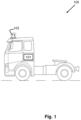
FIG. 1 is an exemplary illustration of avehicle 100. Thevehicle 100 may be a heavy-duty vehicle, such as truck, bus, marine vessel and construction equipment. Although the disclosure may be described with respect to aparticular vehicle 100, the disclosure is not restricted to any particular vehicle. - The
vehicle 100 may comprise acontrol unit 101. Thecontrol unit 101 may be comprised in a control system, and the control system may comprise one ormore control units 101. Thecontrol unit 101 may comprise a processor device 602 (ref.number 602 is found inFIG. 6 ), or thecontrol unit 101 may be theprocessor device 602. The control system may be a computer system 600 (ref.number 600 is found inFIG. 6 ) comprising theprocessor device 602. - The
control unit 101 may be completely comprised in thevehicle 100, as exemplified inFIG. 1 . A first part of thecontrol unit 101 may be comprised in thevehicle 100 and a second part of thecontrol unit 101 may be located offboard thevehicle 100, e.g. in a central server, in a cloud server etc. Thecontrol unit 100 may be completely comprised in an offboard location, e.g., a central server, a cloud server etc. - The
vehicle 100 comprises at least one airdrag affecting portion 103. The term at least one refers to that thevehicle 100 comprises one or more airdrag affection portions 103, i.e., that thevehicle 100 comprises n number of airdrag affection portions 103, where n is a positive integer. For the sake of simplicity, the term airdrag affection portion 103 may be used herein when referring to at least one airdrag affection portion 103. - The air
drag affecting portion 103 may be of any suitable type.FIG. 1 illustrates an example where the airdrag affecting portion 103 is a lamp mounted on top of the outside of the vehicle cabin. In another example, the airdrag affecting portion 103 may be an air deflector, it may be a trailer connected to a towing vehicle, side mirrors, signal horns, warning lights or any other suitable air drag affection portion. The distance between the towing vehicle and the trailer may affect the air drag, the size and/or shape of the trailer may affect the air drag etc. The airdrag affecting portion 103 may be located at any suitable position on thevehicle 100, i.e., on the outside of thevehicle 100. -
FIG. 2 ,FIG. 3 and FIG. 4 are exemplary illustrations of a method, according to one example. The method comprises at least one of the following steps, which steps may be performed in any suitable order than described below: - Step 201: At least one image of the
vehicle 100 is obtained. The image may be captured by an image capturing device (not shown inFIG. 2 ) located offboard thevehicle 100. The image may be provided from the image capturing device to thecontrol unit 103 and/or theprocessor device 602. The image may be provided from the image capturing device upon request from thecontrol unit 103 and/or theprocessor device 602, it may be provided at regular time intervals, or it may be provided when an image has been captured. - The image capturing device may be any suitable device arranged to capture an image, e.g., still and/or moving images. The image capturing device may be comprised in a user equipment such as a mobile phone, a tablet computer or any other handheld unit, it may be comprised in a drone, it may be comprised in a stationary unit mounted on e.g., a rack, a building etc.
- The term at least one image refers to that there may be one or more images captured by the image capturing device and provided to the
control unit 103 and/or theprocessor device 602, i.e., m number of images, where m is a positive integer. - The at least one image is an image of substantially the
whole vehicle 100. The term substantially refers to that the images if of thewhole vehicle 100 possibly with some tolerance. The at least one image may be taken from any suitable angle of thevehicle 100. The at least one image may illustrate the front of thevehicle 100, the side of the vehicle etc. In some examples, there may be one image of the front of thevehicle 100 and another image of the side of thevehicle 100, as exemplified inFIG. 2 . - Step 203: Image pre-processing may be performed. The pre-processing may be performed by the
control unit 103 and/or theprocessor device 602. The pre-processing may comprise to check if the quality of the at least one image is sufficient, i.e., to determine whether the quality of the at least one image is below a quality threshold or that it has reached or is above the quality threshold. When the quality is below the quality threshold, then the quality may be determined to be not sufficient or not good enough to be used in the next step. When the quality has reached or is above the quality threshold, then the quality may be determined to be sufficient or good enough to be used in the next steps. The quality of the image may be determined based on one or more of: the lighting conditions in the image, e.g. dynamic range, sharpness, noise, distortion, information indicating whether or not thecomplete vehicle 100 is contained within the image, information indicating whether or not it is possible to identify thevehicle 100 within the image, or any other suitable information. - The quality threshold may be predetermined, or it may be dynamically set and possibly changed during the performance of the method described herein.
- When the quality is below the quality threshold, the
control unit 103 and/or theprocessor device 602 may determine to improve the quality of the image or to discard the image having too low quality. The quality of the image may be improved using any suitable image processing methods. After quality improvement has been made, the quality of the improved image may again be compared to the quality threshold. - When a plurality of images of the
vehicle 100 is obtained, then it may be checked if the quantity of the plurality of images is below a quantity threshold or if it has reached or is above the quantity threshold. When the quantity is below the quantity threshold, then thecontrol unit 103 and/or theprocessor device 602 may determine that more images need to be captured, and send a request to the image capturing device to take more images. The request may comprise information about how many images the image capturing device should take. The image capturing device consequently takes more images and provides them to thecontrol unit 103 and/or theprocessor device 602. If the request does not comprise information about how many images to be taken, the image processing device may take a predetermined number of images or an arbitrary number of images. When the additional images have been obtained by thecontrol unit 103 and/or theprocessor device 602, the number of images may again be compared to the quantity threshold. This may be performed in a loop until a sufficient number of images of thevehicle 100 has been obtained. - The quantity threshold may be predetermined, or it may be dynamically set and possibly changed during the performance of the method described herein. For example, with only one image it may be difficult to measure distance to and between objects making it much more difficult to estimate the air drag. Also, the viewing angle affects the results. If all images are taken from the exact same position with the same angle, it may not be possible to reconstruct the image in 3D and therefor the estimation will not be as accurate. Depending on the difference between viewing angle and how much of the
vehicle 100 is captured in each image, the number of images required may vary. It may probably be possible to do a simple prediction with only one image, but the uncertainties may be much higher. - Step 205: A machine learning algorithm may be applied on the at least one images to estimate the air drag of the
vehicle 100, i.e., the air drag of thewhole vehicle 100. Consequently, the machine learning algorithm is implemented and executed on thecontrol unit 103 and/or theprocessor device 602. - The machine learning algorithm may be pre-trained using data and other images of
other vehicles 100 with different vehicle setup in combination with known air drag. - The input to the machine learning algorithm may be historic data, e.g., historic or previous estimations of air drag of the
vehicle 100 or ofother vehicles 100. The output of the machine learning algorithm is the estimated air drag of thevehicle 100. - The machine learning algorithm may be based on deep learning and, for image processing, convolutional neural networks.
- As exemplified in
FIG. 3 , there may be two machine learning algorithms, or the algorithm may comprise two machine learning sub-algorithms. In the following, these two algorithms will be referred to as a firstmachine learning algorithm 205a and a secondmachine learning algorithm 205b. The twomachine learning algorithms vehicle 100, possibly after it has been pre-processed instep 203. - The first
machine learning algorithm 205a may be referred to as a classification algorithm. The firstmachine learning algorithm 205b is arranged to, based on the at least one image of thevehicle 100, classify thevehicle 100 in at least one vehicle class and to point it out in an airdrag resistance database 206. The firstmachine learning algorithm 205b is arranged to, based on the at least one image of thevehicle 100, classify the at least one airdrag affecting portion 103 in the airdrag resistance database 206. The airdrag resistance database 206 comprises air drag resistance data. The air drag resistance data is associated with oneparticular vehicle 100 or for a plurality ofvehicles 100, and/or with at least oneair drag portions 103. There may be one airdrag resistance database 206 comprising air drag resistance data for both thevehicle 100 and the at least oneair drag portion 103, or there may be a first air drag resistance database comprising air drag resistance data for thevehicle 100 and a second air drag resistance database comprising air drag resistance data for the at least oneair drag portion 103. - The classes may be based on any suitable vehicle parameter, for example chassis type, vehicle configuration, vehicle shape, at least one air
drag affecting portion 103 etc. The at least one airdrag affecting portion 103 may be described as outside mounted equipment which is mounted on the outside of the vehicle and may be for example roof mounted headlights, wind advisor etc. There may be a vehicle class in which thevehicle 100 is classified, and an air drag affection portion class in which the at least one airdrag affecting portion 103 is classified. There may be predefined classes, and/or the classes may be dynamically created. Completely new vehicles and/or at least one airdrag affecting portion 103 may be classified in a class which is nearest or a most similar class. For example, if anew vehicle 100 and/or a new at least one airdrag affecting portion 103 does not belong to a predefined class, then thenew vehicle 100 and/or new at least one airdrag affecting portion 103 may be determined to belong 70% to a first class, 25% to a second class and 5% to a third class. - The air
drag resistance database 206 may be predetermined, i.e., it may be created before the firstmachine learning algorithm 205a is executed for the first time. Data comprised in the airdrag resistance database 206 may be obtained from already existing sources together with creation of new data from for example wind tunnel testing, but also synthetic data from more advanced computer simulations. The airdrag resistance database 206 may be continuously updated, i.e., the airdrag resistance database 206 may not be static but rather built upon during some time. - The second
machine learning algorithm 205b is arranged to enhance the air drag resistance data from the airdrag resistance database 206 by combing that data together with the at least one image of thevehicle 100. The output of the secondmachine learning algorithm 205 is the air drag resistance value of thewhole vehicle 100, including the at least oneair drag portion 103. - The air drag resistance data is enhanced in that the air
drag resistance database 206 is able to return an air resistance for a combination ofvehicle 100 and airdrag affecting portions 103. If the given combination ofvehicle 100 and airdrag affecting portion 103 is not comprised in the airdrag resistance database 206, the airdrag resistance database 206 may offer to return its closest match. By having a Machine Learning (ML) algorithm trained on the air drag resistance data in the airdrag resistance database 206, the information in the airdrag resistance database 206 is generalized so that the ML algorithm may give an estimation of the air drag even for a combination ofvehicle 100 and airdrag affecting portion 103 it has not seen before. The estimate may be better than just returning the closest match from the airdrag resistance database 206. - The machine learning algorithm may be described as a type of artificial intelligence (AI). The machine learning algorithm automatically learns and improves from previous executions of the algorithm without being explicitly instructed to do so. The machine learning algorithm uses historic data as input to provide new output data. A machine learning algorithm may be described as aiming to imitate the human brain when it comes to processing of data. The machine learning algorithm may generalize, e.g., it may perform predictions on air
drag affection portions 103 that it previously has not handled or made predictions on. - A technical benefit of using a machine learning algorithm is that the accuracy of the estimation is improved, as compared to not using the machine learning algorithm. A machine learning algorithm is an efficient algorithm, its time consumption is low, and it provides outputs and results of high accuracy, i.e., accuracy above a threshold.
- Step 207: The
control unit 103 and/or theprocessor device 602 estimates an impact that the at least one airdrag affecting portion 103 has on the vehicle's air drag and energy consumption. The impact may be estimated using a machine learning algorithm. - The input to step 207 may be the air drag resistance value, as exemplified in
FIG. 3 and FIG.4 . The energy may be electric energy, it may be fuel such as diesel, petrol, it may be gas, it may be fuel cell energy, or any other suitable energy type arranged to power thevehicle 100 etc. In addition to the energy consumption, the at least one airdrag affection portion 103 may have an impact on for example urea that is added to the fuel. - As exemplified in
FIG. 2 , the impact may comprise to identify the disturbance, i.e., to identify the airdrag affection portion 103. The impact may comprise to determine a potential energy saving, for example measured in %, that may be obtained by making changes to the identified at least one airdrag affecting portion 103, e.g., removing the airdrag affecting portion 103, replacing it with another and less air drag influencing portion etc. - Information associated with the estimated impact and estimated air drag may be provided to a display unit to viewed by a user or an operator. The display unit may be a standalone display unit, or it may be comprised in any suitable unit, e.g. a user equipment such as a mobile phone, a tablet computer or any other suitable handheld unit, it may an onboard vehicle display, it may be comprised in a stationary computer located at a central location etc.
-
FIG. 2 andFIG. 4 may be summarized as follows: - At least one image is obtained from the image capturing device,
step 201. - The at least one image may be pre-processed and evaluated if quality and quantity is good enough,
step 203. - The at least one image, possibly pre-processed, are fed to the machine learning algorithm which makes an identification of disturbances, i.e., it identifies the
air affecting portions 103,step 205. The machine learning algorithm is pre trained on images from different vehicle combinations in combination with known air drag resistance values. The data is then used together with an estimator to give the energy consumption impact. - The at least one image is brought back to the user with identified areas and information about potential savings if corrected,
step 207. -
FIG. 3 may be summarized as follows: - At least one image is obtained from the image capturing device,
step 201. - The at least one image, possibly pre-processed, are fed to the machine learning algorithm which makes an identification of disturbances, i.e., it identifies the
air affecting portions 103,step 205. The machine learning algorithm is pre-trained on images from different vehicle combinations in combination with known air drag resistance values. The data is then used together with an estimator to give the energy consumption impact. - The first machine learning algorithm, i.e., the classification algorithm, may classify the
vehicle 100 and points it out in the air drag resistance database,step 205b. - The second machine learning algorithm may enhance the value from the air drag resistance database by combing that data together with the image input,
step 205b. -
FIG. 5 is an exemplary flow chart illustrating a method, according to one example. The method may be a computer-implemented method. The method may be performed by thecontrol unit 101 or a control system. The method may be performed by theprocessor device 602 of thecomputer system 600. The method comprises at least one following steps, which steps may be performed in any suitable order than described below: - Step 500: This step corresponds to step 201 in
FIG. 2 . Thecontrol unit 101, the control system or theprocessor device 602 obtains, at least one image of avehicle 100. The at least one image comprises at least one airdrag affecting portion 103 of thevehicle 100 affecting the air drag of thevehicle 100. The at least one image may be obtained from an image capturing device located offboard thevehicle 100. - Step 501: The
control unit 101, the control system or theprocessor device 602 may determine that quality of the at least one image is below a quality threshold or that it has reached or is above the quality threshold. - Step 502: When a plurality of images is obtained, the
control unit 101, the control system or theprocessor device 602 may determine that a quantity of the plurality of images is below a quantity threshold or that it has reached or is above the quantity threshold. - Step 503: This step corresponds to
steps FIG. 2 . Thecontrol unit 101, the control system or theprocessor device 602 estimates an air drag of thevehicle 100 comprising the at least one airdrag affecting portion 103 using the machine learning algorithm. - The machine learning algorithm may be pre-trained using data and other images of
other vehicles 100 with different vehicle setup in combination with known air drag. - Step 504: This step corresponds to step 207 in
FIG. 2 . Thecontrol unit 101, the control system or theprocessor device 602 identifies the at least one airdrag affecting portion 103 in the at least one image. - Step 505: This step corresponds to step 207 in
FIG. 2 . Thecontrol unit 101, the control system or theprocessor device 602 estimates an impact that the at least one airdrag affecting portion 103 has on the vehicle's air drag and energy consumption. - Step 506: The
control unit 101, the control system or theprocessor device 602 may determine a change in vehicle setup based on the impact that the at least one airdrag affecting portion 103 has on the vehicle's air drag and energy consumption. The determined change may be associated with a reduced air drag and reduced energy consumption. - Step 507: The
control unit 101, the control system or theprocessor device 602 may provide information associated with the estimated impact and estimated air drag to a display unit - A
computer system 600 comprising aprocessor device 602 configured to: - obtain at least one image of a
vehicle 100, wherein the at least one image comprises at least one airdrag affecting portion 103 of thevehicle 100 affecting the air drag of thevehicle 100; - estimate an air drag of the
vehicle 100 comprising the at least one airdrag affecting portion 103 using a machine learning algorithm; - identify the at least one air
drag affecting portion 103 in the at least one image; and to - estimate an impact that the at least one air
drag affecting portion 103 has on the vehicle's air drag and energy consumption. - The
vehicle 100 comprises thecontrol unit 101, the control system or theprocessor device 602 to perform the method described herein. - A computer program product comprises program code for performing, when executed by the
control unit 101, the control system or theprocessor device 602, the method described herein. - The control system comprises one or
more control units 101 configured to perform the method described herein. - A non-transitory computer-readable storage medium comprises instructions, which when executed by the
control unit 101, the control system or theprocessor device 602, cause thecontrol unit 101, the control system or theprocessor device 602, to perform the method described herein. -
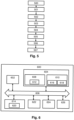
FIG. 6 is a schematic diagram of acomputer system 600 for implementing examples disclosed herein. Thecomputer system 600 is adapted to execute instructions from a computer-readable medium to perform these and/or any of the functions or processing described herein. Thecomputer system 600 may be connected (e.g., networked) to other machines in a LAN, an intranet, an extranet, or the Internet. While only a single device is illustrated, thecomputer system 600 may include any collection of devices that individually or jointly execute a set (or multiple sets) of instructions to perform any one or more of the methodologies discussed herein. Accordingly, any reference in the disclosure and/or claims to a computer system, computing system, computer device, computing device, control system, control unit, electronic control unit (ECU), processor device, etc., includes reference to one or more such devices to individually or jointly execute a set (or multiple sets) of instructions to perform any one or more of the methodologies discussed herein. For example, control system may include a single control unit or a plurality of control units connected or otherwise communicatively coupled to each other, such that any performed function may be distributed between the control units as desired. Further, such devices may communicate with each other or other devices by various system architectures, such as directly or via a Controller Area Network (CAN) bus, etc. - The
computer system 600 may comprise at least one computing device or electronic device capable of including firmware, hardware, and/or executing software instructions to implement the functionality described herein. Thecomputer system 600 may include a processor device 602 (may also be referred to as a control unit), amemory 604, and asystem bus 606. Thecomputer system 600 may include at least one computing device having theprocessor device 602. Thesystem bus 606 provides an interface for system components including, but not limited to, thememory 604 and theprocessor device 602. Theprocessor device 602 may include any number of hardware components for conducting data or signal processing or for executing computer code stored inmemory 604. The processor device 602 (e.g., control unit) may, for example, include a general-purpose processor, an application specific processor, a Digital Signal Processor (DSP), an Application Specific Integrated Circuit (ASIC), a Field Programmable Gate Array (FPGA), a circuit containing processing components, a group of distributed processing components, a group of distributed computers configured for processing, or other programmable logic device, discrete gate or transistor logic, discrete hardware components, or any combination thereof designed to perform the functions described herein. The processor device may further include computer executable code that controls operation of the programmable device. - The
system bus 606 may be any of several types of bus structures that may further interconnect to a memory bus (with or without a memory controller), a peripheral bus, and/or a local bus using any of a variety of bus architectures. Thememory 604 may be one or more devices for storing data and/or computer code for completing or facilitating methods described herein. Thememory 604 may include database components, object code components, script components, or other types of information structure for supporting the various activities herein. Any distributed or local memory device may be utilized with the systems and methods of this description. Thememory 604 may be communicably connected to the processor device 602 (e.g., via a circuit or any other wired, wireless, or network connection) and may include computer code for executing one or more processes described herein. Thememory 604 may include non-volatile memory 608 (e.g., read-only memory (ROM), erasable programmable read-only memory (EPROM), electrically erasable programmable read-only memory (EEPROM), etc.), and volatile memory 610 (e.g., random-access memory (RAM)), or any other medium which can be used to carry or store desired program code in the form of machine-executable instructions or data structures and which can be accessed by a computer or other machine with aprocessor device 602. A basic input/output system (BIOS) 612 may be stored in thenon-volatile memory 608 and can include the basic routines that help to transfer information between elements within thecomputer system 600. - The
computer system 600 may further include or be coupled to a non-transitory computer-readable storage medium such as thestorage device 614, which may comprise, for example, an internal or external hard disk drive (HDD) (e.g., enhanced integrated drive electronics (EIDE) or serial advanced technology attachment (SATA)), HDD (e.g., EIDE or SATA) for storage, flash memory, or the like. Thestorage device 614 and other drives associated with computer-readable media and computer-usable media may provide non-volatile storage of data, data structures, computer-executable instructions, and the like. - A number of modules can be implemented as software and/or hard-coded in circuitry to implement the functionality described herein in whole or in part. The modules may be stored in the
storage device 614 and/or in thevolatile memory 610, which may include anoperating system 616 and/or one ormore program modules 618. All or a portion of the examples disclosed herein may be implemented as acomputer program product 620 stored on a transitory or non-transitory computer-usable or computer-readable storage medium (e.g., single medium or multiple media), such as thestorage device 614, which includes complex programming instructions (e.g., complex computer-readable program code) to cause theprocessor device 602 to carry out the steps described herein. Thus, the computer-readable program code can comprise software instructions for implementing the functionality of the examples described herein when executed by theprocessor device 602. Theprocessor device 602 may serve as a controller or control system for thecomputer system 600 that is to implement the functionality described herein. - The
computer system 600 also may include an input device interface 622 (e.g., input device interface and/or output device interface). Theinput device interface 622 may be configured to receive input and selections to be communicated to thecomputer system 600 when executing instructions, such as from a keyboard, mouse, touch-sensitive surface, etc. Such input devices may be connected to theprocessor device 602 through theinput device interface 622 coupled to thesystem bus 606 but can be connected through other interfaces such as a parallel port, an Institute of Electrical and Electronic Engineers (IEEE) 1394 serial port, a Universal Serial Bus (USB) port, an IR interface, and the like. Thecomputer system 600 may include anoutput device interface 624 configured to forward output, such as to a display, a video display unit (e.g., a liquid crystal display (LCD) or a cathode ray tube (CRT)). Thecomputer system 600 may also include acommunications interface 626 suitable for communicating with a network as appropriate or desired. - The operational steps described in any of the exemplary aspects herein are described to provide examples and discussion. The steps may be performed by hardware components, may be embodied in machine-executable instructions to cause a processor to perform the steps, or may be performed by a combination of hardware and software. Although a specific order of method steps may be shown or described, the order of the steps may differ. In addition, two or more steps may be performed concurrently or with partial concurrence.
- Summarized, many users and operators of
vehicle 100 are not aware of the aerodynamic abilities of theirvehicle 100. Thevehicle 100 may have a poor setup or modifications may have been done that have a severe impact on energy consumption by increased air drag. The present disclosure enables users and operators of thevehicle 100 to identify air drag problems and improve energy efficiency. Today, air drag data may be considered from the delivery state of thevehicle 100, not taking modifications and trailer into consideration. Air drag is an important factor for energy consumption, especially for long haul applications. Today, no tools exist for the users or operators, except general know how acquired through trainings or information sheets. - Furthermore, today it may be challenging to get a good estimate of a vehicle's air drag resistance without using costly and time-consuming wind tunnel testing. Only using known stock data for estimation of air drag do not consider anomality's/modifications.
- The present disclosure simplifies the process of estimating air drag while improving the accuracy compared to only using stock data.
- The present disclosure utilizes machine learning in combination with at least one images from an image capturing device and/or together with existing and collected data. Given the at least one image of the
vehicle 100, it is possible to point out critical elements, i.e., at least one airdrag affecting portions 103, of thevehicle 100 and also give an estimate on potential energy savings. - The terminology used herein is for the purpose of describing particular aspects only and is not intended to be limiting of the disclosure. As used herein, the singular forms "a," "an," and "the" are intended to include the plural forms as well, unless the context clearly indicates otherwise. As used herein, the term "and/or" includes any and all combinations of one or more of the associated listed items. It will be further understood that the terms "comprises," "comprising," "includes," and/or "including" when used herein specify the presence of stated features, integers, steps, operations, elements, and/or components, but do not preclude the presence or addition of one or more other features, integers, steps, operations, elements, components, and/or groups thereof.
- It will be understood that, although the terms first, second, etc., may be used herein to describe various elements, these elements should not be limited by these terms. These terms are only used to distinguish one element from another. For example, a first element could be termed a second element, and, similarly, a second element could be termed a first element without departing from the scope of the present disclosure.
- Relative terms such as "below" or "above" or "upper" or "lower" or "horizontal" or "vertical" may be used herein to describe a relationship of one element to another element as illustrated in the Figures. It will be understood that these terms and those discussed above are intended to encompass different orientations of the device in addition to the orientation depicted in the Figures. It will be understood that when an element is referred to as being "connected" or "coupled" to another element, it can be directly connected or coupled to the other element, or intervening elements may be present. In contrast, when an element is referred to as being "directly connected" or "directly coupled" to another element, there are no intervening elements present.
- Unless otherwise defined, all terms (including technical and scientific terms) used herein have the same meaning as commonly understood by one of ordinary skill in the art to which this disclosure belongs. It will be further understood that terms used herein should be interpreted as having a meaning consistent with their meaning in the context of this specification and the relevant art and will not be interpreted in an idealized or overly formal sense unless expressly so defined herein.
- It is to be understood that the present disclosure is not limited to the aspects described above and illustrated in the drawings; rather, the skilled person will recognize that many changes and modifications may be made within the scope of the present disclosure and appended claims. In the drawings and specification, there have been disclosed aspects for purposes of illustration only and not for purposes of limitation, the scope of the inventive concepts being set forth in the following claims.
Claims (12)
- A computer system (600) comprising a processor device (602) configured to:obtain at least one image of a vehicle (100), wherein the at least one image comprises at least one air drag affecting portion (103) of the vehicle (100) affecting the air drag of the vehicle (100);estimate an air drag of the vehicle (100) comprising the at least one air drag affecting portion (103) using a machine learning algorithm;identify the at least one air drag affecting portion (103) in the at least one image; and toestimate an impact that the at least one air drag affecting portion (103) has on the vehicle's air drag and energy consumption.
- A computer-implemented method, comprising:obtaining (201, 500), by a processor device (602) of a computer system (600), at least one image of a vehicle (100), wherein the at least one image comprises at least one air drag affecting portion (103) of the vehicle (100) affecting the air drag of the vehicle (100);estimating (205, 205a, 205b, 503), by the processor device (602), an air drag of the vehicle (100) comprising the at least one air drag affecting portion (103) using a machine learning algorithm;identifying (207, 504), by the processor device (602), the at least one air drag affecting portion (103) in the at least one image; andestimating (207, 505), by the processor device (602), an impact that the at least one air drag affecting portion (103) has on the vehicle's air drag and energy consumption.
- The computer-implemented method of claim 2, comprising:
determining (506), by the processor device (602), a change in vehicle setup based on the impact that the at least one air drag affecting portion (103) has on the vehicle's air drag and energy consumption, wherein the determined change is associated with a reduced air drag and reduced energy consumption. - The computer-implemented method of any of claims 2-3, wherein the machine learning algorithm is pre-trained using data and other images of other vehicles (100) with different vehicle setup in combination with known air drag.
- The computer-implemented method of any of claims 2-4, further comprising:
determining (501), by the processor device (602), that quality of the at least one image is below a quality threshold or that it has reached or is above the quality threshold. - The computer-implemented method of any of claims 2-5, further comprising:
when a plurality of images is obtained, determining (502), by the processor device (602) that a quantity of the plurality of images is below a quantity threshold or that it has reached or is above the quantity threshold. - The computer-implemented method of any of claims 2-6, comprising:
providing (507), by the processor device (602), information associated with the estimated impact and estimated air drag to a display unit. - The computer-implemented method of any of claims 2-7, wherein the at least one image is obtained from an image capturing device located offboard the vehicle (100).
- A vehicle (100) comprising a processor device (602) to perform the method of any of claims 2-8.
- A computer program product comprising program code for performing, when executed by a processor device (602), the method of any of claims 2-8.
- A control system comprising one or more control units (101) configured to perform the method of any of claims 2-8.
- A non-transitory computer-readable storage medium comprising instructions, which when executed by a processor device (602), cause the processor device (602) to perform the method of any of claims 2-8.
Priority Applications (2)
| Application Number | Priority Date | Filing Date | Title |
|---|---|---|---|
| EP23150774.0A EP4397560A1 (en) | 2023-01-09 | 2023-01-09 | Determing air drag of a vehicle using images and a machine learning algorithm |
| US18/401,852 US20240233329A1 (en) | 2023-01-09 | 2024-01-02 | Air drag of a vehicle |
Applications Claiming Priority (1)
| Application Number | Priority Date | Filing Date | Title |
|---|---|---|---|
| EP23150774.0A EP4397560A1 (en) | 2023-01-09 | 2023-01-09 | Determing air drag of a vehicle using images and a machine learning algorithm |
Publications (1)
| Publication Number | Publication Date |
|---|---|
| EP4397560A1 true EP4397560A1 (en) | 2024-07-10 |
Family
ID=84888702
Family Applications (1)
| Application Number | Title | Priority Date | Filing Date |
|---|---|---|---|
| EP23150774.0A Pending EP4397560A1 (en) | 2023-01-09 | 2023-01-09 | Determing air drag of a vehicle using images and a machine learning algorithm |
Country Status (2)
| Country | Link |
|---|---|
| US (1) | US20240233329A1 (en) |
| EP (1) | EP4397560A1 (en) |
-
2023
- 2023-01-09 EP EP23150774.0A patent/EP4397560A1/en active Pending
-
2024
- 2024-01-02 US US18/401,852 patent/US20240233329A1/en active Pending
Non-Patent Citations (5)
| Title |
|---|
| HARIRAM ADITHYA ET AL: "A Study in Options to Improve Aerodynamic Profile of Heavy-Duty Vehicles in Europe", SUSTAINABILITY, vol. 11, no. 19, 6 October 2019 (2019-10-06), pages 5519, XP093049884, DOI: 10.3390/su11195519 * |
| HE PAN ET AL: "Truck Taxonomy and Classification Using Video and Weigh-In Motion (WIM) Technology Final Report", 1 May 2019 (2019-05-01), XP093049629, Retrieved from the Internet <URL:https://fdotwww.blob.core.windows.net/sitefinity/docs/default-source/research/reports/fdot-bdv31-977-81-rpt.pdf> [retrieved on 20230525] * |
| LIU QING ET AL: "Learning Part Segmentation through Unsupervised Domain Adaptation from Synthetic Vehicles", 2022 IEEE/CVF CONFERENCE ON COMPUTER VISION AND PATTERN RECOGNITION (CVPR), IEEE, 18 June 2022 (2022-06-18), pages 19118 - 19129, XP034194955, DOI: 10.1109/CVPR52688.2022.01855 * |
| SAM JACOB JACOB ET AL: "Deep Learning for Real-Time Aerodynamic Evaluations of Arbitrary Vehicle Shapes", ARXIV.ORG, CORNELL UNIVERSITY LIBRARY, 201 OLIN LIBRARY CORNELL UNIVERSITY ITHACA, NY 14853, 12 August 2021 (2021-08-12), XP091032173 * |
| YANG LIQIN ET AL: "Vehicle parts detection based on Faster - RCNN with location constraints of vehicle parts feature point", PROCEEDINGS OF SPIE; [PROCEEDINGS OF SPIE ISSN 0277-786X VOLUME 10524], SPIE, US, vol. 10609, 8 March 2018 (2018-03-08), pages 106091J - 106091J, XP060100831, ISBN: 978-1-5106-1533-5, DOI: 10.1117/12.2287308 * |
Also Published As
| Publication number | Publication date |
|---|---|
| US20240233329A1 (en) | 2024-07-11 |
Similar Documents
| Publication | Publication Date | Title |
|---|---|---|
| CN111667512B (en) | Multi-target vehicle trajectory prediction method based on improved Kalman filter | |
| CN112800986B (en) | Vehicle-mounted camera external parameter calibration method and device, vehicle-mounted terminal and storage medium | |
| AU2018288720B2 (en) | Rare instance classifiers | |
| CN113366532A (en) | Point cloud based segmentation processing method and device, computer equipment and storage medium | |
| US10776642B2 (en) | Sampling training data for in-cabin human detection from raw video | |
| CN109472251B (en) | Object collision prediction method and device | |
| CN106183979A (en) | A kind of method and apparatus vehicle reminded according to spacing | |
| CN110738181B (en) | Method and device for determining vehicle orientation information | |
| CN113076922A (en) | Object detection method and device | |
| CN115685102B (en) | A radar automatic calibration method based on target tracking | |
| CN112799091A (en) | Algorithm evaluation method, device and storage medium | |
| EP3140777A1 (en) | Method for performing diagnosis of a camera system of a motor vehicle, camera system and motor vehicle | |
| CN111666848A (en) | Method, device and equipment for detecting arrival of transport vehicle and storage medium | |
| CN119919925A (en) | Excavator loading counting method, device, terminal and medium based on machine vision | |
| CN115272284A (en) | Power transmission line defect identification method based on image quality evaluation | |
| CN106570487A (en) | Method and device for predicting collision between objects | |
| US20240233329A1 (en) | Air drag of a vehicle | |
| CN115147791B (en) | Vehicle lane change detection method, device, vehicle and storage medium | |
| CN109360137B (en) | Vehicle accident assessment method, computer readable storage medium and server | |
| CN108327718B (en) | A kind of Vehicle Adaptive Cruising Control Systems and its control method | |
| CN110971826A (en) | Video front-end monitoring device and method | |
| CN116106889A (en) | Clustering pairs of tracks for multi-sensor track association | |
| US20140368644A1 (en) | Apparatus and method for tracking driver attentiveness using vector | |
| CN111666825B (en) | Vehicle load state identification method and device based on person-in-loop | |
| US20210286973A1 (en) | Facial recognition system for a vehicle technical field |
Legal Events
| Date | Code | Title | Description |
|---|---|---|---|
| PUAI | Public reference made under article 153(3) epc to a published international application that has entered the european phase |
Free format text: ORIGINAL CODE: 0009012 |
|
| STAA | Information on the status of an ep patent application or granted ep patent |
Free format text: STATUS: THE APPLICATION HAS BEEN PUBLISHED |
|
| AK | Designated contracting states |
Kind code of ref document: A1 Designated state(s): AL AT BE BG CH CY CZ DE DK EE ES FI FR GB GR HR HU IE IS IT LI LT LU LV MC ME MK MT NL NO PL PT RO RS SE SI SK SM TR |
|
| STAA | Information on the status of an ep patent application or granted ep patent |
Free format text: STATUS: REQUEST FOR EXAMINATION WAS MADE |
|
| 17P | Request for examination filed |
Effective date: 20240911 |
|
| RBV | Designated contracting states (corrected) |
Designated state(s): AL AT BE BG CH CY CZ DE DK EE ES FI FR GB GR HR HU IE IS IT LI LT LU LV MC ME MK MT NL NO PL PT RO RS SE SI SK SM TR |
|
| STAA | Information on the status of an ep patent application or granted ep patent |
Free format text: STATUS: EXAMINATION IS IN PROGRESS |
|
| 17Q | First examination report despatched |
Effective date: 20251015 |
|
| GRAP | Despatch of communication of intention to grant a patent |
Free format text: ORIGINAL CODE: EPIDOSNIGR1 |
|
| STAA | Information on the status of an ep patent application or granted ep patent |
Free format text: STATUS: GRANT OF PATENT IS INTENDED |