EP4397407A1 - Hydrochloric acid oxidation catalyst and method for producing chlorine - Google Patents
Hydrochloric acid oxidation catalyst and method for producing chlorine Download PDFInfo
- Publication number
- EP4397407A1 EP4397407A1 EP22864500.8A EP22864500A EP4397407A1 EP 4397407 A1 EP4397407 A1 EP 4397407A1 EP 22864500 A EP22864500 A EP 22864500A EP 4397407 A1 EP4397407 A1 EP 4397407A1
- Authority
- EP
- European Patent Office
- Prior art keywords
- hydrochloric acid
- catalyst
- oxidation catalyst
- acid oxidation
- carrier
- Prior art date
- Legal status (The legal status is an assumption and is not a legal conclusion. Google has not performed a legal analysis and makes no representation as to the accuracy of the status listed.)
- Pending
Links
Images


Classifications
-
- B—PERFORMING OPERATIONS; TRANSPORTING
- B01—PHYSICAL OR CHEMICAL PROCESSES OR APPARATUS IN GENERAL
- B01J—CHEMICAL OR PHYSICAL PROCESSES, e.g. CATALYSIS OR COLLOID CHEMISTRY; THEIR RELEVANT APPARATUS
- B01J23/00—Catalysts comprising metals or metal oxides or hydroxides, not provided for in group B01J21/00
- B01J23/70—Catalysts comprising metals or metal oxides or hydroxides, not provided for in group B01J21/00 of the iron group metals or copper
- B01J23/76—Catalysts comprising metals or metal oxides or hydroxides, not provided for in group B01J21/00 of the iron group metals or copper combined with metals, oxides or hydroxides provided for in groups B01J23/02 - B01J23/36
- B01J23/83—Catalysts comprising metals or metal oxides or hydroxides, not provided for in group B01J21/00 of the iron group metals or copper combined with metals, oxides or hydroxides provided for in groups B01J23/02 - B01J23/36 with rare earths or actinides
-
- B—PERFORMING OPERATIONS; TRANSPORTING
- B01—PHYSICAL OR CHEMICAL PROCESSES OR APPARATUS IN GENERAL
- B01J—CHEMICAL OR PHYSICAL PROCESSES, e.g. CATALYSIS OR COLLOID CHEMISTRY; THEIR RELEVANT APPARATUS
- B01J35/00—Catalysts, in general, characterised by their form or physical properties
- B01J35/60—Catalysts, in general, characterised by their form or physical properties characterised by their surface properties or porosity
-
- B—PERFORMING OPERATIONS; TRANSPORTING
- B01—PHYSICAL OR CHEMICAL PROCESSES OR APPARATUS IN GENERAL
- B01J—CHEMICAL OR PHYSICAL PROCESSES, e.g. CATALYSIS OR COLLOID CHEMISTRY; THEIR RELEVANT APPARATUS
- B01J21/00—Catalysts comprising the elements, oxides, or hydroxides of magnesium, boron, aluminium, carbon, silicon, titanium, zirconium, or hafnium
- B01J21/02—Boron or aluminium; Oxides or hydroxides thereof
- B01J21/04—Alumina
-
- B—PERFORMING OPERATIONS; TRANSPORTING
- B01—PHYSICAL OR CHEMICAL PROCESSES OR APPARATUS IN GENERAL
- B01J—CHEMICAL OR PHYSICAL PROCESSES, e.g. CATALYSIS OR COLLOID CHEMISTRY; THEIR RELEVANT APPARATUS
- B01J35/00—Catalysts, in general, characterised by their form or physical properties
- B01J35/60—Catalysts, in general, characterised by their form or physical properties characterised by their surface properties or porosity
- B01J35/61—Surface area
- B01J35/613—10-100 m2/g
-
- B—PERFORMING OPERATIONS; TRANSPORTING
- B01—PHYSICAL OR CHEMICAL PROCESSES OR APPARATUS IN GENERAL
- B01J—CHEMICAL OR PHYSICAL PROCESSES, e.g. CATALYSIS OR COLLOID CHEMISTRY; THEIR RELEVANT APPARATUS
- B01J35/00—Catalysts, in general, characterised by their form or physical properties
- B01J35/60—Catalysts, in general, characterised by their form or physical properties characterised by their surface properties or porosity
- B01J35/61—Surface area
- B01J35/615—100-500 m2/g
-
- B—PERFORMING OPERATIONS; TRANSPORTING
- B01—PHYSICAL OR CHEMICAL PROCESSES OR APPARATUS IN GENERAL
- B01J—CHEMICAL OR PHYSICAL PROCESSES, e.g. CATALYSIS OR COLLOID CHEMISTRY; THEIR RELEVANT APPARATUS
- B01J35/00—Catalysts, in general, characterised by their form or physical properties
- B01J35/60—Catalysts, in general, characterised by their form or physical properties characterised by their surface properties or porosity
- B01J35/63—Pore volume
- B01J35/635—0.5-1.0 ml/g
-
- B—PERFORMING OPERATIONS; TRANSPORTING
- B01—PHYSICAL OR CHEMICAL PROCESSES OR APPARATUS IN GENERAL
- B01J—CHEMICAL OR PHYSICAL PROCESSES, e.g. CATALYSIS OR COLLOID CHEMISTRY; THEIR RELEVANT APPARATUS
- B01J35/00—Catalysts, in general, characterised by their form or physical properties
- B01J35/60—Catalysts, in general, characterised by their form or physical properties characterised by their surface properties or porosity
- B01J35/63—Pore volume
- B01J35/638—Pore volume more than 1.0 ml/g
-
- B—PERFORMING OPERATIONS; TRANSPORTING
- B01—PHYSICAL OR CHEMICAL PROCESSES OR APPARATUS IN GENERAL
- B01J—CHEMICAL OR PHYSICAL PROCESSES, e.g. CATALYSIS OR COLLOID CHEMISTRY; THEIR RELEVANT APPARATUS
- B01J35/00—Catalysts, in general, characterised by their form or physical properties
- B01J35/60—Catalysts, in general, characterised by their form or physical properties characterised by their surface properties or porosity
- B01J35/64—Pore diameter
- B01J35/647—2-50 nm
-
- B—PERFORMING OPERATIONS; TRANSPORTING
- B01—PHYSICAL OR CHEMICAL PROCESSES OR APPARATUS IN GENERAL
- B01J—CHEMICAL OR PHYSICAL PROCESSES, e.g. CATALYSIS OR COLLOID CHEMISTRY; THEIR RELEVANT APPARATUS
- B01J35/00—Catalysts, in general, characterised by their form or physical properties
- B01J35/60—Catalysts, in general, characterised by their form or physical properties characterised by their surface properties or porosity
- B01J35/64—Pore diameter
- B01J35/651—50-500 nm
-
- B—PERFORMING OPERATIONS; TRANSPORTING
- B01—PHYSICAL OR CHEMICAL PROCESSES OR APPARATUS IN GENERAL
- B01J—CHEMICAL OR PHYSICAL PROCESSES, e.g. CATALYSIS OR COLLOID CHEMISTRY; THEIR RELEVANT APPARATUS
- B01J35/00—Catalysts, in general, characterised by their form or physical properties
- B01J35/60—Catalysts, in general, characterised by their form or physical properties characterised by their surface properties or porosity
- B01J35/66—Pore distribution
-
- B—PERFORMING OPERATIONS; TRANSPORTING
- B01—PHYSICAL OR CHEMICAL PROCESSES OR APPARATUS IN GENERAL
- B01J—CHEMICAL OR PHYSICAL PROCESSES, e.g. CATALYSIS OR COLLOID CHEMISTRY; THEIR RELEVANT APPARATUS
- B01J37/00—Processes, in general, for preparing catalysts; Processes, in general, for activation of catalysts
- B01J37/02—Impregnation, coating or precipitation
- B01J37/0201—Impregnation
-
- B—PERFORMING OPERATIONS; TRANSPORTING
- B01—PHYSICAL OR CHEMICAL PROCESSES OR APPARATUS IN GENERAL
- B01J—CHEMICAL OR PHYSICAL PROCESSES, e.g. CATALYSIS OR COLLOID CHEMISTRY; THEIR RELEVANT APPARATUS
- B01J37/00—Processes, in general, for preparing catalysts; Processes, in general, for activation of catalysts
- B01J37/02—Impregnation, coating or precipitation
- B01J37/03—Precipitation; Co-precipitation
- B01J37/031—Precipitation
-
- C—CHEMISTRY; METALLURGY
- C01—INORGANIC CHEMISTRY
- C01B—NON-METALLIC ELEMENTS; COMPOUNDS THEREOF; METALLOIDS OR COMPOUNDS THEREOF NOT COVERED BY SUBCLASS C01C
- C01B7/00—Halogens; Halogen acids
- C01B7/01—Chlorine; Hydrogen chloride
- C01B7/03—Preparation from chlorides
- C01B7/04—Preparation of chlorine from hydrogen chloride
Definitions
- the present invention (3) includes the hydrochloric acid oxidation catalyst described in (1) or (2), in which the carrier contains alumina.
- the present invention (4) includes a method for producing chlorine, in which hydrochloric acid is brought into contact with oxygen in the presence of the hydrochloric acid oxidation catalyst described in (1) or (2).
- the present invention (5) includes the method for producing chlorine described in (4), in which the hydrochloric acid oxidation catalyst is used as a fixed-bed catalyst.
- This catalyst includes a carrier, and copper, an alkali metal, and a rare earth element (active components).
- alumina is used for the material of the carrier.
- Copper, an alkali metal, and a rare earth element are active components of the catalyst and are dispersed in (carried by) the carrier.
- the copper, alkali metal, and rare earth element are present in solid state on the surface of the carrier.
- the copper, alkali metal, and rare earth element, and a combination thereof are described in detail in, for example, WO 2009/041384 .
- a differential value of a spectrum obtained by differential thermal analysis of the catalyst is 0.035 ⁇ V/sec or less relative to a baseline in the range of 290 to 400°C.
- the hot spot is a high temperature point based on the catalytic activity in the hydrochloric acid oxidation reaction in a catalytic region 4 formed in a fixed-bed catalytic reactor 1 in which a catalyst 3 is provided as a fixed bed.
- the catalytic region 4 is along a flow direction of chlorine and oxygen.
- the high temperature point gradually shifts from the initial high temperature point to the downstream in the flow direction, and the high temperature point finally reaches the downstream end of the catalytic region 4 in the flow direction, and then does not move any further, resulting in remarkable reduction of the catalytic activity in the entire catalytic region 4. Therefore, suppressing the movement of the hot spot means that the remarkable reduction of the catalytic activity in the entire catalytic region 4 can be suppressed.
- the differential thermal analysis is performed under the following measurement conditions.
- the baseline is a straight line connecting between the average (unit: ⁇ V/sec) of the differential values of the spectrum from 290°C to 300°C, corresponding to 295°C, and the differential value (unit: ⁇ V/sec) of the spectrum from 390°C to 400°C, corresponding to 395°C (see FIGS. 1 to 3 ).
Landscapes
- Chemical & Material Sciences (AREA)
- Organic Chemistry (AREA)
- Engineering & Computer Science (AREA)
- Materials Engineering (AREA)
- Chemical Kinetics & Catalysis (AREA)
- Inorganic Chemistry (AREA)
- Catalysts (AREA)
- Low-Molecular Organic Synthesis Reactions Using Catalysts (AREA)
Abstract
Description
- The present invention relates to a hydrochloric acid oxidation catalyst and a method for producing chlorine. More particularly, the present invention relates to a hydrochloric acid oxidation catalyst for oxidizing hydrochloric acid, and a method for producing chlorine using the catalyst.
- Hydrochloric acid oxidation catalysts are conventionally used to oxidize hydrochloric acid with oxygen to produce chlorine.
- For example, a hydrochloric acid oxidation catalyst in which copper, potassium and samarium are dispersed in silica has been proposed (see, for example,
Patent Document 1 below). - Patent Document 1:
WO 2009/041384 - However, the hydrochloric acid oxidation catalyst described in
Patent Document 1 significantly reduces catalytic activity after long-term use, resulting in a lower yield of chlorine. - The present invention provides a hydrochloric acid oxidation catalyst and a method for producing chlorine that are capable of suppressing reduction of catalytic activity even after long-term use, resulting in suppressing lowering of the yield of chlorine.
- The present invention (1) includes a hydrochloric acid oxidation catalyst for oxidizing hydrochloric acid, the catalyst including a carrier, and copper, an alkali metal, and a rare earth element that are carried by the carrier, in which a differential value of a spectrum obtained by differential thermal analysis of the hydrochloric acid oxidation catalyst under the following measurement conditions is 0.035 µV/sec or less relative to a baseline in a range of 290 to 400°C.
-
- Reference material: α Alumina
- Atmosphere: Nitrogen (200 mL/min)
- Sample amount: 10 mg
- Rate of temperature increase: 15 °C/sec
- Data sampling time: 2 seconds
- The present invention (2) includes the hydrochloric acid oxidation catalyst described in (1), in which an average pore diameter (4V/A) determined by a BET method by a nitrogen adsorption method is 5 nm or more and 30 nm or less.
- The present invention (3) includes the hydrochloric acid oxidation catalyst described in (1) or (2), in which the carrier contains alumina.
- The present invention (4) includes a method for producing chlorine, in which hydrochloric acid is brought into contact with oxygen in the presence of the hydrochloric acid oxidation catalyst described in (1) or (2).
- The present invention (5) includes the method for producing chlorine described in (4), in which the hydrochloric acid oxidation catalyst is used as a fixed-bed catalyst.
- The hydrochloric acid oxidation catalyst and the method for producing chlorine according to the present invention can suppress reduction of catalytic activity even after long-term use, resulting in suppressing lowering of the yield of chlorine.
-
-
FIG. 1 shows a graph of a differential value of a spectrum obtained by differential thermal analysis of the catalyst in Example 1 versus temperature. -
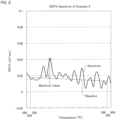
FIG. 2 shows a graph of a differential value of a spectrum obtained by differential thermal analysis of the catalyst in Example 2 versus temperature. -
FIG. 3 shows a graph of a differential value of a spectrum obtained by differential thermal analysis of the catalyst in Comparative Example 1 versus temperature. -
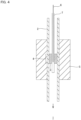
FIG. 4 shows a schematic cross-sectional view of a fixed-bed catalytic reactor in Use Examples and Comparative Use Example. - The hydrochloric acid oxidation catalyst of the present invention is a catalyst for oxidizing hydrochloric acid. The hydrochloric acid oxidation catalyst is hereinafter simply referred to as catalyst.
- The catalyst has a particulate shape. That is, the catalyst is composed of many particles. The particulate shape includes particle shapes and granular shapes. The shape and size of the particles are not limited.
- The catalyst has pores. An average pore diameter (4V/A) determined by a BET method by a nitrogen adsorption method is, for example, 1 nm or more, preferably 5 nm or more, and for example, 100 nm or less, preferably 30 nm or less. When the average pore diameter (4V/A) is the above-described lower limit or more, it is possible to suppress slowing down of diffusion and transfer of reactants and products. When the average pore diameter (4V/A) is the above-described upper limit or less, it is possible to suppress lowering of chances for reactants and products to contact the surface of the catalyst while diffusion is made faster. Details of the BET method by the nitrogen adsorption method are described in Example to be described later.
- This catalyst includes a carrier, and copper, an alkali metal, and a rare earth element (active components).
- The carrier maintains the shape of the catalyst. The carrier has the same average pore diameter as the above-described catalyst. Examples of a material of the carrier include alumina, silica alumina, titania, and zirconia. The carrier preferably contains alumina in view of extending catalyst life. To be specific, examples of such carrier include alumina and silica alumina. The ratio of alumina in the silica alumina is, for example, 1% by mass or more, preferably 5% by mass or more, and 75% by mass or less, preferably 45% by mass or less, more preferably 25% by mass or less.
- If the carrier contains alumina, the catalyst can suppress dissipation (volatilization) of the active components by interaction between the alumina and the active components even though the catalyst is used for a long term. Therefore, the catalyst life can be extended. It is assumed that the dissipation (volatilization) of the above-described active components is due to melting of the active components, which are solid under 23°C and 101325 Pa (normal temperature and normal pressure), at high operating temperatures (including a range of 290 to 400°C). The melting is observed by DDTA to be described later.
- For the material of the carrier, more preferably, alumina is used.
- On the other hand, silica may be not suitable as the material of the carrier in view of extending the above-described catalyst life. If the material of the carrier is silica, the interaction between the silica and the active components is likely to remarkably weaken, and the dissipation (volatilization) of the active components may not be suppressed. Thus, the melting of the above-described active components may be clearly observed by DDTA even at temperatures from 290 to 400°C (see Comparative Example 1 and
FIG. 3 ). - Copper, an alkali metal, and a rare earth element are active components of the catalyst and are dispersed in (carried by) the carrier. The copper, alkali metal, and rare earth element are present in solid state on the surface of the carrier. The copper, alkali metal, and rare earth element, and a combination thereof are described in detail in, for example,
WO 2009/041384 . - Examples of the alkali metal include lithium, sodium, potassium, rubidium, cesium and francium, and preferably, potassium is used.
- Examples of the rare earth element include 17 kinds including scandium, yttrium, and lanthanoid (15 kinds). Preferably, lanthanoid is used, more preferably, praseodymium, neodymium, lanthanum, europium, and samarium are used, further preferably, samarium is used.
- The ratio of each of the copper, alkali metal, and rare earth element in the catalyst is, for example, 1% by mass or more and 25% by mass or less. The ratio of the total amount of the copper, alkali metal, and rare earth element in the catalyst is, for example, 5% by mass or more and 50% by mass or less. The mass ratio of the alkali metal relative to 100 parts by mass of the copper is, for example, 20 parts by mass or more, preferably 30 parts by mass or more, and for example, 200 parts by mass or less, preferably 180 parts by mass or less. The mass ratio of the rare earth element relative to 100 parts by mass of the copper is, for example, 20 parts by mass or more, preferably 30 parts by mass or more, and for example, 350 parts by mass or less, preferably 300 parts by mass or less.
- When the mass ratio of the rare earth element relative to 100 parts by mass of the copper is the above-described upper limit or less, the durability of the catalyst can be improved.
- A differential value of a spectrum obtained by differential thermal analysis of the catalyst is 0.035 µV/sec or less relative to a baseline in the range of 290 to 400°C.
- When the differential value exceeds 0.035 µV/sec, the dissipation (volatilization) of the above-described active components is not suppressed in a long-term use of the catalyst, failing to suppress lowering of the yield of chlorine. In particular, when the catalyst is used in a fixed bed, movement of a hot spot cannot be suppressed due to the long-term use of the catalyst, and as a result, lowering of the yield of chlorine cannot be suppressed.
- As shown in
FIG. 4 , the hot spot is a high temperature point based on the catalytic activity in the hydrochloric acid oxidation reaction in acatalytic region 4 formed in a fixed-bedcatalytic reactor 1 in which a catalyst 3 is provided as a fixed bed. Thecatalytic region 4 is along a flow direction of chlorine and oxygen. - The movement of the hot spot is that the above-described high temperature point moves downstream in the flow direction. The high temperature point is a portion of the highest catalytic activity in the
catalytic region 4. A high temperature point at an initial use of the catalyst is usually located in a generally central portion of thecatalytic region 4 in the flow direction. The above-described movement reduces the catalytic activity in the portion that has been the high temperature point at the initial use of the catalyst due to dissipation (volatilization) of the active components after long-term use of the catalyst or other factors, which leads to decrease of the temperature. Due to the long-term use of the catalyst, the high temperature point gradually shifts from the initial high temperature point to the downstream in the flow direction, and the high temperature point finally reaches the downstream end of thecatalytic region 4 in the flow direction, and then does not move any further, resulting in remarkable reduction of the catalytic activity in the entirecatalytic region 4. Therefore, suppressing the movement of the hot spot means that the remarkable reduction of the catalytic activity in the entirecatalytic region 4 can be suppressed. - When the above-described differential value exceeds 0.035 µV/sec, the spectrum of the differential thermal analysis has a high melting peak. The melting peak is assumed to cause dissipation (volatilization) of the active components, which means remarkable reduction of the catalytic activity of the catalyst.
- In contrast, the differential value is preferably 0.030 µV/sec or less, more preferably 0.025 µV/sec or less, further preferably 0.020 µV/sec or less, particularly preferably 0.015 µV/sec or less. When the differential value is the above-described upper limit or less, the dissipation (volatilization) of the above-described active components is sufficiently suppressed, resulting in securely suppressing lowering of the yield of chlorine. In addition, the movement of the hot spot when the catalyst is used in the fixed bed can be further suppressed, resulting in suppressing remarkable reduction of the catalytic activity.
- The differential thermal analysis is performed under the following measurement conditions.
-
- Reference material: α Alumina
- Atmosphere: Nitrogen (200 mL/min)
- Sample amount: 10 mg
- Rate of temperature increase: 15 °C/sec
- Data sampling time: 2 seconds
- The differential value of the spectrum of the differential thermal analysis of the catalyst is acquired as a DDTA spectrum of the catalyst.
- The baseline is a straight line connecting between the average (unit: µV/sec) of the differential values of the spectrum from 290°C to 300°C, corresponding to 295°C, and the differential value (unit: µV/sec) of the spectrum from 390°C to 400°C, corresponding to 395°C (see
FIGS. 1 to 3 ). - The differential value is a length from the above-described baseline to the differential curve of the spectrum at temperatures from 290 to 400°C.
- In the present invention, the maximum value of the differential values of the differential curve of the spectrum at temperatures from 290 to 400°C from the baseline can also be referred to as 0.035 µV/sec or less.
- More preferably, the spectrum at temperatures from 290 to 400°C includes noise as in Examples 1 and 2 shown in
FIGS. 1 and2 , respectively, but includes no distinct peak as in Comparative Example 1 shown inFIG. 3 . - The maximum value of the above-described differential value is determined according to the following procedures [1] to [3].
- Procedure [1] Acquire a DDTA spectrum by differential thermal analysis of the above-described catalyst.
- Procedure [2] Draw the above-described baseline on the chart based on the DDTA spectrum.
- Procedure [3] Identify the DDTA spectrum that is the longest distance from the baseline, and acquire such distance as a local maximum value (µV/sec).
- Next, a method for producing the catalyst is described.
- First, a carrier and active components (copper, alkali metal, and rare earth element) are prepared.
- The active components are prepared as an active component-containing aqueous solution containing, for example, compounds such as chlorides thereof and oxides thereof. The active component-containing aqueous solution contains acidic water (specifically, aqueous hydrochloric acid), and in the active component-containing aqueous solution, the above-described compounds are dissolved in the acidic water.
- Thereafter, the carrier and the active component-containing aqueous solution are blended, followed by heating and drying. Prior to heating, as necessary, the pressure of the atmosphere can be reduced.
- Then, a particulate catalyst is obtained in which the active components are dispersed in the carrier.
- The catalyst is used, for example, in any of a batch type and a flow type (fixed bed, fluidized bed, and moving bed), preferably in a flow type, more preferably in a fixed bed.
- For example, a fixed-bed reactor is filled with the catalyst.
- To oxidize hydrochloric acid using the catalyst, for example, hydrochloric acid is brought into contact with oxygen in the above-described reactor. When the catalyst is used in a fixed bed, the supply rates of hydrochloric acid and oxygen are not limited. The oxidation of hydrochloric acid produces chlorine. Therefore, in the method for producing chlorine, hydrochloric acid is brought into contact with oxygen in the presence of the hydrochloric acid oxidation catalyst.
- In this manner, hydrochloric acid is oxidized by oxygen to produce chlorine (production of chlorine) and also produce water as byproduct.
- The differential value of the spectrum obtained by the differential thermal analysis of the catalyst under the above-described conditions is 0.035 µV/sec or less relative to the baseline in the range of 290 to 400°C. This means that melting of the active components (copper, alkali metal, and rare earth element) carried by the carrier in the range of 290 to 400°C is suppressed. Therefore, this catalyst can suppress lowering of the yield of chlorine even after long-term use.
- When the average pore diameter of the catalyst is 5 nm or more and 30 nm or less, a reaction field is formed where reactants and products can easily diffuse and transfer, and high chlorine yield can be obtained.
- When the carrier in this catalyst contains alumina, the interaction between the alumina and the active components can suppress dissipation (volatilization) of the active components, so that the catalyst life can be extended.
- In particular, when the catalyst is used in a fixed bed, the movement of the hot spot can be suppressed even after long-term use of the catalyst, and as a result, lowering of the yield of chlorine can be suppressed.
- As necessary, the catalyst can be heated (pretreated and calcined) at high temperatures. Heating is performed under ambient atmosphere or under an oxygen-nitrogen gas mixture atmosphere. The heating temperature is, for example, 200°C or more, preferably 300°C or more, and for example, 600°C or less, preferably 500°C or less. The heating time is, for example, 1 hour or more, preferably 2 hours or more, and for example, 10 hours or less, preferably 5 hours or less.
- Hereinafter, the present invention will be described more in detail with reference to Examples and Comparative Examples, but not limited thereto. The specific numerical values in mixing ratio (content ratio), property value, and parameter used in the following description can be replaced with upper limit values (numerical values defined as "or less" or "below") or lower limit values (numerical values defined as "or more" or "above") of corresponding numerical values in mixing ratio (content ratio), property value, and parameter described in the above-described "DESCRIPTION OF THE EMBODIMENTS." "Parts" and "%" are based on mass unless otherwise specified in the following.
- According to the formulations listed in Table 1, water, active components, and aqueous hydrochloric acid were mixed to prepare an active component-containing aqueous solution.
- Thereafter, the active component-containing aqueous solution was mixed with a spherical carrier made of alumina according to the formulations listed in Table 1. The mixture was then subjected to depressurization, temperature increase, drying, and cooling under the conditions shown in Table 2 to produce a catalyst. The ratios (mass %) of the active components (copper, potassium, and samarium) in the catalyst are shown in Table 3.
- The catalyst was produced in the same manner as in Example 1, except that the ratios of the active components in the active component-containing aqueous solution and the type of the carrier were changed so as to achieve the ratios of the active components listed in Table 3.
- The following items were evaluated for each of the catalysts in Examples 1 and 2 and Comparative Example 1. These results are shown in Table 3.
- The average pore diameter (4V/A) of the catalyst was determined by a BET method by a nitrogen adsorption method. The catalyst was previously calcined in an electric furnace at 200°C for 3 hours under ambient atmosphere, and was then filled into a measuring vessel of a measurement device. The measurement device and measurement conditions are as follows.
-
- Measurement device: BERSORP-MAX (manufactured by MicrotracBEL Corp.)
- Measurement conditions: Pretreatment: 30°C, 1 kPa, 4 hours. Measurement temperature: -196°C
- The differential value of the spectrum obtained by the differential thermal analysis of the catalyst was determined. That is, the DDTA spectrum of the catalyst was acquired. The measurement device and measurement conditions are as follows.
- Measurement device: TG-DTA TG8120 (manufactured by Rigaku Corporation)
-
- Reference material: α Alumina
- Atmosphere: Nitrogen (200 mL/min)
- Sample amount: 10 mg
- Rate of temperature increase: 15 °C/sec
- Data sampling time: 2 seconds
- The DDTA spectrum of the catalyst in Example 1 is shown in
FIG. 1 . The DDTA spectrum of the catalyst in Example 2 is shown inFIG. 2 . The DDTA spectrum of the catalyst in Comparative Example 1 is shown inFIG. 3 . - Each of the catalysts of Examples 1, 2 and Comparative Example 1 was brought into contact with chlorine and oxygen while heating to produce hydrochloric acid.
- In detail, as shown in
FIG. 4 , a straight tube (an example of the reactor) 2 having a diameter of 1.6 cm was filled with 6 mL (apparent volume) of the catalyst 3 to create thecatalytic region 4. The length of the catalytic region 4 (length in the direction in which thestraight tube 2 extended) was 3 cm. In this manner, the fixed-bedcatalytic reactor 1 equipped with thestraight tube 2, the catalyst 3, a thermocouple 6, and asheath tube 7 was produced. The thermocouple 6 can measure the temperature of the catalyst 3. The thermocouple 6 is movable in the up-down direction with respect to thestraight tube 2. Thesheath tube 7 protects the thermocouple 6. Thesheath tube 7 has a bottomed cylindrical shape. Thesheath tube 7 has an outer diameter of 0.4 mm. - In the fixed-bed
catalytic reactor 1, thecatalytic region 4 was disposed in the longitudinal center of thestraight tube 2. - The fixed-bed
catalytic reactor 1 was provided with aheating furnace 5 that accommodated thecatalytic region 4 inside. Theheating furnace 5 is an electric furnace capable of controlling temperature. Theheating furnace 5 is programmed to increase the temperature inside theheating furnace 5 so that when the temperature of the catalyst 3 decreases during use from the initial set temperature at the start of use, the catalyst 3 has the same temperature as the initial set temperature at the start of use. - Hydrochloric acid and oxygen were each flowed through the fixed-bed
catalytic reactor 1 at a rate of 45 mL/min from the upper end portion to the lower end portion of the fixed-bedcatalytic reactor 1. The temperature of theheating furnace 5 was set so that the temperature of the catalyst 3 reached the reaction temperature listed in Table 4. - Then, the yield of chlorine was determined after an elapse of 50 hours and 1500 hours. The yield of chlorine was determined based on the description in
WO 2009/041384 . - The following items were evaluated for Use Examples 1 to 5 and Comparative Use Example 1. The results are shown in Table 4.
- The presence or absence of the movement of the hot spot to the lower side (downstream in the flow direction) and its movement distance were determined by moving the thermocouple 6 in the up-down direction to measure the temperature distribution of the catalyst 3.
- The difference between the heating furnace set temperature for 50 hour-use and that for 1500 hour-use was determined.
- A large difference means a large decrease in catalytic activity after 1500 hours of use.
-
TABLE 1 Formulation of catalyst [pts. mass] Active component-containing aqueous solution Distilled water 36.2 35%HCl 9.7 Sm2O3 3.1 CuCl2▪2H2O 7.2 KCl 3.1 Carrier Alumina 37.0 Silica - -
TABLE 2 Depressurization Room temperature, 0.023 Mpa Temperature increase 90°C, 0.041 Mpa, 1 hr Drying 90°C, 0.023 Mpa, 2 hrs Cooling Room temperature, 0.023 Mpa, 0.5 hrs -
TABLE 3 Carrier Cu (mass %) K (mass %) Sm (mass %) Maximum differential value of spectrum of differential thermal analysis relative to baseline (µV/sec) Average pore diameter (nm) Ex. 1 Alumina 6 3.6 6 0.014 12 Ex. 2 Alumina 5.5 3.3 11 0.025 12 Comp. Ex. 1 Silica 7 4.2 7 0.074 23 -
TABLE 4 Use Example of catalyst as fixed bed Catalyst Supply rate of hydrochloric acid (mL/min) Supply rate of oxygen (mL/min) Reaction temperature (°C) Reaction time (h) Chlorine yield (%) Chlorine yield ratio Hot spot Heating furnace set temperature (°C) Difference in heating furnace set temperature (°C) Moved/ Not moved Movement distance (cm) Use Example 1 Ex. 1 45 45 360 50 51.6 0.99 Not moved 358.5 0.0 Ex. 1 1500 51.0 358.5 Use Example 2 Ex. 1 45 22.5 390 50 51.4 1.01 Not moved 390.5 0.0 Ex. 1 1500 52.1 390.5 Use Example 3 Ex. 1 45 22.5 415 50 65.6 0.98 Not moved 414.9 0.2 Ex. 1 1500 64.0 415.1 Use Example 4 Ex. 2 45 22.5 350 50 55.3 0.99 Not moved 339.5 -1.0 Ex. 2 1500 54.5 338.5 Use Example 5 Ex. 2 45 22.5 390 50 69.7 1.00 Not moved 390.0 -1.0 Ex. 2 1500 69.4 389.0 Comparative Use Example 1 Comp. Ex. 1 90 90 360 50 66.2 0.94 Moved 1.0 343.0 4.5 Comp. Ex. 1 1500 62.5 347.5 - While the illustrative embodiments of the present invention are provided in the above description, such is for illustrative purpose only and it is not to be construed restrictively. Modification and variation of the present invention that will be obvious to those skilled in the art is to be covered by the following claims.
- The hydrochloric acid oxidation catalyst is used in the method for producing chlorine.
-
- 1
- fixed-bed catalytic reactor
- 3
- catalyst
Claims (5)
- A hydrochloric acid oxidation catalyst for oxidizing hydrochloric acid, the catalyst comprisinga carrier; andcopper, an alkali metal, and a rare earth element that are carried by the carrier,wherein a differential value of a spectrum obtained by differential thermal analysis of the hydrochloric acid oxidation catalyst under the following measurement conditions is 0.035 µV/sec or less relative to a baseline in a range of 290 to 400°C.Measurement conditionsReference material: α AluminaAtmosphere: Nitrogen (200 mL/min)Sample amount: 10 mgRate of temperature increase: 15 °C/secData sampling time: 2 seconds
- The hydrochloric acid oxidation catalyst according to claim 1, wherein an average pore diameter (4V/A) determined by a BET method by a nitrogen adsorption method is 5 nm or more and 30 nm or less.
- The hydrochloric acid oxidation catalyst according to claim 1, wherein the carrier contains alumina.
- A method for producing chlorine, wherein hydrochloric acid is brought into contact with oxygen in the presence of the hydrochloric acid oxidation catalyst according to claim 1.
- The method for producing chlorine according to claim 4, wherein the hydrochloric acid oxidation catalyst is used as a fixed-bed catalyst.
Applications Claiming Priority (2)
| Application Number | Priority Date | Filing Date | Title |
|---|---|---|---|
| JP2021144292 | 2021-09-03 | ||
| PCT/JP2022/032411 WO2023032918A1 (en) | 2021-09-03 | 2022-08-29 | Hydrochloric acid oxidation catalyst and method for producing chlorine |
Publications (2)
| Publication Number | Publication Date |
|---|---|
| EP4397407A1 true EP4397407A1 (en) | 2024-07-10 |
| EP4397407A4 EP4397407A4 (en) | 2025-08-06 |
Family
ID=85412769
Family Applications (1)
| Application Number | Title | Priority Date | Filing Date |
|---|---|---|---|
| EP22864500.8A Pending EP4397407A4 (en) | 2021-09-03 | 2022-08-29 | Hydrochloric acid oxidation catalyst and process for producing chlorine |
Country Status (7)
| Country | Link |
|---|---|
| US (1) | US20240359165A1 (en) |
| EP (1) | EP4397407A4 (en) |
| JP (1) | JP7818609B2 (en) |
| KR (1) | KR20240033278A (en) |
| CN (1) | CN117858761A (en) |
| TW (1) | TW202327727A (en) |
| WO (1) | WO2023032918A1 (en) |
Family Cites Families (10)
| Publication number | Priority date | Publication date | Assignee | Title |
|---|---|---|---|---|
| JPS525473B1 (en) * | 1967-06-21 | 1977-02-14 | ||
| JPS5425290A (en) * | 1977-07-28 | 1979-02-26 | Allied Chem | Catalyst for oxychloride hydrogenation and combined oxychloride*fluorination based on copper*calcium*fluoride |
| DE102005040286A1 (en) | 2005-08-25 | 2007-03-01 | Basf Ag | Mechanically stable catalyst based on alpha-alumina |
| EP2198959A4 (en) | 2007-09-27 | 2014-06-04 | Mitsui Chemicals Inc | Catalyst, method for producing the same, and method for producing chlorine using the catalyst |
| CN101357337B (en) * | 2008-09-09 | 2011-12-07 | 南京工业大学 | Hydrogen chloride oxidation catalyst and preparation method thereof |
| CN102341173B (en) * | 2009-03-26 | 2014-05-21 | 三井化学株式会社 | Catalyst for producing chlorine and method for producing chlorine using the catalyst |
| CN101862663A (en) * | 2010-06-02 | 2010-10-20 | 上海氯碱化工股份有限公司 | Catalyst for producing chlorine by catalytic oxidation of hydrogen chloride and preparation method thereof |
| CN102658149A (en) * | 2012-05-10 | 2012-09-12 | 上海氯碱化工股份有限公司 | Copper oxide catalyst for preparing chlorine gas from chlorine hydride by catalytic oxidation, and preparation method and application thereof |
| CN104923239A (en) * | 2015-05-29 | 2015-09-23 | 华东理工大学 | Copper-based catalyst for preparing chlorine gas by catalyzing and oxidizing hydrogen chloride as well as preparation method and application thereof |
| CN110801842A (en) * | 2019-11-26 | 2020-02-18 | 上海氯碱化工股份有限公司 | Catalyst for preparing chlorine gas by catalytic oxidation of hydrogen chloride and preparation method and application thereof |
-
2022
- 2022-08-29 KR KR1020247006002A patent/KR20240033278A/en active Pending
- 2022-08-29 US US18/685,420 patent/US20240359165A1/en active Pending
- 2022-08-29 CN CN202280056838.5A patent/CN117858761A/en active Pending
- 2022-08-29 WO PCT/JP2022/032411 patent/WO2023032918A1/en not_active Ceased
- 2022-08-29 JP JP2023545561A patent/JP7818609B2/en active Active
- 2022-08-29 EP EP22864500.8A patent/EP4397407A4/en active Pending
- 2022-09-02 TW TW111133284A patent/TW202327727A/en unknown
Also Published As
| Publication number | Publication date |
|---|---|
| US20240359165A1 (en) | 2024-10-31 |
| JPWO2023032918A1 (en) | 2023-03-09 |
| TW202327727A (en) | 2023-07-16 |
| JP7818609B2 (en) | 2026-02-20 |
| CN117858761A (en) | 2024-04-09 |
| WO2023032918A1 (en) | 2023-03-09 |
| EP4397407A4 (en) | 2025-08-06 |
| KR20240033278A (en) | 2024-03-12 |
Similar Documents
| Publication | Publication Date | Title |
|---|---|---|
| EP2116300B1 (en) | A method for alcohol production | |
| EP3302751B1 (en) | Porous bodies with enhanced pore architecture | |
| Gurbani et al. | CuO–CeO2 catalysts synthesized by various methods: Comparative study of redox properties | |
| EP1927398A1 (en) | Catalyst for production of ethylene oxide and method for production of ethylene oxide | |
| CN112044434A (en) | Single-atom noble metal/transition metal oxide composite material and preparation method and application thereof | |
| EP3578257A1 (en) | Methanation reaction catalyst, method for producing methanation reaction catalyst, and method for producing methane | |
| Zhou et al. | Ag/Al 2 O 3 for glycerol hydrogenolysis to 1, 2-propanediol: activity, selectivity and deactivation | |
| KR102883858B1 (en) | Method for producing methane and production system | |
| Morales-Anzures et al. | Synthesis by the sol-gel method and characterization of Pt-promoted CuO/TiO2-ZrO2 catalysts for decomposition of 2-propanol | |
| CN106955693B (en) | Alpha-alumina carrier of silver catalyst for ethylene epoxidation as well as preparation and application thereof | |
| CN114929382A (en) | Process for producing a fischer-tropsch synthesis catalyst and fischer-tropsch start-up process | |
| EP3900831A1 (en) | Method for manufacturing ruthenium oxide-supported catalyst for preparing chlorine and catalyst manufactured thereby | |
| JPH022881A (en) | Method of activating cuo/zno/al203 catalyst | |
| KR20110116241A (en) | Chlorine production catalyst and chlorine production method using the catalyst | |
| US20240359165A1 (en) | Hydrochloric acid oxidation catalyst and method for producing chlorine | |
| EP1590081B1 (en) | Method of preparation of non-pyrophoric copper-alumina catalysts | |
| US10676401B2 (en) | Porous bodies with enhanced pore architecture prepared with oxalic acid | |
| CN115364832A (en) | Alpha-alumina carrier and preparation method thereof, silver catalyst for ethylene epoxidation and ethylene oxidation method | |
| WO2007093825A1 (en) | Fischer-tropsch catalyst preparation | |
| CN109821530A (en) | A kind of cobalt-base catalyst and its method for propylene ring oxidation reaction | |
| CN109806865A (en) | Preparation of a kind of gold catalyst and its application in the oxidation reaction of prenol | |
| EP2905260A1 (en) | Method for producing composite oxide and composite oxide catalyst | |
| JPS61293551A (en) | Molded catalyst and its production | |
| KR101925641B1 (en) | Method of producing catalyst used in the production of methacrylic acid and method of producing methacrylic acid | |
| JP4984678B2 (en) | CO oxidation method |
Legal Events
| Date | Code | Title | Description |
|---|---|---|---|
| STAA | Information on the status of an ep patent application or granted ep patent |
Free format text: STATUS: THE INTERNATIONAL PUBLICATION HAS BEEN MADE |
|
| PUAI | Public reference made under article 153(3) epc to a published international application that has entered the european phase |
Free format text: ORIGINAL CODE: 0009012 |
|
| STAA | Information on the status of an ep patent application or granted ep patent |
Free format text: STATUS: REQUEST FOR EXAMINATION WAS MADE |
|
| 17P | Request for examination filed |
Effective date: 20240226 |
|
| AK | Designated contracting states |
Kind code of ref document: A1 Designated state(s): AL AT BE BG CH CY CZ DE DK EE ES FI FR GB GR HR HU IE IS IT LI LT LU LV MC MK MT NL NO PL PT RO RS SE SI SK SM TR |
|
| DAV | Request for validation of the european patent (deleted) | ||
| DAX | Request for extension of the european patent (deleted) | ||
| A4 | Supplementary search report drawn up and despatched |
Effective date: 20250703 |
|
| RIC1 | Information provided on ipc code assigned before grant |
Ipc: B01J 23/83 20060101AFI20250627BHEP Ipc: C01B 7/04 20060101ALI20250627BHEP |