EP4395338A1 - Video bitstream encapsulation method and apparatus, video bitstream decoding method and apparatus, and video bitstream access method and apparatus - Google Patents
Video bitstream encapsulation method and apparatus, video bitstream decoding method and apparatus, and video bitstream access method and apparatus Download PDFInfo
- Publication number
- EP4395338A1 EP4395338A1 EP22889073.7A EP22889073A EP4395338A1 EP 4395338 A1 EP4395338 A1 EP 4395338A1 EP 22889073 A EP22889073 A EP 22889073A EP 4395338 A1 EP4395338 A1 EP 4395338A1
- Authority
- EP
- European Patent Office
- Prior art keywords
- sample
- lrap
- picture
- video bitstream
- library
- Prior art date
- Legal status (The legal status is an assumption and is not a legal conclusion. Google has not performed a legal analysis and makes no representation as to the accuracy of the status listed.)
- Pending
Links
Images




Classifications
-
- H—ELECTRICITY
- H04—ELECTRIC COMMUNICATION TECHNIQUE
- H04N—PICTORIAL COMMUNICATION, e.g. TELEVISION
- H04N21/00—Selective content distribution, e.g. interactive television or video on demand [VOD]
- H04N21/80—Generation or processing of content or additional data by content creator independently of the distribution process; Content per se
- H04N21/85—Assembly of content; Generation of multimedia applications
- H04N21/854—Content authoring
- H04N21/85406—Content authoring involving a specific file format, e.g. MP4 format
-
- H—ELECTRICITY
- H04—ELECTRIC COMMUNICATION TECHNIQUE
- H04N—PICTORIAL COMMUNICATION, e.g. TELEVISION
- H04N21/00—Selective content distribution, e.g. interactive television or video on demand [VOD]
- H04N21/80—Generation or processing of content or additional data by content creator independently of the distribution process; Content per se
- H04N21/83—Generation or processing of protective or descriptive data associated with content; Content structuring
- H04N21/845—Structuring of content, e.g. decomposing content into time segments
- H04N21/8455—Structuring of content, e.g. decomposing content into time segments involving pointers to the content, e.g. pointers to the I-frames of the video stream
-
- H—ELECTRICITY
- H04—ELECTRIC COMMUNICATION TECHNIQUE
- H04N—PICTORIAL COMMUNICATION, e.g. TELEVISION
- H04N21/00—Selective content distribution, e.g. interactive television or video on demand [VOD]
- H04N21/20—Servers specifically adapted for the distribution of content, e.g. VOD servers; Operations thereof
- H04N21/23—Processing of content or additional data; Elementary server operations; Server middleware
- H04N21/234—Processing of video elementary streams, e.g. splicing of video streams or manipulating encoded video stream scene graphs
- H04N21/2343—Processing of video elementary streams, e.g. splicing of video streams or manipulating encoded video stream scene graphs involving reformatting operations of video signals for distribution or compliance with end-user requests or end-user device requirements
-
- H—ELECTRICITY
- H04—ELECTRIC COMMUNICATION TECHNIQUE
- H04N—PICTORIAL COMMUNICATION, e.g. TELEVISION
- H04N19/00—Methods or arrangements for coding, decoding, compressing or decompressing digital video signals
- H04N19/10—Methods or arrangements for coding, decoding, compressing or decompressing digital video signals using adaptive coding
- H04N19/169—Methods or arrangements for coding, decoding, compressing or decompressing digital video signals using adaptive coding characterised by the coding unit, i.e. the structural portion or semantic portion of the video signal being the object or the subject of the adaptive coding
- H04N19/17—Methods or arrangements for coding, decoding, compressing or decompressing digital video signals using adaptive coding characterised by the coding unit, i.e. the structural portion or semantic portion of the video signal being the object or the subject of the adaptive coding the unit being an image region, e.g. an object
- H04N19/172—Methods or arrangements for coding, decoding, compressing or decompressing digital video signals using adaptive coding characterised by the coding unit, i.e. the structural portion or semantic portion of the video signal being the object or the subject of the adaptive coding the unit being an image region, e.g. an object the region being a picture, frame or field
-
- H—ELECTRICITY
- H04—ELECTRIC COMMUNICATION TECHNIQUE
- H04N—PICTORIAL COMMUNICATION, e.g. TELEVISION
- H04N19/00—Methods or arrangements for coding, decoding, compressing or decompressing digital video signals
- H04N19/70—Methods or arrangements for coding, decoding, compressing or decompressing digital video signals characterised by syntax aspects related to video coding, e.g. related to compression standards
-
- H—ELECTRICITY
- H04—ELECTRIC COMMUNICATION TECHNIQUE
- H04N—PICTORIAL COMMUNICATION, e.g. TELEVISION
- H04N21/00—Selective content distribution, e.g. interactive television or video on demand [VOD]
- H04N21/20—Servers specifically adapted for the distribution of content, e.g. VOD servers; Operations thereof
- H04N21/23—Processing of content or additional data; Elementary server operations; Server middleware
- H04N21/235—Processing of additional data, e.g. scrambling of additional data or processing content descriptors
- H04N21/2353—Processing of additional data, e.g. scrambling of additional data or processing content descriptors specifically adapted to content descriptors, e.g. coding, compressing or processing of metadata
-
- H—ELECTRICITY
- H04—ELECTRIC COMMUNICATION TECHNIQUE
- H04N—PICTORIAL COMMUNICATION, e.g. TELEVISION
- H04N21/00—Selective content distribution, e.g. interactive television or video on demand [VOD]
- H04N21/20—Servers specifically adapted for the distribution of content, e.g. VOD servers; Operations thereof
- H04N21/23—Processing of content or additional data; Elementary server operations; Server middleware
- H04N21/236—Assembling of a multiplex stream, e.g. transport stream, by combining a video stream with other content or additional data, e.g. inserting a URL [Uniform Resource Locator] into a video stream, multiplexing software data into a video stream; Remultiplexing of multiplex streams; Insertion of stuffing bits into the multiplex stream, e.g. to obtain a constant bit-rate; Assembling of a packetised elementary stream
- H04N21/23605—Creation or processing of packetized elementary streams [PES]
-
- H—ELECTRICITY
- H04—ELECTRIC COMMUNICATION TECHNIQUE
- H04N—PICTORIAL COMMUNICATION, e.g. TELEVISION
- H04N21/00—Selective content distribution, e.g. interactive television or video on demand [VOD]
- H04N21/40—Client devices specifically adapted for the reception of or interaction with content, e.g. set-top-box [STB]; Operations thereof
- H04N21/43—Processing of content or additional data, e.g. demultiplexing additional data from a digital video stream; Elementary client operations, e.g. monitoring of home network or synchronising decoder's clock; Client middleware
- H04N21/44—Processing of video elementary streams, e.g. splicing a video clip retrieved from local storage with an incoming video stream or rendering scenes according to encoded video stream scene graphs
- H04N21/44008—Processing of video elementary streams, e.g. splicing a video clip retrieved from local storage with an incoming video stream or rendering scenes according to encoded video stream scene graphs involving operations for analysing video streams, e.g. detecting features or characteristics in the video stream
-
- H—ELECTRICITY
- H04—ELECTRIC COMMUNICATION TECHNIQUE
- H04N—PICTORIAL COMMUNICATION, e.g. TELEVISION
- H04N21/00—Selective content distribution, e.g. interactive television or video on demand [VOD]
- H04N21/40—Client devices specifically adapted for the reception of or interaction with content, e.g. set-top-box [STB]; Operations thereof
- H04N21/43—Processing of content or additional data, e.g. demultiplexing additional data from a digital video stream; Elementary client operations, e.g. monitoring of home network or synchronising decoder's clock; Client middleware
- H04N21/44—Processing of video elementary streams, e.g. splicing a video clip retrieved from local storage with an incoming video stream or rendering scenes according to encoded video stream scene graphs
- H04N21/4402—Processing of video elementary streams, e.g. splicing a video clip retrieved from local storage with an incoming video stream or rendering scenes according to encoded video stream scene graphs involving reformatting operations of video signals for household redistribution, storage or real-time display
-
- H—ELECTRICITY
- H04—ELECTRIC COMMUNICATION TECHNIQUE
- H04N—PICTORIAL COMMUNICATION, e.g. TELEVISION
- H04N21/00—Selective content distribution, e.g. interactive television or video on demand [VOD]
- H04N21/80—Generation or processing of content or additional data by content creator independently of the distribution process; Content per se
- H04N21/83—Generation or processing of protective or descriptive data associated with content; Content structuring
- H04N21/845—Structuring of content, e.g. decomposing content into time segments
- H04N21/8451—Structuring of content, e.g. decomposing content into time segments using Advanced Video Coding [AVC]
Definitions
- Embodiments of the present disclosure relate to the field of communications, and in particular, to a video bitstream encapsulation method and apparatus, a video bitstream decoding method and apparatus, and a video bitstream access method and apparatus.
- a traditional video codec is a hybrid encoding framework technology based on block division and using temporal prediction and spatial prediction.
- the video codec uses intra-frame (I) prediction from a current picture to achieve spatial prediction, and uses block-level inter-frame (P) or bi-directional inter-frame (B) prediction to achieve temporal prediction.
- I intra-frame
- P block-level inter-frame
- B bi-directional inter-frame
- an intra-frame (I) encoding block has a much higher encoding cost than an inter-frame (P) encoding block
- the inter-frame (P) encoding block has a higher encoding cost than a bi-directional inter-frame (B) encoding block.
- FIG. 1 is a schematic diagram of an IRAP in the related art. As shown in Fig. 1 , an IRAP picture can provide an access point for a video bitstream, as all pictures following the IRAP picture according to the decoding and display order can be correctly decoded.
- IRAP Intra Random Access Point
- the video bitstream random access function provided by the IRAP picture is costly as the encoding cost of an intra-frame encoding I picture and the number of bits occupied by the intra-frame encoding I picture are typically much higher compared to those for the inter-frame encoding P picture or the bi-directional intra-frame encoding B picture.
- the Audio Video coding Standard Workgroup of China (AVS) workgroup introduces a large-span video encoding technology based on a library picture and a reference library picture (RL picture) in the new-generation video encoding standard (e.g., AVS3 video encoding).
- the library picture is a long-term reference picture having temporal correlation across random access points in AVS3 video encoding.
- the RL picture is a P picture or a B picture which only uses the library picture as a reference picture for inter-frame prediction in the AVS3 video encoding.
- Relevant experiments have proven that using a library picture as a reference picture for inter-frame prediction or bi-directional inter-frame prediction can greatly increase the video encoding efficiency in various application scenarios such as video monitoring and video conference.
- Embodiments of the present disclosure provide a video bitstream encapsulation method and apparatus, a video bitstream decoding method and apparatus, and a video bitstream access method and apparatus, which may at least solve the problems in the related art that a video encoding manner using a library picture as a reference picture cannot allow for efficient accessing and processing of a video bitstream containing a reference library picture sample and the processing is complex.
- a video bitstream encapsulation method including:
- a video bitstream decoding method including:
- a video bitstream accessing method including:
- a video bitstream encapsulation apparatus including:
- a video bitstream decoding apparatus including:
- a video bitstream access apparatus including:
- an electronic apparatus including a memory and a processor; wherein the memory stores a computer program, and the processor is configured to run the computer program to execute the operations in any one of the method embodiments above.
- the information of the LRAP sample is directly encapsulated into the media container file, so as to facilitate identification of the LRAP sample which can serve as a random access point and a library picture sample referred to by the LRAP sample, thereby reducing the processing complexity while satisfying the compression efficiency and avoiding waste of transmission bandwidth.
- Fig. 2 is a block diagram of the hardware structure of a mobile terminal for implementing a video bitstream encapsulation method according to the embodiments of the present disclosure.
- the mobile terminal may include: one or more ( Fig.
- RL [i,2] As shown in Fig. 4 , another RL picture exists in the i-th video sequence of the main stream, and is marked as RL [i,2] , and RL [i,2] uses only a library picture as a reference picture. If reference pictures of all pictures following the RL [i,2] picture in a decoding order define the following range: RL [i,2] picture, pictures following the RL [i,2] picture in a display order, and library pictures referenced by the RL [i,2] picture, and all referenced library pictures are available, then all pictures following the RL [i,2] picture in a decoding order can be correctly decoded.
- RL [i,4] uses only a library picture as a reference picture. If there are some pictures of which the decoding order and display order are both after the RL [i,4] picture, for example, picture P [i,4] in Fig. 6 , if the picture P [i,4] refers to pictures of which the decoding order or display order is before the RL [i,4] picture, then the picture P [i,4] cannot be correctly decoded starting from the RL [i,4] picture, and video bitstream random access cannot be executed on the RL [i,4] picture. Therefore, the RL [i,4] picture is not an LRAP picture in the video bitstream.
- sampleGroupGroupBox in an ISO base media file format indicates a sample group to which a sample belongs
- sampleGroupDescriptionBox provides a relevant description of the sample group
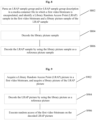
- Fig. 8 is a flowchart of a video bitstream decoding method according to some exemplary embodiments of the present disclosure. As shown in Fig. 8 , the flow includes the following operations S802 to S806.
- an LRAP sample group and/or LRAP sample group description are parsed in a media container file in which a first video bitstream is encapsulated, and an LRAP sample in the first video bitstream and a library picture sample of the LRAP sample are identified.
- the operation that an LRAP picture in a first video bitstream is acquired may include: a first segment of encoded video data of the first video bitstream is received, wherein the first segment contains at least one LRAP picture; and/or in operation S902, the operation that a library picture of the LRAP picture is acquired may include: a second segment of encoded video data of a second video bitstream is received, wherein the second segment contains the library picture; or a third segment of encoded video data of the first video bitstream is received, wherein the third segment contains the library picture.
- random access of the first video bitstream is executed on the decoded LRAP picture.
- the method may further include: at least one non-random access point picture, which is subsequent to the LRAP picture in a decoding order and display order, in the first video bitstream is decoded, wherein the at least one non-random access point picture does not use any picture preceding the LRAP picture in the decoding order or display order as a reference picture, thereby facilitating implementing of random access.
- An LRAP segment index data box indicates that an LRAP exists in a subsegment referred to thereby, and satisfies: if a media stream (track fragment) referenced in the subsegment contains an LRAP, then the subsegment contains the LRAP and starts with the LRAP.
- LRAP samples (LRAP_type 1, 2, or 3) in the subsegment are marked as members of a sample group of an 'lrap' group type.
- Dynamic Adaptive Streaming over HTTP supports different media formats such as audio, video and text, and can provide high-quality streaming services with various code rates, frame rates and resolutions.
- Media Presentation Description contains metadata required for a DASH client providing a streaming service TO a user, and is divided into multiple layers, including Period, AdaptationSet, Representation and Segment, so as to cover different terminal playback capabilities and network bandwidth requirements.
- Index Segments define syntax and semantics of resources associated with HTTP-URL in the Media Presentation Description (MPD). Index Segments are composed of a series of data boxes in an ISO base media file format, and are used for providing index information of Media Segments. An index segment may be associated with a single media segment, or may be associated with all media segments in a Representation.
- one media segment contains N consecutive subsegments, and each subsegment is indexed by a segment index data box of 'lidx' type.
- the 'lidx' data box indicates whether the referenced subsegment starts with an LRAP, and the LRAP_type of the LRAP in the subsegment.
- LRAP random access multiple user operations may trigger a random access request for a video bitstream.
- channel switching will trigger a random access operation for video bitstreams in another channel.
- special effect playback such as drag playback and fast forward/backward will trigger a random access operation for video bitstreams in the current Representation.
- a code rate adaptive switching will trigger a random access operation for video bitstreams in another Representation.
- An LRAP picture of this embodiment is introduced into the video bitstream and a random access operation is executed on this basis; and compared with an intra-frame encoded random access point (IRAP) picture, a random access operation may be achieved at a lower encoding cost.
- IRAP intra-frame encoded random access point
- a video bitstream random access request typically indicates a desired position (time) in a video bitstream.
- an associated LRAP picture in the video bitstream random access is an LRAP picture that is closest in time and precedes the desired position or appears at the desired position.
- an associated LRAP sample in the video bitstream random access and a corresponding library picture sample can be positioned.
- an associated segment in the video bitstream random access can be positioned, and the segment contains at least one associated LRAP picture in the video bitstream random access.
- an associated subsegment in the video bitstream random access refers to a subsegment starting with the LRAP picture.
- An LRAP picture is an LRAP picture that is closest in time and precedes the desired position or appears at the desired position.
- an associated subsegment in the video bitstream random access can be positioned, and the subsegment contains an LRAP picture in the video bitstream random access.
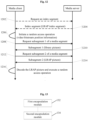
- Fig. 11 is a flowchart I of random access based on an LRAP picture according to the embodiments of the present disclosure. As shown in Fig. 11 , the flow includes the following operations S1102 to S1116.
- a media client for example, a DASH client
- the server returns an index segment to the client.
- the index segment consists of a series of LRAP segment index data boxes (LRAPSegmentIndexBox), and indicates whether an LRAP picture exists in subsegments to which the media segments refer, and indicates a random access point type (LRAP_type) of the LRAP picture.
- LRAPSegmentIndexBox LRAP segment index data boxes
- LRAP_type random access point type
- the client receives a video bitstream random access request initiated by a user. According to the request, the client determines a desired position in the video bitstream. In some exemplary implementations, by looking up LRAP segment indexes provided by the index segment, an associated segment in the video bitstream random access is positioned, and the segment contains at least one associated LRAP picture in the video bitstream random access.
- a library picture corresponding to an associated LRAP in the video bitstream random access can be positioned.
- a library picture sample corresponding to an associated LRAP sample in the video bitstream random access can be positioned.
- the client requests from the server to acquire a media segment of a library picture corresponding to an associated LRAP picture in the video bitstream random access.
- the client requests from the server to acquire media segments in the same Representation, that is, the library picture and the LRAP picture are encoded in the same video bitstream.
- the client requests from the server to acquire the associated media segment in the video bitstream random access.
- the server returns a media segment to the client, wherein the segment contains at least one associated LRAP picture in the video bitstream random access.
- the client decodes the LRAP picture by using the library picture as a unique reference picture, and executes a random access operation on the decoded LRAP picture.
- Fig. 12 is a flowchart II of random access based on an LRAP picture according to the embodiments of the present disclosure. As shown in Fig. 12 , the flow includes the following operations S1202 to S1216.
- a media client for example, a DASH client
- the client receives a video bitstream random access request initiated by a user. According to the request, the client determines a desired position in the video bitstream. In some exemplary implementations, by looking up LRAP segment indexes provided by the index segment, an associated segment and subsegments thereof in the video bitstream random access are positioned, and the subsegment starts with an associated LRAP picture in the video bitstream random access.
- a library picture corresponding to an associated LRAP in the video bitstream random access can be positioned.
- a library picture sample corresponding to an associated LRAP sample in the video bitstream random access can be positioned.
- an associated segment and subsegments thereof in the video bitstream random access are positioned, and the subsegment contains a library picture corresponding to an associated LRAP picture in the video bitstream random access.
- the server returns a subsegment to the client, wherein the subsegment contains a library picture corresponding to an associated LRAP picture in the video bitstream random access.
- the client requests from the server to acquire the associated subsegment in the video bitstream random access.
- the server returns a subsegment to the client, wherein the subsegment starts with an associated LRAP picture in the video bitstream random access.
- the acquisition module 152 is further configured to:
Landscapes
- Engineering & Computer Science (AREA)
- Multimedia (AREA)
- Signal Processing (AREA)
- Library & Information Science (AREA)
- Computer Security & Cryptography (AREA)
- Compression Or Coding Systems Of Tv Signals (AREA)
- Two-Way Televisions, Distribution Of Moving Picture Or The Like (AREA)
Abstract
Description
- The present disclosure is based on and claims priority to Chinese Patent Application No.
CN202111309701.X filed on November 6, 2021 - Embodiments of the present disclosure relate to the field of communications, and in particular, to a video bitstream encapsulation method and apparatus, a video bitstream decoding method and apparatus, and a video bitstream access method and apparatus.
- A traditional video codec is a hybrid encoding framework technology based on block division and using temporal prediction and spatial prediction. The video codec uses intra-frame (I) prediction from a current picture to achieve spatial prediction, and uses block-level inter-frame (P) or bi-directional inter-frame (B) prediction to achieve temporal prediction. Generally, an intra-frame (I) encoding block has a much higher encoding cost than an inter-frame (P) encoding block, and the inter-frame (P) encoding block has a higher encoding cost than a bi-directional inter-frame (B) encoding block.
- A picture consisting of only intra-frame encoding blocks is referred to as an intra-frame encoded picture, i.e., an I picture. An Intra Random Access Point (IRAP) picture is an I picture, and it is ensured that pictures following the IRAP picture according to a decoding order and a display order do not depend on any picture prior to the IRAP picture in the decoding order.
Fig. 1 is a schematic diagram of an IRAP in the related art. As shown inFig. 1 , an IRAP picture can provide an access point for a video bitstream, as all pictures following the IRAP picture according to the decoding and display order can be correctly decoded. However, the video bitstream random access function provided by the IRAP picture is costly as the encoding cost of an intra-frame encoding I picture and the number of bits occupied by the intra-frame encoding I picture are typically much higher compared to those for the inter-frame encoding P picture or the bi-directional intra-frame encoding B picture. - The Audio Video coding Standard Workgroup of China (AVS) workgroup introduces a large-span video encoding technology based on a library picture and a reference library picture (RL picture) in the new-generation video encoding standard (e.g., AVS3 video encoding). The library picture is a long-term reference picture having temporal correlation across random access points in AVS3 video encoding. The RL picture is a P picture or a B picture which only uses the library picture as a reference picture for inter-frame prediction in the AVS3 video encoding. Relevant experiments have proven that using a library picture as a reference picture for inter-frame prediction or bi-directional inter-frame prediction can greatly increase the video encoding efficiency in various application scenarios such as video monitoring and video conference.
- Aiming at the problems in the related art that a video encoding manner using a library picture as a reference picture cannot allow for efficient accessing and processing of a video bitstream containing a reference picture sample and the processing is complex, no solution has been proposed.
- Embodiments of the present disclosure provide a video bitstream encapsulation method and apparatus, a video bitstream decoding method and apparatus, and a video bitstream access method and apparatus, which may at least solve the problems in the related art that a video encoding manner using a library picture as a reference picture cannot allow for efficient accessing and processing of a video bitstream containing a reference library picture sample and the processing is complex.
- According to some embodiments of the present disclosure, a video bitstream encapsulation method is provided, including:
- encapsulating information of a Library Random Access Point (LRAP) sample in a first video bitstream into a media container file in which the first video bitstream is encapsulated; and
- encapsulating information of a library picture sample of the LRAP sample into the media container file, wherein the library picture sample is a reference picture sample of the LRAP sample.
- According to some other embodiments of the present disclosure, a video bitstream decoding method is also provided, including:
- identifying, in a media container file in which a first video bitstream is encapsulated, a Library Random Access Point (LRAP) sample in the first video bitstream;
- identifying, in the media container file, a library picture sample of the LRAP sample;
- decoding the library picture sample; and
- decoding the LRAP sample by using the library picture sample as a reference picture sample.
- According to some other embodiments of the present disclosure, a video bitstream accessing method is also provided, including:
- acquiring a Library Random Access Point (LRAP) picture in a first video bitstream, and acquiring a library picture of the LRAP picture;
- decoding the LRAP picture by using the library picture as a reference picture; and
- executing random access of the first video bitstream on the decoded LRAP picture.
- According to some other embodiments of the present disclosure, a video bitstream encapsulation apparatus is also provided, including:
- a first encapsulation module, configured to encapsulate information of a Library Random Access Point (LRAP) sample in a first video bitstream into a media container file in which the first video bitstream is encapsulated; and
- a second encapsulation module, configured to encapsulate information of a library picture sample of the LRAP sample into the media container file, wherein the library picture sample is a reference picture sample of the LRAP sample.
- According to some other embodiments of the present disclosure, a video bitstream decoding apparatus is also provided, including:
- a first identification module, configured to identify, in a media container file in which a first video bitstream is encapsulated, a Library Random Access Point (LRAP) sample in the first video bitstream;
- a second identification module, configured to identify, in the media container file, a library picture sample of the LRAP sample;
- a first decoding module, configured to decode the library picture sample; and
- a second decoding module, configured to decode the LRAP sample by using the library picture sample as a reference picture sample.
- According to some other embodiments of the present disclosure, a video bitstream access apparatus is also provided, including:
- an acquisition module, configured to acquire a Library Random Access Point (LRAP) picture in a first video bitstream, and acquire a library picture of the LRAP picture;
- a third decoding module, configured to decode the LRAP picture by using the library picture as a reference picture; and
- an execution module, configured to execute random access of the first video bitstream on the decoded LRAP picture.
- According to still some other embodiments of the present disclosure, further provided is an electronic apparatus, including a memory and a processor; wherein the memory stores a computer program, and the processor is configured to run the computer program to execute the operations in any one of the method embodiments above.
- In the embodiments of the present disclosure, information of an LRAP sample in a first video bitstream is encapsulated into a media container file in which the first video bitstream is encapsulated; and information of a library picture sample of the LRAP sample is encapsulated into the media container file, wherein the library picture sample is a reference picture sample of the LRAP sample. The technical solution can solve the problems in the related art that a video encoding manner using a library picture as a reference picture cannot allow for efficient accessing and processing of a video bitstream containing a reference library picture sample and the processing is complex. The information of the LRAP sample is directly encapsulated into the media container file, so as to facilitate identification of the LRAP sample which can serve as a random access point and a library picture sample referred to by the LRAP sample, thereby reducing the processing complexity while satisfying the compression efficiency and avoiding waste of transmission bandwidth.
-
-
Fig. 1 is a schematic diagram of an IRAP in the related art; -
Fig. 2 is a block diagram of the hardware structure of a mobile terminal for implementing a video bitstream encapsulation method according to the embodiments of the present disclosure; -
Fig. 3 is a flowchart of a video bitstream encapsulation method according to the embodiments of the present disclosure; -
Fig. 4 is a schematic diagram of an LRAP according to the embodiments of the present disclosure; -
Fig. 5 is a flowchart of a media container file encapsulation method according to some exemplary embodiments of the present disclosure; -
Fig. 6 is a schematic diagram of an LRAP sample group and LRAP sample group description according to the embodiments of the present disclosure; -
Fig. 7 is a flowchart of a video bitstream decoding method according to the embodiments of the present disclosure; -
Fig. 8 is a flowchart of a video bitstream decoding method according to some exemplary embodiments of the present disclosure; -
Fig. 9 is a flowchart of a video bitstream access method according to the embodiments of the present disclosure; -
Fig. 10 is a schematic diagram of LRAP index segments according to the embodiments of the present disclosure; -
Fig. 11 is a flowchart I of random access based on an LRAP picture according to the embodiments of the present disclosure; -
Fig. 12 is a flowchart II of random access based on an LRAP picture according to the embodiments of the present disclosure; -
Fig. 13 is a block diagram of a video bitstream encapsulation apparatus according to the embodiments of the present disclosure; -
Fig. 14 is a block diagram of a video bitstream decoding apparatus according to the embodiments of the present disclosure; and -
Fig. 15 is a block diagram of a video bitstream access apparatus according to the embodiments of the present disclosure. - Hereinafter, embodiments of the present disclosure are described in detail with reference to the accompanying drawings and in conjunction with the embodiments.
- It should be noted that the terms "first", "second" etc. in the description, claims, and accompanying drawings of the present disclosure are used to distinguish similar objects, and are not necessarily used to describe a specific sequence or order.
- The method embodiments provided in the embodiments of the present disclosure can be executed in a mobile terminal, a computer terminal or a similar computing apparatus. Taking the method embodiments being executed on a mobile terminal as an example,
Fig. 2 is a block diagram of the hardware structure of a mobile terminal for implementing a video bitstream encapsulation method according to the embodiments of the present disclosure. As shown inFig. 2 , the mobile terminal may include: one or more (Fig. 2 shows only one) processors 102 (theprocessors 102 may include, but not limited to processing apparatus such as a microprocessor, MCU or a programmable logic device, FPGA); and amemory 104 for storing data; wherein the mobile terminal can further include atransmission device 106 and an input/output device 108 for communication functions. A person skilled in the art would understand that the structure as shown inFig. 2 is merely exemplary, and does not limit the structure of the mobile terminal. For example, the mobile terminal may also include more or fewer components than those shown inFig. 2 , or have different configuration from that shown inFig. 2 . - The
memory 104 may be used for storing a computer program, for example, a software program and module of application software, such as a computer program corresponding to the video bitstream encapsulation method in embodiments of the present disclosure; and theprocessor 102 executes various functional applications and service chain address pool slice processing by running the computer program stored in thememory 104, i.e., implementing the described method. Thememory 104 may include a high-speed random access memory, and may also include a non-transitory memory, such as one or more magnetic storage apparatuses, flash memories or other non-transitory solid-state memories. In some examples, thememory 104 may further include memories remotely arranged with respect to theprocessors 102, and these remote memories may be connected to the mobile terminal via a network. Examples of the network include, but are not limited to the Internet, an intranet, a local area network, a mobile communication network and combinations thereof. - The
transmission apparatus 106 is used to receive or send data via a network. Specific examples of the network may include a wireless network provided by a communication provider of the mobile terminal. In one example, thetransmission apparatus 106 includes a network adapter (e.g., a Network Interface Controller, short as NIC) which may be connected to other network devices by means of a base station, thereby being able to communicate with the Internet. In one example, thetransmission apparatus 106 may be a Radio Frequency (RF) module which is configured to communicate with the Internet in a wireless manner. - The present embodiment provides a video bitstream encapsulation method running on the mobile terminal or a network architecture.
Fig. 3 is a flowchart of a video bitstream encapsulation method according to the embodiments of the present disclosure. As shown inFig. 3 , the flow includes the following operations S302 to S304. - In operation S302, information of an LRAP sample in a first video bitstream is encapsulated into a media container file in which the first video bitstream is encapsulated; and
- In operation S304, information of a library picture sample of the LRAP sample is encapsulated into the media container file, wherein the library picture sample is a reference picture sample of the LRAP sample.
- By the operations S302 and S304 above, the problems in the related art that a video encoding manner using a library picture as a reference picture cannot allow for efficient accessing and processing of a video bitstream containing a reference picture sample and the processing is complex, can be solved. The information of the LRAP sample is directly encapsulated into the media container file, so as to facilitate identification of the LRAP sample which can serve as a random access point and a library picture sample referred to by the LRAP sample, thereby reducing the processing complexity while satisfying the compression efficiency and avoiding waste of transmission bandwidth.
- In some embodiments, the media container file includes an LRAP sample group and/or LRAP sample group description, wherein the LRAP sample group and/or the LRAP sample group description contain the information of the LRAP sample in the first video bitstream; or the media container file includes a sync sample data box, wherein the sync sample data box contains the information of the LRAP sample in the first video bitstream; or the media container file includes a Stream Access Point (SAP) sample group, wherein the SAP sample group contains the information of the LRAP sample in the first video bitstream; or the media container file includes a segment index data box, wherein the segment index data box indicates information of the LRAP sample in the first video bitstream contained in a segment of encoded video data of the first video bitstream.
- In some other embodiments, the media container file includes an LRAP sample group and/or LRAP sample group description, wherein the LRAP sample group and/or the LRAP sample group description contain the information of the library picture sample of the LRAP sample; or the media container file includes a sync sample data box, wherein the sync sample data box contains the information of the library picture sample of the LRAP sample; or the media container file includes a Stream Access Point (SAP) sample group, wherein the SAP sample group contains the information of the library picture sample of the LRAP sample; or the media container file includes a segment index data box, wherein the segment index data box indicates information of the library picture sample of the LRAP sample contained in a segment of encoded video data of the first video bitstream.
- In some exemplary embodiments, a second video bitstream may also be encapsulated into the media container file, wherein the second video bitstream contains the library picture sample of the LRAP sample.
- In some embodiments, the information of the LRAP sample includes at least one of: an index of the LRAP sample, a stream access point type of the LRAP sample, a quantity of library picture samples of the LRAP sample, and a serial number of each library picture sample of the LRAP sample.
- In some embodiments, the information of the library picture sample includes at least one of: a track identifier corresponding to the library picture sample and a serial number of the library picture sample.
- The video bitstream in this embodiment is a binary data stream formed by encoded pictures. A video sequence is a top-level syntax structure of the video bitstream. The video sequence starts from a sequence header, and a sequence end code or a video editing code indicates the end of the video sequence. The sequence header may appear repeatedly in the bitstream, and therefore is also referred to as a repeated sequence header. Each sequence header is followed by one or more encoded pictures, and there is a picture header prior to each picture. The encoded pictures are arranged in the bitstream according to a bitstream order, and the bitstream order should be the same as a decoding order. The decoding order may be different from a display order.
- A "library stream flag" (library_stream_flag) in the sequence header is used to indicate the elementary stream type of a video encoding bitstream. The value of "library stream flag" being '0' indicates that the current bitstream is a main stream, wherein the main stream is a bitstream that can be decoded with reference to library pictures provided by bitstreams other than said bitstream. The value of "library stream flag" being '1' indicates that the current bitstream is a library stream, wherein the library stream is a bitstream only containing a library picture. The library picture may be referred to by pictures in other bitstreams, but is not used for display output.
- A "library picture enable flag" (library _picture_enable_flag) in the sequence header is used for indicating whether there is an inter-frame prediction picture using the library picture as a reference picture in the video sequence of the main stream. The value of "library picture enable flag" being '1' indicates that an inter-frame prediction picture using the library picture as a reference picture may exist in the video sequence. The value of "library picture enable flag" being '0' indicates that an inter-frame prediction picture using the library picture as a reference picture should not exist in the video sequence.
- In the sequence header or the picture header, "library picture index flag" (library_index_flag[list][rpls][i]) indicates whether the reference picture in a reference picture queue is a library picture, and "referenced library picture index" (referenced_library_picture_index[list][rpls][i]) indicates a library picture index of a library picture serving as the reference picture.
- If an inter-frame prediction picture (a P picture or a B picture) using the library picture as a reference picture exists in the video sequence, and the reference picture queue of the inter-frame prediction picture only has a library picture, then the inter-frame prediction picture is a reference library (RL) picture that only uses the library picture as a reference picture for inter-frame prediction decoding.
- A "random access decodable flag" (random_access_decodable_flag) in an inter-frame prediction picture header indicates whether a current picture only refers to a picture of which a decoding order is after a sequence header corresponding to the current picture and the value of random_access_decodable_flag is '1'. The corresponding sequence header is a closest sequence header of which the decoding order is before the current picture. If the value of RandomAccessDecodableFlag of the current picture is 0, then the current picture may not be correctly decoded when random access occurs in the corresponding sequence header.
- A reference library (RL) picture which satisfies the following characteristic is defined as an LRAP picture. That is, if all library pictures serving as reference pictures can be obtained, all pictures subsequent to the LRAP picture can be correctly decoded according to a decoding order and a display order.
- The LRAP picture is a temporal prediction picture only referring to the library picture. The LRAP picture may be encoded as an inter-frame prediction P picture, and may also be decoded as a bi-directional inter-frame prediction B picture. However, unlike conventional temporal prediction P pictures or B pictures, the LRAP picture may constitute a Random Access Point (RAP) in a video bitstream.
- The LRAP picture should ensure that all pictures following this LRAP picture according to the decoding and display order will not refer to any picture before the LRAP picture according to the decoding and display order.
- When a video bitstream random access operation is executed on the LRAP picture, library pictures in association with the LRAP picture need to be first decoded and used for reference, but no output is displayed. When the random access operation is executed, the LRAP picture and a library picture associated with the LRAP picture are accessed, which can ensure that the LRAP picture pictures subsequent to the LRAP picture according to a display order may be correctly decoded.
- The LRAP picture has a library random access point type (LRAP_Type), defined as follows.
- LRAP_type is a non-negative integer for representing a stream access point type (SAP_type) corresponding to the LRAP picture if the LRAP picture does not rely on a library picture. When the value of LRAP_type is in the range of 1 to 3, other type values are reserved.
- The Stream Access Point (SAP) type depends on correctly-decodable pictures subsequent to the LRAP picture in a decoding order, and arrangement relationship of the pictures in a display order. The stream access point type SAP_type is illustrated as follows:
- type 1: corresponding to a "closed GoP random access point", which indicates that all pictures subsequent to the LRAP picture in a decoding order can be correctly decoded; and
- type 2: a "closed GoP random access point", which indicates that all pictures subsequent to the LRAP picture in a decoding order can be correctly decoded. Moreover, the first picture in a video sequence decoding order starting from the LRAP picture is not the first picture in a display order.
- Type 3: "Open GoP random access point", indicating that there are some pictures, which follow the LRAP picture in a decoding order and precede the LRAP picture in a display order, that cannot be correctly decoded.
- In some exemplary embodiments, an elementary stream defined in a video bitstream includes:
- a main stream, which is a video bitstream which can be decoded and output with reference to library pictures provided by streams other than said stream; and
- a library stream, which only contains video bits of a library picture. The library picture may be referred to by pictures in other streams, but not for display output.
-
Fig. 4 is a schematic diagram of an LRAP according to the embodiments of the present disclosure. As shown inFig. 4 , a video sequence starts from a sequence header followed by one or more successive encoded pictures. A video sequence of the library stream can only include library pictures. A video sequence of the main stream may include: P pictures, B pictures, and RL pictures. The P pictures may include library pictures, and a plurality of (past) reference pictures that precede the current picture in a display order. The B pictures may include library pictures, a plurality of (past) reference pictures preceding the current picture in a display order, and a plurality of (future) reference pictures following the current picture in a display order. The RL picture can only include a library picture as a reference picture. - As shown in
Fig. 4 , a first decoded picture after a sequence header of an i-th video sequence in the main stream is an RL picture and is marked as RL[i,1], and RL[i,1] uses only a library picture as a reference picture. If reference pictures of all pictures following the RL[i,1] picture in a decoding order define the following range: RL[i,1] picture, pictures following the RL[i,1] picture in a display order, and library pictures referenced by the RL[i,1] picture, and all referenced library pictures are available, then all pictures following the RL[i,1] picture in a decoding order can be correctly decoded. Therefore, the RL[i,1] picture is an LRAP picture of "LRAP_type=1" in the video bitstream. - As shown in
Fig. 4 , another RL picture exists in the i-th video sequence of the main stream, and is marked as RL[i,2], and RL[i,2] uses only a library picture as a reference picture. If reference pictures of all pictures following the RL[i,2] picture in a decoding order define the following range: RL[i,2] picture, pictures following the RL[i,2] picture in a display order, and library pictures referenced by the RL[i,2] picture, and all referenced library pictures are available, then all pictures following the RL[i,2] picture in a decoding order can be correctly decoded. Moreover, if the RL[i,2] picture is not a first picture in the video sequence starting from the RL[i,2] picture in a display order (e.g. the display order of picture P[i,2] is before the RL[i,2] picture inFig. 6 ), then the RL[i,1] picture is an LRAP picture of "LRAP_type = 2" in the video bitstream. - As shown in
Fig. 4 , another RL picture exists in the i-th video sequence of the main stream, and is marked as RL[i,3], and RL[i,3] uses only a library picture as a reference picture. If there are some pictures of which the decoding order is after the RL[i,3] picture and the display order is before the RL[i,3] picture, such as picture P[i,3] inFig. 4 , if the picture P[i,3] refers to pictures of which the decoding order or display order is before the RL[i,3] picture, then the picture P[i,3] cannot be correctly decoded when the RL[i,3] picture executes video bitstream random access. Therefore, the RL[i,3] picture is an LRAP picture of "LRAP_type=3" in the video bitstream. - As shown in
Fig. 4 , another RL picture exists in the i-th video sequence of the main stream, and is marked as RL[i,4], and RL[i,4] uses only a library picture as a reference picture. If there are some pictures of which the decoding order and display order are both after the RL[i,4] picture, for example, picture P[i,4] inFig. 6 , if the picture P[i,4] refers to pictures of which the decoding order or display order is before the RL[i,4] picture, then the picture P[i,4] cannot be correctly decoded starting from the RL[i,4] picture, and video bitstream random access cannot be executed on the RL[i,4] picture. Therefore, the RL[i,4] picture is not an LRAP picture in the video bitstream. - The ISO base media file format defines a general structure of a time-based media container file (such as video and audio), and may serve as a basis for other media file formats such as MPEG-4 Part 14 container format (MP4) and 3GPP file format (3GP). The ISO base media file format supports local editing and play-back of media, and network transfer through various stream transfer mechanisms, including: Real-time Transport Protocol (RTP) and dynamic adaptive stream transfer based on HyperText Transfer Protocol (HTTP).
- The present embodiment may be used for video bitstream data encapsulation and processing, and the video bitstream is encapsulated into an ISOBMFF container file. The ISO base media file format is composed of several data boxes (Box), each of which has a type and a length and can be considered as one data object. One data box may contain another data box, referred to as a container data box. The ISO base media file has one and only one file type 'ftyp' data box, and as a flag of a file format, the ISO base media file has one and only one movie 'moov' data box, which contains media metadata information. The movie data box typically includes one or more tracks, each track residing in a track 'trak' data box. There are many types of tracks, such as media tracks and metadata tracks. Media data of an ISO base media file is contained in a media data 'mdat' data box, and the structure of the media data is described by metadata.
- In some exemplary embodiments, the track type of encapsulating the video bitstream into the media container file includes:
- a main stream track: a non-library picture in a video bitstream encoded picture is encapsulated into a sample and/or sample entry of the main stream track to represent the main stream in the video bitstream, and the main stream track may refer to a library stream track; and
- a library stream track: a library picture in a video bitstream encoded picture is encapsulated into a sample and/or sample entry of the library stream track to represent a library stream in the video bitstream, and the library stream track is referenced by a main stream track via an 'a3lr' track.
- Track reference of 'a3lr' type may be included in the main stream track. When present, the track reference refers to an AVS3 library stream track from the main stream track.
- In a media container file syntax structure, a sample group groups samples in a media track on the basis of a particular grouping criteria. A sample group data box (SampleToGroupBox) in an ISO base media file format indicates a sample group to which a sample belongs, and a sample group description data box (SampleGroupDescriptionBox) provides a relevant description of the sample group.
-
Fig. 5 is a flowchart of a media container file encapsulation method according to some exemplary embodiments of the present disclosure. As shown inFig. 5 , the flow includes the following operation S502. - In operation S502, an LRAP sample group and/or LRAP sample group description are encapsulated into a media container file in which a first video bitstream is encapsulated, wherein the LRAP sample group and/or the LRAP sample group description contain information of an LRAP sample in the first video bitstream and information of a library picture sample of the LRAP sample.
- By operation S502 above, the problems in the related art that a bitstream or media container file containing a reference library (RL) picture or sample cannot be efficiently accessed and processed and unnecessary processing complexity is brought about can be solved.
- In some exemplary implementations of the embodiment, operation S502 may include:
an LRAP sample group is included in the media container file, wherein the sample group contains information of an LRAP sample in the first video bitstream. - An LRAP sample group indicates LRAP samples in a video bitstream and information of the library picture samples as reference picture samples.
- A member of the library random access point sample group (referred to as an LRAP sample) shall satisfy the following conditions:
- the LRAP sample can only use a library picture sample as a reference picture sample; and
- after decoding the referenced library picture samples, decoding from the LRAP sample can allow for correctly decoding of the LRAP sample and all samples following the LRAP sample in a display order.
- The LRAP sample can only be used in combination with a library picture sample referred to by the LRAP sample. In order to create a decodable sample sequence, the library picture sample and the LRAP sample and samples following the LRAP sample in a display order need to be connected in series.
-
     class VisualLRAPEntry extend VisualSampleGroupEntry ('lrap')
     {
        unsigned int(3) LRAP_type;
        unsigned int(3) entry_count;
        unsigned int(2) reserved = 0;
        int i;
        for (i=0; i < entry _count; i++) {
        unsigned int(9) library_sample_number;
        unsigned int(7) reserved = 0;
        }
     }
     aligned(8) class SyncSampleBox
        extends FullBox('stss', version = 0, 0) {
        unsigned int(32) entry _count;
        int i;
        for (i=0; i < entry _count; i++) {
             unsigned int(32) sample_number;
        }
     }
     aligned(8) class SyncSampleBox class SAPEntry() extends
 SampleGroupDescriptionEntry('sap ')
    {
        unsigned int(1) dependent_flag;
        unsigned int(3) reserved;
        unsigned int(4) SAP_type;
    }
if a media stream (track fragment) referenced in the subsegment contains an LRAP, then the subsegment contains the LRAP and starts with the LRAP.
     aligned(8) class LRAPSegmentIndexBox extends FullBox('lidx', version, 0) {
        for(i=1; i <= reference_count; i++)
         {
             bit (1) reference_type;
             unsigned int(31) referenced_size;
             unsigned int(32) subsegment_duration;
             bit(1) starts_with_LRAP;
             unsigned int(3) LRAP_type;
             unsigned int(28) reserved = 0;
         }
     }
wherein starts_with_LRAP indicates whether the referenced subsegment starts with an LRAP. LRAP_type indicates an LRAP_type of an LRAP in a subsegment.
- a
first encapsulation module 132, configured to encapsulate information of an LRAP sample in a first video bitstream into a media container file in which the first video bitstream is encapsulated; and - a
second encapsulation module 134, configured to encapsulate information of a library picture sample of the LRAP sample into the media container file, wherein the library picture sample is a reference picture sample of the LRAP sample.
- the media container file includes a sync sample data box, wherein the sync sample data box contains the information of the LRAP sample in the first video bitstream; or
- the media container file includes a Stream Access Point (SAP) sample group, wherein the SAP sample group contains the information of the LRAP sample in the first video bitstream; or
- the media container file includes a segment index data box, wherein the segment index data box indicates information of the LRAP sample in the first video bitstream contained in a segment of encoded video data of the first video bitstream.
- the media container file includes a sync sample data box, wherein the sync sample data box contains the information of the library picture sample of the LRAP sample; or
- the media container file includes a Stream Access Point (SAP) sample group, wherein the SAP sample group contains the information of the library picture sample of the LRAP sample; or
- the media container file includes a segment index data box, wherein the segment index data box indicates information of the library picture sample of the LRAP sample contained in a segment of encoded video data of the first video bitstream.
a third encapsulation module, configured to encapsulate a second video bitstream into the media container file, wherein the second video bitstream contains the library picture sample of the LRAP sample.
- a
first identification module 142, configured to identify, in a media container file in which a first video bitstream is encapsulated, an LRAP sample in the first video bitstream; - a
second identification module 144, configured to identify, in the media container file, a library picture sample of the LRAP sample; - a
first decoding module 146, configured to decode the library picture sample; and - a
second decoding module 148, configured to decode the LRAP sample by using the library picture sample as a reference picture sample.
- parse an LRAP sample group and/or LRAP sample group description in the media container file, wherein the LRAP sample group and/or the LRAP sample group description contain information of the LRAP sample; or
- parse a sync sample data box in the media container file, wherein the sync sample data box contains information of the LRAP sample; or
- parse a Stream Access Point (SAP) sample group in the media container file, wherein the SAP sample group contains information of the LRAP sample; or
- parse a segment index data box in the media container file, wherein the segment index data box indicates information of the LRAP sample contained in a segment of encoded video data of the first video bitstream.
- parse an LRAP sample group and/or LRAP sample group description in the media container file, wherein the LRAP sample group and/or the LRAP sample group description contain the information of the library picture sample of the LRAP sample; or
- parse a sync sample data box in the media container file, wherein the sync sample data box contains the information of the library picture sample of the LRAP sample; or
- parse a Stream Access Point (SAP) sample group in the media container file, wherein the SAP sample group contains the information of the library picture sample of the LRAP sample; or
- parse a segment index data box in the media container file, wherein the segment index data box indicates information of the library picture sample of the LRAP sample contained in a segment of encoded video data of the first video bitstream.
decode, according to the information of the library picture sample of the LRAP sample, a library picture sample of the LRAP sample contained in a second video bitstream encapsulated in the media container file.
- an
acquisition module 152, configured to acquire an LRAP picture in a first video bitstream, and acquire a library picture of the LRAP picture; - a
third decoding module 154, configured to decode the LRAP picture by using the library picture as a reference picture; and - an
execution module 156, configured to execute random access of the first video bitstream on the decoded LRAP picture.
receive a first segment of encoded video data of the first video bitstream, wherein the first segment contains at least one LRAP picture.
- receive a second segment of encoded video data of a second video bitstream, wherein the second segment contains the library picture; or
- receive a third segment of encoded video data of the first video bitstream, wherein the third segment contains the library picture.
receive a fourth segment of encoded video data of the first video bitstream, wherein a first subsegment of the fourth segment contains the library picture, and a second subsegment of the fourth segment contains at least one LRAP picture.
receive an index segment of encoded video data of the first video bitstream, wherein the index segment indicates that the LRAP picture is present in a media segment of the encoded video data of the first video bitstream.
- receive an index segment of encoded video data of the first video bitstream, wherein the index segment indicates that the library picture is present in a media segment of the encoded video data of the first video bitstream; or
- receive an index segment of encoded video data of a second video bitstream, wherein the index segment indicates that the library picture is present in a media segment of the encoded video data of the second video bitstream.
a fourth decoding module, configured to decode at least one non-random access point picture, which is subsequent to the LRAP picture in a decoding order and display order, in the first video bitstream, wherein the at least one non-random access point picture does not use any picture preceding the LRAP picture in the decoding order or display order as a reference picture.
Claims (24)
- A video bitstream encapsulation method, comprising:encapsulating information of a Library Random Access Point, LRAP, sample in a first video bitstream into a media container file in which the first video bitstream is encapsulated; andencapsulating information of a library picture sample of the LRAP sample into the media container file, wherein the library picture sample is a reference picture sample of the LRAP sample.
- The method according to claim 1, whereinthe media container file comprises an LRAP sample group and/or LRAP sample group description, wherein the LRAP sample group and/or the LRAP sample group description contain the information of the LRAP sample in the first video bitstream; orthe media container file comprises a sync sample data box, wherein the sync sample data box contains the information of the LRAP sample in the first video bitstream; orthe media container file comprises a Stream Access Point, SAP, sample group, wherein the SAP sample group contains the information of the LRAP sample in the first video bitstream; orthe media container file comprises a segment index data box, wherein the segment index data box indicates information of the LRAP sample in the first video bitstream contained in a segment of encoded video data of the first video bitstream.
- The method according to claim 1, whereinthe media container file comprises an LRAP sample group and/or LRAP sample group description, wherein the LRAP sample group and/or the LRAP sample group description contain the information of the library picture sample of the LRAP sample; orthe media container file comprises a sync sample data box, wherein the sync sample data box contains the information of the library picture sample of the LRAP sample; orthe media container file comprises a Stream Access Point, SAP, sample group, wherein the SAP sample group contains the information of the library picture sample of the LRAP sample; orthe media container file comprises a segment index data box, wherein the segment index data box indicates information of the library picture sample of the LRAP sample contained in a segment of encoded video data of the first video bitstream.
- The method according to claim 1, wherein the method further comprises:
encapsulating a second video bitstream into the media container file, wherein the second video bitstream contains the library picture sample of the LRAP sample. - The method according to any one of claims 1-4, wherein
the information of the LRAP sample comprises at least one of: an index of the LRAP sample, a stream access point type of the LRAP sample, a quantity of library picture samples of the LRAP sample, and a serial number of each library picture sample of the LRAP sample. - The method according to any one of claims 1-4, wherein
the information of the library picture sample comprises at least one of: a track identifier corresponding to the library picture sample and a serial number of the library picture sample. - A video bitstream decoding method, comprising:identifying, in a media container file in which a first video bitstream is encapsulated, a Library Random Access Point, LRAP, sample in the first video bitstream;identifying, in the media container file, a library picture sample of the LRAP sample;decoding the library picture sample; anddecoding the LRAP sample by using the library picture sample as a reference picture sample.
- The method according to claim 7, wherein identifying, in the media container file in which the first video bitstream is encapsulated, the LRAP sample in the first video bitstream comprises:parsing an LRAP sample group and/or LRAP sample group description in the media container file, wherein the LRAP sample group and/or the LRAP sample group description contain information of the LRAP sample; orparsing a sync sample data box in the media container file, wherein the sync sample data box contains information of the LRAP sample; orparsing a Stream Access Point, SAP, sample group in the media container file, wherein the SAP sample group contains information of the LRAP sample; orparsing a segment index data box in the media container file, wherein the segment index data box indicates information of the LRAP sample contained in a segment of encoded video data of the first video bitstream.
- The method according to claim 7, wherein identifying the library picture sample of the LRAP sample in the media container file comprises:parsing an LRAP sample group and/or LRAP sample group description in the media container file, wherein the LRAP sample group and/or the LRAP sample group description contain information of the library picture sample of the LRAP sample; orparsing a sync sample data box in the media container file, wherein the sync sample data box contains information of the library picture sample of the LRAP sample; orparsing a Stream Access Point, SAP, sample group in the media container file, wherein the SAP sample group contains information of the library picture sample of the LRAP sample; orparsing a segment index data box in the media container file, wherein the segment index data box indicates information of the library picture sample of the LRAP sample contained in a segment of encoded video data of the first video bitstream.
- The method according to claim 9, wherein decoding the library picture sample comprises:
decoding, according to the information of the library picture sample of the LRAP sample, a library picture sample of the LRAP sample contained in a second video bitstream encapsulated in the media container file. - The method according to any one of claims 7-10, wherein
information of the LRAP sample comprises at least one of: an index of the LRAP sample, a stream access point type of the LRAP sample, a quantity of library picture samples of the LRAP sample, and a serial number of each library picture sample of the LRAP sample. - The method according to any one of claims 7-10, wherein
information of the library picture sample comprises at least one of: a track identifier corresponding to the library picture sample and a serial number of the library picture sample. - A video bitstream access method, comprising:acquiring a Library Random Access Point, LRAP, picture in a first video bitstream, and acquiring a library picture of the LRAP picture;decoding the LRAP picture by using the library picture as a reference picture; andexecuting random access of the first video bitstream on the decoded LRAP picture.
- The method according to claim 13, wherein acquiring the LRAP picture in the first video bitstream comprises:
receiving a first segment of encoded video data of the first video bitstream, wherein the first segment contains at least one LRAP picture. - The method according to claim 13, wherein acquiring the library picture of the LRAP picture comprises:receiving a second segment of encoded video data of a second video bitstream, wherein the second segment contains the library picture; orreceiving a third segment of encoded video data of the first video bitstream, wherein the third segment contains the library picture.
- The method according to claim 13, wherein acquiring the LRAP picture in the first video bitstream, and acquiring the library picture of the LRAP picture comprises:
receiving a fourth segment of encoded video data of the first video bitstream, wherein a first subsegment of the fourth segment contains the library picture, and a second subsegment of the fourth segment contains at least one LRAP picture. - The method according to claim 13, wherein acquiring the LRAP picture in the first video bitstream comprises:
receiving an index segment of encoded video data of the first video bitstream, wherein the index segment indicates that the LRAP picture is present in a media segment of the encoded video data of the first video bitstream. - The method according to claim 13, wherein acquiring the library picture of the LRAP picture comprises:receiving an index segment of encoded video data of the first video bitstream, wherein the index segment indicates that the library picture is present in a media segment of the encoded video data of the first video bitstream; orreceiving an index segment of encoded video data of a second video bitstream, wherein the index segment indicates that the library picture is present in a media segment of the encoded video data of the second video bitstream.
- The method according to claim 13, wherein after decoding the LRAP picture by using the library picture as the reference picture, the method further comprises:
decoding at least one non-random access point picture, which is subsequent to the LRAP picture in a decoding order and display order, in the first video bitstream, wherein the at least one non-random access point picture does not use any picture preceding the LRAP picture in the decoding order or display order as a reference picture. - A video bitstream encapsulation apparatus, comprising:a first encapsulation module, configured to encapsulate information of a Library Random Access Point, LRAP, sample in a first video bitstream into a media container file in which the first video bitstream is encapsulated; anda second encapsulation module, configured to encapsulate information of a library picture sample of the LRAP sample into the media container file, wherein the library picture sample is a reference picture sample of the LRAP sample.
- A video bitstream decoding apparatus, comprising:a first identification module, configured to identify, in a media container file in which a first video bitstream is encapsulated, a Library Random Access Point, LRAP, sample in the first video bitstream;a second identification module, configured to identify, in the media container file, a library picture sample of the LRAP sample;a first decoding module, configured to decode the library picture sample; anda second decoding module, configured to decode the LRAP sample by using the library picture sample as a reference picture sample.
- A video bitstream access apparatus, comprising:an acquisition module, configured to acquire a Library Random Access Point, LRAP, picture in a first video bitstream, and acquire a library picture of the LRAP picture;a third decoding module, configured to decode the LRAP picture by using the library picture as a reference picture; andan execution module, configured to execute random access of the first video bitstream on the decoded LRAP picture.
- A computer-readable storage medium, the computer-readable storage medium storing a computer program, wherein the computer program is configured to execute, when running, the method according to any one of claims 1-6, 7-12 and 13-19.
- An electronic apparatus, comprising a memory and a processor, wherein the memory stores a computer program, and the processor is configured to run the computer program so as to execute the method according to any one of claims 1-6, 7-12 and 13-19.
Applications Claiming Priority (2)
| Application Number | Priority Date | Filing Date | Title |
|---|---|---|---|
| CN202111309701.XA CN115842922A (en) | 2021-11-06 | 2021-11-06 | Video bit stream packaging, decoding and accessing method and device |
| PCT/CN2022/124932 WO2023078048A1 (en) | 2021-11-06 | 2022-10-12 | Video bitstream encapsulation method and apparatus, video bitstream decoding method and apparatus, and video bitstream access method and apparatus |
Publications (2)
| Publication Number | Publication Date |
|---|---|
| EP4395338A1 true EP4395338A1 (en) | 2024-07-03 |
| EP4395338A4 EP4395338A4 (en) | 2024-12-25 |
Family
ID=85574598
Family Applications (1)
| Application Number | Title | Priority Date | Filing Date |
|---|---|---|---|
| EP22889073.7A Pending EP4395338A4 (en) | 2021-11-06 | 2022-10-12 | METHOD AND APPARATUS FOR ENCAPSULATING VIDEO BITSTREAM, METHOD AND APPARATUS FOR DECODING VIDEO BITSTREAM, AND METHOD AND APPARATUS FOR ACCESSING VIDEO BITSTREAM |
Country Status (6)
| Country | Link |
|---|---|
| US (1) | US20250039477A1 (en) |
| EP (1) | EP4395338A4 (en) |
| JP (1) | JP7796222B2 (en) |
| KR (1) | KR20240107161A (en) |
| CN (1) | CN115842922A (en) |
| WO (1) | WO2023078048A1 (en) |
Families Citing this family (1)
| Publication number | Priority date | Publication date | Assignee | Title |
|---|---|---|---|---|
| CN121193719A (en) * | 2024-06-21 | 2025-12-23 | 中兴通讯股份有限公司 | A video stream processing method, device, medium, and program product. |
Family Cites Families (8)
| Publication number | Priority date | Publication date | Assignee | Title |
|---|---|---|---|---|
| JP5023739B2 (en) * | 2007-02-28 | 2012-09-12 | ソニー株式会社 | Image information encoding apparatus and encoding method |
| KR101649207B1 (en) * | 2011-08-31 | 2016-08-19 | 노키아 테크놀로지스 오와이 | Multiview video coding and decoding |
| WO2016002140A1 (en) * | 2014-07-03 | 2016-01-07 | パナソニック インテレクチュアル プロパティ コーポレーション オブ アメリカ | Image encoding method, image decoding method, image encoding device, and image decoding device |
| BR112017015841B1 (en) * | 2015-02-04 | 2024-01-30 | Telefonaktiebolaget Lm Ericsson (Publ) | DEVICE FOR DECODING DEPENDENT RANDOM ACCESS POINT SAMPLES, DEVICE FOR GENERATING A MEDIA CONTAINER FILE, RELATED METHODS AND MEDIA CONTAINER FILE |
| CN110876083B (en) * | 2018-08-29 | 2021-09-21 | 浙江大学 | Method and device for specifying reference image and method and device for processing reference image request |
| US11716505B2 (en) * | 2018-08-29 | 2023-08-01 | Zhejiang University | Methods and apparatus for media data processing and transmitting and reference picture specifying |
| CN111526368B (en) * | 2019-02-03 | 2021-09-03 | 华为技术有限公司 | Video decoding method, video encoding method, video decoding apparatus, video encoding apparatus, and storage medium |
| KR20230127981A (en) * | 2020-12-28 | 2023-09-01 | 베이징 바이트댄스 네트워크 테크놀로지 컴퍼니, 리미티드 | Cross Random Access Point Signaling in Video Coding |
-
2021
- 2021-11-06 CN CN202111309701.XA patent/CN115842922A/en active Pending
-
2022
- 2022-10-12 EP EP22889073.7A patent/EP4395338A4/en active Pending
- 2022-10-12 US US18/691,521 patent/US20250039477A1/en active Pending
- 2022-10-12 KR KR1020247018914A patent/KR20240107161A/en active Pending
- 2022-10-12 JP JP2024526624A patent/JP7796222B2/en active Active
- 2022-10-12 WO PCT/CN2022/124932 patent/WO2023078048A1/en not_active Ceased
Also Published As
| Publication number | Publication date |
|---|---|
| KR20240107161A (en) | 2024-07-08 |
| JP2024539722A (en) | 2024-10-29 |
| WO2023078048A1 (en) | 2023-05-11 |
| EP4395338A4 (en) | 2024-12-25 |
| CN115842922A (en) | 2023-03-24 |
| JP7796222B2 (en) | 2026-01-08 |
| US20250039477A1 (en) | 2025-01-30 |
Similar Documents
| Publication | Publication Date | Title |
|---|---|---|
| US9992555B2 (en) | Signaling random access points for streaming video data | |
| US8768984B2 (en) | Media container file management | |
| US20160337424A1 (en) | Transferring media data using a websocket subprotocol | |
| CN107634930B (en) | A kind of acquisition method and device of media data | |
| EP2589222B1 (en) | Signaling video samples for trick mode video representations | |
| US11438645B2 (en) | Media information processing method, related device, and computer storage medium | |
| US11284135B2 (en) | Communication apparatus, communication data generation method, and communication data processing method | |
| US20180176278A1 (en) | Detecting and signaling new initialization segments during manifest-file-free media streaming | |
| US9936266B2 (en) | Video encoding method and apparatus | |
| US12495163B2 (en) | Method, apparatus for processing media data, computer device and storage medium | |
| EP4395338A1 (en) | Video bitstream encapsulation method and apparatus, video bitstream decoding method and apparatus, and video bitstream access method and apparatus | |
| US20160366453A1 (en) | Communication apparatus, communication data generation method, and communication data processing method | |
| CN113261283B (en) | Video processing method, device and computer readable storage medium | |
| US20200304820A1 (en) | Method and apparatus for employing patterns in sample metadata signalling in media content | |
| CN113824958A (en) | Video blocking method, transmission method, server, adapter and storage medium | |
| CN115643426A (en) | Universal video playing method and system for space application field | |
| CN119835433A (en) | Video processing method, device, electronic equipment and storage medium |
Legal Events
| Date | Code | Title | Description |
|---|---|---|---|
| STAA | Information on the status of an ep patent application or granted ep patent |
Free format text: STATUS: THE INTERNATIONAL PUBLICATION HAS BEEN MADE |
|
| PUAI | Public reference made under article 153(3) epc to a published international application that has entered the european phase |
Free format text: ORIGINAL CODE: 0009012 |
|
| STAA | Information on the status of an ep patent application or granted ep patent |
Free format text: STATUS: REQUEST FOR EXAMINATION WAS MADE |
|
| 17P | Request for examination filed |
Effective date: 20240328 |
|
| AK | Designated contracting states |
Kind code of ref document: A1 Designated state(s): AL AT BE BG CH CY CZ DE DK EE ES FI FR GB GR HR HU IE IS IT LI LT LU LV MC ME MK MT NL NO PL PT RO RS SE SI SK SM TR |
|
| A4 | Supplementary search report drawn up and despatched |
Effective date: 20241122 |
|
| RIC1 | Information provided on ipc code assigned before grant |
Ipc: H04N 21/845 20110101ALI20241118BHEP Ipc: H04N 21/854 20110101ALI20241118BHEP Ipc: H04N 19/30 20140101ALI20241118BHEP Ipc: H04N 21/658 20110101ALI20241118BHEP Ipc: H04N 21/4402 20110101AFI20241118BHEP |
|
| DAV | Request for validation of the european patent (deleted) | ||
| DAX | Request for extension of the european patent (deleted) | ||
| STAA | Information on the status of an ep patent application or granted ep patent |
Free format text: STATUS: EXAMINATION IS IN PROGRESS |
|
| 17Q | First examination report despatched |
Effective date: 20251223 |