EP4395246A1 - Data forwarding method and system, electronic device, and storage medium - Google Patents
Data forwarding method and system, electronic device, and storage medium Download PDFInfo
- Publication number
- EP4395246A1 EP4395246A1 EP22874216.9A EP22874216A EP4395246A1 EP 4395246 A1 EP4395246 A1 EP 4395246A1 EP 22874216 A EP22874216 A EP 22874216A EP 4395246 A1 EP4395246 A1 EP 4395246A1
- Authority
- EP
- European Patent Office
- Prior art keywords
- forwarding
- strategy
- group
- hop
- forwarding device
- Prior art date
- Legal status (The legal status is an assumption and is not a legal conclusion. Google has not performed a legal analysis and makes no representation as to the accuracy of the status listed.)
- Pending
Links
Images


Classifications
-
- H—ELECTRICITY
- H04—ELECTRIC COMMUNICATION TECHNIQUE
- H04L—TRANSMISSION OF DIGITAL INFORMATION, e.g. TELEGRAPHIC COMMUNICATION
- H04L12/00—Data switching networks
- H04L12/28—Data switching networks characterised by path configuration, e.g. LAN [Local Area Networks] or WAN [Wide Area Networks]
- H04L12/46—Interconnection of networks
-
- H—ELECTRICITY
- H04—ELECTRIC COMMUNICATION TECHNIQUE
- H04L—TRANSMISSION OF DIGITAL INFORMATION, e.g. TELEGRAPHIC COMMUNICATION
- H04L45/00—Routing or path finding of packets in data switching networks
- H04L45/24—Multipath
-
- H—ELECTRICITY
- H04—ELECTRIC COMMUNICATION TECHNIQUE
- H04L—TRANSMISSION OF DIGITAL INFORMATION, e.g. TELEGRAPHIC COMMUNICATION
- H04L12/00—Data switching networks
- H04L12/28—Data switching networks characterised by path configuration, e.g. LAN [Local Area Networks] or WAN [Wide Area Networks]
- H04L12/46—Interconnection of networks
- H04L12/4633—Interconnection of networks using encapsulation techniques, e.g. tunneling
-
- H—ELECTRICITY
- H04—ELECTRIC COMMUNICATION TECHNIQUE
- H04L—TRANSMISSION OF DIGITAL INFORMATION, e.g. TELEGRAPHIC COMMUNICATION
- H04L45/00—Routing or path finding of packets in data switching networks
- H04L45/38—Flow based routing
-
- H—ELECTRICITY
- H04—ELECTRIC COMMUNICATION TECHNIQUE
- H04L—TRANSMISSION OF DIGITAL INFORMATION, e.g. TELEGRAPHIC COMMUNICATION
- H04L45/00—Routing or path finding of packets in data switching networks
- H04L45/58—Association of routers
- H04L45/586—Association of routers of virtual routers
-
- H—ELECTRICITY
- H04—ELECTRIC COMMUNICATION TECHNIQUE
- H04L—TRANSMISSION OF DIGITAL INFORMATION, e.g. TELEGRAPHIC COMMUNICATION
- H04L45/00—Routing or path finding of packets in data switching networks
- H04L45/64—Routing or path finding of packets in data switching networks using an overlay routing layer
-
- H—ELECTRICITY
- H04—ELECTRIC COMMUNICATION TECHNIQUE
- H04L—TRANSMISSION OF DIGITAL INFORMATION, e.g. TELEGRAPHIC COMMUNICATION
- H04L47/00—Traffic control in data switching networks
- H04L47/10—Flow control; Congestion control
- H04L47/12—Avoiding congestion; Recovering from congestion
- H04L47/125—Avoiding congestion; Recovering from congestion by balancing the load, e.g. traffic engineering
-
- H—ELECTRICITY
- H04—ELECTRIC COMMUNICATION TECHNIQUE
- H04L—TRANSMISSION OF DIGITAL INFORMATION, e.g. TELEGRAPHIC COMMUNICATION
- H04L45/00—Routing or path finding of packets in data switching networks
- H04L45/02—Topology update or discovery
-
- H—ELECTRICITY
- H04—ELECTRIC COMMUNICATION TECHNIQUE
- H04L—TRANSMISSION OF DIGITAL INFORMATION, e.g. TELEGRAPHIC COMMUNICATION
- H04L45/00—Routing or path finding of packets in data switching networks
- H04L45/42—Centralised routing
-
- H—ELECTRICITY
- H04—ELECTRIC COMMUNICATION TECHNIQUE
- H04L—TRANSMISSION OF DIGITAL INFORMATION, e.g. TELEGRAPHIC COMMUNICATION
- H04L45/00—Routing or path finding of packets in data switching networks
- H04L45/50—Routing or path finding of packets in data switching networks using label swapping, e.g. multi-protocol label switch [MPLS]
Definitions
- Embodiments of the present application relate to the field of communications, in particular to a data forwarding method and system, an electronic device, and a storage medium.
- 5G network will use network slicing technology to divide a physical infrastructure into multiple virtual networks, so that each slice can provide different and unique connections under the same infrastructure.
- Virtual networks mostly use overlay technology to provide different requirements quickly.
- different traffic from the same node can choose different paths to flow to the destination, so as to prevent the overload of a single path and provide high reliability and high-performance and reliable network services for various applications. Therefore, the overlay scenario also needs equal-cost multi-path (ECMP) technology.
- ECMP equal-cost multi-path
- Embodiments of the present application provide a data forwarding method, applied to a forwarding device in an overlay network; the forwarding device is in communication connection with a management device; the management device is configured to manage at least one forwarding device; each forwarding device includes multiple virtual members.
- the method includes: receiving a forwarding strategy distributed by a management device, wherein the forwarding strategy includes: if a forwarding device is a first-hop device, selecting the next hop in a first group, or if the forwarding device is a non-first-hop device, selecting the next hop in a second group, wherein the first group contains all virtual members of an equal-cost multi-path routing (ECMP) group of the forwarding device, and the second group contains only local virtual members of the ECMP group; and performing data forwarding according to the forwarding strategy.
- the forwarding strategy includes: if a forwarding device is a first-hop device, selecting the next hop in a first group, or if the forwarding device is a non-first-hop device, selecting the next hop in a second group, wherein the first group contains all virtual members of an equal-cost multi-path routing (ECMP) group of the forwarding device, and the second group contains only local virtual members of the ECMP group; and performing data forwarding according to the forwarding strategy.
- the management device is configured to acquire routing information of each forwarding device, generate a forwarding strategy of each forwarding device according to the routing information, and distribute the forwarding strategy of each forwarding device to each forwarding device for each forwarding device to receive the forwarding strategy distributed by the management device and perform data forwarding according to the forwarding strategy, wherein the forwarding strategy includes: if a forwarding device is a first-hop device, selecting the next hop in a first group, or if the forwarding device is a non-first-hop device, selecting the next hop in a second group, wherein the first group contains all virtual members of an equal-cost multi-path routing (ECMP) group of the forwarding device, and the second group contains only local virtual members of the ECMP group.
- the forwarding device is configured to receive the forwarding strategy distributed by the management device, and perform data forwarding according to the forwarding strategy.
- the main objective of the embodiments of the present application is to provide a data forwarding method and system, an electronic device, and a storage medium, so as to improve the network data forwarding performance.
- step 102 data forwarding is performed according to the forwarding strategy.
- the data forwarding method of this embodiment is applied to a forwarding device in an overlay network, the forwarding device is in communication connection with the management device, and the management device is configured to manage at least one forwarding device, and each forwarding device includes a plurality of virtual members.
- the Overlay network may be simply understood as building a logical network on top of a physical network.
- VXLAN Virtual extensible Local Area Network
- NVO3 Network Virtualization over Layer 3
- L2 over L4 MAC-in-UDP
- NVO3 is a general term for technologies that build virtual networks based on Layer 3 IP overlay networks
- VXLAN is just one of NVO3 technologies.
- the forwarding rule includes a general virtual routing table and a local virtual routing table, and a flow table.
- the forwarding device generates the forwarding rule according to the forwarding strategy by: generating a flow table according to the forwarding strategy under the condition that the forwarding device is an openflow device; and setting a general virtual routing table and a local virtual routing table according to the forwarding strategy under the condition that the forwarding device is an EVPN device.
- the VTEP device receives the RT-2 route announcement of the remote BGP neighbor, if the ip address of the announcement is the next hop of a certain RT-5 route composite route, then after the route is normally saved to the arp table, it is checked whether the route is in the general IP-VRF table, and if no, the route is added to the general IP-VRF.
Landscapes
- Engineering & Computer Science (AREA)
- Computer Networks & Wireless Communication (AREA)
- Signal Processing (AREA)
- Data Exchanges In Wide-Area Networks (AREA)
Abstract
Description
- Embodiments of the present application relate to the field of communications, in particular to a data forwarding method and system, an electronic device, and a storage medium.
- With the development of Internet technology, the number of 5G users has explosively increased, so it is necessary to provide greater device connection and network capacity than the previous generation technology. For 5G, a major change is the virtualisation trend today. 5G network will use network slicing technology to divide a physical infrastructure into multiple virtual networks, so that each slice can provide different and unique connections under the same infrastructure. Virtual networks mostly use overlay technology to provide different requirements quickly. In a large networking scenario, different traffic from the same node can choose different paths to flow to the destination, so as to prevent the overload of a single path and provide high reliability and high-performance and reliable network services for various applications. Therefore, the overlay scenario also needs equal-cost multi-path (ECMP) technology.
- However, in order to realize that the nodes do not cause a loop when selecting ECMP members independently, the routing strategy enables a local priority strategy, that is, the local virtual members of ECMP groups are preferentially selected for data forwarding, resulting in that when the source address and destination address of the message are located on the same node, the data forwarding traffic cannot share the load to ECMP members of other nodes, so that the network data forwarding performance is low.
- Embodiments of the present application provide a data forwarding method, applied to a forwarding device in an overlay network; the forwarding device is in communication connection with a management device; the management device is configured to manage at least one forwarding device; each forwarding device includes multiple virtual members. The method includes: receiving a forwarding strategy distributed by a management device, wherein the forwarding strategy includes: if a forwarding device is a first-hop device, selecting the next hop in a first group, or if the forwarding device is a non-first-hop device, selecting the next hop in a second group, wherein the first group contains all virtual members of an equal-cost multi-path routing (ECMP) group of the forwarding device, and the second group contains only local virtual members of the ECMP group; and performing data forwarding according to the forwarding strategy.
- Embodiments of the present application further provide a data forwarding method, applied to a management device in an overlay network; the management device is in communication connection with at least one forwarding device; the management device is configured to manage the at least one forwarding device; each forwarding device includes multiple virtual members. The method includes: acquiring routing information of each forwarding device; generating a forwarding strategy of each forwarding device according to the routing information; and distributing the forwarding strategy of each forwarding device to each forwarding device for each forwarding device to receive the forwarding strategy distributed by the management device and perform data forwarding according to the forwarding strategy, wherein the forwarding strategy includes: if a forwarding device is a first-hop device, selecting the next hop in a first group, or if the forwarding device is a non-first-hop device, selecting the next hop in a second group, wherein the first group contains all virtual members of an equal-cost multi-path routing (ECMP) group of the forwarding device, and the second group contains only local virtual members of the ECMP group.
- Embodiments of the present application further provide a data forwarding system, applied to a forwarding device and a management device in an overlay network; the management device is in communication connection with at least one forwarding device; the management device is configured to manage the at least one forwarding device; each forwarding device includes multiple virtual members. The management device is configured to acquire routing information of each forwarding device, generate a forwarding strategy of each forwarding device according to the routing information, and distribute the forwarding strategy of each forwarding device to each forwarding device for each forwarding device to receive the forwarding strategy distributed by the management device and perform data forwarding according to the forwarding strategy, wherein the forwarding strategy includes: if a forwarding device is a first-hop device, selecting the next hop in a first group, or if the forwarding device is a non-first-hop device, selecting the next hop in a second group, wherein the first group contains all virtual members of an equal-cost multi-path routing (ECMP) group of the forwarding device, and the second group contains only local virtual members of the ECMP group. The forwarding device is configured to receive the forwarding strategy distributed by the management device, and perform data forwarding according to the forwarding strategy.
- Embodiments of the present application further provide an electronic device, including: at least one processor; and a memory in communication connection with the at least one processor, wherein the memory stores instructions executable by the at least one processor, and the instructions are executed by the at least one processor to enable the at least one processor to perform the data forwarding methods.
- Embodiments of the present application further provide a computer-readable storage medium, storing a computer program, wherein the computer program, when executed by a processor, implements the above data forwarding methods.
-
-
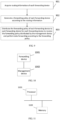
FIG. 1 is a flowchart of a data forwarding method applied to a forwarding device according to an embodiment of the present disclosure; -
FIG. 2 is a first schematic diagram of a forwarding path according to an embodiment of the present disclosure; -
FIG. 3 is a second schematic diagram of a forwarding path according to an embodiment of the present disclosure; -
FIG. 4 is a third schematic diagram of a forwarding path according to an embodiment of the present disclosure; -
FIG. 5 is a fourth schematic diagram of a forwarding path according to an embodiment of the present disclosure; -
FIG. 6 is a flowchart of a data forwarding method according to an embodiment of the present disclosure; -
FIG. 7 is a schematic diagram of routing information acquisition according to an embodiment of the present disclosure; -
FIG. 8 is a schematic diagram of a routing strategy according to an embodiment of the present disclosure; -
FIG. 9 is a flowchart of a data forwarding method applied to a management device according to an embodiment of the present disclosure; -
FIG. 10 is a schematic diagram of a data forwarding system according to an embodiment of the present disclosure; and -
FIG. 11 is a structural schematic diagram of an electronic device according to an embodiment of the present disclosure. - In order to make the objects, technical solutions and advantages of the embodiments of the present application clearer, various embodiments of the present application will be described in detail below with reference to the accompanying drawings. However, those of ordinary skill in the art can appreciate that in the various embodiments of the present application, numerous technical details are set forth in order to provide the reader with a better understanding of the present application. However, the technical solution claimed in the present application can be implemented without these technical details and with various variations and modifications based on the following embodiments. The following division of various embodiments is for convenience of description and should not be construed as limiting the specific implementations of the present application, and various embodiments may be referred to in conjunction with each other without contradiction.
- The main objective of the embodiments of the present application is to provide a data forwarding method and system, an electronic device, and a storage medium, so as to improve the network data forwarding performance.
- An embodiment of the present application relates to a data forwarding method, as shown in
FIG. 1 , including the following steps. - At
step 101, a forwarding strategy distributed by a management device is received, wherein the forwarding strategy includes: if a forwarding device is a first-hop device, selecting the next hop in a first group, or if the forwarding device is a non-first-hop device, selecting the next hop in a second group, wherein the first group contains all virtual members of an equal-cost multi-path routing (ECMP) group of the forwarding device, and the second group contains only local virtual members of the ECMP group. - At
step 102, data forwarding is performed according to the forwarding strategy. - The data forwarding method of this embodiment is applied to a forwarding device in an overlay network, the forwarding device is in communication connection with the management device, and the management device is configured to manage at least one forwarding device, and each forwarding device includes a plurality of virtual members. The Overlay network may be simply understood as building a logical network on top of a physical network. Virtual extensible Local Area Network (VXLAN for short) is one of NVO3 (Network Virtualization over Layer 3) standard technologies defined by IETF, and adopts an L2 over L4 (MAC-in-UDP) message encapsulation mode to encapsulate
Layer 2 messages with aLayer 3 protocol, which allowsLayer 2 networks to be extended in the range ofLayer 3 while satisfying the requirements oflarge Layer 2 virtual migration and multi-tenancy in data centers. NVO3 is a general term for technologies that build virtual networks based onLayer 3 IP overlay networks, and VXLAN is just one of NVO3 technologies. The forwarding device of this embodiment may be a VXLAN Tunnel Endpoints (VTEP for short) device, the VTEP device may be a switch, or a server where a virtual machine is located, the management device may be a management device in a network, and the VTEP device or a cloud management system, such as a neutron component of OPENSTACK, or a virtual network controller, such as a Software Defined Network (SDN for short). - With the explosive increase of the number of 5G users, it is necessary to provide greater device connection and network capacity than the previous generation technology. For 5G, a major change is the virtualization trend today. 5G network will use network slicing technology to divide a physical infrastructure into multiple virtual networks, so that each slice can provide different and unique connections under the same infrastructure. In order to achieve this flexibility, each slice should be able to access different types of resources, whether physical or virtual, such as Virtualized Network Function (VNF for short), so 5G completely changes the network architecture through SDN and network control programmability. Network control is used in an open software system to virtualize the actual physical network. In terms of implementation, most virtual networks use overlay technology to quickly provide different requirements. For large networking scenarios, different traffic from the same node can select different paths to flow to the destination, which can prevent the overload of a single path and provide high performance and reliable network services for various applications, so the overlay scenario also needs ECMP technology.
- In large-scale scenarios, if asymmetric routing is used, each VTEP device should maintain the Media Access Control layer (MAC for short) and Address Resolution Protocol (ARP for short) of all virtualized network identifiers (vni for short). For example, there are four virtual members on the VTEP device, namely, the first member vni1, the second member vni2, the third member vni3 and the fourth member vni4. When forwarding, a specific member of the ECMP can be selected at this node. Asymmetric routing mode means that each VTEP needs to maintain the ARP and MAC address tables of all vnis, even if there is no vni of the local host. This needs to involve large-capacity ARP and MAC tables, resulting in a waste of resources, as shown in
FIG. 2 . - In order to reduce MAC/ARP table entries, symmetric routing technology is generally adopted. In symmetric routing, each VTEP optimizes the ARP and MAC address table, and each router has an L3 vni. As shown in
FIG. 3 , when dealing with ECMP routing in symmetric routing, because each node performs routing independently, different ECMP group members are connected to different VTEP devices, wherein it is generally necessary to set local priority, otherwise a loop may exist by continuing routing. As shown inFIG. 4 , ECMP group members fall on VTEP1 devices and VTEP2 devices respectively, and the message sent by virtual network function (VNF) may select ECMP group members on VTEP2 devices for the next hop when located on VTEP1 devices, and may select group members on VTEP1 for the next hop when located on VTEP2 devices, thereby causing a loop. - In order to avoid the loop caused by the independent routing by each node, the local priority strategy is generally chosen, that is, if there is a directly connected ECMP group on the present VTEP device, the ECMP group of the present device is sent to in priority. Enabling the local priority strategy results in that the load cannot be shared to ECMP members of other nodes when the source and destination are on the same node, resulting in uneven traffic. As shown in
FIG. 5 , the local ECMP next hop member will always be selected, and another next hop in 3 cannot be selected. - In the data forwarding method of this embodiment, by selecting the next hop among the local virtual members of the ECMP group, formation of loops in the data forwarding process caused by independent routing of nodes can be avoided, and the data forwarding efficiency of the network can be improved. When the forwarding device is a first-hop device, the next hop is selected from all virtual members of the ECMP group, and even when the source address and destination address of the message are located on the same node, the data forwarding traffic can be shared to other nodes, thus balancing the data forwarding traffic, and improving the response speed and overall performance of the network, so that the network can achieve elastic traffic scaling. Therefore, when the forwarding device is the first-hop device, the next hop is selected in the first group, and when the forwarding device is the non-first-hop device, the next hop is selected in the second group. Data forwarding performed with this strategy can improve the network data forwarding performance.
- The implementation details of the data forwarding method of this embodiment will be specifically described below, and the following implementation details are provided only for convenience of understanding, and are not necessary to implement this solution.
- In
step 101, a forwarding device receives a forwarding strategy distributed by a management device, wherein the forwarding strategy includes: if the forwarding device is a first-hop device, selecting the next hop in a first group, or if the forwarding device is a non-first-hop device, selecting the next hop in a second group, wherein the first group contains all virtual members of an equal-cost multi-path routing (ECMP) group of the forwarding device, and the second group contains only local virtual members of the ECMP group. - Specifically, the forwarding strategy is configured by the management device, and the management device acquires the routing information of each forwarding device and generates the forwarding strategy of each forwarding device according to the routing information. The forwarding device may select one or more devices in the first group or the second group as the next-hop device.
- In one example, the forwarding device selecting the next hop specifically includes: selecting all virtual members in the group as the next-hop device and performing load sharing among all virtual members.
- In this embodiment, all the virtual members in the group are selected as the next-hop devices, and load sharing is performed among all the virtual members, thereby performing traffic sharing among all the virtual members in the entire group, so that the network data forwarding performance is further improved.
- In
step 102, the forwarding device performs data forwarding according to the forwarding strategy. - Specifically, after receiving the to-be-forwarded message, the forwarding device judges, according to the forwarding strategy, whether the present device is the first-hop device, selects the next hop from all virtual members in the ECMP group if the present device is the first-hop device, and selects the next hop from the second group, i.e., the local virtual members of the ECMP group if the present device is not the first-hop device.
- Further, the forwarding device generates a forwarding rule according to the forwarding strategy and the type of the forwarding device, and performs data forwarding according to the forwarding rule.
- In this embodiment, the forwarding rule is generated according to the forwarding strategy and the type of a forwarding device, and data forwarding is performed according to the forwarding rule, so that the network data forwarding performance can be improved.
- In one example, the forwarding rule includes a general virtual routing table and a local virtual routing table, and a flow table. The forwarding device generates the forwarding rule according to the forwarding strategy by: generating a flow table according to the forwarding strategy under the condition that the forwarding device is an openflow device; and setting a general virtual routing table and a local virtual routing table according to the forwarding strategy under the condition that the forwarding device is an EVPN device.
- In this embodiment, when the forwarding device is an openflow device, a flow table is generated according to the forwarding strategy, and when the forwarding device is an EVPN (Ethernet VPN) device, a general virtual routing table and a local virtual routing table are set according to the forwarding strategy, so that the forwarding rules of the openflow device and the EVPN device can be changed and the network data forwarding performance can be improved.
- In one example, after receiving the forwarding strategy distributed by the management device, the forwarding device also receives an updated forwarding strategy distributed by the management device, and performs data forwarding according to the updated forwarding strategy.
- In this embodiment, by receiving the updated forwarding strategy distributed by the management device, and performing data forwarding according to the updated forwarding strategy, data forwarding can be performed with a new forwarding strategy, thus improving the network data forwarding performance.
- In one example, the management device is internally provided with an ECMP management module and an ECMP forwarding strategy module, the forwarding device is internally provided with an ECMP forwarding execution module, as shown in
FIG. 6 , wherein the ECMP management module at the server side is configured to collect routing information of VTEP forwarding devices to form global ECMP groups, and attributes, locations, topological relationships of the members of the groups, and guide subsequent ECMP forwarding strategy modules to generate strategies and synchronize the generated strategies to the corresponding devices. The ECMP forwarding strategy module at the agent side is configured to convert information acquired from the ECMP management module into ECMP forwarding strategies of the devices, and calculate the ECMP forwarding strategy of each VTEP device according to the ECMP group members unknown, for the vswitch, a vswitch flow table can be issued, and the ECMP member ports are selected for the different ingress ports of the message, and for the switch, the corresponding forwarding entry of the hardware forwarding device can be issued, and the ECMP member ports are selected for the different ingress ports of the message. In the ECMP forwarding execution module, a virtual forwarding device vswitch, or a hardware forwarding device switch is configured to generate an ECMP forwarding strategy into a forwarding rule on each VTEP device. A VTEP device may be an openflow-type device or an EVPN-type device so that forwarding may be performed according to the strategy. - As shown in
FIG. 7 , data forwarding includes the following flows. - 1) By interacting with VTEP devices or cloud management systems (such as neutron components of OPENSTACK) or virtual network controllers (such as SDN), the ECMP management module collects routing information in the network, and forms and maintains an ECMP group as well as member information table.
The process that the ECMP management module collects routing information and next hop process is as follows: the ECMP management module acquires all routing entries of each logical route instance (vroute), the key information of each routing entry including: vrouter identifier (RD or L3VNI), routing destination network segment (network prefix), and next hop (in the scenario of routing network elements, this next hop may be virtual machine address or port); and the ECMP management module extracts the ECMP group member information table (a group of routes with the same vrouter identifier (RD or L3VNI) and the destination network segment (network prefix)) according to the above information, the key information including the ECMP group identifier, the home vroute identifier (RD or L3VNI), next-hop members (which may specifically include the address or port information of the next hop), and the VTEP device where the members are located. - 2) The ECMP forwarding strategy module acquires the ECMP information from the ECMP management module, and converts the ECMP information into the forwarding strategy of the device, as shown in
FIG. 8 . - 3) The forwarding execution module converts the ECMP forwarding strategy into the forwarding rule of the VTEP device. If the VTEP device is an openflow forwarding device, the forwarding rule is converted into an openflow table. If the VTEP device is an EVPN forwarding device, the forwarding rule is converted into a Boarder Gateway Protocol (BGP for short) message. Implementation methods of the forwarding rule will be described below, respectively.
- For openflow devices, flow table entries are received through the openflow protocol, and ECMP is typically implemented by using the group table defined in the openflow protocol. The group table in the protocol is defined as follows:
GroupIdentifier GroupType Counters Action Bucket - Here, the group table type is extended, a new type is added with a value of 16 and a name of conditional, indicating that a different bucket may be selected according to the defined conditions. Defined as follows:
 enum ofp_group_type{
 OFPGT_ALL = 0,/*All(multicast/broadcast)group.*/
 OFPGT_SELECT= 1,/*Select group.*/
 OFPGTJINDIRECT=2,/*Indirect group.*/
 OFPGT_FF=3,/*Fast failover group.*/
 OFPGT_CONDITION = 16,/*conditional group.*/
 };
/*Group bucket property types.*/
 enum ofp_group_bucket_prop_type{
 OFPGBPT_WEIGHT=0,/*Select groups only.*/
 OFPGBPT_WATCH_PORT= 1,/*Fast failover groups only.*/
 OFPGBPT_WATCH_GROUP=2,/*Fast failover groups only.*/
 OFPGBPT_COND_GROUP= 16,/*Conditional groups only.*/
 OFPGBPT_EXPERIMENTER=0xFFFF,/*Experimenter defined.*/
 };
 struct ofp_group_bucket_prop_cond{
 uint16_t type;/*OFPGBPT_COND_GROUP.*/
 uint16_t length; /*8.*/
 uint16_t conditional_key;/*conditionally matched key value*/
 uint16_t conditional_type;/*conditionally matched type*/
 uint32_t conditional_val;/*value matched with key value.*/
 };
the fields are described as follows:
- condition_key is defined in an extensible manner, and is currently defined as:
- 0: reserved;
- 1: metadata; and
- 2: in_port.
- condition_type is is defined in an extensible manner, and is currently defined as:
- 0: reserved;
- 1: equal to;
- 2: not equal to; and
- 3: including;
- conditional_val is the specific value that matches, and only numerical values are supported at present.
 OFPGFC_CONDITIONAL= 1<<7,/*Support conditional groups*/.
 /*Group configuration flags*/
 enum ofp_group_capabilities{
 OFPGFC_SELECT_WEIGHT=1<<0,/*Support weight for select groups*/
 OFPGFC_SELECT_LIVENESS=1 < < 1,/*Support liveness for select groups*/
 OFPGFC_CHAINING= 1 < <2,/*Support chaining groups*/
 OFPGFC_CHAINING_CHECKS =1« <3,/*Check chaining for loops and delete*/
 OFPGFC_CONDITIONAL=1<<7,/*Support conditional groups*/
 };
The forwarding strategy module determines to generate forwarding rules according to conditional based on the group type reported by the VTEP device.
| Group Type | Bucket | conditional_k ey | conditional_ type | conditional_key | Action |
| OFPGT_COND ITION=16 | 1 | 1: metadata | 2: not equal to | L3 vni 1 | Output: vnf21 |
| OFPGT_COND ITION=16 | 2 | 1: metadata | 2: not equal to | L3 vni 1 | Output: vnf11 |
| Group Type | Bucket | conditional_ke y | conditional_ type | conditional_ key | Action |
| OFPGT_CONDITI ON=16 | 1 | 1: metadata | 2: not equal to | L3 vni 1 | Output: vnf11 |
| 2 | 1: metadata | 2: not equal to | L3 vni 1 | Output:vnf21 |
Claims (10)
- A data forwarding method, applied to a forwarding device in an overlay network, the forwarding device in communication connection with a management device, the management device configured to manage at least one forwarding device, each the forwarding device comprising a plurality of virtual members, and the method comprising:receiving a forwarding strategy distributed by the management device, wherein the forwarding strategy comprises: selecting, under the condition that the forwarding device is a first-hop device, a next hop in a first group, selecting, under the condition that the forwarding device is a non-first-hop device, a next hop in a second group, the first group containing all virtual members of an equal-cost multi-path routing called ECMP group of the forwarding device, and the second group containing only local virtual members of the ECMP group; andperforming data forwarding according to the forwarding strategy.
- The data forwarding method according to claim 1, wherein performing data forwarding according to the forwarding strategy comprises:generating, according to the forwarding strategy and a type of the forwarding device, a forwarding rule; andperforming data forwarding according to the forwarding rule.
- The data forwarding method according to claim 2, wherein the forwarding rule comprises a general virtual routing table and a local virtual routing table, and a flow table;
generating, according to the forwarding strategy, the forwarding rule comprises:generating a flow table according to the forwarding strategy under the condition that the forwarding device is an openflow device; andsetting a general virtual routing table and a local virtual routing table according to the forwarding strategy under the condition that the forwarding device is an EVPN device. - The data forwarding method according to any one of claims 1 to 3, wherein after receiving the forwarding strategy distributed by the management device, the method further comprises:receiving an updated forwarding strategy distributed by the management device; andperforming data forwarding according to the updated forwarding strategy.
- The data forwarding method according to any one of claims 2 to 4, wherein selecting the next hop comprises:
selecting all virtual members in a group as a next-hop device, and performing load sharing among all the virtual members. - A data forwarding method, applied to a management device in an overlay network, the management device in communication connection with at least one forwarding device, the management device configured to manage at least one forwarding device, each the forwarding device comprises a plurality of virtual members, and the method comprises:acquiring routing information of each the forwarding device;generating, according to the routing information, a forwarding strategy of each the forwarding device; anddistributing the forwarding strategy of each the forwarding device to each the forwarding device for each the forwarding device to receive the forwarding strategy distributed by the management device and perform data forwarding according to the forwarding strategy; whereinthe forwarding strategy comprises: selecting, under the condition that the forwarding device is a first-hop device, a next hop in a first group, selecting, under the condition that the forwarding device is a non-first-hop device, a next hop in a second group, the first group containing all virtual members of an equal-cost multi-path routing called ECMP group of the forwarding device, and the second group containing only local virtual members of the ECMP group.
- The data forwarding method according to claim 6, wherein after distributing the forwarding strategy of each the forwarding device to each the forwarding device, the method further comprises:updating, after a network topology changes, the routing information;updating, according to the updated routing information, the forwarding strategy of each the forwarding device; anddistributing the updated forwarding strategy of each the forwarding device to each the forwarding device.
- A data forwarding system, comprising a forwarding device and a management device applied to an overlay network; the management device is in communication connection with at least one forwarding device, the management device is configured to manage at least one forwarding device, and each forwarding device comprises a plurality of virtual members; whereinthe management device is configured to acquire routing information of each the forwarding device; generate, according to the routing information, a forwarding strategy of each the forwarding device; and distribute the forwarding strategy of each the forwarding device to each the forwarding device for each the forwarding device to receive the forwarding strategy distributed by the management device and perform data forwarding according to the forwarding strategy; the forwarding strategy comprises: selecting, under the condition that the forwarding device is a first-hop device, a next hop in a first group, selecting, under the condition that the forwarding device is a non-first-hop device, a next hop in a second group, the first group containing all virtual members of an equal-cost multi-path routing called ECMP group of the forwarding device, and the second group containing only local virtual members of the ECMP group; andthe forwarding device is configured to receive the forwarding strategy distributed by the management device, and perform data forwarding according to the forwarding strategy.
- An electronic device, comprising:at least one processor; anda memory in communication connection with the at least one processor; wherein,the memory stores instructions executable by the at least one processor, and the instructions are executed by the at least one processor to enable the at least one processor to perform the data forwarding method applied to a forwarding device according to any one of claims 1 to 5, or the data forwarding method applied to a management device according to any one of claims 6 to 7.
- A computer-readable storage medium, storing a computer program, wherein the computer program, when executed by a processor, implements the data forwarding method applied to a forwarding device according to any one of claims 1 to 5, or the data forwarding method applied to a management device according to any one of claims 6 to 7.
Applications Claiming Priority (2)
| Application Number | Priority Date | Filing Date | Title |
|---|---|---|---|
| CN202111155660.3A CN115914069A (en) | 2021-09-30 | 2021-09-30 | Data forwarding method, system, electronic device and storage medium |
| PCT/CN2022/091545 WO2023050818A1 (en) | 2021-09-30 | 2022-05-07 | Data forwarding method and system, electronic device, and storage medium |
Publications (2)
| Publication Number | Publication Date |
|---|---|
| EP4395246A1 true EP4395246A1 (en) | 2024-07-03 |
| EP4395246A4 EP4395246A4 (en) | 2024-07-31 |
Family
ID=85739403
Family Applications (1)
| Application Number | Title | Priority Date | Filing Date |
|---|---|---|---|
| EP22874216.9A Pending EP4395246A4 (en) | 2021-09-30 | 2022-05-07 | DATA TRANSFER METHOD AND SYSTEM, ELECTRONIC DEVICE, AND STORAGE MEDIUM |
Country Status (4)
| Country | Link |
|---|---|
| US (1) | US12580846B2 (en) |
| EP (1) | EP4395246A4 (en) |
| CN (1) | CN115914069A (en) |
| WO (1) | WO2023050818A1 (en) |
Families Citing this family (1)
| Publication number | Priority date | Publication date | Assignee | Title |
|---|---|---|---|---|
| CN116633869A (en) * | 2023-05-25 | 2023-08-22 | 杭州云合智网技术有限公司 | Load balancing system with blocking function and method for realizing blocking function |
Family Cites Families (21)
| Publication number | Priority date | Publication date | Assignee | Title |
|---|---|---|---|---|
| CN101572667B (en) * | 2009-05-22 | 2011-11-30 | 中兴通讯股份有限公司 | Method for realizing equal cost multipath of IP route and device |
| US9898317B2 (en) * | 2012-06-06 | 2018-02-20 | Juniper Networks, Inc. | Physical path determination for virtual network packet flows |
| US8989189B2 (en) * | 2012-06-07 | 2015-03-24 | Cisco Technology, Inc. | Scaling IPv4 in data center networks employing ECMP to reach hosts in a directly connected subnet |
| US20140153577A1 (en) * | 2012-12-03 | 2014-06-05 | Aruba Networks, Inc. | Session-based forwarding |
| CN112910750B (en) * | 2014-03-27 | 2022-07-22 | Nicira股份有限公司 | Method, apparatus, system, and medium for address resolution using logical router |
| US10103995B1 (en) * | 2015-04-01 | 2018-10-16 | Cisco Technology, Inc. | System and method for automated policy-based routing |
| US10083026B1 (en) * | 2016-03-31 | 2018-09-25 | Juniper Networks, Inc. | In-service software upgrade of software-defined networking controller |
| CN107634905A (en) | 2016-07-19 | 2018-01-26 | 南京中兴新软件有限责任公司 | Data forwarding method and device in pile system |
| US10200274B1 (en) * | 2017-02-17 | 2019-02-05 | Juniper Networks, Inc. | Enhanced traffic flow in software-defined networking controller-based architecture |
| US20180351788A1 (en) * | 2017-05-31 | 2018-12-06 | Cisco Technology, Inc. | Fault localization in large-scale network policy deployment |
| CN107547348B (en) | 2017-07-25 | 2020-07-07 | 新华三技术有限公司 | Method and device for preventing data stream interruption |
| US10673761B2 (en) * | 2017-09-29 | 2020-06-02 | Vmware, Inc. | Methods and apparatus to improve packet flow among virtualized servers |
| CN109981455A (en) | 2017-12-28 | 2019-07-05 | 中兴通讯股份有限公司 | A kind of tunnel implementation and device |
| CN109995654B (en) | 2017-12-29 | 2022-05-20 | 中兴通讯股份有限公司 | Method and device for transmitting data based on tunnel |
| US10778534B2 (en) * | 2018-06-13 | 2020-09-15 | Juniper Networks, Inc. | Virtualization infrastructure underlay network performance measurement and monitoring |
| US11233778B2 (en) * | 2018-08-15 | 2022-01-25 | Juniper Networks, Inc. | Secure forwarding of tenant workloads in virtual networks |
| US10999251B2 (en) * | 2018-09-28 | 2021-05-04 | Juniper Networks, Inc. | Intent-based policy generation for virtual networks |
| CN109246017B (en) | 2018-11-28 | 2021-03-23 | 新华三技术有限公司 | Method and device for inquiring multicast forwarding path |
| DE112020002491T5 (en) * | 2019-05-23 | 2022-04-28 | Hewlett Packard Enterprise Development Lp | SYSTEM AND METHODS TO FACILITATE DYNAMIC COMMAND MANAGEMENT IN A NETWORK INTERFACE CONTROLLER (NIC) |
| CN112565045B (en) | 2019-09-26 | 2024-05-07 | 中兴通讯股份有限公司 | Message forwarding method, device, equipment and storage medium in EVPN |
| CN111756830A (en) | 2020-06-22 | 2020-10-09 | 浪潮云信息技术股份公司 | Intranet load balancing implementation method of public cloud network |
-
2021
- 2021-09-30 CN CN202111155660.3A patent/CN115914069A/en active Pending
-
2022
- 2022-05-07 EP EP22874216.9A patent/EP4395246A4/en active Pending
- 2022-05-07 US US18/690,729 patent/US12580846B2/en active Active
- 2022-05-07 WO PCT/CN2022/091545 patent/WO2023050818A1/en not_active Ceased
Also Published As
| Publication number | Publication date |
|---|---|
| WO2023050818A1 (en) | 2023-04-06 |
| US12580846B2 (en) | 2026-03-17 |
| US20240380687A1 (en) | 2024-11-14 |
| CN115914069A (en) | 2023-04-04 |
| EP4395246A4 (en) | 2024-07-31 |
Similar Documents
| Publication | Publication Date | Title |
|---|---|---|
| US10164782B2 (en) | Method and system for constructing a loop free multicast tree in a data-center fabric | |
| US9325615B2 (en) | Method and apparatus for implementing communication between virtual machines | |
| US20210036951A1 (en) | Segment routing with fast reroute for container networking | |
| US9185031B2 (en) | Routing control system for L3VPN service network | |
| WO2020135566A1 (en) | Multi-tenant isolation using programmable switch | |
| US12238002B2 (en) | Method and device for segment routing service processing, routing equipment, and storage medium | |
| EP2920932B1 (en) | Apparatus for a high performance and highly available multi-controllers in a single sdn/openflow network | |
| CN106899503B (en) | A routing selection method and network manager for a data center network | |
| CN111510379A (en) | EVPN message processing method, device and system | |
| CN114500169B (en) | Method for establishing VXLAN tunnel, method and device for forwarding message | |
| CN108028801B (en) | A SDN-based ARP implementation method and device | |
| JP7314219B2 (en) | DATA TRANSMISSION METHOD, APPARATUS AND NETWORK DEVICE | |
| US12537760B2 (en) | Packet forwarding method and apparatus, network device, and storage medium | |
| WO2022166465A1 (en) | Message processing method and related apparatus | |
| JP2016501462A (en) | Virtual chassis system control protocol | |
| CN116094987A (en) | Method and device for determining forwarding path | |
| EP3979709A1 (en) | Dynamic multi-destination traffic management in a distributed tunnel endpoint | |
| EP4395246A1 (en) | Data forwarding method and system, electronic device, and storage medium | |
| CN115242699A (en) | Message transmission method, slice generation method, device and system | |
| CN113037883A (en) | Method and device for updating MAC address table entries | |
| CN114221895A (en) | Data transmission method, device and network equipment | |
| CN114697220B (en) | Message processing method and related device | |
| CN114520752A (en) | VXLAN protocol control plane unloading method and device based on intelligent network card | |
| CN116506379A (en) | A flow forwarding method, message sending method, message sending method and device | |
| EP4175257B1 (en) | Packet processing method, apparatus, and system, and storage medium |
Legal Events
| Date | Code | Title | Description |
|---|---|---|---|
| STAA | Information on the status of an ep patent application or granted ep patent |
Free format text: STATUS: THE INTERNATIONAL PUBLICATION HAS BEEN MADE |
|
| PUAI | Public reference made under article 153(3) epc to a published international application that has entered the european phase |
Free format text: ORIGINAL CODE: 0009012 |
|
| STAA | Information on the status of an ep patent application or granted ep patent |
Free format text: STATUS: REQUEST FOR EXAMINATION WAS MADE |
|
| 17P | Request for examination filed |
Effective date: 20240326 |
|
| AK | Designated contracting states |
Kind code of ref document: A1 Designated state(s): AL AT BE BG CH CY CZ DE DK EE ES FI FR GB GR HR HU IE IS IT LI LT LU LV MC MK MT NL NO PL PT RO RS SE SI SK SM TR |
|
| A4 | Supplementary search report drawn up and despatched |
Effective date: 20240628 |
|
| RIC1 | Information provided on ipc code assigned before grant |
Ipc: H04L 12/46 20060101AFI20240624BHEP |
|
| DAV | Request for validation of the european patent (deleted) | ||
| DAX | Request for extension of the european patent (deleted) | ||
| STAA | Information on the status of an ep patent application or granted ep patent |
Free format text: STATUS: EXAMINATION IS IN PROGRESS |
|
| 17Q | First examination report despatched |
Effective date: 20250730 |